Newsletter
Want to keep up to date with all our latest news and information?


ResidentialBusiness
Administrators
-
Joined
-
Last visited
Everything posted by ResidentialBusiness
-
Advisers who work on acquisition deals emphasize the importance of being open and transparent with employees about potential changes and differences in a new workplace. View the full article

-
The narrative that women entrepreneurs receive less than 2% of venture capital (VC) funding has been widely circulated. It stems from data provided by Pitchbook, a respected research firm that delivers insights on global capital markets. However, a closer examination of their data reveals a more nuanced perspective. Pitchbook only studies investments funded by VC firms, which is a big part of the market but does not include the very substantial investments made by angel investors. Significant progress has been made in these early stages of the venture market. Twenty years ago, a mere 3% of angel-funded startups were led by women. Fast-forward to today, and women now account for well over 30% of angel-funded companies. Researching and monitoring these shifts have been a critical part of our own investing journey as the co-CEOs of Golden Seeds, an organization that invests exclusively in early-stage women-led U.S. companies. Back in 2004, when Golden Seeds was founded, there was a data void. Insights on women entrepreneurs and women’s leadership were rarely collected because they simply weren’t considered important. Thankfully there is now more research into these topics. Pitchbook has been a leader in this effort, particularly as it relates to later-stage venture capital funding. But in the process of deciphering the data around female founders, a misleading narrative has inadvertently been created. Understanding the methodology behind these—and any venture—statistics is crucial to appreciating the strides made by women in the startup ecosystem. Here are the two biggest misrepresentations worth clarifying about women entrepreneurs and their ability to secure capital. Misinterpretation #1: Women get less than 2% of capital Countless articles, books, and panels have cited that only 2% of VC funding goes to women entrepreneurs. However, this interpretation is incorrect because Pitchbook collects data only on company founders, which excludes women in executive leadership roles or those who might move into executive roles and hold substantial equity. These women are not included in these calculations but they play important roles in the success of their companies. Furthermore, when including funding received by gender-diverse founding teams, the numbers reveal a more encouraging trend. In 2024, companies founded by at least one woman secured 23% of total VC capital, a considerable increase from just 9% in 2008. Additionally, the percentage of deals VCs invest in that include at least one female founder has more than doubled in the same time frame, from 12.2% to 25.4%. That number may in fact be even higher when you consider that this data excludes companies that have non-founder women in key roles who hold substantial equity. The growing presence of gender-diverse teams signals a positive shift in the funding landscape, as startup investors increasingly recognize the benefits of diverse leadership in driving business success. It also more accurately reflects the full universe of startups seeking capital today. Of course, the reality remains that 75–80% of VC funding goes to companies with all-male founding teams (although we do not have information on the gender diversity of the management teams of these companies at the time of funding). More work is needed to get the venture industry closer to realizing gender parity. And it’s critical that we analyze the current data beyond just the single point of the initial founders. Misinterpretation #2: Female founders need a male cofounder to successfully raise VC capital One notable trend in the VC space is the increased success of mixed-gender founding teams in securing investment. While some may interpret this as a disadvantage for all-female teams, this conclusion is misleading. Founding teams form in many different ways, and most investors prioritize skill, determination, and the strength of the business over gender composition. Research consistently highlights the advantages of diverse teams, including broader skill sets, varied perspectives, and enhanced problem-solving capabilities. These benefits may make mixed-gender teams attractive to investors seeking to maximize their returns. And in our experience, founding teams are increasingly more likely to include both women and men. Systemic biases, however, still persist within the VC industry. Historically, VCs have favored investing in industries such as software and AI—sectors where women have been underrepresented. Additionally, many investors prefer to back serial entrepreneurs with prior successes, a criterion that disproportionately benefits male founders due to historical inequalities in startup funding. Addressing these biases is essential to ensuring that innovative ideas from women and underrepresented founders receive the recognition and investment they deserve—and that the progress made at the earliest stages of the market continues into later stages. Women are doing well raising capital from angel investors. They are receiving funding at a comparable yield to other entrepreneurs. (The yield is the rate at which companies seeking funding receive funding.) This trend has been growing for a long time now, as more women are actively pitching their businesses to angel investors. Forty-six percent of all companies seeking funding in 2023 were women-owned, up from 5% in 2004. In addition the growth of women angels, now over 40% of angel investors in the country, would seem to have played a significant role in increasing the share of funding. It’s worth noting that the pace of VCs funding women-led companies has also been steadily improving, as described above, albeit slower than the progress in the angel market. And remember, VCs aren’t the only path to later-stage capital. Many entrepreneurs, both women and men, successfully seek subsequent funding from family offices, corporate ventures, and other high-net-worth individuals. Embracing a more empowered narrative Transforming an industry is challenging and oftentimes frustratingly slow. For 20 years, we’ve tracked the trends, educated investors, and rallied the support, both financial and otherwise, that women entrepreneurs need to grow their businesses. The world is recognizing the contributions and value of women-led companies and that progress shows up in the numbers when you look closely. But progress is a continuum, and the work isn’t finished. Encouraging greater diversity among investors, expanding funding opportunities in traditionally male-dominated industries, and addressing biases in investment decision-making will be crucial in leveling the playing field. Moreover, continued advocacy and accurate representation of data are essential in shaping mindsets and initiatives that support women-led businesses. Perpetuating a narrative that overlooks the resilience and ingenuity of women entrepreneurs over the past 20 years discredits the progress we’ve made and subtly signals defeat. What’s needed is a nuanced understanding of the ecosystem so that a clearer picture of the barriers, progress, and opportunities of women-led companies is continually embraced and acted upon. View the full article

-
For a while, the comforting narrative went like this: AI won’t take your job. But someone using AI will. So, all you had to do was to use AI, and even if you lost your job you could take someone else’s? The idea that you only needed to worry about AI secondhand—via another human—is in fact somewhat naive. AI is coming for your job directly. Not with fanfare or grand announcements, but through silent, pervasive creep: software agents booking meetings, writing reports, sending personalized emails, making decisions. There are even tools to send your digital clone to videoconference meetings, without people even noticing it’s not the real you—yes, an AI deepfake of your professional self capable of intervening exactly as you would, if not more cleverly. Soon, fully autonomous agents will do entire workflows without human hand-holding. So, if you are an ambitious knowledge worker the question is no longer whether AI will automate aspects of your job. It’s whether you’ll have the initiative and creativity to out-evolve the automation. The more you use AI, the more vulnerable you become Here’s the paradox you need to internalize: the more you leverage AI to become hyperproductive, the more you expose yourself to being replaced by it. It’s no different from making your memory or spatial awareness redundant by relying too much on Google Maps or Waze, or abandoning any hopes of memorizing anything because you can always reach for your smartphone. In an age where AI can handle the bulk of our cognitive labor, we risk intellectual atrophy. When Scott Galloway called AI “corporate Ozempic” he was onto something: a tool that suppresses the need to think, even as it sharpens our output. Our ancestors didn’t need gyms or Pilates classes to stay fit; survival took care of that. But we might soon require the cognitive equivalent—structured, even artificial, forms of mental exertion—just to keep our brains from becoming intellectually obese. Efficiency is a trap. If your value to an organization is framed entirely in how quickly and predictably you can produce outputs, congratulations—you’ve just turned yourself into a template. And templates are easy to automate. Does this mean you shouldn’t use AI? Absolutely not. It means you have to reinvest your newfound time intelligently. Most organizations haven’t yet figured out what to do with the massive time savings AI is generating—largely because managers, bless their quarterly obsessed hearts, lack the imagination to redesign jobs beyond output metrics. A recent survey by Deloitte found that while 94% of executives believe AI will dramatically shift work models, only 17% have a clear plan for what that shift actually looks like. Which brings us to the golden opportunity: you don’t need to wait for your manager to reimagine your job. You can start now. Indeed, here are 10 strategies to de-risk being automated by AI: 10 Ways to Avoid Being Automated by AI Reinvest time saved by AI into higher-value, human-centric tasks. Use automation to eliminate drudgery, but spend that freed-up time deepening client relationships, mentoring colleagues, or solving problems that require empathy or judgment. Bridge communication gaps. Act as the translator between technical and nontechnical teams. AI still struggles with nuance, humor, and reading the emotional temperature of a room. Combine skills in unique and strategic ways. Be a generalist with spikes—someone who blends multiple competencies across fields, forming a professional fingerprint that’s hard to replicate. Make yourself unpredictable. Routine and predictability are blueprints for automation. Engineer variability into your tasks. Experiment. Cross disciplines. Add complexity that AI can’t model easily. Strengthen emotional intelligence. Cultivate empathy, persuasion, adaptability, and the ability to resolve conflicts—core human capabilities that are still well outside AI’s reach. Own niche domain knowledge. Carve out expertise in verticals where context and nuance matter—areas where even the best AI stumbles due to lack of real-world grounding. Invest in your personal brand. Write, speak, and share your thinking. Visibility creates optionality. People hire (and retain) people they know, not templates they can replace. Master AI tools in your domain. Don’t compete with AI—promote it. Be the go-to person for AI literacy in your field. People who understand the tools are less likely to be replaced by them. Be the human-in-the-loop. AI often needs human oversight—editing, refining, validating. These judgment calls are increasingly valuable. Stay curious and adaptable. Treat this era not as a tech shift but a cognitive revolution. Your ability to unlearn and relearn will be more important than any static skill set. Evolve faster than your environment You can’t sit this out. You can’t wait and see. The dodo bird strategy—stay passive, hope predators ignore you—didn’t work out great for the dodo. Nor will it for the knowledge worker who thinks “AI-proofing” means hiding behind corporate inertia. You need to evolve faster than your environment. That means embracing AI as a tool, even as you actively cultivate the parts of yourself AI can’t touch. Learn to become a less predictable, more creative version of yourself or be ready to face automation. The choice, for now, is still yours. So, where does that leave you? Somewhere between irreplaceable and obsolete, depending on what you choose to do next. View the full article
-
Since ChatGPT sparked the generative AI revolution in November 2022, interacting with AI has felt like using a digital confession booth—private, intimate, and shielded from public view (unless you choose to share). That’s about to change dramatically with Meta’s rollout of social features in its stand-alone AI app, released last week. Those quiet queries—“What’s this embarrassing rash?” or “How can I tell my wife I don’t love her anymore?”—could soon be visible to anyone scrolling through the app’s Discover tab. If society is still grappling with how to navigate artificial intelligence, Meta’s changes risk throwing even more confusion into the mix. For tech-savvy users, the shift from private to public might be manageable—they’ll at least be aware it’s happening. But most people aren’t monitoring every policy tweak from Big Tech, and may have no idea that what once felt like a private conversation with AI could now become public fodder, ripe for ridicule. (Meta did not respond to Fast Company’s request for comment.) AI has quickly become a hybrid of search engine and digital confidant. Remember the embarrassment of accidentally posting a private message publicly? Now imagine that happening on a massive scale, as millions unknowingly expose deeply personal questions and experiences. This isn’t a hypothetical concern. Posts from Meta AI users are already surfacing in the app’s social feed, including verbal queries asked via voice mode, like one user’s question about folic acid, which also revealed her age and postmenopausal status. The Discover feed is shaping up to be a slow-motion privacy disaster, as users unintentionally share raw, unfiltered pieces of their lives—far from the curated, polished image we’ve grown used to displaying on social media. Meta said in a press release that its AI app aims to “connect you with the people and things you care about,” and calls the Discover feed “a place to share and explore how others are using AI.” While the company insists that “nothing is shared unless you choose to post it,” the app nonetheless nudges people to share—and overshare—whether they fully realize it or not. View the full article

-
Hello and welcome to Modern CEO! I’m Stephanie Mehta, CEO and chief content officer of Mansueto Ventures. Each week this newsletter explores inclusive approaches to leadership drawn from conversations with executives and entrepreneurs, and from the pages of Inc. and Fast Company. If you received this newsletter from a friend, you can sign up to get it yourself every Monday morning. CEOs and other business leaders are scrambling to understand how customers might respond to financial uncertainty brought on by tariffs and other factors roiling the markets. Early signs are not great: the University of Michigan Consumer Sentiment Index in April fell for the fourth straight month, and the Conference Board’s April Expectations Index, which measures short-term outlook each month, dropped to its lowest level since October 2011. In the travel industry, some executives are bracing for a hard landing: Southwest Airlines, American Airlines, and Alaska Air recently withdrew 2025 earnings guidance, while United Airlines took the unusual step of offering two sets of profit guidance, depending on whether or not the U.S. enters a recession. A shipshape outlook So, what to make of cruise company Royal Caribbean Group’s rosy forecast? In late April, the company reported better-than-expected first quarter earnings and increased the midpoint of its full-year guidance for adjusted earnings by 3.8 %. (Rival Carnival Corp. also beat earnings expectations and boosted guidance, but Norwegian Cruise Line Holdings missed its numbers and signaled softening demand.) In 2024, Royal Caribbean Group reported net income of $2.9 billion on revenue of $16.5 billion. CEO Jason Liberty says his cautiously optimistic outlook validates the consumer’s appetite for experiences. “They treasure vacations, and they’re going to lean more [into experiences] than into buying stuff,” he says. Indeed, consumer discretionary spending on experiences, which fell dramatically during the pandemic, has reached an all-time high, according to McKinsey & Co., while spending on “things,” which ticked up during lockdown, is down again. (Not surprisingly, the pandemic was a low point for the travel industry; Royal Caribbean voluntarily suspended cruise operations and reported a loss of $5.8 billion in 2020.) Experiences aren’t recession-proof, of course, and they’re not immune to tariff impacts. The United States Tour Operators Association, a travel trade organization, says its research arm predicts that higher import taxes will result in price inflation and declines in tourist sentiment, particularly among international travelers to the U.S. Royal Caribbean’s own data, fielded in April, found that 7 out of 10 consumers intend to spend the same or more on leisure travel in the coming 12 months, and that 9 out of 10 consumers are looking for value when making vacation plans. Steady as she goes Liberty is quick to point out that “value” is different from “low-budget.” Rather, he says, travelers may value the convenience of being able to access dining and entertainment in the same place, or they may appreciate being able to see multiple destinations in one trip. And Royal Caribbean, which operates cruises under the Royal Caribbean, Celebrity, and Silversea brands, is adding more experiences to its portfolio. In December, the company will open its first Royal Beach Club, an all-inclusive property in the Bahamas that its passengers can access via an island day pass that’s part of a plan to grow from two to seven private destinations by 2027. Liberty says Royal Caribbean doesn’t compare itself to other cruise companies; the company aspires to measure up to travel destinations known for their dining, amenities, and activities. “If you look at our Oasis Class ships or Perfect Day”—a private island with a water park and a zipline, multiple pools, and separate section for adults—”you may ask: ‘why did they go there?’ We went there to take share from Orlando,” he says. Some ships have added Broadway shows and enhanced gaming activities to compete with Las Vegas, Liberty adds. And while a cruise isn’t exactly for the budget-conscious consumer—travelers pay $576 per person for a three-night getaway on Royal Caribbean’s Utopia of the Seas, with fares climbing to $6,350 per person for a 12-day trip around the Iberian Peninsula and Mediterranean on Silversea’s Silver Dawn—Liberty notes that Royal Caribbean travel is about 20% cheaper than comparable land-based experiences. If water slides, gaming rooms, and cabarets seem like a lot to fit on a ship, keep in mind that Royal Caribbean’s Oasis Class ships, for example, are more than 1,000 feet long and can accommodate 5,600 guests. “These are floating cities,” Liberty says. “Everything that can happen in the city happens on a ship. Everything you have to plan for on a city, whether it’s power, whether it’s sanitation, whether medical—and then all the experiences that take place—we’ve got to be able to do that.” What’s your experience? Is your company in the experience business? Are you seeing any softness in consumer demand as a result of bearish sentiment? Or are you, like Royal Caribbean’s Liberty, cautiously optimistic? Send your thoughts to me at stephaniemehta@mansueto.com. I’d like to share your examples in a future newsletter. Read more: the experience economy The 10 most innovative live events and experiences companies of 2025 Why Airbnb, Target, and Walmart are betting on the experience economy Read the 1998 piece that coined the term “experience economy” How to get ahead in the experience economy View the full article

-
Performance reviews are often arduous, but they don’t have to be. AI tools can enhance the process for both managers and employees, offering new possibilities for efficiency and fairness. From streamlining data analysis to eliminating bias, here’s how AI is transforming performance evaluations and employee development across various industries. AI Connects Dots for Comprehensive Reviews AI has significantly improved our performance review process by providing managers with a clearer, more comprehensive view of their teams. Previously, we had vast amounts of data buried across various productivity tools—including meeting notes, shared documents, messages, and task updates—but none of it was truly actionable. Let’s face it: No manager with a team of 10 can realistically remember everything that happened over the last quarter for each person. Today, the way we work—how we communicate, collaborate, and deliver—leaves behind valuable signals. AI helps connect the dots across that information to highlight key trends, surface individual contributions, and flag potential blind spots. For employees, it means their impact is more accurately recognized, even if they’re not the most vocal. For managers, it creates a more holistic, data-informed foundation for conversations around performance and development. We also believe this approach can save a tremendous amount of time during review season, when so much energy is typically wasted trying to gather feedback and recall details. Equally important, it helps managers make fairer, more balanced assessments by surfacing the full scope of each person’s contribution. Simon De Baene, CEO and Cofounder, Workleap Streamline Reviews with AI-Generated Questions I used AI to take a client’s company values, create performance questions around them, and then tier the reviews so they were applicable to entry-level employees, individual contributors, managers, leaders, and senior executives. It produced those products for me in minutes. HR professionals or managers who aren’t using AI are wasting time and missing out on major enhancements to their leadership. Kerri Roberts, Founder and CEO, Salt & Light Advisors AI Tools Enhance Review Quality and Satisfaction We have found that managers dread the performance review process as much as employees do. Both struggle with effectively articulating KPIs [key performance indicators], achievements, and challenges in the required documents and during the review itself. This contributes to the second major shared complaint regarding the “paperwork” and workload to complete the process. We encourage managers and employees alike to utilize AI tools to analyze KPI trends, provide tables and charts, and even draft the performance review to save time and reduce anxiety. Additionally, AI tools can suggest appropriate SMART [specific, measurable, achievable, relevant, and time-bound] goals for the next period and/or recommend learning and development opportunities for the employee. As always, useful output from AI requires good input. Furthermore, the employee and manager must carefully review and edit all AI-generated information to accurately and clearly represent reality. However, we have found AI tools have greatly decreased the workload of the performance review process, while at the same time increasing the quality and satisfaction with the results for everyone involved. Joe Palmer, Managing Partner, Prosperity Partners Consulting Balance AI Objectivity with Human Touch One specific example from our organization involved the marketing team, where managers had long struggled with bias and inconsistency in performance reviews. To improve the process, we introduced an AI tool that aggregated peer feedback, performance metrics, and goal progress into clear, objective drafts. It flagged subjective language and suggested more neutral alternatives, reducing bias and saving managers valuable time. However, a new challenge emerged: Employees described the AI-generated feedback as sterile—accurate but impersonal. This concern became especially clear during a departmental feedback session. To address it, we encouraged managers in marketing to use the AI drafts as a foundation, then add personal insights, context, and specific examples to restore a sense of authenticity. This balance between AI-driven objectivity and a human touch made a noticeable difference. Employees received clearer, fairer, and more meaningful feedback, while managers gained a tool that streamlined the process without losing the connection that makes reviews truly valuable. Michael Ferrara, Information Technology Specialist, Conceptual Technology AI Creates Personalized Development Plans Post-Review As part of my current doctoral research in learning and organizational change, I’ve been studying how HR leaders are actively using AI to enhance human-centric leadership practices—and performance reviews have definitely come up. One high-level HR executive I interviewed shared how they used AI to create a personalized learning and development plan immediately after a performance review. The AI helped analyze feedback and skill gaps, then recommended tailored next steps—what the employee could do now, next, and later to grow in a specific area. The employee later thanked their manager for recommendations that were on that plan, suggesting they felt supported. Another HR executive at a global automotive company used AI-enabled project management tools to analyze team metrics that correlated with performance. She felt this helped her make more objective, data-informed decisions rather than relying solely on instinct. In both cases, AI didn’t replace the human side of leadership—it amplified it by making conversations more personalized, fair, and focused on growth. Bailey Parnell, Founder and CEO, SkillsCamp Voice Notes Capture Nuanced Performance Feedback One thing that has surprised us was how well an AI-powered voice note tool worked during performance reviews not as a replacement for feedback, but as a way to capture tone, nuance, and real-time reflection. In our own staffing agency, where many of our clients rely on private staff-like housekeepers, chefs, and estate managers, soft skills matter just as much as task completion. Managers started using short voice notes to highlight specific interactions, such as how a nanny handled an unexpected visitor at the door or how a housekeeper went above routine to solve a problem without being asked. These moments used to get lost between checklists. On top of everything else, rather than treating reviews like a checklist, the voice notes created a space where real appreciation could be felt. A personal chef once told us that hearing the emotion behind the words made all the difference—it felt honest, not formal. These notes turned routine evaluations into conversations that captured what often goes unseen. In our world, where intuition and quiet consistency define excellence, giving those qualities a voice brought something far more meaningful than numbers or written summaries ever could. Brooke Barousse, CEO, Lexington Executive and Household Staffing AI Builds Objective Benchmarks for Fair Reviews We’re starting to use AI to build objective performance benchmarks to make our reviews more fair and impartial. Essentially, the AI analyzes key metrics and skill feedback from our own internal, anonymized data across similar roles, comparing performance among our project managers, engineers, or CNC [computer numerical control] machinists, for example. It helps our managers get a better grasp on ratings and performance discussions, as they can use the data to more easily identify if someone is truly excelling in their specific job or spot an area where the entire group could benefit from improvement. Our employees gain a much clearer understanding of the expectations for their role and can see how they’re performing compared to others in similar positions, which can be motivating or help pinpoint areas for development. The AI might highlight that one of our project managers consistently achieves client satisfaction scores that are 10 points higher on average than other PMs performing similar jobs, for instance. It provides solid evidence supporting positive feedback about their client skills, allowing us to go beyond mere gut feelings. Since implementing this data-driven approach, we’ve noticed that our manager calibration meetings for reviews run more smoothly and efficiently, reducing subjective debate time by 30%, because everyone is working from the same baseline comparisons to initiate the conversation. Leon Huang, CEO, RapidDirect AI Analysis Improves Review Conversations We implemented an AI feedback tool that analyzes communication patterns during performance reviews. Managers upload meeting recordings, and the AI provides insights on speaking time balance, interruption frequency, and sentiment analysis. This improved our reviews in several ways: Managers now receive data showing they dominated 70% of conversations (previously unaware), and they adjusted to achieve better balance. Employees report 40% higher satisfaction with review fairness. The AI also flags emotional responses, revealing when discussions trigger defensiveness. Most importantly, the AI tool summarizes action items and creates trackable goals, increasing follow-through by 65%. What surprised us was how the AI revealed that our female team members were interrupted twice as often as male counterparts—an insight that led to meaningful cultural change. The technology doesn’t replace human judgment, but it makes our performance conversations more balanced, actionable, and fair. Kirti Poonia, Founder, Caimera Creative Performance Profile Tracks Progress We’ve always found it challenging to review the performance of roles that aren’t tied directly to strategic goals, like our graphic designer. They don’t set quarterly targets or lead major initiatives. Their work is reactive, based on tasks assigned to them, which makes it hard to define clear goals or track measurable progress. Feedback often felt generic, and improvement was tough to gauge other than informal “good jobs.” To change that, we set up an AI-enhanced performance tracker using tools we already had access to. We connected Asana to Google Sheets through Zapier, which allowed us to automatically track things like task volume, turnaround time, and revision frequency. We also pulled in feedback from Slack, where a lot of real-time collaboration was happening. Using OpenAI, we ran sentiment analysis on both task comments and relevant Slack messages, which described how work was being received and the tone of the day-to-day communication. Together, this gave us a monthly snapshot we called the Creative Performance Profile. It helped spot progress over time and gave our designer real insights they could reflect on during their review, without needing a complex dashboard. In one case, we saw our designer’s average turnaround time improve by 22% over the quarter, while revision rates dropped by 35%. That led to a great discussion around how they were proactively clarifying briefs earlier in the process, something we wouldn’t have uncovered from the numbers alone. What’s been most valuable is how this gave us a new way to talk about progress in roles where goal-setting has always felt forced. It’s not about ranking team members against each other, but helping them see how their efforts translate into measurable growth. For the first time, our designer walked into their review with stats that reflected their day-to-day work and was able to explain where they could show improvement over the coming year. Not only did this help them grow their individual performance, but oddly, they expressed that it made them feel more part of the team in our planning and goal-setting discussions. It was just an overall win. Kyle Senger, Founder and Lead Strategist, Unalike Marketing AI Triggers Timely Check-ins Between Reviews AI is a powerful tool not only for performance reviews themselves, but also for pre-review and post-review check-ins. Instead of just standard calendar pings, we’ve experimented with systems that trigger automated reminders based on actual work data. For example, a manager could get a nudge to schedule a check-in if an employee’s key goal from the review isn’t progressing on track or if feedback indicates a challenge or bottleneck arising. This way, managers can intervene early and potentially prevent problems rather than waiting months for the formal review. From the employees’ perspective, it means they receive more regular support and feedback throughout the year. When the formal review time does arrive, it feels less like a big reveal because progress and any issues have already been discussed along the way. Traditionally, employees’ biggest complaint about reviews is that they feel like a pointless, arbitrary exercise. However, with AI reminders, it’s easier to take real action and create an ongoing conversation rather than forgetting about reviews a few weeks later until the following year. This approach is more supportive and more productive. Fineas Tatar, Co-CEO, Viva Automated Tools Spot Patterns and Reduce Bias AI has really changed performance reviews for the better. It’s made a huge difference in how managers view the work of their teams. Two tools that I absolutely love are Lattice Analytics and Betterworks. Lattice is useful because it tracks all the performance data automatically and spots patterns that might be overlooked. It has cut down prep time and helps craft feedback without bias. Betterworks, on the other hand, is useful for picking up wins that people usually forget to mention themselves by analyzing project work and communication. These tools can be game changers for efficiency when implemented, since they focus on actual data instead of just opinions. I know there are a lot of tools out there, but I think it’s best to find one or two that align with your organizational goals and leverage them for maximum benefits. Jacqueline Twillie, Leadership Officer, ZeroGap.co AI Promotes Equitable and Actionable Feedback As a former senior HR leader at a global tech company, I have observed how performance reviews can either foster growth or reinforce inequity. The thoughtful use of AI tools has begun to shift that balance when used intentionally. One impactful example: For a recent client in Big Tech, we introduced AI to support managers in writing more objective, bias-aware feedback. Performance reviews often contain vague or personality-driven comments, especially for women, people of color, and LGBTQ+ professionals. Research from Stanford and McKinsey confirms this disparity. We asked managers to run their draft feedback through an AI tool trained to flag vague, nonactionable phrases and suggest more equitable alternatives. For example, “Indira is a pleasure to work with” might prompt: “Consider elaborating on Indira’s specific contributions or business impact.” This helped leaders offer fairer, more actionable reviews and also created powerful learning moments around unconscious bias. Crucially, we do not see AI as a replacement for human leadership, but as a collaborator. Tools like ChatGPT or Gemini cannot grasp context or individual nuance, and they reflect the bias in their training data. However, they can help standardize fairness, sharpen awareness, and prompt better conversations. Used well, conversational AI can encourage leaders to ask, “Am I being fair? Am I being specific? Am I giving everyone the same chance to grow?” In a system where performance reviews shape careers and compensation, those questions matter. And AI, used wisely, can help us answer them better. Manuel Schlothauer, Founder, HeyManuel.com View the full article

-
The mayhem of Mar-a-Lago is less effective than the boredom of BrusselsView the full article
-
Since before he took office, President Donald The President made his disdain for the Federal Emergency Management Agency (FEMA) clear. Now, he’s leaving survivors of severe thunderstorms and tornadoes in Arkansas without any federal aid. After large swaths of the South and Midwest were hit by deadly thunderstorms and tornadoes in March and April, Arkansas’ Republican Governor Sarah Huckabee Sanders—a frequent supporter of the president—repeatedly wrote to FEMA asking for support in her state. “The sheer magnitude of this event created disastrous amounts of debris, extensive destruction to homes and businesses, and resulted in the death of three citizens, and caused injuries to countless others,” Sanders wrote in her initial request. (Since that letter was sent, 40 people in the path of the storms were killed.) After reviewing Sanders’ pleas, which went on to describe the extent of the hazardous weather and hundreds of thousands of dollars in damage, the The President administration ultimately wrote back that it had “determined that the damage from this event was not of such severity and magnitude as to be beyond the capabilities of the state, affected local governments, and voluntary agencies,” and that it therefore would not provide supplemental federal assistance. In contrast, in 2023, former President Biden granted Arkansas’ disaster declaration request following a deadly tornado within 48 hours. Given that Arkansas is a red state that voted for The President in the 2024 election, many were shocked that the president denied Sanders’ request for aid. But this isn’t the only time that The President has turned down appeals for federal help after severe weather events—and, while disappointing, the administration’s insistence that states should help themselves during times of crisis is in line with its larger efforts to dismantle federal disaster mitigation infrastructure. Several states are denied support from FEMA Since January, The President has denied several other FEMA requests that have surprised state lawmakers. In March, North Carolina’s Democratic Governor Josh Stein wrote to ask for 180 days of extended FEMA support for recovery costs related to Hurricane Helene, which was denied by the The President administration in April. That same month, Washington’s Democratic Governor Bob Ferguson requested FEMA support for repairs after a “bomb cyclone” windstorm last November that caused an estimated $34 million in damages. His appeal was also denied. “There are very clear criteria to qualify for these emergency relief funds. Washington’s application met all of them,” Ferguson said in a statement on April 14. “This is another troubling example of the federal government withholding funding.” Most recently, in early April, The President did approve a FEMA disaster declaration in Virginia to help the state recover after severe flooding. However, he refused Republican Governor Glenn Youngkin’s request for hazard-mitigation money as part of the disaster-aid package—a step that no president has taken in nearly 30 years. The Hazard Mitigation and Grant Program (HMGP) is overseen by FEMA and allocates funds to help communities protect infrastructure from future damage after severe weather, like by elevating flood-prone homes or strengthening buildings in earthquake zones. According to Politico, the program has allocated nearly $18 billion to states to safeguard 185,000 properties. “It’s an extremely important program for hazard mitigation,” Anna Weber, senior policy analyst for climate adaptation at the Natural Resources Defense Council, told Politico. “Instead of just rebuilding, we’re building resilience so we’re preventing future damages, deaths and injuries.” Historically, presidents have paired HMGP funds with FEMA’s overall recovery efforts, accounting for about 15% of overall costs for any given disaster response. But, since early April, The President has stopped approving allocations from the program. A larger plan to dismantle federal disaster response infrastructure This scaling back of HMGP runs parallel to a larger effort within the The President administration to potentially shut down FEMA altogether. On the 2024 campaign trail, The President repeatedly spread misinformation about FEMA’s response to Hurricane Helene. In office, he’s already cut hundreds of staff from the agency, leaving its remaining staffers concerned about their ability to handle upcoming severe weather, like tornado and hurricane seasons. The administration has also withheld FEMA aid to migrant shelters, suggesting that they may have violated a law used to prosecute smugglers. Funding reductions have further resulted in FEMA canceling programs like federal fire training academy courses. In March, Kristi Noem, secretary of Homeland Security, reportedly said that her department planned to “eliminate” FEMA—a notion that The President has also echoed. And last Monday, The President named 13 members to a council tasked with recommending potential overhauls at the agency, though it’s still unclear how significant those overhauls might be. Experts have repeatedly warned that scrapping FEMA would result in a dark future for disaster relief. Now, several states—including some that voted for the president—are getting a first glimpse at that future. View the full article

-
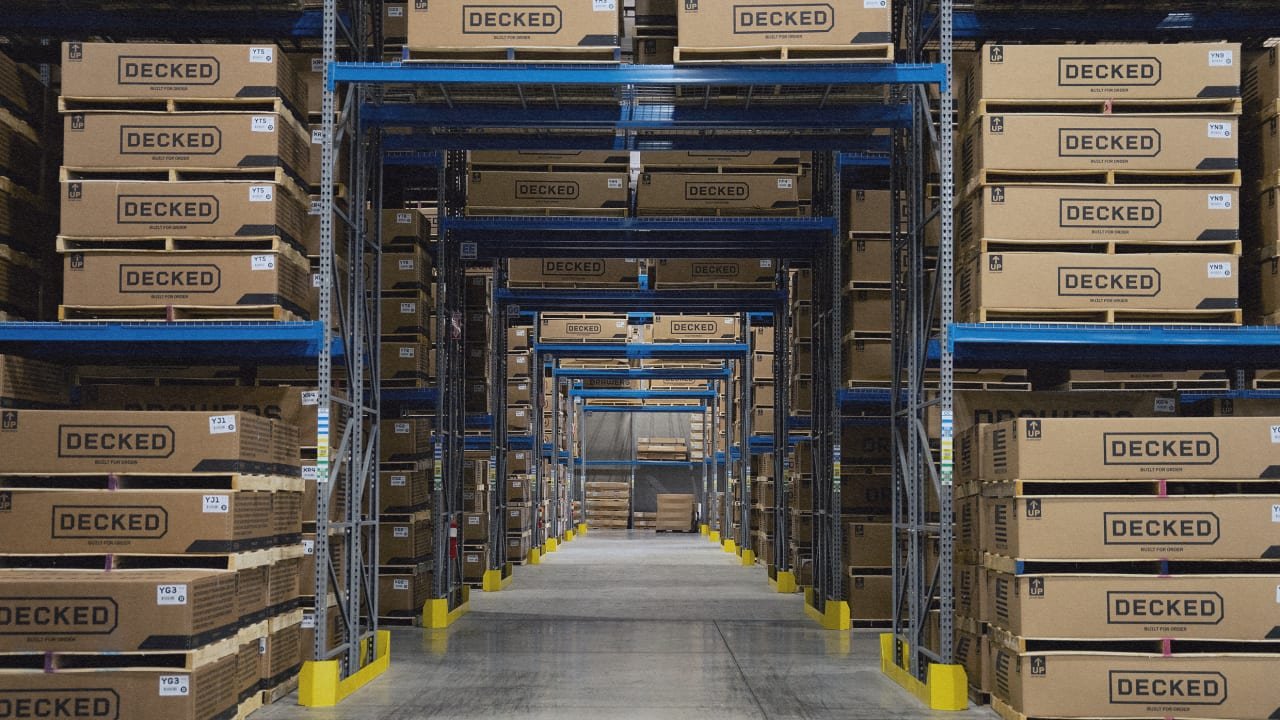
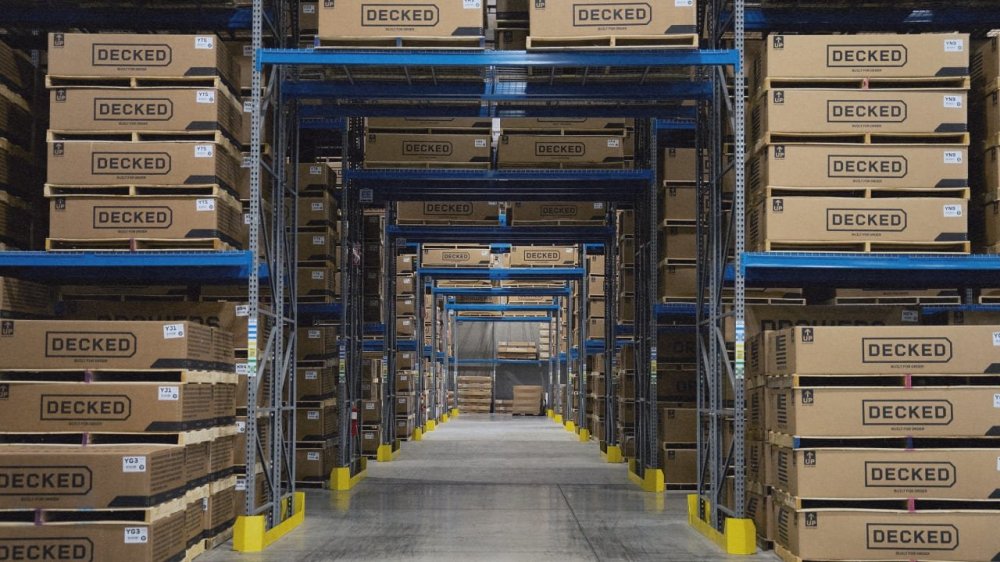
Johann Pauwen and Michaele Simmering founded their furniture design business, Kalon, in Los Angeles in 2007. At the time, the U.S. was entering a major recession with many industries headed for total implosion. Pauwen and Simmering, committed themselves to finding local manufacturing relationships and logged countless hours looking for factories that could deliver on their solid wood designs within the United States. It wasn’t an easy process, and the founders had to write their own playbook as they went. “We really had to beat the streets and find these places on our own,” says Simmering. “Sometimes literally you’d drive past an open roller door, see certain machines or materials, and say, ‘Oh my God, they’re making X, Y, or Z and that’s how we’d find them.” Now, nearly 20 years in, all of Kalon’s products, except for its baby crib, are made in the U.S. The profitable business supports their family as well as those of their five employees. From the outside, it might appear that Kalon is entirely insulated from the roller-coaster tariff storyline unfolding every day here in the U.S. And to some degree they are: Simmering and Pauwen say their supply chain is strong and reliable and they have few doubts about their ability to deliver their product to customers as expected. Still, the pair is pretty stressed. They’ve noticed that many of their peers in the industry are losing business and, in some cases, carrying out layoffs. Kalon itself marked its worst sales month in history in April, on the heels of The President tariff news. “I canʻt believe we built this healthy business out of nothing in a really inhospitable industry: two collapses, a pandemic, and multiple wars,” says Pauwen. “And, a move to domestic manufacturing freaks out the consumer so much, no one will spend money. Maybe that will kill us, even though we’re U.S.-produced.” Kalon “It’s been an emotional roller coaster” Pauwen and Simmering represent an ecosystem of founders who’ve invested the time and money to make and sell things in the U.S. They’ve cultivated relationships with mom-and-pop manufacturing outfits. They’ve created jobs in the local economy. They’ve made it work in the name of sustainability and community. And now, as the The President administration’s wildly shifting tariff policy has shaken the foundation of how so many small and midsize designers do business both abroad and at home, these founders of American-made brands don’t feel any more at ease than their counterparts who sit at the helm of globally produced supply chains. Kalon What’s coming next is truly anybody’s guess, and many designers in positions similar to Pauwen and Simmering say they’re just bracing for the next jolt, whether that’s due to consumer insecurity, price swings in raw materials, a dearth of manufacturing options, or something else they’ve not yet considered or experienced. “It’s been an emotional roller coaster,” says Clare Vivier, founder, CEO and creative director at leather handbag brand Clare V. Vivier’s company, which is based in Los Angeles, sits at the nexus of The President’s tariffs. She works with five separate manufacturers in L.A., along with 17 manufacturing partners across India, Europe and Asia. The leather and hardware used to make Clare V. bags, says Vivier, come from Italy and Asia respectively. “We’re a great case study of what’s going on,” she says. “Seventeen years into this company, we have 14 stores and are sold in close to 200 shops around the world. Fifty percent of our product is made in L.A. and the other 50 overseas.” Clare V. Vivier says she’s structured her business this way out of necessity—to tap into different forms of workmanship. “We don’t have the options to make woven leathers and basket bags here in the U.S.” she says. “Those artisans aren’t here.” If they were, says Vivier, she’d already be using them. These types of skills and jobs, she says, went away years ago, as the industry was retooled for less hands-on, more mechanized manufacturing methods. In other countries, though, artisans (and the infrastructure to train new talent) are still a part of local economies. “These are not widget-producing jobs,” says Vivier. “These are artisans who are trained for many years.” Clare V. Vivier has considered bringing more of her manufacturing in-house. One of the manufacturing partners she works with in Burbank, California, is family-owned and run, and the owners are looking for a succession plan as retirement nears. But for Vivier, it’s just not in the cards. “We aren’t in the position to be a manufacturing business,” she says, likening the endeavor to the knowledge jump a writer would have to make in order to suddenly buy and run a printing press. “This is a highly specialized industry you can’t expect companies to just jump into. . . . My husband is French and we have a place in France. Vuitton has opened a huge training facility outside of our town there—to train artisans. I think, wow. We just aren’t doing that in the U.S. It would be amazing.” Clare V. For Simmering and Pauwen, they’ve decided to relocate their crib manufacturing to the United States. And while the decision aligns with their ethos to manufacture in their own communities, it presents a tough balance and some hard decisions around quality and cost. “Producing in Germany is roughly on par with the U.S. in terms of material and labor costs, but the level of craft and know-how is significantly higher there, which means the end product is often of superior quality—a failure of America’s industrial policy,” says Simmering. “The U.S. partner we’re working with [on the crib] was surprised by the quality of our Eastern European production and acknowledged that matching it would be a challenge—and at a much higher cost, at least 150% more.” The long game of factory building Some businesses, like East Fork Pottery in Asheville, North Carolina, have built out a manufacturing arm to their business from the start, which has helped hedge the pile-on effect happening with tariffs. Cofounder and potter Alex Matisse says that East Fork makes more than 650,000 pieces of pottery per year in its two factories. “We are relatively insulated,” says Matisse. “Our material supply chain is domestic. Clay isn’t expensive, but we put value into it. Our greatest fear is that if we do slide into a recession, it will impact us all. Building factories takes a long time. It’s hard to think about when confidence is so unsure.” Tyler Hays, artist and founder at furniture maker BDDW, which owns two of its own manufacturing facilities, says he’s grateful he made the decision to keep all pieces of his business under one umbrella so many years ago. “We have always had the slow business approach,” he says. “And we are patting ourselves on the back a little bit. But the way this is happening is bananas, with no plan. This should have been a five-year-plan. There should have been funding for small businesses; it’s reckless.” One way Hays has been able to thrive during this time is via an auction platform that’s allowed BDDW to circumvent traditional retail altogether, offering up pieces at a discount. Hays says that’s kept consumers engaged and buying: “It’s becoming more popular, but we have seen a 5% reduction in closing price at auction.” Still, even with the confusion and chaos around tariffs, many of these founders remain deeply passionate about being American-made and revel in the spirit of community and localization it can foster. For CEO Bill Banta at Decked, being American-made is just baked into his company’s brand. Decked designs, makes and sells organizational systems that fit on the beds of pickup trucks. “There’s nothing more American than a pickup truck,” says Banta. “It’s core to the customer and there’s a lot of expectation that comes with an American-made product. Plus what we make is big and heavy and hard to ship.” Decked Banta says some of the machines used to make Decked products are as heavy as 737 aircraft, and that as the company has grown, so has its manufacturing capabilities. The business, which is based in Idaho, Utah, and Ohio, now accounts for close to 400,000 square feet of manufacturing space and tens of millions of investment in injection molding. “We are seeing volatility in raw materials—steel, resin,” he says. “They’ve been all over the place for four or five weeks.” Banta’s focus has been working with suppliers to stabilize pricing as best as possible so the price for a Decked system is the same when customers initially consider it, as when they actually buy it a month later. Additionally, as consumer insecurity dips, so do truck sales, which is directly tied to the Decked value prop. “If that binds up and the automotive supply chain gets whacked by tariffs, we’ll feel that, too.” Decked A wholesale shedding of small businesses For now, says Simmering, it’s too soon to guess what any of this means. “It comes down to the mindset of the consumer,” she says. “Will consumers, at the end of the day, feel it’s more valuable to invest in American-made products? Will the tariffs last? There isn’t clarity. Industrial retooling is expensive and a lot of independent businesses won’t be able to hang in there to see how it shakes out.” One pivot the Kalon founders have made is to offer consulting services to other American businesses looking to make things here, too. Their goal is to help other founders navigate “the complexities of local sourcing, supply chain restructuring, and sustainability-first practices with insight grounded in our two decades of experience,” says Simmering. “From the beginning, part of Kalon’s mission has been to model a different way of doing things—to build a values-based business that responds to the realities of our time: the global environmental crisis, mass overconsumption, and wasteful production. “This feels like a natural extension of that original intent—taking this as an opportunity to help others navigate this shift and continue working toward transformation from within the industry.” And while the dust of tariff swings begins to settle, says Pauwen, larger, big box businesses have the resources to relocate their operations to the U.S., pushing smaller companies out of their manufacturing relationships in one swift movement, able to promise bigger manufacturing runs and longer contracts. “At first blush, when the government is saying, ‘We’re in this for the Americans,’ that’s a great impulse,” says Simmering. “I see that we can’t all be titans of industry. We want to have national resources and jobs with integrity and meaning. But the way this seems to be executed, it’s a land grab and happening at the highest levels. There is a wholesale shedding of independent business.” View the full article
-
Recent breakthroughs in generative AI have centered largely on language and imagery—from chatbots that compose sonnets and analyze text to voice models that mimic human speech and tools that transform prompts into vivid artwork. But global chip giant Nvidia is now making a bolder claim: the next chapter of AI is about systems that take action in high-stakes, real-world scenarios. At the recent International Conference on Learning Representations (ICLR 2025) in Singapore, Nvidia unveiled more than 70 research papers showcasing advances in AI systems designed to perform complex tasks beyond the digital realm. Driving this shift are agentic and foundational AI models. Nvidia’s latest research highlights how combining these models can influence the physical world—spanning adaptive robotics, protein design, and real-time reconstruction of dynamic environments for autonomous vehicles. As demand for AI grows across industries, Nvidia is positioning itself as a core infrastructure provider powering this new era of intelligent action. Bryan Catanzaro, vice president of applied deep learning research at Nvidia, described the company’s new direction as a full-stack AI initiative. “We aim to accelerate every level of the computing stack to amplify the impact and utility of AI across industries,” he tells Fast Company. “For AI to be truly useful, it must evolve beyond traditional applications and engage meaningfully with real-world use cases. That means building systems capable of reasoning, decision-making, and interacting with the real-world environment to solve practical problems.” Among the research presented, four models stood out—one of the most promising being Skill Reuse via Skill Adaptation (SRSA). This AI framework enables robots to handle unfamiliar tasks without retraining from scratch—a longstanding hurdle in robotics. While most robotic AI systems have focused on basic tasks like picking up objects, more complex jobs such as precision assembly on factory lines remain difficult. Nvidia’s SRSA model aims to overcome that challenge by leveraging a library of previously learned skills to help robots adapt more quickly. “When faced with a new challenge, the SRSA approach analyzes which existing skill is most similar to the new task, then adapts and extends it as a foundation for learning,” Catanzaro says. “This brings us a significant step closer to achieving generalization across tasks, something that’s crucial for making robots more flexible and useful in the real world.” To make accurate predictions, the system considers object shapes, movements, and expert strategies for similar tasks. According to one research paper, SRSA improved success rates on unseen tasks by 19% and required 2.4 times fewer training samples than existing methods. “Over time, we expect this kind of self-reflective, adaptive learning to be transformative for industries like manufacturing, logistics, and disaster response—fields where environments are dynamic and robots need to quickly adapt without extensive retraining,” Catanzaro says. Biotech breakthroughs The biotech sector has traditionally lagged in adopting cutting-edge AI, hindered by data scarcity and the opaque nature of many algorithms. Protein design, essential to drug development, is often hampered by proprietary data silos that slow progress and stifle innovation. To address this, Nvidia introduced Proteína—a large-scale generative model for designing entirely new protein backbones. Built using a powerful class of generative models, it can produce longer, more diverse, and functional proteins—up to 800 amino acids in length. Nvidia claims it outperforms models like Google DeepMind’s Genie 2 and Generate Biomedicines’ Chroma, especially in generating large-chain proteins. According to a paper on Proteína, the team trained the model using 21 million high-quality synthetic protein structures and improved learning thanks to new guidance strategies that ensure realistic outputs during generation. This breakthrough could transform enzyme engineering (and, by extension, vaccine development) by enabling researchers to design novel molecules beyond what occurs in nature. “What makes it especially powerful is its ability to generate proteins with specific shapes and properties, guided by structural labels,” Catanzaro says. “This gives scientists an unprecedented level of control over the design process—allowing them to create entirely new molecules tailored for specific purposes, like new medicines or advanced materials.” A new AI tool for autonomous vehicles Another standout from ICLR 2025 is Spatio-Temporal Occupancy Reconstruction Machine (STORM), an AI model capable of reconstructing dynamic 3D environments—like city streets or forest trails—in under 200 milliseconds. With minimal video input, it produces detailed, real-time spatial maps that can inform rapid machine decision-making. Nvidia sees STORM as a tool for autonomous vehicles, drones, and augmented reality systems navigating complex, moving environments. “One of the biggest backlogs in current models is that they often rely heavily on optimization—an iterative process that takes time to refine and produce accurate 3D reconstructions,” says Catanzaro. “STORM tackles this by achieving high-accuracy results in a single pass, significantly speeding up the process without sacrificing quality.” STORM’s potential extends beyond vehicles. Catanzaro envisions applications in consumer tech, such as AR glasses capable of mapping a live sports game in real time—allowing viewers to experience the event as if they were on the field. “STORM’s real-time environmental intelligence moves us closer to a future where machines and devices can perceive, understand, and interact with the physical world as fluidly as humans do,” he says. While STORM is built to help machines understand the physical world in real time, Nvidia is also pushing the boundaries of how large language models reason—through a project called Nemotron-MIND. This 138-billion-token synthetic pretraining data set is designed to enhance both mathematical and general reasoning. At its core is MIND, a new framework that turns raw math-heavy web documents into rich, multi-turn conversations that mirror how humans work through problems together. By turning dense math documents into conversations between people with different levels of understanding, MIND helps AI models break down problems step by step and explain them naturally. This method doesn’t just teach models what the right answer is—it helps them learn how to think through problems like a person would. According to its research paper, a seven-billion-parameter model trained on just four billion tokens of MIND-style dialogue outperformed much larger models trained on traditional data sets. It showed significant gains on key reasoning benchmarks like GSM8K (grade school math), MATH, and MMLU (massive multitask language understanding), and achieved a 2.5 percent boost in general reasoning when integrated into an LLM. Can startups and researchers keep up? Training and deploying advanced AI models requires substantial GPU resources, often out of reach for smaller players. To close this gap, Nvidia is rolling out its next-gen AI models through Nvidia Inference Microservices (NIMs), a suite of containerized, cloud-native tools designed to simplify deployment across different infrastructures. NIM includes prebuilt inference engines for a wide array of models, helping organizations integrate and scale AI with fewer computing resources. “Improving efficiency has always been a major focus for us,” Catanzaro says. “Ultimately, our goal is to democratize access to AI capabilities and make deployment practical at every scale, regardless of their computing resources, to harness the power of AI.” As agentic and foundational AI becomes more capable and more embodied, the future of tech may hinge on how effectively it works with humans. “It’s critical to identify and support use cases across diverse fields,” Catanzaro says. View the full article

-
Promise is similar to a controversial enticement to University of California to halt a flood of redemptionsView the full article
-
A little over two years ago, AI avatars took the internet by storm as people flocked to apps like Lensa, which generated idealized, often fantastical portraits of themselves. But in the ever-elusive offline world, another, quieter trend has been bubbling up: real portraits, made by real people. Portrait commissions have been on the rise. In 2024, the Royal Society of Portrait Painters, headquartered in London, saw a 40% increase in portrait commissions from American clients now make up roughly 20% of their total. “The U.S. has a fascination with the Royal Family more than we do sometimes,” says Martina Merelli, fine art commissions manager at the Royal Society of Portrait Painters. “It’s an acknowledgment of the quality of work.” It’s no wonder Americans are fascinated. Since its founding in 1891, the Royal Society of Portrait Painters, also known as RP, has been the society of choice for the British Royal Family’s public and private commissions. Its members have famously painted the late Queen Elizabeth II, Princess Diana, the Duke of Edinburgh, the Prince and Princess of Wales, and Prince Harry. Notable figures like Dame Judy Dench, Sir David Attenborough, and Stephen Hawking have also been captured on canvas. the Royal Society of Portrait Painters But the commission service isn’t limited to the elite. As long as you have disposable income (a head and shoulder begins at around $6,500) anyone can commission a portrait. At a time where AI is squashing many artists, this particular art form is enduring—perhaps as a symbol of our need for tangible human connection. A brief history of portraiture Portraits, like art more broadly, have long been seen as a mirror to society. Before the camera was invented, the only way to record someone’s likeness was to paint, or sculpt, a portrait of them. But portraits were never just a record—they were signifiers of wealth, taste, and power. In ancient Egypt, painted portraits were placed over mummies to guide them into the afterlife. In Ancient Rome, they were used to commemorate the dead and assert lineage. Emperors used them to reinforce authority. Dictators turned them into propaganda tools. One of the first portraits to depict a merchant couple from the middle ranks of society appeared during the Renaissance, when the focus expanded from rulers, nobility, and clergy, to wealthy merchants, bankers, and scholars. Today, portraiture remains intertwined with global politics and economic tides. “It’s no secret that many of our clients are brokers, bankers, hedge fund managers—people whose decisions are deeply affected by how the market is going,” Merelli says. In 2024, the U.K. saw two major elections. These ushered in a transition from a conservative to a Labour government that directly impacted the tax structures around private schooling. Merelli recalls one acquaintance with three daughters in private schools remarking that taxation money used to be their art money. The new faces of portraiture the Royal Society of Portrait Painters Despite its exclusive history, over the past few decades, the art of portraiture has become more accessible. Frances Bell, an RP member who has been painting portraits for over 20 years, says her clientele now includes newlyweds, young professionals, and parents wanting to leave behind a tangible heirloom. “It’s a time stamp,” she says. “Something important they will carry on.” Institutional portraits of CEOs, lawyers, chancellors, and the like still account for a big portion of the market. (Bell has also painted members of the royal family but these are cloaked in NDAs.) She believes the impulse behind a portrait commission often goes deeper than vanity. “I’m not saying it’s not there, I think it’s there for all of us, but I get people who want a little thrum of the life force to be put on into the canvas to last forever,” she says. “It’s that feeling of posterity, and permanence.” Unsurprisingly, that kind of posterity doesn’t come cheap. Merelli—who often acts as “cupid” between prospective clients and painters at the RP—says the average price for a portrait in 2025 has decreased from what it used to be, but it still hovers around $13,000–$20,000. “You can go up to $130,000 depending who the artist is, what brief you have, but a comfortable number is probably $66,000 to $80,000 if you want a full length of yourself with your house in the background and the dogs.” (Frances, who was trained at the prestigious Charles. H. Cecil Studios in Florence, charges $10,000 and upwards for a head and shoulders painting—or about $4,000 for a charcoal drawing.) A proud antithesis to AI That portraiture remains popular is both a rejection of the zeitgeist and, paradoxically, a natural extension of it. It is a slow process that can take countless hours over many sittings, and that is precisely why it is appealing. “It’s quite confessional,” says Bell, who places great importance on the in-person sittings. “I have their secrets coming out of my ears.” Everyone interviewed for this story emphasized the intimacy of the sitting process. Something about two people breathing the same air, in the same room, and looking at each other for hours. For Anthony Connolly, president of the Royal Society of Portrait Painters, this dynamic even shapes the vocabulary painters use. While photographs shoot, painters find a presence, come to a lightness. “You’re there, with your model and it’s like a triangular conversation, where the third point of the triangle is the thing you’re making,” says Connolly. The connection goes both ways. For the painter, it’s an act of seeing. For the sitter, it’s an act of being seen. It’s a bonding experience—an art form—that no algorithm can ever replicate. An investment piece Claudia Fisher, an American who moved to the UK around the beginning of the pandemic, was not allowed to divulge the cost of her painting—a head and shoulder by painter Paul Brason. Having never owned a piece of art before, the cost was “one giant gulp,” she says. But she has no regrets. the Royal Society of Portrait Painters Fisher, now 69, was reading a book about the social history of tiaras when I called her. After a multifaceted career as an opera singer and a classical architecture designer, she has turned to fashion and today runs a fashion label called Belle Brummell, which makes luxury jackets inspired by 18th and 19th century British couture. Fisher wanted her portrait to act as a marketing tool for her designs. She had just wrapped up the first prototype of her jacket, when it dawned on her: what better way to evoke the historical spirit of her brand than to be portrayed in one of her own designs, in a composition reminiscent of the era? “I’ve always loved the idea of getting a portrait done because I had vision of myself being in a gorgeous dress,” she says with a laugh. “It wasn’t about immortalizing me, I just wanted a pretty dress.” She got a pretty jacket instead. Fisher made four separate trips to Bath, where Brason lives, on four separate occasions. Brason also traveled to her and her husband’s house in Brighton to get a sense of her personality at home, take reference photos, and do a pencil sketch. The two are still in touch. “If we’re in the area I’ll call and see if he’s around,” she says. “These relationships continue.” View the full article

-
When the electric car startup Rivian was set to release its first vehicle in late 2021, the company made the unconventional choice. Instead of a more conventional neutral tone, it manufactured a significant amount of its initial production run in a custom color the company called Launch Green. It was a decision that ran counter to almost every color trend and automotive industry sales report, and one that’s come to shape the way the company builds out one of the most unique color palettes in the car business. “Everybody buys black, white, or gray. Pretty much every single brand, they’re going to have that. And it doesn’t matter if you’re in the U.S., you’re in China, you’re in Europe, that’s what it is,” says Jeff Hammoud, Rivian’s chief design officer. “Those are the ones that people order. But they’re not the ones that create the most buzz or excitement.” Launch Green, marketed as a limited run for the company’s R1T truck, bucked the trends and rose near the top of color rankings among Rivian fans and buyers. The Rivian forum on Reddit had such a heated debate over Launch Green’s merit that its moderator pinned a note to the top of the comments thread stating that it had been reported by some users for “incorrectly” placing Launch Green in second place. “I understand that many of you feel personally victimized by Launch Green not being #1. I encourage you to take a break from the internet or talk to a loved one for support,” the note read. Though the company doesn’t break down its sales figures publicly, Launch Green was immediately popular. Despite being a limited run, customers still ask for it nearly five years later. Colors that look good dirty Considering the approach validated, the company has since put an uncommon amount of effort into its color palette, not only creating unique custom colors but also making those colors an extension of Rivian’s adventure-centric, California-inspired brand. From L.A. Silver to El Cap Granite to Red Canyon to Storm Blue, Rivian’s paint options purposely lean into an outdoorsy theme. The company just announced another limited edition paint and trim package, California Dune, a pale sand color that evokes off-roading in the desert. “We wanted something that like looked crisp and clean and premium,” Hammoud says. “If it’s dirty you can’t really tell. It’s not this car that you feel like you constantly have to clean, like a black car.” Rivian does offer its vehicles in black—”Midnight” in the company’s parlance—but only reluctantly. Hammoud says Rivian CEO RJ Scaringe doesn’t like black, which he finds to be “not an optimistic color” and one that’s not exactly on brand. “But,” Hammoud says, “customers love it.” For some, Rivian’s colors may just look like slightly different versions of a blue or red that any other car company might use. But according to Hammoud, Rivian’s colors have been carefully developed to reflect a spirit of adventure, while also being bespoke to the brand. “We want it to have that warmth that our brand has, and also something that invites you to get it dirty,” he says. That approach to color has become so ingrained in the brand’s approach that Rivian hired its own in-house paint specialist, enabling it to develop new color options faster. Even so, adding new colors to the palette—there have been 12 so far—requires a significant investment of time and coordination with suppliers. “The fascias, the mirrors, the door handles, parts of the liftgates, none of those are actually painted at our plant,” Hammoud says. “So we have to work with all these different suppliers to essentially take that same color and make sure it matches identical.” Adding a new color can take years, but Hammoud says that limited color runs can happen much faster, since the company’s manufacturing facility in Normal, Illinois, can swap a color into the production line for a short time before returning to a more standard color. Bringing a new color like California Dune into the lineup for a limited run is another way for the company to generate some brand buzz. “It’s a fun and I wouldn’t say easy but a light lift for us to be able to go and add freshness to the vehicle by offering a new color,” Hammoud says. Rivian is also careful about when to take a color out of the lineup. One discontinued color, Compass Yellow, had consistently high Net Promoter Scores, a measure of how likely a customer is to recommend a product to others. “People were the most passionate about that color and Red Canyon, which are really low take rates for us,” Hammoud says. Though the yellow was dropped from the lineup, the red is still available. These color choices are partly driven by sales figures and customer demand, but Hammoud says the company’s overall approach to color is more closely tied to the adventurous image it’s trying to create with its off-road-ready truck and SUV models. The company pays attention to color trends in the automotive world, but isn’t concerned with simply keeping pace with competitors. “Everything we do from a color standpoint is influenced by the types of products that we think align with our brand, align with our customers. And a lot of that starts from outdoor adventure gear, footwear, backpacks,” Hammoud says. This extends to other sides of Rivian design, like the brand’s distinctive headlights, which were inspired by a rock climbing carabiner. But Hammoud says color may be one of the most important elements of Rivian’s vehicles. “Color is a big part of purchase consideration for people,” he says. Ultimately the cars are products, and the company is trying to sell them. Color, he argues, helps make the cars more distinctive, which leads to more customer interest, and maybe a foothold in a crowded marketplace. “Finding inspiration from outside of automotive is a big part of it,” Hammoud says. “If you don’t do that, you’re just going to feel like you’re every other car brand.” View the full article

-
Security cabinet unanimously backs what Prime Minister Benjamin Netanyahu says is ‘good plan’ to achieve war aimsView the full article
-
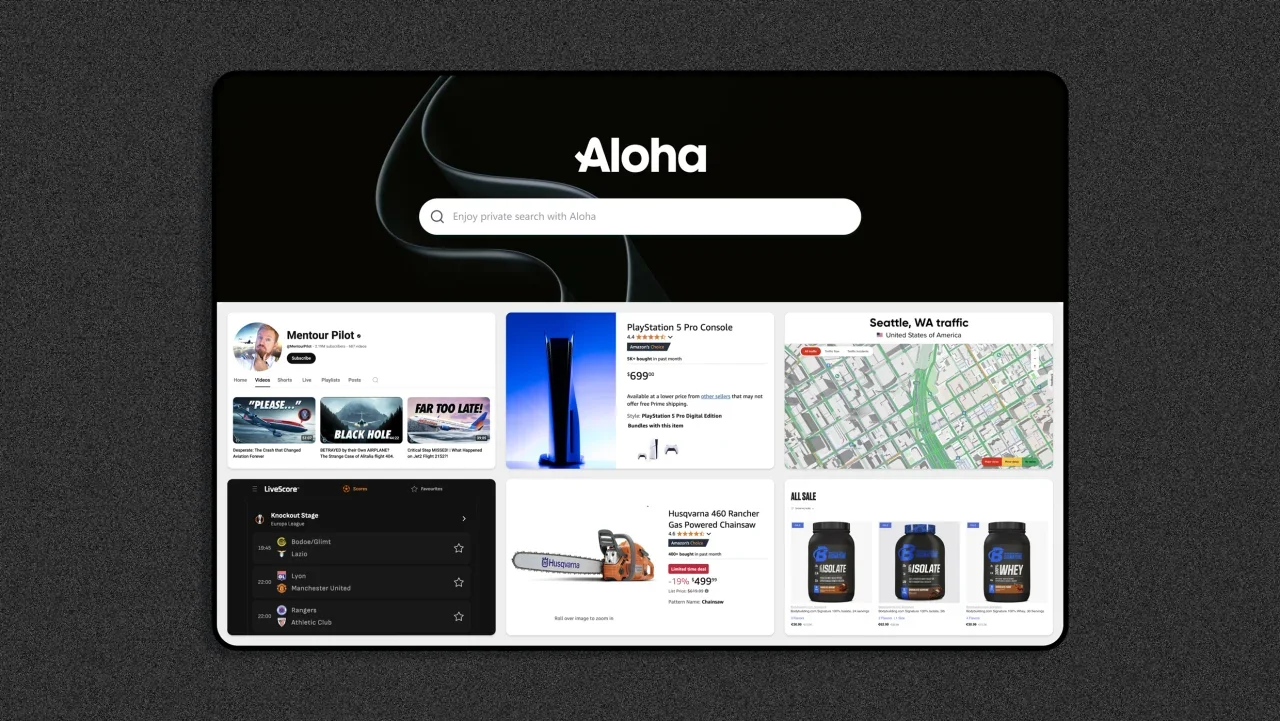
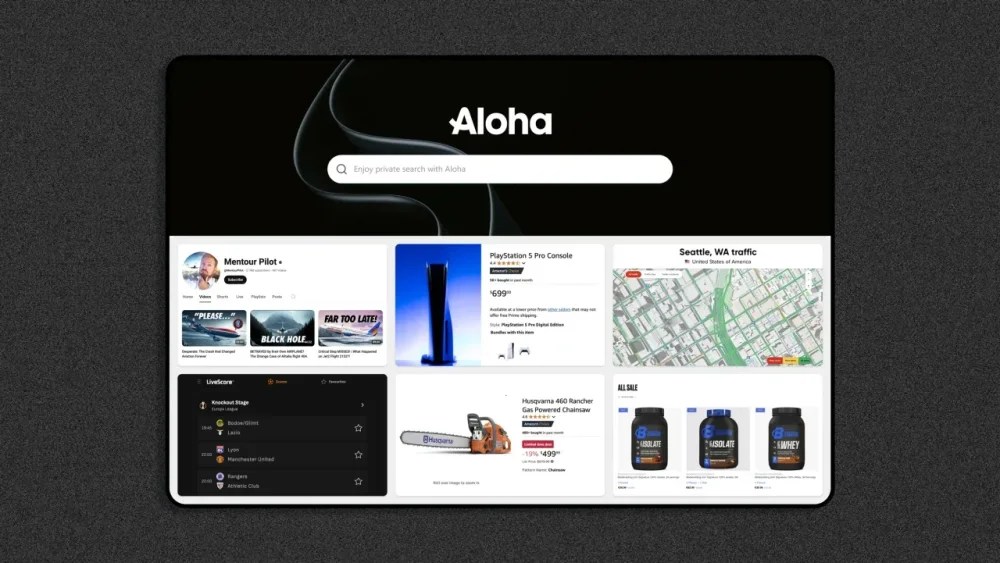
My worst workday habit is that I’m a compulsive web page checker. Throughout the day, I’m constantly refreshing the same handful of sites for updates. I’ll check the metrics on my newsletters, swing through a subreddit or two, and click through some tech news sites—and that’s before even getting to email and social media. Every time I do this, it’s hard to refocus. So I was pretty eager to try Aloha Browser’s new “Snips” feature, which uses AI to periodically monitor web pages and notify you when things change. I figured that by having AI check web pages on my behalf, I could avoid the urge to do so myself and be better at staying on task. It’s helped at least a little, but both Aloha and I still have some work to do. How Snips works Snips is currently available in the desktop version of Aloha for Mac and Windows, appearing as a little box-and-scissors icon next to the address bar. Clicking the icon brings up a selector tool for highlighting the part of the page you want to keep track of. After selecting a snippet, you’ll see a menu for setting up alerts. Choose how often Aloha should check for updates (the default is once per day, but you can go as frequently as every five minutes), then write a sentence describing what changes it should watch for. For instance, if you wanted to monitor the price on a product page, you could write something like “notify me when the price falls below $300.” In my case, I’ve set up a handful of Snips to cut down on compulsive page checking: For the pages where I check on newsletter metrics, I’ve instructed Aloha to only notify me when certain parameters change. I like to check the New York Yankees subreddit, so I’ve asked Aloha to notify me when new posts are created. If I post on social media, I can create a temporary Snip that alerts me if the responses reach a certain threshold. I have alerts set up for when new stories appear on Techmeme, just to make sure I don’t miss anything important. For email, I have Aloha alert me of replies to existing conversation threads. Behind the scenes, Aloha uses on-device AI to analyze page content, then takes routine snapshots of the page to see if things change. For the notification requests, it uses a mix of on-device AI processing and large language models from Grok and OpenAI, but Aloha says no browsing data leaves your device in most cases. (The browser does send some especially complex tasks to a remote server for processing, but requires permission first and deletes the data immediately after.) Once you’ve created some Snips, they’ll appear as screenshots on Aloha’s new tab page. You can tweak the notifications from here, but you can also shuffle and resize the screenshots into a kind of glanceable information dashboard. Why it makes sense There are plenty of other ways to monitor information online. I use CamelCamelCamel for price alerts on Amazon, for instance, and you can always turn on push notifications for email and social media. But Aloha’s Snips feature is a useful alternative because of how granular it can get. You can set up price alerts on any retail site without sharing your contact information, and you can limit social media notifications to specific types of responses or reactions. The alerts come through the Mac or Windows notification tray, so your email inbox and phone notifications stay uncluttered. Room for improvement That’s not to say Aloha’s Snips feature is perfect. It’s subject to the same vagaries as other generative AI tools, which means things may not always work as expected. For instance, I’ve experienced some instances of false positive notifications when nothing changes, or repeat notifications for things I’ve been alerted to already. Aloha’s page refresh capabilities also don’t seem to work 100% of the time. One snippet I set up for the “Newest” section on Techmeme refused to update, and Aloha showed error messages while trying to update standard Reddit pages. (As a work-around, I had to create a snippet on old.reddit.com instead.) If the information you need requires extra clicking or scrolling after reloading the page, it’s not going to work with Snips either. And even when things are working properly, I still have to provide the appropriate degree of willpower. I don’t need Aloha to check Reddit every five minutes, but if I set the interval to be too infrequent, I’ll likely get antsy and start checking it myself. That’s entirely a me problem. Aloha is not my main browser, and it was not really on my radar until the Snips feature arrived. It’s made by a small team based in Cyprus, and touts an emphasis on privacy, but I still prefer the power-user features in the likes of Vivaldi and Floorp. Even so, it’s easy enough to keep running in the background to discourage my compulsive checking habit. I’m going to keep doing that to take a little of the weight off my mind. View the full article
-
An empty light truck is cruising along a sun-drenched highway of Qionghai, a city in Hainan Island, the southernmost part of China. As the car that’s filming overtakes it, we can see the truck has no driver. In fact, it doesn’t even have a cabin: Its front is just a flat wall crowned by what looks to be sensors and cameras. It’s an eerie and surreal view, a Headless Horseman of trucks just as scary as an actual headless horseman. The futuristic yet cheap-looking vehicle is part of a fleet of driverless light trucks that can carry 1,000 parcels each completely unattended over a range of more than 110 miles. These vehicles, operated by Chinese logistics giant ZTO Express, are the vanguard of a silent, state-sponsored effort to revolutionize the way China ships goods around the country. Their fleet is already vastly outperforming the efforts of startups in the U.S. They navigate Hainan’s suburban and rural routes thanks to an artificial intelligence–powered computer that sees the world in 3D using lasers and high-resolution cameras. The trucks are capable of obeying traffic lights, dodging obstacles, yielding to pedestrians, and “talking” to the road itself and other vehicles. The program began in November 2024 with a single vehicle, followed by three additional trucks as part of a pilot overseen by the Eastern Postal Administration of Hainan Province. Its director Zhang Zhi called it at its launch “the beginning of a new intelligent era” for the region’s courier industry. The initial pilot focused on Qionghai’s campuses, commercial districts, and residential areas, but ZTO quickly expanded it throughout the island and the rest of China. Beijing turbocharge It’s just another step in China’s road to automated logistics. The company already had experience with this autonomous technology for last-mile and long-haul logistics. In July 2024, ZTO launched autonomous delivery vans in Taizhou—south of Shanghai—each capable of carrying 600 to 800 parcels per trip—double the capacity of human couriers. These vans, which started development in 2021, are equipped with 360-degree cameras and AI-trained obstacle detection. They now handle nearly a third of last-mile deliveries in Taizhou’s industrial zones. The vehicles use V2X (vehicle-to-everything) communication systems, a technology that allows them to “talk” to traffic lights, road sensors, and other vehicles in real time. Allegedly, V2X reduces collisions and optimizes traffic flow by sharing data like speed, direction, and road conditions. Then, in August, ZTO deployed 400 autonomous heavy-duty trucks across China’s highway network, developed jointly with Shanghai-based autonomous driving startup Inceptio Technology and Dongfeng Commercial Vehicle, a subsidiary of China’s state-owned Dongfeng Motor Group. This marked the largest single delivery of intelligent freight trucks globally at the time, each equipped with light detection and ranging sensors that create 3D maps of surroundings, redundant braking systems, and Inceptio autonomous driving software, a proprietary system designed to optimize long-haul freight efficiency by reducing fuel consumption and human error. The company claims the software has driven 124 million miles, a truly impressive record. The key to this success is Beijing’s aggressive push to fully automate its logistics sector as part of its ambitious 2030 agenda, a national program aimed at ”building a modern, harmonious, and creative society,” according to the World Bank. Hainan was an experiment in which regulatory agility paved the way for this rapid scaling. The province slashed certification requirements to just 1,864 miles of testing, compared to China’s most populous province—Guangdong—which has a 9,320–18,600-mile mandate. Since then, 12 provinces have adopted Hainan’s fast-track certification model, and Beijing has allocated $1.4 billion to retrofit highways with 5G networks and V2X infrastructure. 5G’s ultralow latency provides near-instant data transmission and it ensures autonomous vehicles can process sensor data and communicate with infrastructure without delays, which is a prerequisite for safe operation at high speeds. ZTO’s own proprietary unmanned vehicle management platform, launched a year ago, now monitors a 200 autonomous vehicles fleet across 40 cities, tracking everything from battery levels to pedestrian interactions in real time. An army of ghost trucks and bots And it’s all scaling up this year. As of April 2025, 27 driverless vehicles operate at the company’s Laiwu logistics park in Shandong, south of Beijing. Their routes synced with workers’ handheld scanners. Government officials in this province confirm plans to deploy at least 1,500 such vehicles across Shandong by late 2025, targeting a 50% reduction in labor costs. This shift is driven by necessity: labor costs in China’s logistics sector have risen 8% annually since 2022, while e-commerce parcel volumes exceeded 130 billion in 2024. That’s why Beijing is so adamant to make this happen. ZTO is not alone in this. Alibaba’s logistics arm Cainiao claims to have deployed “thousands” of autonomous delivery robots and vehicles during its 2024 Cainiao Smart Global Logistics Summit. Chinese retail giant JD’s logistics division has 600 autonomous vehicles in operation, making millions of deliveries. And food delivery titan Meituan has been deploying “hundreds” of fully driverless delivery vehicles in major urban centers like Beijing and Shenzhen, according to its Q3 2024 earnings call. Neolix has been deploying thousands of its homegrown autonomous vehicles for various commercial delivery applications since 2021. It’s a stark contrast with what’s happening in the U.S., where there’s a patchwork of state- and city-led policies. Companies like Kodiak Robotics and Gatik are testing autonomous trucks for middle-mile delivery, with Gatik operating a small fleet of box trucks for Walmart in Arkansas. However, deployments remain constrained by fragmented state regulations and a lack of centralized infrastructure investment. For example, California requires permits from both the DMV and Public Utilities Commission for commercial autonomous operations, while Texas allows driver-out testing in the state: In May 2024, Pittsburgh-based autonomous truck technology company Aurora Innovation announced that its first commercial trucks—developed with Volvo—are now driving between Dallas and Houston. The company said that, to date, its self-driving tech has completed 1,200 miles without a driver. Compare that to Inceptio’s 124 million miles. As for smaller vehicles, Waymo Via’s publicly acknowledged deployment of fully driverless delivery vans is likely in the dozens, primarily within pilot programs. Waymo-powered trucks were in trial runs until 2022, but the company stopped its efforts in 2023. Nuro claims it has expanded its autonomous vehicle operations in a handful of cities: Mountain View, Palo Alto, and Houston. Notably, Amazon has not disclosed large-scale deployment numbers for fully driverless road vehicles in commercial operation, and its nutty air delivery system is just not flying as Jeff Bezos probably expected. By 2030, S&P Global Mobility estimates that China will dominate autonomous freight, with 250,000 Level 4 logistics vehicles in operation, compared to 230,000 in the U.S.—most of which will remain focused on ride-hailing, not freight. Seems optimistic for the U.S. side. “China’s strong push for automated driving, bolstered by significant government support and regulatory frameworks, positions it as a potential leader in the development of autonomous vehicle technology and relative to commercialization of the autonomous vehicle industry,” the report says. A centralized strategy, which has resulted in 28,000 miles of roads that are now open for autonomous vehicles with 16,000 licenses issued nationwide. Only time will tell if the U.S. can overtake Beijing, but for now, I can only see a formidable army of Chinese ghost trucks amassing beyond the Great Wall and shaping the future of roads, while we are still playing with cars in geofenced Disneyland rides. View the full article
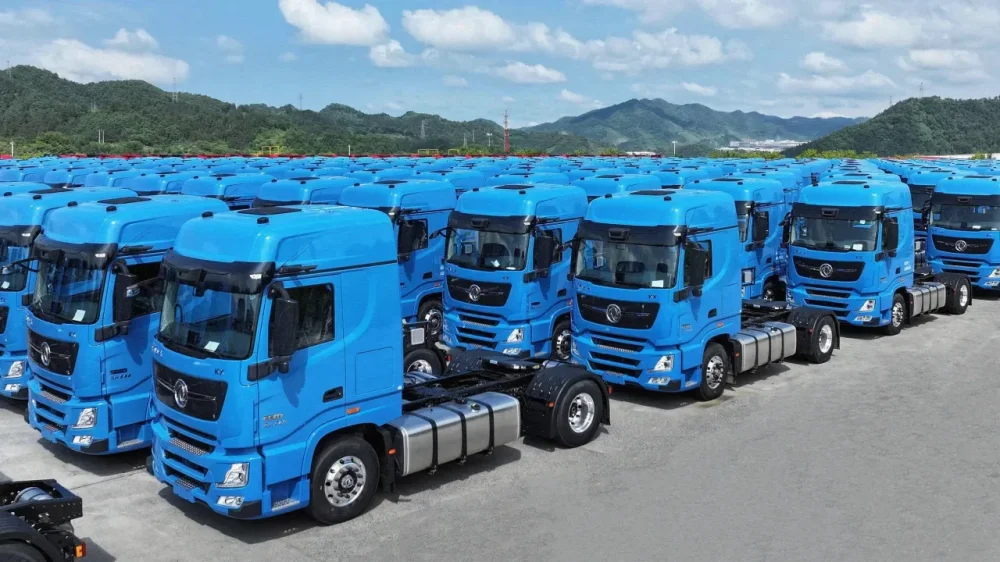
-
Deal with Vienna-based Erste Group cuts exposure to country with few connections to Spanish bank’s biggest marketsView the full article
-
UBS, BNP Paribas, SocGen, Barclays and Deutsche Bank reported €13bn in combined first-quarter trading revenuesView the full article
-
This fall, NASA scientist Kris Bedka flew into Hurricane Helene to test a device that uses lasers to create ultradetailed wind measurements. It could be the key to unlocking better storm predictions. The new device is called the Aerosol Wind Profiler (AWP), and it’s been in the works at NASA for about four years. The AWP uses the Doppler effect to create real-time, 3D maps of wind patterns above the Earth’s surface—data that, before now, has been much more difficult to capture. Bedka is the AWP’s principal investigator at NASA’s Langley Research Center, and he has spent more than 100 hours in the air testing the device in collaboration with the National Oceanic and Atmospheric Administration (NOAA), which runs the National Weather Service (NWS). He believes the AWP could be the missing link in weather agencies’ abilities to accurately map severe weather events like hurricanes and thunderstorms. The shortcomings to current wind data collection To create predictions for severe weather phenomena, agencies like the NWS collate a vast swath of data including atmospheric temperature, moisture levels, and pressure patterns, typically pulled from satellite readings. Wind patterns, both on the ground and above ground level, are another piece of assembling the overall puzzle. But when it comes to fitting wind patterns into the model, there are a few limitations. If forecasters need wind measurements close to the Earth, Bedka says, it’s fairly simple to take readings using sensors that can be mounted on the ground. But what’s most important for weather forecasting is “having a sense of the three-dimensional picture of the wind—so winds not just at the ground, but many miles above us, which all combine to drive the weather that we experience at the ground,” he says. Currently, to get a sense of the 3D wind picture, forecasters mainly use weather balloons. These balloons give accurate readings, Bedka says, but there are only around 1,300 launch sites across the globe, meaning their data is fairly limited. Another tool, called geostationary satellites, can use snapshots of cloud cover and atmospheric moisture patterns to calculate wind vectors, but only at the cloud top, meaning that the 3D wind picture is still missing. Many experts believe that tools like the AWP are the “missing link” to address this problem. How the AWP uses lasers to make a 3D wind map Before making a detailed 3D wind map, scientists need to understand two main factors: how fast wind currents are moving and in what direction. The AWP does that by tracking the movement of particulates—including tiny pieces of cloud matter, dust, smoke, pollution, and sea salt that are all floating in the atmosphere—to see how wind is buffeting them at a given moment in time. To capture the movement of those particulates, the AWP is mounted to an aircraft with viewing ports underneath it. From there, the instrument emits 200 pulses of laser energy per second toward the atmosphere in two opposite directions, where they scatter and reflect off the particulate matter. This scattering causes a measurable change in the laser pulse wavelength, also known as the Doppler effect. “You’ve probably heard of the Doppler effect before, and you’ve experienced it yourself,” Bedka says. “You hear an ambulance coming towards you, and at one particular distance, it sounds very high pitched, and then as it comes by you and then goes away from you, you hear the pitch change—that’s due to the Doppler effect. A Doppler wind lidar kind of behaves in an analogous way.” In simple terms, the altered “frequencies” of laser light that bounce back from particulates give the AWP the information needed to calculate wind speed and direction, even measuring conditions at different altitudes in the atmosphere simultaneously. All of those details can then be stitched together to create a complete 3D wind map. The AWP flies through Hurricane Helene In 2022, Bedka says, NOAA solicited new technologies for accurate wind measurement, which had been an ongoing challenge for the agency when trying to predict severe weather. Since Bedka’s team had just wrapped up their AWP prototype, they proposed an aircraft flight campaign that would validate the tool’s effectiveness. NOAA agreed to fund the proposal, and last fall, Bedka took flight for over 100 hours in a kind of flying laboratory, installed inside a 1970s-era DC-8 aircraft. The lab came outfitted with NASA’s AWP and its High-Altitude Lidar Observatory (HALO), another tool built to measure water vapor, aerosols, and cloud properties. Over the course of the flight campaign, AWP and HALO worked together to create ultradetailed 3D maps of wind patterns and aerosol layers. Bedka was aiming to collect data from as wide a range of weather conditions as possible—and, as it happened, that included Hurricane Helene. Because Helene was a relatively well-predicted storm, Bedka’s team had time to plan a flight route that would allow the AWP to measure “as close to the storm center and the highest winds that were available to us.” Given the plane’s limited six-hour flight range, Bedka and the crew flew through the edges of the hurricane in several legs on September 26, traveling down the western edge of the storm, going around the eye in the Gulf of Mexico, and heading back up the East Coast. In all, it took about nine hours. Bedka, who has flown in several NASA aircrafts through intense thunderstorms, says the conditions were choppy but not too severe. During the hurricane flight, his team was able to collect a rich database of wind measurements that proved the AWP’s potential effectiveness during severe weather. What’s next for the AWP For now, the AWP is just in testing phases, but NASA is currently working to make it more widely available. That would involve bringing on an agency or commercial partner, like NOAA, willing to invest further in the technology—ideally, by adapting it for use on smaller satellites rather than flying it up on planes. Currently, the AWP is about the size of a coffee table, but to fit on a vessel set for space, researchers would need to shrink it to about one-tenth its current size, Bedka says. (According to a NASA spokesperson, the AWP project hasn’t been impacted by federal budget and staff cuts at NASA and NOAA.) Ideally, NASA would be able to create a “constellation” of AWP’s orbiting the Earth that could measure winds simultaneously all across the globe. With such a wide swath of data, prediction models for extreme weather would become significantly more accurate. “Severe storms don’t just pop up just out of the clear blue sky on a random day,” Bedka says. “They form because all the ingredients align in order to make them become as intense as they are. What we’re trying to do with this technology is to measure the winds with as much spatial and vertical detail as permitted by laser technology. We’ve already found that when this data is put into weather prediction models, it has a really big impact.” View the full article

-
In 2021, I quit a 15-year career as a tech executive in the finance industry and pursued content marketing and journalism. When I tell this story, I’m often met with, “You did what?” People can’t wrap their heads around such an unexpected career shift. While I quit my tech job, it wasn’t an overnight decision. In fact, it was something I’d been considering for a long time. A career pivot is much different than simply finding a new job in the same industry. If you’ve contemplated the same, you’ve probably asked yourself, “Can I do this? Will it be worth the change? What if it doesn’t work out?” As someone who’s pivoted not once, but twice, in the past four years (first, I changed industries, and then I became self-employed), I can tell you yes, it’s worth it. But you need to be ready for the impact such a change will have on your career. Here’s how to tell if a major career change is right for you. You can’t stop thinking about it The first sign that you’re ready for a career pivot is that you can’t stop thinking about it. You dream not only of finding a new job, but doing something completely different. You start to explore new skills you might need to acquire, or how to prepare your résumé so it’s attractive to hiring managers in a new field. Once you start thinking nonstop about a career change, those feelings never go away. Trust me. They’ll only expand over time. You start to plan Your dreams become more concrete when you start to consider a timeline. For me, it was, “Can I make this change within five years?” The more I thought about it, the shorter my timeline became. Staying in my current job instead of pursuing something different became unbearable. You’ll start to think about a financial plan. A career pivot may involve a lower salary (at least in the beginning) if you’re starting in a new industry with little experience. Suddenly, my five-year timeline turned into six months. Then I quit without another job lined up (though I was at the end stages of several interviews and an offer came in a few days later). You’re comfortable with unknowns Changing careers can be uncomfortable, especially once you start a new job. The saying “You don’t know what you don’t know” is particularly apt. All the research in the world can’t fully prepare you for your first day doing something completely different. As a longtime employee at my previous job, I went from being the most knowledgeable person in the room to one of the least. I went from being the boss to having a boss. I had no idea how long it would take me to catch on to the nuances of my new career. There were times I felt inadequate due to my lack of knowledge. But I also knew that my previous career—though far different—had given me skills others in my peer group didn’t have. I understood contract negotiation, project management, and resource planning. I leaned into those, which helped me move past my discomfort. You’re willing to pivot again (if needed) As you plan to pivot to a new career, you have to ask yourself, “What if it doesn’t work out?” Maybe you end up hating the work. Maybe moving from a senior role to a junior role bothers you too much. Maybe it’s not the work itself, but you land at a company that isn’t a good fit, and now have to continue the job search. I’m here to tell you: It’s okay to pivot again. Trashing your résumé is an outdated concept. After I pivoted to a new career and joined a marketing agency, I left within eight months and joined a different agency. One year after that, I pivoted again. Now I’m self-employed. As it turns out, that itch I felt to try something different was really a drive to strike out on my own. I didn’t know it at the time. I had to make a few stops along the way to figure out exactly what I wanted to do. What you think you want and what you actually want might be two different things. But chances are, if you’re willing to make the leap once, you’ll be willing to do it again. Anna Burgess Yang is part of the Creator Network at Fast Company, covering topics like work culture and the intersection of technology and work (including the impacts of AI). Anna is a former tech executive who spent more than 15 years at a financial technology company, including roles as a product manager and the director of customer success. In 2021, she joined the Great Resignation and quit her job to pursue content marketing and journalism. Today, she is a freelance writer who works with prominent B2B SaaS companies, specializing in fintech, automation, and AI. Additionally, her work has appeared in The Chicago Tribune, The Chronicle of Higher Education, and several banking publications. You can learn more about Anna at annabyang.com. You can also follow her on LinkedIn, Threads, and Bluesky. View the full article

-
Cloud storage services conveniently let you store and access documents, photos, videos, and more from any device. The best part? Many top providers offer free plans that are surprisingly capable. But with so many options, how do you choose the right free cloud storage service? Let’s take a look at some of the leading free online storage services available today. Google Drive Google Drive offers 15 GB of storage, shared across Google Drive, Gmail, and Google Photos. That’s one of the most generous free storage amounts, and the service offers seamless integration with Google Workspace (Docs, Sheets, Slides). It’s also got a user-friendly interface and solid search capabilities. The 15 GB is shared with other Google services, however, so heavy Gmail users or those backing up high-quality photos might find it fills up quickly. And Google being a large tech company, some users have privacy concerns regarding data handling. Mega At 20 GB, Mega provides the most generous permanent free storage tier among major providers. There’s a strong focus on privacy and security with user-controlled end-to-end, zero-knowledge encryption on all plans, including the free one. The company can’t see your files, in other words. However, free accounts have transfer limits (you can download or upload a certain amount of data over a set period), and its unique encryption means if you lose your password or recovery key, your data is unrecoverable. pCloud pCloud gives you “up to” 10 GB of storage space, which is a decent amount of free space. It also features excellent built-in media players for streaming audio and video directly from the cloud. And it offers unique “Lifetime” paid plans, starting at a one-time $199 payment for 500 GB of storage. However, to reach 10 GB on the free plan, you’ll need to perform certain actions like verifying your email address and installing mobile apps. Encryption and sharing options are also limited on the free tier. Microsoft OneDrive Although Microsoft OneDrive offers only 5 GB of storage on the free plan, it’s got excellent integration with Windows and Microsoft 365 (Word, Excel, PowerPoint). Files can often be accessed directly from Windows’ File Explorer and there’s a “Personal Vault” folder for extra security on sensitive files. 5 GB of free storage might not be enough for all your stuff, however, and there can be similar privacy considerations as Google Drive for some users. Apple iCloud Drive Like Microsoft, Apple iCloud Drive offers a meager 5 GB of storage. This storage is shared across iCloud Drive, device backups, Photos, and Mail. That being said, it’s got unbeatable integration with Apple devices, making it essential for backing up iOS devices and syncing photos across the Apple ecosystem. Those five gigabytes get consumed quickly by device backups and photos, though. Paid plans start at just a buck a month for 50 GB, making it kind of a no-brainer. Dropbox At a lowly 2 GB, Dropbox offers the least amount of free storage of the providers on our list here. It is, however, a pioneer in cloud storage, known for its reliable and fast file syncing, simple user interface, excellent compatibility across platforms, and good third-party app integrations. Sync.com Sync.com offers 5 GB of free storage and boasts excellent security and privacy features, including end-to-end zero-knowledge encryption and compliance with features. There’s also 30-day file versioning and recovery, no file size limits when using desktop or mobile apps, and you can earn more free space through referrals. However, there are limited sharing capabilities on the free plan (number of links and daily downloads per link), and it lacks built-in document editing tools, instead relying on Office 365 integration. View the full article

-
Extreme weather means wildfires and flooding are becoming more likely, posing a risk to urban areas around the worldView the full article
-
Garfield AI offers businesses and individuals in England and Wales a low-cost way to pursue small debt claims View the full article
-
UN body says over 900 Palestinians killed since October 7 2023 in occupied territory as Netanyahu deploys air strikesView the full article
-
In Latin America, the ‘pink tide’ is running out and offering global capital new hopeView the full article