Newsletter
Want to keep up to date with all our latest news and information?


ResidentialBusiness
Administrators
-
Joined
-
Last visited
Everything posted by ResidentialBusiness
-
As the federal government moves to eliminate U.S. climate rules, companies still face pressure to be better stewards of the planet from their customers, investors, employees, local communities, lenders, insurers, global trading partners, and many states. Each of those groups knows it will face increasing costs from rising temperatures and extreme weather if corporations don’t rein in their greenhouse gas emissions. Many companies will find that returning to past polluting ways isn’t in their best interest. Over 60% of chief financial officers surveyed by global management firm Kearney in December 2024 signaled that they intended to invest at least 2% of their revenue in sustainability in 2025. These companies may maintain a low profile about climate change while the The President administration is in power, but they have strong financial incentives to continue to reduce their emissions and their own climate risks. We study private environmental governance—the ways companies and organizations work outside government to improve the nation’s sustainability and reduce environmental damage. Our work finds that, in this polarized era, addressing climate and sustainability challenges is not just a matter of government action. That’s because a lot of climate and sustainability progress is underway in the private sector. Sustainability matters to companies’ bottom lines Businesses have used climate and sustainability initiatives for years to make their operations and supply chains more efficient and to reduce their long-term costs. When McDonald’s faced public pressure to reduce waste in the late 1980s, the company teamed up with the Environmental Defense Fund to analyze the problem. It was able to reduce its waste by 30% over the following decade, saving the company US$6 million a year. This early risk-taking by McDonald’s opened the door for other environmental groups to help businesses understand how to reduce their environmental impact, including emissions, while boosting the companies’ profitability. Maersk, the logistics giant responsible for nearly a quarter of global shipping, has responded to pressure from its corporate customers with a plan to reduce carbon emissions by one-third from 2022 to 2030 and reach net-zero emissions by 2045. It expects the combination of low-emissions vessels and a more efficient delivery network with hubs and shuttles to help meet its climate goals while increasing productivity. Companies have also helped drive the expansion of renewable energy, motivated by the competitive economics of renewables and business opportunities. Facebook’s parent company Meta and Google invested nearly $2 billion in projects to provide renewable energy in the Tennessee Valley Authority service area, even though no government required them to do so. And major companies continued signing renewable energy power purchase agreements in 2025. Microsoft and Amazon are responding to massive new power demand by trying to locate data centers near existing nuclear power plants for cleaner energy supplies. Thousands of companies report emissions via private systems Another sign of companies’ continuing commitment to sustainability is how many of them measure and report their greenhouse gas emissions even when governments do not require them to do so. Nearly 25,000 companies representing two-thirds of total global market capitalization and 85% of the S&P 500 report their emissions to the nonprofit CDP. Disclosing emissions is like keeping a fitness journal with a personal trainer. It helps a company track its progress and plan for future financial and environmental risks. More than 12,500 small- and medium-size companies also disclosed emissions to CDP in 2024. Many of these companies were initially motivated by pressure from environmental groups or corporate customers. Today, they have more reason to continue paying attention to emissions. California has its own formal reporting requirements designed to encourage companies to reduce their greenhouse gas emissions. And other states are considering setting climate disclosure rules. The The President administration has promised to challenge them, and announced that it also plans to cut federal greenhouse gas reporting standards, but companies will likely still face reporting rules in the future. The European Union also has reporting requirements. It delayed their start date in April 2025 to give companies more time to comply. Cleaner supply chains can also be more efficient Managing supply chains with climate and environmental risks in mind can also help businesses increase their efficiency and reduce the risk that climate change will disrupt their operations. The supply chain is the largest source of the average company’s emissions and may be particularly vulnerable to climate shocks. A storm can easily disrupt vital production or shipping, and droughts or heat waves can damage crops, stop work and increase costs. Companies estimate climate-related supply chain risks at $162 billion, nearly three times the cost of mitigating those risks. Many companies therefore have incentives to reduce emissions and their exposure to related hazards. Nearly 80% of the largest companies across seven global economic sectors had set environmental requirements for suppliers within their value chains as of 2023. These requirements include reporting carbon emissions, reducing emissions and using sustainable forestry practices. Walmart eliminated 1 billion tons of carbon emissions from its supply chain in less than seven years by sharing its expertise with suppliers and working with them to reduce their emissions. Walmart’s global director of sustainable retail noted in 2024 that the effort made its suppliers more efficient, too. Keeping employees and customers happy Companies also face pressure from average people − both employees and customers. More than two-thirds of Americans support action to address climate change. Even companies that are not consumer-facing need retail customer and employee support. Pro-climate actions have been found to improve employee and customer loyalty. The outdoor clothing company Patagonia ranked third out of over 300 brands in a 2024 customer experience survey, in part because of its reputation for sustainable practices. Many of the over 10,000 respondents cited the company’s sustainable practices as the leading reason for their support. Many companies also face pressure from lenders and insurers who want to reduce climate risks to their own bottom lines. Dozens of insurers have committed to ending or restricting underwriting for new fossil fuel projects. Others use incentives, such as lower premiums for companies that reduce emissions or invest in climate adaptation. Climate change may accelerate the current 5% to 7% annual increase in insured losses, according to estimates from insurer Swiss Re. That has led some insurance leaders to recommend insurance companies take bigger steps to reduce emissions through their investments and policy underwriting. Private climate governance can help buy time Media attention and interest group advocacy is often focused on government actions, but decisions made in boardrooms and through initiatives with nonprofits have created an important kind of private climate governance. As companies respond to their own economic risks and incentives, they help buy time to avoid the worst impacts of climate change until the political system recognizes the financial risks posed to the entire country. Ethan I. Thorpe is a fellow at the Private Climate Governance Lab at Vanderbilt University. Michael Vandenbergh is a professor of law and co-director of the Energy, Environment and Land Use Program at Vanderbilt University. Zdravka Tzankova is an associate professor of the practice in climate & environmental studies at Vanderbilt University. This article is republished from The Conversation under a Creative Commons license. Read the original article. View the full article

-
Sony said it will raise prices starting Monday for some PlayStation 5 video game consoles in Europe, Australia, and New Zealand, citing global economic turmoil. The company unveiled the price hikes of at least 10%, saying it was a “tough decision” amid the “backdrop of a challenging economic environment, including high inflation and fluctuating exchange rates.” The recommended retail price for a PS5 Digital Edition will go up to 499 euros ($570) in Europe, according to a post Sunday on the official PlayStation blog. That’s up from 449 euros in a previously announced pricing update in 2022. In the United Kingdom, the new price will be 430 pounds ($565), up from 389 pounds previously while in Australia the price will increase to 749 Australian dollars ($474) from $649. The price in New Zealand will rise to 859 New Zealand dollars ($504). The PS5 Digital Edition is a slimmed-down version of the console that comes without a disc drive. Sony said the price in Europe and the U.K. for the standard PlayStation 5, which was released in 2020 and comes with a Blu-ray Disc drive, will remain unchanged, as will the price for the PS5 Pro version, which was released last year. U.S. President Donald The President’s move earlier this month to impose tariffs on nations around the world has roiled global manufacturing supply chains. News on the weekend that imports of electronics like smartphones and laptops are getting a temporary reprieve until the administration figures out a new tariff approach specific to the semiconductor industry has added to the confusion for exporters. —Associated Press View the full article

-
We may earn a commission from links on this page. Deal pricing and availability subject to change after time of publication. The Sony WF-1000XM line has been an innovative and solid series of headphones and earbuds for many years. Right now, the latest version of the Sony WF-1000XM5 earbuds are $179.99 (originally $299.99), a new record-low price, according to price-tracking tools. They are also the best earbuds for audio quality that you can get in 2025, especially if you want to use active noise canceling (ANC). Sony WF-1000XM5 Earbuds $179.99 at Amazon /images/amazon-prime.svg $299.99 Save $120.00 Get Deal Get Deal $179.99 at Amazon /images/amazon-prime.svg $299.99 Save $120.00 You can fully customize the sound of these earbuds with various EQ and personalization options in the accompanying app, but they sound balanced and full out of the box. You also get support for the high-end LC3 and LDAC Bluetooth codecs. Their ANC is great, but what makes them special is that, unlike many other ANC earbuds, their audio quality isn't hindered by using ANC, as noted in PCMag's "outstanding" review. You'll get an IPX4 rating, meaning you can use them during workouts—just don't wear them in the shower. The microphones are quite clear, making them suitable for Zoom or work calls. The battery life lasts eight hours with ANC and 16 hours without it. The carrying case gives you up to 24 hours with a full charge. The app comes with many high-end features that earbuds at this price point offer, like Ambient Sound (hear your surroundings), Adaptive Sound Control (switch between ANC and Ambient Sound), Speak-to-Chat (your media stops when you speak), voice assistance from Alexa or Google Assistant, and other features that you can read more about in CNET's review. View the full article
-
Mauritania isn’t typically a major tourist destination. But its only railway has recently become the subject of a viral TikTok travel trend: riding the “Iron Ore Train.” This 437-mile journey through the Sahara desert offers dramatic selfie backdrops—and no shortage of controversy. The History of the Iron Ore Train The Mauritania Railway, or “Iron Ore Train,” is the country’s only rail line. Since the 1960s, it has transported iron ore from the mining hub of Zouérat to the port city of Nouadhibou. Operated by the state-owned Société Nationale Industrielle et Minière (SNIM), the train is a crucial economic lifeline for Mauritania—hauling up to 16,800 metric tons of iron ore per trip across remote desert terrain in open-air cars stretching up to two miles long. Iron ore makes up nearly 50% of the small nation’s exports. Why Tourists Are Drawn to the Mauritania Railway Although the Iron Ore Train includes a designated passenger car, the social media trend focuses on riding atop the loaded iron ore cars—promoted online as a daring travel adventure. TikTok videos showcase sweeping desert vistas described by commenters as “post-apocalyptic.” The now-ubiquitous selfies show tourists in what one blogger called “the uniform” of “ski goggles and a seche tied tightly around the head,” posing amid clouds of iron dust to “survive the elements.” The Risks and Challenges of Riding the Iron Ore Cars Many posts highlight the journey’s harsh conditions—constant iron dust coating travelers’ skin and lungs, freezing nights, scorching days, and no access to food, water, or restrooms for an average of 20 hours. But instead of serving as a warning, these challenges are often framed as selling points, promoting the trip as a “bucket list item” or “once-in-a-lifetime experience.” The train offers no safety measures for those riding atop the ore cars. If a rider falls off, operators likely wouldn’t know—leaving injured tourists stranded in the middle of the Sahara Desert. The Legal and Ethical Controversy As the trend has grown—and as videos show increasingly unsafe behavior, including backflips on moving cars—SNIM has officially banned tourists from riding on the iron ore cars. Still, that hasn’t stopped social media. Influencers now share tips for evading security, bribing officials, and sneaking onto the train. Some, like Isaac Elam, even sell guides for riding illegally. Social media can be a valuable tool for discovering unique experiences—but it’s important to question who’s sharing this “inside info.” Before chasing the latest viral trend, consider the safety, legal, and ethical risks to yourself and the communities you visit. The livelihood of Mauritania’s people depends on this railway. If reckless tourist behavior causes delays or shutdowns, the consequences could be far more serious than a missed photo op. View the full article

-
A San Diego restaurant owner has been sentenced to 42 months in federal prison for defrauding COVID-19 relief programs and filing false tax returns, the U.S. Department of Justice announced Friday. Leronce Suel, the majority owner of Rockstar Dough LLC and Chicken Feed LLC, operated restaurants in the San Diego area, including Streetcar Merchants in the North Park neighborhood. According to court documents and evidence presented at trial, Suel conspired with others to underreport more than $1.7 million in gross receipts on Rockstar Dough’s 2020 corporate tax return and COVID-19 relief applications. As a result of the scheme, Suel’s businesses fraudulently obtained $1,773,245 in funds from the Paycheck Protection Program (PPP) and the Restaurant Revitalization Fund, both created to help businesses suffering economic harm from the COVID-19 pandemic. Suel and a co-conspirator misused the relief funds by making substantial cash withdrawals from business accounts, purchasing a home in Arkansas, and storing more than $2.4 million in cash in Suel’s bedroom. In addition to the COVID-19 relief fraud, Suel failed to file timely tax returns for the 2018 and 2019 tax years. On the returns he did file for 2020 through 2023, he did not report income from his businesses, including large sums of withdrawn cash. In 2023, Suel also submitted false original and amended tax returns, including personal filings for 2016 and 2017 that listed fraudulent depreciable assets and fabricated business losses. A federal jury convicted Suel in September 2024 of multiple charges, including wire fraud, conspiracy to commit wire fraud, tax evasion, conspiracy to defraud the United States, filing false tax returns, and failure to file tax returns. Following his conviction, Suel agreed to forfeit $1,466,918 in U.S. currency. U.S. District Court Judge Ruth Bermudez Montenegro, presiding in the Southern District of California, sentenced Suel to 42 months in prison and ordered him to pay approximately $1,773,245 in restitution to the Small Business Administration. The court also ordered Suel to forfeit $1,466,918. A separate restitution hearing concerning payments to the IRS is scheduled for June 6. This article, "San Diego Restaurant Owner Sentenced to Over Three Years for COVID-19 and Tax Fraud" was first published on Small Business Trends View the full article
-
A San Diego restaurant owner has been sentenced to 42 months in federal prison for defrauding COVID-19 relief programs and filing false tax returns, the U.S. Department of Justice announced Friday. Leronce Suel, the majority owner of Rockstar Dough LLC and Chicken Feed LLC, operated restaurants in the San Diego area, including Streetcar Merchants in the North Park neighborhood. According to court documents and evidence presented at trial, Suel conspired with others to underreport more than $1.7 million in gross receipts on Rockstar Dough’s 2020 corporate tax return and COVID-19 relief applications. As a result of the scheme, Suel’s businesses fraudulently obtained $1,773,245 in funds from the Paycheck Protection Program (PPP) and the Restaurant Revitalization Fund, both created to help businesses suffering economic harm from the COVID-19 pandemic. Suel and a co-conspirator misused the relief funds by making substantial cash withdrawals from business accounts, purchasing a home in Arkansas, and storing more than $2.4 million in cash in Suel’s bedroom. In addition to the COVID-19 relief fraud, Suel failed to file timely tax returns for the 2018 and 2019 tax years. On the returns he did file for 2020 through 2023, he did not report income from his businesses, including large sums of withdrawn cash. In 2023, Suel also submitted false original and amended tax returns, including personal filings for 2016 and 2017 that listed fraudulent depreciable assets and fabricated business losses. A federal jury convicted Suel in September 2024 of multiple charges, including wire fraud, conspiracy to commit wire fraud, tax evasion, conspiracy to defraud the United States, filing false tax returns, and failure to file tax returns. Following his conviction, Suel agreed to forfeit $1,466,918 in U.S. currency. U.S. District Court Judge Ruth Bermudez Montenegro, presiding in the Southern District of California, sentenced Suel to 42 months in prison and ordered him to pay approximately $1,773,245 in restitution to the Small Business Administration. The court also ordered Suel to forfeit $1,466,918. A separate restitution hearing concerning payments to the IRS is scheduled for June 6. This article, "San Diego Restaurant Owner Sentenced to Over Three Years for COVID-19 and Tax Fraud" was first published on Small Business Trends View the full article
-
The Federal Aviation Administration said Sunday that the helicopter tour company whose sightseeing chopper broke apart in flight and crashed in New York, killing the pilot and a family of five visitors from Spain, is shutting down operations immediately. The FAA, in a statement posted on X, also said it would launch an immediate review of New York Helicopter Tours’ operating license and safety record. The move came hours after New York Sen. Chuck Schumer had called on federal authorities to revoke the operating permits of New York Helicopter Tours. The company’s sightseeing helicopter broke apart in midair and plunged into the Hudson River Thursday, killing the tourists from Spain and the pilot, a Navy SEAL veteran. At a news conference Sunday, before the announcement by the FAA, Schumer said the company should be required to halt all flights as the National Transportation Safety Board investigates the deadly crash. The Senate Democrat minority leader also called on the Federal Aviation Administration to ramp up safety inspections for other helicopter tour companies, accusing them of “cutting corners and putting profits over people.” The victims included passengers Agustin Escobar, 49, his wife, Mercè Camprubí Montal, 39, and their three children, Victor, 4, Mercedes, 8, and Agustin, 10. The pilot was Seankese Johnson, 36, a U.S. Navy veteran who received his commercial pilot’s license in 2023. “One of the things we can do to honor those lives and try to save others is to make sure it doesn’t happen again,” Schumer said. “We know there is one thing for sure about New York City’s helicopter tour companies: They have a deadly track record.” Thursday’s crash has renewed safety concerns about New York’s sightseeing excursions, a popular tourist draw that whisks passengers high above the city, offering soaring views of the Statue of Liberty, the World Trade Center, and other landmarks. In the last two decades, five helicopters on commercial sightseeing flights have fallen into the Hudson and East rivers as a result of mechanical failures, pilot errors, or collisions, killing 20 people. The president of New York Helicopter Tours, Michael Roth, did not respond to phone and email inquiries. The company said in a statement published on its website that it was cooperating with authorities in the investigation. In response to Schumer’s calls for more oversight, an industry group, Eastern Region Helicopter Council, said Manhattan’s sightseeing choppers “already operate under the most stringent of regulations.” “We stand ready to work with leaders on finding ways to ensure the safety and preservation of our businesses and aviation community,” the group said. Critics of the industry have long sought to limit or entirely ban nonessential helicopter flights from taking off above the city, though they have had limited success. After New York City capped the number of flights that could take off from Manhattan heliports at 30,000 annually in 2016, many companies moved operations to New Jersey. Two years later, in 2018, five people died when a helicopter offering “open door” flights crashed in the East River after a passenger’s restraint tether snagged on a fuel switch, stopping the engine. The cause of Thursday’s crash is not yet determined. According to Schumer, rescue divers were continuing to search for the helicopter’s main rotor and assembly gear box, which would give clues about what happened. —Jake Offenhartz, Associated Press View the full article

-
You’re mid-sentence in a meeting, sharing an idea or outlining a strategy you’ve been thinking through for weeks—then it happens. Someone jumps in, cuts you off, and shifts the conversation. You fade out while they take the spotlight. It’s frustrating—but even more so when it’s subtle. Maybe you weren’t shouted over, but you were redirected, ignored, or sidelined. Over time, it takes a toll on confidence, clarity, and leadership presence. So how do you know it’s happening—and how do you stop it? Here are five signs you’re being talked over in meetings, plus practical strategies to reclaim your voice and authority. 1. You’re constantly “circling back” to what you were saying. If you often hear yourself say, “As I was saying earlier,” or, “Just to finish that thought,” you’re probably being interrupted more than you realize. These polite reentries signal you’ve been cut off—and trained to work around it. What to do: Don’t just circle back—own the space. Use direct language. “I’d like to finish my point before we move on,” or, “I wasn’t finished with that thought—let me complete it.” It’s not rude. It’s reclaiming your airtime. 2. You’re the idea originator—but someone else gets the credit. You suggest something early in the meeting. Ten minutes later, someone repeats it—and suddenly it’s a brilliant new direction. This isn’t just annoying—it’s a visibility issue. What to do: Speak up—gracefully but clearly. Stating, “Thanks for building on my idea from earlier,” signals ownership without confrontation. And when others do this to your colleagues, amplify them too. It builds a culture of mutual respect. 3. You’re interrupted before you finish a full sentence. This one is easy to spot—but easy to dismiss. If you rarely get through your full thought before someone else jumps in, you’ve been conditioned to shrink your communication. You may start to self-edit, speak faster, or say less. What to do: Pause, then continue. “I’d like to finish my point,” is powerful and direct. And don’t speed up or apologize. Take your time. If someone consistently interrupts you, address it privately: “I’ve noticed I’m often cut off mid-thought. Can we be more mindful of giving each other space?” 4. Your contributions get ignored until they come from someone else. You bring a new perspective. Silence. Later, a colleague echoes it—and gets enthusiastic agreement. This isn’t your imagination. What to do: Keep a strong, clear voice. “That’s similar to what I shared earlier—maybe we can build on that.” You can also enlist allies ahead of time to support your points, creating an environment where your voice is heard the first time. 5. You leave meetings feeling invisible—or exhausted. The biggest red flag is how you feel. If meetings leave you drained, frustrated, or questioning your value, it’s not about being too sensitive. It’s a sign your presence isn’t being respected—or that you’re overworking to be heard. What to do: Set boundaries and speak up. But also, reflect on the environments you’re in. Is this a meeting problem—or a culture problem? Change what you can, advocate when you need to, and know when it’s time to take your brilliance somewhere it’s truly valued. The bottom line Being interrupted or talked over in meetings isn’t just annoying—it’s a leadership issue. When your voice is minimized, so is your influence. These patterns are deeply embedded in workplace culture, but they aren’t unchangeable. Start with awareness. Add practical language. And remember: owning your voice is one of the most powerful leadership tools you have. View the full article

-
Judge tells Michael Viney ‘custody threshold has been crossed’ after he sold a flat in BarcelonaView the full article
-
President Donald The President bitterly attacked “60 Minutes” shortly after the CBS newsmagazine broadcast stories on Ukraine and Greenland on Sunday, saying the network was out of control and should “pay a big price” for going after him. “Almost every week, 60 Minutes … mentions the name ‘The President’ in a derogatory and defamatory way, but this Weekend’s ‘BROADCAST’ tops them all,” the president said on his Truth Social platform. He called on Federal Communications Commission Chairman Brendan Carr to impose maximum fines and punishment “for their unlawful and illegal behavior.” The network had no immediate comment. The President has an ongoing $20 billion lawsuit against “60 Minutes” for how it edited an interview with Democratic presidential candidate Kamala Harris last fall. The president claims it was edited in a way to make Harris look good, something the newscast denies. But there are ongoing reports that The President’s lawyers and CBS’ parent company are involved in settlement talks. Carr and the FCC have launched a parallel investigation of CBS News about the same case, one of several that it has undergone that also involve ABC News, NBC, PBS, NPR and the Walt Disney Co. Despite the legal battle, “60 Minutes” has been unstinting in its coverage of The President’s administration since he took office for a second term, particularly correspondent Scott Pelley. He traveled to Ukraine to conduct an interview with that country’s president, Volodymyr Zelenskyy, on the site of a Russian attack where nine children were killed earlier this month. In the interview broadcast on Sunday, Zelenskyy said he has “100%” hatred for Russian President Vladimir Putin for the invasion of Ukraine, and invited The President to his visit his country to see what has been done. Also Sunday, correspondent Jon Wertheim reported from Greenland on what some people in that nation are saying about The President’s desire to take control. In his social media message, The President said “60 Minutes” was no longer a news show but “a dishonest Political Operative simply disguised as ‘News,’ and must be responsible for what they have done, and are doing.” David Bauder writes about media for the AP. Follow him at http://x.com/dbauder and https://bsky.app/profile/dbauder.bsky.social —David Bauder, AP Media Writer View the full article

-
The death of downtown is now a familiar refrain. Central business districts (CBDs) in cities around the world—once bustling centers of office work—were hit hard by the pandemic and the shift to remote work, leading many to predict they would never fully recover. But instead of demise, downtowns are being reinvented. And Tokyo is leading the way. Traditional downtown business districts in cities around the world were defined and dominated by vertical towers where legions of white-collar professionals and support staff were stacked in isolated office buildings. The world’s largest metropolitan area is pioneering a new model where the city itself increasingly takes on functions that were once the province of the office, providing amenities and specialized services that enable companies to better attract and retain talent. Instead of a single monolithic CBD, Tokyo’s downtown has been reshaped into a mosaic of distinct downtown districts with their own that together make up its vibrant urban core. Each of them has its own distinct economic identity and unique mix of amenities which allow them to appeal to different kinds of talent. Evolving gradually over the past two decades, this approach is both an organic outgrowth of private sector shifts on development and office location, as well as innovative policies that relax zoning, incentivize mixed-use development, and prioritize public transport access. It also helps that people in Tokyo live in smaller homes and enjoy quick, reliable commutes on clean, efficient trains and subways—conditions that naturally support the return to office work. Taken together, these factors have enabled Tokyo’s downtown to experience one of the world’s strongest rebounds, with high rates of office return, higher commercial rents, and lower vacancy rates than nearly any other global city. We call this new model an urban knowledge campus. Indeed, Tokyo’s downtown districts resemble university campuses more than traditional downtown office clusters. After all, a great university campus is more than just a collection of lecture halls, dormitories, and dining facilities. It forms a complete ecosystem for learning, social interaction, and spontaneous exchange, encompassing labs and studios, sports and athletic centers, theaters, cultural venues, and green spaces. Our detailed research, released by the BCG Henderson Institute, examined five of Tokyo’s most prominent downtown districts—Marunouchi and Nihonbashi, Shibuya, Roppongi, Shinagawa, and Shinjuku—and identified the key characteristics that underpin their collective success as an urban knowledge campus. Density Done Right Tokyo’s downtown districts are among the densest, most intensively used urban spaces on the planet. With daytime populations exceeding 70,000 people per square kilometer in some areas, they are twice as dense as Manhattan but remain clean, orderly, and deeply livable. It’s this level of functional density that distinguishes Tokyo from more suburban innovation hubs like Silicon Valley or Boston’s Route 128. A True Urban Mix Tokyo is distinguished by more than physical density. Its messy, mixed-use urbanity fosters what we call interaction density—the constant, unplanned collisions that spark new ideas and connections. Office spaces intermingle with housing, vibrant retail, green spaces, restaurants, bars, clubs, cultural venues—and, importantly, schools and childcare facilities which help keep families with children in and around the urban core. In fact, office space accounts for less than 40% of land use in four of Tokyo’s five major downtown districts—far lower than in London’s Canary Wharf, where it exceeds 80%; Paris’s La Défense, where it makes up roughly 70%; or Lower Manhattan, where it comprises some 60%. Tokyo’s downtowns districts are 24/7 neighborhoods bustling with life long after business hours—a striking contrast to the CBDs of many global cities that are dominated by monolithic office towers and empty out after dark. A Mosaic of Distinctive Districts Tokyo’s urban knowledge campus isn’t a single entity but rather a mosaic of specialized urban environments that appeal to distinct industries. The unique amenities, services, and character, these districts appeal to different kinds of talent these industries require. This specialization is reflected in the chart below which arrays the city’s five main downtown districts based on two key factors: how specialized each is around particular industries, and how much of each district is dedicated to office space versus other uses. Marunouchi-Nihonbashi is comprised of two adjacent districts in central Tokyo that serve as the hub for the city’s financial and professional services industries. These districts attract finance professionals, strategic consultants, senior executives, and corporate leaders. They have the highest level of industry specialization, and offices make up the largest share of their total footprint. Anchored by major banks, global headquarters, and consultancies, these districts exude stability and formality, with prestige modern skyscrapers rising beside historic facades, and streets lined with luxury retail, fine dining, and shaded plazas. Unsplash Roppongi has evolved into a cosmopolitan center for technology and international business. It has a moderate level of industry specialization compared to Marunouchi-Nihonbashi and a greater variety of non-office uses. Drawing on its historic role as a hub for expatriates, it has become Tokyo’s main center for global corporations and international talent. Once known primarily for nightlife and dining, it now offers a more balanced set of amenities, including more sophisticated arts and culture venues, abundant green spaces, and schools and educational facilities for families. Shibuya is the city’s creative and digital epicenter, home to media firms, startups, and tech ventures. Its specialization and mix of uses are similar to Roppongi. The district is a magnet for the creative class: designers, coders, digital media workers, and creative professionals who thrive on collaboration, improvisation, and inspiration. Its colorful, neon-lit streetscape pulses with energy, featuring avant-garde architecture, ramen shops, clubs, pop-up boutiques, and live-music venues. Loud, fast, and experimental, Shibuya’s edgy vibe was a key factor in Google’s decision to place its Japanese headquarters here. Unsplash Shinjuku stands out as more balanced in terms of its industry mix and use of space. It attracts a diverse workforce—bureaucrats, executives, business travelers, and creatives—to its mix of government offices, high-rise hotels, entertainment venues, shops, and transit terminals. With amenities ranging from policy think tanks to karaoke bars, it’s the most “Tokyo” of the city’s districts: dense, vertical, chaotic, and dynamic. Unsplash Lessons for Corporate Location Strategy Companies in the U.S. and around the world have much to learn from what Tokyo has done. Choosing a location isn’t merely about real estate or cost; it’s about strategically positioning organizations in areas that can help attract, energize, and retain essential talent. The office today is more than a building or a place to work; it’s a platform for culture, community, and innovation. The urban knowledge campus is what this looks like when scaled to the level of the city. At a time when talented people have more choice than ever, companies must move beyond the idea that workers should simply report to an office. They must place themselves in locations that excite and inspire. The knowledge campus functions more as a magnet than a mandate. Companies must elevate location as a core element of their overall corporate strategy. Where a company chooses to locate shapes its culture, its innovation capacity, and its prospects for growth. Forward-thinking firms increasingly understand that talent attraction depends on far more than amenities inside the office. It depends on the quality of the broader environment—transit access, housing, schools, safety, vibrancy, and a sense of place. But this goes beyond simply selecting great locations. To truly succeed in this new era, companies must engage proactively in shaping the environments they inhabit, partnering with developers, local governments, and other institutions to co-create the kinds of neighborhoods that support their workforce and long-term success. In Tokyo, private developers have played a critical role in evolving the downtown districts into more livable, vibrant spaces. And such development has been facilitated by government policies that allow greater land-use flexibility; encourage mixed-use development; provide transit connectivity; and fill the urban core with schools, child-care facilities, and other essential services that keep families with children in the urban center alongside young people and empty-nesters. Such long-term public investments in urban ecosystems enable companies to thrive. Tokyo’s experience shows what’s possible when companies, developers, and government are aligned around making great places for companies and for people. In today’s knowledge economy, place matters more than ever. Choosing a location isn’t just about selecting an address—it’s the cornerstone of sustained competitive advantage. This research was conducted under the auspices of the BCG Henderson Institute. View the full article

-
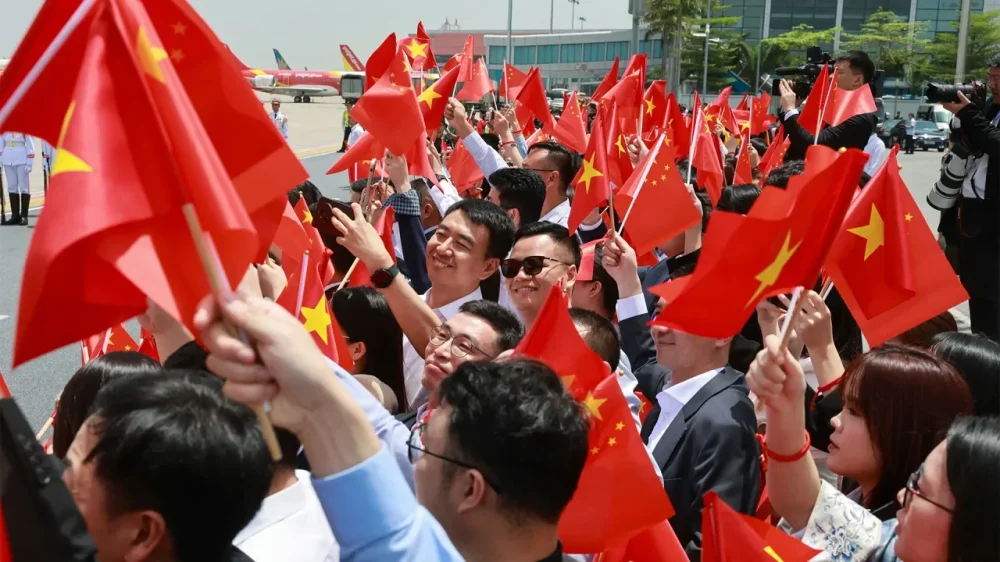
China’s leader Xi Jinping said no one wins in a trade war as he kicked off a diplomatic tour of Southeast Asia on Monday, reiterating China’s commitment to global trade in contrast with U.S. President Donald The President’s latest tariffs moves. Although The President has paused some tariffs, he has kept in place 145% duties on China, the world’s second-largest economy. “There are no winners in a trade war, or a tariff war,” Xi wrote in an editorial jointly published in Vietnamese and Chinese official media. “Our two countries should resolutely safeguard the multilateral trading system, stable global industrial and supply chains, and open and cooperative international environment.” Xi’s visit lets China show Southeast Asia it is a “responsible superpower in the way that contrasts with the way the U.S. under President Donald The President presents to the whole world,” said Nguyen Khac Giang, a visiting fellow at Singapore’s ISEAS–Yusof Ishak Institute. Xi was greeted on the tarmac by Vietnam’s President Luong Cuong at the start of his two-day visit, a mark of honor not often given to visitors, said Nguyen Thanh Trung, a professor of Vietnamese studies at Fulbright University Vietnam. Students of a drum art group performed as women waved the red and yellow Chinese and Communist Party flags. While Xi’s trip likely was planned earlier, it has become significant because of the tariff fight between China and the U.S. The visit offers a path for Beijing to shore up its alliances and find solutions for the high trade barrier that the U.S. has imposed on Chinese exports. In Vietnam, Xi will meet with Vietnam’s Communist Party General Secretary To Lam, his counterpart, as well as the Prime Minister Pham Minh Chinh. “The trip to Vietnam, Malaysia, and Cambodia is all about how China can really insulate itself against the from The President,” said Nguyen Khac Giang, pointing out that since Xi became the president in 2013, he has only visited Vietnam twice. The timing of the visit sends a “strong political message that Southeast Asia is important to China,” said Huong Le-Thu of the International Crisis Group think tank. She said that given the severity of The President’s tariffs and despite the 90-day pause, Southeast Asian nations were anxious that the tariffs, if implemented, could complicate their development. Vietnam is experienced at balancing its relations with the U.S and China. It is run under a communist, one-party system like China but has had a strong relationship with the U.S. In 2023, it was the only country that received both U.S. President Joe Biden and China’s Xi Jinping. That year it also upgraded the U.S. to its highest diplomatic level, the same as China and Russia. Vietnam was one of the biggest beneficiaries of countries trying to decouple their supply chains from China, as businesses moved here. China is its biggest trading partner, and China-Vietnam trade surged 14.6% year-on-year in 2024, according to Chinese state media. But the intensification of the trade war has put Vietnam in a “very precarious situation” given the impression in the U.S. that Vietnam is serving as a backdoor for Chinese goods, said Giang, the analyst at Singapore’s ISEAS–Yusof Ishak Institute. Vietnam had been hit with 46% tariffs under The President’s order before the 90-day pause. China and Vietnam have real long-term differences, including territorial disputes in the South China Sea, where Vietnam has faced off with China’s coast guard but does not often publicize the confrontations. After Vietnam, Xi is expected to go to Malaysia next and then Cambodia. —- —Huizhong Wu and Aniruddha Ghosal, Associated Press View the full article
-
China appears to be pursuing a calculated effort to recruit recently laid-off U.S. scientists—particularly those with expertise in artificial intelligence—to relocate or contribute remotely to research operations based in Shenzhen. This campaign is reportedly being driven by a network of entities linked to a shadowy Chinese technology conglomerate. In March, advertisements offering “full-cycle support” for relocation to Shenzhen were placed on LinkedIn, Craigslist, and in several major international publications. (I was alerted to one such newspaper ad through a friend in the city.) The timing coincides with a wave of budget-driven layoffs across U.S. federal agencies, including the Centers for Disease Control and Prevention (CDC) and the National Institutes of Health (NIH), following funding reductions by the Department of Government Efficiency (DOGE). The recruitment effort has drawn scrutiny from U.S. officials and intelligence analysts, who view it as part of a broader Chinese strategy to acquire advanced technological expertise through nontraditional channels. The FBI has previously warned that Chinese “talent programs” may serve as mechanisms to extract intellectual property and sensitive research from foreign institutions under the guise of academic or professional collaboration. Laid-off federal employees with security clearances or institutional knowledge are considered particularly vulnerable. Analysts suggest that financial strain and professional uncertainty may make these individuals more susceptible to overtures from foreign entities. While international recruitment of scientific talent is not unusual, the circumstances surrounding this initiative—particularly the use of potentially deceptive firms and the targeting of a freshly displaced U.S. workforce—raise significant counterintelligence and national security concerns. In response, U.S. agencies are reviewing protocols for layoffs involving sensitive personnel, including strengthening exit briefings and restrictions on post-employment affiliations. Platforms like LinkedIn have also stepped up efforts to detect and remove fraudulent recruiter profiles, which are often used in foreign influence and espionage operations. Shenzhen’s emergence as a global innovation hub is a relevant factor. Since being designated a Special Economic Zone in the 1980s, the city has attracted significant investment and become a core node in China’s technology ecosystem. Many U.S. companies have longstanding relationships in the region, leveraging its capacity for rapid prototyping and cost-effective manufacturing. There is reason to believe that China may frame Shenzhen as a politically neutral environment for scientific work, potentially increasing its appeal to foreign researchers. Sources familiar with current efforts tell me that remote collaboration options are being offered to further lower barriers—allowing scientists to contribute to Chinese research initiatives without relocating. However, analysts caution that any scientific contribution—remote or otherwise—ultimately supports the interests of the Chinese state. Shenzhen operates within the political and regulatory framework of the People’s Republic of China, and research conducted there is unlikely to remain fully compartmentalized or independent. Additionally, former U.S. government employees with security clearances may face legal and regulatory constraints that bar them from working with Chinese research entities, including academic institutions. This recruitment campaign highlights a broader strategic competition between the U.S. and China over leadership in critical technologies, particularly artificial intelligence. In this context, the targeting of displaced American scientific personnel represents a pragmatic, if provocative, maneuver by Beijing. While it remains uncertain how effective this strategy will be, it reflects a sophisticated understanding of the intersection between economic dislocation and talent acquisition—and reinforces the urgency of policy responses that address both national security and workforce resilience. View the full article

-
Big Lots continues to trickle back to life after a bankruptcy last year that was widely expected to lead to its demise. The discount retailer will see another 54 store reopenings at the beginning of next month, according to Variety Wholesalers, the North Carolina-based retail company that has taken control of hundreds of Big Lots leases. These “second wave” store openings will span 12 states across the South and Midwest, a Variety spokesperson shared with Fast Company. The stores are expected to open on Thursday, May 1. What happened to the original Big Lots? After suffering declining sales and foot traffic for years, Big Lots filed for Chapter 11 bankruptcy protection in September 2024. The company fell under the control of liquidation firm Gordon Brothers and had been expected to close every location. But Variety Wholesalers—which owns Roses, Super Dollar, Bargain Town, and other discount retail chains—agreed to take over at least 200 leases in a last-minute deal announced in December. As part of the deal, Variety agreed to operate the locations under the Big Lots brand. However, after selling off merchandise and holding going-out-of-business sales, the Variety-owned locations will still shutter for at least a few weeks while the company prepares them for reopening. The first wave of nine locations opened last week with stores in six states, as Fast Company first reported in March. Future openings are planned for June, for a total fleet count of 219 locations when all is said and done. At the time of the bankruptcy, Big Lots had more than 800 locations around the country, meaning its footprint under Variety will be significantly smaller, though hopefully no less beloved by fans of discount merchandise. North Carolina will see the biggest number of Big Lots openings in the second wave, with 12 locations set to open in the state. Additional second-wave stores will be located in Michigan, Ohio, Pennsylvania, West Virginia, Kentucky, Virginia, Indiana, Tennessee, South Carolina, Alabama, and Georgia. The full list appears below: Michigan 4157 E. Court Street, Burton, MI 48509 5112 Miller Rd, Flint, MI 48507 7651 23 Mile Rd, Shelby Township, MI 48316 Ohio 4331 Mahoning Ave NW, Warren, OH 44483 7100 South Ave, Boardman, OH 44512 1965 W State St, Alliance, OH 44601 498 Cadiz Rd, Wintersville, OH 43953 56104 National Rd, Bridgeport, OH 43912 6300 E Livingston Ave, Reynoldsburg, OH 43068 Pennsylvania 866 Scranton Carbondale Hwy, Archbald, PA 18403 1010 O’Neill Hwy, Dunmore, PA 18512 7405 Westbranch Hwy, Lewisburg, PA 17837 West Virginia 1228 Country Club Rd, Fairmont, WV 26554 104 Thompson Dr, Bridgeport, WV 26330 710 Beverly Pike, Elkins, WV 26241 118 Hills Plz, Charleston, WV 25312 110 Eagle School Rd, Martinsburg, WV 25404 7200 Mccorkle Ave SE, Charleston, WV 25304 Kentucky 200 Sycamore St Ste 151, Elizabethtown, KY 42701 472 Eastern Byp, Richmond, KY 40475 1714 Perryville Rd Ste 400, Danville, KY 40422 942 Happy Valley Rd, Glasgow, KY 42141 Virginia 1090 Millwood Pike, Winchester, VA 22602 2715 W Main St, Waynesboro, VA 22980 4300 Portsmouth Blvd, Chesapeake, VA 23321 2646 Greensboro Rd, Martinsville, VA 24112 Indiana 195 S US Hwy 231, Jasper, IN 47546 Tennessee 1262 NW Broad St, Murfreesboro, TN 37129 4825 N Broadway St, Knoxville, TN 37918 420 Park Blvd, Rogersville, TN 37857 840 25th St NW, Cleveland, TN 37311 North Carolina 1504 N Bridge St, Elkin, NC 28621 1826 W US Hwy 421 Ste K, Wilkesboro, NC 28697 526c US Highway 70 SW, Hickory, NC 28602 2587 W Franklin Blvd, Gastonia, NC 28052 1328 Carter St, Mount Airy, NC 27030 1063 Yadkinville Rd, Mocksville, NC 27028 100 Westwood Village Dr, Clemmons, NC 27012 12295 Capital Blvd, Wake Forest, NC 27587 1110 Julian R Allsbrook Hwy, Roanoke Rapids, NC 27870 955 N Wesleyan Blvd, Rocky Mount, NC 27804 4956 Long Beach Rd SE Ste 8, Southport, NC 28461 2407 N Herritage St Ste E, Kinston, NC 28501 Alabama 5363 Hwy 90 W Ste C, Mobile, AL 36619 603 US Hwy 72 W, Athens, AL 35611 1820 6th Ave SE, Decatur, AL 35601 South Carolina 2349 Cherry Rd Ste 79, Rock Hill, SC 29732 1000 N Pine St, Spartanburg, SC 29303 915 S St Ste A, Simpsonville, SC 29681 1023A S Pendleton St, Easley, SC 29642 Georgia 558 Battlefield Pkwy, Fort Oglethorpe, GA 30742 323 Habersham Village Cir, Cornelia, GA 30531 110 E Northside Dr, Valdosta, GA 31602 2708 Peach Orchard Rd, Augusta, GA 30906 View the full article

-
China warns against politicising crisis at Scunthorpe plant after ministers step in to take controlView the full article
-
White House National Economic Council Director Kevin Hassett dismissed the idea of a recession looming this year. View the full article

-
Key Takeaways Bonding & Skill Development: Starting a business with your kids fosters family bonding while teaching them essential life skills such as responsibility and teamwork. Financial Literacy: Involving children in business helps them learn financial fundamentals, including budgeting, expense tracking, and understanding profit margins. Creativity & Innovation: Collaborating on a business allows kids to express creativity, develop problem-solving skills, and think critically about branding and marketing. Variety of Business Ideas: Options for businesses include online ventures, local services, and handmade products, each providing unique opportunities for learning and engagement. Setting Goals & Accountability: Implementing SMART goals helps maintain focus and accountability, ensuring each family member understands their role in the business. Time Management & Balance: Success involves balancing business responsibilities with family time and maintaining an enjoyable atmosphere to prevent burnout and encourage innovation. Looking for a fun way to bond with your kids while teaching them valuable life skills? Starting a business together might be the perfect solution. Not only does it create lasting memories, but it also instills a strong work ethic and entrepreneurial spirit in your little ones. Benefits of Starting Businesses With Your Kids Starting a business with your kids offers unique advantages, enriching both your family’s experience and your children’s future. Engaging in entrepreneurial activities together cultivates essential skills that go beyond the traditional classroom. Teaching Financial Literacy You teach your kids the fundamentals of financial literacy by involving them in business operations. Kids learn how to create a budget, track expenses, and understand profit margins. This firsthand experience equips them with knowledge about taxes and how to manage cash flow effectively. Exploring concepts like pricing and sales funnels helps develop their understanding of basic financial principles, setting a solid foundation for future financial decisions. Fostering Creativity and Innovation Starting a business together encourages kids to apply creativity and innovation. You motivate them to brainstorm and refine business ideas, whether it’s through product development or marketing strategies. Allowing them to shape aspects of the business model nurtures their problem-solving skills and helps them think critically about their target audience. This collaborative process can lead to unique branding elements and marketing campaigns that capture attention and foster growth. Types of Businesses to Start Engaging your kids in business ventures fosters entrepreneurship and teaches essential skills. Explore these categories to find opportunities for collaboration and growth. Online Ventures Starting an online business offers flexibility and access to a global market. Consider launching a family blog or vlog to share your experiences, tips, or hobbies. Monetization options include ads, sponsored posts, and affiliate marketing. An online shop on platforms like Etsy or Shopify can also be lucrative. Focus on selling handmade crafts, vintage items, or custom-designed products to appeal to niche markets. This venture teaches your kids about e-commerce dynamics, digital marketing, and customer service approaches. Local Services Offering local services allows you to engage with your community while developing business acumen. Examples include dog walking, gardening, or tutoring. Identify your target audience and conduct market research to understand their needs. Create a simple business plan and establish a legal structure—options include LLCs or sole proprietorships. Teach your kids the essentials of customer acquisition, pricing strategies, and maintaining strong client relationships, all critical for small business success. Handmade Products Creating and selling handmade products unites creativity with business skills. Consider crafting jewelry, art, or clothing. Develop a unique brand identity to differentiate your products. Focus on marketing through social media and local events to build recognition. This experience enriches your children’s understanding of product development, branding, and sales techniques. Discuss the importance of quality control and setting profit margins to ensure a sustainable venture. Tips for Success Creating a successful business with your kids requires planning, teamwork, and a clear understanding of goals. Use the following strategies to ensure a rewarding entrepreneurial journey. Setting Realistic Goals Start by establishing specific, measurable, achievable, relevant, and time-bound (SMART) goals. These help in creating a focused business plan. For example, set a revenue target for the first quarter or determine the number of products to sell at local craft fairs. Discuss these goals regularly to track progress and adjust as needed. Ensure that every family member understands their role in achieving these objectives, which fosters accountability and a sense of ownership. https://www.youtube.com/watch?v=pTTvv3voSHs Encouraging Teamwork and Responsibility Foster a collaborative environment by assigning age-appropriate tasks. Allow kids to handle aspects like marketing via social media or product development based on their interests. Teaching them skills like customer service or budgeting creates a strong foundation for their entrepreneurial endeavors. Encourage open communication to share ideas and feedback, promoting innovation. Celebrating small successes together builds confidence and strengthens family bonds, making the business experience enjoyable and memorable. Challenges to Consider Starting a business with your kids can be rewarding, but certain challenges arise that require attention. Time Management Time management becomes crucial when balancing family and business responsibilities. You’ll face multiple commitments, from school schedules to project deadlines. Developing a structured business plan with a clear timeline helps allocate sufficient time for both work and family activities. Prioritizing tasks and setting realistic milestones can prevent burnout and ensure everyone stays engaged in the process. Balancing Fun and Work Balancing fun and work is essential for a successful entrepreneurial journey with your kids. Maintaining enthusiasm for the business can lead to innovation and creativity. However, you need to ensure tasks remain focused on achieving business goals. Regularly discuss roles and responsibilities to keep everyone accountable while allowing for flexibility to enjoy the experience. Find moments to celebrate achievements, reinforcing a positive work environment without sacrificing the quality of your business operations. Conclusion Starting a business with your kids is more than just a financial venture; it’s a chance to create lasting memories and teach invaluable life skills. You’ll not only bond over shared goals but also instill a strong work ethic and entrepreneurial mindset in them. As you embark on this journey together, remember to keep the experience enjoyable and educational. Celebrate achievements, no matter how small, and maintain open lines of communication. By doing so, you’ll not only build a successful business but also strengthen your family ties. Embrace the challenges and joys of entrepreneurship with your children. You’ll be amazed at the creativity and innovation they bring to the table while you guide them along the way. Frequently Asked Questions What are the benefits of starting a business with my children? Starting a business with your children helps strengthen family bonds while teaching essential life skills. It fosters financial literacy, creativity, and a strong work ethic, allowing kids to learn about budgeting, expenses, and profits. This shared experience creates lasting memories and instills an entrepreneurial spirit in children. What types of businesses can families start together? Families can start various businesses, including online ventures like e-commerce shops or blogs, local services such as dog walking or tutoring, and handmade product sales. Each type allows kids to learn valuable skills while engaging creatively with their community and the market. How can we effectively plan our family business? To effectively plan your family business, set SMART (specific, measurable, achievable, relevant, time-bound) goals. Regularly discuss these goals together to track progress and ensure accountability. Assign age-appropriate tasks to each family member to foster skill development and a sense of responsibility. What challenges might we face when starting a family business? Challenges can include time management, balancing family and business responsibilities, and keeping tasks enjoyable. Developing a structured business plan with clear timelines can help. Regular discussions about roles and responsibilities can maintain focus while allowing for flexibility during the entrepreneurial journey. How can we celebrate successes in our family business? Celebrating small successes together is crucial for building a positive work environment. It reinforces teamwork and motivation. Share achievements as a family, whether through small rewards or fun activities, to maintain enthusiasm and strengthen your family’s bond while working toward business goals. Image Via Envato This article, "Exciting Businesses You Can Start with Your Kids for Fun and Learning Together" was first published on Small Business Trends View the full article
-
Key Takeaways Bonding & Skill Development: Starting a business with your kids fosters family bonding while teaching them essential life skills such as responsibility and teamwork. Financial Literacy: Involving children in business helps them learn financial fundamentals, including budgeting, expense tracking, and understanding profit margins. Creativity & Innovation: Collaborating on a business allows kids to express creativity, develop problem-solving skills, and think critically about branding and marketing. Variety of Business Ideas: Options for businesses include online ventures, local services, and handmade products, each providing unique opportunities for learning and engagement. Setting Goals & Accountability: Implementing SMART goals helps maintain focus and accountability, ensuring each family member understands their role in the business. Time Management & Balance: Success involves balancing business responsibilities with family time and maintaining an enjoyable atmosphere to prevent burnout and encourage innovation. Looking for a fun way to bond with your kids while teaching them valuable life skills? Starting a business together might be the perfect solution. Not only does it create lasting memories, but it also instills a strong work ethic and entrepreneurial spirit in your little ones. Benefits of Starting Businesses With Your Kids Starting a business with your kids offers unique advantages, enriching both your family’s experience and your children’s future. Engaging in entrepreneurial activities together cultivates essential skills that go beyond the traditional classroom. Teaching Financial Literacy You teach your kids the fundamentals of financial literacy by involving them in business operations. Kids learn how to create a budget, track expenses, and understand profit margins. This firsthand experience equips them with knowledge about taxes and how to manage cash flow effectively. Exploring concepts like pricing and sales funnels helps develop their understanding of basic financial principles, setting a solid foundation for future financial decisions. Fostering Creativity and Innovation Starting a business together encourages kids to apply creativity and innovation. You motivate them to brainstorm and refine business ideas, whether it’s through product development or marketing strategies. Allowing them to shape aspects of the business model nurtures their problem-solving skills and helps them think critically about their target audience. This collaborative process can lead to unique branding elements and marketing campaigns that capture attention and foster growth. Types of Businesses to Start Engaging your kids in business ventures fosters entrepreneurship and teaches essential skills. Explore these categories to find opportunities for collaboration and growth. Online Ventures Starting an online business offers flexibility and access to a global market. Consider launching a family blog or vlog to share your experiences, tips, or hobbies. Monetization options include ads, sponsored posts, and affiliate marketing. An online shop on platforms like Etsy or Shopify can also be lucrative. Focus on selling handmade crafts, vintage items, or custom-designed products to appeal to niche markets. This venture teaches your kids about e-commerce dynamics, digital marketing, and customer service approaches. Local Services Offering local services allows you to engage with your community while developing business acumen. Examples include dog walking, gardening, or tutoring. Identify your target audience and conduct market research to understand their needs. Create a simple business plan and establish a legal structure—options include LLCs or sole proprietorships. Teach your kids the essentials of customer acquisition, pricing strategies, and maintaining strong client relationships, all critical for small business success. Handmade Products Creating and selling handmade products unites creativity with business skills. Consider crafting jewelry, art, or clothing. Develop a unique brand identity to differentiate your products. Focus on marketing through social media and local events to build recognition. This experience enriches your children’s understanding of product development, branding, and sales techniques. Discuss the importance of quality control and setting profit margins to ensure a sustainable venture. Tips for Success Creating a successful business with your kids requires planning, teamwork, and a clear understanding of goals. Use the following strategies to ensure a rewarding entrepreneurial journey. Setting Realistic Goals Start by establishing specific, measurable, achievable, relevant, and time-bound (SMART) goals. These help in creating a focused business plan. For example, set a revenue target for the first quarter or determine the number of products to sell at local craft fairs. Discuss these goals regularly to track progress and adjust as needed. Ensure that every family member understands their role in achieving these objectives, which fosters accountability and a sense of ownership. https://www.youtube.com/watch?v=pTTvv3voSHs Encouraging Teamwork and Responsibility Foster a collaborative environment by assigning age-appropriate tasks. Allow kids to handle aspects like marketing via social media or product development based on their interests. Teaching them skills like customer service or budgeting creates a strong foundation for their entrepreneurial endeavors. Encourage open communication to share ideas and feedback, promoting innovation. Celebrating small successes together builds confidence and strengthens family bonds, making the business experience enjoyable and memorable. Challenges to Consider Starting a business with your kids can be rewarding, but certain challenges arise that require attention. Time Management Time management becomes crucial when balancing family and business responsibilities. You’ll face multiple commitments, from school schedules to project deadlines. Developing a structured business plan with a clear timeline helps allocate sufficient time for both work and family activities. Prioritizing tasks and setting realistic milestones can prevent burnout and ensure everyone stays engaged in the process. Balancing Fun and Work Balancing fun and work is essential for a successful entrepreneurial journey with your kids. Maintaining enthusiasm for the business can lead to innovation and creativity. However, you need to ensure tasks remain focused on achieving business goals. Regularly discuss roles and responsibilities to keep everyone accountable while allowing for flexibility to enjoy the experience. Find moments to celebrate achievements, reinforcing a positive work environment without sacrificing the quality of your business operations. Conclusion Starting a business with your kids is more than just a financial venture; it’s a chance to create lasting memories and teach invaluable life skills. You’ll not only bond over shared goals but also instill a strong work ethic and entrepreneurial mindset in them. As you embark on this journey together, remember to keep the experience enjoyable and educational. Celebrate achievements, no matter how small, and maintain open lines of communication. By doing so, you’ll not only build a successful business but also strengthen your family ties. Embrace the challenges and joys of entrepreneurship with your children. You’ll be amazed at the creativity and innovation they bring to the table while you guide them along the way. Frequently Asked Questions What are the benefits of starting a business with my children? Starting a business with your children helps strengthen family bonds while teaching essential life skills. It fosters financial literacy, creativity, and a strong work ethic, allowing kids to learn about budgeting, expenses, and profits. This shared experience creates lasting memories and instills an entrepreneurial spirit in children. What types of businesses can families start together? Families can start various businesses, including online ventures like e-commerce shops or blogs, local services such as dog walking or tutoring, and handmade product sales. Each type allows kids to learn valuable skills while engaging creatively with their community and the market. How can we effectively plan our family business? To effectively plan your family business, set SMART (specific, measurable, achievable, relevant, time-bound) goals. Regularly discuss these goals together to track progress and ensure accountability. Assign age-appropriate tasks to each family member to foster skill development and a sense of responsibility. What challenges might we face when starting a family business? Challenges can include time management, balancing family and business responsibilities, and keeping tasks enjoyable. Developing a structured business plan with clear timelines can help. Regular discussions about roles and responsibilities can maintain focus while allowing for flexibility during the entrepreneurial journey. How can we celebrate successes in our family business? Celebrating small successes together is crucial for building a positive work environment. It reinforces teamwork and motivation. Share achievements as a family, whether through small rewards or fun activities, to maintain enthusiasm and strengthen your family’s bond while working toward business goals. Image Via Envato This article, "Exciting Businesses You Can Start with Your Kids for Fun and Learning Together" was first published on Small Business Trends View the full article
-
Access to a high-quality webcam isn't always guaranteed: While decent options are now built into most laptops, they're not all of an acceptable standard. Maybe you've got a monitor without a webcam attached; maybe you want a different angle—there are numerous reasons why you might need another webcam. If you've got an iPhone, you've actually got a webcam, too. The process for setting up your iPhone as a webcam has gotten easier down the years, especially on macOS, though you can also use it as a connected camera on a Windows PC with a little more effort. Use your iPhone as a webcam on macOSMacs, iPhones, and other Apple gadgets all work fairly seamlessly together in a variety of ways now, from mirroring an iPhone on macOS to using your iPad as a second display. Included in this suite of cross-device tricks, under the name Continuity Camera, is the option to use your iPhone as a webcam for any app on your Mac. There are some simple rules for getting this to work. Both your Apple computer and your iPhone need to have wifi and Bluetooth enabled, and need to be signed into the same Apple account. The two devices must be within 10 meters or 30 feet of each other and meet the minimum requirements (in short, an iPhone launched in 2018 or later and running iOS 16 or later, and a Mac running macOS 13 Ventura or later). Choosing an iPhone as a camera in FaceTime. Credit: Lifehacker Assuming you've checked all those boxes, open up Settings on your iPhone, head to General > AirPlay & Continuity, and make sure Continuity Camera is enabled. You then need to get your iPhone in landscape orientation—you can change it around while you're using it, but the initial connection needs to be in landscape mode. Load up any webcam-using app on macOS, and you should then see your iPhone as an option for the video feed. With FaceTime, for example, open the Video menu and you should see it listed. You're able to move the iPhone and change its angle while it's in use, but you can't switch between the front and rear cameras: You can only use the rear camera for your webcam. This all works wirelessly over wifi and Bluetooth, but you can also connect your iPhone to your Mac via a USB cable too, if you want to—you might find you get a slightly more stable connection, and it also means you won't be draining your phone's battery while you're using it as a webcam. You can pause or disconnect from your iPhone screen. Credit: Lifehacker Click the video feed icon in the menu bar at the top of the macOS interface to access the various webcam features Apple now offers, including Portrait and Studio Light, though not all of them work on all iPhones: For keeping yourself in view via Center Stage, for example, you need an iPhone with an ultra-wide camera. You can also enable Desk View from this drop-down menu, which lets you create a top-down view of whatever's on your desk (very handy for sharing documents). While your iPhone is in use as a webcam, you'll see a Pause button on the iPhone screen, which temporarily stops the live feed. A second button underneath, Disconnect, turns off webcam mode completely. You can also close down the video app you're using or switch to a different webcam to exit out of webcam mode on your iPhone. Use your iPhone as a webcam on WindowsUsing your iPhone as a webcam on Windows is a little more involved, and you're going to need the assistance of a third-party app to get everything working. However, there are plenty of apps to choose from for the job, and most of them are free or at least offer the basic webcam functionality for free. One app that's been reliably serving users for a long time is DroidCam. You need to get both the Windows client installed on your computer, and the iOS app installed on your iPhone, and then all you need to do is launch them both—there's no need to register an account, and everything works over your wifi network. Using DroidCam on Windows with an iPhone. Credit: Lifehacker The application gives you a few settings and filters to play around with so you can get your feed looking exactly how you want it, and with DroidCam running, your iPhone is then available as a webcam option for any software running on your PC. It will simply show up as a webcam you can switch to. You can use DroidCam free of charge, but if you pay $4.99 a year or a one-off fee of $14.99, you get access to resolutions above 1080p and can remove the DroidCam watermark on your webcam feed. Paying for the software also adds a few more controls on both the Windows and the iOS side. Another option that I've found straightforward and reliable is Camo. As with DroidCam, you need to get the software set up on Windows, and on your iPhone via the iOS app. It couldn't be much simpler to set up, with no registration needed, and you can connect over wifi or by plugging your iPhone into your Windows computer with a USB cable. Camo offers a range of video effects and filters. Credit: Lifehacker Camo is much more of a software suite, with a range of features you can use with any webcam you like: From exposure and white balance adjustments to clever background effects. Once you've got your iPhone configured as a webcam inside Camo, you can then use it to deliver a video feed in any other app on Windows. Most of Camo's features are available to use free of charge, but there is a Camo Pro subscription level that will set you back $4.99 a month. The key benefits are video resolutions up to 4K (rather than 720p), support for variable frame rates, and access to a smart zoom feature that uses some clever tricks to improve zoom levels without losing image quality. View the full article
-
Tariff exemptions announced Friday on electronics like smartphones and laptops are only a temporary reprieve until the The President administration develops a new tariff approach specific to the semiconductor industry, U.S. Commerce Secretary Howard Lutnick said Sunday. White House officials, including President Donald The President himself, spent Sunday downplaying the significance of exemptions that lessen but won’t eliminate the effect of U.S. tariffs on imports of popular consumer devices and their key components. “They’re exempt from the reciprocal tariffs but they’re included in the semiconductor tariffs, which are coming in probably a month or two,” Lutnick told ABC’s This Week on Sunday. The President added to the confusion hours later, declaring on social media that there was no “exception” at all because the goods are “just moving to a different” bucket and will still face a 20% tariff as part of his administration’s move to punish China for its role in fentanyl trafficking. The The President administration late Friday had said it would exclude electronics from broader so-called reciprocal tariffs, a move that could help keep the prices down for phones and other consumer products that aren’t usually made in the U.S. China’s commerce ministry in a Sunday statement welcomed the change as a small step even as it called for the U.S. to completely cancel the rest of its tariffs. Sparing electronics was expected to benefit big tech companies like Apple and Samsung and chip makers like Nvidia, though the uncertainty of future tariffs may rein in an anticipated tech stock rally on Monday. U.S. Customs and Border Protection said items like smartphones, laptops, hard drives, flat-panel monitors and some chips would qualify for the exemption. Machines used to make semiconductors are excluded too. That means they won’t be subject to most of the tariffs levied on China or the 10% baseline tariffs elsewhere. It was the latest tariff change by the The President administration, which has made several U-turns in its massive plan to put tariffs in place on goods from most countries. White House officials sought to dismiss any suggestion of a reprieve as the weekend progressed. “It’s not really an exception. That’s not even the right word for it,” U.S. Trade Representative Jamieson Greer told CBS’s Face the Nation on Sunday. “This type of supply chain moved from the tariff regime for the global tariff, the reciprocal tariff, and it moved to the national security tariff regime.” Greer added that “the president decided that we’re not going to have exemptions. We can’t have a Swiss cheese solution to this universal problem that we’re facing.” On Air Force One Saturday night, President Donald The President told reporters he would get into more specifics on exemptions on Monday. In his post Sunday on TruthSocial, he promised the White House was “taking a look at Semiconductors and the WHOLE ELECTRONICS SUPPLY CHAIN.” Some had assumed the exemption filed Friday night reflected the president’s realization that his China tariffs are unlikely to shift more manufacturing of smartphones, computers and other gadgets to the U.S. any time soon, if ever. The administration has predicted that the trade war prod Apple to make iPhones in the U.S. for the first time, but that was an unlikely scenario after Apple spent decades building up a finely calibrated supply chain in China. It would take several years and cost billions of dollars to build new plants in the U.S., burdening Apple with economic forces that could triple the price of an iPhone and torpedo sales of its marquee product. The turmoil has battered the stocks of tech’s “Magnificent Seven” — Apple, Microsoft, Nvidia, Amazon, Tesla, Google parent Alphabet and Facebook parent Meta Platforms. At one point, the Magnificent Seven’s combined market value had plunged by $2.1 trillion, or 14%, from April 2 when The President unveiled sweeping tariffs on a wide range of countries. When The President paused the tariffs outside of China on Wednesday, the lost value in those companies was pared to $644 billion, or a 4% decline. An electronics exemption would fulfill the kind of friendly treatment that industry was envisioning when Apple CEO Tim Cook, Tesla CEO Elon Musk, Google CEO Sundar Pichai, Facebook founder Mark Zuckerberg and Amazon founder Jeff Bezos assembled behind the president during his Jan. 20 inauguration. That united display of fealty reflected Big Tech’s hopes that The President would be more accommodating than President Joe Biden’s administration. Apple won praise from The President in late February when the Cupertino, California, company committed to invest $500 billion and add 20,000 jobs in the U.S. during the next four years. The pledge was an echo of a $350 billion investment commitment in the U.S. that Apple made during The President’s first term when the iPhone was exempted from China tariffs. An electronics exemption would remove “a huge black cloud overhang for now over the tech sector and the pressure facing U.S. Big Tech,” said Wedbush analyst Dan Ives in a research note. Ives amended that note after Lutnick’s comments Sunday, saying the confusing news out of the White House “is dizzying for the industry and investors and creating massive uncertainty and chaos for companies trying to plan their supply chain, inventory, and demand.” Neither Apple nor Samsung responded to requests for comment over the weekend. Nvidia declined to comment. O’Brien reported from Providence, Rhode Island. AP White House correspondent Darlene Superville in West Palm Beach, Florida, and AP Technology Writer Michael Liedtke in Berkeley, California contributed to this report. —Mae Anderson and Matt O’Brien, Associated Press View the full article

-
Executives from three wholesale shops, including PRMG, The Loan Store and Newfi, dissected the regulatory landscape and how some developments might impact the broker channel. View the full article
-
We may earn a commission from links on this page. Deal pricing and availability subject to change after time of publication. If you’re looking for a home security camera that doesn’t cost a fortune but still delivers sharp video and smart features, the TP-Link Tapo C120 might be worth a closer look. At $24.99 (down from $39.99), it undercuts a lot of competition while still offering 2K video, color night vision, and voice control via Alexa and Google Assistant. TP-Link Tapo Indoor/Outdoor Home Security Wi-Fi Camera C120 $24.99 at Amazon /images/amazon-prime.svg $39.99 Save $15.00 Get Deal Get Deal $24.99 at Amazon /images/amazon-prime.svg $39.99 Save $15.00 It’s compact, just over two inches wide, with a clean design that fits just as easily on a bookshelf as it does on an outdoor wall. And thanks to its magnetic base and weatherproof IP66 rating, you can mount it indoors or out without stressing over the elements. That said, it plugs in with the included 10-foot USB-C cable, so it’s not battery-powered, but you won’t be dealing with frequent recharges either. What the TP-Link Tapo C120 does well is core functionality. Its video feed is sharp thanks to its 4MP sensor (with a 120-degree field of view), and it gives you full-color night vision (using its Starlight sensor plus its built-in spotlights) when there’s ambient light—or even in complete darkness if you toggle the white LEDs. And if you don’t want to light things up, you can always switch to black-and-white infrared mode via the companion app. Motion detection is customizable—you can set it to notify you only for people or cars, for example, which keeps the spammy alerts in check. You get the option to store clips locally using your own microSD card (up to 512GB) or pay for cloud storage via Tapo Care. That subscription starts at $3.49/month and adds things like longer clip history and better filtering, but it’s optional if you’re okay with handling storage yourself. That said, it doesn’t support Apple HomeKit or IFTTT, according to this PCMag review. Google Assistant and Alexa work fine, especially for viewing the feed on smart displays, but automation is limited beyond that. Two-way audio is there, too, but you have to hold a button on the app to talk, which can be annoying if you're using it frequently. Still, the footage it captures—especially at night—is better than what you’d expect from a sub-$30 camera. View the full article
-
With the US and China facing off in a tariff war, the time has come for the UK to pivotView the full article
-
Most of us have a love-hate relationship with our cars. We love our vehicles because they represent freedom (and economic necessity, if you rely on one to get to work or do your grocery shopping), but we hate how much they cost—and the fact that you never actually stop paying for them. It costs an average of $1,452 every year just to keep your vehicle running, and the overall cost of owning a car is a whopping $6,684 annually. As crucial as vehicle maintenance is in terms of making sure your car is reliable, people tend to skip an awful lot of it. If all you do every year is the basics—changing the oil and engine filters in a standard tune-up—you’re skipping a bunch of maintenance that only seems less important. Here are the vehicle maintenance steps you should definitely not skip. Cleaning battery terminalsYour car’s battery is where the magic starts: When you turn the key or press the ignition button, a charged, fully-functioning battery sets everything in motion. Even if your battery is relatively new and still in good shape, corrosion can build up on the terminals. Anything that inhibits the connection between your battery and the systems it powers will impact your car’s performance and can damage your engine and electrical systems, so cleaning those terminals twice a year is a good idea. It’s a pretty simple process, actually. Checking all the fluidsSure, you change the oil according to a schedule—but your car runs on a lot of different fluids, and you should be checking and replacing them all regularly. This includes: Transmission fluid. Just because it’s “sealed” or described as “lifetime” doesn’t mean it shouldn’t be checked and possibly changed out. Making sure levels haven’t dropped when you change the oil is a good idea, and even if your transmission fluid is holding up at 100,000 miles, you should change it out. Brake fluid. Brake fluid can break down just like engine oil, so it’s a good idea to check it every time you change the oil, and change it out every few years, even if your brakes are working properly. You’re better off asking your mechanic to do this for you unless you’re very experienced, though, as brake fluid changes can be a bit more complicated than other fluids used in your car. Differential fluid. The differential distributes power to your wheels, making turns smoother and giving your car more stability. You should check your car’s manual for specifics, but generally speaking you should have it changed when you hit 30,000 miles or so. Coolant. If you haven’t checked your antifreeze recently, now would be the time. It’s incredibly easy to drain and replace your coolant, which you should do according to manufacturer recommendations or every few years. Power steering. You like being able to steer your car without putting your back into it, don’t you? Then you should be checking your power steering fluid to make sure it doesn’t resemble mud. If it does, change it. If it doesn’t, look up the recommended replacement schedule for your car and change it then. Change the wipersThe worst time to realize your windshield wipers have become a shell of their former selves is when you’re caught in a rainstorm and can’t see anything through the pour. Plus, there’s nothing less fun than changing your wipers in the midst of a storm. Your wipers will give you some warning that they’re wearing out, leaving streaks and making a lot of squeaky noises, so when you notice those signs, it’s time to pop off the old ones and pop on the new. Check the lightsYou rely on your car’s various lights—headlights, hazard lights, signal lights, and brake lights—for safe operation of the vehicle, so it’s amazing how many people don’t bother to check if they actually work. Take two minutes every year to turn on the lights and walk around the car to ensure they’re all working properly. Changing out a bulb here and there can spare you from being pulled over by a police officer—or worse. Check tire pressureProper tire pressure affects just about every aspect of your driving experience—it can make braking harder, affect the stability of the car (if you’ve never felt a car shake because the tires were overinflated, you haven’t lived), and impact fuel efficiency. Check the tire pressure (this is literally printed on the tire itself) at least once a month and adjust as needed. Even if you get your tires rotated regularly (as you should), you should also check your tires’ tread wear every now and then. Rapid or uneven wear on tire tread could indicate other problems with the car, and if your tires are starting to get a little bald it’s a very good idea to get them replaced before their lack of traction gets you into an accident. Cleaning out the drainsYou might not even be aware of the fact that your car has several drains that keep water from collecting in the engine—or in the cabin area. All of these drains should be inspected and cleaned out periodically—otherwise moisture will build up, rusting components and staining parts of the car. Typical drain locations include: Sunroofs. If you have a sunroof, there are drains built into the car that carry rain and other water that gets through the seals. Your car’s manual will show you exactly where they are, but they’re generally located in the corners of your sunroof well. Doors. Drains are often located at the bottom of your doors. Often the sunroof drains are connected to these as well. Windshield. Look where the windshield meets the hood of the vehicle, and you’ll likely find drains at each end. Trunk/bed. Drains are often included in the read of the vehicle as well. All of these drains can get clogged with gunk, which can lead to water inside the car, or invisible rusting and corrosion that destroys the vehicle from the inside-out. They can usually be cleaned with just a garden hose—the water pressure alone should work to expel built-up debris. If you have a stubborn clog, a length of wire run down through the drain should help. Change the cabin filterYou probably replace engine filters regularly, but have you ever inspected and replaced the cabin filter? These filters clean the air pumped into your vehicle’s interior via the A/C, heat, or ventilation system. It gets filthy just like any other filter, which leads to lower air quality in your vehicle’s cabin and extra stress on your systems. Look at your manual to find out where it’s hiding, then swap it out at least once a year—more often if you notice a drop in air quality, or if you regularly drive through some dusty areas. Washing the exteriorYou might think washing your car is a luxury, or a non-essential aspect of maintenance, but you would be wrong. Your car is bombarded with a ton of gross stuff—from dirt that scratches the finish, bugs that muck up your windshield, and corrosive stuff that can undermine your vehicle’s seals and other components. In other words, not washing your car on a regular basis will shorten its lifespan and increase your maintenance costs. View the full article
-
It’s been another chaotic weekend when it comes to President The President’s tariff trade war. On Friday, it was announced that electronic devices like smartphones and computers would be exempt from the looming tariffs of up to 145%—music tech investors’ ears. But by Sunday, the president had said that any exemptions would be short-lived. Despite this tariff exemption whiplash, the Magnificent Seven tech stocks of Alphabet, Amazon, Apple, Meta, Microsoft, Nvidia, and Tesla are all currently up in premarket trading this morning—the first trading session after the tariff exemptions were initially announced. Here’s what you need to know. Tariff exemption whiplash Since President The President announced sweeping tariffs on nearly every country in the world on April 2, the stock markets have been hammered. But perhaps even worse than the tariffs’ effect on the markets has been the messaging around the tariffs. At various times over the past two weeks, administration officials have stated that the tariffs are both open to negotiation and permanent. And now the messaging over tariff exemptions is equally as confusing. On Saturday, Bloomberg was the first to report that the U.S. Customs and Border Protection, which is charged with managing tariffs on imported goods, had posted a bulletin day earlier, on April 11, that the The President administration had declared tariff exemptions on certain electronic devices. These exemptions meant that many popular consumer items—and items that are also critical to the supply chains of America’s Big Tech companies—would not be hit with staggering 145% tariffs if being imported from China (and lower, but still high tariffs from other nations). The bulletin said there were now exemptions on smartphones, computers, tablets, and even smartwatches, among other electronic items. This news was particularly welcome to Apple’s investors, as the company sources many of its iPhones, MacBooks, and Apple Watches from China. But this relief surrounding the tariff exemptions was short-lived. That’s because, on Sunday, April 13, The President officials and President The President himself stated that the just-published exemptions weren’t actually permanent. Policy confusion continues As noted by CNN, The President’s commerce secretary, Howard Lutnick, told ABC News on Sunday morning that “(Electronics are) exempt from the reciprocal tariffs, but they’re included in the semiconductor tariffs, which are coming in probably a month or two.” In other words, Lutnick seemed to confirm that smartphones and laptops are indeed exempt from the existing reciprocal tariffs. However, he further implied that, in a few months, the The President administration will be rolling out another new type of tariff to cover items with semiconductors (computer chips) inside. That would mean smartphones and laptops will be hit with tariffs then. Lutnick also said that upcoming tariffs targeting products that are key to national security, which likely include semiconductor products, are “not available for negotiation.” President The President also chimed in on Sunday on Truth Social, announcing that “NOBODY is getting ‘off the hook’ for the unfair Trade Balances, and Non Monetary Tariff Barriers, that other Countries have used against us, especially not China which, by far, treats us the worst!” The President went on to claim that “There was no Tariff ‘exception’ announced on Friday.” He said that the reportedly previously announced exempted products like smartphones and laptops were still subject to an existing 20% fentanyl tariff “and they are just moving to a different Tariff ‘bucket.’” “The Fake News knows this, but refuses to report it,” the president continued. “We are taking a look at Semiconductors and the WHOLE ELECTRONICS SUPPLY CHAIN in the upcoming National Security Tariff Investigations.” Big tech stocks react in Monday trading While Apple would undoubtedly be the biggest winner from any electronics exemptions in the tariffs on China, nearly every major tech company would benefit as well. Even if they do not sell physical hardware products, they rely on servers and other electronics to keep their software services running. So it’s no wonder that, what the The President administration says is now just a temporary pause, is still being met with a positive reaction in the markets when it comes to the stock prices of the Magnificent Seven. Here’s how Mag Seven stocks are reacting at the time of this writing in premarket trading: Alphabet Inc. (Nasdaq: GOOG): up 1.4% Amazon.com, Inc. (Nasdaq: AMZN): up 1.6% Apple Inc. (Nasdaq: AAPL): up 4.9% Meta Platforms, Inc. (Nasdaq: META): up 1.7% Microsoft Corporation (Nasdaq: MSFT): up 0.8% NVIDIA Corporation (Nasdaq: NVDA): up 1.8% Tesla, Inc. (Nasdaq: TSLA): up 1.3% It’s worth keeping in mind, however, that while the The President administration says any tariff exemptions are temporary, you have to take that with a grain of salt—or at least be aware that things could change in the future. The administration’s stance on tariffs—or at least the administration’s messaging around its stance on tariffs—has been all over the place this month. Things could be very different a week from now, as Democratic Senator Elizabeth Warren of Massachusetts pointed out this weekend. “Nobody can figure out what the rules will be five days from now, much less five years from now,” she said (via CNN). This story is developing . . . View the full article