Newsletter
Want to keep up to date with all our latest news and information?


ResidentialBusiness
Administrators
-
Joined
-
Last visited
Everything posted by ResidentialBusiness
-
I have lost count of the number of accomplished professionals who’ve said to me, “I don’t want to seem silly on video” or, “I am awkward when I’m on camera.” I have trained hundreds of people, ranging from members of Congress to supermodels to everyday folks, for national TV program appearances. Here are my tips to sound natural and authentic on camera. Toss The Teleprompter, Ditch the Script Try not to use a teleprompter! Here’s why: The idea of video is to build connection. Using a prompter makes you sound like a robot. For short-form videos, under a minute long, instead of relying on a teleprompter, identify two to three bullet points. Write them on a sticky note and put it on your phone or camera. Make sure to put it close to the lens so you have the proper eye line. If you must stick to a script—whether it’s to ensure legal accuracy, clearly communicate your offerings, or include specific required details—then using a prompter is totally fine. Just don’t let it flatten your energy. Don’t ‘Sell’ Etched into my memory is the spokesperson for now-defunct consumer electronics chain Crazy Eddie in a bizarre ad from the ‘80s where he shouts directly at you that the discounts are “insane.” He’s talking loudly and very quickly; it’s a prototypical sales pitch of that era. Too many of us remember that type of commercial, and we think we don’t want to be that guy. That’s the excuse people use to avoid making videos. Here’s the perfect solution: If you don’t want to be salesy, don’t sell. Every piece of content you put out there should deliver value: Focus on educating people, sharing your perspective of what’s happening in your industry, or having people feel seen. Over time, that will convert into sales, but not from shouting. A recent client who hired me to build their video marketing plan said she had been listening to me on a podcast and had been following me on social media for several months. I had been able to build that trust with her through providing her with valuable content online. No Studio? No Problem If you’re worried that the style or quality of your video will represent your company poorly, remember that for every Razzie Award-winning B-film, there is an Oscar-winning documentary. The key is understanding the style you want, and working with a video producer or agency to execute the style you’re interested in that feels most authentic to your brand and voice. Communicate your aesthetic preferences clearly and you’ll be closer to Oscar documentary than slasher film. If you’re interested in the DIY path but you’re worried your videos feel low-budget, there are simple ways around this. I coach clients on how to get the most of your iPhone (the resolution on the cameras are very high) and my clients have been able to expand their client list extensively through iPhone videos alone. Make sure to use the highest resolution settings on your phone both as you film it and maintain the high-quality settings as you edit and upload. There are of course many reasons to hire a professional video crew—where the audio and video quality are high and you can leave the tech up to someone else. View the full article

-
European Commission officials heading to IMF and World Bank spring meetings advised to travel with basic devicesView the full article
-
“Who am I to tell them how to make decisions?” This anxiety-induced thought played like a broken record in my head as my first leadership training event approached in my new role as a training director. Talking in front of 40 leaders, most of whom were older than my ripe old age of 30 at the time felt like the perfect opportunity for them to see right through my lack of expertise and expose me as the fraud I was. Years ago, while working at a regional bank, I was promoted from trainer to leading a training team in another department. My prior roles as a sales trainer and human resources consultant allowed me to build a company-wide reputation as an expert on complicated sales processes and navigating employee benefits and hiring processes. This new role pushed me out of the payment division into the retail branch banking side. In other words, it was way out of my comfort zone. And at this first training event, I could no longer rely on my expertise to help me feel safe, trusted, or relevant. The Sky Parted That first event was tough. Afterward, I admitted to my manager, “Who am I to tell them what to do? I’ve been a manager for about five minutes and most of these leaders have been managers for 15 years.” The question she posed to me next transformed my relationship with expertise for a lifetime. She asked, “What if your job is not to be the expert up there, but to facilitate the expertise in the room?” It was like the sky parted and the sun emerged. Of course that was the answer. Because I had been promoted throughout my career due to my level of expertise, it was natural for me to assume that in my new role, expertise was the only way I could add value. Instead of being the expert, I had to rebrand myself as a leader who could facilitate, promote, and grow the expertise around her, whether it be in a training room, on my team, or even now leading my own coaching and speaking practice. Managers looking to break their identity as the expert and the go-to can benefit from undertaking a similar rebranding campaign. People will likely continue to reach out to you, hoping for you to provide quick answers or jump in to help them fix an issue the way you used to. But it’s critical that you teach others how to see and use you in a new way so that you can advance to more strategic levels of leadership. This is easier said than done. After all, people have grown accustomed to your old ways of working. Here are some common situations that can keep your stuck in the expert identity trap and some strategies to consider to avoid it. THE GUILT TRAP Moving into a new leadership role can sometimes unsettle colleagues accustomed to our old ways of working. They may (intentionally or not) attempt to elicit guilt, saying things like, “You used to do this for me” or “People are going to be upset about this change.” While these concerns may be valid, your role is to redirect any resistance toward productive outcomes. A helpful response might be, “That’s true, and moving forward, my focus is on working on this strategic project development for my team.” Here are some other questions you can ask to redirect their energy: I know I used to handle this issue. How can I help you get the resources you need to move forward? I could give you the answer and I would also love to help you self-source for future needs. Where have you looked so far? I understand that people may be upset that I’m not involved any longer. What ideas do you have to help support them moving forward? THE HABIT TRAP As I rose to new levels of leadership in my corporate roles, if I continued saying yes to too many requests to do the work myself, people would continue to expect this of me. As a result, I would have been too busy delivering training without enough time to plan for, coach, and develop my direct reports. It would also mean my team loses out on valuable development opportunities and meaningful work. In every conversation, you have the opportunity to set the tone for your leadership, for the team, and for yourself. This includes expressing your expectations and having clear boundary conversations to redistribute and delegate work that is no longer yours. This might sound like: Jane handles this project now. I’d be happy to coordinate an introduction and handoff. Matt will be leading this initiative from now on. I’d be happy to schedule time for us to connect and coordinate transitions. THE COMFORT TRAP When you are promoted, comfort can get the best of your leaders if they continue assigning the same tasks as they did before the promotion. Because they value your speed and competence, this can hinder your growth in your new role. To avoid this, proactive communication is key. In my experience making this shift, I proactively communicated with my leader by clearly defining which projects I’d handle personally and which I’d delegate. I also encouraged my leader to reset expectations with her peers, making it clear my team would take on more project work as I transitioned into higher-level responsibilities. Aligning with leadership across the organization ensures that both you and your team are positioned to grow into new opportunities. This might sound like: I’d like my team to take on this project moving forward, so I can uplevel. How should we best communicate this to your peer group? Instead of me, my team will be leading these events. How should we best inform your peers so they know to go to Susie instead of me? THE FREE TIME TRAP You have excused yourself from meetings you don’t need to be a part of and successfully delegated work. Now what? The mindset shift from “respond and react” to “think and plan” is challenging. One of my clients said it best: “I’m staring at a blank Word document that is supposed to be our annual strategic plan and I don’t know where to begin.” This space can feel disorienting and lead to the question, “If I’m not doing the visible work, then how am I adding value?” The key is to turn non-doing into an opportunity for growth and clarity. Focus on creating value by developing a new expertise setting strategic goals and coaching your team to achieve them. Try reflecting on some basic questions like: What did our team accomplish in the last month? Quarter? Year? What opportunities exist in our organization or market? What threats may hinder our progress or ability to succeed? Do I have the talent on my team to accomplish our future goals and objectives? What does good coaching, development, or support look like to achieve our goals? What key relationships do I need to repair, retain, or cultivate to ensure we reach our team’s goals? Breaking free from the expert trap requires you to redefine your value as a leader. The real measure of leadership is not in having all the answers but in cultivating the conditions for others to grow, contribute, and step into their own expertise. As you navigate this transformation, ask yourself: “What legacy do I want to leave? Do I want to be the person who always had the answers or the leader who empowered others to find their own?” View the full article

-
Stock market frenzy after The President inauguration has boosted earnings across Wall StreetView the full article
-
The Buffalo, New York bank's loans edged higher in the first quarter while deposits fell 1.7% from a year ago. The bank also lowered its full-year outlook for loans and deposits. View the full article

-
The White House has miscalculated the balance of power in its tariff war with ChinaView the full article
-
Total of 15 people face charges after Gambling Commission probe View the full article
-
Hello and welcome to Modern CEO! I’m Stephanie Mehta, CEO and chief content officer of Mansueto Ventures. Each week this newsletter explores inclusive approaches to leadership drawn from conversations with executives and entrepreneurs, and from the pages of Inc. and Fast Company. If you received this newsletter from a friend, you can sign up to get it yourself every Monday morning. Regular readers of Modern CEO know I often cite advice and anecdotes from Bill George, the former chairman and CEO of Medtronic and executive fellow at Harvard Business School. I share his words in part because of the depth of his experience and his extensive body of work, including True North, Authentic Leadership, and 7 Lessons for Leading in Crisis. Still, I began to wonder if I had become overly reliant on his insights and set out to find other leadership experts. And who better to ask than George himself? What follows are edited excerpts of a wide-ranging conversation on the “next Bill George,” the difference between management and leadership, and—because I couldn’t help myself—George’s advice for leading organizations in these supremely chaotic times. Modern CEO: Who’s the next Bill George, if there is such a thing? Bill George: No. 1 would be Hubert Joly, the former CEO of Best Buy. He’s doing an amazing job at Harvard Business School, running CEO programs there, and wrote a book, The Heart of Business. And he’s got a major research study, which I’m sure will result in a [new] book, on frontline workers. He’s doing really good work and has a keen understanding of business purpose, values, and how one leads in this very chaotic period we are in. Within the business community, the best CEO in the world today is probably Satya Nadella at Microsoft. Others I would mention are Mary Barra [of GM], Doug McMillon of Walmart, and Dave Ricks at [Eli] Lilly. There are a lot of great CEOs out there right now—but I don’t know if any of them are going to write about it. Most academics prefer to write about management rather than leadership, and I think that’s a terrible mistake. Many of the management techniques we have talked about over the last 30 to 50 years are woefully outdated. There’s no such thing as a 10-year strategic plan anymore. You can do one, but it’s meaningless because the world’s changing so rapidly. MC: Can one teach leadership without having been a leader? BG: That’s a really good question. [Former Harvard Business School Dean] Nitin Nohria is a brilliant teacher of leadership. I actually do think you need practice in leading. MC: We can’t do a 10-year strategic plan anymore, but is there enduring advice on how to manage in chaos? BG: Leadership is much more difficult today than it was when I was a CEO or even 10 years ago. Why? Because the external world is changing so rapidly. One has to be very adaptive. Not all leaders are trained to deal with this world—they’re trained to run businesses, to gain market share, to innovate with new products, to come up with creative, new marketing plans to make money, to manage the finances skillfully, to create more cash to please the stock market. Those are all the traditions. But today most of the issues one faces have to do with external factors. The great leaders have to be very skilled in how they deal with external events. We had 9/11, the meltdown of the banks in 2008, COVID, which affected every single human being on the planet in one way or another, and now the chaos that’s taking place in trade and other things as a result of leadership in the United States. You have to be adaptive; you have to be flexible. But beyond that, I think there has to be a grounding, and that is your purpose or your mission and your values. And if you’re not grounded in that as a company, you’re going to be in [trouble]. A good example is Meta. Mark Zuckerberg is all over the map, and he’s not going to fare well in this environment. He’s a brilliant guy, created the whole field of social media, but he’s not going to do well in this because he is not well grounded. One has to lead with clarity about purpose and clarity about values. And that means you have to be clear in your own values. MC: There’s no shortage of people offering leadership advice on LinkedIn and TikTok. Is there information overload? BG: I think a lot of those writers are looking for an edge. A lot of the academics are thinking, “How can I do something different?” MC: How are you advising CEOs to manage through uncertainty at this moment? BG: First, be out there talking to your people all the time about your purpose and values. [Say,] “We’re not deviating from that as a company.” Second, keep your head down and run the business really well. Don’t deviate from what your business’s basic core strategy is. Three, if you’re a global company, you have to be global. I actually think we will continue to be a global world, but [tariffs are] causing CEOs to really have to reset the bar. Who is the next top leadership guru? Which next-gen CEOs and leadership authorities should Modern CEO know? Send your recommendations to me at stephaniemehta@mansueto.com. I’m eager to expand my network of experts. Read more: CEO wisdom Mass Mutual’s CEO on the No. 1 leadership trait What SAIC CEO Toni Townes-Whitley learned from Satya Nadella Steve Ballmer has cracked the code on CEO second acts View the full article

-
Japanese group cites ‘challenging economic environment’ as The President’s tariffs throw supply chains into uncertaintyView the full article
-
Two recent executive orders could speed up the administration's push to rollback regulations, but they also change the notice-and-comment rulemaking process. View the full article

-
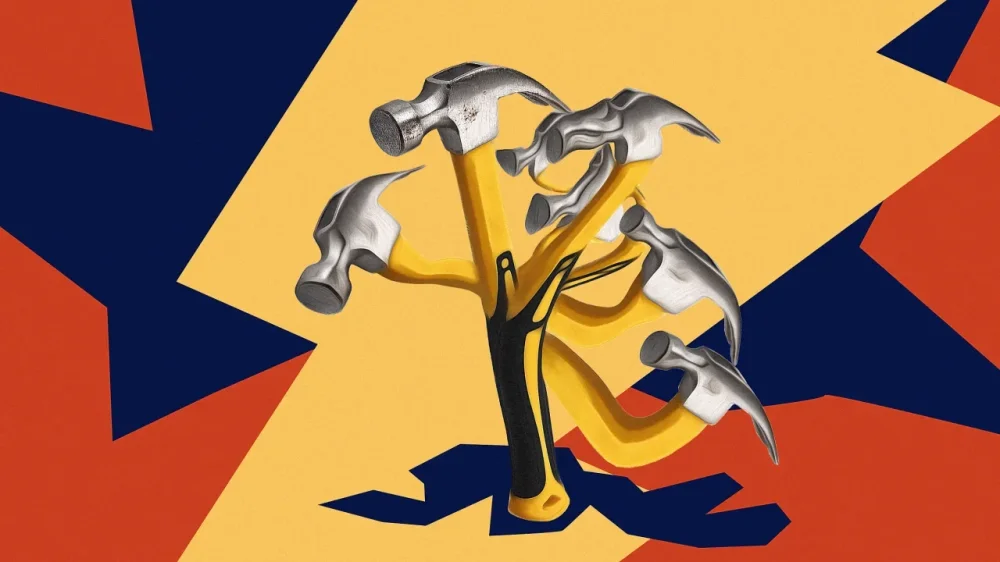
In the handful of years since generative AI became both a zeitgeist technology and common dinner table conversation topic, people across the design industries—ranging from independent graphic designers to tech executives—have landed on a curious mantra to justify its use: it’s just a tool. In this very publication, in 2023, designers Caspar Lam and Yujune Park, wrote that “if we see a designer’s role as communicating and connecting ideas to humans in meaningful ways, AI image-generation becomes another tool and avenue for creative expression.” This perspective is not unique to them. Josh Campo, the CEO of Razorfish, extolling the virtues of AI for creatives in Forbes, wrote that, “beyond enhancing efficiency, AI is opening doors to possibilities that creative teams didn’t have previously,” but he cautions readers to remember that “AI is just a tool.” As part of a CNBC feature on graphic design and AI, Nicola Hamilton, president of the Association of Registered Graphic Designers (Canada), says that one of the most repeated statements about AI by designers is, indeed, that it is “just a tool.” She precedes this observation by noting that “dealing with new technology is nothing new” for designers. Some have even gone so far as to suggest AI is like a pencil. In a LinkedIn post, Peter Skillman, the global head of design for Philips, tells us that “Al is just a tool,” and then offers us to engage with his post by asking: “What’s your take on Al in the context of humanity-centered design?” My take, if you’re not going to read the rest of this article, is that AI is very bad for the world, Peter. Very, very bad. I think it’s important to note that not everyone who is excited about AI (nor the folks who are concerned about it) is an adherent of the “just-a-tool” logic. There’s also the “it’s not just a tool! It’s even better!” crowd. I’ll refrain from engaging with this form of AI boosterism because I think that the “just-a-tool” logic is more difficult to dismiss. The “it’s not just a tool” crowd also includes folks circulating other AI promotional discourses such as, “AI isn’t just a tool, it’s a creative partner” and “it’s not a tool, it’s a paradigm shift.” These and other superlatives, however, like the “just-a-tool” logic, mask the material and ideological realities of AI, as well as its class politics—the way its use furthers the exploitation of the working class by the capitalist class. The great AI ‘panic’ One of the pillars of the “just-a-tool” logic is to suggest that those who are skeptical or worried about any new technology are simply “panicking” technophobes or just don’t understand it. Using this approach to accuse the more deliberative and discerning members of society of being somehow opposed to progress is much more effective than the “paradigm shift” or “it’s more than a tool” approach to talking about AI. It might seem reasonable to be apprehensive of a “paradigm shift,” but it feels much less reasonable to have reservations about something that is “just a tool.” Indeed, if, as Hamilton said, designers have been dealing with new technologies for as long as the field itself has existed, then any apparent panic by a designer to AI must be an overreaction. New technology, says Hamilton, is an “evolution,” and, by this logic, to resist an evolution that is itself merely a tool is to be construed as opposing progress without reason. And even if one is panicking, the adherents of the “just-a-tool” logic might remind us that “technological panic is not new.” To construe resistance to new technologies—regardless of their real impacts—as “panic” is designed to frame any kind of skepticism as unreasonable. But panic is precisely what we should be doing. We should panic about generative AI, in part because its harms far outweigh any benefit to any designer or any member of the working class. When one looks at the landscape of the actual uses of AI—from political disinformation campaigns to AI CSAM to non-consensual sexually explicit material, to voice–cloning used to scam people out of their life savings—panicking seems pretty reasonable. Even if the aforementioned panic appears reasonable, we supposedly have nothing to worry about when it comes to concerns about job loss. Hamilton tells us that “[AI] will likely make some designers redundant. . . . In the same way that Canva made some designers redundant, or the introduction of computers pushed some folks out of the industry. It’s all the more reason . . . to look for ways we can make it work for us.” Many in the capitalist class—such as the World Economic Forum and Price Waterhouse Cooper—have gone as far as telling us that AI will create more jobs than it eliminates. Though some folks who are invested in the maintenance of the status quo have attempted to substantiate this claim, there are three issues that I think complicate it. First, some job loss attributed to automation, as Aaron Benanav so elegantly demonstrates, is the result of deindustrialization and a shift to a much less employment-stable service sector, with underemployment and underreported unemployment becoming significantly more commonplace. Second, innovation under capitalism is characterized by a “race to the bottom,” or attempts to cut costs at every turn. Today, technologies such as genAI often serve to lower operational costs in a quest to juice quarterly earnings and ensure that the stock buybacks offered to shareholders are as lucrative as possible. And lastly, technology does not operate within a vacuum. It does not operate along some predetermined line of “development,” and it doesn’t just *poof* appear without people determining its design criteria, meaning how it functions and who benefits from those functions. The reality is that any efficiencies gained from the use of AI are not beneficial to anyone that doesn’t already have power and privilege in society. For the working class, it doesn’t really matter if more jobs get created, or if we are more productive, because most of the benefits will accrue to a shrinking number of capitalist oligarchs. Meanwhile, everyone else still suffers under conditions of decreasing real wages and increasing precarity. The class politics of this situation are crucial for clearly assessing advances in AI. The myth of human centricity The “just-a-tool” logic resonates with the idea that designers can be liberated to concern themselves with the choreography of systems and not pixels. In its 2025 Future of Jobs Report, The World Economic Forum pegged Graphic Design as the 11th fastest “declining job” per the predictions of employers (emphasis mine). UX jobs, along with Service Design, Customer Experience, and other more systems-oriented roles, will continue to grow. So while the nature of design jobs might be changed by AI, maybe the number of jobs won’t really change. And perhaps there’s a mutually-beneficial trade off, in which people who otherwise wouldn’t be able to afford high quality bespoke design work can use generative AI, enabling professional designers to focus their creativity on “wicked problems.” Such a perspective, however, is a privileged one and does not take class, capital, or the wellbeing of the planet into account. A systems-level approach to design—one that looks at the journeys of users through product-service ecosystems—should itself take into account the deleterious effects of AI on individuals, societies, and the environment, instead of accepting the purportedly benevolent purposes to which we are told it is put. Let’s take a moment and look at the Adobe Express commercial about the founder of Yendy, a skincare brand that seeks to challenge the exploitative nature of supply chains and support small-scale farmers in Northern Ghana. Sounds like a pretty cool company, as far as one can glean based on the information on its website and social media. Adobe’s commercial, however, is effectively instrumentalizing folks from the African continent to promote a technological “tool” that is itself inherently racist and colonialist. Designers who see genAI as “just a tool” might be relatively unbothered by Adobe’s genAI, and might see this commercial as benign, if not heart-warming. But if such designers are truly “human-centered” (or “humanity-centered”) as they might claim, how could they watch that commercial and not think about the people in the Global South being exploited by the very technological developments that enabled the founder of Yendy to use Adobe Express in the first place? What about the colonialist history of AI itself and the ongoing neocolonialism of tech corporations? What about the global flows of wealth to companies in the Global North from the Global South? Or the environmental implications? Furthermore, suggesting that AI is a tool that enables non-designers to make their ideas into reality while enabling designers to think at a higher level, contributes to the obfuscation of AI (and design’s) real issue: Technological innovation under capitalism is at odds with a just and sustainable way of living for everyone. Why a tool isn’t just a ‘tool’ The last thing that I want to say about the “just-a-tool” logic is that the word “tool” itself is not inherently bad. But to suggest that something is just a tool is very problematic, indeed. In 1973, Ivan Illich put forward what is to me the most compelling approach to thinking about tools, which he understands in a broad and far-ranging sense, with tools including everything from hammers to highway infrastructures. Tools enable us to do things, but they also constrain our activities. They shape what is possible and the effects we can have on the world around us. On this account, tools are understood with a nuance that the “just-a-tool” logic itself negates. Tools, argues Illich, should be contextualized, understood through their relationships to the people that use them and who are affected by that use. Most importantly, writes Illich, the design criteria for all tools should be democratically determined. This is the opposite of the situation in which we have found ourselves today. In our modern world, AI “tools” have been foisted upon us by tech oligarchs hellbent on squeezing every last cent of surplus value out of the working class, and because our understanding of the nature of tools is so deeply impoverished, we feel as though we must accept them on their terms. But history shows that this also doesn’t need to be the case. Any further developments in AI must be met by resistance like that of the Luddites, who sought to destroy technologies that undermined their craft, exploited and endangered their comrades, and augmented surplus value for the capitalist class without enabling those who lost their jobs to share in the supposed wealth creation. And the working class must demand that the design criteria for any new technological innovation be democratically determined. Advances in computing could genuinely benefit the international working class if those very people were able to determine the design criteria for those innovations, taking into account the systemic interrelationships of labor and environment. What those technologies, those tools—including those used by designers—might look like is nearly impossible to imagine today. But if, as Father John Culkin wrote in 1967, “we shape our tools, and thereafter our tools shape us,” we better start reshaping our tools, and we must do so by any means necessary. View the full article
-
Artificial intelligence has transformed how companies process data and make decisions—but Silicon Valley’s biggest players are already chasing what could be the next technological breakthrough: quantum computing. Unlike AI, which accelerates existing processes, quantum computing promises to unlock entirely new capabilities, from simulating molecules for drug discovery to solving problems far beyond the reach of today’s fastest supercomputers. The industry is projected to reach $2 trillion by 2035, according to McKinsey. At Nvidia’s GTC 2025, quantum computing took center stage with a dedicated “Quantum Day,” where experts explored its potential to tackle problems such as weather modeling and drug discovery—challenges that even AI models and hardware-accelerated computers struggle to handle. Major tech players including Microsoft, Amazon, Google, and Nvidia are developing proprietary quantum technology, exploring how it can integrate with AI models to create future-ready infrastructure. But there’s a key hurdle: scaling qubits. Qubits—the fundamental units of quantum data—must scale into the thousands for quantum computing to surpass the capabilities of AI. Unlike classical bits, which exist as 0 or 1, qubits can exist in multiple states simultaneously, enabling exponentially faster processing of complex calculations. To address this, California-based Atom Computing is working alongside Microsoft. In September 2024, Microsoft announced a collaboration with Atom to build the world’s most powerful quantum machine, offering a scalable commercial system available for order. By November 2024, the companies had entangled 24 logical qubits and successfully ran a quantum algorithm using 28 logical qubits. As of 2025, Atom Computing’s neutral atom-based system features 1,180 qubits. But is the technology ready for complex real-world use cases? “There is no single, concrete number of logical qubits and associated performance metrics that will suddenly unlock every possible application,” Remy Notermans, Director of Strategic Planning at Atom Computing, told Fast Company. “Around 100 logical qubits, certain scientific applications can be explored that will go well beyond classical computing capabilities, and economically valuable applications are expected to become accessible at around 1,000 logical qubits.” How Atom Computing Stacks Up Against Competitors Atom Computing’s systems use trapped neutral atoms as qubits—a proprietary approach that allows for precise control. Unlike ionized atoms, neutral atoms retain all their electrons. The company also uses laser cooling and optical tweezers to trap and manipulate individual atoms. Other quantum computing companies—including D-Wave, Phasecraft, Zapata Computing, and Algorithmiq—are also developing infrastructure and algorithms to optimize today’s quantum hardware. Notermans said Atom’s flagship system currently enables 50 working logical qubits. “With an aggressive roadmap, we anticipate having 100 working logical-qubit and 1,000 logical-qubit systems commercially available in the next few years,” he said. “The high scalability of our neutral atom technology means we have better logical qubits that is significantly faster than other approaches.” When asked what made Microsoft confident in Atom’s long-term potential over other approaches like superconducting or trapped ion qubits, Atom Computing Chief Product Officer Justin Ging cited scalability and flexibility as key advantages. “Neutral atom technology enables multiple critical platform capabilities such as high-fidelity gate operations, all-to-all qubit connectivity, long coherence times, and mid-circuit measurement with qubit reset and reuse,” Ging told Fast Company. “A lot of valuable R&D work can be done with Atom’s current systems, which have all the building blocks to construct many logical qubits, allowing researchers to explore error-correction and efficient logical-qubit algorithms for unlocking the first scientifically valuable applications.” Beyond the challenge of scaling qubits, Ging noted that quantum computing is inherently capital-intensive. “Practical quantum tech should not be held to similar timeline expectations as the software industry,” he said. “Quantum chemistry and materials science applications show a lot of promise for being first to take advantage of quantum computing systems that have around 100 logical qubits.” Why Investors Are Betting on Quantum-AI Integration While quantum computing is still evolving toward commercial practicality, big tech is betting on its potential to enhance AI model computation. AI models require vast amounts of energy, but integrating quantum computing could improve efficiency and boost reasoning capabilities. “Quantum computing will augment AI supercomputers to tackle some of the world’s most important problems, from drug discovery to materials development,” Nvidia CEO Jensen Huang wrote in a recent blog post announcing the company’s Accelerated Quantum Research Center. One notable breakthrough in the quantum-AI sector is Google’s Willow quantum chip, which solved a random circuit sampling (RCS) benchmark problem in just five minutes—a task that, according to Google, would take the world’s fastest supercomputer 10 septillion years to complete. “Current AI models are trained on massive datasets that are primarily based on the human experience,” Notermans explained. “If an AI model alone is used to answer a question in problems related to drug discovery, there is going to be a significant uncertainty in its ability to answer the question reliably. Quantum computers can be used alongside to generate quantum-physics-based data that can supplement an AI model’s training dataset, making the overall performance of the AI model more accurate.” Whether a powerful new paradigm emerges by combining classical and quantum computing to transform AI capabilities remains to be seen. View the full article

-
When Paule Tenaillon was head shoe designer at Chloé, she was responsible for designing hundreds of shoes a year. With each design, she had to consider many factors: The Chloé aesthetic, trends, heel height, materials. But there was one issue she didn’t think much about. “Comfort was never a consideration,” Tenaillon says. “Nobody ever asked me to make a comfortable pair of shoes. But it bothered me, because it’s important to me to wear shoes that are comfortable.” Now, Tenaillon is on a mission to make the most uncomfortable shoe in the world comfortable. Her shoe label, Nomasei, is releasing a stiletto model for the first time, full of small design tweaks that she believes will make the spiky heel more wearable. Bringing comfort to a notoriously uncomfortable heel This week, the brand launches two stiletto designs, the “BeforeSunrise” sandal ($575) and the “Gattaca” pump ($595), which are both inspired by the sleek, minimalist aesthetic of the 1990s, when both of these movies came out. To make the shoe as comfortable as possible, the heel is relatively short at 3 inches high, making it just a smidge taller than a kitten heel. It is placed close to the ball of the foot, creating more stability and balance. The heel also tapers out and there is memory foam padding in the toe box, both of which relieve pressure. Since the brand launched in 2019, customers had asked for stilettos. This presented Tenaillon with a new challenge, since the thin, pointed heel of a stiletto puts a lot of pressure on the ball of the foot. For months, Tenaillon created prototypes, which she had many women wear-test for comfort. Ultimately, the breakthrough came when she studied the design of tango shoes, which allow the dancer to pivot gracefully, while remaining stable. Inspired by dance shoes, Tenaillon has designed stilettos with a tapered heel that relieve pressure and support balance, along with two two buckled straps that adapt to the wearer’s foot, keeping it firmly in place. “I lived in Buenos Aires for five years, where I danced a lot,” she says. “Tango shoes are often stilettos, but women wear them to dance all night.” Leaving A Luxury House Tenaillon and her cofounder Marine Braquet had spent their lives wanting to work in fashion. And for the most part, all of their dreams came true. They each made their way through some of the most storied Parisian brands. Tenaillon had designed for everyone from Givenchy to Chanel; Braquet, the former footwear designer for Chloé, previously worked for Louis Vuitton and Christian Dior. But inside the luxury houses, things weren’t so rosy. Tenaillon says that when she started her career in the early 2000s, she was designing two collections of shoes a year. But in the decades that followed, the industry sped up, churning out more and more styles every few months, to keep customers coming back for more. This was also when fast fashion emerged, ripping off runway looks and selling them for a fraction of the price. In response, the luxury brands had to keep one step ahead. Tenaillon was so stressed, she ended up in the hospital from exhaustion. “We were just on a hamster wheel,” Tenaillon says. “Creativity just became poorer and poorer.” Braquet, who worked on the business side, was also burning out. “I just stopped loving my job,” she says. “But before we gave up on fashion, we decided we would give it one last shot.” So together, they sketched out a plan to create a shoe label that focused on the things they loved most about luxury shoes: craftsmanship, beauty, careful attention to detail. And they would throw in something else that the high end brands didn’t have: comfort. Designing Wearable Luxury Shoes The founders launched Nomasei in 2019, creating a selection of heels and boots that start at around $500. They’ve partnered with an Italian factory that also makes shoes for Hermes, leveraging Baquet’s extensive experience manufacturing shoes for luxury brands. Nomasei sells products online in both Europe and the United States. But months after opening the business, the pandemic struck and the world went into lockdown. Nobody was interested in pricey designer shoes, so the nascent brand went into hibernation. Eventually, around 2022, people wanted to get out of the house again, clad in beautiful outfits. And after spending years wearing sweatpants and slippers, comfort was an even greater priority. To Tenaillon, this just reinforced her commitment to comfortable design. She has spent the past five years designing a selection of shoes that stand out aesthetically, but that women can wear all day. And unlikes her previous jobs, Tenaillon now has the freedom to design slowly with a lot of attention to detail. She takes time to review what is on the market, creating pieces that are unique. On the website, each product has elaborate notes from Tenaillon about her approach to the design. When it comes to comfort, there are many tricks that can make a heel more comfortable. Part of Tenaillon’s strategy has been to create block heels that distribute weight more evenly. Most Nomasei shoes, including the popular Adora and Baghera sandals, have these wide heels. In some, like the Taxi and Frenchkiss, there is also a platform, which makes the heel feel less high. Shoes like Venus are very popular with brides because they go nicely with wedding dresses, while being very walkable. Besides the heel, Tenaillon believes that customizing the fit of the shoe to the wearer’s heel is important. So most shoes come with many straps whose buckles can be adjusted to fit the ankle and bridge of the foot. And there is memory foam in the heels to provide some cushioning. All of these features have made Nomasei a cult brand, with fans that include Bella Hadid, Kristen Stewart and Nicole Kidman. Six years after leaving Chloé, Braquet and Tenaillon aren’t looking back. And indeed, they’re now competing with some of the brands they once worked for. But they believe that designing comfortable, well-made shoes sets them apart. “We’re two very different women, with different tastes, and at different phases in life,” says Braquet. “But we both love shoes and expect them to be comfortable. The same is true for our customers.” View the full article

-
For some, Microsoft Teams is a necessary evil: the modern day equivalent of an ever-ringing desk phone. But the fact is that in many organizations, it’s become an essential tool for communication and collaboration. And as long as you’re using it, you might as well transform your Microsoft Teams experience from simply functional to truly powerful. Here are some quick tricks you should be using to get the most out of Microsoft Teams. Slash your way around the interface Slash commands save you time by providing quick access to frequently used features. Simply type a forward slash (/) in the search box at the top of the screen and a list of available commands will appear. Here are a few helpful ones to keep at the ready: /chat: Initiate a chat with someone. /away: Set your status to “Away.” /dnd: Activate “Do Not Disturb” mode to silence notifications. /call [Name]: Instantly initiate a call with a specific contact. Use keyboard shortcuts to cut down on clicks The time you spend mastering keyboard shortcuts in Teams will pay off in spades down the road. Better yet, many shortcuts are universal across applications. Here are a few key Teams shortcuts that work in Windows: Ctrl + Shift + I: Mark the message you’re sending as important. Ctrl + O: Open your current conversation in a new window. Ctrl + E: Go to Search. Ctrl + N: Start a new chat. Mac users: Substitute “Ctrl” with the Command key. To find a full list of shortcuts, click the three-dot menu in the upper-right corner next to your profile photo and select the “Keyboard shortcuts” item. Save messages for future reference Teams had a handy “Save” feature that allowed you to bookmark messages. Then it became the “Bookmark” feature, which allowed you to—you guessed it—bookmark messages. Now it’s gone for some reason. But! There’s a workaround of sorts. If you forward messages to yourself, it creates a personal repository of notes that you can reference whenever you like. If you find a message you’d like to save, hover over it and when the three-dot menu pops up, use the “forward” feature to send it to yourself. To access your saved messages, find yourself in the “Recent” section of the Chat pane. Better yet, hover over your chat with yourself, click the three-dot menu, and select “Pin” to stick yourself to the tippy top of the Chat section for good. Schedule messages to send later Need to send a message outside of work hours, but don’t want to disturb your colleagues? Sandbagging and want to make it look like you’re burning the midnight oil? Teams allows you to schedule messages to be sent at a later date and time. Note that this feature works only for new posts you create in Teams channels—not in chats and not in replies to others’ posts. To schedule a message, craft your post, click the plus icon in the lower-left corner, and choose the “Schedule message” option. Your post will stay in place, but will now have a delivery message at the top. Click it and you’ll be able to reschedule it or cancel it. View the full article

-
Sale is part of plan by the company to divest non-core assets View the full article
-
Near Atlanta, the diverse suburb of Morrow, Georgia, is an EV charging desert. If you live in an apartment in one neighborhood and own an electric car, you might have to drive 20 minutes to get to a public charger. That’s why a local green bank wanted to support a new charging station in the area. It should have been a simple project, beginning with a small group of six chargers. Then came The President. “We’re talking about a project that could have been up and running by now,” says Reginald Parker, president of Freedmen Capital Foundation, a green bank in Georgia. “It had a month’s delay. Over the last month, prices have gone up. The market has changed tremendously. And that type of uncertainty for the project adds costs that small businesses, in general, are not ready for.” Exactly the type of project that the green bank wanted to support Thanks to the Inflation Reduction Act, the bipartisan bill that Congress passed in 2022, there was funding for the work. Last year, the first national green bank opened with $5 billion in funding from the IRA. The organization started creating a network of state and local green banks. (Despite the name, these aren’t typical banks with deposits. Instead, they’re institutions that make green loans for projects like community solar installations or green building retrofits.) Freedman Capital Foundation, named after a late-1800s bank established for formerly enslaved people, was chosen to be part of the network. The new charging station was exactly the type of project that the green bank wanted to support. “The communities that are EV charging deserts are the first and hardest hit by climate impacts,” Parker says. Helping residents switch to EVs can help cut emissions. It can also reduce air pollution and help people save money on fuel. “It also builds energy independence,” he says. “Oil and gas are derived from some foreign sources. Electricity is all domestic.” One part of the charger project had already been funded. A grant from the Department of Transportation helped cover the cost for the local utility to set up the electric infrastructure needed for the chargers. The small organization that will operate the charging station, called TABT, is paying to install the chargers. The last piece of the funding—the money to cover a loan for the equipment—came from the EPA’s Greenhouse Gas Reduction Fund, a program created by the IRA. The President pauses IRA funds On his first day in office, The President issued an executive order telling agencies to pause all funds under the IRA. At first, grantees under the EPA program could still access the money sitting in their accounts. But in February, The President-appointed EPA administrator Lee Zeldin said that the EPA would revoke contracts for the fund. The agency made baseless accusations of fraud. It froze $20 billion in grants. Citibank, directed by the government, froze the money in the account of Coalition for Green Capital, the nonprofit running the national green bank. Freedmen Capital Foundation was able to get its funds from the nonprofit just before that account was frozen. But the EPA warned it not to move forward on projects. “Everything had to stop,” says Parker. At the same time, some of the EPA’s grantees, including the Coalition for Green Capital, sued to force Citibank to unfreeze the money. A federal judge blocked the freeze. Appeals are still underway, and the money at Citibank still isn’t accessible. But the first court order meant that Freedmen was able to begin using the money it already had. (Another piece of its funds, for technical assistance, got stuck in the freeze.) In March, the utility finished upgrading the electric infrastructure needed for the chargers. If the project had happened normally, TABT could have ordered the chargers in advance. Installation could have started right away; the process could have taken as little as a week, and the chargers could be in use now. But because of the delays from the EPA’s actions, nothing was ready to go. ‘Instead of making investments, we are wasting time and resources’ Freedmen Capital Foundation has been scrambling to finalize the loan for the project. The President’s chaotic rollout of tariffs means that the cost of supplies for making EV chargers—from steel to electronics—will jump. “If we weren’t able to move within the next week or two, the owner would be subjected to higher prices,” Parker says. Despite the delays, the project is unusual in that it’s able to move forward. Most projects that were set to receive funding through the Greenhouse Gas Reduction Fund are now stuck in limbo, waiting for the next stage in a lawsuit. A judge may issue a preliminary injunction this week that allows organizations to access their money, though the government will immediately appeal and could try to claw the money back. “From solar energy in Arkansas to hydropower in Alaska, local projects that lower energy costs and support domestic manufacturing aren’t currently able to move forward, forcing communities to wait for the jobs and economic opportunity they’re counting on,” says Brooke Durham, a spokesperson for Climate United, a nonprofit that received a $6.97 billion Greenhouse Gas Reduction Fund grant that was frozen. “Instead of making investments and delivering on those promises, we are wasting time and resources fighting an unnecessary battle in court. This program isn’t about politics; it’s about saving money for hard-working Americans who are struggling to pay for groceries and keep the lights on.” View the full article

-
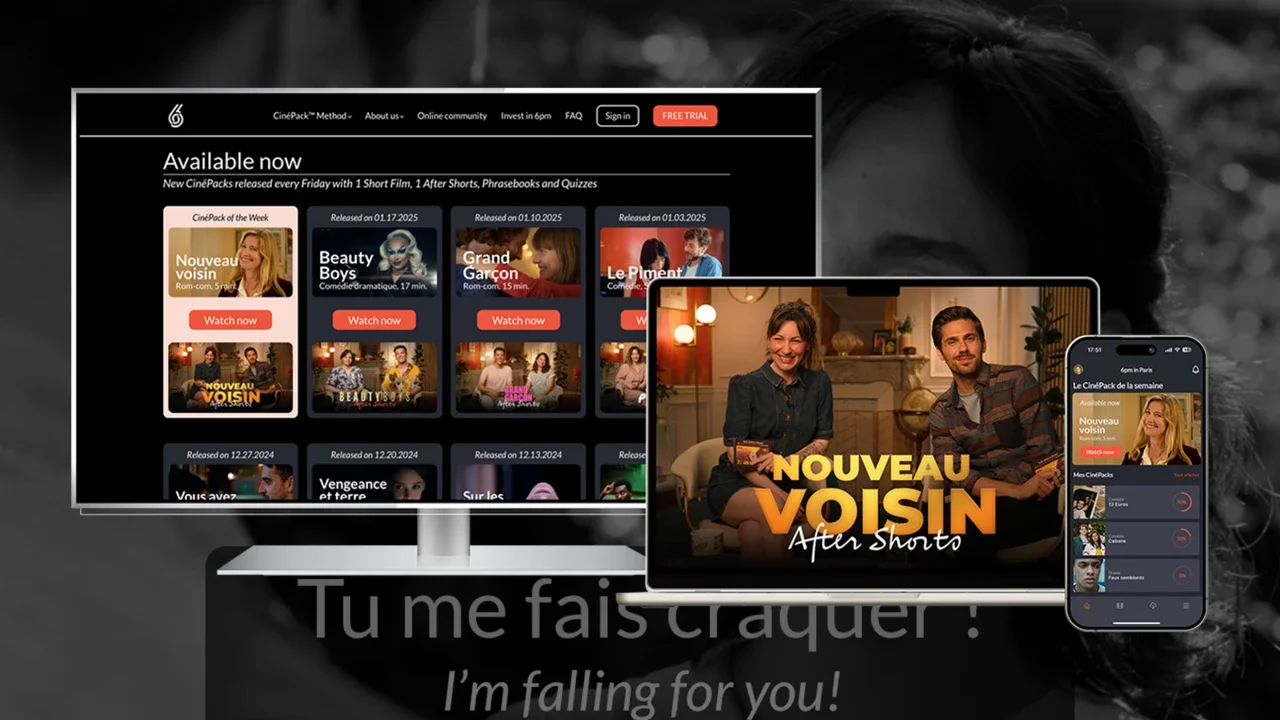
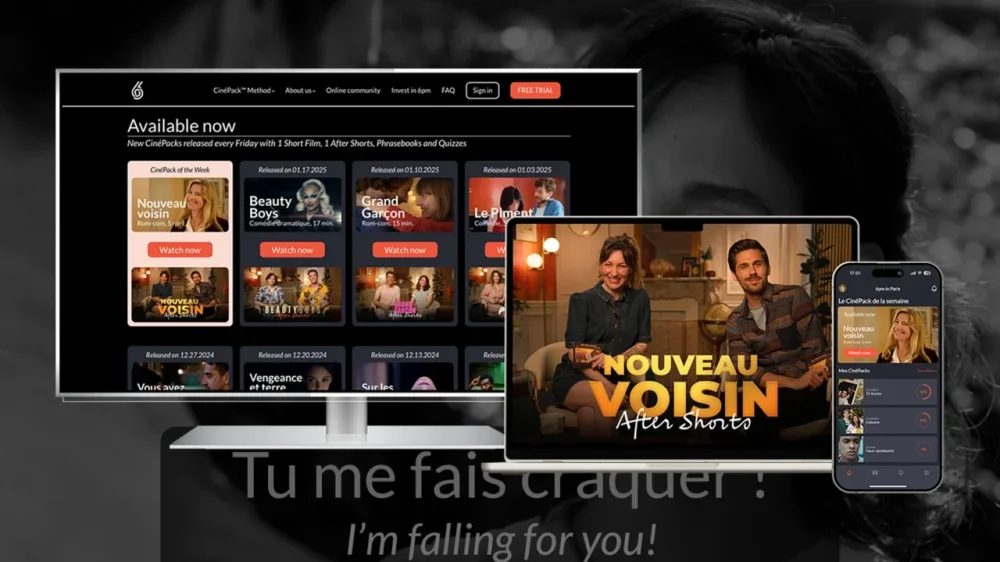
It is 6 p.m. You have logged off from work and are unwinding with a glass of wine. You turn on the TV, but instead of Netflix, you click on a new app called 6pm in Paris, and spend the next 30 minutes learning French. Not on your desk. Not on your phone. But on your couch, watching a short movie. This is the vision behind a new language learning platform that recently launched. 6pm in Paris merges Netflix’s addictive streaming format with the short lessons style of Masterclass. The concept is simple yet effective: Each week, you pick a short film from a curated collection of French licensed movies. Then, you dive into the story and language through an informal video lesson called “After Short.” You can watch the films with dual subtitles and adjust the playback speed to your preference. Diligent learners can also review a phrasebook of key words and idioms, then take a short quiz to reinforce their knowledge. While apps like Duolingo are pouring resources into AI and gamified learning, 6pm in Paris is choosing culture—and therefore the human experience—as its primary lens. “A big part of our vision is to be a window on the language, and the people, and the culture,” says CEO and cofounder Lea Perret, who dreamed up the company with cofounder and COO Julien Frei. If people take to the format, you can soon expect 6pm in Tokyo, and 6pm in Rio—and basically 6pm anywhere. Julien FreiLéa Perret Learning as a lifelong journey Perret imagined 6pm in Paris as a way to help students learn French beyond the classroom. “Most people will sell you methods to learn French in three weeks, but it doesn’t work like that; it’s a lifelong endeavor,” she says. And if you want to spend a lifetime learning a language, it has to be entertaining, or else you will throw in the towel. Originally from Toulouse, France, Perret moved to New York 17 years ago and has been teaching French in the U.S. since then. In 2013, she cofounded Coucou French Classes, which provides in-person classes in New York and Los Angeles. Since the pandemic, her team also launched online classes to over 50,000 students. Today, the company remains profitable, but 6pm in Paris is here to fill a gap that Coucou couldn’t: to help people immerse themselves in French culture. While Perret was at Coucou (she left to run 6pm in Paris) students would often ask her for additional resources to help them improve their French. In response, she would send them a “17-pager” recommending, among other things, French books and TV shows to watch. (Yes, Call My Agent featured on the list.) These shows, however, can be too long, which can wear out the learner, and the subtitles can be either inaccurate or incomplete, completely skipping quintessentially French filler words like “euh” or “eh ben.” This approach, she says, can take learners away from real language experiences and make it harder for them to connect the spoken word with its written form. The 6pm philosophy With 6pm in Paris, the team is hoping to address many of these challenges with shorter, more digestible films and customizable subtitles that were crafted in-house to perfectly match the dialogue. For now, the team has licensed more than 60 short films by local filmmakers. These range from sci-fi to rom-coms to documentaries. The shortest lasts a mere two minutes; the longest clocks in at 25. (My personal favorites so far are Cloud Paradise, and Amoureuxse, both of which boast excellent storytelling.) By next year—if the team can raise the $1.2 million they need to grow—they want to start producing films in-house, which would allow them to tailor the content to various levels by, for example, streaming down the dialogue so actors don’t talk over each other. They also expect to launch a whopping 170 masterclasses covering grammar for all levels. The series will feature short, digestible episodes delving into French conjugation. “We believe in grammar, we just think there is entertaining efficient way to bring it to people so it doesn’t feel like a chore,” says Perret. The current selection is more suitable to someone with an intermediate understanding of French, but the team maintains this shouldn’t preclude anyone from subscribing to 6pm in Paris. In fact, they believe that segmenting learners by levels—and tailoring content accordingly—is the wrong approach. The 6pm in Paris philosophy is that one of the most essential ingredients to learning a new language is exposure. “Sure, you can start by learning the phrase, ‘je m’appelle Lea et j’habite à New York,’ but what’s point of knowing how to say that if you don’t understand what the person replies to you?” she says. According to Perret, Americans are obsessed with talking, but even more important are listening and comprehension. By watching a short film in French, even with English or French subtitles, you can slowly soak up the language, notice how words are spelled, and train your ear before ever uttering a single word. As someone who moved to a French-speaking country at age 7 and was encouraged to sit at the back of the class and “just listen,” I can attest to the efficiency of this method. (I was fluent in less than a year.) TV as a learning tool Research backs this up, and many studies show that watching TV shows, especially with O.G. subtitles, can be a surprisingly effective way to build your real-world language skills. According to a 2022 study from researchers in Turkey, 44 participants from Kosovo who watched Turkish TV series with subtitles for one to two years saw measurable improvements in all four language skills (listening, speaking, reading and writing.) Another study from Spain shows that university students who watched Friends over the course of seven weeks, and with English subtitles, learned more informal English (like slang and idioms) than those who used Spanish subtitles. Television might be the greatest source of first language input, and learning a foreign language by watching TV is more common than it might seem. According to a recent survey performed by the research platform AtomRadar for Fast Company, 43% of participants have tried to learn a foreign language by watching TV shows or movies. Of these people, 60% found it effective. AtomRadar, which surveyed a representative panel of 300 American adults over 18, also found that younger people are substantially more likely to have tried learning a foreign language through movies and TV, with 55% of 18 to 24 year olds having tried it, compared to only 30% of 55 to 64 year olds. (Once again, I can relate as I distinctly remember looking up the definition of “rooting for someone” after a love triangle materialized on the teen-cult TV show One Tree Hill.) 6pm in Paris isn’t the first company to recognize the potential for cinema to double as a learning tool. FluentU uses beginner-friendly movie trailers and music videos to teach you vocabulary and grammar in context. Lingopie offers a streaming library of foreign-language TV shows with interactive subtitles. And France Channel, which lets you stream French films and series otherwise unavailable in the U.S., markets its platform as a way to learn the language through immersion. Earlier this year, Duolingo, too, recognized the power of cinema with a Korean campaign in collaboration with Netflix. Korean course sign-ups had jumped 40% after the first season of Squid Game aired in 2021, so when season 2 rolled around in 2025, Duolingo launched Squid Game-themed vocabulary lessons, a TikTok filter that could test your pronunciation skills, a K-pop music video, and a music video featuring Duo the owl suited up as a Pink Guard. Is 6pm in Paris worried about all the competition? Not in the slightest. She notes that her team wasn’t inspired to start a new company to fill a gap in the market, but to meet their students’ needs. The outputs may be similar but the motivations are different. The company is still too young to gauge success, but the first few months show promise: After a beta run with Coucou students, the team opened up the platform to the public and leaned heavily on a marketing campaign to attract subscribers. So far, 1,300 people have joined (and 70% of users who started with a free 7-day trial have converted to a paid subscription). Three quarters of subscribers log in every week to watch the weekly film, followed by the “after short.” For now, you can only watch on your laptop or by casting to a Smart TV. But once the team secures more backing, they plan to upgrade to a more robust (and pricier) streaming platform that supports native TV apps. Some years down the line, you could soon turn on your TV, click on your 6pm streaming app, and choose which language you want to learn based on the culture you want to discover. “I want it to be as easy as ‘you turn on TV, go to 6pm in Tokyo and discover many things about the Japanese culture,” says Perret. “I do believe there would be lot more understanding, and the world would be a better place if we knew more about each other.” View the full article
-
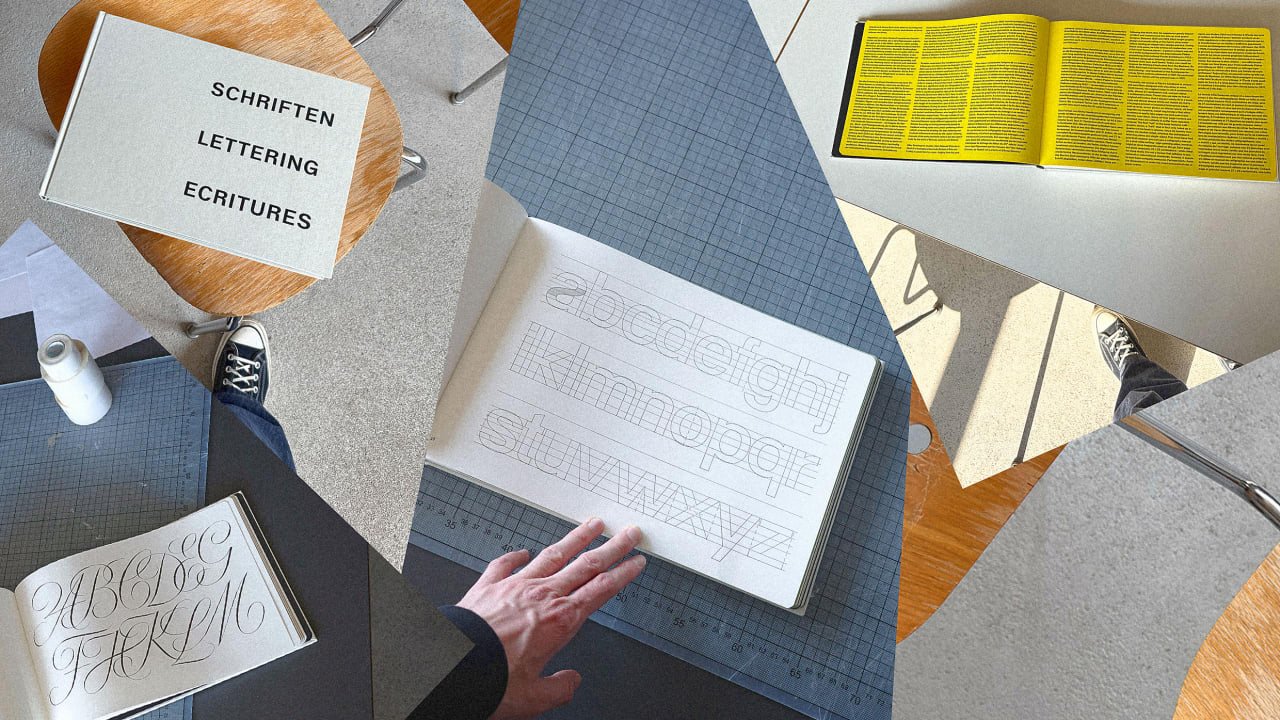
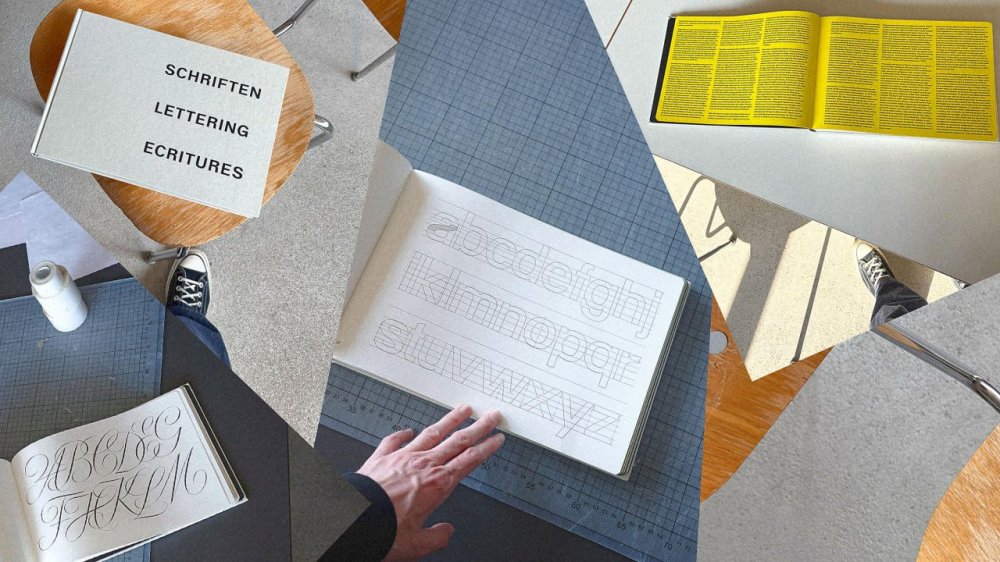
Behind some of the most recognizable iconography in the world, from American presidential campaign logos to New York City subway signage and Apple keycaps, is one Swiss designer and a textbook he published in 1949. You’ve probably never heard of either. Walter Käch was a calligrapher and educator at the Zürich School of Arts and Crafts in the late ‘30s and ‘40s. During this time, he published a simple manual, called Lettering, which laid out his approach to crafting letterforms, letting students learn about proper technique and trace and copy letters directly inside the book. Experts have credited Lettering for popularizing the idea of type families and directly inspiring the creation of Univers and Helvetica, two of the world’s most famous typefaces. Over time, Käch’s contributions have largely been overshadowed by those of his students. Now, there’s a team working to fix that. This week, the first modern reprint of Lettering was published through a collaboration between Dinamo type foundry, the Museum für Gestaltung in Zürich, and the graphic design firm Omnigroup. For the designers behind the reprint, it’s a passion project that’s been more than six years in the making. The book that inspired Helvetica Fabian Harb is the cofounder and head of type design at Dinamo. He discovered Lettering while studying at the Basel School of Design, where he learned that, despite being printed in an extremely limited run (likely between 500 and 1,000 copies), Käch’s manual has had resounding ripple effects on how typefaces are designed today. “[Käch] really went about type design in a quite broad way,” Harb says. “If you look through the manual, it’s not just sans serifs; it’s also about serifs, it’s also about script typefaces. Back in those years, there wasn’t a lot of teaching material around, so this being such a proper folder, I’m 100% sure it traveled and people that were teaching in other places also drew from the same material.” Lettering’s holistic approach to type design represents one of the first true explorations of a versatile type family—or a cohesive system of fonts with various weights and orientations—which is the standard in today’s industry, where most new typefaces come with eight to 10 different weights. Käch also directly inspired his student, Adrian Frutiger, to conceptualize the typeface Univers in 1957. Univers is now one of the most influential typefaces of all time, appearing everywhere from George W. Bush’s two campaign logos to some of Apple’s early keycaps and the UNICEF logo. Likewise, the font Helvetica (the basis of NYC’s subway signs) is believed to pull direct inspiration from Käch’s work. “There’s a direct connection to Univers and Helvetica, which are typefaces that just became so big, so visible, and so influential up until today,” Harb says. “Designers definitely know Univers, and Helvetica is probably known even to people that don’t have anything to do with graphic design. Helvetica is so closely connected to Käch, but nobody knows about him.” Reprinting an iconic text The idea to issue a reprint of Lettering came as Harb learned more about the text for himself. In school, Harb discovered that copies of the manual are considered rare and precious, and those that are available in Switzerland are mostly held by libraries that don’t allow them to be checked out. Meanwhile, designers interested in owning their own copies often found themselves in intense bidding wars on eBay, as those “in the know” on the manual’s influence jostled to secure a version for their collections. “It was a little bit of a sport to check the eBay and see, ‘Okay, is a copy coming up?’” Harb says. “Then everybody would bid on it, and basically whoever had the most money would get it. Very often it went for crazy prices, especially as a student—like somewhere like 250 and 350 Swiss francs.” Due to the manual’s interactive nature, nearly all surviving copies of Lettering tend to be in poor condition. “People worked with them, a lot was traced in them,” Harb explains. “You can see that sometimes, people drew their own guidelines to figure out the proportions.” Finally, in 2014, Harb’s type foundry Dinamo was able to secure its own copy of Lettering through his connection with the Basel School of Design. The acquisition began a years’ long exploration of Käch’s work for Harb, starting when he designed a custom typeface inspired by Käch’s core teachings called Walter Alte. When Walter Alte was used in a contemporary art exhibition, the publicity led Leonardo Azzolini and Simon Mager, cofounders of Omnigroup, to connect with Harb over their shared interest in Käch’s work. Together, the three created another Käch-inspired typeface—this time translated for a digital age—called Walter Neue. Both Walter Alte and Walter Neue were officially published in 2022. As Harb, Azzolini, and Mager dedicated months to closely studying Käch’s principles, they realized that the rest of the design community should have access to this resource, too. So, they joined forces with the Museum für Gestaltung on a new reprint of Lettering, a project that took another three years to complete. The 2025 reprint of the manual, designed by Omnigroup and co-published by the Museum für Gestaltung, is made to come as close to the original as possible. All of the text, Harb says, has been copied one to one. And, just like the trailblazing 1949 text, the new version of Lettering allows today’s generation of type designers to trace directly in the book itself. The book is now available online for €48, a far cry from the cutthroat prices on eBay. Still, Harb says, anyone with an interest in type design should get the chance to look at one of Käch’s original manuals at least once. “[The reprint] is very similar to the original,” Harb says. “But if you ever have the chance to see the original, you’ll see that it has a richness of materiality that, in today’s world, is almost impossible to recreate.” View the full article
-
The University of Southern California is attempting to block faculty from forming a union with an argument pushed by SpaceX and Amazon: that the National Labor Relations Board is unconstitutional. In December, non-tenure-track faculty members at USC filed a petition for a union election in hopes of certifying the United Faculty-United Auto Workers union as their representative. The petition was submitted after a majority of the roughly 2,500 non-tenure-track faculty signaled their support for a union. Ten days later, as first reported by USC Annenberg Media, USC asked the NLRB to dismiss the petition in part by arguing the structure of the board itself—an independent federal agency that works to protect worker rights by enforcing the National Labor Relations Act—“is unconstitutional.” Corporations including Amazon, Trader Joe’s, and SpaceX have all challenged the constitutionality of the NLRB in recent years. In February, the administration of President Donald The President also declared that provisions limiting the administration’s ability to fire members of regulatory commissions, including the NLRB, were unconstitutional. USC did not respond to Capital & Main’s specific questions about its challenge to the NLRB and instead provided the following statement: “USC respects the role of unions and has worked collaboratively with them for many years.” For their part, supporters of the union organizing campaign disagreed with USC’s statement. Sanjay Madhav, an associate professor of technology and applied computing practice in USC’s Viterbi School of Engineering and an activist with United Faculty-UAW, said he feels the university is “aligning with political forces that are very anti-worker.” Jennifer Abruzzo, the former NLRB general counsel who was fired by The President in January, echoed Madhav. USC can choose to recognize the faculty union voluntarily and eliminate the need for a union election altogether, she said. “You can’t support unionization and then claim that we can’t support unionization at our own institution because the NLRB is unconstitutional,” Abruzzo said. “Whether the NLRB is unconstitutional or not does not preclude USC from recognizing and bargaining with their workers’ chosen representative.” ‘Private universities are just like every other sort of large, private employer’ Constitutional challenges to the labor board have surfaced in recent years as “anti-union companies” sense a conservative Supreme Court might reconsider precedent, said Celine McNicholas, general counsel and director of policy and government affairs at the Economic Policy Institute, a nonpartisan think tank. The Supreme Court upheld the constitutionality of the board in 1937, shortly after the National Labor Relations Act created the NLRB. It has been treated as settled law since. McNicholas said she is not aware of any other colleges or universities that have argued that the NLRB is unconstitutional. “Private universities are just like every other sort of large, private employer that wants to resist its workers’ right to organize,” she said. The university’s objection to the union petition argued the labor board’s structure is unconstitutional because it limits the removal of administrative law judges and board members, and permits board members to “exercise executive, legislative, and judicial power in the same administrative proceeding.” Elon Musk’s SpaceX similarly argued the NLRB improperly exercises executive, legislative and judicial power in violation of the separation of powers. SpaceX also argued that the board’s use of administrative law judges is unconstitutional because the judges are “insulated from presidential oversight” and NLRB proceedings deprive the company of its right to a trial by jury. USC and Trader Joe’s have made their arguments as part of labor board proceedings, but both Amazon and SpaceX have taken their cases to the 5th U.S. Circuit Court of Appeals. The case involving Amazon remains open. The appeals court dismissed the case involving SpaceX in March. A ruling that finds the structure of the board is unconstitutional could fundamentally upend labor rights for nearly 170 million civilian U.S. workers Abruzzo said. Without a functioning NLRB, workers cannot hold union elections or hold employers accountable for violating laws that protect workers’ collective action and bargaining rights, she added. “It’s a big deal to preclude workers from exercising the rights guaranteed them by not only the National Labor Relations Act but also the First Amendment—the right to freely associate with one another,” Abruzzo said. At USC, Kate Levin, an activist with United Faculty-UAW and an associate teaching professor of writing in the Dornsife College of Letters, Arts and Sciences, said she expected pushback from the university but did not expect it to take aim at the NLRB. In doing so, Levin said, the university signaled that it is willing to undermine the collective bargaining rights “not only of their own employees but of employees across the country.” The The President administration has also disputed the constitutionality of provisions affecting the NLRB. Sarah Harris, acting solicitor general in the Department of Justice, sent a letter to the U.S. Senate Judiciary Committee in February arguing that rules limiting the president’s power to remove members of three regulatory agencies, including the NLRB, are unconstitutional. The President tested those rules by ousting NLRB board member Gwynne Wilcox, who sued over her firing. The move left the board without enough members to reach a quorum, effectively halting agency proceedings managed by the board. On April 7, a federal appeals court reinstated Wilcox. On April 9, the Supreme Court granted an administrative stay that blocked the reinstatement. What’s next for USC workers? Meanwhile, USC faculty members are waiting to hear whether they can proceed with a union election. In addition to arguing against the constitutionality of the NLRB, USC argued the non-tenure-track faculty members cannot join a union because they are managers and supervisors. The university also argued that the faculty members already have a voice in their working conditions through forums such as the Academic Senate. United Faculty-UAW rejected both arguments, contending that non-tenure-track faculty members serve only in advisory roles and have no power over university policies. They also argued that faculty unions are increasingly common. Nearly 27% of faculty members across the country are represented by unions, according to the National Center for the Study of Collective Bargaining in Higher Education and the Professions at Hunter College, City University of New York. USC’s Madhav said he wants the ability to collectively bargain for merit pay and changes to retirement benefits. The need for greater faculty input was magnified in recent days, he said, after the university implemented hiring freezes and budget cuts to contend with federal funding uncertainty and ongoing budget issues. “In these moments of crisis, as an individual, non-tenure-track faculty, I have no say in the decisions the university makes,” he said, urging the university to support a union election. “If USC really is pro-union, they should respect our legal right to vote.” —By Debbie Truong This piece was originally published by Capital & Main, which reports from California on economic, political, and social issues. View the full article

-
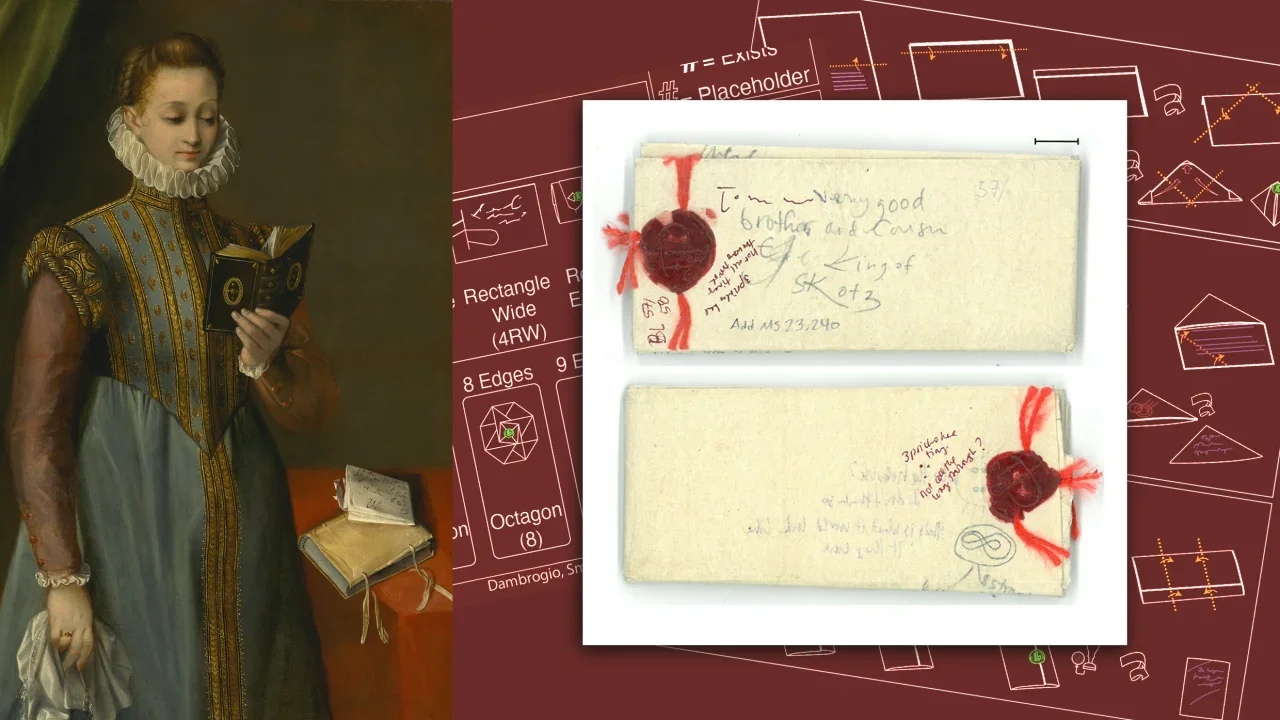
Centuries before encrypted texts and secure video conferencing, people relied on physical engineering to keep their written messages sturdy, sealed, and secure against eavesdroppers. In a new book, researchers Jana Dambrogio and Daniel Starza Smith outline the “letterlocking” techniques used by figures from Queen Elizabeth I to poet Emily Dickinson to protect their paper letters—and the methods Dambrogio, Smith, and a growing number of other scholars have developed to reverse-engineer those historic documents, from algorithmic analysis of X-ray images to careful paper modeling. Dambrogio, a conservator at the Massachusetts Institute of Technology Libraries, traces her interest in the subject back about 25 years, to a fellowship at the Vatican’s archives. There, she noticed security features in a trove of historic legal and accounting documents—different kinds of mechanisms engineered to keep them sealed, make tampering visible, and verify that senders were who they claimed to be. The features were fascinating on their own, but understanding how they worked also seemed crucial to preserving the documents, ensuring that these security aspects wouldn’t be inadvertently lost during repairs. “That object is like the time capsule from that time period,” Dambrogio says. “If I change anything not knowing, then that object loses its voice.” To understand how the documents functioned, she built more than 100 models of objects in the collection. Later, she connected with Smith, now a senior lecturer in early modern English literature at King’s College London. Smith explains that while his colleagues had long been interested in the physical aspects of historic writings—like how poet John Donne arranged words on a page—scholars had largely overlooked the technical side of how letters were assembled. “When Jana showed me these models, suddenly all this kind of material fell into place,” he says. “Because you could see through modeling how these objects worked as kind of engineered structures and devices, designed to travel long distances and keep information safe.” Letterlocking: The Hidden History of the Letter Together, the pair began studying what they came to call letterlocking, reconstructing through close analysis and modeling the many ways historic letters were folded and secured. These included elaborate locks created from sliced-off portions of the letter paper itself—designed so senders could rejoin them and confirm the letter hadn’t been replaced in transit. These sliced strips were passed precisely through slits in the folded document before being sealed with wax. They searched for additional examples—from letters listed on eBay to ceremonial correspondence between heads of state stored in the National Archives—learning to recognize the telltale markings of different folding and locking patterns. In 2012, they established the Unlocking History Research Group, which grew to include dozens of other researchers. As their work expanded, they began constructing a taxonomy of letterlocking, creating a periodic table-style diagram categorizing the combinations of folds, insertions, holes, and adhesives used to secure letters. This gave researchers a common language to describe and compare techniques. When they learned of the Brienne Collection—a centuries-old Dutch postmaster’s trunk containing around 2,600 undelivered letters from the late 1600s and early 1700s—they worked with a team of experts to explore the letters’ seals and contents without disturbing them. X-ray experts captured painstaking, high-resolution scans of the documents, while computer scientists devised new computer vision algorithms for what they called “virtual unfolding” of the letters. A paper by the team, published in Nature in 2021, has since been cited in research across fields including AI, cryptology, and literary history. “It’s been so much fun tracking the citations,” Smith says. “We’ve been cited in antenna studies. I didn’t know anything about antenna studies.” John Donne Their research also offers new insights into the personalities and correspondence methods of historic figures. In their book, Dambrogio and Smith cite an example where King Charles I verified a letter was sent by a particular secret agent based on its fold pattern, as well as a 17th-century English statesman scolding his university student son for folding his letters “like those that come out of a grammar school.” And one of Donne’s letters, Smith says, appears to reflect his writing style in its physical engineering, using an unusual and ornate locking mechanism. “It was so immediately striking that the way he was folding his letter was so similar to what else I knew about him,” Smith says. “His love of complexity and difficulty and elegance, and not doing things the way that everybody else did them.” Through projects like a series of YouTube videos and detailed step-by-step diagrams included in their book—the authors say they chose MIT Press not only for Dambrogio’s affiliation but for the publisher’s experience producing graphical engineering texts—they hope to inspire more people to explore the field. That includes scholars building their own models of historic locking techniques, even without a background in engineering or paper arts. While letterlocking techniques became less common after the rise of the modern pre-stickied envelope in the 1800s, the goals of security, authentication, and aesthetics remain familiar—even in the age of digital communication. “People’s desire across time and space is to communicate with each other and to protect that for the person for which it’s intended,” says Dambrogio. “We still do that with two-step authentication in our bank accounts and whatnot.” View the full article

-
Thinking back to childhood, what role did you play in your family dynamic? Maybe you were the straight-A student? Maybe you flew under the radar, not causing trouble? Or perhaps you were charged with taking care of siblings? The person you were inside your family relationship can impact how you act in the workplace today, says Dr. Alexandra Solomon, clinical psychologist and host of the MasterClass “In Practice” series on dealing with anxiety. “Sometimes we repeat those family roles in our adult relationships, and sometimes we do a 180 flip,” she says. “There’s a path of repetition and there’s a path of opposition. Our goal is to be on the third path, which is the path of integration.” Solomon identified six common roles children play inside of their families based on their experiences. People tend to identify with one or two roles. Roles can also change, often due to a shift in the family dynamics, such as a divorce, a death, or an older sibling heading off to college. Each role has a function with two parts, explains Solomon. “The individual takes on this role in an attempt to belong and to access love,” she says. “And the person takes on this role in an attempt to stabilize the [family] system.” 1. The Perfect One A child who assumes the role of the “perfect one” attempts to gain love through performance. They stabilize the system by being a straight-A student or a superstar athlete, so the family can feel good about itself. In the workplace, the perfect one’s gift is competence. “If you give them a project, you can be pretty sure that it will be done and done well,” says Solomon. “The challenge is that perfect ones tend to be hard on themselves and, oftentimes, demanding and critical of the people around them.” 2. The Easy One The family member who is the “easy one” tries to obtain love by going with the flow. They create stability for the system by not adding any additional strain, which often happens when parents are stressed. The easy one attempts to help their parents feel as calm as possible by needing less. Their gift at work is flexibility, which is an asset on a team because you can put them anywhere and they’ll figure it out without asking too many questions or being a squeaky wheel, says Solomon. Their challenge, however, is that they can end up feeling resentful because their needs aren’t being met. 3. The Struggling One The child who is the “struggling one” is often the center of attention. Solomon says this role captures an idea from family therapy called the “identified patient.” This happens when parents bring a child to therapy saying, “Our kid is having a problem.” It’s possible that they are focusing on the child to avoid their own marital conflict. To gain stability, the child may back up what the parent says as long as it keeps the parents from fighting with each other. It’s possible, too, that the child has identifiable challenges. The struggling one’s gift as a coworker is that they become a strong advocate, says Solomon. They make people around them feel safe because they’ve struggled, too. The challenge, however, is that they need to be more independent. 4. The Peacemaker The peacemaker’s role in the family is to help people get along. They gain love by solving problems, such as getting parents in conflict to understand each other. Even at a young age, they try to have everyone’s best interests at heart. In the workplace, the peacemaker’s gift is an eye for fairness, advocacy, and mediation. They help everyone understand each other’s perspectives, and they’re unafraid to get in the mix. The challenge, however, is that they spend so much time with their finger on the pulse of the system, anticipating a problem, that they have a hard time accessing their own emotions. 5. The Parentified Child A parentified child is someone who attempts to gain love by providing a source of comfort to the grown-ups in the family. This role is similar to the peacemaker; however, they offer more support for issues rather than trying to solve them. They act like a little adult in the household. The parentified child’s gift at work is having empathy and caregiving for others. Their challenge, though, is that they often have difficulty with boundaries. They often define their worthiness by the degree to which they are needed by others. 6. The Rebel The final role is the rebel. This is someone who isn’t afraid to call out how the family dynamic isn’t making sense or working. They attempt to gain love through authenticity, speaking up, and trying to create stability by calling out what’s happening. The rebel’s gift is fearlessness, saying the thing that nobody else wants to say. The challenge, especially in peer-to-peer relationships, is that their self-identity is organized around opposition to the system. It can be hard to meld into a group when you spend time pointing out the things that are wrong, says Solomon. How Your Role Applies to the Workplace “Carl Jung said, ‘Until you make the unconscious conscious, it’s going to direct your life, and you’re going to call it fate,’” says Solomon. “We’re usually not conscious of our role, and we don’t usually have language for our role. We just do relationships the way we’ve always done relationships.” Once you recognize the role you played in your family, you can start to notice core pain points at work that connect to a role you played. If you have a difficult boss, for example, it’s not just about a difficult boss; it’s what you do in the face of a situation with a difficult boss. A rebel might feel like calling foul on their boss. The more the rebel calls foul, however, the more the difficult boss is frustrated with the rebel. You can take a step back, realize your go-to reaction, and consider options of what you can do differently. “You may not be able to change your boss, but you can become more empowered and not fall into the same patterns,” says Solomon. “The rebel may want to figure out what they can let go of. If they notice the urge to speak up, what will happen if they stay quiet? Maybe somebody else speaks up? Or maybe they realize it wasn’t the end of the world. [It’s about] trying a different behavior and noticing what the different outcome is instead of being led by knee-jerk responses.” Your Coworkers’ Roles Understanding that we bring family roles into work can also help you create hypotheses about why your coworkers act the way they do, which can help you feel less reactive to their behavior. “If I watch my coworker pointing out to the boss again and again everything they did, you might start to wonder if they were a ‘perfect one’ in their family, and the only way they think they can be safe and belong is to prove their value again and again,” says Solomon. “Maybe you can have compassion. It may drive you crazy, but if you see that it’s their family of origin wound, you can take it less personally. They’re doing that because that’s what they believe they have to do to be seen as valuable.” Stress and anxiety are inevitable at work. The good news is you don’t have to be helpless victims, says Solomon. “There are things we can’t change about our workplace, about the state of the world, about other people’s behavior, about the things that happened to us in the past,” she says. “But we can get insight around why you see things the way you do. The experience of doing something different in a difficult moment reinforces a feeling of trust in oneself, which is vital.” View the full article

-
The Postwar design phenomenon known as mid-century modernism has been back—and thriving—for years now. In addition to a steady stream of new products from major retailers that cash in on the clean curves of the past, people continue to buy originals, reissues, and knockoffs of icons like the Eames Lounge Chair in droves. But if there’s one person I’d wager loves it just a bit more than the rest of us, it’s journalist Dominic Bradbury. In the wake of his tomes Atlas of Mid-Century Modern Masterpieces and Atlas of Mid-Century Modern Houses, today Bradbury is back with another book: Mid-Century Modern Designers, a hulking A to Z chronicle of 300 design pioneers known and unknown. “I do write about contemporary design and contemporary architecture as well,” Bradbury says. “But I have become slightly obsessive and fixated on this period. I just find it so exciting and so inspiring in lots of different ways.” Naturally, it was thus more difficult for Bradbury to stop at 300 designers than it was for him to reach 300 in the first place. His initial list comprised some 450–500 names, and he whittled it down using a number of criteria. He and the publisher wanted an international focus and a diversity of disciplines, with a particular focus on those designing for home or personal use. They also wanted a mix of big names like the Eameses, Alvar Aalto, and Lina Bo Bardi, as well as more obscure designers who played a critical role in the movement. “What I find really exciting about doing these kind of big, research-led books, is you’ll always discover something new,” Bradbury says of resurfacing lesser-known talents. To that end, on the eve of the book’s publication, we asked Bradbury to select his top five forgotten mid-century Moderns who helped define their era. Their work speaks to the question of who gets remembered and who gets left in the past—and perhaps also shines a light on why the world still can’t seem to get enough mid-century modernism at large. “It’s such an extraordinary period of innovation and excitement and so many ideas—and just also this really incredibly optimistic feeling, which I think we’re probably all in need of at the moment,” says Bradbury. Yrjö Kukkapuro (1933–2025) The Finnish Kukkapuro used to sit in the snow to study the shape of the human body as he was working on his best-known piece, the 1964 Karuselli (carousel) Chair, according to Bradbury. Kukkapuro later covered himself in chicken wire to create a plaster mold of himself reclining, all of which played into the final design of the reclining swivel chair. “He was one of the early masters of ergonomics,” Bradbury notes. The chair found fame when it landed on the cover of architectural and design magazine Domus in 1966. Its production continues to this day, although Kukkapuro is often overlooked in lieu of more famous Finnish designers, such as Alvar Aalto. “When you’re going around Scandinavia, you sometimes see these chairs in hotel lobbies and things like that,” Bradbury says. “They’ve become a bit of an icon.” Nanna Ditzel (1923–2005) You may not know the Danish Ditzel by name, but you’ve probably seen her most famous work—or copies of it—which she designed with her husband, Jørgen Ditzel: the 1957 Hanging Egg Chair. It is also still in production today, like many of her creations. “I really admire her for her combination of craftsmanship and organic materiality,” Bradbury says, adding that while other egg chairs of the period might have been created using fiberglass or other solutions, the Ditzels used natural wicker—spinning an expressive take on traditional materials in a modern context. Thanks to such decisions, as Bradbury notes in his book, Ditzel offered “an engaging version of warm Modernism.” While Ditzel may not be mentioned in the same breath as other master Midcentury Scandinavian designers, Bradbury says that like many on this list, her work is being rediscovered as people search archives for pieces that could be suitable for reissue or collection today. Børge Mogensen (1914-1972) Mogensen trained under Kaare Klint, “the father of modern Danish furniture design.” Bradbury says a major part of Klint’s approach was making sure one understood tradition—and that carried over to his protégé’s output. “Mogensen’s work [features] this combination of looking to the past and looking to the future at the same time,” says Bradbury. “So he would take traditional forms of furniture, like a hunting chair, and then reinterpret them in this sort of modern idiom.” That yielded such pieces as the 1950 Hunting Chair and his 1958 Spanish Chair—creations that make one ponder the broader question of why some designers get overlooked in mid-century modern history at large. Bradbury says one key part of the equation is whether or not a designer’s work took off internationally—like, say, Finn Juhl’s did in the U.S. and Asia. Another major factor Bradbury is mulling at the moment: How designers were (or were not) embraced by the media, and how they promoted themselves. (“The mid-century era is kind of when that started becoming more and more important,” he says.) He says the Scandinavians were adept at it, and they would band together to do shows and exhibitions to get eyes on their work—and as a result, many left a lasting impression in mid-century Modernism to this day. This contradicts the British mid-century modern designers below. John & Sylvia Reid (1925–1992; 1924–2022) While many mid-century modernists are known for their high-end output, the married Reids became ubiquitous for their lower-priced furniture designs from the U.K. stalwart Stag Furniture. The Reids’ bedroom collections targeted young couples, who could buy a set or a piece at a time. “They were very popular lines in the U.K. during the Postwar period,” Bradbury says. “Their furniture was beautifully designed, well-made, but quite affordable.” Like Charles and Ray Eames, they weren’t limited to furniture, and were wildly talented multidisciplinary designers who also worked in lighting and graphic design. Unlike the Eameses, they didn’t receive an enduring acclaim that persists to this day. Sergio Rodrigues (1927–2014) Bradbury started to notice a pattern when working on his book New Brazilian House. “We just kept seeing these amazing pieces of furniture—beautiful mid-century chairs with wooden frames and kind of slouchy leather cushions. We’d say, who designed those? And [the answer] would be Sergio Rodrigues,” he recalls. As Bradbury details in his new book, Rodrigues created his signature Mole Armchair in 1957 after photographer Otto Stupakoff asked him to create a comfy couch for him. He later had another hit in 2002 with the Diz Lounge Armchair; a culmination of a long career. “There was something quite joyful about his work—you just wanted to relax into his armchairs or his sofas,” says Bradbury. “They’re the kind of chair you can’t walk past without wanting to sit yourself down and spend a moment.” Ultimately, Rodrigues’s work was spotted and appeared in international trade shows, leading to distribution abroad. But what of the other South American mid-century modernists lost to time? “[They] just sort of stayed at home and concentrated on [their] home market—but that doesn’t mean the work is any less amazing,” Bradbury says. Who knows: In the current era of mid-century rediscovery and reappreciation, it may only be a matter of time before we see these mid-century modern designers anew, as well. View the full article

-
Bobby sat at his desk, rewriting the same email to his manager over and over. His boss had just announced a major reorganization without acknowledging how it would impact several critical projects Bobby led. Bobby knew he needed to address the issue, but he didn’t want to seem difficult or negative. But staying silent didn’t feel right either. Bobby found himself in a situation many professionals face—unsure about how to bring up frustrations and disappointments to those in charge. It’s tempting to avoid these tough conversations. You don’t want to damage the relationship, but it’s hard not to be upset by sudden changes or what you see as poor choices. While it might feel nerve-wracking in the moment, speaking truth to power is one of the most worthwhile skills you can build. Not only does it prevent simmering resentment that can lead to burnout, but it also allows you to feel proud that you stood up for your values. More importantly, expressing your disappointment in a respectful way signals emotional maturity, proving you can handle pressure and operate in high-stakes moments. Here’s how you can share frustration with your manager in a way that’s clear, constructive, and strengthens your relationship instead of hurting it: Explore the worst case, best case, and most likely It’s easy to overthink and wonder, “What if my boss gets defensive?” or, “What if this ruins our relationship?” Bobby worried that his manager would say he was overreacting or that it’d jeopardize him being assigned to future projects. To ground himself, he walked through three possibilities: Worst case: What was the absolute worst that could happen? Bobby had advocates across the company. If things really went south, he had options and that gave him peace of mind. Best case: What’s the ideal outcome if everything goes well? Surprisingly, Bobby hadn’t even considered the upside. His manager might appreciate the feedback, adjust plans, or at least acknowledge how the changes were impacting the team. Most likely: What’s the realistic outcome? Bobby’s boss might be slightly annoyed in the moment since he was under a lot of stress, but it probably wouldn’t be a major rupture. This quick exercise shifts you out of emotional reactivity to a more balanced, rational place, so you approach the conversation calmly and constructively. Get buy-in first Don’t launch right into your frustration or disappointment. Start by getting a “micro-yes.” For instance, you might say something like, “Do you have a few minutes to talk something through?” or, “I’ve been reflecting on something and would love your perspective. Would now be a good time?” This small gesture works because of the consistency principle, a psychological tendency where people want to align their words and actions. When your manager agrees upfront, they’re more likely to stay open because they’ve said they’re willing to talk. Find common ground Continue to ease in by creating a shared goal. Set the tone that you’re a partner who is working towards the same outcome, not an adversary. This shifts the dynamic from “me versus you” to “us against the problem.” You might say: “We both want this project to succeed, which is why I wanted to share something that I think could be getting in the way.” “I really care about the team’s well-being, and I know you do, too. That’s what’s motivating this conversation.” Use words that reflect their style and priorities Match your message to what matters most to your boss. If they’re deadline-driven, frame your feedback in terms of how it impacts timelines. If they’re mindful of their reputation, emphasize how the issue affects the team’s perception. Bobby’s boss prized quality. So, instead of leading with how the reorg made him feel—overlooked and angry—Bobby mentioned how the changes would create confusion around ownership and lead to gaps in their delivery. He wasn’t sugarcoating or pandering, but rather translating his message into language his boss would be more receptive to. Critique the situation, not people Lower defensiveness by using neutral, observational language, like, “It seems that . . . ” or, “When X happens . . . ” versus statements that start with “you” or “I.” For example: Instead of, “You didn’t give us a heads up,” try, “When changes are shared with short notice, it’s harder for us to adjust.” Instead of, “I think our communication is scattered,” try, “This approach seems to be creating more back-and-forth than necessary.” Better yet, add a suggestion or a solution, such as, “I could set up a recurring check-in with the client to help us stay ahead. Would that be useful?” Get their side of the story Show you understand that your leader is dealing with pressures, too. You might say, “I’d like to understand what constraints or considerations you’re facing that might have influenced this decision. I realize I may not know the whole story.” This demonstrates that you’re able to balance your own concerns with their reality, which can instantly defuse conflict. You can care deeply, feel disappointed, and still tackle the situation with curiosity, confidence, and conviction. By doing so, you’re building the foundation for long-term trust and respect. View the full article

-
Rush of shipments preceded escalation of trade war between world’s two biggest economiesView the full article
-
President suggests need for ‘flexibility’ but insists smartphone carve-out is temporaryView the full article