Newsletter
Want to keep up to date with all our latest news and information?


ResidentialBusiness
Administrators
-
Joined
-
Last visited
Everything posted by ResidentialBusiness
-
Station and airport outlets will continue to trade under 233-year-old brandView the full article
-
Department stores and household goods led the increase, while supermarket sales volumes fell backView the full article
-
Exhortation to ‘not blindly follow’ disruptive actions comes amid rising tensions with USView the full article
-
Italy’s premier tells Financial Times she will respect ‘first ally’ in White House while working to avoid transatlantic riftView the full article
-
New research shows ChatGPT’s inability to cope with ‘messy’ multitasking is still protecting some human workersView the full article
-
CEO says airport will review case for upgrading grid connections after outage that shut hub for nearly 24 hoursView the full article
-
US private equity investor takes 22% holding in owner of Aberdeen, Glasgow and Southampton airports View the full article
-
Berkshire Hathaway’s Precision Castparts unit has made a comeback after $10bn writedownView the full article
-
Growth has been rapid, but from a low base, and big US rivals already dominate the marketView the full article
-
Other stock markets are outperforming, but I’m eyeing a chance to sellView the full article
-
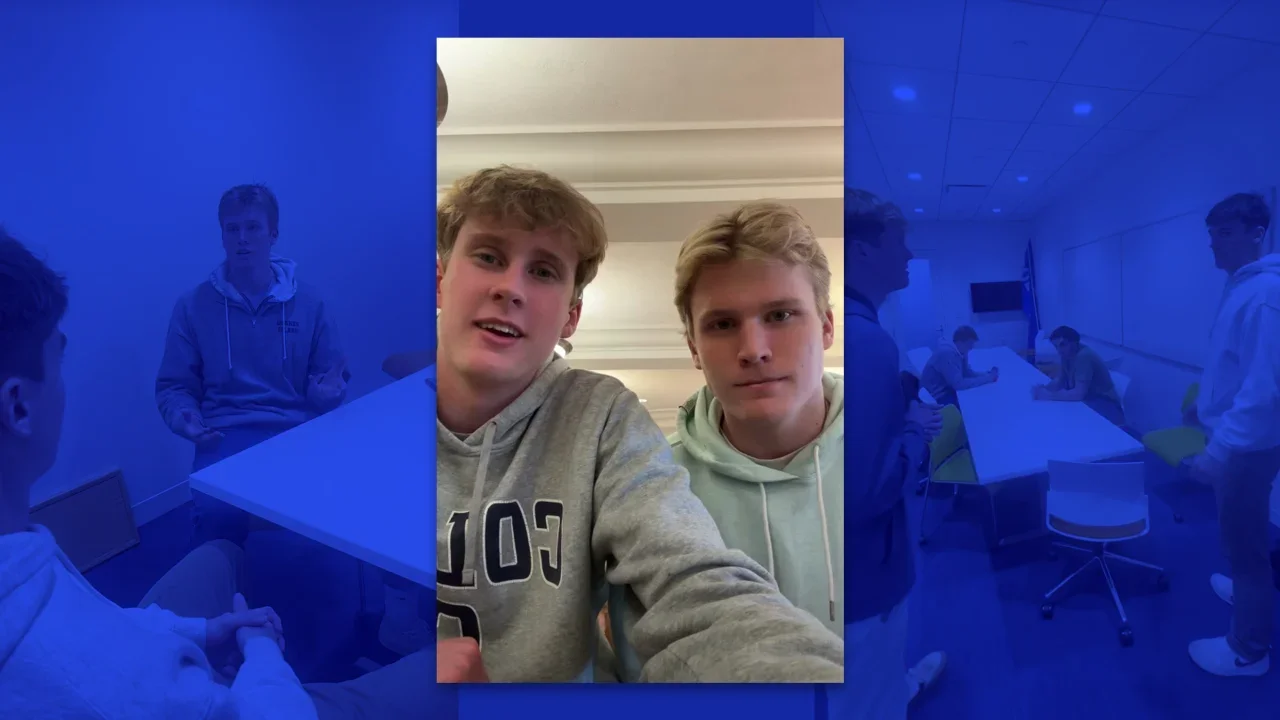
Many schools and colleges are underperforming when it comes to sex education. Going beyond the classroom condoms-and-bananas approach, a group of students have taken it upon themselves to deliver sex ed, TikTok-style. The TikTok account @sexedforguys, which has more than 117,000 followers, started as a school project by four students at Colby College, a private liberal arts school in Maine. Launched in 2022, the account features skits tackling consent, toxic masculinity, and homophobia—essential lessons in a time when manosphere content is flooding For You Pages and Gen Z boys and men are more likely than baby boomers to believe that feminism has done more harm than good. The channel began as part of a study on privilege at elite all-boys schools, led by professor Adam Howard, chair of Colby’s education department. His research highlights how these institutions often fall short—especially when it comes to sex education. While working with student researchers, Howard asked how they could best share their findings. Their answer? TikTok. Howard told Rolling Stone that TikTok was the perfect platform for sharing his research for two reasons: First, that’s where young people are (55% of TikTok users are younger than 30). Second, it provides a much-needed counternarrative to some of the worst content on the app. “Guys could be scrolling through their TikTok and Andrew Tate will pop up, but as they scroll maybe Sex Ed for Guys will pop up and it’ll start having them think a little bit differently,” Christopher Maichin, a 20-year-old junior at Colby, told Rolling Stone. “I think the greatest part of it is that they are getting education without even knowing it. They’re watching a funny video but they’re learning about consent.” Several of the TikTok account’s videos have gone viral, including “Respecting Women Workout” (which has 11 million-plus views) and the game “That’s What’s Up!/What’s Up With That?” (which has more than 3 million views). “Setting boundaries with your partner: That’s what’s up! Backflips: That’s what’s up! Using racial and homophobic slurs: What’s up with that?” the boys say to the camera. Their video goes on to praise the 2013 Florida Gulf Coast March of Madness run, night-vision goggles, and “asking your partner about their day.” “This is unironically how we defeat the alt-right pipeline,” one user commented under the video. Another wrote: “this could actually save america.” View the full article

-
This article is republished with permission from Wonder Tools, a newsletter that helps you discover the most useful sites and apps. Subscribe here. Hundreds of AI tools emerge every week. I’ve picked five new ones worth exploring. They’re free to try, easy to use, and signal new directions for useful AI. 1. Sesame: Talk with a surprisingly lifelike AI Of all the AI bots I’ve communicated with, this one sounds the most lifelike. Pick either Maya or Miles to talk with for free in Sesame’s conversational demo. Try one of these topics. You can download your conversation afterwards. It’s deleted from the company’s servers within 30 days to protect your privacy. I’ll keep an eye on this company: Sesame aims to build “an ever-present brilliant friend and conversationalist, keeping you informed and organized, helping you be a better version of yourself.” Another intriguing new AI conversationalist: I’m also intrigued by my experiments with Natura Umana’s “AI people.” Rather than one AI bot that covers everything, the NatureOS ecosystem hosts multiple conversational bots, each with a different focus. I’ve talked with Hector about well-being and Athena about fitness. The NatureOS interestingly includes hardware, so you can summon these lifelike AI characters with a quick tap of special earbuds. (See a video demo.) 2. Convergence: Assign tasks to an AI agent Ask Convergence’s AI agent to buy groceries for you, find a gift on Amazon, get you a restaurant reservation, research what people say about your company, or do any number of other tasks. This is just one of many new AI agents trained to use a Web browser for you, and none are yet fully reliable. When I tasked Convergence with making a list of LinkedIn profiles of speakers at the upcoming Perugia International Journalism festival, it got some right and many wrong. With simpler tasks your odds of success are higher. You can request up to five tasks for free per day, or pay $20/month for an unlimited number of tasks. 3. Scribe: Transcribe super accurately Until April 9, Scribe—a remarkably accurate new transcription model from ElevenLabs—is completely free. In my tests it got the names of websites right, whereas most transcription tools get those wrong. It also captured tiny speech nuances so well that I’d recommend this over other tools for anything requiring top accuracy. It works in 99 languages. 4. Google Career Dreamer: Imagine a new job Dream up potential new directions for your career with this simple, well-designed free site. You don’t have to log in, enter your name, or share any personal info. Just type in the kind of work you do and confirm whether you have certain skills and interests. Add your education if you want. The AI immediately gives you a “career identity statement” and shows you a map of jobs that might interest you. Hover over any to learn more about them. You can even open up nearby job openings in that field. You can then jump to Gemini, Google’s alternative to ChatGPT, to work on a cover letter or continue your career ideation. Gems are now free You can now create a free Gemini “Gem,” which is an AI tool customized with your specific instructions and up to 10 documents you upload. It’s Google’s answer to ChatGPT’s Custom GPTs. Try this: Create a new “Career Gem” by uploading your resume, past cover letters, career planning docs, and any other relevant materials. Provide instructions if you have a particular style, language, or approach in mind. This new trained AI assistant you’ve customized can then help you anytime you return to it to refine a cover letter, update your resume, practice for an interview, or even brainstorm career ideas. Alternative: You can use Google’s default “Career Guide” gem without uploading anything, but it’s not personalized. 5. Adobe Enhance Speech: Improve audio Adobe recently upgraded its audio cleanup tool. Upload any audio recording with background noise and immediately get a clean version to download. There are new sliders for adjusting the enhancement and background noise. You can then use Adobe Podcast to edit the cleaned audio by trimming the transcript just as you would in a Google Doc. It now works for recordings in French, German, Italian, Spanish, Portuguese, and English. If you’re making a podcast, you can choose from royalty-free sound collections with intros, outros, transition sounds, and background music. It’s free to try for a month and included with existing Adobe subscriptions. This article is republished with permission from Wonder Tools, a newsletter that helps you discover the most useful sites and apps. Subscribe here. View the full article

-
A new survey released by GoDaddy reveals that domain names play a critical role in shaping consumer trust and online shopping behavior. The GoDaddy Consumer Pulse survey, conducted in March with 1,500 U.S. consumers, found that 80% of respondents have avoided visiting or purchasing from a website because it had an oddly spelled domain name. This reaction was most prevalent among younger consumers. According to the findings, 85% of Gen Z and 82% of Millennials reported skipping a business due to its domain’s spelling, while 76% of Gen X and Boomers said the same. The survey was released in March in recognition of the domain name’s 40th anniversary and explored what consumers consider red and green flags when it comes to online business names. One key insight: spelling and length matter. “Businesses that don’t take time to choose the right domain name inadvertently put themselves three steps behind,” said Trip Briscoe, a domain name expert at GoDaddy. “It’s worth investing in a quality domain that is spelled correctly and exactly matches your business’s name. It’s the difference between a potential customer finding you effortlessly or getting lost in the vastness of the internet.” What Makes a Domain Memorable Consumers cited specific traits that made domain names more appealing. Topping the list were full words spelled correctly (43%), short domains with two words or less (40%), and domains that are easy to pronounce (38%). Additionally, 23% of consumers said they found unique domain extensions like .AI or .shop memorable, while 19% were drawn to humorous domains that rhyme or use puns. In contrast, several features were identified as red flags. These included misspelled words (56%), domain names that don’t match a business’s name (55%), and domains that contain hyphens or numbers (20%). Another 20% of respondents said they distrusted free domains associated with platforms like Google Sites or Wix. Typing Still Matters Despite the prevalence of clicks and swipes in modern browsing, many consumers still manually type domain names into their browsers. Half of those surveyed said they regularly type in a business’s domain name when shopping online, while 27% do so only if they remember the name. The remaining 23% said they rely on search engines, bookmarks, emails, or social media links to navigate to a business website. Generational trends were also highlighted. Gen Z and Millennials were more likely to type in domain names directly and less likely to depend on alternative browsing methods. Only 16% of Gen Z and 18% of Millennials said they don’t type in domain names, compared to 28% of Gen X and Boomers. Why Domain Names Matter for Business GoDaddy’s findings suggest that businesses, particularly new or growing ones, need to give careful consideration to their domain names. According to the survey, 74% of consumers are more comfortable when a domain name matches the brand name exactly. Additionally, younger consumers were more likely to report halting their online shopping due to a poorly chosen domain. Thirty-nine percent of Gen Z and 35% of Millennials admitted they have stopped shopping at a company online because of the website’s domain name, compared to just 15% of Gen X and Boomers. Unique and funny domains also appealed more to younger shoppers. Thirty-four percent of Gen Z and 30% of Millennials said they found unique extensions memorable, while 25% of Gen Z and 24% of Millennials found rhyming or punny domains especially noteworthy. Among Gen X and Boomers, only 17% and 15%, respectively, reported the same. GoDaddy advises that businesses prioritize domain availability when naming a company, whether launching a new venture or expanding online. As the survey shows, a well-chosen domain name can make or break a customer’s decision to engage. Image: Envato This article, "GoDaddy Survey Reveals Misspelled Domain Names Turn Consumers Away" was first published on Small Business Trends View the full article
-
Former special counsel Robert Mueller was once a partner at the legal groupView the full article
-
The Fast Company Impact Council is an invitation-only membership community of leaders, experts, executives, and entrepreneurs who share their insights with our audience. Members pay annual dues for access to peer learning, thought leadership opportunities, events and more. When I was 12 years old, my parents enrolled me in a kids’ coding class at the YMCA. This was 1983—before the internet—typing code from magazines like Compute! into a computer with a green-on-black screen and seeing what it did. And the experience would go on to shape the course of my life. I’ve been in software for more than 30 years, most of them at Intuit. I started there as a software engineer in 1999 and today am its chief technology officer. In that time, so much has changed about this profession—from the way we mentor to the way we code. Today, agentic AI technology can take high-level directions, look at an existing code base, pull in the right set of data, do a web search to look at the current ecosystem, and then plan out and perform a sequence of actions normally expected from a junior engineer. This provides a true end-to-end “done-for-you” experience. Put simply, I can see why people might feel like everything is changing for software engineers. But even in this fast-changing field, there are throughlines. I may not be working in BASIC on the same Apple 2E from coding camp, but the foundational skills that help me break down complex problems, ask the right questions, and code durable solutions are as important as they’ve always been. No one needs me to describe how this industry has changed. Instead, here are three things that haven’t. 1. The “why” is as important as the “how” Strategic thinking has long been part of a software engineer’s job, to go beyond coding to building. Working in service of a larger purpose helps engineers develop more impactful solutions than simply coding to a set of specifications. With the rise in AI-assisted coding—and, thus, the ability to code and build much faster—the “why” remains at the forefront. We drive business impact by delivering measurable customer benefits. And you have to understand a problem before you can solve it with code. As machines tackle the parts of the job that deliver relatively standard pieces of a solution, the other part of an engineer’s role—that of a cognitive architect—takes on new weight. The key differentiator lies in the ability to effectively use AI to augment human capabilities. Time previously spent on routine coding tasks can now be devoted to strategic decisions, allowing engineers who are just starting out to practice critical thinking skills earlier in their careers and offering seasoned engineers more opportunities to leverage their expertise for competitive advantage. 2. Curiosity is key The best engineers are inherently curious, with an eye for detail and a desire to learn. Through the decades, that hasn’t really changed; a learning mindset continues to be important for technologists at every level. I’ve always been curious about what makes things tick. As a child, I remember taking things apart to see how they worked. I knew I wanted to be an engineer when I was able to put them back together again. The continuous advancement of technology makes it impossible for the day-to-day work of a junior engineer to look the same year over year. In the 1980s, an entry-level coder might have been tasked with writing simple programs in assembly language, but by the ‘90s this was made nearly obsolete by higher-level languages like C++. Similarly, in the early 2000s, we needed humans to manually parse and clean large files, and by the 2010s we could automate data cleaning with scripting and ETL tools. AI may be exponentially accelerating the pace of change in our day-to-day work, but those who enter the field with curiosity and a hunger to make things more efficient, effective, and intuitive will continue to find success, even as the way they apply that curiosity continues to shift. 3. Leadership skills aren’t just for managers Not every great coder aspires to be a people leader; I certainly didn’t. I was introverted growing up. But as I worked my way up at Intuit, I saw firsthand how the right leadership skills could deepen my impact, even when I wasn’t charged with leading anybody. I’ve seen how quick decision making, holistic problem solving, and efficient delegation can drive impact at every level of an organization. And these assets only become more important as we fold AI into the process. Communication skills, for example, have taken on new significance. When we convey all the relevant information needed for a counterpart to provide an adequate response—whether it’s a colleague, a customer, or AI—we reach better outcomes faster. It’s always been critical to understand the context around a problem in order to choose and code the right solution. But engineers now need to be able to adequately explain that context to AI in a clear, direct way to efficiently delegate portions of their work, in order to leverage AI to operate more efficiently and increase productivity internally. At Intuit, we see up to 40 percent faster coding using generative AI code assistants. Communication skills are key in getting these outcomes—and, as a result—driving faster innovation for customers. AI is changing the trajectory of software engineering. And as long as we continue to practice the foundational skills our industry was built on, it will be as rewarding and exciting a career in the future as it was for me 30 years ago. Alex Balazs is CTO at Intuit. View the full article

-
Perspective homebuyers with work visas, asylum seekers and DACA recipients seeking the government-backed mortgage will be impacted by this sweeping change. View the full article

-
We may earn a commission from links on this page. Deal pricing and availability subject to change after time of publication. If you’ve been meaning to try a VPN but keep putting it off because of price tags and commitment anxiety, this Surfshark deal might break your cycle. StackSocial is offering a three-year subscription to the Surfshark VPN Starter Plan for $83.99, but with code SURF20, it drops to $67.20 through today, March 27. That’s about $1.86 per month, which is a serious markdown compared to Surfshark’s heavily discounted $59.13 per year. The catch is that it’s for new users only, but if you qualify, it’s one of the cheapest ways to get solid privacy tools without skimping on performance. This isn’t one of those “starter” plans that’s stripped down to the bone: You still get AES-256 encryption (the stuff banks use), a kill switch for emergencies, and unlimited device connections, which means you can throw it on your phone, laptop, tablet, smart TV—go wild. There’s CleanWeb to block ads and malware, a cookie pop-up blocker, and even a tool called Bypasser so you can keep your bank app running normally while everything else goes through the VPN. The speeds are promising, too, thanks to upgraded 10 Gbps servers and support for WireGuard and OpenVPN protocols. You can access over 3,200 servers in 65 countries, so streaming or checking content abroad should be smooth. Still, there are a couple of things to note. This deal only gets you access to Surfshark’s Starter plan—not Surfshark One, which bundles in extras like antivirus and breach alerts. Also, if you forget to redeem the code within 30 days, you'll only get store credit instead of a refund. But for anyone mostly looking to bypass geo-restrictions, dodge trackers, and stop websites from following them around the internet, this is a good pick, especially considering you can set it up on FireTV, Linux, Chrome, and all the usual suspects. View the full article
-
We may earn a commission from links on this page. Deal pricing and availability subject to change after time of publication. Amazon's spring sale is halfway done, and we've done some work to single out the best deals available, but many other retailers—like Target and Best Buy—have been going tit for tat, matching prices and spinning up aggressive deals of their own. Amazon's ongoing buy-two-get-one-free sale closely resembles the same one from Target, each offering mix-and-match bundles of books, vinyls, and DVDs at discounted prices. Here's how each sale works, along with a few of the best items worth highlighting from both Target and Amazon. Sunrise on the Reaping (A Hunger Games Novel) (The Hunger Games) $19.59 at Amazon /images/amazon-prime.svg $27.99 Save $8.40 Get Deal Get Deal $19.59 at Amazon /images/amazon-prime.svg $27.99 Save $8.40 Hunger Games Box Set (Deluxe Edition with Stenciled Edges) (The Hunger Games) $36.74 at Amazon /images/amazon-prime.svg $69.96 Save $33.22 Get Deal Get Deal $36.74 at Amazon /images/amazon-prime.svg $69.96 Save $33.22 A Court of Thorns and Roses at Amazon Get Deal Get Deal at Amazon The Hobbit Illustrated by the Author: Illustrated by J.R.R. Tolkien (Tolkien Illustrated Editions) $37.03 at Amazon /images/amazon-prime.svg $75.00 Save $37.97 Get Deal Get Deal $37.03 at Amazon /images/amazon-prime.svg $75.00 Save $37.97 The Lord of the Rings Illustrated (Tolkien Illustrated Editions) $47.49 at Amazon /images/amazon-prime.svg $90.00 Save $42.51 Get Deal Get Deal $47.49 at Amazon /images/amazon-prime.svg $90.00 Save $42.51 Wicked: The Soundtrack[2 LP] $29.33 at Amazon /images/amazon-prime.svg $39.98 Save $10.65 Get Deal Get Deal $29.33 at Amazon /images/amazon-prime.svg $39.98 Save $10.65 Akira - Movie - Steelbook [4K UHD] $24.96 at Amazon /images/amazon-prime.svg $34.98 Save $10.02 Get Deal Get Deal $24.96 at Amazon /images/amazon-prime.svg $34.98 Save $10.02 Led Zeppelin IV $23.62 at Amazon /images/amazon-prime.svg $24.98 Save $1.36 Get Deal Get Deal $23.62 at Amazon /images/amazon-prime.svg $24.98 Save $1.36 The Dark Side of the Moon (50th Anniversary Remaster) $29.99 at Amazon /images/amazon-prime.svg $32.98 Save $2.99 Get Deal Get Deal $29.99 at Amazon /images/amazon-prime.svg $32.98 Save $2.99 SEE 6 MORE The prices for the books, vinyls, and DVDs are virtually the same at both retailers, but each store may have different items in stock. For both retailers, you can mix and match the different types of items—in other words, you could get one book, one vinyl, and one movie—so get creative. Here are the links to each category to help you decide what items to throw in your cart. Amazon's saleBooks DVDs Vinyls/CDs The Amazon items must be shipped together in a single order to receive the discount. You also don't need to be a Prime Member to get the deal (but you'll have to pay $6.99 for shipping). Target's saleBooks DVDs (movies and TV shows) Vinyls/CDs For Target, you can buy these products in person or online. You must add all three items to the cart to see the discount at checkout, and you must be a Target Circle member (which is free). The cheapest item of the three will be the free one. The Best Amazon Spring Sale Deals You Can Get Now Apple AirPods Pro 2 Wireless Earbuds — $169.99 (List Price $249.00) Ecobee Smart Thermostat Enhanced — $169.00 (List Price $189.99) soundcore by Anker Q30 Hybrid Active Noise Cancelling Headphones with Multiple Modes, Hi-Res Sound, Custom EQ via App, 40H Playtime, Comfortable Fit, Bluetooth Headphones, Multipoint Connection — $55.99 (List Price $79.99) Blink Mini 2 (White, 2-Pack) — $37.99 (List Price $69.99) 2024 Apple iPad mini A17 Pro chip, Built for Apple Intelligence, Wi-Fi 128GB - Blue — $399.00 (List Price $499.00) Apple Watch Series 10 (GPS, 42mm, Black, S/M 130-180mm, Sports Band) — $299.00 (List Price $399.00) Sonos Era 100 Wireless Speaker - White — $199.00 (List Price $249.00) Fire TV Stick 4K Max Streaming Player With Remote (2023 Model) — $39.99 (List Price $59.99) Fitbit Inspire 3 Health & Fitness Tracker (Midnight Zen/Black) — $69.95 (List Price $99.95) Roku Express 4K+ HDR Streamer with Voice Remote — $29.85 (List Price $39.99) Deals are selected by our commerce team View the full article
-
We may earn a commission from links on this page. Deal pricing and availability subject to change after time of publication. Getting my floor clean is not for the weak. There's the muddy paw prints, the mulch the dog tracks in, and I'm notoriously messy when cooking in my kitchen. I have created, unintentionally, the perfect lab for testing robot vacuums and mops, and not for nothing, but I'm rarely that impressed. Last year, that changed when Roborock released the S8 MaxV Ultra—it blew my mind. Right now, it's 45% off during Amazon's Big Spring Sale, knocking its price down to $999 (originally $1,799). Roborock S8 MaxV Ultra Robot Vacuum and Mop My favorite robot vacuum/mop combo $999.99 at Amazon /images/amazon-prime.svg $1,799.98 Save $799.99 Get Deal Get Deal $999.99 at Amazon /images/amazon-prime.svg $1,799.98 Save $799.99 Let's start with the basics: it is a fantastic vacuum. It will suck up not just the fine dust and dirt, but tackle larger debris as well, and rarely lets the rollers get stuck or gummed up. It has excellent LiDAR navigation and moves at a good clip, rarely needing to recharge mid run. Though many mops have moved to two, independently spinning mop heads, I think the singular vibrating mop pad (like the one on this device) is better for getting into grime on the floor. The MaxV Ultra was the first robot mop that did a truly great job getting my floor truly clean. The companion app is easy to navigate and packed with advanced features—I really like seeing stats on the wear and tear of the individual parts of the both the tower and the device itself, for example. Also, and I can not overstate how much I love the "Pin and Go" feature where you set a point on your map and the robot will go there and clean. The remote control function, so you can guide the robot from wherever it got stuck under the couch, is also really handy. While this model is already a year or so old, I would still choose it over many later releases, and I recommend it all the time. For a premium robot vacuum-mop combo like this one, anything under $1,000 is quite rare. The Best Amazon Spring Sale Deals You Can Get Now Apple AirPods Pro 2 Wireless Earbuds — $169.99 (List Price $249.00) Ecobee Smart Thermostat Enhanced — $169.00 (List Price $189.99) soundcore by Anker Q30 Hybrid Active Noise Cancelling Headphones with Multiple Modes, Hi-Res Sound, Custom EQ via App, 40H Playtime, Comfortable Fit, Bluetooth Headphones, Multipoint Connection — $55.99 (List Price $79.99) Blink Mini 2 (White, 2-Pack) — $37.99 (List Price $69.99) 2024 Apple iPad mini A17 Pro chip, Built for Apple Intelligence, Wi-Fi 128GB - Blue — $399.00 (List Price $499.00) Apple Watch Series 10 (GPS, 42mm, Black, S/M 130-180mm, Sports Band) — $299.00 (List Price $399.00) Sonos Era 100 Wireless Speaker - White — $199.00 (List Price $249.00) Fire TV Stick 4K Max Streaming Player With Remote (2023 Model) — $39.99 (List Price $59.99) Fitbit Inspire 3 Health & Fitness Tracker (Midnight Zen/Black) — $69.95 (List Price $99.95) Roku Express 4K+ HDR Streamer with Voice Remote — $29.85 (List Price $39.99) Deals are selected by our commerce team View the full article
-
The typical homebuyer's monthly mortgage payment reached a record high, up 5.3% year-over-year, but consumers are putting more money down, adding to equity. View the full article

-
Indian businessman would join an exodus of wealthy individuals prompted by Labour’s reform View the full article
-
CoreWeave plans to reduce the size of its U.S. initial public offering and price its shares below the indicated range, a person familiar with the matter told Reuters on Thursday, dampening expectations that the listing would boost investor appetite for IPOs. The Nvidia-backed cloud services provider is now looking to sell 37.5 million shares, 23.5% less than originally planned, and price them at $40 apiece, well below even the low end of the indicated range, the source added, requesting anonymity discussing confidential information. Nvidia will anchor the CoreWeave IPO at the price with a $250 million order, the source said. The sale would raise about $1.5 billion and value CoreWeave at about $23 billion on a fully diluted basis, according to Reuters’ calculations. The company did not immediately respond to Reuters’ request for comment. It is expected to price the IPO later on Thursday. CoreWeave’s roadshow, which began last week, received a weaker-than-expected reception as risk-averse investors in a volatile market weighed concerns over the company’s long-term growth, financial risks and capital intensity, according to four sources familiar with the matter. Among the concerns is CoreWeave’s heavy reliance on Microsoft, whose shifting AI datacenter strategy could impact long-term demand for chips known as graphics processing units, or GPUs. While investors appear comfortable with the company’s high leverage since it has strong free cash flow, the risk of commitments not being fulfilled remains a worry. Additionally, CoreWeave’s capital-intensive business model raises questions about sustainability, adding to broader market uncertainty. CoreWeave has been a significant customer for Nvidia, deploying over 250,000 of Nvidia’s GPUs by the end of 2024. Investors’ lukewarm reception to the CoreWeave IPO could signal reduced confidence in the AI infrastructure market, as the scaling of GPU assets in AI training slows down. “The business model doesn’t appear fundamentally flawed, but this suggests investors are recalibrating AI infrastructure valuations,” said Lukas Muehlbauer, research analyst at IPOX. CoreWeave and some existing investors had initially aimed to sell 49 million shares in the offering priced between $47 and $55 each to raise as much as $2.7 billion. That would have valued the company at up to $32 billion on a fully diluted basis. Mounting concerns CoreWeave’s stock market debut has been closely watched as a test of the strength of a recovery in the U.S. IPO market and whether investor enthusiasm for AI newcomers remains strong or has started to wane. The number of U.S.-listed equity capital markets deals, including both IPOs and block trades of shares, fell to 187 in the first three months of this year, down from 243 during the same period last year, according to Dealogic data through Wednesday. The total value of these transactions also dipped, falling from $74.02 billion to $63.48 billion. Despite the AI boom, there are growing concerns that data center spending will be uneven, with investments concentrated among a few giants while others struggle to keep pace. DeepSeek, China’s low-cost AI rival, has also emerged as a growing threat, fueling concerns about pressure on data center spending. CoreWeave had debt of about $8 billion as of last year. It also leases its 32 data centers and some equipment, instead of owning them, resulting in operating lease liabilities of $2.6 billion. In its offering filing, the company had said about $1 billion of the IPO proceeds would be used to pay down debt. The company has said it would continue to borrow. CoreWeave has yet to turn a profit, and IPO investors in the last few years have been wary of backing companies with no history of profitability. Ahead of its IPO, CoreWeave secured partnerships with major AI players, including Sam Altman’s OpenAI. Earlier this month, it signed an $11.9 billion infrastructure deal with the ChatGPT maker. The cloud services provider, which offers access to data centers and high-powered Nvidia chips for AI workloads, will also issue $350 million in shares to OpenAI through a private placement as part of the offering. Morgan Stanley, J.P. Morgan and Goldman Sachs are the lead underwriters of the IPO. The downsizing was first reported by Semafor on Thursday. —Echo Wang, Krystal Hu, Milana Vinn, Manya Saini, Niket Nishant, and Ateev Bhandari, Reuters View the full article
-
The most tangible concern is in the commercial real-estate market. But the rating agency's crystal ball is cloudy when it comes to single-family home loans. View the full article

-
We may earn a commission from links on this page. Deal pricing and availability subject to change after time of publication. Are you reading this article on a computer monitor? Typing away in the comments on a keyboard? Then why would you buy yet another MacBook when you could get the same power and convenience for much less by opting for a Mac Mini? Right now you can pick one up at Amazon for under $500, or $100 off the usual price. Apple Mac mini (2024, M4) $499.00 at Amazon /images/amazon-prime.svg $599.00 Save $100.00 Get Deal Get Deal $499.00 at Amazon /images/amazon-prime.svg $599.00 Save $100.00 Finally updated last year with Apple's latest chip, the M4, the new Mac Mini is a small computer that can actually fit in the palm of your hand. It's got pretty much everything you'd get from one of Apple's laptops—minus a screen and keyboard. Though thanks to a built-in fan, it's actually got one up on the MacBook Air, and is more analogous to an entry-level MacBook Pro. And even then, it's got more ports, including an ethernet port and two extra USB-C ports. About the only real downside to the new Mac Mini is the annoying button placement—the power button is on the bottom of the device—but that's what docks are for. Overall, this is a slick mini-computer, small and lightweight enough to be portable. If all you do is move from workstation to workstation, consider ditching the MacBook and saving both your wallet and your desk some space with this deal instead. Shopping for tech? Lifehacker can help you make the right decision. Browse our tech reviews and head-to-head comparisons for everything from laptops and smartwatches to e-bikes and home gyms. Subscribe to our deals newsletter, Add to Cart, for the best sales sent to your inbox, or browse our best-of lists directly on Amazon, including: The Best Over-Ear Headphones The Best Wireless Earbuds The Best Adjustable Dumbbell Sets The Best Projectors View the full article