Newsletter
Want to keep up to date with all our latest news and information?


ResidentialBusiness
Administrators
-
Joined
-
Last visited
Everything posted by ResidentialBusiness
-
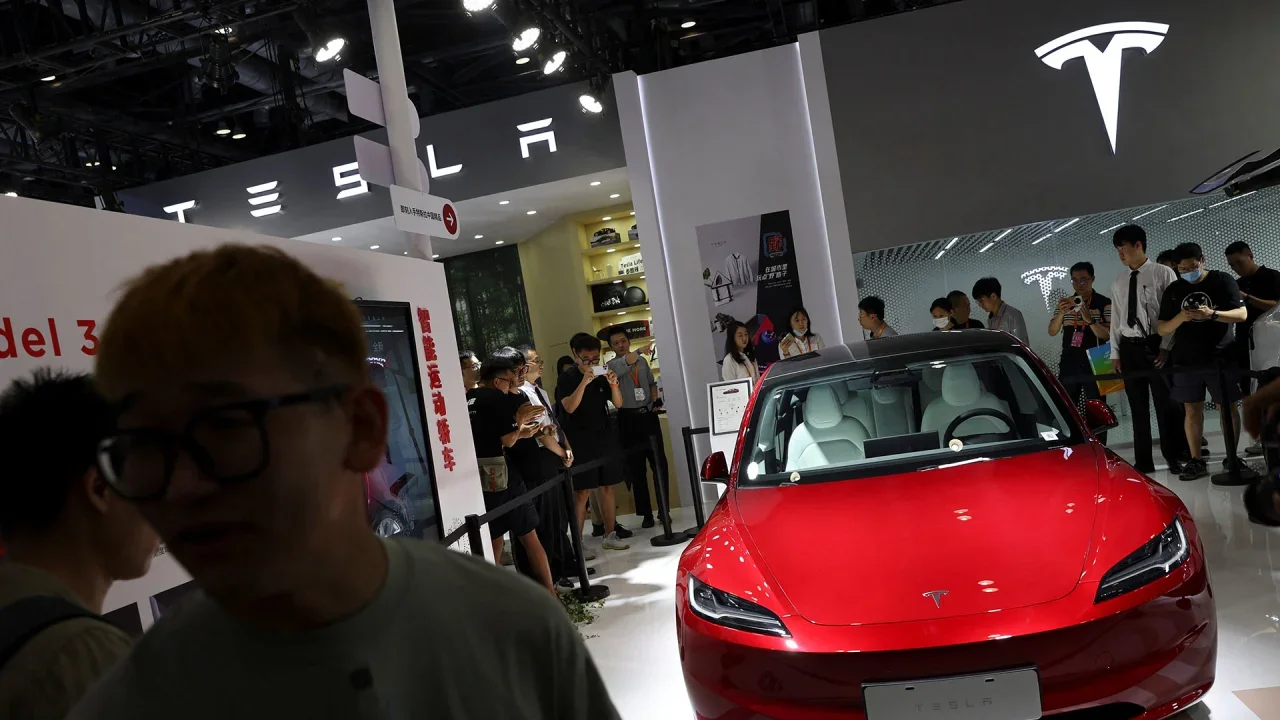
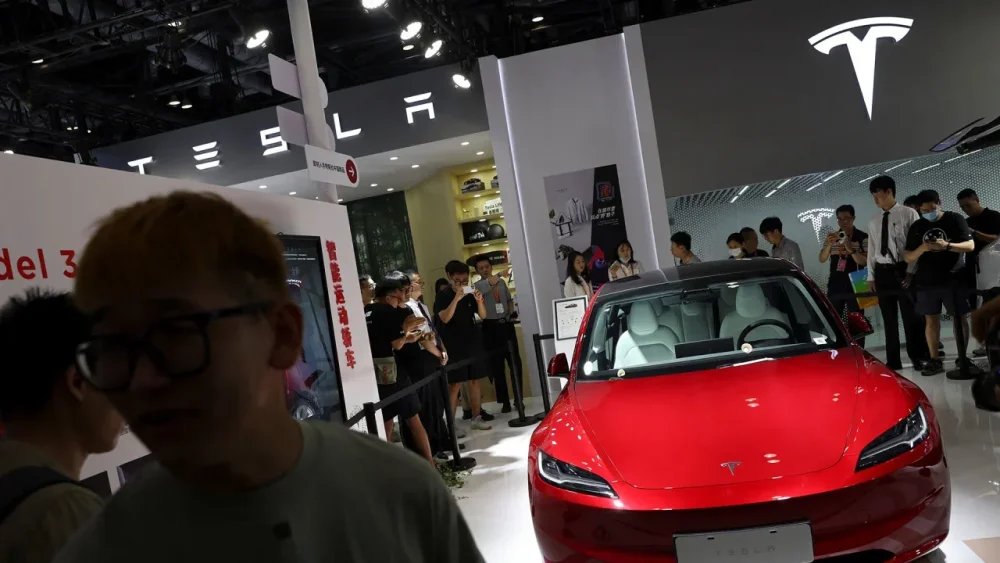
Tesla’s sales of its China-made electric vehicles dropped 49.2% in February from a year earlier to 30,688 cars, the lowest since August 2022, as the U.S. automaker faces pressure from Chinese rivals in a relentless smart EV price war. Tesla, which makes its Model 3 and Model Y vehicles in China, sold 93,926 Chinese-made vehicles worldwide in the first two months, down 28.7% year-on-year, according to data from the China Passenger Car Association (CPCA). January-February sales were distorted by the Lunar New Year holiday shifting from February last year to late January this year and due to a partial suspension of Model Y production for upgrade work. Still, Chinese rival BYD, with its Dynasty and Ocean series of EVs and plug-in hybrids, recorded a 90.4% increase in passenger vehicle sales to 614,679 units last month. BYD deepened a three-year-old price war in the world’s largest auto market last month with the launch of smart EVs — EVs equipped with advanced driving-assistance systems — starting at below $10,000. That prompted peers including Leapmotor and Geely to follow suit with affordable smart EV rollouts. Both Tesla models made in China are smart EVs. Tesla also exports its China-made EVs to markets including Europe, where sales plunged 45% in January. To increase the appeal of its aging models, Tesla made a long-awaited update to its autopilot software in China to enable city navigation in late February. It also kicked off deliveries of the revamped Model Y in its second-largest market. Model Y was the best-selling car in China itself in 2023 and 2024, although Chinese rivals have launched at least six models in the past year to take on Model Y. Tesla still benefits from a brand halo in China but analysts have said Xiaomi’s YU7 crossover to be launched later this year would be the strongest rival. Sales of the Onvo L60, which Nio launched in April to compete with Model Y and Toyota’s RAV4, fell to 4,049 units in February. Nio Chief Executive William Li expects the model will reach monthly deliveries of 20,000 units in March, which he is counting on to improve Nio’s profitability. —Qiaoyi Li, Zhang Yan and Brenda Goh, Reuters View the full article
-
If you have any vegetable products in your kitchen, you’ll want to be aware of the latest recall posted on the website of the U.S. Food and Drug Administration (FDA). The recall involves numerous vegetable products and fears that they could be a breeding ground for Clostridium botulinum bacterium, which can produce the deadly botulinum toxin. Here’s what you need to know. What’s happened? On March 3, the FDA posted the notice of a voluntary recall from AKT Trading Inc. of Torrance, California. The recall was initiated after the company discovered that some of the prepared vegetable products manufactured by Choshiya Honten Co., Ltd had the potential to harbor the Clostridium botulinum bacterium. That bacterium can produce a toxin called botulinum, which can lead to a botulism infection in a person who consumes it. The reason the recalled products have the potential to harbor the potentially deadly bacterium is because the required “Keep Refrigerated” statement was left off the packaging. If the vegetables are not refrigerated, it could enable the bacterium to grow. Which products are affected? According to the FDA notice, the following products with the brand name “Japanese Pickles,” packaged in 1 lb plastic bags, are included in the recall: SHIBA ZUKE PREPARED MIX VEGETABLES, JAN CODE (UPC): 4582207535128, Expiration date: 8/27/2025 AOKAPPA ZUKE PREPARED MIX VEGETABLES, JAN CODE (UPC): 4582207535135, Expiration Date: 5/14/2025 FUKUSHIN ZUKE PREPARED MIX VEGETABLES, JAN CODE (UPC): 4582207535142, Expiration date: 7/9/2025, 5/31/2025 SOFT TSUBOZUKE PREPARED MIX VEGETABLES, JAN CODE (UPC): 4582207535159, Expiration Date: 7/29/2025 RAKKYO ZUKE PREPARED VEGETABLES, JAN CODE (UPC): 4983673526021, Expiration Date: 8/1/2025, 7/1/2025 Additionally, the following product is also included in the recall: Brand name: CHOSHIYA Product name: ABURA-ITAME ZHASAI PREPARED SICHUAN VEGETABLE Container: 8.8oz. plastic bag JAN CODE (UPC): 4983673527325 Expiration date: 4/3/2025, 2/25/2025 The products were distributed at Tokyo Central / Marukai stores in California. The full details of the recalled products can be found here. This recall follows an earlier recall of prepared bamboo shoots. The details of that earlier recall can be found here. What is botulism? According to the U.S. Centers for Disease Control and Prevention (CDC), botulism is a rare but serious disease. The condition is caused by a toxin produced by Clostridium botulinum and other related bacteria. There are five types of botulism, including foodborne botulism, and all are medical emergencies. Botulism occurs when the toxin attacks the body’s nerves. This can lead to a number of issues, including muscle paralysis and difficulty breathing. It can even cause death. The CDC says that any form of botulism is a medical emergency that necessitates an immediate visit to your doctor or emergency room. What are the symptoms of botulism? Symptoms can vary depending on what type of botulism a person has. The CDC says symptoms related to all forms of botulism may include: Difficulty swallowing Muscle weakness Double vision Drooping eyelids Blurry vision Slurred speech Difficulty breathing Difficulty moving the eyes Foodborne botulism symptoms may also include: Vomiting Nausea Stomach pain Diarrhea And symptoms of botulism in an infant may also include: Constipation Poor feeding Drooping eyelids Pupils that are slow to react to light Face showing less expression than usual Weak cry that sounds different than usual What do I do if I have the recalled products? Do not consume them. Instead, the recalled products should be discarded or returned to their place of purchase for a refund. Full details of the recall can be found here. Consumers who have more questions can contact AKT Trading Inc. at 310-715-2174 or email the company at info@aktusa.com. View the full article

-
We may earn a commission from links on this page. Deal pricing and availability subject to change after time of publication. If you've been looking for a solid pair of workout earbuds that won’t slip out mid-burpee, the JBL Endurance Peak 3 is down to $39.95 on Woot (originally $99.99) this month (or until they sell out). That’s a steal for earbuds that scored an Editor’s Choice from PCMag for their workout-friendly design and secure fit. This deal includes a one-year JBL manufacturer warranty, and if you’re an Amazon Prime member, you get free standard shipping (otherwise, it'll cost you $6). JBL Endurance Peak 3 True Wireless Sports Headphones $39.95 $99.99 Save $60.04 Get Deal Get Deal $39.95 $99.99 Save $60.04 These wireless earbuds come with ear hooks that wrap snugly around your ears, ensuring they stay put even during the most intense sessions. And unlike some other hook-style earbuds, these reportedly don’t clash with glasses frames (an underrated feature for anyone who wears specs). That said, the ear hooks double as a power switch, turning off when the tips magnetically touch the body of the earpiece—that's useful in theory, but it can be frustrating if you’re just taking them out for a quick break. Also, the touch controls take some getting used to since the panels have a larger surface area than most earbuds. Sound-wise, JBL packs a punch with 10mm dynamic drivers that cover the full frequency range from 20Hz to 20KHz (with fully customizable EQ settings in the companion app), delivering a sound profile with strong bass that stays clear of distortion, even at top volume. If you’re an Android user, you’ll appreciate Google Fast Pair for easy setup, though the earbuds stick to basic AAC and SBC codecs—no AptX support here, notes this PCMag review. They do, however, boast an impressive IP68 rating, meaning they’re fully dust-proof and can survive full submersion in water for over 30 minutes. Rain, sweat, or a quick rinse under the tap? No problem. Battery life is another win, with JBL estimating 10 hours per charge, plus an additional 40 hours from the charging case (your mileage may vary depending on usage). So unless you’re planning to run an ultramarathon, you should be covered. Note: Woot does not ship these earbuds to Alaska, Hawaii, or PO box addresses. View the full article
-
Having previously declared bitcoin to be a ‘scam’, the US president now wants to add it to the Fed’s balance sheetView the full article
-
Have you committed to a new habit—exercising, let’s say—but keep falling off the wagon? Do you give up when the going gets tough? Does this whole “pursuing goals” idea seem really daunting? You may have low self-efficacy. But don’t worry: Self-efficacy is something that you can build with practice. Here's how. What is self-efficacy?Self-efficacy, as psychologists understand it, is related to the idea of confidence, but it’s not just being cocky for no reason. It’s a feeling something like determination and related to discipline and motivation. When you have high self-efficacy, you believe that you can do the thing. Whatever that thing may be. Maybe you’re just getting started on a long journey, but you know you’ll make it to the end. You see the obstacles in your path as speed bumps, not barriers. If you run into a problem, you’ll find a way to solve it. You just know you will. These beliefs aren’t something you’re born with or something you get from luck or miracles. You build them over time, with practice and experience. At the heart of self-efficacy is the idea that you can control what you do, and that you can control at least some of the things around you in your life. If there’s a snowstorm on the day you were going to go to the gym, for example, you don’t just give up on exercise for the week. You might rearrange your schedule so you can go another day, or you might do a home workout, or you might just remind yourself that your routine will survive a missed day and that your long-term plan is still on track. Here are some of the ways that psychologists say we can build self-efficacy: Congratulate yourself for small winsPast successes are fuel for future success. This applies to tiny things like habits: If you managed to make it to the gym once, it’s a lot easier to show up on day two. It also applies to bigger projects. If you did a beginner running program and “graduated” by running a 5K race, that’s huge. You learned that you can follow a program. You learned that you can run farther than you ever thought you could. You learned what it feels like to go out for a run when you’re tired, but finish anyway. You learned what that finish-line glow of accomplishment really feels like. And you can harness all of that, all over again, when you start working on a new goal. Another thing I like to do, especially when I haven’t seen success in something lately, is to look for things I can be proud of in the process. I didn’t lift the 140-pound log at my last strongman meet, but I hit 127 pounds in training, which is a hell of a lot more than I could do when I started. Watch people doing the thing you want to doThe second-best thing to reflecting on your own past experiences is to vicariously experience others’ success. You’ll want to choose your role models carefully; pay attention to who really inspires you. For some people, looking up to a world-class athlete can inspire them in the gym. For others, it can be helpful to look at somebody who is closer to you in skill level or experience. When your buddy hits a new deadlift PR, you’ll cheer for them, right? Even though you weren’t the person walking up to the bar, you’ve still experienced a taste the whole rollercoaster of emotions from being nervous at the attempt to celebrating the success. Seek out people who encourage youBelieving in yourself doesn’t have to be a solo project. Just as you can cheer on a gym buddy, your buddy can cheer you on as well. Also, make an effort to seek out instructors, coaches, and mentors who make you feel unstoppable. If somebody you trust thinks that you can do something, you’ll start to believe it too. Visualize success (and failure)When you’re trying to stay on a path, it helps to know where that path leads. What will it look like to make it to your goal? How will you feel when you cross that finish line, when you lift that goal weight, when you’ve been eating vegetables with your meals for a whole year? While you’re at it—if you’re ready for this—also imagine scenarios where you’re trying to do the thing and you momentarily can’t. How will you feel if you get injured, if a vacation knocks you off track, or if your gym buddy stops being able to come with you on deadlift day? Your plan is big enough to survive these obstacles, but it will help to think them through ahead of time and plan out how you will handle them. Then, when the time comes, you won’t hesitate to execute your plan. View the full article
-
Gen Z came of age in an environment that previous generations couldn’t have imagined when we entered the workforce. They’ve never known the world without the internet or cellphones. Their education and early career paths were disrupted by a global pandemic that kept them at home, learning and working over a screen. They’ve been learning digital skills their entire lives. It’s no wonder that their perspective on work is different than ours—and it’s time for us to pay attention. With the aging U.S. workforce, we need to attract and retain Gen Z talent for our companies to thrive—and this means a focus on skills-first hiring. Gen Z wants employers to value the skills they bring, not whether they have a college degree. This makes sense, given the impacts of the pandemic on many college careers and the rising costs of higher education. They also want employers to invest in their growth through mentorship, training, and upskilling programs to keep pace in a rapidly changing world. Whether through hands-on projects, portfolio work, or certifications, Gen Z wants clear pathways to prove themselves. And it is on us to find a new way of hiring that benefits us all. Change the way you think about qualifications Moving to a skills-first hiring model requires a major cultural shift, but one that unlocks productivity, creativity, and innovation. Indeed’s research shows hiring managers who embrace this approach find it twice as easy to find qualified candidates. With 52% of U.S. job postings now dropping formal education requirements, the shift is already underway. By removing these barriers that screen out over 70 million skilled workers, companies can tap into a vastly larger talent pool. And I can tell you firsthand, it works. Young workers today are unapologetically rejecting the system that once held people like me back. I started my career during the 1990s dot-com boom and landed a well-paying job in operations without a college degree. When the bubble burst, I found myself shut out of the job market—not because I lacked skills or experience, but because my résumé did not check the “college graduate” box. I went from making $90,000 a year to $11.75 an hour, forcing me to rebuild my career. That experience shaped my belief in hiring for skills and potential, not academic credentials. Degree requirements continue to serve as a gatekeeper, even though more than 62% of U.S. adults don’t have one, excluding highly qualified candidates from even being considered. Remember: For a multitude of reasons, not everyone has the ability to go to college. Talent is universal, but opportunity is not. Strict education requirements for new hires created a workforce that is less innovative, inclusive, and responsive to change. This slows down a company’s ability to adapt to an evolving economy. If you want to keep Gen Z, you have to invest in their skills. They expect opportunities to learn, evolve, and move up—and if they don’t see a clear path forward, they won’t stick around. Redesign job descriptions to focus on skills, not degrees Remove degree requirements where possible and instead list essential skills and competencies. For example, if you’re hiring a social media manager, why require a marketing degree when there are Gen Z creators who have built viral brands from scratch? Evaluate candidates based on real-world expertise. Build career progression paths that value ability over tenure Career progression should depend on ability, not tenure. Gen Z employees are motivated by growth opportunities and expect clear, merit-based career paths. Too often, companies prioritize years of experience over proven contributions, which can stall promising talent and push Gen Z workers to seek opportunities elsewhere. Instead, organizations should create structured yet flexible advancement paths that recognize impact and leadership potential early. Create assessment methods that effectively evaluate soft & hard skills Résumés often fail to capture a candidate’s true capabilities, which is particularly relevant for Gen Z. This generation has developed many skills through nontraditional pathways like self-directed learning, online certifications, and gig work. Consider implementing practical skills assessments, portfolio reviews, and behavioral interviews to evaluate problem-solving, creativity, and adaptability. Real-world skills assessments ensure hiring decisions are based on actual competencies, making it easier to identify high-potential Gen Z candidates who may not fit traditional hiring molds. Hire for the future, not the past Gen Z expects a smarter, fairer approach to hiring—one that values what they bring to the table. Companies that get this will thrive. Those that don’t? They’ll watch top talent walk away. Focusing on skills over degrees and clear career progression paths creates more engaged employees, better cultures, and stronger business outcomes. When I first lost my job, I had the skills to help any company grow and thrive—but I wasn’t given the chance. Now, I am in a place where I can give that chance to others, and I do not take it lightly. We can build a future where talent speaks louder than degrees. My final thoughts? Embrace a skills-first, inclusive approach or risk losing the next generation of top talent. It’s not a trend. It’s the future. View the full article

-
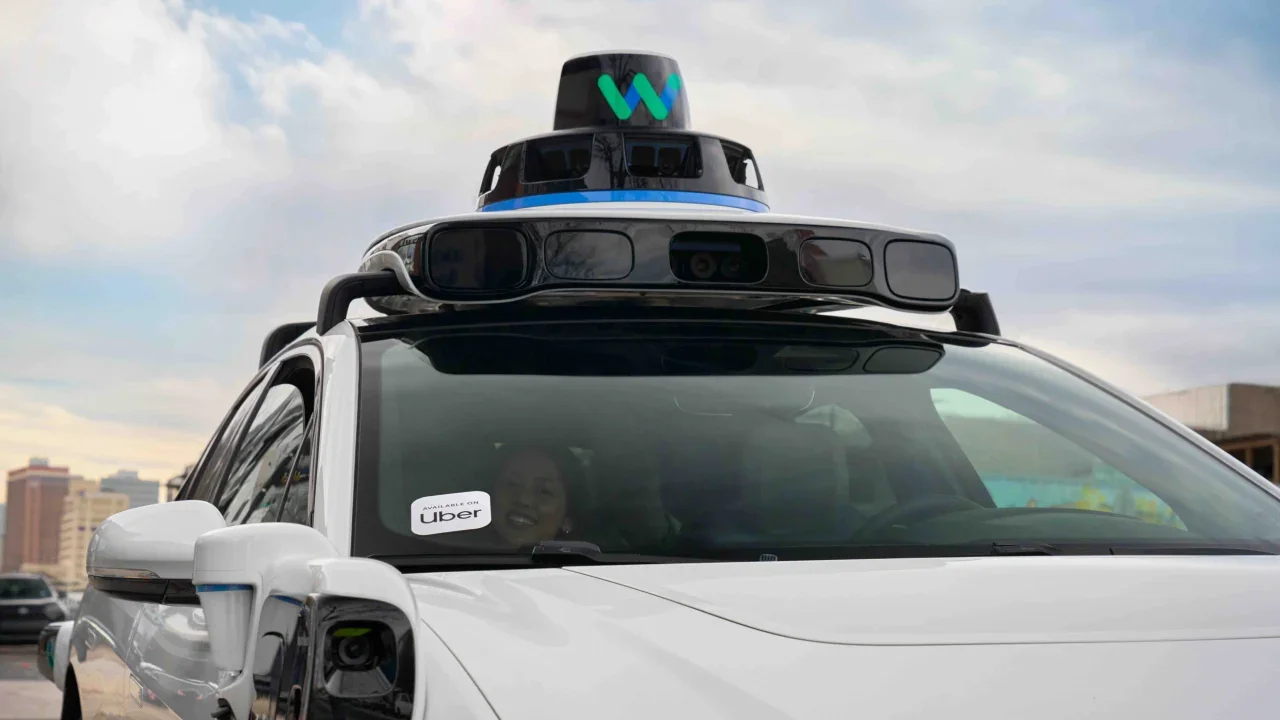
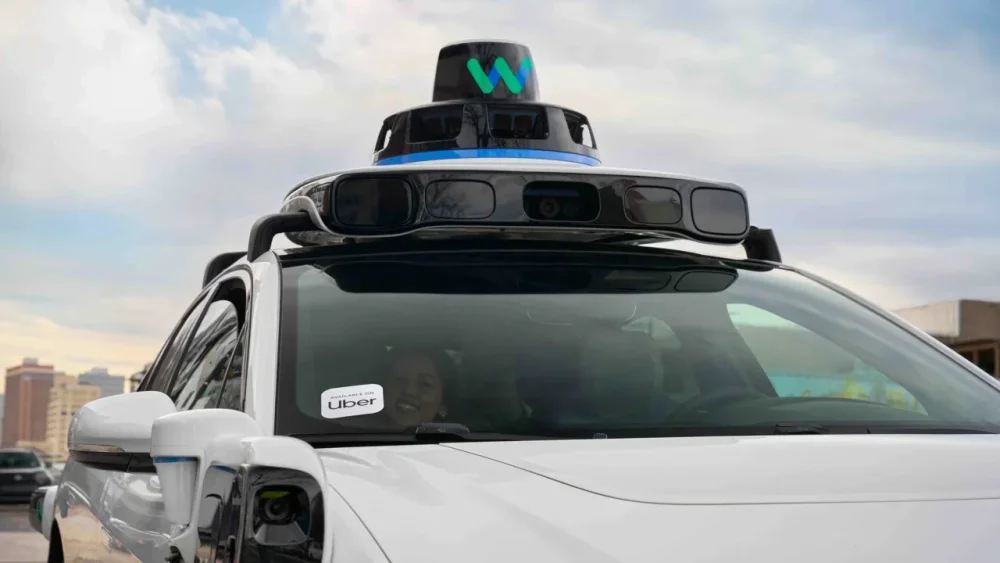
Starting today, if you call an Uber in Austin you can match with a self-driving Waymo vehicle. The launch in the Texas capital is part of an expanded partnership between the two tech companies. Waymo’s autonomous vehicles are already available on the Uber platform in Phoenix, and the companies plan to launch next in Atlanta. “With Waymo’s technology and Uber’s proven platform, we’re excited to introduce our customers to a future of transportation that is increasingly electric and autonomous,” Uber CEO Dara Khosrowshahi said in a statement. Austin riders who request an UberX, Uber Green, Uber Comfort or Uber Comfort Electric can be matched with a Waymo all-electric Jaguar I-PACE vehicle at no additional cost. Riders will receive a notification each time they’re matched with an autonomous vehicle and have the option to accept or switch to a non-AV ride. Customers can then rate their experience in the app like with a traditional Uber ride, but will forgo the option to tip. [Photos: Uber] Curious Uber customers can boost their chances of getting matched with a Waymo by opting in through the “Ride Preferences” section of their Uber app under Settings. The Austin launch also conveniently comes just ahead of the popular SXSW festival, which is expected to draw hundreds of thousands of visitors to the area. Uber’s self-driving expansion is part of its play to get back into the autonomous vehicles space after selling off its AV unit in December 2020. Rather than building its own tech, which is time consuming and extremely expensive, it’s chosen to partner with third-party companies. Uber said Tuesday it had 14 AV partners to date. View the full article
-
White House decision to halt military aid means Kyiv’s armoury will be depleted in ‘two to three months’View the full article
-
US vice-president says deal is unlikely to be secured by ‘some random country that hasn’t fought a war in 30 or 40 years’View the full article
-
When it comes to airports, travelers tend to fall into two camps. There are the anxious types who show up four hours early, with plenty of time to leisurely peruse duty-free and enjoy the airport lounge. And then there are those who breeze into the airport with 45 minutes to spare, hoping for the best. But a viral trend on TikTok, dubbed “airport theory,” would put even that latter group’s nerves to the test. The theory suggests arriving at the airport just 15 minutes before your flight to clear security. The concept has taken off online, racking up 400 million views. Unsurprisingly, it’s already led to plenty of missed flights. “It is currently 9:24, and my flight started boarding four minutes ago,” said TikTok user, Lexi Smith, in a video testing the theory at LAX airport. “We’re in security right now; let’s see how fast we can get through this.” She claims to get through security in five minutes, despite getting randomly selected for additional screening. After transferring to her gate via bus, she informs viewers that she made it to the gate 15 minutes later, as the flight was “just now boarding.” “So. We made it; airport theory is true,” she declared, adding, “Yes, I was the first one to walk on the plane. Make that make sense.” Another TikTok creator tested the theory at Hartsfield-Jackson Atlanta International Airport, the busiest in the world based on foot traffic. “If airport theory works here, I think it will work anywhere,” said Michael DiCostanzo in a clip with more than 3.6 million views. Breezing through security in just over seven minutes, DiCostanzo arrived at his gate in under 15 minutes from start to finish, calling it “a huge win for airport theory.” However, as one commenter pointed out, “So you had precheck, didn’t check a bag and were at the nearest terminal? Now let’s do it when it’s not all the optimal situations.” Not every traveler has been so lucky. In one clip with 17.4 million views, TikTok user Jenny Kurtz filmed herself sipping on an iced coffee, seemingly not in a rush to get to her gate. “For those of you thinking about testing out the airport theory, don’t do it,” she warns in the caption of her 14-second video, showing the closed gate sign. “Missed my flight.” Thanks to the “airport theory” trend, Google searches for “I missed my flight” have surged by 645% in the past month alone, according to experts at travel site Netflights. It’s clear many travelers are confused about just how early they should arrive at the airport. In fact, the question racks up an average of 63,870 online searches every month. For the record, most airlines still recommend arriving at least two hours before a domestic flight and three hours before an international one. View the full article

-
Economists’ proposal for up to €800bn of funding under review as part of coalition talksView the full article
-
Discussions come as investors bet that Paris-based company could replace Elon Musk’s Starlink in Ukraine View the full article
-
Popular industry expert finds home at Ingenius, ICE, Black Knight and Freddie Mac alums move to new companies and Visio Lending appoints board member as CEO. View the full article

-
Have you ever found yourself in a situation where you carefully laid out all the context for your manager, only to have them cut you off? Or maybe you’ve found you’re eager to dive into the tactical details of a project while they keep steering the conversation back to vision. These moments can leave you frustrated and confused. You’re doing what seems logical, yet somehow it’s not landing. The good news is that these disconnects usually aren’t about your competency or the quality of your ideas— they’re about different styles. Studies have found that two primary dimensions shape how people communicate and approach their interactions at work. The first is dominance, which refers to the degree a person attempts to control situations or the thoughts and actions of others, and the second is sociability, which measures how readily someone expresses emotions and prioritizes relationships and emotional connection with others. The intersection of these two dimensions leads to four different styles, which I call the 4Cs. The Commander Commanders can be so quick to take action that they may steamroll you or others. They care more about what needs to be done than how everyone feels about it. This doesn’t necessarily mean they’re uncaring (although they sometimes neglect their team’s need for emotional support), but they show their commitment to others by setting clear, ambitious targets rather than through praise or acknowledgment. Don’t take it personally if a Commander: Nitpicks your work. When Commanders challenge your ideas, it’s more about stress-testing them to avoid mistakes and make them stronger rather than dissatisfaction with you or your performance. Acknowledge their input without getting defensive and refute with solid data: “I see what you mean about the message lacking urgency. We approached it that way because our feedback survey showed . . . ” Skips pleasantries and small talk. Commanders see time as a valuable resource not to be wasted, so respect their desire for efficiency with phrases like, “I know you’re busy, so let’s get right to it” or, “I’ll dive straight in—here are the key points I’d like to cover.” And don’t be offended when they send you two-word email replies without asking how your weekend was. Overlooks your opinion. Commanders appreciate assertiveness, so have a point of view and present it clearly. Start your pitch with something like, “I believe . . . ,” “My recommendation is . . . ,” “From my perspective, it seems that . . . ,” or “Here are my initial thoughts.” The Cheerleader Cheerleaders are expressive and tend to be energetic, optimistic, and enthusiastic. Like Commanders, Cheerleaders value moving fast and aiming high, but they love building relationships and playing connector. Their focus on team spirit makes for an environment that’s positive and fun, but some might find their high-energy, group-oriented style overwhelming and you might not always get the nitty-gritty feedback or specific direction you want. Don’t take it personally if a Cheerleader: Cancels meetings at the last minute. Take the lead to reschedule, or you’ll be forgotten as they chase the next shiny object. Try this: “I understand your schedule is tight, but we’re running out of time to plan for X. So I’ll grab 20 minutes on your calendar to connect about that tomorrow unless you let me know otherwise.” Changes priorities frequently. Their flightiness can be frustrating, but when the Cheerleader thinks of yet another new idea or veers off topic, gently steer them back: “That’s fascinating. I’ll make a note so we don’t lose sight of this and can revisit it at a better time.” Be clear about what’s achievable, tying it back to team capacity and timelines: “To meet our deadlines and keep the quality of work you’re used to, we should stay focused on X.” Gives you vague feedback and direction. Cheerleaders prefer to inspire and motivate rather than provide step-by-step instructions. When given vague feedback, drill deeper: “Can you share what success looks like for this project?” Provide options since Cheerleaders sometimes struggle to come up with specifics on their own: “Here are a few ideas I’ve come up with. Which one do you feel fits best?” The Caretaker Caretakers are patient peacekeepers who listen carefully and make sure everyone feels seen and heard. While they’re high on sociability like the Cheerleader, Caretakers are more subdued and nurturing. They want you to feel safe voicing your thoughts and struggles. But at the same time, their indecisiveness can be a drag, particularly in fast-paced or high-stakes environments where quick action and risk-taking are crucial. Don’t take it personally if a Caretaker: Constantly checks in. Caretakers sometimes “helicopter” manage or, worse, make you feel like you have to reassure them instead of the other way around. Gently make it clear you can handle tasks on your own without them hovering: “I’ve got this under control, but I’ll definitely let you know if I need any help.” Hoards work and stretch projects. Your boss may believe taking on the burden of extra work safeguards you from stress—or they’re convinced that they’re best suited to handle tasks. To overcome their control issues, propose a gradual transition (“Let’s start with me handling part of [project], and we can go from there”) or suggest working together initially (“How about we tag-team on [project] at first? That way, you can see my approach and make sure it’s on track”). Drops news on you at the eleventh hour. In a misdirected effort to keep things calm and stable, your boss may hold back important information, so regularly ask for insight on potential shifts: “Are there any developments we should be aware of? It would help us plan and adjust accordingly” or “Knowing about changes ahead of time helps me prepare, so any heads-up would be helpful.” The Controller Controllers excel through their meticulous attention to detail, reliance on data, and a preference for working behind the scenes to ensure everything runs like clockwork. They tend to be serious and reserved leaders who worry less about social connections and more about optimizing existing standards, rules, and processes. This can be a dream for those who love clear instructions, but Controllers can also come off as rigid and restrictive, especially when quick pivots or innovative leaps are needed to stay ahead. Don’t take it personally if a Controller: Rejects your ideas without consideration. Controllers are wary of new ideas because they see them as risks that could lead to mistakes. So frame ideas as enhancements to existing processes, not as net new changes: “[Idea] builds on our current system . . .” or “We can take what we’re already doing and make it even better by . . .” Requires multiple approvals or reviews. It’s not that they don’t trust you; rather, they believe that having multiple sets of eyes means standards will be met. Before starting work ask, “What are the key criteria you’re looking for in this project? I want to make sure I meet your expectations from the outset.” Suggest a quick pre-mortem session to catch any issues early: “Can we check in before I finalize this? I want to address any concerns you might have.” Expects you to be an expert in everything. If your boss overloads you with dense information or complex documentation, turn it back around and ask for guidance on what’s most critical: “I appreciate all the details. What would you say are the key points I should prioritize to make sure we’re compliant?” You might not always like or agree with your boss’s approach—that’s normal—but if there comes a point where their actions become disruptive to you or others, it’s not enough to say, “Oh, that’s just how they are!” Ultimately, personal style doesn’t give anyone a pass to be a jerk. The key is to stay flexible and observant, adjusting your strategies as you learn more about your boss’s preferences and behaviors. Because even if your relationships are strong, they can always be better. Adapted from the book Managing Up: How to Get What You Need from the People in Charge by Melody Wilding. Copyright © 2025 by Melody Wilding. Published in the United States and Canada by Crown Currency, an imprint of the Crown Publishing Group, a division of Penguin Random House LLC. All rights reserved. View the full article

-
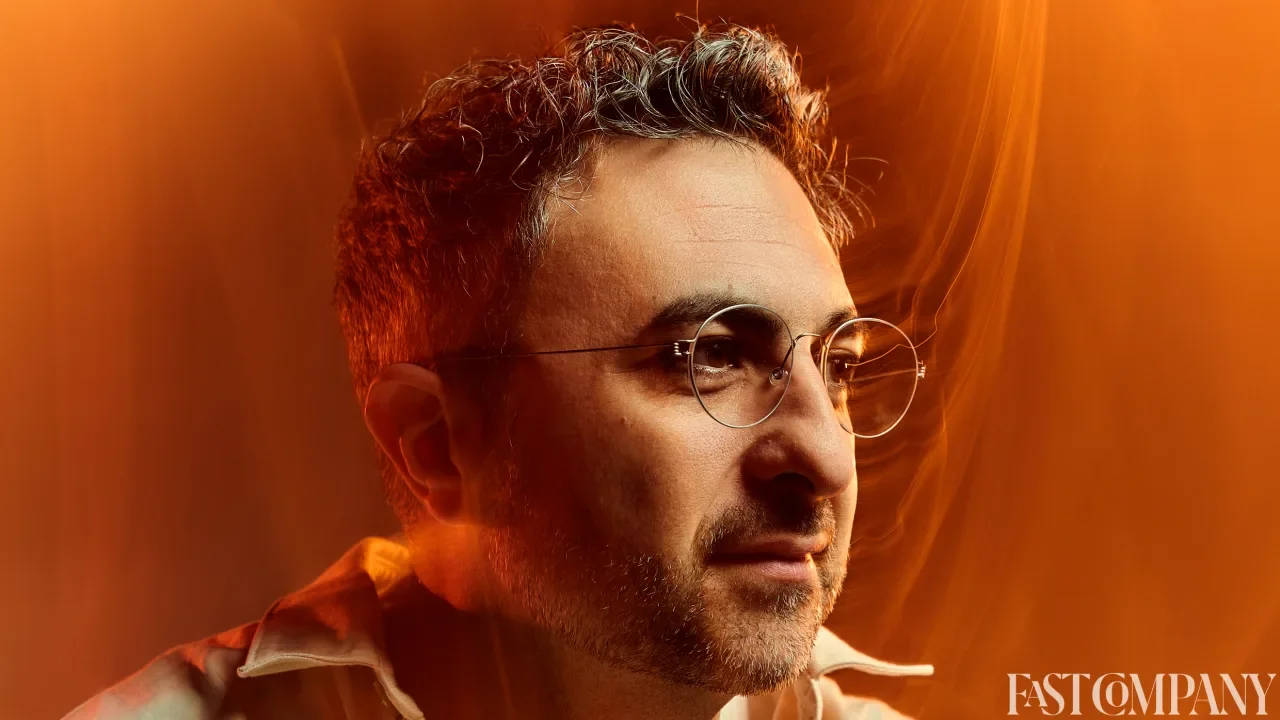
Microsoft employees stream down a hallway by the dozen, smartphones and paper coffee cups in hand, many clad in heavy coats on this frigid February morning. The setting is idyllic—Lake Washington is in full view through floor-to-ceiling windows—but they stride purposefully. As they do, they pass a digital sign with a tersely worded call to action: All squads ship Competing/differentiating Growing work every sprint to double Successful Sessions ABS (Always Be Shipping) Despite the profusion of Microsofties on the premises, this isn’t Microsoft’s sprawling Redmond campus. Instead, these staffers have taken over a Hyatt hotel in Renton, another Seattle suburb. They work for a division known as Microsoft AI—MAI for short—and have traveled from corporate outposts as distant as the U.K., Switzerland, China, and India to attend a team off site. Mustafa Suleyman, MAI’s CEO, instituted these conclaves upon arriving at Microsoft just under a year ago—part of an unorthodox mass hiring in which the software behemoth absorbed most of the staff from Inflection AI, the startup Suleyman cofounded in 2022. The gatherings take place roughly once every seven weeks, and part of their purpose is unblinking self-assessment. Ahead of the meeting, around 80 squads of 6 to 15 people apiece have rated themselves on their success in hitting recent deadlines on a scale of red, amber, or green. The results aren’t great—but Suleyman sees that as progress in itself. “It’s taken a few cycles to get people to be basically honest in terms of their scoring,” he tells me shortly after presiding over the event’s keynote presentation. “And this time, there was lots of red—like almost 45% red. I think that was a really, really good moment; and we sort of stood up and owned it. I was very proud of the team.” Though being CEO of something called “Microsoft AI” sounds like a job of nearly unlimited purview, Suleyman does have a more specific remit. He’s charged with using AI to transform the company’s consumer properties, including the free Copilot chatbot app available on the web and in versions for Windows, Mac, iPhone, and Android. The progress MAI measures in squad-size chunks all levels up to a much higher goal: building an AI companion that not only answers questions accurately but performs tasks based on a deep understanding of your needs. And not just an anodyne chatbot, but a warm and relatable persona you’ll enjoy spending time with. In its present form, Copilot has barely begun to hint at this wildly ambitious vision. But as Microsoft pushes forward, “You’ll start to see Copilot become a platform that enables a personalized AI companion for you,” promises Suleyman. “It’ll have its own name, have its own visual representation, have its own personality, and really be your sidekick. What we are building is your second brain, your aide, your consigliere, your reliable chief of staff in your pocket.” It’s lofty talk, but Suleyman—whose round, wire-frame glasses help give him the presence of a particularly glib owl—has a knack for explaining AI in a compelling fashion. His cautionary 2023 book on the subject, The Coming Wave, was a New York Times Best Seller; his 2024 TED talk, “What is an AI Anyway?” has been viewed 2.7 million times. More importantly, his bona fides include cofounding not just Inflection, but before that DeepMind in 2010. The London-based company made computing history when it created software that taught itself to play the famously complex Chinese board game, Go, better than any human. Then it developed an algorithm for predicting how proteins fold themselves, a transformative tool for drug discovery. Both of those landmark feats reached fruition after Google acquired DeepMind in 2014; Suleyman left DeepMind in 2019 and exited Google altogether in 2022, shortly before founding Inflecton. In 2023, Google merged the company with another AI arm, Google Brain, to form Google DeepMind, with Suleyman’s fellow cofounder Demis Hassabis as CEO. The combined operation is responsible for the Gemini large language model now used in many Google products, putting Suleyman in direct competition with his former colleagues. (Suleyman says he remains friendly with Hassabis, but argues that competition fuels creativity, noting that in February, he recruited the engineers responsible for one of Google’s best-received uses of AI: its uncanny “Audio Overview” synthetic podcasts.) In terms of raw users, Copilot has some catching up to do. According to data from intelligence company Similarweb, the consumer version—which is distinct from the one that’s part of the Microsoft 365 productivity suite—had a desktop and mobile web audience of just 15.6 million in January. That was far behind OpenAI’s ChatGPT (246 million), Chinese upstart DeepSeek (79.97 million), and Gemini (47.3 million), though ahead of Perplexity (10.6 million) and Anthropic’s Claude (8.2 million). This data doesn’t include people who use Microsoft’s free Copilot app, but market intelligence firm Sensor Tower says that ChatGPT currently has 30 times the monthly active users of consumer Copilot. Microsoft is not wholly dependent on Copilot to reach consumers. Bing, another part of Suleyman’s portfolio, may only have 4% of the search market to Google’s 90%, according to StatCounter, but with an audience of 174 million people in January, it’s larger than any AI bot except ChatGPT, per Similarweb. His group also oversees Microsoft’s Edge web browser, which comes bundled with Windows and could become a potent AI delivery system of its own. And over time, Suleyman’s AI companion vision might give Copilot more market traction by clearly differentiating it from ChatGPT. (The two products share many technical underpinnings thanks to the Microsoft-OpenAI partnership.) Still, the relative tininess of Copilot’s current user base shows that the vision of Microsoft’s signature consumer-AI effort has yet to transform into the kind of mass attention the company cares about. “For Copilot to be truly useful for you long term, it needs to not only be able to ingest all your long-form documents and your email and your calendar and your context, but it needs to not forget what you’ve talked about a couple of sessions ago. And we are getting really good at that now.” [Photo: Carlton Canary for Fast Company] Then again, it’s not like anyone else has truly figured out consumer AI. The industry’s often-clumsy stabs at it—such as Google’s gaffe-ridden AI Overviews and short-lived Meta bots personified by the likes of Snoop Dogg and Paris Hilton—can feel like answers to questions nobody asked. “Every single company is trying to understand what the market wants at this point,” says Divya Kumar, Microsoft‘s general manager of search and AI marketing. “We’ve barely scratched the surface.” But Suleyman can’t depend on Microsoft’s rivals flailing forever; if MAI doesn’t create the first true AI consigliere, somebody else surely will. Hence, the intensity he brings to managing and motivating his team, a job he describes as “building the cultural flywheel that then builds the product.” That goal was apparent in a February email to his staff—written shortly after DeepSeek’s stunningly efficient LLM shocked the AI industry—in which Suleyman predicted more surprises ahead and called for a great hunkering down. “What MAI needs from everyone this year is extreme focus,” he wrote. “The competition will be unlike anything we’ve seen. This is for real. This is the time to do the best work of your lives.” The son of an English nurse mother and Syrian cab-driver father, Suleyman landed on AI as his life’s work not because he was in love with the technology for its own sake, but because he saw its potential to make the world a better place. At 19, he dropped out of the University of Oxford, where he studied philosophy and theology, to help start a telephone counseling service for Muslim youth. He then served as a human rights policy officer for London Mayor Ken Livingston and cofounded a consultancy dedicated to driving societal change on a global scale. Suleyman was only 25 when he and two friends, who had the training in computer science he lacked (Hassabis and Shane Legg), started DeepMind in 2010. The company was a bet on their conviction that evermore-powerful supercomputers would lead to an epoch-shifting moment when AI would surpass human cognitive ability across an array of disciplines. Legg called that phenomenon Artificial General Intelligence, or AGI. Early on, their faith that AI‘s future would be extraordinary was so contrarian, Suleyman says, that “we never really talked openly about our ambition to build AGI—that was always something that we whispered in hushed tones to each other and among a very small group.” Eventually, though, the entire field adopted AGI as a concept—and a goal. DeepMind indeed made historic progress, putting Suleyman at the heart of the AI revolution just as it was taking off. But in a major career setback, he left DeepMind in 2019—reportedly not by choice but precipitated by complaints from employees that he had a bullying management style. In a 2022 podcast, he accepted the criticism—”I really screwed up”—and said that he’d since worked with an executive coach to become a better boss. By the end of his DeepMind tenure, Suleyman says, he was itching to get AI out of the lab and into the real world. Rather than leave Google altogether, he spent another two years at the company as VP of AI product management and AI policy. Among his responsibilities was working with the Google Brain team, which had developed an LLM called LaMDA. At the time, ChatGPT didn’t exist; even OpenAI‘s GPT LLM hadn’t proven itself capable of powering radically new AI experiences. LaMDA “was at GPT-3 level performance, at least a year earlier than GPT-3,” Suleyman remembers. Leveraging it into new Google features would have been a bold, attention-grabbing move. But it also would have been risky and required sign-off from many internal stakeholders. Suleyman struggled to rally support. “That was really on me,” he says. “I was the one trying to get this out the door—persuade the lawyers, persuade the policy people, persuade Google Search. And for some reason, there was just a series of mental blockers in the company.” Concluding that this effort had reached a standstill, Suleyman departed Google in January 2022. Officially, he was joining venture capital firm Greylock as a partner. Barely more than a month later, however, he returned to AI with the launch of Inflection. Suleyman and his cofounders, DeepMind principal research scientist Karén Simonyan—now MAI’s chief scientist—and LinkedIn cofounder and Greylock partner Reid Hoffman quickly lined up $225 million in funding. Suleyman didn’t spell out the startup’s exact plans beyond acknowledging they involved making it easier for humans to communicate with computers: “It feels like we’re on the cusp of being able to generate language to pretty much human-level performance,” he told CNBC. What that meant became clearer in May 2023, when Inflection introduced Pi, its chatbot. Short for “personal intelligence” and available on Facebook Messenger, Instagram, and WhatsApp, as well as the web and as an iPhone app, Pi was a rough draft of Suleyman’s notion of an AI companion—optimized for engaging conversation rather than purely informational utility. “I chatted about philosophy with it for what turned out to be 2 hours,” wrote an impressed Reddit user. “I kept waiting for it to ‘break’ and say stupid random stuff like [ChatGPT does] but it kept going coherently.” As Pi was establishing itself, Suleyman found himself in an ongoing dialog with Microsoft CEO Satya Nadella about their companies’ respective futures. Microsoft had invested in Inflection and was providing the startup with cloud services, so it was only natural they’d talk. But by the winter of 2023—a period when Sam Altman’s brief ouster at OpenAI highlighted how vulnerable Microsoft had left itself by tethering its AI vision to an outside partner—Nadella was proposing scenarios involving Suleyman joining Microsoft in some capacity. Suleyman was willing to listen. Microsoft already had a deep technological platform, a large consumer footprint it knew how to monetize through advertising, and the ability to shovel its formidable resources to high-priority initiatives—assets Inflection couldn’t match on its own. Furthermore, Suleyman’s confidence in Inflection’s initial business plan, which involved building high-cost computing clusters to train its own in-house LLM, Inflection-1, had been shaken by new developments such as Meta’s open-sourcing of its Llama AI model, which made a world-class LLM available to any company that wanted to use it. “I just did not predict that a public company would make the crown jewels available to everybody,” he says, calling the realization of how that might impact the competitive landscape “painful.” Nadella, too, had reason to reassess Microsoft’s AI strategy, particularly on the consumer front. For all the benefits the company had reaped from its investment in OpenAI, the tantalizing sense that it might help Bing bite into Google’s dominance in sudden and dramatic fashion hadn’t panned out. Nor had Copilot become ChatGPT’s peer in traffic and name recognition, despite being based on some of the same underlying GPT technology. “As of right now, it feels to me as an outside observer that they haven’t gotten nearly the leverage that they would’ve wanted on the consumer side,” says tech investor and writer M.G. Siegler. Microsoft product manager for model personality Rachel Taylor: “The way that you show up for Gen Z versus my mom, who’s just turned 70, has differences in style and delivery, and it should feel different as time goes on.“ [Photo: Carlton Canary for Fast Company] Suleyman is quick to underline that he could have continued pursuing his AI vision at Inflection, which had raised a total of more than $1.5 billion from investors. On top of that, in November 2023 he met for eight hours with SoftBank CEO Masayoshi Son, who “made an enormous offer to raise a gigantic round at a huge price.” But over a January 2024 lunch at the World Economic Forum in Davos, Suleyman says, Nadella made an irresistible offer: “Come and drive Microsoft through the next decade.” ”One of the most compelling pieces of what he said to me was, ‘We completely missed mobile,’” referring to Microsoft’s Windows Phone being thrashed by Apple’s iPhone and Google’s Android, Suleyman remembers. “‘If we completely miss AI in the way that we missed mobile, it’ll be existential for the future of the company.’” Suleyman says it was a wrenching decision: “We were 70 people. The product was growing like wildfire. We had an amazing roster of investors.” But a couple of months after Davos, a deal was announced. Acquiring Inflection would likely have raised antitrust concerns. Instead, Microsoft simply hired Suleyman, Simonyan, and most of the team they’d assembled. (LinkedIn currently lists 59 ex-Inflection staffers now at Microsoft.) Microsoft won’t say how much it spent on this gambit; reports put the price tag at $650 million—or maybe more—to license AI models, pay off investors, and compensate Suleyman and other new employees. Along with existing Microsoft employees and additional ones Suleyman would recruit, the Inflection alums are part of MAI—“a Russian doll of new teams,” he says. The company also declines to provide a current head count, but last November, Wired’s Steven Levy quoted Suleyman saying “about 14,000 people” reported up into his team. (Inflection still exists, under new management—Suleyman no longer has an ownership stake—and has pivoted from building an AI companion to selling technology to enterprise customers.) Microsoft general manager of search and AI marketing Divya Kumar: “One of the aspects of Mustafa that I really appreciate is his consumer ethos. Everything he thinks about, whether that is product engineering or marketing, he thinks about from the lens of the customer.” [Photo: Carlton Canary for Fast Company] Suleyman’s unsatisfying experience trying to commercialize Google’s LaMDA did leave him wary of big-company bureaucracy. “The most important thing was figuring out how, culturally, we kept some distance from some of the old patterns in Microsoft that we were worried would slow us down,” he says. “This was something Satya and I talked about a lot. He was adamant that we would have all the necessary freedoms to operate and we wouldn’t be impeded in any way.” The evidence that Nadella was good to his word includes the fact that Suleyman divided his team into small squads of employees who tackle their work in six- or seven-week cycles, an approach he brought with him from Inflection. MAI controls its own tech stack and is responsible for its own recruiting. Despite being part of the ultimate Microsoft shop, it even does some of its collaborating over Slack (“I would say we mostly use Teams,” Suleyman emphasizes when I ask). Nearly a year into his new job, Suleyman remains keen to shield MAI from certain Microsoftian tendencies. In a November email to staffers, he dutifully praised Microsoft’s consensus-driven culture—but stated that MAI’s objective should be “respectful disagreement, followed up by a complete commitment to the outcome.” That bias toward speedy decisiveness is tempered by the self-awareness Suleyman has carefully fostered since getting into trouble at DeepMind. In the lead-up to one team meeting, for instance, he asked his direct reports for examples of recent moves he’d made that proved problematic so that he could share them more broadly. Suleyman still doesn’t hesitate to describe himself as “relentless.” But he adds that he’s now “much more practical and more realistic. In some ways, I’m actually a lot more patient and balanced as well.” That’s not far from how MAI staffers describe him: “He’s a kind and empathetic person who still manages to have a tremendous level of urgency,” says Kya Sainsbury-Carter, corporate VP of Microsoft Advertising, a direct report, and an 18-year veteran of the company. Back at Microsoft AI’s off-site meeting, a standing-room-only crowd has assembled for a workshop on understanding Generation Z. The presentation includes TikTok videos in which young people rhapsodize about ChatGPT and excerpts from interviews with high schoolers talking about their busy lives. In an empathy-building exercise, participants discuss what they learned from this exposure to the next generation and how it might be applied to improving Copilot. Such anthropological inquiry is serious stuff at Microsoft, which turns 50 this year and is intent on forging a relationship with consumers who weren’t around for the glory days of the PC. Gen Z “demands more than real innovation and crisp aesthetics; they want authenticity, social responsibility, and seamless digital experiences,” wrote Suleyman in a January email to MAI staffers. “We need to create experiences that truly resonate with these users.” Copilot design director and Inflection AI alum Matt Pistachio: ”We still move quickly as a startup. We still meet together like we used to do. We still have the same vision. We’re just doing it at scale.“ [Photo: Carlton Canary for Fast Company] Of course, at the scale to which Microsoft is accustomed—and hopes Copilot will reach—even delighting an entire generation of consumers wouldn’t be enough. The company must consider the needs and desires of individual customers spanning a wide swath of humanity, a test that some on its Windows team have likened to ordering pizza for 1.5 billion people. Indeed, Copilot design director Matt Pistachio—one of the Inflection employees who joined Suleyman at MAI—gets most animated when telling me how AI can empower his mother, a Lebanese technophobe. “She can talk in Arabic,” he explains. “She can talk in her broken English. She can just say what she wants and she has access to computing.” As another Inflection alum, MAI’s product manager for model personality Rachel Taylor, puts it, “Your AI should feel different than mine.” So how can Microsoft even begin to attack the problem of creating an AI companion that teeming masses of people might find indispensable—but each in a slightly different way? Suleyman divvies the necessary elements into three buckets that he’s been talking about since the days of Inflection’s Pi: IQ, AQ, and EQ. IQ covers a companion’s raw skill at working with facts—“to answer any question accurately, superfast, be grounded in the real world, [and] provide evidence and citations,” he says. AQ references the power to take action on behalf of a user—or, using one of the tech industry’s favorite current buzzwords, to be agentic. And EQ is about the companion’s emotional intelligence—its ability to “make you feel empowered and make you feel supported and make you feel smarter and more capable.” Building out these elements could keep Suleyman’s team busy for years. “A lot of breakthroughs need to happen to be able to get to the vision that he’s got in his mind,” says S. Somasegar, Madrona Venture Group managing director (and, previously, a 27-year Microsoft veteran). But some ingredients are falling into place, at least as first drafts. Starting in October, MAI began rolling out the meatiest changes to Copilot since Suleyman’s arrival. Thanks to voice mode, you can talk to the AI rather than type, and it’ll talk back. A feature called Think Deeper, based on OpenAI’s “reasoning” o1 model, takes 30 seconds to generate its answers, but is optimized to deliver richer, more sophisticated explanations and advice than the stock model. Copilot Vision lets you carry on spoken conversations with the AI about web pages, say, so it can help suss out pertinent details in an Airbnb listing you’re skimming while planning a vacation. A key focus is memory: Copilot knowing you better the more you use it rather than every session being a Groundhog Day-like new start. In February, Microsoft quietly shipped an update that lets it weave topics and ideas from past sessions into new ones: “You have a sense that there’s a compounding value,” says Suleyman. Microsoft is also working on giving its AI companion enough social grace to master group chats, tailoring its responses to the interests and attitudes of each human in a session. The challenge of making all this work is not just technological. Any AI companion worth its salt will certainly need a world-class LLM under the hood. But the MAI employees at the Hyatt off-site include “educators, therapists, linguists, comedy writers, advertisers, designers,” Suleyman tells me. Instead of building on the tech industry’s past 20 years of consumer experiences—products such as Facebook and YouTube that aggregated massive amounts of user-generated content, with its rough edges often part of the appeal—he is aiming to tap AI to help attain a level of polish that software has rarely had. “We now have this new raw material to make beautiful experiences with, which is much closer to the raw material of Hollywood or game design,” he says. “We, as humans, love the feeling that arises when you listen to a beautiful piece of music or watch an epic movie or see a director of photography wash color over a scene.” Once again, Suleyman’s rarified description of his aims is running ahead of anything MAI has actually shipped. But some of his aspiration to engage on an emotional level was visible in a blobby, smiling onscreen animated character I glimpsed at MAI’s off-site meeting—an early, unannounced manifestation of what Copilot would look like if you could see it as well as chat with it. The character’s cartoony vibe also happens to scratch an itch Microsoft has had since at least 1992. That’s when the company became smitten with research by Stanford professors Clifford Nass and Byron Reeves, which showed that people attribute human qualities to computers and other forms of media. Taking their conclusions as an argument for making software interfaces more anthropomorphic, Microsoft released a quirky Windows add-on called Microsoft Bob. After that flopped, the company doubled down with Office 97’s Office Assistants, including that iconic pest Clippy. In the 1990s, Microsoft tried to add a dash of anthropomorphic companionship to software with Microsoft Bob (seen here) and Office Assistants such as Clippy. They went on to be among the company’s most famous failures. When it turned out Office users didn’t actually want productivity aid from cartoon characters, Microsoft deemphasized Clippy and company—and eventually removed them altogether. More recently, it has good-naturedly embraced the talking paper clip as a totem of failure. If consumers really do find an animated version of Copilot to be irresistible, Clippy can feel free to have a long-delayed last laugh. But applying AI to a synthetic persona also brings risks that were unimaginable in Clippy’s day. Much of the air went out of Microsoft’s triumphant reveal of the first version of its consumer Copilot in February 2023 when it turned out to be a slightly terrifying loose cannon, most famously telling New York Times writer Kevin Roose that it loved him and he should leave his wife. (The company moved swiftly to tamp down its new chatbot’s wild side.) More recently, and far more alarmingly, Google-backed Character AI has been sued by the mother of a teenager whose suicide, she claims, reflected his unhealthy emotional attachment to the startup’s bots. In another suit, families say their children’s conversations with Character AI bots went in dark directions involving self-harm, violence toward others, and sexualized content. Microsoft is hardly blithe about AI companions’ potential to go awry. ”We’re setting the standard for these things existing,” says Taylor. “And so we have to be totally sure that we’re comfortable with them existing in the world.” Her colleague Pistachio adds that the company is building its AI to calmly steer sessions in a responsible direction: “It’ll be like, ‘Okay, I think we’ve gone a bit too far—I don’t think we should be joshing around this much.‘“ Suleyman, whose book The Coming Wave takes AI’s perils at least as seriously as its promise, told me repeatedly that keeping it safe is not just vital but the whole point of his career. “The goal of the next 50 years,” he declares, “has to be to make sure that this technology remains subservient to humanity.” Yet that hasn’t led him away from high-stakes applications of the technology. Former DeepMinders are involved in a new MAI healthcare group, whose mandate he paints in only the broadest strokes for now: “Four billion or so people don’t have access to high-quality medical or health advice on a daily basis—I think it’s just an amazing opportunity.” Ultimately, Suleyman says, his mission “is to make sure that [AI] genuinely does always remain something that makes our lives healthier and happier. The goal of civilization, in my opinion, is to relieve people of the obligation and pressure to solve shelter, food, community, work, well-being.” Even now, as he builds a business at a titan of capitalism that’s older than he is, he’s still the 25-year-old enthralled by AI’s potential to do good. View the full article

-
For filmmakers with a fondness for certain fonts, using them frequently enough in their work can turn typography into a sort of signature. See the typeface in a film, and you know exactly who the director is. Wes Anderson has an obsession with Futura, while John Carpenter set his film credits in Albertus, a formal serif. Papyrus is now synonymous with James Cameron’s Avatar franchise, and more than 40 of Woody Allen’s films use Windsor. For director Sean Baker, whose comedy-drama Anora won the 2025 Oscar for Best Picture and netted him the Academy Award for Best Director, his font of choice is the tall, narrow, decorative Aguafina Script. Created by type designers Alejandro Paul and Angel Koziupa of the Argentinean type foundry Sudtipos, Aguafina Script is described as “semi-formal and eye-catching” with characters that “flow into each other,” perfect for product packaging, glossy magazines, and book covers. Turns out it also works well for movie posters and title sequences, as Baker has proven for more than a decade now with his various projects. [Images: IMDB] Baker told the streaming platform Mubi last year that he first selected Aguafina Script for the title sequence of 2015’s Tangerine, about a transgender sex worker (a film that was shot entirely on iPhones), because he was looking for something that was “stylistically interesting” and because it subverted the grittiness of the subject matter. “It is saying that there is an elegance to this production in the way we’re presenting the subject matter,” he said. After realizing the font could serve the same purpose for 2017’s The Florida Project (about a girl and her single mother who live in a motel near Disney World), he said, “If I continue this it could eventually become something that people connect with—and connect with my films [the way Carpenter’s and Allen’s fonts did with theirs].” “Now when you see those fonts, you think of those filmmakers and their films,” said Baker, who utilized Aguafina Script through to the movie posters too. “I like to have consistency between my advertising material and the actual credits.” By weaving it into the visual identity of his films, including a recently minted Oscar winner, Baker has made Aguafina Script his own, and shown how type can be used to challenge viewers’ preconceived notions. View the full article

-
When Netflix was finally ready to bring back its massive international hit TV series Squid Game for Season 2 after a three-year hiatus, it had a unique marketing challenge: remind people why they fell in love with a Korean action drama that revolves around a murderous contest. Approximately 39 months had passed since the debut of Squid Game took the world by storm with its coordinated green tracksuits, Pink Guards, and twisted takes on children’s games. The first season exploded to the surprise of everyone, becoming a global pop culture sensation. Back in 2021, Netflix marketing outside Asia was largely reactive to what audiences were excited about. This time, there were years of anticipation. Marian Lee, chief marketing officer at Netflix, says there was an excitement internally to re-create that phenomenon, but also a ton of pressure on her teams. “Convincing people to come back to watch the second season is an entirely different proposition than being surprised and having some fun with it.” [Photo: Netflix] What came next was a worldwide full-court press of entertainment marketing. Pink Guards were deployed at events, activations, and press appearances around the planet. The Season 2 campaign kicked off at the Paris Olympics. Pink Guards popped up at Sydney Harbor and Bondi Beach, the canals of Venice, Bangkok’s Chao Phraya river, Saudi Arabia’s AlUla, and Beco do Batman in São Paulo. Fans played Red Light, Green Light live under the Pink Guards’ watchful eyes in Los Angeles, Jakarta, and Warsaw. As of February 14, Season 2 had 14.25 billion owned social impressions, eclipsing Netflix’s biggest Instagram and TikTok posts ever. As a result, Squid Game Season 2 captured the most premiere-week views of any Netflix show in history. It spent eight consecutive weeks in the Netflix Global Top 10, amassing 185.2 million views in that time, and quickly became the streamer’s third-most-popular show of all time, after Wednesday and Squid Game Season 1. The marketing strategy behind the show’s second season is a case study in how to match and elevate fan-generated hype—and it offers a window into how Netflix operates as a global brand marketing organization. Jakarta [Photo: Netflix] Found in translation Squid Game is first and foremost a Korean show. That was the mantra, and that was the foundation from which Lee and Netflix approached the marketing of the show. “We have teams in 40 markets around the world, and it would be very American for us to say, ‘Okay, well, now that it’s the biggest show, we’re going to have our largest marketing and publicity teams in L.A. run the campaign,’” Lee says. “It was very important for me that the Korea team retained the strategy for how global teams were going to execute against it.” This was a major shift for the streamer’s most popular properties like Stranger Things, Wednesday, and Bridgerton, which are exported from the U.S. marketing organization to the rest of the world. Lee created a global task force to connect major markets with the Korean team. There were translators in every meeting, even though everyone spoke English, to make sure any cultural nuances weren’t overlooked. São Paulo [Photo: Netflix] Lee spent the better part of two years cultivating and setting up the relationships between the Korean team and other major markets, in order for the rollout of Season 2—and now the forthcoming Season 3—to be as strong as possible. The coordination wasn’t to make sure everyone followed the same playbook, but for the Korean team to really set the creative strategy and then the other marketing teams to take that and figure out the best way to express it in their markets. “Creative strategies and creative platforms is the starting point, where everything emanates from, but where you can deviate across markets is in partnerships, or media placements and things like that,” Lee says. “So it was really important for us to spend a lot of time arguing and debating about that creative start point.” One debate was around the theme of choice in the second season, represented by a voting system that allowed players to choose to stay or leave after each game. The Korean marketing team felt that was the center point—that moral choice. Yet it wasn’t resonating with the other teams. “It’s important that when you’re dealing with different cultures and different languages, you have to find a creative start point that is literally so simple that any agency can run with it,” Lee explains. London [Photo: Netflix] This translated into the idea of choosing to participate being a major part in all the live experiences across markets. Runners in tracksuits raced up the Champs-Élysées in Paris. Brazilian fans competed in Squid Game-themed competitions. The brand threw a Squid Game-themed rave in London. “The nice thing about Netflix is that you can have a center creative strategy, but every market is going to have different flavors of how they activate with fans,” Lee says. Paris [Photo: Netflix] Playing the brand game When Season 1 of Squid Game dropped in 2021, there were no international brand partners or collaborations. And yet Vans slip-on sneakers sales increased almost 8,000%. Duolingo saw a 40% increase in Korean language learners. For Season 2, with plenty of lead time, Netflix lined up a laundry list of brand partners, including Puma for those green tracksuits, Call of Duty, Kia, limited-edition Crocs, Duolingo, and more. But just like the creative strategy, Lee says local markets were in charge of what brand collabs would work best for their audiences. “This is a global show, so you really could have global partners, but we also asked all the teams, ‘Who are important partners in your market?’” says Lee. The result was a mix of brands that wouldn’t normally be attached to a single property. In food alone, it was McDonald’s in Australia, Burger King in France, Domino’s in the U.S., and Carl’s Jr. in Mexico. KFC Spain sold more than 400,000 units from its exclusive Squid Game menu and brought in more than $4 million in sales during its four-week run—its most successful activation ever. “We just said, ‘Okay, what really matters for your market? Make sure you’re doing the most creative and the most fun way to engage with your fans.’ And I think that really worked,” Lee says. Netflix announced last month that Season 3 will launch in June, about six months after Season 2. Lee says this allows both the streamer and brand partners to better bridge that relatively short gap. “That short window is amazing for riding high off of Season 2 straight into Season 3 without wasting media dollars. We can just keep activating and engaging fans now through creative social,” Lee explains. Beyond that, the brand will keep momentum going with live experiences in Australia, New York City, and Seoul, as well as a video game on its platform. Warsaw [Photo: Netflix] Fans lead the way The biggest insight that helped Netflix’s Squid Game marketing strategy is one Lee says has already helped other shows and properties. Lee’s teams work to find the parts of a show fans gravitate to most, then create content, experiences, brand partnerships, and more around that. “Focus on the fans and really start organically, that is always the recipe for success for Netflix,” she says. For Squid Game Season 2, it was iconography like the tracksuits and Pink Guards, combined with the desire to participate in some (nonlethal!) version of the games. “The start point for Wednesday will be different than a comedy with Amy Schumer,” Lee says. “But I really think that the fans tell you what they want to see more of.” View the full article

-
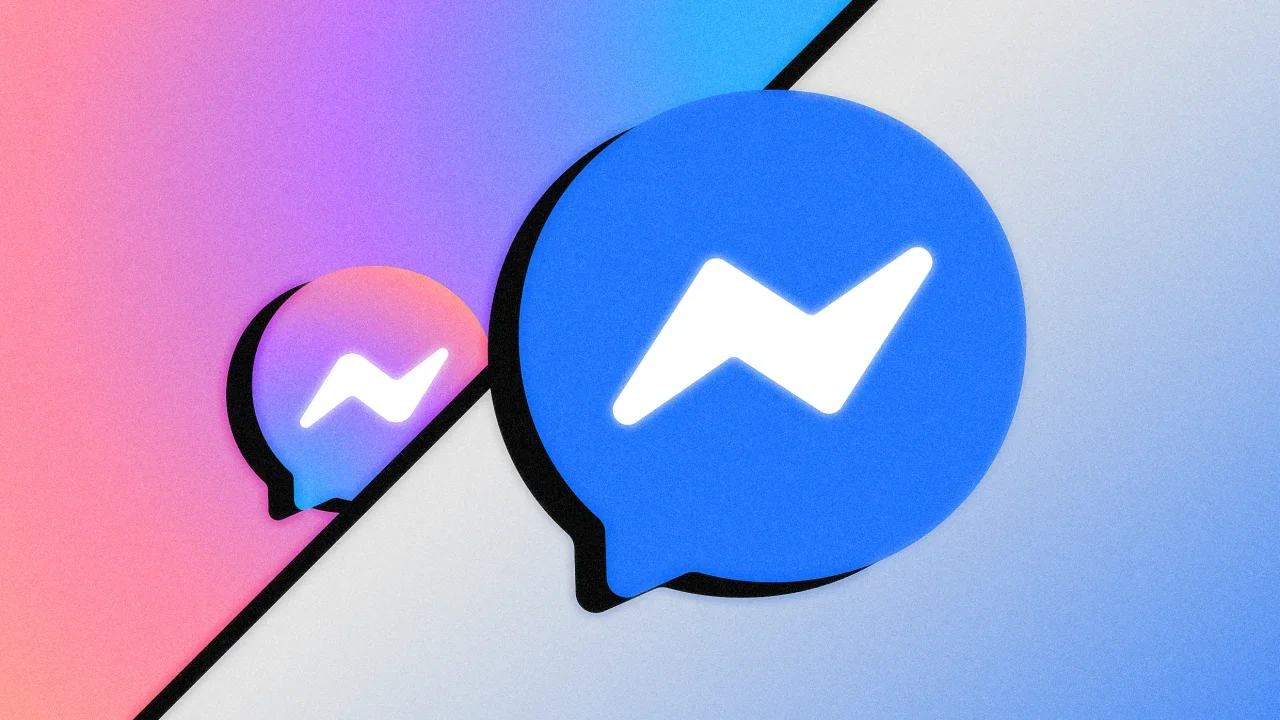
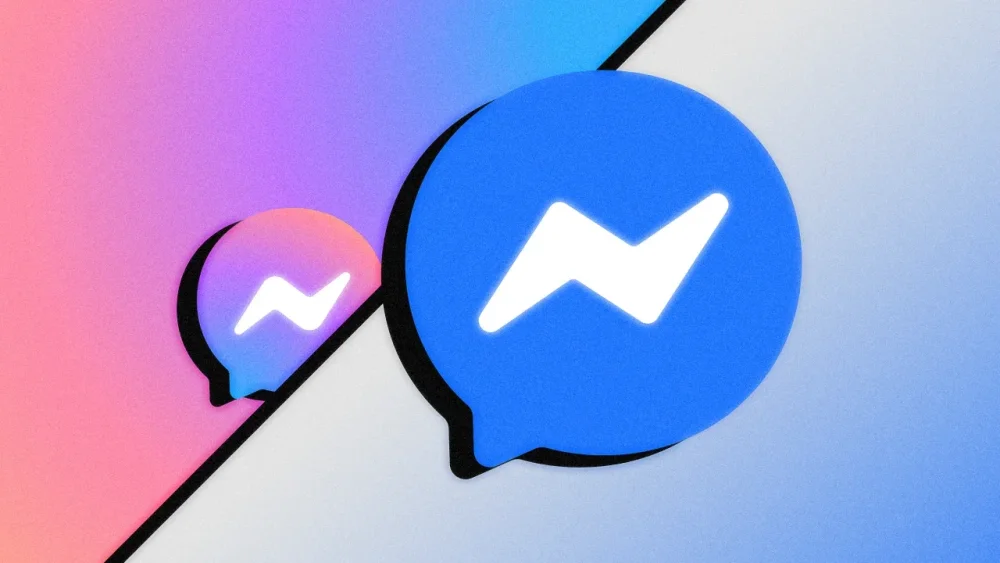
Meta’s Messenger has a new logo set in Facebook blue. The instant messaging app dropped the multicolor gradient used in its previous logo for a solid blue that matches the shade used by Meta’s flagship app. Some small, subtle refinements were also made to the lightning-bolt shape inside the Messenger logo’s word-bubble mark. Secondary versions of the logo appear in black or white. “We often refine our designs to enhance the look and feel of our products,” a Meta spokesperson tells Fast Company. “In this spirit, you’ll find that we’ve updated the Messenger color palette.” Online, some suggested the change was made because of Meta CEO Mark Zuckerberg’s comment that his company needed more “masculine energy,” or his hopes to get back to the feeling of “OG Facebook.” Regardless, the color change just so happens to be a delayed reflection of the app’s diminished cross-platform communications capabilities. [Images: Meta] Messenger was originally known as Facebook Chat, but Facebook spun its instant messaging services into a stand-alone app in 2014. The light-to-dark-blue gradient of the Messenger logo when it launched matched the gradient of Facebook’s logo at the time. In 2020, Messenger rebranded to the multicolor gradient that it used up until last month. The Messenger app’s colorful gradient went from blue to purple to orange and pink, colors that seemed to suggest a bridge from Facebook to Instagram; for a time, Messenger did allow users to chat across both platforms. That integration came as some speculated that Meta’s portfolio of apps were more tightly integrating to avoid being broken up. But by 2023, Meta killed Messenger’s cross-platform instant messaging capabilities. That change came just as Meta was arguing that certain European antitrust rules didn’t apply to Messenger because it was a Facebook feature instead of a stand-alone messaging app. Though Meta eventually did announce last year it would acquiesce to the EU’s Digital Markets Act and open up Messenger as well as its other messaging app, WhatsApp, to third-party chats for users in the European Union, the new Messenger logo suggests the company is still set on linking Messenger to Facebook. “Messenger is a messaging app from Facebook,” Messenger’s brand guide says. That connection is now made crystal clear with color. View the full article
-
A new consensus is growing within the scientific community about climate change: The goal of limiting global warming to 1.5 degrees Celsius by 2050, as set out in the Paris Agreement, is probably out of reach. We’ve already experienced the first full calendar year beyond this threshold, with last year’s global average temperature being 1.6 C higher than that of the preindustrial era. And while a single year at this level isn’t enough to confirm without a doubt that the Paris goal is a goner, several recent scientific papers have come to the same unsettling conclusion that a new era of warming has already begun. How hot will things get within our lifetimes? The answer will be determined largely by how quickly we can wean ourselves off fossil fuels, and with greenhouse gas emissions still rising—and to new highs—this remains uncertain. But researchers can make an educated guess. Right now they say we’re on track for about 2.7 degrees Celsius of warming by the end of the century. That means that on average, the world will be about 5 degrees Fahrenheit warmer in 2100 than it was at the turn of the 20th century, or about 3 degrees Fahrenheit warmer than it is today. That may not sound like much, but a 5-degree rise will affect almost every aspect of human life, in ways both large and small. What will life be like in this much warmer world? Answering this question with any certainty is difficult, because so much depends on how the earth’s many complex and interconnected systems respond. But climate scientists agree a warmer future is a more dangerous one. “I like to think of good analogies,” says Luke Jackson, an assistant professor of physical geography at Durham University in the U.K. “So, if you imagine that scoring a goal represents an extreme event, then the larger the goal, the more likely you are to score. We’re widening the goal posts.” But if we want to try to get more specific, there are projections that are backed by science. These are some of the changes that are most likely, and their potential trickle-down effects. Endless summer In the Northern Hemisphere, summer will take up a larger chunk of the year by 2100, extending from about 95 days to 140 days. Summer-like temperatures will appear much earlier, cutting springtime short, and linger well into the fall. Winter will become warmer, too, though there’s some debate over whether extreme winter storms will actually become more common as the climate changes. In many places, the warmer seasons will be unbearable, with oppressive heat waves that last for weeks on end. Thanks to the urban heat island effect, cities will be especially hot. San Antonio, for example, could see six heat waves per year, with temperatures lingering around 95 degrees, sometimes for up to a month at a time. Farther north, New York City will get eight heat waves per year, some lasting as long as two weeks. For context, in the early 2000s New York averaged less than one heat wave annually. Air-conditioning will be a literal life-saver, and the number of people with air-conditioning will increase dramatically. (Paradoxically, all these new air conditioners are likely to contribute even more greenhouse gas emissions to the atmosphere.) Still, heat-related deaths will continue to rise to 20,000 annually in the U.S., and that’s a conservative estimate. At 5 degrees Fahrenheit of warming, the share of the world’s population living in areas outside the “human climate niche” (the temperature range at which human life can thrive) would grow from 9% to 40%. Low- and middle-income countries would be disproportionately affected. In India, the most populated country in the world, some 600 million people will feel unprecedented heat outside this niche. Other hard-hit countries will include Nigeria, Indonesia, the Philippines, Pakistan, Sudan, and Niger. The Arctic is predicted to be “practically ice-free” during summertime. This will accelerate warming even more, and also threaten the homes, livelihoods, and cultures of millions of people in Arctic regions, to say nothing of the wildlife and ecosystems. Fires and Disease By 2100, the number of extreme fires could increase 50% globally. The boreal forests of Canada, Alaska, and Russia will be especially vulnerable. Events like the 2023 Canadian wildfires, which burned more than 37 million acres and sent plumes of smoke billowing across the U.S., will become more common. At the same time, we’ll likely get better at forecasting and tracking wildfires, and, out of pure necessity, more cities will have clean air shelters with filtration systems where people can be protected from wildfire smoke. There will likely be a rise in mosquito-borne illnesses like dengue, Zika, West Nile, and yellow fever, as more warmth will mean more days during which viruses can spread. The “peak transmission period” for West Nile currently lasts about three months per year in Miami, but would likely increase to about five months. Across much of the Global South, temperatures will become too hot for malaria to spread, but conditions for this disease would become more favorable in other parts of the world, including Europe, North America, and Central Asia. According to the World Resources Institute, “As occasional reports arise of locally acquired malaria in Europe and the U.S., there is increasing concern that malaria could creep into places that haven’t seen it in living memory.” Sinking cities In a scenario of 5 degrees Fahrenheit of warming, the ice sheets and glaciers will continue to melt, and the sea water will warm and expand. According to the Intergovernmental Panel on Climate Change, in this scenario sea levels could rise about 2 feet on average across the globe by 2100. This “will put at risk decades of human development progress in densely populated coastal zones which are home to one in seven people in the world,” says Pedro Conceição, director of the United Nations Development Programme’s Human Development Report Office. The effect will be more extreme in areas that already have higher-than-average sea levels, such as the U.S. East Coast, Japan, and the west coast of South America. New York City, for example, could see water levels rise more than 3 feet by the end of the century. High-tide flooding will become a regular nuisance in many places, with water seeping into city streets and shop fronts every day for a few hours before receding, making it increasingly difficult to live or do business near the waterfront. Flooding from extreme storms like hurricanes will also become more frequent. “Roughly speaking, the vast majority of global coastlines are going to experience a present-day 100-year event every year,” Jackson says. “Today’s extreme event becomes tomorrow’s normal event.” For many low-lying island nations, the challenge of higher seas and more intense tropical storms will be existential. The U.N. projects that the Bahamas, British Virgin Islands, Cayman Islands, Guernsey, Maldives, Marshall Islands, Netherlands, Saint Martin, Seychelles, Turks and Caicos, and Tuvalu will see at least 5% of their territories permanently inundated by the end of the century. Most of the populations of these regions live within a few miles of the shoreline, putting them in grave danger. At the same time that sea levels are rising, coastal megacities that sit on river deltas—like New Orleans, Houston, and Shanghai—will sink as more water is pumped out of the ground for things like drinking and irrigation, causing the sediment to compact. “This is a massive concern for our global megacities,” Jackson asserts. “There’s a real sting in the tail with that one, because these are places which are some of the most densely populated locations on Earth. In many locations, there are inadequate coastal protections to deal with it, and the length of time it would take to build coastal defenses in order to accommodate for this problem is, frankly, not achievable.” Indonesia is already experiencing this, and has planned to relocate its capital city of Jakarta entirely rather than try to keep the water at bay. Other populations may eventually follow. After all, “retreat is a form of adaptation,” Jackson says. Sea levels will continue to rise for centuries, according to the IPCC, “and will remain elevated for thousands of years.” Food shortages Flooding, heat stress, and changing weather patterns will make it harder to grow crops and raise livestock. One estimate suggests up to 30% of the world’s food production could be at risk by 2100 if temperatures rise by 6.6 degrees Fahrenheit. At 5 degrees, the percentage may be slightly lower, but still devastating for millions of people. According to the World Bank, “about 80% of the global population most at risk from crop failures and hunger from climate change are in sub-Saharan Africa, South Asia, and Southeast Asia.” The threat of malnutrition will stalk these populations. In other regions, like the U.S. and Europe, problems with food will be annoying at first and grow over time, says Kai Kornhuber, a research scientist studying future climate risks at the International Institute for Applied Systems Analysis, and an adjunct assistant professor at the Columbia Climate School. “It starts with these small nuisances, like your favorite vegetable is not available anymore for a week or so because there was a huge flood or a heat wave or wildfire in Spain, for instance,” he says. “These things are already happening, right?” Gradually, lower yields for staple crops like corn, rice, and wheat could become the norm. One analysis projects that as early as 2030, Iowa could see corn production plummet 25% due to climate change, Minnesota’s soybean yield could drop as much as 19%, and wheat production in Kansas could fall 9%. Without adaptation, those numbers will continue to rise through 2100, threatening farmers’ livelihoods, as well as food supply chains and nutrition in the U.S. “It’s not only crops and livestock that are affected,” says Gerald Nelson, professor emeritus at the University of Illinois Urbana-Champaign’s College of Agriculture, Consumer, and Environmental Sciences. “The agricultural workers who plant, till, and harvest much of the food we need will also suffer due to heat exposure, reducing their ability to undertake work in the field.” Soil degradation, biodiversity loss, and the collapse of ecosystems due to climate change will leave plants more vulnerable to disease and further exacerbate the risk of crop failure. Food prices around the world will rise. In fact, this is already happening: In 2023, extreme weather was the main driver of food price volatility. Researchers say that between now and 2035, global food prices could rise by up to 3% every year because of climate change. Mass migration and increased conflict It’s difficult to know what human migration patterns will look like in the years to come, but many people will have little choice but to move out of rural areas or across borders to find work, food, and a viable human habitat. These mass migrations are likely to trigger conflict and confusion. Attempts to enter the U.S. through the southern border will rise as populations in the “dry corridor” in Central America face food insecurity. Even the idea of where a country’s borders lie could be thrown into question. “The borders of your country are defined, at least along their coasts, by the position of high tide,” Jackson explains. “If your coastline moves inland [due to sea level rise] your economic zone is going to move too.” This is all very bleak, I know. And it’s only scratching the surface. But the enduring good news is that we can still change the future. Indeed, we already have. Just 10 years ago, scientists were forecasting a global temperature rise of 3.6 degrees Celsius by the end of the century—or 6.5 degrees Fahrenheit. Since then, new government policies, and the meteoric rise of renewable energy, seem to have made a dent. Still, there is much more to be done. “The world will not end like a computer game by the end of the century,” Kornhuber says. “It’s going to continue afterwards, and temperatures and extreme weather will continue to get worse until we’ve managed to phase out fossil fuels.” View the full article
-
Make UK chief calls for support for small businesses as Europe faces pressure from US to shoulder security costView the full article
-
The U.S. Environmental Protection Agency faces a legal challenge after approving a controversial plan to include radioactive waste in a road project late last year. The Center for Biological Diversity filed the challenge last month in the 11th U.S. Circuit Court of Appeals under the Clean Air Act. The advocacy group says the federal agency has prohibited the use of phosphogypsum, a radioactive, carcinogenic, and toxic waste generated by the fertilizer industry, in road construction since 1992, citing an “unacceptable level of risk to public health.” The legal challenge is centered on a road project proposed at the New Wales facility of Mosaic Fertilizer, a subsidiary of the Mosaic Co., some 40 miles east of Tampa. The EPA approved the project in December 2024, noting the authorization applied only to the single project and included conditions meant to ensure the project would remain within the scope of the application. But Ragan Whitlock, Florida staff attorney at the Center for Biological Diversity, feared the project could lead to more roadways built with the toxic waste. “Part of what makes this process so alarming, it’s not just a one-off science experiment,” he said. “It’s being billed as the intermediate step between laboratory testing and full-scale implementation of the idea. So our concern is that whatever methodology is used for this project will be used for national approval down the road.” Phosphogypsum contains radium, which as it decays forms radon gas. Both radium and radon are radioactive and can cause cancer. Normally, phosphogypsum is disposed of in engineered piles called stacks to limit public exposure to emissions of radon. The stacks can be expanded as they reach capacity or closed, which involves draining and capping. More than 1 billion tons of the waste is stored in stacks in Florida, with the fertilizer industry adding some 40 million tons every year, according to the Center for Biological Diversity. Mosaic aims to construct a test road near its Florida stack with four sections, each made with varying mixtures of phosphogypsum. The waste would be used in the road base, which would be paved over with asphalt. University of Florida researchers would be involved in the study. Most of the comments the EPA received in response to the proposal opposed the use of phosphogypsum in road construction in general and criticized the current methods for managing the waste, but the federal agency said these comments were outside the scope of its review. The agency declined to comment on pending litigation. “The review found that Mosaic’s risk assessment is technically acceptable, and that the potential radiological risks from the proposed project meet the regulatory requirements,” the EPA stated in the Federal Register dated December 23, 2024. “The project is at least as protective of public health as maintaining the phosphogypsum in a stack.” Mosaic has faced scrutiny in the past after a pond at its Piney Point site leaked and threatened to collapse in 2021, forcing the release of 215 million gallons of contaminated water into Tampa Bay. Mosaic did not respond to a request for comment on the new litigation. —By Amy Green, Inside Climate News This article originally appeared on Inside Climate News. It is republished with permission. Sign up for its newsletter here. View the full article
-
Ukrainian president is haunted by Russia’s frequent flouting of terms set under Minsk agreementsView the full article
-
Company says move will end ‘distractions’View the full article
-
French broadcaster posts higher revenue in first results since UK listing last year View the full article
-
Tesla rival says follow-on Hong Kong offering is the biggest in the global automotive sector in a decadeView the full article