Newsletter
Want to keep up to date with all our latest news and information?


ResidentialBusiness
Administrators
-
Joined
-
Last visited
Everything posted by ResidentialBusiness
-
A new Lenovo-commissioned study conducted by IDC reveals that global organizations are significantly increasing AI investments, but concerns over return on investment (ROI) remain a primary barrier to broader adoption. The 2025 CIO Playbook: It’s Time for AI-nomics reports that AI spending is expected to nearly triple in 2025 compared to last year, yet business leaders remain divided on its long-term value. Key Findings: AI Investment and ROI Challenges While AI adoption is accelerating, financial risk and uncertain ROI remain the most cited obstacles. The study found that 37% of management remains skeptical or has reservations about AI’s impact, despite 90% of IT professionals stating that AI has met their expectations. Organizations are increasing their AI budgets, with AI expected to account for 20% of tech spending in 2025. Generative AI (GenAI) adoption is also projected to expand, growing from 11% to 42% within the next year, with the highest application levels expected in IT operations, software development, and marketing. Organizational Readiness and Ethical Concerns Beyond financial uncertainty, organizations face readiness challenges in AI implementation. More than half of businesses lack an AI Governance, Risk, and Compliance (GRC) policy, even as ethical concerns around AI and machine learning persist. To fully leverage AI, organizations must upskill employees, modernize IT systems, and establish ethical frameworks to navigate responsible AI use. “AI is a marathon and a sprint—requiring parallel efforts to move quickly to modernize systems while ensuring the future-proofing of tech stacks,” said Ken Wong, President, Solutions & Services Group, Lenovo. “Our research shows organizations need to simplify the design, deployment, and integration of AI solutions to demonstrate the impact of these investments. This will instill greater confidence and fuel future investments.” Data Quality and AI Failures The study highlights data quality as a critical success factor for AI implementation. Data sovereignty, compliance, and accessibility were identified as essential components, while poor data quality, high IT costs, and integration challenges were the leading causes of AI failures. To mitigate these issues, 33% of organizations plan to develop data management capabilities within the next year. The Role of AI Partnerships The report finds that lack of skilled expertise is the top reason organizations hesitate to invest in AI, emphasizing the need for strategic partnerships. Businesses recognize that working with AI-capable partners is key to successful AI deployment. “To harness AI’s transformative power, organizations need a data-driven strategy that ensures scalability, interoperability, and tangible business outcomes,” said Ashley Gorakhpurwalla, President, Infrastructure Solutions Group, Lenovo. “At Lenovo, we believe a hybrid approach to AI—seamlessly integrating and enabling private and public models—is essential for delivering scalable solutions, driving measurable impact, and accelerating AI-powered business transformation.” AI’s Future: Strategic Investment with Measured Optimism Despite aggressive AI investment plans, Lenovo’s study suggests that businesses remain cautious about AI’s long-term financial returns. As organizations work to address ROI concerns, data quality issues, and workforce readiness, AI adoption will depend on demonstrating measurable business value. Lenovo’s findings underscore the need for a balanced approach to AI investments, ensuring both technological innovation and financial viability. Image: Envato This article, "Lenovo Study Finds ROI Concerns Remain Key Barrier to AI Adoption Despite Increased Investment" was first published on Small Business Trends View the full article
-
A new Lenovo-commissioned study conducted by IDC reveals that global organizations are significantly increasing AI investments, but concerns over return on investment (ROI) remain a primary barrier to broader adoption. The 2025 CIO Playbook: It’s Time for AI-nomics reports that AI spending is expected to nearly triple in 2025 compared to last year, yet business leaders remain divided on its long-term value. Key Findings: AI Investment and ROI Challenges While AI adoption is accelerating, financial risk and uncertain ROI remain the most cited obstacles. The study found that 37% of management remains skeptical or has reservations about AI’s impact, despite 90% of IT professionals stating that AI has met their expectations. Organizations are increasing their AI budgets, with AI expected to account for 20% of tech spending in 2025. Generative AI (GenAI) adoption is also projected to expand, growing from 11% to 42% within the next year, with the highest application levels expected in IT operations, software development, and marketing. Organizational Readiness and Ethical Concerns Beyond financial uncertainty, organizations face readiness challenges in AI implementation. More than half of businesses lack an AI Governance, Risk, and Compliance (GRC) policy, even as ethical concerns around AI and machine learning persist. To fully leverage AI, organizations must upskill employees, modernize IT systems, and establish ethical frameworks to navigate responsible AI use. Data Quality and AI Failures The study highlights data quality as a critical success factor for AI implementation. Data sovereignty, compliance, and accessibility were identified as essential components, while poor data quality, high IT costs, and integration challenges were the leading causes of AI failures. To mitigate these issues, 33% of organizations plan to develop data management capabilities within the next year. The Role of AI Partnerships The report finds that lack of skilled expertise is the top reason organizations hesitate to invest in AI, emphasizing the need for strategic partnerships. Businesses recognize that working with AI-capable partners is key to successful AI deployment. “To harness AI’s transformative power, organizations need a data-driven strategy that ensures scalability, interoperability, and tangible business outcomes,” said Ashley Gorakhpurwalla, President, Infrastructure Solutions Group, Lenovo. “At Lenovo, we believe a hybrid approach to AI—seamlessly integrating and enabling private and public models—is essential for delivering scalable solutions, driving measurable impact, and accelerating AI-powered business transformation.” AI’s Future: Strategic Investment with Measured Optimism Despite aggressive AI investment plans, Lenovo’s study suggests that businesses remain cautious about AI’s long-term financial returns. As organizations work to address ROI concerns, data quality issues, and workforce readiness, AI adoption will depend on demonstrating measurable business value. Lenovo’s findings underscore the need for a balanced approach to AI investments, ensuring both technological innovation and financial viability. Image: Envato This article, "Lenovo Study Finds ROI Concerns Remain Key Barrier to AI Adoption Despite Increased Investment" was first published on Small Business Trends View the full article
-
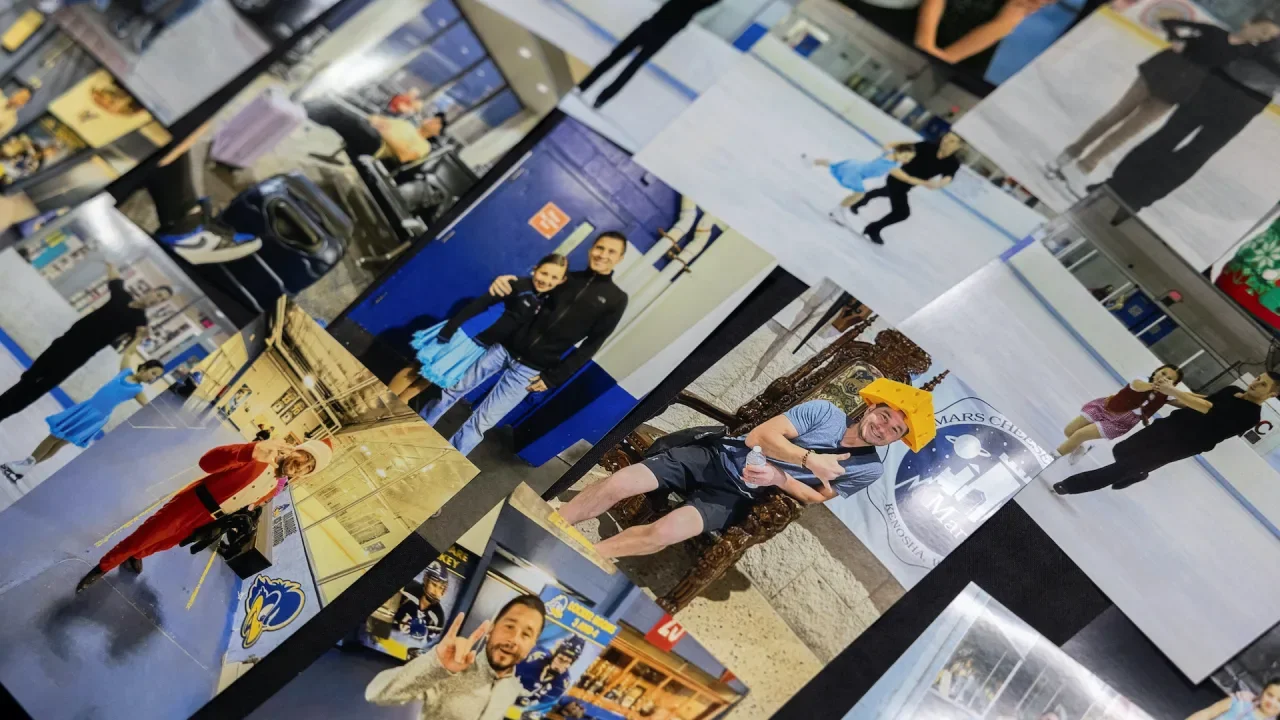
Many of America’s top figure skaters will gather in Washington, D.C., for a live “Legacy on Ice” tribute show to support families impacted by the January 29 plane crash that killed young skaters returning home from a training camp. Cohosted by Olympic champion Brian Boitano, the March 2 event at Capital One Arena will feature current U.S. champions Ilia Malinin, Amber Glenn, Alysa Liu, Madison Chock and Evan Bates, plus retired U.S. gold medallists Tara Lipinski, Kristi Yamaguchi, Scott Hamilton and Johnny Weir. “As we begin to heal from this devastating loss, we look forward to honouring the enduring memories of these athletes, coaches and family members who represented the best of the figure skating community,” U.S. Figure Skating interim CEO Samuel Auxier said in a statement. “We can think of no better way of celebrating their legacies than through the sport they loved.” All proceeds will be collected by the Monumental Sports & Entertainment Foundation and distributed equally between the U.S. Figure Skating Family Support Fund, Greater Washington Community Foundation’s “DCA Together Relief Fund” and DC Fire & EMS Foundation. There were 64 people on board the commercial flight that crashed after colliding with a U.S. Army Black Hawk helicopter, including many young Olympic hopefuls. U.S. Figure Skating said a total of 28 people on the plane were connected to the sport, including coaches, athletes and their relatives. World figure skating champions and coaching pair Evgenia Shishkova and Vadim Naumov were among the passengers killed. —Lori Ewing, Reuters View the full article
-
We may earn a commission from links on this page. Cleaning can be overwhelming to everyone at some point—and creating a habit or schedule you'll actually stick to can be a big part of the problem. As is this case with other tasks like decluttering and organizing, though, one way to break through the procrastination is by finding the method that works best for you. Here are five of my favorites for you to try. The FlyLady technique, for stress-free cleaningThe FlyLady cleaning method, popularized by organizational guru Marla Cilley, is all about getting into a soothing, easy cleaning routine that won't stress you out. To tap into the usefulness of this method, break your home into "zones," then dedicate 15 minutes per day to the zone you're currently working on. Yes, this takes time and won't work immediately, but as Cilley puts it, "It didn't get dirty in a day, and it's not going to get clean overnight." Here's how the zones are broken up: Zone 1 is your entryway, front porch, and dining room. You complete this zone in the first week of the month. Zone 2 is the kitchen, which is done during the first full week of the month, meaning the first week in which there are seven full days. Zone 3 is the main bathroom plus another room in your house, such as an office or pantry. This happens during the second full week of the month. Zone 4 is the primary bedroom and its closets and bathroom during the third full week. Zone 5 is the living room, but because it is not a full week, it may overlap with Zone 1. It's likely that your living room is near your entryway, which helps make this seamless as you start incorporating Zone 1 back into your schedule at the end of the five weeks. Obviously, if your home is laid out differently or you have your own unique concerns, play with the zones to fit your needs but try to dedicate a week to each one and follow the same schedule every month. The one-hour method, for when you have a big messLargely, I am a proponent of cleaning in small chunks of time over the course of days or weeks. In most cases, 15 minutes per day is all you need to make an impact on your home's cleanliness over time. In fact, once you get into the habit of doing it like that, the house stays cleaner and requires less work, creating a self-reinforcing cycle of smaller cleaning bursts. Before you get to that point, though, you might have a major mess or two at hand and when that happens, you might need longer, which is why CleanTok influencer @MommyHasntShowered suggests the "one-hour" rule. It's what it sounds like: You clean for an uninterrupted hour, focusing only on tidying up, and then stop when the hour is done, rewarding yourself with something you enjoy, like ice cream or a favorite show. Using this one is subjective and probably depends on how urgent the situation is. If you have someone coming over or the mess is so large that it's taking a toll on your mental health, you may need to pull out this longer work session. If the mess is big but you'd rather tackle it bit by bit, this one's not for you! Bear in mind, though, that while going at a slower pace over days or weeks can be good for not feeling overwhelmed, getting a lot done in one go can be good for motivation. There are mental and emotional benefits to every approach. The trick is figuring out which one you want to tap into. The 20/10 approach, for when you're not motivatedThe 20/10 approach combines elements of my beloved daily short-burst schedule and the one-hour method. It comes from Rachel Hoffman’s 2017 book, Unf*ck Your Habitat: You’re Better Than Your Mess and simply asks you to clean for 20 minutes, then take a 10-minute break. It's reminiscent of the Pomodoro productivity technique, which encourages you to work for 25 minutes, then break for five, then get back at it—but here, you have less work time and more chill time. Once your 10 minutes are up, get back into the game, cleaning even more for another 20. Only do this two to four times, though, because again, we don't want to get overwhelmed. What I find most useful is taking the 10-minute break in the spot I just cleaned, so I can really revel in my outcome. If I cleaned my living room, I'm going take that break on the couch, enjoying my tidy surroundings. If I cleaned the kitchen, I'm gonna eat a snack over the counter, where everything is clean and clutter-free. Remember that you're not just cleaning to clean, but rather for some kind of benefit, which is more often than not just the freedom to enjoy a tidier, brighter space. The one-tool method, for when you need some structureIf you really don't know where to begin as you look to clean up for the day, try the one-tool method. This approach relies on some of the classic cleaning advice I love (like not trying to do everything at once) but turns it slightly on its head: Where you'd usually tackle one zone at a time, moving from area to area over the course of a few days, try tackling one task at at time. When using the "one tool" framework, you will be breaking one of my cardinal rules, which is not jumping from room to room during one day's scheduled cleaning time, but you'll be unlocking a completely new kind of efficiency by not having to get the same tools out day after day. Do this every few weeks to shake things up and you're less likely to get bored. So, on your first day, maybe you dust. On your second, maybe you vacuum. On your third, maybe you mop. You get the idea. Pick one tool or task and hit each room in your home. Junebugging, for when you can't focusSometimes, you know what needs to be cleaned, but you just can't focus on it. Tap into that and go with a method that enables you to mindlessly attack the problem without thinking too hard. The right approach here is the junebug method. There's a chance you've seen this demonstrated or at least mentioned on CleanTok, but the earliest reference to the idea actually came around on Tumblr, where a user explained that to clean up despite their ADHD, they imagined they were like a junebug: "Have you ever seen a junebug get to grips with a window screen? It’s remarkably persistent, but not very focused. All that matters is location." Here, you'll embody that, identifying the area you want to clean, then focusing in on one specific spot. So, if the kitchen needs tidying, focus on the sink. You might wash the dishes in it, put them away, then get distracted as you notice a cupboard needs to be wiped down. After you wipe down the cupboard, remind yourself that you're supposed to be at the sink; go back to it to scour it or give the faucet a wipe down. While you're doing that, you might notice you could also wipe down the handles and pulls on the drawers, fridge, and oven. Go do that, but always return to the starting point. This practice kind of lulls you into an easy routine. As long as you keep going back to the first spot and branching out, you'll move in simple circles and let what would normally distract you actually be your guide. View the full article
-
Amazon is set to release its long-awaited—and delayed—Alexa generative artificial intelligence voice service, said three people familiar with the matter, and has scheduled a press event for later this month to preview it. Once released, it would mark the most significant upgrade to the product since its initial introduction accelerated a wave of digital assistants more than a decade ago. Amazon on Wednesday sent press invites to an event to be held on February 26 in New York featuring the head of its devices and services team, Panos Panay. A spokesperson said the event is Alexa-focused, while declining to elaborate. The new generative AI-powered Alexa represents at once a huge opportunity for Amazon, which counts more than half a billion Alexa-enabled devices in the market, and a tremendous risk. Amazon is hoping the revamp, designed to be able to converse with users, can convert some of its hundreds of millions of users into paying customers in an effort to generate a return for the unprofitable business. The AI service will be able to respond to multiple prompts in sequence and, company executives have said, even act as an “agent” on behalf of users by taking actions for them without their direct involvement. That contrasts with the current iteration, which generally handles only a single request at a time. Executives have scheduled a meeting, known as a “Go/No-go,” for February 14. There they will make a final decision on the “street readiness” of Alexa’s generative AI revamp, according to the people and an internal planning document seen by Reuters. Alexa’s revamp carries with it all the challenges inherent in now-familiar generative AI chatbots from OpenAI, Alphabet and others including the possibility of fabricated answers, known as hallucinations. With access to Alexa available in cars, televisions, thermostats and mobile phones, it could become an essential daily tool for scheduling and even shopping. Initially, Amazon plans to roll out the new Alexa service to a limited number of users and will not charge for it, the people said, though it has considered a $5 to $10 monthly fee. The company will also continue to offer what it is calling “Classic Alexa,” the version broadly available today for free. One of the people said Amazon has discontinued adding new offerings to Classic Alexa. Bezos’ vision While Apple’s Siri voice assistant preceded Alexa’s 2014 release by three years, the Amazon service supercharged the acceptance of voice assistants. But for many people, Alexa is now used for little more than kitchen timers and weather updates due to its lack of significant overhauls in the last few years. Alexa is the brainchild of Amazon founder Jeff Bezos, who envisioned a service that would resemble the voice-activated computers on TV’s “Star Trek.” The hope was that once perfected, users would turn to the voice assistant for hundreds of everyday tasks like turning on lights, preheating the oven, accessing the internet, playing music, writing emails and summoning taxis. “Someday in the future – that might be years or decades away – it could answer everything that you would ever ask it,” Amazon’s then chief of devices, Dave Limp, said nearly a decade ago. With those weighty expectations, the move to upgrade Alexa has suffered delays over concerns around the quality and speed of its responses, people familiar with the matter have told Reuters. Amazon dubbed the new service “Banyan” internally, as well as “Remarkable Alexa,” though it was not immediately clear if the Seattle company planned on using either as a new product name. In a January Financial Times interview, Amazon executive Rohit Prasad acknowledged some of the obstacles in developing what is effectively an entirely new service, including the work to eliminate hallucinations. Analysts at Bank of America estimate Amazon could generate $600 million annually if 10% of active users, which it estimates at around 100 million devices, pay $5 per month for the service. —Greg Bensinger, Reuters View the full article

-
Not all apps are safe. It's why I always recommend downloading apps from official app stores, like the iOS App Store and Google Play Store, rather than a random website: Apple and Google both have policies to scan for malware and stop them before reaching app stores. But neither company is perfect, and apps infected with malware end up on official app marketplaces more often that we'd like to think. These apps usually pop up on the Play Store more than the App Store given that Apple is extremely strict, but that doesn't mean the App Store is impervious to malware—it definitely happens, and we've covered it before. In fact, researchers just found a batch of apps containing malicious programs on both Apple's and Google's platforms. And it's the first time this specific type of the malware was found on the iOS App Store. What is SparkCat?Researchers at Kaspersky discovered apps on both Google's Play Store and Apple's App Store that contained malicious frameworks, specifically designed to steal crypto wallet recovery phrases—a series of words used to access cryptocurrency in digital wallets. Researchers call this malware "SparkCat," and they believe it has been circulating since March 2024. If you downloaded one of these apps on either iOS or Android, the app would likely ask permission to access your photo library, then the malicious framework would launch an optical character recognition (OCR) plug-in to scan and identify text in your images. If the program found text that matched certain keywords, it would then send those images to a remote server. The idea here is to scan your library looking for screenshots that reveal the recovery phrases in your crypto wallet and send them back to the thieves who could then use those phrases to break in and steal from accounts. One of the first apps to arouse suspicious of Kaspersky researchers was a Chinese food delivery app called ComeCome. It's still available on both iOS and Android, and is the first known app infected with OCR malware to appear on Apple's App Store, according to Kaspersky. A negative review all the way from 2023 suggests the app has been using malware to steal information, but it's not clear the app has been using this specific OCR tactic the whole time. Kaspersky discovered other apps with a similar malicious framework as well. It's important to note researchers can't say whether the malware was placed in these apps by a malicious actor or the app developers embedded it themselves. That said, it appears some apps were designed to attract users without offering legitimate services in return—such as multiple AI messaging services from the same developer. Specifically, that's WeTink and AnyGPT, which are both still live at the time of writing. Where to go from hereFirst of all, if you have any of these affected apps installed on your iPhone or Android, delete them now. Even if the developers didn't add the malicious framework intentionally (which can happen if a third-party hijacks the app), they aren't safe to keep on your device. After that, take a moment to clean out your iPhone or Android's images folder. If you have images containing recovery phrases for your crypto wallet, be sure to delete those, but also consider deleting images that contain any sensitive information in the first place. Other malware strains may take advantage of this OCR tactic to look for social security numbers or bank account information, for example, so it's best to eliminate that risk altogether. Finally, exercise caution when downloading new apps, even when doing so through official app stores. Be sure to review all aspects of an app's page before installing it, including the reviews, description, and screenshots. If anything seems off, it's probably best to avoid downloading it. And avoid generic AI apps like the plague. Developers know there's a high demand for AI apps, which means malicious users can slyly add malware to apps in the hope that an AI fan downloads their latest scheme. Don't fall for it. View the full article
-
Republican party divided amid uproar over US president’s plan to take over the enclaveView the full article
-
Portfolio enhancements and diversifications cushion the impact of the L.A. wildfires from RMBS losses. View the full article

-
Mortgage companies under scrutiny could see a reprieve, while the status of functions like behind-the-scenes guidance inquiries is uncertain, experts say. View the full article
-
Completed foreclosure auctions should be 8% lower this year, but if home value and unemployment expectations change, all bets are off, Auction.com said. View the full article

-
Buy Now, Pay Later (BNPL) loans have become increasingly popular in recent years—originations grew tenfold between 2019 and 2021, for instance. Last year, roughly 20% of American consumers used one to make a purchase. Despite their increasing usage, BNPL loans are still not used to calculate credit scores—which may have effects for lenders, and could be costing some consumers with good credit habits some valuable points. FICO—the creator of the FICO Score which is used by 90% of U.S.-based lending institutions to make lending decisions—recently published an analysis in tandem with the BNPL company Affirm to get a sense of what the results would be if those loans were used to calculate FICO scores. The results? Mostly good for both consumers and lenders. The analysis looked at data from a 12-month period and compared the FICO scores of more than 500,000 people who used Affirm to open a BNPL loan against those who had not. FICO then simulated the inclusion of the BNPL data into its model and found that most people saw an increase or no change in their credit scores. “Affirm gave us data that would be the same data they would furnish to a credit bureau,” says Julie May, vice president and general manager of B2B scores at FICO. “With the simulated study, we would see positive benefits for approximately two-thirds of consumers, particularly for those with utilization of five or more BNPL loans,” she says. In all, incorporating BNPL loan data into credit scoring models would “benefit consumers, and the lenders who use the FICO score to make lending decisions,” she says. In all, the analysis found that using the BNPL data to generate a FICO score was “generally consistent with the opening of a new account,” with a slight (plus or minus 10 points) change in their score for 85% of the individuals analyzed. For those who have better credit habits—such as making on-time payments, and keeping their overall credit utilization low—the BNPL data helps increase scores to a degree. With the simulation complete, May says that FICO will be looking to roll out a new FICO scoring model in the future that will incorporate BNPL data, effectively the first model to do so. “We know what the actual solution would be; we’re in final discussions with stakeholders in terms of how that would roll out,” she says. There’s no hard date yet, but May adds that when it does ultimately happen, FICO is excited to “introduce the proprietary technique to the marketplace.” View the full article

-
We may earn a commission from links on this page. If you tend to get overwhelmed by the prospect of cleaning your house, here’s some good news: One of the best cleaning methods out there is designed for people like you. Called the 20/10 rule, it’s been around for a few years, but has really withstood the test of time because of its simplicity and how effective it is. What is the 20/10 method of cleaning?The 20/10 method comes from Rachel Hoffman’s 2017 book, Unf*ck Your Habitat: You’re Better Than Your Mess. The title is at once bracing and comforting, just what you need as motivation to clean your place and keep it clean. While the book goes into a lot of detail about all the methods you can use to do that, like taking progress pictures and tidying up spaces in a certain order, its first tip—the 20/10 method—is key here. At its most basic, the method calls for you to spend 20 minutes cleaning and 10 minutes chilling. That’s it, essentially. It’s similar to other productivity techniques, like the Pomodoro method, but gives you less work time and more break time than those do. For maximum efficiency, devote each 20-minute block to a certain surface or area, like a messy desk or a pile of laundry. Chunk by chunk, the task will get done. What makes 20/10 one of the best cleaning methodsThe importance of taking breaks in between bursts of hard work is well-documented. If you work too much, too hard, for too long, you’ll burn out and give up. When you’re using a work-and-rest technique to study or work, you have to think deeply during your “on” times; cleaning, on the other hand, can be slightly more mindless, which is a good thing. You don’t need 25 minutes, as the Pomodoro technique calls for, but you should devote 20. The breaks are super important, so don’t skimp on them. Try to use them to enjoy the space you just cleaned. If you cleaned a desk, sit at it for your 10 minutes, relishing the experience of using it while it’s tidy. If you folded all the laundry piled on a chair, you should sit in that chair, by God. Giving yourself a full 10 minutes to relax and enjoy the fruits of your labor gives you immediate gratification and time to recharge before getting back at it. How to adapt this method to fit your needsIf you want to try out the 20/10 method, I recommend slotting it into your cleaning schedule for a week or two, but keep track of how it goes. Take notes on whether you feel rested enough after the 10 minutes of break time, or whether you find it hard to sink into a groove in just 20 minutes of effort. After all, these are just guidelines, not rules set in stone. Even the vaunted Pomodoro method has seen adaptations like "animedoro" crop up that make it work better for some people. Feel free to tinker with the 10/20 timing to suit your own needs, provided you are still prioritizing that all-important break. View the full article
-
Mortgage and housing industry groups cheered the U.S. Senate vote, which found only two Democrats crossing over to support Scott Turner's nomination. View the full article

-
Austan Goolsbee warns it is ‘dangerous’ to ignore potential supply shocks triggered by trade warView the full article
-
Advanced Micro Devices (AMD) stock (NASDAQ: AMD) fell 9% before the bell on Wednesday after the company fell short on sales for its data centers, despite reporting better-than-expected fourth-quarter earnings. (The stock is down 7% as of midday Wednesday.) That’s because the chipmaker’s core business is selling data center chips for graphics processing units used to power AI. It’s currently going head-to-head with Nvidia for market share of the lucrative, high-powered AI chip market. Shares in Nvidia (NVDA), meanwhile, were up 4% in midday trading Wednesday after Google’s parent company, Alphabet, announced it will spend $75 billion in expected capital expenditures in 2025, a majority of which will go into building data centers and servers in an effort to help Google increase its AI capabilities. On Tuesday, AMD reported Q4 revenue that came in at $7.66 billion, beating estimates of $7.54 billion, and an adjusted earnings per share (EPS) of $1.09. Looking ahead to the first quarter of 2025, the chipmaker forecast revenue coming in between $6.8 billion and $7.4 billion. On its earnings call with investors, CEO Lisa T. Su told investors the company sees “strong double-digit percentage revenue and EPS growth” for 2025, calling 2024 “a transformative year for AMD . . . [when we] successfully established our multibillion-dollar data center AI franchise, launched a broad set of leadership products, and gained significant server and PC market share.” Also on Wednesday, Truist Securities analyst William Stein reduced the company’s price target to $130 a share, down from $145. At the time of this writing, AMD stock was trading at $109.58, near its 52-week low. View the full article

-
We may earn a commission from links on this page. Once mold starts taking over your bathroom, it’s not easy to get rid of. If the growth is alarming, paying to have it cleaned can cost hundreds of dollars, but it’s often worth it because getting rid of mold can be challenging (and exhausting). Your best move is to prevent mold from taking root in the first place, which usually involves reducing dampness and being vigilant with cleaning. A better approach might be to design a mold-free bathroom from the get-go. If you’re considering renovating your bathroom, you can choose materials and make design decisions that will make it a lot harder for mold to take up residence. Go groutlessMold loves grout because it’s porous and absorbs moisture—and its porous nature means mold can penetrate under its surface, which makes it even harder to clean. The more grout you have, the more potential breeding ground you have, so consider eliminating it: Wall panels. Acrylic wall panels are continuous sheets, meaning there are no grout lines to deal with. You can purchase panels that mimic the look of tile, but they come in a wide range of colors and designs, giving you a lot of design flexibility without the grout—or the potential for mold. Vinyl or laminate flooring. Kkip the grout on your floor by avoiding traditional tile and opting for vinyl planks or laminate. Similar to the wall panels, you can find vinyl flooring that resembles tile or stone so you can get the look you want. Shower pan. Instead of a tiled or stone shower floor, installing an acrylic shower pan eliminates all that grout and makes it a lot easier to clean and a lot harder for mold to take root. Go freestandingMold and mildew loves to colonize caulk, which can get so unsightly as a result that you wind up just tearing it out and re-caulking. Anything that sits flush with or attached to your walls in a damp area has to be caulked, so you can reduce the amount of caulk (and with it, the amount of mold) by choosing freestanding items, like a freestanding tub or vanity. Go metalIf you want storage in your shower for soaps, bottles, and everything else, a traditional tiled niche is an invitation to mold, especially if the pitch isn’t quite right and water ponds in there. Opting for a metal insert instead (like this stainless steel shower niche) eliminates that problem. Go resistantPainted walls and ceilings in bathrooms are prime targets for mold and mildew because moisture condenses on those surfaces. Steam rising from the shower often results in those tell-tale brown dots on the ceiling above, and over time, even walls outside the shower area can become stained with mold. Using antimicrobial primer and paint is one key to eliminating mold from your bathroom, and it’s one thing you can do even if you’re not ready to renovate. Cleaning the walls and ceiling thoroughly, sealing them with a mold-resistant primer and painting them with a mold-resistant paint can greatly reduce the chances you’ll be scrubbing mold out of your bathroom in the near future. VentilationFinally, when transforming your bathroom, don’t forget the less exciting but crucial aspect of mold resistance: ventilation. Make sure you determine the correct size of exhaust fan necessary for the space, and consider installing a model that has a humidity sensor. Also think about other ways to boost airflow in there, like adding a window (or a larger window) or a dedicated dehumidifier. View the full article
-
Deal will allow lenders to exit one of toughest merger-finance transactions in recent yearsView the full article
-
Danish company attempts to recover from botched US expansion and restore struggling share price View the full article
-
PM backs development of the Jackdaw and Rosebank projects, despite some Labour MPs’ concernsView the full article
-
The Walt Disney Company posted first-quarter earnings Wednesday that beat on the top and bottom lines, but it also revealed the start of predicted streaming subscriber losses at its Disney+ service. The service lost 700,000 subscribers over the final three months of 2024, which is the first quarter of Disney’s fiscal year 2025. The media and entertainment giant had warned during its fiscal fourth-quarter report in November that it expected a “modest decline” in core subscribers during the first quarter of 2025. Hulu picks up the streaming slack Total paid Disney+ subscriptions currently rest at 124.6 million, compared with 125.3 million at the end of the fiscal fourth quarter. ESPN+ also saw a loss of 700,000 subscribers, currently at 24.9 million, compared with 25.6 million at the end of last quarter. Though Disney saw losses at Disney+ and ESPN+, total Hulu subscriptions rose to 53.6 million, compared with 52 million at the end of the fiscal fourth quarter. The decrease in subscribers came as a result of an increase in prices that Disney announced in August of 2024. The price rose to $9.99 with ads and $15.99 with no ads, following its announcement of continuous playlists and growing offerings. “Disney’s earnings beat underscores the success of its cost-cutting initiatives and resilient performance in parks and studios, offsetting headwinds in streaming,” Jesse Cohen, a senior analyst at Investing.com, said in an emailed statement. “However, the surprising loss of Disney+ subscribers—the first decline since its 2019 launch—raises red flags about saturation in a crowded market and the trade-offs of its pricing strategy.” Disney’s stock was down around 1.5% Wednesday in afternoon trading. Theme parks hampered by extreme weather Disney’s domestic parks and experiences business saw a decline of 5% in operating income due to hurricanes and cruise pre-opening expenses. However, it did see operating income increase 28% for international parks. Although Disney lost subscribers for Disney+ and saw a decline in domestic park attendance, net income increased nearly 23% to $2.64 billion, compared to $2.15 billion during the same quarter last year. Revenue increased 4.8% to $24.69 billion, compared to $23.55 billion from last year. “Our results this quarter demonstrate Disney’s creative and financial strength as we advanced the strategic initiatives set in motion over the past two years,” said CEO Robert Iger in a statement. The company’s success was thanks in part to box office performance from its studios, which had the three top movies in 2024: Inside Out 2, Deadpool & Wolverine, and Moana 2. Moana 2, released during Q1, grossed more than $1 billion, which was a driving factor behind the improvement in operating results. In its sports content segment, Disney saw a 13% operating income growth. The increase came as a result of college sports and one additional NFL game, as well as Disney’s exit from the Venu Sports, the planned sports-focused streaming service that Disney and other media giants discontinued earlier this year. The company also plans to launch its own direct-to-customer streaming app for ESPN this fall, company executives said on a conference call Wednesday. Disney’s streaming business may continue to face headwinds in a crowded marketplace, particularly among price-conscious viewers. “While profitability in streaming improved, the subscriber dip suggests price hikes or content gaps may be driving churn, particularly as rivals like Netflix and Amazon Prime retain momentum,” Cohen said. Disney told investors on Wednesday that it expects another decline in subscribers during the second quarter. View the full article

-
Proposals underline the US president’s irresponsible approach to foreign policyView the full article
-
As the Federal Reserve's overnight reverse repurchase agreement program nears zero, pressure could mount on the central bank to slow or stop its asset runoff as it fights inflation. View the full article

-
Major changes are afoot behind-the-scenes at Walmart. The retailer is cutting hundreds of jobs and shuttering its North Carolina office. Employees from certain locations are also being asked to move to its newly opened headquarters in Bentonville, Arkansas, and other central hubs. News of the shake up was first reported by Fox Business after Walmart Chief People Officer Donna Morris sent a memo detailing the cuts and other changes to employees. “We are making these changes to put key capabilities together, encouraging speed and shared understanding,” the memo, viewed by Fox read. “Through this review process, we have eliminated some roles as we streamline how we work.” According to the memo, Walmart is also opening offices in Sunnyvale, California, Bellevue, Washington, and expanding offices in Hoboken, New Jersey and New York City. The cuts aren’t the first to hit Walmart, which is both the world’s largest employer and the world’s largest retailer. In May, the company cut hundreds of jobs and asked Dallas, Atlanta, and Toronto workers to relocate to central hubs, too. At the time, it also asked that all remote employees come back to the office full time. That move came shortly after the company said it would shut down its virtual health care service, and close its 51 in-store health centers. Some experts believe that Walmart’s efforts to streamline operations, including continued cuts and relocating employees to headquarters, are about staying competitive with the world’s largest online retailer: Amazon. “I think this is the year where Walmart’s assault on Amazon gains serious momentum,” Fox Business market analyst Keith Fitz-Gerald said per Newsweek in January. “I think the stock is going to radically outperform it, and we’re going to see a renewed customer confidence in that particular brand.” Walmart is not alone in its 2025 layoffs. Salesforce, a cloud-based software company, announced this week that it would cut 1,000 roles at the company. Amazon, Meta, Microsoft, have each had their own rounds of major layoffs already this year, too. And when it comes to retailers, 2025 is likely to be another big year for store closures. According to a January report from Coresight Research, as many as 15,000 U.S. retail locations could shutter this year. Party City, Big Lots, and Macy’s are among the brands that have already announced closures this year. News of the latest cuts comes shortly after the Walmart faced blowback for rolling back its diversity, equity and inclusion (DEI) program just months ago. After the brand announced it would end the initiative, 30 investors sent a letter to CEO Doug McMillian, voicing their collective disdain for the move. “Walmart has sent a clear signal to all underrepresented and marginalized groups that Walmart will not fight to protect their rights,” the letter stated. Walmart didn’t provide details on how many employees would lose their jobs, or how many it’s asking to relocate. But it did specify that employees would have a month to let Walmart know if they will move in order to keep their job with the company. View the full article

-
Your clothing and accessories can either clog up your closet for free or go out there, get a job, and earn its keep: I recently found an app that helps you to rent out your clothes and accessories (and borrow other people's), and maybe even help you declutter in the long run. Let me explain why I love Pickle. What does Pickle do?As I have explained, I have a low threshold when it comes to what will inspire me to download an app. Typically, I see an ad, tap on the App Store link, and install on sight. The other day, I saw an ad for one called Pickle, which is a peer-to-peer clothing and accessory rental service—like DoorDash for fashion. I attempted to download it only to discover it was already on my phone from what must have been a previous run-in with the ad that I never followed up on. Incredible! (Be advised, though, that it's only available for iOS right now.) Over the last year, I've gotten into selling my clothes via app, but it's been limiting because I own a lot of pieces I don't really want to get rid of—yet. But I can't wear them all at the same time, now, can I? So they're just sitting in my closet, waiting for their turn to shine. Pickle, it seemed, could give me a chance to put them to work. I listed a bunch of stuff, checked what others on the app were charging for a week's rental of similar items, and priced my goods competitively. Then, I waited—but not for long. I got a rental request the next day. The app functions just like resale platforms like Poshmark or Vestiaire Collective: You take a picture of your shoes, bag, dress, or whatever, fill in details about it like size and brand, and set a price. Here, though, the price is what you want to charge for a week's rental. You also indicate, via drop-down menu, whether you're willing to have someone show up at your place to pick it up, send it off with a courier, or even mail it somewhere. That last option really broadens your horizons, since Pickle mostly operates in New York City (where I live) and Los Angeles. While it's a lot easier to link up with a local and hand off your piece, the postal option expands your money-making capabilities to a much wider base of potential consumers. My "closet" and how it looks to edit a listing. Credit: Lindsey Ellefson When someone rents a piece from you, they first send a request outlining the way they'd like to receive it and how long they want to have it. From there, you can enter a chat with them to hammer out details or just accept their request. I accepted the offer sent to me and selected the day and time I would be home to hand my parcel off to a courier. This morning, the courier showed up, took it, and brought it to the borrower, with whom I had arranged for a four-day rental. I listed the piece for $30/week, Pickle took 20%, and I earned $24 despite the fact that it won't be gone for the full week. The process was seamless and remarkably easy and I got detailed notifications throughout the entire event. The app guides you every step of the way. Credit: Lindsey Ellefson Why I like this app as a route to declutteringThere are obvious benefits to using a closet-rental app. First, you can put your extra stuff to work for you and make a little money off of it. Second, you can rent clothes and accessories for special occasions at a major discount without adding to any consumerist clutter you may have going on—but that leads me to the hidden benefit I identified here. I consider Pickle similar to a "purgatory" box, which is a method for decluttering that doesn't require you to make instant decisions about what stays and what goes. Most decluttering techniques are pretty harsh. They call on you to go through a space in your home and make fast choices about what you keep, what you toss, what you donate, and what you sell. Doing that enough times builds a habit and you learn to be less sentimental; but it's still hard. Personally, I'm terrible at doing it with clothing and accessories because I can trick myself into believing I might need anything for a certain outfit in the future. It's not true, of course; I never really miss anything once I've sold it. But it's still difficult to push myself to get rid of items, so they sit there in my closet. With Pickle, I can send them out for days or weeks at a time, which mirrors the experience with the purgatory box that holds your stuff for a month so you can see what it's like not to have access to it. Conversely, Pickle can also help you declutter by providing you with a fallback plan when you do decide to get rid of something. Consider the 20/20 decluttering rule, which asks you to consider if you could replace something for under $20 and in less than 20 minutes if you got rid of it, then encourages you to do away with it if the answers are yes. Clearly, if you choose to sell or donate, say, a black purse that's just sitting in your closet, you won't get a similar one off Pickle in under 20 minutes or, probably, for under $20—but it's nice to know that if you did get rid of something you ended up needing for a particular occasion, you could rent a replacement without re-cluttering your space. View the full article
-
The partnership with homebuilder Onx Homes, the company's ninth joint venture, gives Loandepot more solid footing in the South. View the full article