Newsletter
Want to keep up to date with all our latest news and information?


ResidentialBusiness
Administrators
-
Joined
-
Last visited
Everything posted by ResidentialBusiness
-
Many countries, including the UK, have turned their backs on the project after Putin was asked to joinView the full article
-
Bags of ice-thwarting salt aren’t usually a hot item at Bates Ace Hardware in Atlanta, but store manager Lewis Pane sold all 275 he had in stock in one morning as residents braced for a major storm to deliver heavy snow, sleet and freezing rain on a broad section of the U.S. in coming days. Payne said he had 30 online orders for “ice melt” before 8 a.m. People sprinkle the salts on the ground before a storm to disrupt the formation of ice. “It’s impossible to get right now,” Payne said. “We have had to make special trips to our warehouse to pick up extra items because people need them.” The storm was expected to hit starting Friday, stretching from New Mexico to New England and across the Deep South. The damage could rival that of a major hurricane. Meteorologists say ice may linger on roads and sidewalks because temperatures will be slow to warm in many areas. Ice could also weigh down trees and power lines, triggering widespread outages. The city of Carmel, Indiana, canceled its Winter Games out of fear residents could get frostbite and hypothermia competing in ice trike relay and “human curling” in which people slide down a skating rink on inner tubes. College sports teams moved up or postponed games, and the Texas Rangers canceled their annual Fan Fest event. The coldest windchills may fall below -50 F (-46 C) across the Northern Plains with subzero wind chills reaching as far southeast as the Mid-Atlantic states and Southern Plains, the National Weather Service said. At the Atlanta hardware store, Wendy Chambers stopped by to pick up batteries and flashlights in case there is a power outage. “We’re gonna be prepared, aren’t we? We’re going to be able to read, do things, play games,” she said before heading to church choir with her granddaughter. Oklahoma truck driver Charles Daniel planned to load up as much freight as possible before the storm arrives in his area on Friday. “You’ve got to be very weather aware, and real smart about what you’re doing,” said Daniel, who delivers goods across western Oklahoma in an 18-wheel tractor-trailer. “You can’t back down into decline docks, you can’t go into neighborhoods or parking lots,” Daniel said. “I’m 40,000 pounds unloaded. One mistake can literally kill somebody, so you have to use your head.” He said truck drivers need to have a change of clothes, plenty of water and a couple of jackets on hand in case they get stuck because it would be a while before a tow truck could help them. In Arkansas, the Department of Transportation started treating some roads with brine on Tuesday. The salt helps prevent ice from forming. Over 10 inches of snow were expected in parts of the state. Rain was complicating efforts to pretreat roads with salt in Alabama on Wednesday because precipitation washes away the brine. The Alabama Department of Transportation encouraged people to stay off the roads if ice forms. “Any amount of ice is pretty dangerous, and certainly a quarter-inch could be very hazardous,” said Seth Burkett, a department spokesperson. Snow and icy conditions were forecast for Maryland beginning Saturday afternoon or evening, with peak effects Saturday night and into Sunday morning. The governor declared a state of preparedness to help authorities respond quickly. Governors in North Carolina and South Carolina declared states of emergency, making it easier for state and local agencies to coordinate and get help from groups like the National Guard. Associated Press writers Brian Witte in Annapolis, Maryland; Dylan Lovan in Louisville, Kentucky; Jamie Stengle in Dallas; Kimberly Chandler in Montgomery, Alabama; Jeffrey Collins in Columbia, South Carolina; and Rebecca Boone in Boise, Idaho, contributed to this report. —Emilie Megnien and Sean Murphy, Associated Press View the full article

-
A new neighborhood under construction near Sacramento, California, in the rolling foothills of the Sierra Nevada mountains, looks like a typical subdivision. But it’s one of the first developments designed at a neighborhood scale to withstand wildfires. Each house goes farther than California’s latest building requirements for high-fire-risk zones, from enclosed, ember-resistant eaves to dual-paned, tempered glass windows that can better withstand extreme heat in a fire. The design considers not just each house, but how homes interact, spacing buildings at least 10 feet apart and removing combustible features to prevent fire from spreading between them. Called Stone Canyon, it’s one of the state’s first “Wildfire Prepared Neighborhoods,” a standard developed by the Insurance Institute for Business & Home Safety (IBHS), a research nonprofit funded by the insurance industry. Designing homes that withstand wildfires At a unique facility in North Carolina, the nonprofit recreates wildfires—from embers to wind speed—and then uses controlled tests to see how houses perform. We build full-size structures and we can control the wind speed and direction,” says Roy Wright, president and CEO at IBHS. “We can control the ember flow and the cast that is coming in that direction. We put out and publish really interesting, wonky things about wildfire. But [with the new standards] we said, let’s just take the most important pieces of the science and make them really plain and usable for developers and homeowners.” KB Home, the national developer behind the project, decided to tackle a new level of fire safety after learning about IBHS’s research. At a building conference in 2024, the team watched one of the nonprofit’s demonstrations, which featured a house built to the standard building code next to one built to IBHS’s standards. “They simulated a wildfire event where embers were blowing against the two structures,” says Steve Ruffner, president and regional general manager for KB Homes in Southern California. “The home that was built to the old standards burned fairly quickly, within about half an hour. And the other home didn’t burn at all.” At the time, KB Home had another development underway in a fire risk zone in Escondido, near San Diego. “On the fly, we changed the design guidelines of our homes to accommodate the IBHS standards,” says Ruffner. (The homes, which start at around $1,000,000 and around 2,000 square feet, are aimed at “step-up” buyers looking for an upgrade; in the development near Sacramento, they start in the high $700,000s.) IBHS had already put out a new building standard for “wildfire prepared” homes in 2022. In 2024, after meeting with KB Homes, it sped up the development of a related standard at the scale of a neighborhood. To get the designation, homes need to include features like noncombustible gutters, a Class A fire-rated concrete tile roof, ember-resistant vents, six inches of vertical clearance at the base of exterior walls, noncombustible fence and gate materials, and a five to 30-foot “defensible zone” around the home where any vegetation is carefully spaced to avoid the spread of fire. Plants have to be drought-resistant California natives. The standard overlaps with California’s newest building code, but requires better, more resilient building materials for certain components. California’s code also doesn’t require at least 10 feet of space between buildings or the elimination of “connective fuel pathways” between buildings. “Structure separation is the biggest indicator of wildfire progress that will take place—that density,” says Wright. “That’s why when you’re building new developments, you can incorporate this in. Because you want to make sure that within the adjacent home, if it is fully engulfed, that you’re giving the next structure a chance to survive.” Fires often spread through embers that can be blown long distances on windy days. In both the development near Sacramento and the one in Escondido, the homes are near open wild land that could easily burn; embers wouldn’t have to travel far. “We want to make sure that those homes can withstand those embers showers,” Wright says. “If embers are going to land on the property, it may ignite some bush or something that is away from the home on the parcel. But what’s closest to the structure is going to be able to withstand those embers showers. And if one of the structures has a really bad day and ignites, we slow the spread so that we’re not going to lose the whole neighborhood. We’re going to actually give the firefighters a chance to get in there and actually beat it down.” It also protects older homes nearby. “There are adjacent subdivisions or neighborhoods that were built 40 years ago,” he says. “And the kind of actions that these neighborhoods have put in place are actually going to have a protective effect for their neighbors, because when they can withstand the impact of wildfire, that means the fire doesn’t spread.” From lab tests to proof of concept In the first project in Escondido, KB Home worked with the city to change some design guidelines (instead of Craftsman-style homes made from wood, they pivoted to ranch homes with cement-based siding or stucco). The city also required timber fencing that was treated for fire, but when IBHS explained that the coating quickly wears off in the sun—making this type of fence flammable—they were able to switch to a metal fence that looks like wood. The switch actually helped save costs, Ruffner says. In total, all of the changes didn’t add significantly change the development’s bottom line, and there were some unexpected benefits. “We found out that tempered windows are much tougher, so we didn’t break as many windows during [construction], and we ended up saving a lot of money that way,” says Ruffner. The first neighborhood in Escondido includes 64 homes, and an HOA agreement that requires homeowners to maintain gardens over time so fire can’t spread between plants or trees. The first homeowners have been carefully adhering to the plan. “They want to make sure they don’t break the rules because honestly, insurability in California is a big, big deal,” says Ruffner. “If you’re not insurable, you have to go into the public programs that are very, very expensive. And so at least they have a good chance here to negotiate with insurance companies.” The newest neighborhood near Sacramento will follow the same path. So far, only model homes are in place; KB Home builds each house to order as each home is sold. Each house will be evaluated by IBHS before the neighborhood gets the “Wildfire Prepared” designation, though it’s getting a provisional designation now. Now that KB Home has shown that meeting the standard is financially viable, other developers also have projects underway. Around a dozen other projects are being designed to the standard now, Wright says, some with several hundred homes in a single development. Of course, the work can’t completely eliminate risk. It’s not possible to make a house completely fireproof, Wright says. But in a worst-case scenario, even if 20% of losses in a neighborhood could be avoided in a fire, that’s “absolutely phenomenal,” he says. “Every time one more structure doesn’t burn, that means that structure is not sending off its flame. It’s not sending off its embers,” he adds. “Every time we save a structure and it survives, we really narrow the path of how that fire will propagate into a neighborhood.” View the full article

-
Most sales pitches fail for one simple reason: they try to say too much. It’s natural to be passionate about your product or service. Of course you want to showcase the features and benefits. But if you want your audience leaning in and listening, less is always more. We live in what I call an AHA world. AI-focused, hyper-connected, and always-on. Distractions abound. If you can’t capture your prospect and customers’ imagination immediately, you’ll lose them to their emails, Slack messages, and TikTok feeds. The good news is there’s a 90-second fix that will help you craft a pitch or presentation that keeps your audience on the edge of their seats. The structure is so simple, it’s almost too good to be true. It’s the same framework the world’s best journalists use to keep their readers coming back for more and the same approach I teach leaders, sales teams, and founders who want their message to cut through. Let’s dive in. Find Your Headline Most people start creating a pitch or presentation by opening a slide deck and dumping content into it. Or worse, opening an existing slide deck and trying to rearrange it. Don’t. Before you write a single word or think about your visuals, you need to strip your pitch down to a single sentence. Imagine it appearing on the front of a newspaper or at the top of a social feed. What words would you choose? Keep them short, punchy, and memorable. Ten words or fewer is a good rule of thumb. This single line of text becomes the anchor for your entire pitch. It forces you to stay disciplined. If something doesn’t support your headline it doesn’t make the cut. When you look at the newspaper industry, the best headlines have an emotional element too. They don’t just present information, they engage the target audience. A weak pitch headline is forgettable: “SaaS Product Seed Round” is accurate but bland. “$10 million Opportunity To Revolutionize Fintech” is much more compelling. A strong headline creates energy. It signals to your audience why they should care. But its most important function is as a yardstick for your content. Test every slide, story, and statistic against it. If it’s aligned with the headline, it stays. If it doesn’t, it goes. Distill It Into Three Key Messages When you look at the text of a newspaper article on the page, you’ll see the headline and a number of subheadings. If all you do is skim those, you’ll have the gist of what is being said. You don’t need to read the whole thing. That structure is a great shorthand for pitches and presentations. Your audience can’t absorb unlimited information. Most people walk into meetings already holding a handful of important thoughts in their heads: deadlines, dinner plans, unfinished tasks. If you give people 17 reasons why your product or service is a good fit, there’s no hope they’ll remember all of them. I’d like to suggest that three is the magic number. Not seven. Not five. Three. Three ideas feel complete and satisfying. Three creates a sense of structure. Three gives your audience a map they can follow without working too hard. When Steve Jobs launched the iPhone back in 2007 his headline was “Apple reinvents the phone.” His three key messages were as follows: “An iPod. A phone. An internet communicator.” Eight words, three ideas, total clarity. His whole presentation was built around those unifying messages. He covered a lot of ground in his 1 hour, 42 minute presentation but those were the things he kept coming back to. Your three key messages are the organizing ideas that sit beneath your headline. They are what your audience will remember long after the details fade. Ask yourself: If they only kept three things from this pitch, what must they be? This is where you need to be ruthless. Speakers often flood their audience with data points, product features, or historical context. But doing so only creates overwhelm. It is not your audience’s job to decide what matters. It’s yours. Decide How You Want Them To Feel With a headline and three key messages, you now have a pitch structure that is simple, repeatable, and memorable. The final step is to think about how you want people to feel. This is the part most people skip entirely. But it’s the one that separates forgettable communicators from compelling ones. Decisions are rarely made on logic alone. Even the most analytical audiences are influenced by the emotional resonance of the message. Before I became a communication coach, I trained and worked as a professional actor. One of the first things actors learn is the power of emotional intention. Before stepping on stage, or in front of the camera, you decide the feeling you’re trying to generate in the audience or the other character. That choice influences your breath, your voice, your posture, and your energy. It changes how your words land. The same principle applies in a sales conversation. Ask yourself: What emotion do I want to leave them feeling? Should they feel excited? Reassured? Educated? There are thousands of options. Choose one. That emotion becomes the current that runs through your delivery. A pitch with emotional intention not only sounds and feels different but is far more memorable too. Here’s the whole technique condensed: • 20 seconds – write your headline • 60 seconds – choose your three key messages • 10 seconds – set your emotional intention That’s it. In 90 seconds, you’ve clarified your message, sharpened your structure, and supercharged your delivery. It’s focused, clear, and engaging. And if you’d like to see this technique in action, just look at the structure of this article. It’s built exactly the way I encourage people to build their pitches: one headline, three key messages and a single emotional intention guiding the tone. In an AHA world, simplicity isn’t a compromise. It’s a superpower. View the full article

-
Asset manager says investors more comfortable with global diversification but has ‘strong conviction in the UK’View the full article
-
The metallic fringe hanging down from the edge of Anishnawbe Health Toronto’s community health center near downtown Toronto is the biggest indication that something different is happening here. Created to provide centralized health care and traditional healing to the 90,000-strong Indigenous population of Toronto, the clinic is the centerpiece of a unique city block of development that was intentionally led by the Indigenous community and designed to reflect its culture. The wraparound fringe of more than 12,000 strands of stainless steel chain—the kind of aesthetic flourish easily targeted for elimination by the value engineers of a typical development—is just one of many elements of the project that put its Indigenous roots on full display on this block. From its services and its building forms to the orientation of its landscaping, the development embodies Indigenous traditions, practices, and principles in a way that’s wholly uncommon in most urban environments. Named the Indigenous Hub, this city block of development includes the aforementioned health center, along with an Indigenous job training center, two mid-rise residential towers, and public and private plazas. Indigenous iconography and material references can be seen across the site, from building facades that reference sacred blanket designs and healing rituals to wall treatments that evoke the bark of trees that once stood as forests on this site. It’s a project that goes to unusual lengths to put these elements on display. And it also required everyone involved in the project, from the developer to the architects and the landscape designers, to rethink their approach to urban development. ‘A place of indigeneity’ Located in a part of the city that was once the floodplain of the Don River, and before that the ancestral lands and hunting grounds for Indigenous people for thousands of years, the site holds deep resonance for the community. The designers of the project, including an Indigenous architecture firm headquartered in a nearby First Nation, put great effort into drawing those connections in the look and feel of the project. “The intent was all about how do we ensure that when people are in this block, they understand that it is a place of indigeneity, and also understand where they are within the city,” says Matthew Hickey, a partner at Two Row Architect, an Indigenous architecture firm that advised on the design of every part of the project. Working closely with Stantec Architecture, Two Row helped create the plan for the block, and then worked alongside Stantec and the architecture firm BDP Quadrangle to guide the design of the buildings and outdoor spaces within the block, including building facades inspired by traditional dress, traditional healing spaces that connect directly to the earth, and a central Indigenous Peoples Garden plaza where medicinal plants are grown. This ambitious, Indigenous-led development has been decades in the making. The charity health care organization Anishnawbe Health Toronto (AHT) had been searching for a place to consolidate and improve services it had been providing to Toronto’s Indigenous population since the 1980s. Then in the late 2000s, when officials in Toronto put in a bid to host the 2015 Pan Am Games, this former floodplain was targeted as a potential site for redevelopment. As part of the plan, and in line with Canada’s Truth and Reconciliation Commission Calls to Action, a two-and-a-half acre section of the redevelopment area was set aside for Indigenous uses. AHT was chosen to use this land as a centralized location for its services, with funding from the Ministry of Health. After some complex negotiations at the provincial level, the project was expanded to build an entire city block of development. The project soon took on the name Indigenous Hub. Joe Hester, the longtime executive director at AHT who died in early 2025, stressed to the design teams that the land wasn’t being granted to the Indigenous community but returned to them. Rather than designing a development that would simply blend into the urban surroundings, the project represented an opportunity to make a mark. “It’s the first time a health center has been built across Canada specifically to house and to care for Indigenous people, which is shocking on one hand, but also amazing on the other,” says Hickey. At the prodding of Hester and AHT, the project’s designers were called on to design a piece of the city that called attention to its Indigenous character, and prodded people to think about Indigenous people and practices. “We were all very conscious that we were working in a different place with different terms of reference and we needed to be sensitive to those things at all times,” says Les Klein, BDP Quadrangle cofounder. The designers considered the project as a landscape first, the oriented the buildings around what became the Indigenous Peoples Garden. “It forms a central amenity and organizing element for the whole block,” says Michael Moxam, project design principal and design culture practice leader for Stantec. The buildings make visual connections to this central space from the street and from within the health center. “In our work in healthcare, we’re always so focused on the health impact of a connection to landscape and the health impact of a connection to natural light and views. That gets right back to the idea of thinking about the whole block as a landscape first,” says Moxam. “There’s indigenous cultural value to that, but there’s also just a health and wellness value to that.” People over parking Some compromises had to be made. The placement of the health center within the block meant that its entrance was in an undesirable location, according to Indigenous principles. “The building entry is on the west side, which we never enter buildings on. It’s the side of death, basically, with the east side being the side of birth,” Hickey says. As a workaround the design team added a three-story atrium to the east side of the health center, facing the central garden. “Orienting the atrium to the rising sun was one of the teachings that’s embedded in there,” Hickey says. The designers even tweaked the building facades surrounding the central garden to reflect more light into that east-facing atrium. “We would not have done that if we hadn’t been talking about it and understanding how important those elements are,” Klein says. This level of intention helped make the health center building so striking. In addition to its metal fringe, the facade is clad in perforated aluminum that’s patterned after a star blanket, which symbolizes connections with ancestors and the cosmos. Inside, conventional clinical spaces are situated alongside traditional healing spaces on each of the clinic’s four floors, with curving rusted steel appearing at the street level to indicate where these spaces are located. In line with an Indigenous principle that healing spaces be in direct contact with the earth, the block’s plan was altered to move all underground parking and basement space outside the footprint of the health center to sit beneath the two housing towers on the block’s edge. “We went to [Hester] and said, you know, it’s going to lose a few parking spaces. And he said, ‘this is what we’re going to do,'” Klein says. “Things that I would normally at least be nervous about going to a developer to talk about just became part of the natural conversation.” Building materials make other references across the development, including multi-colored bricks that mimic the form of a woven basket, and precast concrete panels patterned after the bark of native birch trees. The fringe around the health center is perhaps the most meaningful design choice, and most representative of what makes this development so unique. It’s inspired by the shawls used by fancy dancers at Indigenous powwows, and also by the sound made by the jingle dresses traditionally used during healing rituals. “For a jingle dress dancer, it’s about healing. They dance for people to heal, and that sound is a part of it,” says Hickey. “For us, dancing is not just for dancing or showing off. Like architecture is not about showing off. It’s about what it’s doing.” View the full article

-
Hello and welcome to Modern CEO! I’m Stephanie Mehta, CEO and chief content officer of Mansueto Ventures. This bonus newsletter from Davos explores the strategic relationship between CEOs and chief technology officers. If you received this newsletter from a friend, you can sign up to get it yourself every Monday morning. In my previous life as a technology journalist, I wrote and edited countless stories about corporate chief technology officers (CTOs) emerging as key partners to their counterparts in the C-suite. When marketing functions became more data-driven, chief marketing officers clamored for attention from product and engineering. Today, chief financial officers (CFOs) push tech leaders to drive companies’ productivity gains from software and automation even as they scrutinize tech buying decisions. Now, as artificial intelligence (AI) and agents become pervasive at companies, CTOs have another executive to collaborate with: their bosses. In an interview with Fast Company editor-in-chief Brendan Vaughan during the World Economic Forum annual meeting in Davos, Switzerland, Cloudflare cofounder and CEO Matthew Prince and CTO Dane Knecht made the case for technology chiefs as strategic partners to CEOs. The C-suite syncs up Prince says Knecht has been instrumental in pushing him to adopt AI beyond fun use cases, such as creating amusing images for company slide presentations or invitations for his kid’s birthday party. “The best CTOs in the world are going to be the ones that are saying to even the 51-year-old or 61-year-old or 71-year-old CEOs, ‘You can do this too,’” says Prince, whose company provides customers with tools to protect and improve the performance of their websites. “And if you can do that, it’s going to actually help you build better companies.” It’s a sentiment echoed by Nacho De Marco, CEO of global software development company BairesDev. (BairesDev partnered with Fast Company on the event featuring Prince and Knecht.) He says his clients, who turn to the company to help scale their engineering teams, see AI as essential to their future. “When the CEO and CTO are aligned, that transition usually goes really well,” he says. Knecht, who started out as Cloudflare’s first product manager, eventually took a role building and leading the company’s emerging technologies and innovation (ETI) unit. Prince carved out 10% of the product and engineering budget for innovations that aren’t on any customer’s road map—and might even challenge Cloudflare’s existing business model. Prince credits the division with propelling the company’s growth, saying: “If Dane and the ETI team hadn’t existed, Cloudflare would be yet another CDN [content delivery network].” Knecht, in turn, says Prince always nudges him to be more ambitious. “You really don’t ever bring Matthew an idea where he says, ‘That’s a good idea,’” Knecht says. “He’ll say, ‘Eh, think bigger.’ It’s always, ‘Think bigger.’” Two roles, one strategy Prince says he was somewhat reluctant to promote Knecht to CTO because Knecht was doing such a good job running the innovation skunkworks. However, Prince was impressed with how well he interacted with customers. Knecht has, for now, retained the ETI team as part of his responsibilities. Indeed, the ability to build relationships with customers is essential for CTOs intent on proving their strategic value to their CEOs. Tal Cohen, president of Nasdaq, says CTOs need to be able to understand how clients use the products their tech teams are building. He also encourages CTOs to become tech translators for their CEOs, helping their bosses understand major technology shifts, whether it’s the latest announcement from Nvidia or a breakthrough in their own industry. “You need to demonstrate that you’re three-dimensional,” adds Cohen, who leads Nasdaq’s Market Services and Financial Technology divisions. Working with your tech leads CEOs, how do you engage your CTO on strategy? And CTOs, how do you make sure that you are included in strategic conversations with your CEO? Send your examples and anecdotes to me at stephaniemehta@mansueto.com. We’ll share helpful examples in a future edition of the newsletter. Read more: the evolving C-suite What’s behind the surge in CFOs becoming CEOs Why so few human resources leaders become CEOs I’m a CMO who’s friends with my CFO View the full article

-
Reform leader cites ‘debanking’ episode in comments at DavosView the full article
-
People know when a brand genuinely cares about well-being—for employees, customers, and humanity at large. In many cases, it’s an intangible truth they can simply feel—in how they’re treated, how decisions get made, and whether a company’s stated values actually show up in practice. Plenty of brands talk about purpose and people. Fewer live it. And the difference is increasingly obvious. That gap is why “brand well-being” is emerging as a meaningful framework for companies that want to build durable growth—not just short-term performance. At its core, brand well-being recognizes that a brand isn’t a logo or a campaign. It’s a living ecosystem made up of people, culture, purpose, and consumer relationships. When one part breaks down, the entire system weakens. When all three are healthy, the brand becomes more resilient, trusted, and relevant over time. Importantly, this isn’t abstract. It’s a leadership choice—and one companies can control. What Is Brand Well-Being? Brand well-being is a holistic concept that encourages companies to prioritize wellness across three critical dimensions. Employee well-being asks a basic question: is work designed in a way that supports people’s physical, mental, and emotional health, or does it quietly drain them? Culture well-being examines whether a company operates with meaning and humanity—and whether employees feel genuinely connected to each other and the work itself. Consumer well-being focuses on how brands show up in people’s lives: are they improving them in tangible ways, or simply competing for attention? If well-being is the equivalent of organizational health, the logic is straightforward. Healthier employees perform better. Purpose-driven cultures retain talent. Trust-based consumer relationships last longer. No business would argue against those outcomes. What company wouldn’t want its workforce to be healthier, its culture more purposeful, and its consumer relationships more authentic? Yet many still treat well-being as a side initiative rather than a core strategy. The Business Case: Wellness Drives Work For years, wellness initiatives were framed as “perks”—a nice box to check and a headline to score PR points. Too often, a company’s wellness strategy is a daily app reminder that feels more like an annoying interruption or chore. The data tells a different story when well-being is approached consistently and strategically. A Cigna-commissioned study found that employer well-being programs delivered an average ROI of 47%, returning $1.47 for every dollar invested. According to Wellhub, 99% of HR leaders say wellness programs improve employee productivity. Meta-analyses show reductions in absenteeism and healthcare costs with ROI approaching 148%, saving hundreds of dollars per employee annually. Companies investing in well-being also see meaningful drops in turnover—sometimes by as much as 25%. Well-being is no longer a bonus. It’s a business strategy—one that drives loyalty, retention, and performance at scale. One of the strongest validations comes from Indeed’s Work Wellbeing 100, a data-driven ranking developed with Oxford University that evaluates publicly traded companies based on extensive employee survey data. Many of the companies that score highest on employee well-being also outperform the market and regularly appear on the Fortune 500. The correlation is hard to ignore: organizations that invest in well-being tend to outperform those that don’t. Well-being isn’t a cost—it’s a competitive advantage. Bringing Brand Well-Being to Life The challenge, of course, is moving from intent to impact. Brand well-being doesn’t come from a single program or campaign. It requires expertise, lived experiences, and real feedback loops—inside and outside the organization. Done correctly, it can play a transformative role not only in deepening consumer relationships, but also in boosting cultural energy within the company itself—and yes, ultimately, productivity. Forward-thinking companies are starting to treat well-being as an integrated ecosystem. They bring credible experts into leadership and employee learning, focusing on sustainable performance, stress management, communication, and burnout prevention. They engage consumers through real-world experiences that foster connection rather than spectacle. And they create safe, personal environments—events, retreats, and small-group forums—where people not only learn about mental and physical health, stress management, personal sustainability and nutrition, they feel comfortable sharing honest insights about their lives, needs, and expectations. Those insights, when fed back into product design, workplace culture, and brand strategy, become far more valuable than traditional surveys or focus groups. They allow brands to understand not just what people say, but how they actually feel. Importantly, the most effective brands integrate well-being naturally. Products and services show up as part of the experience, not as forced marketing moments. The goal isn’t to sell wellness. It’s to support it authentically. I’ve seen brands like L’Oréal, the NBA, BlackRock, Bayer, Morgan Stanley, Volvo, Hackensack Meridian Health, and Wells Fargo experiment with this model through internal offsites, community experiences, and retreats hosted in well-being-focused environments. The result isn’t just better morale—it’s stronger relationships, higher trust, and clearer insight into both employees and consumers. Over time, the impact drives increased happiness long after the event ends. The Leadership Question Every company says it wants to evolve. But evolution requires trade-offs. It means leading with care, connection, and long-term thinking in a system still optimized for speed and short-term returns. Some leaders already understand that investing in well-being is inseparable from investing in brand performance. Others still treat it as an optional expense—something to revisit when margins allow. The market is increasingly clear about which group is winning. Brand well-being isn’t about being nice. It’s about building organizations that people want to work for, buy from, and believe in—again and again. The question facing today’s leaders isn’t whether well-being matters. It’s whether they’re willing to lead knowing it does. View the full article

-
A century ago, work was unsafe and openly adversarial. Strikes were common. Turnover was extreme. Productivity suffered. HR—then called personnel—was created to manage this instability. Its job wasn’t to make work fulfilling. It was to reduce friction between employees and the company, keep people on the job, and protect output. As companies matured, so did HR. The function expanded to include hiring, pay, benefits, training, grievance handling, and legal compliance. On paper, this evolution gave HR a broad view of how people experienced work—and the potential authority to shape it. But that authority was never fully claimed. Instead, HR generally settled into administering systems and policies designed by others—especially the C-Suite. In a recent Wall Street Journal interview, University of Virginia business school professor Allison Elias explains how this history is experienced today. Employees don’t see HR as a driver of better leadership or a healthier workplace. They see a function that listens but rarely acts, collects feedback but seldom follows through, and lacks the authority—or the courage—to intervene when leadership behavior is the root of the problem. Employees today doubt whether HR has the power and standing to influence how individual leaders actually lead—especially when leadership behavior openly undermines trust, clarity, dignity, or psychological/emotional safety. Over time, that gap between listening and acting has become the narrative. The good news: HR now has the opportunity to reinvent its role in organizations—but it must step fully into it. Well-being drives performance Over the past year, remarkable research has shown that employee well-being has a direct and profoundly positive impact on organizational performance. The newest study comes from Irrational Capital: drawing on more than a decade of public and private data, they found companies ranking highest in employee well-being significantly outperform their peers in long-term stock appreciation. Over an 11-year period, firms in the top tier of employee well-being outperformed those in the bottom tier by nearly six percentage points. By contrast, companies that excelled primarily on pay and benefits outperformed by just over two points. What’s now empirically clear is that how people feel about their day-to-day work experience—and their direct managers—matters far more than what they are paid to tolerate it. And, if well-being drives performance, then feedback must be continuous, actionable, and tied directly to leadership accountability. A real voice What employees are craving is a real voice. They want to be routinely asked for honest feedback—not once a year or even semi-annually via traditional engagement surveys proven to have little if any impact—but through focused pulse surveys that capture how they are experiencing work week-to-week. They want to know that their input is heard, considered, and has real influence. That feedback should flow not just to individual managers and senior leadership, but also to HR itself—so the function can monitor patterns, hold leaders accountable, and ensure employee well-being is protected at every level of the organization. When survey results show managers are consistently uncaring, unsupportive, or otherwise undermining employee well-being, HR must willingly intervene—coaching leaders to improve or, when necessary, removing them. This is where HR can finally claim the role it has long been empowered to play: shaping how leaders lead, embedding well-being into daily work, and ensuring organizations operate for people, not just for goal achievement. The ‘How’ The tools for this already exist. Pulse surveys can be deployed one day and summarized the next, delivering real-time insights to managers, senior leaders, and HR. This immediacy creates a rare opportunity: HR doesn’t need to wait months for engagement reports to act. Every piece of feedback becomes a lever to correct course, reinforce positive leadership, and make tangible improvements in how people experience work. What’s critical is that HR can—and must—be the true guardian of this ecosystem. That means more than administering surveys or running reports. It means owning the operation—owning well-being. It means creating a culture where employees know their voice carries weight—and consequences. It means ensuring that workplace leaders understand the practices that contribute to well-being and that there are real teeth—accountability—in its oversight. It must celebrate managers who excel, coach managers who fall short, weed out those who don’t improve, and embed well-being metrics into how leaders are evaluated and rewarded. It must be clearly understood that this is not merely a moral imperative; it’s a business imperative. When people have their needs consistently met for belonging, safety, growth, appreciation, and respect (the key drivers of well-being), organizations see measurable gains in retention, commitment, collaboration, creativity, and profitability. Claiming power The truth is workplace leadership practices are in dire need of transformation. Evidence abounds that traditional methods deplete people rather than energize them—and HR has both the access and authority to lead the needed change throughout their organizations. For HR leaders, the question is simple: will you fully claim the power your role affords? Will you leverage real-time feedback, hold leaders accountable, and transform the employee experience? Doing so will not only improve performance and profitability—it will permanently elevate HR from a back-office function to the strategic force every modern organization needs. The moment is now. Employees are speaking. The data is clear. The tools exist. HR, step into your power! Shape how leaders lead. Protect well-being. Drive performance. Make your mark: ensure work is safe, meaningful, humane—and create organizations that truly flourish. View the full article
-
Andrew Gwynne’s decision to stand down will mean by-election opening for rival to Keir StarmerView the full article
-
Customer experience touchpoints are the key interactions between your brand and customers throughout their experience, influencing how they perceive and engage with your business. These touchpoints occur at various stages, such as awareness, purchase, and retention, and can greatly impact customer satisfaction and loyalty. Comprehending these interactions is essential for optimizing the customer experience. As you explore this topic further, you’ll discover the various types of touchpoints and how to effectively manage them for better outcomes. Key Takeaways Customer journey touchpoints are critical interactions throughout a customer’s lifecycle, influencing perceptions, satisfaction, and brand loyalty. Touchpoints include various stages such as awareness, consideration, purchase, onboarding, and retention, each shaping the overall customer experience. Effective management of touchpoints can significantly reduce customer abandonment rates, as negative experiences lead to a loss of brand trust. Optimizing touchpoints through personalized interactions and proactive support fosters emotional connections, enhancing customer satisfaction and loyalty. Continuous feedback collection and performance evaluation of touchpoints are essential for identifying improvement areas and ensuring a seamless customer experience. Understanding Customer Journey Touchpoints Comprehending customer experience pathways is crucial for any brand aiming to improve its customer experience. Customer experience pathways represent specific interactions throughout a customer’s lifecycle, from initial awareness to post-purchase retention. These pathways can be categorized into various stages, including awareness, consideration, purchase, onboarding, and retention. Each stage presents unique opportunities to engage with customers and influence their perceptions. For instance, direct interactions like customer support calls and website visits directly impact customer satisfaction, whereas indirect influences such as social media posts and online reviews can shape brand image. Statistics reveal that 59% of customers abandon brands after multiple negative experiences, emphasizing the importance of optimizing each customer touchpoint. The Importance of Customer Journey Touchpoints As you navigate your customer pathway, grasping the importance of touchpoints becomes vital, since these critical interactions greatly influence your overall experience with a brand. Customer experience touchpoints represent pivotal moments throughout your buying process. Each interaction shapes perceptions and satisfaction levels, making it fundamental to optimize these touchpoints. Statistics reveal that 59% of customers will leave a brand after multiple poor experiences, highlighting the need for intentional design and management of touchpoints. By focusing on customer experience mapping, you can identify areas for improvement, ensuring each touchpoint exceeds expectations. Positive interactions cultivate trust and emotional connections, directly impacting brand loyalty. Companies often lose customers because of poor experiences rather than product quality, which underscores the significance of enhancing each customer interaction. In the end, improving customer experience touchpoints can lead to greater satisfaction, increased loyalty, and business growth. Different Types of Customer Journey Touchpoints Comprehension of the different types of customer pathway touchpoints is essential for businesses aiming to improve their customer experience. Customer touch points can be categorized into several stages: awareness, deliberation, purchase, onboarding, and retention. During the awareness stage, marketing touchpoints like Google ads and blog content introduce potential customers to your brand. As they move to deliberation, product comparison pages and customer reviews play a significant role in shaping their perceptions. The purchase stage involves direct interactions through checkout forms. Once the purchase is made, onboarding touchpoints, such as in-app product tours, help customers acclimate to your offerings. Finally, retention is supported by ongoing customer support interactions. Each of these touchpoints can be direct, like in-person meetings, or indirect, such as third-party reviews. Grasping these diverse interactions helps businesses identify areas for improvement and tailor experiences that meet customer needs effectively. How Touchpoints Influence Customer Experience Touchpoints play a vital role in shaping how you perceive a brand throughout your experience. Each interaction, whether positive or negative, can build or hinder your loyalty, influencing your willingness to engage further. Impact on Perception Customer experience touchpoints play a pivotal role in shaping how you perceive a brand and its offerings. Each interaction is a significant part of the customer experience, acting as an emotional breadcrumb that can either build or erode trust. With 59% of people likely to leave after multiple poor experiences, it’s vital to focus on optimizing touch points. Customer touchpoint mapping helps identify pain points and highlights areas for improvement. Positive interactions, like effective onboarding and responsive support, improve customer satisfaction and retention rates. By comprehending and refining these touchpoints, businesses can create stronger connections with you, ultimately influencing brand perception and loyalty. Consistent, personalized engagement across these interactions nurtures deeper relationships and a more favorable view of the brand. Building Brand Loyalty During the process of exploring their path with a brand, consumers encounter various touchpoints that greatly influence their overall experience and loyalty. In customer experience marketing, these client touch points are critical; they shape perceptions and can determine whether a customer remains loyal or walks away. Research indicates that 59% of consumers will abandon a brand after multiple poor experiences, emphasizing the importance of optimizing each interaction. Positive touchpoints, like seamless onboarding and effective support, cultivate emotional connections, whereas negative experiences can lead to churn. By intentionally designing and enhancing touchpoints, brands can exceed customer expectations, transforming satisfied buyers into loyal advocates who’ll promote the brand through word-of-mouth referrals, eventually driving sustained loyalty. Enhancing Engagement Opportunities How can Brandwatch effectively improve engagement opportunities throughout the customer experience? By focusing on customer experience map touchpoints, you can identify critical moments that greatly influence perceptions and emotions. Each marketing touch point, whether it’s direct like customer support or indirect like social media, plays a role in shaping how customers feel about your brand. Mapping these touchpoints helps reveal friction points where customers may struggle or feel unsatisfied, allowing for targeted improvements. Optimizing each interaction not just meets customer needs but can as well exceed their expectations, nurturing deeper connections. Continuous engagement, through follow-up emails and feedback requests, keeps customers involved and valued, boosting their likelihood to return and recommend your brand to others. Identifying and Mapping Customer Journey Touchpoints Mapping customer experience touchpoints is essential for comprehending how customers interact with your brand at various stages, such as awareness, consideration, purchase, onboarding, and support. A touchpoint map visualizes these interactions, allowing you to identify each point of contact with your customers. By carefully mapping these touchpoints, you can evaluate their performance and pinpoint potential areas for improvement. Consider key questions during the creation of your touchpoint map. Is the experience helpful? Does the channel align with customer needs? Are there moments where customers lose interest or get confused? Research shows that 59% of consumers abandon a brand after multiple negative experiences, emphasizing the need for effective identification and optimization of touchpoints. Continuous iteration based on customer feedback is fundamental for increasing satisfaction, retention, and loyalty. In the domain of customer experience digital marketing, a well-structured touchpoint map can vastly improve your overall customer experience. Best Practices for Optimizing Customer Journey Touchpoints To optimize customer experience touchpoints effectively, organizations should first understand the entire customer experience, identifying critical interaction points that directly impact conversion, retention, and satisfaction rates. Start by mapping the customer path to identify customer touch points, focusing on high-impact moments like onboarding and post-purchase support. Regularly collecting and acting on customer feedback at each touchpoint allows you to pinpoint pain points and improve the overall experience. Implementing an omnichannel strategy guarantees a seamless experience across all touch points examples, increasing customer engagement and loyalty. Utilize tools like Customer Experience Mission Statements and path mapping to align your touchpoints with customer needs and expectations. Prioritizing these strategies not only helps you improve customer satisfaction but likewise promotes long-term brand loyalty, making it crucial to continuously assess and refine your approach at each stage of the customer path. The Impact of Touchpoints on Brand Loyalty and Retention Customer touchpoints play a vital role in building trust and nurturing emotional connections with your brand. By ensuring consistent and positive interactions, you can improve customer satisfaction, which leads to increased loyalty and repeat engagement. Recognizing the impact of these touchpoints on your customers’ experiences is fundamental for improving retention and encouraging long-term relationships. Building Trust Through Interactions Building trust through interactions is vital for nurturing brand loyalty and retention, as each touchpoint serves as an opportunity to strengthen the relationship between a business and its customers. Positive consumer touchpoints, such as personalized emails and proactive support, greatly impact customer experiences. With 59% of consumers leaving a brand after multiple poor experiences, optimizing touchpoints is fundamental. Touchpoint Type Impact on Trust Personalized Emails Improve engagement Proactive Support Build reliability Customer Feedback Encourage improvement Consistent Messaging Strengthen loyalty Enhancing Emotional Connections Emotional connections between consumers and brands are greatly shaped by customer experience touchpoints, as each interaction can evoke feelings that influence loyalty and retention. Comprehending touch point meaning is crucial; they represent every moment a consumer interacts with your brand. For instance, examples of touchpoints include personalized emails, responsive customer service, and engaging social media interactions. When these touchpoints are optimized, brands can see up to a 20% increase in customer satisfaction, which improves loyalty considerably. Positive interactions at these touchpoints cultivate trust, making consumers 77% more likely to recommend your brand. Fostering Repeat Engagement Every interaction you have with a brand can shape your loyalty and influence your decision to return. Contact point marketing emphasizes the importance of optimizing each touchpoint to improve customer retention. Research shows that 59% of consumers abandon brands after multiple poor experiences, highlighting the need for positive interactions. By utilizing CRM touchpoints examples, such as personalized emails or responsive customer service, you can create meaningful connections that promote loyalty. Each touchpoint is an opportunity to exceed expectations, and consistent engagement can transform customers into advocates. Remember, even a single negative experience can lead to disengagement, so it’s vital to strategically manage these interactions to enhance satisfaction and encourage repeat business. Frequently Asked Questions Why Do Customer Journey Touchpoints Matter? Customer experience touchpoints matter as they define critical interactions between you and a brand. Each touchpoint shapes your experience and influences your perception. If you encounter multiple negative interactions, you’re likely to abandon the brand. Well-managed touchpoints can improve satisfaction, cultivate loyalty, and lead to repeat business. What Is a Customer Journey and Why Is It Important? A customer experience is the complete series of interactions a customer has with your brand, from the moment they first hear about it to post-purchase experiences. Comprehending this experience is essential as it helps you identify key touchpoints that shape customer perceptions. Each interaction influences satisfaction and loyalty, so knowing how customers move through these phases allows you to tailor experiences effectively, address pain points, and in the end improve retention and engagement. What Are Customer Touch Points? Customer touchpoints are specific interactions between you and a brand throughout your expedition. These moments can occur during various stages, such as awareness through ads or social media, consideration via reviews, and purchase at checkout. Each touchpoint considerably impacts your overall experience and perception of the brand. What Is the Rule of 7 Touchpoints? The Rule of 7 Touchpoints states that customers typically need to engage with a brand at least seven times before making a purchasing decision. This repeated exposure builds familiarity and trust, crucial for converting leads into customers. Each touchpoint—whether through ads, social media, or direct interactions—reinforces brand recognition. To effectively implement this rule, guarantee your marketing strategies deliver consistent messaging across these touchpoints, enhancing overall customer engagement and experience. Conclusion In summary, comprehension and managing customer journey touchpoints is essential for enhancing brand loyalty and customer satisfaction. By identifying and optimizing these interactions, you can create positive experiences that influence customer perceptions at every stage of their voyage. From initial awareness to post-purchase engagement, each touchpoint plays a significant role in shaping relationships with your brand. Prioritizing these elements not just nurtures trust but additionally drives retention, ensuring long-term success for your business. Image via Google Gemini This article, "What Are Customer Journey Touchpoints and Why Do They Matter?" was first published on Small Business Trends View the full article
-
Customer experience touchpoints are the key interactions between your brand and customers throughout their experience, influencing how they perceive and engage with your business. These touchpoints occur at various stages, such as awareness, purchase, and retention, and can greatly impact customer satisfaction and loyalty. Comprehending these interactions is essential for optimizing the customer experience. As you explore this topic further, you’ll discover the various types of touchpoints and how to effectively manage them for better outcomes. Key Takeaways Customer journey touchpoints are critical interactions throughout a customer’s lifecycle, influencing perceptions, satisfaction, and brand loyalty. Touchpoints include various stages such as awareness, consideration, purchase, onboarding, and retention, each shaping the overall customer experience. Effective management of touchpoints can significantly reduce customer abandonment rates, as negative experiences lead to a loss of brand trust. Optimizing touchpoints through personalized interactions and proactive support fosters emotional connections, enhancing customer satisfaction and loyalty. Continuous feedback collection and performance evaluation of touchpoints are essential for identifying improvement areas and ensuring a seamless customer experience. Understanding Customer Journey Touchpoints Comprehending customer experience pathways is crucial for any brand aiming to improve its customer experience. Customer experience pathways represent specific interactions throughout a customer’s lifecycle, from initial awareness to post-purchase retention. These pathways can be categorized into various stages, including awareness, consideration, purchase, onboarding, and retention. Each stage presents unique opportunities to engage with customers and influence their perceptions. For instance, direct interactions like customer support calls and website visits directly impact customer satisfaction, whereas indirect influences such as social media posts and online reviews can shape brand image. Statistics reveal that 59% of customers abandon brands after multiple negative experiences, emphasizing the importance of optimizing each customer touchpoint. The Importance of Customer Journey Touchpoints As you navigate your customer pathway, grasping the importance of touchpoints becomes vital, since these critical interactions greatly influence your overall experience with a brand. Customer experience touchpoints represent pivotal moments throughout your buying process. Each interaction shapes perceptions and satisfaction levels, making it fundamental to optimize these touchpoints. Statistics reveal that 59% of customers will leave a brand after multiple poor experiences, highlighting the need for intentional design and management of touchpoints. By focusing on customer experience mapping, you can identify areas for improvement, ensuring each touchpoint exceeds expectations. Positive interactions cultivate trust and emotional connections, directly impacting brand loyalty. Companies often lose customers because of poor experiences rather than product quality, which underscores the significance of enhancing each customer interaction. In the end, improving customer experience touchpoints can lead to greater satisfaction, increased loyalty, and business growth. Different Types of Customer Journey Touchpoints Comprehension of the different types of customer pathway touchpoints is essential for businesses aiming to improve their customer experience. Customer touch points can be categorized into several stages: awareness, deliberation, purchase, onboarding, and retention. During the awareness stage, marketing touchpoints like Google ads and blog content introduce potential customers to your brand. As they move to deliberation, product comparison pages and customer reviews play a significant role in shaping their perceptions. The purchase stage involves direct interactions through checkout forms. Once the purchase is made, onboarding touchpoints, such as in-app product tours, help customers acclimate to your offerings. Finally, retention is supported by ongoing customer support interactions. Each of these touchpoints can be direct, like in-person meetings, or indirect, such as third-party reviews. Grasping these diverse interactions helps businesses identify areas for improvement and tailor experiences that meet customer needs effectively. How Touchpoints Influence Customer Experience Touchpoints play a vital role in shaping how you perceive a brand throughout your experience. Each interaction, whether positive or negative, can build or hinder your loyalty, influencing your willingness to engage further. Impact on Perception Customer experience touchpoints play a pivotal role in shaping how you perceive a brand and its offerings. Each interaction is a significant part of the customer experience, acting as an emotional breadcrumb that can either build or erode trust. With 59% of people likely to leave after multiple poor experiences, it’s vital to focus on optimizing touch points. Customer touchpoint mapping helps identify pain points and highlights areas for improvement. Positive interactions, like effective onboarding and responsive support, improve customer satisfaction and retention rates. By comprehending and refining these touchpoints, businesses can create stronger connections with you, ultimately influencing brand perception and loyalty. Consistent, personalized engagement across these interactions nurtures deeper relationships and a more favorable view of the brand. Building Brand Loyalty During the process of exploring their path with a brand, consumers encounter various touchpoints that greatly influence their overall experience and loyalty. In customer experience marketing, these client touch points are critical; they shape perceptions and can determine whether a customer remains loyal or walks away. Research indicates that 59% of consumers will abandon a brand after multiple poor experiences, emphasizing the importance of optimizing each interaction. Positive touchpoints, like seamless onboarding and effective support, cultivate emotional connections, whereas negative experiences can lead to churn. By intentionally designing and enhancing touchpoints, brands can exceed customer expectations, transforming satisfied buyers into loyal advocates who’ll promote the brand through word-of-mouth referrals, eventually driving sustained loyalty. Enhancing Engagement Opportunities How can Brandwatch effectively improve engagement opportunities throughout the customer experience? By focusing on customer experience map touchpoints, you can identify critical moments that greatly influence perceptions and emotions. Each marketing touch point, whether it’s direct like customer support or indirect like social media, plays a role in shaping how customers feel about your brand. Mapping these touchpoints helps reveal friction points where customers may struggle or feel unsatisfied, allowing for targeted improvements. Optimizing each interaction not just meets customer needs but can as well exceed their expectations, nurturing deeper connections. Continuous engagement, through follow-up emails and feedback requests, keeps customers involved and valued, boosting their likelihood to return and recommend your brand to others. Identifying and Mapping Customer Journey Touchpoints Mapping customer experience touchpoints is essential for comprehending how customers interact with your brand at various stages, such as awareness, consideration, purchase, onboarding, and support. A touchpoint map visualizes these interactions, allowing you to identify each point of contact with your customers. By carefully mapping these touchpoints, you can evaluate their performance and pinpoint potential areas for improvement. Consider key questions during the creation of your touchpoint map. Is the experience helpful? Does the channel align with customer needs? Are there moments where customers lose interest or get confused? Research shows that 59% of consumers abandon a brand after multiple negative experiences, emphasizing the need for effective identification and optimization of touchpoints. Continuous iteration based on customer feedback is fundamental for increasing satisfaction, retention, and loyalty. In the domain of customer experience digital marketing, a well-structured touchpoint map can vastly improve your overall customer experience. Best Practices for Optimizing Customer Journey Touchpoints To optimize customer experience touchpoints effectively, organizations should first understand the entire customer experience, identifying critical interaction points that directly impact conversion, retention, and satisfaction rates. Start by mapping the customer path to identify customer touch points, focusing on high-impact moments like onboarding and post-purchase support. Regularly collecting and acting on customer feedback at each touchpoint allows you to pinpoint pain points and improve the overall experience. Implementing an omnichannel strategy guarantees a seamless experience across all touch points examples, increasing customer engagement and loyalty. Utilize tools like Customer Experience Mission Statements and path mapping to align your touchpoints with customer needs and expectations. Prioritizing these strategies not only helps you improve customer satisfaction but likewise promotes long-term brand loyalty, making it crucial to continuously assess and refine your approach at each stage of the customer path. The Impact of Touchpoints on Brand Loyalty and Retention Customer touchpoints play a vital role in building trust and nurturing emotional connections with your brand. By ensuring consistent and positive interactions, you can improve customer satisfaction, which leads to increased loyalty and repeat engagement. Recognizing the impact of these touchpoints on your customers’ experiences is fundamental for improving retention and encouraging long-term relationships. Building Trust Through Interactions Building trust through interactions is vital for nurturing brand loyalty and retention, as each touchpoint serves as an opportunity to strengthen the relationship between a business and its customers. Positive consumer touchpoints, such as personalized emails and proactive support, greatly impact customer experiences. With 59% of consumers leaving a brand after multiple poor experiences, optimizing touchpoints is fundamental. Touchpoint Type Impact on Trust Personalized Emails Improve engagement Proactive Support Build reliability Customer Feedback Encourage improvement Consistent Messaging Strengthen loyalty Enhancing Emotional Connections Emotional connections between consumers and brands are greatly shaped by customer experience touchpoints, as each interaction can evoke feelings that influence loyalty and retention. Comprehending touch point meaning is crucial; they represent every moment a consumer interacts with your brand. For instance, examples of touchpoints include personalized emails, responsive customer service, and engaging social media interactions. When these touchpoints are optimized, brands can see up to a 20% increase in customer satisfaction, which improves loyalty considerably. Positive interactions at these touchpoints cultivate trust, making consumers 77% more likely to recommend your brand. Fostering Repeat Engagement Every interaction you have with a brand can shape your loyalty and influence your decision to return. Contact point marketing emphasizes the importance of optimizing each touchpoint to improve customer retention. Research shows that 59% of consumers abandon brands after multiple poor experiences, highlighting the need for positive interactions. By utilizing CRM touchpoints examples, such as personalized emails or responsive customer service, you can create meaningful connections that promote loyalty. Each touchpoint is an opportunity to exceed expectations, and consistent engagement can transform customers into advocates. Remember, even a single negative experience can lead to disengagement, so it’s vital to strategically manage these interactions to enhance satisfaction and encourage repeat business. Frequently Asked Questions Why Do Customer Journey Touchpoints Matter? Customer experience touchpoints matter as they define critical interactions between you and a brand. Each touchpoint shapes your experience and influences your perception. If you encounter multiple negative interactions, you’re likely to abandon the brand. Well-managed touchpoints can improve satisfaction, cultivate loyalty, and lead to repeat business. What Is a Customer Journey and Why Is It Important? A customer experience is the complete series of interactions a customer has with your brand, from the moment they first hear about it to post-purchase experiences. Comprehending this experience is essential as it helps you identify key touchpoints that shape customer perceptions. Each interaction influences satisfaction and loyalty, so knowing how customers move through these phases allows you to tailor experiences effectively, address pain points, and in the end improve retention and engagement. What Are Customer Touch Points? Customer touchpoints are specific interactions between you and a brand throughout your expedition. These moments can occur during various stages, such as awareness through ads or social media, consideration via reviews, and purchase at checkout. Each touchpoint considerably impacts your overall experience and perception of the brand. What Is the Rule of 7 Touchpoints? The Rule of 7 Touchpoints states that customers typically need to engage with a brand at least seven times before making a purchasing decision. This repeated exposure builds familiarity and trust, crucial for converting leads into customers. Each touchpoint—whether through ads, social media, or direct interactions—reinforces brand recognition. To effectively implement this rule, guarantee your marketing strategies deliver consistent messaging across these touchpoints, enhancing overall customer engagement and experience. Conclusion In summary, comprehension and managing customer journey touchpoints is essential for enhancing brand loyalty and customer satisfaction. By identifying and optimizing these interactions, you can create positive experiences that influence customer perceptions at every stage of their voyage. From initial awareness to post-purchase engagement, each touchpoint plays a significant role in shaping relationships with your brand. Prioritizing these elements not just nurtures trust but additionally drives retention, ensuring long-term success for your business. Image via Google Gemini This article, "What Are Customer Journey Touchpoints and Why Do They Matter?" was first published on Small Business Trends View the full article
-
The President’s Greenland experience shows the problem with difficult marketsView the full article
-
Economists increasingly describe today’s economy as “K-shaped”: Households with higher incomes and assets are pulling ahead, while many middle- and lower-income families struggle to keep up. Prices for housing, healthcare, and everyday necessities have risen faster than paychecks, leaving millions of Americans feeling squeezed, exposed, and uncertain about the future. For many families, affordability is not an abstract concern, it is the daily challenge of covering essentials while trying to stay afloat. You would expect that reality to shape what Congress prioritizes in response to economic anxiety. Instead, “affordability” is being invoked to justify making crypto market structure—the rules governing how digital assets are regulated and integrated into the broader financial system—a legislative priority, rather than addressing the more pressing sources of financial strain facing most families. Crypto offers a story about upside and progress, but it does not answer the underlying problems of unstable incomes, fragile savings, and rising exposure to risk. Affordability is not about access to new financial products. It is about whether households can reliably pay for basics, absorb shocks, and plan for the future without taking on more volatility. Supporters argue that regulation can turn risky markets into engines of opportunity, especially for communities long excluded from traditional finance. But while regulation may promise harm reduction, it cannot turn speculation into a vehicle for broad-based wealth-building. Congress’s focus on conferring legitimacy on crypto reflects a troubling substitution of financial speculation for the harder work of rebuilding the real economy. Wealth that lasts The reason becomes clearer when you start with what wealth-building actually requires. Wealth that lasts is built on stability, not volatility. It looks like a paycheck that covers the mortgage, a retirement account that compounds quietly over decades, and savings that remain after a medical bill or a layoff. For most households, it’s accumulated gradually through retirement savings, pensions, and home equity. These systems are deeply imperfect, and trust in them has eroded for good reason. While wages rose after the pandemic, the cost of housing, healthcare, and other necessities rose faster, leaving many households feeling less secure. But the failure of existing systems does not make volatility a solution. It makes stability more, not less, important. Falling short Measured against those standards, crypto falls short. Crypto markets are organized around speculation rather than value creation. Tokens do not generate cash flows like businesses or bonds; their prices move on hype and momentum rather than economic fundamentals. An economy that already feels precarious does not need more ways for households to absorb financial risk. That speculative structure tends to reward those who can enter early and exit first. When crypto prices surge, new investors rush in—often drawn by recent gains—while larger, better-positioned holders are more likely to sell into the rally. Many ordinary households arrive later, buying at elevated prices amid extreme volatility. Research shows that lower-income investors in particular tend to enter later and at worse price points. Over time, this dynamic functions less as a wealth-building system and more as a wealth transfer from late-arriving households to earlier and more sophisticated participants—reinforcing the same uneven gains that already define today’s K-shaped economy. The limits of regulation Regulation is often presented as the solution, but not all regulation reduces risk. Strong guardrails can in principle reduce fraud, limit spillovers, and protect the broader financial system. The problem is not regulation itself, but how it’s being pursued. Much of the current market structure debate is defined less by nonnegotiable safeguards than by pressure to reach a deal quickly, even if key protections are weakened, deferred, or left unresolved. Even strong regulation has limits. It does not change what crypto is or transform speculative assets into a reliable vehicle for long-term wealth-building. Even a well-regulated casino is still a casino. Rules can make gambling safer; they do not make it a retirement strategy. That distinction matters beyond individual investors. When volatile assets are granted legitimacy without firm safeguards, risk migrates into retirement systems, financial institutions, and local economies. And when those risks spread, they do not fall evenly. Communities of color are especially exposed to systemic shocks because they have far less generational wealth to fall back on when credit tightens or savings are hit. Losses are harder to absorb and recovery takes longer, even for households that never touch crypto. At the same time, these communities are often targeted directly by financial marketers and intermediaries promoting high-risk products. We have seen this pattern of predatory inclusion before. In the years leading up to the financial crisis, risky mortgage products were sold to Black and Latino households as pathways to opportunity, only to shift disproportionate risk onto families least able to absorb losses. Today, similar language surrounds crypto. “Access” is framed as empowerment, but access to volatility is not affordability, and exposure to risk is not safe wealth-building. Stablecoins are the point where these risks become policy. Congress’s recent handling of stablecoins offers a case study in prioritizing crypto expansion over the real economy. Less than two weeks after passing sweeping legislation that cut healthcare, food assistance, and student aid, lawmakers moved quickly to advance stablecoin legislation framed as a consumer protection measure. In practice, it prioritized industry growth and speed over downstream consequences for credit, banking, and communities, leaving key safeguards weakened or unresolved. Real consequences Those legislative choices have real economic consequences. If deposits migrate out of banks and into stablecoins, some economists estimate the shift could translate into roughly $250 billion less lending across the economy. If stablecoins function as yield-bearing substitutes for bank deposits, potential credit losses could rise sharply, possibly into the trillions of dollars. Those losses would hit community banks first, along with the small businesses, rural areas, and communities of color that rely on relationship-based lending. Congress should not confuse legislative movement with economic progress. In an economy already split between those who are gaining ground and those struggling to stay afloat, lawmakers should be clear-eyed about what this legislation actually does. It does not make wealth more accessible or everyday life more affordable. It does not make families safer. It normalizes dangerous financial risk while leaving the real economy’s wealth-building failures unaddressed—at a moment when ordinary Americans can least afford to lose. View the full article

-
The wholesale giant, fully entangled in the legal fight over a six-figure bonus, emphasized it's only the title sponsor of the broker trade group. View the full article

-
A week is a long time in politics. But in Donald The President’s world, even a day can feel like an eon. On Tuesday last week, the United States approved the export of Nvidia’s H200 GPUs—the second-most advanced computer chips powering the generative AI revolution—to markets that include China. The decision was granted with caveats. Supplies could be forestalled if the U.S. began running short, for one thing. But it was an approval. Then, 24 hours later, the White House levied a 25% tariff against the same chips at the point they’re imported into the United States. That matters because, under the rules The President instigated on Tuesday, all those H200 chips that could be exported to mainland China after being fabricated in Taiwan must first make their way to the United States to be tested before being re-exported to customers. That adds up to a bigger bill for Chinese tech companies wanting to import cutting edge chips into their country. (To avoid this, China is building up its domestic AI chip development and manufacturing capacity, and recently issued its own counter‑ban on the import and use of H200 chips.) But it also causes chaos for the chipmakers themselves. Because AI hardware is now the backbone of national competitiveness, even small shifts in U.S. trade policy ripple across trillion‑dollar markets and global supply chains. The latest chopping and changing is a total overhaul of the normal way of doing business, says Willy Shih, professor of management practice at Harvard Business School. “Business, like sports, is conducted on a playing field, where there are rules and regulations, and also norms,” he says. “These days, with the tariff situation changing almost every day, I tell people to imagine being a coach of a football team, and the rules change every minute,” Shih jokes. “That’s what it feels like.” The impact on markets from such uncertainty can be significant, he adds. “When you see people hold up investments waiting for some stability, that’s why. It’s hard to make long-term investment commitments when the rules could change tomorrow.” Because companies don’t know the price they’re going to have to pay to bring tariffs into their factories, they’re often reluctant to splash the cash on new purchases. A series of chip-adjacent companies has previously complained about lower-than-expected orders because of unpredictable tariff policy. European lithography firm ASML missed expectations in the first quarter of 2025 by more than $1 billion thanks to tariff uncertainty, their CEO said at the time. And markets reflected the chaos of The President’s tariff about-turn this year immediately: Nvidia dropped more than 3% after the 25% levy was introduced, suggesting investors were jittery about the repeated policy pivots. The issue is that it isn’t just buyers who are making those long-term commitments on spending. Chip manufacturers rely on trying to understand future demand in order to build out their production capacity—something that can be imperilled with quick-moving changes to tariffs implemented by The President. “My general belief is that most, or frankly all, semiconductor management and actual visibility of what is going on with demand is precisely zero,” says Stacy Rasgon, managing director and senior analyst at Bernstein. “They have absolutely no idea. All they see are the orders in front of their face.” Being able to rampup or rampdown production capacity in such a geopolitical environment makes things even more challenging. And Nvidia’s H200 chips are particularly tricky to make, meaning that the company—alongside other manufacturers of major chips affected by the The President tariff changes—has to think carefully about how it plans buildout of factories and capacities. Less than a month ago, Nvidia was asking its suppliers if they could step up demand to account for H200 demand totalling 185% of the firm’s current stock levels. The situation puts more pressure on the people running chip companies, says Srividya Jandhyala, professor of management at ESSEC Business School, and changes the skills they need to navigate the constant changes. “As companies find themselves and their products squarely in the midst of geopolitical tensions, the job description of their top managers has changed,” he says, pointing to the way that Nvidia CEO Jensen Huang has had to mutate how he works. “His job today is about being an effective corporate diplomat, crisscrossing the world to convince policymakers that his company’s products have a place in the vision policymakers have for their countries,” Jandhyala says. But that vision may have to contend with rapidly shifting realities in a world where Donald The President’s whims dictate international trade. View the full article

-
Electric bills are climbing almost everywhere—and in some states, the increases have been staggering. If you live in the Bay Area, your average utility bill from PG&E went up nearly 70% over the last five years. Between 2024 and 2025, alone, bills grew by double digits everywhere from Utah to Massachusetts to Tennessee. The surge in AI data centers often gets the headlines as the main cause of the increase, but they’re just one of many factors. Here’s what’s driving soaring utility bills, and what could help fix it. It’s not necessarily data centers—yet In a Berkeley National Lab report published last year that looked at trends in electric rates from 2019 to 2024, researchers found that states that had the biggest growth in electricity demand—from customers like data centers—actually saw costs go down. That’s because the electricity market isn’t just about supply and demand; it’s expensive to maintain equipment, and if costs can be spread out among more customers, everyone pays less. But that’s starting to change as data centers use up the remaining room on the grid and start to need new power plants and other infrastructure. “We are seeing utilities run out of that spare capacity, and new investments will need to be made to accommodate for the growth,” says Ryan Hledik, a principal at the economics consultancy Brattle Group, which worked on the Berkeley Lab report. An analysis from Bloomberg News with more recent data found a strong correlation between higher energy costs and locations near data centers, with prices in some areas as much as 267% higher than they were five years ago. Still, new data centers don’t automatically have to mean higher utility bills for households. “A lot of this depends on what rates utilities are charging to those new data center customers,” says Hledik. “If the utility is charging them a rate that covers all of those incremental costs that they’re imposing on the system, then that protects other customers from rate increases.” Microsoft recently announced that it plans to voluntarily cover the cost of any grid infrastructure that’s needed when it adds a data center. Several states are considering policies that would require all data centers to pay their own way; some states, like Oregon, have already passed laws. Other new policies under consideration would require data centers to cut their power use when the grid is stressed. “They can connect to the grid, but they’re going to be interruptible,” says Jackson Morris, director for the state power sector at the nonprofit NRDC. “So they’re going to be the ones that get shut off first, not Grandma’s house, and not the hospitals.” If data centers can avoid creating new peaks, they can also help avoid the need to build as much expensive new infrastructure. The aging grid needs updates Data centers aren’t the only problem. The Berkeley Lab report pointed to outdated infrastructure as a widespread issue. “Basically, our entire grid is getting older,” says Hledik. “Portions of the distribution system are 80 years old at this point. These parts of the grid need to be replaced just to continue to maintain the same level of reliability that we have.” At the same time, utilities are struggling to deal with more disasters, from hurricanes to wildfires. “As we’ve got more extreme storms, you’ve got more grid infrastructure that’s knocked out of service that has to be replaced. And then you have to harden existing infrastructure, too,” says Tyson Slocum, director of the energy program at the nonprofit Public Citizen. In California, for example, 40% of the increase in energy bills over the past five years came from wildfire-related costs. Upgrades have been delayed in the past. Now, thanks to inflation, supply chain issues that started in the pandemic, and The President’s tariffs on critical materials like steel, equipment like poles, wires, and towers is expensive to replace. And it’s customers who are footing the bill. One thing that could help somewhat: pushing back on the rate of return that utilities earn as they build new infrastructure. Regulators let utilities bill customers for capital costs, but then they’re also allowed to make a profit for their investors. In California, that rate of return was recently dialed back—just by a tiny amount, 0.3%—but that’s going to help slightly shrink home energy costs. We need more power The electric grid needs more access to power not just for data centers and other large customers, but as households begin to shift to heat pumps, induction stoves, and electric cars. Unfortunately, the process of adding power has been painfully slow; it can take five years for a new power plant to get connected to the grid. “When electricity demand is relatively flat as it has been for quite some time in this country, you can paper over the cracks pretty well,” says NRDC’s Morris. “You can afford to have a broken [interconnection] queue. It’s not ideal, but you can kind of limp along. What’s happening now is in the face of exploding load growth on the system, all those cracks are turning into canyons. And all the things that were broken about the system are now coming into stark relief.” Helping speed up the process to get permits would obviously help. Unfortunately, the The President administration has been actively slowing down the process to build new wind or solar plants. “At the very time when you are seeing exploding load growth, [Republicans] just tried to kneecap the cheapest, quickest technologies to get on the grid to meet that demand, which is solar and battery storage,” Morris says. (New gas plants face long delays, with 5-7 year waits to get some parts; newer technologies like small modular reactors still aren’t ready for deployment.) A new analysis from the American Clean Power Association found that in the PJM grid, a region that sprawls from Illinois to Virginia, households could spend as much as an extra $8,500 over the next decade—and have less reliable access to electricity—if new renewable power plants don’t keep growing. The Berkeley Lab report notes that states that have access to abundant solar and wind generally didn’t see their electric bills rise as quickly as in other areas. On the other hand, state with policies that require them to buy a certain amount of renewables—even at times when the price is higher—did see a slight increase in costs. “That’s to be expected—I think we’re developing those policies realizing that there’s a cost associated with dealing with climate change,” Hledik says. As large-scale infrastructure struggles, there are also other ways to add power more quickly. A technology called dynamic line rating, for example, can make better use of existing power lines, unlocking 40% more capacity from transmission lines. Heimdall Power, a Norwegian company that has been quickly expanding in the U.S., says that there’s a “huge opportunity” for more deployment of its sensors and other technology, which make it safe to let more power flow through existing infrastructure. By making better use of transmission lines, utilities could avoid building as many power plants. Other companies are finding creative ways to build virtual power plants. Base Power, a Texas startup that recently raised $1 billion, owns a fleet of batteries that it installs at homes. Customers can save on electric bills by using the batteries when demand peaks; the system also helps utilities cut costs by easing strain on the grid. Similarly, companies like Renew Home use smart thermostats and other devices to let customers automatically tweak energy use to save money, while helping add new capacity to the grid. It’s far cheaper and faster to promote energy efficiency or shift when customers use energy than to build a new gas plant, and it also helps customers. Data centers could help pay for solutions like this. For example, states could “ask data centers to pay for energy efficiency improvements for low-income customers in the community where they’re developing a data center,” Hledik says. In some cases, large customers like data centers can also build some of their own power. That’s starting to happen in creative ways, like a new data center in Nevada powered by solar panels and used EV batteries. The catch, of course, is getting those projects—and new utility-scale power plants—to focus only on clean energy. As utilities struggle with making the grid resilient to extreme weather from climate change, they need to look at the long-term challenges, Hledik says. “When I look at this from an economist’s perspective, it does provide support for the idea of going out and continuing to invest in clean energy and decarbonization measures, even at a time when federal policy is not necessarily supporting that,” he says. “We have two options. One is to continue invest to invest money in the grid to make it more resilient in those situations. Two, try and address the bigger picture trend that’s driving the underlying cause of those wildfires and other natural disasters.” View the full article

-
Chances are, you have an opinion about Palantir. “With any person, company, or concept, the general public really only has space in their head for one characteristic of it,” says Palantir alum Marc Frankel, cofounder, board member, and former CEO of Manifest, which creates software and AI “bill of materials”—think ingredient labels for critical software. “Biden: old. AI: scary. Palantir: secretive.” Frankel worked at Palantir from 2013 to 2018, and whether the one idea in your mind about Palantir is secretive or something else, it likely exists somewhere in this band of public opinion from the past year. Believers: Palantir’s a “category of one” company, according to Everest Group partner Abhishek Singh in a blog post last year, crediting its forward deployed engineering model where it embeds teams with customers to tailor its products to their business. Critics: Conservative comedian Tim Dillon calls it a “shadowy military-CIA contractor” building a “digital prison.” Investing bulls: “They’re the best software company,” concluded Gil Luria, head of technology research at the financial services company D.A. Davidson, after Palantir’s successful Q3 earnings report, where it closed 204 deals worth $1 million or more in those 90 days, 53 of which were worth more than $10 million as companies flock to build on top of Palantir’s Foundry and AI platforms. Investing bears: “I just don’t know how this company ever grows into its valuation,” said Dan Nathan, a former trader turned financial media personality on CNBC and podcasts, referring to Palantir’s market cap hovering around $400 billion, or 100 times revenue. As Frankel adds, whatever your one thing may be, “it just becomes this trope.” Are you thinking about your feelings about Palantir right now? Good. Now it’s time to add another idea about Palantir, no matter your beliefs. This is a story about what really underpins Palantir’s success. It’s not its products. It’s not CEO Alex Karp or its other high-profile cofounders. The idea is Palantir: unparalleled talent magnet. How has Palantir attracted such an astonishing array of talent? How does the company get so much out of its employees? How have hundreds of Palantir employees gone on to start their own companies? What can any company that wants to build this kind of talent density and financial success do to emulate Palantir? If your company envies Palantir’s success—financial, cultural, or otherwise—the story of its employees turned founders reveals: how to hire the Palantir way; how to build a dynamic workplace culture that delivers measurable results; why traditional corporate structures can be impediments; the ultimate secret behind the company’s success. If you admire Palantir’s mission, this Premium story offers: our exclusive list of 315 former employees turned company builders; how these founders are advancing and adapting what they learned at Palantir for a new generation of businesses. If you care about Palantir as an investment, this story will give you: a new way of looking at PLTR and what to look for when considering its future prospects; ideas for both private and public-market investments via the comprehensive list of Palantir alumni-led companies. If you’re not a Palantir fan (to understate how many of its critics feel), this story explains: the real sources of the company’s strength; exactly how and where the company’s influence is spreading. Signing up for a mission As recently as a decade ago, Palantir was largely unknown. It had offices in Silicon Valley and New York, not unlike Google or the other hot tech companies it competed with for talent, but it wasn’t on most people’s radar. So how did it attract people to work for it? In a word, mission. Multiple former Palantirians eagerly volunteer how the company’s mission made them want to work there. “There were different articulations over time,” says Cobi Blumenfeld-Gantz, who worked at Palantir from 2014 to 2020 and then cofounded Chapter, which uses AI to help American seniors find the optimal Medicare plan at the lowest cost. “The one that stuck the longest was ‘Palantir solves the world’s most important problems at the world’s most important institutions’ … which is the most amorphous mission but it’s great. It’s exciting.” “For any precocious undergrad, that sounds really appealing,” says Howard Zuo, cofounder and CEO of Dataland, which builds AI agents for complex operations and customer support. He did summer internships at Palantir in 2015 and 2016 and then worked there full time from 2017 to 2020 before pursuing his first startup. Ty Wang, CEO of the AI-native healthcare benefits platform Angle Health, came to Palantir after working for various U.S. government agencies thanks to his Stokes Scholarship. (Wang received a full college scholarship as a STEM major in exchange for work inside the Department of Defense and other agencies.) “The beauty of Palantir’s culture is that everyone had probably different reasons to be there and cared about different kinds of missions,” he says, “but you had the opportunity to work on the things that you really cared about and have tangible impact on real-world outcomes.” Perhaps no one articulates the breadth of how one could find meaning in Palantir’s mission better than Frankel, who was 27 when he started at Palantir in 2013, coming from working in consulting. “It was absolutely ‘make work,’” he says of his experience. “Dig a hole and fill it in.” By contrast, at Palantir, with no background in financial investigations, he could support finding inside trading because of Palantir’s software. With no background in counterintelligence, he could support counterintelligence work. With no background in fraud, he could help teams discovering a quarter-billion dollars’ worth of mortgage fraud. “I worked on an investigation of a homicide that was a wrong in the world that needed to be made right,” Frankel says. “I can’t do push-ups. I’m never going to rappel out of a helicopter. This was a chance for me to feel like SEAL Team Six. This was my superhero cape.” Like every tech company, Palantir offered both salary and stock (though as others tell me, often below market rates because you were signing up for the cause). “It really paid me in mission, and that was what was most appealing to me,” Frankel says. Luba Lesiva—who worked at Palantir as its head of investor relations from 2014 to 2016 and is now the sole general partner at Palumni VC, a firm that’s focused exclusively on backing Palantir-led startups—currently has a list of “379 companies that are founded or led by a Palantir alum that are still active and private,” she says. Some of them are so nascent, Lesiva’s tracking them as “Ben’s startup and Jenny’s startup.” Given that a Palantir spokesperson last year noted that the 22-year-old company had approximately 4,000 former employees, that means roughly 10% of all former Palantirians have gone on to launch a startup. How to hire like Palantir “Palantir was not a company I sought out,” says Matt Lynch. In 2014, he was a civilian engineer for the Navy, building software, when he decided it might be time for a change. “I’m just going to work at Google,” he thought. “Google seems like a great place to come up as a software engineer. It’s colorful and friendly and they have free food.” During the process, Palantir also reached out, intrigued by his experience building for the government. “I was like, ‘I don’t know what your company is, but I’m going to be in New York, so I’ll come by and check it out,’” he told them. During his Google interview, he says, “it was effectively the meat grinder where they make you sweat for hours, you’re grinding on the whiteboard without the interviewers really interacting with you at all.” The next day, he visited Palantir. “I remember those interactions much more distinctly than I do the Google ones,” he says, “because they were so much more personalized.” Lynch didn’t get an offer from Google but he did from Palantir, where he stayed until 2021 when he left to cofound Sage, a hardware and software platform to deliver better care in assisted living facilities. Palantir’s hiring process hinges on providing candidates a real sense of the culture. “We had to get [recruits] into an office,” says Ross Fubini, founder and managing partner of the venture firm XYZ and a Palantir adviser since 2010. “They’d come in and see, ‘Oh, this is a jokey, joyful technology company, not a boring consulting one.’ They’d also see the intensity of the people.” No matter how long it’d been since the Palantir alums I interviewed had gone through their interview process, they recalled key details. There were typically five interviews. Everyone is assessed on their technical acumen, but it wasn’t dispositive. “I remember basically getting punched in the face for 45 minutes,” says Manifest’s Frankel. “I don’t think I would be hired by Palantir today or any time in the last 10 years,” says Zach Romanow, thinking about how he didn’t have the technical background that has often been required to get hired at Palantir in the last decade. He spent 11 years at the company, from 2012 to 2023, before cofounding Fourth Age, a startup that offers Palantir customers specialized forward-deployed engineering to build complex applications on top of Palantir’s platforms. Romanow describes Palantir’s hiring ethos at the time as “Let’s try and hire smart, hardworking people with the right motivations and we will figure out how they can be useful.” Multiple alums share their memories of what’s known as a “decomp interview.” Sage’s Lynch says, “You’d spend the hour talking through how you would effectively design an anti-money laundering system or something like that.” Others say their challenge was to optimize the operations of an elevator bank in an office building to minimize the wait during peak usage times or to design a subway system where a seat would always be ready for you. “The whole idea is can you think abstractly about a problem and can you take something that sounds impossible on its face and start to add structure and rigor to it so that you can turn it into bite-sized chunks that you could actually then go execute or test hypotheses,” Lynch says. “I had never been put in a position to do an interview like that before.” There’s also a “behavioral portion” of the interview. “They asked me pretty intense questions,” says August Sun Chen, who applied to work at Palantir in 2021 after graduating from Harvard University and spending a year in consulting. He’s now CEO of Hazel, an AI solution for government procurement. “They asked me to tell them the three decisions that made me who I am today.” All of it is designed to find people who have the grit to handle the challenges inherent in the way the company works. “One of the things we took from Palantir is insisting on a really rigorous intentionality in the interview process,” says John Doyle, who spent nine years at Palantir before cofounding Cape, a privacy-first wireless service. “Each interviewer knows which facet of the candidate they’re testing, and they use the same questions to test that facet over time so they can develop a little bit of internal data about what good looks like, the range of outcomes, and also how people perform over time based on how they did on various facets.” As he notes, it’s a lot of work up front, but “you can have a pretty high success rate.” “Figure it out”: Why Palantir mints entrepreneurial talent “You spend the first week just working on a demo project as part of your onboarding,” says Alex Shieh, who dropped out of Brown University in 2025; he had applied to spend a semester at Palantir (one of the company’s many unconventional programs to bring in and assess talent) but was hired full time. “Then you get thrown into a deployment. The idea is that you’ll get the hang of it.” Palantir’s forward-deployed model for its implementation teams is the defining element of its corporate culture and also the reason it’s produced an outsize number of company founders. Within the implementation teams, there are two roles: forward-deployed engineers (FDEs), who are the most technically adept; and deployment strategists, who are more the account lead. Or as they’re known internally, deltas and echos. “We liked military technology,” says Chapter’s Blumenfeld-Gantz. “Internally we kept inventing [titles],” admits XYZ’s Fubini. Take lawyers. “We don’t call them lawyers,” he says. “They’re ‘legal ninjas.’ Your job is not just to do the contract review”—and potentially slow things down. That’s what a lawyer might do. Legal ninjas ask, “How can we help you move forward? How can we decode the contract to be successful and win?” Whatever the title, they all have the same goal: Figure out the customer’s problem and do whatever they have to do to solve it. “Everyone who worked at Palantir at a certain phase of the company has a story about a customer needing something and it was pretty wacky, but you just did it,” says Jason Hoch, a cofounder of Nominal, which helps hardware engineering teams, people who build such things as nuclear fusion reactors and satellites, test and deliver complex systems faster. While at Palantir, Hoch worked as a product developer, forward-deployed engineer, and a product development lead. “One of the things I really loved about Palantir’s engineering culture, its whole company culture, was its bias toward action,” says Pablo Sarmiento, CEO of Avandar Labs, which makes software for social enterprises and nonprofits to manage their data and who worked on Palantir’s philanthropy team as an FDE from 2013 to 2017. “If something is wrong or missing, just fix it.” Employees had been screened, of course, to be mission-driven; be intrinsically motivated, or in current tech argot, have “high agency“; have what Manifest’s Frankel calls “low ego, high ops tempo,” meaning they’re focused on delivering good outcomes for customers; be “learning machines”; solve those “decomp” exercises, which are a simulacrum of what you do on deployments into government departments and commercial enterprises. So yes, even new employees, often in their twenties and sometimes in their first real job, are “given an insane amount of ownership” when they start, as Sage’s Lynch describes it, “and very little problem definition.” But when you hire people with these traits, “it would be dumb to micromanage them,” he adds, though at Sage he does seek to play a role in thinking through a problem before letting employees take ownership. Not that there’s no support structure for these deployments. “There was a really strong culture of collaboration and sharing via the workplace chat systems, lots of public channels where people can freely share problems and challenges without fear of looking bad,” says James Ding, CEO of Draftwise, which makes AI software for law firms and in-house legal teams to automate contract drafting, review, and negotiation. Despite Palantir’s secretive image, within the organization people are cc’d on hundreds of emails a day to stay in the loop, and Ding says he could email the New York office “distro list” to ask a question and get help as needed. But on balance, the job is, in sum, to figure it out, even if one worked in product development or a back-office department like finance. “They thought that I could come in and help do really unstructured things,” says Sage CEO Raj Mehra, who joined the finance team in 2013, after founding a healthcare startup that failed. “To be honest with you, that’s all I did at Palantir. I did the most unstructured projects, things that no one thought we needed to do and they just threw me in it.” If you found that exciting, then you would do well. If you wanted someone to check your work or give you a requirements document that you just executed, Palantir “was going to be a really frustrating experience for you,” says Lynch, Mehra’s cofounder and Sage’s CTO. Or as Hazel’s Chen says, “You either work three months and quit or you’re there for years.” Extreme agency and its limits Let’s be frank: In too much of corporate America, This. Does. Not. Happen. From Hollywood to consulting to finance, businesses are ever more risk averse to empower early-career professionals to take the reins on a big project. Their structures thwart it. Even in Big Tech, a young employee is going to be told what to build and how to do so. “You don’t have a ton of context about why,” says Andy Chen, who had a number of experiences before working for Palantir from 2015 to 2020. “You don’t get to exercise your creativity as much.” (He’s now CTO of Nira Energy, which helps clean energy developers, data centers, and utilities understand where there’s available capacity on the electric grid for new projects.) These kinds of circumscribed career paths can be limiting. “When I was in consulting,” Manifest’s Frankel says, “somebody who was really trying to be a mentor but who scared the living daylights out of me instead, told me that you start in Excel and you spend the first two years of your career in Excel. If you get good enough at Excel, we move you to PowerPoint. And if you do PowerPoint well enough, you move over to writing proposals in Word. Then if you’re really successful in Word, eventually you move into Outlook. And Outlook is where you manage the client relationships. “He was saying this in all sincerity,” Frankel continues. “You can track your development and maturity as a consultant through the Microsoft Office suite of products. There was nothing more corrosive to me than that idea that I was going to chart my life [that way].” No worry of anything so stultifying at Palantir. Jack Fischer, CTO of the agentic AI startup Credal and who worked at Palantir from 2017 to 2022, recalls one assignment “in a skiff”—in Washington, D.C.—“and everything is on fire all the time and nothing’s working, and it is a continuous, multilayered emergency that just needs nonstop creative problem solving.” Those kinds of assignments, says Sage’s Lynch, were “addicting, That’s how I ended up with so much [personal] growth, because I got addicted to that dopamine hit every six months of ‘Oh, here’s a new thing.’” For most of Palantir’s history, the reason the company looked like “technology-powered consulting,” as XYZ’s Fubini describes it, is because the products were not truly ready for customers. That left it to those forward-deployed engineers and deployment strategists to do the requisite “duct taping” of the product, says Fourth Age’s Romanow. That process of taking software that’s “amorphous clay” that needs to be shaped for a customer, as Draftwise’s Ding describes it, does two things: It creates the opportunity for what Palantir calls repeatability, where one of those custom solutions can be offered to other companies. Ding says that he was the primary developer on a product for a banking client that was resold to seven more banks. These kinds of opportunities are how Palantir has been able to accelerate its growth and profitability in the way it has, increasing revenue 77% year over year and 20% sequentially in Q3 2025. GAAP net income in the quarter hit $476 million, a 40% margin. It’s also created a lot of future founders. The lessons they carried In the past year, as Palantir has been on a heater, corporate America has decided it needs to hire its own forward-deployed engineers, with the Financial Times reporting that the FDE role had become the most popular new job title in business. This is, as you may guess, missing the point. “The forward-deployed engineers, which people talk about, people still get that wrong,” says XYZ’s Fubini. If “the DNA of the company is already set,” he notes, then the FDEs become “basically technical support people. No, they’re your core engineers and they’re on-site with customers, they’re bringing cupcakes into the break room. They’re there to get access to the problem and bring that knowledge back.” Companies want the cachet (and market cap) they associate with Palantir’s FDE model, but almost every fiber of their being fights it. “Even in Silicon Valley,” says Nominal’s Hoch, “there’s this agency that investors give to founders to build something. But very quickly, companies—it’s almost the state of nature—put up a lot of boundaries and rules and processes.” He adds, “Falling into the ruts of corporate organizational norms makes it hard to achieve 10x better outcomes.” What counts are the underlying principles, not titles, and Palantir doesn’t have a monopoly on them. “One thing Palantir did really well was what we called ‘seeking truth,’” says Chapter’s Blumenfeld-Gantz. “Are people actually using your product? What do they think? Are you actually talking to customers and embedded with customers? It’s shocking that most companies don’t actually do this well. They don’t get real feedback.” Or, he says, they talk only to people who have had good experiences. “They don’t ask, ‘What sucks about my product? What can I do better?’ [Most companies] are more focused on selling their product to customers than using customers’ experiences to improve their product. There’s a fear that by continually pressing customers for critical feedback you are highlighting negatives and jeopardizing revenue. “What Palantir understood,” he adds, “is that no product is perfect, sophisticated buyers generally prefer honesty to bullshit, and the best long-term strategy for customer retention and product development is learning the actual truth about your product and continually improving it. The first question we always asked was, ‘What do you hate about this?’ That is a very valuable lesson, and it goes to having a thick skin. You have to be able to handle that.” This probing curiosity to unlock valuable insights also builds confidence, which definitely helps when pursuing a startup. As does cultivating diverse points of view and a willingness to express your opinion. Alex Shieh left Palantir last August after just a few months to cofound the Antifraud Company, which roots out corporations cheating the government using both AI and investigative journalism. Shieh recalls that during his onboarding, “[CEO Alex] Karp said he likes to hire conservatives out of the Ivy League [because] they must be independent thinkers [overcoming] strong pressure to conform. … It’s also not the case that everybody at Palantir, or even most people at Palantir, are conservative or something. That’s a misconception.” Avandar’s Sarmiento says, “Whether you agree or disagree with Palantir, the one thing I always respected about them was that, at least during my time—I really don’t know about right now—they were very adamant and open about if you disagree with anything, you can speak about it. Palantir always encouraged that ‘question what you are doing’ approach. I grew personally and professionally so much thanks to Palantir that, in a sense, Palantir grew me into the kind of person who would no longer want to work at Palantir.” What could derail Palantir’s founder factory? Ross Fubini founded his venture firm XYZ in 2017 on the thesis that he would invest in Palantir alums who wanted to start companies because of everything he’d seen as a Palantir adviser. The whole point was that he anticipated something emerging that no one else had, thanks to his advisory role. “You could just see it through these very entrepreneurial, very technical groups, and that was how the whole organization was structured,” he says, adding, “I was talking about [Palantir] as an authoritarian democracy. There’s no question that Karp, then and now, is in charge of this business.” Karp sets a clear strategic direction for the company. But the democracy is “leaders and teams within the organization self-organizing around problems and opportunities,” Fubini says. “There’s something here, go find it.” If Palantir can maintain the equilibrium of that seeming oxymoron (authoritarian democracy), then its power will only grow, as will the network of employees turned founders. It’d be far too early to suggest that anything threatens this hegemony now, but there are a handful of potential challenges worth watching closely. The Palantir-diaspora relationship Last year, Palantir sued two founding teams of its alumni alleging the theft of trade secrets and poaching employees. One source tells me that the company has sent other cease-and-desist letters to founders and reminded former employees of any non-solicitation agreements they signed. Fubini sees both sides of the issue, given his dual roles. “I’ve been intimate through multiple of the cease-and-desist events,” he says. “To every one I’ve seen, Palantir believed it was ethically correct.” As yet, neither Fubini nor Luba Lesiva, who backs only Palantir-led companies at Palumni VC, say they’ve seen any slowdown in startup formation that would signal a chilling effect. “We haven’t seen too much of the stepping on toes,” Lesiva says, noting that she has not encountered anyone actively looking to compete with Palantir, “but we’re also really open with our companies being like, ‘Hey, don’t be a fool’ when it comes to making sure they’re abiding by their exit documents and seeking legal advice if necessary.” The current climate, though, does cast some shade on the sentiment many founders shared, best reflected by Angle Health cofounder Anirban Gangopadhyay: “They would always say that the only reason you should leave Palantir was to start your own company.” Foundry eats the world Thanks, then, to the product leverage Palantir has with Foundry and its AI platform (AIP), “in theory, everything could be a Palantir project,” Fubini acknowledges. Lesiva says that of the companies she’s invested in and that she’s tracking, she sees three opportunities. Pick a niche: “Some founders choose to start small, [with] the specific part of a specific problem,” she says, citing Tamarack, a company building mill management software for logging companies to generate more revenue. “That’s just not going to be a giant focus of Palantir.” Do the opposite: Lesiva reminds me that “Palantir doesn’t collect data; Palantir handles the data that its customers already have.” That creates space in data collection or what Lesiva calls “the actioning of the data on the other side.” Partner: The company has programs for earlier-stage startups, including FedStart, to facilitate meeting government compliance standards, and Foundry for Builders, which forges a technology partnership. Blumenfeld-Gantz’s Chapter helped start the latter program and was its first customer. Palantir alum-founded Hence and Adyton (see dataset) were also among the first startups to participate in Foundry for Builders. What now constitutes a startup that won’t compete with Palantir yet is something big enough to be worth doing? The answer could affect who leaves Palantir (and why) as well as who stays. Keeping the talent pipeline wide open Fubini ponders exactly what it was he saw in the mid-2010s bubbling up at Palantir and why those teams within the company were so successful. “One is just a relentless focus on talent,” he says. “Back then, it was really just we’re hiring young people, highly tactical out of universities, and that was the goal: Be a premier place. And a lot of attention went to doing this, building that recruiting group.” But, he adds, “I have to tell you, we were shit at—we’re still largely shit at—bringing in senior people because of this structure.” Fubini emphasizes that what’s most needed is Palantir continuing to bring in earlier career and elite technical talent. As Karp has publicly expressed dismay at campus activism in the past few years, Palantir has opened up new vistas, such as the semester at Palantir program; the Meritocracy Fellowship it’s introduced for high schoolers; the Neurodivergent Fellowship, which it debuted after Karp’s restless appearance at last December’s New York Times Dealbook Summit; and, most recently, the American Tech Fellowship for Veterans. Whether these programs can augment, much less replace, its previous campus recruiting efforts remains an open question. I ask Fubini what he believes could slow Palantir down. “Fundamentally,” he says, “people just need to come there for the mission. Still. That they believe in something is a very ego-rich thing. We’re better, smarter, we’re going to solve these problems. And some of that’s the Americana and some is ‘I’m going to solve a really hard problem in oil and gas or insurance that nobody else is doing.’ The second part is [Palantir’s] got to stay on the technology edge. It’s got to be a place working on the hardest, best, most interesting problems, with the platform or otherwise. “If you’ve got one or the other, you’re okay,” Fubini says. “But the perfect intersection is deeply technical and mission driven. Those are the people you want.” View the full article

-
Several times during the men’s final of the Madrid Open tennis tournament between Casper Ruud and Jack Draper last spring, TV viewers were treated to a remarkable camera perspective. They watched the match from just behind the baseline, effortlessly following the player’s movement step for step and glimpsing his perfect angle on the ball with every shot. With no discernible blur or delays, the smoothly flowing live footage had the hyper-real feel of a video game. Tennis TV “I love the footwork by the cameraman,” wrote one YouTube commenter. The company now uses the comment in its investor pitch deck. In reality, these uncanny tracking shots didn’t involve any human camera operators at all. No robotic cameras or drones, either. Instead they were generated, in real time, with a software-based camera system developed by startup Muybridge, based in Oslo. Founded by Håkon Espeland and Anders Tomren in 2020, Muybridge has spent nearly five years developing real-time computer vision technology that uses software to create a “weightless” camera, with no moving parts, that captures the speed and motion of live sports in a way that our eyes aren’t accustomed to. In the coming year, viewers of televised sports will get to see many more of these revelatory perspectives—both in tennis and beyond. Muybridge has shifted the paradigm—twice “Four hundred years of camera history is ending here,” explains Espeland, standing beside a framed black-and-white portrait of motion-picture pioneer Eadweard Muybridge, the company’s namesake, at the company’s headquarters in Oslo’s hip Grünerløkka neighborhood during Oslo Innovation Week last fall. “I see a lot of resemblance [in what we’re doing] to what he did with sequenced triggers to actually create motion” says Espeland. To create his groundbreaking images of a galloping white horse in the 1870s, the English American photographer set up a line of cameras that were triggered by a trip wire as the horse ran past them, creating multiple images that each captured a different phase of the horse’s stride; by overlapping the images, he made a picture that appeared to move. “It’s a similar way of thinking,” says Espeland. “How can you distribute sensors and use that data in a smart way?” Espeland had a long history with automated systems; he started working on them as a 16-year-old apprentice on oil and gas rigs in the North Sea. After getting a master’s degree in cybernetics and robotics, he joined a Norwegian company building robotic camera systems for live TV production. While there, he had an epiphany. “With computational photography, we could get rid of 300 kilos of metal and robots,” he says. “It was like removing gravity. We’re not covered by any physical limitation.” Instead of using big, expensive cameras that you move to “chase” whatever’s happening on the court or sports field, Muybridge puts hundreds of small, inexpensive video sensors all over the place—and uses software to create smooth tracking shots and conjure any angle on demand. In practice, this looks like extra-long speaker bars packed with a row of oversize smartphone camera lenses. These arrays come in two-meter lengths that can be connected to form what amounts to a single continuous camera of virtually any length. “We’re going to build future digital stadiums full-360,” says Espeland. And unlike traditional cameras, which can obstruct spectators’ views at live events, Muybridge’s clamp unobtrusively to any wall or structure, capturing the action on the court, field, or rink unnoticed. “Our biggest issue at the U.S. Open was that the coaches of the athletes sat on it,” Espeland says. “They didn’t realize it was a camera along the ad boards.” Made from commodity electronics components, the sensors themselves are relatively inexpensive. “We are lucky that the consumer [electronics] and mobile industry consume so [many] cameras,” says Espeland. “They’ve taken the costs down. There’s a reason why there are three cameras on an iPhone now.” Mobile phone makers have also advanced the capacity of computational photography, keeping the sensors largely unchanged while improving algorithms to create better pictures. “We’re piggybacking on that.” To meet the demands of live broadcast, Muybridge brings an updated approach to the reconstruction of 3D images. “The rest of the world has been throwing more and more compute at the problem, running math on the GPU layer to try to fill in the blanks,” explains Espeland. “That’s led to something much faster than it was 20 years ago, but it can still take eight minutes to process the images for a replay. Our focus has always been [doing it] in real time, and we wanted it to be able to run on a laptop, in the cloud, or on a mobile phone.” That’s where all of those little cameras come in. “We have more pixels, more angles, more overlap,” says Espeland. “That allows us to have a cleaner mathematical approach to determine exact color, perspective, and all of those things. Everything is backed by pixel data—we don’t do any approximation.” Finding the camera angle Tennis has been an effective launchpad for the company’s technology. “When we lowered [the cameras] all the way down to the lowest ad boards, social media just exploded,” says Espeland. Muybridge systems were deployed last year at the Miami Open, the Madrid Open, and the U.S. Open. The company has an exclusive partnership with Sony, through its live sports subsidiary Hawk-Eye Innovations, to power all of the ATP Masters tournaments in 2026 (which kick off March 4 with the BNP Paribas Open in Indian Wells, California). “I guess I can say that we will be seen in nearly every tennis tournament [this] year.” Now the company is targeting additional sports. The key is finding unique perspectives where the technology’s value proposition becomes obvious, providing a vantage point that makes the sport better when you watch it at home than in the arena. For soccer—Muybridge recently ran a test that went live on air with Sky Sports in Germany—that could mean behind the goal and even in the goalposts. For Nascar or Formula 1, producers might actually ring the entire track with sensors (though early discussions have focused on capturing critical turns and pit stops). For baseball, viewers could look out on the field from the dugout. For hockey—Muybridge is currently working with the NHL and Fox Sports—cameras could be set in the dasher boards, along the ad boards, or up in the concourse to create a “virtual drone” that appears to zoom around the rink from above. Crucially, “there’s no speed limitation” with Muybridge, Espeland says. “You can instantly move to wherever you want, and we’re creating all of the millions of pictures in between, just like our eyes do.” “Muybridge inside” Sports, for Muybridge, could just be the start. The company is currently involved in a pilot program that installs its cameras on the ceiling and walls of ambulances, allowing a remote ER doctor with a VR headset to virtually “move around” a patient to evaluate them. Security and surveillance represent additional avenues for potential VR expansion, as does an IRL version of the metaverse. “VR headsets never really took off because we always have to visit this virtual world,” Espeland says. “We jump into a room, you’re an avatar, I’m an avatar, but we want to interact with real people.” News broadcasting and other live studio productions are another developing use case. The CBS Morning Show ran a test of Muybridge’s technology on its New York set in December 2025. Moving forward, says Espeland, he has an “Intel inside” philosophy: “We have the core technology, and we look for partners who can represent the next strategic product and bring it into the market.” View the full article

-
Gold Zone, NBC Sports’ whip-around coverage of the Olympics, didn’t debut with the 2024 Summer Games in Paris. As far back as the Sochi Winter Olympics in 2014, the network had experimented with the format—using multiple screens to cover simultaneous live events, a technique that had been popularized since 2005 by RedZone coverage of the NFL. But Paris did mark the first time that Gold Zone had run on NBCUniversal’s streaming service Peacock, providing real-time coverage of all 39 sports with zero embargoes. Gold Zone will return on Peacock for the 2026 Milan Cortina Winter Games in February. Molly Solomon: We decided to create a new class of Olympics programming. We wanted to take a format that sports fans were acquainted with, NFL RedZone whip-around coverage, and pitch it to hardcore sports fans to watch the Olympics like that. We’d never given the audience a front-row seat to everything that was happening at once. Amy Rosenfeld: NBC declared, “We are not going to hold anything back. Nothing is embargoed.” Solomon: I’ve never felt as much energy in an Olympics control room as I did in Gold Zone. Michal Bednarski Rosenfeld: That control room was not for the faint of heart. Solomon: The first day I walked in there, you could see it was a unique product. It was fast-paced, frenetic. I thought it could appeal to younger viewers. It was almost like FOMO: You’re scrolling your social feed, where you feel like you’re catching up with what happened that day. Rosenfeld: A sports producer’s worst nightmare is when you’re trending on Twitter. That is never good news. My sister texted me about two-thirds through day one and said, “Hey, #Gold Zone is trending.” And I thought, Oh God, I’m going to have to go on LinkedIn and get another job and it’s all over for me and I should have gone to business school. Cohost Scott Hanson is known for his on-camera exuberance. On day three, while tracking several Americans in different sports who were simultaneously going for gold, he got so excited that he began pounding his desk and lacerated a finger on a stray binder clip. Hanson: I was bleeding all the way down to my wrist. It got into my dress shirt, splattered my notes. Sometimes I get carried away. The next day, everybody came to set with a Band-Aid on their right pinkie. Solomon: The secret to the success of Gold Zone is energy. It helps drive the fun. Hanson: I hope all of us have an injury-free Games in Milan. On August 5, 11 days into its Paris Olympics coverage, Peacock delivered the moment fans had begun clamoring for, bringing together on-screen for the first time the two famous RedZone hosts: Andrew Siciliano, afternoon host of the Games coverage, and Hanson, who was covering prime time. Rosenfeld: I didn’t realize what cult figures those guys are and that the idea of the two of them kind of passing a baton and cohosting was going to shake the earth. Hanson: I always thought the majority of the sporting public didn’t know there were two RedZones. [DirecTV’s RedZone channel, with Siciliano, launched in 2005; NFL Network’s RedZone, with Hanson, launched in 2009.] Siciliano: I knew it would resonate. My phone started blowing up. Not just with texts from friends and family but from people I hadn’t heard from in years. The Spider-Man meme was popular, the two Spider- Men pointing at each other. Conjuring Anchorman, Siciliano tweeted, “Ron Burgundy and Wes Mantooth couldn’t do it, but Scott and I can.” Which of course begs the question: Who is Ron and who is Wes? Siciliano: I’ll let you decide who’s Ron and who’s Wes. Hanson: I’m not biting on that. Siciliano: There’s not going to be a fight in the alley, and I don’t think anyone is going to kill anyone with a trident. Hanson: I keep a trident in the closet just in case things get out of control. View the full article

-
It’s Friday afternoon, and a potential client just emailed, asking about your services. You scramble to find your pricing. (Where did you save that document?) You dig through old emails for a proposal you sent six months ago that you could adapt. You piece something together and curse your past self for not being more organized. This scenario plays out constantly for solopreneurs. Most chalk it up to the chaos of running a business alone. But constantly scrambling will start to cost you as your business grows—and eventually hold you back. Most solopreneurs think that “operations” is something only real companies need: businesses with employees, office managers, and HR departments. But the absence of basic systems wastes your time, causes unnecessary stress, and makes you look amateurish to potential clients. 3 systems that make a difference You don’t need the same complex software or complicated workflows that teams rely on. But you do need systems and processes for the core functions of your business. 1. Sales and pipeline management If you don’t have a way to track potential clients or deals, you’re potentially losing money. You need a system to store contact names and email addresses, along with information about the person/company and why they’re interested in working with you. To avoid feeling frantic when you put together a proposal, make a template (and a few variations, if you have different bundles of services). I have three PDFs stored on my computer to easily retrieve whenever needed. Or if you offer more complex packages, software can make it easy for you to drag-and-drop different options into a proposal. You also need a way to track follow-ups. Potential clients say they’ll get back to you within a week, and they don’t. You need to know when to email again—even following up on deals that may have gone cold months before. 2. Project templates There’s no reason to reinvent the wheel with every project. Project templates might include Google or Word docs you use repeatedly, an onboarding questionnaire, or a project management tool with a list of specific tasks. Every one of my clients has the exact same set of folders in my Google Drive, and the same setup in my project management tool. Even though each project is slightly different, I know, at a glance, what I need to work on and when it’s due. 3. Income and expense tracking Lastly, you need a way to keep track of your income and expenses. You don’t want to be reconstructing a year’s worth of finances come tax time in April. You should know how much each client paid you, and how much you spend on different categories of expenses like software, insurance, and marketing. In addition to tracking, your system should include a way to invoice clients and make it easy for them to pay in their preferred method. Payment friction can be a huge headache for solopreneurs (e.g., the client wants to pay via credit card, but you don’t have a way of processing credit cards). Payment-processing tools like Stripe or QuickBooks can handle multiple payment methods for you. They can also send automatic payment reminders to help you stay on top of outstanding invoices. Build systems early—before you need them When you don’t have basic operational infrastructure, you’re constantly rebuilding the parts of your business. Every proposal, every client interaction, and every project takes more time than it should. In addition to your time, the other cost is mental load. Without established systems, you’re making dozens of mini-decisions throughout the day. Where do I save this file? How do I structure this kickoff call? How can I collect project feedback? Each decision requires some of your energy that could be better spent in your business. When you’re figuring things out as you go, it shows up in delayed responses, inconsistent communication, and forgotten details. It’s better to build systems early—before you feel like you “need” them. It’s much easier to build when your workload feels manageable than when you’re drowning. Operations will multiply your effectiveness. Every template you create will get reused dozens of times. Every workflow you document makes future decisions easier. Well-run solo businesses have invested time in systems that make “smooth” possible. View the full article
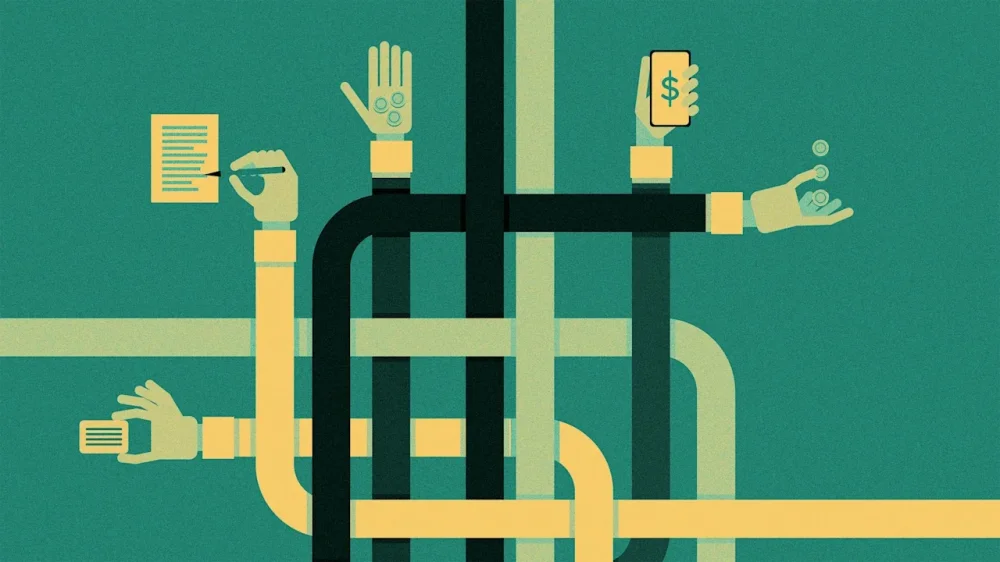
-
Below, Melissa Bernstein shares five key insights from her new book, The Heart of Entrepreneurship: Crafting Your Authentic Recipe for Success. Bernstein founded a toy company, Melissa & Doug, with her husband, in 1988. In 2021, they launched their second company, Lifelines, a wellness brand offering sensory products to manage stress and enhance well-being. She is the entrepreneur-in-residence for the Inner MBA certification program created by Sounds True, LinkedIn, and Wisdom 2.0. She is also cofounder of Duke University’s Melissa & Doug Entrepreneurs program. What’s the big idea? As we age, many of us lose touch with the childlike curiosity and wonder that once came so naturally. Yet, those are the very ingredients that fuel entrepreneurship. Everyone has the capacity to think creatively, solve problems, and innovate. But like any recipe, it requires a deliberate process. Listen to the audio version of this Book Bite—read by Bernstein herself—below, or in the Next Big Idea app. 1. Develop a start-from-scratch mentality. Imagine walking into your kitchen each morning and seeing a completely empty pot—no leftovers, no old recipes, just a blank slate. That’s what I face every day as a creator: the daunting but exhilarating task of starting fresh. This mindset is essential for innovation. We can’t rest on yesterday’s ingredients. We must embrace a beginner’s mind, a state of utter unknowing, like a child who can see infinite possibilities and the extraordinary in the ordinary. This means letting go of ego, which is filled with fear and rigidity, and leaning into curiosity and exploration. Here’s the litmus test: Are you truly passionate about what you’re doing? If not, maybe it’s time to empty the pot, clean it out, and stir something entirely new. 2. Become an indiscriminate gatherer of ingredients. I love the word indiscriminate because it means “at random and without careful judgment.” To cook something new, you need a pantry overflowing with diverse ingredients. In entrepreneurship, those ingredients come from your life experiences. Follow your curiosity wherever it leads. Yes, wherever it leads, even if it seems odd and offbeat. Try new hobbies. Strike up conversations with complete strangers. Explore unfamiliar places, even within your own town. Every new experience is like a spice or herb that goes in your pantry and expands the creativity within it. At some point, one of those ingredients will spark something profound in you. It’s called a crystallizing experience, coined by Howard Gardner. These moments will make you want to dive deeper and learn more. Curiosity is not about rushing to an outcome. It’s about patience, confidence, and enjoying the process of discovery. 3. Let your ingredients simmer. This is the most challenging part of the creativity process because most people want to rush to the finish line. We have this tendency to want to reach the end goal—to get to the noun instead of live the verb. Often, we throw all the ingredients into the pot too quickly. We don’t allow it ample time to simmer and allow all those ingredients to combine and recombine. Because of that, the recipe is exactly the same as all those recipes in the past. It tastes the same every time. One of my favorite definitions of creativity is by an amazing researcher, Paul Torrance. He describes creativity as “the imaginative recombination of elements from the past into new configurations needed in the present.” The ingredients need time and space to recombine in new ways. So, we must give those ingredients time to simmer in the unconscious. What does this mean? You put ingredients in the pot, place the lid tightly, set the burner on low, and step away to allow the unconscious mind to do its magic. This simmering process is essential for new revelations. You must stop thinking about the problem and focus your mind on other things—completely. Our minds are so magical that even when focused elsewhere, we are still doing the work unconsciously of solving other problems. The process is personal, and what you choose to do depends on the problem you’re solving and who you are. For me, nature is my muse. Being in nature when I have a complex problem to solve frees my mind from thinking about the problem, because I focus on the beauty around me. This is my gateway to that unconscious work. But for you, it may be something entirely different. Certain people may choose to listen to music, others drive, and some read. After minutes, days, or sometimes weeks of allowing your ingredients to simmer, that chef’s kiss recipe emerges in a flash of intuition. However, sometimes that chef’s kiss recipe never arises. Why? Because a key ingredient may still be missing. And that’s okay. It’s not meant to arise if it doesn’t arise. We cannot rush the process without risking bland, derivative results. Allow the process and see what magic unfolds. 4. Invite others into your kitchen. Once you have a crystallized prototype of your idea—and only then—do you invite others to come into your kitchen and try it out. They’re your taste testers, so to speak. But too often people seek feedback much too early, before their idea is crystallized in their own mind. This is a problem because then their unique idea or original take on an existing idea gets watered down by other people’s opinions and turns into something generic. Protect your vision until it’s strong enough to stand on its own, its roots deep. When you are ready to invite tasters into your kitchen, make sure they are your target audience. These are the people who would actually choose your restaurant and purchase items on your menu. If you choose those who are not your target audience, you will get feedback that is not helpful to your particular concept. The feedback from your target market is invaluable, but it doesn’t mean you take every piece of feedback they give you and use it to change your recipe. In fact, you must filter every bit of feedback through your vision. Remember, no one with a clear vision ever uses all the feedback they receive. They pluck out those most relevant and salient pieces. Use those to iterate on and improve the recipe, then get rid of the rest. 5. Embrace imperfection and evolution. I am a perfectionist and had a very hard time, early in my career, letting anything leave my brain or our office and go out into the world. To overcome this, I created the 80% rule. Basically, when something feels about 80% ready, I release it into the world. If I waited for it to achieve 100%, I would never have launched a single product because nothing is ever 100% ready. I realized that I just had to do my best. I had to put everything I could into my product, allow ample simmering, let testers into my kitchen, and then—when I could think of nothing more to do—I had to close my eyes, hold my breath, and release it into the world, recognizing that it’s not at 100%. Without releasing it into the world, I could never get closer to that 100%: Let my consumers try it out, test it, and give me feedback. Then, I continue to hone, improve, and perfect it so that over time, every product gets closer to 100%. Does it ever get there? I don’t think so. I’ve had some that maybe are at 98%, but there is always something that can be improved. Every idea, every product is a continual work in progress, constantly evolving and improving. And isn’t that the joy of life? That mindset keeps innovation alive. So, whether you are inventing a toy, a service, a company, or simply reigniting your own sense of wonder, the recipe is completely the same and something we all can engage in time and again, in the following order: We start from scratch. As Buddhist monk Shunryu Suzuki said, “In the beginner’s mind there are many possibilities, but in the expert’s there are a few.” We gather ingredients. We follow our curiosity wherever it leads and stock the pantry in our mind with disparate ingredients, not knowing yet how they’ll be used. We simmer those ingredients that captivate our attention most. If you have the right ingredients in the pot, in a matter of time, that amazing chef’s-kiss recipe will emerge. We invite taste-testers into our kitchen. These people should be part of your target audience. Listen to their feedback and filter it through the lens of your vision, incorporating the ones that make sense and letting go of the rest. We set it free. We share it with the world before it’s perfect. The heart of entrepreneurship is about reconnecting with the spark we all once had and realizing it’s still within, waiting to be rekindled. Enjoy our full library of Book Bites—read by the authors!—in the Next Big Idea app. This article originally appeared in Next Big Idea Club magazine and is reprinted with permission. View the full article

-
Every season, the Next Big Idea Club editorial team reviews dozens of upcoming books to curate a selection of the most exciting, must-read nonfiction titles. We start with a broad pool of nominees from which we identify a small handful of finalists and, ultimately, an official season selection. Today, it’s our pleasure to share our list of five finalists for Season 29! Without further ado, the new books we’re most excited about right now are . . . The Way of Excellence: A Guide to True Greatness and Deep Satisfaction in a Chaotic World By Brad Stulberg Publication Date: January 27, 2026 A practical guide to realizing our potential amid the chaos of modern life and learning how to reconnect to ourselves, our work, and each other by focusing on the pursuit of excellence. View on Amazon Why We Click: The Emerging Science of Interpersonal Synchrony By Kate Murphy Publication Date: January 27, 2026 Why do you immediately click with some people while others just as inexplicably turn you off? Do people emit vibes? Is it possible to read a room? Are bad habits contagious? Kate Murphy answers these and other fascinating questions. View on Amazon The Other Side of Change: Who We Become When Life Makes Other Plans By Maya Shankar Publication Date: January 13, 2026 A revelatory exploration of the ways we can find meaning in the tumult of change, from a renowned cognitive scientist. View on Amazon A World Appears: A Journey Into Consciousness By Michael Pollan Publication Date: February 24, 2026 A panoptic exploration of consciousness—what it is, who has it, and why—and a meditation on the essence of our humanity. View on Amazon How to Live a Meaningful Life: Using Design Thinking to Unlock Purpose, Joy, and Flow Every Day By Bill Burnett and Dave Evans Publication Date: February 3, 2026 A groundbreaking guide to transforming your daily routine into one brimming with joy, purpose, and meaning. View on Amazon Mattering: The Secret to a Life of Deep Connection and Purpose By Jennifer Breheny Wallace Publication Date: January 27, 2026 A landmark book that introduces a transformative new framework to confront the loneliness, burnout, and lack of purpose so many of us face today. View on Amazon Flourish: The Art of Building Meaning, Joy, and Fulfillment By Daniel Coyle Publication Date: February 3, 2026 A science-based, practical blueprint for cultivating a life—at work and at home—full of belonging, joy, and vitality. View on Amazon Intentional: How to Finish What You Start By Chris Bailey Publication Date: January 6, 2026 A productivity expert distills a decade of deep research on productivity to deliver a profound, practical, and counterintuitive road map to getting things done. View on Amazon The Mattering Instinct: How Our Deepest Longing Drives Us and Divides Us By Rebecca Newberger Goldstein Publication Date: January 13, 2026 Drawing on biology, psychology, and philosophy, Goldstein argues that this need to matter―and the various “mattering projects” it inspires―is the source of our greatest progress and our deepest conflicts. View on Amazon The Key Ideas in 15 Minutes “If you are going to get anywhere in life, you have to read a lot of books,” Roald Dahl once famously said. The only trouble is, reading even one book from cover to cover takes hours—and you may not have many hours to spare. But imagine for a moment: What if you could read a groundbreaking new book every day? Or even better, what if you could invite a world-renowned thinker into your earbuds, where they personally describe the five key takeaways from their work in just 15 minutes? With the Next Big Idea app, we’ve turned this fantasy into a reality. We partnered with hundreds of acclaimed authors to create “Book Bites,” short audio summaries of the latest nonfiction that are prepared and read aloud by the authors themselves. Discover cutting-edge leadership skills, productivity hacks, the science of happiness and well-being, and much more—all in the time it takes to drive to work or walk the dog. “I love this app! The Book Bites are brilliant, perfect to have in airports, waiting rooms, anywhere I need to not doomscroll… You guys are the best!” —Missy G. Go Deeper with a Next Big Idea Club Membership The Next Big Idea App is free for anyone to try—and if you love it, we invite you to become an official member of the Next Big Idea Club. Membership grants you unlimited access to Book Bites and unlocks early-release, ad-free episodes of our LinkedIn-partnered podcast. You also gain entry to our private online discussion group, where you can talk big ideas with fellow club members and join exclusive live Q&A sessions with featured authors. For a more focused learning experience, we recommend a Hardcover or eBook Membership. Every two months, we select a new nonfiction book as the must-reads of the season. We then send a hardcover copy straight to your doorstep, or eBook versions to your favorite digital device. We also collaborate with the authors of selected books to produce original reading guides that take you step-by-step through their most life-changing ideas. And yes, it’s all available through the Next Big Idea app. “My biggest Thank You is for the quality of book selections so far. I look on my shelf and see these great titles, and I find myself taking down one or two each month to reread an underlined passage. Full marks to all involved!” —Tim K. Learn Faster, from the World’s Leading Thinkers Whether you prefer to read, listen, or watch, the Next Big Idea is here to help you work smarter and live better. Wake up with an always-fresh Idea of the Day, the perfect shot of inspiration to go with your morning coffee. Then dive into one of our Challenges, handpicked collections of Book Bites that form crash courses in subjects like communication, motivation, and career acceleration. Later, watch the playback of an interview with U.S. Surgeon General Vivek Murthy, Stanford psychologist Jennifer Eberhardt, or philosopher John Kaag. And be sure to check the “Events” tab in the app, so that you can join an upcoming live Q&A and personally chat with the next featured thought leader. If you’re hoping to grow as a person or as a professional, we hope you’ll join us and tens of thousands of others who enjoy the Next Big Idea. Get started by downloading the app today! Enjoy our full library of Book Bites—read by the authors!—in the Next Big Idea app. This article originally appeared in Next Big Idea Club magazine and is reprinted with permission. View the full article

-
In the midst of economic uncertainty, polarizing politics, global conflict and a future that is largely out of focus, many consumers are continuing to fight the good fight when it comes to using their dollars to drive positive change. It’s the 13th year that I have helped run an annual survey on the momentum of socially responsible spending, nonprofit giving, and earth friendly practices, called the Conscious Consumer Spending Index. This year we found that despite a worsening view of the state of the world, consumers are holding firm in their support of conscious brands: A majority of respondents said they were actively supporting purposeful companies, while roughly a third plan to increase the amount they spend on socially responsible products and services in 2026. Digging deeper into the data, we identified several questions that are worth serious consideration. Below are four mission critical issues that purpose-driven individuals and organizations should meditate on as we enter a new year. 1: Is being socially responsible an all or nothing proposition? In our study, one third of consumers reported boycotting specific companies or brands because they were not socially responsible, and 31% said they had encouraged family or friends to avoid a company or product because it was not socially responsible. In spirit, this enthusiasm is a positive. However, it is important to evaluate where we are setting the bar for brands. While there are examples of companies who have clearly crossed lines and are easily categorized as “not socially responsible”, there are many organizations who are on a journey toward being a “good company” and experiencing setbacks and growing pains along the way. There is a big difference between a company who has no moral compass and no regard for what’s best for its people, the community and the environment, compared with a company who is pure in its intentions to be more purposeful but not yet perfect in its execution. As a result, we must strike a balance: holding companies accountable to a set of meaningful standards without being elitist and too quick to cancel a brand for not yet checking all the boxes when it comes to being socially responsible. Set the bar too low, and the bar means nothing. Set the bar too high, and many organizations might decide being a “good brand” is out of their reach. 2: Should we separate politics from purchases when it comes to socially responsible brands? Consumers want “good” brands to take stands. When asked if socially responsible brands should weigh in on cultural and political issues, 36% said yes. Another 34% said it depends on the specific situation. Only 21% percent of respondents said no, while 9% had no opinion on the matter. Those who want brands to choose sides represent the most conscious of consumers. More than half (55%) plan to increase their spending on socially responsible goods and services in 2026. This mindset is potentially polarizing and counterproductive when it comes to advancing the conscious consumerism movement. Showing preference to brands who prioritize their community, their workers, the environment and society at large is different from aligning with these same brands based on their activism on specific issues. We are experiencing an unprecedented divide when it comes to politics in this country. It is worth debating whether it is wise to mix political leanings with mission and purpose when evaluating whether a company is socially responsible. At the end of the day, should socially responsible behaviors be a partisan issue? 3: Are we doing enough to raise awareness and understanding of brands doing good? On the whole, awareness remains a key issue when it comes to socially responsible brands. Collectively, those who are a part of this movement should consider doubling down on efforts to spread the word and educate consumers. As an example, our research shows that 75% of Americans still aren’t familiar with the concept of a B Corp. While we’ve made progress on this front in the last decade, we are still falling far short of where we need to be to advance the overall movement and reinforce the right behaviors. In addition to raising general awareness, we also need to help consumers identify specific brands to support. Most consumers can accurately articulate what makes a company socially responsible, but when they find themselves in real world consumption scenarios, the “good” choice is not obvious enough. When we ask consumers to name a company or organization that is socially responsible, Amazon and Walmart continue to dominate responses. Brands like Patagonia and Ben & Jerry’s are also popular answers, but overall this data point reinforces the fact that most consumers do not have a working filter for separating purposeful brands from those who are not actually mission driven. The most frequent way consumers make this decision is by reading packaging labels. We need to equip them with better tools and encourage them to be more proactive if they are serious about being purposeful when shopping. 4: Is increasing interest in conscious consumerism bad news for nonprofits? When comparing nonprofit giving trends with the trajectory of conscious consumerism, the CCSIndex data shows that charitable donations have lagged behind socially responsible spending since 2017. The gap is widening, driven by a youth movement that is more likely to do good by shopping responsibly versus making financial contributions to causes. For Americans ages 18-34, 31% prefer to give back by buying socially responsible products and services instead of donating to charity, compared to 27% of those who are 35-54, and 17% of Americans who are 55 or older. The youngest cohort was the least likely to have contributed financially to a charity in the previous year. While some of this can be chalked up to financial constraints for younger individuals, that likely isn’t the entire story. Historically, giving levels have increased as individuals move into older age brackets and are more financially able to give. Evidence suggests a shift is occurring among Millennials and Gen Z toward alternative giving channels, and that this shift might just stick as they age. Specifically, it seems clear that younger Americans favor conscious consumerism over charitable donations. It’s less clear what should be done about this trend. Regardless, charities should be paying close attention to where things are headed and how their fundraising strategies can evolve. View the full article