Newsletter
Want to keep up to date with all our latest news and information?


ResidentialBusiness
Administrators
-
Joined
-
Last visited
Everything posted by ResidentialBusiness
-
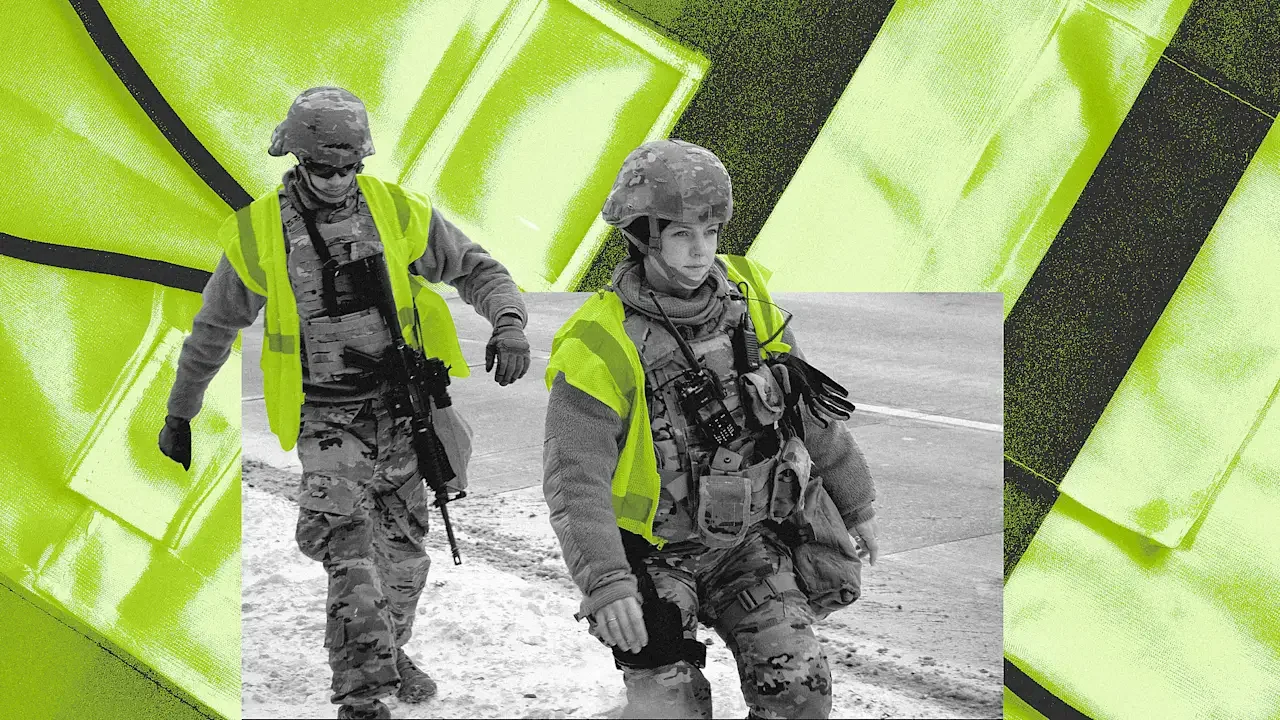
The announcement earlier this week that the Minnesota National Guard was standing by to assist local law enforcement and public safety agencies in and around Minneapolis-St. Paul included a surprising detail. “If our members are activated,” it read, “they will be wearing reflective vests … to help distinguish them from other agencies in similar uniforms.” From a design perspective, the whole point of uniforms is to provide an instant visual signal. But that mission has been thwarted in the ongoing besiegement of the Twin Cities by thousands of officers from Immigration and Customs Enforcement (ICE), Customs and Border Protection, and other federal agencies. Most notably, many sport camouflage and gear that civilians tend to associate with the military. The upshot is that it’s become harder for the average person to understand at a glance who is there to do what. Certainly the presence of uniformed members of multiple agencies seems out of hand when the National Guard has to start wearing crossing guard vests to distinguish themselves. The situation would be comical if it weren’t so bleak, as if it’s apparently become necessary for members of the U.S. military to visually announce, “hey we’re here to help, not an occupying army or a threat.” In a way, this throws into sharp relief how effective the ICE aesthetic has been in projecting a quasi-militaristic version of federal law enforcement. The agency’s look has been attracting attention for months as it has pursued undocumented immigrants (or just people it suspects might be) in crackdowns in Chicago, New Orleans, Minneapolis, and elsewhere, often showing up at work sites or public spaces in what resembles military tactical gear, body armor, weapons, and masks. As a GQ assessment of the ICE look pointed out, the agency does not have a single mandatory uniform, just a set of guidelines that give agents latitude to mix street clothes with military-pattern gear, fitted with patches or plate carriers labeled “ICE.” Most notoriously, many choose to wear gaiter-style masks, to protect their identity and avoid being doxed or otherwise retaliated against. To critics, the upshot of this aesthetic is a lack of transparency and a sense of intimidation: Intentionally or not, the look signals a disruptive, occupying force. “You’ve got cops geared up like they’re ready to go fight in Fallujah,” one Redditor commented, “in order to arrest some cooks and landscapers.” At the very least, the overlapping uniform styles can be a source of confusion. If military veterans “have to look very hard” at images and footage to figure out individual affiliations, “then the average citizen is going to easily confuse what they see as a militarized response rather than a law enforcement one,” retired Marine Col. David Lapan, a former spokesman for the chairman of the Joint Chiefs of Staff and the Department of Homeland Security, told military news site Task & Purpose. Worst case scenario, Lapan added: “It creates the perception that the U.S. military is being used to suppress the American people.” So far the Guard has not been deployed to city streets in Minneapolis; in a press statement, the Minnesota National Guard said they remain on alert could be called on for “traffic support to protect life, preserve property, and support the rights of all Minnesotans to assemble peacefully.” Underlying the potential visual confusion is the question of whether camouflage serves any particular function for federal agents operating on city streets in the first place. Retired Army Lt. Gen. Russel Honoré, best known for his blunt-talking style while overseeing the National Guard deployment to New Orleans after Hurricane Katrina, pointed out to Task & Purpose: “There’s nothing that a camouflage uniform can do for you in an urban operation other than [to] portray a sense of authority.” His suggestion to non-military agencies currently using camo: “Go get your own goddamned uniforms.” View the full article
-
Most factories still run on fossil fuels, whether they’re making potato chips or steel. But a new “thermal battery” could make it cheaper to do the same work with clean energy. Electrified Thermal Solutions, a startup spun out from MIT research in 2021, just fired up a demo battery that can hit 1,800 degrees Celsius—hot enough to make steel, cement, or chemicals. The battery uses power from the grid to heat its custom bricks when electricity is cheap. When a factory needs hot air later, it’s provided by the superheated bricks. It’s also cheaper to use than natural gas, so factories don’t need a climate goal to be convinced to make the switch. “This is a cheaper approach to heat that today isn’t being taken advantage of,” says Daniel Stack, cofounder and CEO of Electrified Thermal Solutions. Electricity is already a cheaper heat source than natural gas, but in the past factories haven’t been able to feasibly use it with their equipment. Some other startups are making similar thermal batteries, but can’t reach the highest temperatures needed by certain industries. Electrified Thermal’s tech, called the Joule Hive Thermal Battery, uses a unique conductive brick that electricity can flow straight through, enabling ultra-high temperatures. Backers include ArcelorMittal, the world’s largest steelmaker, which could eventually use the technology to heat up equipment like blast furnaces. The savings for industrial customers could be substantial. “We can charge up with the cheapest electricity during hours of low prices, and this can save you 15%, 20%, 30% on your heating bill,” Stack says. “These commodity industries live and die by the price they pay for their heating inputs.” Both in the U.S. and Europe, wholesale electricity prices drop close to zero—or even negative prices—at certain times when renewable energy is abundant. The startup is focused first on Europe, where policy makes it easier to access that cheap electricity. (Even as electricity demand grows from data centers, Stack says that there will still be plenty of surplus electricity available at particular hours at a lower price.) The tech is designed to be easily added to existing factories, with pipes connecting hot air from the batteries into existing kilns, boilers, or furnaces. Customers have the option to pay for heat as a service or buy the batteries directly. The new demonstration system, at the Southwest Research Institute in San Antonio, will let potential customers see the equipment in action. Commercial units will begin rolling out to some customers later this year. The batteries can easily scale up, Stack says, and are made from off-the-shelf materials. The bricks are similar to those used in glassmaking, and a large manufacturer, HWI, is beginning to mass manufacture them. If industry at large makes the switch, the climate benefits would be huge. By one estimate, industrial process heat uses around 20% of the world’s energy. “We’re talking about massive emissions reductions—to the tune of several gigatons per year of CO2—reduced through this transition,” Stack says. View the full article

-
We hear a lot about self-discipline in today’s productivity-obsessed culture. And the message is usually that it’s the cure for economic insecurity and a pathway to self-actualization. At first glance, this appears to make sense. But it can be a double-edged sword in our modern work lives and always-on culture. Self-discipline enables focus and is key to achievement. However, over-indexing on it can easily erode our own values and boundaries. In turn, this can cause burnout, isolation, and existential despair. What does ‘discipline’ really mean? Discipline has historically been associated with punishment and religious correction. Think physical punishment, including self-flagellation. I grew up at a time when well-meaning parents dispensed discipline, thinking that’s what it would take to raise virtuous children. The payoff that came with being praised for hard work at school and excelling in sports meant discipline became a core aspect of my early self-identity. Contemporary examples of personal discipline tap into the human capacity to regulate impulses and persist toward long-term goals. We see many influencers create vast content parading their self-discipline, whether that’s adhering to a complex, three-hour morning routine, or proselytizing an extremely restrictive diet. As a result, self-discipline has taken on a moralistic, “holier-than-thou” tone, with the inference being that doing anything less means you are weak, lazy, and unworthy. The overt benefits of discipline at work Amid extreme uncertainty, self-discipline can serve as a powerful protective asset. Longitudinal research on self-control shows that those who can delay gratification and regulate impulses tend to achieve better educational outcomes, higher income, and improved health indicators. Another research paper suggests that self-discipline can reduce procrastination by boosting autonomous motivation rather than relying on willpower. When people experience their discipline as self-chosen and values-aligned, they report greater feelings of competence and autonomy. In the current work landscape, disciplined routines can help us create a sense of control and continuity amid relentless structural volatility. When discipline becomes addictive and isolating However, the same traits that fuel achievement can become compulsive and harmful. Eventually, excessive discipline can lead to ego depletion, where subsequent acts of self-control become harder and more draining. In cultures that moralize productivity, this depletion can be misconstrued as personal failure. As a result, many end up doubling down on discipline rather than questioning the demands they’ve been subjected to. This was my experience as a corporate finance lawyer. At first, the self-discipline I’d learned early in life translated perfectly into the “magic circle” law firm culture. Eventually, the constant, intense workload wore me down. Finally, I collapsed at an airport in a state of exhaustion and emotional despair. As uncomfortable as this was, it also gave rise to deep relief: I no longer had to punish myself. Discipline can become addictive when it produces rewards, but eventually, discipline can become an identity in itself. You might start holding beliefs like “having needs is weak,” “I need to override my bodily urge to rest,” or “if I falter, I am a failure.” This can lead to anxiety around rest, spontaneity, or deviation from a meticulous schedule. Proponents may begin to choose habits and work patterns that reinforce their disciplined self-image. They stay at the desk until deep in the night, or fasting for an extra day just to “prove they can,” even when these conflict with relational needs, leisure, or health. This kind of self-discipline can foster isolation in three ways: Time-intensive routines (early mornings, extended work hours, strict fitness or side-hustle regimes) crowd out social life and community participation. They avoid relationships or spaces that “threaten” routine, and they end up narrowing social worlds to similarly disciplined peers, or online productivity subcultures. They believe that we have sole responsibility for our station in life, rather than seeing the broader, systemic issues. This can cause us to internalize blame, which leads to shame, loneliness, and low self-worth. Discipline as a modern-day comfort blanket The definition of our current moment is a paradox: intensified individual responsibility amid abject structural insecurity. There’s an expectation for us to optimize every facet of our lives: our skills, our bodies, and our relationships. This has two major implications. First, we engage the language of discipline to obscure the structural causes of success and failure. We see unemployment, underemployment, and burnout as deficits of willpower rather than outcomes of policy, corporate practice, or macroeconomic conditions. Second, self-care industries, while at times genuinely beneficial, individualize the management of systemic stress. As a result, this capitalizes on widespread alienation to the detriment of most for the benefit of a few. We see this dynamic play out for knowledge workers and founders in particular. Hustle culture normalizes permanent availability, constant upskilling, and the erosion of boundaries between work and non-work, all in the name of disciplined ambition. The result is another paradox: The very discipline that enables career advancement may also entrench the conditions—overwork, anxiety, weakened social ties—that undermine our long-term wellbeing and creativity. Toward a more humane discipline Tempting as it feels to jettison self-discipline altogether, we have a powerful opportunity to reclaim the term. A more humane approach would treat discipline less as an austerity project and more as a tool for protecting your time, energy, and attention for what genuinely matters to you. A good name for this term is mindful self-discipline. Practically, adopting mindful self-discipline means taking a few steps: Self-Knowledge: Get really clear on who you are and what matters to you. Not to your parents, peers, society, colleagues, or random influencers. For many, this requires peeling back the layers of values and ideas we’ve taken on, often subconsciously, and identifying our own core values, needs, and priorities. Self-Awareness: Use discernment to employ disciplined behavior around boundaries, rather than endless productivity. Limit work hours, design your downtime as nonnegotiable, and actively resist the pressure to optimize every waking moment. Self-Compassion: Ensure that your motivation for pursuing your work, hobbies, and other activities in life doesn’t come from the belief that you’re lazy, unworthy, or weak. Foster strong self-beliefs around your own intrinsic value as a human being to protect yourself from any harmful self-discipline narrative. Mindful self-discipline can be used as a strategic resource to carve out autonomy and dignity. The task for all of us is to ensure that human discipline serves our individual and collective flourishing—rather than diminishing the very same. View the full article

-
The class action complaint describes, from a real estate agent's perspective, how the company allegedly pushes borrowers toward its in-house lending arm. View the full article

-
After the announcement last fall, Embrace added local staff and increased marketing nad outreach in New Jersey to assist potential Oceanfirst borrowers. View the full article

-
When I tell fellow tech executives that every employee at sunday, from our engineers to our finance team, must complete a restaurant shift before they can fully onboard, I usually get confused looks. “You mean like, shadow someone?” they ask. No. I mean they tie on an apron, take orders, run food, and yes, deal with the 15-minute wait for the check that our product was literally built to eliminate. It sounds extreme. It is extreme. And it’s also one of the smartest business decisions we’ve made. Here’s why: business is often removed from the industries we serve. We’re keeping that empathy right there. The Empathy Gap in Tech I’ve spent 25 years in the tech world, scaling e-commerce unicorns in Europe before cofounding sunday. I’ve seen brilliant engineers build elegant solutions to problems they’ve never personally experienced. I’ve watched product teams debate restaurant workflows they’ve only seen in wireframes. The result? Products that work in theory but fail in the chaos of a Friday night dinner rush. Using our industry as an example, the restaurant space can’t be disrupted from a distance. It’s intensely human. A server manages six tables, remembers who wanted dressing on the side, tracks which kitchen orders are running late, and still needs to radiate warmth when checking on the anniversary couple at table twelve. When we ask them to adopt new technology, we’re not just changing their workflow, we’re asking them to trust us with their tips, their table turn times, and their relationship with guests. You can’t design for that kind of stakes without understanding them viscerally. What a Saturday Night Shift Teaches a Software Engineer Last month, I watched our newest engineer finish his restaurant shift at one of our partner locations. He was confident going in; he understood our API integrations, he knew our payment flow inside and out. But after five hours on his feet, he had a revelation. “At the end of my shift, I had to manually enter tips from 22 tables into the POS system,” he told me, exhausted. “Twenty-two times typing in amounts, double-checking I got the numbers right, worrying I’d accidentally shortchange myself or mess up the restaurant’s accounting. The whole time I’m thinking about the train I’m about to miss, and I’m doing math in my head to see if my night was even worth it. It took 15 minutes of my life I’ll never get back.” This wasn’t theoretical anymore. “I finally understood what we’re actually saving people from,” he told me the next day. “It’s not just 15 minutes—it’s the mental load of worrying you made a mistake, the frustration of doing data entry when you’re exhausted, the indignity of technology making your life harder instead of easier. When I use sunday now, I know exactly whose time I’m giving back.” That’s the point. Empathy at scale isn’t built through user research reports. It’s built through experience. Hospitality as a Business Philosophy What started as a practical requirement has become central to how we think about everything at sunday. Hospitality isn’t about being nice. It’s about anticipating needs, moving with urgency, and making people feel valued even under pressure. Those principles translate directly to how we run our business. When a restaurant partner calls with an issue, our support team doesn’t respond with ticket numbers and SLAs. They respond like servers handling a complaint: with immediate acknowledgment, genuine concern, and a bias toward solving the problem now rather than escalating it later. Our customer success team knows that “I’ll get back to you tomorrow” is the tech equivalent of “your food will be out in a few minutes”—a polite deflection that erodes trust. We’ve also borrowed the restaurant world’s obsession with the guest experience. In hospitality, there’s no such thing as “that’s not my table.” If a guest needs something, you handle it. We’ve tried to instill that same mentality. When a new market launch hits a snag, our engineers don’t wait for the ops team to flag it. When a sales issue arises, our product managers jump in. We move like a restaurant team during a rush—fluid, collaborative, and focused on the experience we’re creating. The Metrics That Matter Here’s what surprised me most: this policy has become one of our best retention and recruiting tools. We’ve had a 94% retention rate among employees who complete the restaurant shift program, compared to 78% at my previous tech companies. Employees consistently rank it as one of their most valuable onboarding experiences. New hires tell us they appreciate working somewhere that values understanding over assumption. They like that leadership doesn’t just talk about customer obsession—we quite literally make them walk in our customers’ shoes (and sensible non-slip ones at that). And when we hire, the restaurant shift requirement self-selects for people with the right mindset. Candidates who balk at the idea of working a shift often aren’t the right fit for our culture anyway. The ones who light up at the challenge? Those are our people. The tech industry loves to talk about disruption, but we’re often remarkably detached from the industries we claim to understand. We optimize for what we can measure: clicks, conversions, load times. And we miss what we can’t, the relief on a server’s face when they don’t have to chase down a credit card, the gratitude of a mom who can split a check without asking for help, the pride a restaurant owner feels when their team has more time to create memorable moments. Making our employees work restaurant shifts isn’t a cute culture quirk or a team-building exercise. It’s a business imperative. Every hour our team spends in a restaurant is an investment in building a product that actually solves real problems, not imagined ones. A Challenge to Tech Leaders I’d encourage every tech CEO, especially those building B2B products, to ask yourself: When was the last time you personally experienced the problem your product solves? Not observed it. Not read about it in research. Actually lived it? If the answer is “never” or “it’s been years,” you have a dangerous knowledge gap. Your team is making decisions based on assumptions, building for personas instead of people, and probably missing opportunities that would be obvious to anyone who spent a day in your customers’ reality. You don’t need to make it a formal policy like we have. But you do need to close the empathy gap between your builders and your users. Shadow a shift. Take customer service calls. Use your competitor’s products. Do whatever it takes to remember that behind every user statistic is a human being trying to do their job, feed their family, or simply have a nice dinner without waiting 15 minutes for the check. At sunday, we’ve learned that great technology in the hospitality space doesn’t come from brilliant engineers alone. It comes from brilliant engineers who’ve burned their hand on a plate, forgotten which table ordered the gluten-free option, and felt genuine panic when the payment system hiccups during a Saturday night rush. That’s not just good culture. That’s good business. View the full article

-
So, you’ve finally done it. No more putting it off, pushing through the grind, waiting for a more opportune time once things settle down. Alas, you’ve mustered up the gall to cash in on your paid vacation time. Now you have several days strung together to travel, rest, or do whatever the heck your heart desires. I love that for you. But before you slam your work laptop shut and “Yabba dabba doo!” your ass out of the office, there’s one last thing. You’ve gotta leave behind a message letting folks know you’ll be gone. You need to draft an out-of-office message. Out-of-office notes tend to be pretty standard—courtesy auto-replies letting folks know you’re not working, when you’ll be back, and who, if anyone, they can contact in your stead. Sometimes people add a pop of color hinting at a life outside the office. But these things generally tend to be pretty vanilla. I, for one, wish corporate peeps got more real with this messaging. Treat these notes like early-stage Facebook status updates: Share what you’re really thinking, feeling, and experiencing. This year is already a mess; immigrants continue to be targeted by the federal government, unemployment numbers remain dismal, and it seems like everyone’s got the flu. Why not keep it 100 for whoever reaches out in the interim? Longtime readers will remember when I presented a list of pandemic-era openers as alternatives to “I hope this email finds you well.” Here are some OOO notes I wish I had the heart to schedule. Deploy at your own risk. I am currently out of office, taking advantage of PTO that is technically unlimited but spiritually frowned upon. I am currently out of office, taking advantage of PTO that is technically unlimited but managerially frowned upon. I am currently out of office to recharge after running on vibes, caffeine, and anxiety for six consecutive quarters. I am out of office avoiding the news for my mental health. Please do not forward any think pieces. I am currently out of office closing the approximately 637 tabs I have open—both literally and mentally. I am currently out of office, wearing a quarter-zip sweater and drinking matcha. I hope this auto-reply finds you doing the same. I’m OOO using the gym membership I will abandon by February. I am currently out of office, ignoring my inbox like it’s a group chat that is doing the most while I’m trying to do the least. I’ll be out of the office while my outie binge-watches Severance and realizes this job feels familiar. Upon my return, the work will continue to be mysterious and important. I am currently out of office, unpacking last year with a licensed professional. I am currently out of office, pondering the spiritual meaning of “six-seven.” I am currently out of office, updating my résumé “just in case.” I am currently out of office, rewatching Sinners so I can feel something again. I am currently out of office but will absolutely read this message anyway and respond once my brain stops buffering. I am currently out of office and launching my side hustle. Please subscribe to my Substack. I am currently out of office, but will be bumping that new A$AP Rocky album until further notice. I’m OOO until my burnout is no longer a personality trait. I am currently out of office pivoting to my new self. Let’s table this and circle back in Q2, when I have the bandwidth to get my ducks in a row. I am currently out of office, but don’t expect a response as soon as I get back. I’ll need a few days to remember how to do my job. I am currently out of office, but unfortunately still mentally available. View the full article
-
While it seems that some agreement has been reached to placate Donald The President’s obsession with taking over Greenland, details are still being revealed. So the possibility that the nascent trade war over the issue that was heating up before the announcement of an agreement could restart. If it does, leaders in European capitals have looked at what levers are available to pull to try and dissuade the U.S. president from moving toward more aggressive action. Some of the most significant U.S. exports are its tech apps, services, and platforms, putting them first in the firing line. U.S. social media platforms, for instance, account for more than a third of the entire value of the S&P—meaning any impact on them could be deleterious to the broader American economy. Within Brussels, the hub of European legislative decision-making, there has been discussion of how to bring some of the U.S.’s more outlandish ideas into line with the global order, says Zach Meyers, director of research at the Center on Regulation in Europe, noting, “Since they mostly provide services rather than physical products, reciprocal tariffs would not work.” The European Union could use what has been described as its “big bazooka”: the so-called Anti-Coercion Instrument. That’s “specifically designed to deter and address this type of geopolitical bullying,” says Meyers, and includes “a huge menu of other restrictions on how Big Tech [companies] operate in Europe, such as limitations on exploiting IP rights, on being able to compete in public procurement, and constraining incoming investment.” However, European leaders have held off deploying the bazooka in this current skirmish, fearing that it could raise the geopolitical temperature and invite an equally (or more) harmful response from The President. But the inability to use one method, and the skittishness about using another, doesn’t mean there aren’t ways to try and bring The President back to reality. Unlike the brash, geopolitics-altering Truth Social posts that twist the world on its axis, any European response would likely be much more subtle, though no less significant, experts argue. “There will be no ‘slamming of the door,’ as banning major U.S. platforms would anger a lot of European consumers, disrupt businesses, and undermine Europe’s own digital economy,” says Francesca Musiani, senior researcher at the French National Center for Scientific Research—not to say what it would do to the U.S. president’s blood pressure. “Subtler strategies give Europe some room to keep the market open but make success inside it progressively harder.” Musiani adds, “If a trade war between Europe and the United States were to spill into the tech sector, it probably would unfold more like a slow, grinding campaign: legal, relentlessly procedural, and very expensive for American firms.” Such a war would likely be waged through the European Union’s comprehensive tech-focused laws, including the Digital Markets Act and Digital Services Act; both were passed in 2022 but more recently began being enforced. Europe is also considering a handful of other legislative packages, including a Digital Networks Act, which would govern telecommunications providers, and an amended Cybersecurity Act proposed this week. The continent’s proclivity for cracking down on tech has already prompted plenty of noise from The President allies, who have called it “foreign censorship.” But enactment and enforcement could be ramped up significantly if European legislators deemed it necessary. “Nothing would be framed as retaliation, rather as ‘consumer protection’ or ‘competition,’ but the targets would be obvious,” Musiani says. Indeed, long before The President stepped up his rhetoric on acquiring Greenland, Europe had been considering implementing taxation on tech firms operating in Europe. That would likely be the next lever to pull, Musiani believes, including “digital services taxes that could expand or be harmonized across more member states, hitting online advertising, cloud services, and marketplaces.” Those are all short-term measures designed to act as a stopgap while the longer-term, larger goal is achieved: decoupling Europe’s tech stack from an overreliance on U.S. entities. “In the long run, the huge loss of transatlantic trust caused by The President’s threats will almost certainly support the growing push for Europe to act more assertively to boost its own tech sector,” says Meyers. That could take the form of “buy European” rules, but is already shaping up in the movement to develop a European tech stack that doesn’t require paying money to, or the threat of being held hostage by, U.S. hardware providers. For The President, whose focus tends to be on his own personal short-term and immediate gains, that longer-term impact might not be front of mind. But it ought to be for the Americans he represents. View the full article

-
We can’t afford to maintain the roads we have, so why do we keep building more? The Highway Trust Fund is the primary federal mechanism for surface transportation. It receives revenue mainly from the federal fuel tax (18.4 cents per gallon on gasoline and 24.4 cents per gallon on diesel) plus taxes on tires, heavy vehicles, and some other sources. The fund has two accounts: (1) the Highway Account (road construction, maintenance, and other surface transportation projects), and (2) the much smaller Mass Transit Account. Debates about how Americans should pay for roads are endless: General taxpayer funding, regardless of whether someone drives Per-mile charges (vehicle miles traveled fees) Weight-based fees, since heavy trucks and EVs cause disproportionate damage And the less common full privatization, letting owners/operators set tolls and other forms of charging road users But the debates often sidestep or ignore any sense of urgency. The fact is there’s a massive and growing funding gap. Under the current setup, we can’t afford to maintain what’s already been built, let alone pay to build and maintain new construction projects. The Congressional Budget Office (CBO) sounds the alarm, even if it’s in dry, academic language. Shortfall Historically, most federal spending for highways has been paid for by revenues—largely from excise taxes on gasoline, diesel, and other motor fuels—that are credited to the highway account of the Highway Trust Fund (HTF). For more than two decades, those revenues have fallen short of federal spending on highways, prompting transfers from the Treasury’s general fund to the trust fund to make up the difference. The CBO projects that balances in both the highway and transit accounts of the HTF will be exhausted in 2028. If the taxes that are currently credited to the trust fund remained in place and if funding for highway and transit programs increased annually at the rate of inflation, the shortfalls accumulated in the HTF’s highway and transit accounts from 2024 to 2033 would total $241 billion, according to CBO’s May 2023 baseline budget projections. The HTF is in a state of bankruptcy, but we keep chugging along as if there’s no real financial urgency. For more than 20 years, taxpayers have been subsidizing roads because the people who use the roads don’t pay enough to cover the costs. The fund has avoided collapse only through repeated bailouts from the U.S. Treasury’s general fund totaling more than $275 billion since the mid-2000s. Who should pay? Tapping into the general fund might seem fair if all taxpayers put the same amount of wear and tear on the transportation system, but that’s obviously not the case. About 19% of people ages 20 to 24 don’t have a driver’s license, and 30% to 40% of people older than 85 don’t have a driver’s license. Not to mention the wide variety of driving contexts of people who are licensed, the types of vehicles used, and how often they contribute to clogged street networks during rush hours. The underlying revenue problem has to be fixed, which means the debate has to go deeper, from “Who should pay?” to “How do we make sure revenue covers road expenses?” Systemic problem is an overused term in urbanism, but that’s the best way to describe the transportation funding debacle. Cars are more fuel efficient, EVs pay no fuel tax, and other taxes have stayed the same since the early 1990s. I’m not even arguing in favor of taxes, I’m simply drawing your attention to the obvious problem that there isn’t enough money to cover the costs of road maintenance or road expansion. Basic budgeting If we treated this issue like a household budget facing chronic overspending, the questions would be straightforward: How can we reduce expenses? How can we increase revenue? Is maintenance more important than new construction? If we can’t even afford to maintain the current system, how quickly can we halt new spending on expansions? What alternative mobility options (transit, biking, walking, ridesharing, remote work) can ease the burden using the infrastructure we already have? This fiscal disaster isn’t abstract policy wonkery, it’s a hard constraint on what the U.S. can realistically build and maintain. Ignoring it risks more patchwork bailouts, more maintenance delays, and eventual service breakdowns. Bottom line, we need to ask better questions and vigorously explore and debate the trade-offs. View the full article

-
In today’s workplace, conflicts often arise from various sources that can impact team dynamics. You might encounter issues stemming from differing work styles, where organized individuals clash with those who prefer a more spontaneous approach. Miscommunications are common, as unclear roles can lead to authority struggles or disputes over control. Furthermore, bullying, harassment, and resistance to change can create an environment of distrust. Comprehending these conflicts is essential, as they can hinder productivity and employee satisfaction. What strategies can you implement to address these challenges effectively? Key Takeaways Conflicts often arise from differing work styles, such as collaboration versus independence or organization versus impulsiveness. Poor communication, including unclear information and lack of regular check-ins, leads to misunderstandings and errors among employees. Bullying, discrimination, and harassment can stem from miscommunication, resulting in a toxic work environment if not addressed effectively. Power struggles occur due to unclear roles and responsibilities, leading to conflicts over control and decision-making within teams. Resistance to change is common during new policies or processes, often fueled by anxiety and inadequate communication about the changes. Work Style Conflicts When you work in a team, you may notice that not everyone approaches tasks in the same way, which can lead to work style conflicts. These conflicts often arise from differing preferences for group collaboration versus individual tasks. For instance, organized individuals might clash with impulsive coworkers, creating frustration and tension. Consider workplace conflict examples where an employee who thrives on independence struggles to align with a colleague who needs structured guidance. This mismatch can greatly impact team morale and productivity, as both parties may feel misinterpreted. The lack of mutual respect and comprehension of diverse work styles can exacerbate these issues. To navigate work style conflicts effectively, it’s crucial to acknowledge and appreciate each team member’s approach. Misunderstanding or Poor Communication Issues How often do misunderstandings in the workplace stem from poor communication? These misunderstandings or poor communication issues are significant causes of conflict in the workplace, with 85% of employees encountering conflicts related to communication. When information is unclear, it leads to varied interpretations, resulting in errors and diminishing work quality, which can frustrate team members. Regular check-ins and updates can improve communication flow, clarifying instructions and preventing duplicated efforts or missed deadlines. Furthermore, a lack of necessary information contributes to a toxic work environment, where employees feel unheard and may become resentful, potentially increasing turnover rates. Implementing training on effective communication skills proves beneficial, as 95% of employees find such training helpful in managing workplace conflicts. Bullying, Discrimination, or Harassment Misunderstandings and communication issues can create an environment ripe for more serious conflicts, such as bullying, discrimination, or harassment. These targeted behaviors can greatly harm employee morale and well-being. A common conflict with coworker examples might include: Verbal Insults: Demeaning comments based on gender or age. Exclusion: Deliberately leaving someone out of team activities or communications. Unwanted Advances: Making inappropriate remarks or gestures, creating an uncomfortable atmosphere. Stereotyping: Making assumptions about someone’s abilities based on their religion or background. Addressing complaints with empathy is vital; investigations should involve all parties and review communications thoroughly. Companies must implement ongoing training and clear policies to promote an inclusive environment. Unresolved bullying can lead to long-term psychological effects and decreased productivity, making effective resolution imperative in maintaining a healthy workplace culture. Power Struggles Authority struggles often emerge in workplaces where roles and responsibilities aren’t clearly defined, leading to conflicts among team members over control and decision-making. These dominance struggles can create resentment, particularly when promotions intensify existing tensions. Employees may feel threatened or undermined, resulting in public challenges that disrupt team cohesion. Here’s a quick look at common conflict at work examples related to dominance struggles: Conflict Type Description Role Ambiguity Unclear job descriptions lead to disputes. Promotion Resentment Jealousy arises when colleagues advance. Public Undermining Employees challenge authority openly. Decision-Making Disputes Team members clash over project direction. Management Intervention Needed Leadership steps in to resolve issues. To address these issues, individual meetings with management can clarify perspectives and restore harmony, encouraging effective collaboration among team members. Change Resistance Workplace conflicts often shift from authority struggles to resistance against change, particularly when new processes or policies are introduced. When changes occur, you might notice: Increased uncertainty and anxiety among team members. A decline in morale, especially among long-term employees who feel their routines are threatened. Rumors circulating because of lack of effective communication, leading to distrust. Heightened conflict, as seen in a conflict with a colleague example, where differing views on changes spark disputes. To mitigate these issues, open discussions about changes are crucial. Involving employees in decision-making encourages acceptance and eases concerns. Remember, poorly managed shifts can exacerbate resistance, so clear communication and support are key during these times. Resource Allocation Conflicts Resource allocation conflicts frequently emerge in environments where budgets and equipment are limited, causing employees to compete for the tools or funding they need to complete their projects effectively. When resources are perceived to be distributed unfairly, it can create tensions, leading to a drop in morale among team members. Clear communication about how resources are allocated is crucial; without it, misunderstandings can arise, resulting in duplicated efforts or missed deadlines. To mitigate these resource allocation conflicts, consider implementing collaborative decision-making processes. This approach promotes a sense of fairness and shared responsibility, making team members feel valued. Establishing transparent processes for resource management can further improve team cohesion, reducing competition and ultimately leading to better project outcomes. Personality Clashes Even though you may not realize it, personality clashes can greatly impact team dynamics and overall productivity. These common workplace conflicts often stem from differences in individual temperaments, leading to misinterpretations and disputes. Here are some ways these conflicts manifest: Assertive employees dominating conversations, leaving quieter colleagues feeling overlooked. Misinterpretations that result in negative judgments about others’ intentions or capabilities. Disputes arising from differing work styles, creating friction within the team. Egos clashing, which can diminish overall team cohesion. Approximately 49% of workplace conflict is linked to these personality clashes. To mitigate misinterpretations, encouraging a culture of respect is essential. Team-building activities and clear expectations can help bridge gaps between differing personalities. In the end, empathy and comprehension are fundamental in addressing these conflicts, promoting healthier relationships among colleagues and enhancing productivity in the workplace. Frequently Asked Questions What Are Some Common Conflicts Faced by Employees at Work? Employees often face conflicts stemming from personality clashes, stress, and unclear job roles. Personality differences can lead to misunderstandings, whereas high-pressure environments increase tension. Furthermore, when job responsibilities aren’t clearly defined, it results in confusion and disputes. With nearly 85% of employees experiencing conflict at work, these issues can greatly impact team dynamics and overall productivity. Addressing these conflicts proactively is crucial for nurturing a healthier workplace environment. What Are Three of the 5 Common Types of Conflicts? You’ll encounter various conflicts at work, with personality clashes being a primary issue. These disagreements often arise from differing communication styles and egos. Poor communication furthermore leads to misunderstandings, impacting teamwork and productivity. Another common conflict involves role confusion, where overlapping responsibilities create frustration and ambiguity. Each of these issues can affect workplace harmony, making it crucial to address them proactively to maintain a positive work environment and improve collaboration among colleagues. What Are the 5 C’s of Conflict? The 5 C’s of conflict are Communication, Cooperation, Compromise, Clarity, and Collaboration. Effective Communication guarantees everyone’s voice is heard, reducing misunderstandings. Cooperation nurtures a supportive atmosphere, during which Compromise helps find solutions that satisfy all parties. Clarity defines roles and responsibilities, preventing confusion that can lead to disputes. Finally, Collaboration encourages teamwork, allowing diverse perspectives to contribute to conflict resolution. Comprehending these principles improves your ability to manage conflicts effectively in any environment. What Is an Example of a Workplace Conflict? An example of workplace conflict could be a situation where two colleagues disagree over project responsibilities. This disagreement might arise because of unclear job roles, leading to overlapping tasks. As both employees try to assert their authority, they may unintentionally create tension. Miscommunication can further exacerbate the issue, as each person interprets the expectations differently. If left unresolved, this conflict can impact team dynamics and overall productivity, affecting workplace morale. Conclusion In summary, workplace conflicts arise from various sources, such as differing work styles, poor communication, and influence struggles. Addressing these issues proactively can encourage a more collaborative and harmonious environment. By recognizing the signs of conflict, encouraging open dialogue, and clarifying roles, you can effectively mitigate tensions. Furthermore, promoting inclusivity and respect within teams helps prevent bullying and discrimination, eventually leading to a more productive workplace where employees feel valued and understood. Image via Google Gemini and ArtSmart This article, "What Are Common Workplace Conflicts Employees Face?" was first published on Small Business Trends View the full article
-
In today’s workplace, conflicts often arise from various sources that can impact team dynamics. You might encounter issues stemming from differing work styles, where organized individuals clash with those who prefer a more spontaneous approach. Miscommunications are common, as unclear roles can lead to authority struggles or disputes over control. Furthermore, bullying, harassment, and resistance to change can create an environment of distrust. Comprehending these conflicts is essential, as they can hinder productivity and employee satisfaction. What strategies can you implement to address these challenges effectively? Key Takeaways Conflicts often arise from differing work styles, such as collaboration versus independence or organization versus impulsiveness. Poor communication, including unclear information and lack of regular check-ins, leads to misunderstandings and errors among employees. Bullying, discrimination, and harassment can stem from miscommunication, resulting in a toxic work environment if not addressed effectively. Power struggles occur due to unclear roles and responsibilities, leading to conflicts over control and decision-making within teams. Resistance to change is common during new policies or processes, often fueled by anxiety and inadequate communication about the changes. Work Style Conflicts When you work in a team, you may notice that not everyone approaches tasks in the same way, which can lead to work style conflicts. These conflicts often arise from differing preferences for group collaboration versus individual tasks. For instance, organized individuals might clash with impulsive coworkers, creating frustration and tension. Consider workplace conflict examples where an employee who thrives on independence struggles to align with a colleague who needs structured guidance. This mismatch can greatly impact team morale and productivity, as both parties may feel misinterpreted. The lack of mutual respect and comprehension of diverse work styles can exacerbate these issues. To navigate work style conflicts effectively, it’s crucial to acknowledge and appreciate each team member’s approach. Misunderstanding or Poor Communication Issues How often do misunderstandings in the workplace stem from poor communication? These misunderstandings or poor communication issues are significant causes of conflict in the workplace, with 85% of employees encountering conflicts related to communication. When information is unclear, it leads to varied interpretations, resulting in errors and diminishing work quality, which can frustrate team members. Regular check-ins and updates can improve communication flow, clarifying instructions and preventing duplicated efforts or missed deadlines. Furthermore, a lack of necessary information contributes to a toxic work environment, where employees feel unheard and may become resentful, potentially increasing turnover rates. Implementing training on effective communication skills proves beneficial, as 95% of employees find such training helpful in managing workplace conflicts. Bullying, Discrimination, or Harassment Misunderstandings and communication issues can create an environment ripe for more serious conflicts, such as bullying, discrimination, or harassment. These targeted behaviors can greatly harm employee morale and well-being. A common conflict with coworker examples might include: Verbal Insults: Demeaning comments based on gender or age. Exclusion: Deliberately leaving someone out of team activities or communications. Unwanted Advances: Making inappropriate remarks or gestures, creating an uncomfortable atmosphere. Stereotyping: Making assumptions about someone’s abilities based on their religion or background. Addressing complaints with empathy is vital; investigations should involve all parties and review communications thoroughly. Companies must implement ongoing training and clear policies to promote an inclusive environment. Unresolved bullying can lead to long-term psychological effects and decreased productivity, making effective resolution imperative in maintaining a healthy workplace culture. Power Struggles Authority struggles often emerge in workplaces where roles and responsibilities aren’t clearly defined, leading to conflicts among team members over control and decision-making. These dominance struggles can create resentment, particularly when promotions intensify existing tensions. Employees may feel threatened or undermined, resulting in public challenges that disrupt team cohesion. Here’s a quick look at common conflict at work examples related to dominance struggles: Conflict Type Description Role Ambiguity Unclear job descriptions lead to disputes. Promotion Resentment Jealousy arises when colleagues advance. Public Undermining Employees challenge authority openly. Decision-Making Disputes Team members clash over project direction. Management Intervention Needed Leadership steps in to resolve issues. To address these issues, individual meetings with management can clarify perspectives and restore harmony, encouraging effective collaboration among team members. Change Resistance Workplace conflicts often shift from authority struggles to resistance against change, particularly when new processes or policies are introduced. When changes occur, you might notice: Increased uncertainty and anxiety among team members. A decline in morale, especially among long-term employees who feel their routines are threatened. Rumors circulating because of lack of effective communication, leading to distrust. Heightened conflict, as seen in a conflict with a colleague example, where differing views on changes spark disputes. To mitigate these issues, open discussions about changes are crucial. Involving employees in decision-making encourages acceptance and eases concerns. Remember, poorly managed shifts can exacerbate resistance, so clear communication and support are key during these times. Resource Allocation Conflicts Resource allocation conflicts frequently emerge in environments where budgets and equipment are limited, causing employees to compete for the tools or funding they need to complete their projects effectively. When resources are perceived to be distributed unfairly, it can create tensions, leading to a drop in morale among team members. Clear communication about how resources are allocated is crucial; without it, misunderstandings can arise, resulting in duplicated efforts or missed deadlines. To mitigate these resource allocation conflicts, consider implementing collaborative decision-making processes. This approach promotes a sense of fairness and shared responsibility, making team members feel valued. Establishing transparent processes for resource management can further improve team cohesion, reducing competition and ultimately leading to better project outcomes. Personality Clashes Even though you may not realize it, personality clashes can greatly impact team dynamics and overall productivity. These common workplace conflicts often stem from differences in individual temperaments, leading to misinterpretations and disputes. Here are some ways these conflicts manifest: Assertive employees dominating conversations, leaving quieter colleagues feeling overlooked. Misinterpretations that result in negative judgments about others’ intentions or capabilities. Disputes arising from differing work styles, creating friction within the team. Egos clashing, which can diminish overall team cohesion. Approximately 49% of workplace conflict is linked to these personality clashes. To mitigate misinterpretations, encouraging a culture of respect is essential. Team-building activities and clear expectations can help bridge gaps between differing personalities. In the end, empathy and comprehension are fundamental in addressing these conflicts, promoting healthier relationships among colleagues and enhancing productivity in the workplace. Frequently Asked Questions What Are Some Common Conflicts Faced by Employees at Work? Employees often face conflicts stemming from personality clashes, stress, and unclear job roles. Personality differences can lead to misunderstandings, whereas high-pressure environments increase tension. Furthermore, when job responsibilities aren’t clearly defined, it results in confusion and disputes. With nearly 85% of employees experiencing conflict at work, these issues can greatly impact team dynamics and overall productivity. Addressing these conflicts proactively is crucial for nurturing a healthier workplace environment. What Are Three of the 5 Common Types of Conflicts? You’ll encounter various conflicts at work, with personality clashes being a primary issue. These disagreements often arise from differing communication styles and egos. Poor communication furthermore leads to misunderstandings, impacting teamwork and productivity. Another common conflict involves role confusion, where overlapping responsibilities create frustration and ambiguity. Each of these issues can affect workplace harmony, making it crucial to address them proactively to maintain a positive work environment and improve collaboration among colleagues. What Are the 5 C’s of Conflict? The 5 C’s of conflict are Communication, Cooperation, Compromise, Clarity, and Collaboration. Effective Communication guarantees everyone’s voice is heard, reducing misunderstandings. Cooperation nurtures a supportive atmosphere, during which Compromise helps find solutions that satisfy all parties. Clarity defines roles and responsibilities, preventing confusion that can lead to disputes. Finally, Collaboration encourages teamwork, allowing diverse perspectives to contribute to conflict resolution. Comprehending these principles improves your ability to manage conflicts effectively in any environment. What Is an Example of a Workplace Conflict? An example of workplace conflict could be a situation where two colleagues disagree over project responsibilities. This disagreement might arise because of unclear job roles, leading to overlapping tasks. As both employees try to assert their authority, they may unintentionally create tension. Miscommunication can further exacerbate the issue, as each person interprets the expectations differently. If left unresolved, this conflict can impact team dynamics and overall productivity, affecting workplace morale. Conclusion In summary, workplace conflicts arise from various sources, such as differing work styles, poor communication, and influence struggles. Addressing these issues proactively can encourage a more collaborative and harmonious environment. By recognizing the signs of conflict, encouraging open dialogue, and clarifying roles, you can effectively mitigate tensions. Furthermore, promoting inclusivity and respect within teams helps prevent bullying and discrimination, eventually leading to a more productive workplace where employees feel valued and understood. Image via Google Gemini and ArtSmart This article, "What Are Common Workplace Conflicts Employees Face?" was first published on Small Business Trends View the full article
-
Six families are suing TikTok after their children died emulating the so-called “blackout challenge” they had seen on the social media platform. The lawsuit alleges that TikTok’s algorithm exposed the teenagers, ages 11 to 17, to content that encouraged them to choke themselves to the point of passing out. Each of the children were found dead with some form of binding around their neck, hanging or otherwise attempting the challenge, according to the lawsuit. Filed in the Superior Court of the State of Delaware, the lawsuit names two TikTok legal entities and its parent company, ByteDance. ByteDance and one of the entities, TikTok LLC, are incorporated in Delaware. The suit claims the children’s deaths were “the foreseeable result of ByteDance’s engineered addiction-by-design and programming decisions,” which were “aimed at pushing children into maximizing their engagement with TikTok by any means necessary.” TikTok is bidding to dismiss the filing, arguing that because five of the families are British, the court has no jurisdiction over defendants mainly based in the U.K., and under the First Amendment and the current law called the Communications Decency Act, which shields internet companies from liability for third-party user-posted content. Matthew P. Bergman, the plaintiff’s attorney, countered that the lawsuit is about product liability and dangerous design choices, according to reporting from the Delaware News Journal. “We appreciate the Delaware Superior Court’s careful attention to the arguments presented yesterday,” said Bergman, founder of the Social Media Victims Law Center, in a statement to Fast Company. “The families we represent have waited far too long for accountability, and they deserve the opportunity to uncover how and why TikTok’s product targeted their children with this deadly Blackout Challenge content.” Bergman continued: “We look forward to a ruling that allows this case to move forward into discovery so we can finally hold TikTok responsible for the harms its platform has inflicted on these kids and their families. Justice won’t be fully served until these families have their day in court.” Fast Company has reached out to TikTok for comment. The bereaved parents say they hope the lawsuit will bring accountability and clarity around their children’s death. Ellen Roome, the mother of Jools Sweeney, has been campaigning for legislation, called Jools’ Law, since her 14-year-old son’s death in 2022. The campaign calls for the automatic preservation of a child’s online and social media data within five days of death. “Without preserved digital evidence, harm to children cannot be properly examined, and social media companies cannot be held to account,” the campaign website reads. The parents still don’t know what their children were exposed to on the social media platform, alleging that TikTok won’t release the information. TikTok’s community guidelines prohibit videos “depicting, promoting, normalizing, or glorifying dangerous acts that may lead to serious injury or death.” In a statement posted to social media, Roome wrote: “We now have to wait for the judge to decide whether the case is dismissed or whether we are allowed to proceed to the discovery stage. “For the court, this is about motions and procedures. For us, it is about our children. Our dead children.” View the full article

-
My daughter, Ivy, recently joined a swim club. As a former competitive swimmer, it’s been a delight to witness. Every time I take her to practice, I feel a wave of nostalgia that reminds me of all the many years I spent in the pool and all the many teammates I collected along the way. It excites me to think that she, too, will have her own experiences and life lessons, just as swimming taught me. But something peculiar struck me as I watched her practice: 45 minutes of their one-hour training was spent on the basics. Kick drills. Pull drills. All the essentials about swimming that we don’t think very much about, the foundational techniques that make for a good swimmer. When I think about my time as a swimmer, I don’t remember that part very much—the boring basics. Yet, like Ivy, I most certainly spent an exorbitant amount of time developing those fundamentals in the early stages of my swim tenure, the parts of swimming that I took for granted, i.e., the obvious stuff. The same applies when it comes to our organizations; far too often, we take the obvious parts about leading people for granted. With the growing complexities of shepherding modern organizations, we tend to forget about the basics—the obvious stuff. Purpose, mission, conviction For instance, intuitively we know that people are more engaged when they feel connected to something with greater meaning, call it purpose or mission. I like to think of it as conviction. Regardless of the nomenclature, this meaning gives the organization a strategic North Star to guide its way and a reason for being that people can buy into, giving their labor more meaning. However, many businesses rely on external incentives, like the carrot and stick of promotions, and superficial metrics like stock prices and productivity as the primary drivers of work motivation. But people want more from their organizations than the transactional exchange of labor for wages—a transaction that, in itself, seems unbalanced these days on account of burnout and quiet-cracking. No wonder workers in the United States are increasingly declining promotions on the job; “moving up the ladder” is no longer seen as the ultimate reward of work. People want to belong. They want to feel safe. They want to feel appreciated. They want their labor to matter. This is all basic stuff, right? It’s obvious, and that’s the problem. The obvious nature of “the basics” can cause leaders to inadvertently ignore them. In doing so, they subsequently foster environments where people feel disconnected and detached from their work. And no one wants that. Back to basics So, what are we to do? Our conversation with Nadia Kokni, vice president of global brand marketing at Puma, for the latest episode of our podcast, From the Culture, provides a clear recommendation: Get back to the basics. Get back to the obvious stuff that isn’t so obvious until someone points it out to you. That is to say, we have to remind ourselves of all the things we inherently know but have forgotten along the way amid the onslaught of information life presents us with on a day-to-day basis. When the foundation begins to break down, so goes everything else. Take music acts, for instance. When a band loses its way after a successful run of album releases, what do they do to rekindle their good fortune? They go back to basics. They reunite with the producers and songwriters from the first album. They go back to the studio where they first recorded. They try to summon the spirit that got them into music in the first place. They hearken back to all those things that got them where they are—the foundational things they likely took for granted on the road to their ascension. Now that I’ve gotten back in the water as a fortysomething-year-old, attempting to stick to a New Year’s resolution to live a healthier life, I’ve found myself thinking a lot about Ivy’s practices. During my morning workouts, I’m much more conscious of my stroke technique and foot placement while kicking, making adjustments here and there to be better. Despite all my years of swimming, I’m still working on the basics—and the same goes for how we think about our work. When things get off course, you have to go back to basics. If we aim to improve how our organizations function, perhaps we should start with the deceptively simple things that we know but often forget. I know it’s obvious, but the obvious typically isn’t obvious until someone points it out to you. And that’s the point. View the full article
-
Below, Rebecca Newberger Goldstein shares five key insights from her new book, The Mattering Instinct: How Our Deepest Longing Drives Us and Divides Us. Goldstein is an award-winning philosopher, writer, and public intellectual. She is the author of 10 books of acclaimed fiction and nonfiction and has held various visiting professorships and fellowships at elite academic institutions. Her first novel was The Mind-Body Problem. What’s the big idea? We all want to feel connected to others and know that we matter. The ways we go about making our lives matter shape who we are, the meaning we find, and the mark we leave on the world. Listen to the audio version of this Book Bite—read by Goldstein herself—below, or in the Next Big Idea app. 1. Our need to feel that we matter in the way that most matters to us is one of the two prime motivators of human behavior. The other prime motivator is our need for connectedness. There’s a tendency to confuse these two, since they both have to do, in a certain sense, with mattering. Connectedness is our need to feel that there are certain others who will pay us special attention, whether we deserve it or not. In other words, we need to feel that we matter to certain people. These are the people whom we regard as in our lives, and we crucially need people in our lives— typically our family, friends, romantic partners, sometimes our colleagues, neighbors, or community members. We are born into a helplessness unmatched in the animal kingdom, and if, in our prolonged immaturity, no caretakers regard us as deserving of their special attention, we die. Our need for connectedness, in its most fundamental sense, begins here and continues throughout our life. We are social animals. But that’s not all that we are. Which brings me to the mattering instinct. Unlike our need for connectedness, which intrinsically concerns our relationship to others, the mattering instinct intrinsically concerns our relationship with ourselves. It consists of our longing to prove to ourselves that we are deserving of our own attention—the monumental attention we have to give ourselves in pursuing our life. And unlike connectedness, which is a trait that humans share with other gregarious species, the mattering instinct characterizes us humans alone. It comes to us by way of our evolved capacity for self-reflection, and it provides us with our existential dimension. The mattering instinct forces us into the sphere of values without equipping us to see our way through. We are social beings, yes, but we are also, because of the mattering instinct, existentially questing creatures. 2. Connectedness and the mattering instinct are essential to life satisfaction, which is a far deeper desire for us than our desire for happiness. It’s life satisfaction that provides us the sense that we are flourishing in our lives, and we can tolerate a great deal of unhappiness, frustration, and disappointment in pursuit of our flourishing. In one of his most famous statements, Sigmund Freud said, “Love and work are the cornerstones of our humanness.” Freud was right about the duality at our core, only I would amend his statement. For Freud’s “love,” I would substitute “connectedness,” since our need to feel that we are being paid special attention by those whom we regard as in our lives can assume forms quite distinct from love. And for Freud’s “work,” I would substitute the sense of “mattering,” which in Freud’s case, derived from his work. There is a strong tendency in all of us, including Freud, to universalize our own way of responding to the mattering instinct, to assert that my response to the mattering instinct must be, if it is right for me, the right response for everyone. 3. Humans display dazzling diversity in responding to our shared mattering instinct. I represent this diversity with what I call the Mattering Map, an idea which goes back to that first novel. The Mattering Map is composed of a multitude of regions, each of them premised on a different answer to the question of what matters in making a life that matters. The Mattering Map is where we amuse, bemuse, and sometimes absolutely appall one another by our life choices in responding to the mattering instinct. Depending on where we’re situated on the Mattering Map, we pursue different mattering projects, which, in channeling the mattering instinct, propel us into our future, giving us, in a sense, our reason to live. Our mattering projects can be selfish or altruistic, individualistic or communitarian, competitive or cooperative, religious or secular, creative or destructive. But whether it’s tending one’s garden or one’s cause, one’s relationships or one’s reputation, one’s immortal soul or one’s net worth, these mattering projects become the loci of some of our deepest emotions. We judge how well our lives are going by how well our mattering projects are going. It’s our mattering projects, at least insofar as they’re working for us, that yield our lives a sense of coherence, purpose, and meaningfulness. While our shared mattering instinct expresses our distinctiveness as a species, our individual mattering projects express our distinctiveness from one another. Just as the language instinct resulted in the great variety of human languages, requiring the art of translation, so the mattering instinct results in the great variety of incommensurable forms of human life, requiring the art of interpretation. But beneath all this diversity among us, there are some general patterns to be discerned. 4. There are four general mattering strategies. These are transcendent mattering, social mattering, heroic mattering, and competitive mattering. We may employ more than one of these strategies, depending on the circumstances, but typically one of them prevails in us, determined by our individual temperament and life experiences. This sorts us into transcenders, socializers, heroic strivers, and competitors. You can think of these as the four continents of the Mattering Map: Transcenders seek their mattering in religious or spiritual terms, striving to matter to the transempirical spiritual presence which, according to their belief, exists and which they may or may not call God, but which they believe has purposefully created them. They look to their mattering from on high. This is the premise of all the traditional religions as well as those views that dub themselves SBNR—spiritual but not religious. Socializers seek their mattering from other humans. They essentially collapse the two cornerstones of our humanness into one. To matter existentially, for a socializer, is to matter to those who are in their lives. Heroic strivers aren’t seeking their mattering from others—neither from humans nor from on high. Rather their sense of mattering comes from seeking to satisfy their own standards of excellence. These standards may be intellectual, artistic, athletic, or ethical. Competitors conceive of mattering, either their own or their group’s, in zero-sum terms. To the extent that they matter, others must matter less. 5. Our mattering instinct is responsible for humanity’s greatest achievements and greatest atrocities. Notice that in speaking of “greatest achievements” and “greatest atrocities,” I’ve switched to evaluative terms. For most of the book, I confine myself to non-evaluatively mapping out the differences between us—we creatures of matter who long to matter—hoping to provide a framework for how we might be able to see past our deepest and most fraught differences to our even deeper commonality. But inevitably, we have to confront the question of whether some of these ways of responding to the mattering instinct are better than others. We are the same in our longing, but stubbornly diverse in our responses to that longing, making it imperative that, if we are to live together in recognition of the dignity of human life in all its incommensurable forms, we find an objective standard to distinguish between better and worse ways of responding to the mattering instinct. The very science that explains how we evolved into creatures of matter, longing to matter, also suggests an answer to the evaluative question. At the heart of the explanation and the suggestion lies the law of entropy, formally known as the second law of thermodynamics, which states that all physical systems are internally heading toward disorder and dissolution. Life itself is a counter-entropic struggle, and the best of our mattering projects are, like life itself, counter-entropic. Everything worth living for—life, love, health, knowledge, peace, compassion, creativity, beauty, flourishing—are highly ordered states that must be hard-won local reprieves from the law of entropy. A life well-lived is a life that, while pursuing mattering in a way that best accords with a person’s individuality, allies itself with life’s own counter-entropic struggle. What better answer could there be to the age-old question of the meaning of life? Enjoy our full library of Book Bites—read by the authors!—in the Next Big Idea app. This article originally appeared in Next Big Idea Club magazine and is reprinted with permission. View the full article

-
Czechoslovak Group jumps 24% in Amsterdam amid high investor appetite for defence companiesView the full article
-
For more than 60 years, contraception has been almost exclusively a women’s responsibility. Today, women have more than 14 modern contraceptive options, while men have just two: condoms and vasectomies. That imbalance has pushed women to shoulder physical side effects, financial burden, medical risks, and the career impact of family planning—costs that have been accepted as the “status quo” for far too long. But the tide is shifting. Men are increasingly vocal about wanting to participate in family planning, and new science is finally catching up. For the first time in history, there are multiple male contraceptives in clinical trials, some only a few years away from approval. For companies and investors, this isn’t just a public health opportunity, it’s a multibillion-dollar business opportunity in modern healthcare. A $25 Billion Opportunity The numbers are staggering. In the U.S. alone, there are approximately 70 million sexually active men ages 19 to 60. A landmark survey of 6,313 men in the U.S. found that 82% would try a new male contraceptive at some point in their lives. The same survey found that 49% of men would try a new male contraceptive within 12 months of it being on the market. A “downside” case looks like 34.3 million potential male contraceptive users. Some estimate that there are 17 million early adopters. Reaching just a fraction of the men interested in male contraception would result in a blockbuster product: For example, 5 million prescriptions for male contraception in the U.S. annually (half of the number of women who are on the Pill) would result in $10 billion-plus of annual recurring revenue. Globally, the opportunity is even larger. There are roughly 2.5 billion sexually active men in the world, and surveys indicate that interest in male contraceptives is even higher in countries like the U.K., Europe, Canada, and Australia. This market potential is why Amboy St. Ventures highlighted male contraception as one of the largest ghost markets in women’s health. Sexual health is routinely underestimated by investors, yet the category routinely proves its commercial strength time and time again. Viagra and Cialis each scaled to blockbuster status with annual revenues of $1.8 billion and $2.5 billion for Pfizer and Eli Lilly, respectively. Truvada for HIV preexposure prophylaxis generated approximately $3 billion for Gilead in 2018 by enabling safer sexual activity. Meanwhile, testosterone and hormone-replacement therapies represent another multibillion-dollar sector, driven largely in part by the desire to preserve libido and sexual well-being. There’s no reason male contraception can’t become the next big sexual health blockbuster. A Digital-First Model We are in the age of telemedicine. Hims & Hers (valued at $8.7 billion today) launched by targeting men’s health needs, such as erectile dysfunction, premature ejaculation, and hair loss. It proved what many underestimated: Men will seek out healthcare when it is accessible, discreet, and convenient. The early adopters who want male contraceptives are similarly digitally native. They won’t need their doctor to recommend a new contraceptive; they’ll be actively searching for it on their phones. On a recent episode of the podcast Cheeky Pint, Dave Ricks, the CEO of Eli Lilly, said that the reason why LillyDirect works so well for GLP-1s is because “The diagnosis step [is] dead easy. Everybody knows the biomarker tool in their bathroom. It’s called the scale. They can know if the drug’s working, and we can offer telehealth post-pandemic at scale.” In other words, a straightforward condition and clear feedback loop make remote care feasible. Male contraception fits that mold perfectly: No complex diagnosis or workup is needed—a simple at-home sperm check can provide confidence that the method is working. Furthermore, the need for contraception is even more universal than reducing obesity and presents a massive opportunity for a first mover to capture the male birth control market via a direct-to-consumer, digital-first approach. What’s in Development After decades of little progress, several novel male contraceptives are now in clinical trials, addressing a range of preferences: NES/T (Nesterone-Testosterone gel): The most clinically advanced product, NES/T is a topical gel applied to the shoulders daily. Inspired by products in the TRT and HRT space, NES/T delivers a combination of hormones to suppress sperm production while maintaining normal hormone levels and minimizing side effects. A Phase II b trial including 462 couples was recently completed to evaluate its safety, efficacy, and reversibility. Contraline, which secured the development rights from the Population Council, is now preparing for a Phase III trial—the first Phase III male contraceptive trial in history. YCT-529: The nonhormonal daily pill temporarily halts sperm production by blocking a vitamin A pathway in the testes. The first human safety study showed promising tolerability, and now YourChoice Therapeutics is testing whether it reliably suppresses sperm in a Phase I b/II a trial. This compound could become a convenient oral contraceptive for men if it proves safe, effective, and reversible. ADAM: This is a long-acting, reversible contraceptive implant (essentially an “IUD for men”). ADAM is a nonhormonal hydrogel implanted into the vas deferens, blocking sperm passage until the gel dissolves or is removed. A first-in-human trial showed ADAM is safe and effective for two years. Contraline, the company behind ADAM, is advancing the device toward a larger trial. Given the potential $25 billion-plus market size and men’s desire for having multiple options to choose from (just like women do), it is unlikely that male contraception will be a “winner-takes-all” market. Each of these products may be a blockbuster in its own right. In 1960, the launch of the female Pill sparked a social revolution and created one of the most profitable drug categories in history. Sixty-plus years later, the next sexual health revolution is overdue. This time, it may be led by men. (Disclosure: Foreground Capital is an investor in Contraline and YourChoice Therapeutics, and Amboy St. Ventures is an investor in Contraline.) View the full article

-
Restructuring made group star performer in FTSE 100 last yearView the full article
-
Volumes rose unexpectedly in December, beating forecasts as demand for gold and silver strengthenedView the full article
-
Move comes after Canadian prime minister took aim at US president in Davos speech View the full article
-
While speaking at the World Economic Forum in Davos, Switzerland, on January 21, Jamie Dimon, chairman and CEO of JPMorgan Chase, said AI could bring about “civil unrest” by destroying jobs, and that businesses and governments need to step in to help. He made the comments in response to a question about whether AI will lead to fewer jobs over the next several years. Dimon said he believes the impact won’t be as catastrophic to the labor market as some are predicting, but he also didn’t deny some inevitable upheaval. “Don’t put your head in the sand,” he urged. “It is what it is. We’re gonna deploy it.” He continued, “Will it eliminate jobs? Yes. Will it change jobs? Yes. Will it add some jobs? Probably. . . . However, it may go too fast for society, and if it goes too fast for society that’s where governments and businesses [need to] in a collaborative way step in together and come up with a way to retrain people and move it over time.” Dimon pitched the idea that local governments and businesses are going to need to provide support to workers in the form of income assistance programs, relocation assistance, and retraining to avoid mass unemployment. “We’re not gonna kill all of our employees because of AI,” he said. “We’re just not.” The CEO also said that phasing in the technology slowly is the best approach in order to give people time to adjust and for businesses to come up with solutions, even if that means additional government regulation. He cautioned that companies should not conduct mass layoffs all at once: “You’ll have civil unrest.” “You want the government to tell you you can’t lay off a whole bunch of people at JPMorgan?” moderator Zanny Minton Beddoes, editor-in-chief of The Economist, asked. “We’d agree,” Dimon replied. “If we have to do that to save society.” He caveated this should be done at a local level—for example, governments providing incentives for retraining employees or giving them assistance. In the past, Dimon hasn’t been shy about criticizing the government for too much regulation or what he deems the wrong regulation. In fact, he opposes other precautionary measures like capping credit card interest at 10%. Last year, he called the government “inefficient” and “not very competent” and said he hoped the Department of Government Efficiency would be “quite successful.” Regardless of the worries that Dimon expressed about the pace of AI, job losses, and the potential for the technology to “do something terrible,” he seemed ready to accept his own company’s fate—whatever it may be. When asked if JPMorgan will have fewer employees over the next five years, he predicted that it would. Still, not everyone agreed with Dimon’s statements on AI’s impact on jobs. Jensen Huang, chief executive of Nvidia, said that labor shortages are the issue we should be more concerned with, arguing that AI is actually creating more roles than it is stealing. “This is the largest infrastructure build-out in human history,” Huang said. “That’s gonna create a lot of jobs.” View the full article

-
For all the talk of how artificial intelligence will revolutionize the way we live and work, there are few industries where generative AI has already had a profound impact. Across the education space, however, from K-12 schools to universities, AI has been widely adopted by students and teachers alike. Educators are using AI to create lesson plans and save time on administrative work and even grading. And students now regularly use AI chatbots in the classroom and for help with assignments—to varying results. The rapid clip of AI adoption has raised fraught questions about academic integrity and responsible use of the technology, among both teachers and students. But colleges and universities are also grappling with how to meet the moment and equip a new generation of students with the AI skills they will inevitably need as the workplace transforms. In a panel discussion this week—which aired as part of an Education for Impact webinar presented by Inc., Fast Company, and Texas A&M University—a group of education innovators shared how their companies are partnering with higher education institutions to do exactly that. Laura Ipsen, the president and CEO of education tech company Ellucian, talked about how an AI-powered solution called Ellucian Journey enables continuous learning by pairing skills with actual career paths and workforce gaps. “It [has] got to almost be real-time and predictive,” Ipsen said during the panel. “What are the skills that . . . are going to match the global market of today? Because it’s evolving very quickly. We’ve got to leverage the power of AI to build those solutions and capabilities across all of education technology to enable that. These are the types of things that are going to put a great spotlight on higher education—that they are transformational [and] moving with speed.” Online learning platforms like edX and its parent company 2U have made it possible for workers to upskill and reskill at different points in their careers, through certifications and courses from top higher education institutions. “What we are trying to do, working with our partner institutions, is make sure that people have the right skills at the right time,” said Anant Agrawal, the chief academic officer of 2U and founder and former CEO of edX. “If you are 35 and you have a couple of kids, the odds that you’re going to be able to go back to university and get a new degree are zero. So really, your only choice is to do something online, and you don’t have the time or patience to spend two years or four years learning something new.” As lifelong learning becomes the norm, colleges and universities can play a crucial role in reaching people long after they have left the education system. EdX is now offering courses on generative AI—including one taught by generative AI, Agrawal said—that are tailored to workers and leaders who need to get up to speed on the technology. A partnership with Microsoft called CxO Edge caters to executives who want to run their business by harnessing AI. “Employers are having their employees take courses on our platform . . . like AI for finance or AI for marketing, or more foundational subjects like core AI,” Agrawal said. “We’re just seeing a huge, huge embrace of AI courses and content by employers.” Some higher education institutions have been reluctant to adopt or invest in AI, to which Ipsen argues: “You have got to jump into the sandbox and play with it, because this is going to happen. It’s going to happen with you or without you.” Many colleges and universities are facing existential questions about their value in a world that is being reshaped by AI, especially as tuition costs continue to rise and new graduates struggle to find employment. Lee Weiss, the chief commercial officer of higher education at Kaplan, believes that’s an opportunity for colleges and universities to step up. “We’re at a point right now where there’s more disagreement on whether higher ed is relevant,” Weiss said during the panel. “Universities have a really important role here to make sure that the degrees [and certifications] that students are getting are relevant for a fast-changing world. “Making sure that students are getting the AI skills that they need to be competent and confident is really, really important.” View the full article

-
Engaging in physical team-building activities can greatly improve collaboration within your group. Activities like a team obstacle course or an adventure race encourage effective communication and strategic planning. Outdoor survival games can improve trust among members, in addition to fun options like tug-of-war and water balloon fights nurturing camaraderie. Each of these activities not merely boosts team morale but likewise promotes a cohesive workplace culture. Explore how these experiences can lead to tangible benefits for your team. Key Takeaways Team Obstacle Courses enhance teamwork and communication by requiring cooperation for physical tasks and strategic planning. Adventure Races combine running, cycling, and kayaking, fostering trust and collaboration among team members through multi-discipline challenges. Outdoor Survival Games promote problem-solving and effective delegation while developing resilience in high-pressure scenarios. Trust Falls build reliance and improve communication, fostering a supportive team spirit and boosting overall performance. Water Balloon Fights create excitement and require collaboration, enhancing communication skills while promoting a fun and engaging atmosphere. Team Obstacle Course A team obstacle course serves as an effective platform for enhancing teamwork and communication skills among participants. These courses are designed to challenge you and your teammates with various physical tasks that require cooperation, strategic planning, and problem-solving. By engaging in team building activities for physical education, you’ll encourage collaboration, as you’ll need to support and rely on each other to navigate obstacles effectively. These cooperative phys ed games can be customized to different fitness levels, ensuring inclusivity during the process of pushing everyone outside their comfort zones. As you work together, you’ll develop resilience and a strong sense of accomplishment, enhancing team morale. In the end, team bonding exercises for sports like these create lasting connections through shared experiences and achievements. Adventure Race An Adventure Race is a multi-discipline team challenge that combines running, cycling, and kayaking, requiring you and your teammates to plan strategically for success. As you navigate through various checkpoints, you’ll face tasks that demand unity and effective problem-solving, enhancing your collaboration skills. This experience not just boosts physical fitness but additionally strengthens trust and communication among team members as you work together to overcome challenges. Multi-discipline Team Challenge When teams commence on a Multi-discipline Team Challenge, as well known as an Adventure Race, they engage in a rigorous blend of running, cycling, and kayaking that demands strategic planning and effective communication. This activity not only promotes unity but likewise improves collaborative problem-solving skills. Participants must work together to navigate challenges, building resilience and adaptability. Key benefits of this team building physical activity include: Improved communication skills Increased trust among team members Increased physical fitness Inclusivity for varying fitness levels Adventure Races are excellent for team building for sports teams, as they encourage all members to contribute, nurturing a sense of accomplishment and camaraderie, regardless of individual abilities. Strategic Planning Importance Strategic planning plays a pivotal role in the success of an Adventure Race, as it lays the groundwork for effective teamwork and problem-solving. As you engage in this multi-discipline event, combining running, cycling, and kayaking, you’ll need to devise strategies with your team to tackle various challenges. This experience mirrors physical education team building games and team building activities for basketball players, where collaboration is crucial. Under time constraints, you’ll improve your critical thinking and decision-making skills, which are fundamental in high-pressure environments. Unity and Problem-Solving Unity among team members is crucial in an Adventure Race, as it directly influences problem-solving effectiveness. Throughout this challenging event, teams face various obstacles that require collaboration and strategic planning. The race combines disciplines like running, cycling, and kayaking, pushing participants to work together to succeed. Key aspects of unity and problem-solving include: Effective Communication: Teams must clearly articulate their strategies and progress. Role Delegation: Assigning specific tasks helps streamline efforts and improves efficiency. Shared Responsibility: Team members must support each other to navigate physical and mental challenges. Trust Building: Facing obstacles together nurtures trust and strengthens relationships among participants. Outdoor Survival Game In the Outdoor Survival Game, you’ll face real-life survival scenarios that challenge your teamwork under pressure. As you work together to build shelters, source food, and navigate obstacles, you’ll improve your creative problem-solving skills, relying on each team member’s strengths. This hands-on experience not just encourages collaboration but likewise strengthens relationships, leading to improved overall team dynamics. Teamwork Under Pressure When faced with the challenges of the Outdoor Survival Game, teams must collaborate under pressure to navigate complex survival scenarios. This immersive experience promotes crucial teamwork skills as participants work together to achieve common goals. Key aspects of this activity include: Building shelters and sourcing food, which require effective task delegation. Utilizing critical thinking to make quick decisions in high-stakes situations. Encouraging strong communication among team members to share information and strategies. Nurturing trust and camaraderie through shared experiences, enabling better support during challenges. As teams engage in this physically demanding game, they develop resilience, learning to adapt and overcome obstacles as they reinforce their collaborative efforts. Such experiences not only strengthen teamwork but additionally improve individual capabilities under pressure. Creative Problem Solving The Outdoor Survival Game offers a unique platform for improving creative problem-solving skills among participants. In this simulation, you’ll face real-life survival scenarios that require collaboration and strategic thinking. Tasks such as building shelters and sourcing food push you to think critically and creatively under pressure. Here’s how the game promotes these skills: Skill Description Collaboration Working together to achieve common goals Critical Thinking Analyzing situations and making informed decisions Role Delegation Assigning tasks based on individual strengths Resilience Adapting to changing circumstances Leadership Developing confidence through shared experiences Engaging in this activity not only builds teamwork but also improves your confidence and leadership abilities. Group Hiking Expedition Participating in a group hiking expedition can considerably improve team dynamics, as it promotes informal bonding and encourages open conversation in a relaxed outdoor environment. The steady pace of hiking allows you to engage in meaningful discussions, breaking down barriers and nurturing openness. Moreover, outdoor activities improve physical fitness, contributing to overall well-being and mental clarity. Consider these benefits of a group hiking expedition: Strengthens teamwork by overcoming physical challenges together. Promotes stress relief through the calming effects of nature. Encourages communication, allowing for deeper connections among team members. Boosts morale, leading to a more positive workplace culture. Incorporating hiking into team-building efforts can create lasting impacts on collaboration and workplace effectiveness. Trust Fall Trust Fall activities serve as a powerful tool for building trust among team members, as they require individuals to rely on one another in a physically engaging manner. When you participate in a Trust Fall, you lean back, trusting your teammates to catch you, which nurtures reliance and faith. This exercise promotes communication and collaboration, vital for a cohesive team. Interestingly, teams that engage in Trust Falls can see a 56% increase in job performance because of improved interpersonal relationships. Furthermore, stepping outside your comfort zone during this activity encourages resilience and adaptability. The fun aspect of Trust Falls contributes to a positive workplace culture and can help reduce turnover rates. Benefits of Trust Falls Description Builds Trust Encourages reliance among team members. Improves Communication Promotes dialogue and team collaboration. Boosts Performance Can increase job performance by 56%. Cultivates Team Spirit Creates a fun and engaging atmosphere. Tug-of-War Tug-of-war stands out as a classic team-building activity that encourages collaboration and teamwork among participants. In this engaging challenge, you’ll work with your teammates to pull a rope in opposite directions, requiring trust and coordination. This activity not just cultivates unity but additionally offers several benefits: Builds trust among team members as you rely on each other’s strength. Promotes physical fitness by demanding strength, endurance, and strategic planning. Improves communication and leadership skills through strategizing and motivating each other. Increases team cohesion, with studies showing a potential 22% improvement in collaboration. Water Balloon Fight When organizing a water balloon fight, you’ll find that the activity not merely sparks excitement but also encourages essential teamwork and strategy among participants. Team members must collaborate to coordinate their attacks and defenses effectively, enhancing their communication skills as they relay information swiftly. This engaging activity promotes physical fitness, as participants run, dodge, and throw, improving cardiovascular health. Water balloon fights can be structured as competitive events, cultivating a fun atmosphere that strengthens team bonds through shared enjoyment. The spontaneous nature of the event encourages adaptability, as situations change quickly. Furthermore, participating in a water balloon fight can greatly reduce stress and improve morale, contributing to a more positive and cohesive team environment overall. Frequently Asked Questions What Are the Physical Activities of Teamwork? Physical activities of teamwork include obstacle courses, adventure races, and outdoor survival games, where participants strategize and solve challenges together. Geocaching treasure hunts engage teams in problem-solving through GPS navigation. Blindfolded obstacle courses promote trust as team members rely on verbal guidance. Competitive sports, like beach volleyball or relay races, encourage collaboration and camaraderie. Each activity improves communication, critical thinking, and unity, fundamental components for effective teamwork in various settings. What Are the 7 C’s of Team Building? The 7 C’s of team building are Communication, Collaboration, Commitment, Competence, Confidence, Creativity, and Conflict Resolution. Communication guarantees everyone understands their roles and goals. Collaboration encourages teamwork in problem-solving. Commitment nurtures ownership, motivating individuals. Competence assures team members have the necessary skills. Confidence builds trust, enhancing support. Creativity sparks innovation through diverse ideas. Finally, Conflict Resolution addresses disagreements effectively, promoting a harmonious work environment, crucial for achieving common objectives. What Are 5 Examples of Physical Activities? Five examples of physical activities include team obstacle courses, where you navigate challenges together; adventure races, combining running, cycling, and kayaking for a competitive edge; blindfolded obstacle courses, which improve trust and communication as you guide teammates without sight; group hiking expeditions, promoting informal bonding in nature; and outdoor survival games, requiring collaboration to build shelters and source food, ultimately boosting creative problem-solving and resilience under pressure. What Are Fun Activities for Team Bonding? For effective team bonding, consider organizing activities like group hikes, where members can connect in a relaxed environment as they enjoy nature. Cooking classes encourage collaboration as everyone works in the direction of a shared culinary goal. Sports events, like soccer or volleyball, promote teamwork through friendly competition. Moreover, arts and crafts workshops allow creative expression as they nurture communication. Finally, community service projects unite the team under a common purpose, enhancing relationships outside the usual workplace dynamics. Conclusion Incorporating physical team-building activities into your workplace can greatly improve collaboration and communication among team members. Engaging in structured events like obstacle courses or adventure races promotes strategic planning and trust, as well as lighter activities such as tug-of-war and water balloon fights improve camaraderie and morale. By facilitating these experiences, you cultivate a cohesive team environment that not just boosts productivity but also increases overall job satisfaction. Prioritizing these activities can lead to lasting benefits for your organization. Image via Google Gemini This article, "7 Engaging Team Building Physical Activities to Enhance Collaboration" was first published on Small Business Trends View the full article
-
Engaging in physical team-building activities can greatly improve collaboration within your group. Activities like a team obstacle course or an adventure race encourage effective communication and strategic planning. Outdoor survival games can improve trust among members, in addition to fun options like tug-of-war and water balloon fights nurturing camaraderie. Each of these activities not merely boosts team morale but likewise promotes a cohesive workplace culture. Explore how these experiences can lead to tangible benefits for your team. Key Takeaways Team Obstacle Courses enhance teamwork and communication by requiring cooperation for physical tasks and strategic planning. Adventure Races combine running, cycling, and kayaking, fostering trust and collaboration among team members through multi-discipline challenges. Outdoor Survival Games promote problem-solving and effective delegation while developing resilience in high-pressure scenarios. Trust Falls build reliance and improve communication, fostering a supportive team spirit and boosting overall performance. Water Balloon Fights create excitement and require collaboration, enhancing communication skills while promoting a fun and engaging atmosphere. Team Obstacle Course A team obstacle course serves as an effective platform for enhancing teamwork and communication skills among participants. These courses are designed to challenge you and your teammates with various physical tasks that require cooperation, strategic planning, and problem-solving. By engaging in team building activities for physical education, you’ll encourage collaboration, as you’ll need to support and rely on each other to navigate obstacles effectively. These cooperative phys ed games can be customized to different fitness levels, ensuring inclusivity during the process of pushing everyone outside their comfort zones. As you work together, you’ll develop resilience and a strong sense of accomplishment, enhancing team morale. In the end, team bonding exercises for sports like these create lasting connections through shared experiences and achievements. Adventure Race An Adventure Race is a multi-discipline team challenge that combines running, cycling, and kayaking, requiring you and your teammates to plan strategically for success. As you navigate through various checkpoints, you’ll face tasks that demand unity and effective problem-solving, enhancing your collaboration skills. This experience not just boosts physical fitness but additionally strengthens trust and communication among team members as you work together to overcome challenges. Multi-discipline Team Challenge When teams commence on a Multi-discipline Team Challenge, as well known as an Adventure Race, they engage in a rigorous blend of running, cycling, and kayaking that demands strategic planning and effective communication. This activity not only promotes unity but likewise improves collaborative problem-solving skills. Participants must work together to navigate challenges, building resilience and adaptability. Key benefits of this team building physical activity include: Improved communication skills Increased trust among team members Increased physical fitness Inclusivity for varying fitness levels Adventure Races are excellent for team building for sports teams, as they encourage all members to contribute, nurturing a sense of accomplishment and camaraderie, regardless of individual abilities. Strategic Planning Importance Strategic planning plays a pivotal role in the success of an Adventure Race, as it lays the groundwork for effective teamwork and problem-solving. As you engage in this multi-discipline event, combining running, cycling, and kayaking, you’ll need to devise strategies with your team to tackle various challenges. This experience mirrors physical education team building games and team building activities for basketball players, where collaboration is crucial. Under time constraints, you’ll improve your critical thinking and decision-making skills, which are fundamental in high-pressure environments. Unity and Problem-Solving Unity among team members is crucial in an Adventure Race, as it directly influences problem-solving effectiveness. Throughout this challenging event, teams face various obstacles that require collaboration and strategic planning. The race combines disciplines like running, cycling, and kayaking, pushing participants to work together to succeed. Key aspects of unity and problem-solving include: Effective Communication: Teams must clearly articulate their strategies and progress. Role Delegation: Assigning specific tasks helps streamline efforts and improves efficiency. Shared Responsibility: Team members must support each other to navigate physical and mental challenges. Trust Building: Facing obstacles together nurtures trust and strengthens relationships among participants. Outdoor Survival Game In the Outdoor Survival Game, you’ll face real-life survival scenarios that challenge your teamwork under pressure. As you work together to build shelters, source food, and navigate obstacles, you’ll improve your creative problem-solving skills, relying on each team member’s strengths. This hands-on experience not just encourages collaboration but likewise strengthens relationships, leading to improved overall team dynamics. Teamwork Under Pressure When faced with the challenges of the Outdoor Survival Game, teams must collaborate under pressure to navigate complex survival scenarios. This immersive experience promotes crucial teamwork skills as participants work together to achieve common goals. Key aspects of this activity include: Building shelters and sourcing food, which require effective task delegation. Utilizing critical thinking to make quick decisions in high-stakes situations. Encouraging strong communication among team members to share information and strategies. Nurturing trust and camaraderie through shared experiences, enabling better support during challenges. As teams engage in this physically demanding game, they develop resilience, learning to adapt and overcome obstacles as they reinforce their collaborative efforts. Such experiences not only strengthen teamwork but additionally improve individual capabilities under pressure. Creative Problem Solving The Outdoor Survival Game offers a unique platform for improving creative problem-solving skills among participants. In this simulation, you’ll face real-life survival scenarios that require collaboration and strategic thinking. Tasks such as building shelters and sourcing food push you to think critically and creatively under pressure. Here’s how the game promotes these skills: Skill Description Collaboration Working together to achieve common goals Critical Thinking Analyzing situations and making informed decisions Role Delegation Assigning tasks based on individual strengths Resilience Adapting to changing circumstances Leadership Developing confidence through shared experiences Engaging in this activity not only builds teamwork but also improves your confidence and leadership abilities. Group Hiking Expedition Participating in a group hiking expedition can considerably improve team dynamics, as it promotes informal bonding and encourages open conversation in a relaxed outdoor environment. The steady pace of hiking allows you to engage in meaningful discussions, breaking down barriers and nurturing openness. Moreover, outdoor activities improve physical fitness, contributing to overall well-being and mental clarity. Consider these benefits of a group hiking expedition: Strengthens teamwork by overcoming physical challenges together. Promotes stress relief through the calming effects of nature. Encourages communication, allowing for deeper connections among team members. Boosts morale, leading to a more positive workplace culture. Incorporating hiking into team-building efforts can create lasting impacts on collaboration and workplace effectiveness. Trust Fall Trust Fall activities serve as a powerful tool for building trust among team members, as they require individuals to rely on one another in a physically engaging manner. When you participate in a Trust Fall, you lean back, trusting your teammates to catch you, which nurtures reliance and faith. This exercise promotes communication and collaboration, vital for a cohesive team. Interestingly, teams that engage in Trust Falls can see a 56% increase in job performance because of improved interpersonal relationships. Furthermore, stepping outside your comfort zone during this activity encourages resilience and adaptability. The fun aspect of Trust Falls contributes to a positive workplace culture and can help reduce turnover rates. Benefits of Trust Falls Description Builds Trust Encourages reliance among team members. Improves Communication Promotes dialogue and team collaboration. Boosts Performance Can increase job performance by 56%. Cultivates Team Spirit Creates a fun and engaging atmosphere. Tug-of-War Tug-of-war stands out as a classic team-building activity that encourages collaboration and teamwork among participants. In this engaging challenge, you’ll work with your teammates to pull a rope in opposite directions, requiring trust and coordination. This activity not just cultivates unity but additionally offers several benefits: Builds trust among team members as you rely on each other’s strength. Promotes physical fitness by demanding strength, endurance, and strategic planning. Improves communication and leadership skills through strategizing and motivating each other. Increases team cohesion, with studies showing a potential 22% improvement in collaboration. Water Balloon Fight When organizing a water balloon fight, you’ll find that the activity not merely sparks excitement but also encourages essential teamwork and strategy among participants. Team members must collaborate to coordinate their attacks and defenses effectively, enhancing their communication skills as they relay information swiftly. This engaging activity promotes physical fitness, as participants run, dodge, and throw, improving cardiovascular health. Water balloon fights can be structured as competitive events, cultivating a fun atmosphere that strengthens team bonds through shared enjoyment. The spontaneous nature of the event encourages adaptability, as situations change quickly. Furthermore, participating in a water balloon fight can greatly reduce stress and improve morale, contributing to a more positive and cohesive team environment overall. Frequently Asked Questions What Are the Physical Activities of Teamwork? Physical activities of teamwork include obstacle courses, adventure races, and outdoor survival games, where participants strategize and solve challenges together. Geocaching treasure hunts engage teams in problem-solving through GPS navigation. Blindfolded obstacle courses promote trust as team members rely on verbal guidance. Competitive sports, like beach volleyball or relay races, encourage collaboration and camaraderie. Each activity improves communication, critical thinking, and unity, fundamental components for effective teamwork in various settings. What Are the 7 C’s of Team Building? The 7 C’s of team building are Communication, Collaboration, Commitment, Competence, Confidence, Creativity, and Conflict Resolution. Communication guarantees everyone understands their roles and goals. Collaboration encourages teamwork in problem-solving. Commitment nurtures ownership, motivating individuals. Competence assures team members have the necessary skills. Confidence builds trust, enhancing support. Creativity sparks innovation through diverse ideas. Finally, Conflict Resolution addresses disagreements effectively, promoting a harmonious work environment, crucial for achieving common objectives. What Are 5 Examples of Physical Activities? Five examples of physical activities include team obstacle courses, where you navigate challenges together; adventure races, combining running, cycling, and kayaking for a competitive edge; blindfolded obstacle courses, which improve trust and communication as you guide teammates without sight; group hiking expeditions, promoting informal bonding in nature; and outdoor survival games, requiring collaboration to build shelters and source food, ultimately boosting creative problem-solving and resilience under pressure. What Are Fun Activities for Team Bonding? For effective team bonding, consider organizing activities like group hikes, where members can connect in a relaxed environment as they enjoy nature. Cooking classes encourage collaboration as everyone works in the direction of a shared culinary goal. Sports events, like soccer or volleyball, promote teamwork through friendly competition. Moreover, arts and crafts workshops allow creative expression as they nurture communication. Finally, community service projects unite the team under a common purpose, enhancing relationships outside the usual workplace dynamics. Conclusion Incorporating physical team-building activities into your workplace can greatly improve collaboration and communication among team members. Engaging in structured events like obstacle courses or adventure races promotes strategic planning and trust, as well as lighter activities such as tug-of-war and water balloon fights improve camaraderie and morale. By facilitating these experiences, you cultivate a cohesive team environment that not just boosts productivity but also increases overall job satisfaction. Prioritizing these activities can lead to lasting benefits for your organization. Image via Google Gemini This article, "7 Engaging Team Building Physical Activities to Enhance Collaboration" was first published on Small Business Trends View the full article
-
UK-headquartered fintech had hoped to secure a banking charter through buying an American lenderView the full article
-
The old system worked under a set of conditions that are no longer presentView the full article