Newsletter
Want to keep up to date with all our latest news and information?


ResidentialBusiness
Administrators
-
Joined
-
Last visited
Everything posted by ResidentialBusiness
-
Customer returns management is a critical process for retailers, particularly in the e-commerce sector. It involves handling return requests, processing refunds or replacements, and analyzing returns data. Effective management not just streamlines operations but additionally boosts customer satisfaction and loyalty. Comprehending this process can greatly influence a retailer’s profitability and overall success. As you explore the intricacies of returns management, you’ll uncover strategies that can transform challenges into opportunities for growth. Key Takeaways Customer returns management involves efficiently handling returned products, aiming for customer satisfaction and cost-effectiveness. It significantly impacts profitability, with efficient processes potentially saving businesses 20-65% of an item’s value. A clear returns policy enhances customer trust, reducing the likelihood of brand switching after negative experiences. Analyzing returns data helps identify trends, improving product quality and customer retention strategies. Effective communication throughout the returns process fosters transparency, enhancing overall customer experience and loyalty. Understanding Customer Returns Management Grasping customer returns management is essential for any business, especially in the e-commerce sector, where return rates can soar between 20% and 30%. This process involves efficiently handling returned products, starting with the return request and concluding with the product’s processing. Effective returns management aims for customer satisfaction during the process and being cost-effective. You’ll find that optimized customer returns management can greatly reduce processing costs, which often range between 20% and 65% of an item’s value, helping to protect your profit margins. Furthermore, enhancing the returns process can improve customer experience; 81% of consumers say they’ll switch brands after a poor return experience. By analyzing returns data, you can identify trends and refine product offerings, finally boosting customer satisfaction and retention. Comprehending these elements of e-commerce returns management can lead to better decision-making and a more loyal customer base. The Importance of Returns Management for Retailers In today’s competitive retail environment, particularly within e-commerce, effective returns management holds considerable importance for retailers working to maintain their profitability and customer satisfaction. With return rates soaring between 20-30%, it’s crucial to implement robust product returns management software that streamlines the process. Here are a few reasons why returns management is fundamental: Cost Efficiency: Processing returns can consume 20% to 65% of an item’s value; efficient systems can greatly reduce these costs. Customer Retention: 81% of consumers would switch brands after a negative return experience, highlighting the need for a seamless process. Brand Loyalty: Positive post-purchase service improves trust and encourages repeat purchases. Operational Improvement: A clear returns policy helps identify product issues and boosts overall efficiency. The Returns Process: A Step-by-Step Breakdown When you decide to return an item, the process begins with you submitting a return request through an online form, a phone call, or a chat. After that, your request goes through an approval phase where the company assesses its eligibility, and you’ll receive updates on whether it’s approved or denied. Once approved, you’ll get shipping labels and instructions to help you return the item efficiently, setting the stage for the next steps in reverse logistics and finally, a refund or replacement. Initiating Return Requests Initiating a return request is a straightforward process that allows you to address issues with your purchase effectively. To begin, you’ll need to provide a reason for the return and specify your desired resolution, such as a refund, exchange, or store credit. Here’s what typically happens next: Your request is reviewed against the retailer’s return policy. Eligibility is determined based on conditions like time limits and product condition. If approved, you’ll receive return labels and shipping instructions. Finally, ship the items back to the fulfillment center. This process guarantees that returns are handled efficiently, allowing businesses to track trends in returns to improve their products and customer satisfaction. Processing Return Approvals Processing return approvals is a crucial step in the returns management process, as it guarantees that each request is carefully evaluated for compliance with the retailer’s policies. When you initiate a return, the retailer reviews your request for eligibility, checking the reason for the return, adherence to the return policy, and the product’s condition. If approved, you’ll receive return labels and instructions, simplifying the shipping process. This validation includes issuing a Return Merchandise Authorization (RMA), ensuring the returned product meets the company’s criteria. Once the item arrives at the fulfillment center, the retailer inspects it and processes refunds or exchanges according to their policy. They likewise document the return reasons to help improve future products and services. Managing Reverse Logistics Effective management of reverse logistics is essential for retailers, as it directly impacts both customer satisfaction and operational efficiency. The returns process consists of several key steps: Customers initiate a return request via online forms, calls, or chats. The request undergoes validation through a Return Merchandise Authorization (RMA) process to confirm eligibility. After validation, customers are instructed to ship the product back to the fulfillment center, where the return is tracked. Once received, the item is inspected for restocking or disposal, and refunds or replacements are processed according to company policy. Additionally, documenting reasons for returns helps you gain insights into product quality and customer satisfaction, allowing for informed improvements. Implementing a streamlined process can notably improve your reverse logistics efficiency. Best Practices for Effective Returns Management To manage returns effectively, you need to implement clear return policies that customers can easily understand. This transparency not only encourages purchases but additionally sets the stage for a smoother returns process. Clear Return Policies When customers know exactly what to expect from a return policy, it can greatly improve their shopping experience and nurture loyalty. Clear return policies set expectations early, detailing important aspects of the returns process. This transparency can notably reduce confusion and dissatisfaction. Here are some best practices to take into account: Clearly outline return windows and condition requirements. Specify any shipping costs associated with returns. Place your return policy on product pages, footers, and during checkout for easy access. Offer options like free returns or easy exchanges to build trust. Efficient Returns Processing Efficient returns processing is crucial for maintaining customer satisfaction and loyalty, as it directly impacts how shoppers perceive your brand. To improve your returns management, start by establishing clear return policies that outline return windows and conditions, minimizing misunderstandings. Automating your returns system can save time, generating return labels quickly and cutting processing times by up to 50%. Implementing a self-service returns portal allows customers to initiate returns with ease, enhancing their experience and reducing pressure on your customer service team. Regularly analyzing return data helps you identify patterns and problematic products, enabling informed adjustments that can decrease return rates by 20-30%. Finally, providing real-time tracking and automated notifications keeps customers informed, cultivating transparency and trust. The Role of Technology in Returns Management As technology continues to evolve, it considerably transforms returns management by automating various processes that were once time-consuming and prone to errors. This automation leads to improved efficiency and accuracy, benefiting both retailers and customers. Here are some key roles technology plays in returns management: Automation of Processes: Reduces manual errors in generating return labels and processing refunds. Real-Time Tracking: Provides visibility for both retailers and customers throughout the returns process. Data Analytics: Identifies patterns in return reasons, helping businesses address quality issues and improve products. Integration with Inventory Systems: Guarantees accurate stock levels and facilitates quicker restocking of returned items. Analyzing Returns Data for Continuous Improvement Analyzing returns data provides valuable insights that can drive continuous improvement in your business operations. By identifying patterns in customer behavior, you can discover frequently returned products and common reasons for dissatisfaction, allowing you to make informed adjustments to your offerings. Tracking return rates by SKU, category, and customer type helps pinpoint problematic items, enabling you to refine your inventory and marketing strategies. Moreover, continuous examination of returns data can uncover operational efficiencies. Streamlining processes based on return reasons and resolution speed improves your overall workflow. Feedback collected during the returns process also informs quality control measures, ensuring issues are addressed proactively, which can greatly reduce future return rates. Utilizing analytics tools to assess this data not merely aids in improving customer experience but likewise helps you adapt your offerings based on real-time insights into customer preferences and pain points. Customer Communication Throughout the Returns Process How can effective communication improve the returns process for both customers and businesses? Clear and timely communication throughout the returns process is essential. It minimizes inquiries and keeps customers informed, improving their experience. Here are key aspects to examine: Automated notifications at each stage, such as request approval and refund processing, keep customers engaged. Providing real-time tracking for returned parcels boosts transparency and reduces anxiety. Clear communication about return policies, including timelines and conditions, sets proper expectations and prevents misunderstandings. User-friendly self-service return portals streamline the process and gather valuable feedback on return reasons. A proactive customer service approach, with dedicated teams ready to assist, can further improve the overall experience and cultivate brand loyalty. Sustainable Practices in Returns Management Sustainable practices in returns management are becoming increasingly crucial for businesses seeking to reduce their environmental impact as they maintain customer satisfaction. One effective strategy is offering returnless refunds for low-value items, which cuts shipping emissions and processing costs. Encouraging customers to drop off returns in-store not merely minimizes carbon footprints but also aligns with eco-friendly initiatives that appeal to environmentally conscious shoppers. Implementing quality checks and secure packaging during returns helps reduce waste, ensuring items can be refurbished or resold instead of discarded. Companies are likewise utilizing data analytics to identify return patterns, enabling informed decisions that minimize returns and improve sustainable product development. In addition, advanced technologies like AI optimize reverse logistics by predicting return trends, streamlining processes, and lowering overall resource consumption. By adopting these practices, businesses can effectively balance customer satisfaction with a commitment to sustainability. Case Studies: Successful Returns Management Strategies In today’s competitive retail environment, companies are increasingly recognizing the importance of effective returns management strategies to improve customer satisfaction as they reduce costs. Successful case studies illustrate diverse approaches that boost both customer experience and operational efficiency: Zappos offers free returns on used shoes, boosting confidence and encouraging repeat purchases. Ecru analyzes returns data to improve product design, leading to lower return rates and better customer satisfaction. Best Buy implements a virtual parts returns process, cutting freight emissions and costs during the maintenance of high service quality. Gunner Kennels uses augmented reality and 3D technology, helping customers visualize products accurately, which reduces sizing issues and returns. Frequently Asked Questions Why Is Managing Returns Important? Managing returns is essential for maintaining customer satisfaction and loyalty. If your return process is inefficient, you risk losing up to 81% of customers to competitors. Furthermore, processing returns can cost you considerably, ranging from 20% to 65% of an item’s value. As e-commerce return rates rise, effective returns management can help improve brand trust and encourage repeat purchases as well as providing essential data to identify trends and better your overall customer experience. How Important Are Returns to Customers? Returns are incredibly important to you as a customer. A hassle-free return process increases your confidence in making purchases, with many shoppers indicating they’d buy more if returns were easy. You likely value free return shipping, as it greatly influences your buying decisions. When retailers offer transparent return policies, you’re more inclined to shop with them repeatedly, often even willing to pay more for products from brands that prioritize customer-friendly returns. What Is the Primary Focus of Return Management? The primary focus of return management is to streamline the process of handling customer returns. You’ll want to guarantee efficiency from initiating a return request to processing the returned product. This involves minimizing friction for customers by providing clear return policies and easy procedures. Furthermore, effective return management integrates customer support with logistics and inventory control, helping to quickly resolve return requests as well as keeping operational costs low and improving overall customer satisfaction. What Is the Meaning of Customer Return? Customer returns refer to the process where you send back products you’ve purchased, often because of defects, dissatisfaction, or receiving the wrong item. This process is common in e-commerce, with return rates typically ranging from 20% to 30%. Comprehending why you return items helps retailers improve their products and services. Efficient returns management is crucial, as it can greatly influence both your satisfaction and the retailer’s overall profitability. Conclusion In conclusion, effective customer returns management is vital for retailers aiming to maintain customer satisfaction and improve operational efficiency. By comprehending the returns process and implementing best practices, businesses can reduce costs and boost loyalty. Utilizing technology and analyzing returns data further optimizes this process, enabling continuous improvement. Furthermore, maintaining clear communication with customers and adopting sustainable practices can strengthen relationships and support long-term success. Overall, a well-managed returns system can greatly impact a retailer’s profitability and reputation. Image via Google Gemini This article, "What Is Customer Returns Management and Its Importance?" was first published on Small Business Trends View the full article
-
Titl hopes to standardize and connect property records through a centralized, digitized U.S. registry, which would lead to reduced closing times and costs. View the full article

-
Microsoft has released its "Patch Tuesday" update for January, and you should ensure your computer receives these security fixes as soon as possible. This update addresses 114 vulnerabilities in total, including three zero-days (bugs that have been actively exploited or publicly disclosed before an official fix is available from the developer). As reported by BleepingComputer, security flaws were found across the following categories: 57 elevation-of-privilege vulnerabilities, three security feature bypass vulnerabilities, 22 remote code-execution vulnerabilities, 22 information disclosure vulnerabilities, two denial of service vulnerabilities, and five spoofing vulnerabilities. Six of the remote code execution vulnerabilities and two of the elevation of privilege vulnerabilities are considered "critical." Your machine should receive security updates automatically when Patch Tuesday drops, which is around 10 am PT on the second Tuesday of the month. You can check to confirm by going to Start > Settings > Windows Update and selecting Check for Windows updates Three zero-days patched in JanuaryOne of the three zero-days fixed this month has been actively exploited in the wild. The flaw, labeled CVE-2026-20805, is an information disclosure vulnerability in the Desktop Windows Manager that allows attackers access to memory addresses from a remote ALPC port. Microsoft Threat Intelligence Center (MSTIC) & Microsoft Security Response Center (MSRC) have been credited with identifying this bug. The other two zero-days have been publicly disclosed. CVE-2026-21265 is a security bypass feature vulnerability that allows threat actors to bypass Secure Boot on systems that have not updated certificates issued in 2011 and nearing expiration. CVE-2023-31096 is an elevation of privilege vulnerability in third-party Agere Soft Modem drivers that ship with supported Windows operating systems installed. Microsoft has removed these drivers from Windows. Microsoft released other non-security updates today, as well as additional patches for Microsoft Edge and Mariner vulnerabilities earlier this month. View the full article
-
The first major retail bankruptcy of 2026 has arrived. Today, Saks Global Enterprises, owner of Saks Fifth Avenue and other luxury retail brands, has filed to seek Chapter 11 bankruptcy protection. The news shows that not even companies aimed at high-end consumers are immune to economic downturns. Here’s what you need to know. What’s happened? On Wednesday, January 14, Saks Global announced that it is seeking Chapter 11 protection in the U.S. Bankruptcy Court for the Southern District of Texas. At the same time, the luxury retail brand announced that it has also secured $1.75 billion in financing commitments. Much of this money will be used by Saks Global to finance its turnaround efforts through the bankruptcy process. In addition to announcing Chapter 11 bankruptcy, Saks Global also announced the appointment of a new chief executive, Geoffroy van Raemdonck, who will take over the role immediately from the company’s outgoing CEO, Richard Baker. Why is Saks Global filing for bankruptcy? The company’s brands are dealing with the same problems that many other retailers are facing—higher tariffs, inflation, online competition, and consumers who are cutting back on discretionary spending. A key problem for Saks Global over the past year has been an inability to pay its debts. As noted by Reuters, Saks Global’s bankruptcy filings show the company has assets and liabilities of between $1 billion and $10 billion. Its debt burden increased after Saks’s previous parent company, Hudson’s Bay, acquired competitor Neiman Marcus for around $2.7 billion in 2024. That acquisition led to the formation of a new holding company, Saks Global, which is now filing for bankruptcy. Bankruptcy filings show that Saks Global owes significant sums of money to some of fashion’s largest brands, including around $136 million to Chanel, $60 million to Gucci owner Kering, and $26 million to luxury goods giant LVMH. Saks Global’s most well-known brand is the iconic luxury department store chain Saks Fifth Avenue, which was originally founded in 1867. However, the company also owns a number of other retailers, including Bergdorf Goodman, Saks Off 5TH, Last Call, Horchow, and, as of 2024, Neiman Marcus. What has Saks said about the bankruptcy filing? In a statement, CEO Geoffroy van Raemdonck said that the bankruptcy process “is a defining moment for Saks Global, and the path ahead presents a meaningful opportunity to strengthen the foundation of our business and position it for the future.” Are Saks and Neiman Marcus stores still open? Right now, Saks says that all of the company’s stores—including Saks Fifth Avenue, Neiman Marcus, Bergdorf Goodman, Saks off 5TH, Last Call, and Horchow—will remain open. “Stores and e-commerce experiences across Saks Fifth Avenue, Neiman Marcus, Bergdorf Goodman, Saks OFF 5TH, Last Call, and Horchow are open and serving customers,” the company noted. Could Saks close stores? That’s entirely possible. Saks Global noted that it was “evaluating its operational footprint to invest resources where it has the greatest long-term potential.” “Operational footprint” is a term retailers use to refer to their physical stores. It isn’t uncommon for companies that are reorganizing themselves through Chapter 11 bankruptcy to close underperforming stores, so they have more financial resources to allocate to the more profitable ones. Will Saks go out of business? Right now, there is nothing to suggest that Saks Global or Saks Fifth Avenue will go out of business. The Chapter 11 bankruptcy process is being conducted so they comany can get its financial house in order and continue running. However, what Saks Global may look like after it emerges from Chapter 11 remains unclear. As noted by CNBC, it’s possible the company could choose to close numerous stores, or even sell off entire plans—say, choosing to get rid of Neiman Marcus, whose acquisition left it with so much debt. Another possibility would be for the retailer to close all its physical locations and continue sales online only. But nothing will be known for sure until Saks Global completes the Chapter 11 process. The process is expected to conclude later this year. View the full article

-
Chief executive Jane Fraser is pushing through bank’s biggest restructuring in more than a decadeView the full article
-
After retreat on digital ID cards, chancellor indicates climbdown on business rates for pubs is coming soonView the full article
-
Are you tired of every application you open offering to install an update before you can use it? Do you wish you could take care of all those updates at once? Updatest is an application made for exactly this. I've talked about Homebrew for Mac, which is a command line tool for installing and updating Mac software. Updatest scans all the software on your computer and updates it using Homebrew, even if you didn't initially install it that way. But there's more. Many applications use an open source tool called Sparkle to offer updates, and Updatest can find and update all of them. The application can also identify applications downloaded from GitHub that have newer releases, along with any application you downloaded from the Mac App Store. Basically, if an application has updates, Updatest can find them and install them for you. To get started, click the download button on the app's website (you can also install using Homebrew, if you've already set that up). The application will tell you a bit about how it works, ask you which categories of applications you want to update using the tool, and offer to install Homebrew if you haven't done that already. Once you're done with all of that, you will see a list of all the applications on your system. You can filter to see only the apps that need updates, if you want. Click any application to learn more about the update. From here you can install the update. Alternatively, you can click the Bulk Update button below the search bar to update all of your outdated applications at once. You can watch the updates happen by clicking the Terminal button in the top-right corner, or you can let the application do its thing while you work on something else. Some updates require passwords, in which case you'll be asked to run the update command in the Terminal. Credit: Justin Pot And in some cases, applications from the Mac App Store won't update—in my tests, this was mostly iPad apps I've installed. The application will instead give you a link to open the App Store and install the update. These minor annoyances are inevitable, and not too burdensome. And it's nice to be able to check all of my applications for updates in once place. If you're interested, there's a 15-day free trial, allowing you to get a feel for how the application works. After that you can buy a personal license, which works on up to three Macs, for $9.99; a household license, which works on up to 10 Macs, costs $19.99. View the full article
-
When the FIFA World Cup 2026 arrives in the United States this June, it will signal more than soccer’s return to its fastest-growing commercial market. The tournament will span three countries—the United States, Mexico, and Canada—for the first time, becoming the largest World Cup ever staged. The scale, however, is also forcing a technological reset. As modern global sporting events grow in scale, expectations have evolved alongside them. Audiences now look for more immersive broadcasts and real-time data, broadcasters face rising reliability demands, and governing bodies continue to push for greater transparency and precision. Together, these pressures are starting to expose the limits of traditional IT systems in elite sports such as soccer, particularly around latency, and paving the way for AI-driven, real-time intelligence embedded directly into competition, operations, and fan engagement. As the official technology partner of the World Cup 2026, Lenovo is treating the tournament as a systems-level deployment, placing AI at the operational core of the world’s largest sporting event. The company is treating the event not as a showcase, but as a real-world test of AI beyond cloud-first architectures, where failure carries immediate consequences. Rather, it’s betting that global scale, matched with deep local execution, delivers an advantage in such a complex environment. Lenovo chairman and CEO Yuanqing Yang says the World Cup exemplifies how AI can operate in complex, large-scale environments. “These are live events with real pressure and real audiences,” he says. “The value of such partnerships goes beyond short-term visibility. They help us understand how AI performs under demanding conditions, and that insight feeds directly into how we design and improve our technology.” Yang also notes that, while Lenovo uses global sports partnerships to highlight its broader AI strategy, its technology is playing a major role in improving the sport itself. “This year, you will see referees using AI support, players benefiting from AI insights, and organizers using AI to improve operations,” he says. The company asserts that this year’s World Cup will be the “most AI-driven global sporting event” in history. An AI-Driven Sporting Event At the Consumer Electronics Show (CES) 2026 in Las Vegas last week, Lenovo detailed how it will supply the digital backbone of the World Cup 2026—from core infrastructure to advanced AI systems that will shape all 104 matches. Alongside FIFA president Gianni Infantino, the company unveiled a broad suite of AI-driven technologies for the tournament, including Football AI Pro; AI-enabled 3D player avatars integrated into semi-automated offside technology; an Intelligent Command Center using real-time AI summaries to manage tournament operations across three countries; AI-stabilized Referee View body-camera footage for broadcasts; smart wayfinding and venue digital twins; and resilient infrastructure supporting video review of refereeing decisions and broadcast systems. Lenovo CTO Tolga Kurtoglu said that Lenovo had already deployed early versions of several upcoming technologies at the FIFA Club World Cup, using the tournament as a proving ground ahead of the much larger event this summer. “That allowed us to learn, iterate, and improve before deploying at World Cup scale,” he says. Football AI Pro, codeveloped with FIFA, is an enterprise-grade AI knowledge system built with Lenovo’s AI Factory. The platform orchestrates multiple AI agents to analyze millions of data points and more than 2,000 football-specific metrics in real time, turning raw match data into actionable intelligence when decisions matter most. Analysts can spot patterns instantly through synchronized video, data overlays, and 3D visualizations. Coaches can simulate tactical changes in real time against specific opponents, and players will receive personalized match analysis. “The idea is to deliver value across the entire football ecosystem, not just one group,” Kurtoglu explained. “If you look at other industries, like aircraft engines, analytics completely changed the business model—from selling engines to selling engine hours. The same principle applies here. With enough data and processing, you can help fundamentally change how decisions are made on the pitch.” Elevating Human Judgment One of the most visible changes fans will notice in this year’s World Cup is AI-enabled digital player avatars in broadcasts and officiating tools. Using computer vision and generative AI, Lenovo and FIFA are producing precise 3D representations of players, modeled on their actual physical dimensions. These avatars will appear in semi-automated offside replays, offering clearer, more contextual visuals for fans in stadiums and at home. According to Johannes Holzmüller, director of innovation at FIFA, the goal of the partnership is not to automate decision-making but to elevate it. AI, he said, must support human judgment while making its reasoning visible and accountable—especially in a sport where trust is everything. “At the Club World Cup last year in the U.S., we tested a system we call advanced semi-automated offside. The key idea is that the moment the system has a high confidence that all the data is correct, that information is immediately sent to the assistant referee,” he says. “With this advanced semi-automated offside system, we are setting a new benchmark. [It] will shape expectations for accuracy and fairness in tournaments to come.” Referee View is also returning—this time enhanced. Body-worn referee cameras, stabilized using AI, will provide broadcast-ready footage from the official’s point of view. FIFA expects the feature to give billions of fans unprecedented perspectives on the game’s most critical moments. Holzmüller explained that creating precise player avatars before the start of the tournament gives the system additional context, allowing it to determine offside situations with much higher confidence. When the system reaches that level of certainty, it can send direct guidance to assistant referees, reducing the need to delay decisions. Under current rules, delayed flags often mean play continues longer than necessary, increasing the risk of collisions and injuries before the ball goes out of play. By improving both confidence and speed, the technology helps avoid those situations and reduces unnecessary risk on the pitch. AI Could Reshape Sport Strategies “Lenovo helped us create an end-to-end process, starting from scanning the players—which takes only one second—through to having a digital asset platform where this information can be used across different use cases,” says Holzmüller. “Our thought behind integrating new technologies is to make the game fairer, clearer, and safer for everyone involved.” Kurtoglu believes that deeper integration of AI and data could reshape how teams approach tactics, decision-making, and tournament planning ahead of the World Cup. “Strategies could change. It comes down to how you translate data into insights. The more data you have, the more analytics and AI you can apply, and eventually that will change tactics, analysis and even commentary,” he says. “That is why this is such an exciting moment for sports and technology.” If Lenovo’s bet holds, the world’s biggest sporting events will raise the bar for how AI and analytics operate far beyond the stadium. View the full article

-
Neko Health is taking its body-scanning technology to America. The Swedish diagnostic health clinic, cofounded by Hjalmar Nilsonne and Daniel Ek (also the cofounder and CEO of Spotify), said on Wednesday that it will launch a location in New York City, its first in the United States, in the spring of this year. The three-year-old startup, which offers comprehensive body scans to monitor risk factors for a range of health conditions from pre-diabetes to cancer, already has a presence in London, Manchester, and Stockholm. “For the first time, technology is enabling a fundamentally new healthcare experience centered on prevention,” Nilsonne, who is the company’s CEO, said in a statement. “We’re excited to bring our unique model of care to the world’s biggest healthcare market with the opening of our first US location in Spring this year.” The exact site of the planned New York City location has not been revealed. The announcement comes as Neko Health has seen surging demand for its “Body Scan” service, which the company describes as “a preventative health check for your future self.” Scans check for skin irregularities, gauge the health of your cardiovascular system, assess blood sugar and cholesterol levels, and more as a part of a 60-minute assessment. Neko Health says its scans use “proprietary sensors, 3D imaging, and blood analysis,” and “results are delivered on-site within minutes, followed by a consultation with a medical professional to discuss personalized health findings.” Poised for growth The idea has caught on, according to Neko Health, which says it delivered “six times more scans in 2025 than in 2024, with global signups now exceeding 300,000 people.” The firm’s data also shows that of the thousands of scans it completed in Stockholm during 2024, 1.2% revealed life-threatening conditions, and 6.4% found “medically significant findings requiring clinical attention.” Neko Health’s services have caught the attention of the media, and have been reviewed by writers and reporters for publications such as Harper’s Bazaar, Cosmopolitan, and GQ, among others, with generally positive takeaways. It’s also caught the attention of investors. A year ago, the company announced that it had raised $260 million as part of a Series B funding round. That put the company’s valuation at $1.8 billion. View the full article

-
His two great liabilities, Brexit and Donald The President, are unmentionable in British politicsView the full article
-
Move comes despite The President’s threat to ‘take very strong action’ if Tehran executes demonstratorsView the full article
-
Minneapolis is currently inundated with two kinds of ice—both of which make it hard for residents to move about the city. The bone-chilling winter cold has left icy deposits on streets and sidewalks, while the U.S. Immigration and Customs Enforcement (ICE) agency has run roughshod over them in what the Department of Homeland Security calls “the largest DHS operation ever.” As anyone who’s ever set booted foot in Minnesota in winter can attest, gravity and overconfidence are no match for one of the world’s most slippery surfaces. Given the abundance of cameras that tend to follow ICE agents, it was perhaps inevitable that there would be multiple viral videos of agents absolutely biffing it on literal ice throughout the Twin Cities. The surging popularity of these videos, though, suggests ICE’s critics are getting a lot more out of them than cold comfort. Midwestern progressives may have cheered such content no matter the context, but given recent events, the videos have taken on deeper resonance. Minneapolis has been at the center of a political firestorm since December, when President The President seized on reports of social services fraud in the city, perpetrated in part by Somali Americans, to denigrate the area’s entire deeply rooted Somali community. On January 6, DHS announced it was deploying as many as 2,000 agents into the city to crack down on fraud and, of course, undocumented immigrants. By the following afternoon, an agent had shot and killed Renee Nicole Good in broad daylight. In the days since Good’s killing, tensions have erupted in Minneapolis and rippled across the country. Massive protests have sprung up throughout the Twin Cities, as well as from New York City to Portland, Oregon. Local politicians and national figures like Rep. Alexandria Ocasio-Cortez have called out The President for lying about what happened to Good, while Minnesota and Illinois have sued his administration to block the surge of federal agents. For now, though, the DHS incursion into Minnesota continues, disrupting the normal flow of day-to-day life in the Twin Cities. ICE is reportedly conducting door-to-door raids in some areas, and in one highly publicized incident, agents violently detained two U.S. citizens, one of whom is 17 years old, while they were working a shift at Target. (Both were later released, reportedly with injuries.) After agents started showing up at local schools, several districts have switched to remote learning. Some restaurants have closed their doors indefinitely, while touring acts have postponed shows in the city, citing the welfare of attendees. In fact, the only people who seem to want to visit Minneapolis at the moment are MAGA influencers hoping to squeeze some content out of the carnage. Given the dark, authoritarian overtones of DHS’s citywide siege, it’s no wonder viewers are rejoicing in videos of ICE agents busting ass. First, came the clip in which a pair of agents ate it on an icy sidewalk together, causing one of their rifles to discharge—thankfully hurting no bystanders. Then there was the video of an agent running down the street at full speed before hitting a slick thicket of ice, as captured from multiple angles. And let’s not forget the agents who apparently could not get any locals to help them unstick their car from a snowy curb and wobbled around doing so themselves. It’s all classic slapstick, practically begging for the Benny Hill theme song to be dubbed over it. As these clips proliferate online, another genre of viral video has emerged out of Minneapolis in tandem—one that helps explain just what else the ice-fail videos are accomplishing. These videos could be called a learning series, since they depict agents approaching protesters and asking if they haven’t learned anything yet from recent events. (“Learned what?” a protester responds in one of the videos, before an agent smacks the phone out of her hand.) These videos appear to illustrate ICE agents’ expectations: that anyone disapproving of them should be cowed into respect and obedience. If protesters remain unfazed instead and continue mouthing off, the agents seem to suggest, well, who knows what could end up happening? Perhaps the same fate that met Good when she proved insufficiently respectful and obedient. The president suggested as much in comments he made aboard Air Force One on Monday—evidence that the blasé attitude ICE agents have toward use of force comes right from the top. Beyond doling out barely veiled threats, the agents in these videos also toe the party line that ICE is made up of hypercompetent heroes unfairly victimized by violent rioters. All they want is to surgically expunge criminal scum from the city, which they would accomplish easily, if only a well-coordinated domestic terrorist network would stop weaponizing vehicles at them. This is where the falling-down videos, and attendant memes, come in handy. These videos decidedly do not make ICE look like hypercompetent heroes. They make them look like the buffoons they are. They undercut the agents’ warrior self-mythology, reducing them to doofuses who don’t realize winter ice might mean an attack of the killer sidewalks. The gleeful spread of these embarrassing clips sends the same message as the D.C. sandwich-thrower last summer and the wave of inflatable animals at the “No Kings” protests last fall. They help defang the vast threat represented by masked agents of state, rendering them eminently fallible. And the popularity of the videos also contradicts the preposterous notion that, as Border Patrol Commander Gregory Bovino said on Fox News this week, “90% of the public are happy to see us.” Sure, it’s a small victory, but one that offers a strong reminder to the public to believe their eyes, not the spin from the administration. It might also help ensure that—whether from Minnesota’s natural elements or its fired-up citizenry—ICE agents will continue getting a chilly reception as long as they remain in the state. Have they not learned this lesson yet? View the full article

-
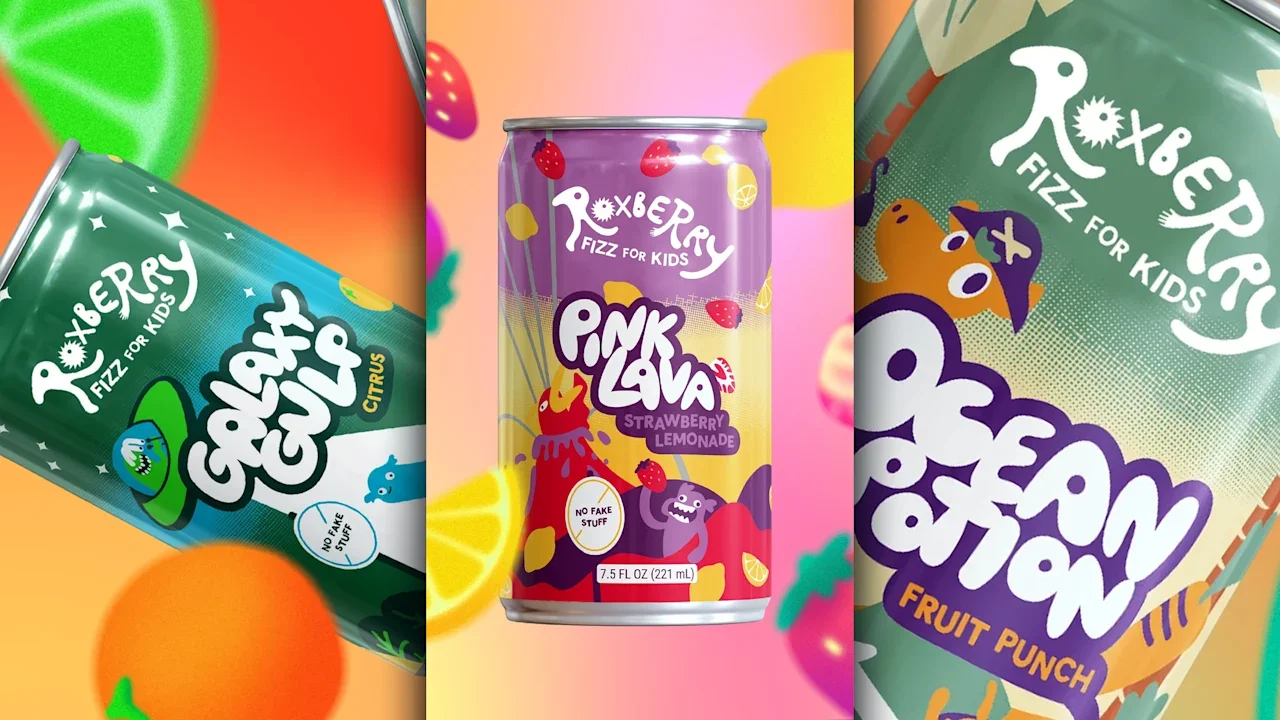
Andy Sauer is no stranger to making waves in the beverage business. As the CEO of Garage Beer, he defied the odds by turning a small craft brewery into a national name, despite competing in an industry dominated by legacy players. Now he’s looking to shake things up in another popular beverage category: the soda aisle. Sauer’s latest venture is a product called Roxberry, which he’s dubbing the “first modern kids’ soda.” The brand launched earlier this month at more than 2,200 Walmart stores, 450 Krogers, Meijer and Harris Teeter locations nationwide, and a handful of independent grocers. This “soda” is unlike the sugary drinks most consumers remember from childhood: It’s made primarily of carbonated water and fruit and veggie juice, contains just 5 grams of sugar from natural sweeteners, and has no artificial colors, flavors, or sweeteners. A four-pack costs $5.99. In an era when a new category of better-for-you (BFY) soda brands for adults, like Poppi and Olipop, has exploded in popularity, Sauer says the options for kids have largely remained siloed in two main categories: Either they can drink “the same brands we grew up with,” like Capri Sun or Kool-Aid, which are packed with ingredients many parents would rather skip; or they’re stuck with healthier, less visually exciting options, like seltzer water. Roxberry aims to be a third option that’s a win-win for kids and parents. Two-hit wonder Sauer has experience turning a nascent RTD brand into a household name. Garage Beer, which he acquired in 2021 and relaunched in 2023, has shown triple-digit year-over-year growth, with sales increasing more than 500% in the 12 months ended in early April 2025, he says. It’s now valued at around $200 million and is continuing to grow, despite an overall slump in the beer industry, according to a September report from The Wall Street Journal. In large part, Garage owes its success to a savvy marketing strategy: Its sleek branding, consistent dialogue with its target audience, and catchy slogan (“beer-flavored beer”) make it feel like an approachable craft beer for the everyman. Sauer is taking those lessons to Roxberry, which is prioritizing an in-depth brand story and centering everything on the phrase “Fizz for kids.” “That old phrase, ‘Marketing is saying one thing a hundred times rather than a hundred things one time’ is very true for this brand as well,” Sauer says. The idea for Roxberry struck back in 2022. With four kids of his own at home, Sauer noticed that his family frequently butted heads in the beverage aisle. His kids were interested in classic sweetened fruit drink brands like Kool-Aid, but he was hesitant to buy them due to their high quantities of sugar. And so Roxberry came to life—first as a powdered mix-in before pivoting to a canned ready-to-drink format that mimics the soda brands kids already covet the most. The soda’s initial launch comes in the three most popular flavors in kids’ beverages overall: strawberry lemonade, citrus, and fruit punch. “We did a lot of work to find out which fruits and veggies come naturally with a better mouthfeel, better sweetness,” Sauer says. “Working with raw strawberries, raw lemon, raw carrot—those things are going to give you more of a sweet flavor naturally so that you don’t have to add a lot to it.” “Kool-Aid Man energy” The first thing parents might notice when they see Roxberry on store shelves is that it looks nothing like the modern BFY brands they’re used to. According to Emily Heyward, chief brand officer at the agency Red Antler that led Roxberry’s design, that’s the point. “When we built the brand for Roxberry, it was before the explosion of the Poppis and the Olipops, but I think they’ve tapped on something similar, which is that a lot of better-for-you brands—especially in the kids’ space—signal that they’re healthier just by being more boring,” Heyward says. “They strip out color, they’re matte instead of glossy, they’re very plain, to show that they’re different from the old-school brands that we grew up with.” The result, Heyward says, is that most of the “healthy” options for kids on grocery store shelves just don’t look very exciting. To combat this trend, Sauer’s brief was to “bring back that Kool-Aid Man energy to the space.” Red Antler’s answer to that prompt is a brand that looks like it came straight from a sci-fi kids’ cartoon. From the quirky flavor names Ocean Potion, Pink Lava, and Galaxy Gulp to the anthropomorphic characters and alien landscapes on the packaging, everything about Roxberry’s look suggests that it’s not just a beverage, but also its own universe. “All of those characters that you see—and you just see them in little spots on the can—they have backstories, they have personalities. We went so deep, not because we’re planning to launch a TV show tomorrow, but because we wanted to ensure that we really had that richness,” Heyward says. For example, Heyward adds, one character named Chomp Chomp is described as “loud, erratic, and entrepreneurial; an instigator who lives in the skies, makes deliveries, and creates crop circles.” Even if this character is never officially named, she believes the lore gives the brand depth. While the majority of the Roxberry package is designed to entice shoppers with its bright, character-based imagery, smaller cues, like the phrases “No fake stuff” and “5g sugar” signal to parents that the beverage is not a typical soda. In essence, both Heyward and Sauer agree: Roxberry is designed with kids in mind first and parents second. “We were looking at the love we all had for these character-driven brands growing up, and how they felt like part of our pop culture universe,” Heyward says. “Well, why has that gone away? There are brands for adults that have tapped into that nostalgia a little bit, but I think that the kids’ brands have really played it safe.” Roxberry’s high-octane look gives the healthier-for-you kids beverage category a much-needed branding sugar rush. View the full article
-
Hiring in 2026 won’t look much like hiring even two years ago. If you don’t pay attention, you will get left behind. I was a retained search consultant for 25-plus years. I’ve written executive and board résumés for the last 10 years. I’ve never seen so much change in candidate sourcing happen so quickly. CEO priorities and expectations have shifted. AI is reshaping how candidates get surfaced. Résumé sameness has skyrocketed. Candidate shortlist cycles have accelerated. For you to be visible, your résumé has to do more than describe your work. It has to hit leaders’ priorities, satisfy automated systems’ tests, and make sense. The following five trends show you what that means and how to stay ahead of it: Trend 1: Résumé Content Must Address CEO Priorities Late-2025 surveys found four top-of-mind priorities for CEOs as we head into 2026. Those topics map to compelling information for your résumé’s experience section. I list them below. Then, I frame the question that decision-makers want your résumé to answer. Finally, to inspire you, I share examples of subjects you might use in impact bullets. CEO Priority: AI Adoption & Transformation The question: Can this person operationalize AI and meet ROI hurdles? Impact Examples: Introduced AI-assisted steps into a workflow. Led a cross-functional effort to apply AI to a core business process. Built an AI governance framework. CEO Priority: Geopolitical & Economic Uncertainty The question: Can this person make decisions that protect shareholder value during volatility? Impact Examples: Used business intelligence tools to identify and report risks. Redesigned a process to protect profit margins. Repositioned the organization in response to geopolitical, regulatory, or economic shifts. CEO Priority: Talent Management The question: Can this person shape and prepare our teams for an AI future? Impact Examples: Implemented AI-driven talent sourcing methods. Adopted the 4B workforce model (buy, build, borrow, bot) to design a future-ready team. Owned the talent workstream for enterprise AI adoption. CEO Priority: Business Model Reinvention The question: Can this person drive adaptation and growth to keep us competitive? Impact Examples: Contributed insights that improved a product, service, or customer experience. Developed or scaled a new offering. Determined where the organization should invest, expand, or exit to maintain long-term viability. Trend 2: The Rise of the Reader Trio (ATS, AI, Human) For years, you’ve written for applicant tracking systems, recruiters, and hiring managers. And you still will. But in 2026, more organizations will use AI to source candidates and expand talent pools. While an Applicant Tracking System (ATS) looks for keywords, AI looks for patterns. To benefit from AI’s ability to expand talent pools, you’ll need to learn those patterns and embed them in your résumé. Examples include: showing you’re ready for promotion to the next level; writing about repeated records of success; and describing challenges you’ve handled that also exist in other industries. Trend 3: Work Context Becomes Critical Beyond CEO concerns, your trio of readers wants to know where you’ve operated. If you haven’t already, now is the time to add company descriptions to your résumé. Basics include size, ownership, industry, footprint, and systemic challenges. Readers need to see adjacencies to their worlds to predict your effectiveness. Trend 4: Generic, AI-Written Résumés Next, I talked with many recruiters over a few days at the Unleash World HR conference in Paris in October. I wanted to learn how they use AI to find people. They wanted to talk about the crushing tsunami of generic résumés they receive. While AI might up-level a bad résumé to average, always keep a human in the loop to stand out. Make it yours. Otherwise, your readers’ eyes will glaze over from the sameness. Plus, AI continues to generate word salad and logical inconsistencies. The narrative sounds good on the surface, but it doesn’t hold up to scrutiny. Recruiters catch those faux pas, so don’t make them. Trend 5: Candidate Shortlist Velocity and Résumé Readiness Finally, a Siemens recruiter claims that LinkedIn’s AI cut his time-to-shortlist by at least 20 times. That means an accelerated recruiting cycle, with prepared candidates getting first looks. If you need time to update your résumé, you might get left behind. Career visibility in 2026 won’t happen by accident. It will be because you built a résumé that meets the moment: substantive, AI-savvy, and ready before anyone asks for it. View the full article

-
Sanae Takaichi hopes to convert personal popularity into solid electoral gains for ailing ruling party in expected snap voteView the full article
-
The housing market just crossed an important threshold—one that’s especially good news for anyone who might be planning on buying a home any time soon. The massive wave of COVID-19-era mortgages with ultra-low rates were a huge boon for many homebuyers, but the housing market hasn’t been the same since. A huge swath of homeowners in the U.S. suddenly had mortgage interest rates well below 4%—and very little incentive to sell their homes for less affordable options with today’s higher rates. That dilemma has created a nightmarish scenario for the U.S. housing market. Many potential buyers and aspiring first-time homeowners remain priced out due to high home prices and higher interest rates. With more homeowners staying put whether they want to or not, housing inventory dried up considerably, shrinking the pool of options for home shoppers. That’s beginning to change. According to new data from Realtor.com, the share of U.S. homeowners with mortgage rates over 6% is now greater than the share hanging onto those “ultra low” sub-3% rates. In the third quarter of 2025, 21% of outstanding mortgages carried a rate above 6% compared to the 20% of mortgages with rates below 3%. That change signals a “meaningful shift” from the gridlock that’s defined the last few years in the U.S. housing market. “Mortgage rates above 6% now represent a larger share of outstanding loans than the ultra-low rates that defined the pandemic-era housing boom,” Realtor.com Chief Economist Danielle Hale said in a press release. “This crossover reflects a gradual resetting as some households trade in low-rate mortgages for higher-rate loans or enter the market for the first time, even as rate lock-in continues to limit the pace of inventory recovery.” Lasting impact of low rates and lock-in Those ultra-low rates are on their way out, but many homeowners still have rates well below what they’d be offered today. According to the new data, over 50% of mortgages still have rates at or below 4% and almost 70% have rates of 5% or lower. As long as that remains the case, the average homeowner might see their monthly mortgage payment spike by as much as $1,000 if they sold their home and took on a mortgage with today’s rates. Still, the new mortgage data is a promising sign. Rates are very unlikely to get as low as they did during the early days of COVID-19 again in our lifetimes—particularly now that we know just what a lasting disruptive impact the low rate homebuying frenzy had on the market at large. The period between July 2020 and September 2021 is the only time that the U.S. 30-year fixed mortgage rate has gone below 3% since those records began being kept in the early 1970s. The high cost of buying a home is more salt in the wound for many Americans, who have seen the price of everything from groceries to used cars soar in recent years. With little relief in 2025, the unaffordability crisis seems to be on everyone’s mind lately. If interest rates settle down and the present trends continue, at least the housing market might be getting back to something a little closer to normal this year. “Even with rates still elevated, modest mortgage rate decreases into the low-6% range could encourage additional home buying activity,” Hale said. “Further easing in inflation and mortgage rates would be key to unlocking more seller participation, helping to relieve price pressure and competition in an under-supplied market.” View the full article

-
Leaders typically spend January prepping for the year ahead. But that’s difficult when you’re eight months pregnant, and your baby has zero concern for your deadlines. I’ve lost count of how many times people have asked how long I’ll be away, whether I’ll be checking my emails, or what support I’ll need when I return. People often expect leaders to have all the answers, but the truth is: I don’t know yet. Lucky for me, that uncertainty worked to my advantage. It forced me to change my approach from setting goals to building flexibility. This has resulted in a team that is autonomous and adaptable, whether I’m in the room or away on leave. You don’t have to have all the answers According to a report by Careers After Babies, 98% of moms want to return to work after having a child. However, less than a quarter actually do. Early parenthood is unpredictable, and there’s no way of knowing how it’ll unfold. While I’m committed to my career, I’m under no illusions that March might bring me sleepless nights, and the months ahead may be full of doctors’ appointments. I might have no time to work at all. That isn’t a challenge you can plan your way through. Sure, you might end up returning after six weeks. But if you set yourself that deadline and you end up delaying, you may end up feeling like you’ve failed and start to question your leadership when you’re actually managing two of the most demanding roles there are. But you do have to be ready for anything When you don’t know the outcome, you need to prepare for every possibility. That means focusing on building flexibility and developing resilience, because systems that can cope with volatility and deal with change don’t rely on a single timeline or person. At Woofz, we’re focused on setting out clear decision ownership, so everyone understands where to turn for support, and also how to train our teams to handle pivots and take on new responsibilities when we need to. We aimed to create a team capable of thriving even when conditions change, without constant oversight. Resilience doesn’t just help organizations get through difficult moments. It actively improves long-term performance. Research from software and consultancy firm MHR Global found that 82% of the most resilient organizations rank highly for customer satisfaction, while 76% score highly for employee engagement. Overall, resilient businesses are far more confident in their ability to outperform competitors across growth, profitability, reputation, innovation, and adoption. And the flexibility that this culture of autonomy and adaptability provides will allow me to be flexible too, as I deal with the birth of my child. How to embed flexibility within your organization If you don’t have flexibility embedded in your organization, the following can be helpful: Encourage cross-training: Let your team experiment and explore new skills, or take on “side quests” as we like to call them, even if it doesn’t support their primary role. If only one person knows how something works, that’s a risk. There’s high value in having people who can step in when a problem arises, and the person whose job it is to fix it is unavailable. Give your team some slack: It’s okay to set deadlines and timelines, but if you don’t leave room for issues to arise and situations to change, that’s a problem. When there’s no time to adjust (and you inevitably miss deadlines), you start to associate change with failure. Plan for scenarios, not certainties: You can’t set one plan and expect the universe to deliver. There are many potential outcomes to any given situation, so it helps to agree in advance how you would respond to each one. When you anticipate change rather than react to it, it becomes way less scary. Take a momentary step back: Make yourself unavailable for a day and see where the system wobbles. It’s useful to identify where dependencies lie, what gaps exist, and where there isn’t a clear sense of ownership. Pinpointing issues while the stakes are low gives you time to fix them before the system breaks down and you’re not there to step in. Not knowing is part of the job The concept of the “all-knowing leader” is such a myth. Many leaders talk big, but the fact that 44% of founders suffer from imposter syndrome says it all. We’re human, and nobody has it all figured out. Most of the time, we’re putting on a brave face and hoping for the best. If the experience of managing pregnancy and leadership has taught me anything, it’s that admitting “I don’t know yet” isn’t a weakness. Like early parenthood, startups are full of unknowns. What separates good leaders isn’t their ability to eliminate uncertainty, but how they equip their teams to respond when difficulties arise and circumstances inevitably change. View the full article

-
It’s hard to avoid the conclusion that the market for artificial intelligence and its associated industries are over inflated. In 2025, just five hyperscalers—Alphabet, Meta, Microsoft, Amazon, and Oracle—accounted for a capital investment of $399 billion, which will rise to over $600 billion annually in coming years. For the first nine months of last year, real GDP growth rate in the U.S. was 2.1%, but would have been 1.5% without the contribution of AI investment. This dependence is dangerous. A recent note by Deutsche Bank questioned whether this boon might in fact be a bubble, noting the historically unprecedented concentration of the industry, which now accounts for around 35% of total U.S. market capitalization, with the top 10 U.S. companies making up more than 20% of the global equity market value. For such an investment to yield no benefit would be a failure of unprecedented proportions. In their book Power and Progress, Nobel Prize-winning economists Daron Acemoglu and Simon Johnson narrate the calamitous failure of the French Panama Canal project in the late 19th century. Thousands of investors, large and small, lost their fortunes, and 20,000 people who worked on the project died for no benefit. The problem, Acemoglu and Simon write, was that the vision for progress did not include everyone—and failure to incorporate feedback from others resulted in poor quality decision making. As they observe, ”what you do with technology depends on the direction of progress you are trying to chart and what you regard as an acceptable cost.“ Fast forward 150 years and a significant chunk of the U.S. economy is similarly dependent on a small coterie of grand visionaries, ambitious investors, and techno-optimists. Their capacity to ignore their critics and sideline those forced to bear the costs of their mission risks catastrophic consequences. Trustworthy AI systems cannot be conjured by marketing magic. We must ensure those building, deploying, and working with these systems can have a say in how we direct the progress of this technology. Mistrust and a general lack of optimism The data suggests that there is an urgent need to chart a new course. Even a generous analysis of the market for generative AI products would likely struggle to show how a decent return on the gargantuan investment in capital is realistic. A recent report from MIT found that notwithstanding $30 billion to $40 billion in enterprise investment into GenAI, 95% of organizations are getting zero return. It is difficult to imagine another industry raising so much capital despite producing so little to show for it. But this appears to be Sam Altman’s true superpower, as Brian Merchant has documented extensively. This is coupled with significant levels of mistrust and a general lack of optimism from everyday people about the potential of this technology. In the most comprehensive global survey of 48,000 people across 47 countries, KPMG found that 54% of respondents are wary about trusting AI. They also want more regulation: 70% of respondents said regulation is necessary, but only 43% believe current laws are adequate. The report concludes that the most promising pathway towards improving trust in AI was through strengthening safeguards, regulation, and laws to promote safe AI use. This, most obviously, sits in stark contrast with the position of the The President administration, which has repeatedly framed regulation of the industry as an impediment to innovation. But the trust deficit cannot simply be hyped out of existence. It represents a significant structural barrier to the take up and valuable deployment of emerging technologies. One of the key conclusions of the MIT report is that the small subset of companies that actually saw productivity gains from generative AI products were doing so because ”they build adaptive, embedded systems that learn from feedback.” Highly centralized decisions about procurement were more likely to result in employees being required to use off-the-shelf products unsuited to the enterprise environment and generating outputs that employees mistrusted, especially for higher-stakes tasks, resulting in work arounds or dwindling rates of usage. The problem is that these tools fail to learn and adapt. In turn, there are too few opportunities for executives to receive that feedback or incorporate it meaningfully into model development and adaptation. The narrative spun by politicians and media commentators that the AI industry is full of visionary leaders inadvertently points to a key cause of why these products are failing. Trust in AI systems can only be earned if feedback is both sought and acted on—which is a significant challenge for the hyperscalers, because their foundational models are less capable of adapting and responding to unique and varied contexts. Unless we decentralize the development and governance of this, the benefits may remain elusive. The workers’ view There are useful ideas lying around that could help navigate a different path of technological progress. The Human Technology Institute at the University of Technology Sydney published research about how workers are treated as invisible bystanders in the roll out of AI systems. Through deep, qualitative consultations with nurses, retail workers, and public servants to solicit feedback about automated systems and their impact on their work. Rather than exhibiting backward or unhelpful attitudes to AI, workers expressed nuanced and constructive contributions to the impact on their workplaces. Retail workers, for example, talked about the difficulties of automated systems that disempowered workers, and curtailed their discretion: “unlike a production line, retail is an unpredictable environment. You have these things called customers that get in the way of a nice steady flow.” A nurse noted how “the increasing roll-out of automated systems and alerts causes severe alarm fatigue among nurses. When an (AI system) alarm goes off, we tend to ignore or not take it seriously. Or immediately override to stop the alarm.” One might think that increased investment in such systems would contend with the problem of alarm fatigue. But without worker input, it’s easy to miss this as a problem entirely. The upshot is that, as one public servant put it, in workplaces where channels for worker feedback are absent, a necessary quality of employees was “the gift of the workaround.” Traditionally, this kind of consultation and engagement would happen through worker organizations. But with the rate of unionization slipping below 10% in the U.S., this becomes a problem not just for workers but also employers, who are left with few methods to meaningfully engage with their workforce at scale. Some unions are nonetheless leading on this issue, and in the absence of political leadership, might be the best hope of making change. The AFL-CIO has developed a promising model law aimed at protecting workers from harmful AI systems. The proposal focuses on limiting the use of worker data to train models, as well as introducing friction into the automation of significant decisions, such as hiring and firing. It also emphasizes giving workers the right to refuse to follow directives from AI systems—essentially, building in feedback loops for when automation goes wrong. The right to refuse is an essential failsafe that can also cultivate a culture of critical engagement with technology, and serve as a foundation for trust. Businesses are welcome to ignore workers’ views, but workers may end up making themselves heard in other ways. Recent surveys indicate that 31% of employees admit to actively sabotaging their company’s AI strategy, and for younger workers, the rates are even higher. Even companies that fail to seek feedback from workers may still end up receiving it all the same. Our current course of technological progress relies on narrow understandings of expertise and places too much faith in small numbers of very large companies. We need to start listening to the people who are working with this technology on a daily basis to solve real world problems. This decentralization of power is a necessary step if we want technology that is both trustworthy and effective. View the full article

-
Fujifilm’s newest camera model, the Instax Mini Evo Cinema, is a gadget that’s designed for the retro camera craze. The device is a vertically oriented instant camera that can take still images, videos (an Instax camera first), connect with your smartphone to turn its photos into physical prints, and capture images in a wide range of retro aesthetics. It’s debuting in North American markets in early February for $409.95. Fujifilm’s new model taps into a younger consumer base’s growing interest both in retro tech and film photography aesthetics—a trend that’s been driven, in large part, by platforms like TikTok. The Instax Mini Evo Cinema turns that niche into a clever feature called the “Gen Dial”: a literal dial that lets users toggle between decades to capture their perfect retro shot. How the “Gen Dial” works Almost everything about the Instax Mini Evo Cinema screams nostalgia, from its satisfying tactile buttons to its vertical orientation—and that’s by design. According to Fujifilm, the camera’s silhouette is inspired by the 1965 Fujica Single-8, an 8-millimeter camera initially introduced as an alternative to Kodak’s Super 8. While the Instax Mini Evo Cinema does come with a small LCD display, its main functions are controlled with a series of dials, buttons, and switches, which Fujifilm says are designed “to evoke the feel of winding film by hand, add to the analog charm, and expand the joy of shooting and printing.” The most innovative of these is undoubtedly the Gen Dial. While there are plenty of existing editing apps and filter presets to give a photo a certain vintage look in-post, this may be the first instant camera to actually brand in-camera filters by era. The dial is labeled in 10-year increments, from 1930 to 2020. To choose an effect, users can simply click to the era they’d like to replicate, then shoot and print. According to the company, selecting “1940” will result in a look inspired by the “vivid color expression of the three-color film processes,” for example; 1980 pulls cues from 35-millimeter color negative film; and 2010 evokes the style of early smartphone photo-editing apps (throwback!). “Overall, our goal with Mini Evo Cinema is to deepen options for creative expression,” says Ashley Reeder Morgan, VP of consumer products for Fujifilm’s North America division. “Beyond video, the Gen Dial provides an experience to transcend time and space over 100 years (10 eras), applying both visual and audio to the mini Evo Cinema output.” For amateur photographers looking to achieve a certain vintage aesthetic without spending endless hours in Adobe Lightroom or fiddling with complicated camera settings, it’s the perfect intuitive solution. Retro cameras get a TikTok-driven boost For Fujifilm, the Instax Mini Evo Cinema is part of a broader, internet-driven revival of the brand’s camera division. While Fujifilm previously spent years moving away from its legacy camera business to focus on healthcare, its $1,599 retro-themed X100V camera—which went viral on TikTok—recently triggered a resurgence in its sales. The company’s most recent financials, released in September, show that its imaging division (which includes cameras) experienced a 15.6% revenue increase year over year, which Morgan says is attributable to the success of its instant and digital cameras. “Overall, we have been thrilled to see younger generations rediscovering the joy of photography, whether instant, analog, or digital,” Morgan says. The X100V’s popularity online is likely driven by Gen Z and Gen Alpha’s interest in retro tech aesthetics (see: Urban Outfitter’s iPod revival), as well as a more general resurgence in film photography in recent years. Analog cameras are having a moment, and companies like Polaroid and Fujifilm are cashing in. View the full article

-
Prime minister hoping to consolidate grip on power by winning majority for ruling partyView the full article
-
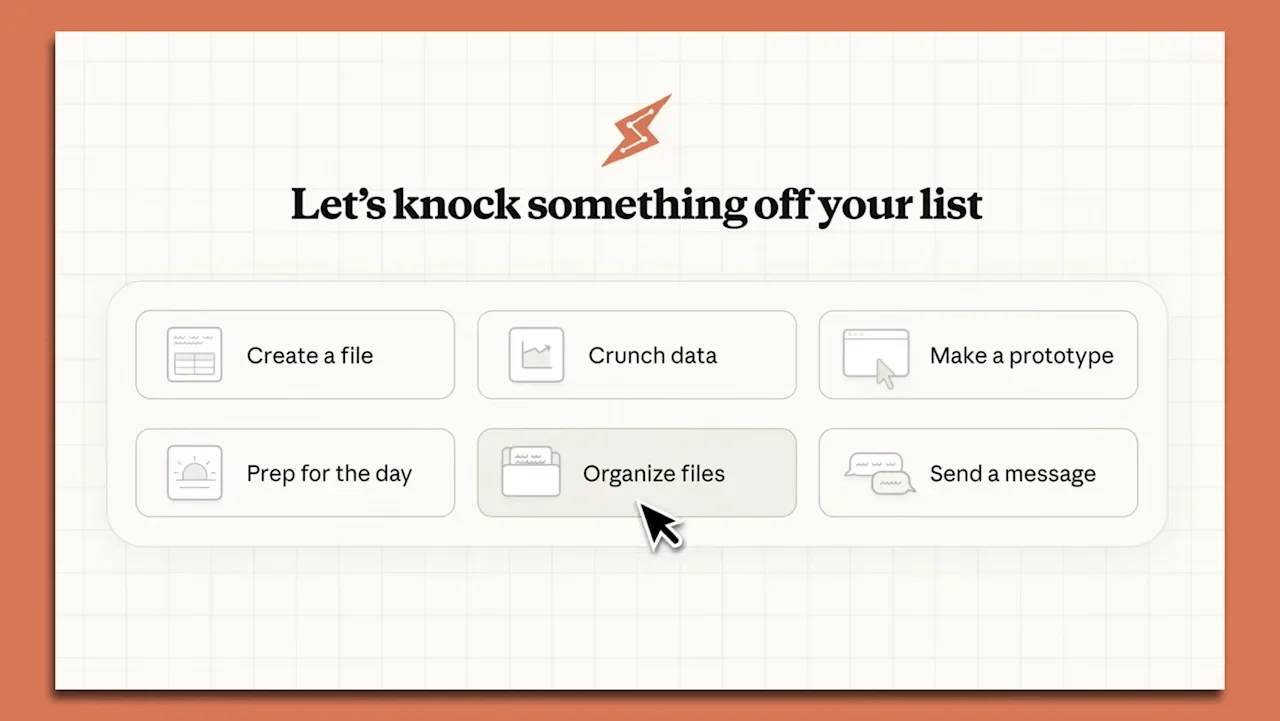
Anthropic’s Claude Code tool is having a moment: It’s recently become popular among software developers for its use of agents to write code, run tests, call tools, and multitask. In recent months the company has begun to stress that Claude Code isn’t just for developers, but can let other kinds of workers build websites, create presentations, and do research—and stories about non-coders completing interesting projects have filled social media. The latest offering, called Cowork, is a new version (and a rebranding) of Claude Code for work beyond coding, and it could dramatically widen the audience for Anthropic’s tools within the enterprise. Cowork is in “research preview” and is available only to Anthropic’s $100-per-month Max plan subscribers; there’s a waitlist for users on other plans. While Claude Code requires an API key and runs in the terminal, users can access Cowork through the Claude desktop app with a familiar chatbot interface. Most important, Cowork is built to access content stored in the file system on the user’s computer. A user can give the tool permission to modify, or just read, files in a given folder. They can also allow Claude to create new files or organize existing ones. The new tool could help Anthropic as it eyes an IPO in 2026 (reportedly at a $350 billion valuation), and may put additional pressure on Microsoft, which offers a number of predesigned AI agents (for things like research, analysis, and meeting facilitation) as part of its Copilot AI assistant. A December 2025 report from The Information claimed that Microsoft salespeople have been having trouble hitting their quotas selling the company’s Azure (cloud) AI products (including agents and agent builders) to enterprises. Microsoft denied the report. Cowork can do simple things like organize a user’s desktop folders or the contents of a “downloads” folder. Or it can search folders and emails for recent expenses and collect them in a new folder. But its most powerful use cases involve more complicated tasks. The tool can produce slide decks, large reports, or spreadsheets by calling up local (folder) data or data from connected business tools (such as Microsoft Teams or Zendesk) and then synthesizing the information. For multipart tasks, Cowork can create subagents for each part. Each of the subagents start with a clean context window so it has plenty of room to gather and remember information about its task. (In single chats with complex tasks, chatbots sometimes run out of context window memory, or become overwhelmed with data and then fail to make sense of it.) For example, a user might present the tool with a long document, then ask the AI to analyze it from different perspectives (legal, financial, ethical, public relations, etc.). A main agent might assign each perspective to a subagent. Each subagent would work independently to collect data and form a draft document, then return to sync up its work with that of the other subagents. A master document would be created and delivered to the user. Then the user might begin talking to the chatbot about how to refine the result. The Anthropic model that underpins Cowork is the same or very similar to the ones that power Claude Code. These models have already spent a significant amount of time working with real-world developers on real work. The models have already seen lots of different kinds of complex tasks, including unique edge cases, and have run into many types of roadblocks. They’ve been trained on lessons learned from that experience. For those reasons, along with the inherent quality of Anthropic’s models, workers may find in Cowork their first taste of AI agents that build trust through quality—which could change how people see the technology as a tool that can actually help them at work. View the full article
-
You know the feeling: You’re replying to emails, navigating open tabs, responding to direct messages, when suddenly, it happens—your standing weekly 2 p.m. gets canceled abruptly. “Giving everyone 30 minutes back today,” the organizer says. A rush courses through your nervous system: You’re free. Nothing about this recurring meeting is particularly onerous or necessarily stressful. And yet, at this moment, you feel like a burden has been lifted. Maybe you even audibly sigh in relief. That sudden sense that all is right in the world has a psychological cause, Dr. Wilsa Charles Malveaux, a psychiatrist in Los Angeles, explains to Fast Company. A neutralized threat in the brain “Our body is responding to the release of stress,” Charles Malveaux says. Between jobs, families, social obligations, and more, many of us feel overextended. At work, in particular, it can feel as though there’s no option to say no to something, like having to attend a meeting. So when a meeting gets canceled, “It takes the responsibility of having—or wanting—to say no away,” which leads to that sense of relief, Charles Malveaux says, noting that biologically, “We’re getting a sense of ‘I can breathe again.’” We’re programmed to anticipate threats, primarily through the amygdala, the structure in our brain that senses and responds to fear. Once it activates your fight-or-flight system, the brain releases cortisol, which often “lingers after a threat so that we remember how to recognize it and respond for the future,” Charles Malveaux says. So, weekly catch-ups, as harmless and banal as they may be, could actually activate “an elevated sense of threat” tied to anxieties around “being on time, or having to show up and present a certain way in a meeting,” she adds. “When you no longer have that, you feel that release.” But the reason why a particular meeting may trigger someone’s internal threat system depends on the individual. An invitation for introspection Beyond the joy of suddenly having extra free time to plow through piled-up tasks or ditch work early, there may be additional insights you can glean about yourself when certain meetings get canceled. “It’s probably not all of our meetings” getting canceled that makes us experience an absolutely electric sense of newfound freedom,” Charles Malveaux says. “It’s probably just some of them.” If we’re really paying attention to what adds stress to our day-to-day work life, and what does not, it could lead to some helpful introspection. Maybe certain meetings make us feel pressure to perform, or maybe there’s a colleague in that weekly meeting who triggers us. We can use that kind of personal examination to gather information and potentially move more mindfully throughout our workday. Understanding what types of meetings push us into an emotionally heightened state can help us approach them with a better attitude. Or, in the right environment, we may be able to approach our employers with those concerns and insights—something that could shift the company’s culture across the board. It’s a two-way street: Employers need to be receptive to the idea that all-hands-on-deck-style meetings, for example, may not be the healthiest option for everyone. Long-standing gripes Meetings in general remain a contentious aspect of professional life. Data shows that many of them truly do waste time and drain workers to be less productive. As the workplace at large has been reexamined and reimagined in the post-pandemic era, redesigning meetings has become more of a topic of discourse. Sometimes a meeting can just be an email—and if removing it from workers’ calendars can lower stress levels, why not do it? Building a work culture that understands the difference between necessary and unnecessary meetings is a “top-down issue,” Charles Malveaux says. After all, there’s only so much most workers in an organization can do to control the problem. Employers and upper-level management should “really look at what is actually necessary for optimal function and performance of your organization, versus control, which is a way a lot of people erroneously use meetings,” she says. A reframe That may be easier said than done, and the fact of the matter is that a lot of us will still be sitting through meetings we’d rather avoid as part of being in the workforce. Dealing with the resulting stress is all about energy management, Charles Malveaux suggests. Energy management is a fairly individualized journey, and includes “keeping track of the things that drain us, versus those that fill us back up, and making sure we book time” for the latter, she says. If you’re consistently finding yourself immensely relieved every time a meeting gets canceled, it might be worth zooming out and making sure your energy is being refilled elsewhere in your life—and not just being depleted constantly at work. “Doing an hour or so of something we hate or don’t want to participate in is going to feel a lot different from an hour of something that invigorates us,” Charles Malveaux says, noting, “Making sure that we tune into those things that make us feel good and then schedule time for [them]” is key, and it takes intentionality on the individual’s part. Making space for breaks can help keep burnout at bay, whether it’s just five minutes of silence in your car or a walk in a nearby park. Sounds like the perfect way to spend the time gained from that canceled meeting. View the full article

-
Amanda Lee McCarty, sustainability consultant and host of the Clotheshorse podcast, remembers fixing a tear on her Forever 21 shirt with a stapler—just long enough to get through the workday before tossing it out. In the early 2000s, when fast-fashion brands began flooding the market, clothing became so cheap that shoppers could endlessly refresh their wardrobes. The garments were poorly made and tore easily, but it hardly mattered. They were designed to be disposable, encouraging repeat purchases. “It didn’t seem worth the time and effort to repair the top,” she recalls. “And besides, I didn’t have any mending skills at the time.” McCarty isn’t alone. Starting in the early 1900s, schools trained students—mostly girls—in the art of sewing and mending clothes in home economics classes. Students learned how to operate sewing machines to create tidy hemlines and sew buttons by hand. But by the 1970s, partly due to the feminist critique that home economics classes reinforced traditional gender roles, these courses slowly began getting cut from public schools. There are now several generations of Americans with no sewing skills at all. In a recent study conducted by Levi’s, 41% of Gen Zers report having no basic repair knowledge, such as fixing a tear or sewing on a button—which is double the rate of older generations. This also coincided with clothes getting cheaper, thanks to a global supply chain and low-wage labor in developing countries. Suddenly, clothes were so inexpensive that even the poorest families could buy them instead of making them. Eventually, as McCarty illustrates, they were so cheap that there was no point in even mending them. Today, the average American throws away 81.5 pounds of clothing every year, resulting in 2,100 pounds of textile waste entering U.S. landfills every second. This transformation of the fashion industry has led directly to the environmental disaster we now find ourselves in: Manufacturing billions of clothes annually accelerates climate change, and discarded clothes now clog up landfills, deserts, and oceans. Levi’s believes that one step in tackling the crisis is to teach Gen Z how to mend. The denim brand, which generates upward of $6 billion a year, has partnered with Discovery Education to create a curriculum aligned with educational standards that teaches high schoolers how to sew a button, mend a hole or tear, and hem trousers. This curriculum, which launches today, is available for free and will be shared with teachers across the country who can incorporate it into a wide range of courses—from STEM to civics to social studies. “Needle-and-Thread Evangelism” The idea took hold during a poker night. Paul Dillinger, Levi’s head of global product innovation, noticed that a button had popped off a friend’s Oxford shirt. “Oliver said he didn’t have time to throw it away and put on a new shirt,” Dillinger recalls. “It was an illustration of everything that’s wrong with the current paradigm. And it could be fixed with a little needle-and-thread evangelism.” Dillinger, who trained as a fashion designer and is a skilled garment maker, spent 20 minutes teaching the group—men in their mid-twenties—how to sew the button back on. Since then, he’s made a habit of preaching the gospel of mending with everyone in his orbit, including his colleagues at Levi’s. One of them was Alexis Bechtol, Levi’s director of community affairs. She saw an opportunity for the company to scale that education beyond informal demos. Bechtol helped spearhead the Wear Longer program and the partnership with Discovery Education, which specializes in developing age-appropriate lesson plans aligned with state and federal standards. Levi’s and Discovery Education worked together to create a curriculum that teaches students the foundations of mending a garment by hand without a sewing machine. There are four lesson plans that are each designed to take up a single classroom period and are flexible enough to be incorporated into courses across disciplines. Kimberly Wright, an instructional design manager at Discovery Education who worked on the curriculum, says the lessons aren’t positioned as a revival of home economics. Instead, they’re framed as practical, transferable skills relevant to a wide range of careers. “We’re seeing a resurgence in skills-based learning,” Wright says. “Across the country, there’s a shift toward not just making students college-ready, but career-ready.” The initiative is funded through Levi’s social impact and community engagement budget rather than its marketing arm, although the curriculum will be branded with the Levi’s logo. Dillinger believes that it is valuable for Levi’s to be associated with mending, because it emphasizes that its products are designed to be durable and long-lasting. “Levi’s wants to be the most loved item in your closet, the thing you wear most often,” he says. “If we empower our customers to sustain this old friend in their closet, it creates brand affinity.” A Small Fix for a Larger Systemic Problem At its core, the curriculum aims to challenge Gen Z’s perception of clothing as disposable. In theory, mending keeps garments out of landfills. “It’s about extending the life cycle of your product so you don’t have to buy something new,” Bechtol says. Gen Z is coming of age in a world dominated by ultra-fast-fashion players like Shein, where clothes are cheaper than ever. Mending is no longer an economic necessity—and in some cases, it can cost more in time and money than a garment is worth. Levi’s is trying to reframe mending as something else: a creative act that allows wearers to personalize their clothes. Over time, Dillinger says that personal investment changes how people value what they own. “Once you’ve invested time and care into repairing a garment, it shifts the value equation,” he says. “It becomes more like a plant or a pet—something you’re responsible for sustaining.” There’s no doubt that mending is a crucial part of the sustainable fashion movement. McCarty, who once stapled her shirt, now repairs her clothing to extend its life. But she points out that the fashion industry’s bigger problem is flooding the market with cheap clothes and encouraging constant consumption. While individuals can buy less and wear clothes longer, she says brands must take responsibility for producing fewer, more durable products. “It’s sort of like putting a Band-Aid on a bleeding wound and calling it fixed, when there are larger issues to deal with,” she says. McCarty extends this critique to Levi’s itself. While some Levi’s products are durable, she notes that the company also produces large volumes of lower-end jeans for retailers like Target and Kohl’s. These garments are often made with synthetic fabrics that are harder to repair and won’t biodegrade. “Levi’s is selling far more volume in lower-end jeans than they do in premium,” she says. “Some of these products are just not repairable.” Still, McCarty believes the Wear Longer program could meaningfully educate Gen Z—not only about mending, but also about the broader consequences of overproduction. Dillinger agrees. “Once you become a participant in the life of the garment, it becomes harder to ignore the broader industrial reality of how clothes are made,” he says. “You’re not participating in a similar set of tasks to the people who made the clothes.” Ultimately, Dillinger sees mending as a form of empowerment. Teaching young people how to repair their clothes gives them agency—to extend what they own and to engage with fashion more critically. “The sooner we respect kids as emerging adults with agency, the sooner they can make more responsible decisions for themselves,” he says. View the full article

-
Reddit is now the fourth most visited social media platform in the U.K., overtaking TikTok. The online discussion platform has seen immense growth over the past two years, reaching 88% more internet users in the U.K., thanks to a combination of shifting search algorithms and social media habits. Three in five Brits now encounter the site while online, according to Ofcom, up from a third in 2023. The U.K. now has the second largest user base behind the U.S., according to company records shared with the Guardian. Reddit has also witnessed a drastic demographic change over the same period. More than half of the platform’s users in the U.K. are now women and one-third are Gen Z women, many of whom turn to the platform for forums dedicated to skincare, beauty, and cosmetics. A change in Google’s search algorithms last year, prioritizing content sourced from discussion forums, is partly behind the platform’s growth. Reddit has since become the most-cited source for Google AI overviews, after inking deals with Google and OpenAI, placing the platform at the lucrative intersection of traditional search and AI discovery. That’s combined with the ways we search online evolving in recent years. Many internet users bypass Google altogether and instead seek out human-generated reviews and opinions on platforms like TikTok, YouTube, or Reddit. “Gen Z are very open to looking online for advice around these life stage moments, like leaving home and renting for the first time, which happens a little bit later for some of this generation,” Jen Wong, Reddit’s chief operating officer, told The Guardian. “It’s a very safe place to ask questions about balancing a cheque book, or how to pay for a wedding.” Rival platforms like YouTube and Facebook have become subsumed with AI-generated slop, and the percentage of Americans using X since Elon Musk took over has dropped drastically—since overtaken by Reddit—according to new findings from Pew Research. Here, Reddit stands out as one of the last remaining platforms that holds a semblance of the small community-run forums of the early internet. Users follow topics of interest rather than influencers. Everyone is anonymous rather than at the mercy of an algorithm. Rather than offering answers it thinks users want to hear, or serving an endless stream of spam, bots and slop, the human-centred discussion threads that remain at its core invite curiosity—the foundation the internet was built upon in the first place. View the full article

-
As our attention spans and cognitive abilities are increasingly damaged by digital overuse and AI-mediated shortcuts, the ability to focus deeply and learn something in depth is quickly becoming a critical skill. Never have we had such broad access to information. And never have so many people felt unable to concentrate long enough to truly master anything. Learning is everywhere, yet depth feels elusive. In a world where artificial intelligence can retrieve, summarize, and recombine information faster than any human, what remains valuable is the capacity to incorporate it. And for that to be possible, you need to stay with a subject long enough for it to transform you. To develop judgment, sensibility, and embodied understanding. Engineering scarcity in a world of abundance It is striking that some of the wealthiest people on the planet are actively trying to recreate conditions of scarcity for learning. Silicon Valley billionaires famously send their children to schools with no screens. The goal is to give the young brains of their offspring the chance to build attention, memory, and imagination without constant digital solicitation. And to give them an edge over hyperconnected, cognitively eroded plebs. Conscious of the erosion of their cognitive abilities, more and more people attempt to engineer artificial information scarcity for themselves. They block websites, silence notifications, use distraction-free devices, or retreat into “deep work” bubbles. A growing number deliberately swap smartphones for so-called dumb phones, accepting inconvenience in exchange for cognitive space. Among younger generations, a curious trend has emerged on TikTok: videos of people filming themselves doing absolutely nothing. What looks like absurdity is, in fact, a rebellion against overstimulation—a desire to recover the ability to sit with oneself without external input. All these strategies point to the same intuition: Abundance without boundaries is not liberating. It is paralyzing. And learning, in particular, seems to require limits to flourish. Learning when the future is radically uncertain This matters all the more because learning has lost one of its traditional motivations: predictability. For decades, acquiring skills was tied to relatively stable professional trajectories. You learned accounting to become an accountant, law to become a lawyer, engineering to become an engineer. The link between effort and outcome was broadly intelligible. Today, nobody knows which skills will be valued among future white-collar workers—or whether many of those will still be hired at all. Entire professions are being reshaped, fragmented, or automated faster than educational institutions can adapt. In such a context, learning can feel strangely demotivating. Why invest years mastering something that may soon be obsolete? And yet, this very uncertainty may make deep learning even more meaningful. When external guarantees disappear, learning becomes less about employability and more about orientation, about building internal resources like discernment, aesthetic sense, and intellectual resilience. This is where Taoist-inspired approaches to learning suddenly feel increasingly relevant. What’s Taoism? As one of the great spiritual traditions of China, it is traditionally associated with the Tao Te Ching, attributed to Lao-Tzu (around the 6th century BCE), and later texts such as the writings of Zhuangzi. At its core lies the concept of the Tao—often translated as “the Way”—the underlying, ever-changing principle that governs the natural world. Taoism is not a doctrine of control or optimization. It emphasizes alignment rather than domination, and harmony rather than performance. One of its central ideas is wu wei, often mistranslated as “nonaction” but better understood as “effortless action”: acting in accordance with the natural flow of things rather than forcing outcomes. Another key idea is pu, the “uncarved block,” symbolizing simplicity, openness, and unconditioned potential. Taoist wisdom consistently warns against excess—of desire, of knowledge, of intervention—and values emptiness, slowness, and restraint as conditions for clarity. In short, Taoism offers a sharp lens through which to rethink how we learn today. A lesson from Fabienne Verdier: scarcity as a teacher I was reminded of this while reading Passenger of Silence, French artist Fabienne Verdier’s remarkable account of the 10 years she spent in China in the 1980s, studying calligraphy and immersing herself in Chinese artistic and philosophical traditions. (Until March 2026, some of her striking works are being exhibited at the Cité de l’Architecture museum in Paris, offering a visual echo to the intellectual journey she describes.) Verdier recounts the ascetic teaching methods of her calligraphy master. The caricature comes to mind immediately: the merciless master in Kill Bill, forcing Beatrix Kiddo to repeat the same gesture endlessly, withholding validation until the student is almost broken. Repeat and repeat and repeat the same stroke—until boredom, frustration, and despair surface. Wait months, sometimes years, before being deemed worthy of moving on. Prove motivation, patience, and humility before even being accepted as a student. At one point in her book, Verdier recounts a decisive moment of collapse after being asked to paint endlessly the same strokes—one that her master greets not with concern, but with joy. After months and months of training, I burst out one winter morning in front of my master: “I can’t go on anymore; I don’t know where I am. In short, I don’t understand anything anymore.” “Good, good.” “I don’t know where I’m going.” “Good, good.” “I don’t even know who I am anymore.” “Even better!” “I no longer know the difference between ‘me’ and ‘nothing.’” “Bravo!” The more I fumed, the more delighted he became, his face radiant with happiness and amazement. He was hopping with joy, tears in his eyes. I went on, overwhelmed by an inner pain, thinking he hadn’t understood what I was saying: “After all these years of practice, I realize that I am still just as ignorant in the face of the universe. I will never manage to accomplish what you are asking of me.” “Yes, that is exactly it,” he said, clapping his hands with joy. He danced in place with an incomprehensible delight. At that moment, I thought he was delirious. “You have no idea how much pleasure you’ve just given me! There are people for whom an entire lifetime is not enough to understand their own ignorance.” 5 Taoist principles of learning we could all adopt 1. Learning as transformation, not acquisition: In Taoism, knowledge is not something you accumulate but something you become. The Tao Te Ching repeatedly suggests that true understanding comes not from adding more, but from stripping away the superfluous. Mastery is not about collecting credentials or information, but about internal change. Learning is successful when it alters how you act in the world. 2. Patience as a prerequisite: Lao-Tzu famously writes: “I have just three things to teach: simplicity, patience, compassion. These three are your greatest treasures.” Patience is a condition for learning to occur at all. Progress can’t be forced. Growth unfolds in its own time, like the seasons. In learning, waiting is not wasted time but part of the process—especially when what is being learned is judgment, taste, or sensibility. 3. Scarcity and simplicity as cognitive discipline: Taoism consistently warns against excess. The ideal learner is not surrounded by infinite resources but protected from distraction. Fewer tools, fewer references, fewer stimuli allow attention to settle. As Lao-Tzu notes: “When you realize there is nothing lacking, the whole world belongs to you.” 4. Process over outcomes: Taoist wisdom is skeptical of linear progress and measurable outcomes. Learning does not move smoothly from beginner to expert; it circles, deepens, stalls, and restarts. This stands in stark contrast to modern learning cultures obsessed with efficiency, milestones, and KPIs. If you focus too much on results, you miss the internal transformations that constitute real mastery. 5. Boredom and not-knowing as thresholds: Perhaps the most radical principle is the role of boredom. Taoist practices value stillness and emptiness as gateways to insight. In learning, boredom is often the point where superficial motivation collapses—and where something deeper can begin. To tolerate boredom, uncertainty, and silence is to resist the constant stimulation of digital environments. Learning humility in an age of hubris Taoism dismantles the illusion of mastery and domination. It reminds us that knowledge is always partial, that control is fragile, and that force ultimately backfires. Water defeats rock. Those who claim to know do not truly know. Learning, in this tradition, is inseparable from the recognition of one’s ignorance. Verdier’s master does not celebrate her despair out of cruelty, but because she has finally reached a point where ego, certainty, and ambition collapse. Only then can real learning begin. This stands in sharp contrast with our contemporary climate of hubris—technological, economic, and political—where confidence is rewarded more than doubt. Taoist learning offers a counter-ethic. It teaches that in brutal times, restraint may be the most radical form of resistance. View the full article