Newsletter
Want to keep up to date with all our latest news and information?


ResidentialBusiness
Administrators
-
Joined
-
Last visited
Everything posted by ResidentialBusiness
-
Thousands of nurses in three hospital systems in New York City went on strike Monday after negotiations through the weekend failed to yield breakthroughs in their contract disputes. “Nurses on strike! … Fair contract now!” they shouted on a picket line outside NewYork-Presbyterian Hospital’s campus in Upper Manhattan. Others picketed at multiple hospitals in the Mount Sinai and Montefiore systems. About 15,000 nurses are involved in the strike, according to their union, the New York State Nurses Association. The hospitals remained open, hiring droves of temporary nurses to try to fill the labor gap. The strike involves private, nonprofit hospitals, not city-run ones. But the strike, which the union casts as lifesaving essential workers fighting hospital executives who make millions of dollars a year, could be a significant early test of Mayor Zohran Mamdani’s new administration. The democratic socialist campaigned on a pro-worker platform and struck a similar note while visiting nurses on the NewYork-Presbyterian picket line Monday. “These executives are not having difficulty making ends meet,” said Mamdani, who extolled nurses’ work and said they were seeking “dignity, respect and the fair pay and treatment that they deserve. They should settle for nothing less.” Some other Democratic city and state politicians also visited striking nurses, while Gov. Kathy Hochul sent state health officials to the hospitals to keep watch over patient care. She called in a statement for the sides to negotiate a deal that “recognizes the essential work nurses do.” The strike, which comes during a severe flu season, could potentially force the hospitals to transfer patients, cancel procedures, or divert ambulances. It could also put a strain on city hospitals not involved in the contract dispute, as patients avoid the medical centers hit by the strike. The nurses’ demands vary by hospital, but the major issues include staffing levels and workplace safety. The union says hospitals have given nurses unmanageable workloads. Nurses also want better security measures in the workplace, citing incidents such as an episode last week when a man with a sharp object barricaded himself in a Brooklyn hospital room and was then killed by police. The union also wants limitations on hospitals’ use of artificial intelligence. The hospitals say that they’ve been working to improve staffing levels but say that the union’s demands overall are too costly. After the nurses gave notice Jan. 2 of the looming strike, the hospitals hired temporary nurses and vowed to “do whatever is necessary to minimize disruptions.” Montefiore posted a message assuring patients that appointments would be kept. “NYSNA’s leaders continue to double down on their $3.6 billion in reckless demands,” Montefiore spokesperson Joe Solmonese said Monday, adding that those demands included exorbitant raises and job protections even if a nurse was intoxicated on the job. “We remain resolute in our commitment to providing safe and seamless care, regardless of how long the strike may last,” Solmonese said. New York-Presbyterian accused the union of staging a strike to “create disruption,” but said it has taken steps to ensure patients receive the care they need. “We’re ready to keep negotiating a fair and reasonable contract that reflects our respect for our nurses and the critical role they play, and also recognizes the challenging realities of today’s healthcare environment,” the hospital said. Each medical center is negotiating with the union independently. Several other hospitals across the city and in its suburbs reached deals in recent days to avert a possible strike. Both Hochul and Mamdani had expressed concern about the possibility of the strike. The last major nursing strike in the city was only three years ago, in 2023. That work stoppage, at Mount Sinai and Montefiore, was short, lasting three days. It resulted in a deal raising pay 19% over three years at those hospitals. It also led to promised staffing improvements, though the union and hospitals now disagree about how much progress has been made, or whether the hospitals are retreating from staffing guarantees. —By Ted Shaffrey, Jennifer Peltz, and David R. Martin, Associated Press View the full article

-
In today’s digital environment, AI video generators have become crucial tools for content creation. These platforms offer various features, from high-resolution outputs to quick production times, making video creation more accessible than ever. Each generator has its strengths and unique capabilities. Comprehending these differences can help you choose the right one for your needs. Let’s explore the top AI video generators and see how they can enhance your content strategy. Key Takeaways Kling AI: Affordable at $10/month, generates dynamic 1080p videos with strong motion dynamics and user-friendly interface for creative focus. Runway Gen 4: Offers visually striking 1080p videos; however, it struggles with consistency in later frames and has slower generation times. Google Veo 2: Produces high-quality 4K videos, requires waitlist signup, and offers free credits for new users, though prompt adherence can be inconsistent. OpenAI Sora: Priced at $20 for quick scene generation with a unique storyboard feature, it’s ideal for storytelling and user-friendly navigation. Adobe Firefly: Generates 1080p videos in minutes at $9.99/month, suitable for business use with licensed content and fast turnaround times. What Makes a Great AI Video Generator? When you’re considering what makes a great AI video generator, several key features stand out that can greatly improve your content creation process. First, high-resolution outputs are fundamental; an ai video generator should support 1080p or even 4K to guarantee professional-quality videos. Speed is another important factor; platforms like Runway allow for quick video production, enhancing your efficiency. Customization features, such as templates, help tailor your videos to your branding needs during keeping the interface user-friendly. Strong prompt adherence and realism in generated content are crucial for storytelling, with tools like Hailuo AI excelling in this area. Finally, competitive pricing and flexible subscription models, including options for a free ai video generator, make these tools accessible for everyone. Top AI Video Generators As you explore the terrain of AI video generators, you’ll find a variety of tools customized to different needs and budgets. For instance, Kling AI offers a filmmaker-friendly option at $10 monthly, ideal for short, dynamic content. If you’re looking for high-quality visuals, Google Veo 2 delivers stunning 4K resolution at $30 per minute but operates on a waitlist. Runway (Gen 4) is another contender, generating 1080p videos for $12 monthly, though it may struggle with complex scenes. OpenAI Sora, priced at $20, is great for quick prompts, whereas Pika 2.2 caters to social media with preset actions for $35. You can even find an InVideo video generator from text free no sign up options to create ai video from script effortlessly. Kling AI: Features and Performance Kling AI stands out in the domain of AI video generators with its filmmaker-friendly features and competitive pricing. Priced at just $10 a month, it allows you to generate videos in 1080p resolution, with each shot lasting 10 seconds. You’ll appreciate its lip-sync capabilities and meme-worthy preset effects, making it easy to create engaging content. As an Vidnoz script to video generator, it offers strong motion dynamics, ensuring your videos capture attention. Plus, the user-friendly interface improves your experience, allowing you to focus on creativity. Whether you want to create music video with AI or use the platform to ai generate free content, Kling AI delivers high marks for accuracy, realism, consistency, and creativity, making it a solid choice for filmmakers. Runway Gen 4: Strengths and Limitations Runway Gen 4 offers impressive initial frame quality, producing visually striking videos at a resolution of 1080p. Nonetheless, as the video progresses, you might notice a decline in realism, particularly with specific elements like cyan algae and crowd density. As it thrives in creating high-quality first frames and features like text-to-video capabilities, the decreasing output quality in later frames can be a drawback for users seeking consistency. Impressive Initial Frame Quality Although you might expect video generators to struggle with initial frame quality, Runway Gen 4 stands out by delivering impressive visuals right from the start. This ai video maker from text produces high-resolution 1080p videos, showcasing sophisticated lighting and careful detail that can improve your content. You’ll appreciate how the quality of the initial frames can captivate viewers, making it suitable for various platforms. Whether you’re using it as an ai deepfake video maker or exploring its features as an ai avatar video generator free, the clarity is notable. Nonetheless, keep in mind that during the initial frames impress, the realism may decline in subsequent frames, particularly with complex elements, which could affect overall scene consistency. Realism Decline Over Time As the initial frame quality of Runway Gen 4 impresses, its ability to maintain that level of realism over time raises concerns. Although this AI video creator generates videos at 1080p, the realism decline over time becomes apparent, especially in elements like cyan algae and the absence of crowds. Users often notice that the video quality diminishes after the first 16 seconds, which can detract from viewer engagement and storytelling effectiveness in longer pieces. Furthermore, the generation process, taking between 10 to 20 minutes, can feel slow compared to other AI video generators. In spite of these limitations, Runway Gen 4 still stands out for its high-quality first frames, making it a notable choice among AI deepfake generators in the industry. Google Veo 2: Capabilities and Pricing Google Veo 2 stands out in the domain of AI video generators, offering users the ability to create high-quality 4K videos with a maximum duration of 120 seconds. This tool excels in AI video creation, effectively animating static images and converting text to video with fluid motion. Priced at $30 per minute of video, it requires users to sign up for a waitlist to access its features. New users benefit from free credits, enabling them to explore its capabilities without upfront costs. Whereas it functions as an AI avatar video generator, some users may find that prompt adherence can occasionally be inconsistent, potentially missing specified elements. Overall, Google Veo 2 is a promising option for video content creators. OpenAI Sora: A Closer Look OpenAI Sora offers a unique storyboard feature that lets you create scene-by-scene prompts, streamlining your video planning process. With simple prompt generation, you can quickly craft ideas without needing extensive technical skills, making it accessible for various users. Furthermore, Sora enables remixing of existing creations, allowing you to build on previous work and improve your projects creatively. Unique Storyboard Feature The unique storyboard feature of Sora greatly boosts the video creation process by allowing users to craft their projects scene-by-scene. This structured approach helps you visualize and arrange scenes effectively, making your workflow more organized. Remix existing content easily Customize scenes by uploading images Use text and image prompts for versatility Improve narrative coherence in your videos Whether you’re engaging in ai adult content video creation or using Sora as an ai movie scene generator, this tool simplifies the shift from script to video generator. You can seamlessly turn text into video, ensuring that each scene aligns with your creative vision. Sora’s storyboard functionality is particularly beneficial for filmmakers and content creators aiming for a cinematic touch in their work. Simple Prompt Generation Creating videos doesn’t have to be complicated, especially with Sora’s simple prompt generation feature. This tool allows you to create text video content effortlessly, whether you’re immersing yourself in ai adult video creation or using a random video generator for inspiration. You can input straightforward prompts, and Sora will turn these into structured videos, thanks to its unique storyboard functionality. This feature helps you organize your ideas scene by scene, making the creation process more manageable. Furthermore, Sora’s ability to transform your script to video ai means you can easily visualize your narratives. As the output quality resembles early 2000s CGI, it still provides a solid foundation for your creative projects, broadening your options for animated content. Remixing Existing Creations Though many video creation platforms focus solely on original content, Sora stands out by allowing you to remix existing video creations, making it a versatile tool for content creators. With its unique storyboard feature, you can improve storytelling through scene-by-scene prompts. Here’s what makes Sora an excellent choice: Integrate user-uploaded images for animated content Generate cinematic visuals from simple prompts Affordable monthly subscription at $20 for 50 video generations Easy to use, even without traditional camera controls If you’re wondering what’s the best AI video creator, consider Sora. When exploring options like Vidon AI or a deepfake video maker free tool, you’ll find that Sora is a top contender among the best AI deepfake generators. Adobe Firefly: Unique Offerings and User Experience As you explore Adobe Firefly, you’ll find it offers a blend of unique features and a user-friendly experience that can improve your content creation process. This AI tool generates 1080p videos in just a couple of minutes, with 4K resolution on the horizon. Priced at $9.99 per month, it provides quick turnaround for your projects. Although it’s visually striking, resembling a concept artist’s work, complex scenes may compromise output quality. Adobe Firefly supports features for video editing, including commercially safe training on licensed content, making it a great choice for businesses. Feature Description Benefit Video Resolution 1080p, 4K coming soon High-quality production Generation Time A couple of minutes Fast turnaround User Experience User-friendly Easy to navigate Commercial Use Safe training on licensed content Business-friendly Frequently Asked Questions What Is the Best AI Video Generator for Content Creation? Choosing the best AI video generator really depends on your specific needs. If you want high-quality visuals, look at Runway. For filmmaker-friendly features, consider Kling AI, which offers customizable templates. If you need quick results for marketing, Hailuo AI is effective. For corporate videos, Synthesia provides lifelike avatars and multilingual support. Finally, Adobe Firefly combines user-friendliness with commercial safety for professionals. Assess these options based on your project goals for the best results. Which AI Model Is Best for Content Creation? When considering which AI model is best for content creation, it depends on your specific needs. For quick 1080p videos, Kling AI and Adobe Firefly offer affordable options with unique features. If you require longer shots, Runway’s Gen 4 is worth a look. For high-quality visuals, Google Veo 2 provides 4K resolution but has a waiting list. Evaluate your budget and desired video length to find the most suitable model for your projects. What Is the Best Video AI Enhancer? When considering the best video AI improver, look for features that suit your needs. Tools like Google Veo 2 and Runway offer advanced capabilities, such as image-to-video generation and multi-motion control, improving the realism of your projects. If you’re a filmmaker, Kling AI’s lip-sync and customizable templates might be ideal. Many platforms provide free trials, allowing you to evaluate their features before committing to varying subscription plans customized to different budgets. Can You Enhance Video Quality With AI? Yes, you can improve video quality with AI. Advanced algorithms analyze visuals, boosting clarity and vibrancy. Features like motion tracking and editing tools correct inconsistencies as well as adding dynamic elements. AI-driven enhancements stabilize shaky footage and optimize lighting, raising the professional look of your videos. Tools often provide templates for applying professional-grade effects without needing extensive editing skills. By utilizing these technologies, you can greatly enhance the overall production value of your content. Conclusion In summary, selecting the right AI video generator can greatly improve your content creation process. Each tool, from Kling AI’s dynamic features to Adobe Firefly’s rapid output, provides unique advantages customized to various needs. By evaluating their capabilities and limitations, you can find the best fit for your projects. As the demand for high-quality video content continues to grow, leveraging these advanced tools will help you stay competitive and produce engaging, professional videos efficiently. Image via Google Gemini This article, "7 Best AI Video Generators for Enhancing Content Creation" was first published on Small Business Trends View the full article
-
Technological advancements in various fields of science are shattering what some scientists once deemed impossible. In recent years, researchers have mitigated the existential threat of asteroids, unlocked the power of immunotherapy to treat cancer tumors, and achieved unprecedented control over the human vestibular system. These scientific innovations have been fostered by new types of cross-disciplinary collaboration and the use of artificial intelligence tools. And though they’re approaching it from vastly different perspectives, planetary science, pathology, and neuroscience researchers shared at the World Changing Ideas Summit in November how they’re really working toward a common goal: to improve the human experience in some way. The DART mission of 2022 saw a team led by NASA intentionally crash a spacecraft into an asteroid and successfully change the asteroid’s path through space, marking “a waterline for humanity,” said Terik Daly, a planetary scientist at Johns Hopkins Applied Physics Laboratory, at the summit cohosted by Fast Company and Johns Hopkins University in Washington, D.C. Researchers are better prepared, he added, for the “real threat” of asteroids—which is a medium-size asteroid, roughly the size of an Olympic swimming pool or half a football field, that could easily destroy an area like the D.C. metro area or even larger. “Currently, we cannot stop earthquakes, we cannot stop volcanoes, we cannot stop hurricanes,” Daly said. “But with appropriate investments, we can be ready to stop an asteroid if we find one coming our way.” New mapping tools for cancer research And finding new ways to treat cancer is getting an assist from a perhaps unlikely discipline: astronomy. That’s the idea behind AstroPath, which uses decades-old learnings about organizing spatial data to help researchers figure out how the immune system interfaces with cancer, said Janis Taube, a pathologist and a professor of dermatology and pathology at the Johns Hopkins University School of Medicine. Cancer researchers are making advancements about how to treat tumors, including identifying which patients are a good candidate for immunotherapy, none of which would be possible were it not for learning how to map the breadth of tumors using tools from astronomy, Taube said. “We never would’ve been able to separate the signal from noise.” New uses for neurotechnology Finally, the founders of the neurotechnology startup Orbit set out to find a solution to a supposedly anatomically unsolvable problem—generating a motion hallucination. They not only did that, but they are now looking for ways to use the technology to optimize and heal humans, said Steven Pang, cofounder and CEO. “If you get really fine, great control over the vestibular system, you can use it to build a generation of general bodily or mental regulators that no one’s ever been able to build before,” Pang said. Orbit is now in clinical trials for its first few devices focused on enhancing human cognition and optimizing both the onset of and effectiveness of sleep, Pang said. There are projections of “some incredibly powerful neurotechnology” coming in the next 30 to 40 years that could help people be smarter, faster, sleep a lot better, and solve various health conditions that have eluded pharmaceutical interventions for decades, but Pang is optimistic that such innovations could happen even sooner. “Our take is just, if you’re clever about it, you start solving some of these problems with some distinct ways of thinking, that it might just be two or three years away,” he said. “So hopefully we’ll prove that out.” View the full article

-
In today’s digital environment, AI video generators have become crucial tools for content creation. These platforms offer various features, from high-resolution outputs to quick production times, making video creation more accessible than ever. Each generator has its strengths and unique capabilities. Comprehending these differences can help you choose the right one for your needs. Let’s explore the top AI video generators and see how they can enhance your content strategy. Key Takeaways Kling AI: Affordable at $10/month, generates dynamic 1080p videos with strong motion dynamics and user-friendly interface for creative focus. Runway Gen 4: Offers visually striking 1080p videos; however, it struggles with consistency in later frames and has slower generation times. Google Veo 2: Produces high-quality 4K videos, requires waitlist signup, and offers free credits for new users, though prompt adherence can be inconsistent. OpenAI Sora: Priced at $20 for quick scene generation with a unique storyboard feature, it’s ideal for storytelling and user-friendly navigation. Adobe Firefly: Generates 1080p videos in minutes at $9.99/month, suitable for business use with licensed content and fast turnaround times. What Makes a Great AI Video Generator? When you’re considering what makes a great AI video generator, several key features stand out that can greatly improve your content creation process. First, high-resolution outputs are fundamental; an ai video generator should support 1080p or even 4K to guarantee professional-quality videos. Speed is another important factor; platforms like Runway allow for quick video production, enhancing your efficiency. Customization features, such as templates, help tailor your videos to your branding needs during keeping the interface user-friendly. Strong prompt adherence and realism in generated content are crucial for storytelling, with tools like Hailuo AI excelling in this area. Finally, competitive pricing and flexible subscription models, including options for a free ai video generator, make these tools accessible for everyone. Top AI Video Generators As you explore the terrain of AI video generators, you’ll find a variety of tools customized to different needs and budgets. For instance, Kling AI offers a filmmaker-friendly option at $10 monthly, ideal for short, dynamic content. If you’re looking for high-quality visuals, Google Veo 2 delivers stunning 4K resolution at $30 per minute but operates on a waitlist. Runway (Gen 4) is another contender, generating 1080p videos for $12 monthly, though it may struggle with complex scenes. OpenAI Sora, priced at $20, is great for quick prompts, whereas Pika 2.2 caters to social media with preset actions for $35. You can even find an InVideo video generator from text free no sign up options to create ai video from script effortlessly. Kling AI: Features and Performance Kling AI stands out in the domain of AI video generators with its filmmaker-friendly features and competitive pricing. Priced at just $10 a month, it allows you to generate videos in 1080p resolution, with each shot lasting 10 seconds. You’ll appreciate its lip-sync capabilities and meme-worthy preset effects, making it easy to create engaging content. As an Vidnoz script to video generator, it offers strong motion dynamics, ensuring your videos capture attention. Plus, the user-friendly interface improves your experience, allowing you to focus on creativity. Whether you want to create music video with AI or use the platform to ai generate free content, Kling AI delivers high marks for accuracy, realism, consistency, and creativity, making it a solid choice for filmmakers. Runway Gen 4: Strengths and Limitations Runway Gen 4 offers impressive initial frame quality, producing visually striking videos at a resolution of 1080p. Nonetheless, as the video progresses, you might notice a decline in realism, particularly with specific elements like cyan algae and crowd density. As it thrives in creating high-quality first frames and features like text-to-video capabilities, the decreasing output quality in later frames can be a drawback for users seeking consistency. Impressive Initial Frame Quality Although you might expect video generators to struggle with initial frame quality, Runway Gen 4 stands out by delivering impressive visuals right from the start. This ai video maker from text produces high-resolution 1080p videos, showcasing sophisticated lighting and careful detail that can improve your content. You’ll appreciate how the quality of the initial frames can captivate viewers, making it suitable for various platforms. Whether you’re using it as an ai deepfake video maker or exploring its features as an ai avatar video generator free, the clarity is notable. Nonetheless, keep in mind that during the initial frames impress, the realism may decline in subsequent frames, particularly with complex elements, which could affect overall scene consistency. Realism Decline Over Time As the initial frame quality of Runway Gen 4 impresses, its ability to maintain that level of realism over time raises concerns. Although this AI video creator generates videos at 1080p, the realism decline over time becomes apparent, especially in elements like cyan algae and the absence of crowds. Users often notice that the video quality diminishes after the first 16 seconds, which can detract from viewer engagement and storytelling effectiveness in longer pieces. Furthermore, the generation process, taking between 10 to 20 minutes, can feel slow compared to other AI video generators. In spite of these limitations, Runway Gen 4 still stands out for its high-quality first frames, making it a notable choice among AI deepfake generators in the industry. Google Veo 2: Capabilities and Pricing Google Veo 2 stands out in the domain of AI video generators, offering users the ability to create high-quality 4K videos with a maximum duration of 120 seconds. This tool excels in AI video creation, effectively animating static images and converting text to video with fluid motion. Priced at $30 per minute of video, it requires users to sign up for a waitlist to access its features. New users benefit from free credits, enabling them to explore its capabilities without upfront costs. Whereas it functions as an AI avatar video generator, some users may find that prompt adherence can occasionally be inconsistent, potentially missing specified elements. Overall, Google Veo 2 is a promising option for video content creators. OpenAI Sora: A Closer Look OpenAI Sora offers a unique storyboard feature that lets you create scene-by-scene prompts, streamlining your video planning process. With simple prompt generation, you can quickly craft ideas without needing extensive technical skills, making it accessible for various users. Furthermore, Sora enables remixing of existing creations, allowing you to build on previous work and improve your projects creatively. Unique Storyboard Feature The unique storyboard feature of Sora greatly boosts the video creation process by allowing users to craft their projects scene-by-scene. This structured approach helps you visualize and arrange scenes effectively, making your workflow more organized. Remix existing content easily Customize scenes by uploading images Use text and image prompts for versatility Improve narrative coherence in your videos Whether you’re engaging in ai adult content video creation or using Sora as an ai movie scene generator, this tool simplifies the shift from script to video generator. You can seamlessly turn text into video, ensuring that each scene aligns with your creative vision. Sora’s storyboard functionality is particularly beneficial for filmmakers and content creators aiming for a cinematic touch in their work. Simple Prompt Generation Creating videos doesn’t have to be complicated, especially with Sora’s simple prompt generation feature. This tool allows you to create text video content effortlessly, whether you’re immersing yourself in ai adult video creation or using a random video generator for inspiration. You can input straightforward prompts, and Sora will turn these into structured videos, thanks to its unique storyboard functionality. This feature helps you organize your ideas scene by scene, making the creation process more manageable. Furthermore, Sora’s ability to transform your script to video ai means you can easily visualize your narratives. As the output quality resembles early 2000s CGI, it still provides a solid foundation for your creative projects, broadening your options for animated content. Remixing Existing Creations Though many video creation platforms focus solely on original content, Sora stands out by allowing you to remix existing video creations, making it a versatile tool for content creators. With its unique storyboard feature, you can improve storytelling through scene-by-scene prompts. Here’s what makes Sora an excellent choice: Integrate user-uploaded images for animated content Generate cinematic visuals from simple prompts Affordable monthly subscription at $20 for 50 video generations Easy to use, even without traditional camera controls If you’re wondering what’s the best AI video creator, consider Sora. When exploring options like Vidon AI or a deepfake video maker free tool, you’ll find that Sora is a top contender among the best AI deepfake generators. Adobe Firefly: Unique Offerings and User Experience As you explore Adobe Firefly, you’ll find it offers a blend of unique features and a user-friendly experience that can improve your content creation process. This AI tool generates 1080p videos in just a couple of minutes, with 4K resolution on the horizon. Priced at $9.99 per month, it provides quick turnaround for your projects. Although it’s visually striking, resembling a concept artist’s work, complex scenes may compromise output quality. Adobe Firefly supports features for video editing, including commercially safe training on licensed content, making it a great choice for businesses. Feature Description Benefit Video Resolution 1080p, 4K coming soon High-quality production Generation Time A couple of minutes Fast turnaround User Experience User-friendly Easy to navigate Commercial Use Safe training on licensed content Business-friendly Frequently Asked Questions What Is the Best AI Video Generator for Content Creation? Choosing the best AI video generator really depends on your specific needs. If you want high-quality visuals, look at Runway. For filmmaker-friendly features, consider Kling AI, which offers customizable templates. If you need quick results for marketing, Hailuo AI is effective. For corporate videos, Synthesia provides lifelike avatars and multilingual support. Finally, Adobe Firefly combines user-friendliness with commercial safety for professionals. Assess these options based on your project goals for the best results. Which AI Model Is Best for Content Creation? When considering which AI model is best for content creation, it depends on your specific needs. For quick 1080p videos, Kling AI and Adobe Firefly offer affordable options with unique features. If you require longer shots, Runway’s Gen 4 is worth a look. For high-quality visuals, Google Veo 2 provides 4K resolution but has a waiting list. Evaluate your budget and desired video length to find the most suitable model for your projects. What Is the Best Video AI Enhancer? When considering the best video AI improver, look for features that suit your needs. Tools like Google Veo 2 and Runway offer advanced capabilities, such as image-to-video generation and multi-motion control, improving the realism of your projects. If you’re a filmmaker, Kling AI’s lip-sync and customizable templates might be ideal. Many platforms provide free trials, allowing you to evaluate their features before committing to varying subscription plans customized to different budgets. Can You Enhance Video Quality With AI? Yes, you can improve video quality with AI. Advanced algorithms analyze visuals, boosting clarity and vibrancy. Features like motion tracking and editing tools correct inconsistencies as well as adding dynamic elements. AI-driven enhancements stabilize shaky footage and optimize lighting, raising the professional look of your videos. Tools often provide templates for applying professional-grade effects without needing extensive editing skills. By utilizing these technologies, you can greatly enhance the overall production value of your content. Conclusion In summary, selecting the right AI video generator can greatly improve your content creation process. Each tool, from Kling AI’s dynamic features to Adobe Firefly’s rapid output, provides unique advantages customized to various needs. By evaluating their capabilities and limitations, you can find the best fit for your projects. As the demand for high-quality video content continues to grow, leveraging these advanced tools will help you stay competitive and produce engaging, professional videos efficiently. Image via Google Gemini This article, "7 Best AI Video Generators for Enhancing Content Creation" was first published on Small Business Trends View the full article
-
Apple's latest crop of updates was met with a bit of a mixed reaction. While some users love the new Liquid Glass design across iPhone, iPad, and Mac, others decidedly do not—which is likely what led Apple to introduce a dedicated setting to control the intensity of the effect. I'm partial to it, but I understand for some users, it's a tad too much, especially if it makes certain UI elements more difficult to see. But Liquid Glass isn't the only thing Apple users have complained about, especially with regards to macOS Tahoe. Mac users reported various problems with performance and stability across macOS 26.0 and macOS 26.1, and have criticized design choices like overly rounded corners. Myself, I held out on updating my M3 Pro Mac until macOS 26.2, where many of these issues appeared to be fixed, but my M1 iMac is still on macOS Sequoia for the time being. All that to say, macOS 26 hasn't had the smoothest start compared to some of Apple's previous Mac updates. If you've been noticing, for example, that your Mac's window management isn't as cooperative as it's been in the past, you're not alone. In fact, there seems to be a clear explanation for what's behind the issues. The issue with windows on macOS TahoeAs with other versions of macOS, you can resize and adjust your Mac apps' windows by clicking and dragging from the bottom corners. The issue, however, is that as of Apple's newest update, it can be fairly difficult to grab the corner of the window. You might, instead, find you click on the bottom corner of the app or website instead, leading to unintended actions. Clicking the top right corner of Chrome, for example, will drag the whole app window, rather than resize it. Clicking the bottom left corner and dragging will start to highlight everything in the app window instead, perhaps sending you all around the screen as well. If you slowly hover your cursor over the corner of the window, eventually you'll find a spot that turns your cursor into a resize icon, and you'll know you're good to click and drag to resize. But why is this so much more difficult to do quickly than it was in macOS Sequoia or beyond? Norbert Heger, a software developer, seemingly has an answer. In a blog post on Sunday, Heger explains that those rounded corners Apple designed for Tahoe are having a negative impact on the clickable area of the window. With a square corner, most of the clickable area—Heger says 62% of it—lies within the corner of the window itself. That gives users a relatively large area to click within the corner in order to grab onto the window, and a little bit of room outside the window to click, as well. But these new rounded corners don't seem to take that into consideration. Instead, they're relying on the same click area as before, but because there's less corner to work with now, the actual clickable area of the window is far less. Heger says about 75% of the clickable area now exists outside the window itself, giving users just 25% to work with in the actual corner of the window. If you're running macOS Tahoe, you can try this out for yourself right now: Move your cursor to the corner of the window, and wait for it to change into the resize icon. If you're hovering within the window itself, it won't change until you're just about to move outside the window. You can keep going a bit, and see you can get pretty darn far outside the window before the cursor changes back. Why am I able to resize the window from outside the window, Apple? Credit: Lifehacker This seems like a relatively easy fix on Apple's part, assuming they're aware of the issue. Maybe a patch will even make it into macOS 26.3. That said, the company has not publicly acknowledged the quirk, so it's anyone's guess. Until a potential fix, those of us on macOS Tahoe will just need to retrain our muscle memories around window resizing. For anyone who hasn't upgraded yet, you can simply carry on as usual. View the full article
-
The survey, taken before Pres. The President's $200 billion MBS buy demand, finds panelists worried over inflation, but also see employment as the larger downside risk. View the full article
-
Imagine you are searching for a new mattress online and find something surprising. The retailer displays an ad featuring a “Mattress Comfort Scale” running from 1 (soft) to 10 (firm), followed by the message that if your firmness preference is at either end, this mattress is not for you. Wait . . . what? A retailer telling someone not to buy its product? No way! Why would a company tell potential buyers that the product might not suit them? Our team of professors—Karen Anne Wallach, Jaclyn L. Tanenbaum, and Sean Blair—examines this question in a recently published article in the Journal of Consumer Research. Marketers spend billions trying to persuade consumers that a product is right for them. But our research shows that sometimes the most effective way to market something is to say that it isn’t for them. In other words, effective marketing can mean discouraging the wrong customers rather than convincing everyone to buy. We call this “dissuasive framing.” Instead of saying a product is perfect for everyone, a company is up front about who it might not be for. Surprisingly, that simple shift can make a big difference. We ran experiments comparing ads with dissuasive versus persuasive framing. For example, one coffee ad said, “If you like dark roast, this is the coffee for you.” Another said, “If you don’t like dark roast, this isn’t the coffee for you.” Most marketers assume the first version would work better. But for people who prefer dark roast, the second message outperformed it. Across different products, from salsa to mattresses, and in a real Facebook campaign for a toothbrush brand, we consistently saw the same results. The dissuasive ad drove more engagement and clicks, making the brand feel more specialized and its product more appealing for the right customers. Why? You might think it’s about fear of missing out, or reverse psychology, but we ruled out those explanations. Instead, we found that what really drives the effect is the perception of a stronger match between personal preference and product attributes. When a message signals that a product may not suit everyone, consumers see it as more focused on a specific set of preferences. This sense of focus, which we call “target specificity,” makes the product feel like a better match for customers whose preferences align with it. For others, it feels less relevant, which helps companies reach their goal of attracting those who are most likely to buy. Our results show a clear trend: When companies set boundaries in their messages, products appear more focused. This messaging strategy makes the intended customer feel like the product is a better match for them. People assume that if a product isn’t meant for everyone, it must be more specialized. That sense of specificity makes those in the target audience feel the product was designed just for them. Why it matters These findings challenge one of marketing’s most enduring assumptions: that effective marketing comes from directly persuading customers that a product matches their needs. In today’s crowded marketplace, where nearly every brand claims to be “for you,” dissuasive messaging offers an alternative. By clearly signaling that a product may not be right for customers with different preferences, brands can communicate focus and specialization. Consumers see this as a sign that the company understands its own product and who it will best serve. Our work also helps explain how people make what psychologists call compensatory inferences. This means consumers often believe that when a product tries to do too many things, it ends up doing each of them less well. Think of an all-in-one tool that can cut, twist, open and file—but few would say it performs any of those tasks better than the dedicated tool. From a practical standpoint, dissuasive framing helps marketers communicate more effectively by defining the boundaries of their product’s appeal. In doing so, brands can build trust, strengthen connections with the right customers, and avoid spending their marketing dollars on those unlikely to purchase. What still isn’t known Our research focused on products with clear attributes, such as taste or comfort, and on consumers who already knew their preferences. Future work could test how this approach works when people are less certain about what they like or when choices reflect self-expression rather than product fit. Even with these open questions, one conclusion stands out. Defining whom a product is not for can help the right customers see that it truly fits them. By focusing on preference matching rather than universal appeal, brands can make their messages more targeted, more efficient and ultimately more effective. In other words, telling the wrong customers “This isn’t for you” can actually help the right ones feel that it is. Jaclyn L. Tanenbaum is an associate teaching professor at Florida International University. Karen Anne Wallach is an assistant professor of marketing at the University of Alabama in Huntsville. This article is republished from The Conversation under a Creative Commons license. Read the original article. View the full article

-
If you received an unsolicited password reset email from Instagram in recent days, you don't need to panic. These messages don't appear to be the result of a new data breach or account compromise, but rather a bug that Meta claims it has now fixed. Following a wave of suspicious account recovery requests, antivirus software provider Malwarebytes posted a warning on Jan. 9 that threat actors had stolen personal information from 17.5 million Instagram accounts. As BleepingComputer reports, there have been various claims that hackers have obtained Instagram account data from multiple API scraping incidents in the last several years but notes that there haven't been any confirmed incidents nor definitive proof of a new breach. Meta has said the issue was the result of a bug that allowed threat actors to request password reset emails, which it has since patched, and denies that user data has actually been compromised. Of course, data breaches aren't uncommon, and Meta platforms have been targeted in the past. So you should still practice good digital hygiene and stay vigilant to phishing attempts that could indicate account compromise. How to keep your Instagram account secureIf you do receive an Instagram password reset email that you didn't request, you don't need to do anything with it. You can just ignore and delete the message. In general, you should avoid clicking links in security-related messages that seem urgent or sound scary (again, if you didn't initiate account recovery) as these can be phishing attempts designed to steal your credentials or other sensitive information. If you do want to change a password or update other security details for any account, you should go directly to the website or app and do so there. If you haven't already, you can (and should) enable two-factor authentication (2FA) for Instagram. On the mobile app, open the Menu from your profile page and go to Accounts Center > Password and security > Two-factor authentication. You can choose to receive login codes via authentication app (like Google Authenticator or Duo), SMS, or WhatsApp. As I've written, not all 2FA methods are created equal: SMS codes are especially easily phished, so an authentication app is probably your best option here. Finally, you can check for suspicious devices logged into your Instagram account under Accounts Center > Password and security > Where you're logged in. If you see any devices you don't recognize, select it and tap Log out. View the full article
-
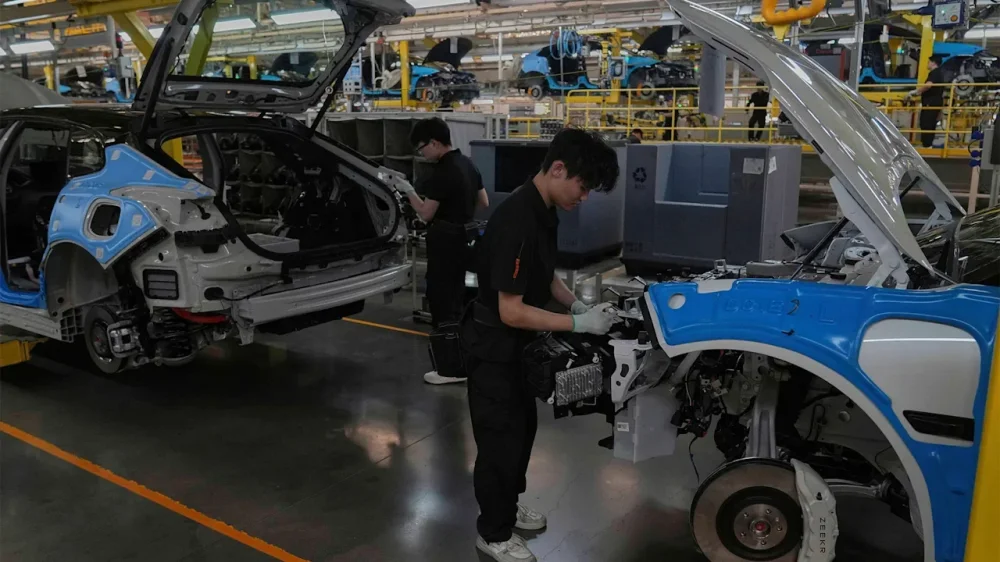
China and the European Union said Monday they have agreed on steps toward resolving their dispute over the bloc’s imports of Chinese-made electric vehicles. A “guidance document” released by the EU on Monday gives instructions for Chinese EV manufacturers on making price offers for battery EVs, including minimum import prices and other details. The EU had imposed tariffs of up to 35.3% on Chinese EV imports in 2024 following an anti-subsidy investigation. The EU said that minimum import prices must be set at a level “appropriate to remove the injurious effects of the subsidization.” Chinese EV manufacturers’ plans for investments within the EU will also be considered, it said. “The European market is open to electric vehicles from all around the world, provided that they have come here according to that level playing field,” said European Commission spokesperson Olof Gill. “If those conditions are met, then we can look at price undertakings in a serious way.” The EU said the European Commission would assess each offer in an “objective and fair manner, following the principle of non-discrimination” and in line with World Trade Organization rules. “This is conducive not only to ensuring the healthy development of China-EU economic and trade relations, but also to safeguarding the rules-based international trade order,” a statement by China’s Commerce Ministry said. The China Chamber of Commerce to the EU welcomed the move, which it said would bring about a “soft landing” in the EV standoff. The EU’s anti-subsidy probe and tariffs on Chinese EVs had strained ties between China and the bloc. In late 2024, the EU imposed countervailing tariffs of 7.8% to 35.3% on Chinese battery EV imports for a five-year period. As low-priced Chinese EVs rapidly entered the European market, EU officials said China’s EV makers — with massive support from the Chinese government — benefited from “unfair” subsidization which threatened economic injury to EU auto manufacturers. Monday’s announcement also came after the EU said last month it had opened a review into whether a price undertaking offer by Germany-based Volkswagen group’s Chinese joint venture could potentially replace the EU’s anti-subsidy tariffs applied on its China-built EVs. “The minimum prices offer Chinese brands probably some comfort to continue their exports long term … while avoiding higher import tariffs,” said Rico Luman, a senior economist at the Dutch bank ING who focuses on transport, logistics and the automotive industry. “I’m convinced the inroads of Chinese brands will continue.” EU manufacturers depend heavily on Chinese made batteries, rare earths materials and computer chips. That requires “a balancing act to avoid frustrating the trade relationship” with China, Luman said. Stephen Chan, an associate director at S&P Global Ratings, said some European demand of China-built vehicles could be constrained if the approved floor price under the new guidelines “significantly narrows the gap between Chinese BEVs (battery EVs) and European rivals.” Chinese car brands are expected to gain more market share in Europe over the next few years, analysts said. China-manufactured cars rose to 6% of sales in the EU in the first half of 2025, according to the European Automobile Manufacturers’ Association (ACEA) and S&P Global Mobility, up from 5% in the same period of 2024. EU-based manufacturers represented 74% of total EU car sales in the first half of 2025, the ACEA said. Germany still produced about 20% of cars sold in the EU, followed by Spain, Czechia and France. By 2030, Chinese automakers are likely to double their European market share to about 10%, according the consultancy AlixPartners. —Chan Ho-Him, AP business writer Associated Press writer Sam McNeil contributed to this report. View the full article
-
We may earn a commission from links on this page. Deal pricing and availability subject to change after time of publication. As is usually the case during CES, older models get big discounts, making it one of the best times to shop for premium tech. If you've been looking for a massive OLED TV with a massive discount, it doesn't get much better than the 77-inch Sony Bravia A95L OLED TV, currently going for $3,498 (originally $4,999.99). This is the lowest price this premium TV has ever reached, according to price-tracking tools. 77-inch Sony Bravia A95L OLED TV $3,498.00 at Amazon $4,999.99 Save $1,501.99 Get Deal Get Deal $3,498.00 at Amazon $4,999.99 Save $1,501.99 The 77-inch Bravia A95L uses the same QD-OLED panel technology that has been successful with Samsung's OLED TVs, and it combines it with their best-in-class Cognitive Processor XR. This makes the color volume, peak brightness in HDR content, and motion handling one of the best in OLED TVs, even in 2026. This makes it a great OLED TV for people who want a premium theater TV that can also look great while gaming. The A95L comes with the Google TV smart interface, which is my personal favorite since it makes casting to the TV from your phone or laptop easy, and has an internal microphone for hands-free voice control. There aren't many options for 77-inch premium OLED TVs, and even fewer that have withstood the test of time. The Bravia A95L is still relevant in 2026 for its quality, size, but most importantly, its price. If you can afford it and have a wall big enough for it, this massive OLED is a bargain. Our Best Editor-Vetted Tech Deals Right Now Apple AirPods Pro 3 Noise Cancelling Heart Rate Wireless Earbuds — $229.99 (List Price $249.00) Apple Watch Series 11 [GPS 46mm] Smartwatch with Jet Black Aluminum Case with Black Sport Band - M/L. Sleep Score, Fitness Tracker, Health Monitoring, Always-On Display, Water Resistant — $329.00 (List Price $429.00) Amazon Fire TV Stick 4K Plus — (List Price $24.99 With Code "FTV4K25") Samsung Galaxy Watch 8 — $279.99 (List Price $349.99) Samsung Galaxy Tab A9+ 10.9" 64GB Wi-Fi Tablet (Graphite) — $149.99 (List Price $219.99) Deals are selected by our commerce team View the full article
-
Google has officially launched Gemini, its new AI-powered assistant tailored for smart TVs, with the potential to transform how small business owners engage with their digital content. As the landscape of remote work and digital advertising evolves, this new tool could serve as a game-changer for businesses looking to leverage advanced technology at home and in the workplace. Gemini for TV is designed to optimize the viewing experience on larger screens, reportedly enhancing the functionality of both entertainment and information access. With key features aimed at seamless interaction, Gemini can elevate how small businesses showcase their products, conduct virtual meetings, or even provide captivating presentations. One of the standout benefits for small business owners is the potential for tailored content delivery. Gemini integrates deeply with a user’s Google account, making it easier to curate content relevant to specific audiences. Small business owners can utilize this feature to tailor advertisements or presentations displayed on smart TVs, ensuring their messaging resonates with those present in the room. As a result, businesses can create more engaging customer experiences in retail spaces or adapt meetings to fit the specific audience needs. “Gemini offers a holistic approach to viewing,” said a Google spokesperson in a recent press release. “By creating a more personalized user interface, we’re enabling businesses to interact with their content more effectively. This is a significant advancement for small businesses looking to use technology to their advantage.” Furthermore, small business owners can leverage Gemini’s capabilities during team meetings. Instead of relying solely on laptops, employees can share presentations and documents on a bigger screen. The AI assistant’s intuitive navigation makes this process smoother, potentially boosting productivity and collaboration among team members. However, the implementation of Gemini does come with its challenges. While the AI intends to enhance the user experience, small business owners may find the setup process requires time and technical know-how. As the device supports Android TV OS 14+, businesses using older devices may not have the capacity to utilize these new features right away. Owners should verify device compatibility and consider possible upgrades. Another challenge is the reliance on a stable internet connection for optimal performance. For small businesses in areas with spotty internet service, the benefits of Gemini could be diminished. Planning for a reliable internet infrastructure should be on the radar for those eager to adopt this technology. Despite these potential hurdles, the opportunities presented by Gemini are substantial. The AI’s ability to learn user preferences over time could mean more efficient marketing strategies, driving engagement with customers both online and offline. Additionally, its design for smart TVs could easily transform how customers interact with promotional content, providing a more visually appealing and responsive experience. As small business owners weigh the costs and advantages of adopting AI technology like Gemini, understanding its practical applications will be vital. Whether it’s enhancing customer interactions in-store or facilitating engaging presentations during team meetings, the tool has laid the groundwork for innovative practices adaptable to various business niches. For those interested in learning more about how Gemini can specifically enhance their business operations, you can visit the original announcement here. As the digital landscape continues to evolve, keeping abreast of technological advancements like Gemini will be essential for small businesses aiming to stay ahead in an increasingly competitive market. Image via Google Gemini This article, "Google Gemini Launches Enhanced Experience for Android TV Users" was first published on Small Business Trends View the full article
-
A leader of the Canadian government is visiting China this week for the first time in nearly a decade, a bid to rebuild his country’s fractured relations with the world’s second-largest economy — and reduce Canada’s dependence on the United States, its neighbor and until recently one of its most supportive and unswerving allies. The push by Prime Minster Mark Carney, who arrives Wednesday, is part of a major rethink as ties sour with the United States — the world’s No. 1 economy and long the largest trading partner for Canada by far. Carney aims to double Canada’s non-U.S. exports in the next decade in the face of President Donald The President’s tariffs and the American leader’s musing that Canada could become “the 51st state.” “At a time of global trade disruption, Canada is focused on building a more competitive, sustainable, and independent economy,” Carney said in a news release announcing his China visit. “We’re forging new partnerships around the world to transform our economy from one that has been reliant on a single trade partner.” He will be in China until Saturday, then visit Qatar before attending the annual meeting of the World Economic Forum in Switzerland next week. The President’s tariffs have pushed both Canada and China to look for opportunities to strengthen international cooperation, said Zhu Feng, the dean of the School of International Studies at China’s Nanjing University. “Carney’s visit does reflect the new space for further development in China-Canadian relations under the current U.S. trade protectionism,” he said. But he cautioned against overestimating the importance of the visit, noting that Canada remains a U.S. ally. The two North American nations also share a deep cultural heritage and a common geography. New leaders have pivoted toward China Carney has been in office less than a year, succeeding Justin Trudeau, who was prime minister for nearly a decade. He is not the first new leader of a country to try to repair relations with China. Australian Premier Anthony Albanese has reset ties since his Labor Party came to power in 2022. Relations had deteriorated under the previous conservative government, leading to Chinese trade restrictions on wine, beef, coal and other Australian exports. Unwinding those restrictions took about 18 months, culminating with the lifting of a Chinese ban on Australian lobsters in late 2024. British Prime Minister Keir Starmer has sought to repair ties with China since his Labour Party ousted the Conservatives in 2024. He is reportedly planning a visit to China, though the government has not confirmed that. The two governments have differences, with Starmer raising the case of former Hong Kong media magnate Jimmy Lai, a British citizen, in talks with Chinese leader Xi Jinping in late 2024 in Brazil. The President, who has said he will come to China in April, has indicated he wants a smooth relationship with China, though he also launched a tit-for-tat trade war, with tariffs rising to more than 100% before he backed down. Bumpy relations, with Washington in the middle In Canada, The President’s threats have raised questions about the country’s longstanding relationship with its much more powerful neighbor. Those close ties have also been the source of much of Canada’s friction with China in recent years. It was Canada’s detention of a Chinese telecommunications executive at the request of the U.S. that started the deterioration of relations in late 2018. The U.S. wanted the Huawei Technologies Co. executive, Meng Wenzhou, to be extradited to face American charges. China retaliated by arresting two Canadians, Michael Kovrig and Michael Spavor, on spying charges. While they were imprisoned, Meng was under house arrest in Vancouver, a Canadian city home to a sizable Chinese population. All three were released under a deal reached in 2021. More recently, Canada followed the U.S. in imposing a 100% tariff on electric vehicles and a 25% tariff on steel and aluminum from China. China, which is Canada’s second-largest trading partner after the U.S., has hit back with tariffs on Canadian exports including canola, seafood and pork. It has indicated it would remove some of the tariffs if Canada were to drop the 100% charge on EVs. An editorial in China’s state-run Global Times newspaper welcomed Carney’s visit as a new starting point and called on Canada to lift “unreasonable tariff restrictions” and advance more pragmatic cooperation. Chinese Foreign Ministry spokesperson Mao Ning said Monday that China looks forward to Carney’s visit as an opportunity to “consolidate the momentum of improvement in China-Canada relations.” Canada is also repairing ties with India Carney met Xi in late October in South Korea, where both were attending the annual Asia-Pacific Economic Cooperation (APEC) summit. He has also tried to mend ties with India, where relations deteriorated in 2024 after the Trudeau government accused India of being involved in the 2023 killing of a Sikh activist in Canada. The fallout led to tit-for-tat expulsions of senior diplomats, disruption of visa services, reduced consular staffing and a freeze on trade talks. A cautious thaw began last June. Since then, both sides have restored some consular services and resumed diplomatic contacts. In November, Canadian Foreign Minister Anita Anand said the two countries would move quickly to advance a trade deal, noting the government’s new foreign policy in response to The President’s trade war. Carney is also expected to visit India later this year. Associated Press journalists Sheikh Saaliq in New Delhi and Jill Lawless in London, and researcher Shihuan Chen in Beijing contributed. —Ken Moritsugu, Associated Press View the full article

-
We may earn a commission from links on this page. Deal pricing and availability subject to change after time of publication. Winter makes the comfort gaps in your home impossible to ignore. Cold corners, stale air, rooms that never feel evenly warm, no matter how long the heater runs. You can try smaller fixes first—blocking drafts, layering rugs, or improving airflow, which actually helps rooms feel warmer without cranking the thermostat. But if you’re still juggling space heaters, fans, and an air purifier, this deal on the Dyson Purifier Hot+Cool HP1 is worth a closer look. It’s currently $499.95, down from $659.99, and price trackers show this is the lowest it’s ever been. Dyson Purifier Hot+Cool HP1 $499.95 at Amazon $659.99 Save $160.04 Get Deal Get Deal $499.95 at Amazon $659.99 Save $160.04 In winter, the heating mode does most of the heavy lifting. The HP1 warms up quickly and pushes heat out evenly instead of blasting one hot stream at your ankles. Its wide oscillation (up to 350 degrees) helps circulate warm air throughout the room, which can make a space feel comfortable faster and more consistently. That circulation also keeps the air from feeling heavy or damp, especially in closed-up winter homes. When the heater isn’t needed, it works as a cooling fan, and year-round it runs as a sealed HEPA air purifier. Cooking smells, pet dander, and lingering indoor air all clear out faster than you’d expect. That said, filters need replacing about once a year, at around $79.99, which adds to the long-term cost. Living with it day to day feels very Dyson. The HP1 is tall but slim, with a small base that doesn’t eat up floor space. At about 12 pounds, it’s light enough to carry from room to room. The front-facing LED screen shows temperature, air quality, fan speed, and remaining filter life without forcing you into the app. Most controls happen through the magnetized remote, which snaps to the top of the unit, making the MyDyson app optional. The real benefit of the app is being able to control the HP1 remotely, which is useful if you want the room warmed up before you get there. This still isn’t a small purchase, even on sale, but for homes short on space or anyone tired of juggling separate heaters, fans, and purifiers, it does make daily life simpler without demanding much attention once it’s set up. Our Best Editor-Vetted Tech Deals Right Now Apple AirPods Pro 3 Noise Cancelling Heart Rate Wireless Earbuds — $229.99 (List Price $249.00) Apple Watch Series 11 [GPS 46mm] Smartwatch with Jet Black Aluminum Case with Black Sport Band - M/L. Sleep Score, Fitness Tracker, Health Monitoring, Always-On Display, Water Resistant — $329.00 (List Price $429.00) Amazon Fire TV Stick 4K Plus — (List Price $24.99 With Code "FTV4K25") Samsung Galaxy Watch 8 — $279.99 (List Price $349.99) Samsung Galaxy Tab A9+ 10.9" 64GB Wi-Fi Tablet (Graphite) — $149.99 (List Price $219.99) Deals are selected by our commerce team View the full article
-
Statement accuses The President administration of behaving like an emerging marketView the full article
-
Matt Benchener to replace Richard Flint as boss of UK’s biggest ‘DIY’ investment siteView the full article
-
A microbusiness loan is a financing option designed for small-scale entrepreneurs, providing funds typically between $100 and $50,000. It caters to individuals with limited credit histories and offers competitive interest rates ranging from 8% to 13%. Beyond financial support, these loans often include resources like business training, which can improve your operational skills. Comprehending the specifics of microbusiness loans can help you determine if this funding solution aligns with your goals and needs. Key Takeaways Microbusiness loans provide funding ranging from $100 to $50,000 for small businesses and entrepreneurs needing capital. They feature competitive interest rates, generally between 8% and 13%, making them affordable options. These loans are accessible to individuals with limited credit histories, often requiring a minimum score of 620. Many microbusiness loans include additional support services, such as business training, enhancing entrepreneurial skills and capabilities. The application process is typically simpler and quicker than traditional loans, requiring less documentation and faster access to funds. Definition and Overview of Microbusiness Loans Microbusiness loans, which are designed to support small businesses and entrepreneurs, offer a practical financial solution for those in need of capital. If you wanna start a business, these loans can range from $100 to $50,000, making them suitable for various financial needs. They typically feature lower interest rates compared to traditional loans, which helps make repayment more manageable. Microbusiness loans are particularly beneficial for individuals with limited or poor credit histories, promoting entrepreneurship in underserved communities. Although repayment terms can vary, you can expect to repay the loan within six years, depending on the lender. Furthermore, many microbusiness loans come with additional support services, such as business training, enhancing your chances of success in your venture. Eligibility Criteria for Microbusiness Loans To qualify for a microbusiness loan, you need to guarantee your business is registered as a for-profit entity or, in some cases, a nonprofit child care center. Most lenders look for a credit score of at least 620, even though some may accept lower scores, which can be beneficial if you have limited credit history. Moreover, you’ll likely need to present a solid business plan and financial projections to show that you can repay the loan. Business Registration Requirements What’re the vital business registration requirements for securing a microbusiness loan? To qualify, you must be registered as a for-profit business or a nonprofit child care center, adhering to specific legal requirements. This guarantees that your operation is legitimate and compliant with local laws. Furthermore, lenders often request a detailed business plan and financial projections, demonstrating your ability to repay the loan and showcasing your business’s viability. It’s significant to highlight that some lenders may have extra criteria, such as no recent bankruptcies or tax delinquencies. Microbusiness loans particularly aim to support underserved communities, including women– and minority-owned businesses, promoting equitable access to funding. Meeting these registration requirements is fundamental for your loan eligibility. Credit Score Considerations When applying for a microbusiness loan, credit score considerations play a significant role in determining your eligibility. Most lenders usually require a minimum personal credit score of around 620, even though some may accept lower scores because of more lenient standards. Microbusiness loans are often designed to be accessible for individuals with limited credit histories or poor scores, making them ideal for startups and underserved communities. The SBA microloan program particularly supports businesses owned by women and minorities, who may face greater challenges in securing traditional financing. While you’ll need to demonstrate your ability to repay the loan, lenders commonly place less emphasis on your credit history. Always review particular eligibility criteria and documentation required by individual lenders. Benefits of Microbusiness Loans Microbusiness loans provide a range of benefits that can greatly aid small-scale entrepreneurs and startups in their path to success. These loans typically offer financing up to $50,000, making it easier for you to access the initial capital you need. With competitive interest rates between 8% and 13%, they present a cost-effective alternative to traditional bank loans. Furthermore, flexible eligibility requirements allow individuals with lower credit scores to qualify, supporting underserved communities. Beyond funding, many microbusiness loans include resources like business training and support services, enhancing your entrepreneurial skills. For instance, the average SBA microloan in fiscal year 2024 was about $16,124, which aligns well with the smaller financial needs of new and growing businesses. Sources of Microbusiness Loans Accessing microbusiness loans involves various sources customized to meet the needs of small entrepreneurs. The U.S. Small Business Administration (SBA) offers loans up to $50,000 through approved intermediaries, with interest rates between 8% and 13%. Nonprofit organizations and community development financial institutions (CDFIs) focus on providing microloans to support underserved communities. Online platforms like Kiva facilitate peer-to-peer microloans, allowing you to borrow between $1,000 and $15,000 without a minimum credit score. Furthermore, the USDA’s Farm Service Agency (FSA) provides specific microloans for small to mid-sized farms, totaling up to $100,000. Microfinance institutions likewise offer loans to low-income entrepreneurs, often including training services to promote business growth and sustainability. How to Apply for a Microbusiness Loan To apply for a microbusiness loan, you first need to determine your specific business needs, which will help guide your application process. Next, gather the necessary documentation, including a business plan, personal guarantees, and financial projections to show that you can repay the loan. With this information in hand, you’ll be better equipped to approach an SBA-approved intermediary lender for customized options. Determine Your Needs How can you effectively determine your needs when applying for a microbusiness loan? Start by completing a detailed questionnaire that assesses your business requirements. This will help you identify the right loan amount, which can be as high as $50,000. Consider your specific needs, whether it’s funding for equipment, inventory, or operational costs. Next, consult with SBA-approved intermediary lenders, often nonprofit organizations, to discuss customized options suited to your situation. They can guide you through the application process and clarify any lender-specific requirements. Remember, the average loan amount in fiscal year 2024 was about $16,124, with repayment terms extending up to seven years. Comprehending these factors will help streamline your application process. Gather Required Documentation When applying for a microbusiness loan, gathering the required documentation is essential to streamline the process and meet lender expectations. To start, complete a questionnaire to assess your business needs and eligibility. Typically, you’ll need a business plan, financial projections, personal guarantees, and collateral agreements, but this can vary by lender. Furthermore, you may have to provide evidence of positive cash flow or projections to show your ability to repay the loan. To help you, here’s a quick reference table: Documentation Type Purpose Business Plan Outlines your business strategy Financial Projections Demonstrates expected cash flow Personal Financial History Assesses creditworthiness Collateral Agreements Secures the loan with assets Microbusiness Loan Features Microbusiness loans come with several key features designed to support small businesses in their growth and development. Typically ranging from $100 to $50,000, these loans provide vital capital for startup costs, inventory, and operational expenses. They often offer lower interest rates than traditional loans, making them more accessible for entrepreneurs with limited credit history or poor credit scores. Repayment terms are usually flexible, extending up to six or seven years, which helps you manage your cash flow effectively. Although many loans require collateral and a personal guarantee for security, they may likewise come with additional resources, such as business training and support services, to empower you in enhancing your operational skills and achieving success in your venture. Pros and Cons of Microbusiness Loans During the evaluation of your financing options, comprehending the pros and cons of microbusiness loans is crucial for making an informed decision. These loans offer unique benefits, but they too come with limitations. They provide accessible funding ranging from $100 to $50,000, ideal for small businesses and startups. Competitive interest rates between 8% and 13% can lower your borrowing costs compared to other options. The application process is simpler, requiring less documentation and enabling quicker access to capital. Nevertheless, the maximum loan amount mightn’t be sufficient for larger projects, potentially restricting your business growth. Understanding these factors can help you determine if a microbusiness loan aligns with your financial needs and future goals. Alternatives to Microbusiness Loans Exploring alternatives to microbusiness loans can open up various funding avenues that might better suit your business’s specific needs. Business credit cards offer quick access to funds, though their higher annual percentage rates (APRs) can be a drawback. Traditional small business loans typically provide larger amounts, often exceeding $50,000, but they require more stringent eligibility criteria and extensive documentation. Online business loans present faster financing options with flexible qualification requirements compared to traditional banks. Peer-to-peer lending platforms, like Kiva, connect you directly with individual lenders, offering interest-free microloans during the need for social proof of creditworthiness. Finally, community development financial institutions (CDFIs) offer customized loan products and support services, particularly to underserved communities, promoting local economic growth. Considerations Before Applying for a Microbusiness Loan Before you plunge into applying for a microbusiness loan, it’s essential to take a step back and evaluate your financial needs carefully. Consider the following factors to guarantee you make an informed decision: Assess the specific loan amount you need, as microloans range from $100 to $50,000. Review the loan’s terms, including interest rates that typically range from 8% to 13%, and associated fees up to 3%. Prepare necessary documentation, like a solid business plan and financial projections, to demonstrate your repayment ability. Consider the repayment schedule, as terms can extend up to six to seven years, impacting your cash flow. Frequently Asked Questions What Are the Benefits of a Micro Loan? Microloans offer several benefits that can improve your business’s growth. They provide access to small amounts of capital, typically up to $50,000, which is perfect for covering startup costs, inventory, or operational expenses. With competitive interest rates ranging from 8% to 13%, you can secure funding at a lower cost compared to traditional loans. Moreover, many microloan programs offer business training and support, helping you develop skills essential for your success. What Is the Monthly Payment on a $50,000 Business Loan? The monthly payment on a $50,000 business loan can vary based on the interest rate and term length. For instance, at a 10% interest rate over seven years, you’d pay approximately $780 monthly. If the rate increases to 12%, your payment could rise to about $860. Don’t forget to contemplate potential fees, which can add up to 3% of the loan amount, impacting your overall borrowing costs and monthly payments. Who Typically Uses Micro Lending? Micro lending is typically used by startups and small businesses that struggle to secure traditional financing. Entrepreneurs with limited credit histories or lower credit scores often turn to these loans, as they’ve more lenient qualification standards. Significantly, women-owned businesses frequently participate in micro lending. Various sectors, including retail and agriculture, utilize these funds for startup costs, inventory, and operational expenses, making micro loans essential for nurturing entrepreneurship in underserved communities. What Is Considered a Micro Business Loan? A microbusiness loan is a small financial product designed particularly for entrepreneurs and small businesses seeking funding between $100 and $50,000. These loans are typically characterized by lower interest rates and accessible terms, making them suitable for individuals with limited credit histories. You can use these funds for startup costs, inventory, or operational expenses. Eligibility usually requires you to be a registered business or entrepreneur, demonstrating repayment ability, especially in underserved communities. Conclusion In conclusion, microbusiness loans offer vital financial support for budding entrepreneurs and small businesses, typically ranging from $100 to $50,000. With competitive interest rates and additional resources like business training, these loans can greatly improve your operational capabilities. When considering a microbusiness loan, weigh the eligibility criteria, benefits, and potential drawbacks carefully. By comprehending your options and preparing adequately, you can leverage this funding to drive growth and achieve your business goals effectively. Image via Google Gemini This article, "What Is a Microbusiness Loan and How Can It Benefit You?" was first published on Small Business Trends View the full article
-
Equity stake in Atlantic Alumina Co is part of drive to counter Chinese dominance of critical metal supply chains View the full article
-
If winning gold medals were the only standard, almost all Olympic athletes would be considered failures. A clinical psychologist with the United States Olympic and Paralympic Committee, Emily Clark’s job when the Winter Games open in Italy on Feb. 6 is to help athletes interpret what it means to be successful. Should gold medals be the only measure? Part of a 15-member staff providing psychological services, Clark nurtures athletes accustomed to triumph but who invariably risk failure. The staff deals with matters termed “mental health and mental performance.” They include topics such as motivation, anger management, anxiety, eating disorders, family issues, trauma, depression, sleep, handling pressure, travel and so forth. Clark’s area includes stress management, the importance of sleep and getting high achievers to perform at their best and avoid the temptation of looking only at results. “A lot of athletes these days are aware of the mental health component of, not just sport, but of life,” Clark said in an interview with The Associated Press. “This is an area where athletes can develop skills that can extend a career, or make it more enjoyable.” Redefining success The United States is expected to take about 235 athletes to the Winter Olympics, and about 70 more to the Paralympics. But here’s the truth. “Most of the athletes who come through Team USA will not win a gold medal,” Clark said. “That’s the reality of elite sport.” Here are the numbers. The United States won gold medals in nine events in the last Winter Games in Beijing in 2022. According to Dr. Bill Mallon, an esteemed shoulder surgeon and Olympic historian, 70.8% of Winter and Summer Olympic athletes go to only one Olympics. Few are famous and successful like swimmer Michael Phelps, or skiers Mikaela Shiffrin or Lindsey Vonn. Clark said she often delivers the following message to Olympians and Paralympians: This is a once-in-a-lifetime chance. Focus on the process. Savor the moment. “Your job is not to win a gold medal, your job is to do the thing and the gold medal is what happens when you do your job,” she said. “Some of this might be realigning what success looks like,” she added. “And some of this is developing resilience in the face of setbacks and failure.” Clark preaches staying on task under pressure and improving through defeat. “We get stronger by pushing ourselves to a limit where we’re at our maximum capacity — and then recovering,” she said. “When we get stressed, it impacts our attention. Staying on task or staying in line with what’s important is what we try to train for.” A few testimonials Kendall Gretsch has won four gold medals at the Summer and Winter Paralympics. She credits some of her success to the USOPC’s mental health services, and she described the value this way. “We have a sports psychologist who travels with us for most our season,” she said. “Just being able to touch base with them … and getting that reminder of why are you here. What is that experience you’re looking for?” American figure skater Alysa Liu is the 2025 world champion and was sixth in the 2022 Olympics. She’s a big believer in sports psychology and should be among the favorites in Italy. “I work with a sport psychologist,” she said without giving a name. “She’s incredible — like the MVP.” Of course, MVP stands — not for Most Valuable Person or Most Valuable Player — for “Most Valuable Psychologist.” “I mean, she’s very helpful,” Liu added. Vonn: “I just did it myself” American downhill skier Vonn will race in Italy in her sixth Olympics. At 41, she’s coming off nearly six years in retirement and will be racing on a knee made of titanium. Two-time Olympic champion Michaela Dorfmeister has suggested in jest that Vonn “should see a psychologist” for attempting such a thing in a very dangerous sport where downhill skiers reach speeds of 80 mph (130 kph). Vonn shrugged off the comments and joked a few months ago that she didn’t grow up using a sport psychologist. She said her counseling came from taping messages on the tips of her skis that read: “stay forward or hands up.” “I just did it myself,” she said. “I do a lot of self-talk in the starting gate.” On sleep “Sleep is an area where athletes tend to struggle for a number of reasons,” Clark said, listing issues such as travel schedules, late practices, injuries and life-related stress. “We have a lot of athletes who are parents, and lot of sleep is going to be disrupted in the early stages of parenting,” she said. “We approach sleep as a real part of performance. But it can be something that gets de-prioritized when days get busy.” Clark suggests the following for her athletes — and the rest of us: no caffeine after 3 p.m., mitigate stress before bedtime, schedule sleep at about the same time daily, sleep in a dark room and get 7-9 hours. Dani Aravich is a two-time Paralympian — she’s been in both the Summer and Winter Games — will be skiing in the upcoming Paralympics. She said in a recent interview that she avails herself of many psychological services provided by the USOPC. “I’ve started tracking my sleep,” she said, naming Clark as a counselor. “Especially being an athlete who has multiple jobs, sleep is going to be your No. 1 savior at all times. It’s the thing that — you know — helps mental clarity.” Ditto Clark. “Sleep is the cornerstone of healthy performance,” she added. Follow AP’s Be Well coverage, focusing on all aspects of wellness, at https://apnews.com/hub/be-well —Stephen Wade, Associated Press View the full article

-
Richard Knighton warns MPs of budget shortfall and the need for difficult decisionsView the full article
-
Fitness brand Modern Warrior has voluntarily recalled all lots of its dietary supplement Modern Warrior Ready after testing revealed the presence of “undeclared ingredients,” one of which could be potentially life threatening. The product was sold over a period of three years as capsule-based dietary supplements. Consumers nationwide could buy them directly online. The voluntary recall was announced on Friday, January 9, the same day that a recall notice was published on the website of the Food and Drug Administration (FDA). Here’s what you need to know. What does the recalled product look like? The recalled dietary supplement, Modern Warrior Ready, is sold in a black plastic supplement bottle with a black screw-top lid sealed with black and gold temper-evident shrink wrap. Each bottle contains 60 capsules. The bottle’s front label features the Modern Warrior (MW) logo in gold at the top. The name “Body Repair Plan” is centered on the front label, in gold lettering. Below that, the word “Ready” appears with a small sunrise icon followed by the phrase “Mental Clarity.” The recalled dietary supplement was distributed and sold online to customers nationwide from April 2022 until December 8, 2025. Some undeclared ingredients pose serious risks Some of the ingredients found during what was described as regulatory testing have a risk of causing serious side effects, including “life-threatening events.” The FDA recall notice explains the following potential health risks: Tianeptine: Tianeptine can cause “life-threatening events,” according to the FDA notice, including suicide ideation or behavior in children, adolescents, and adults aged 25 and younger. Additionally, overdose of this ingredient “carries serious and potentially life-threatening risks,” the FDA notice states, including confusion, seizure, drowsiness, dry mouth, and shortness of breath, which can be exacerbated by alcohol use. The notice further states that “Using tianeptine in combination with monoamine oxidase inhibitor (MAOl) antidepressants could lead to life-threatening complications including stroke and death.” 1,4-DMAA: 1,4-DMAA can cause stimulant effects. Using 1,4-DMAA can cause elevated blood pressure, which could lead to cardiovascular problems, like, heart attack, shortness of breath, and tightening of the chest. What should I do if I have this product? If you purchased the recalled dietary supplement, you should stop using it. The FDA recall notice states that Modern Warrior has immediately ceased distribution of the recalled product and has removed it from sale. A recall notice could not immediately be found on Modern Warrior’s website. The impacted product was listed as “sold out” as of Monday morning. Fast Company has reached out to Modern Warrior for comment and will update this post if we hear back. If you have any questions about the recall, call Modern Warrior at 314-713-1984 or email theviking@modernwarrior.life. View the full article

-
Latest Gemini artificial intelligence model has fuelled investor optimism over competitiveness with OpenAI’s ChatGPTView the full article
-
President Donald The President said Sunday that he is “inclined” to keep ExxonMobil out of Venezuela after its top executive was skeptical about oil investment efforts in the country after the toppling of former President Nicolás Maduro. “I didn’t like Exxon’s response,” The President said to reporters on Air Force One as he departed West Palm Beach, Florida. “They’re playing too cute.” During a meeting Friday with oil executives, The President tried to assuage the concerns of the companies and said they would be dealing directly with the U.S., rather than the Venezuelan government. Some, however, weren’t convinced. “If we look at the commercial constructs and frameworks in place today in Venezuela, today it’s uninvestable,” said Darren Woods, CEO of ExxonMobil, the largest U.S. oil company. An ExxonMobil spokesperson did not immediately respond Sunday to a request for comment. Also on Friday, The President signed an executive order that seeks to ensure that Venezuelan oil revenue remains protected from being used in judicial proceedings. The executive order, made public on Saturday, says that if the funds were to be seized for such use, it could “undermine critical U.S. efforts to ensure economic and political stability in Venezuela.” Venezuela has a history of state asset seizures, ongoing U.S. sanctions and decades of political uncertainty. Getting U.S. oil companies to invest in Venezuela and help rebuild the country’s infrastructure is a top priority of the The President administration after Maduro’s capture. The White House is framing the effort to “run” Venezuela in economic terms, and The President has seized tankers carrying Venezuelan oil, has said the U.S. is taking over the sales of 30 million to 50 million barrels of previously sanctioned Venezuelan crude, and plans to control sales worldwide indefinitely. Kim reported from West Palm Beach, Florida. —Seung Min Kim and Julia Nikhinson, Associated Press View the full article

-
Small business accounting software consulting helps you assess your unique financial needs and identify software solutions that can streamline your bookkeeping processes. This service evaluates your current operations and recommends customized software options to improve efficiency and compliance. Furthermore, it provides necessary training and ongoing support to guarantee you can effectively use these tools. Comprehending these elements is vital, as they can greatly impact your financial management and overall business performance. So, what should you consider when selecting the right software? Key Takeaways Small business accounting software consulting analyzes unique financial needs to recommend tailored software solutions for efficient bookkeeping. It focuses on automation, compliance, and operational efficiency to streamline financial processes and reduce errors. Consultants provide training and ongoing support to ensure effective software utilization and maximize productivity. Customized reporting features help businesses monitor cash flow and profitability, adapting to specific requirements. The consulting service enhances financial management and decision-making through real-time data access and integration with existing tools. Understanding Small Business Accounting Software Consulting When you’re traversing the intricacies of managing a small business, comprehending small business accounting software consulting can greatly streamline your financial processes. An accounting software consultant analyzes your specific needs, like invoicing and expense tracking, to recommend the best software solutions. By focusing on customized options, they help simplify bookkeeping for consultants, ensuring compliance and enhancing efficiency. Popular tools like QuickBooks and Xero offer features that support project tracking and multi-user access, making financial oversight easier. Effective consulting leads to significant time and cost savings, allowing you to concentrate on core operations instead of getting lost in financial details. Furthermore, these services often include training and ongoing support, maximizing the benefits of your chosen accounting software for your business operations. Key Features to Consider in Accounting Software When choosing accounting software, it’s vital to focus on fundamental features that can greatly improve your business operations. Look for automated invoicing to streamline payment processes and a user-friendly interface for easy navigation, both of which can save you time and reduce errors. Furthermore, consider how well the software integrates with other tools you already use, as this can enhance your overall workflow and efficiency. Essential Accounting Features Selecting the right accounting software for your small business is crucial, as it can greatly impact your financial management and overall efficiency. Key features to contemplate include automated invoicing, which speeds up payment processing, exemplified by FreshBooks and Bonsai. Real-time financial reporting lets you effectively monitor cash flow and profitability, as seen in Xero and QuickBooks. If you’re in consulting, time tracking tools help you allocate billable hours accurately, with FreshBooks excelling in this aspect. Furthermore, integrating with third-party applications improves functionality, streamlining workflows—FreshBooks integrates with over 100 apps. Finally, a user-friendly interface and customizable reports, found in Less Accounting and Wave, guarantee the software adapts to your specific business needs, making it easier to manage your finances. User-Friendly Interface Design A well-designed user interface in accounting software is important for improving your experience, as it allows small business owners like you to navigate features effortlessly without needing extensive training. Key design elements include intuitive dashboards that provide quick access to critical financial information, promoting efficient decision-making. Features such as drag-and-drop functionality and customizable layouts streamline tasks, making data entry less time-consuming. Clear labeling throughout the interface helps you understand functions even though you’re unfamiliar with accounting terminology. Moreover, a visually appealing design with organized menus improves usability. Mobile compatibility is necessary, enabling you to manage your accounting tasks from smartphones or tablets, which boosts productivity, especially when you’re on the go. The Importance of Tailored Solutions for Small Businesses In relation to managing your small business finances, personalized accounting solutions can greatly improve your operations. These customized tools address your unique business needs, allowing you to track project profitability and manage expenses more effectively. Unique Business Needs Comprehending that small businesses have distinct accounting needs is crucial for effective financial management. Unlike larger enterprises, your operations require solutions customized to your unique circumstances. Here are some critical features to take into account: Project profitability tracking to guarantee you understand which ventures are financially viable. Automated invoicing to save time and reduce errors in billing. Real-time cash flow monitoring for keeping tabs on your financial health. Customizable reporting tools that help you analyze expenses and performance effectively. Selecting the right accounting software isn’t just about features; it must likewise align with your daily tools and future growth plans, guaranteeing a seamless workflow that supports your business objectives. Streamlined Financial Management Streamlined financial management is crucial for small businesses aiming to optimize their operations and improve profitability. By utilizing customized accounting software, you can automate invoicing, payment processing, and expense tracking, which saves valuable time. Bespoke solutions cater to your specific needs, allowing for precise project profitability tracking and real-time cash flow management. Platforms like FreshBooks and QuickBooks offer user-friendly interfaces, making financial tasks less intimidating. Moreover, integration with other business tools improves data transfer and collaboration, leading to informed decision-making. In the end, effective accounting software not only reduces costs but also provides insights that guide your growth strategies. Feature Benefit Example Automation Saves time Automated invoicing Customization Meets specific needs Customized reporting User-friendly Reduces complexity Simple navigation Integration Improves efficiency Sync with CRM tools Cost savings Optimizes operations Reduced manual labor Evaluating Different Accounting Software Options As you navigate the terrain of accounting software options, it’s crucial to evaluate each platform based on key features that align with your business needs. Consider the following aspects: Tailored solutions: Platforms like FreshBooks and QuickBooks cater to various business sizes, focusing on project profitability and expense tracking. Cloud access: Software such as Xero and Wave Accounting enables you to manage finances from anywhere, enhancing flexibility. Pricing structures: Options vary widely; Wave offers free basic features, whereas Xero starts at $19/month for advanced capabilities. Integration capabilities: FreshBooks and QuickBooks allow seamless connections with third-party applications, streamlining your workflows. Implementing Accounting Software for Maximum Efficiency Implementing accounting software effectively can transform your financial processes and lead to significant efficiency gains for your business. By automating tasks like invoicing, payment tracking, and expense management, you’ll cut down on manual entry time. Options like FreshBooks and QuickBooks allow seamless integration with third-party applications, improving overall operational efficiency. Utilizing cloud-based solutions provides real-time access to your financial data, boosting decision-making and collaboration within your team. Furthermore, software such as Xero and Wave Accounting simplifies tax preparation, ensuring accurate reporting and reducing stress during tax season. Choosing the right software customized to your specific needs can likewise improve project profitability tracking and provide valuable insights into cash flow management, eventually enhancing your financial health. Navigating Software Compatibility and Integration Achieving maximum efficiency with accounting software often requires a sharp comprehension of software compatibility and integration. To streamline your workflows and improve data accessibility, you’ll want to integrate your accounting software with other business tools. Consider the following key aspects: APIs for Custom Integrations: Many solutions, like FreshBooks and Xero, offer APIs for customized setups. Reduced Manual Data Entry: Tools like Wave Accounting allow automatic imports from bank accounts and payment processors. Third-Party Integration Assessment: Evaluate available integrations to guarantee alignment with your existing technology stack. Real-Time Data Synchronization: Effective integration enables accurate financial reporting and decision-making. Best Practices for Ongoing Accounting Software Management To effectively manage your accounting software over time, it’s crucial to adopt a set of best practices that guarantee efficiency and accuracy. Regularly update your software to access the latest features and security improvements, which help safeguard data integrity. Conduct monthly reconciliations of accounts to catch discrepancies early, allowing you to maintain accurate financial records. Utilize reporting features to generate insights on cash flow and profitability, enabling informed decision-making. Implement a consistent schedule for backing up financial data using cloud-based solutions to protect against data loss. Finally, train your team on the software’s functionalities to maximize its potential, improve efficiency, and make sure everyone is aligned on financial management practices. Empowering Businesses Through Financial Insights Comprehending your financial data is essential for making informed business decisions, especially in today’s dynamic market. Small business accounting software consulting empowers you by providing customized insights that improve your financial management. With effective solutions, you can: Track project profitability seamlessly, ensuring you know where your money goes. Automate invoicing and expense tracking, saving time on tedious administrative tasks. Collaborate in real-time, allowing your team to access and share financial information effortlessly. Stay compliant with tax regulations, simplifying report preparation and reducing stress during tax season. Frequently Asked Questions What Is Small Business Consulting? Small business consulting involves providing customized advice to help you improve your operations and achieve growth. Consultants assess your business, identify challenges, and develop strategic plans to elevate performance. They may focus on areas like marketing, finance, or operations, ensuring their solutions meet your specific needs. Who Are the Big 4 Accounting Consultants? The Big 4 accounting consultants are Deloitte, PwC, EY, and KPMG. Deloitte leads with over $50 billion in annual revenue, primarily from audit and consulting services. PwC follows closely, generating more than $45 billion, focusing on audit and tax. EY ranks third with about $40 billion, emphasizing advisory services. KPMG, though the smallest, still earns around $30 billion, offering audit and tax services with a strong focus on technology solutions. How Much Does Accounting Software Cost for a Small Business? Accounting software for small businesses can range in cost considerably. Basic plans, like Outright, start around $10/month, whereas more extensive options, such as Xero and FreshBooks, begin at $19 and $20/month, respectively. Wave Accounting offers free services, but charges for payroll features. Many providers offer free trials, letting you test their features before committing. Be aware that additional costs may arise for features like payroll processing or multiple users, impacting your overall expenses. What Are the Three Types of Accounting Software? There are three main types of accounting software: cloud-based, on-premise, and hybrid. Cloud-based software lets you access financial data from anywhere, which is great for remote work. On-premise software is installed on your local machines, giving you more control over data security but requiring higher upfront costs and maintenance. Hybrid solutions combine both, offering flexibility while keeping sensitive data secure on-site. Each type includes features like invoicing, expense tracking, and financial reporting. Conclusion In conclusion, small business accounting software consulting plays an essential role in enhancing your financial management. By evaluating your unique needs, consultants help you choose the right software and provide necessary training. This customized approach not just streamlines operations but also guarantees compliance and improves efficiency. Regularly reviewing and managing your accounting software can lead to better financial insights, empowering you to make informed decisions that drive your business forward. Investing in this consulting service eventually optimizes your overall performance. Image via Google Gemini This article, "What Is Small Business Accounting Software Consulting?" was first published on Small Business Trends View the full article