Newsletter
Want to keep up to date with all our latest news and information?


ResidentialBusiness
Administrators
-
Joined
-
Last visited
Everything posted by ResidentialBusiness
-
Recently, there has been a rise in reports from consumers that some physical retail stores are running low on pennies, making it difficult for cashiers to give customers exact change. This week, many social media users reported that one of America’s largest grocery store chains, Kroger, was asking customers to use exact change. This has led many to wonder if there is a national penny shortage. The answer is more complex than just a simple yes or no. Here’s what you need to know. What’s happened? Numerous reports this week said customers at Kroger stores were greeted with signs asking them to provide exact change when paying in cash. Among the reports was one from the Cincinnati Enquirer, which said that these signs were posted at the company’s 103 stores in the Cincinnati/Dayton Division. “The U.S. Treasury has stopped production of pennies, which is now impacting supply,” the signs read. “If using cash for payment, please consider providing exact change.” Reached for comment by Fast Company, a Kroger spokesperson confirmed the move. “We continue to assess the impact of the U.S. Treasury’s decision to end penny production,” the spokesperson said. These signs, along with a growing number of other reports on social media, have contributed to speculation about an American penny shortage. Is there a penny shortage? Without a doubt, the availability of the penny seems to be decreasing. However, according to the American Bakers Association (ABA), there isn’t currently a “penny shortage” in the traditional sense. Rather, there is a slowing of the circulation of pennies throughout America’s banks and retailers. And there’s a reason for this. In February, President The President announced on Truth Social that he had instructed U.S. Treasury Secretary Scott Bessent to stop producing new pennies. “For far too long the United States has minted pennies which literally cost us more than 2 cents,” The President wrote, adding, “Let’s rip the waste out of our great nations budget, even if it’s a penny at a time.” And the Treasury did as The President instructed. As the ABA notes, the U.S Mint, which is responsible for minting America’s currency, “reportedly stopped production and delivered their last shipment of new pennies in August.” That means no new pennies have been minted in two months. Still, the ABA estimates that there are about 250 billion pennies still in circulation. So why are they reportedly getting harder to come across? It’s because many people don’t like carrying around the 1-cent coins. They take up too much space in a wallet or purse, so people just tend to leave them in drawers, jars, or car cupholders. This means that, unlike most dollar bills, a significant amount of the existing pennies that are out there don’t reenter circulation. When no new pennies are being minted, and enough existing pennies aren’t reentering circulation, it can lead to an absence of an adequate amount of change at banks and in cash registers. This is responsible for the “penny shortage” some retailers and customers are now beginning to see. Why does The President want to get rid of the penny? It’s not just The President who wants to get rid of the penny. A YouGov poll from earlier this year found that more Americans now support eliminating the coin rather than saving it. Pennies can be inconvenient. You need need a hundred of them or more just to buy something simple, like a can of soda. And carrying a hundred pennies around in a purse, wallet, or pocket can be cumbersome. As for The President, he is correct that the penny coin actually costs more than 1-cent to make. A 2024 report from the U.S. Mint revealed that the U.S. government lost more than $83 million in 2024 producing the penny. This is because though the penny has a face value of only 1-cent, it had a total unit cost of $0.0369 per coin in 2024. That’s over 3.5x its face value. In other words, the penny is both disliked by some consumers and doesn’t make financial sense from a minting standpoint. No wonder so many people want to see it go. Can The President actually kill the penny? While the U.S. Treasury and U.S. Mint have followed The President’s instructions to stop producing the penny, the penny remains legal tender in America. And most experts seem to agree that The President can’t just end the penny’s life by dictate. As New York Magazine noted in May, killing off the penny likely requires an act of Congress, since Congress controls the specifications of America’s currency. However, both houses of Congress have reportedly introduced bills to kill off the penny since The President issued his decree. The ABA itself notes that the decision to eliminate the penny “lies with Congress and the President, as the Constitution gives Congress the authority to coin money.” But it adds that “The banking industry is prepared to support whatever policy is enacted and will ensure a smooth transition if the penny is officially phased out.” Can I still get exact change if there are no pennies available? Given that so many items in America are priced at one penny short of a whole dollar—before tax—it’s no surprise that if there is a penny shortage, stores may have trouble giving consumers their exact change. But if this is indeed the case, the ABA says that “banks and retailers may temporarily round cash transactions to the nearest five cents” since nickels are widely available. This means the customer may save a few cents—or pay a few cents more—depending on which way the rounding goes. However, the price of online transactions, as they are all electronic, shouldn’t be impacted at all. View the full article

-
U.S. President Donald The President lavished praise on Japan’s first female leader Sanae Takaichi in Tokyo on Tuesday, welcoming her pledge to accelerate a military buildup and signing deals on trade and rare earths. Takaichi, a protegee of The President’s late friend and golfing buddy Japanese leader Shinzo Abe, applauded The President’s push to resolve global conflicts, vowing to nominate him for the Nobel Peace Prize, according to The President’s spokeswoman, Karoline Leavitt. Both governments released a list of projects in the areas of energy, artificial intelligence and critical minerals in which Japanese companies are eyeing investments of up to $400 billion in the U.S. Tokyo pledged to provide $550 billion of strategic U.S. investments, loans and guarantees earlier this year as part of a deal to win a reprieve from The President’s punishing import tariffs. Those gestures may temper any The President demands for Tokyo to spend more towards its security in the face of an increasingly assertive China, calls that Takaichi sought to head off by promising to fast-track plans to increase defence spending to 2% of GDP. “Everything I know from Shinzo and others, you will be one of the great prime ministers,” The President told Takaichi as they sat down to discussions, accompanied by their delegations, at Tokyo’s Akasaka Palace. “I’d also like to congratulate you on being the first woman prime minister. It’s a big deal,” The President added. TAKAICHI INVOKES ABE LEGACY Takaichi repeatedly referred to Abe’s affection for The President and gifted him the former prime minister’s putter encased in glass, a golf bag signed by Japanese major winner Hideki Matsuyama and a gold-leaf golf ball, photographs posted on X by The President’s assistant Margo Martin show. Abe, who was assassinated in 2022, was the first foreign leader to meet The President after his 2016 election victory and the two went on to forge a close bond over several rounds of golf in the United States and Japan. Over a lunch of U.S. rice and beef, and vegetables from Takaichi’s hometown of Nara, she presented The President with a map of major investments Japanese firms have made in the United States since his last visit in 2019. Japanese companies on the list of possible future investors included Mitsubishi Heavy Industries, Softbank, Hitachi, Murata Manufacturing and Panasonic, among others. Japanese carmaker Toyota would also open auto plants in the United States to the tune of $10 billion, The President said. Toyota did not immediately respond to a request for comment. DEAL ON CRITICAL MINERALS The President praised Japan’s efforts to buy more U.S. defense equipment, while Takaichi said his role in securing ceasefires between Cambodia and Thailand, and Israel and Palestinian militants, was an “unprecedented” achievement. They signed a deal to bolster supplies of critical minerals and rare earths, as their nations seek to reduce China’s dominance of some areas of key electronic components. After lunch, The President met relatives of people abducted by North Korea in the 1960s and 1970s. While some were later repatriated, Japan continues to press Pyongyang for a full accounting of all the abductees and the return of any who remain alive, a cause championed by Abe. “The United States is with them all the way,” The President told reporters after greeting the families. He has repeatedly said he was open to meeting North Korea’s reclusive leader Kim Jong Un during his five-day Asia visit. The U.S. leader began his trip in Malaysia on Sunday, before traveling to Japan late on Monday to receive a royal welcome at the Imperial Palace. He hopes to cap off his trip, his longest overseas journey since returning to the White House in January, by agreeing a trade war truce with Chinese leader Xi Jinping in South Korea on Thursday. VISIT TO U.S. NAVAL BASE Takaichi’s efforts to invoke Abe’s legacy to forge a bond with The President could help bolster her weak political position at home and help her navigate The President’s at times erratic decision-making, analysts said. Though she has seen a surge in public support since becoming prime minister, her coalition government is two votes shy of a majority in parliament’s lower house. The President and Takaichi later flew on his presidential helicopter to the nuclear-powered U.S. aircraft carrier George Washington, docked at the Yokosuka naval base near Tokyo. There The President delivered an hour-long speech that ranged from topics such as the U.S. southern border and inflation to American football and the possibility of deploying “more than the national guard” to “troubled” U.S. cities. Flanked by two fighter jets, The President ushered Takaichi up on stage before 6,000 U.S. sailors. “This woman is a winner,” he said, before Takaichi thanked the forces for helping defend the country and the region. Japan hosts the largest concentration of U.S. military power abroad. Delivery would begin this week on Japan’s long-awaited order of U.S. missiles for F-35 fighter jets, The President added. “I told the president that I want to work with him to build a new chapter in the Japan-U.S. alliance that will make both countries stronger and more prosperous,” Takaichi told reporters after returning to Tokyo. U.S. Secretary of Defense Pete Hegseth is due to hold talks with his Japanese counterpart Shinjiro Koizumi on Wednesday. The President will meet business leaders in Tokyo later on Tuesday, before travelling on Wednesday to South Korea to meet President Lee Jae Myung ahead of his Thursday summit with Xi. —Trevor Hunnicutt, Tim Kelly and John Geddie, Reuters View the full article

-
US president expected to name successor to Jay Powell by ChristmasView the full article
-
iPhone maker’s share price is up 28% over the past six monthsView the full article
-
Cultural body plans more job cuts, sale of assets and closure in 35 countries to stave off ‘financial peril’View the full article
-
You know the feeling. You sit down to work on something important, and within minutes, your hand is reaching for your phone. Maybe it buzzed. Maybe it didn't. Either way, you're suddenly 20 minutes deep into Instagram Reels or doomscrolling through news you'd rather not read. When you finally look up, your focus is shattered, and you can't quite remember what you were doing in the first place. If this sounds familiar, you're not alone. The average American now spends over six hours a day staring at screens, with much of that time devoted to mindless scrolling on smartphones. I don't go a day without lamenting my "phone addiction" and vanishing attention span. If smartphones are the problem, it tracks that the solution could be eliminating all the features that make your phone so "smart." That's why for a growing number of people, dumb phones are making a comeback. And no, it's not just nostalgia for the early 2000s clunky aesthetics. People are ditching their iPhones and Androids for basic flip phones and minimalist devices that do little more than call and text as a solution to our digital noise problem. But the question remains: Does downgrading to a dumb phone actually rescue your ability to focus, or is it just another wellness trend that sounds better in theory than in practice? What is a dumb phone?A dumb phone is exactly what it sounds like: a phone that handles only basic communications. Think calls and texts, maybe a rudimentary camera, but no app stores, no social media feeds, and no endless rabbit holes of content. These minimalist devices harken back to the pre-smartphone era, when phones had one primary purpose, rather than the comprehensive entertainment hubs we can't live without now. While traditional flip phones and basic handsets fit the bill, many people today are finding creative middle ground by "bricking" their smartphones—using settings like grayscale mode, removing apps, and stripping away colorful icons to make their devices as boring and utilitarian as possible. The goal is to reduce screen time and improve concentration. But if you're like me, the idea of giving up your phone feels like a non-starter. How would I go about my daily life without Maps, TikTok, or Candy Crush? Do dumb phones even make that big of a difference to your brain health? What the science saysThe problem of smartphones is more than just anecdotal. Studies have found that smartphone notifications—even ones you don't check—hurt cognitive performance. Interruptions force your brain to work faster at the expense of accuracy, and it takes meaningful time to fully re-enter a task after being distracted. A 2017 study published in the University of Chicago Press found that the mere presence of a smartphone can reduce cognitive capacity, a phenomenon researchers call the "brain drain" effect. So let's say you make the switch to a dumb phone that eliminates push notifications, infinite-scroll feeds, and, well, the mere presence of a smartphone. Does you concentration come back? The answer is yes, according to same researchers from that 2017 study. This year, they published a study of 467 participants, ages 18 to 74, who agreed to block the internet from their smartphones for just two weeks. The researchers measured three different outcomes of well-being, mood, and attention at the beginning, middle, and end of the study. 91% of participants improved their scores in at least one category, primarily in "subjective well-being." When it comes to attention specifically, the researchers write that "reducing a constant opportunity for distraction allows people to practice focusing on one activity or stimulus at a time, and increases the relative reward of focusing attention on activities other than one's phone." This points to a pattern all-too familiar to smartphone users: the cycle of instant gratification. In this same vein, according to Dr. Shawn DuBravac, author of "Digital Destiny: How the New Age of Data Will Transform the Way We Work, Like, and Communicate," switching to a dumb phone is "really just a behavioral design hack." DuBravac says, "You're not changing your brain, you're changing your environment so your brain can do what it does best: focus." Not everyone needs to make the complete switch, and for some people, it's simply not practical. Dr. Nidhi Gupta, a digital wellness expert with a TEDx Talk on the subject, says that switching to a dumb phone alone may not improve your concentration, but changing your lifestyle will. She points out that if you ditch your smartphone but still have a smartwatch, tablet, or laptop nearby, the distractions will simply migrate. "The brain will keep seeking dopamine from any available screen." Again, what matters is breaking the cycle of instant gratification. Bricking your smartphone insteadGupta advocates for a middle path: "demoting" your smartphone so it functions like a dumb phone while retaining useful features like navigation, ride-shares, and FaceTime. Her recommendations include turning on grayscale mode ("It's amazing how boring your phone becomes when it looks like an old newspaper"), deleting time-consuming apps, turning off non-essential notifications, and physically separating yourself from your phone during focused work. I spoke with three Brooklyn-based twenty-somethings who were struggling with concentration issues and self-described phone addictions. Two of them opted to brick their smartphones rather than switching to dumb phones entirely. Sam Schaefer, 28, found that removing color and app logos made all the difference. "It greatly reduced my screen time immediately, but more than anything, it really stopped me from mindlessly clicking on apps," he says. "Making it a black screen with letters really did take away my desire to mindlessly click." Isa León, 26, had similar results. "Like everybody else, I'm addicted to bright colors and notifications, but now everything looks the same. When I have to take a moment to read the name of the app I get to think about what I'm doing instead of following my dopamine." Now, her screen time is down two hours. "Shows you how mindless my scrolling really was." Michael Gebhardt, 31, a professional photographer and videographer, tried using a dumb phone but had to switch back. "A smart phone is sadly necessary for me to answer clients quickly and makes the difference between confirming a gig or missing out on it." The middle path was the road for him. The bottom lineThe consensus among experts and users alike is clear: limiting smartphone features can dramatically improve concentration. Whether you go full dumb phone, brick your existing device, or simply turn off notifications and use Do Not Disturb mode, the science shows that fewer interruptions lead to sharper focus, better memory, and lower stress. The science backs it up, but it doesn't need to be all or nothing. You just need to be more intentional about when and how you use it. Whether that means buying a flip phone, enabling grayscale mode, or simply keeping your smartphone out of sight during work hours, the goal is the same: reclaiming your attention from the endless digital noise. View the full article
-
A shortage of air traffic controllers caused more flight disruptions Monday around the country as controllers braced for their first full missing paycheck during the federal government shutdown. The Federal Aviation Administration reported staffing-related delays on Monday afternoon averaging about 20 minutes at the airport in Dallas and about 40 minutes at both Newark Liberty International Airport and Austin-Bergstrom International Airport. The delays in Austin followed a brief ground stop at the airport, meaning flights were held at their originating airports until the FAA lifted the stop around 4:15 p.m. local time. The FAA also warned of staffing issues at a facility in Jacksonville, Florida, that could cause some problems. Just last week, U.S. Transportation Secretary Sean Duffy had predicted that travelers would start to see more flights delayed and canceled as the nation’s air traffic controllers work without pay during the shutdown, which is nearing the one-month mark. During a weekend appearance on the Fox News program “Sunday Morning Futures,” Duffy said more controllers were calling in sick as money worries compound the stress of an already challenging job. “And that’s a sign that the controllers are wearing thin,” Duffy said. Earlier Monday, flights were also briefly delayed at Los Angeles International Airport, one of the busiest in the world. The disruptions emerged a day after the FAA had issued a temporary ground stop at LAX for about two hours due to a shortage of controllers. Aviation analytics firm Cirium said about 72% of the flights scheduled Sunday at LAX took off within 15 minutes of their scheduled departure times. Most controllers are continuing to work mandatory overtime six days a week during the shutdown without pay, the National Air Traffic Controllers Association said Monday. That leaves little time for a side job unless controllers call in sick to the FAA. Union members were expected to gather Tuesday at major airports across the U.S., including in New York City and Atlanta, to pass out leaflets to passengers detailing how the shutdown is negatively impacting the national aviation system and the workers who keep it running safely. The action coincides with controllers’ first full missing paycheck since the shutdown began. Some U.S. airports have stepped in to provide food donations and other support for federal aviation employees working without pay, including controllers and Transportation Security Administration agents. Before the shutdown, the FAA was already dealing with a shortage of about 3,000 air traffic controllers. Nick Daniels, president of NATCA, has said the agency had reached “the lowest staffing we’ve had in decades of only 10,800.” —Rio Yamat, AP Airlines and Travel Writer View the full article

-
A national measure of prices rose 1.5% from a year earlier, according to data from S&P Cotality Case-Shiller. It was the smallest gain since mid-2023 and followed a 1.6% increase in July. View the full article

-
Food banks and pantries were already struggling after federal program cuts this year, but now they’re bracing for a tsunami of hungry people if a pause in federal food aid to low-income people kicks in this weekend as the federal government shutdown persists. The rush has already begun. Central Christian Church’s food pantry in downtown Indianapolis scrambled Saturday to accommodate around twice as many people as it normally serves in a day. “There’s an increased demand. And we know it’s been happening really since the economy has downturned,” volunteer Beth White said, adding that with an interruption in funding for the federal Supplemental Nutrition Assistance Program, “it’s going to continue to get worse for folks.” It’s a concern shared by charitable food providers across the country as states prepare for lower-income families to see their SNAP benefits dry up. SNAP helps 40 million Americans, or about 1 in 8, buy groceries. The debit cards they use to buy groceries at participating stores and farmers markets are normally loaded each month by the federal government. That’s set to pause at the start of next month after the The President administration said Friday that it won’t use a roughly $5 billion contingency fund to keep food aid flowing in November in the government shutdown. The administration also says states temporarily covering the cost of food assistance benefits next month will not be reimbursed. “Bottom line, the well has run dry,” the U.S. Department of Agriculture said in a statement. “At this time, there will be no benefits issued November 01.” It’s the latest in a string of hardships placed on charitable food services, which are intended to help take up the slack for any shortcomings in federal food assistance — not replace government help altogether. Charities have seen growing demand since the COVID-19 pandemic and the following inflation spike, and they took a hit earlier this year when the The President administration ended programs that had provided more than $1 billion for schools and food banks to fight hunger. Food pantry visitors are worried Reggie Gibbs, of Indianapolis, just recently started receiving SNAP benefits, which meant he didn’t have to pick up as much from Central Christian Church’s food pantry when he stopped by on Saturday. But he lives alone, he said, and worries what families with children will do. “I’ve got to harken back to the families, man,” he said. “What do you think they’re going to go through, you know?” Martina McCallop, of Washington, D.C., said she’s worried about how she’ll feed her kids, ages 10 and 12, and herself, when the $786 they get in monthly SNAP benefits is gone. “I have to pay my bills, my rent, and get stuff my kids need,” she said. “After that, I don’t have money for food.” She’s concerned food pantries won’t be able to meet the sudden demand in a city with so many federal workers who aren’t being paid. In Fairfax County, Virginia, where about 80,000 federal workers live, Food for Others executive director Deb Haynes said she doesn’t expect to run out of food entirely, largely because of donors. “If we run short and I need to ask for help, I know I will receive it,” Haynes said. Food banks feel the increased demand Food pantries provide about 1 meal to every 9 provided by SNAP, according to Feeding America, a nationwide network of food banks. They get the food they distribute through donations from people, businesses and some farmers. They also get food from U.S. Department of Agriculture programs and sometimes buy food with contributions and grant funding. “When you take SNAP away, the implications are cataclysmic,” Feeding America CEO Claire Babineaux-Fontenot said. “I assume people are assuming that somebody’s going to stop it before it gets too bad. Well, it’s already too bad. And it’s getting worse.” Some distributors are already seeing startling low food supplies. George Matysik, executive director of Share Food Program in the Philadelphia area, said a state government budget impasse had already cut funding for his program. “I’ve been here seven years,” Matysik said. “I’ve never seen our warehouses as empty as they are right now.” States scramble to fill in where they can New York Gov. Kathy Hochul said she is fast tracking $30 million in emergency food assistance funds to “help keep food pantries stocked,” and New Mexico Gov. Michelle Lujan Grisham said her state would expedite $8 million that had been allocated for food banks. Officials in Louisiana, Vermont and Virginia said last week they would seek to keep food aid flowing to recipients in their states, even if the federal program is stalled. Other states aren’t in a position to offer much help, especially if they won’t be reimbursed by the federal government. Arkansas officials, for example, have been pointing recipients to find food pantries, or other charitable groups — even friends and family — for help. ——- AP writers JoNel Aleccia in Los Angeles, Anthony Izaguirre in Albany, New York, Susan Montoya Bryan in Albuquerque, and video journalists Obed Lamy in Indianapolis and Mike Householder in Detroit contributed to this report. —Margery A. Beck and Geoff Mulvihill, Associated Press View the full article

-
ChatGPT creator was founded as non-profit but has been racing to unlock new investmentView the full article
-
We may earn a commission from links on this page. Deal pricing and availability subject to change after time of publication. If you’re shopping for a new desktop monitor (or a small standalone TV), the Samsung 32" Smart Monitor M5 (M50D) FHD with Streaming TV and Speakers is currently $179 (originally $299). It can be used for working, console-free gaming, and media consumption, making it a versatile two-in-one TV and desktop option that’s ideal for multitasking. Samsung 32" Smart Monitor M5 (M50D) FHD with Streaming TV and Speakers $179.00 at Walmart $299.00 Save $120.00 Get Deal Get Deal $179.00 at Walmart $299.00 Save $120.00 The M50D is a dual-purpose LED display and desktop monitor with a 16:9 ratio that makes it easy to switch between work and entertainment modes while also allowing you to control smart home devices via the SmartThings hub. It’s also compatible with voice assistants Bixby and Alexa. The monitor has a built-in Smart TV OS, so you don’t need a PC or an additional streaming device plugged in to watch on platforms like Prime, Netflix, and more. It also comes with a remote for a true TV experience. The display has 1920×1080 resolution, which is a somewhat lower pixel density compared to higher-end monitors with 1440p or 4K. Still, image quality is strong enough for working, streaming videos, and browsing the web. With Samsung Gaming Hub, you can instantly access console-free gaming; however, it's limited to a 60 Hz refresh rate and doesn’t have FreeSync support. Hence, it won’t offer the same performance as a dedicated gaming monitor, but that’s to be expected at this price point. Compared to pricier adjustable models, this one only has tilt adjustment with minimal swivel. The MultiControl feature allows you to control multiple connected devices via the monitor using a single mouse and keyboard. This can help streamline multitasking between your monitor apps, laptop, and PC. You can also mirror your devices via AirPlay 2, Mobile Mirroring, or Wireless DeX, which makes it easy to switch between streaming and work across various devices. Overall, if you’re looking for a dual-purpose smart monitor with built-in streaming apps, reliable image quality, and smart home connectivity, the Samsung 32" Smart Monitor M5 (M50D) FHD with Streaming TV and Speakers is a space-saving, under-$200 option ideal for small homes or dorm rooms that doubles as both a computer monitor and a small-screen streaming TV. Our Best Editor-Vetted Tech Deals Right Now Apple AirPods Pro 2 Noise Cancelling Wireless Earbuds — $169.99 (List Price $249.00) Apple iPad 11" 128GB A16 WiFi Tablet (Blue, 2025) — $299.00 (List Price $349.00) Amazon Fire TV Stick 4K Plus — $29.99 (List Price $49.99) Shark AV2501AE AI XL Hepa- Safe Self-Emptying Base Robot Vacuum — $299.99 (List Price $649.99) Ring Pan-Tilt Indoor Cam, White with Ring Indoor Cam (2nd Gen), White — $59.99 (List Price $99.99) Blink Video Doorbell Wireless (Newest Model) + Sync Module Core — $29.99 (List Price $69.99) Blink Mini 2 1080p Indoor Security Camera (2-Pack, White) — $27.99 (List Price $69.99) Ring Video Doorbell Pro 2 with Ring Chime Pro — $149.99 (List Price $259.99) Introducing Amazon Fire TV 55" Omni Mini-LED Series, QLED 4K UHD smart TV, Dolby Vision IQ, 144hz gaming mode, Ambient Experience, hands-free with Alexa, 2024 release — $699.99 (List Price $819.99) Blink Outdoor 4 1080p 2-Camera Kit With Sync Module Core — $51.99 (List Price $129.99) Deals are selected by our commerce team View the full article
-
Export of goods are languishing at 17% below pre-Covid levelsView the full article
-
We may earn a commission from links on this page. Right now, if you live in the U.S. and you're familiar with lock screen ads, it's probably from your e-reader, your PC, or maybe even your refrigerator. Plenty of devices with screens in them like to subsidize costs by running ads, but American smart phones have been surprisingly good at keeping your lock screen clear. Until now. "Nothing" experiments with lock screen adsIf you haven't heard of Nothing, I don't blame you. The Android phone company made waves back in 2022, largely on the back of its founder, OnePlus co-founder Carl Pei, but it only recently started making phones on par with flagship devices like the Google Pixel or Samsung Galaxy. Mostly, the brand has instead become known for its mid-range accessories and budget phones, which pack in a lot of power for their price points, but otherwise stand out through trendy and minimalistic designs. It's a smaller market, but a loyal one. That's why it's a bit odd to see the company put both its minimalism and fandom at risk by putting ads on its lock screens, via a new "Lock Glimpse" feature. Added in Nothing OS 4.0 late last week, when turned on, the feature will show you one of a rotating selection of wallpapers, which all feature linked content via text at the bottom of the image. For instance, a wallpaper showing a strawberry sundae might look spiffy, but in practicality, it's essentially an ad for a page with a strawberry ice cream recipe. Don't take my word for it—if you're looking for a smoking gun, Reddit users have found permissions agreements linking the feature to Chinese digital ad company BOYUAN (more on that later). Users were not happy, as seen on social media platforms like X, where some threatened to flash their own custom operating systems to their phones instead of using Nothing's own, while others compared the move to similar "features" from OnePlus and Motorola that are largely not live in the United States. Not exactly a great look for a company that sells itself on image. To Nothing's credit, the feature is off by default for now. But the company's response to the backlash paints a picture that those fans may not be happy with, regardless of where they live. "Moving forward, on select non-flagship devices, we'll start including a carefully considered selection of third-party apps and services that don't disrupt the Nothing OS experience you love," Nothing posted to its site over the weekend. Lock Glimpse was stated as one such service. The reason for all this? Cost. Nothing's post was upfront about the "razor-thin margins" the company has to operate on to keep up with major players like Apple and Google, and said that both Lock Glimpse and "pre-installed partner apps" would be a way to continue to hit the mid-budget price point it's become known for. Worse, while the company said the feature would continue to remain off-by-default on its current Phone (3a) model, it made no such promises about the upcoming Phone (3a) Lite, which comes out later this week, and is the "first entry-level smartphone with Nothing's signature transparent design." While Nothing said it intends to give users "full control over features like Lock Glimpse" in the future, it's not hard to imagine a future where the feature is enabled by default, and pre-installed alongside apps that the owner didn't ask for, even on global releases. Nothing's lock screen ads matter, even if you don't own a Nothing phoneAgain, Nothing isn't the first smartphone brand to push lock screen ads. Other low-budget or mid-budget phone companies do so as well—most notably Motorola with a feature called Glance and OnePlus with a feature called Lock Screen Magazine. But Nothing's decision to join the flock points to a potential sea change, both in terms of manufacture and distribution. First, Nothing does not focus on hardware so much as experience. Even its most powerful phone at the moment uses a Qualcomm Snapdragon 8s chip, which is a weaker version of the Snapdragon 8 line you'll find in phones like the Samsung Galaxy series. The selling point, then, comes in software like Nothing OS, which the company pitches as "clean," "beautifully functional," and "mindful." Lock screen ads don't match that vision, at least to me, and that Nothing felt compelled to include them means it's willing to risk its main differentiating factor to up earnings. By my measure, that's a canary in the coal mine for the pressures any smartphone company that's not big enough to eat development costs is facing right now. Nothing tends to be pretty upfront in its communication, so I've reached out for more information and will update this post if I hear back, but it's not a great sign for the industry at large. Which brings me to my second point: While Motorola and OnePlus' lock screen ads have been around for a while now, they've only recently started making their way to the U.S. via test launches, and Nothing's implementation both makes them live for everyone with an impacted phone, regardless of region, and breaks promises the company behind most of these ads has made before. As it turns out, BOYAUN, the company behind Nothing's Lock Glimpse feature, also powers Glance and Lock Screen Magazine. And while Glance had previously told Android Police that it doesn't plan to introduce lock screen ads in the U.S. like it has in regions like India, instead relying on charging users a "subscription fee for access to premium news on their lock screen," here they are. I try to avoid speculation when I can, but taken together, these two facts mean it's very possible that other low- and mid-budget phones will follow Nothing's lead in the future. Lock screen ads have been bad enough abroad, but it's something that U.S. users now may have to get used to. The silver liningThat said, while lock screen ads are something to be ready for, they aren't necessarily going to ruin your phone. They're just going to make it more annoying to set up. I believe Nothing when it says it will give users control over Lock Glimpse, largely because even Glance and Lock Screen Magazine can be turned off. The latter two being far less image focused companies than Nothing, it would be strange to see Nothing break its promise here if they aren't. The same goes for Nothing saying pre-installed apps will be "easy to remove." But still, any extra steps you require of a user means more people are just going to put up with the default. Don't be surprised if, once more phones start to display lock screen ads out of the box, you see your less tech-literate friends end up using them without even knowing that's the case. Which is why this is still an issue, and why it's reassuring that, at least in Nothing's case, Lock Glimpse is only coming to certain phones (again, Nothing's blog said that flagships models will be spared). Being that this brand is already a bit niche, it's probably not going to be the company to normalize lock screen ads, especially because the cheaper models that are more likely to get Lock Glimpse have limited carrier support in the U.S. Still, Nothing's phones with Lock Glimpse are technically available here, and so they might be the first time some Americans are seeing lock screen ads. Plus, they're also exposed to the same market pressures as all of their competitors, which means they're probably not the last time we'll see them, either. Lock screen ads in the U.S. are now no longer a question of "if." Just of "when." View the full article
-
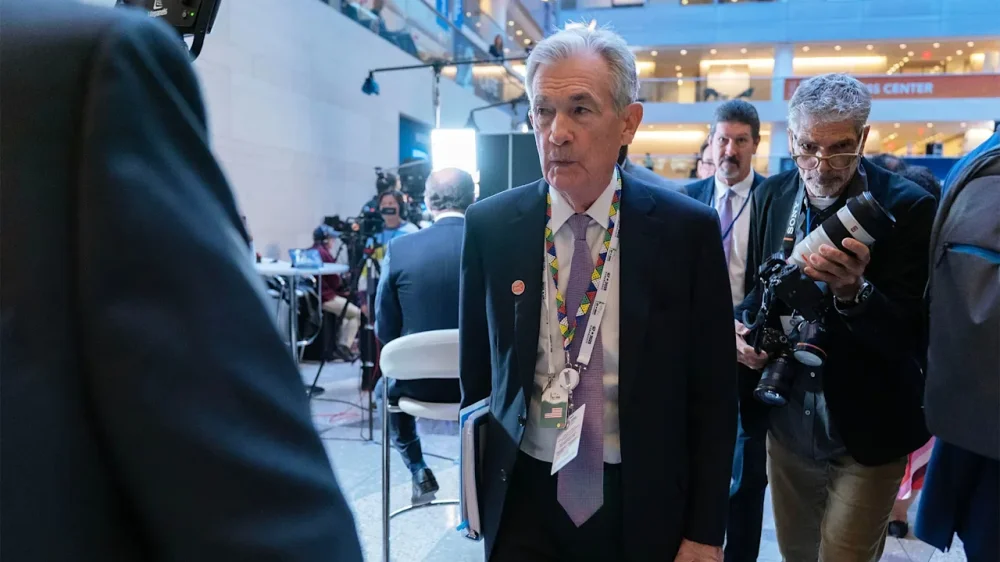
The Federal Reserve will almost certainly cut its key interest rate on Wednesday and could signal it expects another cut in December as the central bank seeks to bolster hiring. A cut Wednesday would be the second this year and could benefit consumers by bringing down borrowing costs for mortgages and auto loans. Since Fed chair Jerome Powell strongly signaled in late August that rate cuts were likely this year, the average 30-year mortgage rate has fallen to about 6.2% from 6.6%, providing a boost to the otherwise-sluggish housing market. Still, the Fed is navigating an unusual period for the U.S. economy and its future moves are harder to anticipate than is typically the case. Hiring has ground nearly to a halt, yet inflation remains elevated, and the economy’s mostly solid growth is heavily dependent on massive investment by leading tech companies in artificial intelligence infrastructure. The central bank is assessing these trends without most of the government data it uses to gauge the economy’s health. The release of September’s jobs report has been postponed because of the government shutdown. The White House said last week October’s inflation figure may not even be compiled. The shutdown itself may also crimp the economy in the coming months, depending on how long it lasts. Roughly 750,000 federal workers are nearing a month without pay, which could soon start weakening consumer spending, a critical driver of the economy. Federal workers laid off by the The President administration’s Department of Government Efficiency efforts earlier this year may formally show up in jobs data if it is reported next month, which could make the monthly hiring data look even worse. Powell has said that the risk of weaker hiring is rising, which makes it as much of a concern as still-elevated inflation. As a result, the central bank needs to move its key rate closer to a level that would neither slow nor stimulate the economy. Most Fed officials view the current level of its key rate — 4.1% — as high enough to slow growth and cool inflation, which has been their main goal since price increases spiked to a four-decade high three years ago. The Fed is widely expected to reduce it to about 3.9% Wednesday. WIth job gains at risk, the goal is to move rates to a less-restrictive level. Kris Dawsey, head of economic research at D.E. Shaw, an investment bank, said that the lack of data during the shutdown means the Fed will likely stay on the path it sketched out in September, when it forecast cuts this month and in December. “Imagine you’re driving in a winter storm and suddenly lose visibility in whiteout conditions,” Dawsey said. “While you slow the car down, you’re going to continue going in the direction you were going versus making an abrupt change once you lose that visibility.” In recent remarks, the Fed chair has made clear that the sluggish job market has become a signficant concern. “The labor market has actually softened pretty considerably,” Powell said. “The downside risks to employment appear to have risen.” Before the government shutdown cut off the flow of data Oct. 1, monthly hiring gains had weakened to an average of just 29,000 a month for the previous three months. The unemployment rate ticked up to a still-low 4.3% in August from 4.2% in July. Layoffs also remain low, however, leading Powell and other officials to refer to the “low-hire, low-fire” job market. At the same time, last week’s inflation report — released more than a week late because of the shutdown — showed that inflation remain elevated but isn’t accelerating and may not need higher rates to tame it. Yet a key question is how long the job market can remain in what Powell has described as a “curious kind of balance.” “There have been some worrisome data points in the last few months,” said Stephen Stanley, chief U.S. economist at Santander, an investment bank. “Is that a weakening trend or are we just hitting an air pocket?” The uncertainty has prompted some top Fed officials to suggest that they may not necessarily support a cut at its next meeting in December. At its September meeting, the Fed signaled it would cut three times this year, though its policymaking committee is divided. Nine of 19 officials supported two or fewer reductions. Christopher Waller, a member of the Fed’s governing board and one of five people being considered by the The President administration to replace Powell as Fed chair next year, said in a recent speech that while hiring data is weak, other figures suggest the economy is growing at a healthy pace. “So, something’s gotta give,” Waller said. “Either economic growth softens to match a soft labor market, or the labor market rebounds to match stronger economic growth.” Since it’s unclear how the contradiction will play out, Waller added, “we need to move with care when adjusting the policy rate.” Waller said he supported a quarter-point cut this month, “but beyond that point” it will depend on what the economic data says, assuming the shutdown ends. Financial markets have put the odds of another cut in December at above 90%, according to CME Fedwatch — and Fed officials have so far said little to defuse that expectation. Jonathan Pingle, chief U.S. economist at UBS, said that he will look to see if Powell, at a news conference Wednesday, repeats his assertion that the risks of a weaker job market remain high. “If I hear that, I think they’re on track to lowering rates again in December,” he said. —Christopher Rugaber, AP Economics Writer View the full article
-
We may earn a commission from links on this page. Deal pricing and availability subject to change after time of publication. Sony’s WH-1000XM series has long been the gold standard for noise-canceling headphones, and while the new WH-1000XM6 has taken the spotlight, the WH-1000XM5 remains a standout, especially at a lower price. Right now, they’re down to $284.99 at Walmart, a notable drop from their usual $399.99 list price and lower than Amazon’s current $328 listing. Sony WH-1000XM5 Headphones $284.99 at Walmart $399.99 Save $115.00 Get Deal Get Deal $284.99 at Walmart $399.99 Save $115.00 These are the same award-winning headphones that were lauded when they launched in 2022, with PCMag giving them 4.5 out of 5 stars for their sound, noise cancellation, and comfort. They still rank among the best wireless headphones available, and this discount makes them a smarter buy than ever for anyone who doesn’t need the very latest model. The WH-1000XM5 uses 30mm carbon fiber drivers powered by Sony’s Integrated Processor V1, and that combo still sounds excellent in 2025. Music has depth and balance, with enough punch to handle bass-heavy tracks without losing detail in vocals or instruments. What’s impressive is how little the audio quality changes when ANC is turned on, something cheaper models often struggle with. The noise cancellation itself is among the strongest you’ll find, easily cutting out low-frequency hums from engines or chatter in public spaces. As for connectivity, these headphones connect over Bluetooth 5.2 and support AAC, SBC, and LDAC codecs (meaning you get high-resolution audio over Bluetooth, provided your device supports it), plus multipoint pairing if you juggle between devices. Comfort and design are other strengths. The lightweight frame and soft-fit leather earcups make long sessions easy, whether you’re working, commuting, or zoning out on a flight. That said, the touch controls on the earcups can take some getting used to—swipes for volume, taps for play/pause—but you can fine-tune them in the Sony Sound Connect app, which also lets you tweak EQ settings and ANC sensitivity. Battery life is solid at around 30 hours with ANC on, and they charge quickly through USB-C. There’s also a 3.5mm audio jack for wired listening when you don’t want to think about battery life. Our Best Editor-Vetted Tech Deals Right Now Apple AirPods Pro 2 Noise Cancelling Wireless Earbuds — $169.99 (List Price $249.00) Apple iPad 11" 128GB A16 WiFi Tablet (Blue, 2025) — $299.00 (List Price $349.00) Amazon Fire TV Stick 4K Plus — $29.99 (List Price $49.99) Shark AV2501AE AI XL Hepa- Safe Self-Emptying Base Robot Vacuum — $299.99 (List Price $649.99) Ring Pan-Tilt Indoor Cam, White with Ring Indoor Cam (2nd Gen), White — $59.99 (List Price $99.99) Blink Video Doorbell Wireless (Newest Model) + Sync Module Core — $29.99 (List Price $69.99) Blink Mini 2 1080p Indoor Security Camera (2-Pack, White) — $27.99 (List Price $69.99) Ring Video Doorbell Pro 2 with Ring Chime Pro — $149.99 (List Price $259.99) Introducing Amazon Fire TV 55" Omni Mini-LED Series, QLED 4K UHD smart TV, Dolby Vision IQ, 144hz gaming mode, Ambient Experience, hands-free with Alexa, 2024 release — $699.99 (List Price $819.99) Blink Outdoor 4 1080p 2-Camera Kit With Sync Module Core — $51.99 (List Price $129.99) Deals are selected by our commerce team View the full article
-
Decision to put migrants in former army barracks marks policy reversal by Keir StarmerView the full article
-
As more and more drivers purchase electric vehicles, some people have voiced concerns about how the EV boom could further strain our aging, stressed electricity grid. More EVs means more electricity demand, which could require costly infrastructure upgrades or limit when drivers can charge if demand is too high. But one long-talked about promise of EVs is that they could actually make our electricity grid more resilient. Through bidirectional charging, EVs could essentially act as batteries parked outside your home, powering houses so that they don’t need to rely on outside electricity. They could also even send energy back to the grid. A handful of EVs can already power your home during an outage, including the Ford F-150 Lightning. And Ford is expanding how its EV drivers can take advantage of bidirectional charging. Through its Home Power Management program, F-150 Lightning owners can use their trucks to power their homes when electricity prices from the grid are high, easing energy burdens and saving people money on their monthly bills. It also gives customers the ability to send energy from the trucks back to the grid, in some instances earning them money from their electricity company for doing so. “We see an opportunity here where our vehicles can be part of the solution rather than compounding the problem,” Dave McCreadie, director of Ford’s EV-Grid Integration Strategy and Business Development, said during a recent press briefing on the program. The rollout is currently limited, but Ford expects to expand a Home Power Management pilot in 2026. At a time when EV sales are lagging and EV tax credits have expired—and as homeowners across the country are seeing their energy bills increase—Ford hopes potential customers see these features as another benefit to owning an EV. A personal power plant to lower energy bills Backup power has been a feature in the F-150 Lightning since its release in 2022. After major hurricanes like Helene in North Carolina and Beryl in Texas, F-150 Lightning owners used their trucks as generators, allowing them to keep the lights on and the refrigerator running when the power went out. A fully charged F-150 Lightning can power a home for three days; if that power is rationed, it can last up to 10 days. Backup power only works when the grid goes down. Home Power Management, however, allows EV owners to use their trucks to power their homes even when the grid is up and running. The idea is that customers can charge their EVs overnight during offpeak hours, when electricity rates are low. Then, when demand peaks and rates go up, they can use their EV to power their homes. That both offsets a homeowner’s electricity bills and frees up power from the grid to go elsewhere. The home in question is now essentially “invisible” to the grid, the automaker explains. In June 2024, Ford partnered with Baltimore Gas & Electric (BGE) and Sunrun, a home solar and battery company, to launch the country’s first vehicle-to-home pilot program, allowing EV owners to use their vehicles to power their homes anytime, not just during an outage. Brian Foreman, an F-150 Lightning owner in Highland, Maryland, was the first customer to do so, essentially turning his EV into his own personal power plant. Ford didn’t share exactly how much Foreman saved on his electricity bills, but says that customers can save an average of $42 per month, or $500 per year, by using the vehicle-to-home capability. “When most people would be concerned, ‘I’ve got an electric vehicle, my electricity bill is going to go up,’ well now you have this offset. Your vehicle is actually working for you in your driveway while it’s parked,” said Ryan O’Gorman, senior manager of energy services business strategy and delivery at Ford. Brian Foreman Sending energy to the grid—and making money In the summer of 2025, Foreman joined two other BGE customers for another pilot, this time one that allowed customers to use their F-150 Lightnings to send power to the grid. This turns the EVs into “distributed power plants,” per the utility company, which also paid customers for the energy they shared. Instead of just saving customers money on their electricity bills, this next step in Ford’s Home Power Management program lets EV owners make money through their EVs. The participants could earn up to $1,000 for the power they provided between July and September. Using your F-150 Lightning to power your home during peak energy demand or to send power to the grid does require extra equipment: an inverter called the Home Integration System, created by Ford and Sunrun. That equipment is also needed if you want to use your truck to provide backup power during an outage, so some customers already have it installed. The Home Integration System costs $3,895, and installation can be another $3,000, though those prices vary. That expense is on top of the price to buy and install a home EV charger. Some Ford customers received a free charger and installation through the automaker’s Ford Power Promise program, but for those that missed out on that opportunity, a level 2 Ford Charge Station Pro costs another $1,310 plus installation, which can vary from $200 to $1,000, depending on any wiring upgrades your home needs. That means there is an upfront cost to eventually being able to offset your energy bills or make money by providing power through your EV. But Ford says its F-150 Lightning is cost competitive to buying a 10-kilowatt stationary backup generator for your home—plus, it’s a generator you can drive around. Looking ahead for Ford Currently, a handful of customers in just nine states are using Ford’s Home Power Management capabilities, including Maryland, Georgia (where Ford did a six-month pilot program with energy provider Southern Company focused on commercial fleets), and Vermont (where energy expert Peter Schneider tested the program with Ford, using it to power his home, and reduce grid strain, during extreme heat there this past summer). Getting this system set up requires working with utility companies, which have to provide approval and permits for EVs to be interconnected with the grid in these ways. Automakers also work with utilities to communicate about peak demand, with software that automatically charges an EV at grid-friendly times. “Ford trying to maintain communications with hundreds and even thousands of electric utilities across the country is an untenable business solution,” McCreadie said. “We found that other automakers were having the same problem.” Ford worked with BMW and Honda to create ChargeScape, a joint venture that launched in 2024, which basically acts as “connective tissue,” McCreadie explained, to link utilities and automakers, and integrate EVs into the grid. Though vehicle-to-home and vehicle-to-grid charging is a goal for the EV industry at large, Ford says it’s ahead of the pack with its recent pilot programs. Ford and Michigan-based DTE Energy have also recently launched a new program piloting the vehicle-to-home capabilities, starting with a group of 15 Ford employees. Through that pilot, DTE Energy will pay participants for using their EVs to power their homes during times of high electricity demand. But EV owners don’t have to do anything themselves; the system is entirely automated. DTE Energy will send notifications to ChargeScape to schedule when participants EV’s provide power for their homes. Though it’s only available to Ford employees right now, the automaker says it’s working with DTE to hopefully expand the program to the general public later on in 2026. View the full article

-
You know a theory is janky when even its Wikipedia page has “(pseudoscience)” in its title. That’s the case with so-called “biorhythms,” or periods of 23, 28, and 33 days that supposedly predict how mentally, physically, and actively on-point you’ll be on any given day. The concept of biorhythms is all over social media and has been for years, so you might think there's some legitimacy to it, but it's essentially hogwash. There are, however, other ways to track your “peaks” in productivity that are more scientifically sound. The difference between a biorhythm and circadian rhythmThe idea behind biorhythms is that over the course of month-long periods, your physical, emotional, and intellectual aptitudes fluctuate rhythmically, up and down, so you should be attuned to your personal schedule and act when each of them is at the top of one of its cycles. The first problem here is pretty obvious: Not only does this thinking dictate that you can or should be productive only once a month or so, but it gives you permission to coast when you perceive yourself to be on the low end of one of these so-called rhythms. If you're patiently waiting for a biorhythm to spike, your responsibilities and tasks can add up, which will leave you with a bunch of stuff to do—and much of it, left alone for so long, will likely have become urgent. Scientists have looked into this and deemed it balderdash, but the enduring belief in this phenomenon has led to some money grabs wherein influencers or other hucksters try to sell you products that can help you “hack” your own biorhythm to maximize your energy, productivity, and happiness. Now, you might have heard of circadian rhythms and assumed biorhythms are roughly the same thing. In fact, they're quite different. Per the National Institute of General Medical Sciences, circadian rhythms are the physical, mental, and behavioral changes that flow along a day-long cycle and they’re triggered by light and dark. There’s a whole science behind it (chronobiology), but what it amounts to is this: You get tired when it gets darker, your body sleeps at night, and you should be awake in daylight to get stuff done, ideally feeling alert. You can put a lot of energy into “hacking” your rhythm, but it’s all the obvious stuff: Sleep at night, don’t exert yourself or look at your phone before bed, go outside in the morning, stick to a schedule, etc. Biorhythms aren’t real, but circadian rhythms are. You’ll be more productive if you get consistent and good sleep. You don’t need to track peaks and valleys or subscribe to hokey apps to master this. Instead, focus on getting quality sleep and maximizing what you are doing during those precious daylight hours. If you're still looking for a structure to fill the void left by the false promise of biorhythms, let's get into the Yerkes-Dodson Law. The Yerkes-Dodson lawSome peaks and valleys are worth tapping into. The Yerkes-Dodson law models the relationship between stress levels and performance, showing how experiencing some stress and urgency can make you more productive. It’s been around since 1908, when psychologists Robert Yerkes and John Dillingham Dodson discovered it, and looks like a curve when it’s mapped out on a matrix, just like supposed “biorhythms” do. It looks like an upside-down U; on the left, you have your low-stress moments, on the right you have your high-stress moments, and in the middle, you have your peak, or the time when you’re just stressed enough to be productive but not totally overwhelmed. The Y-axis shows peak performance at the top and worst performance at the bottom, so you’ll notice that your poor performance times are aligned with having too little and too much stress. When you don’t have enough stress, you’ll be uninterested in your task. When you have too much, you’ll be too anxious to get it done well. The hypothesis Yerkes and Dodson came up with came around after studying the effects of electric shocks on mice’s ability to perform tasks. As stress increases, ability also increases—to an extent—because you have motivation. So there is, in fact, a "rhythm" that counts for something, and that's the way your interest and stress fluctuate. You don't need to spend any money on an app or self-help book, but you should pay attention to how interested you are in a task at a given time—plus how motivated you feel in that moment. When no one is coming over to visit, for instance, you probably aren't as interested in cleaning your house as you would be if their arrival was in a day. You don't have stress or urgency. On the other hand, if they were arriving in 30 minutes and your place was a mess, you'd be so stressed you might not know where to start. The peak time to clean, then, might be the morning before they get there. You're interested and motivated, but not freaking out. Apply that same thinking to any task you need to accomplish. Pay close attention to how you feel in the lead-up to doing it so you can identify your own peak stress and peak productivity times. It helps to prioritize your to-dos and schedule your days and weeks thoroughly. Parkinson's Law goes hand in hand with Yerkes-Dodson, for instance. It says that the longer you give yourself to do something, the longer you'll naturally take to get it done, so you should give yourself less time overall. Having a smaller window in which to work on pressing tasks will up the urgency, aligning you more with the peak of Yerkes-Dodson. Pre-plan your weeks using prioritization techniques like the Eisenhower Matrix and task batching, thinking about when you'll have just the right amount of urgency to motivate you to do each task. View the full article
-
The world’s largest retailer has announced massive job cuts before the holidays. On Tuesday, Amazon said in a memo to staff that it will lay off 14,000 employees. Here’s what you need to know about the Amazon layoffs, and why these aren’t the last jobs that Amazon will likely cut in the future. What’s happened? On Tuesday, Amazon’s senior vice president of people experience and technology, Beth Galetti, announced the company was eliminating “approximately 14,000” positions. Galetti sent a memo about the layoffs to Amazon employees, which was then published to the Amazon website. The headcount reduction of 14,000 positions is less than the up to 30,000 job cuts that Reuters had reported in the hours before Galetti’s memo was made public. However, it still represents one of the largest single layoff rounds of 2025. It also comes just days after competitor Target announced it was laying off 1,800 corporate roles. Amazon did not say which 14,000 jobs would be eliminated, but the memo specified that they would be “corporate workforce” positions, suggesting Amazon’s warehouse workforce is safe from the cuts. But that is to be expected as Amazon would be unlikely to reduce its warehouse staff ahead of the busy holiday season. According to PitchBook, Amazon has a total workforce of more than 1.5 million employees. Why is Amazon laying off 14,000 employees? In the memo, Galetti stated that the layoffs are a continuation of Amazon CEO Andy Jassy’s September 2024 directive to strengthen Amazon’s culture and teams. In 2024, that strengthening resulted in a return-to-office (RTO) mandate. In 2025, strengthening your culture apparently means cutting your workforce. “The reductions we’re sharing today,” Galetti’s memo states, “are a continuation of this work to get even stronger by further reducing bureaucracy, removing layers, and shifting resources to ensure we’re investing in our biggest bets and what matters most to our customers’ current and future needs.” But Galetti continued, explaining that the main driver for the cuts is—you guessed it—artificial intelligence. “The world is changing quickly,” Galetti said. “This generation of AI is the most transformative technology we’ve seen since the Internet, and it’s enabling companies to innovate much faster than ever before (in existing market segments and altogether new ones).” Because of this, Galetti said that Amazon is convinced it needs to become a leaner company with “fewer layers.” The “layers” here are people. Amazon could cut even more jobs next year While the 14,000 job cuts Amazon announced today are devastating to the workers and their families who are affected, Amazon may not be done cutting positions. In the memo, Galetti added that “looking ahead to 2026,” Amazon expects to hire in key areas, “while also finding additional places we can remove layers.” How has Amazon’s stock price reacted? While the layoffs are devastating to the workers losing their jobs, Wall Street often sees layoffs as a good thing. That’s because laying off a large number of workers is usually the fastest way for a company to cut costs and thus increase its bottom line. But if Amazon was hoping to see a stock price boost from its layoff announcements this morning, the company is going to be disappointed. As of this writing, Amazon’s stock price (Nasdaq: AMZN) is relatively flat in premarket trading. It’s up just half a percent to around $228.22 per share. As a matter of fact, Amazon’s stock price for 2025 hasn’t moved much. Year to date, the company’s share price is up just 3.4%. That’s compared to the Nasdaq’s 21% gain in the same period. Amazon is expected to share its third-quarter 2025 financial results on Thursday, October 30. View the full article
-
Those who are bearish on US democracy should not extend their pessimism to the economyView the full article
-
Early in my career, I was fortunate to cross paths with a mentor who changed how I saw design—and myself. He ran a small studio whose influence reached far beyond its size. He led with a quiet confidence and quick wit, showing how intelligence and humility could coexist in the creative process. I was passionate about the craft, but there was still so much more to learn about the tools, and about business. He taught me how to infuse storytelling into design. How to navigate constraints. How to bring meaning to every project, not just the ones that sparked instant excitement. He reminded me that creativity thrives on play and curiosity, and that if you lose joy in the process, the work suffers. Those experiences taught me that mentorship is about passing down not just skills, but a way of seeing and approaching the work. The guru form of mentorship—the close, sustained one-to-one relationship between an experienced guide and an eager apprentice—has given way to something more imaginative and community-based. For me, much of that evolution has been visible through creative networks like AIGA that champion connection and professional growth. In addition, platforms like ADP List help creatives solve problems and refine their portfolios through focused, 20-minute feedback exchanges. Inclusive group-based initiatives such as Break the Wall blend workshops, one-on-one meetings, and targeted training to build confidence and open doors for underrepresented creatives. This new wave of mentorship redefines how we learn from each other in a post-pandemic world when proximity is no longer a given. It challenges the belief that deep creative growth depends on shared physical space, replacing it with something more fluid and democratic. How are these new approaches enriching creative mentorship, and what do we risk losing along the way? The Demise of Guru Mentoring During the era of the hands-on mentor, you didn’t just learn what someone did. You absorbed how they thought, often through shared experiences. When I joined Fifty Thousand Feet in 2004, the lessons my mentor taught me became the foundation for how I approached creative leadership and helped grow the practice. I learned that mentorship doesn’t stop with one relationship; it becomes part of how you lead—and help others to lead. When more experienced designers remind their teammates that trust is as essential to great design as aesthetics, mentorship becomes collective. It becomes how we grow together. When the pandemic hit, creative studios went quiet. Overnight, our way of working, defined by proximity and spontaneity, was replaced by screens and schedules. We lost the informal learning that happens in passing: the sketch on someone’s desk, the overheard critique, the unplanned spark of collaboration. Many leaders tried to re-create that closeness through digital tools. We held virtual check-ins and all-hands meetings. But something was missing. The energy of shared space, the easy conversations, the sense of momentum, was hard to replicate. Collaboration became more intentional, but less organic. In that absence, the creative industry began searching for new models that could sustain connection and growth in a hybrid world. The Rise of New Mentorship Models What followed was a burst of experimentation. Across the industry, new forms of mentoring have gained momentum since the pandemic, combining structure with flexibility and access. Micro mentorship has become a favorite starting point. These short, focused sessions meet creatives where they are, helping them refine portfolios, shape presentations, or overcome creative blocks. The approach trades hierarchy for immediacy. For younger designers, it opens the door to multiple mentors instead of one. For mentors, it offers the chance to share expertise in moments that matter most. At the same time, peer learning communities are reshaping how creatives connect. These networks erase titles and encourage reciprocity. One week you are the mentor, the next you are the learner. Younger professionals bring fresh fluency in tools and culture, while veterans share hard-won perspectives. That exchange keeps creative cultures evolving. Even traditional apprenticeship models are changing shape. Adobe’s Creative Apprenticeship, for instance, links aspiring designers with more than 200 creative leaders and 35 agency partners. It borrows the rigor of the studio system but scales it globally. Meanwhile, digital communities of practice have become the connective tissue of the industry. Organized around disciplines or shared challenges, they create space for ongoing dialogue, workshops, and portfolio exchange. Together, these models show that mentorship did not vanish in the pandemic. It adapted. It became faster, more open, and more human in its reach. The Benefits of Peer Learning and Community New forms of mentorship break down barriers of geography, hierarchy, and privilege. A designer in Nairobi can now receive feedback from a creative director in New York. A freelancer can find a sense of belonging in a global online forum. They also diversify the voices shaping creative careers. Traditional mentorship often reflected proximity—who sat near whom, who belonged to which agency, who got noticed. Community-based mentorship opens the door to people with different experiences, disciplines, and perspectives. That diversity fuels innovation by exposing creatives to new ways of thinking and working. Peer and micro-mentorship also allow for real-time feedback rather than waiting for annual reviews or rare moments of contact. They make mentorship a living part of the workday. And perhaps most importantly, they distribute the emotional labor of mentorship. Instead of depending on one relationship, creatives can build a constellation of guides, akin to a network that evolves as their career does. What We Risk Losing Yet efficiency has its costs. The quiet accumulation of trust and shared history that forms the long arc of mentorship is harder to replicate online. Tacit knowledge, the kind that comes from watching how someone handles conflict or reads a room, can be difficult to transfer in a virtual environment. There is something to be said for the value of serendipity, too. In-person work creates unplanned learning: the overheard insight, the offhand comment that sparks an idea. Virtual platforms tend to optimize for structure, not discovery. Without care, mentorship risks becoming transactional, something to schedule rather than something to live. Blending the Old and the New But we don’t have to lose the good things about one-to-one mentorship. The future of creative mentorship might not be about choosing one model over another. It’s about synthesis. The one-to-one relationships that shaped generations of creatives can coexist with today’s distributed, community-driven systems. The key is to preserve the human connection at the heart of mentorship while expanding who gets to participate. For creative leaders, that means being intentional about creating the conditions where mentorship thrives. Make it part of your culture, not an HR program. Pair senior and junior talent on projects and encourage them to exchange feedback in both directions. Create small circles or pods where peers can learn from each other. Recognize mentorship in performance reviews, not just deliverables. Use digital platforms for access, but keep curiosity, trust, and generosity as your operating principles. Mentorship is how creative culture renews itself. Whether it happens across a desk or across a screen, it remains the most human way we learn to create, lead, and grow. View the full article

-
Robyn Denholm urges investors to support billionaire chief’s package ahead of crucial November 6 voteView the full article
-
In January 2025, subway riders at the 59th Street-Lexington Avenue station in Manhattan noticed a surprising new addition: spiked metal partitions between each fare gate. Some commuters called the partitions “silly and foolish.” Others said they were “a waste of money.” Over the past nine months, the Metropolitan Transportation Authority has rolled out the same spiked partitions to 183 stations across the subway network, with more on the way. Like spikes on a handrail prevent people from sitting on it, these metal screens (which the MTA calls “sleeves”) are designed to prevent people from hoisting themselves over the turnstiles. They’ve also turned what was already an inhospitable system into an actively hostile public space. The MTA argues it has good reason to take these measures. About 40% of the agency’s operating budget comes from fares and tolls, meaning every tap and every swipe helps keep trains and buses running. But many riders aren’t paying at all. In 2024, fare evasion on the subway cost the agency around $350 million, though it topped $1 billion if you include unpaid buses, trains, and tolls. At 59th Street-Lexington Avenue, the spiked partitions, which were custom-made specifically for the New York subway, seem to have worked. According to an April 2025 MTA press release—four months after installing the mechanisms—fare evasion at the station dropped by roughly 60%. There is no way of knowing, however, if the drop is due to the “sleeves” or the other measures the MTA introduced at that station, including turnstiles with larger “fins,” and new “anti back-cocking” mechanisms to prevent people from squeezing in through the turnstile without paying. It is also possible that offenders simply moved on to a nearby station that hasn’t been retrofitted with these anti fare-evasion designs. Earlier this year, the MTA began piloting modern, glass-paneled gates at a limited number of stations, combined with gate guards now stationed at more than 200 locations. These efforts helped the MTA collect $5 billion in fare revenue in 2024, up $322 million from the previous year. The apparent success poses two uncomfortable questions: Should we accept a fortified, unwelcoming subway if it really does deter people from jumping the turnstile? And is there really no better way to get people to pay? Flickr A worldwide challenge Fare evasion is a global headache with no standardized solution, and different cities have taken different approaches to stopping it. In Paris, officials have relied on a growing army of fare inspectors and hefty fines. Transport for London, which lost more than $170 million in revenue to fare dodgers in the capital city in 2023, is considering adding AI-enabled, extra-tall ticket barriers to trap offenders. Meanwhile, Queensland, Australia, recently slashed train and bus fares from as much as $6.23 to a flat 50 cents, and fare evasion plummeted. New York’s MTA, for its part, has mostly favored enforcement. In 2022, it convened a Blue-Ribbon Panel on Fare Evasion to recommend solutions. The panel’s report suggested promoting the city’s Fair Fares program (which offers half-priced MetroCards to low-income residents), partnering with public schools to teach students transit etiquette, redesigning fare gates as part of a 2025-2029 Capital Plan, and posting gate guards to deter evasion. A spokesperson for the MTA told Fast Company that the agency’s “aggressive strategy” stems directly from those recommendations, but declined to specify whether any education and outreach campaigns have been implemented so far. For now, the retrofitted gates and guards appear to be working: Subway fare evasion across the entire network dropped by 30% in 2024. Flickr “How far do we have to go?” The New York City subway—rat-infested and delay-prone as it may be—is one of the city’s most vital public spaces. It may lack the allure of a park, or the quiet of your local public library branch, but it brings millions of people together across class, race, and borough lines. “The subway is known as a place that generates community, where you see people different from you, sometimes even start conversations,” says Setha Low, a professor of anthropology at the City University of New York. “Making it into a fearful environment, making it less inclusive, isn’t going to help the MTA get people back on the subway.” The spiked walls haven’t yet reached Low’s local station in Brooklyn, but when shown a photo of the spiked sleeves at Barclays Center, she drew comparisons to the kind of barbed wire she’s seen across Latin America, where she conducted fieldwork for 15 years. The problem, she says, isn’t just that the measures look hostile, it’s that they reflect a growing citywide aesthetic. Hostile architecture—a term describing exclusionary urban design like spikes on flat surfaces or benches with dividers to deter sleeping—first spread across New York in the 1970s, when the city was facing budget crises and rising homelessness. Over the past decade, it has multiplied and morphed. Inside Moynihan Train Hall on Madison Avenue, and in Low’s own subway station in Brooklyn, benches have disappeared altogether—a strategic decision from the city to prevent unhoused people from sleeping in public spaces (see also the MTA’s new leaning benches). “I walked 30 blocks down Madison Avenue the other day, and there wasn’t one place to sit down,” Low says. From the city’s perspective, these new subway barriers are efficient. They maintain order, improve safety, and protect revenue. But that logic comes with a cost. “I think it’s legitimate to think about the psychological impact of how we internalize these surveilled, parceled structures all around us,” says Jon Ritter, a clinical professor of architecture at New York University. “Assuming [the spiked partitions] work as deterrents, it raises the question: How far do we have to go to achieve the public good of fare collection?” Unsplash Going beyond infrastructure Not everyone jumps a turnstile for the same reasons. A 2019 study of the Transantiago system in Santiago, Chile, grouped fare evaders into four types: those who evade as protest, those who do it because the risk is low, those who see no value in paying, and those who simply forget. Milad Haghani, a researcher and principal fellow in urban resilience and mobility at the University of Melbourne in Australia, has developed his own understanding of the factors at play. These include how difficult it is to physically evade a fare, the quality and reliability of the service, the cost of the fare relative to the local minimum income, and the perceived likelihood of getting caught. The MTA’s current strategy—taller gates, spiked partitions, human guards—addresses only the first factor: physical difficulty. “It makes fare evasion harder,” Haghani says, “but it doesn’t address why people choose to evade in the first place.” He adds that when service quality is poor, people often justify evasion as a form of protest. And in New York, where locals regularly complain about unreliable weekend service or aging infrastructure that floods during storms, the MTA is giving them plenty to protest about. (Did we mention the rats?) In July, the MTA celebrated a small victory after its spring survey reported 57% subway rider satisfaction—its highest since 2022. What was left unsaid, however, was that more than 40% of riders remain dissatisfied. “If the goal is genuinely to reduce fare evasion,” says Haghani, “physical enforcement has to be paired with improving service and restoring trust. Passengers are far less likely to avoid paying when they believe the fare is fair.” Until the MTA finds a way to improve its service and restore trust, the spikes might have to do. But if they also stop New Yorkers from feeling like the subway is a safe and inclusive space for everyone, there might be an even bigger price to pay. View the full article

-
Job losses come as chief executive oversees a cost-cutting drive amid increased AI spendingView the full article
-
Morning Joe host Joe Scarborough is ready to spill the tea in a new newsletter. Called The Tea, Spilled by Morning Joe, the revamped newsletter for the popular morning show on the network that will soon be called MS NOW (the name change is official on November 15, the network says) took its inspiration from the world of print magazines. It’s designed to be part of a larger flywheel to grow and connect with the show’s audience. “We wanted something that was visually arresting, that was simple, elegant, and that people could read and get insight from,” Scarborough tells Fast Company. The newsletter will be sent in the early afternoon, Monday through Friday, and feature daily, original illustrations from illustrator Natalie Sanders. Scarborough says if the secret to Julia Child’s cooking is butter, butter, and butter, the secret to the newsletter will be “white space, white space, and white space.” This isn’t meant to be a dense newsletter. “I don’t want picture, block of text, picture, block of text, picture block of text,” Scarborough says, adding that editor Graydon Carter’s work at Vanity Fair and the newsletter Air Mail “was a bit of an inspiration for me.” “I liked how he still focused on the visual,” he says. As MSNBC’s outgoing parent company, Comcast’s NBCUniversal, splits into two, its cable portfolio—consisting of MSNBC, CNBC, Oxygen, E!, SyFy, and the Golf Channel—is becoming an independent company called Versant. That means for the first time in its 30-year history, MSNBC is operating independently from NBC News. Per the breakup agreement, the liberal-leaning cable news and opinion network has to drop the “NBC” from its name, hence the rebrand to MS NOW, an acronym for “My Source for News, Opinion, and the World.” It has built out its own Washington bureau for news gathering and signed a multiyear deal with the London-based Sky News for international coverage, and the shows are adapting to a future in which an increasing number of people watch clips online instead of on traditional TV. Standing on its own also means MS NOW shows will need to build deeper relationships with their audiences and find new revenue models at a time when cable subscribers continue to cut their cords. Already, the network is building a live events business as a new revenue line, and the Morning Joe newsletter shows how it’s building new digital products to be integrated with the show. The Tea extends the Morning Joe brand into the afternoon, with each issue including one daily video from the morning’s show, and it also gives the hosts a direct line to their audience. Subscribers will get exclusive invites to virtual town halls with Scarborough, cohosts Mika Brzezinski and Willie Geist, and others, and each issue will include a form for reader questions that the network says will be answered in future issues or shows. Scarborough says the look of the newsletter is “a bit more avant-garde than any cable news show,” and considering he’s no longer working for a traditional TV news conglomerate parent company, like GE or Comcast, he’s rethinking the tone and approach he can take with the newsletter. Scarborough says he told MSNBC president Rebecca Kutler that “we’re going to be taking chances, and I can’t have people freaking out every day.” He tested the network’s front office in a mock-up prototype newsletter that dropped an f-bomb in the daily quote section. The only questions they got back from the mock-up issue were technical, like about wrapping the text around the images, but there were no qualms about the expletive. “That is like, whoa, we’re not in Kansas anymore, baby,” Scarborough says. “I do want something that is going to be culturally relevant, politically relevant, wherever that may be, and they’re giving us freedom to do that.” He describes the mentality of Versant as that of a startup and says it’s “radically different than what we’ve seen over the past 20 years.” When considering names for the newsletter, Scarborough says he and his team considered names that played off Morning Joe, like The Press, but The Tea seemed to better capture the tone he was going for. “Everybody said, ‘Oh no, no, no, we can’t do that. It’s not serious enough.’ I go, ‘Exactly,’” Scarborough says. View the full article