Newsletter
Want to keep up to date with all our latest news and information?


ResidentialBusiness
Administrators
-
Joined
-
Last visited
Everything posted by ResidentialBusiness
-
Last month, more than 450 artists designed a custom sticker to support Zohran Mamdani’s New York City mayoral campaign—and, pretty soon, you’re going to be seeing the winning design everywhere. On September 25, Mamdani’s campaign announced through an Instagram video that it would be hosting a sticker design contest to get New Yorkers registered to vote before the October 25 deadline. The competition gave followers just 36 hours to submit their designs, during which hundreds of pieces of art flooded the campaigns’ submission portal. Now that a winner has been selected, anyone who is registered can submit a form on Mamdani’s website and pick up the sticker at one of Mamdani’s canvases or volunteer events. Mamdani’s campaign took a page out of other regions’ playbooks through the sticker design contest, which, in recent years, have proven to be both effective fodder for social media discussion and a real avenue to boost voter engagement. It’s part of his larger goal to get more New Yorkers, and especially young people, registered to vote—a mission that, so far, has yielded impressive results. Why voting sticker contests are on the rise Mamdani, a democratic socialist, has run his campaign with an internet-savvy eye for design. In the election run-up, he masterfully shot candid short-form video content to reach young voters and establish himself as an authentic candidate for the people. His campaign posters balanced a hand-drawn quality with a healthy sprinkling of nostalgia, presenting Mamdani as less corporate and more down-to-earth than his rivals. These aesthetic choices helped pave the way for him to defeat Andrew Cuomo in the primaries. Now that the November 6 election is fast approaching, Mamdani’s campaign is using those same creative sensibilities to prepare New Yorkers for the polls. Most Americans will be familiar with the classic red-white-and-blue “I Voted” stickers, and for good reason. According to a 2016 study by four researchers at Berkeley, Harvard, and the University of Chicago, we’re more motivated to vote when we know others will know that we voted. These now-ubiquitous stickers are a key way to signal our civic involvement. Recently, though, another kind of voting sticker has taken center-stage. In 2022, Ulster County in New York decided to forgo the traditional sticker, opting instead to solicit sticker designs from local artists. The public overwhelmingly voted for a crazed-looking monster spider, designed by a 14-year-old, which became an immediate viral sensation. Since then, other local governments have similarly turned sticker design into a contest, from Denver to South Dakota and San Luis Obispo County, California. Last May, Michigan residents selected a image of a werewolf ripping off its shirt in front of an American flag to represent that they’d performed their civic duty. Submissions to Mamdani’s call for designs included a giant pigeon head, a psychedelic interpretation of Mamdani’s face, and a swaggering NYC alley cat. Mamdani himself chose his 10 favorite designs before allowing the public to vote on the winner. Nearly 7,000 votes later, the winner, created by local artist Nishan Patel, was chosen. Fittingly, the design features an NYC bodega with a cat in the window and the signage, “Vote for Zohran.” How Mamdani is boosting voter turnout Historically, sticker design competitions have been used to boost final voter turnout on election day. Instead, Mamdani’s campaign opted to catch potential supporters sooner by using the contest to encourage New Yorkers to register to vote—a goal that’s been central to the campaign’s success so far. According to an analysis from The New York Times, published on June 29, Mamdani has already changed the electoral map. In the 14 days leading up to the registration deadline for the Democratic primary, about 37,000 people registered to vote, compared with about 3,000 people in the same period in 2021, the publication found. “Mr. Mamdani’s campaign had focused on registering voters, and he also appears to have drawn thousands of voters to the primary who did not vote four years ago,” the report reads. Mamdani’s campaign told Fast Company that it even believes certain social media videos may have driven spikes in voter registrations. After Mamdani posted a call-to-action in mid-June specifically encouraging New Yorkers to register, registrations shot up. While such data is correlational and not necessarily causal, the campaign says that the narrow timeframe suggests a likely connection. As “Vote for Zohran” stickers begin to appear around the city, the design competition may prove to be another way that Mamdani convinces New Yorkers to get to the polls. View the full article

-
Shocked family condemns atrocity as ‘heinous act’View the full article
-
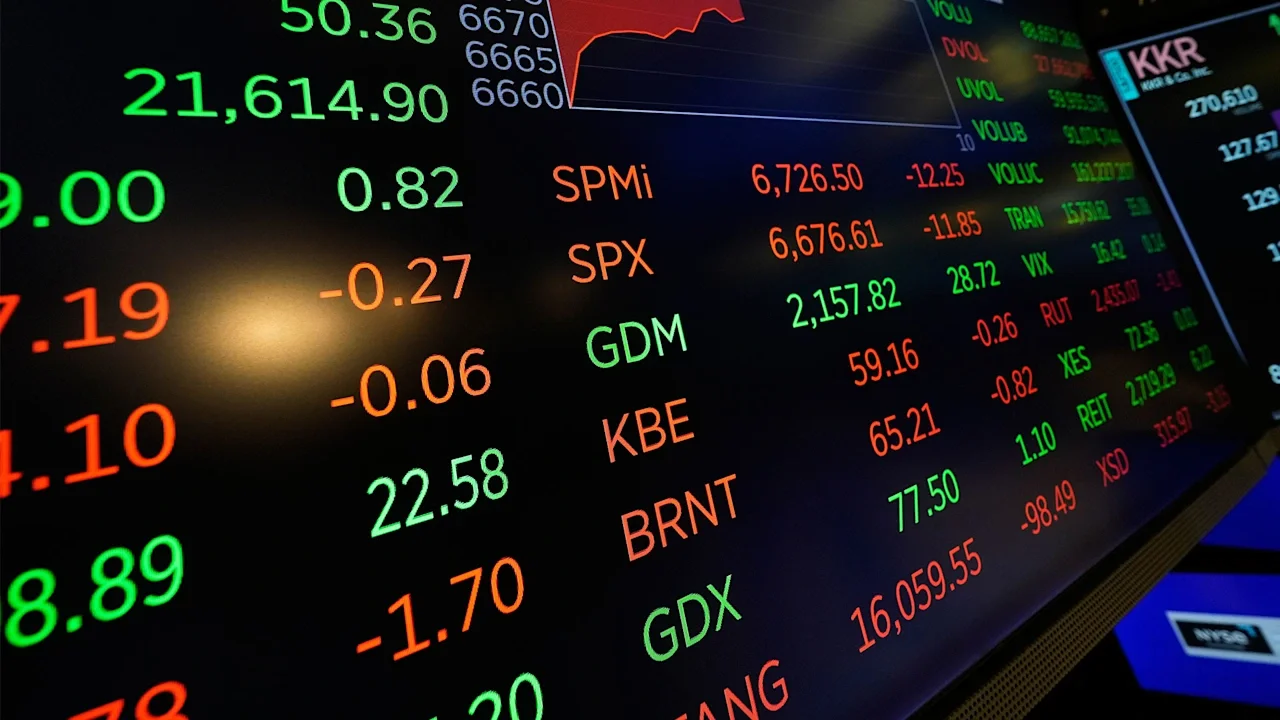
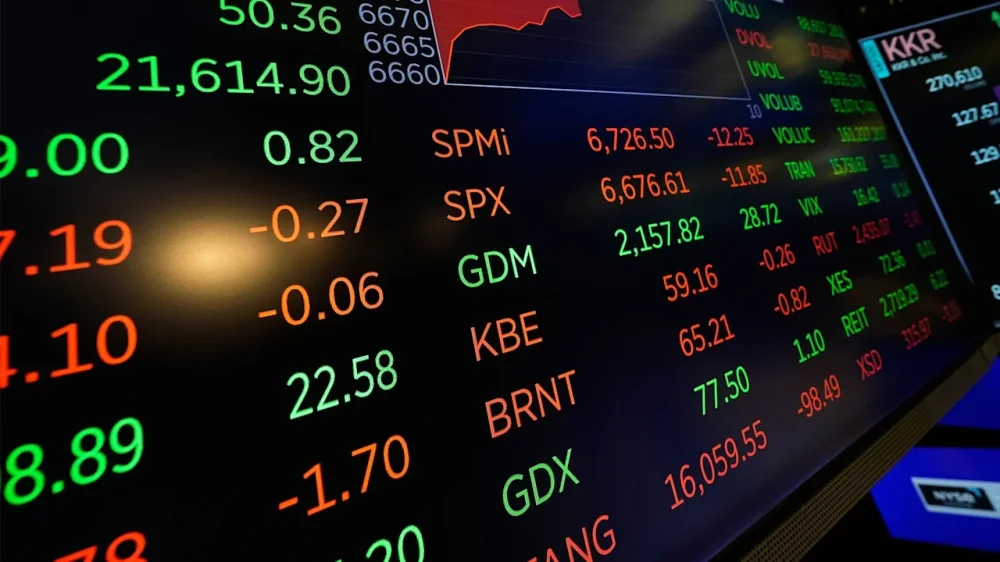
Wall Street nudged past yesterday’s record highs in early trading Friday as investors continue to shrug off the U.S. government shutdown, now in its third day. Futures for S&P 500, Nasdaq and the Dow Jones Industrial Average all added 0.2% before the bell. All three closed at record levels on Thursday, boosted by gains of chipmakers and artificial intelligence companies. Markets have largely ignored the shutdown of the U.S. government after Democrat and Republican lawmakers failed to reach agreement on funding. U.S. President Donald The President and congressional leaders were not expected to meet again soon and the Democrats have held fast to their demands to preserve health care funding, warning of price spikes for millions of Americans nationwide. The government shutdown means this week’s usual report on jobless claims was delayed. An even more consequential report, the monthly tally of jobs gains and losses that usually comes out the first Friday of every month, will also not arrive as scheduled. That increases uncertainty when much on Wall Street is riding on investors’ expectation that the job market is slowing by enough to convince the Federal Reserve to keep cutting interest rates, but not by so much that it leads to a recession. So far, the U.S. stock market has looked past the delays of such data. Shutdowns of the U.S. government have tended not to hurt the economy or stock market much, and the thinking is that this one could be similar, even if The President has threatened large-scale firings of federal workers this time around. Excitement around AI and the massive spending underway because of it are a major reason the U.S. stock market has hit record after record, along with hopes for easier interest rates. But AI stocks have become so dominant, and so much money has poured into the industry that worries are rising about a potential bubble that could eventually lead to disappointment for investors. At midday in Europe, Germany’s DAX ticked down 0.2% and the CAC 40 in Paris fell back 0.1%. Britain’s FTSE 100 rose 0.6%. In Asia, Japan’s Nikkei 225 closed nearly 1.9% higher at 45,769.50 as tech stocks gained despite data showing Japan’s unemployment rate rose 2.6% in August, the highest in 13 months and above the expected 2.4%. Shares in Hitachi jumped 10.3% after it signed a memorandum of understanding with OpenAI to provide cooling systems for its data centers. Stock exchanges in China and South Korea were closed Friday for holidays. Hong Kong’s Hang Seng won back some earlier losses, ending 0.5% down to 27,140.92 as traders sold to lock in profits from Thursday’s gains. Australia’s S&P/ASX 200 added nearly 0.5% to 8,987.40. India’s BSE Sensex rose less than 0.1%, while Taiwan’s Taiex edged 0.9% higher. In energy markets, benchmark U.S. crude added 17 cents to $60.65 per barrel. Brent crude, the international standard, rose 21 cents to $64.32 per barrel. —Teresa Cerojano and Matt Ott, Associated Press View the full article
-
Italian premier under fire amid strikes and clashes with police in solidarity with PalestiniansView the full article
-
Monthly earnings drop by 42% over five years following first birth, ONS findsView the full article
-
Did you know you can customize Google to filter out garbage? Take these steps for better search results, including adding Lifehacker as a preferred source for tech news. To take the best notes in class, you need a system. There are a lot of great note-taking techniques that can help you identify the key elements of any lesson and organize them in a way that will help you study—but one of the best ways to actually learn and retain what the notes say is by color-coding. It's easy and even kind of fun to work this technique into your existing study structure, so here's what to do. How color-coding your notes helps you studyUsing color can improve the performance of your memory. This isn’t just a throwaway observation: Research has backed it up. One study from 2019 asserted that color, a perceptual stimulus, has “significant impact on improving human emotion and memory” and found “colored multimedia learning materials induced positive emotional experiences during learning and influenced the brain’s information processing.” Positive emotion increased motivation to learn there, but other studies have even more directly linked color to memory, skipping the emotional part altogether. For instance, this literature review from 2013 noted that “there appears to be a basis for associating color and its significant effect on memory abilities.” Other studies, like this one from 2022, have pointed to how vital the use of color is for students’ self-expression, too, finding it “a key to their being satisfied with the learning process and its success, as well as with their future career growth.” The study found that color-coding important text was most important for students, who could control their color-coding and enhance their own self-study process. As with a lot of studying and learning techniques, we see this applied a lot in the early years of school, but it phases out as learners get older—though it shouldn't. Even though it was further back than high school, your memories of elementary school may be more vivid and you may even remember learning specific things. I remember a lot of educational art projects I did as a kid, for instance, especially when I got to choose the colors and designs I used. Applying that same mix of self-determination, active decision-making, and whimsy to more advanced studies can't hurt. How to color-code your notesAs made clear in the research on the topic, color-coding is as much about self-driven study and expression as it is about memory and retention, which means there’s no right or wrong way to color-code your own notes. You can use different colors of pen as you take the notes, for instance using red to write out key points and black to fill in supplemental information. This works well when you're using a critical reading framework, like SQ3R or KWL, too. Say you're using KWL, where you split your page into three columns and label them Know, Want to know, and Learn. The "learn" column is where you write the answers to the questions you posit in "want to know," so you could consider writing those in a different color so they really stick out. Or, you could use highlighters to code certain kinds of info. For instance, yellow can signify key points, blue can indicate things you’re not sure about, green could be vocabulary words, and so forth. The key is to create a system that is uniform and can be used across all your notes so you start associating the different colors with certain ideas or concepts. You can do this in class as you take notes so even from the start, you're actively identifying key concepts, vocab words, and the like, or you can do it while you revise and review your notes to help you organize them better. Color-coding is especially helpful in review, as you can quickly scan a page to identify, say, all the important dates in a history lesson—provided you took a few seconds to highlight them in a certain color beforehand. In the front of each notebook, make a color-coded directory to remind yourself what each pen or highlighter hue represents, then stick to it. You can, of course, do this if you're typing your notes in a word processing document, too, but bear in mind that research suggests you'll remember hand-written materials better. Once you create a color-coding structure, stick to it in all areas of your studying. When making flashcards, make sure to keep your key points yellow, your vocab words green, or whatever makes sense with the structure you're using. The same goes if you're creating mind maps (which you should be) to help you visualize your notes and course materials. Make your bubble or text colors align with the hues you've assigned to different elements of your content. To make that even easier, use an app. My favorite for mind maps is Xmind, which allows for plenty of color-picking options. View the full article
-
Federal Reserve Bank of New York President John Williams said Friday that unpredictable change is inevitable and central banks need to be aware of that and have strategies to operate in those environments. Williams’ comments, which came in prepared remarks for an event in Amsterdam, did not address the outlook for U.S. monetary policy. Williams serves as vice chair of the rate-setting Federal Open Market Committee, which cut interest rates last month as officials sought to offset rising risks to the job market. “Unpredictable change and uncertainty will certainly continue to be with us for the foreseeable future,” Williams said, flagging issues like “the effects of ongoing global demographic shifts, artificial intelligence, and potentially transformative innovations in our financial systems.” Williams said dealing with uncertainty means that central banks need robust principles and strategies in place that can deal with a range of contingencies, while noting there will still be novel situations to deal with. Williams also said that formerly unconventional strategies like bond buying are no longer novel and are a normal part of the toolkit. Williams said anchoring inflation expectations is critical and cannot be taken for granted. —Michael S. Derby, Reuters View the full article

-
Did you know you can customize Google to filter out garbage? Take these steps for better search results, including adding Lifehacker as a preferred source for tech news. If you want to truly grasp what you’re learning, not just memorize it short-term for a test, you should familiarize yourself with Kolb’s learning cycle. Hell, even if you do just want to pass a test, you should familiarize yourself with Kolb’s learning cycle. Educational theorist David A. Kolb published his experiential learning theory in 1984 and it’s been popular ever since, at least among teachers. If you haven't heard of it, that's no issue; let's go over what it's all about so you can learn better. What is Kolb’s four-step cycle?Kolb proposed a cycle of four stages that, once passed through, will result in effective learning: Concrete learning: This happens when the learner has a new experience and uses it to reinterpret or reframe an existing one. As an example, say you gave a presentation and it didn't go as well as you hoped it would, even though you felt like you prepared for it. You had a new experience and it made you reframe what you considered solid preparation. Reflective observation: This occurs when the learner thinks about the experience in a personal way. In our presentation example, this could mean you reflected on how disengaged or confused your audience looked, then questioned whether it was your speaking speed or cluttered PowerPoint slides that contributed to that. Abstract conceptualization: This is the part when the learner forms or modifies ideas after reflecting. Maybe here, you came up with ideas to make your next presentation better, like cutting out extra info from your slides or speaking more slowly and with better eye contact. Active experimentation: Finally, this happens when the learner applies the new thinking and notes if anything changes. In active experimentation, let's say you applied what you learned during the last presentation and paid attention to see how the audience responded to your new approach. Essentially, this method is a rigid, more academic way to describe the phenomenon of doing something, thinking about how you did it, and doing it again with some changes based on that reflection, which circles back around to the starting point of "doing something." While these steps tend to happen in order, it’s important to note that you can technically enter the cycle at any stage. For instance, you might have an experience and reflect on it, form an idea about it, and apply your thinking to your broader understanding of it, then learn more concrete details and information about it in a new class a year later. Don't get too hung up on mastering this in order, but do familiarize yourself with the stages so you can learn to recognize and use them. How Kolb's cycle looks in practiceLet’s say you’re studying accounting. You have personal experience like doing your own taxes or budgeting your paycheck, which is concrete learning. You gain more experience in class, being introduced to higher-level accounting concepts. After learning those concepts, you can do reflective observation by thinking of how your own experiences budgeting match up with what you were just taught and whether what you just learned could have enhanced your old results. In abstract conceptualization, you apply those reflections, considering whether they impact how you approach accounting in your life and whether you’d do anything differently next time you go to budget. In active experimentation, you can try implementing new lessons from class in your own financial planning or working on practice exercises, informed by your own experiences and the new information. As you consider the outcome of the practical application, you start over again with the concrete learning you experienced during the exercise. What to keep in mind about Kolb’s cycleTo me, the most crucial element here is the reflective observation. If you get a B on a quiz and don't go over what you did wrong, you'll get those same questions wrong on the midterm. Reflecting on what happened and what you can change is how you make the alterations you need in the future and what sets this apart as a learning and studying technique. After you study a new concept, try methods that force active recall—like blurting, which is saying or writing down all the content you can remember from the chapter or section—and take your time when going over what you got wrong. This doesn't have to be a solo endeavor, either. If you're stuck on something, ask a professor or fellow student to walk you through it. Getting an outside perspective can help with reflective observation and abstract conceptualization, allowing you to reframe your thoughts on a topic. Kolb’s cycle is usually meant for teachers to think about when lesson planning. Structural Learning, for instance, encourages educators to use this model in lessons to improve students’ understanding and problem solving. But since the goal of using the method is to encourage the acquisition of more abstract concepts—which can then be applied to a variety of topics and situations—it works for anyone. Keeping the four stages in mind while you study a new concept and reflecting on how you can hit each one will help you think more flexibly about the topic overall and help you retain what you’re learning. View the full article
-
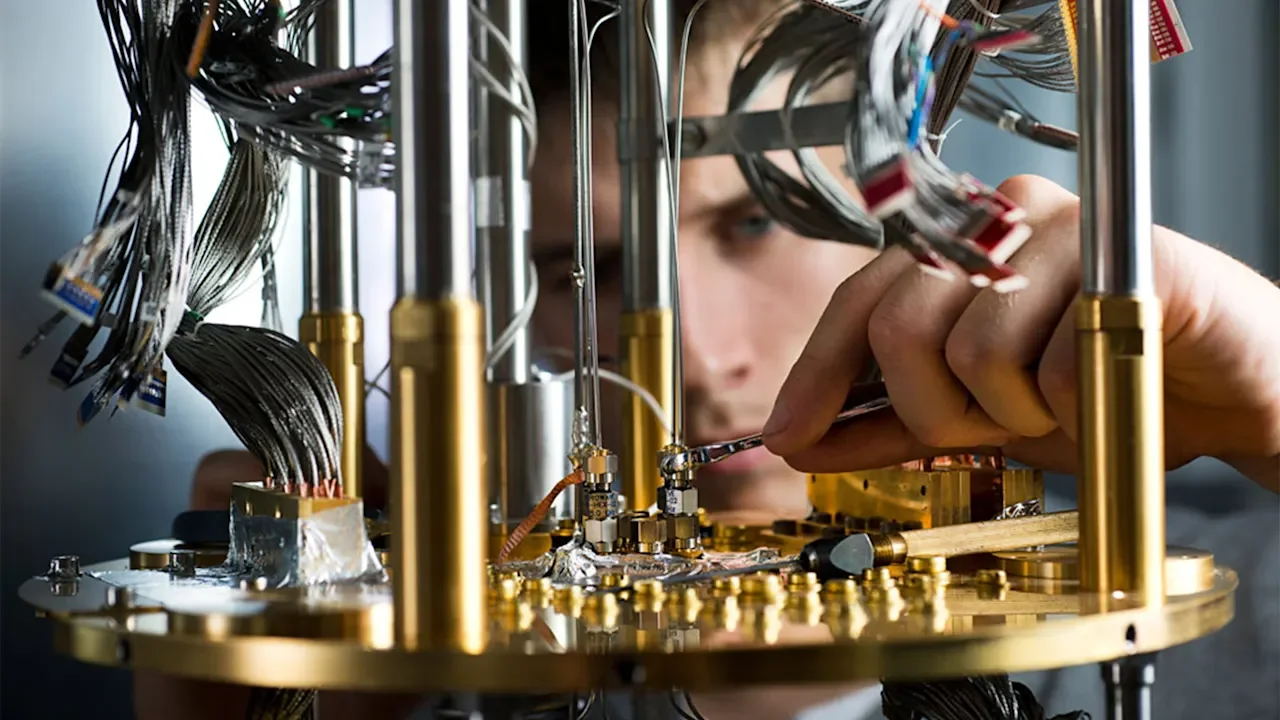
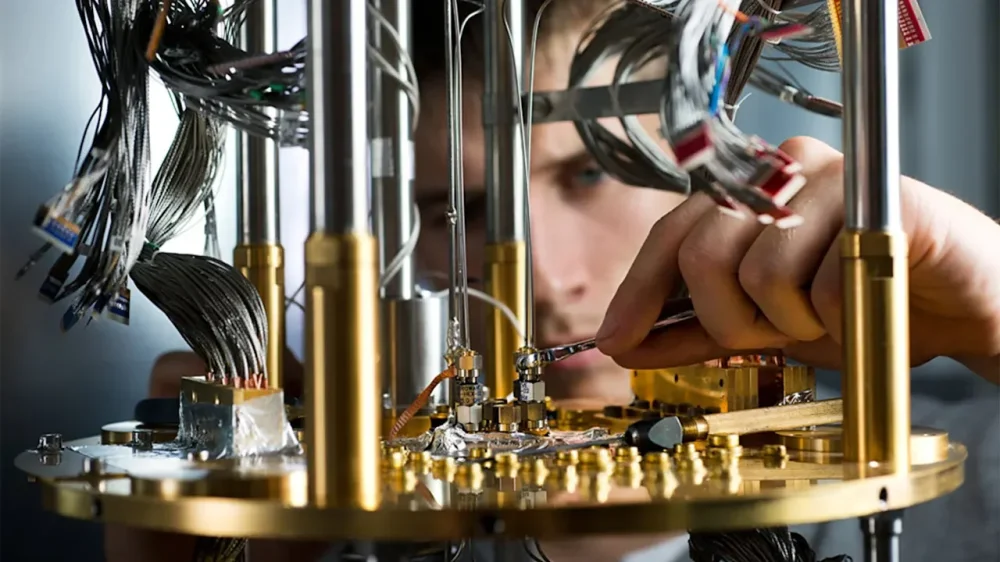
Investors in quantum computing stocks are having another great week, with shares in the major publicly traded firms up by double digits over the last 24 hours in most cases. Here’s a snapshot of their single-day growth as of the closing bell on Thursday: Rigetti Computing (Nasdaq: RGTI): Up 18.25% D-Wave Quantum Inc (NYSE: QBTS): Up 13.97% IONQ Inc (NYSE: IONQ): Up 10.32% Quantum Computing Inc (Nasdaq: QUBT): 5;32% All four companies were also up in premarket trading on Friday as of this writing. Why are quantum computing stocks rising this week? The rally is apparently being led in part by Berkeley, California-based Rigetti, which announced a major purchase order on Tuesday for two of its 9-qubit Novera quantum computing systems, which are used in research and development. Rigetti introduced the systems in 2023 and says they’re upgradable, meaning the qubit count can be increased. Qubits, or quantum bits, are the basic units on which quantum computers operate. Delivery of Rigetti’s two systems are expected by early next year. The purchase order totaled $5.7 million, the company said. While that might not seem like a giant sum, it’s another sign that somebody, somewhere sees practical uses for quantum computing technology, which has remained largely theoretical until relatively recently. Rigetti did not say who purchased the systems, only that one customer was an Asian company that builds manufacturing tech and the other was an AI startup based in California. Craig Ellis, an analyst at B. Riley Financial, also recently reiterated his Buy rating for Rigetti, as Motley Fool reported. In addition to Rigetti’s announcement, D-Wave announced the results of a “proof-of-technology” joint project with the North Wales Police in the U.K. The project leveraged hybrid quantum technology to help optimize the placement of police vehicles. “The hybrid-quantum technology delivered a faster, more accurate, and more efficient solution than classical methods alone, providing NWP with the ability to reduce the average incident response time by nearly 50%,” D-Wave said in its press release. Quantum computing shares have had a wild ride this year Publicly traded quantum computing firms began to captivate investors late last year as reports of the technology’s potential capabilities started to make headlines. Rigetti, which was essentially a penny stock one year ago, has seen its shares increase by a staggering 4,620% over the last 12 months. The stock was trading at $35.40 a share as of Thursday’s close. D-Wave, whose CEO has vocally pushed back against claims that commercial quantum computers are still decades away, has likewise seen its shares rise by 3,075% over that same period. Should such wild growth give investors pause? Well, probably. Although many experts believe that quantum computing is a bonafide technical revolution that could transform the industry and the world, the sector remains highly speculative at present. It’s not hard to find critics who contend that these stocks are overvalued. Time will tell. View the full article
-
In a strategic move that underscores its growth and commitment to enhancing shareholder value, Etsy has announced it will transfer the listing of its common stock from the Nasdaq to the New York Stock Exchange (NYSE). This change signals a new chapter for the online artisan marketplace, which has seen a surge in popularity among small business owners and customers alike. The decision, effective in early 2025, marks a significant shift for Etsy, a platform renowned for connecting millions of buyers and sellers of handmade and vintage products. “The NYSE has a long history of supporting innovative companies like ours as we continue to build upon our mission to empower creative entrepreneurs,” said Josh Silverman, Etsy’s CEO. The transfer not only reaffirms Etsy’s position in the market but also aims to provide enhanced visibility and liquidity for its investors. Small business owners should take note of several key benefits tied to this transition. First and foremost, the NYSE is widely recognized as a more prestigious exchange than Nasdaq, which can improve investor confidence in Etsy’s stock. This heightened credibility could potentially attract new investors, leading to an increase in share price. Moreover, listing on the NYSE could offer Etsy improved trading volumes and tighter spreads, which is beneficial for existing shareholders and makes it easier for potential investors to buy and sell shares. Small business owners who rely on Etsy as a platform to market and sell their products could find that a more stable stock translates to a stronger brand identity in the marketplace. As part of this transition, Etsy aims to leverage the NYSE’s extensive resources. The exchange boasts advanced technology and global reach, something Etsy plans to utilize to strengthen its business initiatives. “Our new relationship with the NYSE will position us to better communicate our vision and growth plans,” Silverman added, indicating that Etsy is poised for expansion initiatives that may benefit sellers in the long term. However, small business owners should also consider potential challenges arising from Etsy’s move to the NYSE. The shift could signal a more demanding environment for compliance and reporting standards, as publicly traded companies on the NYSE typically face stringent regulations. This added scrutiny may impact operational priorities for Etsy, and any changes in policies could have ripple effects on the sellers who depend on the platform for their livelihoods. Additionally, while the visibility that comes with an NYSE listing can benefit Etsy overall, small business owners might experience fluctuations in market sentiment that could affect their earnings. It’s crucial for sellers to stay informed about how changes at Etsy might influence transaction fees, advertising costs, and other relevant policies that could impact their bottom line. Etsy’s move reflects broader trends in the small business ecosystem, where visibility and credibility are becoming increasingly important. More small business owners are turning to online platforms to reach consumers, and as Etsy solidifies its position, sellers may find new opportunities to innovate their offerings in response to an expanding customer base. As this transition unfolds, Etsy’s commitment to empowering small business owners remains a core focus. The company has continually emphasized the importance of creative entrepreneurs, which resonates with a significant portion of its user base. Understanding the potential benefits and challenges of the transfer to the NYSE will be essential for small business owners who leverage Etsy for growth. In an era where every decision can impact a business’s future, staying updated about corporate moves like this one can equip small business owners with the insights they need to adapt and thrive. As Etsy charts new waters, the implications of their listing on the NYSE will be closely watched—not just by investors but also by the millions of creators who consider Etsy a vital part of their business strategy. For more details, check out the original announcement from Etsy here. Image via Envato This article, "Etsy Moves to NYSE, Elevating Visibility for Its Marketplace" was first published on Small Business Trends View the full article
-
In a strategic move that underscores its growth and commitment to enhancing shareholder value, Etsy has announced it will transfer the listing of its common stock from the Nasdaq to the New York Stock Exchange (NYSE). This change signals a new chapter for the online artisan marketplace, which has seen a surge in popularity among small business owners and customers alike. The decision, effective in early 2025, marks a significant shift for Etsy, a platform renowned for connecting millions of buyers and sellers of handmade and vintage products. “The NYSE has a long history of supporting innovative companies like ours as we continue to build upon our mission to empower creative entrepreneurs,” said Josh Silverman, Etsy’s CEO. The transfer not only reaffirms Etsy’s position in the market but also aims to provide enhanced visibility and liquidity for its investors. Small business owners should take note of several key benefits tied to this transition. First and foremost, the NYSE is widely recognized as a more prestigious exchange than Nasdaq, which can improve investor confidence in Etsy’s stock. This heightened credibility could potentially attract new investors, leading to an increase in share price. Moreover, listing on the NYSE could offer Etsy improved trading volumes and tighter spreads, which is beneficial for existing shareholders and makes it easier for potential investors to buy and sell shares. Small business owners who rely on Etsy as a platform to market and sell their products could find that a more stable stock translates to a stronger brand identity in the marketplace. As part of this transition, Etsy aims to leverage the NYSE’s extensive resources. The exchange boasts advanced technology and global reach, something Etsy plans to utilize to strengthen its business initiatives. “Our new relationship with the NYSE will position us to better communicate our vision and growth plans,” Silverman added, indicating that Etsy is poised for expansion initiatives that may benefit sellers in the long term. However, small business owners should also consider potential challenges arising from Etsy’s move to the NYSE. The shift could signal a more demanding environment for compliance and reporting standards, as publicly traded companies on the NYSE typically face stringent regulations. This added scrutiny may impact operational priorities for Etsy, and any changes in policies could have ripple effects on the sellers who depend on the platform for their livelihoods. Additionally, while the visibility that comes with an NYSE listing can benefit Etsy overall, small business owners might experience fluctuations in market sentiment that could affect their earnings. It’s crucial for sellers to stay informed about how changes at Etsy might influence transaction fees, advertising costs, and other relevant policies that could impact their bottom line. Etsy’s move reflects broader trends in the small business ecosystem, where visibility and credibility are becoming increasingly important. More small business owners are turning to online platforms to reach consumers, and as Etsy solidifies its position, sellers may find new opportunities to innovate their offerings in response to an expanding customer base. As this transition unfolds, Etsy’s commitment to empowering small business owners remains a core focus. The company has continually emphasized the importance of creative entrepreneurs, which resonates with a significant portion of its user base. Understanding the potential benefits and challenges of the transfer to the NYSE will be essential for small business owners who leverage Etsy for growth. In an era where every decision can impact a business’s future, staying updated about corporate moves like this one can equip small business owners with the insights they need to adapt and thrive. As Etsy charts new waters, the implications of their listing on the NYSE will be closely watched—not just by investors but also by the millions of creators who consider Etsy a vital part of their business strategy. For more details, check out the original announcement from Etsy here. Image via Envato This article, "Etsy Moves to NYSE, Elevating Visibility for Its Marketplace" was first published on Small Business Trends View the full article
-
Did you know you can customize Google to filter out garbage? Take these steps for better search results, including adding Lifehacker as a preferred source for tech news. Do you want to learn the material you’re studying—like, really learn it? I'm not talking about learning enough to pass a test, but rather, learning enough that you know it for life. Then what you need to do is overlearn it. One learning theory suggests that if you overlearn, you’ll attain automaticity, or the ability to do something without having to think about it, and ultimately retain more knowledge. Here’s what overlearning is and how to do it. What is overlearning?You know something is serious when the American Psychological Association has a definition for it, and that’s the case here: Per the APA, overlearning is “practice that is continued beyond the point at which the individual knows or performs the task as well as can be expected.” The APA says the benefits here can include “increased persistence of the learning over time or better retention and memory.” The terminology makes sense; once you've learned something over the extent you need to, it becomes second nature. Simply put, overlearning involves studying something even once you’re sure you know it, which is why this technique is overlooked and, if I'm being honest, a little annoying. It makes sense that once you get information down, you don't want to seemingly waste time going over it, but according to this theory, that is, unfortunately, when the magic happens. Don’t stop reviewing or studying just because you succeeded in memorizing something. Instead, keep going, digging it deeper and deeper into your brain. Hermann Ebbinghaus, the researcher who brought us the Ebbinghaus forgetting curve, studied memory in the 1890s, figuring out that as time passed, memories decreased. (That’s basically what the forgetting curve is all about and a pretty common-sense phenomenon you have certainly experienced in your own life.) According to him, overlearning happens when you keep repeating what you’re going over well past the point at which you can recall it with 100% accuracy. Think about a story you've told numerous times over your lifetime. If you hadn't started reciting it at parties and on first dates, the details may have gotten fuzzy, but since you did, it's practically a well-rehearsed performance at this point. See, recalling it is something that takes effort. The goal of overlearning is to reach automaticity, pulling the information from your longterm memory with no effort and freeing up space in your working memory. How do you overlearn?The next time you’re studying, review material you already know front to back. For instance, when using the Leitner method (which involves spaced repetition of flash cards, the frequency of review of each depending on how well you did the last time you quizzed yourself on it), always review all the flashcards you’re assigned on a particular day, even if you feel like skipping them because you got them right last time. Repeatedly going over material you know well is the key to overlearning and eventual automatic recall. Flashcards, in general, are a great way to study and they're perfect for this, especially if you're following the Leitner technique. Just because a flashcard has been moved into the section you study less frequently doesn't mean you should never go back to it. In fact, if you're trying to overlearn, it's one of the only times I'd recommend not using Leitner—at least not right away. For the first few days of reviewing your cards, go through all of them and don't sort them by whether you get the answers right or wrong. Just keep drilling the same information over and over again. Another useful tool here is the practice of blurting, which is what we call it when you write down or say everything you can remember about a topic. That forces active recall—or the act of consciously yanking information out of your long-term memory—and trains you to quickly identify key details in your brain. At the end of every week, do a round of blurting, even if you nailed all the details last time around. Schedule blocks of time in your week for reviewing materials you’ve already mastered when you're pre-planning your distributed practice. This can be as easy as re-reading a chapter or your notes, or as complex as taking practice quizzes or using flashcards. Continually reintroducing familiar ideas to yourself will dig them deeper into your longterm memory. View the full article
-
Whether it’s Sam Altman surreptitiously stealing GPUs from a Target, trying to make a break for the door under the gaze of security cameras as he tucks a box containing a valuable computer chip under his arm, or Super Mario appearing in Star Wars, the rupture in reality brought about by OpenAI’s AI-generated video social network, Sora, is significant. What previously would have been decried as deepfaked videos have gone viral on social media in the last two days, while also outstripping the release of Meta’s competing product, Vibes. Users, including some OpenAI employees on social media, have been revelling in their ability to create outlandish content involving real life characters — a consequence of unusually lax rules set out by OpenAI, the company behind Sora. That’s despite the AI giant purporting to have some rules designed to prevent IP infringement. Social networks, which were once designed to connect us with one another and have since been subsumed by AI slop, are now looking like they’re going the way of the dodo. In their place is a boomer Facebook user’s paradise: A steady scroll of the unreal and outlandish, and not a single human involved. That has experts worried about our ability to distinguish fact from fiction, and how it can tamper with our temperaments. “It isn’t entirely surprising that businesses are effectively following the money as to what we’ve seen over the last 12 to 18 months, particularly in terms of AI generated video content,” says deepfake expert Henry Ajder. Some of the most viewed videos on platforms like YouTube Shorts, traditionally home to human-only content, are now AI-generated. “The fact that these companies are recognizing those opportunities isn’t surprising to me,” he says. Those who are slightly online, not to mention the extremely online, are similarly unsurprised. We’re not ready Nevertheless, the impact of AI-filled feeds on our perception of content is significant, says Jessica Maddox, associate professor of media studies at the University of Georgia. “The danger in sharing and enjoying AI images, even when people know they’re not real, is that people will now have to chase more fictional, manipulated media to get that feeling,” she says. And with the apps in question explicitly saying there are few, if any, guardrails around copyrighted content, and limited ones around the type of content that can be created, there are real risks of polluting our pools of content for years to come. Some suggest that we’re ill-equipped to deal with the problem—in part because what we consider ‘real’ images haven’t been real for a while, thanks to the volume of pre-processing that takes place in the millisecond between clicking the shutter on your smartphone and the image being saved in your camera roll. A recent preprint study by Janis Keuper, a researcher at Offenburg University and his wife, Margret Keuper, a researcher at the Max Planck Institute for Informatics and the University of Mannheim, suggests that the gap between the quality of images used to train deepfake detectors and the average smartphone snap is now so significant as to make any detection tools useless. Detection tools are trained on ground truth images that are as similar to today’s photographs as early 20th century cameras were. “It’s going to be really hard to filter out AI content,” says Janis Keuper. “It’s really hard in in text. It’s really hard in images as the generators become better and better. And well, we’ve been looking at AI generated images for a while now,” he says. The secret of slop However, what is different with the advent of Vibes and Sora is that they explicitly say they want AI content first—and usually foremost. “Meta Vibes is perfectly named for the problem of AI slop,” says Maddox. In a world where the world itself is our imagination, it doesn’t matter if the actual image represents anything close to reality. It’s akin to ‘alternative facts’. No matter how outlandish the video, it’s legitimate. All it has to do is reinforce our viewpoint—the visual equivalent of the post-truth era brought about by Donald The President. That bleeds through to the common perception of how people often react to AI-generated content, says Maddox. “People will say, ‘But I agree with what it’s trying to say, whether it’s real or not,’” she says. And that’s proof positive of what’s going on. “AI is vibes only,” she says. “Unfortunately, that means something like Meta Vibes is likely to be incredibly successful with Meta’s audience that seems to love AI imagery. It won’t matter, because with AI, feelings reign supreme.” Where the authentic and the synthetic collapse And that’s what worries the experts the most. The apps are being foisted on users, but may well succeed—in part because we’re already inured to the persuasive power of content to move us. “Reality is one now where authentic and synthetic collapses, right?” says Ajder. “People have authentic experiences—that is, experiences that move them, change their beliefs, change their relationships, change their opinions—with AI. They’re influenced with virtual companions, via chatbots, and with AI-generated disinformation content around war zones and conflicts.” Ajder doesn’t believe Meta and OpenAI are thinking about the emotional response to AI. “The idea is less passionate,” he says. “It’s more market driven. These kinds of videos are cheap to make. They’re quick to make. We can scale them easily, and they get engagement, they get views, they get clicks.” (Never mind the cost for the environment.) But as well as getting rid of the “social” from social media, the second- and third-order ramifications of driving an AI-powered attention economy could have more significant consequences than keeping us scrolling. View the full article

-
The boss of one of Britain’s biggest tech start-ups on the ethics of porn, the future of the content creator economy — and why the platform banned Bonnie BlueView the full article
-
Uncertainty is the defining condition of our time. The pandemic reminded us how quickly our systems can fracture. Today, with political shifts, economic instability, and technological disruption intersecting, leaders are preparing for more turbulence ahead. From where I sit, however, there are nearly 2 million reasons to be optimistic. America’s 1.9 million nonprofits make up a fiercely resilient force for scaling impact to our toughest challenges. They deliver food and housing, safeguard youth wellbeing, respond to natural disasters, and fight for fairness and opportunity. They are trusted by millions of people across many topic areas—and they are built to move fast, adapt, and deliver under pressure. It’s no secret that technology is a force-multiplier when it comes to an organization’s impact. Research from the Blackbaud Institute shows that nonprofits report faster fundraising growth and higher readiness for disruption when they are able to rely on technology to move their missions forward. But they are facing barriers to the single most important tool to unlocking amplified impact: AI. In a recent survey of fundraisers, less than one-third of nonprofit respondents said they believe they have the resources to explore AI use in their organization, despite 82% identifying as users—and only 26% agreeing that they have the technical expertise to use AI effectively. This is the moment to close that gap and ensure AI reaches every nonprofit team on the frontlines of our communities. Building capacity and augmenting humans AI is already proving it can cut grant writing and research time drastically, draft tailored fundraising materials at scale, and help smaller teams operate at similar levels of efficiency once reserved for large organizations. At its best, AI augments humans: It frees nonprofit leaders to spend less time on repetitive tasks and more time strengthening ties with funders, telling stories of impact, and delivering services to communities in need. For the roughly 90% of nonprofits that report less than $1 million in annual revenue, AI may be the most consequential capacity-building and human-augmenting tool in recent memory. But the answer isn’t simply “more tech” or “more AI.” What we need most is a shared commitment to remove barriers to AI for the nonprofit sector. To get there will require not just smart tools, but smart partnerships and collaboration across sectors—impactful work that can be done by executives, employees, and the rising generations of the workforce alike. Each has a distinct role to play in helping nonprofits harness AI for greater efficiency. For business leaders, board service is no longer solely about governance. It’s an opportunity to help organizations think strategically about data, cybersecurity, and how to responsibly integrate AI into their operations. Every nonprofit should have a “technology plan” alongside its strategic plan, and board members with private-sector expertise can help make that shift possible. At the same time, facilitating opportunities for broader engagement is critical. Volunteerism in the U.S. still hasn’t recovered to pre-pandemic levels, according to the Generosity Commission. This shortfall comes at precisely the moment nonprofits need more hands-on help. Skills-based volunteering, where professionals contribute expertise in areas like technology, finance, or operations, fills critical gaps. Companies can encourage staff to lend their skills directly to local nonprofit partners, or create pro bono programs that multiply the impact of nonprofit teams. The next generation Looking to the next generation, young professionals are seeking purpose-driven careers. Business leaders can mentor these young workers, support programs that position early-career employees alongside nonprofits, and help nonprofits take advantage of their digital native perspectives. Even when roles aren’t explicitly tech-focused, these young professionals can act as catalysts for AI adoption and digital transformation. Together, these steps do more than boost nonprofit efficiency. They lead to durable partnerships, create a culture of knowledge transfer across sectors, and ensure the AI opportunity gets maximized. Capturing this moment also requires a new approach—modernizing funding models, policies, and norms so that technology is recognized as essential infrastructure. It means reimagining how “overhead” is understood, defined, and funded, so AI has the best shot at strengthening nonprofits’ ability to deliver impact and outcomes. Nonprofits are often the first responders in a crisis or time of need. With AI in their hands, they can also be the most efficient responders. When AI makes nonprofits and their teams faster, stronger, and more resilient, its value is felt not only within organizations but across every community they serve. We’ll know we’re successful when every nonprofit, large or small, can harness AI to strengthen its mission—and when business and philanthropic leaders see themselves as part of that adoption solution. Imagine a future where every nonprofit team, regardless of size, has the digital muscle to respond to crises, scale impact, and tell their story with clarity and power. That’s not a distant vision. It’s a future within reach, and it might just be the highest-leverage investment we can make for society. View the full article

-
Wall Street’s most famous short seller on the First Brands fiasco, Enron and the “magical machine” in private credit marketsView the full article
-
Raise your hand if your credit card has been personally victimized by the J. Crew rollneck sweater. Did you raise your hand, with it loosely hugged by a knit cotton sleeve featuring a rolled hem? One that’s no longer available online, and for that reason makes you feel part of a selective in-group? Yes? Then say, “thank you, Julia Collier.” Over the past two weeks, Collier, J. Crew’s chief marketing officer, has directly influenced your shopping habits. The “next rollneck generation” campaign is her brainchild. It first rolled out September 16 and has since wormed its way into our brains with a compelling cast of seven including actor Benito Skinner, actress Molly Gordon, and singer Maggie Rogers, all in the brand’s rollneck sweaters, which range in price from $98 to $118. It’s Collier’s first major J. Crew campaign since joining the company as CMO in January following a five-year run as Skims’s senior vice president of brand marketing. A few of her past hits: cinematic Skims campaigns with the North Face, ultimate brat Charli XCX, a powerful Team USA, Lana Del Rey for Valentine’s Day, and dreamy Nicola Coughlan shot by Elizaveta Porodina. Now, “the next rollneck generation” gives a core J. Crew product that’s been around for more than 30 years new life. Collier produced the campaign with hyper-specific talent and elevated creative choices, including a very specific vintage lacrosse stick prop and real film for that authentic grainy effect. It shows that to breakthrough in hyper-content-saturated online spaces like TikTok, brand marketing needs to become brandtainment. “I believed at Skims, and I believe at J. Crew—and I believe all brands have the opportunity to do this—that we are entertainers,” says Collier. “Our role as a brand is, yes, to sell clothes, but it’s really to entertain our audiences and to entertain our customers, and behave almost like media. You can’t just do one thing.” The ad has almost worked too well, because the sweater is nearly impossible to find now. Online, most colors are out of stock or preorder. New customers to J. Crew’s website increased almost 40% the week of launch compared to the week prior. Social engagement and impressions “are far exceeding anything else we’ve done really around this type of campaign in a long time,” according to Collier. J. Crew’s revival It’s been a while since anyone’s cared much about J. Crew. The company filed for bankruptcy in 2020 following pandemic-related forced store closures and a slow pivot to e-commerce. This proved to be unsustainable headwinds for the company to take on, considering its significant debt related to a 2011 private equity leveraged buyout that took the company private. But a lack of cultural relevancy predated, or perhaps in part precipitated, those rocky financials. Both longtime creative director Jenna Lyons and CEO Mickey Drexler left the company in 2017. The era of the day-to-night statement necklace was over, and it seemed like American culture had read J. Crew its last rites, too. But after J. Crew emerged from bankruptcy in late 2020, it began a period of business stabilization that included the internal hire of its new CEO Libby Wadle from sister brand Madewell (she was at J. Crew before that, too). Like we’ve seen with Gap, which has followed a remarkably similar trajectory back into our social media timelines, resurgent companies first have to reestablish a sound organizational and business foundation to build from. Then, following that lag, the brand can bring in new creative talent on the second floor, which garners a consistent point of view, public-facing attention, reestablishes cultural relevance, and positions the brand for growth. (Enter Collier.) J. Crew’s new breakfast club The brief for a campaign that focused on the rollneck sweater originally came from Wadle. The garment design itself is trademarked to J. Crew, so it’s a style that the company figuratively and literally owns. It’s “an icon of our brand” Collier says, but until now it was really on an if-you-know-you-know-basis, she adds. Wadle wanted to better own it in the public perception. This plugged into the broader branding challenge Collier took on since she arrived at J. Crew. Heritage and nostalgia are important parts of J. Crew’s brand perception, and its shoppers value those qualities. But “how do we translate heritage through a fresh lens, and what do we stand for?” Collier asks. The ad’s goal was acquisition. “We wanted to introduce this sweater that has been so beloved in our world and our existing customers’ world for so long,” she says. While the women’s version has been updated for a more boxy, cropped fit, the men’s sweater is exactly the same as the 1988 original. “How do we introduce it to a new generation of Americans?” Collier recalls asking at the start of the campaign. It began with talent: J. Crew’s new breakfast club. “For me, it’s always proven to be a very powerful lever in acquisition and news and everything,” says Collier. “I always think about what makes sense for people, but what is also unexpected. You never want to cast talent that is obvious, but you also never want to cast talent that feels like a straight up endorsement.” Each cast member represented a different slice of American style, and pulled a different audience. Skinner represented a new gen of American prep; Rogers western Americana; actor Rome Flynn as the young Hollywood drama kid, actor Dominic Sessa the literary intellectual. “We are an American brand, and they all bought their own version of American style to a collective that makes up the cast,” Collier says. The entire cast is also hot and cool, which historically helps a lot, in terms of selling aspiration via attainable clothes. “Rollneck, roll deep” The campaign’s visual choices worked hard to bridge the gap of old and new. It’s a strategy of heritage revivalism that requires a balance of nostalgia and cultural relevance. The ad is set to The The’s 1983 song “This is the Day,” which was also blasting on set during the shoot. Collier sees the song as both optimistic and future facing (“This is the day, your life will surely change”), but also nostalgic. She brought in prop stylist Andy Harman, a connoisseur of found objects and J. Crew’s sensibilities, to source a specific model of lacrosse stick Skinner holds (J. Crew declined to share the exact model), as well as the other ‘80s and ‘90s era props you see. Collier also brought on photographer Ian Markell after seeing his work in GQ, saying he “understands a modernization to nostalgia.” And then they shot with real film. “The expense of it is insane, but it was important that we use real film and that we didn’t just put a filter over it,” Collier says. “There were things that we wanted to remain really authentic to what we were trying to put out.” “As a company, we are very inspired by our heritage, and we also recognize that nostalgic element to our brand is what a lot of people want from us,” says Collier. “The challenge for us is how do we look back to look forward? How do we take that amazing heritage, that incredible nostalgia that gives you a feeling of comfort and familiarity and evolve it and push it forward?” The resulting campaign is fun. Actually fun. Collier referenced John Hughes’ movie the Breakfast Club: each character had an individual role, but “it really about the collective of all of them.” Set against a light gray background that reads ’80s print ad but could be anywhere, the club kids laugh, dance, and twirl, rollerskate and skateboard, bang on drums, eat Chinese takeout, hang on pull up bars, and make calls on an old-school wired phone. Who knew you could be so buzzy and carefree in a sweater and collared shirt? “I’m very much someone who goes by gut 90% of the time,” says Collier. “I can just feel when something is right, and when I saw the characters on set and they were playing that song I literally almost got tears in my eyes. It sounds so corny, but I was like, ‘this just feels so right in this moment right now.’” J. Crew’s new American prep isn’t represented by some waspy buttoned-up country club scene or the empty consumerist excess of ’80s era yuppies. It’s not channeling quiet American luxury either. J. Crew’s sensibilities might have some Venn diagram overlap with all that, sure, but the styling and tone of Collier’s first big campaign suggests an easy, everyday approach to American dressing that’s scholastic and polished but also spirited, playful, and unencumbered. You can’t help but think the cast is hanging out later. The rollneck sweater is just a sweater, but the campaign made buying it an approach to American living and style, too. That’s marketing, baby. “Buy this sweater,” Skinner said, reading an online review in a campaign video. “Wear it. Inherit a lighthouse. Find peace. Rollneck? Roll deep. That’s it.” The brand is in on the joke about its perception, a quality that Skims also had (see its nipple bra ad, for instance) that made it more shareable as a piece of soft marketing content, rather than a hard sell ad. As Skinner himself recently said, “Cringe is so back.” 360 campaign, zero stock To feel authentic, brands need to meet consumers where they are. For a brand looking to tap younger audiences, that means rolling out a distribution strategy that captures attention spans by blanketing our social feeds. “At Skims, the way that I would approach these types of briefs was really to think about: You can’t just do one thing,” says Collier. “You have to do everything all at once, at the same time, and that’s how you create impact.” The blanket-everything strategy has a marketing name: a 360 campaign. “Coming from my background at Skims, when we approached things like this, we would always hope for the virality, and if you’ve got the product right, and you’ve got the campaign right, and you’ve got everything else right, it should create a degree of virality that we’re now starting to see on TikTok,” says Collier. TikTok is flooded with try-on videos of the rollneck, with some pushing a million views. I knew the ad was doing the devil’s work when a content creator who posts de-influencing videos to curb the bad habits of likeminded compulsive clothes shoppers crossed my feed to tell me “you don’t need the J. Crew 2025 Rollneck Sweater” (which now has almost a million views). [updated links] Then, the ad got her too. Maybe I do need it. I walked into my local J. Crew store in New York City and hovered by the rollnecks table. There were a couple of low stacks, and some sizes were sold out. Three different women asked about sizing, tried on, and/or purchased one within five minutes of my being there. Ivory seemed to be the most popular color. The sales associate told me they’ve been selling “all day” and the navy multi-color stripe is on two-month backorder. “Our challenge right now is ‘let’s make sure we are able to feed this demand,’” says Collier. “But I think when you see the commercial success, you see the acquisition numbers, and you see the engagement growing across Instagram and TikTok, it’s all working together and it’s all feeding off itself. It’s kind of what I mean when I say for these types of things, you kind of have to do everything all at once at the same time.” Collier and her team actually started with the tagline “the rollneck generation.” After a lot of back and forth, they ultimately added “new.” Because of J. Crew’s history, she felt that newness needed more emphasis. “What I’m looking for is a signal that this is not the dawn of a new day by any means, but that this is something new and that this is a new perspective on a classic style.” Though Collier says it’s not sustainable to run 360 campaigns for everything, the “new rollneck generation” offers some indication of what consumers can expect from a new J. Crew. View the full article

-
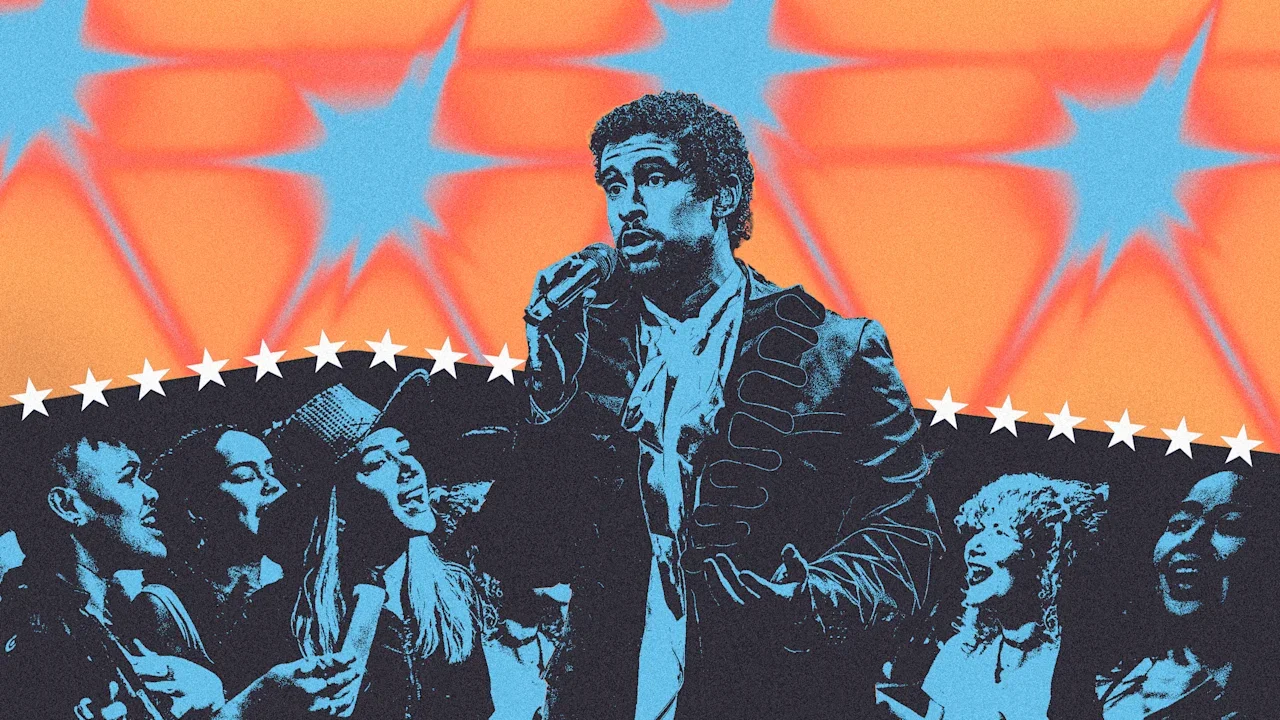
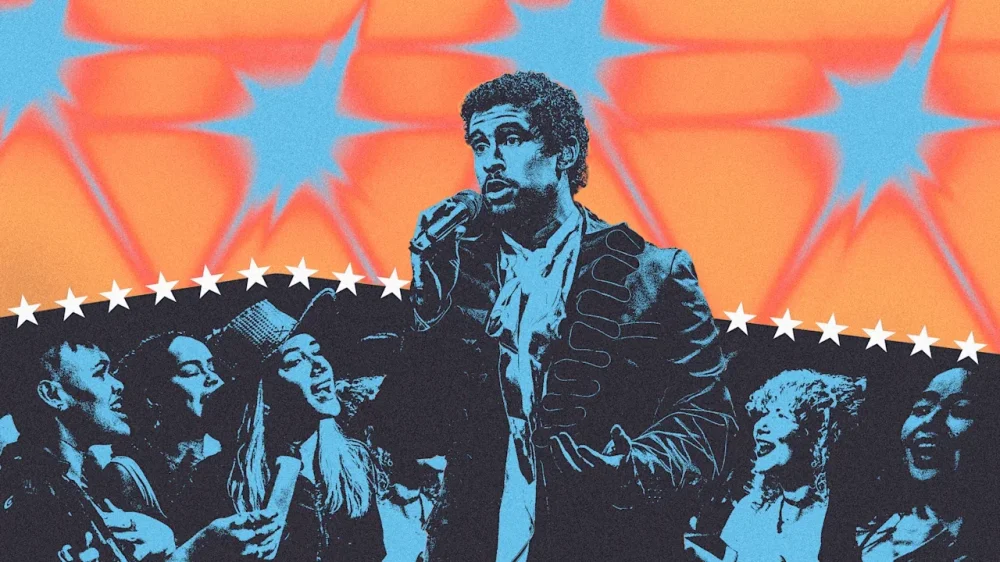
So far, the mainstream business world has avoided clashing with the socio-cultural agenda of the second The President administration. Many companies have backed away from diversity and climate efforts, capitulated on score-settling lawsuits, and muted objections to everything from tariff schemes to aggressive immigration policies. It might seem surprising, then, that one of the most mainstream businesses in existence—the National Football League—chose as the star of its Super Bowl LX halftime show Puerto Rican artist Bad Bunny, who performs mostly in Spanish and has been openly critical of President The President. Notably, he recently declined to tour the continental U.S. out of concern over ICE deportation efforts, instead performing a 31-night residency in San Juan, Puerto Rico, that was a massive commercial success. Certainly the MAGA commentariat behaved as if not just surprised, but triggered, and the backlash in that corner of the culture was immediate and intense. “This isn’t about music, it’s about putting a guy on stage who hates The President and MAGA,” conservative filmmaker Robby Starbuck declared on social media. “He’s just a terrible person,” said a Newsmax host, calling for a boycott. One administration official suggested Bad Bunny is divisive and pledged “ICE will have enforcement” at the big game. “Massive The President hater; Anti-ICE activist; No songs in English,” Benny Johnson, a right-wing podcaster, chimed in, adding: “The NFL is self-destructing.” In reality, it’s hard to argue with Bad Bunny’s popularity, and his decidedly mainstream status. He is among the most-streamed artists of all time. The final show in his San Juan residency was livestreamed on Prime Video and Twitch, setting an Amazon Music viewership record. This weekend the Grammy winner will be host Saturday Night Live for the second time. His wide appeal—particularly among younger fans—is proven. Moreover, there was some similar conservative grousing over rapper Kendrick Lamar being chosen for the slot, and that ended up being the most-watched Super Bowl halftime show of all time, with 133.5 million viewers. The NFL is not really in the business of being a cultural arbiter, and presumably the decision emanated more from event coproducer Roc Nation (which recently re-upped its NFL deal for the next five years) and halftime-show sponsor Apple Music. But all three entities have the same goal: creating a major cultural event that lives up to the game itself. In the official announcement, an NFL exec praised Bad Bunny’s “unique ability to bridge genres, languages, and audiences.” That is the business the NFL is in—less a cultural critic and more of an interpreter of where the culture really is now, and is most likely to go next. And sometimes that means getting absorbed into a wider conversation. In fact, the same thing happened in the last Super Bowl, when the choice of Lamar became a cultural-debate talking point. “All these white people mad about Kendrick Lamar’s Super Bowl performance,” one X user posted at the time, “I hope next year they get Bad Bunny performing the whole set in Spanish.” Prescient call! But still. It would be a mistake to see this as the NFL overtly taking sides—or trolling ideological opponents—in the bickering that the Bad Bunny news sparked. Progressive observers could point to the league’s teams icing out quarterback/activist Colin Kaepernick, or lagging record on hiring diverse coaching staffs, or its track record on confronting concussions and other physical fallout from a brutal sport. The same goal has motivated the NFL through those controversies as the occasional halftime-show flareups: identifying, and courting, the widest audience possible in an otherwise fractured culture. And its track record has been pretty good. After all the Super Bowl LIX online griping about Lamar, the actual performance received a paltry 125 complaints from viewers to the Federal Communications Commission, Wired reported, many focusing on “the lack of white performers.” Obviously that complaint was hardly a mainstream perspective. To the contrary, it was just a marginal view from a noisy fringe, quickly overtaken—and forgotten. View the full article
-
Most brands still buy attention. The impactful ones earn devotion, the kind people will rally behind and fight to protect. Consumers want a role in movements, not just transactions. When brands focus solely on economics, spark and engagement disappear. Consequential brands ignite a shared spirit, tapping into values, not just wallets, and building communities of advocates. But how do you actually build cultural power? For my forthcoming book Branding as a Cultural Force: Purpose, Responsibility, and Resonance (Columbia University Press, 2025), I interviewed creative leaders worldwide to find out. Across those conversations, six clear strategies emerged—actionable patterns that separate brands that ride culture from those that positively shape it. These strategies turn brands into cultural forces that generate enthusiasm and prosperity. 1. BE IRREPLACEABLE In a world of infinite options, cultural power begins with being impossible to replace. “A brand should embody something unique that others can’t easily replicate,” says Nick Law, creative chairperson of Accenture Song. Uniqueness isn’t about features or benefits anymore, but about occupying cultural territory that only you can claim. U.S. Bank’s Translators documentary reveals a hidden reality: bilingual children serve as interpreters for their immigrant families, navigating everything from banking to healthcare. Rather than just advertising their Spanish-language banking services, U.S. Bank collaborated with filmmaker Rudy Valdez to tell this authentic story. The documentary validates an experience millions live daily. When they later launched Asistente Inteligente, the first Spanish-language virtual assistant from a U.S. financial institution, it felt like natural understanding, not marketing. As Leland Maschmeyer, cofounder and CEO of Collins, puts it: “The reality is that brand is differentiation. Without it, a product is a commodity.” Cultural power comes from creating territory that only you can occupy. 2. TRANSFORM PROMISES INTO ACTIVISM It’s no longer enough to promise functional benefits or emotional connection. People expect activism—manifestos turned into measurable action. As Juliana Constantino, group creative director at Dentsu, explained: “Purpose-driven brands embody a social mission integral to their business. Others jump on social issues for short-term campaigns without genuine commitment. These efforts come across as insincere or opportunistic.” Telecommunications company Orange and creative agency Marcel challenged football bias with a highlight reel of dazzling plays by France’s male stars like Kylian Mbappé and Antoine Griezmann, only to reveal audiences had actually been watching the women’s team, digitally altered to look like male players. The campaign proved that skill transcends gender bias, making “WoMen’s Football” the most shared content fighting inequality in the sport. Apple has taken a sustained approach. “The Lost Voice” spotlighted accessibility. “Fuzzy Feelings” explored empathy through creativity. And Frybread Face and Me—an Apple Original feature on Netflix, written and directed by Billy Luther—elevated a story by an Indigenous filmmaker. What matters most is not any single story but the pattern: activism embedded as brand practice. 3. MEASURE IMPACT, NOT JUST PROFIT Profit without purpose is just extraction. The brands building real cultural power have moved beyond traditional metrics to measure what actually matters: their contribution to the world. “The key is differentiating between a nice idea and actual impact,” says Ben Miles, chief design officer, APAC, R/GA. “Design has to be intentional.” That intentionality means embedding impact measurement into every decision, not treating it as an afterthought. Ben & Jerry’s exemplifies this approach by integrating nonpartisan social metrics into operational decisions. Their mission seeks to meet human needs and eliminate injustices across communities, creating accountability throughout every function. They’ve published annual social and environmental assessment reports with third-party reviews for decades. What makes them culturally powerful is how consistently they follow this mission, from ingredient sourcing to activism campaigns. 4. GO PLANET-FIRST, NOT HUMAN-CENTERED The human-centered approach that dominated the last decade assumes we have infinite planetary resources. We don’t. As this reality becomes undeniable, consumer expectations have fundamentally shifted. It’s no longer enough to be less bad—people expect brands to be actively regenerative. The numbers tell the story: More than half of Gen Z and millennials will pay more for sustainable products, with 25% researching a company’s environmental impact before every purchase, according to Deloitte’s 2025 sustainability survey. Around 65% feel anxious about the environment’s state, and over 70% have experienced extreme weather events in the past year. Lived experiences are driving purchasing decisions. As Gaëtan du Peloux, CCO and co-CEO of Marcel Paris, told me: “I believe companies have both rights and duties. It’s an implicit understanding between people and businesses: We allow companies to make money, but in return, we expect them to contribute positively to society. This collective responsibility is crucial.” The brands responding to this shift—from Google and American Airlines reducing contrails to Sheba restoring coral reefs—are building the cultural credibility that environmentally anxious generations demand, turning planetary stewardship into a competitive advantage. 5. PRACTICE LEADERSHIP AS CULTURAL STEWARDSHIP Leaders who act as cultural stewards, not just profit maximizers, build the most influential brands. Emma Robbins, CCO at M&C Saatchi Melbourne, emphasizes: “Shared purpose from brands with their customers comes when brands don’t behave like corporations but just like people.” She adds, “The best brand storytelling happens when it tells the story of the customer. Brands can appear arrogant when they tell a ‘we’ story.” Mastercard exemplified this with True Name, allowing transgender and non-binary customers to display their chosen names on cards without legal name changes. The initiative prioritized dignity over traditional banking protocols, putting customer stories at the center. By making it available to other banks, Mastercard encouraged industry change. 6. AMPLIFY MANY VOICES The strongest brands don’t just tell their own story; they amplify underrepresented voices and invite audiences to help shape the narrative. When brands open space for participation, communities cocreate meaning and hold them to standards of authenticity and transparency. As Nancy Crimi-Lamanna, CCO at FCB Canada, told me, truly relevant work addresses “current and relevant cultural issues by providing insights and driving engagement for positive change.” That belief powered FCB’s long-term partnership with the Canadian Down Syndrome Society. From inclusive voice algorithms with Google to Adidas’s Runner 321 bibs reserved at major marathons, they turned representation into policy, not taglines. Dove has taken a similar approach. When TikTok’s Bold Glamour filter went viral, the brand mobilized against unrealistic beauty standards with #TurnYourBack—a replicable action that audiences themselves carried forward. Posts using the hashtag gained 54 million views and more than half a million engagements, proving that real cultural power emerges when people see themselves as participants, not consumers. THE CULTURAL CITIZENSHIP IMPERATIVE The brands that will dominate won’t be those with the biggest budgets, but those that communities respect and promote. The future belongs to brands that communities claim as their own. As Maschmeyer writes in the foreword to my book: “The brands that thrive will not be those that shout the loudest, but those that matter the most.” View the full article

-
Wall Street chief executive says he is ‘not smart enough’ to know whether there is an AI bubbleView the full article
-
Greater Manchester police say one of those shot by officers has diedView the full article
-
Discussing English football ownership is turning into the ultimate name drop. Ryan Reynolds and Rob McElhenney at Wrexham. Tom Brady at Birmingham City. Michael B. Jordan at Bournemouth. J.J. Watt at Burnley. Even Snoop Dogg is in on the action, becoming co-owner of Swansea City this summer. But the American invasion of English football has moved beyond novelty. Twelve of the Premier League’s 20 clubs now answer to U.S. ownership—either wholly or partially. Drop down to the Championship, English football’s second tier, and nine more clubs are backed by American money. On Friday, when Wrexham hosts Birmingham City, it will be a clash of two celebrity-driven, American-backed clubs facing off on U.K. soil. It’s Reynolds and McElhenney versus Brady, and it’s a matchup that captures exactly how much the English football landscape has shifted over the past two decades. The Great English Land Grab Malcolm Glazer’s $1.5 billion takeover of Manchester United in 2005 made him the Premier League’s first-ever American owner. Now, 20 years later, the four most successful clubs in English football history—Liverpool, Manchester United, Arsenal, and Chelsea—are all majority-owned by Americans. The 2008 financial crisis accelerated the trend. The U.S. economy recovered faster than Europe’s, creating a surplus of capital among moguls wealthy enough to covet professional sports teams and an opportunity to buy overseas clubs at a discount. That arbitrage remains. In May 2022, Todd Boehly and private equity firm Clearlake Capital bought Chelsea, one of the Premier League’s marquee clubs, for $3.2 billion. Just over a year later, Josh Harris purchased the Washington Commanders for $6.05 billion, nearly double what Boehly paid. Celebrity involvement was limited until Reynolds and McElhenney made their splash in 2021. They bought Wrexham—a fifth-tier Welsh club—for just $2.5 million. Their unique approach and subsequent success have demonstrated how American celebrity ownership can benefit a club via global marketing in ways traditional ownership cannot. The Rise of Wrexham When Reynolds and McElhenney took over in February 2021, they inherited a club with deep roots and persistent struggles. Founded in 1864, Wrexham is the third-oldest professional football club in the world. But by 2021, the club had spent 15 years stuck in the National League—England’s fifth tier. Think of it as Single-A baseball or the NBA’s G-League, but a tier lower. That’s where Wrexham floundered. Reynolds and McElhenney started by admitting what they didn’t know and bringing in experts. Their first hire was Shaun Harvey, who had previously run the entire English Football League. Harvey recommended they hire Phil Parkinson, a manager with a history of earning promotions. With the front office set, the on-field strategy was simple: Spend money on better players. Wrexham lured Paul Mullin, the fourth tier’s top scorer, exploiting a loophole that exempted equity investment from lower-league spending caps. But the off-field strategy is where Wrexham really won. Reynolds and McElhenney launched Welcome to Wrexham on FX, turning the club into a four-season documentary series. They signed sponsorship deals with TikTok, United Airlines, Expedia, and Aviation Gin (which Reynolds co-owns). By the 2023–24 season, while playing in the fourth tier, Wrexham was generating nearly $34 million in revenue—more commercial income than five Premier League clubs. The money funded operations and player acquisitions that contributed to three consecutive promotions from 2022 to 2025, a first in EFL history. Now, the club that sold for $2.5 million four years ago is reportedly valued at up to $475 million, and the club is one promotion away from the highest level of English football, the Premier League. The CopyGOAT: Tom Brady Gets In Birmingham City was last in the Premier League in 2011, when it won the League Cup, an annual in-season tournament, by beating English juggernaut Arsenal. That same season, the club was relegated from the Premier League and spent the next 13 years stuck in the league’s second tier. Then Tom Brady and Knighthead Capital Management took control in July 2023. Brady became a minority shareholder, and he brought his playbook from 22 years in the NFL, where he won seven Super Bowls. While the Knighthead brass run the club, Brady acts more as Birmingham’s self-help guru. He imported his personal “body coach,” Alex Guerrero, as an adviser on performance and nutrition. Players now receive electrolyte monitoring and tailored hydration protocols. When head coach Chris Davies hit a rough patch before Christmas, Brady sent him a video of Alabama coach Nick Saban discussing leadership philosophy. The ownership made ruthless decisions. They fired manager John Eustace after 11 games despite sitting sixth in the Championship. They brought in Wayne Rooney, an English football legend. When that didn’t work and Birmingham was relegated to League One, the third tier of English football, for the first time in 29 years, they fired Rooney. Amazon’s Built in Birmingham documentary captured Brady questioning Rooney’s work ethic on camera—an unusually direct critique that signaled how this ownership group was going to operate. The club hired Davies to replace Rooney, and he led Birmingham to the League One title with a record 111 points in 2024–25, earning a promotion to the Championship, where they’re competing with Wrexham for one of the three coveted spots atop the table that earn promotion to the Premier League. Is the Future of English Football American? In the past 18 months, American investors have completed multiple acquisitions across all levels of English football, from Everton in the Premier League to lower-tier clubs like Carlisle United and Reading FC. And the growth in U.S. investment shows no signs of slowing, as private equity groups are viewing English football clubs as undervalued entertainment assets with global reach. Manchester United was worth an estimated $1.5 billion when the Glazers bought it in 2005. Forbes now values it at $6.6 billion. Friday’s match between Wrexham and Birmingham offers a snapshot of where American ownership stands. Wrexham sits 15th in the Championship with eight points from eight matches. Birmingham is 11th with 10 points. Both teams are mid-table, far from the automatic promotion spots that would lift them to the Premier League. The Championship is brutal by design—a 46-game grind where clubs relegated from the Premier League arrive with parachute payments that can triple operating budgets. Promotion requires finishing in the top two or winning a four-team playoff. Neither Wrexham nor Birmingham will likely earn promotion this season. But Friday’s match isn’t really about league position. It’s about temporary bragging rights between American celebrity owners who’ve proven that English football can be reimagined as a global entertainment product—one that just happens to involve the occasional 90 minutes of actual football. View the full article

-
Artificial Intelligence is here to stay. It’s reshaping industries, expediting innovation, and shifting how we work at unprecedented speed. For many leaders and employees alike, that reality sparks an uneasy question: if AI can do my work, where does that leave me? The answer lies not in competing with AI, but in doubling down on what makes us distinctly, and irreplaceably, human. In my work on human leadership, I’ve explored how leaders can step into a technology-centric future without sacrificing humanity. The truth is: AI can process, predict, and optimize. But it cannot lead, inspire, or create meaning in the way that humans can. Here are five leadership skills that AI will never replace, and how you can harness them to stay future-ready: 1. Empathy AI can simulate human responses, but it cannot feel. Empathy, the ability to truly sense and connect with the emotions of others, is foundational in relationships, building trust and fostering a sense of belonging. Research consistently shows that workplaces where employees feel understood and valued perform better, yet empathy is a skill that many leaders overlook (and don’t develop). To harness empathy, leaders need to move beyond surface-level check-ins. Create practices that encourage active empathy by making space to connect with employees to ask open questions. Listen for what they don’t say, and tailor your leadership approach to the unique human in front of you. It takes more time and intention, but it’s irreplaceable. 2. Contextual Judgement AI excels in patterns and algorithms, but struggles with nuance. And in a complex world, nothing is ever black or white. An AI algorithm might be able to analyze millions of data points, but it can’t weigh organizational history, cultural dynamics, ethical dilemmas, or interpersonal relationships in the same way a human leader can. Contextual judgment is the art of knowing not just what to decide, but when, why, and how to execute on that judgment. Slow down decision-making when the stakes are high, and don’t be fooled into the belief that a fast decision is a good one. Think fast and slow. That means paying attention to your initial reactions, but it’s important to interrogate those, too. And hold space for paradox thinking. You need to consider both/and rather than either/or choices to widen your perspective and avoid being boxed into binary outcomes. 3. Creativity and making meaning Yes, AI can now generate images, songs, and even strategies. But it cannot interpret or assign meaning. Human creativity isn’t just about producing novelty–it’s about storytelling, creating understanding, symbolism, and inspiring shared purpose. Leaders who can craft a vision that resonates emotionally give people a reason to care, not just a reason to comply. If you’re struggling with creativity, start by creating rituals and narratives that tie day-to-day work back to a greater mission, your reason for being. Whether it’s connecting a team’s project to customer impact or designing a shared symbol of progress, your ability to make meaning is uniquely human. It’s this emotional connection that drives motivation. 4. Humility and self-awareness AI doesn’t experience self-doubt, nor does it have blind spots. Humans do, and acknowledging them is a strength, not a weakness. Leaders who practice humility are open to feedback, adaptable to change, and better at building psychological safety within teams. Leaders should model vulnerability by admitting when they don’t have all the answers. Ask your team: What am I missing? What do you see that I don’t? This not only builds trust but also elevates collective intelligence and empowers those around you. 5. Connection and belonging AI can simulate conversation, but it can’t forge authentic relationships. Humans are hardwired for connection, and belonging is a key driver of performance and wellbeing in the workplace. Leaders who invest in cultivating genuine connections foster resilience and loyalty that no algorithm can replicate. People do their best work when they feel truly seen, valued, and understood. It’s important to value the relationships with your team above all else. Build micro-moments of connection into your leadership practice, whether that’s starting meetings with personal check-ins, celebrating small wins, or mentoring emerging talent. All of these practices create touch points for genuine connection. Leading in the age of AI Fear of being replaced by AI is real, but if we understand where our strengths lie, we diminish the threat. AI is not a rival to human leadership; it’s a tool. The danger isn’t that AI will replace leaders, but that leaders will neglect the very skills that make them indispensable. The future belongs to leaders who embrace technology to elevate humanity. By leaning into empathy, contextual judgment, creativity, humility, and connection, we not only safeguard our relevance, we redefine what leadership looks like in the age of AI. At the end of the day, people don’t follow algorithms. They follow humans. View the full article
-
Beep, beep, beep, beep, beep, beep, beep. Short screech. Long screech. Static. More beeps. On September 30, one of the most memorable—if not infuriating—waiting experiences since the dawn of the internet went the way of the dodo. AOL finally discontinued its dial-up service. If you grew up in the ’90s, you knew that sound by heart. Some of you also knew to bring a newspaper while waiting for a single web page to load. AOL’s iconic 30-second symphony of screeches and static wasn’t just the sound of connection. It was the sound of anticipation, of mandatory patience in an increasingly impatient world. Today, that pause is all but extinct. Pages load more or less instantly, apps respond in milliseconds, and information moves faster than we can formulate a complete thought. Technological advances have virtually eliminated the wait, but waiting isn’t wasted time. Studies have shown that simple pauses can help strengthen our self-control, and savoring the anticipation of an event can help us prolong pleasure. Our overstimulated brains might find the wait to be frustrating, but underneath all the noise, we just want a quiet moment of pause. Waiting gives us a chance to rest and reflect. This is as true of the real world as it is online. That’s why designers are sneaking the wait back into modern digital experiences. The Return of the Pause On a recent afternoon, I had to call my medical provider to ask a question. When someone picked up—predictably, a voice bot—I provided my name and date of birth. Then something interesting happened. Instead of processing my information in digital silence, or to the sound of hold music, the bot pretended to type it into a keyboard. I heard a click, clack, click, clack. The built-in typing may not have been totally for show—perhaps the software genuinely needed the processing time. But it was designed to humanize my interaction, to mimic what psychologists call “conversational rhythm,” in which pauses signal thought, consideration, and care. The concept translates to digital experiences, too. Take OpenAI’s GPT-5. While previous versions typed out answers slowly, like a typewriter, the early version of GPT-5 dumped the full answer in one go. Some users found it hard to engage; others found it boring. “It just slammed a wall of text at me,” Marcel McVay, director of UX and digital solutions at Octo, tells me. “It was so much information at the same time, that it was off-putting.” What users were missing is called sequencing, otherwise known as the deliberate pacing of information delivery. When your car dashboard lights up one indicator at a time rather than all at once, that’s sequencing. When ChatGPT, Claude, or Perplexity type out responses like a vintage typewriter rather than “slamming” the complete answer instantly, that’s sequencing, too. With large language models (LLMs), information delivery was slowed down to mimic the pauses that occur in natural conversation, and to help people process information like they are used to. “If someone doesn’t pause to think about what you just said, did they even hear you?” McVay says. He is currently working on a dementia care app, called Plans4Care, that aims to help support and guide people dealing with degenerative brain diseases. He says the app, which is currently being tested in clinical trials, doesn’t require a lot of processing time to load. But his team still built in a loading screen that shows the brand’s logo plus a rolling selection of comforting quotes and accompanying images. While technically unnecessary, the loading screen serves to pace the user’s experience. “It’s a place where we remind you, we’re Plans4Care, and we’re here to support you,” McVay says. Making the Wait Worthwhile Sometimes, of course, wait time remains necessary, and companies have learned to transform these delays into brand opportunities. The Calm app invites you to “take a deep breath” while it loads meditation content. Duolingo’s mascot Duo gives you quirky language facts during brief loading screens. Expedia calls to your wanderlust with a loading spinner in the shape of a traveling plane. These moments aren’t just distractions—they’re what Clinton Gorham, brand consultant and founder of the Gorham Agency, calls “movie trailers,” or brief moments that set the mood and manage expectations. “Smart brands treat that sliver of time as a mini canvas to make an impression,” he says. The strategy isn’t exactly new. In the 1950s, office building tenants in a Manhattan high-rise complained about slow elevators. Rather than installing faster machinery—an expensive solution—building managers installed mirrors in elevator lobbies. Suddenly, complaints plummeted. The wait time hadn’t changed, but the mirrors had transformed dead time into useful time, and people were too busy checking their appearance to notice the delay. David H. Maister, an authority on service management and the psychology of waiting in line (or a queue, as they say in the U.K.), calls this phenomenon the “occupied time principle.” The British-born former Harvard professor has stated that occupied time (spent on any activity) feels shorter than unoccupied time (free from activity). User experience designers today are using the same trick. Some years ago, UX designer Tej Kalianda was working on ShareConnect, an iPad app that allows users to securely connect to and control their computers from anywhere in the world. The app’s complex authentication and secure connection setup processes meant that it took users 35 seconds to connect. It also meant they consistently dropped out. “They thought the app was broken,” says Kalianda, who now works at Google but spoke to me in a personal capacity. The engineering team couldn’t reduce the wait time, so Kalianda decided to keep users busy while they waited. She created random, visually engaging loading screens that changed every time someone connected. “Instead of fighting the delay, I embraced it,” she explains. And her efforts paid off. The company’s Net Promoter Score jumped from 40 to 45, and she says user feedback shifted from “This thing doesn’t work” to “I love how smooth the connection feels.” Like with the elevators, the wait time never improved—only the perception of it. Yet users were measurably happier because they were engaged and entertained. The aesthetics of waiting A ’90s kid would barely recognize the internet today. We have gone from screechy dial-up connections and songs that took 20 minutes to download to TikTok trends that circle the globe in seconds. But it’s not just speed that’s changed—the entire aesthetic of waiting has evolved along with it. Back then, waiting looked like a progress bar crawling across a gray dialogue box, or “loading . . .” text blinking in a browser. The internet felt mechanical, utilitarian. But over the next few decades, companies developed their own visual language of waiting. Some, like Microsoft, took the literal approach with sand falling through an hourglass. Others, like Apple, embraced abstraction with a colorful beach ball that spun cheerfully while our computer screens froze. More recently, Slack turned waiting into a fun distraction with messages like “reticulating splines” (a callback to loading screens from games like SimCity). Meanwhile, Perplexity narrates its “thought process,” and Uber loads a grayed-out “skeleton” of its layout, helping you visualize what’s to come. In a world that never stops scrolling, these pauses—engineered or not—are a welcome reminder that anticipation can be a feature, not a bug. I never thought I’d say this, but watching an app load is starting to feel like a simple, grounding moment that makes us feel a little more human. View the full article

-
ECB president wants regulation beefed up for non-banks such as hedge funds, private equity and insurersView the full article