Newsletter
Want to keep up to date with all our latest news and information?


ResidentialBusiness
Administrators
-
Joined
-
Last visited
Everything posted by ResidentialBusiness
-
Did you know you can customize Google to filter out garbage? Take these steps for better search results, including adding my work at Lifehacker as a preferred source. If you're in the Apple ecosystem, there are few earbuds out there better suited for your devices than AirPods. AirPods sync between all your Apple devices, sound great, and ship with features like Live Translate and even a heart rate monitor. The problem comes, however, if something happens to your buds—especially when your battery starts to lose its capacity to hold a charge. Unlike your iPhone, whose battery is easily replaceable, AirPods aren't simple to repair. As it happens, they might not be repairable at all. It seems that hasn't changed with Apple's latest earbuds, the AirPods Pro 3. iFixit put the newest AirPods Pro through a teardown test to see how repairable they might be. The result? A whopping zero out of 10: totally unrepairable. AirPods Pro 3 can't be fixedThere are a number of issues in the AirPods Pro 3's design that lead to iFixit's declaration here. Chief among them is that Apple chooses to seal the entire casing with strong glue. In order to open up the buds, you need to heat them to loosen that glue, then pry the buds open with sharp tools. You need to both avoid melting the plastic of the earbuds themselves, while also trying hard not to disfigure the case while slicing it open. It's a tough balancing act. Once inside, however, the trouble only continues. The battery is also held down with strong glue, so, once again, you need to apply heat without melting the earbud itself. Even if you successfully remove the battery, it's extremely difficult to reassemble all of the elements here—or to, god forbid, attempt to replace one of those elements should they break. Apple has designed these earbuds to pack a ton of tech into a tiny package, with both glue and soldering, which means you run the risk of destroying crucial components when moving them around. It's all too easy to accidentally ruin the microphones or noise cancelling tech here. The same goes for the stem of the buds, and even the AirPods Pro 3 case: Both are all glued up, and are too easy to destroy while attempting to open or fix a component. In fact, iFixit says these "repairs" are so difficult, many repair shops don't even bother. Between the need for special tools and the risk for failure, they simply forgo AirPods repair attempts. This nothing new for AirPods. According to iFixit, all of Apple's previous Bluetooth earbuds have the same problem. As it happens, all AirPods models—save for the AirPods Max—have achieved a zero out of 10 on iFixit's scale. Are there repairable earbuds?While many other earbud brands score better on the repairability scale, many also don't fare much better than AirPods. Scroll through iFixit's list, and you'll find other scores ranging from zero to three out of 10. It seems a lot of companies follow Apple's lead here and solder their batteries and components together with glue. Still, there are some winners here, according to iFixit. The undeniable champ comes are the Fairphone Fairbuds, which scored a perfect 10 out of 10. The batteries in the earbuds are easy to replace, the case is modular and easy to disassemble, and Fairphone offers replacement parts and instructions. Samsung's Galaxy Buds Live are the runner-up with an eight out of 10: They're similarly repairable to the Fairbuds, but they don't have official repair instructions or parts, other than the batteries for the earbuds. Sony's WF-1000XM4 scored a respectable seven out of 10, as they also have easy to replace batteries with a modular case—though they don't include official parts or instructions. If your primary goal when buying earbuds is repairability, you do have options out there. If you want the best possible experience when using your Apple devices, AirPods are still where it's at. Just know that when something fails, such as the battery or another component, your Apple earbuds are kind of toast. View the full article
-
A stock offering or conservatorship exit could raise loan costs in some contemplated scenarios, a Stanford Institute for Economic Policy Research study finds. View the full article
-
With the help of generative AI chatbots such as ChatGPT, Google’s Gemini, and Anthropic’s Claude, creating content is easier and faster than ever. Here are a few quick and easy methods you can use to create content, summarize information, and even brainstorm new ideas. View the full article

-
We may earn a commission from links on this page. Deal pricing and availability subject to change after time of publication. Did you know you can customize Google to filter out garbage? Take these steps for better search results, including adding Lifehacker as a preferred source for tech news. With early Prime Day deals going live, now is the perfect time to start shopping for new tech essentials like TVs, headphones, and speakers. If you’re a gamer or a movie and TV fanatic in the market for a new screen, the 2025 Hisense U65QF 55-inch QLED TV is currently 42% off on Amazon, bringing it down to less than $500. 2025 Hisense U65QF 55-inch QLED TV $467.99 at Amazon $799.99 Save $332.00 Get Deal Get Deal $467.99 at Amazon $799.99 Save $332.00 According to this PCMag review, the Hisense U65QF QLED stands out for its bright, well-balanced, and colorful picture quality. It has 4K resolution, a 16:9 aspect ratio, and 1,024 nits of brightness, making it one of the most affordable TVs to surpass 1,000 nits. Its mini-LED backlight adapts to different lighting conditions and helps the screen achieve dark blacks, as the review mentions, but there may still be some light bloom around high-contrast edges. Dolby Vision performance and color accuracy are impressive for a budget TV at this price point (as is off-angle viewing), though some greens may appear slightly oversaturated. Gamers will appreciate the native 144Hz refresh rate, HDMI 2.1, and AMD FreeSync Premium Pro. The PCMag tester notes responsive performance, with Game Mode input lag coming in at 13.1 milliseconds with a 4K60 signal and 4.6 milliseconds with a 1080p120 signal. Dolby Atmos support and a built-in subwoofer add to the immersive experience. While there’s no hands-free voice control on this model, it does have built-in Alexa and Amazon Fire TV, with access to all major streaming services. Ultimately, if you’re in the market for a mini-LED smart TV with exceptional value for gaming or viewing shows, sports, and TV shows, the Hisense U65QF 55-inch QLED TV provides stunning 4K visuals, QLED color accuracy, a smooth refresh rate, and other attributes that make it an excellent mid-range pick for anyone who wants premium-tier features without spending over $500. Our Best Editor-Vetted Early Prime Day Deals Right Now Apple AirPods Pro 2 Noise Cancelling Wireless Earbuds — $199.00 (List Price $249.00) Samsung Galaxy Tab A9+ 10.9" 64GB Wi-Fi Tablet (Graphite) — $156.78 (List Price $219.99) Blink Mini 2 1080p Indoor Security Camera (2-Pack, White) — $34.99 (List Price $69.99) Blink Outdoor 4 XR + Mini 2 — Wireless and plug-in security cameras, motion detection, extended range. Sync Module XR included — 2 camera system + Mini 2 (Black) — $74.99 (List Price $219.98) Ring Battery Doorbell Plus — $79.99 (List Price $149.99) Ring Indoor Cam (2nd Gen, 2-pack, White) — $49.98 (List Price $79.99) Blink Video Doorbell Wireless (Newest Model) + Sync Module Core — $34.99 (List Price $69.99) Shark AV2501S AI Ultra Robot Vacuum with HEPA Self-Empty Base — $229.99 (List Price $549.99) Amazon Fire HD 10 (2023) — $69.99 (List Price $139.99) Kindle Essentials Bundle including Kindle (2024 release) - Black, Fabric Cover - Matcha, and Power Adapter — $117.97 (List Price $161.97) Deals are selected by our commerce team View the full article
-
The credit scoring agency's rollout comes after years of criticism from home lenders over its prices, with delivery costs rising over 40% in the past year. View the full article
-
Working with AI as a team isn’t about knowing the latest technology. It’s about changing your mindset to build skills AI can’t replace, focusing on outcomes, not optics, and leaving room for strategic tests. View the full article

-
Organizations are scrambling to keep up with employees using AI tools like ChatGPT, text generators, and automation platforms to help them at work. The phenomenon is known as Bring Your Own AI. And while workers are hitting performance goals faster, they’re also exposing companies to unprecedented legal and security risks. View the full article
-
ChatGPT maker OpenAI’s value has soared to a sky-high $500 billion following a secondary sale of its shares held by current and former employees. Reuters reported Thursday that the group of employees unloaded around $6.6 billion in shares in the deal, pushing OpenAI’s valuation well north of its current valuation of $300 billion. During the secondary sale’s open window, OpenAI shareholders offloaded their stock to an investor group that included SoftBank, Thrive Capital, T. Rowe Price, Dragoneer Investment Group, and Emirati state-owned AI investment firm MGX, according to a source who described the deal’s details to Reuters. While $6.6 billion in shares changed hands during the secondary market sale, OpenAI reportedly authorized the sale of more than $10 billion in stock. The discrepancy suggests that plenty of shareholders are confident holding onto their shares and opted not to sell. CNBC and Bloomberg reported rumors of an upcoming sale in August, noting that the talks were then in early stages but an OpenAI secondary sale could value the company at $500 billion. Exponential growth, exponential change OpenAI’s trajectory has been uniquely stratospheric since it first launched ChatGPT in 2022 – just three years ago. In March, OpenAI raised a $40 billion round, led by Japanese investment firm SoftBank, which was joined by Microsoft, Altimeter, Coatue and Thrive Capital. In the six months since, the company has already tacked on an additional $200 billion to its valuation. With its new valuation, OpenAI easily eclipses SpaceX’s $400 billion valuation and takes the lead as the world’s most valuable private company. The secondary sale comes as OpenAI navigates a plan to restructure itself as a for-profit company, moving away from its unusual and complex structure which sees the company managed by a nonprofit parent company. OpenAI wants to evolve into a public benefit corporation (PBC), a for-profit company that answers to shareholders while orienting itself toward a stated mission, ostensibly one that benefits society. The shift has caused friction with Microsoft, OpenAI’s largest investor, and could eventually clear the way for OpenAI to become a publicly traded company. Even as it moves toward remaking its corporate structure, OpenAI continues to release new products with unprecedented societal implications at a breakneck pace. Just this week, OpenAI unveiled an app called Sora. Powered by its text-to-video generator Sora 2, the app invites users to “upload yourself” with a short audio and video sample and drop their own likeness into uncannily realistic AI-generated deepfakes. The result is a kind of synthetic TikTok stocked with AI shorts – a novelty to be sure, but, like an AI-generated short story, one that offers little compelling reason to stick around to see what happens. Hours after launching, social media channels were awash in the hyper-realistic short videos, many of them depicting OpenAI’s Sam Altman himself being chased by stampeding animals, swirling around a toilet Skibidi-style or shoplifting GPUs from Target. Like OpenAI’s other innovations, Sora’s synthetic videos are nearly indistinguishable from real, human-made media, and the $500 billion company is yet again poised to wholly upend the way that people make sense – or don’t – of what they see online. View the full article

-
Truly unlocking the value of AI is about more than new technology; it’s about leadership. Now that artificial intelligence is giving employees back hours of time every day, organizations must help their workers reimagine their roles beyond routine output and start contributing in ways that AI can’t. View the full article

-
AI assistants are incredibly efficient, but they can be a little predictable. Sometimes it takes an unexpected prompt to solicit a useful response. From disaster-movie logic to unusual cross-pollination, here are five techniques you can use to get better answers from your AI chatbot. View the full article
-
Did you know you can customize Google to filter out garbage? Take these steps for better search results, including adding my work at Lifehacker as a preferred source. Apple has reportedly paused its plan to revamp its Vision Pro headset in favor of speeding up development of smart glasses. According to Bloomberg, Apple internally announced last week that it was shifting employees and resources away from the next iteration of the Vision Pro and towards developing two models of yet unnamed Apple-branded smart glasses. The first Apple glasses, codenamed N50, are audio-and-AI-focused spectacles designed to pair with iPhones, similar to the first generation of Ray-Ban Meta glasses. Apple is aiming to get them to market in 2026. The second, more ambitious, Apple glasses will feature a display, like the second generation of Meta smart glasses. According to Bloomberg's sources, the release date for Apple display glasses was originally 2028, but the company has decided to speed up development in order to release them sooner. Vision Pro gets a tune-up, not a sequelApple isn't halting all work on the Vision Pro. The company is apparently still planning to release an improved version of its headset later this year. The Vision Pro will feature a faster chip (and no doubt other modest improvements) but it isn't a new generation of the headset. Apple is also reportedly working on revamping Siri for a planned March 2026 release. The more powerful AI agent will no doubt be included in everything Apple, from phones, computers, and cameras, to smart glasses. The future reality will be augmented, not virtualGiven the disappointing sales of Apple Vision Pro headsets, and how far Apple is behind the industry leader in the smart glasses space—Meta released its original AI-equipped smart glasses in 2021—it's not surprising that the company would be allocating resources toward playing catch up. But it's disappointing news for fans of Apple Vision Pro. If the company is halting development of the next generation of its VR headset, support for the current generation will likely suffer. If you're on the fence about whether to buy a pair of smart glasses or a VR headset, all signs point to the future being heavy on glasses and augmented reality, and light on headsets and virtual reality. The eventual goal for tech companies like Apple, Google, Amazon, and Meta is creating true augmented reality in glasses that could replace smart phones entirely. How long it will take to develop a pair of specs that can replace your phone (and really the rest of your screens) remains to be seen, but I've used Meta's smart glasses every day for nearly a year, and tried going totally screenless for a day using Xreal display glasses, a smartphone-free future doesn't seem that far off. View the full article
-
If you’re looking to create a business logo, AI tools can simplify the process considerably. These platforms offer intuitive interfaces that enable you to generate a wide range of logo designs quickly. You can customize various elements to match your brand identity. Furthermore, many tools come with extensive branding packages and affordable pricing options. To explore the best tools available, consider the following options that can enhance your business’s visual identity. Key Takeaways User-friendly interfaces allow anyone to create logos effortlessly, regardless of design experience. Advanced AI technology generates thousands of logo designs in seconds, streamlining the creation process. Extensive customization features let users tailor logos with unique fonts, colors, and layouts to match brand identity. Comprehensive branding tools offer support and resources for marketing beyond just logo creation. Budget-friendly options include free plans and affordable premium features, making logo creation accessible for small businesses. Canva’s AI Logo Generator Canva’s AI Logo Generator is a potent tool that simplifies the logo creation process for businesses of all sizes. This ai logo generator enables you to design professional logos for free, allowing up to 20 creations each month. You can choose from various logo design styles, including 3D Render, Illustration, and Sketch (Color). To improve your branding, you can likewise upload reference images for consistency. Once you create your logo, you can edit it using Canva’s photo editing tools, especially in the Pro version. Your generated logos are instantly downloadable in multiple formats, and you retain ownership of your inputs, ensuring you have full rights to the final output. This user-friendly interface caters to all skill levels. Looka Looka stands out for its user-friendly interface, making it easy for anyone to create a logo without any design experience. You can tailor your logo extensively by adjusting colors, styles, fonts, and layouts to match your brand’s identity. With Looka, you get a straightforward way to generate and customize unique logos quickly, ensuring your business stands out. User-Friendly Interface Creating a logo doesn’t have to be an intimidating task, especially with tools like Looka that feature a user-friendly interface. You can easily navigate the design process, which is simplified into three easy steps: Select your business name and preferred styles. Review the countless logo designs generated in seconds by the Canva logo generator. Perfect your design with straightforward customization options. Looka acts as a 2 letter logo creator, allowing you to make a unique brand identity effortlessly. Plus, if you have any questions, their stellar customer support is available via live chat and email, ensuring you get the assistance you need throughout your logo design experience. Extensive Customization Options After you’ve settled on a logo design that resonates with your brand, improving it through extensive customization options can help you achieve the perfect look. Looka’s AI logo maker allows you to modify colors, fonts, and symbols, aligning them with your vision. You can use a letter based logo generator to create unique designs, featuring custom shapes and curved text. Furthermore, the platform incorporates gradient colors, making your logo visually striking. With advanced editing tools, you can tweak every detail, ensuring it reflects your brand’s essence. Below is a summary of customization options you can explore: Feature Description Benefit Color Modification Change colors to fit your brand Improves brand identity Font Selection Choose from various fonts Boosts readability Custom Symbols Add unique symbols or icons Personalizes your logo Design.com Design.com offers an efficient solution for those needing a logo quickly, with its free AI logo generator that produces designs in mere seconds. It’s designed for various industries, making it versatile for your needs. Here’s what you can expect: Access to thousands of creative logo options customized to your business description. Advanced editing tools for customizing fonts, colors, and layouts, including a 3D logo generator for unique designs. User-friendly interface that simplifies the logo creation process, even for those without design skills. Instant downloads in high-resolution formats like PNG, JPG, SVG, EPS, and PDF for both digital and print use. With Design.com, you can create a professional logo that fits your brand seamlessly. Hatchful by Shopify When you use Hatchful by Shopify, you’ll find its user-friendly interface makes logo creation straightforward, regardless of whether you have no design experience. The platform offers a variety of customizable templates customized to different industries, helping you select a design that resonates with your brand. You can generate a logo in just minutes by entering your business name and choosing your preferred visual elements, making it an efficient tool for establishing your brand identity. User-Friendly Interface Hatchful by Shopify stands out for its user-friendly interface, allowing anyone to create a professional logo without needing design expertise. As an AI logo generator, it simplifies the logo creation process through several features: Template Selection: Quickly choose from various styles and designs customized to your brand. Step-by-Step Guidance: Navigate options for colors, fonts, and layouts easily, ensuring a smooth design process. 3D Logo Builder: Experiment with 3D elements to add depth and uniqueness to your logo. Social Media Assets: Get matching branding materials, allowing you to maintain consistency across platforms. Best of all, you can create and download logos for free, making it perfect for startups and small businesses. Template Variety Available With a diverse range of templates available, users can easily find a design that fits their specific business needs on Hatchful by Shopify. The platform offers numerous styles and themes, such as modern, classic, and playful, allowing you to create a logo that aligns with your brand identity. As a creador de logos ia, Hatchful provides pre-designed layouts for quick customization of fonts, colors, and icons, making the design process effortless. Each template is user-friendly, requiring no advanced design skills to criar logo com ia. Furthermore, Hatchful’s extensive library includes options customized for social media assets, ensuring cohesive branding across various platforms. This variety enables you to effectively represent your business across all channels. Quick Logo Generation Creating a logo doesn’t have to be a time-consuming or complicated process. With Hatchful by Shopify, you can enjoy quick logo generation thanks to its intuitive ai logo generator. Here’s how to get started: Select Your Industry: Choose from a variety of templates customized to your specific field. Pick a Style: Identify a design style that resonates with your brand identity. Customize: Make limited adjustments to colors and fonts for a personal touch. Generate Assets: Download your logo and receive social media assets for cohesive branding. Hatchful’s user-friendly interface guarantees that even beginners can create professional-looking logos in just minutes, making it an excellent tool for anyone needing a quick logo solution. LogoMaker LogoMaker is an excellent tool for anyone looking to design a professional logo without incurring high costs. This free online ai logo generator allows you to create and customize logos with hands-on control over design elements. You can download a basic logo for free, or purchase a high-resolution version for about $29. Feature Details Customization Extensive options for fonts and colors User Interface User-friendly for all skill levels Cost Free basic logo; $29 for high-res Learning Curve Moderate because of extensive options Whether you’re creating a new logo or considering a logo redesign, LogoMaker’s accessibility makes it suitable for both beginners and experienced designers. Tailor Brands Tailor Brands simplifies the logo design process through its AI-driven platform, making it a suitable choice for businesses at any stage. Here’s what you can expect when using their ai logo generator: Affordable Plans: Starting at around $10 per month, it offers budget-friendly options. Customization: You can tailor your business logo with AI to reflect your brand identity, with extensive design options. User-Friendly Interface: Designed for non-designers, it allows anyone to create a professional logo without needing design skills. Comprehensive Branding Suite: Beyond logos, the platform provides tools for marketing and branding. While the generated logos may lack uniqueness compared to professional designers, Tailor Brands remains a solid choice for many businesses. LogoAI LogoAI offers a straightforward way for you to create a logo that reflects your brand identity in just minutes. With its advanced algorithms, you can explore thousands of design options and customize elements like colors and fonts easily. Furthermore, it provides various pricing plans, ensuring you find one that fits your needs as well as granting full ownership of your logo for commercial use. Features of LogoAI When creating a logo for your business, the features of LogoAI stand out for their simplicity and effectiveness. This AI logo generator streamlines the design process, allowing you to create unique logos in just minutes. Here’s what makes it exceptional: User-Friendly Interface: Enter your business name and choose preferred styles and colors effortlessly. Advanced AI Algorithms: Generate thousands of customized logo options to guarantee a diverse range of designs. Customizable Elements: Adjust fonts, colors, and layouts to align the logo with your brand identity using the ai logo improver. Instant Downloads: Access high-resolution files in SVG, PNG, and JPG formats, perfect for digital and print use. Plus, you get lifetime ownership rights for complete control over your branding assets. Pricing and Plans Choosing the right plan for LogoAI can greatly impact your logo creation experience. You can start with their free plan, which allows you to use the ai logo generator at no cost. Nevertheless, this plan offers limited downloads and basic features. If you need more, consider the premium plan starting at about $20 per month. This provides high-resolution downloads and advanced customization tools. Furthermore, upon completing your logo, you’ll gain access to a thorough branding package that includes various file formats. You can likewise choose one-time payments for specific branding kits or opt for ongoing monthly fees for continuous access to premium features. Keep track of your credit consumption within your account for transparent management of your usage. Brandmark Brandmark serves as a strong AI logo generator that simplifies the process of creating a professional logo customized to your business needs. Here’s how it works: Pricing Options: Choose from plans ranging from $25 for basic logos to $175 for enterprise-level designs. Customization: Refine your logo with various styles, colors, and typography to match your brand identity. Guidelines: Receive helpful context and design guidelines to make informed choices. Support: Access assistance from a design team, ensuring you achieve your desired logo outcomes. With Brandmark, you utilize the strength of logo intelligence artificielle, making the logo creation process streamlined and effective. In spite of the extensive options, you can create a logo that reflects your unique business vision. Placeit For anyone looking to create a distinctive logo, Placeit offers an intuitive logo maker that streamlines the design process. You can use this ai logo generator to make logo from picture, simply by entering your business name and selecting preferred design styles, colors, and icons. With thousands of premade logo templates available, customizing your logo to fit your brand identity becomes quick and easy. Feature Description Benefit Mockup Previews View logos on business cards/apparel Visualize real-world applications High-Resolution Downloads Multiple formats (PNG, SVG) Suitable for digital/print Subscription Model Unlimited access for ~$14.95/month Cost-effective logo creation Placeit makes logo design accessible for everyone. Logo Genie If you’re looking to create a logo quickly and effortlessly, Logo Genie is designed to meet your needs. This AI logo generator allows you to craft unique logos without extensive design skills. Here’s how it works: User-Friendly Interface: Navigate easily through the platform to create your logo. Customization Options: Choose from various fonts, colors, and symbols to tailor your design. Rapid Generation: Generate thousands of logo designs in seconds using advanced AI technology. High-Resolution Downloads: Instantly download your logo in multiple formats, perfect for digital and print use. Additionally, the platform acts as a logo improver, providing access to a library of design assets and templates, ensuring a polished branding experience. Frequently Asked Questions Can AI Make My Brand Logo? Yes, AI can create your brand logo. You’ll find many user-friendly tools that allow you to input your preferences, such as colors and styles. The AI generates multiple logo designs in seconds, giving you a variety to choose from. You can customize further to guarantee it aligns with your brand identity. Once satisfied, you can download high-resolution files for both digital and print use. Just remember to check for ownership rights if you plan to commercialize your logo. Conclusion In summary, using AI tools for logo creation can streamline the process of establishing your brand identity. By exploring options like Canva’s AI Logo Generator, Looka, and others, you can quickly generate unique designs customized to your preferences. Each platform offers various customization features, ensuring you find a logo that represents your business effectively. Consider your specific needs and budget when selecting a tool, and take advantage of the available resources to achieve a professional-looking logo. Image Via Envato This article, "10 AI Tools for Creating Business Logos" was first published on Small Business Trends View the full article
-
If you’re looking to create a business logo, AI tools can simplify the process considerably. These platforms offer intuitive interfaces that enable you to generate a wide range of logo designs quickly. You can customize various elements to match your brand identity. Furthermore, many tools come with extensive branding packages and affordable pricing options. To explore the best tools available, consider the following options that can enhance your business’s visual identity. Key Takeaways User-friendly interfaces allow anyone to create logos effortlessly, regardless of design experience. Advanced AI technology generates thousands of logo designs in seconds, streamlining the creation process. Extensive customization features let users tailor logos with unique fonts, colors, and layouts to match brand identity. Comprehensive branding tools offer support and resources for marketing beyond just logo creation. Budget-friendly options include free plans and affordable premium features, making logo creation accessible for small businesses. Canva’s AI Logo Generator Canva’s AI Logo Generator is a potent tool that simplifies the logo creation process for businesses of all sizes. This ai logo generator enables you to design professional logos for free, allowing up to 20 creations each month. You can choose from various logo design styles, including 3D Render, Illustration, and Sketch (Color). To improve your branding, you can likewise upload reference images for consistency. Once you create your logo, you can edit it using Canva’s photo editing tools, especially in the Pro version. Your generated logos are instantly downloadable in multiple formats, and you retain ownership of your inputs, ensuring you have full rights to the final output. This user-friendly interface caters to all skill levels. Looka Looka stands out for its user-friendly interface, making it easy for anyone to create a logo without any design experience. You can tailor your logo extensively by adjusting colors, styles, fonts, and layouts to match your brand’s identity. With Looka, you get a straightforward way to generate and customize unique logos quickly, ensuring your business stands out. User-Friendly Interface Creating a logo doesn’t have to be an intimidating task, especially with tools like Looka that feature a user-friendly interface. You can easily navigate the design process, which is simplified into three easy steps: Select your business name and preferred styles. Review the countless logo designs generated in seconds by the Canva logo generator. Perfect your design with straightforward customization options. Looka acts as a 2 letter logo creator, allowing you to make a unique brand identity effortlessly. Plus, if you have any questions, their stellar customer support is available via live chat and email, ensuring you get the assistance you need throughout your logo design experience. Extensive Customization Options After you’ve settled on a logo design that resonates with your brand, improving it through extensive customization options can help you achieve the perfect look. Looka’s AI logo maker allows you to modify colors, fonts, and symbols, aligning them with your vision. You can use a letter based logo generator to create unique designs, featuring custom shapes and curved text. Furthermore, the platform incorporates gradient colors, making your logo visually striking. With advanced editing tools, you can tweak every detail, ensuring it reflects your brand’s essence. Below is a summary of customization options you can explore: Feature Description Benefit Color Modification Change colors to fit your brand Improves brand identity Font Selection Choose from various fonts Boosts readability Custom Symbols Add unique symbols or icons Personalizes your logo Design.com Design.com offers an efficient solution for those needing a logo quickly, with its free AI logo generator that produces designs in mere seconds. It’s designed for various industries, making it versatile for your needs. Here’s what you can expect: Access to thousands of creative logo options customized to your business description. Advanced editing tools for customizing fonts, colors, and layouts, including a 3D logo generator for unique designs. User-friendly interface that simplifies the logo creation process, even for those without design skills. Instant downloads in high-resolution formats like PNG, JPG, SVG, EPS, and PDF for both digital and print use. With Design.com, you can create a professional logo that fits your brand seamlessly. Hatchful by Shopify When you use Hatchful by Shopify, you’ll find its user-friendly interface makes logo creation straightforward, regardless of whether you have no design experience. The platform offers a variety of customizable templates customized to different industries, helping you select a design that resonates with your brand. You can generate a logo in just minutes by entering your business name and choosing your preferred visual elements, making it an efficient tool for establishing your brand identity. User-Friendly Interface Hatchful by Shopify stands out for its user-friendly interface, allowing anyone to create a professional logo without needing design expertise. As an AI logo generator, it simplifies the logo creation process through several features: Template Selection: Quickly choose from various styles and designs customized to your brand. Step-by-Step Guidance: Navigate options for colors, fonts, and layouts easily, ensuring a smooth design process. 3D Logo Builder: Experiment with 3D elements to add depth and uniqueness to your logo. Social Media Assets: Get matching branding materials, allowing you to maintain consistency across platforms. Best of all, you can create and download logos for free, making it perfect for startups and small businesses. Template Variety Available With a diverse range of templates available, users can easily find a design that fits their specific business needs on Hatchful by Shopify. The platform offers numerous styles and themes, such as modern, classic, and playful, allowing you to create a logo that aligns with your brand identity. As a creador de logos ia, Hatchful provides pre-designed layouts for quick customization of fonts, colors, and icons, making the design process effortless. Each template is user-friendly, requiring no advanced design skills to criar logo com ia. Furthermore, Hatchful’s extensive library includes options customized for social media assets, ensuring cohesive branding across various platforms. This variety enables you to effectively represent your business across all channels. Quick Logo Generation Creating a logo doesn’t have to be a time-consuming or complicated process. With Hatchful by Shopify, you can enjoy quick logo generation thanks to its intuitive ai logo generator. Here’s how to get started: Select Your Industry: Choose from a variety of templates customized to your specific field. Pick a Style: Identify a design style that resonates with your brand identity. Customize: Make limited adjustments to colors and fonts for a personal touch. Generate Assets: Download your logo and receive social media assets for cohesive branding. Hatchful’s user-friendly interface guarantees that even beginners can create professional-looking logos in just minutes, making it an excellent tool for anyone needing a quick logo solution. LogoMaker LogoMaker is an excellent tool for anyone looking to design a professional logo without incurring high costs. This free online ai logo generator allows you to create and customize logos with hands-on control over design elements. You can download a basic logo for free, or purchase a high-resolution version for about $29. Feature Details Customization Extensive options for fonts and colors User Interface User-friendly for all skill levels Cost Free basic logo; $29 for high-res Learning Curve Moderate because of extensive options Whether you’re creating a new logo or considering a logo redesign, LogoMaker’s accessibility makes it suitable for both beginners and experienced designers. Tailor Brands Tailor Brands simplifies the logo design process through its AI-driven platform, making it a suitable choice for businesses at any stage. Here’s what you can expect when using their ai logo generator: Affordable Plans: Starting at around $10 per month, it offers budget-friendly options. Customization: You can tailor your business logo with AI to reflect your brand identity, with extensive design options. User-Friendly Interface: Designed for non-designers, it allows anyone to create a professional logo without needing design skills. Comprehensive Branding Suite: Beyond logos, the platform provides tools for marketing and branding. While the generated logos may lack uniqueness compared to professional designers, Tailor Brands remains a solid choice for many businesses. LogoAI LogoAI offers a straightforward way for you to create a logo that reflects your brand identity in just minutes. With its advanced algorithms, you can explore thousands of design options and customize elements like colors and fonts easily. Furthermore, it provides various pricing plans, ensuring you find one that fits your needs as well as granting full ownership of your logo for commercial use. Features of LogoAI When creating a logo for your business, the features of LogoAI stand out for their simplicity and effectiveness. This AI logo generator streamlines the design process, allowing you to create unique logos in just minutes. Here’s what makes it exceptional: User-Friendly Interface: Enter your business name and choose preferred styles and colors effortlessly. Advanced AI Algorithms: Generate thousands of customized logo options to guarantee a diverse range of designs. Customizable Elements: Adjust fonts, colors, and layouts to align the logo with your brand identity using the ai logo improver. Instant Downloads: Access high-resolution files in SVG, PNG, and JPG formats, perfect for digital and print use. Plus, you get lifetime ownership rights for complete control over your branding assets. Pricing and Plans Choosing the right plan for LogoAI can greatly impact your logo creation experience. You can start with their free plan, which allows you to use the ai logo generator at no cost. Nevertheless, this plan offers limited downloads and basic features. If you need more, consider the premium plan starting at about $20 per month. This provides high-resolution downloads and advanced customization tools. Furthermore, upon completing your logo, you’ll gain access to a thorough branding package that includes various file formats. You can likewise choose one-time payments for specific branding kits or opt for ongoing monthly fees for continuous access to premium features. Keep track of your credit consumption within your account for transparent management of your usage. Brandmark Brandmark serves as a strong AI logo generator that simplifies the process of creating a professional logo customized to your business needs. Here’s how it works: Pricing Options: Choose from plans ranging from $25 for basic logos to $175 for enterprise-level designs. Customization: Refine your logo with various styles, colors, and typography to match your brand identity. Guidelines: Receive helpful context and design guidelines to make informed choices. Support: Access assistance from a design team, ensuring you achieve your desired logo outcomes. With Brandmark, you utilize the strength of logo intelligence artificielle, making the logo creation process streamlined and effective. In spite of the extensive options, you can create a logo that reflects your unique business vision. Placeit For anyone looking to create a distinctive logo, Placeit offers an intuitive logo maker that streamlines the design process. You can use this ai logo generator to make logo from picture, simply by entering your business name and selecting preferred design styles, colors, and icons. With thousands of premade logo templates available, customizing your logo to fit your brand identity becomes quick and easy. Feature Description Benefit Mockup Previews View logos on business cards/apparel Visualize real-world applications High-Resolution Downloads Multiple formats (PNG, SVG) Suitable for digital/print Subscription Model Unlimited access for ~$14.95/month Cost-effective logo creation Placeit makes logo design accessible for everyone. Logo Genie If you’re looking to create a logo quickly and effortlessly, Logo Genie is designed to meet your needs. This AI logo generator allows you to craft unique logos without extensive design skills. Here’s how it works: User-Friendly Interface: Navigate easily through the platform to create your logo. Customization Options: Choose from various fonts, colors, and symbols to tailor your design. Rapid Generation: Generate thousands of logo designs in seconds using advanced AI technology. High-Resolution Downloads: Instantly download your logo in multiple formats, perfect for digital and print use. Additionally, the platform acts as a logo improver, providing access to a library of design assets and templates, ensuring a polished branding experience. Frequently Asked Questions Can AI Make My Brand Logo? Yes, AI can create your brand logo. You’ll find many user-friendly tools that allow you to input your preferences, such as colors and styles. The AI generates multiple logo designs in seconds, giving you a variety to choose from. You can customize further to guarantee it aligns with your brand identity. Once satisfied, you can download high-resolution files for both digital and print use. Just remember to check for ownership rights if you plan to commercialize your logo. Conclusion In summary, using AI tools for logo creation can streamline the process of establishing your brand identity. By exploring options like Canva’s AI Logo Generator, Looka, and others, you can quickly generate unique designs customized to your preferences. Each platform offers various customization features, ensuring you find a logo that represents your business effectively. Consider your specific needs and budget when selecting a tool, and take advantage of the available resources to achieve a professional-looking logo. Image Via Envato This article, "10 AI Tools for Creating Business Logos" was first published on Small Business Trends View the full article
-
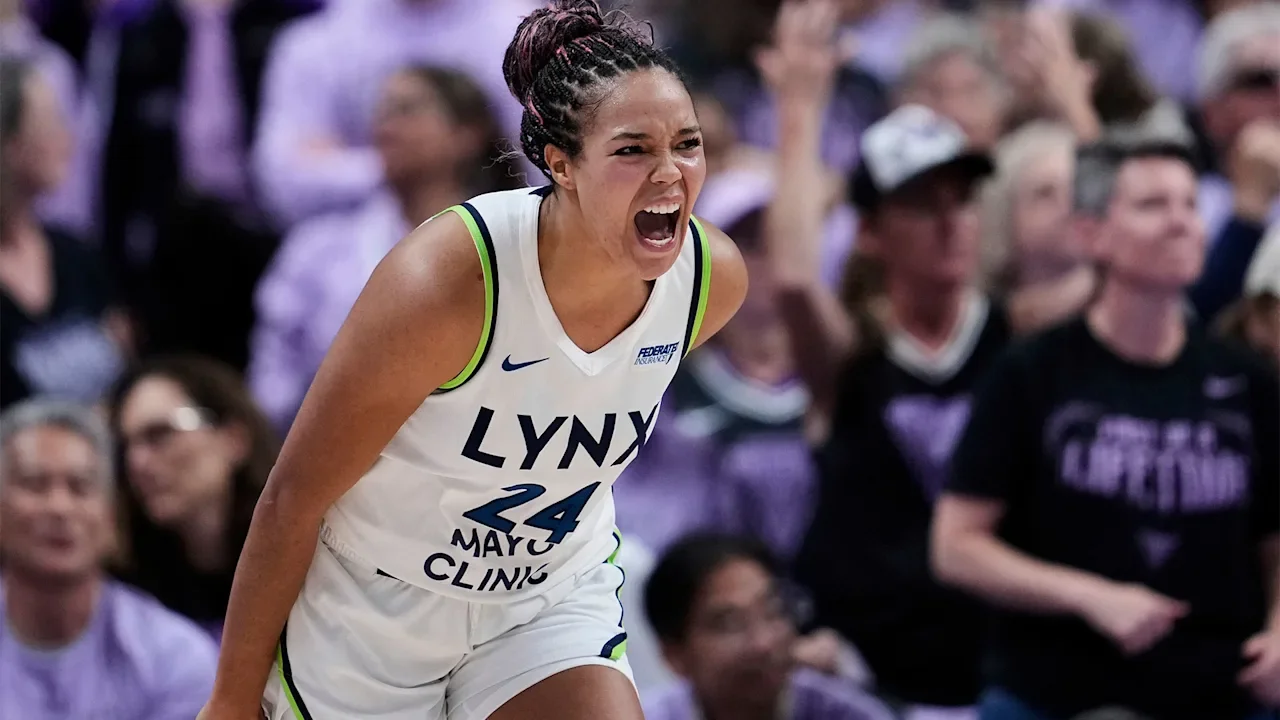
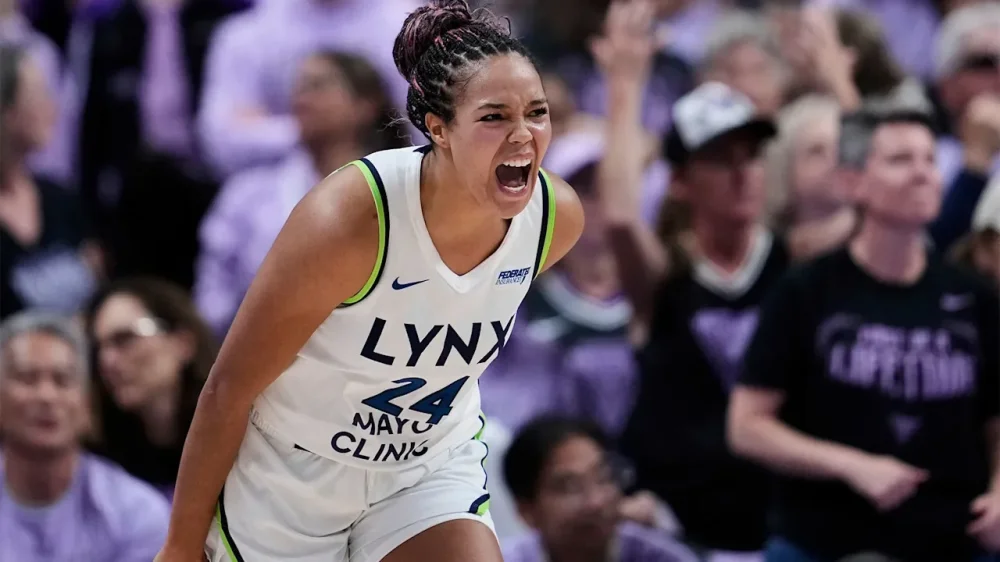
Napheesa Collier is more than just a WNBA star who is critical of her league and its leadership. The Minnesota Lynx player is a vice president of the players union, which means she will be sitting across from WNBA Commissioner Cathy Engelbert at the negotiating table ahead of an Oct. 31 deadline to reach a new collective bargaining agreement. If that doesn’t cause enough tension, Collier is also a co-founder of Unrivaled, a three-on-three women’s basketball league that plays in the winter and features WNBA stars. That could give her additional leverage to try to press the WNBA as talks unfold. Here’s a look at some of the implications of Collier’s headline-grabbing comments. Player negotiations with the WNBA are already tense. Could they get worse? As an executive on the negotiating team, Collier will have a loud voice in the room when in-person negotiations between the two sides continue. She was at the face-to-face meeting at All-Star weekend in July that included dozens of players. There have been meetings since, but players haven’t really been able to attend because they’ve still been in season. “We’re working hard to make sure that we are putting ourselves in the best position to negotiate for what we think is fair,” said Collier, who has torn ligaments in her left ankle. “We have a lot of meetings internally to make sure we’re on the same page and we’re all lockstep for this. Just making sure we’re super aligned.” There also is the trust factor. During her comments at an end-of-season media session this week, Collier revealed conversations that were to remain private that she had had with the commissioner in February. That could undermine trust that is often needed to carry out negotiations. For all the faults that Collier cited in her prepared comments, Engelbert has delivered on many of her promises since coming into the league in 2019. She will have added six expansion teams by 2030 and secured a major new media rights deal for the next decade that will bring in more than $2.2 billion. Engelbert also had the league pay for a full charter flight program this season that the players hope will be added to the new CBA to address concerns about issues ranging from safety to travel time. The commissioner has said all along that the league is hoping for a transformational agreement that includes significantly increased player salaries and benefits. There’s little reason for Collier’s remarks to detract from that goal. How are other players responding to Collier’s comments? Players across the league backed Collier either on social media or at Game 5 of the WNBA semifinals series between Las Vegas and Indiana that the Aces won in overtime. WNBA MVP A’ja Wilson said she was appreciative of Collier and the union for standing up for the players. “I’m grateful to have those type of people to be able to continue to speak up for us,” Wilson said after the Aces advanced to the WNBA Finals. “I’m going to ride with Phee always. Obviously, she’s a business girlie and she has her own stuff going on, but moving forward, we’ve gotta continue to stand on business as we talk about this CBA negotiation.” Other players, including Rookie of the Year Paige Bueckers, backed Collier on social media, calling her “Queen Phee” in an Instagram Story while the song “Pink Pony Club” plays in the background. What do the negotiations mean for free agency? Nearly every player not on a rookie contract will be a free agent this offseason, hoping to cash in on a potential giant leap in the league’s salary structure. Free agency usually has taken place in January, with players meeting with teams and able to sign in February. Players have been able to work out and get treatment for injuries at their former team’s facility in the offseason before becoming free agents. In a worst-case scenario where owners decided to lock out the players or the players decided to go on strike, those courtesies would go away. Could Collier’s Unrivaled league give players more leverage? The 3-on-3 league will start its second season in January and already has expanded to 54 players and added two new teams. The domestic league, made up entirely of WNBA players, now gives players another option to earn money, which would lessen the impact of a lockout or strike. Last season, players in the league had an average salary of more than $220,000, which was close to the maximum base salary in the WNBA. Unrivaled will add Bueckers to an already loaded roster that includes Collier, Breanna Stewart, and Angel Reese. It also has set itself up for the future by offering NIL deals to many of the top college players. —Doug Feinberg, AP basketball writer View the full article
-
Volodymyr Zelenskyy says he has discussed Tomahawk cruise missiles with Donald The PresidentView the full article
-
We may earn a commission from links on this page. Amazon’s October Prime Day sale starts Oct.7—but keeping track of the best discounts yet to land and figuring out which deals are worthwhile can be a challenge. As an alternative, you can have Alexa give you a heads-up about deals on products you already know you want to purchase, so you don’t have to spend time sorting through the noise. Amazon Prime subscribers in the United States who also have Echo smart speakers can enable deal alerts to receive notifications 24 hours before discounts go live and even have your Alexa purchase these items for you. Here’s how to do it. How to set up Alexa deal alertsFirst, open the Amazon Shopping app or go to Amazon’s website via browser and add products you want alerts for to your Wish List, your Shopping Cart, or a Saved for Later list. Then head to the Alexa mobile app and go to More > Settings > Notifications > Amazon Shopping and toggle on Deal Recommendations under the Shopping Recommendations options. This ensures you’ll receive notifications for items that appear in your shopping activity. If Alexa finds an upcoming deal on something in your Saved for Later, your Wish List, or in your Shopping Cart, you’ll receive a pop-up alert on your Echo Show display or see a yellow light ring on your Echo speaker. You can also ask, “Alexa, what are my notifications?” to hear a list of deals it has compiled thus far. Alexa can detect deals up to 24 hours in advance, so you can either ask it to remind you again when a deal starts or request that it buy the item when the deal goes live. Simply say, “Alexa, buy it for me,” and it’ll charge the default payment and send the item to the default delivery address on your account. Here are some Alexa smart speaker options: Full sound compact smart speaker with Alexa Amazon Echo Pop $24.99 at Amazon $39.99 Save $15.00 Get Deal Get Deal $24.99 at Amazon $39.99 Save $15.00 With bigger vibrant sound, helpful routines and Alexa Echo Dot (5th Gen, 2022 release) $34.99 at Amazon $49.99 Save $15.00 Get Deal Get Deal $34.99 at Amazon $49.99 Save $15.00 Smart display with 2x the bass and clearer sound Echo Show 5 (3rd Gen, 2023 release) $54.99 at Amazon $89.99 Save $35.00 Get Deal Get Deal $54.99 at Amazon $89.99 Save $35.00 SEE 0 MORE Our Best Editor-Vetted Early Prime Day Deals Right Now Apple AirPods Pro 2 Noise Cancelling Wireless Earbuds — $199.00 (List Price $249.00) Samsung Galaxy Tab A9+ 10.9" 64GB Wi-Fi Tablet (Graphite) — $156.78 (List Price $219.99) Blink Mini 2 1080p Indoor Security Camera (2-Pack, White) — $34.99 (List Price $69.99) Blink Outdoor 4 XR + Mini 2 — Wireless and plug-in security cameras, motion detection, extended range. Sync Module XR included — 2 camera system + Mini 2 (Black) — $74.99 (List Price $219.98) Ring Battery Doorbell Plus — $79.99 (List Price $149.99) Ring Indoor Cam (2nd Gen, 2-pack, White) — $49.98 (List Price $79.99) Blink Video Doorbell Wireless (Newest Model) + Sync Module Core — $34.99 (List Price $69.99) Shark AV2501S AI Ultra Robot Vacuum with HEPA Self-Empty Base — $229.99 (List Price $549.99) Amazon Fire HD 10 (2023) — $69.99 (List Price $139.99) Kindle Essentials Bundle including Kindle (2024 release) - Black, Fabric Cover - Matcha, and Power Adapter — $117.97 (List Price $161.97) Deals are selected by our commerce team View the full article
-
Democrats accuse administration of using closure as cover for project to shrink governmentView the full article
-
Picture a data center on the edge of a desert plateau. Inside, row after row of servers glow and buzz, moving air through vast cooling towers, consuming more electricity than the surrounding towns combined. This is not science fiction. It is the reality of the vast AI compute clusters, often described as “AI supercomputers” for their sheer scale, that train today’s most advanced models. Strictly speaking, these are not supercomputers in the classical sense. Traditional supercomputers are highly specialized machines designed for scientific simulations such as climate modeling, nuclear physics, or astrophysics, tuned for parallelized code across millions of cores. What drives AI, by contrast, are massive clusters of GPUs or custom accelerators (Nvidia H100s, Google TPUs, etc.) connected through high-bandwidth interconnections, optimized for the matrix multiplications at the heart of deep learning. They are not solving equations for weather forecasts: they are churning through trillions of tokens to predict the next word. Still, the nickname sticks, because their performance, energy demands, and costs are comparable to, or beyond, the world’s fastest scientific machines. And the implications are just as profound. A recent study of 500 AI compute systems worldwide found that their performance is doubling every nine months, while both cost and power requirements double every year. At this pace, the frontier of artificial intelligence is not simply about better algorithms or smarter architectures. It is about who can afford, power, and cool these gigantic machines, and who cannot. The exponential moat When performance doubles every nine months but cost doubles every twelve, you create an exponential moat: each leap forward pushes the next frontier further out of reach for all but a handful of players. This is not the familiar story of “open-source vs. closed-source models”: it is more fundamental. If you cannot access the compute substrate (the hardware, electricity, cooling, and fabs required to train the next generation ) you are not even in the race. Universities cannot keep up. Small startups cannot keep up. Even many governments cannot keep up. The study shows a stark concentration of capability: the most powerful AI clusters are concentrated in a few corporations, effectively privatizing access to the cutting edge of machine intelligence. Once compute becomes the bottleneck, the invisible hand of the market does not produce diversity. It produces monopoly. Centralization vs. democratization The rhetoric around AI often emphasizes democratization: tools made available to everyone, small actors empowered, creativity unleashed. But in practice, the power to shape AI’s trajectory is shifting toward the owners of massive compute farms. They decide which models are feasible, which experiments get run, which approaches receive billions of tokens of training. This is not just a matter of money. It is about infrastructure as governance. When only three or four firms control the largest AI clusters, they effectively control the boundaries of the possible. If your idea requires training a trillion-parameter model from scratch, and you are not inside one of those firms, your idea remains just that: an idea. Geopolitics of compute Governments are beginning to notice. At the 2025 Paris AI Action Summit, nations pledged billions to upgrade national AI infrastructure. France, Germany, and the UK are each moving to expand sovereign compute capacity. The United States has launched large-scale initiatives to accelerate domestic chip production, and China, as always, is playing its own game, pouring resources into massive wind and solar buildouts to guarantee not only chips, but the cheap electricity to feed them. Europe, as usual, is caught in the middle. Its regulatory frameworks may be more advanced, but its ability to deploy AI at scale depends on whether it can secure energy and compute on competitive terms. Without that, “AI sovereignty” is rhetoric, not reality. And yet, there is a darker irony here. Even as governments race to assert sovereignty, the real winners of the AI arms race may be corporations, not nations. Control over compute is concentrating so quickly in the private sector that we are edging closer to a scenario long depicted in science fiction: corporations wielding more power than states, not only in markets but in shaping the very trajectory of human knowledge. The balance of authority between governments and companies is shifting, and this time, it is not fiction. Environmental reckoning There is also a physical cost. Training one frontier model can require as much electricity as a small city uses in a year. Cooling towers demand enormous volumes of water, and while much of it is returned to the cycle, siting matters: in water-scarce regions, the strain can be significant. The carbon footprint is similarly uneven. A model trained on grids dominated by coal or gas produces orders of magnitude more emissions than one trained on grids powered by renewables. In this sense, the “AI sustainability” debate is really an energy debate. Models are not green or dirty by themselves. They are as green or as dirty as the electrons that feed them. What efficiency cannot buy Efficiency alone will not solve this problem. Each generation of chips gets faster, each architecture more optimized, but the aggregate demand continues to rise faster than the gains. Every watt saved at the micro level is consumed by the macro expansion of ambition. If anything, efficiency makes the arms race worse, because it lowers the cost per experiment and encourages even more experiments. The result is a treadmill: more compute, more power, more cost, more centralization. What to demand If we want to avoid a future in which AI’s destiny is set by the boardrooms of three companies and the ministries of two superpowers, we need to treat compute as a public concern. That means demanding: Transparency about who owns and operates the largest clusters. Auditability of usage: what models are being trained, for what purposes. Shared infrastructure, funded publicly or through consortia, so that researchers and smaller firms can experiment without asking permission from trillion-dollar corporations. Energy accountability, requiring operators to disclose not just aggregate consumption but sources, emissions, and water footprints in real time. The debate should not stop at “which model is safest” or “which dataset is fair.” It should extend to who controls the machines that make the models possible in the first place. The machines behind the machines The next control point in AI isn’t software: it’s hardware. The massive compute clusters that train the models are now the real arbiters of progress. They decide what’s possible, what’s practical, and who gets to play. If history teaches anything, it is that when power centralizes at this scale, accountability rarely follows. Without deliberate interventions, we risk an AI ecosystem where innovation is bottlenecked, oversight is optional, and the costs, from financial or environmental to human, are hidden until it is too late. The arms race of AI “supercomputers” is already underway. The only question is whether society chooses to watch passively as the future of intelligence is privatized, or whether we recognize that the machines behind the machines deserve just as much scrutiny as the algorithms they enable. View the full article

-
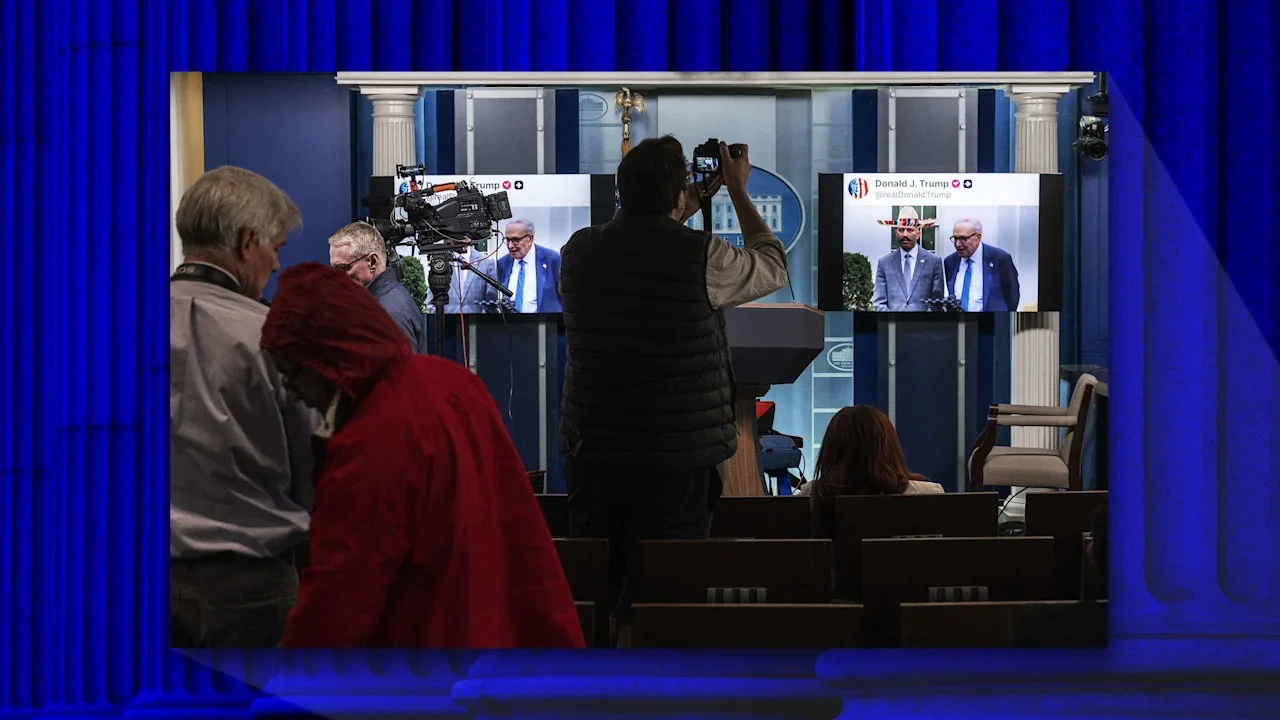
Welcome to AI Decoded, Fast Company’s weekly newsletter that breaks down the most important news in the world of AI. I’m Mark Sullivan, a senior writer at Fast Company, covering emerging tech, AI, and tech policy. This week, I’m focusing on Donald The President’s recent AI-generated videos, which he (or his staff) posts on Truth Social. I also look at world models, the successor to large language models, and at OpenAI’s new Sora 2 model, which is also the anchor for a new social app. Sign up to receive this newsletter every week via email here. And if you have comments on this issue and/or ideas for future ones, drop me a line at sullivan@fastcompany.com, and follow me on X (formerly Twitter) @thesullivan. The President’s dangerous mix of low-grade and high-grade deepfakes AI-generated videos are becoming a routine part of politics. That’s probably not a good thing. In the past it’s been fairly easy to distinguish between the real and the generated, but as video-generation models have improved, it’s gotten harder. We’re in a period when both high-quality AI videos and “AI slop” are common. The The President administration appears to be using both types. Last weekend, The President posted an AI video to Truth Social that looked a lot like a real Fox News segment describing a new healthcare program about to be rolled out to Americans. The video featured the president’s daughter-in-law Lara The President describing “medbeds,” or futuristic health pods (think the health pod in Prometheus) that can do anything from curing cancer to growing back lost limbs. The beds would be offered in new hospitals across the country, and people would use a medbed “card” to access them. Except magical medbeds are a fantasy, a myth spun up in years of Qanon blather on sites like 4chan. And there’s no new hospital system and no membership card. For most rational people, the unlikelihood of such a thing suddenly coming into existence was the first tip-off that the video was AI generated. Somebody—maybe The President, maybe a staffer—deleted the strange post a few hours later, and the White House offered no explanation. A few days later, The President posted another, lower-quality AI-generated video. This one depicted Senate minority leader Chuck Schumer (D-NY) and House minority leader Hakeem Jeffries (D-NY) standing at a podium talking about the looming government shutdown. The AI had Schumer insulting his own party and using profanity. The AI dropped a cartoon sombrero and a mustache on Jeffries, in a nod to a Republican lie that Democrats will let the government shut down if they can’t give healthcare benefits to undocumented immigrants (who are, by law, ineligible for such benefits). The Schumer video is obviously AI-generated, meant to troll Democrats during the shutdown impasse. The medbeds video is more troubling because the AI is high-quality and shows an intent to mislead. When one politician routinely uses both “slop” and high-realism AI to make their points, will their constituents or supporters always know the difference? As the AI improves, that becomes almost completely up to the creator of the video. For The President, a politician with authoritarian tendencies and a reliance on propaganda, that could be a dangerous mix. AI-based video may wind up becoming the most powerful propaganda tool ever invented. After all, seeing is believing—especially when the viewer wants to believe. ‘World models’ are likely the future of AI The AI models we’ve been talking about for the past three years are fundamentally language models—really big mathematical probability engines that are good at predicting the most likely word in a sequence. But two things have happened since the appearance of ChatGPT in late 2022: We’ve come to understand that a model that reasons primarily on words is limited in its real-life applications. And within the AI industry, a consensus has formed that the AI labs’ main trick of radically scaling up training data and computing power to make models smarter isn’t achieving the big performance gains it once did. None of this should be too surprising. A machine (or a human) can only learn so much about how the world works by reading articles and books. We humans don’t learn like that. We have a unique ability to quickly build a mental “world model” that organizes diverse modes of information gathered using our senses about our environment and ourselves. Researchers are working hard to develop synthetic world models, but it’s a hard problem. While language models form a vast, many-dimensional vector space (a map, if you will) representing all the possible combinations of words in various contexts, a world model must form a much bigger space to represent the virtually endless combinations of visual, aural, and motion information. While language models try to guess the next word in a sequence, the world model must reason in real time about how a certain action might affect the real world. “The models are learning how to reason about physical reality,” says Naeem Talukdar, CEO of the video-generation company Moonvalley. A world model inside a robot might be asked to “imagine” a world in which the robotic arm moves 10 degrees to the right, and then judge whether such a move is productive to the larger task at hand. It’s this kind of reasoning that may allow robots to iteratively learn to complete tasks that they’ve not been explicitly trained to do. “The bigger these models get, and the more modalities that they learn on, just like humans, they start to be able to reason on things that they haven’t seen yet before,” Talukdar says. For instance, in the past robots have struggled with the deceptively simple command: “clean up the dinner table and put the dishes in the dishwasher.” Without the ability to reason in real time about the physical world, the robot wouldn’t be able to experimentally move from one micro-task to the next. World models are also being used to help self-driving cars train for real-world driving, and to iteratively manage unexpected or untrained-for events that occur on the roadway in real time. Additionally, augmented reality glasses such as Meta’s Orion may eventually rely on world models to organize all the data collected from the various sensors in the device, such as motion and orientation sensors, depth and tracking sensors, microphones, and light sensors. OpenAI’s Sora 2 video generation model comes with a social network Would you like to open an app and spend your free time watching AI-generated videos depicting real people—including yourself and your friends—doing silly things? OpenAI and its CEO Sam Altman think you will. The company just announced a new version of its impressive Sora video generation model—Sora 2—and a social networking app (iOS only) to go with it. OpenAI calls Sora 2 the “GPT-3.5 moment for video” (GPT-3.5 was when the output of OpenAI’s language models became more coherent and relevant.) The major breakthrough is native audio-video generation—creating synchronized dialogue, sound effects, and soundscapes that naturally match the visuals. The company says that Sora 2’s understanding of physics is vastly improved, and that it can now accurately model complex phenomena like buoyancy in water, and intricate movements such as gymnastics routines. One person on X demonstrated how Sora 2 can now accurately simulate water being poured into a glass with realistic reflections, ripples, and refraction. The model generates 10-second clips (20 seconds for Pro users) with better consistency across multi-shot sequences, OpenAI says. The model is good at producing realistic, cinematic, and anime styles. Importantly, a standout Cameos feature lets users insert themselves (or their friends) into videos after a onetime recording. When you set up the Sora app, you’re now asked to record a live video of yourself repeating random numbers or phrases and turning your head in certain poses. All this gives the app a way to authenticate that it’s really you so that only you can use your own image, and to ensure that anybody else trying to use it in a video must get your permission. Like TikTok, the Sora iOS app (invite-only for now) features an algorithmic feed, content remixing, and social sharing. OpenAI emphasizes “long-term user satisfaction” over engagement metrics, and the company says it has no plans to insert advertising into the feed, as Meta plans to do with its Vibes AI video app. More AI coverage from Fast Company: AI’s monstrous energy use is becoming a serious PR problem ChatGPT can now spend your money for you Shift the AI conversation from cost cutting to revenue AI is making your website irrelevant Want exclusive reporting and trend analysis on technology, business innovation, future of work, and design? Sign up for Fast Company Premium. View the full article

-
WhatsApp has rolled out an array of new features designed specifically to enhance user engagement, making it not just a messaging platform but a versatile tool for small businesses. As competition heats up, these updates offer small business owners fresh avenues to connect with customers and streamline operations. One of the standout features is the introduction of Live and Motion Photos, enabling users to share dynamic images infused with sound and movement. This tool adds a new dimension to communications, allowing small businesses to share lively snapshots of their products, services, or events. Whether it’s a cozy café tempting customers with the aroma of freshly brewed coffee or a boutique showcasing a new collection, these features can help businesses capture and retain customer interest in a crowded marketplace. In parallel, WhatsApp has leveraged Meta AI to introduce customizable chat themes, sparking creativity in conversations. Small business owners can craft chat interfaces that mirror their brand’s personality, allowing for a more authentic interaction when communicating with customers. Notably, these custom themes add a professional touch that can elevate brand perception in customers’ eyes. Additionally, WhatsApp has expanded its sticker packs, inviting users to express themselves in richer forms. For small businesses, adopting a fun sticker package can lead to more engaging promotional content on social media or even just decoders at customer service desks. This may seem minor, but it humanizes brands, fostering a sense of connection and loyalty among clientele. Navigating group chats can be particularly cumbersome, but a new feature allows users to search for contacts within groups. This update could prove invaluable for small business teams who often collaborate on projects in WhatsApp group chats. When creative names for groups sometimes make it tough to remember, this function streamlines communication and helps avoid potential misunderstandings. The document scanning capability on Android devices is another essential addition for small business owners. The ability to scan, crop, and send documents directly from WhatsApp simplifies transactions or communication with suppliers, clients, or employees. By making documents readily available within the app, businesses can operate more efficiently without the hassle of switching apps or devices. Video calls have also gotten a makeover, with WhatsApp now allowing users to use Meta AI to create personalized backgrounds. This can be particularly useful for virtual meetings or sidewalk consultations, ensuring that small business representatives can portray a professional image, regardless of their physical setting. The unique backgrounds can set the mood for important discussions or product demonstrations, enhancing customer engagement. While these features offer numerous benefits, small business owners should also weigh the potential challenges. For instance, while customization offers a great way to enhance brand image, it may also risk overwhelming users with complexity, particularly if features are underutilized. Training employees to leverage new features effectively will require time and effort, and some may find the learning curve steep. Moreover, as the integration of AI becomes more pronounced, concerns about data privacy may arise. Small businesses need to ensure they’re transparent about how data is handled and educate clients on any new procedures stemming from these updates. Engaging customers in fresh, innovative ways is vital for small businesses looking to stay competitive. WhatsApp’s latest updates come at a crucial time, serving not only to enrich personal communications but also to elevate business interactions. As small business owners explore these features, they should remain aware of both the opportunities and responsibilities that accompany the integration of new technology into their operations. For further details, visit the original press release here. Exploring these new functionalities could open the door to more engaging customer interactions and streamlined workflows, a significant advantage in today’s fast-paced business landscape. This article, "WhatsApp Unveils Exciting Features for More Engaging Chats and Calls" was first published on Small Business Trends View the full article
-
WhatsApp has rolled out an array of new features designed specifically to enhance user engagement, making it not just a messaging platform but a versatile tool for small businesses. As competition heats up, these updates offer small business owners fresh avenues to connect with customers and streamline operations. One of the standout features is the introduction of Live and Motion Photos, enabling users to share dynamic images infused with sound and movement. This tool adds a new dimension to communications, allowing small businesses to share lively snapshots of their products, services, or events. Whether it’s a cozy café tempting customers with the aroma of freshly brewed coffee or a boutique showcasing a new collection, these features can help businesses capture and retain customer interest in a crowded marketplace. In parallel, WhatsApp has leveraged Meta AI to introduce customizable chat themes, sparking creativity in conversations. Small business owners can craft chat interfaces that mirror their brand’s personality, allowing for a more authentic interaction when communicating with customers. Notably, these custom themes add a professional touch that can elevate brand perception in customers’ eyes. Additionally, WhatsApp has expanded its sticker packs, inviting users to express themselves in richer forms. For small businesses, adopting a fun sticker package can lead to more engaging promotional content on social media or even just decoders at customer service desks. This may seem minor, but it humanizes brands, fostering a sense of connection and loyalty among clientele. Navigating group chats can be particularly cumbersome, but a new feature allows users to search for contacts within groups. This update could prove invaluable for small business teams who often collaborate on projects in WhatsApp group chats. When creative names for groups sometimes make it tough to remember, this function streamlines communication and helps avoid potential misunderstandings. The document scanning capability on Android devices is another essential addition for small business owners. The ability to scan, crop, and send documents directly from WhatsApp simplifies transactions or communication with suppliers, clients, or employees. By making documents readily available within the app, businesses can operate more efficiently without the hassle of switching apps or devices. Video calls have also gotten a makeover, with WhatsApp now allowing users to use Meta AI to create personalized backgrounds. This can be particularly useful for virtual meetings or sidewalk consultations, ensuring that small business representatives can portray a professional image, regardless of their physical setting. The unique backgrounds can set the mood for important discussions or product demonstrations, enhancing customer engagement. While these features offer numerous benefits, small business owners should also weigh the potential challenges. For instance, while customization offers a great way to enhance brand image, it may also risk overwhelming users with complexity, particularly if features are underutilized. Training employees to leverage new features effectively will require time and effort, and some may find the learning curve steep. Moreover, as the integration of AI becomes more pronounced, concerns about data privacy may arise. Small businesses need to ensure they’re transparent about how data is handled and educate clients on any new procedures stemming from these updates. Engaging customers in fresh, innovative ways is vital for small businesses looking to stay competitive. WhatsApp’s latest updates come at a crucial time, serving not only to enrich personal communications but also to elevate business interactions. As small business owners explore these features, they should remain aware of both the opportunities and responsibilities that accompany the integration of new technology into their operations. For further details, visit the original press release here. Exploring these new functionalities could open the door to more engaging customer interactions and streamlined workflows, a significant advantage in today’s fast-paced business landscape. This article, "WhatsApp Unveils Exciting Features for More Engaging Chats and Calls" was first published on Small Business Trends View the full article
-
Did you know you can customize Google to filter out garbage? Take these steps for better search results, including adding my work at Lifehacker as a preferred source. Though Apple might still be struggling to keep up with its tech competitors in the AI race, one feature it rolled out ahead of companies like Google or Samsung was Notification Summaries. With Apple Intelligence, your iPhone can truncate lengthy messages and alerts into succinct summaries that are meant to be read at a glance. The idea is, rather than sift through a sea of notifications, you can simply scan your missed alerts and get up to speed quickly. In execution, however, it's been a bit of a disaster. While Apple's AI could offer accurate summaries, some of its outputs were quite inaccurate. The most infamous example was when Apple Intelligence incorrectly summarized a BBC news alert, saying that the suspected UnitedHealthcare CEO shooter Luigi Mangione had committed suicide in prison. Following that incident, Apple pulled Notification Summaries for news and entertainment alerts, until the release of iOS 26. But even when summaries are accurate, they aren't always ideal. When Apple first released the feature, one user went viral after sharing how Notification Summaries summed up two breakup texts from their partner: "No longer in a relationship; wants belongings from apartment." In theory, it might be nice to see a summary of a long series of alerts; in practice, it might be better for you to read your messages yourself. It is against this backdrop that this latest AI summary news comes to us: Samsung is currently working on its own version of Notification Summaries for Galaxy devices. Notification summaries on One UI 8.5As discovered by SamMobile, Samsung is actively working on a new AI notification summary feature for Galaxy devices. The outlet unearthed the feature within Samsung's latest One UI 8.5 firmware update, which is now online for the Galaxy S25 Ultra. SamMobile has this firmware running, but, at this time, the feature itself is not actually working. What is working, however, is a pop-up explaining how the feature works. When pulling down the notification panel on a Galaxy running One UI 8.5, you'll see the following message: "Your longer conversations can now be summarized to give you quick recaps." You can also find a new settings menu for "Notification summaries" that, while not currently active, explains the feature in more detail: "Summarize long messages and group conversations to get quick recaps. Summaries use AI on your device, which may sometimes make mistakes. Your messages are never sent to Google." From here, you're now able to choose apps to exclude from these summaries, though, again, the summaries themselves are not live as of this article. Still, it's an interesting first look at how Samsung plans to roll out AI notifications. As we can see from the current explainer, the feature will tap into an AI model to summarize alerts, which SamMobile guesses will most likely be Gemini Nano. Nano is Google's fast, lightweight model that's designed to run on-device. That tracks with what we can see here, as the feature claims no data is ever sent to Google when summarizing notifications. If you're going to use AI, on-device processing is certainly better than sending your data over the internet. Still, it'll be interesting to see how Samsung's version fares compared to Apple's. Will the former come up with a more reliable way to summarize alerts, or will it feel about the same as it does on iOS? For what it's worth, I had to turn off Notification Summaries on my iPhone. I just found it largely unhelpful, even when it was accurate. If I had a Galaxy, I wouldn't be shocked if I felt compelled to do the same. View the full article
-
Pepsi has a new challenge: keeping products like Gatorade and Cheetos vivid and colorful without the artificial dyes that U.S. consumers are increasingly rejecting. PepsiCo, which also makes Doritos, Cap’n Crunch cereal, Funyuns and Mountain Dew, announced in April that it would accelerate a planned shift to using natural colors in its foods and beverages. Around 40% of its U.S. products now contain synthetic dyes, according to the company. But just as it took decades for artificial colors to seep into PepsiCo’s products, removing them is likely to be a multi-year process. The company said it’s still finding new ingredients, testing consumers’ responses and waiting for the U.S. Food and Drug Administration to approve natural alternatives. PepsiCo hasn’t committed to meeting the The President administration’s goal of phasing out petroleum-based synthetic dyes by the end of 2026. “We’re not going to launch a product that the consumer’s not going to enjoy,” said Chris Coleman, PepsiCo’s senior director for food research and development in North America. “We need to make sure the product is right.” Coleman said it can take two or three years to shift a product from an artificial color to a natural one. PepsiCo has to identify a natural ingredient that will have a stable shelf life and not change a product’s flavor. Then it must ensure the availability of a safe and adequate supply. The company tests prototypes with trained experts and panels of consumers, then makes sure the new formula won’t snag its manufacturing process. It also has to design new packaging. Experimenting with spices to color Cheetos Tostitos and Lay’s will be the first PepsiCo brands to make the shift, with naturally dyed tortilla and potato chips expected on store shelves later this year and naturally dyed dips due to be on sale early next year. Most of the chips, dips and salsas in the two lines already are naturally colored, but there were some exceptions. The reddish-brown tint of Tostitos Salsa Verde, for example, came from four synthetic colors: Yellow 5, Yellow 6, Red 40 and Blue 1. Coleman said the company is switching to carob powder, which gives the chips a similar color, but needed to tweak the recipe to ensure the addition of the cocoa alternative wouldn’t affect the taste. In its Frito-Lay food labs and test kitchens in Plano, Texas, PepsiCo is experimenting with ingredients like paprika and turmeric to mimic the bright reds and oranges in products like Flamin’ Hot Cheetos, Coleman said. The company is looking at purple sweet potatoes and various types of carrots to color drinks like Mountain Dew and Cherry 7Up, according to Damien Browne, the vice president of research and development for PepsiCo’s beverage division based in Valhalla, New York. Getting the hue right is critical, since many consumers know products like Gatorade by their color and not necessarily their name, Browne said. “We eat with our eyes,” he said. “If you look at a plate of food, it’s generally the different kinds of colors that will tell you what you would like or not.” Consumer demand goes from a whisper to a roar When the Pepsi-Cola Company was founded in 1902, the absence of artificial dyes was a point of pride. The company marketed Pepsi as “The Original Pure Food Drink” to differentiate the cola from rivals that used lead, arsenic and other toxins as food colorants before the U.S. banned them in 1906. But synthetic dyes eventually won over food companies. They were vibrant, consistent and cheaper than natural colors. They are also rigorously tested by the FDA. Still, PepsiCo said it started seeing a small segment of shoppers asking for products without artificial colors or flavors more than two decades ago. In 2002, it launched its Simply line of chips, which offer natural versions of products like Doritos. A dye-free organic Gatorade came out in 2016. “We’re looking for those little signals that will become humongous in the future,” Amanda Grzeda, PepsiCo’s senior director of global sensory and consumer experience, said of the company’s close attention to consumer preferences. Grzeda said the whisper PepsiCo detected in the early 2000s has become a roar, fueled by social media and growing consumer interest in ingredients. More than half of the consumers PepsiCo spoke to for a recent internal study said they were trying to reduce their consumption of artificial dyes, Grzeda said. Synthetic and natural colors are in FDA’s hands Some states, including West Virginia and Arizona, have banned artificial dyes in school lunches. But Browne said he thinks consumers are driving the push to overhaul processed foods. “Consumers are definitely leading, and I think what we need to do is have the regulators catching up, allowing us to approve new natural ingredients to be able to meet their demand,” he said. The U.S. Food and Drug Administration has said it’s expediting approval of natural additives after calling on companies to halt their use of synthetic dyes. In May, the FDA approved three new natural color additives, including a blue color derived from algae. In July, the agency approved gardenia blue, which is derived from a flowering evergreen. The FDA banned one petroleum-based dye, Red 3, in January because it was shown to cause cancer in lab rats. And in September, the agency proposed a ban on Orange B, a synthetic color that hasn’t been used in decades. Six synthetic dyes remain FDA-approved and widely used, despite mixed studies that show they may cause neurobehavioral problems in some children. Red 40, for example, is used in 25,965 food and beverage items on U.S. store shelves, according to the market research firm NIQ. But even if decades of research has shown that synthetic colors are safe, PepsiCo has to weigh public perceptions, Grzeda said. “We could just blindly follow the science, but it probably would put us at odds with what our consumers believe and perceive in the world,” she said. Passing taste and texture tests PepsiCo also has to balance the needs of consumers who don’t want their favorite snacks and drinks to change or get more expensive because of the costs of natural dyes. NIQ data shows that unit sales of products advertised as free of artificial colors fell sharply in 2023 as prices rose. Susan Mazur-Stommen, a small business owner in Hinton, West Virginia, picked up some Simply brand Cheetos Puffs recently at a convenience store because they were the only variety available. She found the texture to be much different from regular Cheetos Puffs, she said, and their pallid color made them less appetizing. Mazur-Stommen said she agrees with the move away from petroleum-based dyes, but it’s not a critical issue for her. “What I am looking for is the original formulation,” she said. Ultimately, PepsiCo does not want customers to have to choose between natural colors and familiar flavors and textures, Grzeda said. “That’s where it requires the deep science and ingredients and magic,” she said. Durbin reported from Detroit. —Dee-Ann Durbin and Ted Shaffrey, Associated Press View the full article
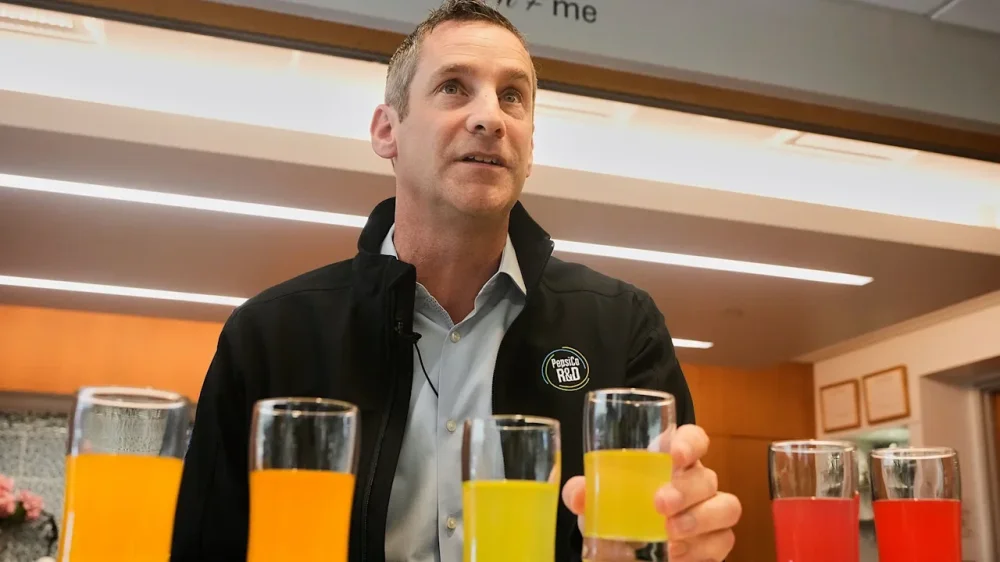
-
HMRC will no longer reap benefit of share trading in FTSE 100’s largest company View the full article
-
The Mortgage Bankers Association's chief operating officer has decided to retire after 11 years at the job. Three association leaders were promoted as a result. View the full article