All Activity
- Past hour
-
Mutual of Omaha, Finance of America and Longbridge Financial rank at the top of HECM endorsements over the past 12 months, Reverse Market Insight reported. View the full article
-
A US hedge fund is said to hold about £200 million ($268 million) of mortgage-backed facilities tied to the failed UK company and has declined comment. View the full article

-
Google will begin enforcing a minimum daily budget for Demand Gen campaigns starting April 1, 2026. What’s happening: The Google Ads API will require a minimum daily budget of $5 USD (or local equivalent) for all Demand Gen campaigns. The change is designed to help campaigns move through the “cold start” phase with enough spend for Google’s models to learn and optimize effectively. The update will roll out as an unversioned API change, applying across all buying paths. Technical details: In API v21 and above, campaigns set below the threshold will trigger a BUDGET_BELOW_DAILY_MINIMUM error, with additional details available in the error metadata. In API v20, advertisers will receive a generic UNKNOWN error, with the specific validation failure referenced in the unpublished error code field. The rule applies when modifying budgets, start dates, or end dates in ways that push daily spend below the $5 floor — covering both daily and flighted budgets. Impact on existing campaigns. Current Demand Gen campaigns running below the minimum will continue serving. However, any future edits to budgets or scheduling will require compliance with the new floor. Why we care. For advertisers and developers, this adds a new compliance layer to campaign management workflows. Systems will need updating to catch and handle the new validation errors before deployment. The bottom line. Google is standardizing a minimum investment threshold for Demand Gen — prioritizing performance stability, while requiring advertisers to adjust budgets and automation accordingly. View the full article
- Today
-
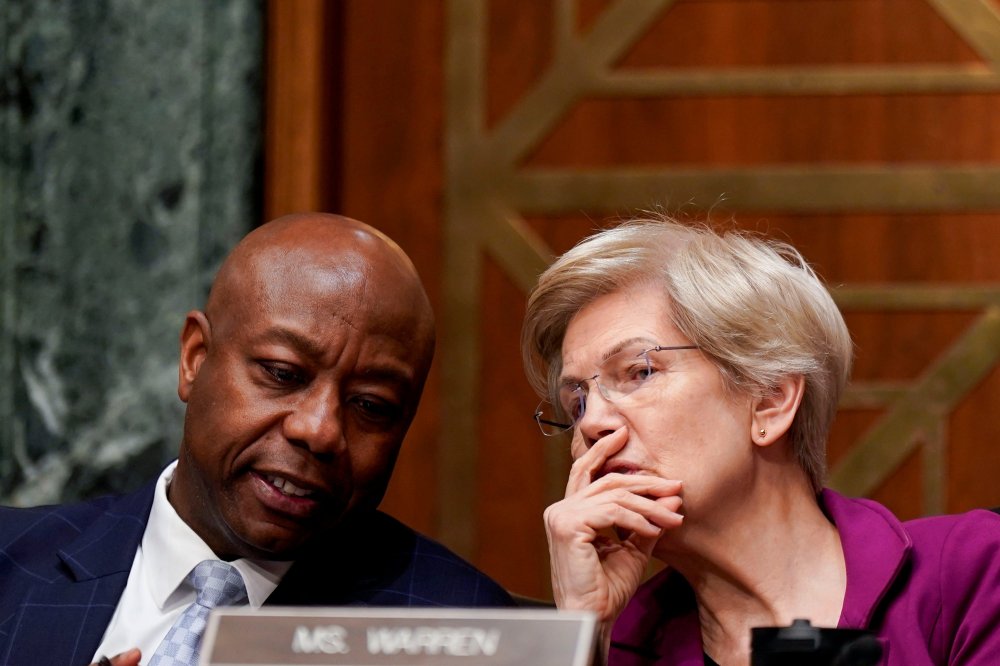
Sens. Tim Scott, R-S.C., and Elizabeth Warren, D-Mass., released new legislative language Monday night that includes a ban on institutional investors' purchase of single family homes and a temporary ban on the Federal Reserve issuing a Central Bank Digital Currency. View the full article
-
A note to corporations everywhere: Asking politely for the internet to stop making fun of you often has the opposite effect. Microsoft may have just learned that lesson the hard way, after it accidentally helped a not-so-nice nickname go viral. As Microsoft’s AI assistant Copilot is integrated into features across the company’s products—from its controversial Recall feature, to a dedicated AI button on Windows keyboards—it’s catching more and more flak, including a new term coined just to clown on Copilot: “Microslop,” a portmanteau of “Microsoft” and “AI slop.” The word was flying freely on Microsoft’s official Copilot Discord server, until users noticed a new filter had gone into effect. On March 1, Windows Latest reported that users’ messages were being blocked if they contained “Microslop,” instead garnering a message from server moderators reading, “Your message contain phrase that is inappropriate.” Microsoft is tired of 'Microslop,' and it's now blocking 'Microslop' comments in Copilot's official Discord server 😂 pic.twitter.com/OR2FFU69h8 — Windows Latest (@WindowsLatest) March 1, 2026 But a small slap on the wrist wasn’t about to stop an army of “sloppers,” as one user described themselves. Instead, Discord users brainstormed workarounds for the filter, like swapping one letter for a number—“Microsl0p,” with a zero instead of a one, was a popular choice—or inventing new terms that conveyed the same message. “Sloppysoft” and “MicroStop No-Pilot” were among the new pitches (not quite as catchy, but they get the point across). Things on Discord got even more dire when Microsoft locked the server after the backlash, blocking users from viewing the chat history and sending new messages. News of the “Microslop” filter quickly broke containment, spreading across social media and creating plenty of new fans of the word, who immediately added it to their lexicons. “Keep saying Microslop it seems to make them very upset,” one poster quipped. MICROSLOP MICROSLOP MICROSLOP MICROSLOP MICROSLOP MICROSLOP MICROSLOP MICROSLOP MICROSLOP MICROSLOP MICROSLOP MICROSLOP MICROSLOP MICROSLOP MICROSLOP MICROSLOP MICROSLOP MICROSLOP MICROSLOP MICROSLOP MICROSLOP MICROSLOP MICROSLOP MICROSLOP MICROSLOP MICROSLOP MICROSLOP MICROSLOP https://t.co/7mGjY2a9cQ — The Act Man (@TheActMan_YT) March 3, 2026 pic.twitter.com/EsSTKkMTOW — RΛSTΞRIZΞD DΩΩM (@rasterized_doom) March 1, 2026 Keep saying Microslop it seems to make them very upset 🤭 https://t.co/IijcFSqVPl — Is this a 3D model? (@IsThisA3DModel) March 2, 2026 Folks were quick to point out a phenomenon that Microsoft apparently forgot: the Streisand effect. Named for Barbra Streisand, whose attempts to bury a photo of her mansion only drew more attention to the picture, the Streisand effect describes when attempts to censor information instead encourage interest in it. If Microsoft had let “Microslop” slide, the term might have lived and died on Discord—but now, it’s going viral across social media instead. You're not going to win this one Microslop. https://t.co/XLlHTgcMJA pic.twitter.com/xLxgW67LN7 — Reid Southen (@Rahll) March 2, 2026 But was the filter made to protect Microsoft’s ego, or simply to keep the server spam-free? Microsoft claims the latter. In a statement to Fast Company, a spokesperson for Microsoft explained that the filter was meant to block a targeted spam campaign on the server, not to outright ban the term permanently. “The Copilot Discord channel has recently been targeted by spammers attempting to disrupt and overwhelm the space with harmful content not related to Copilot,” the spokesperson said. “Initially, this spam consisted of walls of text, so we added temporary filters for select terms to slow this activity.” “We have since made the decision to temporarily lock down the server while we work to implement stronger safeguards to protect users from this harmful spam and help ensure the server remains a safe, usable space for the community,” added the spokesperson. View the full article

-
A reader writes: My workload is mostly comprised of overflow tasks from other departments. I generally like this because it gives me a variety of things to do. I regularly deal with four managers. Three of them are good to work with. One, Alex, is … not. While the others always do a capacity check-in with me (asking if I have the bandwidth to take new work on), Alex regularly assigns me things without asking at all. It is not unusual that I will go on lunch and come back to a bunch of new tasks waiting for me with no discussion prior to assignment. The things Alex assigns me have exceptionally short deadlines, are often missing key pieces of information, and are often assigned to me and then she suddenly becomes unreachable. For example, she assigned a task midday and then didn’t respond to my questions to fill in any of the blanks for hours. It feels like she assigns me things and then runs away from the computer for the rest of the day. She also will regularly start a task, decide she doesn’t have the bandwidth to complete it, and then toss the half completed task at me with a “complete this for me, will you?” and little else. This means I have to stop everything else I am doing to try and figure out where she left off/how important it is because there is no documentation. Most of the time, I just end up redoing her work because the pieces they “completed” were rushed and done incorrectly. Then, when I kill myself to meet her incredibly short deadlines, I have to chase her for approval. Recently I was assigned something she wanted in two days, which I did, and when I asked her to approve it, she said she wouldn’t have any time to review it for five days. To me, if the project can just sit there for five days with nobody looking at it, then it wasn’t the rush I was led to believe. I like Alex as a person and I know she has a busy life outside of work, so I try to give her grace and understanding. When this started happening, I explained politely why these issues make my job harder and we talked about how to keep it from happening in the future. At the time, she seemed understanding and apologetic and I felt good about where we left things. But it feels like the conversation went in one ear and out the other, because again I just got three new things assigned to me without a heads-up, missing information and with incredibly short deadlines. I understand things happen and sometimes things happen last minute or information gets delayed, but this feels constant and I am trying to manage workflows from four people. I previously flagged this situation with my direct manager, but at the time said I was just mentioning the issue for transparency and that she didn’t need to take action because I was dealing with it myself. However, since it keeps happening, I am not sure what to do or how to articulate my issues in a productive way. I don’t want to be a tattletale and rat anybody out and I also don’t want to seem like I am just bitching to my boss about people having a different work ethic than me. I will fully admit, I am pretty type A and super organized, which is part of the reason I have the job I have. But this legitimately sucks and my hair is falling out from stress! What should I do? You can read my answer to this letter at New York Magazine today. Head over there to read it. The post my coworker gives me rush projects, then disappears appeared first on Ask a Manager. View the full article
-
Costs at the pump exceed level at the end of the Biden administrationView the full article
-
As small businesses continue to navigate the complex landscape of artificial intelligence (AI), recent developments between Intel and SambaNova offer fresh insights into enhancing AI capabilities. This strategic collaboration aims to provide efficient AI inference solutions that could potentially transform how small enterprises leverage technology. The partnership centers around building high-performance AI systems using Intel® Xeon® processors, a familiar name in the tech community. This could be particularly beneficial for small businesses looking to implement AI solutions without the need for hefty investments in new infrastructure. With AI workloads diversifying, the push for heterogeneous infrastructure—integrating various compute, memory, and networking systems—has accelerated. By synchronizing SambaNova’s expertise in AI infrastructure with Intel’s reliable hardware, small business owners may see a credible pathway to robust AI applications. For many organizations, AI can feel like a daunting task, laden with uncertainties about implementation and cost. SambaNova’s approach to AI workload may very well offer a chance to simplify that process, particularly for AI-native companies and model providers. “For customers with AI workloads well-suited to SambaNova’s approach, the combination of Intel CPUs and SambaNova’s AI platform can provide a compelling rack-level inference option,” says an Intel representative. This indicates that using these combined technologies can facilitate smoother and faster AI operations. Small businesses might find the potential for improved scalability very appealing. As operations streamline, teams can more easily adapt to increasing data influx or customer demands. The collaboration is also promising cost-effective solutions tailored to fit a variety of budgets—important for small business owners who need to stretch every dollar. While the announcement highlights the immediate benefits, small business owners should also keep an eye on some challenges that could arise with this development. For instance, integrating new technologies typically requires not only financial investment but also a commitment to training staff and altering existing processes. The collaboration does not shift Intel away from its ongoing investments in its GPU capabilities either—implying that businesses will need to stay updated as additional frameworks develop. Intel’s continued roadmap for competition in the AI space reinforces that small businesses will have access to ongoing improvements and innovation. However, the rapidly evolving nature of technology means small businesses must be agile and prepared to adapt quickly. This combination of Intel’s established products and SambaNova’s innovative approach could yield a powerful toolkit, but business owners will have to invest time in assessing their specific needs and workflows. The multi-year strategy discussed also aligns with Intel’s vision for edge-to-cloud engagements, indicating they are focused not just on data centers but on providing comprehensive solutions that suite various business sizes and types. This could translate to more tailored offerings for small enterprises, which is often overlooked in the broader tech landscape. As AI continues to evolve, small business owners equipped with the right solutions will be better positioned to harness its power. By leveraging the combined strengths of Intel and SambaNova, businesses may not only unlock efficiencies within their operations but also open new avenues for growth and innovation. For more details on this collaboration, you can visit the original press release here. As these developments unfold, it will be crucial for small business owners to stay informed and ready to embrace the opportunities that powerful AI infrastructure presents. Image via Google Gemini This article, "Intel and SambaNova Join Forces to Transform AI Inference Solutions" was first published on Small Business Trends View the full article
-
As small businesses continue to navigate the complex landscape of artificial intelligence (AI), recent developments between Intel and SambaNova offer fresh insights into enhancing AI capabilities. This strategic collaboration aims to provide efficient AI inference solutions that could potentially transform how small enterprises leverage technology. The partnership centers around building high-performance AI systems using Intel® Xeon® processors, a familiar name in the tech community. This could be particularly beneficial for small businesses looking to implement AI solutions without the need for hefty investments in new infrastructure. With AI workloads diversifying, the push for heterogeneous infrastructure—integrating various compute, memory, and networking systems—has accelerated. By synchronizing SambaNova’s expertise in AI infrastructure with Intel’s reliable hardware, small business owners may see a credible pathway to robust AI applications. For many organizations, AI can feel like a daunting task, laden with uncertainties about implementation and cost. SambaNova’s approach to AI workload may very well offer a chance to simplify that process, particularly for AI-native companies and model providers. “For customers with AI workloads well-suited to SambaNova’s approach, the combination of Intel CPUs and SambaNova’s AI platform can provide a compelling rack-level inference option,” says an Intel representative. This indicates that using these combined technologies can facilitate smoother and faster AI operations. Small businesses might find the potential for improved scalability very appealing. As operations streamline, teams can more easily adapt to increasing data influx or customer demands. The collaboration is also promising cost-effective solutions tailored to fit a variety of budgets—important for small business owners who need to stretch every dollar. While the announcement highlights the immediate benefits, small business owners should also keep an eye on some challenges that could arise with this development. For instance, integrating new technologies typically requires not only financial investment but also a commitment to training staff and altering existing processes. The collaboration does not shift Intel away from its ongoing investments in its GPU capabilities either—implying that businesses will need to stay updated as additional frameworks develop. Intel’s continued roadmap for competition in the AI space reinforces that small businesses will have access to ongoing improvements and innovation. However, the rapidly evolving nature of technology means small businesses must be agile and prepared to adapt quickly. This combination of Intel’s established products and SambaNova’s innovative approach could yield a powerful toolkit, but business owners will have to invest time in assessing their specific needs and workflows. The multi-year strategy discussed also aligns with Intel’s vision for edge-to-cloud engagements, indicating they are focused not just on data centers but on providing comprehensive solutions that suite various business sizes and types. This could translate to more tailored offerings for small enterprises, which is often overlooked in the broader tech landscape. As AI continues to evolve, small business owners equipped with the right solutions will be better positioned to harness its power. By leveraging the combined strengths of Intel and SambaNova, businesses may not only unlock efficiencies within their operations but also open new avenues for growth and innovation. For more details on this collaboration, you can visit the original press release here. As these developments unfold, it will be crucial for small business owners to stay informed and ready to embrace the opportunities that powerful AI infrastructure presents. Image via Google Gemini This article, "Intel and SambaNova Join Forces to Transform AI Inference Solutions" was first published on Small Business Trends View the full article
-
After nearly two years of pretrial motions, opening arguments are expected to begin Tuesday in the Justice Department’s lawsuit against Live Nation. The case could have dramatic ramifications for the live events business—though that outcome is far from guaranteed. The government alleges that the parent company of Ticketmaster has a chokehold on the concert ticket market, hurting both fans and artists. Live Nation denies that claim, arguing the market is broad and competitive, despite what the Justice Department contends. The fight has been brewing for far longer than two years. Fans have voiced frustration since the 2010 merger between Live Nation and Ticketmaster, when live entertainment prices began climbing steadily. Here’s what you need to know about the trial. What is the Justice Department claiming? The Justice Department initially argued that Live Nation held a monopoly across multiple parts of the live music industry. The company generates revenue from fans through ticket sales and from artists through venue rentals—arrangements that allegedly locked performers into using Ticketmaster to sell tickets. Last month, however, Judge Arun Subramanian dismissed the concert booking monopoly charges. As a result, the trial will focus more narrowly on claims that the company violated the Sherman Antitrust Act by forcing artists who use its venues to also use its promotional services, and by requiring other venues to sign exclusive contracts with Ticketmaster. Live Nation denies the charges. “Calling Ticketmaster a monopoly may be a PR win for the DOJ in the short term, but it will lose in court because it ignores the basic economics of live entertainment,” the company wrote in a statement on its website, “such as the fact that the bulk of service fees go to venues, and that competition has steadily eroded Ticketmaster’s market share and profit margin.” Could Ticketmaster and Live Nation be split up? Technically, yes. Realistically, probably not. While the DOJ is seeking a breakup, courts rarely force companies to split apart. That step is typically taken only when a judge is convinced no other remedy can address the harm. Should the government prevail, a more likely outcome is that Live Nation would be barred from continuing certain business practices deemed anticompetitive. Could this result in lower ticket prices? That’s a bigger question. One of the biggest complaints from fans is the fees that are added to ticket prices. If the Justice Department is successful in abolishing Live Nation’s exclusive agreements with venues, that might impact prices, but there’s no guarantee. Live Nation, for its part, says the case “won’t solve the issues fans care about relating to ticket prices, service fees, and access to in-demand shows.” The company maintains that ticket prices are set by venues and artists. Is Taylor Swift expected to testify in the trial? Sorry, Swifties: Taylor Swift is not listed among the expected witnesses, even though The Eras Tour ticket fiasco helped propel this case into the spotlight. The overwhelming demand for tickets and the meltdown of Ticketmaster’s site left many fans empty-handed and intensified scrutiny of Live Nation—particularly after it delayed its general sale event. Fans were furious and directed their ire at the company, prompting greater government attention. Kid Rock could be a potential witness against Live Nation, though. And othe rpotential witnesses include Minnesota Timberwolves CEO Matthew Caldwell, Roc Nation CEO Desiree Perez, Live Nation Entertainment CEO Michael Rapino and Mumford & Sons keyboardist Ben Lovett When is a decision likely? The trial is expected to last around six weeks. It’s a jury trial, so once the panel finishes deliberating, a verdict will be reached on whether Live Nation violated antitrust laws. If the government wins, the judge will determine the penalties, a process that could take additional time. Should Live Nation lose, it can, of course, appeal the verdict, which would delay any court-ordered changes. And the parties could settle the case before it gets to the jury. Could I get a refund for previous ticket purchases? That depends on the states. If Live Nation loses, several states plan to seek financial penalties. The amounts vary. Michigan, for example, caps civil antitrust penalties at $50,000 per violation. In Florida, penalties can reach as high as $1 million. Even if Live Nation loses, however, consumers shouldn’t expect to see any sort of refund for quite some time—and any payout would likely be modest. View the full article

-
A list of 21 issues to consider. By Marc Rosenberg CPA Firm Mergers: Your Complete Guide Go PRO for members-only access to more Marc Rosenberg. View the full article
-
A list of 21 issues to consider. By Marc Rosenberg CPA Firm Mergers: Your Complete Guide Go PRO for members-only access to more Marc Rosenberg. View the full article
-
America’s three major stock markets, the Dow, Nasdaq, and S&P, are all down sharply in morning trading as of this writing. The wave of red across investors’ monitors is primarily due to one major factor: uncertainty around how far the Iran conflict will travel and how long it will last. Here’s what you need to know about how markets are reacting. What happened? Over the weekend, President Donald The President ordered strikes on Iran, during which the country’s supreme leader, Ayatollah Ali Khamenei, was killed. The death of Iran’s leader and the ongoing conflict in Iran will have significant consequences for the region as a whole for years to come. Yet what those consequences will be is so far unknown. And it’s that uncertainty that is causing stock markets in the United States to fall significantly today, especially after Iran’s Revolutionary Guard Corps announced that the Strait of Hormuz is closed. The Strait of Hormuz is one of the most critical supply routes in the world, with around a fifth of all oil passing through it. Any blockage of the strait could have severe consequences for the global energy trade, and thus the global economy. On top of this, it is looking increasingly likely that the conflict against Iran could go on for some time, with The President not ruling out that US soldiers may need to be put on the ground in Iran. Stock markets sink as Iran uncertainty rises Given all the uncertainty surrounding Iran and oil trade routes, it’s little surprise the markets are reacting negatively at this time. Currently, the Dow, Nasdaq, and S&P are all down significantly: Dow: down 2.5% to $47,669 Nasdaq: down 2.5% to $22,179 S&P 500: down 2.4% to $6,715 Given that stocks and the markets they trade on are historically volatile in the wake of significant geopolitical events, it’s no shock that all three major markets are down. But with today’s fall, it also means that all three major markets are now in the red for the year. As of the time of this writing, the Dow Jones Industrial Average is now down 0.7% for 2026, the NASDAQ Composite is now down 4.4% for the year, and the S&P 500 is down 1.7% since the year began. Crypto and gold fall, too Of course, it’s not just the stock markets that are falling. Major digital currencies are also down as of the time of this writing. Over the past 24 hours, most household name tokens have fallen, including: Bitcoin: down 2.3% to around $67,200 Ethereum: down 3.9% to around $1,952 BNB: down 2.7% to around $626 XRP: down 3.2% to around $1.35 As with the stock markets, it’s little surprise that crypto markets are on the decline today. If there is an asset even more volitile that stocks, it’s cryptocurrencies. And when investors are uncertain, they tend to exit higher-risk assets like crypto to park any gains in “safe haven” assets like gold, which are historically less volatile than securities. However, even gold is having a bad day today. As of the time of this writing, gold has fallen over 4.8% to $5,052. That is a dramatic drop for the precious metal, especially on a day when investor jitters are high. Usually, nervous investors seek gold and other safe-haven assets, such as bonds. One reason gold could be down, however, is due to profit-taking. Gold has had a good run in 2026 so far, rising from around the $4,440 mark in early January to above $5,300 on the first of March. Where gold, crypto, and stocks go from here is anyone’s guess, and the longer uncertainty remains around Iran, the longer that guessing game is likely to persist. View the full article

-
Two months ago, a state administrative judge in California determined that Tesla broke the law by misleading consumers. The argument: Tesla led them to believe that its cars had real self-driving capabilities, calling them “Autopilot” and “Full Self-Driving” (commonly known as FSD). The issue is that Teslas can’t really drive by themselves; they still require drivers to remain constantly vigilant to prevent catastrophe. The verdict prompted the California Department of Motor Vehicles to threaten a temporary suspension of Tesla’s manufacturing and sales licenses. Two months after the ruling, on February 13, Tesla’s attorneys filed a complaint alleging the state “wrongfully and baselessly” labeled it a false advertiser, brazenly arguing that “it was impossible” to buy or use the “auto-pilot” software “without seeing clear and repeated statements that they do not make the vehicle autonomous.” Yet, their fine-print defense clashes with Musk’s failed promises and stunts, such as when he took his hands off the wheel on CBS’s 60 Minutes in 2018 and proudly declared he was “not doing anything.” Or when he showed fake, staged videos of Autopilot in action. Four days after Tesla’s complaint, California’s DMV backed off its shutdown threats when the company agreed to clean up its marketing, rebranding the $99-a-month subscription to “Full Self-Driving (Supervised)”. Now CNBC reports that Tesla is suing anyway to completely reverse the ruling. Musk is demanding the right to use his futuristic language to sell cars— determined false by the courts—while simultaneously relying on its owners’ manuals to shift the blame to drivers the second the system fails. The move prompted the DMV to declare it will “defend the Administrative Law Judge’s findings and decision in court” to protect the public. Dillon Angulo Long trail of bodies Tesla’s new legal gambit to defend its autonomous driving fantasy clashes with the brutal reality of a deficient technology. Tesla cars still only have a Level 2 autonomy—a mechanism designed to handle basic steering and speed—out of four levels (the fourth is true full autonomy, which so far only Chinese manufacturer BYD has been able to achieve while parking). According to the Tesla accident tracking site Tesla Deaths, in the decade after the release of Autopilot in October 2015 there have been at least 65 fatalities connected to Tesla’s Autopilot system. Of those, an April 2024 NHTSA report investigated and verified 29 fatal crashes. The common thread in these tragedies is a catastrophic failure of the Level 2 advanced driver assistance system to recognize stationary objects or crossing vehicles. In May 2016, Joshua Brown died in Florida when the system failed to notice the white side of an 18-wheeler against a bright sky, leading the National Transportation Safety Board to conclude the software permitted “prolonged disengagement from the driving task.” Incidents continued over the years, culminating in a landmark August 2025 federal jury verdict where Tesla was found 33% liable and ordered to pay $243 million after a 2019 crash in Key Largo, where the driver admitted, “I trusted the technology too much.” While Tesla continues to beta-test its software on public roads with deadly consequences, international competitors are quietly delivering the autonomous future Musk has been promising for a decade. Chinese automaker BYD recently deployed its ‘God’s Eye’ intelligent driving system over-the-air to more than one million cars, introducing a Level 4 autonomous parking feature that allows a vehicle to navigate a lot, find a spot, and park completely unattended. Unlike Tesla’s stubborn reliance on cameras alone, BYD utilizes a robust sensor architecture that includes up to 12 cameras, 12 ultrasonic sensors with 0.4-inch accuracy, millimeter-wave radars, and even lidar on higher trims. BYD is so confident in this technology that it issued a blanket guarantee to cover any damages if the system makes a mistake. They are not the only ones. Volvo, who uses Waymo’s self-driving system, also covers any damages. Tesla, on the other hand, deflects blame to the driver. Failure after failure Musk has been predicting the imminent arrival of FSD every year for over a decade now. The gap between his grand vision and Tesla’s actual engineering output has become a chasm of broken promises and delayed timelines. So much so that I’m beginning to think that, in his head, FSD must mean Full Self-Delusion. Musk promised a steering-wheel-free Cybercab by 2026, but January came and he changed the tune to “before 2027,” saying it was going to be extremely hard to produce them in big numbers. He also claimed that autonomy will begin moving the financial needle by mid-2026 and that the company’s humanoid Optimus robots will soon hit a production rate of one million units per year. Reality tells a drastically different story, with executives warning Musk that the profitability for the robotaxi venture would be “very, very hard outside the U.S.” It’s a reality check that is reflected in the data. According to the latest stats, Waymo’s autonomous cabs currently manage a staggering 17,311 miles between disengagements, while Tesla’s Full Self-Driving struggles to hit just 489 miles before a human has to intervene. Despite these internal warnings and external failures, Musk refuses to change course or adopt better hardware. He famously dismissed lidar—a crucial technology that uses pulsed laser light to map the environment in three dimensions, much like a bat uses echolocation to navigate in the dark—as a “crutch” and a “loser’s technology.” Instead, he opted to strip ultrasonic sensors from Tesla vehicles entirely, a cost-cutting move that has resulted in owners reporting persistent errors with basic parking assist features, particularly when rain, snow, or low light blinds the camera lenses. Tesla seems to be trying to change the narrative and manipulate public perception with words, but the public is increasingly not buying the propaganda. Tesla sales continue to tank quarter after quarter due to stale design, lack of innovation, and Musk’s personal brand failure. While the courts will ultimately decide if the automaker can continue advertising its flawed experimental program by dressing it up in the costume of a fully self-driving machine, the public has spoken. View the full article

-
The convergence of trends makes pricing changes imperative. By Jody Padar Go PRO for members-only access to more Jody Padar. View the full article
-
The convergence of trends makes pricing changes imperative. By Jody Padar Go PRO for members-only access to more Jody Padar. View the full article
-
Four responses from our expert council. By Martin Bissett Passport to Partnership Go PRO for members-only access to more Martin Bissett. View the full article
-
Four responses from our expert council. By Martin Bissett Passport to Partnership Go PRO for members-only access to more Martin Bissett. View the full article
-
In terms of operations funding for nonprofits, comprehension of the seven crucial sources can make a significant difference. Individual donations form the backbone of support, whereas foundation and government grants require detailed proposals. Corporate sponsorships can offer both financial and in-kind assistance. Special events not just raise funds but additionally boost community involvement. Exploring membership programs and online crowdfunding can further expand your reach. Each avenue has unique benefits that can sustain your organization’s mission. So, what strategies will you consider? Key Takeaways Individual donations are the backbone of operations funding, accounting for over two-thirds of charitable contributions in the U.S. Foundation grants provide targeted funding but require detailed proposals and strong relationships with program officers for success. Government grants offer various funding types aligned with public policy goals and necessitate thorough documentation for accountability. Corporate sponsorships provide financial support and in-kind services, emphasizing mutual benefits and strong partnerships for effective funding. Special events and fundraising activities generate revenue while fostering connections, making them vital for ongoing operations funding. Individual Donations Individual donations play a significant role in the funding environment for nonprofits, as they account for over two-thirds of all charitable contributions in the U.S. To effectively encourage individual giving, focus on building authentic relationships with donors through compelling storytelling. This approach not only nurtures loyalty but also increases long-term support. Consider donor segmentation, which allows you to tailor communications and engagement strategies to different donor groups, enhancing your fundraising efforts. Offering diverse giving options, like one-time donations, monthly recurring gifts, and planned giving, can attract a broader range of individual donors. Moreover, prioritize donor stewardship by sending prompt thank-yous and impact reports, reinforcing accountability and encouraging ongoing contributions. While individual donations are essential, you can explore grants for small businesses as another funding avenue. Grasping how to get grant money for business can complement your fundraising strategy, providing further resources for your nonprofit’s operations. Foundation Grants Foundation grants serve as a crucial funding source for nonprofits, offering structured financial support aligned with specific missions such as education, health, or the arts. These grants often require detailed proposals and rigorous reporting to guarantee accountability. Here are some key points to contemplate: Notable foundations, like the Bill & Melinda Gates Foundation and the Ford Foundation, provide significant operational grants. Comprehending a foundation’s priorities and building relationships with program officers can boost your chances of securing funding opportunities. Many foundations accept unsolicited proposals, making it easier for nonprofits to seek operational support. Collaborative proposals involving multiple organizations can improve applications by showcasing broader impact and shared resources. Government Grants Government grants offer various funding types that can support your nonprofit’s initiatives, aligning with public policy goals at multiple levels. Comprehending the application process is essential, as it often involves strict compliance and reporting requirements to guarantee transparency. Types of Government Grants Various types of government grants serve as vital funding sources for nonprofits aiming to address community needs and align with public policy objectives. These grants provide significant support for operations, enabling organizations to implement effective programs. Here are some common types of government grants you might consider: Federal Grants: Offered by agencies like the Department of Health and Human Services. State Grants: Funded by state governments to meet local community needs. Local Grants: Provided by municipalities to support grassroots initiatives. Project-Specific Grants: Focused on funding particular programs or services. Understanding these options is important for securing doc grants and ensuring sustainable funding for operations. Application Process Overview Maneuvering the application process for government grants can seem intimidating, especially since it often requires submitting detailed proposals that clearly outline your program’s goals, methods, and budget. Government grants are awarded by federal, state, and local agencies to support programs that meet public policy objectives and community needs. To improve your chances of success, focus on well-defined programs that address specific community issues. Maintaining thorough documentation is essential, as government grants typically have strict accountability standards. Furthermore, developing relationships with program officers can provide valuable insights into the application process, making it easier to navigate. Compliance and Reporting Requirements During maneuvering the terrain of government grants, comprehending compliance and reporting requirements is vital for your project’s success. You’ll need to provide detailed updates on fund usage, ensuring accountability and transparency. Adhering to regulations set by federal, state, and local agencies is mandatory, including specific formats and deadlines for reports. Submit a final report detailing expenditures and project impacts. Maintain thorough documentation of all expenses and activities. Be aware that audits may verify compliance with grant conditions. Understand that failing to meet these requirements can result in penalties, including funding loss. Corporate Sponsorships and Partnerships Corporate sponsorships and partnerships serve as fundamental funding sources for nonprofits, offering both financial support and in-kind services that align with businesses’ corporate social responsibility initiatives. To attract these partnerships, you need to effectively communicate the mutual benefits involved. Present compelling business cases that emphasize value beyond donations, such as increased community engagement and improved brand loyalty. Consider developing tiered sponsorship packages, which can appeal to a broader range of corporate partners by providing varying levels of visibility and engagement opportunities that cater to different budgets. Building strong relationships with local businesses is crucial; leveraging your board members’ networks can facilitate warmer introductions, increasing your chances of securing sponsorships. Finally, deliver regular impact reports to corporate partners. This transparency builds trust and demonstrates your accountability, which is fundamental for cultivating long-term partnerships and opening doors for future funding opportunities. Special Events and Fundraising Activities How can special events and fundraising activities effectively boost your nonprofit’s financial health and community engagement? These initiatives can generate significant revenue as they nurture connections with supporters and raising awareness for your mission. By organizing events like galas, golf tournaments, or online campaigns, you can appeal to various donor demographics and adapt to shifting engagement trends. Set clear financial goals and create a detailed budget. Secure sponsorships early to improve credibility and attract more attendees. Align the event with your organizational brand to maximize participation. Follow up with attendees and sponsors to build long-term relationships. Membership Programs Building on the foundation established by special events and fundraising activities, membership programs represent a strategic way for nonprofits to secure ongoing financial support in addition to nurturing a dedicated community of supporters. By offering regular contributions in exchange for benefits, these programs create a predictable revenue stream that strengthens financial stability. Implementing tiered membership levels can encourage higher contributions, guaranteeing accessibility for a diverse donor base. Engaging members through exclusive content, events, or merchandise cultivates a sense of community and belonging, which is vital for increasing donor retention rates. To maintain this engagement, effective communication of member benefits is fundamental. Organizations often survey members to confirm that the benefits align with their needs and expectations. Online Crowdfunding and Digital Fundraising Online crowdfunding and digital fundraising have become essential tools for nonprofits seeking to expand their reach and secure financial support. Platforms like Kickstarter and GoFundMe allow you to raise small amounts from a large audience, offering quick solutions for specific needs. To maximize your fundraising efforts, consider these key strategies: Utilize social media and email marketing to broaden your audience. Craft compelling stories that resonate and evoke emotional responses. Incorporate video content to showcase your mission and impact effectively. Factor in platform fees, which typically range from 3% to 10%, to guarantee you maximize net revenue. Research indicates that campaigns with strong storytelling and clear goals are more likely to succeed, as they encourage sharing within supporters’ networks. Frequently Asked Questions What Are the Three Sources of Funding? The three primary sources of funding for nonprofits are individual donations, foundation grants, and government grants. Individual donations make up the largest portion, representing over two-thirds of U.S. charitable contributions. Foundation grants involve structured awards from various foundations and often require detailed proposals. Government grants come from federal, state, and local agencies, supporting projects aligned with public policy. Each source plays a crucial role in ensuring a nonprofit’s financial health and sustainability. What Is the 33% Rule for Nonprofits? The 33% Rule for nonprofits suggests that no more than 33% of your budget should go toward overhead and administrative costs. This guideline emphasizes the importance of directing funds toward programmatic activities, ensuring your organization maintains operational efficiency and effectiveness. Funders often use this rule to assess your financial health, impacting their willingness to support you. Although it’s a helpful benchmark, communicating the need for some overhead is equally essential for your organization’s growth. What Are the Needs for Operating Funds? You need operating funds to cover vital day-to-day expenses like payroll, utilities, and rent. These costs typically account for 70-80% of your nonprofit’s budget. Without adequate funding, retaining staff becomes challenging, leading to high turnover and burnout. This instability can undermine program effectiveness. Operating funds in addition enable you to adapt to unforeseen challenges and invest in infrastructure, which is key for sustaining and broadening your organization’s mission and impact within the community. What Is the Best Source of Funding for a Business? The best source of funding for your business depends on its growth stage. If you’re a startup, personal savings or support from family and friends can be essential. Established businesses often turn to bank loans or venture capital for larger investments. Crowdfunding platforms like Kickstarter can additionally provide alternative funding options for various projects. In the end, evaluate your business needs, growth potential, and funding sources to determine the best fit for your situation. Conclusion In summary, securing operations funding for your nonprofit requires a multifaceted approach. By broadening your income sources—through individual donations, grants, corporate partnerships, special events, and digital fundraising—you can create a sustainable financial base. Each avenue offers unique benefits and challenges, so it’s crucial to tailor your strategies to your organization’s strengths and community needs. By effectively engaging donors and stakeholders, you can improve your organization’s impact and guarantee long-term viability in fulfilling your mission. Image via Google Gemini and ArtSmart This article, "7 Essential Sources for Operations Funding" was first published on Small Business Trends View the full article
-
In terms of operations funding for nonprofits, comprehension of the seven crucial sources can make a significant difference. Individual donations form the backbone of support, whereas foundation and government grants require detailed proposals. Corporate sponsorships can offer both financial and in-kind assistance. Special events not just raise funds but additionally boost community involvement. Exploring membership programs and online crowdfunding can further expand your reach. Each avenue has unique benefits that can sustain your organization’s mission. So, what strategies will you consider? Key Takeaways Individual donations are the backbone of operations funding, accounting for over two-thirds of charitable contributions in the U.S. Foundation grants provide targeted funding but require detailed proposals and strong relationships with program officers for success. Government grants offer various funding types aligned with public policy goals and necessitate thorough documentation for accountability. Corporate sponsorships provide financial support and in-kind services, emphasizing mutual benefits and strong partnerships for effective funding. Special events and fundraising activities generate revenue while fostering connections, making them vital for ongoing operations funding. Individual Donations Individual donations play a significant role in the funding environment for nonprofits, as they account for over two-thirds of all charitable contributions in the U.S. To effectively encourage individual giving, focus on building authentic relationships with donors through compelling storytelling. This approach not only nurtures loyalty but also increases long-term support. Consider donor segmentation, which allows you to tailor communications and engagement strategies to different donor groups, enhancing your fundraising efforts. Offering diverse giving options, like one-time donations, monthly recurring gifts, and planned giving, can attract a broader range of individual donors. Moreover, prioritize donor stewardship by sending prompt thank-yous and impact reports, reinforcing accountability and encouraging ongoing contributions. While individual donations are essential, you can explore grants for small businesses as another funding avenue. Grasping how to get grant money for business can complement your fundraising strategy, providing further resources for your nonprofit’s operations. Foundation Grants Foundation grants serve as a crucial funding source for nonprofits, offering structured financial support aligned with specific missions such as education, health, or the arts. These grants often require detailed proposals and rigorous reporting to guarantee accountability. Here are some key points to contemplate: Notable foundations, like the Bill & Melinda Gates Foundation and the Ford Foundation, provide significant operational grants. Comprehending a foundation’s priorities and building relationships with program officers can boost your chances of securing funding opportunities. Many foundations accept unsolicited proposals, making it easier for nonprofits to seek operational support. Collaborative proposals involving multiple organizations can improve applications by showcasing broader impact and shared resources. Government Grants Government grants offer various funding types that can support your nonprofit’s initiatives, aligning with public policy goals at multiple levels. Comprehending the application process is essential, as it often involves strict compliance and reporting requirements to guarantee transparency. Types of Government Grants Various types of government grants serve as vital funding sources for nonprofits aiming to address community needs and align with public policy objectives. These grants provide significant support for operations, enabling organizations to implement effective programs. Here are some common types of government grants you might consider: Federal Grants: Offered by agencies like the Department of Health and Human Services. State Grants: Funded by state governments to meet local community needs. Local Grants: Provided by municipalities to support grassroots initiatives. Project-Specific Grants: Focused on funding particular programs or services. Understanding these options is important for securing doc grants and ensuring sustainable funding for operations. Application Process Overview Maneuvering the application process for government grants can seem intimidating, especially since it often requires submitting detailed proposals that clearly outline your program’s goals, methods, and budget. Government grants are awarded by federal, state, and local agencies to support programs that meet public policy objectives and community needs. To improve your chances of success, focus on well-defined programs that address specific community issues. Maintaining thorough documentation is essential, as government grants typically have strict accountability standards. Furthermore, developing relationships with program officers can provide valuable insights into the application process, making it easier to navigate. Compliance and Reporting Requirements During maneuvering the terrain of government grants, comprehending compliance and reporting requirements is vital for your project’s success. You’ll need to provide detailed updates on fund usage, ensuring accountability and transparency. Adhering to regulations set by federal, state, and local agencies is mandatory, including specific formats and deadlines for reports. Submit a final report detailing expenditures and project impacts. Maintain thorough documentation of all expenses and activities. Be aware that audits may verify compliance with grant conditions. Understand that failing to meet these requirements can result in penalties, including funding loss. Corporate Sponsorships and Partnerships Corporate sponsorships and partnerships serve as fundamental funding sources for nonprofits, offering both financial support and in-kind services that align with businesses’ corporate social responsibility initiatives. To attract these partnerships, you need to effectively communicate the mutual benefits involved. Present compelling business cases that emphasize value beyond donations, such as increased community engagement and improved brand loyalty. Consider developing tiered sponsorship packages, which can appeal to a broader range of corporate partners by providing varying levels of visibility and engagement opportunities that cater to different budgets. Building strong relationships with local businesses is crucial; leveraging your board members’ networks can facilitate warmer introductions, increasing your chances of securing sponsorships. Finally, deliver regular impact reports to corporate partners. This transparency builds trust and demonstrates your accountability, which is fundamental for cultivating long-term partnerships and opening doors for future funding opportunities. Special Events and Fundraising Activities How can special events and fundraising activities effectively boost your nonprofit’s financial health and community engagement? These initiatives can generate significant revenue as they nurture connections with supporters and raising awareness for your mission. By organizing events like galas, golf tournaments, or online campaigns, you can appeal to various donor demographics and adapt to shifting engagement trends. Set clear financial goals and create a detailed budget. Secure sponsorships early to improve credibility and attract more attendees. Align the event with your organizational brand to maximize participation. Follow up with attendees and sponsors to build long-term relationships. Membership Programs Building on the foundation established by special events and fundraising activities, membership programs represent a strategic way for nonprofits to secure ongoing financial support in addition to nurturing a dedicated community of supporters. By offering regular contributions in exchange for benefits, these programs create a predictable revenue stream that strengthens financial stability. Implementing tiered membership levels can encourage higher contributions, guaranteeing accessibility for a diverse donor base. Engaging members through exclusive content, events, or merchandise cultivates a sense of community and belonging, which is vital for increasing donor retention rates. To maintain this engagement, effective communication of member benefits is fundamental. Organizations often survey members to confirm that the benefits align with their needs and expectations. Online Crowdfunding and Digital Fundraising Online crowdfunding and digital fundraising have become essential tools for nonprofits seeking to expand their reach and secure financial support. Platforms like Kickstarter and GoFundMe allow you to raise small amounts from a large audience, offering quick solutions for specific needs. To maximize your fundraising efforts, consider these key strategies: Utilize social media and email marketing to broaden your audience. Craft compelling stories that resonate and evoke emotional responses. Incorporate video content to showcase your mission and impact effectively. Factor in platform fees, which typically range from 3% to 10%, to guarantee you maximize net revenue. Research indicates that campaigns with strong storytelling and clear goals are more likely to succeed, as they encourage sharing within supporters’ networks. Frequently Asked Questions What Are the Three Sources of Funding? The three primary sources of funding for nonprofits are individual donations, foundation grants, and government grants. Individual donations make up the largest portion, representing over two-thirds of U.S. charitable contributions. Foundation grants involve structured awards from various foundations and often require detailed proposals. Government grants come from federal, state, and local agencies, supporting projects aligned with public policy. Each source plays a crucial role in ensuring a nonprofit’s financial health and sustainability. What Is the 33% Rule for Nonprofits? The 33% Rule for nonprofits suggests that no more than 33% of your budget should go toward overhead and administrative costs. This guideline emphasizes the importance of directing funds toward programmatic activities, ensuring your organization maintains operational efficiency and effectiveness. Funders often use this rule to assess your financial health, impacting their willingness to support you. Although it’s a helpful benchmark, communicating the need for some overhead is equally essential for your organization’s growth. What Are the Needs for Operating Funds? You need operating funds to cover vital day-to-day expenses like payroll, utilities, and rent. These costs typically account for 70-80% of your nonprofit’s budget. Without adequate funding, retaining staff becomes challenging, leading to high turnover and burnout. This instability can undermine program effectiveness. Operating funds in addition enable you to adapt to unforeseen challenges and invest in infrastructure, which is key for sustaining and broadening your organization’s mission and impact within the community. What Is the Best Source of Funding for a Business? The best source of funding for your business depends on its growth stage. If you’re a startup, personal savings or support from family and friends can be essential. Established businesses often turn to bank loans or venture capital for larger investments. Crowdfunding platforms like Kickstarter can additionally provide alternative funding options for various projects. In the end, evaluate your business needs, growth potential, and funding sources to determine the best fit for your situation. Conclusion In summary, securing operations funding for your nonprofit requires a multifaceted approach. By broadening your income sources—through individual donations, grants, corporate partnerships, special events, and digital fundraising—you can create a sustainable financial base. Each avenue offers unique benefits and challenges, so it’s crucial to tailor your strategies to your organization’s strengths and community needs. By effectively engaging donors and stakeholders, you can improve your organization’s impact and guarantee long-term viability in fulfilling your mission. Image via Google Gemini and ArtSmart This article, "7 Essential Sources for Operations Funding" was first published on Small Business Trends View the full article
-
UK chancellor’s short speech aimed at projecting economic credibility to voters and investorsView the full article
-
AI recommendations are inconsistent for some brands and reliable for others because of cascading confidence: entity trust that accumulates or decays at every stage of an algorithmic pipeline. Addressing that reality requires a discipline that spans the full algorithmic trinity through assistive agent optimization (AAO). It also demands three structural shifts: the funnel moves inside the agent, the push layer returns, and the web index loses its monopoly. The mechanics behind that shift sit inside the AI engine pipeline. Here’s how it works. The AI engine pipeline: 10 gates and a feedback loop Every piece of digital content passes through 10 gates before it becomes an AI recommendation. I call this the AI engine pipeline, DSCRI-ARGDW, which stands for: Discovered: The bot finds you exist. Selected: The bot decides you’re worth fetching. Crawled: The bot retrieves your content. Rendered: The bot translates what it fetched into what it can read. Indexed: The algorithm commits your content to memory. Annotated: The algorithm classifies what your content means across dozens of dimensions. Recruited: The algorithm pulls your content to use. Grounded: The engine verifies your content against other sources. Displayed: The engine presents you to the user. Won: The engine gives you the perfect click at the zero-sum moment in AI. After “won” comes an 11th gate that belongs to the brand, not the engine: served. What happens after the decision feeds back into the AI engine pipeline as entity confidence, making the next cycle stronger or weaker. DSCRI is absolute. Are you creating a friction-free path for the bots? ARGDW is relative. How do you compare to your competition? Are you creating a situation in which you’re relatively more “tasty” to the algorithms? Both sides of the AI engine pipeline are sequential. Each gate feeds the next. Content entering DSCRI through the traditional pull path passes through every gate. Content entering through structured feeds or direct data push can skip some or all of the infrastructure gates entirely, arriving at the competitive phase with minimal attenuation. Skipped gates are a huge win, so take that option wherever and whenever you can. You “jump the queue” and start at a later stage without the degraded confidence of the previous ones. That changes the economics of the entire pipeline, and I’ll come back to why. Why the four-step model falls short The four-step model the SEO industry inherited from 1998 — crawl, index, rank, display — collapses five distinct infrastructure processes into “crawl and index” and five distinct competitive processes into “rank and display.” It might feel like I’m overcomplicating this, but I’m not. Each gate has nuance that merits its standalone position. If you have empathy for the bots, algorithms, and engines, remove friction, and make the content digestible, they’ll move you through each gate cleanly and without losing speed. Each gate is an opportunity to fail, and each point of potential failure needs a different diagnosis. The industry has been optimizing a four-room house when it lives in a 10-room building, and the rooms it never enters are the ones where the pipes leak the worst. Most SEO advice operates at the selection, crawling, and rendering gates. Most GEO advice operates at “displayed” and “won,” which is why I’m not a fan of the term. Most teams aren’t yet working on annotation and recruitment, which are actually where the biggest structural advantages are created. Your customers search everywhere. Make sure your brand shows up. The SEO toolkit you know, plus the AI visibility data you need. Start Free Trial Get started with Three audiences you need to cater to and three acts you need to master The AI engine pipeline has an entry condition — discovery — and nine processing gates organized in three acts of three, each with a different primary audience. Act I: Retrieval (selection, crawling, rendering) The primary audience is the bot, and the optimization objective is frictionless accessibility. Act II: Storage (indexing, annotation, recruitment) The primary audience is the algorithm, and the optimization objective is being worth remembering: verifiably relevant, confidently annotated, and worth recruiting over the competition. Act III: Execution (grounding, display, won) The primary audience is the engine and, by extension, the person using the engine, where the optimization objective is being convincing enough that the engine chooses and the person acts. Frictionless for bots, worth remembering for algorithms, and convincing for people. Content must pass every machine gate and still persuade a human at the end. The audiences are nested, not parallel. Content can only reach the algorithm through the bot and can only reach the person through the algorithm. You can have the most impeccable expertise and authority credentials in the world. If the bot can’t process your page cleanly, the algorithm will never see it. This is the nested audience model: bot, then algorithm, then person. Every optimization strategy should start by identifying which audience it serves and whether the upstream audiences are already satisfied. Discovery: The system learns you exist Discovery is binary. Either the system has encountered your URL or it hasn’t. Fabrice Canel, principal program manager at Microsoft responsible for Bing’s crawling infrastructure, confirmed: “You want to be in control of your SEO. You want to be in control of a crawler. And IndexNow, with sitemaps, enable this control.” The entity home website, the canonical web property you control, is the primary discovery anchor. The system doesn’t just ask, “Does this URL exist?” It asks, “Does this URL belong to an entity I already trust?” Content without entity association arrives as an orphan, and orphans wait at the back of the queue. The push layer — IndexNow, MCP, structured feeds — changes the economics of this gate entirely. A later piece in this series is dedicated to what changes when you stop waiting to be found. Act I: The bot decides whether to fetch your content Selection: The system decides whether your content is worth crawling Not everything that’s discovered gets crawled. The system makes a triage decision based on countless signals, including entity authority, freshness, crawl budget, perceived value, and predicted cost. Selection is where entity confidence first translates into a concrete pipeline advantage. The system already has an opinion about you before it crawls a single page. That opinion determines how many of your pages it bothers to look at. Crawling: The bot arrives and fetches your content Every technical SEO understands this gate. Server response time, robots.txt, redirect chains. Foundational, but not differentiating. What most practitioners miss is that the bot doesn’t arrive in a vacuum. Canel confirmed that context from the referring page can be carried forward during crawling. With highly relevant links, the bot carries more context than it would from a link on an unrelated directory. Rendering: The bot builds the page the algorithm will see This is where everything changes and where most teams aren’t yet paying attention. The bot executes JavaScript if it chooses to, builds the Document Object Model (DOM), and produces the full rendered page. But here’s a question you probably haven’t considered: how much of your published content does the bot actually see after this step? If bots don’t execute your code, your content is invisible. More subtly, if they can’t parse your DOM cleanly, that content loses significant value. Google and Bing have extended a favor for years: they render JavaScript. Most AI agent bots don’t. If your content sits behind client-side rendering, a growing proportion of the systems that matter simply never see it. Representatives from both Google and Bing have also discussed the efforts they make to interpret messy HTML. Here’s one way to look at it: search was built on favors, and those favors aren’t being offered by the new players in AI. Importantly, content lost at rendering can’t be recovered at any downstream gate. Every annotation, grounding decision, and display outcome depends on what survives rendering. If rendering is your weakest gate, it’s your F on the report card. Everything downstream inherits that grade. Act II: The algorithm decides whether your content is worth remembering This is where most brands are losing out because most optimization advice doesn’t address the next two gates. And remember, if your content fails to pass any single gate, it’s no longer in the race. Indexing: Where HTML stops being HTML Rendering produces the full page as the bot sees it. Indexing then transforms that DOM into something the system can store. Two things happen here that the industry often misses: The system strips the navigation, header, footer, and sidebar — elements that repeat across multiple pages on your site. These aren’t stored per page. The system’s primary goal is to identify the core content. This is why I’ve talked about the importance of semantic HTML5 for years. It matters at a mechanical level: <nav>, <header>, <footer>, <aside>, <main>, and <article> tell the system where to cut. Without semantic markup, it has to guess. Gary Illyes confirmed at BrightonSEO in 2017, possibly 2018, that this was one of the hardest problems they had at the time. The system chunks and converts. The core content is broken into blocks or passages of text, images with associated text, video, and audio. Each chunk is transformed into a proprietary internal format. Illyes described the result as something like a folder with subfolders, each containing a typed chunk. The page becomes a hierarchical structure of typed content blocks. I call this conversion fidelity: how much semantic information survives the strip, chunk, convert, and store sequence. Rendering fidelity (Gate 3) measures whether the bot could consume your content. Conversion fidelity (Gate 4) measures whether the system preserved it accurately when filing it away. Both fidelity losses are irreversible, but they fail differently. Rendering fidelity fails when JavaScript doesn’t execute or content is too difficult for the bot to parse. Conversion fidelity fails when the system can’t identify which parts of your page are core content, when your structure doesn’t chunk cleanly, or when semantic relationships between elements don’t survive the format conversion. Something we often overlook is that even after a successful crawl, indexing isn’t guaranteed. Content that passes through crawl and render may still not be indexed. That might sound bad enough, but here’s a distinction that should concern you: indexing and annotation are separate processes. Content may be indexed but poorly annotated — stored in the system but semantically misclassified. Non-indexed content is invisible. Misannotated content actively confuses the system about who you are, which can be worse. Annotation: Where entity confidence is built or broken This is the gate most of the industry has yet to address. Think of annotations as sticky notes on the indexed “folders” created at the indexing gate. Indexing algorithms add multiple annotations to every piece of content in the index. I identified 24 annotation dimensions I felt confident sharing with Canel. When I asked him, his response was, “Oh, there is definitely more.” Those 24 dimensions were organized across five annotation layers: Gatekeepers (scope classification). Core identity (semantic extraction). Selection filters (content categorization). Confidence multipliers (reliability assessment). Extraction quality (usability evaluation). There are certainly more layers, and each layer likely includes more dimensions than I’ve mapped. Hundreds, probably thousands. This is an open model. The community is invited to map the dimensions I’ve missed. Annotation is where the system decides the facts: What your content is about. Where it fits into the wider world. How useful it is. Which entity it belongs to. What claims it makes. How those claims relate to claims from other sources. Credibility signals — notability, experience, expertise, authority, trust, transparency — are evaluated here. Topical authority is assessed here, too, along with much more. Annotation operates on what survives rendering and conversion. If critical information was lost at either gate, the annotation system is working with degraded raw material. It annotates what the annotation engine received, not what you originally published. Canel confirmed a principle I suggested that should reshape how we think about this gate: “The bot tags without judging. Filtering happens at query time.” Annotation quality determines your eligibility for every downstream triage. I have a full piece coming on annotation alone. For now, annotation is the gate where most brands silently lose and the one most worth working on. Recruitment: Where the algorithmic trinity decides whether to absorb you This is the first explicitly competitive gate. After annotation, the pipeline feeds into three systems simultaneously. Search engines recruit content for results pages (the document graph). Knowledge graphs recruit structured facts for entity representation (the entity graph). Large language models recruit patterns for training data and grounding retrieval (the concept graph). Before recruitment, the system found, crawled, stored, and classified your content. At recruitment, it decides whether your content is worth keeping over alternatives that serve the same purpose. Being recruited by all three elements of the algorithmic trinity gives you a disproportionate advantage at grounding because the grounding system can find you through multiple retrieval paths, and at display because there are multiple opportunities for visibility. Recruitment is the structural advantage that separates brands with consistent AI visibility from brands that appear inconsistently. Get the newsletter search marketers rely on. See terms. Act III: The engine presents and the decision-maker commits Grounding: Where AI checks its confidence in the content against real-time evidence This is the gate that separates traditional search from AI recommendations. Ihab Rizk, who works on Microsoft’s Clarity platform, described the grounding lifecycle this way: The user asks a question. The LLM checks its internal confidence. If it’s insufficient, it sends cascading queries, multiple angles of intent designed to triangulate the answer, which many people call fan-out queries. Bots are dispatched to scrape selected pages in real time. The answer is generated from a combination of training data and fresh retrieval. But grounding isn’t just search results, as many people believe. The other two technologies in the algorithmic trinity play a role. The knowledge graph is used to ground facts. AI Overviews explicitly showed information grounded in the knowledge graph. It’s reasonable to assume specialized small language models are used to ground user-facing large language models. The takeaway is that your content’s performance from discovery through recruitment determines whether your pages are in the candidate pool when grounding begins. If your content isn’t indexed, isn’t well annotated, or isn’t associated with a high-confidence entity, it won’t be in the retrieval set for any part of the trinity. The engine will ground its answer on someone else’s content instead. You can’t optimize for grounding if your content never reaches the grounding stage. Display: The output of the pipeline Display is where most AI tracking tools operate. They measure what AI says about you. But by the time you’re measuring display, the decisions were already made upstream, from discovery through grounding. Brands with high cascading confidence appear consistently. Brands with low cascading confidence appear intermittently, the same phenomenon Rand Fishkin demonstrated. Display is where AI meets the user. It also covers the acquisition funnel, which is easy to understand and meaningful for marketers. This is where most businesses focus because it’s visible and sits just before the click. I’ll write a full article on that later in this series. Won: The moment the decision-maker commits Won is the terminal processing gate in the AI engine pipeline. Ten gates of processing, three acts of audience satisfaction, and it comes down to this: Did the system trust you enough to commit? The accumulated confidence at this gate is called “won probability,” the system’s calculated likelihood that committing to you is the right decision. Three resolutions are possible, and they form a spectrum. To understand why that spectrum matters, you need to understand the 95/5 rule. Professor John Dawes at the Ehrenberg-Bass Institute demonstrated that at any given moment, only about 5% of potential buyers are actively in-market. The other 95% aren’t ready to purchase. You sell to the 5%, but the real job of marketing is staying top of mind for the other 95% so that when they decide to move to purchase, on their schedule, not yours, you’re the brand they think of. The three scenarios that follow show how AI takes over the job of being top of mind at the critical moment for the 95%. I call this top of algorithmic mind. The imperfect click: The person browses a list of options, pogo-sticks between results, and decides. Traditional search and what Google called the zero moment of truth. The system doesn’t know who is ready. It shows everyone the same list and hopes. The 95/5 efficiency is low. You’re hitting and hoping, and so is the engine. The perfect click: The AI recommends one solution and the person takes it. I call this the zero-sum moment in AI. This is where we are right now with assistive engines like ChatGPT, Perplexity, and AI Mode. The system has filtered for intent, context, and readiness. It presents one answer to a person moving from the 95% into the 5% with much higher precision. The agential click: The agent commits, either after pausing for human approval, “Shall I book this?” or autonomously. The agent caught the moment of readiness, did the work, and closed it. Maximum precision. This is the ultimate solution to the 95/5 problem: AI catches the exact moment and acts. Search won’t disappear. Most people will always want to browse some of the time. Window shopping is fun, and emotionally charged decisions aren’t something people will always delegate. The trajectory, however, moves from imperfect to perfect to agential. Brands need to optimize for all three outcomes on that spectrum, starting now. Optimizing for agents should already be part of your strategy, as should optimizing for assistive engines and search engines. AAO covers them all. Search engines, AI assistive engines, and assistive agents are your untrained salesforce. Your job is to train them well enough that you’re top of algorithmic mind at the moment the 95% become the 5%, and the AI either: Offers you as an option. Recommends you as the best solution. Actively makes the conversion for you. Dig deeper: SEO in the age of AI: Becoming the trusted answer Served: The pipeline remembers After conversion, the brand takes over. You should optimize the post-won feedback gate. The processing pipeline, the DSCRI-ARGDW spine, gets you to the decision. Served sits outside that spine as the gate that closes the loop, turning the line into a circle. Every “won” that produces a positive outcome strengthens the next cycle’s cascading confidence. Every “won” that produces a negative outcome weakens it. Ten gates get you to the decision. The 11th, served, determines whether the decision repeats and your advantage compounds. This is where the business lives. Acquisition without retention is a leak, both directly and indirectly through the AI engine pipeline feedback loop. Brands that engineer their post-won experience to generate positive evidence, reviews, repeat engagement, low return rates, and completion signals, build a flywheel. Brands that neglect post-won burn confidence with every cycle. Diagnosing failure in the pipeline The three acts — bot, algorithm, engine, or person — describe who you’re speaking to. The two phases describe what kind of test you’re taking. Phase 1: Infrastructure, discovery through indexing Absolute tests. You either pass or fail. A page that can’t be rendered doesn’t get partially indexed. Infrastructure gates are binary: pass or stall. Phase 2: Competitive, annotation through won Relative tests. Winning depends not just on how good your content is but on how good the competition is at the same gate. The practical implication is infrastructure first, competitive second. If your content isn’t being found, rendered, or indexed correctly, fixing annotation quality is wasted effort. You’re decorating a room the building inspector hasn’t cleared. In practice, brands tend to fail in three predictable ways. Opportunity cost (Act I: Bot failures) Your content isn’t in the system, so you have zero opportunity. Cheapest to fix, most expensive to ignore. Competitive loss (Act II: Algorithm failures) Your content is in the system, but competitors’ content is preferred. The brand believes it’s doing everything right while AI systems consistently choose a competitor at recruitment, grounding, and display. Conversion leak (Act III: Engine failures) Your content is presented, but the system hedges or fumbles the recommendation. In short, you lose the sale. Every gate you pass still costs you signal In 2019, I published How Google Universal Search Ranking Works: Darwinism in Search, based on a direct explanation from Google’s Illyes about how Google calculates ranking bids by multiplying individual factor scores. A zero on any factor kills the entire bid. Darwin’s natural selection works the same way: fitness is the product across all dimensions, and a single zero kills the organism. Brent D. Payne made this analogy: “Better to be a straight C student than three As and an F.” As with Google’s bidding system, cascading confidence is multiplicative, not additive. Here’s what that means: Per-gate confidenceSurviving signal at the won gate90%34.9%80%10.7%70%2.8%60%0.6%50%0.1% Illustrative math, not a measurement. The principle is what matters: strengths don’t compensate for weaknesses in a multiplicative chain. A single weak gate destroys everything. Nine gates at 90% plus one at 50% drops you from 34.9% to 19.4%. If that gate drops to 10%, it kills the surviving signal entirely. A near-zero anywhere in a multiplicative chain makes the whole chain near-zero. This is competitive math. If your competitors are all at 50% per gate and you’re at 60%, you win: 0.6% surviving signal against their 0.1%. Not because you’re excellent, but because you’re less bad. Most brands aren’t at 90%. The worse your gates are, the bigger the gap a small improvement opens. Here’s an example. GateDSCRIAReGDiWSurviving SignalDiscoveredSelectedCrawledRenderedIndexedAnnotatedRecruitedGroundedDisplayedWonYour Brand75%80%70%85%75%5%80%70%75%80%0.4%Competitor65%60%65%70%60%60%65%60%65%60%1.8% I chose annotated as the “F” grade in this example for demonstrative purposes. Annotation is the phase-boundary gate. It’s the hinge of the whole pipeline. If the system doesn’t understand what your content is, nothing downstream matters. Applying this Darwinian principle across a 10-gate pipeline, where confidence is measurable at every transition, is my diagnostic model. I recently filed a patent for the mechanical implementation. Improving gates versus skipping them There are two ways to increase your surviving signal through the pipeline, and they aren’t equal. Improving your gates Better rendering, cleaner markup, faster servers, and schema help the system classify your content more accurately. These are real gains, single-digit to low double-digit percentage improvements in surviving signal. For many brands and SEOs, this is maintenance rather than transformation. It matters, and most brands aren’t doing it well, but it’s incremental. Skipping gates entirely Structured feeds, Google Merchant Center and OpenAI Product Feed Specification, bypass discovery, selection, crawling, and rendering altogether, delivering your content to the competitive phase with minimal attenuation. MCP connections skip even further, making data available from recruitment onward with triple-digit percentage advantages over the pull path. If you’re only improving gates, you’re leaving an order of magnitude on the table. The highest-value target is always the weakest gate Improving your best gate from 95% to 98% is nearly invisible in the pipeline math. Improving your worst gate from 50% to 80% transforms your entire surviving signal. That’s the Darwinian principle at work: fitness is multiplicative, the weakest dimension determines the outcome, and strengths elsewhere can’t compensate. Most teams are optimizing the wrong gate. Technical SEO, content marketing, and GEO each address different gates. Each is necessary, but none is sufficient because the pipeline requires all 10 to perform. Teams pouring budget into the two or three gates they understand are ignoring the ones that are actually killing their signal. Then there’s the single-system mistake. At recruitment, the pipeline feeds into three graphs, the algorithmic trinity. Missing one graph means one entire retrieval path doesn’t include you. You can be perfectly optimized for search engine recruitment and completely absent from the knowledge graph and the LLM training corpus. In a multiplicative system, that gap compounds with every cycle. Most of the AI tracking industry is measuring outputs without diagnosing inputs, tracking what AI says about you at display when the decisions were already made upstream. That’s like checking your blood pressure without diagnosing the underlying condition. The tools to do this properly are emerging. Authoritas, for example, can inspect the network requests behind ChatGPT to understand which content is actually formulating answers. But the real work is at the gates upstream of display, where your content either passed or stalled before the engine ever opened its mouth. See the complete picture of your search visibility. Track, optimize, and win in Google and AI search from one platform. Start Free Trial Get started with Audit your pipeline: Earliest failure first The correct audit order is pipeline order. Start at discovery and work forward. If content isn’t being discovered, nothing downstream matters. If it’s discovered but not selected for crawling, rendering fixes are wasted effort. If it’s crawled but renders poorly, every annotation and grounding decision downstream inherits that degradation. This is your new plan: Find the weakest gate. Fix it. Repeat. The inconsistency Fishkin documented is a training deficit. The AI engine pipeline is trainable. The training compounds. The walled gardens increase their lock-in with every cycle. The brand that trains its AI salesforce better than the competition doesn’t just win the next recommendation. It makes the next one easier to win, and the one after that, until the gap widens to the point where competitors can’t close it without starting from scratch. Without entity understanding, nothing else in this pipeline works. The system needs to know who you are before it can evaluate what you publish. Get that right, build from the brand up through the funnel, and the compounding does the rest. Next: The five infrastructure gates the industry compressed into ‘crawl and index’ The next piece opens the infrastructure gates in full: rendering fidelity, conversion fidelity, JavaScript as a favor, not a standard, structured data as the native language of the infrastructure phase, and the investment comparison that puts numbers on improving gates versus skipping them entirely. The sequential audit shows where your content is dying before the algorithm ever sees it, and once you see the leaks, you can start plugging them in the order that moves your surviving signal the most. This is the third piece in my AI authority series. The first, “Rand Fishkin proved AI recommendations are inconsistent – here’s why and how to fix it,” introduced cascading confidence. The second, “AAO: Why assistive agent optimization is the next evolution of SEO” named the discipline. View the full article
-
A reader writes: I work in a cubicle office and bring a trained, medically necessary service dog named “Betty” to the office with me. I allow her to socialize with coworkers on breaks, and she is very loved in the office for how friendly and adorable she is. She also adores her coworkers and thinks everyone is her best friend. Unfortunately, a new coworker, “Sarah,” has been repeatedly ignoring service dog boundaries with Betty over the last six months. These boundary violations include taking Betty out of my cube while I’m on work calls or distracted, removing her leash in public work areas without asking, entering my cube without permission to interact with her, and petting her or interacting with her when I step away from my desk. This has started to impact Betty’s training as she’s now having separation anxiety behaviors when I leave in order to get attention. Sarah would respond to this behavior, which escalated it, despite being asked repeatedly not to. Things were at their worst today when Sarah not only removed Betty’s leash but also attempted to remove her service dog gear. I asked her to stop but this didn’t work, and I had to physically push her hands away from Betty. I have had multiple conversations with Sarah about her behavior with little success. When I point out a specific behavior, Sarah will then start doing a new one or find different ways to circumvent the boundary and continue her interactions with Betty. This appears to be a pattern with Sarah, as there are other areas where she struggles to incorporate feedback. All my conversations with Sarah so far have been verbal and in the moment, as we are equals and I don’t feel it is my place to supervise her behavior. I did message my supervisor about the concerns when they started escalating and we had a one-on-one about it. My supervisor then spoke with Sarah’s supervisor about the issues and a one-on-one was had with Sarah about a month ago. Despite this, the behavior has not gotten better and seems to be getting worse. I have had a previous negative experience with HR where I was blamed for not handling a verbally aggressive and threatening coworker with clearer boundaries before escalating to them. This time I want to make sure that I’m doing everything I can and should before I escalate things to HR again. I also don’t want to ruin the atmosphere of the office by cutting off all contact to Betty due to one coworker being unable to follow boundaries. What should I do in this instance to handle it professionally and not step on toes or upset HR? – Trying to keep my working dog working Your need for Betty to safely and effectively do her job The Presidents Sarah’s interest in interacting with a dog. Because of that, Sarah probably needs to be told she can’t interact with Betty, period, since she hasn’t been able to follow clear instructions about her. Being able to play with someone else’s dog is not a right; it’s a privilege that the dog and the dog’s person can grant or revoke. Sarah has forfeited it by repeatedly ignoring your clear instructions (and, apparently, her manager’s instructions too). The next step should be to talk to your manager again and let her know that the previous discussion with Sarah didn’t solve the problem and, in fact, things have been escalating. She might be assuming that everything has been fine since Sarah’s manager got involved, so you’ve got to let her know that’s not the case. Tell her everything you said here, including that Sarah removed Betty’s leash and tried to remove her service dog gear (!) and that you’ve had to physically push her hands away from Betty, as well as that you’ve had multiple conversations with Sarah about it but nothing has worked. Then use these words: “I need the company to stop Sarah from interfering with my medically necessary service dog. At this point she is creating a safety concern for me, and I need the company to step in.” If your manager doesn’t conclude on her own that at this point Sarah needs to be banned from interacting with Betty at all, you should say it yourself: “At this point I can’t trust her to safely interact with Betty and I would like her to stop interacting with Betty entirely.” You should also explicitly tell your manager that you are concerned about going to HR because they previously told you that you should have handled an aggressive coworker on your own before bringing the situation to them. (For what it’s worth, that doesn’t sound like something that should be an issue here because you have tried to handle it on your own, multiple times. But you should let your boss know you’re worried about that.) The post my coworker won’t stop interfering with my service dog appeared first on Ask a Manager. View the full article
-
Manchester City Council asks Democracy Volunteers for report detailing ‘claims and any evidence’ over Gorton and Denton poll allegationsView the full article
-
Bringing someone new into your team is exciting, but without structure, even strong hires can lose momentum fast. The right onboarding templates turn first impressions into clear direction, measurable goals and confident execution. Keep reading to explore practical employee onboarding templates that help managers across industries organize expectations, accelerate ramp-up and build accountability from day one. Whenever you’re ready to start managing projects, give ProjectManager a try. ProjectManager is an award-winning project management software designed to plan, schedule and track projects from start to finish. Build detailed project schedules, allocate resources, monitor costs and compare estimates against actual performance using a complete set of powerful project management tools. Get started for free today. /wp-content/uploads/2024/04/Light-mode-portfolio-dashboard-CTA-1600x851.pngLearn more 1. 30-60-90 Day Plan Template During a new hire’s first three months, clarity around priorities determines how quickly they gain traction. A 30-60-90 day plan breaks the employee onboarding process into defined phases, outlining short-term goals, learning priorities, performance milestones and expected deliverables so both manager and employee share the same action plan from day one. /wp-content/uploads/2024/11/30-60-90-day-template-full-table-600x359.png This 30-60-90 day plan template organizes each phase into SMART goals, action steps, deliverables, key performance indicators and resource requirements. During the first 30 days, the focus centers on understanding team dynamics and reviewing project documentation. By 60 days, attention shifts to process improvements and cross-functional collaboration. At 90 days, the employee tracks milestone completion, performance outcomes and stakeholder reporting to demonstrate measurable impact. 2. Professional Development Plan Template Long-term performance improves when development is planned instead of assumed. A professional development plan outlines how an employee will strengthen skills, close performance gaps and grow into greater responsibility over time, connecting current competencies with future expectations and aligning individual progress with the broader employee onboarding process and team performance goals. /wp-content/uploads/2025/02/professional-development-plan-template-600x551.png This professional development plan template starts with personal information and a current skills assessment to establish a realistic baseline. From there, it guides the employee through defining development goals, mapping specific action steps and setting a clear timeline. Built-in sections for resources, performance indicators and evaluation ensure progress is measurable, supported and regularly reviewed rather than forgotten after the first draft. 3. Performance Review Template At the end of any review period, structured feedback becomes essential for maintaining standards and improving results. A performance review evaluates how an employee has performed over a defined timeframe, measuring outcomes against expectations, goals and core competencies while reinforcing alignment within the employee onboarding process. /wp-content/uploads/2025/02/performance-review-template-600x491.png This performance review template begins with employee information and a defined review period to establish context. It then walks managers through structured performance criteria such as job knowledge, quality of work, productivity and teamwork. Dedicated sections for goals achieved, future objectives, overall ratings and signatures ensure feedback is documented, actionable and formally acknowledged by both parties. 4. Performance Improvement Plan Template When performance gaps become visible, formal structure protects both accountability and fairness. A performance improvement plan documents the specific steps an employee must take to correct deficiencies within a defined timeframe, clarifying measurable standards and reinforcing expectations during critical stages of the employee onboarding process. /wp-content/uploads/2024/10/Performance-improvement-plan-screenshot-600x727.png This performance improvement plan template begins by stating the purpose and outlining specific performance issues tied to job standards. It then guides managers to set SMART goals, define a clear action plan and establish an improvement timeline. Sections for support resources, evaluation criteria and documented consequences ensure accountability, while final assessment and signatures formally close the loop. 5. Employee Schedule Template Clear visibility into work hours prevents confusion, overlap and staffing gaps from the start. An employee schedule outlines when team members are expected to work, including shift start times, end times and days off, helping new hires understand how their availability aligns with operational demands and team coverage requirements. /wp-content/uploads/2024/10/Employee-Schedule-Template-600x148.png This employee schedule template organizes weekly shifts by employee name and day of the week, displaying start times, end times and total hours. Managers can quickly assign coverage, track off days and balance workloads across the team. For new hires, it provides immediate visibility into their shift structure and reinforces accountability from the start. 6. Training Record Template Tracking completed training is critical for compliance, skill development and risk management. A training record documents the courses, certifications and professional development activities an employee completes over time, ensuring that required safety, technical and soft skills training are properly recorded within the employee onboarding process. /wp-content/uploads/2025/10/Training-Record-Template-600x183.png This training record template centralizes employee details alongside course information, training type, provider, start and completion dates, certification status and expiration deadlines. Managers can quickly monitor compliance requirements, identify upcoming renewals and track in-progress training. Revision dates and approval fields add governance, making the document reliable for audits, performance reviews and workforce planning. 7. Skills Matrix Template Understanding team capability at a glance makes workforce planning far more strategic. A skills matrix maps employees against the competencies required for their roles, making strengths and gaps visible while supporting training decisions, resource allocation and structured onboarding templates across departments. /wp-content/uploads/2025/04/skills-matrix-template-600x109.png This skills matrix template lists each employee alongside key skills, proficiency assessment sources and required skill levels. It highlights skill gaps and recommends targeted actions such as certifications or workshops. By comparing current capability with expected performance standards, managers can plan training, allocate resources strategically and strengthen team capacity with measurable development steps. 9. Team Charter Template Before a team begins executing work, alignment around purpose and authority must be documented. A team charter formalizes the project background, mission, scope, roles and operating rules so everyone understands expectations, decision-making authority and success criteria within the employee onboarding process and broader project environment. /wp-content/uploads/2021/03/Team-Charter-Screenshot-600x437.jpg This team charter template captures foundational details such as team name, leadership, project duration and stakeholder context, then structures key sections covering mission, budget, resources, roles, scope, milestones and communication guidelines. By requiring documented responsibilities, performance measures and dated signatures, it creates accountability, clarifies authority and prevents confusion once project execution begins. ProjectManager Is an Award-Winning Project Management Software ProjectManager offers robust project management features such as Gantt charts, task lists, workload management charts, timesheets and real-time dashboards and reports. In addition to that, it’s also equipped with AI project insights, online team collaboration features and unlimited file storage that further help project managers ensure nothing falls through the cracks. Watch the video to learn more! If you need a tool to manage projects from start to finish, then signup for our software now at ProjectManager. Our online software can help project managers plan, track and oversee projects as they unfold. Sign up for a free 30-day trial today! The post 9 Free Employee Onboarding Templates for Excel and Word appeared first on ProjectManager. View the full article