All Activity
- Past hour
-
The AI chatbots are coming for your smart home. Both Alexa+ and Gemini for Home are now rolling out to users who've opted in to the upgrades, replacing standard Alexa and Google Assistant, respectively. Once you get access, they'll do everything we've become familiar with from these next-gen AI assistants—natural language conversations, complex queries and responses, various hallucinations—while retaining all the previous smart-home functionality, whether that's turning off lights or checking in on video doorbells. I got access to these two upgrades within the space of a week, giving me the opportunity to test them against each other. With an Amazon Echo Show, a Google Nest Hub, and a selection of Philips Hue smart lights, I got to work. Upgrading to Alexa+ and Gemini for HomeUpgrades to both Alexa+ and Gemini for Home appear in the relevant apps on your phone. You'll be prompted to set up the new AI assistant, then taken through a few basic configuration steps (like choosing a voice for the AI). With that done, it's a case of simply saying "hey Alexa" or "hey Google" to the app on your phone or one of the smart devices you've got, and talking. Alexa+ does have one advantage in terms of its web app: If you use it via a browser, you get a smart home controls section you can switch to. Gemini on the web won't understand or implement any smart-home-related commands you give it, though rather confusingly it does sync chats you've had on your phone app, which will include these commands if you look back at them. The Alexa app updated with Alexa+ Credit: Lifehacker Both these AI apps only offer the basics for free when it comes to smart home controls (switching things on and off). With Alexa+, if you want the full conversational AI experience, it's going to cost you $19.99 per month—though it's also available as part of Amazon Prime, which is $14.99 a month. Note that this is separate from any Ring subscriptions you need to archive your video recordings. With Gemini for Home, the conversational AI is paywalled, as is the video recording history. You can opt to pay $10 or $20 a month, depending on how much video history you want (these plans replace the old Nest Aware ones). The higher tier also gets you AI-powered event descriptions and summaries for what's happening in any recorded video clips ("a delivery driver arrived at 1pm" and so on), and if you already pay Google $19.99 or more a month for one of the other Gemini AI plans, you get Gemini for Home included. How Alexa+ and Gemini for Home stack up against each other With the AIs up and running, I asked about which days I'd need an umbrella. While both assistants accurately understood the question and told me the weather forecast for the week, I preferred Gemini's answer: It was more comprehensive, and actually answered the question about the umbrella for each day (Alexa+ just gave me the chance of rain each day, and left me to make my own mind up about an umbrella, though the graphics were nicer). The Google Home app updated with Gemini. Credit: Lifehacker I requested some tips on bathroom cleaning, and both Alexa+ and Gemini for Home gave me answers that were informed and free from errors (as far as I could tell). They both accurately summarized several movies for me without a hitch, too, though Alexa+ was more cautious when it came to spoilers. These are the type of questions and prompts you can put through Alexa+ and Gemini—but it's the smart home integration I was most interested in looking at. When you update to Alexa+ or Gemini for Home, all of your existing devices with smart assistant access get the upgrade too. How Alexa+ and Google for Home integrate with smart home devicesIt's in controlling your smart home devices where things get trickier for Alexa+ and Gemini for Home, because they first have to recognize that you're providing a simple command—and then they must carry it out, rather than launching into a long answer about the features of smart lights or the best affordable smart cameras for families. I was expecting a few mistakes and bugs here, but was pleasantly surprised by both AIs: I was able to easily change my smart-light settings with my voice, including their color and their brightness, as well as whether or not they were switched on. Setting a smart light routine with Alexa+ Credit: Lifehacker Scheduled actions worked well, too: I got Gemini for Home to turn on my smart lights at a certain time, and told Alexa+ to turn them back off at a later time, and my instructions were followed exactly. You can set up these routines to repeat across certain time periods too, and they get saved in the app if you need to make edits. If you've got an Amazon or Google smart display, you can set up widgets for your smart home devices, and control them with a few taps. Both my Echo Show and my Nest Hub let me control light status, color, and brightness from the screen, and both worked flawlessly with barely any lag at all. I also tested reminders and timers—two other features you're likely to want to access through your smart speakers or smart displays. Again, both Alexa+ and Gemini for Home did what they were told, correctly recognizing a direct command rather than a more complex AI prompt, and carrying out the instructions. Setting a smart light routine with Gemini for Home. Credit: Lifehacker With no smart home cameras or doorbells installed, I couldn't test out the video features offered by these AIs. Anecdotal evidence suggests they can be a bit hit-or-miss when identifying what's going on in a clip and summarizing it for you—so you shouldn't always expect them to be perfectly accurate. In general, I found Alexa+ and Gemini for Home to be reliable, smart, and useful. View the full article
- Today
-
If you’re looking to maximize your shopping benefits, consider joining free loyalty programs that cater to your spending habits. Programs like My Best Buy Rewards and Starbucks Rewards offer points and stars for purchases, whereas Target Circle and Sephora Beauty Insider provide personalized discounts and exclusive rewards. Furthermore, Mywalgreens improves your health-related shopping with cash back. Each program is designed to boost your savings and improve your experience, making it worthwhile to explore these options. Key Takeaways My Best Buy Rewards offers free shipping, points on purchases, and exclusive discounts for electronics shoppers. Starbucks Rewards allows members to earn stars on purchases, redeemable for free items, with personalized offers and mobile ordering. Target Circle provides 1% back on purchases, exclusive discounts, and birthday rewards, enhancing the shopping experience at Target. Sephora Beauty Insider offers tiered benefits, exclusive rewards, and personalized offers, making it ideal for beauty enthusiasts. Mywalgreens allows members to earn cash back on purchases, access personalized deals, and support health causes with their rewards. Best Buy My Best Buy Rewards If you frequently shop for electronics, the My Best Buy Rewards program could be an excellent fit for you. It’s a free loyalty program that offers several benefits for members. You’ll enjoy free standard shipping with no minimum purchase, making it convenient for shopping. Plus, you earn points on every purchase, which can be redeemed for discounts on future buys, enhancing your long-term savings. For those looking for more, My Best Buy Plus, at $49.99/year, provides perks like free 2-day shipping and exclusive member prices. If you’re tech-savvy, consider My Best Buy Total for $179.99/year, which includes protection plans like AppleCare+, 24/7 tech support, and a 20% discount on repairs. This program is available to residents in all 50 states, D.C., and Puerto Rico, making it one of the top free rewards programs for electronics enthusiasts. Starbucks Rewards Starbucks Rewards is a popular loyalty program that allows you to earn valuable rewards while enjoying your favorite coffee. For every dollar you spend, you earn 2 stars, and once you accumulate 150 stars, you can redeem them for a free drink or food item. The program also provides personalized offers, in addition to opportunities to participate in exclusive games and challenges, allowing you to earn even more rewards. With a mobile-first approach, you can save your favorite coffee orders and use mobile ordering for added convenience. Moreover, members enjoy free refills on brewed coffee and tea, which improves the overall value of the program. Currently, nearly 30 million members contribute to 53% of store spending through Starbucks Rewards, highlighting its significant impact on customer engagement and sales. Joining this program can maximize your coffee experience and rewards at Starbucks. Target Circle Target Circle is a free membership program aimed to improve your shopping experience at Target. As a member, you earn 1% back on every purchase, which you can redeem for discounts later. You’ll gain access to exclusive discounts and personalized offers customized to your shopping habits, making it easier to save on items you love. Moreover, Target Circle celebrates your birthday with special rewards, elevating your overall experience. You can likewise participate in community giving initiatives by voting on projects that matter to you, cultivating a sense of connection. To help you visualize the benefits, here’s a quick overview: Feature Description Benefits Cash Back Earn 1% back on purchases Redeem for discounts Personalized Offers Exclusive discounts based on habits Save on preferred items Birthday Rewards Special treats on your birthday Improved shopping experience Community Voting Influence local giving initiatives Connect with your community With the Target app, tracking your rewards and offers is simple and convenient. Sephora Beauty Insider As you explore the domain of beauty products, the Sephora Beauty Insider program offers a straightforward way to improve your shopping experience. By joining, you’ll earn one point for every dollar spent, and once you reach 500 points, you can redeem them for exclusive products and rewards. The program features three tiers: Insider, VIB, and Rouge, which require spending $0, $350, and $1,000, respectively. Each tier reveals increasing benefits, including special discounts during events. Members also enjoy personalized offers, birthday gifts, and access to exclusive events, enhancing their overall experience. Furthermore, Sephora frequently provides opportunities for bonus points and double points days, encouraging you to shop more often. With over 25 million active members, the program plays a significant role in nurturing customer loyalty and repeat purchases, making it a valuable option for beauty enthusiasts looking to maximize their shopping rewards. Mywalgreens When you join myWalgreens, you can take advantage of a free loyalty program intended to improve your shopping experience at Walgreens. As a member, you’ll earn 1% cash back on every purchase and 5% on Walgreens-branded products, making it easy to save during your shopping. The program tailors personalized deals and promotions based on your shopping habits, enhancing your overall experience. Additionally, myWalgreens celebrates your birthday with special rewards, encouraging more engagement throughout the year. You can track your points conveniently through the myWalgreens app or website, allowing you to redeem them for discounts on future purchases. Moreover, the program emphasizes community involvement by enabling members to donate their rewards to support health-related causes, promoting a sense of connection and purpose. Frequently Asked Questions What Company Has the Best Loyalty Program? Determining which company has the best loyalty program depends on your preferences and spending habits. Starbucks Rewards offers significant benefits, allowing you to earn stars for free drinks and food. Amazon Prime provides value with shipping and streaming perks. Sephora’s tiered system rewards beauty purchases, whereas Dunkin’ Rewards gives you points for coffee. Target Circle offers cash back and discounts. Evaluate these options based on what aligns best with your lifestyle and purchasing choices. What Is the World’s Most Generous Rewards Program? The world’s most generous rewards program often varies by individual preferences. Starbucks Rewards is popular, offering 2 stars per dollar spent, with 150 stars redeemable for a free drink. Amazon Prime improves loyalty through free shipping and exclusive deals. Delta SkyMiles provides miles that never expire, whereas Hilton Honors allows points for free nights. Sephora’s Beauty Insider Program features tiered rewards, offering points for purchases and exclusive access, boosting customer retention. What Are the Best Loyalty Programmes? When considering the best loyalty programs, you should evaluate options like Starbucks Rewards, where you earn stars for purchases, and Sephora Beauty Insider, which offers tiered rewards. Target Circle gives you 1% back with personalized deals, whereas Kohl’s Rewards provides 5% back and Kohl’s Cash for extra savings. Finally, myWalgreens offers cash back and customized promotions, enhancing your shopping experience through its app. Each program has unique benefits worth exploring. What Are the 3 R’s of Loyalty? The 3 R’s of loyalty are Reward, Recognition, and Retention. Reward involves offering tangible benefits, like points or discounts, to encourage repeat purchases. Recognition focuses on acknowledging loyal customers through personalized offers or tiered memberships, making them feel valued. Retention aims to keep customers engaged by providing a seamless experience and customized promotions. Effectively implementing these elements can lead to increased customer satisfaction and higher sales, as loyal customers tend to buy more. Conclusion Joining free loyalty programs like My Best Buy Rewards, Starbucks Rewards, Target Circle, Sephora Beauty Insider, and Mywalgreens can improve your shopping experience as you save money. Each program offers unique benefits customized to your preferences, whether you’re looking for discounts, points, or exclusive rewards. By signing up for these programs, you can maximize your shopping value and enjoy personalized offers. Consider enrolling in one or more of these programs to make the most of your purchases. Image via Google Gemini and ArtSmart This article, "5 Best Free Loyalty Programs You Should Join" was first published on Small Business Trends View the full article
-
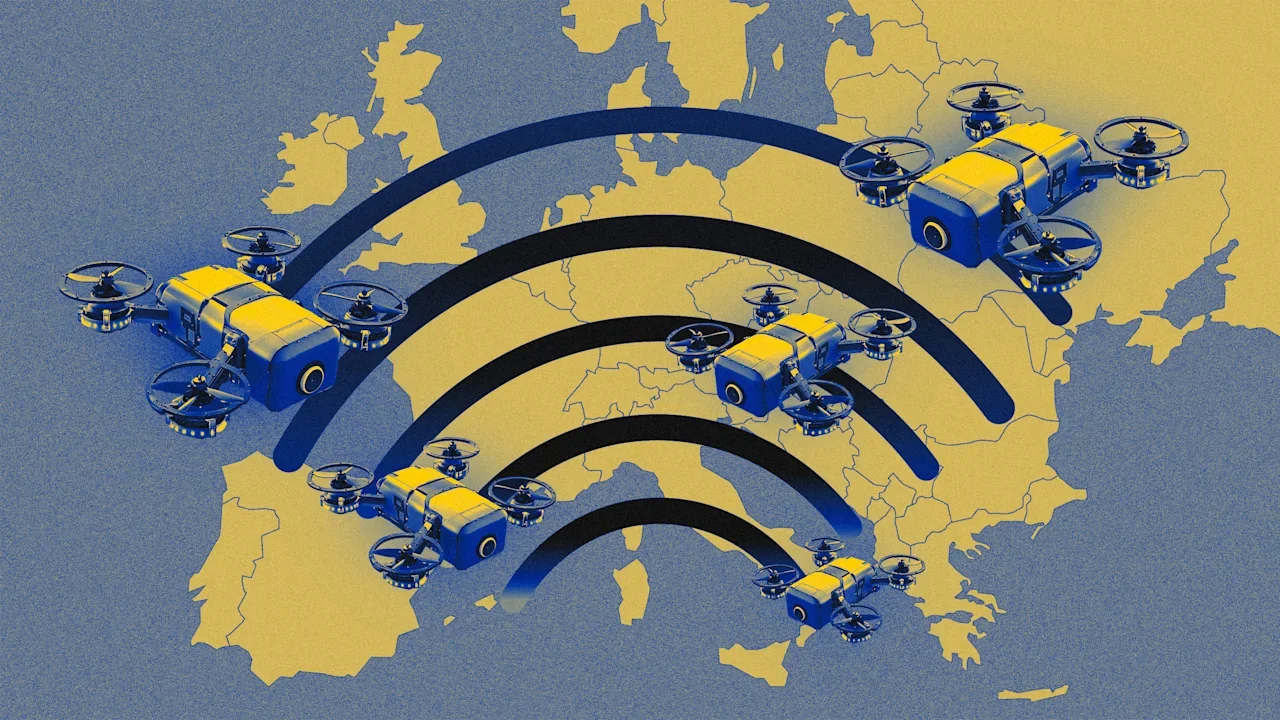
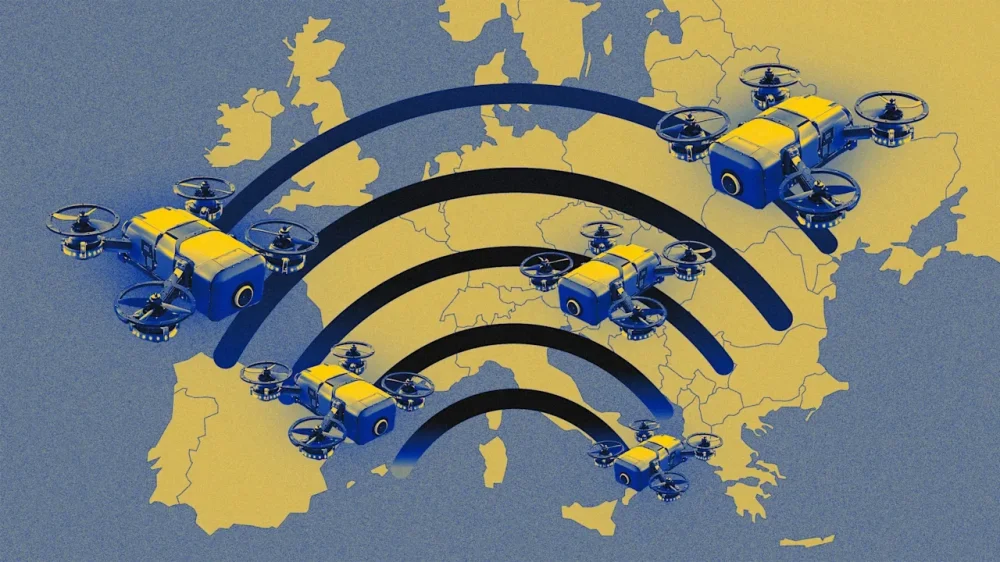
Germany’s SPRIND, the Federal Agency for Disruptive Innovation, and Sweden’s Vinnova, the country’s innovation agency, are two bodies that traditionally haven’t worked hand in hand. But the challenges the world currently faces have brought the two public innovation agencies together to back teams from across Europe building systems that can defend airports, nuclear plants, and civilian sites from hostile drones. One team, led by Martin Saska, a robotics professor at Czech Technical University in Prague, is among those being backed by the agencies to develop anti-drone technology. Beyond supporting a single company, the partnership offers Europe a way to stand firm amid shifting alliances elsewhere. Mario Draghi’s report on European competitiveness made clear that the continent was falling behind in the speed and scale at which radical ideas reach the market. The SPRIND-Vinnova partnership, formalized last year, is a deliberate effort to change that. “We need to have a fundamentally different way of funding innovation if we want to see different results,” says Jano Costard, head of challenges at SPRIND. “If we as SPRIND would have just copied what everybody else did, then what would be our added value?” Both agencies are modeled on DARPA, the U.S. defense agency credited with creating and later popularizing the internet and GPS, but with the military framing stripped away. SPRIND, founded in 2019 and operational from 2020, was given unusual legal latitude in how it spends money, including a 2023 act of parliament in Germany that allowed it to take equity stakes in startups, something most German public bodies cannot do. Vinnova, more than 20 years older, has operated with a similar playbook for years. Sweden, with a population of just 10 million, produced more than 500 IPOs in the past decade, more than Germany, France, Spain, and the Netherlands combined. “Europe as a whole needs to invest more in radical breakthrough innovation, and we also need to figure out ways of really supporting the journey to scale,” says Darja Isaksson, director general of Vinnova. The aim, she adds, is to “make it easy for private sector VC to spot that and to crowd in.” The choice of drones for the agencies’ first joint initiative is no accident. Beyond the integral role drones are playing in Middle Eastern conflicts, repeated drone sightings over European airports in late 2025 have rattled governments. There is also growing anxiety about the role of Russian- and Chinese-made hardware in critical infrastructure, making anti-drone technology a key focus for European police forces and militaries. The challenge is that Europe’s drone sector remains highly fragmented. Costard argues that without coordinated demand across member states, no startup can build a viable business in the space. “If every police force that would like to buy drone interceptors posts different requirements, that’s a nightmare for any small startup,” he says. For founders like Saska, whose company EAGLE.ONE builds drones that hunt other drones, the agencies’ support has made a tangible difference. Winning a SPRIND challenge round in 2024, he says, “got a lot of leads, and this helped us really get into the German market.” Saska argues that Europe needs sovereign drone capability for deeper security reasons: police forces and some armies across the continent still rely on consumer drones from Chinese manufacturer DJI. Bringing together two countries’ innovation agencies helps pool expertise and accelerate the pace at which solutions can emerge. “Iteration speed is a superpower,” says Costard, borrowing a line from OpenAI co-founder Greg Brockman. “If these young teams rely on the funding that we provide, the slower we are, the slower they are.” Success tends to breed success, and the model is beginning to spread. The Netherlands has announced a SPRIND-style agency of its own, and the European Innovation Council has been tasked with piloting challenge-driven funding. Sweden is also exploring an expanded version of what Vinnova already does, while the European Commission renegotiates its next research framework with Draghi’s recommendations on the table. “Our mission is to solve the grand challenges of our time,” says Costard. “They’re typically not unsolved because nobody has thought about them—it’s typically because they’re very hard to solve.” View the full article
-
This week, a meme-based generational civil war is breaking out on TikTok, and only one side knows it's even happening; a throwaway tweet from rapper Young Thug has me looking into why so many rappers put "ASAP" in front of their names, and we're going back in time to 2012, when prank videos ruled the internet. TikTok’s Le Snack Demon and why it signals a generational riftTikTok has been around since 2016; Instagram, since 2010. Both have lived long enough to see long-time users butting heads with newcomers, and generational battle lines are being drawn around a little AI cartoon character called Snack Demon. It started on (older-coded) Instagram, where this video from an AI slop account went viral: You don't have to be 17 years old to see that this meme is dumb and bad. It speaks to something most younger people don't care about: wanting to avoid eating snacks because you're on a diet. It is exactly the kind of meme someone's mom would post. This fact was not lost on TikTok, as illustrated by @nataliethebrownie in this video: So the stage was set for Snack Demon to operate on both a sincere level and an ironic one. TikTok moms and the mom-adjacent are taking the meme at face value and posting videos like these. The younger generation are responding with similar videos meant to mock how lame the original posts are. The ironic versions of Snack Demon videos tend to feature a different AI-generated main character—a gray Snack Demon—and often mention current meme-target Arby's, but the dance, annoying song, and cutesy-slop vibe remain the same. I especially love that they refer to it as "Le Snack Demon," an ironic dig at the way older generations of online people used to dunk on lame internet "rage comics" headed "le me." That's a double dose of irony! Ultimately, younger generations don't understand that they can't actually win this war. First, because the number of people who appreciate irony has never been huge and it seems to shrinking rapidly in 2026, and secondly, because it doesn't matter how cool you are when you're young. Everyone who lives long enough will be eventually be mocked online for posting their own version of Snack Demon. Why rappers are using “ASAP” in their namesRapper Young Thug recently tweeted that he was changing his name. His real first name is "Jeffery" and he doesn't want a connection to Epstein. I'm only writing about this because the tweet says "I'm changing my f**king name asap bro," and at first I thought he said he was changing his name to "ASAP Bro," joining A$AP Rocky, ASAP Lou, A$AP Ferg, ASAP Twelvyy, A$AP NAST, and about a hundred other rappers and producers who have chosen "ASAP" or "A$AP" as part of their stage name. Classically, “ASAP” means “as soon as possible,” and that's how Young Thug meant it in his tweet. As much as I’d like it to be, A$AP Rocky’s stage name is not “As Soon As Possible, Rocky.” "A$AP" or "ASAP" indicates an affiliation with the ASAP Mob, a New York hip-hop collective started by ASAP Yams, ASAP Bari, and ASAP Illz way back in 2006. As for what the letters actually stand for in terms of rap names, it depends on who you ask. Some say ASAP is short for “Always Strive And Prosper.” Some say it means, “Assassinating Snitches and Police.” If you work at NASA, ASAP means "Aerospace Safety Advisory Panel," and it's “Always Say a Prayer” if you’re religious, but I like A$AP Rocky’s preferred definition best: “Acronym Symbolizing Any Purpose.” Viral video of the week: yelling food ordersOver 50 million people have watched the video below, in which TikToker @pablopyee pretends to be hearing-impaired so they can yell their orders at the beleaguered worker behind the counter at a fast food place. There's more where that came from. This TikToker has a little cottage industry of prank-style videos in which he bellows at fast food workers, pronounces words incorrectly, aggressively compliments strangers, and otherwise causes mild mayhem. Yeah, it sucks to make people uncomfortable in public, especially if they're working, but most of his subjects seem like they're at least amused, and no one is getting hurt—unlike past generations of prank videos that were sometimes as simple as "walk up to a stranger and slap them across the face" or "drive a car while blindfolded." And I like that this TikToker is bucking the trend of his peers, whose generation-defining trait is being afraid to do anything (socialize, have a drink, take risks, have sex, make friends) for fear of appearing "cringe" on social media. And at least it isn't AI. He's out there being loud and embarrassing in the flesh. Educational brainrot videos take over TikTokIf the young person in your life is watching AI-generated slop videos on TikTok all day, don't assume that they're watching mindless content. Sure, most AI-made videos online richly deserve the "brainrot" name, but there's a growing, oxymoronic trend online of educational brainrot videos. The format seems to have begun with the Skeleton and Socrates videos I discussed a few weeks ago, and has since expanded beyond Greek history. Here are a few channels that are making (semi) worthwhile brainrot. MoggyBoi: This channel features videos explaining hygiene and grooming, with skeletons. Law by Skele: This channel uses skeletons to explain basic legal concepts. jessicaer45: There are no skeletons here. This channel is a weird combination of sea shanties and grotesque scientific and medical situations that answers questions like, "what would happen if you were trapped inside a giant oyseter?" These videos all seem wholly AI-generated, so I can't vouch for the accuracy of the facts contained within them, but they seem to be at least aiming at truth, which beats most brainrot. View the full article
-
The other day, I was putting together my version of a Lumascape of answer engine optimization (AEO) tools — I’m kidding, my computer doesn’t have that kind of bandwidth. Instead of mapping every tool — which would be outdated in minutes — I’m focusing on the ones I actually use to grow clients’ AI search presence. This is a deliberately short list: four tools I rely on, plus three I’m testing before adding them to my team’s stack. 1. AI assistants (ChatGPT, Claude, Perplexity) Used thoughtfully, large language model (LLM) assistants are research and analysis tools in their own right. For AEO work specifically, they serve several distinct purposes: Competitive landscape research. Content gap analysis. Prompt testing. Entity and topical coverage audits. Structured content drafting. The key distinction from passive use is intentionality — using these tools with a defined AEO research methodology rather than ad hoc. Why they’re essential AEO requires a fundamental understanding of how AI systems process and represent information. The most direct way to develop that understanding is to work regularly and analytically within those systems. Querying AI assistants with the same prompts your target audience uses — and carefully analyzing what they return, what sources they cite, what entities they associate, and how they structure answers — gives you peerless ground-level intelligence. Competitive strengths Each platform has its own strengths worth noting: ChatGPT is widely used and offers broad general knowledge synthesis, making it useful for understanding how mainstream AI handles queries in your category. Claude tends toward more nuanced, caveated responses and is strong for analytical tasks. Perplexity is citation-heavy by design and particularly valuable for AEO research precisely because it surfaces its sources explicitly. You can see in real time which domains are being pulled and why. What you can’t do without them Firsthand research on your brand’s current AEO status, which includes: Manual prompt testing: See how your brand and content are being represented. Competitive research: Query AI systems with category-level questions to see which competitors appear and how they are framed. Topical gap analysis: Identify questions AI systems answer where your brand is absent. Structural content analysis: Understanding the answer formats (lists, definitions, comparisons, how-tos) that AI systems prefer for your query types. Caveats AI assistant outputs are non-deterministic and vary by platform, model version, session context, and even time of day. Manual prompt testing is qualitative and difficult to scale. These tools are best used to build intuition and generate hypotheses, which should then be validated with quantitative data from platforms like Profound. Also worth noting: querying AI systems for competitive research can quickly become a rabbit hole, so before you truly dig in, build a structured testing framework and stick to it. Your customers search everywhere. Make sure your brand shows up. The SEO toolkit you know, plus the AI visibility data you need. Start Free Trial Get started with 2. Profound Profound is purpose-built AEO intelligence that monitors how AI platforms (ChatGPT, Perplexity, Google AI Overviews, Claude, etc.) discover, surface, and cite your brand and content. It also tracks brand mention frequency and sentiment, competitors’ share of voice, and the specific prompts or query types that trigger your content to appear in AI-generated answers. Why it’s essential If you want to understand where your brand stands in the AI answer ecosystem, it’s currently the most direct way to get that data. It shifts the question from “where do we rank?” to “when AI answers a question in our category, are we in the answer?” Competitive strengths The cross-platform coverage is the tool’s most distinctive feature. Rather than measuring a single AI engine in isolation, it provides a comparative view across the major platforms simultaneously. The competitive benchmarking functionality is particularly useful: you can see both your own AI citation share and how it stacks up against named competitors. It’s the kind of context that transforms data into strategy. What you can’t do without it Some fundamental capabilities, like: Quantifying your brand’s presence in AI-generated answers at scale. Tracking citation share over time and across platforms. Identifying which content types and topics drive AI mentions — and which competitors are winning the queries you’re losing. It’s a pretty expensive tool. If you want to justify the expense to your C-suite, tell them, “This will show us exactly where we’re losing to {most hated competitor}.” Caveats The tool is evolving quickly, which it needs to do as the AEO landscape morphs in real time. The data it surfaces reflects AI outputs at the time the query is made. Outputs are inherently variable because AI systems don’t return the same answer to the same prompt every time. Treat metrics as directional signals and trend data rather than precise, static rankings. It also won’t tell you why you’re being cited or not. That’s on you and your team to analyze. 3. Google Trends and Google Keyword Planner Google Trends tracks the relative search interest for queries over time, across geographies, and in comparison to related terms. Google Keyword Planner provides search volume estimates and demand forecasting, originally designed for paid search planning but equally useful for organic and AEO strategy. Why they’re essential AEO strategy lives and dies by understanding demand signals. Before optimizing content to appear in AI answers, you need to know what questions people are actually asking, how that demand is trending, and whether the topic has enough volume to warrant investment. Google’s tools remain the most reliable source of this data at scale — and crucially, they reflect the same underlying search behavior that feeds into AI engine training data and query patterns. Competitive strengths Google Trends is uniquely powerful for directional trend analysis. It doesn’t give you absolute volume, but it gives you relative momentum — which is often more strategically valuable when you’re trying to anticipate where audience interest is heading rather than just where it has been. For AEO specifically, rising query trends can signal emerging answer opportunities for you to address before your competitors do. In my experience, Keyword Planner’s forecasting features are underused. They can help you prioritize content investment based on projected demand rather than historical data alone. What you can’t do without them Build a truly dynamic AEO strategy in which you: Understand whether demand for a topic is growing, stable, or declining before building content around it. Identify seasonal patterns that should shape content publishing calendars. Surface related queries and rising breakout terms that expand your AEO content coverage. Validate whether a topic has enough search demand to justify the content investment. Caveats As you probably noticed when I recommended those tools, neither reflects AI-native query behavior directly. They measure traditional search, not prompts submitted to ChatGPT or Perplexity. As information-seeking behavior shifts toward AI interfaces, these tools will increasingly undercount true demand. Use them as a strong proxy and directional guide, not as a complete picture. Worth noting: Keyword Planner also requires an active Google Ads account, and volume estimates in low-competition or niche categories can be imprecise. Get the newsletter search marketers rely on. See terms. 4. Google Search Console and Google Analytics Google Search Console (GSC) provides direct data on how your site performs in Google Search: which queries trigger impressions, click-through rates, average positions, and indexing status. Google Analytics 4 (GA4) tracks on-site behavior — how users arrive, what they do, how long they stay, and where they exit — including referral traffic sources that reveal whether visitors are arriving from AI-adjacent platforms. Why they’re essential For AEO practitioners, these tools serve critical diagnostic functions. GSC tells you whether the content you’re optimizing for AI citation is also performing in traditional search, which matters because Google AI Overviews and traditional organic results draw from overlapping content pools. GA4’s referral traffic data is increasingly important for detecting direct traffic from AI platforms: as users click through citations in tools like Perplexity or ChatGPT’s browsing mode, that activity shows up as referral or direct traffic. That’s worth segmenting and monitoring, even if, given the scorching rise of zero-click activity, it paints a very incomplete picture of your AEO impact. Competitive strengths GSC’s query data is irreplaceable. No third-party tool has access to the same level of Google-sourced search performance data. The ability to see exactly which queries are driving impressions (even without clicks) is foundational for identifying content that has topical authority but may not be converting visibility into AI citations. GA4’s cross-channel attribution and audience analysis capabilities help you understand where AEO-driven traffic comes from and what that traffic does when it arrives — which is the commercial case for the discipline. What you can’t do without them Develop a true understanding of AEO business impact — and AEO blockers — by: Measuring whether your AEO content investments translate into actual traffic and engagement. Identifying content with high impression share but low CTR — a common signal of AI Overview cannibalization. Monitoring referral traffic from AI platforms as that ecosystem matures. Diagnosing indexing or crawlability issues that prevent AI systems from accessing your content. Caveats GSC data has well-documented limitations: it samples at scale, attribution can be murky, and data is typically available with a 48-72 hour lag. Critically, it only reflects Google. It tells you nothing about how you perform in Bing-powered AI search or standalone AI platforms. GA4 still has UX rough edges, so you’ll need to confirm that your event tracking and conversion configuration is solid before drawing strategic conclusions from the data. Rapid-fire roundup That shortlist leaves, oh, thousands of tools left to consider. I recommend putting these on your radar and testing them to gauge their value as the AEO ecosystem develops. 5. AI Trust Signals AI Trust Signals focuses on the credibility and trustworthiness signals that influence whether AI systems choose to cite a source. This is an emerging and underexplored dimension of AEO: it goes upstream from content relevance and helps brands understand whether an AI system “trusts” a domain enough to surface it as an authoritative reference. It’s worth monitoring as the understanding of AI citation mechanics matures. 6. Ahrefs Ahrefs is a mature SEO platform with deep backlink analysis, content gap tooling, site auditing, and keyword research capabilities. Its relevance to AEO is primarily indirect, but it’s significant: authority signals, including referring domain quality and topical authority depth, are widely believed to influence AI citation likelihood. Ahrefs is a benchmark tool for understanding and building that authority infrastructure. Its Content Explorer is also a practical tool for identifying high-performing content in your category that AI systems are likely to draw from. 7. Roadway AI Roadway AI positions itself as an AI-native platform with a focus on scaling growth marketing activities. Where it helps is building agents that can help attribute AEO signals into revenue, so you can better understand impact. As a newer entrant, it’s worth evaluating as part of a toolkit audit, especially if you’re looking for tooling built specifically for AEO use cases. The category is moving fast, and platforms like Roadway AI may gain significant mindshare within 12 months, which also means more competitors are coming soon. See the complete picture of your search visibility. Track, optimize, and win in Google and AI search from one platform. Start Free Trial Get started with The reality of AEO tools: Fast-moving and imperfect AEO tooling is still catching up to AEO as a discipline, which will likely be the dynamic for the next few years, at least. Everything is changing so fast, and AI-driven discovery is evolving as users adopt new behaviors that vary by vertical. What matters is consistently applied measurement, strong analysis, and testing that lead to actionable insights. You won’t get your setup perfect. Like much of marketing, solidly directional is probably as good as you’re going to get. With any tool, if you can explain and measure how it improves your AEO efforts, that’s a great start. Before you sign any contracts, see if you can find an industry colleague with real-life experience using the tool, and ask them for their take. Unless they’re staunch advocates, chances are you can either find an alternative that does the same thing better or cheaper, or you can wait another month for one to emerge. View the full article
-
After years of struggling to match the global popularity of the US, Japan and South Korea, Beijing’s image is improvingView the full article
-
Learn about DevOps project management, how to apply Agile frameworks, DORA metrics, and tools to improve software delivery. The post DevOps Project Management Guide: Frameworks, Tools & DORA Metrics appeared first on project-management.com. View the full article
-
New consulting company to advise Wall Street groups on how to deploy its AI across their investment portfoliosView the full article
-
The most effective ecommerce advertisers are pairing Performance Max with Standard Shopping to balance automation with control and maximize ROAS. The post Performance Max For Ecommerce In 2026: Why The Hybrid Strategy Is Better appeared first on Search Engine Journal. View the full article
-
After months of uncertainty, the long-struggling Spirit Airlines has permanently ceased operations. Now the low-cost U.S. carrier will begin liquidating its assets to repay its creditors as much as possible—a process that is expected to take months. However, its customers have more immediate issues: figuring out what to do now if they had upcoming Spirit flights booked or had other ongoing dealings with the airline. Here’s what they need to know. What’s happened? On Saturday, May 2, Spirit Aviation Holdings, Inc., the company that owns Spirit Airlines, announced what it called “an orderly wind-down of operations,” which went into effect immediately. In other words, the airline is going out of business. While devastating to the airline’s employees and customers, the news was not wholly unexpected. For years, the low-cost airline struggled financially, especially after a failed merger with competitor JetBlue in 2024. That merger was blocked by a federal judge. After the merger was denied, Spirit filed for bankruptcy in 2024 and was forced into bankruptcy again less than a year later due to rising debt levels. For years, the company had struggled to compete against America’s air-travel giants like Southwest Airlines, which often offered similar low-cost fares and had wider route coverage. But the final nail in Spirit’s coffin was sparked not by business but geopolitics. Announcing its cessation of operations, Spirit blamed the recent surge in airline fuel prices resulting from the U.S.-Israeli war with Iran as the primary driver behind its decision. In the airline’s announcement, Spirit CEO Dave Davis said that the company had reached a restructuring agreement in March. Unfortunately, that agreement was reached around the same time that the Middle East conflict erupted, which led to the closure of the Strait of Hormuz, one of the world’s most important fuel shipping lanes. As a result of its wind-down, Spirit abruptly canceled all of its remaining flights, leaving customers with bookings wondering what would happen next. Will Spirit ticket holders get their canceled flights refunded? If there’s any good news surrounding Spirit’s demise, it’s that most people who have had their Spirit bookings canceled by the airline will receive a full, automatic refund. If you purchased your canceled Spirit flights with a debit or credit card directly through the airline, Spirit says it will refund the full price you paid to your original payment method. However, those who booked their canceled Spirit flights through third-party travel providers should request a refund through the travel provider. Refunds become a bit less certain for those who booked flights using methods such as Free Spirit points, vouchers, or credits. Spirit says refunds of bookings using those methods “will be determined at a later date through the bankruptcy court process.” Will additional fees be refunded? If you paid for checked baggage, Wi-Fi, or other add-ons with your flight, Spirit says those fees will also be refunded. When will I get my Spirit refund? Spirit Airlines says it has already issued refunds for those who purchased directly through the airline. However, refunds may take some time to show up on your original payment method. If you purchased your tickets through a third party, you should contact that provider to see how long your refund will take. What happens to my Free Spirit points? Unfortunately, anyone with remaining Free Spirit points will find them unusable. This is because Spirit will no longer operate any flights, so the points cannot be redeemed for anything. Free Spirit points are also not transferable to another airline’s points program. Will Spirit rebook me on a flight with another airline? Unfortunately, Spirit is not offering to rebook customers whose flights have been canceled. That means if you still need to reach your canceled destination, you will need to book a new flight directly with another airline. However, some airlines are offering concessions to Spirit passengers who have had their flights canceled. According to the U.S. Department of Transportation (DOT), “America [sic] Airlines, United, Delta, JetBlue, Southwest, Allegiant, Frontier, Avelo, and Breeze have all agreed to support impacted Spirit passengers in different ways.” Specifically, Delta, JetBlue, Southwest, and United are capping ticket prices for Spirit passengers who need to rebook on similar routes. Eligible Spirit customers will need to provide proof of payment and a Spirit confirmation number to receive capped fares, and capped fares will only be available for a short time: 72 hours for JetBlue and Southwest 5 days for Delta Air Lines 14 days for United Airlines What if I have outstanding lost baggage with Spirit? If you have any outstanding lost luggage or other items with Spirit Airlines, the defunct operator says you can check their status here. I have more questions. Who can I contact? All affected Spirit customers are encouraged to check out the company’s support page for guests. Affected individuals should also check out the U.S. Department of Transportation’s notice about the airline’s collapse. Spirit says those with questions can contact the airline’s claims agent, Epiq, by phone at (855) 952-6606 or by email at SpiritAirlinesInfo@epiqglobal.com. View the full article

-
The conversation has shifted. We’re spending less time optimizing for clicks and more time trying to fix the AI ROI story. AI now sits at the center of discovery, shaping what gets seen, summarized, and cited. Here’s what’s working right now, what your peers are doing, and why SMX Advanced will feel different this year. The SparkToro wake-up call: Influence happens everywhere The foundation of any serious 2026 content strategy has to start with Rand Fishkin’s landmark March 2026 study, “Influence Happens Everywhere,” an analysis of the 5,000 most-visited sites on both mobile and desktop. The finding that rattled the industry: while Google still commands 73% of search traffic, search itself is merely a response to influence created elsewhere. People don’t wake up and search for a brand in a vacuum. They read, watch, and listen across a fragmented web of news, social media, and niche communities before they ever hit a search bar. AI tools, despite their rapid growth, still account for a fraction of total web visits compared to the “big incumbents.” But the trajectory is unmistakable. The fundamental problem with attribution in 2026 is that search gets over-credited because it captures demand at the finish line, while the fragmented channels — email, news, specialized content — get under-credited for creating that demand in the first place. When creating content, your job is to win the influence phase so thoroughly that when a user eventually turns to an AI assistant or a search bar, your brand is the only logical answer. That framing is the strategic backbone behind sessions at the upcoming SMX Advanced in Boston, June 3-5, and the lens through which your entire editorial calendar should be rewritten. Your customers search everywhere. Make sure your brand shows up. The SEO toolkit you know, plus the AI visibility data you need. Start Free Trial Get started with What your Search Engine Land colleagues are already doing Before we discuss tactics, it’s worth pausing to note that this publication’s own contributor base has been sounding the alarm in complementary ways. Read them together and a clear picture emerges. Dave Davies, principal SEO manager at Weights & Biases and a regular SMX Advanced speaker, published a rigorous piece in December 2025, “Mentions, citations, and clicks: Your 2026 content strategy.” Drawing on Siege Media’s two-year content performance study covering more than 7.2 million sessions, Grow and Convert’s conversion research, and Seer Interactive’s AI Overview findings, Davies made the case that the metrics we’ve lived by — impressions, sessions, CTR — “no longer tell the full story.” Mentions, citations, and structured visibility signals, he argued, are becoming the new levers of trust and the path to revenue. Carolyn Shelby, who appeared in a recent SMX Munich 2026 recap for her session “Inside Google’s Head,” crystallized what many of us have only half-articulated: AI doesn’t discover new brands — it selects from known entities. The implications are stark. If you haven’t built entity recognition across the web’s key reference points — Wikipedia, Reddit, LinkedIn, authoritative press coverage — you don’t get selected. My own October 2025 piece for this publication compared how ChatGPT, Perplexity, Gemini, Claude, and DeepSeek differ in their data sources, live web use, and citation rules. The conclusion I reached then is truer today: a single-platform AI strategy isn’t a strategy. Each model has different retrieval logic, different trust signals, and different recency weighting. Jordan Koene made the same point in January 2026, noting that different LLMs win different jobs. This heterogeneity is the fundamental reason why “write good content” is both correct and insufficient as advice. What ‘full-stack content’ actually means In 2024, we were impressed if an AI tool could write a decent 500-word blog post. Today, writing is the least interesting thing AI does. Jasper’s 2026 Enterprise Suite is a useful illustration. It doesn’t just draft text, it: Pulls real-time performance data from Google Search Console. Identifies content gaps where competitors are gaining ground. Generates a multimodal package: a 1,500-word deep dive, three vertical videos for YouTube Shorts, and custom infographics, all calibrated to a brand-voice model trained on your last five years of successful campaigns. We have moved from “Help me write this” to “Help me dominate this topic.” But tools don’t solve strategy problems. The harder question is “what should the content actually say?” AI can’t produce the original research, the proprietary case study, or the hard-won perspective that makes an LLM choose you over a dozen lookalike alternatives. This is why the most interesting SMX Advanced session on content this year may be the one by Purna Virji of LinkedIn, who opens the conference with a keynote on fixing the broken AI ROI story before budgets get cut. Her argument — that AI investment must generate measurable business outcomes “at the P&L level,” not just activity, efficiency, or content volume — is a direct challenge to teams that have been celebrating output metrics while their revenue dashboards flatline. Google Vids and the democratization of video: A genuine inflection point Perhaps the most significant platform shift for content creators in 2026 was Google moving Google Vids out of its Workspace-only silo. You can now create, edit, and share videos at no cost directly within the Google ecosystem, powered by the Veo 3 generative model. For years, video production was protected by a high barrier to entry: expensive tools, specialist skills, and days of editing time. Google Vids collapses that barrier. Drop a Google Doc or a URL into the “Help me create” prompt, and you get a full-motion storyboard with AI-generated voiceovers, licensed music, and transitions in minutes. The practical consequences are arriving fast: Small agencies are now producing video-first content calendars that previously required five-figure budgets. The “if only we had video” excuse has expired. Hyper-localization is becoming a baseline expectation. Using Vids’ automated dubbing and visual swapping, a single “hero” video can be localized for 20 different markets in an afternoon. AI-generated summaries are already threatening video metadata. YouTube recently tested swapping video titles for AI-generated summaries. Brands that have not invested in clear entity signals and structured descriptions may soon find their video content renamed by an algorithm — not a person. The strategic implication is the same as it was for text: AI tools lower the floor but raise the bar. Every competitor now has access to cheap video. But who has something worth saying in that video? GEO, AEO, and the language problem Depending on which Search Engine Land article you read in the past few weeks, the dominant framework for surviving this shift is either generative engine optimization (GEO) or answer engine optimization (AEO). A growing number of contributors argue these terms are marketing noise for what is, at bottom, just good search everywhere optimization plus structured data plus earned media. That debate is genuinely worth having, and it will be had at SMX Advanced. But for the practitioner who needs to make decisions next week, here’s what the evidence actually supports: eMarketer’s Nate Elliott put it plainly in a recent FAQ: “Almost every GEO response is different from every other GEO response.” Between 40% and 60% of cited sources change month-to-month across Google AI Mode and ChatGPT, making AI visibility far less stable than organic search rankings. That volatility is the real risk, not the terminology debate. Similarweb’s 2026 GenAI Brand Visibility Index, reported by Digiday, found that major publishers like Reuters and The Guardian receive less than 1% of referral traffic from AI platforms despite being frequently cited. Yet, The Washington Post found that visitors arriving from AI platforms convert to subscriptions at four to five times the rate of traditional search visitors. The volume-versus-value tension has never been more acute. The practical translation of all of this: In 2006, we optimized press releases for keyword density: In 2026, optimize for entity association: linking your brand to specific solutions in the AI’s knowledge graph. Long-form blogs become modular content: Snippets, FAQs, and data tables designed for “chunk-level” ingestion by fetcher bots. Gated white papers become open data: Making unique research crawlable so AI credits you as the source in an overview, not a competitor who summarized your findings. Your robots.txt file now has strategic consequences: Allowing OAI-SearchBot but blocking GPTBot is a choice — one that determines whether you show up in real-time AI search citations versus model training data. Get the newsletter search marketers rely on. See terms. The human premium isn’t a platitude As AI-generated content reaches its peak volume, the value of the human voice has skyrocketed — but not for the reasons most think-piece writers suggest. The standard argument runs like this: Audiences can smell AI slop. Authentic human writing wins. That’s partially true, but it understates the mechanism. The deeper reason human-authored content is winning in AI-mediated search is structural. Human authors who’ve built genuine reputations across years of bylined, cited, and cross-referenced work have, in effect, built entity graphs that AI systems can navigate. That isn’t something a prompt can replicate. The classic example: an AI-generated 2026 review of a new electric vehicle might be factually flawless, listing every spec and battery range. But it loses to a human-authored piece that says, “I drove this through a New England blizzard and the door handle froze shut.” AI can’t freeze. It can’t feel frustration. It can’t have a bad morning. Those human frictions are now genuinely valuable SEO assets — not because they’re charming, but because no language model can fabricate them with any credibility. Readers, trained by years of exposure to AI content, have developed a reliable instinct for the difference. The Siege Media data Davies cited adds a quantitative dimension: across 7.2 million sessions, the content that earned sustained citations and conversions shared a consistent profile — original data, expert voice, and clear structure that an AI system could extract and attribute. Volume without those properties is, as the headline puts it, just noise. What to watch at SMX Advanced 2026 — and what it tells us about where this is going The SMX Advanced agenda is the clearest available signal of where the practitioner community thinks the critical problems are right now. A few sessions deserve particular attention from anyone focused on content creation. Virji’s keynote, “Your AI ROI story is broken: How to fix it before budgets get cut,” opens Day 2. Virji isn’t arguing that AI investment is wrong. She’s arguing that almost every organization is measuring it incorrectly — and that the correction required is organizational, not tactical. Davies’ session, “Predicting and influencing AI citations with retrieval signals,” on June 4, is the direct technical counterpart to the strategic framing above. If Virji is asking “what does success mean,” Davies is asking “how do you engineer it.” SMX Master Classes ran in April, and SMX Next follows in November. If there’s a throughline across the entire 2026 SMX calendar, it’s this: the search marketing community has collectively decided that the era of isolated channel optimization is over. Content, paid, technical, and brand are now one discipline, or they are failing disciplines. What you need to actually do in the second half of 2026 Broad strategic advice is easy to nod at and ignore. Here is the specific and uncomfortable version: Audit your AI visibility before you touch your content: Query ChatGPT, Claude, Copilot, Gemini, and Perplexity with the prompts your customers actually use. Note which brands appear. Note which sources get cited. If you’re not among them, adding more content isn’t the first fix — fixing your entity signals is. Stop treating your unique research as a lead-generation gate: Crawlable, citable original data earns AI attribution. A PDF behind a form wall earns nothing except a diminishing number of direct downloads as discovery migrates to AI interfaces. Invest in community platforms as a first-party strategy, not an afterthought: LLMs pull heavily from Reddit, YouTube, and Wikipedia. eMarketer’s Max Willens has noted that Reddit alone has 100 million daily active users generating brand conversations. Your brand’s absence from those conversations isn’t neutral. It creates a vacuum that your competitors or your critics will fill. Optimize for citatability, not just rankability: The new KPI isn’t the visit — it’s the attribution. If an AI Overview uses your data but doesn’t name your brand, you’ve been mined, not cited. Use clear entity markup, structured FAQ sections, and “quotable” conclusions that make it easy for an LLM to attribute rather than anonymize. Diversify your robots.txt strategy intentionally: Different bots serve different purposes. Allowing OAI-SearchBot (real-time citation) while blocking GPTBot (model training) is a legitimate strategic choice. Most organizations have not made it deliberately. Make it deliberately. Measure differently: The eMarketer-recommended framework allocates 40% of your optimization budget to core SEO fundamentals, 25% to digital PR, 20% to data and reporting, 10% to training, and 5% to experimentation. If your current allocation looks nothing like that, the gap explains more about your AI visibility struggles than any content audit will. So, combining SEO and PR is even more important today than it was back in the old days when I started speaking and writing about search. See the complete picture of your search visibility. Track, optimize, and win in Google and AI search from one platform. Start Free Trial Get started with The bots are crawling: Are you worth citing? The age of the proxy is over. You can no longer hide behind a ghostwriter or a simple prompt and expect to build a brand. But the deeper truth — the one that doesn’t make it into most AI content trend pieces — is that this transformation benefits people who’ve been doing the hard work all along. If you’ve been building genuine expertise, publishing original data, earning bylines in authoritative publications, and cultivating real presence in the communities where your customers actually talk — then you already have most of what you need. The AI infrastructure of 2026 is, in many ways, a system that rewards exactly the things good content has always required. The difference is that the competition is now generating plausible-sounding content on a scale that would have been impossible to imagine four years ago. Being good isn’t enough to stand out. You have to be citable, structured, and present in all the right places at precisely the right time — which is a harder, more interesting, and ultimately more durable strategic problem than keyword density ever was. See you in Boston. View the full article
-
A month ago, Google posted that between the dates of May 13, 2025 through April 27, 2026, just about 50 weeks, there was a "logging error prevented Search Console from accurately reporting impressions." Google updated the post to now say "This issue has been resolved."View the full article
-
IAC, the owners of Ask.com, have decided to get out of the search business and shut down one of the oldest and most legendary search engines of all time - Ask.com, formerly Ask Jeeves. IAC wrote, "As IAC continues to sharpen its focus, we have made the decision to discontinue our search business, which includes Ask.com."View the full article
-
Google Ads has added a new option (although, I think Google has said this is coming) under the "add product source" section where you can select how to add products to your Google Ads account. The option reads, "Use AI to add products - beta."View the full article
-
Nikola Todorovic, Director of Software Engineering at Google Search, spoke about a presentation he gave at Zurich in December at Google Search Central live (I was there). He dug into it on a recent Search Off the Record named How AI Is Changing Google Search and SEO. In there, he explained how AI and machine learning have been used in isolation within Google Search.View the full article
-
The word “youtube” is the most searched thing on Google. It gets 1.38 billion global searches per month. View the full article
-
Google is testing a new label for the search results snippet named "Fresh updates." This was spotted on a weather website result, Accuweather. View the full article
-
Google's Director of Software Engineering recommended using AI to boost providing value and said, "clearly, this is something we can advise." The post Google Advises Using AI In Best Possible Way For AI Search appeared first on Search Engine Journal. View the full article
-
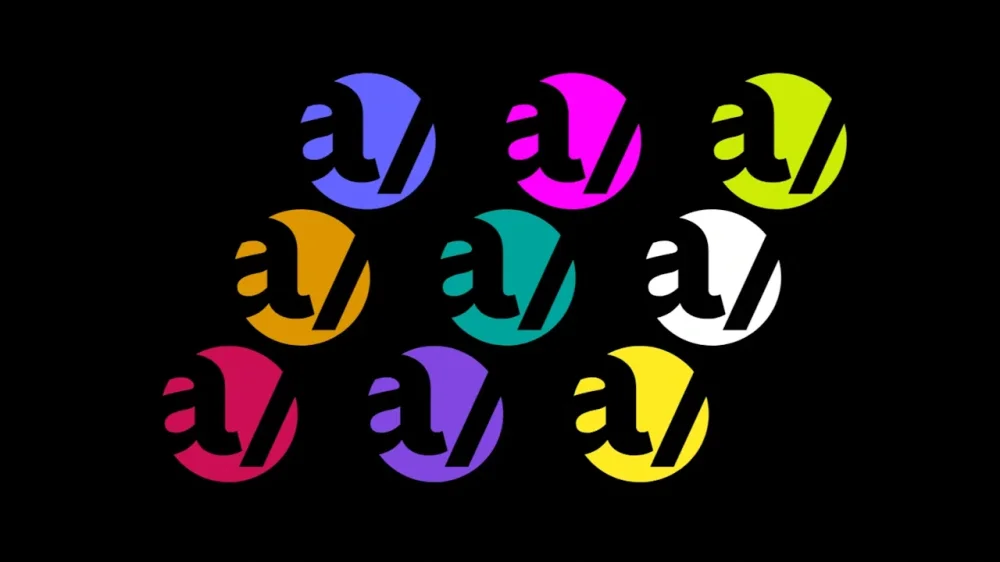
To rebrand the Allen Institute, designers thought horizontally instead of vertically. The nonprofit bioscience research institute, founded by Microsoft cofounder Paul Allen to map the human brain, had a perfectly sufficient logo that designer Neville Brody says was “at the heart of everything.” But Brody, a legend in the industry who has designed for Coca-Cola, Nike, and Channel 4, reimagined the Allen Institute’s new identity so “the brand is a platform” for a company’s activities. Of the elements that comprise a brand, the logo traditionally comes first then the other components spin off of it. But for this project, Brody collapsed the hierarchy. He and his team developed a visual language that could be flexible yet consistent, and then let the logo develop naturally from there. His strategy? Articulate the right visual grammar and from there find out how to scale it so it “doesn’t break,” he says. What is the Allen Institute?The Allen Institute was founded in 2003 by the late Microsoft cofounder Paul Allen and his sister Jody Allen. Since then, it’s grown from a single lab studying the brain to a multi-lab operation with a much broader focus. Its research spans topics like addiction, cancer, long COVID, and disease. Last year, it released a first-of-its-kind database with data from more than 34 million brain cells. The institute’s research and tools are open source so it can share its findings widely. “They’re at the beginning of a chain, in a way, for new knowledge,” Brody says. That insight informed how Brody and his team conceived of the new identity. They spoke to lab leaders and employees at the institute and took note of shared values like boldness and taking risks that others would shy away from. The resulting brand identity is vivid and fluid. For the logo, Brody designed an icon that references the Allen Institute’s philosophy of openness and discovery. It is a circular lens featuring a cut out of a lowercase “a” (it’s friendlier and less corporate than a capital letter) followed by a slash meant to represent the institute’s interconnected teams. He also designed a wordmark, which reads “Allen Institute” in lowercase letters, to accompany the icon. On the color front, Brody went for a palette that symbolizes the company’s vitality and energy. There isn’t a single brand color; rather, there’s variety. It’s the opposite of the conservative blues and greens you typically see in bioscience. The brand’s base colors are black, white, and gray. Layered on top of that is a primary palette that included hues you might see in science or healthcare brands, but with more saturation and brightness: magenta, violet, and a teal that looks like scrubs. The accent colors—including a cheery yellow, electric green, and neon pink—serve as exclamation points. Brody, who served as the art director of the influential British punk magazine The Face, says print principles help with the brand’s flexibility. This includes using white space; commissioning editorial photography that puts the viewer in the scene instead (no stock photos here); distinctive typography; and creative applications of color. “The brand we’ve created with the Allen Institute is something that’s actually quite graphic and quite dynamic,” he says. “It’s not about being decorative. Everything has a function visually.” View the full article
-
Hello and welcome to Modern CEO! I’m Stephanie Mehta, CEO and chief content officer of Mansueto Ventures. Each week this newsletter explores inclusive approaches to leadership drawn from conversations with executives and entrepreneurs, and from the pages of Inc. and Fast Company. If you received this newsletter from a friend, you can sign up to get it yourself every Monday morning. On any given workday, you might find Whatnot employees hawking trading cards, apparel, or other items on the digital live-shopping app. They’re not slacking on the job or trying to make rent—they’re actually evaluated on whether they’ve spent time selling and buying on the app. “We only exist to the extent that we provide our customers a lot of value,” says cofounder and CEO Grant LaFontaine. “If you want to build a customer-centered culture, you have to actually follow through on building one and inject it everywhere you possibly can in the organization.” At Whatnot, which launched in 2019, focus on the customer starts with the hiring process. “If you interview at Whatnot, somewhere along your interview pathway, someone’s going to ask you, ‘Have you used the app? What do you think about it? What could be improved?’” LaFontaine says. “We want to see that you actually use it, you understand it, and you can think through the lens of a customer.” Try before they buy Once hired, every one of the company’s more than 1,000 full-time employees is required to answer customer support tickets each quarter, plus sell and buy on the app. The company provides $150 in credits to make purchases and lets employees do their required buying and selling on company time. Many companies say they engage in “dogfooding,” a term derived from the phrase “eating our own dog food,” or testing one’s own products. Enterprise tech giants such as Microsoft and Cisco have frequently touted the way they used their own tools to drive productivity. But few companies mandate dogfooding the way Whatnot does. LaFontaine says no employee can “meet expectations” on their performance reviews if they fail to purchase and sell on the app and answer customer queries. LaFontaine has gone live and sold Pokémon cards and toys. Last quarter, he sold some Whatnot swag and donated the proceeds to charity. LaFontaine says that his own stints as a seller have helped him understand the pain points some customers may experience, such as the challenge of trying to remain composed on camera while also queuing up additional listings—a challenge he has encouraged his product teams to address. He notes that when product teams add new features for sellers, they can get immediate feedback to coworkers who are power sellers—some employees sell thousands of items a month. The customer service teams who talk to buyers and sellers are more fluent in solving problems because they have hands-on experience in the app. Culture-keeping in action Whatnot’s approach appears to be paying off. The company says 20 million new accounts were created last year; the app hosted more than 500,000 hours of live shows in December 2025, up 186% from a year earlier. LaFontaine says he has no plans to abandon the dogfooding requirement as the company scales. In fact, he says, “As you get bigger, you have to be more stringent. It becomes easier for people to hide, and it’s harder for the culture to cascade through so many layers.” Indeed, some employees have started to question the policy, saying that they’re too busy or that they should be rewarded for doing excellent work without engaging on the app. “We haven’t wavered,” he says. “And I hold myself to the same standard. In fact, I have to go live in the next couple of weeks or I’m going to miss my deadline.” I asked LaFontaine how he’d advise CEOs who might be trying to introduce or reintroduce a customer focus into their companies. He acknowledges that the task might be difficult for some organizations, but customer obsession is table stakes for any business that aspires to excellence. “If you’re going to build a great business, you have to [focus on customers],” he says. “I would advise people to do it sooner rather than later, build it everywhere, and take it seriously. And it starts with the CEO and the leadership team.” Programming note Please check out our first live-streamed event exclusively for Modern CEO subscribers: On Monday, May 18, at 1 p.m. ET, I’m hosting The CEO’s Guide to AI. Matt Fitzpatrick, CEO of Invisible Technologies, will help leaders understand where AI can have an impact—and what’s hype. You can RSVP here, and if you’re not already a subscriber, you can sign up here. And if you have questions for Matt, you can submit them to stephaniemehta@mansueto.com. Read more: the new way we shop The most innovative retail companies of 2026 This AI product is changing the way we buy clothes Tecovas has built a loyal fan base on customer service View the full article
-
Not long ago, I was speaking at an event when a recent college graduate approached me. He’d studied neuroscience and, like a lot of STEM generalists, had set his sights on consulting—firms, like Deloitte or Accenture, that have long hired armies of junior associates for data gathering and analysis. He’d earned top grades at a great school. But all of his outreach—his informational interviews, his applications and follow-ups—had come to nothing. His story is not unusual. If entry-level consulting or finance jobs have always been difficult to land, they’re even harder to get now. This generation grew up believing that developing key skills such as coding and data analysis, research and writing would get them a foot in the door for a fulfilling white-collar career. And now so many of those assumptions are wrong. Anthropic CEO Dario Amodei said AI could wipe out roughly 50% of all entry-level white-collar jobs within five years—absorbing the data entry, basic analysis, and research synthesis that used to be a new graduate’s first rung on the ladder. A global study by the British Standards Institution seemed to confirm his prediction: Polling 850 business leaders in Australia, China, France, Germany, Japan, the UK, and the US, it found that business leaders have been prioritizing AI automation over training junior employees, with 39% saying they’d already reduced or cut entry-level roles due to AI and 43% saying they expect to do so in 2026. The dominant narrative is doomsday: “AI is taking all the jobs!” And the data behind that narrative is real enough to generate legitimate concern. But the story is both more hopeful, and more complicated, than the data suggest. What we’re actually witnessing is a compression of the traditional career timeline that, navigated intentionally, can accelerate professional growth in ways no previous generation has experienced. For first-job seekers willing to adapt their approach, and rethink how they envision their early-career arc, success remains within reach. Here are some new strategies to keep in mind. Look For Companies That Are Bucking The Trend Over the recent weeks, there have been signals that some employers are recognizing the danger of choking off their talent pipelines entirely. Reddit CEO Steve Huffman said that the company will “go heavy” on hiring new college graduates, because they are “AI native.” IBM likewise announced plans to substantially increase entry-level hiring. And Dropbox, Cloudflare, and LinkedIn have all signaled significant expansion of internships, new graduate, and entry-level programs. PWC, which partially rolled back entry-level hiring last year, recommitted itself to it in about 20% of its office locations. The firm now advises clients and others to continue hiring early-career workers or risk setting “starving [their] organization of its future.” What’s happening in my view is this: companies that experimented aggressively with AI are realizing that young, adaptable people are critical to investing in growth and accelerating transformation. A generational age-out is coming. Succession and progression can’t happen if you’re only hiring into mid-career roles. And the mid-career people you might bring in don’t have the neuroplasticity or the openness—the unwritten chapters—that make early-career workers so valuable. Organizations are flattening, yes, but they still need humans who can both grow with the business and serve as more agile catalysts for organizational change. Work At The Skills That AI Cannot Replicate What should new-workforce hopefuls focus on? At the risk of stating the obvious, they should focus on the capabilities AI cannot replicate. This includes relationship-building and its many subsidiary skills: The ability to listen deeply and synthesize what you’ve heard in multiple different offline conversations into something actionable. The ability to negotiate, facilitate a difficult conversation, or tell a compelling story. The ability to exercise judgment when the data is ambiguous. The ability to read a room or tell an (appropriate) joke. For human jobs, human skills. Such capabilities have always mattered in leadership, but they typically didn’t develop until mid-career, because early-career professionals were too focused on the kind of work AI now handles. So this career-timeline compression is actually an opportunity. If the rote, lower-level work is being done by AI, new entrants can accelerate their development of these distinctly human skills, learning them much earlier than previous generations did. It’s about getting in the door and then, once you’re there, knowing that the first trimester of your career will not be consumed by the tactical as you’d always assumed it would. You must build the skills that create real leverage—storytelling, communication, intellectual and emotional agility, critical thinking, relationship building—from day one. Make a point of describing your search strategy and objectives in these terms to job recruiters. It will demonstrate the self-awareness that is often lacking in even much more experienced job seekers. Remember: This is Your Superhero Origin Story I spend a lot of time talking to people in their early twenties, many of whom range from neutral to deeply unhappy in their first jobs. They are lucky to have landed a role over the past year, before many doors began to close. Some are on Wall Street making good money. Some are in solid companies with real training programs. And the most common answer I’ve gotten from this important cohort of people about how they feel about their jobs is “meh.” When I reflect on my own early career, happiness was never part of the early equation. The goal was to satisfy basic needs: become financially independent, find an environment where I could learn and add value, meet some cool people. The idea of being happy at work would have struck me as secondary. I don’t say this to dismiss the concerns of today’s early-career workers. I say it because I believe the framing is wrong. Instead of asking “am I happy?” try a more useful question, like “am I growing?” Look for satisfaction in your increasing competence, in mastering something difficult, in developing abilities in dealing with a wide variety of people. Importantly, there will be great satisfaction in knowing that a year from now you’ll be able to see how far you’ve come, and where you want to go will become clearer. That’s not the same as happiness but can lead there. My best career moments have been more about learning, advancement, and fulfillment in uncomfortable struggle than about my initial personal feelings which did actually flourish once I accomplished what I set out to do. Keep An Ikigai Career Journal Scott Galloway, the entrepreneur turned NYU business-school professor, podcaster, and author, often says that “follow your passion” is the worst advice you can give a young person. I agree. Most people in their twenties don’t know what their passion is. But they can pay attention. They can notice what piques their curiosity. They can track which parts of a meeting make them lean forward and which make them zone out. They can become attuned to what types of people they find more engaging, and importantly, what type of leadership attributes are admirable, perhaps even aspirational. As you wade deeper into a new role, write down where you excel, where you struggle; what energizes you, what drains you. This goes for the content and type of work as well as the people with whom you spend your business days. That kind of deliberate self-observation, accumulated over time, is how you find the intersection of what you’re good at, what the business needs, and what you actually enjoy. The Japanese concept of ikigai describes this convergence, and you can’t find it without experimenting. Become a Great Mentee One of the most underrated career skills is learning how to be mentored well. Experienced professionals want to help. But the person being mentored has to bring something to the relationship: respect, curiosity, vulnerability, a genuine willingness to build a connection that goes beyond transactional advice-seeking. Bonus: always bring an observation about the business, even suggestions for improvement, whether in processes, policies, or even team culture. If someone takes the time to share their experience with you and you show up with gratitude, follow-through, and a willingness to be honest about what you’re experiencing, that person will go to bat for you. They’ll make introductions, advocate for your progression, and think of you when opportunities arise. Note also: Mentoring is one of the most human dynamics in a professional environment. And it’s one that AI will never replace. Chart The Multi-Lane, Mad Scientist Career The side gig was already a fixture of working life long before ChatGPT arrived. And technology, including AI, has continued to lower the barriers to entrepreneurship. You can build a website armed only with a two-paragraph description and an AI tool. Be a mad scientist. You can run a side business while holding a full-time job. You can operate in multiple lanes simultaneously. For early-career workers who can’t find the entry-level job they want, this is worth exploring. Start something. Experiment. You’re building your own entry-level position. If a hiring manager sees someone who launched a business—even a small one—they’re looking at a person who understands initiative, risk, and execution, not to mention the subject-matter knowledge you will have developed. Career paths are no longer a single-lane highways. You can pursue several directions at once, in ways that, paradoxically, AI and other technologies have made possible. Maintain AI Literacy As Table Stakes If you’re entering the workforce in 2026, you must be able to use AI effectively to the same degree you once needed to be fluent in the Microsoft and Google office suites. There will be a transition period in which you’ll need competency across both AI and the various legacy toolsets. But AI is not optional. It is a baseline skill, like knowing how to use a spreadsheet twenty years ago. The candidates who understand how to use these tools to solve business problems large and small will have an advantage over those who don’t. The good news for those just starting out is that they likely already use AI flexibly, in contrast to seasoned professionals who have approached it with a bit more bias and resistance, given our poor experiences with prior tech transformations. New capabilities have come online, like Claude Code and Cowork, OpenClaw and OpenAI’s Codex. Those who can integrate disparate systems in creative ways, those confident enough in their ideas to improvise and experiment, will be in demand. Dropbox’s chief people officer Melanie Rosenwasser told Bloomberg that, when it comes to early career workers using AI, “It’s like they’re biking in the Tour de France, and the rest of us still have training wheels.” But AI proficiency alone isn’t enough. The experienced professional who combines deep business acumen, strong relationships, and AI fluency is nearly uncatchable. What that means for new entrants and aspirants is that basic AI skills will be expected and your differentiator will be the human capabilities you develop alongside it. The Case for Optimism I’m optimistic about this generation. Gen Z is more socially aware, more globally connected, and more principled than perhaps any generation before them. They won’t sacrifice themselves for a broken system. There’s something powerful in that. The world they’re entering is turbulent. The rules are changing. But they have a chance to build careers that are more varied, more self-directed, and more human than anything my generation has experienced. What such a career asks of us, however, is a willingness to be curious, to invest in the skills that matter most, and to ride this wave rather than let it wash us away. The entry-level job you imagined may not exist anymore. But the opportunity has never been bigger. And this requires bigger thinking, bigger doing, and bigger leadership. View the full article

-
For a Superfund site, the Gowanus Canal is looking surprisingly nice these days. Long an industrial dumping site, the Brooklyn waterway has undergone decades of interventions to undo that damage. Now, after years of planning and community outreach, redevelopments along the polluted Gowanus Canal waterfront are giving the area a welcoming residential gloss. Two recently opened projects exemplify the transformation underway along the Gowanus Canal. Both designed by the landscape architecture firm Scape and in line with a master plan it helped release in 2019, the projects are a preview of what it will look like when the Gowanus completes one of the most dramatic urban turnarounds in recent times. The two projects are new public spaces that begin to reconnect people to the Gowanus Canal’s waterfront as it nears completion of its environmental cleanup. One is a waterfront plaza and esplanade wrapping a two-tower residential and office development. The other is a linear waterfront park with a playground, picnic area, and gardens. Both are rebuilding the ecology along the canal while significantly increasing access to a waterway that had spent decades off limits. “The Gowanus as an ecosystem and as a neighborhood is so interesting because it is being remade at a systemic level in so many different ways over a relatively short period of time for an urban area,” says Gena Wirth, design principal and partner at Scape. Much of the change along the canal has been spurred by a rezoning process launched in 2014 that enabled the former industrial land to be redeveloped into a mixed-use neighborhood. It was an official change for an area that had been slowly evolving through the grassroots efforts of community groups focused on environmental justice, ecological restoration, and public space. One group, the Gowanus Canal Conservancy, was founded in 2006 and has been working since then to clean up and restore the canal and its neighborhood, and has been a key part of the transformation now underway. “We have years of experience doing a lot of hands-on stewardship on street trees, rain gardens, and guerrilla gardens throughout the neighborhood and through that we have really developed a very fine-tuned understanding of what biodiversity has existed in the neighborhood, specifically before the cleanup, and what types of landscapes can really thrive here,” says Andrea Parker, executive director of the Gowanus Canal Conservancy. In 2017, the conservancy hired Scape to create a master plan for the area, which was published in 2019. “This Lowlands master plan was really about advocating for positive change and putting forward a vision for the future,” says Wirth. “It’s been a real estate speculative market for like 40 years. So it’s not under-considered, but it’s been kind of abandoned from a functional perspective for a while.” The plan set standards for how future development along the canal could contribute to its cleanup and restoration. It creates legal frameworks and requirements for how public and private development could occur there, while navigating the complexities of a federal cleanup, state and local oversight, and a large mix of landowners. Now, it is being used to help shape more than a dozen active development projects along the canal. Scape’s two recently opened park spaces, and a previously completed esplanade, are setting the standard for how the area will develop. The recently completed plaza and esplanade around 420 Carroll Street is what Wirth calls an “eco basin,” or a recessed garden running between two buildings and surrounded by walkways. The ground is designed to drain rainwater into the basin, where it is filtered by the garden before draining into the canal, much like rainwater would have drained through the area back when it was a tidal wetland. Multiple levels of walkway along the water allow different views while also serving as floodable spaces during king tides. “This lower landscape terrace is designed to flood, and it does flood,” Wirth says. “If you’re a user of landscape, it’s fine, you can just walk around the higher zone. But on a regular sunny day, you’re still able to get close and get down to the water.” The other new project, a linear park outside Sackett Place, creates even more connection to the water, which is still considered unsafe to touch. It features a stepped get-down that will function as an access point for kayakers once the canal’s water is cleared for recreational use. The picnic areas and playground on either side of this terracing also look directly over the water. The canal is still in the middle of remediation, with the goal of it being completed by mid-2030s. It’s also dealing with continued issues around combined sewer overflow, which dumps hundreds of millions of gallons of raw sewage into the canal during rainstorms. Scape has about 10 other projects in various stages of development along the Gowanus Canal waterfront, each filling a bit of a former wasteland with active and ecologically healthy landscapes. “The vision is coming together,” Parker says. “And I do think that as we actually start seeing these landscapes meet, that’s when we’re really going to start feeling it.” It’s been a long time coming for Parker, and for Wirth, who first got involved in Gowanus in 2010 after moving to New York, doing volunteer landscape work planting plugs of saltmarsh cordgrass at the water’s edge—a species that now features heavily in Scape’s plantings on the canal. Back then it was largely unofficial work, involving some fence-hopping. Now, those same stretches of the canal are being reopened in ways few people could have foreseen 10 or 20 years ago. “I never thought I’d be picnicking along the Gowanus when I first moved to New York City,” says Wirth, “but now it’s quite a lovely space to be.” View the full article

-
Learn how to perform a thorough content audit with step-by-step instructions. Improve SEO and AI visibility. View the full article
-
David Epstein, the #1 New York Times bestselling author of The Sports Gene and Range, has a new book out called Inside the Box. As with all of Epstein’s books, I really enjoyed it. He’s one of the best storytellers currently working in idea writing. There was one chapter in particular, however, that captured my attention as being uniquely well-suited to the themes we discuss here. It focused on the ideas of a somewhat eccentric physicist-turned-management guru named Eliyahu Goldratt, who in the 1980s popularized a framework for understanding industrial productivity that he dubbed the “theory of constraints.” Here’s how a non-profit established to promote Goldratt’s work summarizes it: “Every system has a limiting factor or constraint. Focusing improvement efforts to better utilize this constraint is normally the fastest and most effective way to improve profitability.” To borrow one of Goldratt’s examples, imagine you run a small assembly line that manufactures chicken coops following a step-by-step process – building the frame, attaching the roof, adding wire mesh, etc. Goldratt notes that the speed of this production is limited by whatever step is slowest; what he calls the “bottleneck.” Speeding up other steps of the process won’t increase the rate at which you produce chicken coops, as the bottleneck still determines the overall efficiency. If, for example, putting on the roof is the slowest step, then adding more workers or better tools to earlier steps will lead to more partially-constructed coops piling up at the roofing station. To speed up the line, you need to move more resources to the weakest link. Goldratt was primarily concerned with industrial production, but I think his theory of constraints provides insight into personal productivity, too. Something I’ve long written about is the reality that many digital productivity tools paradoxically make us busier, rather than better at our jobs. Goldratt’s theory helps explain why. When we deploy a digital tool like email to speed up communication, or generative AI to create (sloppy) slide presentations quickly, we don’t automatically become better at our jobs. If these steps don’t improve the bottleneck in our process – the key link where the real value is produced – then, as in the chicken coop example, they’re just as likely to create pile-ups and distraction, without actually boosting our true productivity. This helps explain why email ended up an accidental disaster, and the early returns on AI office tools have been mixed at best. The theory of constraints implies a different way of thinking about getting better at our jobs. Don’t seek speed, or efficiency, or the avoidance of hard things. What ultimately matters more than anything else is how well we perform the deep steps that actually move the needle. The post On Bottlenecks and Productivity appeared first on Cal Newport. View the full article
-
The combination adds to a wave of broader merger and acquisition activity that includes an ongoing bidding war over RoundPoint Mortgage owner Two Harbors View the full article