All Activity
- Past hour
-
The lender will offer a comprehensive suite of residential lending programs and commercial lending solutions, such as builder construction loans. View the full article

-
A group representing this part of the industry also called for more implementation time and some changes to borrower determinations. View the full article
-
René Redzepi, the chef behind Copenhagen’s Noma, has resigned from the iconic restaurant he co-founded and its food non-profit MAD, amid abuse allegations. The move comes after protesters gathered outside Noma’s 16-week Los Angeles pop-up Wednesday. A recent New York Times article reports that former employees of the restaurant allege a pattern of abuse, including “punching, slamming, screaming,” from 2009 and 2017. The Times interviewed dozens of former employees throughout 18 of the chef’s 23 years at the restaurant. The report also alleges unpaid interns worked 16-hour days. On Wednesday, protestors outside Noma’s L.A. pop-up chanted and held up signs that read “Unpaid Labor Built Your Empire,” and “No Michelin Stars for Violence.” (The price for dinner at the L.A. residency is a staggering $1,500 a person.) Fast Company has reached out to Noma for comment on the allegations and protest. Noma, which under Redzepi, put New Nordic cuisine on the map, holds three Michelin stars and is considered one of the best restaurants in the world, if not the best. “An apology is not enough; I take responsibility for my own actions,” Redzepi wrote on Instagram. “I have worked to be a better leader and Noma has taken big steps to transform the culture over many years. I recognize these changes do not repair the past.” “After more than two decades of building and leading this restaurant, I’ve decided to step away and allow our extraordinary leaders to now guide the restaurant into its next chapter,” he added. As a result of the controversy, a number of corporate sponsors have withdrawn their support for the L.A. pop-up, including American Express and its booking platform Resy, Blackbird, and Cadillac. Redzepi’s fall from grace is especially surprising given the number of accolades the chef has received over the years and the cult status Noma achieved. However, he is not the first celebrity chef to resign amid accusations of abuse. Perhaps the most notable is Mario Batali, who was forced out of his Italian food-hall Eataly in 2017 after sexual harassment and assault accusations, and had to sell his minority stake in the company. He was later found not guilty in a Boston court while on trial for indecent assault and battery in 2019. View the full article

-
Fancy a chauffeur? Uber is courting the well-heeled with a new ride option that will see it extend its reach from a taxi alternative to offering a more exclusive, limousine-style service. Uber announced Thursday it will launch a chauffeur ride option—Uber Elite—that will offer a “luxury ride experience” targeting executives and other frequent travelers. Uber Elite will become the rideshare operator’s most expensive option, and will be offered on an invite-only basis for current Uber Black and Uber for Business clients in San Francisco and Los Angeles, followed soon by New York. Uber is banking on a market for “a more elevated experience,” though the accompanying cost may be difficult to justify for some people. Just consider the hypothetical ride that the company shared as an example in its announcement. An Uber Elite customer could request a ride from the San Francisco International Airport to the city’s Union Square, with an option for a meet and greet at baggage claim, for a whopping $177.95 for the roughly 13-mile journey. That’s more than three times the cost of an UberX, a standard ride-alone option, while the city’s BART system costs only $11.80 for that same journey. PREMIUM PRICING FOR PREMIUM EXPERIENCE The premium pricing is seemingly justified by a premium experience: Uber Elite will partner with fleet companies that employ professional chauffeurs driving luxury vehicles. In addition to the option to be met at baggage claim by the chauffeur, riders can expect complimentary amenities that some Uber drivers already offer in quest of a 5-star rating: Chargers, bottled water, mints, and hand-sanitizing towelettes. Riders can also make special requests, like champagne, which surely come at an extra cost. But there is a notable perk for anyone who has dealt with the frustration of trying to reach a human through Uber’s customer support options: Uber Elite riders will have access to premium 24/7 phone support, which will be available before, during, and after the trip. What’s more, riders can call their chauffeur directly before pickup and rides can be arranged with as little as one hour notice or up to 90 days in advance. Chauffeur services have become the new battleground for rideshare companies. In October, Lyft acquired TBR Global Chauffeuring for about $110 million, expanding its reach into the luxury market in more than 3,000 cities in 120 countries. That said, Lyft has also been appealing to more budget-conscious customers recently, with recent blog posts touting the benefits of opting for rideshare versus car rentals and car ownership. Since its founding in 2009, Uber has steadily expanded its options to corner nearly every transportation option, from bikes to air taxis in select markets. Last year, riders booked more than 13.5 billion trips with Uber, the company reported last month. Even so, Uber’s stock has stalled; it’s fallen more than 27% from an all-time high in October and slumped nearly 2.8% in mid-day trading on Thursday. View the full article

-
Pay transparency laws were supposed to address the pay disparities that tend to impact women and people of color in the workplace. Over the last decade, 15 states have introduced laws that require varying degrees of disclosure from employers—from including explicit salary ranges in job postings to verbally sharing those details with prospective employees during the interview process. But new research out of Cornell University indicates that those laws have not been as effective as intended—in part because many employers fail to truly comply with them. These laws often do not clearly articulate how broad a salary range should be, and simply instruct companies to provide a “good faith” salary range. (The pay transparency law in New York, for example, states that at the time a job is posted, the range “must be the minimum and maximum annual salary, or hourly rate, the employer believes, in good faith, they are willing to pay.”) As Fast Company has previously reported, this means some employers provide broad salary ranges that technically abide by the law, but are of little use to job applicants. Cornell’s findings show that these wide salary bands can have the exact opposite effect than was intended by advocates of pay transparency: Across four studies, researchers saw significant variation in the breadth of salary ranges—and a clear pattern of women preferring jobs with narrower salary bands compared with their male counterparts. So even as pay transparency laws have sought to put all applicants on even footing, women are often discouraged from applying to jobs with wide salary ranges, reinforcing gender-based pay gaps. But it turns out that women face obstacles even when they opt for jobs with narrower ranges. “In terms of the implications of this work, those that applied to narrower pay ranges then negotiated less assertively,” says Alice Lee, the new multipart study’s lead author and assistant professor of organizational behavior at Cornell’s School of Industrial and Labor Relations. “If women are sorting into jobs with narrow pay ranges, that is then constraining their likelihood to negotiate assertively for a higher salary—and these policies that are intended to mitigate these gaps might be actually perpetuating these gaps.” Lee’s research team conducted a collection of studies to understand the effects of pay transparency laws. In an analysis of nearly 10 million job postings, they found a broad spectrum of pay ranges. Two following studies looked at how applicants responded to different job postings, along with how they negotiated when they started interviewing. A final study tested out a few interventions that the researchers thought might encourage women to apply to jobs with wider ranges. There were a few things that did seem to make a difference for female applicants—namely, being more transparent about how compensation was determined in the original job posting. “We just included some clarifying information to the job ads in addition to the pay ranges we provided,” Lee says. “It was just two sentences that informed applicants of the typical starting salary, as well as sort of the qualifications and the system through which pay is determined . . . for those that saw the job ad with this clarifying information, women applied just as frequently as men to jobs with wider pay ranges, and we also saw no gender gap in negotiation behavior.” As Fast Company has reported, overly broad salary ranges have been a recurring issue in states that have enacted these laws. The language of these pay transparency laws leaves room for interpretation, and many employers are not particularly incentivized to volunteer more information than necessary. (Pay transparency laws could impose stricter limits on salary bands, as is the case in states like New Jersey—though this might be a tough sell in regions where corporate interests hold more sway.) The state agencies that enforce these laws tend to prioritize the most flagrant violations—employers who openly flout the law and do not disclose any salary range, for example—which means there are fewer repercussions for companies that effectively try to get around the law by posting unhelpful salary ranges. In New York City, for example, the New York City Commission on Human Rights brought 33 complaints against a variety of employers in the year after the city’s pay transparency law took effect in late 2022. But the vast majority of those complaints focused on companies that had neglected to include any salary information in their job postings. While the agency did bring a handful of complaints against companies that used very broad ranges, Fast Company’s reporting found that there were other major employers who posted jobs with salary bands that spanned about $100,000. Employers have their reasons for posting wide salary ranges. Many of them want to stay competitive to attract the best talent—which can mean leaving some room for negotiating compensation, even if that might exacerbate pay disparities. Sometimes companies don’t have a clear compensation strategy and scramble to come up with an appropriate salary band, which is especially likely for AI roles that are in demand and can command high salaries. But companies can send the wrong message when they use broad salary ranges—in turn alienating prospective employees. Lee says there is an element of risk aversion that also plays into why women are more likely to steer clear of broad salary ranges. Job applicants may also make assumptions about how much a company values equitable pay practices or the importance of diversity, equity, and inclusion more broadly. “If a company cares about [diverse talent]—which I think, personally, all companies should—then they should absolutely care about what their pay ranges are signaling,” Lee says. For employers who purport to care about pay equity, Cornell’s research suggests that employers only need to take a few steps to embrace the spirit of these pay transparency laws. Providing even minimal context on how compensation is determined—along with a typical starting salary—goes a long way. The researchers found that women responded positively to relatively basic language, which noted “your exact offer will reflect your relevant experience, skill level and the responsibilities of the role, in line with our standardized compensation guidelines.” In some cases, Lee says, it might make sense for a company to use a large salary band, but outline specific pay tiers within that range, based on experience and qualifications. Lee points out that these laws do give workers an opening to ask more questions about compensation and advocate for themselves. But ultimately, it’s companies who hold a lot of power in those negotiations, regardless of legal protections—and many of them may not even be aware of the message they are sending to prospective employees. “I do think—I hope—that some employers do truly care about attracting [diverse] talent, and you might be constraining and preventing many of those people without even knowing so,” Lee says. “I think these findings might come as a surprise to some people.” View the full article

- Today
-
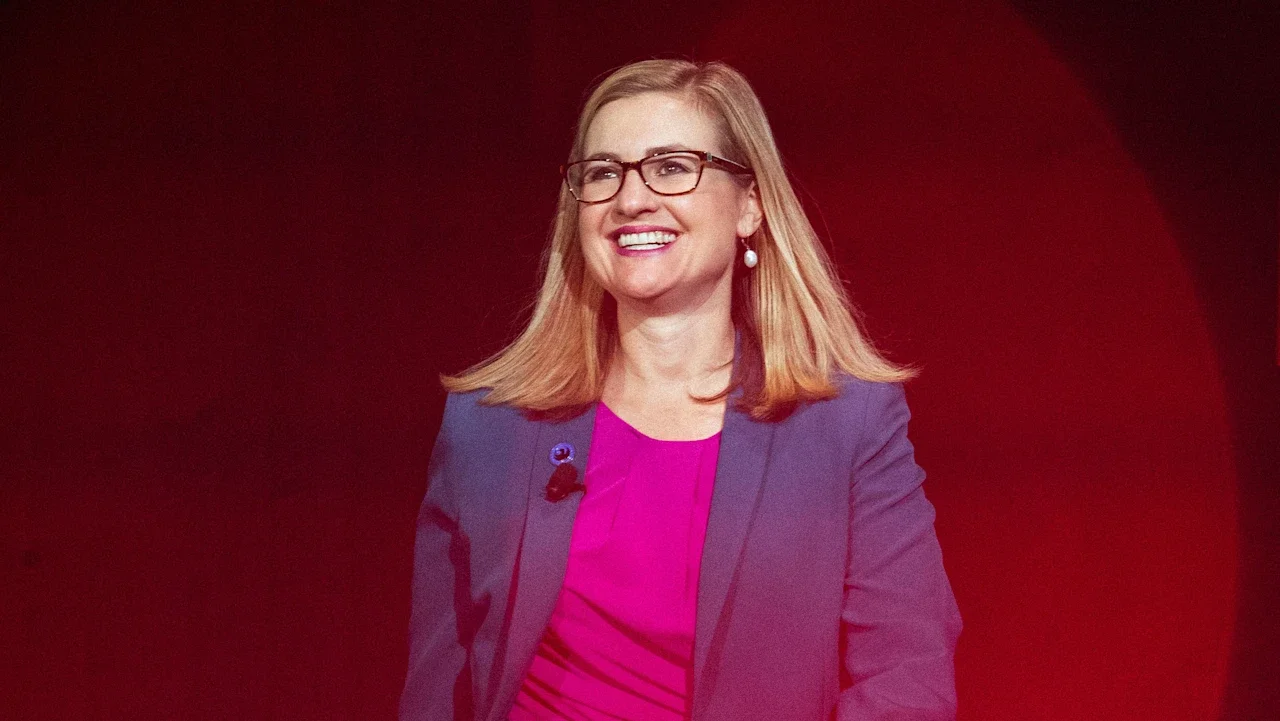
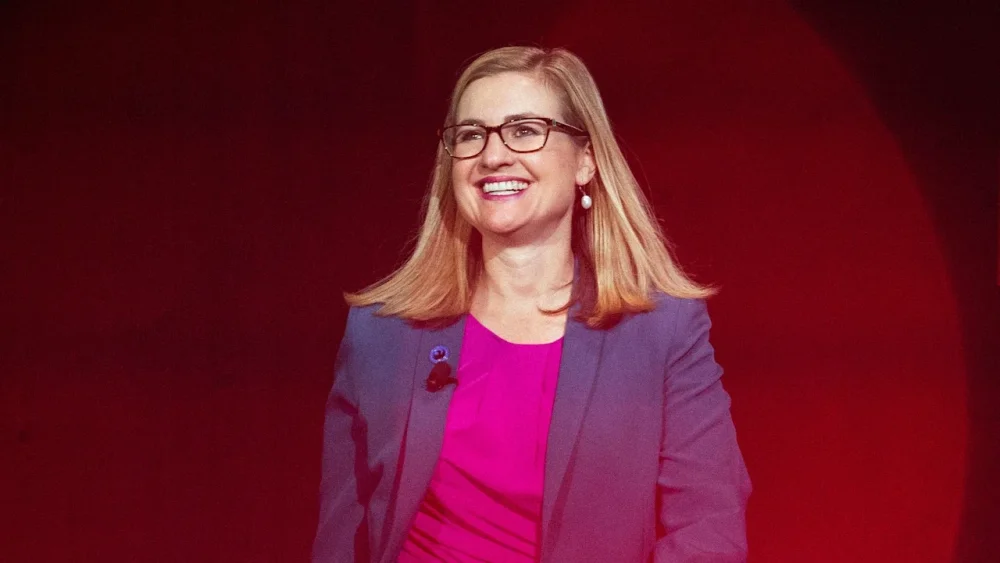
In 2020, Waymo began offering fully driverless rides to the public in Phoenix, turning the city into the closest thing the U.S. has to a real-world laboratory for autonomous vehicles. What began as a cautious pilot has since grown into a sprawling robotaxi network that now includes freeway travel and service to Phoenix Sky Harbor International Airport. Since then, Waymo has expanded to cities including San Francisco and Austin, while rivals like Tesla and Zoox are racing to deploy their own autonomous fleets. But the technology’s spread has come with a steady stream of logistical and political questions for the cities hosting it (especially since Phoenix, with its wide roads and relatively simple grid, represents one of the easier environments for autonomous vehicles to navigate). Fast Company spoke with Phoenix Mayor Kate Gallego this week at Austin’s South by Southwest festival about what it’s actually like to govern a city where driverless cars are more fully integrated into the transportation system. The conversation has been edited for length and clarity. You’ve overseen Phoenix during the whole arc of Waymo’s rollout. What’s changed in the city once AVs moved from a pilot to something residents can actually use? People have really appreciated Waymo’s expansion onto the freeways, because they can get where they’re going more quickly if it’s a longer distance. When we started, we were the first airport to have autonomous service in the world, which is a point of pride for Phoenix. We originally started pickups at our Sky Train, and now we’ve moved to the curb. We tried to be very safety-focused and make sure we tested and piloted before we did full deployment. It’s a point of pride for us that we were the first in the world to have autonomous vehicle service at the airport. We think it really shows we’re a technology-forward city and that we’re willing to embrace innovation. What’s been the biggest benefit of having those Waymos on the streets in Phoenix? We had a real shortage of drivers, so more people have the ability to get where they’re going, particularly during hours like overnight when it’s harder to find people who want to be working. So it’s really improved quality of life for riders. We’ve also seen some traffic-calming impacts. The Waymos go the speed limit. Phoenix has above-average traffic speeds for big cities in the United States, so speeding and red-light running are challenges for us. Waymos follow traffic rules, so that’s helped have a traffic-calming effect. Have you seen any evidence in Phoenix—crash data, traffic incidents—that verifies Waymos are making the roads safer? Are there other metrics you look at? We look at Waymo’s crash data, and the Waymos crash less than traditional human drivers. I don’t know that we’ve done a full analysis, but we could—we probably should. You’re the second person to ask me that today, so maybe I’ll take the hint and do that analysis. Based on the Phoenix experience, what’s something cities tend to underestimate when they first start integrating AVs into the roads? What adjustments do they have to make? It’s really important to have good communication. If there are issues with the programming, you want to make sure Waymo knows and can fix them. When we’ve reported issues to Waymo, they’ve been great about adapting the programming. What does the communication pipeline between your office and Waymo look like? Our first responders work directly with Waymo. If we’re going to have an unusual event or an emergency we’re responding to, they have the ability to work directly with the company. We also work directly with Waymo to report any incidents or opportunities, or if we want to partner on anything. Fast Company has reported on incidents in San Francisco where robotaxis can stall and take time to clear off the roads, partly because there’s no human driver to communicate with. Have there been incidents like that in Phoenix? Early on, we had a street closure for an arts festival and a bunch of Waymos got very confused by it. We shared the incident, and Waymo updated the programming. We haven’t had a repeat of the issue. Generally, when we’ve had challenges, they’ve been fixable. We don’t have the same problem repeatedly. We’ve trained our first responders, and it’s important to me that as new entrants come into the autonomous vehicle market, first responders can communicate with vehicles from outside the car. That’s worked fine with Waymo. In Arizona the state regulates autonomous vehicles. The city does not. But it’s been a partnership. For example, we had an issue where a Waymo drove into a pole in an alley. We shared the issue, and they updated the programming. I think they reported it to the federal government, but we weren’t their regulator. We were more like their partner. When you say they update the programming, what does that mean? I think they go out, look at what happened, and make sure the system understands how to react to that type of object or situation. There was an issue in another community where there was a stop sign in the bed of a pickup truck. The Waymo saw the stop sign and stopped, because it was programmed to stop when it sees one. But it wasn’t aware of a moving stop sign driving down the street. Once they programmed it to understand that situation, it was fixed. Are other AV companies coming to Phoenix? Right now we have Waymo and Tesla. Zoox announced last week that it plans to come, but it hasn’t arrived yet. Is there a point where there could be too many AV companies operating in a city? I chaired the U.S. Department of Transportation’s Transforming Transportation Advisory Committee, and one of our recommendations was that certain safety standards should be common across companies—for example, first responders should be able to communicate with vehicles from outside the car. In Phoenix we’re also starting to think about how to design cities for more autonomous vehicles. Do we need more drop-off and queuing space in front of buildings? Should we adjust parking ratios? Some people in Phoenix imagine having their own autonomous vehicle that drops them off at work, then goes and makes money as a robotaxi and comes back later. I think we’re a ways away from that. But we do think about whether traffic might move differently if there are more AVs. That could have environmental benefits and reduce the need for pavement. I care a lot about climate action and emissions. Waymos are lower-emission compared to our average vehicle fleet, and reducing tailpipe emissions helps us with our air-quality challenges. I grew up with asthma, so that’s something I’ve cared about for a long time. Have there been actual changes to urban design yet, or is that still theoretical? We’re really looking at our parking minimums. I’d love to see Phoenix devote less space to pavement and more to active uses. That could help enable better mass transit as well. There are ongoing discussions about bringing Waymo to New York. Do you think the calculus changes in a much denser city? In some ways there could be benefits. A Waymo can see many things at once, whereas a human driver has a limited field of vision. But cities should be ready to train first responders and make sure all stakeholders understand how to work with the technology. What does transportation look like five or 10 years from now in Phoenix? We recently went to voters with a ten-year plan. As part of that, we talked about advanced transportation technologies. I’m really interested in how these technologies can help Phoenix grow up rather than out—encouraging more density and more sustainable land use. And voters approved that plan? Yes, with 78% approval. It was our general plan for the city. We also passed a regional transportation sales tax and set aside $250 million for advanced technology. Are other cities asking you about Phoenix’s experience with Waymo? Yes. We’ve had people from all over the world come visit. Delegations from the European Union, officials from Prague, and others have come to see how our regulatory system evolved and how the safety systems work. I’ve taken visiting officials on Waymo rides when they’re interested in bringing the technology to their own cities. The first head of government to ever ride in an autonomous vehicle was the Dutch Prime Minister in Phoenix in a Waymo. The Secret Service was very nervous about protecting him, so they did a lot of test runs. We had this bizarre parade through downtown Phoenix where there was a relatively small Jaguar with the prime minister surrounded by large armored Secret Service vehicles. Have you taken Waymos yourself? Yes. I was the first customer when we expanded service to Sky Harbor Airport. It was a good experience, except there were a bunch of cameras watching as we drove up, and I unbuckled early so I could get out quickly. The Waymo stopped because I had unbuckled. So it was my fault. As mayor, I’m glad they’re responsive to safety issues. As a human, it was a little embarrassing. View the full article
-
Google is launching Ask Maps, a conversational AI feature that lets users ask Google Maps complex, real-world questions and get personalized, actionable answers — powered by the company’s Gemini AI models. What’s new. Users can now ask Maps questions like “Is there a public tennis court with lights on that I can play at tonight?” or “My phone is dying — where can I charge it without a long wait?” and get a conversational answer with a customized map view. Key capabilities include: Personalized recommendations — Results are tailored based on your search and save history, so Maps already knows, for example, that you prefer vegan restaurants before you ask. Trip planning — Ask for recommended stops along a route and get directions, ETAs, and insider tips sourced from over 500 million community contributors across 300 million places. Direct action — Book reservations, save places, or share them with friends directly from the response. Why we care. Ask Maps changes how people find places — shifting discovery from keyword searches to AI-generated recommendations. The businesses that will get picked will be the ones with rich, accurate, up-to-date Maps profiles and strong community engagement — because that’s the data Google’s AI is drawing from to make its picks. What to watch. Ask Maps is rolling out now in the U.S. and India on Android and iOS, with desktop coming soon. What’s next. Advertisers and local businesses should pay close attention — when AI starts mediating how people discover places, visibility in Maps becomes more critical than ever. Keeping business listings accurate, complete, and review-rich will matter more as Gemini draws from that data to power recommendations. View the full article
-
The biggest new restaurant trend is small. Special menus with petite, less expensive portions are popping up all over, from large chains like Olive Garden and The Cheesecake Factory to trendy urban eateries and farm-to-fork dining rooms. Restaurants hope that offering smaller servings beyond the children’s menu will meet many different diners’ needs. Some people want to spend less when they go out. Others are looking for healthier options or trying to lose weight. Younger consumers tend to snack more throughout the day and eat smaller meals, said Maeve Webster, the president of culinary consulting firm Menu Matters. “These are really driven by, I think, changes in the way people are thinking about their relationship with food, the way they spend money on food, what is a good value and what’s not,” Webster said. Looking for value Beth Tipton, the co-owner of Daniel Girls Farmhouse Restaurant in Connersville, Indiana, introduced an eight-item Mini Meals menu last fall after several customers requested smaller portions. The menu, which includes daily specials like a half piece of meatloaf with green beans, mashed potatoes and gravy for $8, now accounts for about 20% of the restaurant’s orders, she said. Older adults make up about half of the restaurant’s clientele, Tipston said, and some customers told her the regular menu was a stretch for their budgets. As someone who underwent weight-loss surgery, she also knew from experience that many restaurants won’t allow adults to order from their children’s menus. “We wanted it to be available to all without the word ‘kids meals’ attached,” Tipton said. “With the rising costs all around us we wanted to help in any way we can, and this is a great option.” Eating out and GLP-1s Some restaurants are adding menus to court users of GLP-1 weight-loss and diabetes drugs like Zepbound, Wegovy, Ozempic and Mounjaro. Last fall, restaurateur Barry Gutin ran into two different friends who told him they were taking GLP-1s and struggling to find restaurant meals that met their dietary needs and smaller appetites. GLP-1 users tend to eat less, so they need nutritionally dense foods that are low in fat and high in protein and fiber. Gutin, the co-owner of Cuba Libre Restaurant and Rum Bar in Philadelphia, Washington, Atlantic City, New Jersey, and Orlando, Florida, reached out to a doctor who specializes in weight loss and to Cuba Libre’s culinary director, Angel Roque. Over the next month, they developed the chain’s GLP-Wonderful menu, which is available during dinner. The menu has five classic Cuban options. Roque said the pollo asado on Cuba Libre’s regular menu has nearly 1,000 calories; on the GLP-1 menu, that’s slimmed down to 400 calories, but heavy on protein and fiber. He said it was also important to keep the GLP-1 meals flavorful and colorful, to stimulate appetites. “Many times when people are on those kind of regimes, they feel that they can’t do the same as everybody else. So we wanted to show them, yes, at Cuba Libre, you can,” Roque said. Gutin said the menu has increased business. He estimated that 10 to 20 groups at each location every week have at least one person who requests the GLP-Wonderful menu. “People say, ‘Thank you for serving us’,” Gutin said. Big chains go small Olive Garden, whose seven-item “Lighter Portions” menu rolled out nationwide in January, said GLP-1 users were one consideration. The Italian-style restaurant chain also wanted to appeal to patrons pursuing healthier diets or more affordable meals, said Rick Cardenas, the president and CEO of Olive Garden’s parent company, Darden Restaurants. “There is a consumer group out there that believes in abundance, but abundance is different for everybody,” Cardenas said in September during a conference call with investors. “So consumers can choose. We’re not changing our entire menu to make it a smaller portion.” The Asian fusion chain P.F. Chang’s began offering medium-sized portions last fall. The Cheesecake Factory added smaller, lower-priced Bites and Bowls to its menu last summer, while TGI Fridays recently began testing an “Eat Like A Kid” menu with smaller portions. A long-term change Smaller portions aren’t a new concept. Twenty years ago, small-plate tapas restaurants were all the rage, for instance. But to Webster, the menu consultant, the scaled-down dishes appearing now feel like a longer-term shift. For one thing, the trend is not tied to any particular cuisine. Webster also thinks consumers are thinking more about food waste than they used to, and smaller portions can alleviate some of their concerns. “I think it is a core need that consumers have, and a demand that has been lingering under the surface for a long time because restaurant meals, particularly at chains, have become so large,” she said. “Sure, it sounds great to take leftovers home, but they never taste as good.” During a recent visit to Shelburne, Vermont, from his home in North Carolina, Jack Pless was delighted to see the Teeny Tuesday menu at Barkeaters Restaurant, which specializes in locally sourced food. Pless, who’s in his 60s and used to own a restaurant, said he can’t eat as much as he used to at meals. “So many times you go out to restaurants, especially me or my wife, and we’ll take home a box and it’ll sit in the refrigerator for two, three days and start to grow a beard,” he said. Julie Finestone, the co-owner of Barkeaters, said she introduced the Teeny Tuesday menu last month to bring in more weekday business during the winter. She was concerned about the cost of offering lower-priced food options, like $12 reuben sliders, but said the decision has brought in more business than she expected. Finestone said she’s pretty confident Teeny Tuesday will become a year-round fixture. “Some people, it’s dietary. Some have smaller appetites. Some people don’t like to overindulge in the middle of the week,” Finestone said. “I think that it just spoke to people.” —Dee-Ann Durbin, AP business wrtier AP Video Journalists Mingson Lau and Amanda Swinhart contributed. View the full article

-
Digital investments will be restricted to niche Innovative Finance Isas from next monthView the full article
-
A reader writes: About two years ago, I had just started working at a major media company on the east coast, making good money. I was able to be the sole breadwinner for my family of four. Due to a complicated family situation, we were forced to move to the middle of the country to be near my in-laws. My job could not transfer, so I got a favor from my dad to get a remote job at his company, taking a major pay cut in the process. It was still enough to take care of everyone with the lower cost of living, and it was well above the average of the area. About nine months later, that company had a major restructuring and I was laid off. I had to scramble to find any work that paid even close to what I was making. I was able to get a contract with a local government agency that was open ended, but I had to take a rate well below my comfort level. The people at my work seem to like what I can provide them with and want to keep me around. With my one-year anniversary coming up, I asked my boss for a raise that was higher than a cost-of-living adjustment. He seemed amiable and said he would do his best. I did not have a hard figure to give him at the time. However, I finally have some hard numbers to work with, and I am now panicking. After fixed expenses, I have just above $1,000 a month for all incidentals, such as food, fuel, stuff for the kids, etc. We try to be as frugal as possible, but we are still spending at least double that every month on a “middle class” lifestyle. I have realized that I am going to need a raise of over 10% of my current salary for us to get above water. However, I know that government jobs pay poorly compared to the private sector, and that is going to be a hard lift. I am willing to get more education (they will pay for it) and do different shifts, etc. to try to negotiate. However, if I can’t get that amount of a raise, I literally cannot afford to work for them without a second job. I could tell them that I will have to look for another job, but considering this is my fourth job in three years, I don’t know how many companies are going to take me seriously. I also do not want to burn a bridge because poor money is still better than no money. My wife could work, but the only work she is qualified to do now would not pay for the childcare expenses that we would incur. My parents are not available, and hers are close but not close enough to be free babysitting. What do you recommend that I do here? What is the best way to tell my boss that the raise they offer is not enough? Do I just accept it and tighten our belts more? Do my wife or I bite the bullet and get another job? You can’t really ask for a raise based on your living expenses; what employers pay you is based on the value of your work to them and the market rate for that work in your geographic area. That’s particularly true in government, where pay rates tend to be highly regimented and your boss isn’t likely to have much flexibility. So: is the amount you want to ask for reasonably aligned with the market in your area and justified by the level you’re contributing at? If so, go ahead and ask for it! Who knows, maybe you’ll get it. But if it’s wildly outside the realm of what the work normally pays, you’re likely to come across as out of touch (and are very unlikely to get it). In some situations where you’re highly valued and have a good rapport with your boss, you could lay your cards on the table and say something like, “I’ve run the numbers and to stay long-term, I’d need to be earning $X. Is that realistic here or not something you could do?” Note that’s not getting into the reasons why, which ultimately aren’t relevant to your employer. It’s just moving straight to the bottom line, while acknowledging that it might not be possible. And even then, I wouldn’t do it if you know the number will seem colossally outside the norm for the field (although 10% probably isn’t). But ultimately, if the job doesn’t pay what you need to earn, the options are to find ways outside this employer to bring in more income — whether that’s adding a second job, moving into a different job, or whatever else you come up with. The job pays the range it pays. Related: the Ask a Manager guide to asking for a raise The post I can’t afford to stay at my job without a large raise appeared first on Ask a Manager. View the full article
-
Google redesigned the Asset Optimization section in Google Ads for Demand Gen campaigns, consolidating AI-powered creative controls into a single, cleaner interface. Why we care. Advertisers managing creative at scale now have a centralized panel to toggle automated features on or off — making the process less manual and time consuming. What’s new. The redesigned layout groups three key automation capabilities together: Auto-generated shorter videos — AI trims existing video assets into shorter cuts to qualify for additional placements. Automatic video resizing — Videos are adapted across multiple aspect ratios to maximize inventory coverage. Landing page image pulls — Images are sourced directly from an advertiser’s landing page to generate additional creative variations. How it works. The new panel surfaces simple toggles for features like Resized videos and Image assets, letting advertisers quickly enable or disable each automation without digging through multiple menus. Bottom line. Advertisers running Demand Gen campaigns should head into the Asset Optimization panel now and audit which automations are enabled. Turn on video resizing and landing page image pulls if you haven’t already — these are low-effort wins that can meaningfully expand reach without additional creative production. Also make sure your landing pages are clean and visually strong, since Google will be pulling from them directly. And as Google continues rolling out more AI-driven creative tools, start shifting your workflow toward providing high-quality source assets and letting the platform handle format and placement optimization from there. View the full article
-
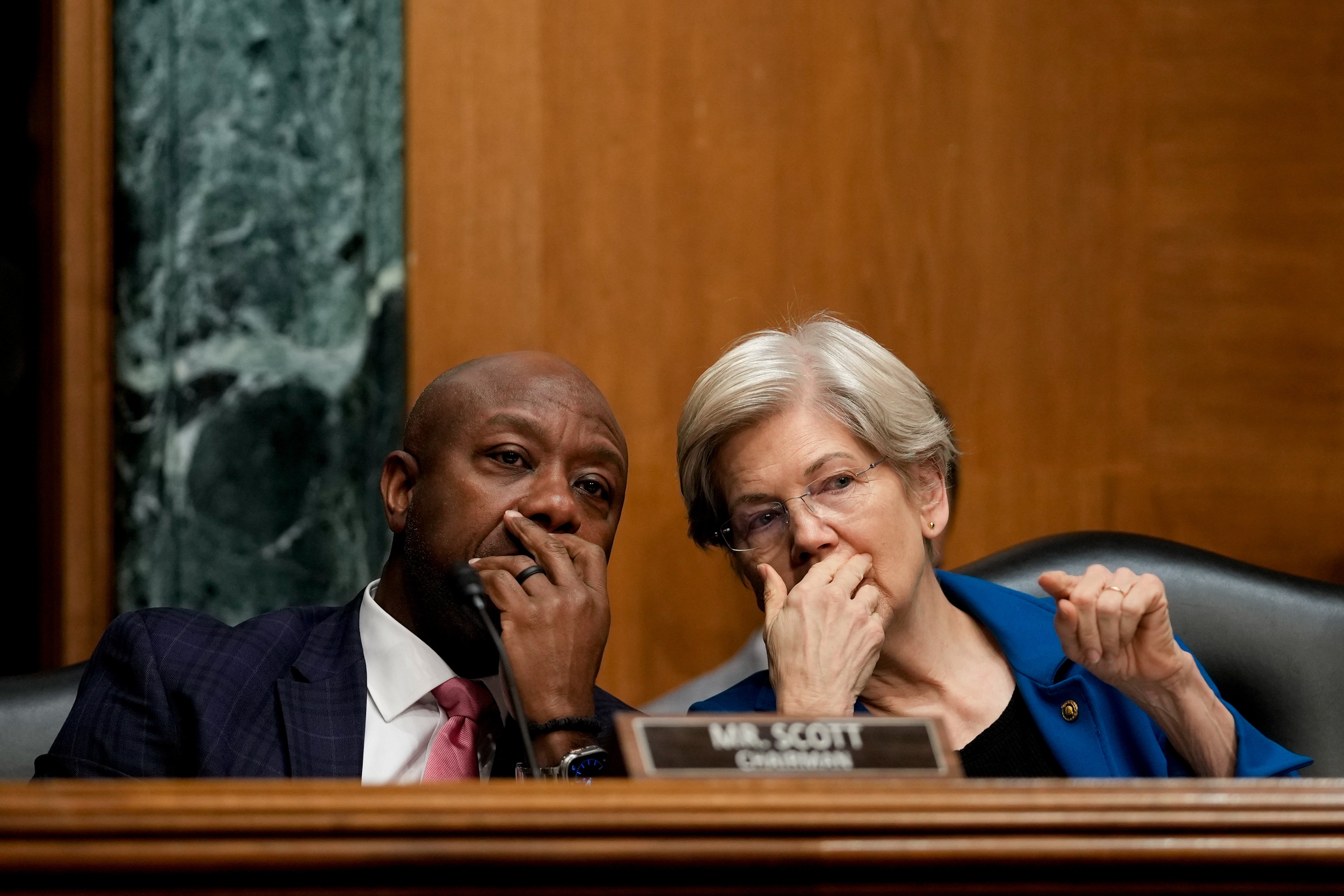
The Senate passed a bipartisan housing bill in an 89-10 vote, but how quickly and easily the bill can pass the House remains unclear. View the full article
-
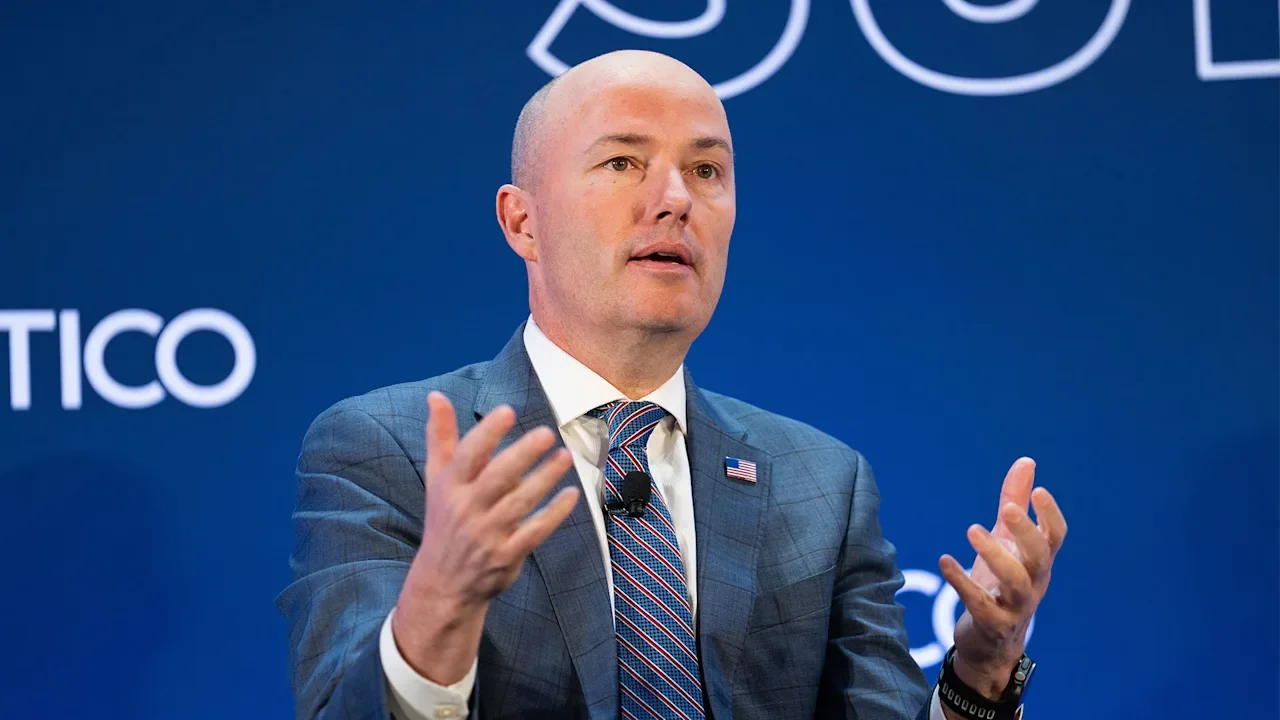
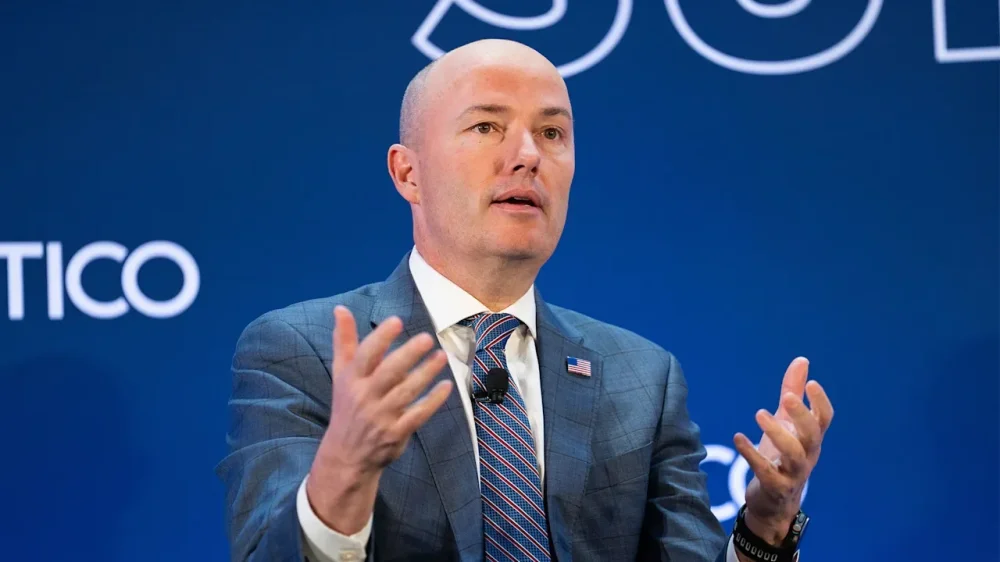
For more than a century, Utah has kept gambling almost entirely out of the state. There are no casinos, no lotteries and no racetracks that allow bets, a prohibition rooted in the conservative ideals of The Church of Jesus Christ of Latter-day Saints, which views gambling as a vice that leads to selfishness and addiction. But now, the state is fighting a new, more challenging battle to keep gambling outside its borders. It’s on the verge of enacting a law intended to undercut prediction markets like Kalshi and Polymarket, which allow anyone with a smartphone to wager on anything from whether it will rain in Los Angeles to whether the United States will go to war. While regulators and other states are still debating whether those markets constitute finance or gambling, Utah has already made up its mind. “We are putting a casino in the pocket of every single American, and they are targeting especially young people,” said Gov. Spencer Cox. “It is really awful what they are doing, and we are going to make sure this doesn’t happen in our state.” Cox said he will sign the legislation, putting conservative Utah at odds with the federal government. Kalshi has already sued the state, and the company is backed by the Commodity Futures Trading Commission, the federal agency responsible for regulating financial markets. The conflict puts Utah, a place that’s not known for picking fights, on the frontlines of a cultural, political and economic battle sweeping the country. On one side is a state deeply rooted in what is widely known as the Mormon church, where both politicians and faith leaders have treated the issue as a moral crusade. On the other is a growing industry — Kalshi and Polymarket are estimated to be worth $20 billion each after their last fundraising rounds — with connections in Washington that may offer some regulatory protection. President Donald The President‘s eldest son is an adviser for both Kalshi and Polymarket and an investor in the latter. The President’s social media platform Truth Social is also launching its own cryptocurrency-based prediction market called Truth Predict. Whoever wins this round could shape how other states handle the issue in the future. “What’s at stake here is whether states will be able to regulate gambling or if gambling is going to be subsumed into finance and ultimately regulated by Congress,” said Todd Phillips, a professor at Georgia State University who has written extensively about prediction market regulation. Utah takes aim at prop betting Polymarket and Kalshi allow participants to buy and sell contracts tied to the probable outcome of an event. Contracts are typically priced between one cent and 99 cents, which roughly translates to the percentage of customers who believe that event will happen. The companies argue they offer products that allow customers to manage risk, like how farmers can buy corn futures to lock in the price of their crops ahead of time. And derivative markets like the Chicago Board of Trade and Chicago Mercantile Exchange have long offered what are known as binary options to investors, which bet on whether an event will or will not happen. But unlike those derivative markets, the bulk of Kalshi’s trading volume and roughly half of Polymarket’s are now tied to sports. Kalshi said it saw more than $1 billion in volume traded on the Super Bowl alone. Utah is seeking to limit prediction markets from doing business in the state by taking aim at proposition betting in sports, which can be a significant source of their revenue. The bill that Cox plans to sign would expand the state’s gambling ban to include wagers on certain events happening in a game rather than the game’s outcome. An example of these “prop bets” would be how well a particular player performs, or a team hitting a specific threshold like rebounds or other metrics. The legislation also aims to stop sportsbooks companies like FanDuel and DraftKings that have set up their own prediction markets, which analysts say could allow the companies to get around state gambling prohibitions. Because of the vocal opposition of Utah officials, Kalshi preemptively sued the state in late February, asking a federal judge to stop Utah from enforcing its gambling restrictions on the platform. The judge has yet to rule on Kalshi’s request. Other judges in Nevada and Massachusetts have issued early rulings in favor of states looking to ban Kalshi and Polymarket from offering sports betting in their states, while judges in New Jersey in Tennessee have ruled in favor of Kalshi. Kalshi argues its product is different from sportsbooks companies or casinos because customers are betting against each other instead of against the “house,” spokesperson Elisabeth Diana said. The Commodity Futures Trading Commission under The President has agreed with Kalshi and has asserted that it has exclusive regulatory oversight of prediction markets. The agency argues states cannot ban the products from operating in their jurisdiction just because they are morally opposed to them. “To those who seek to challenge our authority in this space, let me be clear, we will see you in court,” chairman Michael Selig said recently in a video posted to social media. A moral crusade with religious roots It’s the first major issue in which Cox has clashed with The President in the year and a half since the Republican governor worked his way into The President’s good graces after not voting for him in 2016 and 2020. Patrick Mason, the chair of Mormon history and culture at Utah State University, said he is not surprised to see Cox and other Utah Republicans take a stand against prediction markets, even if it means going against their own party’s leadership in Washington. In the state, where about half of the 3.5 million residents are Latter-day Saints, even a simple game of church bingo is a rare sight. “Maybe they play for M&Ms, but never money,” he said. All the state’s major politicians, including the governor, lieutenant governor and its entire congressional delegation, are members of the church headquartered in Salt Lake City. When they view an issue as moral rather than political, the faith’s teachings often take precedence over appeasing the party, Mason explained. Church doctrine prohibits gambling in any form, saying it is motivated by “a desire to get something for nothing” and is destructive to individuals and families. “The idea that it goes against a sense of work ethic, a kind of fair exchange, has always been at the heart of the way a lot of people think about themselves in terms of Utah identity, and certainly Latter-day Saint identity and ethics,” Mason said. Because of Utah’s religious roots, the state has prohibited gambling since it was admitted to the Union in 1895. Along with Hawaii, it has the strictest gambling prohibitions in the country. Utah doesn’t even allow broad multi-state lotteries like Powerball or Mega Millions. Utah leads on both state and federal fronts Phillips, the professor focused on industry regulation, said if Congress does not step in to clarify whether these new prediction markets are legal, the issue will be left to the courts. “The line between gambling and finance is very, very fine,” Phillips said. “There’s a reason why Congress has, over and over again, stepped in to define and regulate financial markets when the products skew too close to gambling.” There is already some movement on Capitol Hill, led in part by another Utah Republican. Republican Rep. Blake Moore of Utah and Democratic Rep. Salud Carbajal of California introduced bipartisan legislation this week to more aggressively regulate prediction markets. The bill would prohibit the platforms from allowing bets on war, assassinations, terrorist attacks or election outcomes, and allow states to ban sports-related betting. “We, as a society, should not be taking bets on whether we are going to invade Cuba,” Moore said. Democratic senators have also said they will introduce legislation to ban wagers on violence. “It’s insane this is legal,” Sen. Chris Murphy of Connecticut said on social media. In court filings, Kalshi has tried to argue that its sports prediction market has economic utility and usefulness. It uses an example of an insurance company that underwrites the careers of college athletes using prediction markets to hedge the risk. Kalshi also argues that hotels, travel agencies and stadium management companies may be able to use prediction markets to hedge their risk against underperforming sports. Moore said he is not swayed by Kalshi and Polymarket’s economic arguments. “Utah’s economic outlook has been strong for many years,” he said. “I see no need why we need to embrace these as an economic tool.” —Ken Sweet and Hannah Schoenbaum, Associated Press View the full article
-
In an age where connection is paramount for businesses, Slack has taken significant strides this February to enhance workplace dynamics. By integrating artificial intelligence more deeply into its platform, Slack is positioning itself as an indispensable tool for small businesses striving for seamless communication and efficient workflows. This update introduces two groundbreaking features: the Model Context Protocol (MCP) server and the Real-Time Search API. These tools reshape how small teams interact with both emerging AI technologies and existing data, facilitating better collaboration and knowledge sharing. The MCP server establishes a direct line between Slack and popular AI assistants like Claude and ChatGPT, making it easier for small business owners to harness the power of AI without leaving the platform. With the interactive message composer, users can draft, format, and preview messages directly within an AI conversation. This functionality streamlines the communication process, allowing for the quick generation of personalized messages that align with the brand’s voice and style. “Your AI doesn’t just know things. It can actually do things in Slack,” Slack stated, highlighting the platform’s potential. The Real-Time Search API further enhances this interaction by delivering immediate access to workspace data as it is generated. Gone are the days of waiting for indexation; this feature allows small businesses to respond swiftly to customer inquiries or internal audits. For teams dealing with fast-paced projects, being able to locate information instantly can significantly reduce delays and enhance productivity. An added layer of insight comes from the Semantic Search feature available for Slack’s Pro customers, which interprets user intent rather than merely relying on keywords. This enhancement enables more nuanced searches, allowing team members to locate relevant documents or discussions even when using shorthand or multiple languages. The potential for improved efficiency here is substantial, addressing a common pain point for small businesses that may lack extensive documentation or guidance on best practices. Besides enhancing AI capabilities, Slack has revamped its user interface to foster a smoother onboarding process for new team members. The new side panel introduces guided tasks that help newcomers acclimate by prompting them to upload profile pictures or send their first direct messages. This feature simplifies integration for small teams, ensuring that everyone gets up to speed quickly and minimizing the disruption often experienced during new hires. However, there are practical considerations for small business owners when leveraging these new features. Integrating AI into workflows could require an adjustment period, particularly for teams less familiar with technology. Additionally, as Slack rolls out these updates, some features may not be immediately accessible based on licensing plans, necessitating ongoing communication with company administrators. Moreover, small businesses must weigh the potential costs associated with adopting new AI technologies. While the upfront investment may seem daunting, the long-term efficiencies gained from enhanced collaboration and streamlined operations could justify the expenses. As organizations look to make their communication more efficient, Slack’s new features suggest a pathway to greater connectivity. “We’re focused on making those bonds stronger and smarter,” the company emphasized, underlining the importance of cohesive teamwork in today’s business landscape. In summary, enhancing AI’s integration within Slack offers numerous benefits for small business owners, from improved message drafting to immediate data retrieval. While some challenges exist, particularly around technology adoption and cost, the potential to significantly enhance team efficiency makes these updates worth exploring. To learn more about these features, including their rollout timelines and availability, visit Slack’s Innovations webpage. As small businesses continue to navigate the evolving marketplace, tools like Slack promise to provide the connectivity necessary to thrive in a competitive environment. Image via Google Gemini This article, "Slack Unveils AI Enhancements to Strengthen Team Connections and Productivity" was first published on Small Business Trends View the full article
-
In an age where connection is paramount for businesses, Slack has taken significant strides this February to enhance workplace dynamics. By integrating artificial intelligence more deeply into its platform, Slack is positioning itself as an indispensable tool for small businesses striving for seamless communication and efficient workflows. This update introduces two groundbreaking features: the Model Context Protocol (MCP) server and the Real-Time Search API. These tools reshape how small teams interact with both emerging AI technologies and existing data, facilitating better collaboration and knowledge sharing. The MCP server establishes a direct line between Slack and popular AI assistants like Claude and ChatGPT, making it easier for small business owners to harness the power of AI without leaving the platform. With the interactive message composer, users can draft, format, and preview messages directly within an AI conversation. This functionality streamlines the communication process, allowing for the quick generation of personalized messages that align with the brand’s voice and style. “Your AI doesn’t just know things. It can actually do things in Slack,” Slack stated, highlighting the platform’s potential. The Real-Time Search API further enhances this interaction by delivering immediate access to workspace data as it is generated. Gone are the days of waiting for indexation; this feature allows small businesses to respond swiftly to customer inquiries or internal audits. For teams dealing with fast-paced projects, being able to locate information instantly can significantly reduce delays and enhance productivity. An added layer of insight comes from the Semantic Search feature available for Slack’s Pro customers, which interprets user intent rather than merely relying on keywords. This enhancement enables more nuanced searches, allowing team members to locate relevant documents or discussions even when using shorthand or multiple languages. The potential for improved efficiency here is substantial, addressing a common pain point for small businesses that may lack extensive documentation or guidance on best practices. Besides enhancing AI capabilities, Slack has revamped its user interface to foster a smoother onboarding process for new team members. The new side panel introduces guided tasks that help newcomers acclimate by prompting them to upload profile pictures or send their first direct messages. This feature simplifies integration for small teams, ensuring that everyone gets up to speed quickly and minimizing the disruption often experienced during new hires. However, there are practical considerations for small business owners when leveraging these new features. Integrating AI into workflows could require an adjustment period, particularly for teams less familiar with technology. Additionally, as Slack rolls out these updates, some features may not be immediately accessible based on licensing plans, necessitating ongoing communication with company administrators. Moreover, small businesses must weigh the potential costs associated with adopting new AI technologies. While the upfront investment may seem daunting, the long-term efficiencies gained from enhanced collaboration and streamlined operations could justify the expenses. As organizations look to make their communication more efficient, Slack’s new features suggest a pathway to greater connectivity. “We’re focused on making those bonds stronger and smarter,” the company emphasized, underlining the importance of cohesive teamwork in today’s business landscape. In summary, enhancing AI’s integration within Slack offers numerous benefits for small business owners, from improved message drafting to immediate data retrieval. While some challenges exist, particularly around technology adoption and cost, the potential to significantly enhance team efficiency makes these updates worth exploring. To learn more about these features, including their rollout timelines and availability, visit Slack’s Innovations webpage. As small businesses continue to navigate the evolving marketplace, tools like Slack promise to provide the connectivity necessary to thrive in a competitive environment. Image via Google Gemini This article, "Slack Unveils AI Enhancements to Strengthen Team Connections and Productivity" was first published on Small Business Trends View the full article
-
In March 2022, Congress passed a law mandating that, to commemorate the law enforcement officers who responded to the attack on the U.S. Capitol on January 6, a plaque needed to be placed on the western front of the Capitol building listing each of the officers’ names. The law stipulated that this plaque should be up within a year. As of early 2026, though, the finished plaque was collecting dust in the depths of the Capitol’s basement next to a pile of tools and maintenance equipment. For the past three years, the plaque’s future has become caught up in a game of partisan cat and mouse. After leadership in the House shifted to Republicans in 2023, multiple Democrats claimed that House Speaker Mike Johnson purposefully stalled the plaque’s installation. Johnson failed to give the go-ahead for its installation to the Architects of the Capitol, the steward of the Capitol building that was charged by Congress with commissioning and mounting the plaque. These delays continued for so long that two of the officers involved in the attack, Harry Dunn and Daniel Hodges, sued the Architects of the Capitol last summer. Finally, on March 7, the plaque went up—albeit inside a hallway without public access—and it was all thanks to one clever design add-on: a tiny QR code. A commemorative plaque gets caught in design drama Before the plaque finally made its way to the Capitol, most Democrats who spoke on the matter were of the mind that Republican leaders were strategically delaying its display as much as possible. Oddly enough, Johnson tried to refute these claims by shifting the blame onto the plaque’s actual design. Back in May 2025, House Minority Leader Hakeem Jeffries said in a news conference that the reason for the delay was that Republicans, “directed by their puppet master Donald The President, have been told, ‘Try to erase January 6 as if it has never happened.’” But in an interview with PBS on January 6, a spokesperson for Johnson said that the plaque could not go up “because of logistics,” claiming that they had not found a way to fit the 3,000 officers’ names onto the plaque. Presumably, Johnson’s team was referring to the original language of the March 2022 law, which stated that the Architect of the Capitol’s plaque needed to list the names of “all of the officers of the United States Capitol Police, the Metropolitan Police Department of the District of Columbia, and other Federal, State, and local law enforcement agencies and protective entities who responded to the violence that occurred at the United States Capitol.” This constraint, they appeared to argue, made the project “not implementable.” “Honor is a social—that is, public—recognition” But Johnson’s hesitance to approve the plaque’s installation was ultimately overridden in early January, when Senators Jeff Merkley and Thom Tillis helmed a resolution ordering the plaque’s display, which was passed unanimously in the Senate. When the plaque finally did make it to the walls of the Capitol, the Architects of the Capitol addressed Johnson’s design concerns with a simple fix: a tiny QR code, set in its own frame next to the plaque, that links to a list of all of the officers present on January 6. According to a report from The Washington Post, that list goes on for 45 pages. [Photo: Getty Images] The plaque itself is a fairly small bronze rectangle that includes an image of the Capitol building with the phrase, “On behalf of a grateful Congress, this plaque honors the extraordinary individuals who bravely protected and defended this symbol of democracy on January 6, 2021. Their heroism will never be forgotten.” Beneath it is a list of the law enforcement departments who lent their help during the attack. For the two officers who sued the Architects of the Capitol, this outcome is too little, too late. “This is a fine stopgap, however they are not yet within full compliance of the law and the weight of a judicial ruling would help secure the memorial against future tampering,” Hodges wrote on Twitter. “Our lawsuit persists.” On March 10, Hodges and Dunn filed a motion asking a judge to allow their lawsuit to proceed. The document argues that the plaque, which was hung inside a pair of Capitol doors, should’ve been affixed to the exterior of the building per the original law, and that its current location keeps it out of the public eye. “Honor is a social—that is, public—recognition,” the filing reads. “Hidden from all visitors, the current location is no different than the basement the plaque was kept in for years.” View the full article

-
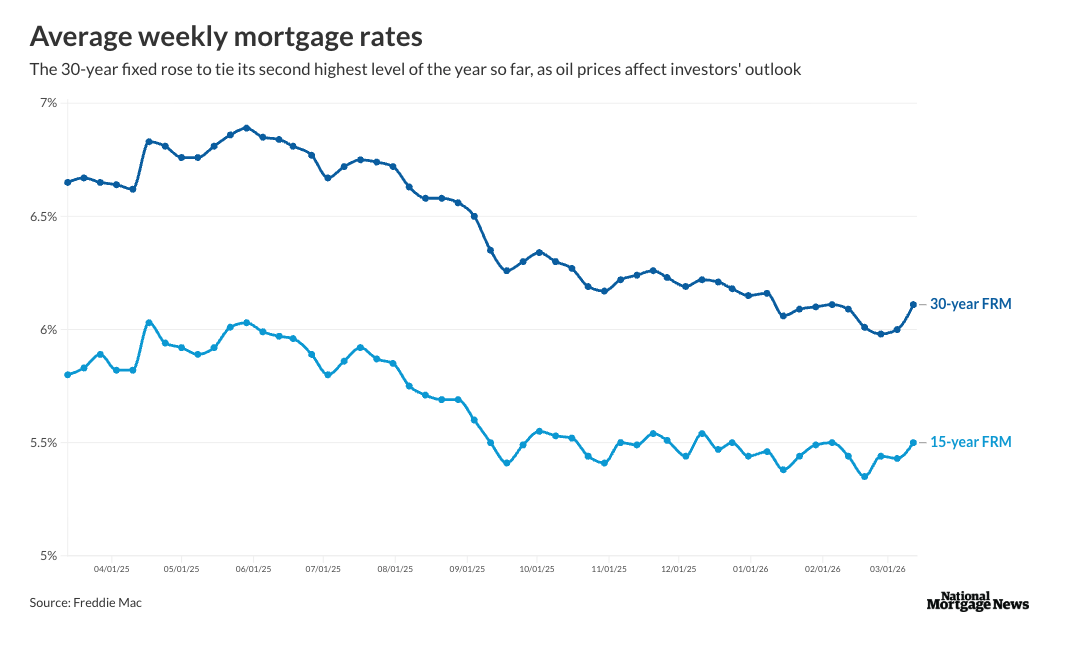
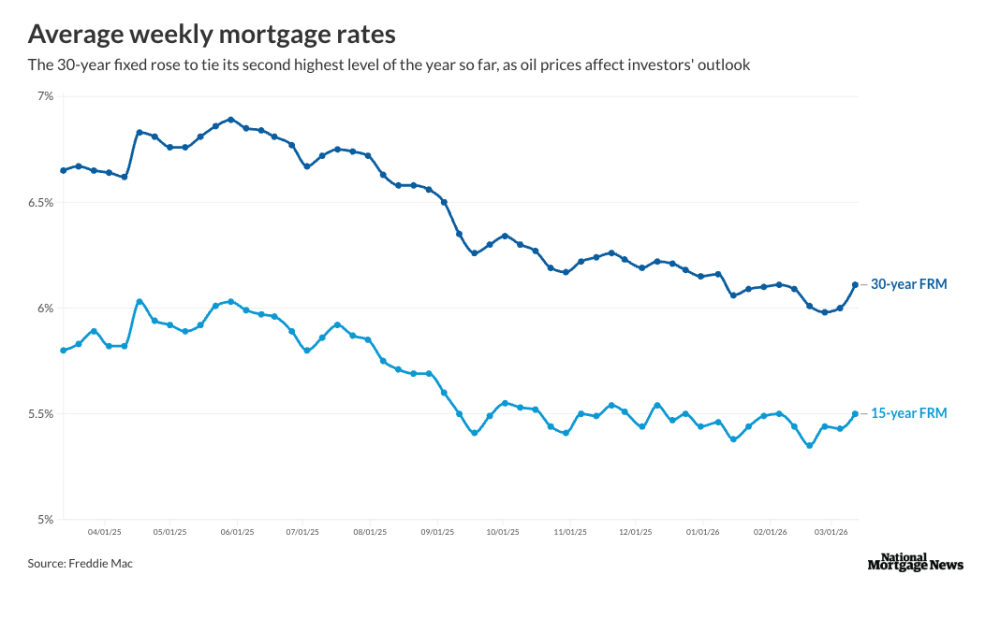
The conflict pushed oil price futures above $100 a barrel for a short time earlier this week, which affected bond investors and the 10-year Treasury yield. View the full article
-
An “unprecedented,” potentially record-breaking heat wave is expected to hit much of the American southwest, from California to Colorado, this week—and experts are concerned about how temperatures will affect the region’s already-low snowpacks. Temperatures in the Los Angeles area will be 15 to 25 degrees above seasonal norms on Thursday, March 12, and Friday, March 13, according to the National Weather Service (NWS), reaching into the 90s along the coast and potentially above 100 degrees in some areas. “Given the unprecedented length and magnitude of this extreme heat wave, heat stress will be increasing each day, especially in areas that aren’t used to the heat, like the coastal areas,” forecasters wrote. Scorching temperatures will stretch through the southwest Tucson, Arizona, could see its earliest 100-plus degree day next week; the March monthly record high for Tucson is 99 degrees, according to the NWS. Parts of Colorado are forecast to reach into the 90s, which would break state records. Some parts of the southwest could see triple-digit temperatures, when they have never before experienced that this early in the year, climate scientist Daniel Swain said on a recent livestream. The heat wave is expected to last for the “foreseeable future,” he added, with a 10- to 14-day stretch of “extraordinarily anomalous weather.” “It is quite likely that many cities and probably many states will set new all-time high March temperature records, as well as new records for the month of March cumulatively overall,” Swain said. “All the way from Colorado to California, I think we’re going to hit records everywhere in between.” Heat wave threatens already-low snowpacks The extreme March heat wave comes on the heels of the warmest winter on record for the majority of the American west and Southern Plains. That’s based on 131 years of climate data. It was also an exceptionally dry winter across the West, which has left the region, including the Sierra Nevada, with below-average snowpacks. Many Western communities, including in California, depend on snowpacks as crucial natural reservoirs. They store water through the winter and release it over the spring and summer. The heat waves, though, threaten to melt the already-sparse snow, which means the reservoirs may not have enough water for residents and farms later in the year. “The current snowpack is under 50% of its average throughout much of the American West,” Swain said. “Every single basin, with no exceptions in the Western U.S. . . . is below average.” No “miracle March” this year Meteorologists and climate experts use the term “miracle March” to describe the way the month can restock reservoirs, even after a winter without much water or snow. Cold, wet March conditions can “turn a dry winter into a not-so-dry winter,” Swain said. But this year, Swain noted, “that is not going to happen.” The record-breaking heat wave brings long-term concerns. Along with reducing the amount of water in reservoirs, it could set up dry soil conditions for the summer, which increases the risk of wildfires. The fact that these temperatures are coming so early in the year is also a concern for climate experts. “We’re about to experience the hottest March temperatures we’ve ever seen across a lot of the Western U.S.,” Swain said. “This is going to be a heat wave that people aren’t going to be able to ignore because of when it’s happening.” View the full article

-
Just days after settling with the Department of Justice (DOJ), ticketing company Live Nation is again under fire after internal messages between employees revealed bragging about “taking advantage” of ticket buyers. In message exchanges from 2022, two regional directors of ticketing for Live Nation amphitheaters, Ben Baker and Jeff Weinhold, boasted about the prices they were able to get away with charging customers for ancillary fees, including things like parking, lawn chair rentals, and VIP access, with Baker writing, “I gouge them on ancil prices.” In one exchange, Weinhold shared how he was able to charge $250 for VIP parking at a venue. “These people are so stupid,” Baker replied. “I almost feel bad taking advantage of them.” In another series of messages, Baker says he charges customers “$50 to park in the grass” and “$60 for closer grass.” “Robbing them blind baby,” he added. “That’s how we do it.” The DOJ’s antitrust trial against Live Nation and Ticketmaster began this month, with the government alleging that Live Nation’s control of Ticketmaster was monopolizing the ticketing industry and leading to unfair pricing for consumers. Last week, Live Nation filed a request for the judge to exclude six sets of Baker and Weinhold’s messages from the trial, arguing that they would unfairly bias the jury. The DOJ and attorneys general for the states suing Live Nation opposed the request, and several media organizations later petitioned for the documents to be unsealed. On Monday, the DOJ and Live Nation reached a surprise settlement, letting the company retain ownership of Ticketmaster—but despite a legal win for Live Nation, the Baker and Weinhold messages have dealt another blow to the brand’s reputation. In a statement to Fast Company, Live Nation condemned Weinhold and Baker’s conduct, adding that its own executives were unaware of the exchange prior to the trial documents being unsealed. “The Slack exchange from one junior staffer to a friend absolutely doesn’t reflect our values or how we operate,” reads the statement. “Because this was a private Slack message, leadership learned of this when the public did, and will be looking into the matter promptly.” A spokesperson for Live Nation emphasized that Baker and Weinhold’s behavior was against company policy, and that their pricing exceeded limits put in place to protect ticket buyers. “We are digging into it now that we are aware,” the spokesperson added. “This is not at all an acceptable way to behave or talk, and important to note that these are not executives.” View the full article

-
An analysis of ChatGPT conversations found the default and premium models cite almost entirely different sources for the same queries. The post ChatGPT’s Default & Premium Models Search The Web Differently appeared first on Search Engine Journal. View the full article
-
When you’re looking for the best clearance deals on craft supplies, consider several reliable sources. Major craft retailers like JoAnn’s, Michaels, and Hobby Lobby often have significant discounts during seasonal sales. Thrift stores can likewise offer unique items at low prices, with dedicated crafting sections. Furthermore, online marketplaces such as eBay and Facebook Marketplace provide access to second-hand supplies. Exploring community garage sales can uncover bulk items for budget-friendly crafting. Discover more effective strategies for maximizing your savings. Key Takeaways Thrift stores often have dedicated crafting sections where materials are sold at a fraction of their original prices, perfect for budget-conscious crafters. Major craft retailers like JoAnn’s and Michaels frequently run clearance events with discounts ranging from 40% to 70%. Online marketplaces such as eBay and Facebook Marketplace feature local sellers with second-hand craft supplies at significant discounts. Community sales and garage sales offer unique opportunities to find bulk craft items at reduced prices during warmer months. Subscribing to newsletters from craft stores can keep you informed about exclusive sales, weekly coupons, and seasonal clearance events. Thrift Stores for Craft Supplies When you explore thrift stores for craft supplies, you’ll often discover a treasure trove of materials at prices that are hard to beat. Many thrift shops have dedicated crafting sections where you can find discount card making supplies, fabric, ribbons, and embellishments. These items are usually sold at a fraction of their original cost, making them ideal for budget-conscious crafters. Regular visits can yield unique finds, especially during seasonal sales or tag events, where items may be discounted by 50% or more. Furthermore, community thrift stores often host craft supply swaps or donation events, allowing you to exchange materials and discover new items without spending money. Checking various stores improves your chances of finding specialized clearance craft supplies. Major Craft Retailers’ Clearance Events Major craft retailers frequently hold clearance events that can considerably reduce your crafting expenses. Stores like JoAnn’s Fabric offer weekly coupons that can knock up to 40% off regular prices, making it an ideal time to stock up on supplies. Michaels Craft Store often runs sales, allowing you to save 40%-50% on a wide range of materials. Moreover, Hobby Lobby’s clearance schedule features seasonal sales, with discounts reaching up to 70% during holiday shifts. Don’t overlook Dollar Tree for budget-friendly options, as all items are priced at just $1 each. With these major craft retailers offering significant craft supplies clearance, you’ll find numerous opportunities to improve your crafting projects without overspending. Online Marketplaces for Bargain Finds When you’re on the hunt for craft supplies at budget-friendly prices, online marketplaces offer a wealth of options. Platforms like Craigslist and Facebook Marketplace often feature local sellers offering second-hand items, whereas eBay can connect you with crafters looking to clear out their supplies. Furthermore, don’t overlook local buy/sell groups on social media, as they can be great resources for finding unique bargains in your area. Popular Online Platforms Finding quality craft supplies at affordable prices is easier than ever, thanks to a variety of online platforms that cater to bargain hunters. Websites like eBay and Facebook Marketplace offer a vast selection of used or surplus materials, perfect for those seeking clearance crafts without breaking the bank. You can additionally check Craigslist and Freecycle for free or heavily discounted local supplies. Etsy frequently features sellers who’ve clearance events, providing competitive prices on craft supplies. Amazon is another reliable option, with numerous discounts and user reviews ensuring quality purchases. Finally, specialty sites like CraftDirect keep their clearance crafts catalog updated, offering great deals on items like ribbons, embellishments, and scrapbooking materials. Local Buy/Sell Groups Local buy/sell groups on platforms like Facebook Marketplace and Craigslist offer a treasure trove of gently used or surplus craft supplies, allowing crafters to score significant savings. These local buy/sell groups often showcase scrapbook supplies clearance and other craft materials at lower prices. Many community groups host events or online pages where members can list items they no longer need, making it easy for you to find unique tools and supplies not commonly available in stores. Participating in these groups can furthermore provide exclusive deals or swap opportunities, rejuvenating your supplies without spending more. Item Type Average Price Scrapbook Paper $5 Craft Paint $3 Beading Supplies $10 Knitting Yarn $8 Sewing Fabrics $6 Community Sales and Garage Sales Community sales and garage sales present excellent opportunities for crafters to discover a wide range of supplies at affordable prices, particularly during the warmer months when these events are most frequently organized. Many sellers aim to declutter their homes, often offering bulk craft items at greatly reduced prices, making it perfect for bargain hunters. You might find clearance craft kits, assorted fabric, or even materials for scrapbook clearance. By attending multiple garage sales in one day, you’ll encounter various households with different crafting items to offer. Furthermore, networking with local crafters at these sales can provide valuable information about upcoming events, swaps, or free supply exchanges, enhancing your crafting experience and broadening your supplies without breaking the bank. Utilizing Coupons and Seasonal Sales Regarding saving money on craft supplies, utilizing coupons and taking advantage of seasonal sales can make a significant difference in your budget. Stores like JoAnn’s Fabric often provide weekly coupons for 40% off regularly priced items, whereas Michaels Craft Store offers discounts ranging from 40% to 50%. You should additionally look for seasonal sales, especially after holidays, to find clearance scrapbook paper and other supplies at reduced prices. Second-hand stores are another option, with many holding seasonal sales offering 50% off specific tags. To stay informed, subscribe to newsletters from craft retailers, ensuring you’re updated on upcoming sales and exclusive coupon offers. This strategy can lead to substantial savings over time. Networking With Local Crafters Networking with fellow crafters can greatly improve your crafting experience as well as assisting you save money on supplies. Joining local crafting groups on social media connects you with others who often exchange or sell unused materials at discounted prices, including clearance art supplies. Participating in community events or craft fairs offers opportunities to meet crafters who’ve insider knowledge about sales and scrapbook deals in your area. Organizing craft supply swaps lets you trade excess items, allowing you to refresh your stash without spending money. Moreover, many local groups host “buy/sell” events where members list surplus supplies at reduced prices, nurturing a supportive atmosphere for budget-conscious crafters enthusiastic to network and save. Frequently Asked Questions Is Michaels or Hobby Lobby Better for Craft Supplies? When considering whether Michaels or Hobby Lobby is better for craft supplies, you’ll find Michaels offers a wider variety and frequent weekly coupons ranging from 40% to 50% off. They additionally have a rewards program that provides additional savings. Hobby Lobby, although known for extensive home décor, has rotating sales that can be beneficial, but you may need to plan purchases carefully. Do Craft Supplies Go on Sale at Hobby Lobby? Yes, craft supplies do go on sale at Hobby Lobby. You’ll often find weekly sales featuring items at discounts of up to 40% off. Furthermore, clearance sections offer significant markdowns, sometimes reaching 90% off original prices. To stay updated on current sales, check Hobby Lobby’s mobile app or website regularly. This way, you can find seasonal decor, fabric, and other crafting necessities at reduced prices, helping you save money on your projects. What Is the Most Popular Craft Store? When considering the most popular craft store, Michaels often tops the list because of its extensive selection and frequent sales. JoAnn’s Fabric likewise has a strong following, especially for fabric enthusiasts. Hobby Lobby is well-known for its diverse inventory and seasonal promotions. Although AC Moore has diminished in presence, Dollar Tree remains a favorite for budget-friendly options. Each store caters to different crafting needs, making them popular among various crafting communities. How to Declutter Your Craft Supplies? To declutter your craft supplies, start by sorting items into categories like paper, tools, and embellishments. Use clear bins or labeled containers for easy access and to reduce clutter. Regularly assess your inventory; if you find duplicates or unused items for over a year, consider donating or selling them. Create a “project box” for ongoing projects, and set a routine to review your supplies every few months, keeping your collection manageable. Conclusion In summary, you can find great craft supply deals by exploring thrift stores, major retailers’ clearance events, and online marketplaces. Community garage sales likewise offer excellent opportunities for bulk purchases at low prices. Furthermore, take advantage of coupons and seasonal sales to maximize your savings. Ultimately, networking with local crafters can lead to shared resources and recommendations for the best places to shop. By utilizing these strategies, you’ll improve your crafting experience as you stay within budget. Image via Google Gemini This article, "Best Places for Craft Supplies Clearance Deals" was first published on Small Business Trends View the full article
-
When you’re looking for the best clearance deals on craft supplies, consider several reliable sources. Major craft retailers like JoAnn’s, Michaels, and Hobby Lobby often have significant discounts during seasonal sales. Thrift stores can likewise offer unique items at low prices, with dedicated crafting sections. Furthermore, online marketplaces such as eBay and Facebook Marketplace provide access to second-hand supplies. Exploring community garage sales can uncover bulk items for budget-friendly crafting. Discover more effective strategies for maximizing your savings. Key Takeaways Thrift stores often have dedicated crafting sections where materials are sold at a fraction of their original prices, perfect for budget-conscious crafters. Major craft retailers like JoAnn’s and Michaels frequently run clearance events with discounts ranging from 40% to 70%. Online marketplaces such as eBay and Facebook Marketplace feature local sellers with second-hand craft supplies at significant discounts. Community sales and garage sales offer unique opportunities to find bulk craft items at reduced prices during warmer months. Subscribing to newsletters from craft stores can keep you informed about exclusive sales, weekly coupons, and seasonal clearance events. Thrift Stores for Craft Supplies When you explore thrift stores for craft supplies, you’ll often discover a treasure trove of materials at prices that are hard to beat. Many thrift shops have dedicated crafting sections where you can find discount card making supplies, fabric, ribbons, and embellishments. These items are usually sold at a fraction of their original cost, making them ideal for budget-conscious crafters. Regular visits can yield unique finds, especially during seasonal sales or tag events, where items may be discounted by 50% or more. Furthermore, community thrift stores often host craft supply swaps or donation events, allowing you to exchange materials and discover new items without spending money. Checking various stores improves your chances of finding specialized clearance craft supplies. Major Craft Retailers’ Clearance Events Major craft retailers frequently hold clearance events that can considerably reduce your crafting expenses. Stores like JoAnn’s Fabric offer weekly coupons that can knock up to 40% off regular prices, making it an ideal time to stock up on supplies. Michaels Craft Store often runs sales, allowing you to save 40%-50% on a wide range of materials. Moreover, Hobby Lobby’s clearance schedule features seasonal sales, with discounts reaching up to 70% during holiday shifts. Don’t overlook Dollar Tree for budget-friendly options, as all items are priced at just $1 each. With these major craft retailers offering significant craft supplies clearance, you’ll find numerous opportunities to improve your crafting projects without overspending. Online Marketplaces for Bargain Finds When you’re on the hunt for craft supplies at budget-friendly prices, online marketplaces offer a wealth of options. Platforms like Craigslist and Facebook Marketplace often feature local sellers offering second-hand items, whereas eBay can connect you with crafters looking to clear out their supplies. Furthermore, don’t overlook local buy/sell groups on social media, as they can be great resources for finding unique bargains in your area. Popular Online Platforms Finding quality craft supplies at affordable prices is easier than ever, thanks to a variety of online platforms that cater to bargain hunters. Websites like eBay and Facebook Marketplace offer a vast selection of used or surplus materials, perfect for those seeking clearance crafts without breaking the bank. You can additionally check Craigslist and Freecycle for free or heavily discounted local supplies. Etsy frequently features sellers who’ve clearance events, providing competitive prices on craft supplies. Amazon is another reliable option, with numerous discounts and user reviews ensuring quality purchases. Finally, specialty sites like CraftDirect keep their clearance crafts catalog updated, offering great deals on items like ribbons, embellishments, and scrapbooking materials. Local Buy/Sell Groups Local buy/sell groups on platforms like Facebook Marketplace and Craigslist offer a treasure trove of gently used or surplus craft supplies, allowing crafters to score significant savings. These local buy/sell groups often showcase scrapbook supplies clearance and other craft materials at lower prices. Many community groups host events or online pages where members can list items they no longer need, making it easy for you to find unique tools and supplies not commonly available in stores. Participating in these groups can furthermore provide exclusive deals or swap opportunities, rejuvenating your supplies without spending more. Item Type Average Price Scrapbook Paper $5 Craft Paint $3 Beading Supplies $10 Knitting Yarn $8 Sewing Fabrics $6 Community Sales and Garage Sales Community sales and garage sales present excellent opportunities for crafters to discover a wide range of supplies at affordable prices, particularly during the warmer months when these events are most frequently organized. Many sellers aim to declutter their homes, often offering bulk craft items at greatly reduced prices, making it perfect for bargain hunters. You might find clearance craft kits, assorted fabric, or even materials for scrapbook clearance. By attending multiple garage sales in one day, you’ll encounter various households with different crafting items to offer. Furthermore, networking with local crafters at these sales can provide valuable information about upcoming events, swaps, or free supply exchanges, enhancing your crafting experience and broadening your supplies without breaking the bank. Utilizing Coupons and Seasonal Sales Regarding saving money on craft supplies, utilizing coupons and taking advantage of seasonal sales can make a significant difference in your budget. Stores like JoAnn’s Fabric often provide weekly coupons for 40% off regularly priced items, whereas Michaels Craft Store offers discounts ranging from 40% to 50%. You should additionally look for seasonal sales, especially after holidays, to find clearance scrapbook paper and other supplies at reduced prices. Second-hand stores are another option, with many holding seasonal sales offering 50% off specific tags. To stay informed, subscribe to newsletters from craft retailers, ensuring you’re updated on upcoming sales and exclusive coupon offers. This strategy can lead to substantial savings over time. Networking With Local Crafters Networking with fellow crafters can greatly improve your crafting experience as well as assisting you save money on supplies. Joining local crafting groups on social media connects you with others who often exchange or sell unused materials at discounted prices, including clearance art supplies. Participating in community events or craft fairs offers opportunities to meet crafters who’ve insider knowledge about sales and scrapbook deals in your area. Organizing craft supply swaps lets you trade excess items, allowing you to refresh your stash without spending money. Moreover, many local groups host “buy/sell” events where members list surplus supplies at reduced prices, nurturing a supportive atmosphere for budget-conscious crafters enthusiastic to network and save. Frequently Asked Questions Is Michaels or Hobby Lobby Better for Craft Supplies? When considering whether Michaels or Hobby Lobby is better for craft supplies, you’ll find Michaels offers a wider variety and frequent weekly coupons ranging from 40% to 50% off. They additionally have a rewards program that provides additional savings. Hobby Lobby, although known for extensive home décor, has rotating sales that can be beneficial, but you may need to plan purchases carefully. Do Craft Supplies Go on Sale at Hobby Lobby? Yes, craft supplies do go on sale at Hobby Lobby. You’ll often find weekly sales featuring items at discounts of up to 40% off. Furthermore, clearance sections offer significant markdowns, sometimes reaching 90% off original prices. To stay updated on current sales, check Hobby Lobby’s mobile app or website regularly. This way, you can find seasonal decor, fabric, and other crafting necessities at reduced prices, helping you save money on your projects. What Is the Most Popular Craft Store? When considering the most popular craft store, Michaels often tops the list because of its extensive selection and frequent sales. JoAnn’s Fabric likewise has a strong following, especially for fabric enthusiasts. Hobby Lobby is well-known for its diverse inventory and seasonal promotions. Although AC Moore has diminished in presence, Dollar Tree remains a favorite for budget-friendly options. Each store caters to different crafting needs, making them popular among various crafting communities. How to Declutter Your Craft Supplies? To declutter your craft supplies, start by sorting items into categories like paper, tools, and embellishments. Use clear bins or labeled containers for easy access and to reduce clutter. Regularly assess your inventory; if you find duplicates or unused items for over a year, consider donating or selling them. Create a “project box” for ongoing projects, and set a routine to review your supplies every few months, keeping your collection manageable. Conclusion In summary, you can find great craft supply deals by exploring thrift stores, major retailers’ clearance events, and online marketplaces. Community garage sales likewise offer excellent opportunities for bulk purchases at low prices. Furthermore, take advantage of coupons and seasonal sales to maximize your savings. Ultimately, networking with local crafters can lead to shared resources and recommendations for the best places to shop. By utilizing these strategies, you’ll improve your crafting experience as you stay within budget. Image via Google Gemini This article, "Best Places for Craft Supplies Clearance Deals" was first published on Small Business Trends View the full article
-
A reader writes: I have a situation at work where my favorite work friend is now not speaking to me because of politics. We have political differences, but we have always been respectful and it’s never caused an issue before. Now I’m getting shut out because I’m, quote a part of the left. Wondering if you could do one of your round-ups of past posts about friendships going sour, or awkwardness at work. I know to be kind and professional, and I’m giving her space. But would be nice to have a re-read of some of the older posts. I suspect maybe I’m not alone in this. Yes! Here you go: friends at work friend drama may collide with job hunt I referred my friend to my company and she turned out to be an awful coworker am I allowed to have friends at work if I work in HR? my friend has bad judgment about work — and we work for the same company should I warn my work friend she might get fired? my boss says we shouldn’t be friends with former coworkers I now realize a work friendship wasn’t healthy — where do I go from here? some of the awkwardness that can come up from working with friends how to work with a friend who has stopped talking to me work is ruining one of my closest friendships my childhood friend just took a job at my office and is being inappropriate I can’t keep helping my work BFF do her job I’ve been covering for a friend’s work mistakes I’ve encouraged a coworker to vent about her boss — my friend a friendship break-up with a difficult coworker my coworker is making our friend break-up really weird will my angry work friend harm my reputation? my needy boss wants me to “adopt” her my friend is a terrible coworker I’m upset that my friend wants to work for the company that laid me off friends, work, and competition what are the ethics of applying for a job that a friend wants? when should I tell my friend I applied for a job she wants? when you want to make friends at work I want to turn a professional contact into a friend should I put more effort into making friends at work? I haven’t made friends at my new job my coworkers all hang out without me getting to know your coworkers when you can’t hang out after work everyone at work is hanging out without me when you don’t want to make friends at work my coworker isn’t picking up on my cues that I don’t want to be friends my coworker has become needy and wants a closer friendship than I want I don’t want to be friends with my coworker my boss wants to be my BFF how do I step back from a friendship with an intensely negative and argumentative coworker? when your friend is your boss my friend is a terrible boss I’m becoming my friend’s boss — do things have to change? some palate cleansers good things that came from socializing with coworkers: marriages, dog adoptions, and more good things that came from socializing with coworkers: jobs offers, knitting, mac and cheese, and more The post friendships at work: a round-up appeared first on Ask a Manager. View the full article
-
At a recent AI summit in New Delhi, Sam Altman warned that early versions of superintelligence could arrive by 2028, that AI could be weaponized to create novel pathogens, and that democratic societies need to act before they are overtaken by the technology they have built. These concerns are widely shared across the industry. Geoffrey Hinton, the Nobel laureate known as “the godfather of AI,” has warned that creating digital beings more intelligent than ourselves poses a genuine existential threat. Mustafa Suleyman, CEO of Microsoft AI, devoted much of his book The Coming Wave to the argument that AI’s fusion with synthetic biology could put the tools to engineer a deadly pandemic within reach of a single individual. These are not warnings about a distant future. Last week, a clash over who controls AI and on what terms led to a complete collapse in the company’s relationship with the Pentagon. When politicians and business leaders try to make sense of issues like these, they are often tempted to look to the pharmaceutical industry for a regulatory model. Senator Richard Blumenthal—one of the few legislators actively pushing for meaningful AI regulation—has proposed that the way the U.S. government regulates the pharmaceutical industry can serve as a model for AI oversight. The analogy makes intuitive sense. The pharma model shows that strict licensing and oversight of potentially dangerous emerging technologies can limit threats without placing undue restrictions on innovation. The instinctive attraction of this approach isn’t confined to legislators. Many companies are applying the same logic internally—whether consciously or not—managing AI risk through stage-gate reviews, pre-deployment testing, and post-launch monitoring. The pharma model, in other words, is already the de facto governance framework for much of the industry. The problem is that it’s the wrong framework—and the differences are not just technical but existential. Three disanalogies that matter Pharmaceutical regulation works because the barriers to entry are high, the product is physical and controllable, and the development cycle is slow enough for oversight to keep pace. None of these conditions hold for AI. First, barriers to entry are very different. Bringing a new drug to market costs an average of $1.1 billion, according to a 2020 study published in the Journal of the American Medical Association. The infrastructure alone—laboratories, clinical trial networks, manufacturing facilities—limits production to a relatively small number of identifiable companies that regulators can monitor. AI has no equivalent friction. Capable models can be built for a fraction of that cost, fine-tuned on consumer hardware, and deployed globally from a laptop. The universe of actors a regulator would need to track is not a handful of identifiable companies—it is potentially anyone, anywhere. Second, a pharmaceutical product is physical. Manufacturing it requires raw materials, specialized equipment, and distribution logistics. All of this creates friction that regulators can exploit by imposing oversight checkpoints. But code has no such friction. Once released, an AI model’s weights can be copied number-for-number and shared across borders far more quickly than any physical weapon or industrial system. Its marginal cost of replication is effectively zero. And you cannot recall software the way you recall a contaminated drug. Once it is in the wild, it stays in the wild. Even capabilities that are delivered purely through access to the cloud are vulnerable to replication and thus to the breaking of corporate or regulatory guardrails. In just the last month, Anthropic disclosed that three Chinese AI labs—DeepSeek, Moonshot, and MiniMax—had used 24,000 accounts to generate over 16 million exchanges with Claude, extracting its most advanced capabilities through a technique called distillation. The Chinese labs did not need to infiltrate a supply chain or build expensive factories. They only needed API access and carefully crafted prompts, routed through proxy networks designed to evade detection. There is no pharmaceutical equivalent of this replicability. The final crucial disanalogy is speed. The pharma approval pipeline assumes that a product will go through years of controlled testing before it reaches the public. But AI models evolve on software timelines. Capabilities improve not only through hardware gains but through software updates, new training methods, and frequent model releases that can produce meaningful jumps in weeks rather than years. Anthropic, for instance, shipped two major Claude releases within ten weeks. The iteration cycle is so fast that by the time any pharma-style approval process could hope to evaluate a model, that model would already be obsolete – replaced by something far more powerful for which the evaluation process had not even begun. Why “test, deploy, monitor” doesn’t work The problem isn’t confined to government. The same pharma-shaped thinking that distorts regulatory frameworks has taken root inside organizations—and it leaves them exposed for the same reasons. Pharma-type risks are familiar: a product might have harmful side effects, so you test it before deployment, monitor it afterward, and pull it back if something goes wrong. Even without an external regulator, many companies are applying this logic to AI internally, managing risk via the familiar means of stage-gate reviews, pre-deployment testing, and post-launch monitoring. It feels responsible. It feels sufficient. This is precisely the danger. Of course, stage-gate reviews and pre-deployment testing are not worthless. They catch real errors, enforce discipline, and create a paper trail that demonstrates due diligence to boards and regulators. Any organization that has implemented them is better off than one that has done nothing. But these frameworks create a false sense of coverage. The risk they manage is the risk they were designed for—product defects, adverse effects, quality-control failures. AI’s risk profile has a different shape entirely. It is defined by the potential for irreversibility, rapid proliferation, and misuse. Not every AI-driven outcome will trigger these risks. But unlike a defective product, you cannot issue a recall once the damage is done. This combination of potential threats means that the familiar toolkit of managed risk simply doesn’t fit—and organizations that believe it does are accepting exposures they haven’t mapped. It is precisely to meet these challenges that we developed the OPEN and CARE frameworks for managing AI innovation and risk. The CARE framework, in particular, provides a structured methodology for governing AI risk and is the foundation for the recommendations that follow. Build governance for AI risk The CARE framework works through four stages: Catastrophize, identifying what could go wrong; Assess, prioritizing those risks; Regulate, implementing controls; and Exit, planning for when those controls fail. Applied to your organization’s AI exposure, the framework points toward five immediate actions. 1. Surface your shadow AI exposure. Ask your direct reports one question: what AI tools are you using that weren’t provided by the company? The answers will tell you how large the gap is between the AI your organization officially uses and the AI your people are actually relying on. 2. Map your irreversibility points—and your fallbacks. Identify the AI-dependent processes where a failure would be irreversible or highly damaging, such as automated customer communications, AI-assisted code pushed to production, algorithmic hiring screens. Ask whether your current safeguards assume you can catch and correct errors before they reach the outside world. If they do, redesign them—and build explicit fallback procedures for when they fail anyway. 3. Lock down your data exposure. Every AI tool your organization touches is a data pipeline running in both directions. Classify your data into tiers—public, internal, confidential, restricted—and map which AI tools are authorized for each tier. Audit your vendor agreements for training-data clauses. The moment proprietary data enters a third-party system, your ability to recall it is gone. 4. Red team for misuse, not just malfunction. Red teaming for malfunction asks “What if this breaks?” Red-teaming for misuse asks “What if this works exactly as intended and someone uses it for the wrong purpose?” As the CARE framework’s Catastrophize phase emphasizes, you need both. 5. Assign clear executive ownership. None of the above matters if accountability is diffused across committees. Designate a single executive who owns AI risk the way your CFO owns financial risk. That person needs authority, budget, and a direct line to the board. The real stakes For decades, pharma-style regulation has been one of the most successful bets in business: a framework that protects the public without strangling the industry. But the model is insufficient for AI. At the governmental level, serious people are reaching for serious solutions. Sam Altman’s call at the New Delhi summit for an international regulatory body modeled on the International Atomic Energy Agency reflects a clearer-eyed view of what kind of technology this is—one that demands oversight frameworks commensurate with its actual risk profile, not models borrowed from industries that don’t share its characteristics. Business leaders should follow the same path. The category of problem that governments are grappling with at the international level is the same category of problem you are grappling with inside your organization. Design your governance accordingly—for the technology you actually have, not the one you wish you were dealing with. View the full article

-
Do they see the ROI? By Sandi Leyva Go PRO for members-only access to more Sandi Smith Leyva. View the full article