All Activity
- Past hour
-
Google’s latest update exposes weak SEO strategies while rewarding original, structured, and credible content. The post Google AI Mode In Chrome Isn’t Killing SEO; It’s Exposing Weak SEO appeared first on Search Engine Journal. View the full article
-
For years, it was common for even the biggest tech companies to have annual capital expenditures, or capex, in the single- to low-double-digit-billion range. You might have heard a tech company say it planned to spend $9 billion, $15 billion, or even $25 billion on research, development, and other costs in the upcoming fiscal year. But lately, capital expenditures at the largest tech companies have been off the charts, with some companies now regularly forecasting single-year capex in the hundreds of billions. The driving factor for this is, of course, artificial intelligence (AI). Some of the biggest names in tech are throwing previously unthinkable sums behind AI development in an attempt to become the king of artificial intelligence down the road. This week, investors received an update on capex from five major tech companies—Alphabet, Amazon, Apple, Meta, and Microsoft—all of which reported their latest earnings. Here’s what they said they expect to spend on capex during their current fiscal year. Amazon: $200 billion The leader in reported capital expenditures for 2026 is Amazon.com, Inc. (AMZN). All the way back in February, the company’s CEO, Andy Jassy, confirmed that the e-commerce giant would spend around $200 billion in capex during the year. He made the announcement on February 5, when the company reported its fourth quarter 2025 results. At the time, Jassy said, “With such strong demand for our existing offerings and seminal opportunities like AI, chips, robotics, and low Earth orbit satellites, we expect to invest about $200 billion in capital expenditures across Amazon in 2026, and anticipate strong long-term return on invested capital.” As of the company’s most recent Q1 2026 results, announced this week, that figure has not changed. Microsoft: $190 billion While Amazon’s $200 billion capex forecast is eye-watering, another major tech giant isn’t far behind. Windows maker Microsoft Corporation (Nasdaq: MSFT) is investing heavily in artificial intelligence, and as a result of that technology—and its related data center buildouts—the software and cloud services giant is expected to spend a fortune on capex in 2026. As noted by The Register, Microsoft announced this week that it expects its capital expenditures for the year to hit around $190 billion. Its AI buildout is the driving factor. But during the company’s financial call earlier this week, chief financial officer Amy Hood said Microsoft will benefit from the spend in the long term. “We remain confident in the return on these investments given higher demand signals and increasing product usage, as well as the efficiencies we’re already driving across the platform,” Hood noted. Alphabet (Google): $180 billion to $190 billion As for search giant Google, its parent company Alphabet Inc. (Nasdaq: GOOG) this week said it was increasing its 2026 capex forecast from a previous range of $175 billion to $185 billion to a new range of $180 billion to $190 billion. The high end of that new range would put it in line with Microsoft’s expected capex. But as Fast Company previously reported, investors seem to be cheering Google’s massive capex spend lately, as the company is already seeing positive bottom-line results from its increased investment in the AI sector. The company’s cloud division, which serves large enterprise customers who need cloud compute infrastructure for artificial intelligence tasks, saw a 63% increase in revenue for the quarter. Meta: $125 billion to $145 billion In recent years, Facebook owner Meta Platforms, Inc. (Nasdaq: META) has pivoted hard to AI, and its capital expenditures have surged as a result. Most recently, this week, Meta announced its 2026 capital expenditures will be even more than previously forecast. As Fast Company reported earlier, Meta now expects its 2026 capex to rise from a range of between $115 billion to $135 billion to a new range of between $125 billion to $145 billion. Yet unlike with Alphabet, investors have struck a more cautious tone with Meta’s increasing capex, particularly since Meta’s AI initiatives have yet to show as much of a positive bottom-line impact for the company as Alphabet’s already has. Apple: around $13 billion And then we get to Apple. When the AI race started back in 2022, Apple Inc. (Nasdaq: AAPL) was heavily criticized for being late to the game for several years afterward. However, Apple’s more measured entrance into artificial intelligence—and its capital expenditures—now seems increasingly like the right move. Still, that doesn’t mean a company the size of Apple doesn’t have a massive capital expenditure, and in fact it has confirmed that its AI-associated capex costs are increasing. However, it doesn’t appear that Apple’s full 2026 capex is anywhere close to that of the other companies on this list. In its most recent earnings report yesterday, the company didn’t offer a full-year capex forecast. However, for its most recent quarter (Q2 2026), Apple had only about $4.3 billion in capital expenditures, notes GoTrade. If that level stays steady, which is likely, then that would put Apple’s capex at only around $13 billion for the year. View the full article

-
We may earn a commission from links on this page. Deal pricing and availability subject to change after time of publication. The Soundcore C50i open-ear earbuds have dropped to $39.98 (originally $69.99), their lowest price so far, according to price trackers. That drop makes them easier to consider, especially if you’ve been curious about open-ear designs but didn’t want to spend too much. Its clip-on design wraps around your ear with a flexible memory titanium frame, forming a C-shape that sits securely without going into the ear canal. Soundcore C50i by Anker Open Ear, Clip-On Earbuds $39.98 at Amazon $69.99 Save $30.01 Get Deal Get Deal $39.98 at Amazon $69.99 Save $30.01 That open-ear design lets you stay aware of traffic, conversations, and gym surroundings because nothing blocks your ears. The trade-off is sound isolation—you hear more of the outside world, and people around you may hear some of your music at higher volumes. The sound profile of these IP55-rated earbuds leans toward stronger bass, adding some punch during workouts or casual listening, but they doesn’t deliver the same depth or isolation as traditional earbuds. If you like to tweak the tuning, the Soundcore app gives you some control over how things sound, with presets like Bass Boost and Treble Boost, along with a custom EQ option. There’s support for LDAC, which helps improve audio quality on compatible Android devices, though it can reduce battery life. You also get Bluetooth 6.0 with multipoint, which makes switching between a phone and laptop easier, and AI-assisted call clarity that does a decent job filtering background noise during outdoor calls, but performance still depends on how busy your surroundings are. Battery life is in line with what you’d expect here—you get around seven hours per charge and up to 28 hours with the case, which charges over USB-C. Overall, the C50i works best for people who value comfort and awareness over immersion. If you want strong isolation or deep, sealed sound, these may not be the right pick. But for active use and long wear, the current price makes them an affordable option. Our Best Editor-Vetted Tech Deals Right Now Apple AirPods 4 Active Noise Cancelling Wireless Earbuds — $148.99 (List Price $179.00) Apple Watch Series 11 [GPS 46mm] Smartwatch with Jet Black Aluminum Case with Black Sport Band - M/L. Sleep Score, Fitness Tracker, Health Monitoring, Always-On Display, Water Resistant — $329.00 (List Price $429.00) Fitbit Versa 4 Fitness Smartwatch (Black) — $149.95 (List Price $199.95) Apple iPad 11" A16 128GB Wi-Fi Tablet (Silver, 2025) — $299.99 (List Price $349.00) Anker Nano 45W 10,000mAh Compact Power Bank With Retractable Cable — $49.99 (List Price $59.99) Deals are selected by our commerce team View the full article
-
The new orthopedic wing at Sanford Health’s hospital campus in Sioux Falls, South Dakota, has a unique patient-centric amenity that few other hospitals can offer. On the top two floors of the facility, which conducts surgeries and emergency services and connects to a nearby delivery ward, there is now a hotel. In largely rural South Dakota, where a trip to the hospital often means a drive halfway across the state, hospital patients now have the option to stay overnight ahead of a big procedure under the same roof as the hospital. “It’s much more convenient for patients to go down an elevator ride for eight floors and check in for surgery than commuting across town or in some cases commuting hundreds of miles,” says Andy Munce, president and CEO of Sanford Health’s Sioux Falls region. “Really, the thought process was How do we make it easy for them?” The campus’s new Sanford Orthopedic Hospital and Highpoint Hotel opened earlier this year. It rises nine stories and includes 12 operating rooms, 19 inpatient rooms, an intraoperative MRI, as well as 56 hotel rooms, a bar and restaurant, and a sky lobby with a fireplace. The combination hospital-hotel is a rarity in the healthcare space and hospital architecture, but one that meets a need many hospital systems overlook, according to Luis Zapiain, director of hospitality at HKS, the architecture firm that designed the building. “Hotels in close proximity to hospitals is nothing new. You can see that all over the country,” he says. “But they’re just a place to stay. I think what Sanford was looking for was an elevated experience that they could also operate themselves and offer those services to their patients in a holistic way.” Munce sees the hotel as an extension of the hospital, and part of the way it can provide better healthcare to its patients. “When they’re traveling for procedures, for subspecialty care, for ICU-type scenarios, they have a lot on their minds,” he says. “It can be a very stressful situation. How can we as a health system help them with that?” HKS brought together its hospitality studio and its healthcare specialists for a rare joint effort. They developed a design for the hospital-hotel combination that blends the firm’s varied expertise while also working closely with Sanford Health to not have one part of the building step on the toes of the other. Ensuring the spaces have their own character was important, according to Zapaian. People expect certain things from a hospital, like cleanliness and professionalism, and other things from a hotel, like comfort and calm. “We had two separate teams doing the interior designs,” he says. The hospital spaces are white-walled and designed for clean functionality. The hotel takes a softer approach, with wood accents and plush furnishings in the rooms and lobby. No one will step into the hotel and confuse it for the hospital, and vice versa. The level of attention even went down to details like smell. “We had conversations about cleaning supplies for the hotel, because the last thing you want is to leave the hospital and come into the hotel and it smells the same as the hospital,” Zapiain says. There are even different laundry services for the hotel and hospital sides of the building. The dual nature of the building and its shared $188 million budget meant that some compromises had to be made. “The hospital has some functionalities that are unchangeable,” Zapaian says. “Nobody wants to sacrifice the size of our operating rooms because I think the lobby could be cooler.” Janhvi Jakkal is a studio practice leader for health at HKS who has worked on hospitals across the country. She says the hotel side of the project was not as complicated to accommodate as she expected. In fact, the biggest challenges were largely dealt with in the earliest stages of design, and concerned infrastructure issues like where elevator bays should be placed, how the mechanical systems would be sited, and how the very different supplies of a hospital and a hotel could come into the same building without disrupting each other. “The strength of this project is how can you think a little bit differently when you do these typologies of buildings together,” she says. The hospital-hotel combination has been open for only a few months, but Munce says the high occupancy rates indicate it’s already a success. More than 80% of the stays within the hotel are family members or patients before a procedure, he says. Standard double rooms start at $159 a night, with reduced rates for hospital staff who might be facing their own long commute or a tumultuous South Dakota storm and would rather stay in town for the night. Other visitors have had nothing to do with the hospital, simply selecting it as a place to stay while in the city, Munce says, noting, “It’s really meeting the need in a multitude of ways.” View the full article

- Today
-
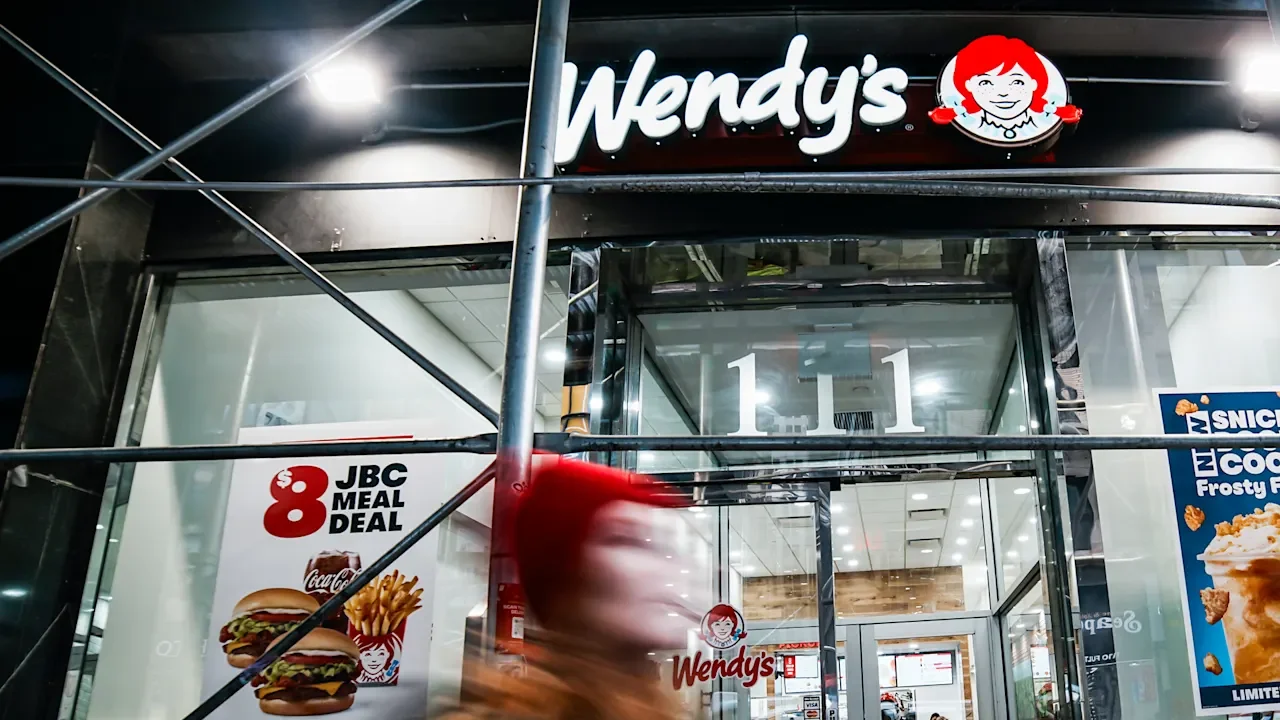
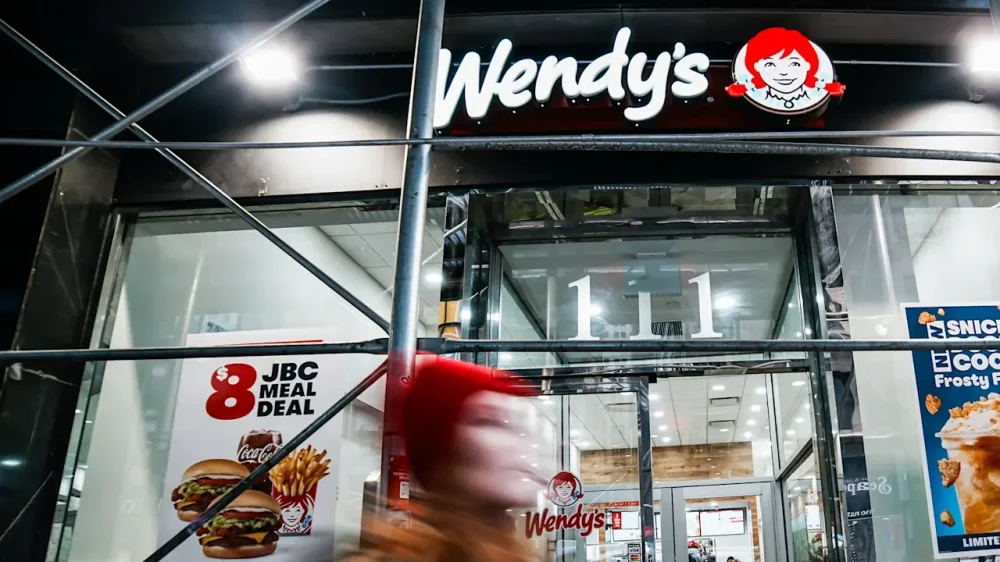
Bringing home the Baconator is not as easy as it used to be, and it’s about to get even harder in cities around the country. Fast food giant Wendy’s is continuing its push to close hundreds of locations as it seeks to stabilize profits and shed underperforming restaurants. Nearly six months after the burger chain first announced the plan on an investor call, its U.S. footprint is decidedly smaller, with multiple states seeing net store declines in the double digits, according to a review of Wendy’s store locator tool. As of Friday, the tool showed 5,675 locations in the United States. That’s roughly 200 fewer locations than what it showed at the end of September 2025, an archived capture of the tool reveals. The Wendy’s Company, which disclosed its turnaround plan in November 2025, said the closures would begin in the fourth quarter of that year. The archived capture showed 5,875 U.S. locations when that quarter began. These numbers are not official store counts, but rather based on what Wendy’s lists publicly on its U.S. website. The store counts that Wendy’s reports in financial filings to the Securities and Exchange Commission (SEC) tend to be slightly different. For example, the company reported 5,979 U.S. restaurants as of September 27 of last year, dozens more than what appeared on the locator tool at that time. It’s unclear what accounts for the discrepancy. Wendy’s did not respond to requests for comment. Still, the store locator tool offers a window into the chain’s overall store footprint and how it changes over time. The tool is frequently updated; for instance, one location in North Haven, Connecticut, that was reported closed just this week has already disappeared from the tool. It’s also a good gauge of which areas of the country are being most affected by Wendy’s closures. As of this week, the following states have seen the biggest net declines in restaurants since the fourth quarter of last year: Florida: 475 locations (net loss of 24) Texas: 431 locations (net loss of 23) Illinois: 175 locations (net loss of 18) Arizona: 90 locations (net loss of 15) Colorado: 115 locations (net loss of 10) Ohio: 388 locations (net loss of 10) New Mexico: 33 locations (net loss of 8) Local media reports and review platforms such as Yelp confirm that the states above have seen a number of Wendy’s closures in recent months. Last week, the Florida Times-Union reported that a sign was being removed from a Wendy’s restaurant located in the Arlington neighborhood of Jacksonville. It reported that “several” locations have closed in the area. Also last week, mySA, a news website for residents in San Antonio, Texas, revealed that five Wendy’s locations have closed in that region. It’s not clear if these specific closures are directly related to the turnaround plan or whether the locations have closed for another reason. Why is Wendy’s closing? There’s no getting around that Wendy’s has been in a slump. Revenue slipped 3.1% last year to $2.18 billion, and net income fell 15.1% to $165.1 million. While Wendy’s remains the second-largest fast food hamburger chain in the country, and the third-largest globally, it faces the same headwinds that have been impacting the quick-service restaurant (QSR) segment for a while, including higher operating costs, increasingly price-sensitive consumers, and more competition from newer chains. Shares of The Wendy’s Company (Nasdaq: WEN) have fallen dramatically over the last year, down roughly 44%, compared to a decline of about 8% for rival McDonald’s Corporation (NYSE: MCD). How many more Wendy’s will be closed? Reports in February suggested that Wendy’s could close about 300 locations as part of its turnaround plan, but it has not released an official number. Fast Company asked Wendy’s for more details and will update this story if we hear back. The Wendy’s Company is expected to report its next earnings on Friday, May 8 before the opening bell. Investors will no doubt be eagerly awaiting an update on store closures—the fate of Frostys in countless cities hang in the balance. This story is developing… View the full article
-
Google repeats the bounce clicks claim. Alphabet and Microsoft report from the revenue side. More in this week's SEO Pulse. The post AI Overviews Clicks Get Tested, Earnings Tell Two Stories – SEO Pulse appeared first on Search Engine Journal. View the full article
-
We may earn a commission from links on this page. Deal pricing and availability subject to change after time of publication. The Sony LinkBuds Wireless Portable Bluetooth Speaker is now down to $98 (originally $179.99), which is the lowest price it has hit so far, according to price trackers. This is not a party speaker or a smart assistant hub—it's built as a simple, portable option for home use, especially if you already use Sony’s LinkBuds headphones, and the design reflects that. It's compact, light, and comes with a built-in strap, so you can move it from your desk to the kitchen or bedroom without much trouble. It also supports multipoint pairing, so you can stay connected to two devices at once, like a phone and a laptop. Sony LinkBuds Wireless Portable Bluetooth Speaker $98.00 at Amazon $179.99 Save $81.99 Get Deal Get Deal $98.00 at Amazon $179.99 Save $81.99 Where this speaker stands out is in how it handles everyday listening. Voices come through clearly, which makes podcasts, YouTube videos, and casual playlists easy to follow. You can walk around a room and still hear dialogue without it sounding muffled or distant. If you also own the Sony LinkBuds S Truly Wireless, you get automatic audio handoff—you can start a podcast on your commute, walk in the door, and have it continue through the speaker without digging through settings to reconnect. That said, if you are not using LinkBuds headphones, that advantage disappears. The speaker does not get very loud, so it struggles in larger rooms or outdoor spaces, and is better suited for personal listening or small gatherings. There is also no built-in voice assistant, which makes it feel basic compared to options like the Sonos Roam 2 or the Amazon Echo Pop. The Sonos model adds voice control and a more flexible ecosystem, though its battery life is shorter, while the Echo Pop offers strong voice recognition but needs to stay plugged in. In comparison, the LinkBuds Speaker focuses on portability and battery life over extra features, and if you want something simple that fits into a Sony setup, the current price makes it easier to justify. Our Best Editor-Vetted Tech Deals Right Now Apple AirPods 4 Active Noise Cancelling Wireless Earbuds — $148.99 (List Price $179.00) Apple Watch Series 11 [GPS 46mm] Smartwatch with Jet Black Aluminum Case with Black Sport Band - M/L. Sleep Score, Fitness Tracker, Health Monitoring, Always-On Display, Water Resistant — $329.00 (List Price $429.00) Fitbit Versa 4 Fitness Smartwatch (Black) — $149.95 (List Price $199.95) Apple iPad 11" A16 128GB Wi-Fi Tablet (Silver, 2025) — $299.99 (List Price $349.00) Anker Nano 45W 10,000mAh Compact Power Bank With Retractable Cable — $49.99 (List Price $59.99) Deals are selected by our commerce team View the full article
-
This week in search, we are seeing yet again more Google search ranking volatility. Google sent out notifications about back button hijacking penalties to those sites that have the problem. Google AdSense vignette ads may trigger the penalty...View the full article
-
Programmatic SEO (pSEO) has been viewed with suspicion by the market. For many SEOs, the term is synonymous with low-quality pages, duplicate content, and the old tactic of “find and replace” city names in static templates. Google’s spam policies on scaled content abuse are clear: generating vast amounts of unoriginal content primarily to manipulate search rankings is a violation. Modern pSEO replaces mass page generation with an infrastructure that answers thousands of specific search intents with local nuance and semantic depth at a scale that isn’t possible manually. This blueprint shows how to evolve from syntax-based pSEO (swapping keywords) to semantics-based pSEO (meaning and context), using a methodology we’ve applied to major players in Brazil. The fallacy of the static template vs. semantic granularity The most common mistake when starting a pSEO project is starting with the template, not the data. The old mindset said: “I have a template for ‘Best Hotel in [City].’ I’ll replicate this for 500 cities.” The problem? The search intent for “Best Hotel in [Las Vegas]” (focused on nightlife, casinos, and luxury) can be radically different from the intent for “Best Hotel in [Orlando]” (focused on family suites, park shuttles, and pools). The user priorities, amenities sought, and decision-making criteria change completely. The semantic approach requires us to use AI to granularize content. Instead of just swapping the {{City}} variable, we use LLMs to rewrite entire sections of the page based on the specific travel intent of that destination. We don’t want to create 1,000 pages that say the same thing. We want 1,000 pages that answer 1,000 unique travel needs while maintaining a scalable technical structure. Your customers search everywhere. Make sure your brand shows up. The SEO toolkit you know, plus the AI visibility data you need. Start Free Trial Get started with Strategy before scale: The authority map Before writing a single line of content, you must answer a critical question: Where do I have permission to rank? Many pSEO projects fail because they try to cover topics where the domain lacks historical authority. The solution we developed involves a deep analysis of topic clusters based on real Google Search Console (GSC) data, not just third-party search volume. The authority map methodology works in three stages: Cluster audit: Identify which topics the domain already dominates, which are opportunities, and where semantic gaps exist. Priority definition: pSEO should be used surgically to fill these gaps and strengthen topical authority, not to shoot in all directions. Connection with the calendar: The pSEO strategy must be born from this data. If GSC shows you have growing authority in a topic like “Mortgage Credit,” that is where scale should be applied first. From there, AI suggests themes and direction, taking into account seasonality and brand guide specifications. This approach transforms pSEO from a “gamble” into a tactic of territorial defense and expansion based on proprietary data. Solving ‘brand hallucination’: Context governance The biggest barrier to AI adoption in enterprise companies is brand consistency. How do you ensure that 500 AI-generated articles don’t sound generic or, even worse, hallucinate information outside the company’s tone of voice? The answer lies in context governance. Instead of relying on isolated prompts, the pSEO architecture must include a brand guidelines layer that acts as a guardian before text generation. This means systematically injecting: Brand persona: (e.g., “We are technical, but accessible”). Negative constraints: (e.g., “Never use the word ‘cheap,’ use ‘affordable’”). Proprietary data: Institutional information that AI doesn’t have in its training data. By centralizing these guidelines in a digital brand guide that feeds all AI agents, we ensure that multiple sites within the same corporate group (such as a retail conglomerate) maintain their distinct verbal identities, even when producing content on the same topic (like Black Friday) simultaneously. The AI stops being a “junior copywriter” and starts acting as a specialist trained in the company’s culture. Get the newsletter search marketers rely on. See terms. The architecture: The semantic mesh (internal linking) You’ve created 1,000 excellent pages. How do you ensure Google finds and values all of them? The answer isn’t using “related posts” plugins that only look for matching tags. You need to create a strategy based on real data. The end of the ‘dead end’ You don’t want the user to land on a page and leave. You want to offer the next logical step. Cross-reference search intent with the destination: The practical example: If a user lands on the site searching for “What is a CRM,” they are in the discovery phase. If that page doesn’t link semantically to “Advantages of [your company’s] CRM,” the user journey “dies” there. The semantic mesh connects the question to the solution. Strategic reasoning in practice Instead of randomness, our analysis works based on semantic meaning. The AI identifies: “I noticed you are about to write about ‘customer retention.’ We have an older article about ‘churn rate’ that complements this topic perfectly. Insert a link to it.” The tool suggests links between these pages because the context is relevant, strengthening the site’s Topical Mesh. In programmatic SEO projects, where site depth can grow rapidly, this automation via vectors is the only way to ensure no good page gets forgotten at the bottom of the index. This closes the loop of topical authority, ensuring no page generated at scale becomes an orphan page. Case study: Regionalization and seasonality at scale Theory is nice, but seeing it in practice is even better. Let’s analyze the case of Ânima Educação, one of the largest private education players in Brazil, with about 310,000 students and 18 higher education institutions. The challenge The National High School Exam (ENEM) is the “Black Friday” of Brazilian education. Search volume explodes in a short period, competition is brutal, and search intents shift rapidly (from “how to study” to “what is my score good for”). Furthermore, Brazil has continental dimensions; the questions of a student in the Northeast are different from those of a student in the extreme South. The execution Using the semantic pSEO methodology and the brand governance mentioned above, it was possible to structure complete coverage of the candidate journey — from exam preparation to the release of grades. We ensured that all 18 brands were positioned to answer student questions at the exact moment of the search, respecting local nuances. The results Scale with precision: During five months, hundreds of undergraduate course pages and articles were optimized or created with granular local relevance. Business impact: Surpassed the organic revenue target by 110% during the critical ENEM season. Omnichannel dominance: Visibility across Google Search, Google Discover, and AI Overviews, and LLMs like Gemini and ChatGPT. Strategic shift: The SEO team transitioned from repetitive manual tasks to high-level strategic oversight. The technical guardian: Conversational monitoring Scaling content without scaling technical monitoring is a recipe for disaster. Publishing 500 pages that result in 404 errors, redirect loops, or poor Core Web Vitals (CWV) can destroy the site’s crawl budget. Modern pSEO requires a layer of real-time technical SEO. It isn’t enough to wait for the monthly report. You need to connect data to the workflow. The trend now is the use of technical SEO agents — conversational interfaces that allow the professional to ask the data: “Of the 200 pages published today, which ones have indexing issues?” or “Which clusters are suffering from high LCP?” This closes the cycle: Planning (authority map). Execution (pSEO with brand governance and semantic linking). Monitoring (technical agent). See the complete picture of your search visibility. Track, optimize, and win in Google and AI search from one platform. Start Free Trial Get started with Putting semantic pSEO into practice Programmatic SEO has ceased to be about volume to become about relevance. Success won’t come from publishing 10,000 pages tomorrow, but from building an infrastructure that delivers genuine value at scale. You can use this semantic pSEO roadmap to start your transformation: Start with data, not templates: Use your authority map (GSC) to identify where you already have permission to grow. Don’t waste resources attacking territories where your brand has no history. Implement context governance: Before scaling, create the “rules of the game.” Inject your brand guidelines and proprietary data into prompts to avoid generic content and hallucinations. The AI should sound like your best expert. Build bridges, not islands: Ensure every new page is integrated into a robust semantic mesh. Use internal linking to transfer authority and guide the user toward conversion, avoiding dead ends. Monitor with AI: Abandon sporadic manual audits. Adopt technical agents that monitor your site’s health in real time as you scale. The future of SEO isn’t about who creates the most content. It’s about who can unite the scale of the machine with the sensitivity of the human to deliver the best answer, at the right moment, for each individual user. View the full article
-
Now the Bank of England has called the top, I’ve never been so bullish about stocksView the full article
-
SEOs and site owners are always complaining about indexing issues with Google Search. Why is this page not indexed, why is that page not indexed. But some seasoned SEOs are asking if Google is more picky about what it indexes in the past month or so, than it was maybe a year ago.View the full article
-
Google annnounced a number of new updates for AI Max within Google Ads. These include (1) AI Brief, (2) text disclaimers and (3) Expansion with AI Max for shopping and Search Campaigns for travel.View the full article
-
Back in December, Google expanded Preferred sources globally, but only for English-language content. Now, according to The Verge, Google's preferred sources support all languages globally.View the full article
-
The activist known as Teacher Li on the dangerous work of cataloguing everyday life in China — and why he wants to change the CCP, not destroy itView the full article
-
Hello again, and welcome back to Fast Company’s Plugged In. When last Saturday’s White House Correspondents’ Dinner was disrupted by a would-be assassin, an event intended to celebrate the First Amendment descended into chaos. After President Donald The President and other administration officials were whisked to safety, it was unclear whether the festivities would resume. More than an hour later, White House Correspondents’ Association President Weijia Jiang returned to the dais to acknowledge that The President had posted that the night was over but would be rescheduled. “This is a room full of reporters,” she said. “So I know you’ve all seen the president’s tweet.” Then she immediately corrected herself: She was talking about The President’s Truth Social post, not one on Twitter/X. It almost didn’t matter. Yes, The President had posted his announcement on the site he cofounded after being banned from Twitter and Facebook in the aftermath of a throng of his supporters storming the U.S. Capitol on January 6, 2021. But in screengrab form, his message was instantly omnipresent on Twitter/X, Threads, and beyond. The same has been true of countless previous Truth Social posts, including The President sharing an AI meme of himself looking like Jesus, threatening to eradicate Iran, announcing his firings of Cabinet secretaries Pam Bondi and Kristi Noem, and on and on. Even on Bluesky, where the population of The President fans must be close to zero, legions of users share his rants in order to hate on them. The power of The President’s Truth Social megaphone has surprised me. When social media’s overlords deemed his use of their platforms to incite violence to be beyond the pale in 2021, I was relieved. I was dismayed when their “permanent” bans were undone less than two years later. And then I was relieved again when The President chose to mostly post on Truth Social, which I figured would greatly limit his reach. But The President’s current online presence has little to do with Truth Social. It turns out that it’s possible to dominate the conversation regardless of the social network you’re on—at least if you’re Donald The President. As a media presence unto itself, Truth Social is dinky, averaging 700,000 global daily active users in April, according to market intelligence firm Sensor Tower. That’s 0.35% of X’s 200 million and 0.38% of the 185 million on Threads. Though it positions itself as a bastion of free speech and offers groups on topics such as fitness, photography, and dogs, the site is resolutely The President-centric. Memes boosting him and bashing his adversaries are plentiful, but some discontent over the Iran war is also apparent. By anything resembling conventional standards, Truth Social is also not much of a business. Its parent company, The President Media & Technology Group, had revenue of just $3.7 million in 2025—about what Meta rakes in every 10 minutes—and managed to lose $712 million. A public company and textbook example of a meme stock, it has a market cap that’s down nearly 90% from its post-IPO peak. The company seems more focused on operating a cryptocurrency treasury and its bizarre plan to merge with a nuclear fusion startup than operating a social network, which it’s reportedly thinking about spinning off. Whatever Truth Social’s ultimate impact on The President’s pocketbook, it’s already his dream online home. Posting on the one social network where he’s impervious to moderation and then watching it spread is a superpower. Far more than his comparatively sedate in-person speeches, press conferences, and other modes of communication, it drives news. No wonder he can’t keep away from it. Even in the Musk era, X has policies on hate speech and violent content, including a ban on “explicitly threatening, inciting, glorifying, or expressing desire for violence.” Regardless, it’s tough to imagine the service would have held The President to account for posting that Iran’s “whole civilization will die tonight.” But the president was posting from the safety of Truth Social, and his threat became the talk of X and other networks anyhow. So did his The President-as-Jesus post—and when he ended up deleting that one from Truth Social, it didn’t retract the screengrabbed version that appeared everywhere else. When Musk let The President back on Twitter in 2022, the then ex-president’s contract with Truth Social required him to give it a six-hour window of exclusivity on his social posts. Since I’m not on Twitter/X much these days, I hadn’t been paying attention to his current tweets there (which, since the rebrand, are technically just “posts”). Checking in recently, I found they’re relatively sporadic and anodyne by his standards, skewing to stuff like get-out-the-vote messages and promos for products from his family members. This explains why they’ve fallen off the cultural radar, though they continue to get tens of thousands of comments and hundreds of thousands of likes. But again, where The President posts is now largely irrelevant. From the days when he used his Twitter presence as a springboard to win the 2016 Republican nomination and then the presidency, he has often been called a master of social media, a misleading term given that he’s always been a broadcaster, not a conversationalist. His posts are wholly self-contained, which is why they lose nothing when they travel around the internet as static screenshots. (On Truth Social, his replies tab is empty, indicating that he’s never publicly interacted with its members except through reposts.) As long as the president uses his online presence as a mashed-up blog, bulletin board, burn book, and expression of pure id, he could be posting on Friendster—which still exists—and the world would have no choice but to take heed. He gets that. He revels in it. And billions of people who will never log on to Truth Social have to live with it. More stuff I’m following this week: The Vision Pro: Toast? MacRumors’s Juli Clover reports that Apple has “all but given up” on the Vision Pro after last year’s minor update, sporting an M5 chip, failed to boost the $3,500 headset’s sales. The team, she says, has already been dispersed to more urgent products, such as Siri, as Apple diverts its attention to smart glasses more akin to Meta’s Ray-Bans. I count myself as a fan of VisionOS and hope that the wildly ambitious, polished “spatial computing” operating system has a future—preferably on a device with a price tag mere mortals can afford. Electrical slop revisited When I was a kid, I could have asked my great-grandmother what it was like to witness electricity becoming a thing as the 19th century gave way to the 20th. Sadly, I didn’t have the presence of mind to ask. But there are some wonderfully evocative details in venture capitalist/LinkedIn cofounder Reid Hoffman’s “In Defense of AI Slop,” which contends that electricity was disruptive and gimmicky before it became essential. His point is that we should be patient with AI. However it pans out, I loved reading about an advertising sign atop a New York hotel that used “nearly 20,000 light bulbs controlled by high-speed mechanical switches to stage a 30-second loop of stampeding horses and spinning wheels that was so mesmerizing it compelled some onlookers to view it for hours on end.” You’ve been reading Plugged In, Fast Company’s weekly tech newsletter from me, global technology editor Harry McCracken. If a friend or colleague forwarded this edition to you—or if you’re reading it on fastcompany.com—you can check out previous issues and sign up to get it yourself every Friday morning. I love hearing from you: Ping me at hmccracken@fastcompany.com with your feedback and ideas for future newsletters. I’m also on Bluesky, Mastodon, and Threads, and you can follow Plugged In on Flipboard. More top tech stories from Fast Company Netflix goes vertical with its new mobile app By launching a vertical video feed, Netflix wants to help users discover shows and podcasts—and have one less reason to turn to YouTube or Instagram. Read More → The AI industry’s massive bet on transformer models may not be enough for true AGI As Big Tech pours unprecedented resources into scaling large language models, critics argue that transformer-based systems face fundamental limitations. Read More → Thumbtack’s new AI wants to diagnose your leaky ceiling The home-services marketplace is overhauling its app to help homeowners figure out what’s wrong—and which of its 300,000 pros can actually fix it. Read More → Social media’s big tobacco moment is just a first step It’s still unclear whether the California jury verdict will result in healthier social networking experiences. Read More → We obtained nearly 1,000 complaints about SpaceX’s Starlink. Here’s what they reveal New documents show how the satellite provider has become a lifeline—and, for some customers, a headache. Read More → Celebrities like Taylor Swift are setting the guardrails for the AI age The elite want to protect themselves from AI. What about the rest of us? Read More → View the full article
-
In a general sense, workplace leaders are trained to focus on what can be seen and measured. They’re taught to pay close attention to employee performance, productivity, and efficiency—often without realizing that some of the most important aspects of work will never appear in any of these metrics. What too often goes unseen is how people experience their work. Whether they find meaning in what they do. Whether they feel connected to it and to the people around them. Whether their work aligns with who they are. To some, these may sound abstract or insignificant. They are not. They are core drivers of human well-being—and therefore of employee motivation and achievement. And when they are missing, leaders inevitably lose access to the full capacity, commitment and creativity of their people. In truth, most organizations and leaders do not intentionally ignore these factors. They simply struggle to define and prioritize them in ways that feel concrete and actionable. As a result, they are often addressed indirectly—through isolated initiatives—rather than embedded in how leadership is actually practiced. This is the shift leaders today must make. If we are willing to name this clearly, what we are discussing are spiritual needs—deep human needs for meaning, belonging, and a sense that one’s work reflects who they are. These needs are not religious, mystical, ideological or non-important. They are fundamental to human nature. And every person brings them to work, whether they are recognized or not. While often treated as independent concerns—each warranting its own initiatives and support if acknowledged at all—these experiences are inseparable. They converge around a single question every employee carries, spoken or not. Does this work matter, and do I matter in it? When the answer is yes, people invest discretionary energy. They bring dimensions of themselves leaders dream of: initiative, resilience, ownership, and creativity—call it passionate commitment. When the answer is no, effort defaults into the transactional. Work gets done but is not owned in any sense. Over time, true engagement becomes impossible, burnout often occurs—even among high performers—and employees’ progressively loosened ties often lead to quitting. Research in organizational psychology consistently supports these connections. Studies show that when people experience their work as meaningful—when it feels that what they do matters and aligns with their values—they report higher well-being, stronger intrinsic motivation, greater persistence in the face of stress and a greater capacity for resilience under pressure. When meaning erodes, each of these declines as well. Leaders who recognize this dimension begin to lead differently. They routinely clarify how individual roles contribute to something larger. They listen more carefully to how people are experiencing their work, not just how they are performing in it. And they ask employees personally how their roles could be shaped to feel more meaningful, more connected, and more aligned with who they are. Years ago, when I was leading a team of over thirty managers, one of my highest-performing and most experienced leaders, Glenda, asked if she could take over planning my monthly, all-day team meetings. It struck me as an unusual request—and one I was initially reluctant to grant. I knew how much time and effort went into those meetings, and I worried it might distract her from her already exceptional performance. When I asked why she wanted to take it on, however, her answer was immediate. She told me she loved that kind of work, but more importantly, it would give her a closer working relationship with me and allow her to have a more direct impact on her peers and, ultimately, the hundreds of employees they led. It instantly became clear that Glenda was looking to make her work even more meaningful by making a broader and deeper contribution to the success of our team. I gave her the responsibility. She excelled in it—and remained an extraordinary performer for years to come. I learned in this moment how very powerful my accommodation was to Glenda, and it taught me that leaders have the ability to influence people this profoundly—whether they realize it or not. Howard Thurman captured this idea wonderfully when he wrote: “Don’t ask what the world needs. Ask what makes you come alive and go do it. Because what the world needs is people who have come alive.” What he’s describing is neither abstract nor aspirational. It is what naturally happens when something far more fundamental within us is being fulfilled. And, at work, this sense of being “alive” is driven by three deeply interconnected human needs: First, the need to matter. People need to know and feel that their contributions make a difference and are valued by others. Without that, it becomes difficult for them to sustain the level of care, effort, and commitment that meaningful work requires. Second, the need to belong. We are, as Brené Brown has said, “psychologically, emotionally, cognitively and spiritually hard-wired for connection, love and belonging.” And this most certainly applies at work. Employees want and need to feel known, respected, safe and connected to those around them—especially with people on their team. It’s often said that people don’t quit companies, they quit their manager. But research shows employees more often leave when they no longer feel they belong on their team. Third, the need for alignment. People need to feel their work reflects who they are—that their strengths, identity and values are expressed through what they do each day. Research from Amy Wrzesniewski shows that employees who feel connected to their work this way—who experience alignment between their roles and their core values—are more engaged, resilient, and willing to go above and beyond. As Wrzesniewski writes, “How people experience their work has profound effects on their motivation, performance, and well-being.” Alignment, therefore, isn’t a “nice-to-have”; it’s essential to leaders unlocking human potential at work. Making Work Matter Just as leaders cannot ignore fair pay, recognition, opportunities for growth, and the autonomy employees need to do their jobs effectively, they can no longer ignore the deeply human—indeed, spiritual—dimension of work. Journalist, Studs Terkel famously said that “Work is about a search for daily meaning as well as daily bread.” In essence, work is a means through which people seek significance, a sense of contribution, and connection to something larger than themselves. Leaders have the power to cultivate this sense of aliveness. Just as Glenda found deeper purpose when given the chance to personally shape her work, every employee can flourish when leaders intentionally nurture their need to matter, belong, and align their work with who they are. The responsibility is clear: leaders mustn’t treat these human needs as optional. To unlock the full potential of their people—and their organization—they must create workplaces where work matters not only practically, but existentially. View the full article

-
Google is showing a new label on the Discover feed that says "You asked to see." This label is added to items in your feed that are customized based on the Tailor Your Feed feature.View the full article
-
Britain has been pushed into an unusual trade deficit with its largest trading partnerView the full article
-
I missed last month's Google Webmaster Report, so I am combining both April and May into one big report. Google completed rolling out the March 2026 spam update in March, and started the March core update, which completed in April. We also had a lot of other ranking volatility throughout.View the full article
-
The trial is live, limited to the U.S. for now, and moving faster than you likely expected. ChatGPT ads launched Feb. 9 for logged-in users on Free and Go tiers, with 600+ advertisers already in. With 800 million weekly active users, a global rollout of ChatGPT ads is a matter of when, not if. OpenAI has confirmed the next expansion to Australia, New Zealand, and Canada. The latest update from Adthena trialists suggests the UK could see ads as early as mid-May. We’ve tracked ChatGPT ad placements since rollout. With an index of 50,000+ daily placements across B2B software, ecommerce, fintech, and consumer verticals, we’ve had a front-row view of how this format is evolving. Here’s what we’ve found. What ChatGPT ads actually look like ChatGPT ads appear inline within conversation responses. When you ask something with commercial intent like “best weekend getaway” or “top running shoes under $100,” a sponsored result can appear alongside the AI’s answer, clearly labeled “Sponsored.” This isn’t a search bar. It’s a conversation. Users arrive already engaged, already researching, often close to a decision. The format is tighter than traditional search: no sitelinks or extensions — just a headline, short body copy, and a destination. But here’s what we didn’t expect. Our data shows what we’re calling the Adthena “Double Parked” phenomenon: a single brand appearing twice in the same response. We spotted New Balance with two separate sponsored placements in one ChatGPT answer. This raises a key question around visibility, frequency, and what it means to own a conversation on this platform. 10 things we’ve learned from 50,000+ daily placements If you move fast, this is a rare moment: a new format, an uncontested landscape, and data most competitors don’t have yet. Here’s what it shows. Headlines follow a “Brand: Benefit” formula. A name, a colon, a value claim. Think “Betterment: 5.25% APY Cash Account.” Dominant across top performers. Almost every ad leads with the brand name. Awareness thinking for a format where users are already deep in a conversation, not just entering a search bar. Headlines average just 30 characters, with a ceiling around 36. The constraint forces hyper-concise messaging and every word earns its place. Body copy runs around 19 words, structured as two tight sentences. One lead proof point, one offer or nudge. One reason to click. Context mirroring is a defining feature. The strongest ads echo the user’s query directly. A running shoe ad referencing “the transition from 5k to 21.1k” isn’t a coincidence. The $ symbol drives conversion. Specific dollar figures, precise APY rates, credit amounts. Concrete claims consistently outperform vague promises in intent-heavy environments. Numbers dominate body copy. Specs, trial lengths, rates. Hard numbers feel more native and trustworthy than soft superlatives in a research-led environment. “Free” is the most common conversion lever. It removes friction for users already in research mode and close to a decision. CTAs are action-specific and generic “Learn More” is virtually absent. “Open Account,” “Shop Cell Phones,” “Claim Credits.” Every CTA names the brand, offer, or next step. Tone is confident and measured. Exclamation marks are rare. The best ads mirror ChatGPT’s calm register—hype punctuation kills trust here. What this means for your paid search strategy Top-performing brands in ChatGPT don’t repurpose Google ad copy and hope for the best. They write for a conversational, intent-rich environment where users are already halfway through a decision before the ad appears. Lead with your brand name. Anchor value in specifics. Make low-friction offers central to your creative. If you’re not thinking about context mirroring, you’re leaving performance on the table. The bigger question is visibility. If your competitors show up in ChatGPT conversations and you don’t, you’re not just missing clicks — you’re missing the conversation. See exactly what’s happening with Adthena’s ChatGPT Ads Intelligence Knowing the trends is one thing. Knowing what your competitors are doing on your exact prompts is another. That’s the problem we set out to solve. Right now, ChatGPT ads give you impressions and clicks — nothing more. No competitive context, no prompt-level visibility, no insight into who else appears in the same conversations or where you’re missing coverage. You’re optimizing blind. Adthena’s ChatGPT Ads Intelligence changes that. Here’s what you get. Your performance, in context The Ads Performance tab gives you a live snapshot of your ChatGPT activity: ad presence rate, top-performing intent group, total impressions, average CTR, and unique competitors detected. The trend chart shows your presence over time so you can clearly see whether you’re gaining or losing momentum. Know which topics you’re winning and where to close the gap The Topics and Keywords Analysis view breaks down performance by intent group, showing your ad presence rate against the competitor average. Each group includes a built-in tactical recommendation, so you always know your next move. See your own ads as users see them The Ads Sampling tab shows all your ChatGPT creatives with their headline, description, image, and format. The insight panel highlights your top-performing creative and surfaces optimization opportunities, like pairing a price anchor with a time-limited offer. Understand exactly what competitors are running The Competitor Creative Analysis panel breaks down rival ads across your tracked prompts: the images they use, the dominant copy themes, and their format mix. No more guessing what your competition is doing. Never miss a shift in the competitive landscape The Ads Benchmarking tab shows who’s advertising on your prompts and how their presence changes week to week. The “What changed this week?” feed flags new entrants and share shifts in plain language before your next campaign review. Find the gaps before your competitors do The Competitor Gap Analysis table shows every prompt where competitors have presence and you don’t, flagged by intent group and competitor count. A clear, prioritized view of where to expand your ChatGPT coverage. The first prompt is the new first click We’re tracking early-stage data from a platform still in limited rollout. As OpenAI expands to new countries and the advertiser base grows, the competitive landscape will shift fast. Brands building their ChatGPT presence now — learning the format, testing creative, mapping competitive gaps — will have a meaningful head start over those who wait. Don’t let competitors win the first prompt. Join the product waitlist to uncover your ChatGPT ads landscape. In the meantime, get your ads ready with Adthena’s free ChatGPT AdBridge. Connect your Google Ads account and we’ll build your ChatGPT ads setup with AI-enriched campaigns and smarter negative keywords — delivered to your inbox, ready to import. View the full article
-
Judge Yvonne Gonzalez Rogers didn’t mince words in court this week while adjudicating the ongoing trial between Elon Musk and OpenAI in Oakland, California. Musk and Sam Altman, OpenAI’s CEO, needed to stop being messy bitches. While she didn’t put it like that (she advised both men: “Control your propensity to use social media to make things worse outside this courtroom”), the underlying message was clear. The fact that the case even made it to court is indication enough of how strongly both men feel about one another. Social media name-calling is hardly necessary to make that plain. But the reason they’re so eager to throw digital barbs at each other stems from a fundamental difference in belief about the future of AI. Musk doesn’t trust Altman to oversee it. Many people might say the same about Musk. The anger and messiness between the two is simply the highest-profile example of how the debate over AI is pushing everyone closer to the brink. The wider cultural debate around artificial intelligence is increasingly polarized—some might say unhinged—and is spilling into dangerous territory. Altman attended court just days after his house was firebombed, then shot at, by Daniel Moreno-Gama, a 20-year-old from Texas who was charged after allegedly throwing a Molotov cocktail at Altman’s home and later threatening OpenAI’s headquarters. The motivation? A fundamental belief that the future direction of AI needs to be stopped. Even if most people aren’t taking to the streets in the same way Moreno-Gama did, there is a growing divide on social media and in society between those who believe AI is the future we’ve all been waiting for and those who believe it’s the future we’ve all been dreading. Scroll through social media and you won’t spend long before finding people crowing about AI’s potential to transform how we live and work, arguing that anyone holding out is simply a Luddite with no concept of how vital the technology will become in the years ahead. Many seem to take it personally when others don’t share their enthusiasm. On the other side are those who loathe the way AI is running roughshod over copyright law, the world of work, and nearly every other aspect of society. They view AI boosters as ignorant tech bros who would gladly consign them to penury, enslaved to an AI overlord indifferent to their survival. Both camps feel wholly vindicated in their judgment of how awful or ignorant the other side is. There is no compromise. Increasingly it feels like there’s no space left to occupy the middle ground. Why do we feel this way? “When a new technology is sold to the public on false promises, people tend to react badly; they feel they’ve been tricked,” says Mar Hicks, historian of technology and associate professor at the University of Virginia. “I think that’s a big part of what’s happening with the growing backlash against AI and the data centers the industry is building throughout the U.S.” The heightened tension many of us are experiencing stems from the potential existential risks AI poses to how we live, or the material ways it could reshape our lives, depending on whether you believe AI’s boosters or its cynics. If you’re of working age, haven’t gotten to grips with AI, and are absorbing a constant drip-drip of commentary from social or traditional media, you may well believe this technology is capable of eliminating your job entirely, or that it’s so overhyped it could attract destabilizing investment, tank your 401(k), and wreck your future. Neither scenario is reassuring. “Historically, new technologies often come with a level of risk and cost,” says Hicks, “but when that risk and cost is disproportionately pushed onto the people who have less power while allowing the wealthy to gain ever more control, we often see situations and public discourses like we are seeing now with AI.” Part of this is driven by the gulf between the hype and the reality of what the public was told the technology would deliver. “AI was presented as a public good, but people are becoming increasingly skeptical of that idea,” Hicks says. For the likes of Musk and Altman, however, the equation behind the heightened emotion is different, Hicks argues. “I’m inclined to see that more through the lens of those particular men’s personalities and their feelings of entitlement,” she says. “They both think that they’re going to lose out not just on money but on an enormous amount of control over society’s future—and for whatever reason both men seem to feel very entitled to being in charge.” View the full article

-
US supermajors stick to prewar strategies despite White House plea for more drilling to curb soaring petrol pricesView the full article
-
When Kenya’s Sabastian Sawe crossed the finish line at the London Marathon on April 26, an Adidas attendant was waiting on the sidelines to collect his shoes. The attendant wrote Sawe’s record-breaking time, 1:59.30, on the side of the shoes, waited for him to take some photos with them, and then whisked them off to Adidas’s archives in Herzogenaurach, Germany. In that moment, the Adidas Adizero Adios Pro Evo 3 became the fastest shoe in the world. Sabastian Sawe Sawe was the first person to ever run a sub-two-hour marathon in an official race, followed closely by Ethiopia’s Yomif Kejelcha, who finished with a time of 1:59.41. Fellow Ethiopian Tigist Assefa set a women’s world record of 2:15.41. All three of these runners, who are official Adidas partners, wore the Evo 3. Yomif Kejelcha The Evo 3 is the lightest, fastest race shoe Adidas has ever made. Its design is changing the game for every other athletic company on the market. In the days since the race, awareness of the Evo 3, which Adidas first unveiled on April 23, has skyrocketed. Marc Makowski, Adidas’s SVP of innovation, says an initial limited launch of 200 pairs sold out in less than two minutes (they’re already reselling online for up to $4,000). Adidas expects to drop several more limited runs of the shoe in the coming months, followed by a more broadly available commercial iteration of the design around the Berlin Marathon in September. But, for Adidas, the Evo 3 represents much more than its potential commercial success: It’s proof, on the world stage, that the brand is on the cutting edge of marathon running innovation. That’s a status that other brands have been doggedly competing to achieve, including Nike with its Alphafly 3 (worn by the previous all-time marathon record holder, Kelvin Kiptum), On with its LightSpray technology, and Asics with its Metaspeed Edge. “Marathon racing is, in our industry, a bit like F1 in the automotive industry,” Makowski says. “It’s become that battleground where, as a brand, if you want to showcase your performance credibility, that’s where you do it.” It’s an intense race to design the most high-tech “supershoe” on the market—and, for now, Adidas is in the lead. A shoe that weighs less than a bar of soap Adidas has been developing ultra-light running shoes for more than three years as part of its Adizero Adios Pro effort. The goal, Makowski says, is to work with elite athletes to find out “what it really takes to produce the fastest running shoe.” The team’s first key insight: It would need to embrace a literal “less is more” approach. Like in F1 racing, even the smallest design details can have a tide-turning impact on performance in elite marathon running—especially when it comes to weight. Adidas’s pro athletes told the team that they were looking for the lightest possible shoe that could still offer stability, cushioning, and traction. Alasdhair Willis, chief creative officer at Adidas, says that a minimalist approach is nothing new for the company’s design team: “When I came to the brand, I was working on a project called Project Silence, which was about the idea that, when you cut away the noise, the silence gets louder. It’s this sense of reducing, removing the superfluous to get us down to the essence of what’s required.” Makowski explains that prior to Evo, Adidas’s professional running shoes averaged around 230 grams. After in-house testing, the design team found that taking around 100 grams off of that total could achieve a 1% reduction in running economy (a key measurement of a runners’ physiological performance). One percent might sound like a small blip, but Makowski’s team found that it could potentially shave 60 seconds off of a total marathon time. The first Evo launched in September 2023 and weighed in at 138 grams. The Evo 2 arrived in April 2025 and had the same average weight. Both of these models produced major results: Adidas says the two shoes helped their athletes break three world records and win over 30 key road races, including six World Marathon Major wins, seven national records, five course records, and one Olympic record time. Then, last September, Sabastian Sawe stepped out in the Evo 2 to run the Berlin Marathon. He hit a record-breaking time of 2:02:16, despite intensely hot weather—leading many fans to speculate that with a more comfortable temperature, he could’ve clinched the first sub-two-hour time then and there. “That moment then further accelerated a lot of the work, because we felt like we had it, and it somehow got taken away from us by the weather conditions,” Makowski says. “So we thought, Okay, what else can we do from a product perspective to take our destiny even more into our hands?’” The answer was a moonshot design concept that would stretch Adidas’s innovation chops to their limits: A supershoe weighing less than 100 grams. Foam, carbon, and kitesurfing The team reworked the entire design of the Evo, from stitching to laces, to bring the total weight down in almost imperceptible increments. The most critical element of the design was its foam base, which cushions the athletes’ foot and provides maximum energy return. Essentially, it needed to function like a spring propelling the foot up and forward. For the base of the Evo 2, Makowski’s team created a 39 millimeter stack of proprietary foam, called Lightstrike. For the Evo 3, they went back to the drawing board to devise an updated Lightstrike formula that could stand at the exact same height, just with less total density. While Makowski says the specific recipe is under wraps, the process generally entailed identifying which lighter chemicals in the mix could be bumped up to a higher total of the composition, while also mixing a greater ratio of air into the foam. “Ultimately, what we’ve done is created a foam that is 50% lighter than its predecessor with 11% more energy return,” Makowski says. With such a thick piece of foam cushioning the foot, the Evo 3 needed to be stabilized with a structural component sandwiched inside the Lightstrike layer. To solve this problem on the Evo 2, the team had already designed a five-fingered rod system—imagine this like a structural plate in the shape of a spread hand—to keep the sole stable. With the Evo 3, though, that component proved too heavy. Makowski’s team stripped it back from five rods to just one horseshoe-shaped carbon-fiber-infused piece (named the Energyrim) that circles around the bulk of the foam. When it came time to design the upper material of the Evo 3, the design team quickly realized that none of the conventional materials on hand would allow them to reach their weight goal. They started looking at other industries that might be using ultra-light materials. They landed on an unexpected source of inspiration: kitesurfing. “We looked at thin, lightweight foils that actually have a high level of rigidity and stability, and then we embedded polyester yarns that have a 50% higher strength than a regular polyester yarn,” Makowski says. “We created an upper that is ultra-light, but gives you way more stability than what you would get from any other existing lightweight material.” In a series of final touches, the team stripped away any unnecessary stitching on the upper component, added a strategically placed sole for traction, and created stretchy laces to reduce their total length and weight. After countless prototypes and rounds of testing in the Herzogenaurach lab and with athletes at Adidas’s facilities in Kenya and Ethiopia, the Evo 3 was complete. It weighs 97 grams: about the same as a pack of cards, a bar of soap, or four small batteries. “There were moments when we handed athletes the shoe in a box, they picked it up, and they’re like, ‘You gave me an empty box,’” Makowski recalls. “The box weighs more than the actual shoe.” The race to design the next supershoe The Evo 3 is already proving to be a bright spot for Adidas’s business. The day after the London Marathon, the company saw a small boost in share prices as investors reacted to coverage of the shoe. Shares rose even further on April 29, when the brand revealed strong first quarter financial results—including a total 14% revenue increase year over year, driven in part by a 10% jump in running gear sales. Going forward, Makowski says, the brand plans to apply some of the new technologies and methods that it developed for the Evo 3 to other shoes in the Adidas catalog. Willis says that the shoe’s success is bound to have a “material effect on the business from a commercial standpoint.” More importantly, though, he hopes that it begins to position Adidas as more of an “innovation brand” that is constantly cooking up its next groundbreaking design. “You can’t be a truly successful sports brand if you’re not successful in running,” Willis says. “We have been really heavily committed to winning the performance race category for the last three or four years. It is clearly quite literally a race in terms of how quickly innovation can be brought to the market—and to the athlete.” View the full article

-
Given the rhetoric coming from today’s military leaders, you’d be right to think climate change and sustainability has been tossed aside. The nation’s 2025 National Security Strategy labeled climate change a “disastrous” ideology. “The Defense Department is not in the business of climate change, solving the global thermostat. We’re in the business of deterring and winning wars,” said Secretary of Defense Pete Hegseth. And yet, there is still progress on sustainability being made; only now, it’s been rebranded as resiliency. At an Army base at Fort Polk in Louisiana, a renovation promises a cleaner, less carbon-intensive future, as well as a better living situation for servicemembers and their families. Completed in early March, the base represents a first-of-its-kind, $30 million investment in modernizing traditionally outdated and poorly maintained housing. It includes the installation of a large-scale geothermal energy system, all using U.S.-made equipment. It’s the first such geothermal installation at a U.S. military base, and an investment in reducing the installation’s carbon footprint. “What they get out of it is a much more efficient system that responds to their needs a lot better,” says John Plack, Senior Vice President of Engineering and Implementation at Ameresco, the contractor that oversaw the retrofit. “We’re directly eliminating fossil fuel for heating.” Now, the 3,600 homes on base will see their energy bills slashed by 30%. The upgrades are projected to reduce the Fort Polk family housing portfolio’s annual electrical consumption and deliver more than $2.6 million in annual utility and operational cost savings. Beyond delivering long-term savings to the installation, the initiative fostered local economic growth by investing in the community and supporting the local workforce. Resilient housing on the rise The military has a lengthy history of making substantial investment in more sustainable and resilient buildings and housing, even during the current administration. As far back as 2003, during the George W. Bush administration, the Department of Defense was commissioning reports on climate risks. Typically it has viewed this issue through the lens of resiliency: adapting bases to rising sea levels, making installations more self-sufficient, and cutting the military’s massive reliance on unstable oil supplies. Right now, Tyndall Air Force Base in Panama City, Florida, is being rebuilt as a demonstration of resilient military construction, in response to a 2018 storm that caused $5 billion in damages. New buildings rest more than a foot above the ground, roofs have been hardened to survive 165–mile-per-hour winds, and a manmade oyster reef offshore is meant to break up waves. It’s one of a number of resiliency-focused projects that have continued under the current administration. The military has continued this work set in motion during previous administrations, despite policy shifts coming from the White House and Pentagon, for resilience and budget reasons. A Bloomberg Law analysis found that roughly $400 billion in federal assets, mostly in the Defense Department, stand at risk of a major flood or storm. Ameresco, which does a lot of federal work with groups like Veterans Affairs or the General Services Administration, built Fort Polk’s geothermal system by taking advantage of a program called ESPC, or Energy Savings Performance Contracts. Enacted as part of the Energy Policy Act of 1992, it’s a way to invest in energy performance/efficiency upgrades on federal property without specific congressional appropriations, as long as there’s no upfront capital costs. The funding is structured as such that the base pays the private contractor over 25 years via the energy savings achieved by the installation. So when a contractor like Ameresco comes in—bringing drill rigs into the backyard, trenching around utilities, and running piping through buildings—they’re paid as a down payment on future energy systems. According to the Army’s own reporting, it’s a great way to upgrade outdated military and other government facilities without spending government money, and it tends to exceed projected savings. It’s a massive program—the latest batch of funding for these kinds of projects, ESPC IV, was worth $3 billion—and Ameresco is working on a number of other, similar programs, including an array of energy-saving additions including solar and battery storage. Plack says that over the last few decades Ameresco has been doing this work, the projects have become more sophisticated, as technology has improved. A recently finished project in Petaluma, California, retrofitted the Coast Guard training facility to be more resilient in the event of a grid failure; a new microgrid, with solar panels and a storage battery, was added in response to a previous fire that left the installation without power for five days. When it comes to the Armed Forces and sustainability, practicality tends to be a consistent objective. “We’re able to be very flexible with the technologies that fit the specific base or use case,” says Plack. “We’re pretty technology agnostic. It’s really what fits best.” View the full article

-
National Mortgage News spoke with Shant Banosian of Rate, Mark Cohen of Cohen Financial and Amanda Sessa of SWBC on how they stand out in their markets. View the full article