All Activity
- Today
-
Fund says British economy faces heavy blow from global energy crisis this yearView the full article
-
Expansion of global economy would fall to 2.5% in an ‘adverse scenario’ of persistent $100-per-barrel oil View the full article
-
Google’s Ask Maps feature does more than help users find nearby businesses. Based on hands-on testing of local service queries for plumbers, electricians, and HVAC companies, Ask Maps often narrows the field, interprets user intent, and frames businesses around qualities such as responsiveness, specialization, honesty, and repair-first thinking. In more complex prompts, it sometimes provides guidance before recommending businesses. This shows Google Maps moving beyond simple local retrieval and toward a more recommendation-driven experience. To evaluate that shift, we tested Ask Maps across five levels of local intent — starting with simple category searches and progressing toward conversational prompts involving uncertainty, trust, and decision-making. A clear pattern emerged. As query nuance increased, Ask Maps shifted from listing businesses to interpreting which businesses fit and why. This article draws from hands-on testing across a limited set of local service queries in one geographic area. Treat these findings as an early directional view, not a comprehensive representation across all markets or query types. The testing framework To evaluate progression, we built a five-level intent model based on how homeowners and local service customers actually search. Instead of organizing around traditional keyword categories, we structured the framework from simple retrieval toward conversational decision-making. Level 1 focused on basic requests with minimal context. Example: “Looking for an HVAC company near me.” Level 2 introduced more service specificity. Example: “I need an electrician to upgrade my panel in an older home.” Level 3 moved into situational queries, where the user described a problem. Example: “My furnace is making a loud banging noise and I’m not sure if it needs to be replaced or repaired.” Level 4 introduced trust and decision concerns. Example: “I think my furnace might need to be replaced, but I don’t want to get overcharged. Who is honest about that?” Level 5 combined those elements into fully conversational prompts asking for guidance, validation, and recommendations in the same search. Example: “I was told I need a full furnace replacement, but it feels expensive. How do I know if that’s actually necessary, and who should I call for a second opinion in my area?” This framework allowed us to evaluate: Which businesses appeared. How Ask Maps interpreted prompts. What attributes it emphasized. When results started to resemble guided recommendations rather than search results. Your customers search everywhere. Make sure your brand shows up. The SEO toolkit you know, plus the AI visibility data you need. Start Free Trial Get started with Ask Maps narrows the field and adds interpretation One of the clearest patterns across the testing was that Ask Maps consistently returned a relatively small set of businesses while increasing the amount of interpretation as the user’s search intent became more complex. At Level 1, the average number of businesses shown was 3.6. Level 2 rose to 4.3. Level 3 dropped slightly to 3.3. Level 4 averaged 5, and Level 5 averaged 4.6. Across the full set, the range remained fairly tight, generally between three and eight businesses. That’s a different experience from traditional Maps, where a user can scroll through a much broader set of options and do more of the evaluation work themselves. Ask Maps narrows choices early and spends more effort explaining why those businesses fit the prompt, but stops short of being fully action-oriented. Even when a phone number is shown, there’s no clickable call button directly in the Ask Maps response. To call or access the full set of contact options, the user still has to click into the business’s Google Business Profile. That matters because while Ask Maps is becoming more interpretive, the underlying GBP is still where action happens. As prompts become more nuanced, uncertain, or trust-sensitive, Ask Maps draws on a broader range of sources. It shows fewer businesses, replacing breadth with interpretation. Dig deeper: How to build FAQs that power AI-driven local search Basic queries already go beyond simple listings Even the simplest queries don’t behave like a traditional Maps result. At the baseline level, Ask Maps still relies heavily on Google Business Profile data, including: Business descriptions. Review content. Ratings. Hours. In some cases, posts. Website influence is minimal here, and there’s little evidence of outside sourcing. But even within that mostly closed ecosystem, it goes beyond listing nearby businesses. Instead of just showing names, ratings, and locations, Ask Maps: Generates narrative summaries based on information in the Google Business Profile. Describes businesses in terms of responsiveness, experience, specialization, or the kinds of situations they seem well-suited for. Draws on reviews when framing businesses. Even at the most basic level, Ask Maps isn’t neutral. It’s beginning to interpret businesses for the user. As queries become more specific, Ask Maps starts matching capability Once the prompt shifts from a general service search to a specific type of job, Ask Maps becomes more selective in how it matches businesses to the request. A query about an electrical panel upgrade doesn’t behave the same way as a query about urgent AC repair. Replacement-oriented prompts emphasize installation and system expertise. Repair-oriented prompts emphasize speed, availability, and responsiveness. Queries tied to older homes or higher-risk work call for more evidence of specialization. At this level, Google Business Profile and reviews still carry much of the weight, but websites matter more when the job is more complex or costly. A panel upgrade query produces stronger external link usage than a more straightforward AC repair prompt. That doesn’t mean websites are always heavily used. It shows more selectivity. As decisions become more complex, Google looks for more supporting evidence before recommending businesses. Situational queries push Ask Maps toward interpretation The more noticeable shift begins once the prompts move from service categories to real-world scenarios. At Level 3, the user is no longer looking for a plumber, electrician, or HVAC company. Instead, they’re describing a problem, such as a loud banging furnace, outdated electrical in an older home, or an AC unit that has stopped working during extreme heat. In those cases, Ask Maps increasingly interprets the problem before introducing businesses. Some responses provide guidance or context first. Others identify the provider and clarify the work before making recommendations. The businesses that follow aren’t framed as generic providers. They’re framed as possible solutions to the situation. Review content becomes important here. Rather than simply supporting a business’s credibility, reviews act as evidence that the company has handled similar situations before. Fast arrival times, experience with older homes, communication during stressful repairs, and problem-solving ability all become more meaningful when describing businesses. This is the point where Ask Maps moves more clearly from retrieval to interpretation. Dig deeper: 7 local SEO wins you get from keyword-rich Google reviews Trust-oriented queries change what gets emphasized When the prompts introduce fear, skepticism, or concern about making the wrong decision, Ask Maps changes again. At Level 4, the focus is less on the service need itself and more on the emotional context around it. The user is worried about being overcharged, being pushed into unnecessary replacement, or hiring someone who would cut corners. Ask Maps doesn’t just return businesses capable of doing the work. It organizes businesses around trust-related qualities such as honesty, transparency, careful workmanship, fairness, and second-opinion value. This is one of the strongest patterns in the research. At this stage, review language is the primary signal shaping how businesses are framed. Specific phrases and anecdotes matter, elevating businesses that explain options clearly, don’t upsell, offer honest assessments, or deliver careful, professional work. External sources become more relevant here. In addition to GBP information and reviews, Ask Maps shows more willingness to pull from company websites, testimonials, third-party platforms, and educational resources when the user’s concern involves decision risk rather than just service need. Once the query becomes trust-driven, the recommendation no longer appears to be based only on who can do the job. It reflects who is most likely to handle the situation in a way that the user feels good about. Get the newsletter search marketers rely on. See terms. Advisory queries show the clearest shift The strongest example of this progression came at Level 5. These are prompts where the user combines a problem, uncertainty, and a request for recommendations in a single query. For example, someone might say they were told they needed a full furnace replacement but were unsure whether that was really necessary and wanted to know who to call for a second opinion. In these cases, Ask Maps moves most clearly into a decision-support role. Instead of leading with local businesses, it often starts with an explanation, introducing frameworks, safety context, or ways to think about the decision. Only after that does it recommend businesses, and those businesses are often grouped not just by rating or proximity, but by approach. Some are framed as repair-first options. Others are framed as second-opinion experts or safety-focused specialists. This is where Ask Maps feels least like a directory and most like an advisor. The structure of the response looks more like a guided decision process than a traditional local search result. That doesn’t mean the system is flawless or that every answer is equally strong. But it does suggest that when a prompt includes uncertainty and a need for validation, Ask Maps is trying to do more than match a category. It’s trying to help the user think through what to do next. Dig deeper: New Google Maps features: Local Guides redesign, AI captions, photo sharing Where Ask Maps gets its information Across the testing, several source patterns appear repeatedly, and the mix appears to shift depending on the type of query. At the foundation, Google Business Profile does much of the early work. Business categories, service descriptions, hours, ratings, and review counts help determine which businesses are eligible to appear and how they are initially framed. In some cases, Ask Maps also pulls from GBP services and products, business descriptions, and occasionally posts when those help reinforce what the business does. Reviews seem to be one of the most important inputs across nearly every query type. Not just in ratings, but in how review language shapes the summary. Ask Maps often draws on review themes tied to: Responsiveness. Honesty. Professionalism. Fast arrival times. Work on older homes. Repair-versus-replace situations. Whether customers feel the company explains options clearly or avoids unnecessary upselling. In other words, reviews support reputation and help define how a business is positioned in the response. Business websites matter more once the query becomes more specific, higher-stakes, or more tied to decision-making. In those cases, Ask Maps seems more likely to pull in service pages, testimonial pages, or other on-site business information that helps reinforce specialization, repair-first positioning, second-opinion value, or experience with a particular type of job. That’s more noticeable in queries tied to things like panel upgrades, replacement decisions, or older-home electrical concerns than in simpler “near me” searches. External sources are the most selective layer, but they become more visible when the query involves safety, diagnosis, pricing uncertainty, or broader decision support. In those cases, Ask Maps pulls in: Educational content around issues like repair-versus-replace decisions, quote validation, and electrical safety. Third-party review and directory platforms such as Angi, HomeAdvisor, YouTube, and Facebook. Other publicly available business information, when it helps reinforce trust, workmanship, or reputation. In some of the trust-oriented electrician queries in particular, this outside sourcing is more prominent than in simpler local lookups, suggesting Google may broaden its evidence base when evaluating how a business is likely to operate, not just what services it offers. Ask Maps isn’t relying on a single source of truth. It appears to be constructing an answer from a mix of Google Business Profile data, review language, business website content, and selectively chosen outside sources, with the balance shifting based on what the user is actually asking. What this may mean for local visibility If Ask Maps continues to develop in this direction, it could have meaningful implications for local visibility in Google Maps. Inclusion alone may matter less than interpretation. If Ask Maps is consistently showing a smaller set of businesses and adding more explanation around them, the question is no longer just whether a business appears. It’s also how that business is framed and whether Google has enough confidence to position it as a good fit for the situation. Review content is becoming more important than many businesses realize. The language within reviews appears to influence not just credibility, but the actual way a business is described and recommended. Website content plays a more targeted role than many local businesses assume. It may not be equally important for every prompt, but it matters more when the service is complex, expensive, or tied to greater uncertainty. More broadly, Ask Maps points toward a version of local search in which retrieval, evaluation, and decision support occur much more closely together. Instead of searching, comparing, researching, and then deciding across several steps, the user may increasingly be guided through much of that process within a single AI-mediated Maps experience. What businesses and SEOs should tighten up now If Ask Maps continues moving in this direction, the practical response isn’t to chase a new tactic or treat it like a separate channel. It’s to make the business easier for Google to understand and easier for customers to trust. Keep the Google Business Profile current and specific A Google Business Profile may play a bigger role when Ask Maps is trying to decide what a business does, what kinds of jobs it handles, and whether it fits a more nuanced prompt. Review primary and secondary categories to make sure they reflect the core work accurately. Tighten the business description so it clearly explains the services offered, the types of jobs handled, and any specialties or areas of focus. Make sure hours, service areas, and contact details are complete and current. Add photos that reinforce the kinds of jobs the business wants to be associated with. Treat posts and profile updates as another way to reinforce services and activity, not just as optional extras. Use the Services and Products sections fully, adding clear descriptions that reflect the specific jobs, specialties, and situations the business wants to be known for. Pay closer attention to review language If Ask Maps uses review language to shape how businesses are positioned, then the wording in reviews may matter more than many businesses realize. Look beyond review volume and average rating. Pay attention to whether reviews naturally mention specific jobs, customer concerns, and outcomes. Watch for language around responsiveness, honesty, professionalism, repair-first thinking, and clear communication. Encourage reviews that reflect real experiences rather than generic praise. Use review trends to understand how the business is likely being framed by Google. Revisit website content for higher-consideration services Website content appears more likely to matter when the query is more complex, more expensive, or tied to more uncertainty. Strengthen service pages for the higher-value or higher-risk work the business wants to be known for. Add FAQs that address real decision points, not just basic definitions. Include examples of the kinds of jobs handled, especially where context matters. Reinforce trust signals such as experience, process, reviews, and proof of work. Use language that helps explain situations like repair versus replace, older-home work, or second-opinion scenarios. Think beyond ranking for a phrase There’s a broader strategic shift here for local SEO. The question may no longer be only whether a business can rank for a phrase. It may also be whether Google has enough evidence to recommend that business in response to a real-world question. Evaluate whether the business is easy to understand across GBP, reviews, website content, and broader digital mentions. Look at whether the business is clearly associated with the jobs and situations it wants to win. Think about trust and decision support, not just service relevance. Focus on making the business more legible to both Google and potential customers. Treat local optimization less like keyword matching alone and more like building a clear, consistent business profile across sources. Dig deeper: If your local rankings are off, your map pin may be the reason See the complete picture of your search visibility. Track, optimize, and win in Google and AI search from one platform. Start Free Trial Get started with The direction of Ask Maps is becoming clearer The main question behind this research was when Ask Maps stops behaving like a directory and starts behaving more like a recommendation engine. Based on this testing, that shift starts earlier than many might expect. Even at the most basic level, Ask Maps narrows, summarizes, and interprets. As prompts become more specific, situational, and trust-driven, they move further toward guided recommendations. At the highest level of complexity, it begins to look less like traditional local search and more like a system designed to help users make decisions. That doesn’t mean Google Maps has fully changed into something else. But it does suggest the direction is becoming clearer. For local businesses and the people who support them, that makes this worth watching closely. Visibility inside Maps may increasingly depend not just on being present, but on being understood well enough for Google to explain why the business fits the user’s needs. View the full article
-
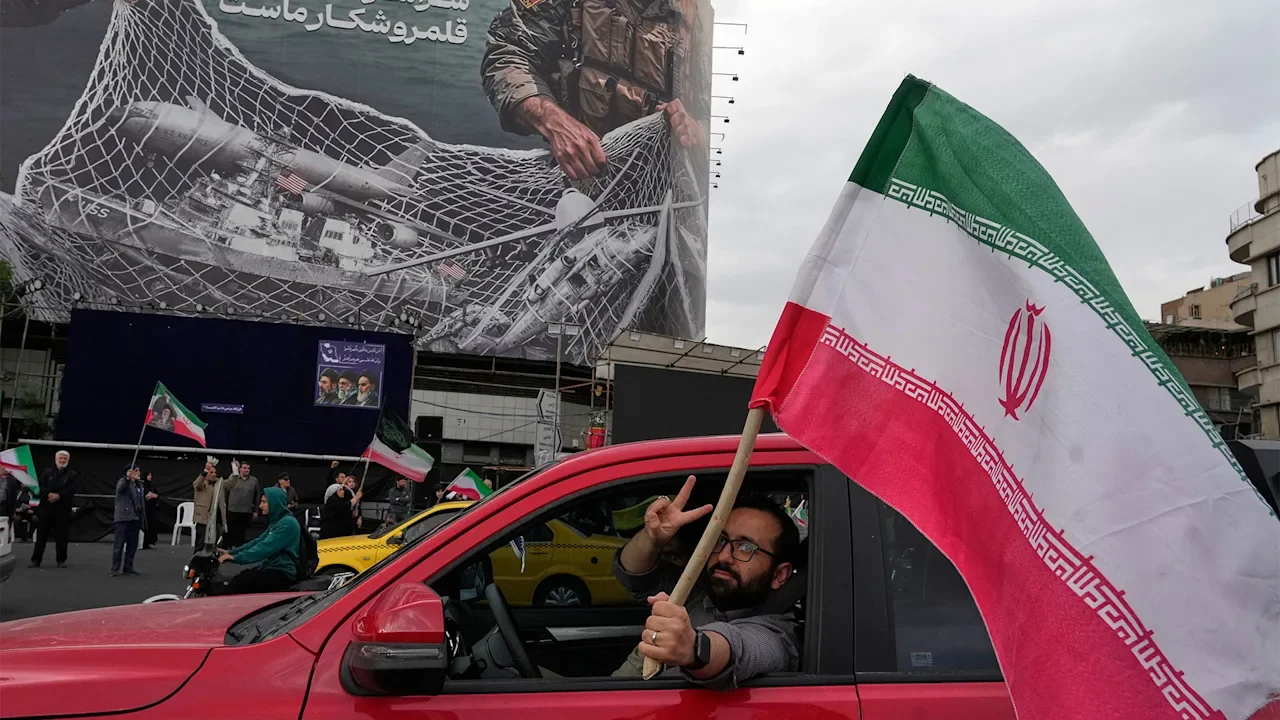
The standoff between the United States and Iran deepened Tuesday as the U.S. declared it had blockaded Iran’s ports, Tehran threatened to strike targets across the region, and Pakistan said it was racing to bring the sides together for more talks. Though last week’s ceasefire appeared to hold, the showdown over the Strait of Hormuz risked reigniting hostilities and deepening the region-wide war’s economic fallout. Talks aimed at permanently ending the conflict — which began Feb. 28 with U.S. and Israeli strikes on Iran — failed to produce an agreement last weekend, though Pakistan has proposed hosting a second round in the coming days. Two Pakistani officials, who spoke on condition of anonymity because they weren’t authorized to discuss the matter with the media, said that the first talks were part of an ongoing diplomatic process rather than a one-off effort. Two U.S. officials, who spoke on the condition of anonymity to discuss sensitive diplomatic negotiations, said on Monday that discussions were still underway about a new round of talks. They said that the venue, timing and composition of the delegations hadn’t been decided, but that talks could happen Thursday. The war, now in its seventh week, has jolted markets and rattled the global economy as a great deal of shipping has been cut off and airstrikes have torn through military and civilian infrastructure across the region. The fighting has killed at least 3,000 people in Iran, more than 2,000 in Lebanon, 23 in Israel and more than a dozen in Gulf Arab states. Thirteen U.S. service members have also been killed. Tanker reported rounding the corner The blockade is intended to pressure Iran, which has exported millions of barrels of oil, mostly to Asia, since the war began. Much of it has likely been carried by so-called dark transits that evade sanctions and oversight, providing cash flow that’s been vital to keeping Iran running. Both the nature of enforcement and the extent to which ships will comply remained unclear during its first full day in effect on Tuesday. Tankers approaching the strait on Monday turned around shortly after it took effect, though one turned around and transited the waterway early Tuesday. The tanker Rich Starry had been waiting off the coast of the United Arab Emirates, according to shipping data firm Lloyd’s List, which cited data from the energy cargo-tracking firm Vortexa. It wasn’t immediately clear whether the Rich Starry had earlier docked in Iran. Yet it is listed by the U.S. Treasury’s Office of Foreign Assets Control as linked to Iranian shipping. Lloyd’s List, citing ship registry and tracking data, reported that it’s owned by a Chinese shipping company and ultimately bound for China. U.S. Central Command didn’t immediately respond to questions about the vessel after it cleared the 21-mile-wide (nearly 34-kilometer) waterway. A day earlier, it said that the blockade applied to vessels going to and from Iranian ports. Since the start of the war, Iran has curtailed maritime traffic, with most commercial vessels avoiding the waterway. Iran’s effective closure of the strait, through which a fifth of global oil transits in peacetime, has sent oil prices skyrocketing, pushing up the cost of gasoline, food and other basic goods far beyond the Middle East. U.S. President Donald The President on Monday said that Iran’s control of the strait amounted to blackmail and extortion as the U.S. blockade took effect. He said in a social media post that Iran’s navy had been “completely obliterated,” but still had “fast attack ships.” He warned that “if any of these ships come anywhere close to our BLOCKADE, they will be immediately ELIMINATED.” Iran threatened to retaliate against Persian Gulf ports if attacked. “If you fight, we will fight,” Iran’s parliamentary speaker, Mohammad Bagher Qalibaf, said in a statement addressed to The President. French President Emmanuel Macron and British prime Minister Keir Starmer will co-chair a conference Friday for nations willing to deploy warships to escort oil tankers and container ships through the Strait of Hormuz. The deployment will happen “when security conditions allow,” Macron’s office said Tuesday. Israel and Lebanon scheduled for talks Meanwhile, direct talks between Israel and Lebanon were set to begin in Washington on Tuesday, the first such negotiations in decades. Israel has pressed ahead with its air and ground campaign since last week’s ceasefire in Iran, insisting that it doesn’t apply to fighting in Lebanon. It has, however, halted strikes in the country’s capital since April 8, after a deadly bombardment that hit several crowded commercial and residential areas in central Beirut. It sparked an international outcry and threats by Iran that it would end the ceasefire. After more than a year of near-daily strikes in southern Lebanon, Israel escalated its offensive in the early days of the war following Hezbollah launching rockets into Israel. The fighting has carved a path of destruction from agricultural towns near the border to Beirut, killing more than 2,000 people and displacing in excess of 1 million others, according to Lebanese authorities. The talks are expected to be preliminary, focused on setting parameters rather than resolving core issues. Lebanese officials have pushed for a ceasefire, while Israel has framed the negotiations around Hezbollah’s disarmament and a potential peace deal, without publicly committing to halting hostilities or withdrawing its forces. Israel wants Lebanon’s government to assume responsibility for disarming Hezbollah, much like was envisaged in a November 2024 ceasefire. But the militant group has survived efforts to curb its strength for decades and said on Monday that it won’t abide by any agreements that may result from the talks. Aamer Madhani, Matthew Lee and Farnoush Amiri contributed to this report. —Munir Ahmed and Sam Metz, Associated Press View the full article
-
Meg O’Neill plans to return BP to structure before its complicated 2020 reorganisationView the full article
-
Demand drops 3.4% in March due to soaring prices, supply shortages and collapse of Middle East air travelView the full article
-
A user asks Gemini: “Find me a task chair under $400 with lumbar support and free shipping. Order the best one.” The AI doesn’t open a new tab. It doesn’t ask the user to click anything. Instead, it queries product databases, cross-references reviews, checks real-time inventory, compares shipping policies, and initiates a checkout — all without a human touching a single page. These are all things the user would have done themselves, but now in a fraction of the time, with as much effort as it took to write the initial prompt. Okay, we might not be quite at the stage where everyone is letting AI agents make all their purchases for them. But it’s no longer an unrealistic future. What made that possible isn’t the AI models themselves. It’s the infrastructure we’re seeing become an increasingly important part of how modern websites are built. This infrastructure consists of a stack of protocols that tells AI agents how to find each retailer’s site, understand their catalog, verify their claims, and take action. These protocols define how AI agents interact with your brand. And most SEOs have no idea they exist. By the end of this article, you’ll understand what each protocol does, how they differ from one another, and why you need to pay attention to what’s going on underneath the hood of AI search if you want to stay visible going forward. Why Protocols Matter for SEOs Protocols determine whether an AI agent can interact with your brand programmatically, or whether it has to guess. Brands that can speak the agent’s language are more likely to not just be surfaced, but also recommended and, ultimately, interacted with to make purchases. Think of how robots.txt and XML sitemaps became table stakes for search crawlers. Agentic protocols are shaping up to be that for AI agents. Put simply: if you want agents to be able to take action on your site — whether that’s making a purchase, booking a table, or completing a form — you need to understand these protocols. Note: We’re not suggesting that without these protocols AI agents and users will never access your site or buy from them. Agentic commerce is still pretty new, and even the protocols themselves are still evolving. But we believe that agents will increasingly act on behalf of users, and that the easier you make it for them to do that on your website, the better positioned you’ll be as agentic commerce becomes the norm. The Protocol Stack: A Quick Map These protocols aren’t competing standards fighting for dominance. They operate at different layers of the same stack, and most are designed to work together. Here’s a quick breakdown of what these protocols do: Layer What It Does Key Protocols Agent / Tool Connects agents to external data, APIs, and tools MCP Agent / Agent Lets agents hand off tasks to other agents A2A Agent / Website Lets websites become directly queryable by agents NLWeb, WebMCP Agent / Commerce Enables agents to discover products and complete purchases ACP, UCP Note: As with everything AI, the agentic protocols we’ll give more details on below are constantly evolving. This means some platforms are yet to adopt some of the protocols, and the specifics of each protocol could also change over time. MCP: Model Context Protocol MCP is the universal connector between AI agents and external tools, data sources, and APIs. How It Works Before MCP, every AI tool needed a custom integration for every data source it wanted to access. If you wanted a chatbot to pull live pricing from your database and cross-reference it with your CMS, someone had to build a bespoke connection between those systems. Then rebuild it whenever either one changed. MCP standardizes that connection. Think of it as USB-C for AI: one protocol that lets any agent plug into any tool, database, or website that supports it. An agent using MCP can pull live pricing data, check inventory, read structured content from a site, or execute a workflow, all through the same interface. The website or tool publishes an MCP server, and the agent connects to it. There’s much less need for custom integration work on either side. Who’s Behind It MCP was launched by Anthropic in November 2024. It has since been adopted by OpenAI, Google, and Microsoft. MCP is now governed by an open-source community under the Agentic AI Foundation (AAIF), a directed fund under the Linux Foundation. As of early 2026, there are more than 10K MCP servers out there, making it the de facto standard for agent-to-tool connectivity. What It Means for Your Brand Structured data, clean APIs, and accessible HTML have always been good technical SEO. Now they’re also agent compatibility requirements. Brands with MCP-compatible data give agents something to work with. Brands without it force agents to scrape pages and infer meaning, which creates friction and can affect whether they recommend you. Learn more about MCP here. A2A: Agent-to-Agent Protocol A2A is the standard that lets AI agents from different vendors communicate, delegate tasks, and hand off work to one another. How It Works MCP lets an agent talk to tools. A2A lets agents talk to each other. When a task is complex enough to need multiple specialist agents — like one for research, one for comparison, and one for completing a transaction — A2A is the protocol that coordinates them. Each A2A-compliant agent publishes an “Agent Card” at a standardized URL (that looks like “/.well-known/agent-card.json”). This card advertises what the agent can do, what inputs it accepts, and how to authenticate with it. Other agents discover these cards and route tasks accordingly. The result: agents from entirely different companies, built on different frameworks, running on different servers, can collaborate on a single user request. No custom-built connections required. Who’s Behind It Google launched A2A in April 2025 with 50+ technology partners, including Salesforce, PayPal, SAP, Workday, and ServiceNow. The Linux Foundation now maintains it under the Apache 2.0 license. What It Means for Your Brand As multi-agent workflows become more common, agents may evaluate your brand across multiple checkpoints before a human sees the result. That chain might look something like this: A research agent surfaces your product from a broad category query An evaluation agent reads your reviews and checks the sentiment A pricing agent verifies your costs against third-party sources A trust agent cross-references your claims for consistency A2A orchestrates that entire chain. If your data is inconsistent across sources, like if your pricing page says one thing and your G2 profile says another, the AI agent might filter your brand out as a contender. All before the user even sees you as an option. Learn more about A2A here. NLWeb: Natural Language Web NLWeb is Microsoft’s open protocol that turns any website into a natural language interface, queryable by both humans and AI agents. How It Works Right now, when an AI agent visits your website, it might have to make a lot of guesses. It scrapes your HTML, infers meaning from your content, and relies on your page being structured properly to be able to parse it effectively. There’s a lot of room for error. Once a site implements NLWeb, any agent can send a natural language query to a standard “/ask” endpoint and receive a structured JSON response. Your site then answers the agent’s question directly, rather than the agent interpreting your HTML. Every NLWeb instance is also an MCP server. A site implementing NLWeb automatically becomes discoverable within the broader MCP agent ecosystem without any additional configuration. Who’s Behind It NLWeb was created by R.V. Guha, the same person behind RSS, RDF, and Schema.org. (That’s no coincidence.) NLWeb deliberately builds on web standards that already exist, which means a lot of websites are close to NLWeb-ready right now. Microsoft announced NLWeb at Build 2025 in May 2025. It’s open-source on GitHub. Early adopters include TripAdvisor, Shopify, Eventbrite, O’Reilly Media, and Hearst. What It Means for Your Brand For SEOs, NLWeb is a natural extension of work you may already be doing. Schema markup, clean RSS feeds, and well-structured content are the foundation NLWeb builds on. Sites that have invested in structured data have a head start. Sites that haven’t are harder for agents to work with, but they can easily catch back up by implementing schema markup now. Structured data already helps search engines, and it can make it easier for agents to understand and interact with your site too. That increases the value of technical SEO work you may have been putting off. Learn more about NLWeb here. WebMCP WebMCP is a proposed W3C standard that lets websites declare their capabilities directly to AI agents through the browser. How It Works NLWeb makes your content queryable. WebMCP goes one step further: it lets websites declare what actions they support. These actions could include “add to cart,” “book a demo,” “check availability,” and “start a trial.” These capabilities are declared in a structured, machine-readable format. Instead of an agent scraping your UI and guessing how your checkout works, WebMCP gives it an explicit map, straight from the source (you). Who’s Behind It Google and Microsoft proposed WebMCP, and the W3C Community Group is currently incubating it. Chrome’s early preview shipped in February 2026, with broader browser support expected by mid-to-late 2026. What It Means for Your Brand WebMCP is the clearest preview of where agent-website interaction is heading. Imagine you have two brands with similar products, similar pricing, and similar reviews. The one whose site declares clear, structured capabilities is easier for an agent to act on. The other requires guesswork. Agents are likely to take the path of least friction, and WebMCP helps you reduce friction to a minimum. Learn more about WebMCP here. ACP: Agentic Commerce Protocol ACP is OpenAI and Stripe’s open standard for enabling AI agents to initiate purchases. How It Works ACP focuses specifically on the checkout moment. It creates a standardized way for an AI agent to complete a purchase on a merchant’s behalf, handling payment credentials, authorization, and security through the protocol itself. Before ACP, an agent that wanted to complete a purchase had to navigate each merchant’s unique checkout flow. A different form, a different payment process, and a different confirmation step for every retailer. ACP standardizes this process. Merchants integrate with ACP through their commerce platform, and once live, checkout becomes agent-executable. The user doesn’t have to do anything except approve. ACP originally powered ChatGPT’s instant checkout functionality, but that has since been removed by OpenAI in favor of dedicated merchant apps. ACP may still power product discovery within ChatGPT, and may be used within these apps, but things are evolving fast. Who’s Behind It OpenAI and Stripe launched ACP in September 2025. It’s open-sourced under Apache 2.0, with platform support still expanding. What It Means for Your Brand If an agent has shortlisted your product and the user tells it to go ahead and pay, ACP is what allows the agent to complete the transaction. If your brand isn’t integrated with this workflow, you risk the AI agent getting stuck or being unable to complete that purchase. The agent can recommend you, but it can’t buy from you. That gap will matter more as agentic commerce becomes the norm. Learn more about ACP here. UCP: Universal Commerce Protocol UCP is Google and Shopify’s open standard for the full agentic commerce journey, from product discovery through checkout and post-purchase. How It Works ACP focuses on the checkout moment, while UCP covers the entire shopping lifecycle. An agent using UCP can discover a merchant’s capabilities, understand what products are available, check real-time inventory, initiate a checkout with the appropriate payment method, and manage post-purchase events like order tracking and returns. All through a single protocol. UCP is built to work alongside MCP, A2A, and AP2 (Agent Payments Protocol), meaning it plugs into the broader agent infrastructure rather than replacing it. Merchants publish a machine-readable capability profile. Agents then discover it, negotiate which capabilities both sides support, and proceed. Who’s Behind It Google and Shopify co-developed UCP, with Google CEO Sundar Pichai announcing it at NRF 2026. More than 20 launch partners signed on, including Target, Walmart, Wayfair, Etsy, Mastercard, Visa, and Stripe. What It Means for Your Brand When a user asks Google AI Mode to find and buy something, UCP determines whether your brand is in the conversation, and whether the agent can actually complete the transaction. The machine-readability of your product data, the consistency of your pricing across sources, the clarity of your inventory signals: all of it feeds directly into whether an agent can successfully transact with you. Learn more about UCP here. ACP vs. UCP: The Key Difference ACP and UCP are often confused, and they do share some similarities, but here’s where they differ: ACP UCP Built by OpenAI + Stripe Google + Shopify Scope Discovery and checkout layers Full journey: discovery, checkout, and post-purchase Powers ChatGPT instant checkout and product discovery Google AI Mode, Gemini Architecture Centralized merchant onboarding Decentralized: merchants publish capabilities at /.well-known/ucp Status (early 2026) Live, wider rollout in progress Live, wider rollout in progress ACP and UCP are complementary, not competing. A brand may eventually support both — one for ChatGPT’s ecosystem, one for Google’s. For now, the practical question is: which platforms matter most to your customers, and where does your commerce infrastructure make integration easiest? Choose the protocol that aligns with your answer, or use both. Example of Agentic Search Protocols in Action These protocols don’t operate in isolation. Here’s what they might look like working together (note that this isn’t necessarily exactly what’s going on at each stage, and is just for illustrative purposes): Scenario: A user asks Gemini: “Find me a comfortable task chair under $400 with lumbar support and free shipping. Order the best option.” Step 1: MCP Activates The agent uses MCP to connect to external tools: product databases, review platforms, retailer inventory feeds. It can query live data rather than relying on cached or trained knowledge. Step 2: A2A Coordinates The agent then coordinates with specialist agents published by brands and review platforms via A2A. One evaluates ergonomics reviews. One checks pricing consistency across sources. One verifies free shipping claims against each retailer’s actual policy page. Step 3: NLWeb Answers Queries Directly The agents query each retailer’s site. Brands with NLWeb implemented respond to the agent’s /ask query with structured data. This includes things like accurate inventory, real-time pricing, and product attributes. Brands without it force the agent to scrape and infer, slowing it down and potentially leading to them being skipped altogether. Step 4: WebMCP Declares Available Actions The “winning” retailer’s site has declared its checkout capabilities via WebMCP. The agent knows exactly what actions are available and how to initiate them without any guesswork. Step 5: UCP Completes the Transaction The purchase is executed via UCP, entirely within Google’s AI experience. The merchant’s backend communicates through the standardized API. The user gets an order confirmation, and they never visited a single product page. Obviously this is the fully agentic scenario. In reality, not every purchase is going to be left entirely to an AI agent. But even when a human wants to evaluate options before clicking buy, making it as easy as possible for the agent to make recommendations is still good practice. That’s why these protocols are worth paying attention to. What SEOs Should Do Now Understanding the protocol layer is step one. Here’s where to focus next: 1. Prioritize Machine-Readable Content Over Volume Before adding more pages, make sure your existing pages can be parsed cleanly by an agent. That means: Having your pricing in plain text, not locked behind JavaScript drop-downs Using feature lists that don’t require interaction to reveal Including FAQ content that renders server-side Using schema markup on product and organization pages An agent that can’t read your page can’t recommend or buy your products. 2. Audit Your Structured Data NLWeb builds on Schema.org, RSS, and structured content that sites already publish. If you’ve invested in schema markup, you have a head start on NLWeb compatibility. If you haven’t, this is now a double reason to prioritize it: it improves your search visibility and makes your site more easily queryable by agents. 3. Check Your Consistency Across Sources Agents verify claims by cross-referencing your site, review platforms, and third-party content. If your pricing page says one thing and your Capterra profile says another, agents can flag the discrepancy and lose confidence in your brand, making the recommendation or purchase less likely. Audit for cross-source consistency the same way you’d audit NAP consistency in local SEO. It’s the same underlying principle, just for a different kind of crawler. 4. Get on the ACP and UCP Waitlists Now These protocols are in active rollout. Early adopters benefit from lower competition in agent-mediated commerce while the rest of the ecosystem catches up. Join Stripe’s waitlist for ACP access. And join Google’s UCP waitlist too. For other protocols like MCP, talk to your dev team about making sure your site supports them. 5. Monitor Your AI Footprint as a Regular Practice Search your brand in ChatGPT, Perplexity, and Google AI Mode. Are agents describing your product accurately? Is your pricing consistent with what they’re surfacing? Are competitors appearing where you aren’t? This is the new version of checking your SERP presence, and it needs to become a recurring part of your workflow, not a one-time audit. Understand how your brand is appearing in AI search right now with Semrush’s AI Visibility Toolkit. It shows you where you’re showing up, where you’re behind your rivals, and exactly what AI tools are saying about your brand. What’s Next for Agentic Search Protocols? The protocols we’ve discussed here are already live, but they’re still evolving. WebMCP is still in early preview. ACP and UCP are mid-rollout. New protocols — for agent payments, agent identity, agent-to-user interaction — are still being drafted and debated. But the SEOs that understand and implement these protocols correctly are the ones most likely to see success. Find out where your brand stands right now with our free AI brand visibility checker. The post The 6 Agentic AI Protocols Every SEO Needs to Know appeared first on Backlinko. View the full article
-
Seven & i Holdings, the Japan-based owner of 7-Eleven, has announced that it plans to close hundreds of stores in North America over the next year. The store closures are an attempt to reduce costs and increase profitability for the chain of convenience stores ahead of a U.S. initial public offering for its North American unit, which was recently delayed. Here’s what you need to know. 645 store closures in North America Tucked away in Seven & i Holdings’ brief summary for its fiscal year 2025 last week was news that the company plans to close more than 1,000 locations in its fiscal year 2026, which runs from March 1, 2026, to February 28, 2027. According ot the document, Seven & i Holdings plans to shutter 645 locations in North America. During the same period, 205 new 7-Eleven locations are set to open, meaning a net loss of 440 of the beloved convenience stores is expected. For context, 645 closures represent about a 5% reduction in the company’s current footprint of 12,272 North American locations. However, it should be noted that Seven & i Holdings says some of the closing locations won’t be shuttered entirely. Many 7-Eleven locations in North America sell both gas at the pump and food inside the convenience store. Locations that don’t have an operating convenience store and only sell gas are known as wholesale fuel stores. Seven & i Holdings says that the “645 store closures in the full-year FY2026 forecast include the conversion to wholesale fuel stores.” This means some locations will close their convenience store segment, but continue to operate as gas stations. However, the locations that undergo a transition to wholesale fuel stores only will no longer count as part of the chain’s total footprint, hence a wholesale fuel stores conversion counts as a closure. Which 7-Eleven locations are closing? It’s unknown which of the company’s 12,272 North American locations are closing. Fast Company has reached out to Seven & i Holdings for comment. However, the 645 North American locations aren’t the only 7-Eleven locations that Seven & i Holdings is shuttering over the next year. The company says it will close additional stores internationally, including: 350 in Japan 18 in Australia 30 in Beijing, China 25 in Tianjin, China 10 in Chengdu, China How has 7-Eleven’s delayed IPO impacted closures? While Seven & i Holdings is a publicly traded company in Japan, the 7-Eleven owner has long intended to list its North American operations separately on a U.S. stock exchange. This initial public offering for 7-Eleven was expected to take place this year, but has now been delayed until at least 2027. As the Financial Times reported last week, Seven & i Holdings has announced that the U.S. IPO would be delayed until the company’s 2027 financial year “at the earliest.” That financial year runs from March 1, 2027, until the end of February 2028. The delayed IPO is being driven by the company’s desire to turn around profits at its North American locations ahead of the listing. The company’s North American locations have been hit by declining sales as cash-strapped consumers cut back on spending. The ongoing U.S. war with Iran is also not helping the company’s bottom line, as it is raising fuel prices, thereby eating into profits. Companies also tend to cut costs wherever they can before an IPO to help present a better bottom line to potential investors. So the upcoming IPO is also likely having an impact on Seven & i Holdings’ decision to close hundreds of North American locations. When will 7-Eleven close its stores? That is unknown. But it is unlikely that the 645 stores marked for closure will all close at once. Instead, locations will likely close individually throughout Seven & i Holdings’s 2026 fiscal year. That fiscal year runs until February 28, 2027, so expect the 645 North American locations to be closed by that date. View the full article

-
UK carmaker tests limits of the market with its personalised vehicles for the super-richView the full article
-
Saying “my back hurts” is a bit like saying “my car is making a noise.” It may be serious, or it may be nothing, and only a professional will know for sure. But if you have back pain, especially in your lower back, you’re not alone: By some estimates, 75% of us will have an achy lower back at some point in our lives, often without any obvious cause. I cannot diagnose your back pain over the internet. That said, I can tell you about common reasons for back pain, and provide general strategies that can help you feel less achy. Back pain doesn’t always mean you’re injuredWe tend to assume that pain is a sign that some part of our body is damaged and needs fixing. But that’s not always true. When it comes to back pain, around 90% of the time there is no detectable injury. That doesn’t mean that the pain is imaginary—there can be physical causes that don’t show up on x-rays or MRIs, and other factors also contribute to us feeling a sensation of pain. Doctors and scientists used to think of pain as a simple signal sent from damaged body parts to the brain. It’s now considered more accurate to say that pain is a perception created in the brain in response to a variety of things we experience. Tissue damage can be one of them, but our experience of pain is also shaped by our expectations, our fears, and other things going on in our brain and body. You might feel pain more acutely if you’re stressed or worried about it. This increases your stress, and things snowball from there. Or maybe you’ve been to the doctor about something that was worrying you, only to find out that the issue is actually very minor, and you’ll be fine. It’s not unusual to experience less pain from that point onward, even though nothing has physically changed. Obviously, there are back problems that are physical and fixable, so it’s definitely worth getting checked out to rule out serious issues. But if you just have an achy back sometimes and your doctor says nothing is seriously wrong, what can you do? A strong back tends to be a healthier backExercise tends to help people with low back pain feel better, according to a 2021 meta-analysis of trials that included everything from strength training to Zumba. If you’re dealing with pain on a daily basis, the first step doesn’t have to be finding the “best” exercises to deal with it. Instead, focus your efforts on finding something you can do without experiencing pain, or at least without increasing your pain. A physical therapist can help guide you through this process, especially one who specializes in sports medicine or who has experience working with active people. (Some physical therapists prescribe exercises that are too easy to be effective, especially to older adults; this is a recognized problem in the industry.) There is still disagreement on exactly what kind of exercise is best to prevent or treat back pain. Some PTs focus on core work, believing that it’s crucial for your deep core muscles, such as the transverse abdominis, to be strong to protect your back. Using this approach, you may find yourself doing a lot of dead bugs and bird dogs, and get a lot of practice drawing your belly button in toward your spine. Another school of thought holds that core muscles are only a small part of the picture, and that strengthening your back muscles themselves should be the focus of training. This approach is more likely to favor work with free weights, like deadlifts, dumbbell rows, and lunges. Done correctly, these moves also work your core; you need to brace your core to stabilize your spine for a deadlift or squat, and that’s as legitimate a type of core work as anything you do on a yoga mat. Sore muscles are okay, actuallyIt’s normal to be concerned about protecting your back. After all, if you’ve heard a million times not to “lift with your back,” you might worry that any soreness after lifting or bending means you injured something. But there are muscles in your back, and they can get fatigued or sore when you use them a lot—just like the muscles in your arms or legs. You wouldn’t be surprised or worried if you had sore thighs after a heavy squat day or after running a race. The muscles in your lower back can feel sore after your deadlift day at the gym, or even after a long day of standing and walking more than you’re used to. Sometimes people confuse this normal soreness with injury, and worry that those deadlifts did something terrible to their back. But before you panic, consider treating your back the same way you would any other sore muscle: Use gentle heat, walk around a bit, and consider foam rolling or massage. The pain from sore muscles tends to feel a bit better with activity, and will usually fade within a few days. Stretches and exercises that are good for people with back painWhat exercises can you do to potentially prevent back pain and possibly manage back pain you already have? Again, it’s best to check with a professional to be sure of what makes the most sense for you, but here are some strengthening and stretching exercises that are often recommended: Core exercisesBird dogs Dead bugs Planks Side planks Back-strengthening exercises (with barbells, dumbbells, or kettlebells)Deadlifts or Romanian deadlifts Rack pulls or block pulls Bent-over rows Split squats or your favorite regular squat Reverse hypers StretchesCat/cow Jefferson curls Figure 4 stretch Spinal twist Lying hamstring stretch View the full article
-
At midnight on Jan. 5, hackers took over our Google Ads Manager Account (MCC). We weren’t alone. While it’s hard to get an exact count, hundreds, if not thousands, of agencies have been affected by the hacks, in turn affecting tens of thousands of accounts. While I wouldn’t wish this experience on our worst enemy, having been through it, I have some insights that I hope can help you prevent the same experience from happening to your MCC account. How we were hacked Despite having two-factor authentication (2FA) and allowed domains enabled, the hackers were able to get into our account via an employee’s email address. It was clearly a targeted hack: the night of the hack, the hackers tried to get in via two other email accounts at our company before they succeeded with the third. While phishing or compromised passwords may have originally gotten them into the system — we still don’t know which — we later learned that the account the hackers used had been compromised for months and that they had created their own 2FA that they had been using all along. Once they gained access to our account, the hackers removed everyone else’s access to the MCC. They then changed the allowed domain to Gmail and granted access to over a dozen people. The hackers then created a new MCC in our company’s name and invited most of our clients. Luckily, none of them accepted. In the few hours they were in the MCC, the hackers proceeded to create chaos. They removed all the users from some accounts and changed the payment method in others. They launched new campaigns on only a few accounts, yet somehow also attempted half-million-dollar credit card charges on two others (despite not running any ads in those accounts). Your customers search everywhere. Make sure your brand shows up. The SEO toolkit you know, plus the AI visibility data you need. Start Free Trial Get started with What happened after the hack We were very lucky. The hackers were locked out within eight hours, and we regained access in just over a week. They spent only about $100 across the MCC. Neither crazy credit card charge went through. We were fully recovered from the hack within two weeks. How did we do this? Let’s take a look at the steps we took. Step 1: We contacted Google When we were hacked, we immediately contacted our reps at Google. We’re incredibly lucky to have wonderful Google reps with whom we’ve built longstanding relationships, including one we’ve worked with for over three years. These long-term relationships helped, and our reps went to bat for us. They continued to put pressure on the support cases until they were resolved and helped connect us to the resources we needed. Not everyone has their own reps, but you can also take these steps on your own. Step 2: Fill out the forms Our Google reps immediately directed us to their “What to do if your account is compromised” resource. From there, we filed Account Takeover Forms, alerting Google to the hack. We were directed to file a form for each of our accounts that had been hacked. We first filed one for our MCC, even though the form, at the time, said not to use it for MCCs. It looks like that language has since been changed, which is great — don’t skip this step. Getting back into the MCC makes it easier to resolve all issues, rather than having to file tickets and coordinate access for each account. Step 3: Contact clients At the same time, we directed any clients who still had access to their accounts to disconnect them from our MCC, and to grant access to a non-compromised email account. That way we were able to secure the accounts, work on them, and mitigate any damages immediately. We were also able to triage our accounts to figure out which we were still able to access, and which had no admins left with access. Step 4: Reset billing Disconnecting from our MCC wound up being a very important step. That’s because when our accounts were disconnected from the MCC, we were easily able to reset the billing by editing the payment manager and undoing all of the payment chaos that the hackers had created. We were then able to reconnect them without issue. Step 5: Check change history When we eventually did get back into the accounts, we immediately checked the change history, which we were able to do at the MCC level for additional speed. All the changes the hackers made during that time were there with time stamps, allowing us to put together a timeline of the hack and remediate any remaining issues. Get the newsletter search marketers rely on. See terms. Best practices for recovering from a hack During all this activity, a few things were especially critical to our success in recovering the account and mitigating damage. Here’s a quick rundown of best practices to keep in mind. Make sure clients have access This isn’t just a best practice, but something we believe should always be the case for ethical reasons. Having additional admins in the account let us regain access immediately, despite being locked out of the MCC, and remediate issues without losing time or momentum. Google also pushed back on any access or billing changes that didn’t have approval from an existing admin, so having people still in the accounts was critical. Keep your MCC clean Remove old clients, and any other MCCs for tools you’re no longer using. We didn’t do this, and wish we had. We’ve made it a best practice for our accounts moving forward. Limit team access Make sure your team only has the minimum access they need. Standard access is great. Admin access should be reserved for as few people as possible. The compromised account belonged to a junior team member who didn’t need admin-level access. This isn’t to say they wouldn’t have gotten in through a more senior team member’s account — as mentioned, they did try to get in through several before succeeding — but it would have mitigated risk. Use credit cards or invoices Never connect your bank accounts to your MCC. We’ve heard of companies that have lost hundreds of thousands of dollars with this same kind of hack. Because our clients were all either on invoice or credit cards, the hackers couldn’t quickly spend money in a way that hit their accounts. As noted earlier, the credit card companies rejected the very suspicious half-million-dollar charges the hackers attempted to make, and notified the credit card holders. The clients we were invoicing were never charged, and everything was captured on the invoices before billing. Invest in relationships It’s important to invest in your relationships with your Google reps, and fellow agency owners. We remain incredibly grateful to all of the people who helped us, or even just commiserated with us along the way. This experience would’ve been even more painful if we’d had to go through it alone. How to prevent being hacked For those who have yet to be hacked, congratulations! Let’s try to keep it that way. Here are some things you can do to make it much less likely that this will ever happen to your accounts. Start with a clean reset Begin by kicking every single user out of your account, and have everybody on the accounts reset their passwords. Make sure you log everyone out of every session they were in on every device. Our hackers were sitting around auto-logging in and keeping their sessions open for over two months prior to the night they took over the MCC. If we’d forced a reset and logged everyone off, we would’ve removed their access without even realizing it. Enable 2FA and allowed domains Make sure there’s only one 2FA per person. 2FAs that use authenticators or physical keys are better than pinging a device. The hackers had created their own 2FA to get into our employees’ accounts, and we never even had an idea that it was happening. Audit and limit access Make sure the minimum number of people have the minimum access they need to the MCC. This reduces your risk. Enable multi-party approval Google rolled out this new feature quite recently to help prevent account takeovers. Essentially, the feature requires that a second admin verifies any big changes before they happen. If you’d like to read up on this feature, here’s a great guide introducing multi-party approval. Back up your accounts You can copy and paste your accounts into your preferred spreadsheet app via Google Ads Editor. Make a habit of doing this periodically so that you’ll always have a copy of how things were in case of a hack. With the backups, you can easily revert back if you need to. Use strong passwords It’s important to use unique passwords that aren’t being used anywhere else. That way, if one site gets hacked, your MCC is still not at risk. We’re still not sure how the hackers passed the initial password stage to be able to create their own 2FA. Invest in security monitoring If you want to be extra careful, invest in security software and/or a cybersecurity expert to monitor your system. We have now done this, and it’s been amazing (and scary) to see how many phishing attempts have already been caught in the six weeks since we did it. A note for clients: If you’re a client and another team is managing your Google Ads, do not accept any Google Ads MCC access requests that you aren’t expecting. Please make sure you always know who and what you’re giving access to. When in doubt, double-check with the team that is managing your account. A little caution can go a long way. See the complete picture of your search visibility. Track, optimize, and win in Google and AI search from one platform. Start Free Trial Get started with Stay safe out there The good news is that Google knows about these issues, and is actively finding ways to tighten their systems to prevent hacks. In the meantime, I hope this article has helped make our loss your gain. With an ounce of prevention, you’re likely to prevent a pound of pain. View the full article
-
It's been a while since Google has come out with a new search spam policy and penalty to accompany it with and now we have a new one, "back button hijacking." Back button hijacking is something many of us were surprised Google didn't specifically disallow but now, Google said it is on the rise and it is adding it to the list - officially.View the full article
-
CoreWeave is having a very eventful week, and its stock price reflects it. Shares of the AI cloud-computing firm (Nasdaq: CRWV) are up more than 37% in five days following deals with Meta Platforms and Anthropic. On Thursday, April 9, CoreWeave announced a six-year agreement with social media giant Meta, parent company of Facebook and Instagram. CoreWeave will supply AI cloud capacity to Meta through December 2032. “The dedicated capacity will be deployed across multiple locations and will include some of the initial deployments of the Nvidia Vera Rubin platform,” CoreWeave stated in a release. “This distributed approach is designed to optimize performance, resilience, and scalability for Meta’s AI operations.” The agreement is worth about $21 billion for CoreWeave. Then, on Friday, April 10, the company announced another deal, this time with Anthropic. The multi-year agreement will see CoreWeave support Anthropic’s development and deployment of the latter’s Claude AI models. The plan is to bring compute online by the end of the year. “CoreWeave joins Anthropic’s growing ecosystem of infrastructure partners helping to scale the adoption of Anthropic’s AI models across developers, startups, and enterprises worldwide,” the company stated in another release. “With the addition of Anthropic, nine of the leading ten AI model providers now leverage CoreWeave’s platform, reflecting the growing demand for infrastructure that can support AI at scale.” Analyst goes from hold to buy In response to these developments, Macquarie analyst Paul Golding upgraded CoreWeave’s position from Hold to Buy. Golding further increased its target price from $90 to $125 per share. Currently, it’s at about $115 per share. As of early Tuesday, CoreWeave shares are up another 4.53% in premarket trading. The stock has increased 39% year to date. Although it has been volatile along with many tech stocks in 2026, CoreWeave has far outperformed the broader Nasdaq Composite, which has declined 0.22% over the same period. View the full article
-
Google's John Mueller said on Reddit that Google can handle and deal with having multiple URLs for a single web page, but it is not a good practice. He said it makes it harder for Google and Google will just pick one URL anyway. View the full article
-
Google has made some changes to the Google Business Profile policy document, specifically the identity change section. It is now much more descriptive than before.View the full article
-
Get actionable ways to break affiliate plateaus using data, audience research, and new content distribution channels. The post How To Break Through An Affiliate Site Plateau & Find New Growth – Ask An SEO appeared first on Search Engine Journal. View the full article
-
“I would like to introduce our Principal Auctioneer for the Broad Arrow sale today, Lydia Fenet at the Amelia.” As I walk up the steps to the podium to take my place next to the auction reader, I look out at a packed room of over a thousand people sitting and standing around the room. 10, 9, 8. Adrenaline floods my body. Deep breath in. Deep breath out. 7, 6, 5. Shoulders back. Chin up. Eyes forward. I listen as the reader finishes the last minute sale announcement and gives a brief description of the first car we will be selling. 4, 3. As he is finishing the description I open the binder that holds all the auction information in front of me, glancing at the reserve price which is the amount agreed upon by the seller and the company to make sure the number is fully in my head. 2, 1. Lydia, Lot Number One. I lift my head, smile, and bring the gavel down three times. For the next five hours, I’ll stand onstage representing Broad Arrow as the first woman to serve as Principal Auctioneer for a major car company. For some, seeing a woman preside over a car auction, where men have traditionally held the gavel, still feels surprising, maybe even a little uncomfortable. But after more than twenty years refining my craft, I have complete confidence in my ability to command a room. Over a career as a charity auctioneer that has helped raise more than $1 billion for nonprofits around the world, I’ve developed techniques that allow me to perform at the same level, regardless of the size of the stage or the prominence of the audience. The beauty of those techniques is that they work anywhere. No matter the pressure or the people in front of you, the same strategies that hold a room at auction work just as well in the boardroom. Find Your Strike Method In my first book, The Most Powerful Woman in the Room Is You, I introduced what I call The Strike Method. The three cracks of the gavel against the podium serve two purposes. They steady my nerves and focus the surge of adrenaline that comes with stepping into a high pressure moment. That rush is universal. It can unsettle even seasoned speakers, and it can overwhelm someone who hasn’t spent a lot of time onstage. The Strike Method narrows my focus to a single, controllable action. When the gavel hits the podium, everything else fades. It allows me to step onto any stage and command attention with intention. Everyone needs a version of The Strike Method. It might be a mantra. It might be a small object that reminds you of your strength. Some people tap the underside of their desk before a meeting and whisper, “Here we go,” before they begin a Zoom call. A friend of mine carries a small red pebble in her pocket when she walks into a presentation. The ritual matters because it centers you. Once you use it, have your opening lines ready so you move forward with complete control. Equally important is what happens next. If you are a nervous public speaker, make sure you have lined up your next sentence so that no matter what happens you are already locked in. The minute you start speaking onstage the adrenaline dissipates so the further into your speech you can go, the easier it will be. Mindset Over Everything Ask someone why they fear public speaking and they will describe the physical sensations. Shaking hands, a dry mouth, the feeling of standing at the top of a roller coaster. Even the most seasoned performers feel the same sensations. The difference is how they interpret them. Instead of labeling those feelings as fear, see them as energy. Your body is preparing you to rise to the moment. Think of that energy as fuel and channel it toward the outcome you want to create in the room. Your Audience Wants You to Succeed One of the fastest ways to derail a presentation is to obsess over how you are being perceived. Remember this: your audience wants you to succeed. No one wants to sit through a bad presentation. Think of the audience as your supporters. They are hoping you will deliver something worth their time. When you focus on serving them rather than judging yourself, your confidence grows. Give them your full presence and they will respond in kind. View the full article

-
As part of an article from The Verge taking aim at SEOs, Google says that they are aware of self-serving listicles and work to prevent this abuse from impacting results. View the full article
-
Google's John Mueller lists nine scenarios that lead Google to choose one URL as the canonical over another. The post Google Lists 9 Scenarios That Explain How It Picks Canonical URLs appeared first on Search Engine Journal. View the full article
-
Google posted an update for the Google Ads and Google Analytics data controls yesterday where changes will be coming to the sources of the data. Google said this is to "simplify data controls and remove redundant settings between Google Analytics and Ads, we are planning to consolidate controls based on where the data is used."View the full article
-
Twenty-six years ago a Lebanese militant leader stood in Bint Jbeil to hail a landmark Israeli retreat. Now the IDF is set to take the townView the full article
-
The call comes on a Tuesday morning. Taiwan Strait tensions have escalated overnight. Markets are already moving. Your CFO is on one line, your General Counsel on another. By the time you’ve hung up, your head of communications is in the doorway. Most CEOs have planned and prepared for this moment. In my work running a global communications firm, I’ve been part of the war-gaming sessions. But I’d contend that most leaders aren’t ready for it. Not because they haven’t been paying attention to geopolitics—they have. But because their teams have been assessing the Taiwan risk through a single lens: geoeconomic exposure. The financial model has been stress-tested. The team has contingencies for supply chain disruption, semiconductor access, and revenue at risk in Asia-Pacific. What hasn’t been stress-tested is everything else. For most companies today, a crisis in the Taiwan Strait won’t arrive purely as a geoeconomic event. It will cut across the four modern risk domains—political, economic, cultural, and technological. Companies that have only prepared for one will be managing the other three in real time. The four modern risk domains Political Risk Your company’s existing posture in China becomes a liability overnight. Your joint venture in Shenzhen, the market access statement you made two years ago, and the politically-connected hire you made in Beijing are all read through a new lens by lawmakers in Washington and Brussels. Economic Risk The first casualties aren’t on the balance sheet—they’re in the narrative. A Substack reporter with 200,000 subscribers publishes a thread mapping your China revenue exposure—incomplete and partially wrong, but specific enough to travel. Within 24 hours, AI-driven research tools have ingested it, flagged your ticker, and surfaced it in portfolio managers’ morning briefings. By the time your team is returning calls, two analysts have downgraded their outlook. Cultural Risk Within hours, an internal petition circulates among your workers: “Don’t use this as cover to shift production to cheaper markets and call it patriotism.” It gets screenshotted. It lands on X. A mid-level manager’s LinkedIn post about “what this company really stands for” gets ten thousand shares before your team has even seen it. The fault lines already forming around AI displacement, economic anxiety, and corporate trust crack open wider. Technological Risk The geopolitical tension brings data security and reputation into collision. You are hit with a sophisticated ransomware attack that paralyzes key systems. Within hours “OSINT” social feeds, Taiwanese state media, and others are attributing the attack to China. You aren’t sure where the attack has come from, but narrative is outstripping assessment. On Reddit threads, you’re accused of concealing China’s involvement. The Single-Lens Problem Most companies are not ignoring risk. But they’re assessing it through a single domain, while the threat is multidimensional. Consider this: A major financial institution announces it will eliminate a significant share of its analyst workforce due to AI-driven efficiencies. It’s a technology and efficiency-driven decision. Share price volatility hits the markets as soon as it becomes public. The political and regulatory environment—already sensitized to AI’s workforce implications—sharpens its focus. Employees take to social media, followed by customers. Or this: A global manufacturer, caught between U.S. and Chinese trade policy on a critical issue, announces it will reduce reliance on Chinese manufacturing for U.S.-bound goods. It warns investors—then finds itself targeted by an AI-generated content campaign mocking U.S. trade policy. Chinese influencers encourage American customers to buy direct, bypassing the manufacturer entirely. All of this spreads before the company can frame a coherent response. These are not hypotheticals. They’re real events that occurred at major multinational corporations within the past year. Navigating The New Era The modern risk environment demands a different approach—one that treats political, economic, cultural, and technological exposure as interconnected by default. Every domain of risk in the modern era is ultimately experienced as narrative—by investors, regulators, employees, and customers. The mandate for modern corporate affairs teams is to bring upstream intelligence on how decisions will land before they’re made, which demands a new conversation inside the C-suite. What’s needed is a genuine, integrated assessment—political, economic, cultural, and technological exposure mapped together—before the Tuesday morning call comes. The companies that build this discipline won’t just manage risk better. They’ll be faster to act, and more credible and better positioned when they do. When a single geopolitical trigger can cascade across all four domains in 24 hours, the capacity to navigate across all of them isn’t defensive. It’s the foundation for value creation. View the full article

-
Shake-up spurred on by rise of AI and threat of major upheaval across the industryView the full article
-
Have you noticed the junk-food aisle at your local grocery store is looking a little, well, funky lately? Blame the youngest generations of shoppers. While the preferences of Gen Z and Gen Alpha consumers are likely leading to healthier choices for all of us, they’re also reshaping the snacking industry. Some changes include snacks that are available in smaller sizes and have cleaner ingredients, according to data from Nielsen IQ, as reported by the National Association of Convenience Stores (NACS), an industry trade group. One of the most consequential changes is that shoppers are seeking out healthier snacks. Among parents of Gen Alpha kids who are buying snacks for the household, Nielsen IQ (NIQ) research has found that 35% are prioritizing natural ingredients and 34% said they’re looking for high-protein options. Meanwhile, about one-in-four shoppers actively avoid buying ultra-processed snacks and a comparable share look for snacks that don’t have artificial ingredients. That means shoppers are carefully scrutinizing ingredients and looking for products that bear organic claims or gluten-free certifications. And young shoppers don’t necessarily take brands at their word—compared with older shoppers, they’re far more likely to use third-party mobile scanning apps to evaluate foods and closely compare products, according to NIQ figures. “The baseline for Gen Alpha is a better product. It’s a cleaner product. It’s a more transparent product,” Chris Costagli, vice president of thought leadership at NIQ and the lead for food and non-alcoholic beverage insights, told NACS. BETTER-FOR-YOU SNACKS The evolution of snacking preferences can also be explained by health trends, John Baumgartner, an analyst at Mizuho, wrote in a note to clients last week. That’s seen a rising demand for more functional snacks, including snack bars, meat snacks, and fruit snacks, as Barron’s recently reported. Protein-packed snacks are the top snack trend for 2026, according to Innova Market Insights, while snacks that deliver gut health benefits are also gaining in popularity. The U.S. market for “better for you” snacks, which raked in nearly $13 million in 2024, is expected to grow at a compound annual growth rate of 7.4% to reach $19.8 million by 2030, according to projections by Grand View Horizon. SMALLER SIZING But cash-strapped younger shoppers may also be contributing to the frustrating trend of shrinkflation—in which package sizes get smaller but the price doesn’t budge (or even, potentially, increases). Because Gen Z shoppers prioritize lower unit prices versus bulk savings, that makes smaller pack sizes more appealing, according to Costagli. Shrinkflation is such a popular topic of discussion that there’s a subreddit devoted to it that attracts more than 88,000 people weekly. It’s also on the radar of the Bureau of Labor Statistics, as examples of shrinkflation are treated as a price increase when calculating inflation numbers, according to a Federal Reserve report. While the latest consumer price index report showed that inflation rose at the fastest annual clip since April 2024, Americans aren’t likely to give up snacking—something that about three-quarters of consumers do daily, according to Innova Market Insights surveys. Instead, we may have to be satisfied with the smaller packaging we’re finding at stores. Companies have already started churning out a wider range of shrunken snack sizes—a trend that’s likely to continue, as The Wall Street Journal reported in July. “Consumers are going into small pack sizes to optimize their absolute budget,” Luca Zaramella, the chief financial officer for Mondelez International, told the publication at the time. “The $3, $4 as opposed to the $6, $7, particularly in snacks, are becoming a clear center of gravity.” View the full article

-
Hello and welcome to Modern CEO! I’m Stephanie Mehta, CEO and chief content officer of Mansueto Ventures. Each week this newsletter explores inclusive approaches to leadership drawn from conversations with executives and entrepreneurs, and from the pages of Inc. and Fast Company. If you received this newsletter from a friend, you can sign up to get it yourself every Monday morning. “If you elegantly avoid the subject of money,” says Emma Grede, “money will somehow elegantly avoid you.” Grede is most certainly not avoiding the subject of money, ambition, or other topics some women may consider taboo. In her new book, Start With Yourself: A New Vision for Work and Life, the Skims and Good American cofounder aims to dismantle “Old Thoughts” and biases, including the way women talk—or don’t talk—about wealth. She notes that there are many reasons for the reticence: many women are acculturated to believe that talking about money is impolite, or worse, selfish. “I think sometimes that there is this misconception that if somebody is really focused on the money that they have nothing else that they care about,” she says. “And that’s just not the case.” Indeed, she says, women should embrace the idea of being well compensated for doing work that they find personally rewarding. “What I want to do is to connect this idea that you can do deeply meaningful and impactful work and still be paid for it,” she says. Grede’s perspective reminds me of a piece I wrote about in 2020, encouraging affluent women to earmark some of the money they donate to charity for backing female-founded startups. Women “give a tremendous amount of money, and they have things they believe in,” investor and entrepreneur Kay Koplovitz told me at the time. “But they can also invest in missions and values they hold dear.” Growing to give back Little seems to have changed since then. Research from HSBC finds that affluent women prioritize saving for retirement over investing at every stage of life. Women in their 20s say planning for children is their top financial priority; caring for aging parents is the No. 1 financial goal for women in their 40s. The data support one of Grede’s observations: “I see far too often women thinking about everybody else in their lives before they think about themselves— and before they think about their ability to grow that money to make more money,” she says. And Grede believes that making money—at a company or attaining personal wealth—supports philanthropic and purpose-driven efforts rather than detracting from them. “I’ve always had companies that have done really great important work and been able to give back once they’re profitable,” she says. “We have to put money at the center of the conversation. We have to start with money in the same way that we have to start with ourselves.” With women set to control 40% of global wealth by 2030, according to HSBC, Grede’s message feels especially urgent. Your AI questions answered Next month, Modern CEO subscribers will have an opportunity to hear join me in conversation with Matt Fitzpatrick, CEO of Invisible Technologies, discussing the most urgent AI issues of the day. Register here and submit your burning questions to stephaniemehta@mansueto.com, and we’ll try to tackle as many as possible in the live session on May 18 at 1 p.m. ET/10 a.m. PT. Read more: Emma Grede’s world Skims was No. 1,168 on the 2024 Inc. 5000 ranking. Is it ready for an IPO? Female founders on what helped them level up Emma Grede says remote work is sabotaging careers View the full article