All Activity
- Past hour
-
Donald The President continues to play up prospect of deal with Iran, saying they are ‘talking sense’ in negotiations with the USView the full article
-
Members of 82nd Airborne to join other forces in the Gulf ahead of president’s deadline for Tehran to end the conflictView the full article
-
How To Decide If Public Accounting Is Still Right For You. Accounting Voices With Rob Brown Go PRO for members-only access to more Rob Brown. View the full article
- Today
-
CEO Sam Altman is shifting AI start-up’s strategy to focus on its core productsView the full article
-
Map of the problematiqueView the full article
-
Government legally obliged to cut emissions under its commitment to reach net zero by 2050View the full article
-
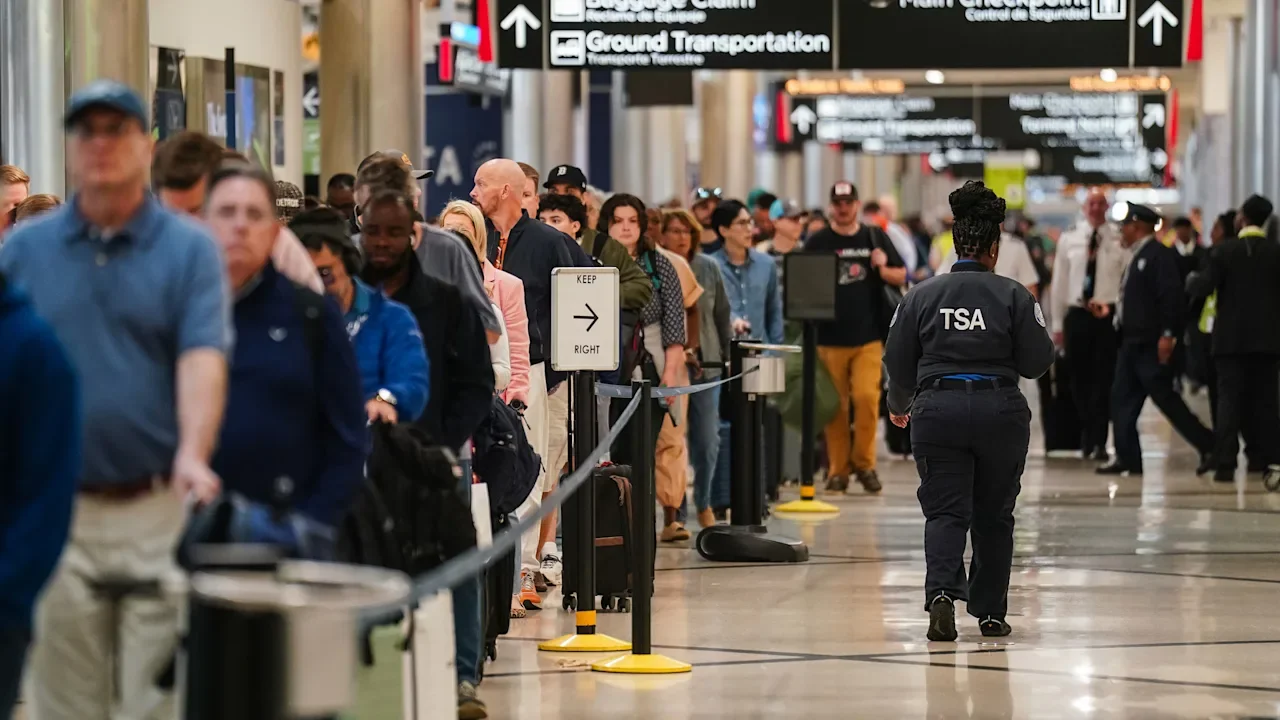
Amid the partial government shutdown, at least 61,000 Transportation Security Administration (TSA) agents are going without pay. Regardless, the employees, who are considered essential workers, have to continue showing up to work, despite not earning an income. And over 3,000 agents—over 10% of the total agency—aren’t showing up to work at all. The situation has caused major financial strain for agents who work in an already demanding job that doesn’t seem to have a safety net. Now, they’re caught in the middle of a political battle that’s caused historic chaos and dysfunction in airports across the country: terminals are standing room only, with security lines snaking their way through multiple floors of the building, with passengers waiting for hours. When essential workers get pushed to the brink—supermarket staff during the pandemic, service staff facing abuse during the holiday season, and many more—it exacerbates the challenges they already face, between low pay and difficult working conditions. These jobs are hard to begin with. Now, the system is being stretched, and it’s a complete disaster—harming both the workers and the rest of us, too. Financial nightmare for agents Most TSA agents work paycheck to paycheck. According to a 2026 TSA Pay Scale fact sheet, some entry-level positions start at $34,454 a year before bonuses or locality adjustments. The average salary for agents noted on the site is $46,000 to $55,000 with adjustments based on location. That means most TSA agents earn well below the national average salary of $66,622. It’s an unfortunate reality that affects many essential workers, who are also historically overworked and underpaid. As bills pile up, some agents are relying on food banks and donations—a third of TSA workers in Indiana have done so. This isn’t the first time in recent months that agents have gone without pay. TSA paychecks were held up for 43 days last fall during the longest government shutdown in history, as well as for several days earlier this year. At present, at least 400 agents have been forced to turn in their resignations amid the shutdown. Call-out rates have doubled, and at some airports, like Baltimore/Washington International Thurgood Marshall Airport, soared to over 11%. The missing TSA employees have hardly gone unnoticed. As airport lines have led to missed flights, chaotic scenes, one tragic accident which led to two deaths, and growing concerns about public safety. Caught in a political battle While the Department of Homeland Security (DHS) has been routinely blaming Democrats for the ongoing shutdown, Democrats are in turn calling out the fact that Republicans have blocked funding TSA pay eight times. Before the most recent vote took place, Sen. Chuck Schumer took to X to vent frustrations about the consistently blocked bills Democrats have proposed: “Instead of sending ICE agents to harass travelers at airports, why don’t Republicans get their act together and agree to pay TSA workers like we’ve asked them to SEVEN TIMES now?” Schumer wrote on Sunday. Similarly, on Monday, Sen. Cory Booker called out President Donald The President’s “inability to simply fund the TSA” in scathing remarks at Newark Liberty International Airport. “We are in a national crisis by Donald The President’s making,” Booker said. As TSA workers go without pay and airports are alerting fliers of the need to arrive three hours early, President The President isn’t calling for Republicans to make a deal to bring an end to the shutdown. Instead, he’s insisting that they don’t bend until his SAVE Act, which would require individuals to provide proof of U.S. citizenship when registering to vote in federal elections, is passed. “Don’t make any deal on anything unless you include voter ID,” The President said on Monday. With no end to the shutdown in sight, The President announced that Immigrations and Customs Enforcement (ICE) would be deployed at airports across the country. Tom Homan, the US border security chief, told CNN on Monday that ICE agents would be helping to get airport lines moving, despite not sharing the same training TSA agents receive. “There are roles we can play to release TSA officers from the nonsignificant roles, such as guarding an exit, so they can get back to the scanning machines and move people quicker,” Homan said. But now, we’re seeing an already underpaid group of essential workers become straight-up unpaid. A thankless job The current political dysfunction that’s led to the current situation aside—as well as the financial challenges—TSA agents are already up against a lot. Being an agent not only involves standing for long periods of time, but staying vigilant in a high-stress environment that’s often a target for public scrutiny. According to the American Federation of Government Employees (AFGE) union, TSA jobs have higher rates of injury than other jobs within the federal government, particularly when dealing with violent passengers. Likewise, the organization has high rates of turnover, even under normal circumstances: Per a 2019 report, nearly one-fifth of new TSA hires had quit within their first six months on the job. And while many travelers stuck in airports this week are calling for TSA agents to be treated fairly and be paid so they can resume work, the government agency has generated controversy. It’s been criticized in the past for being invasive with patdowns and body scanners, for being ineffective theatre, and for profiling passengers. Last year, a Virginia agent issued a lawsuit over a policy that bars transgender agents from conducting patdowns. Still, experts say that leaving TSA agents without pay is creating dire circumstances, both for agents and travelers—they screen millions of bags daily and serve as crucial safety staff. Melissa Franks, a business leader and founder of On Call COO, tells Fast Company that defunding the TSA sends the message “that we, as a collective populace, don’t value our safety.” “When individuals are not paid a fair living wage for the work they are doing, their lives and the lives of their families are in jeopardy,” she says. “At best, we have a stressed, exhausted security agency. At worst, we have people that are desperate.” A fight for TSA safeguards Amid the ongoing struggles for airport workers, some are hoping to reform the TSA entirely. Last year, The Reason Foundation, a public policy research platform, developed draft legislation to address a number of issues that impact TSA workers, such as what happens during a government shutdown. The legislation is meant to “insulate” the TSA from “congressional bickering and government shutdown risk.” The foundation’s senior transportation policy analyst, Marc Scribner, told Fast Company that the reform is desperately needed. “Crowding in the pre-screening area of an airport is a major security hazard and bad actors have exploited these conditions in the past, such as in Brussels and Istanbul in 2016,” Scribner explains. “The current situation with TSA is impossible in most countries. Congress should consider reforms that align with global best practices, such as giving airports the authority to contract with TSA-regulated security providers.” Regardless of what happens in the future, it’s clear that right now, agents need to be paid. Franks says that getting agents their checks is of the utmost importance. “The most important thing we can do today is pass a bipartisan bill to fund TSA,” Franks says. “Protect and reinstate national security at our airports, and provide to the brave agents in the TSA organization peace of mind that they can feed and house their families.” View the full article
-
This week, people are wrong about teleportation. A common science fiction trope, teleportation is the transfer of matter or energy from one point to another without traversing the physical space between them. Widely repeated claims of teleportation have been cropping up since at least 1583, when occultist John Dee supposedly vanished from his home in England and reappeared at the same moment in Prague. The most recent report comes from Gregg Phillips, who was appointed to lead FEMA's office of response and recovery in December. On a January episode of the Onward podcast, Phillips said, "I was with my boys one time, and I was telling them I was gonna go to Waffle House...this was in Georgia, and I end up at a Waffle House like 50 miles away from where I was... they said: 'That’s not possible, you just left here a moment ago.’ But it was possible. It was real.” Teleportation is fairly common to Phillips. He recounted another instance where he and his car were teleported 40 miles into a ditch near a Baptist Church. "Teleporting is no fun," Phillips concluded. Phillips, sadly, doesn't control the teleportation, or he could use it in his work. Some explanations for people claiming they've teleportedThere are a number of possible explanation for Phillips' story that aren't "he's nuts" or "he's lying." About 10% of people report having had an out-of-body experience, the sensation that one's consciousness has separated from their physical body. According to research published in The British Medical Journal, OBEs are often linked to a glitch in the temporo-parietal junction (TPJ), the part of the brain that integrates sensory information to orient you in space. If the TPJ is disrupted—by exhaustion, stress, or biological causes like epilepsy or migraines—a sensory "misfire" can result, where you no longer feel moored to the physical space your body occupies. It's not teleportation, but it might feel like teleportation if it happens to you. There might be a less esoteric explanation for Phillips' teleportation: "highway hypnosis." Just about everyone can relate to your mind "checking out" while you're doing something repetitive; on a long car trip, you suddenly realize you've covered 50 miles with no memory of it. "Snapping out of it" can feel like you've teleported, as you're suddenly in a new place without conscious memory of how you arrived there, and could account for the fact that Phillips' car seems to teleport with him. Another possible cause: microsleep, a sudden temporary episode of sleep or drowsiness where an individual fails to respond to sensory input and becomes unconscious. Drowsy driving accounts for over 600 fatalities annually in the U.S., and could explain ending up in a ditch in front of a Baptist church with no memory of how he ended up there. OK, but what if it was teleportation?None of that takes all of Phillips' story into account though. He says he left his house then suddenly was 50 miles away, much to the surprise of his family who confirmed that he "just left here a moment ago." So was it teleportation? No one can prove a negative, but, like historical claimants John Dee, Gil Perez, Heraldo Vidal, and every other person who has ever said they teleported, there were no reliable witnesses to Phillips' improbable journeys. No one saw him blink out of existence and no one saw him appear at the Waffle House. There's no other evidence either, so I feel confident saying that Mr. Phillips is extremely unlikely to have teleported, but let's explore the possibility. The one (kind of) exception: quantum teleportationTeleportation is possible in the quantum world. In the realm of tiny things—atoms, electrons, photons, etc.—the laws of classical physics don't work. Light can be a particle and a wave, theoretical cats can be alive and dead, and the cause and effect we take for granted are a roll of the dice. It's a mess, but a mess that allows a limited kind of teleportation. Quantum teleportation is a method of instantly transmitting information using two "entangled" particles. Measuring one particle immediately determines the state of its partner no matter where it is in space—could be a million miles away, the particle does not care. But there's a catch: You have to read the result. The data needed to complete the transfer has to be sent via a normal signal, like a radio wave or a fiber-optic cable. Since those signals are capped at the speed of light like everything else, it's not instant from our point of view. Scientists have successfully teleported single photon states over distance, but it doesn't work at a larger scale for a number of reasons. First, there's the logistics. Here's how Columbia University theoretical physicist Brian Greene described the problem of teleporting a person from New York to Los Angeles to Science Times: "We'd have to have a huge number of these entangled particles to bring a human being, and have the human being be co-mingled with this collection of particles that are entangled with the ones in L.A...It's the huge number problem that gets in the way of doing it." The word "huge" isn't big enough: there are roughly 7 octillion atoms currently calling themselves "Gregg Phillips." Monitoring the quantum state of each of them would require more computing power than has ever existed on Earth. For context, the best modern science has done is teleporting a single photon state to a satellite over 870 miles away. You can't scale that up to a 200-pound man. What, exactly, is Gregg Phillips?That's the logistical problem. There's a larger conceptual/philosophical question to teleportation. In quantum teleportation, the original particle is destroyed to complete the transfer. The quantum state is read, transmitted, and reconstructed elsewhere, but the source is gone. So who (or what) really arrives at the Waffle House? A Fema spokesperson responded to the controversy to CNN, saying, "This is so silly it’s barely worth acknowledging," but the question of who is actually running FEMA's disaster response is not silly, because if Gregg Phillips really did teleport, whatever is currently running FEMA's disaster response is not Gregg Phillips. A collection of atoms that look and talk like Gregg Phillips appeared at a Waffle House, while actual Gregg Phillips blinked out of existence back on the highway. View the full article
-
The long-defunct Nationwide Biweekly Administration, accused in 2015 of deceptive marketing, has been ordered to pay a $7.93 million civil money penalty. View the full article
-
It's the end of an (albeit short) era: OpenAI is reportedly shutting down Sora, the company's once-viral AI video generation app. The Wall Street Journal was the first to break the story, and reports that the company is shuttering the app as part of a grander plan to streamline OpenAI ahead of a potential IPO (initial public offering) later this year. OpenAI CEO Sam Altman addressed the news first with company staff on Tuesday, the Wall Street Journal says. It seems the move goes beyond just shutting down the Sora app itself: In addition to axing a developer-version of Sora, Altman reportedly told staff that OpenAI would not incorporate its AI video models in other company products going forward, including ChatGPT. Sora's official X account posted to confirm the news: This Tweet is currently unavailable. It might be loading or has been removed. The brief history of SoraOpenAI only launched Sora in October of last year, and in that short period of time, the app helped propel AI-generated slop across social media feeds, including Instagram, TikTok, and YouTube. Sora is far from the only tool people use to make to AI video content, but it offered an easy solution for generating hyper-realistic short-form video content. If you encountered AI versions of the types of videos you tend to scroll past on social media, chances are it came from Sora. Sora also made it possible to generate "Cameos," or make videos with the likeness of real people. The company was adamant its privacy and security policies were significant enough to ensure it wouldn't be used for ill, but the potential for deepfakes was so great, it seemed like a pandora's box waiting to be opened. Still, Sora gained some legitimacy in the eyes of traditional media, too: In a perplexing move, Disney partnered with OpenAI to let users generate videos featuring over 200 Disney characters. You might assume OpenAI paid for that integration, but on the contrary, Disney made an equity investment of $1 billion into the company. (That is not a typo.) But with Sora's sunsetting, Disney officially exited the deal on Tuesday. Is this the end of AI videos for OpenAI?This announcement has implications beyond Sora the app. If OpenAI largely abandons AI video generation in general, it will be exiting a tight race amongst competition from companies like Google (Veo) and ByteDance (Seedance). The Sora app uses OpenAI's Sora video model, which the company announced two years ago. Back then, OpenAI's concept video scared the bejeezus out of me; since then, the AI video market has only exploded. While Sora might've been the go-to for short-form nonsense, there's plenty of other AI slop across the internet being made with other tools—some of which is getting extremely difficult to discern from reality. OpenAI seems to have a difference focus going forward. The company previously announced a new "super app" that combines its web browser (Atlas), ChatGPT, and Codex coding app into one program. I guess Sora didn't fit into that equation. (Disclosure: Lifehacker’s parent company, Ziff Davis, filed a lawsuit against OpenAI in April 2025, alleging it infringed Ziff Davis copyrights in training and operating its AI systems.) View the full article
-
We may earn a commission from links on this page. Nvidia might be courting controversy with its recent DLSS 5 tech, but the company’s GPUs are still pretty powerful devices for running your games. If you have an RTX card in your desktop or laptop, you might be able to get even better performance out of it than you’re already seeing. Here are some of my favorite hacks to optimize your Nvidia GPU. Enable DLSS to boost your frame rates (or disable to save on performance)Nvidia’s Deep Learning Super Sampling (or DLSS) is actually a suite of features collectively aimed at improving the resolution and frame rate of your games. Some of this involves rendering lower-resolution frames and using machine learning to upscale them, while the more recent DLSS 4 and 4.5 models can generate intermediate frames between traditionally rendered ones. In most cases, this means a smoother frame rate, at a lower computational cost. Of course, DLSS doesn’t come at zero computational cost, and that trade-off might not be worth it for you. Competitive online games or fast-paced action shooters often benefit from smoother frame rates, but some games are perfectly fine at 60 fps or so. In some games, you can turn off DLSS specifically, or you might find a more simplified toggle between Performance and Quality modes. It’s worth experimenting with these settings to see whether your prefer higher visual fidelity, or smoother frame rates. I should also briefly discuss DLSS 5, which isn’t currently available, but is expected to arrive on newer Nvidia GPUs later in 2026. This is the first version of DLSS demoed that substantially alters the content of what appears on screen. Nvidia insists that developers are in control of how it makes games look, though many developers aren’t exactly thrilled about it. When DLSS 5 eventually drops, you might want to explore disabling it just to see whether it affects the aesthetics of the game, on top of any performance changes. Use DLAA for anti-aliasing in games you don't use DLSS withNvidia’s Deep Learning Anti-Aliasing (or DLAA) is in a similar family to DLSS features, but comes at the problem from the opposite angle. Anti-aliasing is a cornerstone bit of graphical technology that helps prevent the "stair-stepping" effect that can occur when rendering angled or curved lines. Where DLSS renders lower-resolution images and upscales them, DLAA takes full-resolution frames and uses machine learning to clean them up to produce smoother lines, without as much of a computational lift. In general, DLAA and DLSS are mutually exclusive. If you have DLSS enabled, you can’t use DLAA and vice versa. There are other anti-aliasing methods you might find buried in your game’s settings, and most of the older ones don’t rely on machine learning. But this is one area where using machine learning techniques can provide a tangible benefit without altering the creative design of your games. Disable ray-tracing to increase your frame ratesAnother of Nvidia’s marquee features, real-time ray tracing, is an incredibly powerful tool to get photorealistic lighting and shadows. This is the same method that CGI workflows have been using for decades in movies to get realistic images, but it requires so much processing power that it’s only become feasible for games in recent years. That massive computational cost also means that, unless you’re running a game on exceptionally overpowered hardware, you’ll probably notice a frame rate drop in exchange for reflective puddles. Again, this will come down to personal preference, but if you’re finding that you’re struggling to get smooth motion in your games, consider turning off any ray tracing features in your game’s settings. Tune your GPU to prioritize either performance or battery lifeOverclocking your GPU is a common way to get a little performance boost, but if done the wrong way, it can potentially damage your hardware. So, Nvidia offers an official way to do it that’s designed to minimize that risk. In the official Nvidia app, head to the System tab, and enable "Automatic Tuning." This will let you get some extra speed out of your GPU, while still staying within your graphics card’s warranty. However, you might also want to consider under-clocking your GPU. For this, you’ll need third-party tools like MSI’s Afterburner. Rather than running your GPU faster than its default, you can set it to run slightly slower. Why on earth would you want to do that, though? Well, in many cases, you often won’t notice much of a difference in performance from a GPU that’s running 5% slower. But for that trade-off, you can make your system run quieter and, on a gaming laptop, get longer battery life. Pick up a monitor that supports G-SyncMost gaming-focused monitors (and many that aren’t) support Nvidia’s G-Sync, but if you haven’t double-checked yours, it’s worth looking into. G-Sync is Nvidia’s version of variable refresh rate (or VRR) tech that reduces screen-tearing. This is an effect that can happen when the number of frames being rendered by your GPU don’t perfectly sync up with the frame rate of your display. Tools like G-Sync allow your GPU to vary the number of frames sent to your monitor each second, to avoid accidentally sending half-frames. There are plenty of great G-Sync compatible monitors out there, from budget-friendly models like this one from LG, to some higher-end models like this one from Alienware. You can usually find G-Sync listed among the top-line specs for monitors while shopping, but if you’re not sure about your current display, find its model number and search for its specs online. If your monitor doesn’t officially support G-Sync, but does support AMD’s competing FreeSync, it’s sometimes possible to still get G-Sync working for you too. Enable G-Sync Pulsar for even better motion clarityThis one is much more rare, but if you have one of a handful of compatible monitors, then Nvidia’s newer G-Sync Pulsar feature can get you even better motion clarity. This new tech pulses the backlight on a supported monitor at a variable frequency to render motion more clearly. Nvidia claims it’s the equivalent of, effectively, a 1,000Hz refresh rate. That’s a bit of a bold claim, and at a certain point it might be impossible for the human eye to tell the difference anyway. That said, if you have a monitor that supports it, you may as well turn the feature on to maximize the motion clarity in your games. Enable Reflex to reduce input latencyWhen you’re playing a competitive online game, there are a lot of steps between when you click a button, and when the game registers what you’ve done. And that delay can mean the difference between clicking heads and getting your own head clicked. That’s where Nvidia’s Reflex tech can help. This feature tightens the pipeline between your mouse clicks, your GPU, and your CPU, shaving milliseconds off your input latency. That might not sound like a lot, but it can make a difference. Most online games operate on a tick rate (meaning how often per second the game’s state is updated) of around 60-64Hz. That means the game is checking your position, aim, and inputs every 15-17 milliseconds or so. If your input latency is over 20ms, that can mean you’re essentially missing a “turn” or two in the game, just waiting for your input to register. Reflex can shave that down. You'll find the option in the input setting for most games under "Nvidia Reflex Low Latency." Here, you can choose between "Off," "On," or "On + Boost" (though usually you can just go for "On + Boost" unless you're facing some niche technical problem). Enable Video Super Resolution for better streaming videoWe tend to think of GPUs as mostly being aimed at gaming graphics, but regular old streaming video can benefit from some of Nvidia’s special features too. For example, RTX Video Super Resolution (or VSR) can upscale video from sites like YouTube, Netflix, or Twitch. To turn it on, head to your Nvidia Control Panel or the Nvidia app and look for “Super Resolution” under the Video tab in Settings. This feature is particularly useful when you’re watching older or lower-resolution video, particularly 720p or lower. For higher-resolution, 1080p streaming video and up, you might not notice much of a difference, because those videos are already pretty high quality, but it can be a nice boost for lower-quality stuff. Keep in mind the usual caveats with machine learning-powered upscaling, though. It’s never perfect, and if you want to avoid artifacts or get the most accurate source image, you might want to disable this feature instead. But it's a good hack for bumping the sharpness of lower-resolution media. Use the Broadcast app to improve your streaming setupIf you stream online, or even if you just spend a lot of time in Zoom meetings, the Nvidia Broadcast app can potentially help clean up your audio and video feeds. In one of the better use-cases for machine learning, this app has a suite of tools that can help eliminate background noise your microphone picks up, cut out the background from your webcam, or clean up your video. Some of the app’s features are a bit more, let’s say, ambitious than just cleaning things up, though. The "Eye Contact" feature, for example, will artificially make you appear as though you’re looking directly into the camera, even when you’re not. That can be more off-putting than helpful, so maybe don’t turn that particular feature on. Update your drivers to make sure your games run smoothlyWhen it comes to solving technical problems, updating your drivers is right up there with “turn it off and on again.” Even if nothing is broken, though, it’s a good idea to check for new drivers any time you download a new game, or one of your favorites gets a big update. Often, after a major game gets a new release or update, the Nvidia app will have updated drivers specifically tailored for it. These usually include bug fixes for specific games, as well as updates to the DLSS models that are trained on individual titles. Around the time of writing, for example, Nvidia is touting updates for Crimson Desert and the PC release of Death Stranding 2. If you haven’t checked for driver updates in a while, especially if you’re trying to play something new, make sure to hit that check for update button. View the full article
-
The Long Island-based lender is one of five nonbanks since January to have disclosed a prior hack, with the extent of those incidents remaining unknown. View the full article
-
When a new song attributed to country singer Blaze Foley, “Together,” appeared on his Spotify profile last year, something didn’t seem right. For starters, Foley had been dead for more than two decades, and the cover art featured AI artwork of a man who wasn’t Foley, and the song wasn’t uploaded by Foley’s longtime distributor. Fake tracks have appeared on various artist profiles, including easy-listening act The Sweet Enoughs, and Australian bands Alpha Wolf and Thy Art Is Murder. Smaller artists are not safe either, with musician Catherine Brennan taking to TikTok saying “in the past two weeks I’ve had two albums released under my name that are not mine.” Spotify on Tuesday unveiled a new effort designed to prevent these incidents from happening. The streaming giant’s Artist Profile Protection service allows artists more control over the content that appears under their name. While sometimes the error might come from bad actors, it can also be the result of less nefarious things like metadata mixups or confusion over artists with the same name. Regardless of the reason, artists can now prevent it altogether with Spotify’s new feature. “We know how frustrating this can be for both artists and fans alike and one of the top requests we’ve heard from artists over the past year is that you want more visibility before music appears under your name,” Spotify said in a press statement. How it works Artist Profile Protection is in limited beta and will allow participating artists to opt in for a review step before content goes live on their profile. As of now, Spotify says it has invited a few thousands of artists to test the feature, with plans to scale it in the coming months. Artists who turn on the feature will be able to accept or decline releases on a dashboard in their Spotify for Artists account. Upon approval, a track will go live on a chosen date, appear under the artist’s profile, and contribute to their statistics. If an artist declines, the track won’t be released. The feature is intentionally optional, as not every artist may benefit from it and it may delay or block legitimate releases. “Artist Profile Protection isn’t necessary for every artist, but could make sense if you’ve experienced repeated incorrect releases, have a common artist name, or want more control over what appears on your profile,” Spotify said. Additionally, artists will be provided with an unique code or “artist key” which they can use to pre-approve a track being uploaded to the service, skipping the approval step. View the full article

-
We may earn a commission from links on this page. Deal pricing and availability subject to change after time of publication. As part of an early Amazon Big Spring Sale deal, you can get the Apple iPad (11th Gen, 2025) with wifi and cellular capability for $651 (originally $799)–its lowest price ever, according to price trackers. Available in four colors, this capable tablet won a PCMag Best of the Year Award in 2025. 2025 Apple iPad - 11-inch (A16) $651.20 at Amazon $799.00 Save $147.80 Get Deal Get Deal $651.20 at Amazon $799.00 Save $147.80 The Apple iPad (11th Gen, 2025) comes with 512GB storage and has many of the same specs as its predecessor, with the main difference being a new processor. It has a 5-core CPU A16 for faster performance, and while it doesn’t come equipped with Apple’s AI tools, it handles everyday tasks like web browsing, streaming media, and playing games with ease–better than most competitors in its class. That said, if you want more advanced processing power, you’ll want to upgrade to the pricier iPad Air or iPad Pro, which are also on sale right now. Design-wise, this iPad is similar to the 2022 model, which is typical for Apple’s 11-inch tablets, complete with Touch ID (not Face ID), requiring a fingerprint to unlock. It has a 2,360-by-1,640 resolution, a pixel density of 264ppi, and a 60Hz refresh rate. Compared to the older model, the screen is slightly larger (11 inches vs 10.9 inches), and uses a Liquid Retina display with an LED-backlit panel reaching up to 500 nits of brightness, though it can still show some glare outdoors. Battery life is around 10 hours when using a wifi connection and 9 hours over cellular. The tablet supports Wi-Fi 6 (but not Wi-Fi 6E) as well as Bluetooth 5.3, sub-6GHz 5G, gigabit LTE, and GPS. It has a 12MP rear camera with an f/1.8 aperture, up to 5x digital zoom, 4K video recording, and support for Apple's Smart HDR 4 processing. The cameras far outperform cheap or similarly priced tablets from other brands. While this isn’t Apple’s most advanced tablet, it hits the sweet spot in most areas, making it the one that “most people should buy,” according to PCMag, especially at just $651.20. That said, if you need a more powerful processor, a higher-end display, Wi-Fi 6E, or Apple Intelligence features, you may want to upgrade to the iPad Air, which is also 18% off ahead of Amazon’s Big Spring Sale. Our Best Editor-Vetted Amazon Big Spring Sale Deals Right Now Apple AirPods 4 Active Noise Cancelling Wireless Earbuds — $149.00 (List Price $179.00) Apple iPad 11" 128GB A16 WiFi Tablet (Blue, 2025) — $299.00 (List Price $349.00) Sony WH1000XM6- Best Wireless Noise Canceling Headphones — $398.00 (List Price $459.99) Apple Watch Series 11 (GPS, 42mm, S/M Black Sport Band) — $299.00 (List Price $399.00) Blink Video Doorbell Wireless (Newest Model) + Sync Module Core — $35.99 (List Price $69.99) Ring Indoor Cam Plus 2K Wired Security Camera (White) — $39.99 (List Price $59.99) Fire TV Stick 4K Max Streaming Player With Remote — $34.99 (List Price $59.99) Amazon Kindle Colorsoft 16GB 7" eReader (Black) — $169.99 (List Price $249.99) Deals are selected by our commerce team View the full article
-
During a lunch with my friend Kurt at the Chicago Club—one of those quietly elegant institutions where history sits comfortably in the room—I arrived with a question. It was one that could only be asked by someone trying to understand the United States from outside its horizon. Kurt’s surname carries enough S’s and K’s to suggest Eastern European roots. I am Brazilian, the grandson of Italians, Portuguese, Ukrainians, and with some Indigenous blood. Our grandparents crossed oceans from similar places, yet our lives unfolded inside different societies. I asked him: If our families had boarded different ships—mine arriving at Ellis Island and his in Brazil—would we have become different people? Was history shaped by conviction, or sometimes merely by direction? Only later did I understand the real question was about perception, how distance changes what a society looks like from within and from afar. In North America, immigrants often gathered within familiar communities. In Brazil, something else happened. Differences dissolved faster. We blend. Identity becomes porous, negotiated daily rather than preserved intact. I grew up in southern Brazil, roughly one degree below the tropics. It’s about 3,000 feet above sea level and nearly 100 miles from the Atlantic coast, a rare climatic equilibrium. We saw neither snow nor extreme heat, neither storms nor violent winds. Life unfolded with minimal disruption, small variations around a predictable center. Stability hides systems. When little changes around you, the structures organizing life become invisible. In the 1980s, we installed antennas on rooftops, searching for distant radio signals and trying to capture BBC broadcasts through atmospheric noise. Vinyl records carried fragments of Anglo culture into our homes. That world existed somewhere else long before we experienced it. A CHANGE IN SCENE In 1999, at 23, I crossed what felt like the nearest door into the United States: Miami International Airport. Two sensations collided: overwhelming heat and unexpected precision. Queues moved with silent coordination; procedures anticipated behavior. The country felt less like a place and more like a standard operating procedure. The United States did not merely function; it executed. During the Bush–Gore election dispute, I witnessed something Brazil would later experience more intensely: the power of social psychology in politics. What appeared to be a legal controversy also revealed how quickly societies divide into camps where interpretation follows identity. I believed I possessed everything needed to pursue the American Dream: youth, freedom, ambition. Yet something in me resisted adaptation—an Italian sense of aesthetics searching for variation, a Mediterranean temperament inclined toward reflection rather than acceleration, and a quietly Camusian instinct questioning efficiency when it became an end. Systems optimized for performance produced extraordinary results, yet seemed to compress the contradictions through which human life often finds meaning. So I left. But I did not truly leave. NEW VIEWS Before departing, I established a defining professional agreement in the U.S. And although I no longer lived there, I continued working under the American branch of a global technology organization. I had run from America while still operating inside one of its institutional extensions. Geography changes faster than systems. Institutions travel through people. Working alongside Asian partners during the early expansion of wireless internet, I helped introduce public connectivity experiments in Brazil. Networks revealed something new: Systems often understand human behavior before humans understand them. The following years unfolded across continents, exposing different assumptions about risk, hierarchy, and trust. Then came South Asia. I spent 7 years moving in and out of Pakistan, and 12 years in total across Asia, including periods in India, Bangladesh, and China. Pakistan dismantled my internal references. Poverty, instability, and political tension forced me back to history books to understand how societies arrive at such different equilibria. During one visa renewal at a U.S. embassy, an officer examined my passport filled with repeated entries into Pakistan and asked why I kept going there. Osama bin Laden had not yet been captured. Geography itself carried suspicion. BETWEEN CULTURES Years later, walking along the coast of New Jersey to escape New York’s intensity, I entered a small restaurant filled with elderly couples. Conversations stopped when my wife and I walked in. She is Chinese-Lebanese, with green eyes and features difficult to categorize. They feared us. And unexpectedly, I realized we feared them too. Societies are not only systems of laws or markets; they are projections of uncertainty. Fear is rarely unilateral; it is symmetrical. Moving between cultures that admired the United States and others that opposed it, my interpretation of America oscillated. Distance did not produce clarity at first. It produced instability, the loss of certainty about one’s assumptions. Over time, perception stretched. Long exposure to incompatible systems allows societies to appear not as fixed identities but as moments within longer historical processes. I began to see the United States differently—not as an ideal or an adversary, but as a configuration of organization and trust. It was a society that behaves, in many ways, like an operating system—resilient because of rules, innovative because of scale, misunderstood by critics and admirers alike. My relationship with the United States is not one of blind admiration. Instead, it has become a place of renovation, somewhere I return regularly for intellectual and professional renewal. There I observe social psychology in motion: how large systems organize cooperation, how groups form narratives, and how leadership emerges from the management of collective perception. In that sense, America functions as a kind of hypermodern school of leadership—less concerned with dismantling structures than with understanding how human systems coordinate trust, conflict, and innovation at scale. Today, when my mother travels to visit my brother there, I sometimes realize that my immediate family could easily end up entirely in the United States. In such moments, the logic of the American Dream seems almost self-evident. Yet my relationship with the country has evolved differently: less a destination than a hub of observation and exchange. I travel frequently, remain professionally engaged, and write for Fast Company. Distance does not automatically make us wiser. It reveals the assumptions we did not know we carried. Rodrigo Magnago is director at R-Magnago Critical Thinking View the full article

-
We may earn a commission from links on this page. Protein shakes can end up chunky or lumpy if you don’t mix them right. That’s why a shaker bottle does a better job of mixing whey into milk than simply stirring with a spoon. A blender works even better, if you’re up for cleaning a blender when you’re done. But there is a better option: a handheld frother. FoodVille MF02 Rechargeable Milk Frother $5.96 at Amazon $7.99 Save $2.03 Shop Now Shop Now $5.96 at Amazon $7.99 Save $2.03 To be clear, this is for drinks where you are mixing a powder into a liquid. (If you want ice and fruit in your protein shake—a smoothie, rather than a simple drink—you’ll still need a blender. But you knew that.) As far as I can tell, it works with any powder and any liquid. I’ve tested the frother, and found it gives excellent results with: Collagen powder and coffee (or tea) Whey powder and water Clear whey and water Hot cocoa and milk Various supplement powders in, well, anything Embarrassingly, I didn’t think of this on my own. Supplement companies like MUD\WTR and Beam include a handheld frother in their starter packs. In fact, the only reason I own a frother in the first place is that MUD\WTR sent me one with some samples once in hopes I would review the product. (My review: I don’t like it.) How to use a frother to mix your protein powderFirst, get yourself a frother. These are simple handheld gadgets that are priced about the same as a shaker bottle, about $7-10 on the low end, and going up to roughly infinity since these are a Fancy Coffee Accessory. The cheap ones will do fine for our purposes. Get one that is powered by AA batteries or that you charge over USB. Next, get your liquid ready. The first time you do this, make sure to use an oversized container. The liquid will rise as you turn the frother on. But if you use, say, eight ounces of liquid in a 16-ounce container, you'll avoid a surprise mess. Add the powder to the liquid, insert the frother, and turn it on. (Unless you’re using clear whey, which tends to gum up the frother; better to insert the frother first and then add the powder.) If you hold the frother in the center of the cup, you’ll get a whirlpool effect that sends the liquid up toward (or over) the rim of the container, hence my warning. Once you’ve done this a few times, you’ll figure out how to do it with less mess. Angling the frother and holding it against the side of the cup tends to keep the waves down. You can also pulse the frother a few times instead of having it on continuously, which cuts down on the waves even further. It only takes five to 10 seconds to mix yourself a smooth, creamy protein shake—or hot cocoa, or whatever else your smooth-beverage-appreciating heart desires. Take a few more seconds to wash the business end of the frother; a brief swish with a soapy sponge under running water is usually all you need. And then enjoy your perfectly mixed drink with nothing besides your cup to clean up later. View the full article
-
Google updated its Discussion Forum and Q&A Page structured data docs with new properties, including a way to label AI- and machine-generated content. The post Google Adds AI & Bot Labels To Forum, Q&A Structured Data appeared first on Search Engine Journal. View the full article
-
While TSA agents are currently without pay due to the partial government shutdown, some airlines don’t think Congress members deserve special treatment. Delta Air Lines just suspended its Specialty Services perk for Congress members amid the shutdown that has left TSA workers without paychecks. “Due to the impact on resources from the longstanding government shutdown, Delta will temporarily suspend specialty services to members of Congress flying Delta,” Delta said in a statement to CNBC. “Next to safety, Delta’s no. 1 priority is taking care of our people and customers, which has become increasingly difficult in the current environment,” the airline said. The decision comes as Congress has been criticized for failing to reach a deal and bring an end to the shutdown which has entered its fifth week, causing long lines at airports, safety issues, and financial instability for workers. At least 400 TSA workers, who are essential employees and are required to show up for work regardless of the status of the federal government, have turned in their resignations as a result. Others are opting to stay home from work in high numbers. Delta has traditionally given priority VIP service to congressional members. That special treatment has allowed members of congress to bypass TSA lines, as well as receive courtesy escorts. Per, the Atlanta Journal-Constitution, who first reported the news, Delta is also suspending its “special congressional desk service” for lawmakers until a resolution has been reached that funds the TSA. Last week, Delta CEO Ed Bastian told CNBC he’s “outraged” by the shutdown, given the major impacts to airport staff, many who work paycheck to paycheck. “It’s inexcusable that our security agents, our frontline agents, that are essential to what we do, are not being paid, and it’s ridiculous to see them being used as political chips,” Bastian said. While republicans have been continuously blaming democrats for the ongoing shutdown, on Monday The President urged republicans not to cave, telling them, “Don’t make any deal on anything unless you include voter ID,” The President said on Monday of the SAVE Act, which would require proof of U.S. citizenship when registering to vote in federal elections. Meanwhile, congressional republicans have already blocked eight democrat-led attempts to fund the TSA. On Monday, Senator Cory Booker called the current situation “a national crisis by Donald The President’s making” during a press conference at the Newark Liberty International airport. Delta’s move to suspend specialty services should be as temporary as the partial government shutdown. However, some lawmakers have pitched making the end of such services a permanent change. On Tuesday, Congresswoman Ashley Hinson (IA-02) introduced the End Special Treatment for Congress at Airports Act. If passed, the legislation which would require members of congress to undergo the same TSA procedures as all other passengers. It would also disallow federal funds “from being used to provide U.S. Senators and House members with expedited or preferential access at airport security checkpoints.” View the full article

-
Google started rolling out the March 2026 spam update. The update applies globally and to all languages, with rollout taking a few days. The post Google Begins Rolling Out The March 2026 Spam Update appeared first on Search Engine Journal. View the full article
-
More than 42,000, or 13.7%, of home-sale agreements in the United States fell through in February, according to a new Redfin report. View the full article
-
Creating an effective Customer Satisfaction (CSAT) survey sample is fundamental for evaluating how well your company meets customer needs. A well-structured survey can provide valuable insights into customer experiences. It should include clear questions that allow for various response formats, such as ratings and open-ended feedback. Comprehending the components and best practices can greatly improve your survey’s effectiveness. Let’s explore the key elements that contribute to a successful CSAT survey and how to implement them. Key Takeaways Start with a clear question on customer satisfaction, such as “How satisfied are you with [COMPANY NAME]?” to set the focus. Utilize a rating scale (1 to 5 or 1 to 10) for straightforward feedback collection and easy analysis. Include a mix of question types—Likert scale, multiple choice, and open-ended—to gather diverse insights and enhance engagement. Keep the survey concise with fewer than 10 questions to maintain respondent interest and increase completion rates. Distribute surveys shortly after customer interactions and through various channels to maximize response rates and relevance. Importance of Customer Satisfaction Surveys Customer satisfaction surveys (CSAT) play a fundamental role in comprehending how well your products or services align with customer expectations. By utilizing a csat survey template, you can gather important feedback that reflects customer experiences, helping you identify both strengths and weaknesses in your offerings. Research shows that 62% of customers believe brands should prioritize their needs more, emphasizing the importance of obtaining insights through CSAT surveys. When you actively seek feedback, you can cultivate customer loyalty, as 60% of customers are likely to return to companies that treat them well. In addition, effective CSAT surveys can generate positive word-of-mouth, greatly improving your brand’s reputation. As you create your csat survey sample, keep in mind that a robust feedback mechanism is crucial for making informed decisions that can improve overall customer satisfaction and contribute to long-term business success. Key Components of an Effective CSAT Survey To create an effective CSAT survey, start with a clear and concise question that directly addresses customer satisfaction, such as “How satisfied are you with [COMPANY NAME]?” Using a rating scale from 1 to 5 or 1 to 10 makes it easy for respondents to provide their feedback. Incorporate a mix of question types to gather thorough insights, including: Likert scale questions for nuanced opinions Multiple choice options for quick responses Open-ended questions for detailed feedback Demographic questions to segment data Follow-up questions to explore specific issues Keep your survey short, ideally under 10 questions, to maintain engagement. Timing is essential; send surveys shortly after interactions so feedback is fresh. Finally, always analyze CSAT scores in context, comparing them to industry benchmarks to gauge your performance effectively. This approach will help you understand and improve customer satisfaction more accurately. Best Practices for Survey Design When designing a survey, it’s essential to establish a clear objective that guides the creation of each question, guaranteeing they effectively measure customer satisfaction and provide actionable insights. Keep your survey concise by limiting it to fewer than 10 questions; this helps maintain respondent engagement and reduces survey fatigue, boosting response rates. A mix of question types, including Likert scale, multiple choice, and open-ended questions, captures both quantitative and qualitative feedback, giving you a thorough grasp of customer sentiments. Make sure your questions are simple, clear, and free from jargon to avoid confusion, leading to more accurate responses. Finally, test the survey across different devices and platforms before distribution to guarantee accessibility and functionality. This step is vital for maximizing completion rates, as it ensures that all respondents can easily participate without technical issues affecting their experience. Timing and Distribution Strategies Timing and distribution play crucial roles in the effectiveness of your CSAT survey. To gather accurate feedback, send your surveys shortly after customer interactions, like post-purchase or after support calls. This strategy guarantees that their experiences are fresh in their minds. Here are some key points to reflect on: Use multiple channels (email, mobile apps, website pop-ups) to reach a wider audience. Limit survey requests to once a month to prevent survey fatigue. Automate follow-up reminders to encourage participation. Analyze response patterns to determine the best timing and delivery methods. Continuously improve your strategy based on feedback trends. Analyzing Feedback and Implementing Changes Analyzing customer feedback is vital for businesses aiming to improve satisfaction and loyalty. By identifying trends and patterns in CSAT survey results, you can understand customer satisfaction levels and areas needing improvement. Regularly correlating CSAT scores with other metrics like Net Promoter Score (NPS) and Customer Effort Score (CES) offers a thorough view of customer sentiment, helping you pinpoint specific factors affecting satisfaction. Implementing changes based on feedback can greatly boost customer loyalty, as 70% of consumers prefer organizations that effectively address complaints. It’s important to close the feedback loop by communicating to customers how their input has influenced changes, as this cultivates trust and strengthens brand relationships. Moreover, continuous monitoring and analysis of CSAT data allow you to adapt strategies proactively, ensuring you meet evolving customer expectations and maintain a competitive advantage in your market. Frequently Asked Questions What Is an Example of a CSAT Survey? A CSAT survey typically features a key question like, “How satisfied are you with our service?” You’d rate your satisfaction from 1 to 5. It might also include an open-ended question, asking, “What can we do to improve your experience?” This allows for detailed feedback. Companies then calculate the CSAT score by dividing positive responses by total responses, providing a percentage that indicates overall customer satisfaction. A concise survey, under 10 questions, often increases response rates. How to Create a CSAT Survey? To create a CSAT survey, start by defining your main objective, whether it’s measuring overall satisfaction or focusing on specific areas. Use a clear response scale, like 1 to 5, for straightforward feedback. Incorporate a variety of question types, including Likert scale and open-ended questions, to gather diverse insights. Keep it concise, ideally under 10 questions, and guarantee it’s accessible across different devices for a smooth participant experience. Testing is essential for effectiveness. What Are the 3 C’s of Customer Satisfaction? The three C’s of customer satisfaction are Consistency, Communication, and Customer-Centricity. Consistency guarantees you deliver quality products or services reliably, which builds trust. Communication keeps you informed about product updates and changes, setting clear expectations for customers. Customer-Centricity focuses on comprehending and addressing your customers’ needs, leading to personalized experiences. What Are 5 Good Survey Questions? When crafting survey questions, you should consider clarity and relevance. Start with, “How satisfied are you with your recent purchase?” to gauge overall satisfaction. Follow with, “How likely are you to recommend our company?” for loyalty insights. Ask, “What specific aspects did you find most satisfying?” to collect qualitative feedback. Include, “How easy was it to resolve your issue with customer service?” for support effectiveness. Finally, inquire, “What can we improve in your experience?” for actionable suggestions. Conclusion In conclusion, creating an effective CSAT survey involves comprehending its importance, incorporating key components, and following best practices in design. By strategically timing and distributing your survey, you can maximize response rates and gather valuable feedback. Analyzing this feedback allows you to implement changes that improve customer satisfaction. In the end, a well-crafted CSAT survey not just assesses customer sentiment but serves as a tool for continuous improvement, nurturing better relationships with your customers over time. Image via Google Gemini This article, "Creating an Effective CSAT Survey Sample" was first published on Small Business Trends View the full article
-
Creating an effective Customer Satisfaction (CSAT) survey sample is fundamental for evaluating how well your company meets customer needs. A well-structured survey can provide valuable insights into customer experiences. It should include clear questions that allow for various response formats, such as ratings and open-ended feedback. Comprehending the components and best practices can greatly improve your survey’s effectiveness. Let’s explore the key elements that contribute to a successful CSAT survey and how to implement them. Key Takeaways Start with a clear question on customer satisfaction, such as “How satisfied are you with [COMPANY NAME]?” to set the focus. Utilize a rating scale (1 to 5 or 1 to 10) for straightforward feedback collection and easy analysis. Include a mix of question types—Likert scale, multiple choice, and open-ended—to gather diverse insights and enhance engagement. Keep the survey concise with fewer than 10 questions to maintain respondent interest and increase completion rates. Distribute surveys shortly after customer interactions and through various channels to maximize response rates and relevance. Importance of Customer Satisfaction Surveys Customer satisfaction surveys (CSAT) play a fundamental role in comprehending how well your products or services align with customer expectations. By utilizing a csat survey template, you can gather important feedback that reflects customer experiences, helping you identify both strengths and weaknesses in your offerings. Research shows that 62% of customers believe brands should prioritize their needs more, emphasizing the importance of obtaining insights through CSAT surveys. When you actively seek feedback, you can cultivate customer loyalty, as 60% of customers are likely to return to companies that treat them well. In addition, effective CSAT surveys can generate positive word-of-mouth, greatly improving your brand’s reputation. As you create your csat survey sample, keep in mind that a robust feedback mechanism is crucial for making informed decisions that can improve overall customer satisfaction and contribute to long-term business success. Key Components of an Effective CSAT Survey To create an effective CSAT survey, start with a clear and concise question that directly addresses customer satisfaction, such as “How satisfied are you with [COMPANY NAME]?” Using a rating scale from 1 to 5 or 1 to 10 makes it easy for respondents to provide their feedback. Incorporate a mix of question types to gather thorough insights, including: Likert scale questions for nuanced opinions Multiple choice options for quick responses Open-ended questions for detailed feedback Demographic questions to segment data Follow-up questions to explore specific issues Keep your survey short, ideally under 10 questions, to maintain engagement. Timing is essential; send surveys shortly after interactions so feedback is fresh. Finally, always analyze CSAT scores in context, comparing them to industry benchmarks to gauge your performance effectively. This approach will help you understand and improve customer satisfaction more accurately. Best Practices for Survey Design When designing a survey, it’s essential to establish a clear objective that guides the creation of each question, guaranteeing they effectively measure customer satisfaction and provide actionable insights. Keep your survey concise by limiting it to fewer than 10 questions; this helps maintain respondent engagement and reduces survey fatigue, boosting response rates. A mix of question types, including Likert scale, multiple choice, and open-ended questions, captures both quantitative and qualitative feedback, giving you a thorough grasp of customer sentiments. Make sure your questions are simple, clear, and free from jargon to avoid confusion, leading to more accurate responses. Finally, test the survey across different devices and platforms before distribution to guarantee accessibility and functionality. This step is vital for maximizing completion rates, as it ensures that all respondents can easily participate without technical issues affecting their experience. Timing and Distribution Strategies Timing and distribution play crucial roles in the effectiveness of your CSAT survey. To gather accurate feedback, send your surveys shortly after customer interactions, like post-purchase or after support calls. This strategy guarantees that their experiences are fresh in their minds. Here are some key points to reflect on: Use multiple channels (email, mobile apps, website pop-ups) to reach a wider audience. Limit survey requests to once a month to prevent survey fatigue. Automate follow-up reminders to encourage participation. Analyze response patterns to determine the best timing and delivery methods. Continuously improve your strategy based on feedback trends. Analyzing Feedback and Implementing Changes Analyzing customer feedback is vital for businesses aiming to improve satisfaction and loyalty. By identifying trends and patterns in CSAT survey results, you can understand customer satisfaction levels and areas needing improvement. Regularly correlating CSAT scores with other metrics like Net Promoter Score (NPS) and Customer Effort Score (CES) offers a thorough view of customer sentiment, helping you pinpoint specific factors affecting satisfaction. Implementing changes based on feedback can greatly boost customer loyalty, as 70% of consumers prefer organizations that effectively address complaints. It’s important to close the feedback loop by communicating to customers how their input has influenced changes, as this cultivates trust and strengthens brand relationships. Moreover, continuous monitoring and analysis of CSAT data allow you to adapt strategies proactively, ensuring you meet evolving customer expectations and maintain a competitive advantage in your market. Frequently Asked Questions What Is an Example of a CSAT Survey? A CSAT survey typically features a key question like, “How satisfied are you with our service?” You’d rate your satisfaction from 1 to 5. It might also include an open-ended question, asking, “What can we do to improve your experience?” This allows for detailed feedback. Companies then calculate the CSAT score by dividing positive responses by total responses, providing a percentage that indicates overall customer satisfaction. A concise survey, under 10 questions, often increases response rates. How to Create a CSAT Survey? To create a CSAT survey, start by defining your main objective, whether it’s measuring overall satisfaction or focusing on specific areas. Use a clear response scale, like 1 to 5, for straightforward feedback. Incorporate a variety of question types, including Likert scale and open-ended questions, to gather diverse insights. Keep it concise, ideally under 10 questions, and guarantee it’s accessible across different devices for a smooth participant experience. Testing is essential for effectiveness. What Are the 3 C’s of Customer Satisfaction? The three C’s of customer satisfaction are Consistency, Communication, and Customer-Centricity. Consistency guarantees you deliver quality products or services reliably, which builds trust. Communication keeps you informed about product updates and changes, setting clear expectations for customers. Customer-Centricity focuses on comprehending and addressing your customers’ needs, leading to personalized experiences. What Are 5 Good Survey Questions? When crafting survey questions, you should consider clarity and relevance. Start with, “How satisfied are you with your recent purchase?” to gauge overall satisfaction. Follow with, “How likely are you to recommend our company?” for loyalty insights. Ask, “What specific aspects did you find most satisfying?” to collect qualitative feedback. Include, “How easy was it to resolve your issue with customer service?” for support effectiveness. Finally, inquire, “What can we improve in your experience?” for actionable suggestions. Conclusion In conclusion, creating an effective CSAT survey involves comprehending its importance, incorporating key components, and following best practices in design. By strategically timing and distributing your survey, you can maximize response rates and gather valuable feedback. Analyzing this feedback allows you to implement changes that improve customer satisfaction. In the end, a well-crafted CSAT survey not just assesses customer sentiment but serves as a tool for continuous improvement, nurturing better relationships with your customers over time. Image via Google Gemini This article, "Creating an Effective CSAT Survey Sample" was first published on Small Business Trends View the full article
-
We may earn a commission from links on this page. Sleep tracking apps promise better rest through data. But what happens when the pursuit of a perfect score keeps you up at night? For a growing number of people, that Apple Watch, Oura Ring, or whatever device meant to improve your sleep quality may be doing just the opposite. Here’s what to know about how sleep scores really work, and what you can do to make the most of your sleep tracker. The benefits (and accuracy) of sleep trackingSleep is foundational to almost every dimension of health, including “improved mood, heart health, and cognitive function," according to Dr. Rebecca Robbins, Assistant Professor in the Division of Sleep Medicine at Harvard Medical School and an Associate Sleep Scientist at Brigham and Women's Hospital. On the flip side, chronic sleep deprivation is linked to increased risk of cardiovascular disease, metabolic dysfunction, impaired immune response, and mood disorders. For decades, however, people had a surprisingly poor grasp on how much they were actually sleeping. Self-reporting is notoriously unreliable; we tend to round up, conflate time in bed with time asleep, and forget our nighttime wake-ups entirely. “Consumer sleep tracking has begun to close that gap with significantly increased precision and accuracy in recent years, providing more insights from home," Robbins says. The Oura Ring and Whoop band dominate the scene, but watches like Fitbit or Apple Watch work too. Oura Ring 4 $349.00 at Amazon Shop Now Shop Now $349.00 at Amazon According to Robbins, wearables (like wrist- or ring-based devices) are equipped with multiple increasingly precise sensors: a temperature sensor, an accelerometer for movement, light sensors, and photoplethysmography (PPG) technology. (PPG uses pulses of light to detect blood movement beneath the skin, allowing the device to calculate heart rate and approximate blood oxygen saturation). Your device tracks how long you seemed to be asleep, and makes guesses as to how much of that time was spent in light sleep, deep sleep, and REM sleep. Then, it distills it into a single composite score. It's a cool number to have, but it’s important to remember that this number is an approximation, and each company has its own grading system of sorts. There's also the question of what "quality sleep" even means. The clinical definition centers on adequate duration (most adults need between seven and nine hours), sufficient continuity, appropriate sleep stage distribution, and, critically, how you actually feel upon waking and throughout the day. That last part is, ultimately, a subjective experience—in other words, something no wearable can measure. The person who wakes from an uninterrupted eight hours feeling groggy and unrested is not having quality sleep, regardless of what their app says. And conversely, someone who wakes feeling sharp and energized after a night their tracker graded a 65 should probably trust their body over the algorithm. This is why it's impossible for a sleep score to be truly "accurate." Yes, all the data that going into your score (like your heart rate) might be accurate, but it's important to understand that the score itself is a made up number. Different companies have different definitions of "good" sleep, which vary from device to device. For instance, Oura and Apple both give scores ranging from 0-100, but where Oura labels a score of 70-84 as "Good," Apple has a range of 61-80 labeled as "OK." These scores aren't what you'd call clinical precision. Still, for most people, clinical precision isn't the point. If the point is to get some behavioral feedback, then your smartwatch or sleep tracker is a great tool. Whoop 5.0 $239.00 at Amazon Shop Now Shop Now $239.00 at Amazon Wearables can be useful to facilitate changes in habitSleep tracking, at its best, functions less like a medical test that you pass or fail, and more as a way to see patterns over time. Maybe you’ll start to notice the creeping effect of a late-night glass of wine on your deep sleep percentage, or the way your resting heart rate climbs after three nights of cutting things short, or perhaps the concrete difference a consistent bedtime makes over weeks. "People are highly motivated by their scores," Robbins says. "Wearables can foster intrinsic motivation for behavior change by providing daily feedback." In other words, your score (good or bad) can prompt you to reflect on your actions: What did I do yesterday? What can I do differently tonight? What matters most here is that you don’t need to “optimize” every little stage of your sleep architecture to benefit from this kind of tracking. "The most powerful use of this data is when people can monitor their progress over time,” Robbins says. Rather than obsessing over your score night-to-night, you should focus on whether you're trending in the right direction. There's also a coaching element in some of these devices, like with the Oura Advisor. In these cases, wearables might go beyond passive monitoring to actively flag inconsistencies, like alerting you to irregular bedtimes (which disrupt the body's circadian rhythm over time). I could see myself genuinely not realizing my weekend schedule is undermining my weekday sleep, and that kind of alert would help me make a necessary change. These devices are particularly powerful "for individuals who are far from a healthy sleep routine, such as those with inconsistent schedules or insufficient sleep, by providing behavioral feedback and personalized recommendations," Robbins says. For people who respond to positive reinforcement, the gamification built into many platforms—streak counters, badges—can also help them resist the small choices that erode sleep quality. Of course, there’s a dark side to gamification. What happens when your obsession with sleep is exactly what keeps you up at night? Orthosomnia and sleep-tracking anxietyNot everyone responds to data feedback with motivation. For some, daily sleep scores lead to something closer to dread. Researchers have given this phenomenon a name: orthosomnia. The term, coined in a 2017 paper published in the Journal of Clinical Sleep Medicine, describes a preoccupation with achieving perfect sleep data that paradoxically makes sleep worse. (To be clear, this term isn't actually a formal clinical diagnosis.) "This phenomenon typically affects individuals already prone to anxiety about judgment, where receiving daily feedback can trigger a spiral of rumination and worry that ultimately limits their ability to get good sleep the following night,” Robbins says. You slept poorly, your score reflects it, anxiety about the score increases, that anxiety disrupts the next night, which produces another poor score, and so on. The stress from receiving poor scores creates a snowball effect of more poor scores. This is compounded by another issue that I see again and again in the wellness space: information overload. If you’re presented with sleep stages, respiratory rate, HRV, skin temperature deviation, body battery, readiness scores, and more, it’s natural to get overwhelmed. Instead, "the most beneficial metrics for most people are often the most [simple], such as the total amount of sleep and a summary score indicating if it was a good night,” Robbins says. How to actually track your sleepIf you're going to use a sleep tracker, the goal is to look at broad patterns, rather than obsessing over nightly scores. Hey, sleep is variable by nature, and even healthy sleepers have bad nights. What matters is whether your weekly average is moving in the right direction. Use monthly views, not daily ones, as your primary frame of reference. Second, identify the metrics that are actually actionable for you. If you know that your deep sleep tanks when you drink alcohol, that's useful. If you're anxiously refreshing your HRV trend without knowing what to do with it, you're probably stressing yourself out for no real reason. Robbins recommends keeping it simple: total sleep time and an overall score for whether it was a good night are often enough for most people. Another data point to start tracking: Are you lethargic throughout the day? It may be subjective, but it's a clear sign as to whether you’re getting enough quality sleep. Finally, know when to put the device down. "If tracking causes worry, take a break from the device, or avoid looking at the data," Robbins says. Maybe taking a week or two away from your sleep score, or simply not checking the app first thing in the morning, can break the anxiety spiral and let you approach sleep with less psychological warfare. Some tips for getting better sleepIf you have found yourself overly reliant on sleep scores in pursuit of more restful sleep, try some other techniques instead. The fundamentals of sleep hygiene are classic for a reason. Avoid screens before bedWe all know this one by now, but still, it’s a tough habit to break. The blue light emitted by phones and laptops suppresses melatonin production; beyond the light, the mental toll of scrolling or responding to messages keeps the nervous system in an activated state that makes it tough to fall asleep. Replace screens with something genuinely restfulRather than simply eliminating behaviors, adding one or two new habits might help. Robbins suggests "soothing activities such as reading a book, taking a warm shower, or practicing a mindfulness exercise." Build in active relaxationYou don't have to wait to feel tired and hope sleep follows. Instead, try to consciously build in ways to power down. Breathing exercises, light stretching, or perhaps a simple body scan meditation can all work wonders. Stick to your sleep scheduleConsistency around sleep and wake times is one of the strongest predictors of sleep quality, because it keeps the circadian rhythm running smoothly. Be honest with yourself about stimulantsThis is a tough one for me, but a 3 p.m. coffee can meaningfully disrupt your 10 p.m. sleep. Alcohol, meanwhile, may speed sleep onset at first, but it hurts the second half of the night. View the full article
-
Video game maker Epic Games, the creator of Fortnite, announced on Tuesday it is laying off 1,000 employees, or about 20% of its workforce. (In 2023, Epic cut 830 jobs or 16% of its workforce at that time, per Variety.) “I’m sorry we’re here again,” Epic Games CEO Tim Sweeney said in a note to Epic employees, which the company posted on X. “The downturn in Fortnite engagement that started in 2025 means we’re spending significantly more than we’re making, and we have to make major cuts to keep the company funded.” “This layoff, together with over $500 million of identified cost savings in contracting, marketing, and closing some open roles puts us in a more stable place,” Sweeney continued. Fast Company reached out to Epic, which had no further comment. The note said some of the challenges the company is facing were industry-wide. Those challenges included lower growth, weaker spending, and tougher cost economics; current consoles selling less than last generation’s; and games competing for time against other entertainment. Sweeney said the layoffs are not due to AI. However, some of the challenges are unique to Epic, most notably, the challenges stemming from a long-running legal battle with Google and Apple to return Fortnite back to both app stores, after Epic encouraged Fortnite customers to intentionally break the rules, resulting in Fortnite getting kicked off both phones and tablets. Epic, meanwhile, argued both companies violated antitrust laws by forcing users to pay for apps and in-app purchases through their app marketplaces, while taking a slice of every transaction. With both suits largely concluded, Epic is moving forward with the help of a $1.5 billion investment from Disney. Despite being one of most successful games in the world, Epic said Fortnite “is just in the early stages of returning to mobile and optimizing Fortnite for the world’s billions of smartphones; and in being the industry’s vanguard we have taken a lot of bullets in a battle which is only in the early days of paying off for ourselves and all developers.” What’s next for Epic Games and those employees? The company said it will continue to build “awesome” Fortnite experiences with fresh seasonal content, gameplay, story, and live events as it evolves from Unreal Engine 5 and UEFN to Unreal Engine 6. At the end of the year, Epic plans to kick off the next generation of Epic. This isn’t the only rough patch for Epic. It survived difficulties in 1990’s with the move from 2D to 3D with Unreal 1, and in the 2000’s building console games with Gears of War. Then, it faced difficulties again in 2012, in moving to online gaming with Paragon and Fortnite. However, Epic did concede that this time is different because “market conditions today are the most extreme we’ve seen since those early days, with massive upheaval in the industry accompanied by massive opportunity for the companies that come out as winners on the other side.” Epic said those employees affected by the layoffs will receive a severance package including at least four months of base pay based on tenure, including paid healthcare coverage. U.S. employees will receive paid coverage for 6 months, accelerated stock options vesting through January 2027, and extended equity exercise options for up to two years. View the full article

-
Google released its March 2026 spam update today at 3:20 p.m. It’s the second announced Google algorithm update of 2026, following the February 2026 Discover core update. This is the first spam update of 2026. Google’s most recent spam update was in August 2025. Timing. This update may only “take a few days to complete,” Google said. On LinkedIn, Google added: “This is a normal spam update, and it will roll out for all languages and locations. The rollout may take a few days to complete.” Why we care. This is the second announced Google algorithm update of 2026. It’s unclear what spam this update targets, but if you see ranking or traffic changes in the next few days, it could be due to it. More on spam update. Google’s documentation says: “While Google’s automated systems to detect search spam are constantly operating, we occasionally make notable improvements to how they work. When we do, we refer to this as a spam update and share when they happen on our list of Google Search ranking updates. For example, SpamBrain is our AI-based spam-prevention system. From time-to-time, we improve that system to make it better at spotting spam and to help ensure it catches new types of spam. Sites that see a change after a spam update should review our spam policies to ensure they are complying with those. Sites that violate our policies may rank lower in results or not appear in results at all. Making changes may help a site improve if our automated systems learn over a period of months that the site complies with our spam policies. In the case of a link spam update (an update that specifically deals with link spam), making changes might not generate an improvement. This is because when our systems remove the effects spammy links may have, any ranking benefit the links may have previously generated for your site is lost. Any potential ranking benefits generated by those links cannot be regained.” View the full article