All Activity
- Past hour
-
 A major winter storm is expected to bring heavy snow to parts of the East Coast this weekend. Amid freezing temperatures, many will be hunkering down and sipping hot cocoa by the fire or trying out new warming winter recipes. Others will be getting creative with an ingredient that won’t be in short supply: snow. “First snow of the year means SNOW CREAM,” one TikToker posted earlier this month. “This is literally my childhood,” another wrote in the caption of her video, combining fresh snow with milk, sugar, and vanilla to make a bowl of dessert. Other snow-based recipes that have gone viral in light of the recent weather include using snow as a way to freeze ice cream, adding whipped cream, vanilla, and icing sugar to a mixing bowl pressed into the snow. Another is “sugar on snow,” also known as maple taffy, made by pouring hot maple syrup directly onto snow and rolling it onto a stick for a simple cold-weather treat. While many of these concoctions aren’t new, comments online are mixed. “Ohhhh girlfriend you’re not supposed to make snow cream with the first snow of the season,” one warned. Another wrote, “Hey so I saw an under the microscope of snow and I’d just put that back on the ground.” These fears aren’t entirely unfounded. The National Snow and Ice Data Center suggests avoiding ingesting the first layer of snow covering the ground. “As snow falls through the sky, it can lock in pollutants into its intricate latticework. The most common is black carbon from coal-fired plants and wood-burning stoves,” the organization explains. “Snow acts like a scrubbing brush as it falls through the atmosphere. So, the longer the snow falls, the cleaner the air, and also the snow.” If you do want to try your hand at making snow cream this weekend, avoid any discolored or yellow-tinged snow (for obvious reasons) and anything that could have been in contact with chemicals, such as salt or ice melt. City snow is also more likely to be contaminated than rural snow. If you live in Manhattan, perhaps you should sit this one out. View the full article
-
At least three-quarters of the speaking invitations I get these days are about AI. But lately, they’re for different reasons. Companies used to bring me in under the assumption that artificial intelligence was going to change everything. So they’d ask me to talk about the jobless future, prompt engineering, or automating marketing online. Today, they’re asking a different kind of question: What went wrong? Where are the promised productivity gains? In other words, why isn’t AI helping our company do stuff? And if I were to answer honestly, I’d tell them the simple truth: It’s because you and your people don’t know what you want to do with it! This is not a technology problem or even a people problem, but an organizational one. Most companies are trying to run 21st-century AI-enabled companies on 20th-century industrial age architectures. The goals and the values are simply not aligned. Weak returns The failure of AI to increase productivity isn’t just cherry-picked anecdote or idle speculation. According to Microsoft’s own study, only 25% of AI initiatives achieved expected returns over the past three years. Computer scientist Gary Marcus has been writing about the hype and misplaced hope around large language models (LLMs) for just as long. But the problem here is not that AI can’t do great stuff; it’s that organizations are not yet thinking in a human-first way about technology. It’s what Chris Perry, my partner at Andus, calls “the Human OS.” Companies are trying to integrate AI into their existing workflows without considering the human systems that can not only utilize it, but also grow and improve with it. This means more than training workers on AI interfaces or running trials of AI-derived ads. It means remaking the very structure of your organization around these new opportunities. It’s a transition less technologically focused than the term OS may imply. You don’t reprogram your workforce around the needs of AI. Rather, you develop a different kind of workplace. Who thought up how a bank works, with a safe in the back and tellers behind special windows? It was a way of creating an interface between lenders and borrowers in a new economic system. Now it seems obvious. Or take the grocery store, with aisles, shopping carts, and cashiers. It is an operating system designed to allow humans to browse, gather, purchase, or even socialize (in the fruit section). These are architectures for human interaction under capitalism and then industrial production. And they worked, largely because the people designing them were taking the human consumers into mind. Lessons from the Industrial Age We don’t generally devise our operating systems for labor with the same considerations for the people trying to function within them. Industrial age values of efficiency and productivity led to the assembly line, the sweatshop, and the typing pool. These are environments in which humans are cogs in a machine, and the more repeatable and uniform their tasks, the better. If anything, the values of the industrial age were to remove human beings from the value equation altogether. Assembly lines allowed for unskilled, replaceable workers to replace higher-paid craftspeople. New machines were always valued for their ability to replace labor, or at least allow labor to be outsourced to less expensive labor in Asia. This approach to new technology won’t work in the age of AI. And even talking this way will make workers less likely to consider the possibility that you are trying to do anything other than replace them with this stuff. You are trying to augment instead of replace them, right? I sure hope so, because the alternative—a world where you are using AIs instead of people—means your only competitive advantage is the size of your contract with the AI company. Moving from “more’ to ‘better” Assuming you are on Team Human here, then the object of the game is to help your people come to terms with how their own capabilities can be enhanced with this stuff. Sure, they can churn out more PowerPoints or spreadsheets in an hour, but that’s not the enhancement on offer here. The possibility is for them to do categorically better, more considered, and more developed work. Instead of using AI to create more volume of what already is (industrial age efficiency), what about using it to help imagine what does not yet exist? Again, this is the opposite of industrial age repeatability and workforce reduction. We have that one down. It’s time to move on from “more” to “better.” But to do that, your company needs to retrieve its core competencies, rediscover its values, and reclaim its culture. Oddly enough, this is the real AI opportunity: to double down on the human creativity driving your enterprise. It’s the very opposite of what we’ve been doing with technology until recently. But this means building a different kind of human readiness into the very architecture of your organization. You can buy a bunch of AI capabilities, but you need to match them with human processes that can benefit from them in real and sustainable ways over time. It will take more than one article to explain how that works, because it covers everything from talent development and workflows to rituals and incentives. For now, think of it this way: Machines process data fast and accurately. Humans don’t process so much as respirate and metabolize. In a successful organization, these two functions—processing and metabolizing—can support each other. The way to get there is not simply to buy more AI capability and work on training, but to engage with your people in a way in which they know what they want to do better. They must understand that their nervous systems and sensibilities are going to be valued and trusted as they explore uncharted territory, and that their explorations are being integrated into the company’s institutional memory—whatever their apparent contribution to growth or efficiency. View the full article

- Today
-
As global leaders disperse from the World Economic Forum, LinkedIn cofounder and tech investor Reid Hoffman breaks down the biggest challenges and opportunities facing business today—from political headwinds tied to immigration and geopolitics to why fears of a tech bubble aren’t shaping his investing. A self-proclaimed optimist, Hoffman urges today’s business leaders to speak up and use their voices to help society “steer toward the good futures.” This is an abridged transcript of an interview from Rapid Response, hosted by former Fast Company editor-in-chief Robert Safian. From the team behind the Masters of Scale podcast, Rapid Response features candid conversations with today’s top business leaders navigating real-time challenges. Subscribe to Rapid Response wherever you get your podcasts to ensure you never miss an episode. One of the biggest drivers of U.S. tech leadership has been attracting talent from outside the U.S. … Immigration policies have tightened up. The outside pipeline has basically been cut off. Are we going to start to see any implications from that this year? Well, I think we already are. A huge amount of the technology advantages the U.S. has had is because of Indian and Chinese talent that’s come over. Well, now, the Indian talent’s going to stay there. It’s going to go to Canada. It’s going to go to Europe. When someone comes and builds a huge company here, it creates lots of jobs for restaurants and accountants and all kinds of services … and then buying stuff from American manufacturing and staying in American hotels and all the rest of the stuff. You’re wiping out all of that, and you’re saying, “Go somewhere else.” It’s like the Bernie Sanders stupid [remark], “No data centers here. Build them all in Canada. Have Canada get all the economic benefits. Let’s make sure we Americans don’t.” And it’s just, literally, up is down. It’s crazy thinking. It’s stupid thinking. And so, you want that immigration. That’s how we built the prosperity of this country. In 250 years, it comes entirely from a generation of us going, “Here is the way that we will take immigration and be a competitive advantage to every other country in the world.” It’s like, “Oh, well, let’s take our competitive advantage and let’s sabotage it.” Now, none of this says that we haven’t gotten to a place where we have problems with the borders, we have problems with asylum, we have a set of other things that, of course, need to get fixed. People are saying, “Hey, I’m feeling pain in my job, in my community, my environment. What’s going wrong? And help fix it.” And we should be doing that. But by the way, completely closing the border is not the right idea. I mean, you could do that as a start, just as saying, “Hey, let’s re-normalize.” But then you have to understand, for example, the earlier: “Well, we’re going to send ICE after all of the agricultural work.” And then I was, like, “Oh, our farm’s going to stop working. Oh, don’t do that. No, no. Send them into the center streets of Minnesota, so they can beat up people and shoot people. Do that instead.” You’re, like, “Okay, that’s not good either.” It’s frankly catastrophic and terrorizing. So, if you want to see domestic terrorism, see how ICE is operating in some cities and some environments. And so, it’s like, “Okay, what are the things to do to actually really solve Americans’ problems? That’s what we need. And some rationality in immigration is absolutely essential. How do we have prosperity for our society, for our children, for our grandchildren, and including a bunch of communities that right now feel a lot of pain? How do we solve all those problems?” That’s the thing we need to be doing. The political climate has made business leaders more cautious about commenting on societal issues. What do you say to people when it’s worth weighing in or even necessary to weigh in or whether now just isn’t the moment? Look, the theory that if you just keep your mouth shut, the storm will blow over, and it won’t be a problem—you should be disabused of that theory now. That is not what’s happening. Lots of people say, “Oh no, no, this tariffs thing. This is just an early negotiation tactic.” And it’s, “Look, the volatility is a massive sabotage to business. Our young people aren’t being hired.” It’s, “Well, yeah, businesses are in a highly volatile situation.” I’ll say, “Well, we’re not going to do no hiring until we understand what’s going on.” That’s the message that’s being sent from the White House out to the whole business community. And so, you need to speak up and you go, “Well, but what if I speak up, then they’re going to penalize me.” And they’re, like, “Well, by the way, precisely when you feel fears, you should think about, is this a time for courage?” Because by the way, of course, it shouldn’t be punitive for you speaking up about what your knowledge and expertise and experience and what’s going on is.” I, myself, get regularly called out by the White House and basically only for political persecution purposes. If they would say, “Hey, unlike The President who has all these pictures of Epstein at parties, I did a little bit of fundraising for MIT. Well, I’m a close associate.” Well, you guys have all the documents. Release all of them. Let’s let people decide the truth of this themselves. So, stop lying about me and reveal all the documents. So, speaking up is actually, I think, really important. And part of the reason why I do so, is not just because of me and because my sense of moral right—like First Amendment, freedom of speech, freedom of assembly—but it’s also to try to give other people a sense of, look, you should speak up about the things that you think are real. And if you feel fear, get some other people to speak up along with you and put the energy into it. Don’t just go, “Oh, I’m going to create a rationalization. I’m going to say, ‘Hey, I don’t need … I’m not being fearful. I’m not being a coward. It’s the right thing. It’s the right thing for my business. It’s the right thing.'” And look, human beings first—humanity, society—and you are members of both of those. Speak up, be present on those things. And by the way, when you’re powerful, one form of power is wealthy. Anyone who’s wealthy in the society should be extremely grateful for being part of the society. You have responsibilities. They’re commensurate with your power. And so, you need to speak up. And by the way, not only does the current administration want to silence all of this as speech and say, “No, no, you’re not allowed to. You must take pledges of loyalty.” But I also get arguments from the lefties who go, “Oh, well, you as a wealthy person, you have no moral right to speak.” I’m, like, “Yes, I do. We all have a right to speak.” Some people might value my speaking by knowledge of how companies are created, how prosperity is created, how you have a vibrant economy. And that’s part of what creates jobs. I mean, I’m a guy who’s created a site that has many hundreds of millions of people participating in it in order to find work. Should people weigh my opinion on some things more than others? Absolutely. Should they weigh them less than certain things than others? Absolutely. But it’s, we need to be speaking up, and we need to be figuring out how to solve our problems together. View the full article

-
Two in five Americans have fought with a family member about politics, according to a 2024 study by the American Psychiatric Association. One in five have become estranged over controversial issues, and the same percentage has “blocked a family member on social media or skipped a family event” due to disagreements. Difficulty working through conflict with those close to us can cause irreparable harm to families and relationships. What’s more, the inability to heal these relationships can be detrimental to physical and emotional well-being, and even longevity. Healing relationships often involve forgiveness—and sometimes we have the ability to truly reconcile. But as a professor and licensed professional counselor who researches forgiveness, I believe the process is often misunderstood. In my 2021 book, Practicing Forgiveness: A Path Toward Healing, I talk about how we often feel pressure to forgive and that forgiveness can feel like a moral mandate. Consider 18th-century poet Alexander Pope’s famous phrase: “To err is human; to forgive, divine”—as though doing so makes us better people. The reality is that reconciling a relationship is not just difficult, but sometimes inadvisable or dangerous, especially in cases involving harm or trauma. I often remind people that forgiveness does not have to mean a reconciliation. At its core, forgiveness is internal: a way of laying down ill will and our emotional burden, so we can heal. It should be seen as a separate process from reconciliation, and deciding whether to renegotiate a relationship. But either form of forgiveness is difficult—and here may be some insights as to why. Forgiveness, karma, and revenge In 2025, I conducted a study with my colleagues Alex Hodges and Jason Vannest to explore emotions people may experience around forgiveness, and how those emotions differ from when they experience karma or revenge. We defined forgiveness as relinquishing feelings of ill will toward someone who engaged in a harmful action or behavior toward you. “Karma” refers to a situation where someone who wronged you got what they deserved without any action from you. “Revenge,” on the other hand, happens when you retaliate. First, we prompted participants to share memories of three events related to offering forgiveness, witnessing karma and taking revenge. After sharing each event, they completed a questionnaire indicating what emotions they experienced as they retold their story. We found that most people say they aspire to forgive the person who hurt them. To be specific, participants were about 1.5 times more likely to desire forgiveness than karma or revenge. Most admitted, though, that karma made them happier than offering forgiveness. Working toward forgiveness tended to make people sad and anxious. In fact, participants were about 1.5 times more likely to experience sadness during forgiveness than during karma or revenge. Pursuing forgiveness was more stressful, and harder work, because it forces people to confront feelings that may often be perceived as negative, such as stress, anger, or sadness. Two different processes Forgiveness is also confusing, thanks to the way it is typically conflated with reconciliation. Forgiveness researchers tie reconciliation to “interpersonal forgiveness,” in which the relationship is renegotiated or even healed. However, at times, reconciliation should not occur—perhaps due to a toxic or unsafe relationship. Other times, it simply cannot occur, such as when the offender has died or is a stranger. But not all forgiveness depends on whether a broken relationship has been repaired. Even when reconciliation is impossible, we can still relinquish feelings of ill will toward an offender, engaging in “intrapersonal forgiveness.” Not all forgiveness has to involve renegotiating a relationship with the person who hurt you. I used to practice counseling in a hospital’s adolescent unit, in which all the teens I worked with were considered a danger to themselves or others. Many of them had suffered abuse. When I pictured what “success” could look like for them, I hoped that, in adulthood, my clients would not be focused on their past trauma—that they could experience safety, health, belonging, and peace. Most often, such an outcome was not dependent upon reconciling with the offender. In fact, reconciliation was often ill-advised, especially if offenders had not expressed remorse or commitment to any type of meaningful change. Even if they had, there are times when the victim chooses not to renegotiate the relationship, especially when working through trauma. Still, working toward intrapersonal forgiveness could help some of these young people begin each day without the burden of trauma, anger, and fear. In effect, the client could say, “What I wanted from this person I did not get, and I no longer expect it.” Removing expectations from people by identifying that we are not likely to get what we want can ease the burden of past transgressions. Eventually, you decide whether to continue to expend the emotional energy it takes to stay angry with someone. Relinquishing feelings of ill will toward someone who has caused you harm can be difficult. It may require patience, time, and hard work. When we recognize that we are not going to get what we wanted from someone—trust, safety, love—it can feel a lot like grief. Someone may pass through the same stages, including denial, anger, bargaining, and depression, before they can accept and forgive within themselves, without the burden of reconciliation. Taking stock With this in mind, I offer four steps to evaluate where you are on your forgiveness journey. A simple tool I developed, the Forgiveness Reconciliation Inventory, looks at each of these steps in more depth. Talk to someone. You can talk to a friend, mentor, counselor, grandma—someone you trust. Talking makes the unmentionable mentionable. It can reduce pain and help you gain perspective on the person or event that left you hurt. Examine if reconciliation is beneficial. Sometimes there are benefits to reconciliation. Broken relationships can be healed, and even strengthened. This is especially more likely when the offender expresses remorse and changes behavior—something the victim has no control over. In some cases, however, there are no benefits, or the benefits are outweighed by the offender’s lack of remorse and change. In this case, you might have to come to terms with processing an emotional—or even tangible—debt that will not be repaid. Consider your feelings toward the offender, the benefits and consequences of reconciliation, and whether they’ve shown any remorse and change. If you want to forgive them, determine whether it will be interpersonal—talking to them and trying to renegotiate the relationship—or intrapersonal—in which you reconcile your feelings and expectations within yourself. Either way, forgiveness comes when we relinquish feelings of ill will toward another. Richard Balkin is a distinguished professor of counselor education at the University of Mississippi. This article is republished from The Conversation under a Creative Commons license. Read the original article. View the full article

-
The darkness that swept over the Venezuelan capital in the predawn hours of Jan. 3, 2026, signaled a profound shift in the nature of modern conflict: the convergence of physical and cyber warfare. While U.S. special operations forces carried out the dramatic seizure of Venezuelan President Nicolás Maduro, a far quieter but equally devastating offensive was taking place in the unseen digital networks that help operate Caracas. The blackout was not the result of bombed transmission towers or severed power lines but rather a precise and invisible manipulation of the industrial control systems that manage the flow of electricity. This synchronization of traditional military action with advanced cyber warfare represents a new chapter in international conflict, one where lines of computer code that manipulate critical infrastructure are among the most potent weapons. To understand how a nation can turn an adversary’s lights out without firing a shot, you have to look inside the controllers that regulate modern infrastructure. They are the digital brains responsible for opening valves, spinning turbines, and routing power. For decades, controller devices were considered simple and isolated. Grid modernization, however, has transformed them into sophisticated internet-connected computers. As a cybersecurity researcher, I track how advanced cyber forces exploit this modernization by using digital techniques to control the machinery’s physical behavior. Hijacked machines My colleagues and I have demonstrated how malware can compromise a controller to create a split reality. The malware intercepts legitimate commands sent by grid operators and replaces them with malicious instructions designed to destabilize the system. For example, malware could send commands to rapidly open and close circuit breakers, a technique known as flapping. This action can physically damage massive transformers or generators by causing them to overheat or go out of sync with the grid. These actions can cause fires or explosions that take months to repair. Simultaneously, the malware calculates what the sensor readings should look like if the grid were operating normally and feeds these fabricated values back to the control room. The operators likely see green lights and stable voltage readings on their screens even as transformers are overloading and breakers are tripping in the physical world. This decoupling of the digital image from physical reality leaves defenders blind, unable to diagnose or respond to the failure until it is too late. Historical examples of this kind of attack include the Stuxnet malware that targeted Iranian nuclear enrichment plants. The malware destroyed centrifuges in 2009 by causing them to spin at dangerous speeds while feeding false “normal” data to operators. Another example is the Industroyer attack by Russia against Ukraine’s energy sector in 2016. Industroyer malware targeted Ukraine’s power grid, using the grid’s own industrial communication protocols to directly open circuit breakers and cut power to Kyiv. More recently, the Volt Typhoon attack by China against the United States’ critical infrastructure, exposed in 2023, was a campaign focused on pre-positioning. Unlike traditional sabotage, these hackers infiltrated networks to remain dormant and undetected, gaining the ability to disrupt the United States’ communications and power systems during a future crisis. To defend against these types of attacks, the U.S. military’s Cyber Command has adopted a “defend forward” strategy, actively hunting for threats in foreign networks before they reach U.S. soil. Domestically, the Cybersecurity and Infrastructure Security Agency promotes “secure by design” principles, urging manufacturers to eliminate default passwords and utilities to implement “zero trust” architectures that assume networks are already compromised. Supply chain vulnerability Nowadays, there is a vulnerability lurking within the supply chain of the controllers themselves. A dissection of firmware from major international vendors reveals a significant reliance on third-party software components to support modern features such as encryption and cloud connectivity. This modernization comes at a cost. Many of these critical devices run on outdated software libraries, some of which are years past their end-of-life support, meaning they’re no longer supported by the manufacturer. This creates a shared fragility across the industry. A vulnerability in a single, ubiquitous library like OpenSSL—an open-source software tool kit used worldwide by nearly every web server and connected device to encrypt communications—can expose controllers from multiple manufacturers to the same method of attack. Modern controllers have become web-enabled devices that often host their own administrative websites. These embedded web servers present an often overlooked point of entry for adversaries. Attackers can infect the web application of a controller, allowing the malware to execute within the web browser of any engineer or operator who logs in to manage the plant. This execution enables malicious code to piggyback on legitimate user sessions, bypassing firewalls and issuing commands to the physical machinery without requiring the device’s password to be cracked. The scale of this vulnerability is vast, and the potential for damage extends far beyond the power grid, including transportation, manufacturing, and water treatment systems. Using automated scanning tools, my colleagues and I have discovered that the number of industrial controllers exposed to the public internet is significantly higher than industry estimates suggest. Thousands of critical devices, from hospital equipment to substation relays, are visible to anyone with the right search criteria. This exposure provides a rich hunting ground for adversaries to conduct reconnaissance and identify vulnerable targets that serve as entry points into deeper, more protected networks. The success of recent U.S. cyber operations forces a difficult conversation about the vulnerability of the United States. The uncomfortable truth is that the American power grid relies on the same technologies, protocols, and supply chains as the systems compromised abroad. The U.S. power grid is vulnerable to hackers. Regulatory misalignment The domestic risk, however, is compounded by regulatory frameworks that struggle to address the realities of the grid. A comprehensive investigation into the U.S. electric power sector that my colleagues and I conducted revealed significant misalignment between compliance with regulations and actual security. Our study found that while regulations establish a baseline, they often foster a checklist mentality. Utilities are burdened with excessive documentation requirements that divert resources away from effective security measures. This regulatory lag is particularly concerning, given the rapid evolution of the technologies that connect customers to the power grid. The widespread adoption of distributed energy resources, such as residential solar inverters, has created a large, decentralized vulnerability that current regulations barely touch. Analysis supported by the Department of Energy has shown that these devices are often insecure. By compromising a relatively small percentage of these inverters, my colleagues and I found that an attacker could manipulate their power output to cause severe instabilities across the distribution network. Unlike centralized power plants protected by guards and security systems, these devices sit in private homes and businesses. Accounting for the physical Defending American infrastructure requires moving beyond the compliance checklists that currently dominate the industry. Defense strategies now require a level of sophistication that matches the attacks. This implies a fundamental shift toward security measures that take into account how attackers could manipulate physical machinery. The integration of internet-connected computers into power grids, factories, and transportation networks is creating a world where the line between code and physical destruction is irrevocably blurred. Ensuring the resilience of critical infrastructure requires accepting this new reality and building defenses that verify every component, rather than unquestioningly trusting the software and hardware—or the green lights on a control panel. Saman Zonouz is an associate professor of cybersecurity and privacy and electrical and computer engineering at the Georgia Institute of Technology. This article is republished from The Conversation under a Creative Commons license. Read the original article. View the full article

-
A decade ago, when Claire Burgi moved to New York City, she decided to cut meat out of her diet. The 33-year-old actor and audiobook narrator, who lives in Queens, grew up in California, where she’d seen the effects of climate change firsthand. She knew that meat consumption was a major driver of greenhouse gas emissions and that vegetarianism was a way to help conserve resources and reduce pollution. “When I was young, it rained a lot,” she says. “Now, it rains much less. All the fires are astoundingly horrific.” The December 2017 Thomas wildfire burned more than 280,000 acres in and around Burgi’s hometown of Ventura, just north of Los Angeles. “I just didn’t want to be contributing to anything that was causing that,” Burgi says. She recently made another major decision to reduce her eco-footprint: not to use generative AI. She’s been shocked, she says, by research showing how much electricity that the underlying technology generative AI tools like ChatGPT use, and how much this is raising carbon emissions. One paper published in 2023 predicted that AI-related infrastructure would soon consume six times more water than is used in Denmark yearly. Another piece of research from 2024 showed that a request made through ChatGPT consumes 10 times the electricity of a Google search. “They make me think of Frankenstein,” Burgi says of AI models. There have been times in history, she says, when humans have “acted without any idea of what the consequences would be, because it was convenient for us in that moment.” Right now, she adds, “that’s what’s happening with AI.” In general, women have been slower to adopt AI use than men. This gender gap has been well documented over the last few years. According to Harvard Business School associate professor Rembrand Koning—who synthesized data from 18 studies covering more than 140,000 individuals across the world—women are about 20% less likely than men to directly engage with this new technology. What’s less clearly established is the precise reason why. But when it comes to environmentally motivated reasons, Burgi isn’t alone. “Environmental angst” The reasons for this gender gap vary. Some studies indicate that women are less likely to trust that gen AI providers will keep their data secure. Other research shows that women are more fearful of a loss of control that comes with these technologies—which is, for example, reflected in their more muted enthusiasm for driverless cars. Studies have also shown that women are more likely to avoid AI because of fears that it could steal their job, and still other studies have found that women are more concerned than men about the ethical implications of AI use. But a growing body of research also indicates that a sizable chunk of the gap might be attributable to the type of environmental angst that people like Burgi feel. Earlier this month, academics at the University of Oxford published a paper showing that the reasons for the adoption gap are manifold, but that environmental concerns certainly play a significant part. The research, titled “Women Worry, Men Adopt: How Gendered Perceptions Shape the Use of Generative AI,” draws on survey responses from 8,000 individuals in 2023 and 2024 across the U.K. It established that 14.7% of women and 20% of men reported using gen AI tools frequently—at least once a week—in a personal context. This corresponds to a gap of just over 5 percentage points. But the gap widens significantly in subsets of respondents who admit to being concerned about environmental and mental health risks. Among those who say they are worried about the climate, the gender gap is 9.3 percentage points; for those concerned about the mental health impact of these new technologies, it widens to 16.8 percentage points. Among older users of artificial intelligence, the gender gap for concerns about AI’s climate effect is particularly wide: almost 18 percentage points. These findings echo previous research showing that women are more likely to display “eco-anxiety” than men—a phrase that’s been coined to refer to the mental health distress caused by climate change, ranging from concerns about the impact of extreme weather to the future of biodiversity. And the academics at Oxford write that their findings align “with evidence of greater social compassion and moral sensitivity among women.” Counterintuitive findings Fabian Stephany, a departmental research lecturer at the Oxford Internet Institute and one of the authors of the study, says that one of the most interesting things his research found was that some common preconceptions about AI usage weren’t corroborated. There’s a widely held assumption, for example, that greater tech literacy translates into higher use and adoption. But he found that this isn’t always the case. In fact, in some cases, greater literacy and knowledge about AI actually drove down use. Also of note, the research found that among those who said they were concerned about AI’s impact on the environment and on mental health, women’s concerns were more likely to translate into action than men’s concerns. In other words: Women were more likely to stop using AI because of the way they felt about it. Asked why that might be, Stephany said he could only speculate. Research done by academics in Iran in 2022, though, might provide an answer: It shows that women generally lean toward a more collectivist mindset—reflected in concerns for society, for example—while men tend to lean toward a more individualist one. Women are “the canary in the coal mine” Stephany says that the last thing he wants people to take away from this research is that women need to change or “be fixed” in some way. “Their concerns are real,” he says. “Women are like the canary in the coal mine. And we should listen to these concerns,” he adds. “The important thing isn’t to tell women to be more optimistic—it’s to address the harms.” And, he says, these harms can be addressed. “Biases can be reduced, carbon footprints can be lowered, smaller models can be run locally,” Stephani says. “We don’t have to wait for future breakthroughs. We can reduce harms now.” His research suggests that “there’s a sizable market of people with strong convictions about AI consumption,” he says. “A more green, sustainable, inclusive gen AI model would have a clear target market.” And there are already platforms available that seem to be tapping into this market that Stephany mentions. GreenPT, for example, bills itself as a platform that runs on renewable energy and is hosted in Europe “for strict data protection.” Viro, another platform, funds clean energy projects and markets itself as a “climate-neutral” alternative to less environmentally conscious options. Speaking at the Massachusetts Institute of Technology last year, Sam Altman, the CEO of OpenAI, which operates ChatGPT, tried to allay fears that his technology might be accelerating climate change by framing it as a tool to enhance sustainability. “If we have to spend even 1% of the world’s electricity training powerful AI, and that AI helps us figure out how to get to non-carbon-based energy or to do carbon capture better, that would be a massive win,” he said. As for Burgi, she would want to see a lot of changes before even entertaining the idea of intentionally incorporating AI use into her daily life. She doesn’t think that anything could meaningfully allay her ethical concerns about AI. “Especially as an artist, I just don’t feel morally aligned with using AI,” she says. In terms of her environmental concerns, she’s similarly skeptical. “If there was more transparency, and if it seemed like more thought and care was being put into these things—if it wasn’t just about greed and capitalism—then I might consider it from an environmental concern,” she says. “But right now? I don’t really see any of that happening.” View the full article

-
Meetings are breeding grounds for three highly toxic power moves: AMPLIFICATION: The boss speaks, and suddenly it’s gospel. People start self-censoring, sugarcoating bad news, and swallowing their dissenting opinions. INCOMPETENCE: When a leader can’t run a meeting, it drains the room’s energy. People leave annoyed and wondering why they bothered to show up. JERK BEHAVIOR: Bullies, interrupters, and blowhards hijack the room. Collaboration isn’t just stifled—it’s publicly executed. These power moves reduce meetings to lifeless, performative rituals where the people who hold the most power call the shots and everyone else plays defense. But it doesn’t have to be this way. Design your meetings to defang these power moves, and you’ll create a space where people speak up, push back, and bring bolder and better ideas to the table. Amplification: When Power Overpowers Jade Rubick, former VP of engineering at New Relic, remembers the exact moment he became “brilliant.” It wasn’t because of a sudden surge in IQ or creativity. It was his promotion to senior director, accompanied by a glowing speech in front of his peers. Overnight, everything changed. In meetings, people went out of their way to praise his ideas. “Person after person would go out of their way to say why my suggestion was the ‘right approach,’ ” Rubick recalls. “All of a sudden, my ideas were BRILLIANT…All of a sudden, I was a different person, a Very Important Person.” What Rubick experienced was a classic case of what Professor Adam Galinsky calls amplification: the invisible megaphone leaders inherit when they step into a position of power. A passing comment becomes a marching order. An offhand suggestion rockets to the top of the team’s priority list. A poorly timed yawn during your presentation plunges you into a spiral of self-doubt: “They hate this. They hate me.” Instead of focusing on the work, people start decoding every glance, sigh, or eyebrow twitch as part of a high-stakes game of corporate charades. When amplification takes over meetings, people start filtering their ideas or stop sharing them altogether. They nod along like bobble-heads and, before long, the room turns into an echo chamber—parrots squawking back the leader’s words instead of expressing their own. Here’s how you can address it. 1. Dial down the talking Research shows that high-performing teams share airtime more equally. In a perfect world, leaders would recognize that and adjust accordingly. But self-awareness isn’t always their strong suit. And the more power they hold, the less likely anyone is to tell them they’re hogging the mic. If you’re dealing with a leader who can’t stop steamrolling the room, there are ways to take back the room. At one organization, team members came up with a creative solution: a miniature stuffed horse. “If someone is too long-winded, anyone can toss the horse in front of that person as a signal to ‘stop beating a dead horse,’” one team member explained. Now, chucking stuffed animals at your coworkers—especially the powerful ones—is probably a career-limiting move. But the spirit of the idea is sound: Find a way to flag the airtime hogs. Fortunately, technology offers a safer option. Today, tools like Fireflies.AI and Equal track metrics like talk-to-listen ratios and flag monologues. Some even analyze gender dynamics, surfacing when women and nonbinary participants are getting drowned out. Another way to stop people from hijacking the conversation is to get them to speak last. At Pixar, cofounder Ed Catmull understood the risks of speaking first. In brainstorming meetings, he deliberately held back his input until the end so his team could explore ideas without the gravitational pull of his amplified words. Catmull understood what many leaders overlook: New ideas are fragile. As he put it, they need “protection” from getting pancaked by heavy-handed forces like a leader’s amplification. That’s also why Catmull struck a deal with Steve Jobs when Jobs was CEO of Pixar. They agreed that Jobs would sit out of Pixar’s legendary Braintrust meeting, where senior creatives critiqued early-stage films. As Catmull put it, Jobs’s “bigger-than-life presence would make it harder to be candid.” 2. Don’t amplify ambiguity We’ve all been there: Your boss drops a cryptic meeting invite on your calendar and your brain immediately spirals. Am I in trouble? Is this about that thing I said in Slack? Am I getting fired? Amplification kicks in, and that vague invite snowballs into employees’ worst-case scenarios. This kind of ambiguity is the second type of communication that Adam Galinsky, a social psychologist and Columbia business school professor, says is prone to amplification. When leaders say or do something vague, employees fill in the blanks—often with their own worst fears. Galinsky’s advice for leaders prone to amplification is simple: Be transparent. A quick message like “Hey, I need to see you later—it’s nothing to worry about” can save your team from hours of anxiety. And if your calendar is public, don’t leave room for speculation. Trust me, your team is watching your calendar if it’s public, and they’re overanalyzing every entry, especially the vague ones. Don’t give their imaginations room to fill in the blanks. Because they’ll assume they’re the blanks. Incompetence: The Accidental Power Move Some of the most destructive power moves aren’t malicious. They’re the result of sheer incompetence, which is amplified by a leader’s position of power. It’s like handing a megaphone to someone who doesn’t know how to use it. They shout into the wrong end, and the whole room winces at the ear-splitting feedback. Leaders who don’t know how to effectively design and deploy meetings end up scheduling them for every problem, real or imagined. According to Neil Vyner, VP of growth and go-to-market at Worklytics, just 5% of employees schedule 60% of all meetings. These serial schedulers tend to be the most powerful people in the company (or their assistants acting on their behalf). New managers are some of the worst offenders. They’re promoted because they excelled in their previous roles, not because they know how to facilitate productive discussions, navigate hairy decisions, or avoid letting their new dinosaur tail knock over their team’s ideas. They’re handed a packed calendar of high-stakes meetings and a megaphone, but no user manual. Meanwhile, their employees watch their boss bumble through bad meetings and assume, “Well, I guess this is how it’s done.” Inefficiency gets institutionalized, and before long, the entire team is trapped in a cycle of toxic meeting mediocrity. Or worse, full-blown dysfunction. 1. One-on-ones aren’t for you, boss Incompetent managers often treat one-on-ones as their meeting—a chance to download updates, deliver monologues, or check a box. But that’s not how they should be treated. As Ben Horowitz puts it, “The key to a good one-on-one meeting is the understanding that it is the employee’s meeting rather than the manager’s meeting.” A leader’s job is to create space for whatever employees need to move their work forward, whether it’s advice, a pitch, or just a chance to vent. According to research by Gallup, just one meaningful one-on-one meeting each week does more to build high-performance relationships than any other leadership activity—and meetings as short as 15 minutes are enough to make a difference. 2. Stop hosting meetings just to spoon-feed the boss One of the most common—and costly—signs of incompetence is the boss briefing: a meeting held not to collaborate or solve problems, but to spoon-feed status updates to a leader who can’t be bothered to check the project tracker. If you just need updates from your team, don’t drag them into a hostage situation. Ask for a written summary or a short video update instead. The same goes for updates that you’re pushing out to your team. Skip the meeting and record a quick video instead. Film it from a real-life backdrop: a home office with kids barging in, or post-run and still dripping with sweat. That kind of raw, unfiltered communication hits differently. It satisfies the TikTok generation’s appetite for authenticity and transparency. Jerk Behavior: When the Boss Is the Bully Unlike amplification or incompetence, jerk behavior isn’t an accidental or inevitable side effect of holding a position of power. It’s a deliberate abuse of it. And unfortunately, it’s disturbingly common. Research by Simon Croom, a professor at the University of San Diego, found that 12 percent of corporate senior leaders exhibit psychopathic traits, up to twelve times the rate found in the general population. Yikes. Jerk behavior—interrupting, nitpicking, steamrolling, humiliating, or straight-up bullying—sucks the oxygen out of the meeting. And the damage doesn’t stay neatly contained at the top. It spreads. Employees who can’t push back against a jerk boss don’t just absorb the blow, they pass it along to the next person in line. Sure enough, supervisors who report to abusive bosses are more likely to engage in abusive behavior themselves. 1.Shine a light on jerk behavior Sometimes, the fastest way to shut down jerk behavior is to bring it into the light. Set up an anonymous feedback form so employees can report toxic behavior without fearing retaliation. But that’s just step one. Don’t let feedback languish in a forgotten Google Doc. Act on it. Prove you’re serious about creating a jerk-free culture. Because doing nothing is worse than not asking for feedback in the first place. It sends a clear message: “We’re going to pretend that your voice matters, but it really doesn’t.” And that’s just another form of jerk behavior. 2. When all else fails, protect yourself Some jerks are beyond redemption. If you’re stuck with one of these un-fixable types, your best move is self-preservation. Don’t let their toxicity take up space in your head. Or on your calendar. Start by limiting your exposure to them. Avoid meetings with them if you can. If that’s not an option, move the conversation to email or chat to contain their toxicity behind a digital firewall. This will also generate a handy digital paper trail if you need to file a formal report with HR. And whatever you do, don’t feed the beast. Jerks thrive on attention, so starve them of yours. Keep your responses short, flat, and factual. The less entertaining you are as a target, the faster they’ll lose interest. Your goal isn’t to win them over. It’s to bore them into submission. Excerpted from Your Best Meeting Ever: 7 Principles for Designing Meetings That Get Things Done. Copyright © 2026, Rebecca Hinds. Reproduced by permission of Simon Element, an imprint of Simon & Schuster. All rights reserved View the full article

-
The U.S.’s population growth is slowing as immigration has declined amid President Donald The President’s deportation push and stricter border policies. According to new Census Bureau data, the drop-off is the biggest since the COVID-19 pandemic. From July 2024 to July 2025, the population of the United States grew by 1.8 million people (about 0.5%). This was mostly driven by immigration: During that period, the U.S. added 1.3 million immigrants. This is a steep decline from the previous year, in which 2.7 million immigrants arrived. The Census Bureau predicts that by July of this year, the number of immigrants could drop even more, to just 321,000. Meanwhile, the number of deportations, including self-deportations, totaled nearly 3 million as of January 20, according to the Department of Homeland Security. Previously, immigration in the U.S. had been growing for over 50 years until new policies enacted by the Biden administration—such as tightened border security measures and restricting asylum for those crossing between ports of entry—took effect in 2024. “The big takeaway is, wow, the The President administration, and even the end of the Biden administration, made a big difference,” Steven Camarota, the director of research at the Center for Immigration Studies, told CBS News. “It sure looks like we’re seeing a fundamental change that reflects policy.” Aside from a decline in immigration, population growth has already been slowing for decades due to declining birth rates in the U.S. Impacts across the labor force will be undeniable, experts say. Juan Carlos Rivera, an immigration attorney based in Miami, has seen the effects of the U.S.’s new policies firsthand, given the uptick in deportations. Rivera says most of the individuals in the deportation cases he’s seen were working and contributing to the country’s economy. Needless to say, deporting employees will come with hefty consequences, according to Rivera. “When fewer workers are available, businesses face higher labor costs, reduced productivity, and slower expansion,” he says. “That pressure shows up in higher prices for consumers and weaker overall economic growth.” Rivera also believes that the current immigration enforcement tactics will impact the nation’s ability to stay competitive with the rest of the world. “Other countries are actively competing for workers and talent as their populations age. If the United States does not maintain a legal and reliable immigration system that supports workers across skill levels, it risks losing ground in innovation, supply chain stability, and long-term economic leadership,” Rivera explains. According to a new report from Sedgwick, an HR administration company, immigration enforcement is already creating some of those broader economic issues. Per the 2026 report: “Immigration-related labor disruptions affect three-quarters of organizations to varying degrees,” which it calls “a chronic operational drag rather than an acute crisis.” Dave Arick, managing director of global risk management at Sedgwick, tells Fast Company that certain industries—like healthcare, technology, and hospitality, which “rely more heavily upon scientific and technical qualifications for key roles”—are already navigating “a highly competitive environment for attracting and retaining people with specific expertise and experience, especially when coupled with high market growth.” Therefore, Arick says that new immigration changes, such as those that “restrict immigrant higher education and employment,” will further “shrink the available talent pool”—which will, in turn, “drive up costs to acquire the highest-qualified available candidates.” View the full article

-
It’s four answers to four questions. Here we go… 1. I cried at work and my coworkers won’t stop asking if I’m okay I work in a small office where there are some strong personalities and, though our manager is very nice and reasonable, there’s only so much you can do about people like that. Yesterday, two of my coworkers (Mary and John) and I ended up having to do mediation with our manager over the pettiest shit imaginable. It’s so petty I can summarize the whole thing in one sentence: John walked in while Mary and I were prepping for a workshop, put a form whose processing is not my job on my desk, and when I asked him why he was giving it to me, snatched it back and walked out while ignoring Mary’s attempts to make small talk. Later, John informed me that Mary and I had been bullying and harassing him and he had called our manager, Lisa, who would be having one-to-one talks with us about it. I was so, so mad. Mary and John both use me as a screaming pillow when they want to vent or are angry about some new stupid policy and, since my workspace is by the front desk, I can’t just walk away since they block the exits. I end up smiling and nodding until they’re done. If I snapped a bit, then okay, but I deeply resent the fact that it became a huge issue worthy of calling the manager the one time I happened to sound anything less than perfectly pleasant and demure, when he’s allowed to be loud and shouty all the time. The problem is that when I get really angry, I cry. Not just tearing up, but full-on sobbing to the point where I can’t speak. Despite my best efforts, during the talk with my manager (who wasn’t even grilling me or anything, just chatting with me to get my perspective), years of pent-up frustration with my coworkers broke the dam and I burst into tears. Lisa was very nice about it, but it was humiliating. Since then, Mary and Lisa keep asking me if I’m alright despite me repeatedly saying that yes, I am. I just want them to forget they saw or heard anything and move on. I know they’re only asking because they care, and it feels really mean to just be like, “Stop asking me that.” Is this just something I have to wait out, or can I do something to convince them I really am okay and they don’t need to keep asking? “I know it was a big reaction and you’re asking out of concern, but honestly, I’m embarrassed and would be really grateful if we could just move past it.” If you want, you could add, “I promise you I’m fine and, the faster it’s behind me, the better I will feel.” That said … is there maybe an opening here to talk to Lisa about your frustrations with John shouting and trapping you at your desk to rant and so forth? I get it if you just don’t want to have to talk about it anymore, but it sounds like you have some legitimate frustrations that an effective manager could act on if she knew about them. (Of course, maybe she does. Maybe you’ve tried this enough in the past to no avail and that’s why you just want to be done talking about it, in which ignore this paragraph.) 2. How should I call out for a general strike? What is the correct way to call out on Friday if one wants to participate in the general strike? I’m still trying to decide if it’s something I can/should do (I support the cause 100%, just unsure if it makes an impact for me to participate from another state while working for an unrelated local government agency), but I don’t know if using a sick day is the right way to do it or if I should use a vacation day. I’m unlikely to be questioned about using a sick day, for what it’s worth, though I could maaaybe be straight with my boss about the reason and use a vacation day. First, for people who don’t know, a general strike is when people from multiple industries (ideally all or most) unite to withhold their labor. One is called for today (Friday) to protest violence by ICE, including the murders of Renee Good and Alex Petti; organizers are asking people to abstain from work, school, and shopping. If your workplace isn’t unionized, then you probably don’t have the legal right to strike on your own with the risk of losing your job. A safer option if you want to participate is to call out sick. (Caveat: if a bunch of your coworkers call out sick without actually being sick, you do risk disciplinary action. That might not happen, but be aware that it could. In general, striking or participating in any form of collective action always carries possible risk.) Also, be safe and don’t use your company’s email or messaging systems to talk about this or to organize. But if you don’t feel you can safely participate in a general strike, there are still lots of other ways you can help, such as contacting your legislators (contact them again, if you already have), donating to organizations doing work you support, volunteering, and getting involving in mutual aid work in your community. 3. I got stuck paying my own tab at a company party where they footed the bill I work for a small company. Every year we vote on having our Christmas party catered or we going to a restaurant for a pre-fixed, set price menu, which is paid before. The company will not pay for any alcohol. Every year, I vote for an in-office, catered party, as I previously worked in restaurants and saw too many fiascos at company parties. However, this year the vote was for at a nearby restaurant. The party went fine and my coworkers and I all had one or two drinks apiece. At the end of the meal, our branch manager (not the owner who had made the no-alcohol rule) generously went to the bar and paid the whole party’s bar tab. But as we were leaving, the waiter chased me down and said I needed to pay my bar tab. I was confused, but I know mistakes happen and since my boss was not nearby me, I paid the $84, plus tip, and figured I would just mention it to my boss the next day. Hindsight being 20/20, I understand now that I should have questioned it at the time. But we were literally heading out and I thought it might embarrass my boss to put her on the spot. The next morning, I mentioned it to my boss and she said that she had paid the whole bill and had the receipt listing every item ordered. She called the restaurant and they had no explanation, so I was still confused as to what I was charged for. However, in her retelling to me of the conversation, she said something I didn’t fully register at the time. Which is that she didn’t tip on the bar tab, which might mean the waiter approached me to get payment for the gratuity. I’m still not sure, to be honest I don’t feel like the numbers add up, but if it my boss really didn’t tip then I’d rather just leave it, as I would hate for that to be true. But I’m also pretty frustrated because I feel I got put in a situation I wanted to avoid from the start and am now paying $100 more than my colleagues who voted for this option. My boss is now furious about how I was treated (why did the waiter single me out, when she was the host?) and wants to go to the restaurant in person for an explanation. If the explanation is that it’s the missing gratuity, I’d rather just leave it, but I’m pretty sure it would offend my boss to say that. But it’s also possible that’s not even true. What do I do? Let your boss go to the restaurant and sort it out. As the host of the event, it’s reasonable that she’s upset about an employee being charged for something they weren’t supposed to be charged for, and it’s reasonable for her to take responsibility for sorting it out. If that leads to the restaurant explaining that no tip was left, then so be it — if she’s offended by that, you won’t be the one explaining it. And there’s some value in her hearing that it’s not okay not to tip (and this gets it done without you having to be the one to tell her). That said, I’m not sure this is about the tip — at least in my area, unless the restaurant has a policy of adding it to the bill for large parties, they couldn’t just hand you a bill for it. (And if they did have that policy, presumably it would have been on the original bill … although maybe it was and she ignored it, and that’s what happened?) Anyway, let her sort it out. 4. Office renovation disaster has led to more disasters I work for a large company on-site at a manufacturing plant, with 2,700 employees at my location. I am an assistant manager in purchasing, so not directly tied to production. A few offices in the plant were recently renovated, but someone miscounted the number of desks needed. We wound up being about 50 desks short for our office of about 150 (oops). Because fewer desks were purchased, they ordered bigger desks, and some conference rooms were built to take up the extra space. We were making do with only 100 desks until work-from-home policies changed, which means we now need all 150 of those desks and do not have space for them in our office (double oops). To account for this, multiple departments have been shuffled around the plant, majority being flip flopped between two offices. Office A has prime real estate: right next to the cafeteria and restrooms, elevators nearby, etc. Office B is halfway across the plant and walking through the plant on a “catwalk,” or pathway above the manufacturing floor. Office staff usually get the worst parking spots, so it’s almost a half mile walk to Office B. In addition, to get to Office B, associates must walk up two flights of stairs (an elevator is available), down a flight of stairs (no elevator), then back up a flight of stairs (no elevator). There are no restrooms or water fountains on that floor, so they have to go up and down 1-2 flights of stairs (no elevator) every time they need to use the bathroom. On top of this, each bathroom is closed for cleaning at different times every day, so some unlucky associates may be stuck doing a second 1-2 flights of stairs (no elevator) if the first is closed. Of course, our department was one of the departments that moved from Office A to Office B. All 150 of us who moved offices had to pack up everything from our desks and carry it across the plant/catwalk (including monitors and standing desks), as we did not have movers in the budget. We did have temporary access to a freight elevator for the standing desks/monitors, but everything else had to be carried up/down stairs by our office staff. Since we moved, a few associates had medical conditions pop up and can’t get to Office B with the stairs/walking through the plant. That means people either have to work in Office A away from their team, or work from home until they are able to resume stairs/walking through the plant. This is weird, right? I imagine a day will come where an associate cannot walk to our office due to illness/age/medical situation, then what? I feel like I’m in the middle of a TV show and would love some validation that this isn’t normal?! Correct, this is weird and not normal. From the original desk-counting mistake not being corrected once it was discovered, to expecting people to take such a circuitous journey multiple times a day, to being responsible for hauling your own monitors and standing desks across a catwalk (!), this is all absurd. To your question about what will happen if someone physically can’t get to your office because of their physical condition, I imagine they’ll handle it like they’re handling temporary medical conditions now: people will be given an accommodation in the form of working from home or from Office A. So they’re complying with the law. But it is indeed bananapants. The post I cried at work and my coworkers won’t stop asking if I’m OK, office renovation disaster, and more appeared first on Ask a Manager. View the full article
-
Correlation with equity benchmarks hits highest in at least five years, raising concerns over performance during downturnsView the full article
-
Stocks, bonds and currencies have all soared as dollar weakness puts focus on fundamentalsView the full article
-
Relations between Chinese Communist leaders and the army have always been fraughtView the full article
-
Tussles over what to put on euro banknotes are symbolic of deeper dysfunctionView the full article
-
Leading labels have signed deals with tech companies in the hope of creating new revenue streams and reducing the amount of slop. But artists are worriedView the full article
-
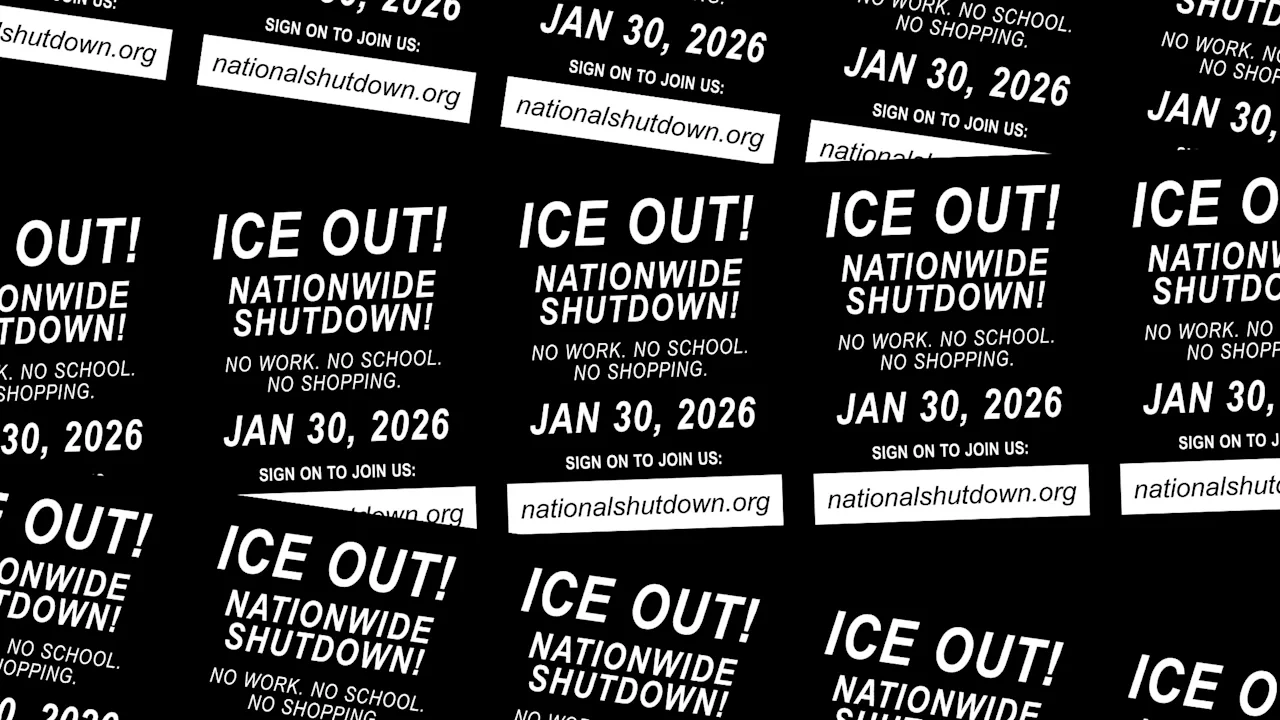
Following last week’s anti-ICE economic blackout in Minnesota and national Free America Walkout, organizers are once again urging Americans to stop working, attending school, and spending money to protest the U.S. Immigration and Customs Enforcement crackdown surging across the country. The fatal shootings of Minneapolis residents Renee Good and Alexi Pretti by federal officers only increased the public outcry against the The President administration’s hardline immigration and border policies and aggressive tactics used by swarms of masked agents. Here’s what to know. What is National Shutdown Day? National Shutdown Day on January 30 is a call to strike—to disrupt business as usual—as a way for Americans to register their mounting anger at the The President administration’s deployment of ICE and U.S. Customs and Border Patrol agents in Minneapolis and other cities nationwide. (Some 69% of Americans say President The President is trying to exert more power than previous presidents, according to a recent survey from the Pew Research Center.) With the tagline “No work. No school. No shopping. Stop funding ICE,” the nationalshutdown.org website reads, “The people of the Twin Cities have shown the way for the whole country—to stop ICE’s reign of terror, we need to SHUT IT DOWN. The entire country is shocked and outraged at the brutal killings of Alex Pretti, Renee Good, Silverio Villegas González, and Keith Porter Jr. by federal agents. . . . It is time for us to all stand up together in a nationwide shutdown and say enough is enough!” Organizers are also calling on Congress to cut funding to the Department of Homeland Security, which oversees ICE, when it votes on the current funding package ahead of a possible federal government shutdown. Walkouts, events, vigils, and protests are set to take place in all 50 states, including in New York City, Boston, Seattle, Los Angeles, Cleveland, Atlanta, Chicago, and Philadelphia—from state capitals (Honolulu) to federal buildings and courthouses (Tucson, Arizona, and Cincinnati), universities (Stanford, Santa Clara University, the University of Washington, Northeastern University), and even some high schools (in Miami). On Friday, a number of student groups at the University of Minnesota—including the Somali Student Association, Black Student Union, and Graduate Labor Union—will lead a walkout on campus. “Students are always at the heart of movements for justice across the world,” they said in a statement. “Students are encouraged to participate in [the] protests after walking out.” Businesses nationwide to close for general strike Following Minnesota’s recent statewide strike, local businesses in the Twin Cities and across the nation are planning to close on Friday. They include 50 businesses and shops in Portland, Maine; several restaurants in Denver; bookstores, coffeeshops, and retailers in Rochester, New York; businesses in Omaha, Nebraska; a Las Vegas pizza shop; and numerous Los Angeles restaurants, to name just a few, according to local news reports. “It has been increasingly difficult to watch what is unfolding in our country,” the owners of Denver restaurant Sắp Sửa told television station KDVR. “We have felt so helpless and alone, and it’s abundantly clear that no one will come to save us, so it is our civic duty to unite as a community in support of the most vulnerable.” Grassroots organizers 50501 are calling for additional “ICE Out of Everywhere” protests on Saturday, January 31, at ICE detention centers and offices; at airports to target airlines that are transporting ICE detainees, including Global Crossing Airlines and World Atlantic Airlines; and at some Congressional offices, according to The Guardian. Who is organizing the National Shutdown? National Shutdown Day, like many of the previous national walkouts and protests over the past year, lists a broad coalition of grassroots partners, including: 50501, local chapters of the American Civil Liberties Union, Defend Immigrant Families Campaign, Council on American-Islamic Relations, North Carolina Poor People’s Campaign, student groups, labor unions, and immigrant rights organizations. In addition, the strike has garnered the attention of a number of Hollywood celebrities, including Pedro Pascal, Jamie Lee Curtis, and Edward Norton. “We cannot act like this is not happening,” Norton, a longtime political activist, said at a recent Sundance Film Festival panel discussion. “What they’re doing in Minnesota with the strike needs to expand. I think we should be talking about a national, general economic strike until this is over.” New York University professor Scott Galloway has also called for a prolonged general economic strike. View the full article

-
UK prime minister to travel to Shanghai seeking to drum up deals after meeting Xi JinpingView the full article
-
Ruling comes after Donald The President’s vow to ‘take back control’ of shipping lane and reassert US influence in regionView the full article
-
In relation to managing HR and payroll functions, choosing the right software can greatly influence your small business’s efficiency and compliance. The top five solutions—Paycor, ADP, Gusto, QuickBooks, and OnPay—each offer distinct advantages customized to various needs. From user-friendly interfaces to integrated accounting features, these platforms cater to different aspects of payroll management. Comprehending their strengths can help you make an informed decision for your business’s future. Let’s explore what each has to offer. Key Takeaways Paycor: Offers a comprehensive HR and payroll solution with high ratings, responsive support, and competitive pricing for small businesses. ADP: Known for reliable payroll services with automatic processing and compliance management, along with personalized HR support. Gusto: A user-friendly platform with automatic tax filing, integration with numerous applications, and exceptional customer service starting at $49/month. QuickBooks: Combines accounting with payroll processing, automating tax calculations, and offering robust support at a starting price of $50/month. OnPay: Provides an affordable flat rate for payroll services, automating processes with multi-state support and user-friendly features for easy tracking. Paycor: Best Overall for Small Businesses When you’re looking for the best HR and payroll software for small businesses, Paycor stands out due to its impressive rating of 4.8 stars, which reflects its robust core features. This HCM software offers crucial HR and payroll functionalities in both its Core and Complete packages, ensuring you receive value for your investment. Competitive pricing makes it accessible, whereas additional services like time and attendance and benefits administration can be purchased separately to tailor the solution to your needs. Paycor is likewise known for its responsive customer support, providing high-quality assistance for any inquiries or issues you might encounter. The software is designed to integrate seamlessly with other business tools, enhancing overall operational efficiency and user satisfaction. With Paycor, you can streamline your HR processes, making it an ideal choice for small businesses seeking an effective HR and payroll software solution. ADP: Trusted Payroll Provider ADP is widely recognized as a trusted provider of payroll and HR solutions, particularly with its RUN Driven by ADP platform, which is expressly designed for small businesses. This platform features automatic payroll processing and tax calculations, making it easier for you to handle your payroll tasks efficiently. Furthermore, ADP includes compliance management tools that help you navigate federal, state, and local regulations, ensuring you stay compliant with tax obligations. Moreover, the premium mobile app improves accessibility, allowing both employers and employees to manage payroll tasks on the go. The Payroll AutoPilot feature automates payroll processes, greatly reducing the likelihood of errors through AI-driven error detection. You’ll likewise benefit from personalized one-on-one support from HR professionals, who provide customized assistance for your unique payroll and HR needs. With ADP, you can streamline your payroll management while ensuring accuracy and compliance. Gusto: User-Friendly HR and Payroll Solution Gusto stands out as a user-friendly HR and payroll solution designed particularly for small businesses, making it a top choice for those seeking efficiency and reliability. Rated as the #1 software for small businesses in 2024, Gusto starts at $49 per month plus $6 per employee, focusing on saving time and reducing payroll errors. The platform offers features like automatic tax filing, unlimited payroll support, and an intuitive interface suitable for both novice and experienced payroll managers. With integration capabilities exceeding 100 applications, including popular accounting software like QuickBooks, Gusto improves functionality for small businesses. Users likewise enjoy dedicated onboarding support across all packages, ensuring a smooth start. Gusto is recognized for its outstanding customer service, providing assistance through phone, email, and web chat, which helps you address any inquiries quickly and efficiently. This thorough support makes Gusto a reliable option for managing HR and payroll needs effectively. QuickBooks: Integrated Accounting and Payroll For small businesses looking for an extensive solution, QuickBooks offers integrated accounting and payroll management features that streamline financial processes. The software automates payroll processing, tax calculations, and compliance support directly within the accounting platform, simplifying your financial tasks. With time tracking integrations, you can effectively manage employee hours and payroll calculations, which saves you time and reduces errors. QuickBooks Payroll starts at $50 per month, with an additional $6 per employee, making it an affordable choice for thorough financial management. You’ll appreciate the robust customer support options, including phone-based assistance during business hours and 24/7 chat support from payroll experts. Significantly, QuickBooks is designed for ease of use, making it suitable for both novice and experienced payroll managers. By choosing QuickBooks, you’re ensuring a seamless integration of accounting and payroll functions that can improve your business efficiency. OnPay: Affordable and Efficient Payroll Management Regarding payroll management, OnPay stands out as an affordable and efficient option for small businesses. With a flat rate of $36 per month, plus $4 for each employee, it offers a cost-effective solution without sacrificing quality. OnPay automates payroll processing, including multi-state payroll support and precise tax calculations, which helps you remain compliant and minimizes the risk of penalties. The platform features a user-friendly dashboard, enabling you to easily track payroll statuses and access electronic storage for employee documents. Moreover, OnPay provides dedicated onboarding support at no extra charge, assisting you with initial data entry and setup. This makes the shift to their system smooth and straightforward. In addition, OnPay integrates seamlessly with various accounting and time-tracking software, enhancing the overall efficiency of your payroll management. Frequently Asked Questions What Is the Best HR and Payroll Software? When choosing the best HR and payroll software, consider your business size and needs. Paycor is excellent for small businesses, whereas Gusto stands out for payroll ease. For larger operations, SAP SuccessFactors offers advanced features, including AI-assisted screening. OnPay simplifies payroll processes with its user-friendly interface, and ADP Run provides robust reporting for growing companies. Evaluate these options based on functionality, pricing, and support to find the best fit for your organization. Which Software Is Best for HR? When choosing the best HR software, consider your business size and specific needs. Paycor is an excellent option for small businesses, offering crucial HR features. For thorough tools, GoCo provides payroll and employee engagement capabilities. If you’re in a midsize or large business, SAP SuccessFactors’ AI-assisted features stand out. UKG and Zoho People likewise deliver solid HR functionalities. Evaluate your requirements to find the right software that meets your organization’s demands. What Is the Best Software for Payroll? When considering the best payroll software, you’ll find several strong options. Gusto offers robust features, including automatic tax filing, starting at $49 plus $6 per employee. OnPay is user-friendly and affordable, in addition beginning at $49. If you use QuickBooks, QuickBooks Payroll integrates seamlessly for $50 plus $6. For growing businesses, Paycor provides extensive features at $99, whereas Patriot Payroll is the most budget-friendly at $37 plus $5, ensuring crucial payroll processing. Who Is Adp’s Biggest Competitor? ADP’s biggest competitor is Gusto, known for its user-friendly interface and extensive features customized for small businesses. Gusto’s pricing starts at $49 per month, plus $6 per employee, making it an attractive option. Other notable competitors include Paycor, which has a strong rating and competitive pricing, and QuickBooks Payroll, favored for seamless integration with QuickBooks Online. Each of these alternatives offers distinct advantages that cater to different business needs. Conclusion In conclusion, choosing the right HR and payroll software can greatly affect your small business’s efficiency and compliance. Paycor offers excellent support, whereas ADP guarantees reliable payroll services. Gusto’s intuitive interface makes it a favorite, and QuickBooks improves payroll with integrated accounting features. Finally, OnPay provides a cost-effective solution with seamless integration. By evaluating these options, you can identify the best fit for your specific needs, ultimately streamlining your payroll processes and enhancing overall operations. Image via Google Gemini and ArtSmart This article, "Top 5 HR and Payroll Software Solutions" was first published on Small Business Trends View the full article
-
In relation to managing HR and payroll functions, choosing the right software can greatly influence your small business’s efficiency and compliance. The top five solutions—Paycor, ADP, Gusto, QuickBooks, and OnPay—each offer distinct advantages customized to various needs. From user-friendly interfaces to integrated accounting features, these platforms cater to different aspects of payroll management. Comprehending their strengths can help you make an informed decision for your business’s future. Let’s explore what each has to offer. Key Takeaways Paycor: Offers a comprehensive HR and payroll solution with high ratings, responsive support, and competitive pricing for small businesses. ADP: Known for reliable payroll services with automatic processing and compliance management, along with personalized HR support. Gusto: A user-friendly platform with automatic tax filing, integration with numerous applications, and exceptional customer service starting at $49/month. QuickBooks: Combines accounting with payroll processing, automating tax calculations, and offering robust support at a starting price of $50/month. OnPay: Provides an affordable flat rate for payroll services, automating processes with multi-state support and user-friendly features for easy tracking. Paycor: Best Overall for Small Businesses When you’re looking for the best HR and payroll software for small businesses, Paycor stands out due to its impressive rating of 4.8 stars, which reflects its robust core features. This HCM software offers crucial HR and payroll functionalities in both its Core and Complete packages, ensuring you receive value for your investment. Competitive pricing makes it accessible, whereas additional services like time and attendance and benefits administration can be purchased separately to tailor the solution to your needs. Paycor is likewise known for its responsive customer support, providing high-quality assistance for any inquiries or issues you might encounter. The software is designed to integrate seamlessly with other business tools, enhancing overall operational efficiency and user satisfaction. With Paycor, you can streamline your HR processes, making it an ideal choice for small businesses seeking an effective HR and payroll software solution. ADP: Trusted Payroll Provider ADP is widely recognized as a trusted provider of payroll and HR solutions, particularly with its RUN Driven by ADP platform, which is expressly designed for small businesses. This platform features automatic payroll processing and tax calculations, making it easier for you to handle your payroll tasks efficiently. Furthermore, ADP includes compliance management tools that help you navigate federal, state, and local regulations, ensuring you stay compliant with tax obligations. Moreover, the premium mobile app improves accessibility, allowing both employers and employees to manage payroll tasks on the go. The Payroll AutoPilot feature automates payroll processes, greatly reducing the likelihood of errors through AI-driven error detection. You’ll likewise benefit from personalized one-on-one support from HR professionals, who provide customized assistance for your unique payroll and HR needs. With ADP, you can streamline your payroll management while ensuring accuracy and compliance. Gusto: User-Friendly HR and Payroll Solution Gusto stands out as a user-friendly HR and payroll solution designed particularly for small businesses, making it a top choice for those seeking efficiency and reliability. Rated as the #1 software for small businesses in 2024, Gusto starts at $49 per month plus $6 per employee, focusing on saving time and reducing payroll errors. The platform offers features like automatic tax filing, unlimited payroll support, and an intuitive interface suitable for both novice and experienced payroll managers. With integration capabilities exceeding 100 applications, including popular accounting software like QuickBooks, Gusto improves functionality for small businesses. Users likewise enjoy dedicated onboarding support across all packages, ensuring a smooth start. Gusto is recognized for its outstanding customer service, providing assistance through phone, email, and web chat, which helps you address any inquiries quickly and efficiently. This thorough support makes Gusto a reliable option for managing HR and payroll needs effectively. QuickBooks: Integrated Accounting and Payroll For small businesses looking for an extensive solution, QuickBooks offers integrated accounting and payroll management features that streamline financial processes. The software automates payroll processing, tax calculations, and compliance support directly within the accounting platform, simplifying your financial tasks. With time tracking integrations, you can effectively manage employee hours and payroll calculations, which saves you time and reduces errors. QuickBooks Payroll starts at $50 per month, with an additional $6 per employee, making it an affordable choice for thorough financial management. You’ll appreciate the robust customer support options, including phone-based assistance during business hours and 24/7 chat support from payroll experts. Significantly, QuickBooks is designed for ease of use, making it suitable for both novice and experienced payroll managers. By choosing QuickBooks, you’re ensuring a seamless integration of accounting and payroll functions that can improve your business efficiency. OnPay: Affordable and Efficient Payroll Management Regarding payroll management, OnPay stands out as an affordable and efficient option for small businesses. With a flat rate of $36 per month, plus $4 for each employee, it offers a cost-effective solution without sacrificing quality. OnPay automates payroll processing, including multi-state payroll support and precise tax calculations, which helps you remain compliant and minimizes the risk of penalties. The platform features a user-friendly dashboard, enabling you to easily track payroll statuses and access electronic storage for employee documents. Moreover, OnPay provides dedicated onboarding support at no extra charge, assisting you with initial data entry and setup. This makes the shift to their system smooth and straightforward. In addition, OnPay integrates seamlessly with various accounting and time-tracking software, enhancing the overall efficiency of your payroll management. Frequently Asked Questions What Is the Best HR and Payroll Software? When choosing the best HR and payroll software, consider your business size and needs. Paycor is excellent for small businesses, whereas Gusto stands out for payroll ease. For larger operations, SAP SuccessFactors offers advanced features, including AI-assisted screening. OnPay simplifies payroll processes with its user-friendly interface, and ADP Run provides robust reporting for growing companies. Evaluate these options based on functionality, pricing, and support to find the best fit for your organization. Which Software Is Best for HR? When choosing the best HR software, consider your business size and specific needs. Paycor is an excellent option for small businesses, offering crucial HR features. For thorough tools, GoCo provides payroll and employee engagement capabilities. If you’re in a midsize or large business, SAP SuccessFactors’ AI-assisted features stand out. UKG and Zoho People likewise deliver solid HR functionalities. Evaluate your requirements to find the right software that meets your organization’s demands. What Is the Best Software for Payroll? When considering the best payroll software, you’ll find several strong options. Gusto offers robust features, including automatic tax filing, starting at $49 plus $6 per employee. OnPay is user-friendly and affordable, in addition beginning at $49. If you use QuickBooks, QuickBooks Payroll integrates seamlessly for $50 plus $6. For growing businesses, Paycor provides extensive features at $99, whereas Patriot Payroll is the most budget-friendly at $37 plus $5, ensuring crucial payroll processing. Who Is Adp’s Biggest Competitor? ADP’s biggest competitor is Gusto, known for its user-friendly interface and extensive features customized for small businesses. Gusto’s pricing starts at $49 per month, plus $6 per employee, making it an attractive option. Other notable competitors include Paycor, which has a strong rating and competitive pricing, and QuickBooks Payroll, favored for seamless integration with QuickBooks Online. Each of these alternatives offers distinct advantages that cater to different business needs. Conclusion In conclusion, choosing the right HR and payroll software can greatly affect your small business’s efficiency and compliance. Paycor offers excellent support, whereas ADP guarantees reliable payroll services. Gusto’s intuitive interface makes it a favorite, and QuickBooks improves payroll with integrated accounting features. Finally, OnPay provides a cost-effective solution with seamless integration. By evaluating these options, you can identify the best fit for your specific needs, ultimately streamlining your payroll processes and enhancing overall operations. Image via Google Gemini and ArtSmart This article, "Top 5 HR and Payroll Software Solutions" was first published on Small Business Trends View the full article
-
Competition that impacted margins and prepayments in excess of expectations were challenges during the period, but executives report first quarter improvement. View the full article
-
Key Takeaways Definition of Low Overhead Business: Focuses on minimizing operational costs to enhance profitability, primarily through remote work and strategic staffing solutions. Flexibility and Scalability: Low overhead models allow businesses to adapt quickly to market demands without the burden of high fixed costs, thus enabling agile operations. Cost Efficiency Strategies: Implementing cloud-based tools, utilizing a remote workforce, and minimizing physical resources contribute to significant reductions in overall costs. Types of Low Overhead Businesses: Popular options include online businesses (e.g., e-commerce, online tutoring) and service-based businesses (e.g., freelancing, virtual assistance) that require minimal investment. Challenges in Maintaining Quality: Balancing cost-efficiency with the need for high-quality service and customer satisfaction is crucial for sustaining a low overhead business model. Importance of Employee Management: Effective recruitment, training, and retention strategies are essential for fostering a motivated workforce, which ultimately supports long-term success in a competitive landscape. In today’s fast-paced economy, starting a business with low overhead can be a game-changer. This approach allows you to minimize expenses while maximizing profits, making it an attractive option for aspiring entrepreneurs. Whether you’re looking to launch a side hustle or a full-fledged venture, understanding the principles of low overhead can set you on the path to success. Imagine running a business where your costs are kept to a minimum, giving you the flexibility to adapt and grow. From leveraging technology to embracing remote work, there are countless strategies to reduce expenses without sacrificing quality. In this article, you’ll discover practical tips and insights to help you create a thriving low overhead business that stands out in a competitive market. Understanding Low Overhead Business Low overhead businesses focus on minimizing operational costs to enhance profitability. Such businesses often require fewer resources while leveraging technology and remote work to maintain quality and efficiency. Definition and Key Concepts A low overhead business operates with minimal fixed and variable costs. Essential concepts include: Remote Workforce: Utilizes part-time or full-time employees working from various locations, reducing expenses related to physical office spaces. Staffing Solutions: Employs strategic staffing that includes hiring temporary staff and leveraging staffing agencies to meet fluctuating demands. Employee Management: Focuses on efficient employee retention strategies, fostering a culture of engagement and satisfaction. Recruitment Process: Includes streamlined job postings, direct candidate screening, and clear job descriptions for attracting the right talent. Importance in Today’s Market In today’s competitive market, low overhead businesses adapt quickly to changing conditions. Key advantages include: Reduced Labor Costs: Flexible staffing options, such as using part-time employees or temporary staff, lower expenses while still meeting staffing requirements. Efficiency in Operations: Implementation of HR tools facilitates effective onboarding, training, and employee development, leading to enhanced employee performance without high costs. Attracting Talent: Competitive compensation and employee wellness initiatives improve employee motivation and promote a diverse talent pool. Low overhead businesses thrive by maintaining a sharp focus on cost efficiency while creating a positive, productive environment for employees. Advantages of Low Overhead Businesses Low overhead businesses offer many advantages, especially for small business owners. By minimizing costs, you create opportunities for higher profits and operational efficiency. Cost Efficiency A low overhead approach leads to significant cost efficiency. You reduce financial risk by investing less upfront, allowing for easier adjustments if things don’t go as planned. Lower operating expenses come from minimizing rent, utilities, insurance, and administrative costs. Consider strategies like sharing office space, negotiating better lease terms, and utilizing cloud-based software. These practices not only cut costs but also enhance profitability by allocating resources more effectively. Furthermore, you can optimize your hiring strategy by focusing on part-time employees or a remote workforce, reducing labor costs while maintaining productivity. Flexibility and Scalability Flexibility and scalability are vital in today’s fast-paced market. Low overhead models allow you to adjust your operations quickly based on market demands. Without the burden of high fixed costs, you can experiment with different staffing solutions. For instance, hiring temporary staff during peak seasons keeps your services agile. Additionally, your recruitment process can focus on attracting a diverse talent pool without overspending. Emphasizing employee retention and engagement fosters a positive workplace culture, ensuring you keep skilled workers satisfied and motivated. By streamlining HR policies and utilizing recruitment software, you enhance your organization’s overall performance while effectively managing your staffing requirements. Types of Low Overhead Businesses Understanding the types of low overhead businesses helps you find the right model that aligns with your skills and resources. Options include various online and service-based businesses that require minimal investment and upkeep. Online Businesses Online businesses represent a significant opportunity to minimize overhead costs. Examples include: Online Store: Launch an online store using ecommerce platforms like Shopify. Design your store with customizable themes, utilize secure payment gateways, and access detailed inventory and customer behavior reports. Get started with an investment as low as $1,000[4]. Online Tutoring: If you excel in a particular subject, you can offer online tutoring services. This business requires only a computer and internet connection. Set competitive rates to appeal to students and parents alike[4][5]. Affiliate Marketing: Partnering with businesses allows you to sell their products through your online platform. This approach has minimal upfront costs and can be managed entirely online, which makes it an attractive option for many[4][5]. Social Media Management: Provide social media marketing services to local businesses. You can assist them with content creation, developing posting schedules, and crafting engagement strategies. This service can help businesses grow their online presence with minimal investment[4]. Service-Based Businesses Service-based businesses often rely on personal skills and expertise, minimizing the need for physical resources. Consider the following: Freelancing: Offer your expertise in writing, design, or consulting on a freelance basis. You control your schedule and work location, which reduces your operational costs significantly. Home Cleaning Services: Start a home cleaning service with basic equipment, and market your skills through local platforms. Employee management becomes key as you may need to recruit temporary staff to manage workloads during busy seasons. Virtual Assistance: Provide administrative support to businesses remotely. Responsibilities can include handling emails, scheduling appointments, and managing customer inquiries. Training and onboarding processes can be streamlined to ensure effective workforce planning. Digital Marketing Consulting: Use your marketing knowledge to help businesses grow their online presence. This role can involve team building, employee development, and offering insights on job postings and recruitment strategies for your clients. Starting a low overhead business can significantly reduce financial risk while allowing you to adapt to market demands. Focusing on effective employee management and streamlined operational processes enhances your potential for success in a competitive landscape. Strategies for Starting a Low Overhead Business Starting a low overhead business involves strategic planning and execution. You can achieve profitability with minimal expenses by focusing on the right niche and utilizing modern technology. Identifying the Right Niche Leverage Your Skills: Focus on areas where you possess skills or expertise. For instance, if you excel in accounting or digital marketing, offer these services to individuals or businesses while keeping startup costs low. Market Demand: Identify niches with high demand and low competition. Virtual assistants, social media management, and online tutoring are examples of services in high demand that require minimal investment. Passion-Based Businesses: Consider businesses tied to your passions, such as yoga or baking. Offering virtual classes or downloadable resources can generate income without significant overhead. Utilizing Technology and Online Tools Adopt Cloud-Based Software: Implementing cloud-based solutions reduces costs associated with physical infrastructure. Tools for project management, customer relationship management, and accounting can streamline operations. Remote Workforce: Hiring remote workers minimizes labor costs. Utilize online platforms for recruiting, onboarding, and employee management, reducing the need for physical office space. Recruitment Software: Use recruitment software to enhance the hiring process. This can improve your talent acquisition strategy, streamline job postings, and facilitate candidate screening. Staff Management Tools: Employee scheduling and performance review tools can improve workforce planning and enhance employee engagement. These tools help track staff productivity and foster a positive workplace culture. HR Tools for Compliance: Stay compliant with labor laws and regulations using HR tools that assist in payroll, employee benefits, and training. This reduces the risk of costly violations and builds employee satisfaction. By employing these strategies, you can successfully navigate the landscape of low overhead businesses, ensuring a sustainable and profitable operation. Challenges Faced by Low Overhead Businesses Managing a low overhead business presents unique challenges that can affect your operation’s sustainability and success. These challenges, if not addressed properly, can hinder growth and profitability. Competition and Market Saturation Competition in today’s market is intense. Many low overhead businesses struggle against saturated markets where similar products or services abound. Standing out requires a solid recruitment strategy to attract skilled personnel who can deliver exceptional service. Employing targeted job postings can help you identify top talent, ensuring your business remains competitive. Stay informed about hiring trends and candidate preferences to position your business effectively in the job market. Maintaining Quality and Customer Satisfaction Maintaining product quality and customer satisfaction poses a significant challenge when keeping overhead costs low. Reducing administrative roles or cutting back on staff can impact service quality. Retaining a skilled remote workforce ensures consistency, but requires effective employee management and support during onboarding and training. Establish a culture focused on employee engagement and recognition to boost morale. Implementing structured performance reviews and providing opportunities for employee development can enhance employee motivation and satisfaction, leading to loyal customers who appreciate your commitment to quality. Balancing cost efficiency while investing in employee growth creates a foundation for long-term success. Conclusion Embracing a low overhead business model can be a game changer for your entrepreneurial journey. By focusing on minimizing costs and leveraging technology you can enhance profitability while maintaining flexibility. This approach not only reduces financial risk but also allows you to adapt quickly to market changes. As you explore opportunities in this space remember that strategic planning and effective employee management are key. Whether you choose an online venture or a service-based business the potential for success is within your reach. Prioritize quality and customer satisfaction to build a loyal clientele and ensure long-term growth. Frequently Asked Questions What are the advantages of starting a low overhead business? Low overhead businesses minimize operational costs, which enhances profitability. This model allows entrepreneurs to allocate resources more effectively, adapt quickly to market demands, and attract top talent with competitive compensation. Additionally, reduced financial risk is a significant advantage, making it suitable for both side hustles and full-fledged ventures. How can technology help in minimizing overhead costs? Technology helps by streamlining operations and enhancing efficiency. Cloud-based software and digital tools reduce administrative expenses and allow remote work, which lowers costs associated with office spaces. Utilizing technology also improves communication, staff management, and recruitment, contributing to a more cost-effective business model. What types of businesses typically have low overhead costs? Common examples of low overhead businesses include online stores, freelance services, and digital marketing agencies. Other options are online tutoring, affiliate marketing, and social media management, which often require minimal investments and upkeep, making them ideal for entrepreneurs seeking low startup costs. What strategies can I use to start a low overhead business? Start by identifying your niche based on personal skills and market demand. Utilize technology, engage a remote workforce, and streamline operations through cloud-based tools. Strategic planning is essential, and focusing on flexibility and scalability will help your business adapt to changing market conditions. What challenges do low overhead businesses face? Low overhead businesses can encounter intense competition and market saturation. Maintaining product and service quality is crucial, as reducing staff may impact customer satisfaction. To overcome these challenges, effective employee management and engagement are vital to building a loyal customer base and ensuring long-term success. Image Via Envato This article, "Start a Low Overhead Business: Strategies for Success and Growth" was first published on Small Business Trends View the full article
-
Key Takeaways Definition of Low Overhead Business: Focuses on minimizing operational costs to enhance profitability, primarily through remote work and strategic staffing solutions. Flexibility and Scalability: Low overhead models allow businesses to adapt quickly to market demands without the burden of high fixed costs, thus enabling agile operations. Cost Efficiency Strategies: Implementing cloud-based tools, utilizing a remote workforce, and minimizing physical resources contribute to significant reductions in overall costs. Types of Low Overhead Businesses: Popular options include online businesses (e.g., e-commerce, online tutoring) and service-based businesses (e.g., freelancing, virtual assistance) that require minimal investment. Challenges in Maintaining Quality: Balancing cost-efficiency with the need for high-quality service and customer satisfaction is crucial for sustaining a low overhead business model. Importance of Employee Management: Effective recruitment, training, and retention strategies are essential for fostering a motivated workforce, which ultimately supports long-term success in a competitive landscape. In today’s fast-paced economy, starting a business with low overhead can be a game-changer. This approach allows you to minimize expenses while maximizing profits, making it an attractive option for aspiring entrepreneurs. Whether you’re looking to launch a side hustle or a full-fledged venture, understanding the principles of low overhead can set you on the path to success. Imagine running a business where your costs are kept to a minimum, giving you the flexibility to adapt and grow. From leveraging technology to embracing remote work, there are countless strategies to reduce expenses without sacrificing quality. In this article, you’ll discover practical tips and insights to help you create a thriving low overhead business that stands out in a competitive market. Understanding Low Overhead Business Low overhead businesses focus on minimizing operational costs to enhance profitability. Such businesses often require fewer resources while leveraging technology and remote work to maintain quality and efficiency. Definition and Key Concepts A low overhead business operates with minimal fixed and variable costs. Essential concepts include: Remote Workforce: Utilizes part-time or full-time employees working from various locations, reducing expenses related to physical office spaces. Staffing Solutions: Employs strategic staffing that includes hiring temporary staff and leveraging staffing agencies to meet fluctuating demands. Employee Management: Focuses on efficient employee retention strategies, fostering a culture of engagement and satisfaction. Recruitment Process: Includes streamlined job postings, direct candidate screening, and clear job descriptions for attracting the right talent. Importance in Today’s Market In today’s competitive market, low overhead businesses adapt quickly to changing conditions. Key advantages include: Reduced Labor Costs: Flexible staffing options, such as using part-time employees or temporary staff, lower expenses while still meeting staffing requirements. Efficiency in Operations: Implementation of HR tools facilitates effective onboarding, training, and employee development, leading to enhanced employee performance without high costs. Attracting Talent: Competitive compensation and employee wellness initiatives improve employee motivation and promote a diverse talent pool. Low overhead businesses thrive by maintaining a sharp focus on cost efficiency while creating a positive, productive environment for employees. Advantages of Low Overhead Businesses Low overhead businesses offer many advantages, especially for small business owners. By minimizing costs, you create opportunities for higher profits and operational efficiency. Cost Efficiency A low overhead approach leads to significant cost efficiency. You reduce financial risk by investing less upfront, allowing for easier adjustments if things don’t go as planned. Lower operating expenses come from minimizing rent, utilities, insurance, and administrative costs. Consider strategies like sharing office space, negotiating better lease terms, and utilizing cloud-based software. These practices not only cut costs but also enhance profitability by allocating resources more effectively. Furthermore, you can optimize your hiring strategy by focusing on part-time employees or a remote workforce, reducing labor costs while maintaining productivity. Flexibility and Scalability Flexibility and scalability are vital in today’s fast-paced market. Low overhead models allow you to adjust your operations quickly based on market demands. Without the burden of high fixed costs, you can experiment with different staffing solutions. For instance, hiring temporary staff during peak seasons keeps your services agile. Additionally, your recruitment process can focus on attracting a diverse talent pool without overspending. Emphasizing employee retention and engagement fosters a positive workplace culture, ensuring you keep skilled workers satisfied and motivated. By streamlining HR policies and utilizing recruitment software, you enhance your organization’s overall performance while effectively managing your staffing requirements. Types of Low Overhead Businesses Understanding the types of low overhead businesses helps you find the right model that aligns with your skills and resources. Options include various online and service-based businesses that require minimal investment and upkeep. Online Businesses Online businesses represent a significant opportunity to minimize overhead costs. Examples include: Online Store: Launch an online store using ecommerce platforms like Shopify. Design your store with customizable themes, utilize secure payment gateways, and access detailed inventory and customer behavior reports. Get started with an investment as low as $1,000[4]. Online Tutoring: If you excel in a particular subject, you can offer online tutoring services. This business requires only a computer and internet connection. Set competitive rates to appeal to students and parents alike[4][5]. Affiliate Marketing: Partnering with businesses allows you to sell their products through your online platform. This approach has minimal upfront costs and can be managed entirely online, which makes it an attractive option for many[4][5]. Social Media Management: Provide social media marketing services to local businesses. You can assist them with content creation, developing posting schedules, and crafting engagement strategies. This service can help businesses grow their online presence with minimal investment[4]. Service-Based Businesses Service-based businesses often rely on personal skills and expertise, minimizing the need for physical resources. Consider the following: Freelancing: Offer your expertise in writing, design, or consulting on a freelance basis. You control your schedule and work location, which reduces your operational costs significantly. Home Cleaning Services: Start a home cleaning service with basic equipment, and market your skills through local platforms. Employee management becomes key as you may need to recruit temporary staff to manage workloads during busy seasons. Virtual Assistance: Provide administrative support to businesses remotely. Responsibilities can include handling emails, scheduling appointments, and managing customer inquiries. Training and onboarding processes can be streamlined to ensure effective workforce planning. Digital Marketing Consulting: Use your marketing knowledge to help businesses grow their online presence. This role can involve team building, employee development, and offering insights on job postings and recruitment strategies for your clients. Starting a low overhead business can significantly reduce financial risk while allowing you to adapt to market demands. Focusing on effective employee management and streamlined operational processes enhances your potential for success in a competitive landscape. Strategies for Starting a Low Overhead Business Starting a low overhead business involves strategic planning and execution. You can achieve profitability with minimal expenses by focusing on the right niche and utilizing modern technology. Identifying the Right Niche Leverage Your Skills: Focus on areas where you possess skills or expertise. For instance, if you excel in accounting or digital marketing, offer these services to individuals or businesses while keeping startup costs low. Market Demand: Identify niches with high demand and low competition. Virtual assistants, social media management, and online tutoring are examples of services in high demand that require minimal investment. Passion-Based Businesses: Consider businesses tied to your passions, such as yoga or baking. Offering virtual classes or downloadable resources can generate income without significant overhead. Utilizing Technology and Online Tools Adopt Cloud-Based Software: Implementing cloud-based solutions reduces costs associated with physical infrastructure. Tools for project management, customer relationship management, and accounting can streamline operations. Remote Workforce: Hiring remote workers minimizes labor costs. Utilize online platforms for recruiting, onboarding, and employee management, reducing the need for physical office space. Recruitment Software: Use recruitment software to enhance the hiring process. This can improve your talent acquisition strategy, streamline job postings, and facilitate candidate screening. Staff Management Tools: Employee scheduling and performance review tools can improve workforce planning and enhance employee engagement. These tools help track staff productivity and foster a positive workplace culture. HR Tools for Compliance: Stay compliant with labor laws and regulations using HR tools that assist in payroll, employee benefits, and training. This reduces the risk of costly violations and builds employee satisfaction. By employing these strategies, you can successfully navigate the landscape of low overhead businesses, ensuring a sustainable and profitable operation. Challenges Faced by Low Overhead Businesses Managing a low overhead business presents unique challenges that can affect your operation’s sustainability and success. These challenges, if not addressed properly, can hinder growth and profitability. Competition and Market Saturation Competition in today’s market is intense. Many low overhead businesses struggle against saturated markets where similar products or services abound. Standing out requires a solid recruitment strategy to attract skilled personnel who can deliver exceptional service. Employing targeted job postings can help you identify top talent, ensuring your business remains competitive. Stay informed about hiring trends and candidate preferences to position your business effectively in the job market. Maintaining Quality and Customer Satisfaction Maintaining product quality and customer satisfaction poses a significant challenge when keeping overhead costs low. Reducing administrative roles or cutting back on staff can impact service quality. Retaining a skilled remote workforce ensures consistency, but requires effective employee management and support during onboarding and training. Establish a culture focused on employee engagement and recognition to boost morale. Implementing structured performance reviews and providing opportunities for employee development can enhance employee motivation and satisfaction, leading to loyal customers who appreciate your commitment to quality. Balancing cost efficiency while investing in employee growth creates a foundation for long-term success. Conclusion Embracing a low overhead business model can be a game changer for your entrepreneurial journey. By focusing on minimizing costs and leveraging technology you can enhance profitability while maintaining flexibility. This approach not only reduces financial risk but also allows you to adapt quickly to market changes. As you explore opportunities in this space remember that strategic planning and effective employee management are key. Whether you choose an online venture or a service-based business the potential for success is within your reach. Prioritize quality and customer satisfaction to build a loyal clientele and ensure long-term growth. Frequently Asked Questions What are the advantages of starting a low overhead business? Low overhead businesses minimize operational costs, which enhances profitability. This model allows entrepreneurs to allocate resources more effectively, adapt quickly to market demands, and attract top talent with competitive compensation. Additionally, reduced financial risk is a significant advantage, making it suitable for both side hustles and full-fledged ventures. How can technology help in minimizing overhead costs? Technology helps by streamlining operations and enhancing efficiency. Cloud-based software and digital tools reduce administrative expenses and allow remote work, which lowers costs associated with office spaces. Utilizing technology also improves communication, staff management, and recruitment, contributing to a more cost-effective business model. What types of businesses typically have low overhead costs? Common examples of low overhead businesses include online stores, freelance services, and digital marketing agencies. Other options are online tutoring, affiliate marketing, and social media management, which often require minimal investments and upkeep, making them ideal for entrepreneurs seeking low startup costs. What strategies can I use to start a low overhead business? Start by identifying your niche based on personal skills and market demand. Utilize technology, engage a remote workforce, and streamline operations through cloud-based tools. Strategic planning is essential, and focusing on flexibility and scalability will help your business adapt to changing market conditions. What challenges do low overhead businesses face? Low overhead businesses can encounter intense competition and market saturation. Maintaining product and service quality is crucial, as reducing staff may impact customer satisfaction. To overcome these challenges, effective employee management and engagement are vital to building a loyal customer base and ensuring long-term success. Image Via Envato This article, "Start a Low Overhead Business: Strategies for Success and Growth" was first published on Small Business Trends View the full article
-
Former US central bank governor Kevin Warsh favoured as the likely pickView the full article
-
Democrats and Republicans have two more weeks to agree measures to end heavy-handed tactics by federal agentsView the full article
-
Lender ‘maniacally focused’ on rebuilding its investment bank in one of its home marketsView the full article