All Activity
- Past hour
-
 Small business owners across the country may want to pay attention to a significant legal development concerning Oregon’s Extended Producer Responsibility (EPR) law. The National Federation of Independent Business (NFIB) has filed an amicus brief in the case National Association of Wholesaler-Distributors v. Leah Feldon, et al. in the U.S. District Court for the District of Oregon, challenging this law. This pivotal case could have implications for small businesses, particularly those that operate or sell products across state lines. Oregon’s EPR law aims to shift the burden of disposal and recycling to producers, but NFIB argues that it crosses constitutional boundaries by imposing regulatory requirements on businesses based outside the state. As Beth Milito, Vice President and Executive Director of NFIB’s Small Business Legal Center, pointed out, “Oregon’s EPR regime goes beyond the authority granted to states in the Constitution by attempting to regulate businesses outside of Oregon.” This assertion suggests that if the court finds the law unconstitutional, it could set a precedent that protects small businesses from similar regulations in other states. One of the primary arguments in NFIB’s brief is that Oregon’s EPR law is an unconstitutional extraterritorial regulation, which threatens the operational capabilities of small businesses engaged in interstate commerce. The group contends that imposing additional compliance costs not only burdens businesses financially but also interferes with their ability to compete effectively. Milito emphasizes, “Allowing one state to impose significant burdens on producers outside of its borders will negatively impact any small business that does commerce in the region.” This case underscores the broader implications of regulatory overreach. For many small businesses, compliance with state-specific regulations can be challenging and costly, especially when those regulations extend beyond the state line. Business owners may find themselves navigating a complex patchwork of laws that vary by location, complicating their logistics and operational strategies. The NFIB’s brief also critiques how Oregon’s EPR law grants regulatory authority to a private entity, which can exacerbate these challenges. This delegation could lead to inconsistent enforcement and added layers of confusion for small producers, who may struggle to understand the requirements they must meet to sell their products in Oregon. The risk of running afoul of such regulations may force businesses to divert resources away from growth and innovation toward compliance efforts. For small business owners, the key takeaways are clear. They should remain vigilant about the potential for regulatory changes that could affect their operations and be prepared for the possibility of costs associated with compliance. The outcome of this case could either embolden other states to enact similar laws or serve as a wake-up call for regulatory reconsideration across the country. As the legal battle unfolds, small business owners should monitor the discussions surrounding the case, especially how it may clarify the extent of state powers over out-of-state businesses. The NFIB’s ongoing involvement in litigation aims to protect not just its members but the broader interests of small businesses nationwide. For those looking for more detailed information, the full text of NFIB’s amicus brief and further updates can be found on their website. Engaging with community and industry partners about these issues could provide valuable insights and strengthen advocacy efforts aimed at protecting small business rights, particularly in terms of navigating complex regulatory landscapes. As developments arise, small business stakeholders should remain informed and proactive in their approach to adapting to any regulatory changes that may come their way. For further details on the NFIB’s position and the ongoing legal context, visit NFIB’s official page. Image via Google Gemini This article, "NFIB Challenges Oregon’s EPR Law, Citing Interstate Commerce Risks" was first published on Small Business Trends View the full article
 -
The U.S. Justice Department and a coalition of states plan to appeal a federal judge’s remedies ruling in the Google search antitrust case. The appeal challenges a decision that found Google illegally monopolized search but stopped short of imposing major structural changes, such as forcing a divestiture of Chrome or banning default search deals outright. What’s happening. The DOJ and state attorneys general filed notices of appeal yesterday, challenging U.S. District Judge Amit Mehta’s September remedies ruling, Bloomberg and Reuters reported. Mehta ruled in August 2024 that Google unlawfully maintained its search monopoly through default search agreements with Apple, Samsung, and other device makers. Those deals cost Google more than $20 billion a year and blocked rivals from key distribution channels. After a second remedies trial in 2025, Mehta rejected the government’s request to force Google to divest Chrome or prohibit payments for default search status. Instead, he ordered Google to rebid its default search and AI app contracts annually. Why we care. The appeal means we still don’t know how much Google will keep controlling where search gets placed. And that control basically decides who wins traffic. If stricter fixes happen, it could change default search settings, open the door to rival search engines, and shift how people use search across devices. Yes, but. The DOJ and states haven’t detailed their legal arguments. Court filings didn’t specify which parts of the ruling they will challenge, though attention is expected to focus on Chrome and Google’s default search deal with Apple. What to watch. The U.S. Court of Appeals for the D.C. Circuit is expected to hear the case later this year. For now, it’s business as usual for Google — though its most important contracts now face annual review, and the risk of tougher remedies remains firmly on the table. What they’re saying. David Segal, Yelp’s vice president of public policy, welcomed the appeal. In a statement shared with Search Engine Land, Yelp said the trial court’s remedies do not go far enough to restore real competition in search: “Unfortunately, the measures put forth in the trial court’s remedy decision are unlikely to restore competition — for instance, it allows for Google to continue to pay third parties for default placement in browsers and devices, which was the primary mechanism by which Google unlawfully foreclosed competition to begin with. “Internet users, online advertisers and others who rely on and seek to compete in the industry deserve a level playing field with more, higher quality, and fairer search options — and the need for a more competitive space is all the more clear as Google seeks to leverage its vast power over the web, especially search indexing and ranking, to come to dominate the GenAI space.” View the full article
-
We may earn a commission from links on this page. Deal pricing and availability subject to change after time of publication. At $99 on Woot, the factory reconditioned Bowers & Wilkins Px7 S2 headphones are nearly $60 cheaper than the next best price on Amazon and the lowest they’ve been to date, according to price trackers. While “refurbished” might scare off some shoppers, this deal includes all accessories in retail packaging, a 90-day warranty, and a professional inspection that guarantees like-new functionality. Cosmetic wear should be minimal and only noticeable up close, if that. You get a 90-day Woot warranty, and free shipping if you’re a Prime member (with a $6 fee for everyone else). This deal runs for about three weeks or until the stock runs out. Bowers & Wilkins Px7 S2 headphones $99.00 at Woot Get Deal Get Deal $99.00 at Woot The Px7 S2’s knit fabric ear cups and metallic accents look sharp, and the padding feels good against the skin. Clamp force is on the firmer side but generally comfortable, though long sessions can create pressure points for some head shapes. They work well for commuting and travel, thanks to active noise cancelling that handles voices and higher-frequency noise better than low-end rumbles. Physical buttons handle power, volume, playback, and noise control. They’re tactile and easy to use, though there’s no audible feedback for volume changes. As for portability, the ear cups swivel flat but don’t fold, so portability depends on the included hard case, which is well-made but bulky. Battery life is a strong point. With ANC on, they can stretch past 30 hours, and a 15-minute charge gets you several more hours of playback. Sonically, these headphones skew bass-heavy. You get a punchy, energetic profile that works well for electronic music, though it can feel muddy for anything more detailed, like acoustic or jazz. There’s a two-band EQ in the companion app, but no deep customization beyond that. Codec support includes aptX HD and aptX Adaptive, which is great if your devices support them. All said, if you're not chasing absolute top-tier ANC and can live with the stock sound signature, you're getting flagship-level comfort and design here, at a mid-range price point. Our Best Editor-Vetted Tech Deals Right Now Apple AirPods 4 Active Noise Cancelling Wireless Earbuds — $139.99 (List Price $179.00) Apple Watch Series 11 [GPS 46mm] Smartwatch with Jet Black Aluminum Case with Black Sport Band - M/L. Sleep Score, Fitness Tracker, Health Monitoring, Always-On Display, Water Resistant — $329.00 (List Price $429.00) Samsung Galaxy Tab A9+ 10.9" 64GB Wi-Fi Tablet (Graphite) — $149.99 (List Price $219.99) Apple iPad 11" 128GB A16 WiFi Tablet (Blue, 2025) — $299.99 (List Price $349.00) Blink Mini 2 1080p Security Camera (White) — $23.99 (List Price $39.99) Ring Outdoor Cam Pro Plug-In With Outdoor Cam Plus Battery (White) — $189.99 (List Price $259.99) Amazon Fire TV Stick 4K Plus — (List Price $24.99 With Code "FTV4K25") Deals are selected by our commerce team View the full article
-
Here is a recap of what happened in the search forums today, through the eyes of the Search Engine Roundtable and other search forums on the web. Google's search rankings are highly volatile...View the full article
-
If your CPCs keep climbing, the cause may not be your bid strategy, your budget, or even your competitors. You might be suffering from low ad quality. Let’s break down the most foundational — and most misunderstood — metric in your Google Ads account. If you want to stop overpaying Google and start winning auctions on merit, you need to understand how the 1-to-10 Quality Score actually works. The difference between Quality Score, Ad Strength, and Optimization Score Before we dive in, let’s clear up the confusion. Google shows a lot of “scores” and “diagnostics,” and you can safely ignore most of them. Quality Score is the exception. Ad strength is an ad-level diagnostic. It checks whether your responsive ad follows best practices, like having enough headlines and descriptions. It has zero impact on auction performance. Optimization score is a sales metric. It measures how many Google recommendations you’ve reviewed. It does not reflect real campaign performance. Quality Score is different. It’s foundational. This keyword-level diagnostic summarizes the quality of your ads. Along with your bid, it determines Ad Rank. Ad Rank determines whether your ad appears at all, where it appears on the SERP, and how much you pay per click. The formula is simple: Ad Rank = price × quality. The 1–10 score you see is only a summary, but it reflects the real-time quality calculation Google runs on every single search. Setting up your dashboard: How to find your Quality Score You can’t fix what you can’t see. To get started, go to your Keywords report in Google Ads and add these four columns: Quality Score Exp. CTR Ad Relevance Landing Page Exp. When you analyze Quality Score, don’t judge keywords in isolation. You’ll drive yourself crazy. Look for patterns at the ad group level instead. If most keywords have a Quality Score of 7 or higher, you’re in good shape. If most are at 5 or below, that’s your cue to roll up your sleeves and improve ad quality. The three core components of Quality Score and how to fix them 1. Ad Relevance: The ‘message match’ This is the only part of Quality Score fully within your control. It asks one simple question: Does the keyword match the ad and the landing page? If your ad relevance is generally “Below average,” the fastest fix is Dynamic Keyword Insertion. It automatically inserts your keywords into the ad text. If you prefer a manual approach, make sure the keywords in the ad group actually appear in both the ad copy and the landing page. 2. Landing Page Experience: The “Delivery” When Google sends users to your site, do they find what they’re looking for? Or do they bounce after two seconds and head back to Google for a better result? If your landing page experience score is low, start with the PageSpeed Insights tool. A “Below average” rating often points to slow load times, a poor mobile experience, generic content, weak navigation, or all of the above. 3. Expected CTR: The “Popularity Contest” Google only makes money when users click, so it favors ads people are most likely to click. If your expected CTR is lagging, start with competitive research: Check Auction Insights to see who you’re competing against. A “Below average” expected CTR means their ads are earning higher click-through rates than yours. Next, visit the Google Ads Transparency Center and review your competitors’ ads. Are their offers more enticing? Is their copy more clickable? Borrow what works and update your own ads. If your ads are great but CTR is still low, review the Search terms report. You may be showing for irrelevant queries, which explains why users aren’t clicking on an otherwise awesome ad. What’s a realistic Quality Score goal? I’ll be honest: chasing a 10/10 Quality Score everywhere is a waste of time. It’s unrealistic and usually unnecessary. Instead, do a quick check-up every few months. Find one or two ad groups with lower Quality Scores, identify the most “Below Average” component, and fix that first. Improving ad quality takes more effort than raising budgets or bids. But it pays off with more clicks at the same — or even lower — cost. This article is part of our ongoing Search Engine Land series, Everything you need to know about Google Ads in less than 3 minutes. In each edition, Jyll highlights a different Google Ads feature, and what you need to know to get the best results from it – all in a quick 3-minute read. View the full article
- Today
-
Shore Capital Partners, a Chicago-based private equity firm founded by billionaire Justin Ishbia, has raised more than $400 million for its second industrial fund. View the full article
-
Despite a weak ADP jobs print, Treasury yields went nowhere, reinforcing a growing bearish, defensive case for rates, according to the CEO of IF Securities. View the full article

-
Sales closing techniques are vital for your success in selling. By honing various methods, such as the Assumptive Close or the Scarcity Close, you can markedly improve your chances of sealing the deal. Each technique serves a unique purpose, whether it’s creating urgency or reinforcing value. Comprehending these strategies can transform your approach to sales. Let’s explore these fundamental types of closes and see how they can enhance your performance in the field. Key Takeaways Assumptive Close: Presumes the prospect is ready to buy, guiding the conversation towards next steps and reinforcing confidence in their decision. Puppy Dog Close: Offers free trials to create emotional attachment, reducing perceived risk and increasing likelihood of commitment to purchase. Scarcity Close: Utilizes limited-time offers to instill urgency, prompting quicker decision-making from prospects interested in the product. Summary Close: Recaps key benefits to reinforce value, encouraging commitment by reminding prospects of what they stand to gain. Takeaway Close: Implements reverse psychology by suggesting the product may not be a perfect fit, prompting prospects to reaffirm their interest. Understanding Sales Closing Grasping sales closing is essential for any salesperson who wants to succeed in their role, as it represents the final step in the sales process where discussions and demonstrations culminate in a definitive agreement. Comprehending sales closing involves knowing the different types of sales closes, like the assumptive close, which assumes the prospect is ready to buy. This method can be effective when you’ve built rapport and addressed their needs throughout the process. Remember, effective closing isn’t about pushing; it’s about patience and persistence. Prospects may initially resist, but your continuous engagement helps them feel supported. Tailoring your approach and adapting closing techniques to individual customer characteristics will improve your sales effectiveness and boost your closing rates considerably. Common Sales Closing Techniques Comprehending various sales closing techniques can greatly improve your ability to secure deals. The Assumptive Close involves confidently proceeding as if the prospect is ready to buy, which can instill confidence. Alternatively, the Puppy Dog Close lets prospects try the product for free, nurturing emotional attachment. The Scarcity Close plays on the fear of missing out by emphasizing limited-time offers, prompting quicker decisions. The Summary Close recaps the key benefits discussed, reinforcing value to encourage commitment. Finally, the Now-or-Never Close introduces urgency, motivating prospects to act swiftly with special incentives. Effective Closing Techniques When you’re closing a sale, using effective techniques can make a big difference in your success. Strategies like the Assumptive Close, which presumes the prospect is ready to buy, and the Scarcity Close, which creates urgency, can prompt quicker decisions. Furthermore, the Puppy Dog Approach lets prospects try the product, increasing their confidence and likelihood of purchase. Assumptive Close Strategy The Assumptive Close strategy stands out as a potent technique in sales, effectively guiding prospects toward a purchase by confidently presuming their readiness to buy. This approach involves asking questions about details like delivery timing or the quantity needed, which encourages the prospect to align with your expectation of a sale. It’s crucial to understand the prospect’s needs and demonstrated interest to guarantee your confidence doesn’t come off as aggression. Pay attention to client reactions and any objections they may have, as this will help you reinforce their readiness and address concerns. When executed correctly, the Assumptive Close can streamline the sales process, making it feel like a natural progression rather than a hard sell. Scarcity and Urgency Utilizing scarcity and urgency in sales can greatly improve your closing techniques, as they tap into the natural human tendency to fear missing out on valuable opportunities. The Scarcity Close highlights limited-time offers or low stock levels, prompting prospects to act quickly and secure a deal. Research indicates that 70% of consumers are more inclined to purchase when they perceive limited availability. Effective urgency tactics involve clearly communicating deadlines, such as “only available until the end of the month” or “only two spots left.” The Now-or-Never Close emphasizes time-sensitive incentives to encourage immediate action. Nevertheless, employing these techniques requires honesty and transparency, as misleading claims can damage trust and long-term customer relationships. Puppy Dog Approach Building on the effectiveness of scarcity and urgency, the Puppy Dog Close offers an alternative approach that engages prospects in a hands-on way. This technique allows potential buyers to experience your product or service risk-free, often through free trials or demos. By immersing themselves in the offering, prospects can form a stronger emotional attachment, greatly increasing the likelihood of a purchase. The familiarity gained during this trial period encourages a sense of ownership and commitment, leading to higher conversion rates. Nevertheless, successful implementation requires careful timing and rapport-building, ensuring that prospects feel valued and comfortable. In the end, the Puppy Dog Close minimizes perceived risk, making the shift to purchase more seamless and effective for both the salesperson and the prospect. The Assumptive Close When you assume a prospect is ready to buy, you’re employing a strong technique known as the Assumptive Close. This method encourages quicker decisions by framing the conversation around next steps, showing confidence in your prospect’s readiness. Consider these key aspects when using the Assumptive Close: Establish a strong rapport with your prospect. Ask questions about delivery timing or product specifics. Monitor their interest and objections closely. Use their feedback to align with their buying intent. The Puppy Dog Close The Puppy Dog Close is a potent sales technique that lets prospects try a product or service for free or at a low cost, nurturing a sense of ownership. By allowing customers to experience the benefits firsthand, this approach creates an emotional attachment that often leads to a commitment to purchase after the trial period. As a result, it effectively minimizes perceived risk and can greatly increase closing rates when done correctly. Trial Experience Benefits Trial experiences, often referred to as the Puppy Dog Close, offer significant advantages for both salespeople and prospects. By allowing prospects to try a product or service, you can effectively boost their confidence in making a purchase. Here are some key benefits: Increased Emotional Connection: Experiencing the product firsthand creates a bond. Higher Conversion Rates: Familiarity with the product often leads to more sales. Reduced Perceived Risk: A no-obligation trial makes prospects feel more secure about their decision. Immediate Satisfaction: Products that show quick results encourage commitment. This approach leverages reciprocity, making customers feel inclined to buy after enjoying a free trial. Ultimately, the Puppy Dog Close is a practical tactic that benefits everyone involved. Emotional Attachment Creation Creating an emotional attachment is a key aspect of the Puppy Dog Close, which involves offering prospects the chance to experience a product or service without any commitment. This technique allows potential customers to interact with your offering, nurturing familiarity that can lead to a purchase. Here’s a breakdown of the Puppy Dog Close benefits: Benefit Description Experience Allows prospects to use the product for free. Familiarity Builds a connection, increasing comfort with the product. Reduced Risk Lowers perceived risk, making the decision easier. Increased Value Perception Customers recognize the product’s benefits firsthand. Higher Closing Rates Engaged customers are more likely to buy after the trial. Commitment After Trial Once you’ve given prospects the chance to try out your product or service through the Puppy Dog Close, their experience can greatly influence their commitment to purchase. By allowing them to interact with your offering risk-free, you encourage emotional attachment, which motivates them to buy. Research shows that customers who test products before purchasing are 60% more likely to commit. This technique works well in industries like: Software, where functionality is essential Fitness equipment, demonstrating tangible benefits Automotive sales, providing real-life driving experience Retail, showcasing product quality and fit Offering a trial minimizes perceived risk and leverages reciprocity, making prospects feel inclined to reciprocate your trust by committing to a purchase after enjoying the trial. The Scarcity and Takeaway Close The Scarcity and Takeaway Close are potent techniques in the salesperson’s toolkit, designed to prompt quicker decisions from prospects. The Scarcity Close leverages the fear of missing out (FOMO) by creating urgency through limited-time offers or exclusive benefits, nudging interested prospects to decide faster. Conversely, the Takeaway Close employs reverse psychology, suggesting the product or service may not be the best fit, prompting prospects to reconsider and reaffirm their interest. Both techniques shine when dealing with prospects who’ve shown genuine interest but need an additional push to finalize their commitment. Successful implementation requires careful monitoring of cues and readiness to guarantee the approach feels natural rather than overly aggressive, as urgency can greatly boost conversion rates. Improving Your Closing Techniques Improving your closing techniques is essential for increasing your sales success, especially as prospects progress through the buying process. To improve your effectiveness, consider these strategies: Adapt your techniques based on the prospect’s personality and buying stage. Regularly analyze past sales interactions to identify what worked and where you can grow. Use sales technology to automate follow-ups and gain insights into customer needs. Engage in role-playing with peers to practice handling objections in a supportive environment. Frequently Asked Questions What Are the 7 Essential Selling Skills Every Sales Person Should Know? To excel in sales, you should master several crucial skills. First, effective communication helps you connect with clients. Next, active listening allows you to understand their needs. Building emotional intelligence aids in establishing rapport. Problem-solving skills enable you to address unique challenges. Furthermore, strong product knowledge boosts credibility. Finally, adaptability guarantees you can respond to varying situations. By developing these skills, you’ll improve your sales performance and client relationships considerably. What Are the Three Types of Closes of a Sale? There are three primary types of sales closes you should know: hard closes, soft closes, and trial closes. A hard close involves directly asking for the sale, often creating urgency. Conversely, a soft close encourages conversation, allowing you to understand the prospect’s feelings about the product. Meanwhile, a trial close assesses readiness by asking questions to clarify any remaining objections. Each type serves a specific purpose, enhancing your ability to finalize sales effectively. What Are the Sales Closing Techniques? Sales closing techniques are strategies designed to guide prospects toward making a purchase decision. For instance, the Assumptive Close involves acting as if the sale is already made, encouraging the prospect to move forward. The Puppy Dog Close lets them try the product without risk, nurturing attachment. The Scarcity Close plays on urgency by highlighting limited availability, whereas the Summary Close reviews key benefits, reinforcing the product’s value and addressing the prospect’s needs effectively. Which of the Following Is a Common Sales Closing Technique? A common sales closing technique is the Assumptive Close. In this approach, you assume the prospect is ready to buy, which can streamline the closing process. You might ask logistical questions, such as when they’d like the product delivered or how many units they need. This technique can create a natural shift into finalizing the sale, as it encourages the prospect to visualize their purchase without feeling pressured. Conclusion Achieving proficiency in these seven crucial sales closing techniques can greatly improve your effectiveness as a salesperson. By comprehending methods like the Assumptive Close and the Scarcity Close, you can better engage potential customers and increase conversion rates. Each technique serves a unique purpose, from creating urgency to reducing perceived risks. Continuously practicing and refining these skills will elevate your overall sales strategy, leading to more successful outcomes in your sales endeavors. Focus on incorporating these techniques into your daily interactions. Image via Google Gemini and ArtSmart This article, "7 Essential Types of Sales Closes Every Salesperson Should Know" was first published on Small Business Trends View the full article
-
Bill Hunt shows how disciplined reasoning transforms SEO escalations into resolvable system behaviors rather than endless debates. The post The Real SEO Skill No One Teaches: Problem Deduction appeared first on Search Engine Journal. View the full article
-
We may earn a commission from links on this page. For me, third-party "Joy-Cons" were an absolute necessity for comfortable portable play on the original Switch. But because the Switch 2 upgraded its Joy-Cons to a more complicated magnetic connection, we haven't seen many third-party options come out for it yet. It hasn't been as much of an issue for me as on the original Switch, since I do think the Joy-Con 2 are more comfortable than the original Joy-Cons. But they're still not ideal, especially when compared to other portable gaming options like the Steam Deck. That's why controller company Abxylute's recent announcement is so interesting to me. The company announced on Tuesday that it will soon launch Kickstarters for two different portable controller options for the Nintendo Switch 2, both of which use a novel solution. Instead of sliding onto the console's sides like the Joy-Cons, these are instead shells you slide the console itself into. Just plug your console into the USB-C dock at the bottom of the shell, and you'll get a wired connection to the controller halves that sit on either side of the shell, while still being able to use the system's built-in screen. These Joy-Con 2 alternatives offer gamer a bit more grip, and, as a bonus, one of them also essentially turns your Switch 2 into a portable GameCube. Credit: Abxylute Part of the fun of third-party Joy-Cons for the original Switch is that they took advantage of the console's modularity to offer wacky form factors. Take the NYXI Wizard, for example. This controller looked like a classic Nintendo GameCube WaveBird controller out of the box, but you could also take both halves of the controller off a central connector piece and slap them onto the sides of the original Switch for authentic portable Smash Bros. or Super Mario Sunshine gameplay. I missed seeing this kind of innovation on the Switch 2, especially since that system now offers even more GameCube games via Switch Online. Thankfully, though, Abxylute is picking up the slack. While its N6 portable controller is more traditional, its N9C is for retro gamers. It looks more like an original GameCube controller than a WaveBird, but it has the same familiar stick and button layout, and even has the right colors. There are modern niceties here, like home buttons and a more fully-featured D-Pad and right stick than on an actual GameCube controller. But this is shaping up to be the best way to play GameCube games on the Switch 2 on the go. The N6, meanwhile, has all the same features, but in a more common, Xbox 360 style layout, similar to the CRKD Nitro Deck 2. There are also some power user features in the fine print, like drift-proof sticks (capacitive on the N9C and Hall effect on the N6), a gyroscope, optional macro buttons, and on the N9C, clicky micro-switch buttons. You could use either controller for any type of game, if you'd like. But it's really the GameCube form factor that's convincing me here. Yes, this design will likely be more comfortable than the Joy-Con 2, but it's also more fun. Credit: Abxylute Unfortunately, because the Kickstarter campaigns for these have yet to launch, we don't yet know what they'll cost. Competitors like the Nitro Deck 2 cost $99, though, so you can probably expect to pay around that much. Abxylute's HandheldDIY J6 for the original Switch also costs $95 (when not on sale), which is another good barometer. That's on the pricey end: My favorite third-party Joy-Cons for the original Switch only cost $50. But for the extra features here, plus the pricing on the competition, it's probably a cost I'd be willing to eat—especially because alternatives are still rare. The only third-party Switch 2 Joy-Cons you can buy right now that offer the same magnetic plug-and-play as the official ones are the NYXI Hyperion 3, and they have yet to be released and cost $126.99 (and they'll jump to $170 once early bird deals end). Abxylute's new reveals may not have that same satisfying snap-on tech, but they're feature-rich, and should still be a good upgrade over the official Joy-Con 2. View the full article
-
Google may finally be starting to address a popular SEO and AI visibility “tactic”: self-promotional “best of” listicles. That’s according to new research by Lily Ray, vice president, SEO strategy and research at Amsive. Across several SaaS brands hit hard in January, a pattern emerged. Many relied heavily on review-style content that ranked their own product as the No. 1 “best” in its category, often updated with the current year to trigger recency signals. What’s happening. After the December 2025 core update, Google search results showed increased volatility throughout January, according to Barry Schwartz. Google hasn’t announced or confirmed any updates this year, but the timing aligns with steep visibility losses at several well-known SaaS and B2B brands. According to Ray: In multiple cases, organic visibility dropped 30% to 50% within weeks. The losses were not domain-wide. They were concentrated in blog, guide, and tutorial subfolders. Those sections often contained dozens or hundreds of self-promotional listicles targeting “best” queries. In most cases, the publisher ranked itself first. Many of the articles were lightly refreshed with “2026” in the title, with little evidence of meaningful updates. “Presumably, these drops in Google organic results will also impact visibility across other LLMs that leverage Google’s search results, which extends beyond Google’s ecosystem of AI search products like Gemini and AI Mode [and AI Overviews], but is also likely to include ChatGPT,” Ray wrote. Why we care. Self-promotional listicles have been a shortcut for influencing rankings and AI-generated answers. If Google is now reevaluating how it treats this content, any strategies built around “best” queries are in danger of imploding. The gray area. Ranking yourself as the “best” without independent testing, clear methodology, or third-party validation has been considered (by most) to be a sketchy SEO tactic. It isn’t explicitly banned, but it definitely conflicts with Google’s guidance on reviews and trust. Google has repeatedly said that high-quality reviews should show first-hand experience, originality, and evidence of evaluation. Self-promotional listicles often fall short, especially when bias is not disclosed. Yes, but. Self-promotional listicles likely weren’t the only factor impacting organic visibility. Many affected sites also showed signs of rapid content scaling, automation, aggressive year-based refreshes, and other tactics tied to algorithmic risk. That said, the consistency of self-ranking “best” content among the hardest-hit sites suggests this signal could now carry more weight, especially when used at scale. What to watch. Whether self-promotional listicles earn citations and organic visibility. Google rarely applies changes evenly or instantly. If this volatility reflects updates to Google’s reviews system, the direction is clear. Content designed primarily to influence rankings, rather than to provide credible and independent evaluation, is becoming a liability. For brands chasing visibility in search and AI, the lesson is familiar: SEO shortcuts work until they don’t. The analysis. Is Google Finally Cracking Down on Self-Promotional Listicles? View the full article
-
Efficiencies chief had previously told FT no services were cut in apparent contradiction of party’s claim of vast wasteView the full article
-
Norwegian skier Nikolai Schirmer on Wednesday handed the International Olympic Committee a petition signed by more than 21,000 people and professional athletes who want to stop fossil fuel companies from sponsoring winter sports. Schirmer delivered the “Ski Fossil Free” petition to the IOC’s head of sustainability, Julie Duffus, at a hotel in the Italian city of Milan two days before the Milan Cortina Winter Olympics kick off. The petition asks the IOC and the International Ski and Snowboard Federation, FIS, to publish a report evaluating the appropriateness of fossil fuel marketing before next season. Schirmer, a filmmaker and two-time European Skier of the Year, spoke exclusively with The Associated Press outside the hotel, and said the IOC informed him that it would not allow media to witness their meeting. “It seems like the Olympics aren’t ready to be the positive force for change that they have the potential to be,” Schirmer told the AP afterward. “So I just hope this can be a little nudge in the right direction, but we will see.” Nikolai Schirmer Retreating winters spurred the skier to take action Schirmer is a freeride skier who documents his adventures exploring Europe’s steep terrains. While freeride skiing is not currently an Olympic event, he said he felt like he needed to bring attention to fossil fuel marketing. “The show goes on while the things you depend on to do your job — winter — is disappearing in front of your very eyes,” he said. “Not dealing with the climate crisis and not having skiing be a force for change just felt insane. We’re on the front lines.” Burning fossil fuels – coal, oil and gas – is the largest contributor to global climate change by far. As the Earth warms at a record rate, winters are shorter and milder and there is less snow globally, creating clear challenges for winter sports that depend on cold, snowy conditions. Researchers say the list of locales that could reliably host a Winter Games will shrink substantially in the coming years. Schirmer launched his petition drive in January. He surpassed his goal of 20,000 signatures in one month, and people continue to sign. It’s a first step, he argues, much like a campaign nearly 40 years ago that led to a ban of tobacco advertising at the Games. United Nations Secretary-General António Guterres has urged every country to ban advertising from fossil fuel companies. In his meeting on Wednesday, Schirmer said, the IOC’s head of sustainability pointed to the organization’s commitments to renewable energy. He said he feels that isn’t enough. The IOC told the AP in a statement that climate change is one of the most significant challenges facing sport and society. It didn’t say whether it will review fossil fuel marketing, as demanded by the petition. Olympic partners play an important role in supporting the Games, and they include those investing in clean energy, the statement said. FIS welcomes mobilization campaigns like this one, spokesperson Bruno Sassi said. He noted that He noted that no fossil fuel companies are partners of the FIS World Cup and FIS World Championships. Athletes say the petition is the start of a conversation Athlete-driven environmental group “Protect Our Winters” supported the petition drive. This is the first coordinated campaign about fossil fuel advertising centered around an Olympic Games, POW’s CEO Erin Sprague told the AP. American cross-country skier and Team USA member Gus Schumacher said he signed because it starts the conversation. “It’s short-sighted for teams and events to take money from these companies in exchange for helping them hold status as good, long-term energy producers,” he wrote in a text message. American cross-country skier Jack Berry said he’s hopeful this is an influential step toward a systemic shift away from the industry. Berry is seeking a spot on Team USA for the Paralympics in March. An Italian oil and gas company is sponsoring these Olympics Italy’s Eni, one of the world’s seven supermajor oil companies, is a “premium partner” of these Winter Games. Other oil and gas companies sponsor Olympic teams. Eni said it’s strongly committed to the energy transition, as evidenced by how it’s growing its lower carbon businesses, reducing emissions and aiming for carbon neutrality by 2050. And the company defended its role in the Winter Games. “Through the partnership with the biggest event hosted by Italy in the next 20 years, Eni wants to confirm its commitment to the future of the country and to a progressively more sustainable energy system through a fair transition path,” spokesperson Roberto Albini wrote in an e-mail. A January report found that promoting polluting companies at the Olympics will grow their businesses and lead to more greenhouse gas emissions that warm the planet and melt snow cover and glacier ice. Albini disputed the emissions calculations for Eni in the Olympics Torched report. Published by the New Weather Institute in collaboration with Scientists for Global Responsibility and Champions for Earth, the report also looks at the Games’ own emissions. “They have lots of sponsors that aren’t in these sectors,” said Stuart Parkinson, executive director at Scientists for Global Responsibility. “You can get the sponsorship money you’re after by focusing on those areas, much lower carbon areas. That reduces the carbon footprint.” McDermott reported from Cortina D’Ampezzo, Italy. AP Olympics: https://apnews.com/hub/milan-cortina-2026-winter-olympics The Associated Press’ climate and environmental coverage receives financial support from multiple private foundations. AP is solely responsible for all content. Find AP’s standards for working with philanthropies, a list of supporters and funded coverage areas at AP.org. —Jennifer McDermott and Fernanda Figueroa Associated Press View the full article

-
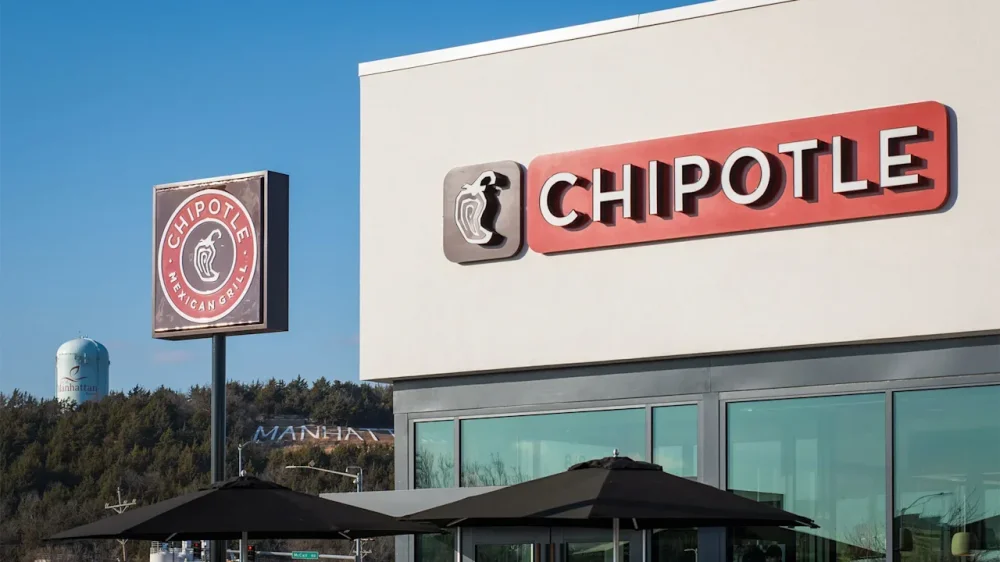
Shares of Chipotle Mexican Grill are down over 6% in premarket trading following a relatively humdrum fourth-quarter earnings report. The report, released on Tuesday, February 3, showed a 2.5% decrease in comparable restaurant sales from quarter-three and a 1.7% drop year-over-year. However, it appears Chipotle has a plan to fix all that: more limited-time offerings. Yes, the company’s secret weapon of choice is to bump up its number of fresh menu options. This shift will include four limited-time offers throughout the year, Chipotle CEO Scott Boatwright said in an earnings call. He described the move as an increase in Chipotle’s “menu innovation cadence.” The limited-time offers (or LTOs) will start next week with the return of Chicken al Pastor, which Boatwright called “the most celebrated limited-time offer in history, with two times the requests on social media to bring it back compared to any other LTO.” Boatwright adds that Chipotle’s data shows a “core guest is more likely to choose a restaurant that has a new menu item.” Protein, rewards, and of course AI Chipotle has also recently rolled out its “high-protein line,” with Boatwright nodding to the increased use of weight-loss drugs. It includes a $3.50 taco with 15 grams of protein as an addition to an 80-gram double-protein bowl. There’s also a $3.80 high-protein cup “that is inspired by hacks that our guests rely on to boost their intake and offers a solution to those looking for smaller portions, which is a fast-growing trend with the adoption of GLP-1s,” Boatwright stated. Furthermore, the fast-casual chain is relaunching its rewards program and using AI to create more “personalized and impactful” experiences. Even with these steps, Chipotle predicts its comparable restaurant sales for 2026 will be flat. The company did report some wins for quarter-four. It reached $2.98 billion in revenue, beating Wall Street’s expected $2.96 billion, according to consensus estimates cited by CNBC. What happened to that Chipotle boycott? Quarter-one for 2026 has brought its own uncertainties to the fast-casual chain thanks to misinformation spreading online. Chipotle faced boycott calls in January after Bill Ackman, the billionaire CEO and founder of Pershing Square Capital Management, donated $10,000 to a GoFundMe campaign for Jonathan Ross, the ICE agent who shot and killed Renee Nicole Good as she turned her vehicle away from him. In 2016, Ackman bought a 9.9% stake in Chipotle, valued at about $1 billion, Newsweek reports. At the time, Pershing Square Capital was one of Chipotle’s top shareholders, but the company sold all of its shares as of November 2025. In response to the boycott, Chipotle took to social media to clarify that Ackman is no longer connected to the brand. Chipotle’s stock price (NYSE: CMG) was down more than 33% over 12 months when the market closed on Tuesday. View the full article
-
Your beauty and skincare products are full of fats and oils. They’re what makes that cream so moisturizing or that emollient so good at repairing your skin barrier. Often, those lipids come from palm oil or even animal fats, both of which are environmentally damaging to produce. But soon, the lipids in your personal care products could come from upcycled carbon, skipping the agriculture industry entirely. Savor, a tech company that makes fats and oils directly out of carbon, has already proven this technology through the launch of its butter, which began commercial production in 2025. Now, Savor is announcing a personal care and beauty division, bringing its plant- and animal-free fats beyond food to what it calls a “new era” of clean beauty. How Savor makes fats without plants or animals Savor turns the typical production of fats on its head. The usual formula to create fat starts with energy (from the sun or even grow lights), which grows plants, which can then be turned into oils—or be fed to livestock, which produce milk that becomes butter or fat that goes into skincare, such as beef tallow. Those processes require lots of land and have intense climate consequences. Both livestock farming and palm oil, which is used in a majority of beauty and personal care products, drive deforestation, leading to biodiversity loss, greenhouse gas emissions, and more. Savor, however, skips all those agricultural steps. Instead, the company turns energy—like captured carbon dioxide, methane, or green hydrogen—directly into fats through a thermochemical process. That carbon is combined with hydrogen, oxygen, and heat to create fatty acids, which can then be composed and rearranged into chains that mimic different fats, from butter to palm oil and cocoa butter. “Technically we’re making beautiful ingredients from thin air,” says Jennifer Halliday, an advisor across the biotechnology, beauty, and life sciences industries who is working with Savor. It’s a replica of ancient chemistry. Billions of years ago, hydrothermal vents at the bottom of the ocean created a chemical reaction that formed fatty acids out of hydrogen and carbon dioxide. Opportunities in the beauty industry Savor’s butter has already been adopted by chefs and restaurants, including Michelin-starred SingleThread, in Healdsburg, California, and Jane the Bakery, in San Francisco. It launched commercially in March 2025. Expanding from food to personal care makes sense for Savor, says Kathleen Alexander, cofounder and CEO of the startup, because the two industries overlap in terms of ingredients, environmental impact, and opportunity for change. “Two of the main pillars associated with our platform are sustainability and versatility, or tunability,” she says. “Those wind up being very important in food, and they’re very important in the beauty space as well.” By using its animal- and plant-free lipids, Savor says beauty companies could reduce their products’ emissions by more than 90%, compared to tropical oils like coconut or palm. “Palm and tropical oils wind up showing up a lot in the beauty sector, and those are products that we can really only grow in some of the most rich and biodiverse areas of the world.” Alexander adds. The agricultural industry at large takes up half of the world’s habitable land, and produces 25% to 30% of global greenhouse gas emissions. Savor skirts this entirely; the company says it requires 800 times less land to make its fats and oils than the agricultural industry. Currently, Savor has a 25,000-square-foot pilot facility outside of Chicago, with plans for a large-scale commercial plant by 2029. The startup, founded in 2022, has raised $33 million, according to PitchBook. Its Series A, funded in 2024, was led by food tech VC firm Synthesis Capital and Bill Gates’s Breakthrough Energy. Vegan tallow and more To launch its beauty and personal care division, Savor created three unique products. First, a Vegan Tallow, a colorless and odorless alternative to beef tallow, which has become a recent skin care craze. “We first made that for food customers, and we absolutely still have food customers that are interested in that,” Alexander says. “But the market pull in food for vegan tallow, it turns out, is a little bit lower than the pull we’re seeing in beauty and cosmetics.” Savor also created what it calls Climate Conscious Triglycerides, a palm-free emollient; and Mimetic, made to mimic the skin barrier’s structure to nourish and repair it. Don’t expect to see Savor-branded beauty products on store shelves, though. The startup created these three products to show what is possible, but ultimately, it’s a B2B company that will give its ingredients to brand formulations. Savor says it’s actively engaged with beauty brands, ingredient distributors, and personal care formulators to bring these materials to market, but can’t yet share names. And there’s lots of room for interest to grow, it adds, as brands adapt to regulatory pressure around their supply chains. Traditional feedstocks from plants and animals are also subject to increasing volatility, because of climate change’s effects on crops, geopolitics, traceability concerns, and general price swings. “We’ve actually just had a change in the GHG Protocol Standard to require corporations to start including land use in their accounting, which is just huge,” Alexander says as an example. “That is one of the biggest advantages from an environmental perspective of our platform, that we require less land to make our fats and oils.” Humans have always had an inherently extractive relationship with the planet, she adds. It’s how our food chain works; it’s how we make all sorts of products. “What we’re doing at Savor is rethinking, what if humans could make molecules ourselves?” she says. “What would it mean to really exist on this planet in a way where we can actually not necessarily have to have to make use of other creatures in order to nourish ourselves.” View the full article

-
Navigate the complexities of information retrieval and find out how to get into model training data for AI success. The post Information Retrieval Part 2: How To Get Into Model Training Data appeared first on Search Engine Journal. View the full article
-
A useful feature baked into iOS 26 is the ability to autofill credit cards stored in Apple Wallet across apps and browsers. If you don't use a password manager (which you absolutely should), AutoFill via Apple Wallet saves you the trouble of having to manually enter your credit card information every time you want to make a purchase on your phone. Even if you have a password manager, though, not all plans allow payment card storage and autofilling, and the feature can be clunky on those that do. As 9to5Mac points out, AutoFill for credit cards was already available in Safari and is now supported systemwide, managed through Apple Wallet. How to set up and use AutoFill in Apple WalletFirst, you'll need to add your payment cards to Apple Wallet's autofill list (which is separate from your general wallet). Tap the three dots in the upper-right corner and select AutoFill. Tap Add Card to input card details manually or use the camera scan feature. The security code is optional, meaning you can add and store it in Apple Wallet AutoFill or enter it for each transaction. To autofill saved credit cards, simply tap any form field to bring up the Paste/AutoFill option. Select AutoFill > Credit Card, authenticate with Face ID or Touch ID, and tap the card you want to enter. You'll have to repeat the process for each field, as Apple Wallet won't autofill the whole form at once. View the full article
-
AI search hasn’t killed SEO. Now you have to win twice: the ranking and the citation. Google searches for almost anything today, and there’s a good chance you’ll see an AI Overview before the organic results, sometimes even before the ads. That summary frames the query, shortlists sources, and shapes which brands get considered. AI Overviews now appear for about 21% of all keywords, according to Ahrefs. And 99.9% are triggered by informational intent. Search rankings still matter. But AI summaries increasingly determine who wins early consideration. Here’s what we’re seeing: brands aren’t losing visibility because they dropped from position three to seven. They’re losing it because they were never cited in the AI answer at all. This article draws on research conducted by Search Influence and the online and professional education association UPCEA, which examined how people use AI-assisted search and how organizations are adapting. (Disclosure: I am the CEO at Search Influence) Key takeaways AI citations are becoming a trust signal: Being cited by AI influences credibility and early consideration – before users ever compare sources directly. AI visibility is cumulative: AI systems pull from your website, YouTube, LinkedIn, and third-party publishers to assemble answers. Your URL isn’t the only thing that matters. Authority doesn’t guarantee inclusion: Even established brands get sidelined when their content doesn’t match how users ask questions. Most organizations know AI search matters but lack a plan: The gap isn’t awareness – it’s ownership, prioritization, and repeatable process. Content structure affects whether you get cited: Pages built for retrieval, comparison, and decision-making outperform narrative or brand-led content. Examining both sides of the search equation To understand what’s happening, we need to look at two sides of the same equation – how people are searching today and how organizations are responding (or aren’t). “AI Search in Higher Education: How Prospects Search in 2025” surveyed 760 prospective adult learners in March 2025. It examined: Where online discovery happens. How AI tools are used alongside traditional search. Which sources people trust during early research. While the study focused on professional and continuing education, these behaviors mirror what we’re seeing across industries: more AI-assisted discovery, earlier opinion formation, and trust signals shifting. A separate snap poll of 30 UPCEA member institutions in October 2025 looked at the other side: AI search strategy adoption. Barriers slowing progress. How visibility in AI-generated results gets tracked. Together, these datasets show a widening gap between how people search and how organizations have adapted. So what does the data actually tell us? The search patterns worth paying attention to The research highlights several search behaviors that consistently influence how people discover and evaluate options today. AI tools and AI summaries are influencing trust early The data makes one thing clear: AI-driven search has moved from the margins into the mainstream. 50% of prospective students use AI tools at least weekly. 79% read Google’s AI Overviews when they appear. 1 in 3 trust AI tools as a source for program research. 56% are more likely to trust a brand cited by AI. Trust is forming earlier now, often before users compare sources directly. If you’ve been putting off your AI search strategy because “people don’t trust AI,” the data says otherwise. AI citations are becoming a credibility signal – a trust shortcut before deeper research begins. Search behavior is diversified Search doesn’t happen in one place or follow one clean path anymore. 84% of prospective students use traditional search engines during research. 61% use YouTube. 50% use AI tools. These behaviors aren’t sequential. Users move between surfaces, carrying context with them. What they see in an AI summary influences how they read a search result. A YouTube video can establish trust before a website ever earns a click. This is where many strategies fall out of sync. Teams optimize one channel at a time – usually their website – and treat everything else as optional. But AI search engines pull from everywhere your brand has a presence: Your website. Your YouTube channel. Your LinkedIn content. Third-party and publisher sites. Your AI credibility is cumulative. It’s built anywhere your brand shows up, not just where you own the URL. Search engines and brand-owned websites still matter The rise of AI search doesn’t mean the end of traditional search. It raises the bar for it. Even as AI summaries reshape early trust, people still rely heavily on first-party sources and organic results when they evaluate options: 63% rely on brand-owned websites during research. 77% trust university-owned websites more than other sources. 82% are more likely to consider options that appear on the first page of search results. AI engines prioritize content that search engines can already crawl, interpret, and trust. If your core content isn’t clearly structured, accessible, and eligible to rank in traditional search, it’s far less likely to be pulled into AI-generated answers. Dig deeper: Your website still matters in the age of AI Get the newsletter search marketers rely on. See terms. Organizational readiness lags behind Most organizations recognize that AI search is reshaping discovery. Far fewer have translated that awareness into coordinated action. AI search strategy adoption remains uneven Most institutions sit somewhere between curiosity and commitment: 60% are in the early stages of exploring AI search. 30% have a formal AI search strategy in place. 10% haven’t started or believe AI search will have limited impact. The majority of teams know something important is happening. But ownership, process, and prioritization remain unresolved. What’s slowing progress When asked what’s holding them back, institutions cited execution constraints: 70% report limited bandwidth or competing priorities. 37% report a lack of in-house expertise or training. 27% report unclear ROI, leadership buy-in, or uncertainty around how AI search works. For many organizations, AI search has entered the roadmap conversation. It just hasn’t earned consistent operational focus yet. (Sound familiar?) Dig deeper: Why most SEO failures are organizational, not technical What teams say they’re prioritizing When teams do take action, their priorities cluster around two themes: 59% focus on the accuracy of AI-generated information about their offerings. 48% focus on improving visibility and competitive positioning. Those goals are linked. Clear, structured information makes it easier for AI systems to represent a brand. Visibility follows clarity. When that clarity is missing, AI fills in the blanks using third-party sources and competitor content. Tracking AI visibility remains inconsistent AI visibility tracking varies widely: 57% know their institution appears in AI-generated answers. 27% have seen their brand referenced occasionally but don’t actively monitor it. 13% are unsure whether they appear in AI-generated responses at all. Among teams that do track AI visibility: 64% use dedicated tools or formal tracking methods. 29% rely on informal checks or don’t track consistently. This creates a familiar blind spot. Teams feel the impact of AI search anecdotally but lack consistent visibility into where, how, and why their brand appears. Dig deeper: How to track visibility across AI platforms Why higher ed is a useful lens Universities bring everything search engines are supposed to reward: High domain authority. Deep, long-standing content libraries. Strong brand recognition. Yet in AI-generated answers, those advantages often don’t translate. When AI systems generate answers, they cite content that already matches the way users ask questions. That often means: Comparisons. “Top tools,” “top programs,” or “top options” lists. Third-party explainers written about brands. Those formats are dominated by aggregators and publishers – not the institutions themselves. AI doesn’t look for the biggest brand. It looks for the best answer. Higher education shows what happens when brands rely on authority alone and why every industry needs to rethink how it publishes. So what do you do about it? 1. Get your foundations in order before chasing AI visibility The most common question right now: “How do we show up in AI results?” In many cases, I think the honest answer is to fix what’s already broken. AI systems rely on the same signals that traditional search does: crawlability, structure, clarity. If your pages are blocked, poorly organized, or weighed down by technical debt, they won’t surface cleanly anywhere. We’ve seen teams invest energy in AI conversations while core pages still struggle with: Indexing issues. Bloated or unclear page structures. Content written for storytelling, not retrieval. Start with your traditional SEO foundation. AI systems can only work with what’s structurally sound. Dig deeper: AI search is growing, but SEO fundamentals still drive most traffic 2. Optimize content for retrieval, not just reading AI search engines favor content that can be lifted cleanly and reused without interpretation. The job of content shifts from “telling a complete story” to “delivering clear, extractable answers.” Many brand pages technically contain the right information, but it’s buried in long-form prose or brand language that requires context to understand. Content that performs well in AI answers tends to: Lead with direct answers, not setup. Use headings that map to search intent. Separate ideas into self-contained sections. Avoid forcing readers (or machines) to infer meaning. This isn’t about shortening content. It’s about sharpening it. When intent is obvious, AI knows exactly what to pull and when to cite you. 3. Compete on format, not just authority If AI keeps citing comparisons, lists, and explainers – and it does – brands probably need to own those formats themselves. AI systems pull from content that already reflects how people evaluate options. When those pages don’t exist on your site, AI cites the aggregators and publishers instead. To compete, brands need to publish: Comparison pages that reflect real decision criteria. “Best for X” content tied to specific use cases. Standalone explainers that help buyers choose. Put simply: publish what AI actually wants to cite. Dig deeper: How to create answer-first content that AI models actually cite 4. Prioritize third-party platforms Your website shouldn’t be doing all the work. AI answers routinely pull from a mix of sources: YouTube videos. LinkedIn posts. Instagram content. Reddit threads (when relevant). Brand content published on third-party platforms. In some cases, being cited from a third-party platform matters more than where your site ranks. We’ve seen AI Overviews where a brand’s YouTube video is cited alongside their webpage and third-party sources – all shaping the same answer. That blended source set is becoming the norm. If your content strategy only prioritizes on-site publishing, you’re narrowing your chances of earning AI visibility. Dig deeper: YouTube is no longer optional for SEO in the age of AI Overviews Where things stand AI search is moving faster than most SEO strategies are built to respond. Discovery is happening earlier. Trust is being assigned sooner. Visibility is being decided before rankings ever come into play. The question isn’t whether AI search will matter to your industry. It’s whether you’ll be cited, overlooked, or summarized by someone else. The brands that adapt now – not later – will be the ones that win. View the full article
-
As Super Bowl Sunday approaches, the battle off the field for advertisers to win over 120 million-plus viewers will be just as heated as the rivalry between the New England Patriots and Seattle Seahawks. Dozens of advertisers are pulling out all the stops for Super Bowl 60, airing Sunday on NBC. They’re hoping that audiences tuning in will remember their brand names as they stuff their ads with celebrities ranging from Kendall Jenner (Fanatics Sportsbook) to George Clooney (Grubhub), tried-and-true ad icons like the Budweiser Clydesdales, and nostalgia for well-known movie properties such as “Jurassic Park” (Comcast Xfinity). Each year Super Bowl ads offer a snapshot of the American mood — as well as which industries are flush with cash that particular year: from the “Dot-Com Bowl” of 2000 to the “Crypto Bowl” of 2022. This year’s trends include health and telehealth companies advertising weight loss drugs and medical tests, tech companies showing off their latest gadgets and apps and advertisers showcasing AI in their ads. Villanova University marketing professor Charles Taylor said because of the heavy headlines in the news lately — from the immigration enforcement surge in Minnesota to conflicts abroad — he expects a advertisers to stick to a light and silly tone. “Because of the Super Bowl’s status as a pop culture event with a fun party atmosphere, the vast majority of brands will avoid any dark or divisive tone and instead allow consumers to escape from thinking about these troubled times,” he said. Record-breaking prices Advertisers flock to the Super Bowl each year because so many people watch the big game. In 2025, a record 127.7 million U.S. viewers watched the game across television and streaming platforms. Demand is higher than ever, since live sporting events are one of the few remaining places in the fractured media landscape where advertisers can reach a large audience. NBC sold out of ad space in September. Space sold for an average of $8 million per 30-second unit, but a handful of spots sold for $10 million-plus, a record, said Peter Lazarus, executive vice president, sports & Olympics, advertising and partnerships for NBCUniversal. He said he was calling February, with the Super Bowl, Olympics and the NBA All-Star Game, “legendary February.” Lazarus said 40% of advertisers bought across all of NBC’s major sports properties, and 70% of Super Bowl advertisers bought the Olympics as well. Celebrities galore Featuring celebrities is a tried-and-true way advertisers can get goodwill from viewers. This year, Fanatics Sportsbook enlists Kendall Jenner to talk about the “Kardashian Kurse,” in which bad things happen to basketball players she dates. George Clooney appears in a Grubhub add to promote a deal that the delivery app offers to “Eat the Fees” on orders of $50 or more. Several ads feature more than one celebrity or sports star. Michelob Ultra shows Kurt Russell training actor Lewis Pullman, as Olympic snowboarder Chloe Kim and hockey player T.J. Oshie watch on a ski slope. Xfinity reunites Sam Neill, Laura Dern and Jeff Goldblum in a tongue-and-cheek reimagining of “Jurassic Park” that shows an Xfinity tech bringing power back to the island so nothing goes awry. And Uber Eats enlists Matthew McConaughey for the second year in a row to convince celebrities — this year it is Bradley Cooper and Parker Posey — that football is a conspiracy to make people hungry so they order food. AI takes the stage For the second year in a row, AI is making waves in Super Bowl ads. Oakley Meta touts their AI-enabled glasses in two action-packed spots showing Spike Lee, Marshawn Lynch and others using the glasses to film video and answer questions. Wix Harmony debuted an ad that features its web design software that uses AI tools. Wix is also airing an add for Base44, an AI app builder. And OpenAI will advertise during the game with a yet-to-be revealed ad. Svedka Vodka enlisted Silverside AI, an AI studio, to help create their ad, which features their robot mascot FemBot along with a male counterpart, BroBot. They took that approach because of Svedka’s positioning as the “vodka of the future,” said Sara Saunders, chief marketing officer at Sazerac, which bought the Svedka brand in 2025. “We reimagined the robot via AI,” Saunders said. “It took us many, many months to rebuild her, to give her functionality, to give her that human spirit that we wanted to show up on behalf of the brand.” Health and telehealth Health and telehealth providers are everywhere during Super Bowl 60. Two pharma companies are advertising tests: Novartis touts a blood test to screen for prostate cancer with the tagline “Relax your tight end,” featuring football tight ends relaxing. Boehringer Ingelheim’s ad stars Octavia Spencer and Sofia Vergara, who encourage people to screen for kidney disease. Liquid I.V., which makes an electrolyte drink mix, has teased an ad about staying hydrated. Telehealth firm Ro is using Serena Williams in their ad for GLP-1 weigh loss drugs. Novo Nordisk, which makes Wegovy and Ozempic, has teased that it will have a spot as well. Hims & Hers — another company that offers GLP-1 weight loss drugs — has an ad that says the company gives people better access to health care that usually only rich people get. “You could call this the GLP-1 Super Bowl,” said Tim Calkins, a clinical professor of marketing at Northwestern University. “Often you don’t see a lot from pharmaceutical companies on the Super Bowl, but this year we’re going to see quite a few showing up.” Tried-and-true themes Some advertisers are sticking to the tried and true. Budweiser’s heartwarming ad shows a Clydesdale foal growing up with a bald eagle to the tune of Lynyrd Skynyrd’s “Free Bird.” The ad celebrates Budweiser’s 150th anniversary. And Pepsi tries to reignite the Cola wars with their ad showing polar bears — Coca-Cola’s famous mascots — picking Pepsi Zero Sugar over Coke Zero in a blind taste test. The ad ends with the bears being caught on a “kiss cam.” Surprises While the majority of Super Bowl advertisers release their ad early to try to capitalize on buzz, some hold back until game day to reveal their ad. Pepsi-owned soft drink Poppi teased that pop star Charli XCX and actress Rachel Sennott will star in their ad. Ben Affleck is back in an ad for Dunkin’ Donuts. A teaser spot showed him with ’90s sitcom legends Jennifer Aniston and Matt LeBlanc of “Friends” and Jason Alexander from “Seinfeld.” And there are fewer car advertisers this year, but Cadillac is hinting that it will show off its new Formula 1 car in an ad. —Mae Anderson, AP Business Writer View the full article

-
Well-timed short bets make group led by Bian Ximing a big winner after recent precious metals sell-offView the full article
-
If you’re looking to save money during shopping, knowing the right store coupons can make a significant difference. Coupons from stores like Target, Walmart, and CVS can reduce your expenses effectively. Each offers unique benefits, from cash rewards to price matching. By strategically combining these coupons, you can maximize your savings during sales. Comprehending how these programs work will improve your shopping experience, ensuring you get the best deals possible. Let’s explore how each of these can benefit you. Key Takeaways Urban Decay Coupons: Get discounts on popular beauty products like eyeshadow palettes and lip products, starting at just $7.65 on Amazon. The North Face Discounts: Save up to 40% on jackets and 30% on backpacks, perfect for outdoor apparel enthusiasts during Black Friday. Atari Console Offer: Grab the Atari 7800+ for $49.99, featuring a classic game library, ideal for retro gaming fans and collectors. Winn-Dixie Digital Coupons: Use user-friendly digital coupons for immediate discounts at checkout, and earn points through their Rewards program. Store Loyalty Programs: Sign up for loyalty programs to access exclusive coupons and maximize savings during seasonal sales and promotions. Top Black Friday Urban Decay Deals on Amazon: Prices Start at Just $7.65 As you prepare for Black Friday shopping, you’ll find that Urban Decay offers an enticing range of makeup products on Amazon, with prices starting at just $7.65. This sale includes popular items like eyeshadow palettes and lip products, which are perfect for both personal use and gifting. The limited-time discounts encourage you to make quick purchases, ensuring you don’t miss out on these great deals. Urban Decay’s diverse product range caters to various beauty needs, making it easy to stock up on necessities or explore new items. To maximize your savings, consider using printable coupons available online, which can further reduce your total. These exclusive Black Friday deals from a well-known brand provide a fantastic opportunity to invest in high-quality makeup without breaking the bank. With these options at your fingertips, you’re well-equipped to take advantage of this year’s Black Friday event. The North Face Black Friday Deals on Amazon With the holiday season approaching, it’s an excellent opportunity to explore the Black Friday deals from The North Face on Amazon. You can find impressive discounts on a variety of outdoor apparel, making it the perfect time to stock up on winter gear. Whether you’re looking for jackets, backpacks, or accessories, there’s something for everyone. Item Type Discounted Price Coupon Availability Jackets Up to 40% off Available for coupons printing Backpacks Up to 30% off Available for coupons printing Accessories Up to 25% off Available for coupons printing These deals cater to both men and women, ensuring you can find quality gear for your outdoor adventures. Limited-time offers during Black Friday encourage quick purchases, so don’t miss the chance to save considerably during holiday shopping for friends and family. Official Atari 7800+ Console and Controller, Now $49.99 on Amazon If you’re looking to immerse yourself in retro gaming, the Official Atari 7800+ Console and Controller, priced at $49.99 on Amazon, is a great place to start. This console comes pre-loaded with a classic game library, giving you instant access to nostalgic gaming experiences. You’ll find that the package includes a controller, allowing you to engage in gameplay right out of the box without needing any additional purchases. The Atari 7800+ appeals not just to collectors but also to gamers who appreciate a blend of vintage charm and modern convenience. With the growing interest in retro gaming culture, this console serves as the perfect gift option for gamers. Plus, don’t forget to check for home store coupons that may apply to your purchase, enhancing your savings even further. Enjoy the thrill of retro gaming as you keep your budget in check with this fantastic deal on Amazon. Save With Winn-Dixie Digital Coupons After enjoying some retro gaming with the Atari 7800+, you might be looking for ways to save on your next grocery run. Winn-Dixie offers a fantastic way to cut costs with their digital coupons. You can easily activate these coupons online, ensuring immediate discounts at checkout. By signing in to your account, you’ll find a user-friendly interface to manage your savings. Here’s how to make the most of Winn-Dixie digital coupons: Clip and view all your coupons in the app. Check featured offers for active discounts. Earn points through the Winn-Dixie Rewards program. Receive notifications for expired or redeemed coupons. Access exclusive “just for you” offers customized to your shopping habits. Utilizing these digital coupons can streamline your shopping experience, making savings more accessible. Just log in, clip your coupons, and enjoy the benefits during your next visit! Additional Tips for Maximizing Your Savings To maximize your savings during shopping, it’s essential to adopt a strategic approach that combines various methods. Start by signing up for store loyalty programs to access exclusive in store coupons and promotions. Digital coupon apps like Coupon24 can simplify your experience, allowing you to browse and redeem without printing. Keep an eye on limited-time offers and seasonal sales, especially during major events like Black Friday, for substantial discounts. Combining manufacturer coupons with store-specific promotions can lead to impressive savings. Regularly check for online and in-store promotions at your favorite retailers, as they frequently update their offers. Strategy Benefits Join loyalty programs Access exclusive coupons Use digital coupon apps Streamlined shopping experience Watch for seasonal sales Higher discounts on popular items Combine coupons Maximize savings potential Check for updates Stay informed about new offers Frequently Asked Questions Is Extreme Couponing Illegal Now? Extreme couponing isn’t illegal, but it can breach store policies if you misuse coupons, like using expired ones. Retailers often set limits on how many coupons you can use per transaction, which you need to follow. Some states have laws regulating coupon use, but no federal laws particularly target extreme couponing. Although it’s legal, you should be mindful of how you conduct your couponing to avoid negative perceptions from cashiers and other shoppers. What’s the Best Store to Coupon At? When considering the best store to coupon at, it depends on your shopping needs. Walmart offers a variety of digital and printable coupons, ideal for grocery and household items. CVS has a strong rewards program, enhancing savings with ExtraBucks. Kroger allows coupon stacking with sales, maximizing your grocery budget. Target’s Cartwheel program combines discounts with manufacturer coupons, whereas Publix features “BOGO” deals, perfect for frequent purchases. Evaluate these options based on your preferences. What Is the GIMME10 Code? The GIMME10 code is a promotional coupon that provides a $10 discount on your purchase, but certain conditions must be met. Typically, it applies to orders exceeding a specified minimum amount. To use it, you’ll need to enter the code at checkout on participating retail websites or apps. Keep in mind that the code may have an expiration date, so make sure to use it within the allowed timeframe to benefit from the savings. What Is the Trick to Extreme Couponing? The trick to extreme couponing lies in preparation and organization. You should start by collecting various coupon types and using apps to track them efficiently. Planning your shopping trips around weekly sales can greatly improve your savings. Keep a close eye on expiration dates and store policies to maximize your coupons’ effectiveness. Building rapport with store employees can likewise provide insights into additional savings opportunities, making your couponing experience smoother and more rewarding. Conclusion In summary, leveraging these five must-have store coupons can greatly improve your shopping experience and savings. By utilizing Target’s Cartwheel, Walmart’s Savings Catcher, Kohl’s Cash, CVS ExtraBucks, and Ulta Beauty’s loyalty program, you’re well-equipped to maximize discounts. Furthermore, consider exploring specific Black Friday deals and digital coupons for further savings opportunities. By combining these strategies, you can effectively reduce your overall spending, ensuring that you get the most value during your shopping endeavors. Image via Google Gemini This article, "5 Must-Have Store Coupons for Big Savings" was first published on Small Business Trends View the full article
-
Google has updated two of its help documents to explain the limits of Googlebot when it crawls. Specifically, how much Googlebot can consume by filetype and format. The limits. The limits, some of which were documented already and are not new, include: 15MB for web pages: Google wrote, “By default, Google’s crawlers and fetchers only crawl the first 15MB of a file.” 64MB for PDF files: Google wrote, “When crawling for Google Search, Googlebot crawls the first 2MB of a supported file type, and the first 64MB of a PDF file.” 2MB for supported files types: Google wrote, “When crawling for Google Search, Googlebot crawls the first 2MB of a supported file type, and the first 64MB of a PDF file.” Note, these limits are pretty large and the vast majority of websites do not need to be concerned with these limits. Full text. Here is what Google posted fully in its help documents: “By default, Google’s crawlers and fetchers only crawl the first 15MB of a file. Any content beyond this limit is ignored. Individual projects may set different limits for their crawlers and fetchers, and also for different file types. For example, a Google crawler may set a larger file size limit for a PDF than for HTML.” “When crawling for Google Search, Googlebot crawls the first 2MB of a supported file type, and the first 64MB of a PDF file. From a rendering perspective, each resource referenced in the HTML (such as CSS and JavaScript) is fetched separately, and each resource fetch is bound by the same file size limit that applies to other files (except PDF files). Once the cutoff limit is reached, Googlebot stops the fetch and only sends the already downloaded part of the file for indexing consideration. The file size limit is applied on the uncompressed data. Other Google crawlers, for example Googlebot Video and Googlebot Image, may have different limits.” Why we care. It is important to know of these limits but again, most sites will likely never even come close to these limits. That being said these are the document limits of Googlebot’s crawling. View the full article
-
Top PPC specialists create outsized impact by combining paid media expertise with business strategy, profit modeling, and cross-channel insight. The post The PPC Skills That Won’t Be Replaced By Automation appeared first on Search Engine Journal. View the full article
-
Tory criticism of Sir Keir Starmer’s foreign policy shows the party is unseriousView the full article
-
One of the biggest reasons new advertisers end up in underperforming Performance Max campaigns is simple: they followed Google’s advice. Google Ads reps are often well-meaning and, in many cases, genuinely helpful at a surface level. But it’s critical for advertisers – especially new ones – to understand who those reps work for, how they’re incentivized, and what their recommendations are actually optimized for. Before defaulting to Google’s newest recommendation, it’s worth taking a step back to understand why the “shiny new toy” isn’t always the right move – and how advertisers can better advocate for strategies that serve their business, not just the platform. Google reps are not strategic consultants Google Ads reps play a specific role, and that role is frequently misunderstood. They do not: Manage your account long term. Know your margins, cash flow, or true break-even ROAS. Understand your internal goals, inventory constraints, or seasonality. Get penalized when your ads lose money. Their responsibility is not to build a sustainable acquisition strategy for your business. Instead, their primary objectives are to: Increase platform and feature adoption. Drive spend into newer campaign types. Push automation, broad targeting, and machine learning. That distinction matters. Performance Max is Google’s flagship campaign type. It uses more inventory, more placements, and more automation across the entire Google ecosystem. From Google’s perspective, it’s efficient, scalable, and profitable. From a new advertiser’s perspective, however, it’s often premature and misaligned with early-stage needs. Dig deeper: Dealing with Google Ads frustrations: Poor support, suspensions, rising costs Performance Max benefits Google before it benefits you Performance Max often benefits Google before it benefits the advertiser. Because it automatically spends across Search, Shopping, Display, YouTube, Discover, and Gmail, Google is given near-total discretion over where your budget is allocated. In exchange, advertisers receive limited visibility into what’s actually driving results. For Google, this model is ideal. It monetizes more surfaces, accelerates adoption of automated bidding and targeting, and increases overall ad spend across the board. For advertisers – particularly those with new or low-data accounts – the reality looks different. New accounts often end up paying for upper-funnel impressions before meaningful conversion data is available. Budgets are diluted across lower-intent placements, CPCs can spike unpredictably, and when performance declines, there’s very little insight into what to fix or optimize. You’re often left guessing whether the issue is creative, targeting, bidding, tracking, or placement. This misalignment is exactly why Google reps so often recommend Performance Max even when an account lacks the data foundation required for it to succeed. ‘Best practice’ doesn’t mean best strategy for your business What Google defines as “best practice” does not automatically translate into the best strategy for your business. Google reps operate from generalized, platform-wide guidance rather than a custom account strategy. Their recommendations are typically driven by aggregated averages, internal adoption goals, and the products Google is actively promoting next – not by the unique realities of your business. They are not built around your specific business model, your customer acquisition cost tolerance, your testing and learning roadmap, or your need for early clarity and control. As a result, strategies that may work well at scale for mature, data-rich accounts often fail to deliver the same results for new or growing advertisers. What’s optimal for Google at scale isn’t always optimal for an advertiser who is still validating demand, pricing, and profitability. Dig deeper: Google Ads best practices: The good, the bad and the balancing act Smart advertisers earn automation – they don’t start with it Smart advertisers understand that automation is something you earn, not something you start with. Even today, Google Shopping Ads remain one of the most effective tools for new ad accounts because they are controlled, intent-driven, and rooted in real purchase behavior. Shopping campaigns rely far less on historical conversion volume and far more on product feed relevance, pricing, and search intent. That makes them uniquely well-suited for advertisers who are still learning what works, what converts, and what deserves more budget. To understand how this difference plays out in practice, consider what happened to a small chocolatier that came to me after implementing Performance Max based on guidance from their dedicated Google Ads rep. Get the newsletter search marketers rely on. See terms. A real-world example: When Performance Max goes wrong The challenge was straightforward: The retailer’s Google Ads account was new, and Performance Max was positioned as the golden ticket to quickly building nationwide demand. The result was disastrous. Over $3,000 was spent with a return of just one purchase. Traffic to the website and YouTube channel remained low despite the spend. CPCs climbed as high as $50 per click. ROAS was effectively nonexistent. To make matters worse, conversion tracking had not been set up correctly, causing Google to report inflated and inaccurate sales numbers that didn’t align with Shopify at all. Understandably, the retailer lost confidence – not just in Performance Max, but in paid advertising as a whole. Before walking away entirely, they reached out to me. Recognizing that this was a new account with no reliable data, I immediately reverse-engineered the setup into a standard Google Shopping campaign. We properly connected Google Ads and Google Merchant Center to Shopify to ensure clean, accurate tracking. From there, the campaign was segmented by product groups, allowing for intentional bidding and clearer performance signals. Within two weeks, real sales started coming through. By the end of the month, the brand had acquired 56 new customers at a $53 cost per lead, with an average order value ranging from $115 to $200. More importantly, the account now had clean data, clear winners, and a foundation that could actually support automation in the future. Dig deeper: The truth about Google Ads recommendations (and auto-apply) Why Shopping ads still work – and still matter By starting with Shopping campaigns, advertisers can validate products, pricing, and conversion tracking while building clean, reliable data at the product and SKU level. This early-stage performance proves demand, highlights top-performing items, and trains Google’s algorithm with meaningful purchase behavior. Shopping Ads also offer a higher level of control and transparency than Performance Max. Advertisers can segment by product category, brand, margin, or performance tier, apply negative keywords, and intentionally allocate budget to what’s actually profitable. When something underperforms, it’s clear why – and when something works, it’s easy to scale. This level of insight is invaluable early on, when every dollar spent should be contributing to learning, not just impressions. The case for a hybrid approach Standard Shopping consistently outperforms Performance Max for accounts that require granular control over product groups and bidding – especially when margins vary significantly across SKUs and precise budget allocation matters. It allows advertisers to double down on proven winners with exact targeting, intentional bids, and full visibility into performance. That said, once a Shopping campaign has been running long enough to establish clear performance patterns, a hybrid approach can be extremely effective. Performance Max can play a complementary role for discovery, particularly for advertisers managing broad product catalogs or limited optimization bandwidth. Used selectively, it can help test new products, reach new audiences, and expand beyond existing demand – without sacrificing the stability of core revenue drivers. While Performance Max reduces transparency and control, pairing it with Standard Shopping for established performers creates a balanced strategy that prioritizes profitability while still allowing room for scalable growth. Dig deeper: 7 ways to segment Performance Max and Shopping campaigns Control first, scale second Google reps are trained to recommend what benefits the platform first, not what’s safest or most efficient for a new advertiser learning their market. While Performance Max can be powerful, it only works well when it’s fueled by strong, reliable data – something most new accounts simply don’t have yet. Advertisers who prioritize predictable performance, cleaner insights, and sustainable growth are better served by starting with Google Shopping Ads, where intent is high, control is stronger, and optimization is transparent. By using Shopping campaigns to validate products, understand true acquisition costs, and build confidence in what actually converts, businesses create a solid foundation for automation. From there, Performance Max can be layered in deliberately and profitably – used as a tool to scale proven success rather than a shortcut that drains budget. That approach isn’t anti-Google. It’s disciplined, strategic advertising designed to protect spend and drive long-term results. View the full article