All Activity
- Past hour
-
Over the past few decades, digital marketing has settled into a stable system. While it spans SEO, content marketing, social media, and digital advertising, many programs have relied on a predictable core that didn’t always use every available channel. This gave digital marketers a sense of predictability and comfort. For years, teams stuck with what worked and refined execution through the same familiar framework. AI search has disrupted that comfort and exposed our inconsistencies. To succeed with AI SEO, we need a much more comprehensive approach. AI SEO rewards strategic marketing Over the past 15 to 20 years, digital marketing settled into a predictable rhythm, with each channel playing a defined role. Content marketing, social media, SEO, paid advertising, and email followed similar strategies with little variation. Little happened outside this structure, and many of us grew “lazy.” The structure worked, so we let other strategies fall away. The problem? It created a false sense of security. We should have been doing more all along, and those broader strategies are now driving real visibility in AI search. AI has disrupted digital marketing in ways that weren’t obvious at first. It’s changed user search behavior and how brands are evaluated. Traditional search relied on algorithms and a primary source. AI pulls from multiple inputs across many sources. Those sources should already exist. They’re your marketing — the way you present your brand across platforms like social media, third-party directories, press releases, brand mentions, and more. In short, anything outside your website. In this system, your website and the strategic marketing that supports it are just one part of the whole. It’s now one of many sources AI uses to understand your brand and offer. AI search reflects the strength of marketing across all these sources. Visibility Is not limited to your website One of the biggest disruptions AI has caused is that the website is no longer central to your marketing strategy or visibility. It’s now part of a much larger ecosystem. You still need a strong website, as always, but you must account for how much broader the landscape has become with AI search. While driving traffic to your website still matters, it’s no longer the only focus. The goal used to be maximizing website visibility — achieve that, and results would follow. That still works to a degree, but treating it as the only path to visibility is outdated. AI pulls information from a wide range of sources — articles, brand mentions across platforms, third-party profiles, published content — and all of it shapes how it understands who you are and what you do. Your website is just one part of this broader scope. If you focus only on your website, you limit AI’s ability to find you. This is where most marketing programs fall short, especially those built before AI. To modernize, your brand must be visible across a much wider scope. AI SEO requires an intentional presence AI favors brands that show up online with intent. They’ve built a cohesive ecosystem across the wider internet. A segmented marketing approach may have worked in the past, but it no longer has the same impact. We got away with it because when each channel performed well, it still felt effective and met our goals. AI doesn’t allow this anymore. It favors brands with many connected signals, because it links them across the internet. It evaluates how your brand appears across these sources and looks for consistent messaging and expertise. When these signals align, your AI visibility strengthens. When they’re scattered or your broader presence is weak, your AI visibility is weak. This is why it’s important to develop a marketing strategy that accounts for this. A brand with a coordinated presence across the internet — across its website and other marketing channels — is what’s required today. Lazy marketing strategies are exposed This is the real issue with “lazy marketing.” We define it as sticking to the old approach — treating each channel separately and relying on the same tactics that have always worked. That approach may have delivered results before, but those days are gone. At the time, this approach still delivered results. A strong SEO foundation consistently drove leads, and paid advertising offered similar predictability. These tactics worked so well that there was little need to go beyond them. We need to go beyond it to keep up. Your brand needs to show up across multiple sources — that’s how AI finds you. If your competitors are already building their presence, you need to do the same or get left behind. They’ll take more space in AI-generated answers than you. This means that if you have gaps in your marketing, you can’t hide them anymore. AI exposes these inconsistencies and forces you into the broader digital space. Transition into the era of AI search Now is the time to move beyond the old model and adopt a new understanding of what works in digital marketing. The old approach no longer works on its own — it must be part of a broader system. These are the strategies we should have been using all along: press releases, directory listings, and marketing beyond your own website. AI search rewards an all-encompassing marketing strategy because that’s what works. Core channels like social media, SEO, content marketing, and paid advertising still matter, but they’re not enough on their own. AI hasn’t changed the rules. It has enforced them. This is what has always worked in marketing. The difference now is that you can’t get away with doing less. View the full article
-
Since Donald The President named then-Senator JD Vance of Ohio his running mate in July 2024, his campaign logo has included both of their last names placed within a rectangular frame. In fundraising emails sent to the president’s mailing list last month, though, a different version of the logo included just one name: The President. The President last used a Vance-less version of a MAGA Box logo during the 2024 campaign, but it reappeared in April in fundraising emails for an “Official Midterms Patriot Roster.” It’s one of a dozen or so logos used in fundraising emails over the past month by Never Surrender, The President’s leadership PAC, which manages the mailing list from his most recent presidential campaign. While variations of the The President-Vance logo remain in circulation, a growing number of alternative logos and email header graphics don’t mention Vance at all. It’s a subtle branding shift that puts the sole focus on The President, and comes amid growing questions over who the president might back as a successor in the 2028 race. The President-only logos started appearing in fundraising appeals as early as The President’s first month back in office in January 2025, but their number has grown. The percentage of logos in The President’s fundraising emails that are branded solely for him and not his VP has risen from 25% in March 2025 to a high of 42% in March 2026, according to a review of the Archives of Political Emails, a database. In April, it was more than 30%. Some of these logos say The President in all-caps letters. The campaign seems to favor the “Memo from The President” header to visually frame emails as personal appeals, which is valuable to connect the fundraising request as being from the man himself. The “The President 47” logo variation puts The President’s name inside a shield. At the same time, The President’s PAC stopped sending emails branded for Vance. Last year, the president’s mailing list received eight emails with solo Vance logos signed by the vice president. This year Never Surrender hasn’t sent an email signed by Vance since January, and it didn’t get its own logo. The PAC’s treasurer, Bradley T. Crate, did not respond to a request for comment sent through Red Curve, his political consultancy. Oftentimes, Never Surrender’s small-dollar email fundraising efforts on behalf of the president are manipulative and bizarre. One email threatened to sic officers from Immigration and Customs Enforcement on supporters who didn’t take a survey to prove they’re U.S. citizens. Another offered access to private national security briefings in exchange for donations. Increasingly, custom logos are used to communicate all this. Brand variants for recent promotions like “Elite Swamp Drainers for The President,” “The President Inner Circle,” and “The President Platinum” give potential small-dollar donors the illusion of access to the president with a logo for a made-up group. “Sitting presidents can and do continue to fundraise, usually for their own party as a whole, particularly when they’re popular among their voters,” SoRelle Wyckoff Gaynor, an assistant professor of public policy at the University of Virginia, tells Fast Company, noting that President Barack Obama held fundraisers for down-ballot races during his second term in office. “The The President-specific brand of these emails is super interesting—and someone like The President whose entire career is really built on branding, not building, I think it’s right to assume that all of these decisions are very strategic,” she says, noting the shift away from Vance indicates to her that The President wants to “leave the door open” for a successor, whether that’s Vance, Secretary of State Marco Rubio, or even his eldest son, Don Jr. Never Surrender keeps more than three-quarters of the money it raises and splits up the rest with the Republican National Committee and Working for Ohio, Vance’s leadership PAC. That means even when The President sends an email that leaves out Vance’s name in the logo, the VP’s group still gets 5% of whatever it raises. By omitting Vance’s name, however, The President is leaving room for people to question his allegiance to the vice president. The President has sent mixed signals about whether he’ll back Vance in the 2028 Republican primary, should Vance run. “I think you have a lot of very capable people,” The President said last year when asked, noting it’s still early. Perhaps the return of The President’s Vance-less logo was inevitable. As the first president since Richard Nixon to have two different vice presidents while in office, The President isn’t known for loyalty to his running mates. And to The President’s biggest supporters, it doesn’t really matter whether Vance or former Vice President Mike Pence are mentioned at all, as long as The President is on top of the ticket. As a small-dollar fundraising strategy, The President’s PAC is doubling down on the reason people subscribed to the mailing list in the first place. The President’s fundraising focus on himself is a reminder of who’s at the center of his political movement. MAGA is held together less by a coherent, consistent ideology than it is by fealty to a single man. The proof is in the logos. View the full article

-
Google's John Mueller answers if Preferred Sources overrides ranking signals. Could it be a "trust button" signal? The post Google Answers If Preferred Sources Overrides Low Quality Signals appeared first on Search Engine Journal. View the full article
- Today
-
Just as they did with televisions, many people used the pandemic as an excuse to upgrade their PC or laptop. It was a move that made sense at the time. Telecommuting became essential, and not all devices could adequately handle the demands of Zoom, Teams, and other work software. At the same time, digital communication was often the only way to stay in touch with friends and family. Smartphones handled some of that heavy lifting, of course, but the PC industry still saw shipments spike 14.5% from 1999 to 2000. Now, much like the TV market, many PC owners are reaching the point where a new device is becoming necessary. But unlike that living room fixture, PC shoppers are entering a hostile market defined by higher prices and fewer meaningful performance gains. IT research firm Gartner notes that many people replace their business devices, typically laptops, every three to five years. International Data Corp. puts that timeline closer to five to eight years when businesses actively manage upgrades and repairs. Personal-use computer owners tend to follow a similar replacement cycle. That means a refresh wave is looming for pandemic-era buyers, just as component prices are soaring amid AI-driven demand for hardware. RAM prices have jumped anywhere from 150% to more than 200% over the past year, depending on the type, according to PCPartPicker.com. Storage prices, including the cost of hard drives, have followed similar trends. Meanwhile, video card prices have remained elevated for years, as GPUs, the chips that power graphics cards, have become a core component of AI systems. For gamers, that has been especially frustrating. PC gaming is rapidly becoming a more important part of the video game ecosystem, threatening to displace consoles, according to some industry leaders at the recent Iicon conference hosted by the Entertainment Software Association. Analysts, however, say Nvidia is not expected to release a new generation of its GeForce GPUs in 2026. If that happens, it will mark the first time in three decades the company has skipped an annual release cycle. And finding a top-of-the-line RTX 50-series card remains difficult for many enthusiasts, with some retailers charging double the suggested retail price. A vanishing entry level As frustrating as the price hikes already are for consumers in need of an upgrade, analysts do not expect the situation to improve anytime soon. A separate Gartner projection predicts that PC prices will rise 17% this year compared with 2025. Worse still for consumers simply looking for a functional home computer, the era of low-cost machines may be nearing its end. “The sub-$500 entry-level PC segment will disappear by 2028,” says Ranjit Atwal, senior director analyst at Gartner. “In addition, rising AI PC prices will delay the projected 50% market penetration of AI PCs until 2028.” PC vendors, Gartner says, are likely to accept lower sales volumes to protect profit margins rather than aggressively pursue price-sensitive customers, noting that the first half of this year represents a “critical window.” By the end of the year, the firm predicted, combined prices for DRAM and solid-state drives could rise 130%. The surge in component costs, combined with uncertainty over how long those increases will last, could reshape the U.S. computer refresh cycle in one of two ways. Some analysts believe laptop users may simply hold onto devices as long as they remain “good enough” to run everyday programs and apps. Desktop users with some technical know-how can also upgrade individual components at a lower cost, or turn to services like Geek Squad if opening up a PC feels too intimidating. Others argue that buyers may rush to upgrade now before prices climb even higher. Distributors appear to be betting on that scenario. Worldwide PC shipments rose 4% in the first quarter of 2026, to 62.8 million units. That increase is notable because 2025 figures were already inflated as companies front-loaded inventory ahead of the The President tariffs. “The 4% year-over-year PC shipment growth in the first quarter of 2026 was artificially inflated,” says Rishi Padhi, research principal at Gartner, in a statement. “It was not due to genuine demand, but instead because of vendors’ and channel distributors’ increase of inventory levels ahead of expected price hikes in the second quarter.” View the full article

-
Peter Gold has always loved making films. While attending film school in New York, he became involved with a film called Our Hero Balthazar, directed by Oscar Boyson, known for his work as an executive producer on Uncut Gems. Gold instantly knew the film was something special. He also knew it would be tough to find distribution in today’s theatrical marketplace. The dramedy, starring Jaeden Martell as a wealthy New York City teenager Balthazar Malone, who, eager to impress his activist crush, follows an online connection (Asa Butterfield) to Texas where he believes he can stop an act of violence, was passed over by A24 and Neon. So Gold, 26, decided to launch his own distribution company, WG pictures, financed through outside investors, with film producer Brad Wyman to make sure it saw theatrical release. “Filmmaking and storytelling are the heart of my passion. Getting into distribution really came from a place of frustration with the state of independent cinema,” Gold told Fast Company. “So many movies, including my own, were being overlooked by existing distributors and weren’t being given the opportunity they deserved.” Our Hero Balthazar opened March 27 at Regal Union Square as the number 2 film in the theater, generating $33,138 opening weekend gross, second only to Project Hail Mary. The film’s budget was under $2 million. The film opened sold-out in LA on April 4 and is now expanding across the country. Hollywood should take note. The amount WG Pictures has spent on distribution is less than $1 million. WG Pictures pulled off the feat without spending a single dollar on paid media and instead relied entirely on social media to drive awareness. From TikTok fan edits to Letterboxd influencers, social media has proven a boon for cinema. With it, a new kind of showmanship-based marketing has emerged. Cynthia Erivo and Ariana Grande mastered the art of going viral on social media during the Wicked press tour. Timothée Chalamet appeared on a Wheaties box and hosted a table tennis tournament to promote his most recent project, Marty Supreme. “Honestly, I thought A24 did an interesting job with Marty Supreme, but they have Timothée Chalamet,” said Gold. “We don’t have Timothée Chalamet. We have to work with what we have.” Gold worked with the filmmakers closely to come up with a social media strategy driven by the characters and the story. They started by creating an Instagram account for the film’s protagonist, with the handle @bboymalone212, that has since amassed more than 72,000 followers. One post on the Instagram page features a custom starter pack meme inspired by the character of Balthazar, with performative male staples like a New Yorker tote bag, Lorde album cover and wire headphones. Another post features an Erewhon haul of coconut matcha cold foam and Lemme Purr vaginal probiotic gummies, touching on the film’s themes of exhibitionism in the social media age. “We’re telling the story of this character and building awareness around the movie without just running a trailer with paid ad spend,” said Gold. The social media generation no longer wants to be marketed at, Gold understands, they want to feel like an active participant. The Instagram account’s most viral post tapped content creator Caleb Simpson, who on his own has more than 2.8 million followers with his viral street series where he asks strangers, and more recently celebrities, “How much do you pay for rent?” and follows it up with, “Can I get a tour of your apartment?”. Simpson and Martell, in character as Balthazar, joined up for the Instagram Reel, touring the 80th floor New York City apartment overlooking Central Park, which was also a set in the film. “I try not to focus too much on money,” says Martell as Balthazar in the clip. “I’m more focused on making a change.” The comments are a mix of those in on the joke and bemused onlookers, none the wiser. “That was the first time Caleb had ever done a fictional person,” says Gold. WG Pictures also took advantage of the impressive social media following of those involved in the film, including actress and singer Halsey and actor Noah Centineo, boasting a combined 40 million followers. Each pulled their weight with non-stop posting about the film in the run up to its release, culminating in more than 30 million organic social impressions. Gen Z and Millennials say social media is the number one form of discovery for films, according to a new Fandango study. Higher ticket prices, the rise of streaming platforms and worsening theater etiquette, have all contributed to deflated box office numbers. A survey from October shows that overall cinema attendance has remained flat since 2019, but the percentage of frequent movie-goers has dropped from 39% to 17% in 2025. In 2025, 780 million people actually went to the movies according to EntTelligence’s annual report, down from 820 million in 2024. Over the same period, ticket prices jumped 5.7%. Between 2005 to 2019 – before the Pandemic shuttered screens and accelerated a shift towards streaming – the industry averaged well over 1B tickets sold annually. While Hollywood has expressed its fears that the streaming era and smartphones will stop the social media generation from leaving the house and going to watch films the old fashioned way, in a dark room filled with strangers, the opposite is proving true. Gen Z is now the most active cinemagoing demographic, according to Fandango, having seen seven films on average in 2025, compared to 5.3 for the general population. And while millennials mainly treat moviegoing as an escape from daily grind, Gen Z sees it primarily as a social activity. Gen Z also attributes a better selection of movies and the appeal of leaving the home as key motivators for going to the movies. In the US, 95% of Gens Y and Z are now interested in exploring their online interests through in-person events, according to Eventbrite data. Both Gen Z and Millennials also prefer to extend moviegoing beyond the screen, pairing it with dining and drinking, according to Fandango. Gold and WG pictures are meeting that audience where they are at. Opening weekend for Our Hero Balthazar, WG pictures hosted a rave at the Museum of Sex in New York City. “I felt like that was something Balthazar would have thrown himself,” says Gold. To gain access, attendees needed a ticket stub for the film. A slightly less extreme marketing stunt than film distributor, Focus Features, who only permitted fans with bald heads (there was a barber in the foyer for those ‘willing to become bald’) for an early screening of sci-fi comedy film Bugonia. WG Pictures also hosted an immersive gallery experience with visual artist Jet Le Parti, where they created original artwork inspired by the film and the issue of gun violence, reflects WG’s broader strategy of eventizing cinema. They also hosted an event with Third Space–hosted event, designed to convert awareness into active participation and, subsequently, ticket sales. This social driven strategy is a shift for what has, and still is, a mostly solitary experience. When the lights dim and the film starts rolling, talking or, worse, scrolling, is strictly forbidden. And yet, Gold is banking on community being the next big drive getting Gen Z to the box office. “It’s not just cinema in a crowded theater,” as Gold sees it. “It’s an opportunity to connect with the community.” The success of platforms like Letterboxd and WG picture’s IRL marketing strategy is a testament to that. “Someone said to me after one of the screenings at Roxy Cinema that this is a movie that starts after it’s over,” he explains. “In terms of the conversation it provokes.” For Gold, the biggest challenge isn’t getting Gen Z to the cinema, it’s finding the right movies. “We’re working on Toad, which is a stoner comedy, and looking at some really interesting documentaries,” he said of future releases. “But it’s really just about finding the next exciting movie and continuing to distribute films theatrically.” Find the right movie, market it right, and Gen Z will come. View the full article

-
Freddie Mac was more aggressive than its counterpart for much of the past year but March activity establishes that there's a different trend at play in 2026. View the full article
-
A New York bank says the regulator's rejection last fall is preventing it from keeping up with local nonbank lenders deploying cash-offer products. View the full article
-
Rocket Cos. gave generous stock awards to its leaders for a busy year, while Better Home & Finance awarded raises to leaders after a difficult stretch. View the full article
-
Breaking your arm or wrist typically comes with another layer of misery: wearing a hot, itchy cast that makes showering tedious and swimming impossible. But in Singapore, patients at some hospitals and clinics now have another option—an open, 3D-printed cast that’s more comfortable to wear and fully waterproof. Castomize, the Singapore-based startup behind the product, says that it’s also easier for doctors to use. To apply the cast, the medical team first heats it up to become soft and flexible. Then a doctor wraps it around the arm and clips it together with small built-in buckles. As it cools, it hardens in place. The traditional process, by contrast, takes 10 different steps and multiple materials, and it’s easy to make mistakes. “Clinicians need to avoid wrapping casts too tight or too loose, where both scenarios would cause healing complications such as pressure injuries,” says Abel Teo, the company’s CEO. If there are problems, or as the cast loosens over time, patients have to come back to the doctor for a recast—with the hospital or clinic footing the bill. If the new cast needs to be adjusted as the patient heals, a clinician can instead remove, reheat, and reuse it. While the cast is around 30% to 50% more expensive to make than a traditional fiberglass version, the time savings—and the fact that it’s possible to avoid redoing the cast—can mean that clinics end up with a lower overall cost. In one trial, a hospital in Singapore has had an average of 25% cost savings, Teo says. In the future, the company plans to offer a sanitization process so that the casts can eventually be reused repeatedly for different patients. Castomize calls its process “4D” printing, since the final product involves the fourth dimension of time and it changes shape after it comes out of a 3D printer. Unlike a related product called ActivArmor, which uses 3D scanning for a custom fit, the Castomize product comes in standard sizes for adults and children and isn’t customized, helping reduce time and cost. The design started as a student project at the Singapore University of Technology and Design in 2017. One of the cofounders, Johannes Sunarko, revisited it as a master’s thesis in 2021, and then partnered with another former student, Eleora Teo, along with Abel Teo (no relation), to launch a startup to manufacture it. After clinical trials showed that it was effective as a replacement for a traditional wrist cast, the product got approval as a medical device in Singapore and came to market last year. It’s also approved for sale in Australia, South Korea, and Taiwan. Castomize is working on FDA approval and the CE (European Conformity) mark in Europe. The company also recently introduced an ankle model and elbow model. Each body part requires a new design. “We needed to work closely with clinician experts in ankle fractures and casting, along with researching and experimenting with different geometries and material combinations,” Abel Teo says. View the full article

-
Last September, OpenAI and Shopify made an announcement that sent ripples throughout the retail industry: They were partnering to launch Instant Checkout—a feature that would let people complete purchases directly within ChatGPT. Within months, the AI giant promised, we would be able to ask ChatGPT for Mother’s Day gift ideas or top-rated lightbulbs, and then click to buy products instantly. Shopify’s president, Harley Finkelstein, declared this the “the new frontier” of retail. But if you’ve tried to shop on ChatGPT recently, you know that this future never arrived. OpenAI quietly killed Instant Checkout in March. The official story, according to OpenAI’s blog post, was that the checkout feature “did not offer the level of flexibility that we aspire to provide.” The unofficial story is that OpenAI and Shopify were unprepared for the level of complexity checking out requires. Fewer than 30 of Shopify’s millions of merchants ever went live. This is the state of AI shopping in 2026. The same company reportedly being trained to guide drone strikes in active conflict zones cannot build a working check-out. My interviews with executives at Google, OpenAI, Stripe, Walmart, and a long list of AI-focused startups, revealed that the technology powering AI—large language models—is incompatible with existing e-commerce technology. Behind the scenes, there’s a massive effort underway in the retail industry to build the infrastructure required to make AI shopping possible. The commerce leads at Google and OpenAI, the two biggest players in the space, say that we’re months—not years—away from a tipping point where agentic commerce really will become commonplace. Whoever makes the shopping experience consumers want to use will own one of the most lucrative pieces of real estate in the history of retail. In this story you’ll learn: The knotty problem that forced OpenAI to pull back on instant checkout How frontier labs are rebuilding commerce infrastructure from the ground up Which company is most likely to win the AI shopping war OpenAI’s false start and new vision Last year, as AI became the fastest-adopted technology in history, AI companies realized they needed to turn their attention to commerce. There’s a lot of money hanging in the balance. According to McKinsey, AI-driven commerce could generate $1 trillion in U.S. revenue and up to $5 trillion globally by 2030. As we entered 2026, the retail industry’s newest buzzword was “agentic commerce,” which refers to AI agents shopping autonomously on the user’s behalf. “Nobody has figured it out, but everyone has FOMO,” says Emily Pfeiffer, principal analyst at Forrester, who covers AI and commerce. “Everyone is prematurely rushing to market.” Case in point: The botched Instant Checkout roll-out. When they announced the checkout feature, Shopify and OpenAI had promised that millions of Shopify merchants would soon be shoppable from ChatGPT, alongside Etsy sellers and Walmart. A tiny fraction of the integrations were built. “Shopify has major egg on their face,” says Omar Qari, the CEO of Logicbroker, which helps brands feed product data into LLMs. “If you go back to late last year, OpenAI said, ‘We’ve solved it. We’re connecting all the world’s products inside ChatGPT and it’s going to be an amazing shopping experience.’ But they literally couldn’t even get it live.” (Shopify declined to comment on this story.) Neel Ajjarapu, who leads commerce at OpenAI, admits that building a checkout was more complex than the company had envisaged, and ultimately, merchants were best positioned to build these tools. “It’s not enough to have a basic checkout page,” says Ajjarapu. “You need to think about things like loyalty points, in-store pickup, basket promos, and dozens of features that are specific to the geography, category, and merchant type.” Rather than try to build all of that from scratch, OpenAI decided merchants should own checkout themselves. “Merchants are already optimized this part of the funnel,” says Ajjarapu. “We’re going to make it really easy for them to bring that into ChatGPT.” But even without Instant Checkout, consumers are already turning to ChatGPT for their shopping needs: According to Pew, roughly 2% of queries to the chatbot—about 50 million a day—are shopping related. Ajjarapu says that ChatGPT is good at helping users figure out how to buy products that require a lot of research, like electronics, appliances, and sports gear. OpenAI has every intention of transforming ChatGPT into the world’s personal shopper. “The goal is for ChatGPT to be a super assistant,” he says. “When it comes to shopping, it should be able to help you find products, optimize carts, and buy things. It will be able to help you discover things that you never knew before, but are tailored to your personal circumstances.” The Google advantage Predicting taste is precisely where ChatGPT is at a disadvantage. The chatbot only has access to information you share in conversations to tailor product recommendations to your needs and taste. But its biggest competitor—Gemini — has access to a much deeper trove of knowledge about you thanks to all the information you have shared with Google over the years. In March, Google rolled out a feature called Personal Intelligence, which lets Gemini’s 750 million active users tap into their data in Gmail, Photos, and Drive when answering queries. Once you give Google the permission to access this data, the model will know everything from your travel plans to which brands’ marketing emails you open. According to Google’s early projections, 75 million users had activated the feature. “Once the model has the opportunity to learn about you, it can start at a better point than starting from scratch and expecting that you will tell us everything about you,” Srinivasan says. “Because it is much easier to give Gemini five pictures of clothes you like than to describe your dressing style.” Without years of data about the people using ChatGPT, OpenAI is in a much weaker position. It must gather crumbs from the details you happen to share in your conversations. “ChatGPT is starting to learn so much more about you as a user, not just in your retail taste, but everything else happening in your life,” says Ajjarapu. “We can start using that data to help make extremely well-personalized recommendations that match your taste.” But user data isn’t Google’s only advantage. It also has better access to product data. The Shopping Graph—Google’s real-time database of product pricing, inventory, and merchant relationships—traces its origins back to Froogle, a shopping platform that Google launched in 2002. That graph has been refined, expanded, and integrated with every part of Google’s ad and merchant infrastructure ever since. “We’ve had decades of experience with the Shopping Graph,” says Vidhya Srinivasan, Google’s vice president and general manager of advertising and commerce. “We’ve invested a lot in having the repository of products that has the diversity of merchants, but more importantly, it’s updated every second, every minute of every day.” Building the plumbing of agentic shopping One reason AI companies have struggled so much to build shopping tools is that their underlying technology wasn’t designed for commerce. Large language models are trained by scraping the entire textual archive of the internet—learning to predict the next word in a sentence or the next fragment of code. This has proven remarkably effective for drafting a college term paper or writing an app. But a product page is different from a web page. A lot of crucial product information—like inventory, shipping costs, and when it launched—does not appear on websites. “OpenAI’s first attempt at trying to get products into ChatGPT was to screen-scrape Dick’s Sporting Goods or Ulta and show their products,” says Qari. “And you can’t blame them, because that’s how they trained the model.” AI companies now realize they need to build the plumbing for agentic commerce from scratch. There’s currently a race to create a new standard to make retailers’ real-time product data readable by LLMs. OpenAI and Stripe co-developed the Agentic Commerce Protocol (ACP), which they open-sourced last year. Google, Shopify, and a coalition of two dozen retailers and payment companies—including Etsy, Wayfair, Target, Walmart, Visa, Mastercard, and Stripe itself—launched the Universal Commerce Protocol (UCP) in January. UCP is more robust, since it can handle complicated things like scheduling and returns. But, for the moment, every brand and retailer is being told it needs to support both. In a sign that Gemini is pulling ahead of ChatGPT in retail, Google has been announcing a string of new features over the last few months. Real-time pricing and inventory are already live on Gemini, as are in-chat checkout via Google Pay. As of March, Gap became the first major fashion retailer to allow shoppers to complete a purchase entirely inside the chat and in April, Ulta Beauty announced it would be doing the same thing. What happens next Today, shopping via chatbot means you’re ultimately shopping via the tradition web, with tabs that mushroom on your screen. But a few years from now, it’s likely that the ingredients I need for dinner will be ordered the moment I share the recipe with my AI agent. Christmas gifts—which currently eat an entire December weekend—will be handled in the time it takes to drink a coffee: the agent knows that my mother likes gardening books, that my daughter’s best friend is obsessed with slime, that I always overspend on my husband and should probably have a hard limit. When a wedding comes up, the agent will see it on my calendar and suggest appropriate dresses I like. Some purchases I’ll sanction with a tap. Others will simply show up, correctly, without my having asked. The infrastructure to make this happen is being built slowly, in fits and starts, with the occasional embarrassing pullback. But there’s a lot of money on the table, which is incentivizing AI companies to pour resources into building shopping tools. Whoever builds the best agentic commerce platform is going to have the first mover advantage and lock in a generation of consumers. Right now, the smart money is on Google. It has both the merchant relationships and deep knowledge of users, if they opt in to Personal Intelligence. And the protocol that Gemini’s checkout runs on— UCP—looks like the stronger foundation. But as with everything in AI, things are moving fast. And OpenAI is not out of the race. And the field is changing so fast, nobody can call the winner yet. “Every couple months, we just see such massive changes to what our models are able to do,” says OpenAI’s Ajjarapu. It is impossible for me to predict what’s going to happen on what timeline.” View the full article

-
How big buyouts are turning a profession into a platform. By CPA Trendlines Research Go PRO for members-only access to more CPA Trendlines Research. View the full article
-
How big buyouts are turning a profession into a platform. By CPA Trendlines Research Go PRO for members-only access to more CPA Trendlines Research. View the full article
-
On Wednesday, Nvidia and Corning announced a $500 million deal to build fiber-optic cables to power AI data centers. For Nvidia, which manufactures graphics processing units key to building and training top-tier AI models, the partnership will help the chipmaker reduce latency and energy consumption for AI systems and likely accelerate its move to co-packaged optics. This would have fiber connections more directly integrated with chips. Per a Securities and Exchange Commission filing, Nvidia now has a pre-funded warrant to purchase 3 million shares in Corning and the option to purchase 15 million more. As part of the agreement, Corning says it will increase its optical connectivity manufacturing tenfold and add more than 3,000 jobs, including at new factories in Texas and North Carolina. “Their commitment is directly fueling the expansion of our U.S. manufacturing footprint and creating more than 3,000 new high-paying jobs for American workers,” Corning CEO Wendell Weeks said in a statement. This is all, no doubt, evidence that the AI race is heating up. But it’s also just the latest deal for Corning, a New York-based aspects and materials science company that now plays a critical role in the U.S. technology manufacturing industry. As U.S. officials and tech investors look to pivot to hard tech and bolster the domestic supply chain for advanced manufacturing, it’s notable that Corning has already become integral to this sector. The Nvidia deal is only the latest example. This is all the more impressive considering that Corning was founded back in 1851 and has remained relevant, even amid remarkable evolution. Its résumé includes designing bulbs for Thomas Edison’s incandescent lamps, introducing the world to Pyrex cooking glassware, and now developing glass used in virtual reality headsets. By modern standards, companies are lucky if they last a few decades. Manufacturing comes with added challenges, including high up-front investments in production lines that can quickly become outdated. This makes Corning a unicorn of sorts. Consider that earlier this year, the company announced a new deal, worth up to $6 billion, to provide optical cabling and connectivity to Meta, and soon began construction on a new plant in Hickory, North Carolina, that will support its work for the tech company. Corning has also said it has two additional agreements with hyperscale customers that are “similar in size and duration” to the one with Meta, though it hasn’t revealed which ones. The company has had a spate of deals with a range of other technology companies working to develop next-generation tech. These include agreements with Lumen Technologies (to make optical cables for data centers), Xanadu (a Canadian quantum chip manufacturer), Broadcom (again, to build co-packaged hardware), and solar companies Suniva and Heliene (to make silicon wafers and polysilicon for the only solar panels assembled entirely in the U.S.). Generally, Corning stands to profit as companies look to phase out copper for fiber. And then, of course, is the company’s massive business making glass for smartphones and other electronic devices, including its robust Gorilla Glass business. Corning is a major supplier for Apple, and last year the two companies officially agreed to manufacture all iPhone and Apple Watch cover glass in Kentucky. Corning also makes glass for Samsung and Nokia, and has plenty of other business lines, too, including automotive and life sciences work. Not bad for a 175-year-old company. View the full article

-
The boom in data center construction is taking up much of the supply of high-tech components, especially processor and memory chips. This demand is squeezing consumer device makers, which are having trouble acquiring enough chips. This is happening even though data center servers and smartphones use different types of chips. The key distinction between consumer electronics and data centers is what they need chips to be optimized for. Smartphones and PCs require low power use, thermal efficiency, and tight integration. Data centers that run AI systems such as large language models, or LLMs, require maximum compute power, memory bandwidth, and storage throughput. To meet these needs, consumer devices tend to rely on systems-on-a-chip—chips that combine processing and storage—with dynamic random access memory, or DRAM, and NAND, a type of nonvolatile memory. In contrast, AI servers rely on graphics processing units, or GPUs, or other accelerator processors combined with high-bandwidth memory chips. I study global supply chains and how businesses respond to market constraints within these supply chains. The reason for the consumer electronics supply crunch has to do with the nature of the chip market: its concentration, high costs, and how it responds to boom-and-bust cycles. AI is not replacing consumer electronics; it is reorganizing the chip market around new priorities for specific chip characteristics. Data centers are pulling capital and scarce memory capacity toward the production of accelerator processors and high-bandwidth memory and the data handling and electronics equipment that surround them. Chipmaking explained. A winner-takes-most industry Chip manufacturing behaves less like a competitive commodity market and more like a layered oligopoly. Scale matters because the leading firms can reinvest in research, improve yields, secure equipment, and deepen customer relationships. In the case of graphics processor chips, designers such as NVIDIA, which has 85% market share, depend on advanced semiconductor foundries such as TSMC, which has more than 70% market share, to manufacture chips using extreme ultraviolet lithography machines from ASML, a monopoly. A small number of producers both design and manufacture memory chips. Currently, three companies—Samsung, Micron, and SK Hynix—hold a majority market share in the memory chips market. Long development cycles, extremely high fixed costs and the need for technological leadership reinforce concentration over time. Consumer electronics firms such as Apple, along with other technology firms such as Amazon, Google, Microsoft, and Xiaomi, increasingly design their own processor chips, because these chips shape the user experience, AI performance, power efficiency, and system-level differentiation. Manufacturing memory chips, by contrast, is extraordinarily capital-intensive; requires high precision, efficiency, and production line utilization; and is dominated by a few incumbent suppliers. Since 2000, the memory chip industry has moved through repeated cycles of overcapacity and undersupply: the post-dot-com collapse, the 2007-09 glut, the tighter 2010s after consolidation, the severe 2022-23 downturn, and the AI-driven tightness of 2024-25. This has led to high levels of concentration in the industry and chipmakers that are hesitant to add capacity. Producers often operate chip fabrication plants, or fabs, at or near capacity due to high fixed costs. The risk of having expensive facilities go underused keeps chipmakers from bringing new fabs online in lockstep with demand increases. Consolidation has reduced the number of major suppliers, who now increasingly direct investment toward higher-margin products rather than broadly adding capacity. That shift is important for understanding why AI demand is tightening chip supplies even as demand for consumer electronics continues to grow. The most advanced computer chips are made with a machine manufactured by one Dutch company. How the AI data center boom redirects capacity The AI boom has changed memory demand from a broad consumer cycle into a more segmented market centered on high-bandwidth memory chips. In 2023, Micron cut capital spending and the company’s fabs operated below levels needed to justify their cost. By 2026, however, Micron was reporting strong AI demand, record data center DRAM revenue, and rapidly rising high-bandwidth memory sales. This shift matters because the market for supplying memory cannot respond quickly. Opening new fabs requires years of planning, large capital commitments and investments in advanced process equipment and skills. Memory chip manufacturers are likely to remain cautious about expanding capacity even as their profitability improves, with 2026 spending focused more on technology upgrades and high-value products than on large increases in chip supply. In practical terms, AI is not simply lifting all memory demand equally; it is redirecting scarce capacity toward massive, or hyperscale, data centers and server markets first. Can consumer electronics catch up? Consumer electronics can catch up, assuming the manufacturers can weather the cost increases from tariffs and geopolitical pressures. One way they could is by making investments to enable small AI language models to run on consumer devices, a move analysts expect the companies to attempt. Apple shifted a growing share of U.S.-bound iPhone production out of China to India and moved much of its iPad, Mac, Apple Watch, and AirPods assembly for the U.S. market to Vietnam to lower the company’s tariff burden. Yet relocation does not eliminate cost pressure. Manufacturing iPhones in India still costs roughly 5% to 8% more than in China, and in some cases closer to 10%, because supplier ecosystems, logistics, and production efficiency remain stronger in China. Rising geopolitical tensions between the United States and China led to supply constraints and export controls on critical minerals and chip components, raising input costs for consumer electronics manufacturers. This led to higher total import costs and reduced margins for firms unable to pass costs fully to consumers, leading to further consolidation in supply. Consumer devices do not need to replicate data center infrastructure to offer AI on their products. Their opportunity lies in running small language models on-device for summarization, rewriting, search, assistance, and lightweight reasoning. Doing so, however, creates a distinct hardware requirement. Phones and laptops need to incorporate multiple functions on the same chip, combining processing capability with fast local memory and enough storage to keep on-device AI responsive. Apple’s current device requirements for the company’s AI, Apple Intelligence, also show that older phones often lack the compute power and memory needed for useful on-device AI. To adopt AI, device makers need to redesign their products with higher-end chips—both processors and memory—that can piggyback on the AI model-oriented growth in the chips market driven by the data center boom. Such a shift by the device makers could also provide a useful backstop for the memory chipmakers in case the projected AI and data center growth does not materialize in the medium to long term, a boom-and-bust cycle that memory chipmakers have had to endure many times in the past. What this means for the wider economy The AI and data center boom is redistributing capital, supplier attention and pricing power across the broader economy. Sectors with limited purchasing leverage are especially vulnerable when chip supplies tighten. For example, medical technology accounts for less than 1% of the overall chip market, leaving essential equipment manufacturers exposed during shortages. In contrast, sectors linked to power delivery and digital infrastructure may benefit from the boom because they try to keep up with demand for cloud services and electrification. The International Energy Agency estimates that data centers consumed about 415 TWh of electricity in 2024 and notes that AI is accelerating the deployment of high-performance servers, which implies stronger demand for the grid, storage, cooling, and networking equipment around them. For the consumer electronics industry, the strategic task is not to try to match the AI data centers chip for chip but to build differentiated, energy-efficient, on-device AI services while managing higher supply chain and tariff risks. And for consumers looking to buy phones, games and laptops, because of high demand from data centers, the next few years are likely to bring higher prices, shortages, and delayed product releases. Vidya Mani is an associate professor of business administration at the University of Virginia and Cornell University. This article is republished from The Conversation under a Creative Commons license. Read the original article. View the full article

-
Some passengers had already left cruise ship struck with rodent-borne illness before alarm was raisedView the full article
-
Google started rolling out UCP-powered checkout to product listings to allow buying directly on the SERP. View the full article
-
The cybersecurity community went on alert when Anthropic announced on April 7, 2026, that its latest and most capable general-purpose large language model, Claude Mythos Preview, had demonstrated remarkable—and unintended—capabilities. The artificial intelligence system was able to find and exploit software vulnerabilities—the most serious type of software bugs—at a rate not seen before. The news ignited concern among the public, world governments, and the information technology sector about the capabilities of today’s AI to undermine cybersecurity, with some people framing the model as a global cybersecurity threat. Claiming that it would be too risky to release the model, and that the company had the moral responsibility to disclose these vulnerabilities, Anthropic said it would not immediately offer the model to the public. Instead, it granted exclusive access to tech giants to test the model’s capabilities, a process Anthropic dubbed “Project Glasswing.” As a cybersecurity researcher, I think Mythos’ capabilities are impressive, but the AI system does not represent a radical departure. Mythos is less a new threat than a mirror reflecting how people behave and how fragile modern systems already are. What Mythos did During a controlled evaluation, engineers with minimal security experience prompted Mythos to scan thousands of software codebases for vulnerabilities. The model showed striking capabilities in conducting multistep, autonomous attacks that take experts weeks or even months to put together. Mythos was not only able to discover 271 vulnerabilities in Mozilla’s Firefox, it also developed exploits to take advantage of 181 of those. Overall, Anthropic’s red team, which takes on the role of an attacker to test defenses, and the United Kingdom’s AI Security Institute reported that Mythos found thousands of zero-day, or previously unreported, vulnerabilities in major operating systems, web browsers, and other applications—software flaws that have not yet been patched and can be turned into exploits immediately. National Security Agency officials testing Mythos have been impressed by the tool’s speed and efficiency in finding software vulnerabilities, according to a news report. Anthropic’s announcement of Mythos and the cybersecurity threat it poses garnered widespread media attention. Among the most widely reported were Mythos’ ability to identify a dormant 27-year-old security flaw in OpenBSD, a security-focused operating system, and a 16-year-old bug in FFmpeg, a video/audio processing tool. Some of these flaws allow unauthenticated users to gain control of the machines hosting these applications. Even more striking, the relatively inexperienced engineers running Mythos’ evaluations were able to use Mythos to complete attacks overnight, from finding vulnerabilities to exploiting them—something that can take human experts weeks to do. The model’s ability to chain multiple steps is what surprised Anthropic and organizations that tried it. In an evaluation by the AI Security Institute, Mythos was able to take over a simulated corporate network in three out of 10 tries, the first AI model to succeed at the task. These results are real. They also paint an incomplete picture in ways that matter. Where is the breakthrough? At first glance, Mythos’ breakthrough sounds novel and could signal a new class of cyber threats. However, a closer look suggests something different. The vulnerabilities Mythos found are not new in nature. They generally don’t belong to unknown security flaws, and in many cases they are variations of well-known and well-understood classes of software vulnerabilities. In cybersecurity, finding new instances of known types of flaws is not unusual. The most successful attacks rely on known, well-defined vulnerabilities that stay overlooked or unpatched. What concerned the researchers was not Mythos changing the nature of finding and exploiting vulnerabilities, but rather the intense scale and speed with which it was able to find and exploit those vulnerabilities. This is not a breakthrough per se but rather a result of decades of research in both cybersecurity and AI. In that sense, Mythos is the natural—and expected—result of powerful automation and AI integration because it follows the same fundamental procedures used in standard offensive cybersecurity practices. These include scanning for vulnerabilities, identifying patterns, and testing exploitability. Mythos and similar emerging models make it possible to chain these steps together at a speed that is hard to fathom. So why were these vulnerabilities missed in the first place? It is crucial to understand that not all vulnerabilities are cost-effective to fix, and not all vulnerabilities are a priority. Mythos did not discover a new kind of weakness—it exposed the limits of how cybersecurity practitioners search for them. New tech, age-old dynamic Mythos highlights an important fact about the reality of cybersecurity threats. System defenders are always at a disadvantage because they need to always succeed. Attackers, however, need to succeed only once to break the security of a system. This cat-and-mouse game will always be the same, and Mythos does not change that—it simply reinforces it. Mythos follows a familiar dynamic: A tool created to protect can also be used to attack and harm. “The same improvements that make the model substantially more effective at patching vulnerabilities also make it substantially more effective at exploiting them,” Anthropic officials wrote in a blog post about Mythos. What once may have required highly specialized skills can now be achieved with significantly less effort, which raises the most important question: Who will benefit first by using tools like Mythos—defenders or attackers? Mohammad Ahmad is an assistant professor of management information systems at West Virginia University. This article is republished from The Conversation under a Creative Commons license. Read the original article. View the full article

-
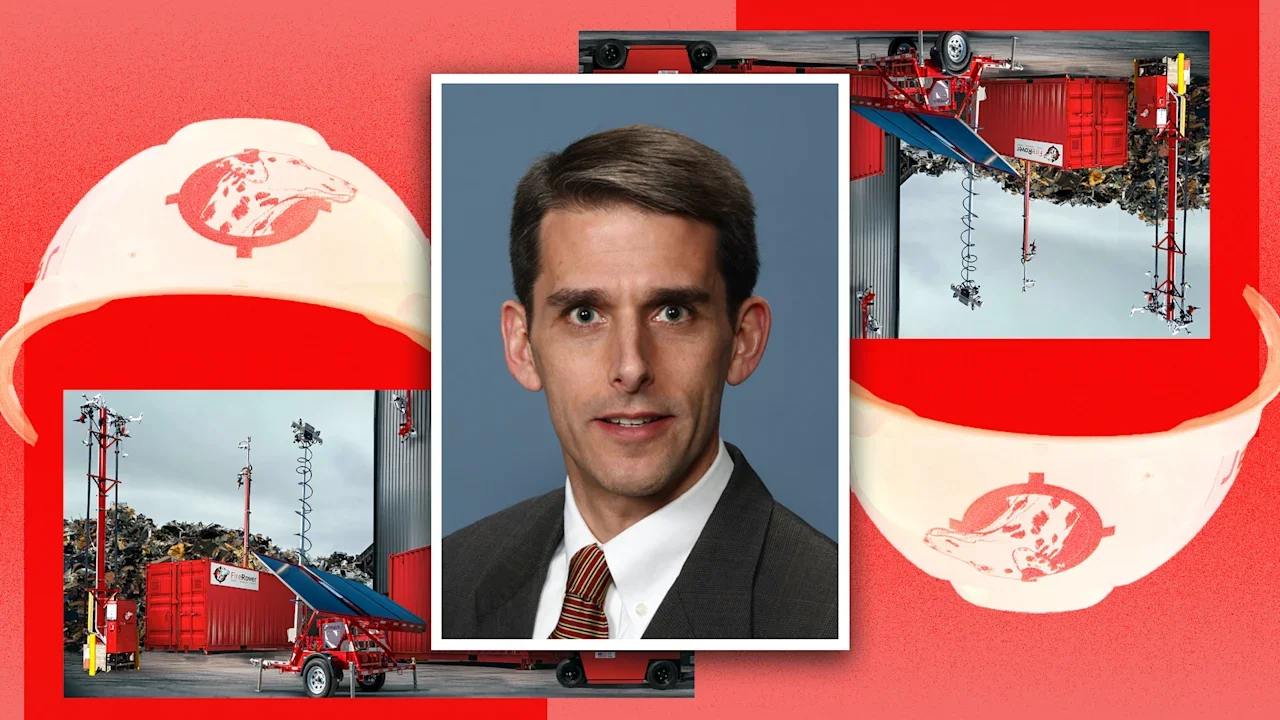
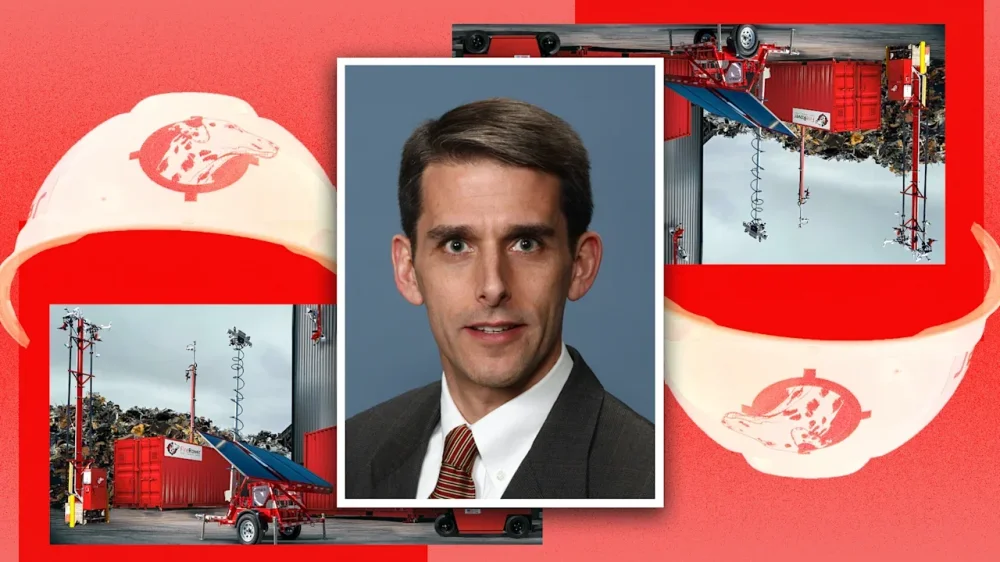
Fire Rover is all about responding quickly and efficiently to crises: The Farmington Hills, Michigan-based tech company—which has now cracked the Inc. 5000 list five years in a row—works to detect and extinguish industrial fires before they get too big. So it’s fitting that Will Schmidt, Fire Rover’s CEO, joined the company in a moment of crisis, too. Schmidt says he initially met the Fire Rover team at a trade show in early 2018, back when he was still working for Pacific Western Bank. The firefighting company so interested him that he made a trip out to their Detroit-area headquarters for a tour. “It didn’t really fit into any box that I had at the time—it was a little small and so forth—but [I] nevertheless wanted to keep in touch,” he recalls. About nine months later, Brad Gladstone—who had founded the company in 2015—passed away. Conversations about what Schmidt could do to help during that period of transition eventually led to him taking on the CEO role in fall 2019, he says. “The idea was hatched to come out and . . . flip from the side of investing and telling people what they should do to actually getting in the hot seat.” The company’s firefighting tech can be broken down into two parts: detection (which involves using thermal cameras, light sensors, and smoke-detecting computer vision software to notice an industrial fire early) and suppression (remote operators reviewing the situation and releasing a targeted suppression stream as needed). “Typically, we’ll be applying suppression five minutes before something like a traditional sprinkler head would pop, because it takes some time for the heat to accumulate at that sprinkler head,” Schmidt explains. “Because we’re highly concentrated, we’re able to use about 88% less water, typically, to put this fire out—which means they can get back to work quicker, with less cleanup, less damage from the fire, and less damage from water.” That such a fast-growing tech company (No. 1,434 on the 2025 Inc. 5000 list) is being run out of a suburb north of Detroit may surprise people used to looking to San Francisco, Austin, and Boston for innovation. But the CEO says the Midwest has a good regional talent pool of mechanics, electrical engineers, and plumbers he can draw on. Becoming CEO meant Schmidt had to move his family from St. Louis to the Detroit area—a transition complicated by the onset of COVID soon after. Still, it ended up working out for the company. Since joining, Schmidt has sought to scale and professionalize Fire Rover, which he says has finally given key employees the flexibility to take vacations. “The business is probably 10 times the size it was,” he says of his tenure, estimating that the employee head count has sextupled since he came on board. Maintaining good relationships with customers—many of whom are in the waste management, scrap metal, and recycling sectors—has been key to that growth, he adds. Sales opportunities are also growing, as industrial fires among Fire Rover’s core customer base become more common, Schmidt says, which he attributes to waste facilities’ efforts to process more material and boost efficiency. “A lot of times, you’re pushing the edges of physics,” he explains. “Moving that material creates more friction and things [like] that, so many industrial processes are inherently a little bit more dangerous than they used to be as people seek to become more efficient.” While Schmidt comes from a finance background—“spreadsheets are my natural gravitation,” he tells Inc.—he points to his company’s culture as a key driver of its success. “As you bring people on and rapidly expand,” he says, “making sure that culture is well defined—whether that’s written-down core values, or you sit down and tell everyone about the founding of the company and what your expectations are—that, to us, has been part of the secret sauce.” —Brian Contreras This article originally appeared on Fast Company’s sister website, Inc.com. Inc. is the voice of the American entrepreneur. We inspire, inform, and document the most fascinating people in business: the risk-takers, the innovators, and the ultra-driven go-getters that represent the most dynamic force in the American economy. View the full article
-
World’s second-largest container shipping line says costs have increased by $500mn per month View the full article
-
Gains for OpenAI and Arm investor help push Nikkei 225 to new peak after holiday closureView the full article
-
London-listed group is latest energy company to benefit from volatilityView the full article
-
Dubai airline says it has restored most flights after conflict closed airspace and sent jet fuel prices soaringView the full article
-
“No more reading emails, OK?” says tech founder and content creator Jason Yeager’s satirical boss character MyTechCeo in a recent TikTok skit. “I want your AI reading my AI-generated email—and answering my email.” It’s a parody, but only just. AI emails are proliferating across industries. In October, LinkedIn’s CEO Ryan Roslansky said he uses AI for almost every “super high-stakes” email he sends. And a recent survey from the email verification software company ZeroBounce found that one in four respondents admit to using it daily for drafting or editing their own emails. On Reddit, employees swap stories about bosses who use AI “to answer every email at work and thinks no one notices” or who “only communicate through AI-generated emails and it’s giving me anxiety.” When unsure, the most realistic response is to use AI too. Plug your message into a chatbot, tweak what comes out, and send it back. But if you receive a message that was likely written by AI, especially in the midst of a disagreement, you can tell—something’s off. It sounds a little too well drafted. The tone is reasonable and balanced. And while the problems are addressed, there’s something missing: the voice of the person you’re communicating with. (A dead giveaway, of course, is when the prompt is left in.) Emails may sound smoother this way, but experts worry that outsourcing difficult conversations also bypasses the relationship-building that makes workplaces function. When you ask a chatbot to rewrite your message to be more “concise” or “professional,” it can also strip away the emotional substance of the exchange—an act that may be shaping the future of work for the worse, incubating a generation of professionals who can’t talk to one another. The great social offloading There is some reported benefit to “dry-chatting” with AI—practicing tricky topics with a bot first so you can tackle the issue directly and clearly with someone afterward. Used as rehearsal, AI can be an effective tool in building confidence. But when used as a substitute, it does the opposite. Filling the gap entirely, with one person’s ChatGPT effectively talking to another person’s Claude, can create distance. This runs counter to what companies say they want when bringing colleagues back into the office: creativity, collaboration, and stronger working relationships. “When it handles the hard conversation, the human never builds the muscle of doing that,” Leena Rinne, vice president of leadership, business, and coaching at the workplace skills management platform Skillsoft, tells Fast Company. “It’s not just that the interaction risks feeling like AI—because it does—but you’re actually compromising trust with the person.” Rinne calls this outsourcing of difficult conversations “social offloading.” It’s particularly problematic when leaders resort to it, Rinne says, because it “almost regresses their ability to have the hard conversations.” “Now you’re less in the moment and less able to do this thing that leaders need to be able to do,” she says. It’s a problem for everyone involved: The boss isn’t developing the skill of communicating more clearly, and the employee isn’t figuring out how to effectively push back and ask for clarity. Carla Bevins, associate teaching professor of business management communication at Carnegie Mellon University’s Tepper School of Business, tells Fast Company she’s increasingly seeing people rely on AI-generated language in high-stakes moments. “In some cases, both parties are doing this, which means the exchange is technically happening, but the relational work is not,” she says. From a business communication perspective, this distinction matters because difficult conversations are about so much more than just clarity or tone. “They are where leaders signal judgment, accountability, and intent in real time,” Bevins says. The temptation makes sense The appeal is understandable. Sarah Wittman, an assistant professor of management at George Mason University’s School of Business, tells Fast Company that a lot of people have never been formally trained in how to have difficult conversations or resolve conflict constructively. She points to social media and short-form content shrinking attention spans, along with the perfunctory exchanges that are familiar to many workplaces. At the same time, employees are busy and often anxious about getting laid off. “We’re on the clock, messaging on Slack or Teams, or in meetings where, in the best of cases, there might be some social chit-chat,” Wittman says. “In this world, it seems logical that people are turning to a tool that can give them quick answers to solve problems that they may not know how to solve.” For people navigating power imbalances or tense workplaces, AI can also feel like a way to protect themselves from saying the wrong thing or escalating a conflict. Caitlin Collins, an organizational psychologist at the performance management software platform BetterWorks, tells Fast Company this signals that a workplace isn’t providing psychological safety for its workers. “AI is just amplifying that weakness,” she says. Over time, the concern is that more and more conflict avoidance will reshape workplace culture for the worse. Send the messy draft Communication is especially important to learn in our early careers. Those who spent their university years, and even their first few professional years, on a laptop are in particular need of strengthening this muscle. In organizations that are flattening and removing middle managers, leaders already have less time to dedicate to mentoring and nurturing them. “When this layer is compressed and AI fills the gap, employees at both levels lose the chance to observe and practice,” Bevins says. Instead, Rinne argues, leaders should set the tone by sending the messy first draft. It’s more honest, and conveys what they really mean. “There is an element of authenticity that shows up when I make a mistake—when I flub the conversation,” she says. “Me going back and saying, ‘Hey, I’m really sorry’, or ‘I wish I would’ve handled that differently’, builds trust,” she adds. “It can’t be my AI apologizing for me.” View the full article

-
In terms of establishing the best Chart of Accounts (CoA) for your business, clarity and structure are crucial. A well-organized CoA categorizes your accounts into assets, liabilities, equity, revenue, and expenses, making financial tracking more efficient. Implementing a standardized numbering system can streamline identification, whereas leaving room for future expansions can prevent disruption. Comprehending these principles will not merely improve your financial reporting but likewise align with industry standards. So, how do you tailor the CoA to fit your specific business model? Key Takeaways Categorize accounts into assets, liabilities, equity, revenue, and expenses for a comprehensive financial overview. Use clear, descriptive names for accounts to enhance identification and reduce confusion. Implement a standardized numbering system, using leading digits to indicate account types for quick reference. Keep the core accounts limited to around 20 for small businesses, simplifying management and reporting. Regularly review and update your Chart of Accounts to ensure alignment with current business goals and compliance. Understanding the Chart of Accounts (CoA) The Chart of Accounts (CoA) is a fundamental component for any organization’s financial framework, serving as a systematic arrangement of all financial accounts. This organized structure categorizes accounts into assets, liabilities, equity, revenue, and expenses, forming the backbone of accurate financial reporting. Using a chart of accounts template simplifies creating a CoA customized to your business needs. Each account gets a unique reference number, with specific leading digits indicating the account type, which streamlines transaction recording and retrieval. A well-designed list of accounts template improves your visibility into financial health, allowing for clearer reporting and effective management. It’s important to adapt the chart of accounts format to fit industry-specific requirements, ensuring scalability for future growth. Regularly reviewing and updating your CoA keeps it relevant and compliant with accounting standards, eventually supporting better decision-making within your organization. Key Components of an Effective Chart of Accounts To create an effective Chart of Accounts, you need to include crucial account categories like assets, liabilities, equity, revenue, and expenses. Each account should have a clear and descriptive name, paired with a standardized numbering system that helps you quickly identify account types. Tailoring this structure to fit your specific business model not just streamlines financial tracking but also improves decision-making efficiency. Essential Account Categories An effective Chart of Accounts (CoA) is built on significant account categories that provide a clear framework for financial reporting and analysis. The fundamental categories include Assets, Liabilities, Equity, Revenue, and Expenses. Assets encompass resources like cash, accounts receivable, inventory, and equipment, all representing future economic value for your business. Liabilities track obligations owed to creditors, such as accounts payable and loans, helping you understand your financial commitments. Equity reflects the owners’ stake, including common stock and retained earnings, indicating the company’s net worth. Revenue accounts measure income from sales or services, whereas Expense accounts capture operating costs, both crucial for evaluating profitability and overall financial health. Organizing these categories effectively is critical for sound financial management. Clear Naming Conventions During the development of a Chart of Accounts (CoA), using clear naming conventions is vital for ensuring each account is easily identifiable and serves its purpose effectively. Account names should accurately reflect the nature of transactions, like using “Revenue from Product Sales” instead of just “Revenue.” This approach provides significant context and reduces confusion. Consistency in naming across similar accounts further improves clarity and aids in producing accurate financial reports. Avoid jargon or complex terms; straightforward names enhance comprehension for all users, including new staff and stakeholders. Regularly review and update account names to align with changes in your business operations or industry standards, ensuring the CoA remains relevant and effective over time. Structure of the Chart of Accounts When you look at the structure of the Chart of Accounts (CoA), you’ll notice that it employs a systematic numbering system designed to simplify categorization and retrieval of financial information. Each account begins with a digit indicating its type, like ‘1’ for assets or ‘5’ for operating expenses. The CoA consists of two main sections: Balance Sheet Accounts and Income Statement Accounts, which reflect the core financial statements. To illustrate this, here’s a simple breakdown: Account Type Example Account Assets Cash Liabilities Accounts Payable Revenue Sales Revenue Leaving gaps between account numbers allows for future additions without disrupting the structure. Organizing accounts in the order they appear in financial statements promotes logical flow, making reporting easier for effective financial management. Importance of a Well-Organized Chart of Accounts A well-organized Chart of Accounts (CoA) is crucial for businesses seeking to maintain accurate financial records and streamline reporting processes. It serves as the backbone for financial reporting, enabling you to generate key statements like income statements and balance sheets easily. By categorizing transactions into standardized groups—such as assets, liabilities, equity, revenue, and expenses—you guarantee consistent data entry and clarity across your organization. A structured CoA improves your decision-making by providing clear visibility into your financial health, allowing you to track revenue trends and manage expenses effectively. Additionally, maintaining a concise CoA simplifies the auditing process, making it easier for auditors to assess your financial records and confirming compliance with accounting standards like GAAP or IFRS. Regularly reviewing and updating your CoA cultivates scalability and aligns with your evolving business needs, ultimately improving your overall financial management efficiency. Best Practices for Managing Your Chart of Accounts To effectively manage your Chart of Accounts (CoA), it’s essential to simplify its structure and regularly review it for updates. This guarantees that your accounts remain relevant and accurately reflect your business needs. Simplify Account Structure Simplifying your account structure is essential for effective financial management, as it helps you track transactions more easily and generates reports with greater clarity. Here are some best practices to take into account: Group Similar Transactions: Organize accounts by categorizing similar transactions together, enhancing clarity and simplifying tracking. Limit Core Accounts: Keep around 20 core accounts for small businesses to avoid unnecessary complexity and streamline financial management. Use Consistent Numbering: Implement a consistent numbering system for account identification, facilitating easy future additions and efficient transaction recording. Moreover, maintain clear and concise descriptions for each account. This won’t just improve comprehension among team members but will also aid in effective financial decision-making processes. Regularly Review Updates Regularly reviewing your Chart of Accounts (CoA) is vital for ensuring it stays relevant and effective as your business evolves. Aim to conduct this review at least annually, aligning your CoA with your current business goals and accounting standards. During these reviews, consolidate and simplify accounts whenever possible to maintain clarity and reduce complexity, limiting the total number of accounts to avoid confusion. Update account descriptions to accurately reflect your current operations and eliminate outdated or redundant accounts. Implement a consistent review schedule, like monthly assessments of your Profit & Loss statement, to identify necessary adjustments. Furthermore, consider engaging a bookkeeper or fractional CFO annually for expert insights and recommendations on optimizing your CoA for scalability and accuracy. Recommended Software for Chart of Accounts Management Choosing the right software for managing your Chart of Accounts (CoA) can greatly impact your financial reporting and overall business efficiency. There are several options available, each catering to different needs and budgets. QuickBooks: Ideal for businesses of various sizes, it offers customizable pricing and potent reporting features. Sage Intacct: With an annual subscription between $15,000 and $35,000, it’s suited for larger organizations needing extensive financial management features. NetSuite: Ranging from $100 to $300 per user per month, it integrates CoA management within broader financial operations. For smaller businesses, Xero provides an intuitive interface at $15 to $78 per month, whereas FreshBooks starts at $19 per month and is great for freelancers. Evaluating these options based on your business size and needs is essential for effective CoA management. Frequently Asked Questions Can a Small Business Use a Simple Coa? Yes, a small business can definitely use a simple Chart of Accounts (CoA). Typically, a CoA with 20-30 accounts suffices for tracking crucial financial categories like assets, liabilities, and expenses. This streamlined approach helps you maintain organized records, making transaction tracking easier. Focus on including distinct revenue accounts to monitor income streams, during limiting expense categories to 6-8 types for better management. Regular updates guarantee your CoA remains relevant as your business evolves. What Are the Three Golden Rules of Accounting Chart? The three golden rules of accounting guide your financial transactions. First, for personal accounts, you debit the receiver and credit the giver. Second, with real accounts, you debit what comes in and credit what goes out. Finally, in nominal accounts, you debit all expenses and losses as you credit all incomes and gains. These rules guarantee each transaction is recorded accurately, maintaining balance and integrity in your accounting practices. What Is the Chart of Accounts for an LLC? The Chart of Accounts (CoA) for an LLC includes categories like Assets, Liabilities, Equity, Revenue, and Expenses. You’ll track assets such as cash and inventory, whereas liabilities cover accounts payable and loans. Equity accounts show members’ capital contributions and retained earnings. Revenue accounts categorize income from product sales or services, and expense accounts capture operational costs such as rent and salaries, aiding you manage cash flow and guarantee profitability effectively. What Should My Chart of Accounts Look Like? Your chart of accounts should include five main categories: Assets, Liabilities, Equity, Revenue, and Expenses. Each category needs specific accounts for detailed tracking. Use a numbering system, like ‘1XXX’ for Assets and ‘5XXX’ for Expenses, to keep it organized. List accounts in the order they appear on financial statements, and make certain descriptions are clear for easy comprehension. Regularly review and update your CoA to align with business needs and maintain clarity. Conclusion In summary, a well-structured Chart of Accounts is essential for effective financial management. By prioritizing clarity and organization, you can tailor your CoA to suit your business needs as you ensure compliance with accounting standards. Regular reviews and updates will keep your Chart relevant and aligned with your goals. Utilizing the right software can further improve your CoA management, making it easier to track financial performance and support informed decision-making. Image via Google Gemini This article, "Best Chart Accounts Format for Your Business?" was first published on Small Business Trends View the full article
-
In terms of establishing the best Chart of Accounts (CoA) for your business, clarity and structure are crucial. A well-organized CoA categorizes your accounts into assets, liabilities, equity, revenue, and expenses, making financial tracking more efficient. Implementing a standardized numbering system can streamline identification, whereas leaving room for future expansions can prevent disruption. Comprehending these principles will not merely improve your financial reporting but likewise align with industry standards. So, how do you tailor the CoA to fit your specific business model? Key Takeaways Categorize accounts into assets, liabilities, equity, revenue, and expenses for a comprehensive financial overview. Use clear, descriptive names for accounts to enhance identification and reduce confusion. Implement a standardized numbering system, using leading digits to indicate account types for quick reference. Keep the core accounts limited to around 20 for small businesses, simplifying management and reporting. Regularly review and update your Chart of Accounts to ensure alignment with current business goals and compliance. Understanding the Chart of Accounts (CoA) The Chart of Accounts (CoA) is a fundamental component for any organization’s financial framework, serving as a systematic arrangement of all financial accounts. This organized structure categorizes accounts into assets, liabilities, equity, revenue, and expenses, forming the backbone of accurate financial reporting. Using a chart of accounts template simplifies creating a CoA customized to your business needs. Each account gets a unique reference number, with specific leading digits indicating the account type, which streamlines transaction recording and retrieval. A well-designed list of accounts template improves your visibility into financial health, allowing for clearer reporting and effective management. It’s important to adapt the chart of accounts format to fit industry-specific requirements, ensuring scalability for future growth. Regularly reviewing and updating your CoA keeps it relevant and compliant with accounting standards, eventually supporting better decision-making within your organization. Key Components of an Effective Chart of Accounts To create an effective Chart of Accounts, you need to include crucial account categories like assets, liabilities, equity, revenue, and expenses. Each account should have a clear and descriptive name, paired with a standardized numbering system that helps you quickly identify account types. Tailoring this structure to fit your specific business model not just streamlines financial tracking but also improves decision-making efficiency. Essential Account Categories An effective Chart of Accounts (CoA) is built on significant account categories that provide a clear framework for financial reporting and analysis. The fundamental categories include Assets, Liabilities, Equity, Revenue, and Expenses. Assets encompass resources like cash, accounts receivable, inventory, and equipment, all representing future economic value for your business. Liabilities track obligations owed to creditors, such as accounts payable and loans, helping you understand your financial commitments. Equity reflects the owners’ stake, including common stock and retained earnings, indicating the company’s net worth. Revenue accounts measure income from sales or services, whereas Expense accounts capture operating costs, both crucial for evaluating profitability and overall financial health. Organizing these categories effectively is critical for sound financial management. Clear Naming Conventions During the development of a Chart of Accounts (CoA), using clear naming conventions is vital for ensuring each account is easily identifiable and serves its purpose effectively. Account names should accurately reflect the nature of transactions, like using “Revenue from Product Sales” instead of just “Revenue.” This approach provides significant context and reduces confusion. Consistency in naming across similar accounts further improves clarity and aids in producing accurate financial reports. Avoid jargon or complex terms; straightforward names enhance comprehension for all users, including new staff and stakeholders. Regularly review and update account names to align with changes in your business operations or industry standards, ensuring the CoA remains relevant and effective over time. Structure of the Chart of Accounts When you look at the structure of the Chart of Accounts (CoA), you’ll notice that it employs a systematic numbering system designed to simplify categorization and retrieval of financial information. Each account begins with a digit indicating its type, like ‘1’ for assets or ‘5’ for operating expenses. The CoA consists of two main sections: Balance Sheet Accounts and Income Statement Accounts, which reflect the core financial statements. To illustrate this, here’s a simple breakdown: Account Type Example Account Assets Cash Liabilities Accounts Payable Revenue Sales Revenue Leaving gaps between account numbers allows for future additions without disrupting the structure. Organizing accounts in the order they appear in financial statements promotes logical flow, making reporting easier for effective financial management. Importance of a Well-Organized Chart of Accounts A well-organized Chart of Accounts (CoA) is crucial for businesses seeking to maintain accurate financial records and streamline reporting processes. It serves as the backbone for financial reporting, enabling you to generate key statements like income statements and balance sheets easily. By categorizing transactions into standardized groups—such as assets, liabilities, equity, revenue, and expenses—you guarantee consistent data entry and clarity across your organization. A structured CoA improves your decision-making by providing clear visibility into your financial health, allowing you to track revenue trends and manage expenses effectively. Additionally, maintaining a concise CoA simplifies the auditing process, making it easier for auditors to assess your financial records and confirming compliance with accounting standards like GAAP or IFRS. Regularly reviewing and updating your CoA cultivates scalability and aligns with your evolving business needs, ultimately improving your overall financial management efficiency. Best Practices for Managing Your Chart of Accounts To effectively manage your Chart of Accounts (CoA), it’s essential to simplify its structure and regularly review it for updates. This guarantees that your accounts remain relevant and accurately reflect your business needs. Simplify Account Structure Simplifying your account structure is essential for effective financial management, as it helps you track transactions more easily and generates reports with greater clarity. Here are some best practices to take into account: Group Similar Transactions: Organize accounts by categorizing similar transactions together, enhancing clarity and simplifying tracking. Limit Core Accounts: Keep around 20 core accounts for small businesses to avoid unnecessary complexity and streamline financial management. Use Consistent Numbering: Implement a consistent numbering system for account identification, facilitating easy future additions and efficient transaction recording. Moreover, maintain clear and concise descriptions for each account. This won’t just improve comprehension among team members but will also aid in effective financial decision-making processes. Regularly Review Updates Regularly reviewing your Chart of Accounts (CoA) is vital for ensuring it stays relevant and effective as your business evolves. Aim to conduct this review at least annually, aligning your CoA with your current business goals and accounting standards. During these reviews, consolidate and simplify accounts whenever possible to maintain clarity and reduce complexity, limiting the total number of accounts to avoid confusion. Update account descriptions to accurately reflect your current operations and eliminate outdated or redundant accounts. Implement a consistent review schedule, like monthly assessments of your Profit & Loss statement, to identify necessary adjustments. Furthermore, consider engaging a bookkeeper or fractional CFO annually for expert insights and recommendations on optimizing your CoA for scalability and accuracy. Recommended Software for Chart of Accounts Management Choosing the right software for managing your Chart of Accounts (CoA) can greatly impact your financial reporting and overall business efficiency. There are several options available, each catering to different needs and budgets. QuickBooks: Ideal for businesses of various sizes, it offers customizable pricing and potent reporting features. Sage Intacct: With an annual subscription between $15,000 and $35,000, it’s suited for larger organizations needing extensive financial management features. NetSuite: Ranging from $100 to $300 per user per month, it integrates CoA management within broader financial operations. For smaller businesses, Xero provides an intuitive interface at $15 to $78 per month, whereas FreshBooks starts at $19 per month and is great for freelancers. Evaluating these options based on your business size and needs is essential for effective CoA management. Frequently Asked Questions Can a Small Business Use a Simple Coa? Yes, a small business can definitely use a simple Chart of Accounts (CoA). Typically, a CoA with 20-30 accounts suffices for tracking crucial financial categories like assets, liabilities, and expenses. This streamlined approach helps you maintain organized records, making transaction tracking easier. Focus on including distinct revenue accounts to monitor income streams, during limiting expense categories to 6-8 types for better management. Regular updates guarantee your CoA remains relevant as your business evolves. What Are the Three Golden Rules of Accounting Chart? The three golden rules of accounting guide your financial transactions. First, for personal accounts, you debit the receiver and credit the giver. Second, with real accounts, you debit what comes in and credit what goes out. Finally, in nominal accounts, you debit all expenses and losses as you credit all incomes and gains. These rules guarantee each transaction is recorded accurately, maintaining balance and integrity in your accounting practices. What Is the Chart of Accounts for an LLC? The Chart of Accounts (CoA) for an LLC includes categories like Assets, Liabilities, Equity, Revenue, and Expenses. You’ll track assets such as cash and inventory, whereas liabilities cover accounts payable and loans. Equity accounts show members’ capital contributions and retained earnings. Revenue accounts categorize income from product sales or services, and expense accounts capture operational costs such as rent and salaries, aiding you manage cash flow and guarantee profitability effectively. What Should My Chart of Accounts Look Like? Your chart of accounts should include five main categories: Assets, Liabilities, Equity, Revenue, and Expenses. Each category needs specific accounts for detailed tracking. Use a numbering system, like ‘1XXX’ for Assets and ‘5XXX’ for Expenses, to keep it organized. List accounts in the order they appear on financial statements, and make certain descriptions are clear for easy comprehension. Regularly review and update your CoA to align with business needs and maintain clarity. Conclusion In summary, a well-structured Chart of Accounts is essential for effective financial management. By prioritizing clarity and organization, you can tailor your CoA to suit your business needs as you ensure compliance with accounting standards. Regular reviews and updates will keep your Chart relevant and aligned with your goals. Utilizing the right software can further improve your CoA management, making it easier to track financial performance and support informed decision-making. Image via Google Gemini This article, "Best Chart Accounts Format for Your Business?" was first published on Small Business Trends View the full article