All Activity
- Past hour
-
Marketing leaders are grounding SEO in zero- and first-party data to better align content with real-world customer behavior and needs. The post How Zero-Party & First-Party Data Can Fuel Your Intent-Based SEO Strategy appeared first on Search Engine Journal. View the full article
- Today
-
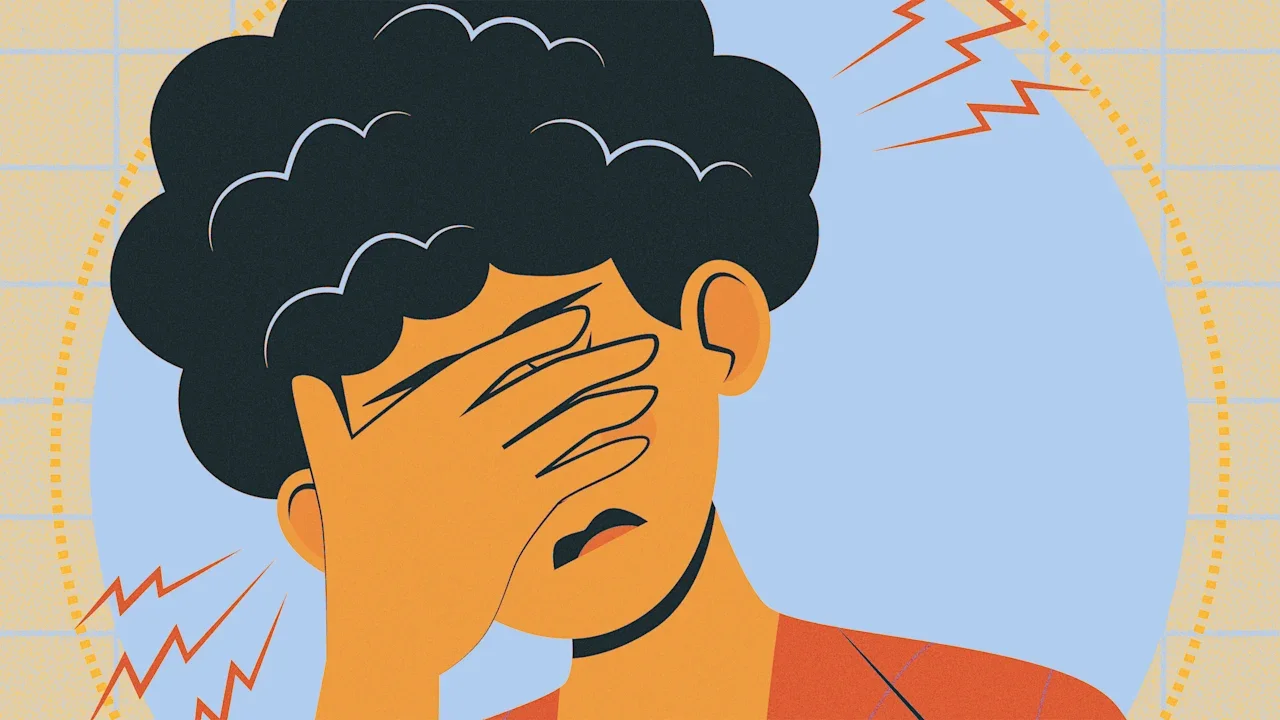
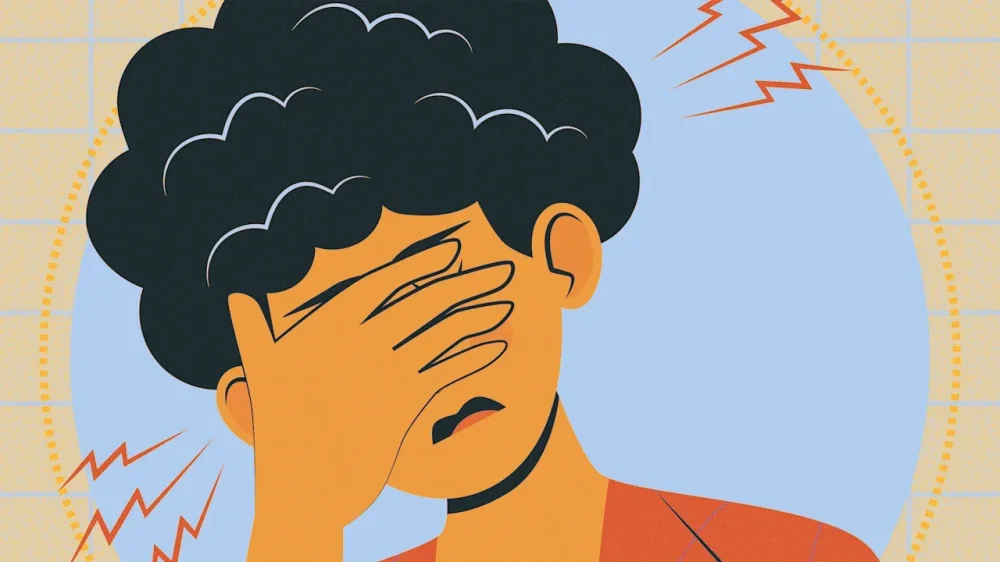
Having rejection sensitive dysphoria, or RSD, is physically painful, all-consuming, and disproportionate to the event that triggered it. While a neurotypical person is able to recognize rejection, rationalize it, feel bad about it, and then move on with their day fairly quickly, RSD feels like a bull has charged at you and headbutted you in the chest, and it comes with a tremendous amount of shame. RSD is defined by the Cleveland Clinic as “severe emotional pain because of a failure or feeling rejected,” and is a symptom of the emotional dysregulation often seen due to the extra criticisms a person with attention deficit hyperactivity disorder (ADHD) will have encountered as a child. What it’s like My RSD used to rule my day-to-day office life and therefore my career. I lost count of the number of times I was told that I took things “too personally.” Being late for work was excruciatingly painful: I either overexplained or shut down entirely. If someone replied to my email and it didn’t match the energy of my original email, I’d feel rejected. I was often unable to focus on my work because my brain was replaying a social encounter. I often assumed someone didn’t like me if they walked past me in the corridor without a few words of friendly small talk. I used to over-apologize a lot because I always assumed that disapproval was imminent. RSD made me scared to ask for help. I watched other, less competent people get promoted above me simply because I was too scared to ask for a promotion. And if I sensed I was about to be fired, I’d seize whatever control I could by quitting before they could say they didn’t want me there anymore. The multiple ways RSD can affect your career If you’re someone with RSD, it can hugely shape your career. Firstly, colleagues may think you’re rude, because RSD can turn people into blunt communicators. You’ll want to get in and out of social interactions as quickly as possible because, in your mind, the less you say, the less chance there is for criticism, rejection, or talk behind your back. However, being a snappy communicator is often perceived as rudeness, which actually increases the chances of sensing negativity from others. You may not ask for help, because this is an extremely vulnerable thing to do, and it’s preferable to struggle with a task than risk having a colleague reject your request. Having both RSD and a compulsion to not let anyone down is hard because the people pleaser within you makes it impossible to turn down work, yet the RSD within you makes it impossible to hand in work until you are certain it’s perfect. Burnout is inevitable when you’re constantly adding more to your work pile but also struggling to offload anything. As someone with RSD, you’ll be extremely empathetic due to a heightened awareness of emotions. As a result, you’ll tend to communicate with all human beings in the same way. But this worldview can cause friction in the workplace, where there is usually a clear hierarchy. Speaking to your boss in the same manner as you speak to your colleagues seems natural to you, but can cause tension at work, and when you sense that tension, yet another trigger will be created. How you can manage RSD in the workplace There are strategies you can implement to take away the power that RSD has over you and help you thrive in the workplace. Be honest with your team. Have an open conversation about what RSD is, how it affects you, and what measures can be put in place to help manage it. This topic is likely new for everyone, so while lots of people will want to accommodate people with RSD, many simply won’t understand how, or will worry that they’ll come across as patronizing. Have a plan for when something triggers you. Remove yourself from the office and take some time. Analyze the event and separate the facts from your feelings. Reevaluate whether the person meant any harm by what they said or did, and reapproach the event with a calmer mind. Try not to react in the moment, as this often leads to irreversible shame from an RSD-fueled office outburst. Unless someone specifically tells you that they have a problem with you, assume they don’t. If someone has a problem with you, especially in the workplace, it’s their responsibility to let you know directly, rather than you trying to read their mind. When you’re spiralling, take a break. Breathe, repeat positive self-talk, and remember all the amazing qualities that you bring to your job. Remind yourself that your work isn’t bad, incorrect, or not enough; it’s done, it’s completed to a very high standard, and that’s more than sufficient. Always remember your worth and advocate for yourself in a way that minimizes the effect of RSD on your well-being. And if your current workplace doesn’t offer the support you need, you can leave and find another job that will value you, RSD and all. View the full article
-
What was once a bipartisan and broadly popular housing bill has been weighed down with a pair of provisions that banks can't support. Even with those headwinds, the bill is more likely than not to pass, but not without drawn-out negotiations between the House and Senate. View the full article
-
As I walked into a Sunset Boulevard venue this past February, Luka Dončić’s face greeted me, flashing across a wall of old-school televisions. The TV screens flickered between a surreal reel of images: Dončić’s mug, a NTSC rainbow effect, a Valentine sweetheart candy image with the words “too small,” and a graphic with the words “Lil Luka’s Heartbreak Factory: Level 1.” For the uninitiated, this scene probably makes no sense. But for superfans of Dončić, star player of the Los Angeles Lakers, the messages are like a secret code to a new kind of fandom. Luka Dončić In February, Dončić celebrated the launch of his new direct-to-fans media company, 77X, by transforming a venue into his own personal brand playground. Dončić’s team built out a space around his personal aesthetic—think: old school video games—that featured a basketball court, candy shop, flower stand, photo booth, and a gift shop adorned with “Lil’ Luka,” Dončić’s alter ego. This three-day activation was Dončić’s first proof of concept for 77X, which he is using to push his NBA brand beyond merchandise drops and brand sponsors. For Dončić, 77X is an opportunity to create a completely self-owned platform that can serve as a universe for his fandom by merging content, commerce, and community under his own banner. “I want to feel like I connect with the fans, bring them out here so they can help me build this and show them what I like so they get to know me better,” Dončić tells Fast Company. In this current moment across basketball, elite athletes are renegotiating their standing with leagues and brand sponsors. Boston Celtics star Jaylen Brown launched 741, his independent sneaker brand, and Golden State Warriors star Steph Curry ended his 13-year relationship with Under Armour to operate his Curry brand independently. These athletes know that the future of fandom is direct connection that can’t be mediated through third-party brand deals. “The traditional athlete model is super fragmented,” says Lara Beth Seager, chief brand officer and business manager for Dončić and 77X CEO. Traditionally, content, merchandise, collectibles, and community are split across different stakeholders. Since most of these pillars are controlled by leagues, brand partners, social platforms or retail partners, athletes typically don’t own the relationship with their fan base. In partnership with Shopify, 77X offers a central place for Dončić’s fandom. “[In this] new world of . . . people loving athletes more than they love the teams and the franchises, which was the traditional model, Luka has really found a way for him to get closer to the fans and for them to participate more fully in his life,” says Jessica Williams, head of global brand marketing and partnerships at Shopify. This phenomenon is reflective of how Dončić’s youngest fans, who are between 13 and 25 years old, want to engage. “Fans today don’t just want to be passive,” says Seager. “They want to be active, they want to consume, and they want to live inside worlds.” “Fans today don’t just want to be passive,” says Seager. “They want to be active, they want to consume, and they want to live inside worlds.” Designing a New Type of NBA Athlete Brand In order for fandoms to live inside a world, a world must first exist. Creating 77X’s visual identity was a collaboration among Dončić, Seager, 77X President and Chief Creative Officer Chris Eyerman, and their team. “With Luka’s brand, we wanted to create a universe that reflected his actual personality and interests,” says Eyerman. “We wanted him to own everything we built, and we wanted fans to have a real aesthetic identity they could be part of.” Designing Dončić’s aesthetic identity required understanding who he is beyond his basketball career. Outside of his sport, Dončić is an avid gamer and is particularly fond of Overwatch, a team-based action game set in the future, among other video games. This passion for gaming served as the basis for designing 77X’s brand identity. The result is an aesthetic that mixes retro gaming with a playful, specific tone. Eyerman describes the identity as a “Slovenian late night animated broadcast, all built around Luka, gaming, and basketball.” A visit to 77x.world invites fans to sign up for a digital membership called Fan Pass. That’s their entry point into exclusive Dončić content, giveaways, signed memorabilia, and the 77X shop with branded merchandise ranging from t-shirts and hoodies to keychains available for purchase. “Gamified for us is a brand philosophy, just as much as it is any visual thing,” says Eyerman. “The way we think about toys, trading cards, blind box collectibles, live experiences, it’s all designed with the same logic. We want 77X to feel like the next great collectibles company as much as it feels like an athlete brand.” In traditional athlete models, the product drops from the athlete and brand were the heart of the relationship. But Dončić wants to build a reciprocal and collaborative relationship with fans. Research shows that more than 70% of professional athletes engage with their fans in online communities. Socially savvy brands understand that co-created content with fans performs better. For 77X, merch and product drops are just the starting point. Through Fan Pass, fans will have the opportunity to earn rewards through participating in Dončić ’s world, whether that’s through attending a game, leaving a comment, voting in a poll, or buying merchandise. Each time a fan checks in with Fan Pass, they earn reward points. These points unlock different opportunities like collaborating on product drops and contributing to designs with the 77X team. Every action fans take on the platform from what they click, purchase, or vote on informs what the 77X produces next. “Because the world has such a specific tone, creators and fans can easily make things inside it,” says Eyerman. “We’ve had animators, indie game designers, illustrators, content creators, and fans all contributing to the world, which is exactly what we designed for.” Bringing 77X’s Design to Life The Heartbreak Factory activation laid the foundation for how the team is going to conceptualize 77X events going forward. It established a creative playbook, or lore bible, and will be a point of proof for how 77X will handle inter-brand relationships, which appear to be a still valuable part of Dončić’s plan. For the February event, Dončić and the team invited his existing brand partners like the Nike Jordan Brand and Gatorade into the 77X universe. This invitation changes the nature of Dončić’s relationship with these brands. “An athlete basically rents their image to a brand when you sign an endorsement deal,” Seager explains. “The brand owns the relationship with the fans and the consumers. This way we can invite brands like . . . the Jordan brand . . . into this universe. You’ll see ‘Lil Luka,’ has the Jordan Luka Fives on him. They’re now activated inside Luka’s world. [It’s] the same with Gatorade, an important partner. So rather than Luka renting his image on the outside with brand partnerships and stepping into the traditional brand partnerships, we’re doing the reverse.” All these elements, Fan Pass, brands, commerce, live events, are designed to scale together. So far, the 77X team is encouraged by the results of their first pop-up, which marked the first test of Fan Pass in a live environment. For now, the 77X team says more live events are planned, each is theme-driven and designed to extend the world they’ve built across digital and physical spaces. For Dončić, that’s the point.” “This is something that hasn’t been seen before,” Dončić says. “This [event] is the first [one] we’re going to do. . . . The things in here are the things I like, the things I want to create. . . . This is a big start for us.” View the full article

-
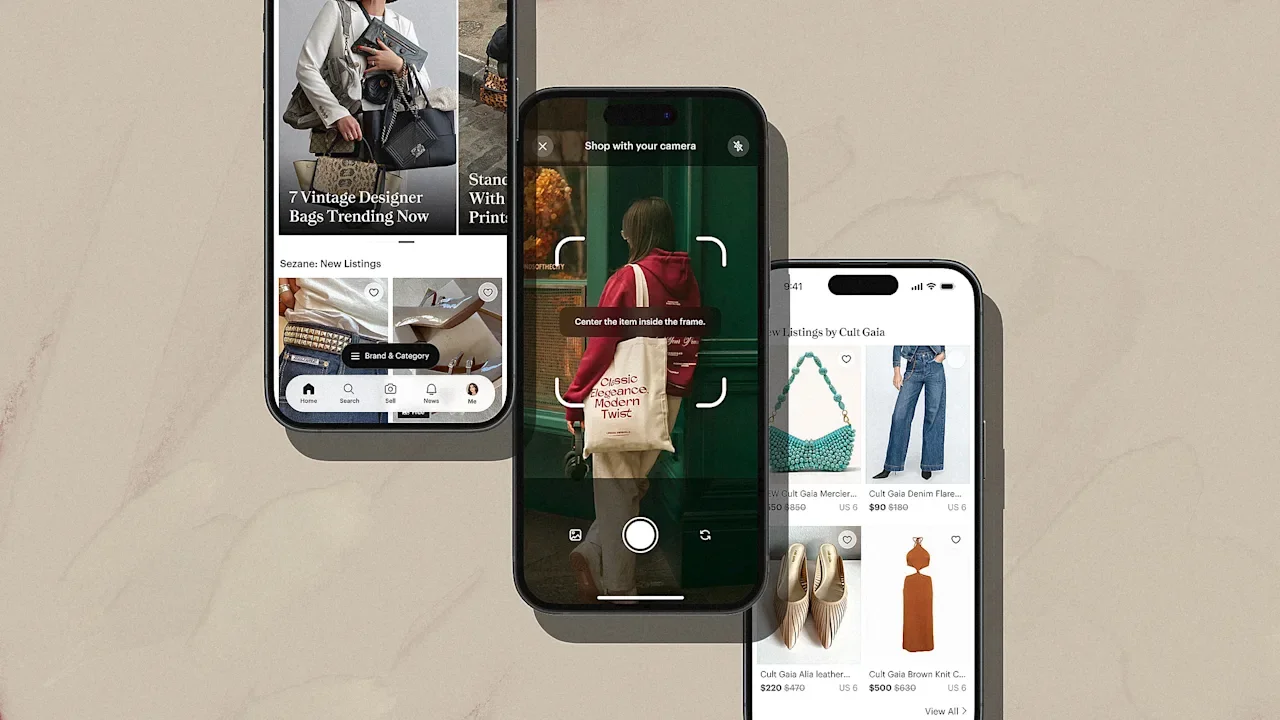
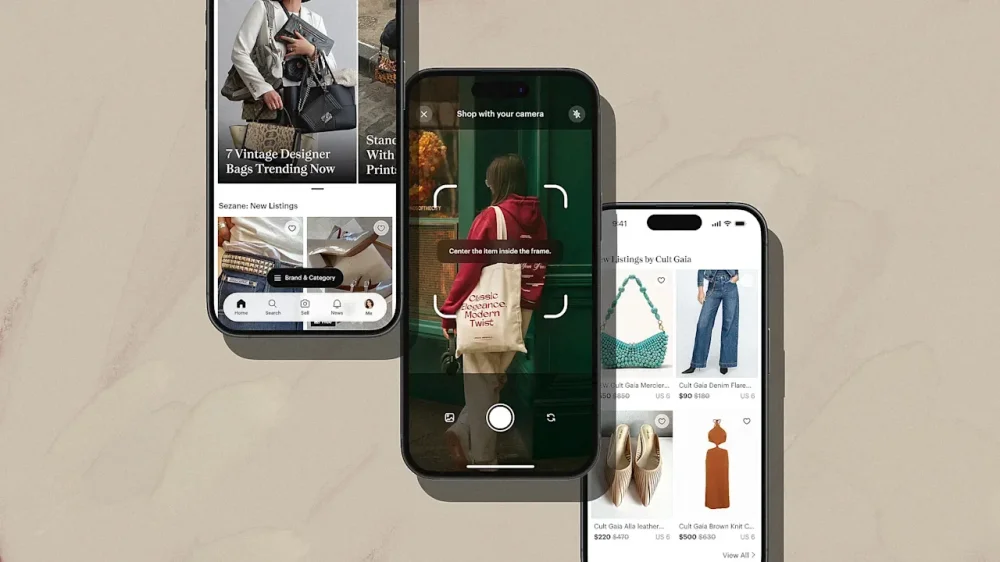
Fashion resale company Poshmark just got its first app redesign in 15 years, and it’s taking a page out of Depop’s book of UI. The new look encompasses an updated algorithm, redesigned navigational tools, and a new, streamlined aesthetic. It comes as a pivotal moment for the second market, which, according to ThredUp’s 2025 Resale Report, is expected to reach $367 billion by 2029, growing 2.7 times faster than the overall global apparel market. The majority of this growth, the report notes, has been driven by young consumers—millennials, Gen Zers, and Gen Alpha shoppers who are familiar with buying products through apps or in-app features like TikTok Shop. And competition is getting more fierce in the resale industry in light of eBay’s recent acquisition of Depop, which will allow the two platforms to pool their resources (though Depop will retain its own brand and site). Technically, Poshmark’s user base is actually broader than Depop’s, boasting 165 million active users compared to Depop’s 56.3 million. But unlike Depop, Poshmark’s previous app was not set up to capitalize on resale’s big moment, for the simple reason that it was difficult and unpleasant to use. Crowded design and unintuitive sections made shopping on the app feel more like a chore than an enjoyable activity. Now, though, Poshmark appears to be taking notes from its Gen Z-centric competitor and other social media sites to design an app that’s both easy on the eyes and easy to use. “The former UI was focused on transaction over inspiration” The first word that comes to mind to describe Poshmark’s previous app is clutter. Opening the app would lead to a front page, called the “Feed,” which was bisected into a page of recommended items and a page of Poshmark sellers hosting livestreams. Each featured item was previewed inside a small window, allowing nearly six items to fit onto the page at a time. Most of the page was black and white, but some pops of the brand’s signature purple would appear on highlighted pieces of text. Navigating to the app’s search function only made matters worse. Underneath the general search bar, the app included a laundry list of suggested destinations, like popular brands, the user’s liked items, and, for some reason, more live Poshmark shows. These were accompanied with additional tiny images of items and previews of livestreams. The result of these design choices was an extremely information-dense experience. Looking at the old Poshmark app felt like being bombarded with layers of text and imagery that the user would need to dig through to find even a nugget of interest. “The former UI was focused on transaction over inspiration,” says Heather Gordon Friedland, Poshmark’s chief product officer. “For shoppers, this often translated into a feeling of ‘endless scrolling,’ making it challenging to find unexpected pieces that matched their personal style.” Poshmark gets the Depop treatment In comparison, the new design is a breath of fresh air. The entire app has been simplified: Photos are displayed in a larger portrait mode, allowing only four to appear on-screen at a time; livestreams have been sequestered into a small icon at the top of the homepage; and the search function now loads to a clean, white page that only highlights past searches. The pops of purple have been eliminated in favor of a clean black-and-white look. Like Depop, the new app prioritizes white space and large images to keep the user from feeling overwhelmed. “The app now features larger, more immersive portrait imagery, shifting the focus to visual storytelling, much like on platforms such as Instagram or Pinterest,” Friedland says. “This makes browsing more engaging and allows the quality of our sellers’ items to shine.” Design inspiration from socials also shows through on Poshmark’s new TikTok-esque “For You” page, which surfaces trends and styles related to the users’ tastes. According to Friedland, the algorithm uses AI that’s been trained by human sellers and editorial teams to help users stumble across more niche items that the former algorithm, which prioritized shares, might not have surfaced. “While we’ve retained the share button, a core community feature, the new ‘For You’ feed prioritizes the relevance and quality of a listing over the frequency of sharing,” Friedland says. “This ensures a more magical discovery experience where users find high-quality, unique items, rather than seeing the same posts repeatedly.” When it comes to resale app shopping, young users want to feel like the act of scrolling is helping them imagine their dream closet, not forcing them to sort through as many options as possible—and it looks like Poshmark finally caught on. View the full article
-
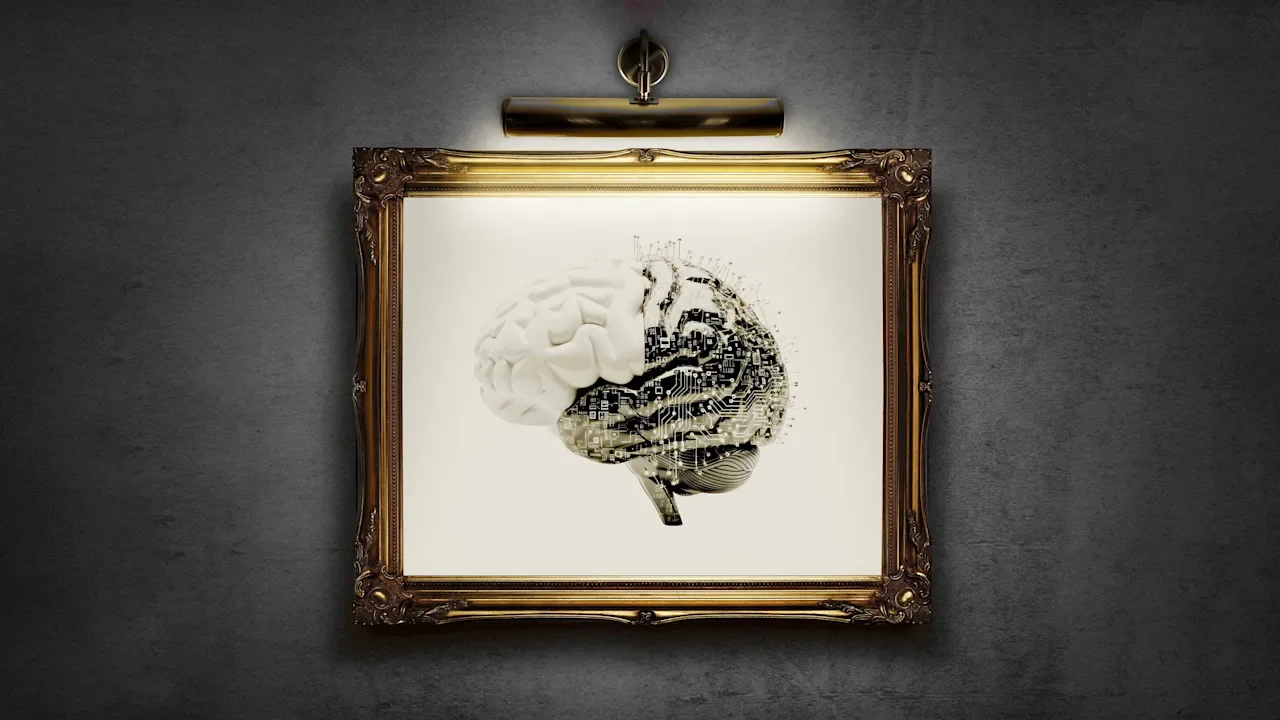
Over the course of his 50 years in the art world, Michael Hafftka’s figurative expressionist work has been exhibited at many of the world’s most prominent galleries. His paintings have hung at the Museum of Modern Art, the Metropolitan Museum of Art, and the Sauf Gallery in Paris. Now, his work is being presented in a more unusual place: on Hugging Face, the AI website. The New York–born artist, now 72, has uploaded roughly half his oeuvre to the platform. He did it on his own initiative after researching Hugging Face and recognizing it as a gathering place for AI work. The move functions as both an artistic gesture and an archival one. His path to AI is less surprising than it might seem. Hafftka has long gravitated toward emerging tools, from early experiments with computer-based art to more recent efforts with Web3. He was already plugged into the communities tracking generative AI as it began to accelerate, and followed that momentum in. He describes the project as “a new kind of catalogue raisonné,” a living record of his work, and a way to make it available for noncommercial AI experimentation. “I decided that I could best use my work as a huge dataset, because so many artists are reluctant to collaborate with AI, but I like the idea of doing that,” says Hafftka. “That way I could actually wind up with a much better-trained model.” Hafftka stands out as unusual in that space for embracing tech, and specifically AI. Most artists are opposed to the rise of AI, with some 61% of artists agreeing that AI is a threat to their livelihoods. Despite that, and because of the ease with which art can be made using simplistic prompts through tools like DALL-E, Google’s Nano Banana and Midjourney, the web is now flooded with AI-generated artwork. Michael Hafftka While Hafftka is a tech booster, he’s also a pragmatist. “It’s inevitable anyway,” he tells Fast Company. In other words, if you can’t beat them, join them. Still, Hafftka doesn’t see this as surrendering his future to AI. He argues that many artists have overstated their fears about the technology. “All of the fear that artists have about copyright usage rights, from actually making physical work, I think those fears are naïve,” he says. “We as a human being make something different from a machine, and I don’t really have the worry that I’ll be overtaken by machines.” So far, the dataset—about 40.4 GB—has been accessed roughly 5,500 times, though Hafftka hasn’t yet seen anyone do anything with its contents. Where others worry about their work being scraped, Hafftka is more concerned about how it’s used. Low-resolution versions of his paintings already circulate through museum collections online, and he assumes those are being pulled into training sets. “Those reproductions represent a small portion of my work”—though he plans to upload the rest in the coming months. “When that work is scraped from the internet and included in data sets, then I’m being done a disservice, because I feel all of my work is valuable and interesting, and I would rather that models training on my work be comprehensive.” That position diverges sharply from artists suing or protesting AI companies. Hafftka’s concern is not that machines might learn from him, but that they might learn from him poorly. “Using one or two of his paintings is not going to reflect the brilliance or the interesting, unique aspects of John Singer Sargent,” he says. He also situates AI within a longer arc of artistic change. “You can never stop technology,” he says. “What art is about is actually experimenting in order to create a unique and different vision.” His confidence is rooted partly in the continued value of original artworks, which in his case sell for tens of thousands of dollars. “You make art for the world,” he says. “I sell original, and original cannot be duplicated by AI printing technology as it is today.” He frames artistic influence less as theft and more as a continuum. Citing the late painter Jean-Michel Basquiat, whom he knew personally, Hafftka notes that imitation has always surrounded major artists without diminishing their work. “That’s how art progresses in the future,” he says. “Artists influence each other,” adding that “the idea of keeping it all locked down and afraid of future technologies is kind of paranoid.” That makes Hafftka something of an outlier for now. But he doubts he’ll be alone for long. “I’m just the first to do this, because I have so much experience now with technology,” he says. View the full article

-
For years, we have been outsourcing pieces of cognition so gradually that the shift barely registered. We outsourced memory to search engines after the well-known “Google effect” showed that when people expect information to remain accessible online, they are less likely to remember the information itself and more likely to remember where to find it. We outsourced navigation to GPS, even as research began to show that heavy reliance on it can weaken spatial memory when we have to find our own way. And we outsourced more and more of our social coordination to platforms that decide what we see, when we respond, and how we stay in sync with one another. Now we are beginning to outsource something far more consequential: not memory, not route-finding, not scheduling, but thought itself. Or, more precisely, the labor of forming a judgment before expressing one. That is the real cultural shift hidden behind the current enthusiasm around generative AI. The technology is often presented as a productivity layer, a creativity booster, or a universal assistant. And yes, in many cases, it is all of those things. But it also creates a dangerous temptation: to confuse frictionless output with actual understanding, and fluent answers with earned judgment. Research from Microsoft Research found that higher confidence in generative AI is associated with less critical thinking, while an open-access study in Acta Psychologica linked greater AI dependence to lower critical thinking. A recent Nature Reviews Psychology commentary put the distinction perfectly: performance gains from generative AI should not be confused with learning. I have argued before that “AI won’t replace strategy: It will expose it”, and that focusing on cost-cutting during the AI revolution is a strategic mistake. This is the cognitive version of the same mistake. When people treat AI as a substitute for judgment rather than a tool to sharpen it, they are not becoming more capable. They are simply becoming more dependent. The age of cognitive offloading Psychologists call it cognitive offloading: shifting mental work onto an external aid. A shopping list is cognitive offloading. A calculator is cognitive offloading. So is a calendar, a notebook, or a reminder app. In that sense, there is nothing inherently new or sinister here. Human beings have always built tools that extend the mind. A recent Nature Reviews Psychology review notes that offloading can improve task performance, even if it also comes with tradeoffs. And a broader Nature Human Behaviour perspective argues that digital technology may be changing cognition without clear evidence of broad, lasting damage. The problem is not offloading per se. The problem is what we are offloading. When we outsource storage, we preserve effort. When we outsource navigation, we reduce uncertainty. But when we outsource judgment, we risk weakening the very faculty that allows us to decide whether the machine is useful, misleading, biased, shallow, manipulative, or simply wrong. That risk matters more than many organizations seem willing to admit. Because generative AI does not just answer questions: it creates an illusion of competence so persuasive that it can flatten the distinction between “I understand this” and “I can produce something that looks like understanding.” Nature recently reviewed the evidence around memory and digital tools and made an important point: the strongest claims of cognitive decline are often overstated. But the review also notes that specific capacities can be altered in meaningful ways, including inflated confidence and changed patterns of recall. That is exactly why the current moment deserves more seriousness than both the utopians and the doom-mongers usually bring to it. Fluency is not cognition What makes generative AI culturally destabilizing is not just that it is useful. It is that it is fluent. A calculator never pretended to understand arithmetic. Your GPS never claimed to know what a city feels like. Search engines did not speak in the first person and offer confident summaries in perfect prose. Generative AI does all of that. It produces language in a form so polished, and so close to human rhetorical performance, that it becomes easy to mistake linguistic coherence for reasoning. But a well-phrased answer is not the same as a considered one. Large language models are astonishing pattern engines, but they do not possess judgment in the human sense of the term. As a Harvard Business School recent article noted, human experience and judgment remain critical because AI cannot reliably distinguish truly good ideas from merely plausible ones, nor can it guide long-term strategy on its own. That argument is not anti-AI. It is simply anti-naivety. This is where the real divide begins to emerge. Not between people who use AI and people who do not. That distinction is already becoming trivial. The meaningful divide is between those who use AI as a thought partner and those who use it as a thought replacement. The former are amplified by it. The latter are slowly hollowed out by it. Education is where this becomes impossible to ignore If you want to see the cultural stakes clearly, look at education. The anxiety around AI in schools and universities is often framed in terms of cheating, plagiarism, or assessment integrity. Those are real issues, but they are not the deepest one. The deeper issue is that generative AI can improve performance without producing learning. The OECD’s Digital Education Outlook 2026 that I have linked in previous articles (it is seriously good) is unusually explicit on this point: when students outsource tasks to generative AI without proper pedagogical guidance, performance may improve even when real learning does not. UNESCO has made a similar argument in its guidance for generative AI in education and research, warning that these systems must be used within a human-centered framework rather than as shortcuts around the cognitive process itself. And the OECD has been emphasizing for years that creativity and critical thinking are not ornamental skills, but central educational goals in a digital society. That is why so much institutional panic around AI misses the point. The real question is not whether students will use AI: of course they will! The real question is whether they will still be required to exercise judgment while using it. I made a version of that argument earlier in “AI could transform education… if universities stop responding like medieval guilds”, because too many institutions are obsessing over surveillance instead of redesigning learning for a world in which cognitive outsourcing is now normal. If students can generate passable work without wrestling with ideas, then what is really being assessed is not learning but compliance. The paradox of the AI era Here is the paradox that most people still miss: the individuals who will benefit most from AI will not be the ones who use it for everything. They will be the ones who know when not to use it. That is not a romantic defense of artisanal thinking. It is a practical argument about leverage. People with strong judgment, clear domain knowledge, and disciplined skepticism can use AI to move faster without surrendering authorship. They can interrogate outputs, test assumptions, compare alternatives, and notice when the machine is glossing over ambiguity or inventing certainty. People without those habits are more likely to accept the first plausible answer and move on. Recent management writing has begun to converge around this idea. Harvard Business Review argued that working well with AI requires acting like a decision-maker rather than a passive tool-user. Another recent HBR piece warns that if AI handles the messy early work through which people normally develop discernment, organizations may end up with workers who can produce outputs without ever having built judgment. Even research discussed by HBR on creativity points in the same direction: AI tends to help those with strong metacognition more than those without it. That is what makes this a cultural issue, not just a technical one. We are not merely integrating a new tool into existing habits. We are renegotiating the relationship between effort and authorship, between convenience and competence, between expression and understanding. What we should actually worry about The most common mistake in public discussions about AI is to oscillate between two caricatures. One says AI will make us all stupid. The other says it simply frees us for higher-order work. Reality is messier, and more interesting. Used well, AI can absolutely reduce drudgery and create room for better thinking. Used poorly, it can erode the habits that make better thinking possible in the first place. That is why the correct response is neither prohibition nor surrender. It is design. We need educational systems, workplace norms, and product choices that preserve human judgment rather than route around it. We need interfaces that encourage verification, reflection, and comparison instead of seducing users into passive acceptance. We need to stop treating every reduction in mental effort as progress. Because not all friction is waste. Some friction is where understanding comes from. And that is the core mistake behind so much of today’s AI enthusiasm. We are measuring speed, convenience, and volume while neglecting a much harder question: What kinds of minds are these systems helping us become? That is the question that should define this phase of the AI era: not whether machines can think like us, but whether, by leaning on them carelessly, we might slowly stop thinking like ourselves. The future will not belong to the people who use AI the most. It will belong to those who know when not to. View the full article

-
Met hails significant breakthrough in investigation into antisemitic attackView the full article
-
UK’s fiscal constraints leave government reliant on blunter, supplier-side supportView the full article
-
Back in the 1980s, stack-ranking employees was seen as a state-of-the-art management practice. CEOs like Jack Welch at GE divided employees into three distinct segments: the top 20% of performers, the middle 70%, and the bottom 10%. Those at the bottom would be forced out to make room for new blood. The strange thing about stack ranking is that it’s long been shown to be ineffective and, in many cases, to undermine performance. The problem is that stack ranking doesn’t create a meritocracy. It creates a political system. The winners tend to be those most skilled at claiming credit, shifting blame, and building alliances. Yet still, the practice persists. The truth is that many CEOs thrive on competition. They like to see themselves as winners and want their people to be winners, too. The problem is that losers get a vote. “Humiliation is the nuclear bomb of emotions,” Amanda Ripley writes in High Conflict. It tends to fuel a cycle of conflict, which breeds more humiliation, and things spiral downward from there. Stalin’s Gift That Just Kept Giving One of the first things a visitor to Warsaw will notice is the Palace of Culture. When I first arrived in the Poland in 1997, it dominated the skyline. A replica of the Seven Sisters buildings in Moscow, it was forced upon the Polish people by Stalin in 1955 and for decades served as a reminder of Soviet domination. Its tower had the feel of Sauron, the evil force in J.R.R. Tolkien’s The Lord of the Rings. It was more than just a foreign presence at the heart of the capital city. It had the feel of an all-watching eye, a reminder that Poles’ lives were not fully their own. It was, in other words, an enormous physical artifact representing exactly the type of humiliation that Ripley wrote about. We remember the Solidarity movement in Poland as a struggle for labor against communism, and economics was certainly part of it. But the larger grievance was encapsulated in the Palace of Culture, the feeling of being completely subjugated by another nation. Poles felt it deeply and never truly accepted Soviet rule. It was that powerful sense of injury that pushed the Polish people to be passionate about change, much like the forces that propel others now. It is that deep sense of moral injury that creates what the ancient Greeks called thymos, a need for recognition so visceral that it compels one to act. Today, the Palace of Culture still stands, albeit diminished by the modern skyscrapers bustling with commercial activity that surround and obscure it. Yet that palpable sense of humiliation—and the enduring need for retribution—remains indelibly marked on the nation’s soul. The same dynamic plays out inside organizations. How Lou Gerstner Shifted From Humiliation To Collaboration At IBM When Lou Gerstner took over in 1993, IBM was near bankruptcy. One thing he noticed was how the company’s rituals reinforced internal rivalry. Instead of collaborating, business units often worked to undermine one another—hoarding information and maneuvering for dominance. As he would later write in his memoir, Who Says Elephants Can’t Dance: “Huge staffs spent countless hours debating and managing transfer pricing terms between IBM units instead of facilitating a seamless transfer of products to customers. Staff units were duplicated at every level of the organization, because no managers trusted cross-unit colleagues to carry out the work. Meetings to decide issues that cut across units were attended by throngs of people because everyone needed to be present to protect his or her turf.” “At IBM, we had lost sight of our values,” Irving Wladawsky-Berger, one of Gerstner’s chief lieutenants, once told me. “IBM had always valued competitiveness, but we had started to compete with each other internally rather than working together to beat the competition. Lou put a stop to that and even let go of some senior executives who were known for infighting.” Pushing top executives out the door is never easy. Most are hardworking, ambitious, and smart—which is how they got to be top executives in the first place. Yet sometimes, you have to fire nasty people, even if they outwardly seem like good performers. That’s how you change the culture and build a collaborative workplace. By transforming a culture of competition—and humiliation—to one of respect and teamwork, Gerstner led one of the greatest turnarounds in corporate history. By the late 1990s, IBM was thriving again and continues to be profitable to this day. What Happens When You’re Nice To Greenpeace Founded by environmental activists in the late 1960s, Greenpeace is the type of organization that can send a chill down the spine of CEOs. Known for spectacular protests like scaling Big Ben and Rio de Janeiro’s Christ the Redeemer statue, as well as for partnering with world-famous pop stars, it knows how to bring an issue into the public eye. A conflict with Greenpeace can send a stock price reeling. Yet in Net Positive, Paul Polman and Andrew Winston explain how engaging with NGOs can be good for business. At Unilever, where Polman was CEO, they made an effort to build relationships with Greenpeace and other environmental groups. “This level of transparency built up a trust bank that gave Unilever the benefit of the doubt if something went wrong,” they wrote. I noticed something similar working in the new market economies of Eastern Europe in the 1990s and 2000s, where you sometimes had to deal with unsavory characters. People who treated them as unsavory tended not to do well. Yet if you treated them respectfully, as you would any honest business associate, you tended to get a much fairer shake. And that’s the key to breaking the humiliation cycle. Rather than engaging on the basis of conflict, you start by identifying shared values. Once you establish that basic bond of trust and respect, disagreement can become productive instead of destructive. That’s how you can transform potential conflict into collaboration. Respecting Thymos In early 2000, with their company on the brink of failure, Netflix founders Reed Hastings and Marc Randolph flew to Dallas to meet with Blockbuster executives. When I interviewed former Blockbuster CEO John Antioco, he vaguely remembered the incident but insisted he didn’t attend the meeting due to a scheduling conflict and merely stopped by. Yet the Netflix founders remember events differently. They claim that not only did Antioco meet with them, but that he actually laughed when they proposed that Blockbuster buy Netflix for $50 million. “That night, when I got into bed and closed my eyes, I had this image of all sixty thousand Blockbuster employees erupting in laughter at the ridiculousness of our proposal,” Hastings would later write in his book, No Rules Rules. As I’ve previously explained, Antioco’s version of the story is more credible, but that’s really beside the point. What’s relevant is that for the Netflix guys, the humiliation felt very real. They were on the ropes, trying to survive, and cooked up a pitch to the industry’s 800-pound gorilla, only to be rebuffed. That, more than ambition, drove them to reinvent their business, make it work, and become an 800-pound gorilla themselves. That’s why we always need to be careful about competitiveness evolving into a will to dominate. When you humiliate people, you don’t defeat them—you motivate them. And sometimes, you create your most dangerous competitor. If you’re not careful, you can sow the seeds of a humiliation cycle and inadvertently trigger your own demise. That’s the cycle leaders need to learn to break. You need to design for collaboration by making respect visible and repeatable. The desire for recognition is a basic human need. If you don’t satisfy it constructively, it will emerge destructively. View the full article
-
For the first time in 36 years, the old-school Adidas trefoil logo will appear at the World Cup. The vintage Adidas logo shows three leaf-shaped foils with three parallel horizontal lines that cut through the bottom of the shapes. It previously appeared on Adidas World Cup kits until it was replaced by the brand’s triangular three-bars logo in the 1990s. Now, for the 2026 World Cup, the trefoil logo is making a comeback, appearing on the right chest of away jerseys for 25 countries, including Japan, Mexico, and Ukraine. Bringing the old logo back is a nostalgia play. Sam Handy, general manager of football for Adidas, said in a statement that the German sportswear brand “felt it was a fitting and inspired moment to bring the trefoil back to the biggest stage in world football.” The kits pay homage to each respective country with local references, like florals representing local plants for Costa Rica and Chile, and a pattern inspired by artist René Magritte for Belgium. The revived logo instantly gives the kits a classic feel. The history of the trefoil The trefoil logo was introduced in the 1970s, when the brand was in expansion mode. Previously, Adidas had sold only shoes, and its first logo showed a track cleat with three stripes on the side and situated between the two extended tails in the ds in Adidas. When the company started selling apparel in 1972, it rolled out the trefoil created by German designer Hans “Nick” Roericht to symbolize a new era. The trefoil stuck with the symbolism of the three stripes after founder Adolf Dassler put three stripes on the shoes for attention’s sake as they showed up better in photographs. The trefoil’s shape was inspired by florals, and the logo became a pop culture crossover after rap group Run-D.M.C.’s homage to the brand in the 1986 song “My Adidas.” The company modernized its visual identity in 1991 with its triangular three-bars performance logo, designed by creative director Peter Moore. It gave Adidas a more simple mark to better compete visually with the American brand Nike’s iconic Swoosh, and it represented the company during a period of rapid growth in the 1990s and 2000s. Today, Adidas shows how to use two logos at once, keeping its performance logo as its main mark while the retro trefoil appears on its Originals brand of casual sportswear and in nostalgic marketing campaigns. By bringing the old logo to one of the biggest global stages in sports, Adidas is looking to tap into the power of pre-Yeezy nostalgia for its vintage brand. View the full article

-
Work stress has become one of the most common challenges in modern life. According to recent national reports, nearly seven in ten employees say work is a major source of stress, putting us right back where we were in the early months of the pandemic. No matter where you work—at a desk in an office, from your kitchen table, or bouncing between the two—the pressure to perform has never been higher. Burnout has reached a six-year high despite the fact that most of us are doing everything we can think of to get rid of stress. We sign up for wellness webinars. We shuffle schedules. We tell ourselves we’ll rest “as soon as things slow down.” But instead of helping, those strategies only add to the problem. The webinar we signed up for? We can’t attend because we got double-booked. The work we rearranged to make space for breathing room? Turns out it was the one thing our team was actually waiting on. And the plan to rest when things slow down? Somehow that moment never seems to come. We end up stressed and exhausted from trying not to be so stressed and exhausted. The truth is that much of what we’ve been taught about dealing with stress is outdated, ineffective, or misunderstood. If we want real relief from stress (and who doesn’t?), we first have to understand what it actually is—and what it isn’t. The Chronic Stress Crisis Contrary to popular belief, not all stress is bad. Eustress is the positive, motivating kind—the energy you feel when tackling a meaningful project or learning something new you’re interested in. Acute stress is the body’s short-term response to pressure, like when you’re preparing for a deadline or navigating a tough meeting. These forms of stress aren’t the problem. The problem is chronic stress: the type that occurs when the body’s alarm system never shuts off. Instead of returning to baseline, the nervous system stays stuck in survival mode. Research from Harvard shows over time, constant activation erodes focus, creativity, and overall health. You simply cannot think clearly, innovate, or solve complex problems when your brain believes you’re under threat and kicks into survival mode. And here’s the part we don’t talk about nearly enough: Chronic stress doesn’t just drain your energy and reduce your performance—it dulls your joy, narrows your vision, and shrinks your capacity. The myth that stress is the price of success is a lie we’ve been taught, not a truth we have to live. That brings us to a powerful, surprisingly simple alternative. It’s Time for Your Joyful Rebellion A joyful rebellion is the daily, deliberate, unapologetic choice to reclaim your time, your energy, and your joy—without having to quit your job, blow up your life, or transform into someone who cold plunges at sunrise before blending a kale smoothie. And let’s be clear: Joy is not toxic positivity. We’re not slapping a smiley face sticker over exhaustion and calling it self-care. According to Pamela King, who has studied joy extensively, “Joy is our delight when we experience, celebrate, and anticipate the manifestation of those things we hold with the most significance.” Joy is meaningful and strategic. It doesn’t require perfection or endless free time—it requires intention. And intention is something we can cultivate, even on our busiest, most stressful days. It only takes three surprisingly simple steps known as the un-stressing method. Step 1: See Stress Differently Reducing work stress begins with two tiny questions that change everything: Is this important? Do I have control over it? Much of our work stress lives in the space where we skip these questions and jump straight to worry. We catastrophize. We assume the worst. We take responsibility for things that aren’t even ours to carry. But when you pause long enough to name what really matters—and whether or not it’s within your control—you might be surprised by what you discover. Step 2: Sort Stress into Five Actionable Categories Not all stress is created equal, and we need to stop treating it like it is. There are five distinct types of work stress, and each has its own symptoms and solutions: Schedule stress: Stress from having too much to do and not enough time. Back-to-back meetings, endless commitments—you barely have a moment to breathe. Suspense stress: Stress from waiting for what’s uncertain or looming. The deadline, decision, or tough conversation isn’t here yet, but the anticipation is already wearing on you. Social stress: Stress from tension in relationships and team dynamics. You can feel it in the awkward silences, the unresolved conflict, and the energy it takes just to get through a meeting. Sudden stress: Stress that arrives unannounced and demands a response. An urgent request, a last-minute change, or a full-blown emergency throws your day off course. System stress: Stress from structures, processes, and culture. Unclear expectations, power imbalances, inequity, and inefficient processes create stress across the organization. The first four align with research conducted by Karl Albrecht in the 1970s. Despite how much work has changed since then, those categories of stress are similar. The fifth type of stress, system stress, was added based on my research. A stressor can be more than one type, or even all five types. Sorting won’t magically remove the stress, but it does remove the confusion on what’s the real problem you’re trying to solve. Step 3: Solve Stress Without Spinning This is where we trade overthinking for doing. When we’re stressed, our brains spin. We run through worst-case scenarios. We rehearse imaginary conversations. We try to solve everything at once, which means we solve nothing at all. The un-stressing method uses a simple decision matrix to identify the next step. For each stressor, you’ll have one small, smart, doable action. That’s enough to interrupt the spinning that so often occurs when we’re stressed. Celebrate the Shift Toward Less Stress and More Joy And now for the fun part—celebrate! The goal isn’t just less stress; it’s more joy. When you begin using the un-stressing method, you reclaim time, energy, and capacity. You don’t have to earn joy or go searching for it. It’s been there all along; it’s just been harder to access because of all the stress. Work stress may be common, but living in constant survival mode doesn’t have to be. Burnout may be at a six-year high, but that doesn’t mean your joy has to be at a six-year low. We’ve spent so much time trying to manage stress that we’ve overcomplicated it, when what we needed all along was something far simpler—a way of seeing, sorting, and solving stress that actually works. It’s time to stop simply managing your stress. It’s time to start leading your life. View the full article
-
Here’s a story you’re probably familiar with: You buy the reusable coffee cup. It’s beautiful, ethical, made from recycled ocean plastic, and you feel good about your purchase. But then it leaks in your bag, ruins a notebook, and by week two it’s sitting in a cabinet while you’re back to disposable cups and a vague sense of guilt. Or maybe it’s the “eco mode” on your washing machine that takes three hours instead of one. The sustainable packaging that requires scissors, sweat, and a YouTube tutorial. The electric vehicle charging app with six steps when a gas pump has one. We’ve all been there. But here’s what’s interesting: The problem isn’t that you don’t care about sustainability. It’s that these products are designed as if caring should be enough. And the problem for businesses with this approach is that it’s not. The Big Misunderstanding: Care vs. Use There’s a gap that kills sustainable products, and it’s not about values. It’s about friction. In our research, we have examined hundreds of companies across many industries and found the same pattern: Products fail when they ask people to care more. They succeed when they ask people to do less. The difference seems subtle but it’s not. Caring is an intention. Using is a behavior. And between intention and behavior sits everything that makes us human: cognitive load, time pressure, habits, trade-offs, the path of least resistance. People don’t usually buy products to express values. They buy them first to solve problems with the least effort possible. When you add steps, costs, or complexity in the name of sustainability, you’re competing with convenience. And in this battle, convenience almost always wins. The question shouldn’t be, How do we get people to care more? Rather, it should be How do we design sustainability that works because it’s easier, not despite being harder? Three ways sustainability shows up in design When you map how sustainability actually intersects with product experience, you see three outcomes. Sustainability that’s neutral. It doesn’t help or hurt the core value proposition. Maybe it’s a recycled component the user never notices. It doesn’t drive adoption, but it doesn’t kill it either. Sustainability that adds friction. Extra steps. Higher up-front cost. Performance trade-offs. Packaging that’s harder to open. This is where good intentions go to die. Sustainability that improves the experience. Lower lifetime cost. Fewer decisions. Better performance. Less maintenance. This is where adoption happens, and it’s rarer than it should be. That third category is where things get interesting. What it looks like when sustainability makes things better Take Electrolux. A few years ago, the company redesigned its washing machines with a specific goal: Make clothes last longer. Not “wash greener” or “use less water,” but simply “make clothes last longer.” The machines became gentler on fabrics. Garments held their shape, color, and overall integrity through more wash cycles. For consumers, that meant real money saved over time, and fewer worn clothes that needed replacing. To be sure, energy and water use dropped too. Textile waste fell. Microplastic shedding from synthetic fabrics declined. But here’s the key: Customers didn’t adopt a sustainability feature. They adopted a better washing machine—one that made their lives easier and saved them money. The environmental benefits were an extra. Or consider John Deere, which shifted from selling machines to selling productivity. Using GPS, sensors, and software, farmers can now optimize exactly where and when to plant, spray, and harvest. The result? They use significantly less fuel and fewer chemicals while improving yields. Operating costs fall. Regulatory compliance gets easier. Farmers didn’t “go green.” Rather, they optimized their operations, and sustainability was the side effect of better data and smarter systems. Even in heavy industrial markets, the same logic applies. Siemens embeds sustainability into automation and energy systems by making them more efficient, more reliable, and cheaper to operate over their life cycle. Customers adopt because the total cost of ownership drops and uptime improves. The emissions reductions are real, but they’re not what closes the sale. In each case, sustainability doesn’t ask customers to sacrifice. It delivers something they already wanted, but better. The pattern: Make it invisible These examples have one thing in common: Sustainability works when users barely notice it. The Nest thermostat learns your patterns instead of asking you to program schedules. Spotify optimizes streaming quality based on your connection instead of making you choose bit rates. Modern cars shift gears better than you can, and are more efficient on the engine, so we stopped asking people to shift manually. The best sustainable products follow the same principle. They reduce waste by reducing steps. They save energy by making systems smarter. They cut environmental impact by cutting friction. This is the opposite of how most sustainable products are marketed. Usually, sustainability is positioned as a feature you have to actively choose, understand, and commit to. That’s a recipe for low adoption. If your product requires customers to believe in climate change, read the label carefully, or accept trade-offs, you’re building on shaky ground. Belief is fickle. Motivation is exhausting. Convenience is ruthless. What this means for innovators and builders If you’re designing products, leading innovation teams, or building sustainability into your road map, here’s what actually matters. Stop designing for believers. Some customers are deeply committed to sustainability and will tolerate friction. They’re vocal, they’re influential, and they’re a minority. Most of your market sits somewhere between “I care when it’s easy” and “I don’t think about it.” Design for them. Stop treating sustainability as something extra. If it’s a separate feature, an add-on cost, or a premium tier, it will struggle. Sustainability should be baked into how the product fundamentally works, not layered on top. Ask different questions early. Don’t ask How do we make this greener? Instead as How do we make this better and greener? Can sustainability reduce operating costs? Cut complexity? Improve reliability? Make usage simpler? If the answer is no, rethink the approach. Default matters more than choice. Every time you ask a customer to decide, you create friction. The most successful sustainable products make the right choice automatic. Eco mode isn’t a setting, it’s just how the product works. The future is invisible sustainability We’re living through a shift in how sustainability shows up in products. Sustainability 1.0 was about labels, pledges, and messaging. It asked customers to care, to choose consciously, to sacrifice a little for the greater good. Sometimes that worked. Mostly it didn’t. Sustainability 2.0 is about defaults, systems, and design. It stops asking people to be better and starts building better products. It embeds sustainability so deeply that using the product is the sustainable choice. The companies that win won’t be the ones with the best sustainability reports. They’ll be the ones that make sustainability disappear into products so good that people choose them for entirely selfish reasons. We have documented this shift across dozens of industries. The pattern is clear: Sustainability wins when it stops competing with convenience and starts enabling it. That’s not asking people to care less about the planet. It’s respecting how they actually make decisions—and designing accordingly. The future won’t be won by making people care more. It will be won by making sustainability something they don’t have to think about at all. View the full article

-
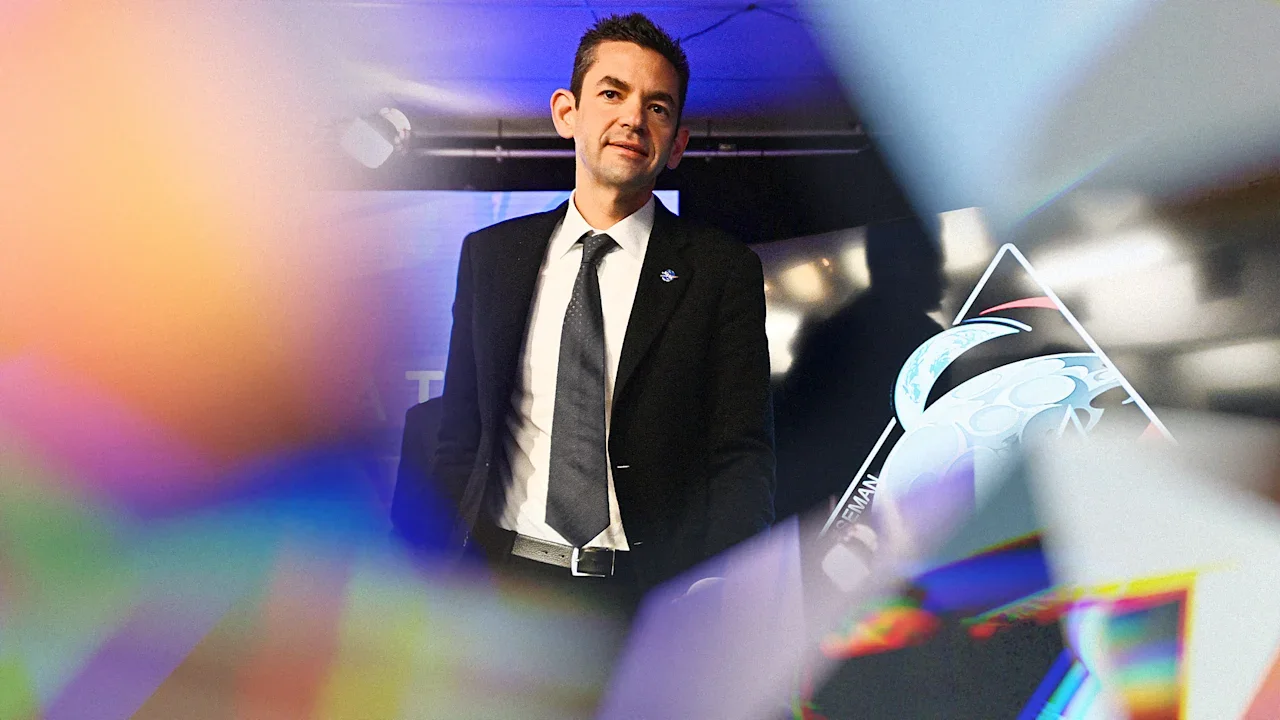
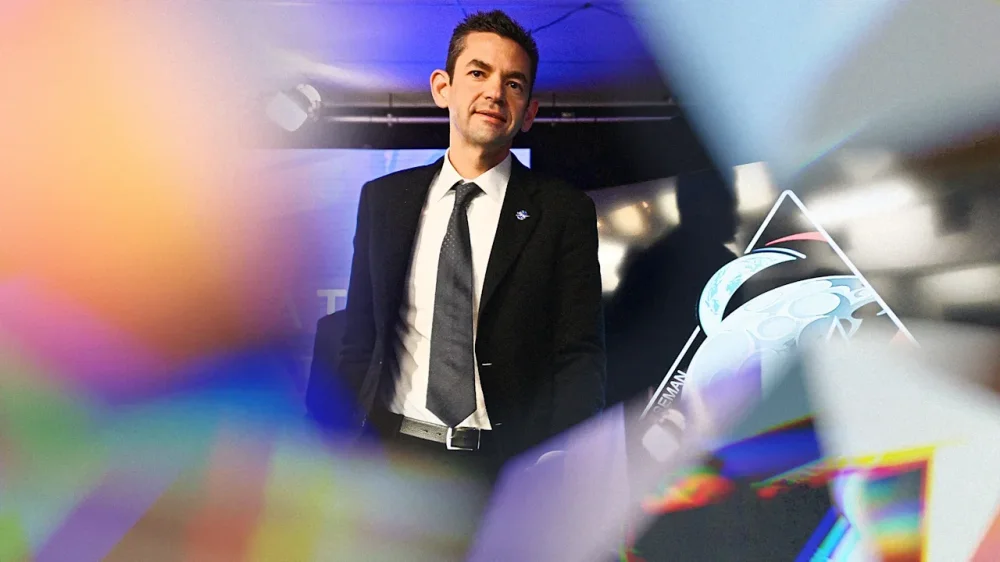
NASA Administrator Jared Isaacman just announced a sweeping overhaul of America’s space strategy. Dubbed “Ignition,” it’s a tectonic shift in how the nation intends to conquer the moon. Isaacman, who took the agency’s helm in late 2025, laid out a hyper-accelerated road map to build a permanent lunar surface base before the end of President Donald J. The President’s term. It is an aggressive departure from the agency’s previous trajectory, but looking at the unforgiving physics and glacial pace of actual aerospace engineering, the timeline reads like pure fantasy. The plan is great on paper, though. It lays out three deployment phases—which will progress from landing robots to building human habitats to establishing a permanent base crew. Isaacman says the plan positions the U.S. to compete with China, a country that is steadily advancing on its 100-year plan to build its own lunar base and set up a network of spaceships to control and exploit the resources in our satellite and the solar system. Isaacman is very aware of this. “The clock is running in this great-power competition, and success or failure will be measured in months, not years,” he stated in NASA’s official press release announcing the Ignition presentation event at the agency’s headquarters in Washington, D.C. But the history of space exploration is not actually written in months. Not even years. It’s written in decades. The hardware required for all the milestones that Ignition has set up is nowhere near ready, starting with the landers that will fly the humans from the moon’s orbit to its surface and back. According to a March 9 report from the NASA Office of Inspector General, the lifeblood of this lunar ambition—SpaceX’s colossal Starship lander—simply will not be prepared for a 2027 touchdown. Nobody really knows when it will be ready, as Starship itself keeps exploding in midair from time to time. And the Space Launch System, the Boeing-built rocket that Isaacman criticized in the past, has been delayed again and again, given that it is plagued with problems. Every critical component of the supply chain is notoriously behind schedule, making the prospect of constructing a permanent extraterrestrial habitat before January 2029—the end of The President’s presidency—less of a viable blueprint and more of an impossible dream. Big change The Ignition initiative starts with the immediate suspension of the Lunar Gateway, the planned space station that would have orbited the moon like a cosmic tollbooth. Following the previous plan, astronauts would arrive in a spaceship from Earth—like Lockheed Martin’s Orion—to dock and transfer to a lunar lander made by SpaceX or Jeff Bezos’s Blue Origin, designed specifically to just go up and down the moon’s surface. With the new plan, instead of docking with the orbiting station, the lander will orbit the moon while waiting for Orion to arrive. The astronauts will move directly from Orion into the lunar lander—think about this spaceship as a reusable version of the Lunar Module that took the Apollo astronauts down to the surface—to go down, leaving Orion behind. Then, at the end of the mission, they will use the lander to go up, dock back with the Orion, and leave for Earth, leaving the lander orbiting for the next mission. “It should not be much of a surprise that we intend to pause Gateway in its current form and focus on building lunar infrastructure that supports sustained operations on the surface,” Isaacman remarked at the Ignition presentation event, claiming that NASA aims to have landings every six months. This abrupt pivot leaves a trail of whiplash and wasted hardware among America’s international allies, who had already invested heavily in the previous architecture. For years, the European Space Agency, Japan, and Canada poured funds and engineering hours into building modules for the now-mothballed Gateway station. Europe actually delivered its critical habitation module to NASA just last April, a massive metallic cylinder now left without a destination. The sudden policy apparently left ESA livid. An agency spokesperson told The Register that the agency “is consulting closely with its Member States, international partners, and European industry to assess the implications of the announcement, with further information to follow.” The agency will redirect the Lunar Gateway budget toward a three-phase lunar base built directly on the regolith. This permanent outpost begins with a $10 billion initial phase to deliver rovers and power generators, eventually scaling up to support continuous human habitation. How NASA imagines it Phase one of this ambitious settlement will happen in 2027. It relies entirely on a relentless barrage of private robotic landers. Instead of sending humans right away, NASA will bombard the lunar landscape with scientific instruments, uncrewed rovers, and advanced power systems like radioisotope thermoelectric generators (these are essentially rugged metal boxes that contain chunks of decaying plutonium that release continuous heat and electricity, an absolute necessity for machinery to survive the brutal, subfreezing lunar nights). Once that robotic foundation is laid, phase two will kick off in 2028 to support recurring astronaut visits. This will put more hardware on the surface, most notably a pressurized rover built by the Japan Aerospace Exploration Agency that will allow explorers to drive across the gray wasteland in a comfortable, shirt-sleeve environment rather than being trapped in bulky space suits. Phase three will come in 2029. This is when the agency officially transitions from brief camping expeditions into a permanent, entrenched human foothold. To make this happen, NASA plans to use massive cargo variants of those currently delayed commercial landing systems to haul heavy infrastructure, like habitats, down to the surface. This is where the rest of the international partners come into play, bringing in monumental pieces of equipment such as the multipurpose habitats designed by the Italian Space Agency and a rugged lunar utility vehicle provided by Canada. It is a grand vision of a bustling off-world colony, heavily dependent on all these colossal, unproven rockets magically maturing into reliable freight trains to the moon within the next couple of years. Can it be done? To execute this dizzying sprint, NASA is fundamentally restructuring its own workforce, stripping away layers of external contractors to hire engineers directly as civil servants and embedding federal experts directly into the factory floors of private vendors. Some observers seem to be quite excited. Veteran space journalist Mark Whittington, a firm supporter of the permanent lunar base idea, found Isaacman’s speech refreshing because it “acknowledges NASA’s shortcomings rather than minimizing or covering” the profound delays and wasted billions that plagued earlier iterations of the Artemis program. As a child of Apollo, I’m a huge supporter of permanent lunar bases, too. But my enthusiasm cannot bend the harsh realities of physics, space development timelines, and congressional purse strings. The vision to build this is meaningless without the actual cash to buy the aluminum and fuel. While a recent Senate committee advanced the 2026 NASA Authorization Act—which implicitly endorses this exact lunar base concept—that legislation does not actually allocate a single dime to the agency. As space policy analyst Marcia Smith bluntly pointed out to SpacePolicyOnline: “Authorization bills don’t provide any money; only appropriators do.” Even if the financial floodgates burst open tomorrow, the physics of keeping fragile human bodies alive in the lethal vacuum of space cannot be rushed by political mandates. The sobering March NASA OIG report explicitly commended NASA’s management but raised glaring alarms regarding crew safety on the commercial landers being developed by Musk’s SpaceX and Bezos’s Blue Origin. The watchdog discovered a terrifying blind spot in the current architecture: If a disaster strikes astronauts while walking on the lunar surface or orbiting above it, NASA possesses absolutely zero capability to mount a rescue mission. Rushing untested vehicles into the unforgiving environment of space without a safety net is a gamble that history shows often ends in tragedy. We have watched this movie before, witnessing private lunar landers crash into the regolith and watching legacy and new aerospace giants stumble on engineering hurdles for years on end. Isaacman’s desire to cut the bureaucratic fat and focus the agency’s brilliant minds directly on the machinery is a deeply noble and refreshing shift in philosophy: NASA as a startup. Great. Beam me up. But decreeing that a permanent lunar base and a nuclear-powered Martian flagship will materialize before 2029 ignores the brutal, unforgiving nature of orbital mechanics and the established cadence of human spaceflight. For all its good intentions and bold rhetoric, unless a hundred miracles happen, this sweeping new road map remains as profoundly tethered to fantasy as the heavily delayed plans it just replaced. View the full article
-
There’s a lot of fear these days in the media world over the “zero-click” future. AI chatbots and search engines ingest content, interpret it, and then summarize it for users, with the inevitable consequence being that people no longer visit your site. This is not theoretical. Data from Chartbeat, an analytics company that serves media sites, shows global publisher traffic from Google dropped by one-third last year, with smaller publications hit hardest. So yes, AI substitutes content, but it doesn’t do so evenly. A recent analysis from Define Media Group looked at how the presence of Google AI Overviews affected traffic to different types of content over the past year. Indeed, organic search traffic overall is down 42%, but it turns out that clicks to breaking news stories are actually up by quite a large margin—103%. The main reason: Google doesn’t show AI Overviews for breaking news queries. That makes a lot of sense, since a breaking-news situation usually involves a lot of rapidly changing and inconsistent information as reporters across several publications sort out what really happened from all the rumors, exaggerations, and outright misinformation that surround a news event. When you ask about a breaking news event on Google, you usually get a Top Stories carousel instead of an Overview, a feature that’s existed for a long time. Why breaking news still wins When you peel back the numbers, you see that the reason for the big jump in news traffic is Google Discover—the built-in news feed that exists on most Android phones. Google also made some changes to Discover recently that apparently boosted news from publishers even more. But even putting Discover aside and just looking at the web, traffic to news is essentially flat, which makes it clear that breaking news is the content type that is most resilient to AI substitution. None of this is to say that a publisher can or should focus on news alone. The category has other challenges, and competing on breaking news is expensive, requiring continual monitoring and staffing. Also, the news isn’t meaningful without context and analysis. News publishers need to explain to their readers why the news is important to them, even if that explanation is at risk of being summarized by AI. Moreover, when AI summarizes content, it doesn’t necessarily mean you’ve “lost”—it shifts the competition to another arena: citation. As I’ve pointed out before, competition for presence in AI summaries is a battle worth fighting, even if the rewards shift considerably from the click-based advertising business model that is still important to the majority of media companies. Sites that are consistently cited in summaries will ultimately be the ones that define consensus, and data suggests that the share of the audience that does click through to sources, while smaller, is more intentional, meaning there’s more opportunity to turn them into loyal readers. However, the competition for citations is fierce. Publishers aren’t just competing with each other. In fact, they’re not even the most favored sources. A report from Semrush, a search-analytics firm, ranked the top sources most often cited in AI answers: Reddit, LinkedIn, and Wikipedia. The top publisher on the list is Forbes at No. 11, and I suspect it has a lot to do with its extensive contributor program. This ranking isn’t the whole story—other studies, like this one from Muck Rack, do show that AI search engines favor journalistic content over brand-created or social content. At the same time, AI is clearly building answers from a broad set of sites it deems authoritative, not just news publishers. The new playbook takes shape So from these ingredients—news is a moat, AI likes journalism but looks wider, and explanatory content is the battleground—we can start to cook up a strategy. The Semrush study found that AI absolutely loves citing LinkedIn content. The reason, according to the authors: LinkedIn content, especially the longer articles that are native to the platform, are almost always clearly framed, structurally obvious, and written to a fairly meaty length (between 500 and 2,000 words). If AI likes structured explanatory writing on LinkedIn, it probably likes those same traits in explanatory journalism elsewhere. The Muck Rack data says journalism makes up about a quarter of AI citations, but it also says more than half of citations are from the last 12 months and that the highest citation rate is in the first seven days. Define, meanwhile, says breaking news is up while evergreen is down, taking a 35% hit. Put together, that points toward a specific kind of publisher explainer: not static archive content, but fresh, tightly structured explanatory journalism that accompanies the news. Now we’re starting to see what an AI-resilient news operation looks like. Publishers should still invest in breaking news because it remains defensible and difficult for AI to compress into a zero-click summary. But they should pair that with explainers that are updated quickly, tied closely to live topics, and written in a format that is easy for both humans and machines to parse. The vulnerable category is the old generic evergreen article that is neither essential live reporting nor especially useful as source material for AI answers. So AI isn’t erasing journalism into irrelevance. It’s made that value more specific. Breaking news still commands attention because platforms are cautious about compressing fast-moving events into a single summary. And when the news settles, the publishers that still matter are the ones that can turn their reporting into clear, timely explanations and analysis. That is where the next fight for authority will be won. View the full article

-
Below, Dr. Sunita Sah shares five key insights from her new book, Defy: The Power of No in a World That Demands Yes. Sah is a physician-turned-organizational psychologist. She teaches business and healthcare students at Cornell University and Cambridge University, and served as commissioner on the National Commission of Forensic Science. What’s the big idea? Learning how to defy is important, relevant, and meaningful for anyone who wants to speak up when it matters and to do the right thing in the moment. Listen to the audio version of this Book Bite—read by Sah herself—in the Next Big Idea app, or buy the book. 1. We’re wired to comply. Soon after my son was born, I was frequently puzzled when well-meaning relatives would ask: Is he good? What they meant was: Does your baby sleep when you want him to? Does he stop crying when you want him to? In other words, does he do what you want him to do? Does he do what he’s told? As someone who has spent years studying defiance, this moral equation of obedience to goodness always perplexed me. And yet, when my baby got older and became a toddler, I caught myself repeating the very equation I’ve spent my career questioning: Compliance equals good, defiance equals bad. And that’s not an accident. From the moment we’re born, we’re trained to obey—by caregivers, teachers, peers. Compliant behavior is rewarded with dopamine. It literally shapes our neural pathways. We don’t just learn to comply. We become wired for it. And that wiring follows us into adulthood—into our workplaces, relationships, and the moments when it matters most to speak up. But here’s what my research has shown me: We can change that wiring. When we understand the pressures that keep us compliant, we can begin to do something different. It takes self-awareness, effort, and practice, but we can disentangle the idea that compliance is always good and defiance is always bad. We can begin to recognize situations where compliance is actually harmful, and defiance is what’s needed. 2. Tension is your strength. If we’re wired to comply, what does it feel like when that wiring runs up against our values? Early in my career, as a junior physician in the U.K., I was invited to meet with a financial adviser at the hospital. His name was Dan. He was charming, asked many questions about my extremely limited disposable income, and built up a great rapport with me. By the end of the hour, he recommended I invest in a mutual fund and offered to write a report for me. All of it, absolutely free. Sounds great, doesn’t it? In my tired state, I blurted out: “What’s in it for you?” He smiled and said, “Well, there’s no such thing as a free lunch. I get a commission if you invest in the fund I’m recommending.” That disclosure changed everything. For the previous hour, I had thought Dan was giving me good advice. But now that his ulterior motive was revealed, I didn’t trust him as much. Perhaps that’s rational. But here’s the crucial thing: I didn’t want him to know that I didn’t trust him anymore. I didn’t want him to think that his disclosure had corrupted our good rapport. I didn’t want to imply in any way that I thought he was biased or giving me bad advice. So I actually started to feel more pressure to say yes and sign on the dotted line. That feeling has a name. I call it insinuation anxiety—the fear of implying something negative about someone, especially when they’re standing right in front of you. It’s a powerful force that keeps us silent and compliant, not because we agree, but because we don’t want to offend. We don’t want to insinuate that our bosses, coworkers, friends, or family cannot be trusted or are incompetent. But that tension you feel? That knot in your stomach and flutter in your chest? That’s not weakness. That’s your strength. Learning to listen to it is the first step toward defiance. 3. Find Your True No. If tension is the signal, how do we move from feeling it to acting on it? My research shows that a true no is not a snap judgment. It’s a process that progresses through five stages: Feeling that tension. Often, we disregard it—we think it’s not worth our doubt, or that the other person knows better. That’s unfortunate, because this is the first warning sign that we might need to defy. Acknowledging that tension. Recognizing that the discomfort you feel is a sign of your agency, not your weakness, and figuring out which of your values is being compromised. Escalating—expressing your concern out loud to someone else. People who vocalize their discomfort early are far more likely to follow through. You can still be in a deferential position at this stage by simply saying, “I’m not comfortable with this,” or asking, “Have you considered it this way instead?” Threat of noncompliance, meaning letting others know you may not go along. Something like, “I can’t put my name to that report unless those sentences come out.” The act of defiance itself. Your True No. These stages don’t always happen in order. You might skip one, toggle between two, or circle back. But understanding that defiance is a process is liberating because it means you don’t have to wait for some dramatic moment of courage. And here’s what’s remarkable: that tension present in stage one? If you get to stage five, it dissipates. It melts away. You feel in alignment with your values and what you stand for. It’s more honest, more authentic, and even joyful when the pressure is released. Many famous moments of defiance follow these stages. Rosa Parks didn’t make a spontaneous decision with her famous act of defiance on that bus. She had been preparing—through decades of training—for that moment. A true no is not just a no to the situation. It’s a true yes to your values. 4. Defiance is a practice, not a personality. My mother was the most compliant person I knew. Petite—barely 4-foot-10—she was quiet, gentle, and conflict-avoiding. She apologized when someone stepped on her foot. For most of my childhood, I thought that this is what goodness looks like: being compliant, not defiant. Until one day, when I was 7. We were walking home from the grocery store in West Yorkshire, England, dragging our rickety shopping cart down a narrow alleyway—a snicket, as we called it. A group of teenage boys blocked our path. One of them yelled, “Go back home.” My training kicked in. I looked down, grabbed my mother’s arm, and tried to pull her past them. But she didn’t move. My quiet, deferential, never-confrontational mother stopped, turned, and looked those boys straight in the eye, and said—calmly but firmly—“What do you mean?” I was stunned. And in that moment, everything I thought I knew about who defies and who doesn’t started unraveling. We think defiance belongs to a certain kind of person—someone bold, fearless, extraordinary—but it doesn’t. We can choose to be defiant one day and compliant the next. It’s not a personality. Defiance is a skill, and like any skill, we can train for it. We can practice in small moments, like sending back the wrong coffee order or telling the hairdresser to stop cutting, so we’re ready when the bigger moments come. That moment in the alley taught me that you don’t need to be a certain type of person to defy. You just need to be connected to what matters. 5. Become a moral maverick. We often think of defiance as loud, aggressive, violent—someone staring down tanks or raising a fist before the world. But a lot of defiance happens quietly, behind the scenes. And it doesn’t always require superhuman power. Defiance simply means knowing who you are and acting in alignment with those values. That’s what I call being a moral maverick. Not a rebel without a cause, but a person with a moral compass who chooses to act on it. It starts with just one person. One kid in an alleyway who says to the others, “That’s not okay, let them pass”—so that an immigrant mother doesn’t have to carry that weight alone. One shake of the head, one snap of a camera phone. One person who says, “No—that isn’t right.” For far too long, compliance has been our default. We’ve said yes so often that we’ve forgotten what it means. And we’ve reserved no for the troublemakers. But every single act of consent, compliance, and dissent shapes not just our own story, but the story of our society, our workplaces, and our world. It is time to put no on an equal footing with yes. Choice by choice. Decision by decision. Each one of us has the power to defy. Enjoy our full library of Book Bites—read by the authors!—in the Next Big Idea app. This article originally appeared in Next Big Idea Club magazine and is reprinted with permission. View the full article
-
Most people use AI like a search engine: type a question, get an answer. It’s an easy, well-understood use case for tools like Claude, Gemini, and ChatGPT. But for solopreneurs, the real value is in setting up dedicated projects with a lot of background information about your business. Most AI tools let you create project workspaces where you can add context about who you are and what you do. You can attach relevant files, and keep the conversation focused on one specific idea or area of your business. I have 23 AI projects in Claude for everything from strategic planning to building a website. Some are used a few times per month, while others I rely on almost daily. Here are a few of my favorites. 1. Research a new tool Solopreneurs are constantly evaluating apps and tools. But Google search results show you the companies that paid for ads or have the best SEO—not necessarily the best fit for your business. For example, I needed to replace the platform I use to host webinars. Instead of sifting through comparison articles, I used AI chat to research alternatives based on my specific requirements: budget, features, and how the new tool would integrate with other tools I use. The back-and-forth narrowed my options faster than I could have done on my own, and I chose a platform I might not have found through a standard search. 2. A weekly check-in Solopreneurs don’t have a manager or team keeping them accountable. Projects can quietly slip for weeks before you realize something fell off your radar. I maintain a persistent chat thread for weekly check-ins. Because the conversation history includes my quarterly plan and previous check-ins, the AI already knows what I have planned. It recaps the prior week, asks what’s on my plate, and gives me a light nudge on longer-term projects. Every week, I just show up and answer questions. It keeps me accountable to myself and the things I said I’d get done. 3. Creating content If you promote your business online, creating content across multiple platforms and writing everything from scratch can be a huge time drain. I built an AI project specifically for monthly social media planning. It contains my voice and tone guide, instructions for different types of posts, and platform-specific rules for LinkedIn and Threads. I tell Claude to source ideas from my own blog. The voice guide and content briefs do the heavy lifting. Without them, the output would be really generic. I still edit everything before I publish, but AI-generated posts are a good starting point. 4. A business partner Solo business owners make every decision alone—pricing, positioning, launches, pivots. Having a strategic sounding board changes the quality of those decisions. I set up a dedicated project loaded with information about my brand, the products and services I offer, templates for different types of decisions, and my business frameworks. When I’m planning a new product launch or evaluating a strategic shift, I work through it in this project. The AI already knows my audience, my positioning, my tech stack, and my constraints—so the conversation starts at a useful level instead of from scratch. 5. Vibe coding a website Solopreneurs often can’t justify hiring a developer for a custom website, but site templates are often limited or can’t reflect their brand. I used AI to build a fully custom website through a process called vibe coding. I described what I wanted using natural language, and Claude wrote the code. I uploaded my brand guidelines (colors, fonts, style), shared inspiration sites, and iterated through multiple rounds of changes. I don’t have any technical skills. But I was able to describe what I wanted, reject designs that missed the mark, and troubleshoot issues that came up. Vibe coding works for more than websites. You could build custom tools to use yourself or resources to share with clients. The more context, the better I’m a stickler for documentation and have spent years capturing the ins and outs of my business in Google Docs. It made my life easier. Turns out, my documentation also made my AI projects more useful. These projects are only as useful as the context behind them. AI doesn’t know your business unless you teach it, and that takes time. Whether you have a lot of business documentation or not, you’ll want to spend a lot of time in the beginning explaining why you don’t like the output or what you would change. Every example is something AI can learn from, so the next version is better. View the full article
-
Is your website ready for the AI-powered search revolution? Discover practical insights on adapting your CMS for modern needs. The post Is Your Website Ready for AI Search? A Practical Audit for CMOs appeared first on Search Engine Journal. View the full article
-
Figure comes as Middle East war has triggered a surge in energy pricesView the full article
-
Plus, US bank regulationsView the full article
-
When leadership trends become corporate wallpaper, they risk losing the very edge that made them useful in the first place. That’s where psychological safety risks finding itself today. It’s plastered on slide decks, plugged into engagement surveys, and whispered in HR circles as the answer to “Why don’t people speak up?” but it’s rarely connected to what happens after someone actually does speak up. This distinction between permission to speak and protection from consequences matters more than leaders often realize. Psychological safety tells you that people feel comfortable raising questions or concerns and that they believe they won’t be overtly sanctioned for doing so. But that’s not the same as saying they won’t be socially penalized, subtly marginalized, discouraged, or suffer career setbacks after they speak. In real workplaces, danger rarely comes as formal punishment. The more common backlash is informal and cultural. A peer quietly stops inviting someone to meetings. A manager stops giving stretch assignments to someone who asked a tough question. A team starts excluding dissenting voices from informal channels. None of these are “official retaliation,” but they still hurt. In one finance team I observed, everyone said diversity of opinion was valued until an analyst challenged a VP’s rosy forecast. They didn’t get fired, but their next project assignment was downgraded, and suddenly no one seemed eager to build on their ideas. That’s not an anomaly. It’s what happens when organizations treat psychological safety as a momentary good feeling rather than a protective system. Three Shifts Leaders Must Make (Beyond Just “Safety”) If psychological safety is the starter pistol, leaders today are forgetting about the finish line. Here’s what must come next: 1. Design for Consequence Safety, Not Just Permission Leaders should ask: What actually happens when someone speaks up? Are there formal and informal protections for that person? Does the organization have mechanisms to support employees when they raise concerns? Consequence safety, sometimes called post-voice support in organizational research, means no one is punished (formally or socially) for raising issues, even when those issues are uncomfortable or inconvenient. That requires more than posters on a wall; it requires systems, norms, and consequences for those who retaliate quietly. 2. Leaders Must Absorb the Risk, Not Just Invite Voice Inviting people to speak up is one thing. Protecting them after they speak up is another. Psychological safety fails when leaders solicit input but then react defensively, change the subject, or subtly downgrade the speaker’s standing. True leadership involves absorbing the discomfort of dissent and making it clear, through words and actions, that raising concerns will not harm the person, even if it disrupts the moment. 3. Set Clear Norms Around Feedback Outcomes Psychological safety is not about “no consequences.” It’s about predictable, fair consequences. Organizations should define what gets elevated, how decisions about concerns will be made, and who supports the person who spoke up. This clarity reduces ambiguity. When people know the response will be fair, even if it’s hard, they’re more likely to speak up with trust. The Promise of Safety and its Limit There’s a reason psychological safety became such a central idea. It helped companies see that fear has a cost, and that people perform better when they feel heard. But too many leaders treat psychological safety as a cure‑all instead of a foundation. I’ve been invited to numerous workshops on how to encourage people to speak up, but just a handful on how leaders should respond when the truth is uncomfortable, disruptive, or politically inconvenient. That gap is where psychological safety breaks down. If we want workplaces where people truly can speak up without fear, and where speaking up doesn’t lead to career or social pain, we need to extend the idea. We need consequence safety, accountability, and real protections, not just good intentions. Psychological safety should be the beginning of a conversation, not the end of one. View the full article
-
Donald The President’s America is a world leader in democratic declineView the full article
-
European capitals irritated by Mark Rutte’s suggestion they will join US armada to Strait of HormuzView the full article
-
Traders expect prices to fall later this year, giving carriers hope they can lock in lower rates by being patient View the full article
-
Rightwing populist party is shifting back to ‘small state’ economic policiesView the full article