All Activity
- Past hour
-
 Automation has been reshaping PPC account management for years, from rules, scripts, and API-driven workflows inside Google Ads. Most marketers are already comfortable with automated bidding, data-driven optimization, and other AI-powered enhancements. The next shift goes further. Two developments in particular are changing how PPC campaigns are managed and optimized: AI agents and vibe coding. Together, they point to a more autonomous way of working, where execution increasingly moves to AI – while marketers focus on strategy, systems, and creative direction. This shift unlocks new levels of efficiency and flexibility, but it also changes what effective PPC management looks like. Agentic AI: Google Ads has its own agentic AI integrated Google released its Agentic Ads Advisor in November 2025. The tool uses the latest Gemini models to help advertisers surface insights and improve campaign performance. Google describes Ads Advisor as: “[Y]our AI partner that helps you proactively manage campaigns directly within Google Ads. It helps you understand your business context and simplifies your work by learning from your interactions to improve campaign results.” The goal is to help advertisers analyze and optimize campaigns more efficiently. But it raises an important question: what should an agentic AI tool actually do? An agentic AI should function as an autonomous agent. It should surface information when needed, but it should also be able to operate independently when appropriate. That includes identifying opportunities to improve campaign setup, assets and ad copy, search terms, and other inputs. More importantly, it should be capable of implementing certain changes, not just recommending them. That is where agentic AI needs to go. As Jyll Saskin Gales noted after testing the tool, Google’s Ads Advisor is useful in places but not yet capable of acting autonomously. How agentic AI can be used in PPC workflows AI agents are meant to be autonomous. They should be able to make decisions without constant human input, actively managing, adjusting, and optimizing campaigns in real time. If an agentic AI only provides advice or reporting, much of its potential is lost. In practical terms, agentic AI can handle bidding strategies, ad placements, audience targeting, and creative testing. Instead of simply adjusting bids or budgets, it can make decisions on the fly, optimizing campaigns based on live performance data, seasonality, competitive activity, and user behavior trends. This represents a fundamental shift in how PPC accounts are managed. As agentic AI takes on more operational work, PPC professionals can spend more time on strategic decision-making. Over time, it is likely that many advertisers will rely on the same algorithms, campaign types, and AI agents. When that happens, competitive advantage will depend less on tooling and more on strategy. Differentiation will come from classic marketing fundamentals: Positioning. Value propositions. Offers. Website quality. Brand awareness. Creative assets. Those are the areas where marketers can still outpace competitors using the same AI-driven systems. Dig deeper: Agentic PPC: What performance marketing could look like in 2030 Why agentic AI is relevant for advanced PPC marketers For experienced PPC marketers, the appeal of agentic AI lies in its ability to scale campaigns without sacrificing strategic control. That is where it becomes a true game-changer. Real-time optimization: Instead of waiting a full day for bid adjustments to take effect, agentic AI can respond within minutes, allowing campaigns to adapt quickly to changing market conditions. Data-driven creativity: Agentic AI is not limited to performance metrics. It can analyze creative elements and audience interactions, testing combinations of visuals, copy, and CTAs to identify top-performing ads. Reduced human error: With less manual intervention, the risk of mistakes or missed opportunities declines. This allows PPC professionals to spend more time on higher-level strategy rather than execution. Despite the potential, agentic AI still requires informed oversight. PPC professionals must understand how to evaluate and apply AI outputs, especially when aligning decisions with broader marketing objectives. That matters because current tools are still limited. Google’s own agentic AI implementation still has limitations. In addition, many advertisers want tools that operate according to their own rules and priorities. That is where vibe coding comes in. Get the newsletter search marketers rely on. See terms. Vibe coding: How to build your own tools In parallel with the rise of agentic AI, another concept is gaining traction in marketing: vibe coding. At its core, vibe coding is a way of working with AI-powered platforms to build more personalized, intuitive, and data-driven campaigns, tools, landing pages, or other systems. In short, vibe coding lets you act as a developer, even if you are not one. With tools such as Cursor, Lovable, and AI Studio, you can describe what you need and let the system build it. By refining prompts over time, you can end up with a personalized tool that does exactly what you want, in your own style. Vibe coding has been especially valuable in my own work. Professionally, I have built tools such as: An SEO schema markup generator. A campaign and SEO audit tool. A system that generates marketing ideas by simply entering a website URL. It has also extended beyond work, including: A tool that tracks daily calorie and nutrition intake. Another that creates custom CrossFit workouts based on Garmin and Strava data. Once you start building this way, it becomes easy to keep expanding what you create. Dig deeper: How vibe coding is changing search marketing workflows Applying vibe coding to PPC workflows Beyond building standalone tools, vibe coding becomes more powerful when combined with agentic AI. That combination allows marketers to build their own AI agents for PPC work. Frederick Vallaeys has shown how to build custom tools for PPC campaigns, though his example relies on manually entering data before the tool can operate. By adding an AI agent layer, that step can be automated. Instead of manual inputs, the agent can pull data through the Google Ads API, process and format it as needed, and then execute specific tasks. In Vallaeys’ example, that task is seasonality analysis. From there, the possibilities expand. You can build: A keyword agent to identify new opportunities. An ad copy agent that generates creative based on performance data. A creative agent that produces new image assets. Data agents, video agents, and other specialized agents can be connected into a single system, resulting in a custom agentic AI tool built through vibe coding. The future: Where agentic AI and vibe coding will take PPC The rise of these technologies brings both challenges and opportunities. By embracing agentic AI and vibe coding, PPC marketers can streamline operations, improve campaign performance, and stay competitive while also standing out from peers. The future of PPC is autonomous, data-driven, and more personalized than ever. Embracing agentic AI and vibe coding creates a clear advantage for marketers who understand how to apply them effectively. That advantage benefits internal teams and, ultimately, customers. These technologies are not here to replace PPC professionals. They are designed to extend capabilities, reduce manual effort, and enable better results with less friction. PPC is becoming increasingly AI-powered, and adapting to that shift is no longer optional. For practical examples of how AI agents and vibe coding are already being applied, follow Alfred Simon, Mike Rhodes, and Ales Sturala. View the full article
 -
TikTok has finalized a deal to create a new American entity, avoiding the looming threat of a ban in the United States that has been in discussion for years on the platform now used by more than 200 million Americans. The social video platform company signed agreements with major investors including Oracle, Silver Lake and the Emirati investment firm MGX to form the new TikTok U.S. joint venture. The new version will operate under “defined safeguards that protect national security through comprehensive data protections, algorithm security, content moderation and software assurances for U.S. users,” the company said in a statement Thursday. American TikTok users can continue using the same app. President Donald The President praised the deal in a Truth Social post, thanking Chinese leader Xi Jinping specifically “for working with us and, ultimately, approving the Deal.” The President add that he hopes “that long into the future I will be remembered by those who use and love TikTok.” Adam Presser, who previously worked as TikTok’s head of operations and trust and safety, will lead the new venture as its CEO. He will work alongside a seven-member, majority-American board of directors that includes TikTok’s CEO Shou Chew. The deal ends years of uncertainty about the fate of the popular video-sharing platform in the United States. After wide bipartisan majorities in Congress passed — and President Joe Biden signed — a law that would ban TikTok in the U.S. if it did not find a new owner in the place of China’s ByteDance, the platform was set to go dark on the law’s January 2025 deadline. For a several hours, it did. But on his first day in office, President Donald The President signed an executive order to keep it running while his administration sought an agreement for the sale of the company. “China’s position on TikTok has been consistent and clear,” Guo Jiakun, a Chinese Foreign Ministry spokesperson in Beijing, said Friday about the TikTok deal and The President’s Truth Social post, echoing an earlier statement from the Chinese embassy in Washington. Apart from an emphasis on data protection, with U.S. user data being stored locally in a system run by Oracle, the joint venture will also focus on TikTok’s algorithm. The content recommendation formula, which feeds users specific videos tailored to their preferences and interests, will be retrained, tested and updated on U.S. user data, the company said in its announcement. The algorithm has been a central issue in the security debate over TikTok. China previously maintained the algorithm must remain under Chinese control by law. But the U.S. regulation passed with bipartisan support said any divestment of TikTok must mean the platform cuts ties — specifically the algorithm — with ByteDance. Under the terms of this deal, ByteDance would license the algorithm to the U.S. entity for retraining. The law prohibits “any cooperation with respect to the operation of a content recommendation algorithm” between ByteDance and a new potential American ownership group, so it is unclear how ByteDance’s continued involvement in this arrangement will play out. “Who controls TikTok in the U.S. has a lot of sway over what Americans see on the app,” said Anupam Chander, a professor of law and technology at Georgetown University. Oracle, Silver Lake and MGX are the three managing investors, each holding a 15% share. Other investors include the investment firm of Michael Dell, the billionaire founder of Dell Technologies. ByteDance retains 19.9% of the joint venture. Associated Press writers Chan Ho-him in Hong Kong and Didi Tang in Washington contributed to this report. —Kaitlyn Huamani, AP Technology Reporter View the full article
-
Google will sometimes fall back to showing featured snippets when it is unable to generate AI Overviews for a query. And when that happens, it sometimes looks like an AI Overview, but it is not an AI Overview, it is a featured snippet.View the full article
-
For much of the modern corporate era, brand has been treated as surface area. A story told outward. A set of signals designed to persuade, attract, and differentiate. When companies spoke about brand, they were usually talking about perception: how they looked in the market, how they sounded, how they were received. That framing made sense in a world where markets moved a little more slowly, organizations were stable, and leadership could afford to separate strategy from culture, product from meaning, execution from belief. That world no longer exists. Today’s organizations operate in a state of near-constant volatility. Strategy shifts quarterly. Teams scale overnight. Culture is tested publicly, in real time. And leadership is no longer judged solely by results, but by coherence and meaning. Do the choices make sense? Do the values hold under pressure? Does the organization know how to behave when the playbook runs out? In this environment, brand cannot remain a visual wrapper. It must become something more fundamental. It must become an operating system. When Brand Stops Being a Story and Starts Being Structure An operating system doesn’t exist to impress. It exists to coordinate behavior, allocate resources, and make complex systems usable. It governs what’s possible, what’s prioritized, and what happens when things break. This is the shift now underway in the most forward-thinking organizations—brand moving from expression to infrastructure. In this new paradigm, brand is no longer just what the company says. It’s how the company defines itself. It shows up in how leaders frame trade-offs, how teams resolve tension, how products evolve, and how culture responds to stress. The question is no longer “Is the brand consistent?” but “Is the brand functional?” Does it help people make better decisions faster? Does it reduce friction? Does it offer clarity when data runs out and vision or judgment takes over? If it can’t be used under intense pressure and scrutiny, it isn’t an operating system at all. The End of the Brand Deck Era and What Comes Next This evolution didn’t happen because brand teams failed. It happened because organizations asked brand to do the wrong job. For years, brand was tasked with alignment theater: values posters, messaging frameworks, tone-of-voice documents. Useful artifacts, yes, but largely disconnected from how power, priorities, and incentives actually worked inside the business. Meanwhile, leadership teams struggled with a different problem entirely—fragmentation. Smart people pulling in different directions. Strategy decks multiplying ideas while conviction thinned. Culture initiatives proliferating without changing behavior. The gap between what the brand claimed and how the organization actually operated grew wider. In that gap, trust eroded, employees disengaged, decision-making slowed. And companies found themselves saying the right things while doing the wrong ones. Brand-as-operating-system emerges as a response to that gap. Not as a creative flourish, but as a leadership correction. Brand as a Shared Logic System What does this look like in practice? When brand functions as an operating system, it becomes a shared logic layer across the organization. It provides a common mental model that helps teams answer questions like: What kind of decisions do we make here? What do we prioritize when values collide? How do we act when there’s no precedent? What does “good” actually look like for us? This is where brand moves beyond language and into behavior. Hiring becomes more precise. Not just about skills, but about belief alignment. Innovation becomes more focused. Not just novel, but meaningful. Culture becomes less performative. Not what’s celebrated on slides, but what’s rewarded in practice. The organization stops asking people to remember the brand and starts enabling them to use it. Why This Is a Leadership Problem, Not a Marketing One Brand-as-OS doesn’t install itself. It has to be architected, and that responsibility starts at the top. Brand-as-OS only works when leadership owns it, models it, and enforces it. This is where many organizations stall. It’s easier to approve a campaign than to commit to a worldview. Easier to delegate brand than to live inside it. But brand is not neutral. Every organization already has an operating system. The only question is whether it’s intentional or accidental. Our Future of Brand Report 2026 reveals a clear pattern: companies that treat brand as infrastructure, embedded in systems, rituals, and strategic choices, outperform peers who treat it as a job left to the marketing department. What sets these companies apart isn’t better branding. It’s leadership that understands brand is the connective tissue between culture, vision, and execution. At Motto, we’ve seen this firsthand. In companies led by visionaries who treat brand not as a communications tool, but as a cultural code. Leaders who hold brand in the same regard as financial health or product strategy, because they understand it’s tied to both. And when that code is clear, everything else becomes faster, sharper, and more aligned. What emerges isn’t language for the website or a better logo. It’s a set of convictions that govern how the company behaves, especially when the answers aren’t obvious. The company doesn’t just look different; it is different. The Cost of Not Making the Shift Organizations that fail to treat brand as infrastructure will continue to suffer from the same symptoms, no matter how many initiatives they launch. They’ll hire exceptional talent only to frustrate it. They’ll produce beautiful work that lacks cohesion. They’ll talk about alignment while reinforcing ambiguity. Most dangerously, they’ll confuse activity with progress. In contrast, companies that build brand as an operating system gain something far more valuable than consistency. They gain velocity. Because when people share a belief system, they don’t need permission for every move. They can act with confidence, even in uncertainty. The Next Frontier of Leadership Leadership in the coming decade will not be defined by charisma or control but by coherence. The ability to create systems that make sense to the humans inside them. Brand-as-operating-system is not a trend. It’s a response to complexity. A way of giving organizations a spine when everything else is in flux. The leaders who understand this won’t hand off brand to marketing and hope it holds. They won’t treat vision, culture, and brand as separate lines of effort, but as one integrated system of belief, behavior, and direction. They’ll design for alignment from the inside out, not just to look good but to operate better. Because the future of brand leadership belongs to those who do more than tell the story. They architect the system. They run the code. They build companies where vision is felt, culture is lived, and brand is the connective tissue in it all. Not just brands with something to say. Brands built to lead. View the full article
-
Google Ads currently has a bug where if you try to edit your asset groups within your Performance Max campaigns in the web user interface, it simply won't work. Google is reportedly aware of the issue and is telling advertisers to use Google Ads Editor or the API as a workaround for now.View the full article
-
Key Reddit communities that professionals use to stay informed, ask smarter questions, and learn from peers across industries. The post 45 Best Subreddits For Marketing & SEO Professionals appeared first on Search Engine Journal. View the full article
-
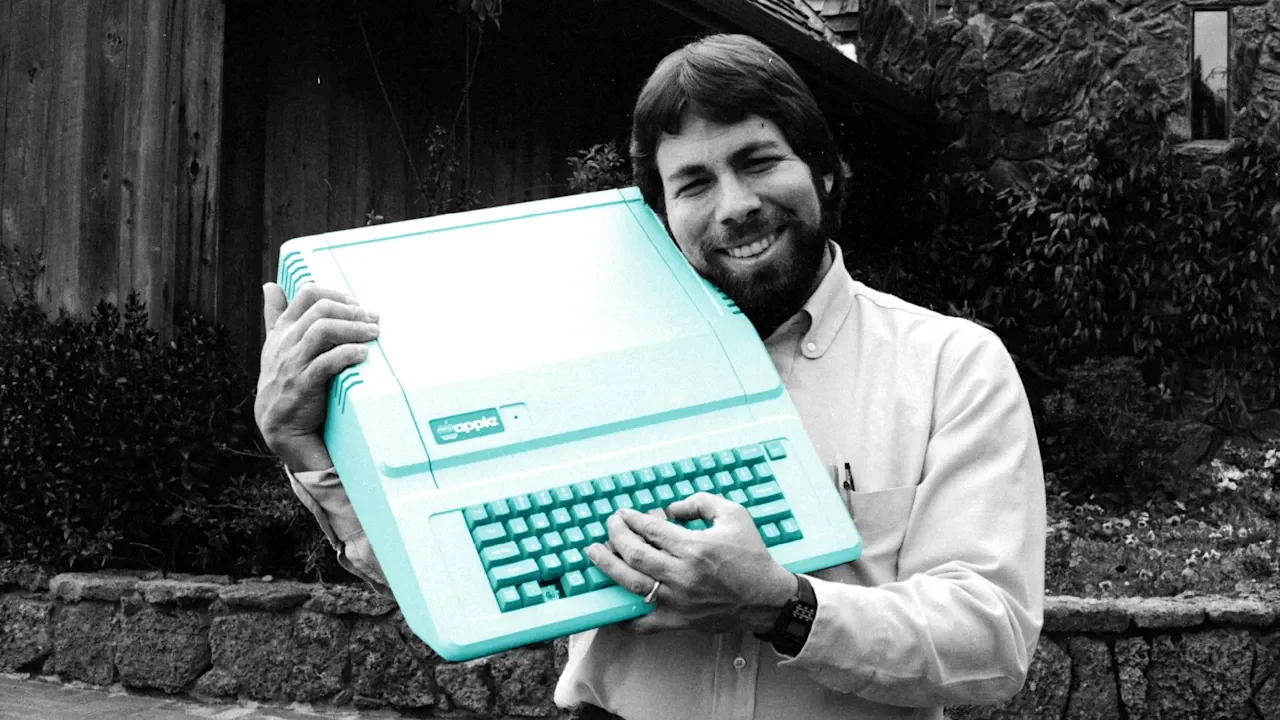
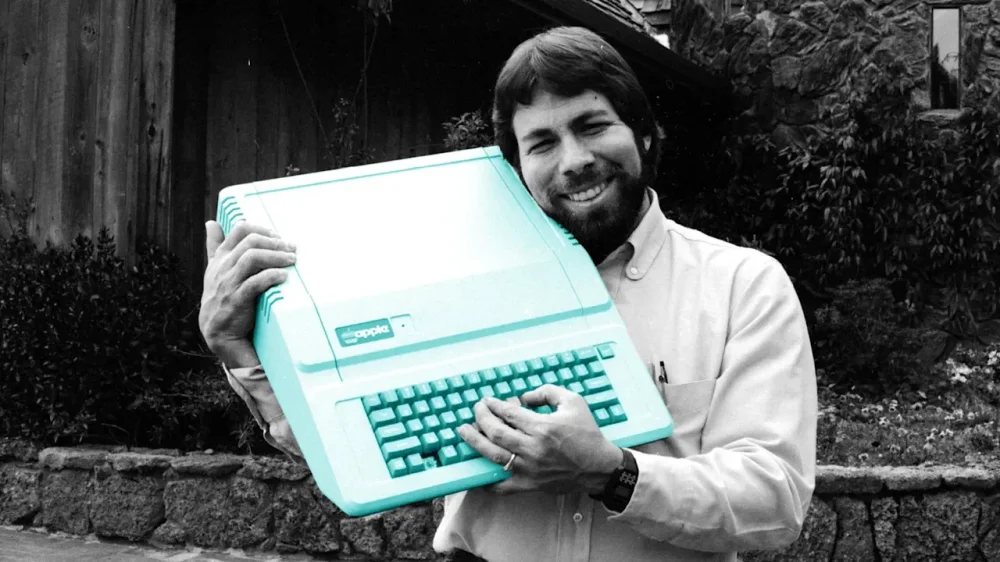
Hello again, and welcome back to Fast Company’s Plugged In. On January 16, Apple cofounder Steve Wozniak—known to all as Woz—received the James C. Morgan Global Humanitarian Award, an honor bestowed each year by the Tech Interactive, a science museum in San Jose, California. The ceremony and a conversation between Wozniak and comedian Drew Carey capped a gala event in which several organizations were named laureates for using technology to improve the world. Their creations include a brain-computer interface (BCI) that helps people with disabilities communicate, a forum that lets patients who have received BCI implants shape the technology’s best practices and ethics, a headset that uses ultrasound therapy to treat mental conditions, and a device that provides people with Parkinson’s disease the ability to walk more confidently. Until he took the stage himself, Wozniak sat in the audience with his wife, Janet, watching presentations about each honoree with rapt attention. In a conversation after the event, Wozniak marveled at what he’d seen. “They were creating something to solve a problem they had with the world, and that’s where you get the best products,” he said. He likened the honorees’ ingenuity to his own implementation of color graphics on 1977’s Apple II, a killer feature at a time when other microcomputers could barely draw pictures in black and white. Rather than adding to the machine’s cost and complexity, he explained, his approach “took no chips at all. I mean, it was just so far out of the box. It violated all the rules of mathematics on color TV.” Jay SanguinettiSidney CollinSteve WozniakAndreas ForslandIan Burkhart Wozniak has spent close to half a century being celebrated for his technical brilliance and irreplaceable role in bringing computing to the masses. Just three years after starting Apple with Steve Jobs (and, briefly, Ron Wayne), he received the Association for Computing Machinery’s Grace Murray Hopper Award. Six years after that, he and Jobs won the National Medal of Technology, resulting in a memorable photo opp with President Ronald Reagan. He said last week’s award was particularly meaningful to him because it reflected his efforts as a humanitarian rather than solely as a technologist. Those efforts have often focused on culture and education in Silicon Valley. A native of San Jose, Wozniak provided funding that was instrumental to bootstrapping the 27-year-old Tech Interactive as well as the city’s Children’s Discovery Museum. (The latter is located on a street named Woz Way—yet another of Wozniak’s many tributes.) In his memoir, iWoz, he writes about paying for computer labs in local schools and fulfilling a cherished dream by teaching computing skills to fifth graders. Even earlier, he donated the very first Apple computer to a teacher named Liza Loop. After Apple employees dating to its days as a garage startup weren’t cut in on its 1980 initial public offering, Wozniak gave them a meaningful percentage of his personal stock, purely because it felt like the right thing to do. He was also a principal founding donor to the Electronic Frontier Foundation, an essential advocate for civil rights in the digital age. The list of his good deeds goes on, and is not thoroughly documented: In conversations with people who have known him for decades, I’ve heard multiple stories about his unpublicized support for other worthy causes. All along, Wozniak has remained on Apple’s payroll. (One of the best things about attending product launches at Apple Park is observing him mingling with the preshow crowd, otherwise made up of journalists, creators, influencers, and Apple PR people.) But it’s been more than 40 years since he wound down active work at the company. Though he’s since been involved in several startups—in areas ranging from remote controls to space junk—his post-Apple life has mattered in ways that have nothing to do with money or power. His desire to leave society better than he found it is one big reason why. It’s not tough to connect the dots between the Woz who engineered the Apple-1 and Apple II when he was in his mid-twenties and Woz the 75-year-old humanitarian. He does so himself, arguing “your personality settles down between 18 and 23 years old. From then on, you’re the same person.” (Having reassessed his priorities after surviving a small plane crash in 1981, he does allow that something like “a horrible shock or near-death [experience]” might have an impact.) His interest in inventing stuff, he told me, began as a form of self-expression that helped him overcome being painfully shy: “The only way I could do anything to communicate was to design something cool. And people, other geeks, would talk to me about it.” Steve WozniakKatie Ferrick Apple’s first machines grew out of Wozniak’s desire to own a computer himself, at a time when no computer was built or priced for consumers. That led to him wanting to help other people own them, an early sign of his fundamental generosity of spirit. At first, that meant sharing the Apple-1 schematics so that other hobbyists could assemble their own—in part because he couldn’t convince his pre-Apple employer, HP, that PCs might become a pretty decent business. “I proposed it five times,” he remembers. “I got turned down. No computer company really felt it was going to go anywhere.” Fortunately for Wozniak, and us, others showed more foresight. Essential support came from Paul Terrell, whose Byte Shop computer store became Apple’s first dealer, and Mike Markkula, the company’s first angel investor and, later, its CEO. “It took a couple of people like that to really give us a chance,” Wozniak says. (What about Steve Jobs? Discussing their time together at Apple—Jobs resigned after a board fight in 1985, the same year Wozniak moved on—Wozniak calls him “a good talker, a good promoter, a good marketer of the Apple II” but also points out the failure of the company’s third and fourth computers, the Apple III and Lisa. As Jobs’s Mac got off to a sluggish start, he notes, the Apple II’s continuing popularity provided the company with a lifeline. Wozniak waxes more enthusiastic about the iPod, a crucial element of Apple’s comeback after Jobs returned: “It wasn’t a computer, but he knew what people wanted—he knew people.”) In this century, the Apple II has remained admired and loved in equal measure—when I helped assemble a list of the greatest PCs of all time, we ranked it No. 1. Even so, the world may underappreciate the degree to which it reflected Wozniak’s outlook on life. It certainly delivered on his life philosophy, which he calls the secret of being a good person: “Happiness equals smiles minus frowns.” I’m not sure if a single offering from today’s Silicon Valley outperforms the 49-year-old Apple II on that score, and AI is only making matters more fraught. Maybe that’s a lesson for today’s product designers: Be more like Woz. One other trait sets Wozniak apart. In an industry brimming with self-serious workaholics, he is a lifelong prankster, a pastime he discussed onstage with Carey last week. (My takeaway: Never, ever let Woz talk to Siri on your iPhone.) I asked him if there’s a link between his mischievous streak and his philanthropic one. He wasn’t sure. But he stressed that humor and creativity are deeply intertwined. “If you can make jokes, you can look at the world in different ways,” he told me. “They just come together naturally.” His own life proves his point, and we’re all richer for it. You’ve been reading Plugged In, Fast Company’s weekly tech newsletter from me, global technology editor Harry McCracken. If a friend or colleague forwarded this edition to you—or if you’re reading it on fastcompany.com—you can check out previous issues and sign up to get it yourself every Friday morning. I love hearing from you: Ping me at hmccracken@fastcompany.com with your feedback and ideas for future newsletters. I’m also on Bluesky, Mastodon, and Threads, and you can follow Plugged In on Flipboard. More top tech stories from Fast Company You probably shouldn’t click that email ‘unsubscribe’ link. Here’s what to do instead It’s tempting to click on ‘unsubscribe’ to defend yourself from spam emails. But that can sometimes make things worse. Here’s a safer way to take control. Read More → This ingenious ‘weightless camera’ is changing live sports forever Norwegian startup Muybridge has rocked pro tennis. Next up: soccer, hockey, F1—even emergency medicine. Read More → Intel admits consumers don’t care about ‘AI PCs’—yet Turns out most folks just want better battery life and faster graphics. Who knew? Read More → 2026 will be the year Cybertruck dies Tesla CEO Elon Musk overpromised sales of 250,000 Cybertrucks annually by 2025. The company has reached barely 8% of that target. Read More → Google Glass, Amazon Fire, Friendster: Why great ideas from successful companies fail Here are the traps companies fall into. Read More → 37signals has a fix for boring, complex, AI-infested productivity apps: Fizzy This personality-filled organizational app has a radically different philosophy than Trello, Jira, and Asana—and you’d better believe that’s by design. Read More → View the full article
- Today
-
Google's Gemini may be rolling out new local results, it may be new, I am not sure. But the details it shows may give you insight into how Google understands and interprets your business. Gemini gives new headlines and sections about your business based on what it thinks it knows about it.View the full article
-
Tristram Hunt tells the FT that Labour’s non-dom tax changes have been a ‘challenge’ for fundraisingView the full article
-
I like to say that my job as a charity auctioneer is the ultimate sales role. I stand onstage night after night encouraging people to give money, playing off the audience to push them to bid higher, in the name of charity. If there’s one thing the stage has taught me, it’s that flexibility is everything. The faster you can adapt and offer a solution, the more successful you’ll be whether you’re selling a product or an idea. Here are three of my favorite sales secrets. 1. THE POWER OF SUGGESTION One of the quickest ways to lose someone’s attention is to tell them how you think your product should work for them. If a donor has offered their mountain house as “the ultimate ski vacation house” and I walk onstage and announce that I’m selling “a ski house,” I’ve immediately eliminated half the room as potential buyers of this lot simply because half of the room probably doesn’t ski. Add to that, if you don’t like to ski, what is the appeal of renting a house where you sit around in a cold climate with nothing else to do. If I get onstage and position it as a mountain house for all seasons, I open it up to the entire audience again. A mountain house has countless uses, and skiing is just one of them. When you give people multiple ways to imagine using something, you invite them into the story. You expand the possibilities rather than narrowing them. In sales, and leadership, suggestion opens minds. Assumptions shut them down. 2. THERE’S MORE THAN ONE WAY TO GET FROM LONDON TO PARIS Be open to different paths to agreement. Before a sales pitch, or before stepping onstage, I like to play a simple game: How else could this be used? I’ll ask friends, colleagues, or clients how they see value in the same item. Take a piece of jewelry, for example. It could be a gift to yourself, a gift for a friend, or something to pass down to your daughter. Or, for the men in the audience, an opportunity to be the guy who brings home a surprise gift “just because,” or a future birthday, anniversary, and Valentine’s Day gift. For those who are single, an opportunity to have something when you meet the girl of your dreams. When I understand all the ways someone might emotionally connect to an item, I can meet them where they are instead of forcing them down a single path. 3. BEFRIEND YOUR UNDERBIDDER Every auction has a winner and a runner-up. It’s one of the few places where not everyone gets a trophy, but that doesn’t mean anyone has to walk away feeling like they lost. The same is true in sales. No matter how prepared or enthusiastic you are, a deal won’t always close. What will be remembered is how the other person felt in the process. As I’m about to drop the gavel, I keep eye contact with the underbidder until the very last second, watching for any sign they might reengage. If it’s clear they’re done, I acknowledge them publicly, often asking for a round of applause for a strong underbidder. Why? Because people who feel respected and appreciated are far more likely to come back. In auctions, in sales, and in leadership, making someone feel good, regardless of the outcome, keeps the door open long after the deal is done. View the full article

-
For the past year or so, I've seen a growing number of complaints about Google Ads accounts being hijacked. It seems to be getting worse, even after we covered the Google Ads account hijacks last November. So how do you reduce the chances of your Google Ads account being hijacked?View the full article
-
Follow this on-page SEO checklist to optimize your titles, content, URLs, internal links, and more. View the full article
-
If one of your New Year’s resolutions was to spend less time on devices and get more “cultured,” the Metropolitan Opera is here to help—even if you don’t find yourself in New York City. On Saturday, January 24, 2026, at 1 p.m. ET in select theaters, it will premiere a special “Live in HD” presentation of its recent production, The Amazing Adventures of Kavalier and Clay. Let’s take a look at the plot and the artists involved, before we get into more details on the logistics of how to see it. What is ‘The Amazing Adventures of Kavalier and Clay’ about? Although this work is considered a modern opera, the action in The Amazing Adventures of Kavalier and Clay takes place during World War II. Two Jewish cousins work together to create an anti-fascist superhero, the “Escapist.” They hope the comic book adventures they write inspire others to fight against Nazism. The three distinct settings where the plot unfolds allow the audience to experience New York City, Prague, and a comic book reality. Who wrote ‘The Amazing Adventures of Kavalier and Clay’? The opera The Amazing Adventures of Kavalier and Clay is based on a book of the same name, written by Michael Chabon. This critically acclaimed historical fiction novel was a New York Times bestseller and a 2001 Pulitzer Prize winner. That means if you made a reading goal for 2026, seeing this opera almost counts toward it. Adapting it for the stage was no easy feat, but Gene Scheer tackled the libretto while Mason Bates composed the score. It is not your grandma’s opera, as one of the genres Bates works in is electronic dance music. Bartlett Sher helmed the production, with sets designed by 59 Studio. The costumes were designed by Jennifer Moeller and choreography was created by Mandy Moore. What did critics think of ‘The Amazing Adventures of Kavalier and Clay’? The Amazing Adventures of Kavalier and Clay’s original run took place from September 21 through October 11, 2025. The performance that will be presented on January 24 was actually recorded on October 2, 2025. The opera received mostly positive reviews from critics, who praised the strong set design, visuals, and performances. However, some reviewers believed the libretto and compositions were lacking in depth. TheatreMania’s David Gordon mused: “Kavalier & Clay feels unlike anything I’ve ever seen at this storied old palace. Cinematic in scope, fast paced in its delivery, and propelled by a digestibility that you don’t often get in the world of opera, it’s a perfect introduction for new audiences who are looking to test the waters of opera or want an interesting date night.” Opera Wire’s David Salazar called the production Sher’s “finest opera production to date.” He goes on to say that “the use of new technology has never been more polished or enticing in any opera the Met has produced thus far.” Some other critics were not afraid to give notes, such as Edward Sava-Segal from Bachtrack. To him, it was “a production of extraordinary visual invention strapped to a score that seldom ventures beyond the predictable. As an event it impresses; as a new cornerstone for the repertory, it falls short.” In other words, he enjoyed the production but not the new work itself. Vulture’s Justin Davidson agreed with Sava-Segal’s statement. Additionally, he praised mezzo-soprano Sun-Ly Pierce’s work as Rosa and baritone Andrzej Filończyk’s turn as Joe Kavalier. How to catch ‘The Amazing Adventures of Kavalier and Clay’ in theaters To form your own opinion on the production, all you have to do is buy a ticket and enjoy the show. The Met has created a handy “find a theater” tool here, available on its website, to see where this event is happening. View the full article

-
Consistent with the general trend of incorporating artificial intelligence into nearly every field, researchers and politicians are increasingly using AI models trained on scientific data to infer answers to scientific questions. But can AI ultimately replace scientists? The The President administration signed an executive order on November 24, 2025, that announced the Genesis Mission, an initiative to build and train a series of AI agents on federal scientific datasets “to test new hypotheses, automate research workflows, and accelerate scientific breakthroughs.” So far, the accomplishments of these so-called AI scientists have been mixed. On the one hand, AI systems can process vast datasets and detect subtle correlations that humans are unable to detect. On the other hand, their lack of commonsense reasoning can result in unrealistic or irrelevant experimental recommendations. While AI can assist in tasks that are part of the scientific process, it is still far away from automating science—and may never be able to. As a philosopher who studies both the history and the conceptual foundations of science, I see several problems with the idea that AI systems can “do science” without or even better than humans. AI models can learn only from human scientists AI models do not learn directly from the real world: They have to be “told” what the world is like by their human designers. Without human scientists overseeing the construction of the digital “world” in which the model operates—that is, the datasets used for training and testing its algorithms—the breakthroughs that AI facilitates wouldn’t be possible. Consider the AI model AlphaFold. Its developers were awarded the 2024 Nobel Prize in chemistry for the model’s ability to infer the structure of proteins in human cells. Because so many biological functions depend on proteins, the ability to quickly generate protein structures to test via simulations has the potential to accelerate drug design, trace how diseases develop and advance other areas of biomedical research. As practical as it may be, however, an AI system like AlphaFold does not provide new knowledge about proteins, diseases, or more effective drugs on its own. It simply makes it possible to analyze existing information more efficiently. AlphaFold draws upon vast databases of existing protein structures. As philosopher Emily Sullivan put it, to be successful as scientific tools, AI models must retain a strong empirical link to already established knowledge. That is, the predictions a model makes must be grounded in what researchers already know about the natural world. The strength of this link depends on how much knowledge is already available about a certain subject and on how well the model’s programmers translate highly technical scientific concepts and logical principles into code. AlphaFold would not have been successful if it weren’t for the existing body of human-generated knowledge about protein structures that developers used to train the model. And without human scientists to provide a foundation of theoretical and methodological knowledge, nothing AlphaFold creates would amount to scientific progress. Science is a uniquely human enterprise But the role of human scientists in the process of scientific discovery and experimentation goes beyond ensuring that AI models are properly designed and anchored to existing scientific knowledge. In a sense, science as a creative achievement derives its legitimacy from human abilities, values, and ways of living. These, in turn, are grounded in the unique ways in which humans think, feel and act. Scientific discoveries are more than just theories supported by evidence: They are the product of generations of scientists with a variety of interests and perspectives, working together through a common commitment to their craft and intellectual honesty. Scientific discoveries are never the products of a single visionary genius. For example, when researchers first proposed the double-helix structure of DNA, there were no empirical tests able to verify this hypothesis—it was based on the reasoning skills of highly trained experts. It took nearly a century of technological advancements and several generations of scientists to go from what looked like pure speculation in the late 1800s to a discovery honored by a 1953 Nobel Prize. Science, in other words, is a distinctly social enterprise, in which ideas get discussed, interpretations are offered, and disagreements are not always overcome. As other philosophers of science have remarked, scientists are more similar to a tribe than “passive recipients” of scientific information. Researchers do not accumulate scientific knowledge by recording “facts”—they create scientific knowledge through skilled practice, debate and agreed-upon standards informed by social and political values. AI is not a scientist I believe the computing power of AI systems can be used to accelerate scientific progress, but only if done with care. With the active participation of the scientific community, ambitious projects like the Genesis Mission could prove beneficial for scientists. Well-designed and rigorously trained AI tools would make the more mechanical parts of scientific inquiry smoother and maybe even faster. These tools would compile information about what has been done in the past so that it can more easily inform how to design future experiments, collect measurements and formulate theories. But if the guiding vision for deploying AI models in science is to replace human scientists or to fully automate the scientific process, I believe the project would only turn science into a caricature of itself. The very existence of science as a source of authoritative knowledge about the natural world fundamentally depends on human life: shared goals, experiences, and aspirations. Alessandra Buccella is an assistant professor of philosophy at the University at Albany, State University of New York. This article is republished from The Conversation under a Creative Commons license. Read the original article. View the full article

-
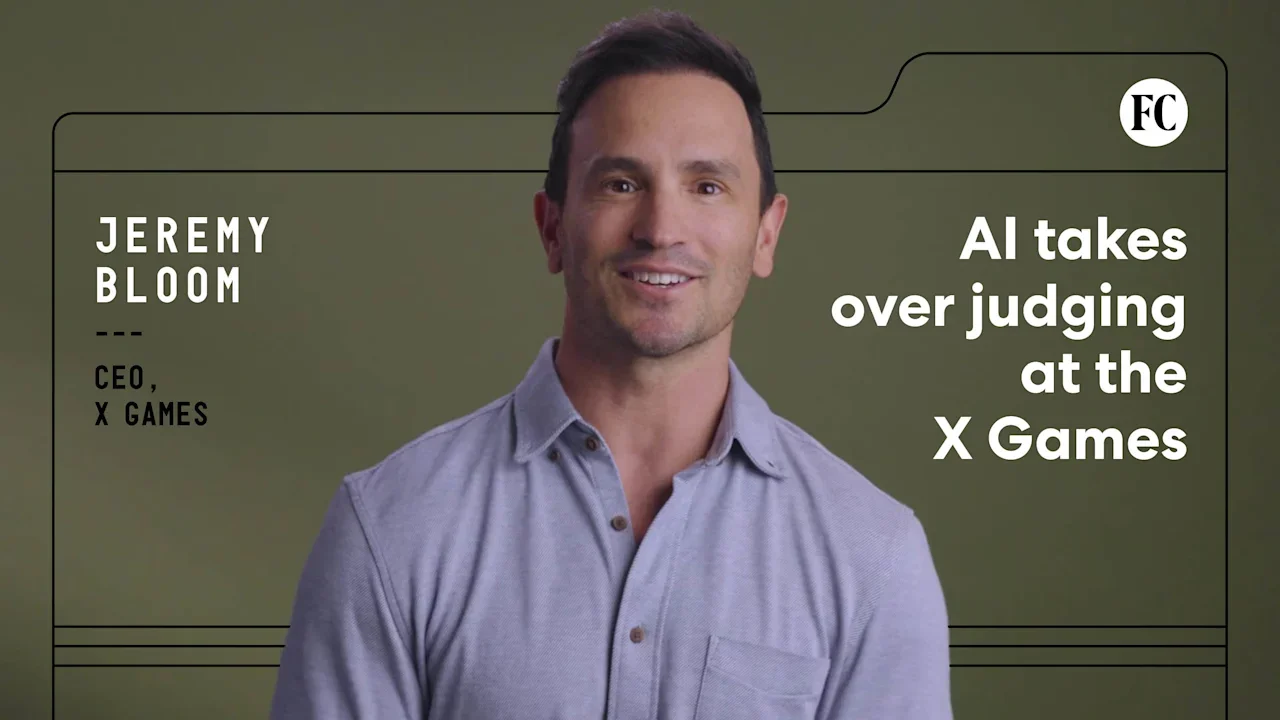
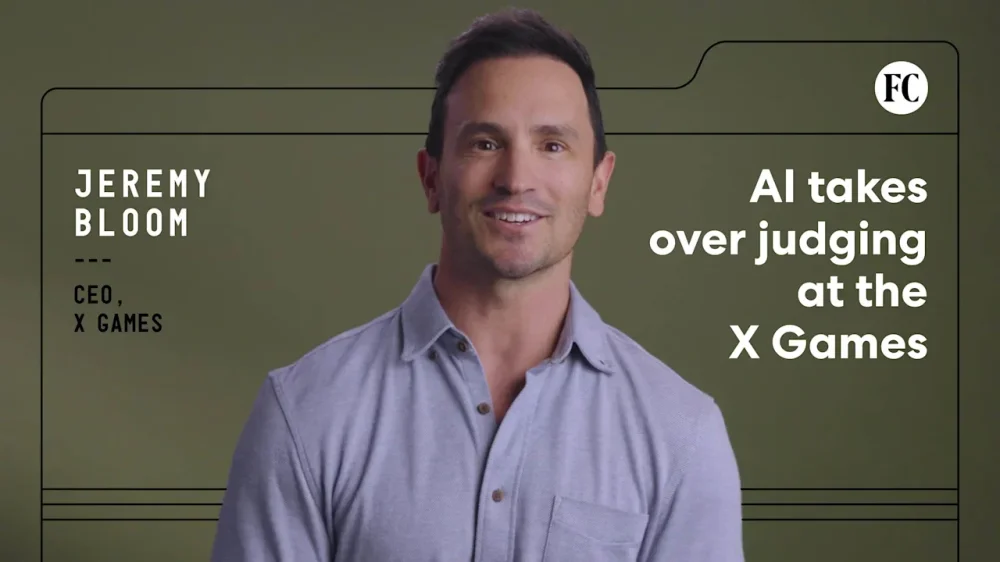
Sports are entering a new era and it could be powered by artificial intelligence. Jeremy Bloom, CEO of the X Games, is placing a bold bet on AI to revolutionize how competitions are judged and scored. From reducing human error to enhancing fairness and accuracy, AI judges could redefine the future of professional sports. But can machines truly replace human judgment on the world’s biggest stages? View the full article
-
If you’re a typical American, you get home from work and start flipping switches and turning knobs—doing laundry, cooking dinner, watching TV. With so many other folks doing the same, the strain on the electrical grid in residential areas is highest at this time. That demand will only grow as the world moves away from fossil fuels, with more people buying induction stoves, heat pumps, and electric vehicles. That’s a challenge for utilities, which are already managing creaky grids across the United States, all while trying to meet a growing demand for power. So they’re now trying to turn EVs from a burden into a boon. More and more models, for instance, feature “vehicle-to-grid,” or V2G, capabilities, meaning they can send power to the grid as needed. Others are experimenting with what’s called active managed charging, in which algorithms stagger when EVs charge, instead of them all drawing energy as soon as their owners plug in. The idea is for some people to charge later, but still have a full battery when they leave for work in the morning. A new report from the Brattle Group, an economic and energy consultancy, done for EnergyHub, which develops such technology, has used real-world data from EV owners in Washington state to demonstrate the potential of this approach, both for utilities and drivers. They found that an active managed charging program saves up to $400 per EV each year, and the vehicles were still always fully charged in the morning. Utilities, too, seem to benefit, as the redistributed demand results in less of a spike in the early evening. That, in turn, would mean that a utility can delay costly upgrades—which they need in order to accommodate increased electrification—saving ratepayers money. Active managed charging works in conjunction with something called “time of use,” in which a utility charges different rates depending on the time of day. Between 4 and 9 p.m., when demand is high, rates are also high. But after 9 p.m., they fall. EV owners who wait until later in the evening to charge pay less for the same electricity. Time-of-use pricing discourages energy use when demand is highest, lightening the load and reducing how much electricity utilities need to generate. But there’s nothing stopping everyone from plugging in as soon as cheaper rates kick in at 9 p.m. As EV adoption grows, that coordination problem can create a new spike in demand. “An EV can be on its own twice the peak load of a typical home,” said Akhilesh Ramakrishnan, managing energy associate at the Brattle Group. “You get to the point where they start needing to be managed differently.” That’s where active managed charging comes in. Using an app, an EV owner indicates when they need their car to be charged, and how much charge their battery needs for the day. (The app also learns over time to predict when a vehicle will unplug.) When they get home at 6 p.m., the owner can plug in, but the car won’t begin to charge. Instead, the system waits until some point in the night to turn on the juice, leaving enough time to fully charge the vehicle by the indicated hour. “If customers don’t believe that we’re going to get them there, then they’re not going to allow us to control their vehicle effectively,” said Freddie Hall, a data scientist at EnergyHub. The typical driver only goes 30 miles in a day, Hall added, requiring about two hours of charging each night. By actively managing many cars across neighborhoods, the system can more evenly distribute demand throughout the night: Folks will leave for work earlier or later than their neighbors, vehicles with bigger batteries will need more time to charge, and some will be almost empty while others may need to top up. They’re all still getting the lower prices with time-of-use rates, but they’re not taxing the grid by all charging at 9 p.m. “The results are actually very, very promising in terms of reducing the peak loads,” said Jan Kleissl, director of the Center for Energy Research at the University of California, San Diego, who wasn’t involved in the report. “It shows big potential for reducing costs of EV charging in general.” Active managed charging would allow the grid to accommodate twice the number of EVs before a utility has to start upgrading the system to handle the added load, according to the report. (And consider all the additional demand for energy from things like data centers.) Those costs inevitably get passed down to all ratepayers. But, the report notes, active managed charging could delay those upgrades by up to a decade. “As EVs grow, if you don’t implement these solutions, there’s going to be a lot more upgrades, and that’s going to lead to rate impacts for everyone,” Ramakrishnan said. At the same time, EVs could help reduce those rates in the long term, thanks to V2G, a separate emerging technology. It allows a utility to call on EVs sitting in garages as a vast network of backup power. So when demand surges, those vehicles can send power to the grid for others to use, or just power the house they’re sitting in, essentially removing the structure from the grid and lowering demand. (And think of all the fleets of electric vehicles, like school buses, with huge batteries to use as additional power.) With all that backup energy, utilities might not need to build as many costly battery facilities of their own, projects that ratepayers wouldn’t need to foot the bill for. Active managed charging and V2G could work in concert, with some batteries draining at 6 p.m. as they provide energy, then recharging later at night. But that ballet will require more large-scale experimentation. “How are we going to fit in discharging a battery, as well as charging it overnight?” Hall said. “Because you do want it available the next day.” To cut greenhouse gas emissions as quickly as possible, the world needs more EVs. Now it’s just a matter of making them benefit the grid instead of taxing it. This article originally appeared in Grist. Grist is a nonprofit, independent media organization dedicated to telling stories of climate solutions and a just future. Learn more at Grist.org View the full article

-
The announcement earlier this week that the Minnesota National Guard was standing by to assist local law enforcement and public safety agencies in and around Minneapolis-St. Paul included a surprising detail. “If our members are activated,” it read, “they will be wearing reflective vests … to help distinguish them from other agencies in similar uniforms.” From a design perspective, the whole point of uniforms is to provide an instant visual signal. But that mission has been thwarted in the ongoing besiegement of the Twin Cities by thousands of officers from Immigration and Customs Enforcement (ICE), Customs and Border Protection, and other federal agencies. Most notably, many sport camouflage and gear that civilians tend to associate with the military. The upshot is that it’s become harder for the average person to understand at a glance who is there to do what. Certainly the presence of uniformed members of multiple agencies seems out of hand when the National Guard has to start wearing crossing guard vests to distinguish themselves. The situation would be comical if it weren’t so bleak, as if it’s apparently become necessary for members of the U.S. military to visually announce, “hey we’re here to help, not an occupying army or a threat.” In a way, this throws into sharp relief how effective the ICE aesthetic has been in projecting a quasi-militaristic version of federal law enforcement. The agency’s look has been attracting attention for months as it has pursued undocumented immigrants (or just people it suspects might be) in crackdowns in Chicago, New Orleans, Minneapolis, and elsewhere, often showing up at work sites or public spaces in what resembles military tactical gear, body armor, weapons, and masks. As a GQ assessment of the ICE look pointed out, the agency does not have a single mandatory uniform, just a set of guidelines that give agents latitude to mix street clothes with military-pattern gear, fitted with patches or plate carriers labeled “ICE.” Most notoriously, many choose to wear gaiter-style masks, to protect their identity and avoid being doxed or otherwise retaliated against. To critics, the upshot of this aesthetic is a lack of transparency and a sense of intimidation: Intentionally or not, the look signals a disruptive, occupying force. “You’ve got cops geared up like they’re ready to go fight in Fallujah,” one Redditor commented, “in order to arrest some cooks and landscapers.” At the very least, the overlapping uniform styles can be a source of confusion. If military veterans “have to look very hard” at images and footage to figure out individual affiliations, “then the average citizen is going to easily confuse what they see as a militarized response rather than a law enforcement one,” retired Marine Col. David Lapan, a former spokesman for the chairman of the Joint Chiefs of Staff and the Department of Homeland Security, told military news site Task & Purpose. Worst case scenario, Lapan added: “It creates the perception that the U.S. military is being used to suppress the American people.” So far the Guard has not been deployed to city streets in Minneapolis; in a press statement, the Minnesota National Guard said they remain on alert could be called on for “traffic support to protect life, preserve property, and support the rights of all Minnesotans to assemble peacefully.” Underlying the potential visual confusion is the question of whether camouflage serves any particular function for federal agents operating on city streets in the first place. Retired Army Lt. Gen. Russel Honoré, best known for his blunt-talking style while overseeing the National Guard deployment to New Orleans after Hurricane Katrina, pointed out to Task & Purpose: “There’s nothing that a camouflage uniform can do for you in an urban operation other than [to] portray a sense of authority.” His suggestion to non-military agencies currently using camo: “Go get your own goddamned uniforms.” View the full article

-
Most factories still run on fossil fuels, whether they’re making potato chips or steel. But a new “thermal battery” could make it cheaper to do the same work with clean energy. Electrified Thermal Solutions, a startup spun out from MIT research in 2021, just fired up a demo battery that can hit 1,800 degrees Celsius—hot enough to make steel, cement, or chemicals. The battery uses power from the grid to heat its custom bricks when electricity is cheap. When a factory needs hot air later, it’s provided by the superheated bricks. It’s also cheaper to use than natural gas, so factories don’t need a climate goal to be convinced to make the switch. “This is a cheaper approach to heat that today isn’t being taken advantage of,” says Daniel Stack, cofounder and CEO of Electrified Thermal Solutions. Electricity is already a cheaper heat source than natural gas, but in the past factories haven’t been able to feasibly use it with their equipment. Some other startups are making similar thermal batteries, but can’t reach the highest temperatures needed by certain industries. Electrified Thermal’s tech, called the Joule Hive Thermal Battery, uses a unique conductive brick that electricity can flow straight through, enabling ultra-high temperatures. Backers include ArcelorMittal, the world’s largest steelmaker, which could eventually use the technology to heat up equipment like blast furnaces. The savings for industrial customers could be substantial. “We can charge up with the cheapest electricity during hours of low prices, and this can save you 15%, 20%, 30% on your heating bill,” Stack says. “These commodity industries live and die by the price they pay for their heating inputs.” Both in the U.S. and Europe, wholesale electricity prices drop close to zero—or even negative prices—at certain times when renewable energy is abundant. The startup is focused first on Europe, where policy makes it easier to access that cheap electricity. (Even as electricity demand grows from data centers, Stack says that there will still be plenty of surplus electricity available at particular hours at a lower price.) The tech is designed to be easily added to existing factories, with pipes connecting hot air from the batteries into existing kilns, boilers, or furnaces. Customers have the option to pay for heat as a service or buy the batteries directly. The new demonstration system, at the Southwest Research Institute in San Antonio, will let potential customers see the equipment in action. Commercial units will begin rolling out to some customers later this year. The batteries can easily scale up, Stack says, and are made from off-the-shelf materials. The bricks are similar to those used in glassmaking, and a large manufacturer, HWI, is beginning to mass manufacture them. If industry at large makes the switch, the climate benefits would be huge. By one estimate, industrial process heat uses around 20% of the world’s energy. “We’re talking about massive emissions reductions—to the tune of several gigatons per year of CO2—reduced through this transition,” Stack says. View the full article

-
We hear a lot about self-discipline in today’s productivity-obsessed culture. And the message is usually that it’s the cure for economic insecurity and a pathway to self-actualization. At first glance, this appears to make sense. But it can be a double-edged sword in our modern work lives and always-on culture. Self-discipline enables focus and is key to achievement. However, over-indexing on it can easily erode our own values and boundaries. In turn, this can cause burnout, isolation, and existential despair. What does ‘discipline’ really mean? Discipline has historically been associated with punishment and religious correction. Think physical punishment, including self-flagellation. I grew up at a time when well-meaning parents dispensed discipline, thinking that’s what it would take to raise virtuous children. The payoff that came with being praised for hard work at school and excelling in sports meant discipline became a core aspect of my early self-identity. Contemporary examples of personal discipline tap into the human capacity to regulate impulses and persist toward long-term goals. We see many influencers create vast content parading their self-discipline, whether that’s adhering to a complex, three-hour morning routine, or proselytizing an extremely restrictive diet. As a result, self-discipline has taken on a moralistic, “holier-than-thou” tone, with the inference being that doing anything less means you are weak, lazy, and unworthy. The overt benefits of discipline at work Amid extreme uncertainty, self-discipline can serve as a powerful protective asset. Longitudinal research on self-control shows that those who can delay gratification and regulate impulses tend to achieve better educational outcomes, higher income, and improved health indicators. Another research paper suggests that self-discipline can reduce procrastination by boosting autonomous motivation rather than relying on willpower. When people experience their discipline as self-chosen and values-aligned, they report greater feelings of competence and autonomy. In the current work landscape, disciplined routines can help us create a sense of control and continuity amid relentless structural volatility. When discipline becomes addictive and isolating However, the same traits that fuel achievement can become compulsive and harmful. Eventually, excessive discipline can lead to ego depletion, where subsequent acts of self-control become harder and more draining. In cultures that moralize productivity, this depletion can be misconstrued as personal failure. As a result, many end up doubling down on discipline rather than questioning the demands they’ve been subjected to. This was my experience as a corporate finance lawyer. At first, the self-discipline I’d learned early in life translated perfectly into the “magic circle” law firm culture. Eventually, the constant, intense workload wore me down. Finally, I collapsed at an airport in a state of exhaustion and emotional despair. As uncomfortable as this was, it also gave rise to deep relief: I no longer had to punish myself. Discipline can become addictive when it produces rewards, but eventually, discipline can become an identity in itself. You might start holding beliefs like “having needs is weak,” “I need to override my bodily urge to rest,” or “if I falter, I am a failure.” This can lead to anxiety around rest, spontaneity, or deviation from a meticulous schedule. Proponents may begin to choose habits and work patterns that reinforce their disciplined self-image. They stay at the desk until deep in the night, or fasting for an extra day just to “prove they can,” even when these conflict with relational needs, leisure, or health. This kind of self-discipline can foster isolation in three ways: Time-intensive routines (early mornings, extended work hours, strict fitness or side-hustle regimes) crowd out social life and community participation. They avoid relationships or spaces that “threaten” routine, and they end up narrowing social worlds to similarly disciplined peers, or online productivity subcultures. They believe that we have sole responsibility for our station in life, rather than seeing the broader, systemic issues. This can cause us to internalize blame, which leads to shame, loneliness, and low self-worth. Discipline as a modern-day comfort blanket The definition of our current moment is a paradox: intensified individual responsibility amid abject structural insecurity. There’s an expectation for us to optimize every facet of our lives: our skills, our bodies, and our relationships. This has two major implications. First, we engage the language of discipline to obscure the structural causes of success and failure. We see unemployment, underemployment, and burnout as deficits of willpower rather than outcomes of policy, corporate practice, or macroeconomic conditions. Second, self-care industries, while at times genuinely beneficial, individualize the management of systemic stress. As a result, this capitalizes on widespread alienation to the detriment of most for the benefit of a few. We see this dynamic play out for knowledge workers and founders in particular. Hustle culture normalizes permanent availability, constant upskilling, and the erosion of boundaries between work and non-work, all in the name of disciplined ambition. The result is another paradox: The very discipline that enables career advancement may also entrench the conditions—overwork, anxiety, weakened social ties—that undermine our long-term wellbeing and creativity. Toward a more humane discipline Tempting as it feels to jettison self-discipline altogether, we have a powerful opportunity to reclaim the term. A more humane approach would treat discipline less as an austerity project and more as a tool for protecting your time, energy, and attention for what genuinely matters to you. A good name for this term is mindful self-discipline. Practically, adopting mindful self-discipline means taking a few steps: Self-Knowledge: Get really clear on who you are and what matters to you. Not to your parents, peers, society, colleagues, or random influencers. For many, this requires peeling back the layers of values and ideas we’ve taken on, often subconsciously, and identifying our own core values, needs, and priorities. Self-Awareness: Use discernment to employ disciplined behavior around boundaries, rather than endless productivity. Limit work hours, design your downtime as nonnegotiable, and actively resist the pressure to optimize every waking moment. Self-Compassion: Ensure that your motivation for pursuing your work, hobbies, and other activities in life doesn’t come from the belief that you’re lazy, unworthy, or weak. Foster strong self-beliefs around your own intrinsic value as a human being to protect yourself from any harmful self-discipline narrative. Mindful self-discipline can be used as a strategic resource to carve out autonomy and dignity. The task for all of us is to ensure that human discipline serves our individual and collective flourishing—rather than diminishing the very same. View the full article

-
The class action complaint describes, from a real estate agent's perspective, how the company allegedly pushes borrowers toward its in-house lending arm. View the full article

-
After the announcement last fall, Embrace added local staff and increased marketing nad outreach in New Jersey to assist potential Oceanfirst borrowers. View the full article

-
BuddyPress WordPress vulnerability enables unauthenticated attackers to execute arbitrary shortcodes The post BuddyPress WordPress Vulnerability May Impact Up To 100,000 Sites appeared first on Search Engine Journal. View the full article
-
When I tell fellow tech executives that every employee at sunday, from our engineers to our finance team, must complete a restaurant shift before they can fully onboard, I usually get confused looks. “You mean like, shadow someone?” they ask. No. I mean they tie on an apron, take orders, run food, and yes, deal with the 15-minute wait for the check that our product was literally built to eliminate. It sounds extreme. It is extreme. And it’s also one of the smartest business decisions we’ve made. Here’s why: business is often removed from the industries we serve. We’re keeping that empathy right there. The Empathy Gap in Tech I’ve spent 25 years in the tech world, scaling e-commerce unicorns in Europe before cofounding sunday. I’ve seen brilliant engineers build elegant solutions to problems they’ve never personally experienced. I’ve watched product teams debate restaurant workflows they’ve only seen in wireframes. The result? Products that work in theory but fail in the chaos of a Friday night dinner rush. Using our industry as an example, the restaurant space can’t be disrupted from a distance. It’s intensely human. A server manages six tables, remembers who wanted dressing on the side, tracks which kitchen orders are running late, and still needs to radiate warmth when checking on the anniversary couple at table twelve. When we ask them to adopt new technology, we’re not just changing their workflow, we’re asking them to trust us with their tips, their table turn times, and their relationship with guests. You can’t design for that kind of stakes without understanding them viscerally. What a Saturday Night Shift Teaches a Software Engineer Last month, I watched our newest engineer finish his restaurant shift at one of our partner locations. He was confident going in; he understood our API integrations, he knew our payment flow inside and out. But after five hours on his feet, he had a revelation. “At the end of my shift, I had to manually enter tips from 22 tables into the POS system,” he told me, exhausted. “Twenty-two times typing in amounts, double-checking I got the numbers right, worrying I’d accidentally shortchange myself or mess up the restaurant’s accounting. The whole time I’m thinking about the train I’m about to miss, and I’m doing math in my head to see if my night was even worth it. It took 15 minutes of my life I’ll never get back.” This wasn’t theoretical anymore. “I finally understood what we’re actually saving people from,” he told me the next day. “It’s not just 15 minutes—it’s the mental load of worrying you made a mistake, the frustration of doing data entry when you’re exhausted, the indignity of technology making your life harder instead of easier. When I use sunday now, I know exactly whose time I’m giving back.” That’s the point. Empathy at scale isn’t built through user research reports. It’s built through experience. Hospitality as a Business Philosophy What started as a practical requirement has become central to how we think about everything at sunday. Hospitality isn’t about being nice. It’s about anticipating needs, moving with urgency, and making people feel valued even under pressure. Those principles translate directly to how we run our business. When a restaurant partner calls with an issue, our support team doesn’t respond with ticket numbers and SLAs. They respond like servers handling a complaint: with immediate acknowledgment, genuine concern, and a bias toward solving the problem now rather than escalating it later. Our customer success team knows that “I’ll get back to you tomorrow” is the tech equivalent of “your food will be out in a few minutes”—a polite deflection that erodes trust. We’ve also borrowed the restaurant world’s obsession with the guest experience. In hospitality, there’s no such thing as “that’s not my table.” If a guest needs something, you handle it. We’ve tried to instill that same mentality. When a new market launch hits a snag, our engineers don’t wait for the ops team to flag it. When a sales issue arises, our product managers jump in. We move like a restaurant team during a rush—fluid, collaborative, and focused on the experience we’re creating. The Metrics That Matter Here’s what surprised me most: this policy has become one of our best retention and recruiting tools. We’ve had a 94% retention rate among employees who complete the restaurant shift program, compared to 78% at my previous tech companies. Employees consistently rank it as one of their most valuable onboarding experiences. New hires tell us they appreciate working somewhere that values understanding over assumption. They like that leadership doesn’t just talk about customer obsession—we quite literally make them walk in our customers’ shoes (and sensible non-slip ones at that). And when we hire, the restaurant shift requirement self-selects for people with the right mindset. Candidates who balk at the idea of working a shift often aren’t the right fit for our culture anyway. The ones who light up at the challenge? Those are our people. The tech industry loves to talk about disruption, but we’re often remarkably detached from the industries we claim to understand. We optimize for what we can measure: clicks, conversions, load times. And we miss what we can’t, the relief on a server’s face when they don’t have to chase down a credit card, the gratitude of a mom who can split a check without asking for help, the pride a restaurant owner feels when their team has more time to create memorable moments. Making our employees work restaurant shifts isn’t a cute culture quirk or a team-building exercise. It’s a business imperative. Every hour our team spends in a restaurant is an investment in building a product that actually solves real problems, not imagined ones. A Challenge to Tech Leaders I’d encourage every tech CEO, especially those building B2B products, to ask yourself: When was the last time you personally experienced the problem your product solves? Not observed it. Not read about it in research. Actually lived it? If the answer is “never” or “it’s been years,” you have a dangerous knowledge gap. Your team is making decisions based on assumptions, building for personas instead of people, and probably missing opportunities that would be obvious to anyone who spent a day in your customers’ reality. You don’t need to make it a formal policy like we have. But you do need to close the empathy gap between your builders and your users. Shadow a shift. Take customer service calls. Use your competitor’s products. Do whatever it takes to remember that behind every user statistic is a human being trying to do their job, feed their family, or simply have a nice dinner without waiting 15 minutes for the check. At sunday, we’ve learned that great technology in the hospitality space doesn’t come from brilliant engineers alone. It comes from brilliant engineers who’ve burned their hand on a plate, forgotten which table ordered the gluten-free option, and felt genuine panic when the payment system hiccups during a Saturday night rush. That’s not just good culture. That’s good business. View the full article

-
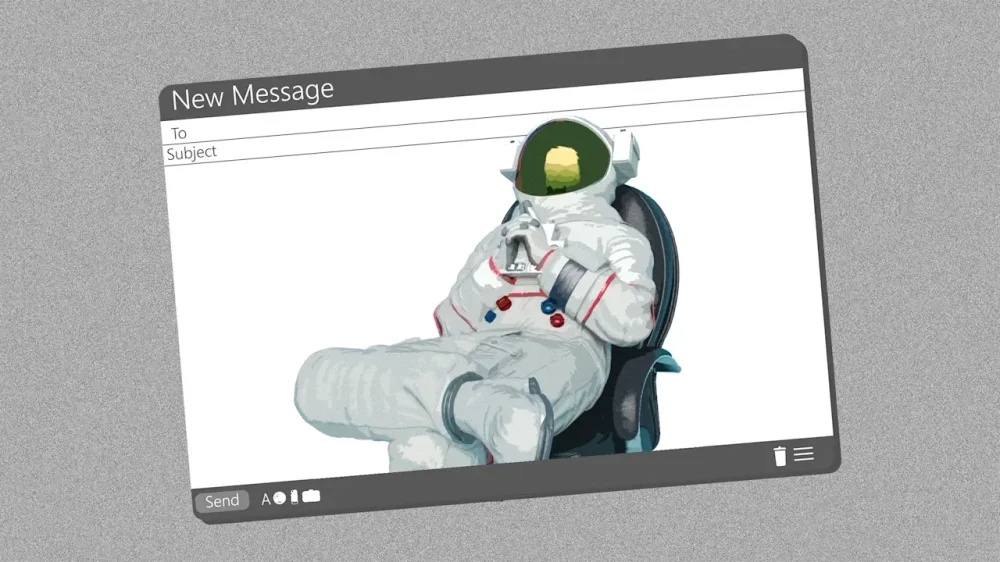
So, you’ve finally done it. No more putting it off, pushing through the grind, waiting for a more opportune time once things settle down. Alas, you’ve mustered up the gall to cash in on your paid vacation time. Now you have several days strung together to travel, rest, or do whatever the heck your heart desires. I love that for you. But before you slam your work laptop shut and “Yabba dabba doo!” your ass out of the office, there’s one last thing. You’ve gotta leave behind a message letting folks know you’ll be gone. You need to draft an out-of-office message. Out-of-office notes tend to be pretty standard—courtesy auto-replies letting folks know you’re not working, when you’ll be back, and who, if anyone, they can contact in your stead. Sometimes people add a pop of color hinting at a life outside the office. But these things generally tend to be pretty vanilla. I, for one, wish corporate peeps got more real with this messaging. Treat these notes like early-stage Facebook status updates: Share what you’re really thinking, feeling, and experiencing. This year is already a mess; immigrants continue to be targeted by the federal government, unemployment numbers remain dismal, and it seems like everyone’s got the flu. Why not keep it 100 for whoever reaches out in the interim? Longtime readers will remember when I presented a list of pandemic-era openers as alternatives to “I hope this email finds you well.” Here are some OOO notes I wish I had the heart to schedule. Deploy at your own risk. I am currently out of office, taking advantage of PTO that is technically unlimited but spiritually frowned upon. I am currently out of office, taking advantage of PTO that is technically unlimited but managerially frowned upon. I am currently out of office to recharge after running on vibes, caffeine, and anxiety for six consecutive quarters. I am out of office avoiding the news for my mental health. Please do not forward any think pieces. I am currently out of office closing the approximately 637 tabs I have open—both literally and mentally. I am currently out of office, wearing a quarter-zip sweater and drinking matcha. I hope this auto-reply finds you doing the same. I’m OOO using the gym membership I will abandon by February. I am currently out of office, ignoring my inbox like it’s a group chat that is doing the most while I’m trying to do the least. I’ll be out of the office while my outie binge-watches Severance and realizes this job feels familiar. Upon my return, the work will continue to be mysterious and important. I am currently out of office, unpacking last year with a licensed professional. I am currently out of office, pondering the spiritual meaning of “six-seven.” I am currently out of office, updating my résumé “just in case.” I am currently out of office, rewatching Sinners so I can feel something again. I am currently out of office but will absolutely read this message anyway and respond once my brain stops buffering. I am currently out of office and launching my side hustle. Please subscribe to my Substack. I am currently out of office, but will be bumping that new A$AP Rocky album until further notice. I’m OOO until my burnout is no longer a personality trait. I am currently out of office pivoting to my new self. Let’s table this and circle back in Q2, when I have the bandwidth to get my ducks in a row. I am currently out of office, but don’t expect a response as soon as I get back. I’ll need a few days to remember how to do my job. I am currently out of office, but unfortunately still mentally available. View the full article
-
While it seems that some agreement has been reached to placate Donald The President’s obsession with taking over Greenland, details are still being revealed. So the possibility that the nascent trade war over the issue that was heating up before the announcement of an agreement could restart. If it does, leaders in European capitals have looked at what levers are available to pull to try and dissuade the U.S. president from moving toward more aggressive action. Some of the most significant U.S. exports are its tech apps, services, and platforms, putting them first in the firing line. U.S. social media platforms, for instance, account for more than a third of the entire value of the S&P—meaning any impact on them could be deleterious to the broader American economy. Within Brussels, the hub of European legislative decision-making, there has been discussion of how to bring some of the U.S.’s more outlandish ideas into line with the global order, says Zach Meyers, director of research at the Center on Regulation in Europe, noting, “Since they mostly provide services rather than physical products, reciprocal tariffs would not work.” The European Union could use what has been described as its “big bazooka”: the so-called Anti-Coercion Instrument. That’s “specifically designed to deter and address this type of geopolitical bullying,” says Meyers, and includes “a huge menu of other restrictions on how Big Tech [companies] operate in Europe, such as limitations on exploiting IP rights, on being able to compete in public procurement, and constraining incoming investment.” However, European leaders have held off deploying the bazooka in this current skirmish, fearing that it could raise the geopolitical temperature and invite an equally (or more) harmful response from The President. But the inability to use one method, and the skittishness about using another, doesn’t mean there aren’t ways to try and bring The President back to reality. Unlike the brash, geopolitics-altering Truth Social posts that twist the world on its axis, any European response would likely be much more subtle, though no less significant, experts argue. “There will be no ‘slamming of the door,’ as banning major U.S. platforms would anger a lot of European consumers, disrupt businesses, and undermine Europe’s own digital economy,” says Francesca Musiani, senior researcher at the French National Center for Scientific Research—not to say what it would do to the U.S. president’s blood pressure. “Subtler strategies give Europe some room to keep the market open but make success inside it progressively harder.” Musiani adds, “If a trade war between Europe and the United States were to spill into the tech sector, it probably would unfold more like a slow, grinding campaign: legal, relentlessly procedural, and very expensive for American firms.” Such a war would likely be waged through the European Union’s comprehensive tech-focused laws, including the Digital Markets Act and Digital Services Act; both were passed in 2022 but more recently began being enforced. Europe is also considering a handful of other legislative packages, including a Digital Networks Act, which would govern telecommunications providers, and an amended Cybersecurity Act proposed this week. The continent’s proclivity for cracking down on tech has already prompted plenty of noise from The President allies, who have called it “foreign censorship.” But enactment and enforcement could be ramped up significantly if European legislators deemed it necessary. “Nothing would be framed as retaliation, rather as ‘consumer protection’ or ‘competition,’ but the targets would be obvious,” Musiani says. Indeed, long before The President stepped up his rhetoric on acquiring Greenland, Europe had been considering implementing taxation on tech firms operating in Europe. That would likely be the next lever to pull, Musiani believes, including “digital services taxes that could expand or be harmonized across more member states, hitting online advertising, cloud services, and marketplaces.” Those are all short-term measures designed to act as a stopgap while the longer-term, larger goal is achieved: decoupling Europe’s tech stack from an overreliance on U.S. entities. “In the long run, the huge loss of transatlantic trust caused by The President’s threats will almost certainly support the growing push for Europe to act more assertively to boost its own tech sector,” says Meyers. That could take the form of “buy European” rules, but is already shaping up in the movement to develop a European tech stack that doesn’t require paying money to, or the threat of being held hostage by, U.S. hardware providers. For The President, whose focus tends to be on his own personal short-term and immediate gains, that longer-term impact might not be front of mind. But it ought to be for the Americans he represents. View the full article