All Activity
- Past hour
-
Google is rolling out App Consent Insights in Google Ads, giving advertisers a clearer view into how consent signals impact app campaign performance. What’s new. The new diagnostics view breaks down consent data across apps, platforms, regions, and traffic sources, helping marketers pinpoint gaps in their setup. Zoom in. Advertisers can see an overall consent rating — like “Excellent,” “Good,” or “Poor” — alongside a live count of apps actively sending consented data. A detailed table also shows consent rates for conversions, including splits between EEA and non-EEA users. Why we care. As privacy regulations tighten, consent isn’t just a compliance box — it directly affects measurement and optimization. Advertisers now get more visibility into where consent setups may be limiting performance. Between the lines. Google is making consent more measurable — and more actionable — as signal loss continues to impact campaign performance. What to watch. Expect advertisers to start optimizing not just for conversions, but for consent rates themselves as a performance lever. Bottom line. Better consent visibility means better data — and ultimately, better campaign outcomes. First seen. This update was first spotted by Google Ads specialist Thomas Eccel on LinkedIn. View the full article
-
The great jazz The Presidenteter Miles Davis once said, “Sometimes you have to play a long time to be able to play like yourself.” This is why the best artists are not only masterful at their craft but also distinctive in their voice; they’ve committed themselves to the process of being themselves. Subsequently, this means they committed themselves to the failure that comes along with it also. But that’s the part no one talks about—the work required to “become” who we are or, better yet, who we want to be. It’s as if we’re expected to go to the gym and walk out with a six-pack. That’s not how the gym works, nor is it how work works. And we know this. There’s a process to becoming, and that process inherently requires failure. Be that as it may, there are no LinkedIn claps reserved for failing. There are no at-a-boys for coming up short, despite the reality that we’ve all experienced failure to get to where we are. But of course, failure is just a natural part of the process of becoming. So why do we omit this truth from our stories when we tell the tale of becoming ourselves? Why do we whitewash the parts that aren’t so flattering and “yada yada yada” our narratives to a flatten expression of self. I get the fact that no one wants to fail, let alone admit to it. However, I also realize that in order to get good at something, we have to work through being not so good first. So, maybe we should practice sharing the entire story more frequently to help folks more successfully navigate this process of becoming. That’s exactly why we invited Courtnee LeClaire onto the FOR THE CULTURE podcast. LeClaire’s career trajectory consists of a who’s-who of brands. She was the head of worldwide app marketing and corporate partnerships at Apple after launching the iPod and iPhone. She’s held executive marketing seats at Disney and Intel before serving as CMO of the Oakland Raiders. But these days, LeClaire boasts a different title. Today, she is a chief “becoming” officer, an executive coach that helps leaders become their best selves, who they truly are, to help them achieve what Paul Coelho’s The Alchemist would call their personal legend. Despite her long list of impressive accomplishments, in this new role LeClaire spends more time talking about her failures, but she makes a pointed distinction between “failure” and “failing” that unlocks many of the challenges we have with failure. Failure, as LeClaire bifurcates, is a complete sentence. It’s done, and, therefore, it occupies real estate in our lives like a title—I failed, so I’m a failure. Failing, on the other hand, is an active sentence, meaning that there’s something that comes after it. And it’s the something that comes after it that enables us to do something about it. I’m failing, so I need to [fill the blank]. I was failing, so I [fill in a blank some action]. The reframing of failure to failing is what opens the door for success. Whether it’s something new or something new to us, there will be a point when we are failing relative to our ambition and taste. But when we perceive it as an active sentence, we give ourselves room to improve. Failure is something we experience, not who we are. It’s a moment in time, and because it’s something we’re merely experiencing, that means we can change it. This distinction is critical. One is a state of who we are (failure), and the other is a state of where we are (failing). When we reposition failure to failing (or I was failing), we acknowledge the reality of where we are relative to where we want to be and can now honor the fact that this is just a part of the process. To hear this from LeClaire during our conversation on the pod had a profound impact on me personally because I worked with her during my time at Apple. She was much more senior than I was, and I “totemized” her as the consummate example of having it all together. She wasn’t in my reporting vertical, but I got to engage her from time to time, where she’d drop marketing wisdom and sage advice for how to navigate life on One Infinite Loop. To hear her reveal her moments of failing on her way to becoming, even in those moments when I held her on a pedestal, was like learning that Spiderman is really Peter Parker. That is to say, LeClaire, like all of us, had to play a lot to learn to play like herself. Fancy that. Hearing this not only humanized LeClaire but also gave me permission to admit to my own failings and accept the fact that we’re all just buffering, even the best of us, as we become our best selves. Imagine how empowering that would be if we all started to share our own processes of becoming, moving from failure to failing; it might help us all navigate the process with a bit more grace—and perhaps even a bit more success. Check out the full episode of our conversation with Courtnee LeClaire on the latest episode of the FOR THE CULTURE podcast on Spotify or wherever you get your podcast. View the full article

-
Advertisers are sharing their experience of a new Ads Manager interface for ChatGPT, signaling a shift toward a more mature advertising platform with real-time campaign control. What’s new. The Ads Manager is described as a dashboard where marketers can run, monitor, and optimize campaigns in real time — a major step up from current reporting and controls. Digital marketers Juozas Kaziukėnas and Glenn Gabe shared images of what they saw. Why we care. Until now, ChatGPT ads have been early-stage and limited, with advertisers reportedly relying on basic reporting like weekly CSV files. The move to a full Ads Manager suggests OpenAI is building infrastructure closer to platforms like Google Ads or Meta. Zoom in. Advertisers are already seeing more ads appear inside ChatGPT, with brands like Best Buy and Expedia spotted in early tests. That increase in inventory, paired with a proper management interface, points to a rapid expansion of monetization efforts. What to watch: As the Ads Manager evolves, expect improvements in targeting, reporting, and automation — areas where early feedback suggests ChatGPT ads are still limited. First seen. Glenn Gabe shared the images of the ChatGPT ads manager on X. View the full article
- Today
-
Personal credit plays a significant role in obtaining business loans, as lenders assess your credit score during the approval process. A score above 700 usually results in better loan terms, whereas scores under 680 can limit your financing options. This credit evaluation affects not just traditional lenders but additionally the Small Business Administration and online lenders. Comprehending how your personal credit influences these decisions can be essential for your business’s financial future. What steps can you take to strengthen your credit profile? Key Takeaways Personal credit scores significantly influence loan approval, with higher scores improving chances of securing financing for businesses. Lenders often use personal credit as a risk assessment tool, affecting interest rates and loan terms offered to borrowers. Scores below 680 complicate approvals from traditional lenders, while SBA loans may accept scores as low as 650. Strong personal credit can enhance business credit, leading to better financing options and lower costs in the long run. Effective management of personal credit through timely payments and reduced debt improves overall funding opportunities for business growth. Understanding Personal Credit Scores Comprehending personal credit scores is critical for anyone looking to secure financing, particularly for business loans. Your personal credit score, which ranges from 300 to 850, considerably influences your ability to obtain funding. Lenders often consider scores above 700 favorable, as they indicate lower credit risk. So, does personal credit affect business credit? Absolutely. A solid personal credit score can help you secure better loan terms, whereas a low score complicates approval, especially with traditional lenders. Many online lenders may accept scores below 650, but often at higher interest rates. It’s also important to understand business credit vs personal credit; although they’re distinct, your personal credit can impact your business credit. In short, do business loans use personal credit? Yes, they often do, making it vital to manage your personal credit score effectively to improve your financing options for your business. How Personal Credit Scores Are Calculated Grasping how personal credit scores are calculated is vital for anyone aiming to improve their financial standing. Your credit score hinges on five key factors. First, payment history accounts for 35% of your score; this includes any late payments or bankruptcies. Next, the debt owed contributes 30%, which assesses your debt-to-credit limit ratio. Keeping your balances low relative to your available credit is fundamental. The length of your credit history makes up 15% of the score, considering how long your credit accounts have been active. Furthermore, the types of credit used contribute 10%, indicating the variety of credit sources you have. Finally, new credit inquiries, likewise 10%, can negatively affect your score if you have multiple hard inquiries in a short timeframe, suggesting potential financial instability. Comprehending these factors helps you manage your credit effectively, leading to better financial opportunities. The Impact of Personal Credit on Loan Approval Your personal credit plays a significant role in determining whether you’ll secure a loan for your business. Lenders closely evaluate your personal credit score alongside your business credit profile. A score below 680 can complicate approvals from traditional lenders, whereas scores above 700 are typically preferred. The Small Business Administration may accept scores as low as 650, but lower scores can hinder your chances. Here’s a breakdown of how personal credit factors into loan approval: Credit Score Range Loan Approval Likelihood Below 650 Low; high interest rates 650 – 679 Moderate; potential hurdles 680 – 699 Good; may need additional info 700 – 749 Strong; favorable terms 750 and above Excellent; easy approval Options for Borrowers With Varying Credit Scores How do different credit scores affect your options when seeking a business loan? Your personal credit score plays an essential role in the types of loans available to you. Here’s what to expect based on your score: Excellent Credit (700+): You’ll likely secure favorable terms and lower interest rates from traditional lenders. Good Credit (650-700): SBA loans may be an option, but you’ll need other strong business metrics for approval. Fair Credit (600-649): Qualifying for traditional loans can be tough, yet online lenders might consider your application, albeit at higher interest rates. Poor Credit (below 600): Your options diminish considerably, and you may face challenges in securing any loan. Impact of Credit Score: Lower scores often lead to shorter loan terms and increased total interest costs. Understanding these options can help you navigate your borrowing strategy effectively. The Importance of Managing Personal Credit Managing personal credit is a fundamental aspect of securing business financing, as lenders often evaluate personal credit scores when determining a borrower’s overall creditworthiness. A solid personal credit score can improve your chances of obtaining business loans. To maintain a good score, make timely bill payments and keep credit card balances low, as this indicates reliability to lenders. Here’s a quick look at how to improve your personal credit: Action Description Impact on Credit Score Timely Payments Pay bills on time Positive Reduce Debt Lower outstanding balances Positive Keep Accounts Open Maintain older accounts Positive Limit New Applications Avoid opening too many new accounts Negative Understanding these personal credit management strategies is essential for entrepreneurs. It maximizes funding opportunities and supports business growth effectively. Building a Strong Business Credit Profile To build a strong business credit profile, start by establishing business credit accounts in your company’s name. Maintaining a low credit utilization ratio, ideally under 30%, shows lenders that you manage your finances responsibly. Establishing Business Credit Accounts Establishing business credit accounts is a vital step for any entrepreneur looking to build a strong business credit profile. To effectively do this, you should consider the following actions: Obtain an Employer Identification Number (EIN) for your business. Open a business credit profile with major credit bureaus like Dun & Bradstreet. Apply for a business credit card to start establishing credit. Set up vendor lines of credit with suppliers that report payments. Make timely payments on all credit accounts to improve your credit score. These steps help you create a solid credit history, which is important for securing future loans and demonstrating your reliability to lenders. Regularly monitoring your credit reports for accuracy can further elevate your standing. Maintaining Low Credit Utilization Building a strong business credit profile goes beyond simply establishing accounts; maintaining a low credit utilization ratio is a key factor in demonstrating financial responsibility. Ideally, you should keep your credit utilization below 30%, with lenders favoring rates of 10% or lower. This indicates that you can manage debts effectively and aren’t overly reliant on credit. Regularly monitoring your credit utilization helps you identify areas for improvement, protecting your creditworthiness. Using American Express credit cards for operational expenses during keeping balances low can considerably improve your credit profile, nurturing trust with lenders and vendors. Credit Utilization Rate Impact on Credit Profile Below 10% Excellent 10% – 30% Good 30% – 50% Fair Above 50% Poor Frequently Asked Questions Does Personal Credit Affect a Business Loan? Yes, personal credit does affect a business loan. Lenders often evaluate your personal credit score to determine your reliability as a borrower. A score below 680 can lead to difficulties in securing traditional loans, whereas a score above 700 is usually favored. Even the Small Business Administration has minimum score requirements. Maintaining a strong personal credit profile is crucial, as it can influence both the approval process and the terms of your business financing. Does Personal Credit Rating Affect Business Loans? Yes, your personal credit rating greatly affects your ability to secure business loans. Lenders often review both personal and business credit profiles, evaluating factors like your payment history and debt levels. A score below 680 can complicate approval processes, whereas scores above 700 typically lead to better loan terms. Even the Small Business Administration considers personal scores, with a minimum of 650, but lower scores can limit your financing options markedly. Can I Get a Business Loan if I Personally Have Bad Credit? You can still get a business loan with bad personal credit, but your options may be limited. Traditional lenders typically require a higher credit score, often above 700. If your score is below 680, you’ll face challenges. Some online lenders accept lower scores, but they often charge higher interest rates. Furthermore, programs like SBA loans might be available if your overall financial situation is strong, in spite of a low personal credit score. Can I Get a Business Loan Without Using Personal Credit? You can secure a business loan without using personal credit, but it often depends on the lender. Some online lenders and alternative options may not check personal credit; nevertheless, they typically charge higher interest rates. Many traditional lenders, on the other hand, still require a personal guarantee, linking your personal credit to the loan. If your business has a strong credit history and solid revenue, you might qualify based on those financials instead. Conclusion In conclusion, personal credit plays a crucial role in obtaining business loans, as lenders assess your credit score to determine eligibility and loan terms. A strong score can open doors to favorable financing options, whereas a lower score may limit your choices. It’s important to actively manage your personal credit and consider building a robust business credit profile. By comprehending these dynamics, you can improve your chances of securing the financial support needed for your entrepreneurial endeavors. Image via Google Gemini and ArtSmart This article, "What Role Does Personal Credit Play in Business Loans?" was first published on Small Business Trends View the full article
-
Netflix's May slate is heavy on sports and comedy, including live events and documentaries in both categories. The streaming service will carry the full lineup of F1 Canadian GP weekend events, starting with spring qualifying on May 22 and ending with the race on May 24. Netflix will also host its first live MMA broadcast—Ronda Rousey vs. Gina Carano—on May 16. Ahead of the 2026 World Cup this summer, there are also a handful of soccer documentaries: USA 94: Brazil's Return to Glory (May 7) covers Brazil's World Cup run, while The Bus: A French Football Mutiny (May 13) looks at controversy surrounding France's 2010 bid. Several football-focused Untold UK episodes are dropping in May as well. Finally, Rafa (May 29) is a documentary series about Rafael Nadal's tennis career and final season. On the comedy side, competition series Funny AF with Kevin Hart will wrap up live on May 5. Also live is The Roast of Kevin Hart, airing on May 11 as part of the Netflix Is A Joke Festival. Wanda Sykes has a new standup hour (Legacy, May 19), and the month wraps up with AFI Life Achievement Award: A Tribute to Eddie Murphy (May 31), a ceremony honoring the comedian's life and work. Other highlights in May are the debut of Mating Season (May 22), a new adult animated comedy series from Big Mouth creator Nick Kroll about love, sex, and relationships in the animal world; and Ladies First (May 22), a comedy film starring Sacha Baron Cohen and Rosamund Pike. Tina Fey's comedy series The Four Seasons (May 28), in which she stars alongside Steve Carrell, also returns for a second season. Here's everything else coming to Netflix in May, and everything that's leaving. What's coming to Netflix in May 2026Available soon Jae-seok's B&B Rules!—Netflix Series Available May 1Glory—Netflix Series My Dearest Señorita—Netflix Film Son-In-Law—Netflix Film Swapped—Netflix Family 13 Going on 30 48 Hrs. Airport Airport '77 Airport 1975 Bad News Bears The Boss The Breakfast Club Burn After Reading Den of Thieves Domestic Disturbance Eat Pray Love Fried Green Tomatoes Green Book Hitch Home Jennifer's Body Jumanji Jumping the Broom La Brea: Seasons 1-3 The Land Before Time Meet the Parents Meet the Fockers Little Fockers National Lampoon's Animal House Ouija Ouija: Origin of Evil Pretty Woman The Proposal Schindler's List Starship Troopers Trainwreck Under the Skin Veronica Mars Waterworld Available May 4Dr. Seuss’s Horton!: Season 2—Netflix Family Funny AF with Kevin Hart—Netflix Live Event Lord of the Flies—Netflix Series Available May 5Funny AF with Kevin Hart—Netflix Live Event Available May 6Countdown: Rousey vs. Carano—Netflix Documentary Love is Blind Poland—Netflix Series Worst Ex Ever: Season 2—Netflix Series Available May 7The Chestnut Man: Hide and Seek—Netflix Series Legends—Netflix Series My Dearest Assassin—Netflix Film USA 94: Brazil's Return to Glory—Netflix Documentary Available May 8My Royal Nemesis—Netflix Series Remarkably Bright Creatures—Netflix Film Thank You, Next: Season 3—Netflix Series Available May 10The Roast of Kevin Hart—Netflix Live Event Available May 11Mrs. Harris Goes to Paris Pop Culture Jeopardy!—Netflix Series Available May 12Devil May Cry: Season 2—Netflix Series Marty, Life Is Short—Netflix Documentary Untold UK: Jamie Vardy—Netflix Documentary Available May 13Between Father and Son—Netflix Series The Bus: A French Football Mutiny—Netflix Documentary Perfect Match: Season 4—Netflix Series Roosters: Season 2—Netflix Series Available May 14Nemesis—Netflix Series Soul Mate—Netflix Series Available May 15Berlin and the Lady with an Ermine—Netflix Series The Crash—Netflix Documentary The WONDERfools—Netflix Series Available May 16Black Phone 2 Ronda Rousey vs. Gina Carano—Netflix Live Event Available May 18Abraham Lincoln: Season 1 FDR: Season 1 Grant: Season 1 The Great War Law and Order: Season 23-24 Navy SEALs: America's Secret Warriors : Seasons 1-2 Nope Theodore Roosevelt: Season 1 Thomas Jefferson: Season 1 Washington: Season 1 Available May 19Untold UK: Liverpool's Miracle of Istanbul—Netflix Documentary Wanda Sykes: Legacy—Netflix Comedy Special Available May 20Carizzma—Netflix Series Available May 21The Boroughs—Netflix Series James.—Netflix Documentary Available May 22Canada: Sprint Qualifying—Netflix Live Event F1 Canadian Grand Prix: Practice 1—Netflix Live Event Gabby's Dollhouse: The Movie Ladies First—Netflix Film Mating Season—Netflix Series Available May 23F1 Canadian Grand Prix: Qualifying—Netflix Live Event F1 Canadian Grand Prix: Sprint—Netflix Live Event Available May 24F1 Canadian Grand Prix: Race—Netflix Live Event Available May 26Untold UK: Vinnie Jones—Netflix Documentary Available May 27A Good Girl's Guide to Murder: Season 2—Netflix Series My 2 Cents—Netflix Series Room to Move Available May 28Dead Man's Wire The Four Seasons: Season 2—Netflix Series Murder Mindfully: Season 2—Netflix Series Available May 29Brazil '70: The Third Star—Netflix Series Calabasas Confidential—Netflix Series Rafa—Netflix Documentary Available May 30K-Pops! Available May 31AFI Life Achievement Award: A Tribute to Eddie Murphy—Netflix Comedy Special The Theory of Everything What's leaving Netflix in May 2026Leaving May 1Blue Mountain State: Seasons 1-3 Blue Mountain State: The Rise of Thadland Focus Hell or High Water How to Train Your Dragon How to Train Your Dragon 2 Joy Ride Lee Daniels' The Butler Sicario You've Got Mail Leaving May 2Peninsula Train to Busan Leaving May 9Documentary Now!: Seasons 1-4 Sing Street Leaving May 16Widow Clicquot Leaving May 20The Addams Family The Addams Family 2 Leaving May 21Crossroads Leaving May 26Pig Leaving May 31Dirty John: Betty Broderick Dirty John: John Meehan Your Honor: Seasons 1-2 View the full article
-
A reader writes: Some colleagues and I have a question on interview etiquette from the interviewer side that we can’t agree on. If you give someone a job interview, should you give them a way to contact you? My thinking is, yes, if you interview a job candidate, you should give them either your work phone or work email so they can follow up if they need to. For example, what if they need to withdraw their application? Or if they have a change of phone number or email address they need to inform you about? Or if they would just like to send a thank-you/follow-up email after the interview? The other two managers on our team don’t like providing this information. They have had negative experiences in the past (one candidate calling way too often to check in, and another incident where a candidate called and yelled at the interviewer) and prefer to conduct phone interviews from a conference room phone line so their office number or work email isn’t shared. My worry is we never go back and check that conference line’s messages so if someone calls and leaves a message, they may be frustrated if no one returns their calls. Also, I think how candidates do or do not follow up can give us good information on if we should hire them (for example, the guy who called and yelled was not hired!). So what is considered standard practice? And does it change depending on first-round interviews vs second-round or in-person vs over the phone? I answer this question over at Inc. today, where I’m revisiting letters that have been buried in the archives here from years ago (and sometimes updating/expanding my answers to them). You can read it here. The post should I give job candidates a way to contact me? appeared first on Ask a Manager. View the full article
-
While its geographic footprint is all west of the Mississippi, convenience store operator Yesway Inc. is making New York City headlines this week with its initial public offering (IPO). The company expects to begin trading Wednesday on the Nasdaq under the YSWY ticker. In the wake of global convenience store giant 7-Eleven announcing that it will close over 600 locations in the United States, it’s an interesting time for a smaller convenience store chain on the rise to go public. Seven & i Holdings, the Japan-based owner of 7-Eleven, recently delayed an IPO of its North American unit. Yesway hasn’t yet announced any plans for an expansion of its 440-plus-store, nine-state footprint, but the first returns on the IPO pave the way for that in the future. The company also owns the Allsup’s convenience store chain. Here’s what you need to know about Yesway, which is headquartered in Fort Worth, Texas. What is Yesway? Yesway Inc. is the owner of the Yesway and Allsup’s convenience store chains, with 448 locations across nine states, most prominently in West Texas, New Mexico, Oklahoma, and Iowa. Yesway opened in 2015 with the financial backing of Boston-based Brookwood Financial Partners, and has since expanded. The company is known for selling Allsup’s Burritos, but it also sells all of your typical convenience store goods, such as coffee, hot food, snacks, fountain drinks, and alcohol. Last year, Yesway generated revenue of $2.67 billion and reported net income of $54 million, according to a filing with the Securities & Exchange Commission (SEC). When is Yesway’s IPO? Yesway priced its shares on Tuesday and expects to begin trading today. It filed for IPO initially in 2021, but withdrew in 2022 due to rising interest rates, Bloomberg reports. In a more active IPO market, it refiled and is finally offering now. What is Yesway’s Stock Ticker? The company will be traded under the YSWY ticker on the Nasdaq exchange. What is the IPO share price of Yesway? The IPO share price for Yesway is $20. How much will Yesway raise in its IPO? Yesway sold approximately 14 million shares at that $20 price point, raising $280 million. How much is Yesway worth? That IPO price gives Yesway a valuation of approximately $1.2 billion, Bloomberg estimates. View the full article

-
SpaceX still has deep roots in the rocket business, but the Elon Musk-owned company is doubling down on artificial intelligence as it prepares for an IPO. In a social media post Monday afternoon, SpaceX announced it had started a working relationship with AI coding startup Cursor, which includes an option to buy the company for $60 billion. (Should SpaceX decide against buying Cursor, it will pay $10 billion for its work.) “The combination of Cursor’s leading product and distribution to expert software engineers with SpaceX’s million H100 equivalent Colossus training supercomputer will allow us to build the world’s most useful models,” the company said in the post. The announcement comes just over two months after SpaceX acquired Musk’s xAI, which runs the Grok chatbot. It also comes as the rocket company prepares for what is expected to be a record-setting IPO later this year, potentially bringing in billions of dollars. Cursor is a standalone startup that offers AI that writes code and debugs software, much like Anthropic’s Claude Code and OpenAI’s Codex. The product is called Composer. The tool, which has been publicly praised by Nvidia CEO Jensen Huang, learns a developer’s coding style, then autocompletes, reviews, and, when necessary, edits code. Users can switch between different AI models at present, which has increased Cursor’s costs. Composer has achieved cult status among many tech companies, though critics say Composer can be slow, especially when used with larger codebases. (It also suffered a PR black eye when its customer support AI hallucinated, triggering a wave of cancellations.) While many investors expect AI companies to play a major role in future development, the systems are currently major financial drains. xAI, for instance, reported a net loss of $1.46 billion in the quarter ending Sept. 30, 2025, and lost $1 billion the quarter before that. More than 60% of SpaceX’s 2025 revenue came from the Starlink satellite internet service, according to reports based on the company’s confidential IPO paperwork. Still, the company is reinventing itself with a heavy focus on AI as that IPO looms. Cursor was founded in 2023 by four MIT graduates, all still in their 20s. It raised $2.3 billion in funding last November from investors including Nvidia and Google, giving it a valuation of $29.3 billion at the time. The SpaceX offer is more than twice that amount. The founders had previously resisted takeover offers from major AI companies. Michael Truell, co-founder and chief executive officer of Cursor, told The Wall Street Journal last year that “all of the AI labs are important partners to us.” An acquisition by SpaceX would likely change Cursor’s relationship with AI giants such as OpenAI and Anthropic, which are xAI competitors (and the history between Musk and OpenAI is a tense one, to put it mildly, with a fierce court battle between the two beginning soon). “Excited to partner with the SpaceX team to scale up Composer,” Truell wrote on X after the deal was announced. “A meaningful step on our path to build the best place to code with AI.” Musk has been focusing more attention on the AI sector recently. In addition to merging SpaceX and xAI, he unveiled plans last month for the Terafab chip manufacturing factory in Austin, Texas, which will produce chips for SpaceX and xAI. While xAI and other artificial intelligence companies have largely depended on TSMC, Samsung, and Micron for the chips that power their systems, Musk said existing semiconductor manufacturers were not producing chips fast enough for his needs. Intel said earlier this month it had joined forces with Musk to help with manufacturing at the facility, though details about the arrangement were not announced. View the full article

-
Human beings are obsessed with change. As large scale scientific studies show, most of us would like to change at least some aspects of our personality, defined as consistent patterns of behaviors or habits that make us who we are and different from others. For example, I’d love to be less impulsive, excitable, or cynical, which is why I have been working on not being myself for many years. Likewise, most individuals want to grow, to develop new adaptations that make them a better version of themselves, and organizations are equally interested in transforming, which typically depends on their people’s ability to grow and evolve. At its core, change is not about becoming someone else. Rather, it is about becoming a less exaggerated or extreme version of yourself. Most of our strengths, when overused, become weaknesses. Confidence becomes arrogance, attention to detail turns into obsessional perfectionism, and resilience mutates into stubbornness or “false hopes” in the face of problems and challenges that undermine our potential. Real development is not reinvention but calibration. Think of it as the ability to regulate your natural tendencies so they fit the demands of the situation, or optimize your behavior to develop better adaptations and become a more versatile and effective version of yourself, keeping your limitations and flaws in check, especially in high-stakes or critical situations. Sadly, left to our own devices, we rarely change. Human behavior is remarkably stable. Personality traits show high levels of consistency over time, and even when people receive feedback, they tend to interpret it in ways that protect their self-image. We are biased toward seeing ourselves as better than we are, and we systematically underestimate the gap between how we see ourselves and how others see us. This is where coaching comes in… The evidence is clear: coaching works, but not always, and not equally for all. A landmark meta-analysis by Tim Theeboom and colleagues found that coaching has significant positive effects on performance, well-being, coping, and goal attainment, with effect sizes ranging from moderate to large. More recent meta-analyses confirm that workplace coaching consistently leads to positive organizational outcomes, particularly when it focuses on behavior change. The key insight is that coaching is not a placebo. It is a scientifically validated intervention. But like most interventions, its effectiveness depends on how it is designed and delivered, who it’s delivered by, and of course who the recipient of coaching is. Some coaching relationships are transformative. Others are pleasant but inconsequential, like chatting to a friend of hairdresser. The difference is rarely about whether coaching “works” in principle. It is about whether the right coach is matched to the right person, for the right goal, in the right way. Four factors Choosing a coach, therefore, should be treated as a high-stakes decision. Yet most people approach it casually, relying on reputation, referrals, or vague impressions of “chemistry.” That is not enough. There are four factors that matter most. 1) First, personality chemistry and style fit. Coaching is fundamentally a relationship, and like any relationship, it depends on trust. But chemistry is not just about liking someone. It is about alignment between the coach’s style and the coachee’s needs. Some coaches are direct and confrontational, excelling at telling people what they need to hear, even when they really don’t want to hear it. They challenge assumptions, provide blunt feedback, and push for rapid change. Others are more facilitative and supportive, helping individuals reflect and arrive at their own conclusions. Neither approach is inherently superior. The question is which one works for you. If you are defensive, overconfident, or prone to dismiss feedback, you may need a coach who is willing to confront you. If you are already self-critical or risk-averse, a more supportive approach may be more effective. The goal is not comfort, but progress. There is also a personality dimension. Research suggests that similarity can build rapport, but difference can drive growth. A coach who mirrors your worldview may feel comfortable but may not stretch you. A coach who is too different may create friction without insight. The optimal point is somewhere in between: enough overlap to build trust, enough difference to challenge your thinking. 2) Second, method fit to goal. Not all coaching is the same, and not all goals require the same approach. If your objective is to improve a specific skill, such as communication or decision-making, a structured, behavioral approach with clear feedback loops may be most effective. If your challenge is more psychological, such as managing derailers, improving self-awareness, or navigating interpersonal dynamics, a deeper, more reflective approach may be required. Some coaches draw on cognitive-behavioral techniques. Others rely on psychodynamic frameworks, systems thinking, or data-driven assessments. Increasingly, coaching is also augmented by analytics and AI. None of these approaches is universally better. What matters is alignment with the outcome you seek. Too often, organizations adopt a one-size-fits-all approach to coaching, offering the same intervention regardless of the problem. This is equivalent to prescribing the same medication for every illness. It is convenient, but ineffective. 3) Third, expertise and proficiency. The coaching industry is largely unregulated, which means quality varies significantly. Anyone can call themselves a coach. Not everyone should, and not everyone is qualified. It is not enough for a coach to have a preferred method. They need to be good at it. This includes formal training, relevant experience, and, critically, a track record of impact. Have they worked with people at your level? Do they understand your context? Can they translate insight into action? In an era where AI can generate generic advice instantly, the value of a coach lies not in providing information, but in interpreting it, contextualizing it, and applying it to your specific situation. As I have argued in I, Human, the differentiator in the AI age is not access to answers, but the quality of judgment applied to those answers. A good coach enhances your judgment. A mediocre one simply adds noise. 4) Fourth, and avoid stagnation through measurement and iteration. Coaching should not be an open-ended, indefinite process. It should be structured, with clear goals, regular checkpoints, and measurable outcomes. This is where many coaching engagements fall short. They focus on conversations rather than outcomes. They create insight, but not change. Effective coaching requires experimentation. Try new behaviors, gather feedback, adjust, and repeat. It also requires measurement. Progress should be assessed not only through self-reports, but through observable indicators. These may include improvements in team engagement, changes in leadership behavior as captured by 360 feedback, enhanced performance metrics, or even hard business outcomes. Research suggests that coaching has its strongest impact on behavioral change, which is precisely what should be measured. Indeed, without measurement, coaching risks becoming what much of corporate life already is: well-intentioned but performative. The AI role In many ways, selecting a coach is similar to selecting a leader. You are making a bet on someone’s ability to influence behavior and drive outcomes. You would not make that decision lightly in a business context. You should not make it lightly here. In the age of AI, the stakes are even higher. As machines take over more of the cognitive heavy lifting, the human edge will depend on adaptability, self-awareness, and the ability to evolve. Coaching, when done right, can enhance all three. The right coach will not change who you are. They will help you become a more effective version of yourself. They will challenge your assumptions, expose your blind spots, and help you build the adaptations you need to succeed so that the best version of yourself shows up more frequently, and the worst version is contained or silenced, at least during critical work interactions. View the full article

-
Bob Dylan, a native of the Upper Midwest, famously crooned that “the times they are a-changin’.” Nowhere is that more prescient now than in and around the Midwest’s largest city, Chicago, which is attempting to shed its skin as a Rust Belt metropolis and be born anew in the twenty-first century as the capital of the “Silicon Prairie,” a hub for the burgeoning quantum computing industry. It’s a literal transformation, too. The decommissioned U.S. Steel South Works, a decaying U.S. Steel foundry that once employed tens of thousands of people and shut down in 1992, is being resurrected as the new Illinois Quantum and Microelectronics Park (IQMP), a 128-acre campus that will host quantum companies and technology development, due for completion in 2027. Matt Herman, senior vice president and project principal for engineering and professional services firm WSP, which is taking a heavy role in the project’s development, says that the project is notable for several reasons, but the physical site’s location is particularly noteworthy. “U.S. Steel ran their facilities there for decades, and it’s well-documented the decline in the number of employees that the steel mill had,” due to automation and globalization, “and at the end of the day, the steel mill was cleared, demolished, and sold off,” he says. “But the foundation remained.” A Rust Belt foundation for quantum computation? That foundation—which is as much physical concrete as it is the talent and people who live in and around the site—is now giving rise to a new industry, quantum computing, in place of the old one. And the IQMP park is only one part of a greater plan to draw the quantum industry to the region; however, an effort that is being spearheaded by the Chicago Quantum Exchange (CQE). “The CQE is a consortium of universities, Department of Energy National Labs, and companies that are global in nature, with concentric circles leading to the Midwest and Chicago,” says Kate Waimey Timmerman, CEO of the CQE. Timmerman says the CQE started in 2017 with the National Labs and universities at its core, and has since expanded—it includes member institutions The University of Chicago, Argonne National Laboratory, Fermilab, the University of Illinois Urbana-Champaign, the University of Wisconsin-Madison, Northwestern University, and Purdue University. It also has more than 50 corporate partners, which include Fortune 500 firms, all the way down to tiny quantum startups. The goal, she says, is to focus on research, commercialization, and building a workforce for the quantum industry, and its “overarching goal is to build an integrated discovery through deployment ecosystem.” In other words, through collective effort, the member institutions engage in basic research, which can then be applied and turned into products and technologies. That can include the creation of quantum sensors for airlines, the discovery of new drugs and materials, and more. But why Chicago? A combination of factors: Several big, research-focused universities kicking out quantum talent, along with access to federal laboratories, first and foremost. “The Midwest has always had these phenomenal resources, these huge and impactful research institutions and phenomenal talent—for decades, the Midwest has been the driver of quantum talent,” Timmerman says, “but they didn’t have a place to go for their careers unless they wanted to be in academia. What our ecosystem is aiming to do is catalyze all those resources that have been here for decades and turn the region into one where you can grow quantum companies and their careers.” A quantum hub is needed, too, as quantum computing is quickly becoming viable and commercialized. “The exciting thing about quantum is that there’s a ubiquitous way that these technologies can revolutionize industries—because of where we see quantum computing accelerating the value chain fundamentally in industries—chemistry, biology, physics—it affects everyone,” says Jordan Kenyon, chief scientist at Booz Allen Hamilton’s quantum portfolio. The issue, Kenyon says, is that there isn’t yet a pipeline for quantum scientists and workers. “We need more quantum scientists,” she says, adding that the “technology is moving at such an unprecedented pace” that the industry needs to beef up for what’s ahead. “As a nation, we need to cultivate a multi-disciplinary, mission-focused workforce that can develop, integrate, and operate the technologies wherever they’re applied.” A cross-state and bipartisan effort That is one of the primary goals of the broader initiatives to develop the Midwest into Silicon Prairie. Those initiatives, too, are even leading to some unlikely bedfellows. For example, Illinois and Indiana—two states often at polar ends of the spectrum in terms of political affiliations—have worked closely together to nurture the region’s quantum consortium. That may be because the region is in something of an arms race with other, similar efforts, such as the Capital of Quantum in Maryland and the Washington D.C. area, and the Northwest Quantum Nexus in the Pacific Northwest. Ryan Lafler, CTO of Quantum Corridor, a quantum networking infrastructure that stretches 12 miles across the Illinois-Indiana state line, says that fueling the quantum sector is “a bipartisan issue, and a bipartisan effort.” Quantum Corridor also recently announced that, in partnership with Toshiba, it successfully demonstrated quantum-secured communications between data centers in both states. “This is a bi-state cooperation; it was built out of a public-private partnership,” he says. Both Democratic Governor JB Pritzker of Illinois and Republican Mike Braun of Indiana “see this as a really pivotal project to connect Northwest Indiana to Chicago,” and have worked together to make it happen. The incentives provided by the states are another critical piece of the puzzle for creating a Midwest quantum hub, along with the consortium of universities and laboratories, and the talent pool. For instance, there are tax incentives for quantum companies and projects in Indiana, and public funding for quantum projects (such as the IQMP) in Illinois, along with other investments. Herman notes as well that “Governor Pritzker has been really effective at leaning in to create incentives” for the industry, and that quantum talent and companies are now “coming for the incentives,” and that includes the ability to work with or at the facilities at sites like IQMP. The Corridor, too, is going to play a big role as a piece of underlying infrastructure helping grow the Midwest’s quantum sector. While Chicago jockeys with other parts of the country to become the next Silicon Valley, perhaps what’s ultimately the most compelling element to the story is that the people in and around Chicago will see a literal rebirth of an industry. That’s particularly true for Terry Cronin, VP of Business Development and Quantum Key Distribution Evangelist at Toshiba, which also had a hand in developing the Quantum Corridor. It’s “very unique that red and blue states are working together, and that they both recognize that the area is larger than their state boundaries,” he says, adding that the growing industry will go far in revitalizing some communities that never fully recovered from the decline in manufacturing over the past several decades. “My dad actually worked in the steel plant back in the 1950s,” says Cronin, about the U.S. Steel facility that’s being rebuilt as the IQMP. “It’s a neat thing to see where we’ve moved from that industry to now, designing the future.” View the full article

-
We may earn a commission from links on this page. The Nike Run Club app is a longtime favorite for many runners, and for good reason. It offers GPS tracking, guided runs led by coaches and athletes, structured training plans, and a social layer that lets you cheer on friends and compete on leaderboards. But like a lot of polished apps, a handful of its most useful tricks aren't spelled out anywhere official. Whether you downloaded NRC last week to get into running for the first time, or you're been logging miles on it for years, these hacks will help you get more out of every run. Sort your runs to track your progress and challenge yourselfYou might be satisfied scrolling through your activity feed in reverse chronological order and never think to sort it differently. But being able to instantly surface your longest run ever (or your fastest mile, or what have you) is a great way to both celebrate progress and benchmark where you are right now. This one sounds obvious, but it's surprisingly not intuitive on the app. In fact, I found this tip buried in a Reddit comment thread. Here's how to do it: open NRC, go to Activity → All Activity, then tap the Filter button in the top right corner. From there, select Sort By and choose from options like Longest Distance, Fastest Pace, and more. Once you know how to find your personal records, you can take it a step further: use those past efforts as competition. One of my favorite ways to stay motivated is revisit a previous run and essentially race against it. Use the beginner-friendly 'First Run' to improve pacing even as a proNRC's "First Run" guided run is ostensibly designed for beginners, which is exactly why most experienced runners skip right past it. Here's my tip: Don't! Even as seasoned runner myself, I found real value in it this guided run. It forced me to recalibrate my internal pacing. Plus, it felt like necessary onboarding for the app itself, taking you through how NRC coaching actually works. It covers how the audio cues are timed, how effort-based prompts land mid-run, how to mentally engage with the coaching format rather than just tolerating it as background noise. If you've ever zoned out during a guided run or felt like the coaching wasn't landing, there's a good chance you've been passively receiving it rather than actively running with it. Maybe you really, truly don't need to revisit the basics of running slower than you think you should. In this case, think of the 'first run' less as a beginner workout, and more as an onboarding session you probably skipped. Use a minimalist background to protect your privacy when sharing your routesA few years ago, NRC made it easy to share your route on a stripped-down, street-name-free background. I know I love sharing the shape of my run without broadcasting exactly where I live or train. That option became harder to find over time, and some users are left missing it. There are now two ways to get this minimalist background: one annoying, and one easy. The annoying way: After your run uploads, tap the three dots → Share → Route (to the left of "Camera Roll") → More → Remove Background in CapCut. That last step kicks you out of NRC and into CapCut, which I personally don't feel like using. Sorry! The easier way: Share → Posters (to the right of "Camera Roll"), then scroll through the poster options until you find the simplest black or gray background available. That gives you a clean, minimal route display without leaving the app or involving a third-party editor. If privacy or aesthetics matter to you when posting your runs, this is the move. Use a companion app to add back lost distance during speed workoutsWhen you do one of NRC's interval workouts, the app tracks your hard efforts, but it doesn't record your recovery laps. That means your total elapsed time and distance are both undercounted by the time the workout ends. The real workaround is to run a second app simultaneously. Strava works well for this, as does a GPS watch if you have one. When your run is done, you'll have an accurate total distance from the secondary source. You can then go back into NRC, find the interval run, and manually edit the distance to reflect what you actually covered. It's an extra step, but if your weekly mileage tracking matters to you—or you're following a training plan where volume is the point—it's worth doing. Get the guidance you want—without all the monologuesYou may be a part of Coach Bennett's cult-like following, but that doesn't mean every one of your guided runs needs a lengthy motivational monologue. Unfortunately, there's no in-app setting for you to commit the blasphemous sin that is cutting off a coach's speech. Instead, use this workaround: Once the speech starts, exit the app. Wait a few seconds, then re-open the app. This cuts off the coach's speech without pausing your run. You have to do this manually every time you want to skip through your trainer's words of wisdom, but at least it works. Otherwise, a certain amount of customization is readily available. Some runners want a check-in every half mile; others find that disruptive and prefer updates every two miles. Some want pace, distance, and time every time; others only care about pace. In you run settings, you can adjust the frequency of audio updates (how often you hear your time, distance, and pace), toggle individual metrics on or off depending on what you actually want to know mid-run, and choose between different voice options for the coaching and cues. View the full article
-
Don’t be afraid of giving too much information away. By August Aquila MAX: Maximize Productivity, Profitability and Client Retention Go PRO for members-only access to more August J. Aquila. View the full article
-
Don’t be afraid of giving too much information away. By August Aquila MAX: Maximize Productivity, Profitability and Client Retention Go PRO for members-only access to more August J. Aquila. View the full article
-
Marketing encompasses many things. By Ed Mendlowitz Call Me Before You Do Anything: The Art of Accounting Go PRO for members-only access to more Edward Mendlowitz. View the full article
-
Marketing encompasses many things. By Ed Mendlowitz Call Me Before You Do Anything: The Art of Accounting Go PRO for members-only access to more Edward Mendlowitz. View the full article
-
Grasping the meaning of a franchisee is crucial for anyone considering entering the realm of franchising. A franchisee buys the rights to run a business under an established brand, which comes with a proven business model and support. Before jumping in, you need to evaluate your skills, finances, and interests. By exploring various franchise types, you can identify which aligns with your goals. Curious about what steps to take next? Key Takeaways A franchisee is a business owner who purchases rights to operate under an established brand and benefits from franchisor support. Franchise ownership provides access to a proven business model, enhancing success rates and customer trust. Assess your transferable skills, financial resources, and personal readiness before pursuing franchise ownership. Explore different franchise types, such as product distribution, investment, and job franchises, to align with your goals. Success as a franchisee involves operational excellence, team development, and leveraging continuous support from the franchisor. What Is a Franchisee? A franchisee is fundamentally a business owner who buys the rights to operate under a well-known brand, such as McDonald’s or The UPS Store. The franchisee meaning involves purchasing a business model from a franchisor, which is a company that grants these rights. By doing so, you gain access to established trademarks, proven marketing strategies, and operational support, enhancing consumer trust. Nevertheless, you must pay an initial franchise fee and ongoing royalties, which can vary by brand. As a franchisee, you operate independently but must follow the franchisor’s guidelines to maintain brand consistency. Your franchise agreement will outline territorial rights, contract duration, and training obligations, ensuring compliance with the established business model. The Benefits of Becoming a Franchisee Becoming a franchisee offers numerous advantages that can greatly improve your business expedition. Here are some key benefits you can expect: Established Brand: You’ll operate under a recognized name, enhancing customer trust and visibility. Proven Business Model: Accessing a successful framework increases your chances of success compared to independent ventures. Marketing Support: You can leverage franchisor advertising efforts, reducing your need for personal marketing investments while benefiting from national recognition. Flexible Lifestyle: Many franchises provide adaptable hours and low ongoing costs, allowing you to balance work and life as you aim for substantial earnings, often exceeding £100k annually. These benefits combine to create a compelling case for considering franchise ownership as a viable business option. Assessing Your Readiness for Franchise Ownership How can you determine if you’re truly ready for franchise ownership? Start by evaluating your transferable skills, like leadership and customer service, which are vital for successfully managing a franchise. Next, review your financial resources, including savings, credit, and financing options, to guarantee you can cover initial investments and ongoing fees. Reflect on the time and effort required, as many franchises demand substantial commitment in the early stages. It’s additionally fundamental to align the franchise with your personal strengths and interests, enhancing motivation and success potential. Finally, conduct a self-evaluation to see if your past experiences match the operational challenges of running a franchise, paving the way for informed decision-making in your path ahead. Types of Franchises and Their Characteristics When considering franchise ownership, it’s essential to understand the different types available, as each type has unique characteristics and operational guidelines. For instance, business format franchises offer a thorough system for operation and marketing, whereas investment franchises require a more substantial financial commitment and focus on managing multiple teams. Major Franchise Types Franchising offers various models customized to different business needs, making it essential to understand the major types of franchises. Here are four key types: Product Distribution Franchises: You distribute goods from the franchisor, acting as an intermediary, like Coca-Cola or John Deere. Investment Franchises: These require significant financial investment and often involve managing multiple locations, where you take a more passive role. Job Franchises: Ideal for individual entrepreneurs, these focus on small businesses with lower initial investments and emphasize service delivery. Conversion Franchises: You convert an existing independent business into a franchise, benefiting from established brand recognition. Understanding these types will help you select a franchise that aligns with your goals and capabilities. Business Format Franchises Business format franchises stand out due to their structured approach, which offers franchisees an extensive system for running their operations. In this model, the franchisor maintains significant control over key aspects, ensuring brand consistency and a unified customer experience across all locations. As a franchisee, you’ll need to follow strict operational guidelines, including product offerings, pricing strategies, and service protocols, set by the franchisor. This structure not only helps maintain quality but also simplifies your management process. Furthermore, business format franchises often allow for multiple units, enabling you to scale your operations and potentially increase your income by overseeing several locations. Successful examples include renowned brands like McDonald’s and The UPS Store, illustrating the model’s effectiveness in various industries. Investment Franchise Characteristics Investment franchises present a unique opportunity for individuals looking to invest significant capital while benefiting from established brands. These franchises typically focus on sectors like hotels, restaurants, and retail, allowing you to leverage the franchisor’s reputation. Here are some key characteristics: High Initial Investment: Expect to invest between $100,000 and over $1 million. Passive Role: You’ll often manage multiple locations or teams, avoiding daily operations. Established Systems: Franchisors provide operational frameworks to guarantee consistency and efficiency. Potential Risks and Rewards: Although high returns are possible, thorough financial assessments are crucial before committing. Successful candidates usually have strong management skills, significant financial resources, and a commitment to follow established guidelines from the franchisor. Key Steps to Becoming a Successful Franchisee Before you jump into franchise ownership, it’s essential to assess your personal readiness, including your skills and financial situation. Once you have a clear comprehension of your capabilities, start researching franchise options that align with your interests and values. This thorough evaluation will set the foundation for a successful franchise expedition. Assess Personal Readiness Evaluating your personal readiness to become a franchisee is a vital step in the process toward successful business ownership. To guarantee you’re prepared, consider these key factors: Transferable Skills: Identify your strengths in areas like leadership, customer service, and financial management, as these are critical for franchise success. Financial Readiness: Review your savings and credit history to confirm you can cover the initial investment and ongoing fees. Time Commitment: Reflect on the significant dedication needed to manage a franchise effectively, meeting operational and customer service expectations. Alignment: Confirm the franchise aligns with your interests and strengths, as this increases your chances of success and satisfaction in your new venture. Research Franchise Options Researching franchise options is crucial for anyone looking to become a successful franchisee, as it helps you identify opportunities that not merely match your interests but also meet the demands of your local market. Start by conducting thorough market research to find franchises that align with community needs, guaranteeing profitability. Carefully evaluate the Franchise Disclosure Document (FDD) for vital financial data and investment requirements. Networking with existing franchisees can provide valuable insights into their experiences and the support from the franchisor. Assess the franchisor’s training programs and ongoing support to make sure you’ll have the resources needed for success. Finally, consider attending franchise expos and workshops to explore various brands and gather information to make an informed decision. Understanding Franchise Costs and Financing Options Comprehending the costs associated with franchising is fundamental for anyone considering this business model, as these expenses can vary widely based on the brand and industry. To help you navigate this terrain, here are key financial considerations: Initial Franchise Fees: These can range from $20,000 to over $100,000, depending on the brand. Ongoing Royalties: Typically a percentage of your sales, these fees support franchisor services. Marketing Contributions: Franchisors may require additional fees to support brand promotion. Working Capital: Budgeting for operational costs and unexpected expenses is vital during the startup phase. Exploring financing options, such as bank loans or SBA loans, can help you meet these costs and assess your financial readiness. Operational Excellence in Franchise Management Operational excellence in franchise management is fundamental for achieving long-term success and profitability. Implementing best practices in inventory management and cost control helps maintain efficiency and profitability. Consistency in service delivery meets customer expectations and reinforces your brand reputation across all locations. You should focus on creating a memorable customer experience through high-quality service and engagement, as this can substantially boost customer loyalty and repeat business. Collaborating closely with your franchisor during the location selection process can improve visibility and foot traffic, contributing to overall success. Finally, investing in team training and development is imperative; skilled employees are critical for effectively representing your brand and delivering exceptional experiences to customers, eventually driving sales and growth. Continuous Support and Development for Franchisees Continuous support and development are crucial for franchisees, as they navigate the challenges of running a successful business. By leveraging the resources provided by franchisors, you can improve your operations and growth potential. Key components of this support include: Ongoing Training Programs: Stay updated on industry best practices and operational improvements. Network of Fellow Franchisees: Collaborate and share experiences, creating a supportive community. Marketing Resources: Access strategic guidance to effectively attract and retain customers. Regular Assessments: Identify areas for improvement and capitalize on growth opportunities. These initiatives, including workshops and seminars, are designed to help you boost your skills and adapt to ever-changing market conditions, eventually contributing to your business’s success. Frequently Asked Questions What Is the Meaning of Franchisee in Business? A franchisee is someone who purchases the rights to operate a business under an established brand. You’ll typically pay an initial fee and ongoing royalties to the franchisor, who provides support and training. As a franchisee, you manage your own business while following the franchisor’s guidelines. This arrangement allows you to tap into a proven business model, which can improve your chances of success compared to starting an independent business from scratch. What Are the 4 P’s of Franchising? The 4 P’s of franchising are Product, Price, Place, and Promotion. You need to offer high-quality products that align with your franchisor’s brand. When setting prices, make sure they’re competitive but follow the franchisor’s guidelines. Choosing the right Place is vital; consider demographics and foot traffic for accessibility. Finally, leverage the franchisor’s Promotion strategies to improve your marketing efforts and attract customers effectively to grow your franchise successfully. Why Does It Only Cost $10k to Own a Chick-Fil-A Franchise? It costs only $10,000 to own a Chick-fil-A franchise since the company covers most startup costs, including construction and equipment. This low initial fee contrasts sharply with other franchises that can exceed $100,000. Nevertheless, you must be heavily involved in daily operations, which helps reduce overhead. Moreover, Chick-fil-A employs a profit-sharing model, allowing the company to retain a significant portion of revenue as franchisees earn a percentage of sales. What Is Your Understanding of the Role of a Franchisee? A franchisee’s role involves operating a business under a franchisor’s established brand. You manage daily operations, ensuring compliance with brand standards and maintaining quality. This includes paying an initial franchise fee and ongoing royalties, which support access to proven marketing strategies. You likewise benefit from training and operational guidance provided by the franchisor. Conducting thorough research, including reviewing the Franchise Disclosure Document, is crucial to understand your financial obligations and growth potential. Conclusion In summary, comprehending the role of a franchisee is crucial for anyone contemplating this path in business. By recognizing the benefits, evaluating your readiness, and exploring different franchise types, you can make informed decisions. The key steps to success involve not merely financial planning but additionally operational management and continuous support from the franchisor. With careful preparation and dedication, you can effectively navigate the franchise environment and work in the direction of achieving your entrepreneurial goals. Image via Google Gemini This article, "Understanding Franchisee Meaning – A How-To Guide for Aspiring Business Owners" was first published on Small Business Trends View the full article
-
We may earn a commission from links on this page. Deal pricing and availability subject to change after time of publication. Building a home security setup in stages can turn into a patchwork of devices and apps that don’t always work together smoothly. The Eufy ExpertSecure System E10 takes a more complete approach from the start. At $599.99, down from $999.99, it’s at its lowest recorded price (according to price-trackers) and includes most of what you’d need in one box. You get a video doorbell, a 360-degree outdoor camera, an indoor camera, motion and entry sensors, along with a keypad and key fob. Together, that setup can cover your front door, a driveway or yard, and the main areas inside without having to juggle multiple products or platforms. Eufy ExpertSecure System E10 Home security setup with 4G connectivity and battery backup $599.99 at Amazon $999.99 Save $400.00 Get Deal Get Deal $599.99 at Amazon $999.99 Save $400.00 Installation is fairly simple. The devices come pre-configured, so the focus is on placement rather than pairing and setup issues. The system’s biggest advantage shows up in how it handles interruptions. It has built-in 4G connectivity and a backup battery rated for up to 24 hours, so it can keep recording and sending alerts. That’s not something most DIY systems handle well or even provide. That said, the cameras record in 1080p, which is enough to recognize faces or see what’s happening, but you won’t get the same level of sharpness you’d see on 2K or 4K cameras, especially when zooming in or checking footage after the fact. Alerts are motion-based, and you can manage everything through the app or use the keypad and key fob for quick control when you’re heading in or out. Storage is handled locally, with 32GB built in and the option to expand up to 16TB. That removes the need for a subscription, but it also means you’ll need to keep an eye on storage if you record frequently. The system uses on-device AI for detection, so less footage is sent to the cloud, which is a practical advantage for anyone concerned about privacy. It also works with other Eufy cameras, sensors, and doorbells, making it easier to expand over time. That said, this isn’t a small purchase even with the $400 discount, but for someone who wants a complete, ready-to-go system that keeps working even during outages and doesn’t come with ongoing fees, this works beautifully. Our Best Editor-Vetted Tech Deals Right Now Apple AirPods Pro 3 Noise Cancelling Heart Rate Wireless Earbuds — $199.99 (List Price $249.00) Blink Video Doorbell Wireless (Newest Model) + Sync Module Core — $35.99 (List Price $69.99) Ring Indoor Cam (2nd Gen, 2-pack, White) — $59.98 (List Price $79.99) Apple Watch Series 11 [GPS 46mm] Smartwatch with Jet Black Aluminum Case with Black Sport Band - M/L. Sleep Score, Fitness Tracker, Health Monitoring, Always-On Display, Water Resistant — $329.00 (List Price $429.00) Apple iPad 11" A16 128GB Wi-Fi Tablet (Silver, 2025) — $319.99 (List Price $349.00) Deals are selected by our commerce team View the full article
-
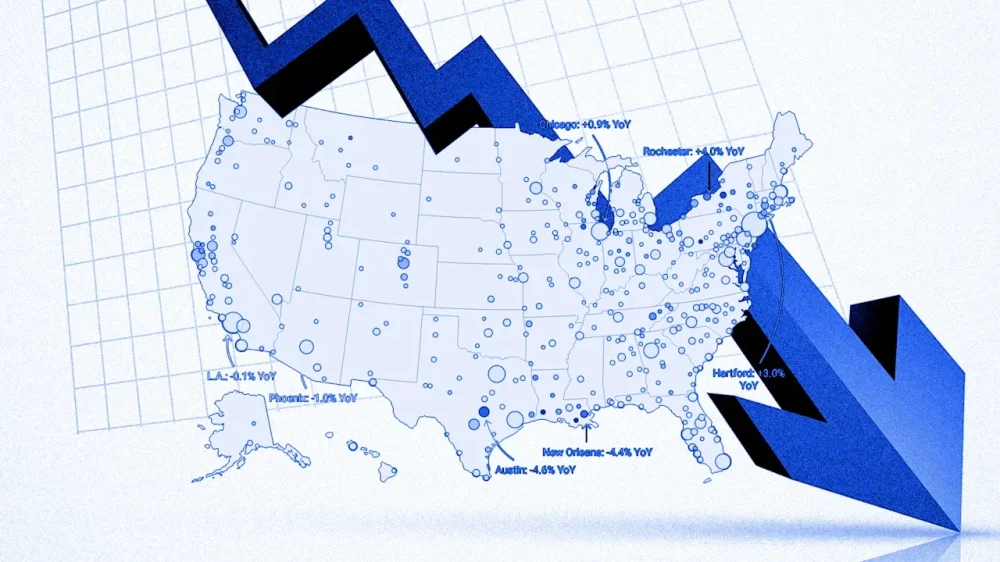
Want more housing market stories from Lance Lambert’s ResiClub in your inbox? Subscribe to the ResiClub newsletter. Zillow economists just published their updated 12-month forecast, projecting that U.S. home prices—as measured by the Zillow Home Value Index—will shift +0.0% between March 2026 and March 2027. That’s a mild downward revision from its 12-month forecast published last month (+0.5%). U.S. home prices, as measured by the Zillow Home Value Index, are currently up +0.8% year-over-year. Zillow’s latest 12-month outlook (+0.0%) expects national home prices to remain near that subdued pace. As long as national home price growth remains below U.S. income growth (currently up +3.9%), underlying fundamentals should continue to improve as the Pandemic Housing Boom’s housing demand pull ahead and overheating gets smoothed out. If that trend continues—and mortgage rates don’t spike—national housing affordability should also continue to gradually improve. While Zillow’s national home price forecast isn’t negative—it isn’t exactly bullish either. They’re calling for a soft national housing market in 2026, one where national housing affordability may improve slightly as U.S. income growth outpaces U.S. home price growth. What type of regional variation does Zillow anticipate over the next 12 months? Click here for an interactive version of Zillow’s forecast for over 400 markets Among the 300 largest U.S. metro area housing markets, Zillow forecast the biggest home price increase between March 2026 and March 2027 to occur in these 15 metros: Syracuse, NY —> +5.0% Rockford, IL —> +4.5% Atlantic City, NJ —> +4.5% Rochester, NY —> +4.0% Utica, NY —> +3.5% Knoxville, TN —> +3.4% Norwich, CT —> +3.3% Binghamton, NY —> +3.3% Morristown, TN —> +3.3% Green Bay, WI —> +3.2% Appleton, WI —> +3.1% Wausau, WI —> +3.1% Pottsville, PA —> +3.1% Hartford, CT —> +3.0% Janesville, WI —> +3.0% Among the 300 largest U.S. metro area housing markets, Zillow forecast the biggest home price decline between March 2026 and March 2027 to occur in these 15 metros: Houma, LA —> -7.0% Lake Charles, LA —> -5.6% Austin, TX —> -4.6% New Orleans, LA —> -4.4% Shreveport, LA —> -3.6% Beaumont, TX —> -3.4% Alexandria, LA —> -3.4% Lafayette, LA —> -3.2% Vallejo, CA —> -3.2% Chico, CA —> -3.2% Punta Gorda, FL —> -3.1% Denver, CO —> -3.0% Santa Rosa, CA —> -3.0% Corpus Christi, TX —> -2.7% San Antonio, TX —> -2.6% My quick take: Based on my own analysis, I believe Zillow is too bearish on the New Orleans metro area housing market—which is showing signs of mild tightening (see map below) after passing through a correction—and also too bearish on pockets of the Bay Area—especially San Jose—which has benefited from the AI boom. Below is what the current year-over-year rate of home price change looks like for single-family and condo home prices. The Sun Belt, in particular Southwest Florida, is currently the epicenter of housing market softness over the past year. View the full article
-
Self-employment tax is a vital aspect of your financial obligations if you earn $400 or more through self-employment, such as freelancing or running a sole proprietorship. This tax, set at a rate of 15.3%, combines contributions for Social Security and Medicare. Anyone operating as a sole proprietor, independent contractor, or in a partnership must understand this tax, as it covers both the employer and employee portions of FICA taxes. But how do you calculate it, and what deductions can you claim? Key Takeaways Self-employment tax is a 15.3% tax that funds Social Security and Medicare for self-employed individuals. Individuals earning $400 or more from self-employment activities are subject to this tax. Sole proprietors, freelancers, independent contractors, and partners in partnerships must pay self-employment tax. The tax includes both the employer and employee portions of FICA taxes, impacting net earnings. Estimated quarterly tax payments are required if self-employed individuals expect to owe $1,000 or more in taxes. Understanding Self-Employment Tax When you earn $400 or more from self-employment activities, comprehension of self-employment tax becomes crucial for your financial planning. This federal tax funds Social Security and Medicare benefits, impacting your long-term financial stability. The self-employment tax rate is 15.3%, which breaks down into 12.4% for Social Security on earnings up to $176,100, and 2.9% for Medicare, with no upper limit. As a self-employed individual, you’re responsible for paying both the employer and employee portions of FICA taxes, meaning you bear the full self-employment tax burden. If you anticipate owing $1,000 or more in taxes, you’ll need to make estimated quarterly tax payments, due on April 15, June 15, September 15, and January 15. Fortunately, you can deduct 50% of your self-employment tax when calculating your income tax, which can help lower your overall taxable income and ease your financial obligation. Who Is Subject to Self-Employment Tax? If you earn $400 or more in self-employment income during the tax year, you’re likely subject to self-employment tax. This tax affects various types of individuals, including sole proprietors, independent contractors, freelancers, and partners in partnerships, in addition to single-member LLCs treated as sole proprietors. Comprehending these requirements is fundamental for managing your tax obligations effectively. Types of Self-Employed Individuals Self-employment tax is a crucial consideration for various types of self-employed individuals, all of whom must navigate their tax obligations carefully. Comprehending what’s considered self-employment can help you identify if you fall under this category. Here are some key types of self-employed individuals who owe this tax: Freelancers and independent contractors earning $400 or more from their work. Sole proprietors and single-member LLCs, treated as sole proprietors for tax purposes. Partners in partnerships on their share of partnership income. If you earn from side-hustles, like gig economy jobs, you may likewise need to pay self-employment tax if your net earnings meet the threshold. Being aware of these classifications is crucial for managing your tax responsibilities effectively. Income Threshold Requirements Comprehending the income threshold requirements is essential for anyone maneuvering self-employment tax obligations. If you earn $400 or more in net self-employment income annually, you’re liable for self-employment tax. This applies to sole proprietors, independent contractors, freelancers, and partners in partnerships. Even single-member LLCs fall under this category for tax purposes if they meet the income threshold. It’s significant to highlight that church income exceeding $108.28 also incurs this tax, whereas amounts below that are exempt. Unlike traditional employees, who’ve taxes withheld by their employers, you must calculate your tax based on your net earnings. If you receive payments via self-employed direct deposit, keep accurate records to guarantee compliance with these requirements. Self-Employment Tax Rates Explained Comprehending self-employment tax rates is essential for managing your finances effectively. The combined rate of 15.3% includes a 12.4% Social Security tax and a 2.9% Medicare tax on your net earnings, but there are income caps to take into account. Knowing how these rates apply to your earnings and any additional taxes that may kick in can help you prepare for your tax obligations. Tax Rate Breakdown When you’re self-employed, it’s essential to grasp the breakdown of the self-employment tax rate, which stands at 15.3%. This rate consists of 12.4% for Social Security and 2.9% for Medicare. Comprehending this self-employed tax rate breakdown helps you plan your finances effectively. The Social Security portion applies to the first $176,100 of net earnings. The Medicare portion has no income cap, affecting all net earnings. High-income earners may face an additional 0.9% Medicare tax on income exceeding $200,000. You calculate your self-employment tax on 92.35% of your net earnings. As a self-employed individual, it’s important to estimate and pay quarterly taxes if your liability exceeds $1,000, ensuring compliance with tax regulations. Income Caps Explained Income caps play a crucial role in determining how much self-employment tax you owe. For 2025, the Social Security portion of your self-employment tax applies only to the first $176,100 of your earnings. The self-employment tax rate is 15.3%, made up of 12.4% for Social Security and 2.9% for Medicare, but you’ll calculate it based on 92.35% of your net earnings. For example, if your net earnings are $75,000, you’ll first adjust this figure to about $69,262 for tax purposes. Moreover, any earnings over $200,000 will incur an extra 0.9% Medicare tax. Comprehending these caps is crucial for accurately estimating your tax obligations and avoiding underpayment penalties. How to Calculate Self-Employment Tax Calculating your self-employment tax involves a few straightforward steps that can help you accurately report your earnings. First, determine your net earnings by subtracting your business expenses from your gross income, using Schedule C for reporting. Next, multiply your net earnings by 92.35% to find the taxable amount. The self-employment tax rate is 15.3%, which consists of 12.4% for Social Security (taxed social security earnings) and 2.9% for Medicare (taxed Medicare earnings). Complete Schedule SE to finalize your self-employment tax calculation. Remember, Social Security tax applies only to the first $176,100 of your earnings. Medicare tax applies to all self-employment income without a cap. Once you’ve calculated the tax, transfer the amount to the Other Taxes section of Form 1040 to guarantee proper reporting. Reporting Self-Employment Tax Reporting self-employment tax accurately is essential for maintaining compliance with IRS regulations. To report your self-employment tax, you’ll need to use Schedule C, which details your business income and expenses if you’re not incorporated. Once you’ve calculated your net earnings, you’ll fill out Schedule SE, which determines your self-employment tax amount based on those earnings. When you file your taxes using Form 1040, the total self-employment tax will be included in the Other Taxes section. It’s important to note that you can deduct 50% of your self-employment tax as an income tax deduction on Form 1040, regardless of whether you itemize your deductions. Deductions Available for Self-Employed Individuals When you’re self-employed, comprehension of the deductions available to you is vital for managing your tax liability effectively. By taking advantage of these deductions, you can considerably reduce your taxable income and the amount of self-employment tax you owe. Here are some key deductions to evaluate: Business expenses: You can deduct costs related to advertising, office supplies, travel, and home office expenses on Schedule C, which lowers your net self-employment income. Health insurance premiums: If you pay for your health insurance, you can deduct these premiums, further decreasing your taxable income and self-employment tax. Qualified Business Income (QBI) deduction: This allows you to deduct up to 20% of your qualified business income, offering substantial tax savings. Accurate record-keeping of all business-related expenses is vital to guarantee you claim all eligible deductions effectively. Estimated Tax Payments for Self-Employed Individuals Self-employed individuals need to stay on top of their tax obligations, especially regarding estimated tax payments. If you expect to owe $1,000 or more in federal taxes for the year, you’ll need to make these payments. You can calculate estimated tax payments for self-employed individuals using IRS Form 1040-ES. These payments are due quarterly on April 15, June 15, September 15, and January 15, so you can avoid penalties for underpayment. To determine your estimated taxes, consider your net self-employment income, allowable deductions, and any applicable tax credits. It’s essential to keep accurate records of your income and expenses throughout the year to guarantee your calculations are precise. You can make payments online via the Electronic Federal Tax Payment System (EFTPS) or by mail, but remember to complete Form 1040-ES with your payment to maintain compliance. Benefits of Paying Self-Employment Tax Grasping the benefits of paying self-employment tax is fundamental for anyone working independently, as it directly impacts your financial security in the long run. When you pay self-employment tax, you’re not just meeting a requirement; you’re investing in critical services that can support you later in life. By contributing to Social Security, you secure future retirement and disability benefits. You can deduct 50% of your self-employment tax from your taxable income, leading to potential savings. Paying this tax gives you access to Medicare, ensuring health coverage when you need it. The self-employment tax rate of 15.3% combines both employer and employee contributions, making it a pathway to important social safety net programs. Comprehending these benefits can help you appreciate the role of self-employment tax in safeguarding your financial future, just like traditional employees benefit from their employer contributions. Retirement Options for Self-Employed Taxpayers As you navigate the sphere of self-employment, it is essential to explore various retirement options available to you, which can greatly impact your financial future. Comprehending these options not only assists in securing your retirement but additionally provides potential tax benefits, which can offset your contract labor taxes. Here’s a quick overview of some retirement plans: Retirement Plan Contribution Limits Solo 401(k) Up to $66,000 (catch-up for 50+) SEP IRA Lesser of $66,000 or 25% of net earnings Simple IRA Up to $15,500 (catch-up for 50+ additional $3,500) Defined Benefit Plan Maximum benefits up to $245,000 Tax-Deductible Contributions typically reduce taxable income Each of these options has unique benefits and contribution limits, allowing you to tailor your retirement savings strategy according to your financial situation and goals. Frequently Asked Questions Who Must Pay Self-Employment Tax? If you earn $400 or more in net self-employment income, you’re required to pay self-employment tax. This applies to freelancers, independent contractors, and sole proprietors. If you operate as a single-member LLC or are a partner in a partnership, you’ll likewise owe this tax if your earnings meet the threshold. Who Is Liable for Self-Employment Tax? You’re liable for self-employment tax if you earn $400 or more in self-employment income. This includes freelancers, independent contractors, and sole proprietors. Fundamentally, you pay both the employer and employee portions of the tax, totaling 15.3%. This rate consists of 12.4% for Social Security and 2.9% for Medicare. If you’re a partner in a partnership or a single-member LLC owner, you’re likewise responsible for this tax if your net earnings meet the threshold. How to Avoid Self-Employment Tax? To avoid self-employment tax, consider forming a legal business structure like an S corporation, which allows you to pay yourself a salary. Maximize deductions on Schedule C by tracking business expenses, home office costs, and health insurance premiums. Contributing to retirement accounts such as a Solo 401(k) or SEP IRA can likewise lower your taxable income. Finally, employing family members may help shift income and reduce your tax obligations. How Much Do I Pay in Taxes if I Am Self-Employed? If you’re self-employed, you’ll typically pay a self-employment tax of 15.3% on your net earnings. This includes 12.4% for Social Security, applicable only up to an income cap, and 2.9% for Medicare, which has no cap. You’ll calculate this tax based on 92.35% of your net earnings. If your net income is $50,000, your self-employment tax would be approximately $7,065, requiring estimated quarterly payments to avoid penalties. Conclusion In conclusion, comprehending self-employment tax is crucial for anyone earning $400 or more from self-employment activities. This tax, set at 15.3%, funds Social Security and Medicare, impacting sole proprietors, freelancers, and independent contractors. By calculating and reporting this tax accurately, and utilizing available deductions, you can manage your financial responsibilities effectively. Furthermore, making estimated tax payments helps guarantee compliance and avoid penalties. Eventually, paying this tax contributes to your future benefits and financial security. Image via Google Gemini and ArtSmart This article, "What Is Self Employment Tax and Who Pays It?" was first published on Small Business Trends View the full article
-
For decades, brands functioned primarily as symbols. A logo, a name, a set of visual and verbal signals designed to convey trust, recognition, and meaning. Brand architecture emerged to organize those symbols. Companies needed systems to structure product portfolios and manage sub-brands. These systems ensured that names, identities, and messages worked together coherently across markets and channels. Frameworks were built for a world in which brands communicated. AI is changing that world fundamentally. When a brand is embodied in an AI agent or a conversational interface, it no longer simply represents a company. It interacts with people directly. It answers questions. It makes recommendations. It refuses requests. And sometimes, it corrects itself in real time. In other words, the brand behaves. AI turns brands from symbols into actors. That shift has profound implications for how companies think about brand architecture. Traditional systems were designed to coordinate messages and identities. But when brands begin to act, when they assist, guide, and sometimes make decisions on behalf of users, the challenge becomes something different: governing behavior. 3 EMERGING MODELS FOR AI BRAND ARCHITECTURE As companies experiment with AI, a new set of architectural choices is emerging. The question moves from how many brands a company should have to how many actors should exist in the brand system. Three early models are taking shape. 1. The unified actor (Microsoft Copilot) Microsoft has chosen to extend a single behavioral brand—Copilot—across its ecosystem. Today the same name appears in Word, Excel, Windows, Teams, Bing, and Azure. This approach treats AI as a consistent actor that travels with the user across contexts. The advantage is coherence. Users learn what Copilot is and what it can do, regardless of the application they are using. The challenge is behavioral complexity. The same brand must perform very different roles—from helping a student draft a paper to assisting a developer with debugging code or summarizing enterprise documents. For a unified actor to succeed, the behavioral principles behind the brand must be carefully designed. Users should feel they are interacting with the same entity everywhere, even when the capabilities change. 2. The invisible actor (Apple Intelligence) Apple appears to be taking the opposite approach. With Apple Intelligence, the company has largely avoided creating a separate AI personality. Instead, intelligence is embedded throughout the ecosystem while the Apple brand remains the primary actor. The technology is present, but it does not introduce a new branded entity into the relationship. This strategy minimizes fragmentation. Users continue interacting with Apple rather than a new agent layered on top of the experience. For companies with exceptionally strong master brands, invisibility may be the most powerful architectural choice. The risk is that AI capabilities may be less visible or less differentiated. But the reward is simplicity and coherence. 3. The specialized actor (Salesforce’s evolution from Einstein to Agentforce) A third model is emerging in which AI capabilities evolve into distinct actors within the brand ecosystem. Salesforce’s shift from Einstein to Agentforce illustrates this pattern. The earlier Einstein metaphor framed AI as a singular intelligence layer across the platform. As the technology evolved, Salesforce reframed its architecture around agents designed to perform specific roles. In this model, brand architecture must manage a growing cast of actors, each with a defined behavioral scope but still tied to the parent brand. The advantage is flexibility. The disadvantage is complexity. FROM BRAND DESIGN TO BEHAVIORAL GOVERNANCE These emerging models point to a deeper shift. Traditional brand architecture governed symbols—logos, product names, and visual systems designed to communicate meaning consistently across markets. Companies implemented architectures using either a branded house or a house of brands. But when brands begin to act or interact with users continuously, the challenge becomes governing behavior. How should the brand respond when it cannot answer a question? When should it escalate to a human? How should it acknowledge uncertainty or error? These decisions must be embedded directly in the systems that power the brand. In the AI era, brand architecture becomes more about governing behavior. LANGUAGE AS BEHAVIORAL INFRASTRUCTURE The implications extend beyond architecture into language itself. For decades, brand language largely meant tone of voice and guidelines describing whether a brand should be suggestive or descriptive, sound friendly, authoritative, or playful. But when a brand is embodied in software that interacts with users, tone is no longer enough. A behavioral brand must know how to respond when a user is confused, when a request cannot be fulfilled, when sensitive information is involved, or when the system itself makes a mistake. This means language becomes behavioral infrastructure that powers the brand and needs a framework governing how the brand acts, not just how it looks or sounds. This also raises the bar for naming. Historically, a name functioned primarily as a product or advertising label, helping customers recognize and remember a brand. In the AI era, a name sits at the center of an interaction. When people work with Copilot, Alexa, or Siri, they are engaging with a named entity that assists. It answers questions and occasionally declines requests. The name becomes the actor’s identity. That places new demands on the naming strategy. A name must still be distinctive and memorable, but it must also support trust and credibility across thousands of interactions. A name no longer simply represents a brand. It represents a behavior. THE NEXT ERA OF BRAND ARCHITECTURE AI introduces new brand challenges. Because when brands become actors, architecture must govern behavior. The companies that build the strongest brands will not only be those with the most distinctive identities, they will design systems in which language, behavior, and brand architecture work together. For decades, brands were designed to be seen. In the AI era, they must also be designed to act. David Placek is founder of Lexicon Branding. View the full article

-
Vitol, Trafigura and rivals expand credit lines in anticipation of prolonged disruption to global oil and gas flowsView the full article
-
The Consumer Financial Protection Bureau has finalized changes to Regulation B, which implements the Equal Credit Opportunity Act, to eliminate any liability for indirect discrimination by lenders. The change represents a major shift in how the agency polices lending discrimination. View the full article
-
In an era where customer expectations evolve rapidly, Oracle has launched its Fusion Agentic Applications for customer experience (CX), introducing a groundbreaking approach tailored for small businesses. These applications leverage advanced AI technology, aimed at streamlining sales, service, and marketing processes while turning complexities into opportunities for growth. At the heart of these applications is a coordinated team of specialized AI agents designed to proactively engage with tasks rather than just assist. By operating within established enterprise workflows and securely accessing unified data, these applications promise to empower small business leaders to make informed decisions swiftly. Chris Leone, Oracle’s Executive Vice President of Applications Development, emphasized the necessity of such innovation: “Customer expectations and operational complexity have outpaced traditional systems, creating an urgent need for applications that don’t just support work, but actively drive positive customer outcomes.” The new offerings include five specific applications: Contract Compliance Workspace, Cross-Sell Program Workspace, Marketing Command Center, Sales Command Center, and Service Manager Workspace. Each tool is crafted to target specific challenges faced by sales and marketing teams. Contract Compliance Workspace allows businesses to manage contracts proactively. By semantically analyzing contracts, it enhances oversight, identifies risks, and suggests next steps, shifting the focus from reactive contract management to proactive risk mitigation. Cross-Sell Program Workspace equips sales teams with insights to improve win rates and reduce acquisition costs, changing traditional campaigns into continuous revenue expansion strategies. Marketing Command Center consolidates data from multiple sources, helping marketing professionals prioritize segments and launch targeted growth initiatives, enhancing their response to market changes. Sales Command Center replaces manual oversight processes with continuous monitoring and risk assessment, helping teams convert leads more effectively and drive revenue growth. Service Manager Workspace enhances service quality by proactively monitoring operations and surfacing escalations, thus streamlining the customer service experience. For small businesses, the practical implications of these applications are significant. The streamlined workflows can lead to reduced operational costs, improved efficiency, and enhanced customer satisfaction. However, the integration of such advanced technology does come with considerations. Small business owners may need to invest time and resources into training staff for a smoother transition. Additionally, understanding the intricacies of the applications will be crucial to harnessing their full potential. Another critical aspect is the new Agentic Applications Builder, which allows organizations to develop customized AI automation without the complexity of traditional application development. This builder supports businesses in scaling their operations efficiently while ensuring safety and measurable ROI. As automation takes a more prominent role in various functions, small businesses could find themselves at a competitive advantage by adopting these intelligent solutions. In the intersection of technology and business, Oracle’s entry into the realm of agentic applications holds promise for small businesses looking to boost their operations. By reducing manual workloads and enhancing decision-making capabilities, businesses can refocus on their core competencies. As Leone noted, the urgency for businesses to adapt to growing customer expectations is clear. Implementing tools that actively drive outcomes rather than merely support existing processes will be vital for small businesses aiming to thrive in a competitive market. For more information and to explore the benefits of Oracle’s Fusion Agentic Applications, visit Oracle’s official site. The integration of these new tools could well dictate how small businesses navigate customer experiences in the digital age. Stay ahead of the curve—embracing this innovation might just be the key to unlocking new avenues for growth and elevating your customer interactions. Image via Google Gemini This article, "Oracle Launches AI-Driven Applications to Revolutionize Customer Experience" was first published on Small Business Trends View the full article
-
Google is updating how Google Ads paces budgets for campaigns using ad schedules, shifting toward full monthly spend targets regardless of how many days ads actually run. What’s changing. Starting June 1, campaigns will pace toward the full monthly budget limit (30.4x the daily budget), even if ads are only eligible to run on certain days. Previously, pacing was typically based on the number of active days in the schedule. What’s not changing. Daily and monthly caps remain the same. Campaigns still won’t exceed 2x the daily budget in a single day or 30.4x over a month, and ads won’t serve on disabled days. Why we care. Advertisers using limited schedules — like weekdays only or specific hours — may see spend accelerate, as Google now aims to hit the full monthly cap instead of scaling down on active days. Zoom in. This means campaigns with fewer serving days can spend more aggressively on those days. For example, if ads run only half the month, Google can hit the daily max each day without needing to pull back elsewhere — and still stay under the monthly cap. Between the lines. Google is prioritizing full budget utilization over evenly distributed spend, giving its systems more flexibility to capture demand when campaigns are eligible to run. What to watch. Advertisers with tight schedules may need to revisit budgets and performance expectations, as spend could concentrate more heavily on active days. Bottom line. Budget pacing is becoming less about when ads run — and more about ensuring the full budget gets spent. First seen. Several advertisers mentioned receiving the comms from Google but from Google Ads Coach Jyll Saskin Gales, we got a clarification of what the update means and what isn’t changing on LinkedIn. View the full article
-
Attention is fragmenting further every day as the platforms providing information continue to multiply. There are new players on the scene, like AI search, while companies build proprietary spaces through social networks and communities. Smaller spaces pop up daily through vibe-coded apps. Many of these platforms are noisier than ever, with everyone demanding our attention at once. We’re drowning in information, and trust is eroding in sources like search engines and social media. We still use these platforms for research, but go elsewhere to validate what we find and make decisions. We’re shifting back to a source we’ve trusted since the beginning: other people. That means showing up across multiplying platforms and in as many people-led sources as possible. Search is a trust experience Rachel Botsman is a leading expert and author on trust in the modern world. Botsman defines trust as: “A confident relationship with the unknown.” I’ve read tons of different definitions of trust, but this is by far my favorite. It’s the simplest and touches on the core component of dealing with the unknown or uncertainty. We don’t need trust when outcomes feel certain. We need trust when we’re dealing with the unknown. Searching for information is what humans do when they’re uncertain. There are three trust layers that occur every time we search for information: Self-trust (I’m uncertain.): I don’t trust that I have the information I need to make a decision at this moment in time. Platform trust (Where I trust to search for answers.): Which platform, community, or real-world space do I trust to find answers to my questions? Source trust (Whose or what information I act on.): Do I trust this enough to believe it, click on it, buy it, let it guide me, or change my mind? People can absolutely skip platform trust and jump directly here. Searching for information is a trust experience from start to finish. It’s a human behavior, and, as we’ll discover, the best way to support human behavior is through other humans. Your customers search everywhere. Make sure your brand shows up. The SEO toolkit you know, plus the AI visibility data you need. Start Free Trial Get started with An example of my own search journey to find a trusted answer Here’s what a recent search journey of mine looked like when I was interested in buying a new pair of shoes. I started with AI tools and did some low-trust research, getting a list of options that met my requirements from ChatGPT and cross-referencing that list with Claude’s output. Then I wanted a sense of pricing and delivery timelines (high trust), so I quickly read through reviews while I was still working with the AI outputs (low trust). I searched Amazon for the options surfaced by ChatGPT and Claude, read reviews, got pricing, and noted who ships the quickest. From there, I moved on to Google and found my medium-trust people sources. I checked Reddit for brand and model commentary, read third-party articles on running sites and from running influencers, and watched YouTube video breakdowns. Then I got bombarded with low-trust advertising on social media, seeing retargeting ads everywhere. Finally, I turned to my high-trust people sources. I asked a trusted running community, a neighbor I often see running, and my dad, a former marathon runner. I also went to a running shop and spoke with the sales team. Search journeys now span dozens of platforms and sources Yext’s 2025 research of 2,237 global consumers found more platforms getting used in a single search journey: Approximately 75% of consumers use new search tools more today than they did one year ago. Just 10% trust the first result, while 48% of consumers cross-check answers across platforms. These results very much mirrored my personal search experience. I hit roughly 65 sources in my search journey: Two AI tools, hitting ~10 links in each. Amazon, hitting ~15 products with reviews. Google, scanning ~10 Reddit threads, approximately five third-party sites, and five YouTube videos. Social media, seeing ~10 retargeting ads. Community, receiving seven direct replies. Conversations, three directly with other people. In a similar vein, Expedia’s The Path to Purchase research found that huge amounts of source content are now consumed by travelers planning a trip. In the 45 days prior to booking travel, users spend an average of 303 minutes viewing ~141 pages of travel content. Of my 65 sources, 45 were people-led. This trend can also be seen in professional decisions via the Censuswide – Global Professionals sentiment study (commissioned by LinkedIn) data, which shows 43% of people rate their professional network as their most trusted source, ahead of search engines and AI tools. And the 2026 Edelman Trust Barometer shows a general trend of uncertainty rising and people placing their trust in the people closest to them: Source: 2026 Edelman Trust Barometer Time and time again, we see that when people feel uncertain and need trusted advice, they often turn to others. So how do you turn trust into visibility? During someone’s search journey, you ideally want to show up in: All the platforms they use to find information. As many people-led sources as possible. That sounds pretty overwhelming. To make this workable, you need a playbook that reverses the order: Get mentioned in people-led sources often (by building genuine trust with these people). As a result of these mentions, show up in the major search platforms as they continue rewarding people-led sources. If we optimize at the people layer, the platform layer follows. Build trust, earn mentions, and get visibility. Back to my shoe-purchasing journey. Many folks have taken to social media and review sites to talk about Adidas Terrex (the shoes I finally purchased after my trust-seeking journey), so they were highly visible in all my touchpoints. This means that Adidas is actively engaging in trust-building activities. Adidas has its own running club, events, and communities. They’re engaging with people. Here’s an example of a recent event where they collaborated with the Underground Fan Club to support more women getting into trail running. People are mentioning their brand and products. This single event had hundreds of posts on Instagram from the participants and attendees. Multiply that by their other events and community initiatives, and you can see how their visibility quickly adds up. Plus, they’re appearing via hashtags, account tags, and mentions on social media platforms like TikTok more generally: Adidas Terrex is also getting mentioned in forums — there are full Reddit threads devoted to advice on these shoes. Their people-led source mentions are reflected in AI search platform results: You’ve seen the research: Profound analyzed more than 4 billion AI citations and 300 million answer engine responses and found the data showed that AI search platforms like ChatGPT, Google’s AI Overviews, and Perplexity systematically prioritize human conversation to build trust. AirOps analyzed over 5.5 million LLM responses across ChatGPT, Perplexity, Gemini, and Google AI Mode, and their data showed the top three cited domains drove brand mentions from community and user-generated content platforms. When you genuinely earn the trust of people willing to mention you positively of their own accord, you also capture visibility within search platforms. Because visibility is a byproduct of trust. Get the newsletter search marketers rely on. See terms. Where to go to earn people’s trust Relationships are the bedrock of trust, and there are plenty of places you can go to start building them. These are a few people-led places you can start with: Communities: Online and in person. Events: Conferences and meetups. Social media: LinkedIn, Instagram, TikTok, and similar platforms. Forums: Reddit and Quora. Look for people-led places with the components listed below. The stronger they are in these characteristics, the higher the trust: Where smooth, two-way conversations happen in real time. Where you have the ability to show up consistently. Where your audience gathers for specific, niche reasons and support. Where people are not anonymous and can show up as themselves (not personas). Here’s a general guide for how these environments, when highly engaged, are typically trusted: Trust-building componentsCommunitiesEventsSocialForumsTwo-way conversationsHighHighLowMediumThe ability to show up consistentlyHighMediumHighMediumPeople gather for specific, niche reasonsHighHighLowMediumWhere you can be yourself (not anonymous)HighHighMediumMedium Communities and events require lengthier time commitments and higher financial investment, but the trust-building components are very strong. Entering these spaces gives you more of the tools you need to build both relationships and trust. Social media and forums have lower barriers to entry, but the trust-building components are weaker. You can find the places you want to start with by: Directly surveying your customers and audience on where they spend time. See who’s frequently mentioned in your industry’s newsletters, podcasts, and other publications. Perform a search in your search platform of choice. How to engage in trust-building spaces People are seeking information to help them gain confidence in what they’re unsure about. They’re seeking help, and help builds trust. This means helping is your primary objective – not building brand awareness, pushing folks through your consideration funnel, or selling. Helping people. Start by listening, not talking Once you’ve identified your places, don’t rush in and start talking about yourself, your brand, or your challenges. Listen first. This is a two-part process: What does ‘helpful’ look like in this space? This is about understanding why people gather in this space — what they get out of it. What high-level needs or wants are getting met that people continue coming back? These typically don’t change much over time. Maybe they’re looking for connection, education, amplification, or inspiration. Figure that out, and then cross-reference it with what you have to offer. Find the intersections that make sense for you and identify the ways in which you can offer support. What topics are people focused on? This is about understanding what’s “trending” right now for folks in the space. What immediate needs or wants are getting met at the moment? These typically fluctuate. Listen. Find your intersections. Figure out what you can help with. Engage to build trust This will start with 1:1 conversations in community Slack groups, at events, or in the comments of social media and forums. Trust takes time to build. There are no shortcuts. Show up as yourself. You’re not your brand; you’re a person behind your brand. People want advice from real people, and if you begin by labeling yourself as a brand representative advocating for your product, it’s game over. Show up consistently, have these conversations, provide help on a 1:1 basis, and keep track of what’s actually helping. While trust takes time to build, your learnings can help you scale how you help based on real audience insights. Once you have a good sense of that, you can take the most frequently helpful themes and build out systems or assets that scale your ability to help. Turn conversations into scalable trust These assets may not build as strong a level of trust as your 1:1 conversations. Those 1:1 conversations with the right audience will have the most trust and the most depth. But if you focus your scaled assets on helping people become who they want to be, it will greatly strengthen trust in your 1:many initiatives more than your typical “how to do x” content. So take a deeper look at the pain points mentioned in your conversations and ask, “Who is this person trying to become?” Then build an asset from the ways you’ve helped those folks in 1:1 conversations. Create a mention power-up that helps people showcase their desired identity and who you helped them become. Something that proves their credibility and that they’re excited to share! Here are a few examples of what this playbook could look like for different audiences: AudienceHigh-level needTimely needScaled help assetMention power-upProfessionalsAmplificationDesire to grow personal brandGuest-posting programThe content is the power-up! They’ll share and tag you.ProfessionalsOpportunitiesNew job roleSkill training and job boardShareable certification for skill-training completionMusiciansEducationWanting to learn to play drumsVideo library of drum lessonsPersonalized “I’m a drummer” social imageCraftersAdviceCan’t find sustainable materialsCurated resource of eco-friendly materials Citable asset built with “[your brand’s] eco-friendly resources”ReadersInspirationDesire to break into a new genreQuiz that helps them decide Sharable quiz output boldly defining their new genreBudgetersEducationWhat to cut back spend onBudget template and trackerSharable “I saved $x with [your brand] asset” What does this actually look like in action? Over the past few years, I have transitioned my career from marketing to community building. I’ve learned the power of shifting my mindset from selling to helping. And I’ve seen brands use the above playbook to earn visibility and real business impact. In our community, we partner with an SEO SaaS platform that uses this playbook powerfully. We’ve seen them listen to what it means to be helpful in their community — people want opportunities to be amplified. We’ve seen them show up consistently — their marketing manager has 400+ messages in our Slack community. We’ve seen Jojo have tons of 1:1 conversations offering help. We’ve seen Jojo continuously show up as herself in these helpful answers and in general as a valued member of the community. And we’ve seen those 1:1 connections pay off in terms of visibility on the content itself as their sharable mention power-up. They then did the work to build their scaled asset of help. First, by listening through surveying members: Identifying the core challenges that people had within this topic: And further boosted their trust by collaborating with the community and featuring community members within their scaled asset. Again, they reaped the rewards of visibility with their shareable mention power-up. While earlier I told you to go in without a sales mindset, the beauty is that the trust you build can grow into just that: real business impact. Our SEO SaaS partner has earned £50,000+ in new annual revenue through the partnership so far. This stuff works when you find the right space, listen, learn, and consistently show up to help. See the complete picture of your search visibility. Track, optimize, and win in Google and AI search from one platform. Start Free Trial Get started with Building trust is a long-term visibility bet Trust will always be a throughline in how people search for information. When you make building trust an ongoing part of your strategy, you prepare your business beyond any single platform or system. You’ll show up in AI search today and whatever comes next tomorrow. Make trust the priority, and visibility follows. That’s how you move from chasing algorithms to building something that lasts. View the full article