All Activity
- Past hour
-
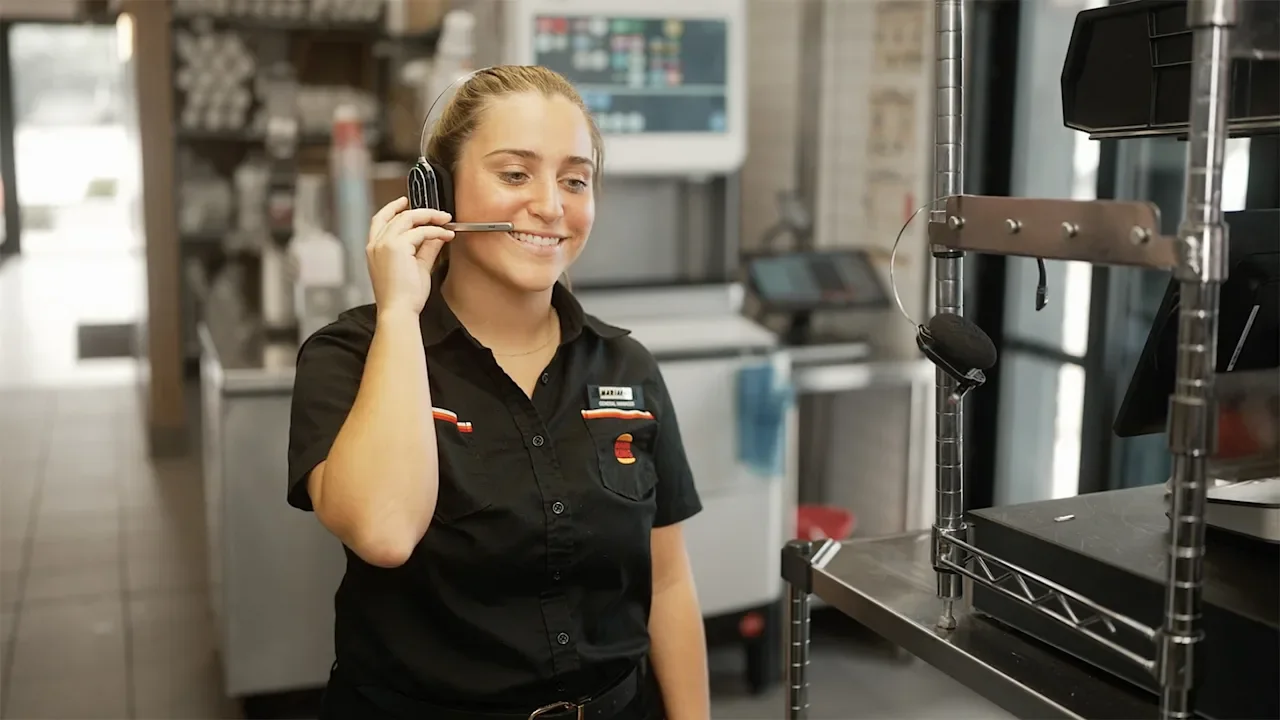
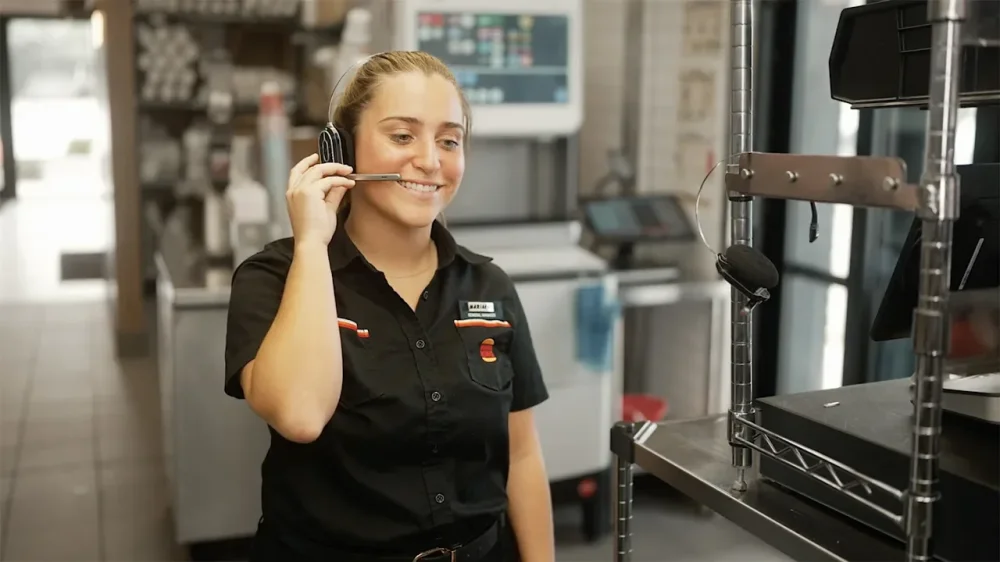
At hundreds of Burger King restaurants across the U.S., there’s a new invisible worker who’s tracking which ingredients are in stock, analyzing daily sales data, and checking in on whether employees are saying “Thank you” and “You’re welcome.” It’s an AI assistant named Patty. According to Thibault Roux, Burger King’s chief digital officer, the voice-activated chatbot is designed to help employees and managers handle tasks that might usually require pulling out a computer or consulting with an instruction guide. Patty began showing up at select locations about a year ago, and is now in a pilot phase at approximately 500 Burger Kings. It’s expected to roll out to the rest of the chain’s U.S. locations by the end of the year. On a day-to-day basis, Patty has an array of functions, from letting a manager know if a store is low on onions to helping an employee build a new burger. But it has another role that’s raising quite a few eyebrows: analyzing Burger King locations based on “friendliness” by tracking employees’ use of key phrases like “Welcome to Burger King,” “Please,” and “Thank you.” Online, commenters are concerned that this functionality is a slippery slope toward 1984-style “employee surveillance.” In an interview with Fast Company, though, Roux clarified that Patty is not being used to analyze individual employees’ performance, and is instead imagined as a kind of “coach.” “It’s truly meant to be a coaching and operational tool to really help our restaurants manage complexities and stay focused on a great guest experience,” Roux says. “Guests want our service to be more friendly, and that’s ultimately what we’re trying to achieve here.” Patty, are we running low on Diet Coke? Technically, Patty is the chatbot version of Burger King’s assistant platform, which collects data from operations including drive-through conversations, inventory, and sales, and then uses AI to analyze patterns in that data. For now, Patty operates on a customized model from OpenAI, though Roux says the technology is flexible enough that it could integrate with another partner in the future (like Anthropic or Gemini) depending on the company’s needs. For managers and employees in stores, Roux says Patty operates similarly to something like Siri. Patty is activated by a small button on the side of an employee’s headset, and they can ask it direct verbal questions related to their specific store—like recent sales figures or inventory updates—as well as more general company information, to which the bot will provide a verbal answer. “If you’re looking to clean the shake machine [you can ask Patty] the procedures to clean it,” Roux explains. “Or we have a lot of limited-time offers, and sometimes they can be cumbersome to remember. You can easily tap into Patty and be like, ‘Hey, remind me, does the new build maple bourbon barbecue have crispy jalapeños?’” Patty can also reach out to employees directly if it notices a pattern of interest. For example, if Patty thinks a specific store is out of lettuce, it might ping a manager to confirm. Once it’s received confirmation, it can mark lettuce as sold out on that location’s app and website—a process that previously would have required human intervention. Roux says franchisees and regional managers can decide how they want Patty to reach employees with information, whether it’s through their headsets or via a text message (though the tech is programmed explicitly to never interrupt a worker during a customer interaction). Insights from Burger King’s Assistant platform also live outside of employees’ headsets. Managers can check information from the tool on an accompanying website or app. For example, Roux says, when a district manager is visiting a new store, they might ask Patty on the app, “What are the top three guest complaints at this location this week?” or “What are their top missing items?” In an interview with Fast Company writer Jeff Beer earlier this month, Burger King President Tom Curtis said the assistant platform has already led to some significant menu changes. Curtis explained that the AI tracked all the times that team members said “I’m sorry, we don’t have that” and linked them back to a common denominator: apple pie. In January, Burger King brought back its apple pie for the first time since 2020. “We’re in the idiocracy version of 1984” Patty’s more straightforward uses, like helping managers access sales data and check inventory, seem fairly predictable in the context of fast food. Where Burger King is really pushing Patty’s use cases, though, is with its “friendliness” metric. In an interview with The Verge on February 26, Roux said Patty would recognize phrases like “Welcome to Burger King,” “Please,” and “Thank you,” and then give managers access to data on their locations’ friendliness performance based on those keywords. Mere hours after that piece went live, a thread in the subReddit r/technology on Patty had already amassed more than 15,000 upvotes and nearly 3,000 comments. Common refrains from users include comparing the technology to the surveillance state in George Orwell’s novel 1984, labeling it “authoritarian” and “dystopian,” and accusing Burger King of employee surveillance. “This would be criticized as being cartoonishly unrealistic in a sci-fi movie 10 years ago,” one user wrote. Another added, “We’re in the idiocracy version of 1984.” When asked about this response, Roux says the data from employees’ conversations is anonymized, and that none of these friendliness metrics will be used for grading or assessing individuals. Further, he adds, Patty will not directly instruct employees on what to say or how to say it. Instead, data on friendliness will be shared with managers, who can use it for face-to-face coaching with their teams. Still, it’s unclear exactly how Patty is quantifying friendliness. In a video explanation of the feature, a manager is shown asking the bot, “Is there anything that needs my immediate attention?” to which it responds, “The team’s friendliness scores this morning were the highest this week.” In an email to Fast Company, a Burger King spokesperson said, “In select pilot locations, we’ve explored using aggregated keywords, including common hospitality phrases, as one of several signals to help managers understand overall service patterns. The tool is not used to score individuals or enforce scripts.” Burger King did not respond to Fast Company’s request for clarification on how friendliness scores are calculated. So far, Roux says he’s seen growing interest in Patty from franchisees, with several managers making specific requests for future add-ons. “A lot of our franchisees . . . and regional general managers are very competitive, so they want to know, ‘Hey, how do I compare to other restaurants?’” Roux says. “I think that’s something that we’re going to be rolling out. In fact, we were looking at some of the designs earlier this week with the franchisees. So this is only the beginning.” View the full article
-
Recently, Grok AI faced criticism after users found it was creating explicit images of real people, including women and children. Although xAI has now implemented some restrictions, this incident revealed a serious weakness. Without safeguards and diverse perspectives, girls and women are put at greater risk. The dangers artificial intelligence poses to women and girls are real and happening now, affecting their mental health, safety, healthcare, and economic opportunities. Last fall, a mother discovered why her teenage daughter’s mental health had been deteriorating: It was a result of conversations with a Character.AI chatbot. She’s not alone. Aura’s State of Youth Report, released in December, found that parents believe technology has a more negative effect on girls’ emotions, including stress, jealousy, and loneliness—51% compared with 36% for boys. That’s unacceptable, and we need to do better. The risks extend beyond mental health. OpenAI recently reported that more than 40 million Americans seek health information on ChatGPT daily. As AI in healthcare expands, the consequences of biased training data can be dangerous. AI models that are trained predominantly on male health data produce worse outcomes for women. For instance, an AI model designed to detect liver disease from blood tests missed 44% of cases in women, compared with 23% in men. Uneven playing field In the workplace, AI is not leveling the playing field. Despite laws prohibiting discrimination, AI-powered hiring tools have repeatedly caused concerns about bias, fairness, and data privacy. A study published by the University of Washington found that in AI resume screenings, the technology favored female-associated names in only 11% of cases. These failures reflect who is building our technology. Women make up just 22% of the AI workforce. When systems are designed without women’s perspectives, they replicate existing inequities and introduce new risks. The pattern is clear. AI is failing girls and women. Pivotal moment This could not come at a more pivotal moment in the job market. A quarter of the roles on LinkedIn’s latest list of the 25 fastest-growing jobs in the United States are tech-related, with AI engineers at the top. Decisions about how AI is designed today will shape access to jobs, healthcare, education, and civic life for decades. It is critical that women play an active role in developing new AI tools so that inequity is not baked into the systems that increasingly govern our lives. Young women are not disengaged with AI. Research conducted last year by Girls Who Code, in partnership with UCLA, found that young women are deeply thoughtful about the dual nature of technology. They see its potential to advance healthcare, expand educational access, and address climate change. They are also aware of its dangers, such as bias, surveillance, and exclusion from development. This isn’t blind optimism. Instead, it offers a perspective that is often missing in today’s AI development. Creating technology is an exercise of power and holds great responsibility. Since girls are often the most affected by AI’s failures, they must be empowered to help lead the solutions. Women like Girls Who Code alumna Trisha Prabhu, who developed ReThink, an anti-bullying tool, exemplify this. Latanya Sweeney, recognized as one of the top thinkers in AI, founded Harvard’s Public Interest Tech Lab. Their achievements demonstrate the potential when women lead in tech development. Smart steps If we want safer, more responsible AI systems, three steps are essential. First, computer science education should integrate social impact. Coding cannot be taught in isolation from its consequences. Students should learn technical skills alongside critical analysis of how technology shapes communities and lives. This approach produces results. For instance, one Girls Who Code student utilized the skills she learned to create an app called AIFinTech to help immigrant families manage their personal finances. Second, women must be represented in AI development and governance, particularly those from historically underserved communities. They need seats at the tables where AI systems are designed, tested, and regulated. This means ensuring gender diversity on AI ethics boards and that government AI committees are representative of the demographics most affected. Finally, how we evaluate artificial intelligence needs to evolve. Today, AI is assessed by efficiency, accuracy, and profitability. We must also evaluate health, equity, and well-being, especially for girls and young women. Before an AI system is deployed in a high-stakes environment such as healthcare, it should be required to pass tests for gender bias and demonstrate that it does not produce disparate outcomes. New York City, for example, requires employers that use automated employment decision tools to undergo an independent bias audit annually. We do not have to accept AI’s flaws by default. We are witnessing AI’s impact on girls in real time, and we must seize the opportunity to change course while the technology is still being shaped. When girls are given the chance to lead in AI, they will build safer systems not just for themselves, but for everyone. View the full article

- Today
-
As a young child, interior designer Jeremiah Brent and his mother visited open houses and model homes in his hometown of Modesto, California, as a form of daydreaming. Brent walked through the houses, imagining the people who might live there, building a fantasy around what these homes could be. Since then, Brent has turned his childhood design obsession into a sprawling career: He runs a 50-person design firm, moonlights on Queer Eye, and recently brokered his first bedding deal with Target. Having come up in the industry through a series of audacious bets on himself, Brent has developed a sense of humor and pragmatism around his relationship with creativity and his role as a founder, designer, and collaborator. He’s quick to poke fun at himself, noting that he’s working on his control issues. (“If I had it my way I’d touch every hinge, every doorknob, every finish.”) And he’s clear that he absorbs as much as he can to consistently shape and influence his creative output: from a personal archive of design magazines to pop culture. (“I watch terrible, terrible TV.”) As Brent enters the second decade of Jeremiah Brent Design, he says his relationship with design and creativity has become more rooted in storytelling, informed by the clients he works for and the team he works with. “As time goes on, my work is known for a real kaleidoscope of design styles,” Brent says. “Everybody is so different, and their stories and their narratives are so different. I really want to be known as somebody who executes your story, not somebody who executes what I do really well. I don’t want to be one thing.” I’m an early riser. I don’t need a ton of sleep. I usually get up around 4 or 4:30 a.m. I have the mornings to myself; my kids are all sleeping. I’ve got three hours of uninterrupted silence with far too much coffee. Music on, candles lit, and I work. A lot of times, I write, which is new. I didn’t start with a degree in design. It really was just one of those things that happened through osmosis. When I started the firm, I wanted it to be me and like five people sitting around the desk, dreaming up the most insane spaces, the most beautiful things. I’m super visual. My office is like a serial killer. A controlled serial killer. I’m creatively always hungry. I’m always pulling and looking. I’m particularly inspired right now by the contrast and conflict between design styles and materials. When you bridge what was going on in, like, France in the 1930s with what was happening in the States in the 1980s? I think that conflict, and that contrast is where all the original ideas lie. Somebody asked me, “Do you think taste is genetic?” I don’t think taste is a recessive gene. I think it has so much to do with curiosity, audacity, travel, absorbing. At my core, I’m a good storyteller. That’s really where my strength is. I can listen. I can hear the nuances of what people need, and sometimes they’re not even saying it. That was the basis for the firm. I didn’t imagine it growing to the scale it has. Even though the company is 50-plus people, we still have that same synergy of five people sitting down at a table. There are so many different ways to make something beautiful. So that’s where I’m at now. It’s defining my lane of creativity and how I participate, how I nurture the creativity of my team. I always feel the most creative when I’m with the people I’m creating for. The biggest part of it is getting to know the people and understanding where they’re from. What was the first room that ever held you? What was the most important space that you remember? At least this part of the creativity, for me, is earning people’s trust. It’s something that you’re not given. You’ve gotta earn it. The fantasy part of what I do is where the love story is. So I always kind of call out one of the most important moments of your day. Where does it start? Where is the middle? Where does it end? And that acts as the beginning of the ripple. You build from there. You know, the fantasy, that component of that conversation with a client assures them that you understand what they value. And then I work backwards. I sketch everything. I have to see the space and how you’re going to move through it first before I dig into the intricacies of breaking everything down. It’s all visual. So I’ll draw everything, build the space out, prioritize. It’s changed over time, and it changes with clients, but you know, it’s always a conversation around what matters most to the client. I’ve never said no to work, even when I should. This was the first year that I’ve had to be like, “Okay, well, we can’t do that yet.” Or “That’s not gonna work.” That feels weird to me. I feel a pivotal shift in my tenacious appetite for growth. The evolution becomes everybody else’s, too. It’s not just mine now. So I’m making sure I’m executing and illustrating the balance that I want everybody else to have in their life. I joke all the time with everybody I work with. I want you to make a lot of money, and I want you to love what you do. I just need to move and to travel, sometimes. We live in New York City . . . but then we have this farm in Portugal. I realized this year that I live between two extremes: I need the volume turned all the way up, or I need to go to Portugal, where the volume is completely turned down and nurtures me in a way that I never even thought was possible. In Portugal, I’m a nighttime person, and in New York, I’m a morning person. Each gives me different things. I think trends are great if you’re not beholden to them. It’s a great way to have a conversation. It’s a great way to travel visually and maybe look at something that you would not have normally seen. To use them as a marketing tool is annoying. Just because turquoise is a hot color right now doesn’t mean you need to paint your room turquoise. But let’s examine turquoise. What do we like about it? Where did it start? It’s fun. I’ve had a crash course on how to collaborate because I married another interior designer. Which I do not suggest, because there are a lot of opinions from gay decorators in the house. I think it was an interesting exercise for me, because, especially creatively, if I had my way with our home, it would be dark with one dimly lit room with one bowl on a table. Very wabi-sabi. It’s my husband’s worst nightmare. He would live in, like, you know, a French château. He’s like Marie Antoinette. So, we have found a balance and a joint style that works for the both of us. I’m not pretending that I’m the most talented person in the room. I may be the most passionate, but definitely not the most talented, and I’ve seen so many different times from collaborations how far you can take a project with other people. View the full article

-
It’s sometime in the future, and Elon Musk, Jeff Bezos, and Sam Altman have joined forces on a new venture called Energym. The global chain of gyms is designed to harness the energy of the unemployed as they exercise on machines. The generated electricity feeds the AI servers that put them out of a job. Think Planet Fitness meets the Matrix, but without living in a simulation. Energym’s mission is to feed the AI machines with human sweat, and it’s a great business model. By 2030, almost 80% of people have lost their jobs. If you have no money and no purpose, you may as well use all your free time to work out and feed AI server fans with some kilowatts. “It solves our need for energy and your need for purpose,” Altman says in a promotional video. Energym, as you probably already know, is not real. But it very well could be. In this era, where so many brands and startups are constantly trying to flip the most inane ideas into the Next Big Thing to get a $50 billion valuation and an IPO, this absurd premise makes total sense. The mockumentary-style ad fpr Energym that has been circulating on the internet captures the current AI startup circle jerk better than any I’ve seen online so far. https://www.instagram.com/reels/DVLE-QJEf0n The advertisement was created by Hans Buyse and Jan De Loore. The latter—who wrote the copy for the video, as well as edited and produced it—is the cofounder of a one-man AI creative studio in Belgium called Kitchhock. The company has been creating all types of videos since 2011, back when there was no Seedance or Veo. But now, De Loore is using his creative chops and the latest generative video AI tech to make real ads for real companies in Belgium through his AI video studio arm, AiCandy. Energym is just a satirical ad designed to promote his own business and destroy the very core of those who make the technology that powers his business. (Incidentally, Energym is the same name as a company that makes a very real $2,800 static bicycle designed for exercise and to produce electricity, but it’s not related to AiCandy’s fake ad.) The Energym commercial is obviously tongue in cheek, as are many other videos we have seen in recent months that make fun of our increasing dependency on artificial intelligence and its power. But this one hits particularly hard. For some, it may be the Black Mirror-esque nature of it. (There’s an actual episode of the British TV series that feels like an extended version of the ad.) Personally, it connects with the WTF-ness that the current AI situation is provoking in me on different levels. The fear of what’s next. The dread of seeing reality destroyed. The disgust for the fat cats that are running this charade with no checks and nobody’s permission. I find it hard to pinpoint what it is. It’s just an absurd exaggeration with no logical basis that hits too close for comfort—and, at the same time, makes me happy. View the full article

-
What began as a race to build better AI models has escalated into a competition for compute, talent, and control. Foundation models—large-scale systems trained on vast datasets to generate text, images, code, and decisions—now underpin everything from enterprise software and cloud infrastructure to national digital strategies. The industry’s language around AI has grown more ambitious—and more elastic. Agentic AI has leapt from research papers to Davos billboards, while artificial general intelligence, or AGI, now appears routinely in investor decks and earnings calls. Definitions have begun to blur. Some companies quietly lower the bar for what qualifies as general, stretching the term to encompass incremental productivity gains. Yet the economic results, particularly measurable returns on AI investment, remain uneven. According to PwC’s 2026 Global CEO Survey, 56% of 4,454 CEOs across 95 countries reported neither increased revenue nor reduced costs from AI over the past 12 months. Only 12% achieved both. Even so, 51% plan to continue investing, despite declining confidence in revenue growth. The result is a widening gap between engineering reality, commercial storytelling, and public expectation. Few voices carry as much authority—or have shaped modern AI as directly—as Andrew Ng. The founder of DeepLearning.AI and Coursera, executive chairman of Landing AI, and founding lead of the Google Brain team, Ng has helped define nearly every major phase of the field, from early deep-learning breakthroughs to the current wave of enterprise deployment. He has authored or coauthored more than 200 papers and previously led the Stanford AI Lab. In 2024, he popularized the term agentic AI, arguing that multistep, tool-using systems capable of executing workflows may deliver more near-term economic value than simply scaling larger models. In an exclusive conversation, Ng offered Fast Company a reality check. He says true AGI—that is, AI capable of performing the full breadth of human intellectual tasks—remains decades away. The true competitive frontier, meanwhile, lies elsewhere. This conversation has been edited for length and clarity. You helped popularize the term agentic AI to describe a spectrum of autonomy in AI systems. How did you come up with it, and how has the concept evolved as multi-agent systems move into enterprise production? I began using the term almost two and a half years ago, though I didn’t publicly take credit for it at the time. I started using it because I felt the community needed language that shifted the focus toward AI systems capable of taking multiple steps of reasoning and action—not just a single prompt-and-response exchange. More specifically, I felt there would be a spectrum of AI systems—some slightly autonomous or slightly agentic, and others highly agentic—where they take many steps of actions and work for a long time. No one was using the term agentic to describe this concept before I began using it. I started introducing it in my newsletter and in talks at conferences and industry events, and it quickly gained traction there. I didn’t expect marketers to run with it the way they did. When I attended Davos this year, I saw the word plastered on the sides of buildings. Even outside San Francisco, agentic now appears on billboards. I did want to intentionally promote the use of the term, but seeing how common it has become, I sometimes wonder if I overdid it. Enterprise adoption of agentic AI is accelerating, yet many organizations are struggling with integration, governance, and measurable ROI. Why is it so? Two years ago, there was intense hype around AI’s risks and dangers, among other concerns. Last year, businesses began shifting their focus toward real-world implementation. This year, the conversation has moved firmly to ROI. Even though many companies are not yet seeing strong returns, they continue to invest because they understand that AI will eventually deliver value. The discussion has shifted from excitement about what AI might do to a more grounded focus on how it can generate real economic impact. There’s also an interesting split-screen dynamic emerging. On one hand, many businesses say agentic AI is not yet delivering meaningful ROI, and they’re right. At the same time, teams building agentic workflows are seeing rapid growth and real, valuable implementations. The agentic movement still has very low penetration, but it is compounding quickly. What are the most significant mistakes enterprises make when deploying agentic systems at scale, and how should leaders rethink their technology and operating models to overcome them? Many businesses are pursuing bottom-up innovation, which is valuable, but the limitation is that it often leads to point solutions that deliver incremental efficiency gains rather than transformative change. If AI automates just one step in a process, for example, it might save an hour of human work and reduce costs. That’s useful and worth doing, but it doesn’t fundamentally change the business. Much of today’s AI deployment falls into this category—incremental improvement rather than full transformation. To unlock real value, companies need to look beyond optimizing individual tasks and start reimagining entire workflows. Doing so requires top-down leadership. Often no single person working on one step has the authority to reshape the entire process, which is why executive-level direction becomes essential. Real impact comes from tailoring AI strategy to each organization’s specific context rather than following generic industry playbooks. There is a growing debate about whether we are in the midst of an AI bubble or simply an early infrastructure build-out comparable to the internet era. How do you distinguish between speculative hype and genuinely durable AI value being created today? At the application layer, I don’t think we’re in an AI bubble. AI is expanding rapidly across business use cases—how we process legal and technical documents, manage customer success workflows, conduct research, and much more. I would like to see more investment in AI applications and inference infrastructure. Right now, there simply isn’t enough inference capacity, and worries around rate limits exist. The more interesting question about a potential bubble sits in the model training layer, where infrastructure spending continues to surge. If any risk exists, it’s highest there because the largest investments are concentrated among a small number of players. When companies build highly specialized hardware that can only be reused for inference with some inefficiency, the risk of overbuilding increases. I don’t think we’re overbuilding right now, but if any part of the AI market faces that possibility, it’s the training layer. As the industry moves beyond a single-model mindset toward more diverse agentic systems, how should enterprises think about AI architecture? Is there likely to be one dominant framework for building scalable, real-world AI systems—or will organizations need a more flexible approach? Software can range from five lines of code to massive systems that run for years. Because of that range, there won’t be a one-size-fits-all approach to building or governing these systems. Just as we don’t use a single framework to manage everything from simple scripts to enterprise platforms, we won’t rely on one architecture for agentic AI. Human work itself is incredibly diverse—from basic tasks like spell-checking to analyzing complex financial documents. Since the work varies so much, the AI systems we build will also need to vary. One principle my teams follow when building agentic AI systems is speed, as continuous improvement is essential. Our typical cycle involves building carefully to avoid major risks, testing with users, gathering feedback, and refining the system until it truly works well. That rapid loop is what helps teams build reliable, high-performing systems faster. Agentic AI is rapidly increasing systems’ ability to reason and act with limited human intervention. Does the rise of agentic architectures meaningfully accelerate the path toward AGI, or are we still far from true general intelligence? Most of the public thinks of AGI as AI that is as intelligent as people, and one useful definition is AI that can perform any intellectual task a human can. You and I could learn to fly an airplane with maybe 20 hours of training, learn to drive a truck through a forest, or spend a few years writing a PhD thesis. Most humans can do these things. We’re still very far from AI meeting that definition of AGI. For alternative definitions that some businesses have put forward—definitions that dramatically lower the bar—you could argue we already achieved AGI. There’s a good chance that under these lower-bar definitions, some businesses will soon try to declare success. But that won’t mean AI has reached human-level intelligence—it will simply mean the definition has been reworked to fit a much lower threshold. Maybe a year ago, AGI felt 50 years away. Over the past year, perhaps we’ve made a solid 2% of progress, with another 49 years to go. These numbers are metaphorical, so don’t take them too seriously. [Laughs] But we are closer than before, yet many decades away from an AI that matches human intelligence. If you stick with the original definition—aligned with what people genuinely imagine AGI to be—we remain very, very far away. Is geopolitical fragmentation reshaping global AI strategy for both governments and enterprises? One of the other big themes I’m seeing is sovereign AI. The world is becoming more fragmented, and there’s a lot of discussion about how nation-states want to make sure they have access to AI without needing to rely on other nations or any single company that they may not fully trust or be able to rely on in the long term. Governments and regions are thinking carefully about how to build and maintain their own AI capabilities so they can remain competitive and secure. As AI becomes more central to economic growth and national security, this question of who controls the infrastructure and models becomes much more important. So alongside enterprise adoption, there’s also a growing geopolitical dimension to AI deployment. In 2026, as enterprises search for real economic returns from AI, what leadership decisions and workforce shifts will ultimately determine whether organizations capture meaningful value from agentic systems? Leadership matters. When I work with CEOs, I see decisive moments when the C-suite must think strategically about what to invest in and then place those bets thoughtfully, guided by a clear understanding of what the technology can and cannot do—not just the surrounding hype. In periods of transformation, leadership decisions determine whether an organization captures real value from AI or merely experiments at the margins. I often speak with CEOs before they set a major strategic direction. No one knows exactly where AI will be in a few years, so we are operating in a kind of fog of war. But uncertainty does not mean we don’t know anything. Teams and partners who understand the technology well can narrow that uncertainty significantly and make far more informed decisions. At the same time, everyone should learn to code—or at least learn to build software with AI. AI has lowered the barrier to creating custom tools. Today my marketers, recruiters, HR professionals, and financial analysts who use AI to write code are already more productive than those who do not. When I hire, I increasingly prefer people who know how to build with AI assistance. I may have been early on this shift, but I now see more startups and established companies moving in the same direction. Just as it became unthinkable to hire someone who could not search the web or use email, I am already at the point where I hesitate to hire knowledge workers who cannot use AI to build or automate with code. View the full article

-
Google's February 2026 Google Discover Core Update has officially completed rolling out after just over 3 weeks. This update started on February 5, 2026, and was completed on February 27, 2026.View the full article
-
The Google February 2026 Discover core update has finished rolling out, starting on February 5, 2026 and now completing just over 21 days later on February 27, 2026. This was the first confirmed Google Search update this year, and the first-ever Discover-only update that Google announced. Normally, Google core updates impact both Search and Discover, but this is only impacting content within Google Discover. U.S. and English. Google said the update currently only impacts English-language users in the U.S. But Google said it will expand to all countries and languages in the coming months. More details. Google said the Discover core update will improve the “experience in a few key ways,” including: Showing users more locally relevant content from websites based in their country. Reducing sensational content and clickbait. Highlighting more in-depth, original, and timely content from sites with demonstrated expertise in a given area, based on Google’s understanding of a site’s content. Because the update prioritizes locally relevant content, it may reduce traffic for non-U.S. websites that publish news for a U.S. audience. That impact may lessen or disappear as the update expands globally. Google also made some tweaks to the Get on Discover help page – so review that page as well. More details. Google added that many sites demonstrate deep knowledge across a wide range of subjects, and its systems are built to identify expertise on a topic-by-topic basis. As a result, any site can appear in Discover, whether it covers multiple areas or focuses deeply on a single topic. Google shared an example: “A local news site with a dedicated gardening section could have established expertise in gardening, even though it covers other topics. In contrast, a movie review site that wrote a single article about gardening would likely not.” Google said it will continue to “show content that’s personalized based on people’s creator and source preferences.” During testing, Google found that “people find the Discover experience more useful and worthwhile with this update.” Why we care. If you get traffic from Google Discover, you may have noticed changes in that traffic. Again, it should be U.S. English only and only impact your Discover traffic. I will say, there has been a lot of Google Search organic volatility but Google has not confirmed any of those reports. Google recommends that if you need guidance, Google has “general guidance about core updates applies, as does our Get on Discover help page” in those help documents. View the full article
-
Environmental concerns have moved down agenda under leadership of Zack PolanskiView the full article
-
Early in my career, a colleague and I made a shared commitment one summer to eat healthier. Salads. Smoothies. The full routine. Like many well-intentioned plans, our discipline began to fade after a few weeks. Eventually, we introduced what we jokingly called Grease Wednesdays, a weekly cheat day as a reward for all our good behavior. Every Wednesday, one of us would head out to grab fast food, and we’d hide away in a small boardroom to indulge in our shared lack of nutritional discipline. At first, it was just the two of us, chatting with laptops closed and fries on the table. And then coworkers began peeking into whatever boardroom we were in, curious about the laughter. Eventually, someone asked if they could join. Then another. Within weeks, we had outgrown the small meeting room. Within months, we had moved into the department’s largest boardroom to accommodate the growing crowd. What started as a casual indulgence became a shared ritual. And without intending to, Grease Wednesdays began to change our department culture. We all began to get to know each other as individuals, with pets and families and hobbies. The ritual also smoothed tensions between departments, built friendships between unfamiliar teammates, and helped us realize we hadn’t felt all that connected before. Recent research shows the disconnection I witnessed in my own team is now part of a broader workplace trend. A 2025 survey of U.S. workers found nearly 40% report feeling lonely at work, and employees who lack social connection are significantly more likely to consider leaving their jobs because of it. When people feel they belong, trust builds, collaboration accelerates, performance rises, loyalty deepens, and well-being improves. When they don’t, silos form, trust erodes, and discretionary effort fades. Take these numbers: a recent BetterUp survey found that workplace belonging leads to a 56% increase in job performance, a 50% reduction in turnover risk, and a 75% decrease in employee sick days. THE PROBLEM WITH OVER-ENGINEERING CONNECTION Belonging is not accidental; it’s cultural. And culture is shaped, reinforced, and protected by a leader’s vision, values, behavior, and accountability, including what I call positive accountability. But this is where many organizations misstep. When leaders notice disconnection, the instinct is often to formalize solutions with more engagement meetings, structured team building, and mandatory social events. Yet forced connection and fun rarely produce authentic trust. In fact, over-engineering connection can make people more guarded. For instance, research cited in a study by the University of Sydney found that when team-building activities feel mandatory, they can create resentment and pushback among employees. Belonging grows best in environments that feel natural, voluntary, and human, not observed or measured. If you want to improve connection and belonging in your workplace while avoiding forced connection, here are some steps you can take. DESIGN INTENTIONAL SPACES What made Grease Wednesdays powerful wasn’t the food. It was the opportunity that a casual ritual created. We had, quite by accident, built a small, repeatable, low-pressure interaction in which familiarity could grow. Design offers a strong middle ground between compulsory team-building exercises and complete social neglect. The key here is to design small, optional, and repeatable opportunities that humanize the workplace. For in-person teams, you can host walking one-on-one meetings, Friday coffee drop-ins, no-agenda team lunches, or cross-department donut runs. For remote teams, you could host 15-minute morning online coffee drop-ins or no-agenda team virtual lunches, and share team celebrations of birthdays, anniversaries, and project completions. Keep it light; keep it optional; keep it ritual. MODEL OPENNESS Studies in organizational research find that when leaders are open, available, and accessible, employees feel more psychological safety. Psychological safety, coined by organizational psychologist Amy Edmondson, is the shared belief within a team that it is safe to take interpersonal risks, like speaking up with ideas, questions, concerns, or mistakes, without fear of punishment, humiliation, or retribution. To build psychological safety in teams, leaders can model openness. Do that by admitting when you don’t know something, sharing a decision you’ve reversed (and why), and publicly thanking a team member who challenged you. Another way you can model openness is by offering positive team accountability by sharing the successes they see and are proud of within the team. For example, one leader I work with sends out an email to his team every two or three weeks. The irregularity of timing is actually effective by design, making the email feel more authentic. REWARD CONNECTION, NOT JUST OUTPUT Social psychology research shows that reciprocity in the workplace builds trust, cooperation, and positive relationships. The principle of social reciprocity, or when one recognizes and responds to positive actions, contributes to stronger workplace dynamics and mutual respect—the core components of connection and belonging. One way to do this is to shift what gets publicly praised. If the only Slack shout-outs are for revenue, speed, and delivery, people will assume that is all that matters. Instead, reward connection by recapping projects in team meetings by asking, “Who helped make this possible?” You can also celebrate the people who mentor, unblock, and build bridges across teams. When helping behavior is acknowledged, rewarded, and career-relevant, connection stops being invisible labor and becomes part of how success is defined. Full offices don’t cure loneliness, but intentional culture does. When leaders design natural rituals, model openness, and reward connection as deliberately as they reward performance, belonging is no longer accidental—and becomes part of how work actually works. View the full article

-
Being a middle manager often feels like living in two worlds at once. On one side, executives cascade big goals and sweeping strategies. On the other, teams look to you for clarity, advocacy, and daily guidance. You’re constantly reconciling top-down demands with bottom-up realities, often with too little time and too few resources to satisfy either side. The paradox of the role is stark: Middle managers carry enormous responsibility for execution but don’t always have the authority to make critical decisions. You’re expected to deliver results on budgets you don’t control, within structures you didn’t design, and through policies you didn’t write. This tension is one of the biggest sources of chronic strain. One survey found that middle managers reported higher burnout rates (36%) than non-managers, while another showed that 71% are “sometimes” or “always” overwhelmed at work. But here’s the good news: The middle isn’t just where pressure piles up. It’s also where strategy becomes reality, where culture is lived (or lost), and where agility gets tested in real time. If you can reframe the squeeze as an opportunity, middle management becomes less a grind and more a proving ground. Here are four ways to turn the pressure into potential: BUILD YOUR COALITION If you think of your team only as your direct reports, you’re missing the larger playing field. Work today is inherently cross-functional, which means your effectiveness hinges on your ability to influence sideways and upward, not just to manage downward. Peers hold the resources and expertise you need. Leaders above you control priorities, approvals, and air cover. Without credibility in those directions, even flawless execution within your own group can collapse at the edges. Research shows that misalignment between teams is one of the biggest drivers of wasted work. When priorities or interpretations differ, teams can spend weeks pulling in opposite directions. Middle managers who proactively build peer alignment surface these gaps early and save everyone time and frustration. The fix isn’t complicated, but it is intentional: cultivate your network. A short, well-timed conversation with a peer or senior leader can prevent the kind of breakdowns that leave your team spinning. Think of it less as “networking” and more as preemptive damage control. The middle managers who thrive are the ones who invest in relationships that make the work move. MASTER THE ‘PRACTICE’ OF LEADERSHIP Leadership is often packaged as a set of sweeping competencies or treated like a fixed trait you either have or don’t. In reality, leadership is shaped over time, forged through daily choices, interactions, and repeated practice. While traditional leadership development focuses on broad skills taught in workshops or courses—what we call horizontal development at Sounding Board—many real-world challenges require something deeper. Vertical development helps managers think more complexly, adapt to evolving contexts, and lead with lasting impact, not just quick fixes. This kind of development happens through practice, not theory. Neuroscience supports it: Consistent, real-world repetition strengthens the neural pathways that anchor adaptability and retention. At BTS, we’ve seen that transformational leadership often hinges on unlocking specific mindset shifts, patterns where leaders typically get stuck and need to evolve to grow. So, how do you start? Find smaller moments to experiment. Instead of waiting for a performance review, try a quick debrief after a call with a direct report. Test a new communication approach in a team meeting before the next town hall. You can even name your intention to those around you. Letting others know you’re trying something new sets expectations and invites helpful feedback. LEVERAGE AI FOR ON-DEMAND SUPPORT Your toughest challenges don’t show up as theory; they show up in the form of messy, human situations: a disengaged direct report, a senior leader who keeps moving the goalposts, a peer who won’t align. These problems don’t have one-size-fits-all solutions, which is why coaching is so powerful. For decades, personalized coaching was a privilege reserved for executives. But with AI practice bots paired with guidance from real coaches, middle managers can get development that’s personalized and scalable when they need it. These tools let you rehearse tough conversations, like giving feedback or delegating more effectively, in a low-stakes environment. Coaches help you translate insights into actions and longer-term mindset shifts. The result is leadership growth that’s less abstract and more actionable. The smartest move? Start small. Pick one conversation you’ve been avoiding and rehearse it with an AI conversation bot. You’ll uncover blind spots, test new approaches, and walk into the real thing with more confidence and control. MAKE UNCERTAINTY YOUR PLAYGROUND The defining condition of modern work is uncertainty. Markets swing, technologies disrupt, priorities pivot. If you wait for clarity, you’ll always be behind. The managers who thrive aren’t the ones who resist ambiguity, but those who use it as a catalyst to experiment and learn. One biopharmaceutical company I worked with recognized this when it expanded leadership development beyond senior executives to include middle managers. After providing leadership training focused on managing ambiguity and integrating AI into workflows, the company paired each manager with a coach to help translate learning into action. The result was faster decision-making and stronger cross-functional collaboration during a major pivot. When you stop treating uncertainty as a threat and start treating it as a laboratory, you shift from surviving change to shaping it. With these practices, middle management isn’t a burden, but a launchpad for growth. View the full article

-
I have what I consider a healthy skepticism toward authority. I’ve always considered leaders—despite what titles they hold—as fallible people who don’t necessarily deserve blind adulation or deference. That skepticism has made it hard for me to adopt the “company man persona,” which might explain how little of the proverbial corporate ladder I’ve climbed. And rather than take responsibility for that, I’m going to “blame” my dad: The instinct to question rather than comply, to think critically instead of playing yes-man, came from him. We never had a formal conversation about it. I just watched how he moved through the world—confident, grounded, with little to prove—and absorbed it. Even though I now interrogate masculinity professionally as a writer, the version of “being a man” I internalized first came from my father. The idea of masculinity is broad, contested, and constantly evolving. And in corporate America, it still matters. Research shows that sons often emulate their fathers’ version of masculinity, and because men continue to dominate leadership positions in the U.S., those inherited models don’t stop at the home. They show up in how work gets done, who gets promoted, and what kinds of behaviors are rewarded. In practice, that inheritance can look like an executive who demands deference but bristles at accountability. Or a leader who establishes a culture where men bond through exclusion or bigotry. Or an environment that rewards bravado over substance, and conflates emotional intelligence with weak, “beta” behavior. It can show up when men label assertive women “aggressive,” when they police what version of masculinity makes a leader, or when they constantly need to prove their worth. Think of Succession’s Kendall Roy, or your own pick of privileged white men whose familial connections thrust them into headlines more than their merit. In short: Corporate America has what’s colloquially known as “daddy issues.” Corporate culture reflects the versions of manhood its leaders were taught to perform. In speaking with several psychologists and professors who specialize in families and masculinity, I’ve come to understand that changing this culture won’t come from diagnosing men. It will come from redesigning work so that care and empathy aren’t something they have to unlearn to succeed. Rethinking the dad dynamic Research shows that fathers influence how sons build social networks, how they communicate, and even whether they feel comfortable promoting women. All that even further complexifies when the father-son relationship is fraught. Masculinity researchers use the term father hunger to describe the effects of an absent or emotionally distant father, which can result in insecurity, difficulty forming healthy relationships, a constant search for validation, or adopting a hardened persona to mask fear. But as far as the label “daddy issues,” it’s typically reserved for women, and psychologists have long pointed out that this framing is both inaccurate and sexist: “All human beings have ‘mommy issues’ and ‘daddy issues,’” Michael Thompson, a psychologist specializing in children and families, told me, “because our parents shape us so powerfully.” When I first started researching this piece, I assumed it would focus primarily on how toxic masculinity is passed from fathers to sons and then reproduced in the workplace. That assumption was informed by my own experiences with male coworkers, and trying to make sense of the world we’re currently living through: one where that toxic form of masculinity and its negative by-products—cruelty, aggression, bigotry—seem to be celebrated and exacerbated. But the more I spoke with experts who study the intersection of masculinity, fatherhood, and work, the more that framing felt incomplete. What emerged instead was a picture of modern fatherhood that’s more intentional, and more emotionally engaged than the stereotypes suggest. Many of today’s fathers—and those who hope to become fathers—care deeply about being present for their children and involved in their daily lives. Contemporary “daddy issues” in the workplace aren’t about litigating past fatherhood. They’re about whether institutions make room for a healthier version going forward. Changes underway Language plays a role in that shift to encourage men to more closely examine their masculinity, and the versions of it they’ve inherited from fathers and older men in their lives. Developmental psychologist Gary Barker, founder and CEO of the Equimundo Center for Masculinities and Justice, an international organization that works globally to engage men and boys in healthy masculinities, told me he prefers the term caring masculinity over phrases like toxic masculinity or even healthy masculinity. The former, he explains, often makes men defensive; the latter can sound clinical. Caring masculinity, by contrast, frames masculinity around care for children, family members, communities, and friends. “It means recognizing that you’re at your best when you’re connecting with others in caring relationships,” Barker said. Barker and I spoke about the influence of our own fathers. Neither explicitly told us that a softer, kinder, less bombastic version of masculinity was the way to go, but care, not a rigid toxicity, was modeled. My father regularly asked me about my feelings and talked with me about my interests, even if they weren’t interests he shared. I always felt seen and accepted. “Maybe they didn’t have the language around it,” Barker said, “but they did feel an ethic of, ‘I’ve got a duty to those around me.” That perspective aligns with how some psychologists understand the current cultural moment. Michael Reichert, a clinical psychologist and founding director of the Center for the Study of Boys’ and Girls’ Lives at the University of Pennsylvania, a research consortium, sees today’s conversations not as a rejection of the past, but as an evolution. “I don’t think we’re at this place because we’ve had everything wrong all along,” he said. “I think we’re evolving toward a new understanding of what it means to be a man.” That evolution shows up in data. Reichert said this generation of young men prioritizes emotional competence: the ability to identify and regulate their own emotions, express vulnerability, and maintain close relationships without defaulting to dominance or withdrawal. In an interview with The Atlantic, Reichert spoke about an emotional literacy course he taught at a boys’ high school for 25 years, and how he’s seen firsthand the way resistance has morphed into acceptance on this front. National surveys also suggest sustained interest in fatherhood: Pew Research Center data shows that 57% of Gen Z men without children hope to become fathers, while a majority of millennial dads report being highly engaged parents. In other words, many young men aren’t aspiring to emotional distance—they’re aspiring to connection. The question is whether the workplaces they enter will reward that shift. Where we go from here Jamie Ladge, a professor of management at Boston College who studies fatherhood and organizations, told me that both workplace research and workplace culture still rely on overly narrow definitions of what fathers look like, often centering cisgender, heterosexual men with one partner. That hypothetical father maps neatly onto traditional ideas of masculinity: stoic provider, unencumbered worker, secondary caregiver. But “there’s a lot more nuance and complexity in the fatherhood identity that needs to be considered,” she said. Fathers may see themselves as caregivers, role models, breadwinners, or stay-at-home parents—often moving between those identities over time. Many fathers aren’t married, don’t work traditional jobs, don’t live in nuclear families, or aren’t in heterosexual relationships. When organizations cling to a single archetype, they don’t just miss entire groups of men, they reinforce a narrow model of masculinity that constrains everyone. Ladge’s research suggests that when workplaces support fathers in these varied roles—and thus support more diverse views of masculinity—the benefits are tangible. Involved fathers are more likely to experience work-family enrichment, feel more satisfied at work, and think less about quitting. “There’s a real benefit to being an involved father,” Ladge said. “That satisfaction carries over into positive outcomes for organizations.” Supportive management is key. Policies that normalize paid parental leave, flexible schedules, and caregiving responsibilities don’t just benefit families, they influence how employees relate to their work. Barker echoed this point, noting that organizations that encourage caregiving often see greater engagement in return. As fathers, “if we feel supported in taking that time, we come back with more energy, more productivity, and more connection to the workplace that made it possible,” he said. And yet, despite evidence that caring workplaces are more sustainable and productive, many organizations still cling to outdated ideals. “There’s a strong bias, especially in the U.S., that the ideal worker is someone who works the longest hours and has no life outside of work,” Ladge said. That expectation undermines the very conditions that allow parents—including fathers—to be present at home and engaged at work. The result is a self-reinforcing loop: Research shows that parents with greater autonomy and supportive supervisors are more involved with their children, while involved parents are more satisfied and productive employees. I didn’t learn skepticism of authority from a leadership seminar. I learned it by watching a man who knew who he was—and didn’t need a job to prove it. Workplaces that make room for that kind of fatherhood might finally get the leaders they keep claiming to want. View the full article

-
We’ve been sold a lie. Somewhere between “go to school” and “get a job,” work became the central node of our lives—the very thing that defines us. We measure our worth by our output, our identity by our title, and our health by how much we can endure. The hours. The travel. The back-to-back meetings. The busyness. That’s not the picture we painted for ourselves when we chose our major in college and envisioned what we thought would be a fulfilling career; that’s conditioning. The result of which has shaped our meaning of work and how we see ourselves in it. But meaning isn’t found in the busyness of the grind—rather, it’s found in alignment. And when our work has greater meaning, we change our relationship with it and, more importantly, with ourselves. On our latest episode of the From the Culture podcast, we spoke with Lenore Skenazy, cofounder and president of the nonprofit Let Grow, about finding meaning at work. And she offered a unique framing for how to rethink work and find alignment. In response to the public backlash she received after penning a 2008 column in the New York Daily News about letting her 9-year-old son ride the New York City subway alone, Skenazy founded Let Grow with NYU business school professor Jonathan Haidt to help parents rethink the job of parenting. In our venture to become parents, we didn’t imagine our job would be that of a supervisor or a concierge to our children. Instead, we imagined ourselves as guardians who would help our children grow. For Skenazy, the meaning of parenting is to prepare our children for adulthood, not to protect them from it. A deep rethink Although this may seem like a simple repositioning, it’s actually a profound recontextualization. When we think about parenting as a job of preparation as opposed to protection, it gives our work new meaning and, as a result, we engage in it differently. As Skenazy argues, when the work of parenting is about preparation, we grant our children freedom and independence to navigate the world on their own. Not in a way that endangers them but, rather, challenges them. When this happens, not only do they grow into more resilient humans who will likely be better prepared for the world, but we—as parents—get more fulfillment from our work. The benefit of this recontextualization also applies to our professional work. When we reframe the meaning of work, we change our alignment with it. The result of this framing not only improves our well-being but also improves the work. The behavioral science is unambiguous to this fact. When work is more meaningful, we’re more engaged, more committed, and more satisfied. Moreover, these effects produce greater productivity and higher effort because we’re more willing to “go the extra mile” when we feel more fulfilled. A win-win This phenomenon happens on the individual level but scales when we consider the greater work of the organization. When workers collaborate in shared meanings, their collective outputs are optimized, and the organization is more likely to flourish because of it. This isn’t about “touchy-feely,” “woo-woo” vibes to make people feel good. This is a renegotiation of work that empirically changes how we work, the impact of our work on the organization, and its impact on us. It’s a win-win across the board. But that’s not the world of work we occupy. Instead, our current framing of work is one that valorizes grind and prioritizes compensation—which is transactional at best, but in most cases adversarial. That’s not to say that labor should not be sufficiently compensated, but that the exchange between wages and work should be more than just monetary. They should be meaningful as well. Suffice it to say that work is in desperate need of work. Not more grind, more hours, or more late nights, but more meaning. The best part about it is that meaning is socially negotiated and, therefore, we can change it ourselves. It doesn’t require permission or approval—just rethinking. We explore this in greater depth with Skenazy on our latest episode of From the Culture, available here or wherever you get your podcasts. View the full article

-
This story was produced by Grist and co-published with Source NM. The first thing Andy Barrientes noticed when he showed up for his shift at RMS Foods on Valentine’s Day in 2005 was the cloud of black smoke emanating from the building. A fire had started in the factory around 4:20 p.m., not long before Barrientes was scheduled to clock in as maintenance manager at the food manufacturing plant in southeastern New Mexico. The blaze had caught his coworkers coming off the day shift by surprise; they reported smelling the smoke before seeing the flames. When Barrientes arrived, he saw the staff huddled together at the park across the street. “Everyone was holding hands,” he said. “And we were just … the fire was so big.” Barrientes had only been working at the factory for a few years. The job was something of an odd one: RMS Foods had once been a prominent meat processor in Hobbs, New Mexico, supplying local hotels and restaurants with cuts of beef and pork. But the company had recently started producing soy-based veggie burgers under the Boca Burger brand — an unlikely pivot for a part of the country better known for its cattle ranches, steakhouses, and dairy farms. Barrientes was hired around the same time as this change, and in the years since, veggie burger production had taken off. On the day of the fire, the entire staff evacuated without injuries, allowing the fire department — which arrived within four minutes of receiving the call — to immediately set to work containing the inferno. By 5:30 p.m., the clouds of smoke had mostly dissipated, but the building was gone. The roof of the factory had collapsed, and all but three pieces of food-processing equipment were damaged beyond repair. Among those standing across the street in the middle of Humble Park were Sam Cobb, president of RMS Foods, and his wife, Rhonda. Cobb’s father had founded the company 46 years prior, and the plant had been standing proudly on North Grimes Street for nearly as long. The family business all but burned to the ground in about an hour. Cobb, who had taken over after working under his father for years, promptly began thinking about how to support his employees in the face of such a loss, but he had few details for what came after that. “We’ll assess the damages and see what we can do to get back in business,” he told a local reporter for the Hobbs News-Sun. His uncertainty didn’t last long. The following day, Cobb informed the News-Sun that he was at work on a plan to continue paying his nearly 100 employees for as long as it took to rebuild the facility — although he had yet to meet with the insurance company or inform them of such a plan. In less than a week, Cobb had negotiated a deal between the insurance company, a local construction company, and his staff. All RMS Foods employees would immediately be eligible for state unemployment benefits, and roughly a third would also be hired back to assist with the reconstruction. “From the day we started, we were actually building: running wires, putting up red iron, putting up walls, pouring concrete, doing 17 hours a day,” said Barrientes, who worked on the factory reconstruction and is still employed at RMS Foods today. “We got it done quick,” he added. The arrangement was typical of Cobb, according to Barrientes and other current employees. “He’s never said no to us. He’s always taken care of every one of his employees, and that’s why we’re all so dedicated to him,” he said, “because he’s dedicated to us.” Just eight months later, the facility was operational again — and Boca Burgers were flying down the factory line. Tucked away in the southeastern corner of New Mexico, just minutes from the Texas state line, Hobbs lies in the middle of the Permian Basin. Most jobs in the city of about 40,000 residents are in mining, quarrying, or oil and gas extraction, according to the local economic development council. Animal agriculture — both cattle ranching and dairy farming — also figures significantly in the region’s economy and culture. These industries shape local attitudes toward eating; barbeque joints abound in the area and steak dinners are common. “Here in oil patch/cattle country, it is probably difficult to find people who will give any type of endorsement to any burger labeled vegetarian, or worse yet, vegan,” Robert Hamilton, a local Hobbs librarian who doesn’t eat red meat, told me. Against a backdrop of pumpjacks and stretches of desert sky, RMS Foods is a total anomaly. “You would be surprised how many people don’t know that this is here,” said Arnold Langley, a production manager at RMS Foods who has been with the company since 2006. Langley is something of a food-manufacturing veteran — having previously worked at a french fry factory that shut down in Washington state, he was hired by RMS to help scale Boca Burger production. “I’d say I came down to Hobbs to go to work for Sam,” said Langley, “and I never looked back.” Seated in his office, in the same building his employees helped rebuild more than 20 years ago (now dedicated to Rhonda, who died in 2018), Cobb wears a crisp button-down with his salt-and-pepper hair combed back neat. On the walls are photos of friends and family, plaques for business accolades, and black-and-white shots of his days in college at Texas Tech University. An official portrait of Cobb at City Hall sits on a nearby table; Cobb served as the mayor of Hobbs from 2012 to this past January. To illustrate the evolution of RMS Foods, he pulls out various marketing materials he’s kept from over the years. There are promotional catalogs of beef and pork products, followed by cheeky magazine ads for Boca Burgers. (One reads: “The way Bob devoured his burger, you’d think no one told him it’s meatless with 70 percent less fat.”) How Cobb reconciles his relationship to these dueling food industries is curious — his venture into the plant-based burger space only came about because of his expertise with meat processing. Cobb is aware of the paradoxes inherent to his career’s trajectory. In our first phone call, over a year ago, he conceded that non-animal sources of protein will become crucial to food security in years to come. “There’s no way that as our global population grows, everybody can have a T-bone steak every night,” he said. Additionally, greenhouse gas emissions from animal agriculture, particularly beef production, are a major contributor to climate change. Research has shown more people embracing a plant-based diet is a crucial step to reducing global emissions. But for Cobb, animal agriculture and plant-based protein have long existed alongside each other, and in his case, one supports the other. He likes to say: “I make veggie burgers for a living so I can afford to be a cowboy.” Cobb himself is a fourth-generation rancher. In the late 1880s, his great-grandfather Gatlin Hall Cobb acquired land and started a ranch in Haskell County, Texas, which is still in the family today. Sam Cobb’s father, S.G., lived through the Great Depression and a drought in the 1950s, two events that showed him the financial precarity of raising cattle for a living. It soon became clear that the Cobb family didn’t make enough money off of the family ranch to support both generations. So S.G. left Texas and headed west to New Mexico in 1959, with the hope of one day buying his own ranch. S.G. had a no-nonsense way about him, according to his son, and when he arrived in Hobbs, he opened a franchise of Rich Plan Corporation, a frozen-food company that sold and delivered bulk orders directly to households and even offered freezers to hold months’ worth of food. According to Cobb, when the national Rich Plan Corporation went bankrupt, S.G. maintained his relationships with livestock farmers and rebranded his company as Rich Meat Services. The company transitioned into a meat processing business, selling beef and pork products to a number of hotels, restaurants, fast-food chains, and food service distributors around the country. But the dream of starting another family ranch never left his father, said Cobb, and in 1978, after nearly 20 years in New Mexico, S.G. and a business partner bought some land off a “longstanding ranching family,” in Lea County, where Hobbs is located. That family, too, was struggling with the economics of their chosen profession. “What happens with ranches is the families grow, but there’s not enough ranch income to feed everybody,” said Cobb. “So then they start selling it off.” For Cobb, raising cattle is still a family affair: His oldest son lives on the ranch and Sam comes out on weekends to help with branding, castrating, and corralling cattle. His granddaughter from Austin occasionally comes into town for workdays, too. The ranch, along with the family land in Texas, holds tremendous symbolic value to Cobb, whose father instructed him never to sell it. After graduating from Texas Tech in 1976 with dual degrees in animal science and business, Cobb came back to New Mexico to work for his father at Rich Meat Services — first as a salesman, and then in operations. He had a knack for keeping clients happy by staying level-headed in a crisis. David Pyeatt, who was once a customer of Rich Meat Services, said, “Sam’s incredibly intelligent and witty as heck. And he always takes a complex problem and comes up with a very obvious and simple solution.” But the move away from sales may have been for the best; Pyeatt suggested that Cobb can be buttoned-up to the point of coming across as awkward. Tall, careful with words, and with near-perfect posture, Cobb sometimes has the air of a chaperone at a school dance. “When you first meet Sam, you may think he’s a turd, you know?” said Pyeatt, who, it must be said, considers Cobb a dear friend. “Am I saying that nicely?” As a businessman, Cobb’s superpower is his pragmatism. In 1980, he took over RMS Foods as president, and the company soon became the largest supplier to Dairy Queen franchises in the Southwest. Years later, Cobb struck a deal with a Japanese trading company to export high-quality cuts of beef and pork to Japan — taking the company he inherited from his dad to new heights. But he always had an eye on growing the business even more, and in the late ’90s, that meant looking beyond red meat. The company Boca Burger, started by a natural-food restaurateur in Boca Raton, Florida, was successful at capturing the public’s attention with a better-for-you veggie burger, at a moment when diet culture ran rampant. In 1995, then-president Bill Clinton made headlines for stocking Boca Burgers on Air Force One, after reportedly being introduced to the vegetarian product by a heart specialist. The trend caught Cobb’s attention, too. In 1997, through a fortuitous chain of connections — and on the strength of his reputation as a meat purveyor — an invitation to join a group of investors and purchase Boca Burger came to Cobb’s desk. According to him, it was a no-brainer. RMS already had most of the necessary manufacturing equipment to get started. The titular Boca Burger — made primarily of soy protein concentrate and wheat gluten — essentially comes together using “the same manufacturing process as a ground-beef burger,” said Cobb. The only difference is the ingredients. “Instead of blending animal protein, we’re blending plant protein.” Initially, Cobb became an employee of Boca Burger, sold off his Dairy Queen business, and ceased producing meat products at RMS Foods. When production of Boca Burger moved to Hobbs, RMS was manufacturing about 60 percent of the brand’s soy patties. “We started growing exponentially,” said Cobb, enough for the conglomerate Kraft Foods (now Kraft Heinz) to notice. Sales went from $20 million in 1998 to $40 million the following year. On the strength of that growth, Kraft bought Boca Burger in 2000 for an undisclosed amount. “I saw an opportunity in the plant-based category,” said Cobb, and it paid off. By 2002, Boca Burger sales reached $70 million. After the 2005 fire, representatives from Kraft Foods visited Hobbs and were so impressed by Cobb’s operations that they decided to designate RMS the exclusive manufacturer of Boca Burgers. “Sam got a letter from Kraft telling him that,” said Barrientes, and the company president read it out loud to his staff in the newly rebuilt office conference room. His father stood beside him for the announcement. “They were in tears, because they were coming back,” said Barrientes. Every morning Cobb is in the RMS office, he eats whatever plant-based product is being made at the moment for breakfast. It’s a daily ritual shared by many of the staff members, who sample the veggie patties all day to inspect the quality. The faux-meat burgers are good, employees admit, but of course, they aren’t … well, meat. (“I mean, I love my steaks,” said Barrientes.) Cobb isn’t planning on giving up meat anytime soon, and doesn’t expect others to immediately do so, either. “I’m an omnivore,” he said. As a planet, we dedicate roughly half of all our habitable land to growing food. But the majority of that land — nearly 80 percent — is ultimately in service of raising livestock. That’s because livestock need pasture land to graze, but they also depend on animal feed — and growing enough corn and soy for all those farmed animals also takes a lot of land. Cattle and other ruminants pose a big problem for the planet in the form of greenhouse gas emissions; these animals have stomachs with multiple compartments, and their digestive process produces methane, which is then released when the animals burp. But the amount of land needed to raise animals for human consumption also means the global demand for meat drives a tremendous amount of deforestation and biodiversity loss. That’s why so many plant-based protein advocates argue mitigating the effects of the climate crisis rest on everyone eating less meat. When it comes to matters of persuasion, however, Cobb understands that nobody has ever changed their diet unless they themselves wanted to. “I’ve got friends that wouldn’t put a plant-based burger in their mouth with a gun to their head,” he said. This awareness may be a business advantage for someone like Cobb — even if the uncomfortable truth may strike fear into the hearts of plant-based evangelists and climate advocates. In the 2010s, Beyond Meat and Impossible Foods went all-in on developing veggie patties that supposedly tasted and bled like real beef. At the time, much of their messaging touched on the environmental case for swapping out beef for soy. “I know it sounds insane to replace a deeply entrenched, trillion-dollar-a-year global industry that’s been a part of human culture since the dawn of human civilization,” said Impossible Foods founder Pat Brown in a TEDMED talk, referring to animal agriculture. “But it has to be done.” The plant-based protein category enjoyed double-digit sales growth during the COVID-19 pandemic, according to data from the Good Food Institute, a think tank that tracks the alternative protein industry. But since 2022, demand for these products has been falling. For Brown and others, this style of practically pleading with consumers to change their habits spectacularly backfired. Beyond Meat’s stock price tanked by more than 99 percent in 2025 compared to five years prior. The company reported a net loss of $110.7 million in the fiscal third quarter of last year, its most recent earnings report. Its total outstanding debt is $1.2 billion. Beyond has never once turned an annual profit. There are a number of theories as to why Beyond Meat and Impossible Foods’ gamble on ultra-realistic fake meat failed so hard — including their inability to compete with beef on price and taste. “Our thesis is that a bunch of products launched during the pandemic that weren’t ready for mainstream adoption,” said Caroline Cotto, head of NECTAR, an organization that runs taste tests with plant-based and animal-protein products in order to help the former achieve taste parity. “A lot of consumers tried those products and had a really negative experience because they were paying more for a product that didn’t deliver,” she added. “So they really soured on that category and have stopped revisiting it.” Cotto argues that the plant-based meat industry is something of a “valley of disillusionment,” and it’s hard to disagree. This stunning market failure carries a lesson for the plant-based industry that the broader climate movement and environmental experts have long known: Information alone, even a lot of it, even the really dire stuff, is insufficient to lead to a change in how most people behave. Some industry leaders may now be actively running in the opposite direction of mentioning climate and sustainability: Peter McGuinness, the former CEO of Impossible Foods who stepped down last month, argues this sector struck out with consumers by becoming too “woke” and “partisan.” The future of Impossible, now, is cloudy. The company recently announced it is experimenting with protein-packed grains and pastas. The plant-based burger category as a whole has slumped, and as a result, RMS is also producing fewer units of Boca Burgers these days. Barrientes estimates the plant makes less than 4 million pounds of soy-based burgers for Kraft Heinz every year, when in previous years, it was moving almost 20 million. Based on all his experiences in Hobbs, Cobb understands that part of selling plant-based food comes down to how you talk to people. “It’s the old adage. You can lead a horse to water, but you’re not making him drink,” he said. But he also reckons that the answer is simpler — that the role flavor plays cannot be understated. “If you want a hamburger, and you want a big old greasy hamburger, it’s hard to duplicate that with a plant-based product,” said Cobb. Cotto agrees — but thinks these product categories can achieve taste parity, or even become something consumers prefer over meat, with more research and development. “The biggest opportunity across the board is just making sure that these products taste great,” she said. Cobb regularly goes out to eat with a small group of friends, including David Pyeatt, his former customer from his meat-supplier days. For someone in the food business, even casual meals can function as informal, but telling, focus groups. At a dinner last October, when I asked the group whether they like faux-meat burgers, nervous laughter sputtered around the table. John, a rancher based in Hobbs, said there was nothing about “synthetic meat” that appealed to him, and said he didn’t think he would ever try it. Pyeatt shared a story about how his wife had recently made two versions of sloppy Joes — one with ground beef, and another for his mother-in-law that used vegan crumbles from Boca. Pyeatt tried both, and loved the plant-based one more than the tried-and-true original. It simply, in his words, “tasted better.” But ultimately, he said, “if you put a steak in front of me, I’m going to like a nice steak.” “Nobody here eats Boca Burger,” said Cobb, though his guests quickly contradicted that. Someone suggested that Boca Burger patties aren’t bad if served with a bit of mayo. The conversation underscored how, at the end of the day, people want to eat things that taste good — and the promise of something truly delicious can tempt even the staunchest meat-eaters among us. The servers began to bring out people’s orders, and when the last plate dropped, Cobb and his guests picked up their forks and knives and began to cut into their steak dinners. Cobb believes the plant-based burger is functionally dead. Back at his office, speaking from behind his desk, he explained his view that faux-meat patties will never fully go away, but that demand is unlikely to return to the levels it reached during the pandemic. Whether or not vegan brands should try to replicate the taste and texture of meat is “a really big debate right now in the space,” Cotto said. But breaking free of conventions set by meat-eaters and industrial animal agriculture will demand new ways of thinking, cooking, and dining. “We don’t have a name for it,” said Cotto, but the plant-based protein industry could also explore “a third-space product that’s sort of like — the closest equivalent I can think of is tofu, right? It’s a center-plate protein, but it’s not fitting into a narrow box for consumers.” Whether or not plant-based brands will pursue that route, for now, remains to be seen. Either way, Cobb isn’t out of the game. When I asked him about the future of the industry, I was struck by his pragmatism. Ever the entrepreneur, he is still out looking for opportunities to bring in new plant-based manufacturing business. He argues that the concept of swapping veggies for meat could catch on “as long as it’s price competitive.” Last year, on top of its Boca Burger production, RMS began a new partnership with the Seattle-based Rebellyous Foods, a brand of plant-based chicken patties and nuggets that sells directly to food service and school districts. (Disclaimer: Former Grist CEO Brady Walkinshaw is an investor in Rebellyous Foods. He had no editorial role in this story.) The ingredients are nearly identical to those in Boca Burgers, employees told me, but the manufacturing process varies slightly, giving the faux chicken products a juicier, more delicious texture. Employees at RMS seem to love it: “It’s actually good stuff,” one told me. Cobb said he’s interested in exploring the so-called emerging product category of “blended proteins” — think: sausages and hot dogs that replace some of their meat content with whole-cut veggies or soy. Plant-based advocates like these products because they help lower consumers’ overall meat consumption, even if they never give up meat entirely. But Cobb noted this practice is nothing new. “I used to put soy in hamburger patties. We used to do that for cost savings,” he said. He reminded me that all of the technical equipment and expertise that RMS has acquired over the decades of being in the food-manufacturing business means the company is well-positioned to produce other vegetarian appetizers and snacks, like falafel. These, he reckons, can appeal to meat-eaters, as long as they taste good. When it comes down to it, Cobb has been successful because he pays attention to what consumers want and, quite simply, makes it. When I asked Cobb if he would ever go back to processing meat, he answered: “I would if the opportunity presented itself and it created jobs for my employees and people in Hobbs.” He paused and added, “Yes, I’ve considered that.” View the full article

-
Fear of Farage is mobilising voters, but frustration with government means Britons will find alternative beneficiariesView the full article
-
According to the World Economic Forum, 40% of employers expect to reduce their workforce where AI can automate tasks by 2030. Thanks to artificial intelligence, leaders are under pressure to raise the bar on what they will deliver to their stakeholders—with the expectation that thanks to AI, companies can (and must) achieve more. That matters for job hunters, who need to get clear on the value they can provide to organizations if they want to get hired. And while we can be reactive—relying on the AI screeners, which many recruiters use, to select us out of the pile of submitted résumés—we should get proactive, smartly deploying our networks to get our feet in the door. With virtual and hybrid work putting screens between us and our coworkers, relationship-based networking can feel like a dying art. Yet it’s our professional connections that can very well be what’s needed to help us break through in the job market in the AI era. Many professionals agree: research from the networking tech startup Goodword finds that 83% of professionals believe the most valuable asset in an AI-dominated future is social capital. That means growing your own social capital. Here are four real-life networking moves to master amid the onset of AI. 1. Invest in mutually-supportive relationships, not one-sided transactions The U.S. Department of Labor estimates that 80% of available jobs go unadvertised, with experts suggesting that these are filled through professional connections. Yet most people don’t network on an ongoing basis. One LinkedIn global survey finds that less than half of professionals keep in touch with their networks when things are going well. One of the leading causes for not doing so: not wanting to ask strangers for favors. Consider a mindset shift. Instead of asking favors, consider where you may be able to give someone else value. You may refer someone in your network to a professional who offers a service they need, for example, or connect them to someone who can help them solve a business challenge. According to Ivan Misner, founder of networking organization BNI and the author of Networking Like a Pro, social capital is like financial capital. “You cannot make a withdrawal before you make a deposit,” he writes. “You have to invest time in the relationship.” Think about how you can build and foster relationships with your network, especially before asking for help with job searching. 2. Be clear on your unique value with the right audiences We can’t provide value to everyone all the time. When we communicate the unique skillsets that we have to the people and organizations that can benefit from them, we increase the opportunities that people can consider us for. In his book The Start-Up of You, LinkedIn cofounder Reid Hoffman offers this advice: networks are not only about who you know, but what they know about what you can do. With 1.2 billion users on LinkedIn, there has never been an easier way to communicate what you do, who you serve, and how you do it through quick posting. While just 1% of LinkedIn users post content on a weekly basis, you can reach connections in your network by putting yourself in front of them frequently. 3. Approach networking as an opportunity for learning Too often, people approach networking as a self-promotion opportunity rather than a chance to learn. Whether it’s fostering your existing network or building new relationships, we have two ears and one mouth to listen and learn. I personally like connecting people in similar roles at different companies together to be thought partners and learn from each other. If you’re wrestling with a work challenge, chances are that others may have been in a similar situation and have insight to share. Networking to learn, rather than to promote, can help spark new ideas, along with new connections. 4. Balance technology with humanity And you can also use AI itself to make your personal networking more effective. As an alternative to LinkedIn, apps like Bizzabo and Brella use AI to match attendees at networking conferences and events with similar interests. In other cases, you might tap AI to find personalized recommendations for virtual events and webinars, ensuring individuals can connect and engage in ways that are most relevant to them. Technology like AI can enable us to scale our impact, including in our networks. By combining the science of AI with the art of relationships, any professional can open doors to opportunities they may not have tapped otherwise. View the full article

-
Mark Zuckerberg was 19 when he started Facebook. Bill Gates was 21 when he started Microsoft; co-founder Paul Allen was 23. Steve Jobs was 21 when he co-founded Apple; co-founder Steve Wozniak was 26. Amazon’s Jeff Bezos and Nvidia’s Jensen Huang were 30. Yet they’re the exceptions, not the rule. A study published by the National Bureau of Economic Research found the average age of entrepreneurs who start a company and go on to hire at least one employee is 42. A study conducted by the Census Bureau and two MIT professors found the most successful entrepreneurs tend to be middle-aged, even in the technology sector. After compiling a list of 2.7 million company founders who hired at least one employee between 2007 and 2014, researchers found the average age of those who founded the most successful tech companies was 45. And then there’s this: In general terms, a 50-year-old entrepreneur was almost twice as likely to start an extremely successful company as a 30-year-old. A 60-year-old startup founder was three times more likely to launch a successful startup than a 30-year-old startup founder, and nearly twice as likely to have launched a startup that ranked in the top 0.1% (in terms of revenue) of all companies. More broadly, a review of studies published by the National Bureau of Economic Research found that the age at which scientists and inventors reach their moment of “genius” is rising: While the average age used to be younger, the majority now make their biggest contributions to their fields after the age of 40. As the researchers write: This research consistently finds that performance peaks in middle age: The life cycle begins with a training period in which major creative output is absent, followed by a rapid rise in output to a peak, often in their late 30s or 40s. Makes sense. True mastery typically takes time. As the researchers write: The link between creativity and extant knowledge may depend not just on the acquisition of extant knowledge via training, but may depend on the nature and difficulty of the cognitive processes involved in drawing together and extending sets of extant knowledge. Or in non-researcher-speak: It’s not enough to just know things; you have to know how those things fit within larger frameworks in order to make new connections and new breakthroughs. The same premise applies to starting a business. Ideas are great, but execution is everything, and it’s much harder to execute well when you have limited experience. That’s especially true when leadership experience is a factor. Even if I come up with a truly groundbreaking idea, if I don’t have the skills needed to turn a collection of individuals into a team, I will probably fail. But there’s a deeper reason. People who succeed at a young age tend to make conceptual breakthroughs. Like Bill Gates and his “computer on every desk and in every home.” Like Bezos and his “everything store.” Like Lin-Manuel Miranda, who was 28 when he started developing Hamilton, arguably the first successful hip-hop musical. While Gates and Bezos didn’t have the skills to run multibillion-dollar companies, they did have breakthrough ideas—and then they developed the necessary skills. Miranda didn’t have the skills to write Hamilton, but he developed those skills; for example, he says it took a year to write “My Shot.” Contrast that with people who start companies later in life: Most leverage the skills, knowledge, and experience they’ve already gained. Ray Kroc held a number of sales jobs before purchasing McDonald’s when he was 52. Sam Walton’s experience owning Ben Franklin stores led to developing the skills to run a multilocation retail operation (and to the conceptual breakthrough of launching Walmart stores in small towns instead of large cities). Think of them as examples of what David Galenson in Old Masters and Young Geniuses calls “masters”: people who early in life may not have been very good in their chosen field, or in any field, but worked to develop mastery. They peaked later in life because they had developed the skills necessary to execute: to turn a string of burger joints into a multinational conglomerate. To turn inefficient and disjointed retail operations into a logistics juggernaut. To write classic show tunes. While others surely had similar ideas, Gates, Bezos, et al. also managed to execute. And survivor bias—our tendency to take lessons from people who survived and ignore those who failed—helps us word-associate our way to reflexively thinking “young” when we hear “successful startup founder.” But research shows that’s rarely the case. Sure, if you truly make a conceptual breakthrough, you may be able to be wildly successful at a young age. Most of the time, though, older entrepreneurs have a decided advantage, even in tech fields, long assumed to be the province of youth. (There’s a huge difference between adoption/consumption and creation.) So, if you’re in your 40s, as Sam Walton was, and you want to start a business, do it. If you’re in your 50s, as Ray Kroc was, and you want to start a business, do it. If you’re in your 60s, as Colonel Sanders was, and you want to franchise your business, do it. While ideas matter—especially genuinely breakthrough ideas—execution almost always matters more. Research shows age isn’t a competitive disadvantage; instead, your experience, skills, connections, and expertise are what will make you successful. As long as you put those attributes—attributes you’ve earned—to work for you. —Jeff Haden This article originally appeared on Fast Company’s sister website, Inc.com. Inc. is the voice of the American entrepreneur. We inspire, inform, and document the most fascinating people in business: the risk-takers, the innovators, and the ultra-driven go-getters that represent the most dynamic force in the American economy. View the full article

-
Plenty of readers admit to using AI already; others have major concernsView the full article
-
By-election result shows split in leftwing vote which could be replicated at May local electionsView the full article
-
Some consider self-employment a soul-crushing grind—a pit of despair one falls into after being laid off, or after graduating into a job market where entry-level jobs have evaporated. Chasing clients, following up on payment requests, and working into the night, all for little pay . . . it’s a stopgap until you find a full-time job. Who on earth would choose it? But freelancing doesn’t have to feel like gig work. And in fact, plenty of people, especially Gen Zers, do deliberately choose it. If you’re skeptical about freelancing or struggling to earn enough to pay your bills, it might be time for a mindset audit: Instead of thinking like a paycheck-chasing hustler, think like a CEO. That means defining your service offerings, pricing them deliberately, and targeting them toward the right clients, says freelance business coach Treasa Edmond, founder and podcast host for Boss Responses. She has 20 years of self-employment experience, and she’s noticed something about those who do this well. “The people who truly flourish at what they do—the ones who can make the incomes that other people only dream about or have the business structure that we all strive toward—they’ve really dialed in on mindset,” she says. “They’re confident about what they do and how they do it.” Here are the steps you need to take to shift your mindset and successfully run your business. Let go of the scarcity myth The stereotype of the starving freelancer is similar to that of the starving artist. But self-employment does not have to mean lower income. Edmond, who shifted into self-employment from full-time work, earns more from 20 hours of client work per week than she ever made at her brick-and-mortar job. She also knows freelancers who make a full-time living from five hours of client work per week. Still, she offers a word of caution to anyone who thinks freelancing will be easy: Those professionals have spent years honing their business models, and most put in a lot of hours outside of their billable client work to develop that stability. To Edmond, the foundational building block for success is how you perceive and communicate what you do. If your pitching strategy feels like begging prospects for money, it’s time to develop a succinct way to express how your services can make clients’ lives easier. “You have to understand where your value comes from,” Edmond says. “It has very little to do with what you actually do. It’s the return on investment the client can get on the work that you do.” In other words, freelancers’ earning potential comes down to how they think about their work, as well as how they frame those services to clients. Freelancers who devalue their expertise or talents will face an uphill battle securing the work volume and compensation levels they need to run a sustainable business. Tap into your inner CEO and approach discovery calls with clear, confident talking points. You’ll likely find far more stability. Identify (and balance) your business personas Counter to the popular image of freelancers stooping over laptops in coffee shops, successful freelancing takes more than locking in and completing assignments. As a freelancer, you’re essentially a team of one. Sales, marketing, and billing are just as much a part of your job as what you actually do. This is where thinking like a CEO becomes critical. Digital artist Caroline Beavon slips into “boss mode” by channeling her inner CEO into a persona she created since she went freelance in 2009. As Beavon describes it, the executive mindset can be like a hat you can put on. (She imagines hers is probably something like a bowler hat.) She sometimes wears hers while doing business management work like pitching, networking, and talking to clients. But like any well-rounded CEO, success also means knowing when to switch hats, and switch roles. “There are some days when I wake up and I am not Queen Bee,” and instead a worker bee, Beavon says. “I do not have the energy, the focus, the time, the whatever, to be all dynamic.” Yes, she could do it if she forced herself. But on those days, she sometimes finds it’s more productive to put her head down and get the actual work done. That balance is key: Lean too far into worker bee mode, and you might run out of work to do. Swing the other way, and you might not have time to finish all the work you’ve secured. For Beavon, financial management is a crucial tool to stay in the middle. She keeps her freelancing income in a business account and pays herself a set salary each month. By keeping buffer funds set aside, she saves herself a lot of stress during leaner months—making room for the high-level thinking that her Queen Bee, bowler hat-wearing boss persona needs in order to thrive. Banish the employee mindset Even if you’ve never held a full-time job, there’s a good chance you’ve come into freelancing thinking like an employee, not a big cheese. That can be a real problem when you’re building client relationships. As Edmond points out, freelancers who think of themselves as employee substitutes often form lopsided partnerships where clients dictate everything like bosses. Freelancers should act like their own bosses: Set their own terms, prices, and ways of working. The client is the expert at what they do, and freelancers are the experts at what they do. “We’re working with them, we’re collaborating with them, we hopefully have a really good relationship with them,” Edmond says. “But we’re not working for them.” Think too much like an employee, and you’ll stifle your inner CEO, reducing them to a demanding, overburdened middle manager, instead of an empowered advocate for what you need. But if you’ve painted yourself into an employee-shaped corner until now, rest assured that you’re not alone. “Breaking that employee mindset is hard,” Edmond says. “I know people who haven’t done that, and they’ve been freelancing for 15 years.” No matter what your working life has looked like until now, it’s never too late to rewrite the rules. After all, the chief reason to be a freelancer is in the name: It’s the freedom to choose the working conditions that work best for you. As Edmond puts it: “You are creating the business you need so that you can live the life you want.” View the full article

-
Customer loyalty management involves strategies that focus on retaining and engaging customers during nurturing strong relationships with them. It’s crucial as loyal customers tend to spend more and advocate for your brand. By personalizing interactions based on consumer behavior, businesses can improve customer satisfaction and retention rates. Nevertheless, implementing effective loyalty management systems presents challenges. Comprehending these dynamics can greatly impact your success. What innovative strategies can your business adopt to improve customer loyalty? Key Takeaways Customer Loyalty Management involves strategies to attract, retain, and engage loyal customers, enhancing overall customer experience and satisfaction. It is cost-effective, as retaining existing customers is significantly cheaper than acquiring new ones, with savings ranging from 5 to 25 times. Loyal customers tend to spend 67% more over time, significantly boosting revenue and brand advocacy through positive word-of-mouth. Effective loyalty programs can increase retention rates by 25-95%, reinforcing customer relationships and driving business growth. Personalization based on customer feedback and preferences strengthens emotional connections, leading to improved loyalty and satisfaction. Understanding Customer Loyalty Management Comprehending customer loyalty management is crucial for businesses aiming to encourage long-lasting relationships with their clientele. Customer loyalty management encompasses various strategies, processes, and tools designed to attract, retain, and engage loyal customers. By implementing effective loyalty management techniques, you can personalize interactions according to customer behavior, preferences, and feedback, which promotes deeper emotional connections with your brand. A well-structured loyalty management system can greatly boost customer retention rates, often proving more cost-effective than acquiring new customers. Key features of these systems include customization, CRM integration, real-time analytics, and performance tracking to assess program effectiveness and customer sentiment. Companies that excel in customer loyalty management often find that loyal customers spend up to 67% more during the later stages of their relationship compared to their initial purchases, highlighting the importance of nurturing these connections for long-term success. The Significance of Customer Loyalty Management for Businesses Customer loyalty management is crucial for your business since it helps build lasting relationships with your customers. By nurturing these connections, you not just improve brand advocacy but additionally create a loyal customer base that can greatly increase your revenue over time. Comprehending the importance of loyalty management can lead to improved customer retention and more organic referrals, eventually benefiting your bottom line. Building Lasting Relationships Building lasting relationships with customers is crucial for businesses aiming to thrive in a competitive market. Effective customer loyalty management not only aids in defining customer loyalty definition but additionally improves loyalty program management, ensuring that your efforts yield maximum benefits. Consider the following points: Retaining existing customers costs 5 to 25 times less than acquiring new ones. Loyal customers spend about 67% more as their relationship with your brand deepens. Strong loyalty programs can boost retention rates by 25-95%. Emotional connections nurtured through loyalty management encourage customer advocacy. Comprehending customer preferences enables personalized experiences, increasing satisfaction. Enhancing Brand Advocacy Effective brand advocacy stems from robust customer loyalty management, which plays a pivotal role in a business’s success. By cultivating strong emotional connections with customers, you can witness a 26% increase in true loyalty over a few years. Loyal customers often become effective brand ambassadors, as around 47% share positive experiences with others. Implementing effective loyalty programs can yield substantial returns, with loyal patrons spending up to 18% more than non-members. Moreover, retaining existing customers is typically more cost-effective than acquiring new ones, being 5 to 25 times cheaper. Engaged customers likewise provide valuable feedback, helping you improve offerings. Importantly, repeat customers account for 60-70% of sales conversions, whereas new customers contribute only 5-20%. Key Features of an Effective Customer Loyalty Management System When businesses implement a customer loyalty management system, they gain the ability to tailor loyalty rules, rewards, and triggers based on individual customer preferences and behaviors. This customization improves the overall effectiveness of loyalty programs, ensuring they resonate with your audience. Here are key features that make such systems effective: Integration with CRM Systems: Connects customer data for personalized communication. Real-Time Insights and Analytics: Tracks customer behavior and program effectiveness for data-driven decisions. Performance Tracking: Monitors metrics like customer retention and satisfaction to assess program success. Diverse Reward Options: Supports points systems and tiered programs for greater flexibility. Automated Communication Triggers: Sends timely messages based on customer actions, improving engagement. These features help you create a loyalty program that not only meets customer needs but also drives repeat business and long-term relationships. Measuring the Success of Customer Loyalty Management Programs How can you accurately gauge the success of your customer loyalty management programs? Start by tracking your customer retention rate, which indicates how many customers continue to engage with your business over time. This metric is crucial for comprehending the effectiveness of your loyalty initiatives. Moreover, calculate customer lifetime value (CLV) to estimate the total revenue you can expect from a customer throughout their relationship with your brand. The net promoter score (NPS) is another valuable tool; it measures customer satisfaction and their likelihood of recommending your brand to others. Don’t forget to analyze redemption rates of loyalty rewards, as higher rates often reflect effective programs. Finally, customer satisfaction scores (CSAT) provide insights into the overall experience, allowing you to refine your strategies based on direct feedback. Common Challenges in Managing Customer Loyalty Managing customer loyalty presents various challenges that can greatly impact the effectiveness of your programs. Here are some common issues you might face: Lack of personalization, leading to generic programs that fail to engage diverse customer needs. Low engagement levels as a result of poor user experiences or irrelevant rewards, which can reduce participation in loyalty initiatives. Disconnected data systems that hinder your ability to personalize interactions and track program performance effectively. Difficulty in measuring intangible emotions like trust and brand affinity, complicating your assessment of loyalty program impacts. Evolving customer expectations necessitate regular updates to loyalty programs; failing to adapt can result in disengagement and increased customer attrition. Strategies for Building and Maintaining Customer Loyalty To build and maintain customer loyalty effectively, companies must employ a range of strategic approaches customized to their audience’s preferences. Implementing loyalty rewards programs can greatly boost retention by up to 95%, encouraging repeat purchases through discounts and freebies. Moreover, referral programs can transform loyal customers into brand ambassadors, as nearly 47% of consumers tend to recommend brands to friends and family, enhancing word-of-mouth marketing. Personalizing customer experiences using data-driven insights nurtures emotional connections, and companies with strong omnichannel strategies report improved loyalty and engagement. Celebrating customer milestones, like birthdays or anniversaries, with personalized offers can reinforce relationships and keep your brand at the forefront of customers’ minds, increasing repeat purchases. Regularly soliciting and acting on customer feedback not just identifies areas for improvement but also strengthens loyalty, as 91% of customers are more likely to buy frequently from brands they trust. The Role of Customer Feedback in Loyalty Management Customer feedback plays an important role in loyalty management by enhancing your engagement strategies and helping you identify areas for improvement. By actively listening to what your customers have to say, you can build trust and encourage loyalty, which is vital for retaining clients. Additionally, leveraging feedback can greatly boost your profitability, as it allows you to tailor your offerings to meet customer preferences effectively. Enhancing Engagement Strategies Though many businesses recognize the importance of customer loyalty, utilizing customer feedback can greatly improve engagement strategies vital for loyalty management. By actively seeking and acting on customer opinions, you can elevate satisfaction and retention rates considerably. Engaged customers who provide feedback are 2.5 times more likely to stay loyal, so it’s imperative to implement effective feedback systems. Consider these strategies: Use post-interaction surveys for immediate insights. Act on feedback to increase retention by 10-15%. Tailor offerings based on customer preferences. Prioritize feedback in loyalty programs to improve Net Promoter Scores (NPS). Demonstrate commitment to customer satisfaction to nurture loyalty. These steps will help solidify your relationship with customers and drive business growth. Identifying Improvement Opportunities Identifying improvement opportunities is vital for effective loyalty management, and customer feedback serves as an important tool in this process. When you capture customer feedback right after interactions, you boost response rates and gain timely insights to improve experiences. By leveraging this feedback, you can pinpoint strengths and weaknesses in your loyalty programs, which is fundamental for increasing retention rates. Companies focused on customer satisfaction often see significant benefits, including a potential 25-95% profit increase through improved retention. Implementing feedback loops allows you to adapt to evolving customer expectations, as engaging customers in feedback initiatives shows your commitment to improvement. This engagement is key to reinforcing the emotional connections necessary for nurturing long-term loyalty. Building Trust and Loyalty How can businesses effectively build trust and loyalty among their customers? Engaging with customer feedback is critical for comprehending your audience’s needs and preferences. When you actively seek input, about 70% of consumers are more likely to remain loyal. Responding to feedback can boost customer satisfaction by up to 20%, enhancing retention rates. Here are some key strategies: Implement surveys or online reviews to gather insights Acknowledge customer opinions to cultivate emotional connections Use feedback to identify areas for improvement Monitor your Net Promoter Score (NPS) for loyalty tracking Encourage loyal customers to share constructive feedback Real-World Examples of Successful Customer Loyalty Management Successful customer loyalty management plays a vital role in driving revenue and maintaining lasting relationships with clients. For example, Starbucks Rewards has over 75 million active members, contributing to 57% of U.S. revenue, with members spending three times more per visit than non-members. Similarly, Amazon Prime, boasting over 200 million members, generates over $40 billion annually through exclusive benefits that improve customer spending. Sephora‘s Beauty Insider program, with more than 40 million members, accounts for 80% of North American sales, showcasing the effectiveness of tiered rewards. TOMS cleverly combines loyalty with social responsibility by donating shoes for every purchase, creating emotional connections. Finally, The North Face’s tiered loyalty program encourages higher spending through exclusive access and rewards, demonstrating how structured incentives can greatly improve customer engagement. These real-world examples highlight the diverse strategies companies use to cultivate loyalty and drive sales. Future Trends in Customer Loyalty Management As businesses look to the future, customer loyalty management is set to undergo significant transformations driven by technological advancements and changing consumer expectations. You’ll see a shift in the direction of more personalized and engaging experiences as companies utilize the strength of AI and machine learning to analyze customer behavior. Here are some key trends to watch: Omnichannel Engagement: Omnichannel will prioritize seamless experiences across all platforms. Sustainability Focus: Sustainability Brands will integrate social responsibility, appealing to consumers willing to pay more for ethical practices. Gamification: Expect an increase in game-like elements in loyalty programs to boost engagement. Data Privacy: Improved measures will be vital, as trust directly impacts loyalty. Personalization: Customized communication based on transparent data practices will become fundamental. These trends will shape how you interact with brands, making loyalty programs more relevant and aligned with your values. Frequently Asked Questions What Is Customer Loyalty and Why Is It Important? Customer loyalty is the ongoing preference customers show for a specific brand, leading to repeat purchases. It’s important as loyal customers spend considerably more over time, often 67% more than new ones. Retaining these customers is more cost-effective than acquiring new ones, as acquisition costs can be five to twenty-five times higher. Additionally, loyal customers frequently recommend brands to others, enhancing reputation and driving organic growth, which finally boosts profits and stability. What Are the 4 C’s of Customer Loyalty? The 4 C’s of customer loyalty are Customer Centricity, Commitment, Communication, and Consistency. You should focus on Customer Centricity by making decisions that prioritize customer needs. Commitment nurtures emotional connections, encouraging repeat business. Communication involves engaging customers openly, seeking their feedback, and offering personalized interactions. Finally, consistency guarantees that you deliver a reliable experience at every touchpoint, which builds trust and strengthens customer loyalty over time. What Is Customer Loyalty Management? Customer loyalty management involves strategies and tools that help you attract and retain loyal customers. It focuses on comprehending customer behavior, enabling you to create personalized experiences and rewards. By implementing loyalty programs, you encourage repeat purchases, which increases customer lifetime value. Key features include CRM integration for targeted communication and real-time analytics for informed decisions. What Are the 3 R’s of Customer Loyalty? The 3 R’s of customer loyalty are Retention, Referrals, and Revenue. Retention focuses on keeping existing customers, which is often more cost-effective than acquiring new ones. Referrals encourage loyal customers to recommend your brand to others, nurturing trust and generating new business. Revenue highlights that loyal customers typically spend considerably more over time. Conclusion In conclusion, customer loyalty management is crucial for nurturing lasting relationships that benefit both businesses and consumers. By implementing effective strategies and tools, companies can improve customer satisfaction, increase retention rates, and boost overall brand loyalty. Measuring the success of these programs and addressing common challenges enables businesses to adapt and thrive. As customer preferences evolve, staying informed about future trends will help organizations maintain a competitive edge in an ever-changing marketplace. Image via Google Gemini This article, "What Is Customer Loyalty Management and Why Is It Important?" was first published on Small Business Trends View the full article
-
Customer loyalty management involves strategies that focus on retaining and engaging customers during nurturing strong relationships with them. It’s crucial as loyal customers tend to spend more and advocate for your brand. By personalizing interactions based on consumer behavior, businesses can improve customer satisfaction and retention rates. Nevertheless, implementing effective loyalty management systems presents challenges. Comprehending these dynamics can greatly impact your success. What innovative strategies can your business adopt to improve customer loyalty? Key Takeaways Customer Loyalty Management involves strategies to attract, retain, and engage loyal customers, enhancing overall customer experience and satisfaction. It is cost-effective, as retaining existing customers is significantly cheaper than acquiring new ones, with savings ranging from 5 to 25 times. Loyal customers tend to spend 67% more over time, significantly boosting revenue and brand advocacy through positive word-of-mouth. Effective loyalty programs can increase retention rates by 25-95%, reinforcing customer relationships and driving business growth. Personalization based on customer feedback and preferences strengthens emotional connections, leading to improved loyalty and satisfaction. Understanding Customer Loyalty Management Comprehending customer loyalty management is crucial for businesses aiming to encourage long-lasting relationships with their clientele. Customer loyalty management encompasses various strategies, processes, and tools designed to attract, retain, and engage loyal customers. By implementing effective loyalty management techniques, you can personalize interactions according to customer behavior, preferences, and feedback, which promotes deeper emotional connections with your brand. A well-structured loyalty management system can greatly boost customer retention rates, often proving more cost-effective than acquiring new customers. Key features of these systems include customization, CRM integration, real-time analytics, and performance tracking to assess program effectiveness and customer sentiment. Companies that excel in customer loyalty management often find that loyal customers spend up to 67% more during the later stages of their relationship compared to their initial purchases, highlighting the importance of nurturing these connections for long-term success. The Significance of Customer Loyalty Management for Businesses Customer loyalty management is crucial for your business since it helps build lasting relationships with your customers. By nurturing these connections, you not just improve brand advocacy but additionally create a loyal customer base that can greatly increase your revenue over time. Comprehending the importance of loyalty management can lead to improved customer retention and more organic referrals, eventually benefiting your bottom line. Building Lasting Relationships Building lasting relationships with customers is crucial for businesses aiming to thrive in a competitive market. Effective customer loyalty management not only aids in defining customer loyalty definition but additionally improves loyalty program management, ensuring that your efforts yield maximum benefits. Consider the following points: Retaining existing customers costs 5 to 25 times less than acquiring new ones. Loyal customers spend about 67% more as their relationship with your brand deepens. Strong loyalty programs can boost retention rates by 25-95%. Emotional connections nurtured through loyalty management encourage customer advocacy. Comprehending customer preferences enables personalized experiences, increasing satisfaction. Enhancing Brand Advocacy Effective brand advocacy stems from robust customer loyalty management, which plays a pivotal role in a business’s success. By cultivating strong emotional connections with customers, you can witness a 26% increase in true loyalty over a few years. Loyal customers often become effective brand ambassadors, as around 47% share positive experiences with others. Implementing effective loyalty programs can yield substantial returns, with loyal patrons spending up to 18% more than non-members. Moreover, retaining existing customers is typically more cost-effective than acquiring new ones, being 5 to 25 times cheaper. Engaged customers likewise provide valuable feedback, helping you improve offerings. Importantly, repeat customers account for 60-70% of sales conversions, whereas new customers contribute only 5-20%. Key Features of an Effective Customer Loyalty Management System When businesses implement a customer loyalty management system, they gain the ability to tailor loyalty rules, rewards, and triggers based on individual customer preferences and behaviors. This customization improves the overall effectiveness of loyalty programs, ensuring they resonate with your audience. Here are key features that make such systems effective: Integration with CRM Systems: Connects customer data for personalized communication. Real-Time Insights and Analytics: Tracks customer behavior and program effectiveness for data-driven decisions. Performance Tracking: Monitors metrics like customer retention and satisfaction to assess program success. Diverse Reward Options: Supports points systems and tiered programs for greater flexibility. Automated Communication Triggers: Sends timely messages based on customer actions, improving engagement. These features help you create a loyalty program that not only meets customer needs but also drives repeat business and long-term relationships. Measuring the Success of Customer Loyalty Management Programs How can you accurately gauge the success of your customer loyalty management programs? Start by tracking your customer retention rate, which indicates how many customers continue to engage with your business over time. This metric is crucial for comprehending the effectiveness of your loyalty initiatives. Moreover, calculate customer lifetime value (CLV) to estimate the total revenue you can expect from a customer throughout their relationship with your brand. The net promoter score (NPS) is another valuable tool; it measures customer satisfaction and their likelihood of recommending your brand to others. Don’t forget to analyze redemption rates of loyalty rewards, as higher rates often reflect effective programs. Finally, customer satisfaction scores (CSAT) provide insights into the overall experience, allowing you to refine your strategies based on direct feedback. Common Challenges in Managing Customer Loyalty Managing customer loyalty presents various challenges that can greatly impact the effectiveness of your programs. Here are some common issues you might face: Lack of personalization, leading to generic programs that fail to engage diverse customer needs. Low engagement levels as a result of poor user experiences or irrelevant rewards, which can reduce participation in loyalty initiatives. Disconnected data systems that hinder your ability to personalize interactions and track program performance effectively. Difficulty in measuring intangible emotions like trust and brand affinity, complicating your assessment of loyalty program impacts. Evolving customer expectations necessitate regular updates to loyalty programs; failing to adapt can result in disengagement and increased customer attrition. Strategies for Building and Maintaining Customer Loyalty To build and maintain customer loyalty effectively, companies must employ a range of strategic approaches customized to their audience’s preferences. Implementing loyalty rewards programs can greatly boost retention by up to 95%, encouraging repeat purchases through discounts and freebies. Moreover, referral programs can transform loyal customers into brand ambassadors, as nearly 47% of consumers tend to recommend brands to friends and family, enhancing word-of-mouth marketing. Personalizing customer experiences using data-driven insights nurtures emotional connections, and companies with strong omnichannel strategies report improved loyalty and engagement. Celebrating customer milestones, like birthdays or anniversaries, with personalized offers can reinforce relationships and keep your brand at the forefront of customers’ minds, increasing repeat purchases. Regularly soliciting and acting on customer feedback not just identifies areas for improvement but also strengthens loyalty, as 91% of customers are more likely to buy frequently from brands they trust. The Role of Customer Feedback in Loyalty Management Customer feedback plays an important role in loyalty management by enhancing your engagement strategies and helping you identify areas for improvement. By actively listening to what your customers have to say, you can build trust and encourage loyalty, which is vital for retaining clients. Additionally, leveraging feedback can greatly boost your profitability, as it allows you to tailor your offerings to meet customer preferences effectively. Enhancing Engagement Strategies Though many businesses recognize the importance of customer loyalty, utilizing customer feedback can greatly improve engagement strategies vital for loyalty management. By actively seeking and acting on customer opinions, you can elevate satisfaction and retention rates considerably. Engaged customers who provide feedback are 2.5 times more likely to stay loyal, so it’s imperative to implement effective feedback systems. Consider these strategies: Use post-interaction surveys for immediate insights. Act on feedback to increase retention by 10-15%. Tailor offerings based on customer preferences. Prioritize feedback in loyalty programs to improve Net Promoter Scores (NPS). Demonstrate commitment to customer satisfaction to nurture loyalty. These steps will help solidify your relationship with customers and drive business growth. Identifying Improvement Opportunities Identifying improvement opportunities is vital for effective loyalty management, and customer feedback serves as an important tool in this process. When you capture customer feedback right after interactions, you boost response rates and gain timely insights to improve experiences. By leveraging this feedback, you can pinpoint strengths and weaknesses in your loyalty programs, which is fundamental for increasing retention rates. Companies focused on customer satisfaction often see significant benefits, including a potential 25-95% profit increase through improved retention. Implementing feedback loops allows you to adapt to evolving customer expectations, as engaging customers in feedback initiatives shows your commitment to improvement. This engagement is key to reinforcing the emotional connections necessary for nurturing long-term loyalty. Building Trust and Loyalty How can businesses effectively build trust and loyalty among their customers? Engaging with customer feedback is critical for comprehending your audience’s needs and preferences. When you actively seek input, about 70% of consumers are more likely to remain loyal. Responding to feedback can boost customer satisfaction by up to 20%, enhancing retention rates. Here are some key strategies: Implement surveys or online reviews to gather insights Acknowledge customer opinions to cultivate emotional connections Use feedback to identify areas for improvement Monitor your Net Promoter Score (NPS) for loyalty tracking Encourage loyal customers to share constructive feedback Real-World Examples of Successful Customer Loyalty Management Successful customer loyalty management plays a vital role in driving revenue and maintaining lasting relationships with clients. For example, Starbucks Rewards has over 75 million active members, contributing to 57% of U.S. revenue, with members spending three times more per visit than non-members. Similarly, Amazon Prime, boasting over 200 million members, generates over $40 billion annually through exclusive benefits that improve customer spending. Sephora‘s Beauty Insider program, with more than 40 million members, accounts for 80% of North American sales, showcasing the effectiveness of tiered rewards. TOMS cleverly combines loyalty with social responsibility by donating shoes for every purchase, creating emotional connections. Finally, The North Face’s tiered loyalty program encourages higher spending through exclusive access and rewards, demonstrating how structured incentives can greatly improve customer engagement. These real-world examples highlight the diverse strategies companies use to cultivate loyalty and drive sales. Future Trends in Customer Loyalty Management As businesses look to the future, customer loyalty management is set to undergo significant transformations driven by technological advancements and changing consumer expectations. You’ll see a shift in the direction of more personalized and engaging experiences as companies utilize the strength of AI and machine learning to analyze customer behavior. Here are some key trends to watch: Omnichannel Engagement: Omnichannel will prioritize seamless experiences across all platforms. Sustainability Focus: Sustainability Brands will integrate social responsibility, appealing to consumers willing to pay more for ethical practices. Gamification: Expect an increase in game-like elements in loyalty programs to boost engagement. Data Privacy: Improved measures will be vital, as trust directly impacts loyalty. Personalization: Customized communication based on transparent data practices will become fundamental. These trends will shape how you interact with brands, making loyalty programs more relevant and aligned with your values. Frequently Asked Questions What Is Customer Loyalty and Why Is It Important? Customer loyalty is the ongoing preference customers show for a specific brand, leading to repeat purchases. It’s important as loyal customers spend considerably more over time, often 67% more than new ones. Retaining these customers is more cost-effective than acquiring new ones, as acquisition costs can be five to twenty-five times higher. Additionally, loyal customers frequently recommend brands to others, enhancing reputation and driving organic growth, which finally boosts profits and stability. What Are the 4 C’s of Customer Loyalty? The 4 C’s of customer loyalty are Customer Centricity, Commitment, Communication, and Consistency. You should focus on Customer Centricity by making decisions that prioritize customer needs. Commitment nurtures emotional connections, encouraging repeat business. Communication involves engaging customers openly, seeking their feedback, and offering personalized interactions. Finally, consistency guarantees that you deliver a reliable experience at every touchpoint, which builds trust and strengthens customer loyalty over time. What Is Customer Loyalty Management? Customer loyalty management involves strategies and tools that help you attract and retain loyal customers. It focuses on comprehending customer behavior, enabling you to create personalized experiences and rewards. By implementing loyalty programs, you encourage repeat purchases, which increases customer lifetime value. Key features include CRM integration for targeted communication and real-time analytics for informed decisions. What Are the 3 R’s of Customer Loyalty? The 3 R’s of customer loyalty are Retention, Referrals, and Revenue. Retention focuses on keeping existing customers, which is often more cost-effective than acquiring new ones. Referrals encourage loyal customers to recommend your brand to others, nurturing trust and generating new business. Revenue highlights that loyal customers typically spend considerably more over time. Conclusion In conclusion, customer loyalty management is crucial for nurturing lasting relationships that benefit both businesses and consumers. By implementing effective strategies and tools, companies can improve customer satisfaction, increase retention rates, and boost overall brand loyalty. Measuring the success of these programs and addressing common challenges enables businesses to adapt and thrive. As customer preferences evolve, staying informed about future trends will help organizations maintain a competitive edge in an ever-changing marketplace. Image via Google Gemini This article, "What Is Customer Loyalty Management and Why Is It Important?" was first published on Small Business Trends View the full article
-
Labour comes in third place in new blow to prime ministerView the full article
-
It’s four answers to four questions. Here we go… 1. Intern won’t stop giving unsolicited “corrections” We’ve been dealing with a troublesome intern. He keeps giving senior members of the staff unsolicited advice, corrections, and “tips” about everything from life lessons to ways for everyone to do their work. He’s been told many times that it’s inappropriate and that other members of the staff are uncomfortable with it but he keeps doing it. How, as a manager, can I deal with this situation without making it difficult for the intern? I’m afraid I will shatter his self-esteem as it’s seems fragile despite the over-confidence. You’re not doing him any favors by dancing around it! Since softer conversations haven’t worked, the kindest thing you can do at this point is to be blunt and straightforward. Lay out clearly what he needs to stop doing, and don’t pull your punches when you say it. Otherwise he’s going to keep repeating the behavior at future jobs and it will impact him longer-term than it will at an internship. The whole point of interning is to learn this kind of thing when the stakes are lower than they will be later on. If you’ve already been very direct and it’s still happening — i.e., you’ve given him clear directives to stop doing XYZ and he’s continuing it anyway — then you should reconsider keeping him on. Your job isn’t to protect his self-esteem at the expense of letting him aggravate everyone else. Related: our intern told us our ideas were boring and stupid 2. Is there anything worth saying to my manager after a coworker was laid off? I work for a medium-sized company in an industry that has had a rocky few years. We’ve had two rounds of layoffs per year in the three years I’ve been there. The previous layoffs didn’t directly affect my team, which has historically been a little undersized compared to the amount of work it does. But recently, one member of my four-person team was let go and my manager, grandboss, and great-grandboss all separately asserted that no further layoffs were planned (they say this after every layoff) and I am a valued member of the team (ditto), and asked me to share my feelings and any questions not related to immediate logistical needs. I let them all know that I was personally bummed and professionally concerned but didn’t have any non-logistical questions, which seemed to fall a bit flat. I just … couldn’t think of anything to ask that they would be able to answer, and didn’t see any point in burdening them with the actual intensity of my feelings (very sad! extremely anxious!). Are there any questions I could ask and expect a meaningful answer? Is there some etiquette around asking the non-meaningful questions anyway? I came out of all three conversations feeling like I’d missed the mark. Most likely they were hoping you would ask things that they could give reassuring-sounding answers to, so they could feel confident that they had left you reassured. When you didn’t do that, it felt like the conversation “fell flat” because they were left to sit with the knowledge that you’re probably still uneasy. Which you presumably are! And which they shouldn’t be trying to reassure you out of unless they truly have extremely solid, insider knowledge that more layoffs aren’t going to hit your team. And maybe they do have that knowledge, but it’s very unlikely that there’s anything they could say on that front that you’d find believable; that’s just how it goes when a company has two rounds of layoffs per year for three years. The discomfort is theirs — because it’s an inherently uncomfortable situation — but it doesn’t need to be yours. If you really wanted to ask something, you could have asked how you could be confident that more layoffs weren’t going to hit your area (which is probably what they were expecting you to ask) but the problem with that question is that you can’t put real weight on the answer. Maybe your remaining team is safe now and maybe they have a business explanation for why, but there’s no reason you should believe that, even if they say it, since it sounds like they offer false reassurances after every round of cuts. 3. I have bad breath and have to meet with clients I have recently developed tonsil stones. While this is otherwise nothing more than a slight annoyance, it comes with the embarrassing symptom of truly horrifying bad breath. I’ve tried mints, gum, mouthwash, you name it. Nothing seems to make it go away completely. I’m in a public-facing role and I meet with clients and small groups throughout the day. How would you handle this? Wear a mask? Live off of Altoids and hope it masks the odor? Be up-front and apologize? I cringe with embarrassment every time I have to be in close quarters with a client. When someone feels self-conscious about something extremely noticeable, I’m normally a fan of just mentioning it so it’s out of the way (for example, this person who was in the middle of dental work and interviewing while missing several front teeth — ooh, and the first update ever published on this site was from someone in a similar situation), but for some reason with this I feel like it’s more likely to make the other person more uncomfortable than if you didn’t mention it. I’m curious to hear other opinions on that, though. If you’re up for wearing a mask, that would almost certainly help. Alternately, yes, Altoids (or a similarly strong mint) right before or during a meeting. And can you arrange your chair so that you’re not as likely to be breathing right in their space? (Last, probably doesn’t need to be said, but talk to your doctor! Tonsil stones can be treated.) 4. Can we consider leaves of absences when deciding on raises? My employer has an annual raise cycle that we’re coming up on where any employee who is meeting expectations is generally given a raise. They are merit-based in that employees who do not meet expectations in their annual performance review do not qualify, and managers get a budget of X% of their total team’s salary to divide among individuals as they deem appropriate. In the training for this year’s merit cycle, HR recommended that raises be prorated for hires during the year (reasonable, in my opinion) and for leaves of absence (outrageous, in my opinion). Is this legal for them to do? It seems like it would disproportionately impact women taking leave to have children, and leaving it to manager discretion seems extra dicey. Federal law says that employees who were on FMLA or parental leave for part of the year are entitled to any unconditional pay increases that cover that period (like if everyone is getting an X% raise), but when it’s performance based (e.g., dependent on productivity or meeting specific goals) employers are allowed to factor in time away from the job, as long as they do it equally for all types of leave. In other words, they couldn’t decide to prorate raises for people who were on maternity leave but not do the same thing for someone who was out on a different type of leave. The post intern won’t stop giving unsolicited “corrections,” I have bad breath and have to meet with clients, and more appeared first on Ask a Manager. View the full article
-
US holding talks with AI groups to identify vulnerabilities in Chinese networks and feed US war planningView the full article
-
Tariff wars may de-escalate but companies in the US and elsewhere are still expected to serve their country first View the full article