All Activity
- Past hour
-
The latest accusations suggest a manager instructed a loan officer to photograph confidential data and process it in ChatGPT to avoid detection. View the full article
- Today
-
For the first time that I can remember, this year I was completely enthralled by the Winter Olympics. In fact, I don’t think I’d ever watched the Winter Games before, but it really caught my attention this go-round. One event that really stood out for me was the skeleton. For the uninitiated (like I was just a month ago), the skeleton is a slide-based sport where athletes lie face down, headfirst, on a small slide going 80 mph down an icy, declining slope. On the surface, it doesn’t look like it requires much from the athlete but to lie down and hang on for dear life until crossing the finish line. But upon further inspection, the sport is far more intricate, requiring the athlete to make subtle adjustments with their shoulders, knees, and even their toes to control and steer the sled. The slightest weight shifts can make the difference between first place and last. As if the Olympics weren’t competitive enough, the margin of error in this event is miniscule. I was fascinated, particularly about the idea of finding balance. There’s so much talk about work-life balance, work-self balance, and just about any other “something-something” balance where the two somethings seem to be at odds with each other. To find balance, we make subtle adjustments throughout our days and weeks—blocking off time, making time, taking time—in hopes of steering our lives and maintaining control of ourselves. However, according to Misan Harriman, balance is less of an “act” and more of a series of choices that informs action; it’s not what we decide to do but who we choose to be. Raw and honest moments of humanity Harriman is a photographer, activist, and Oscar-nominated filmmaker whose work has been prominently featured in publications like Vogue, celebrated on awards stages, and widely shared throughout the zeitgeist. His work captures the raw and honest moments of humanity—in resistance, grief, joy, and all the many manifestations of our true existence. Our conversation with Harriman on the From the Culture podcast explored the balancing act of profitability and principle, where he argues that “profit at all costs” carries a heavy price tag that can cost us our authenticity. We make decisions at work that call into question the integrity of who we perceive ourselves to be outside of the office. Tech CEOs sell products to schools that they hardly ever let their own children use. Managers treat their subordinates in ways that would anger them if it were something their spouse had to endure. Whether it’s the way we communicate with peers or manage our presentation of self at work, far too often there is an imbalance between ourselves—who we say we are and how we are. Our inconsistent performances of self not only cause harm in our work but can also cause a crisis of authenticity. Fittingly, sociologist Erving Goffman likens the theatrical stage to the dynamics of social living, borrowing from William Shakespeare’s comedy As You Like It, where he writes, “All the world’s a stage, and all the men and women merely players.” Our presentation of self, as Goffman posits, is a choice we make. We decide which character we choose to play in social life. This choice subsequently demands a series of decisions that coincides with said character. The costumery. The script. The mannerisms. The exits and entrances. They are all by-products of the character we choose to play. That is to say, who we choose to be informs how we choose to be. A choice of character Through this lens, the balancing act of work-life or work-self is a choice of character and commitment to it. And although we attempt to balance the existence of two characters with adjustments here and there, like the athletes in the skeleton event, these seemingly subtle shifts of self can have tremendous impact. The idea then is to remain true to self, one character that is consistent despite the context. This is, after all, the definition of authenticity. As Goffman warns, we should pay mind to the mask we choose to wear because if we aren’t careful, our mask could soon become our face. This means we have agency in the matter. We can decide who we want to be and, therefore, how we’re going to behave. We have a choice; but when we don’t choose, the context will certainly choose for us. Check out our full conversation with Misan Harriman on the latest episode of From the Culture here on Spotify or wherever you get your podcasts. View the full article

-
Google's Gary Illyes offered a candid overview of Googlebot, explaining there are hundreds of crawlers that are not publicly documented. The post Google Says They Deploy Hundreds Of Undocumented Crawlers appeared first on Search Engine Journal. View the full article
-
The modern workplace is designed for early risers. But only about 30% of people are true morning types. The rest fall somewhere in between—or toward the later end of the spectrum (those who think, create, and perform best later in the day). Through my work implementing circadian health and performance in organizations in 17 countries, I’ve discovered three strategies to help night owls create workdays that protect their energy, creativity, and well-being so they can perform better and share their true talents. 1. Give yourself a slow start As a night owl, your day simply starts later—and that’s by design. Give your body time to wake naturally and ease into the day without rushing. Morning daylight (outside) can help, as it’s your internal clock’s strongest synchronization signal. Get at least 20 minutes of daylight before noon. This exposure won’t turn you into a morning person, but it helps stabilize your rhythm, reduce social jet lag, and boost alertness when your day begins. Magne, a late chronotype I work with, thrives when he can start his day quietly and let his energy build through the morning. When he aligns his schedule with his rhythm—working deeply in the afternoon and protecting calm mornings—his focus and creativity soar. If your organization’s rhythm starts earlier than yours, make micro-adjustments: Move demanding work to the afternoon, take short daylight breaks, or negotiate one or two later start times per week. Even small shifts can make a measurable difference to your sleep quality and mood, because they help protect the REM sleep that fuels creativity and emotional balance. Most of your REM sleep happens in the final hours of the night—so when an alarm cuts off those last one to two hours, you can lose up to half of your REM. Small changes like these help you reclaim that vital recovery time and bring your body back in sync. 2. Do your hardest work later Your performance peaks in the afternoon or evening. Use those hours intentionally for strategy, problem-solving, and creative work. If you have some flexibility to set your work schedule, protect late-day focus blocks where you can work without interruption. And always set a clear end time so that your late energy doesn’t steal the sleep that refuels it. You thrive when working in the evenings, but turn off your computer at least one hour before you go to bed. The light from screens delays melatonin and can push your sleep window even later. 3. Schedule afternoon exercise Your body is at its physical best later in the day. Research shows that late chronotypes perform up to 26% better in the afternoon and evening compared to the morning. Strength, flexibility, and coordination all peak as your temperature and alertness rise. That’s why it’s important to schedule exercise in the afternoon or early evening, when your body is naturally primed. It’s not just better for performance—it also supports sleep quality by helping you wind down gradually. Evenings are also when your social energy is highest. Many cultural and social activities—concerts, theater, dinners, and gatherings—are already designed for night owls. When you align your day with your biology, you protect your energy and unlock your full potential. And when leaders replace moral judgment with biological understanding, they unlock trust, creativity, and genuine performance. As jazz legend Miles Davis put it: “Sometimes it takes a long time to sound like yourself.” Designing your workday around your chronotype is one of the fastest ways to sound—and work—like yourself. View the full article

-
The U.S. military was able “to strike a blistering 1,000 targets in the first 24 hours of its attack on Iran” thanks in part to its use of artificial intelligence, according to The Washington Post. The military has used Claude, the AI tool from Anthropic, combined with Palantir’s Maven system, for real-time targeting and target prioritization in support of combat operations in Iran and Venezuela. While Claude is only a few years old, the U.S. military’s ability to use it, or any other AI, did not emerge overnight. The effective use of automated systems depends on extensive infrastructure and skilled personnel. It is only thanks to many decades of investment and experience that the U.S. can use AI in war today. In my experience as an international relations scholar studying strategic technology at Georgia Tech, and previously as an intelligence officer in the U.S. Navy, I find that digital systems are only as good as the organizations that use them. Some organizations squander the potential of advanced technologies, while others can compensate for technological weaknesses. Myth and reality in military AI Science fiction tales of military AI are often misleading. Popular ideas of killer robots and drone swarms tend to overstate the autonomy of AI systems and understate the role of human beings. Success, or failure, in war usually depends not on machines but the people who use them. In the real world, military AI refers to a huge collection of different systems and tasks. The two main categories are automated weapons and decision support systems. Automated weapon systems have some ability to select or engage targets by themselves. These weapons are more often the subject of science fiction and the focus of considerable debate. Decision support systems, in contrast, are now at the heart of most modern militaries. These are software applications that provide intelligence and planning information to human personnel. Many military applications of AI, including in current and recent wars in the Middle East, are for decision support systems rather than weapons. Modern combat organizations rely on countless digital applications for intelligence analysis, campaign planning, battle management, communications, logistics, administration, and cybersecurity. Claude is an example of a decision support system, not a weapon. Claude is embedded in the Maven Smart System, used widely by military, intelligence, and law enforcement organizations. Maven uses AI algorithms to identify potential targets from satellite and other intelligence data, and Claude helps military planners sort the information and decide on targets and priorities. The Israeli Lavender and Gospel systems used in the Gaza war and elsewhere are also decision support systems. These AI applications provide analytical and planning support, but human beings ultimately make the decisions. Researcher Craig Jones explains how the U.S. military is using artificial intelligence in its attack on Iran, and some of the issues that arise from its use. The long history of military AI Weapons with some degree of autonomy have been used in war for well over a century. Nineteenth-century naval mines exploded on contact. German buzz bombs in World War II were gyroscopically guided. Homing torpedoes and heat-seeking missiles alter their trajectory to intercept maneuvering targets. Many air defense systems, such as Israel’s Iron Dome and the U.S. Patriot system, have long offered fully automatic modes. Robotic drones became prevalent in the wars of the 21st century. Uncrewed systems now perform a variety of “dull, dirty, and dangerous” tasks on land, at sea, in the air and in orbit. Remotely piloted vehicles like the U.S. MQ-9 Reaper or Israeli Hermes 900, which can loiter autonomously for many hours, provide a platform for reconnaissance and strikes. Combatants in the Russia-Ukraine war have pioneered the use of first-person view drones as kamikaze munitions. Some drones rely on AI to acquire targets because electronic jamming precludes remote control by human operators. But systems that automate reconnaissance and strikes are merely the most visible parts of the automation revolution. The ability to see farther and hit faster dramatically increases the information processing burden on military organizations. This is where decision support systems come in. If automated weapons improve the eyes and arms of a military, decision support systems augment the brain. Cold War-era command-and-control systems anticipated modern decision support systems such as Israel’s AI-enabled Tzayad for battle management. Automation research projects like the U.S.’s Semi-Automatic Ground Environment, or SAGE, in the 1950s produced important innovations in computer memory and interfaces. In the U.S. war in Vietnam, Igloo White gathered intelligence data into a centralized computer for coordinating U.S. airstrikes on North Vietnamese supply lines. The U.S. Defense Advanced Research Projects Agency’s strategic computing program in the 1980s spurred advances in semiconductors and expert systems. Indeed, defense funding originally enabled the rise of AI. Organizations enable automated warfare Automated weapons and decision support systems rely on complementary organizational innovation. From the Electronic Battlefield of Vietnam to the AirLand Battle doctrine of the late Cold War and later concepts of network-centric warfare, the U.S. military has developed new ideas and organizational concepts. Particularly noteworthy is the emergence of a new style of special operations during the U.S. global war on terrorism. AI-enabled decision support systems became invaluable for finding terrorist operatives, planning raids to kill or capture them, and analyzing intelligence collected in the process. Systems like Maven became essential for this style of counterterrorism. The impressive American way of war on display in Venezuela and Iran is the fruition of decades of trial and error. The U.S. military has honed complex processes for gathering intelligence from many sources, analyzing target systems, evaluating options for attacking them, coordinating joint operations, and assessing bomb damage. The only reason AI can be used throughout the targeting cycle is that countless human personnel everywhere work to keep it running. AI gives rise to important concerns about automation bias, or the tendency for people to give excessive weight to automated decisions, in military targeting. But these are not new concerns. Igloo White was often misled by Vietnamese decoys. A state-of-the-art U.S. Aegis cruiser accidentally shot down an Iranian airliner in 1988. Intelligence mistakes led U.S. stealth bombers to accidentally strike the Chinese embassy in Belgrade, Serbia, in 1999. Many Iraqi and Afghan civilians died due to analytical mistakes and cultural biases within the U.S. military. Most recently, evidence suggests that a Tomahawk cruise missile struck a girls school adjacent to an Iranian naval base, killing about 175 people, mostly students. This targeting could have resulted from a U.S. intelligence failure. Automated prediction needs human judgment The successes and failures of decision support systems in war are due more to organizational factors than technology. AI can help organizations improve their efficiency, but AI can also amplify organizational biases. While it may be tempting to blame Lavender for excessive civilian deaths in the Gaza Strip, lax Israeli rules of engagement likely matter more than automation bias. As the name implies, decision support systems support human decision-making; AI does not replace people. Human personnel still play important roles in designing, managing, interpreting, validating, evaluating, repairing, and protecting their systems and data flows. Commanders still command. In economic terms, AI improves prediction, which means generating new data based on existing data. But prediction is only one part of decision-making. People ultimately make the judgments that matter about what to predict and how to use predictions. People have preferences, values, and commitments regarding real-world outcomes, but AI systems intrinsically do not. In my view, this means that increasing military use of AI is actually making humans more important in war, not less. Jon R. Lindsay is an associate professor of cybersecurity and privacy and of international affairs at the Georgia Institute of Technology. This article is republished from The Conversation under a Creative Commons license. Read the original article. View the full article

-
Oil is a global market, so when prices rise in one place, they rise everywhere. The current war against Iran has already raised oil prices significantly. Mideast oil production has been slowed by efforts to close the Strait of Hormuz, a key route for oil tankers from the Middle East to the rest of the world, as well as by attacks—and fears of attacks—on oil production, storage, and shipment installations. This war has also disrupted the flow of liquefied natural gas from Qatar, which controls almost 20% of the global market. That also affects the world economy and supply chains. Shortages of natural gas affect production of fertilizer and aluminium, as well as other key materials. As a professor who has been studying oil price shocks for two decades, I’m often asked about the effects of rising oil prices on the U.S. economy. The answer to that question has changed over the past two decades. The global economic picture Countries that import much of their oil have to pay other countries for that imported oil. That was a problem for the U.S. back in the 1970s through the early 2000s. The U.S. sent billions of dollars a year abroad to oil-producing countries in the Middle East, Africa, and Latin America. That money built up other countries’ economies or sloshed around as financial surpluses that fueled financial market exuberance and asset bubbles that could suddenly pop. Oil imports increased the U.S. trade deficit in the 1970s and beyond. And as a result, U.S. industries suffered from high energy costs, which forced closures of major U.S. steel plants and iron and copper mines. Falling purchases of cars and other durable goods also stimulated worker layoffs. A shift in U.S. production Now, however, the United States is a major producer and exporter of oil and refined petroleum products. Every day, on average, the U.S. exports more than 6 million barrels of refined products and more than 4 million barrels of crude oil. The U.S. does still import some crude oil, most of which is heavy oil from Canada handled at certain American refineries on the U.S. Gulf Coast. Factoring in those imports, net U.S. oil trade balance is a positive 2.8 million barrels per day, as contrasted with the mid-2000s, when the balance was a deficit of 12 million barrels per day. U.S. production comes from 32 states—though mainly from the biggest producers: Texas, New Mexico, North Dakota, Alaska, Oklahoma, and Colorado. Because that revenue comes to companies in the U.S., the nation’s gross domestic product is less vulnerable to oil price increases than in the past, when high prices meant more U.S. dollars flowing overseas. A changed economy In addition to being less dependent on imports, the U.S. economy is much less oil-intensive than it used to be, producing more economic value with far less oil use today than in the past. And researchers at the U.S. Federal Reserve report that gasoline prices haven’t been a major contributor to U.S. inflation in recent years. That’s because there are lots of ways Americans use less gasoline, including telecommuting and remote work, online shopping, and using electric vehicles and delivery trucks that run on batteries or other fuels. Still, other economists disagree and say current oil prices, which are above $100 a barrel, could increase current U.S. inflation rates by as much as 1 percentage point. The mental toll Though the U.S. is economically less vulnerable to oil-price shocks, there is also a psychological factor. It’s hard not to feel pessimistic when gasoline prices at the local pump are already rising: Bulk market prices are already soaring amid hedging trades and speculative fervor among traders and wholesalers and on U.S. commodity futures markets. Americans feel pessimistic about consumer spending when gasoline prices are rising. And a study found that high gas prices even make people feel unhappy. Research also shows that people tend to put off major durable goods purchases, such as automobiles, when oil prices rise sharply. That could mean bad news for the U.S. auto industry. But it is also possible that high gasoline prices might encourage more Americans to consider buying electric cars. That could help the car companies that were having difficulty moving their electric-vehicle inventories. And for people who own electric vehicles, the war and its resulting price increases can be a reminder of the benefits of living gasoline-free. More broadly, the war might be yet another reminder of the benefits of diversifying energy sources away from fossil fuels. As my research shows, oil price shocks generally lead to greater investment in clean technologies. Amy Myers Jaffe is a director at the Energy, Climate Justice, and Sustainability Lab and a research professor at New York University. She is also a faculty affiliate of the Climate Policy Lab at Tufts University. This article is republished from The Conversation under a Creative Commons license. Read the original article. View the full article

-
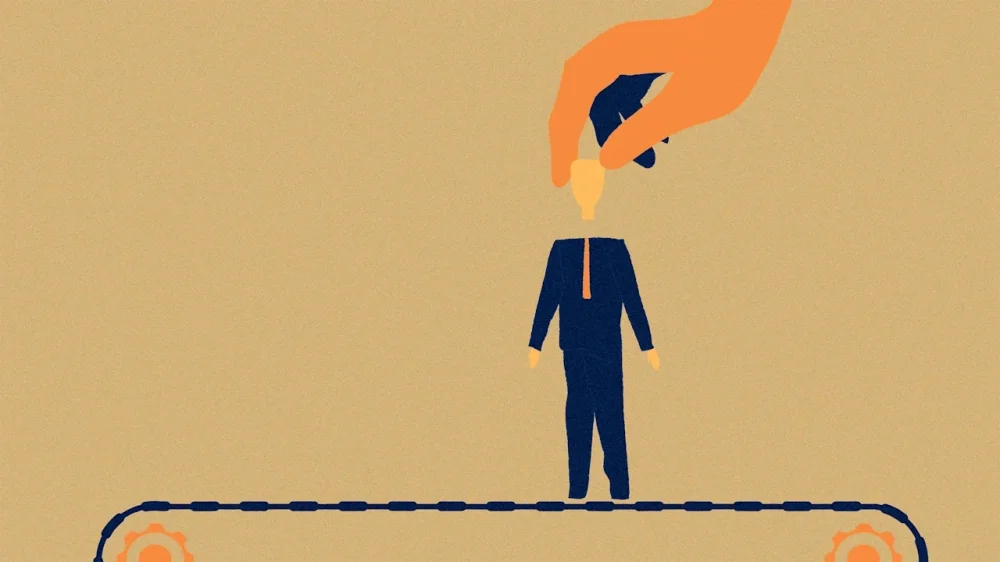
My friend Jessica Kriegel often warns her clients about the action trap, the urge to do something—anything—when things aren’t going well. Yet while taking action might make us feel better, it’s no guarantee we’ll get results. Many leaders fall into this trap, confusing taking action with making an impact, which can blind us to the underlying problem. The truth is that you can’t change fundamental behaviors without changing fundamental beliefs. It is, after all, beliefs, in the form of norms, that get encoded into a culture through rituals that drive behaviors. So unless you make a serious effort to understand the underlying problem you’re trying to solve, any action you take is unlikely to be effective. That’s why you need to start by asking good questions. While coming up with answers makes us feel decisive, those answers will close doors that should often be left open and explored. Good questions, on the other hand, can lead to genuine breakthroughs. With that in mind, here are three essential questions you need to ask before embarking on a transformational initiative. 1. Is this a Strategic Change or Behavioral Change? Every change effort represents a problem, or set of problems, to be solved. A strategic change starts at the top and needs effective communication and coordination for everybody to play their role, like the famous case at Intel, when Gordon Moore and Andy Grove made the fateful decision to move out of memory chips and bet the company on microprocessors. In a strategic shift, resistance is not particularly relevant. That doesn’t mean it doesn’t exist. As Grove recounted in his memoir, Only the Paranoid Survive, there were plenty at Intel who questioned the decision. But as chairman and CEO, Moore and Grove had full authority to allocate budgets and convert factories, and the change was going to happen whether people liked it or not. That’s why traditional change management methodologies, like Kotter’s 8 Steps or Prosci’s ADKAR (awareness, desire, knowledge, ability, and reinforcement), tend to be effective for strategic changes. Yet research shows that change itself has changed. In 1975, 83% of the average U.S. corporation’s assets were tangible assets, such as plants, machinery, and buildings, while by 2015, 84% were intangible, such as licenses, patents, and research. That means the changes we grapple with today have less to do with strategic assets like factories and equipment and a lot more to do with the things people think and do every day. Clearly, that changes how we need to approach transformation. Because often the most important changes involve collective action, which can be maddeningly complex. People adopt things when they see others around them doing so. Success begets more success, just as failure begets more failure. Big communication campaigns can ignite early resistance and backfire, while isolated individual efforts rarely scale. For collective action problems, we need to focus on, as network science pioneer Duncan Watts put it to me, “easily influenced people influencing other easily influenced people.” You build momentum and reach critical mass not through persuasion but through connection—by empowering early adopters and helping them influence others. 2. What are the Shared Values? Humans naturally form tribes. In a study of adults who were randomly assigned to “leopards” and “tigers,” fMRI scans revealed signs of hostility toward out-group members. Similar results were found in a study involving 5-year-old children and even in infants. Evolutionary psychologists attribute this tendency to kin selection, which explains how groups favor those who share their attributes in the hope that those attributes will be propagated. Our ideas, beliefs, and values tend to reflect the tribes we belong to, and sharing our thoughts and feelings plays a key role in signaling our identity and belonging to these groups. For instance, expressing an expert opinion can demonstrate alignment with a professional community, while sharing a moral stance can signal inclusion in a particular cultural group. Every organization has its own tribes, with their own values, customs, and lore. Divisions and functions develop their own norms, rituals, and behaviors, shaped by their institutional needs and priorities. As the workplace expert David Burkus told me, there isn’t really any such thing as an organizational culture because each organization contains multitudes of cultures. So before you start trying to evangelize a transformational initiative across those myriad cultures, with all of their internal biases and emotional trip wires, think about the values they share and build an inclusive vision. That may sound simple and straightforward, but it’s harder than it seems, which helps explain why so many transformational efforts fail. The problem is that when we’re passionate about something, we want to focus on how it’s different, because that’s what makes us passionate in the first place. We want to talk about how innovative and disruptive it is. Yet while that may honor the idea itself, it doesn’t do much for the people we want to adopt it. If we want them to share our priorities and aspirations, they have to believe that they share our values. 3. What are the Sources of Power? We like to think of transformation as a hero’s journey. There’s an alternative future state that we want to reach, and we’d like to think that if we’re good enough, we do all the right things, and our cause is righteous, we’ll eventually get to that place. Yet the truth is that change is always a strategic conflict between that future state and the status quo, which always has sources of power keeping it in place. These sources of power have an institutional basis and form pillars supporting the current state. It is only through influencing these pillars that we can bring about genuine change. Without institutional support, the status quo cannot be maintained. That’s why to build an effective transformation strategy, we need to identify the institutions that support the status quo, those that support the future state, and those that are still on the fence and as yet uncommitted. These institutions can be divisions or functions within an organization, customer groups, government agencies, regulators, unions, professional and industry associations, media, educational institutions—the possibilities are almost endless. What’s important is that they have power and/or resources that can either hold things up or move them forward. That’s what makes them viable targets for action. If you can influence the sources of power upon which the status quo depends, genuine transformation becomes possible. But make no mistake: As long as the forces upholding the status quo stay in place, nothing will ever change. The Power of a Question All too often, transformational initiatives are presented as a fait accompli. A strategy is set, a plan is made, and everything is announced with a lot of hoopla at a big launch event. Questions are treated as a nuisance, something to be batted away rather than engaged with. Change leaders, in an effort that seldom succeeds, try to act as if they have all the answers. Yet while answers tend to close a discussion, questions help us open new doors and lead to genuine insights. Asking “What kind of change is this?” is essential to building a strategy to overcome challenges. Investigating shared values is key to getting widespread buy-in. Analyzing sources of power is how you identify institutional targets for action. The truth is that every great breakthrough starts with a question. As a child, Einstein asked, “What would it be like to ride on a bolt of lightning?” which led to his theory of special relativity. He then asked a second question, “What would it be like to ride an elevator in space?” and that led to his theory of general relativity. Change leaders often feel they need to have all the answers, but what they usually need is to ask more—and better—questions. That’s the essence of the changemaker mindset: It’s not about building consensus around a plan and executing it, but about building a coalition to explore possibilities that lead to a better future. View the full article
-
Figure comes as surging energy prices pose new threatView the full article
-
War in the Middle East has prevented tens of thousands of people in Asia from getting homeView the full article
-
Evidence suggests that the US was most likely to be behind the attack that killed over 100 childrenView the full article
-
Olivier Janssens accused of ‘public bribes’ with offer to locals as his development awaits final government approvalView the full article
-
An asymmetric war that brings the global economy to a standstill could exhaust the US and force a ceasefireView the full article
-
Millions of barrels of crude oil remain trapped by shutdown of the Strait of HormuzView the full article
-
US private capital group expected to restart fundraising in flagship European buyout fund View the full article
-
Five and 15-minute contracts have surged in popularity as cryptocurrencies have fallen from recent peaksView the full article
-
You’re at your usual weekly team meeting. The team leader asks for ideas, and you immediately come up with the best one. It’s not just clever. It’s perfect. You rush to say it, glowing with anticipation. Silence. Nobody reacts. You walk out deflated, wondering how a group of smart people could ignore the obvious answer. The assumption is simple. If the idea is sound, it should carry weight. We tend to believe that the one with the best ideas has the greatest impact. We take for granted that influence flows from competence and that those who are right, early and often, naturally shape decisions. But decades of research in social psychology and decision science tell a different story. In group settings, being right doesn’t automatically translate into influence. In fact, one of the reasons ideas fail to land is that being right too early can undermine your influence. Here’s why even brilliant ideas face immediate resistance. 1. The Ego Threat You may think you’re helping, but solving the puzzle first can make others feel small. People don’t just want the answer. They want the sweat equity of finding it together. They’re not rejecting your idea because it’s bad. They’re pushing it away because it feels forced on them, not discovered together. They feel threatened rather than persuaded. 2. Logic vs. Shortcuts Wouldn’t it be wonderful if our ideas were judged purely on logic and data (diagnostics)? But most of us are busy, tired, distracted, or just want to move on with our next task. So, groups often rely on shortcuts such as who sounds confident, who talks the most, who’s more assertive (proxies). Such shortcuts may drive quick decisions, but they rarely lead to results. If you drop a maverick idea before the group is ready, you’re basically asking an overwhelmed group to do the hard work of thinking outside the box. Chances are they’ll rely on proxies rather than substance such as diagnostics. Influence isn’t about having the loudest voice. It’s about having the best-timed one. 3. The Consensus Comfort Zone Groups love sticking to what feels familiar. It’s safer and lets everyone feel like they’re working together. If you toss out a big, unusual insight right away, you don’t look like a visionary. You look like you’re playing a different game than the rest. The team will reject the disruption because unconsciously they protect the direction and rhythm of the group. How to Make Ideas Land To stop being the “ignored expert” and start being the influential leader, you need to stop selling facts and start managing social currency and timing. Here’s what works: 1. Practice strategic silence Don’t jump in with the solution. Practicing strategic silence means that you first consider issue relevance, issue readiness, and target responsiveness, before speaking up. Let the group feel the problem. Listen to others’ perspectives. When you finally speak, tie your answer to what they care about in that moment. Now your idea will feel more like a relief. 2. Show the “why,” not the “what” If you just drop the answer, you’re asking people to trust your brain rather than the facts. Instead narrate your logic. By sharing your logic and the “why,” you’re giving them the map you used plus time to process. Now they’re on the same page as you. 3. Lower the ego shield Present your idea as a 90% complete thought and leave the last 10% for the group to solve. For example, you can ask questions like “What obstacles do you see?”, or “What would make this easier to implement?” You’re not lowering your confidence. You invite collaboration. In return, you aren’t just right anymore; you’re the person who helped the team find the right answer together. Accuracy is essential, but social recognition is the currency of influence. Start thinking less about winning with facts and being the first to offer a solution. Think more about how people want to arrive at a conclusion with you. View the full article

-
Beijing has driven major increase in strategic commodity inventories but their scale remains unclearView the full article
-
It’s four answers to four questions. Here we go… 1. I think my remote employee is doing child care when she should be working I have an employee (we are all remote) who just returned to work from maternity leave. It’s been almost two months and I have noticed a couple of troubling patterns. I was trying to give her the benefit of the doubt, but two other team members mentioned these same concerns to me. 1. She always has her camera turned off. This is not an issue for most meetings but, during our monthly all-team meetings, I have asked everyone to turn their cameras on. She has not turned hers on for either meeting since her return. 2. She is always on mute and, when she does come off mute to speak, I can always hear the baby. This has happened at least six times (different days of the week, different times of the day) since her return. When she returned from leave, she transitioned to a new team (same role). I want to give her time to acclimate and rediscover her new normal as a mother of two, but I am worried that she does not have child care and that she is working while caring for her newborn. I want to ask her about this but: (1) I don’t know what to say and (2) I don’t know if it is appropriate. Judging by her work so far, she seems to be transitioning to her new team very slowly and came up with basic, almost flimsy, goals for 2026, which I have asked her to redo. I am thinking it would be best to talk to HR to determine the best way forward. It’s very, very normal to have policies requiring that people working remotely have child care for young kids so that they’re not trying to do both at once. Hopefully your company has that policy; if not, you might want to talk to HR about making it explicit. Meanwhile, though, it’s entirely reasonable to tell her that she needs to take calls from a quiet place (another typical requirement of remote working). As part of that conversation, you can also ensure she knows she needs to have separate child care during her work hours. Beyond that, focus on the work issues that you’re seeing. It does make sense to give people grace when returning from leave — but it’s not fair to others on your team for that to be indefinite. It’s ultimately a kindness to everyone you manage to be clear and direct about what you expect their work to look like and, if it’s falling short, about what needs to change. More on that here. 2. Should I buy a cake for a jerk who’s retiring? Recently I’ve been asked to bring desserts for work events because a family member works at a bakery, so it’s easier for everyone. The company pays for it and I like helping, so I’m happy to do it. But now there’s a retirement party coming up in the summer that I want nothing to do with, and I don’t know how to say no gracefully if I’m asked to get a cake. The person who’s being celebrated is higher up than me, and we have a tense history. He’s said some awful things to me, and although we’re civil now, I don’t like him or respect him. I don’t want to participate in any sort of party for him, and I definitely don’t want to provide the cake. It seems minor, but the thought of it feels really wrong. If I’m asked, is there a way to say no without being seen as difficult and dramatic? There’s no professional, drama-free way of saying, “I’ll get cakes for everyone else but not for Dennis.” The best you could do is to come up with a cover story for why you’re not able to do it this time — “I’ve got a lot going on outside of work this month, so it would be better if someone else could take this one” or “something along those lines. Really, though, if you’re going to offer to take this kind of thing on, you’ve got to be prepared to do it equally and see it as like any other work task where you can’t pick and choose who benefits (or it’s clearly got nothing to do with your job and is obviously just a favor you’ve been doing, it might be better off leaving it entirely to the person whose job it does make sense for, not just this one time). Alternately, get the cake and see it as a celebration of being rid of this guy! 3. Sharing photos of myself in tight workout clothes I’m about to start a new job. I have a slightly unusual hobby as an aerial artist — I do aerial silks, a circus art involving climbing up and doing tricks on long fabrics that hang from a high ceiling. I think it’s generally an interesting fun fact about me, plus, as a mom I don’t have time for a ton of other hobbies, so if you ask me about my hobbies, that’s pretty much what I’ve got. When I say that I do this, occasionally people want to see pictures or videos. I always hesitate, because any picture of me on the silks is also, by nature, a picture of me in tight workout clothes (think a close fitting shirt and leggings, or a unitard). What should I do if this happens? People have also asked to see me perform, which I don’t really feel comfortable with, but I wouldn’t mind sharing a picture from a performance as long as it wouldn’t be seen as inappropriate. You sent me some super cool photos of this (I’m including one here with permission) and this is completely fine as long as you’re comfortable sharing them. You’re in appropriate garb for the activity and it’s not excessively revealing (plus these photos are taken from a distance away). If you’re comfortable sharing them, it’s not inappropriate. 4. I feel guilty about not having enough work to fill my time I’m a salaried employee at a small business and have been here for about two years. I get regular raises and bonuses, meet deadlines, and stay responsive during business hours. My boss has explicitly said that workload fluctuates (“sometimes you might work 20 hours, sometimes 50”), and on average I probably have about 30 hours of actual work per week. The issue is entirely internal: I feel a lot of guilt when my workload is light, especially early in the day. If I stay in the office with nothing pressing to do, I end up killing time (which feels dishonest). If I say I’m “working from home,” it often just means I’m done for the day, which also makes me feel dishonest even though I remain available and responsive. No one has ever reprimanded me, and my boss has never said I’m doing anything wrong. The office culture is very flexible: people come and go as they please, my boss himself does non-work activities during the day, and there’s little emphasis on tracking hours. That said, I’m conflict-avoidant and tend to over-monitor myself, and I worry (without evidence) about how my time might be perceived. I don’t want more work, and I don’t think there realistically is more to give me. I also don’t want to constantly check in with my boss, especially since he doesn’t seem to expect or model that. I know this is more about my own discomfort with unstructured time and trust than about performance. How do I get more comfortable with this kind of salaried flexibility without feeling like I’m doing something wrong? Is there a healthier way to think about light workloads and availability in roles like this? There are some jobs, and it sounds like you’re in one of them, where part of what you’re being paid for is your availability if something does come up. In any given time block, maybe it will and maybe it won’t — but they need you there to handle it if it does. It sounds like your boss has explicitly told you this is the case (through both his words and his actions), and you should trust it: you’re being paid to be able to swing into action if they need you. That means that you can’t, for example, go to a movie or go hiking because you need to be around your computer. But you can do other non-work things that keep you available as soon as and if you’re needed. The post remote employee is doing child care instead of working, should I buy a cake for a jerk who’s retiring, and more appeared first on Ask a Manager. View the full article
-
Investigations could lead to fresh levies after US Supreme Court struck down many of The President’s tariffsView the full article
- Yesterday
-
IDEAS shared have the power to expand perspectives, change thinking, and move lives. Here are two ideas for the curious mind to engage with: I. Tim Elmore on balancing confidence and humility: “Leading today requires combining these two attributes—confidence and humility. Reality changes so quickly, leaders cannot become arrogant, but must remain in a learning posture. At the same time, team members long for their leader to inspire them with confidence. Bob Iger said, “There’s nothing less confidence inspiring than a person faking a knowledge they don’t possess. True authority and true leadership come from knowing who you are and not pretending to be anything else.” Source: The Eight Paradoxes of Great Leadership: Embracing the Conflicting Demands of Today’s Workplace II. Hasard Lee on decision-making: “When we rashly turn over our decision-making to external aids, such as committees or computers, we lose the ability to bring the full power of our brain to bear on a problem. We, in essence, have carved out a hole in our understanding and replaced it with someone else’s solution. If we don’t learn the underlying concepts behind that new infor-ation, then we’re blindly trusting that it’s correct. We lose the ability to quickly reconfigure concepts into creative solutions, which is one of the great strengths of the human mind.” Source: The Art of Clear Thinking: A Stealth Fighter Pilot’s Timeless Rules for Making Tough Decisions * * * Look for these ideas every Thursday on the Leading Blog. Find more ideas on the LeadingThoughts index. * * * Follow us on Instagram and X for additional leadership and personal development ideas. View the full article
-
Rapid depletion of stockpile including Tomahawk missiles raises pressure on The President over cost of conflictView the full article
-
Grasping the Paychex Employee Information Box (EIB) is crucial for efficient payroll management. This tool collects important employee details, such as contact information and tax withholding specifics, ensuring compliance with regulations. It additionally improves workplace culture by addressing long-term health leave benefits. By becoming proficient in the EIB, you can enhance accuracy in payroll processing and employee satisfaction. Nevertheless, maneuvering through its intricacies can present challenges. What are the key components you need to know? Key Takeaways The Employee Information Box (EIB) collects vital employee data for payroll processing, including contact details and tax withholding information. It includes important forms like the I-9 and W-4, ensuring compliance with legal requirements for identity verification and tax calculations. EIB provides extended leave benefits for long-term illnesses, requiring employees to exhaust sick leave and PTO before access. Employees may need to provide medical verification to access the EIB, promoting fair usage and a supportive workplace environment. Compliance with tax regulations and maintaining accurate employee information is crucial for efficient payroll management and avoiding penalties. What Is the Employee Information Box (EIB)? The Employee Information Box (EIB) is an indispensable component of the payroll process, designed to gather and maintain critical employee data. It collects essential information such as contact details, tax withholding specifics, and banking information, which are necessary for accurate payroll processing. The EIB typically includes forms like the I-9 for identity verification and the W-4 for federal tax withholding calculations, guaranteeing compliance with legal requirements. Proper completion of the EIB affects how employees receive their pay and guarantees correct deductions, including contributions to employee benefits programs and employee benefits insurance. Furthermore, employers often leverage digital HR portals to streamline EIB data management, enhancing efficiency and minimizing errors. Keeping this information up-to-date is vital for adhering to labor laws and maintaining a reliable payroll tax deposit schedule. Consequently, the EIB serves as a foundational element in the payroll system, enabling smooth and compliant operations. Importance of the EIB in Payroll Management Comprehending the importance of the Extended Illness Bank (EIB) in payroll management is vital for both employees and employers. The EIB provides financial security for employees facing long-term health challenges, allowing them to take necessary leave without worrying about lost income. Moreover, integrating EIB into your company’s policies can improve employee satisfaction and retention, demonstrating a commitment to supporting staff during difficult times. Financial Security for Employees In today’s workplace, financial security for employees is increasingly crucial, especially when facing health crises. The Extended Illness Bank (EIB) plays an important role in enhancing this security by providing additional paid time off for those with long-term illnesses or severe injuries. By allowing employees to exhaust their sick leave and PTO before accessing the EIB, employers effectively manage absenteeism as they support employee needs. This approach nurtures a communal environment, as employees can contribute accrued sick days to help co-workers in need. Additionally, the EIB reflects an employer’s commitment to employee welfare, reinforcing the importance of thorough employee benefits packages, including health insurance benefits for employees and medical insurance benefits for employees, ensuring financial stability during challenging times. Extended Leave Benefits As you maneuver through the intricacies of payroll management, incorporating Extended Illness Bank (EIB) benefits can greatly influence both employees and employers. The EIB offers additional paid time off for prolonged illnesses or severe injuries that surpass regular sick day allowances. Typically, employees must exhaust their standard sick leave and possibly general Paid Time Off (PTO) before accessing EIB. This integration into the staff benefits package demonstrates an employer’s commitment to employee welfare during challenging health situations. To utilize EIB, employees often need to provide medical verification, ensuring fair use of the system. Policies regarding the donation of sick days into the EIB can vary, nurturing a supportive environment among coworkers as well as promoting overall employee well-being. Comprehending Paychex EIB meaning is crucial for effective payroll management. Employer Policy Integration Integrating the Extended Illness Bank (EIB) into your payroll management system is vital for ensuring that employees have access to necessary support during prolonged health challenges. The EIB provides additional paid time off for employees facing long-term health issues, beyond standard sick leave. Typically, employees contribute to the EIB by donating accrued sick days, promoting a supportive workplace culture. Employers often require the exhaustion of all sick leave and general PTO before accessing the EIB, which serves as a last resort. Access may likewise necessitate medical verification, demonstrating employers’ commitment to responsible benefit management. Proper integration of the EIB within payroll systems is fundamental for tracking usage, ensuring compliance, and providing financial security for employees during extended absences. Key Components of the EIB To understand the Extended Illness Bank (EIB), it’s crucial to grasp its definition and purpose, along with the eligibility and usage guidelines that govern it. The EIB offers critical support to employees facing long-term health challenges, ensuring they can access additional paid time off when needed. EIB Definition and Purpose The Extended Illness Bank (EIB) serves as a crucial resource for employees facing significant health challenges that require more time off than standard sick days. It provides additional paid time off (PTO) particularly for extended illnesses or severe injuries, ensuring financial security during prolonged absences. To access EIB, you must typically exhaust your sick days and possibly your general PTO, emphasizing its role as a last resort. Healthcare provider certification is required for utilization, ensuring that the need for leave is legitimate. Employees can likewise donate their accrued sick days to the EIB, even if policies on donation limits and usage criteria can vary by employer. Employers may establish particular conditions and approval processes for EIB requests, which might differ across organizations. Eligibility and Usage Guidelines During steering through the eligibility and usage guidelines for the Extended Illness Bank (EIB), it’s essential to understand several key components that determine access and implementation. First, you must exhaust all accrued sick leave and general PTO before tapping into the EIB for additional paid time off. Medical verification of your illness or injury is typically necessary to qualify for EIB usage. Keep in mind that each employer sets unique policies regarding donation caps and usage limits, which can vary widely. Some organizations even allow communal donations to the EIB, enabling you and your coworkers to support each other. Finally, approval processes for EIB requests can differ, with some requiring individual managers to authorize usage based on specific criteria. How to Access and Navigate the EIB Accessing and maneuvering the Extended Illness Bank (EIB) can be straightforward if you comprehend your employer’s specific policies and procedures. First, verify you’ve exhausted all your available sick leave and any general Paid Time Off (PTO) before applying for EIB. You’ll likely need medical verification of your illness or injury to justify your request. Familiarize yourself with your employer’s approval process, which can involve review by direct management. Some organizations likewise allow employees to contribute their sick days to support colleagues in need of extended leave, so check if this option is available. Policies regarding donation caps and usage limits for the EIB can vary, making it vital to review your workplace guidelines for accurate information. Collecting Employee Information for the EIB To access the Extended Illness Bank (EIB), you’ll need to provide specific documentation that supports your request for additional paid time off. This often includes medical verification of your illness or injury and details about your exhausted sick time. Comprehending the information verification process is essential, as employers typically maintain thorough records to determine eligibility before granting EIB days. Required Employee Documentation When you’re preparing to access the Extended Illness Bank (EIB), it’s vital to gather the required documentation to support your request. You’ll need a healthcare provider’s certification confirming your extended illness or severe injury. Furthermore, make sure you submit an I-9 form for identity verification and work eligibility, along with W-4 forms for tax withholding calculations, typically required during onboarding. It’s important to verify that your address and bank account information are accurate and up-to-date for proper payment processing. If you’re a non-exempt employee, keep your time and attendance records handy, as they help in calculating potential EIB payouts based on accrued sick leave. Be aware of your employer’s policies regarding accrued sick day donations to the EIB. Information Verification Process Gathering the necessary employee information for the Extended Illness Bank (EIB) is imperative for ensuring accurate payroll processing and compliance with legal standards. You’ll need to collect fundamental details, such as identification verification using I-9 forms and tax withholding calculations through W-4 forms. It’s also critical to obtain accurate address and bank account information to facilitate payment distribution for employees utilizing the EIB. Moreover, maintaining thorough time and attendance records for non-exempt employees is necessary for precise payroll calculations related to the EIB. To streamline this process, consider using digital documentation submissions, which improve efficiency and help you track compliance effectively. Verifying this information is fundamental to avoid discrepancies in payroll processing and meet legal requirements. Ensuring Compliance With Tax Regulations Ensuring compliance with tax regulations is critical for employers aiming to avoid costly fines and legal repercussions. You must navigate federal, state, and local tax laws during payroll processing to prevent penalties linked to incorrect tax withholdings. Utilizing automated systems can greatly streamline tax calculations, minimizing errors and ensuring timely payments to tax authorities for withheld payroll taxes. Regularly reviewing your payroll methods and processes is important, as this helps maintain accuracy in tax calculations during alignment with legal standards. Keeping detailed records of tax withholdings is crucial for reporting purposes, as these records support compliance during audits and inquiries. Finally, staying informed about changes in tax legislation is necessary to adjust withholding rates and methods, ensuring ongoing compliance with each payroll run. Prioritizing these practices will safeguard your business from potential tax-related issues. Accuracy in Reporting Through the EIB Accurate reporting through the Extended Illness Bank (EIB) is vital for maintaining clear records of employee absences and compliance with company policies. To achieve this, you should focus on several key aspects: Exhaustion of Sick Time: Make sure employees use all standard sick days and PTO before accessing EIB, which helps track leave usage accurately. Medical Verification: Require medical documentation for EIB requests to improve the reliability of health-related absence reports. Approval Process: Familiarize yourself with your organization’s specific procedures for approving EIB requests, as detailed documentation is essential for compliance. Donation Tracking: Monitor any sick day donations to the EIB closely, as this communal resource demands careful tracking to guarantee fair distribution. Common Challenges and Solutions With EIB Use While maneuvering through the intricacies of the Extended Illness Bank (EIB), you may encounter several common challenges that can impact both employees and management. Comprehending these issues can help you navigate the system more effectively. Challenge Solution Exhausting regular sick leave first Communicate policies clearly to employees Varying approval processes Establish a standardized process Medical verification requirements Simplify documentation requirements Donation caps on sick days Review and adjust donation policies Lack of standardization across companies Advocate for consistent policies These challenges can create confusion and delays, potentially affecting employee morale. By addressing these issues proactively, you can improve accessibility and guarantee that employees feel supported during their health crises, promoting a more positive organizational culture. Best Practices for Managing Employee Information Managing employee information effectively is crucial for maintaining a smooth payroll process and ensuring compliance with legal requirements. Here are some best practices to follow: Collect vital information: Use forms or HR portals to gather identity verification (I-9) and tax withholding (W-4) data for accurate payroll processing. Maintain updated records: Keep employee addresses and bank account information current to facilitate timely and correct payment distributions. Implement automated systems: Use technology to accurately track time and attendance for non-exempt employees, ensuring precise payroll calculations based on hours worked. Review and verify regularly: Conduct periodic reviews of employee information to comply with legal requirements and minimize payroll discrepancies that could affect employee satisfaction and trust. Future Trends in Employee Information Management As organizations look to the future, trends in employee information management are shifting in the direction of increased automation and advanced technology. Up to 70% of HR professionals believe automated systems will improve accuracy as they reduce administrative burdens. The integration of artificial intelligence (AI) is set to streamline data collection and analysis, potentially cutting processing time by 50%. Furthermore, mobile technology is gaining traction, with over 60% of employees preferring to access their information through mobile apps. Data security remains a top priority, and organizations expect a 30% increase in investment in cybersecurity solutions by 2025 to protect sensitive employee information. Compliance with data protection regulations is transforming, as companies prepare for heightened scrutiny from governing bodies. Improved reporting capabilities will be necessary to meet these demands, ensuring that organizations remain compliant as they efficiently manage employee data. Frequently Asked Questions What Is the Meaning of EIB in Paychex? In Paychex, EIB stands for Extended Illness Bank. It’s a program that provides additional paid time off for employees who face long-term illnesses or severe injuries, beyond their standard sick days. You can donate your accrued sick days to support colleagues in need, nurturing a sense of community. To access the EIB, you typically need to exhaust all sick time and provide medical verification of your condition, depending on your employer’s policies. What Does EIB Mean at Work? At work, EIB stands for Extended Illness Bank. It allows you to access additional paid time off for serious health issues after exhausting your regular sick leave. To use EIB days, you must provide certification from a healthcare provider. Some employers let employees donate their sick days to create a communal pool, which helps colleagues in need. Nevertheless, specific policies, including eligibility criteria and donation limits, vary by employer. What Is EIB Sick Time? EIB sick time stands for Extended Illness Bank, which offers additional paid leave for employees dealing with long-term illnesses or severe injuries. Unlike standard sick days, you must have a healthcare provider’s certification to access EIB benefits. To use EIB, you typically need to exhaust your regular sick leave and possibly PTO first. Employers may set specific rules for requesting and using EIB, including donation limits and eligibility criteria, which can vary. What Is ESR in Paychex? ESR, or Employee Services Request, is a tool within Paychex that allows you to submit requests for various HR services. With ESR, you can easily manage requests related to time off, including your Extended Illness Bank days. This system streamlines the process, permitting HR to handle submissions efficiently while keeping you updated on your request status. It furthermore guarantees compliance with company policies, enhancing communication between you and HR. Conclusion To summarize, grasping the Paychex Employee Information Box (EIB) is crucial for effective payroll management. By accurately collecting and maintaining employee data, you guarantee compliance with legal requirements and streamline payroll processing. Familiarizing yourself with its key components and best practices can help you navigate potential challenges. As employee information management evolves, staying informed about future trends will improve your ability to support both compliance and employee satisfaction in the workplace. Image via Google Gemini This article, "Understanding Paychex EIB Meaning: A Guide to Employee Information Box" was first published on Small Business Trends View the full article
-
Grasping the Paychex Employee Information Box (EIB) is crucial for efficient payroll management. This tool collects important employee details, such as contact information and tax withholding specifics, ensuring compliance with regulations. It additionally improves workplace culture by addressing long-term health leave benefits. By becoming proficient in the EIB, you can enhance accuracy in payroll processing and employee satisfaction. Nevertheless, maneuvering through its intricacies can present challenges. What are the key components you need to know? Key Takeaways The Employee Information Box (EIB) collects vital employee data for payroll processing, including contact details and tax withholding information. It includes important forms like the I-9 and W-4, ensuring compliance with legal requirements for identity verification and tax calculations. EIB provides extended leave benefits for long-term illnesses, requiring employees to exhaust sick leave and PTO before access. Employees may need to provide medical verification to access the EIB, promoting fair usage and a supportive workplace environment. Compliance with tax regulations and maintaining accurate employee information is crucial for efficient payroll management and avoiding penalties. What Is the Employee Information Box (EIB)? The Employee Information Box (EIB) is an indispensable component of the payroll process, designed to gather and maintain critical employee data. It collects essential information such as contact details, tax withholding specifics, and banking information, which are necessary for accurate payroll processing. The EIB typically includes forms like the I-9 for identity verification and the W-4 for federal tax withholding calculations, guaranteeing compliance with legal requirements. Proper completion of the EIB affects how employees receive their pay and guarantees correct deductions, including contributions to employee benefits programs and employee benefits insurance. Furthermore, employers often leverage digital HR portals to streamline EIB data management, enhancing efficiency and minimizing errors. Keeping this information up-to-date is vital for adhering to labor laws and maintaining a reliable payroll tax deposit schedule. Consequently, the EIB serves as a foundational element in the payroll system, enabling smooth and compliant operations. Importance of the EIB in Payroll Management Comprehending the importance of the Extended Illness Bank (EIB) in payroll management is vital for both employees and employers. The EIB provides financial security for employees facing long-term health challenges, allowing them to take necessary leave without worrying about lost income. Moreover, integrating EIB into your company’s policies can improve employee satisfaction and retention, demonstrating a commitment to supporting staff during difficult times. Financial Security for Employees In today’s workplace, financial security for employees is increasingly crucial, especially when facing health crises. The Extended Illness Bank (EIB) plays an important role in enhancing this security by providing additional paid time off for those with long-term illnesses or severe injuries. By allowing employees to exhaust their sick leave and PTO before accessing the EIB, employers effectively manage absenteeism as they support employee needs. This approach nurtures a communal environment, as employees can contribute accrued sick days to help co-workers in need. Additionally, the EIB reflects an employer’s commitment to employee welfare, reinforcing the importance of thorough employee benefits packages, including health insurance benefits for employees and medical insurance benefits for employees, ensuring financial stability during challenging times. Extended Leave Benefits As you maneuver through the intricacies of payroll management, incorporating Extended Illness Bank (EIB) benefits can greatly influence both employees and employers. The EIB offers additional paid time off for prolonged illnesses or severe injuries that surpass regular sick day allowances. Typically, employees must exhaust their standard sick leave and possibly general Paid Time Off (PTO) before accessing EIB. This integration into the staff benefits package demonstrates an employer’s commitment to employee welfare during challenging health situations. To utilize EIB, employees often need to provide medical verification, ensuring fair use of the system. Policies regarding the donation of sick days into the EIB can vary, nurturing a supportive environment among coworkers as well as promoting overall employee well-being. Comprehending Paychex EIB meaning is crucial for effective payroll management. Employer Policy Integration Integrating the Extended Illness Bank (EIB) into your payroll management system is vital for ensuring that employees have access to necessary support during prolonged health challenges. The EIB provides additional paid time off for employees facing long-term health issues, beyond standard sick leave. Typically, employees contribute to the EIB by donating accrued sick days, promoting a supportive workplace culture. Employers often require the exhaustion of all sick leave and general PTO before accessing the EIB, which serves as a last resort. Access may likewise necessitate medical verification, demonstrating employers’ commitment to responsible benefit management. Proper integration of the EIB within payroll systems is fundamental for tracking usage, ensuring compliance, and providing financial security for employees during extended absences. Key Components of the EIB To understand the Extended Illness Bank (EIB), it’s crucial to grasp its definition and purpose, along with the eligibility and usage guidelines that govern it. The EIB offers critical support to employees facing long-term health challenges, ensuring they can access additional paid time off when needed. EIB Definition and Purpose The Extended Illness Bank (EIB) serves as a crucial resource for employees facing significant health challenges that require more time off than standard sick days. It provides additional paid time off (PTO) particularly for extended illnesses or severe injuries, ensuring financial security during prolonged absences. To access EIB, you must typically exhaust your sick days and possibly your general PTO, emphasizing its role as a last resort. Healthcare provider certification is required for utilization, ensuring that the need for leave is legitimate. Employees can likewise donate their accrued sick days to the EIB, even if policies on donation limits and usage criteria can vary by employer. Employers may establish particular conditions and approval processes for EIB requests, which might differ across organizations. Eligibility and Usage Guidelines During steering through the eligibility and usage guidelines for the Extended Illness Bank (EIB), it’s essential to understand several key components that determine access and implementation. First, you must exhaust all accrued sick leave and general PTO before tapping into the EIB for additional paid time off. Medical verification of your illness or injury is typically necessary to qualify for EIB usage. Keep in mind that each employer sets unique policies regarding donation caps and usage limits, which can vary widely. Some organizations even allow communal donations to the EIB, enabling you and your coworkers to support each other. Finally, approval processes for EIB requests can differ, with some requiring individual managers to authorize usage based on specific criteria. How to Access and Navigate the EIB Accessing and maneuvering the Extended Illness Bank (EIB) can be straightforward if you comprehend your employer’s specific policies and procedures. First, verify you’ve exhausted all your available sick leave and any general Paid Time Off (PTO) before applying for EIB. You’ll likely need medical verification of your illness or injury to justify your request. Familiarize yourself with your employer’s approval process, which can involve review by direct management. Some organizations likewise allow employees to contribute their sick days to support colleagues in need of extended leave, so check if this option is available. Policies regarding donation caps and usage limits for the EIB can vary, making it vital to review your workplace guidelines for accurate information. Collecting Employee Information for the EIB To access the Extended Illness Bank (EIB), you’ll need to provide specific documentation that supports your request for additional paid time off. This often includes medical verification of your illness or injury and details about your exhausted sick time. Comprehending the information verification process is essential, as employers typically maintain thorough records to determine eligibility before granting EIB days. Required Employee Documentation When you’re preparing to access the Extended Illness Bank (EIB), it’s vital to gather the required documentation to support your request. You’ll need a healthcare provider’s certification confirming your extended illness or severe injury. Furthermore, make sure you submit an I-9 form for identity verification and work eligibility, along with W-4 forms for tax withholding calculations, typically required during onboarding. It’s important to verify that your address and bank account information are accurate and up-to-date for proper payment processing. If you’re a non-exempt employee, keep your time and attendance records handy, as they help in calculating potential EIB payouts based on accrued sick leave. Be aware of your employer’s policies regarding accrued sick day donations to the EIB. Information Verification Process Gathering the necessary employee information for the Extended Illness Bank (EIB) is imperative for ensuring accurate payroll processing and compliance with legal standards. You’ll need to collect fundamental details, such as identification verification using I-9 forms and tax withholding calculations through W-4 forms. It’s also critical to obtain accurate address and bank account information to facilitate payment distribution for employees utilizing the EIB. Moreover, maintaining thorough time and attendance records for non-exempt employees is necessary for precise payroll calculations related to the EIB. To streamline this process, consider using digital documentation submissions, which improve efficiency and help you track compliance effectively. Verifying this information is fundamental to avoid discrepancies in payroll processing and meet legal requirements. Ensuring Compliance With Tax Regulations Ensuring compliance with tax regulations is critical for employers aiming to avoid costly fines and legal repercussions. You must navigate federal, state, and local tax laws during payroll processing to prevent penalties linked to incorrect tax withholdings. Utilizing automated systems can greatly streamline tax calculations, minimizing errors and ensuring timely payments to tax authorities for withheld payroll taxes. Regularly reviewing your payroll methods and processes is important, as this helps maintain accuracy in tax calculations during alignment with legal standards. Keeping detailed records of tax withholdings is crucial for reporting purposes, as these records support compliance during audits and inquiries. Finally, staying informed about changes in tax legislation is necessary to adjust withholding rates and methods, ensuring ongoing compliance with each payroll run. Prioritizing these practices will safeguard your business from potential tax-related issues. Accuracy in Reporting Through the EIB Accurate reporting through the Extended Illness Bank (EIB) is vital for maintaining clear records of employee absences and compliance with company policies. To achieve this, you should focus on several key aspects: Exhaustion of Sick Time: Make sure employees use all standard sick days and PTO before accessing EIB, which helps track leave usage accurately. Medical Verification: Require medical documentation for EIB requests to improve the reliability of health-related absence reports. Approval Process: Familiarize yourself with your organization’s specific procedures for approving EIB requests, as detailed documentation is essential for compliance. Donation Tracking: Monitor any sick day donations to the EIB closely, as this communal resource demands careful tracking to guarantee fair distribution. Common Challenges and Solutions With EIB Use While maneuvering through the intricacies of the Extended Illness Bank (EIB), you may encounter several common challenges that can impact both employees and management. Comprehending these issues can help you navigate the system more effectively. Challenge Solution Exhausting regular sick leave first Communicate policies clearly to employees Varying approval processes Establish a standardized process Medical verification requirements Simplify documentation requirements Donation caps on sick days Review and adjust donation policies Lack of standardization across companies Advocate for consistent policies These challenges can create confusion and delays, potentially affecting employee morale. By addressing these issues proactively, you can improve accessibility and guarantee that employees feel supported during their health crises, promoting a more positive organizational culture. Best Practices for Managing Employee Information Managing employee information effectively is crucial for maintaining a smooth payroll process and ensuring compliance with legal requirements. Here are some best practices to follow: Collect vital information: Use forms or HR portals to gather identity verification (I-9) and tax withholding (W-4) data for accurate payroll processing. Maintain updated records: Keep employee addresses and bank account information current to facilitate timely and correct payment distributions. Implement automated systems: Use technology to accurately track time and attendance for non-exempt employees, ensuring precise payroll calculations based on hours worked. Review and verify regularly: Conduct periodic reviews of employee information to comply with legal requirements and minimize payroll discrepancies that could affect employee satisfaction and trust. Future Trends in Employee Information Management As organizations look to the future, trends in employee information management are shifting in the direction of increased automation and advanced technology. Up to 70% of HR professionals believe automated systems will improve accuracy as they reduce administrative burdens. The integration of artificial intelligence (AI) is set to streamline data collection and analysis, potentially cutting processing time by 50%. Furthermore, mobile technology is gaining traction, with over 60% of employees preferring to access their information through mobile apps. Data security remains a top priority, and organizations expect a 30% increase in investment in cybersecurity solutions by 2025 to protect sensitive employee information. Compliance with data protection regulations is transforming, as companies prepare for heightened scrutiny from governing bodies. Improved reporting capabilities will be necessary to meet these demands, ensuring that organizations remain compliant as they efficiently manage employee data. Frequently Asked Questions What Is the Meaning of EIB in Paychex? In Paychex, EIB stands for Extended Illness Bank. It’s a program that provides additional paid time off for employees who face long-term illnesses or severe injuries, beyond their standard sick days. You can donate your accrued sick days to support colleagues in need, nurturing a sense of community. To access the EIB, you typically need to exhaust all sick time and provide medical verification of your condition, depending on your employer’s policies. What Does EIB Mean at Work? At work, EIB stands for Extended Illness Bank. It allows you to access additional paid time off for serious health issues after exhausting your regular sick leave. To use EIB days, you must provide certification from a healthcare provider. Some employers let employees donate their sick days to create a communal pool, which helps colleagues in need. Nevertheless, specific policies, including eligibility criteria and donation limits, vary by employer. What Is EIB Sick Time? EIB sick time stands for Extended Illness Bank, which offers additional paid leave for employees dealing with long-term illnesses or severe injuries. Unlike standard sick days, you must have a healthcare provider’s certification to access EIB benefits. To use EIB, you typically need to exhaust your regular sick leave and possibly PTO first. Employers may set specific rules for requesting and using EIB, including donation limits and eligibility criteria, which can vary. What Is ESR in Paychex? ESR, or Employee Services Request, is a tool within Paychex that allows you to submit requests for various HR services. With ESR, you can easily manage requests related to time off, including your Extended Illness Bank days. This system streamlines the process, permitting HR to handle submissions efficiently while keeping you updated on your request status. It furthermore guarantees compliance with company policies, enhancing communication between you and HR. Conclusion To summarize, grasping the Paychex Employee Information Box (EIB) is crucial for effective payroll management. By accurately collecting and maintaining employee data, you guarantee compliance with legal requirements and streamline payroll processing. Familiarizing yourself with its key components and best practices can help you navigate potential challenges. As employee information management evolves, staying informed about future trends will improve your ability to support both compliance and employee satisfaction in the workplace. Image via Google Gemini This article, "Understanding Paychex EIB Meaning: A Guide to Employee Information Box" was first published on Small Business Trends View the full article
-
US launches rescue effort after refuelling aircraft went down ‘in friendly airspace’ over western IraqView the full article
-
Formidable Forms WordPress vulnerability enables unauthenticated attackers to pay a small amount and have a larger purchase marked as paid. The post Formidable Forms Flaw Lets Attackers Pay Less For Expensive Purchases appeared first on Search Engine Journal. View the full article