All Activity
- Past hour
-
Done right, a proposal helps a project manager establish credibility, close clients, acquire funding, and secure the necessary support and approval for projects to be implemented. The post Free Project Proposal Templates (+ Industry Examples) appeared first on project-management.com. View the full article
-
Google has confirmed a bug with the Google Search Console performance reports that specifically impacts “Job listing” and “Job details” search appearance filter. Starting April 16th Google had an issue logging this data. So Google is reporting zero clicks and impressions for these jobs reports. What Google said. Google wrote: “A logging error is preventing Search Console from reporting impressions and clicks for “Job listing” and “Job details” Search appearance types from April 16, 2026 onward. We’re working to resolve this issue. This issue affects data logging only.” Complaints. We first began noticing the complaints trickling in earlier this week, with several SEOs posting their concerns across social media. @rustybrick Seems there is a bug in GSC where impressions and clicks for Google jobs traffic is being reported 0 since 16th, but traffic is still coming in via google_jobs_apply UTMhttps://t.co/0Ed28Jvzdj— Max Peters (@maxjpeters) April 20, 2026 Why we care. If you noticed a drop in overall impressions and clicks, and then you dig in and find zero data from the job listings and details – then do not worry. This is a Google logging bug and it is on Google’s side. Google is still likely listing your job listings and sending traffic but it is not being tracked properly in Search Console right now. View the full article
-
Value, quality, and effectiveness—not cost savings—should define success. Accounting ARC With Liz Mason, Donny Shimamoto, and Byron Patrick Center for Accounting Transformation Go PRO for members-only access to more Center for Accounting Transformation. View the full article
-
Value, quality, and effectiveness—not cost savings—should define success. Accounting ARC With Liz Mason, Donny Shimamoto, and Byron Patrick Center for Accounting Transformation Go PRO for members-only access to more Center for Accounting Transformation. View the full article
-
The President official Michael Kratsios says Chinese entities stealing from American labsView the full article
- Today
-
Most enterprise SEO strategies die in slide decks. Beautiful presentations, airtight data, and solid recommendations, all collecting dust because nobody bought in. I’ve watched it happen at companies with eight-figure marketing budgets. I’ve also watched a single SEO insight convince a company to create an entirely new business unit and make a multimillion-dollar investment. The difference had nothing to do with the quality of the SEO work. I’ve spent 17 years finding out what it actually comes down to. Let me walk you through how to build an SEO strategy that gets the attention it deserves. The two ways enterprise SEO strategies fail Before I get into what works, let me talk about the two failure modes I see again and again. Leadership expects SEO to work like PPC The founder, CMO, or whoever the decision-maker is often doesn’t come from an SEO background or have experience standing up a successful organic program. Many come from performance marketing. They expect SEO to behave like PPC: invest money on Tuesday, see results on Wednesday. When it doesn’t, they deprioritize the channel, which creates a death spiral. Less investment leads to worse results, which “confirms” their bias that SEO doesn’t work. SEO gets stuck in a silo This one’s on us. SEO leaders who get too deep into the technical weeds, who can’t translate their work into business language, and who never get a seat at the table because they’re speaking a language nobody else in the room understands. They become consultants shouting into the void instead of strategic partners influencing decisions. Both failure modes share the same root cause: a disconnect between what SEO can deliver and how the organization thinks about growth. Your customers search everywhere. Make sure your brand shows up. The SEO toolkit you know, plus the AI visibility data you need. Start Free Trial Get started with Lead with narrative, back with data Most SEO leaders get this backwards. They walk into a meeting with the CEO armed with 40 slides of data: crawl reports, keyword rankings, and technical audits. Leadership doesn’t have time for that. They’re juggling a hundred priorities, and your data dump just became background noise. Start with the story instead: “Here’s the narrative.” “Here’s the opportunity.” “Here’s what I need from you to take us from A to B, and here’s how we’ll get there.” Then bring in the data to support the narrative. The higher you go in your SEO career, the more critical it is to be a listener first. Before I present anything to a new CEO or CMO, I invest time in understanding their leadership style, the organization’s macro challenges, and what the top three enterprise goals are. Not SEO goals — enterprise goals. Then I frame every recommendation through that lens: “As an enterprise, our goal is X. Here’s how this recommendation gets us there.” When you do that, friction disappears. Nobody can argue against working toward a goal they already signed up for. One tactic I’ve found consistently effective is anchoring conversations in competitor intelligence. Every CMO, every C-suite executive, cares deeply about competition. When I show them, “Here’s what competitor A has been doing for five years, and here’s the market position it earned them. I’m not asking for five years, but I need a year, and that’s being five times more efficient than they were,” the conversation shifts. You’re no longer justifying SEO’s existence. You’re helping them win a competitive battle they already care about. Retrofit your goals into their OKRs Here’s the cross-functional playbook that has worked for me across multiple enterprises. Your success at an enterprise depends on two teams: creative and engineering. But they have their own goals, their own KPIs, and their own OKRs. If you show up with a list of SEO requests, you’re just another stakeholder creating tickets. Instead, I start by genuinely understanding what each team is trying to achieve — and I mean actually understanding it, not assuming. In my first month at any new company, I schedule 30-minute 1:1s with the leads of every team I’ll need to work with: product marketing, engineering, creative, brand, and analytics. I ask three questions: What are your top two OKRs this quarter? What’s the biggest thing slowing you down? What does a win look like for you by year-end? I don’t mention SEO once in those conversations. By the end of that listening tour, I have a map: Product marketing wants revenue and retention. Engineering wants development velocity. Creative wants engagement metrics. Brand wants consistency. I know exactly how to position every SEO recommendation as a solution to something they already care about, in their language, toward their goals. In my previous role, I worked closely with a product marketing manager on naming a new feature. My research showed that thousands of prospects were searching for a specific term every month. Instead of framing it as an SEO recommendation, I said: “If you name this feature to match what people are already searching for, you’ll get free brand mentions, natural anchor text, and on-page relevance from day one. That directly hits your acquisition and retention target.” He got it immediately. That’s not an SEO win; it’s a product marketing win that SEO data enabled. This approach transforms you from a requestor into a force multiplier. You’re helping them hit their goals. Now they want to listen to you. Case study: Turning a sales insight into an SEO-driven business strategy The best example I can give of enterprise SEO that drove real business impact came from a conversation I wasn’t even supposed to be part of. Back in 2021, FreshBooks, my previous employer, was competing against a much larger incumbent, QuickBooks. Think David versus a Goliath with two times the feature set and more than a hundred times the budget. During a cross-functional meeting, I heard the director of sales mention that they were losing prospects at the finish line. The reason was that small business owners would get excited about the product, but ultimately defer to their accountant’s recommendation. And the accountants were all loyal to the incumbent. This was a business problem, but I saw a search-driven solution. I proposed building a professional accountant directory on our domain — a searchable database of FreshBooks certified partner accountants organized by city. (The approach was inspired by two concepts: Eli Schwartz’s product-led SEO framework and Ross Simmonds’ idea of building an SEO moat: something only your brand can do.) The domain already had strong authority. Keyword research showed significant search volume for terms like “accountant near me,” “bookkeeper in [city],” and similar local queries across hundreds of markets in the U.S. and Canada. The strategy was a triple win. Small business owners would find a vetted professional. Accountants would get qualified leads, and because our site outranked their own websites in their local markets, they had a strong incentive to join the program. For every accountant we onboarded, we’d gain multiple end customers they managed. It also addressed churn: freelancers who grew their businesses and hired accountants were leaving for the competitor. A partner accountant ecosystem would keep them. I built the full business case with sizing data, the potential to scale from low triple-digit partners to more than 10,000, and presented it up the chain: director of performance marketing, VP of marketing, and CMO. Each approved it. We hired an agency and spent six months building it. Did the directory launch? Not in its original form. Halfway through the build, the company recognized the strategic importance of the accountant channel so clearly that they created an entirely new business unit, invested multimillions in the accounting product line, and eventually built something much larger than what I’d originally proposed. That’s what a strategy that drives real organizational change looks like. The SEO insight didn’t just get approved; it fundamentally reshaped the company’s thinking about an entire market segment. Get the newsletter search marketers rely on. See terms. Why AI visibility makes cross-functional alignment non-negotiable Everything I’ve described — the narrative framing, the OKR retrofitting, and the cross-functional listening tour — used to be a competitive advantage. Now it’s the minimum requirement, because the AI visibility shift has made cross-functional alignment a survival skill, not a leadership style. We started tracking traffic coming from LLMs separately. What I found was revealing: conversion rates from LLM-referred traffic were four to six times higher than traditional organic. Users arriving through AI-assisted search had already done their research inside the LLM. They were arriving with high intent and ready to act. But here’s the challenge: roughly 85% of the sources that LLMs cite when generating responses about your products and services are third-party sites. If you want to influence what AI says about your products, you can’t do it alone. You need alignment with affiliate teams, PR, brand, product marketing, and even legal. I essentially did a roadshow internally, went to every department, and explained (with data): Customers are making buying decisions inside LLMs now. If we want to control the narrative about our brand and products in these AI-generated responses, every team needs to be on the same page. The affiliate team needs to know which third-party sites to prioritize. PR needs to think about how press coverage feeds into AI training data. Legal needs to understand the implications. All of our content, not just SEO content, needs to be optimized for how LLMs process and cite information. In the old world, you could publish content, build links, and win at SEO in relative isolation. That world is over. Enterprise SEO in the AI era requires the same cross-functional alignment I’ve been describing throughout this article, but now it’s not just a competitive advantage. It’s survival. Your first 30 days: Show, don’t tell If you’re stepping into an enterprise SEO leadership role for the first time, or inheriting a function that’s been siloed and undervalued, here’s the approach I’d recommend. Understand your product-market fit from the inside. Sit with finance, analytics, and data teams. Identify which customer cohorts deliver the best unit economics: ARPU, MRR, and LTV. Most SEOs never get this visibility, and it’s the single biggest unlock for building a strategy that leadership actually cares about. I call it the “know thy numbers” strategy. Nail down your ideal customer profile (ICP) with product marketing. Understand who the ideal customer is, where they are, and what content they’re looking for. Do an honest competitive assessment. What’s working, what’s not, and where are the gaps? Find one low-effort, high-impact win and execute it immediately. Show is 10 times more important than tell in enterprise SEO. Early wins build credibility. Once leadership sees tangible impact, they become more open to listening. The more they listen, the more you can educate, and the less friction you face. See the complete picture of your search visibility. Track, optimize, and win in Google and AI search from one platform. Start Free Trial Get started with Mindset over tactics Building an enterprise SEO strategy that drives real business impact isn’t about having the best technical audit or the most comprehensive keyword research. It’s about building an organization that thinks about search as a foundational growth lever. That means being a listener before you’re a presenter. It means speaking in business outcomes, not SEO jargon. It means helping your cross-functional partners hit their goals first, and baking SEO into their success. It means being willing to follow an insight wherever it leads, even if it ends up bigger than anything you originally proposed. The accountant directory I pitched was a six-month SEO project. The outcome was a multimillion-dollar business unit. That’s what happens when the organization believes SEO is worth investing in, because you’ve shown them why. View the full article
-
Here is a recap of what happened in the search forums today, through the eyes of the Search Engine Roundtable and other search forums on the web. We are seeing Google volatility get heated again...View the full article
-
UK oil major lost two votes at its annual shareholder gathering over climate disclosures and electronic meetingsView the full article
-
A marketing plan is a vital blueprint for your business, outlining specific goals and strategies to achieve them. It helps you target the right audience with precise messaging, allocate your budget effectively, and measure performance through key metrics. Without a solid marketing plan, your efforts can become unfocused, leading to wasted resources and missed opportunities. Comprehending its components and significance can transform your approach, but how do you create one that truly works for your business? Key Takeaways A marketing plan is a strategic document outlining marketing goals and engagement strategies to achieve business objectives. It includes market research, SWOT analysis, and defines the marketing mix for effective audience targeting. A marketing plan establishes measurable goals and KPIs to track performance and ROI. It enables tailored messaging through audience segmentation and adapts to market changes for sustained growth. A solid marketing plan enhances credibility with investors, showcasing organizational skills and growth potential. Understanding the Marketing Plan When you develop a marketing plan, you’re creating a strategic document that not just defines your marketing goals but likewise outlines the specific strategies and tactics you’ll use to engage your target audience effectively. Comprehending the elements of a marketing plan is vital. These elements include a clear identification of objectives, which helps focus your efforts, and market research findings that provide insights into consumer behavior. A SWOT analysis, identifying strengths, weaknesses, opportunities, and threats, is fundamental for informed decision-making. Moreover, a defined marketing mix guides your outreach efforts, ensuring you utilize the right channels and tactics. Importance of a Marketing Plan A marketing plan plays an essential role in guiding a company’s marketing strategies, aligning them with broader business objectives. Comprehending the importance of a marketing plan can transform your business operations. It provides a clear direction and guarantees that every marketing effort is purposeful. Establishes measurable goals and KPIs for tracking performance. Identifies the target audience, allowing for customized messaging that boosts engagement. Facilitates effective budget allocation, improving ROI on marketing activities. Regular assessments of your marketing plan enable you to adapt your strategies based on market changes, guaranteeing you remain relevant. Types of Marketing Plans When you’re crafting your marketing strategy, comprehension of the various types of marketing plans is essential. Annual marketing plans set the stage for your entire year, whereas social media strategies focus on how to engage audiences through specific platforms. Both types serve different purposes, but together they help you create a cohesive approach to reaching your goals. Annual Marketing Plans Annual marketing plans serve as a critical framework for businesses aiming to achieve their marketing goals over the course of a year. These plans outline specific objectives, strategies, and budgets, ensuring all efforts align with overall business aims. A well-structured annual marketing plan includes: A detailed timeline of campaigns and initiatives for effective scheduling KPIs to measure performance and make adjustments as needed Market research and competitor analysis to refine marketing approaches Social Media Strategies Effective social media strategies are essential for businesses looking to improve their online presence and connect with target audiences. Social media marketing plans focus particularly on advertising and promotional content designed to engage users effectively. These plans emphasize timely and relevant content, as outdated promotions can harm your brand’s credibility. A well-structured social media marketing plan includes clear campaign objectives, target demographics, and a detailed content calendar to guide your posting schedule. To measure the effectiveness of your social media strategies, track engagement rates, follower growth, and conversion rates. Continuous evaluation and adaptation are important since audience preferences can shift quickly, requiring real-time adjustments to maintain relevance and effectiveness in your marketing efforts. Key Elements of a Marketing Plan A well-structured marketing plan is crucial for any business aiming to achieve its goals, as it outlines the strategic direction for reaching target audiences. Comprehending the key components of a marketing plan can greatly improve your efforts. Clear, measurable objectives based on consumer research to align campaigns with business goals. A SWOT analysis to assess strengths, weaknesses, opportunities, and threats, shaping targeted strategies. Detailed content outlines for campaigns that specify media types, promotional tactics, and audience engagement methods. Additionally, identifying brand competitors helps you differentiate your business and fill market gaps. Establishing specific targets for campaign performance, like key performance indicators (KPIs), allows you to evaluate success and refine future marketing efforts effectively. Steps to Create an Effective Marketing Plan Creating a marketing plan involves several systematic steps that help guarantee its effectiveness and alignment with your business goals. First, gather necessary documents like financial reports and market data to inform your plan’s development. Next, conduct a thorough market situation analysis, identifying threats and opportunities through a SWOT analysis. Then, clearly define measurable marketing objectives with specific time frames to promote accountability. After that, set an extensive marketing budget, including a 25% flexibility margin for adjustments. Finally, continuously monitor performance using KPIs and analytics tools to assess your campaign’s effectiveness. Measuring Success and Performance Even though measuring success and performance in your marketing efforts might seem intimidating, it’s vital for comprehending how well your strategies are working. To effectively assess your campaigns, focus on key performance indicators (KPIs) like: Advertising spend Sales figures Conversion rates Regularly evaluating these metrics allows you to identify which tactics yield the best results. This process helps you make informed adjustments to your strategies, ensuring that your marketing plan remains relevant to consumer behavior and market trends. Furthermore, a well-defined marketing plan provides benchmarks for future campaigns, facilitating continuous improvement and optimization. Aligning the Marketing Plan With Business Goals Measuring success in marketing provides valuable insights, but it’s equally important to align those marketing efforts with your business goals. A clear marketing plan definition helps guarantee that your marketing strategies contribute directly to your organization’s overarching objectives, creating a unified direction for all departments. By aligning your marketing plan, you can set specific, measurable, achievable, relevant, and time-bound (SMART) goals that facilitate tracking progress. Comprehending company goals allows your marketing team to tailor campaigns, improving customer engagement and satisfaction. In addition, a marketing plan reflecting business objectives aids in efficient resource allocation, directing budgets to initiatives that yield the highest return on investment. Regularly reviewing and adjusting your marketing plan guarantees agility, enabling you to respond effectively to market changes. Attracting Investors With a Solid Marketing Plan To attract investors, you need a marketing plan that clearly outlines your business’s growth potential and strategic direction. By demonstrating a strong comprehension of your target market, competitive environment, and unique advantages, you bolster your credibility in their eyes. Furthermore, including measurable objectives and strategies for customer acquisition shows investors that you’re prepared to tackle challenges and achieve success. Demonstrating Growth Potential When crafting a marketing plan, demonstrating growth potential is crucial for attracting investors who want assurance of a company’s viability. A well-defined marketing strategy plan outlines your business direction, showcasing your comprehension of the target market and measurable objectives. This increases your credibility and reassures investors of your commitment to growth. Consider including these elements: Competitive analysis: Highlight your advantages over competitors. Audience segmentation: Show how you target specific customer groups effectively. Performance metrics: Detail how you’ll measure success and adapt strategies. Enhancing Credibility With Investors Investors are more likely to back your business if you present a solid marketing plan, as it clearly outlines your strategic direction and growth potential. A well-crafted marketing plan boosts credibility by detailing your target audience, strategies, and expected outcomes. It shows investors you’re organized and proactive. Parts of a Marketing Plan Importance for Investors Executive Summary Provides a concise overview Market Analysis Demonstrates comprehension of the market Marketing Strategies Outlines how to reach your audience Objectives and KPIs Sets measurable goals for success Financial Projections Shows potential return on investment Frequently Asked Questions What Is a Marketing Plan and Why Is It Important? A marketing plan outlines your goals, strategies, and budget for reaching potential customers. It’s essential since it helps you identify your target market, allowing for customized messaging that resonates. By setting clear, measurable objectives, you can track performance and optimize resources. Conducting a SWOT analysis reveals your strengths and weaknesses, guiding your competitive positioning. Regular evaluation through KPIs guarantees your marketing efforts align with business objectives, driving growth and long-term success. What Is a Marketing Plan and Why Is It a Company’s Most Important Document? A marketing plan’s essential since it serves as your roadmap for achieving business goals. It outlines your objectives, strategies, and target audience, ensuring everyone’s aligned and accountable. Why Do Firms Need a Marketing Plan? Firms need a marketing plan to establish clear, measurable objectives that align with their overall business goals. By conducting a SWOT analysis, you can identify strengths, weaknesses, opportunities, and threats, allowing for customized strategies. A marketing plan guarantees efficient budget allocation and effective campaign monitoring against established KPIs. It likewise improves team alignment by providing a roadmap, reducing brainstorming time, and assuring consistent efforts, finally positioning your firm better for attracting investors and securing funding. What Is the Main Goal of the Marketing Plan? The main goal of a marketing plan is to define clear, measurable objectives that align with your business strategy. It helps you target and engage your audience effectively. By detailing strategies and tactics, it sets a roadmap for achieving goals like increased sales or brand awareness. Furthermore, it establishes key performance indicators (KPIs) for monitoring effectiveness, ensuring resource allocation is efficient, and maximizing return on investment during enhancing organizational alignment across teams. Conclusion In conclusion, a marketing plan is crucial for guiding your business’s strategies and achieving your marketing goals. By outlining your target audience, budget, and performance metrics, you can adapt to market changes effectively. Comprehending the types of marketing plans and their key elements helps you create a robust strategy that aligns with your overall business objectives. Furthermore, a solid marketing plan improves your credibility with potential investors, making it an important tool for growth and success. Image via Google Gemini This article, "What Is a Market Plan and Why Do You Need It?" was first published on Small Business Trends View the full article
-
Enterprise teams must run parallel SEO and AI workflows while building dedicated ownership and measurable transition frameworks. The post The Real Reason Your SEO Team Hasn’t Made The AI Transition Yet appeared first on Search Engine Journal. View the full article
-
Claude has always been focused on text and code, but a few days ago, it rolled out image-generation capabilities—ways to get graphics, mock-ups, slideshows and other similar materials created by AI. The suite of tools is called Claude Design. Then ChatGPT, already much more invested in AI image generation, rolled out a substantial update called Images 2.0. Promises were made of a "step change" in accuracy, consistency, and instruction following. So what can you now do with these AI tools that you couldn't before? And how do the capabilities compare? Claude Design is focused on business and enterpriseClaude Design is available for Claude subscribers, and is intended, in the words of Anthropic, for "visual work like designs, prototypes, slides, one-pagers, and more." It won't produce pictures of cats riding skateboards for you, but it will pull together a project slideshow, or a mock-up of an iPhone app. This continues Claude's focus on business and enterprise: As well as coding with Claude, teams can work up prototypes and put together pitch decks. That may sound a little dry, but the new capabilities are actually quite versatile, and include spinning, interactive globes, as seen in the demo video. Claude Design will produce editable slide decks for you. Credit: Lifehacker To get started, you can get Claude to create visuals from an existing codebase, load up existing images and documents to use as starting points, or just type out a text prompt. You need to head to a special Claude Design landing page, separate from the main chatbot interface, which lets you choose how you want your workflow to operate. I decided to build a slide deck showing off the value of Lifehacker, and gave the AI a few screenshots to work with for an idea of the style. Claude then asked me a few questions about what I wanted, including the mix of text and images, and how long the slideshow should be, before getting to work. You get to see the AI "thinking" and working through the steps of building the graphics in real time. When the finished work was presented, it was impressively polished—and Claude Design gives you everything you need to export your work somewhere else. One of the most useful features is the way you can tweak the visuals after they've been created—on my slide deck, I was able to tweak the accent color, fonts, and slide density with just a few clicks. A mock-up of a potential Lifehacker news app. Credit: Lifehacker You can also request edits via further prompts, and even draw on the visuals to indicate what should happen next. Moving on to an iPhone mock-up of a potential Lifehacker news app, Claude Design did a great job here too, bar one or two little graphical glitches: the app design that looked very Lifehacker-y, and I was able to request edits just by drawing on the visuals and typing out what I wanted to change. It's all slick, professional, and easy to get around; I could see a lot of companies using Claude Design right alongside Claude Code. For individuals, it looks like a useful way of putting together ideas for designing just about everything, including slide decks (though the AI tools inside apps like PowerPoint and Google Slides might suit you better). ChatGPT Images 2.0 is focused on consumer as well as business use As for ChatGPT and its Images 2.0 upgrade, it's much more generalized and focused on consumer as well as business use. OpenAI says prompt instructions are now more closely followed, end results are more accurate and consistent, and text rendering has been further improved. Tasks can be more complex, and images look more "intentionally designed" as well. Creating images is as straightforward as it always has been: Just click Create an image and explain what you want to see in the prompt box. People have been making complex Where's Waldo? images, infographics from scientific papers, and mock magazine covers; I was able to produce a quick comic strip about Lifehacker in minutes. The Lifehacker comic—note the desk gets completely rearranged and the coffee gets hotter. Credit: Lifehacker/ChatGPT ChatGPT also proved able to mock up two Lifehacker magazine covers, of varying quality: They certainly look realistic enough, and there are no obvious mistakes or typos, but at the same time they also have that generic feel that a lot of AI imagery comes with. You can tell that these covers represent the "averaging out" of all the magazine covers sucked up in ChatGPT's training data. Choose your favorite Lifehacker magazine cover. Credit: Lifehacker/ChatGPT You can't build slide decks or anything as complex as you can in Claude Design with ChatGPT Images 2.0. You can theoretically create single slides and app mock-ups, but there are many more limitations in terms of consistency and editing what's on screen afterwards—ChatGPT is much more about one-off moments of AI art. The new Images 2.0 model is also much better at pulling up real information from the web, so you can put together a cartoon map of Middle Earth (although it's copyright-savvy enough to not do an exact copy of Tolkien's work), or create an informative diagram about upcoming sports tournaments. I ran both those tests, and ChatGPT came up with impressive visual results. Rather than ChatGPT, the closest comparison to Claude Design is probably the Gemini AI tools available through Google Docs, Sheets, and Slides, which I've written about previously. While you can't yet create entire presentations, you can build slides from simple prompts, and load in other materials as references for the design. As with Claude Design, you can use follow-up prompts to refine certain aspects of the slideshow or document design, without having to start again from the beginning. And your finished work can be exported into a variety of formats, including PDF and Microsoft Office-compatible file types. View the full article
-
For a long time, we defined SEO success by rankings and traffic. If you reached the top of the search results and brought people to your site, you did your job. That approach worked when discovery was linear, and search engines were the primary gatekeepers. But modern search behavior does not stop at discovery. Users want clarity, reassurance, and confidence before they make decisions. With so many options to choose from, users want to understand what a product does, how it compares to alternatives, and whether it fits their needs. There is a shift in SEO, one that pushes closer to product thinking and long-term value creation. Search engines reward content and experiences that help users make informed decisions, not just pages that match keywords. That means SEO can no longer exist solely in the acquisition channel. SEO must support the entire journey, from first touch to post-purchase experience. Table of contents Technical SEO has always been product thinking Think like a product marketer, not just an SEO Your product is your most underrated SEO asset AI is changing how products are discovered and bought Why schema matters more than ever Conclusion Key takeaways SEO now focuses on user clarity and informed decision-making rather than just rankings and traffic. Businesses should adopt an approach that integrates product understanding and user intent into keyword research. Technical SEO remains crucial; a well-structured site improves visibility for both users and AI systems. Product content, including descriptions and FAQs, serves as a powerful SEO asset that should be optimized. Schema markup is essential for AI systems to accurately interpret product information, enhancing visibility and recommendations. Technical SEO has always been product thinking Technical SEO has always mattered, and it’s been tied to product quality, or at least product page quality. Site speed, internal linking, structured content, and clear navigation all shape how users experience a product online. A fast, well-structured site helps users and AI platforms better understand your products. That means better visibility in search engines and AI recommendations alike. Good SEO looks at the system as a whole, prioritizes changes based on impact, and focuses on removing friction, which are the same principles that guide good product decisions. Think like a product marketer, not just an SEO Ranking for keywords does not automatically mean you are reaching the right audience or communicating the right value. Product marketers spend time understanding who the product is for, what problem it solves, and why someone should choose it over alternatives. SEO benefits enormously from that same approach. Keyword research is not just a targeting exercise. It reveals how people describe their problems, what they care about, and what information they need before making a decision. Applying those insights to product descriptions, category pages, and supporting content pulls SEO closer to real user intent. This is how SEO moves beyond traffic and starts contributing to the full customer journey: awareness, consideration, conversion, and, just as importantly, retention. Your product is your most underrated SEO asset Many SEO strategies still treat content as something separate from the product. Blogs live in one place while product pages are left to focus purely on conversion. But products are content. Product names, descriptions, specifications, FAQs, reviews, and even post-purchase information all reflect the real information users are looking for. This content often holds far more SEO value than a generic blog post. Still, most brands do not optimize it with the same level of care. When product pages are clear, well-structured, and written in the language customers actually use, they become powerful discovery assets. AI is changing how products are discovered and bought Users are turning to AI platforms to ask for recommendations, evaluate options, and understand differences between products. ChatGPT now supports direct purchases through integrations with platforms like Shopify, using OpenAI’s Agentic Commerce Protocol. That means users can discover and buy products directly within an AI conversation without ever visiting a product page on a website. For businesses, this changes what visibility looks like. SEO is no longer just about ranking in search results. SEO is about making sure your products are understandable, trustworthy, and accessible to AI systems that act as intermediaries. And the scope of that is broader than it first appears. Google’s Universal Commerce Protocol (UCP) extends AI-mediated commerce well beyond the checkout, covering the full lifecycle from product discovery through to order management, post-purchase support, and loyalty. That means the journey SEO needs to support has grown significantly. It is not just about being found and bought; it is about being the kind of brand an AI agent would confidently recommend, follow up with, and return to. Read more about ACP and UCP and what they mean for SEOs. Why schema matters more than ever If AI systems are going to recommend and sell products, they need structured information to rely on. Schema provides that structure. It tells search engines and AI platforms what a product is, how much it costs, whether it is available, how it is reviewed, and how it fits into a broader catalog. Without structured data, products become harder for machines to interpret and surface. With it, they become eligible for richer visibility across search engines, LLMs, and emerging shopping experiences. This goes beyond the basics. Pricing, availability, reviews, FAQs, shipping details, and even compatibility information all contribute to how well an AI agent can evaluate and surface your products. Third-party reviews on platforms like Trustpilot also play a role. Agents use external signals to validate brand credibility before making a recommendation. If that structured data is incomplete or inconsistent, your products risk being entirely invisible to agent-mediated discovery. Conclusion The rules of SEO have not been torn up but extended. Product thinking, structured data, clear content, and technical rigor have always mattered. What has changed is the audience you are optimizing for. Alongside the human visitor, you now have AI agents evaluating, recommending, and, in some cases, completing purchases on a user’s behalf. The businesses that will thrive are those that make their products easy to understand, easy to trust, and easy to surface, whether a person or a machine is doing the searching. The post Why your product is your most important SEO asset appeared first on Yoast. View the full article
-
You want to be happier. You want to feel more fulfilled. You want to live a longer, healthier life. Hold that thought. Lewis Terman, a Stanford University psychologist, was a pioneer in I.Q. testing. His revisions of the Stanford-Binet test helped it become a widespread tool for measuring general intelligence. In 1921, he identified 1,500 children who had scored 135 or higher on the test and began one of the longest longitudinal studies ever conducted. (The New York Times calls Terman and his study of “Termites,” as the kids called themselves, the “grandfather of all lifespan research.”) Terman’s study was guaranteed to outlive him, but that was the point: analyzing large groups of people over many decades allows researchers to uncover connections between cause and effect that short-term studies naturally miss. (It’s really hard to know if what you did in your 20s actually made you happy in your 40s and 70s unless the researchers catch you at all three stages of your life.) Who tended to live the longest, most fulfilling lives? People who actively pursued, and were highly engaged in pursuing, their goals. In fact, many of those who worked the hardest turned out to live the longest. Even if they didn’t actually accomplish their goals. According to The Longevity Project, achieving lifelong dreams doesn’t matter. According to the authors, pursuing your dreams is what counts: We did not find that precisely living out your dreams matters much for your health. It was not the happiest or the most relaxed older participants who lived the longest. It was those who were most engaged in pursuing their goals. Those who were the most successful were the ones least likely to die at any given age. In fact, those men who were carefree, undependable, and unambitious in childhood and very unsuccessful in their careers had a whopping increase in their mortality risk. Of course, success means (and absolutely should mean) different things to different people. That’s why determining what success means to you, and then actively working to achieve your definition of success, is the key. Living a laid-back, carefree, stress-free life may sound great, but as the study shows, happy-go-lucky people tend not to thrive. Persistent, conscientious, goal-oriented people thrive—again, even if they don’t always achieve their goals. Of course, other things matter as well. Other research shows good relationships make you happier and healthier: Terman’s study shows kids who have greater willpower and perseverance tend to be more successful as adults, regardless of relative I.Q. It’s not easy to change the quality of your relationships overnight, though. Nor is it easy to develop greater willpower and determination (although there are certainly ways you can increase your ability to resist temptation, stay focused and determined, and remain resolute in pursuit of your goals). But what you can do, starting today, is actively work toward achieving one of your goals. (A great double-dip goal would be to try to improve the quality of your relationships.) Working toward a goal will make you happier. Working hard to achieve a goal will help you live longer. Actively pursuing a goal, even if you never quite achieve it, will make your life more fulfilling, both now and when you eventually look back on a life well-lived. Because there’s only one longitudinal study of happiness that truly matters: yours. —Jeff Haden This article originally appeared on Fast Company’s sister website, Inc.com. Inc. is the voice of the American entrepreneur. We inspire, inform, and document the most fascinating people in business: the risk-takers, the innovators, and the ultra-driven go-getters that represent the most dynamic force in the American economy. View the full article

-
Many consumers may be pausing their travel plans until whenever the U.S.-Iranian fuel crisis ends. But if you were hoping that airline ticket prices and other ancillary costs will come down afterward, the CEO of United Airlines has some bad news for you: Airlines may not lower prices to their pre-war levels even after fuel prices fall. Instead, they’ll pocket the profits. Here’s what you need to know. Ticket prices rise as Iran war drags on This week, United Airlines (Nasdaq: UAL) reported its Q1 2026 earnings. For all intents and purposes, it wasn’t a bad quarter. Total operating revenue was up 10.6% year over year to $14.6 billion, capacity rose 3.4%, and diluted earnings per share rose 85% year-over-year to $2.14. Of course, United, like all other airlines, is facing its challenges, too. While the company paid an average fuel price of $2.78 per gallon during the quarter, it incurred $340 million more in fuel expenses than in the same quarter a year earlier. But like all other airlines, United is counteracting rising fuel costs by passing them on to fliers. It is doing this in two primary ways: first, by raising baggage fees, and second, by raising ticket prices. And things may soon only get worse. Scott Kirby, CEO of United Airlines, has warned that this summer, fliers may see the airline’s fares rise by 15% to 20%. While this no doubt displeases consumers, many might find it understandable in the wake of the current geopolitical crisis. Planes need fuel to fly, and if fuel prices rise, ticket prices will too. The thing is, most consumers also expect that when fuel prices decline, ticket prices will fall as well. But Kirby has indicated that his airline may not do that—and instead keep prices elevated even if fuel costs fall. Will higher prices be the new normal? On a financial call with reporters on Wednesday, April 22, Kirby was asked whether United Airlines would maintain its higher ticket and other ancillary prices to boost its bottom line. Unfortunately, Kirby’s answer is bad news for fliers. “I think it is more likely than not this time, and certainly the longer this [rising fuel prices] lasts, the higher the probability goes that the pricing increases hold,” Kirby said, according to a transcript of the call. But the CEO also clarified his answer, noting that United isn’t likely to keep the full price increases in place. Instead, Kirby suggested that the airline will keep a portion of those price rises in place. “We probably won’t hold 100% if we’ll normalize it,” Kirby said. “I told the team earlier today, and it’s just my guess, that if things went back to mid-February normal, I think we’d keep 20% of the price increase next year, and I think that’s going to move towards 80%. And every day, it’s picking up the longer this goes on.” A spokesperson for United Airlines declined to comment. A lawmaker has warned airlines not to keep prices high once fuel crisis ends Kirby’s assertion that higher prices are likely to stick around even after fuel prices decline may put him at odds with some lawmakers on Capitol Hill, including Democratic Congressman Ritchie Torres of New York. In a recent letter to airline CEOs, Torres demanded that airlines commit to lowering prices once the fuel crisis abates. “If airline pricing is truly tied to global fuel costs, then it must be equally responsive when those costs decline,” Torres wrote. “Pricing cannot be a one-way street. Raising prices in response to external pressures and keeping them artificially high when those pressures ease takes advantage of a deadly international conflict for profit.” Fast Company has reached out to Representative Torres for comment. In the letter, Torres particularly called out Delta Air Lines CEO Ed Bastian, who had previously said that future lower fuel costs would “certainly help us boost our margins this year and clearly into next year as well.” But given Kirby’s statement, United Airlines may now also become a focus for Torres. View the full article

-
Search campaigns often see strong early gains — more visibility, traffic, and conversions. But that growth doesn’t last forever. At some point, performance stalls, whether it shows up as a plateau, volatility, or rising costs. That slowdown isn’t necessarily a failure. More often, it signals limits in demand, targeting, conversion, or execution — the challenge is figuring out which one. Search performance doesn’t stay linear, and once early wins are exhausted, quick gains become harder to find. When growth stalls, the instinct is to do more — launch campaigns, publish content, increase spend. But without understanding the constraint, that effort can miss the mark. Instead, the goal is to diagnose what’s actually limiting performance so you can focus on the changes that unlock the next phase of growth. How to identify what’s actually limiting growth When performance drops off, there’s a natural reaction to do more. The discipline of taking a step back and having a mindset of auditing, or seeking to understand what is really going on, is key to understanding the situation. While the answer very well may be to launch more campaigns, increase budgets, or publish more content, chances are that it will be a wasted effort and possibly compound the problem. In many cases, time is of the essence, and we don’t have time to spend a month on a forensic audit. Plus, it isn’t always necessary. A set of questions within a diagnostic framework can quickly help you identify what’s happening. Where is the change occurring? This might already be answered, as a specific KPI might have triggered the concern to start with. However, it’s important to understand where the performance gap is happening. Is it in just one channel? One platform? Or, more broadly, across the board? Where in the funnel or customer journey is it happening? Is it related to visibility, traffic, conversions, or something else? What hasn’t changed? Knowing what metrics are stable can help isolate variables in your search for answers. The more you can isolate the issue, the better you can diagnose problems and more quickly get to resolution steps. Is the issue upstream or downstream? Digging into upstream items includes demand and targeting, while downstream leads to the website and conversions. Getting granular with where performance is impacted in the journey helps greatly. Is this a limit or a gap? Limits can include considering if an opportunity has been maxed out, leading to a plateau. And, gaps can include considering if something is missing or is misaligned in the journey, tech, and end-to-end ecosystem. Dig deeper: Stop reporting traffic and activity. Start reporting progress. Your customers search everywhere. Make sure your brand shows up. The SEO toolkit you know, plus the AI visibility data you need. Start Free Trial Get started with Where search growth typically breaks down 1. Demand I’m starting with demand, as it can be one of the most frustrating causes of performance plateaus or negative changes, as it’s one that is difficult or impossible for marketing leaders and teams to change on their own. If impressions plateau, impression share remains high, rankings are strong, but you have limited new keyword opportunities, you might simply be at the mercy of changes in demand for your product or service. This could be due to global economic reasons, seasonality, or very niche market reasons. Early growth often comes from capturing existing market demand. But, eventually, that demand can be saturated, and more campaigns and optimization unfortunately can’t fix this – and can only hurt the ROI we already have. When exploring demand issues, you can expand your keyword and targeting universe, adjacent topics and subject matter (if still relevant to your product/service), seek out new audiences/personas, or consider expanded geography. All of these have to make sense for your business, though. 2. Targeting and coverage gaps If you have inconsistent performance across campaigns, content, or landing pages, you might have some targeting and/or coverage gaps. This often looks like inconsistent performance across campaigns and pages, missed segments of the funnel, and uneven coverage of the audience. The good news is that opportunity exists, and demand isn’t the issue, and you can identify and fill the gaps in intent coverage and ensure that all stages of the customer journey are covered. I see this most often when there’s a focus primarily on bottom-of-the-funnel users and not a full-funnel strategy. You can consider keyword clustering/structure, segmentation of your campaigns, and ensuring that your content is mapped really well to specific intents and stages in the journey. 3. Conversion and website constraints When traffic grows but conversions don’t, if you have a declining conversion rate, or strong visibility with weak outcomes, your website might be the bottleneck and cause. Search can do the job of getting the visitor to the site, but if the website is hurting potential outcomes or causing a mismatch between expectations of the visitor and the ultimate experience they have on the landing page, you have a website constraint. Landing page alignment to intent and the subject matter, and a strong user experience, are sometimes afterthoughts. A lot of focus can go into the content, topics, and targeting without considering the full experience. Trust signals, messaging clarity, clear conversion paths, and removing UX friction are key to getting the expected ROI on search. Dig deeper: 6 SEO tests to help improve traffic, engagement, and conversions Get the newsletter search marketers rely on. See terms. 4. Efficiency limits in paid search If you’re experiencing rising cost per acquisition numbers, declining return on ad spend, or a higher cost for incremental growth, then you’ve likely hit a ceiling on efficiency. Early efficiency gains are often easier to find and achieve. When you get further into a campaign management phase, you may find that scaling requires tradeoffs and cost increases that are marginal when you expand. You can consider different bid strategies, creative, or ad fatigue, audience expansion, and even what it looks like in how you’re balancing efficiency versus scale in your efforts. 5. Content depth vs. expansion trade-off When you increase content creation and output with limited gains from the investment/effort, see stagnant visibility, or keyword cannibalization, you might be finding that more content isn’t necessarily the answer within your strategy. Early on, you might have experienced gains from filling content gaps and, with gaps filled, are now focused on adding depth. Sometimes, adding depth and continuing to scale content can create unintentional overlaps and dilute performance in hidden ways. It might not seem intuitive, but evaluating if you need to consolidate content (instead of expand) to create a sharper focus and higher overall quality (versus quantity) could be the best option for you. A focus on improving existing content, topical authority, and the content hierarchy and linking structure could be better for you than simply producing more and new content overall if you’re experiencing plateaus. 6. Execution and resource constraints So maybe “doing more” is the answer. I’m not contradicting what I noted early on about how doing more isn’t typically the answer, but you’ll know if that is a constraint and if you think it’s holding you back. In this case, it isn’t that you’re aimlessly adding more work, but you know that you have constraints with resources. When you have a backlog that you can’t get to, slow implementation, or inconsistency in tactics, you’re likely limited by capacity. Knowing what to do but not being able to execute isn’t rare or unique, and it can be frustrating to company and marketing leadership when you see what needs to be done, how it’s holding back results, creating plateaus, and if it isn’t something you can quickly fix. Dig deeper: How to cultivate SEO growth through continuous improvement Find the constraint, then unlock growth It’s exciting to see search performance graphs trending “up and to the right,” and the impact that can have on the bottom line. On the flip side, it can be frustrating, create stress, and be complicated to address when that positive performance stagnates or a plateau is reached. Typically, doing more and doubling down isn’t the right answer. The complexity and number of potential variables that impact performance can be hard to identify and isolate. Leveraging a framework like the diagnostic I unpacked and understanding common reasons can help you sort out performance concerns faster and with greater clarity in your search marketing leadership and implementation. View the full article
-
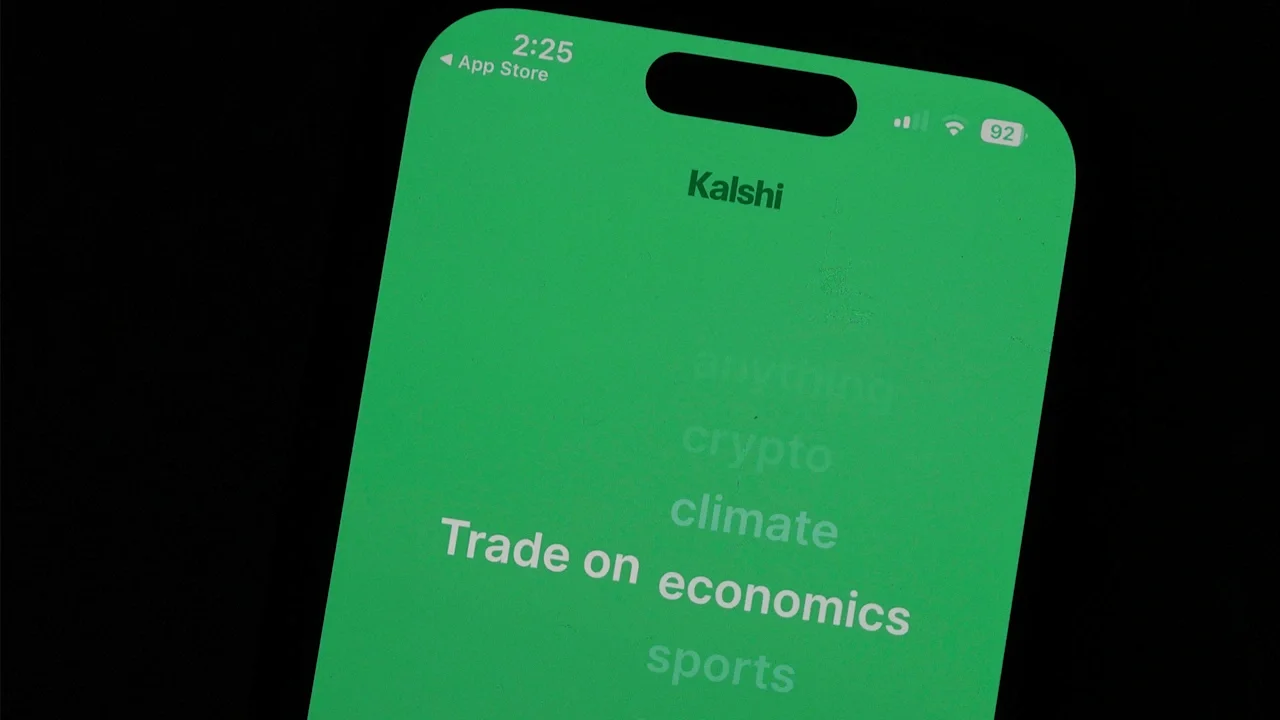
Three congressional candidates wagered on the outcome of their own elections on Kalshi, according to the prediction market, which said Wednesday that it fined and suspended the men from their platform for five years. It is the latest high-profile case of alleged insider trading on prediction markets including Kalshi and Polymarket, which have brought bipartisan scrutiny from Congress and calls for stricter regulations of the websites where people can put money on just about anything. Kalshi’s disciplinary documents named Mark Moran, who is running as an independent in Virginia’s U.S. Senate race; Ezekiel Enriquez, who ran in a Texas Republican primary for a U.S. House seat; and Matt Klein, a Democratic state senator running for a U.S. House seat in Minnesota. Klein and Enriquez both placed bets less than $100 related to their “own candidacy,” Kalshi said. Moran said on social media that he “traded $100 on myself.” These relatively small bets follow mammoth wagers on prediction markets earlier this year that raised eyebrows. In one case, an anonymous Polymarket user made a $400,000 profit in January on a wager that former Venezuelan President Nicolás Maduro would soon be out of office. In March, after two U.S. senators announced legislation that threatened prediction markets, Kalshi and Polymarket highlighted new rules, including against political candidates trading on their own campaigns. Moran refused to reach an agreement with Kalshi and was fined the most at more than $6,200, while Klein and Enriquez did reach agreements and face penalties of over $530 and $780, respectively, the company said. All were suspended from Kalshi for five years. Some politicians said the punishments didn’t go far enough. U.S. Rep. Mike Levin, a California Democrat, slammed the repercussions on social media, saying, “That’s not a punishment. That’s a parking ticket.” The agreements are with the company, and not with the Commodity Futures Trading Commission, which regulates predication markets. The agency is chaired by Michael Selig, who is considered friendly to the burgeoning industry. Far from denying the allegations, Moran told The Associated Press on Wednesday that he placed the bets intending to draw attention to what he said was unjust sway that platforms like Kalshi have on elections. Moran added that he’d met with the company and had asked for his name to appear on its website. Moran said he was fined more than the other candidates because he refused to sign a settlement that would’ve required him to post a statement on X. He said he felt that the stunt was successful. “When I piss people off, when I upset people, and when I captivate their attention, that’s when they have to start listening,” he said. Klein also confirmed Kalshi’s findings in a post on social media on Wednesday. The $50 wager he placed in October was the first time he had used a predictions market, he said in a statement on X, and he was “curious about how it worked.” “This was a mistake and I apologize,” he wrote, saying that the experience made it clear that the markets need more regulation. Klein is a cosponsor of a bill working its way through the Minnesota Legislature to ban most wagering on predictive markets, including the outcome of elections. In an interview, he said he didn’t think there was an inconsistency between his betting $50 on himself to win his primary and his sponsorship of legislation. Klein said he spent the winter learning about predictive markets and signed onto the bill well before he learned that his bet violated Kalshi’s rules. Enriquez, known as Zeke, lost his House race in the beginning of March with less than two percent of the vote. Contact information for Enriquez was not immediately found to request comment. Associated Press reporters Steve Karnowski and Hannah Schoenbaum contributed. —Jesse Bedayn and Safiyah Riddle, Associated Press View the full article

-
Why Google is evolving into a more “engaging” platform, and what declining engagement from younger users means for search and publishers. The post Why Google Has Changed & Who’s Really Paying for It appeared first on Search Engine Journal. View the full article
-
Oil rises as Tehran and Washington battle for control of waterwayView the full article
-
Warner Bros. Discovery shareholders are set to vote Thursday on the company’s proposed $81 billion sale to Skydance-owned Paramount, in a mega merger that could vastly reshape Hollywood and the wider media landscape. Paramount wants to buy all of Warner. That means HBO Max, cult-favorite titles like “Harry Potter” and CNN could soon find themselves under the same roof as Paramount’s CBS, “Top Gun” and the Paramount+ streaming service. And a greenlight from shareholders would bring the acquisition closer to the finish line. Shareholders are expected to meet at 10 a.m. ET to vote on the deal, which is valued at nearly $111 billion, including debt, based on Warner’s current outstanding shares. Even if approved, a Paramount-Warner combo would still face ongoing regulatory reviews, including from the U.S. Department of Justice. Warner has said it expects to close the deal sometime in the third fiscal quarter. Paramount’s quest for Warner has been far from smooth sailing. And while Warner’s board now endorses the Paramount merger, it wasn’t always eager to enter this particular marriage. Late last year, Warner rebuffed Paramount’s overtures to instead strike a $72 billion studio and streaming deal with Netflix. Paramount, meanwhile, went directly to shareholders with a hostile bid to take over the whole company, including the cable business that Netflix did not want. All three companies spent months fighting publicly over who had the better offer on the table. Warner’s board repeatedly backed Netflix’s bid. But eventually, Paramount offered more money and Netflix abruptly bowed out of the race rather than prolonging the fight. That corporate drama may now be over, but the implications remain. Thousands of actors, directors, writers and other industry professionals have voiced “unequivocal opposition” to the deal, in a letter arguing that further consolidation will lead to job losses and fewer choices for filmmakers and movie goers. Some lawmakers are also sounding the alarm. “What is at stake is clearly not just a corporate deal, but who controls news, who controls entertainment, who controls storytelling,” Democratic Sen. Cory Booker said in a “spotlight” hearing on the merger held in Washington last week. “It’s about the concentration and consolidation of cultural power.” The merger would bring together two of Hollywood’s remaining five legacy studios. It would also join two major streaming platforms — Paramount+ and HBO Max — and two big names in America’s TV news landscape — CBS and CNN — as well as a heap of other brands and entertainment networks. Company executives argue this will be good news for consumers, who they say will have access to bigger content libraries, particularly if HBO Max and Paramount+ become one streaming service. And Paramount CEO David Ellison has tried to assure filmmakers with a 45-day theatrical window guarantee and goal to release 30 movies a year between Paramount and Warner, which he’s said will remain stand-alone operations under a combined company. “I love cinema and I love film,” Ellison said at CinemaCon last week. “You can count on our complete commitment.” But the new owner will also be looking to cut costs. Regulatory filings have already indicated that would include layoffs and downsizing some overlapping operations. And critics are skeptical about consumer benefits — warning of higher prices that could arise when it comes to streaming, and potentially less diversity in content down the road. Then there’s the news. Since coming under Skydance ownership less than a year ago, Paramount-owned CBS has already seen significant editorial shifts, notably with the installation of Free Press founder Bari Weiss as CBS News editor-in-chief. If the Warner takeover goes through, many are expecting similar changes at CNN, which has long attracted ire from President Donald The President. Other questions of political influence have piled up. The Justice Department and company leadership have maintained politics will not play a role in the regulatory process — but The President himself has publicly waded into Warner’s future at times, despite backpedaling on what he once suggested his personal role would be. The President also has a close relationship with the Ellison family, particularly billionaire Oracle founder Larry Ellison, who is putting billions of dollars on the table to back the bid for his son’s company. Meanwhile, Paramount has secured money from several sovereign investment funds — including Saudi Arabia’s Public Investment Fund, as well as funds from the United Arab Emirates and Qatar, per regulatory filings. But such investors will not have voting rights in a future Paramount-Warner combo, the filings noted. Paramount has not publicly specified how much they’re contributing. Other countries, including European regulators, are looking the deal — and states could try to challenge it, too. California Attorney General Rob Bonta has been particularly vocal about the transaction, and said his state is investigating it. —Wyatte Grantham-Philips, AP Business Writer View the full article

-
How AI-driven search is redefining success by prioritizing cited, retrievable content over traditional traffic and clicks. The post Why Great Content Is No Longer Enough & What Beats It In AI Search appeared first on Search Engine Journal. View the full article
-
We may earn a commission from links on this page. Deal pricing and availability subject to change after time of publication. Smartphone cameras have come a long way, but the moment you start walking or moving around, even small shakes can show up in your footage. That’s where a phone gimbal like the Insta360 Flow 2 Pro comes in—it steadies your shots without turning filming into a whole production. And right now, its Ultimate Creator Bundle is down to $169.99 (from $199.99), which, according to price trackers, is the lowest it’s been so far. Insta360 Flow 2 Pro Ultimate Creator Bundle (Grey) Gimbal stabilizer for iPhone & Android $169.99 at Amazon $199.99 Save $30.00 Get Deal Get Deal $169.99 at Amazon $199.99 Save $30.00 This bundle includes the Flow 2 Pro itself, an AI tracker for more reliable subject following, a magnetic phone mount for quick attachment, a USB-C charging cable, and a carry case to keep everything together when you’re on the move. It works with most modern smartphones, including larger models like the iPhone 16 Pro Max, and it’s easy to get going. You unfold it, snap your phone onto the magnetic mount, and it powers on by itself. After the initial setup, it reconnects automatically, making it easy to grab a quick clip without fiddling with settings each time—a detail PCMag noted in its “excellent” review. The design leans toward convenience. There’s a built-in tripod at the base and a telescoping rod that extends up to 8.26 inches, so you can set it down for stable shots or pull back for wider framing without carrying extra gear. Most controls sit within thumb reach, including a joystick and zoom wheel, along with gesture controls for starting or stopping recording. Those gestures aren’t something you’ll master immediately, and the button labels can be hard to read in certain lighting, but the layout starts to feel natural after a few uses. Battery life is rated at up to 10 hours, and the gimbal can also charge your phone while you’re shooting. The stabilization itself works well, especially when walking or panning. Subject tracking is another highlight. Once locked, it follows movement smoothly and can pick the subject back up if they step out of frame for a moment. The companion app adds more control, including shooting modes, editing tools, and a built-in teleprompter. There is also a remote control feature that lets you operate the camera from another phone through a browser, which is useful for solo shooting. For creators who want smoother footage without carrying a full camera rig, this setup covers most everyday needs. Our Best Editor-Vetted Tech Deals Right Now Apple AirPods 4 Active Noise Cancelling Wireless Earbuds — $148.99 (List Price $179.00) Blink Video Doorbell Wireless (Newest Model) + Sync Module Core — $35.99 (List Price $69.99) Ring Indoor Cam (2nd Gen, 2-pack, White) — $59.98 (List Price $79.99) Apple Watch Series 11 [GPS 46mm] Smartwatch with Jet Black Aluminum Case with Black Sport Band - M/L. Sleep Score, Fitness Tracker, Health Monitoring, Always-On Display, Water Resistant — $329.00 (List Price $429.00) Apple iPad 11" 128GB A16 WiFi Tablet (Blue, 2025) — $319.99 (List Price $349.00) Deals are selected by our commerce team View the full article
-
American Airlines is leaning further into the idea that airport lounges should feel less like generic waiting rooms and more like extensions of the cities they serve. Its latest project in Nashville makes that strategy pretty clear. At Nashville International Airport (BNA), the airline is planning a new Admirals Club that will significantly expand its footprint and redefine what a lounge can be. A much bigger lounge The new space in Concourse A will span about 17,400 square feet, nearly triple the size of AA’s current lounge at the airport. When it opens, it’s expected to be the largest airline lounge at BNA, giving travelers far more room to spread out, get work done, or just relax before a flight. At a time when overcrowding has become one of the biggest pain points in premium travel, simply having more space is a meaningful upgrade. But American Airlines is also trying to go beyond that. “The new Admirals Club lounge at BNA reflects American’s ongoing commitment to enhancing the travel experience,” Rhonda Crawford, the airline’s senior vice president of customer experience design and strategy, said in a release announcing the lounge. “This lounge is designed to give customers the spirit of Nashville while enjoying the comfort, amenities, and service they expect from American.” Designed to feel like Nashville The design pulls heavily from the city, drawing inspiration from its music culture and the surrounding Tennessee landscape, a move that’s become popular with airport lounges from other brands as well. AA is also introducing features you don’t often see in U.S. lounges, including outdoor terraces overlooking the airfield and an indoor balcony that opens onto the concourse. American says the goal is to create a space that actually feels tied to where you are, not just another interchangeable lounge. That local connection extends beyond design. The airline also highlighted how its Premium Guest Services team brings Nashville’s personality into the space, including small touches like a “celebrity guitar” that collects signatures from artists passing through the airport before being donated to a nonprofit. How it stacks up against Delta and United That approach puts American Airlines in closer alignment with how competitors have been evolving their own lounge networks, though each airline is taking a slightly different path. Delta Air Lines has arguably pushed the hardest into turning lounges into a premium hospitality project. Its Sky Clubs have grown larger and more polished, and the airline has introduced Delta One Lounges at the very top end, with restaurant-style dining and a more curated, high-end feel. Delta’s strategy has focused on consistency and exclusivity, especially as it tightens access to keep crowds under control. United Airlines is taking a more layered approach. Its United Club network is being refreshed with bigger spaces and updated designs, while Polaris Lounges serve as a clearly elevated tier for long-haul premium travelers. United’s lounges tend to lean more modern and functional, though newer locations are starting to incorporate more local character than older ones. American’s Nashville lounge lands somewhere in the middle. Like Delta, it is investing in a space that feels more premium and more visually distinct. Like United, it is still maintaining a broad-access network that serves a wide range of travelers. Access and the “who gets in” question Entry into Admirals Club locations still requires memberships, oneworld status, eligible credit cards, or one-day passes through the AAdvantage program. That keeps the experience more accessible than some of Delta’s tighter rules, even as crowding remains a challenge across the industry. Where American is trying to stand out more is in service. The airline is putting a lot of emphasis on its Premium Guest Services team, positioning the lounge as just one part of a more personalized airport experience. That includes options like Five Star Service, which offers curb-to-gate assistance and adds a more hands-on, concierge-style element to the journey. “At the heart of Premium Guest Services is genuine care,” the company said in the release, noting that staff are trained to treat each itinerary as personal and each interaction as meaningful. What this says about the lounge wars American’s Nashville lounge is reflective of a broader shift across the industry. Lounges have become a key part of the battle for premium travelers for both airlines and credit card issuers, and the response has been bigger spaces, more thoughtful design, and more control over access. AA’s bet is that it can balance all three by expanding capacity, leaning into local identity, and keeping entry relatively flexible. Construction is expected to begin in 2027, and American’s current lounge at BNA will stay open in the meantime. View the full article

-
Faster, Leaner, Closer to the Client, and Two Hours to an Engagement Letter Big 4 Transparency With Dominic Piscopo, CPA Go PRO for members-only access to more Dominic Piscopo. View the full article
-
Faster, Leaner, Closer to the Client, and Two Hours to an Engagement Letter Big 4 Transparency With Dominic Piscopo, CPA Go PRO for members-only access to more Dominic Piscopo. View the full article
-
We're grateful to all our wonderful speakers & guests for making WWC Mountain View 2026 a memorable experience for all. The post Wi-Fi World Congress Mountain View 2026: Photos of all our great speakers – and more appeared first on Wi-Fi NOW Global. View the full article