All Activity
- Past hour
-
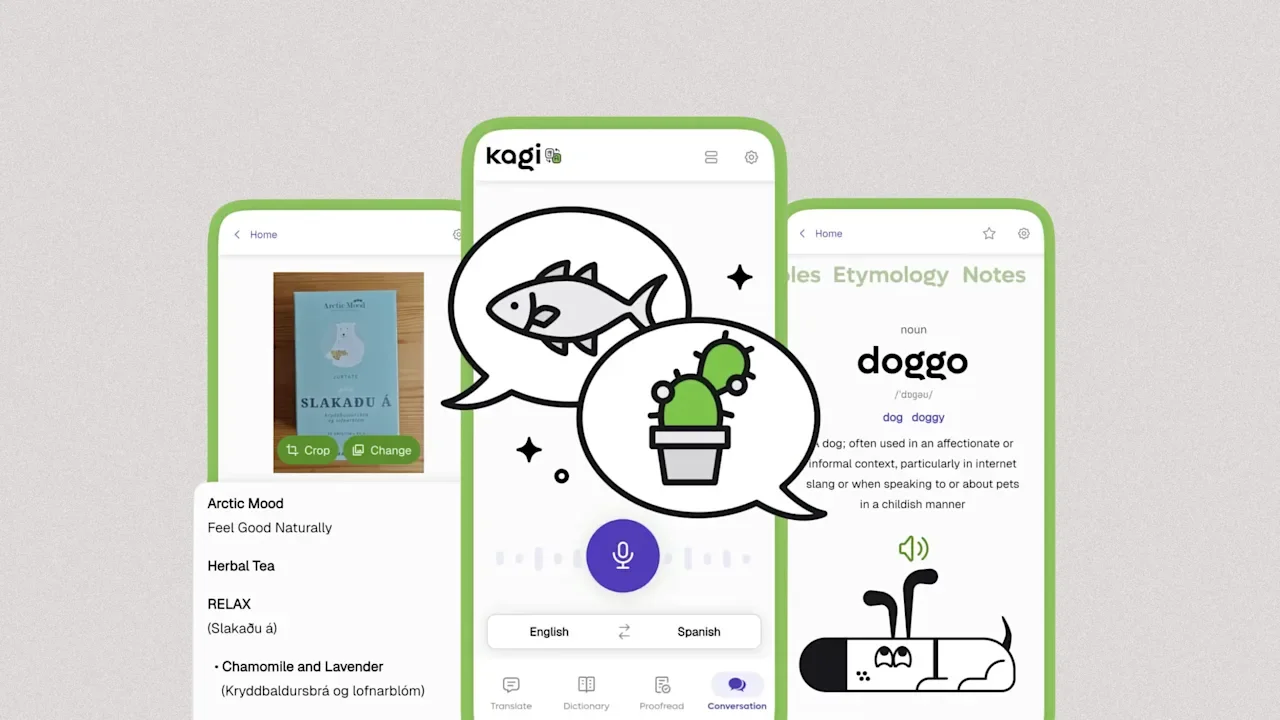
 The notion of instant on-the-go translation is nothing new for most of us, thanks to the now-ubiquitous Google Translate service. But a scrappy Google competitor thinks it can do better. ➜ This month, a company called Kagi is officially launching its Kagi Translate app for both Android and iOS. 💡 The app mirrors most of the same features Google Translate offers, with a few interesting new touches and one key point of distinction: It is all about protecting your privacy—with no ads, no trackers, and no data being monetized or repurposed in any way. Oh—and it’s free, too. ⌚ You’ll need all of two minutes to take it out for a test-drive. Psst: If you love these types of tools as much as I do, check out my free Cool Tools newsletter from The Intelligence. You’ll be the first to find all sorts of simple tech treasures! Instant translations—plus privacy Once you’ve got the Kagi Translate app on your device, it’s really quite intuitive to use. At its core: You can type or paste any text into its main translation box to have the text translated from and to any language you like. You can tap the camera icon in that same box to take a photo of text in the real world—on a document, a menu, a whiteboard, you name it—and then have the language auto-detected and translated into your native tongue from there. A document icon in that same area lets you upload a file from your phone (or any connected cloud storage) for speedy on-the-fly translation. And a microphone icon lets you speak aloud—or have someone else speak aloud—for real-time translations of the words as they’re uttered. Beyond that, Kagi Translate offers some interesting extras—for instance: If you tap the three-line settings icon within the main translation box, you can change between a “natural” and “literal” translation style, a formal or informal voice (for languages where that’s relevant), and also any available gender preference (again, where relevant for a dialect). In that same area, you can also add your own custom context to help guide the translation—telling the app, in your own words, what type of conversation you’re having, and with whom, so it can adjust its approach accordingly. In the app’s bottom-of-screen Dictionary tab, you can simply get an on-demand, instantly translated definition of a word or phrase in another language. The app’s Proofread tab will review any text you type or paste into it and offer suggestions to make it work better in your chosen language. And with any translation the app provides you, you have the ability to play the text out loud or copy it onto your system clipboard—as well as request alternate translations for different ways to say the same basic thing. 🕶️ Again, though: It’s Kagi’s commitment to privacy that really sets this app apart. You don’t have to sign in or create an account to use it, and nothing you do or say within the app is ever shared or used for any type of ad targeting. If that sounds familiar, it should: I’ve written about Kagi and its similarly privacy-centric approach to regular ol’ search before, and that same mindset applies to pretty much everything else the company has offered—including, too, the excellent Android summarizing app I mentioned in these same quarters a few months ago. Kagi makes its money entirely from user subscriptions, which are required for its core search service but not for the assorted stand-alone apps like Translate and Summarize. Whether you’re using Kagi for any other purposes or not, though, this new tool is an interesting option to keep around and a welcome alternative to Google’s de facto default—and maybe, just maybe, it’s exactly the je ne sais quoi you’ve been waiting for. Kagi Translate is available for both Android and iOS. There’s also a web version for desktop computer access. The app is completely free to use, though a paid Kagi membership will allow you to access some additional options. The app doesn’t have any ads or trackers and doesn’t require any sort of sign-in—and even if you do opt to create an account, Kagi’s core promise is that it never shares any of your data with anyone, in any way, or uses it for any profitable purposes. Treat yourself to all sorts of experience-enhancing treasures like this with my free Cool Tools newsletter—starting with an instant introduction to an incredible audio app that’ll tune up your days in delightful ways. View the full article
-
At the 2026 Milan Cortina Winter Olympics, the iconic cauldron of the Games is putting on a daily show just like its athletes. This year, for the first time ever, there are two cauldrons lit simultaneously at different locations. Inspired by Leonardo da Vinci’s geometric drawings, both cauldrons expand and contract, respond to music, and emit their own light—and one will put on hourly performances for viewers throughout the Games. The tradition of the Olympic flame and cauldron dates back 100 years or more. Historically, the Games are opened with a relay ceremony wherein torch bearers bring the flame to the cauldron, which remains lit until the closing ceremony. And while the cauldron’s design remained relatively consistent for the first decades of the Olympics, in recent years it has become a major design moment. This year’s approach is an encapsulation of the cauldron’s transition from a static object to a show in itself. “In the last editions of the games, more and more of the main focus has been on who is going to light the cauldron, its design, and what it means,” says Marco Balich, the creative lead for the Winter Olympics opening ceremony who designed this year’s cauldrons. “To make a long story short, I think over the years you see the history of the cauldron goes from very simple ones to [beautiful statements].” A brief history of Olympic cauldron design While symbolic fire at the Olympics traces back to at least 1928, the first Olympic torch relay took place in Berlin in 1936. The cauldron that year was a small, bowl-like vessel standing on three legs on a podium. In subsequent Games, like 1948 London, 1952 Helsinki, and 1960 Rome, the cauldron format remained largely the same. Starting around 1968, designers began to take a bit more creative liberty with the cauldron. That year’s Mexico City Games featured a cauldron made by a woman—a first—shaped like a giant circular chalice. Since then, the cauldron has continuously evolved in shape and scope, from a 6.4-meter-high scroll-shaped one for the 1996 Atlanta Olympics to a multi-shard monument for the 2010 Vancouver Games and a petal-inspired chorus of flames for the London Games in 2012. According to Balich, who holds a record 16 event credits for Olympic ceremonies, recent years have seen the cauldron transform from a stationary symbol into a kind of high-stakes performance art. Balich coordinated the opening ceremony for the 2016 Rio de Janeiro Games that featured a kinetic “sun” sculpture by artist Anthony Howe; powered by the wind, its tentacles fluttered and reflected the light of the cauldron’s flame to spectacular effect. Mariene de Castro And in Paris 2024, designer Mathieu Lehanneur abandoned almost all of the cauldron’s recognizable design tradition in favor of a literal hot-air balloon, which took flight daily during the Games for a ticketed audience and remained in Paris’s Tuileries Garden for nightly performances after the Olympics concluded. Balich says that expansion of the cauldron’s role during the Games and beyond inspired this year’s design. “I was very inspired because it confirmed to me that the experience of this object is so relevant, that it was worth it to add this dynamic session that would enlarge the experience and be even more emotionally touching, especially for the younger generation,” he says. A new cauldron experience This year, Balich iterated on the idea of the cauldron as an experience by turning it into an hourly show complete with lights, music, and movement. His concept started with two cauldrons—one in Milan and one in Cortina—to represent harmony between man and nature. The designs are inspired by a series of geometrical drawings by Da Vinci (who lived in Milan for several years), which used mathematics to imagine various intricate three-dimensional shapes. Balich says he did a quick drawing of his original concept, then called on creative director Lida Castelli and set designer Paolo Fantin to develop the final products. The cauldrons themselves are constructed out of aeronautical aluminum, with a whopping 1,440 components making up their intricate structure. A total of 244 pivot points allows them to smoothly expand and contract from a minimum diameter of 3.1 meters to a maximum of 4.5 meters. LED lights along the surface of these components give the cauldrons an otherworldly glow, while the actual Olympic flame is enclosed inside a glass-and-metal container at their centers. The final product looks like something you might expect to see descending from the heavens—or a much less foreboding Eye of Sauron. One cauldron is suspended in Milan’s Arco della Pace (Arch of Peace), where it will put on a three-to-five-minute show every hour during the Games from 5 to 11 p.m., accompanied by music from Italian composer Roberto Cacciapaglia. The second sits on a podium in Cortina d’Ampezzo’s Piazza Angelo Dibona. And, just as they were lit simultaneously, they’ll be extinguished simultaneously when the Games close. “I hope that everybody will gather—families, friends, curious design lovers, design critics—to go there and be immersed in this music and this beautiful show around the arch,” Balich says. “My goal for that is to add an experience to watching the sacred fire from Olympia, which in a way is one of the most powerful symbols around the world of peace, fraternity, sports, and the values that the Games represent.” View the full article

- Today
-
We’ve all opened our mailboxes to discover an unsolicited credit card offer (or three) inside. Although there must be people out there who take advantage of these offers, most of us simply throw the unopened envelopes in the trash. Yet simply tossing these pieces of snail mail can leave you and your finances vulnerable. Here’s why, and how you can get those unsolicited offers to stop for good. Why am I getting unsolicited credit card offers? While not as incessant as all the spam emails and text messages we get every day, unsolicited credit card offers are definitely one of the annoyances of modern life. The offers are sent by credit card companies via the U.S. Postal Service and arrive in our physical mailboxes without request. Yet unlike many types of digital spam, these unsolicited credit card offers aren’t illegal to send. The offers are permissible under the decades old Fair Credit Reporting Act (FCRA), and other subsequent laws, which allow credit card companies to approach the major credit reporting agencies (Experian, Equifax, Innovis, and TransUnion) with a wishlist of the type of customers they are looking for (ones in a certain ZIP code or with a certain credit score, for example). The credit card companies then “pre-approve” these individuals and send the offer in an unsolicited letter. Provided that the recipient still meets the credit requirements when they reply, they are legally entitled to that offer. Pre-approved offers differ from “pre-qualified” offers in that, with pre-approved offers, the credit card company is essentially scouting you as a customer. With “pre-qualified” offers, you have to take the initiative to contact the credit card company, telling them that you are interested in applying for a card. But regardless of whether the letter waiting in your mailbox is for a pre-approved card or pre-qualified one, that piece of physical mail can leave you and your finances vulnerable. How do they leave you vulnerable? Credit card offers are tempting by nature: they seduce you into racking up debt at incredibly high interest rates. But unsolicited pre-approved and other credit card offers are risky for an entirely different reason, as well: They leave you vulnerable to identity theft. The letters already contain your name and address. Pre-approved offers reveal that you will likely have no problem securing a new line of credit. Many of these letters also include a unique code that lets you easily reply to the offer online without having to manually re-enter your identifying information. All of this information is mouthwatering to an identity thief as it means they have to take little action—besides snatching the offer letter you tossed into the trash—to accept a card issued in your name. And often during the acceptance process, they can reroute the card to their address or PO Box with minimal effort, and begin using it to rack up debt at your expense. How to stop pre-approved credit card offers from hurting your finances To protect yourself from having a stolen credit card offer open up a black hole in your financial life, you can do two things. First, under no circumstances should you simply toss an unsolicited credit card letter into the trash or recycling bin. Anyone can fish it from the garbage and use the information it contains to apply for a card in your name. Instead, you should securely destroy the letter’s contents by shredding it. Second, and better yet, stop unsolicited credit card offers from landing in your mailbox in the first place. You can do this by informing the credit bureaus that you do not want to receive any such offers. You can opt out of receiving offers for two timeframes: five years or forever. Once you inform the credit bureaus of this, they are legally required to comply with your request. To opt out, you’ll need to have your name, address, date of birth, and Social Security or tax identification number. Once you have this, you’ll go to OptOutPrescreen.com, which is run by the four major credit reporting agencies. To opt out of getting unsolicited credit card offers in the mail for five years: Go to OptOutPrescreen.com. Tap the “Click here to opt-in or opt-out” button. Select “Electronic Opt-Out for 5 years.” Click Continue and follow the opt-out instructions. If you are opting out for only five years, you can submit your entire request online. However, if you want to permanently opt out of receiving credit card offers, you must physically mail a form to the credit reporting agencies. To permanently opt out of unsolicited credit card offers: Go to OptOutPrescreen.com. Tap the “Click here to opt-in or opt-out” button. Select “Permanent Opt-Out by Mail.” Click Continue and follow the opt-out instructions. You’ll be asked to download a “Permanent Opt-Out Election Form” and then print, sign, and date it. You must then mail this form to the address provided on it. And not to worry. If you change your mind in the future and decide you want to be eligible to receive unsolicited credit card offers again, you can opt back into them at any time. But if you do, just keep an eye on your mailbox before an identity thief does. View the full article

-
Three-way peace talks are expected to take place in Miami within a weekView the full article
-
Inc.com columnist Alison Green answers questions about workplace and management issues—everything from how to deal with a micromanaging boss to how to talk to someone on your team about body odor. A reader asks: I manage a team of four. One of my staff members, Jeff, asked to go to a conference that was about a five-hour drive away. I approved the request as the conference would be good for his professional development. Three other staff members from our closely connected teams were also going. Jeff registered for the conference. A couple of weeks later, he asked me about booking a flight to it. I was surprised by this, as the conference was a reasonable driving distance. I explained that the department would rent a van and the attendees would drive there together. (Our department wants to minimize expenses when reasonable, so this is normal unless it doesn’t make sense logistically or financially.) He pushed back with a couple of reasons that he wanted to fly, such as it would save time and he didn’t feel comfortable driving. I said that flying wouldn’t save time since the airport is at least an hour away, you need a time buffer to go through security, etc., and the flight is two hours. I also knew the others going were comfortable being the drivers. He then said that he didn’t want to be in a car for long periods of time since he sometimes has digestive issues. I empathized but suggested he make up a reason he might need more rest stops than usual and give the others a heads-up at the start of the trip. Something like, “Sometimes I get woozy when I’m in the car for a while, so I need to take more rest stops than usual.” This was not acceptable to Jeff, and he ultimately decided not to attend the conference. It wasn’t a huge issue, but he was salty about it for a while and complained to a few other people. Is it reasonable to expect employees to drive to conferences? Are there situations other than distance and cost where we should make an exception to our norm? Green responds: I think a five-hour drive one-way is a really long drive, and I’m not surprised he expected to fly. Some businesses, especially those with more limited resources, do use a five-hour rule on business trips—where if the drive is less than five hours, people drive instead of fly. Personally, it strikes me as too long. Yes, flying can take nearly as long when you account for security, delays, etc., but you can work on planes and in airports; it’s much harder to work in a car. But this also varies by field and, in some cases, by professional level. I did five-hour drives without blinking as a 20-something working at a nonprofit. I would not do it now. But even if this is the norm in your field, I’d still make an exception for Jeff because of his digestive issues. Telling him to make up a story about why he’d need frequent stops wasn’t reasonable. Bathroom issues are private ones, and asking him to come up with a cover story while inconveniencing and possibly annoying his colleagues—and thus making that trip a lot longer than five hours—wasn’t fair to him. Plus, digestive issues can be urgent in a way that doesn’t always leave time to wait for a highway exit, pull off the interstate, find a place with a bathroom, park, etc. It’s very possible Jeff can only travel confidently if he stays within a few minutes of a bathroom. Personally, I’d be pretty unhappy if I told a manager I had a medical condition that made long car trips prohibitive and was told, essentially, “too bad.” I’m wondering if, at some level, you didn’t fully believe Jeff and thought he was exaggerating to avoid having to do the drive. As a manager, you really need to default to believing people about their own health unless you have a specific reason not to. Otherwise, you can end up doing things that are really, really problematic—like denying people accommodations they actually need, or making them feel they need to disclose details that they should be able to keep private, or making them feel discriminated against. That’s not to say you can’t ever ask for more info or propose a different accommodation (you can, and there are ways to do that legally), but in general, your default should be to believe and try to accommodate a good employee with a health issue. Want to submit a question of your own? Send it to alison@askamanager.org. —By Alison Green This article originally appeared on Fast Company’s sister site, Inc.com. Inc. is the voice of the American entrepreneur. We inspire, inform, and document the most fascinating people in business: the risk-takers, the innovators, and the ultra-driven go-getters that represent the most dynamic force in the American economy. View the full article

-
Vivid redesign and social media buzz lure Chinese buyers back after a prolonged slumpView the full article
-
Agreement follows détente between Donald The President and Indian Prime Minister Narendra ModiView the full article
-
In relation to managing your online reputation, knowing how to remove negative reviews is vital. You need to monitor platforms like Google and Yelp regularly for any feedback that could impact your business. Identifying which reviews are genuine or fake is the first step in the process. Once you’ve done that, gathering evidence to support your removal request is fundamental. Comprehending the subsequent steps can make a significant difference in your reputation management strategy. Key Takeaways Regularly monitor reviews on platforms like Google and Yelp to identify negative feedback promptly. Gather evidence, including screenshots and customer interactions, to support your case against harmful reviews. Flag inappropriate reviews through the Google Business Profile dashboard, selecting a reason that aligns with platform guidelines. Monitor the status of your removal requests and document any responses from the platform for follow-up. Respond to negative reviews professionally, acknowledging customer concerns and offering solutions to demonstrate commitment to service. Understanding the Importance of Review Removal When you consider the impact of negative reviews on your business, it’s clear that addressing them is crucial. Over 40% of shoppers rely on Google Maps or Google Search before forming opinions about your brand. This highlights the importance of comprehending how to delete reviews that harm your reputation. Proactively managing negative feedback helps maintain customer trust and demonstrates that you value their concerns. If you notice a harmful review, don’t hesitate to request review removal, especially if it violates platform policies. Ignoring negative reviews can skew your overall ratings, affecting local SEO and deterring potential customers from engaging with your business. Moreover, there may be legal implications related to failing to address these reviews properly. Being informed about the reasons for negative review removal can help you take timely action, ensuring that your business maintains a positive online presence and continues to attract customers. Identifying Negative Reviews Identifying negative reviews is essential for maintaining your business’s reputation, especially since a significant number of potential customers turn to online platforms for information. You should regularly monitor reviews on sites like Google, Yelp, and TripAdvisor. Look for patterns in language and timing to differentiate genuine feedback from potentially fake reviews. Genuine negative reviews typically offer specific details about customer experiences, whereas fake ones often lack authenticity and can come off as overly generic. Review Type Characteristics Action Required Genuine Negative Specific details, constructive criticism Address the issue, improve service Fake Review Generic, overly harsh Report for removal Neutral Feedback Mixed feelings, suggestions Consider for improvement Asking how many reports to get a Google review removed or how long it takes Google to remove a review can help streamline your efforts. If you’re wondering how do I remove a Google review I wrote, remember to follow the platform’s guidelines. Gathering Evidence for Removal Requests Gathering evidence for removal requests is pivotal for effectively challenging negative reviews that violate platform guidelines. Start by collecting screenshots of the negative review, ensuring you capture the reviewer’s name, the date, and the content. This provides clear evidence for your request. Next, document any specific violations of the platform’s guidelines, such as hate speech or false statements, as these can strengthen your case. Additionally, gather relevant customer interactions or communications that counter the claims made in the review, showing your perspective. If possible, obtain corroborating statements from other customers or staff members who can verify inaccuracies in the review. Finally, keep a record of your business’s responses to similar reviews or issues. This consistency demonstrates how you handle customer feedback and reinforces your credibility in the removal request process. With thorough evidence, you increase your chances of successfully removing the negative review. Logging Into Your Google Business Profile Accessing your Google Business Profile is a straightforward process that allows you to manage your business’s online presence effectively. To log in, navigate to the Google Business Profile website or app. Enter your business account credentials, including your email and password. Before attempting to log in, verify you’ve claimed your business listing; if you haven’t, follow the necessary steps to claim it first. Once you’re ready, click the “Sign In” option located at the top right corner of the page. If you experience issues logging in, don’t worry; simply use the “Forgot password?” feature to reset your password and regain access. After successfully logging in, you can manage your reviews, update your business information, and monitor customer interactions directly from your dashboard. This access is crucial for addressing negative reviews and improving your business reputation. Flagging the Review as Inappropriate Have you ever wondered how to effectively manage a negative review on your Google Business Profile? Flagging the review as inappropriate is an essential step. First, log into your Google Business Profile dashboard and find the specific review you want to report. Next, click on the three dots next to the review and select “Flag as inappropriate.” This initiates the reporting process. Here’s a quick overview of the steps: Step Action Details Log In Access your dashboard Confirm you’re logged into your account. Locate Review Find the negative review Scroll through your reviews. Flag Review Click three dots Select “Flag as inappropriate.” After that, choose an appropriate reason for reporting the review and click “Submit.” Remember, removal isn’t guaranteed, but timely and clear reports can improve your chances. Choosing the Correct Reason for Removal When you’re ready to report a negative review, it’s essential to choose a reason that clearly aligns with the platform’s guidelines. Carefully assess the context and intent behind the review, as this can strengthen your claim for removal. Comprehending the reporting procedures will help you navigate the process effectively and increase your chances of success. Identifying Violations Clearly Identifying violations clearly is vital for ensuring that negative reviews are removed appropriately. Focus on breaches of community guidelines, such as harassment, impersonation, or offensive language. You should also look for false or misleading claims that don’t accurately reflect customer experiences or services. If a review includes personal information about individuals without consent, it’s a privacy violation and eligible for removal. Furthermore, assess if the review comes from a conflict of interest, like those written by competitors or individuals with personal ties to your business. Comprehending the specific content policies of the review platform is fundamental for categorizing the reason for removal effectively and ensuring compliance with their guidelines. Assessing Context and Intent To effectively evaluate a negative review’s context and intent, begin by analyzing its content for any factual inaccuracies or misleading statements that could violate platform guidelines. Look for emotional language or exaggerations that suggest the review mightn’t reflect a genuine customer experience. Furthermore, evaluate if the review appears to stem from a personal vendetta or competitive sabotage, as this may indicate a conflict of interest, justifying removal. In addition, check for violations of specific platform policies, like hate speech or harassment. Document supporting evidence, such as timestamps, customer records, or communication history, to strengthen your removal request. Reporting Procedures Explained Comprehending the reporting procedures for negative review removal is essential to addressing unjust feedback effectively. When you report a review, verify it meets specific guidelines like spam, offensive language, or false claims, as this increases your chances of removal. Familiarize yourself with the platform’s content policies, since each site has distinct criteria for inappropriate content. Use precise language when selecting the reason for removal; terms like “harassment” or “misleading information” clarify the violation’s nature. It’s additionally vital to gather supporting evidence, such as screenshots or links, to strengthen your claim. Finally, monitor the status of your request closely, as platforms often provide updates or may need additional information to process your claim efficiently. Submitting Your Removal Request When you find a review on your Google Business Profile that you believe violates guidelines, you can take action to request its removal. First, access your Google Business Profile dashboard and locate the specific review you want to address. Click on the three dots next to the review, then select “Flag as inappropriate” to initiate the removal request process. Next, choose an appropriate reason for reporting the review. Confirm your reason aligns with Google’s Content Policy, as this will determine the request’s eligibility for removal. After submitting your request, you can monitor the status through your Google Business Profile account for updates regarding the evaluation process. If your removal request is denied, don’t hesitate to utilize the appeal option. This allows you to contest the decision, and it may lead to a reconsideration by Google, offering another chance for a successful removal. Monitoring the Status of Your Request Monitoring the status of your removal request is crucial, as it keeps you informed about the outcome and any potential next steps. After submitting your request, check your Google Business Profile or the review platform’s dashboard for updates. Many platforms, including Google and Yelp, send notifications or emails regarding your request, so make it a habit to check your email regularly. Responding to Negative Reviews Professionally Responding to negative reviews professionally is essential for maintaining a strong brand reputation and encouraging customer loyalty. When you encounter negative feedback, approach it with politeness and professionalism. A sincere apology can diffuse tension and show your commitment to customer satisfaction. Here’s a quick guide to help you formulate your response: Do’s Don’ts Apologize if at fault Blame the reviewer Provide context for your actions Share personal information Acknowledge the customer’s feelings Use aggressive language Offer solutions for future issues Ignore the review Engage publicly to show commitment Make it a personal attack What to Do If Your Request Is Denied If your request for review removal gets denied, start by evaluating the violation criteria to see if your case meets the platform’s guidelines. You can additionally explore alternative resolution options, such as submitting an appeal with supporting evidence that clearly explains how the review breaches community standards. Keeping a proactive approach by addressing customer feedback and encouraging positive reviews can further help mitigate the effects of the negative review. Assess Review Violation Criteria When your request to remove a review is denied, it’s essential to take a systematic approach to understand the reasons behind the decision. Start by accessing the Help Center within your Google Business Profile, where you can gather specific information about the denial. Carefully review the content of your request to guarantee it aligns with Google’s Content Policy and identify any potential violations you may have missed. You can appeal the decision by selecting the review and providing additional context or evidence to support your removal request. Keep an eye out for a confirmation email regarding your appeal status, as Google typically responds within a week. Document the review’s impact on your business and collect customer testimonials to strengthen future requests. Explore Alternative Resolution Options Although your request for review removal might’ve been denied, there are several alternative resolution options you can explore to address the situation effectively. First, visit the Help Center in your Google Business Profile to understand the guidelines that influenced the decision. You can likewise appeal the denial by selecting the option next to the review and providing further context or evidence to support your case; expect a response within a week. In the meantime, respond professionally to the review, showcasing your commitment to customer service. Regularly monitor your reviews and address negative feedback swiftly. Furthermore, encourage satisfied customers to leave positive reviews, which can help offset the impact of any remaining negative feedback on your profile. Proactive Strategies for Future Review Management To effectively manage future reviews, it’s essential to adopt proactive strategies that not merely improve customer satisfaction but furthermore mitigate the impact of negative feedback. Start by delivering exceptional customer service, as 70% of customers would leave positive reviews after a great experience. Implement a follow-up system to encourage satisfied customers to share their experiences, since 68% say they’d leave a review if asked. Regularly monitor online reviews to address concerns swiftly, preventing further negative feedback. Engaging with customers through social media and email campaigns can likewise nurture relationships and encourage positive sharing. Here’s a summary of these strategies: Strategy Benefit Tool/Method Exceptional Customer Service Increases positive reviews Staff training Follow-Up System Encourages satisfied customers to leave reviews Automated email campaigns Regular Review Monitoring Prevents negative reviews Review management tools Customer Engagement Nurtures relationships Social media, email campaigns Frequently Asked Questions Is There a Way to Remove Negative Reviews? Yes, you can remove negative reviews if they violate specific platform guidelines, like containing spam or offensive language. Start by identifying these violations and using the reporting tools provided by platforms such as Google or Yelp. You’ll need to explain how the review breaches their policies. Furthermore, consider addressing the reviewer’s concerns directly, as this might lead to a change or removal of the review. Regularly monitor feedback and encourage satisfied customers to share their experiences. How to Get a Google Review Removed Immediately? To get a Google review removed immediately, you need to flag it as inappropriate. Log into your Google Business Profile, find the review, and click the three dots next to it. Select “Flag as inappropriate” and choose the reason that fits, like fake or harmful content. Gather any evidence supporting your claim, as it improves your request’s strength. Keep an eye on the status of your request, as evaluations can take time. Is It Worth Paying to Remove Bad Reviews? Paying to remove bad reviews can be worthwhile, especially if they harm your business’s reputation. Negative reviews can deter potential customers, impacting your bottom line. Professional services understand platform policies and have experience maneuvering through them, increasing the likelihood of success. Although not every review can be removed, investing in these services can save you time and resources, allowing you to focus on your core operations as you improve your online presence. How Many Reports Does It Take to Remove a Review? Removing a review often requires multiple reports, as platforms like Google and Yelp prioritize the quality of claims over quantity. Although there’s no set number of reports needed, consistent reporting from different users can strengthen your case. Google doesn’t specify how many reports lead to action, focusing instead on policy violations. Yelp similarly emphasizes the validity of claims. In the end, aligning your report with the platform’s content guidelines is essential for effective removal. Conclusion In conclusion, effectively removing negative reviews involves a systematic approach that includes monitoring feedback, gathering evidence, and utilizing your Google Business Profile to flag inappropriate content. After submitting your removal request, stay vigilant by tracking its status and responding professionally to any lingering reviews. If your request is denied, reassess your evidence and consider alternative strategies for managing future reviews. By staying proactive, you can maintain a positive online reputation and improve customer trust. Image via Google Gemini and ArtSmart This article, "Step-by-Step Guide for Negative Review Removal" was first published on Small Business Trends View the full article
-
In relation to managing your online reputation, knowing how to remove negative reviews is vital. You need to monitor platforms like Google and Yelp regularly for any feedback that could impact your business. Identifying which reviews are genuine or fake is the first step in the process. Once you’ve done that, gathering evidence to support your removal request is fundamental. Comprehending the subsequent steps can make a significant difference in your reputation management strategy. Key Takeaways Regularly monitor reviews on platforms like Google and Yelp to identify negative feedback promptly. Gather evidence, including screenshots and customer interactions, to support your case against harmful reviews. Flag inappropriate reviews through the Google Business Profile dashboard, selecting a reason that aligns with platform guidelines. Monitor the status of your removal requests and document any responses from the platform for follow-up. Respond to negative reviews professionally, acknowledging customer concerns and offering solutions to demonstrate commitment to service. Understanding the Importance of Review Removal When you consider the impact of negative reviews on your business, it’s clear that addressing them is crucial. Over 40% of shoppers rely on Google Maps or Google Search before forming opinions about your brand. This highlights the importance of comprehending how to delete reviews that harm your reputation. Proactively managing negative feedback helps maintain customer trust and demonstrates that you value their concerns. If you notice a harmful review, don’t hesitate to request review removal, especially if it violates platform policies. Ignoring negative reviews can skew your overall ratings, affecting local SEO and deterring potential customers from engaging with your business. Moreover, there may be legal implications related to failing to address these reviews properly. Being informed about the reasons for negative review removal can help you take timely action, ensuring that your business maintains a positive online presence and continues to attract customers. Identifying Negative Reviews Identifying negative reviews is essential for maintaining your business’s reputation, especially since a significant number of potential customers turn to online platforms for information. You should regularly monitor reviews on sites like Google, Yelp, and TripAdvisor. Look for patterns in language and timing to differentiate genuine feedback from potentially fake reviews. Genuine negative reviews typically offer specific details about customer experiences, whereas fake ones often lack authenticity and can come off as overly generic. Review Type Characteristics Action Required Genuine Negative Specific details, constructive criticism Address the issue, improve service Fake Review Generic, overly harsh Report for removal Neutral Feedback Mixed feelings, suggestions Consider for improvement Asking how many reports to get a Google review removed or how long it takes Google to remove a review can help streamline your efforts. If you’re wondering how do I remove a Google review I wrote, remember to follow the platform’s guidelines. Gathering Evidence for Removal Requests Gathering evidence for removal requests is pivotal for effectively challenging negative reviews that violate platform guidelines. Start by collecting screenshots of the negative review, ensuring you capture the reviewer’s name, the date, and the content. This provides clear evidence for your request. Next, document any specific violations of the platform’s guidelines, such as hate speech or false statements, as these can strengthen your case. Additionally, gather relevant customer interactions or communications that counter the claims made in the review, showing your perspective. If possible, obtain corroborating statements from other customers or staff members who can verify inaccuracies in the review. Finally, keep a record of your business’s responses to similar reviews or issues. This consistency demonstrates how you handle customer feedback and reinforces your credibility in the removal request process. With thorough evidence, you increase your chances of successfully removing the negative review. Logging Into Your Google Business Profile Accessing your Google Business Profile is a straightforward process that allows you to manage your business’s online presence effectively. To log in, navigate to the Google Business Profile website or app. Enter your business account credentials, including your email and password. Before attempting to log in, verify you’ve claimed your business listing; if you haven’t, follow the necessary steps to claim it first. Once you’re ready, click the “Sign In” option located at the top right corner of the page. If you experience issues logging in, don’t worry; simply use the “Forgot password?” feature to reset your password and regain access. After successfully logging in, you can manage your reviews, update your business information, and monitor customer interactions directly from your dashboard. This access is crucial for addressing negative reviews and improving your business reputation. Flagging the Review as Inappropriate Have you ever wondered how to effectively manage a negative review on your Google Business Profile? Flagging the review as inappropriate is an essential step. First, log into your Google Business Profile dashboard and find the specific review you want to report. Next, click on the three dots next to the review and select “Flag as inappropriate.” This initiates the reporting process. Here’s a quick overview of the steps: Step Action Details Log In Access your dashboard Confirm you’re logged into your account. Locate Review Find the negative review Scroll through your reviews. Flag Review Click three dots Select “Flag as inappropriate.” After that, choose an appropriate reason for reporting the review and click “Submit.” Remember, removal isn’t guaranteed, but timely and clear reports can improve your chances. Choosing the Correct Reason for Removal When you’re ready to report a negative review, it’s essential to choose a reason that clearly aligns with the platform’s guidelines. Carefully assess the context and intent behind the review, as this can strengthen your claim for removal. Comprehending the reporting procedures will help you navigate the process effectively and increase your chances of success. Identifying Violations Clearly Identifying violations clearly is vital for ensuring that negative reviews are removed appropriately. Focus on breaches of community guidelines, such as harassment, impersonation, or offensive language. You should also look for false or misleading claims that don’t accurately reflect customer experiences or services. If a review includes personal information about individuals without consent, it’s a privacy violation and eligible for removal. Furthermore, assess if the review comes from a conflict of interest, like those written by competitors or individuals with personal ties to your business. Comprehending the specific content policies of the review platform is fundamental for categorizing the reason for removal effectively and ensuring compliance with their guidelines. Assessing Context and Intent To effectively evaluate a negative review’s context and intent, begin by analyzing its content for any factual inaccuracies or misleading statements that could violate platform guidelines. Look for emotional language or exaggerations that suggest the review mightn’t reflect a genuine customer experience. Furthermore, evaluate if the review appears to stem from a personal vendetta or competitive sabotage, as this may indicate a conflict of interest, justifying removal. In addition, check for violations of specific platform policies, like hate speech or harassment. Document supporting evidence, such as timestamps, customer records, or communication history, to strengthen your removal request. Reporting Procedures Explained Comprehending the reporting procedures for negative review removal is essential to addressing unjust feedback effectively. When you report a review, verify it meets specific guidelines like spam, offensive language, or false claims, as this increases your chances of removal. Familiarize yourself with the platform’s content policies, since each site has distinct criteria for inappropriate content. Use precise language when selecting the reason for removal; terms like “harassment” or “misleading information” clarify the violation’s nature. It’s additionally vital to gather supporting evidence, such as screenshots or links, to strengthen your claim. Finally, monitor the status of your request closely, as platforms often provide updates or may need additional information to process your claim efficiently. Submitting Your Removal Request When you find a review on your Google Business Profile that you believe violates guidelines, you can take action to request its removal. First, access your Google Business Profile dashboard and locate the specific review you want to address. Click on the three dots next to the review, then select “Flag as inappropriate” to initiate the removal request process. Next, choose an appropriate reason for reporting the review. Confirm your reason aligns with Google’s Content Policy, as this will determine the request’s eligibility for removal. After submitting your request, you can monitor the status through your Google Business Profile account for updates regarding the evaluation process. If your removal request is denied, don’t hesitate to utilize the appeal option. This allows you to contest the decision, and it may lead to a reconsideration by Google, offering another chance for a successful removal. Monitoring the Status of Your Request Monitoring the status of your removal request is crucial, as it keeps you informed about the outcome and any potential next steps. After submitting your request, check your Google Business Profile or the review platform’s dashboard for updates. Many platforms, including Google and Yelp, send notifications or emails regarding your request, so make it a habit to check your email regularly. Responding to Negative Reviews Professionally Responding to negative reviews professionally is essential for maintaining a strong brand reputation and encouraging customer loyalty. When you encounter negative feedback, approach it with politeness and professionalism. A sincere apology can diffuse tension and show your commitment to customer satisfaction. Here’s a quick guide to help you formulate your response: Do’s Don’ts Apologize if at fault Blame the reviewer Provide context for your actions Share personal information Acknowledge the customer’s feelings Use aggressive language Offer solutions for future issues Ignore the review Engage publicly to show commitment Make it a personal attack What to Do If Your Request Is Denied If your request for review removal gets denied, start by evaluating the violation criteria to see if your case meets the platform’s guidelines. You can additionally explore alternative resolution options, such as submitting an appeal with supporting evidence that clearly explains how the review breaches community standards. Keeping a proactive approach by addressing customer feedback and encouraging positive reviews can further help mitigate the effects of the negative review. Assess Review Violation Criteria When your request to remove a review is denied, it’s essential to take a systematic approach to understand the reasons behind the decision. Start by accessing the Help Center within your Google Business Profile, where you can gather specific information about the denial. Carefully review the content of your request to guarantee it aligns with Google’s Content Policy and identify any potential violations you may have missed. You can appeal the decision by selecting the review and providing additional context or evidence to support your removal request. Keep an eye out for a confirmation email regarding your appeal status, as Google typically responds within a week. Document the review’s impact on your business and collect customer testimonials to strengthen future requests. Explore Alternative Resolution Options Although your request for review removal might’ve been denied, there are several alternative resolution options you can explore to address the situation effectively. First, visit the Help Center in your Google Business Profile to understand the guidelines that influenced the decision. You can likewise appeal the denial by selecting the option next to the review and providing further context or evidence to support your case; expect a response within a week. In the meantime, respond professionally to the review, showcasing your commitment to customer service. Regularly monitor your reviews and address negative feedback swiftly. Furthermore, encourage satisfied customers to leave positive reviews, which can help offset the impact of any remaining negative feedback on your profile. Proactive Strategies for Future Review Management To effectively manage future reviews, it’s essential to adopt proactive strategies that not merely improve customer satisfaction but furthermore mitigate the impact of negative feedback. Start by delivering exceptional customer service, as 70% of customers would leave positive reviews after a great experience. Implement a follow-up system to encourage satisfied customers to share their experiences, since 68% say they’d leave a review if asked. Regularly monitor online reviews to address concerns swiftly, preventing further negative feedback. Engaging with customers through social media and email campaigns can likewise nurture relationships and encourage positive sharing. Here’s a summary of these strategies: Strategy Benefit Tool/Method Exceptional Customer Service Increases positive reviews Staff training Follow-Up System Encourages satisfied customers to leave reviews Automated email campaigns Regular Review Monitoring Prevents negative reviews Review management tools Customer Engagement Nurtures relationships Social media, email campaigns Frequently Asked Questions Is There a Way to Remove Negative Reviews? Yes, you can remove negative reviews if they violate specific platform guidelines, like containing spam or offensive language. Start by identifying these violations and using the reporting tools provided by platforms such as Google or Yelp. You’ll need to explain how the review breaches their policies. Furthermore, consider addressing the reviewer’s concerns directly, as this might lead to a change or removal of the review. Regularly monitor feedback and encourage satisfied customers to share their experiences. How to Get a Google Review Removed Immediately? To get a Google review removed immediately, you need to flag it as inappropriate. Log into your Google Business Profile, find the review, and click the three dots next to it. Select “Flag as inappropriate” and choose the reason that fits, like fake or harmful content. Gather any evidence supporting your claim, as it improves your request’s strength. Keep an eye on the status of your request, as evaluations can take time. Is It Worth Paying to Remove Bad Reviews? Paying to remove bad reviews can be worthwhile, especially if they harm your business’s reputation. Negative reviews can deter potential customers, impacting your bottom line. Professional services understand platform policies and have experience maneuvering through them, increasing the likelihood of success. Although not every review can be removed, investing in these services can save you time and resources, allowing you to focus on your core operations as you improve your online presence. How Many Reports Does It Take to Remove a Review? Removing a review often requires multiple reports, as platforms like Google and Yelp prioritize the quality of claims over quantity. Although there’s no set number of reports needed, consistent reporting from different users can strengthen your case. Google doesn’t specify how many reports lead to action, focusing instead on policy violations. Yelp similarly emphasizes the validity of claims. In the end, aligning your report with the platform’s content guidelines is essential for effective removal. Conclusion In conclusion, effectively removing negative reviews involves a systematic approach that includes monitoring feedback, gathering evidence, and utilizing your Google Business Profile to flag inappropriate content. After submitting your removal request, stay vigilant by tracking its status and responding professionally to any lingering reviews. If your request is denied, reassess your evidence and consider alternative strategies for managing future reviews. By staying proactive, you can maintain a positive online reputation and improve customer trust. Image via Google Gemini and ArtSmart This article, "Step-by-Step Guide for Negative Review Removal" was first published on Small Business Trends View the full article
-
Rising tide might no longer support all sector stocks, let alone speculative dross like crypto View the full article
-
What the public sees as a ruling class is divided against itselfView the full article
-
Behind Russia’s victory narrative in Ukraine is a system under strain. To fight back, the ‘middle powers’ must work harder on their own story View the full article
-
Former ambassador was also shareholder in lobbying group that counted US tech firm as a clientView the full article
-
On episode 340 of PPC Live The Podcast, I speak to Amanda Farley, CMO of Aimclear and a multi-award-winning marketing leader, brings a mix of honesty and expertise to the PPC Live conversation. A self-described T-shaped marketer, she combines deep PPC knowledge with broad experience across social, programmatic, PR, and integrated strategy. Her journey — from owning an gallery and tattoo studio to leading award-winning global campaigns — reflects a career built on curiosity, resilience, and continuous learning. Overcoming limiting beliefs and embracing creativity Amanda once ran an gallery and tattoo parlor while believing she wasn’t an artist herself. Surrounded by creatives, she eventually realized her only barrier was a limiting belief. After embracing painting, she created hundreds of artworks and discovered a powerful outlet for expression. This mindset shift mirrors marketing growth. Success isn’t just technical — it’s mental. By challenging internal doubts, marketers can unlock new skills and opportunities. When campaign infrastructure breaks: A high-stakes lesson Amanda recalls a global campaign where tracking infrastructure failed across every channel mid-flight. Pixels broke, data vanished, and campaigns were running blind. Multiple siloed teams and a third-party vendor slowed resolution while budgets continued to spend. Instead of assigning blame, Amanda focused on collaboration. Her team helped rebuild tracking and uncovered deeper data architecture issues. The crisis led to stronger onboarding processes, earlier validation checks, and clearer expectations around data hygiene. In modern PPC, clean infrastructure is essential for machine learning success. The hidden importance of PPC hygiene Many account audits reveal the same problem: neglected fundamentals. Basic settings errors and poorly maintained audience data often hurt performance before strategy even begins. Outdated lists and disconnected data systems weaken automation. In an machine-learning environment, strong data hygiene ensures campaigns have the quality signals they need to perform. Why integrated marketing is no longer optional Amanda’s background in psychology and SEO shaped her integrated approach. PPC touches landing pages, user experience, and sales processes. When conversions drop, the issue may lie outside the ad account. Understanding the full customer journey allows marketers to diagnose problems holistically. For Amanda, integration is a practical necessity, not a buzzword. AI, automation, and the human factor While AI dominates industry conversations, Amanda stresses balance. Some tools are promising, but not all are ready for full deployment. Testing is essential, but human oversight remains critical. Machines optimize patterns, but humans judge emotion, messaging, and brand fit. Marketers who study changing customer journeys can also find new opportunities to intercept audiences across channels. Building a culture that welcomes mistakes Amanda believes leaders act as emotional barometers. Calm investigation beats reactive blame when issues arise. Many PPC problems stem from external changes, not individual failure. By acknowledging stress and focusing on solutions, leaders create psychological safety. This environment encourages experimentation and turns mistakes into learning opportunities. Testing without fear in an changing landscape Marketing is entering another experimental era with no clear rulebook. Amanda encourages teams to dedicate budget to testing and lean on professional communities for insight. Not every experiment will succeed, but each provides data that informs smarter future decisions. The tasmanian devil who practices yoga Amanda describes her career as If the Tasmanian Devil Could Do Yoga — a blend of fast-paced chaos and intentional calm. It reflects modern marketing: demanding, unpredictable, and balanced by thoughtful leadership. View the full article
-
Creating an effective employee handbook is vital for your small business. It serves as a thorough guide that outlines company policies, employee rights, and responsibilities. A well-structured handbook can help prevent misconceptions and promote consistency in the workplace. As you consider the fundamental components to include, it’s important to reflect on your organization’s values and legal obligations. Grasping these elements can set the foundation for a compliant and positive workplace culture. What key policies should you prioritize? Key Takeaways Define your company’s mission and values to set a clear foundation for policies and employee expectations. Include essential policies like anti-harassment, at-will employment, and employee benefits for comprehensive coverage. Ensure the handbook is concise, ideally 20 to 50 pages, to maintain engagement and readability. Regularly update the handbook with legal counsel to comply with changing laws and reflect employee feedback. Differentiate between the employee handbook and policy manual to clarify their distinct purposes and content. What Is an Employee Handbook? An employee handbook serves as an important resource for both new and existing employees within an organization. This document outlines your company’s policies, procedures, and expectations, acting as a guide throughout your tenure. When hiring new employees, distributing the employee handbook is imperative during the onboarding process, ensuring they understand the company mission and code of conduct. It typically includes significant sections like anti-harassment policies, safety protocols, and details about benefits and compensation. The handbook clarifies your rights and responsibilities, promoting consistency in how policies are applied across the organization. To maintain compliance and relevance, it’s essential to keep the handbook updated with any changes in laws or company practices. Existing employees can refer to it whenever they’ve policy-related questions, making it an invaluable tool for nurturing a positive workplace culture in your small business. Importance of an Employee Handbook for Small Businesses Having a well-defined employee handbook can greatly impact small businesses, as it outlines vital company policies and expectations that help employees navigate their roles effectively. An employee handbook serves as an important resource, minimizing the risk of legal issues and misunderstandings when hiring an employee. By clearly defining behavioral expectations and company values, it nurtures a strong workplace culture, enhancing employee engagement and retention. You’ll find that a well-structured handbook improves operational efficiency, providing easy access to significant information regarding benefits, workplace safety guidelines, and company procedures. Regularly updating the handbook guarantees compliance with changing laws, protecting your business from potential legal repercussions. Involving employees in the creation process can yield valuable feedback, making sure it reflects the workforce’s diverse needs. In the end, an employee handbook answers questions like how to hire workers and addresses concerns about can a worker hire an employer, making it an indispensable tool for your small business. Key Components of an Effective Employee Handbook Creating an effective employee handbook involves including several key components that serve as the foundation for your company’s policies and culture. Start with a clear mission statement, values, and a brief history to encourage alignment among employees. Next, articulate vital policies, including anti-harassment, nondiscrimination, and employment-at-will statements to comply with legal requirements and protect everyone’s rights. A thorough benefits section is significant; detail paid time off, sick leave, family leave, and health insurance options to attract and retain talent. Including a confidentiality policy safeguards sensitive information, whereas an acknowledgment section guarantees employees confirm their grasp of the handbook. Lastly, schedule regular updates—ideally annually—to reflect changes in laws and company policies. This practice not merely keeps your handbook current but also incorporates employee feedback for clarity and relevance. A well-structured handbook builds trust and sets clear expectations for your workforce. Essential Policies to Include in Your Handbook When crafting an employee handbook, it’s essential to include fundamental policies that safeguard both the organization and its employees. Start by adding an at-will employment statement, clarifying that employment can be terminated by either party at any time, which helps reduce legal disputes. Next, implement anti-harassment and nondiscrimination policies aligned with federal and state laws to nurture a safe workplace. Outline employee benefits such as paid time off, family leave, and health insurance options to support employee well-being. Establish a dress code that respects various religious practices during maintaining professionalism. Finally, incorporate compliance guidelines for safety regulations, including OSHA standards and COVID-19 protocols, ensuring a safe environment for all. Policy Description At-Will Employment Employment can be ended by either party at any time. Anti-Harassment Policy Prevents harassment and discrimination in the workplace. Employee Benefits Details on PTO, family leave, and health insurance. Dress Code Policy Balances professionalism with respect for diversity. Legal Considerations When Drafting an Employee Handbook When drafting your employee handbook, it’s crucial to guarantee compliance with employment laws to protect your business from potential legal issues. You’ll need to include necessary policies, such as at-will employment statements and anti-harassment guidelines, to create a clear and safe workplace environment. Regularly updating the handbook with legal counsel will help you stay informed about changes in regulations and minimize the risk of misunderstandings. Compliance With Employment Laws Drafting an employee handbook that complies with employment laws is crucial for small businesses, as it helps safeguard both the employer and employees. Start by including an at-will employment statement to clarify the employment relationship and termination procedures. Make certain to incorporate anti-harassment and nondiscrimination policies that align with federal, state, and local laws, protecting employees and reducing legal risks. Detail employee benefits and rights, including PTO, family leave, and health insurance options, to comply with the Family and Medical Leave Act (FMLA). Adhere to Occupational Safety and Health Administration (OSHA) standards by including workplace safety guidelines. Finally, regularly review and update the handbook with legal counsel to guarantee ongoing compliance with evolving employment laws and regulations. Necessary Policy Inclusions Creating an employee handbook involves more than just listing company policies; it requires careful consideration of necessary legal inclusions that protect both the employer and employees. To guarantee your handbook is thorough, include the following: At-will Employment Statement: Clarify that employment can be terminated by either party at any time, preventing misunderstandings about job security. Anti-Harassment and Nondiscrimination Policies: Comply with federal laws enforced by the EEOC to protect employees and the organization. Employee Benefits Outline: Clearly detail policies on paid time off (PTO), family leave, and health insurance as mandated by labor laws. COVID-19 and Safety Guidelines: Align with OSHA standards to promote a safe working environment. Regularly review and update your handbook to reflect changes in laws and regulations. Best Practices for Creating Your Employee Handbook An effective employee handbook serves as an essential resource for both employers and employees, outlining fundamental policies and expectations. Start by organizing key sections, such as your company mission, policies, benefits, and procedures, to improve navigation. Engaging employees in the drafting process can provide diverse perspectives, guaranteeing clarity and reflecting your company culture authentically. Regularly review and update the handbook, ideally each year, to stay compliant with changing laws and incorporate employee feedback. Don’t forget to include an acknowledgment page for employees to sign, confirming their awareness of the handbook’s contents and policies, which protects your company legally. Finally, consult with legal counsel during creation and revision to verify compliance with local, state, and federal employment laws, reducing potential legal issues. Following these best practices will help create a thorough and effective handbook that benefits everyone in your organization. Length and Readability of the Employee Handbook How can you guarantee your employee handbook is both thorough and easy to read? Achieving the right balance between length and readability is key. Aim for 20 to 50 pages, ensuring you cover vital topics without overwhelming your employees. To improve readability, consider these strategies: Break it into sections: Use clear headings and subheadings to organize information logically. Utilize white space: Leave plenty of room around text to make it visually appealing and easier to navigate. Use simple language: Avoid legal jargon; choose reader-friendly terms so everyone understands the content. Engage employees in reviews: Solicit feedback to identify unclear areas or sections needing simplification. Regularly update your handbook to reflect current laws and policies, ensuring it remains a relevant resource for your team. Common Pitfalls to Avoid in Handbook Creation When creating your employee handbook, it’s essential to avoid common pitfalls that can undermine its effectiveness. Lengthy documents may overwhelm your staff, whereas inconsistent policy application can create confusion and frustration. Furthermore, failing to update your handbook regularly can expose your business to legal risks, so stay informed about changes in employment laws and company policies. Overly Lengthy Documents Creating an employee handbook that’s too lengthy can overwhelm your staff, leading to disengagement and confusion. To craft an effective handbook, keep it concise and organized. Aim for about 20-40 pages, balancing thoroughness with accessibility. Here are some tips to avoid lengthiness: Use clear headings and subheadings to break up sections. Incorporate white space to make the text more navigable. Write in reader-friendly language to improve comprehension. Regularly review and update the handbook to maintain relevance. Inconsistent Policy Application Inconsistent policy application can seriously undermine your workplace culture and lead to employee dissatisfaction, as it creates confusion around expectations and entitlements. To prevent this, guarantee that your handbook includes clear, realistic, and easily understandable policies. Regular training for managers and supervisors is vital for maintaining uniform interpretation and enforcement across your organization. Involving diverse employee perspectives during the handbook creation process can help identify potential inconsistencies and make policies more equitable. Furthermore, consistently reviewing and updating your handbook to reflect changes in laws and organizational practices is important. Ignoring Legal Updates Ignoring legal updates in your employee handbook can lead to significant pitfalls for your small business. Regularly updating your handbook is vital to avoid legal issues. Here are four key areas to focus on: Federal and State Laws: Stay compliant with changing minimum wage and employee classification laws to prevent costly fines. EEOC Guidelines: Incorporate the latest guidelines to reduce the risk of discrimination claims. Annual Reviews: Consult legal counsel yearly to confirm your policies reflect current practices and regulations. Employee Feedback: Solicit input on handbook clarity and relevance, as this can boost comprehension and compliance, eventually improving workplace culture. Keeping your handbook current protects your business from potential legal liabilities. Differentiating Between an Employee Handbook and a Policy Manual Grasping the distinction between an employee handbook and a policy manual is crucial for small businesses aiming to establish clear communication and expectations. An employee handbook offers a broad overview of your company’s culture, mission, and general policies. It’s designed for all employees, outlining their rights and responsibilities. Conversely, a policy manual explores detailed procedures and guidelines for specific tasks, often customized for managers and HR personnel to guarantee consistent policy enforcement. While the handbook should remain concise and accessible, focusing on key company-wide policies, the policy manual can be extensive, including procedural steps and forms for particular situations. The handbook acts as a welcome guide for new hires, whereas the policy manual may serve as a reference for specific actions or decisions. Keeping these documents separate helps maintain clarity and prevents confusion among employees regarding expectations and operational procedures. The Role of Legal Counsel in Handbook Development When you’re developing an employee handbook, engaging legal counsel is essential for ensuring compliance with employment laws. They can help you craft policies that mitigate risks, such as wrongful termination claims and non-compliance with EEOC regulations. Regular reviews with your legal advisor likewise keep your handbook up-to-date with evolving labor laws, protecting your business from potential legal issues. Compliance With Employment Laws To guarantee your employee handbook complies with employment laws, it’s essential to involve legal counsel throughout the development process. Engaging legal experts not just safeguards your business but likewise guarantees clarity and compliance. Here are four key reasons to take into account: Identify Necessary Disclaimers: Legal counsel helps clarify employment relationships, like employment-at-will statements. Update Policies Regularly: Regular consultations keep your handbook aligned with changes in labor laws and regulations. Include Critical Policies: Experts confirm your anti-harassment and nondiscrimination measures comply with EEOC guidelines. Guarantee Clear Language: A legal review makes the handbook’s language accessible, preventing misunderstandings that could lead to disputes. Risk Mitigation Strategies Involving legal counsel in the development of your employee handbook is vital for mitigating potential risks associated with employment laws. Engaging a labor attorney guarantees compliance with evolving regulations, reducing the chances of legal disputes. They can guide you on necessary disclaimers, like employment-at-will statements, to protect against wrongful termination claims. Regular consultations help identify outdated policies, guaranteeing alignment with current legal standards. Benefit of Legal Counsel Risk Mitigation Outcome Compliance Assurance Reduced Litigation Risk Peace of Mind Clear Policies Improved Employee Awareness Safer Workplace Expert Drafting Addressed Employee Rights Stronger Culture Strategies for Updating and Maintaining Your Handbook Updating and maintaining your employee handbook is crucial for ensuring it remains relevant and compliant with constantly changing laws and organizational practices. To effectively manage this process, consider implementing the following strategies: Establish a Regular Review Schedule: Aim for an annual review to keep up with new laws and evolving company practices. Seek Employee Feedback: Encourage diverse perspectives from your team during updates to improve clarity and relevance. Incorporate New Hire Input: Gather insights from new employees about their comprehension of the handbook. This can highlight areas that may need simplification. Monitor Employment Law Changes: Stay informed about legal updates to quickly adjust relevant sections, ensuring compliance and protecting your organization. Building a Compliant Workplace Culture Through Your Handbook An employee handbook serves as a foundational document that shapes the culture of a workplace as it ensures compliance with legal standards. By clearly outlining company policies and employee expectations, you reduce misunderstandings and conflicts, nurturing a compliant workplace culture. Including anti-harassment and nondiscrimination policies aligns with legal requirements and shows your commitment to a safe, respectful environment. Regularly updating the handbook to reflect changes in employment laws from the EEOC and OSHA keeps employees informed of their rights and your obligations. Engaging employees in the handbook’s development improves its relevance, leading to a stronger comprehension of policies and a more inclusive culture. Furthermore, providing a clear statement that the handbook isn’t an employment contract sets realistic expectations. This transparency minimizes potential legal disputes related to employment terms, supporting a positive and compliant workplace atmosphere. Frequently Asked Questions How Often Should I Update My Employee Handbook? You should update your employee handbook at least annually or whenever significant changes occur in your business, laws, or policies. Regular reviews guarantee that the information remains accurate and relevant. Furthermore, if you introduce new benefits, procedures, or organizational changes, it’s essential to revise the handbook without delay. This practice not just keeps your employees informed but likewise helps protect your business from potential legal issues arising from outdated information. Can I Include Employee Feedback in the Handbook? Yes, you can include employee feedback in the handbook. Gathering input from your team promotes a sense of ownership and improves workplace culture. When incorporating feedback, make sure it aligns with your company’s policies and values. You might create sections that reflect common employee concerns or suggestions for improvement. Regularly updating these sections can keep your handbook relevant and demonstrate that you value employees’ opinions, enhancing engagement and satisfaction within your organization. What Format Is Best for an Employee Handbook? The best format for an employee handbook is one that’s clear and accessible. Consider using a digital format, like a PDF, for easy distribution and updates. Include a table of contents for navigation, and break down sections with headings and bullet points for quick reference. Confirm it’s visually appealing but professional. Using a consistent font and layout helps employees locate information efficiently. Regularly review and update the handbook to keep it relevant and accurate. How Do I Distribute the Handbook to Employees? To distribute the handbook effectively, consider both digital and physical formats. You can share it via email, creating a PDF for easy access. On the other hand, use an employee portal for online access. For physical copies, print enough to provide each employee, ensuring they receive one during onboarding. Encourage employees to acknowledge receipt, either through a signature or an online form, confirming they’ve read and understood the handbook’s contents for accountability and clarity. Is an Employee Handbook Legally Binding? An employee handbook isn’t automatically legally binding, but it can become so under certain conditions. If you include language that indicates a contractual obligation, such as promises of job security or specific procedures, it might be enforceable. Nevertheless, disclaimers stating that the handbook isn’t a contract can help prevent legal claims. You should consult legal counsel to guarantee your handbook meets applicable laws and adequately protects your business interests. Conclusion In summary, an effective employee handbook is crucial for your small business, providing clarity on policies and promoting a positive workplace culture. By including key components and fundamental policies, you set clear expectations for employees. Regular updates guarantee compliance with legal standards and adapt to feedback. Collaborating with legal counsel can further improve your handbook’s effectiveness. In the end, a well-crafted handbook not just minimizes misunderstandings but additionally cultivates a compliant workplace culture that contributes to your business’s success. Image via Google Gemini This article, "Create an Effective Employee Handbook for Your Small Business" was first published on Small Business Trends View the full article
-
Creating an effective employee handbook is vital for your small business. It serves as a thorough guide that outlines company policies, employee rights, and responsibilities. A well-structured handbook can help prevent misconceptions and promote consistency in the workplace. As you consider the fundamental components to include, it’s important to reflect on your organization’s values and legal obligations. Grasping these elements can set the foundation for a compliant and positive workplace culture. What key policies should you prioritize? Key Takeaways Define your company’s mission and values to set a clear foundation for policies and employee expectations. Include essential policies like anti-harassment, at-will employment, and employee benefits for comprehensive coverage. Ensure the handbook is concise, ideally 20 to 50 pages, to maintain engagement and readability. Regularly update the handbook with legal counsel to comply with changing laws and reflect employee feedback. Differentiate between the employee handbook and policy manual to clarify their distinct purposes and content. What Is an Employee Handbook? An employee handbook serves as an important resource for both new and existing employees within an organization. This document outlines your company’s policies, procedures, and expectations, acting as a guide throughout your tenure. When hiring new employees, distributing the employee handbook is imperative during the onboarding process, ensuring they understand the company mission and code of conduct. It typically includes significant sections like anti-harassment policies, safety protocols, and details about benefits and compensation. The handbook clarifies your rights and responsibilities, promoting consistency in how policies are applied across the organization. To maintain compliance and relevance, it’s essential to keep the handbook updated with any changes in laws or company practices. Existing employees can refer to it whenever they’ve policy-related questions, making it an invaluable tool for nurturing a positive workplace culture in your small business. Importance of an Employee Handbook for Small Businesses Having a well-defined employee handbook can greatly impact small businesses, as it outlines vital company policies and expectations that help employees navigate their roles effectively. An employee handbook serves as an important resource, minimizing the risk of legal issues and misunderstandings when hiring an employee. By clearly defining behavioral expectations and company values, it nurtures a strong workplace culture, enhancing employee engagement and retention. You’ll find that a well-structured handbook improves operational efficiency, providing easy access to significant information regarding benefits, workplace safety guidelines, and company procedures. Regularly updating the handbook guarantees compliance with changing laws, protecting your business from potential legal repercussions. Involving employees in the creation process can yield valuable feedback, making sure it reflects the workforce’s diverse needs. In the end, an employee handbook answers questions like how to hire workers and addresses concerns about can a worker hire an employer, making it an indispensable tool for your small business. Key Components of an Effective Employee Handbook Creating an effective employee handbook involves including several key components that serve as the foundation for your company’s policies and culture. Start with a clear mission statement, values, and a brief history to encourage alignment among employees. Next, articulate vital policies, including anti-harassment, nondiscrimination, and employment-at-will statements to comply with legal requirements and protect everyone’s rights. A thorough benefits section is significant; detail paid time off, sick leave, family leave, and health insurance options to attract and retain talent. Including a confidentiality policy safeguards sensitive information, whereas an acknowledgment section guarantees employees confirm their grasp of the handbook. Lastly, schedule regular updates—ideally annually—to reflect changes in laws and company policies. This practice not merely keeps your handbook current but also incorporates employee feedback for clarity and relevance. A well-structured handbook builds trust and sets clear expectations for your workforce. Essential Policies to Include in Your Handbook When crafting an employee handbook, it’s essential to include fundamental policies that safeguard both the organization and its employees. Start by adding an at-will employment statement, clarifying that employment can be terminated by either party at any time, which helps reduce legal disputes. Next, implement anti-harassment and nondiscrimination policies aligned with federal and state laws to nurture a safe workplace. Outline employee benefits such as paid time off, family leave, and health insurance options to support employee well-being. Establish a dress code that respects various religious practices during maintaining professionalism. Finally, incorporate compliance guidelines for safety regulations, including OSHA standards and COVID-19 protocols, ensuring a safe environment for all. Policy Description At-Will Employment Employment can be ended by either party at any time. Anti-Harassment Policy Prevents harassment and discrimination in the workplace. Employee Benefits Details on PTO, family leave, and health insurance. Dress Code Policy Balances professionalism with respect for diversity. Legal Considerations When Drafting an Employee Handbook When drafting your employee handbook, it’s crucial to guarantee compliance with employment laws to protect your business from potential legal issues. You’ll need to include necessary policies, such as at-will employment statements and anti-harassment guidelines, to create a clear and safe workplace environment. Regularly updating the handbook with legal counsel will help you stay informed about changes in regulations and minimize the risk of misunderstandings. Compliance With Employment Laws Drafting an employee handbook that complies with employment laws is crucial for small businesses, as it helps safeguard both the employer and employees. Start by including an at-will employment statement to clarify the employment relationship and termination procedures. Make certain to incorporate anti-harassment and nondiscrimination policies that align with federal, state, and local laws, protecting employees and reducing legal risks. Detail employee benefits and rights, including PTO, family leave, and health insurance options, to comply with the Family and Medical Leave Act (FMLA). Adhere to Occupational Safety and Health Administration (OSHA) standards by including workplace safety guidelines. Finally, regularly review and update the handbook with legal counsel to guarantee ongoing compliance with evolving employment laws and regulations. Necessary Policy Inclusions Creating an employee handbook involves more than just listing company policies; it requires careful consideration of necessary legal inclusions that protect both the employer and employees. To guarantee your handbook is thorough, include the following: At-will Employment Statement: Clarify that employment can be terminated by either party at any time, preventing misunderstandings about job security. Anti-Harassment and Nondiscrimination Policies: Comply with federal laws enforced by the EEOC to protect employees and the organization. Employee Benefits Outline: Clearly detail policies on paid time off (PTO), family leave, and health insurance as mandated by labor laws. COVID-19 and Safety Guidelines: Align with OSHA standards to promote a safe working environment. Regularly review and update your handbook to reflect changes in laws and regulations. Best Practices for Creating Your Employee Handbook An effective employee handbook serves as an essential resource for both employers and employees, outlining fundamental policies and expectations. Start by organizing key sections, such as your company mission, policies, benefits, and procedures, to improve navigation. Engaging employees in the drafting process can provide diverse perspectives, guaranteeing clarity and reflecting your company culture authentically. Regularly review and update the handbook, ideally each year, to stay compliant with changing laws and incorporate employee feedback. Don’t forget to include an acknowledgment page for employees to sign, confirming their awareness of the handbook’s contents and policies, which protects your company legally. Finally, consult with legal counsel during creation and revision to verify compliance with local, state, and federal employment laws, reducing potential legal issues. Following these best practices will help create a thorough and effective handbook that benefits everyone in your organization. Length and Readability of the Employee Handbook How can you guarantee your employee handbook is both thorough and easy to read? Achieving the right balance between length and readability is key. Aim for 20 to 50 pages, ensuring you cover vital topics without overwhelming your employees. To improve readability, consider these strategies: Break it into sections: Use clear headings and subheadings to organize information logically. Utilize white space: Leave plenty of room around text to make it visually appealing and easier to navigate. Use simple language: Avoid legal jargon; choose reader-friendly terms so everyone understands the content. Engage employees in reviews: Solicit feedback to identify unclear areas or sections needing simplification. Regularly update your handbook to reflect current laws and policies, ensuring it remains a relevant resource for your team. Common Pitfalls to Avoid in Handbook Creation When creating your employee handbook, it’s essential to avoid common pitfalls that can undermine its effectiveness. Lengthy documents may overwhelm your staff, whereas inconsistent policy application can create confusion and frustration. Furthermore, failing to update your handbook regularly can expose your business to legal risks, so stay informed about changes in employment laws and company policies. Overly Lengthy Documents Creating an employee handbook that’s too lengthy can overwhelm your staff, leading to disengagement and confusion. To craft an effective handbook, keep it concise and organized. Aim for about 20-40 pages, balancing thoroughness with accessibility. Here are some tips to avoid lengthiness: Use clear headings and subheadings to break up sections. Incorporate white space to make the text more navigable. Write in reader-friendly language to improve comprehension. Regularly review and update the handbook to maintain relevance. Inconsistent Policy Application Inconsistent policy application can seriously undermine your workplace culture and lead to employee dissatisfaction, as it creates confusion around expectations and entitlements. To prevent this, guarantee that your handbook includes clear, realistic, and easily understandable policies. Regular training for managers and supervisors is vital for maintaining uniform interpretation and enforcement across your organization. Involving diverse employee perspectives during the handbook creation process can help identify potential inconsistencies and make policies more equitable. Furthermore, consistently reviewing and updating your handbook to reflect changes in laws and organizational practices is important. Ignoring Legal Updates Ignoring legal updates in your employee handbook can lead to significant pitfalls for your small business. Regularly updating your handbook is vital to avoid legal issues. Here are four key areas to focus on: Federal and State Laws: Stay compliant with changing minimum wage and employee classification laws to prevent costly fines. EEOC Guidelines: Incorporate the latest guidelines to reduce the risk of discrimination claims. Annual Reviews: Consult legal counsel yearly to confirm your policies reflect current practices and regulations. Employee Feedback: Solicit input on handbook clarity and relevance, as this can boost comprehension and compliance, eventually improving workplace culture. Keeping your handbook current protects your business from potential legal liabilities. Differentiating Between an Employee Handbook and a Policy Manual Grasping the distinction between an employee handbook and a policy manual is crucial for small businesses aiming to establish clear communication and expectations. An employee handbook offers a broad overview of your company’s culture, mission, and general policies. It’s designed for all employees, outlining their rights and responsibilities. Conversely, a policy manual explores detailed procedures and guidelines for specific tasks, often customized for managers and HR personnel to guarantee consistent policy enforcement. While the handbook should remain concise and accessible, focusing on key company-wide policies, the policy manual can be extensive, including procedural steps and forms for particular situations. The handbook acts as a welcome guide for new hires, whereas the policy manual may serve as a reference for specific actions or decisions. Keeping these documents separate helps maintain clarity and prevents confusion among employees regarding expectations and operational procedures. The Role of Legal Counsel in Handbook Development When you’re developing an employee handbook, engaging legal counsel is essential for ensuring compliance with employment laws. They can help you craft policies that mitigate risks, such as wrongful termination claims and non-compliance with EEOC regulations. Regular reviews with your legal advisor likewise keep your handbook up-to-date with evolving labor laws, protecting your business from potential legal issues. Compliance With Employment Laws To guarantee your employee handbook complies with employment laws, it’s essential to involve legal counsel throughout the development process. Engaging legal experts not just safeguards your business but likewise guarantees clarity and compliance. Here are four key reasons to take into account: Identify Necessary Disclaimers: Legal counsel helps clarify employment relationships, like employment-at-will statements. Update Policies Regularly: Regular consultations keep your handbook aligned with changes in labor laws and regulations. Include Critical Policies: Experts confirm your anti-harassment and nondiscrimination measures comply with EEOC guidelines. Guarantee Clear Language: A legal review makes the handbook’s language accessible, preventing misunderstandings that could lead to disputes. Risk Mitigation Strategies Involving legal counsel in the development of your employee handbook is vital for mitigating potential risks associated with employment laws. Engaging a labor attorney guarantees compliance with evolving regulations, reducing the chances of legal disputes. They can guide you on necessary disclaimers, like employment-at-will statements, to protect against wrongful termination claims. Regular consultations help identify outdated policies, guaranteeing alignment with current legal standards. Benefit of Legal Counsel Risk Mitigation Outcome Compliance Assurance Reduced Litigation Risk Peace of Mind Clear Policies Improved Employee Awareness Safer Workplace Expert Drafting Addressed Employee Rights Stronger Culture Strategies for Updating and Maintaining Your Handbook Updating and maintaining your employee handbook is crucial for ensuring it remains relevant and compliant with constantly changing laws and organizational practices. To effectively manage this process, consider implementing the following strategies: Establish a Regular Review Schedule: Aim for an annual review to keep up with new laws and evolving company practices. Seek Employee Feedback: Encourage diverse perspectives from your team during updates to improve clarity and relevance. Incorporate New Hire Input: Gather insights from new employees about their comprehension of the handbook. This can highlight areas that may need simplification. Monitor Employment Law Changes: Stay informed about legal updates to quickly adjust relevant sections, ensuring compliance and protecting your organization. Building a Compliant Workplace Culture Through Your Handbook An employee handbook serves as a foundational document that shapes the culture of a workplace as it ensures compliance with legal standards. By clearly outlining company policies and employee expectations, you reduce misunderstandings and conflicts, nurturing a compliant workplace culture. Including anti-harassment and nondiscrimination policies aligns with legal requirements and shows your commitment to a safe, respectful environment. Regularly updating the handbook to reflect changes in employment laws from the EEOC and OSHA keeps employees informed of their rights and your obligations. Engaging employees in the handbook’s development improves its relevance, leading to a stronger comprehension of policies and a more inclusive culture. Furthermore, providing a clear statement that the handbook isn’t an employment contract sets realistic expectations. This transparency minimizes potential legal disputes related to employment terms, supporting a positive and compliant workplace atmosphere. Frequently Asked Questions How Often Should I Update My Employee Handbook? You should update your employee handbook at least annually or whenever significant changes occur in your business, laws, or policies. Regular reviews guarantee that the information remains accurate and relevant. Furthermore, if you introduce new benefits, procedures, or organizational changes, it’s essential to revise the handbook without delay. This practice not just keeps your employees informed but likewise helps protect your business from potential legal issues arising from outdated information. Can I Include Employee Feedback in the Handbook? Yes, you can include employee feedback in the handbook. Gathering input from your team promotes a sense of ownership and improves workplace culture. When incorporating feedback, make sure it aligns with your company’s policies and values. You might create sections that reflect common employee concerns or suggestions for improvement. Regularly updating these sections can keep your handbook relevant and demonstrate that you value employees’ opinions, enhancing engagement and satisfaction within your organization. What Format Is Best for an Employee Handbook? The best format for an employee handbook is one that’s clear and accessible. Consider using a digital format, like a PDF, for easy distribution and updates. Include a table of contents for navigation, and break down sections with headings and bullet points for quick reference. Confirm it’s visually appealing but professional. Using a consistent font and layout helps employees locate information efficiently. Regularly review and update the handbook to keep it relevant and accurate. How Do I Distribute the Handbook to Employees? To distribute the handbook effectively, consider both digital and physical formats. You can share it via email, creating a PDF for easy access. On the other hand, use an employee portal for online access. For physical copies, print enough to provide each employee, ensuring they receive one during onboarding. Encourage employees to acknowledge receipt, either through a signature or an online form, confirming they’ve read and understood the handbook’s contents for accountability and clarity. Is an Employee Handbook Legally Binding? An employee handbook isn’t automatically legally binding, but it can become so under certain conditions. If you include language that indicates a contractual obligation, such as promises of job security or specific procedures, it might be enforceable. Nevertheless, disclaimers stating that the handbook isn’t a contract can help prevent legal claims. You should consult legal counsel to guarantee your handbook meets applicable laws and adequately protects your business interests. Conclusion In summary, an effective employee handbook is crucial for your small business, providing clarity on policies and promoting a positive workplace culture. By including key components and fundamental policies, you set clear expectations for employees. Regular updates guarantee compliance with legal standards and adapt to feedback. Collaborating with legal counsel can further improve your handbook’s effectiveness. In the end, a well-crafted handbook not just minimizes misunderstandings but additionally cultivates a compliant workplace culture that contributes to your business’s success. Image via Google Gemini This article, "Create an Effective Employee Handbook for Your Small Business" was first published on Small Business Trends View the full article
-
This comment section is open for any non-work-related discussion you’d like to have with other readers, by popular demand. Here are the rules for the weekend posts. Book recommendation of the week: Deadly Little Secrets: The Minister, His Mistress, and a Heartless Texas Murder, by Kathryn Casey. Not my usual fare, but I read a Texas Monthly article about the case and then read this in one sitting. A pastor murders his wife and nearly gets away with it — until her mom and aunts spend years pushing law enforcement to investigate him. (Amazon, Bookshop) * I earn a commission if you use those links. The post weekend open thread – February 7-8, 2026 appeared first on Ask a Manager. View the full article
- Yesterday
-
Justice department basing review on legal provisions barring monopolisation and reduced competition View the full article
-
If you've ever joined me in the misfortune of downloading TikTok, you've probably spent at least one evening mindlessly scrolling until two or three in the morning, not even looking for anything in particular to watch. According to the EU, that needs to change, as the region has preliminarily determined that the "addictive" app is in violation of its Digital Services Act. The decision came on Feb. 5 and followed an investigation from the European Commission into the effects that features including infinite scrolling, autoplay, push notifications, and the fabled TikTok algorithm have on the minds of users. According to the commission's findings, "TikTok did not adequately assess how these addictive features could harm the physical and mental wellbeing of its users, including minors and vulnerable adults." What will follow is likely a lengthy legal battle that could end up with the app having to either change how it operates and/or pay a hefty fine. And while it sounds like the effects would be limited to Europe, they could have global ramifications. Here's what's going on with the state of TikTok in Europe, and what you need to know about what comes next. What is the Digital Services Act, and how did TikTok break it?The EU's Digital Services Act started being enforced in 2022, and generally focuses on regulating everyday online platforms, including marketplaces and social media apps. As TikTok is both of these in one, it falls under the act's scrutiny, although it might not be the TikTok you're thinking of. Specifically, the target here would be original TikTok owners ByteDance, rather than the new ownership for the American version of the app. That's because ByteDance continues to operate TikTok outside of the United States, although Americans might still see some fallout from the EU's regulation. The Digital Services Act's main focuses are on increased transparency, the ability to fight content moderation decisions, protections for minors, and most relevant in this case, non-algorithmic feeds and dark patterns. The EU's investigation into the app began in 2024, with regulators being concerned about the app encouraging a "rabbit hole effect" among viewers, as well as how secure the app might be for minors. According to the investigation's preliminary findings, the app is "constantly 'rewarding' users with new content," sourcing videos that "fuel the urge to keep scrolling and shift the brain of users into 'autopilot mode.'" The regulators bring up scientific research to back up their claims, although specific papers are not linked. I've reached out to the European Commission for comment and will update this post when I hear back. Whatever the EU's sources, however, there is no shortage of research supporting this claim. The NIH has previously "identified key addiction-related factors" in the app, and a number of universities have found that TikTok's "seamless experience" and "reward pattern" can encourage reckless engagement. Scientists have compared the thrill of pulling up a new video to gambling, as the variable quality of the surfaced content leaves viewers seeking the next big hit, similar to a slot machine. According to the EU, "TikTok disregarded important indicators of compulsive use of the app," specifically regarding nighttime use from minors, as well as users frequently coming back to the app after closing it. While the Commission does acknowledge the app's existing screen time management and parental control features, the organization also argues that these aren't enough. Will TikTok get rid of infinite scrolling?According to the European Commission's investigation, TikTok's current tools for combatting the "rabbit hole effect" need to be changed. The regulators say that the app's current time management tools "are easy to dismiss and introduce limited friction," which reduces their effectiveness, while "parental controls may not be effective because they require additional time and skills from parents to introduce the controls." Regulators say that, if their findings are confirmed, the app must take more direct measures by changing how it operates. Examples for how to achieve this include "disabling features such as 'infinite scroll' over time" and "adapting its recommender system," aka algorithm. In other words, regulators are suggesting that TikTok get rid of its bread and butter. In addition, the Commission also brings up the possibility of implementing "screen time breaks," especially "during the night." Those would be some pretty major changes, but it's worth noting that all of this is still preliminary, which means it will be a while before users see any changes stemming from this regulation. As part of the process, TikTok may now defend itself, examining the Commission's investigation files and replying to its findings. No timeline is given here, meaning this could drag out for a good while. For instance, Apple is still fighting with the EU over supposed Digital Markets Act violations, while Meta only recently resolved a similar action from 2024. That means any TikTok users in the EU who are worried about losing access to key features needn't worry quite yet. However, if TikTok is found guilty of violating the Digital Services Act, it could face a fine of up to 6% of its "worldwide annual turnover," although this is up to the discretion of regulators. That would, however, add up to billions of dollars, and continuing to act in violation of the act rather than making changes could result in further fines. On TikTok's end, the app told The Financial Times that "The Commission's preliminary findings present a categorically false and entirely meritless depiction of our platform," and that ByteDance will "take whatever steps are necessary" to fight the decision. I've reached out to TikTok's European ownership, and will update this post when I hear back. How will this affect the U.S.?While U.S.-based readers might think that their apps will remain clear from any EU regulatory changes, that may not be the case. Designing different products for different sections of the market takes time and money, and that's time TikTok might not be willing to spend. For instance, Apple's global move to USB-C in its products stemmed from European regulation as well. Granted, Apple is owned by the same parent companies worldwide, so it is possible TikTok's new U.S. ownership might not be affected from changes elsewhere. However, it's worth noting that one of the EU's bigger issues is with TikTok's algorithm, or "recommender system," which the U.S. ownership currently licenses from Bytedance rather than owning outright. Any changes made overseas could bleed their way into our app on this side of the pond as well, especially as U.S. TikTok does maintain some parity with global TikTok, allowing American viewers to watch videos from the more than 200 million users in Europe, in addition to other areas around the world. That said, the European Commission's early calls for TikTok to change its operations are far from finalized. Even if TikTok is found guilty, it will likely enter a long back-and-forth while attempting to meet the Digital Services Act's requirements, and the solution the company and regulators land on could end up looking less severe than what the Commission suggested in yesterday's press release (I imagine TikTok will fight hard for infinite scroll). For instance, Google is still working with the EU on the specifics of ensuring its services comply with the DMA, a process that began in 2023 and is still being fine-tuned. How to turn on TikTok's screen time management and parental controlsFrom a personal perspective, I do think the EU is onto something here. I could certainly use some reminders to avoid getting sucked into a TikTok rabbit hole, especially late at night. While it might be some time until any regulation affects the TikTok app, and we don't yet know if features like infinite scroll will still be in place (although it's worth noting that Instagram Reels has not been targeted on this front) once the dust settles, here's how to take advantage of TikTok's current screen time and algorithm management features. First, algorithmic control. This is a big part of the EU's case against TikTok, but there do currently exist a few ways to control what pops up on your feed. While the default For You page leaves you at the app's whims, there are three other feeds you can access by swiping right after opening the app. The first, Friends, shows you videos from your friends or from suggested accounts. The second, Following, shows you videos from accounts you follow. Pretty self-explanatory. The third one, though, needs to be turned on. Called STEM, this feed only shows you educational videos about science, technology, engineering, and mathematics. To turn on the STEM feed, tap your profile icon at the bottom right of the app, then hit the three-lined menu icon in the top right corner. Navigate to Settings and privacy > Content preferences and toggle on STEM feed. This won't get rid of any of your other feeds, but it'll now be an option you can swipe to on the main menu. Next, screen time management and parental controls. There are a number of options for each of these, with screen time management living under Settings and privacy > Time and well-being and parental controls under Settings and privacy > Family Pairing. The Time and well-being section will show you show you your daily average screen time over the last week alongside some meditation-related activities, but the real crux of the controls are in the Screen time button, which sits right above your average screen time graph. Here, you can set daily limits, sleep hours, and reminders to take breaks, although like the European Commissions says, there are easily dismissed. Family Pairing is a bit more powerful, although not being a parent, it's something I haven't toyed around with. It lets you see your child's screen time and set limits they can't dismiss, as well as restrict who they can message and what their privacy and safety settings are. For a more detailed guide, click here. Finally, even if you don't set any screen time limits and stick purely to your For You feed, there is some fine tuning you can do. Under Settings and privacy, tap Content preferences. From here, you can set the app to filer out videos or posts that contain that word in any text-based fields, tell the algorithm how interested you are in certain topics, mute specific accounts, or even refresh your For You feed to have the algorithm start over fresh. You can also turn on Restricted mode, which will hide content that TikTok deems as not "comfortable for all audiences." What are the best TikTok alternatives, and how do I move?If those controls still aren't enough for you, or the idea of regulators changing how TikTok works isn't what you're looking for, there are now a sizable number of TikTok alternatives you can try instead. Instagram Reels is the obvious one, although a popular recent choice is Upscrolled, which promises "every post has a fair chance to be seen," something that's been encouraging to users put off by the TikTok algorithm. An older alternative is RedNote, which is run by Chinese developer Xingyin Information Technology. It gained some popularity during early TikTok ban scares, although I'll admit I haven't heard of it as much recently. View the full article
-
Automate Google Business Profile management with Semrush’s GBP AI Agent. Save time, stay active, and support local visibility. View the full article
-
Learn how to boost visibility for each location in your network. A practical 90 Day Plan can make your brand AI-ready. The post 90 Days. 1 Plan. Improved Local Search Visibility [Webinar] appeared first on Search Engine Journal. View the full article
-
We may earn a commission from links on this page. The Apple Watch is a powerful tool for following and tracking exercise. We’ve already shown you 10 hacks for all Apple Watch users, but I’m here with a follow-up on the fitness features, specifically. With these lesser-known settings, apps, and features, you can get more out of your workouts and your health data. Give your Apple Watch rings a "rest day" Credit: Beth Skwarecki The Apple Watch’s Fitness app famously includes three rings (Move, Exercise, Stand) that you can close with activity throughout the day. Not only should you change your Move and Exercise goals to numbers that work for you (raising or lowering them as appropriate), you can also schedule in different goals for each day. Originally, your Move, Exercise, and Stand goals were the same every day, but these days you can change your ring-closing goals, including adding rest days. Go to the Fitness app and tap the Activity Rings card, and then tap the “+/-” icon next to each goal. You can create a weekly schedule so that you have lower targets on certain days. You can also change a goal temporarily just for today—for example, reducing your Stand hour goal on a day you’re taking a road trip. Wear your Apple Watch on your arm (or ankle)The Apple Watch is meant to be worn on the wrist, but that doesn’t mean you have to wear it there. If your workout has you snatching kettlebells or bench pressing in wrist wraps, consider wearing the Watch on your upper arm. Or if you use a standing desk, your steps may not register unless you put the Watch on your ankle. Both of these locations will likely require a bigger wristband than what came with the Watch. Fortunately, you can buy an extra-long band, like this one. Change the Apple Watch's app view for easier tapping during a workout Credit: Beth Skwarecki This is a tiny hack, but one that makes it so much easier to operate your watch mid-workout: Press the crown, and you’ll see all your installed apps. By default, they appear as little icons clustered together. You can rearrange them if you like, but no matter the arrangement, they’re tough to accurately tap while you’re running down the street. Make life easier on yourself by scrolling to the bottom of this screen, and tap List View. This puts your apps in an alphabetical list, with the name next to each icon. It’s now far easier to tap anything you might need during your workout. Use Bevel to gather your Apple watch data into a convenient dashboard Credit: Beth Skwarecki The Apple Watch collects a lot of data, but Apple doesn’t give you a convenient way to view it all in one place. The Fitness app has workout data, and the Health app stores everything else—but the Health app isn’t as user-friendly as you might wish. Third-party apps have stepped in to fill the gap. Bevel, for example, provides recovery scores and collects data in much the same way you’d see from a Whoop or Oura ring. There are other apps that do the same thing, like Athlytic, but I’m recommending Bevel because it has a free tier (and most of its functionality is on that tier). If you like the experience, consider shopping around to see if you prefer other apps. Create custom intervals on your Apple WatchThe Workout app on Apple Watch has evolved quite a bit from its original format as a simple tracker with a start and stop button. The current version of the Fitness app has a little timer icon in the corner of each workout type, under the Workouts tab. Tap that, and you can view and edit custom workouts. Program yourself an interval workout, or a workout of a specific length. You can do this most easily from your phone—Apple has instructions here. Use your Apple Watch to race yourselfIf you run or bike the same route often, try the Race Route feature. Routes are automatically generated after you do the same run twice. On the Watch itself, go to the Workout app and choose a Run or Cycle workout, then tap the timer icon to bring up options including race routes. You can choose to race your personal best time on that route, or just your last workout on that route. During the activity, you’ll see whether you’re keeping pace with that previous workout. Do a workout even without the Apple Watch It may look empty, but it got tracked. Credit: Beth Skwarecki One of the best upgrades to iOS 26 is that the Fitness app can now track workouts even without the Apple Watch. If you left your watch at home but still want to get a run in, you can track it directly from your phone. Just go to the Fitness app, then Workout, and then tap whichever type of workout you’d like to do. If you choose an outdoor workout like a run, your phone will track your distance and pace with the phone’s GPS. If you choose an indoor workout, the app can still log the workout with a timer, but it won’t be able to collect any data. You’ll get a readout with the amount of time you worked out, and an estimate of your calorie burn, and you can rate your effort so the workout counts toward your training load. If you have a device that can measure your heart rate—like a chest strap or headphones like the Powerbeats Pro 2—you can pair that device directly to your iPhone, without involving the watch, and track your workout through the Fitness app with heart rate data intact. Connect your Apple Watch to a treadmillThe Apple Watch is pretty good at judging distance and speed outdoors when you run, and your iPhone can do a good job of that, too. But once you’re indoors on a treadmill, only the treadmill knows how far you’re running. The Apple Watch’s distance estimations aren’t always very good. That is, unless you’re using a treadmill that can beam data directly to your watch. The treadmills in a lot of commercial gyms have this feature through a system called GymKit. In your Settings on the watch, go to Workout and turn on Detect Gym Equipment. When you use a compatible gym machine, there will be a spot on the console to tap your watch. You’ll hear a beep, and then the data on your watch will be synced to the data on the machine. Install WorkOutDoors on your Apple Watch for more run data and mapping Credit: Beth Skwarecki We’ve seen that the stock Workout app has plenty of great features for running and other workouts, but many runners and hikers prefer a different option. The Apple Watch app WorkOutDoors gives Garmin-level mapping and data analytics during your run. It takes a bit of time to learn your way around all the features, but this is an incredibly powerful tool for just a small investment ($8.99 as a one-time charge). Top up the Apple Watch's battery before sleepIf you use the Apple Watch to track your sleep, you don’t have the option of charging it while you sleep. But don’t worry if it’s close to bedtime and you’re low on battery—Apple Watches, especially the most recent models, are designed to charge quickly for exactly this reason. The Apple Watch Series 11 only needs five minutes of charge time for eight hours of sleep tracking. View the full article
-
Washington is poised to authorise sale of Patriots and other weapons systems to TaipeiView the full article
-
In conflict resolution, comprehension of key strategies can greatly impact outcomes. Identifying the underlying interests of all parties promotes collaboration, whereas active listening techniques—like paraphrasing and clarifying questions—encourage open dialogue. By brainstorming alternative solutions and focusing on mutual interests, you create a cooperative atmosphere. Additionally, addressing emotional grievances can lead to a deeper insight into true interests. Exploring these strategies can improve your conflict resolution skills and lead to more effective outcomes. What specific techniques will you implement first? Key Takeaways Identify the underlying interests of all parties involved to uncover true motivations behind conflicts. Engage in active listening techniques to foster understanding and open dialogue among conflicting parties. Utilize brainstorming and “What If” scenarios to explore alternative solutions and shared goals collaboratively. Acknowledge emotional grievances to reveal deeper concerns and facilitate empathy during discussions. Focus on mutual interests rather than entrenched positions to promote collaboration and effective resolution. Understanding Workplace Conflict Workplace conflict, as it often is viewed negatively, is a natural outcome of human interaction that arises from differing ideas, interests, or actions. Comprehending workplace conflict is vital for effective problem solving and conflict resolution. Poor communication frequently triggers misunderstandings and can lead to missed deadlines, resulting in employee dissatisfaction. It’s important to recognize the various types of conflict, including intrapersonal, interpersonal, intergroup, and interorganizational, as each requires a customized approach for resolution. Addressing conflicts proactively prevents the escalation of issues and promotes a more collaborative environment. Ignoring these disputes can create feelings of neglect among employees, in the end damaging workplace morale. The Impact of Unresolved Conflict Unresolved conflict can considerably undermine a company’s productivity and employee satisfaction, as it often leads to a toxic work environment. In fact, American Express businesses face a staggering annual loss of $359 billion as a result of decreased productivity and lowered employee morale. When employees encounter unresolved conflicts, about 53% will avoid toxic situations, resulting in an average loss of over seven workdays per individual. Ignoring these conflicts creates resentment and missed deadlines, jeopardizing project success. Moreover, employees who perceive unresolved issues tend to feel dissatisfied, contributing to higher turnover rates and increased recruitment costs. This cycle can be detrimental not only to employee well-being but likewise to the financial health of the organization. Importance of Effective Conflict Resolution Effective conflict resolution is essential for maintaining productivity in the workplace, as unresolved issues can lead to significant financial losses. When conflicts go unmanaged, they not just drain resources but likewise contribute to employee disengagement, costing businesses thousands in lost workdays. Impact on Productivity When conflicts arise in any organization, addressing them swiftly can greatly improve productivity and financial performance. Effective conflict resolution not only improves employee well-being but also leads to a more engaged workforce. Here are key impacts on productivity: Prevents the loss of over $359 billion annually in American businesses because of unresolved disputes. Saves organizations an average of $7,500 and more than seven workdays per employee. Reduces time spent on conflicts, allowing teams to focus on core tasks. Cultivates a culture of collaboration and problem-solving. Creates a safer, more productive work environment, driving better performance. Cost of Unresolved Conflict Ignoring conflicts in the workplace can lead to significant costs that ripple throughout an organization. American businesses lose about $359 billion annually because of unresolved disputes, emphasizing the financial impact of neglect. When employees encounter “toxic” situations, 53% tend to avoid them, resulting in an average loss of $7,500 per organization and over seven workdays lost. In addition, unresolved conflicts can cause missed deadlines and encourage employee resentment, ultimately diminishing productivity and morale. The repercussions extend beyond financial losses, contributing to higher turnover and a negative work environment that stifles innovation and collaboration. Strategies for Problem Solving To effectively solve problems, you first need to identify the underlying interests of all parties involved, as this comprehension lays the groundwork for collaboration. Generating collaborative solutions requires brainstorming and evaluating options that meet these interests, ensuring that everyone feels heard and valued. Identifying Underlying Interests Identifying underlying interests is a crucial step in effective problem solving, particularly in conflict resolution. By comprehending the root causes behind each party’s position, you can create more lasting solutions. Here are some strategies to reflect on: Engage in active listening to uncover deeper concerns. Nurture open dialogue to reveal shared goals among parties. Utilize brainstorming and “What If” scenarios to explore alternatives. Examine emotional grievances that might mask true interests. Focus on mutual interests instead of entrenched positions. Generating Collaborative Solutions Generating collaborative solutions is essential for effective problem-solving, especially when multiple parties are involved. By engaging in brainstorming sessions, you can explore diverse options that help identify shared goals and mutual interests. Active listening and open communication clarify misunderstandings, thereby improving trust among parties. This makes collaborative solutions more attainable. Furthermore, integrating creative solutions, such as compromises that honor core values, can lead to innovative resolutions that satisfy everyone’s interests. The table below outlines key strategies for generating collaborative solutions: Strategy Benefits Brainstorming Generates diverse options Active Listening Clarifies misunderstandings Open Communication Improves trust Creative Compromises Satisfies core values Collaboration Increases long-term satisfaction Active Listening Techniques Active listening is a fundamental skill that can greatly improve communication and problem-solving in any setting. By fully concentrating on the speaker, you can reduce misunderstandings and conflicts. Here are some effective active listening techniques you should consider: Paraphrase and summarize what the other person says to guarantee comprehension. Maintain eye contact to show engagement and respect, enhancing trust. Ask clarifying questions to explore issues deeply and express genuine interest. Acknowledge emotions by recognizing both your own feelings and those of the speaker, cultivating empathy. Reflect on non-verbal cues, observing body language and tone to gain more context. Implementing these techniques in your conversations creates a collaborative atmosphere, which is essential for resolving conflicts. Promoting Open Dialogue Promoting open dialogue is essential for effective conflict resolution, as it creates an environment where all parties feel comfortable sharing their viewpoints. When you encourage open communication, you help individuals express their perspectives, leading to a deeper comprehension of underlying issues. Research shows that organizations nurturing open dialogue experience higher employee satisfaction and lower turnover rates, indicating its significance in workplace conflicts. Collaborating for Win-Win Solutions When you’re working to resolve conflicts, identifying shared goals can help set the stage for effective collaboration. Shared Goals Identification Identifying shared goals is crucial in conflict resolution, as it can greatly improve collaboration among parties involved. When you focus on common objectives, it can lead to more productive discussions and solutions. Here are some key benefits of identifying shared goals: Highlights common interests, reducing divisive attitudes. Promotes a sense of unity, increasing the likelihood of a win-win outcome. Strengthens trust among team members, essential for long-term relationships. Encourages open communication, uncovering underlying issues. Results in durable solutions and higher satisfaction for all parties. Mutual Interests Emphasis Emphasizing mutual interests during conflict resolution can greatly improve the likelihood of achieving win-win solutions. By identifying shared goals, you nurture a collaborative mindset that encourages creative problem-solving. This approach is particularly effective when both goals and relationships matter, allowing diverse perspectives to shine. Research indicates that collaborative strategies lead to more durable solutions and improve satisfaction among all parties, positively impacting workplace morale and productivity. Engaging in open dialogue builds trust and respect, which are vital for maintaining long-term relationships and effective team dynamics. By focusing on mutual interests, you can reduce misunderstandings and prevent divisive attitudes, eventually increasing the chances of productive outcomes for everyone involved. Identifying the Root Cause of Conflict Comprehension of the root cause of conflict is essential for effective resolution, as many disputes arise from misunderstandings or poor communication rather than the issues that seem most pressing on the surface. To identify the root cause, consider these key strategies: Investigate thoroughly, gathering information from reliable sources to avoid relying on rumors. Recognize that emotional grievances, like feelings of disrespect, often mask deeper financial disputes. Ask open-ended questions to encourage dialogue and uncover underlying concerns. Actively listen to all parties involved, nurturing a deeper comprehension of the conflict’s origins. Utilize brainstorming and collaborative dialogue techniques to pinpoint core issues effectively. Engaging All Parties in Communication Engaging all parties in communication is essential for effective conflict resolution. By using active listening techniques, you create a supportive environment where everyone feels heard, which helps clarify misunderstandings. Encouraging open dialogue and establishing common ground can lead to collaborative problem-solving and sustainable resolutions. Active Listening Techniques Active listening is fundamental in facilitating effective communication during problem-solving discussions, as it allows you to fully concentrate on what the speaker is conveying. Implementing active listening techniques promotes respect and open dialogue, vital in conflict resolution. Here are some strategies to improve your active listening skills: Maintain eye contact to show engagement and interest. Use affirmative nods to indicate that you’re following along. Paraphrase or summarize the speaker’s points for clarity and reassurance. Ask open-ended questions to encourage deeper dialogue and uncover underlying issues. Be aware of both verbal and non-verbal cues to boost empathy and address emotional grievances. Encouraging Open Dialogue Open dialogue is essential for effective problem-solving, as it creates an environment where all parties feel comfortable sharing their viewpoints. Encouraging this type of communication nurtures comprehension and collaboration, leading to better outcomes. Research shows that 53% of employees prefer to avoid “toxic” situations, emphasizing the importance of a safe space for discussing conflicts. Active listening improves emotional intelligence, allowing for a deeper appreciation of each party’s feelings. Promoting transparency helps clarify misunderstandings, which often arise from poor communication. Regular engagement prevents unresolved issues from escalating, making everyone feel heard and valued. Benefit of Open Dialogue Impact on Conflict Resolution Key Strategies Encourages sharing Nurtures comprehension Active Listening Reduces tensions Promotes collaboration Transparency Builds trust Clarifies root causes Regular check-ins Improves emotional IQ Prevents escalation Safe communication Engages all parties Creates a healthier climate Feedback loops Establishing Common Ground Recognizing shared goals and interests is a fundamental step in resolving conflicts and establishing common ground among all parties involved. Engaging in open communication allows everyone to express their perspectives and feelings, which promotes comprehension. Here are some strategies to help you establish common ground: Identify shared objectives that unite conflicting parties. Encourage open dialogue to facilitate awareness of different viewpoints. Practice active listening to guarantee everyone feels heard and respected. Use empathy to connect with others on a human level. Focus discussions on commonalities to create a collaborative atmosphere. Monitoring and Following Up on Resolutions Monitoring and following up on resolutions is essential for effective conflict management. Regular follow-ups guarantee that all parties stick to the agreed-upon solutions and remain satisfied with the outcomes. By monitoring the implementation of resolutions, you can identify lingering issues early, allowing for timely interventions before conflicts escalate. A structured follow-up process improves accountability among team members, encouraging a culture of responsibility and commitment to conflict resolution. Scheduling follow-up meetings at predetermined intervals is beneficial for evaluating the effectiveness of the resolution and gathering feedback from involved parties. Consistent monitoring not only reinforces trust and communication but likewise demonstrates a commitment to nurturing a positive work environment. This proactive approach helps maintain harmony and shows that you value the input and well-being of everyone involved. In the end, effective monitoring and follow-up can lead to more sustainable resolutions and a healthier team dynamic. The Role of Leaders in Conflict Management Effective conflict management doesn’t just rely on structured follow-ups; it likewise heavily depends on the role of leaders within an organization. You play an essential part in addressing personal conflicts and guiding employees through disputes, which can greatly improve workplace dynamics. Here are key responsibilities you should embrace: Cultivate a safe environment for open dialogue, encouraging employees to express concerns. Utilize the Thomas-Kilmann Conflict Model to apply effective strategies, such as collaborating or compromising. Guarantee fairness and transparency in resolution processes to build trust among team members. Balance decision-making with supportive roles, facilitating collaboration on solutions. Acknowledge that unresolved conflicts can greatly impact productivity, costing businesses billions annually. Ethical Considerations in Conflict Resolution When addressing conflicts in the workplace, ethical considerations play a fundamental role in ensuring a fair and constructive resolution. Prioritizing employee well-being is critical, as is recognizing their rights and upholding fairness throughout the process. This approach encourages trust and transparency, which is key for a healthy work environment. Fairness involves acknowledging legitimate expectations, ensuring procedural fairness, and distributing opportunities equitably, enhancing cohesion and morale among team members. When mediating conflicts, it’s important to allow both parties to express their perspectives without bias, promoting collaboration and working towards solutions that address both goals and relationships. As a leader, you must balance your ethical obligations with accountability, ensuring all employees are treated fairly and their voices are heard. Ethical conflict resolution not merely resolves disputes effectively but likewise supports long-term organizational health by creating a culture of respect and ethical treatment that benefits everyone involved. Developing Emotional Intelligence Developing emotional intelligence is vital for maneuvering through conflicts effectively, as it enables you to recognize and manage both your emotions and those of others. This skill encourages better communication and empathy, fundamental in tense situations. Here are some key aspects of emotional intelligence you should focus on: Active Listening: Engage fully with others’ concerns to comprehend their perspectives. Self-Awareness: Recognize your emotional triggers to respond thoughtfully, rather than impulsively. Empathy: Cultivate the ability to put yourself in others’ shoes, enhancing mutual comprehension. Emotional Regulation: Learn to manage your emotions, reducing escalation during disputes. Collaboration: Focus on shared goals, promoting a cooperative environment that leads to win-win outcomes. Continuous Improvement in Conflict Resolution Skills Continuous improvement in conflict resolution skills is vital for nurturing a harmonious workplace, especially since unresolved conflicts can cost American businesses approximately $359 billion each year. To boost your effectiveness in managing conflicts, consider engaging in professional development opportunities, like courses on Leadership and Ethics. Regularly practicing active listening and emotional intelligence will help you comprehend employee concerns better, leading to a more positive work environment. Additionally, regularly assess and adapt your strategies based on the Thomas-Kilmann Conflict Model. This guarantees you apply the most effective approach for each unique situation. Finally, monitoring and following up on resolved conflicts is fundamental to maintain relationships and guarantee long-term satisfaction. Unresolved issues can lead to further employee dissatisfaction and turnover. Strategy Benefit Professional Development Boosts conflict management skills Active Listening Improves comprehension of concerns Emotional Intelligence Cultivates a positive work environment Thomas-Kilmann Model Tailors approach to situations Follow-up Maintains relationships Frequently Asked Questions What Are the 5 Main Conflict Resolution Strategies? The five main conflict resolution strategies are Avoiding, Competing, Accommodating, Compromising, and Collaborating. Avoiding lets you sidestep low-stakes disputes, whereas Competing focuses on achieving your goals, often at others’ expense. Accommodating prioritizes the other party’s needs, and Compromising involves both sides giving up something for a mutual solution. Finally, Collaborating is ideal for complex conflicts, aiming for win-win outcomes that satisfy everyone’s goals and strengthen relationships through open communication. What Are the 5 C’s of Conflict Resolution? The 5 C’s of conflict resolution are Clarify, Communicate, Collaborate, Compromise, and Commit. You start by clarifying the root cause of the conflict to avoid misunderstandings. Next, communicate openly to express concerns. Then, collaborate with others to find win-win solutions, which often requires compromise from all parties involved. Finally, commit to the agreed solution and follow up to make certain everyone is satisfied and that any future issues are addressed without delay. What Are the 4 C’s of Conflict Resolution? The 4 C’s of conflict resolution are Communication, Collaboration, Compromise, and Creativity. Effective Communication helps you express concerns clearly during comprehending others’ perspectives. Collaboration involves working together in the direction of common goals, nurturing trust. Compromise is about meeting halfway, where both parties adjust their demands for a workable solution. Finally, Creativity encourages you to think outside the box, exploring innovative options that mightn’t have been considered initially, eventually leading to amicable outcomes. What Are 8 Strategies for Resolving Conflict? To resolve conflict effectively, you can use eight strategies: active listening to understand differing viewpoints, collaborative problem-solving for win-win solutions, and compromise to find middle ground. You might likewise choose to avoid minor issues to reduce tension, or focus on clear communication to address misunderstandings. Furthermore, employing negotiation techniques can help parties reach agreements. Finally, follow-up and monitoring guarantee that solutions are upheld, preventing future conflicts and maintaining relationships. Conclusion In summary, effective conflict resolution hinges on comprehending underlying interests and employing key strategies like active listening and brainstorming alternatives. By focusing on mutual goals rather than fixed positions, you can cultivate collaboration and maintain a constructive atmosphere. Leaders play a vital role in managing conflicts, ensuring ethical considerations are upheld and emotional intelligence is developed. Continuous improvement in these skills is fundamental for effective problem-solving in the workplace, ultimately leading to healthier and more productive relationships among colleagues. Image via Google Gemini and ArtSmart This article, "Key Strategies for Problem Solving in Conflict Resolution" was first published on Small Business Trends View the full article
-
In conflict resolution, comprehension of key strategies can greatly impact outcomes. Identifying the underlying interests of all parties promotes collaboration, whereas active listening techniques—like paraphrasing and clarifying questions—encourage open dialogue. By brainstorming alternative solutions and focusing on mutual interests, you create a cooperative atmosphere. Additionally, addressing emotional grievances can lead to a deeper insight into true interests. Exploring these strategies can improve your conflict resolution skills and lead to more effective outcomes. What specific techniques will you implement first? Key Takeaways Identify the underlying interests of all parties involved to uncover true motivations behind conflicts. Engage in active listening techniques to foster understanding and open dialogue among conflicting parties. Utilize brainstorming and “What If” scenarios to explore alternative solutions and shared goals collaboratively. Acknowledge emotional grievances to reveal deeper concerns and facilitate empathy during discussions. Focus on mutual interests rather than entrenched positions to promote collaboration and effective resolution. Understanding Workplace Conflict Workplace conflict, as it often is viewed negatively, is a natural outcome of human interaction that arises from differing ideas, interests, or actions. Comprehending workplace conflict is vital for effective problem solving and conflict resolution. Poor communication frequently triggers misunderstandings and can lead to missed deadlines, resulting in employee dissatisfaction. It’s important to recognize the various types of conflict, including intrapersonal, interpersonal, intergroup, and interorganizational, as each requires a customized approach for resolution. Addressing conflicts proactively prevents the escalation of issues and promotes a more collaborative environment. Ignoring these disputes can create feelings of neglect among employees, in the end damaging workplace morale. The Impact of Unresolved Conflict Unresolved conflict can considerably undermine a company’s productivity and employee satisfaction, as it often leads to a toxic work environment. In fact, American Express businesses face a staggering annual loss of $359 billion as a result of decreased productivity and lowered employee morale. When employees encounter unresolved conflicts, about 53% will avoid toxic situations, resulting in an average loss of over seven workdays per individual. Ignoring these conflicts creates resentment and missed deadlines, jeopardizing project success. Moreover, employees who perceive unresolved issues tend to feel dissatisfied, contributing to higher turnover rates and increased recruitment costs. This cycle can be detrimental not only to employee well-being but likewise to the financial health of the organization. Importance of Effective Conflict Resolution Effective conflict resolution is essential for maintaining productivity in the workplace, as unresolved issues can lead to significant financial losses. When conflicts go unmanaged, they not just drain resources but likewise contribute to employee disengagement, costing businesses thousands in lost workdays. Impact on Productivity When conflicts arise in any organization, addressing them swiftly can greatly improve productivity and financial performance. Effective conflict resolution not only improves employee well-being but also leads to a more engaged workforce. Here are key impacts on productivity: Prevents the loss of over $359 billion annually in American businesses because of unresolved disputes. Saves organizations an average of $7,500 and more than seven workdays per employee. Reduces time spent on conflicts, allowing teams to focus on core tasks. Cultivates a culture of collaboration and problem-solving. Creates a safer, more productive work environment, driving better performance. Cost of Unresolved Conflict Ignoring conflicts in the workplace can lead to significant costs that ripple throughout an organization. American businesses lose about $359 billion annually because of unresolved disputes, emphasizing the financial impact of neglect. When employees encounter “toxic” situations, 53% tend to avoid them, resulting in an average loss of $7,500 per organization and over seven workdays lost. In addition, unresolved conflicts can cause missed deadlines and encourage employee resentment, ultimately diminishing productivity and morale. The repercussions extend beyond financial losses, contributing to higher turnover and a negative work environment that stifles innovation and collaboration. Strategies for Problem Solving To effectively solve problems, you first need to identify the underlying interests of all parties involved, as this comprehension lays the groundwork for collaboration. Generating collaborative solutions requires brainstorming and evaluating options that meet these interests, ensuring that everyone feels heard and valued. Identifying Underlying Interests Identifying underlying interests is a crucial step in effective problem solving, particularly in conflict resolution. By comprehending the root causes behind each party’s position, you can create more lasting solutions. Here are some strategies to reflect on: Engage in active listening to uncover deeper concerns. Nurture open dialogue to reveal shared goals among parties. Utilize brainstorming and “What If” scenarios to explore alternatives. Examine emotional grievances that might mask true interests. Focus on mutual interests instead of entrenched positions. Generating Collaborative Solutions Generating collaborative solutions is essential for effective problem-solving, especially when multiple parties are involved. By engaging in brainstorming sessions, you can explore diverse options that help identify shared goals and mutual interests. Active listening and open communication clarify misunderstandings, thereby improving trust among parties. This makes collaborative solutions more attainable. Furthermore, integrating creative solutions, such as compromises that honor core values, can lead to innovative resolutions that satisfy everyone’s interests. The table below outlines key strategies for generating collaborative solutions: Strategy Benefits Brainstorming Generates diverse options Active Listening Clarifies misunderstandings Open Communication Improves trust Creative Compromises Satisfies core values Collaboration Increases long-term satisfaction Active Listening Techniques Active listening is a fundamental skill that can greatly improve communication and problem-solving in any setting. By fully concentrating on the speaker, you can reduce misunderstandings and conflicts. Here are some effective active listening techniques you should consider: Paraphrase and summarize what the other person says to guarantee comprehension. Maintain eye contact to show engagement and respect, enhancing trust. Ask clarifying questions to explore issues deeply and express genuine interest. Acknowledge emotions by recognizing both your own feelings and those of the speaker, cultivating empathy. Reflect on non-verbal cues, observing body language and tone to gain more context. Implementing these techniques in your conversations creates a collaborative atmosphere, which is essential for resolving conflicts. Promoting Open Dialogue Promoting open dialogue is essential for effective conflict resolution, as it creates an environment where all parties feel comfortable sharing their viewpoints. When you encourage open communication, you help individuals express their perspectives, leading to a deeper comprehension of underlying issues. Research shows that organizations nurturing open dialogue experience higher employee satisfaction and lower turnover rates, indicating its significance in workplace conflicts. Collaborating for Win-Win Solutions When you’re working to resolve conflicts, identifying shared goals can help set the stage for effective collaboration. Shared Goals Identification Identifying shared goals is crucial in conflict resolution, as it can greatly improve collaboration among parties involved. When you focus on common objectives, it can lead to more productive discussions and solutions. Here are some key benefits of identifying shared goals: Highlights common interests, reducing divisive attitudes. Promotes a sense of unity, increasing the likelihood of a win-win outcome. Strengthens trust among team members, essential for long-term relationships. Encourages open communication, uncovering underlying issues. Results in durable solutions and higher satisfaction for all parties. Mutual Interests Emphasis Emphasizing mutual interests during conflict resolution can greatly improve the likelihood of achieving win-win solutions. By identifying shared goals, you nurture a collaborative mindset that encourages creative problem-solving. This approach is particularly effective when both goals and relationships matter, allowing diverse perspectives to shine. Research indicates that collaborative strategies lead to more durable solutions and improve satisfaction among all parties, positively impacting workplace morale and productivity. Engaging in open dialogue builds trust and respect, which are vital for maintaining long-term relationships and effective team dynamics. By focusing on mutual interests, you can reduce misunderstandings and prevent divisive attitudes, eventually increasing the chances of productive outcomes for everyone involved. Identifying the Root Cause of Conflict Comprehension of the root cause of conflict is essential for effective resolution, as many disputes arise from misunderstandings or poor communication rather than the issues that seem most pressing on the surface. To identify the root cause, consider these key strategies: Investigate thoroughly, gathering information from reliable sources to avoid relying on rumors. Recognize that emotional grievances, like feelings of disrespect, often mask deeper financial disputes. Ask open-ended questions to encourage dialogue and uncover underlying concerns. Actively listen to all parties involved, nurturing a deeper comprehension of the conflict’s origins. Utilize brainstorming and collaborative dialogue techniques to pinpoint core issues effectively. Engaging All Parties in Communication Engaging all parties in communication is essential for effective conflict resolution. By using active listening techniques, you create a supportive environment where everyone feels heard, which helps clarify misunderstandings. Encouraging open dialogue and establishing common ground can lead to collaborative problem-solving and sustainable resolutions. Active Listening Techniques Active listening is fundamental in facilitating effective communication during problem-solving discussions, as it allows you to fully concentrate on what the speaker is conveying. Implementing active listening techniques promotes respect and open dialogue, vital in conflict resolution. Here are some strategies to improve your active listening skills: Maintain eye contact to show engagement and interest. Use affirmative nods to indicate that you’re following along. Paraphrase or summarize the speaker’s points for clarity and reassurance. Ask open-ended questions to encourage deeper dialogue and uncover underlying issues. Be aware of both verbal and non-verbal cues to boost empathy and address emotional grievances. Encouraging Open Dialogue Open dialogue is essential for effective problem-solving, as it creates an environment where all parties feel comfortable sharing their viewpoints. Encouraging this type of communication nurtures comprehension and collaboration, leading to better outcomes. Research shows that 53% of employees prefer to avoid “toxic” situations, emphasizing the importance of a safe space for discussing conflicts. Active listening improves emotional intelligence, allowing for a deeper appreciation of each party’s feelings. Promoting transparency helps clarify misunderstandings, which often arise from poor communication. Regular engagement prevents unresolved issues from escalating, making everyone feel heard and valued. Benefit of Open Dialogue Impact on Conflict Resolution Key Strategies Encourages sharing Nurtures comprehension Active Listening Reduces tensions Promotes collaboration Transparency Builds trust Clarifies root causes Regular check-ins Improves emotional IQ Prevents escalation Safe communication Engages all parties Creates a healthier climate Feedback loops Establishing Common Ground Recognizing shared goals and interests is a fundamental step in resolving conflicts and establishing common ground among all parties involved. Engaging in open communication allows everyone to express their perspectives and feelings, which promotes comprehension. Here are some strategies to help you establish common ground: Identify shared objectives that unite conflicting parties. Encourage open dialogue to facilitate awareness of different viewpoints. Practice active listening to guarantee everyone feels heard and respected. Use empathy to connect with others on a human level. Focus discussions on commonalities to create a collaborative atmosphere. Monitoring and Following Up on Resolutions Monitoring and following up on resolutions is essential for effective conflict management. Regular follow-ups guarantee that all parties stick to the agreed-upon solutions and remain satisfied with the outcomes. By monitoring the implementation of resolutions, you can identify lingering issues early, allowing for timely interventions before conflicts escalate. A structured follow-up process improves accountability among team members, encouraging a culture of responsibility and commitment to conflict resolution. Scheduling follow-up meetings at predetermined intervals is beneficial for evaluating the effectiveness of the resolution and gathering feedback from involved parties. Consistent monitoring not only reinforces trust and communication but likewise demonstrates a commitment to nurturing a positive work environment. This proactive approach helps maintain harmony and shows that you value the input and well-being of everyone involved. In the end, effective monitoring and follow-up can lead to more sustainable resolutions and a healthier team dynamic. The Role of Leaders in Conflict Management Effective conflict management doesn’t just rely on structured follow-ups; it likewise heavily depends on the role of leaders within an organization. You play an essential part in addressing personal conflicts and guiding employees through disputes, which can greatly improve workplace dynamics. Here are key responsibilities you should embrace: Cultivate a safe environment for open dialogue, encouraging employees to express concerns. Utilize the Thomas-Kilmann Conflict Model to apply effective strategies, such as collaborating or compromising. Guarantee fairness and transparency in resolution processes to build trust among team members. Balance decision-making with supportive roles, facilitating collaboration on solutions. Acknowledge that unresolved conflicts can greatly impact productivity, costing businesses billions annually. Ethical Considerations in Conflict Resolution When addressing conflicts in the workplace, ethical considerations play a fundamental role in ensuring a fair and constructive resolution. Prioritizing employee well-being is critical, as is recognizing their rights and upholding fairness throughout the process. This approach encourages trust and transparency, which is key for a healthy work environment. Fairness involves acknowledging legitimate expectations, ensuring procedural fairness, and distributing opportunities equitably, enhancing cohesion and morale among team members. When mediating conflicts, it’s important to allow both parties to express their perspectives without bias, promoting collaboration and working towards solutions that address both goals and relationships. As a leader, you must balance your ethical obligations with accountability, ensuring all employees are treated fairly and their voices are heard. Ethical conflict resolution not merely resolves disputes effectively but likewise supports long-term organizational health by creating a culture of respect and ethical treatment that benefits everyone involved. Developing Emotional Intelligence Developing emotional intelligence is vital for maneuvering through conflicts effectively, as it enables you to recognize and manage both your emotions and those of others. This skill encourages better communication and empathy, fundamental in tense situations. Here are some key aspects of emotional intelligence you should focus on: Active Listening: Engage fully with others’ concerns to comprehend their perspectives. Self-Awareness: Recognize your emotional triggers to respond thoughtfully, rather than impulsively. Empathy: Cultivate the ability to put yourself in others’ shoes, enhancing mutual comprehension. Emotional Regulation: Learn to manage your emotions, reducing escalation during disputes. Collaboration: Focus on shared goals, promoting a cooperative environment that leads to win-win outcomes. Continuous Improvement in Conflict Resolution Skills Continuous improvement in conflict resolution skills is vital for nurturing a harmonious workplace, especially since unresolved conflicts can cost American businesses approximately $359 billion each year. To boost your effectiveness in managing conflicts, consider engaging in professional development opportunities, like courses on Leadership and Ethics. Regularly practicing active listening and emotional intelligence will help you comprehend employee concerns better, leading to a more positive work environment. Additionally, regularly assess and adapt your strategies based on the Thomas-Kilmann Conflict Model. This guarantees you apply the most effective approach for each unique situation. Finally, monitoring and following up on resolved conflicts is fundamental to maintain relationships and guarantee long-term satisfaction. Unresolved issues can lead to further employee dissatisfaction and turnover. Strategy Benefit Professional Development Boosts conflict management skills Active Listening Improves comprehension of concerns Emotional Intelligence Cultivates a positive work environment Thomas-Kilmann Model Tailors approach to situations Follow-up Maintains relationships Frequently Asked Questions What Are the 5 Main Conflict Resolution Strategies? The five main conflict resolution strategies are Avoiding, Competing, Accommodating, Compromising, and Collaborating. Avoiding lets you sidestep low-stakes disputes, whereas Competing focuses on achieving your goals, often at others’ expense. Accommodating prioritizes the other party’s needs, and Compromising involves both sides giving up something for a mutual solution. Finally, Collaborating is ideal for complex conflicts, aiming for win-win outcomes that satisfy everyone’s goals and strengthen relationships through open communication. What Are the 5 C’s of Conflict Resolution? The 5 C’s of conflict resolution are Clarify, Communicate, Collaborate, Compromise, and Commit. You start by clarifying the root cause of the conflict to avoid misunderstandings. Next, communicate openly to express concerns. Then, collaborate with others to find win-win solutions, which often requires compromise from all parties involved. Finally, commit to the agreed solution and follow up to make certain everyone is satisfied and that any future issues are addressed without delay. What Are the 4 C’s of Conflict Resolution? The 4 C’s of conflict resolution are Communication, Collaboration, Compromise, and Creativity. Effective Communication helps you express concerns clearly during comprehending others’ perspectives. Collaboration involves working together in the direction of common goals, nurturing trust. Compromise is about meeting halfway, where both parties adjust their demands for a workable solution. Finally, Creativity encourages you to think outside the box, exploring innovative options that mightn’t have been considered initially, eventually leading to amicable outcomes. What Are 8 Strategies for Resolving Conflict? To resolve conflict effectively, you can use eight strategies: active listening to understand differing viewpoints, collaborative problem-solving for win-win solutions, and compromise to find middle ground. You might likewise choose to avoid minor issues to reduce tension, or focus on clear communication to address misunderstandings. Furthermore, employing negotiation techniques can help parties reach agreements. Finally, follow-up and monitoring guarantee that solutions are upheld, preventing future conflicts and maintaining relationships. Conclusion In summary, effective conflict resolution hinges on comprehending underlying interests and employing key strategies like active listening and brainstorming alternatives. By focusing on mutual goals rather than fixed positions, you can cultivate collaboration and maintain a constructive atmosphere. Leaders play a vital role in managing conflicts, ensuring ethical considerations are upheld and emotional intelligence is developed. Continuous improvement in these skills is fundamental for effective problem-solving in the workplace, ultimately leading to healthier and more productive relationships among colleagues. Image via Google Gemini and ArtSmart This article, "Key Strategies for Problem Solving in Conflict Resolution" was first published on Small Business Trends View the full article