All Activity
- Past hour
-
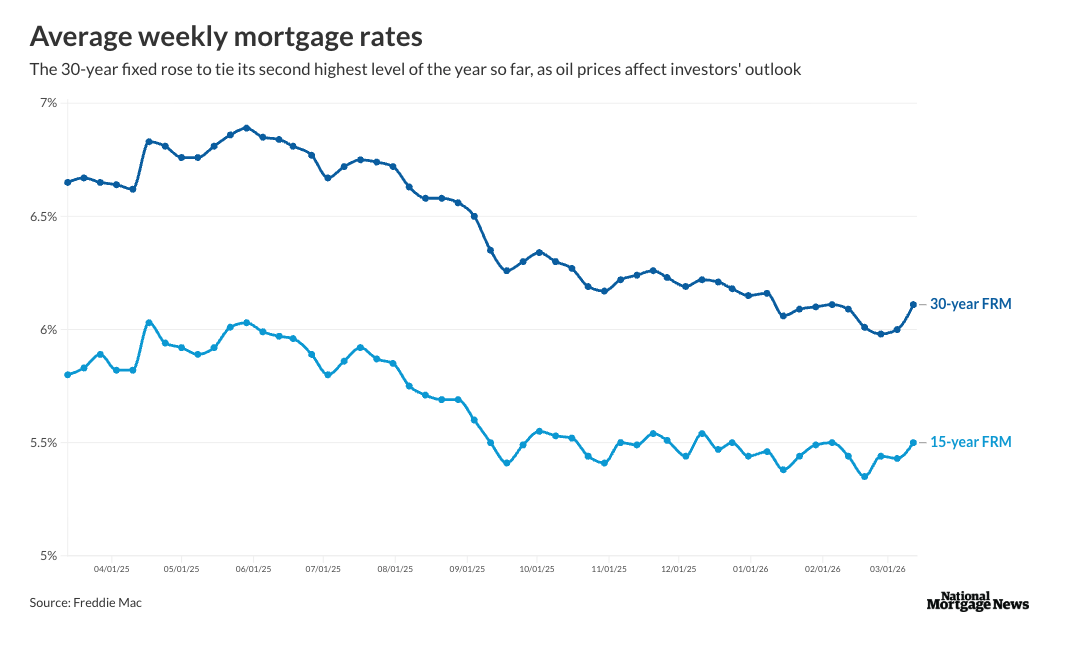
The Senate passed a bipartisan housing bill in an 89-10 vote, but how quickly and easily the bill can pass the House remains unclear. View the full article

- Today
-
For more than a century, Utah has kept gambling almost entirely out of the state. There are no casinos, no lotteries and no racetracks that allow bets, a prohibition rooted in the conservative ideals of The Church of Jesus Christ of Latter-day Saints, which views gambling as a vice that leads to selfishness and addiction. But now, the state is fighting a new, more challenging battle to keep gambling outside its borders. It’s on the verge of enacting a law intended to undercut prediction markets like Kalshi and Polymarket, which allow anyone with a smartphone to wager on anything from whether it will rain in Los Angeles to whether the United States will go to war. While regulators and other states are still debating whether those markets constitute finance or gambling, Utah has already made up its mind. “We are putting a casino in the pocket of every single American, and they are targeting especially young people,” said Gov. Spencer Cox. “It is really awful what they are doing, and we are going to make sure this doesn’t happen in our state.” Cox said he will sign the legislation, putting conservative Utah at odds with the federal government. Kalshi has already sued the state, and the company is backed by the Commodity Futures Trading Commission, the federal agency responsible for regulating financial markets. The conflict puts Utah, a place that’s not known for picking fights, on the frontlines of a cultural, political and economic battle sweeping the country. On one side is a state deeply rooted in what is widely known as the Mormon church, where both politicians and faith leaders have treated the issue as a moral crusade. On the other is a growing industry — Kalshi and Polymarket are estimated to be worth $20 billion each after their last fundraising rounds — with connections in Washington that may offer some regulatory protection. President Donald The President‘s eldest son is an adviser for both Kalshi and Polymarket and an investor in the latter. The President’s social media platform Truth Social is also launching its own cryptocurrency-based prediction market called Truth Predict. Whoever wins this round could shape how other states handle the issue in the future. “What’s at stake here is whether states will be able to regulate gambling or if gambling is going to be subsumed into finance and ultimately regulated by Congress,” said Todd Phillips, a professor at Georgia State University who has written extensively about prediction market regulation. Utah takes aim at prop betting Polymarket and Kalshi allow participants to buy and sell contracts tied to the probable outcome of an event. Contracts are typically priced between one cent and 99 cents, which roughly translates to the percentage of customers who believe that event will happen. The companies argue they offer products that allow customers to manage risk, like how farmers can buy corn futures to lock in the price of their crops ahead of time. And derivative markets like the Chicago Board of Trade and Chicago Mercantile Exchange have long offered what are known as binary options to investors, which bet on whether an event will or will not happen. But unlike those derivative markets, the bulk of Kalshi’s trading volume and roughly half of Polymarket’s are now tied to sports. Kalshi said it saw more than $1 billion in volume traded on the Super Bowl alone. Utah is seeking to limit prediction markets from doing business in the state by taking aim at proposition betting in sports, which can be a significant source of their revenue. The bill that Cox plans to sign would expand the state’s gambling ban to include wagers on certain events happening in a game rather than the game’s outcome. An example of these “prop bets” would be how well a particular player performs, or a team hitting a specific threshold like rebounds or other metrics. The legislation also aims to stop sportsbooks companies like FanDuel and DraftKings that have set up their own prediction markets, which analysts say could allow the companies to get around state gambling prohibitions. Because of the vocal opposition of Utah officials, Kalshi preemptively sued the state in late February, asking a federal judge to stop Utah from enforcing its gambling restrictions on the platform. The judge has yet to rule on Kalshi’s request. Other judges in Nevada and Massachusetts have issued early rulings in favor of states looking to ban Kalshi and Polymarket from offering sports betting in their states, while judges in New Jersey in Tennessee have ruled in favor of Kalshi. Kalshi argues its product is different from sportsbooks companies or casinos because customers are betting against each other instead of against the “house,” spokesperson Elisabeth Diana said. The Commodity Futures Trading Commission under The President has agreed with Kalshi and has asserted that it has exclusive regulatory oversight of prediction markets. The agency argues states cannot ban the products from operating in their jurisdiction just because they are morally opposed to them. “To those who seek to challenge our authority in this space, let me be clear, we will see you in court,” chairman Michael Selig said recently in a video posted to social media. A moral crusade with religious roots It’s the first major issue in which Cox has clashed with The President in the year and a half since the Republican governor worked his way into The President’s good graces after not voting for him in 2016 and 2020. Patrick Mason, the chair of Mormon history and culture at Utah State University, said he is not surprised to see Cox and other Utah Republicans take a stand against prediction markets, even if it means going against their own party’s leadership in Washington. In the state, where about half of the 3.5 million residents are Latter-day Saints, even a simple game of church bingo is a rare sight. “Maybe they play for M&Ms, but never money,” he said. All the state’s major politicians, including the governor, lieutenant governor and its entire congressional delegation, are members of the church headquartered in Salt Lake City. When they view an issue as moral rather than political, the faith’s teachings often take precedence over appeasing the party, Mason explained. Church doctrine prohibits gambling in any form, saying it is motivated by “a desire to get something for nothing” and is destructive to individuals and families. “The idea that it goes against a sense of work ethic, a kind of fair exchange, has always been at the heart of the way a lot of people think about themselves in terms of Utah identity, and certainly Latter-day Saint identity and ethics,” Mason said. Because of Utah’s religious roots, the state has prohibited gambling since it was admitted to the Union in 1895. Along with Hawaii, it has the strictest gambling prohibitions in the country. Utah doesn’t even allow broad multi-state lotteries like Powerball or Mega Millions. Utah leads on both state and federal fronts Phillips, the professor focused on industry regulation, said if Congress does not step in to clarify whether these new prediction markets are legal, the issue will be left to the courts. “The line between gambling and finance is very, very fine,” Phillips said. “There’s a reason why Congress has, over and over again, stepped in to define and regulate financial markets when the products skew too close to gambling.” There is already some movement on Capitol Hill, led in part by another Utah Republican. Republican Rep. Blake Moore of Utah and Democratic Rep. Salud Carbajal of California introduced bipartisan legislation this week to more aggressively regulate prediction markets. The bill would prohibit the platforms from allowing bets on war, assassinations, terrorist attacks or election outcomes, and allow states to ban sports-related betting. “We, as a society, should not be taking bets on whether we are going to invade Cuba,” Moore said. Democratic senators have also said they will introduce legislation to ban wagers on violence. “It’s insane this is legal,” Sen. Chris Murphy of Connecticut said on social media. In court filings, Kalshi has tried to argue that its sports prediction market has economic utility and usefulness. It uses an example of an insurance company that underwrites the careers of college athletes using prediction markets to hedge the risk. Kalshi also argues that hotels, travel agencies and stadium management companies may be able to use prediction markets to hedge their risk against underperforming sports. Moore said he is not swayed by Kalshi and Polymarket’s economic arguments. “Utah’s economic outlook has been strong for many years,” he said. “I see no need why we need to embrace these as an economic tool.” —Ken Sweet and Hannah Schoenbaum, Associated Press View the full article

-
In an age where connection is paramount for businesses, Slack has taken significant strides this February to enhance workplace dynamics. By integrating artificial intelligence more deeply into its platform, Slack is positioning itself as an indispensable tool for small businesses striving for seamless communication and efficient workflows. This update introduces two groundbreaking features: the Model Context Protocol (MCP) server and the Real-Time Search API. These tools reshape how small teams interact with both emerging AI technologies and existing data, facilitating better collaboration and knowledge sharing. The MCP server establishes a direct line between Slack and popular AI assistants like Claude and ChatGPT, making it easier for small business owners to harness the power of AI without leaving the platform. With the interactive message composer, users can draft, format, and preview messages directly within an AI conversation. This functionality streamlines the communication process, allowing for the quick generation of personalized messages that align with the brand’s voice and style. “Your AI doesn’t just know things. It can actually do things in Slack,” Slack stated, highlighting the platform’s potential. The Real-Time Search API further enhances this interaction by delivering immediate access to workspace data as it is generated. Gone are the days of waiting for indexation; this feature allows small businesses to respond swiftly to customer inquiries or internal audits. For teams dealing with fast-paced projects, being able to locate information instantly can significantly reduce delays and enhance productivity. An added layer of insight comes from the Semantic Search feature available for Slack’s Pro customers, which interprets user intent rather than merely relying on keywords. This enhancement enables more nuanced searches, allowing team members to locate relevant documents or discussions even when using shorthand or multiple languages. The potential for improved efficiency here is substantial, addressing a common pain point for small businesses that may lack extensive documentation or guidance on best practices. Besides enhancing AI capabilities, Slack has revamped its user interface to foster a smoother onboarding process for new team members. The new side panel introduces guided tasks that help newcomers acclimate by prompting them to upload profile pictures or send their first direct messages. This feature simplifies integration for small teams, ensuring that everyone gets up to speed quickly and minimizing the disruption often experienced during new hires. However, there are practical considerations for small business owners when leveraging these new features. Integrating AI into workflows could require an adjustment period, particularly for teams less familiar with technology. Additionally, as Slack rolls out these updates, some features may not be immediately accessible based on licensing plans, necessitating ongoing communication with company administrators. Moreover, small businesses must weigh the potential costs associated with adopting new AI technologies. While the upfront investment may seem daunting, the long-term efficiencies gained from enhanced collaboration and streamlined operations could justify the expenses. As organizations look to make their communication more efficient, Slack’s new features suggest a pathway to greater connectivity. “We’re focused on making those bonds stronger and smarter,” the company emphasized, underlining the importance of cohesive teamwork in today’s business landscape. In summary, enhancing AI’s integration within Slack offers numerous benefits for small business owners, from improved message drafting to immediate data retrieval. While some challenges exist, particularly around technology adoption and cost, the potential to significantly enhance team efficiency makes these updates worth exploring. To learn more about these features, including their rollout timelines and availability, visit Slack’s Innovations webpage. As small businesses continue to navigate the evolving marketplace, tools like Slack promise to provide the connectivity necessary to thrive in a competitive environment. Image via Google Gemini This article, "Slack Unveils AI Enhancements to Strengthen Team Connections and Productivity" was first published on Small Business Trends View the full article
-
In March 2022, Congress passed a law mandating that, to commemorate the law enforcement officers who responded to the attack on the U.S. Capitol on January 6, a plaque needed to be placed on the western front of the Capitol building listing each of the officers’ names. The law stipulated that this plaque should be up within a year. As of early 2026, though, the finished plaque was collecting dust in the depths of the Capitol’s basement next to a pile of tools and maintenance equipment. For the past three years, the plaque’s future has become caught up in a game of partisan cat and mouse. After leadership in the House shifted to Republicans in 2023, multiple Democrats claimed that House Speaker Mike Johnson purposefully stalled the plaque’s installation. Johnson failed to give the go-ahead for its installation to the Architects of the Capitol, the steward of the Capitol building that was charged by Congress with commissioning and mounting the plaque. These delays continued for so long that two of the officers involved in the attack, Harry Dunn and Daniel Hodges, sued the Architects of the Capitol last summer. Finally, on March 7, the plaque went up—albeit inside a hallway without public access—and it was all thanks to one clever design add-on: a tiny QR code. A commemorative plaque gets caught in design drama Before the plaque finally made its way to the Capitol, most Democrats who spoke on the matter were of the mind that Republican leaders were strategically delaying its display as much as possible. Oddly enough, Johnson tried to refute these claims by shifting the blame onto the plaque’s actual design. Back in May 2025, House Minority Leader Hakeem Jeffries said in a news conference that the reason for the delay was that Republicans, “directed by their puppet master Donald The President, have been told, ‘Try to erase January 6 as if it has never happened.’” But in an interview with PBS on January 6, a spokesperson for Johnson said that the plaque could not go up “because of logistics,” claiming that they had not found a way to fit the 3,000 officers’ names onto the plaque. Presumably, Johnson’s team was referring to the original language of the March 2022 law, which stated that the Architect of the Capitol’s plaque needed to list the names of “all of the officers of the United States Capitol Police, the Metropolitan Police Department of the District of Columbia, and other Federal, State, and local law enforcement agencies and protective entities who responded to the violence that occurred at the United States Capitol.” This constraint, they appeared to argue, made the project “not implementable.” “Honor is a social—that is, public—recognition” But Johnson’s hesitance to approve the plaque’s installation was ultimately overridden in early January, when Senators Jeff Merkley and Thom Tillis helmed a resolution ordering the plaque’s display, which was passed unanimously in the Senate. When the plaque finally did make it to the walls of the Capitol, the Architects of the Capitol addressed Johnson’s design concerns with a simple fix: a tiny QR code, set in its own frame next to the plaque, that links to a list of all of the officers present on January 6. According to a report from The Washington Post, that list goes on for 45 pages. [Photo: Getty Images] The plaque itself is a fairly small bronze rectangle that includes an image of the Capitol building with the phrase, “On behalf of a grateful Congress, this plaque honors the extraordinary individuals who bravely protected and defended this symbol of democracy on January 6, 2021. Their heroism will never be forgotten.” Beneath it is a list of the law enforcement departments who lent their help during the attack. For the two officers who sued the Architects of the Capitol, this outcome is too little, too late. “This is a fine stopgap, however they are not yet within full compliance of the law and the weight of a judicial ruling would help secure the memorial against future tampering,” Hodges wrote on Twitter. “Our lawsuit persists.” On March 10, Hodges and Dunn filed a motion asking a judge to allow their lawsuit to proceed. The document argues that the plaque, which was hung inside a pair of Capitol doors, should’ve been affixed to the exterior of the building per the original law, and that its current location keeps it out of the public eye. “Honor is a social—that is, public—recognition,” the filing reads. “Hidden from all visitors, the current location is no different than the basement the plaque was kept in for years.” View the full article

-
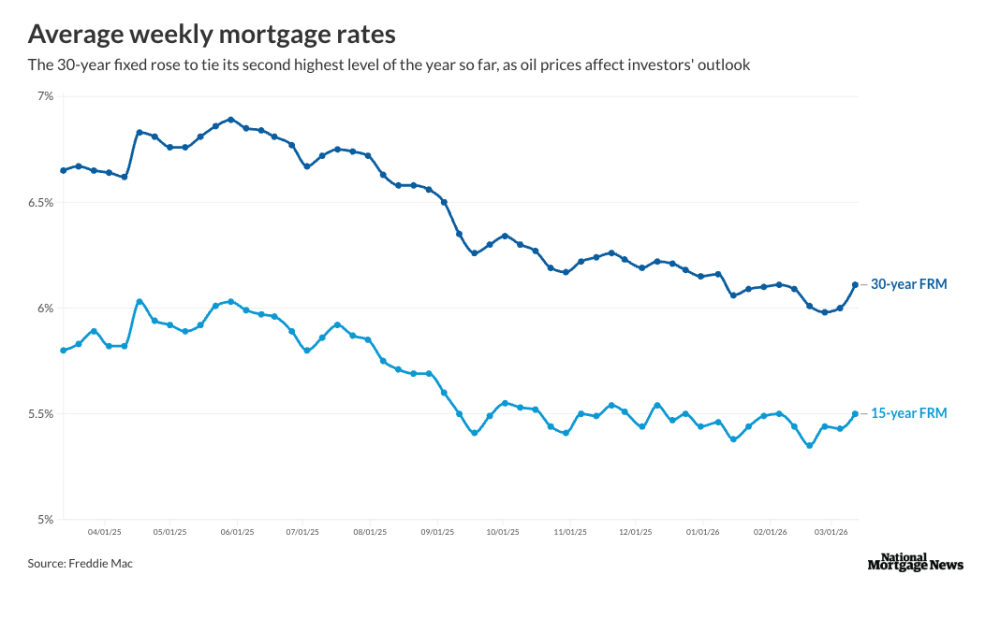
The conflict pushed oil price futures above $100 a barrel for a short time earlier this week, which affected bond investors and the 10-year Treasury yield. View the full article
-
An “unprecedented,” potentially record-breaking heat wave is expected to hit much of the American southwest, from California to Colorado, this week—and experts are concerned about how temperatures will affect the region’s already-low snowpacks. Temperatures in the Los Angeles area will be 15 to 25 degrees above seasonal norms on Thursday, March 12, and Friday, March 13, according to the National Weather Service (NWS), reaching into the 90s along the coast and potentially above 100 degrees in some areas. “Given the unprecedented length and magnitude of this extreme heat wave, heat stress will be increasing each day, especially in areas that aren’t used to the heat, like the coastal areas,” forecasters wrote. Scorching temperatures will stretch through the southwest Tucson, Arizona, could see its earliest 100-plus degree day next week; the March monthly record high for Tucson is 99 degrees, according to the NWS. Parts of Colorado are forecast to reach into the 90s, which would break state records. Some parts of the southwest could see triple-digit temperatures, when they have never before experienced that this early in the year, climate scientist Daniel Swain said on a recent livestream. The heat wave is expected to last for the “foreseeable future,” he added, with a 10- to 14-day stretch of “extraordinarily anomalous weather.” “It is quite likely that many cities and probably many states will set new all-time high March temperature records, as well as new records for the month of March cumulatively overall,” Swain said. “All the way from Colorado to California, I think we’re going to hit records everywhere in between.” Heat wave threatens already-low snowpacks The extreme March heat wave comes on the heels of the warmest winter on record for the majority of the American west and Southern Plains. That’s based on 131 years of climate data. It was also an exceptionally dry winter across the West, which has left the region, including the Sierra Nevada, with below-average snowpacks. Many Western communities, including in California, depend on snowpacks as crucial natural reservoirs. They store water through the winter and release it over the spring and summer. The heat waves, though, threaten to melt the already-sparse snow, which means the reservoirs may not have enough water for residents and farms later in the year. “The current snowpack is under 50% of its average throughout much of the American West,” Swain said. “Every single basin, with no exceptions in the Western U.S. . . . is below average.” No “miracle March” this year Meteorologists and climate experts use the term “miracle March” to describe the way the month can restock reservoirs, even after a winter without much water or snow. Cold, wet March conditions can “turn a dry winter into a not-so-dry winter,” Swain said. But this year, Swain noted, “that is not going to happen.” The record-breaking heat wave brings long-term concerns. Along with reducing the amount of water in reservoirs, it could set up dry soil conditions for the summer, which increases the risk of wildfires. The fact that these temperatures are coming so early in the year is also a concern for climate experts. “We’re about to experience the hottest March temperatures we’ve ever seen across a lot of the Western U.S.,” Swain said. “This is going to be a heat wave that people aren’t going to be able to ignore because of when it’s happening.” View the full article

-
Just days after settling with the Department of Justice (DOJ), ticketing company Live Nation is again under fire after internal messages between employees revealed bragging about “taking advantage” of ticket buyers. In message exchanges from 2022, two regional directors of ticketing for Live Nation amphitheaters, Ben Baker and Jeff Weinhold, boasted about the prices they were able to get away with charging customers for ancillary fees, including things like parking, lawn chair rentals, and VIP access, with Baker writing, “I gouge them on ancil prices.” In one exchange, Weinhold shared how he was able to charge $250 for VIP parking at a venue. “These people are so stupid,” Baker replied. “I almost feel bad taking advantage of them.” In another series of messages, Baker says he charges customers “$50 to park in the grass” and “$60 for closer grass.” “Robbing them blind baby,” he added. “That’s how we do it.” The DOJ’s antitrust trial against Live Nation and Ticketmaster began this month, with the government alleging that Live Nation’s control of Ticketmaster was monopolizing the ticketing industry and leading to unfair pricing for consumers. Last week, Live Nation filed a request for the judge to exclude six sets of Baker and Weinhold’s messages from the trial, arguing that they would unfairly bias the jury. The DOJ and attorneys general for the states suing Live Nation opposed the request, and several media organizations later petitioned for the documents to be unsealed. On Monday, the DOJ and Live Nation reached a surprise settlement, letting the company retain ownership of Ticketmaster—but despite a legal win for Live Nation, the Baker and Weinhold messages have dealt another blow to the brand’s reputation. In a statement to Fast Company, Live Nation condemned Weinhold and Baker’s conduct, adding that its own executives were unaware of the exchange prior to the trial documents being unsealed. “The Slack exchange from one junior staffer to a friend absolutely doesn’t reflect our values or how we operate,” reads the statement. “Because this was a private Slack message, leadership learned of this when the public did, and will be looking into the matter promptly.” A spokesperson for Live Nation emphasized that Baker and Weinhold’s behavior was against company policy, and that their pricing exceeded limits put in place to protect ticket buyers. “We are digging into it now that we are aware,” the spokesperson added. “This is not at all an acceptable way to behave or talk, and important to note that these are not executives.” View the full article

-
An analysis of ChatGPT conversations found the default and premium models cite almost entirely different sources for the same queries. The post ChatGPT’s Default & Premium Models Search The Web Differently appeared first on Search Engine Journal. View the full article
-
When you’re looking for the best clearance deals on craft supplies, consider several reliable sources. Major craft retailers like JoAnn’s, Michaels, and Hobby Lobby often have significant discounts during seasonal sales. Thrift stores can likewise offer unique items at low prices, with dedicated crafting sections. Furthermore, online marketplaces such as eBay and Facebook Marketplace provide access to second-hand supplies. Exploring community garage sales can uncover bulk items for budget-friendly crafting. Discover more effective strategies for maximizing your savings. Key Takeaways Thrift stores often have dedicated crafting sections where materials are sold at a fraction of their original prices, perfect for budget-conscious crafters. Major craft retailers like JoAnn’s and Michaels frequently run clearance events with discounts ranging from 40% to 70%. Online marketplaces such as eBay and Facebook Marketplace feature local sellers with second-hand craft supplies at significant discounts. Community sales and garage sales offer unique opportunities to find bulk craft items at reduced prices during warmer months. Subscribing to newsletters from craft stores can keep you informed about exclusive sales, weekly coupons, and seasonal clearance events. Thrift Stores for Craft Supplies When you explore thrift stores for craft supplies, you’ll often discover a treasure trove of materials at prices that are hard to beat. Many thrift shops have dedicated crafting sections where you can find discount card making supplies, fabric, ribbons, and embellishments. These items are usually sold at a fraction of their original cost, making them ideal for budget-conscious crafters. Regular visits can yield unique finds, especially during seasonal sales or tag events, where items may be discounted by 50% or more. Furthermore, community thrift stores often host craft supply swaps or donation events, allowing you to exchange materials and discover new items without spending money. Checking various stores improves your chances of finding specialized clearance craft supplies. Major Craft Retailers’ Clearance Events Major craft retailers frequently hold clearance events that can considerably reduce your crafting expenses. Stores like JoAnn’s Fabric offer weekly coupons that can knock up to 40% off regular prices, making it an ideal time to stock up on supplies. Michaels Craft Store often runs sales, allowing you to save 40%-50% on a wide range of materials. Moreover, Hobby Lobby’s clearance schedule features seasonal sales, with discounts reaching up to 70% during holiday shifts. Don’t overlook Dollar Tree for budget-friendly options, as all items are priced at just $1 each. With these major craft retailers offering significant craft supplies clearance, you’ll find numerous opportunities to improve your crafting projects without overspending. Online Marketplaces for Bargain Finds When you’re on the hunt for craft supplies at budget-friendly prices, online marketplaces offer a wealth of options. Platforms like Craigslist and Facebook Marketplace often feature local sellers offering second-hand items, whereas eBay can connect you with crafters looking to clear out their supplies. Furthermore, don’t overlook local buy/sell groups on social media, as they can be great resources for finding unique bargains in your area. Popular Online Platforms Finding quality craft supplies at affordable prices is easier than ever, thanks to a variety of online platforms that cater to bargain hunters. Websites like eBay and Facebook Marketplace offer a vast selection of used or surplus materials, perfect for those seeking clearance crafts without breaking the bank. You can additionally check Craigslist and Freecycle for free or heavily discounted local supplies. Etsy frequently features sellers who’ve clearance events, providing competitive prices on craft supplies. Amazon is another reliable option, with numerous discounts and user reviews ensuring quality purchases. Finally, specialty sites like CraftDirect keep their clearance crafts catalog updated, offering great deals on items like ribbons, embellishments, and scrapbooking materials. Local Buy/Sell Groups Local buy/sell groups on platforms like Facebook Marketplace and Craigslist offer a treasure trove of gently used or surplus craft supplies, allowing crafters to score significant savings. These local buy/sell groups often showcase scrapbook supplies clearance and other craft materials at lower prices. Many community groups host events or online pages where members can list items they no longer need, making it easy for you to find unique tools and supplies not commonly available in stores. Participating in these groups can furthermore provide exclusive deals or swap opportunities, rejuvenating your supplies without spending more. Item Type Average Price Scrapbook Paper $5 Craft Paint $3 Beading Supplies $10 Knitting Yarn $8 Sewing Fabrics $6 Community Sales and Garage Sales Community sales and garage sales present excellent opportunities for crafters to discover a wide range of supplies at affordable prices, particularly during the warmer months when these events are most frequently organized. Many sellers aim to declutter their homes, often offering bulk craft items at greatly reduced prices, making it perfect for bargain hunters. You might find clearance craft kits, assorted fabric, or even materials for scrapbook clearance. By attending multiple garage sales in one day, you’ll encounter various households with different crafting items to offer. Furthermore, networking with local crafters at these sales can provide valuable information about upcoming events, swaps, or free supply exchanges, enhancing your crafting experience and broadening your supplies without breaking the bank. Utilizing Coupons and Seasonal Sales Regarding saving money on craft supplies, utilizing coupons and taking advantage of seasonal sales can make a significant difference in your budget. Stores like JoAnn’s Fabric often provide weekly coupons for 40% off regularly priced items, whereas Michaels Craft Store offers discounts ranging from 40% to 50%. You should additionally look for seasonal sales, especially after holidays, to find clearance scrapbook paper and other supplies at reduced prices. Second-hand stores are another option, with many holding seasonal sales offering 50% off specific tags. To stay informed, subscribe to newsletters from craft retailers, ensuring you’re updated on upcoming sales and exclusive coupon offers. This strategy can lead to substantial savings over time. Networking With Local Crafters Networking with fellow crafters can greatly improve your crafting experience as well as assisting you save money on supplies. Joining local crafting groups on social media connects you with others who often exchange or sell unused materials at discounted prices, including clearance art supplies. Participating in community events or craft fairs offers opportunities to meet crafters who’ve insider knowledge about sales and scrapbook deals in your area. Organizing craft supply swaps lets you trade excess items, allowing you to refresh your stash without spending money. Moreover, many local groups host “buy/sell” events where members list surplus supplies at reduced prices, nurturing a supportive atmosphere for budget-conscious crafters enthusiastic to network and save. Frequently Asked Questions Is Michaels or Hobby Lobby Better for Craft Supplies? When considering whether Michaels or Hobby Lobby is better for craft supplies, you’ll find Michaels offers a wider variety and frequent weekly coupons ranging from 40% to 50% off. They additionally have a rewards program that provides additional savings. Hobby Lobby, although known for extensive home décor, has rotating sales that can be beneficial, but you may need to plan purchases carefully. Do Craft Supplies Go on Sale at Hobby Lobby? Yes, craft supplies do go on sale at Hobby Lobby. You’ll often find weekly sales featuring items at discounts of up to 40% off. Furthermore, clearance sections offer significant markdowns, sometimes reaching 90% off original prices. To stay updated on current sales, check Hobby Lobby’s mobile app or website regularly. This way, you can find seasonal decor, fabric, and other crafting necessities at reduced prices, helping you save money on your projects. What Is the Most Popular Craft Store? When considering the most popular craft store, Michaels often tops the list because of its extensive selection and frequent sales. JoAnn’s Fabric likewise has a strong following, especially for fabric enthusiasts. Hobby Lobby is well-known for its diverse inventory and seasonal promotions. Although AC Moore has diminished in presence, Dollar Tree remains a favorite for budget-friendly options. Each store caters to different crafting needs, making them popular among various crafting communities. How to Declutter Your Craft Supplies? To declutter your craft supplies, start by sorting items into categories like paper, tools, and embellishments. Use clear bins or labeled containers for easy access and to reduce clutter. Regularly assess your inventory; if you find duplicates or unused items for over a year, consider donating or selling them. Create a “project box” for ongoing projects, and set a routine to review your supplies every few months, keeping your collection manageable. Conclusion In summary, you can find great craft supply deals by exploring thrift stores, major retailers’ clearance events, and online marketplaces. Community garage sales likewise offer excellent opportunities for bulk purchases at low prices. Furthermore, take advantage of coupons and seasonal sales to maximize your savings. Ultimately, networking with local crafters can lead to shared resources and recommendations for the best places to shop. By utilizing these strategies, you’ll improve your crafting experience as you stay within budget. Image via Google Gemini This article, "Best Places for Craft Supplies Clearance Deals" was first published on Small Business Trends View the full article
-
A reader writes: I have a situation at work where my favorite work friend is now not speaking to me because of politics. We have political differences, but we have always been respectful and it’s never caused an issue before. Now I’m getting shut out because I’m, quote a part of the left. Wondering if you could do one of your round-ups of past posts about friendships going sour, or awkwardness at work. I know to be kind and professional, and I’m giving her space. But would be nice to have a re-read of some of the older posts. I suspect maybe I’m not alone in this. Yes! Here you go: friends at work friend drama may collide with job hunt I referred my friend to my company and she turned out to be an awful coworker am I allowed to have friends at work if I work in HR? my friend has bad judgment about work — and we work for the same company should I warn my work friend she might get fired? my boss says we shouldn’t be friends with former coworkers I now realize a work friendship wasn’t healthy — where do I go from here? some of the awkwardness that can come up from working with friends how to work with a friend who has stopped talking to me work is ruining one of my closest friendships my childhood friend just took a job at my office and is being inappropriate I can’t keep helping my work BFF do her job I’ve been covering for a friend’s work mistakes I’ve encouraged a coworker to vent about her boss — my friend a friendship break-up with a difficult coworker my coworker is making our friend break-up really weird will my angry work friend harm my reputation? my needy boss wants me to “adopt” her my friend is a terrible coworker I’m upset that my friend wants to work for the company that laid me off friends, work, and competition what are the ethics of applying for a job that a friend wants? when should I tell my friend I applied for a job she wants? when you want to make friends at work I want to turn a professional contact into a friend should I put more effort into making friends at work? I haven’t made friends at my new job my coworkers all hang out without me getting to know your coworkers when you can’t hang out after work everyone at work is hanging out without me when you don’t want to make friends at work my coworker isn’t picking up on my cues that I don’t want to be friends my coworker has become needy and wants a closer friendship than I want I don’t want to be friends with my coworker my boss wants to be my BFF how do I step back from a friendship with an intensely negative and argumentative coworker? when your friend is your boss my friend is a terrible boss I’m becoming my friend’s boss — do things have to change? some palate cleansers good things that came from socializing with coworkers: marriages, dog adoptions, and more good things that came from socializing with coworkers: jobs offers, knitting, mac and cheese, and more The post friendships at work: a round-up appeared first on Ask a Manager. View the full article
-
At a recent AI summit in New Delhi, Sam Altman warned that early versions of superintelligence could arrive by 2028, that AI could be weaponized to create novel pathogens, and that democratic societies need to act before they are overtaken by the technology they have built. These concerns are widely shared across the industry. Geoffrey Hinton, the Nobel laureate known as “the godfather of AI,” has warned that creating digital beings more intelligent than ourselves poses a genuine existential threat. Mustafa Suleyman, CEO of Microsoft AI, devoted much of his book The Coming Wave to the argument that AI’s fusion with synthetic biology could put the tools to engineer a deadly pandemic within reach of a single individual. These are not warnings about a distant future. Last week, a clash over who controls AI and on what terms led to a complete collapse in the company’s relationship with the Pentagon. When politicians and business leaders try to make sense of issues like these, they are often tempted to look to the pharmaceutical industry for a regulatory model. Senator Richard Blumenthal—one of the few legislators actively pushing for meaningful AI regulation—has proposed that the way the U.S. government regulates the pharmaceutical industry can serve as a model for AI oversight. The analogy makes intuitive sense. The pharma model shows that strict licensing and oversight of potentially dangerous emerging technologies can limit threats without placing undue restrictions on innovation. The instinctive attraction of this approach isn’t confined to legislators. Many companies are applying the same logic internally—whether consciously or not—managing AI risk through stage-gate reviews, pre-deployment testing, and post-launch monitoring. The pharma model, in other words, is already the de facto governance framework for much of the industry. The problem is that it’s the wrong framework—and the differences are not just technical but existential. Three disanalogies that matter Pharmaceutical regulation works because the barriers to entry are high, the product is physical and controllable, and the development cycle is slow enough for oversight to keep pace. None of these conditions hold for AI. First, barriers to entry are very different. Bringing a new drug to market costs an average of $1.1 billion, according to a 2020 study published in the Journal of the American Medical Association. The infrastructure alone—laboratories, clinical trial networks, manufacturing facilities—limits production to a relatively small number of identifiable companies that regulators can monitor. AI has no equivalent friction. Capable models can be built for a fraction of that cost, fine-tuned on consumer hardware, and deployed globally from a laptop. The universe of actors a regulator would need to track is not a handful of identifiable companies—it is potentially anyone, anywhere. Second, a pharmaceutical product is physical. Manufacturing it requires raw materials, specialized equipment, and distribution logistics. All of this creates friction that regulators can exploit by imposing oversight checkpoints. But code has no such friction. Once released, an AI model’s weights can be copied number-for-number and shared across borders far more quickly than any physical weapon or industrial system. Its marginal cost of replication is effectively zero. And you cannot recall software the way you recall a contaminated drug. Once it is in the wild, it stays in the wild. Even capabilities that are delivered purely through access to the cloud are vulnerable to replication and thus to the breaking of corporate or regulatory guardrails. In just the last month, Anthropic disclosed that three Chinese AI labs—DeepSeek, Moonshot, and MiniMax—had used 24,000 accounts to generate over 16 million exchanges with Claude, extracting its most advanced capabilities through a technique called distillation. The Chinese labs did not need to infiltrate a supply chain or build expensive factories. They only needed API access and carefully crafted prompts, routed through proxy networks designed to evade detection. There is no pharmaceutical equivalent of this replicability. The final crucial disanalogy is speed. The pharma approval pipeline assumes that a product will go through years of controlled testing before it reaches the public. But AI models evolve on software timelines. Capabilities improve not only through hardware gains but through software updates, new training methods, and frequent model releases that can produce meaningful jumps in weeks rather than years. Anthropic, for instance, shipped two major Claude releases within ten weeks. The iteration cycle is so fast that by the time any pharma-style approval process could hope to evaluate a model, that model would already be obsolete – replaced by something far more powerful for which the evaluation process had not even begun. Why “test, deploy, monitor” doesn’t work The problem isn’t confined to government. The same pharma-shaped thinking that distorts regulatory frameworks has taken root inside organizations—and it leaves them exposed for the same reasons. Pharma-type risks are familiar: a product might have harmful side effects, so you test it before deployment, monitor it afterward, and pull it back if something goes wrong. Even without an external regulator, many companies are applying this logic to AI internally, managing risk via the familiar means of stage-gate reviews, pre-deployment testing, and post-launch monitoring. It feels responsible. It feels sufficient. This is precisely the danger. Of course, stage-gate reviews and pre-deployment testing are not worthless. They catch real errors, enforce discipline, and create a paper trail that demonstrates due diligence to boards and regulators. Any organization that has implemented them is better off than one that has done nothing. But these frameworks create a false sense of coverage. The risk they manage is the risk they were designed for—product defects, adverse effects, quality-control failures. AI’s risk profile has a different shape entirely. It is defined by the potential for irreversibility, rapid proliferation, and misuse. Not every AI-driven outcome will trigger these risks. But unlike a defective product, you cannot issue a recall once the damage is done. This combination of potential threats means that the familiar toolkit of managed risk simply doesn’t fit—and organizations that believe it does are accepting exposures they haven’t mapped. It is precisely to meet these challenges that we developed the OPEN and CARE frameworks for managing AI innovation and risk. The CARE framework, in particular, provides a structured methodology for governing AI risk and is the foundation for the recommendations that follow. Build governance for AI risk The CARE framework works through four stages: Catastrophize, identifying what could go wrong; Assess, prioritizing those risks; Regulate, implementing controls; and Exit, planning for when those controls fail. Applied to your organization’s AI exposure, the framework points toward five immediate actions. 1. Surface your shadow AI exposure. Ask your direct reports one question: what AI tools are you using that weren’t provided by the company? The answers will tell you how large the gap is between the AI your organization officially uses and the AI your people are actually relying on. 2. Map your irreversibility points—and your fallbacks. Identify the AI-dependent processes where a failure would be irreversible or highly damaging, such as automated customer communications, AI-assisted code pushed to production, algorithmic hiring screens. Ask whether your current safeguards assume you can catch and correct errors before they reach the outside world. If they do, redesign them—and build explicit fallback procedures for when they fail anyway. 3. Lock down your data exposure. Every AI tool your organization touches is a data pipeline running in both directions. Classify your data into tiers—public, internal, confidential, restricted—and map which AI tools are authorized for each tier. Audit your vendor agreements for training-data clauses. The moment proprietary data enters a third-party system, your ability to recall it is gone. 4. Red team for misuse, not just malfunction. Red teaming for malfunction asks “What if this breaks?” Red-teaming for misuse asks “What if this works exactly as intended and someone uses it for the wrong purpose?” As the CARE framework’s Catastrophize phase emphasizes, you need both. 5. Assign clear executive ownership. None of the above matters if accountability is diffused across committees. Designate a single executive who owns AI risk the way your CFO owns financial risk. That person needs authority, budget, and a direct line to the board. The real stakes For decades, pharma-style regulation has been one of the most successful bets in business: a framework that protects the public without strangling the industry. But the model is insufficient for AI. At the governmental level, serious people are reaching for serious solutions. Sam Altman’s call at the New Delhi summit for an international regulatory body modeled on the International Atomic Energy Agency reflects a clearer-eyed view of what kind of technology this is—one that demands oversight frameworks commensurate with its actual risk profile, not models borrowed from industries that don’t share its characteristics. Business leaders should follow the same path. The category of problem that governments are grappling with at the international level is the same category of problem you are grappling with inside your organization. Design your governance accordingly—for the technology you actually have, not the one you wish you were dealing with. View the full article

-
Do they see the ROI? By Sandi Leyva Go PRO for members-only access to more Sandi Smith Leyva. View the full article
-
Do they see the ROI? By Sandi Leyva Go PRO for members-only access to more Sandi Smith Leyva. View the full article
-
Welcome to AI Decoded, Fast Company’s weekly newsletter that breaks down the most important news in the world of AI. You can sign up to receive this newsletter every week via email here. AI pioneer pulls in a cool billion to launch his “world model” AI company Yann LeCun, one of the pioneers of AI and Meta’s former chief AI scientist, has long argued that large language models alone will not produce AI systems that outperform humans at most tasks. LeCun says today’s transformer-based large language models are useful enough to be applied in valuable ways, but he also believes they are unlikely to achieve the general or human-level intelligence needed to perform many high-value tasks now reserved for human brains. He has found no shortage of AI commentators on X who disagree with him. Now he and his investors are placing a big bet that he’s right. LeCun’s new company, Advanced Machine Intelligence (AMI), says its “building a new breed of AI systems that understand the world, have persistent memory, can reason and plan, and are controllable and safe.” The company said Wednesday that it raised a $1.03 billion funding round from a group of investors including Cathay Innovation, Greycroft, Hiro Capital, HV Capital, and Bezos Expeditions. Former Google CEO Eric Schmidt and Tim Berners-Lee, who invented the World Wide Web, also threw in. AMI is likely to build models, or systems of models, that can train on a wider variety of data than today’s LLMs. LeCun believes that AI systems need more than an understanding of words to truly understand and navigate the real world. They need to model the world in a very different way–one that starts with an ability to represent spatial data and develop a native understanding of physics. The AI would also need a very different architecture to structure all that high-bandwidth data. LeCun is in good company in this view: World Labs CEO Fei-Fei Li and UC Berkeley robotics lab director Pieter Abbeel are among those researching and building world models.) Even during his tenure at Meta, LeCun was working on (and writing papers about) these concepts. Now he’ll need to attract enough top research talent to flesh out those theories and build the models. Since LeCun is something like royalty in AI circles, I suspect he’ll attract the people he needs to take a good shot at functioning world models. A week after launch, OpenAI’s GPT-5.4 is getting good reviews Generative models continue to improve, and the cadence of those improvements appears to be accelerating. Most recently, OpenAI released its newest model, GPT-5.4, which it says combines advances in reasoning, coding, and agentic workflows. Now that ChatGPT users and software developers have had a chance to try the model, some themes are emerging about its strengths and weaknesses relative to other frontier systems. My impression is that the reception has been mixed, based on comments from users, developers, and researchers on X. Many say the model is more project-oriented, meaning it is better able to understand and orchestrate general information work tasks, including those involving autonomous agents. On the other hand, some critics say GPT-5.4 is not a big enough leap forward in intelligence. Others argue the model is less adept at creative tasks, such as user interface design, than earlier GPT models. But most people would agree that GPT-5.4 is a big enough improvement to keep OpenAI at least on pace with its rival Anthropic, whose newest model, Claude Opus 4.6 got glowing reviews—especially for the agentic improvements it brought to the Claude Code tool. Note that OpenAI’s GPT-3.5-Codex model, launched in early February, brought similarly impressive improvements to OpenAI’s Codex coding tool. The release of new versions of the base models now seem to affect the popularity of the consumer chatbots they power. After Google released its breakthrough Gemini 3 models last year, the Gemini chatbot saw big gains in usership. After Anthropic’s release of Opus 4.6 in February its Claude chatbot went to number one on the Apple Store’s free apps ranking for the first time. After the release of GPT-5.4, the ChatGPT retook the number one spot. Tick-tock, Tick-tock. It’s becoming clear that flagship AI models from the major labs are being built and trained to power agents, not just chatbots. That is, they are getting better at performing tasks rather than simply talking, whether that means operating a computer, researching on the web, or planning large projects. This shift from chatbots to agents will likely become more pronounced with future models, especially as the chatbot interface evolves to look more like a workspace. Amazon puts some organizational guardrails around AI coding tool use AI coding tools have had the most impact of any application of generative AI so far. They can dramatically speed up code production. But there are side effects. The Financial Times reported this week that Amazon’s AWS cloud division held a large meeting of its engineers after a series of service outages, at least two of which were reportedly caused by code alterations made by an AI coding tool, and one of which was linked to Amazon’s Kiro coding tool. Amazon says it will now require junior and mid-level engineers to obtain more senior-level sign-off for AI-assisted code changes. Since the explosion in the use of AI coding tools began last year, software engineers have been arguing about how much human oversight the tools require. The tools are improving, as are the AI models underneath them, but they still write code that ends up causing bugs, sometimes discovered long after the code was written. Amazon says its outages stemmed from user error rather than an AI failure. The company also said that AI coding tools can amplify existing engineering weaknesses such as weak safeguards, poor documentation, and bypassed review processes. That’s more than PR talk. I’ve heard from a number of developers that engineers, especially younger ones, can lean too heavily on the tools, expect too much from them, and end up lowering their usual software development hygiene practices. “I think we need to be clear that it is not magic,” Replit CEO Amjad Masad said of coding tools during an interview last summer. The problem often leads to a lack of proper code validation, security testing, and documentation. I suspect that both the tools and their users will have to change. The tools must shift toward proactively pushing human engineers toward better testing and validation practices, while human coders will continue to learn what their AI coding partners can and cannot do. More AI coverage from Fast Company: ChatGPT Edu feature reveals researchers’ project metadata across universities Google’s Gemini AI wants to do the busywork in Docs and Sheets Anthropic’s Pentagon showdown is drawing Silicon Valley into a larger fight AI agents are coming for government. How one big city is letting them in Want exclusive reporting and trend analysis on technology, business innovation, future of work, and design? Sign up for Fast Company Premium. View the full article

-
Tech companies really want you to start talking to their products. And sure, that makes sense for an Amazon Echo, or even ChatGPT's voice mode, but I'm not sure I need to talk to my apps. Google disagrees: The company is now rolling out "Ask Maps" to iOS and Android users in the U.S. and India, making Google Maps the latest such product to implement an AI assistant. It begs the question: Will you talk to your navigation app while out on the road? Google's pitch for Ask Maps is this: Rather than search for generic stops along your route (e.g. "coffee," "gas station," or "hotel"), you can "Ask Maps" complex questions to increase your chances of finding something specific. One of Google's example questions is, "My phone is dying—where can I charge it without having to wait in a long line for coffee?" That's a tall order not usually fit for a navigation app's search feature—you want the app to find a location with public outlets that serves coffee, but isn't too busy at the time you're heading out. Type that into the typical search feature, and you'll instantly get a pop-up that reads "No results found on Google Maps." Google says that Ask Maps can analyze information from over 300 million locations, including sifting through the reviews of its more than 500 million contributors. The results also take your past searches into consideration, as well as any saved locations you may have in Maps. In another example, Google says you could ask your Google Maps assistant to find you a spot with a "cozy aesthetic" and a table for four at 7 p.m., to meet up with friends coming from Midtown East. Ideally, the assistant would know not to pull up any Midtown East spots, since the friends are coming from that location, cross-reference restaurants with "cozy" reviews that have that availability—plus, it may know from past searchers that you are vegan, so it will only return results with vegan options. Credit: Google This is Google, so, of course, Maps' assistant is powered by Gemini. In concept, it is an interesting implementation of generative AI. I certainly wouldn't have a chat with Ask Maps, but I'd be curious whether it'd really deliver on these contextual requests. If I really could tell Google Maps that I needed to find a restaurant with availability in 30 minutes that could accommodate both a gluten and peanut allergy, within a 15 minute radius of a concert venue, sure, that'd be super helpful. But AI isn't perfect. In fact, it has a habit of making things up. It'd be a shame to walk into that restaurant and find out it doesn't have gluten free options, or that everything is fried in peanut oil, or that they don't actually have availability, or that it is indeed a 15 minute walk to a concert venue, but not the concert venue you're aiming for. If that request overwhelms the AI and returns results that don't match some (or most) of the request, or, perhaps, a "No results found on Google Maps" alert, I probably won't be using Ask Maps again. View the full article
-
Federal Reserve Vice Chair for Supervision Michelle Bowman outlined upcoming changes to the bank regulatory capital framework in a speech Thursday, focusing on streamlining bank capital requirements through Basel III and Global Systemically Important Bank surcharge rules. View the full article

-
Westminster struggles to talk seriously about most topics and in particular about the economyView the full article
-
Personal networking can help grow your business, but it can also help you grow as a person and a leader. The key is in how you view it. For some, it is a necessary evil—collecting names and LinkedIn connections like a dance card. For others, it is no game—it is getting to know someone on a genuine basis, even if it will never help them. We asked our Fast Company Impact Council members about the role personal networking plays in their own growth strategies. Not surprisingly, many had thoughts about it, and those thoughts are insightful. 1. PRESSURE-TEST IDEAS Personal networking is how I pressure-test ideas, spot patterns early, and learn from leaders navigating similar change. In an AI-driven world, no one has all the answers. Candid conversations with CHROs, CEOs, technologists, and emerging talent sharpen my judgment and expand my perspective. I view my network as a learning community that accelerates adaptation and keeps my leadership grounded in real experience. — Jacqui Canney, ServiceNow 2. CONTRIBUTION COMPOUNDS I’m not a traditional networker. I’m just genuinely curious about people. My philosophy is simple: Add more value than you take in every interaction. If you approach relationships that way, the network builds itself. Some of that value comes back to you. Some of it doesn’t, and that’s fine. The goal isn’t extraction. It’s contribution. Over time, that compounds. — Elery Pfeffer, Nift 3. TALENT RECRUITMENT My top priority as CEO is talent recruitment. The best executive talent isn’t found on job boards like Indeed; it’s built through genuine personal relationships where trust and cultural fit are already established. Investing time in meaningful networking is one of the highest-ROI activities one can do. — Jeff Peel, Tactacam 4. TRUST, INSIGHT, AND REAL-WORLD EXPERIENCES Personal networking plays a significant role in my growth strategy because trust, insight, and real-world experiences are three of the most important elements of any relationship. In a field like organization design, these relationship fundamentals are mission critical. Showing up in person at conferences and industry gatherings is non‐negotiable for me because it opens doors to new connections, perspectives, and insights in ways that digital channels do not. Ultimately, staying close to decision‑makers and emerging trends through these networks helps us continually evolve how we drive impact and deliver results. — Alice Mann, Mann Partners 5. IQ PLUS EQ Personal networking is our most durable growth lever. Clients are hiring people, and they are choosing based on conviction and chemistry. Our differentiation is IQ plus EQ, especially in a landscape where AI makes solutions feel interchangeable. We invest intentionally in the rooms where real connection happens: small dinners, curated summits, repeat moments in the same cities. We show up to exchange ideas and not to pitch. The business follows the trust. — Peter Smart, Fantasy 6. EXPOSURE, NOT TRANSACTION I don’t think of networking the way most people frame it. It’s not transactional. It’s exposure. I want to be around people who think differently than I do. Different industries, countries, backgrounds. That’s where growth comes from. I’ve learned as much from a restaurant owner in San Sebastián or a founder in Stockholm as I have from music executives. Patterns are everywhere if you’re paying attention. The best ideas come from applying something from one world to another. If I stay in one circle too long, my thinking narrows. Relationships keep that from happening. They stretch you in ways that are hard to measure but very real. — Logan Mulvey, GoDigital Music 7. YOUR NETWORK AND REPUTATION ARE KEY We’ve moved from a knowledge economy to a network economy really fast, just in the past few years. When intelligence is unlimited (aka GenAI), who you know and your reputation among your peers is all you have left. The word “networking” comes with baggage because you have to be invited into the room first, and navigate the room with ease. Both things are harder for minorities, and yet all the more important. That’s where the benefits of a network like Fast Company Impact Council multiply. — Hala Hanna, MIT Solve 8. A COLLECTIVE BRAIN TRUST As a leader, you’re paid to have great judgment, not to have all the right ideas yourself. You get that from a diverse network of people. I see it as the critical second piece of leadership, acting as a counterweight to technology. While AI is a huge focus, the value of human connection hasn’t changed in thousands of years. I view my network as a collective brain trust. My global background taught me that a wider aperture—across roles, countries, and industries—definitely leads to better judgment. Ultimately, human connection remains the foundation of good judgment. — Tony Grimminck, Scribd, Inc. 9. BUILD TRUST AND DEMONSTRATE VALUE Personal networking is a muscle and it’s one I try and use every day to grow and nurture relationships. Whether it’s reaching out to an old colleague, having a virtual meet and greet with someone new, or attending an event, I show up with curiosity and genuine interest in what people are working on. My goal is to give, not to add them to my pipeline. By showing up as myself, with care, I build trust and demonstrate value, and business often follows. — Randi Lee, Lucas Advisory 10. CONNECTING OTHERS AS A PUZZLE Personal networking is foundational to my growth strategy. I am a connector at heart and see it as a puzzle: Who should know each other and how can I empower them? Networking is not transactional. It is about building long-term relationships rooted in trust, generosity, and shared value. When you consistently show up for others, opportunities follow. Do not be afraid to reach out. There will be rejection. Develop thick skin, recover quickly, and stay humble. Resilience without ego is the differentiator. — Meredith Rosenberg, NU Advisory Partners 11. ONE GENUINE CONNECTION AT A TIME Go to events you are actually interested in, that will have like-minded people having discussions you can meaningfully contribute to. It’s far better to make one genuine connection—dare I say a friend—than to indiscriminately gather 1,000 new LinkedIn contacts. — Lindsey Witmer Collins, WLCM Studio 12. PEER COMMUNITIES Personal networking plays a meaningful role in my growth strategy. The right peer community sharpens perspective and strengthens decision-making. I’ve been a member of YPO for nearly five years, which has been invaluable for supporting and learning alongside other founders. I’m also part of networks like Pear and Founders Club, where we share insights, support one another, and grow together within the industry. — Ben Jeffries, Influencer 13. BUILD LONG-TERM TRUST ACROSS INDUSTRIES Personal networking is not transactional for us, it is relational. Growth comes from long-term trust built across industries, from healthcare to consumer goods. We invest in conversations, not pitches, sharing ideas, research, and perspective generously. Those relationships often reveal unmet needs before they become formal briefs. For a design brand rooted in humanism, networking is simply an extension of our practice: listening first, adding value, and building partnerships that endure. — Ben Wintner, Michael Graves Design 14. GROW BY REFERRAL As CEO and chief recruiter, this is my full-time focus. We grow by referral, reviewing and screening all who are referred to us who sync with our values of transparency, trust, kindness, generosity of spirit, gratitude, no politics or religion, and paying it forward, as well as sharing domain expertise. — Larraine Segil, Exceptional Women Alliance 15. BE KIND, SELFLESS, AND AUTHENTIC There is nothing in business that’s more powerful than your network (for good or bad). Always be kind, selfless, and authentic and seek out others doing the same. This will lead to both an incredible life and fulfilling career. Life is far too short to spend time with assholes and narcissists. — William H. Dodge, P-U-B-L-I-C 16. DON’T OPERATE IN A SILO Networking isn’t about what you can extract, it’s about what you can contribute. No business challenge is truly new; someone, somewhere has solved a version of it before. A strong network shortens reaction time, prevents reinvention, and builds collective intelligence. You’re only as strong as the people you can rely on, otherwise you’re operating in a silo in an interconnected economy. — Emily Kortlang, Yerba Madre 17. RELATIONAL TRANSACTIONS Our growth strategy has always centered on relational transactions, not financial transactions, because the first project should always be the first of many with that client. Conceptually, we are always working to transition from traditional marketing to an attraction strategy, because our best work—and our culture—should be so compelling that clients actively seek us out. — Steven McKay, DLR Group 18. PLAY THE LONG GAME Play the long game in relationship building. Take the meeting, do the call, go to the event. Ninety percent of the time you’ll be glad you did. These relationships help close deals, recruit talent, and attract partnerships in the medium and long term. — Michael Tannenbaum, Figure 19. APPROACH WITH CURIOSITY I approach networking with genuine curiosity and a willingness to learn, leaving ego at the door. If you come into a conversation with the sole intent of convincing or “selling” someone, it rarely works. The most meaningful and fruitful connections come when you focus on listening and learning. Just like our partnership with Second City—it all started with a casual conversation at a Fast Company event! — Nathan Friedman, Understood.org View the full article

-
Electric freight has reached a critical inflection point. The long-standing question about whether electric trucks can reliably handle long-haul duty cycles has been answered. Several heavy-duty battery electric vehicles (BEVs) have proved that zero-emission trucks can meet real work freight demands by completing single-charge journeys making corridor freight transportation a reality. Long-term forecasts for medium- and heavy-duty electric trucks and charging infrastructure also remain optimistic as original equipment manufacturers roll out new nameplates and next-generation platforms. But performance alone will not define the next chapter. Energy availability, infrastructure readiness, capital discipline, and the ability to align electrification with real business objectives are now shaping how the market evolves. The next phase of electric freight will be defined by pragmatism over hype. Three trends stand out. 1. The industry is entering a smarter, right-sized era. 2. Economics will remain the central challenge, with upfront entry costs emerging as the most immediate barrier. 3. Megawatt charging is poised to move from concept to commercial reality. The next two years will test which companies have built sustainable businesses, with sound economics, repeat customers, and scalable operations. Market realities are reshaping how electric freight infrastructure gets built The groundwork for electric freight has already been laid. Across North America, multiple companies now have medium- and heavy-duty charging sites up and running, proving that the technical capability exists to support zero-emission trucking at scale. Globally, more than 89,000 electric trucks were sold in the first half of 2025, up 140% from the same period in 2024, largely thanks to China and Europe, according to a report by Smart Freight Centre and BloombergNEF. China accounted for almost 80,000 of those, with sales in Europe making up most of the balance. That progress has also reinforced a broader industry understanding that the era of “build it and they will come” is giving way to a more demand-driven approach. An indicator of this is that market projections for electric trucking have effectively shifted about two years later than expected, and infrastructure development needs to adjust accordingly. This will not ultimately have a negative long-term impact, but it will be crucial for the industry and for companies that adapt to ensure lasting success. With grid constraints, interconnection delays, and rising power demand becoming more visible across major freight corridors, infrastructure planning must also account for real-world energy limitations and not just vehicle adoption forecasts. To achieve long-term viability, the focus must shift to building smarter and at the pace of real demand. This shift is already influencing how new charging hubs are being planned across key freight corridors. Along the I-15 and I-10 corridors, developers are prioritizing fewer chargers, streamlined amenities, and scalable designs that maintain corridor coverage while aligning more closely with today’s market realities. Many sites are also exploring combinations of grid power, on-site renewable generation, and emerging flexible interconnection models to navigate local utility constraints and improve long-term resilience. This approach is likely to become more common across the industry, particularly in the near term, and that’s a positive development as it creates the financial and operational runway and stability needed to prepare for what comes next. Megawatt charging becomes a reality in 2026 As electric truck models with higher power requirements begin to reach commercial readiness, the next phase of freight electrification will be defined by megawatt-level charging infrastructure. The trucking industry will need high-power charging infrastructure that can support the energy demands of the largest commercial vehicles and reduce charging times for fleets operating on tight schedules, according to a 2026 outlook report. Mercedes-Benz, MAN and Volvo vehicles are set to accept the megawatt charging standard , and recent industry reporting indicates that Tesla’s Semi program is progressing toward volume production in 2026 with plans for new megachargers capable of delivering the high power necessary for larger battery packs. To meet this shift, we will likely see infrastructure developers future-proof their charging operations by developing sites with charging demands of the next phase of electrification in mind, rather than built to today’s standards alone. Some of today’s leading heavy-duty charging sites are being designed with flexibility at their core, using underground trenching systems that allow for future upgrades to megawatt-scale charging without extensive reconstruction. This is particularly important given the billions of dollars being invested in charging technology that could evolve significantly before infrastructure assets are fully depreciated. This approach ensures that infrastructure remains relevant and scalable as heavy-duty EV adoption and vehicle capabilities grow. As the next phase of electrification takes shape, designing and locating charging infrastructure with long-term energy capacity in mind will be critical to keeping freight moving efficiently for decades to come. Redefining an industry through resilience If the first chapter of electric freight was defined by investor momentum and genuine ambition, the next will be defined by accountability. Government incentives and early capital played an essential role in accelerating pilot programs and proving technical feasibility. But as public funding becomes more limited and private capital grows more selective, the industry is entering a new phase where infrastructure providers and fleet operators alike must demonstrate disciplined growth, operational efficiency, and consistent customer value. This shift is healthy. Fleet electrification must function as a durable business model. That means minimizing soft costs, improving asset utilization, aligning infrastructure with real freight demand, and solving for energy constraints in practical, scalable ways. It also means supporting shippers that are under increasing pressure to meet ESG and climate commitments, while ensuring that carriers can remain competitive in a market that transports more than 70% of the nation’s goods. The companies that succeed in this environment will not be those that built the fastest or expanded the most aggressively, but those that built at the pace of demand, with resilient energy strategies, flexible infrastructure design, and a clear path to long-term returns. With this, the next several years will reveal which players have built businesses designed to sustain in the energy transition. As these shifts take hold, a more resilient, efficient, and scalable zero-emission freight ecosystem is beginning to emerge—one that is also restoring confidence across the investment community as market fundamentals stabilize and clearer paths to utilization and returns come into focus—designed not just to withstand volatility, but to mature through it and deliver durable, long-term impact. Patrick Macdonald-King is CEO of Greenlane. View the full article

-
Today's Bissett Bullet: “The great proposal document is one that recreates, in part, the empathy and resonance that the prospect experienced when they met us in person.” By Martin Bissett See more Bissett Bullets here Go PRO for members-only access to more Martin Bissett. View the full article
-
Today's Bissett Bullet: “The great proposal document is one that recreates, in part, the empathy and resonance that the prospect experienced when they met us in person.” By Martin Bissett See more Bissett Bullets here Go PRO for members-only access to more Martin Bissett. View the full article
-
Prime minister accused of failing to engage effectively with the appointment processView the full article
-
The ancient world understood that leaders who act without self-knowledge create chaos. Consider that at the entrance to the Oracle of Delphi was the following inscription: “Know thyself.” Socrates further imbued meaning into this tenet by declaring that his wisdom came from knowing that he knew nothing. Later, Stoics like Marcus Aurelius argued that self-knowledge meant acknowledging what was actually within your control. The throughline across millennia is clear: cultivating inner clarity helps us navigate external uncertainty. But here’s what the ancients also understood: self-knowledge isn’t a solitary pursuit. We come to know ourselves through relationships, and we can only meet others as deeply as we’ve met ourselves. The leader who hasn’t examined their own fears, assumptions, and blind spots will inevitably project those shadows onto their teams. Inner work enables outer connection. This ancient wisdom has never been more urgent. Here’s an irony worth sitting with: the more AI dominates our workplaces, the more desperately we crave authentic human connection. As leaders scramble to implement the latest automation tools, the real competitive advantage is hiding in plain sight—and it has nothing to do with technology. I call it “Inside Out” leadership, and it’s becoming the secret weapon for organizations serious about attracting and keeping top talent. What does this look like in practice? A few years ago, a CIO at a global law firm hired me to help his executive leadership team normalize curiosity. I was impressed. It’s not every day that a high-powered law firm wants to invest in helping its team pause, in order to make questions feel more like the catalyst for innovation, instead of cause for getting your wrist slapped. This CIO was exhibiting Inside Out leadership: he had done his own inner work first, which gave him the clarity and courage to create conditions for his team to do the same. The two dimensions of inside out work Inside Out leadership operates on two critical dimensions. First, it’s about how leaders show up—embracing vulnerability, practicing continuous self-inquiry, and reflecting that openness outward to their teams. Second, it’s about creating environments where employees feel not just permitted but encouraged to bring their whole selves to work. This isn’t soft, feel-good leadership fluff. It’s strategic infrastructure for the AI era—and the numbers bear this out. Gallup research reveals that disengaged employees cost organizations 18% of their annual salary in lost productivity. Meanwhile, McKinsey found that companies in the top quartile for employee experience report 25% higher profitability than their peers. The connection between inner work and bottom-line results isn’t philosophical; it’s mathematical. As routine tasks get automated, the uniquely human abilities to connect, empathize, and collaborate become your organization’s most valuable—and irreplaceable—assets. Leaders who ignore this reality aren’t just missing an opportunity; they’re hemorrhaging resources. Workplace wellness studies show that burnout alone costs U.S. employers approximately $300 billion annually. Inside Out leadership isn’t a wellness perk to offer when budgets allow—it’s economic infrastructure that organizations can’t afford to neglect. Three pillars that make it work People: Authenticity as strategy. Start team meetings with a “Life Update” round where people share one personal highlight from their week. Create “Story Circles” where team members share pivotal moments from their journeys. These aren’t time-wasters; they’re trust-builders that compound over time. Process: The power of play. One of the most counterintuitive aspects of Inside Out work is its emphasis on play. Transform brainstorming sessions into “Solution Safaris” where teams physically move around the office collecting and building on ideas. Use improvisation exercises to kick off strategy meetings. Play naturally encourages negotiation, collaboration, and curiosity—skills that are increasingly valuable as AI handles the routine. Place: The premium of presence. In our increasingly virtual world, face-to-face interaction has become a luxury good. Smart organizations leverage this scarcity by making in-person events premium experiences. Design “No-Tech Tuesdays” where certain meetings go device-free. Institute “Walking One-on-Ones” that take conversations outside traditional office settings. These aren’t perks—they’re competitive differentiators. The path forward Start small. Pick one team as your pilot group. Document both quantitative metrics (engagement scores, retention rates) and qualitative feedback. Identify “Inside Out Champions” who can help spread these practices throughout your organization. The organizations that will thrive in the AI era won’t be those with the most advanced technology. They’ll be those that best combine technological capabilities with deeply human connections. Inside Out leadership isn’t just a philosophy—it’s a blueprint for building organizations that can attract, retain, and inspire the best talent in an increasingly automated world. The future belongs to leaders brave enough to work from the inside out. View the full article

-
In this guide, you’ll learn about accounting packages, which are vital tools for managing financial transactions efficiently. You’ll explore key features like automated bookkeeping and customizable reporting. Comprehending concepts such as double-entry bookkeeping and accrual accounting will likewise be fundamental. By grasping these basics, you can streamline your financial management processes. Next, let’s examine how these elements work together to improve your accounting practices. Key Takeaways An accounting package is software designed to streamline financial processes and manage financial transactions efficiently. Key features include automated bookkeeping, customizable reporting, and integration capabilities with other applications. User-friendly interfaces and real-time analytics help users monitor financial performance easily and accurately. Essential functionalities often encompass invoice generation, expense tracking, and bank reconciliation for effective financial management. Choosing the right accounting package involves assessing cloud-based access, multi-currency support, and automation features for enhanced operational efficiency. Understanding Key Accounting Concepts Accounting serves as the backbone of financial management, enabling businesses and individuals to track their financial health effectively. Comprehending key accounting concepts is vital for interpreting financial data accurately. An accounting system, in simple terms, is a structured method for recording and managing financial transactions. The accounting system definition encompasses processes like identifying, recording, and summarizing financial activities, whereas the accounting system meaning reflects its role in ensuring transparency and compliance. An accounting package, conversely, refers to software that streamlines these processes, making it easier for users to generate financial statements such as the balance sheet and income statement. Overview of Accounting Software Features When exploring accounting software features, you’ll find crucial tools for efficient financial management, such as automated bookkeeping and customizable reporting options. These systems often integrate seamlessly with other applications, enhancing your ability to track financial health across various functions. A user-friendly interface and real-time analytics in addition guarantee you can monitor performance quickly and make informed decisions. Core Functionality and Tools A robust accounting software package serves as a crucial tool for businesses seeking to streamline their financial management. Key features include invoice generation, expense tracking, and bank reconciliation, which simplify financial transactions. Most packages support multi-currency transactions, making it easier for you to operate internationally. Furthermore, advanced tools provide customizable financial reporting, allowing you to create customized reports like profit and loss statements. Here’s a quick overview of core functionalities: Feature Description Benefits Invoice Generation Create and send invoices easily Improves cash flow Expense Tracking Record and monitor expenditures Reduces overspending Bank Reconciliation Align bank statements with records Guarantees accuracy Multi-Currency Support Manage transactions in various currencies Facilitates global operations Cloud-Based Solutions Access data from anywhere Improves collaboration Integration With Other Systems Integrating accounting software with other business systems can greatly improve operational efficiency and accuracy. By connecting your accounting software to CRM systems, e-commerce platforms, and payroll systems, you can streamline data flow and minimize manual entry errors. Many accounting packages include APIs, which facilitate seamless integration with third-party applications, enhancing overall functionality. Moreover, integration with banking systems allows for automatic transaction reconciliation, providing real-time visibility into your cash flow and financial position. Cloud-based solutions enable multi-user access, so your team can collaborate on financial data from different locations. In addition, advanced packages often offer data analytics and reporting tools, allowing you to generate valuable insights from integrated data across various operational platforms, in the end supporting better decision-making. User Interface and Experience User interface design plays a crucial role in the effectiveness of accounting software, as it directly impacts how users interact with financial data. A well-designed interface improves usability and efficiency. Key features to look for include: Dashboard Overview: A dashboard that presents a snapshot of your financial health, displaying key metrics like income, expenses, and cash flow at a glance. Customizable Templates: Templates for invoices and reports that can be customized to reflect your branding and specific needs. Intuitive Navigation: Easy access to modules such as accounts payable and payroll, allowing for efficient workflow with minimal clicks. Additionally, automation features and extensive support resources greatly improve the user experience, making complex functionalities manageable. Essential Tools for Financial Management When it pertains to managing your finances effectively, comprehending fundamental tools is vital. Software solutions like QuickBooks and Xero offer key features such as automated invoicing and financial reporting, which can streamline your accounting processes. Furthermore, considering how these tools integrate with your existing systems can improve overall efficiency and boost your financial management strategy. Software Solutions Overview In today’s fast-paced business environment, having reliable software solutions for financial management is crucial for maintaining accuracy and efficiency in accounting processes. Tools like QuickBooks and Xero automate tasks, greatly reducing manual effort. Key benefits of these software solutions include: Cloud-Based Access: Collaborate in real-time from anywhere, enhancing flexibility for business owners and accountants. Integration Capabilities: Seamlessly connect with payment processors and e-commerce platforms to streamline data flow. User-Friendly Interfaces: Access and interpret financial data easily, regardless of your financial expertise. These vital tools support budgeting, cash flow forecasting, and tax compliance, ensuring businesses maintain financial health as they adhere to regulatory requirements. Key Features to Consider Selecting the right accounting package is crucial for effectively managing your business finances, especially since the right features can greatly improve your operational efficiency. Look for a user-friendly interface that simplifies navigation, making it easier for you to handle financial tasks. Automation capabilities, like automated invoicing and expense tracking, save you time and minimize errors. Real-time reporting is critical, as it provides immediate insights into your financial health through balance sheets and cash flow statements. Compliance features help you stay on top of regulatory requirements, ensuring accurate tax calculations and reporting. Integration With Existing Systems Effective integration with existing systems is vital for optimizing your financial management processes. By connecting your accounting software to other important tools, you improve efficiency and minimize errors. Here are three key benefits of integration: Seamless Data Flow: Integration allows for automatic data sharing between your accounting package, ERP systems, and CRM software, creating a unified view of financial performance and customer interactions. Real-Time Updates: Cloud-based solutions enable instant connections with banking systems, which means automatic transaction imports and accurate cash flow tracking. Custom Integrations: Utilizing APIs facilitates communication between diverse platforms, allowing you to tailor integrations that fit your unique business needs. This level of integration supports compliance with financial reporting standards, ensuring accuracy across all connected systems. Navigating Invoicing and Expense Tracking Steering invoicing and expense tracking is vital for maintaining your business’s financial health. Invoicing involves creating and sending bills to customers, which guarantees timely payments and helps maintain cash flow. Many accounting packages offer automated invoicing features, allowing you to create, send, and track invoices with ease. This reduces manual errors and saves you time. Conversely, expense tracking requires systematically recording all business expenses. Tools often integrate with your bank accounts and credit cards, automatically importing transactions to simplify documentation. Accurate records of both invoices and expenses are significant for compliance with tax regulations and for preparing financial statements that reflect your company’s financial status. Generating Financial Reports Generating financial reports is a vital step in the accounting cycle that provides you with a clear picture of your business’s financial position and performance over a specific period. To guarantee accuracy before generating these reports, you should prepare an adjusted trial balance, confirming total debits equal total credits. Here are key types of financial reports you’ll need to create: Balance Sheet: Reflects your company’s assets, liabilities, and equity at a specific date. Income Statement: Shows your revenues and expenses over a set period, highlighting profitability. Cash Flow Statement: Tracks the flow of cash in and out of your business, indicating liquidity. Utilizing automation tools can streamline this process, integrating real-time data for improved efficiency and accuracy, as you adhere to financial reporting standards like GAAP and IFRS guarantees consistency. Implementing Accounting Principles Implementing accounting principles is essential for ensuring that your financial reporting is both consistent and transparent, which is critical for stakeholders. You should adhere to Generally Accepted Accounting Principles (GAAP) or International Financial Reporting Standards (IFRS) to establish a reliable framework. One key principle is accrual basis accounting; it recognizes revenues and expenses when they occur, providing a clearer financial picture, especially for larger businesses. Use double-entry bookkeeping to record each transaction as both a debit and a credit, maintaining balanced financial statements and reducing errors. Moreover, apply the matching principle to align revenues with related expenses within the same accounting period, ensuring accurate income statements. Regularly review and adjust your entries to remain compliant and reflect true economic performance. Best Practices for Effective Bookkeeping Effective bookkeeping is a cornerstone of sound financial management, allowing businesses to maintain clear and accurate records that support informed decision-making. To achieve this, consider the following best practices: Organize records: Systematically file source documents like receipts and invoices, ensuring easy access for audits and compliance checks. Reconcile regularly: Implement a consistent schedule for reconciling bank statements with your ledger, helping you identify discrepancies and maintain accurate financial records. Leverage technology: Utilize accounting software to automate data entry, which reduces the likelihood of human error and streamlines the bookkeeping process for improved efficiency. Frequently Asked Questions What Are the 7 Steps in the Accounting Process? The seven steps in the accounting process are identifying and analyzing transactions, recording them in a journal, posting entries to the ledger, preparing an unadjusted trial balance, making adjusting entries, preparing financial statements, and closing the books. You start by analyzing transactions, then record and post them. After verifying the trial balance, you adjust entries, prepare statements, and finally close your accounts, ensuring accurate financial reporting for the next period. What Are Packages in Accounting? In accounting, packages refer to software solutions designed to help you manage financial transactions and reporting. They often include features like invoicing, payroll processing, and inventory management, streamlining your accounting processes. Popular options like QuickBooks, Xero, and Sage cater to different business sizes, offering unique functionalities. These packages can integrate with other tools, enabling seamless data flow and providing real-time financial insights to support your strategic decision-making. What Are the Basic Definitions of Accounting? Accounting involves systematically recording, classifying, and summarizing financial transactions. You’ll encounter concepts like accrual and cash basis accounting; the former recognizes revenues and expenses when they occur, whereas the latter focuses on cash flow. Key financial statements, including the balance sheet and income statement, provide insights into a business’s financial health. Adhering to frameworks like GAAP and IFRS guarantees consistency and transparency in reporting, which is vital for stakeholder trust and decision-making. How to Use Accounting Packages? To use accounting packages effectively, start by familiarizing yourself with the user interface and navigation. Utilize pre-built templates for invoices and financial statements to streamline your documentation. Take advantage of automated features for transaction entry and reconciliations, which minimize manual errors. Integrate the software with other tools like CRM systems for seamless data flow. Finally, verify your data is regularly backed up and that software updates are applied to improve security and performance. Conclusion In conclusion, comprehending accounting packages is vital for effective financial management. By familiarizing yourself with fundamental features like automated bookkeeping and customizable reporting, you can streamline your processes. Implementing core accounting principles, such as double-entry bookkeeping and accrual basis accounting, improves your accuracy in financial reporting. Adopting best practices for invoicing and expense tracking further guarantees your business remains organized. With the right tools, you can achieve greater efficiency and clarity in your financial operations. Image via Google Gemini This article, "Step-by-Step Guide to Accounting Package Definitions" was first published on Small Business Trends View the full article
-
In this guide, you’ll learn about accounting packages, which are vital tools for managing financial transactions efficiently. You’ll explore key features like automated bookkeeping and customizable reporting. Comprehending concepts such as double-entry bookkeeping and accrual accounting will likewise be fundamental. By grasping these basics, you can streamline your financial management processes. Next, let’s examine how these elements work together to improve your accounting practices. Key Takeaways An accounting package is software designed to streamline financial processes and manage financial transactions efficiently. Key features include automated bookkeeping, customizable reporting, and integration capabilities with other applications. User-friendly interfaces and real-time analytics help users monitor financial performance easily and accurately. Essential functionalities often encompass invoice generation, expense tracking, and bank reconciliation for effective financial management. Choosing the right accounting package involves assessing cloud-based access, multi-currency support, and automation features for enhanced operational efficiency. Understanding Key Accounting Concepts Accounting serves as the backbone of financial management, enabling businesses and individuals to track their financial health effectively. Comprehending key accounting concepts is vital for interpreting financial data accurately. An accounting system, in simple terms, is a structured method for recording and managing financial transactions. The accounting system definition encompasses processes like identifying, recording, and summarizing financial activities, whereas the accounting system meaning reflects its role in ensuring transparency and compliance. An accounting package, conversely, refers to software that streamlines these processes, making it easier for users to generate financial statements such as the balance sheet and income statement. Overview of Accounting Software Features When exploring accounting software features, you’ll find crucial tools for efficient financial management, such as automated bookkeeping and customizable reporting options. These systems often integrate seamlessly with other applications, enhancing your ability to track financial health across various functions. A user-friendly interface and real-time analytics in addition guarantee you can monitor performance quickly and make informed decisions. Core Functionality and Tools A robust accounting software package serves as a crucial tool for businesses seeking to streamline their financial management. Key features include invoice generation, expense tracking, and bank reconciliation, which simplify financial transactions. Most packages support multi-currency transactions, making it easier for you to operate internationally. Furthermore, advanced tools provide customizable financial reporting, allowing you to create customized reports like profit and loss statements. Here’s a quick overview of core functionalities: Feature Description Benefits Invoice Generation Create and send invoices easily Improves cash flow Expense Tracking Record and monitor expenditures Reduces overspending Bank Reconciliation Align bank statements with records Guarantees accuracy Multi-Currency Support Manage transactions in various currencies Facilitates global operations Cloud-Based Solutions Access data from anywhere Improves collaboration Integration With Other Systems Integrating accounting software with other business systems can greatly improve operational efficiency and accuracy. By connecting your accounting software to CRM systems, e-commerce platforms, and payroll systems, you can streamline data flow and minimize manual entry errors. Many accounting packages include APIs, which facilitate seamless integration with third-party applications, enhancing overall functionality. Moreover, integration with banking systems allows for automatic transaction reconciliation, providing real-time visibility into your cash flow and financial position. Cloud-based solutions enable multi-user access, so your team can collaborate on financial data from different locations. In addition, advanced packages often offer data analytics and reporting tools, allowing you to generate valuable insights from integrated data across various operational platforms, in the end supporting better decision-making. User Interface and Experience User interface design plays a crucial role in the effectiveness of accounting software, as it directly impacts how users interact with financial data. A well-designed interface improves usability and efficiency. Key features to look for include: Dashboard Overview: A dashboard that presents a snapshot of your financial health, displaying key metrics like income, expenses, and cash flow at a glance. Customizable Templates: Templates for invoices and reports that can be customized to reflect your branding and specific needs. Intuitive Navigation: Easy access to modules such as accounts payable and payroll, allowing for efficient workflow with minimal clicks. Additionally, automation features and extensive support resources greatly improve the user experience, making complex functionalities manageable. Essential Tools for Financial Management When it pertains to managing your finances effectively, comprehending fundamental tools is vital. Software solutions like QuickBooks and Xero offer key features such as automated invoicing and financial reporting, which can streamline your accounting processes. Furthermore, considering how these tools integrate with your existing systems can improve overall efficiency and boost your financial management strategy. Software Solutions Overview In today’s fast-paced business environment, having reliable software solutions for financial management is crucial for maintaining accuracy and efficiency in accounting processes. Tools like QuickBooks and Xero automate tasks, greatly reducing manual effort. Key benefits of these software solutions include: Cloud-Based Access: Collaborate in real-time from anywhere, enhancing flexibility for business owners and accountants. Integration Capabilities: Seamlessly connect with payment processors and e-commerce platforms to streamline data flow. User-Friendly Interfaces: Access and interpret financial data easily, regardless of your financial expertise. These vital tools support budgeting, cash flow forecasting, and tax compliance, ensuring businesses maintain financial health as they adhere to regulatory requirements. Key Features to Consider Selecting the right accounting package is crucial for effectively managing your business finances, especially since the right features can greatly improve your operational efficiency. Look for a user-friendly interface that simplifies navigation, making it easier for you to handle financial tasks. Automation capabilities, like automated invoicing and expense tracking, save you time and minimize errors. Real-time reporting is critical, as it provides immediate insights into your financial health through balance sheets and cash flow statements. Compliance features help you stay on top of regulatory requirements, ensuring accurate tax calculations and reporting. Integration With Existing Systems Effective integration with existing systems is vital for optimizing your financial management processes. By connecting your accounting software to other important tools, you improve efficiency and minimize errors. Here are three key benefits of integration: Seamless Data Flow: Integration allows for automatic data sharing between your accounting package, ERP systems, and CRM software, creating a unified view of financial performance and customer interactions. Real-Time Updates: Cloud-based solutions enable instant connections with banking systems, which means automatic transaction imports and accurate cash flow tracking. Custom Integrations: Utilizing APIs facilitates communication between diverse platforms, allowing you to tailor integrations that fit your unique business needs. This level of integration supports compliance with financial reporting standards, ensuring accuracy across all connected systems. Navigating Invoicing and Expense Tracking Steering invoicing and expense tracking is vital for maintaining your business’s financial health. Invoicing involves creating and sending bills to customers, which guarantees timely payments and helps maintain cash flow. Many accounting packages offer automated invoicing features, allowing you to create, send, and track invoices with ease. This reduces manual errors and saves you time. Conversely, expense tracking requires systematically recording all business expenses. Tools often integrate with your bank accounts and credit cards, automatically importing transactions to simplify documentation. Accurate records of both invoices and expenses are significant for compliance with tax regulations and for preparing financial statements that reflect your company’s financial status. Generating Financial Reports Generating financial reports is a vital step in the accounting cycle that provides you with a clear picture of your business’s financial position and performance over a specific period. To guarantee accuracy before generating these reports, you should prepare an adjusted trial balance, confirming total debits equal total credits. Here are key types of financial reports you’ll need to create: Balance Sheet: Reflects your company’s assets, liabilities, and equity at a specific date. Income Statement: Shows your revenues and expenses over a set period, highlighting profitability. Cash Flow Statement: Tracks the flow of cash in and out of your business, indicating liquidity. Utilizing automation tools can streamline this process, integrating real-time data for improved efficiency and accuracy, as you adhere to financial reporting standards like GAAP and IFRS guarantees consistency. Implementing Accounting Principles Implementing accounting principles is essential for ensuring that your financial reporting is both consistent and transparent, which is critical for stakeholders. You should adhere to Generally Accepted Accounting Principles (GAAP) or International Financial Reporting Standards (IFRS) to establish a reliable framework. One key principle is accrual basis accounting; it recognizes revenues and expenses when they occur, providing a clearer financial picture, especially for larger businesses. Use double-entry bookkeeping to record each transaction as both a debit and a credit, maintaining balanced financial statements and reducing errors. Moreover, apply the matching principle to align revenues with related expenses within the same accounting period, ensuring accurate income statements. Regularly review and adjust your entries to remain compliant and reflect true economic performance. Best Practices for Effective Bookkeeping Effective bookkeeping is a cornerstone of sound financial management, allowing businesses to maintain clear and accurate records that support informed decision-making. To achieve this, consider the following best practices: Organize records: Systematically file source documents like receipts and invoices, ensuring easy access for audits and compliance checks. Reconcile regularly: Implement a consistent schedule for reconciling bank statements with your ledger, helping you identify discrepancies and maintain accurate financial records. Leverage technology: Utilize accounting software to automate data entry, which reduces the likelihood of human error and streamlines the bookkeeping process for improved efficiency. Frequently Asked Questions What Are the 7 Steps in the Accounting Process? The seven steps in the accounting process are identifying and analyzing transactions, recording them in a journal, posting entries to the ledger, preparing an unadjusted trial balance, making adjusting entries, preparing financial statements, and closing the books. You start by analyzing transactions, then record and post them. After verifying the trial balance, you adjust entries, prepare statements, and finally close your accounts, ensuring accurate financial reporting for the next period. What Are Packages in Accounting? In accounting, packages refer to software solutions designed to help you manage financial transactions and reporting. They often include features like invoicing, payroll processing, and inventory management, streamlining your accounting processes. Popular options like QuickBooks, Xero, and Sage cater to different business sizes, offering unique functionalities. These packages can integrate with other tools, enabling seamless data flow and providing real-time financial insights to support your strategic decision-making. What Are the Basic Definitions of Accounting? Accounting involves systematically recording, classifying, and summarizing financial transactions. You’ll encounter concepts like accrual and cash basis accounting; the former recognizes revenues and expenses when they occur, whereas the latter focuses on cash flow. Key financial statements, including the balance sheet and income statement, provide insights into a business’s financial health. Adhering to frameworks like GAAP and IFRS guarantees consistency and transparency in reporting, which is vital for stakeholder trust and decision-making. How to Use Accounting Packages? To use accounting packages effectively, start by familiarizing yourself with the user interface and navigation. Utilize pre-built templates for invoices and financial statements to streamline your documentation. Take advantage of automated features for transaction entry and reconciliations, which minimize manual errors. Integrate the software with other tools like CRM systems for seamless data flow. Finally, verify your data is regularly backed up and that software updates are applied to improve security and performance. Conclusion In conclusion, comprehending accounting packages is vital for effective financial management. By familiarizing yourself with fundamental features like automated bookkeeping and customizable reporting, you can streamline your processes. Implementing core accounting principles, such as double-entry bookkeeping and accrual basis accounting, improves your accuracy in financial reporting. Adopting best practices for invoicing and expense tracking further guarantees your business remains organized. With the right tools, you can achieve greater efficiency and clarity in your financial operations. Image via Google Gemini This article, "Step-by-Step Guide to Accounting Package Definitions" was first published on Small Business Trends View the full article