All Activity
- Past hour
-
 Stress doesn’t usually announce itself. It shows up as back‑to‑back meetings. A constantly full inbox. That feeling of being busy all day but unsure what actually moved. And for many people, it feels normal. Until it doesn’t. When pressure becomes the default In our recent Stop the Stress Cycle skills booster, we shared one pattern that came up again and again. People aren’t overwhelmed because they can’t cope. They’re overwhelmed because work has slipped into a permanent state of urgency. Decisions get rushed. Thinking time disappears. Everything feels important, so nothing gets proper attention. Why stress keeps repeating itself at work One of the biggest myths we explored is that stress is mainly about workload. In reality, it’s more often driven by how work is structured day to day. Constant interruption. Unclear priorities. No space to recover between demands. When those conditions are in place, stress becomes self‑reinforcing. People react more. They plan less. The cycle tightens. Watch the recording If everything feels urgent, this recording will help you step back and see what’s really going on. It’s especially useful if: • Your days are full but your head is fuller • You’re stuck in reactive mode • You want calmer, more sustainable performance Sometimes the most productive thing you can do is pause long enough to choose a better way forward. If this resonated for you or your team, many organisations explore these ideas further through our wider productivity and wellbeing workshops. They focus on helping people slow down, reduce reactivity, and create practical habits that protect energy and attention in everyday work. The post The real reason stress keeps coming back at work appeared first on Think Productive UK. View the full article
 -
Reducing agency loan pricing adjustments and credit reports may help, a trio of industry groups wrote in a letter to the National Economic Council's director. View the full article

-
Markets brushed off mixed, stale data as tariff news sparked a brief rally, but open Treasury gaps kept bond signals cautious, according to the CEO of IF Securities. View the full article

-
Google's Personal Intelligence connects Gmail and Google Photos to AI Mode, delivering personalized responses for AI Pro and Ultra subscribers. The post Google Launches Personal Intelligence In AI Mode appeared first on Search Engine Journal. View the full article
-
Personal Intelligence, which was introduced first on the Gemini app last week, is already rolling out to some users in AI Mode within Google Search. “Starting today, Google AI Pro and AI Ultra subscribers can opt-in to securely connect Gmail and Google Photos to AI Mode,” Robby Stein, VP of Product, Google Search announced. Personal Intelligence in AI Mode lets Google Search give you a more personal response to your queries by connecting across your Google ecosystem, including Google Search, Gmail, Photos, and your YouTube history. This is rolling out over the next few days AI Pro and Ultra subscribers in English in the U.S. How to see it. This is a Labs feature and you can opt in to this feature over here. It is available for Google AI Pro and Ultra subscribers in English in the U.S. Google said these users “will automatically have access to the feature as it becomes available.” This feature is available for personal Google accounts but not for Workspace business, enterprise or education users, yet. You can try to manually turn it on in your settings, by taking these steps: 1) Open Search and tap your profile 2) Click on Search personalization 3) Select Connected Content Apps 4) Connect Workspace and Google Photos Examples. Here are some examples of questions you could ask: Help me plan a weekend getaway with my family based on things we like to do Make a scavenger hunt for [partner’s name] to celebrate our anniversary. For each location, include a hint about us I’m decorating [child’s name] bedroom, give me ideas for a theme and suggestions for decor If I were the heroine/hero from a book, who would I be? What specific era of fashion do I actually belong in? Recommend some books that fit where I am in my life right now If I were a perfume [or cologne], what would my top notes and base notes be? Here is a video of it in action: Why we care. Again, this is currently opt in only, as a search labs experiment. One day, it might graduate and become a default Google Search experience within AI Mode. The results will become more and more personalized and tracking which website citations show up for one searcher versus another search, will become harder and harder. View the full article
- Today
-
It’s the Thursday “ask the readers” question. A reader writes: I saw a question about switching back to the office after working from home, and thought I’d throw the opposite out there. My previous jobs have all been mandatory on-site, with a mix of hands-on procedures and computer-based work. Relatively soon, I’ll be moving to a position that is both 100% desk work and remote (full-time WFH is, for many reasons, not for me, so I’ll be joining a co-working space). This job is a great fit in many ways and I’m excited about it, but I’m looking for ideas of how to make 100% desk work sustainable. I’m a very active person, so I think I’m going to miss all the motion during the workday. And, when I have had stretches of mostly desk work, I’m tired and out of sorts by the end of the day from staring at a screen for so long. For anyone who’s made a similar transition, how did it go? What strategies would you recommend to minimize the tedium, keep track of the passage of time, and avoid becoming one with the office chair? Finally, tips on avoiding screen burnout? I use blue light glasses; I’m looking more for advice on the mental end of it. 8-10 hours at the computer leaves me feeling burnt out and ineffective, even though I have no problem doing that same quantity of high-concentration physical work. Readers, what’s your advice? The post how do I adjust to a position that’s full-time desk work? appeared first on Ask a Manager. View the full article
-
Microsoft explains what matters for AEO and GEO and details three strategies that influence AI recommendations. The post A Breakdown Of Microsoft’s Guide To AEO & GEO appeared first on Search Engine Journal. View the full article
-
Data collected from 35 American cities showed a 21% decrease in the homicide rate from 2024 to 2025, translating to about 922 fewer homicides last year, according to a new report from the independent Council on Criminal Justice. The report, released on Thursday, tracked 13 crimes and recorded drops last year in 11 of those categories including carjackings, shoplifting, aggravated assaults and others. Drug crimes saw a small increase over last year and sexual assaults stayed even between 2024 and 2025, the study found. Experts said cities and states beyond those surveyed showed similar declines in homicides and other crimes. But they said it’s too early to tell what is prompting the change even as elected officials at all levels — both Democrats and Republicans — have been claiming credit. Adam Gelb, president and CEO of the council — a nonpartisan think tank for criminal justice policy and research — said that after historic increases in violence during the COVID-19 pandemic, this year brought historic decreases. The study found some cities recorded decades-low numbers, with the overall homicide rate dropping to its lowest in decades. “It’s a dramatic drop to an absolutely astonishing level. As we celebrate it we also need to unpack and try to understand it,” Gelb said. “There’s never one reason crime goes up or down.” The council collects data from police departments and other law enforcement sources. Some of the report categories included data from as many as 35 cities, while others because of differences in definitions for specific crimes or tracking gaps, include fewer cities in their totals. Many of the property crimes in the report also declined, including a 27% drop in vehicle thefts and 10% drop in shoplifting among the reporting cities. The council’s report showed a decrease in the homicide rate in 31 of 35 cities including a 40% decrease or more in Denver, Omaha, Nebraska, and Washington. The only city included that reported a double-digit increase was Little Rock, Arkansas, where the rate increased by 16% from 2024. Gelb said the broad crime rate decreases have made some criminologists question historic understandings of what drives trends in violent crime and how to battle it. “We want to believe that local factors really matter for crime numbers, that it is fundamentally a neighborhood problem with neighborhood level solutions,” he said. “We’re now seeing that broad, very broad social, cultural and economic forces at the national level can assert huge influence on what happens at the local level.” Republicans, many of whom called the decrease in violent crime in many cities in 2024 unreliable, have rushed to say that tough-on-crime stances like deploying the National Guard to cities like New Orleans and the nation’s capital, coupled with immigration operation surges, have all played a role in this year’s drops. However, cities that saw no surges of either troops or federal agents saw similar historic drops in violent and other crimes, according to the Council’s annual report. Democratic mayors are also touting their policies as playing roles in the 2025 decreases. Jens Ludwig, a public policy professor and the Director of the University of Chicago Crime Lab, stressed that many factors can contribute to a reduction in crime, whether that’s increased spending on law enforcement or increased spending on education to improve graduation rates. “The fact that in any individual city, we are seeing crime drop across so many neighborhoods and in so many categories, means it can’t be any particular pet project in a neighborhood enacted by a mayor,” Ludwig said. And because the decrease is happening in multiple cities, “it’s not like any individual mayor is a genius in figuring this out.” He said while often nobody knows what drives big swings in crime numbers, the decrease could be in part due to the continued normalization after big spikes in crime for several years during the pandemic. A hypothesis that stresses the declines might not last. “If you look at violent crime rates in the U.S., it is much more volatile year to year than the poverty rate, or the unemployment rate; It is one of those big social indicators that just swings around a lot year to year,” Ludwig said. “Regardless of credit for these declines, I think it’s too soon for anybody on either side of this to declare mission accomplished.” —Claudia Lauer, Associated Press View the full article

-
If you’re considering entering the franchise market in 2025, it’s essential to understand which sectors are poised for growth. Franchising is expected to expand by 2.5%, with promising opportunities in food and beverage, home services, and health and wellness. Successful franchises typically provide robust support systems and established brand recognition. Nonetheless, before investing, you should thoroughly evaluate profitability and operational challenges. So, what factors should you consider when evaluating these opportunities? Key Takeaways Focus on franchises in food and beverage, home services, and health and wellness sectors, as they are expected to perform well in 2025. Look for franchises with strong support systems, comprehensive training programs, and proven business models to enhance success rates. Evaluate financial performance metrics like revenue growth and low failure rates to guide your investment decisions effectively. Connect with existing franchise owners to gain insights into profitability, operational challenges, and overall satisfaction with the franchisor’s support. Conduct thorough research on market trends and consumer demand to ensure your chosen franchise aligns with current industry needs. Top Franchise Opportunities for 2025 As you explore franchise opportunities for 2025, it’s essential to contemplate the sectors projected for growth, which can offer lucrative possibilities. The International Franchise Association anticipates a 2.5% growth in franchising, highlighting strong performers in food and beverage, home services, and health and wellness. These are among the best businesses to franchise, catering to shifting consumer preferences. Look for franchises with high owner satisfaction, extensive training programs, and proven business models, as these characteristics define the best franchise business to start. Moreover, consider financial performance metrics like revenue growth and low failure rates to guide your investment decisions. Essential Characteristics of Successful Franchises Successful franchises share several important characteristics that can greatly impact their performance and appeal to potential franchisees. They typically offer strong support systems, including thorough training and ongoing operational guidance, ensuring consistency and efficiency across locations. Established brand recognition encourages consumer trust and loyalty, enhancing the likelihood of repeat business and driving revenue growth. Proven business models, which demonstrate high return on investment potential, provide franchisees with a clear framework for profitability. Additionally, high levels of owner satisfaction, closely linked to effective franchisor support and community engagement, are critical for long-term success. Finally, financial viability is fundamental, characterized by low failure rates and strong revenue growth, allowing franchisees to achieve sustainable operations and profitability over time. Evaluating Franchise Profitability and ROI When you’re evaluating a franchise’s profitability, it’s essential to start with an initial investment analysis to understand the costs involved. You’ll want to explore revenue generation strategies that the franchise employs, as these will greatly impact your potential return on investment. Initial Investment Analysis Evaluating the initial investment for a franchise is a key step in determining its potential profitability and return on investment (ROI). The total initial investment can range from thousands to millions of dollars, so establishing a clear budget is fundamental before proceeding. Franchise fees and start-up expenses differ markedly by brand and industry, impacting overall costs and potential ROI. A thorough analysis of operational costs and projected revenue is critical for evaluating the financial health and sustainability of the opportunity. Comprehending profit margins, which can vary widely among franchises, is crucial for evaluating long-term profitability. The Franchise Disclosure Document (FDD) provides fundamental financial performance representations (FPR), helping you make informed decisions about investment viability. Revenue Generation Strategies Revenue generation strategies play a crucial role in determining the profitability and ROI of a franchise. Comprehending various methods can help you maximize income potential. Here are key elements to reflect on: Initial investment costs that can range from thousands to millions, affecting overall returns. Established revenue models, such as membership fees in Lifetime Fitness or service contracts in home services, provide consistent income streams. Profit margins that top franchises report, indicating strong revenue growth and lower failure rates. Market research to gauge consumer demand and competition, helping to identify profitable opportunities. Financial Performance Representations (FPR) in the Franchise Disclosure Document (FDD), offering insights into expected earnings for informed decisions. These strategies can greatly influence your franchise’s success. Risks and Challenges in Franchise Ownership When you consider owning a franchise, it’s essential to understand the financial investment risks and operational challenges you may face. High startup costs, ongoing fees, and potential lack of support from the franchisor can complicate your path to profitability. Furthermore, steering through market competition and adapting to consumer preferences are important for sustaining your business in a changing environment. Financial Investment Risks Franchise ownership can be an appealing venture, but it’s vital to understand the financial investment risks that come with it. Consider the following factors before plunging in: Investment Range: Initial costs can range from thousands to millions of dollars. Franchisor Support: Inadequate guidance may hinder your success. Operational Costs: High expenses can lead to financial strain. Market Vulnerability: Economic shifts can impact sales and profitability. Employee Turnover: Frequent staff changes can disrupt operations. Thoroughly review the Franchise Disclosure Document (FDD) to uncover potential risks and financial performance representations. Conducting detailed research on franchise performance and risk factors is fundamental for making an informed decision and avoiding financial overextension. Operational Challenges and Support Grasping the operational challenges and support available in franchise ownership is fundamental for prospective franchisees. High operational costs and intense competition can markedly impact your profitability and long-term sustainability. If your franchisor lacks adequate support, the risk of failure increases, as research shows franchises without strong operational guidance have higher closure rates. Economic fluctuations likewise play an important role, requiring you to adapt quickly to shifting market conditions. Furthermore, regulatory challenges, including compliance with local laws, add further complexity to franchise ownership. To navigate these hurdles, ongoing training and support from your franchisor are critical. Franchises with robust training programs tend to report higher satisfaction and success rates, making it imperative to choose a franchisor that invests in your success. Steps for Conducting Effective Franchise Research Conducting thorough research is essential for anyone considering a franchise opportunity, as it can greatly impact your decision-making process. Here are key steps to follow: Review the Franchise Disclosure Document (FDD) for financial performance, fees, and obligations. Contact existing franchise owners to learn about their experiences and profitability. Analyze financial performance representations (FPR) in Item 19 of the FDD for earnings potential. Evaluate the brand’s reputation and market presence to gauge consumer trust and franchisee satisfaction. Conduct market research to understand industry trends, customer demand, and competition. Getting Started With Your Franchise Journey Starting your franchise expedition requires careful planning and informed decision-making, as the choices you make now can greatly impact your future success. Begin by conducting thorough research on potential franchises, focusing on their history, support systems, and financial performance metrics. Reviewing the Franchise Disclosure Document (FDD) at least 14 days before signing any contracts is vital, as it provides fundamental information about the franchise’s financial health and obligations. Assess your financial situation, considering the total investment needed, and explore financing options like SBA loans to avoid overextending yourself. Attend training sessions offered by the franchisor to understand operations better, and connect with existing franchise owners to gather insights about their experiences and profitability. This groundwork sets you up for success. Frequently Asked Questions What Franchise Business Is the Most Profitable? When considering the most profitable franchise business, you’ll find that food and beverage franchises often lead the way, with established brands showing high revenue growth. Service-oriented franchises, like home cleaning, likewise offer strong profitability because of lower startup costs and consistent demand. Furthermore, health and wellness franchises are gaining traction, and those that combine retail with e-commerce can greatly boost profits. Eco-friendly and tech-based franchises are emerging as lucrative opportunities as well. What Is the Best Franchise to Own for Beginners? When considering the best franchise to own as a beginner, focus on low-cost options in stable industries like food service or home care. These sectors have established demand and offer extensive training, which helps you build operational knowledge. Engaging with current franchise owners can provide valuable insights into daily operations and support systems. Moreover, explore emerging markets like fitness or pet services, which align with consumer trends and show promising growth potential. What Is the 7 Day Rule for Franchise? The 7 Day Rule in franchising mandates that franchisors must provide you with the Franchise Disclosure Document (FDD) at least 14 days before you sign any agreement or make payments. This rule protects you by giving you ample time to review crucial information, like business models, fees, and financial performance. Adhering to this regulation helps you make informed decisions and reduces risks associated with franchise investments, ensuring you understand the opportunity fully. What Is the Best Franchise Business to Start? Choosing the best franchise business to start involves considering several essential factors. Look for established brands with strong recognition, training, and support systems. Evaluate industries like Coca-Cola or health and wellness, as they show consistent demand. Moreover, consider franchises with low initial investment costs, like coffee shops or tutoring centers, to minimize risks. Finally, assess owner satisfaction and proven business models, as these characteristics often lead to greater success. Conclusion In conclusion, exploring franchise opportunities in 2025 can lead to a rewarding business venture if approached strategically. Focus on sectors like food, home services, and health, where growth is anticipated. Make certain you evaluate potential franchises by analyzing their support systems, profitability, and existing owner experiences. By conducting thorough research and comprehending the challenges involved, you can make an informed decision that aligns with your goals and maximizes your chances of success in franchise ownership. Image via Google Gemini This article, "Best Franchise Businesses to Start" was first published on Small Business Trends View the full article
-
When managing payroll for your small business, choosing the right service can greatly impact efficiency and compliance. The top seven paycheck companies stand out by offering distinct solutions customized to various needs. From Gusto’s integration of payroll and HR functions to ADP RUN’s automation capabilities, each provider brings unique advantages to the table. Comprehending these options can help you streamline your processes, but what specific features should you prioritize for your business? Key Takeaways Gusto: Offers integrated payroll and HR management starting at $49/month plus $6 per employee, ideal for small businesses. ADP RUN: Automates payroll with compliance management, suitable for businesses needing efficient payroll processing and reporting capabilities. Paychex Flex®: Provides customizable payroll options with extensive HR features and compliance support, catering to various business sizes. Square Payroll: Affordable at $35/month plus $6 per employee, it effectively manages payroll expenses, especially for small businesses. QuickBooks Payroll: Integrates seamlessly with accounting software, offering automatic payment reminders and customizable payroll reports for small business owners. Best for Global Payroll Management When broadening your business globally, managing payroll can become a complex challenge. For those maneuvering international payroll, Remote stands out as one of the best paycheck companies. Rated 4.6, it allows you to pay workers in nearly 200 countries, ensuring that salaries are processed efficiently. With unlimited payroll runs and next-day direct deposit, you can guarantee timely employee payments, which is essential for maintaining morale. Remote simplifies tax and regulatory compliance, alleviating the burden of comprehending different laws in various countries. This service is particularly beneficial for Remote looking to expand internationally as they manage average salaries across diverse markets. Starting at $29 per employee monthly, Remote’s pricing scales with your headcount, making it a flexible solution as your business grows. By leveraging a reliable paycheck company like Remote, you can streamline your payroll processes and focus on your core business objectives. Integrated Payroll and HR Solutions Integrated payroll and HR solutions have become essential for small businesses looking to improve efficiency and compliance in their operations. These solutions, like Gusto, merge payroll processing with HR management, enabling you to streamline tasks and guarantee adherence to regulations. Services such as Paychex Flex® offer customized payroll options during integrating important HR features, like employee training and performance evaluations, making workforce management easier. Platforms like ADP RUN automate payroll and provide extensive HR tools, including compliance management for various regulations, assuring you remain compliant as your business grows. Justworks distinguishes itself by offering a Professional Employer Organization (PEO) service, combining payroll outsourcing with HR analytics, allowing access to high-level HR expertise without significant overhead costs. Furthermore, companies like QuickBooks and OnPay provide robust integrations with accounting software, enabling seamless financial management alongside payroll and HR functions, which is critical for your small business success. Affordable Payroll Outsourcing Services When you’re looking for affordable payroll outsourcing services, several options cater to various business needs and budgets. Companies like Remote, Square Payroll, and Gusto provide cost-effective solutions with flexible service options, ensuring that you can manage payroll efficiently without breaking the bank. Cost-Effective Solutions Cost-effective payroll outsourcing services can markedly ease the financial burden on small businesses, allowing you to focus on growth instead of administrative tasks. Services like Square Payroll start at just $35 per month, plus $6 per employee, offering unlimited payroll runs and next-day direct deposit. Gusto is another strong option, beginning at $49 per month, providing integrated payroll and HR solutions. Wave Payroll offers competitive pricing at $40 monthly, in addition to unlimited payroll runs and next-day direct deposit. Justworks combines payroll with HR analytics, starting at $50 monthly, whereas Rippling automates payroll processes for $40 per month plus $8 per employee. Each of these options provides valuable solutions customized for small business needs, helping you save money and time. Flexible Service Options Small businesses often face unique challenges regarding managing payroll, and the right outsourcing solutions can make a significant difference. Flexible payroll services cater particularly to your needs, allowing you to focus on core operations as you simplify payroll management. Here are some options to take into account: Gusto and Justworks offer customized outsourcing solutions for small businesses. Paychex Flex provides scalable payroll options, from basic processing to thorough HR support. Square Payroll is affordable, starting at just $35 plus $6 per person, making it accessible for budget-conscious owners. Remote enables global payroll management, ensuring compliance in nearly 200 countries. Choosing the right payroll service can streamline your operations and improve efficiency, ultimately benefiting your business. Comprehensive Payment and Expense Management When you integrate payment solutions with expense tracking, you streamline your financial operations, making it easier to manage employee payments and monitor business expenses. Many payroll services offer features that allow for real-time tracking and reporting, ensuring you stay on top of your finances. Integrated Payment Solutions Integrated payment solutions offer a unified approach to managing payroll, tax obligations, and expense tracking, eliminating the hassle of juggling multiple systems. These platforms simplify your financial management by combining crucial services, making your operations smoother. Here are some advantages of using integrated payment solutions: Streamlined payroll processing combines payroll and tax management in one platform. Extensive integration options, like those from QuickBooks Payroll, facilitate seamless data transfer. Comprehensive HR solutions, such as Gusto, allow you to manage employee benefits and compliance efficiently. Automatic payroll tax calculations in Paychex Flex® guarantee you remain compliant during saving time. Expense Tracking Features Effective expense tracking is a crucial component of thorough payment and expense management for businesses. Services like QuickBooks Payroll simplify financial management with automatic payment reminders and expense tracking. Gusto streamlines your operations by integrating payroll and expense management on one platform, addressing both payroll and HR needs simultaneously. Paychex provides robust tools that automatically calculate payroll taxes and expenses, ensuring accurate financial reporting and compliance. Square Payroll helps you efficiently manage payroll expenses across different locations with features like automatic payroll runs and multistate tax filings. Finally, Wave Payroll integrates with free accounting software, enhancing financial oversight through customizable invoice templates and expense tracking, making it easier for you to keep your finances organized and in check. Detailed Payroll Reporting Capabilities As you manage payroll for your small business, grasping the detailed reporting capabilities offered by various payroll services is essential. These reports can streamline your processes and guarantee compliance with regulations. Here’s what to look for in payroll reporting: ADP RUN: Offers insights on taxes, benefits, and payroll liabilities, helping you track expenses accurately. Gusto: Provides thorough reports that highlight earnings, deductions, and tax liabilities, simplifying compliance. QuickBooks Payroll: Allows you to generate custom payroll reports and monitor payroll expenses over time. Paychex Flex®: Features automatic cash requirement creation and in-depth budget reporting for effective payroll liability management. Additionally, Justworks includes payroll analytics for monitoring trends and compliance metrics. Most Affordable Payroll Service When evaluating payroll services, cost is often a primary concern for small businesses. Several affordable options can help you manage payroll effectively without breaking the bank. Here’s a quick comparison of some of the most budget-friendly payroll services available: Payroll Service Starting Cost Square Payroll $35/month + $6/employee Gusto $49/month + $6/employee Wave Payroll $40/month + $6/employee Remote $29/employee (monthly) Justworks $50/month + $6/employee Square Payroll is ideal for cost-conscious businesses, whereas Wave Payroll offers invoicing features. Gusto provides integrated HR solutions, and Remote is perfect if you have global payroll needs. Justworks delivers affordable outsourcing options, making it easier for you to find the right service that fits your budget. Payroll Automation and Compliance Solutions Payroll automation and compliance solutions play a crucial role in helping small businesses manage their payroll processes efficiently. By leveraging these tools, you can streamline your payroll as you guarantee compliance with various regulations. Key benefits include: Automated tax calculations and filings: Services like Gusto and ADP minimize human error and guarantee timely compliance. Built-in compliance management: Companies such as Paychex and QuickBooks help you adhere to labor laws, reducing penalties for inaccuracies. Unlimited payroll runs: Automated systems allow you to process payroll as often as needed, enhancing cash flow and employee satisfaction. Comprehensive payroll compliance solutions: Justworks and TriNet assist in traversing complex tax laws, guaranteeing deadlines are met. Integrating payroll automation with HR management systems, like ADP Workforce Now, improves overall operational efficiency for small businesses, making payroll management simpler and more reliable. Frequently Asked Questions What Is the Best Payroll Provider for a Small Business? Choosing the best payroll provider for your small business depends on your specific needs. Gusto offers unlimited payroll runs and automated tax filing, making it a strong contender. If you need global payroll, Remote is ideal with services in nearly 200 countries. For affordability, Square Payroll is a great choice, whereas QuickBooks Payroll thrives in integration with accounting. Justworks provides all-encompassing payroll and HR services, catering to small and medium-sized businesses effectively. Who Is Better Than Paychex? When comparing payroll providers, you might find Gusto and ADP RUN stand out. Gusto offers an intuitive platform with 24/7 support and integrated benefits, which can simplify your HR tasks. Conversely, ADP RUN thrives in compliance management and scalability, making it suitable for growing businesses. Justworks combines payroll with HR support, whereas QuickBooks Payroll integrates seamlessly with your accounting. Finally, Square Payroll is affordable and thorough, appealing to budget-conscious small businesses. Who Is Adp’s Biggest Competitor? ADP’s biggest competitor is often considered to be Gusto. Gusto specializes in providing integrated payroll and HR services customized for small to medium-sized businesses. Their pricing starts at $49, plus $6 per employee, making them an attractive option. Other notable competitors include Paychex, Intuit’s QuickBooks Payroll, Justworks, and Square Payroll, each offering unique features and pricing structures that cater to various business needs, enhancing the competitive environment in payroll services. What Is the Easiest Way to Do Payroll for a Small Business? The easiest way to do payroll for your small business is by using a reliable payroll service. These services, like Gusto or Paychex, automate processes such as tax calculations and filings, reducing errors and ensuring compliance. Look for features like unlimited payroll runs and next-day direct deposit to streamline payments. Moreover, choose software with employee self-service options so your team can manage their information easily. This simplifies your payroll management and makes the process more efficient. Conclusion In conclusion, choosing the right payroll service is crucial for small businesses aiming to streamline their operations. Each of the top seven companies—Gusto, ADP RUN, Paychex Flex®, QuickBooks Payroll, Justworks, Square Payroll, and Rippling—offers unique strengths that cater to different needs. Whether you prioritize global payroll management, integrated HR solutions, affordability, or robust reporting, there’s a service customized for your requirements. Assess your business’s specific needs to make an informed choice that improves efficiency and compliance. Image via Google Gemini and ArtSmart This article, "Top 7 Paycheck Companies for Small Business Payroll" was first published on Small Business Trends View the full article
-
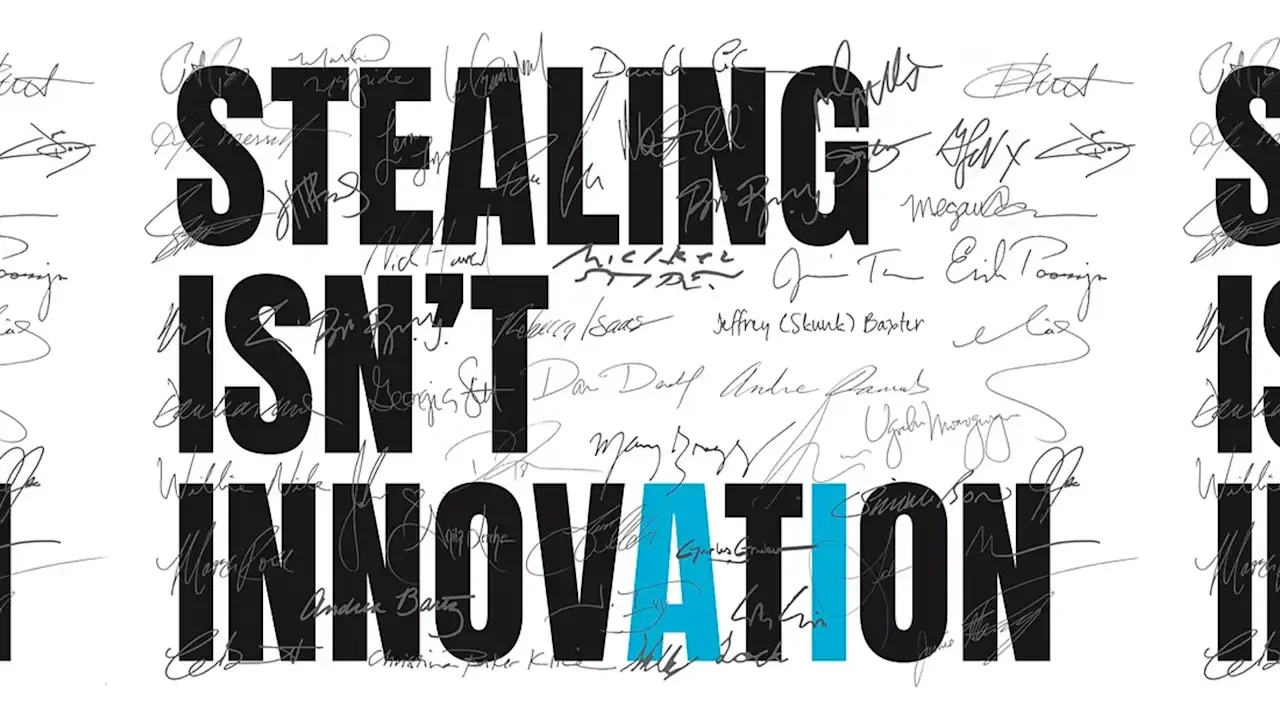
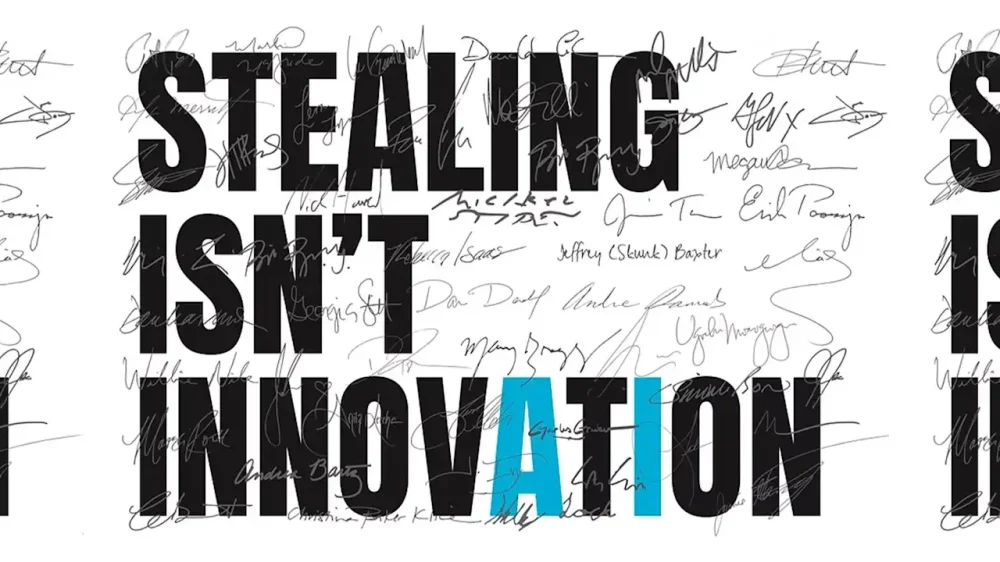
A new campaign launches today against AI’s sticky fingers on copyrighted material. The Human Artistry Campaign’s “Stealing Isn’t Innovation” movement launches today with over 800 signatories. Those include many Hollywood actors, including Scarlett Johansson, Cate Blanchett, and Joseph Gordon-Levitt, as well as writers such as Jodi Picoult and Roxane Gay, and musicians like Cyndi Lauper and They Might be Giants. The campaign has a simple message: “Stealing our work is not innovation. It’s not progress. It’s theft—plain and simple.” Many record labels, news outlets, and other creative entities have partnered with AI companies in recent years, despite—or possibly in response to—their propensity to mine copyrighted materials. Creatives have fought (and continue to fight) for protections, such as in the lengthy Writers Guild of America (WGA) and Screen Actors Guild-American Federation of Television and Radio Artists (SAG-AFTRA) strikes in 2023. However, the Stealing Isn’t Innovation campaign isn’t against AI, it just wants creatives to be part of the process. “A better way exists—through licensing deals and partnerships, some AI companies have taken the responsible, ethical route to obtaining the content and materials they wish to use,” the letter reads. “It is possible to have it all. We can have advanced, rapidly developing AI and ensure creators’ rights are respected.” The Stealing Isn’t Innovation campaign will promote itself through ads on social media and in news publications. Creatives in the U.K. have taken comparable action The latest campaign focuses on American creators and takes a bit of a nationalist stance in its opening line: “America’s creative community is the envy of the world and creates jobs, economic growth, and exports.” But artists across the U.K. have launched similar movements in response to AI’s access to copyrighted material, including a law that would require creatives to opt out of letting AI use their work. In February 2025, the “Make It Fair” campaign ran in hundreds of publications to raise awareness of the threat of AI to creative industries. The same month saw over 1,000 musicians, from Kate Bush to The Clash, release a silent album titled Is This What We Want?—with the 12 tracks spelling out: “The British government must not legalise music theft to benefit AI companies.” In May, creatives across industries took action again. In an open letter to Prime Minister Keir Starmer, everyone from Elton John to Kazuo Ishiguro voiced their opposition to the proposed copyright law. The U.K. government is set to issue policy proposals on the matter in mid-March. View the full article
-
As global economic landscapes shift, small businesses must stay ahead of the curve to thrive. Visa’s recently released 2026 Global Economic Outlook sheds light on key trends, highlighting how artificial intelligence (AI) adoption and evolving trade patterns are reshaping commerce. The report forecasts stable global growth of 2.7%, but underlying this figure is a profound transformation that smaller businesses need to harness for competitive advantage. Visa’s Chief Economist, Wayne Best, emphasizes, “What appears to be an ‘average’ year is actually a period of profound economic transformation.” He points out that while consumer spending remains robust, it is the surge in business investment—particularly in AI—that is propelling economic evolution. This investment is set to enhance productivity across sectors and drive innovation, positioning well-equipped small businesses for success. One of the most intriguing insights from the report is the accelerated adoption of generative AI among small businesses. In fact, these firms are outpacing consumers in AI integration. This technology enables smaller teams to achieve outputs that previously required much larger workforces, fundamentally shifting what it means to operate at a smaller scale. Table stakes for small businesses are changing. Fine-tuning operations with AI can lead to more strategies to engage customers and streamline costs. Visa notes that firms leveraging AI are showing significant transaction growth, which could translate into increased cash flow and improved customer experiences. This shift invites small businesses to invest in technology that fosters automation and enhances efficiency. Amid the advances brought by technology, small business owners must also be cognizant of shifting trade patterns. Visa reports a notable move towards intra-regional trade—now comprising two-thirds of global trade growth. This change is fostering shorter supply chains and diversifying supplier bases in response to tariffs and uncertainties. For small businesses, this could mean adjusting sourcing strategies to keep pace with competitive markets and leverage regional advantages. As consumption growth moderates to 2.4% in 2026—down from 2.7% in the previous year—it’s clear that small businesses may face challenges in maintaining customer engagement. However, rather than signaling doom, this context presents an opportunity for innovation in product offerings and marketing strategies. Businesses that adapt quickly will likely benefit from new avenues of investment-driven growth. While the outlook is bright for tech-savvy businesses, challenges remain. Small business owners must navigate potential operational complexities as they integrate AI. Implementing new technologies requires not only financial investment but also training and a shift in culture to embrace digital transformation. Visa’s report also mentions demographic pressures shaping economies, most notably an aging population that could influence worker availability and consumer spending habits. Small business owners need to consider how these factors may affect their workforce and customer base. Proactively addressing these elements could position firms to better meet future demands. Wayne Best concludes with a crucial insight for entrepreneurs: “Organizations that combine timely insights with operational agility will be best positioned to navigate this evolving landscape.” For small business owners, timely insights can mean distinguishing their services effectively in a crowded market. Agility will be the crucial factor that allows them to pivot and seize opportunities in the economic landscape. For those wishing to dive deeper into the findings, Visa’s 2026 Global Economic Outlook is accessible here. Small businesses eager to leverage these trends should consider how to effectively implement innovative technologies and rethink traditional strategies in a dynamically changing economy. Image via Google Gemini This article, "Visa’s 2026 Outlook: AI and Trade Shifts Transform Global Economy" was first published on Small Business Trends View the full article
-
Anxiety about costs and affordability is particularly high among Asian Americans, Pacific Islanders and Native Hawaiians, even at a moment when economic stress is widespread, according to a new poll. About half of Asian American and Pacific Islander adults said they wanted the government to prioritize addressing the high cost of living and inflation, according to the survey from AAPI Data and The Associated Press-NORC Center for Public Affairs Research, which was conducted in early December. In comparison, a December AP-NORC poll found that about one-third of U.S. adults overall rated inflation and financial worries as the most pressing problems. The findings indicate that this small but fast-growing group is not persuaded by President Donald The President’s attempts to tamp down worries about inflation and defend his tariffs. Even when considering partisanship, AAPI Democrats and Independents — and even AAPI Republicans — are at least slightly more likely than those groups overall to mention inflation and costs. Concern about costs has risen among AAPI adults since last year, when about 4 in 10 AAPI adults said they wanted the government to focus on this issue. Like Americans overall, AAPI adults have also become more focused on health care issues over the past year. The poll is part of an ongoing project exploring the views of Asian Americans, Native Hawaiians and Pacific Islanders, whose views are usually not highlighted in other surveys because of small sample sizes and lack of linguistic representation. Jayakumar Natarajan, a 56-year-old manager for a major tech company living in the San Francisco Bay Area, is rethinking his goal of retiring at 60 because of climbing costs in basic goods and health care. He can afford to live the way he wants for now, but is considering delaying retirement or moving outside the U.S., where prices are lower. The cost of health care is very much on his mind. “I think it will really make a big difference in the way I think about retirement planning,” he said. AAPI adults are worried about rising costs Inflation and affordability loom large for AAPI adults, even compared to other economic concerns, the survey found. About 2 in 10 AAPI adults mentioned housing costs or jobs and unemployment as priorities for the government to work on in the coming year, which was generally in line with Americans overall. Balancing financial obligations has become especially challenging for people living in high-cost areas, where a steady salary may not cover a growing family. Kevin Tu, 32, and his wife recently reached two milestones — buying a new home outside of Seattle in Lynnwood, Washington, and expecting their first child. The couple works full time and Tu also has a math tutoring business, but he is still nervous about what will happen after the baby arrives. “I’m trying to figure out how to balance possible part-time day care with our mortgage, with cost of living,” said Tu, who is Taiwanese American. Black, Hispanic and AAPI adults were more apt than white adults to bring up unemployment, jobs and housing costs as priorities, the surveys found. Part of what may explain AAPI adults’ increasing worry about everyday costs is the largest AAPI adult populations reside in states and major metropolitan cities with higher costs of living and higher rent, such as California and New York. While tariffs have impacted American consumers across the board, they have a particularly strong effect on Asian Americans and Pacific Islanders who prefer certain imported goods such as food and clothing. Karthick Ramakrishnan, AAPI Data executive director and researcher at the University of California, Berkeley, recalls how last year, some AAPI shoppers were going to ethnic grocery stores and “stockpiling” ahead of tariffs kicking in. “When it comes to costs for Asian Americans and Pacific Islanders, it’s just not cost of general market groceries but ethnic market groceries,” Ramakrishnan said. “It’s something visible to them and potentially causing anxiety and worry.” Health care is also a priority for AAPI adults Some 44% of AAPI adult also want the government to prioritize health care in the coming year. That’s not meaningfully different from among U.S. adults overall, emphasizing Americans’ renewed focus on the issue after a year of health care cuts. Srilasya Volam, a 25-year-old business consultant in Atlanta said that some of her family members have embarked on ” medical tourism ” trips as a result of high U.S. health care costs, a practice of traveling to other countries for more cost-effective medical procedures. “It’s cheaper for us to get a flight ticket and go to India and have a medical procedure and come back than it is to have that done here,” she said. “When I was younger, we would just go to India and we’d be like, now that we’re here, let’s do everything: the dental checkups, every checkup. It’s a lot more cost effective.” The poll found that about 6 in 10 AAPI adults are “extremely” or “very” concerned about their health care costs increasing in 2026, which is roughly in line with U.S. adults overall. Falling confidence in the government’s ability to make progress The survey found that AAPI adults are less confident in the government’s ability to make progress on the important issues facing the country than they were just after the 2024 election. About 7 in 10 AAPI adults say they are “not at all” or just “slightly confident” that the government will make progress on key issues, up from 60% at the end of 2024. Dissatisfaction with the The President administration may be a factor. And while the economy is top of mind, other factors could be feeding the fear that the government won’t change things for the better this year. Ernie Roaza, a 66-year-old retired geologist in Tallahassee, Florida, is a first generation immigrant to the U.S. from South Korea, where he grew up under a dictatorship. He worries that The President is doing “everything that dictators do,” adding, “I’ve seen it before. It’s almost laughable, but it’s scary at the same time.” He remains optimistic that the country will get through it. “This administration will make things worse,” Roaza said. “But in every administration we’ve had, there are hills and valleys. We’re in the valleys right now.” The poll of 1,029 U.S. adults who are Asian American, Native Hawaiian and Pacific Islanders was conducted from Dec. 2-8, 2025, using a sample drawn from NORC’s probability-based Amplify AAPI Panel, designed to be representative of the Asian American, Native Hawaiian and Pacific Islander population. The margin of sampling error for all respondents is plus or minus 4.7 percentage points. —Terry Tang and Linley Sanders, Associated Press View the full article

-
US president dialled down threats to Europe over Greenland after talks on reopening 1951 pactView the full article
-
Donald The President’s son-in-law says Palestinian enclave will offer ‘amazing investment opportunities’ after two years of warView the full article
-
Decode energy signals & stay sharp even when you're running low. Accounting ARC With Liz Mason and Donny Shimamoto Go PRO for members-only access to more Center for Accounting Transformation. View the full article
-
Decode energy signals & stay sharp even when you're running low. Accounting ARC With Liz Mason and Donny Shimamoto Go PRO for members-only access to more Center for Accounting Transformation. View the full article
-
Here is a recap of what happened in the search forums today, through the eyes of the Search Engine Roundtable and other search forums on the web. Apple to have two different releases of Siri and Apple Intelligence, powered by Google Gemini...View the full article
-
The SEO versus GEO debate has dominated industry discourse over the past year. New acronyms appear weekly, sentiment swings quickly, and even trusted voices often contradict positions they held just months earlier. That volatility isn’t happening at the edges of the industry. It’s coming from a small group of highly visible SEO influencers whose framing of AI-era search shifts in response to news cycles, platform announcements, and branding pressure. To understand how widespread – and how unstable – this discourse has become, we analyzed how 75 leading SEO influencers discuss AI-driven search on LinkedIn. The goal wasn’t to decide which acronym would win. It was to measure consistency, sentiment, and volatility in how influential practitioners describe the same underlying shift in discovery. Working with Search Engine Land’s Danny Goodwin, we examined all 2025 LinkedIn posts from these influencers that referenced AI-related SEO terms, including GEO, AIO, AISEO, AEO, LLMO, SXO, and ASO. Using VADER sentiment analysis, we scored each post on a -1 to +1 scale and measured volatility as the standard deviation of sentiment over time. All data was anonymized to preserve relational patterns without exposing individuals. ‘SEO’ is still the most commonly used LinkedIn headline – even as AI terms dominate posts In 2025, industry leaders were passionate about debating AI-era search terms in their LinkedIn posts, but they weren’t comfortable rebranding their personal LinkedIn “headlines” (highlighted below) using the same terminology. According to our data scrape, 43% of SEO thought leaders include “SEO” in their LinkedIn headline, compared to 21% who reference “AI” and just 3% who reference “GEO.” Mind the gap. We’re not doing a large-scale rebranding from SEO to GEO because AI brand visibility is still largely reliant on the most effective SEO strategies we’ve all deployed for the past decade: Well-structured, persona- and buyer-journey-led content hubs Brands need to invest in on-site content hubs that answer real FAQs and conversational queries rooted in buyer intent. Your content depth across the full journey – awareness (e.g., education around solutions to pain points), consideration (e.g., proof in testimonials and case studies), and decision stage (e.g., comparison charts) – creates compounding value for users and stronger entity signals for AI search and algorithms alike. Off-site authority signals that establish your brand as a trusted entity Publish original research, expert commentary, and definitive explainers that earn mentions from authoritative, widely cited sources, including: Mainstream news outlets. Niche-relevant publishers. Leading podcasters. Engaged Reddit communities. These signals expand your digital footprint, strengthen entity recognition, and reinforce brand trust. Use audience intelligence tools like SparkToro to identify the platforms, communities, and topics your digital PR strategy should prioritize. Dig deeper: The origins of SEO and what they mean for GEO and AIO Three new AI search terms lead the pack, and optimism is higher than you’d expect While industry leaders aren’t scrambling to update their LinkedIn headlines (quite yet), their LinkedIn posts reveal which three terms are starting to gain traction: 63% of industry leaders reference AIO (AI optimization), with 77% of their posts having a positive sentiment. 59% reference GEO (generative engine optimization), 82% positive. Our data visualization below compares both adoption frequency (how many leaders reference each term in their LinkedIn posts) and sentiment (how positively those terms are framed in each post). Over 70% of posts using AI-related search terms carry a positive tone. That matters, because sentiment is often a leading indicator of adoption. When optimism collapses, usage follows. That’s not what we’re seeing here. When we step outside of our industry influence analysis into the broader SEO community debate, we see that AEO, LLMO, and AIO resonate more with general audiences, but GEO stands out for its consistency – 82% positive among SEO thought leaders and nearly identical sentiment across the broader LinkedIn population. SEO remains the industry’s foundation, but a year of discourse makes one thing clear: this isn’t fragmentation – it’s an emerging platform in its naming and strategy-formation phase. The real negotiation isn’t about acronyms. It’s about how we describe brand visibility when answers are synthesized, not ranked. The takeaway? Don’t over-optimize your digital marketing engine around any single term, strategy, or platform. Build timely, value-driven content for your audience, then repurpose it across the channels where they already engage. That’s how brands survive platform churn, especially in a digital ecosystem littered with once-hyped platforms like Vine, Google+, and Clubhouse. Dig deeper: What is AI, actually, and how is it affecting SEO? Nomenclature volatility is the discourse signal hiding in plain sight The most eye-opening stat from our research is that fewer than one-third of thought leaders have maintained consistent usage of AI-related SEO terminology and sentiment over the past year. Drilling into the data, we found: 35% of thought leaders show positive sentiment toward AI-related search terms, but lack consistency. Only just over one-third land in the quadrant that’s both positive and stable. Visibility and volatility often move together. Trust and consistency do, too – but in the opposite direction. The issue isn’t whether leaders are right or wrong. It’s how often their framing shifts in response to news cycles, platform announcements, or viral discourse. We measured this by mapping sentiment against volatility. The result wasn’t a clean divide; it was a scatter plot. This is the uncomfortable truth: the loudest voices are not always the most reliable ones. And in an era where guidance shapes budgets, roadmaps, and careers, that distinction matters. Leaders who maintain measured optimism – grounded in data, tempered by experience – send a different signal than those who swing from hype to skepticism with every update. Dig deeper: Why every AI search study tells a different story The key takeaway: This isn’t a strategy reset, it’s an emerging search platform Effective content marketing, digital PR, and technical SEO establish the foundational strategies for driving cross-channel brand visibility online. AI is simply a platform modifier, much like social media, not a replacement for the strategies that already work. Our data shows this isn’t an industry confused about what to do. It’s an industry negotiating how to describe a rapidly evolving discovery system. That negotiation is normal at this stage. What isn’t – and what erodes trust – is volatility: leaders changing their framing faster than shared understanding can form. Terms like AEO, LLMO, and AIO may gain traction with general audiences, but they fragment quickly among experienced practitioners. GEO stands out precisely because it doesn’t. It maintains consistent sentiment across both practitioners and non-practitioners, acting as a stable explanatory bridge while the execution layer continues to mature. For marketers, the lesson is straightforward: don’t build a strategy around whatever acronym or platform is trending this quarter. Build your brand’s digital footprint around timeliness marketing principles: Produce content that delivers real value to your target market. Repurpose and syndicate that content across the platforms where your audience already engages online. Earn citations, engagement, and trust signals that compound across search, social, and AI-driven systems. In an era where answers are synthesized, not ranked, the most credible voices won’t be the first to coin the next label. They’ll be the ones who remain coherent long enough for the industry to converge. And that consistency, not speed, is what ultimately compounds into trust, visibility, and results. The top 75 SEO thought leaders we analyzed focused on tenured agency owners and directors, industry speakers, and consultants, including: Aleyda Solis Amanda Farley Amanda Natividad Andrew Holland Andrew Prince Andy Crestodina Areej AbuAli Barry Schwartz Beth Nunnington Brett Tabke Brie E. Anderson Britney Muller Bruce Clay Celeste Gonzalez Christian Hustle Cindy Krum Connor Gillivan Crystal Carter Cyrus Shepard Dana DiTomaso Danielle Stout Rohe Danny Ashton Danny Goodwin Darren Shaw Dave Davies Derek Perkins Eli Schwartz Eric Enge Fabrice Canel Felipe Bazon Garrett French Garrett Sussman Gisele Navarro Greg Gifford Ian Lurie James Brockbank James Wirth Jane Hunt Jesse McDonald Jordan Koene Joy Hawkins Kathryn Hawkins Kelsey Libert Kristin Tynski Lee Elliott Lidia Infante Lily Ray Loren Baker Marc Sirkin Mark Rofe Mark Traphagen Martha van Berkel Matt McGee Melissa Popp Michael Buckbee Michael King Michelle Robbins Mordy Oberstein Neil Patel Nick Eubanks Nick LeRoy Noah Learner Paddy Moogan Patrick Reinhart Paul Aaron Norris Paxton Gray Rand Fishkin Ray Grieselhuber Ross Hudgens Ross Simmonds Samantha Torres Steven J. Wilson Tony Wright Vanessa Raath Wil Reynolds View the full article
-
President Donald The President on Thursday inaugurated his Board of Peace to lead efforts at maintaining a ceasefire in Israel’s war with Hamas, insisting that “everyone wants to be a part” of the body that could eventually rival the United Nations — despite many U.S. allies opting not to participate. In a speech at the World Economic Forum, The President sought to create momentum for a project to map out a future of the war-torn Gaza Strip that has been overshadowed this week, first by his threats to seize Greenland, then by a dramatic retreat from that push. “This isn’t the United States, this is for the world,” he said, adding, “I think we can spread it out to other things as we succeed in Gaza.” The event featured Ali Shaath, the head of a new, future technocratic government in Gaza, announcing that the Rafah border crossing will open in both directions next week. That’s after Israel said in early December it would open the crossing, which runs between Gaza and Egypt, but has yet to do so. Shaath, an engineer and former Palestinian Authority official from Gaza, is overseeing the Palestinian committee set to govern the territory under U.S. supervision. The new peace board was initially envisioned as a small group of world leaders overseeing the ceasefire, but it has morphed into something far more ambitious — and skepticism about its membership and mandate has led some countries usually closest to Washington to take a pass. The President tried not to let those not participating ruin his unveiling party, saying 59 countries had signed onto the board — even though heads of state, top diplomats and other officials from only 19 countries plus the U.S. actually attended. He told the group, ranging from Azerbaijan to Paraguay to Hungary, “You’re the most powerful people in the world.” The President has spoken about the board replacing some U.N. functions and perhaps even making that entire body obsolete one day. But he was more conciliatory in his remarks on the sidelines of the forum in the Swiss alps. “We’ll do it in conjunction with the United Nations,” The President said, even as he denigrated the U.N. for doing what he said wasn’t enough to calm some conflicts around the globe. Secretary of State Marco Rubio said that some countries’ leaders have indicated they plan to join but still require approval from their parliaments, and the The President administration says it has also gotten queries about membership from countries that hadn’t been invited to participate yet. Why some countries aren’t participating Big questions remain, however, about what the eventual board will look like. Russian President Vladimir Putin said his country is still consulting with Moscow’s “strategic partners” before deciding to commit. The Russian president on Thursday is due to host Palestinian President Mahmoud Abbas for talks in Moscow. Others are asking why Putin and other authoritarian leaders had even been invited to join. Britain’s foreign secretary, Yvette Cooper, said her country wasn’t signing on “because this is about a legal treaty that raises much broader issues.” “And we do also have concerns about President Putin being part of something which is talking about peace, when we have still not seen any signs from Putin that there will be a commitment to peace in Ukraine,” she told the BBC. Norway and Sweden have indicated they won’t participate, after France also said no. French officials stressed that while they support the Gaza peace plan, they were concerned the board could seek to replace the U.N. as the main venue for resolving conflicts. Canada, Ukraine, China and the executive arm of the European Union also haven’t committed. The President calling off the steep tariffs he threatened over Greenland could ease some allies’ reluctance, but the issue is still far from settled. The Kremlin said Thursday that Putin plans to discuss his proposal to send $1 billion to the Board of Peace and use it for humanitarian purposes during his talks with Abbas. But it noted that the use of those assets will require the U.S. action to unblock them. Board grew out of ceasefire proposal The idea for the Board of Peace was first laid out in The President’s 20-point Gaza ceasefire plan and even was endorsed by the U.N. Security Council. Israeli Prime Minister Benjamin Netanyahu announced he’s agreed to join, after his office has earlier criticized the makeup of the board’s committee tasked with overseeing Gaza. Months into the ceasefire, Gaza’s more than 2 million Palestinians continue to suffer the humanitarian crisis unleashed by more than two years of war. And violence in Gaza, while not at the same level as before the October ceasefire and hostage deal was agreed on, continues. Key to the truce continuing to hold is the disarming of Hamas, something that the militant group that has controlled the Palestinian territory since 2007 has refused to do and that Israel sees as non-negotiable. The President on Thursday repeated his frequently mentioned warnings that the group will have to do so or face dire consequences. He also said the war in Gaza “is really coming to an end” while conceding, “We have little fires that we’ll put out. But they’re little,” and they had been “giant, giant, massive fires.” Iran protests loom in the background The President’s push for peace also comes after he threatened military action this month against Iran as it carried out a violent crackdown against some of the largest street protests in years, killing thousands of people. The President, for the time being, has signaled he won’t carry out any new strikes on Iran after he said he received assurances that the Islamic government would not carry out the planned hangings of more than 800 protesters. But The President also made the case that his tough approach to Tehran — including strikes on Iran’s nuclear facilities in June last year — was critical to the Israel-Hamas ceasefire deal coalescing. Iran was Hamas’ most important patron, providing the group hundreds of millions of dollars in military aid, weapons, training and financial support over the years. Zelenskyy meeting The President also spoke behind closed doors for about an hour with Ukrainian President Volodymyr Zelenskyy, who arrived Thursday in Davos. The President called the discussion “very good” but announced no major breakthroughs and said the pair didn’t discuss many European nations shunning the Board of Peace. The President’s special envoy Steve Witkoff and his son-in-law Jared Kushner are expected in Moscow for talks. Still, the Republican president has for months struggled to get Zelenskyy and Putin to agree to terms to end their nearly 4-year-old war, and he continues to express frustration about it. “We hope it’s going to end,” The President told reporters after his meeting with Zelenskyy. —Josh Boak, Aamer Madhani and Will Weissert, Associated Press View the full article

-
A new paper tests how LLMs select content, and Duane Forrester translates the findings into a practical framework you can validate yourself. The post When Platforms Say ‘Don’t Optimize,’ Smart Teams Run Experiments appeared first on Search Engine Journal. View the full article
-
The latest craze in the fitness world—from gym culture, to nutrition planning, to recovery protocols— is hyper-personalized optimization. But is there really a benefit to at-home microbiome tests that reveal the optimal diet for your gut bacteria? How about a device that tells you whether you're burning carbs or fat with each breath? Personalized fitness advice used to be largely limited to factors like height and weight, but now you might have a Whoop, Oura, or Apple Watch wearable tracking your track heart rate variability, skin temperature, blood oxygen, and so much more. Continuous glucose monitors, once reserved for diabetics, are now worn by biohackers and CrossFit enthusiasts trying to optimize their carb timing. On the one hand, the appeal of having unprecedented insight into your body's unique needs is understandable. On the other, there's a looming shadow behind all this data: As the metrics multiply, so does the potential for anxiety. When every workout, meal, and bedtime becomes a referendum on dozens of competing data points, decision fatigue is likely to set in. And as your algorithms suggest targeted interventions for every perceived deficiency, someone else—likely a giant corporation getting fat off of user data—is profiting. The question looms larger with each new device metric: Does more data actually lead to better health outcomes? More data isn't always betterYour wearable spits out a sleep (or stress) report every morning. How is this data serving you? "Metabolic testing, biomechanics, and body composition are all forms of objective data that can be pretty powerful when collected in validated settings and interpreted by professionals who understand physiology and adaptation," says Lekshmi Kumar, a performance physiologist at Boston-based Human Powered Health. But consumer devices, while improving, exist in a different category: "Consistent research has bolstered consumer-facing tools and significant improvements have been made over the past several years. But they're still not considered substitutes for professional-grade assessments," Kumar says. In other words, for a lot of bio-hacking endeavors, there’s a major gap between the numbers you see and their potential real-life applications. Kumar sees three critical prerequisites for data to actually improve outcomes: data quality, proper context, and accurate interpretation. "Absent these, we often see expensive and excessive supplementation, conflicting recommendations, and decision fatigue," she says. The real danger, she says, isn't the data itself—it's the illusion of expertise it creates. Hyper-personalized data might add unnecessary confusionMany direct-to-consumer tests lack the clinical validation of their medical-grade counterparts. Interpretation of the data is frequently automated, missing nuance that a trained professional might catch. And the recommendations often trend toward more—more supplements, more tracking, more intervention—rather than identifying changes that might actually move the needle. It's a hard truth that no wellness product actually cares more about your health than its company's profits. Perhaps the most insidious cost of hyper-personalization is less financial, and more psychological: When every metric matters, decision-making becomes paralyzing. Should you work out today even though your HRV is down? Is that meal worth the glucose spike? Did last night's 6.5 hours of sleep doom today's training session? The constant feedback loop can transform exercise from a joyful practice into an optimization problem to be solved. This isn’t the first time I’ve pointed out the trappings of wellness culture. The internal compass—how do I actually feel?—gets drowned out by all the external data streams. Ironically, the tools meant to “empower” can instead create dependency, where you can’t trust their own bodily sensations without technological confirmation. Does hyper-personalization actually work? When implemented thoughtfully (with quality data, proper interpretation, and professional guidance), personalized approaches can obviously aid you in optimizing training, recovery, and nutrition in ways generic programs cannot. Elite athletes have long used sophisticated testing—VO2 max assessments, lactate threshold testing, motion capture analysis—to gain advantages, however marginal. As these tools become more accessible, it makes sense their benefits can extend beyond the professional realm. But accessibility without expertise? That’s a different matter. Consider two hypothetical people concerned about their fitness: Person A tracks sleep quality, HRV, resting heart rate, blood oxygen, skin temperature, glucose levels, and workout strain—but lacks a framework to understand how these metrics interact, or what to do when they conflict. Person B follows a simple evidence-based program: strength training three times per week, 30 minutes of cardio on alternate days, eight hours of sleep, and a balanced diet with adequate protein. Even absent all that data, Person B will likely see better results and experience far less angst about their health. Again, there are the economic incentives to consider too. Companies profit from selling more tests, more devices, more subscriptions, and more supplements. The business model depends on convincing consumers they need increasingly granular data to achieve their goals. This creates an environment where the answer to "what should I track?" is almost always "more than you're tracking now," regardless of whether the additional data actually serves you. When personal health tracking actually makes sense"The biggest gains won't come from chasing every single flashy metric," says Kumar. "They'll come from identifying the variables that matter most to the specific individual, and working with a credentialed professional who can assist in translating the information into meaningful takeaways and actions." What does smart, targeted tracking look like in practice? Here are scenarios where specific metrics can genuinely help: For a runner struggling with fatigue: Tracking HRV and resting heart rate can reveal when you're not recovering adequately between training blocks. If these metrics trend downward over weeks, it's a signal to dial back intensity or add rest days—something that matters far more than monitoring glucose fluctuations after breakfast. For someone with persistent digestive issues: A food diary paired with symptom tracking (not necessarily a microbiome test kit) can help identify genuine patterns. Working with a registered dietitian to systematically eliminate or reintroduce foods provides actionable insights, unlike a $200 test suggesting you eat more fermented foods. For someone desperate to improve sleep: Use your gadgets to track total sleep time and sleep consistency. That matters more than obsessing over REM percentages. Focus on establishing a regular pre-sleep routine and measuring whether you feel rested, rather than achieving some algorithm's "optimal" sleep score. For the lifter hitting a plateau: Remember that linear gains are for beginners. Instead of stressing over daily scale readings, focus on your training log tracking progressive overload and consider following these tips. You'll notice a patter here: Each tracking approach is targeted, time-bound, and directly connected to a specific goal or problem—not a fruitless pursuit to optimize every single thing all the time. The bottom lineIn a culture obsessed with optimization, it’s getting harder and harder to cut through the noise. But maybe your goal shouldn’t be to track everything. As hyper-personalization continues its ascent, think about how you’re engaging with every new tool. The wisest approach may be a picky one: choosing one or two key metrics that align with specific goals. Because more information isn't automatically better, and consumer tools have real limitations, and that the human body is beautifully, frustratingly complex—not exactly reducible to a dashboard of numbers. View the full article
-
The totals are in for 2025, and it's been a great year for measles. According to the CDC, the number of cases of the disease identified in the US has risen from 285 in 2024 to 2,144 in 2025, the highest number of measles cases since 1990. We've already seen at least 171 measles cases in the first two weeks of 2026. As you'd probably guess, experts pin the rise in measles to lower vaccination rates. I covered a number of vaccination and measles myths in this column months ago, but there is a new spin on measles that seems to be gaining some traction: A lot of people think contracting measles is good for your heath. “There’s a lot of studies out there that show that if you actually do get the wild infection, you’re protected later. It boosts your immune system later in life against cancers, atopic diseases, cardiac disease, etc.,” Robert F. Kennedy Jr., the Department of Health and Human Services secretary said in a recent Fox interview. Online, there are posts like this one from a chiropractor's Instagram page, using a clip from The Brady Bunch to argue that contracting measles and other diseases "prepares a child’s immune system for a long-term resiliency to chronic problems like cancers and heart disease." Others point to news stories like this from CNN to bolster claims that measles fights cancer. Can measles fight cancer?There is no evidence that measles infection can protect against cancer. Full stop. But whether measles can treat cancer is a little more complex. There is a small grain of truth here, but it's wrapped in a lot of misconceptions. The most basic is the meaning of the word "measles." Oncolytic virus therapy uses genetically altered viruses, including the measles virus, to target cancer cells. A modified version of the measles virus was used successfully to treat a specific kind of cancer and boost immune response to the cancer. Mayo Clinic researchers report that one patient's incurable cancer went into remission, thanks to the virus. "But that's totally a therapeutic application of viruses, completely different than what happens with natural infections," said John Bell, a senior scientist at the Ottawa Hospital Research Institute in an interview, so it's not “measles cures cancer," it’s “scientists weaponize a virus under controlled conditions." The bottom line: The wild measles virus is a dangerous pathogen, not a cancer cure. Not only that, but part of the reason the virus therapy worked so well on the patient CNN covered was because she had been vaccinated for measles, so if genetically modified measles ever end up being used as cancer treatment, it's better to have been vaccinated than not. Does contracting measles prevent heart disease?One study in Japan found an association between measles and mumps infections and a lower risk of death from atherosclerotic heart disease. But critics have pointed out that this research relies on self-reporting within a pre-vaccine population. Given the virulence of measles, all of the people in the survey would likely have been exposed to measles as children even if they didn't remember it, so it's hard to draw any conclusions from this study. Does contracting measles boost your immune system?While being infected with the disease will likely result in being immune to measles afterwards, it harms your immune system as a whole. A 2019 study from Harvard Medical School published by Science, found that the measles virus can cause "immune amnesia," the wiping out of up to three-quarters of antibodies protecting against other infections like the flu or the bacteria that cause pneumonia. "The measles virus is like a car accident for your immune system,” Harvard University geneticist Stephen Elledge, the senior author of the Science study, told The Los Angeles Times. "If your child gets the measles and then gets pneumonia two years later, you wouldn’t necessarily tie the two together. The symptoms of measles itself may be only the tip of the iceberg,” said the study’s first author, Dr. Michael Mina. Meanwhile, we have extremely strong evidence that the measles vaccine doesn't cause a general weakening of the immune system—note, for example, the dramatic reductions in childhood deaths from other diseases in places where measles immunization programs are introduced. After measles vaccinations began in the United States in the 1960s, deaths from diseases like pneumonia and diarrhea were cut by half, and in populations where infectious diseases are more common, the reduction in mortality has been up to 80 percent. Playing devil's advocate on measlesLet's assume critics are right, for the sake of argument. Even if contracting measles in childhood makes you less likely to get heart disease later in life and gives you a stronger immune system, it would still make sense to get immunized instead of infected. Measles is a serious disease. Regardless of any future benefit, contracting measles is deadly in up to three of every 1,000 cases. About one child out of every 1,000 who get measles will develop encephalitis (swelling of the brain) that can lead to convulsions, hearing loss, and intellectual disability. Vaccination for measles, on the other hand, is very safe. The most serious side effects come from severe allergic reactions, and that happens about in a one in a million doses. The measles vaccine generates immunity without the risk of encephalitis, without immune amnesia, and without gambling a child’s life on a hypothetical future payoff. If measles exposure truly primes the immune system in some beneficial way, vaccination captures the immune response while stripping out the damage. No matter how generous you are to the "infection is good" argument, infection is a dangerous and inefficient way to get there. View the full article
-
A landing page is a webpage designed to drive a specific action. Learn how to create one. View the full article
-
Five things that any business can do to increase authoritativeness and earn more links The post Five Things To Do That Will Increase Authoritativeness And Earn Links appeared first on Search Engine Journal. View the full article