All Activity
- Past hour
-
LoanDepot will integrate Figure's proprietary credit and loan underwriting engine into its own proprietary mello technology platform and point of sale system. View the full article
-
When applying for a job at Target, you’ll encounter a background check process conducted by Accurate Background. This company specializes in verifying criminal records at various levels, ensuring compliance with the Fair Credit Reporting Act. You’ll need to provide personal information, such as your Social Security number and addresses. Comprehending how this process works is essential, especially as it can greatly impact your job prospects. But what factors actually influence the outcome of these checks? Key Takeaways Target conducts background checks through Accurate Background, ensuring thorough vetting of prospective employees. The background check process requires personal information, including Social Security number and recent addresses. Accurate Background searches for misdemeanors and felonies and considers the nature, time since conviction, and age at the time. Compliance with the Fair Credit Reporting Act (FCRA) is essential, requiring written consent and notifying applicants of adverse actions. Target promotes fair hiring practices and inclusivity by signing the Second Chance Pledge for individuals with criminal records. Overview of Target’s Background Check Process When you apply for a job at Target, you should expect that part of the hiring process involves a thorough background check, which is conducted by Accurate Background. This process requires you to provide personal information, including your Social Security number and recent addresses, to facilitate the checks. Target’s background check company adheres to the Fair Credit Reporting Act (FCRA), ensuring compliance throughout the screening process. The checks typically search for both misdemeanors and felonies and occur after you’ve submitted your application. Furthermore, you’ll need a clean drug test to secure employment. It’s important to know that Target’s policies regarding hiring individuals with criminal records, including whether they hire felons, may be subject to change, especially as a result of legal settlements aimed at promoting fair hiring practices. This evolving environment reflects Target’s commitment to equitable employment opportunities for all applicants. Role of Accurate Background in Target’s Hiring Accurate Background plays a significant role in Target’s hiring process by handling all criminal background checks for prospective employees. After you submit your application, the background check begins, requiring you to provide personal information like your Social Security number and recent address. Accurate Background conducts thorough checks for both misdemeanors and felonies, ensuring they comply with the Fair Credit Reporting Act (FCRA). They evaluate various factors, including the nature of the offense, how much time has passed since the conviction, and your age at the time of the offense. Target‘s hiring practices, influenced by the findings from Accurate Background, aim to prioritize safety and compliance. They likewise adhere to the “Ban the Box” law, which protects applicants from discrimination based on their criminal history. This careful screening process helps Target make informed hiring decisions as well as promoting fairness and safety in the workplace. Types of Background Checks Conducted When Target conducts background checks, they focus on a variety of crucial components to guarantee a thorough evaluation of applicants. You’ll find that these checks include criminal record searches at national, state, and local levels, alongside employment verifications to confirm past job experiences. Furthermore, Target may assess other factors like motor vehicle records and financial histories, providing an all-encompassing view of each candidate’s background. Criminal Record Searches Target’s approach to criminal record searches involves a thorough examination of an applicant’s history to guarantee safety and compliance within the workplace. They conduct various checks, including National, County, Statewide, and Federal Criminal Searches, to assess any criminal history. Target furthermore considers convictions that could affect customer and employee safety, evaluating the nature of the offense, how much time has passed, and the applicant’s age at the time. The background check process is extensive, including Motor Vehicle Records checks and assessments of Bankruptcies, Liens, and Judgments. In addition, drug testing is part of the screening process. Target outsources these checks to Accurate Background, ensuring compliance with the Fair Credit Reporting Act (FCRA) throughout the screening process. Employment Verification Processes To guarantee a thorough evaluation of each candidate, employment verification processes at Target include a variety of background checks that confirm applicants’ previous employment and educational qualifications. Target outsources these checks to Accurate Background, which verifies past employment details, though the speed of this process often depends on how quickly former employers respond. Education verification is likewise essential, as it confirms academic history from institutions, with larger universities typically providing faster results. Moreover, background checks encompass motor vehicle records and assessments of bankruptcies, liens, and judgments, ensuring an extensive look at an applicant’s history. Drug screening is another key aspect, with testing methods potentially affecting the timeframe for results because of possible lab backlogs. Importance of Compliance With FCRA Guaranteeing compliance with the Fair Credit Reporting Act (FCRA) is crucial for any employer, as it not just protects the rights of applicants but furthermore helps organizations avoid legal pitfalls. For Target, adhering to FCRA guidelines nurtures a fair hiring process, reinforcing trust among applicants. Here’s a quick look at key FCRA requirements: Requirement Description Purpose Written Consent Employers must obtain written consent before conducting background checks. Protects applicant privacy. Adverse Action Notification If a negative decision is made, employers must notify applicants of the basis. Allows applicants to contest inaccuracies. Report Access Applicants must receive a copy of the report used in hiring decisions. Guarantees transparency in the hiring process. Fair Treatment Employers must comply with all FCRA regulations during screenings. Promotes fairness and equality. Factors Influencing Background Check Outcomes Even though many factors can shape the outcome of a background check, the relevance of any criminal convictions plays a crucial role in the hiring process. Target outsources its background checks to Accurate Background, which examines both misdemeanors and felonies. The nature of these convictions greatly influences decisions, especially their relevance to the position you’re applying for. Furthermore, the time elapsed since the offenses is considered; older offenses may hold less weight. Target evaluates the context surrounding convictions, including any rehabilitation efforts and your age at the time of the offense. Typically, misdemeanors don’t raise major concerns except if they impact customer or employee safety. To facilitate a smoother process, it’s vital that you maintain accurate records of your employment history and any criminal convictions. Transparency during this phase can improve your chances of a favorable outcome. Steps to Prepare for Your Background Check To prepare for your background check with Target, start by reviewing your criminal history to identify any potential red flags. Next, make sure your employment and education records are accurate and up-to-date, as discrepancies can complicate the verification process. Taking these steps not just streamlines your application but also aids you in approaching the process with confidence. Review Criminal History Preparing for a background check can seem challenging, but taking proactive steps can simplify the process. Start by reviewing your criminal history to understand what may come up during the check. Accurate Background, the company Target uses, will look at various factors, including conviction types and your age at the time. Here are some key steps to help you prepare: Review your online presence: Make sure there’s nothing inappropriate that could affect your application. Maintain accurate records: Keep track of your employment history and educational credentials. Be honest about past convictions: Transparency can help build trust with potential employers. Update Employment Records Updating your employment records is an important step in preparing for Target’s background check. Verify your employment history and education records are accurate and up-to-date, as discrepancies can cause delays in the hiring process. Conduct a personal background check in advance to spot potential issues you might need to address before applying. It’s likewise wise to review your social media profiles for any inappropriate content since employers often evaluate your online presence. Keep documentation of any criminal convictions or misdemeanors handy, and be ready to discuss them honestly—Target values steps taken toward rehabilitation. Finally, maintain consistent information across your resume, application, and online profiles to avoid red flags that could complicate your background check. What Happens After Your Background Check? Once your background check is completed, Target carefully reviews the results to assess any findings that could impact your eligibility for employment based on the position you’ve applied for. If there are any issues, you’ll be notified, giving you the chance to clarify or contest them. Here’s what typically happens next: Target uses Accurate Background, an outsourced company, to conduct thorough checks, including criminal history and employment verification. The length of the background check can vary based on your history and the complexity of the required screenings. Successful completion of the background check is usually necessary before you receive a formal job offer. If all goes smoothly, you can expect to move forward in the hiring process. Nevertheless, any discrepancies can delay or complicate your potential employment, so it’s crucial to stay informed and proactive throughout the process. Understanding the Impact of Criminal Records Comprehending the impact of criminal records on employment can be crucial, especially when applying to companies like Target. Target utilizes Accurate Background for background checks, which include criminal records for misdemeanors and felonies. The Fair Credit Reporting Act (FCRA) governs these checks, ensuring compliance and protecting your rights. Here’s a quick look at how criminal records can impact your job prospects: Factor Impact Nature of Conviction Seriousness affects hiring Time Elapsed More time passed can help Age at Offense Younger age may lessen impact Industry Standards Varies by sector Employment Opportunities 85 million affected nationwide Understanding these factors can help you navigate the hiring process more effectively. Target evaluates these details carefully, reflecting their commitment to fair hiring practices. Target’s Commitment to Fair Hiring Practices Comprehension of how criminal records affect job opportunities is important, but equally essential is recognizing how Target approaches these issues in its hiring practices. Target Corporation demonstrates a commitment to fair hiring by taking several significant steps: They outsource background checks to Accurate Background, ensuring compliance with the Fair Credit Reporting Act (FCRA). By signing the Second Chance Pledge, Target promotes inclusivity and offers opportunities to individuals with criminal records. Their revised hiring process focuses only on job-related and recent criminal records, reducing barriers for qualified applicants. In 2013, Target eliminated criminal history inquiries from job applications and now conducts background checks only after a conditional job offer. This strategy reflects Target’s dedication to creating economic opportunities and revising discriminatory policies, as shown by their recent $3.74 million settlement with the NAACP Legal Defense and Education Fund. Through these actions, Target aims to encourage a more equitable hiring process. Resources for Applicants Navigating Background Checks Maneuvering the background check process can feel overwhelming, especially when applying for a job at Target. You’ll need to provide personal information, like your Social Security number and recent addresses, after receiving a conditional job offer. Target uses Accurate Background, a third-party vendor, to conduct thorough checks that include national, county, statewide, and federal criminal searches, along with verification of your employment and education history. To ease your mind, consider conducting your own background check beforehand. This proactive step helps you identify potential issues and guarantees your records are accurate. Furthermore, maintain clear communication with Target and Accurate Background throughout the process. This way, you can manage expectations regarding timelines and anticipate any possible delays. Staying informed and organized will help you navigate this critical step in your job application expedition with confidence. Frequently Asked Questions What Does Target Look for in a Background Check? When Target conducts a background check, it primarily looks for any criminal convictions, both misdemeanors and felonies. They evaluate the nature of these convictions and how long ago they occurred, especially considering their potential impact on safety. Misdemeanors are often viewed leniently if they’re dated and you’ve shown rehabilitation efforts. Furthermore, the specific job role you’re applying for can affect how your criminal history is assessed during the hiring process. What Company Does Target Use for Background Checks? Target uses Accurate Background for its background checks. This third-party vendor specializes in pre-employment screening, conducting criminal checks for both misdemeanors and felonies. After you receive a conditional job offer, you’ll provide personal information, like your Social Security number and recent addresses, to facilitate the process. Target’s policies guarantee that disqualifications are based only on job-related and recent criminal records, aligning with legal guidelines and promoting fair hiring practices. What Would Cause a Red Flag on a Background Check? A red flag on a background check often arises from recent or violent criminal convictions, especially if they pose a safety risk to customers or employees. The nature of the job you’re applying for can likewise impact how your criminal history is evaluated; positions with greater responsibility typically undergo stricter scrutiny. Furthermore, failing to disclose any convictions, even misdemeanors related to the job, can lead to disqualification from employment opportunities. What Is the Hardest Background Check to Pass? The hardest background check to pass often includes thorough criminal history searches that cover national, state, and local records. Employers likewise verify employment and education histories, which can be tricky for those with discrepancies. Furthermore, drug tests can pose significant challenges, especially for recent users. Financial background checks, including bankruptcies, further complicate matters. Conclusion In conclusion, Target relies on Accurate Background to conduct thorough and compliant background checks as part of its hiring process. This guarantees a careful evaluation of applicants’ criminal histories during adherence to FCRA regulations. Comprehending how these checks work can help you prepare and navigate the process effectively. Target emphasizes fair hiring practices, considering each individual’s circumstances. By being informed, you can better manage your application experience and grasp the implications of your background. Image via Google Gemini and ArtSmart This article, "What Is Target’s Background Check Company and How Does It Work?" was first published on Small Business Trends View the full article
-
We may earn a commission from links on this page. Deal pricing and availability subject to change after time of publication. Home Depot's Spring Black Friday sale is underway, featuring deals on grills, outdoor power tools, patio furniture, and more spring essentials for the next two weeks. Below are the best deals I've found so far, but I'll continue to keep an eye out as the sale rolls on. Stainless Steel Main Lid NexGrill 4-Burner Propane Gas Grill $199.00 at Home Depot $249.00 Save $50.00 Get Deal Get Deal $199.00 at Home Depot $249.00 Save $50.00 4000 PSI 3.5 GPM Gas Pressure Washer with 338cc Engine, Heavy-Duty Commercial Cold Water Power Cleaner DeWalt Pressure Washer $759.00 at Home Depot $949.00 Save $190.00 Get Deal Get Deal $759.00 at Home Depot $949.00 Save $190.00 28 cu. ft. with Ice and Water Dispenser and Craft Ice in PrintProof Stainless Steel LG 3 Door French Door Refrigerator $1,599.00 at Home Depot $3,099.00 Save $1,500.00 Get Deal Get Deal $1,599.00 at Home Depot $3,099.00 Save $1,500.00 7-Pieces Rust-Free Metal Outdoor Patio Dining Set with 6 Textilene Dining Chairs and Rectangular Dining Table Metal Outdoor Patio Dining Set $538.00 at Home Depot $730.00 Save $192.00 Get Deal Get Deal $538.00 at Home Depot $730.00 Save $192.00 ONE+ 18V Cordless 8-Tool Combo Kit with (1) 1.5 Ah Battery and (2) 4.0 Ah Batteries and Charger Ryobi 8-Tool Bundle $369.00 at Home Depot $529.00 Save $160.00 Get Deal Get Deal $369.00 at Home Depot $529.00 Save $160.00 Build-in Tank Elongated ADA Smart Bidet Toilet 1.27 GPF in White with MAP 1000G, Heated Seat, Foam Shield, Auto Flush Uncle Brown Smart Bidet Toilet $699.00 at Home Depot $1,099.00 Save $400.00 Get Deal Get Deal $699.00 at Home Depot $1,099.00 Save $400.00 SEE 3 MORE Some shopping categories to keep an eye on: Outdoor power equipment Appliances Patio furniture Tools Grills Bathroom upgrades Smart home tech Rugs Below are some of the best deals from these categories I've found so far: This propane gas grill is 20% offThis four-burner propane gas grill is $199 (originally $249). It has a 566 sq. in. cooking area on its four stainless steel burners made from cast iron cooking grates, giving you plenty of space to cook multiple items at the same time. A DeWalt pressure washer is 20% offThis DeWalt pressure washer shoots 4,000 PSI for professional-grade cleaning on decks, porches, fences, etc. It includes a 50-foot hose, a triplex pump, five QX nozzles, and a heavy-duty welded steel frame. It's $759 (originally $949) after a 20% discount. Find more outdoor power equipment here. This LG three-door refrigerator is 48% offOne deal on the appliance page that impressed me was this LG three-door refrigerator, which is $1,599 (originally $3,099) after a 48% discount. It holds 28 cubic ft. and it's 35.75 inches wide. This seven-piece metal outdoor dining table is $192 offThis rust-free metal table set with six chairs will survive outdoors throughout the seasons. Since there is no cushion on the seats, you don't have to worry about waiting for them to dry after the rain. Get it for $538 (originally $730). This Ryobi cordless eight-tool combo is 30% offI actually own this Ryobi eight-tool combo kit, and it has been one of the best purchases I've made as a homeowner. I've basically learned to use every single tool in this kit and have been able to tackle many home projects that I would've otherwise had to get a contractor to do for me. It has saved me a lot of money and made me a lot more confident in my handyman skills. Get it for $369 (originally $529) after a 30% discount. This smart bidet toilet is $400 offIf you're looking to upgrade your bathroom, there are a few things that will elevate it as much as a smart bidet can. I've been loving my Loniko smart bidet, but this Uncle Brown smart bidet toilet a higher-quality option. You can get it for $699 (originally $1,099) after a 36% discount. View the full article
-
A proprietorship company, or sole proprietorship, is a straightforward business structure owned by one individual. This setup means you and your business are legally one entity, allowing you to keep all profits but likewise exposing you to personal liability for debts. With minimal regulatory requirements and simplified tax reporting, it’s a popular choice for many entrepreneurs. But what are the specific benefits and drawbacks of this model, and how does it compare to other business structures? Key Takeaways A proprietorship company is an unincorporated business owned by one individual, with no legal distinction between the owner and the business. The owner retains all profits but is personally liable for all debts and obligations incurred by the business. This business structure requires minimal setup and paperwork, facilitating easy establishment and simplified tax reporting. Sole proprietorships can include freelancers, independent contractors, and franchisees, benefiting from lower startup costs and operational control. Transitioning to an LLC or corporation can provide liability protection and enhance growth potential while addressing tax implications. Definition of a Proprietorship Company A proprietorship company, often referred to as a sole proprietorship, is fundamentally an unincorporated business owned and operated by one individual, which means there’s no legal distinction between you and your business. One of the key sole ownership advantages is that you’re entitled to all profits generated by the proprietorship company. Furthermore, establishing this type of business is straightforward and inexpensive, as there’s typically no formal registration required. Nevertheless, there are also sole proprietorship disadvantages to take into account, such as your personal liability for all debts and obligations incurred by the business. This means that if your business faces financial trouble, your personal assets could be at risk. In addition, the income from your proprietorship will be taxed as personal income, simplifying tax reporting. It’s important to keep in mind that the lifespan of your business is tied to your existence, ceasing upon your death or incapacity. Key Characteristics of Sole Proprietorships Sole proprietorships stand out as one of the simplest forms of business ownership, characterized by a single individual who assumes full control and responsibility. This business structure has no legal distinction between you and your business, meaning you’re entitled to all profits but also bear unlimited personal liability for any debts. Establishing a sole proprietorship is straightforward, requiring minimal paperwork, as it’s automatically recognized once you begin business activities. You’ll find tax reporting easier, too, since business income is reported on your personal tax return using Schedule C. Nevertheless, it’s crucial to take into account sole proprietorship disadvantages, such as the risk of personal assets being at stake in case of debts or lawsuits. Furthermore, securing financing can be more challenging, as lenders often perceive sole proprietorships as higher-risk ventures. Types of Sole Proprietorships When exploring types of sole proprietorships, you’ll find a range of options customized to different entrepreneurial needs. Freelancers and independent contractors often enjoy the flexibility of working on projects without long-term commitments. Conversely, business owners may hire staff and expand their operations. In contrast, franchisees operate under established brands, gaining support and resources to help their business thrive. Freelancers and Independent Contractors Freelancers and independent contractors represent two prominent types of sole proprietorships, each offering unique opportunities for self-employment. As a freelancer, you can provide specialized services on a contract basis, enjoying flexibility in project selection and work hours without formal commitments to clients. Independent contractors, conversely, serve multiple clients, often in fields like construction or consulting, simultaneously maintaining a sole proprietorship for tax simplicity. Both types don’t require formal registration beyond local business licenses, making self-employment accessible. They benefit from simplified tax reporting, as income is reported on your personal tax return, using Schedule C for profits and losses. To attract clients, you typically rely on personal networks and marketing efforts, lacking the resources of larger companies. Business Owners and Franchisees In the domain of self-employment, business owners and franchisees represent distinct pathways within sole proprietorships. As a business owner, you manage your operations independently, enjoying complete control over decisions and profits without the need for formal agreements. In comparison, franchisees operate under established brand guidelines, benefiting from a recognized name during the process of still being classified as sole proprietors. This means you bear personal liability for business debts. Both roles simplify tax reporting, as you report profits on your personal tax returns using Schedule C. Throughout sole proprietorships offer autonomy and flexibility, you may face challenges like limited funding and personal liability for business obligations. Comprehending these differences is essential for making informed decisions about your entrepreneurial path. Steps to Establish a Sole Proprietorship Establishing a sole proprietorship is a straightforward process that starts the moment you begin operating your business as the sole owner. Here are the key steps to take: 1. Check Local Regulations****: Before launching, verify you comply with any necessary business licenses and permits specific to your area. 2. Choose and Register a Business Name****: If you plan to operate under a name that differs from your legal name, file a “Doing Business As” (DBA) registration with the local authority. Make certain the name doesn’t infringe on existing trademarks to avoid legal issues. 3. Consider Tax Requirements****: You won’t need an Employer Identification Number (EIN) except you hire employees, but it’s crucial for tax filings if you do. Advantages of Sole Proprietorships When you choose a sole proprietorship, you benefit from minimal setup requirements, as there’s no need for formal registration or extensive paperwork. This simplicity allows you to maintain complete control over your business operations, enabling swift decision-making without the constraints of partners or shareholders. With these advantages, managing your business becomes straightforward and efficient, paving the way for potential growth. Minimal Setup Requirements Starting a business as a sole proprietor can be incredibly straightforward, since it requires no formal registration or extensive legal documentation. You automatically assume sole proprietorship status when you begin your business activities, which streamlines the setup process. Here are three minimal setup requirements that make this an appealing option: Limited startup costs: You don’t need extensive capital or investment in corporate compliance. Simplified tax reporting: Your business income and losses are reported directly on your personal tax return, usually via Schedule C. No ongoing state requirements: This allows you to focus more on your business operations rather than getting bogged down by administrative tasks. These advantages make it easy to get started and maintain your business effectively. Complete Control Over Operations With the minimal setup requirements already established, one major advantage of operating as a sole proprietor is the complete control you have over your business operations. This means you can make quick decisions in response to market changes, retaining all profits generated without sharing with partners. Minimal regulatory oversight allows you to focus exclusively on your business, avoiding complex compliance issues. You can additionally pivot strategies easily, adjusting your approach without needing consensus from others. This control extends to branding and marketing, enabling you to create a unique identity customized to your vision. Advantage Description Impact Decision-Making Authority Complete control over operations Quick responses to changes Profit Retention Keep all profits generated Direct financial rewards Minimal Regulation Low oversight requirements Focus on business growth Flexible Strategies Easily pivot and explore new opportunities Adapt to market demands Disadvantages of Sole Proprietorships Although sole proprietorships can offer simplicity and control, they come with several significant disadvantages that potential owners should consider. Here are three major drawbacks: Unlimited Personal Liability: As a sole proprietor, your personal assets, like your home or savings, can be pursued to settle business debts, exposing you to financial risk. Challenges in Raising Capital: It can be tough to secure funding since lenders often see sole proprietorships as riskier investments compared to corporations or LLCs, limiting your growth potential. Limited Lifespan: The business’s existence is tied to your life; it ceases to operate upon your death or incapacitation, which can create instability for employees and clients. Additionally, attracting top talent may prove difficult owing to the lack of benefits and formal structure, leaving you to shoulder all responsibilities for the business’s successes and failures. Sole Proprietorship vs. Other Business Structures When considering business structures, it’s essential to understand how a sole proprietorship compares to other options like partnerships, corporations, and limited liability companies (LLCs). A sole proprietorship is an unincorporated business owned by one individual, providing complete control but exposing you to unlimited personal liability for business debts. Unlike partnerships, which require two or more owners, a sole proprietorship allows for quicker decision-making and lower startup costs with minimal regulatory requirements. Corporations and LLCs, on the other hand, involve formal registration and ongoing state regulations, which can complicate operations. Whereas sole proprietorships can be established just by starting to conduct business, raising capital is often more challenging. You typically rely on personal funds or loans, whereas LLCs and corporations can attract investors more easily because of their perceived stability. Moreover, profits from a sole proprietorship are taxed as personal income, lacking the potential tax advantages available to LLCs and corporations. Tax Implications for Sole Proprietors Grasping the tax implications of operating as a sole proprietor is essential for managing your finances effectively. As a sole proprietor, you’ll report your business income and losses on your personal tax return using Schedule C. Here are key points to reflect on: Tax Rates: Your profits are taxed at individual income tax rates, which can affect your overall tax liability. Offsetting Losses: If you incur business losses, these can offset other personal income, potentially reducing your tax burden. Self-Employment Taxes: You’ll likewise face self-employment taxes on your net earnings, covering Social Security and Medicare contributions. Unlike corporations, you won’t need to file separate business tax returns, simplifying the process. Nevertheless, if you expect to owe $1,000 or more in taxes for the year, be prepared to make estimated tax payments quarterly to avoid penalties. Comprehending these factors can help you navigate your tax responsibilities more effectively. Transitioning From Sole Proprietorship to Other Structures As your business grows and evolves, you might find yourself considering a shift from a sole proprietorship to a different business structure, like an LLC or a corporation. This change typically requires formal registration with the state, which involves filing articles of organization or incorporation. One significant advantage of these structures is liability protection; unlike sole proprietorships, LLCs and corporations can shield your personal assets from business debts. Moreover, changing your business structure may have tax implications, so consulting with a tax professional is vital to understand how profits and losses will be reported and taxed. You’ll also need to create new operational agreements or bylaws that outline the management and ownership of your new entity. Finally, planning for funding is fundamental, as LLCs and corporations often have better access to financing and investor opportunities than sole proprietorships do. Frequently Asked Questions What’s the Difference Between LLC and Proprietorship? The main difference between an LLC and a sole proprietorship lies in liability and structure. With a sole proprietorship, you’re personally liable for all debts, whereas an LLC protects your personal assets. Starting a sole proprietorship is simpler, requiring minimal paperwork, whereas an LLC needs formal registration and fees. Taxation differs too; both report profits on personal returns, but an LLC offers more flexibility in tax options, making it a preferred choice for many entrepreneurs. Who Is the Owner of a Proprietorship? The owner of a proprietorship is the sole proprietor, who runs the business independently. You have complete control over all decisions and operations, making you fully accountable for your business’s debts and obligations. This means your personal assets may be at risk if the business faces financial issues. You can operate under your own name or register a fictitious name, often requiring a DBA (Doing Business As) registration for branding purposes. How Does the Owner of a Sole Proprietorship Get Paid? As the owner of a sole proprietorship, you get paid by taking profits directly from your business. Instead of a formal salary, you can withdraw money at any time, known as “owner draws.” Since there’s no legal separation between you and your business, all profits after expenses contribute to your personal income. You’ll report this income on Schedule C of your tax return, simplifying the tax process as you’re required to manage cash flow responsibly. What Is a Disadvantage of Being a Sole Proprietor? One disadvantage of being a sole proprietor is the unlimited personal liability you face. This means your personal assets, like your home or savings, could be at risk if your business incurs debts or faces legal issues. Furthermore, raising capital can be tough, as you often depend on personal funds and have limited access to loans. The business likewise ends upon your death, complicating succession planning and future stability. Conclusion In conclusion, a proprietorship company offers a straightforward approach to entrepreneurship, allowing you to operate independently during enjoying the benefits of simplicity and direct profit retention. Nevertheless, it comes with significant personal liability and limited growth potential. Comprehending the key characteristics, advantages, and disadvantages of sole proprietorships can help you make informed decisions about your business structure. If you’re considering shifting to a different business formation in the future, it’s important to plan carefully to guarantee a smooth process. Image via Google Gemini and ArtSmart This article, "What Is a Proprietorship Company and How Does It Function?" was first published on Small Business Trends View the full article
- Today
-
Waymo and Waze are teaming up to prevent people from driving into potholes. On Thursday, the companies announced a joint pilot program that will take pothole data collected by Waymo’s robotaxis and display it on Waze for Cities. The robotaxis already have cameras, radar, and other sensors that can be used, among other things, to note potholes. Waze and Waymo are both owned by Google parent Alphabet. The tool is an additional means of spotting potholes on Waze. Users have long been able to report any potholes they see through the Waze app. “This pilot program with Waymo adds another source of data to that effort, giving cities a clearer picture of road conditions through our Waze for Cities platform,” Andrew Stober, strategic partner manager at Waze, said in a release. “It’s a great example of how working together helps our community and makes our roads better for everyone.” The Waymo-supplied pothole locations should be available to city and state Department of Transportation personnel. Regular drivers will also be able to see the pothole data and verify it. These features will only be available to people driving through select cities with Waymo robotaxis. Currently, the pilot will launch in the San Francisco Bay Area, Los Angeles, Phoenix, Austin, and Atlanta. Waymo claims its robotaxis have already identified about 500 potholes across these five areas. Waymo credits the pilot program with growing out of feedback from city officials—who are not necessarily the company’s biggest fans. Waymo is clearly trying to change that. “We want to build on the safety benefits of our service by partnering with organizations and city officials to help improve the infrastructure we all depend on,” Arielle Fleisher, policy development and research manager at Waymo, said in a release. “Waymo’s mission is to be the world’s most trusted driver; we’re also committed to becoming a trusted partner to the cities we serve.” View the full article

-
It doesn't have to be all or nothing, but all paths are complex, capital markets and policy experts at the Federal Reserve Bank of New York say in a new report. View the full article
-
In a world where high-speed internet is increasingly viewed as a fundamental necessity, Amazon Leo is stepping up with an ambitious plan to modernize regulations that govern satellite communications. With an initiative aimed at bridging the digital divide, Amazon’s vision echoes the urgency of connecting billions, particularly in underserved areas. The benefits extend beyond the tech giant itself, offering a compelling case for small businesses to take note. Connectivity remains a critical concern, especially for small business owners who depend on reliable internet for operations, customer engagement, and digital marketing. Amazon Leo’s expansion plans involve deploying a constellation of thousands of satellites in low Earth orbit (LEO) to enhance broadband access. However, this initiative faces obstacles due to outdated regulations that stand in the way of technological progress. Key takeaways from Amazon’s initiative include: Increased Broadband Capacity: Amazon Leo aims to enhance broadband availability, with testing indicating speeds of over 1 Gbps. This could mean faster service for small businesses, driving productivity and customer satisfaction. Economic Impact: Updated regulations could unlock an estimated $100 billion in new economic activity. For small businesses, this represents not only improved internet speeds but also the potential for enhanced growth through increased connectivity. Greater Competition: By easing outdated restrictions, new players can enter the satellite broadband space. This competition could lead to better pricing and options for small business owners who often juggle tight budgets while seeking reliable internet service. Closing the Digital Divide: Current estimates suggest that 2.6 billion people worldwide still lack broadband access. Enhanced satellite internet could reach rural or hard-to-service urban areas, allowing small businesses in these regions to thrive. Despite these clear advantages, implementing such modernization does not come without challenges. The existing regulatory framework, established in the late 1990s, is based on outdated assumptions about technology that mistakenly constrain operators like Amazon Leo. These measures force operators to create “avoidance zones,” limiting their coverage and underutilizing network capabilities. “Equivalent Power Flux-Density (EPFD) regulations govern spectrum sharing between higher and lower altitude satellites,” explains Amazon Leo. Many of these regulations are burdensome and unnecessarily restrictive, ultimately impacting internet availability for businesses and consumers alike. Advocates for modernizing these rules argue that reform could drive efficiencies within the industry. Enhanced satellite capabilities, such as adaptive coding and beam steering, have the potential to significantly migrate the paradigm of satellite broadband. It would allow providers to cover the same areas with fewer satellites—benefits that could lead to substantial cost savings and better service delivery for small businesses. For the small business community, keeping a close watch on these developments is essential. “Every new day under outdated regulations means missed opportunities to connect more people, create economic opportunities, and strengthen communications resilience,” Amazon Leo emphasizes. In other words, the stakes are high—not just for the tech giants but also for the entrepreneurial landscape that thrives on quick access to reliable internet. The push for regulatory reform isn’t just a corporate agenda but a broad call for international cooperation. Amazon Leo is actively engaging with governments, regulators, and industry peers worldwide, promoting evidence-based technical studies to push the modernization agenda forward. This collaborative approach intends to ensure that the regulations evolve in tandem with the technology, ultimately benefiting various stakeholders, including small businesses that depend heavily on connectivity. As small business owners assess their internet needs and remain vigilant about advancements in satellite technology, they should be aware of the pressing implications of these regulatory changes. Improved satellite service can lead to not only better local connectivity but also open global avenues for growth—whether it’s tapping into new markets or streamlining operations. The landscape of digital connectivity is ever-evolving, and the modernization of satellite regulations marks a crucial turning point. For small businesses, the transition presents both a challenge and an opportunity—they must remain informed and ready to leverage these advancements as they unfold. As Amazon Leo and others push for a more connected world, the potential for economic growth and reliable service is immense, paving the way for a future where every small business can thrive online. For further insights, you can read the original press release here. Image via Google Gemini This article, "Amazon Leo Pushes for Regulatory Overhaul to Boost Global Broadband Access" was first published on Small Business Trends View the full article
-
You might have heard about Signal, the encrypted chat app the U.S. government infamously used to discuss war plans last year. (Yikes.) But while the app is no alternative to a dedicated SCIF, it is a good option for the rest of us to communicate more securely. Signal uses end-to-end encryption (E2EE), which, very simply, means that messages are "scrambled" in transit, and can only be "unscrambled" by the sender and the recipient or recipients. If you're in a Signal chat, you'll be able to read incoming messages just like you would any other chat app—if you're an attacker, and intercept that message, all you'll find is a jumble of code. E2EE makes it difficult for anyone without your unlocked device (or your unlocked Signal app) to read your Signal message—difficult, not impossible. That's part of the reason the chat app is no option for government officials (though no third-party chat app could be). But it's also a good reminder that no matter who you are, your secure chats are not impervious to outside forces. If someone wants to break into your chats, they might find a way to do so. The FBI recently recovered deleted Signal messages from an iPhoneCase in point: As reported by 404 Media, the FBI recently extracted incoming Signal messages from a defendant's iPhone. The user had even deleted the app off their device, which only added another hurdle into the investigators' goals. You would think by deleting the app itself, your encrypted messages would be protected. As it turns out, however, the FBI didn't need to access the Signal app at all. While they weren't able to retrieve the defendant's outgoing messages, they were able to scrape incoming messages from the iPhone's push notification database. (I've been covering iPhones for nearly a decade, and I wasn't aware that iOS even had a push notification database—though I suppose it makes sense, given that alerts exist in Notification Center until you manually open or dismiss them.) This revelation comes from a case involving a group allegedly vandalizing property and setting off fireworks at the ICE Prairieland Detention Facility. One officer involved in the altercation was shot in the neck. According to a supporter of the defendants in this case who took notes during the trial, the court learned that any app that has permission to show previews and alerts on the Lock Screen will save those previews to the internal memory of the user's iPhone. As such, the FBI was able to obtain messages the defendant had received, even though those messages were set to disappear in the app, and the app had been cleared from the device. Again, this is not a security hole exclusive to Signal: Any app that displays an alert on your Lock Screen has this vulnerability. The FBI probably had plenty of other notifications to sift through as well, from any app the defendant had running on their iPhone. Think about the alerts you might have sitting in Notification Center right now: texts, reminders, news bulletins, purchases, DMs, etc. All of that could be fodder for anyone with the surveillance tech to root through your iPhone—locked or not. How to stop this from happening to youIf you use Signal, you actually have an advantage here, now that you know about this vulnerability. Signal has a setting that blocks the content of messages from appearing in their notifications. That way, even if someone accesses your alerts, all they'll see is you received a Signal message—not who sent it or what it contains. To turn it on, open Signal, tap your profile in the top-left corner, then hit "Settings." Under Notification Content, choose "No Name or Content" to block all data to the alert. You can compromise here and choose "Name Only" if you want to know who a message is from before you open it—just remember, an intruder may also see you received a message from that person if they scrape your iPhone's notifications. View the full article
-
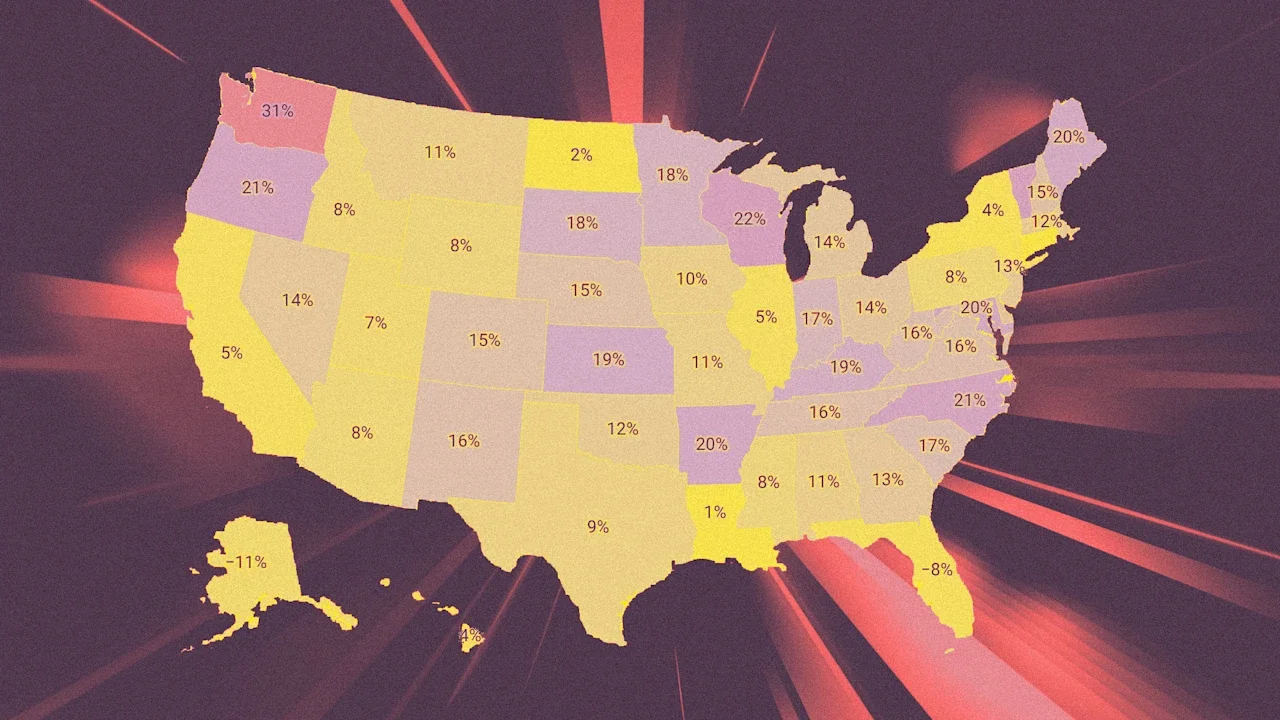
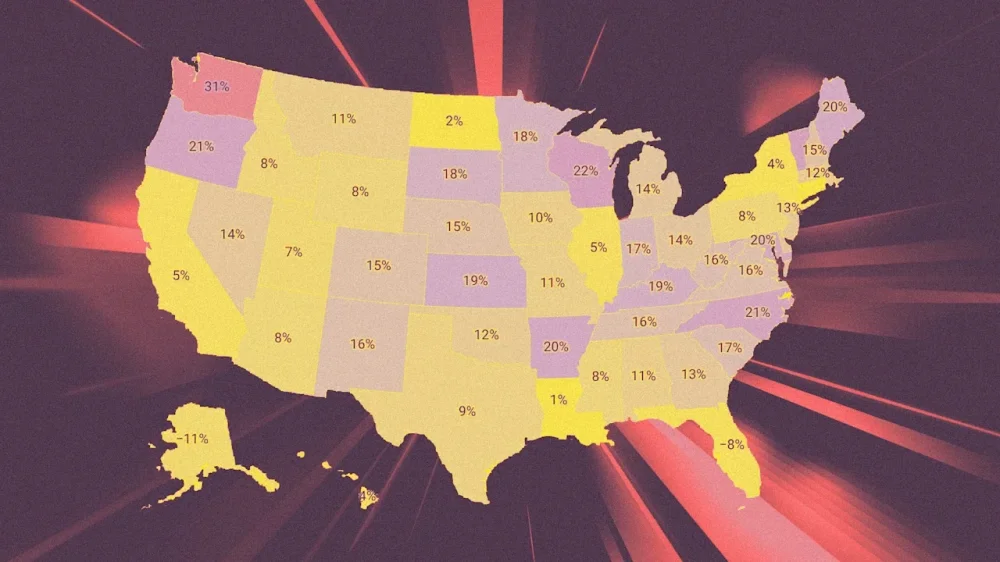
Want more housing market stories from Lance Lambert’s ResiClub in your inbox? Subscribe to the ResiClub newsletter. When assessing home price momentum, ResiClub believes it’s important to monitor active listings and months of supply. If active listings start to rapidly increase as homes remain on the market for longer periods, it may indicate pricing softness or weakness. Conversely, a rapid decline in active listings beyond seasonality could suggest a market that is heating up. Since the national Pandemic Housing Boom fizzled out in 2022, the national power dynamic has slowly been shifting directionally from sellers to buyers. Of course, across the country that shift has varied. Generally speaking, local housing markets where active inventory has jumped above pre-pandemic 2019 levels have experienced softer home price growth (or outright price declines) over the past 46 months. Conversely, local housing markets where active inventory remains far below pre-pandemic 2019 levels have, generally speaking, experienced, relatively speaking, more resilient home price growth over the past 46 months. Where is national active inventory headed? National active listings are on the rise on a year-over-year basis (+8.1% between March 31, 2025 and March 31, 2026). This indicates that homebuyers have gained some leverage in many parts of the country over the past year. Some sellers markets have turned into balanced markets, and more balanced markets have turned into buyers markets. Nationally, we’re still below pre-pandemic 2019 inventory levels (-13.6% below March 2019) and some resale markets, in particular chunks of the Midwest and Northeast, still remain, relatively speaking, tight-ish. While national active inventory is still up year-over-year, the pace of growth has slowed in recent months as softening has slowed. March inventory/active listings total, according to Realtor.com: March 2017 -> 1,172,713 March 2018 -> 1,067,281 March 2019 -> 1,115,940 March 2020 -> 937,319 March 2021 -> 440,589 (Pandemic Housing Boom overheating) March 2022 -> 354,016 (Pandemic Housing Boom overheating) March 2023 -> 562,444 March 2024 -> 694,820 March 2025 -> 892,561 March 2026 -> 964,477 If we maintain the current year-over-year pace of inventory growth (+71,916 homes for sale), we’d have 1,036,393 active inventory come March 2027. (Note: That’s not a prediction—I’m just showing what the math looks like if that pace continued.) Below is the year-over-year active inventory percentage change by state. While active housing inventory is rising in most markets on a year-over-year basis, the pace of growth continues to decelerate across much of the country (see the side-by-side maps below). In fact, Florida—home to many of the weakest regional housing markets over the past two years—is now seeing active inventory edge down a little year-over-year (-8%). LEFT: Year-over-year active inventory shift between March 2024 and March 2025 RIGHT: Year-over-year active inventory shift between March 2025 and March 2026 And while active housing inventory is rising in most markets on a year-over-year basis, some markets still remain tight-ish (although it’s loosening in those places too). As ResiClub has been documenting, both active resale and new homes for sale remain the most limited across huge swaths of the Midwest and Northeast. That’s where home sellers in the spring are likely, relatively speaking, to have more power than their peers in many Southern markets. In contrast, active housing inventory for sale has neared or surpassed pre-pandemic 2019 levels in many parts of the Sun Belt and Mountain West, including metro area housing markets such as Punta Gorda and Austin. Many of these areas saw major price surges during the Pandemic Housing Boom, with home prices getting stretched compared to local incomes. As pandemic-driven domestic migration slowed and mortgage rates rose, markets like Punta Gorda and Austin faced challenges, relying on local income levels to support frothy home prices. This softening trend was accelerated further by an abundance of new home supply in the Sun Belt. Builders are often willing to lower prices or offer affordability incentives (if they have the margins to do so) to maintain sales in a shifted market, which also has a cooling effect on the resale market: Some buyers, who would have previously considered existing homes, opting for new homes with more favorable deals over the past couple years—which then put some additional upward pressure on resale inventory. Click here to view an interactive version of the map below At the end of March 2026, 11 states were above pre-pandemic 2019 active inventory levels: Arizona, Colorado, Florida, Idaho, Nebraska, Oklahoma, Oregon, Tennessee, Texas, Utah, and Washington. (The District of Columbia—which we left out of this table below—is also back above pre-pandemic 2019 active inventory levels too. Softness in D.C. proper’s predates the current admin’s job cuts). Click here to view an interactive of the chart below (best done on desktop) Big picture: Over the past few years we’ve observed a softening across many housing markets as strained affordability tempers the fervor of a market that was unsustainably hot during the Pandemic Housing Boom and incomes have a chance to slowly catch up. While home prices are falling some in pockets of the Sun Belt, a big chunk of Northeast and Midwest markets are still eking out a little price year-over-year appreciation. Nationally aggregated home prices are pretty close to flat year-over-year. Click here for an interactive version of the table below Below is another version of the table above—but this one includes every month since January 2017. Click here to view an interactive version of the chart below If you’d like to further examine the monthly state inventory figures, use the interactive below. Over the coming months, let’s keep an eye on Florida, which has now entered its seasonal window when its active inventory typically begins to rise again (so far, the seasonal jump has been tame). (To better understand dynamics across Florida, read this ResiClub PRO report.) View the full article
-
In the 55 years since Walt Disney World first opened its gates, the theme park has undergone plenty of changes—and in many ways, it’s stayed the same. Some attractions from the park’s opening day in 1971 and the decade that followed have cemented themselves as indisputable classics, like Jungle Cruise and The Haunted Mansion (both of which are iconic enough to warrant their own film adaptations). One such ride is Big Thunder Mountain Railroad, which first opened in the Magic Kingdom’s Frontierland area in 1980. The mine train roller coaster went largely unchanged for more than 40 years, before the park announced that it would close in January 2025 for a year-long renovation. Since then, fans have clamored for an official reopening announcement, and as of April 8, they finally have one: The reimagined (or re-imagineered) version of Big Thunder Mountain Railroad will open to the public on May 3. Disney announced the reopening date with a cheeky video on social media, where a spokesperson was beset by comments from fans demanding news about the ride. “If Big Thunder Mountain’s what you want, Big Thunder Mountain’s what you’re gonna get,” they said, before revealing that a revamped version of the ride is mere weeks away. What’s new about Big Thunder Mountain Railroad? Much of what Disney fans love about Big Thunder Mountain Railroad is staying the same. That includes the lore behind it: that greedy gold baron Barnabas T. Bullion discovered gold in Big Thunder Mountain and started a mining company, only for the mountain to fight back and leave his mines deserted. But the reimagined ride will feature at least one new locale, the Rainbow Caverns, which will feature “spectacular natural caverns full of phosphorescent pools,” per Disney’s press release. “The Rainbow Caverns certainly are beautiful . . . but they ain’t as friendly as they first appear,” it continues. “In fact, that menacing rumble from deep within the mountain may be a sign that we ain’t welcome.” The ride will also be more accessible thanks to a lowered height requirement of 38 inches, reduced from the previous requirement of 40 inches. Reimagining other Disney classics Big Thunder Mountain isn’t the only classic Disney World ride to get a modern update. In 2024, log flume Splash Mountain was replaced with Tiana’s Bayou Adventure, themed around the 2009 animated film The Princess and the Frog. The original attraction had drawn controversy for taking inspiration from Disney’s 1946 movie Song of the South, which includes racially insensitive portrayals of Black Southerners after the Civil War. Another rebranded ride coming to Disney later this year is Rock ‘n’ Roller Coaster, now starring The Muppets instead of Aerosmith. The rock band had featured in the ride’s pre-show since its opening in 1999, but will be replaced when the coaster reopens this summer. Why simply rebrand or revamp an existing ride rather than replace it entirely or create new attractions elsewhere? Bob Weis, then-president of Walt Disney Imagineering, explained the company’s rationale in 2020 in reference to scrapping Splash Mountain for Tiana’s Bayou Adventure. “We have a longstanding history of enhancing attractions with ‘new magic,’” Weis said. “We completely understand that these decisions aren’t always popular, but I think our biggest fans know that we care as much as they do.” View the full article

-
In terms of enhancing problem-solving skills within teams, engaging in targeted exercises can make a significant difference. Activities like the Egg Drop Challenge and the Marshmallow Spaghetti Tower push teams to think creatively and collaborate effectively. Similarly, Corporate Escape Rooms and the Shrinking Vessel Challenge offer unique environments for sharpening critical thinking. As you explore these exercises, you’ll uncover how each one contributes to building a stronger team dynamic and improving communication. Key Takeaways The Egg Drop Challenge promotes creativity and critical thinking by designing protective vessels for uncooked eggs, fostering teamwork and innovation. Constructing a Marshmallow Spaghetti Tower encourages collaboration and problem-solving, as teams maximize height and stability with limited materials. Corporate Escape Rooms enhance team communication and critical thinking through immersive experiences, building camaraderie and shared purpose among participants. The Shrinking Vessel Challenge encourages effective teamwork and trust-building as participants adapt to navigating within a progressively smaller boundary. Engaging in a Puzzle Challenge and a Blindfolded Obstacle Course fosters collaboration, clear communication, and problem-solving skills within teams. Egg Drop Challenge The Egg Drop Challenge is an engaging team-building exercise where participants work together to design a protective vessel for an uncooked egg, which they must drop from a height without breaking. This activity typically lasts between 30 minutes to 1 hour, providing a structured time frame for teams to brainstorm and build their designs using materials like newspapers, cardboard, and rubber bands. As a hands-on problem-solving activity, it promotes creativity and innovation. You’ll need to think critically about factors like weight distribution and material strength to create a successful design. In addition, the challenge emphasizes teamwork and collaboration, requiring effective communication among team members to devise and execute their ideas. This exercise not only improves problem-solving skills but also nurtures a culture of resourcefulness, allowing teams to learn from both their failures and successes, which is crucial in various team-building problem-solving exercises. Marshmallow Spaghetti Tower Building on the hands-on nature of the Egg Drop Challenge, the Marshmallow Spaghetti Tower presents another exciting opportunity for team collaboration and problem-solving. In this challenge, teams must construct the tallest freestanding tower using 20 uncooked spaghetti sticks, one yard of tape, one yard of string, and one marshmallow, all within a 30-minute time limit. This exercise emphasizes collaboration and creative problem-solving, as you’ll need to strategize and allocate tasks effectively to maximize height and stability. Research shows that engaging in such problem-solving exercises for teams can improve collaborative efficiency and innovation by 15%. Placing the marshmallow at the top adds complexity, as it requires careful weight distribution consideration. Through this team problem-solving activity, you’ll gain insights into team dynamics and the differences between planned strategies and spontaneous approaches, making it a valuable learning experience for all participants. Corporate Escape Rooms Corporate escape rooms offer a unique and engaging way for teams to improve their problem-solving abilities as they promote collaboration. These immersive experiences typically last between 60 to 90 minutes, requiring participants to work together to solve puzzles and riddles. This not only improves communication and critical-thinking skills but also boosts team morale and camaraderie. Teams experience a sense of shared purpose, making it one of the best problem-solving games for adults. Furthermore, escape rooms can accommodate small to medium-sized groups, suitable for diverse corporate settings. Features Benefits Purpose Time Duration Improves Team Communication Problem Solving Games for Adults Collaborative Puzzles Boosts Team Morale Team Problem Solving Games Themed Scenarios Encourages Innovative Thinking Improves Critical Thinking Limited Time Challenges Promotes Creative Solutions Strengthens Team Dynamics Engaging Environments Supports Shared Achievement Builds Camaraderie The Shrinking Vessel Challenge When faced with the Shrinking Vessel Challenge, participants must quickly adapt as they work together within a progressively smaller boundary defined by a rope. This engaging activity typically lasts 10-15 minutes and requires at least four players to guarantee effective teamwork and collaboration. As the boundary shrinks, teams need to communicate effectively, strategizing to keep all members within the designated area. This improves their problem-solving skills, making it one of the ideal problem-solving activities for adults. The challenge encourages creative thinking as participants adjust their positions and maintain balance in a confined space. By relying on each other’s guidance, team members build trust, which is crucial for success. Puzzle Challenge The Puzzle Challenge is an engaging activity that requires teams to work together to complete a jigsaw puzzle within a set time limit, typically around 30 minutes. This exercise is perfect for a minimum of four players, encouraging effective collaboration as team members strategize to assemble the puzzle efficiently. Puzzle Difficulty Number of Pieces Time Limit Easy 100 30 minutes Medium 300 30 minutes Hard 500 30 minutes Expert 1000 30 minutes Custom Varies 30 minutes Engaging in the Puzzle Challenge improves problem-solving skills, as teams need to think critically about piece placement and strategy. Customizing puzzles to various difficulty levels promotes inclusivity, making it suitable for diverse skill sets. Post-exercise discussions can as well boost collaboration and team dynamics, ultimately fortifying your problem solving team. Blindfolded Obstacle Course Building on the collaborative skills developed through the Puzzle Challenge, the Blindfolded Obstacle Course offers teams another opportunity to improve their problem-solving abilities in a dynamic setting. This engaging activity requires four or more participants, with one person blindfolded and tasked with steering through a designated course. They rely solely on verbal instructions from teammates, which emphasizes clear communication and trust. Typically lasting 30-45 minutes, you can tailor the course with various obstacles to improve the challenge. This setup serves as an effective problem-solving exercise, where participants learn to articulate their thoughts clearly amidst pressure. The Great Egg Race Engaging in the Great Egg Race challenges teams to utilize their creativity and engineering skills to build a vehicle that can safely transport an egg. In this problem-solving exercise for team building, teams are given 30-45 minutes to design and construct their vehicles using materials such as cardboard, straws, and tape. This time constraint encourages quick decision-making and innovative thinking under pressure. As teams collaborate, they strategize to determine the best designs, enhancing their engineering principles and creative problem-solving abilities. The challenge culminates in a testing phase, where the vehicles race to see which one successfully protects the egg during transport. This activity not only encourages teamwork but also nurtures a spirit of friendly competition, making it an engaging way to develop vital skills. Frequently Asked Questions How Do I Choose the Right Team Building Exercise for My Group? To choose the right team building exercise for your group, first, assess the team’s goals and dynamics. Consider factors like group size, the nature of relationships, and specific skills you want to develop. Identify activities that align with these objectives, ensuring they promote collaboration and improve communication. Finally, gather feedback after the exercise to evaluate its effectiveness and make necessary adjustments for future activities, ensuring continuous improvement in team cohesion and performance. What Are the Benefits of Team Building Exercises Beyond Problem Solving? Team building exercises offer numerous benefits beyond just solving problems. They improve communication skills, nurturing better interactions among team members. These activities build trust, promoting collaboration and reducing conflicts. Participants develop stronger relationships, which can lead to increased morale and job satisfaction. Furthermore, team building cultivates creativity, as diverse perspectives come together. Regular engagement in these exercises likewise helps in identifying individual strengths, allowing for more effective task delegation within the team. How Long Should Each Team Building Activity Last? Each team building activity should ideally last between 30 minutes to two hours, depending on its complexity and objectives. Shorter activities focus on specific skills, whereas longer ones allow for deeper engagement and reflection. It’s important to balance duration with participants’ attention spans, ensuring everyone remains engaged throughout. Consider the goals of the activity when determining the length, as well-structured sessions can lead to more effective outcomes and encourage better teamwork. Can These Exercises Be Done Virtually? Yes, you can definitely conduct team-building exercises virtually. With the right tools, such as video conferencing platforms and collaboration software, teams can participate in activities created to improve communication and problem-solving skills. Activities like virtual escape rooms, online quizzes, or interactive workshops can be effective. It’s important to guarantee that all participants are engaged and have the necessary resources to participate fully, nurturing a collaborative environment in spite of the physical distance. What Materials Are Needed for These Activities? To conduct effective activities, you’ll need a few crucial materials. First, gather any necessary supplies like paper, pens, or markers for brainstorming exercises. If you’re using technology, make sure everyone has access to a reliable internet connection and the appropriate software or applications. Furthermore, consider creating a shared document or virtual whiteboard for collaboration. Depending on the activity, props or visual aids may improve engagement and facilitate interaction among participants. Conclusion In summary, engaging in team-building exercises like the Egg Drop Challenge and Corporate Escape Rooms not only improves problem-solving skills but additionally cultivates collaboration among team members. Activities such as the Blindfolded Obstacle Course and Puzzle Challenge promote effective communication and trust. By participating in these structured challenges, teams can develop innovative solutions as they strengthen their dynamics. Incorporating these exercises into your team’s routine can lead to improved performance and a more cohesive work environment. Image via Google Gemini This article, "7 Engaging Team Building Exercises for Problem Solving" was first published on Small Business Trends View the full article
-
Every April, the internet fills up with green logos, limited-edition packaging, and pledges that will be quietly retired by May. We’ve gotten good at calling that out. Greenwashing is understood, documented, and increasingly prosecuted. What we talk about less is the other problem: the brands that are actually doing the work, but have stopped saying so. Both are failures. Just different kinds. Here’s what’s actually happening. The share of S&P 100 companies using “ESG” in their sustainability report titles dropped from 40% in 2023 to just 6% in 2025. But the work hasn’t stopped. According to a 2025 EcoVadis study, 87% of U.S. companies have actually increased sustainability spending even with regulatory uncertainty. They’re doing it, they’re just not saying it. PwC called it an “era of quiet progress.” I’d call it fear. Greenwashing lawsuits are real, regulatory scrutiny is tightening, and overclaiming—even when the underlying work is solid—has become a liability. So the brands with the most credibility have gone silent, and the ones with the least credibility have filled the space. When the brands getting it right say nothing, the people who depend on that story lose more than a narrative. Farming communities lose the market signal that makes regenerative practices economically viable. Ecosystems lose the investment that keeps them standing. Employees who chose their employer because they believed in what it stood for lose the culture they signed up for. And consumers who would have chosen differently—who would have paid a little more if they understood what that dollar was actually doing—never get the chance. WHAT WALKING THE WALK ACTUALLY LOOKS LIKE At Yerba Madre, we make yerba mate—a naturally caffeinated plant that’s been shared in South American communities for centuries. We brought it to the U.S. nearly 30 years ago. It only grows in one place: the Atlantic Forest, one of the most biodiverse ecosystems on Earth, with more than 85% of its original canopy already gone. That geography is why our business model exists. The 257 Indigenous and small family farms we work with across Argentina, Paraguay, and Brazil aren’t suppliers. They’re communities that have stewarded this land for generations. The forest is still standing in the places we source from because that relationship with the land has never been broken—and our job has been to make sure our business doesn’t break it either. We pay above-market prices on multiyear contracts, cocreate shade-grown practices with each community based on their land and culture, and reinvest a portion of every sale back into restoration. That commitment is written into our legal structure as a social purpose corporation. It took nearly 30 years to build. This kind of on-the-ground work doesn’t often make headlines on its own. But it’s baked into the price. A can of Yerba Madre costs more than the alternative because the farmers who grew it earn a living wage and the forest they farm in is still standing. Marketing exists to make that clear—not to apologize for the price, but to make people understand what they’re actually paying for. When that story goes untold, consumers lose the ability to choose with intention. And the whole model loses the one thing it needs to survive: people who get it. HONESTY IS THE STRATEGY The brands that will earn trust aren’t the ones with the cleanest story. They’re the ones willing to tell the real story. Patagonia published a report last year admitting that their emissions went up due to a shift in product mix. They explained why and what they’re doing about it. We’ve had our own version of that. Building a fully shade-grown supply chain across three countries, with Indigenous communities and small family farmers, doesn’t happen on a straight line. There are farms still in transition, practices still being refined, and the distance between where we are and where we’re trying to go is real. We talk about that—not because it’s comfortable, but because hiding it would make the rest of the story hollow. A brand that only talks about what’s working is just a different kind of greenwashing. The way you avoid that is by making marketing responsible for more than the message. Get in the rooms where sourcing, hiring, and community decisions get made. Not to polish what comes out, but to influence what goes in—which suppliers get chosen and why, what living wage actually means in practice, which certifications the business is willing to be held to. EARTH MONTH IS THE MOMENT, NOT THE METHOD Don’t treat Earth Month like a campaign—and don’t skip it out of fear either. Both are the wrong answer. If your brief starts with “what can we do for Earth Month?” you’re solving the wrong problem. If it starts with “what are we already doing that’s worth showing?” you’re on the right track. Build something worth showing, then have the courage to show it—all year, in every sourcing decision, contract, and community relationship. The communities, the ecosystems, and the consumers who would choose differently if they knew are all waiting for someone to say something true. Earth Month is just the moment to prove you will. Emily Kortlang is chief marketing officer at Yerba Madre. View the full article

-
We may earn a commission from links on this page. My wife and I live in an urban area where outdoor space is at a premium, so I consider our home's second floor roof deck one of its standout features. It’s sunny and relatively private—and, crucially, it’s outdoor space in a city where a Juliet balcony is often the best you can do. There are two downsides to the space, however. One is that it is plagued by bugs, especially since one of our neighbors began hosting the dreaded spotted lanternfly like they were protecting an endangered species. The other is that our cats love being on the deck, but also love launching themselves over the fence to explore the neighborhood. (Did I mention this deck is on the second floor? You haven’t lived until you’ve hunted down a lost cat across your neighbors' roofs.) The solution, for us, was to screen in the deck. First, I built a simple frame to extend the railings up a few feet, and created a pergola-like set of rafters going across to support a screen. Here’s what it looked like at that point: Framing on my deck. Credit: Jeff Somers But how to actually enclose it? I could have just stapled screen to the framing, but that would lead to a problem in the winter, when the "roof" would be laden with snow. I’m pretty good with a power drill and some pressure-treated 2x4s, but I don’t think my screen-roof would've held several feet of New Jersey snow, so my screen needed to be easily removable (and replaceable). The solution was a DIY screen-in kit from Screeneze SCREENEZE No-Spline Screened in Porch Kit - 96-in, 5 PK (Bronze) - SCREENEZE Aluminum Base & Vinyl Caps - Porch Screening System for Mesh Screen Patio Enclosure Panels $189.99 at Amazon Shop Now Shop Now $189.99 at Amazon After some research, I found the solutions: A screened-in porch kit from Screeneze. It’s a simple concept: You attach an aluminum base to the perimeter of whatever opening you’re screening in, stretch your screen over the base, and lightly hammer a vinyl cap on top to secure the screen in place without staples. When you need to, you can easily pry off the caps with a flathead screwdriver and remove or replace the screen. Once installed, the base of the kit looks like this: Closeup of SCREENEZE base. Credit: Jeff Somers and the caps look like this: Close up of SCREENEZE cap. Credit: Jeff Somers The aluminum base is easy to cut to size using a hacksaw or metal snippers, and the caps can be cut with a utility knife or even a decent pair of scissors, so you can customize the size of your screened area. They come in four basic colors (bronze, sand, white, and clay). The installation process was also pretty simple: I measured the perimeter, bought the necessary number of base and caps, and cut my bases to the correct lengths. You don’t have to make them exactly as long as the space you’re screening—you can cut them into smaller, more manageable lengths and attach them end-to-end, making sure you line them up so the caps can go across seams if necessary. This is especially helpful for the caps, as I found trying to hold them in place so I could hammer them home was a challenge, as they are quite bendy. Cutting them into shorter lengths made them a lot easier to work with. Phifer BetterVue High-Visibility Mesh Screen for Patio Porch, Screen Door Mesh, & Balcony - High Transparency Window Screening for Porches Roll - (48 in x 100 ft) - DIY Replacement & Repair at Amazon Shop Now Shop Now at Amazon The kit comes with all the self-tapping screws you’ll need, so you can slap the aluminum base up pretty fast. Then you just need some screen—I bought an enormous roll of the stuff from Phifer BetterVue, because it’s proved to be durable, attractive, and easy to work with. My rumpled supply of screen. Credit: Jeff Somers I cut lengths to cover the horizontal openings, and attached the screen to the top base first. That made it easy to go back, stretch the screen down, and attach the bottom and side caps, giving me a nice, tight screen that won’t block the view (or the sun). Next, I cut two large sections of screen to cover half of the “roof,” attached them to the sides using the caps, stretched them to the center, and attached them to the front and back of the deck (it was hard to stretch the top screen tightly, especially because there’s no base or cap running down the center line, so it remains a little loose, but it still does the job. Here’s what it looks like fully installed: The finished screen. Credit: Jeff Somers Screening in the deck made it the ideal outdoor spaceSo how’d it turn out? Terrific. Screening in the porch means: There are no bugs. Every once in a very long while, a winged insect makes its way into the deck area, but it’s very rare. And I haven’t seen a spotted lanternfly back there in a loooong time (though I still see them everywhere else, because, again, one of the neighbors seems determined to be a refuge for them). Pets can hang out there. I no longer have to worry about cats escaping into the neighborhood, and I don’t have to feel guilty about preventing the furry idiots from enjoying our outdoor space. They can lounge around as much as they like—they enjoy climbing the screen like spidercat, too. Maybe a bit too much. The screen doesn’t block the sun, so it’s still a bright, pleasant place to hang out, grill, or do whatever else. It's easy to remove and reinstall. When the weather turns, I can pry off the caps and roll back the screen in about ten minutes, so I don’t have to worry about snow loads destroying everything. And when the screen gets torn, I just undo that section and pop in a fresh screen, a process that takes five minutes at most. The Screeneze kit has lasted years, through some pretty gnarly weather, and it’s still in almost-new shape. If you’ve got a deck, pergola, or porch, screening it in can make a more enjoyable and more useful space, and this kit will make doing that a fairly simple job. View the full article
-
A reader writes: I’m doing an internship at a nonprofit. My current boss is getting a promotion and changing jobs. She was a great boss and I want to thank her and keep the mentorship going, but I’m not sure how to do so without being awkward. Any ideas? Tell her! Let her know that you’ve really appreciated working for her and why — be specific here about what she’s taught you, if you can — and say that you’d love to stay in touch and potentially even meet up for coffee occasionally. You could say, “I respect your judgment so much that I’d love to be able to come to you as a sounding board in the future, if that’s something you’re open to.” From there, make a point of emailing her a few times a year with updates about what’s going on in your career, or times you’ve put things you’ve learned from her into practice (most people love hearing the latter). People early in their careers tend to underestimate how much people senior to them enjoy hearing this kind of thing; it’s easy to figure they’re too busy or important to care about your updates, but usually people really love this stuff. (And the fact that your boss has been a good mentor to you up until now says she’s probably someone who would really enjoy it.) You can also suggest coffee occasionally. Aim for once a year but look for signs she’d be open to doing it more often. One secret key to making this work is being openly appreciative when you talk to her. The people I’ve spent the most time mentoring are the ones who make a point of telling me how it’s helped them; that feels great and is a real motivator to continue being generous with people. The post how can I keep my boss as a mentor when she leaves? appeared first on Ask a Manager. View the full article
-
Pope Leo XIV has become increasingly concerned over Washington’s military policiesView the full article
-
A new reality is setting in for travelers worldwide: rising fees, fewer flight options, and difficult decisions about whether a trip is worth the cost. The culprit is volatile oil and jet fuel prices, which have spiked sharply since the war in the Middle East began and fighting near the narrow Strait of Hormuz created a chokepoint for global oil supplies. “Volatility is the real story here,” said Shye Gilad, a former airline captain who now teaches at Georgetown University’s business school. “Right now, the airlines are trying to make bets on what they think will happen in the future.” Airlines are responding cautiously, trimming schedules and adjusting prices in ways that experts say will ripple unevenly across the market but ultimately affect nearly every type of traveler. Budget airlines and the price-conscious customers who rely on them are likely to feel the pinch first and most acutely, experts say, but even travelers in premium cabins won’t escape the higher prices and less convenient schedules. Oil prices have swung wildly in recent weeks, briefly topping $119 a barrel at one point, plunging Wednesday below $95 on news of a two-week ceasefire that temporarily reopened the Strait of Hormuz, and then climbing back toward $100 on Thursday as uncertainty over the fragile deal grew. Iran again closed the key artery for global oil shipments in response to Israeli strikes Wednesday in Lebanon. “When prices move quickly in both directions, it’s very hard for airlines to make predictions,” Gilad said. “That’s why there’s a lag between oil market moves and what passengers see in ticket prices.” In other words, even when oil prices drop, travelers may not see relief right away. Gilad said airlines can take months, sometimes even up to a year, to adjust prices as they wait for energy markets to stabilize. “At this level of fuel, it’s hard to call anything temporary,” Delta Air Lines CEO Ed Bastian told reporters this week after the Atlanta-based carrier raised its checked baggage fees. Global squeeze, local effects Bastian said Wednesday as Delta kicked off the earnings season for U.S. airlines that the higher fuel prices are expected to add $2 billion in operating expenses in the second quarter alone. United Airlines CEO Scott Kirby said in a recent memo to staff that if jet fuel prices stay elevated, it would mean an additional $11 billion in annual costs. That’s more than double what United earned in its most profitable year. “For perspective,” Kirby wrote, “in United’s best year ever, we made less than $5B.” According to the International Air Transport Association, the average global jet fuel price rose to $209 per barrel last week, up from roughly $99 at the end of February when the war started. Travelers from the U.S. to Hong Kong and New Delhi are paying the price. U.S. carriers are embedding the higher operating costs into ticket prices and add-on fees. Delta, United, Southwest Airlines and JetBlue have all increased their checked baggage fees. United has moved beyond add-ons to adjust pricing in its front cabins. The carrier said last week it is bringing the “pay for what you want” approach already standard in economy to its premium cabins, turning perks like advanced seat selection and fully refundable tickets into optional extras. Hong Kong’s Cathay Pacific recently bumped fuel surcharges by roughly 34% across all routes, while Air India on Monday added up to $280 in fees to some flights. Emirates, Lufthansa and KLM have also adjusted fees or fares to keep pace with the price volatility. Experts say flexibility — and careful monitoring — can help offset the rising fares. Fare-tracking tools can alert travelers to price changes and compare multiple options in one place. Booking early and checking nearby airports can lock in better prices, while refundable tickets make it easier to cancel and rebook if fares drop. Traveling light with just a carry-on can also help avoid the rising bag fees. Flight cuts to cut costs For some travelers, it’s not just the cost — it’s the uncertainty that’s changing how they’re planning trips. Bill Moorehouse, 50, a solutions director at a global provider of business and technology services, routinely travels for work every four to six weeks. “When you have business trips and you have a carefully coordinated schedule, you don’t want unknowns and disruptions. And right now, it just feels like it’s more likely that things could go wrong and throw your trip off course,” the Cupertino, California, resident said. For now, he’s staying closer to home. “I think it’s a good time to do your spring cleaning and reconnect with friends locally,” Moorehouse said. Airlines, meanwhile, are also adjusting how much they fly. BNP Paribas estimates that global schedules for April have been cut roughly 5% compared with earlier plans. Most reductions are in the Middle East, the global investment bank said, though smaller cuts were also emerging in Europe, Asia and North America. United Airlines is cutting about 5% of its planned flights in the near term, trimming less profitable routes and suspending some international service temporarily rather than “burning cash” on trips that can’t absorb the more expensive fuel costs. The airline’s CEO said the cuts will target redeye flights and routes on historically slower travel days such as Tuesday, Wednesday and Saturday. Delta is scrapping plans to add more flights and seats in June, leaving about 3.5% fewer seats than originally planned. Travel plans upended These moves show why major carriers are better positioned to weather the spike in fuel prices than budget carriers, whose “no frills” model leaves them with less flexibility. Bigger airlines can lean on dynamic pricing, sell more seats at higher fares or swap in larger planes on certain routes, letting them cut flights without losing overall capacity. “Leisure travelers and budget conscious travelers are going to absolutely feel it first because it may make the difference between going and not going,” Gilad said. It’s already made the difference for Anna Del Vecchio. The 36-year-old Seattle resident has made it an annual springtime tradition to visit family in Philadelphia before flying to Paris to see friends she met as a teenager during a volunteer internship. Her credit card points typically cover the roundtrip flight, but ticket prices now hover around $1,400 — about double what she has paid in past years. “It wasn’t even scratching the surface for the flight this time,” she said, “so I decided to delay the trip.” But if airfare tops $1,500, she might not be able to make a journey she hasn’t missed in years. “It might be the kind of thing where it just ends up being that I have to travel less.” —Rio Yamat, AP Airlines and Travel Writer View the full article

-
I've written before about various software tricks to nudge a smartphone toward dumb-phone territory: stripping the home screen down to essentials, enabling greyscale mode, scheduling downtime windows. I tried all of it, and for a time it worked for me, but only in the way that hiding a bag of chips in a high cabinet works—technically an obstacle, but not really a barrier. One tap to "Ignore Limit," and I'm back to scrolling. The problem is that the key to unlock everything is right there in your pocket. Turns out I needed a small device called Brick to physically restrain me create a physical barrier, and I can feel my screen time habits finally change for the better. The Brick Phone Access Blocker Device - Subscription-Free Phone Lock, Limits Smartphone Access, Reduces Screen Time & Improves Focus - High-Grade Magnet & Anti-Slip Silicone $59.00 at Amazon Shop Now Shop Now $59.00 at Amazon How Brick works with your smartphoneBrick is a small NFC fob—roughly the size of an AirPods case—paired with an app. You open the app, pick which apps or sites to block (or flip it around: choose only the apps you want to keep, and everything else gets blocked), name it something like Work or Family Time (or just Sanity), and tap your phone to the Brick to activate it. That's it. And to get everything back, you have to physically walk to wherever you left the Brick and tap again. Each Brick comes with five emergency unbricks you can trigger from the app. I appreciate that those exist, and luckily, I haven't had to use them yet. Why Brick actually helps you reduce your screen timeHere's the thing I keep coming back to: Every digital-based solution asks you to rely on yourself in the exact moment you're weakest. By the time you're faced with the "Ignore Limit" option, you've already picked up your phone. You're already mid-habit. Brick changes the physicality of the problem. I've found that the greatest service Brick provides is that it doesn't ask you to resist temptation in the moment; instead, it forces you to set an intention earlier, then it makes that intention stick through physical separation rather than willpower. The research on behavior change says this is exactly the right approach. Environment design beats in-the-moment resolve almost every time. (I just apparently needed a $59 piece of hardware to finally internalize that). I do have to be honest about how ridiculous this is for me: I spent a lot of money on my phone. And I have now spent additional money ($59) specifically to stop using it. Oh well! That's where my screen time had brought me. On the bright side, Brick is a one-time purchase with no need for a subscription or "premium plan." I'll admit I hesitated to make any purchase, given the irony of the situation and my desire to simply have more willpower. But I've realized my time and attention span is worth the cost, and I'm annoyed it took me this long to act on it. View the full article
-
When considering the relationship between corporations and LLCs, it is crucial to understand their distinct characteristics and how they function in the business environment. Both structures offer limited liability, protecting personal assets from business debts. Nevertheless, they differ in ownership, management, and taxation, which can greatly impact your business decisions. As you navigate these options, you’ll need to weigh their advantages and disadvantages to determine which structure aligns best with your goals and needs. Key Takeaways Both corporations and LLCs provide limited liability protection, safeguarding personal assets from business-related liabilities. Corporations and LLCs differ in ownership structure, with corporations having shareholders and LLCs having members. Corporations face double taxation, while LLCs benefit from pass-through taxation, avoiding taxes on business profits at the entity level. LLCs offer more flexible management options compared to the formal structure required for corporations, including the absence of a mandatory board. Compliance requirements for corporations are more stringent, including mandatory meetings and detailed record-keeping, whereas LLCs have lower regulatory burdens. Overview of Corporations and LLCs When considering the structure of a business, it’s essential to understand the key differences between corporations and limited liability companies (LLCs). Corporations, often structured as C corps, are owned by shareholders and managed through a formal hierarchy, including a Board of Directors. Conversely, LLCs are owned by members and offer more flexible management options. One of the key advantages of a corporation is its ability to raise capital by issuing shares, simplifying ownership transfer. LLCs, on the other hand, have more complex transfer processes requiring member consent and typically provide limited liability company membership benefits, protecting personal assets from business liabilities. Tax treatment similarly differs; LLCs typically benefit from pass-through taxation, whereas corporations may face double taxation. Furthermore, corporations must adhere to stricter regulations, such as holding annual meetings, compared to the fewer compliance obligations required of LLCs, making them a more straightforward option for some business owners. Key Differences in Ownership Structures Comprehending the ownership structures of corporations and LLCs is crucial for making informed business decisions. Corporations are owned by shareholders who buy and sell shares, making ownership transfer easier. Conversely, LLCs are owned by one or more members, with ownership interests not represented by stock certificates, which may require member consent for transfer. Shareholders enjoy rights based on their stock ownership, whereas LLC members can customize their financial rights through an operating agreement. Moreover, corporations have a formal management structure, with a Board of Directors elected by shareholders, whereas LLCs offer more flexibility in management, allowing for member-managed or manager-managed options. Significantly, ownership in corporations can continue indefinitely regardless of changes in shareholders, whereas LLCs may face limits depending on their operating agreements or state regulations. You might wonder, do LLC companies get 1099? And can a corporation be an LLC? These questions highlight the intricacies in ownership structures. Limited Liability Protections Offered Limited liability protections offered by both corporations and LLCs play a crucial role in safeguarding your personal assets from business-related liabilities. With these protections, you’re typically not personally liable for business debts beyond your investment in the entity. This means that if your business faces financial difficulties or legal challenges, your personal assets, like your home or savings, are often safe from creditors. This limited liability feature is a significant reason why many entrepreneurs opt for corporations or LLCs instead of sole proprietorships or general partnerships. It allows you to manage risks effectively, enabling you to take calculated business risks without jeopardizing your personal financial security. Nonetheless, it’s important to note that in cases of fraud or misuse of the business entity, courts may “pierce the corporate veil,” potentially exposing you to personal liability in spite of the protections in place. Tax Implications for Corporations and LLCs How do tax implications differ between corporations and LLCs? LLCs are typically treated as pass-through entities, meaning profits and losses flow directly to your personal tax return, avoiding double taxation. Conversely, C corporations face double taxation; their profits are taxed at the corporate level, and dividends to shareholders incur additional taxes on personal returns. Nevertheless, S corporations offer a compromise, allowing profits and losses to pass directly to shareholders, provided they meet IRS criteria. Although LLC owners may face self-employment taxes on their share of profits, corporation shareholders only pay taxes on dividends received. As of 2018, corporations pay a flat federal tax rate of 21% on profits, whereas LLCs have the option to elect corporate taxation if it suits their financial situation better. Comprehending these differences can help you make informed decisions about your business structure and tax liabilities. Management and Compliance Requirements Comprehending the differences in management and compliance requirements is crucial when choosing between a corporation and an LLC. Corporations must adopt corporate bylaws and appoint a Board of Directors, whereas LLCs enjoy a flexible structure that can be member-managed or manager-managed without needing a formal board. Annual meetings for shareholders and directors are mandatory for corporations, and they must keep detailed minutes. Conversely, LLCs aren’t required to hold regular meetings, allowing for a less formal approach. Both entities need to comply with state maintenance and reporting requirements to maintain limited liability status, but corporations typically face more annual compliance obligations. For instance, corporations must file annual reports and may incur franchise taxes. LLCs, while similarly needing to file, usually experience lower compliance costs. Even though creating an operating agreement is advisable for LLCs, it’s not legally required, unlike the mandatory bylaws for corporations that often become public records. Choosing Between a Corporation and an LLC When you’re choosing between a corporation and an LLC, it’s essential to take into account the tax implications and management flexibility. LLCs usually allow pass-through taxation, meaning profits and losses appear on your personal tax return, whereas corporations might face double taxation on their earnings. Furthermore, corporations offer a structured management approach that can help attract investors, whereas LLCs provide more flexibility in how you manage your business. Tax Implications Comparison Choosing between a corporation and an LLC can considerably impact your financial obligations, particularly regarding taxation. LLCs usually benefit from pass-through taxation, meaning profits and losses appear on your individual tax returns, thereby avoiding the double taxation common with corporations. Conversely, corporations face taxation at both the corporate and personal levels when dividends are distributed. S Corporations offer a middle ground, allowing for pass-through taxation as well as providing liability protections, if eligible. Here’s a quick comparison: Entity Type Taxation Method Additional Taxes LLC Pass-through Self-employment taxes Corporation Double taxation Tax on dividends S Corporation Pass-through Tax on dividends Understanding these differences will help you make an informed choice. Management Flexibility Evaluation After considering the tax implications of corporations and LLCs, the management structure becomes another important factor in your decision-making process. LLCs offer a flexible management approach, allowing you to choose between member-managed or manager-managed options. Conversely, corporations require a formal hierarchy with a Board of Directors and designated officers. This structure demands adherence to strict formalities, like annual meetings and maintaining corporate bylaws. LLCs usually impose fewer compliance requirements, granting you more operational flexibility. Furthermore, you can customize management provisions in an LLC’s operating agreement, enhancing privacy regarding internal affairs. Although corporations separate ownership from management, which can streamline decision-making, LLCs enable direct owner involvement in daily operations, making them appealing for small businesses seeking management flexibility. Frequently Asked Questions Does an LLC Fall Under a Corporation? An LLC doesn’t fall under a corporation; it’s a separate legal entity. In addition, both provide limited liability protection, LLCs have different ownership structures since they’re owned by members, not shareholders. LLCs likewise face fewer formalities, meaning you won’t need to hold annual meetings or maintain bylaws like a corporation does. Furthermore, LLCs typically enjoy flexible management and can opt for pass-through taxation, simplifying the tax process for their members. Is It Better for an LLC to Be Taxed as a Corporation? It can be beneficial for an LLC to be taxed as a corporation, especially if you want to retain profits and limit self-employment taxes. By choosing corporate taxation, you might take advantage of a lower flat tax rate of 21% on profits. Furthermore, this option allows you to issue stock, attracting outside investors for growth. Nevertheless, it’s essential to evaluate your business’s financial situation and future goals, often consulting a CPA or tax attorney for guidance. What Are the Key Differences Between an LLC and a Corporation? The key differences between an LLC and a corporation lie in ownership structure, management, and taxation. LLCs are owned by members, whereas corporations are owned by shareholders. LLCs offer flexible management without strict formalities, unlike corporations requiring boards and meetings. For tax purposes, LLCs typically allow pass-through taxation, avoiding double taxation, whereas corporations may face it. Furthermore, corporations can issue stock, whereas LLCs don’t, and forming each requires different legal documents. Why Would a Corporation Own an LLC? A corporation might own an LLC to limit liability exposure, as it provides an extra layer of protection for assets against legal claims. By owning an LLC, you can benefit from pass-through taxation, simplifying tax reporting. This structure likewise allows for engaging in joint ventures while maintaining operational flexibility. Furthermore, having an LLC can attract investors by offering a customizable ownership structure, which can appeal to different investment strategies and diversify business operations. Conclusion In conclusion, choosing between a corporation and an LLC depends on your specific business needs. Although both structures provide limited liability protection, they differ in ownership, taxation, and management requirements. Corporations face double taxation, whereas LLCs enjoy pass-through taxation. Comprehending these distinctions will help you make an informed decision that aligns with your goals. Finally, evaluating your business model and future plans will guide you in selecting the right entity to improve your business’s credibility and protect your personal assets. Image via Google Gemini and ArtSmart This article, "Relationship Between Corporations and LLCs" was first published on Small Business Trends View the full article
-
Small business owners navigating customer feedback just gained a powerful tool with the new integration of SurveyMonkey’s automated SMS survey invites into Salesforce. This enhancement promises to streamline how businesses solicit feedback, making it easier to connect with customers and gather valuable insights. The seamless integration allows Salesforce users to send text message survey invitations directly from their customer relationship management (CRM) platform. By tapping into the vast reach of SMS, small businesses can engage with their customers in real-time, which can lead to higher response rates and more actionable data. This development addresses a significant challenge for small business owners: obtaining timely and relevant feedback. Traditionally, surveys sent via email often fall victim to spam filters or get buried beneath an avalanche of promotional messages. In contrast, SMS messages boast a staggering open rate of over 90%, increasing the likelihood that customers will engage. “Our mission is to empower businesses to collect feedback effectively,” said a spokesperson from SurveyMonkey. “With this integration, businesses can now automatically reach out to customers using the preferred communication channel of many—text messaging. This not only enhances the customer experience but also allows businesses to make data-driven decisions quickly.” Small businesses can harness this feature in various practical ways. For instance, after a customer has made a purchase, a quick text survey can gauge satisfaction and provide insights into their shopping experience. Similarly, service-based businesses can solicit feedback immediately after a service is rendered, enabling prompt adjustments if needed. These insights can inform ongoing improvements and help businesses tailor their offerings to meet customer needs better. Implementing this technology does require careful consideration. Small business owners should remain mindful of the importance of compliance with regulations such as the Telephone Consumer Protection Act (TCPA). The act mandates that businesses must obtain explicit consent from customers before sending SMS messages, which adds an additional layer of responsibility when utilizing this new feature. Moreover, while the integration is designed for ease of use, small business managers must ensure that their staff are adequately trained on how to use it effectively. Without proper training, the benefits of automating SMS invitations could be thwarted by user error or mismanagement. Another potential challenge lies in the need for strategic timing when asking for feedback. Bombarding customers with surveys immediately after a purchase or interaction could lead to survey fatigue, which might result in lower response rates. Key to successful engagement is finding the right balance in messaging frequency and timing. As small businesses evaluate whether to adopt this technology, it’s also vital to consider whether their current customer base would respond well to SMS surveys. A target demographic inclined toward mobile communication is more likely to engage effectively with this method. Ultimately, SurveyMonkey’s integration with Salesforce allows small business owners not only to gather feedback easily but also to respond to customer needs more proactively. Based on the insights collected through SMS surveys, businesses can make informed adjustments that ultimately enhance customer satisfaction and loyalty. For more detailed information about this new offering, visit the original post here. In a landscape where customer feedback is invaluable, tools that facilitate timely and relevant insights may very well be game-changers for small businesses ready to thrive and adapt. Image via Google Gemini This article, "SurveyMonkey Integrates SMS Surveys with Salesforce for Effortless Feedback" was first published on Small Business Trends View the full article
-
The 30-year fixed fell to 6.37% after a two-week ceasefire tempered war-driven volatility, but economists warn the spring housing market faces continued turbulence. View the full article
-
Research published by City Hall found accounts aligned with the extreme right are among those smearing the capital onlineView the full article
-
Google is narrowing the scope of its Performance Planner tool, signaling a shift toward conversion-focused campaign types and away from impression-based planning. What’s happening. As of last month Performance Planner no longer supports planning for Display and Video campaigns, and removes access to plans using impression share, top impression share or absolute top impression share metrics. Why we care. Google is deprioritizing impression-based planning, making it harder to forecast and optimize upper-funnel campaigns like Display and Video within native tools. This could mean a shift toward conversion-focused strategies and automation, meaning advertisers may need to rethink how they plan awareness campaigns and measure success outside of traditional impression share metrics. The big picture. Google Ads is continuing to prioritize automation and performance-driven outcomes, aligning its planning tools more closely with campaign types like Search, Shopping, App, Demand Gen, Local and Performance Max. How it works now. Advertisers can still use Performance Planner for supported campaign types, but any existing plans that include Display or Video campaigns — or rely on impression share metrics — can no longer be viewed or edited. What to watch. How advertisers adapt their forecasting and planning for upper-funnel channels like Display and Video, which now lack native support in the tool. Bottom line. Google is doubling down on performance-driven planning — and leaving impression-based strategies increasingly on the sidelines. View the full article
-
When you’re considering a business line of credit, knowing your options can make a significant difference. Five JPMorgan Chase stand out for their offerings, each with unique features that cater to various business needs. From flexible amounts to quick funding solutions, these banks provide crucial financial tools for growth. Comprehending what each bank offers will help you make an informed choice. Let’s explore these top contenders and what they can do for your business. Key Takeaways Wells Fargo offers lines from $10,000 to $3 million with competitive interest rates, making it a strong option for larger businesses. Bank of America features secured lines with rates starting at 9.25% and no origination fees, appealing for cost-conscious borrowers. Bluevine provides quick funding for unsecured lines up to $250,000, with approval and access to funds in as little as 24 hours. OnDeck specializes in unsecured lines up to $100,000, requiring a minimum credit score of 625 for fast access to capital. Fundation offers flexible repayment terms and customized credit amounts, catering to diverse business financing needs. Overview of Business Lines of Credit A business line of credit is a flexible financial tool that allows small businesses to access funds as needed, much like a credit card. With a bank line of credit, you can borrow amounts ranging from $30,000 to $250,000. Interest is charged only on the amount you draw, typically starting at 3.00% and potentially reaching 39.60%. You’ll find two main types: secured lines, which require collateral and offer lower rates, and unsecured lines, which don’t require collateral but may have higher rates and personal guarantees. To qualify, you usually need a personal credit score between 600 and 700, though some lenders accept lower scores, and a minimum business duration of 3 months to 2 years. When you fill out a business credit application, you can explore how to open a credit line that supports your cash flow management, unexpected expenses, and business growth. Top 5 Banks for Business Lines of Credit When searching for a business line of credit, it’s essential to evaluate the offerings of various banks, as each provides unique features that can cater to your specific needs. Wells Fargo is often regarded as a best bank for business line of credit, offering amounts from $10,000 to $3 million with competitive interest rates. Bank of America provides secured lines with no origination fee, requiring a minimum six months in business and competitive rates starting at 9.25%. Bluevine stands out with fast funding, offering unsecured lines ranging from $5,000 to $250,000, and funding as soon as 24 hours after approval. OnDeck specializes in quick access to unsecured lines up to $100,000, requiring a minimum credit score of 625. Finally, Fundation offers flexible repayment terms and customized credit amounts, making it another strong contender for the best bank for business line of credit. Key Features to Consider Evaluating a business line of credit requires careful consideration of several key features that can greatly impact your financing options. Comprehending these aspects can help you choose the right line for your business. Interest Rates: These can range from 3.00% to 39.60%, depending on the lender and your qualifications. Loan Amounts: Typically, amounts range from $1,000 to $250,000, so make certain they align with your business needs. Repayment Terms: Terms can vary considerably, with some lenders offering as short as 3 months and others extending up to 624 months. Credit Score Requirements: Most lenders require a minimum credit score of 600, which can affect your eligibility and terms. Taking the time to assess these features guarantees you make an informed decision, finally supporting your business’s financial health and growth. Application Process for Business Lines of Credit Maneuvering the application process for a business line of credit can be straightforward, especially if you gather the necessary information beforehand. Typically, you’ll start by completing a short online form that takes less than 10 minutes. Most lenders ask for basic details such as your business name, address, revenue, and personal credit score; many accept scores as low as 600. You may additionally need to provide documentation like financial statements, tax returns, and proof of income to verify your business’s financial health. Approval times can vary considerably by lender, with some online options offering funding as quickly as one business day after submission. It’s likewise beneficial to know that checking rates during the application process usually won’t impact your credit score, so you can explore multiple options without worrying about your creditworthiness. This approach allows you to make informed decisions as you secure the right financing for your business needs. Comparison of Rates and Terms Grasping the rates and terms associated with business lines of credit is crucial for making informed financial decisions. Comprehending how these factors can influence your borrowing experience allows you to choose the best option for your needs. Here are some key points to reflect upon: Interest Rates: Typically range from 3.00% to 39.60%, varying by lender and borrower qualifications. Loan Amounts: Can range from $1,000 to $750,000, depending on the lender and credit line product. Repayment Terms: Usually vary from 3 months to 24 months, providing flexibility in cash flow management. Credit Score Requirements: Often start at 600, with some lenders seeking scores of 680 or higher for better terms. Frequently Asked Questions What Is the Best Bank for Business Line of Credit? When choosing the best bank for a business line of credit, consider factors like interest rates, credit score requirements, and repayment terms. Banks like American Express and Fundbox offer competitive options with lower credit score thresholds, whereas others, like Bank of America, target established businesses with higher revenue requirements. Assess your business’s financial situation and needs carefully to find a suitable lender that aligns with your goals and financial capacity. What Credit Score Do You Need for a Business Line of Credit? To secure a business line of credit, you’ll typically need a personal credit score ranging from 600 to 700. A higher score increases your chances of getting favorable terms. Some online lenders may accept scores around 600, but you’ll face higher interest rates. Traditional banks often require a score of 680 or above. Furthermore, maintaining a strong credit history is essential, as it impacts both approval chances and the terms offered by lenders. What Is the Monthly Payment on a $50,000 Business Loan? The monthly payment on a $50,000 business loan varies based on the interest rate and loan term. For instance, at a 10% interest rate over five years, you’d pay approximately $1,061 monthly. If the interest rate is 8% with a three-year term, your payment would increase to around $1,570. It’s essential to take into account additional fees, as they can impact the total repayment amount greatly. Always calculate your loan costs carefully before proceeding. What’s the Best Bank to Use for an LLC? When you’re choosing a bank for your LLC, consider factors like interest rates, fees, and customer service. Major banks, such as Bank of America and Wells Fargo, offer various business services customized to LLCs, but online lenders like Bluevine and Fundbox can provide more flexible options. Be sure to check their credit score requirements and annual revenue expectations, as these will greatly impact your ability to secure financing for your business. Conclusion In conclusion, selecting the right bank for a business line of credit is essential for your financial strategy. Each of the top five banks offers distinct features, such as flexible amounts, competitive rates, and quick funding options. Consider your business’s specific needs and financial situation when comparing these offerings. By comprehending the key features and application processes, you can make an informed decision that best supports your growth and operational goals. Image via Google Gemini This article, "Best 5 Banks for Business Lines of Credit" was first published on Small Business Trends View the full article
-
Oil prices are climbing back toward $100 per barrel on Thursday, while stock markets worldwide slow following their big gains from the day before. The S&P 500 slipped 0.1% as the United States, Iran, and Israel disagreed on the details of their two-week ceasefire, whose announcement had sent markets flying in optimism on Wednesday. The Dow Jones Industrial Average was down 40 points, or 0.1%, as of 10 a.m. Eastern time, and the Nasdaq composite was 0.2% lower. The oil market was jumpier, and the price for a barrel of benchmark U.S. crude oil climbed 6.8% to $100.79. It rose after semiofficial news agencies in Iran suggested forces have mined the Strait of Hormuz, the narrow waterway that has been at the center of President Donald The President’s demands of Iran. Blockages there have kept oil and natural gas stuck in the Persian Gulf, away from customers worldwide. Brent crude, the international standard, rose 3.7% to $98.24 per barrel. It’s well below the $119 level that it briefly reached when worries about the war reached their height, but it’s still well above its roughly $70 level from before the war. Given how far apart the United States and Iran seem to be in their demands, upward pressure on oil prices may be “here to stay for a while,” according to strategists at Macquarie led by Thierry Wizman. Risks remain for renewed fighting, which could cause customers worldwide to hoard whatever oil supplies they do get. That could itself keep oil off the market, much like actual fighting targeting pipelines or oil tankers. On Wall Street, Simply Good Foods tumbled 15.1% after the company behind the Quest and Atkins brands reported a worse drop in revenue than analysts expected. CEO Joe Scalzo called the results unsatisfactory and said the company is making immediate changes to turn around its performance. Constellation Brands rallied 5.3% for one of the market’s bigger gains after reporting stronger results for the latest quarter than analysts expected. The company, which sells Modelo beer and Robert Mondavi wines, said it saw encouraging trends heading into its new fiscal year. But given “limited near-term visibility,” it pulled its financial forecasts for the following fiscal year. A suite of mixed reports on the U.S. economy also helped to keep Wall Street in check. One said an underlying measure of inflation that the Federal Reserve considers important was slightly hotter in February than economists expected. It decelerated before the war with Iran began, but not by as much as economists expected. A separate report said that more U.S. workers applied for unemployment benefits last week than economists expected. The number was not very high compared with history, but it could indicate an acceleration in layoffs. Treasury yields swiveled up and down in the bond market following the reports before ticking higher. The yield on the 10-year Treasury rose to 4.31% from 4.29% late Wednesday. Its leap from 3.97% before the war began has sent rates up for mortgages and other kinds of loans going to U.S. households and businesses. If oil prices stay high and keep upward pressure on inflation, the Federal Reserve would have difficulty resuming its cuts to interest rates to help the slowing economy, even if the job market weakens. A growing number of Fed officials seem to be considering the possibility of a hike in rates, according to minutes of their latest meeting released on Wednesday. In stock markets abroad, South Korea’s Kospi fell 1.6%, and Germany’s DAX lost 1.4% for two of the world’s biggest moves. —Stan Choe, AP business writer AP Writers Chan Ho-him, Matt Ott, and Aniruddha Ghosal contributed to this report. View the full article

-
A reader writes: I would love some feedback/advice for how to deal with a difficult colleague in a different department. We work with this department to handle legal mattes for our group, so we have to liaise with him occasionally. He is a terrible communicator. Every time we meet, he goes on long, irrelevant tangents that are the same or similar each time. We usually have a lot to cover in these meetings, and I hate wasting time when things need to get done. At our most recent meeting, he had rescheduled a number of times and then at the last minute decided to call in rather than show up in person (so I was already annoyed). After being asked direct, straightforward questions, he started going on and on (and on) about something that wasn’t relevant. In the middle of his monologue, I interrupted him and said, “Thank you, but I’d like to keep this moving, we have a lot to cover.” We moved on, but we could tell he was frustrated, and my two colleagues in the room told me afterwards that I shouldn’t have done that. He is senior to me and his role is really important, and I don’t want to be rude. But I also don’t want to continue sitting in countless meetings where things don’t get done because this person can’t do his job effectively. Help! I answer this question over at Inc. today, where I’m revisiting letters that have been buried in the archives here from years ago (and sometimes updating/expanding my answers to them). You can read it here. The post how do I interrupt a monologuing coworker during a meeting? appeared first on Ask a Manager. View the full article