All Activity
- Past hour
-
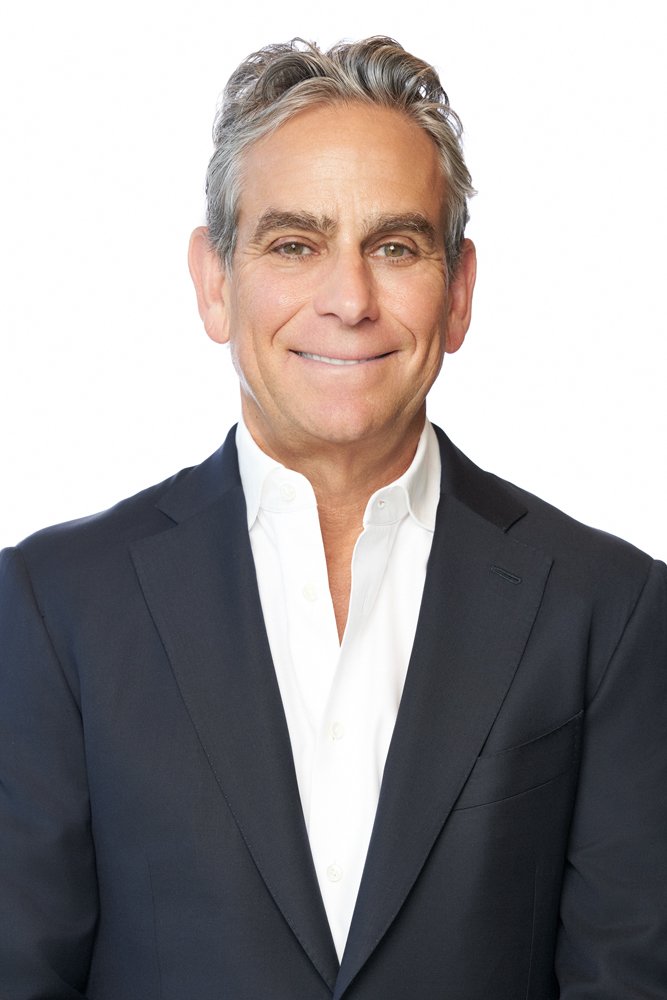
 YouTube's CEO Neal Mohan shares the platform's 2026 priorities, spanning creator-led entertainment, youth safety, diversified monetization, and responsible AI. The post YouTube CEO Reveals Your Video Marketing Strategy For 2026 appeared first on Search Engine Journal. View the full article
 -
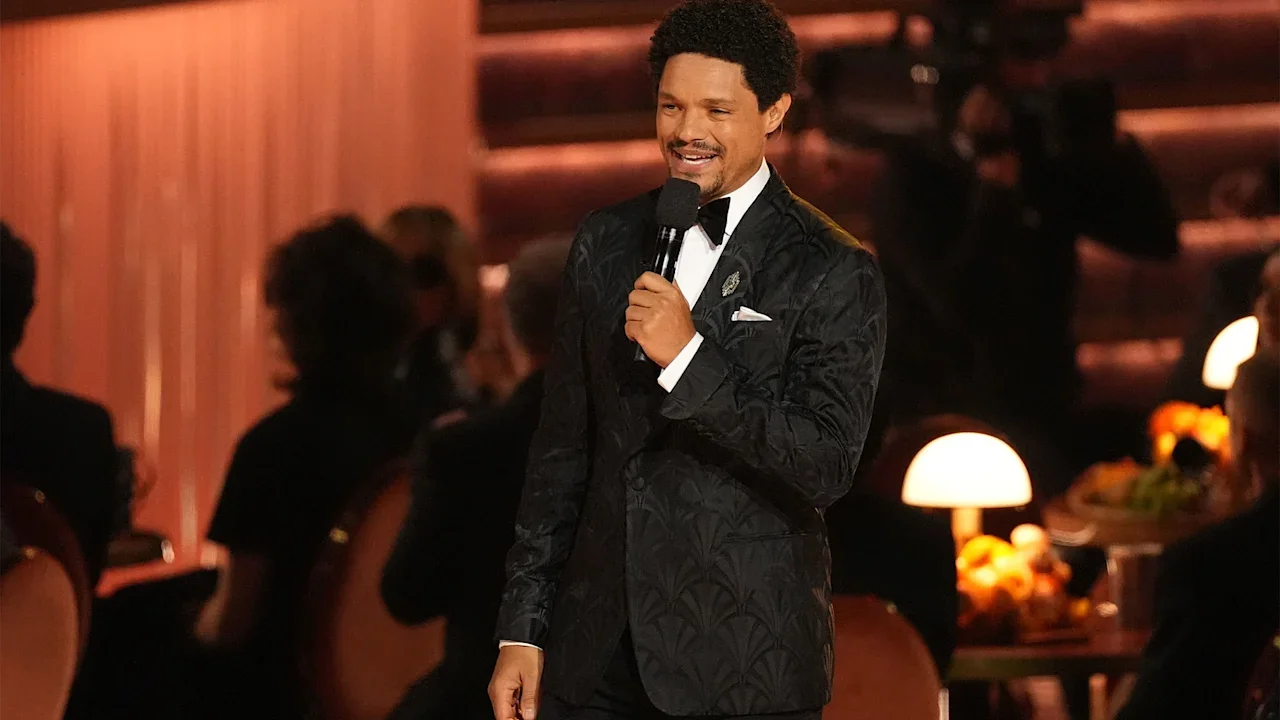
Trevor Noah once again roamed through the audience during his monologue to open the Grammy Awards, taking pokes at the stars while standing right next to them, but he saved his most pointed jokes for absentees, and elicited an angry post from the president. “Nicki Minaj is not here,” Noah said, to big cheers from the audience at Crypto.com Arena. “She is still at the White House with Donald The President discussing very important issues.” Minaj this week visited and praised the president, the culmination of a move toward MAGA that she’s made in recent months. Noah broke into a The President impression. “Actually Nicki, I have the biggest ass, everybody’s saying it Nicki.” In his sixth time hosting the show—and what he says will be his last—Noah mostly played it safe during his monologue, not delving too much into politics or controversy, at least during his monologue. There was no mention of U.S. Immigration and Customs Enforcement (on a night when many attendees were wearing “ICE OUT” buttons). But Noah got more pointed later in the show, after Billie Eilish won song of the year. “Wow. That is a Grammy that every artist wants,” Noah said, “almost as much as The President wants Greenland. Which makes sense. I mean, because Epstein’s island is gone, he needs a new island to hang out with Bill Clinton.” After the show in a Truth Social post, The President reacted. “Noah said, INCORRECTLY about me, that Donald The President and Bill Clinton spent time on Epstein Island. WRONG!!! I can’t speak for Bill, but I have never been to Epstein Island, nor anywhere close, and until tonight’s false and defamatory, statement, have never been accused being there, not even by the Fake News Media,” the post said. “Noah, a total loser, better get his facts straight, and get them straight fast. It looks like I’ll be sending my lawyers to sue this poor, pathetic, talentless, dope of an M.C.” After the crowd’s reaction to the joke during the show, Noah said, “Oh, I told you, it’s my last year. What are you going to do about it?” At a different point in the show, Noah joked about the president’s penchant for suing TV networks when he said the Grammys were airing “completely live” because “if we edited any of the show, the president would sue CBS for $16 billion,” referring to The President’s recent history with CBS News and a settlement he got from Paramount last summer. It had seemed at first like he wasn’t going to go very far into such material. He said during the monologue Lauryn Hill was performing on the show for the first time since 1999. “Do you understand how long ago that is?” he said. “Back in 1999, the president had had a sex scandal, people thought computers were about to destroy the world, and Diddy was arrested.” Later in the show, Noah cozied up to the night’s biggest nominee, Kendrick Lamar, and only congratulated him. “I actually thought about writing a few jokes roasting you, but then I remembered what you can do to light-skinned dudes from other countries,” Noah, who is from South Africa, said in a reference to Lamar’s beef with the Canadian rapper Drake that culminated in last year’s big Grammy winner “Not Like Us.” Later, he sat with Bad Bunny, and asked if he could come live with him in his native Puerto Rico if things got too bad in the U.S. “Trevor I have some news for you,” Bad Bunny said. “Puerto Rico is part of America.” The Recording Academy announced less than three weeks ago that Noah was returning “one final time.” “I believe in term limits,” Noah said during the show. Only singer Andy Williams, who hosted the Grammys seven times in the 1970s, has hosted more often. Noah himself is a four-time Grammy nominee, and was up this year in the best audio book recording category for Into The Uncut Grass, a children’s story. He lost to the Dalai Lama. This story has been updated to correct the spelling of Nicki Minaj in several places. For more coverage of the 2026 Grammy Awards, visit: https://apnews.com/hub/grammy-awards —Andrew Dalton, AP Entertainment Writer View the full article

-
To say it’s been a bad few days for Bitcoin and other cryptocurrencies would be an understatement. As of the time of this writing, Bitcoin is trading in the range of $77,000 per coin—a price point not seen since last March, when the world was thrown into economic uncertainty by President Donald The President’s tariffs. And Bitcoin isn’t the only crypto facing a bloodbath. Other major tokens, including Ethereum and BNB (Binance) are also in free-fall. XRP, the closely watched native token of the XRP Ledger from Ripple Labs, dipped below $1.60 earlier on Monday, a level it hasn’t seen since 2024. Here’s what you need to know. Cryptocurrencies plunged over the weekend Nearly all major cryptocurrencies plunged this weekend, with the tokens seeing drastic selloffs, particularly on Saturday. But things are even worse when you look back over the past five days. As of the time of this writing, during that period, many major cryptos have suffered double-digit percentage declines, including: Bitcoin: down nearly 13% over the past five days to $77,843 Ethereum: down nearly 24% over the past five days to $2,293 BNB: down more than 15% over the past five days to $764 XRP: down nearly 15% over the past five days to $1.62 And those aren’t the only cryptocurrencies getting hammered—most major coins are, including Solana (down almost 18% over the past 5 days to $102.88) and memecoin Dogecoin (down more than 15% over the past five days to $0.104.) The dramatic fall of major cryptocurrencies have led to fears of a new “crypto winter,” a period when cryptocurrencies across the board see steep selloffs and new investors tend to shy away from adding the coins to their asset portfolios. The last major crypto winter occurred around 2022. Why are cryptocurrency prices sinking? It’s not possible to attribute the exact reason why a volatile asset class like cryptocurrencies rises or falls, as so much of crypto investor activity is driven by greed and fear, which fuel buy-and-sell cycles. However, you can look back over the past five days to when the precipitous drops began and correlate the crypto price declines with external geopolitical and economic news, which is likely contributing to the outflow of investment in digital tokens. The first happened on Friday when President Donald The President announced that he would nominate former Federal Reserve governor Kevin Warsh as the next chair of the Federal Reserve. That news caused the dollar to surge—and safe-haven assets like gold and silver to crash. Since most cryptocurrencies are bought and sold against the dollar, when the dollar grows stronger, it takes fewer of them to buy the same amount of cryptocurrencies, and some investors may choose to sell their tokens before the dollar’s rising buying power makes their digital assets look any cheaper. Meanwhile, news on the geopolitical front may have also played a role in the crypto selloff. Over the weekend, the U.S. military began moving forces and equipment into the Middle East after President The President said he is considering a strike on Iran. The potential strike is in response to recent widespread demonstrations in the country, which could signal a strong enough appetite for regime change—something The President would likely consider very appealing, especially after the president ordered the attack on Venezuela at the beginning of the year to oust its leader. Any potential conflict can be good for the U.S. dollar, but it will also serve to raise geopolitical uncertainty. Investors generally hate uncertainty, and when such conditions arise, they typically dump their more volatile assets so they can park their profits in ones that are more stable. Where does crypto go from here? It is still too early to tell whether the recent cryptocurrency decline over the past five days is a temporary event or is indeed the beginning of another long crypto winter. The good news for investors is that many tokens are already showing signs of a slight recovery as of Monday morning, with Bitcoin up 1.21%, ETH up 1.41%, and XRP up 3.12% over the last 24 hours as of this writing. View the full article

- Today
-
Competitive research is a gold mine of insights in the world of organic discovery. Clients always love seeing insights about how they stack up against their rivals, and the insights are very easily translated into a multi-dimensional roadmap for getting traction on essential topics. If you haven’t already done this, 2026 needs to be the year when you add competitive research from answer engine optimization (AEO) (I’ll use this acronym interchangeably with AI search) into your organic strategy – and not just because your executives or clients are clamoring for it (although I’m guessing they are). This article breaks down the distinct roles of SEO and AEO competitive research, the tools used for each, and how to turn those insights into clear, actionable next steps. SEO competitive research benefits vs. AEO competitive research benefits Traditional SEO research is great for content planning and development that helps you address specific keywords, but that’s far from the whole organic picture in 2026. Combined, SEO and AI competitive research can give you a clear strategy for positioning and messaging, content development, content reformatting, and even product marketing roadmapping. Let’s start with the tried-and-true tools of traditional SEO research. They excel at: Demand capture. Keyword-driven intent mapping. Late-funnel and transactional discovery. A few years ago, pre-ChatGPT and the competitors that followed, SEO research was the foundation of your organic strategy. Today, those tools are a vital piece of organic strategy, but the emergence of AI search has shifted much of the focus away from traditional SEO. Now, SEO research should be used to: Support AI visibility strategies. Validate demand, not define strategy. Identify content gaps that feed AI systems, not just SERPs. AEO tools cover very different parts of the customer journey. These include: Demand shaping. Brand framing and recommendation bias. Early- and mid-funnel decision influence. AEO tools operate before the click, often replacing multiple SERP visits with a single synthesized answer. They offer a new type of research that’s a blend of voice-of-customer, competitive positioning, and market perception. That helps them deliver tremendous competitive insights into: Category leadership. Challenger brand visibility. Competitive positioning at the moment opinions are formed. Let’s break this down a little further. Organic search experts can use insights from AI search tools to: Identify feature expectations users assume are table stakes. Spot emerging alternatives before they show up in keyword tools. Understand where top products are or are not visible for relevant queries in key large language models (LLMs). Understand why users are advised not to choose certain products. Validate whether your product roadmap aligns with how the market is being explained to users. Dig deeper: How to use competitive audits for AI SERP optimization SEO vs. AEO research tools Aside from adding AEO functionality (leaders here are Semrush and Ahrefs), SEO research tools essentially function in much the way they did a few years ago. Those tools, and their uses, include: Ahrefs Ahrefs is a great source of info for, among other things: Search traffic. Paid traffic. Trends over time. Search engine ranking for keywords. Topics and categories your competitors are writing content for. Top pages. I also like to use Ahrefs for a couple of more advanced initiatives: High-level batch analysis provides a fast overview of backlinks for any list of URLs you enter. This can give you ideas about outreach – or content written strategically to appeal to these outlets – for your backlinks strategy. Reverse-engineering a competitor’s FAQs allows you to see potentially important topics to address with your brand’s differentiators in mind. To do this, go to Ahrefs’ Site Explorer, drop in a competitor domain, and then click on the Organic Keywords report. From here, you’ll want to filter out non-question keywords. The result is a good list of questions from actual users in your industry. You can then use these to tailor your content to meet potential customer needs. Dig deeper: Link intent: How to combine great content with strategic outreach BuzzSumo BuzzSumo sends you alerts about where your competitors receive links from their public relations and outreach efforts. This is the same idea as the batch analysis, but it’s more real-time and gives you good insights into your competitors’ current priorities. Semrush Semrush is a super-useful tool for competitive research. You can use the domain versus domain tool to see what keywords competitors rank for with associated metrics. You can get insights on competitor keywords, ad copy, organic and paid listings, etc. Armed with all of this research, a fun content maneuver I like to suggest to clients is “[Client] vs. [Competitor]” pieces of content, particularly once they have some differentiators fleshed out to play up in their content. With this angle, I’ve gotten some great first-page rankings and reached users with buying intent. Using their brand name might not always get you to rank above your competitor. Still, if you’re a challenger taking on bigger brands, it’s a good way to borrow their brand equity. On the AEO side, I love tools with a heavy measurement component, but I also make a point of digging into the actual LLMs themselves, like ChatGPT and Google AI Mode, to combine reporting tools with source data. This is similar to how my team has always approached traditional SEO research, which balances qualitative tools with extensive manual analysis of the actual SERPs. Get the newsletter search marketers rely on. See terms. The tools I recommend for heavy use are: Profound Profound is the most purpose-built AEO platform I’m using today. It focuses on how brands and competitors appear inside AI-generated answers, not just whether they rank in classic SERPs. Its insights help users: See which brands are cited or referenced in LLM answers for category-level and comparison queries. Identify patterns in how competitors’ content is framed (e.g., default recommendation, alternative, warning, etc.). Understand which sources LLMs trust (e.g., documentation, reviews, forums, owned content). Track share of voice within AI answers, not just blue links. All of these insights help to move competitive research from the simple question of “who ranks” to the more important answer of “who is recommended and why.” Ahrefs Ahrefs remains a foundational tool for traditional SEO research, but its insights primarily reflect what ranks, not what gets synthesized or cited by AI systems. They have, however, built in some new AI brand tracking tools worth exploring. ChatGPT ChatGPT is invaluable as a qualitative competitive research layer. I use it to: Simulate how users phrase early-stage and exploratory questions. Compare how different competitors are summarized when asked things like: “What’s the best alternative to X?” or “Who should use X vs. Y?” Identify language, positioning, and feature emphases that consistently show up across responses. Test messaging. Compare narratives with competitors. Identify where your brand’s positioning is unclear or has gaps. Google AI Mode This tool is the clearest signal we have today of how AI Overviews will impact demand capture. It provides insight into: Which competitors are surfaced before any traditional ranking is visible. What sources Google synthesizes to build its answers. How informational, commercial, and navigational queries blend. (This is especially important for mid-funnel queries where users previously clicked multiple results but now receive a single synthesized answer.) Reddit Pro This resource combines traditional community research with AI-era discovery. Because Reddit content is disproportionately represented in AI answers, this has become a first-class competitive intelligence source, not just a qualitative one. It helps to surface: High-signal conversations frequently referenced by LLMs. Common objections, alternatives, and feature gaps discussed by real users. Language that actually resonates with people – and insight which often differs from keyword-driven copy. Dig deeper: How to use advanced SEO competitor analysis to accelerate rankings & boost visibility How to take action on your organic competitive research insights Presenting competitive insights to clients or management teams in a digestible package is a good start (and may make its way up to the executive team for strategic planning). But where the rubber really meets the road is when you can make strong recommendations for how to use the insights you’ve gathered. Aim for takeaways like: “[Competitor] is great at [X], so I suggest we target [Yy.” “[Competitor] is less popular with [audience], which would likely engage with content on [topic].” “[Competitor] is dominating AI search on topics I should own, so I recommend developing or refining our positioning and building a specific content strategy.” “I’ve built a matrix showing the competitor product pages that draw more visibility in LLMs than our top-selling products. I recommend we focus on making those product pages more digestible for AI search and tracking progress. If we get traction, I recommend we identify the next tranche of product pages to optimize and proceed.” Ultimately, your clients or teammates should be able to use your insights to understand the market and align with you on priorities for initiatives to expand their footprint in both traditional and AI search. View the full article
-
Mortgage subsidiary Newrez expects to begin moving borrowers onto the platform by 2027, with the deal marking its second major tech investment this year. View the full article
-
As you know, January was an incredibly intense month of Google Search ranking volatility. It surprised me that Google has still not confirmed that a Google search ranking update took place. Now, John Mueller of Google was asked about it and said, "Unfortunately, I don't have any insights / updates to share."View the full article
-
If you look at the source code in some of the responses OpenAI's ChatGPT gives you, you may now see references to ads. The response in the source code says, "InReply to user query using the following additional context of ads shown to the user."View the full article
-
John Mueller from Google dropped a very John-like hint that maybe, just maybe, Google Search Console will add AI visibility reporting. John was asked about it again and responded, saying, "While I have nothing to announce, I can say for sure that very few things online are permanent."View the full article
-
Google seems to be replacing its Google Ads support form with an AI agent, maybe from its Ads Advisor system. When you go to support.google.com/google-ads/gethelp you are redirected to the chat experience now. I am not sure if this is global, but I am seeing this myself across two Google Ads accounts I have access to.View the full article
-
Crown princess and a former prime minister are among those mentioned in new files released on FridayView the full article
-
Energy prices reverse recent gains on easing geopolitical concerns and warmer weather outlookView the full article
-
Google seems to be showing more and more ads in the local pack, aka Local Pack Ads. Just a couple of months ago, Google had ads on the local pack for less than 3% of tracked keywords; now it's up to about 22% of tracked keywords. View the full article
-
Welcome to the Google Webmaster report, where I sum up all the more important Google organic search topics that occurred over the past month - just in case you (or I) missed it. January was an incredibly volatile month regarding unconfirmed Google search ranking movement. I posted about it several times.View the full article
-
Get more value from your Google Ads spend by tightening fundamentals that directly lift conversion performance. The post 15 Fixes To Improve Low Conversion Rates In Google Ads appeared first on Search Engine Journal. View the full article
-
Hello and welcome to Modern CEO! I’m Stephanie Mehta, CEO and chief content officer of Mansueto Ventures. Each week this newsletter explores inclusive approaches to leadership drawn from conversations with executives and entrepreneurs, and from the pages of Inc. and Fast Company. If you received this newsletter from a friend, you can sign up to get it yourself every Monday morning. The corporate response to the The President administration’s immigration enforcement actions has been muted at best. After the killings of two U.S. citizens by federal law enforcement in Minneapolis, the CEOs of more than 60 Minnesota-based companies issued a carefully worded letter calling for “an immediate de-escalation of tensions.” Target’s incoming CEO Michael Fiddelke sent a video message to employees calling the events “incredibly painful.” Apple CEO Tim Cook, who was lambasted for attending a White House movie screening hours after protester Alex Pretti was shot and killed, said he was “heartbroken.” Few executives have been willing to criticize ICE’s sweeping clampdown, which has also resulted in the detention of U.S. citizens, refugees, and others legally in the country. OpenAI CEO Sam Altman came close, saying in a note to employees: “What’s happening with ICE is going too far. There is a big difference between deporting violent criminals and what’s happening now, and we need to get the distinction right.” Corporate tepidness is strategic and, according to those who work with CEOs, unlikely to change. Whether they are willing to admit it or not—see this exchange between JPMorganChase CEO Jamie Dimon and Zanny Minton Beddoes of The Economist—CEOs are afraid of retaliation by the administration and backlash from activists who may feel statements in response to current events are either too “woke” or not full-throated enough. As a result, many companies are staying on the sidelines. Fear and chaos Communications experts say CEOs will never go back to the volume of commentary or commitments companies issued in the wake of George Floyd’s murder and the racial justice marches that followed. “In 2020, clients frequently asked us how best to weigh in on these kinds of issues,” says Jim O’Leary, North America CEO and global president of communications firm Weber Shandwick. “Today, there is a greater focus on assessing the risks of engaging.” Another CEO adviser I contacted, who asked to remain anonymous so he could speak freely about a topic that many deem sensitive, says corporate leaders can and should speak out on issues that impact “the overall standing and reputation of U.S. businesses,” and affect employees, customers, and shareholders. “The goal for businesses in these moments should be to talk to their stakeholders—employees, customers, investors—not to garner headlines,” he adds. “It is about corporate and leadership values, not scoring points.” Let’s be clear: The events unfolding in Minneapolis and other cities around the country are impacting businesses. “Silence isn’t neutral. It’s expensive,” says Reshma Saujani, founder and CEO of Moms First, which held a virtual call after the killing of Alex Pretti that attracted thousands of moms who discussed grassroots responses, including national strikes such as the one organized last Friday. “Letting this chaos continue is fiscal malpractice. Everyone I know is distracted. People feel scared. Workers are disappearing. Productivity is dropping. Local economies are taking a hit. You can’t run a healthy economy based on fear and chaos.” CEOs may or may not wish to speak out about the killings of Pretti and Renee Nicole Good or the clashes in the street. But executives at every level need to be willing to support civil liberties and the rule of law, which are the very underpinnings of democracy and capitalism. If more CEOs rise to meet this moment, we may see what true leadership looks like. Taking a stand Has your company responded to the ICE crackdowns, and if so, how? Send your responses to me at stephaniemehta@mansueto.com, and we’ll publish excerpts in an upcoming newsletter. Read more: CEOs speak out. Or not. CEOs who shy away from defending voting rights do so at their peril E.l.f.’s Tarang Amin is doubling down on board diversity We asked Minnesota’s biggest companies about ICE View the full article

-
For years, conversations about paid media have revolved around one question: should companies build in-house teams or outsource to agencies? That debate makes sense, but it misses the real issue. The problem isn’t where paid media sits in the org chart. It’s how performance leadership is structured. Many companies run Google Ads and other paid channels with capable teams, solid budgets, and documented best practices. Campaigns are live. Dashboards are full. Optimizations happen on schedule. Yet: Results stall. Pipelines flatten. Budgets get questioned. Confidence in paid advertising erodes. This is rarely a talent issue. It’s usually a structural one. The plateau most in-house teams eventually hit Across dozens of B2B paid media accounts, from SaaS to service businesses spending five figures a month, we see the same pattern. Performance does not collapse overnight. It slows gradually. Campaigns keep running. Costs look stable. Leads still come in. But growth stalls. Leadership sees motion without insight. Decisions turn reactive. Paid media shifts from a growth engine to a cost center that has to defend its existence. The gap isn’t effort or execution. Over time, strategy narrows when teams work in isolation. Why ‘more headcount’ rarely fixes the problem When performance stalls, the default response is to hire. A new specialist. A channel owner. A more senior role. Extra resources can ease the workload, but headcount alone rarely fixes the real problem. In in-house teams, three challenges are consistent: 1. Tracking and leadership visibility Leadership teams often lack a clear, shared view of how paid media drives pipeline and revenue. The data exists, but it’s scattered across disconnected platforms, tools, and dashboards. Without strong integrations, even well-run campaigns operate with weak feedback loops, limiting how much they can improve. 2. Structure and skill ceiling Many teams try to follow proven best practices. The issue isn’t intent. It’s context. What works for one company or growth stage can be ineffective, or even harmful, for another. Without external benchmarks or fresh perspectives, teams struggle to see what actually applies to their business. 3. Lack of systematic testing Day-to-day execution eats up available capacity. Teams focus on keeping things stable instead of pushing performance forward. Testing starts to feel risky, even though real gains usually come from the few experiments that work. Over time, this creates the illusion of optimization: steady activity without meaningful progress. The same mistake happens before ads ever launch These structural issues don’t just affect companies already running paid media. They often show up earlier, before the first campaigns even launch. In many B2B organizations, paid advertising enters the picture when growth from outbound sales, partnerships, or organic channels starts to slow. Budgets roll out cautiously. Execution gets delegated. Results are expected to emerge from platform defaults. What’s usually missing is strategic ownership: Clear definitions of success that go beyond surface-level metrics Tracking that ties spend to pipeline, not just lead volume A testing roadmap aligned with revenue goals Without this foundation, early results disappoint. Budgets get cut. Confidence fades. Paid media gets labeled ineffective before it has a real chance to work. Ironically, this early phase is where external perspective can deliver the greatest long-term impact. It’s also when companies are least likely to seek it. The structural advantage of outsourced performance leadership Outsourcing is often framed as a way to cut costs or add execution power. In reality, its biggest advantage is perspective. External performance teams work across many accounts, industries, and growth stages. They: Spot patterns earlier. Know when platform recommendations favor spend growth over business outcomes. Question assumptions internal teams may have stopped challenging. That outside view matters most in areas like tracking architecture, platform integrations, and account structure, where partial best-practice adoption can quietly erode performance. A common scenario looks like this: Teams follow platform guidance but leave underlying martech gaps unresolved. Systems don’t talk to each other. Optimization signals weaken. Budget efficiency drops, even though campaigns appear fully compliant. When outsourcing actually works — and when it doesn’t Outsourcing isn’t a cure-all. It breaks down when companies expect external partners to fix performance in isolation, or when strategy and execution live in separate worlds. It works best as a hybrid model: Internal teams own execution and business context External experts bring strategic direction, structural resets, and ongoing challenge In this setup, partners don’t replace teams. They raise the bar. That’s why a specialized Google Ads agency creates the most value when the goal isn’t just running campaigns, but turning paid media back into a predictable, scalable growth lever. A smarter model: External strategy, internal execution High-performing organizations are increasingly separating strategy from execution volume. They bring in outside expertise not because something is broken, but because they want: Objective assessments of performance and structure. Stronger attribution and tracking foundations. Disciplined experimentation frameworks. Clear accountability at the leadership level. This approach builds momentum before budgets get cut, not after results decline. It also helps leadership understand why paid media performs the way it does, restoring confidence in the channel. What high-performing companies do differently Organizations that avoid long plateaus tend to: Treat paid media as a system, not a standalone channel. Invest early in clear tracking and strong integrations. Invite external challenge before performance slips. Accept that most tests will fail, knowing the few wins will compound. In this context, outsourcing isn’t about cost efficiency. It’s about preserving strategic sharpness as platforms and markets evolve. Final thought The in-house versus outsourced debate reduces a deeper issue: who owns performance direction, and how often it gets challenged? As paid media platforms automate and evolve, the companies that sustain growth aren’t the ones with the biggest teams. They’re the ones with the clearest perspective. View the full article
-
Staying focused for an entire workday can feel like a losing battle. Between constant notifications, shifting priorities, and mental fatigue, even the most disciplined professionals struggle to maintain momentum from morning to evening. To understand what actually helps people stay in the zone, we turned to experts who study attention, performance, and productivity. They shared nine practical, research-backed strategies for sustaining deep focus and getting meaningful work done throughout the day. 1. Reset With Box Breath High performers don’t usually lose discipline. They lose regulation. When your body flips into fight-or-flight, focus gets choppy and your thinking narrows. The fastest lever you control is your breath because it shifts you back into a more focused state, the zone. One technique I use to regulate is box breathing. It’s widely used by elite performers, including military and athletes, and is also recommended by medical practitioners to reduce stress and restore calm. Here’s my exact reset with box breathing. When my nervous system starts running hot, or I notice I’m rushing when I have to present, I pause for two minutes. I close my eyes and mentally put my inbox and to-dos into an imaginary jar outside my door. Then I breathe in a simple cadence: inhale four counts, hold four counts, exhale four counts, hold four counts, for four cycles. That small sequence restores presence, focus, and clarity fast, so I’m not stumbling through on adrenaline by the time I reach my audience. With self-regulation, I have full attention and get full results. I’m in the zone. It works so well that I also teach it to my clients. One CEO I coached had three back-to-back calls immediately after our session, followed by a high-stakes pitch to his board. We practiced four cycles together before he started his day. Later, he told me he used it twice. First, right before his second call, when he noticed his pace speeding up and his thoughts scattering. Two minutes of box breathing helped him slow down, speak with intention, and stay on message. The meeting ended 10 minutes early, decisions were cleaner, and the team left with concise deliverables instead of a vague “we’ll circle back.” He repeated another four cycles right before the board pitch, not as a “calm down” trick, but as a performance switch: nervous-system reset, remarkable clarity, and executive-level delivery. The result was a tighter presentation with a more confident ask, which shortened the Q&A and increased alignment in the room. The CEO told me the biggest difference wasn’t just that his message landed better, but that he felt in control of his narrative. That’s why I love this tool. It’s fast, repeatable, and portable. You can do it at your desk or in an elevator before any high-stakes conversation, mid-day, or anytime your attention scatters and your energy dips. When you box-breathe back into regulation, you trade adrenaline for authority and get back in the zone on demand. Shelley Goldstein, Leadership Development Coach and Corp Trainer, Remarkable Speaking 2. Cycle Dopamine With Structured Focus Intervals Unlike traditional productivity advice that focuses on time management or motivation hacks, I target the neurological substrate where sustained performance actually lives: your dopamine regulation cycle. What I have found working with Fortune 500 executives is this: high-performance states are not willpower; they are dopamine availability. When your prefrontal cortex has optimized dopamine, you stay in flow. When dopamine depletes, you cannot force focus. The technique that produces the most consistent results is strategic dopamine cycling through 90-minute work blocks with complete neural reset intervals. Here is how it works. Your brain can sustain peak dopamine availability for approximately 90 minutes before the prefrontal cortex starts losing executive control. Most executives push through this, not realizing they are operating on progressively degraded neurological capacity. I coached a hedge fund managing director who was working 12-hour days but losing decision quality after hour four. We implemented strict 90-minute work blocks followed by 15-minute complete disengagement: walking outside, no screens, no cognitive load. Within three weeks, he reported that his decision speed improved 40% and he was leaving the office two hours earlier while producing better work. The mechanism is straightforward: during the 15-minute reset, your brain clears dopamine metabolites and restores prefrontal capacity. This is not a break for rest; it is a neurological recalibration that makes the next 90 minutes as sharp as the first. The key insight most people miss: productivity is not about working longer; it is about protecting the neurological windows when your brain actually performs. Sydney Ceruto, Founder, MindLAB Neuroscience 3. Set Tomorrow’s Three Clear Tasks One technique I use to stay in the zone is a three-task reset at the end of each day. In my coaching practice, my to-do list is always long. If I start the day reacting to everything on it, I end up busy but not effective. To avoid that, I spend the last 30 minutes of each workday reviewing everything on my list and then narrowing it down to three small, specific tasks that will genuinely move my work forward the next day. Those three tasks go on a sticky note that becomes my only priority list the following morning. When I sit down to work, I’m not deciding what matters as I already decided that the day before. This removes decision fatigue and keeps my attention on progress rather than activity. Since adopting this approach, I start my days with clarity, stay focused longer, and avoid the trap of spinning my wheels on low-impact work. It’s simple, but it consistently keeps me operating in a high-performance zone. Brandi Oldham, Career Coach, Talent Career Coaching 4. Honor Your Energy and Pace In 2025, I wrote a book. As a first-time author, I was barraged with advice: write X number of words every day, write first thing in the morning, set a timer and write until it rings. I quickly realized that while those techniques might sustain high writing performance for others, they did not work for me. What did work was to write when I was excited to write, when I wanted to write. When my brain overflowed with ideas and insights itching to translate to fingers on keyboards. And to stop writing when my brain stopped generating, my back started aching in my chair, and my fingers cramped. My recommendation for staying “in the zone” is to identify what this zone feels like and to recognize when you enter and leave it. Make your zone real for you—and ignore everyone else’s advice for maintaining high performance throughout the day. If you’re energized early morning but need a break by 10, own it. If you rev up after lunch, terrific. If your juices flow when the sun goes down, optimize the evening. Manage your time as the gift that it is. Tina Robinson, Founder and CEO, WorkJoy 5. Design Intentional Work Windows We should abandon the myth of all-day “peak performance” and replace it with what I call “designed performance windows.” Most high achievers believe that staying “in the zone” from morning to evening is a willpower and/or discipline issue. It isn’t. It is a biological and cognitive impossibility, and treating it as a goal impacts judgment. The creative and emotional processes are also affected. I work with clients to structure their day around intentional performance cycles, rather than continuous intensity. This is how the technique works in practice. With each client, we identify three separate windows: One primary high-intensity 90–120 minute block used exclusively for work that requires analysis, synthesis, or decision-making. No meetings. No tasks reactive to external impulses are allowed, including meetings, emails, and SMSs. One secondary, lower-intensity window, used for either preparation or refinement/execution work that needs less focus. Deliberate recovery and low-stakes periods. These are not “breaks” in the motivational sense. They are important periods necessary to reset to consolidate insight. One senior executive was trying to maintain the same level of intensity across 10–12 hour days toward the end of a particularly difficult quarter. The result was predictable, with slower, more conservative decisions, and a more burdensome management of emotions. We redesigned his schedule so that: All critical analytical work happened in the protected morning window. Meetings were clustered after that window, when relational and operational skills mattered more than analytical thinking. End-of-day work was intentionally lighter and reflective. Within weeks, decision quality improved because he worked better, rather than simply more. His best thinking happened when his mental system was capable of it. This technique rests on a simple but widely resisted idea: Long-term high performance comes from respecting natural mental fluctuation, not fighting it. It is not about staying activated at all times. It is about timing effort, accepting limits, and preserving long-term capacity. Federico Malatesta, Founder & Executive Coach, FM Transformational Coaching™ 6. Block Time for Top Priorities Staying in the zone requires being realistic about what you can actually achieve in a day, particularly when you’re a high-performing senior leader. It’s common to overestimate daily capacity and then feel defeated when tasks inevitably spill over. Instead of attempting to conquer a massive to-do list, clarify the top two to three priorities that would make the day a success. Here’s the critical part: realistically estimate how long each will take and deliberately block that time on your calendar. My executive clients who consistently map their highest priorities are recognized for their ability to deliver sustained, repeatable value. And remember, two to three completed priorities per workday add up fast. That’s 10 to 15 per week, 40 to 60 per month, and 500 to 700 meaningful wins per year. Kyle Elliott, Tech Career Coach & Executive Coach, CaffeinatedKyle.com 7. Integrate Brief Meditation Sessions One technique I rely on to stay in the zone and sustain high performance throughout the day is meditation, practiced consistently and intentionally integrated into my daily rhythm rather than treated as a one-time fix. To begin, I set a clear eight-week commitment. For me, the goal is not to “clear my mind,” but to strengthen focus, emotional regulation, and self-awareness. I choose a realistic structure: 10 minutes of meditation at the start of the workday and five minutes midafternoon. Framing it as a leadership practice, not a wellness add-on, helps me to stay consistent. During a demanding eight-week stretch involving overlapping deadlines and stakeholder expectations, the afternoon meditation is essential. Instead of pushing through fatigue, I used those five minutes to reset attention. As a result, late-day meetings are more focused, communication more thoughtful, and the end-of-day fatigue that previously affected my performance is mitigated. Simone Sloan, Executive Strategist, Your Choice Coach 8. Name Triggers to Regain Control The real productivity killer is not your phone or overflowing inbox. It’s the background anxiety, the tension you can’t quite put your finger on, or the boredom that comes from being stuck on a challenging problem. In the early days of my business, I was reactive to every ping and distraction. I was hopping from one priority to the next, and it seemed like no matter how disciplined I was, the overwhelm always managed to shatter my attention span. But then I learned to treat distraction as an opportunity to pilot my attention instead of treating it as an adversary. Now, whenever I have the urge to check out from whatever I’m supposed to be doing, whether it’s writing our crisis playbook or mapping out narrative threats for one of our clients, I make it a point to first pause and write down on a physical piece of paper the internal trigger or thought that makes me want to break focus. It could be, “I’m anxious about my presentation next week,” or simply, “This work is hard and challenging.” It sounds trivial, but doing so gives me control over my itch to escape. Instead of running from it, I’m now using my internal discomfort as a launch trigger to bring me back to what I should be doing right now. Confirming and tracking your internal triggers when you want to chase distractions will give you data on what exactly causes you to want to break focus so you can do something about it. If you keep a log for a week, you’ll have enough data to uncover a pattern about your attention escapes. For me, capturing that thought in that time of itch revealed to me that the best way to manage it is to reframe and treat the discomfort as a trigger to perform on the hard, high-value task I should instead be doing versus an escape to a lower-value one. Adrienne Uthe, Founder, Kronus Communications 9. Estimate Durations to Reduce Friction Managing my cognitive load and staying “in the zone” as much as possible is essential. My biggest win is a technique I call Time-Tagging, where I assign a specific duration to every item on my to-do list. I found that when a task lacks a time estimate, my brain perceives the effort required as infinite. This ambiguity creates subconscious resistance and fear. When every task has an estimated duration, like 15 minutes, I can easily scope the project and jump in. This approach boosts the total amount of time I spend in the zone because I simply start with a task labeled 10 minutes or less. This low barrier to entry allows me to generate immediate momentum. I complete that first small win and use the dopamine hit to roll right into the next larger task. I have tracked my output on days using this method versus days I do not, and the increase in deep work is significant enough that I now do this every single day. Phil Santoro, Entrepreneur and Cofounder, Wilbur Labs View the full article

-
Company posts forecast-beating earnings ahead of meeting to decide Bob Iger’s successorView the full article
-
IEEE & Wi-Fi standards can be a mouthful but now there's help: This reference poster by Rohde & Schwarz tells you everything you need to know about the standards. The post Reference poster: The History & Future of Wi-Fi standards – download your copy here! appeared first on Wi-Fi NOW Global. View the full article
-
In my suburban Boston Ulta, I’m sitting with my hand in a little box. I’ve been promised that in roughly 30 minutes I’ll have nails that are shaped, buffed, and painted—not by a human, but by an AI-powered robot. It feels like an episode of The Jetsons come to life, but the truth is that the AI boom has officially entered the physical world. Most of us interact with artificial intelligence through screens—Gemini drafts our emails, ChatGPT summarizes our docs—but behind the scenes, engineers are racing to give AI hands and feet. Robots already pack boxes in warehouses and make guacamole in fast-food kitchens. Soon, they will be washing dishes, taking care of pets, and performing your manicure. Here at Ulta, the robot holding my hand was built by Boston-based startup 10Beauty. After six years of R&D and $50 million in venture funding, the company has created a machine meant to replicate the entire manicure process: polish removal, shaping, buffing, and painting. The company plans to roll the robots out to Ulta, Nordstrom, and high-end salons later this year. The manicures will be priced at $30—no tipping required. But first comes the beta test. Ulta has agreed to pilot the machines in select stores, where customers can get free manicures while 10Beauty gathers real-world data. Human nail techs stand by to fix mistakes, ensuring customers still leave with salon-worthy nails. “We’ve done more than a thousand manicures on real people already,” says Justin Effron, 10Beauty’s cofounder. “That’s how we’ll figure out exactly what works and what doesn’t. We’re cocreating this with customers.” The Benefits of Being an Early Adopter Kecia Steelman, Ulta’s CEO, says the retailer is now on a mission to weave AI into nearly every corner of the business—from experimenting with agents like ChatGPT to fine-tuning its inventory management. “None of us have figured it out,” she says. “But you’ve got to start moving in that direction and pivot as things continue to change. That’s what’s going to separate strong retailers in the future.” The robot manicures are an example of one such pivot. The 10Beauty team reached out to Ulta, whose leadership team was intrigued by the way the technology fuses AI with a service that customers are asking for. The nail salon industry is expected to hit $14 billion by the end of this year. Ulta already differentiates itself from rivals like Sephora by offering in-store beauty services, often in suburban strip malls. But rising labor costs and finding skilled nail technicians can make it challenging to meet the demand. Ulta has agreed to buy hundreds of 10Beauty’s machines when they officially launch this summer. But it has also taken the bold move of allowing 10Beauty to test the service with customers. “This pilot allows us to learn alongside [10Beauty], gathering real guest feedback, understanding how the technology performs in a retail environment, says Amiee Bayer-Thomas, Ulta’s chief retail officer. “We can shape what the future of tech-enabled beauty services could look like.” The Robot Manicurist I’m among the group of early testers. The robot works on one hand at a time—intentionally. In focus groups, 10Beauty found that users wanted to be able to continue using their phone with their other hand. I slide my left hand into the machine and try not to move as seven cameras scan my fingers, creating a precise 3D map of each nail. Then a robotic arm gets to work, tackling one finger at a time using tools far smaller and more precise than what a human would use. Instead of cotton pads, 10Beauty designed a star-shaped sponge that glides over the nail to remove polish. Instead of clippers, it uses a crystal file to shape the nail safely. And rather than cutting cuticles, it applies a softening serum and gently pushes them back with a brush. That part, I’ll admit, didn’t quite work. The brush barely touched my cuticles at all. Then came the moment of truth: painting. A thin brush applied delicate layers of polish to each nail. This is where things went sideways. Some nails had bare gaps along the edges; others overshot the mark, leaving polish on my skin. Effron wasn’t surprised. “We’re working on a software update that should fix this,” he says. “And even after launch, we’ll keep improving it based on how customers use it.” A human nail tech quickly stepped in, cleaned up the polish, and applied a top coat. From start to finish—including drying—the whole process took under 40 minutes. Eventually, Effron says, the goal is to do both hands in about 20 minutes. The Future of AI Is Physical Walking out, it was clear the robot still isn’t as good as a human manicurist—yet. But the appeal was obvious. The machines don’t depend on skilled labor, which means manicures could become cheaper, faster, and available 24/7. You could imagine them popping up in airports, hotels, coffee shops—or, one day, even your own bathroom. Ulta believes that by being an early adopter, it might be able to influence how these manicure robots evolve. “We saw this as an opportunity to bring something entirely new into the store experience,” says Bayer-Thomas. “Piloting early allows us to help shape the experience, ensure it meets our guests’ expectations, and continue delivering newness and excitement.” Effron argues that the beauty industry is full of tasks—blow-drying hair, dyeing roots, plucking brows—that could be easier with machines. The challenge, of course, is proximity to the human body. Beauty requires precision and gentleness. My manicure made that tension obvious: The robot was so careful with my cuticles that it barely touched them at all. Still, 10Beauty is betting that rapid improvements in software, sensors, and robotics will soon close that gap. If my slightly imperfect robot manicure is any indication, the future of beauty isn’t flawless yet—but it’s already here, humming quietly inside a little white box at Ulta. View the full article

-
Former ambassador forwarded memo from special adviser to Gordon Brown to late sex offender in 2009View the full article
-
SERPs keep changing to incorporate both ads and AI Overviews. Read what it means for you. View the full article
-
The University of California Irvine’s new healthcare campus has a long list of innovative features, from its combined inpatient-outpatient surgical suite to its outdoor chemotherapy infusion terrace to an entire floor dedicated to staff only. The one thing it doesn’t have is a gas line. The multi-building healthcare campus with 144 hospital beds officially opened in December as one of a very few major hospitals around the world that runs entirely on electricity. CO Architects, which designed the all-electric hospital alongside design-build partner Hensel Phelps, claims it’s the only hospital larger than 500,000 square feet to pull this off. “Healthcare is just about as big of an energy hog as you can get,” says Fabian Kremkus, a design principal at CO Architects. Room-sized MRI machines, medicine refrigerators, and commercial kitchens cranking out hospital food represent just a snapshot of the energy needs of a healthcare facility. At UCI Health, as the campus is known, feeding this energy demand with only electricity required nimble design. The project has been in the works since 2020, when the COVID-19 pandemic was putting unusual scrutiny on the ways hospitals functioned. UCI Health’s design was inevitably influenced by the pandemic, leading to an emphasis on flexibility and the ability to handle an influx of highly contagious patients should another pandemic occur. At the same time, the University of California system was plowing ahead with its own goal of achieving carbon neutrality in its buildings by 2025, which made electrification another priority. But when the building’s design was being finalized, there wasn’t enough commercially available equipment to do the entire project without fossil fuels. By the time the project went up for its construction permit, the plan still included things like a gas-powered central heating and cooling plant and a gas line feeding the hospital’s kitchens. As the project got deeper into construction, new equipment started coming onto the market, including all-electric air-source heat pumps and air chillers, as well as all-electric cooking equipment. “Since the start of the project versus a couple of years ago, there are a lot more options,” says Jill Cheng, an associate principal at CO Architects. As more and more electric options came to the table, the design-build team and the university decided to go all in on the carbon-neutral goal, aiming to create an all-electric hospital. “It required a midstream redesign of our central plant when the decision was made,” says Kremkus. “So it was very challenging, with a really aggressive construction schedule.” Now, the entire campus uses a unique central heating and cooling plant that eliminates the need for gas-based boilers, as well as the staff resources to monitor such high-pressure infrastructure around the clock. On-site photovoltaic panels help offset the hospital’s high energy needs, and the entire complex is primarily fed by California’s majority renewable electricity grid. That’s just one of many savings on this project, according to Kremkus. CO Architects analyzed the costs and benefits of taking an all-electric approach and found that even when electric equipment had higher upfront costs, they would be more than offset by energy savings over time. The annual energy cost of using natural gas, for example, would be about $650,000 cheaper than the all-electric alternative, but its annual maintenance costs would be $1.4 million more, making the choice fairly clear. The payback period for investing in the all-electric system is less than three-and-a-half years. “We’re building a 50-year facility, so there’s no question that this is economically the right thing to do,” Kremkus says. This all-electric hospital design is a replicable approach. “All of our future projects that we have in the pipeline will be all electric, and it’s largely championed by this project,” says Kremkus. “We were able to test it here, and now we can roll it out in an even better way because there are a lot of lessons learned.” View the full article

-
For business partners Victoria Jackson and Jennifer Rudolph Walsh, their lives are intermingled with work. As cofounders of 15-month-old bookstore Godmothers in Summerland, California, the pair have built a space that they both longed for: a bookstore perched on a magical slice of Santa Barbara County, outfitted with cozy nooks to read and gather, a cafe, and an events space for author events and workshops. Since its September 2024 opening the space has become a beacon of community, creativity and conversation––what Walsh calls “a beautiful creative cathedral” for everyone from that mom in carpool to Oprah Winfrey. “Godmothers is a great representation of coming up with an idea and seeing the building I pictured,” says Jackson, an entrepreneur best known for founding cosmetic company Victoria Jackson Cosmetics. “It’s creative visualization. I see it in pictures, and I work to create it.” Walsh, who built her career as a literary agent, says that for her the store is exactly what its website proclaims: a local shop with a global dream, the product of a partnership born of big ideas, hard work, and the circuitous process of following gut instincts. In these conversations, we talked about framing creativity in business and personal endeavors, cultivating the ability to slow down to accelerate ideas, and the value of a little fresh air. Jennifer Rudolph Walsh: I view myself as a creative person, but not in an artistic sense. I don’t paint. I don’t do morning pages. I love brainstorming sessions with people. I love hearing their ideas and adding my ideas. I love taking those ideas that come out of nowhere and imagining how they can manifest themselves in different ways. RW: I’m a morning person. I wake up at 5 a.m. with a tremendous amount of energy. I first meditate and then I read everything. I send articles to people that I think would be helpful to them. That gets the creativity going. I am full of ideas and inspiration in the morning. RW: My life post-NYC is very free form. I really resist structure in my day and that’s one of the great things about being my own person here [in California]. I’m not answering to clients. So I love the freedom of that and the creative spirit can just take me anywhere. It might be on a hike or going through the store and talking with a customer about a book they loved. But it’s very freeform and go-with-the-flow. RW: We opened the store as a bookstore and a gathering space because it’s something we ourselves craved. It’s a place to go to dive into the deep end of the ocean. We wanted to create a sense of community around that container; I think there needs to be more of that. People long to be there in person. Our shop is in a beautiful setting, which adds to the experience. It’s a place where people can be open-hearted and open-minded. Victoria Jackson: Jennifer is a critical piece in the telling of Godmothers. We are trying to align and manifest something together. She is also a big believer and a manifester in her own right. Godmothers: how the community has, in such a short time, embraced it. How we have in all the best ways put ourselves on the map, with the trust and respect—really the big warm hug we’ve gotten from the community. I was going to be focused more on the beauty of the space, making it a cozy and welcoming physical space. She is working on the actual storytelling. She does most of the hosting and interviewing. I think we both respect each other’s opinions a lot; it’s a very easy collaboration. VJ: I think there are certainly aspects where you can learn to open your mind. I think there is a certain amount of it that’s learned, but I think a bigger part of it is innate in how you see the world. Even early days in school—there are kids that are looking at the teacher and there are kids that are looking out the window. I’m a looking out the window person and I’ve been looking out the window ever since. VJ: I have the ability to build bridges and communicate whatever that thing is that I’m working on. The fact that I can sell cosmetics on TV and have my authentic passion around it, while building community and connection. Everything I’ve done in the world of medicine—I’ve needed to build a bridge. In cosmetics, it’s connecting with women and consumers based on a product and an idea I had. I think the throughline is how I tell the story. JRW: I love storytelling in all forms. I watch a ton of TV and movies. I read books. I read newspapers and magazines. Longform stories. JRW: I see entrepreneurship as intricately tied to creativity. Creativity to me is business. I don’t see them as two separate things. I never understood a personal life and a professional life I don’t really separate it from business. You can’t grow without change, and you can’t have change without creativity. JRW: My motto is try easier. If something isn’t working or when nothing is working, I do nothing. I’m not someone who is trying to force a solution. If I can’t think of three options, I’m going to keep thinking. I don’t move until I’m ready, and I’m not ready until I have at least three possibilities. I am at ease and I trust the universe. I see it through the eyes of wonder and miracle. JRW: I’m not someone who will ask 10 people what they think of my shoes. There are people like that. I don’t really have a big appetite for what other people think about what I think is cool. If I have a big idea, I move on quickly. I don’t hold tightly to anything. JRW: Everything about my life is a learned thing. No one used to try harder than me. I had to learn how to hold things lightly and go with the flow so things were always going my way. There is a magic place between making it happen and letting it happen. That’s a creative calibration. But I live there now. JRW: I spend some time in nature every single day. All of those things are both spiritual and creative practices for me. In every conversation, I try to plant a seed or receive a seed. It’s about trying to say, “What do you think of this idea?” Or, “Oh, that’s an amazing idea.” You brainstorm and add on. JRW: I live two miles up a mountain on a farm. I’m not on Twitter or Facebook. I live an intentional, slow life. I read and consume and carefully curate an intentional series of things. I’m not someone who is reacting to the world. I’m cocreating my own reality, with all of the choices I make. VJ: I can lack patience. I set very high standards for myself, and at times, for others. When they’re falling short or very short, I have a hard time being patient, especially as I’m older and have accomplished a lot. I want people to be the best version of themselves. I get a little frustrated when they’re not willing to do that. VJ: When I get stuck, I’ll go for a walk. I’ll put myself in nature. I will take a break. I will do that in meditation. You picture yourself going under the water and everything above you is stormy and waves and everything around you is quiet. Usually then, I’ll find some way. View the full article

-
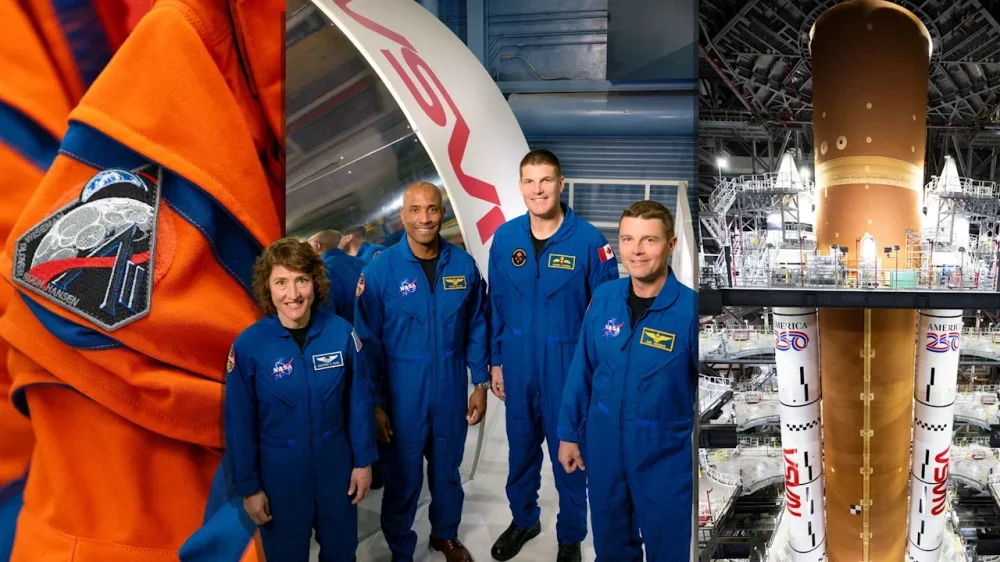
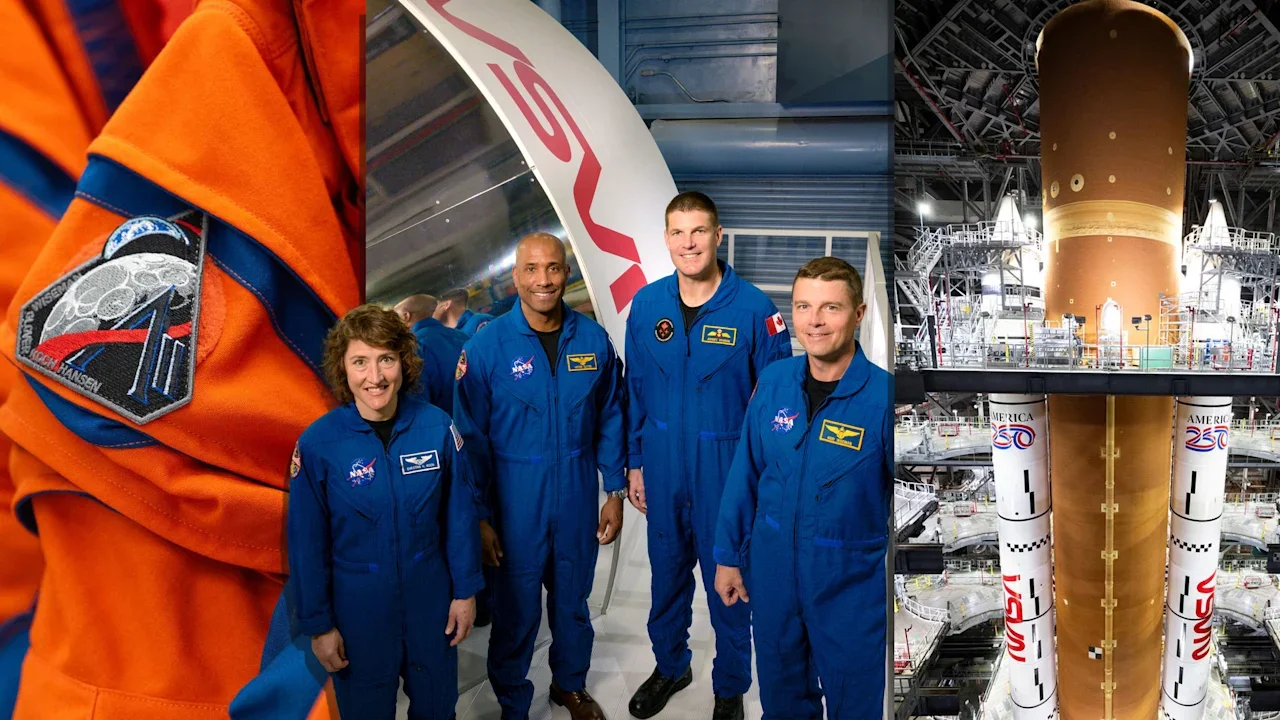
It’s been more than half a century since astronauts last stepped onto the moon. Now, NASA’s Artemis II will return four humans to its vicinity in a 10-day lunar loop that lifts off from NASA’s Kennedy Space Center as early as February 8. An Orion spacecraft will carry NASA’s Reid Wiseman, Victor Glover, and Christina Koch, as well as Canadian Space Agency astronaut Jeremy Hansen, some 230,000 miles to the far side of the moon—farther from Earth than anyone has traveled. Using a free-return trajectory enabled by lunar gravity, they will slingshot back to Earth for a splashdown off the coast of San Diego. NASA’s Artemis program, along with private and international partners, aims to return people to the moon for scientific exploration, establish a lunar economy, and ultimately pave the way for crewed missions to Mars. An initial uncrewed lunar flyby, Artemis I, provided a proof of concept in 2002. This mission adopts a more human-centric approach, evaluating Orion’s life support systems in situ and gathering additional data on how spaceflight affects the human body. It may also offer views of the moon never before seen. “I was around for Artemis I, and this one feels a lot different, putting the crew on the rocket and taking the crew around the moon,” said John Honeycutt, Artemis II mission management team chair, during a NASA press conference last month in advance of the rocket rollout to the launch pad. “This will be our first step toward sustained lunar presence on the moon.” Life in deep spaceTesting will begin almost immediately after NASA’s Space Launch System (SLS) rocket launches Orion into orbit with 8.8 million pounds of thrust, 15% more than that of Apollo’s Saturn V. Once in orbit, Orion will deploy solar arrays. Meanwhile, astronauts will conduct system checkouts and docking maneuvers in anticipation of future dockings, which could include lunar landers or the proposed lunar-orbiting Gateway Space Station. During the six-day mission, the astronauts will evaluate radiation shielding and operational, communications, and emergency systems “We want to put Orion through its paces,” said Jeff Radigan, mission flight director, flight operations directorate. The mission’s science goals include space weather measurements using four deployed international CubeSats (more easily deployable “building brick” satellites), lunar observation, and biometric responses. Astronauts will monitor their health and performance using immune system biomarkers and wearable devices that track sleep, stress, movement, and radiation exposure. Their findings may help future missions better optimize astronaut time. The star science payload, however, is AVATAR (A Virtual Astronaut Tissue Analog Response), which uses tissue chips mimicking astronaut organs and bone marrow to gauge how spaceflight affects blood cells and other systems. The mission will mark AVATAR’s first use outside the Van Allen belts, bands of high-energy radiation particles surrounding Earth. The space agency hopes to measure human responses to deep-space stress by comparing its data with International Space Station findings and Artemis crew samples collected before and after flight. “For NASA, AVATAR could lead to personalized medical kits for each astronaut or, for folks back on Earth, individualized treatments for diseases such as cancer,” said Jacob Bleacher, chief exploration scientist, exploration systems development mission directorate. The mission also plans to attract public interest by dedicating a day to observing the moon’s hidden dark side. From Orion’s farthest vantage point—4,700 miles beyond Earth’s satellite, the moon will seem the size of a basketball held at arm’s length, with our planet appearing in the distance. Pending the crew’s launch time and flight path, Bleacher added, “it’s possible they’ll see parts of the moon that have never been viewed by human eyes.” The spacecraft’s return home will occur naturally, using Earth’s and the Moon’s gravity to enter Earth orbit without propulsion or complex course corrections. Reentry from the moon into Earth’s atmosphere will be faster than from low-Earth orbit, requiring more parachutes. However, following a finding that parts of the Artemis I heat shield degraded more than expected upon reentry, Artemis II will engage a shorter entry range. While this approach is safer, it reduces the number of potential launch days. Yet even with this adjustment, retired astronaut Charles Carmarda and former NASA engineer Daniel Rasky have raised grave concerns about the heat shield’s efficacy. “If I had to rate it an A, B, C, D, or E, I’d rate it an F,” Rasky told ABC News last week. Postflight, the crew will attempt an obstacle course and a simulated spacewalk with tasks while wearing pressurized spacesuits. The exercises, which will gauge how quickly astronauts can function after a gravity transition, should help preparations for future lunar and Mars landings. Expecting the unexpectedThe Artemis infrastructure is a work in progress. “Over time, launching missions like this, we’re going to learn a lot and the vehicle architecture will change,” noted NASA Administrator Jared Isaacman during a follow-up media event with the astronauts. “And as it changes, we should be able to take repeatable, affordable missions to and from the moon. Reusability is what’s going to enable missions like Artemis 100.” As the crew engages in final preparations, including hard talks with their families about the inherent risks of spaceflight, they’ve learned to balance focus with the unexpected. “This is the first time we’ve put humans on this rocket,” said Hansen, who will become the first non-American astronaut to travel beyond low Earth orbit on a NASA mission. “We’ve done a lot of testing of these systems, but when we get to space, we’ll probably see signatures that look a little bit different from testing.” The sheer distance creates its own set of demands, even for a veteran like Koch, who set the record for the longest single spaceflight by a woman at 328 days. “I really have to make sure my husband knows that it’s not like the International Space Station, where we can just make a phone call,” she said with a grin. “So, he’s not going to be able to call me and ask where something is in the house. He’s going to have to find it.” View the full article