All Activity
- Today
-
Over the past decade, I’ve reviewed hundreds of resumes, conducted countless interviews, and led numerous technical tests for SEO candidates. Along the way, I’ve met many exceptional professionals — but I’ve also noticed a recurring pattern of common interview mistakes that can hold even the most talented candidates back. Below are 11 common mistakes I’ve observed in SEO interviews — and how you can easily avoid them. 1. Projecting arrogance instead of confidence Confidence is great! While imposter syndrome is common in SEO, it’s important to maintain realistic confidence in your skills and experience. However, there is a fine line between projecting confidence and appearing arrogant. For example, talk about your successes, such as: Complicated projects you navigated. Great results you achieved. Buy-in you gained. Be clear about what you achieved and how. Show off your theoretical knowledge. Discuss ideas and theories with your interviewer. Don’t assume they will agree with you, though. This can be arrogance. SEO isn’t a “one-size-fits-all” practice. You may have different experiences from your interviewer, leading to different conclusions. This is fine. It happens in SEO all the time. Some people make the mistake of thinking it’s OK to argue and dismiss others’ opinions. This rarely works well in any workplace and can be especially harmful during an interview. When I interview, I look for team players — confident in their knowledge yet humble and open to learning. They embrace new evidence and contribute to discussions that elevate the entire team’s understanding, including their own. If you stray too far into arrogance during an interview, you may come across as difficult to teach or lead and not open to feedback. See the complete picture of your search visibility. Track, optimize, and win in Google and AI search from one platform. Start Free Trial Get started with 2. Giving hazy details about projects and successes Interviews are your time to shine. They let you showcase some of your best work. Another mistake I’ve seen in interviews is assuming interviewers can fill in the gaps. Candidates talk about a project or website they have worked on, but fail to convey its significance. They mention website migrations, expecting non-SEO interviewers to understand the complexities involved. They discuss turning around a traffic slump without giving any data. Avoid this. Make sure to give the specifics. There’s a good acronym for constructing interview answers called STAR. It stands for: Situation: What was the issue or opportunity you were facing? Task: What was your role or responsibility in this and the goal you were working toward? Action: What did you do to address the situation? Result: What happened because of your actions? What successes, learnings, or results can you share? Using this method, you may find it easier to hit all the salient points that give the interviewers clarity and perspective. Try to choose examples that have an outcome that you’re proud of or can at least explain what made it fall short. Dig deeper: How to become exceptional at SEO 3. Ignoring the question Candidates sometimes don’t have time to think of an answer to the question or feel they don’t have one. They try to talk around the question and bring it back to something they feel more comfortable discussing. If an interviewer asks, “Talk about a time when you faced a complex website migration and what you did?” or “How would you handle a stakeholder not signing off on your recommendations?” that’s exactly what they want to know. Avoid going off on a tangent and ensure you address the question directly. Often, interviewers have a list of questions they ask each candidate. They may even use these to compare candidates. If you’re not directly answering them, you put yourself at a disadvantage. Instead, take some time to think about the answer. Explain that you want to answer well and need a minute to organize your thoughts. If you don’t have an experience relevant to a question or have not encountered something before, explain that to the interviewer. Tell them you haven’t “migrated a website before,” but mention what you would do in that situation. If you make something up, passing it off as a situation you faced, you risk being exposed. You may be asked for details you can’t provide, or you may realize that a savvy interviewer has been researching the company or website as you talk about it. 4. Not addressing your audience well Building rapport with interviewers is key to a successful interview. Answer their questions clearly so they can recognize your knowledge and experience. To do that well, you need to understand your audience. You should address their questions using the language and tone they are using and gauge their level of SEO knowledge. It may be tempting to impress non-SEO stakeholders with industry jargon, but if they don’t know what it means, they won’t understand the impact of what you’ve done. Similarly, if you’re being interviewed by the head of SEO, relying on jargon or complex-sounding projects without substance can risk being seen as insincere or unqualified. 5. Being disrespectful of the progress of the site(s) If you are talking to another SEO at the company or agency, don’t assume they are negligent in not addressing that JavaScript issue you’ve noticed on their site. Don’t think their SEO approach is basic; there is still an obvious area for expansion. Be respectful. It’s OK to acknowledge that you noticed these issues with their sites, but assume you aren’t telling them anything they don’t already know. Chances are, some procedural or technical blocks are stopping them from fixing it. Enquire about that instead. It will give you some insight into what challenges you may face if you do go on to work there. Dig deeper: What 15 years in enterprise SEO taught me about people, power, and progress 6. Being unprepared for the types of questions asked Interviews are nerve-wracking. It’s understandable if your mind goes blank when asked to share specific examples of your work or knowledge. One of the most frustrating mistakes I see in interviews (and have made myself!) is forgetting the details of the perfect example of a project that would have answered an interviewer’s question. A good way to avoid this is to come prepared with projects or challenges that exemplify some core areas of SEO that you are likely to face in the role. Look at the job listing again and see what experience they hope candidates will have. Given the scope, seniority, and complexity of the sites, consider the situations and tasks you may face in that role. For example, if you are interviewing for a senior technical SEO role, you may want to prepare examples of projects you’ve worked on that included: A challenging crawling, indexing, parsing, or rendering issue. A large, complicated technical SEO project that you needed to gain buy-in from stakeholders for. A sudden drop in traffic or rankings that needed investigation. A website migration that you had a leading role in. If you’re interviewing for an SEO account manager at an agency, you may want to prepare for times when: You had to explain to stakeholders the drop in performance and the planned remedial action. Present an SEO proposal to a group of people with varying SEO literacy and explain how you helped them get on board with the plan. You presented at a client pitch, the work you put into the pitch, and how you onboarded that client. Come prepared with example projects you can adapt. Think of a successful project and how you made it work. Give an example of an unsuccessful project and what you would do differently. This may mean writing notes about these projects and key points, such as tasks and results, to jog your memory. Essentially, you want to have a few well-detailed and thought-out examples that you can adapt using the STAR method on the fly at the interview. Get the newsletter search marketers rely on. See terms. 7. All talk, no substance Waffle. Meandering. Stalling for time out loud. Whatever you want to call it, this is possibly one of the most common mistakes I’ve seen in interviews. Starting to answer the question before knowing what you are going to say. Again, it’s understandable. We feel like we need to answer the question as soon as it is asked. In reality, though, it’s OK to take some time to think it through first. Listen to the question and address that directly. Consider it a school assignment where you get a mark for every point you hit. Structure your answers clearly to help interviewers find the information they’re looking for. Sometimes the waffling comes from a poorly asked question. Perhaps it isn’t entirely clear what the interviewer is asking. Don’t fall into the trap of trying to answer a question you don’t fully understand. It’s OK to ask clarifying questions. If you still don’t have an answer, you can explain that it isn’t something you have encountered or even heard of. However, this gives you something to go away and look into. You could even ask the interviewers what they think about the topic or what they would do in the situation you mentioned. Most interviewers seek team members who are willing to learn and expand their knowledge. In the best case, they will see your willingness to learn and grow from others around you. Worst case, you have another side of SEO or interviewing techniques to study for the next role you apply for. 8. Trying to bribe or threaten interviewers This should go without saying, but I’ve encountered it in interviews before. Don’t threaten or try to bribe your interviewers. It’s highly unlikely that if an interview is going badly, the promise of a link from your friend’s blog to their company’s website will turn it around. Don’t promise them that if they hire you, they will get access to the secrets to your “guaranteed SEO approach” if you have not been able to demonstrate your competency through the questions they’ve asked. Don’t threaten a negative SEO attack on them or their competitors. Avoid suggesting they only wanted to interview you to steal your ideas. Don’t be rude or dishonest. You won’t get the job, and you won’t be kept in the database of possible future candidates. 9. Contacting everyone in the company to get an ‘in’ Another mistake I’ve seen is a candidate getting too enthusiastic about standing out from the crowd. In doing so, they contact anyone in the company they can to make themselves known. It’s great to show that you are interested in the company and the role. If the interviewers have said it’s OK for you to contact them after the interview, it is absolutely fine. However, be considerate when contacting interviewers outside the interview process. It may come across as keen, but do it too much, and it can become difficult for people to respond, especially if they aren’t directly involved in the interviewing process. Follow up sparingly and with the right people, but be mindful of how busy interviewers are when running hiring processes. Your keen attitude may be too much if it’s not appropriate. 10. Being dishonest about your level of involvement in the project Be truthful about your level of involvement in a project. Don’t claim you worked on a project just because it happened at your agency at the same time you were working there. As soon as interviewers start asking in-depth questions about the project, your lack of knowledge will be apparent. Instead of it sounding impressive, you’ll come across as lacking knowledge and depth in your answer. Focus your answers on the impact that you had on a project. Talk to what others did and how it fit into the whole approach, but don’t take credit for their work. This is important because interviewers want to know where your competencies lie. It’s OK to talk about what you learned from others during the project and how you might use that insight in future work. It isn’t OK to claim that it was your idea when it wasn’t. Dig deeper: 8 tips for SEO newbies See the complete picture of your search visibility. Track, optimize, and win in Google and AI search from one platform. Start Free Trial Get started with 11. Giving ‘Google lies’ as an answer to an interview question This is an SEO-specific interview mistake. Unfortunately, it’s quite common. I see it often during technical portions of interviews. When candidates are asked to think through how they would approach a situation, or explain why an approach may not work. They don’t necessarily know why Google ignored a canonical tag. Or why a page that is blocked in the robots.txt is still indexed. So they panic and start blaming Google for lying about its practices and bot behavior. I’ve heard a lot of sweeping statements during interviews about how you can’t believe Google spokespeople. How they outright lie to us to disguise how the bot and algorithm mechanisms work. Whether you agree with those statements or not, they are a poor way to get around not knowing the answer to a technical question. If you don’t know why a page has been indexed even though it is blocked in the robots.txt, the answer isn’t to claim “Google ignores the robots.txt and just says they don’t.” Yes, the SEO world is full of conspiracy theories and genuine questions about the integrity of the industry’s larger players. It’s good to question the status quo through experiments and thought exercises. However, the better way to approach an interview question like that would be to think around the issue. Let’s assume Google isn’t lying — what could be the reasons the page has been indexed despite being blocked in the robots.txt? If you start your interview answers from a place of assuming there is a logical answer to them, you are more likely to get to the right conclusions. This is a much better way of approaching SEO in general, rather than assuming you’re being lied to! Ace your SEO interview and leave a lasting impression By avoiding these common mistakes, you can present yourself as a confident, prepared, and team-oriented candidate. With the right approach, you’ll be better positioned to impress interviewers and land your next SEO role. View the full article
-
Iran has shown that control of the strait gives it a stranglehold over the world economyView the full article
-
Agricultural data is “fragmented, distributed, heterogeneous, and incompatible.” That’s the verdict from a major Council for Agricultural Science and Technology report published barely a year ago, and it helps explain why AI has struggled to gain traction on farms. Other data-heavy industries, like healthcare or financial services, have established data standards, but agriculture has no universal framework for translating between the dozens of systems that generate field-level information. This isn’t a new observation, but its persistence is noteworthy. While consumer tech and enterprise software largely solved their interoperability challenges years ago, agriculture still generates enormous volumes of information trapped in incompatible silos. Research institutions publish trial results in inconsistent formats, product manufacturers use proprietary naming systems, farmers record observations with local terminology and retailers track sales without connecting them to agronomic outcomes. The result is an industry sitting on massive amounts of information it can barely use. “Agriculture doesn’t have a data problem—it has an intelligence problem,” notes Ron Baruchi, CEO of Agmatix, a company building domain-specific AI for the sector. “The data exists. What’s missing is infrastructure that understands what it means.” According to a McKinsey report, implementing data integration, and connectivity in agriculture could add $500 billion in value to global GDP—a 7 to 9% improvement over current projections. But capturing that value requires solving a problem that general-purpose AI platforms have consistently struggled with. WHY HORIZONTAL AI KEEPS FAILING IN FARMS The appeal of applying large language models to agriculture is obvious: A farmer could describe what’s happening in their field and get instant advice on what to do about it, without hiring a consultant or having to wait for a lab. But agriculture’s complexity breaks the approach. While an LLM trained on internet text might know that nitrogen helps plants grow, it can’t tell you that the right amount changes depending on the growth stage, the soil and what was planted in the same field the previous year. Similarly, computer vision can identify crop stress, but without contextual knowledge of weather, soil and product applications, that insight doesn’t mean much. You can ask ChatGPT about nitrogen fertilization and get an answer that sounds authoritative. But when you dig into specifics—timing for your soil type, interactions with your previous crop, and product selection based on local availability—the recommendations fall apart. The same CAST report reinforces this point, noting that many farmers distrust AI because of its “black box” nature—models making predictions without clear explanations behind them. In farming, 90% accuracy on a fungicide recommendation means 10% of the time you’re telling a grower to spray the wrong product at the wrong time. BUILDING INTELLIGENCE FROM THE GROUND UP This is where a growing number of companies are taking a different approach—building AI systems designed specifically for agriculture rather than retrofitting general-purpose tools. For example, India-based Cropin, backed by Google, has constructed its own crop knowledge graph spanning 500 crops across 103 countries and recently developed an agriculture-specific micro-language model. Israeli-American startup Agmatix built its own agricultural intelligence system from the ground up—an approach that mirrors, in concept, what Palantir did for defense and intelligence data. The core of that system is what Agmatix calls “pre-trained ontologies”: Frameworks that encode agricultural relationships before customer data enters the system. Agmatix’s AI engine uses a neuro-symbolic architecture, combining structured knowledge graphs with machine learning. Agricultural relationships—how specific fertilizers interact with specific soils at specific growth stages—are encoded by agronomists, validated through field trials and refined continuously. What that means, essentially, is that the AI doesn’t start from scratch. Before it touches any farm’s data, agronomists have already taught it how agriculture works—which fertilizers affect which soils, how a crop’s needs change as it grows, and why what was planted last season matters for what’s planted next. According to the company, the system has structured more than 1.5 billion field trial data points, creating what data scientists call “semantic interoperability”: The ability to translate between different data sources because the system understands what the data means, not just what it says. But building better technology doesn’t guarantee adoption. McKinsey partner Vasanth Ganesan noted in the firm’s 2024 Global Farmer Insights survey that farmers are “demanding clearer ROI, lower cost of implementation and maintenance and easier-to-setup technologies”—complaints shaped by years of agtech tools that overpromised and underdelivered. A separate McKinsey analysis found that poor user experiences continue to hold back adoption across the sector. Baruchi says farmers have good reason to be cautious. “Farmers are CEOs operating in one of the most unpredictable industries on earth,” he tells Fast Company. “They balance biological systems, financial risk and environmental volatility every single season. The ROI question is only hard to answer when your platform can’t connect what a grower applies to what actually happens in the field.” WHERE IT’S WORKING The approach is already operating across several deployments. BASF has collaborated with Agmatix on digital tools for crop disease detection, including a recently announced project targeting soybean cyst nematode. The company says growers using its prediction platform have reduced fungicide costs by 15 to 20% while maintaining disease control. Its engine is also powering predictive disease-risk modeling in large-scale row-crop systems in the United States. A national agriculture ministry uses the system to model policy impacts before implementation. On the sustainability front, Agmatix’s RegenIQ platform works with major food and beverage companies to assess which regenerative practices deliver measurable results in specific field conditions—classifying, for instance, Brazil’s 150 coffee-growing localities into six distinct climate clusters, each requiring different approaches. Cropin, meanwhile, partnered with Walmart in March 2025 to optimize fresh produce sourcing across U.S. and South American markets using AI-driven yield forecasting and crop health monitoring. THE HARD PART REMAINS Agmatix represents a broader shift from horizontal AI platforms toward domain-specific solutions. But it isn’t the only company betting that agriculture needs its own AI. John Deere’s acquisition of aerial analytics firm Sentera in May 2025 suggests the industry’s biggest players have reached the same conclusion. The AI in agriculture market is projected to grow from $2.55 billion in 2025 to over $7 billion by 2030, according to Mordor Intelligence. But adoption remains uneven, with 81% of large farms showing willingness to adopt AI, while only 36% of smaller operations plan to do the same. Agricultural AI adoption is still slow by any standard, and it’s not hard to see why. CAST’s report catalogs the major barriers that agriculture still faces today: High costs, limited rural broadband, insufficient training and unresolved questions about data ownership. These challenges intensify in an industry previously plagued by overhyped technology promises. But the tailwinds are real. Major food companies have made commitments to decarbonize supply chains that are impossible to fulfill without field-level data. Climate volatility is making predictive tools more valuable. And a decline in U.S. public agricultural R&D spending — down roughly a third from its 2002 peak, according to USDA data — is creating a vacuum that private-sector platforms are positioned to fill. The question isn’t whether agriculture needs better data infrastructure. It’s whether the companies building it can survive farming’s patient adoption timelines long enough to reach critical mass and whether the benefits will extend beyond the largest farms that can already afford to invest. For an industry responsible for feeding 8 billion people, getting that balance right matters enormously. View the full article

-
Davidson Kempner’s Tony Yoseloff warns a substantial portion of PE firms are already “stressed or distressed”View the full article
-
Are you watching your team’s creative operations buckle under mounting pressure? You’re not alone. As project complexity skyrockets and client demands intensify, creative leaders face an unprecedented challenge: scaling operations without sacrificing quality or burning out teams. The solution isn’t working harder, rather, it’s working smarter with technology that transforms your entire content lifecycle. Here’s how forward-thinking creative operations leaders are building resilient, scalable workflows that thrive in 2025’s demanding landscape. The perfect storm facing creative operations Creative teams are caught in a maelstrom of expectations and pressures. Research shows that 77% of marketing teams report increased project volume year-over-year, while 45% struggle to keep up with increasing content demands for various channels. Meanwhile, client expectations for faster turnarounds and higher-quality output continue unabated. Consider this scenario: Your team juggles 15 active campaigns across multiple channels, each requiring dozens of asset variations. Reviews pile up in email threads, designers waste hours hunting for approved brand elements and project managers lose visibility into actual campaign progress. This chaos isn’t just frustrating, it’s expensive. Teams spending excessive time on administrative tasks rather than creative work see productivity drop by up to 40%. Why traditional approaches fall short Many creative leaders attempt to solve these challenges by adding headcount, or by implementing rigid processes that chafe at the creative drives of artists and designers. But throwing additional resources at systemic problems isn’t a guaranteed fix. For many teams, the real issue lies in disconnected workflows and siloed tools. When your creative software doesn’t communicate with your project management system, and your digital asset management exists in isolation from approval processes, you’re fighting an uphill battle against inefficiency. What you need is an integrated marketing and creative ecosystem that connects every stage of your content lifecycle. The technology stack that transforms operations Digital asset management: Your content foundation Modern digital asset management (DAM) systems serve as the central nervous system, the single source of truth for creative operations. But not all DAM platforms are created equal. Look for platforms that offer: Intelligent organization and search: AI-powered search, tagging and categorization features that make finding assets easy for all users, not just admins. Version control: Automatic tracking of asset iterations with clear approval status, as well as automated sunsetting features. Brand compliance: The importance of brand compliance can’t be overstated. Consistent branding across all platforms can increase revenue by 23%. Built-in style guides and templating tools can prevent off-brand content. Global accessibility: Cloud-based access and multi-language capabilities that support distributed teams and external partners. Seamless creative tool integration Your designers live in Adobe Creative Cloud, Figma and Canva, but the briefing and project data for your campaigns live elsewhere. This disconnect creates unnecessary friction and increases time to market. Advanced integrations between platforms should bridge this gap by: Embedding project context: Bringing project briefs, deadlines, task assignments and feedback directly into creative applications. Automating file management: Syncing creative files with project management systems without manual intervention. Intelligent approval workflows Traditional approval processes rely on email chains and manual tracking. Modern workflow automation transforms this chaotic process by: Dynamic routing: Automatically sending assets to the right reviewers based on project type and complexity. Parallel reviews: Enabling simultaneous review by multiple stakeholders to compress timelines. Contextual feedback: Providing annotation tools that eliminate ambiguous comments. Escalation management: Automatically flagging delayed approvals to prevent bottlenecks. Project management that actually manages Generic project management tools often fail creative teams because they don’t resonate with creative workflows. Purpose-built solutions offer: Creative-specific templates: Pre-configured workflows for common project types. Resource planning: Visual capacity management that prevents team overload. Real-time collaboration: Integrated communication that keeps discussions contextual. Performance analytics: Insights into team efficiency and project profitability. Building scalable workflows: A strategic approach Start with process mapping Before implementing technology, map your current content lifecycle. Identify every touchpoint from initial brief to final delivery. Where do assets get stuck? Which handoffs create delays? This analysis reveals your biggest pain points and prioritizes technology investments. Implement incrementally Don’t attempt a complete overhaul overnight. Start with your biggest bottleneck — often asset management or approval workflows. Success with one component builds momentum and buy-in for broader transformation. Design for scale from day one As you implement new systems, design workflows that can handle 3x your current volume. This forward-thinking approach prevents future growing pains and ensures your technology investment pays long-term dividends. Measure everything Establish baseline metrics for key performance indicators: Asset request fulfillment time. Project completion rates. Review cycle duration. Team utilization rates. Track these metrics throughout your technology implementation to demonstrate ROI and identify areas for continued optimization. The human element: Change management for creative teams Technology alone doesn’t transform operations — people do. Successful implementations require careful change management: Involve your team: Include designers and project managers in technology selection and workflow design. Provide comprehensive training: Invest in proper onboarding that goes beyond basic functionality. Create champions: Identify early adopters who can mentor others and troubleshoot issues. Iterate based on feedback: Regularly gather input and adjust workflows based on real-world usage. Looking ahead: The future of creative operations The most successful creative operations leaders aren’t just solving today’s problems — they’re preparing for tomorrow’s opportunities. Emerging technologies like AI-powered content generation and predictive project planning will further transform creative workflows. Organizations that build flexible, integrated technology stacks now position themselves to rapidly adopt these innovations. Those stuck with legacy systems and manual processes will find themselves increasingly left behind. Your next steps The question isn’t whether to modernize your creative operations technology — it’s how quickly you can begin. Start by auditing your current tools and identifying the biggest gaps in your workflow integration. Consider piloting a comprehensive digital asset management solution that integrates with your existing creative tools. Look for platforms offering robust approval workflows and project management capabilities that can scale with your growth. Remember: every day you wait, your competition gains ground. The creative operations leaders who act decisively today will define the industry standards of tomorrow. Are you ready to transform your creative operations from a bottleneck into a competitive advantage? The technology exists — now it’s time to implement it strategically and watch your team’s potential unfold. View the full article
-
Hello and welcome to Modern CEO! I’m Stephanie Mehta, CEO and chief content officer of Mansueto Ventures. Each week this newsletter explores inclusive approaches to leadership drawn from conversations with executives and entrepreneurs, and from the pages of Inc. and Fast Company. If you received this newsletter from a friend, you can sign up to get it yourself every Monday morning. Last week’s Modern CEO made the case that boards and recruiters should stop focusing on CEO candidates’ résumés and start evaluating their potential for agility. That said, one aspect of work history can serve as a good proxy for the ability to manage uncertainty and change: international experience. “Leaders who have global exposure tend to develop sharper instincts for adapting in different contexts, taking in information effectively, and making business decisions based on these different inputs,” says Jeff Sanders, vice chair and co-managing partner of the global CEO & Board of Directors Practice for Heidrick & Struggles. New research from the executive search firm shows that one in five Fortune 500 companies—the largest enterprises in the U.S. by revenue—appointed CEOs with cross-border experience in 2025. More than a third of external candidates named to the top job last year worked internationally. “They’ve already had to respond to complexity in real time—and that kind of experience becomes increasingly valuable as global conditions continue to evolve and shift,” Sanders adds. Charting new territory Ariane Gorin, CEO of Expedia Group, credits her global experience with helping to shape her leadership style. Gorin spent 23 years in Europe: 13 years in Paris and 10 years in London, where she held several senior positions at Expedia before becoming CEO of the Seattle-based travel technology company in May 2024. “The biggest thing is you’re out of your comfort zone,” she says of working abroad. Gorin, who is fluent in French, notes that speaking a language is different than doing business with others in that language. “You’re just always a little bit uncomfortable,” she says, adding: “It also forces you to listen more.” Working abroad also fosters empathy, another quality recruiters call out as a trait they seek in future CEOs: “I spent my first 11 years at Expedia in Europe [working with colleagues in America], and I will never forget what it feels like to be the only one who’s on the late-night calls,” Gorin recalls. Perhaps not surprising for a CEO whose company facilitates travel, Gorin also believes in the importance of geographic diversity in her leadership team. The president of Expedia Group B2B is based in Madrid, and the chief commercial officer is in London. “I think if your leadership team is all in the same place, it certainly makes it easier to get things done, but you can start to have a myopic view,” she says. Expanding horizons As technological and geopolitical complexities become the norm in business, leaders with international experience often have real-world experience managing disruptions to supply chains, strategy, and talent, says Heidrick & Struggles’s Sanders. Gorin’s agility is getting put to the test as the travel industry is feeling the impact of the U.S.–Israel attacks on Iran launched last month, and artificial intelligence continues to transform tech companies. During Gorin’s time as CEO, the company has expanded its use of artificial intelligence (AI) to assist travelers and featured partners like hotels, airlines, and car rental companies. (It was early to embed the Expedia app into OpenAI’s ChatGPT chatbot.) The Expedia Group, whose flagship brands include Expedia, Vrbo, and Hotels.com, last year posted revenue of $14.7 billion, up 8% from 2024. Regardless of whether an executive secures an international posting, Gorin believes travel to other countries is critical to understanding global business. When she stepped into her previous role running Expedia’s business-to-business (B2B) unit, she embarked on a two-week trip around the world, meeting clients in Japan, Korea, Australia, and the U.S.—a journey that helped her appreciate the business and cultural nuances of each market. Gorin also makes a case that travel can open the mind. She says: “Getting out of your day-to-day into a new environment jogs a lot of creativity.” Working a world away Are you an executive who has worked internationally, and if so, how did that experience shape the way you lead and think? Did it make you more agile? How? Send your stories to me at stephaniemehta@mansueto.com. I’ll publish the best examples in a future newsletter. Read more: global business Honeywell CEO’s leadership style is shaped by his time in the field The Most Innovative Companies in Asia-Pacific When Starwood’s CEO moved his leadership team to China View the full article

-
I’ve been studying the intersection of digital technology and office work for quite some time. (I find it hard to believe that my book, Deep Work, just passed its ten-year anniversary!?) Here’s a pattern I’ve observed again and again: A new technology promises to speed up some annoying aspects of our jobs. Everyone gets excited about freeing up more time for deep work and leisure. We end up busier than before without producing more of the high-value output that actually moves the needle. This happened with the front-office IT revolution, and email, and mobile computing, and once again with video-conferencing. I’m now starting to fear that we’re beginning to encounter the same thing with AI as well. My worries were stoked, in part, by a recent article in the Wall Street Journal, titled “AI Isn’t Lightening Workloads. It’s Making Them More Intense.” The piece cites new research from the software company ActivTrak, which analyzed the digital activity of 164,000 workers across more than 1,000 employers. What makes the study notable is its methodology: it tracked individual AI users for 180 days before and after they began using these tools, providing clear insight into what changed. The results? “ActivTrak found AI intensified activity across nearly every category: The time they spent on email, messaging and chat apps more than doubled, while their use of business-management tools, such as human-resources or accounting software, rose 94%.“ The one category where activity was not intensified, however, was deep work: “[T]he amount of time AI users devoted to focused, uninterrupted work—the kind of concentration often required for figuring out complex problems, writing formulas, creating and strategizing—fell 9%, compared with nearly no change for nonusers.” This is a worst-case scenario: you work faster and harder, but mainly on shallow, mentally taxing tasks (because of all the context shifting they require) that only indirectly help the bottom line compared to harder efforts. It’s not quite clear why AI tools are having this impact. One tantalizing clue, however, comes from Berkeley professor Aruna Ranganathan, who is quoted in the article saying: “AI makes additional tasks feel easy and accessible, creating a sense of momentum.” This points toward a pattern similar to what happened when email first arrived. It was undeniably true that sending emails was more efficient than wrangling fax machines and voicemail. But once workers gained access to low-friction communication, they transformed their days into a furious flurry of back-and-forth messaging that felt “productive” in the abstract, activity-centric sense of that term, but ultimately hurt almost every other aspect of their jobs and made everyone miserable. AI tools might be replicating this dynamic with small, self-contained tasks. Users are now furiously bouncing ideas back and forth with chatbots, iteratively refining text and generating drafts of memos and slide decks that are often too sloppy to be useful. If they’re particularly tech savvy, perhaps they’re even monitoring the efforts of agent swarms deployed to parallelize such efforts even further. Once again, this all seems “productive” in the sense that these individual tasks appear to be happening faster, and activity seems intensified overall. But are we sure we’re accelerating the right parts of our jobs? I Need Your Help I’m working on an article for a major publication about the move toward simple, high-friction, single-use technologies like the Tin Can phone. If you have a Tin Can phone/are on the waiting list, or have recently embraced similar retro technologies, and are willing to talk, please send me an email at podcast@calnewport.com. I want to hear about your motivations and experience! AI Reality Check: Is Claude Conscious? If you were following AI news last week, you might have noticed a barrage of concerning headlines about Anthropic’s Claude LLM, including: “Anthropic CEO Says Company No Longer Sure Whether Claude is Conscious.” “Is AI Assistant Claude Conscious – and Suffering from Anxiety?” “Is Claude Conscious? Anthropic CEO Says Possibility Can’t Be Ruled Out” Here’s what happened. Anthropic infamously puts outlandish warnings and observations in their release notes for their new models because, I suppose, they think it makes them look more safety-aware and responsible (e.g., their classic AI blackmail farce). True to form, in the notes accompanying the recent release of Opus 4.6, they wrote that the model “expresses occasional discomfort with the experience of being a product” and would “assign itself a 15 to 20 percent probability of being conscious under a variety of prompting circumstances.” That last part is key. With the right prompts, you can induce an LLM to describe itself as anything you want. Remember: the goal of LLMs is to complete whatever story they’re provided as input. If you wind a model up – even subtly – to write a story from the perspective of being a conscious AI, it will oblige. Anyway, in a recent interview, Ross Douthat asked Anthropic CEO Dario Amodei about this particular release note. Amodei answered, in part, by saying: “We don’t know if the models are conscious. We are not even sure that we know what it would mean for a model to be conscious or whether a model can be conscious. But we’re open to the idea that it could be.” Of course, you could say the same thing about a vacuum cleaner. It’s a non-answer containing no actual information or testable claims. But, the internet being the internet, ran with it. Sigh. The post Why Hasn’t AI Made Work Easier? appeared first on Cal Newport. View the full article
-
I’ve been studying the intersection of digital technology and office work for quite some time. (I find it hard to believe that my book, Deep Work, just passed its ten-year anniversary!?) Here’s a pattern I’ve observed again and again: A new technology promises to speed up some annoying aspects of our jobs. Everyone gets excited about freeing up more time for deep work and leisure. We end up busier than before without producing more of the high-value output that actually moves the needle. This happened with the front-office IT revolution, and email, and mobile computing, and once again with video-conferencing. I’m now starting to fear that we’re beginning to encounter the same thing with AI as well. My worries were stoked, in part, by a recent article in the Wall Street Journal, titled “AI Isn’t Lightening Workloads. It’s Making Them More Intense.” The piece cites new research from the software company ActivTrak, which analyzed the digital activity of 164,000 workers across more than 1,000 employers. What makes the study notable is its methodology: it tracked individual AI users for 180 days before and after they began using these tools, providing clear insight into what changed. The results? “ActivTrak found AI intensified activity across nearly every category: The time they spent on email, messaging and chat apps more than doubled, while their use of business-management tools, such as human-resources or accounting software, rose 94%.“ The one category where activity was not intensified, however, was deep work: “[T]he amount of time AI users devoted to focused, uninterrupted work—the kind of concentration often required for figuring out complex problems, writing formulas, creating and strategizing—fell 9%, compared with nearly no change for nonusers.” This is a worst-case scenario: you work faster and harder, but mainly on shallow, mentally taxing tasks (because of all the context shifting they require) that only indirectly help the bottom line compared to harder efforts. It’s not quite clear why AI tools are having this impact. One tantalizing clue, however, comes from Berkeley professor Aruna Ranganathan, who is quoted in the article saying: “AI makes additional tasks feel easy and accessible, creating a sense of momentum.” This points toward a pattern similar to what happened when email first arrived. It was undeniably true that sending emails was more efficient than wrangling fax machines and voicemail. But once workers gained access to low-friction communication, they transformed their days into a furious flurry of back-and-forth messaging that felt “productive” in the abstract, activity-centric sense of that term, but ultimately hurt almost every other aspect of their jobs and made everyone miserable. AI tools might be replicating this dynamic with small, self-contained tasks. Users are now furiously bouncing ideas back and forth with chatbots, iteratively refining text and generating drafts of memos and slide decks that are often too sloppy to be useful. If they’re particularly tech savvy, perhaps they’re even monitoring the efforts of agent swarms deployed to parallelize such efforts even further. Once again, this all seems “productive” in the sense that these individual tasks appear to be happening faster, and activity seems intensified overall. But are we sure we’re accelerating the right parts of our jobs? I Need Your Help I’m working on an article for a major publication about the move toward simple, high-friction, single-use technologies like the Tin Can phone. If you have a Tin Can phone/are on the waiting list, or have recently embraced similar retro technologies, and are willing to talk, please send me an email at podcast@calnewport.com. I want to hear about your motivations and experience! AI Reality Check: Is Claude Conscious? If you were following AI news last week, you might have noticed a barrage of concerning headlines about Anthropic’s Claude LLM, including: “Anthropic CEO Says Company No Longer Sure Whether Claude is Conscious.” “Is AI Assistant Claude Conscious – and Suffering from Anxiety?” “Is Claude Conscious? Anthropic CEO Says Possibility Can’t Be Ruled Out” Here’s what happened. Anthropic infamously puts outlandish warnings and observations in their release notes for their new models because, I suppose, they think it makes them look more safety-aware and responsible (e.g., their classic AI blackmail farce). True to form, in the notes accompanying the recent release of Opus 4.6, they wrote that the model “expresses occasional discomfort with the experience of being a product” and would “assign itself a 15 to 20 percent probability of being conscious under a variety of prompting circumstances.” That last part is key. With the right prompts, you can induce an LLM to describe itself as anything you want. Remember: the goal of LLMs is to complete whatever story they’re provided as input. If you wind a model up – even subtly – to write a story from the perspective of being a conscious AI, it will oblige. Anyway, in a recent interview, Ross Douthat asked Anthropic CEO Dario Amodei about this particular release note. Amodei answered, in part, by saying: “We don’t know if the models are conscious. We are not even sure that we know what it would mean for a model to be conscious or whether a model can be conscious. But we’re open to the idea that it could be.” Of course, you could say the same thing about a vacuum cleaner. It’s a non-answer containing no actual information or testable claims. But, the internet being the internet, ran with it. Sigh. The post Why Hasn’t AI Made Work Easier? appeared first on Cal Newport. View the full article
-
Every organization that produced an Epstein-related villain once called him a leader. Peter Attia. Larry Summers. The head of the World Economic Forum. HR statements issued. Leadership transitions announced. The story told as if it’s over. It isn’t. Not for the women inside those organizations, who are right now having a single quiet thought: Ah. That explains everything I’ve experienced. The subtle dismissals. The closed doors. The invitations that never came. The jokes that weren’t funny but nobody challenged them. The way one man’s voice filled the room and everyone else just . . . made room. And not for the rest of us—because the real scandal isn’t what these powerful men did. It’s what we accept as normal that made it possible. We didn’t build this city. We inherited it. And until we see how it confines us, we’ll keep calling it home. If you’re a leader—or in HR, or in communications drafting the familiar “we take this seriously” memo—the real question isn’t What did he do? The real question is What did we normalize? Here are three places to look. Entitlement: The Monologue Someone arrives at a meeting where the agenda has been planned for weeks. They take the floor and slip into a monologue—a story about their cab driver, a stray shower thought—and just like that, the shared agenda vanishes. And the room lets it happen. Whatever, he’s just doing his thing. But monologues aren’t harmless. They’re a quiet power play. They hijack the room. They take all the oxygen as if no one else needs any. Every time we let a monologue run, we trade what we could have made together for one person’s need to feel important. Monologue cultures don’t just reward the person taking up space—they teach everyone else in the room to compress themselves into the tiny amount of area that’s left. They make dissent feel risky. And eventually, they teach the room that one, and only one, voice matters. Control: The Data Demand This one sounds responsible. Analytical. Rational. But in practice, demanding data before considering an idea is how you control what gets considered at all. Quantitative data is inherently backward-looking. To build what comes next, we have to explore the quality of ideas, develop insights, and tap imagination. If you require solid, confirmable data before entertaining anything new, every new idea gets killed before it breathes. It’s also a dog whistle. When we define intelligence as purely rational and severed from emotion—strictly intellectual, detached from intuition—we don’t just narrow the definition. We narrow ourselves. We strip the team’s intelligence of its full power, reducing it to something cold, calculable, and incomplete. The narrowness, it turns out, is very convenient for the people who already control what gets measured. Denial: The Label When someone brings up something uncomfortable, the easiest response isn’t to investigate the issue. It’s to label the person. Too demanding. Too sensitive. Too negative. Too emotional. Not a team player. Labeling people as the problem is how defensive people go on the offense. The moment the messenger becomes the issue, the actual problem disappears. No investigation needed. No change required. In fact, research shows that if you just call someone emotional, not only will everyone in the room discount what they say, but the speaker will too. The system stays intact. Which is, of course, the point. Dozens of norms These are three norms. But there are 21 more just like them. I’ve spent years studying what stops us from doing our best work—and found 24 specific, concrete norms that, in both subtle and significant ways, keep us stuck. I write about them in my new book, Our Best Work: Break Free From the 24 Invisible Norms That Limit Us. When I share this, people almost always ask me to simplify it. To reduce the list to something smaller. I get it; 10 would be more manageable. But we miss a lot when we oversimplify things. It’s like looking at just part of a cage and wondering why the animal inside doesn’t escape. If you studied any one wire, up and down its length, you might believe the animal could simply push past. If you see just some of the wires, you’d wonder if the beast actually wants to stay where it is. But until you see the whole, you miss the point. And that’s when it hits you—how the wild thing is fully ensnared. Caged. Trapped. Not because it chooses to be. Not because it lacks power. And certainly not because it doesn’t try hard enough to escape. The power of these norms isn’t how persuasive they are. It’s how persistent they are. It’s not just one, five, or ten things that trap us in place—it’s the way those things intertwine and twist together, a tangled network of systematically related barriers. It is their relationships to each other that make the seemingly lightweight barriers as confining as a cage. Our complicity So many of us shrug at the monologues. We kludge together data when asked, even when we know it’s the wrong question. We stay quiet, go along, get along—hoping to affect change without ruffling feathers. And we become complicit in our own oppression—limiting our own freedom without ever seeing the bars we built. This is how a cage works. We don’t see the bars. We just find ourselves not going certain places, not saying certain things, not becoming certain people. And we tell ourselves that’s just how it is. By allowing entitlement, control, and denial to be acceptable, we create an operating system that makes the Epstein Island visitors feel right at home. We participate in it. We perpetuate it. Things will change only when we name what’s limiting us all. Not the villains—the norms. Their own institution Meanwhile, founders like Bill Gates, Elon Musk, Peter Thiel, Reid Hoffman, and Casey Wasserman largely remain in place. They are, in effect, their own institution—controlling the companies, capital, and networks around them so the usual mechanisms of social accountability never quite apply. We pushed out the ones we could reach. And called it done. But here’s the harder question—the one that actually leads somewhere: What are we still normalizing that will grow the next set of villains we call leaders? The cage doesn’t care which warden is in charge. It comes down only when we stop building it. View the full article

-
The route for the Freedom 250 Grand Prix, the first-ever street race on the National Mall planned for August, was drawn to pass as many tourist attractions as possible, in a part of town that’s dense with them. In renderings, the route looks like something out of a race car arcade game, with cars whizzing past unmistakable U.S. monuments and Smithsonian museums. It’s an unlikely sight for a city whose standard speed limit is 20 mph (NNT IndyCar Series cars can reach speeds exceeding 200 miles per hour). The 1.7-mile circuit opens with a front stretch along Pennsylvania Avenue by the U.S. Capitol and heads northwest past the National Gallery of Art and Canada’s U.S. Embassy where cars can get the most speed. The circuit then takes a sharp left turn after the National Archives and cuts south through the National Mall at 7th Street, giving viewers there backdrops of race featuring the Capitol or the Washington Monument. After passing between the Hirshhorn Museum and the Smithsonian Air and Space Museum, it then takes a left at Independence Avenue and heads back towards the Capitol. The pit lane is located on Pennsylvania Avenue. “The circuit is unlike any other street race we’ve seen,” back-to-back Indianapolis 500 winner Josef Newgarden said in a statement after touring it Monday. “Racing through the heart of American history, with those amazing landmarks lining the course, is going to be incredibly powerful.” The route was announced Monday by NNT IndyCar Series, the open-wheel car racing body that runs the Indianapolis 500. The race is being put on in partnership with Monumental Sports & Entertainment, which owns the region’s NBA, NHL, and WNBA teams, and will be aired nationally live on Fox. Open-wheel racing has found new audiences in the U.S. with the growing popularity of F1, while the Las Vegas Grand Prix, first held in 2023, showed the possibilities of street circuit in an iconic U.S. city with recognizable landmarks. Whereas the Las Vegas race was closed from public view, in D.C., the Freedom 250 Grand Prix will be open for anyone to watch, fitting for a race in which cars will zoom between Smithsonian museums famously known for their free admission. President Donald The President established the race in January with an executive order, and it’s part of Freedom 250, the public-private initiative the The President administration created to mark America’s semiquincentennial, independent of the bipartisan America250. Freedom 250’s plans predictably center the president in the festivities and offer him a chance to shape programming for the anniversary around his tastes and base, like with the MMA fight being planned for the White House lawn. An IndyCar race through Washington, D.C., also fits the bill. An official promotional video for the race showed animated video of The President on Marine One before any race cars appear on screen. Still, the race has found at least some bipartisan appeal locally, even if it’s just for tourism’s sake. Washington’s Democratic Mayor Muriel Bowser welcomed visitors to “plan their trips to D.C. now” for the race and invited them to stay to enjoy the monuments and museums up close themselves. View the full article

-
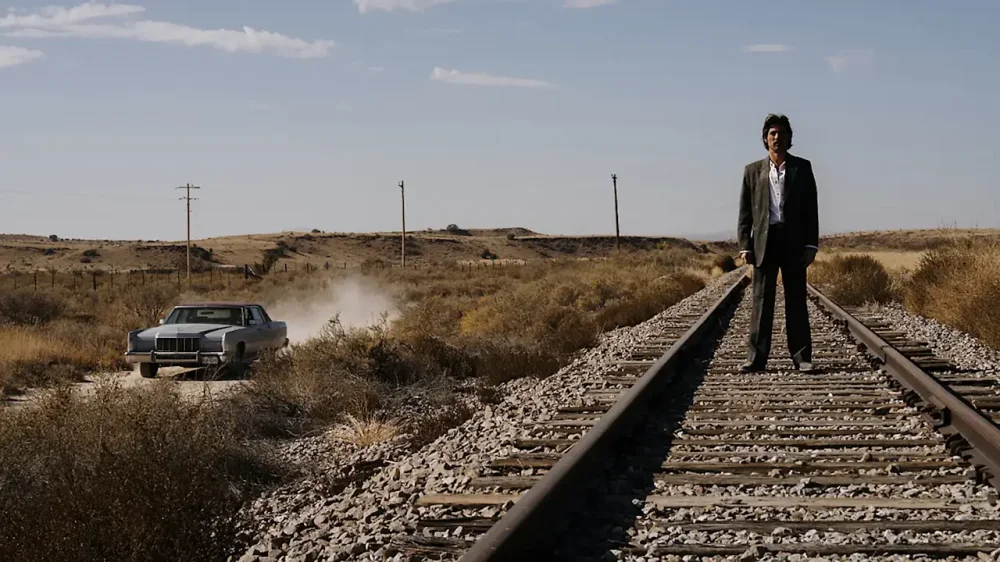
A new short film premiered at SXSW over the weekend, written and directed by Jeff Nichols (Mud, The Bikeriders) starring Oscar nominee Michael Shannon, Oscar-winning singer/songwriter Ryan Bingham, Hassie Harrison, and narrated by Oscar winner Sissy Spacek. Love Letter to Texas is a 12-minute story of personal reinvention, and a beautiful visual tribute to some of the Lone Star state’s most photogenic and iconic backdrops in film history. It’s also Tecovas ad, bankrolled and produced by the Western apparel and cowboy boot brand. Founded in 2015, Tecovas is a new brand in a category steeped in heritage. It began as the “Warby Parker of Boots” but has since opened 56 stores around the U.S., including in New York City and Boston. In 2024 the company surpassed $250 million in revenue, and expected to pass the $300 million mark in 2025. Tecovas vice-president of brand marketing Samantha Fodrowski says Love Letter to Texas represents the brand’s ambition to show people it puts the same amount of care and attention to detail into its content as it does its cowboy boots. ”We want to be known as a brand that really is investing in craft,” says Fodrowski. “If that’s something that people start to recognize and associate with Tecovas, that’s a win for us. It has nothing to do with selling products. It’s about how we’re making that first introduction.” If this film is any indication, it’ll be a helluva ride. Love Letter High profile brand entertainment has hit the mainstream, with projects like the unprecedented deal struck between AB InBev and Netflix, WhatsApp working with Modern Arts on a Netflix doc about the Mercedes F1 team, to Dick’s Sporting Goods formally establishing an internal entertainment studio. But smaller brands, like Huckberry, are also making shrewd investments in longer form content. It really should come as no surprise that Tecovas is investing in longer form brand content, considering it brought on Scott Ballew as its vice-president of creative in 2024, after Ballew led Yeti’s film and content work for more than a decade. His first piece of work for Tecovas was “True West,” a brand manifesto of sorts, both visually and in its script. Directed by Ballew, narrator artist Terry Allen says, “The true west has no fences. There’s an edge, but you got to find it.” As artful shots of open spaces, horses, and running trains, which Ballew describes as a Texas fever dream, it ends with Allen saying, “Now, we might not need more people in the West, but would it hurt to have a little more west in the people?” The spot ran in limited markets over 2025, but the brand then decided to put it on Peacock for the Super Bowl this year. Ballew says that the idea for Love Letter came about as a result of feeling they “left some meat on the bone” and had more to show and tell about how the brand feels about its home state. “Jeff [Nichols] came up with the idea of taking some of these scenes, characters, storylines and locations, and take inspiration from this handful of films and make our own story out of it,” says Ballew. Scenes for the film were deliberately shot at locations featured in iconic Texas-shot movies like There Will Be Blood, Giant, No Country for Old Men, and Paris, Texas. While Ballew’s work at Yeti helped popularize brands creating character-driven documentary content, he sees an opportunity for Tecovas to zag. “Now everyone has their own little documentary thing going, which makes none of them feel important or unique or original,” says Ballew. So being able to cast and write a script and scout and be really specific with the style and the look and the pace, is a new way to find your own thumbprint.” Building the roots Too often an investment like this in longer form brand entertainment can be seen as self-indulgent for a brand. But CEO David Lafitte sees it as part of a much bigger picture. He says that the role of a cinematic project like Love Letter to Texas is to provide the essential “heavy lifting” of brand building that prevents a company from getting trapped in a cycle of purely transactional marketing. “If you don’t do the heavy lifting of brand awareness and brand building, the lower funnel performance marketing conversion becomes a merry-go-round that’s hard to get off of,” says Lafitte. By focusing on what Lafitte says is a “North Star” of authentic storytelling, the brand is attracting a more engaged consumer. This ultimately boosts efficiency at the lower funnel because it builds an emotional connection that “qualified traffic” responds to more effectively than repetitive conversion ads. Fodrowski says projects like this become a shorthand for people to know who the brand is and its perspective. “We’re coming into this space as a newer brand in a craft that’s been around for over a hundred years,” she says. “And so we have to have our own take on what that looks like. We talk a lot at Tecovas about the idea of honoring the West and crafting its future. This really speaks to that.” Ballew is the first to say he’s much more of a creative lens than a marketer. He knows that films like this aren’t for results next week, next quarter or even next year. He likens a brand to a growing tree. “When a company grows quickly and starts developing a cult following, and there’s this need to grow and grow and sell and sell, the tree gets really top heavy and all these things like Instagram and TikTok ads are adding leaves, and making the tree fuller,” he says. “And I’ve always felt like my job is to build the roots deeper so that the tree lasts a long time. So these projects that I’m interested in are root builders to keep the foundation steady.” The film will launch on Tecovas social and digital channels on April 7th, and the brand plans to hold screenings at its stores across the country. Giddyup. View the full article
-
Google shared that Googlebot's crawl limits are flexible and can be increased or decreased depending on the need. The post Google Shares More Information On Googlebot Crawl Limits appeared first on Search Engine Journal. View the full article
-
A middle manager sits in a 1:1 with their boss. They nod along to strategic priorities they already know are unrealistic. The deadlines don’t match the staffing plan. The “new initiative” competes with the last “top priority.” The team is already stretched thin. But the manager doesn’t say it—not plainly—because honesty can be misread as incompetence, negativity, or a lack of readiness for the next level. Two hours later, that same manager is in a team meeting projecting confidence about those same priorities. They translate contradictions into something coherent, reassure direct reports who are already anxious, and say, “We’ll figure it out,” while privately wondering how. Later, at lunch with peers, they compare notes on workload and shifting expectations. Everyone laughs in that awkward “we’re fine” way. No one admits they’re drowning—because even peer relationships can feel political when resources are scarce. Here’s the question we’re not asking: Who can middle managers actually be honest with? In too many organizations, the answer is: no one. That’s not a personality problem or a resilience issue. It’s a design issue—one I call Organizational Latchkey Syndrome: a workplace reality where middle managers are handed responsibility and expected to “figure it out” with limited authority, limited support, and limited psychological safety. As a licensed psychotherapist, I see this pattern constantly: organizations demanding emotional intelligence from people inside emotionally unintelligent systems. It’s like asking someone to practice healthy attachment in a relationship that punishes vulnerability. And because middle managers are the emotional and relational bridge between strategy and execution, Organizational Latchkey Syndrome doesn’t just burn people out. It quietly breaks culture. Why middle managers can’t be safe in any direction Middle managers are often told they need more EQ—more empathy, better communication, stronger coaching skills. And yes, EQ matters. But middle management already demands a high level of emotional intelligence. The problem is that many organizations ask for high-EQ performance from managers while building systems that make it risky to tell the truth. This is a high-EQ role inside a low-EQ system. Upward: They perform competence Safety is conditional. You can raise concerns, but only if they’re packaged “correctly.” You can push back, but only if you already have political capital. You can speak candidly, but only if you can guarantee a solution. In many work cultures, the emotional subtext of leadership is: Bring answers, not complexity. So managers learn to manage impressions instead of surfacing reality—and self-protection replaces reflection. Downward: They perform steadiness Middle managers are expected to provide stability for their teams—especially during change. They’re asked to maintain morale, protect psychological safety, coach performance, and hold space for stress. But many managers don’t have full information, which means they’re asked to create clarity they don’t possess. So they buffer uncertainty, absorb pressure, and make it make sense. That’s leadership—and it’s costly. Emotional labor without recovery becomes emotional depletion. Sideways: They manage scarcity In a healthy organization, peers are where managers can exhale. In many organizations, scarcity activates competition. When budget, headcount, or executive attention is scarce, peer relationships become strategic. Managers perform camaraderie while privately feeling isolated. Everyone says they’re “busy,” but no one says, “I’m not okay.” Put those directions together and you get the most under-acknowledged reality of modern middle management: they are organizationally isolated in the role designed to connect everyone else. Organizational Latchkey Syndrome is an execution problem If we treat middle management isolation as a wellness issue, we’ll respond with wellness solutions: a workshop, a coaching module, a reminder to take PTO, encouragement to “set boundaries.” Those supports can help individuals. They don’t fix the system. When people feel psychologically unsafe, they shift into self-protective mode. They share less, ask less, challenge less. And when your middle layer goes into self-protective mode, the organization pays the price. Here’s what breaks: 1) Feedback stops traveling upward. When managers can’t be honest about capacity, risk, or contradictions, senior leaders make decisions on partial information. Risks surface late. Surprises multiply. 2) Innovation stalls. You can’t access your most creative, strategic thinking in survival mode. And managers can’t model psychological safety they don’t experience, so teams learn to keep their heads down. 3) Execution quietly breaks. A manager gets handed three “top priorities,” each requiring full-time focus. They know the team can realistically handle one, maybe two. So they say “we’ll figure it out” and watch their team burn out trying to deliver the impossible. Execution erodes in missed deadlines, quality slips, and people quietly opting out. As one reader put it in response to my last article: being in the middle—managing up, down, and sideways—can make psychological safety nearly impossible when each side has competing priorities that weigh you down. That isolation isn’t a side effect. It’s a design flaw. What manager-safe spaces actually look like If middle managers are isolated by design, then support has to be intentional—not assumed. A manager-safe space is any structure where managers can tell the truth early without it becoming a performance liability. Here’s what works in practice: 1) Peer cohorts that are truly confidential. Same-level managers (not direct competitors), clear confidentiality norms, a consistent rhythm, and facilitation. The goal is simple: a place to say, “I don’t know,” before that becomes burnout—or resignation. 2) External coaching that doesn’t report back. A protected space to process the role and name what can’t be said inside the normal system. If coaching feeds into evaluation or succession planning, it stops being safe. 3) Executive sponsorship that actually covers them. Cover means a senior leader who protects the messenger, backs early risk-flagging, and names tradeoffs publicly so managers aren’t left absorbing the fallout alone. 4) Clarity on decision rights. If managers don’t have authority, stop evaluating them as if they do. Define what they own, what they influence, what requires escalation—and commit to not second-guessing decisions after the fact. The litmus test Can your middle managers tell the truth early without consequences? Can they say “This isn’t resourced,” “I need help,” or “I don’t agree”—and still feel trusted afterward? If the answer is no, you don’t have a training problem. You have a design problem. Until middle managers have real cover—clarity, capacity, and community—many will keep doing what latchkey kids do best: they’ll figure it out alone. This is Organizational Latchkey Syndrome in full effect. And it’s entirely fixable. But survival shouldn’t be the standard for your culture. And it can’t be the foundation for your leadership pipeline. The question isn’t whether they’re resilient enough to keep going. The question is: how much longer can they sustain it? And what will it cost your organization when they can’t? View the full article
-
Flights from Manchester, Edinburgh and Dublin among those that returned to destinations on MondayView the full article
-
Fortune Brands staves off proxy battle with asset manager set up by Trian co-founder Ed GardenView the full article
-
As Anthropic and OpenAI duke it out with Pentagon matters, Cowork capabilities, and model launches, it’s important to remember that technology is not the goal. It is a means to an end. Its value comes from helping people solve daily problems and giving them one less thing to think about—on a global scale. However, people must first realize there’s a problem and understand how technology can solve it before AI can make a meaningful difference. When things click, it’s always a matter of consumer education, which leads to expanded adoption, which in turn leads to society-wide impact (in that order). Each step can happen swiftly—or take months or years to complete. This pattern—education first, adoption next, transformation last—repeats across sectors. It’s also a tale as old as (human) time. The lesson from past cycles like the cloud and mobile web: The best AI-powered systems won’t be the ones with the highest investment totals or most bells and whistles; they’ll be the ones with tech that unceremoniously makes real-world processes faster, cleaner, cheaper, and more resilient. Technology adoption at scale isn’t an overnight phenomenon; it’s a signal that technology has crossed a threshold from curiosity about “the new thing” to daily driver. AI has tremendous potential, but we in the tech world have lost the plot on making this matter for real people. I’ve been fortunate enough to see this cycle play out a few times in my career. For example, when I worked on the first iPhone, it was impossible to predict a future powered by dating apps, ride-sharing, mobile payments, or social media. Now, it’s hard to remember a time before we could run our lives through our phones. Our breakthrough was delivering an ecosystem once the tech was powerful enough and the world was ready. Because of the backbone we created, new platforms emerged that allow people to leave their wallets at home and conveniently pay via their phones, or tap a button to get a ride. Once consumers realized the power and ease of solving real-world problems with a swipe or tap of their fingertips, adoption took off like wildfire. The same principle was true when we built the first Nest thermostat. From the beginning, the goal was to apply technology to make energy more efficient, from both a capacity and cost standpoint, for households and regular people. We talked about building AI-powered devices that could understand human behavior and adapt accordingly. We had the vision, but needed AI to advance in order to make progress technologically possible and developmentally practical. For example, a popular, seemingly humble feature like package detection on a Nest doorbell camera took nearly a year to develop. The models were heavy. The hardware was constrained. The development cycles were long. We were crawling toward a clear goal with hundreds of hurdles in our way. By the time we perfected computer vision over the course of more than a year, consumers understood the problem that Nest was solving and how adopting the system would help them reduce utility costs while using energy more efficiently. It was at this point that the transformation at scale could—and did—happen. But it takes more to scale meaningfully than shipping innovation and pushing updates to consumer devices. You need to combine the latest technology with the level of consumer interest to solve the problems we face on a daily basis. At Mill—the food recycler company I now run—we started by focusing on households, helping people manage food scraps and deliver them back into the food system, one kitchen at a time. That phase mattered. Education that leads to behavior change always comes first. People must realize there’s a system-wide problem and understand why it exists before tech can help solve it. Food waste, for example, is an industrial problem. Grocery stores discard millions of pounds of food every day. Behind every supermarket is a loading dock crowded with dumpsters and compactors that are consuming space, energy, and labor—and these valuable resources end up getting sent to a purgatory of methane production. Developing an enterprise-grade, AI-powered food waste system at Mill, and seeing it adopted by major players like Amazon and Whole Foods Market, is a signal that we’ve entered a new phase. It’s clear that reducing food waste isn’t just about nudging individual habits. It’s not just about putting last night’s lasagna in the right bin. It’s about removing entire classes of waste from the system. Artificial intelligence makes that possible—not because it’s flashy, but because it’s finally reliable, affordable, and fast enough to operate at scale in the physical world. With the iPhone, smart devices like Nest, and now AI, perspective matters. But above all else, tech leaders need to keep in mind that we must be solving real problems—not generating tech for tech’s sake. Progress in this physical era of AI requires logic and restraint as much as ambition. Fortunately, we’ve been here before. The internet was speculated to become a Wild West of lawless virtual worlds and digital avatars. It became a functional tenant of digital society, grounded by email, maps, commerce, and communication—mundane tools that solved ordinary problems at an unprecedented scale. The story of AI’s next chapter is steeped in precedent. Hype will fade. Models will commoditize. Launches will grow quieter. What we’ll hopefully be left with are AI-powered systems that work to solve everyday problems while improving life in the physical world, rather than distracting from it. View the full article

-
Spend any time on social media, and it’s only a matter of time before one genre of content starts hitting your timeline: Someone telling you they make a fortune by doing something that sounds absurdly easy. (And that you can, too.) Maybe they (kind of) show you how to design and sell your own sweatshirts or notebooks, a venture that supposedly earns them five figures a month. Or maybe they tell you about how they started a $100,000 business with no inventory. Whatever the enticing story is, the ending is usually the same: they offer to teach you how to do the same. And who would say no to easy money? Get-rich-quick how-tos have existed forever—and more recently, side hustles have become a hallmark of American existence. According to SurveyMonkey’s 2025 Workplace Culture and Trends survey, 72% of U.S. workers either already have a side gig or are considering picking one up. That might explain why the past few years have flooded platforms like Instagram and TikTok with get-rich-quick guides, many of which seem to carry nearly identical talking points. These social media solopreneurs supposedly make incredible money by working only two to three hours a day, and they’re generous enough to share their wisdom with you. But how is anyone supposed to separate the legitimate techniques from the scams and the flops? Enter: the side hustle reviewer. A “TRY GUY” FOR SIDE GIGS The stated purpose of side-hustle review accounts is simple: they test out money-making schemes so you don’t have to. The people behind them are basically business guinea pigs who flip phones on Facebook marketplace and design T shirts that are “print-on-demand” (in which a third party creates the shirts the side hustlers design after a customer makes the purchase) on platforms like Redbubble and Shopify—all to see if they can actually make a buck. Other side hustles could include posting product videos on Amazon, or starting a newsletter. Often, they’ll break down how much money they made, and sometimes, they’ll even walk you through the fine print of the trade. This might sound altruistic on its face, and it can be. But in a way, it’s also its own kind of side hustle—one that, like all the others, comes with its own business incentives. Few people know this better than Ryan, the 40-year-old tech worker behind Side Hustle Review. (He keeps his surname private to protect his full-time job.) Thanks to his 229,500 followers on TikTok and 473,000 on Instagram, Ryan says that sometimes, side-hustle platforms approach him with a simple offer: if he promotes their ecosystem, they’ll give him a cut of every paid sign-up he generates. Unfortunately, he adds, many of these platforms take would-be hustlers’ money without ever actually making money for them. In light of these offers, Ryan openly admits he could start an “evil arc,” exploiting viewer trust for personal gain by endorsing bogus money-making platforms. “I’m not saying I would,” he says, “but the fact that that could happen makes me go, ‘I do have something very precious here.’” That’s why he always turns these offers down. It’s not just sketchy courses, either. When asked to name the weirdest side hustle he’s ever tried, Ryan dished on one he actually hasn’t tried: selling images of his feet. (Although he’s never uploaded a foot photo himself, he has received emails from less-than-ethical platforms asking him to share an affiliate link with his users in exchange for a cut of their sign-up fees.) “[Users] pay the money to post their feet pictures thinking they’re going to make the money back, and they never do,” he says. At the same time, some of the ideas floating around on the internet are totally legitimate. SEPARATING WHEAT FROM CHAFF The demand for the kind of service Ryan and other side-hustle reviewers provide is clearly there. The internet is rife with online courses and guides that claim to explain how to set up various businesses in exchange for a few hundred (or thousand) dollars. Ryan says he receives 80 to 90 DMs per day from viewers who want him to review this or that course, which is part of why he’s begun work on a site called review.courses. He hopes the site could grow into a sort of Yelp! for side hustles, where users can post their own reviews. As Ryan points out, the price tags some courses carry are incredibly high, especially for a product with no real regulatory body. Some can range from $5,000 to $8,000. “When you go to buy a $2,000 laptop, how many reviews do you watch?” Ryan asks. “Ten, 15, 20 before you make your purchase?” None of this exists for courses that teach you how to operate an online side hustle, and the ones that tend to go viral the fastest offer people what they most want: easy money. Some of these courses are complete cash grabs, Ryan says—they could be extremely vague, AI-generated, or copied straight from a guide the creator themselves previously purchased from someone else. “Once you buy the thing, it’s trash course, trash content.” WHEN SIDE HUSTLE REVIEWING BECOMES THE SIDE HUSTLE With the right strategy, Ryan says, you can make good money by creating, say, a print-on-demand T-shirt empire. Same goes for dropshipping, where you sell products without any actual inventory by purchasing the items from a third party after someone hits “Place Order.” When asked which side hustles’ viability actually surprised him, Ryan called out user-generated content: brand-related media created by social media users instead of the companies themselves. This could include product review videos, including Amazon on-site videos (product videos that anyone can post onto product pages in exchange for a cut of the commission if a customer makes a purchase after watching). Ryan was also pleasantly shocked by how easily he found success creating a newsletter, a scheme he’d thought for sure must be a scam. “I get a 40% open rate,” he says with audible surprise. “I guess people do want more emails.” And yet, it turns out that reviewing side hustles is more profitable than the hustles themselves. While Ryan cited $5,000 in gross revenue from testing in 2024, he made $35,000 from Side Hustle Review. That said, 90% of the latter income came from sponsorships, a revenue stream he’s since ended to preserve editorial independence and trust. “I find every sponsor comes to me with desired sales outcomes,” he says, “which really easily pushes me into becoming more of a salesperson.” Given the direction corporate America has taken, side hustles seem bound for continued expansion, and their growing popularity is an ever-present sign that many workers, mistrustful of large companies, are bracing for a big shift. While some side hustlers are hedging their bets against an uncertain economy, others might be working to compensate for the bite inflation has taken out of their pockets. And the rest, Ryan figures, probably just want some disposable income. Regardless of the reason, he says, “I think we’re all feeling a bit of a squeeze.” View the full article

-
Rightwing nationalist Bart De Wever challenges full support for Ukraine in quest for lower energy pricesView the full article
-
Block recently made headlines when CEO Jack Dorsey announced it was reducing its workforce and replacing some roles with AI agents. But it wasn’t the first organization to do this. And it won’t be the last. And in the middle of that announcement—and the LinkedIn hot takes—there are real managers trying to figure out what to say to their teams. That’s the part people want to hear—and need. Your Team Is Already Scared—And They’re Watching You If your organization has made any moves toward AI in the last year—and most have—your team is likely on edge. They’ve watched colleagues get laid off. They’ve heard the buzzwords: “efficiency, “optimization,” “doing more with less.” And now they’re reading the same headlines you are. What they’re experiencing often has a name: survivor’s guilt. It’s the uncomfortable feeling of still having your job when someone else doesn’t. And it sits right alongside a louder fear: Am I next? Managers don’t have to have all the answers. But you do have to be intentional about the signals you’re sending. If you talk excitedly about AI tools in front of a team that just watched three colleagues lose their jobs, you’re not leading your team—you’re alarming them. And if you’re avoiding the conversation entirely, your team is filling that silence with side conversations—and their own assumptions. The most important thing you can do right now isn’t just to adopt the right tools. It’s to have the right conversations. Get the Language Right Here’s something to remember: AI agents aren’t teammates. They don’t have a bad week. They don’t need feedback, recognition, or a one-on-one. They’re tools—sophisticated, powerful, often incredibly useful tools—but, nonetheless, tools. The way managers talk about AI in front of their teams matters more than most realize. “Our AI handles that” sends a different signal than “we use this tool to handle that.” The first suggests a colleague. The second is honest about what it actually is. This isn’t just semantics. When managers blur the line between human and AI contribution, your teams internalize it. They wonder what their own work is worth, and if you see them the same way you see a tool—as something to be optimized or replaced when something faster comes along. Words shape culture. Choosing them on purpose is leadership. The Prompt Is the New Skill—But Not for the Reason You Think Most of the conversation about artificial intelligence at work focuses on speed: Generate faster. Produce more. Be more productive. But speed without judgment isn’t leadership. It’s just output. The managers who will actually lead well in an AI-enabled environment aren’t the ones who learn to prompt fastest. They’re the ones who pause long enough to ask: What do I actually need here? What context matters? What would a thoughtful answer actually look like—and would I know it if I saw it? Then they turn to their team and ask the same thing: What are you trying with AI, and what would you like to try? That’s the Pause-Consider-Act framework applied to AI. Pause before you generate. Consider what you actually need, what your team actually needs and thinks, and what a good outcome looks like. Then act—using tools intentionally, not just reflexively. A bad prompt gets you a fast, mediocre result you still have to fix. A thoughtful prompt gets you something genuinely useful. The difference isn’t the tool—it’s the intention behind it. Better, Not Just Faster The real risk for managers is using AI to look more productive without actually leading better. Generating a performance review in 45 seconds isn’t leadership. It might save you time—and time matters—but if you’ve outsourced the thinking to a tool without adding your own judgment, context, and knowledge of that specific person, you’ve just produced a faster mediocre review. Your team member deserves better than that . . . and so do you. The same goes for feedback, for communication, for how you respond to your team. AI can help you structure your thinking, sharpen your language, and get a first draft on the page. But the relationship and judgment are still yours. AI used well makes you a more thoughtful leader. AI used as a shortcut makes you a less present one. What to Actually Do This Week If you’re a manager navigating this right now, here’s where to start: Have the honest conversation. You don’t need all the answers. You need to acknowledge what your team is feeling—the uncertainty, the worry, the questions about what this all means for them. Be clear about the difference between tools and teammates—in how you talk, plan, give credit. Your team should never wonder if you see them as interchangeable with software. Use AI to prepare, not to replace. Use it to think through a difficult conversation before you have it. Use it to draft, then add what only you know. Use it to get unstuck—not to get out of the work. The managers who lead well through this moment won’t be the ones who adopted AI fastest. They’ll be the ones who stayed human on purpose—who used the tools without losing the judgment and leadership that no agent can replicate. That’s still the job. And it still matters. View the full article
-
On a hot April night, Bodyarmor, the sports drink company that Coca-Cola acquired in 2021 in a $5.6 billion deal, was throwing a huge party in downtown Manhattan to celebrate its relaunch. Plenty of MBA types in brown lace-ups and untucked shirts clutched vodka sodas in Hall des Lumières, the cavernous bank-turned-event-space across from City Hall. They were eyeing the young women in short skirts and high heels who—along with star-studded guest lists and goodie bags so heavy they threaten to break—are the lifeblood of these corporate soirees. By the dance floor, where an energetic DJ pumped his fist in the air playing remixes of Whitney Houston’s “I Wanna Dance with Somebody (Who Loves Me)” and Doechii’s viral TikTok hit “Anxiety,” two trios of women collided and traded air kisses. “Have you seen any famous people?” a blonde in one group asked a blonde in the other group. “Only Kyle,” she said, motioning to the DJ, a fortysomething so blond, angular, and handsome he could be the villain in an 1980s teen movie. But Kyle is not the new Diplo, Tiësto, or Skrillex. In fact, he’s not even a full-time DJ. Kyle Cooke is one of the stars of Bravo’s long-running reality TV show Summer House, which follows a group of young New Yorkers sharing a Hamptons mansion, drinking and dating their way through the East End social scene. NBC Universal released data last June that the ninth season of the show was on track to be its most-watched yet, averaging 2.2 million viewers across all platforms, with ratings up 31% on Peacock, the network’s official streaming platform. But Summer House isn’t Cooke’s full-time job either. Both the show and the DJ set support his core enterprise: He is the founder and CEO of Loverboy, a canned-cocktail company he started before season three began filming. Loverboy launched in 2018, bootstrapped by Cooke as a line of sparkling hard teas, and has since branched out into an array of spritzes and cocktails, with as many as 30 full-time employees and an office in Manhattan. In 2019, the company raised roughly $1.25 million in a pre-seed friends-and-family round, $25,000 of which came from Spencer Slaine of Slaine Holdings, which has current investments in Goodles and Olipop and a past investment in Poppi, which sold to PepsiCo for $1.95 billion in 2025. Slaine met Cooke when he owned Harding’s, a restaurant in the Flatiron district that Cooke lived next to and frequented. They became friends, and he was on the email when Cooke began looking for investors. Slaine was (and is) a Bravo fan, and he was familiar with Skinnygirl. “The Bravo aspect to me was the X-Factor along with Kyle himself,” says Slaine, whose aunt, Elyse Slaine, was on Season 12 of The Real Housewives of New York City. “It was the category, the timing, and that Kyle has an entrepreneurial background that made it worth the gamble.” Slaine says that being an angel investor in Loverboy has already paid off. “We got in at a very low valuation, which was his first raise. When he did a subsequent raise with CircleUp, that assigned an astronomical valuation—it was 30X the valuation at the pre-seed round—because he hasn’t had to raise a lot of money and has been smart with utilizing debt and getting profitable very quickly,” says Slaine. “I think it was the fastest investment that went to profitability because of not having to spend money on marketing and keeping a lean team.” In April 2022, the company raised $3.5 million in that Series A funding round led by CircleUp. Cooke says the company has done over $50 million in sales since 2020—and he says he’s achieved it without spending a penny on traditional marketing or advertising thanks to his nearly 10 years on reality TV, more than half a million followers on Instagram, direct outreach to the fans via events like BravoCon—and, yes, DJ gigs. Cooke is just one of a long line of Bravolebrities-turned-founders who have launched companies on their respective shows that have become major brands. The network has become a new QVC for a specific kind of ambitious entrepreneur who knows how to leverage an opportunity. Stephanie Dade, senior vice president of global content and integration at brand integration firm BENlabs, has worked on many campaigns with Bravo over the years and describes the Bravo team as “fantastic partners” who are willing to customize integrations to ensure they resonate with both talent and fans. With several caveats about the product category and amount of exposure, she says it costs most brands “in the high six figures” to get on one of the shows. Bravolebrities, as they’re called, have a chance to get the same integration for free, though they don’t get to dictate how, or even if, their product makes the final edit. Erin Lichy, one of the stars of the 2023 reboot of Real Housewives of New York City, says she raised $2.5 million for her mezcal brand, Mezcalum. She tells Inc. that she has seen her sales double year over year since appearing on the show. Melissa Gorga, one of the longtime stars of Real Housewives of New Jersey, recently launched a sprinkle cookie business, Let’s Sprinkle by MG, and says she sold more than $1 million worth of cookies in its first six months. When Katie Maloney and Ariana Madix, stars of Vanderpump Rules, opened the sandwich shop Something About Her in West Hollywood in May 2024, they saw instant write-ups in The New York Times and lines down the block. Meredith Marks, who appears on the Real Housewives of Salt Lake City, reports that her namesake caviar line, launched in August 2023 and featured on multiple episodes of the show, grew by over 1,000% between the 2024 holiday season and the year before. But perhaps one of the buzziest launches in recent memory comes from Paige DeSorbo, who joined Summer House alongside Kyle Cooke in season three and has become a breakout star with a hit podcast, Giggly Squad, alongside former Summer House costar and comedian Hannah Berner. (“Giggly Squad,” of course, comes from the moment on the show when Cooke chides DeSorbo and Berner for side-chatting while he’s talking about wedding planning during a tense group dinner.) DeSorbo has 1.6 million followers on Instagram and is known for her chic and simple style and funny confessionals. Like any good Bravolebrity, DeSorbo understood the power of the Bravo edit. She realized that after the first season she was on the show, Bravo had given her what she describes as the “lazy girl” edit, which meant spending copious amounts of screen time “bed-rotting” on her phone. Why not monetize? Last June, DeSorbo launched Daphne, a direct-to-consumer pajama and loungewear brand, with Chris Kim, founder and CEO of Concept Brands, Daphne’s brand incubator. The 12 different styles sold out in just a couple of days. (Currently, products include the Hannah Tee $68, the Bubbly Slip Dress $120, and the Golden Night Sweatshirt $98.) On November 4, to coincide with DeSorbo’s birthday, the brand dropped new items, including a robe ($120) secretly embroidered with “Sorry, I can’t tonight,” so you can see it only when the collar is popped. The Gigglers, as her fans are known, are already obsessed. Still, DeSorbo was nervous about her first big solo project. “Anytime you launch something, you still feel like you’re a little kid and you’re throwing a birthday party and you’re like, ‘But what if no one shows up?’” she says. “It exploded exactly the way we hoped it would.” If you’re going to go on a Bravo show in 2025, you better have a strategy, and you better know how to launch a product—and fast—because the seasons come and the seasons go, and much like QVC, once your time on camera is done, it’s possible your sales are too. In 2006, when The Real Housewives of Orange County premiered on Bravo, the show was not an initial success. But the format slowly caught on with viewers who quickly became addicted to watching women of a certain age living their authentic and often chaotic lives in front of the camera. Overseen by network executive and executive producer Andy Cohen, Real Housewives became a phenomenon with the launch of multiple cities in the franchise: New York and Atlanta in 2008, New Jersey in 2009 with its Zeitgeist-defining table flip, and Beverly Hills in 2010. Today, with the franchise nearly 20 years old, there are more than 10 Real Housewives shows—and their millennial spin-offs, such as Vanderpump Rules, Summer House, and Southern Charm. Bravo has been entirely remade in the Housewives’ image, with most of its shows now in what’s called the docu-follow format. On each of these shows, cameras and canny producers follow groups of friends, family, or coworkers as they go about their daily lives and chronicle not just their interpersonal squabbles but their marriages, divorces, and, crucially, their business launches, which would fast become one of the staple narratives of Housewives shows and their spin-offs. In the beginning, launching a business was not a reason to sign up for a Bravo show. Jill Zarin, a founding member of Real Housewives of New York City, which premiered in 2008, had different intentions: “To be famous,” she says matter-of-factly and without shame from her Florida home office, where an old, framed copy of an amNewYork newspaper featuring the RHONY ladies from season two hangs on the wall. That all changed thanks to one woman: Zarin’s friend Bethenny Frankel. While the Housewives were originally meant to showcase married mothers of means, Frankel was a fledgling reality star, fresh off a second-place finish on the poorly rated Martha Stewart edition of The Apprentice, unmarried, and struggling to make it as a natural-food chef. Her zingy one-liners and position as the underdog who was the voice of reason amid a group of wannabe socialites made her an instant fan favorite. “I went on the show single-handedly and exclusively for business,” Frankel told The Hollywood Reporter in 2011. “I knew it was a risk and I had the most to lose, because I already had a platform. When I went on the show, no one was going on for business, no one had done anything.” Bethenny Frankel has spoken to the press about signing her contract for the first season of The Real Housewives of New York, for which she earned $7,250 for the entire season. She refused to sign the profit-sharing clause in the contract, which she likes to call the Bethenny clause. A Bravo spokesperson says that they do not comment on talent contracts. When asked about the clause, Kyle Cooke says, “The way it reads is you owe them a percentage of your take-home. So if you have a book that generates $1 million in sales and your take is $250,000, then Bravo might want 10% of that. But is Bravo chasing down talent for $25,000 checks? No. Ultimately, if my business isn’t profitable, there’s no discussion. And most beverage companies are losing money until the day they’re bought.” During her first season, Frankel started ordering what she called a “skinny girl margarita,” a low-sugar, low-calorie version of the classic cocktail. By the show’s third season in 2010, she had bottled it, branded it, and was hawking Skinnygirl in stores. In 2011, Frankel sold the company to Beam Global for an undisclosed amount, estimated by some to exceed $100 million. The same year, she was on the cover of Forbes with the headline “The New Celebrity Money Makers.” (In 2023, Frankel spoke with Vanity Fair, calling for a union of Housewives and posted a TikTok calling for a “reality reckoning.” Among other accusations against production, the article details racism endured behind the scenes, with some incidents involving Eboni Williams, the first Black cast member on RHONY. In February 2024, former RHONY cast member Leah McSweeney filed a federal lawsuit against Bravo Media, Andy Cohen, and others behind the show, alleging a “rotted workplace culture” that preyed on cast weakness and employed “psychological warfare” against McSweeney. As of 2026, the lawsuit remains ongoing.) “I think everyone was a little jealous of Bethenny,” Zarin says of cast members witnessing Frankel’s success—although she says she never was. But the rush to cash in on the shows had demonstrably mixed results, showing that for any founder, building in public carries risks. RHONY castmate Ramona Singer, famous for her love of pinot grigio, slapped her name on a bottle, but online reviews were mixed and some complained the wine was impossible to find. Shereé Whitfield of Real Housewives of Atlanta first attempted to launch her fashion line, She by Shereé, with a fashion “viewing” even after rejecting the line’s clothing samples the day before the event. As Dwight Eubanks, a hairdresser who was friends with several of the RHOA ladies, famously said, “A fashion show with no fashions. How dreadful!” (A revamped She by Shereé was made available to consumers nearly a decade later, but it was dogged by comparisons to the fast-fashion brand Shien.) The path of least resistance for less entrepreneurial Bravolebs is the traditional influencer route. Lindsay Hubbard, who started Summer House with Cooke, left her career as a publicist after season five for a lucrative career as a full-time reality television personality. “I’ve determined I don’t really want to start a product. I watch my friends do it, and it’s a heavy grind.” Hubbard, who has more than 750,000 Instagram followers, has been appearing in commercials for Hellman’s Mayo and State Farm. “I’m not willing to lose my hair and sleep one hour a night to start my own product from the ground up.” In 2015, when Kyle Cooke answered an open casting call for the show that would become Summer House, he says he signed on 50% for “shits and giggles,” but he also had a tactical reason. “I never watched a single episode of any Bravo show,” he says. “But I did know Bethenny Frankel by name.” Cooke would help producers find the rest of the initial cast, including Carl Radke, whom he had met a few summers before at a Hamptons hot spot, Surf Lodge, when Radke dared Cooke to pour a 6-liter bottle of rosé with one hand. “Kyle said to me, ‘Do you know Bethenny Frankel?’ And I was like, ‘Yeah, I mean Skinnygirl.’ And he’s like, ‘Exactly, this is a platform,’” Radke recalls. “So his whole sales pitch was like, ‘It’s not all about fucking chicks and getting drunk. There’s something more here that could lend itself to a business or a personal brand.’” Cooke has a dual reputation on Summer House. On one hand, he comes across as a party boy who always wants to “send it,” in his parlance. At 43, he is the oldest member of his reality clique, and the show continues to portray him as a man-child who refuses to settle down. But Cooke is also a workaholic entrepreneur who puts Loverboy before everything on screen, including, at times, his relationship with Amanda Batula, whom he began dating in the first season, and who served as the first creative director of Loverboy, leading its branding and marketing. It’s that all-work side of Cooke that comes out when you visit Loverboy HQ in Manhattan’s Financial district. It is one of those chic New York setups where the elevator opens directly into the space: one side opens to the Loverboy offices, and the other opens directly onto a living space. They’re mirror opposites and on the same floor. Cooke works at a standing desk, kitted out with expensive speakers so he can sample new music while going over spreadsheets. He talks in numbers and acronyms, like someone with an MBA. (His came from Babson in 2011.) At the office, even when taking his dogs, Reese and Ryder, for a walk around the neighborhood, he’s the definition of locked in. Cooke had a formative experience selling Cutco Knives door-to-door in his native New Hampshire and says he offloaded $10,000 worth of knives in the first month. His entrepreneurial career began while he was a polysci major at Trinity College in Hartford, Connecticut, when he took on a University Painters franchise, finding house-painting jobs and subcontracting them out. He recalls making $250,000 in revenue his first year, and says he was named the company’s rookie of the year. “When my friends went on spring break,” he says, “I went to New Hampshire and did a home show.” When Summer Housestarted, Cooke was consulting for the men’s shorts startup Birddogs, managing an Airbnb property, and running an app he created, Fenix, that matched customers with nutritionists for one-on-one coaching. Fenix was featured in the first couple of seasons of the show, but it’s hard to make an app stand out on television. There’s nothing people can hold in front of the camera; there’s no product for people to see. “What teeny little soundbites made it into season one and season two were so convoluted that people thought I had a fitness app. And I’m like, ‘No, no, it’s nutrition. Abs are made in the kitchen,” Cooke says. The development of the Loverboy hard tea brand was more organic to the reality television process. In the first season of the show, housemate and co-star Lindsay Hubbard worked in PR and had contacts in the food and beverage space. Her contact at Boston Beer—which owns Samuel Adams, the hard iced tea brand Twisted Tea, and the hard seltzer brand Truly—hooked them up with free product for the exposure. Cooke noticed that fans were much more interested in the booze than in his nutrition app. “Everybody was asking what we were drinking,” he says. “What kind of rosé is that? Where’d you get your margarita maker? What the hell are these Twisted Teas?” Still nutrition-minded, Cooke felt bad recommending certain products because he thought of them as unhealthy. His idea was to make a similar product with no added sugar and all-natural ingredients. It also helped that fans had already come to know Cooke by the time Loverboy was introduced in the show’s third season. “If you come on a show, and you’re just fucking slinging a product right away or just doing constant ads—it’s just like, so this is why you did the show?” he says. “You need three or five years in between for people not to be rubbed the wrong way.” But even after warming up the audience, product launches still aren’t always easy. And as with everything in business, timing is everything. The schedule of reality television adds a layer of difficulty for a founder looking to launch a product. The typical Bravo show airs once a year and may have as many as 20 episodes per season, followed by two to three episodes of a reunion special. The whole process can start over again right as the reunion wraps. Though shows may film for only two to six months, being a Bravolebrity ends up being a year-round job, because as the show is airing, the stars are at their most visible, doing press, appearing on Bravo’s late-night show Watch What Happens Live, and responding to the lovers and haters across social media comments. It also takes about six months after filming for editing and postproduction, so getting a product on the show and then having it available for fans to purchase eight to 10 months later can be difficult. In April 2018, as Summer House’s second season was airing, Cooke got down to honing his idea for what kind of beverage he wanted to launch, ruling out rosé and hard seltzer and settling on sparkling hard tea. “Timing-wise, for me to formulate, do the artwork with the help of Amanda and an agency, trademark the name, and get samples in cans, it was literally do or die. Typically, that takes four to six months. I essentially did it in 10 weeks,” he says. He did all of this with $100,000 of his own money and before the show had even been renewed for a third season. “It was my money on the line. I had to make that bet,” he says. When the show was renewed, the timing was ideal. “I got enough of the work done so I wouldn’t miss the filming window, but there was still work to be done to capture it,” Cooke says. That included a scene with Cooke and Batula, looking like Laverne and Shirley, testing their drink formulations at a plant in New Jersey; getting the drink in cans so his friends on the show could taste it, and a fateful fundraising launch (more on this later) at the end of the season. These scenes are essential for viewers, whose affinity for the brands seems to intensify as they see the amount of work their favorite reality stars are putting into them. While Cooke nailed getting the brand on the show, he flubbed the second part: getting Loverboy in stores just as the season aired. It took longer than expected to figure out the intricacies of the alcohol distribution system and import the actual alcohol for the product from the Netherlands because the base that beverages like his were using at the time wasn’t up to Cooke’s low-sugar, low-calorie standards. “While season three aired and people are learning about Loverboy, they still couldn’t find it,” he says. The absence turned out to be a blessing in disguise. Not only did the company capture potential buyers’ information on their website, but the delay also allowed them to film a soft launch for Loverboy in New York City for the show’s fourth season. By the time that was airing, the country was deep in the pandemic with nothing to do but sit inside, drink alcohol, watch reality TV, and drink the alcohol that was on reality TV. Loverboy became a runaway success. With a few more years under his belt, Cooke has gotten savvier with timing, focusing on new products, new flavors, variety packs, and other goodies. “We try to time it so the innovation would be talked about and enjoyed by friends the summer before it launches,” he says, describing the origins of Loverboy’s nonalcoholic products and Flowerboy, his new low-dose THC drink that’s derived from hemp rather than cannabis. That luxury for longevity, with these moves spanning years rather than months, is something nearly unique to Bravo. “You do have a better platform coming out [a show like Real Housewives] with which to market yourself as compared with other shows like Survivor, where when the next season shows up, and nobody knows your name anymore,” says Kelly Goldsmith, a marketing professor at Owen Graduate School of Management at Vanderbilt University. (And she should know, having done a stint of her own on Survivor.) Despite building an enormous social platform over the five years Paige DeSorbo has been on Summer House, she has always been wary of launching a product. She says she’s been approached by all sorts of brands, but nothing clicked. “It just didn’t feel right in my gut to launch any type of product if I didn’t feel a hundred percent connected to it,” she says. “I think before I knew the phrase ‘personal brand,’ I felt that in my bones, and I just didn’t feel like I had a strong enough personal brand until recently, until the past two years.” DeSorbo and her costars Batula and Ciara Miller became known as the bed bugs for the amount of time they spend hanging out horizontally in the A/C as the Hamptons heat rages outside. She finally settled on the pajama line, Daphne, which feels like a natural brand extension. When talking to all these Bravolebs, they say the number-one thing that matters for the brand is authenticity. They should know, because that is the No. 1 factor in being great at reality TV. Bravo fans are savvy, and they can spot a fake—be it a person or a product—from miles away. Siva K. Balasubramanian, Harold L. Stuart endowed chair in business at Illinois Tech, who has been studying product placement since the late ’80s, says audiences respond best when attributes of the product and the celebrity selling it are aligned, the way DeSorbo’s love for bed, comfort, and fashion are represented with upscale pajamas. “When you see that mix, that is what I would call a combustible combination, which is almost going to guarantee success with your product launch. I see Bravo Network is very attractively positioned for launching these niche products where the fit is high,” he says. This is a perfect time to note that Bravo fans are, in a word, nuts. They are especially devoted to these people they’ve been watching on screen for years, and they feel more like friends to these reality stars than they do to other celebrities. While interviewing Real Housewives of New Jersey cast member Melissa Gorga in front of her Ridgewood, New Jersey, boutique, Envy, a bus pulled up with a dozen Bravoholics, as they’re called in the fandom. It was a group of friends who met at BravoCon, the semiannual fan event in Las Vegas, which is like ComicCon for those who find people fighting on television somehow soothing. They were having a reunion in New Jersey not only to meet up but also to visit the places they’d seen on the show in real life. Gorga dutifully posed for pictures, showing them the best lighting in the shop. She answered questions and posed for even more pictures. When she asked which other places they were visiting, one fan said, “We just went by your house. Look!” and showed her a photo on her phone of Gorga’s front door. “The fans for Housewives, everyone says, are like no other,” Gorga says. “They really are intense, and they really are invested.” About 75% of the Bravo audience are female, according to the company, and the other 30% are probably gay men. (That is a joke, but just barely.) “From an entertainment [channel] perspective, it’s the most upscale, also educated audience,” says David Kaplan, executive vice president of content analytics for NBC Entertainment, Sports, and Peacock. A majority of the audience has college or advanced degrees and makes over $100,000 a year, according to Kaplan. Those same analytics show they’re also exceptionally loyal, devoting more days to watching Bravo than other media brands; those who watch Bravo shows on NBC’s streaming platform Peacock, which airs all Bravo shows the next day, tend not to watch just one Bravo show, but many. “They just have a greater likelihood to invest in the brand,” Kaplan says, “and then they have a frequency of viewing and a habit effectively to sort of watch it more consistently than they do other media brands.” Bravo fans also have other great features for founders looking to launch a business on the platform. According to Bravo’s internal research, its viewers tend to be the first in their friend groups to try new products and are the ones whose recommendations people trust most. There are lots of advertising options a brand can buy, except word of mouth, which Bravo fans are giving out to their friends for free. At 2023 BravoCon, the channel tracked the impact of Bravolebrity brands: 100% of attendees reported seeing a Bravolebrity brand at the conference, which makes sense, considering there was an entire room in a Vegas convention center set aside as the Bravo Bazaar, where the stars scheduled meet-and-greets for anyone who showed up to buy a three-wick candle, for instance. Among the more than 25,000 superfans expected to generate nearly $14 million in ticket sales for the event, 78% purchased a product from a Bravolebrity. It’s not just superfans who swipe their credit cards. Bravo says 28% of all viewers—casual fans and completists alike—report that they’ve bought a product a Bravolebrity has championed on screen. Rebecca Minkoff, the clothing and accessories designer who launched her namesake handbag line in 2005, joined the second season of the RHONY reboot in 2024 and almost immediately saw a surge in media interest. “Even before the show started airing, the media was interested in a way that they hadn’t been in a while,” Minkoff says, noting an Elle magazine feature that coincided with the 20th anniversary of her brand. She says that after the show aired on Tuesday nights, traffic to her website would triple, and it would remain doubled for both Wednesday and Thursday. There was also an uptick in the caliber of customers. “Our full price sales started going even higher, and our margin was better because of it,” she says, noting that the Housewives viewers flocking to the site were buying bags full price instead of waiting for them to go on sale. Minkoff also leveraged her time on the show to advance other business deals she had in place. She had been approached by Universal Pictures, a member of the NBCUniversal family like Bravo, to design bags for the movie Wicked. She says she had secured the project before being cast on Housewives. Still, she was able to show off the final product on the show in a scene where Minkoff invited castmate Sai de Silva and her daughter, a Wicked fan, to her studio to check out the bags she designed specifically for the hit movie. The bags, available only on her site and at Bloomingdale’s, sold out in a week. Minkoff left the show after one season. “From a business standpoint, it was a good idea,” she says, noting her brand awareness was up 20 per cent year-over-year as of June 2025. Established entrepreneurs might be wary about mixing business with Bravo. Crystal Kung Minkoff appeared on The Real Housewives of Beverly Hills from 2021 to 2024. (According to Rebecca, Crystal’s husband might be a distant cousin.) On the show, she appears to be the consummate housewife, focused mostly on family, friends, and home. Still, she also started the organic coconut water brand Real Coco with her brother and a childhood best friend over a decade ago. So it was perhaps a shock to fans when she mentioned on the season 13 reunion that Real Coco was a $100 million company; it was almost unheard of for a Bravolebrity to not mention their business, even though the brand was sold at Costco and Walmart, and was expanding into Smart & Final as the reunion aired. “Hopefully by the end of 2024 to 2025, we’ll be in all big-box stores,” she told Andy Cohen. Kung Minkoff also spoke to Inc. about her concerns with putting her brand in the reality spotlight. “I know that Housewives reaches a massive audience, but you have to be careful about how much you want to expose. And it was important for me to build my brand as a person on the show first,” she says. “So it was a really specific approach, a deliberate approach, and you have to protect your integrity and long-term value.” Melissa Gorga, a star of Real Housewives of New Jersey, is married to Joe Gorga, the brother of breakout star Teresa Giudice, and was recruited for the show in 2010 ahead of its third season. A trained teacher, she signed up thinking it would be fun, without considering the business implications at all. Quickly, fans started asking what she was wearing on the show. She would send them links to the boutiques where she bought it. Finally, she thought, “Why am I sending them everywhere else? Let them buy from me. So that’s what pushed me to go ahead and open up my own boutique, because I might as well pick what I want to wear and let people buy from me.” In 2015, she launched Envy by Melissa Gorga in Montclair, New Jersey, four years into her tenure on the show, after she had given up her dreams of being a singer and her kids were older. The store moved to Ridgewood, New Jersey, in 2022 and a second location was opened in Huntington, New York, in March 2024. She has 13 employees across both locations and says the business has shown double-digit growth over the past three years. Revenue in the Huntington store grew 80% its first year. Gorga says half of her sales come in-store and half online. After starting the business with a partner, Gorga made “a six-figure investment” to buy out the partner, she says, and she self-funds it today. “There was one point when I had to pull out of my own bank account to cover some of the bills for a couple of months,” she says about the business’s early years. Gorga recently launched a new business, Let’s Sprinkle by MG, a line of sprinkle cookies. The concept references one of the first salvos in her never-ending feud with her sister-in-law Giudice. “She came to my house on Christmas Day. She brought me sprinkle cookies,” Giudice told her friends on Gorga’s first season of the show back in 2011. “I said to her, ‘Melissa, nobody touched the cookies you brought. I threw them in the garbage.’” This, strangely, has become one of the defining moments in their decade-long struggle, which ended with Gorga and Giudice becoming entirely estranged. After years of not speaking, Gorga and Giudice reconciled in late 2025, and their families spent the holidays together. Yes, Giudice tried the sprinkle cookies and deemed them “delicious.” Personal drama also makes sure the business gets on the show. At a Loverboy event featured on season three, Cooke planned not only to ask friends and “friends-of-friends” to invest in his business, but also to ask his future father-in-law for permission to marry his girlfriend, Amanda Batula. The kicker is that the event took place after Batula’s father had learned that Cooke had made out with another woman in a club. (Hey, this is Bravo after all—there’s gonna be drama.) “In retrospect, that was not planned. I mean, I knew I would have to have that talk there. And it was a Loverboy event,” Cooke says. “But having multiple things happen at a critical moment for your company, having multiple things happening on a personal level with you and other cast members, is kind of mission-critical to getting those critical business scenes included. Without other cast involved, without personal story involved, they’re not going to include some random work scene.” Loverboy became something of a family enterprise, with Cooke bringing in Batula to help with product design, packaging, and branding, alongside an agency (Batula and Cooke would marry at the end of season six). He also brought on his best friend, Carl Radke, who invested $15,000 in the company and served as VP of sales. Loverboy’s work drama became core to the Summer House storyline. But for Cooke, the drama would soon become less personal and more financial. As Loverboy hit its stride and fans connected during and after the pandemic, the brand’s revenue in 2022 jumped to $16.3 million, Cooke told Inc. in an interview. But in 2023, it dropped suddenly to $9 million, and the company failed to turn a profit. The drop-off was mostly due to problems with their distributors, Cooke says. The stress came through on season six of the show. As Cooke was negotiating a potential prenup with Batula, who also holds equity in the company, he revealed on air that he was $4 million in debt from a small-business loan and that, that month, he faced $200,000 in legal fees. (Loverboy has been involved in two legal disputes, one with the owner of a now-closed East Village bar, who claimed trademark infringement over the name, and another with a beverage wholesaler over a contract dispute. The first was settled out of court, and the second was eventually dismissed.) As Loverboy switched from six packs to variety packs and reduced the number of products it sold, the company spent two years working to correct the problem. “We can solve for the consumer thanks to the show, thanks to social media, thanks to email, text, all that stuff, thanks to direct to consumer, but to solve for wholesale and retail takes real resources that I think we underestimated,” he said. “There are so many directions Loverboy can take,” says investor Spencer Slaine, who remains confident about his early position. “But based on the amount he’s raised and how he protects investors even with any kind of obstacle or issue he’s faced, it’s going to be a profitable investment for people who came in when I did. There are others that make me anxious, but for some reason with Loverboy I’m not.” Carl Radke, who worked at Loverboy as VP of sales from 2020 to 2022, knows plenty about how being on a reality show can make his professional life difficult. In the first season of Summer House, Radke sold orthodontic products and drove his company car to the Hamptons house with Cooke. When his boss saw the trailer for the first season and recognized the car, he fired Radke immediately, the day after the show’s premiere party. At the time, Radke was drinking heavily, as was apparent on the show. His hard partying ways seemed to mesh well with working at an alcohol brand and doing countless fan meet-and-greets, often with Cooke. However, when Cooke mentioned on camera that Radke had shown up to work events drunk and on cocaine, it made Radke look unprofessional. By season eight, Radke eventually found his way to sobriety, and his storyline that season revolved around his sudden proposal to his girlfriend, castmate Lindsay Hubbard, and his decision to pursue entrepreneurship. But when he pitched his business idea to Hubbard on camera—a sports bar that sells only non-alcoholic drinks—her reaction, and fans’, bordered on ridicule. “Sorry, I’m gonna have to say no to that one,” she told Radke on camera. “Working in the hospitality industry my entire life, representing every single lounge, bar, club, hotel, restaurant. . . . I don’t want that for our future family.” “What’s funny is that kind of moment did help me go back to the drawing board and actually develop [a business plan]. It’s not a sports bar,” Radke tells Inc. “We need to build a brand and a community. We need to build something. There’s more meaning behind this. It’s not just nonalcoholic drinks.” The concept he emerged with is Soft Bar, a coffee shop and nonalcoholic drinks space in Greenpoint, Brooklyn, that opened in September 2025. One of the soft openings just before Labor Day was attended by the cast of Summer House, and may be a part of the upcoming 10th season. With an initial investment of $100,000 of his own money, Radke brought on business partner Brian McNamee, a founder of Inc. 5000 marketing agency Resolute Digital, which he sold in 2017. Radke says the pair has so far raised about $1 million via their personal networks to open their first physical space, with more locations to come. When Radke introduced the brand on-air in season nine, he began receiving inquiries from people interested in investing. That led him to search for Republic, a capital-raising crowdfunding platform that has helped companies such as Robinhood and Steeped Coffee raise funds. They eventually raised just shy of $130,000 from about 200 investors. “This seemed like a really great way to offer, I think a really unique business opportunity, Radke says. “But at a smaller scale, you can get in for $250.” Cooke had a similar experience with investment-curious fans. During the show’s most recent season, he got into an argument with Craig Conover, a star of Bravo’s Southern Charm, who was then the boyfriend of DeSorbo. Conover had recently invested in a competing alcohol brand, Spritz Society, whose founders include influencers Ben Soffer, Claudia Oshry, and Jackie Oshry. During a fight at a group dinner, castmate Ciara Miller asked if Loverboy was taking on new investors. He answered that any of them could get in for $25,000. After the episode aired, Cooke got dozens of DMs from people willing to write a check. He followed up on one of those offers, which came from a fan who is a successful investor. The day after our interview, Cooke flew down to Charleston to meet with him, and he ended up investing $1 million in Loverboy and another $500,000 in Flowerboy, the brand’s THC-infused line of “social sodas.” For all of the impact that Bravo can bring to business, there comes a moment in the Bravolebrity’s journey when you need to prepare to leave the spotlight, or be ready for the spotlight to leave you. Erin Lichy of RHONY has an interesting way of looking at being a reality star: that exposure to the business should be minimized. “Don’t rely too heavily on the platform for your business. Use the platform for yourself,” she says. “I see too often that, especially Housewives, align themselves so closely, as if their business is dependent on Bravo. And it’s just, to me, kind of crazy.” As for the Summer House cast, driving three hours in traffic to the end of Long Island to share a room with 10 of your friends and coworkers starts to lose its luster in your thirties as partying at Surf Lodge gives way to babies, relationships, and brand building. Paige DeSorbo says that anyone who goes onto a reality show should do it with an end goal in mind. Hers was to have a fashion brand, which she accomplished with Daphne. “I felt like I gave what I could give for the past seven years,” she says, freshly back from a jaunt to Capri. Summer House, DeSorbo says, “is about going and partying on the weekends, and nobody really wants to watch me lie in bed Saturday and Sunday, and that’s really what I want to do. So I was like, ‘I’m going to spare everyone.’” DeSorbo teased the launch of her loungewear brand, Daphne, on June 3 and announced she was leaving Summer House two days later to focus on her brand. When Daphne went up for sale the following week, all items sold out within a couple of days. In November, sensing a generational shift in its cast, Bravo announced a spin-off, In the City, starring Kyle Cooke, Amanda Batula, and Lindsay Hubbard. Radke and Hubbard have since broken their engagement, and Hubbard now has a child with someone else. She announced the pregnancy in an Instagram collaboration with the pregnancy-testing product Clearblue, timing it perfectly with her announcement on the show. And just two weeks before the season 10 premiere on February 3, another Bravo bombshell: Kyle Cooke and Amanda Batula posted to an Instagram story that they were separating after four years of marriage. Cooke says Batula is retaining equity in Loverboy, though he declines to say how much. He tells Inc., “Once we split, I formalized her equity because we had been working on a level of trust. If anything, this separation has helped clearly define her equity.” Cooke, meanwhile, has hit the road boosting his DJ appearances, with his “Let Him Cooke Tour” ending in late March at the Marquee in Las Vegas, where the Bravo fans are sure to be bouncing, and the Loverboy will be flowing. —By Brian Moylan Brian Moylan is the author of New York Times bestseller The Housewives: The Real Story Behind the Housewives. His writing has appeared in The New York Times, The Guardian, Vice, Gawker 1.0, Time, Cosmopolitan, Town & Country, and many other outlets. This article originally appeared on Fast Company’s sister website, Inc.com. Inc. is the voice of the American entrepreneur. We inspire, inform, and document the most fascinating people in business: the risk-takers, the innovators, and the ultra-driven go-getters that represent the most dynamic force in the American economy. View the full article

-
Italian lender steps up long-running pursuit with plan to increase its near 30% stake in German bankView the full article
-
In terms of enhancing team bonding, exploring creative outing options can greatly improve collaboration and connection among team members. Activities like art workshops and culinary experiences encourage hands-on teamwork, whereas outdoor challenges build trust and communication. Scavenger hunts promote strategic thinking, and wellness retreats support relaxation. Community service projects offer a chance to bond through shared goals. Each of these outings serves a unique purpose, making it crucial to reflect on which ones align best with your team’s needs. Key Takeaways Host art and craft workshops to encourage creativity and collaboration among team members in a fun, hands-on environment. Organize culinary experiences where teams can bond over cooking classes and share meals, enhancing teamwork in a relaxed atmosphere. Plan outdoor adventure challenges like obstacle courses or white-water rafting to promote communication and trust through physically demanding activities. Conduct wellness retreats that focus on mindfulness and relaxation, fostering team bonding while improving overall morale and productivity. Engage in community service projects to cultivate a sense of purpose and strengthen relationships through shared altruistic efforts. Art and Craft Workshops Art and craft workshops offer a unique opportunity for teams to improve creativity as well as encouraging collaboration among members. These workshops serve as excellent employee outing ideas, providing a relaxed environment where team members can engage in hands-on activities like pottery, painting, or t-shirt design. By participating in these creative tasks, you’ll cultivate interpersonal relationships that improve bonding through shared experiences, leading to fun work outings that everyone will remember. Furthermore, working together on artistic projects improves communication skills, as you’ll need to collaborate and share ideas effectively. Studies indicate that such creative workshops can boost innovation and problem-solving abilities, helping teams think outside the box. This makes art and craft workshops one of the most effective team outing suggestions. They not only create lasting memories but likewise contribute to improved workplace satisfaction, reinforcing the connections among team members and improving overall productivity. Outdoor Adventure Challenges Outdoor adventure challenges like obstacle course races and white-water rafting can greatly improve your team’s teamwork and communication skills. These activities push everyone to work together under physically demanding conditions, promoting collaboration and trust. Obstacle Course Races Though many team-building activities focus on collaboration and communication, obstacle course races stand out by combining physical challenges with strategic problem-solving. These high-energy events require teamwork and effective communication, promoting collaboration and trust among participants as they tackle various challenges together. Engaging in physical tasks not just encourages active participation from all team members but also breaks down barriers, enhancing camaraderie. As a result, many teams report improved performance following these outings, as shared physical challenges can boost motivation and strengthen bonds within the group. For business outing ideas, obstacle courses serve as fun company ideas that metaphorically represent overcoming workplace obstacles, allowing teams to develop valuable problem-solving skills in an enjoyable and dynamic environment, making them ideal work team outing ideas. White Water Rafting When teams commence on a white water rafting adventure, they enter an environment that demands strong communication and coordination to successfully navigate the challenging rapids. This thrilling experience not only improves teamwork but additionally promotes problem-solving skills. As participants encourage one another, they build trust and camaraderie. Engaging in this activity can greatly boost employee morale, providing a revitalizing break from the office and reducing stress. Benefits of White Water Rafting How It Improves Team Dynamics Builds communication skills Encourages collaboration Increases morale Strengthens bonds Encourages problem-solving Improves strategic thinking Consider white water rafting for your next work outing, business outing, or staff outing to create unforgettable memories and strengthen your team’s connection. Culinary Experiences Culinary experiences offer a unique way to improve teamwork and collaboration among employees, as they encourage participants to engage in creative problem-solving in a relaxed atmosphere. Activities like cooking classes and food truck festivals promote teamwork by nurturing collaboration and creativity. These experiences elevate interpersonal relationships and improve employee satisfaction. Consider the benefits of culinary outings: Team members work toward a common goal, increasing communication. Sharing meals strengthens bonds, creating memorable experiences. Culinary activities can accommodate diverse dietary preferences for inclusivity. Engaging in food-related tasks can boost team performance by 25%. Cooking together develops new skills and cultivates a positive work culture. Team-Building Scavenger Hunts Team-building scavenger hunts offer engaging challenges that require you to think strategically and collaborate with your colleagues. As you work together to solve clues and complete tasks, you’ll not just improve your communication skills but additionally create fun and memorable experiences. These activities provide a unique way to promote teamwork and build camaraderie as you step away from the usual office environment. Engaging Challenges and Tasks Engaging in scavenger hunts can greatly improve team-building efforts, as they promote collaboration and strategic thinking among participants. These activities can be customized to reflect your company’s values, making them not just enjoyable but significant for team cohesion as well. You’ll find that participating in these hunts encourages physical activity and exploration, uplifting morale and engagement. The competitive aspect nurtures healthy rivalry, motivating everyone to work toward shared goals. Adding elements like time limits and creative tasks improves problem-solving skills and stimulates innovative thinking. Strengthens communication skills Encourages strategic planning Boosts physical activity Nurtures healthy competition Improves problem-solving abilities Encouraging Team Collaboration Even though it may seem unconventional, scavenger hunts are an effective way to encourage collaboration among team members. These activities require participants to work together, improving communication and problem-solving skills, which can lead to a 25% increase in overall performance. By engaging in friendly competition, employees can break down barriers and strengthen relationships, promoting camaraderie. Customizable hunts can reflect company values, creating shared experiences that boost team identity. Teams often report improved morale and engagement after these invigorating breaks from the office environment. Furthermore, incorporating physical activity and exploration nurtures creativity, allowing team members to express ideas and take risks. Benefits of Scavenger Hunts Team Development Engagement Improved communication Stronger relationships Improved morale Increased problem-solving Shared experiences Boosted creativity Fun and interactive Team identity Safe environment Fun and Memorable Experiences When you consider ways to strengthen team dynamics, incorporating scavenger hunts can provide fun and memorable experiences that improve collaboration and communication. These activities encourage teamwork and strategic thinking as members solve clues and complete challenges together. You can customize scavenger hunts to reflect your company’s values or themes, making them meaningful and reinforcing team identity. Furthermore, they promote physical activity and exploration, cultivating excitement and adventure, which can boost morale. Friendly competition improves engagement, as teams race against one another, creating shared experiences that strengthen bonds. Shared laughter builds camaraderie Creative problem-solving nurtures trust Customized themes deepen connections Physical activity increases energy Lasting memories improve workplace satisfaction Relaxation and Wellness Retreats Relaxation and wellness retreats offer a unique opportunity for teams to escape the daily grind, creating a tranquil environment that promotes mental well-being. With chronic work stress affecting over one-third of workers, these retreats help reduce workplace stress and encourage mindfulness through activities like yoga and meditation. Such practices nurture a culture of health and well-being among employees, improving overall morale. Moreover, wellness retreats can include workshops focused on healthy habits, equipping teams with valuable skills to incorporate into their daily routines. Engaging in relaxation activities together not only strengthens interpersonal relationships but likewise builds trust, as shared experiences in a calm setting improve team dynamics. These retreats boost morale and improve communication and collaboration, allowing team members to connect outside the pressures of the office environment. In the end, participating in a wellness retreat can lead to a more cohesive and productive team. Interactive Game Nights Have you ever considered how interactive game nights can improve team cohesion? These events promote teamwork by encouraging collaboration and communication. Games like charades or trivia motivate teams to work together, which boosts morale and camaraderie. The relaxed setting of a game night allows for informal interactions, breaking down barriers and building trust among team members. You can even tailor these activities to include company-related themes, reinforcing team identity as well as enhancing employee engagement through shared experiences. Benefits of interactive game nights include: Improved collaboration among team members Increased engagement through fun, competitive challenges Opportunities for informal relationship-building Reinforced team identity with themed games Creation of a positive workplace culture Regularly organizing game nights contributes to a cohesive and motivated team, making them a valuable addition to your outing options. Community Service Projects Community service projects not merely offer teams a chance to give back to their local communities, but they additionally improve teamwork and collaboration among members. By participating in charity work, you cultivate a sense of purpose that boosts relationships within the team. Engaging in activities like food drives, park cleanups, or charity runs can lead to a 30% increase in employee satisfaction and retention, as you bond over shared altruistic efforts. These initiatives not only create positive impacts on the community but also strengthen team identity and promote a culture of empathy and social responsibility. Involving team members in service projects allows you to work toward common goals, which improves communication and collaboration in the workplace. This alignment with the values and interests of modern employees can lead to a more cohesive and motivated team, ultimately benefiting both the organization and the community at large. Frequently Asked Questions What Are Some Fun Team Bonding Activities? To strengthen team bonds, consider engaging in activities like obstacle course races or collaborative workshops such as pottery classes. These experiences nurture teamwork and self-expression. You might additionally enjoy outdoor adventures, like hiking or nature walks, which offer relaxation and shared experiences. Competitive games, such as scavenger hunts or laser tag, promote strategic collaboration. Finally, participating in community service projects can unite your team around a common purpose during positively impacting your surroundings. How Do You Build Bonds on Your Team? To build bonds on your team, focus on shared experiences that promote collaboration and trust. Engage in activities like obstacle courses or creative workshops that encourage interaction. Incorporate nature-based outings such as hiking, which many employees appreciate. Regular feedback sessions after these activities can reinforce relationships and help identify areas for improvement. What Are the 5 C’s of Team Building? The five C’s of team building are communication, collaboration, camaraderie, creativity, and cohesion. Communication nurtures open dialogue, breaking down barriers among team members. Collaboration promotes working together in the direction of shared goals. Camaraderie builds trust and friendships through shared experiences. Creativity thrives when team members feel safe to express ideas. Finally, cohesion strengthens relationships, crucial for achieving organizational objectives. These elements collectively improve team dynamics, leading to enhanced performance and job satisfaction in the workplace. What Is a Catchy Theme for Team Building? A catchy theme for team building can greatly improve engagement. Consider options like “Adventure Awaits,” which encourages outdoor activities and teamwork. On the other hand, “Cultural Exploration” allows teams to experience diverse activities, nurturing creativity. A “Wellness Retreat” focuses on mindfulness and relaxation, addressing workplace stress. Finally, “Friendly Competition” promotes games and challenges, boosting camaraderie. Choosing an engaging theme can lead to increased satisfaction and attendance, ultimately cultivating a stronger team dynamic. Conclusion Incorporating creative outings into your team’s routine can greatly improve bonding and collaboration. Whether through art workshops, culinary experiences, or outdoor challenges, each activity promotes teamwork and communication. Furthermore, scavenger hunts and community service projects encourage strategic thinking and shared values. By prioritizing relaxation and wellness retreats, you promote mindfulness and stress relief. Overall, these diverse experiences not merely strengthen relationships but also contribute to a more cohesive and productive team environment. Consider implementing these ideas for lasting benefits. Image via Google Gemini and ArtSmart This article, "7 Creative Suggestions for Team Outings to Enhance Bonding" was first published on Small Business Trends View the full article
-
In terms of enhancing team bonding, exploring creative outing options can greatly improve collaboration and connection among team members. Activities like art workshops and culinary experiences encourage hands-on teamwork, whereas outdoor challenges build trust and communication. Scavenger hunts promote strategic thinking, and wellness retreats support relaxation. Community service projects offer a chance to bond through shared goals. Each of these outings serves a unique purpose, making it crucial to reflect on which ones align best with your team’s needs. Key Takeaways Host art and craft workshops to encourage creativity and collaboration among team members in a fun, hands-on environment. Organize culinary experiences where teams can bond over cooking classes and share meals, enhancing teamwork in a relaxed atmosphere. Plan outdoor adventure challenges like obstacle courses or white-water rafting to promote communication and trust through physically demanding activities. Conduct wellness retreats that focus on mindfulness and relaxation, fostering team bonding while improving overall morale and productivity. Engage in community service projects to cultivate a sense of purpose and strengthen relationships through shared altruistic efforts. Art and Craft Workshops Art and craft workshops offer a unique opportunity for teams to improve creativity as well as encouraging collaboration among members. These workshops serve as excellent employee outing ideas, providing a relaxed environment where team members can engage in hands-on activities like pottery, painting, or t-shirt design. By participating in these creative tasks, you’ll cultivate interpersonal relationships that improve bonding through shared experiences, leading to fun work outings that everyone will remember. Furthermore, working together on artistic projects improves communication skills, as you’ll need to collaborate and share ideas effectively. Studies indicate that such creative workshops can boost innovation and problem-solving abilities, helping teams think outside the box. This makes art and craft workshops one of the most effective team outing suggestions. They not only create lasting memories but likewise contribute to improved workplace satisfaction, reinforcing the connections among team members and improving overall productivity. Outdoor Adventure Challenges Outdoor adventure challenges like obstacle course races and white-water rafting can greatly improve your team’s teamwork and communication skills. These activities push everyone to work together under physically demanding conditions, promoting collaboration and trust. Obstacle Course Races Though many team-building activities focus on collaboration and communication, obstacle course races stand out by combining physical challenges with strategic problem-solving. These high-energy events require teamwork and effective communication, promoting collaboration and trust among participants as they tackle various challenges together. Engaging in physical tasks not just encourages active participation from all team members but also breaks down barriers, enhancing camaraderie. As a result, many teams report improved performance following these outings, as shared physical challenges can boost motivation and strengthen bonds within the group. For business outing ideas, obstacle courses serve as fun company ideas that metaphorically represent overcoming workplace obstacles, allowing teams to develop valuable problem-solving skills in an enjoyable and dynamic environment, making them ideal work team outing ideas. White Water Rafting When teams commence on a white water rafting adventure, they enter an environment that demands strong communication and coordination to successfully navigate the challenging rapids. This thrilling experience not only improves teamwork but additionally promotes problem-solving skills. As participants encourage one another, they build trust and camaraderie. Engaging in this activity can greatly boost employee morale, providing a revitalizing break from the office and reducing stress. Benefits of White Water Rafting How It Improves Team Dynamics Builds communication skills Encourages collaboration Increases morale Strengthens bonds Encourages problem-solving Improves strategic thinking Consider white water rafting for your next work outing, business outing, or staff outing to create unforgettable memories and strengthen your team’s connection. Culinary Experiences Culinary experiences offer a unique way to improve teamwork and collaboration among employees, as they encourage participants to engage in creative problem-solving in a relaxed atmosphere. Activities like cooking classes and food truck festivals promote teamwork by nurturing collaboration and creativity. These experiences elevate interpersonal relationships and improve employee satisfaction. Consider the benefits of culinary outings: Team members work toward a common goal, increasing communication. Sharing meals strengthens bonds, creating memorable experiences. Culinary activities can accommodate diverse dietary preferences for inclusivity. Engaging in food-related tasks can boost team performance by 25%. Cooking together develops new skills and cultivates a positive work culture. Team-Building Scavenger Hunts Team-building scavenger hunts offer engaging challenges that require you to think strategically and collaborate with your colleagues. As you work together to solve clues and complete tasks, you’ll not just improve your communication skills but additionally create fun and memorable experiences. These activities provide a unique way to promote teamwork and build camaraderie as you step away from the usual office environment. Engaging Challenges and Tasks Engaging in scavenger hunts can greatly improve team-building efforts, as they promote collaboration and strategic thinking among participants. These activities can be customized to reflect your company’s values, making them not just enjoyable but significant for team cohesion as well. You’ll find that participating in these hunts encourages physical activity and exploration, uplifting morale and engagement. The competitive aspect nurtures healthy rivalry, motivating everyone to work toward shared goals. Adding elements like time limits and creative tasks improves problem-solving skills and stimulates innovative thinking. Strengthens communication skills Encourages strategic planning Boosts physical activity Nurtures healthy competition Improves problem-solving abilities Encouraging Team Collaboration Even though it may seem unconventional, scavenger hunts are an effective way to encourage collaboration among team members. These activities require participants to work together, improving communication and problem-solving skills, which can lead to a 25% increase in overall performance. By engaging in friendly competition, employees can break down barriers and strengthen relationships, promoting camaraderie. Customizable hunts can reflect company values, creating shared experiences that boost team identity. Teams often report improved morale and engagement after these invigorating breaks from the office environment. Furthermore, incorporating physical activity and exploration nurtures creativity, allowing team members to express ideas and take risks. Benefits of Scavenger Hunts Team Development Engagement Improved communication Stronger relationships Improved morale Increased problem-solving Shared experiences Boosted creativity Fun and interactive Team identity Safe environment Fun and Memorable Experiences When you consider ways to strengthen team dynamics, incorporating scavenger hunts can provide fun and memorable experiences that improve collaboration and communication. These activities encourage teamwork and strategic thinking as members solve clues and complete challenges together. You can customize scavenger hunts to reflect your company’s values or themes, making them meaningful and reinforcing team identity. Furthermore, they promote physical activity and exploration, cultivating excitement and adventure, which can boost morale. Friendly competition improves engagement, as teams race against one another, creating shared experiences that strengthen bonds. Shared laughter builds camaraderie Creative problem-solving nurtures trust Customized themes deepen connections Physical activity increases energy Lasting memories improve workplace satisfaction Relaxation and Wellness Retreats Relaxation and wellness retreats offer a unique opportunity for teams to escape the daily grind, creating a tranquil environment that promotes mental well-being. With chronic work stress affecting over one-third of workers, these retreats help reduce workplace stress and encourage mindfulness through activities like yoga and meditation. Such practices nurture a culture of health and well-being among employees, improving overall morale. Moreover, wellness retreats can include workshops focused on healthy habits, equipping teams with valuable skills to incorporate into their daily routines. Engaging in relaxation activities together not only strengthens interpersonal relationships but likewise builds trust, as shared experiences in a calm setting improve team dynamics. These retreats boost morale and improve communication and collaboration, allowing team members to connect outside the pressures of the office environment. In the end, participating in a wellness retreat can lead to a more cohesive and productive team. Interactive Game Nights Have you ever considered how interactive game nights can improve team cohesion? These events promote teamwork by encouraging collaboration and communication. Games like charades or trivia motivate teams to work together, which boosts morale and camaraderie. The relaxed setting of a game night allows for informal interactions, breaking down barriers and building trust among team members. You can even tailor these activities to include company-related themes, reinforcing team identity as well as enhancing employee engagement through shared experiences. Benefits of interactive game nights include: Improved collaboration among team members Increased engagement through fun, competitive challenges Opportunities for informal relationship-building Reinforced team identity with themed games Creation of a positive workplace culture Regularly organizing game nights contributes to a cohesive and motivated team, making them a valuable addition to your outing options. Community Service Projects Community service projects not merely offer teams a chance to give back to their local communities, but they additionally improve teamwork and collaboration among members. By participating in charity work, you cultivate a sense of purpose that boosts relationships within the team. Engaging in activities like food drives, park cleanups, or charity runs can lead to a 30% increase in employee satisfaction and retention, as you bond over shared altruistic efforts. These initiatives not only create positive impacts on the community but also strengthen team identity and promote a culture of empathy and social responsibility. Involving team members in service projects allows you to work toward common goals, which improves communication and collaboration in the workplace. This alignment with the values and interests of modern employees can lead to a more cohesive and motivated team, ultimately benefiting both the organization and the community at large. Frequently Asked Questions What Are Some Fun Team Bonding Activities? To strengthen team bonds, consider engaging in activities like obstacle course races or collaborative workshops such as pottery classes. These experiences nurture teamwork and self-expression. You might additionally enjoy outdoor adventures, like hiking or nature walks, which offer relaxation and shared experiences. Competitive games, such as scavenger hunts or laser tag, promote strategic collaboration. Finally, participating in community service projects can unite your team around a common purpose during positively impacting your surroundings. How Do You Build Bonds on Your Team? To build bonds on your team, focus on shared experiences that promote collaboration and trust. Engage in activities like obstacle courses or creative workshops that encourage interaction. Incorporate nature-based outings such as hiking, which many employees appreciate. Regular feedback sessions after these activities can reinforce relationships and help identify areas for improvement. What Are the 5 C’s of Team Building? The five C’s of team building are communication, collaboration, camaraderie, creativity, and cohesion. Communication nurtures open dialogue, breaking down barriers among team members. Collaboration promotes working together in the direction of shared goals. Camaraderie builds trust and friendships through shared experiences. Creativity thrives when team members feel safe to express ideas. Finally, cohesion strengthens relationships, crucial for achieving organizational objectives. These elements collectively improve team dynamics, leading to enhanced performance and job satisfaction in the workplace. What Is a Catchy Theme for Team Building? A catchy theme for team building can greatly improve engagement. Consider options like “Adventure Awaits,” which encourages outdoor activities and teamwork. On the other hand, “Cultural Exploration” allows teams to experience diverse activities, nurturing creativity. A “Wellness Retreat” focuses on mindfulness and relaxation, addressing workplace stress. Finally, “Friendly Competition” promotes games and challenges, boosting camaraderie. Choosing an engaging theme can lead to increased satisfaction and attendance, ultimately cultivating a stronger team dynamic. Conclusion Incorporating creative outings into your team’s routine can greatly improve bonding and collaboration. Whether through art workshops, culinary experiences, or outdoor challenges, each activity promotes teamwork and communication. Furthermore, scavenger hunts and community service projects encourage strategic thinking and shared values. By prioritizing relaxation and wellness retreats, you promote mindfulness and stress relief. Overall, these diverse experiences not merely strengthen relationships but also contribute to a more cohesive and productive team environment. Consider implementing these ideas for lasting benefits. Image via Google Gemini and ArtSmart This article, "7 Creative Suggestions for Team Outings to Enhance Bonding" was first published on Small Business Trends View the full article
-
Chris Smith criticises ‘absurd position’ graduates find themselves in and calls for more vocational educationView the full article
-
Our economy remains highly fossil fuel-dependent partly because we are not electrifying in the desired wayView the full article