All Activity
- Today
-
 We may earn a commission from links on this page. If you're like most people in 2026, you don't have cable and only miss it occasionally—mostly when there's a specific live sporting event taking place and you need a way to catch it. What if you could get cable for a single day, then ditch it? That's the basic idea behind Sling's 1 Day Pass. For $5, you can get a day's access to ESPN, ESPN2, TNT, and a few more channels besides. That array will cover quite a few nationally broadcast sporting events. Unfortunately, like most everything related to watching live television in the age of streaming, this is more complicated than I'd like. A 1 Day Pass is only available for Sling Orange, which includes just a subset of Sling's overall offers. On top of that, Sling has always been a little bit confusing—an attribute it shares with the legacy cable companies still standing. But if you need one of the channels offered on Sling Orange, it's theoretically a good deal. Credit: Sling Given it's February, and you might be wondering whether you can use a 1 Day Pass to watch the Super Bowl without cable. Sadly, the answer is no: The big game is on NBC this year, and while Sling does offer NBC in a few markets, local channels aren't covered by Sling Orange The same goes for the winter Olympics, which will air on NBC and USA; you'll have to make a different plan to watch the Winter Games. But March Madness is coming up too, and quite a few of those games are going to be available via a 1 Day Pass, so keep this service in mind if there's a single sporting event you want to watch, especially if you notice it's on ESPN, TBS, or TNT. Now, could one argue that it's easier to install an ad blocker and search the internet for a pirated stream than it is to figure out how to legally watch something? Yes. Yes one could. But a Sling 1 Day Pass can save you from that temptation (not to mention accidentally downloading malware) for just $5. View the full article
 -
Tech workers have been worried for years now about the AI tidal wave coming for their jobs, but their bosses are starting to worry too. Stocks plunged this week as fears escalated that AI advancements will take a bite out of business for many software and services companies. The market losses are tied to updates to Anthropic’s AI-powered workplace productivity suite, Claude Cowork, which threatens to replace some software tools ubiquitous in the professional world. Companies with business in research and legal software like Thomson Reuters and LegalZoom dropped dramatically on the Anthropic news, with a wide swath of software stocks following suit. Intuit, PayPal, Equifax all dropped by over 10%, with enterprise software companies like Atlassian and Salesforce deepening their own losses, which started well before the latest AI news. The S&P North American software index also slid further this week, worsening a recent losing streak punctuated by a 15% decline in January – the index’s worst month in nearly two decades. Unlike Claude Code, a coding tool designed for developers, Anthropic built Claude Cowork as a powerful, general purpose AI agent for non-coders. Available to Anthropic’s $100-per-month premium subscribers, Claude Cowork can knock out easier tasks like searching, collecting and organizing files, but it’s also capable of taking on much bigger challenges like making slide decks, producing reports and pulling and synthesizing information from other business software tools, like Zendesk and Microsoft Teams. Claude’s ability to execute complex tasks with dedicated software sub-agents prompted plenty of nervous jokes about humans being replaced by C-suites full of AI. And that was before a new Anthropic update introduced powerful new plugins designed to automate tasks across domains like finance, legal, sales, data, marketing, and customer support. The market is still digesting those new agentic AI capabilities, which could pose an existential threat to the software-as-a-service companies that undergird big chunks of the economy. Fears of a zero sum software game grow Anthropic co-founder and CEO Dario Amodei has made his own ominous predictions about AI displacing human workers. Last year, Amodei predicted that AI could vaporize half of entry-level white collar roles, sending unemployment as high as 20% within five years. He pointed to losses in industries like tech, law, consulting and finance, specifically. “We, as the producers of this technology, have a duty and an obligation to be honest about what is coming,” Amodei told Axios. “I don’t think this is on people’s radar.” Not everyone deeply invested in AI agrees. Nvidia CEO Jensen Huang swatted away worries that AI would eat the traditional software industry after the stock bloodbath that began on Tuesday. “There’s this notion that the tool in the software industry is in decline, and will be replaced by AI,” Huang said, emphasizing that relying on existing software tools makes more sense than reinventing the wheel. “It is the most illogical thing in the world, and time will prove itself.” View the full article

-
Android Auto users are reporting a bug that is making their cars disappear from the road—ok, not literally, but within Google Maps. On both Reddit and Google's own support forums, drivers now say their car icons are sporadically disappearing from their navigation screens while using the Google Maps app through Android Auto. Some users have discovered workarounds, but the fixes don't appear to be consistent for everyone. Here's what's happening, and what you can do to try to fix it. Why are car icons disappearing in Google Maps in Android Auto?The news first started popping up six days ago, on a Reddit thread where multiple users reported problems with their car icons disappearing while using the Google Maps app through Android Auto. According to these drivers, when the bug was triggered, the map would move around normally, and traffic data and navigation instructions continued to display as expected. However, the icon indicating their car's position would suddenly disappear from their screen, making it difficult to know where exactly they were in comparison to the road. That's not ideal if you're trying to judge when your next turn is coming up. According to the thread's original poster, the issue popped up for them on the Android Auto version 16.1 release, although others mentioned the issue occurring as far back as version 15.9. The bug doesn't appear to happen all the time, but "reliably" appears when leaving Google Maps, opening another app in fullscreen, and either returning to Google Maps in fullscreen or pulling it up alongside the new app in a splitscreen view. To get their icon back, the original poster had to force quit Google Maps on their phone, but this wouldn't stop the bug from occurring again in the future. Google itself has not yet offered public comment on the issue, although I've reached out to the company and will update this post when I hear back. How to fix Google Maps in Android Auto If you're encountering a disappearing car icon while using Google Maps through Android Auto, there are a few fixes that have worked for community members, although whether they'll work for everyone appears to be inconsistent. Try updating or downgrading your Android Auto versionThe timing of this bug appears to line up with the Android Auto v16.1 release, which launched last week. While the bug has been reported appearing on older versions of the app, like Android Auto v15.9, it could be worth trying out another version of Android Auto to see if it clears up the issue. For instance, one user mentioned that installing Android Auto V16.0.66 fixed the issue for them. If you're on an older version, you can update to a newest one from the Android Auto listing on the Play Store. If you're on a newest version and want to try an older one, though, you'll need to uninstall your Android Auto app and manually sideload the older version using a trusted APK file. Because these can be tricky to verify, this might not be the best option for most people. Try changing your Android Auto car iconMultiple users in the original Reddit thread, including the original poster, pointed out that the bug only seems to affect them when using a non-default car icon. Until Google issues a fix, one solution might be to change your car icon back to the standard white arrow within a blue circle. To change your car icon in Google Maps, open the app on your phone while not connected to Android Auto. Start navigating to a location. Tap on your car icon, and swipe left or right to adjust the icon until you land on the default white arrow within a blue circle. The next time you connect your Google Maps app to Android Auto, your car's icon should be updated. Note that this isn't a guaranteed fix. One user on a Google support forum, for instance, said that their arrow icon also disappeared from Google Maps in Android Auto when returning from another app. Avoid triggering the bug, or use an alternative navigation appIf there is one saving grace to this bug, it's that the circumstances for triggering it seem to be pretty consistent. That means you can largely avoid it if you simply don't leave the Google Maps app once you open it. But while that might be OK for short trips, it's not ideal for longer ones, where you might want to adjust a podcast or playlist during your drive. You can manually restart your Google Maps app on your phone every time the bug pops up, but not only is that annoying, it's possibly dangerous if you're in the middle of a drive. If none of the above fixes work for you and you want to retain the ability to exit your fullscreen navigation app without losing your car icon, it might be worth putting Google Maps to bed for now and using an alternative navigation app. Google's own Waze app, for instance, works with Android Auto and does not seem to have this bug right now. Alternative navigation apps do have their own pros and cons, as Waze focuses less on comprehensive mapping and more on real-time crowdsourced traffic information when determining routes. However, it might be worth a shot. If Waze doesn't work for you, other popular navigation apps compatible with Android Auto include Sygic GPS and TomTom - Maps & Traffic (formerly TomTom AmiGo). View the full article
-
Capital expenditure forecasts for 2026 were a third higher than Wall Street’s expectationsView the full article
-
The federal agency that enforces anti-discrimination laws in the workplace made an unexpected disclosure this week: Nike was under investigation for its approach to diversity, equity, and inclusion, due to claims that the company had discriminated against white employees and job applicants. The investigation suggests that Nike’s diversity goals and other DEI initiatives led the company to hire non-white workers to meet quotas or award them with more opportunities for career advancement, thereby discriminating against white workers. It is notable as the first major legal undertaking by Andrea Lucas, who President The President installed as the chair of the Equal Employment Opportunity Commission (EEOC) last year. But it also indicates that Lucas is serious about targeting corporate employers over alleged discrimination against white workers, which she has clearly signaled is a priority for the agency under the The President administration. “It is designed to instill fear into the hearts of large companies,” says Chai Feldblum, a former EEOC commissioner and a member of EEO Leaders, a group of former senior officials who worked at the EEOC and Department of Labor under multiple administrations. “If they’re afraid, then small companies will be afraid. And the point is to chill any form of equity and diversity efforts, even legal ones.” An unusual investigation The investigation into Nike is unusual for a few reasons: It is, of course, the first inquiry into what the agency has called “DEI-related discrimination.” But it is also rare that the EEOC’s investigations into employers become public before they have concluded, since the process is supposed to be confidential. An EEOC investigation typically either ends in a dismissal or, if the agency finds reasonable cause and concludes there was discrimination, results in a conciliation process that allows an employer to resolve the issue in private, with both parties coming to an agreement. If conciliation fails, the agency would then decide whether or not to bring a lawsuit, which is considered a last resort and happens infrequently. The EEOC does often use subpoenas to force employers to comply with their requests for information. According to Feldblum, subpoenas can be a useful tool for the agency to extract information from a company that might be stonewalling or only offering partial responses to its inquiries. In the case of Nike, however, the EEOC went to court to enforce the subpoena, thrusting the investigation into the public record. “What is unusual about this is the publicity,” Feldblum says. “Which is what chair Lucas wants. She’s doing that by suing on a subpoena. I think it’s a question whether EEOC is following its normal process for enforcing subpoenas.” Nike seemed to suggest as much in a statement to Fast Company. “This feels like a surprising and unusual escalation,” a company spokesperson said. “We have had extensive, good-faith participation in an EEOC inquiry into our personnel practices, programs, and decisions and have had ongoing efforts to provide information and engage constructively with the agency. We have shared thousands of pages of information and detailed written responses to the EEOC’s inquiry and are in the process of providing additional information.” The statement continued: “We are committed to fair and lawful employment practices and follow all applicable laws, including those that prohibit discrimination . . . We will continue our attempt to cooperate with the EEOC and will respond to the petition.” A possible new precedent Feldblum argues the EEOC’s approach to this investigation could set a precedent of taking companies to court over what the agency perceives to be insufficient cooperation with its requests for information. The press release put out by the EEOC makes evident that the agency had requested extensive details about Nike’s employment decisions, including its criteria for layoffs, the use of demographic data and how it was tied to executive compensation, and specifics about 16 programs that offered mentoring, leadership, or career development opportunities to underrepresented employees. Unlike many of the cases the EEOC investigates, this one was not initiated by a complaint from a worker alleging discrimination; Lucas herself brought the charge against Nike in 2024. But it’s not clear exactly what prompted the investigation. The EEOC claims to be looking into “systemic allegations of DEI-related intentional race discrimination” at Nike that have targeted white workers. By Lucas’s own admission, per a statement in the EEOC release, this investigation seems to have been prompted by Nike’s public disclosures about its DEI programs. (When Lucas sent letters to 20 law firms last year requesting details on their DEI practices—a move that drew widespread criticism—she had relied on public statements.) “You sign a commissioner charge under penalty of perjury,” Feldblum says. “You need to have at least some evidence of discrimination to sign that charge. Now if you believe that simply having a [diversity] goal is reasonable evidence of discrimination, then you’ll go ahead and sign that.” The future of DEI Like many companies at the time, Nike set ambitious DEI goals after the murder of George Floyd sparked a racial reckoning across corporate America. (The company has also grappled with broader culture issues over the years, including allegations of sexual harassment and gender discrimination.) In 2021, Nike tied executive compensation to DEI commitments that were intended to increase the share of women in leadership and boost representation of racial and ethnic minorities to 35% across its workforce. In the time since, however, Nike has cycled through five chief diversity officers; the company also declined to put out a corporate sustainability report last year, which typically documents its progress on DEI—though Nike claimed it had not wavered from its diversity commitments. Depending on how the EEOC investigation unfolds, Nike could face significant repercussions. The court will likely uphold the subpoena, according to Feldblum, which means Nike will likely have to produce reams of additional information. If the EEOC decides to make an example of Nike, the investigation could ultimately result in a lawsuit—which would have far-reaching consequences for other employers and potentially set a precedent for subsequent investigations. “I think we all—employers, employees, the general public—have got to assume there will be a continued onslaught of attacks on DEI,” Feldblum says, urging companies to “review, not retreat” from their diversity programs and position on DEI. “The EEOC is trying to stop employers from doing anything to increase diversity and equity, and they are stretching their own procedures, as well as the law . . . And that is a very sad day for an agency entrusted with enforcing employment civil rights laws.” View the full article

-
Google's John Mueller offered a simple solution to the question of whether a passage is indexed and is ready to rank. The post Google Shows How To Check Passage Indexing appeared first on Search Engine Journal. View the full article
-
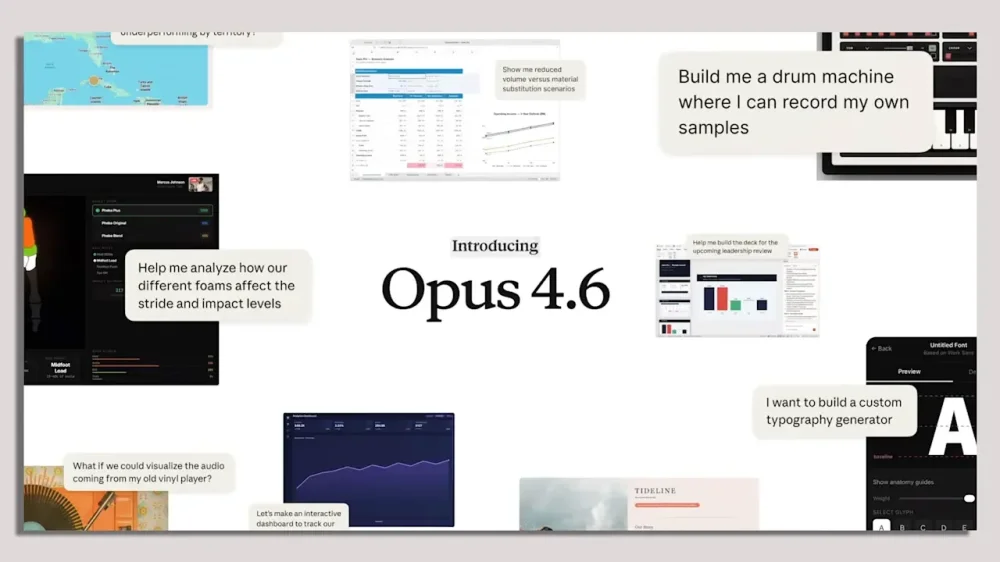
Anthropic is out with a new model called Claude Opus 4.6, an upgrade to its top-of-the-line Opus 4.5 model that launched in November. The new release could add new capabilities to Anthropic’s Claude Code coding assistant, which is facing growing competitive pressure from OpenAI’s Codex. Anthropic says Opus 4.6 improves on its predecessor’s coding skills, planning, and, perhaps most importantly, its ability to reason more clearly when handling large amounts of information. When Opus 4.6 powers Claude Code, the coding agent can comprehend larger codebases and make more thoughtful decisions about how and where to add new code, the company says. More long-term memory AI labs have been racing to build models with longer context windows, meaning the amount of information a model can consider for a given task. But models have often struggled to use that information effectively in their outputs, a limitation Anthropic acknowledges. “Previously, we would see things like, maybe the model gets lost in the middle, or it might forget details,” Opus product manager Dianne Penn tells Fast Company. “I wouldn’t say Opus 4.6 is perfect—humans or other past models aren’t perfect—but we think that the quality improvement is pretty significant.” Opus’s longer memory also allows it to work on complicated tasks for extended periods, enabling Claude Code users to assemble teams of agents that collaborate on tasks. Anthropic also says the tool offers improved code review and debugging capabilities, helping it catch its own mistakes. Opus 4.6 arrives as the use of AI coding tools continues to surge, and as competition between Anthropic and OpenAI for software developers intensifies. OpenAI’s Codex coding tool recently launched as a standalone app, powered by the GPT-5.2 model, and has received largely enthusiastic reviews from developers. A model for everyday work tasks Beyond coding, the new Anthropic model is designed to improve performance on everyday work tasks such as running financial analyses, conducting research, and creating or using documents, spreadsheets, and presentations. Opus 4.6 will also power Anthropic’s general-purpose work tool, CoWork, enabling it to multitask with minimal human supervision. Anthropic says Opus 4.6 achieved top scores across several industry benchmark tests, reaching the highest results so far on multiple evaluations. These include Humanity’s Last Exam, a complex multidisciplinary reasoning test; Terminal-Bench 2.0, an agentic coding evaluation; and GDPval-AA, which measures performance on economically valuable knowledge-work tasks in finance, legal, and other domains. Anthropic also says Opus 4.6 outperforms all other models on OpenAI’s BrowseComp, which measures a model’s ability to locate difficult-to-find information online. Anthropic says the Opus 4.6 model is available to developers using Claude Code for the same price per million tokens as Opus 4.5. The new model is now the default for Claude Code Pro subscribers, and is available as an option for all other subscribers. View the full article
-
Visa announced a new platform designed to stimulate small businesses through a variety of tools and network opportunities on Thursday in advance of major sporting events this year. The program, Visa & Main, identifies and is built around helping address what Visa calls the most pressing challenges that entrepreneurs face: access to capital, reaching customers, and adopting modern business tools. That starts with a $100 million partnership with small business lender Lendistry, with Visa saying it would continue to provide “additional grants and financial support programs” as part of Visa & Main. Additionally, Visa & Main connects Visa’s small business members with its corporate sponsors, identifying opportunities through major events like Super Bowl LX and this summer’s FIFA World Cup. It launched the “Square Stops Here” hop-on, hop-off bus tour in San Francisco during Super Bowl week designed to “support and spotlight” local businesses. The company is using its platform to help direct potential customers to its small business members, also hosting workshops for entrepreneurs to help them convert a short-term gain into long-term sustainability. “Heartbeat of local communities” Visa & Main also intends to make it easier for small businesses to adopt AI in the workplace, noting that small businesses have adopted the new technology at a rate less than half that of bigger businesses. The program attempts to close that gap by making tools such as expense management and fraud protection easier to access. “Small businesses are the heartbeat of local communities and represent nearly half of our country’s economic activity,” Kim Lawrence, Visa’s North America regional president, said in a release. “With Visa & Main, we’re connecting Visa’s products and in-house knowledge with the expertise of our clients and partners to provide small businesses with flexible financing opportunities and customer acquisition and technology support.” The move expands Visa’s investment into small businesses, an area where credit card companies have long competed for marketshare. For example, Small Business Saturdays was launched 15 years ago as a marketing push from American Express, and it has since become an annual Thanksgiving weekend event. Visa held a launch event in Atlanta on January 21 for Visa & Main, where members worked directly with the Visa team to get hands-on experience with the product. View the full article

-
In January, the FBI made headlines after it raided the home of Washington Post reporter Hannah Natanson. It was a shocking case of law enforcement not just overriding one journalist's privacy, but the integrity of the entire news organization. The devices the FBI seized—which included personal devices as well as a Washington Post-issued laptop—contained Natanson's personal contacts, correspondences, and the Slack channels of the Washington Post itself. But while the FBI was able to access some of the devices, it was not able to access Natanson's iPhone. That's because the device was in Lockdown Mode, which prevented the FBI's Computer Analysis Response Team (CART) from breaking into it. This isn't a setting that is exclusive to journalists: You have this option baked into your iPhone as well, and can choose to turn it on at any time. The thing is, unless you're a high-profile target, you probably don't want to. How does Lockdown Mode work? Lockdown Mode is an option on iPhones, iPads, Apple Watches, and Macs, designed for users who could be the target of sophisticated cyberattacks. Think politicians, businessmen, activists, and, of course, journalists—really, anyone high-profile that works or takes action in a way that could draw the ire of powerful organizations or governments. Because attackers target devices with spyware, the goal of Lockdown Mode is to reduce the attack surface of your device in order to prevent potential cyberattacks from working. Attackers can install spyware on a target's device in a number of ways, through links, attachments, wired connections, and file downloads, the same way you can install malware by clicking a malicious link in an email, or downloading a corrupt extension from the web. Lockdown Mode locks down these vulnerabilities and eliminates as many potential attack routes as possible. To achieve this, Lockdown Mode severely impacts a number of functions you may use on your device every day. According to Apple, that includes the following: Messages: Lockdown Mode will block most message attachment types, other than "certain images, video, and audio." Links and link previews are blocked. Web browsing: The feature blocks "complex web technologies," which could impact how certain websites load or function. You may not see certain web fonts, and you may see missing image icons in place of pictures. FaceTime: Incoming FaceTime calls are blocked, except for contacts you have called within the past 30 days. You can't use SharePlay or take Live Photos in FaceTime calls. Apple services: Invitations to Apple services like invites to manage a smart home are blocked, unless you have previously invited that person. GameCenter will not work, and Focuses will not work "as expected." Photos: Lockdown Mode strips photos of their location data when you share them, and shared albums are taken out of your Photos app. You won't be able to receive new shared album invites. You can still see shared albums on devices that don't have Lockdown Mode enabled. Device connections: Your device needs to be unlocked before it can communicate with another computer. In addition, your Mac also requires your explicit approval before the connection can be made. Wireless connectivity: You won't automatically join non-secure wifi networks, and you will disconnect from existing non-secure wifi networks. Lockdown Mode also blocks 2G and 3G cellular support. Configuration profiles: You can't install configuration profiles, and the device can't enroll in Mobile Device Management. Apple makes a point to say that phone calls and "plain text messages" will work as normal, however incoming calls won't ring on your Apple Watch. Emergency SOS also will continue to work. These restrictions make it much more difficult for a bad actor to install spyware on your device, though it also makes it more difficult to use your device. A shared album invite could contain malware, but by removing the feature entirely, you miss out on photos from friends and family. Any spyware coming from a malicious link or image will be blocked, but if you frequently send photos, videos, and other attachments in Messages, you'll miss out. That's why these measures are really designed only for individuals who think they'll be targeted by sophisticated actors. It seems that could include governments secretly installing spyware on targets' devices, or the FBI stealing your device in a raid. It's worth noting that the FBI was able to access Natanson's other devices, including a MacBook Pro that unlocked with her fingerprint. The agency's warrant compelled Natanson to unlock her devices with biometrics if they were enabled. Lockdown Mode could not have prevented that, so it's not clear why the FBI didn't force Natanson to unlock the iPhone in question, too. How to turn on Lockdown Mode If you understand the restrictions, but still want to try Lockdown Mode, you'll need to be running the following software version on each of the Apple devices you want to use Lockdown Mode with: iPhone: iOS 16 or later iPad: iPadOS 16 or later Apple Watch: watchOS 10 or later Mac: macOS Ventura or later Apple says "additional protections" are available for iOS 17, iPadOS 17, or macOS Sonoma or later. In addition, you should update your device to the latest software version before turning on Lockdown Mode if you want all the latest protections. You can turn on Lockdown Mode on any of your Apple devices, but you must do so individually on each. You'll find the option at the bottom of the "Privacy & Security" section in Settings (System Settings on Mac). Hit "Turn On Lockdown Mode," then review the pop-up that appears and choose "Turn On Lockdown Mode" again. You'll need to choose to "Turn On & Restart," then enter your device's password or passcode for the feature to take effect. View the full article
-
Bowing to industry pressure, the Consumer Financial Protection Bureau is warning consumers with notices on its complaint portal not to file disputes about inaccurate information on credit reports, among other changes. View the full article

-
The mortgage technology unit at Intercontinental Exchange posted a profit for the third straight quarter, even as lower minimums among renewals capped growth. View the full article
-
Join Jeff Hirz as he unveils key insights on growth and efficiency based on data from 1,000 businesses planning for 2026. The post What 1,000 Businesses Reveal About Growth in 2026 [Webinar] appeared first on Search Engine Journal. View the full article
-
We may earn a commission from links on this page. Deal pricing and availability subject to change after time of publication. Not everybody needs, wants, or can afford the "best" headphones available, especially when they can easily cost half a grand. If the Sony XM6, which I called the best over-ear headphones of 2025 (and 2026 so far), are not in your budget, then perhaps the more affordable Sony WH-CH720N could be. While they're not quite as premium, they're significantly cheaper and offer good enough quality for most people. You can get them for $97 (originally $179.99) on Amazon right now. Sony WH-CH720N Noise Cancelling Wireless Headphones $98.00 at Amazon $179.99 Save $81.99 Get Deal Get Deal $98.00 at Amazon $179.99 Save $81.99 Sony WH-CH720N headphones $98.00 at Amazon $179.99 Save $81.99 Get Deal Get Deal $98.00 at Amazon $179.99 Save $81.99 Sony WH-CH720N headphones $98.00 at Amazon $179.99 Save $81.99 Get Deal Get Deal $98.00 at Amazon $179.99 Save $81.99 SEE 0 MORE These are Sony's entry-level over-ear headphones, and Sony mostly made cuts in the design and build. When you hold them, they might feel hollow and light, but they're still comfortable since the earcups are well-cushioned, according to CNET's review. However, Sony did not make a lot of sacrifices in the audio or ANC department, which, at the end of the day, is what's most important. While they've dropped below $100 before, all three colorways have not been available at their current price at the same time—until now. These headphones use the same Sony Sound Connect app as the flagship models and share some of the same features, like multipoint technology to connect to up to two devices. They also come with Google Fast Pair and Find My Device support, nice features to have for convenience, and if you misplace them. You can get 35 hours of battery life with ANC on and 50 hours with ANC off, and the charging is quick, with three minutes giving you three hours of juice. The ANC is not as good as the latest XM6, but it works great for under $100, according to Mashable's review and they'll block most ambient noise outdoors or indoors. Transparency mode is also great, allowing you to have conversations and hear bikes or cars passing by. The adjustable EQ in the app means you can tweak the crisp and vibrant sound of the WH-CH720N to your liking. View the full article
-
Managing payroll can be an intimidating task for small business owners because of various intricacies, including tax calculations and compliance requirements. Fortunately, several free payroll services can streamline this process, accommodating different needs and preferences. From user-friendly interfaces to mobile access, these tools can help you manage payroll efficiently without incurring additional costs. As we explore these options, you’ll find solutions customized to your specific business requirements. Key Takeaways Payroll4Free offers essential features for up to 25 employees, including automated tax calculations and pay stub generation at no cost. HR.my provides a multilingual payroll solution with unlimited user access, enhancing collaboration in diverse teams without any fees. TimeTrex is a cloud-based solution with effective time tracking, suitable for growing businesses with no employee limits and automated tax compliance. ExcelPayroll serves as an offline payroll tool for basic management, generating pay stubs but lacking integrated features like direct deposits. HelloPaid is a mobile-friendly app that streamlines payroll processing with automated calculations and easy access to employee pay stubs from smartphones. Why Payroll Management Is Challenging for Small Business Owners Managing payroll can be a challenging task for small business owners, especially since many of you might be handling it without specialized training. You’re likely facing a significant time commitment during trying to navigate complex tax regulations and deduction rules. An IRS study shows that about one-third of employers make payroll errors each year, leading to costly penalties and compliance issues. As your business grows, payroll complexity increases, requiring more detailed attention to tax calculations and employee classifications. This administrative burden can distract you from focusing on core business operations and growth strategies. Many of you still rely on manual processes, with 51% of organizations using spreadsheets for payroll management. This reliance results in inefficiencies and a heightened risk of mistakes. To alleviate some of this pressure, considering free payroll services could be a beneficial step, as they often simplify the process and reduce the likelihood of errors. Core Functions of Payroll Software Though payroll software can greatly simplify your payroll process, comprehending its core functions is vital for maximizing its benefits. Free payroll software automates key tasks like calculating wages based on hours worked or salaries, greatly reducing manual effort and minimizing errors. It likewise manages tax deductions by automatically withholding federal income tax, Social Security, and Medicare, helping you stay compliant with tax regulations. In addition, payroll software generates pay stubs or pay summaries for your employees, providing them with required documentation of their earnings and deductions. Most payroll systems operate on a regular schedule, whether weekly, biweekly, or monthly, which streamlines the process and guarantees your employees are paid on time. Features like automatic tax calculations and employee record maintenance further improve organization and compliance, allowing you to focus on growing your business as well as making sure your payroll remains accurate and up to date. Payroll4Free: Best Overall Free Payroll Software When running a small business, finding reliable and cost-effective payroll software can be a challenge, but Payroll4Free stands out as the best overall free option. This free payroll service is ideal for businesses with up to 25 employees, offering vital features without any cost. Here’s what you can expect: Automated Tax Calculations: Payroll4Free automatically calculates federal, state, and local taxes, ensuring compliance. Payroll Document Generation: The software generates pay stubs and W-2s, simplifying record-keeping. User-Friendly Interface: Designed for small business owners, it allows quick input of payroll information. Additionally, Payroll4Free is funded by ads, keeping your costs at zero as long as you stay within the employee limit. The service includes an employee portal for transparency, allowing your team to access their payroll information easily. With these features, Payroll4Free is a thorough solution for your payroll needs. HR.my: Best Multilingual Payroll Solution If you’re managing a diverse team, HR.my offers a fantastic multilingual payroll solution that caters to your needs without costing a dime. With unlimited user access and extensive payroll features, this platform simplifies your HR management as it accommodates various administrative roles. Plus, its ad-supported model guarantees you can enjoy all the benefits without worrying about hidden fees or employee limits. Multilingual Support Availability How can a payroll solution improve communication in a multilingual workplace? Utilizing a service like HR.my, which offers multilingual support, can considerably improve your team’s communication. Here are three key benefits: Seamless Language Switching: Employees can easily switch to their preferred language, ensuring everyone understands payroll information. Reduced Language Barriers: By accommodating various languages, HR.my promotes better engagement and collaboration among diverse teams. Compliance and Inclusivity: Supporting multiple languages helps your business comply with local regulations, creating a more inclusive workplace environment. As a result, when you choose free payroll programs like HR.my, you’re not just managing payroll; you’re additionally building a stronger, more connected workforce. This approach is vital for businesses with international teams or multilingual employees. Unlimited User Access Unlimited user access is a standout feature of HR.my that improves the management of payroll in small businesses. With this free payroll solution, you can add as many administrators as you need, enhancing collaboration without incurring extra costs. This flexibility is particularly beneficial in small business environments where teamwork is essential. Plus, HR.my’s multilingual interface guarantees that every team member can navigate the system in their preferred language, promoting inclusivity. The platform supports an unlimited number of employees, making it suitable for businesses of any size. Furthermore, you can manage various HR functions, such as expense claims and time-off requests, through an integrated employee portal, streamlining operations during remaining completely free of charge. Comprehensive Payroll Features When managing payroll for your small business, having extensive features at your disposal can make a significant difference in efficiency and accuracy. HR.my is a free payroll application that’s perfect for small businesses and startups. Here are three key features it offers: Multilingual Support: It accommodates diverse teams by supporting multiple languages and currencies, making global operations smoother. Employee Portal: Staff can manage time-off requests and track their PTO balances, enhancing self-service capabilities. Expense Claim Management: This feature streamlines the approval process for expense claims, saving time for both employees and HR. With no employee limits and an ad-supported model, HR.my provides a thorough solution to meet your payroll needs without any costs. TimeTrex: Best for Time Tracking and Scheduling TimeTrex stands out as an excellent choice for small businesses seeking effective time tracking and scheduling solutions. This free payroll app offers an open-source Community Edition that allows you to manage unlimited employees, making it suitable for businesses of any size. With automated scheduling features, you can efficiently oversee employee time and attendance during processing payroll seamlessly. TimeTrex likewise automates federal, state, and local tax calculations, ensuring compliance without the hassle of manual entry. Being a cloud-based solution, it provides flexibility and accessibility, letting you manage payroll and scheduling from anywhere, which is ideal for today’s remote work environment. Unlike many other free payroll services, TimeTrex imposes no limits on the number of employees, making it a fantastic option for growing businesses. ExcelPayroll: Best Free Excel-Based Solution For small businesses seeking a straightforward and cost-effective payroll solution, ExcelPayroll offers a free, Excel-based tool that streamlines payroll calculations as it requires only basic spreadsheet knowledge. This software is especially beneficial for those who prefer manual payroll management without the intricacies of cloud-based solutions. With ExcelPayroll, you can: Efficiently calculate wages and tax deductions. Generate pay stubs and necessary tax forms. Maintain full control over your payroll data and processes. Although all features of this small business payroll software are free, you do need Microsoft Excel installed on your device to utilize it effectively. ExcelPayroll is ideal for businesses that want an offline solution for payroll management, but it may not suit those needing integrated features like direct deposits or automated tax filing. HelloPaid: Best Mobile-Friendly Payroll App If you’re looking for a payroll app that fits right in your pocket, HelloPaid is worth considering. With its user-friendly mobile interface, you can easily manage crucial payroll features like automated calculations and tax deductions, all during your travels. This app not just streamlines your payroll process but additionally guarantees you have the tools you need, making it a great choice for small business owners. User-Friendly Mobile Interface Many small business owners find it challenging to manage payroll as they juggle various responsibilities. HelloPaid offers a user-friendly mobile interface that makes it easier for you to handle payroll on-the-go, ensuring you never miss a beat. Here are three key features that improve your experience: Automated calculations for wages and taxes streamline the payroll process for easy payroll management. You can access and track employee pay stubs and tax forms directly from your smartphone, promoting transparency. The app supports various payment methods, including direct deposits, so you can pay employees without delay. With its intuitive design, HelloPaid reduces the learning curve, allowing you to navigate payroll tasks efficiently without extensive training. Experience the convenience today! Essential Payroll Features Included When managing payroll, having the right features can make a significant difference in efficiency and accuracy. HelloPaid stands out as an excellent mobile-friendly payroll app, offering crucial features that simplify your payroll process. It includes automated tax calculations, ensuring compliance with federal and state regulations, so you avoid costly errors. You can likewise provide employees with direct deposit options and easy access to pay stubs and tax forms, making your payroll system more transparent. For businesses with hourly employees, HelloPaid’s scheduling and time-tracking capabilities streamline payroll processing. Best of all, it functions as paycheck software free, making it accessible for small business owners who may lack extensive payroll experience. This combination of features improves overall payroll management. Esmart Paycheck: Best Simple Payroll Calculator Esmart Paycheck stands out as an efficient tool for small business owners who need to simplify payroll calculations. This free payroll calculator helps you easily calculate federal and state payroll taxes, including retirement deductions. Here’s what makes it a go-to choice: User-Friendly Interface: You’ll find the platform easy to navigate, making payroll calculations straightforward. Essential Tax Forms: eSmart Paycheck generates necessary forms like W-2s, simplifying tax filing for you. One-Time Calculation: It’s ideal for freelancers or small businesses needing quick, one-off payroll calculations without the bells and whistles. While eSmart Paycheck offers these advantages, keep in mind that it lacks a direct deposit option, requiring you to manage payments manually. Furthermore, the free version has limited data-saving capabilities, which might restrict your ability to store extensive payroll information. This tool remains a solid option among free payroll packages for those seeking simplicity. Limitations of Free Payroll Software When you consider free payroll software, you might face significant limitations that could impact your business. Many options cap the number of employees you can manage, often restricting you to just a handful, which can be a problem as you grow. Furthermore, these free services often have limited tax filing options, potentially leading to unexpected fees that can affect your overall budget. Employee Limits Imposed In the process of selecting payroll software, it’s crucial to take into account the employee limits imposed by various free options, as these restrictions can greatly influence your business’s growth. Many free payroll solutions set limits typically between 5 to 25 employees, which may hinder scalability. Here are some key points to evaluate: Employee Limits: Solutions like Payroll4Free allow up to 25 employees, whereas HR.my has no limit but is ad-supported. Feature Compromises: Larger teams often face reduced features, such as limited tax filing or no direct deposit. Hidden Restrictions: Some free software might’ve undisclosed limits that impact overall functionality. When exploring options, contemplate taking advantage of a payroll free trial to assess if the software can meet your future needs. Limited Tax Filing Options Though many small business owners might be drawn to free payroll software due to its cost-effectiveness, they often overlook one significant drawback: limited tax filing options. Many paycheck programs free don’t include tax filing services, leaving you to handle submissions manually, which increases the risk of errors. Some options, like Payroll4Free, charge extra for tax filing, whereas others may lack this feature entirely. Geographic limitations can likewise restrict tax filing capabilities, making certain software unsuitable for your region. Without automated updates on tax regulations and deadlines, you might struggle to stay compliant. Consequently, it’s vital to recognize these hidden limitations when choosing free payroll software to guarantee your business remains compliant and efficient. How to Choose the Right Free Payroll Software How do you guarantee that free payroll software meets your small business needs? Start by evaluating your specific payroll requirements to make certain the software can handle your employee count and tax intricacies. Next, contemplate your future growth plans; choosing scalable software helps accommodate increasing payroll demands. Finally, review the software’s usability and security features. Here are three key factors to contemplate: Essential Features: Look for automated tax calculations, free direct deposit for small businesses, and employee access to pay stubs. User-Friendliness: A straightforward interface is crucial for efficient payroll management. Costs and Limitations: Be cautious of hidden fees associated with tax filing or direct deposits that could affect overall usability. Frequently Asked Questions Is There Free Payroll Software for Small Businesses? Yes, there’s free payroll software available for small businesses. Options like Payroll4Free allow you to manage payroll for up to 25 employees at no cost. HR.my offers unlimited employee management without a paid version, whereas TimeTrex provides a free open-source solution that supports unlimited employees but doesn’t handle tax filings directly. These tools typically include fundamental features like tax calculations and direct deposits, but they may have limitations compared to paid options. Is Payroll4free Really Free? Yes, Payroll4Free is genuinely free for small businesses with nine or fewer employees. It offers crucial features like payroll processing and automated tax calculations at no cost. Nonetheless, if you need direct deposit or tax filing services, there are fees capped at $30 per month for those add-ons. Funded through ads, the platform guarantees you can manage payroll without direct costs, provided you stay within the employee limit. What Is the Best Payroll Program for Small Businesses? When choosing the best payroll program for small businesses, consider factors like employee count, budget, and required features. Payroll4Free suits up to 25 employees but has limitations, whereas HR.my offers a entirely free solution with no employee cap. TimeTrex allows unlimited management but requires manual tax filings. If you prefer spreadsheets, ExcelPayroll could work well. For a low-cost option, Wave Payroll provides thorough services at $40/month, making it ideal for growing businesses. What Is the Easiest Way to Do Payroll for a Small Business? The easiest way to do payroll for a small business is by using payroll software that automates key tasks. These platforms handle calculations and tax deductions, minimizing manual errors, which can affect a third of employers annually. With user-friendly interfaces, they simplify management and guarantee compliance with regulations. Setting up is usually quick, granting immediate access to features like direct deposit, ultimately preserving you time and enhancing employee satisfaction with timely payments. Conclusion Selecting the right free payroll service can greatly alleviate your administrative burden during ensuring compliance and efficiency. Each option offers unique features customized to specific needs, from multilingual support to mobile accessibility. By assessing your business’s size, workforce diversity, and specific payroll requirements, you can choose a solution that simplifies your processes without incurring costs. In the end, investing time in research will help you find a service that aligns with your operational goals and improves your overall productivity. Image via Google Gemini This article, "10 Best Free Payroll Services for Small Businesses" was first published on Small Business Trends View the full article
-
Managing payroll can be an intimidating task for small business owners because of various intricacies, including tax calculations and compliance requirements. Fortunately, several free payroll services can streamline this process, accommodating different needs and preferences. From user-friendly interfaces to mobile access, these tools can help you manage payroll efficiently without incurring additional costs. As we explore these options, you’ll find solutions customized to your specific business requirements. Key Takeaways Payroll4Free offers essential features for up to 25 employees, including automated tax calculations and pay stub generation at no cost. HR.my provides a multilingual payroll solution with unlimited user access, enhancing collaboration in diverse teams without any fees. TimeTrex is a cloud-based solution with effective time tracking, suitable for growing businesses with no employee limits and automated tax compliance. ExcelPayroll serves as an offline payroll tool for basic management, generating pay stubs but lacking integrated features like direct deposits. HelloPaid is a mobile-friendly app that streamlines payroll processing with automated calculations and easy access to employee pay stubs from smartphones. Why Payroll Management Is Challenging for Small Business Owners Managing payroll can be a challenging task for small business owners, especially since many of you might be handling it without specialized training. You’re likely facing a significant time commitment during trying to navigate complex tax regulations and deduction rules. An IRS study shows that about one-third of employers make payroll errors each year, leading to costly penalties and compliance issues. As your business grows, payroll complexity increases, requiring more detailed attention to tax calculations and employee classifications. This administrative burden can distract you from focusing on core business operations and growth strategies. Many of you still rely on manual processes, with 51% of organizations using spreadsheets for payroll management. This reliance results in inefficiencies and a heightened risk of mistakes. To alleviate some of this pressure, considering free payroll services could be a beneficial step, as they often simplify the process and reduce the likelihood of errors. Core Functions of Payroll Software Though payroll software can greatly simplify your payroll process, comprehending its core functions is vital for maximizing its benefits. Free payroll software automates key tasks like calculating wages based on hours worked or salaries, greatly reducing manual effort and minimizing errors. It likewise manages tax deductions by automatically withholding federal income tax, Social Security, and Medicare, helping you stay compliant with tax regulations. In addition, payroll software generates pay stubs or pay summaries for your employees, providing them with required documentation of their earnings and deductions. Most payroll systems operate on a regular schedule, whether weekly, biweekly, or monthly, which streamlines the process and guarantees your employees are paid on time. Features like automatic tax calculations and employee record maintenance further improve organization and compliance, allowing you to focus on growing your business as well as making sure your payroll remains accurate and up to date. Payroll4Free: Best Overall Free Payroll Software When running a small business, finding reliable and cost-effective payroll software can be a challenge, but Payroll4Free stands out as the best overall free option. This free payroll service is ideal for businesses with up to 25 employees, offering vital features without any cost. Here’s what you can expect: Automated Tax Calculations: Payroll4Free automatically calculates federal, state, and local taxes, ensuring compliance. Payroll Document Generation: The software generates pay stubs and W-2s, simplifying record-keeping. User-Friendly Interface: Designed for small business owners, it allows quick input of payroll information. Additionally, Payroll4Free is funded by ads, keeping your costs at zero as long as you stay within the employee limit. The service includes an employee portal for transparency, allowing your team to access their payroll information easily. With these features, Payroll4Free is a thorough solution for your payroll needs. HR.my: Best Multilingual Payroll Solution If you’re managing a diverse team, HR.my offers a fantastic multilingual payroll solution that caters to your needs without costing a dime. With unlimited user access and extensive payroll features, this platform simplifies your HR management as it accommodates various administrative roles. Plus, its ad-supported model guarantees you can enjoy all the benefits without worrying about hidden fees or employee limits. Multilingual Support Availability How can a payroll solution improve communication in a multilingual workplace? Utilizing a service like HR.my, which offers multilingual support, can considerably improve your team’s communication. Here are three key benefits: Seamless Language Switching: Employees can easily switch to their preferred language, ensuring everyone understands payroll information. Reduced Language Barriers: By accommodating various languages, HR.my promotes better engagement and collaboration among diverse teams. Compliance and Inclusivity: Supporting multiple languages helps your business comply with local regulations, creating a more inclusive workplace environment. As a result, when you choose free payroll programs like HR.my, you’re not just managing payroll; you’re additionally building a stronger, more connected workforce. This approach is vital for businesses with international teams or multilingual employees. Unlimited User Access Unlimited user access is a standout feature of HR.my that improves the management of payroll in small businesses. With this free payroll solution, you can add as many administrators as you need, enhancing collaboration without incurring extra costs. This flexibility is particularly beneficial in small business environments where teamwork is essential. Plus, HR.my’s multilingual interface guarantees that every team member can navigate the system in their preferred language, promoting inclusivity. The platform supports an unlimited number of employees, making it suitable for businesses of any size. Furthermore, you can manage various HR functions, such as expense claims and time-off requests, through an integrated employee portal, streamlining operations during remaining completely free of charge. Comprehensive Payroll Features When managing payroll for your small business, having extensive features at your disposal can make a significant difference in efficiency and accuracy. HR.my is a free payroll application that’s perfect for small businesses and startups. Here are three key features it offers: Multilingual Support: It accommodates diverse teams by supporting multiple languages and currencies, making global operations smoother. Employee Portal: Staff can manage time-off requests and track their PTO balances, enhancing self-service capabilities. Expense Claim Management: This feature streamlines the approval process for expense claims, saving time for both employees and HR. With no employee limits and an ad-supported model, HR.my provides a thorough solution to meet your payroll needs without any costs. TimeTrex: Best for Time Tracking and Scheduling TimeTrex stands out as an excellent choice for small businesses seeking effective time tracking and scheduling solutions. This free payroll app offers an open-source Community Edition that allows you to manage unlimited employees, making it suitable for businesses of any size. With automated scheduling features, you can efficiently oversee employee time and attendance during processing payroll seamlessly. TimeTrex likewise automates federal, state, and local tax calculations, ensuring compliance without the hassle of manual entry. Being a cloud-based solution, it provides flexibility and accessibility, letting you manage payroll and scheduling from anywhere, which is ideal for today’s remote work environment. Unlike many other free payroll services, TimeTrex imposes no limits on the number of employees, making it a fantastic option for growing businesses. ExcelPayroll: Best Free Excel-Based Solution For small businesses seeking a straightforward and cost-effective payroll solution, ExcelPayroll offers a free, Excel-based tool that streamlines payroll calculations as it requires only basic spreadsheet knowledge. This software is especially beneficial for those who prefer manual payroll management without the intricacies of cloud-based solutions. With ExcelPayroll, you can: Efficiently calculate wages and tax deductions. Generate pay stubs and necessary tax forms. Maintain full control over your payroll data and processes. Although all features of this small business payroll software are free, you do need Microsoft Excel installed on your device to utilize it effectively. ExcelPayroll is ideal for businesses that want an offline solution for payroll management, but it may not suit those needing integrated features like direct deposits or automated tax filing. HelloPaid: Best Mobile-Friendly Payroll App If you’re looking for a payroll app that fits right in your pocket, HelloPaid is worth considering. With its user-friendly mobile interface, you can easily manage crucial payroll features like automated calculations and tax deductions, all during your travels. This app not just streamlines your payroll process but additionally guarantees you have the tools you need, making it a great choice for small business owners. User-Friendly Mobile Interface Many small business owners find it challenging to manage payroll as they juggle various responsibilities. HelloPaid offers a user-friendly mobile interface that makes it easier for you to handle payroll on-the-go, ensuring you never miss a beat. Here are three key features that improve your experience: Automated calculations for wages and taxes streamline the payroll process for easy payroll management. You can access and track employee pay stubs and tax forms directly from your smartphone, promoting transparency. The app supports various payment methods, including direct deposits, so you can pay employees without delay. With its intuitive design, HelloPaid reduces the learning curve, allowing you to navigate payroll tasks efficiently without extensive training. Experience the convenience today! Essential Payroll Features Included When managing payroll, having the right features can make a significant difference in efficiency and accuracy. HelloPaid stands out as an excellent mobile-friendly payroll app, offering crucial features that simplify your payroll process. It includes automated tax calculations, ensuring compliance with federal and state regulations, so you avoid costly errors. You can likewise provide employees with direct deposit options and easy access to pay stubs and tax forms, making your payroll system more transparent. For businesses with hourly employees, HelloPaid’s scheduling and time-tracking capabilities streamline payroll processing. Best of all, it functions as paycheck software free, making it accessible for small business owners who may lack extensive payroll experience. This combination of features improves overall payroll management. Esmart Paycheck: Best Simple Payroll Calculator Esmart Paycheck stands out as an efficient tool for small business owners who need to simplify payroll calculations. This free payroll calculator helps you easily calculate federal and state payroll taxes, including retirement deductions. Here’s what makes it a go-to choice: User-Friendly Interface: You’ll find the platform easy to navigate, making payroll calculations straightforward. Essential Tax Forms: eSmart Paycheck generates necessary forms like W-2s, simplifying tax filing for you. One-Time Calculation: It’s ideal for freelancers or small businesses needing quick, one-off payroll calculations without the bells and whistles. While eSmart Paycheck offers these advantages, keep in mind that it lacks a direct deposit option, requiring you to manage payments manually. Furthermore, the free version has limited data-saving capabilities, which might restrict your ability to store extensive payroll information. This tool remains a solid option among free payroll packages for those seeking simplicity. Limitations of Free Payroll Software When you consider free payroll software, you might face significant limitations that could impact your business. Many options cap the number of employees you can manage, often restricting you to just a handful, which can be a problem as you grow. Furthermore, these free services often have limited tax filing options, potentially leading to unexpected fees that can affect your overall budget. Employee Limits Imposed In the process of selecting payroll software, it’s crucial to take into account the employee limits imposed by various free options, as these restrictions can greatly influence your business’s growth. Many free payroll solutions set limits typically between 5 to 25 employees, which may hinder scalability. Here are some key points to evaluate: Employee Limits: Solutions like Payroll4Free allow up to 25 employees, whereas HR.my has no limit but is ad-supported. Feature Compromises: Larger teams often face reduced features, such as limited tax filing or no direct deposit. Hidden Restrictions: Some free software might’ve undisclosed limits that impact overall functionality. When exploring options, contemplate taking advantage of a payroll free trial to assess if the software can meet your future needs. Limited Tax Filing Options Though many small business owners might be drawn to free payroll software due to its cost-effectiveness, they often overlook one significant drawback: limited tax filing options. Many paycheck programs free don’t include tax filing services, leaving you to handle submissions manually, which increases the risk of errors. Some options, like Payroll4Free, charge extra for tax filing, whereas others may lack this feature entirely. Geographic limitations can likewise restrict tax filing capabilities, making certain software unsuitable for your region. Without automated updates on tax regulations and deadlines, you might struggle to stay compliant. Consequently, it’s vital to recognize these hidden limitations when choosing free payroll software to guarantee your business remains compliant and efficient. How to Choose the Right Free Payroll Software How do you guarantee that free payroll software meets your small business needs? Start by evaluating your specific payroll requirements to make certain the software can handle your employee count and tax intricacies. Next, contemplate your future growth plans; choosing scalable software helps accommodate increasing payroll demands. Finally, review the software’s usability and security features. Here are three key factors to contemplate: Essential Features: Look for automated tax calculations, free direct deposit for small businesses, and employee access to pay stubs. User-Friendliness: A straightforward interface is crucial for efficient payroll management. Costs and Limitations: Be cautious of hidden fees associated with tax filing or direct deposits that could affect overall usability. Frequently Asked Questions Is There Free Payroll Software for Small Businesses? Yes, there’s free payroll software available for small businesses. Options like Payroll4Free allow you to manage payroll for up to 25 employees at no cost. HR.my offers unlimited employee management without a paid version, whereas TimeTrex provides a free open-source solution that supports unlimited employees but doesn’t handle tax filings directly. These tools typically include fundamental features like tax calculations and direct deposits, but they may have limitations compared to paid options. Is Payroll4free Really Free? Yes, Payroll4Free is genuinely free for small businesses with nine or fewer employees. It offers crucial features like payroll processing and automated tax calculations at no cost. Nonetheless, if you need direct deposit or tax filing services, there are fees capped at $30 per month for those add-ons. Funded through ads, the platform guarantees you can manage payroll without direct costs, provided you stay within the employee limit. What Is the Best Payroll Program for Small Businesses? When choosing the best payroll program for small businesses, consider factors like employee count, budget, and required features. Payroll4Free suits up to 25 employees but has limitations, whereas HR.my offers a entirely free solution with no employee cap. TimeTrex allows unlimited management but requires manual tax filings. If you prefer spreadsheets, ExcelPayroll could work well. For a low-cost option, Wave Payroll provides thorough services at $40/month, making it ideal for growing businesses. What Is the Easiest Way to Do Payroll for a Small Business? The easiest way to do payroll for a small business is by using payroll software that automates key tasks. These platforms handle calculations and tax deductions, minimizing manual errors, which can affect a third of employers annually. With user-friendly interfaces, they simplify management and guarantee compliance with regulations. Setting up is usually quick, granting immediate access to features like direct deposit, ultimately preserving you time and enhancing employee satisfaction with timely payments. Conclusion Selecting the right free payroll service can greatly alleviate your administrative burden during ensuring compliance and efficiency. Each option offers unique features customized to specific needs, from multilingual support to mobile accessibility. By assessing your business’s size, workforce diversity, and specific payroll requirements, you can choose a solution that simplifies your processes without incurring costs. In the end, investing time in research will help you find a service that aligns with your operational goals and improves your overall productivity. Image via Google Gemini This article, "10 Best Free Payroll Services for Small Businesses" was first published on Small Business Trends View the full article
-
We may earn a commission from links on this page. January 2026's ten most-streamed TV series are a balanced group, including six reality-based dramas and four fantasy/sci-fi hits. One the side of realism, we've got medical drama vérité The Pitt, a pair of spy shows (The Night Manager and Ponies), and a gay hockey romance in Heated Rivalry. The fantasy side includes the post-apocalyptic black humor of Fallout, the suburban supernatural series Stranger Things, and a trip back to Westeros with A Knight of the Seven Kingdoms. A more important running theme this month: These shows are all critical darlings, including a couple perfect Rotten Tomatoes 100% winners (The Night Manager and Pluribus) and five other shows above 95% (The Pitt, Fallout, Heated Rivalry, Ponies, and A Knight of Seven Kingdoms). Even the "worst" of the bunch, Landman, is sitting at a solid 78%. Good job watching good shows, America! Here's the full list of the top 10 most-streamed shows of January 2026 across all major streaming services, as compiled by JustWatch. The Night Manager If you're into high-stake international espionage, you have to check the most-streamed series this week. The Night Manager is based on John le Carre's best-selling novel and stars Tom Hiddleston as Jonathan Pine, an MI-6 agent whose mission is to infiltrate the inner circle of dangerous arms trader Richard "Dickie" Onslow Roper, played by Hugh Laurie. It has been ten long years since the show first premiered, but both seasons of this BBC-made series are available in full as of Feb. 1, so binge it up, man. Stream The Night Manager on Prime Video. The Night Manager at Amazon Get Deal Get Deal at Amazon The Pitt HBO's gritty, hyper-realistic medical drama has earned acclaim from critics and audiences for its relentless pace, following a single 15-hour shift at the Pittsburgh Trauma Medical Center. Starring Noah Wyle as Dr. Michael Robinavitch, The Pitt ditches the "disease-of-the-week" format of many medical shows in favor of a study of the toll the modern medical system places on everyone involved. Season one earned five Emmy awards, and judging from the first few episodes, season two might win more. Stream The Pitt on HBO Max. The Pitt at HBO Max Get Deal Get Deal at HBO Max Fallout Post-apocalyptic action-comedy Fallout is like nothing that’s been on TV before. Staying true to the gritty, gruesome, and irreverent spirit of the video games upon which it is based, it follows naive former vault dweller Lucy MacLean (Ella Purnell) as she leaves her protected bunker to track down her father in the irradiated Wasteland. The show’s standout characters include Lucy’s duplicitous pop (Kyle MacLachlan), conflicted mech-warrior Maximus (Aaron Moten), and The Ghoul (Walton Goggins), the walking, talking, noseless, undead remains of a pre-apocalypse Hollywood cowboy. Season one earned a staggering 17 Emmy nominations in 2024, and the just-finished season two earned even greater critical acclaim for its expansion into the iconic ruins of New Vegas. Stream Fallout on Prime Video. Fallout - Season 1 at Amazon Get Deal Get Deal at Amazon Heated Rivalry If you want explicit hockey player-on-hockey player action with a 98% "fresh" rating on Rotten Tomatoes, HBO's Heated Rivalry is a must-watch. Set against the hyper-masculine, hyper-homophobic world of professional sports, the series brings emotional depth to the story of a years-long secret romance between Canadian "golden boy" Shane Hollander (Hudson Williams) and Russian bad boy Ilya Rozanov (Connor Storrie). Stream Heated Rivalry on HBO Max. Heated Rivalry at HBO Max Get Deal Get Deal at HBO Max A Knight of the Seven Kingdoms A Knight of the Seven Kingdoms takes fans back to Westeros, 100 years before the events of Game of Thrones. Based on George R.R. Martin’s Tales of Dunk and Egg novellas, the series is less about world-spanning politics and more about smaller, character driven moments in the lives of humble, towering knight Ser Duncan the Tall (Peter Claffey) and his diminutive, mysterious squire Egg (Dexter Sol Ansell). It's shorter, lighter, and funnier than its forebears (but not too light—this is still Westeros, after all). Stream Knights of the Seven Kingdoms on HBO Max. A Knight of the Seven Kingdoms at HBO Max Get Deal Get Deal at HBO Max Stranger Things A veritable streaming institution, Stranger Things reached its end with season five. Set in November 1987, the final chapter follows the Hawkins gang in a mission to find and kill Vecna (Jamie Campbell Bower) while navigating a town under strict military quarantine. From Eleven (Millie Bobby Brown) evading a new government threat to Will Byers (Noah Schnapp) unlocking his psychic potential to protect his friends, the series remains an emotional masterclass in supernatural sci-fi horror—despite a divisive finale. Stream Stranger Things on Netflix. Stranger Things at Netflix Get Deal Get Deal at Netflix Pluribus Creator and executive producer Vince Gilligan takes a hard turn from Breaking Bad and Better Call Saul with Pluribus, a slow-burn post-apocalyptic sci-fi series starring Rhea Seehorn as Carol Sturka, a stubborn and irascible novelist in Albuquerque who finds herself one of the last 13 individuals on Earth in the wake of viral outbreak that has turned the rest of the species into a hive mind. "They" aren't (isn't?) exactly evil, but they are extremely persistent about trying to get the mysteriously immune Carol to join their ranks (as nicely but firmly as possible). Stream Pluribus on Apple TV+. Pluribus at Apple TV+ Get Deal Get Deal at Apple TV+ Landman Yellowstone creator Taylor Sheridan's Landman is is a gritty modern Western set in the oil fields of West Texas. Billy Bob Thornton stars as Tommy Norris, a "crisis executive" for an oil company who must navigate a law-light landscape of roughnecks, billionaires, and dangerous drug cartels in order to make sure fuel keeps getting dug out of the ground. Stream Landman on Paramount+. Landman at Paramount+ Get Deal Get Deal at Paramount+ His & Hers Based on the 2020 novel by Alice Feeney, His & Hers is a twisty mystery thriller series that stars Tessa Thompson as Anna Andrews, a disgraced Atlanta journalist who returns to her small Georgia hometown to cover a brutal murder, only to find her estranged husband, Detective Jack Harper (Jon Bernthal), leading the investigation. As the former couple competes to solve the case, each grows more suspicious that the other is the killer. The six-episode run makes it a great series if you're longing for an engaging drama with a definite conclusion. Stream His & Hers on Netflix. His & Hers at Netflix Get Deal Get Deal at Netflix Ponies In international espionage parlance, "ponies" are "persons of no interest." In this case, that Bea (Emilia Clarke) and Twila (Haley Lu Richardson), two American women in Cold War Moscow whose "normal" lives are upended when their CIA agent husbands die in a mysterious plane crash. The pair convince the U.S. government to let them try to infiltrate the KGB and find out the truth of what happened, using their ordinariness as the ultimate cover. Boasting a 96% "Fresh" rating on Rotten Tomatoes, the eight-episode season balances steamy romance with intense espionage. Stream Ponies on Peacock. Ponies at Peacock Get Deal Get Deal at Peacock View the full article
-
With community opposition growing, data center backers are going on a full-scale public relations blitz. Around Christmas in Virginia, which boasts the highest concentration of data centers in the country, one advertisement seemed to air nonstop. “Virginia’s data centers are … investing billions in clean energy,” a voiceover intoned over sweeping shots of shiny solar panels. “Creating good-paying jobs” — cue men in yellow safety vests and hard hats — “and building a better energy future.” The ad was sponsored by Virginia Connects, an industry-affiliated group that spent at least $700,000 on digital marketing in the state in fiscal year 2024. The spot emphasized that data centers are paying their own energy costs — framing this as a buffer that might help lower residential bills — and portrayed the facilities as engines of local job creation. The reality is murkier. Although industry groups claim that each new data center creates “dozens to hundreds” of “high-wage, high-skill jobs,” some researchers say data centers generate far fewer jobs than other industries, such as manufacturing and warehousing. Greg LeRoy, the founder of the research and advocacy group Good Jobs First, said that in his first major study of data center jobs nine years ago, he found that developers pocketed well over a million dollars in state subsidies for every permanent job they created. With the rise of hyperscalers, LeRoy said, that number is “still very much in the ballpark.” Other experts reflect that finding. A 2025 brief from University of Michigan researchers put it bluntly: “Data centers do not bring high-paying tech jobs to local communities.” A recent analysis from Food & Water Watch, a nonprofit tracking corporate overreach, found that in Virginia, the investment required to create a permanent data center job was nearly 100 times higher than what was required to create comparable jobs in other industries. “Data centers are the extreme of hyper-capital intensity in manufacturing,” LeRoy said. “Once they’re built, the number of people monitoring them is really small.” Contractors may be called in if something breaks, and equipment is replaced every few years. “But that’s not permanent labor,” he said. Jon Hukill, a spokesperson for the Data Center Coalition, the industry lobbying group that established Virginia Connects in 2024, said that the industry “is committed to paying its full cost of service for the energy it uses” and is trying to “meet this moment in a way that supports both data center development and an affordable, reliable electricity grid for all customers.” Nationally, Hukill said, the industry “supported 4.7 million jobs and contributed $162 billion in federal, state, and local taxes in 2023.” Dozens of community groups across the country have mobilized against data center buildout, citing fears that the facilities will drain water supplies, overwhelm electric grids, and pollute the air around them. According to Data Center Watch, a project run by AI security company 10a Labs, nearly 200 community groups are currently active and blocked or delayed 20 data center projects representing $98 billion of potential investment between April and June 2025 alone. The backlash has exposed a growing image problem for the AI industry. “Too often, we’re portrayed as energy-hungry, water-intensive, and environmentally damaging,” data center marketer Steve Lim recently wrote. That narrative, he argued, “misrepresents our role in society and potentially hinders our ability to grow.” In response, the industry is stepping up its messaging. Some developers, like Starwood Digital Ventures in Delaware, are turning to Facebook ads to appeal to residents. Its ads make the case that data center development might help keep property taxes low, bring jobs to Delaware, and protect the integrity of nearby wetlands. According to reporting from Spotlight Delaware, the company has also boasted that it will create three times as many jobs as it initially told local officials. Nationally, Meta has spent months running TV spots showcasing data center work as a viable replacement for lost industrial and farming jobs. One advertisement spotlights the small city of Altoona, Iowa. “I grew up in Altoona, and I wanted my kids to be able to do the same,” a voice narrates over softly-lit scenes of small-town Americana: a Route 66 diner, a farm, and a water tower. “So, when work started to slow down, we looked for new opportunities … and we welcomed Meta, which opened a data center in our town. Now, we’re bringing jobs here — for us, and for our next generation.” The advertisement ends with a promise superimposed over images of a football game: “Meta is investing $600 billion in American infrastructure and jobs.” In reality, Altoona’s data center is a hulking, windowless, warehouse complex that broke ground in 2013, long before the current data center boom. Altoona is not quite the beleaguered farm town Meta’s advertisements portray, but a suburb of 19,000, roughly 16 minutes from downtown Des Moines, the most populous city in Iowa. Meta says it has supported “400+ operational jobs” in Altoona. In comparison, the local casino employs nearly 1,000 residents, according to the local economic development agency. Ultimately, those details may not matter much to the ad’s intended audience. As Politico reported, the advertisement may have been targeted at policymakers on the coasts more than the residents of towns like Altoona. Meta has spent at least $5 million airing the spot in places like Sacramento and Washington, D.C. The community backlash has also made data centers a political flashpoint. In Virginia, Abigail Spanberger won November’s gubernatorial election in part on promises to regulate the industry and make developers pay their “fair share” of the electricity they use. State lawmakers also considered 30 bills attempting to regulate data centers. In response to concerns about rising electricity prices, Virginia regulators approved a new rate structure for AI data centers and other large electricity users. The changes, which will take effect in 2027, are designed to protect household customers from costs associated with data center expansion. These developments may only encourage companies to spend more on image-building. In Virginia’s Data Center Alley, the ads show no sign of stopping. Elena Schlossberg, an anti-data-center activist based in Prince William County, says her mailbox has been flooded with fliers from Virginia Connects for the past eight months. The promises of lower electric bills, good jobs, and climate responsibility, she said, remind her of cigarette ads she saw decades ago touting the health benefits of smoking. But Schlossberg isn’t sure the marketing is going to work. One recent poll showed that 73 percent of Virginians blame data centers for their rising electricity costs. “There’s no putting the toothpaste back in the tube,” she said. “People already know we’re still covering their costs. People know that.” This article originally appeared in Grist. Grist is a nonprofit, independent media organization dedicated to telling stories of climate solutions and a just future. Learn more at Grist.org View the full article

-
Prime minister’s handling of Mandelson scandal has left Labour party simmering with resentmentView the full article
-
US president says the two countries should seek a ‘modernised’ treaty instead of extending current agreementView the full article
-
On busy construction sites, not every task can be priced neatly in advance. When uncertainty, urgency or incomplete information enters the picture, dayworks become a practical mechanism for keeping progress moving while maintaining transparency between contractors, clients and quantity surveyors. What Are Dayworks? Dayworks are a cost-recording method where construction work is documented and paid based on the actual labour hours, plant usage and materials consumed for a specific task as opposed to pricing work in advance by estimating the measured quantities or the estimated effort in terms of labour. Instead, site teams complete dayworks sheets that list resources used, which are later priced using agreed rates and submitted for valuation and payment. When to Use Dayworks In Construction Dayworks are used when traditional measurement is impractical or unreliable at the time work is instructed. This occurs when scope is undefined, conditions are unpredictable or instructions must be acted on immediately. In such circumstances, attempting to agree quantities upfront would either delay progress or result in inaccurate pricing, making dayworks the most reliable way to track and value costs as the work is carried out. ProjectManager is a robust construction project management software with features that include Gantt charts, workload charts, timesheets, and real-time dashboards, ideal for estimating project costs, creating construction budgets and monitoring them as projects advance to quickly identify cost variances and overruns. Get started for free today. /wp-content/uploads/2022/07/construction-gantt-resources-costs-150-CTA-BUTTON-1.jpgLearn more What Is the Purpose of Dayworks In Construction? The purpose of dayworks is to provide a fair and verifiable way to value work that cannot be priced accurately in advance. Their fundamental objective is commercial protection: allowing work to proceed without delay while ensuring costs are based on evidence rather than estimates. Dayworks create a controlled mechanism for capturing real expenditure, supporting transparent payment, cost justification and auditability within formal construction contracts. How Are Dayworks Used In Construction Projects? With the fundamentals established, it’s useful to move from theory into practice and examine how dayworks operate on real projects, highlighting the common situations where this costing method is applied. Dayworks for Variations When variations arise that cannot be accurately measured at the instruction stage, dayworks provide a practical pricing route. Labour, plant and materials are recorded as work progresses, avoiding speculative rates. This approach is valuable because it keeps work moving while ensuring variations are valued on actual resource use, giving both contractor and client confidence that costs reflect reality rather than assumptions made under time pressure during live construction environments on site. Dayworks Sheet On site, a dayworks sheet acts as the primary record of resources used for non-measured tasks. Supervisors document labour hours, plant usage and materials daily, often with signatures. Its value lies in contemporaneous evidence, reducing disputes later. By capturing information in real time, the dayworks sheet supports transparency, accountability and accurate cost agreement between parties across fast-moving construction project environments where instructions change frequently and site conditions evolve unexpectedly over time. Dayworks Schedule A dayworks schedule sets out agreed labour, plant and material rates before work begins, forming a commercial baseline. When dayworks are instructed, these predefined rates remove uncertainty. Their value is consistency, as both parties reference the same schedule. This prevents pricing disputes, speeds up valuation and ensures dayworks costs align with contractual expectations established at tender stage and supports disciplined cost control throughout project delivery and commercial administration processes overall. Dayworks Valuation During valuation, dayworks translate site records into payable amounts. Quantity surveyors assess verified sheets against agreed rates, ensuring only substantiated costs are certified. This use is valuable because it introduces structure and auditability into otherwise uncertain work. Dayworks valuation protects budgets, supports fair payment and provides a defensible basis for interim and final account assessments across complex construction projects with multiple variations and evolving scopes of work over time periods. Dayworks in JCT and NEC Contracts Under JCT and NEC contracts, dayworks provide a recognised mechanism for valuing work that falls outside measurable scope. JCT commonly relies on agreed daywork schedules, while NEC treats comparable work as defined cost or time charge. Their value lies in contractual clarity, giving both parties a pre-agreed framework for pricing unforeseen tasks. This reduces ambiguity, supports compliance with contract conditions and ensures costs are assessed consistently, transparently and in line with formal commercial procedures. Advantages of Using Dayworks Once dayworks are selected, their strengths become clear in uncertain conditions, offering flexibility, speed and commercial clarity when predefined quantities fail to reflect the realities of live construction sites accurately. Allows work to proceed immediately when scope cannot be defined, preventing delays caused by pricing uncertainty. Provides transparent cost recording based on actual labour, plant and materials used on site. Reduces speculative pricing by valuing work from verified records rather than assumptions. Supports fair commercial outcomes by aligning payment with real resource consumption. Creates a defensible audit trail for valuations, variations and final account negotiations. Disadvantages and Risks of Dayworks Despite their usefulness, dayworks introduce commercial exposure, administrative effort and behavioural risks that must be actively managed, especially where controls, authorisation or documentation practices are weak on busy construction projects. Costs can escalate quickly if dayworks are overused or poorly controlled. Heavy reliance on accurate site records increases administrative workload. Inadequate supervision may lead to inflated hours or inefficient working practices. Disputes can arise when records are incomplete, unsigned or retrospectively prepared. Frequent use may indicate scope definition or contract management weaknesses. Dayworks Sheet Example Midway through a city-centre refurbishment, the client requests an extra acoustic lining behind new partitions after ceilings are already open. The scope is too small and urgent for remeasurement, so the supervisor instructs the subcontractor to proceed on dayworks. Each operative, plant item and material is logged on a signed sheet to support valuation at the next interim payment cycle. Date Dayworks Task / Instruction Labour (Name & Role) Hours Plant / Equipment Materials Used Supervisor Sign-Off 14/03/2026 Install additional acoustic lining behind Partition Line A (Variation Instruction VI-17) L. Reyes (Dryliner) 6.0 Mobile tower scaffold (1 unit) Acoustic mineral wool (12 m2), Fixings (1 box) A. Khan (Site Sup.) 14/03/2026 Install additional acoustic lining behind Partition Line A (VI-17) M. Novak (Labourer) 6.0 Material hoist (shared) Adhesive (2 tubes), Tape (1 roll) A. Khan (Site Sup.) 15/03/2026 Make good and reinstate access panel around revised lining (VI-17) L. Reyes (Dryliner) 3.5 Hand tools (included) Plasterboard offcuts (1 sheet), Jointing compound (1 bag) A. Khan (Site Sup.) Dayworks Schedule Example Before starting a hospital fit-out, the main contractor agrees a dayworks schedule with key subcontractors to avoid pricing arguments during live changes. The schedule lists standard labour grades, common plant and typical consumables with hourly or unit rates. When a variation is instructed, the dayworks sheet is priced using these pre-agreed rates, keeping valuations consistent and reviewable by the QS. Category Dayworks Item Unit Rate (EUR) Notes Labour Dryliner (Skilled Operative) Per hour €42.00 Standard hours only; overtime by agreement Labour General Labourer Per hour €28.00 Includes basic handling and housekeeping Plant Mobile Tower Scaffold Per day €65.00 Delivery/collection excluded unless stated Materials Acoustic Mineral Wool (45mm) Per m2 €6.80 Measured net; wastage included in rate Materials Fixings and Consumables (Sundries) Per task €18.00 Applies where itemisation is disproportionate Related Construction Project Management Templates We’ve created dozens of construction project management templates for Excel, Word and Google Sheets. Here are some of them. Bill of Quantities Template Used widely in UK construction, a bill of quantities organises measured work, descriptions and rates, supporting tender pricing, cost control and valuation, while distinguishing measured items from separately assessed work. Method Statement Template A method statement explains how construction activities will be carried out safely and correctly, setting procedures, sequencing and controls, and is required on UK sites before work begins or changes. Schedule of Values Template A schedule of values breaks contract sums into payable components, supporting interim valuations and payment applications, and helping contractors and clients track progress, certified value and remaining contract balance accurately. ProjectManager Is an Award-Winning Construction Project Management Software ProjectManager is an award-winning project management software packed with construction project planning, scheduling and tracking features, making it ideal for managing every phase of a construction project. Watch the video below to learn more and get started for free today! Related Construction Project Management Content We’ve created over 100 construction blogs, templates, ebooks and other types of content to help construction project managers better understand the many moving parts that must be managed to deliver successful construction projects. Here are some of them. 39 Construction Documents (Templates Included) 10 Types of Construction Projects with Examples How to Manage a Construction Project Step by Step 10 Free Construction Plan Templates for Excel & Word Construction Work Breakdown Structure: A Quick Guide The post Dayworks In Construction: A Quick Guide appeared first on ProjectManager. View the full article
-
Cisco has launched the Cisco 360 Partner Program, a comprehensive initiative that aims to empower small businesses, consultants, resellers, and managed services providers in navigating the rapidly evolving AI landscape. This program promises to reinforce how small businesses partner with Cisco, equipping them with tools and designations to help meet the demands of an increasingly digital market. The new program is particularly relevant as it addresses the growing needs for AI-ready data centers, future-proof workplaces, and enhanced digital resilience. Cisco’s emphasis on collaboration signals a shift in how technology partnerships can drive business success, something small business owners should take note of. One of the standout features of the Cisco 360 Partner Program is its potential to create clearer, more predictable earnings for partners through the Cisco Partner Incentive (CPI). This incentivizes businesses to align their sales and marketing strategies closely with Cisco’s offerings, making it easier for small business owners to plan for growth. Tim Coogan, Senior Vice President of Global Partner Sales at Cisco, emphasizes this by stating, “With our partners, we’ve strengthened what is already a world-class ecosystem to deliver even greater value and help our mutual customers connect, protect, and thrive.” Another key benefit of the program is the introduction of new partner designations, which assist customers in identifying partners with specialized expertise. All participating partners begin as registered Cisco Partners, but additional tiers—like Cisco Portfolio and Cisco Preferred Partners—indicate varying levels of skills and customer engagement. This distinction can help small businesses streamline their search for partners that possess the right capabilities to meet their specific needs. A significant tool within the program is the new Cisco Partner Locator, which allows businesses to search for qualified partners across a range of areas including Security, Networking, Collaboration, Services, and more. This can be particularly advantageous for small businesses that may not have the internal resources to tackle complex digital transitions alone. To further enhance partner offerings, Cisco has unveiled several new resources, including rebates and a Partner Value Index that will enable businesses to differentiate their services. With the backdrop of Cisco’s recent AI Readiness Index, which underscores the competitive advantage of being AI-ready, the Cisco 360 Partner Program aims to leverage partnerships to fulfill technology needs effectively. However, small business owners should be mindful of certain challenges that may arise from adopting new program initiatives. The focus on creating measurable value means businesses must be prepared to adjust their operations to align with Cisco’s evolving framework. The implementation of these changes may require time and investment, which can strain resources for smaller organizations. Additionally, partners will be evaluated based on their expertise and engagement levels, leading to the possibility of increased pressure to continually refine their offerings. Quotes from industry leaders emphasize the significance of this strategic shift. Elisabeth De Dobbeleer, Senior Vice President at Cisco, remarked, “The Cisco 360 Partner Program was designed with partners to foster collective success, enable differentiation, and help partners scale with confidence.” Meanwhile, Kevin Brown from Insight noted that the program aligns perfectly with their goal of delivering meaningful customer outcomes, reflecting a broader industry sentiment on the program’s potential. For small business owners considering this transition, the Cisco 360 Partner Program offers a pathway to enhanced collaboration, improved partner identification, and greater earning potential. However, they should also prepare for the new demands that come with these benefits. As technology continues to evolve, programs like Cisco 360 are essential for businesses looking to stay ahead. By embracing these partnerships, small business owners can better position themselves for success in the competitive landscape of the AI era. For more information about the program, visit Cisco’s newsroom. Image via Google Gemini This article, "Cisco Launches 360 Partner Program to Enhance Collaboration in AI Era" was first published on Small Business Trends View the full article
-
Cisco has launched the Cisco 360 Partner Program, a comprehensive initiative that aims to empower small businesses, consultants, resellers, and managed services providers in navigating the rapidly evolving AI landscape. This program promises to reinforce how small businesses partner with Cisco, equipping them with tools and designations to help meet the demands of an increasingly digital market. The new program is particularly relevant as it addresses the growing needs for AI-ready data centers, future-proof workplaces, and enhanced digital resilience. Cisco’s emphasis on collaboration signals a shift in how technology partnerships can drive business success, something small business owners should take note of. One of the standout features of the Cisco 360 Partner Program is its potential to create clearer, more predictable earnings for partners through the Cisco Partner Incentive (CPI). This incentivizes businesses to align their sales and marketing strategies closely with Cisco’s offerings, making it easier for small business owners to plan for growth. Tim Coogan, Senior Vice President of Global Partner Sales at Cisco, emphasizes this by stating, “With our partners, we’ve strengthened what is already a world-class ecosystem to deliver even greater value and help our mutual customers connect, protect, and thrive.” Another key benefit of the program is the introduction of new partner designations, which assist customers in identifying partners with specialized expertise. All participating partners begin as registered Cisco Partners, but additional tiers—like Cisco Portfolio and Cisco Preferred Partners—indicate varying levels of skills and customer engagement. This distinction can help small businesses streamline their search for partners that possess the right capabilities to meet their specific needs. A significant tool within the program is the new Cisco Partner Locator, which allows businesses to search for qualified partners across a range of areas including Security, Networking, Collaboration, Services, and more. This can be particularly advantageous for small businesses that may not have the internal resources to tackle complex digital transitions alone. To further enhance partner offerings, Cisco has unveiled several new resources, including rebates and a Partner Value Index that will enable businesses to differentiate their services. With the backdrop of Cisco’s recent AI Readiness Index, which underscores the competitive advantage of being AI-ready, the Cisco 360 Partner Program aims to leverage partnerships to fulfill technology needs effectively. However, small business owners should be mindful of certain challenges that may arise from adopting new program initiatives. The focus on creating measurable value means businesses must be prepared to adjust their operations to align with Cisco’s evolving framework. The implementation of these changes may require time and investment, which can strain resources for smaller organizations. Additionally, partners will be evaluated based on their expertise and engagement levels, leading to the possibility of increased pressure to continually refine their offerings. Quotes from industry leaders emphasize the significance of this strategic shift. Elisabeth De Dobbeleer, Senior Vice President at Cisco, remarked, “The Cisco 360 Partner Program was designed with partners to foster collective success, enable differentiation, and help partners scale with confidence.” Meanwhile, Kevin Brown from Insight noted that the program aligns perfectly with their goal of delivering meaningful customer outcomes, reflecting a broader industry sentiment on the program’s potential. For small business owners considering this transition, the Cisco 360 Partner Program offers a pathway to enhanced collaboration, improved partner identification, and greater earning potential. However, they should also prepare for the new demands that come with these benefits. As technology continues to evolve, programs like Cisco 360 are essential for businesses looking to stay ahead. By embracing these partnerships, small business owners can better position themselves for success in the competitive landscape of the AI era. For more information about the program, visit Cisco’s newsroom. Image via Google Gemini This article, "Cisco Launches 360 Partner Program to Enhance Collaboration in AI Era" was first published on Small Business Trends View the full article
-
In special education in the U.S., funding is scarce and personnel shortages are pervasive, leaving many school districts struggling to hire qualified and willing practitioners. Amid these long-standing challenges, there is rising interest in using artificial intelligence tools to help close some of the gaps that districts currently face and lower labor costs. Over 7 million children receive federally funded entitlements under the Individuals with Disabilities Education Act, which guarantees students access to instruction tailored to their unique physical and psychological needs, as well as legal processes that allow families to negotiate support. Special education involves a range of professionals, including rehabilitation specialists, speech-language pathologists and classroom teaching assistants. But these specialists are in short supply, despite the proven need for their services. As an associate professor in special education who works with AI, I see its potential and its pitfalls. While AI systems may be able to reduce administrative burdens, deliver expert guidance and help overwhelmed professionals manage their caseloads, they can also present ethical challenges – ranging from machine bias to broader issues of trust in automated systems. They also risk amplifying existing problems with how special ed services are delivered. Yet some in the field are opting to test out AI tools, rather than waiting for a perfect solution. A faster IEP, but how individualized? AI is already shaping special education planning, personnel preparation, and assessment. One example is the individualized education program, or IEP, the primary instrument for guiding which services a child receives. An IEP draws on a range of assessments and other data to describe a child’s strengths, determine their needs and set measurable goals. Every part of this process depends on trained professionals. But persistent workforce shortages mean districts often struggle to complete assessments, update plans and integrate input from parents. Most districts develop IEPs using software that requires practitioners to choose from a generalized set of rote responses or options, leading to a level of standardization that can fail to meet a child’s true individual needs. Preliminary research has shown that large language models such as ChatGPT can be adept at generating key special education documents such as IEPs by drawing on multiple data sources, including information from students and families. Chatbots that can quickly craft IEPs could potentially help special education practitioners better meet the needs of individual children and their families. Some professional organizations in special education have even encouraged educators to use AI for documents such as lesson plans. Training and diagnosing disabilities There is also potential for AI systems to help support professional training and development. My own work on personnel development combines several AI applications with virtual reality to enable practitioners to rehearse instructional routines before working directly with children. Here, AI can function as a practical extension of existing training models, offering repeated practice and structured support in ways that are difficult to sustain with limited personnel. Some districts have begun using AI for assessments, which can involve a range of academic, cognitive, and medical evaluations. AI applications that pair automatic speech recognition and language processing are now being employed in computer-mediated oral reading assessments to score tests of student reading ability. Practitioners often struggle to make sense of the volume of data that schools collect. AI-driven machine learning tools also can help here, by identifying patterns that may not be immediately visible to educators for evaluation or instructional decision-making. Such support may be especially useful in diagnosing disabilities such as autism or learning disabilities, where masking, variable presentation and incomplete histories can make interpretation difficult. My ongoing research shows that current AI can make predictions based on data likely to be available in some districts. Privacy and trust concerns There are serious ethical—and practical—questions about these AI-supported interventions, ranging from risks to students’ privacy to machine bias and deeper issues tied to family trust. Some hinge on the question of whether or not AI systems can deliver services that truly comply with existing law. The Individuals with Disabilities Education Act requires nondiscriminatory methods of evaluating disabilities to avoid inappropriately identifying students for services or neglecting to serve those who qualify. And the Family Educational Rights and Privacy Act explicitly protects students’ data privacy and the rights of parents to access and hold their children’s data. What happens if an AI system uses biased data or methods to generate a recommendation for a child? What if a child’s data is misused or leaked by an AI system? Using AI systems to perform some of the functions described above puts families in a position where they are expected to put their faith not only in their school district and its special education personnel, but also in commercial AI systems, the inner workings of which are largely inscrutable. These ethical qualms are hardly unique to special ed; many have been raised in other fields and addressed by early-adopters. For example, while automatic speech recognition, or ASR, systems have struggled to accurately assess accented English, many vendors now train their systems to accommodate specific ethnic and regional accents. But ongoing research work suggests that some ASR systems are limited in their capacity to accommodate speech differences associated with disabilities, account for classroom noise, and distinguish between different voices. While these issues may be addressed through technical improvement in the future, they are consequential at present. Embedded bias At first glance, machine learning models might appear to improve on traditional clinical decision-making. Yet AI models must be trained on existing data, meaning their decisions may continue to reflect long-standing biases in how disabilities have been identified. Indeed, research has shown that AI systems are routinely hobbled by biases within both training data and system design. AI models can also introduce new biases, either by missing subtle information revealed during in-person evaluations or by overrepresenting characteristics of groups included in the training data. Such concerns, defenders might argue, are addressed by safeguards already embedded in federal law. Families have considerable latitude in what they agree to, and can opt for alternatives, provided they are aware they can direct the IEP process. By a similar token, using AI tools to build IEPs or lessons may seem like an obvious improvement over underdeveloped or perfunctory plans. Yet true individualization would require feeding protected data into large language models, which could violate privacy regulations. And while AI applications can readily produce better-looking IEPs and other paperwork, this does not necessarily result in improved services. Filling the gap Indeed, it is not yet clear whether AI provides a standard of care equivalent to the high-quality, conventional treatment to which children with disabilities are entitled under federal law. The Supreme Court in 2017 rejected the notion that the Individuals with Disabilities Education Act merely entitles students to trivial, “de minimis” progress, which weakens one of the primary rationales for pursuing AI – that it can meet a minimum standard of care and practice. And since AI really has not been empirically evaluated at scale, it has not been proved that it adequately meets the low bar of simply improving beyond the flawed status quo. But this does not change the reality of limited resources. For better or worse, AI is already being used to fill the gap between what the law requires and what the system actually provides. Seth King is an associate professor of special education at the University of Iowa. This article is republished from The Conversation under a Creative Commons license. Read the original article. View the full article

-
We may earn a commission from links on this page. I’ve always said there’s no good reason to buy an older model Whoop band, since the company will give you the latest model for free when you subscribe. But on Reddit, some people who already own Whoop 5.0 bands are buying up old 4.0 bands to get a bargain on the subscription price. There have been a few posts on this, but perhaps the master of this hack is Redditor u/thelifeofcb, who found Whoop 4.0 bands, new in box, at a T. J. Maxx store for $39 each, and bought several. This allowed them to extend their existing subscription—they wear a Whoop 5.0—for several years at essentially a $200/year discount. How the discount Whoop hack worksWhen new Whoop bands are sold through retailers, they come packaged with a one-year subscription. The idea is that you’ll create an account on the app, pair the band you bought through the app, and get credit for a 12-month subscription—since that was the main thing you paid for when you bought the band at full price. Back in the Whoop 4.0 days, there was only one tier of membership. When tiers were introduced, those subscriptions rolled over to a Peak subscription, the one that currently goes for $239/year. That means a 4.0 device—however much you pay for it—can give you a year-long Peak subscription. Redditors have found that pairing one of these new Whoop 4.0 devices added a year’s subscription to their accounts, whether they were a new customer or not. That means you can buy a few discount bands, pair them all, and enjoy several years’ worth of discounted membership. That $39 band is thus a $200 discount on each year’s membership. Some say that they received an offer to upgrade to a Whoop 5.0 band if they added two years' worth of membership (paired two bands). That $39 price is an unusually good one, but you can still get a significant discount anywhere new Whoop 4.0 devices are sold. For example, Amazon has 4.0 devices right now for $124, which is still about half the price of a Peak subscription. You can find them cheaper on eBay, but I’d be wary of buying a box that may have been opened. I’ll explain that below. Scoring a cheap Whoop won't always work, thoughWhile Redditors say this works—and it does fit with my understanding of how subscriptions are paid for and claimed in the app—there are a few pitfalls to beware of. The first is that this applies to new-in-box devices that (1) are sold with a subscription, and (2) have never been paired. The hack would not work with a hand-me-down device that has already been used, nor with a new one that has already been paired and its subscription claimed. For example, you can’t pass the same band to a friend and expect it to give both of you a subscription. This means you have to be sure the band you buy has not been opened. If a store accepts returns of opened items, they may not realize that the valuable item here—the digital subscription—has already been claimed. If they put it back on the shelf, and you buy it, you’re out the purchase price and you still don’t have a subscription. The other issue is just the e-waste that this causes. You’re buying a device just to throw it in the trash. But I’d argue that’s Whoop’s fault, not yours—those devices are obsolete and headed for the landfill (or responsible electronics recycling program, if you can find one) regardless of what you do. View the full article
-
A reader writes: Do you have any guidance on asking for feedback on a job application when you weren’t selected for an interview? I’m aware that I’m unlikely to get a candid answer and perhaps some of my frustration is borne out of feeling like I’m continually applying for jobs where I meet all of the criteria, and can provide examples, but not really getting anywhere. You can try, but you’re unlikely to get substantive feedback. You’re more likely to get someone willing to give you feedback after an interview because at that point they’ve talked with you one-on-one and there’s more of a connection. Even then, a lot of managers won’t give you any truly meaningful feedback (and sometimes understandably so). Getting it when you haven’t been interviewed is much harder. Partly that’s because so often the decision came down to “your application was fine but we had a ton of applicants and others were just stronger.” And partly it’s because if the issue was a weakness in your resume or cover letter, most hiring managers won’t want to get into that kind of feedback with someone they don’t even know. You’re most likely to get it if the answer is something very straightforward like “we’re looking for five years of experience with X and you only have one” — but that’s also the kind of thing you don’t generally need them to tell you if their job posting was detailed enough. And even then, they still might not take the time to say it because replying to rejected candidates isn’t usually a high priority relative to other things the hiring manager is juggling. You’re better off asking for feedback from people in your network who work in your field at a more senior level. Ask if they’d be willing to look over your application materials and see if they spot ways you can strengthen them. Those are people who already have a connection with you, so they’re more likely to offer something helpful. Also — if this doesn’t apply to you I apologize, but more than 95% of the time when someone tells me they’re having trouble getting interviews and I ask to see their resume and cover letter, they haven’t done the stuff I’ve listed here (even when they tell me they’ve read it). So that’s one place you could start. The post can I ask for feedback on why I was rejected without an interview? appeared first on Ask a Manager. View the full article