All Activity
- Past hour
-
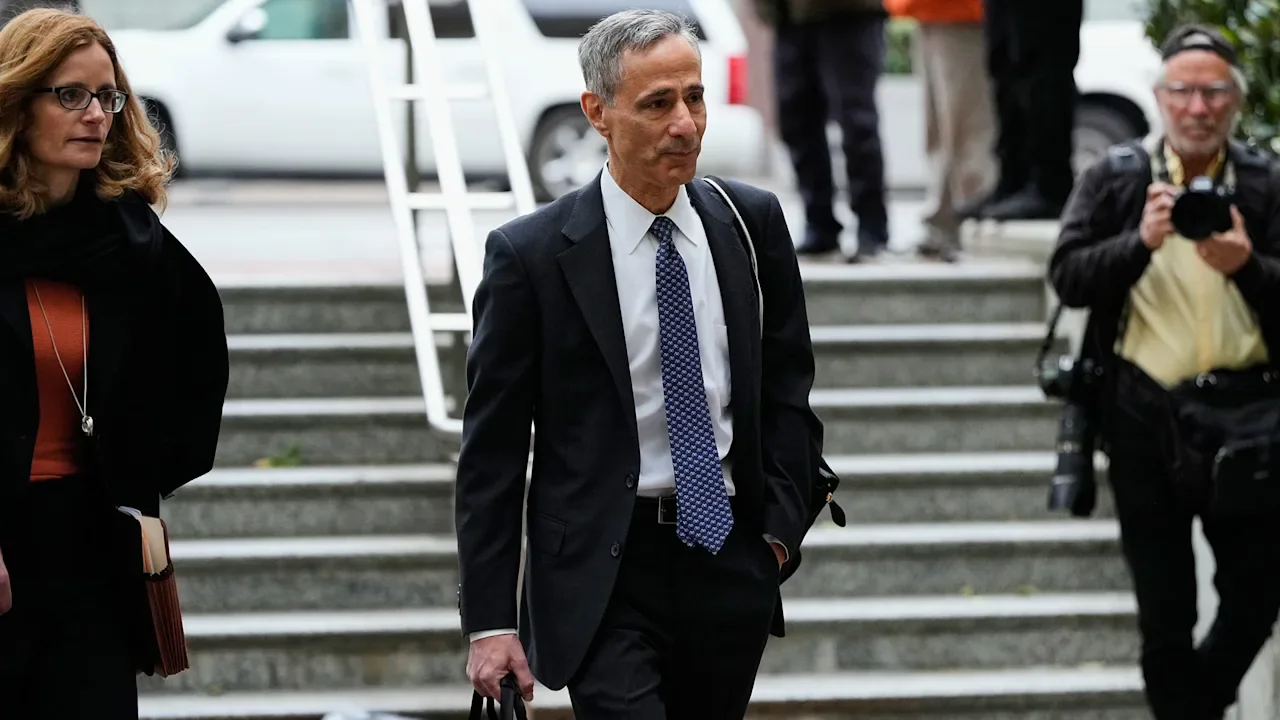
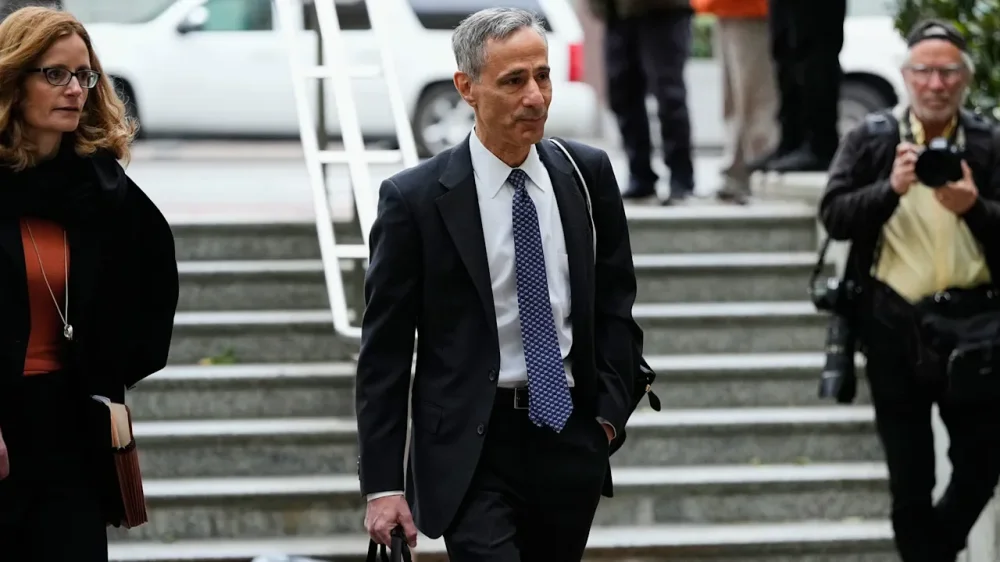
Elon Musk on Thursday sparred with an attorney for OpenAI during his third day of testimony in the contentious trial over the company’s pivot from nonprofit status to a for-profit venture valued at hundreds of billions of dollars. The trial centers on the 2015 birth of the ChatGPT maker as a nonprofit startup primarily funded by Musk. It pits the world’s richest person against Sam Altman, a fellow OpenAI co-founder he accuses of betraying promises to keep the company as a nonprofit dedicated to humanity’s benefit. Tempers have flared on both sides of the high-stakes trial, as the morning began with an existential discussion about the future of humanity — complete with references to “The Terminator” movies — and how much witness testimony would focus on AI safety. “Your client, despite these risks, is creating a company that is in the exact same space,” Judge Yvonne Gonzalez Rogers told Musk’s lawyers, referring to the billionaire’s xAI, which launched in 2023. People, she said, “don’t want to put the future of humanity into Mr. Musk’s hands,” and instructed the parties not to discuss the dangers of AI to humanity during the course of the trial. “This is not a trial on the safety risks of artificial intelligence. This is not a trial on whether or not AI has damaged humanity,” she said. “It could be one day in a federal court in this country that we may have that trial. That is not this trial and we are not going to get sidetracked on that issue in this trial.” On the stand, Musk has taken issue with the cross-examination by opposing attorney William Savitt, accusing him of asking misleading questions designed to trick him and the jury. At one point Thursday, Savitt asked Musk about earlier testimony where he said that as long as investor profits were capped, OpenAI wasn’t in violation of agreements to keep it a nonprofit. “It depends on how high the cap is,” Musk replied. Savitt then said that “wasn’t your complete answer yesterday right?” In response, Musk said “few answers are going to be complete, especially if you cut me off all the time.” He added that if the cap is “super high,” then OpenAI is “really a for-profit at that point.” Lawyers for OpenAI have rejected the allegations brought in Musk’s civil lawsuit and said there were never promises that the company would remain a nonprofit forever. The company has argued Musk’s legal challenge is aimed at undercutting OpenAI’s rapid growth and bolstering Musk’s xAI, which he launched in 2023 as a competitor. The trial in federal court in Oakland, California, is scheduled to continue through late May. Judge Yvonne Gonzalez Rogers excused Musk from the witness stand Thursday, but he may be called back later. During the cross-examination, Savitt also asked Musk about his companies — Tesla, SpaceX, Neuralink and X — and whether they were all for-profit. Musk replied yes, and affirmed that he believes all of these companies are “socially beneficial.” Savitt then asked why Musk hasn’t started a nonprofit himself, eight years after he left OpenAI. “I thought I had started a nonprofit with OpenAI but they stole it,” Musk replied, adding that this is “the entire basis of this lawsuit.” —Barbara Ortutay, AP Technology Writer View the full article
-
Change, whether personal or professional, can be challenging. But it can also create opportunities to make a meaningful impact. But navigating the uncertainty is tricky. Art Markman, a leading cognitive scientist and Fast Company contributor, joined Fast Company executive digital director Maia McCann in a recent conversation to share strategies on how to stay grounded, optimistic, and purposeful during times of change. Drawing on his expertise in well-being, Art offers tools to help you influence outcomes you care about and show up with clarity and confidence, no matter what the year brings. View the full article

-
Here is a recap of what happened in the search forums today...View the full article
- Today
-
With gas prices, energy bills, and grocery costs all rising, the affordability crisis is top of mind for most workers. But you can’t talk about that crisis without also talking about extreme wealth inequality, says Patricia Stottlemyer, policy lead for labor rights at Oxfam America. And just as affordability has worsened recently, so has the gap between regular workers and the rich, including company CEOs. In 2025, for example, the top 1,500 CEOs of the world’s largest corporations saw an 11% real-terms pay raise. The average global worker, on the other hand, saw their real wages increase by only 0.5%. That means those CEOs saw their pay increase 20 times faster than workers last year. In the United States specifically, CEO pay grew 20.4 times faster than workers’ wages, an increase of 25.6% compared to just 1.3%. The data comes from a new analysis by the International Trade Union Confederation (ITUC) and Oxfam, which highlights the ways workers are being left behind; the analysis is tied to International Workers’ Day, also called May Day. ‘CEOs have never had it so good’ The average CEO took home $8.4 million in both pay and bonuses in 2025, up from $7.6 million in 2024, according to the analysis. Look back even further, and the growth is even more stark. In 2019, the average CEO pay was $5.5 million, meaning there’s since been a 54% increase in real terms. Some executives rake in drastically more than that. The CEO of semiconductor company Broadcom received a 2025 pay package totaling $205.3 million; Microsoft’s CEO got $96 million. The real wages for workers around the world, however, have dropped 12% since 2019. “This data really puts some numbers behind what average working folks are feeling day to day,” Stottlemyer says. Between 2019 and 2025, food prices have increased by 15% and gasoline prices by 14%, when adjusted for inflation—and that’s not even including the recent price shocks from the conflict in Iran. On April 28, gas prices in the U.S. hit their highest level in four years, reaching an average of $4.18 for one gallon. “Food and gas prices [are] soaring, and 48% of the world is living in poverty,” Stottlemyer says. “And while workers face that exceptional hardship, the CEOs of the world’s largest corporations have never had it so good.” Workers are more productive, but have less to show for it It’s not only company executives who have seen these benefits. Billionaires in general have been getting richer. In 2025, total billionaire wealth grew by $126,000 per second, the analysis found. Already in 2026, billionaires are collectively $4 trillion richer than they were 12 months ago. One of the major ways billionaires make this money is through dividends from the companies they are invested in. Companies paid out $79 billion in dividends to billionaires in 2025 alone—equal to $2,500 every second. On average, Oxfam says, billionaires make more money from dividends in under two hours than the average worker earns over a year. Workers generate this economic value, Stottlemyer notes. But they’re taking home less and less of the value that they create. “What we’re seeing in this data is that workers have gotten more productive. They’re generating more wealth, but they have less to show for it,” she says. (The increase in productivity couldn’t be attributed to one thing like the explosion of AI, Stottlemyer notes). Workers today essentially create 51% more economic value as compared to 2004, the analysis found, but they receive 2% less share of that income. ‘A rigged economic system’ With wealth also comes power, and billionaires have been flexing that power, particularly around politics. Oxfam estimates that billionaires are 4,000 times more likely to hold political office than ordinary people—and in many cases, those wealthy politicians have cut taxes for the rich or looked to undermine workers’ rights. The ultra-wealthy also shape public discourse through media outlets, like Jeff Bezos’s overhaul of the Washington Post’s opinion section, or how fossil fuel billionaire Vincent Bolloré took over the French television channel CNews and turned it into what some have called “the Fox News of France.” Companies can also suppress worker power, whether through union busting or other workplace behaviors. “The explosion of riches at the very top is emblematic of a rigged economic system that’s designed to benefit the ultra-wealthy at the expense of working families,” Stottlemyer says. Meanwhile, gaps in labor policy exacerbate these issues. The U.S. federal minimum wage, in just one example, has been stagnant at $7.25 an hour for nearly 17 years. (House Democrats just recently introduced legislation to raise that minimum wage to $25 an hour.) Federal minimum wage reform is just one tool that would help workers. ITUC and Oxfam also call for governments to enact higher taxes on the rich and limits on CEO pay. If the numbers in this analysis seem shocking, Stottlemyer says they “reflect the shocking levels of extreme inequality that people feel day to day in their lives.” “Regular working people know very well that the system is not in their favor,” she adds. This May Day—which celebrates the history of labor organizing around the world—she hopes workers remember that they do have power to change their conditions. “It reminds us of all the ways that organized labor and labor in general has come together across history to fight for a more fair system,” she says. “I hope folks remember that workers have the power to bring about a more equal world.” Disclosure: Mansueto Ventures newsrooms Fast Company and Inc. are represented by the Writers Guild of America, East. View the full article

-
AI is changing how directors and cinematographers work—but not the way you might think When people think of artificial intelligence in Hollywood, they might picture deepfakes, synthetic actors, or AI-generated scripts and video. Google’s Veo3, along with other tools like Pika Labs and Kling AI, made headlines for their photorealistic AI generated video clips (as did OpenAI’s Sora 2 before the company in March announced plans to shutter it). But for freelance filmmakers, the real shift is happening behind the scenes. For years, cinematographers and directors have had to wear many hats: artist, technician, project manager, negotiator. Now, AI is quietly taking over some of the more tedious jobs. Short-Form Frontier Michael Goi, former president of the American Society of Cinematographers (ASC) and current co-chair of its AI committee, remembers widespread panic in the industry a few years ago. “There was this blanket fear that AI would completely replace jobs,” he says. That fear has been overblown, Goi says. He presented an ASC seminar last year outlining one of the largest hurdles to widespread adoption of AI video—consistency. In a live demonstration with six-time Oscar-nominated cinematographer Caleb Deschanel and AI creator Ellenor Argyropoulos, the filmmakers attempted to use AI tools to generate a specific shot. “Caleb had a very clear vision,” says Goi, “and it was a struggle to even get close.” Though video AI tools have made significant strides since then, they are still very much geared toward short-form content, with most tools only capable of generating clips of up to two minutes in 4K quality. That’s good news for the growing number of people working on vertical series—Goi among them—who get to test new video-generation models, sometimes before their public launch. A striking example of what’s now possible is Fruit Love Island, an AI-generated “fruit slop” microdrama from TikTok account @ai.cinema021 that became the platform’s fastest-growing account ever, amassing over 3 million followers in nine days and 300 million total views before coming to an abrupt halt in late March after being flagged for low quality. Each two minute episode allegedly took around 3 hours to make, and are thought to have used text-to-script tools like Object Talk that are then plugged into an AI video generator. For most freelance cinematographers, though, the gains of AI aren’t on-screen, but behind the scenes, making it easier to plan how they will capture the shots they need. Streamlining storyboards While fully AI-generated feature films may not be around the corner, filmmakers are regularly using tools like Midjourney and Runway to create storyboards and visual references. Rob Berry, a freelance cinematographer whose clients include Bergdorf Goodman and Nordstrom, Berry remembers his first encounter with AI-generated storyboards on a commercial project. “[The clients] were able to make them very quickly, change them the day before the shoot and hand them to me. I was like wow, the future’s here,” he says. Director Sage Bennett, who’s shot campaigns for Dior and Jim Beam, sees a similar trend. “Budgets are getting smaller, and expectations are getting bigger,” she says. In her experience, AI is often being used to bridge that gap, though it still needs a human touch. While last year she still thought AI visuals looked a bit “uncanny valley,” she thinks the technology has gotten much better, and she now sees it as almost standard practice for storyboarding and generating visual references. Both Berry and Bennett use AI as a kind of creative sounding board: one that never needs to sleep. “Sometimes you just need to talk through a tiny idea,” Sage says. “I’ll ask, ‘Should I push in or pull out for this shot, and why?’ It helps me sharpen my instincts.” Goi also has used AI to suggest focal length or composition for a shot after plugging in a storyboard. Berry says AI doesn’t come up with the ideas, but it’s a great tool for organizing his thoughts in pre-production. Both say that in projects that they’ve been on, AI has mostly been used for voiceover or VFX work rather than production itself. On one commercial, Bennett’s team used an AI-generated voiceover as a placeholder while they sourced a real actor — and ended up preferring the AI for the final product. Even Steven Soderbergh has leaned in: in a recent interview with Variety, the director revealed he used AI-generated imagery in his John Lennon documentary to visualize surrealist sequences that would have otherwise been out of budget with a VFX house. “My job is to deliver a good movie, period,” he told Variety. “And this tool showed up at a moment when I needed it.” An Invisible Assistant Where AI shines most for freelancers like Berry is in logistics. “As a creative freelancer, I’m first and foremost running my own business,” he says. He uses tools like ChatGPT to manage his workload: drafting emails, balancing budgets, and organizing project notes. “I told ChatGPT to act like it was my agent at CAA and walk me through a negotiation,” he says. With seven projects on his plate, he says, “If something could scan my inbox and tell me where I’m at with each one, that’s the dream.” Bennett also uses AI to streamline pre-production tasks. “I’ll plug in script notes with descriptions, shot sizes, and ask ChatGPT to generate a clean shot list that I can then go in and adjust. I’ll still tweak it, but it saves so much time.” When writing treatments to pitch commercial work, she sometimes uses AI to help with structure and polish. “I still revise everything in my voice, but it speeds up the process.” Though companies have begun testing AI generated commercials, Rob hasn’t seen work slow down for him. But he sees staying on top of AI as part of the job now. He’s been teaching himself prompt engineering through hours of trial and error. “Most people ask a question, get an answer, and leave. But if you keep probing and try different characters and approaches, you get way more out of it.” He particularly likes the “deep research” feature of ChatGPT for in-depth reports on, for example, deciding between two cameras, or developing a pre-production checklist for an ASC-level Director of Photography. “It takes a few minutes and comes back with a ten page report, 16 sources.” He believes that being adept at using the latest technology is key to staying at the forefront of his craft. Goi agrees. “There are conversations I’ve had with Jim Cameron and Rob Legato that AI won’t make a mediocre filmmaker great,” he says. “But it can help a great one refine their vision. That’s why we need top of the line filmmakers involved in where this tech is going. The more professionals engage in what should be best practices for [AI’s] use in the industry, the better positioned the technology and creative artists will be as we progress.” View the full article

-
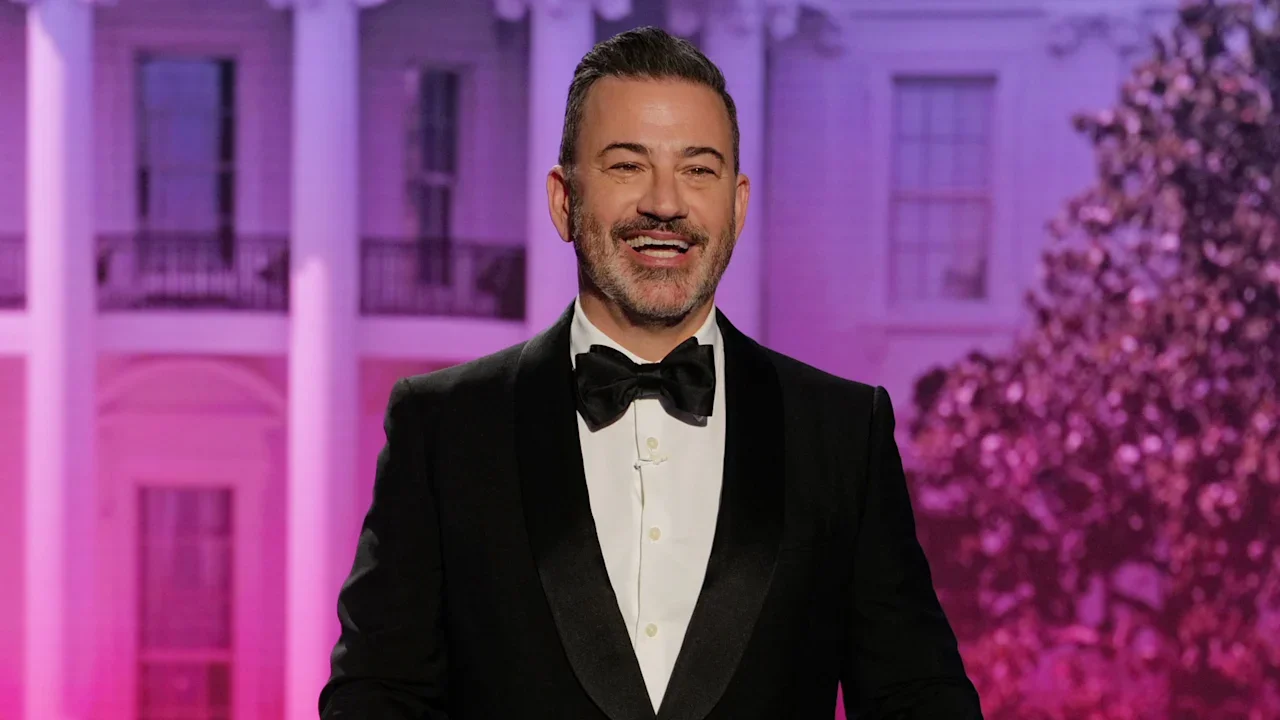
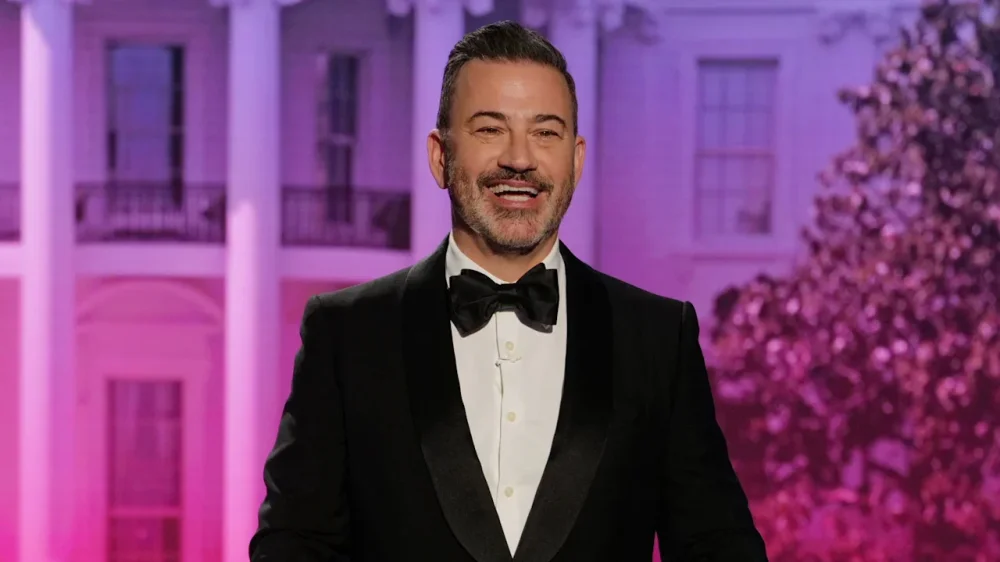
It looks as if Donald The President will have to keep waiting for his least-favorite talk show host to hang up his jersey in the studio rafters. The president emerged from the chaos of last week’s attempted shooting at the White House Correspondents’ Dinner with two major demands—that his big, beautiful militarized ballroom resume construction and that ABC fire Jimmy Kimmel over a morbid joke. (Days before the WHCD, Kimmel had described Melania The President as having “the glow of an expectant widow.”) While the first request may or may not find support, subject as it is to the whims of the courts, the second one seems even less likely. In a stark contrast to last September—when ABC and parent company Disney quickly yanked Kimmel off the air after Federal Communications Commission Chair Brendan Carr objected to a monologue about Charlie Kirk’s assassination—Disney has so far only indicated that the incident is being discussed. It seems the conditions for Kimmel getting pulled off the air are simply no longer there. Like many other organizations, Disney and ABC may have internalized a key lesson from this past year: The President’s grievances are so fickle that it’s often easier to mostly ignore them. A wave of capitulation When The President returned to the White House in 2025—having won an electoral victory that, just a few years before, had seemed impossible—many executives behaved as if the election proved The President’s infinite powers had bent the culture of the United States in his direction. Some companies like Amazon and Meta quickly sprang into proactive appeasement mode—making aggressive DEI cuts, donating to The President’s inauguration fund, and in Amazon’s case, splashing out $40 million on a documentary about the first lady—while others seemed to surrender. In December 2024, for instance, ABC settled for $15 million in a lawsuit The President filed after This Week host George Stephanopoulos inaccurately claimed in an interview that the president had been found liable for rape in a civil case. (The President had actually been found liable for sexual abuse and defamation, not rape, in that civil case.) In another era, a lengthier legal battle would have likely ensued. By the time CBS and parent company Paramount similarly settled for $16 million in a The President lawsuit over an “unfair” edit of 60 Minutes, and also canceled Stephen Colbert’s hated-by-The President talk show (both conveniently while Paramount awaited FCC approval for an $8 billion merger), the president had truly started throwing his weight around. It wasn’t just entertainment. The President used legal maneuvers, and even executive orders, to exert leverage over law firms and universities that had displeased him in some way. Legal elites like the Paul, Weiss firm—who had represented prominent Democrats, prosecuted The President, or worked on litigation related to the January 6 insurrection—faced executive retaliation such as suspended security clearances and restricted access to federal buildings. Top universities with alleged antisemitic or anti-conservative biases saw their federal funds frozen or canceled and their tax-free status under threat, pending concessions. The majority in both camps quickly complied. Ultimately, nine of the country’s most powerful law firms capitulated, agreeing to massive pro bono commitments aligned with the administration’s causes, along with DEI concessions. Meanwhile, six universities agreed to at least partly accommodate The President’s demands, with Columbia proving particularly compliant. (The university’s many compromises included tighter protest restrictions and stronger oversight of Middle East studies programs.) What did these organizations get for their obedience? Further demands, as well as The President boasting in interviews: “They’re all bending and saying ‘Sir, thank you very much.’ Nobody can believe it.” The power of pushing back Less visible in the early rush to appease Second-Term The President were the organizations that stood up to him. A cluster of four high-profile law firms, including Perkins Coie and WilmerHale, chose to take their cases to court—a likely place for law firms to be—and won federal district rulings last May, holding that the executive orders against them violated their First and Fifth Amendment rights. As for higher education, after The President froze more than $2.2 billion in Harvard’s research funding, the university filed two lawsuits against the U.S. government. Refusing to negotiate under threat paid off. A Boston judge ruled in Harvard’s favor last September, concluding the administration had conducted a “targeted, ideologically motivated assault on this country’s premier universities.” Meanwhile, the other outlier in academia, UCLA, similarly resisted The President and found backing from a judge last November, who ruled that the government could not, in fact, withhold funding to force universities to “change their ideological tune.” (The The President administration appealed the decision but recently dropped the appeal.) In the intervening months, these organizations and the The President administration have been locked in a holding pattern. Team The President quietly abandoned its executive orders on those law firms in March, only to renew the push against them once word got out. The president also reportedly dropped his demand for $200 million from Harvard, only to upgrade the demand to $1 billion the day after The New York Times reported that story. Although this back-and-forth seems destined to continue indefinitely, the organizations that pushed back have already won something: their dignity, the backing of their cohorts, and a flattering reputational contrast to peers that capitulated. These legal and symbolic victories were not yet visible for ABC, however, when Kimmel made an apparent mischaracterization of Charlie Kirk’s murder last September and the FCC demanded retribution. The network booted Kimmel’s show from the air, before realizing the public was not on its side and quickly reversing course. If the FCC couldn’t successfully agitate to get a comedian fired at the time, their chances look even bleaker now. The newer new normal Although ABC was among the first entities to appease The President after the election, with a $15 million settlement in December 2024, the network still found themselves subject to a pressure campaign from the FCC amid the Charlie Kirk brouhaha. By then, it should have been clear that caving in to The President’s demands only begets further demands, and the expectation of caving in to them as well. If compliance doesn’t mean safety, why not at least go down swinging? ABC’s eventual decision to stand its ground on Kimmel seems to have worked out in the network’s favor. As of last month, Jimmy Kimmel Live! has posted double-digit viewership gains, year over year, rising 22% in total viewers and 45% in the coveted adults 18-49 demo. Perhaps more importantly, with the benefit of hindsight, the fiery reverence around Kirk looks like a feverish blip today. ABC executives must understand by now that it would’ve been preposterous for such ephemeral outrage to take out a 23-year late-night institution without a strong reason. This time, the reasons for Kimmel to go are pathetically weaker. Had the host joked about the nearly 80-year old president’s imminent death after the WHCD, perhaps an apology might be in order, and a firing campaign at least understandable. In reality, not even the callers on MAGA backer Megyn Kelly’s show agreed with her that Kimmel should be fired. Not exactly helping matters for the FCC, The President himself joked about mortality getting in the way of his marriage earlier this week, which Kimmel, of course, later mocked on his show. The President’s superpower has long been projecting the image of someone with superpowers. The reason he’s been so successful at it is because he’s enjoyed fealty from GOP politicians happy to ride his coattails and supporters glad to have someone sticking it to the opposition. This steady backing has emboldened him in his second term to indulge seemingly every whim imaginable, from silencing critics to mass deportation. But his Icarian sun-flights of late have revealed him to be eminently scorchable. The wind is decidedly no longer at The President’s back. After a flurry of other defeats, the combination of tariffs and his flailing, unprovoked war on Iran has driven up the cost of living in the U.S. to the point where The President’s approval rating is rapidly dropping even among his own supporters. While companies like Amazon, reportedly in talks to revive The Apprentice with the president’s son, continue bowing down, others have absorbed the message of the “No Kings” protests. The President is not a monarch; he’s a lame duck with waning support and the glow of an expectant retiree. There has never been a better time to not comply. View the full article
-
If you want to boost your business’s customer retention, implementing effective strategies is key. Comprehending the importance of retaining customers can lead to increased loyalty and higher profits. By focusing on aspects like onboarding, personalized interactions, and gathering feedback, you can create a stronger connection with your customers. Furthermore, cultivating a sense of community and celebrating milestones can improve relationships. Let’s explore these strategies in detail to see how they can transform your customer retention efforts. Key Takeaways Implement a strong onboarding experience to boost customer satisfaction and loyalty retention by providing clear communication and support. Personalize customer interactions using data to create tailored experiences, enhancing engagement and perceived value. Develop loyalty programs that offer customized rewards, encouraging increased spending and fostering emotional connections with customers. Gather regular feedback through surveys and online communities to understand customer preferences and improve retention strategies effectively. Prioritize employee well-being to enhance customer satisfaction, as happy employees lead to better customer service and retention. Understand the Importance of Customer Retention Grasping the importance of customer retention is crucial for any business aiming to achieve sustainable growth. Focusing on the importance of client retention can greatly impact your bottom line. Retained customers are more cost-effective to maintain than acquiring new ones, costing five to twenty-five times less. Furthermore, they tend to spend 67% more than new customers, highlighting the financial benefits of promoting loyalty. By prioritizing customer retention, you create predictable revenue growth, as existing customers are more likely to engage in upselling and cross-selling opportunities. High retention rates also improve your brand’s reputation, reducing the need for extensive marketing efforts to attract new clients. In addition, effective retention strategies can lead to a higher Customer Lifetime Value (CLV), allowing you to allocate resources more efficiently and boost overall profitability. Build a Strong Onboarding Experience Building a strong onboarding experience is essential for nurturing lasting customer relationships, as it lays the groundwork for future interactions. Research shows that 86% of customers would remain loyal after a positive onboarding experience. Effective onboarding helps reduce buyer remorse by addressing common concerns, like hidden costs and slow implementation, which often lead to early contract cancellations. Clear communication during this phase considerably improves customer satisfaction; 70% of customers value personalized onboarding processes. Companies with structured onboarding can achieve up to 50% higher product adoption rates, positively impacting customer retention statistics. To further engage customers, implement onboarding checklists and maintain regular follow-ups. Studies indicate that 34% of customers are more likely to stick with a service if they receive post-onboarding support. By prioritizing these elements, you can cultivate stronger relationships and improve overall retention rates, ultimately driving long-term business success. Personalize Customer Interactions How can customizing customer interactions improve your business’s success? Personalization is crucial in customer retention marketing, as 71% of consumers expect customized experiences. By utilizing customer data, you can modify communications, such as addressing customers by name and offering personalized recommendations. This approach greatly improves engagement and retention rates. Implementing personalized welcome messages or rewards based on individual preferences cultivates a deeper connection, encouraging customers to return and engage more frequently. Furthermore, targeted promotions like birthday discounts or first purchase coupons make customers feel valued, increasing the likelihood of repeat purchases. Companies that excel in personalization often see a considerable boost in customer lifetime value (CLV), as loyal customers tend to spend 67% more than new customers on average. Gather and Act on Customer Feedback Gathering and acting on customer feedback is essential for any business aiming to improve customer retention. Regularly conducting surveys can provide valuable insights into customer experiences and preferences, helping you identify areas for improvement. By implementing feedback loops, you actively consider and act on customer suggestions, greatly boosting satisfaction and loyalty. Companies that effectively gather and utilize feedback can improve their retention rates by up to 10%, as clients feel their needs and concerns are acknowledged. Engaging customers in online communities allows them to share experiences, nurturing loyalty and offering insights for product development. Additionally, addressing feedback swiftly not merely reduces churn but also increases the likelihood of referrals; satisfied customers are more inclined to recommend your brand. Implement Omnichannel Support In today’s competitive market, implementing omnichannel support is vital for providing a seamless customer experience across various platforms. By adopting these retention marketing strategies, you can meet customer expectations and improve satisfaction levels. Guarantee consistent communication across email, social media, and customer service. Personalize interactions based on customer preferences and behavior. Provide quick responses to inquiries, reducing service times by up to 50%. Research shows that 73% of consumers utilize multiple channels during their shopping experience, emphasizing the need for a cohesive approach. When customers receive the same level of service, regardless of the channel, it cultivates loyalty and strengthens connections. Businesses that implement omnichannel support experience up to a 10% increase in customer retention rates, making it a vital strategy for long-term success. By focusing on a unified experience, you not just meet but exceed customer expectations, ultimately driving repeat business and brand advocacy. Develop Loyalty Programs Developing loyalty programs is an effective strategy for improving customer retention and driving repeat purchases. Programs that offer rewards can increase customer retention by 5-10% and encourage customers to spend 12-18% more than non-members. Furthermore, 79% of consumers engage more with brands that have loyalty initiatives. By implementing tiered programs, you can motivate customers to boost their spending; about 60% are inclined to do so to reach higher reward levels. Customized rewards are vital, as 70% of consumers are more likely to join programs with personalized offers. Loyalty Program Features Impact on Customers Tiered Rewards Increases Spending Personalized Offers Boosts Participation Exclusive Access Improves Engagement Points System Encourages Repeat Purchases Referral Bonuses Drives New Customer Acquisition Utilize Data for Better Insights Effective loyalty programs can greatly improve customer retention, but they must be informed by data insights to maximize their impact. Utilizing data allows you to engage with customers effectively and tailor your marketing strategies based on their behaviors. Here’s how: Identify at-risk customers: By analyzing purchase frequency and usage patterns, you can spot those likely to churn and intervene swiftly. Segment your audience: Data-driven segmentation enables you to target specific groups, ensuring your marketing messages resonate and increase repeat purchases. Leverage feedback metrics: Analyzing customer satisfaction metrics, like Net Promoter Score (NPS), provides insights into experiences, guiding improvements in products and services. Implementing predictive analytics further boosts your ability to forecast customer behavior, allowing you to proactively address potential churn. Create a Positive Work Environment for Employees Creating a positive work environment for employees plays a crucial role in improving customer retention rates. The retention business definition reflects the importance of turning customers into repeat buyers, which depends greatly on employee engagement. When employees feel valued and motivated, their morale improves, leading to better customer service. Engaged employees can boost profitability by 21%, demonstrating a direct correlation between employee satisfaction and customer loyalty. Opportunities for professional development and recognition contribute to a supportive work culture, reducing turnover rates. This stability guarantees a knowledgeable workforce that nurtures strong customer relationships. Furthermore, companies prioritizing employee well-being experience a 41% reduction in absenteeism, keeping customer-facing teams available for service. Finally, a collaborative environment improves communication and problem-solving, further boosting customer support. Foster a Sense of Community A strong sense of community around a brand can greatly boost customer loyalty and retention. As customers increasingly seek connection, engaging them through community-building initiatives is crucial. You can implement effective marketing engagement strategies by nurturing environments where customers feel valued and involved. Create online forums or social media groups for customers to share experiences. Allow customers to influence product designs, like LEGO’s IDEAS platform, enhancing their sense of ownership. Host events or webinars that encourage customer participation, reinforcing their connection to the brand. Celebrate Customer Milestones and Successes Recognizing and celebrating customer milestones is essential for enhancing loyalty and nurturing long-term relationships. When you acknowledge important moments, like anniversaries or birthdays, you’re not just showing appreciation; you’re building emotional connections that lead to increased retention in business. About 71% of consumers value personalized recognition, which can greatly boost their loyalty. Acknowledging achievements, such as reaching specific spending thresholds, can motivate customers to engage more and make repeat purchases, in the end driving up their Customer Lifetime Value (CLV). By sending personalized congratulatory messages alongside exclusive offers, you can see up to a 20% increase in customer retention rates. Additionally, celebrating product usage milestones encourages a sense of community, leading to greater brand advocacy and referrals. Recognizing these milestones reduces churn by reinforcing customers’ value and enhancing their overall experience with your brand, making it a key strategy in retention marketing. Frequently Asked Questions How Can We Measure the Effectiveness of Our Retention Strategies? To measure the effectiveness of your retention strategies, track key metrics like Customer Retention Rate, Customer Churn Rate, and Repeat Customer Rate. Analyze customer feedback through surveys to understand satisfaction levels and areas needing improvement. Furthermore, evaluate Customer Lifetime Value to see how much revenue repeat customers generate. Regularly review these metrics, adjusting your strategies accordingly, to guarantee they’re successfully keeping customers engaged and loyal to your brand over time. What Role Does Customer Service Play in Retention Marketing? Customer service plays a vital role in retention marketing by ensuring positive interactions with customers. When you provide timely responses to inquiries and resolve issues effectively, it improves satisfaction and builds loyalty. Personalized support reduces frustration, making customers feel valued. Furthermore, consistent, high-quality service encourages repeat purchases and nurtures trust. How Often Should We Update Our Loyalty Programs? You should update your loyalty programs regularly, ideally every 6 to 12 months. Frequent updates keep the program fresh and relevant, encouraging customer engagement. Monitor consumer trends, feedback, and competitors’ offerings to make informed adjustments. Furthermore, consider seasonal promotions or limited-time offers to generate excitement. What Are Common Mistakes to Avoid in Retention Marketing? In retention marketing, avoid common mistakes that can hinder your efforts. Don’t neglect customer feedback; listening to customers can help you understand their needs and improve your offerings. Additionally, steer clear of generic messaging; personalization is key to engaging customers effectively. Failing to track metrics such as churn rate and customer lifetime value can lead to missed opportunities for improvement. Finally, remember to maintain consistent communication; staying connected helps build loyalty. How Can We Leverage Social Media for Customer Retention? You can leverage social media for customer retention by actively engaging with your audience through personalized content, responding swiftly to inquiries, and addressing concerns. Share user-generated content to create a sense of community and recognition. Utilize targeted promotions exclusive to your social followers, and encourage feedback to improve customer experiences. Conclusion Incorporating these ten strategies can greatly improve your customer retention efforts. By focusing on onboarding, personalization, feedback, and community engagement, you create a more satisfying experience for your customers. Implementing omnichannel support and recognizing milestones can further strengthen loyalty. Furthermore, a positive work environment for employees directly impacts customer interactions. By prioritizing these approaches, you’ll reduce churn and increase Customer Lifetime Value, ensuring sustainable growth for your business in a competitive marketplace. Image via Google Gemini and ArtSmart This article, "10 Essential Strategies for Customer Retention Marketing" was first published on Small Business Trends View the full article
-
New contracts with tech companies come after clash with Anthropic over Claude useView the full article
-
Google’s latest update exposes weak SEO strategies while rewarding original, structured, and credible content. The post Google AI Mode In Chrome Isn’t Killing SEO; It’s Exposing Weak SEO appeared first on Search Engine Journal. View the full article
-
For years, it was common for even the biggest tech companies to have annual capital expenditures, or capex, in the single- to low-double-digit-billion range. You might have heard a tech company say it planned to spend $9 billion, $15 billion, or even $25 billion on research, development, and other costs in the upcoming fiscal year. But lately, capital expenditures at the largest tech companies have been off the charts, with some companies now regularly forecasting single-year capex in the hundreds of billions. The driving factor for this is, of course, artificial intelligence (AI). Some of the biggest names in tech are throwing previously unthinkable sums behind AI development in an attempt to become the king of artificial intelligence down the road. This week, investors received an update on capex from five major tech companies—Alphabet, Amazon, Apple, Meta, and Microsoft—all of which reported their latest earnings. Here’s what they said they expect to spend on capex during their current fiscal year. Amazon: $200 billion The leader in reported capital expenditures for 2026 is Amazon.com, Inc. (AMZN). All the way back in February, the company’s CEO, Andy Jassy, confirmed that the e-commerce giant would spend around $200 billion in capex during the year. He made the announcement on February 5, when the company reported its fourth quarter 2025 results. At the time, Jassy said, “With such strong demand for our existing offerings and seminal opportunities like AI, chips, robotics, and low Earth orbit satellites, we expect to invest about $200 billion in capital expenditures across Amazon in 2026, and anticipate strong long-term return on invested capital.” As of the company’s most recent Q1 2026 results, announced this week, that figure has not changed. Microsoft: $190 billion While Amazon’s $200 billion capex forecast is eye-watering, another major tech giant isn’t far behind. Windows maker Microsoft Corporation (Nasdaq: MSFT) is investing heavily in artificial intelligence, and as a result of that technology—and its related data center buildouts—the software and cloud services giant is expected to spend a fortune on capex in 2026. As noted by The Register, Microsoft announced this week that it expects its capital expenditures for the year to hit around $190 billion. Its AI buildout is the driving factor. But during the company’s financial call earlier this week, chief financial officer Amy Hood said Microsoft will benefit from the spend in the long term. “We remain confident in the return on these investments given higher demand signals and increasing product usage, as well as the efficiencies we’re already driving across the platform,” Hood noted. Alphabet (Google): $180 billion to $190 billion As for search giant Google, its parent company Alphabet Inc. (Nasdaq: GOOG) this week said it was increasing its 2026 capex forecast from a previous range of $175 billion to $185 billion to a new range of $180 billion to $190 billion. The high end of that new range would put it in line with Microsoft’s expected capex. But as Fast Company previously reported, investors seem to be cheering Google’s massive capex spend lately, as the company is already seeing positive bottom-line results from its increased investment in the AI sector. The company’s cloud division, which serves large enterprise customers who need cloud compute infrastructure for artificial intelligence tasks, saw a 63% increase in revenue for the quarter. Meta: $125 billion to $145 billion In recent years, Facebook owner Meta Platforms, Inc. (Nasdaq: META) has pivoted hard to AI, and its capital expenditures have surged as a result. Most recently, this week, Meta announced its 2026 capital expenditures will be even more than previously forecast. As Fast Company reported earlier, Meta now expects its 2026 capex to rise from a range of between $115 billion to $135 billion to a new range of between $125 billion to $145 billion. Yet unlike with Alphabet, investors have struck a more cautious tone with Meta’s increasing capex, particularly since Meta’s AI initiatives have yet to show as much of a positive bottom-line impact for the company as Alphabet’s already has. Apple: around $13 billion And then we get to Apple. When the AI race started back in 2022, Apple Inc. (Nasdaq: AAPL) was heavily criticized for being late to the game for several years afterward. However, Apple’s more measured entrance into artificial intelligence—and its capital expenditures—now seems increasingly like the right move. Still, that doesn’t mean a company the size of Apple doesn’t have a massive capital expenditure, and in fact it has confirmed that its AI-associated capex costs are increasing. However, it doesn’t appear that Apple’s full 2026 capex is anywhere close to that of the other companies on this list. In its most recent earnings report yesterday, the company didn’t offer a full-year capex forecast. However, for its most recent quarter (Q2 2026), Apple had only about $4.3 billion in capital expenditures, notes GoTrade. If that level stays steady, which is likely, then that would put Apple’s capex at only around $13 billion for the year. View the full article

-
We may earn a commission from links on this page. Deal pricing and availability subject to change after time of publication. The Soundcore C50i open-ear earbuds have dropped to $39.98 (originally $69.99), their lowest price so far, according to price trackers. That drop makes them easier to consider, especially if you’ve been curious about open-ear designs but didn’t want to spend too much. Its clip-on design wraps around your ear with a flexible memory titanium frame, forming a C-shape that sits securely without going into the ear canal. Soundcore C50i by Anker Open Ear, Clip-On Earbuds $39.98 at Amazon $69.99 Save $30.01 Get Deal Get Deal $39.98 at Amazon $69.99 Save $30.01 That open-ear design lets you stay aware of traffic, conversations, and gym surroundings because nothing blocks your ears. The trade-off is sound isolation—you hear more of the outside world, and people around you may hear some of your music at higher volumes. The sound profile of these IP55-rated earbuds leans toward stronger bass, adding some punch during workouts or casual listening, but they doesn’t deliver the same depth or isolation as traditional earbuds. If you like to tweak the tuning, the Soundcore app gives you some control over how things sound, with presets like Bass Boost and Treble Boost, along with a custom EQ option. There’s support for LDAC, which helps improve audio quality on compatible Android devices, though it can reduce battery life. You also get Bluetooth 6.0 with multipoint, which makes switching between a phone and laptop easier, and AI-assisted call clarity that does a decent job filtering background noise during outdoor calls, but performance still depends on how busy your surroundings are. Battery life is in line with what you’d expect here—you get around seven hours per charge and up to 28 hours with the case, which charges over USB-C. Overall, the C50i works best for people who value comfort and awareness over immersion. If you want strong isolation or deep, sealed sound, these may not be the right pick. But for active use and long wear, the current price makes them an affordable option. Our Best Editor-Vetted Tech Deals Right Now Apple AirPods 4 Active Noise Cancelling Wireless Earbuds — $148.99 (List Price $179.00) Apple Watch Series 11 [GPS 46mm] Smartwatch with Jet Black Aluminum Case with Black Sport Band - M/L. Sleep Score, Fitness Tracker, Health Monitoring, Always-On Display, Water Resistant — $329.00 (List Price $429.00) Fitbit Versa 4 Fitness Smartwatch (Black) — $149.95 (List Price $199.95) Apple iPad 11" A16 128GB Wi-Fi Tablet (Silver, 2025) — $299.99 (List Price $349.00) Anker Nano 45W 10,000mAh Compact Power Bank With Retractable Cable — $49.99 (List Price $59.99) Deals are selected by our commerce team View the full article
-
The new orthopedic wing at Sanford Health’s hospital campus in Sioux Falls, South Dakota, has a unique patient-centric amenity that few other hospitals can offer. On the top two floors of the facility, which conducts surgeries and emergency services and connects to a nearby delivery ward, there is now a hotel. In largely rural South Dakota, where a trip to the hospital often means a drive halfway across the state, hospital patients now have the option to stay overnight ahead of a big procedure under the same roof as the hospital. “It’s much more convenient for patients to go down an elevator ride for eight floors and check in for surgery than commuting across town or in some cases commuting hundreds of miles,” says Andy Munce, president and CEO of Sanford Health’s Sioux Falls region. “Really, the thought process was How do we make it easy for them?” The campus’s new Sanford Orthopedic Hospital and Highpoint Hotel opened earlier this year. It rises nine stories and includes 12 operating rooms, 19 inpatient rooms, an intraoperative MRI, as well as 56 hotel rooms, a bar and restaurant, and a sky lobby with a fireplace. The combination hospital-hotel is a rarity in the healthcare space and hospital architecture, but one that meets a need many hospital systems overlook, according to Luis Zapiain, director of hospitality at HKS, the architecture firm that designed the building. “Hotels in close proximity to hospitals is nothing new. You can see that all over the country,” he says. “But they’re just a place to stay. I think what Sanford was looking for was an elevated experience that they could also operate themselves and offer those services to their patients in a holistic way.” Munce sees the hotel as an extension of the hospital, and part of the way it can provide better healthcare to its patients. “When they’re traveling for procedures, for subspecialty care, for ICU-type scenarios, they have a lot on their minds,” he says. “It can be a very stressful situation. How can we as a health system help them with that?” HKS brought together its hospitality studio and its healthcare specialists for a rare joint effort. They developed a design for the hospital-hotel combination that blends the firm’s varied expertise while also working closely with Sanford Health to not have one part of the building step on the toes of the other. Ensuring the spaces have their own character was important, according to Zapaian. People expect certain things from a hospital, like cleanliness and professionalism, and other things from a hotel, like comfort and calm. “We had two separate teams doing the interior designs,” he says. The hospital spaces are white-walled and designed for clean functionality. The hotel takes a softer approach, with wood accents and plush furnishings in the rooms and lobby. No one will step into the hotel and confuse it for the hospital, and vice versa. The level of attention even went down to details like smell. “We had conversations about cleaning supplies for the hotel, because the last thing you want is to leave the hospital and come into the hotel and it smells the same as the hospital,” Zapiain says. There are even different laundry services for the hotel and hospital sides of the building. The dual nature of the building and its shared $188 million budget meant that some compromises had to be made. “The hospital has some functionalities that are unchangeable,” Zapaian says. “Nobody wants to sacrifice the size of our operating rooms because I think the lobby could be cooler.” Janhvi Jakkal is a studio practice leader for health at HKS who has worked on hospitals across the country. She says the hotel side of the project was not as complicated to accommodate as she expected. In fact, the biggest challenges were largely dealt with in the earliest stages of design, and concerned infrastructure issues like where elevator bays should be placed, how the mechanical systems would be sited, and how the very different supplies of a hospital and a hotel could come into the same building without disrupting each other. “The strength of this project is how can you think a little bit differently when you do these typologies of buildings together,” she says. The hospital-hotel combination has been open for only a few months, but Munce says the high occupancy rates indicate it’s already a success. More than 80% of the stays within the hotel are family members or patients before a procedure, he says. Standard double rooms start at $159 a night, with reduced rates for hospital staff who might be facing their own long commute or a tumultuous South Dakota storm and would rather stay in town for the night. Other visitors have had nothing to do with the hospital, simply selecting it as a place to stay while in the city, Munce says, noting, “It’s really meeting the need in a multitude of ways.” View the full article

-
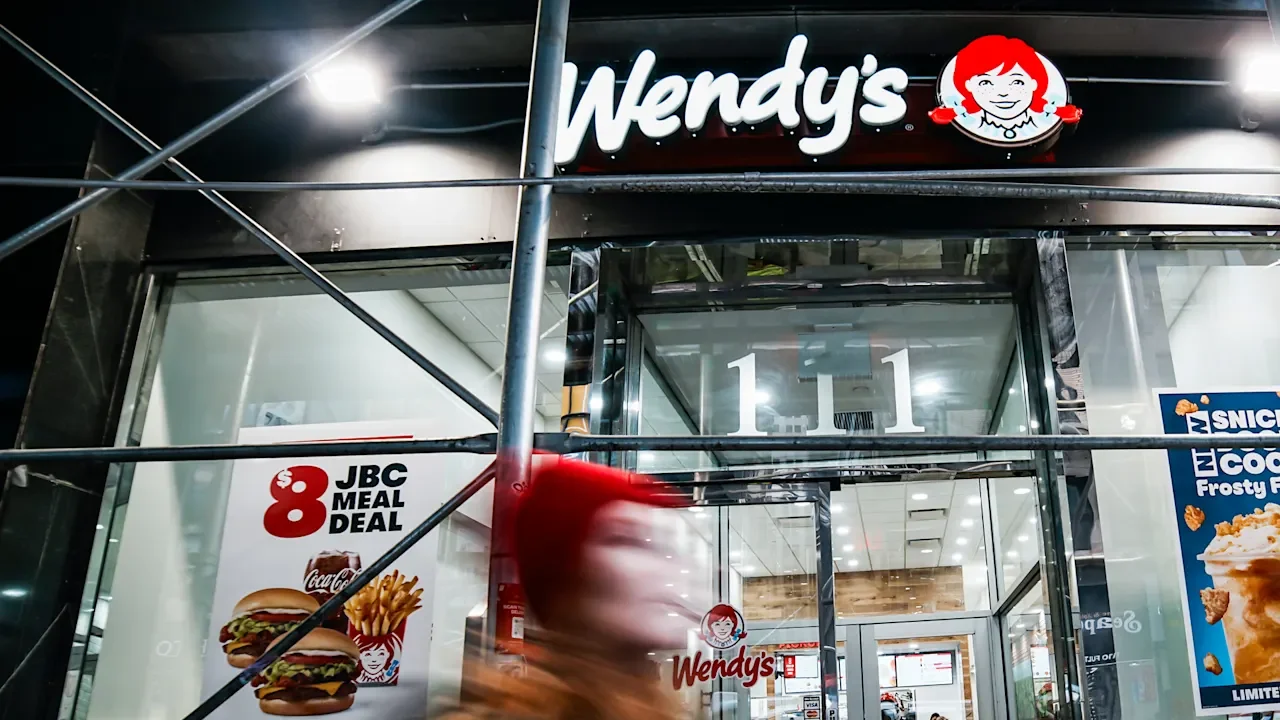
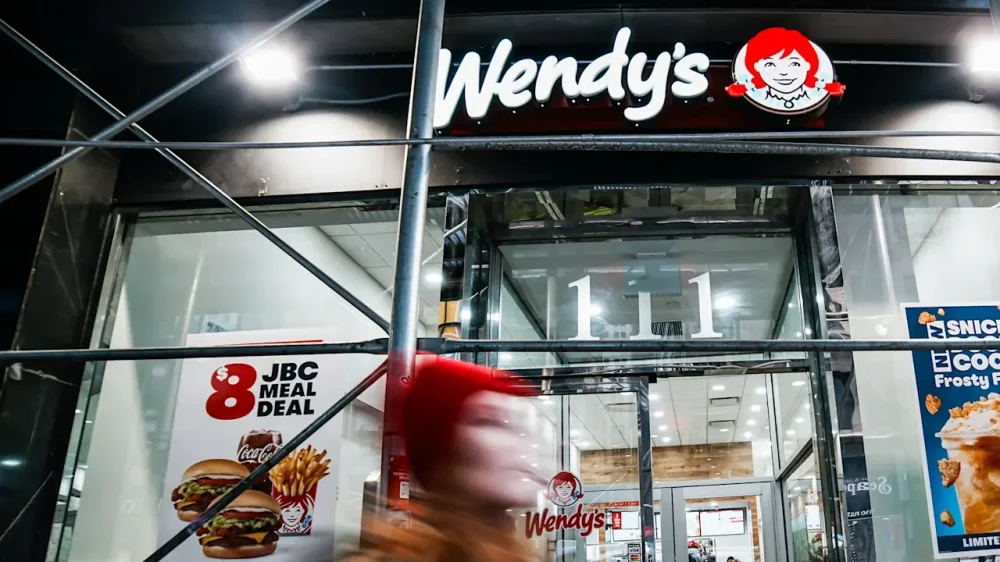
Bringing home the Baconator is not as easy as it used to be, and it’s about to get even harder in cities around the country. Fast food giant Wendy’s is continuing its push to close hundreds of locations as it seeks to stabilize profits and shed underperforming restaurants. Nearly six months after the burger chain first announced the plan on an investor call, its U.S. footprint is decidedly smaller, with multiple states seeing net store declines in the double digits, according to a review of Wendy’s store locator tool. As of Friday, the tool showed 5,675 locations in the United States. That’s roughly 200 fewer locations than what it showed at the end of September 2025, an archived capture of the tool reveals. The Wendy’s Company, which disclosed its turnaround plan in November 2025, said the closures would begin in the fourth quarter of that year. The archived capture showed 5,875 U.S. locations when that quarter began. These numbers are not official store counts, but rather based on what Wendy’s lists publicly on its U.S. website. The store counts that Wendy’s reports in financial filings to the Securities and Exchange Commission (SEC) tend to be slightly different. For example, the company reported 5,979 U.S. restaurants as of September 27 of last year, dozens more than what appeared on the locator tool at that time. It’s unclear what accounts for the discrepancy. Wendy’s did not respond to requests for comment. Still, the store locator tool offers a window into the chain’s overall store footprint and how it changes over time. The tool is frequently updated; for instance, one location in North Haven, Connecticut, that was reported closed just this week has already disappeared from the tool. It’s also a good gauge of which areas of the country are being most affected by Wendy’s closures. As of this week, the following states have seen the biggest net declines in restaurants since the fourth quarter of last year: Florida: 475 locations (net loss of 24) Texas: 431 locations (net loss of 23) Illinois: 175 locations (net loss of 18) Arizona: 90 locations (net loss of 15) Colorado: 115 locations (net loss of 10) Ohio: 388 locations (net loss of 10) New Mexico: 33 locations (net loss of 8) Local media reports and review platforms such as Yelp confirm that the states above have seen a number of Wendy’s closures in recent months. Last week, the Florida Times-Union reported that a sign was being removed from a Wendy’s restaurant located in the Arlington neighborhood of Jacksonville. It reported that “several” locations have closed in the area. Also last week, mySA, a news website for residents in San Antonio, Texas, revealed that five Wendy’s locations have closed in that region. It’s not clear if these specific closures are directly related to the turnaround plan or whether the locations have closed for another reason. Why is Wendy’s closing? There’s no getting around that Wendy’s has been in a slump. Revenue slipped 3.1% last year to $2.18 billion, and net income fell 15.1% to $165.1 million. While Wendy’s remains the second-largest fast food hamburger chain in the country, and the third-largest globally, it faces the same headwinds that have been impacting the quick-service restaurant (QSR) segment for a while, including higher operating costs, increasingly price-sensitive consumers, and more competition from newer chains. Shares of The Wendy’s Company (Nasdaq: WEN) have fallen dramatically over the last year, down roughly 44%, compared to a decline of about 8% for rival McDonald’s Corporation (NYSE: MCD). How many more Wendy’s will be closed? Reports in February suggested that Wendy’s could close about 300 locations as part of its turnaround plan, but it has not released an official number. Fast Company asked Wendy’s for more details and will update this story if we hear back. The Wendy’s Company is expected to report its next earnings on Friday, May 8 before the opening bell. Investors will no doubt be eagerly awaiting an update on store closures—the fate of Frostys in countless cities hang in the balance. This story is developing… View the full article
-
Google repeats the bounce clicks claim. Alphabet and Microsoft report from the revenue side. More in this week's SEO Pulse. The post AI Overviews Clicks Get Tested, Earnings Tell Two Stories – SEO Pulse appeared first on Search Engine Journal. View the full article
-
We may earn a commission from links on this page. Deal pricing and availability subject to change after time of publication. The Sony LinkBuds Wireless Portable Bluetooth Speaker is now down to $98 (originally $179.99), which is the lowest price it has hit so far, according to price trackers. This is not a party speaker or a smart assistant hub—it's built as a simple, portable option for home use, especially if you already use Sony’s LinkBuds headphones, and the design reflects that. It's compact, light, and comes with a built-in strap, so you can move it from your desk to the kitchen or bedroom without much trouble. It also supports multipoint pairing, so you can stay connected to two devices at once, like a phone and a laptop. Sony LinkBuds Wireless Portable Bluetooth Speaker $98.00 at Amazon $179.99 Save $81.99 Get Deal Get Deal $98.00 at Amazon $179.99 Save $81.99 Where this speaker stands out is in how it handles everyday listening. Voices come through clearly, which makes podcasts, YouTube videos, and casual playlists easy to follow. You can walk around a room and still hear dialogue without it sounding muffled or distant. If you also own the Sony LinkBuds S Truly Wireless, you get automatic audio handoff—you can start a podcast on your commute, walk in the door, and have it continue through the speaker without digging through settings to reconnect. That said, if you are not using LinkBuds headphones, that advantage disappears. The speaker does not get very loud, so it struggles in larger rooms or outdoor spaces, and is better suited for personal listening or small gatherings. There is also no built-in voice assistant, which makes it feel basic compared to options like the Sonos Roam 2 or the Amazon Echo Pop. The Sonos model adds voice control and a more flexible ecosystem, though its battery life is shorter, while the Echo Pop offers strong voice recognition but needs to stay plugged in. In comparison, the LinkBuds Speaker focuses on portability and battery life over extra features, and if you want something simple that fits into a Sony setup, the current price makes it easier to justify. Our Best Editor-Vetted Tech Deals Right Now Apple AirPods 4 Active Noise Cancelling Wireless Earbuds — $148.99 (List Price $179.00) Apple Watch Series 11 [GPS 46mm] Smartwatch with Jet Black Aluminum Case with Black Sport Band - M/L. Sleep Score, Fitness Tracker, Health Monitoring, Always-On Display, Water Resistant — $329.00 (List Price $429.00) Fitbit Versa 4 Fitness Smartwatch (Black) — $149.95 (List Price $199.95) Apple iPad 11" A16 128GB Wi-Fi Tablet (Silver, 2025) — $299.99 (List Price $349.00) Anker Nano 45W 10,000mAh Compact Power Bank With Retractable Cable — $49.99 (List Price $59.99) Deals are selected by our commerce team View the full article
-
This week in search, we are seeing yet again more Google search ranking volatility. Google sent out notifications about back button hijacking penalties to those sites that have the problem. Google AdSense vignette ads may trigger the penalty...View the full article
-
Programmatic SEO (pSEO) has been viewed with suspicion by the market. For many SEOs, the term is synonymous with low-quality pages, duplicate content, and the old tactic of “find and replace” city names in static templates. Google’s spam policies on scaled content abuse are clear: generating vast amounts of unoriginal content primarily to manipulate search rankings is a violation. Modern pSEO replaces mass page generation with an infrastructure that answers thousands of specific search intents with local nuance and semantic depth at a scale that isn’t possible manually. This blueprint shows how to evolve from syntax-based pSEO (swapping keywords) to semantics-based pSEO (meaning and context), using a methodology we’ve applied to major players in Brazil. The fallacy of the static template vs. semantic granularity The most common mistake when starting a pSEO project is starting with the template, not the data. The old mindset said: “I have a template for ‘Best Hotel in [City].’ I’ll replicate this for 500 cities.” The problem? The search intent for “Best Hotel in [Las Vegas]” (focused on nightlife, casinos, and luxury) can be radically different from the intent for “Best Hotel in [Orlando]” (focused on family suites, park shuttles, and pools). The user priorities, amenities sought, and decision-making criteria change completely. The semantic approach requires us to use AI to granularize content. Instead of just swapping the {{City}} variable, we use LLMs to rewrite entire sections of the page based on the specific travel intent of that destination. We don’t want to create 1,000 pages that say the same thing. We want 1,000 pages that answer 1,000 unique travel needs while maintaining a scalable technical structure. Your customers search everywhere. Make sure your brand shows up. The SEO toolkit you know, plus the AI visibility data you need. Start Free Trial Get started with Strategy before scale: The authority map Before writing a single line of content, you must answer a critical question: Where do I have permission to rank? Many pSEO projects fail because they try to cover topics where the domain lacks historical authority. The solution we developed involves a deep analysis of topic clusters based on real Google Search Console (GSC) data, not just third-party search volume. The authority map methodology works in three stages: Cluster audit: Identify which topics the domain already dominates, which are opportunities, and where semantic gaps exist. Priority definition: pSEO should be used surgically to fill these gaps and strengthen topical authority, not to shoot in all directions. Connection with the calendar: The pSEO strategy must be born from this data. If GSC shows you have growing authority in a topic like “Mortgage Credit,” that is where scale should be applied first. From there, AI suggests themes and direction, taking into account seasonality and brand guide specifications. This approach transforms pSEO from a “gamble” into a tactic of territorial defense and expansion based on proprietary data. Solving ‘brand hallucination’: Context governance The biggest barrier to AI adoption in enterprise companies is brand consistency. How do you ensure that 500 AI-generated articles don’t sound generic or, even worse, hallucinate information outside the company’s tone of voice? The answer lies in context governance. Instead of relying on isolated prompts, the pSEO architecture must include a brand guidelines layer that acts as a guardian before text generation. This means systematically injecting: Brand persona: (e.g., “We are technical, but accessible”). Negative constraints: (e.g., “Never use the word ‘cheap,’ use ‘affordable’”). Proprietary data: Institutional information that AI doesn’t have in its training data. By centralizing these guidelines in a digital brand guide that feeds all AI agents, we ensure that multiple sites within the same corporate group (such as a retail conglomerate) maintain their distinct verbal identities, even when producing content on the same topic (like Black Friday) simultaneously. The AI stops being a “junior copywriter” and starts acting as a specialist trained in the company’s culture. Get the newsletter search marketers rely on. See terms. The architecture: The semantic mesh (internal linking) You’ve created 1,000 excellent pages. How do you ensure Google finds and values all of them? The answer isn’t using “related posts” plugins that only look for matching tags. You need to create a strategy based on real data. The end of the ‘dead end’ You don’t want the user to land on a page and leave. You want to offer the next logical step. Cross-reference search intent with the destination: The practical example: If a user lands on the site searching for “What is a CRM,” they are in the discovery phase. If that page doesn’t link semantically to “Advantages of [your company’s] CRM,” the user journey “dies” there. The semantic mesh connects the question to the solution. Strategic reasoning in practice Instead of randomness, our analysis works based on semantic meaning. The AI identifies: “I noticed you are about to write about ‘customer retention.’ We have an older article about ‘churn rate’ that complements this topic perfectly. Insert a link to it.” The tool suggests links between these pages because the context is relevant, strengthening the site’s Topical Mesh. In programmatic SEO projects, where site depth can grow rapidly, this automation via vectors is the only way to ensure no good page gets forgotten at the bottom of the index. This closes the loop of topical authority, ensuring no page generated at scale becomes an orphan page. Case study: Regionalization and seasonality at scale Theory is nice, but seeing it in practice is even better. Let’s analyze the case of Ânima Educação, one of the largest private education players in Brazil, with about 310,000 students and 18 higher education institutions. The challenge The National High School Exam (ENEM) is the “Black Friday” of Brazilian education. Search volume explodes in a short period, competition is brutal, and search intents shift rapidly (from “how to study” to “what is my score good for”). Furthermore, Brazil has continental dimensions; the questions of a student in the Northeast are different from those of a student in the extreme South. The execution Using the semantic pSEO methodology and the brand governance mentioned above, it was possible to structure complete coverage of the candidate journey — from exam preparation to the release of grades. We ensured that all 18 brands were positioned to answer student questions at the exact moment of the search, respecting local nuances. The results Scale with precision: During five months, hundreds of undergraduate course pages and articles were optimized or created with granular local relevance. Business impact: Surpassed the organic revenue target by 110% during the critical ENEM season. Omnichannel dominance: Visibility across Google Search, Google Discover, and AI Overviews, and LLMs like Gemini and ChatGPT. Strategic shift: The SEO team transitioned from repetitive manual tasks to high-level strategic oversight. The technical guardian: Conversational monitoring Scaling content without scaling technical monitoring is a recipe for disaster. Publishing 500 pages that result in 404 errors, redirect loops, or poor Core Web Vitals (CWV) can destroy the site’s crawl budget. Modern pSEO requires a layer of real-time technical SEO. It isn’t enough to wait for the monthly report. You need to connect data to the workflow. The trend now is the use of technical SEO agents — conversational interfaces that allow the professional to ask the data: “Of the 200 pages published today, which ones have indexing issues?” or “Which clusters are suffering from high LCP?” This closes the cycle: Planning (authority map). Execution (pSEO with brand governance and semantic linking). Monitoring (technical agent). See the complete picture of your search visibility. Track, optimize, and win in Google and AI search from one platform. Start Free Trial Get started with Putting semantic pSEO into practice Programmatic SEO has ceased to be about volume to become about relevance. Success won’t come from publishing 10,000 pages tomorrow, but from building an infrastructure that delivers genuine value at scale. You can use this semantic pSEO roadmap to start your transformation: Start with data, not templates: Use your authority map (GSC) to identify where you already have permission to grow. Don’t waste resources attacking territories where your brand has no history. Implement context governance: Before scaling, create the “rules of the game.” Inject your brand guidelines and proprietary data into prompts to avoid generic content and hallucinations. The AI should sound like your best expert. Build bridges, not islands: Ensure every new page is integrated into a robust semantic mesh. Use internal linking to transfer authority and guide the user toward conversion, avoiding dead ends. Monitor with AI: Abandon sporadic manual audits. Adopt technical agents that monitor your site’s health in real time as you scale. The future of SEO isn’t about who creates the most content. It’s about who can unite the scale of the machine with the sensitivity of the human to deliver the best answer, at the right moment, for each individual user. View the full article
-
Now the Bank of England has called the top, I’ve never been so bullish about stocksView the full article
-
SEOs and site owners are always complaining about indexing issues with Google Search. Why is this page not indexed, why is that page not indexed. But some seasoned SEOs are asking if Google is more picky about what it indexes in the past month or so, than it was maybe a year ago.View the full article
-
Google annnounced a number of new updates for AI Max within Google Ads. These include (1) AI Brief, (2) text disclaimers and (3) Expansion with AI Max for shopping and Search Campaigns for travel.View the full article
-
Back in December, Google expanded Preferred sources globally, but only for English-language content. Now, according to The Verge, Google's preferred sources support all languages globally.View the full article
-
The activist known as Teacher Li on the dangerous work of cataloguing everyday life in China — and why he wants to change the CCP, not destroy itView the full article
-
Hello again, and welcome back to Fast Company’s Plugged In. When last Saturday’s White House Correspondents’ Dinner was disrupted by a would-be assassin, an event intended to celebrate the First Amendment descended into chaos. After President Donald The President and other administration officials were whisked to safety, it was unclear whether the festivities would resume. More than an hour later, White House Correspondents’ Association President Weijia Jiang returned to the dais to acknowledge that The President had posted that the night was over but would be rescheduled. “This is a room full of reporters,” she said. “So I know you’ve all seen the president’s tweet.” Then she immediately corrected herself: She was talking about The President’s Truth Social post, not one on Twitter/X. It almost didn’t matter. Yes, The President had posted his announcement on the site he cofounded after being banned from Twitter and Facebook in the aftermath of a throng of his supporters storming the U.S. Capitol on January 6, 2021. But in screengrab form, his message was instantly omnipresent on Twitter/X, Threads, and beyond. The same has been true of countless previous Truth Social posts, including The President sharing an AI meme of himself looking like Jesus, threatening to eradicate Iran, announcing his firings of Cabinet secretaries Pam Bondi and Kristi Noem, and on and on. Even on Bluesky, where the population of The President fans must be close to zero, legions of users share his rants in order to hate on them. The power of The President’s Truth Social megaphone has surprised me. When social media’s overlords deemed his use of their platforms to incite violence to be beyond the pale in 2021, I was relieved. I was dismayed when their “permanent” bans were undone less than two years later. And then I was relieved again when The President chose to mostly post on Truth Social, which I figured would greatly limit his reach. But The President’s current online presence has little to do with Truth Social. It turns out that it’s possible to dominate the conversation regardless of the social network you’re on—at least if you’re Donald The President. As a media presence unto itself, Truth Social is dinky, averaging 700,000 global daily active users in April, according to market intelligence firm Sensor Tower. That’s 0.35% of X’s 200 million and 0.38% of the 185 million on Threads. Though it positions itself as a bastion of free speech and offers groups on topics such as fitness, photography, and dogs, the site is resolutely The President-centric. Memes boosting him and bashing his adversaries are plentiful, but some discontent over the Iran war is also apparent. By anything resembling conventional standards, Truth Social is also not much of a business. Its parent company, The President Media & Technology Group, had revenue of just $3.7 million in 2025—about what Meta rakes in every 10 minutes—and managed to lose $712 million. A public company and textbook example of a meme stock, it has a market cap that’s down nearly 90% from its post-IPO peak. The company seems more focused on operating a cryptocurrency treasury and its bizarre plan to merge with a nuclear fusion startup than operating a social network, which it’s reportedly thinking about spinning off. Whatever Truth Social’s ultimate impact on The President’s pocketbook, it’s already his dream online home. Posting on the one social network where he’s impervious to moderation and then watching it spread is a superpower. Far more than his comparatively sedate in-person speeches, press conferences, and other modes of communication, it drives news. No wonder he can’t keep away from it. Even in the Musk era, X has policies on hate speech and violent content, including a ban on “explicitly threatening, inciting, glorifying, or expressing desire for violence.” Regardless, it’s tough to imagine the service would have held The President to account for posting that Iran’s “whole civilization will die tonight.” But the president was posting from the safety of Truth Social, and his threat became the talk of X and other networks anyhow. So did his The President-as-Jesus post—and when he ended up deleting that one from Truth Social, it didn’t retract the screengrabbed version that appeared everywhere else. When Musk let The President back on Twitter in 2022, the then ex-president’s contract with Truth Social required him to give it a six-hour window of exclusivity on his social posts. Since I’m not on Twitter/X much these days, I hadn’t been paying attention to his current tweets there (which, since the rebrand, are technically just “posts”). Checking in recently, I found they’re relatively sporadic and anodyne by his standards, skewing to stuff like get-out-the-vote messages and promos for products from his family members. This explains why they’ve fallen off the cultural radar, though they continue to get tens of thousands of comments and hundreds of thousands of likes. But again, where The President posts is now largely irrelevant. From the days when he used his Twitter presence as a springboard to win the 2016 Republican nomination and then the presidency, he has often been called a master of social media, a misleading term given that he’s always been a broadcaster, not a conversationalist. His posts are wholly self-contained, which is why they lose nothing when they travel around the internet as static screenshots. (On Truth Social, his replies tab is empty, indicating that he’s never publicly interacted with its members except through reposts.) As long as the president uses his online presence as a mashed-up blog, bulletin board, burn book, and expression of pure id, he could be posting on Friendster—which still exists—and the world would have no choice but to take heed. He gets that. He revels in it. And billions of people who will never log on to Truth Social have to live with it. More stuff I’m following this week: The Vision Pro: Toast? MacRumors’s Juli Clover reports that Apple has “all but given up” on the Vision Pro after last year’s minor update, sporting an M5 chip, failed to boost the $3,500 headset’s sales. The team, she says, has already been dispersed to more urgent products, such as Siri, as Apple diverts its attention to smart glasses more akin to Meta’s Ray-Bans. I count myself as a fan of VisionOS and hope that the wildly ambitious, polished “spatial computing” operating system has a future—preferably on a device with a price tag mere mortals can afford. Electrical slop revisited When I was a kid, I could have asked my great-grandmother what it was like to witness electricity becoming a thing as the 19th century gave way to the 20th. Sadly, I didn’t have the presence of mind to ask. But there are some wonderfully evocative details in venture capitalist/LinkedIn cofounder Reid Hoffman’s “In Defense of AI Slop,” which contends that electricity was disruptive and gimmicky before it became essential. His point is that we should be patient with AI. However it pans out, I loved reading about an advertising sign atop a New York hotel that used “nearly 20,000 light bulbs controlled by high-speed mechanical switches to stage a 30-second loop of stampeding horses and spinning wheels that was so mesmerizing it compelled some onlookers to view it for hours on end.” You’ve been reading Plugged In, Fast Company’s weekly tech newsletter from me, global technology editor Harry McCracken. If a friend or colleague forwarded this edition to you—or if you’re reading it on fastcompany.com—you can check out previous issues and sign up to get it yourself every Friday morning. I love hearing from you: Ping me at hmccracken@fastcompany.com with your feedback and ideas for future newsletters. I’m also on Bluesky, Mastodon, and Threads, and you can follow Plugged In on Flipboard. More top tech stories from Fast Company Netflix goes vertical with its new mobile app By launching a vertical video feed, Netflix wants to help users discover shows and podcasts—and have one less reason to turn to YouTube or Instagram. Read More → The AI industry’s massive bet on transformer models may not be enough for true AGI As Big Tech pours unprecedented resources into scaling large language models, critics argue that transformer-based systems face fundamental limitations. Read More → Thumbtack’s new AI wants to diagnose your leaky ceiling The home-services marketplace is overhauling its app to help homeowners figure out what’s wrong—and which of its 300,000 pros can actually fix it. Read More → Social media’s big tobacco moment is just a first step It’s still unclear whether the California jury verdict will result in healthier social networking experiences. Read More → We obtained nearly 1,000 complaints about SpaceX’s Starlink. Here’s what they reveal New documents show how the satellite provider has become a lifeline—and, for some customers, a headache. Read More → Celebrities like Taylor Swift are setting the guardrails for the AI age The elite want to protect themselves from AI. What about the rest of us? Read More → View the full article
-
In a general sense, workplace leaders are trained to focus on what can be seen and measured. They’re taught to pay close attention to employee performance, productivity, and efficiency—often without realizing that some of the most important aspects of work will never appear in any of these metrics. What too often goes unseen is how people experience their work. Whether they find meaning in what they do. Whether they feel connected to it and to the people around them. Whether their work aligns with who they are. To some, these may sound abstract or insignificant. They are not. They are core drivers of human well-being—and therefore of employee motivation and achievement. And when they are missing, leaders inevitably lose access to the full capacity, commitment and creativity of their people. In truth, most organizations and leaders do not intentionally ignore these factors. They simply struggle to define and prioritize them in ways that feel concrete and actionable. As a result, they are often addressed indirectly—through isolated initiatives—rather than embedded in how leadership is actually practiced. This is the shift leaders today must make. If we are willing to name this clearly, what we are discussing are spiritual needs—deep human needs for meaning, belonging, and a sense that one’s work reflects who they are. These needs are not religious, mystical, ideological or non-important. They are fundamental to human nature. And every person brings them to work, whether they are recognized or not. While often treated as independent concerns—each warranting its own initiatives and support if acknowledged at all—these experiences are inseparable. They converge around a single question every employee carries, spoken or not. Does this work matter, and do I matter in it? When the answer is yes, people invest discretionary energy. They bring dimensions of themselves leaders dream of: initiative, resilience, ownership, and creativity—call it passionate commitment. When the answer is no, effort defaults into the transactional. Work gets done but is not owned in any sense. Over time, true engagement becomes impossible, burnout often occurs—even among high performers—and employees’ progressively loosened ties often lead to quitting. Research in organizational psychology consistently supports these connections. Studies show that when people experience their work as meaningful—when it feels that what they do matters and aligns with their values—they report higher well-being, stronger intrinsic motivation, greater persistence in the face of stress and a greater capacity for resilience under pressure. When meaning erodes, each of these declines as well. Leaders who recognize this dimension begin to lead differently. They routinely clarify how individual roles contribute to something larger. They listen more carefully to how people are experiencing their work, not just how they are performing in it. And they ask employees personally how their roles could be shaped to feel more meaningful, more connected, and more aligned with who they are. Years ago, when I was leading a team of over thirty managers, one of my highest-performing and most experienced leaders, Glenda, asked if she could take over planning my monthly, all-day team meetings. It struck me as an unusual request—and one I was initially reluctant to grant. I knew how much time and effort went into those meetings, and I worried it might distract her from her already exceptional performance. When I asked why she wanted to take it on, however, her answer was immediate. She told me she loved that kind of work, but more importantly, it would give her a closer working relationship with me and allow her to have a more direct impact on her peers and, ultimately, the hundreds of employees they led. It instantly became clear that Glenda was looking to make her work even more meaningful by making a broader and deeper contribution to the success of our team. I gave her the responsibility. She excelled in it—and remained an extraordinary performer for years to come. I learned in this moment how very powerful my accommodation was to Glenda, and it taught me that leaders have the ability to influence people this profoundly—whether they realize it or not. Howard Thurman captured this idea wonderfully when he wrote: “Don’t ask what the world needs. Ask what makes you come alive and go do it. Because what the world needs is people who have come alive.” What he’s describing is neither abstract nor aspirational. It is what naturally happens when something far more fundamental within us is being fulfilled. And, at work, this sense of being “alive” is driven by three deeply interconnected human needs: First, the need to matter. People need to know and feel that their contributions make a difference and are valued by others. Without that, it becomes difficult for them to sustain the level of care, effort, and commitment that meaningful work requires. Second, the need to belong. We are, as Brené Brown has said, “psychologically, emotionally, cognitively and spiritually hard-wired for connection, love and belonging.” And this most certainly applies at work. Employees want and need to feel known, respected, safe and connected to those around them—especially with people on their team. It’s often said that people don’t quit companies, they quit their manager. But research shows employees more often leave when they no longer feel they belong on their team. Third, the need for alignment. People need to feel their work reflects who they are—that their strengths, identity and values are expressed through what they do each day. Research from Amy Wrzesniewski shows that employees who feel connected to their work this way—who experience alignment between their roles and their core values—are more engaged, resilient, and willing to go above and beyond. As Wrzesniewski writes, “How people experience their work has profound effects on their motivation, performance, and well-being.” Alignment, therefore, isn’t a “nice-to-have”; it’s essential to leaders unlocking human potential at work. Making Work Matter Just as leaders cannot ignore fair pay, recognition, opportunities for growth, and the autonomy employees need to do their jobs effectively, they can no longer ignore the deeply human—indeed, spiritual—dimension of work. Journalist, Studs Terkel famously said that “Work is about a search for daily meaning as well as daily bread.” In essence, work is a means through which people seek significance, a sense of contribution, and connection to something larger than themselves. Leaders have the power to cultivate this sense of aliveness. Just as Glenda found deeper purpose when given the chance to personally shape her work, every employee can flourish when leaders intentionally nurture their need to matter, belong, and align their work with who they are. The responsibility is clear: leaders mustn’t treat these human needs as optional. To unlock the full potential of their people—and their organization—they must create workplaces where work matters not only practically, but existentially. View the full article

-
Google is showing a new label on the Discover feed that says "You asked to see." This label is added to items in your feed that are customized based on the Tailor Your Feed feature.View the full article