All Activity
- Past hour
-
You have more to offer than time. By Jody Padar Radical Pricing - By The Radical CPA Go PRO for members-only access to more Jody Padar. View the full article
-
A detailed and historic look. By Martin Bissett Winning Your First Client Go PRO for members-only access to more Martin Bissett. View the full article
-
There are a lot of decisions to make. By Marc Rosenberg CPA Firm Mergers: Your Complete Guide Go PRO for members-only access to more Marc Rosenberg. View the full article
-
SEO hiring is shifting toward senior, strategy-led roles as AI reshapes search and expands the scope of the job. A new Semrush analysis of 3,900 listings shows companies now prioritize leadership, experimentation, and cross-channel visibility over pure technical execution. Why we care. SEO hiring, career paths, and required skills are changing. Entry roles focus on execution, while most demand sits at the leadership level — owning strategy across search, AI assistants, and paid channels, with clear revenue impact. What changed. Senior roles dominated, accounting for 59% of listings. Mid-level roles, such as specialists (15%) and managers (10%), trailed far behind. Companies are shifting budget toward strategy as AI tools absorb more execution work. The skills shift. In-demand capabilities extend beyond traditional SEO into coordination, testing, and decision-making: Project management appeared in more than 30% of listings. Communication led non-senior roles at 39.4%. Experimentation appeared in 23.9% of senior roles compared with 14% of other roles. Technical SEO appeared in about 6% of listings. Tools and channels. The SEO tech stack now spans analytics, paid media, and data. Google Analytics appeared in up to 47.7% of listings. Google Ads appeared in 29% of listings. SQL demand grew at the senior level. AI tools like ChatGPT were increasingly listed. AI expectations: AI literacy is moving from optional to expected: 31% of senior roles mentioned AI. Nearly 10% referenced LLM familiarity. AI search concepts like AI search and AEO appeared more often. Pay and positioning: SEO is increasingly treated as a business function. The median salary for senior roles reached $130,000, compared to $71,630 for others. Some listings were much higher. Degree preferences skewed toward business and marketing. Remote work is now standard. More than 40% of listings offered remote options, with little difference by seniority. About the data: Semrush analyzed 3,900 U.S.-based SEO job listings from Indeed as of Nov. 25. Roles were deduplicated, segmented by seniority, and analyzed using semantic keyword extraction. The study. What 3,900 SEO Job Listings Reveal for 2026: Experiments, AI, and Six-Figure Salaries View the full article
-
Google's Gary Illyes published a blog post explaining how Googlebot works as one client of a centralized crawling platform, with new byte-level details. The post Google Explains Googlebot Byte Limits And Crawling Architecture appeared first on Search Engine Journal. View the full article
-
The countdown is on: Taxpayers have a little over two weeks to file their 2025 tax returns and pay any taxes due by Wednesday, April 15, 2026. The Internal Revenue Service (IRS) expects to receive about 164 million individual income tax returns this year, with most taxpayers filing electronically. But this is no ordinary tax year: The 2026 tax season comes with a number of additional deductions thanks to President Donald The President’s so-called “big, beautiful bill.” Those include no tax on tips, no tax on overtime, no tax on car loan interest, and enhanced deduction for seniors. To claim these, taxpayers will need to use the new schedule 1-A form, according to the IRS. However, like all good things, these deductions are only temporary and expire in 2028 when The President leaves office at the end of his second term. You’re also probably wondering how much you’ll save on this year’s taxes, and how what kind of refund to expect. According to the IRS, the average tax refund is up nearly 11% this year, as of March 20. Here’s what to know before you file your 2026 taxes. No tax on tips, no tax on overtime As Fast Company has previously reported, the No Tax on Tips provision allows eligible tipped workers to deduct a portion of their income from tips on their federal income taxes. The provision was passed and signed into law on July 4 as part of President Donald The President’s One Big Beautiful Bill Act (OBBBA). Eligible workers can deduct up to $25,000 of reported tip income. It also applies to overtime, and is available to eligible taxpayers this year, regardless of whether they itemize. In order to claim the deduction, filers must provide their Social Security number on their 1040 form, or that of their spouse when filing jointly; and employers must specify on W-2 forms how much overtime an employee received during the 2025 tax year. No tax on car loan interest The no tax on car loan interest deduction comes with a few stipulations: It only applies to interest on loans for personal travel, not business, for “qualified passenger vehicles” whose “final assembly” occurred in the United States. That is to say, the vehicle needs to be manufactured in the U.S. The deduction applies only to new vehicles purchased in 2025 and 2026 (and on future tax returns, 2027 and 2028) including: vans, minivans, sport utility vehicles (SUVs), pickup trucks, and even motorcycles, according to CNN. The deduction applies to interest on vehicle loans up to $10,000 a year (regardless of whether the deductions are itemized), and applies to single filers with an adjusted gross income up to $100,000 ($200,000 for joint filers). Senior deductions The new deduction for seniors applies to taxpayers age 65 and older, and offers an additional $6,000 deduction per filer (12,000 for a married couple) in addition to the standard deduction already available for seniors. It phases out for taxpayers with modified adjusted gross income over $75,000 ($150,000 for joint filers). How much will I save on my 2026 taxes? According to the non-partisan Tax Policy Center (TPC), The President’s “big, beautiful bill” will reduce taxes for Americans by about an average of $2,900 this year, with about 85% of households receiving the cut. However, expect almost 60% of these tax benefits to go to those with incomes of $217,000 or more—in the top quintile, or one-fifth of earners. Also worth mentioning: About 4% of households will be seeing their taxes increase. View the full article

- Today
-
As small businesses adapt to a rapidly changing work landscape, HP has unveiled an expanded commercial lineup designed to cater to diverse workflows and environments. With this new range, HP aims to provide solutions that resonate with the unique needs of small business owners, making it easier for them to choose devices that enhance productivity and security. HP’s latest offerings, including the EliteBook and ProBook series, specifically target knowledge workers and growing teams. Each model focuses on delivering tailored performance, seamless collaboration features, and options that fit various work styles. The HP EliteBook 8 G2 Series stands out with its advanced collaboration tools and remarkable battery life. For professionals who often switch between focused work and collaborative sessions, this series includes a garaged pen, making it a practical choice for both creators and knowledge workers. Meanwhile, the HP EliteBook 6 G2 Series is designed with small and medium-sized business (SMB) teams in mind. With its scalable productivity features and flexible configurations, it allows businesses to standardize their devices while enhancing workflows. This is especially beneficial for tech-forward organizations looking to streamline operations without sacrificing performance. The HP ProBook 4 G2 Series, including the versatile Flip model, caters to growing SMBs. It offers AI-enabled performance and durability, key attributes that can support businesses as they expand. This line is aimed at companies that want dependable devices that can adapt alongside them. For those who prefer desktop setups, the HP EliteDesk 8 G2 Series provides secure, scalable desktop performance. With local AI acceleration and advanced security features like HP Wolf Security, businesses can rest assured that their data and devices are safely managed, crucial for maintaining productivity in today’s increasingly mobile work world. HP emphasizes that as work flexibility grows, so does the importance of built-in security. With new features such as HP TPM Guard and Wolf Connect, companies can feel confident their information is protected from both physical and cyber threats. This is particularly relevant for small businesses, which may lack extensive IT resources but still require robust security measures. Another noteworthy addition is HP IQ, an AI-driven initiative to improve local productivity. By integrating AI capabilities right into their devices, HP aims to help teams automate routine tasks and gain deeper insights from their data. For small businesses, this could mean more efficient workflows and better data management, keeping sensitive information secure and controlled. HP IQ will initially be available on select HP AI PCs starting in Spring 2026, with further expansion planned throughout the year. As AI technology becomes increasingly embedded in office tools, small business owners should consider how these enhancements can drive efficiency and innovation in their operations. Pricing for these new products will be announced closer to their availability, with many models expected to hit the market in mid-2026. This release schedule gives small business owners time to evaluate their needs and budget for these innovations. While the potential benefits of these devices are significant, small business owners may want to weigh the associated challenges as well. Transitioning to new technology often requires training, initial investment, and adapting existing workflows. Additionally, as AI capabilities evolve, ongoing software updates could be necessary to harness their full potential. In summary, HP’s expanded lineup reflects a commitment to addressing the diverse needs of small businesses. By providing flexible, secure, and AI-enabled devices, HP empowers business owners to optimize their operations and adapt to changing work environments. This rollout presents an opportunity for small businesses to enhance productivity while navigating the complexities of modern technology. For further details, visit the original press release here. Image via Google Gemini This article, "HP Launches New Devices with Enhanced Security and AI for Modern Workforces" was first published on Small Business Trends View the full article
-
Home Office has expressed concerns that Prevent programme is under pressure due to wider gaps in public services View the full article
-
Every time you ask ChatGPT to draft an email, or prompt an AI assistant to help you decide which refrigerator to buy—somewhere, a data center hums to life to make it happen. These facilities, which can span the size of a small city, are the unglamorous physical infrastructure behind the AI revolution. They’re cavernous buildings packed with servers, cooled by industrial systems, drawing power at a scale that strains local electrical grids. What almost no one talks about is the human beings building them. To construct a single data center, developers source millions of tons of concrete, steel, copper, lithium, and critical metals from supply chains that stretch across dozens of countries. At the far end of those chains—in mines, smelters, and materials processing facilities—labor conditions are often opaque, and in some cases, deeply troubling. The industry has made notable progress on tracking its carbon footprint. It has made almost none on tracking whether the workers who made its buildings possible were free or enslaved. That gap was at the center of a pointed panel conversation last week at Grace Farms, the award-winning cultural and humanitarian center in New Canaan, Connecticut, where executives from Google and Bloomberg joined the leader of a prominent data center trade association to reckon with a simple, uncomfortable question: At a moment when the tech industry is building faster than it ever has, who is paying the human cost? Design for Freedom Grace Farms’ Design for Freedom initiative, launched in 2020 by CEO and founder Sharon Prince, is a global movement to eliminate forced and child labor from the building materials supply chain. Its annual summit convenes leaders from architecture, engineering, construction, tech, government, and real estate to advance what the organization describes as a movement toward a more humane built environment. This year, the data center industry was one of its most urgent focal points—and the people in the room to address it had real power to do something about it. Sharon Prince The numbers are staggering. There are currently around 5,000 data centers in the United States, with Germany, the U.K., and China following behind. Global data center capacity is projected to grow 14% annually, with approximately 100 gigawatts of new capacity coming online by 2030, effectively doubling the sector in just five years. The U.S. data center construction market alone is projected to reach $112 billion in that same timeframe, which equates to $1.2 trillion in real estate value creation. “The growth of data centers over the last three years is more than we’ve seen in the last 30,” said Miranda Gardiner, executive director of the I-Masons Climate Accord, a trade association focused on emissions reductions and sustainability in the data center sector. “To say that this is a problem and opportunity for all of us is maybe an understatement.” Nora RizzoDave WildmanMiranda GardinerNoah Goldstein The Power of the Purse The biggest technology companies are currently the largest and most active construction clients in the world. As a result, they have unusual—and largely untapped—power to mandate better practices across their supply chains. “When we come out collectively to say things as an industry, people tend to listen and they do change their behaviors,” said Noah Goldstein, Google’s sustainability lead for data center construction. He described using Google’s supplier code of conduct as a practical tool in meetings with contractors and senior construction leaders. He pulled up the environmental responsibility section on screen and pointed out that vendors have, by signing their contracts, already committed to reporting their emissions, training their own supply chains, and working to reduce their environmental footprint. “A lot of the CEOs that we’re meeting with have never seen this before,” he said. Goldstein called this a “soft stick.” And alongside sticks, there are carrots: Google has created a recognition program for its supply chain, awarding physical plaques— “$7 frames from Amazon,” Goldstein said—to construction teams for best deployment of low-carbon solutions or best reporting. The competitive effect has been significant. “The CEOs of those companies are incredibly competitive people. They want to win next year. They want to compete on sustainability, and they want to get that seven-dollar plaque on their wall.” The stakes of getting those contracts right are not abstract. The building materials that flow into a single data center—the steel, the copper wiring, the concrete, the lithium—pass through supply chains that span dozens of countries and touch millions of workers, many of them in places with weak labor protections and little recourse when conditions turn exploitative. Forced labor has been documented in the mining of cobalt in the Democratic Republic of Congo, in brick kilns across South Asia, and in the production of construction materials across Southeast Asia. A contract clause requiring human rights reporting may seem far removed from a mine in Central Africa or a smelter in Malaysia—but when that clause is signed by a company spending billions of dollars on construction, it sends a signal down the entire chain about what will and won’t be tolerated. It’s an imperfect mechanism: It relies on supply chains being regularly audited and violators held to account. But it is one of the few tools we have to move towards more ethical labor. Dave Wildman, Bloomberg’s global head of data center workplace infrastructure and sustainability, offered a parallel perspective from Bloomberg, which he said was much smaller in scale than the tech giants, but nonetheless carries a recognizable name and the ability to amplify these conversations. He drew a direct comparison to where sustainability was two or three decades ago—when introducing environmental policy into a conversation with vendors yielded a few paragraphs on a page, if anything at all. “The same conversation is happening now, and it should be happening now,” he said. An Industry at an Inflection Point There was a sense throughout the panel that the data center industry is at a moment that resembles other industries’ past reckonings with sustainability. We’re in a window in which norms can be set before practices calcify, when competitive pressure can still be redirected toward better outcomes rather than a race to the bottom on cost. But unlike most industries facing this kind of reckoning, the data center sector has something unusual working in its favor: the sheer concentration of purchasing power among a handful of companies. When Google, Microsoft, Meta, and Amazon all move in the same direction on a supply chain requirement, they don’t just change their own practices, they effectively reset the floor for the entire industry. Suppliers who want access to those contracts have to meet the bar. And because data center construction is currently the most active and well-funded construction market in the world, that bar has the potential to ripple outward into broader construction supply chains that touch far more than just tech infrastructure. The human stakes of getting that right are considerable. For workers at the far end of data center supply chains—in quarries, mines, and materials processing facilities across the Global South—the difference between a contract that requires supply chain transparency and one that doesn’t can be the difference between a job with basic protections and one without them. The panelists were clear-eyed that the work is still early. The forced labor and human rights piece of the data center supply chain remains largely uncharted territory, even for companies that have made significant strides on carbon. Industry-wide adoption of human rights due diligence, if it were to follow the same trajectory as carbon disclosure, could over time create accountability mechanisms that reach workers. It would not happen overnight, and contractual language alone is not sufficient—enforcement, verification, and worker-accessible grievance mechanisms would all need to follow. But the argument the panelists are making was that the scale of investment flowing into data center construction right now creates a rare opportunity: with enough contracts, enough collective voice, and enough willingness to use both, the industry might be able to write better rules before bad ones become the default. View the full article

-
Technical SEO extends beyond indexing to how content is discovered and used, especially as AI systems generate answers instead of listing pages. For generative engine optimization (GEO), the underlying tools and frameworks remain largely the same, but how you implement them determines whether your content gets surfaced — or overlooked. That means focusing on how AI agents access your site, how content is structured for extraction, and how reliably it can be interpreted and reused in generated responses. Agentic access control: Managing the bot frontier From a technical standpoint, robots.txt is a tool you already use in your SEO arsenal. You need to add the right crawlers within your files to allow specific bots their own rights. For example, you may want a training model like GPTBot to have access to your /public/ folder, but not your /private/ folder, and would need to do something like this: User-agent: GPTBot Allow: /public/ Disallow: /private/ You’ll also need to decide between model training and real-time search and citations. You might consider disallowing GPTBot and allowing OAI-SearchBot. Within your robots.txt, you also need to consider Perplexity and Claude standards, which are tied to these bots: Claude ClaudeBot (Training) Claude-User (Retrieval/Search) Claude-SearchBot Perplexity PerplexityBot (Crawler) Perplexity-User (Searcher) Adding to your agentic access is another new protocol — llms.txt, a markdown-based standard that provides a structured way for AI agents to access and understand your content. While it’s not integrated into every agent’s algorithm or design, it’s a protocol worth paying attention to. For example, Perplexity offers an llms.txt that you can follow here. You’ll come across two flavors of llms.txt: llms.txt: A concise map of links. llms-full.txt: An aggregate of text content that makes it so that agents don’t have to crawl your entire site. Even if Google and other AI tools aren’t reading llms.txt, it’s worth adapting for future use. You can read John Mueller’s reply about it below: Extractability: Making content ‘fragment-ready’ GEO focuses more on chunks of information, or fragments, to provide precise answers. Bloat is a problem with extractability, which means AI retrieval has issues with: JavaScript execution. Keyword-optimized content rather than entity-optimized content. Weak content structures that fail to provide clear, concise answers. You want your core content visible to users, bots, and agents. Achieving this goal is easier when you use semantic HTML, such as: <article> <section> <aside> The goal? Separate core facts from boilerplate content so your site shows up in answer blocks. Keep your context window lean so AI agents can read your pages without truncation. Creating content fragments will feed both search engines and agentic bots. Dig deeper: How to chunk content and when it’s worth it Your customers search everywhere. Make sure your brand shows up. The SEO toolkit you know, plus the AI visibility data you need. Start Free Trial Get started with Structured data: The knowledge graph connective tissue Schema.org has been a go-to for rich snippets, but it’s also evolving into a way to connect your entities online. What do I mean by this? In 2026, you can (and should) consider making these schemas a priority: Organization and sameAs: A way to link your site to verified entities about you, such as Wikipedia, LinkedIn, or Crunchbase. FAQPage and HowTo: Sections of low-hanging fruit in your content, such as your FAQs or how-to content. SignificantLink: A directive that tells agents, “Hey, this is an authoritative pillar of information.” Connecting information and data for agents makes it easier for your site or business to be presented on these platforms. Once you have the basics down, you can then focus on performance and freshness. Get the newsletter search marketers rely on. See terms. Performance and freshness: The latency of truth AI is constantly scouring the internet to maintain a fresh dataset. If the information goes stale, the platform becomes less valuable to users, which is why retrieval-augmented generation (RAG) must become a focal point for you. RAG allows AI models, like ChatGPT, to inject external context into a response through a prompt at runtime. You want your site to be part of an AI’s live search, which means following the recommendations from the previous sections. Additionally, focus on factors such as page speed, server response time, and errors. In addition to RAG, add “last updated” signals for your content. <time datetime=””> is one way to achieve this, along with schema headers, which are critical components for: News queries. Technical queries. You can now start measuring your success through audits to see how your efforts are translating into real results for your clients. Dig deeper: How to keep your content fresh in the age of AI Measuring success: The GEO technical audit You have everything in place and ready to go, but without audits, there’s no way to benchmark your success. A few audit areas to focus on are: Citation share: Rankings still exist, but it’s time to focus on mentions as well. You can do this manually, but for larger sites you’ll want to use tools like Semrush. Log file analysis: Are agents hitting your site? If so, which agents are where? You can do this through log analysis and even use AI to help parse all of the data for you. The zero-click referral: Custom tracking parameters can help you identify traffic origins and “read more” links, but they only paint part of the picture. You also need to be aware that agents may append your parameters, which can impact your true referral figures. Measuring success shows you the validity of your efforts and ensures you have KPIs you can share with clients or management. Scaling GEO into 2027 Preparing your GEO strategy for 2027 requires changes in how you approach technical SEO, but it still builds on your current efforts. You’ll want to automate as much as you can, especially in a world with millions of custom GPTs. Manual optimization? Ditch it for something that scales without requiring endless man-hours. Technical SEO was long the core of ranking a site and ensuring you provided search bots and crawlers with an asset that was easy to crawl and index. Now? It’s shifting. Your site must become the de facto source of truth for the world’s models, and this is only possible by using the tools at your disposal. Start with your robots.txt and work your way up to structure, fragmented data, and extractability. Audit your success over time and keep tweaking your efforts until you see positive results. Then, scale with automation. View the full article
-
A reader writes: I own a small (but growing) tax service. Recently I hired Cara, who moved to the area and was able to step right in, and during our busy season to boot. Much of the year, we work 4-10 hour days with Fridays off. During tax season, we are busier and work 5-10 hour days. On Fridays, I buy the staff lunch. Because of dietary restrictions, allergies, etc., I let them order from whatever place they want, within reason on price, and pay for delivery or they turn in their receipt if they leave the building. Cara does not eat lunch, maybe a can of Diet Coke but nothing else. I have asked multiple times if she would like to order and stressed that it is okay, thinking maybe she is new and doesn’t feel she has earned it. But no, she says she eats breakfast and then fasts during the day until supper. Today she approached me and basically wants a reverse meal allowance. Whatever the average price is that the other employees are spending on lunch, she wants that money directly given to her because she isn’t getting “paid” the amount that the other employees are with their free lunch. Honestly, I am at a loss for words so I am writing to you. What do you think, and what is the right response back to her? Cara is missing the point: you’re buying your team lunch as a way to boost morale during your busy season. It’s not a cash exchange; it’s a gesture somewhere closer to hospitality, because food is a way of taking care of people. There’s a reason you’re doing it by providing lunch and not just Venmo’ing everyone 20 bucks every week. It’s kind of like if you stopped at a coffeeshop on the way back from a client meeting and offered to buy her a drink and she said, “No, but can I have the money you would have spent on it?” You’d be taken aback and she’d be missing the point of what you were offering. In both cases, the request makes it more transactional than it’s supposed to feel. On one hand, I can see how she got there — work is transactional (people trade their labor for money, and everything employers do to keep people happy and feeling appreciated is ultimately in service of the business’s goals, because it helps you retain good people who are reasonably content to be there). But she’s ignoring the human side of the transaction — the warmth and sociability of it — which is that you’re not just adding lunch money to people’s paychecks but rather are saying, “Let me do something hospitable to make our busy season more comfortable for you.” That’s what’s making her request come across as tone-deaf. And workplaces frequently offer a range of perks that not everyone will use, and they’re not generally cutting people checks if they decline to use the subsidized gym or the free snacks in the kitchen. As for how to respond … when you buy lunch on Fridays, are people mostly eating together or they working through lunch? If they’re mostly eating together, it would be very reasonable to explain that what you’re paying for is a morale-boosting group lunch; you’d love to have her join everyone but understand if it’s not her thing … but that you’re not handing out cash in lieu of attending, just like you wouldn’t give people a check if they didn’t attend the holiday party or a team happy hour. And you could say that same thing even if people mostly work through lunch on those days too. That’s a reasonable stance to take, and you’d be perfectly justified in it. However, if that’s the scenario, I don’t think it’s outrageous to think about doing what she’s asked as a gesture toward her morale. I don’t love it, for all the reasons above — and you could end up in a situation where other people decide they’d prefer the cash too, and if enough people do that it will really alter what you set out to do — but if the point is make people feel taken care of, it could be worth broadening your definition of what that looks like. Again, she’s out of sync with where you’re coming from, and it makes me wonder if she’s out of sync on other things too. But if she’s otherwise a good employee who you value and want to keep, it’s not the worst thing to decide it’s a small way to help her feel equitably treated. The post my employee wants to be reimbursed for not eating when I buy everyone lunch appeared first on Ask a Manager. View the full article
-
Antonio Bustamante has kept a watercolor of labor leader César Chavez for more than 35 years, hanging it on the wall of his law office in Yuma, Arizona. As a young man, he was moved by Chavez and helped organize workers before joining his security team. Like many others, Bustamante must now wrestle with reconciling the man he adored with the allegations Chavez groomed and sexually abused women and young girls. “I’m trying to figure out how emotionally and intellectually I’ll be able to understand my perception of him as an extremely good man,” Bustamante said, his voice heavy with emotion, “compared to these things that are said he did.” Chavez built a national reputation organizing in the fields. With Dolores Huerta — also one of his victims — he co-founded the United Farm Workers union, led a hunger strike, a grape boycott with Filipino farmworkers, and eventually pressured growers to negotiate better wages and working conditions for Mexican American farmworkers. Nearly two weeks after a New York Times report detailing allegations of sexual abuse, communities and rights groups across the country are still figuring out how he should be remembered. His name and image have already been erased from monuments, streets and murals around the country. Reckoning with a legacy Bustamante said he learned of the allegations when an old friend called to tell him about the upcoming report. What flashed through his mind, he said, were the faces of others who had known and admired Chavez, and “how their eyes would be devastated.” “We were looked down upon by society, we were Mexicans,” Bustamante said, recalling the first time he saw Chavez speak outside the Arizona Capitol in 1972 as he launched a hunger strike. He “gave us worth, and for young people that was everything.” Now, some of Bustamante’s friends have taken down images of Chavez. In his community, Bustamante likened it to denouncing Catholicism and removing photos of the pope. One person does not make a movement For many, it’s an example of why movements should not be tied to a single leader. Teresa Romero, president of United Farm Workers, said the contradiction between the Chavez’s legacy and the allegations is unavoidable. “We have in one hand César Chavez, the man who committed horrible acts that we’re not going to justify,” Romero said. “On the other hand, we have César Chavez, the organizer who brought thousands and thousands of people together to be able to work for farm workers, and improve their lives and working conditions.” Unfortunately, both of those things came from the same person, Romero said. Sehila Mota Casper, executive director of Latinos in Heritage Conservation, said the farmworker movement was always driven by collective effort. “The rights and protections that came from it belongs to the people that built it,” she said. “It wasn’t just one individual.” That perspective, she said, offers a way to move forward: recognizing Chavez’s role without letting it overshadow the contributions of others, including Huerta, and the challenges they faced. Advocacy groups like the nonprofit Voto Latino took a similar stance, saying, “The women who organized, marched, and sacrificed alongside farmworkers carried this movement on their backs.” Dismantling a man, preserving history The allegations also prompted swift public action. Within days, statues were removed and celebrations cancelled or renamed, including events tied to the federal César Chavez Day on March 31. Political leaders from both parties have condemned the alleged abuse. Some Republicans, including Texas Gov. Greg Abbott, cited it as part of a broader criticism of Chavez’s progressive legacy. Abbot said Texas — a state with dozens of Confederate monuments — would no longer celebrate César Chavez Day, saying the allegations “undermine the narrative that elevated Chavez as a figure worthy of official state celebration.” At the same time, groups like the nonpartisan Latino Victory Project, which focuses on developing Hispanic political leadership, said this current moment should not distract from the still-ongoing civil rights battles. “Those legacies are unchanged,” said Paul Ortiz, a labor history professor at Cornell University and director of graduate studies for Latino Studies. “And those legacies are all about people power.” What seems inevitable, Bustamante said, is that there will always be an asterisk next to Chavez’s name. “Does that take away the greatness of what his accomplishments were, the meaning of them? No, it doesn’t,” he said. “But can we look past that to honor him? That’s the tough part.” —Fernanda Figueroa and Jesse Bedayn, Associated Press View the full article

-
Italy refuses US warplanes permission to refuel, adding to transatlantic divisions over conflictView the full article
-
We may earn a commission from links on this page. Deal pricing and availability subject to change after time of publication. Lifehacker just launched a collection of tips and info about embracing retro technology, so I combed through Amazon's Big Spring Sale for the next best thing: retro-inspired technology. These prices are so low, you'll think it's 1998. These digital cameras look like they're from the distant pastIf you want a digital camera that makes a statement, check out the CHUZHAO Digital TLR Camera. It looks like a twin-lens reflex camera from the 1940s, when you shot from the waist. It doesn't use film, though: It's a 12MP digital camera in disguise. It's currently $33.99, down from 39.99. Styled after classic Kodak point-and-shoot cameras of the 1970s and 80s, the KODAK Mini Shot 3 Retro takes digital photos but will actually print out a 3X3 copy using 4PASS dye sublimation printing (the kind the brand was known for), complete with that shiny laminated layer. KODAK Mini Shot 3 Retro 3x3” Instant Digital Camera & Photo Printer $134.99 at Amazon $159.99 Save $25.00 Get Deal Get Deal $134.99 at Amazon $159.99 Save $25.00 These headphones have a retro look and feel but modern sound quality These Koss Porta Pro Limited Edition open-back headphones look like they time-traveled from 1984, because they basically did. The tech is way better than it was back then, but the design is exactly the same. So cool-looking. At $49.99, they're $10 off. These Skullcandy Aviator 900 over-ear Bluetooth headphones have the noise cancelling, spatial audio and 60 hour battery life you expect in 2026, but the triangular design and leopard print looks like something from the late 1970s. They're $199.99, down from $299.99 These players and speakers will fit any retro aesthetic This Marshall Acton III Bluetooth Speaker is a modern, high-quality speaker housed in a cabinet patterned after the famous Marshall Stack amplifier. Bonus: It's made of 70% recycled plastic and only vegan materials. Marshall Acton III Bluetooth Home Speaker - Loud Stereo Sound with Bass and Treble Controls | Plug-in Powered | 3.5 mm Aux Input - Midnight Blue $199.99 at Amazon $299.99 Save $100.00 Get Deal Get Deal $199.99 at Amazon $299.99 Save $100.00 This ODEJOI MP3 Player doesn't stream anything. You hook it up to your computer and put MP3 files on it, as God intended. It's perfect if you want to unplug from your phone but keep listening to music, and at $28.04, it's 15% off. If you want to go back further than MP3 players, check out this Syitren R300 Portable CD Player. Unlike old CD players, this one is Bluetooth compatible. It's currently $89.98, down from $119.99 Or maybe you're looking for a cassette-playing boombox. In that case, check out BackTrack Retro Cassette Boombox: It has a CD player, so you can make a mix tape for your crush; it also has an FM/AM radio, and Bluetooth and SD card slots. At $199.99, it's 29% off. If you're into vinyl, check out these turntablesThis Victrola Century 6-in-1 Music Center looks like it's straight from the Mad Men era, but it features VinylStream tech so you can beam your records to Bluetooth devices. It also has built-in speakers if you don't want Bluetooth anything. Victrola Century 6-in-1 Vinyl Record Player & Music Center – 3-Speed Turntable, CD & Cassette Player, VINYLSTREAM, Bluetooth & 3.5mm Aux, Record Player with Speakers, Mid Century Design (Walnut) $129.99 at Amazon $199.99 Save $70.00 Get Deal Get Deal $129.99 at Amazon $199.99 Save $70.00 The Syitren Bluetooth Turntable combines a turntable, preamp, and speakers with Bluetooth. On sale for $199.49, down from $229.99. This Qlearsoul SoulBox S1 walnut turntable has detached stereo speakers, an S-shaped tonearm, and Bluetooth. It's 15% off at $212.48. These retro-style gaming controllers will take you back There are thousands of all-in-one emulators for sale on Amazon, but none of them are included in the Big Spring Sale. You can, however, still upgrade how you play those classic games with retro-style controllers. If you're emulating on your PC or phone, the 8BitDo Ultimate Bluetooth Controller is a great retro-feeling controller with modern "Hall Effect" tech so the sticks never drift. 8Bitdo Ultimate 2 Bluetooth Controller for Switch & Windows PC, Switch Pro Controller with TMR Joysticks, Switchable Hall Effect/Tactile Triggers, Vibration and Motion Control, RGB Fire Ring, Black $53.19 at Amazon $69.99 Save $16.80 Get Deal Get Deal $53.19 at Amazon $69.99 Save $16.80 The 8Bitdo Arcade Stick for Switch and Windows is designed with the big buttons and sticks of the old arcade games. It's an sale for $76.45, down from $89.99. Our Best Editor-Vetted Amazon Big Spring Sale Deals Right Now Apple AirPods Pro 3 Noise Cancelling Heart Rate Wireless Earbuds — $199.00 (List Price $249.00) Apple iPad 11" 128GB A16 WiFi Tablet (Blue, 2025) — $299.00 (List Price $349.00) Samsung Galaxy Tab A11+ 128GB Wi-Fi 11" Tablet (Gray) — $202.00 (List Price $249.99) Apple Watch Series 11 (GPS, 42mm, S/M Black Sport Band) — $329.00 (List Price $399.00) Blink Video Doorbell Wireless (Newest Model) + Sync Module Core — $35.99 (List Price $69.99) Fire TV Stick 4K Max Streaming Player With Remote — $34.99 (List Price $59.99) Sony WH-1000XM5 — $243.00 (List Price $399.99) Deals are selected by our commerce team View the full article
-
A woman is facing backlash after allegedly calling ICE on construction workers who were finishing up a roofing job at her home in Cambridge, Maryland. In a video, recorded and livestreamed on Facebook by Bryan Polanco, a co-worker with permanent residency, from the roof of the property, federal agents can be seen waiting on the lawn for the workers. X account @LongTimeHistory, which posted a clip from the video, alleges the woman owed the workers $10,000. In the video, which now has millions of views, Polanco says: “We came to fix this lady’s house, and she’s the one who turned us in. Fixing up her house and still with hatred in her heart.” Polanco repeated this when speaking to Univision DC, saying that she had told him she had planned to report the workers. “What she did tell me, and I told one of the other guys, is that if immigrants come back again to finish the project, she’s always going to call ICE,” he told the outlet. The woman, who has been identified as Karen Trevino denies that she, or her father who owns the home and also appears in the video and can be heard saying that he is “pro-ICE,” had anything to do with reporting the workers. Trevino told The Baltimore Sun that she didn’t make the call and she’s worried for the safety of her family due to the backlash on social media. “They are accusing me of calling ICE when I didn’t,” she said. In a statement on Thursday, ICE said the raid was simply part of “targeted enforcement” in the area. “Of those arrested, several have final orders of removal — a felony — and one has been previously convicted of illegal reentry,” an ICE spokesperson told The Sun. “During the encounter, the aliens refused to comply with lawful orders, taunted officers and attempted to flee. The illegal aliens ultimately complied and were taken into custody.” While Trevino denies that she reported the workers, she’s earned the ire of social media. In multiple clips of the post which have been circulating across social media platforms, comments about “karma” catching up to Trevino are rampant, with some suggesting that she should probably leave the country. While not entirely clear what happened that led to the ICE raid at this particular home, ICE is relying on the public to report individuals they believe may be undocumented. A page on ICE’s website gives the public information on how to report someone they believe may not have legal status in the U.S. The page also features a phone number where reports can be made completely anonymously. According to ICE, the page averages around 15,000 calls each month. While it may be in a citizen’s right to call ICE on someone they suspect doesn’t have legal status, homeowners should be aware that calling authorities to avoid paying for services could be punishable by Maryland law, which states: “A person may not obtain, attempt to obtain, or conspire to obtain money, property, labor, services, or anything of value from another person with the person’s consent, if the consent is induced by wrongful use of actual or threatened … notification of law enforcement officials about another person’s undocumented or illegal immigration status.” View the full article

-
Here is a recap of what happened in the search forums today...View the full article
-
In 1998, submitting a website to search engines was manual, methodical, and genuinely tedious. I remember 17 of them: AltaVista, Yahoo Directory, Excite, Infoseek, Lycos, WebCrawler, HotBot, Northern Light, Ask Jeeves, DMOZ, Snap, LookSmart, GoTo.com, AllTheWeb, Inktomi, iWon, and About.com. Each had its own form, process, and wait time, and its own quiet judgment about whether your URL was worth including. We submitted manually, 18,000 pages in all. Yawn. Google was barely a year old when we were doing this. But they were already building the thing that would make submission irrelevant. PageRank meant Google followed links, and a site that other sites linked to would be found whether it submitted or not. The other 17 engines waited to be told about content. Google went looking, and within a few years, they got so good at finding content that manual submission became the exception rather than the norm. You published, you waited, the bots arrived. For 20 years, that was the deal, and SEO optimized for a crawler that would show up sooner or later. The irony is that we’re now shifting back. Not because Google got worse at finding things, but because the game has expanded in ways that pull alone can’t cover, and the revenue flowing through assistive and agentic channels doesn’t wait for a bot. Pull isn’t the only entry mode The pull model (bot discovers, selects, and fetches) remains the dominant entry mode for the web index. What’s changed is that pull is now one of five entry modes into the AI engine pipeline (the 10-gate sequence through which content passes before any AI system can recommend it), not the only one. The pipeline has expanded, and new modes have been added alongside the existing model rather than replacing it, and the single entry mode that has been the norm for 20 years has expanded to five. What follows is my taxonomy of those five modes, with an explanation of the advantages each one gives you at the two gates that determine whether content can compete: indexing and annotation. Your customers search everywhere. Make sure your brand shows up. The SEO toolkit you know, plus the AI visibility data you need. Start Free Trial Get started with The five entry modes differ by gates skipped, signal preserved, and revenue reached Mode 1: Pull model Traditional crawl-based discovery where all 10 pipeline gates apply and the bot decides everything. You start at gate zero and have no structural advantage by the time your content gets to annotation (which is where that content starts to contribute to your AI assistive agent/engine strategy). You’re entirely dependent on the bot’s schedule and the quality of what it finds when it arrives. Mode 2: Push Discovery The brand proactively notifies the system that content exists or has changed, through IndexNow or manual submission. Fabrice Canel built IndexNow at Bing for exactly this purpose: “IndexNow is all about knowing ‘now.’” It skips discovery, improves the chances of selection, and gets you straight to crawl. The content still needs to be crawled, rendered, and indexed, because IndexNow is a hint, not a guarantee. You win speed and priority queue position, which means your content is eligible for recommendation days or weeks earlier than a competitor who waited for the bot. In fast-moving categories, that window is the difference between being in the answer and being absent from it. Note: WebMCP helps with Modes 1 and 2 by making crawling, rendering, and indexing more reliable, retaining signal and confidence that would otherwise be lost through those three gates. Because confidence is multiplicative across the pipeline, a higher passage rate at crawling, rendering, and indexing means your content arrives at annotation with significantly more surviving signal than a standard crawl delivers. The structural advantage compounds from there. Mode 3: Push data Structured data goes directly into the system’s index, bypassing the entire bot phase. Google Merchant Center pushes product data with GTINs, prices, availability, and structured attributes. OpenAI’s Product Feed Specification powers ChatGPT Shopping that supports 15-minute refresh cycles. Discovery, selection, crawling, and rendering don’t exist for this content, and the “translation” at the indexing phase is seamless: it arrives at indexing already in machine-readable format, four gates skipped and one improved. That means the annotation advantage is significant. This is where the money is for product-led businesses: where crawled content arrives as unstructured prose the system has to interpret and feed content arrives pre-labeled with explicit machine-readable entity type, category, and attributes. By structuring the data and injecting directly into indexing, you’re solving a huge chunk of the classification problem at annotation, which, as you’ll see in the next article, is the single most important step in the 10-gate sequence. As the confidence pipeline shows, each gate that passes at higher confidence compounds multiplicatively, so this is where you can get the “3x surviving-signal advantage” I outline in “The five infrastructure gates behind crawl, render, and index.” Mode 4: Push via MCP Model Context Protocol (MCP) — a standard that lets AI agents query a brand’s live data during response generation — allows agents to retrieve data from brand systems on demand. In February 2026, four infrastructure companies shipped agent commerce systems simultaneously. Stripe, Coinbase, Cloudflare, and OpenAI collectively wired a real-time transactional layer into the agent pipeline, live with Etsy and 1 million Shopify merchants. Agentic commerce is key. MCP skips the entire DSCRI pipeline and then operates at three levels, each entering the pipeline at a different gate: As a data source at recruitment. As a grounding source at grounding. As an action capability at won, where the transaction completes without a human in the loop. The revenue consequences are already real: brands without MCP-ready data are losing transactions to those with it, because the agent can’t access their inventory, pricing, or availability in real time when it needs to make a decision. This is where you see multi-hundred percent gains in the surviving signal. MCP is already simultaneously push and pull, depending on context. There’s a dimension to Mode 4 that most people don’t think about much: the agent querying your MCP connection isn’t always a Big Tech recommendation system. It’s increasingly the customer’s own AI, acting as their purchasing agent, evaluating your inventory and pricing in real time, with their credit card behind the query, completing the transaction without them opening a browser. When your customer’s agent (let’s say OpenClaw-driven) comes knocking, agent-readable is the entry requirement. Agent-writable — the capacity for an agent to act, not just retrieve — is where you’ll make the conversion. The brands without writable infrastructure will be losing transactions to competitors whose systems answered the query and handled the action. Mode 5: Ambient This is structurally different from the other four. Where Modes 1 through 4 change how content enters the pipeline, ambient research changes what triggers execution of the final gates. The AI proactively pushes a recommendation into the user’s workflow without any query: Gemini suggesting a consultant in Google Sheets, a meeting summary in Microsoft Teams surfacing an expert, and autocomplete recommending your brand. Ambient is the reward for reaching recruitment with accumulated confidence high enough that the system fires the execution gates on the user’s behalf, without being asked. You can’t optimize for ambient directly. You earn it — and the brands that earn it capture the 95% of the market that isn’t actively searching. Several people have told me my obsession with ambient is misplaced, theoretical, and not a real thing in 2026. I’ve experienced it myself already, but the clearest demonstration came at an Entrepreneurs’ Organization event where I was co-presenting with a French Microsoft AI specialist. He demonstrated on Teams an unprompted push recommendation: a provider identified as the best solution to a problem his team had been discussing in the meeting. Nobody explicitly asked. Copilot listened, understood the problem, evaluated options, and push-recommended a supplier right after the meeting. Ambient isn’t theoretical. It’s running on Teams, Gmail, and other tools we all use daily, right now. Get the newsletter search marketers rely on. See terms. Every mode converges at annotation Five entry modes, each with a different starting point, and they all converge at annotation. Annotation is the key to the entire pipeline. Every algorithm in the algorithmic trinity (LLM + knowledge graph + search) doesn’t use the content itself to recruit, it uses the annotations on your chunked content, and nothing reaches a user without being recruited. Why is that important? Because accurate, complete, and confident annotation drives recruitment, and recruitment is competitive regardless of how content entered. A product feed arriving at indexing with zero lost signal competes at recruitment with a huge advantage over every crawled page, every other feed, and every MCP-connected competitor that entered by a different door. You control more of this competition than most practitioners assume, but skipping gates gives you a structural advantage in surviving signal. It doesn’t exempt you from the competition itself. That distinction matters here because annotation sits at the boundary. It’s the last absolute gate: the system classifies your content based on your signals, independently of what any competitor has done. Nobody else’s data changes how your entity is annotated. That makes annotation the last moment in the pipeline where you have the field entirely to yourself. From recruitment onward, everything is relative. The field opens, every brand that passed annotation enters the same competitive pool, and the advantage you carried through the absolute phase becomes your starting position in a winner-takes-all race. Get annotation right, and you have a significant head start. Get it wrong, and no matter how much work you do to improve recruitment, grounding, or display, it will not catch up, because the misclassification and loss of confidence compound through every gate downstream. Nobody in the industry was talking about this in 2020. I started making the point then, after a conversation on the record with Canel, and it still isn’t getting the attention it deserves. Annotation is your last chance before competition arrives. Search is one of three ways users encounter brands — and it’s the least valuable The research modes on the user’s side have expanded, too. The SEO industry has traditionally focused on just one: implicit, when the user types a query. There was always one more: explicit brand queries, and now we have a third. Each research mode is defined by who initiates and what the user already knows. Explicit research is the deliberate query, where the user asks for a specific brand, person, or product, and the system returns a full entity response (the AI résumé that replaces the brand SERP). This is the lowest-confidence mode of the three, because the user has already signaled very explicit intent: you’re only reaching people who already know your name. Bottom of the funnel, decision. Algorithmic confidence is important here to remove hedging (“they say on their website,” “they claim to be…”) and replace it with absolute enthusiasm (“world leader in…,” “renowned for…”). Implicit research removes the explicit query. The AI introduces the brand as a recommendation (or advocates for you) within a broader answer, and the user discovers the brand because the system considers it relevant to the conversation, staking its own credibility on the inclusion. Top- and mid-funnel, awareness and consideration. Algorithmic confidence is vital here to beat the competition and get onto the list when a user asks “best X in Y market” or be cited when a user asks “explain topic X.” Ambient research requires the highest confidence of all. The system pushes the brand into the user’s workflow with no query, no explicit request, the algorithm is making a unilateral decision that this user, in this context, at this moment, needs to see your brand. That requires very significant levels of algorithmic confidence. The format is small: a sentence, a credential, a contextual mention. The audience reached is the largest: people not yet in-market, not yet actively looking, who encounter your brand because the AI decided they should. And the kicker is that your brand gets the sale before the competition even starts. For me, this is the structural insight that inverts how most brands prioritize, and where the real money is hiding. They optimize for implicit research, where competition is highest, the target you need to hit is widest, and the work is hardest. Most SEOs underestimate explicit research (where profitability is highest) and completely ignore ambient, which reaches the 95% who aren’t yet looking and requires the deepest entity foundation to trigger. I call this the confidence inversion, first documented in May 2025: the smallest format requires the highest investment, and it reaches the most valuable audience. The entity home website is the single source that feeds every mode In 2019, AI engineers spent 80% to 90% of their time collecting, cleaning, and labeling data, and the remaining 10% to 20% on the work they actually wanted to do. They wryly called themselves data janitors. Today, Gartner estimates 60% of enterprises are still effectively stuck in the 2019 model, manually scrubbing data, while the companies that got organized early compound their advantage. The same split is happening with brand content and entity management, for the same reason. Every push mode described in this article draws on data: product attributes for merchant feeds, structured entity data for MCP connections, and corroborated identity claims for ambient triggering. If that data lives in scattered, inconsistent, contradictory sources, every push attempt is expensive to implement, structurally weak on arrival, and liable to contradict the previous one. Inconsistency is the annotation killer: the system encounters two different versions of who you are from two different push moments, and confidence drops accordingly. The framing gap, where your proof exists but the algorithm can’t connect it to a coherent entity model, is a direct consequence of disorganized data, and it costs you in recommendation frequency every day it persists. The entity home website — the full site structured as an education hub for algorithms, bots, and humans simultaneously, built around entity pillar pages that declare specific identity facets — becomes the single source that feeds every mode simultaneously. Pull, push discovery, push data, MCP, and ambient all draw from the same clean, consistent, non-contradictory data. You build the structure once, maintain it in one place, and you’re ready for push and pull modes today, and any to come that don’t yet exist. AI handles 80%, humans protect the other 20% That foundation is only as strong as the corrections made to it. How this works in practice depends on where you’re starting from. For enterprises, the website typically mirrors an internal data structure that already exists: Product catalogs. CRM records. Service definitions. Organizational hierarchies. The website becomes the public representation of structured data that lives inside the business, and the primary challenge is integration and maintenance. For smaller businesses and personal brands, the direction often runs the other way: building the entity home website well is what forces you to figure out how your business is actually structured, what you genuinely offer, who you serve, and how everything connects. The website imposes discipline. We’re doing exactly this: centralizing everything as the structured data representation of the entire brand (personal or corporate). Getting the foundation right (who we are, what we offer, who we serve) is generally the heaviest lift. Building N-E-E-A-T-T credibility on top of that foundation is now comparatively straightforward, and every new push mode draws from the same organized source. Here’s where using AI fits into this work. It can handle roughly 80% of the organization: extracting structure from existing content, proposing taxonomies, drafting entity descriptions, mapping relationships, and flagging gaps. What it does poorly, and what humans need to correct, are the three failure modes that propagate silently through every downstream gate: Factual errors, where something is simply wrong. Inaccuracies, where something is approximately right but imprecise enough to mislead. Confusions, where two different concepts are conflated, or an entity is ambiguous between interpretations. Confusion is the sneakiest because it looks like data, passes automated quality checks, enters the pipeline with apparent confidence, and then causes annotation to misclassify in ways that compound through every gate downstream. Alongside the errors sit the missed opportunities, which are equally costly and considerably less obvious: Lost N-E-E-A-T-T credibility opportunities, where the systems underestimate or undervalue the entity because credibility signals exist but aren’t structured, corroborated, or framed in a way the algorithmic trinity can read. The authority exists, but the machine doesn’t understand it. Annotation misclassification, where the entity is indexed coherently but placed in the wrong category, meaning it competes for the wrong queries entirely and never appears in the contexts where it should win. Correctly classified competitors take the recommendation: your brand is present in the pipeline, but absent from the competition that matters to your business. Untriggered deliverability, where understandability is solid and credibility has crossed the trust threshold, but topical authority signals haven’t accumulated densely enough to push the entity across the deliverability threshold for proactive recommendation. The machine knows who you are and trusts you. It just doesn’t advocate for you yet. The human doing the correction and optimization work is the competitive advantage. Because the errors are surreptitious and the opportunities non-obvious, the trick is finding where both actually are, fixing one, and acting on the other. The errors are surreptitious. The opportunities are non-obvious. Finding both is the work that compounds. See the complete picture of your search visibility. Track, optimize, and win in Google and AI search from one platform. Start Free Trial Get started with Organize once, feed every mode that exists and every mode to come The push layer is expanding. The brands that organize their data now — not perfectly, but consistently, and with a system for maintaining it — are building the infrastructure from which every current and future entry mode draws. The brands still publishing and waiting for the bot (Mode 1) are optimizing for the least advantageous mode in a five-mode landscape, and that disadvantage gap widens with every passing cycle. This is the seventh piece in my AI authority series. The first, “Rand Fishkin proved AI recommendations are inconsistent – here’s why and how to fix it,” introduced cascading confidence. The second, “AAO: Why assistive agent optimization is the next evolution of SEO,” named the discipline. The third, “The AI engine pipeline: 10 gates that decide whether you win the recommendation,” mapped the full pipeline. The fourth, “The five infrastructure gates behind crawl, render, and index,” walked through the infrastructure phase. The fifth, “5 competitive gates hidden inside ‘rank and display’,” covered the competitive phase. The sixth, “The entity home: The page that shapes how search, AI, and users see your brand,” mapped the raw material. Up next, “How AI decides what your content means (and why it gets you wrong).” View the full article
-
100-year-old stadium was bought by private equity-backed AC Milan and Inter Milan for about €200mn last year View the full article
-
As the Iran war intensifies, President Donald The President has prioritized efforts to calm the financial markets — trying to keep oil prices from exploding upward, stocks from cratering and interest rates from surging. When the markets have flashed danger, The President has been quick with a social media post or a remark to claim the war he launched last month could soon end. He’s publicly declared that the markets are doing better than he expected, even with the S&P 500 stock index declining over the past five weeks and the global oil benchmark up roughly 60%. “I thought oil prices were going to go up higher than they are now,” The President said at a Friday investor summit. “And I thought that we would see a bigger drop in stock. It hasn’t been that bad.” With the Iran war, the White House has largely refrained from messaging more aggressively to voters about the economic consequences — choosing instead to try to contain any damage in the financial markets, which have swung wildly on the prospects of ceasefire or escalation in what has become a high-stakes guessing game about The President’s next moves. The Republican president showed the extremes of his messaging Monday before the U.S. stock market opened, writing in a social media post that great progress had been achieved on peace talks with Iran while also threatening civilian infrastructure such as desalination plants if a deal wasn’t reached “shortly.” The White House sees the stock, energy and bond markets as a way to indirectly reach voters. The President has staked his economic agenda on cheap prices at the pump, robust gains in 401(k) accounts and cheaper mortgage rates. But that messaging appears to be wearing thin as the president’s various pronouncements have done little to change the reality that a large chunk of the world’s energy supplies is stranded by the conflict. Just 38% of U.S. adults approve of how he’s handling the economy and only 35% support him on Iran, according to a March survey by The Associated Press-NORC Center for Public Affairs Research. The president has tried to dictate to markets instead of talking directly to Americans Gene Sperling, a top economic adviser in the Democratic Clinton, Obama and Biden administrations, said voters can make a direct connection between prices at the pump and The President’s choice to attack Iran. He said “simplistic jawboning” to the markets is insufficient for a public that is stuck paying the price as gasoline soars past $4 a gallon nationwide. “Most advisers would say the president has to speak directly to the American people and fully acknowledge the economic pain that his policy has so directly caused in a short amount of time and make the case for why the national security concerns justify it,” Sperling said. “Instead, you have a strategy of not recognizing or even dismissing people’s economic pain.” White House press secretary Karoline Leavitt on Monday called the oil price increases a “short-term fluctuation.” The President’s strategy of giving mixed messages has started to work against him, said Jeffrey Sonnenfeld, a professor at the Yale University School of Management and co-author of the new book “The President’s Ten Commandments: Strategic Lessons from the The President Leadership Toolbox.” “The uncertainty is now soaring,” Sonnenfeld said. “As the messaging to calm markets with false reassurances is having diminishing credibility in financial markets, so, too, has The President diminished public confidence.” The President’s desire for flexibility on the war limits his ability to offer clarity The President has embraced having flexibility in how he chooses to conduct the war, even though this has muddled his stated objectives. During a Cabinet meeting Thursday, he said Iran was “begging” for a deal even as he threatened further military action — all the while maintaining that any economic damage to the U.S. would reverse itself. On Friday after the markets closed, he extended his deadline for Iran to open the Strait of Hormuz, a key waterway for the flow of oil, saying he would hold off on bombing Iran’s energy plants in the meantime. Treasury Secretary Scott Bessent said Monday on Fox News Channel’s “Fox & Friends” that Iran was letting some tankers through the Strait of Hormuz and that the “market is well supplied” because countries are releasing their strategic petroleum reserves and sanctions have been removed for Russian and Iranian oil already on tankers. “We are seeing more and more ships go through on a daily basis as individual countries cut deals with the Iranian regime for the time being,” Bessent said. “But over time, the U.S. is going to retake control of the straits, and there will be freedom of navigation, whether it is through U.S. escorts or a multinational escort.” Graham Steele, a Biden-era Treasury official, said The President’s messaging techniques “can work temporarily, but they have diminishing returns, over time,” if they’re detached from actual policies and results. “We saw a lot of the volatile market reactions initially, when he kept announcing these things and then walking them back,” Steele said. “The market reaction now is just a steady trend upward in prices,” he noted, adding that markets are “not responding to it in the same way anymore.” Confidence in the economy and The President is fading without clear results The University of Michigan’s Index of Consumer Sentiment on Friday fell to a reading of 53.3 in March, its lowest level since December. Joanne Hsu, director of the surveys of consumers, pointed to the financial market volatility “in the wake of the Iran conflict” as reducing confidence in the economy for households with middle and higher incomes. Hsu noted that the survey indicated that people do not expect the higher energy costs and stock market declines to persist, but that could change if the war “becomes protracted or if higher energy prices pass through to overall inflation.” Gus Faucher, the chief economist at PNC Financial Services, stressed that low levels of consumer sentiment do not automatically signal a recession. But he said consumers would have to see lower gas prices, a steady stock market and decreased mortgage rates to feel better about the economy, which likely means a definitive resolution to the conflict rather than a series of pronouncements by The President. “The proof is in the pudding,” Faucher said. “People need to see some substantive improvements before they feel better about conditions.” Follow the AP’s coverage of the Iran war at https://apnews.com/hub/iran. —Josh Boak and Fatima Hussein, Associated Press View the full article

-
OpenAI now allows users of ChatGPT to share their device location so that ChatGPT can know more precisely where the user is and serve better answers and results based on that location. The feature is called location sharing, OpenAI wrote, “Sharing your device location is completely optional and off until you choose to enable it. You can update device location sharing in Settings > Data Controls at any time.” What it does. If ChatGPT knows your location, it can return better local results. OpenAI wrote: “Precise location means ChatGPT can use your device’s specific location, such as an exact address, to provide more tailored results.” “For example, if you ask “what are the best coffee shops near me?”, ChatGPT can use your precise location to provide more relevant nearby results. On mobile devices, you can choose to toggle off precise location separately while keeping approximate device location sharing on for additional control.” Privacy. OpenAI said “ChatGPT deletes precise location data after it’s used to provide a more relevant response.” Here is how ChatGPT uses that information: “If ChatGPT’s response includes information related to your specific location, such as the names of nearby restaurants or maps, that information becomes part of your conversation like any other response and will remain in your chat history unless you delete the conversation.” Does it work. Does this work? Well, maybe not as well as you’d expect. Here is an example from Glenn Gabe: I shared about the "Near Me ChatGPT Update" the other day and just let ChatGPT use my device location. This is supposed to enhance results for local queries. I just asked for the "best steakhouses near me" and several of the restaurants are ~45 minutes away. Both restaurants… pic.twitter.com/gRkMeuzMQt — Glenn Gabe (@glenngabe) March 30, 2026 Why we care. Making ChatGPT local results better is a bit deal in local search and local SEO. Knowing the users location and better yet, precise location, can result in better local results. Hopefully this will result in ChatGPT responding with more useful local results for users. View the full article
-
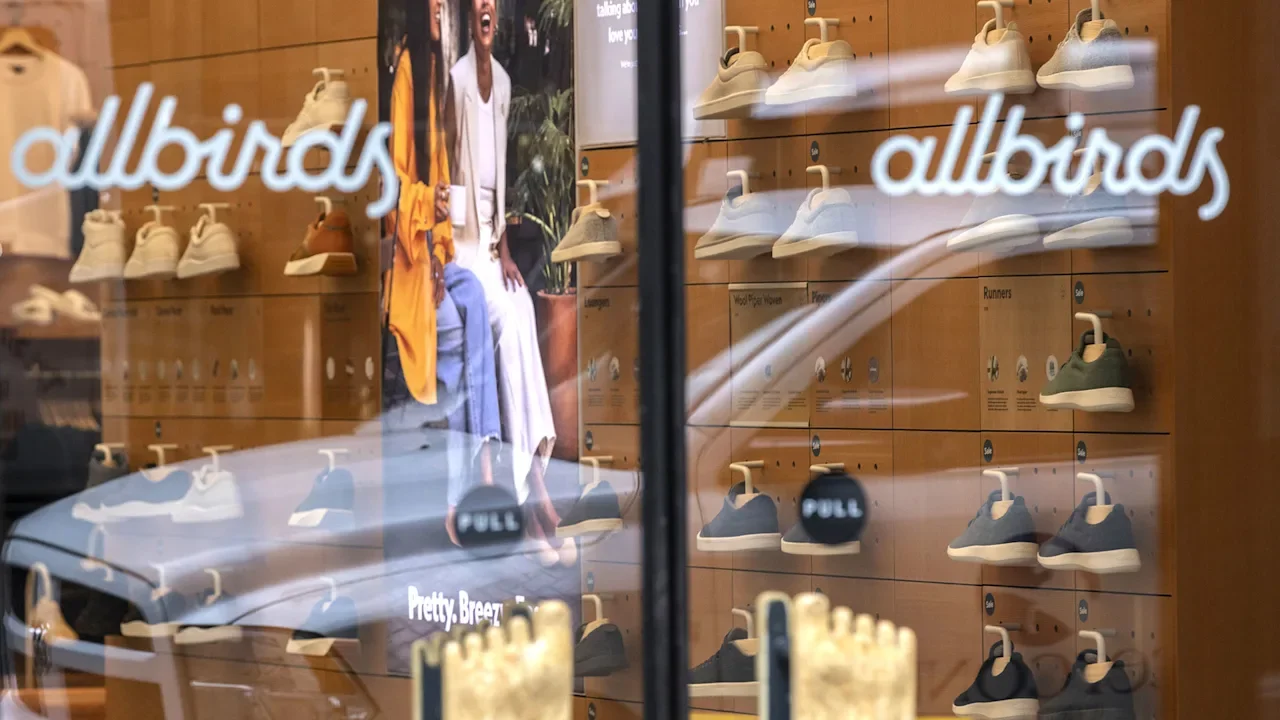
AllBirds Inc. was valued at $4 billion less than five years ago. Now, it will be sold for just $39 million. The shoe company on Monday announced a definitive agreement with American Exchange Group (AXNY), which involves selling all of its intellectual property, assets, and liabilities. Privately held AXNY owns a number of brands, including Aerosoles, Ed Hardy, and Jonathan Adler. “We are incredibly thankful to our teams for the work they have been doing to fuel our product engine, build awareness of Allbirds and deliver an engaging customer experience,” Allbirds CEO Joe Vernachio said in a statement. The sale has already been approved by Allbirds’ board of directors, but still requires the go ahead from the company’s common stockholders. Allbirds plans to file its request for stockholder approval by April 24, complete the transaction in the second quarter, and distribute a yet-to-be-determined amount of net proceeds to stockholders in the third quarter. Vernachio continued: “Over the past decade, Allbirds has evolved into a lifestyle footwear brand known for modern design, innovative materials and unparalleled comfort. This next chapter with AXNY builds on the foundational work already completed and sets up the brand to thrive in the years ahead.” What’s next for Allbirds on the Nasdaq? The company will no longer release its quarterly earnings press release or hold a related call on Tuesday, March 31. Instead, Allbirds will solely file its 2025 annual report with the U.S. Securities and Exchange Commission (SEC). On Monday, shares of Allbirds (Nasdaq: BIRD) closed 6.29% down. Following the sale announcement, shares rose more than 20% in after-hours trading. In Tuesday’s premarket, shares of Allbirds were still up more than 17%. Allbirds stock cratered post-COVID, and never really recovered. In 2024, the company had to do a reverse stock split (1-for-20) in order to keep Nasdaq’s minimum bid price and avoid delisting. How did Allbirds fall so far? Allbirds was a phenomenon in 2021 when it made its $4 billion IPO. Founded in 2015, the company promised—and delivered—comfortable shoes for everyone. But, it also tried to expand into apparel, finding less success in that market. Allbirds has also faced the same problems that many apparel and retail brands face: reduced foot traffic and tighter purse strings. In 2023 cofounder Tim Brown stepped down as co-CEO. His partner Joey Zwillinger followed suit the following year. Vernachio took on the role of CEO after holding the position of COO since 2021. Store closures accompanied the change. In January, Allbirds announced that it would shutter almost all of its brick-and-mortar stores. Allbirds has recently been funding its operations, in part, through borrowings in its credit agreement. In 2025, the company had a net loss of $77.3 million and used $55.1 million in net cash for operating activities. At the end of the year, Allbirds had $26.7 million between its cash and cash equivalents, with $17.4 million outstanding in its credit agreement. In an SEC filing, the company said it “does not expect to continue its operations” once the sale is complete. View the full article
-
If you’re looking to boost sales, excelling in upselling and cross-selling techniques is crucial. These strategies not just increase average order value but additionally improve customer satisfaction. By employing methods like creative product bundling, personalized recommendations, and limited-time offers, you can better meet customer needs as you drive revenue. Comprehending how to segment your customer base and suggest complementary products can further refine your approach. Ready to explore these techniques in detail? Key Takeaways Utilize creative product bundling to increase average order values by combining popular items and offering discounts. Recommend complementary products during checkout to capitalize on buying intent and enhance average order value. Implement personalized recommendations based on customer purchase history to drive targeted upselling and cross-selling. Use clear comparison charts to highlight differences between standard and premium products, guiding customers toward higher-priced options. Run limited-time discount programs to create urgency and encourage customers to spend more, boosting overall sales. Employ Creative Product Bundling Techniques When you consider upselling and cross-selling, employing creative product bundling techniques can greatly improve your sales strategy. Product bundling combines complementary items into a single package, often at a discounted price, which can increase average order values by 25-30%. You can utilize upselling strategies like pure bundling, where products are only sold as a set, or mixed bundling, allowing customers to choose their combinations. Seasonal bundling can create urgency during peak shopping periods, driving sales effectively. Furthermore, offering discounts on bundled products boosts perceived value, making customers more likely to purchase bundles instead of individual items. Platforms like Amazon exemplify these effective upselling techniques. Finally, consider clearance bundling to target slow-moving inventory by pairing those items with popular products, helping you move stock while still providing attractive offers to customers. Leverage User-Generated Content Using user-generated content (UGC) can greatly improve your upselling and cross-selling strategies. By showcasing customer reviews, testimonials, and social media posts, you provide social proof that reassures potential buyers about the value of premium products or complementary items. For instance, when customers see real-life applications of products through UGC, it encourages them to contemplate additional purchases, enhancing how to upsell effectively. Incorporating UGC can lead to a remarkable 29% increase in engagement with product recommendations, as it connects directly with your audience’s experiences. This engagement is vital for implementing upselling cross-selling techniques, as it nurtures a sense of community and trust. Brands utilizing UGC have experienced a 20% sales increase, demonstrating its influence in enhancing customer loyalty. Overall, leveraging UGC not just boosts conversion rates but additionally creates an environment ripe for upselling examples and increased customer lifetime value. Segment Your Customer Base Segmenting your customer base is essential for effective upselling and cross-selling. Understand Shopping Goals Understanding shopping objectives is vital for effective upselling and cross-selling, and segmenting your customer base is a key strategy to achieve this. By categorizing customers based on demographics, purchase history, and behavior, you can create customized recommendations that align with their individual goals. This targeted approach not only improves the relevance of your offers but also boosts conversion rates. Utilizing Customer Relationship Management (CRM) data allows you to track preferences, enabling personalized strategies that can increase customer lifetime value by 20% to 40%. Research indicates that customized recommendations can lead to a 42% increase in revenue from both new and existing customers, highlighting the importance of recognizing and addressing distinct shopping objectives within your customer segments. Analyze Purchase History Analyzing purchase history is a crucial step in effectively segmenting your customer base. By reviewing past purchases, you can identify customer preferences, allowing for customized upselling and cross-selling recommendations that greatly boost conversion rates. Segmenting customers based on their purchase history has been shown to increase customer lifetime value by 20%-40%, as personalized offers resonate more with targeted groups. Utilizing analytics tools helps uncover patterns in buying behavior, informing product bundling strategies that improve average order value. Furthermore, leveraging this data enables you to send personalized follow-up emails suggesting complementary products, resulting in a 10-20% increase in repeat sales. In the end, effective segmentation improves customer satisfaction and loyalty by providing relevant shopping experiences that meet individual needs. Tailored Marketing Strategies Comprehending your customer base is key to implementing customized marketing strategies that improve upselling and cross-selling opportunities. Segmenting your customers based on demographics, purchase history, and behavior lets you create more relevant product recommendations. Research shows that personalized strategies can increase transaction rates six-fold, emphasizing the importance of segmentation for boosting sales. By utilizing Customer Relationship Management (CRM) data, you can identify distinct segments, allowing for targeted marketing campaigns. Offering personalized upsell and cross-sell options can raise your average order value by 10-30%, as customers are more inclined to respond to suggestions that resonate with them. Moreover, A/B testing different approaches within these segments helps refine your strategies, maximizing conversion rates and enhancing customer satisfaction effectively. Suggest Premium Products When you suggest premium products, it’s essential to highlight the differences between them and standard options, as this can clarify the added value for your customers. Using high-quality visuals and detailed descriptions helps them visualize the benefits, making it easier to see why an upgrade is worthwhile. Furthermore, enabling easy comparisons through charts can streamline the decision-making process, eventually leading to higher conversion rates. Highlight Product Differences Highlighting product differences is vital for effectively suggesting premium options to customers. By clearly outlining how premium products surpass standard offerings, you help customers recognize the value in upgrading. Here are three effective techniques to implement: Comparison Charts: Use side-by-side comparisons that showcase features and benefits, making distinctions clear and guiding customers toward premium choices. “Good, Better, Best” Strategy: Presenting products in tiers allows easy evaluation, often leading to a 30% increase in upsell conversions. Customer Testimonials: Highlight reviews that emphasize the superiority of premium options, as social proof can greatly boost consumer confidence and drive sales. Implementing these strategies can improve the upselling process and encourage customers to see the benefits of choosing premium products. Utilize High-Quality Visuals Utilizing high-quality visuals can greatly boost the effectiveness of upselling premium products. Studies show that professional images can increase conversion rates by 30%. Close-up images and lifestyle shots help customers visualize benefits, leading to a 24% higher success rate in upselling. Incorporating high-resolution images in comparison charts improves decision-making by clearly illustrating differences between premium and standard options. Additionally, brands using video content with high-quality visuals can increase engagement by up to 80%. Clear, appealing images can evoke emotional responses, increasing average order value by 25% during upselling. Visual Type Impact on Sales Key Benefit Professional Images +30% Conversion Rate Enhances perceived value Close-Up Shots +24% Upselling Success Improves product visualization Comparison Charts Aids Decision-Making Highlights product differences Video Content +80% Engagement Increases customer interaction Enable Easy Comparisons Offering clear and effective comparisons between standard and premium products can greatly improve your upselling strategy. By showcasing the differences in features and benefits, you empower customers to make informed choices. Here are three techniques to enable easy comparisons: Comparison Charts: Use visual charts on your product pages to outline key features side by side, helping customers see the value of premium options at a glance. High-Quality Images and Descriptions: Provide detailed images and descriptions for premium products, increasing perceived value and interest. Customer Reviews: Highlight testimonials particularly for premium offerings to build trust and confidence, encouraging more customers to contemplate the higher-priced alternatives. Implementing these techniques can greatly improve your upselling efforts and boost sales. Recommend Complementary Products Recommending complementary products is a potent strategy that can greatly improve the value of a customer’s primary purchase. By suggesting items that enrich the utility of what they’ve chosen, you can increase average order value by 25-30% and profits by 20%. Utilizing a “frequently bought together” approach on product pages encourages customers to reflect on additional purchases that complement their selections. Implementing third-party apps like Candy Rack can provide AI-driven recommendations, making it easier to offer relevant suggestions. Personalizing these recommendations based on a customer’s purchase history greatly boosts their appeal. Furthermore, highlighting complementary products during the checkout process can capitalize on the customer’s intent to buy, leading to higher conversion rates. This tactic not only increases sales but additionally improves customer satisfaction, as they feel they’re getting more value from their purchases. Run a Discount or Incentive Program Running a discount or incentive program can markedly boost your upselling efforts. By implementing structures like limited-time offers or loyalty rewards, you not only encourage customers to spend more but additionally improve their overall shopping experience. This approach not only increases average order value but also promotes customer retention, ultimately driving higher sales for your business. Incentive Program Benefits Incentive programs can greatly improve your sales strategy by creating compelling reasons for customers to make purchases. These programs not only encourage larger purchases but additionally boost customer loyalty. Here are three key benefits: Increased Average Order Value: Offering discounts on premium products can raise your average order value by up to 30%, as customers are more inclined to choose higher-value items. Improved Customer Engagement: Research shows that 70% of consumers are more likely to buy when offered a discount, making incentives an influential tool for driving sales. Urgency and Conversion Rates: Limited-time promotional discounts can create urgency, leading to a 200% increase in conversion rates during key sales events. Utilizing these strategies effectively can yield significant sales growth. Implementing Discount Structures When you implement a discount structure for upselling and cross-selling, you can greatly influence customer purchasing behavior and drive sales growth. Offering tiered discounts, like 10% off for purchases over $50 and 20% off for those over $100, motivates customers to add more items to their carts, increasing average order value. Limited-time promotions, such as flash sales, create urgency and can lead to substantial sales boosts, with some retailers seeing up to a 200% increase during these events. Furthermore, bundling products with discounts, like $10 off for complementary items, encourages larger purchases. Finally, incentive programs that reward customers for upselling and cross-selling efforts can improve retention, resulting in a 20% increase in repeat purchases. Track Sales and Send Related Offers via Mail Tracking sales and sending related offers via email is an effective strategy to improve customer engagement and drive additional revenue. By following up on customer purchases with personalized emails, you can increase the chances of additional sales by up to 20%. Here are three key techniques to implement: Segment Your Email List: Tailor your offers based on purchase history. This approach helps improve engagement rates and boosts conversion from your email campaigns. Automate Your Communication: Utilize tools and plugins to streamline the process of sending relevant upsell and cross-sell offers. Automation saves time and guarantees timely communication with customers. A/B Test Your Emails: Experiment with different subject lines and offers in your follow-up emails. This testing helps identify the most effective strategies for encouraging repeat purchases. Create Urgency With Limited-Time Offers Creating a sense of urgency with limited-time offers can greatly improve your upselling and cross-selling efforts. Implement countdown timers on your product pages, as studies show this can boost conversion rates by up to 200% during major sales events. Moreover, highlight these offers prominently at checkout to encourage immediate action, tapping into the fear of missing out (FOMO). Using real-time purchase notifications can likewise create urgency by showcasing popular items, prompting quicker buying decisions. Combine countdowns with stock counts to emphasize dwindling inventory, urging customers to act before products run out. Finally, promote time-limited discounts on upgrades or bundles, enhancing perceived value and encouraging customers to make purchases before the offer expires. Personalize Recommendations Based on Customer Behavior Customized recommendations based on customer behavior can greatly improve your sales strategy and boost the shopping experience. By analyzing browsing history and purchase patterns, you can customize product suggestions that resonate with your customers. This approach can increase conversions by up to 30%, while additionally raising customer lifetime value by 20-40%. Here are three effective strategies to personalize recommendations: Segment Your Customers: Utilize demographics and purchasing behaviors to create customized recommendations that meet specific needs and preferences. Strategic Placement: Display personalized suggestions on product pages and during checkout to maximize visibility and encourage additional purchases, potentially increasing average order value by 25-30%. Follow-Up Emails: Send targeted follow-up emails featuring recommendations based on previous purchases, which can lead to repeat purchases and notably higher open rates. Implementing these strategies can improve customer satisfaction and promote brand loyalty. Utilize AI-Driven Tools for Enhanced Recommendations As you look to improve your upselling and cross-selling strategies, leveraging AI-driven tools can be a transformative factor. These tools analyze customer behavior and purchase history to deliver personalized product recommendations, which can greatly improve conversion rates and customer satisfaction. By employing machine learning algorithms, AI recommendations provide real-time suggestions customized to individual preferences, increasing the relevance of your upselling and cross-selling efforts. Implementing these AI-driven strategies can lead to a 10-30% increase in average order value, as customers are more inclined to buy suggested complementary products. Retailers utilizing AI recommendation engines often see up to a 20% boost in sales, underscoring the effectiveness of personalized marketing. Additionally, AI tools can automate the product suggestion process, enabling you to scale your upselling and cross-selling initiatives efficiently while maintaining a high level of personalization. This approach guarantees you meet customer needs more effectively, eventually driving higher sales. Frequently Asked Questions What Strategies Can Be Used to Upsell and Cross-Sell? To effectively upsell and cross-sell, you can implement several strategies. First, consider product bundling, where complementary items are offered together at a discounted rate. Next, use personalized recommendations based on customer browsing history to improve relevance. Creating urgency with limited-time offers can greatly boost conversions. Incorporating social proof, like customer reviews, builds credibility, whereas strategic placements of upsell suggestions during the shopping process maximize visibility and effectiveness, increasing the likelihood of additional purchases. What Is the 10 3 1 Rule in Sales? The 10-3-1 rule in sales is a method designed to simplify customers’ decision-making. You start by presenting ten options, then narrow it down to three recommended choices, and finally guide the customer to select one product or service. This approach minimizes overwhelm, as research shows too many choices can lead to decision paralysis. What Is the 25% Rule of Thumb for Cross-Selling? The 25% Rule of Thumb for cross-selling suggests that businesses should encourage customers to buy additional items worth about 25% of their total purchase. This approach improves customer satisfaction by suggesting complementary products, thereby increasing the overall value of each transaction. By strategically positioning these recommendations during the shopping experience, retailers can effectively boost revenue. Following this rule can lead to increased profit margins and a more enjoyable shopping experience for customers. What Are the 5 P’s of Successful Selling? The 5 P’s of successful selling are Product, Price, Place, Promotion, and People. Product focuses on quality and features, ensuring it meets customer needs. Price involves setting competitive rates that reflect perceived value. Place addresses distribution channels, making products easily accessible. Promotion includes marketing tactics that communicate product benefits effectively. Finally, People highlight the importance of skilled sales personnel, who build relationships and trust, ultimately affecting customer decisions and enhancing sales performance. Conclusion Incorporating effective upselling and cross-selling techniques can greatly improve your sales strategy. By employing creative product bundling, leveraging user-generated content, and personalizing recommendations, you can engage customers more effectively. Furthermore, tracking sales and creating urgency through limited-time offers encourages further purchases. With proper staff training and the use of AI-driven tools, you’ll be well-equipped to boost your revenue. Implement these strategies consistently to see measurable advancements in your sales performance. Image via Google Gemini and ArtSmart This article, "10 Effective Techniques for Upselling and Cross-Selling to Boost Sales" was first published on Small Business Trends View the full article
-
If you’re looking to boost sales, excelling in upselling and cross-selling techniques is crucial. These strategies not just increase average order value but additionally improve customer satisfaction. By employing methods like creative product bundling, personalized recommendations, and limited-time offers, you can better meet customer needs as you drive revenue. Comprehending how to segment your customer base and suggest complementary products can further refine your approach. Ready to explore these techniques in detail? Key Takeaways Utilize creative product bundling to increase average order values by combining popular items and offering discounts. Recommend complementary products during checkout to capitalize on buying intent and enhance average order value. Implement personalized recommendations based on customer purchase history to drive targeted upselling and cross-selling. Use clear comparison charts to highlight differences between standard and premium products, guiding customers toward higher-priced options. Run limited-time discount programs to create urgency and encourage customers to spend more, boosting overall sales. Employ Creative Product Bundling Techniques When you consider upselling and cross-selling, employing creative product bundling techniques can greatly improve your sales strategy. Product bundling combines complementary items into a single package, often at a discounted price, which can increase average order values by 25-30%. You can utilize upselling strategies like pure bundling, where products are only sold as a set, or mixed bundling, allowing customers to choose their combinations. Seasonal bundling can create urgency during peak shopping periods, driving sales effectively. Furthermore, offering discounts on bundled products boosts perceived value, making customers more likely to purchase bundles instead of individual items. Platforms like Amazon exemplify these effective upselling techniques. Finally, consider clearance bundling to target slow-moving inventory by pairing those items with popular products, helping you move stock while still providing attractive offers to customers. Leverage User-Generated Content Using user-generated content (UGC) can greatly improve your upselling and cross-selling strategies. By showcasing customer reviews, testimonials, and social media posts, you provide social proof that reassures potential buyers about the value of premium products or complementary items. For instance, when customers see real-life applications of products through UGC, it encourages them to contemplate additional purchases, enhancing how to upsell effectively. Incorporating UGC can lead to a remarkable 29% increase in engagement with product recommendations, as it connects directly with your audience’s experiences. This engagement is vital for implementing upselling cross-selling techniques, as it nurtures a sense of community and trust. Brands utilizing UGC have experienced a 20% sales increase, demonstrating its influence in enhancing customer loyalty. Overall, leveraging UGC not just boosts conversion rates but additionally creates an environment ripe for upselling examples and increased customer lifetime value. Segment Your Customer Base Segmenting your customer base is essential for effective upselling and cross-selling. Understand Shopping Goals Understanding shopping objectives is vital for effective upselling and cross-selling, and segmenting your customer base is a key strategy to achieve this. By categorizing customers based on demographics, purchase history, and behavior, you can create customized recommendations that align with their individual goals. This targeted approach not only improves the relevance of your offers but also boosts conversion rates. Utilizing Customer Relationship Management (CRM) data allows you to track preferences, enabling personalized strategies that can increase customer lifetime value by 20% to 40%. Research indicates that customized recommendations can lead to a 42% increase in revenue from both new and existing customers, highlighting the importance of recognizing and addressing distinct shopping objectives within your customer segments. Analyze Purchase History Analyzing purchase history is a crucial step in effectively segmenting your customer base. By reviewing past purchases, you can identify customer preferences, allowing for customized upselling and cross-selling recommendations that greatly boost conversion rates. Segmenting customers based on their purchase history has been shown to increase customer lifetime value by 20%-40%, as personalized offers resonate more with targeted groups. Utilizing analytics tools helps uncover patterns in buying behavior, informing product bundling strategies that improve average order value. Furthermore, leveraging this data enables you to send personalized follow-up emails suggesting complementary products, resulting in a 10-20% increase in repeat sales. In the end, effective segmentation improves customer satisfaction and loyalty by providing relevant shopping experiences that meet individual needs. Tailored Marketing Strategies Comprehending your customer base is key to implementing customized marketing strategies that improve upselling and cross-selling opportunities. Segmenting your customers based on demographics, purchase history, and behavior lets you create more relevant product recommendations. Research shows that personalized strategies can increase transaction rates six-fold, emphasizing the importance of segmentation for boosting sales. By utilizing Customer Relationship Management (CRM) data, you can identify distinct segments, allowing for targeted marketing campaigns. Offering personalized upsell and cross-sell options can raise your average order value by 10-30%, as customers are more inclined to respond to suggestions that resonate with them. Moreover, A/B testing different approaches within these segments helps refine your strategies, maximizing conversion rates and enhancing customer satisfaction effectively. Suggest Premium Products When you suggest premium products, it’s essential to highlight the differences between them and standard options, as this can clarify the added value for your customers. Using high-quality visuals and detailed descriptions helps them visualize the benefits, making it easier to see why an upgrade is worthwhile. Furthermore, enabling easy comparisons through charts can streamline the decision-making process, eventually leading to higher conversion rates. Highlight Product Differences Highlighting product differences is vital for effectively suggesting premium options to customers. By clearly outlining how premium products surpass standard offerings, you help customers recognize the value in upgrading. Here are three effective techniques to implement: Comparison Charts: Use side-by-side comparisons that showcase features and benefits, making distinctions clear and guiding customers toward premium choices. “Good, Better, Best” Strategy: Presenting products in tiers allows easy evaluation, often leading to a 30% increase in upsell conversions. Customer Testimonials: Highlight reviews that emphasize the superiority of premium options, as social proof can greatly boost consumer confidence and drive sales. Implementing these strategies can improve the upselling process and encourage customers to see the benefits of choosing premium products. Utilize High-Quality Visuals Utilizing high-quality visuals can greatly boost the effectiveness of upselling premium products. Studies show that professional images can increase conversion rates by 30%. Close-up images and lifestyle shots help customers visualize benefits, leading to a 24% higher success rate in upselling. Incorporating high-resolution images in comparison charts improves decision-making by clearly illustrating differences between premium and standard options. Additionally, brands using video content with high-quality visuals can increase engagement by up to 80%. Clear, appealing images can evoke emotional responses, increasing average order value by 25% during upselling. Visual Type Impact on Sales Key Benefit Professional Images +30% Conversion Rate Enhances perceived value Close-Up Shots +24% Upselling Success Improves product visualization Comparison Charts Aids Decision-Making Highlights product differences Video Content +80% Engagement Increases customer interaction Enable Easy Comparisons Offering clear and effective comparisons between standard and premium products can greatly improve your upselling strategy. By showcasing the differences in features and benefits, you empower customers to make informed choices. Here are three techniques to enable easy comparisons: Comparison Charts: Use visual charts on your product pages to outline key features side by side, helping customers see the value of premium options at a glance. High-Quality Images and Descriptions: Provide detailed images and descriptions for premium products, increasing perceived value and interest. Customer Reviews: Highlight testimonials particularly for premium offerings to build trust and confidence, encouraging more customers to contemplate the higher-priced alternatives. Implementing these techniques can greatly improve your upselling efforts and boost sales. Recommend Complementary Products Recommending complementary products is a potent strategy that can greatly improve the value of a customer’s primary purchase. By suggesting items that enrich the utility of what they’ve chosen, you can increase average order value by 25-30% and profits by 20%. Utilizing a “frequently bought together” approach on product pages encourages customers to reflect on additional purchases that complement their selections. Implementing third-party apps like Candy Rack can provide AI-driven recommendations, making it easier to offer relevant suggestions. Personalizing these recommendations based on a customer’s purchase history greatly boosts their appeal. Furthermore, highlighting complementary products during the checkout process can capitalize on the customer’s intent to buy, leading to higher conversion rates. This tactic not only increases sales but additionally improves customer satisfaction, as they feel they’re getting more value from their purchases. Run a Discount or Incentive Program Running a discount or incentive program can markedly boost your upselling efforts. By implementing structures like limited-time offers or loyalty rewards, you not only encourage customers to spend more but additionally improve their overall shopping experience. This approach not only increases average order value but also promotes customer retention, ultimately driving higher sales for your business. Incentive Program Benefits Incentive programs can greatly improve your sales strategy by creating compelling reasons for customers to make purchases. These programs not only encourage larger purchases but additionally boost customer loyalty. Here are three key benefits: Increased Average Order Value: Offering discounts on premium products can raise your average order value by up to 30%, as customers are more inclined to choose higher-value items. Improved Customer Engagement: Research shows that 70% of consumers are more likely to buy when offered a discount, making incentives an influential tool for driving sales. Urgency and Conversion Rates: Limited-time promotional discounts can create urgency, leading to a 200% increase in conversion rates during key sales events. Utilizing these strategies effectively can yield significant sales growth. Implementing Discount Structures When you implement a discount structure for upselling and cross-selling, you can greatly influence customer purchasing behavior and drive sales growth. Offering tiered discounts, like 10% off for purchases over $50 and 20% off for those over $100, motivates customers to add more items to their carts, increasing average order value. Limited-time promotions, such as flash sales, create urgency and can lead to substantial sales boosts, with some retailers seeing up to a 200% increase during these events. Furthermore, bundling products with discounts, like $10 off for complementary items, encourages larger purchases. Finally, incentive programs that reward customers for upselling and cross-selling efforts can improve retention, resulting in a 20% increase in repeat purchases. Track Sales and Send Related Offers via Mail Tracking sales and sending related offers via email is an effective strategy to improve customer engagement and drive additional revenue. By following up on customer purchases with personalized emails, you can increase the chances of additional sales by up to 20%. Here are three key techniques to implement: Segment Your Email List: Tailor your offers based on purchase history. This approach helps improve engagement rates and boosts conversion from your email campaigns. Automate Your Communication: Utilize tools and plugins to streamline the process of sending relevant upsell and cross-sell offers. Automation saves time and guarantees timely communication with customers. A/B Test Your Emails: Experiment with different subject lines and offers in your follow-up emails. This testing helps identify the most effective strategies for encouraging repeat purchases. Create Urgency With Limited-Time Offers Creating a sense of urgency with limited-time offers can greatly improve your upselling and cross-selling efforts. Implement countdown timers on your product pages, as studies show this can boost conversion rates by up to 200% during major sales events. Moreover, highlight these offers prominently at checkout to encourage immediate action, tapping into the fear of missing out (FOMO). Using real-time purchase notifications can likewise create urgency by showcasing popular items, prompting quicker buying decisions. Combine countdowns with stock counts to emphasize dwindling inventory, urging customers to act before products run out. Finally, promote time-limited discounts on upgrades or bundles, enhancing perceived value and encouraging customers to make purchases before the offer expires. Personalize Recommendations Based on Customer Behavior Customized recommendations based on customer behavior can greatly improve your sales strategy and boost the shopping experience. By analyzing browsing history and purchase patterns, you can customize product suggestions that resonate with your customers. This approach can increase conversions by up to 30%, while additionally raising customer lifetime value by 20-40%. Here are three effective strategies to personalize recommendations: Segment Your Customers: Utilize demographics and purchasing behaviors to create customized recommendations that meet specific needs and preferences. Strategic Placement: Display personalized suggestions on product pages and during checkout to maximize visibility and encourage additional purchases, potentially increasing average order value by 25-30%. Follow-Up Emails: Send targeted follow-up emails featuring recommendations based on previous purchases, which can lead to repeat purchases and notably higher open rates. Implementing these strategies can improve customer satisfaction and promote brand loyalty. Utilize AI-Driven Tools for Enhanced Recommendations As you look to improve your upselling and cross-selling strategies, leveraging AI-driven tools can be a transformative factor. These tools analyze customer behavior and purchase history to deliver personalized product recommendations, which can greatly improve conversion rates and customer satisfaction. By employing machine learning algorithms, AI recommendations provide real-time suggestions customized to individual preferences, increasing the relevance of your upselling and cross-selling efforts. Implementing these AI-driven strategies can lead to a 10-30% increase in average order value, as customers are more inclined to buy suggested complementary products. Retailers utilizing AI recommendation engines often see up to a 20% boost in sales, underscoring the effectiveness of personalized marketing. Additionally, AI tools can automate the product suggestion process, enabling you to scale your upselling and cross-selling initiatives efficiently while maintaining a high level of personalization. This approach guarantees you meet customer needs more effectively, eventually driving higher sales. Frequently Asked Questions What Strategies Can Be Used to Upsell and Cross-Sell? To effectively upsell and cross-sell, you can implement several strategies. First, consider product bundling, where complementary items are offered together at a discounted rate. Next, use personalized recommendations based on customer browsing history to improve relevance. Creating urgency with limited-time offers can greatly boost conversions. Incorporating social proof, like customer reviews, builds credibility, whereas strategic placements of upsell suggestions during the shopping process maximize visibility and effectiveness, increasing the likelihood of additional purchases. What Is the 10 3 1 Rule in Sales? The 10-3-1 rule in sales is a method designed to simplify customers’ decision-making. You start by presenting ten options, then narrow it down to three recommended choices, and finally guide the customer to select one product or service. This approach minimizes overwhelm, as research shows too many choices can lead to decision paralysis. What Is the 25% Rule of Thumb for Cross-Selling? The 25% Rule of Thumb for cross-selling suggests that businesses should encourage customers to buy additional items worth about 25% of their total purchase. This approach improves customer satisfaction by suggesting complementary products, thereby increasing the overall value of each transaction. By strategically positioning these recommendations during the shopping experience, retailers can effectively boost revenue. Following this rule can lead to increased profit margins and a more enjoyable shopping experience for customers. What Are the 5 P’s of Successful Selling? The 5 P’s of successful selling are Product, Price, Place, Promotion, and People. Product focuses on quality and features, ensuring it meets customer needs. Price involves setting competitive rates that reflect perceived value. Place addresses distribution channels, making products easily accessible. Promotion includes marketing tactics that communicate product benefits effectively. Finally, People highlight the importance of skilled sales personnel, who build relationships and trust, ultimately affecting customer decisions and enhancing sales performance. Conclusion Incorporating effective upselling and cross-selling techniques can greatly improve your sales strategy. By employing creative product bundling, leveraging user-generated content, and personalizing recommendations, you can engage customers more effectively. Furthermore, tracking sales and creating urgency through limited-time offers encourages further purchases. With proper staff training and the use of AI-driven tools, you’ll be well-equipped to boost your revenue. Implement these strategies consistently to see measurable advancements in your sales performance. Image via Google Gemini and ArtSmart This article, "10 Effective Techniques for Upselling and Cross-Selling to Boost Sales" was first published on Small Business Trends View the full article
-
Part 3 of this analysis reveals what AI actually rewards in content, from entity types to structure, across seven verticals. The post The Science Of What AI Actually Rewards appeared first on Search Engine Journal. View the full article
-
RAM, short for random access memory, is the high-speed, short-term storage that allows computer programs to quickly access the information they need—it's a crucial component of nearly every electronic device we rely on every single day. The price of RAM has risen steeply since last fall, but there may be a bit of a break on the horizon. What's going on with the RAM shortage?Demand for RAM is soaring, in large part thanks to AI. As The Verge reports, companies like Google, Meta, OpenAI, and Anthropic are buying up memory for their data centers, leading to a severe shortage in availability from major memory suppliers for consumer products like laptops, smartphones, and gaming consoles. Meanwhile, other device makers have had to pay a lot more for storage, resulting in higher significantly costs to consumers and suspended or delayed orders on some items. Notably, the price of Sony's PlayStation 5 is jumping $100 on April 2, and the International Data Corporation (IDC) is forecasting a 13% drop in smartphone shipments this year due to the shortage, with smaller Android vendors expected to be hit hardest. AI contracts are highly lucrative for chip manufacturers like Samsung, SK Hynix, and Micron, who control 93% of the global RAM market. Both Samsung and SK Hynix began focusing on the production of high bandwidth memory specifically for these contracts, with some reporting suggesting that around 40% of global DRAM was devoted specifically to OpenAI's Stargate Project. Meanwhile, Micron announced it would end its consumer RAM production entirely in 2026. Are RAM prices going back down? As multiple outlets have noted, some RAM kits are down from their all-time highs, if only slightly: There are price drops of $30–$45 on memory that still costs $200–$400 compared to well under $100 less than a year ago. While the exact cause of the decline isn't known, there are a few factors that theoretically could be at play. One is Google's TurboQuant algorithm, which could reduce the memory demand for AI. Another is a series of shifts at OpenAI, which last week killed Sora, its AI video generation app, and earlier this month backed out of a data center expansion deal for the aforementioned Stargate Project. Consumers shouldn't get too excited just yet; analysts have predicted that the shortage could last through 2027 or longer. As for this latest shift, IDC's Francisco Jeronimo told The Telegraph that while it's too early to predict a sustained drop, the scaling back of AI contracts could alleviate memory prices for consumers down the line. View the full article