All Activity
- Today
-
April figure marks highest level in three years as effects of conflict reverberate through US economyView the full article
-
We may earn a commission from links on this page. Deal pricing and availability subject to change after time of publication. Google’s second-generation wired Nest Doorbell is down to $97.99 on Woot, a steep drop from its usual $179.99 price. That undercuts Amazon’s current price for a new unit by more than $80, and even beats Amazon’s refurbished listing by a couple of dollars, making this its lowest price ever, according to price trackers. Woot says the deal will last for two days or until stock runs out, and Prime members get free shipping while everyone else pays an extra $6. For anyone already using Google Home devices, this is one of the more approachable smart home upgrades in this price range, because the installation process and app setup are both fairly straightforward. Google Nest doorbell (wired, 2nd gen) $97.99 at Woot $179.99 Save $82.00 Get Deal Get Deal $97.99 at Woot $179.99 Save $82.00 This model needs to connect to your existing doorbell wiring, so you can’t mount it wherever you want, like the battery-powered version—but that also means you won’t have to worry about recharging it every few months like you would with the battery-powered version. Video quality is sharp at 1280x960 with HDR, and the night vision performs better than many cheaper doorbells, which turn dark footage into a blurry mess. During the day, it captures clear detail across a porch, sidewalk, and driveway area, while nighttime footage still makes people and packages easy to identify. Audio quality is also surprisingly solid. Conversations through the two-way speaker sound clear on both ends, and background noise from traffic or wind doesn’t completely overpower voices. Google also includes some genuinely useful smart detection features without immediately forcing a subscription. The doorbell can recognize people, packages, vehicles, animals, or general motion, and the alerts are more selective than you might expect. It can usually tell the difference between someone approaching your door and someone simply walking down the sidewalk across the street. That said, the biggest downside is Google’s free cloud storage window—event recordings stay available for three hours unless you pay for a Google Home subscription, which starts at $10 per month. Also, its field of view is narrower than some competing doorbells, especially if your existing wiring places the camera too close to the wall or door frame, notes this CNET review. Our Best Editor-Vetted Tech Deals Right Now Apple AirPods Pro 3 Noise Cancelling Heart Rate Wireless Earbuds — $229.00 (List Price $249.00) Apple Watch Series 11 [GPS 46mm] Smartwatch with Jet Black Aluminum Case with Black Sport Band - M/L. Sleep Score, Fitness Tracker, Health Monitoring, Always-On Display, Water Resistant — $329.00 (List Price $429.00) Apple iPad 11" A16 128GB Wi-Fi Tablet (Silver, 2025) — $319.99 (List Price $349.00) Shark AV2501AE AI XL Hepa- Safe Self-Emptying Base Robot Vacuum — $299.99 (List Price $649.99) Dell 15 DC15250 (Intel Core i7 13th Gen, 512GB SSD, 8GB RAM, Touch Display) — $599.99 (List Price $839.99) Deals are selected by our commerce team View the full article
-
Today, Spotify is releasing some never-before-seen data to users—and it’s coming in a format that looks strikingly familiar. To celebrate its 20-year anniversary, Spotify is launching Your Party of the Year(s), an in-app experience designed to hit users with a blast of nostalgia by walking them through highlights of their own user journey with the app, including their first song ever streamed. The format is a click-through, interactive infographic, and it looks a whole lot like Spotify Wrapped. Since it debuted in 2014, Wrapped has become a core pillar of Spotify’s business. In 2025, more than 300 million users engaged with the launch, up 20% from 2024. And that’s not even counting the free promo that Spotify raked in as a result: The campaign inspired 630 million shares across social media, up 42% year-over-year. In a February earnings call, Spotify co-CEO Alex Norström revealed that day one of last year’s Wrapped marked the highest single day of premium subscriber intake in Spotify history. Today, Wrapped is such a golden goose in the marketing world that countless other companies have tried to dupe the format, with varying degrees of success (looking at you, LinkedIn). Its success comes in large part due to the anticipation that builds around the campaign, which rolls out only once a year—in December—to celebrate users’ year in music. Your Party of the Year(s) feels like the closest Spotify has ever come to a Wrapped-inspired experience outside of end-of-year—and, for Spotify’s executive team, it’s part of a delicate balance between bringing learnings from Wrapped into the rest of the year and ensuring that Wrapped remains its own distinct brand moment. What to know about Your Party of the Year(s) Last year, Wrapped 2025 embraced a retro, scrapbook-inspired aesthetic as a response to fans’ negative response to its more techy, AI-centric experience in 2024. Your Party of the Year(s) seems to be taking a similarly analog-looking approach: The whole experience is designed to look like a homemade (if very artistically crafted) birthday letter. Jeremy Wirth, Spotify’s global executive creative director, says his team took inspiration from the early days of Spotify. “A lot of us behind the campaign lived the party night subculture of the early aughts. It was important to pay homage to 2006, the year Spotify was founded, so we referenced the iconography and typography of DIY party flyers,” he says. “We then combined that handmade design language with the photography style that defined the indie sleaze era—high flash dance floor candids.” The experience opens with an animation of a wax seal—featuring the Spotify logo, of course—parting to reveal a home page with big, blocky text and a smattering of gold stars, like the kind you’d be awarded in elementary school. From there, the platform takes you on a glitzy romp down memory lane, starting with your first day on the app and moving on to a quiz about your first-ever song; your most-streamed artist of all time; and a playlist of 120 of your top-listened-to songs. Each slide is decorated with tinsel cut-outs, disco tiles, and colorful confetti. And, of course, several of the key slides are designed to be shared directly to socials. In all, Your Party of the Year(s) is clearly a lower lift than Wrapped in terms of design and scope, but it’s drawing users in by sharing personal data that the company has never revealed before. Can Your Party of the Year(s) shine without dimming Wrapped’s sparkle? Your Party of the Year(s) is guaranteed to drive new engagement, user-generated content (UGC), and subscriptions for Spotify. It might seem like a no-brainer for Spotify to start rolling out more Wrapped-style experiences like these—except, at a macro level, the brand runs the risk of diluting Wrapped’s impact by over-saturating its audience with data storytelling. According to Mark Hazan, Spotify’s SVP of marketing and partnerships, the brand doesn’t take a launch like Your Party of the Year(s) lightly. Any personalization experience at Spotify is measured against one key goalpost: It has to feel like a “genuine gift” to fans, not just a data showcase. “Our 20th anniversary felt like a once-in-a-generation occasion. The kind of milestone that genuinely warranted doing something we’d never done before outside of Wrapped,” Hazan says. “We were very deliberate in how we designed this experience so it would feel truly distinct: less about what defined a year, and more about the broader, personal story of a listener’s entire time on Spotify.” On the design side, Wirth’s team intentionally made Your Party of the Year(s) visually distinct from Wrapped, opting for several unique choices like full-bleed photography and stop-motion animation to give the experience its own look and feel. The result is more intentionally imperfect than Wrapped’s dialed-in aesthetic to lean into the nostalgia of 2006. Wirth says his team also chose to highlight only stats that would work in the context of an all-time retrospective—offering them a peek behind Spotify’s data curtain that even Wrapped has never pulled back. More broadly, Spotify has been working in recent months to incorporate more and more permanent in-app features that directly capitalize on users’ clear desire for personalization. These include AI-prompted playlists, a concept called Taste Profile that would let users control how Spotify understands their listener profile; and listening stats, which give users a bite-sized look at their week in music. The features bring learnings from Wrapped into the app without stealing the annual experience’s spotlight. “While we will always protect the magic of Wrapped, we also know that users want to learn more about their listening data—so, we’ve found fun new ways to package it up for them,” Hazan says. View the full article

-
After a rough start to the year, America’s four major publicly traded quantum computing companies are surging once again. The latest rally kicked off about a month ago, right around World Quantum Day, and since then, all four quantum computing companies—D-Wave Quantum Inc. (NYSE: QBTS), IonQ, Inc. (NYSE: IONQ), Quantum Computing Inc. (Nasdaq: QUBT), and Rigetti Computing, Inc. (Nasdaq: RGTI)—have recovered much of their 2026 losses. And today, their stocks are up even more. Here’s why. Quantum stocks are finally reversing their bad start to 2026 America’s so-called Quantum Four publicly traded companies saw an incredible year of stock gains in 2025. But in the first part of 2026, investor sentiment soured. Some of this was likely due to simple profit-taking after a stellar run and a little post-high clarity that while quantum computing may be the future of computing, that future is still years away. And of course, external factors, including geopolitical uncertainty, AI bubble fears, and generalized anxiety about the economy, also helped pull down quantum stocks (as with most other tech stocks). But in the last month, the fortunes of quantum stocks began to turn. As Fast Company previously reported, this all started around World Quantum Day in mid-April. And that April rally is now continuing into May. As of this writing, all four quantum computing companies are seeing their stock prices jump yet again in premarket trading, including: D-Wave Quantum Inc. (NYSE: QBTS): up almost 7% IonQ, Inc. (NYSE: IONQ): up 4.5% Quantum Computing Inc. (Nasdaq: QUBT): up 24% Rigetti Computing, Inc. (Nasdaq: RGTI): up 5% Keep in mind, those premarket gains are in addition to gains seen over the the previous five trading sessions. Since that time, Rigetti is up nearly 16%, Quantum Computing Inc is up over 7%, IonQ is up over 24%, and D-Wave is up nearly 15%. Why have the Quantum Four surged so much over the past week? It’s quantum earnings season The most significant reason why quantum stocks are surging recently is that we are in quantum earnings season, when all four major quantum computing companies report their latest results—and those results have been good. IonQ kicked off the quantum earnings season last week, reporting its Q1 2026 results on May 6. The company reported a staggering 755% year-over-year revenue growth. Rigetti and Quantum Computing Inc. were up next, with both companies reporting their Q1 2026 results yesterday, May 11. Rigetti reported revenue growth of 193% year over year, while Quantum Computing Inc. posted an astronomical revenue growth of over 9,300% year over year for its Q1. Finally, this morning, D-Wave reported its Q1 results. While the company’s revenue actually declined 81% year over year, it reported Q1 bookings of $33.4 million—a growth of 1,994% versus Q1 2025 bookings. “Bookings” are signed contracts for future business, and surging bookings signify that the company’s business dealings are picking up pace. A long road ahead Despite the recent stock price surge in all four quantum companies, the firms and the technology have a long road ahead before quantum computing represents as big a shift in the technology landscape as AI does today. Many experts believe that the widespread use of quantum computers will not arrive until the mid-2030s at the earliest. However, when it does, the shift in computing has the possibility to upend everything from communications to national security, and the companies operating at the center of that shift stand to gain the most. For now, before today’s premarket gains, three of the four Quantum Four had stock prices in the red year-to-date, including Rigetti (down 7.4%), Quantum Computing Inc. (down 0.78%), and D-Wave (down 8.1%). Only IonQ was positive for the year, up a respectable 26.7%. View the full article

-
We may earn a commission from links on this page. If you find a tick on yourself, it’s totally normal to want to climb out of your skin and burn it and live your life with your bones and muscles on display. Since I wasn't able to do that the last time I tried, I’m glad to report there is a safe, effective, hands-off way to remove the tick from your skin. More than one, in fact. Put down the matches, though. And the soap, and the alcohol. Those can make a tick release itself, but they also make the tick vomit its stomach contents into your bloodstream. That’s gross and it increases your risk of catching tick-borne diseases like Lyme. Instead, you need specialized equipment. Get your hands on it now, before you need it. You have several options, and they’re all under $10 each. Original Tick Key for Tick Removal 3 Pack (Multi Color) $20.49 at Amazon Get Deal Get Deal $20.49 at Amazon I prefer the Tick Key. I have actually used this one in real life, while freaking out just a little (I respect arachnids and insects as important parts of the ecosystem but I really do not enjoy touching them) and it’s pretty easy. You put the large end of the keyhole over the tick, then just slide it over so the tick gets wedged into the small end. That’s it. Doing this removes the tick. If you do it right, pressing down into the skin, you can remove the whole creature. If you’re a bit skittish, like me, you might end up leaving the mouthparts buried in the skin. But at that point they’re not attached to a living breathing monster, so it’s really no biggie. The mouthparts are very very tiny, and they’ll work their way out as the bite heals. Once the tick is off your skin, your job is done. Tick Twister Tick Remover for Dogs and Humans $7.99 at Amazon Get Deal Get Deal $7.99 at Amazon My vet prefers the Tick Twister, which is easier to use without fur getting in the way. You slide the forked part around the tick, then twist until it pops off. There are other brands, like the Ticked Off, that work in similar ways. You can also, if you’re not too squeamish, grab the lil guy close to the skin with fine-tipped tweezers. (Either special tick tweezers or just a regular pair that’s pointy enough). When you’ve got the tick, you can drop it into a jar of alcohol to make sure it’s good and dead. I usually put it in a baggie, so it can’t crawl away, and drop it in the trash; sandwiching it in masking tape is another reasonable approach. Finally, try to stop this from happening ever again by checking yourself for ticks every day. A shower is pretty good at washing the little guys off before they get a chance to attach. If you’ve just finished a hike and worry that you’re crawling with the things, give yourself a few swipes with a lint roller to tide you over until shower time. View the full article
-
Wikipedia was once widely considered an unreliable source. Today, however, it’s often treated as a credible reference point because of its extensive citations and collaborative editing process. It’s also one of the primary sources AI search systems rely on. Alongside Reddit, Wikipedia heavily influences the information surfaced by ChatGPT and Google. The downside to this is that Wikipedia isn’t always foolproof. Negative or outdated information often persists on certain pages for months or even years. That information is then funneled back into AI search systems and relayed to users. This creates a feedback loop where outdated or negative narratives can gain long-term visibility and credibility across AI search platforms. So, how does one navigate the scenario when negative information ends up on Wikipedia? How content ends up on Wikipedia One of the main criteria of getting information on Wikipedia is verifiability. Media outlets and Wikipedia users verified by the platform itself are often the main providers of content. For instance, respected third-party outlets such as news organizations and scientific journals are often the main sources. This leads to these outlets serving as gatekeepers of sorts. It also means that verifiability is sometimes prioritized on Wikipedia over pure accuracy of content. Unfortunately, media outlets don’t always achieve 100% accuracy in their reporting. Another issue is that Wikipedia’s editors are often decentralized volunteers. This means that content uploaded to the platform is often based on general consensus. The result is that there’s no central authority on Wikipedia that can quickly “fix” disputed content. Your customers search everywhere. Make sure your brand shows up. The SEO toolkit you know, plus the AI visibility data you need. Start Free Trial Get started with Why does negative and outdated information stick? Wikipedia openly acknowledges that controversies surround the platform. It even maintains a page documenting those disputes over the years. Negative or outdated information can persist for several reasons. In many cases, it also originates from a single high-profile news story or legal issue that continues to be cited long after the situation changes. Citations Wikipedia citations have extreme permanence. Once information is essentially backed by a “reputable” and verified source, removal from the platform becomes extremely difficult. Even information that has long since been disproven can remain on Wikipedia if it comes from a proper source. The echo chamber effect The web is a highly influential sphere. Wikipedia serves as both the influencer and the influenced in terms of absorbing and spewing information. Negative claims often circulate and reinforce themselves through Wikipedia — and this is only becoming more prominent with AI search platforms. Risk aversion Simply put, Wikipedia’s editors don’t want to be viewed as biased. This means they often avoid removing content from verified sources. Differing news coverage Negative stories often receive more coverage than positive ones. Corrections also tend to attract far less attention than the original reports, creating an imbalance in the sources Wikipedia relies on. Wikipedia’s role in AI search Wikipedia has become a major source for generative AI platforms, giving its content an added layer of credibility in AI-generated answers. ChatGPT and Google AI Overviews frequently condense information from Wikipedia and other sources, such as Reddit and news outlets, into simplified narratives. As a result, outdated controversies or disputed claims can quickly spread to large audiences. The issue is compounded by changing user behavior. Many users now rely on AI-generated summaries instead of clicking through to verify information themselves. Some estimates suggest roughly 40% don’t fact-check AI search results. That means when AI systems surface negative Wikipedia content, it can shape perception almost instantly. Get the newsletter search marketers rely on. See terms. How Wikipedia and AI disrupted a social media company My online reputation management company recently helped repair the image of a prominent marketing company. (For the sake of privacy, we’ll refer to them as Organization Z.) Organization Z faced plagiarism claims nearly a decade ago. These claims were eventually cleared and dismissed, with any hint of wrongdoing squashed. However, the claims appeared on Organization Z’s Wikipedia page, where they were labeled a “controversy.” Making matters worse was that far more attention was paid on Wikipedia to the apparent “controversy” than to the fact that Organization Z’s name was eventually cleared. AI search engines then began to pull this information directly from Wikipedia. When users searched for the brand online, they encountered terms such as “controversy” and “plagiarism” despite all claims having been dismissed. The controversy continued resurfacing online years after the claims had been dismissed. How to navigate negative content on Wikipedia Before diving into solutions, it’s important to understand what doesn’t work. Editing your own Wikipedia page creates a conflict of interest, and Wikipedia edits are closely monitored. You also can’t remove content without a strong policy-based justification, as the platform has strict standards around sourcing and removals. With that in mind, here is a practical, step-by-step framework many ORM specialists recommend for addressing negative or outdated Wikipedia content. 1. Perform an audit Identify the claims circulating on Wikipedia, along with the sources used. Outline any outdated references or integrity gaps. Determine whether the information on the page is still relevant and whether the coverage is fair and balanced. 2. Compare Wikipedia to current coverage Compare the Wikipedia page with how the brand, person, or issue is currently represented online. In this context, it’s the same step you would take while performing an AI narrative audit. Identify whether important context is missing, outdated, or overemphasized. The goal is to spot gaps between reality and the narrative Wikipedia presents. 3. Address the citations Now that you’ve identified mismatches and analyzed the sources Wikipedia is using, you can begin to address those citations. You’re not altering Wikipedia itself. You’re altering what Wikipedia cites. Aim to publish factual, positive content that reflects the current reality. Prioritize third-party mentions on reputable media outlets or in academic journals. 4. Strengthen positive, balanced coverage Build your brand image online with a specific focus on highlighting achievements and industry recognition. Make it clear that you’re a reputable voice in your industry, and Wikipedia will soon reflect that. See the complete picture of your search visibility. Track, optimize, and win in Google and AI search from one platform. Start Free Trial Get started with AI search raises the stakes Wikipedia remains a powerful source of information, but its reliance on citations and consensus can allow outdated or negative narratives to persist. That becomes more consequential when AI search engines amplify those narratives in generated answers. While brands can’t directly control what appears on Wikipedia, they can influence the sources that shape it. The key is to strengthen accurate, balanced coverage across reputable outlets and regularly audit how your brand appears online. View the full article
-
For a long time, we thought we were doing our part. Our firm gave generously, supported causes we believed in, and showed up when asked. But over time, it became clear that something was missing. Our giving wasn’t balanced. It was concentrated. It didn’t always reach far enough into the communities where we live and work. And it didn’t always invite everyone to take part. That realization led us to rethink how we engage—and why our Day of Giving program matters so deeply. MG2’s Day of Giving is not about a single project or a single group of people. It’s about participation. Once a year, every MG2 employee is invited to step away from their work and spend a day serving alongside colleagues in the community. Not as experts. Not as donors alone. But as neighbors, volunteers, and learners. This matters because community engagement shouldn’t belong to just one cohort of people, one office, or one level of leadership. It should include everyone. SHARED EXPERIENCES, SHARED VALUES Here’s how our program works: Each office or studio chooses a nonprofit organization to support, and employees spend a day—paid—onsite, helping out. Our activities this past year ranged from clearing brush, to preparing meals, to constructing homes, to painting murals—not the typical day for an architect, but a day that reflects the ethos of our firm to be community-based and, above all, helpful. When all employees are encouraged to participate—across roles, locations, and backgrounds—we begin to build something far more meaningful than a volunteer program. We build shared experiences. And those experiences extend to the people who live, work, and play in the spaces we design. Shared experiences reveal shared values. Working together at a food bank, restoring a trail, supporting families in a housing program, or cleaning up a neighborhood creates connection in a way meetings and emails never can. It reminds us why community work isn’t a side effort—it’s central to who we are and how we want to show up in the world. We also learned that writing checks alone isn’t enough. Time matters. Presence matters. Listening matters. Our Day of Giving is a commitment to all three. It’s a recognition that resilience grows when people are willing to engage directly and consistently—not just when it’s convenient, but because it’s necessary. That’s where stewardship comes in. We don’t just want volunteers for a day. We want stewards—people who care deeply, take responsibility, and inspire others to do the same. People like our former CEO Jerry Lee, whose example at MG2 shows us that leadership in community engagement isn’t about recognition; it’s about accountability and follow-through. Stewardship is contagious. When one person models it, others step forward. This approach mirrors how we think about our work as designers. Communities don’t thrive because of one building or one idea. They thrive when many people contribute, when spaces invite connection, and when responsibility is shared. The same is true of giving back. When everyone is invited in, everyone has a stake. And that’s how communities and companies grow stronger. Mitch Smith AIA, LEED AP, is the CEO and chairman of MG2, an affiliate of Colliers Engineering & Design. View the full article

-
Google is testing updating the Google Discover publisher pages by adding custom links, featured posts, larger header images and sharper logos. I assume this would be managed by claiming your page?View the full article
-
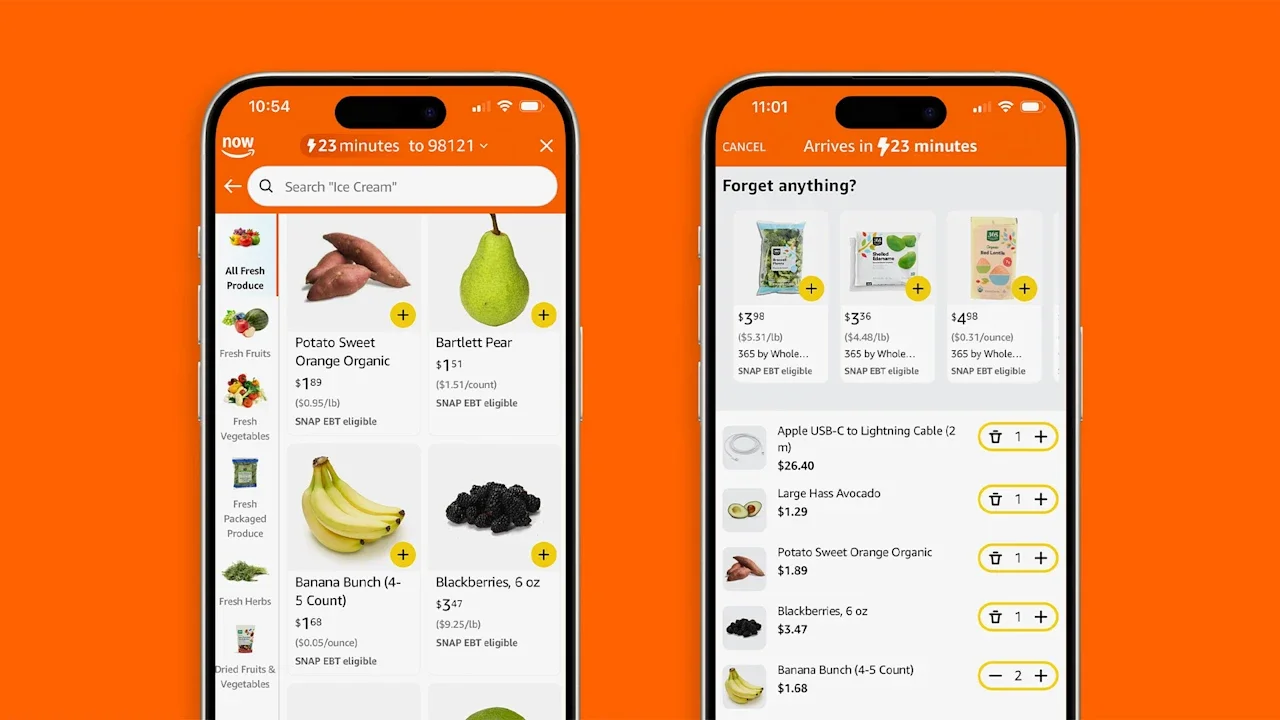
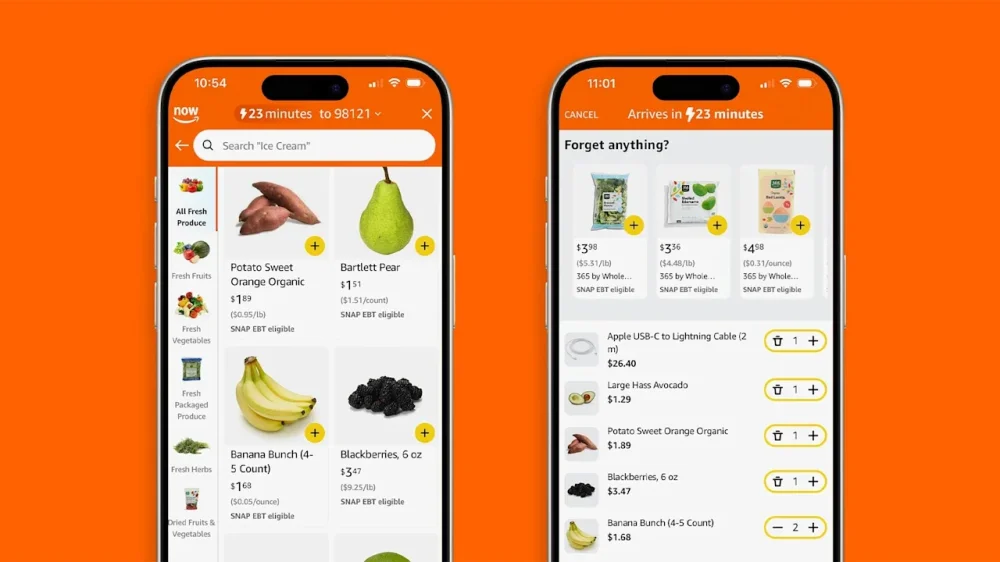
Back in March, Amazon announced new 1-hour and 3-hour delivery options for tens of thousands of items in over 2,000 cities across America. But now the e-commerce juggernaut is making those short wait times look relatively long. Starting today, the company is launching a 30-minute delivery service, dubbed Amazon Now, in several cities across the U.S. Here’s what you need to know. What is Amazon Now? Amazon Now will make thousands of Amazon’s products available for delivery within 30 minutes or less. It joins Amazon’s other existing fast delivery options in the United States. These include under 60-minute delivery with the company’s Prime Air drone service in eight cities, the 1-hour and 3-hour delivery options in more than 2,000 locations, and same-day delivery in more than 10,000 towns and cities. It is also Amazon’s latest salvo in making sure that when you need even the simplest item quickly, it may now be more convenient to order from Amazon instead of hopping in the car and driving to your local Walgreens 15 minutes away. Amazon says Now 30-minute deliveries are possible because they don’t rely on the larger Amazon fulfillment centers, which are often located outside of residential and business areas. Instead, the service utilizes “a network of smaller locations designed for efficient order fulfillment, strategically placed close to where customers live and work,” according to the company. Amazon says that in most areas where Now delivery is available, it operates 24 hours a day. What products are eligible for Amazon Now 30-minute deliveries? While 30-minute deliveries sound convenient, Amazon customers should understand that the Now delivery option is not available for every product Amazon sells. Instead, Now deliveries are limited to select products from certain categories. Those categories include: alcohol (where permitted) baby bakery dairy and eggs electronics fresh produce health personal care pet Where is Amazon Now available? Starting today, Amazon Now is available in only four cities/metro areas in America. They are: Atlanta Dallas-Fort Worth Philadelphia Seattle However, Amazon says the Now delivery option will be “rapidly expanding in dozens more cities.” These include: Austin Denver Houston Minneapolis Oklahoma City Orlando, Florida Phoenix Amazon says it expects to expand the Now service to other cities by the end of 2026. How much do Amazon Now deliveries cost? This is Amazon, so the extra convenience will cost you. Amazon has two pricing structures for its Now delivery option, depending on whether you are a Prime member. If you are a Prime member, an Amazon Now delivery will cost you $3.99 for orders over $15. If your order is under $15, an additional small-order fee of $1.99 will apply. If you are not a Prime member, an Amazon Now delivery will cost you $13.99 for orders over $15. If your order is under $15, an additional small-order fee of $3.99 will apply. View the full article
-
Two months ago, Google rolled out Google Merchant Center For Agencies in the US and Canada after beta testing it in October 2025. Now, Google has released Google Merchant Center for Agencies globally, everywhere.View the full article
-
Google is testing displaying the URL of the search result snippet where the https portion is a dark gray and the domain name portion is a light gray. It is a weird test, but hey, Google is always testing...View the full article
-
If you’re managing accounts payable, you know how vital it is to streamline processes and maintain accuracy. You might find that investing in accounts payable software can greatly improve efficiency and simplify your financial operations. With various options available, each customized to unique business needs, it’s important to explore which solution aligns best with your goals. Let’s examine the top ten accounts payable software solutions that can transform your approach to managing payments and invoices. Key Takeaways Tipalti: Offers extensive AP automation with support for global payments and tax compliance, ideal for businesses with international operations. AvidXchange: Tailored for mid-sized to large companies, featuring advanced invoice capture and streamlined payment processes. Coupa: Provides enterprise-grade spend management and procurement solutions, enhancing financial control and visibility for large organizations. Airbase: Combines accounts payable with corporate card management in a unified spend management platform for improved financial oversight. BILL: Designed for SMBs, it delivers a user-friendly, paperless accounts payable solution that integrates seamlessly with existing accounting software. Signs You Need an Accounts Payable Software If you find that manual processes are overwhelming your accounts payable (AP) team and leading to increased errors, it might be time to contemplate investing in accounts payable software. Frequent payment errors, such as duplicate or incorrect payments, can signal that your current system lacks the required checks and balances, making automation crucial. Furthermore, if you struggle with visibility into approval statuses and cash flow, this can hinder your decision-making and indicate the need for real-time insights that accounts payable software can provide. Legacy systems may complicate reconciliation and introduce audit risks, underscoring the significance of adopting modern solutions that easily integrate with existing systems. Finally, managing multiple entities or global vendors can overwhelm your team, highlighting the requirement for software designed to streamline diverse financial operations. Recognizing these signs can help you make informed decisions about upgrading your accounts payable processes. What Is Accounts Payable Software? Accounts payable software is a digital solution designed to automate the entire payment process for businesses, streamlining tasks that were once labor-intensive and prone to errors. This software improves efficiency by filtering, categorizing, matching, and validating critical accounting information. It integrates seamlessly with existing SAP systems, reducing manual tasks by up to 80% and greatly accelerating invoice processing times. Key functions include invoice processing, approval workflows, and cash disbursement reporting, which collectively enhance cash flow management. Additionally, these solutions improve visibility into approval statuses and cash flow, facilitating better financial decision-making and compliance management. By automating accounts payable processes, you can reduce errors and minimize the risk of duplicate or incorrect payments, eventually improving operational efficiency. When considering options, an accounts payable software comparison can help you identify which solution best meets your business needs, ensuring you make an informed choice for your financial operations. Must-Have Features in Modern AP Automation Software When choosing modern AP automation software, you’ll want to prioritize features that boost efficiency and accuracy in your accounts payable processes. Look for real-time automation capabilities that can streamline end-to-end workflows, cutting manual tasks by up to 80%. Crucial features include invoice scanning and approval routing, which improve data capture and speed up payment processing. Advanced modules should additionally offer self-service onboarding for vendors and strong fraud prevention tools to secure your transactions. Furthermore, reconciliation tools are vital, as they provide automatic payment reconciliation and greater visibility into your spending, helping maintain financial control. Finally, ascertain the software can scale with your business, allowing for the management of multiple entities and currencies as well as adhering to local regulations. When you perform an accounts payable automation software comparison, these must-have features could greatly impact your efficiency and accuracy. Overview of Leading Accounts Payable Software Solutions In today’s fast-paced business environment, selecting the right accounts payable (AP) software solution can greatly impact your financial operations. When considering accounts payable software for large business, a few leading options stand out: Tipalti: Offers extensive AP automation, supporting global payments and tax compliance, ideal for high-growth businesses. AvidXchange: Customized for mid-sized to large businesses, featuring advanced invoice capture and a robust supplier network for high invoice volumes. Coupa: Focuses on spend management and procurement, providing enterprise-grade controls and analytics for complex AP needs. Airbase: A unified spend management platform that integrates accounts payable with corporate cards, enhancing real-time visibility. BILL: Targets SMBs with user-friendly AP automation and seamless integration with accounting software like QuickBooks and Xero. Choosing the right solution can streamline your processes and improve overall efficiency. Tipalti Tipalti offers a thorough accounts payable automation solution designed to streamline your financial processes. With features like AI-driven invoice processing and advanced fraud prevention tools, it greatly reduces AP workloads and improves visibility into cash flow. Moreover, its seamless integration with existing ERP systems makes it an attractive choice for high-growth businesses looking to enhance operational efficiency. Key Features Overview Accounts payable processes can be greatly streamlined with Tipalti, which offers an all-encompassing automation solution that reduces workloads by up to 80%. This automated invoice management system improves efficiency through several key features, including: AI-based invoice automation for quicker processing Purchase order matching to guarantee accuracy Self-service supplier onboarding for faster integration Global payment support across 196 countries and 120 currencies Mass payments software for simplified employee reimbursements With these features, Tipalti not only enhances financial close times by 25% but additionally guarantees compliance with local regulations and tax requirements. As a result, you gain flexibility and control over your financial processes, making it a crucial tool for modern businesses. Integration Capabilities When businesses seek to improve their financial operations, the integration capabilities of Tipalti stand out as a crucial element. This cloud based accounts payable solution offers seamless live, two-way integrations with over 30 major ERP and accounting systems, automating the flow of invoice and expense data in real-time. By considerably reducing manual entry errors, Tipalti boosts data accuracy. Furthermore, its customizable integration options allow you to tailor workflows to meet specific operational needs, particularly for managing multi-entity and global supplier relationships. The platform likewise automates tax compliance processes, ensuring necessary tax forms and validations are collected in accordance with local regulations. With a centralized dashboard, you can monitor real-time financial data, raising visibility into cash flow and spending. Target User Base Many businesses, especially those experiencing rapid growth, find themselves in need of efficient accounts payable solutions that can handle complex financial demands. Tipalti primarily targets a diverse user base, including: High-growth small businesses Mid-market companies Large enterprises Accounts payable companies managing global payments Organizations with multi-entity operations This software is ideal for companies dealing with intricate tax compliance needs and multi-currency transactions. With the ability to facilitate payments in over 200 countries and across 120 currencies, Tipalti offers advanced features like self-service supplier onboarding and invoice matching. Airbase Airbase serves as a unified spend management platform that combines accounts payable, expense management, and corporate card functionalities, which is particularly beneficial for mid-market organizations. With real-time visibility into all non-payroll spending, you can easily upload or email invoices for streamlined approvals, enhancing your workflow efficiency. This automation not only decreases manual entry errors but likewise syncs transaction data directly to your general ledger, simplifying your accounting processes. Unified Spend Management Platform In today’s fast-paced business environment, having a unified spend management platform can greatly boost financial oversight and efficiency. Airbase integrates digital accounts payable, expense management, and corporate cards, offering real-time visibility into all non-payroll spending. Key features include: Easy invoice uploads or emails for streamlined processing Integrated approval workflows to improve payment efficiency Automated accounting that syncs transaction data to the general ledger Support for thousands of customers across over 100 countries A user-friendly interface with a G2 rating of 4.7 stars These features make Airbase an ideal solution for mid-market businesses seeking consolidated financial management, reducing manual entry errors as well as enhancing accuracy and overall operational efficiency. Real-Time Spend Visibility Real-time spend visibility is essential for effective financial management, and it allows businesses to monitor their expenses with precision. Airbase provides this by consolidating all non-payroll spending in a single system, making it easy for you to track expenses seamlessly. You can upload or email invoices directly, integrating approval workflows that give instant visibility into pending and completed transactions. With invoice processing automation, transaction data is continuously updated in the general ledger, enhancing financial accuracy and oversight. The platform likewise allows you to generate real-time insights on spending patterns and budget adherence, empowering you to make informed financial decisions. Its intuitive interface guarantees quick navigation, so you can access critical spend data without needing extensive training. Streamlined Invoice Approvals When managing invoices, the approval process can often become a bottleneck, delaying payments and complicating financial workflows. Airbase addresses these challenges with its streamlined invoice processing systems, enabling you to improve efficiency. Integrated approval workflows let you upload or email invoices easily. Gain real-time visibility into all non-payroll spending for better tracking. Automated accounting syncing reduces manual data entry and updates your general ledger. Accelerate invoice processing times through improved communication among team members. A user-friendly interface guarantees quick onboarding and minimal training needs. With Airbase, your invoice approval process becomes smoother, guaranteeing timely payments and less administrative burden, ultimately improving your overall financial management. AvidXchange AvidXchange offers an efficient accounts payable automation platform customized for mid-sized to large businesses that face the challenge of managing a high volume of invoices and payments. This accounts payable cloud solution features advanced invoice capture and approval workflows, streamlining your invoice processing. With a robust supplier network, you can make seamless electronic payments to suppliers while enjoying multiple payment options for increased flexibility. AvidXchange integrates smoothly with popular accounting systems, which improves efficiency and guarantees compliance with various industry regulations. It’s particularly beneficial for industries like construction, real estate, and utilities, where managing supplier relationships and compliance is vital. By focusing on improving operational efficiency, AvidXchange greatly reduces manual processing time and the costs associated with paper checks and manual invoice handling. This platform helps you optimize your accounts payable process, allowing you to focus on more strategic business activities. BILL BILL stands out as a versatile accounts payable and receivable automation platform customized for small to medium-sized businesses (SMBs), freelancers, and accounting firms. This paperless accounts payable software simplifies your financial workflows through automation and efficiency. Automated invoice approvals reduce manual tasks. Multiple payment methods streamline transactions. Seamless integration with popular accounting software like QuickBooks and Xero improves data synchronization. User-friendly interface allows easy management of AP processes, requiring minimal training. Optimized workflows improve accuracy and speed in financial operations. Coupa Coupa offers a robust solution for spend management and procurement, making it an excellent choice for large enterprises looking to optimize their accounts payable processes. This software leverages AI-driven insights to improve visibility and control over spending, ensuring compliance as well as reducing unnecessary costs. With its ability to integrate seamlessly with various ERP systems, Coupa enhances data accuracy and operational efficiency. Designed for scalability, it accommodates the complex accounts payable and procurement workflows of growing enterprises, allowing them to adapt to changing needs. Trusted by over 1,000 customers globally, including many Fortune 500 companies, Coupa has established a solid reputation in the enterprise software market. NetSuite AP NetSuite AP offers you real-time financial visibility and seamless integration with your existing ERP systems, which is essential for effective accounts payable management. By automating invoice processing and enabling features like two-way matching and automated approval workflows, you can streamline operations and reduce manual errors. This solution not only improves your cash management through insightful analytics but furthermore supports multi-entity management for global vendor payments, ensuring compliance with local regulations. Real-Time Financial Visibility In today’s fast-paced business environment, having real-time financial visibility is vital for effective decision-making. NetSuite AP, a paperless accounts payable system, empowers you with immediate access to important financial data. This enables you to make informed decisions swiftly. Here are some key features that improve your financial oversight: Monitor cash flow and financial performance in real time Track invoice processing times and outstanding payments Access customizable reports for budget tracking Automate manual processes to reduce errors Speed up month-end closing by viewing all transactions instantly With these tools, you can improve operational efficiency, accountability, and strategic planning, ensuring your organization remains competitive in a swiftly changing market. Seamless ERP Integration When organizations utilize seamless ERP integration, they release the full potential of their accounts payable processes. NetSuite AP, part of Oracle’s ERP suite, offers real-time visibility into cash flow and financial controls. This integration improves accuracy by automating invoice processing and linking accounts payable data with other financial systems. You can manage multiple entities and currencies efficiently from a single platform, boosting operational efficiency. The centralized dashboard allows for effective monitoring of spend and supports better budgeting decisions. Feature Benefit Impact Automated Invoice Processing Reduces manual errors Accelerates month-end closes Multi-Entity Management Handles subsidiaries seamlessly Simplifies financial oversight Centralized Dashboard Improves budgeting decisions Enhances spend monitoring With NetSuite AP, you’re optimizing your vendor payment management software for success. Frequently Asked Questions What Software Is Used for Accounts Payable? You can use various software for accounts payable, such as Tipalti, AvidXchange, and Airbase. These solutions automate invoice processing, payment approvals, and reconciliations, streamlining your business’s payment processes. Many integrate with existing ERP systems, ensuring data accuracy and real-time insights. Advanced features like Optical Character Recognition (OCR) and AI-driven fraud detection help minimize errors and risks, allowing you to manage your cash flow and vendor payments more effectively. Which Accounts Payable Automation Solution Is the Most Reliable? When evaluating which accounts payable automation solution is most reliable, consider factors like user ratings, functionality, and integration capabilities. Solutions like Nanonets, with its AI-driven accuracy, and Airbase, known for unified spend management, rank highly. Tipalti shines in global supplier management, whereas AvidXchange focuses on electronic payments for mid-sized businesses. Each option has strengths, so assess your specific needs to determine which solution aligns best with your operational requirements. What Is the Most Widely Used Accounting Software? The most widely used accounting software is QuickBooks, popular among small to medium-sized businesses because of its user-friendly interface and thorough features. Many users appreciate its ability to simplify financial management tasks, such as invoicing and expense tracking. An additional notable option is Xero, favored by startups for its cloud-based capabilities. Depending on your business size and needs, other solutions like Sage Intacct and FreshBooks may likewise be worthwhile to evaluate. Which Is the Best Software for Billing? When you’re looking for the best billing software, consider your specific needs. For thorough accounts payable automation and global payment capabilities, Tipalti might be your best choice. If you want unified spend management, Airbase shines in combining AP with expense tracking. For high-volume invoice processing, AvidXchange is worth exploring. BILL offers streamlined AP and AR processes, whereas Coupa provides AI-driven insights for large organizations seeking robust procurement solutions. Evaluate these options based on your requirements. Conclusion In summary, choosing the right accounts payable software is essential for enhancing your financial processes. Each solution, from Tipalti’s global payment capabilities to AvidXchange’s advanced invoice capture, offers unique features customized to different business needs. By comprehending the must-have functions and evaluating your options, you can streamline your accounts payable operations, reduce manual tasks, and improve financial visibility. Investing in the right software not just boosts efficiency but likewise supports your broader strategic financial goals. Image via Google Gemini and ArtSmart This article, "Top 10 Accounts Payable Software Solutions" was first published on Small Business Trends View the full article
-
A practical look at how SEOs and affiliate marketers can adapt payment models, brand positioning, and partnerships for AI-powered discovery. The post 3 Actionable Ways Affiliate Managers & SEOs Can Keep Relevant – Ask An SEO appeared first on Search Engine Journal. View the full article
-
Did you know that Bing Webmaster Tools treats http and https as the same property, it does not distinguish between http and https? This is different from Google Search Console, which lets you set up a property for each and every variation. View the full article
-
This article is republished with permission from Laser Wars, a newsletter about military laser weapons and other futuristic defense technology. On April 30, the Financial Times reported Israel had sent a version of its 100 KW Iron Beam high-energy laser weapon to the United Arab Emirates (UAE) to help Abu Dhabi fend off hundreds of missiles and drones fired by Iran since the beginning of the U.S. military’s Operation Epic Fury. The FT notes the deployment is one of the first examples of major defense cooperation between the two countries since the 2020 Abraham Accords—a display of “the value of being Israel’s friend,” according to a regional official. There is little information publicly available on Iron Beam’s performance in the UAE. But on May 7, Defence Blog reported a Chinese-made vehicle-mounted laser weapon had been spotted at Dubai International Airport. Tentatively identified as consistent with the Guangjian-21A system first displayed at the Zhuhai Airshow in 2022, there was no announcement of the system’s export from Beijing or an acknowledgement of its arrival in the country from Abu Dhabi. The sudden appearance of laser weapons in the UAE isn’t a total surprise: The government has previously expressed interest in procuring foreign directed- energy systems through both direct sales and strategic partnerships and even pushed to develop its own indigenous research and development ecosystem. But neither story mentioned that the Abu Dhabi was already in the process of acquiring an American laser weapon system as well. A notification to Congress published on April 15 revealed that the UAE had asked to buy 10 counter-drone Fixed Site-Low, Slow, Small Unmanned Aircraft Integrated Defeat Systems (FS-LIDS) from the U.S. Defense Department for $2.1 billion—and, notably, the system’s command and control (C2) architecture was being specifically scoped to integrate an unnamed laser weapon “being purchased” by Abu Dhabi through direct commercial sales. Three laser weapons. Two geopolitical blocs. One customer. This is the state of the global laser weapons race: a competitive, proliferating market where systems from rival powers increasingly coexist in the same inventory and even the same operational theaters. In September 2025, I wrote that the world was approaching a laser weapon inflection point. This analysis followed a week in which China unveiled its LY-1 shipborne laser weapon at a Beijing military parade, the United States delivered its first laser-armed Infantry Squad Vehicles to the U.S. Army, France ordered a new counter-drone laser demonstrator, and India tested its Integrated Air Defence Weapon System with a directed energy component. I concluded with a hedge: The winner of the global laser weapon arms race “won’t be a question of technological superiority, but who has the political will to make their directed energy dreams a reality.” If that week in September marked an inflection point, then the UAE’s expanding laser weapon arsenal is part of a larger global wave—one that doesn’t just answer the political will question, but raises another one that will define how directed energy weapons reshape the battlefield for years to come. In roughly four weeks across April and May, the pace of global laser weapon development reached a tempo that I haven’t seen since (and has arguably exceeded) since that inflection point analysis. On April 10, Germany’s Bundeswehr published an account of laser weapon testing at its WTD 91 range in Meppen, detailing four distinct systems at staggered readiness levels, including a JUPITER German-Dutch joint system integrated into a Boxer fighting vehicle and a naval demonstrator tested aboard the frigate Sachsen that’s headed for an operational deployment by 2029. On April 21, the Australian government announced plans to double its investment in counter-drone capabilities to $7 billion over the next decade, with an initial $21.3 million contract to AIM Defence to further develop its Fractl portable high-energy laser system. A week later, Defence Industry Minister Pat Conroy stated that the Australian Army plans on mounting laser weapons on its next tranche of 300 Bushmaster vehicles. On April 22, Army Recognition reported that China’s Novasky Technology was pitching its 3 KW truck-mounted NI-L3K laser weapon at the Defence Services Asia 2026 weapons expo in Malaysia. Designed as a last line of defense against drones, the company stated that the weapon was explicitly designed for export, the second such system to surface in as many weeks amid Beijing’s increasing involvement in the global directed energy arms trade. On April 24, the Seoul Economic Daily reported, citing sources, that South Korea planned on deploying a second 20 KW Cheongwang laser weapon near Seoul to shoot down North Korea drones, with an accelerating timeline toward broader coverage of critical infrastructure like nuclear power plants, airports, and seaports by 2027. On May 1, state-run TASS reported that Russia’s government had issued a formal decree listing counterdrone laser weapons among the systems on active duty protecting the country’s airspace borders. While Russia’s laser weapons have long existed in the murky overlap between confirmed capability and propaganda, the decree is a solid indication that Moscow’s systems may have tipped into the former category. On May 5, Turkey showed off multiple new laser weapons—namely Aselsan’s 10 KW Gokberk 10 and Tübitak’s 20 KW YGLS (purportedly scalable to 80 KW)—at the SAHA 2026 in Istanbul. Both systems feed into the country’s “Steel Dome” concept, which envisions a unified command-and-control architecture integrating missiles, radar, electronic warfare, and directed energy into a single national air defense network. On May 6, the United States announced that the Pentagon’s Joint Interagency Task Force 401 had selected five military installations to participate in a directed-energy counter-drone pilot program, a major step towards the formulation of a domestic “laser dome” to defend strategic assets and critical infrastructure. Operations are expected to begin later this year, following a 180-day period to finalize deployment plans with installation commanders. On May 7, Ukraine’s Celebra Tech announced that its Tryzub laser complex—first mentioned publicly by the head of Ukraine’s Unmanned Systems Forces in December 2024 and demonstrated in April 2025—had been integrated into a trailer-mounted mobile platform and was preparing for a public presentation following final tests. The system now claims an effective range of 1,500 meters (0.9 mile) against reconnaissance drones, 800 to 900 meters (0.5 mile) against FPV drones, and, according to the company, practical capability against Shahed-type UAVs at distances up to 5 kilometers (3.1 miles), with AI-assisted targeting and radar integration added during the most recent development sprint. The question September’s analysis left open has been answered: Multiple militaries, in different ways and at different speeds, have demonstrated that the political and institutional will exists to translate laser weapon technology into operational reality. The UAE is slowly becoming the world’s busiest laser weapon market. Germany is testing parallel programs toward market readiness. Australia is rewriting its defense budget. China is showcasing more and more export-ready systems at defense expos. South Korea is expanding deployments. Russia is enshrining lasers in national air defense doctrine. Turkey is building an indigenous industrial ecosystem. Ukraine is compressing a decade of development into 16 months of wartime necessity. Even the U.S., characteristically deliberate in its development and deployment of next-generation defense technologies, appears to be playing for keeps when it comes to directed energy. Political will, it turns out, is the easy part—and the Iran war revealed the harder problem hiding inside the very deployment that seemed to prove laser weapons had finally arrived. In March, the Israel Defense Forces (IDF) acknowledged it was not using Iron Beam regularly during the U.S.-led war with Iran despite the Defense Ministry’s December 2025 disclosure that the system had been formally rolled out in the field. The gap between that announcement and that admission was three months, during which Iron Beam was simultaneously celebrated as a historic milestone and quietly sidelined from the conflict it was built to fight. In May, the Israel Air Force explained why: Iron Beam requires 14 batteries to have significant enough impact—batteries Israel simply didn’t have. This doesn’t just complicate the subsequent UAE deployment, but Israel’s ostensible laser supremacy as well. Israel developed the Iron Beam, funded it for a decade, used it in active combat operations, formally declared it operational, and deployed it to a foreign ally’s soil, but 14 batteries were still more than it had when it needed them most. Effective ranges, kilowatt counts, engagement times—none of it matters if you don’t have enough critical systems in the field. Those 14 batteries are the most important data point in the laser weapon story of 2026, underscoring the core challenge looming over the extraordinary global wave of laser weapon activity that has unfolded over the last month: Laser weapon technology appears proven, combat-tested, operationally deployed, but its critical components are not yet produced at the scale that modern drone warfare demands. As a result, the next phase of the global laser weapon arms race will be purely industrial. Who has the supply chain depth, production capacity, and procurement urgency to field not one laser weapon or four or ten, but enough of them to matter against the coordinated, multi-vector saturation attacks that the Iran war proved are now the baseline threat environment? The solution to the scale problem is far from evenly distributed: China appears to be in the strongest industrial position. With a defense industrial base that has demonstrated the ability to scale hardware from concept to export catalog at speeds Western procurement systems cannot match, Beijing’s two-track export strategy—budget systems like the NI-L3K for price-sensitive customers, higher-capability systems like the Guangjian-21A for more sophisticated ones—appears designed to dominate the global laser weapon market the same way Chinese drones dominate the commercial market: by being cheaper, faster to market, and available to customers that Western export controls exclude. So far, Israel has the deepest operational knowledge, with dozens of Hezbollah drone kills beginning in 2024. Part of this is a product of the country’s unique organizational culture of defense tech innovation, where the IDF deploys systems that are “good enough,” learns in combat, and iterates. Still, 14 batteries is a supply chain problem, not a culture problem, and solving it requires industrial capacity that Israel does not have in unlimited supply even when operating at wartime levels. Turkey is building the most integrated indigenous approach among mid-tier military powers with the Steel Dome architecture that combines laser weapons like the Gokberk, YGLS, and ALKA-Kaplan “laser tank” into a unified national system designed for both strategic autonomy and export competitiveness. If this architecture succeeds, Turkey becomes the template for a dozen other countries looking to build sovereign laser weapon capability without dependence on U.S. or Israeli suppliers or exposure to Chinese technology concerns. Ukraine is running the world’s most compressed and most instructive directed-energy development program, driven by the most unforgiving possible testing environment. What Celebra Tech has learned about real-world laser weapon performance against real Russian drones is operational data that no test range can replicate, and Tryzub’s development sprint from December 2024 to approved combat sample by May 2026 is a preview of how laser weapon development works when the consequences of failure are immediate and concrete. The U.S., meanwhile, occupies a paradoxical position in the global laser weapon race. It remains the world’s most significant investor in directed- energy R&D and its alliance relationships and export controls continue to shape who gets access to what defense technology and when, but the “valley of death” between American laser weapon R&D and deployments remains persistent and costly compared to, say, Israel and Ukraine’s accelerated efforts. That said, the most consequential role in the global laser weapon market may not be the systems it builds but the architecture it sells: the FS-LIDS counter-drone package the UAE requested is defined by backbone C2 infrastructure that will determine how what UAE acquires plugs into a coherent network. Washington’s ability to set the integration standards for allied capabilities is a different and underappreciated kind of directed energy power. The laser weapon inflection point has passed. The Iran war has revealed that political will may be necessary to transform laser weapons into real-world military capabilities, but it is far from sufficient; indeed, 14 batteries is a political will problem only in the sense that manufacturing more Iron Beam systems requires budget decisions and industrial investment. Every government incorporating laser weapons into their national security strategy, every defense company pitching laser systems at export shows, every military planner now integrating directed energy into layered air defense architecture—all are signing up to face this challenge sooner rather than later. Amid this new global laser weapon wave, the UAE’s expanding laser weapon arsenal offers a clear picture of where the directed-energy arms race actually stands. The world has accepted that laser weapons work. The question that defines what comes next is purely industrial—who can build enough of them, fast, to matter when the next barrage begins. And right now, even the country with the best laser weapon in the world doesn’t have the batteries to answer it. This article is republished with permission from Laser Wars, a newsletter about military laser weapons and other futuristic defense technology. View the full article

-
Google posted an update to its Google Ads certification process for several cryptocurrencies and complex speculative financial products.View the full article
-
Silicon Valley encourages the view that the technology is unstoppable — and The President seems to agreeView the full article
-
If you’re a sports fan on TikTok, you’ve almost certainly heard the song “Orla” by the British DJ and producer Nimino. Since its release in early March, the song has soundtracked nearly 150,000 videos on the platform. For Nimino, that doesn’t just mean more exposure for his music. It means money. A lot of the sports-world accounts that have used his track are businesses—Atlético de Madrid, the “Men in Blazers” podcast, Major League Baseball, the LPGA, and the Philadelphia Eagles—that accessed the song via TikTok’s growing Commercial Music Library (CML), which ensures artists are paid when their music is used commercially. The library offers the platform’s roughly 7 million business users access to 1.5 million tracks—not just generic royalty-free ones, but songs by label-signed artists, like Nimino. The kind of music, in other words, that allows business to capitalize on TikTok trends and even start one themselves. Whether they’re making an organic post or creating an ad, business accounts have to play by a different set of rules on TikTok. Unlike regular users, they can’t use music from the platform’s general music library without securing commercial rights, a costly and time-consuming effort that requires sign-off from both the track’s label (for the recording) and publisher (for the songwriting). “A lot of the brands on TikTok are actually small-to-medium businesses that don’t necessarily even know about music rights,” says Tracy Gardner, TikTok’s global head of music business development. “Even if they did and they went knocking on the door of the major rights-holders, they wouldn’t be given the time of day.” TikTok’s commercial library, like those of other video sites, was initially created with a focus on production music, or songs produced by companies that own all the rights and can easily license them for commercial use. Production music still accounts for roughly one-third of TikTok’s CML. But unlike the platform’s competitors in short-form video, TikTok’s commercial offerings also now include licensed pop, electronic, and wrap music from label-signed artists. Since 2023, when it expanded its partnership with Warner Music Group and the conglomerate’s publishing arm Warner Chappell Music to include the commercial library, TikTok has been working closely with labels, distributors, and publishers to negotiate partnerships, clear music, and add rights holders to the CML, growing the library to include 125 million associated rights holders. Those rights holders are finding that being part of the CML is creating an entirely new revenue stream—akin to sync, the use of a song in a TV show or movie, but at the scale of virality. That virality is key. Though TikTok doesn’t disclose details of its payment structure, it does confirm that rather than receiving a flat rate for unlimited uses, rights holders in the CML get a revenue share from paid ad buys and money from organic content posted by business accounts, with earnings going up as more people use the song. “We now have a new revenue stream that’s rivaling that of some of our established [streaming] income,” says Marie Clausen, North America managing director at the NinjaTune label, which has opted 2,500 songs from its 54,000-song catalog into the TikTok commercial library. Micro-sync, big money TikTok’s commercial library allows brands to get in on viral moments featuring rising hits. But it also puts newer and lesser-known songs in front of businesses, which can be valuable for labels and artists trying to increase their visibility. “Someone in Brazil that has a corner store is starting to use Thundercat’s music,” says Clausen, referring to a NinjaTune artist. “Even if we were able to reach that person, we wouldn’t want to do millions of licensing agreements with little accounts. Having TikTok facilitating that is a fantastic solution.” The TikTok Music team also helps surface songs and artists from its vast commercial catalog through curated playlists. The TikTok Creative Center, a resource for business accounts, showcases playlists based on genre, virality, or even events like Mother’s Day or Juneteenth. “A lot of the brands that are using the CML, they don’t even know what they’re looking for; they want to quickly slide in a track and get that post live,” NinjaTune’s Clausen says. “The TikTok team who run the CML are music lovers by heart—they want to make sure it’s a bespoke, premium library.” Clausen points to “Boy,” a 2017 song by NinjaTune artist Odezsa. Last year, it was featured on a CML playlist, which helped drive it up the TikTok Billboard Top 50 chart and beyond. “We saw a ripple effect on other platforms—a Spotify uplift of 34% over the next 28 days,” Clausen says. “On Apple Music, we saw an increase in 123%. And we didn’t just see it in America, we saw it around the world.” Eric Fritschi, who founded the independent label and marketing company Ansatz Music in 2021, initially uploaded instrumentals by German band Milky Chance to the CML. Later,he added the band’s song “Naked and Alive” (which he renamed “OK I Like It” to sound brand-friendly). It quickly went viral, and has been used in more than a million videos, garnering 10 billion views. “In general, what CML has done for Milky Chance is take us from getting hundreds of millions of views on TikTok every year to billions of views,” he says. He also notes that as artists add new songs to TikTok’s commercial library, older songs will see renewed interest. In April, while Milky Chance was promoting a new single, an older electronic remix of its “Stolen Dance” was being used in tens of thousands of new videos daily. “TikTok CML has become the number-one revenue driver for me,” Fritschi says. He says that while he initially thought the library would be helpful for driving impressions and listens across TikTok, “it’s actually turned into good money. And we’re taking that money and putting it into streaming marketing, more content, and being able to invest in the artist.” Streamlining new additions As TikTok grows the commercial library, it’s had to navigate cases where the rights to a song are divided in complex ways that can’t be handled via its existing agreements. For those, TikTok is piloting a program with the startup Chordal, which has built a rights-clearance tool called InstantClear. The platform allows anyone with claim to part of a song to pre-clear their permissions and automate royalties payouts from the TikTok commercial library. “Chordal helps us operationally streamline the process of unlocking more complicated split-rights tracks,” says Ben Houston, TikTok’s head of commercial licensing. “Let’s say we get a track from a label that has three different publishers with which we don’t have a blanket deal for commercial use. Chordal steps in.” The partnership, which was announced last July, has so far seen 54,000 rights holders sign off on commercial use, adding 20,000 songs to the library. Chordal’s founder and CEO, Grayson Sanders, says that multiple rights holders have started pulling in six-figure incomes thanks to InstantClear, and 18% of music that’s been added to TikTok via Chordal is already seeing revenue. Los Angeles-based music publisher Heavy Duty Music added songs by U.K. songwriter and producer Louis LaRoche to TikTok’s commercial library via Chordal last summer. Since then, LaRoche’s songs have been used in more than 10,000 videos, garnering 17 million views in his first four weeks in the CML. Chordal also gives rights holders transparency into how much they are earning via TikTok. TikTok’s commercial music offering has been so strong for record labels that Clausen says when NinjaTune is thinking about signing an artist, “we are already identifying, is this a potential candidate that could go into the CML? And we are looking at what the clearance would take, because what we really want to do is not just have back catalog songs in the CML, we want [new music] in it, too. That is where you have the real flywheel effect.” View the full article

-
Standing out in today’s job market requires more than listing AI tools on a résumé. It demands proof of real-world application and measurable results. So how can professionals signal genuine AI fluency on their résumés or LinkedIn profiles? Industry experts reveal eleven concrete strategies to demonstrate AI competence that hiring managers actually notice. These techniques show how to translate hands-on experience into credible signals that separate casual users from skilled practitioners. Lead With Outcome Statements Stop listing AI tools as skills. “Proficient in ChatGPT, Copilot, and Midjourney” tells a hiring manager you have internet access. Replace it with an outcome statement that proves you used AI to solve a real problem. Something like: “Built an automated report pipeline using LLM-generated narratives and ML-based scoring that cut delivery time from six months to two weeks.” That line shows you identified a bottleneck, chose the right AI approach, integrated it into a production workflow, and measured what changed. I run engineering and product for a K-12 teletherapy platform operating under HIPAA and FERPA across half the US. When I review candidates, I skip the skills section (and education, for what it’s worth). I go straight to accomplishment bullets where AI is embedded in the result. The best résumé I saw this year didn’t mention AI once in the skills block. Instead it described designing a clinical documentation system where AI drafted structured notes that licensed providers reviewed before signing off. That single bullet told me the candidate understood where models fail and where human judgment has to stay in the loop. No certification proves that. On LinkedIn, the move is the same but the format is different. Don’t add “Prompt Engineering” as a skill and collect endorsements. Write a post that walks through a specific problem you solved with AI: what you tried, what failed, what judgment calls you made, what the measurable result was. The Department of Labor’s 2025 AI literacy framework backs this up. It puts directing and evaluating AI in real job context above abstract knowledge. Almost nobody posts this kind of detail, which is exactly why it works. A product manager I researched recently had a LinkedIn post describing how he used an AI agent to audit 6,000 CRM contacts, flag duplicates and low-quality records, then worked with sales ops to archive 40% of them. He walked through what the agent got wrong on the first pass and how he adjusted the filtering criteria. That post carried more weight than any credential on his résumé. It showed he could tell when AI was confidently wrong and had the domain sense to fix it. Meryll Dindin, VP of Product and Engineering, Parallel Learning, Inc. Document Model Workflow Steps Now that practically everyone is proficient with AI, true AI fluency means being able to see which AI output is great and which needs plenty of human supervision as well as operate AI to solve real business problems. A great way to showcase this is to show your thinking process when working with AI, not just the end result. Most candidates present polished outputs and final results, but the real skill and what the employers are truly interested in is how you work with AI. For example, instead of just listing tools you are proficient with, include a short “How I build an AI workflow” line: “Built a research-to-insight pipeline using GPT + manual validation: prompt design -> output comparison -> human refinement -> final recommendation used in X project.” This tells an employer a story of how you are using AI and what your thought process is. You need to show that you are not just blindly generating things but directing the LLM, questioning it, and improving the output. Everyone has access to the same tools, so your differentiator as a job seeker is to show how you operate them. Jan Hendrik Von Ahlen, Managing Director & Co-founder, Career Coach, JobLeads Demonstrate Cross-Functional Impact Via Case Studies On LinkedIn specifically, the most effective thing I’ve seen professionals do is post short case studies of AI projects they’ve completed. Not opinions about the future of AI or commentary on the latest model release. Just “here’s a process I changed with AI last month, here’s what happened.” Those posts perform well because they show applied judgment, which is what hiring managers are actually screening for. One specific example. If you’ve used AI to automate something that touches multiple teams or departments, call that out on your profile. The ability to apply AI across organizational boundaries, not just within your own function, is the signal that’s hardest to find and most valuable to employers. Most people who claim AI fluency used it to speed up their own tasks. The ones who used it to change how their team or company operates are in a different category entirely. Steven Lu, CEO, Pin Update Your LinkedIn Headline Your LinkedIn headline is one of the most underutilized ways to signal genuine AI fluency. Most people bury AI skills at the bottom of their profile. However, the headline is the first thing a recruiter sees and it is heavily weighted by LinkedIn’s algorithm. Updating your headline to reflect how AI actually shapes your work increases your visibility and signals credibility. “AI enthusiast” or “leveraging AI” will read as filler. But a partial headline like “Marketing Strategist | AI-augmented campaigns & content workflows” tells a concrete story about AI usage. It shows that this person uses AI as a tool to generate outcomes instead of a talking point. The formula to use is simple: Your Role + the Specific Function where AI improves your output. Anyone can claim they use AI tools. Fewer people can point to a workflow that changed or an outcome that it generated, and that’s what will make you stand out. Amanda Fischer, CEO & Executive Career Coach, AMF Coaching & Consulting Own Failures Then Fixes Here’s what sets AI experts apart from those who claim to be experts on AI: They own up to what went wrong. Be honest about what didn’t work on an AI feature you shipped. Share that on your résumé or LinkedIn. It’ll make you credible. Most people only brag about their accomplishments on their résumé or LinkedIn. I could claim I shipped an AI-powered notification system that decreased interruptions by 40 percent. That’s true, but boring. I could rewrite my claim like this: “Built an AI-powered predictive notification system for wearables. The problem was that users hated the AI because it took too long to learn their patterns. I tweaked the algorithm so it uses user feedback combined with device data. Now, the AI learns its patterns in three days instead of three weeks.” The key is simple: everyone can build something that works. Everyone can ship version one. But only those who have seen their AI projects fail have any credibility. That’s because AI is hard. It’s messy. And hiring managers know that. They want someone who’s been through the mess and come out wiser on the other side. Don’t hide your failures. Frame them as success stories about something you built. That’s what sets experts apart from pretenders. Experts have battle scars. Nicky Zhu, AI Interaction Product Manager, Dymesty Explain Cost Latency Reliability Tradeoffs To really show you “get” AI in 2026, you have to stop talking about using it and start talking about governing it. Anyone can copy-paste a prompt; very few people can explain why they chose a specific backend architecture to keep that prompt from costing the company a fortune or lagging for the user. Real fluency is about the trade-offs. It’s the difference between playing with a toy and building a machine. On my LinkedIn, I don’t just say I “integrated AI.” I describe how I architected a Smart Notification Engine to solve a specific problem. Instead of just hitting a massive LLM for every alert, which is slow and expensive. I built a tiered pipeline and used a smaller, local model to handle the “noise” and saved the heavy-hitting AI for the high-stakes data. Writing it this way shows I understand the three things businesses actually care about: cost, latency, and reliability. That’s a much stronger signal than just listing “Python” or “OpenAI” as a skill. Yadab Sutradhar, Software Engineer, Nordstrom Ship Real Projects Publicly When I am interviewing, I’m looking for signals around proactive interest. Somebody who has learned a new tool, solved a real problem using AI. Not, “I talk to ChatGPT.” Best way to showcase is to build something and put it out into the world. It has never been easier to build something. Tools like Replit and other tools make it very easy to build prototypes and ship them. Like a lot of engineers, I had a list of “ideas” I never worked on. So I just started working on it, used AI tools to turn some of these ideas into actual applications, and put it out. They are not perfect, but they are out there. Vin Mitty, PhD, Sr. Director of Data Science and AI, LegalShield Put your build out there In the last six months, vibe-coding, open-clawing on Mac Minis, and building agents have taken over as the defining ways to engage with AI. All valid. But none of it signals fluency to the outside world if it lives on your hard drive. All you need in 2026 is a social account demonstrating domain expertise and a public GitHub repo linked from your résumé. Investors, recruiters, and partners are not in the business of theory. Don’t befuddle yourself into thinking your entire codebase is proprietary. Show the bun, the burger, the lettuce, the cheese. Privatize the secret sauce. In 2026, the barrier to entry is lower than ever, which means anything that hasn’t entered will be dismissed in every form or fashion. Spend your time cultivating a social audience around your domain. Then demonstrate what you’ve built and drop the links, so people can fork your repo and build on it. You never know who’s viewing your content or your build until it’s out there. The process itself will make you fluent and demonstrable not just on your résumé, but in every follow-up conversation guaranteed to come after it. Amir Haider, Founder, Amir Gets Jobs Showcase Benchmarks And Guardrails I would look for their work on benchmarking and building guardrails. This signals actual work and that they understand how and where AI works. Some of the examples I would look for are: 1. Developed a Logic Trap Benchmark to stress-test how LLMs handle complex data contradictions; identified specific points where the model guesses instead of calculating, reducing error rates in automated reports. 2. Architected a Human-in-the-Loop (HITL) audit for automated customer responses to catch and escalate high-nuance inquiries that LLMs typically miss. It shows that the person understands exactly where the AI’s “blind spots” are and has a data-driven way to catch mistakes before they reach a client or a manager. It turns a “black box” into a predictable tool that a company can actually trust. Snigdha Alathur, Data Engineering Leader Quantify Tools Actions Results Most professionals make the same mistake: they list AI as a skill. That signals awareness, not fluency. Genuine AI fluency is proven through outcomes. The formula is simple: name the tool, state the action, use a hard number. Résumé step 1: AI section at the top The formula: Used [AI tool] to [specific action] > achieved [hard number result] For example: Used Claude (Anthropic) to automate weekly client reporting, cutting production time from 6 hours to 45 minutes and freeing 20+ hours per month for billable work. Built a content pipeline using ChatGPT-4o and Notion AI, increasing publishing output by 3x while reducing copy costs by 60%. Deployed Cursor AI to accelerate internal tool development, delivering a project in 3 weeks that was originally scoped for 3 months. Résumé step 2: Lead every role with an AI bullet • AI: Leveraged Perplexity and Claude to compress market research cycles from 2 weeks to 2 days, enabling faster go-to-market decisions across 4 product launches. • AI: Used HubSpot AI and ChatGPT to personalize outreach at scale, lifting email response rates from 8% to 27% in 90 days. Résumé step 3: Name every AI tool in skills Claude * Claude Code * ChatGPT-4o * Gemini Advanced * Perplexity * Cursor * Midjourney * ElevenLabs * Notion AI * HubSpot AI * Zapier AI * Make LinkedIn: About section LinkedIn truncates your About section after ~300 characters. Use that prime real estate to lead with your AI impact, not your job title. Open with something like: “I use Claude, ChatGPT-4o, and Cursor to cut [process] from [x] to [y]—here’s how I work and what I’ve built.” LinkedIn: Skills & recommendations Add each AI tool as an individual skill: Claude, ChatGPT, Cursor, Notion AI, so you surface in recruiter searches filtering for those tools specifically. The rule is the same everywhere: never let AI float as an abstract claim. Anchor every mention to a specific tool, a specific action, and a number a hiring manager can hold onto. That is the difference between someone who has heard of AI and someone who has put it to work. Jillian Swisher, CEO, Owner, Wander & Roam Surface Expertise Across Profile Sections For Linkedin, use strategic placement to highlight your expertise and signals about AI fluency: 1. Role Headline and About Section: Use a title such as “Founder & Product Consultant: Designing Human-Centered AI Experiences” or “Conversational AI.” In the About section, clearly explain your involvement in shaping AI-driven solutions, e.g., “Building the future where humans and AI collaborate seamlessly through [company/tech].” 2. Activity and Feature Article/Post: Regularly share feature posts, articles, or content comparing traditional templates to Conversational AI, demonstrating depth in the field. 3. Bonus: Featured Link and Presence: Include links to relevant AI projects, platforms, or companies you’re involved with, and highlight leadership or hands-on contributions in AI projects. Alix Gallardo, Co-founder & CPO, Invent View the full article

-
Rebuff could spur video game retailer’s chief Ryan Cohen to launch hostile bid for online marketplaceView the full article
-
Regulatory proposals are boosting interest for banks to grow in mortgage, but sustainability demands deliberate, rather than reactive, strategy, experts say. View the full article
-
Employees say they worked unpaid overtime by frequently logging into numerous software before clocking in, to answer calls immediately upon their shift starting. View the full article
-
The headline sounds like a pun: “The wheels are falling off Tesla’s Cybertruck.” But it isn’t a joke. Tesla is recalling 173 Cybertrucks because the wheels can literally fall off while the vehicle is in motion. Yes, friends, you could be driving to Costco, take a right, and off goes one wheel from your six-figure polygonal truck. Goodbye! Your car is now a prop from a Buster Keaton movie. The recall covers Cybertrucks fitted with 18-inch steel wheels, built between March 21, 2024, and November 25, 2025. The problem is as straightforward as it is alarming and surreal. Rough roads and hard cornering can crack the stud holes in the brake rotor, causing the wheel stud to separate from the hub. Tesla acknowledges the separation could cause loss of vehicle control and increase the risk of a crash. The recall takes the crown of quality control problems in the history of Tesla quality control and manufacturing problems (see below). Tesla will replace the affected wheel hubs and rotors at no charge. Owners should expect a notification letter in the mail by early July 2026. An announced disaster This new recall is a perfect metaphor of the Cybertruck’s history. It has been plagued with quality problems since its very design conception. In its presentation, its “indestructible,” bullet-proof driver door window—according to Tesla CEO Elon Musk—was destroyed on stage by Musk himself throwing a simple steel ball against the “armored” glass. It hasn’t gotten much better since. The truck had quality problems during manufacturing, with doors that don’t align and surfaces that are not exactly the same from one unit to the next. The Cybertruck has been recalled over its accelerator pedal getting stuck at full throttle, its windshield wiper failing, its exterior trim flying off at highway speeds, and its cameras losing image while shifting into reverse. That’s before getting to the ones involving the frunk, which can close on people’s hands and sever their fingers. Sales flop The Cybertruck’s sales have been in free fall for years now. Back in 2023, Musk told investors he expected to sell between 250,000 and 500,000 Cybertrucks per year once production was fully ramped. The Cybertruck launched in late 2023 with over a million people reportedly having placed reservations. It delivered around 38,965 units in 2024, its first full year on the market—roughly 15% of Musk’s lower target. In 2025, sales were cut nearly in half to 20,237 units—the sharpest year-over-year decline of any EV in the U.S. market that year. And even those numbers are inflated: according to S&P Global Mobility registration data, Musk’s own SpaceX alone bought 1,279 Cybertrucks in Q4 of 2025—18% of all units registered in the U.S. that quarter—with Musk’s other companies, including xAI, The Boring Company, and Neuralink, accounting for another 60 units. Strip out those purchases by related companies and Q4 registrations would have fallen 51% year over year. Update timeline So, without further ado, here’s our updated line of Cybertruck problems and recalls: NOVEMBER 21, 2019 Elon Musk unveils the Cybertruck. He claims its windows are made of “Armor Glass,” a bulletproof material that won’t even dent when you hit it, even at close range with a steel ball. Seconds later, two windows break in a live demonstration. Musk claims it will reach customers in late 2021 starting at $39,900. AUGUST 8, 2021 Tesla announces it won’t be able to get the Cybertruck out in 2021 due to production problems. The company says it will be pushing the date to early 2022. JANUARY 31, 2022 Musk announces that Cybertruck production is delayed again, to late 2022, due to various design and manufacturing challenges. NOVEMBER 1, 2022 Tesla says it won’t be able to meet its late 2022 release window, pushing the release once again to the end of 2023, with “early production” in mid-2023. “We’re in the final lap for Cybertruck,” Musk says on a financial conference call. JANUARY 24, 2023 In an interview with Fast Company, industry experts say they doubt that the Cybertruck’s design will allow the company to produce it in any significant numbers. Adrian Clarke—a professional car designer who now writes design critiques for The Autopian—and others in the industry believe it’s having and will have lots of problems: “As soon as we saw [the Cybertruck], everyone I know in the industry started laughing. We just thought there is no way they’re gonna be able to get that into production,” he says. Clarke believes it’s going to be extremely hard to make “those dead straight panels.” JULY 20, 2023 The first production prototype of the Cybertruck rolls off the production line at the Giga Texas factory, and eagle-eyed auto industry experts immediately spot one major quality mishap: the front and back passenger doors don’t align. Misalignment like this is not new to Teslas, but Elon Musk vowed to eliminate the problem back in 2021. These problems will continue in models through the entire production run. Also, during a May 2023 shareholder meeting, Musk insisted that the Cybertruck would be built as an exoskeleton, a solid steel skin design that would act as the structure, making the car virtually indestructible. But Cory Steuben, a car and manufacturing expert, pointed out on the automotive video blog Munro Live that the Cybertruck clearly does not have an exoskeleton. According to him, the Cybertruck’s assembly line pictures show a regular unibody chassis, just like the one you would find on “an old Honda Ridgeline or a Model Y,” with its flat panels just acting as your usual body. AUGUST 24, 2023 The Cybertrucks coming out of Tesla’s Texas factory are not good enough, according to Musk. His internal email to Tesla employees is leaked, and reveals his concerns in categorical terms: “Due to the nature of Cybertruck, which is made of bright metal with mostly straight edges, any dimensional variation shows up like a sore thumb.” DECEMBER 1, 2023 Remember the promised $39,900 starting price tag? It was wrong. The real starting point is officially announced: $60,990. JANUARY 25, 2024 Reports of the locking differential feature being inoperative appear, displaying a “Coming Soon” message during use, according to The Drive. FEBRUARY 2, 2024 Tesla issues an over-the-air software update recall for 2.2 million vehicles, including the Cybertruck. The font size of the ABS, brake, and park indicators is too small, which could increase the risk of a collision. FEBRUARY 22, 2024 New Cybertruck owners report rust and corrosion on the allegedly stainless-steel body of the truck, especially in vehicles exposed to rain. This was one of the biggest selling points that Musk touted when he announced the truck. FEBRUARY 28, 2024 Multiple owners report seeing 25 critical system errors within a few days of using the truck, including warnings from the high-voltage system, “critical steering issue” system malfunctions, and “loss of system redundancy” that alerted drivers that the “vehicle may suddenly lose electrical power, steering, and propulsion, and may be unable to apply the parking brake.” There were also alerts for degraded adaptive drive control plus automatically disabled traction, lane departure avoidance, and stability controls. Some users also report door latches that don’t work. MARCH 12, 2024 Musk previously announced a futuristic optional camping tent that matched the polygonal shiny looks of the car, but that sleek render of the future turned out to be a sad hodgepodge of flaccid fabric in real life. MARCH 13, 2024 The Cybertruck Owners Club forum is now flowing with a multitude of reported problems. Owner “cyberstank” reports how they took delivery on March 13, “made it one mile down road, started getting steering error, flashing red screen, pulled off the side of highway. Now the truck is dead and I’m waiting for a tow truck. Dealer couldn’t do anything for me. It was great for 5 minutes. I tried everything, restarting, screen is stuck black and keeps beeping.” The message ends with: “Tesla really rushed these trucks out, what a nightmare.” MARCH 26, 2024 One owner reports problems with the Cybertruck’s autopilot system: “I encountered a truck on the other side of a two-lane highway. My Cybertruck suddenly made a hard brake stop when we both had a clear wide enough space between us. Luckily there is no vehicle at the back as it would have been a definite collision.” In the same thread, others report similar problems but, to be fair, users report this happens with other Tesla models. APRIL 1, 2024 Owners all over the internet show the effects of the Cyberguillotine: Tesla didn’t include anti-pinch sensors for the Cybertruck’s frunk, which could cause severe injuries or amputations if fingers get caught. The truck will slice the hell out of your fingers—or any body appendage—that gets too near its closing front hood. (It happens with its doors too.) APRIL 9, 2024 Apparently, the Cybertruck’s allegedly bulletproof and indestructible, so-called Armor Glass can’t stand hail, as this Redditor shows. The cost for the repair, according to the owner? “Just got an estimate of $2,326.75 via app service request.” APRIL 15, 2024 Tesla halts all Cybertruck deliveries after owners report a problem with the accelerator pedal, which could become stuck down, due to lubricant residue causing the pedal cover to shift and become lodged in place. APRIL 19, 2024 Tesla physically recalls all its Cybertrucks. The recall notice states: “The accelerator pedal can become stuck, sending the truck accelerating beyond control, making it a danger to everyone on the road.” JUNE 25, 2024 Tesla is forced to recall its Cybertruck for the fourth time in the U.S. because of issues with trim pieces that can come loose and front windshield wipers that can fail. The problems announced by the National Highway Traffic Safety Administration affect more than 11,000 trucks. One issue involves the windshield wiper motor controller receiving too much electrical current. This can cause wipers to fail and reduce visibility, posing a crash risk. Tesla will replace the wiper motor for free and must notify all owners by letter by August 18. The other recall concerns a trim piece along the truck bed that may come loose and become a hazard for other drivers. Tesla will fix this issue by replacing or reworking the trim piece and will notify owners on the same date. MARCH 20, 2025 Tesla issues a new physical recall that covers all 2024 and 2025 models built between November 13, 2023, and February 27, 2025: about 46,000 units, most of the Cybertrucks ever shipped. A stainless steel strip could fall because it doesn’t meet durability testing requirements, causing a risk of injury or collision. OCTOBER 23, 2025 Tesla recalls 63,619 Cybertrucks—essentially every Cybertruck on the road at that point—because the front parking lights are too bright, exceeding federal safety standards and blinding oncoming drivers. Tesla fixes it with an over-the-air software update. MAY 7, 2026 Tesla recalls 173 Cybertrucks equipped with 18-inch steel wheels because the brake rotor stud holes can crack under the stress of rough roads and cornering, allowing the wheel stud to separate from the hub. The wheels can fall off. Tesla will replace the front and rear brake rotors, hubs, and lug nuts at no charge. Notification letters go out in early July 2026. View the full article

-
A few weeks ago, a Rhode billboard appeared on the road along the way to Coachella. Powder pink background, hot pink type, and multicolored daisies. It didn’t look like Rhode’s typical visual brand, which is defined by subtle Swiss minimalism, conveyed in cool grays, white, and boxy sans serifs. It signaled something new. “See you down the Rhode,” it said. What was at the other end? The billboard was part of a larger product launch teed up on social the week before: “spotwear” pimple patches and banana peel eye patches in partnership with Rhode founder Hailey Bieber’s husband, Justin Bieber, who performed at the festival (shout-out, Beliebers and lonely girls). The products weren’t yet available, but they would be at the brand’s festival activation, Rhode World. If you didn’t have one of the multi-tiered wristbands that got you into Rhode’s house party, you could still feel you were part of it when the products launched the following week. No matter where you are, all roads lead to the brand. That was kind of the point. That consistent, discerning attention to 360 degrees of detail is also what’s made the brand a success. Bieber, along with business partners Michael D. Ratner and Lauren Ratner, flipped a billion-dollar business in three years. Rhode launched direct-to-consumer (DTC) in 2022, and E.l.f. Cosmetics acquired it a mere three years later in 2025 (and is now in retail). Rhode’s aesthetically refined brand and packaging position its products as aspirational. And its brand marketing, which centers on an elevated, tightly configured visual identity, highly editorial campaigns, is a huge reason why. That it often involves a revolving door of talent we’re all already talking about online (Sarah Pidgeon from FX’s Love Story! Harris Dickinson in his Babygirl moment!) doesn’t hurt. Call it advertorial, call it brandtainment, call it a proven formula: whether it’s Skims, Gap, J Crew, or Rhode. Only one of those companies is a beauty brand, though. That’s because, even though Rhode differentiated its products early by focusing on peptides and “research-backed ingredients,” it doesn’t really position itself as a beauty brand. Instead, it has successfully grabbed the mantle of a lifestyle brand with endless opportunity for expansion, as every brand wants to do these days. “I’ve always approached our marketing and campaigns through a very editorial, fashion-first lens, which helped Rhode stand out early on,” Bieber tells Fast Company. “It’s never been about following a traditional beauty playbook, it’s about what feels organic to me and the aesthetic I’m naturally drawn to.” Bieber says that same instinct drives everything the brand does. “From our campaigns to the talent we work with, it all comes from a genuine place of what I’m excited by in the moment,” she says. “More than anything, I think our success comes from the world we’ve built around the brand. I hesitate to call it a ‘lifestyle’ because it’s really an extension of my own world, something we’re inviting people into through Rhode.” Logging on to its universe I was first struck by Rhode’s creative direction when it launched pocket blushes in June 2024. It was a clear signal of a playbook it’d tap into again and again. A consistent core brand—bright white background, high flash that reflects off the packaging—that created a set fans are familiar with, with set pieces that can change. For the launch, Bieber and her in-house team, which worked with the agency Chandelier Creative, leaned into the pocket size of the blushes by visually playing with the idea of scale. One video features an oversize Bieber waving back to teeny-tiny it-girl models Alex Consani and Paloma Elsesser. In other images, Elsesser and Bieber are perched atop the blush, and Consani peers at one blush the size of a fingernail. In others, they signal the blush name with prop styling: atop a juice box or a burnt marshmallow (Scarlett Johansson’s skincare brand, the Outset, recently posted a very similar image). The strokes of the logo blur with a soft pink gradient, signaling the flush a dab of the product adds to your cheeks. The result is a playful but cleverly sophisticated visual take on the product offering itself. The same is true for the launch of Rhode’s lip shapes (or liners), which again lived within the same tight visual brand codes. This product drop played with scale, but used product naming conventions—spin, move, and lean, for example—as visual inspiration. “I used to be a dancer,” Bieber says, adding that she used that personal experience to lean into body movement as creative inspiration, and tapped Tate McRae to bring it into the campaign in a visual way. Bieber then directly referenced high fashion for styling inspo—specifically these iconic ’90s Versace ensemble ads, which she revamped with socks, strappy heels, mini skirts, and sweaters. But instead of fashion, Bieber is selling beauty—and a highly considered, culturally plugged-in point of view. If you know the reference, it builds cachet and high-end affinity for the brand. If you don’t, it looks like an original and clean take on ’90s nostalgia that’s everywhere these days. “We always really love to tap on nostalgia,” Bieber says. “We always are looking for different ways to be inspired in different ways to articulate the story of that product.” Stepping into Rhode World Rhode World is only the most recent example of this. The brand rented a mansion in Indio, California, where Coachella takes place, and decked it out in colors that synced with the brand’s new spotwear. (If you’re curious what Justin Bieber would be like as a creative director, look to the Rhode x the Biebers collection—he chose the colors, spotwear shapes, and overall look of the campaign, including the logo.) Hailey Bieber, who is the brand’s chief creative officer, was central to the look and feel of the activation. Bieber tells me she wanted the activation to feel like an amusement park, a nostalgic “Rhode World,” with drinks, food, games, and of course, new product. Unlike an actual carnival, Rhode World was invite-only, but everyone had access to all of the online content that came out of it, and that leads to major brand engagement, which leads to sales. (The brand doesn’t have any stand-alone stores, but it does do pop-ups that lead to long lines and lots of content.) In this case, the brand acquired more than 60,000 new consumers in one week, and unit sales of the collaboration were over six figures, according to the company. Rhode-related content surrounding the activation and the Rhode x the Biebers collaboration generated a combined 290 million views, 16.6 million engagements, and $32 million in earned media value, according to CreatorIQ. That’s the highest engagements and likes ever, according to the company. If you can’t tell from those numbers, most fans engage with brand online anyway. To view beauty through Bieber’s lens Engaging today’s consumer requires consistency, community, and tapping into broader culture to gain relevance. Increasingly, it also requires adopting hi-fi editorial practices and the creative talent once only found in magazines and fashion to create cultural moments. “From the beginning of creating Rhode and launching it, I always said that I wanted it to be very editorial storytelling,” says Bieber. “Coming from the world of modeling, editorial was my favorite thing to shoot, because you create a world by doing that. You’re often telling a story through visuals. And that was something that felt really important to me with this brand because, to me, it’s so much more and so much bigger than just the skincare and beauty brand.” Bieber’s creative process begins with the product. From there she considers it how she wants it to be represented and how it makes her feel. “I love when something evokes a feeling,” she says. “That is something that’s really, really important to me, and that was important to me with the packaging, important to me with the imagery, storytelling—with all of it, really, but I think that you invoke those feelings the most through your visuals, through your storytelling and through the product itself. ” Then she digs for inspiration. “I’m like, ‘Okay, well, this product makes me feel this way, and that reminds me of this photographer, and how he used to shoot this, and that reminds me of this one campaign I remember happening in 1994.’ I start with the product, and then I collect the data around it, and then it goes from there, in terms of turning it into our own world and making it the Rhode representation of that product.” What it doesn’t do is engage in social trends. You won’t find any trending sounds, dances, or tiny mics. Instead, there’s a steady stream of lifestyle images that include seemingly candid photos of Bieber and influencers alike, sitting in the back of cars, wearing furs or Miu Miu boxers, and drinking martinis, or that place Rhode products next to Dior makeup or a particular Alaïa Le Teckel bag that subtly build high-end brand affinity. User-generated content (UGC), how-to slides, and product photography closely follow the brand’s neutral color palette too, occasionally with one accent color tied to a product launch, like yellow or pink. This creates a tightly cohesive, if variable, grid (and brand) look for its 4.6 million Instagram and 2 million TikTok followers. “They want to know why they should spend any of their hard-earned money on it,” says Bieber of online brand building and visually forward explainers on its website. “Within the branding and the storytelling, I also think information is important: showing people, explaining to people, describing to people why you want to use it.“ The brand has a vibe, and the vibe communicates a holistic persona. It’s a world consumers can opt into. It balances authenticity with curation; communicating a premium skincare product used by young people with disposable income (though perhaps not La Mer-level spending power), cultural fluency, and discerning taste. Moisturize? No. Peptide-fluent Rhode girls flush, tint, and glaze their way through the day. And build an industry-leading modern brand So how exactly did Bieber, without formal creative or design training, make products that are so covetable? The reach of her public persona and that of the talent she works with is one reason, but the slew of celebrity skincare brands that aren’t B-level (and by that, I mean, billion-dollar level) show that alone is not enough. “The product itself has to be great,” says Bieber. “Especially when it comes to skincare and beauty, the thing that people care about most, the thing that I personally care about most as a product-obsessed person, is that the product itself works really well and it’s really great and it does what it says it’s going to do.” The packaging also helps. “As a woman, I like things that are visually and aesthetically pleasing. I like pulling something out of my purse that is cute. It makes me feel something,” she says. Aesthetics matter, too, online—and especially when her skincare universe makes products into accessories. That might be a lip pencil pulled out of a purse at dinner, a pimple patch, one of its makeup bags, or most notably, its genius lip case, which stores Rhode lip peptide treatment on the back of one’s phone. Content related to the case drove 126 million impressions and 1.1 billion in reach, according to the company—not to mention a cottage industry of dupes. Bieber describes herself as specific and picky. “I know what I like, what I don’t like,” she says. “I’m able to make decisions pretty quickly on how I want something to look, feel, how I want you to experience it.” Although the brand approaches each campaign conceptually, it continuously changes the photographers and concept itself, so the storytelling is always different. I ask Bieber for her do’s and don’ts of branding today, and her response is fittingly decisive. “I think a through line is a do and repetition is a don’t,” she says. “I never want us to repeat ourselves, but I do think a through line that feels consistently familiar is important.” View the full article

-
Thirty-year gilt yield at highest this century as cabinet ministers pressure PM to consider his positionView the full article