All Activity
- Past hour
-
The President official Michael Kratsios says Chinese entities stealing from American labsView the full article
-
Here is a recap of what happened in the search forums today, through the eyes of the Search Engine Roundtable and other search forums on the web. We are seeing Google volatility get heated again...View the full article
-
UK oil major lost two votes at its annual shareholder gathering over climate disclosures and electronic meetingsView the full article
-
A marketing plan is a vital blueprint for your business, outlining specific goals and strategies to achieve them. It helps you target the right audience with precise messaging, allocate your budget effectively, and measure performance through key metrics. Without a solid marketing plan, your efforts can become unfocused, leading to wasted resources and missed opportunities. Comprehending its components and significance can transform your approach, but how do you create one that truly works for your business? Key Takeaways A marketing plan is a strategic document outlining marketing goals and engagement strategies to achieve business objectives. It includes market research, SWOT analysis, and defines the marketing mix for effective audience targeting. A marketing plan establishes measurable goals and KPIs to track performance and ROI. It enables tailored messaging through audience segmentation and adapts to market changes for sustained growth. A solid marketing plan enhances credibility with investors, showcasing organizational skills and growth potential. Understanding the Marketing Plan When you develop a marketing plan, you’re creating a strategic document that not just defines your marketing goals but likewise outlines the specific strategies and tactics you’ll use to engage your target audience effectively. Comprehending the elements of a marketing plan is vital. These elements include a clear identification of objectives, which helps focus your efforts, and market research findings that provide insights into consumer behavior. A SWOT analysis, identifying strengths, weaknesses, opportunities, and threats, is fundamental for informed decision-making. Moreover, a defined marketing mix guides your outreach efforts, ensuring you utilize the right channels and tactics. Importance of a Marketing Plan A marketing plan plays an essential role in guiding a company’s marketing strategies, aligning them with broader business objectives. Comprehending the importance of a marketing plan can transform your business operations. It provides a clear direction and guarantees that every marketing effort is purposeful. Establishes measurable goals and KPIs for tracking performance. Identifies the target audience, allowing for customized messaging that boosts engagement. Facilitates effective budget allocation, improving ROI on marketing activities. Regular assessments of your marketing plan enable you to adapt your strategies based on market changes, guaranteeing you remain relevant. Types of Marketing Plans When you’re crafting your marketing strategy, comprehension of the various types of marketing plans is essential. Annual marketing plans set the stage for your entire year, whereas social media strategies focus on how to engage audiences through specific platforms. Both types serve different purposes, but together they help you create a cohesive approach to reaching your goals. Annual Marketing Plans Annual marketing plans serve as a critical framework for businesses aiming to achieve their marketing goals over the course of a year. These plans outline specific objectives, strategies, and budgets, ensuring all efforts align with overall business aims. A well-structured annual marketing plan includes: A detailed timeline of campaigns and initiatives for effective scheduling KPIs to measure performance and make adjustments as needed Market research and competitor analysis to refine marketing approaches Social Media Strategies Effective social media strategies are essential for businesses looking to improve their online presence and connect with target audiences. Social media marketing plans focus particularly on advertising and promotional content designed to engage users effectively. These plans emphasize timely and relevant content, as outdated promotions can harm your brand’s credibility. A well-structured social media marketing plan includes clear campaign objectives, target demographics, and a detailed content calendar to guide your posting schedule. To measure the effectiveness of your social media strategies, track engagement rates, follower growth, and conversion rates. Continuous evaluation and adaptation are important since audience preferences can shift quickly, requiring real-time adjustments to maintain relevance and effectiveness in your marketing efforts. Key Elements of a Marketing Plan A well-structured marketing plan is crucial for any business aiming to achieve its goals, as it outlines the strategic direction for reaching target audiences. Comprehending the key components of a marketing plan can greatly improve your efforts. Clear, measurable objectives based on consumer research to align campaigns with business goals. A SWOT analysis to assess strengths, weaknesses, opportunities, and threats, shaping targeted strategies. Detailed content outlines for campaigns that specify media types, promotional tactics, and audience engagement methods. Additionally, identifying brand competitors helps you differentiate your business and fill market gaps. Establishing specific targets for campaign performance, like key performance indicators (KPIs), allows you to evaluate success and refine future marketing efforts effectively. Steps to Create an Effective Marketing Plan Creating a marketing plan involves several systematic steps that help guarantee its effectiveness and alignment with your business goals. First, gather necessary documents like financial reports and market data to inform your plan’s development. Next, conduct a thorough market situation analysis, identifying threats and opportunities through a SWOT analysis. Then, clearly define measurable marketing objectives with specific time frames to promote accountability. After that, set an extensive marketing budget, including a 25% flexibility margin for adjustments. Finally, continuously monitor performance using KPIs and analytics tools to assess your campaign’s effectiveness. Measuring Success and Performance Even though measuring success and performance in your marketing efforts might seem intimidating, it’s vital for comprehending how well your strategies are working. To effectively assess your campaigns, focus on key performance indicators (KPIs) like: Advertising spend Sales figures Conversion rates Regularly evaluating these metrics allows you to identify which tactics yield the best results. This process helps you make informed adjustments to your strategies, ensuring that your marketing plan remains relevant to consumer behavior and market trends. Furthermore, a well-defined marketing plan provides benchmarks for future campaigns, facilitating continuous improvement and optimization. Aligning the Marketing Plan With Business Goals Measuring success in marketing provides valuable insights, but it’s equally important to align those marketing efforts with your business goals. A clear marketing plan definition helps guarantee that your marketing strategies contribute directly to your organization’s overarching objectives, creating a unified direction for all departments. By aligning your marketing plan, you can set specific, measurable, achievable, relevant, and time-bound (SMART) goals that facilitate tracking progress. Comprehending company goals allows your marketing team to tailor campaigns, improving customer engagement and satisfaction. In addition, a marketing plan reflecting business objectives aids in efficient resource allocation, directing budgets to initiatives that yield the highest return on investment. Regularly reviewing and adjusting your marketing plan guarantees agility, enabling you to respond effectively to market changes. Attracting Investors With a Solid Marketing Plan To attract investors, you need a marketing plan that clearly outlines your business’s growth potential and strategic direction. By demonstrating a strong comprehension of your target market, competitive environment, and unique advantages, you bolster your credibility in their eyes. Furthermore, including measurable objectives and strategies for customer acquisition shows investors that you’re prepared to tackle challenges and achieve success. Demonstrating Growth Potential When crafting a marketing plan, demonstrating growth potential is crucial for attracting investors who want assurance of a company’s viability. A well-defined marketing strategy plan outlines your business direction, showcasing your comprehension of the target market and measurable objectives. This increases your credibility and reassures investors of your commitment to growth. Consider including these elements: Competitive analysis: Highlight your advantages over competitors. Audience segmentation: Show how you target specific customer groups effectively. Performance metrics: Detail how you’ll measure success and adapt strategies. Enhancing Credibility With Investors Investors are more likely to back your business if you present a solid marketing plan, as it clearly outlines your strategic direction and growth potential. A well-crafted marketing plan boosts credibility by detailing your target audience, strategies, and expected outcomes. It shows investors you’re organized and proactive. Parts of a Marketing Plan Importance for Investors Executive Summary Provides a concise overview Market Analysis Demonstrates comprehension of the market Marketing Strategies Outlines how to reach your audience Objectives and KPIs Sets measurable goals for success Financial Projections Shows potential return on investment Frequently Asked Questions What Is a Marketing Plan and Why Is It Important? A marketing plan outlines your goals, strategies, and budget for reaching potential customers. It’s essential since it helps you identify your target market, allowing for customized messaging that resonates. By setting clear, measurable objectives, you can track performance and optimize resources. Conducting a SWOT analysis reveals your strengths and weaknesses, guiding your competitive positioning. Regular evaluation through KPIs guarantees your marketing efforts align with business objectives, driving growth and long-term success. What Is a Marketing Plan and Why Is It a Company’s Most Important Document? A marketing plan’s essential since it serves as your roadmap for achieving business goals. It outlines your objectives, strategies, and target audience, ensuring everyone’s aligned and accountable. Why Do Firms Need a Marketing Plan? Firms need a marketing plan to establish clear, measurable objectives that align with their overall business goals. By conducting a SWOT analysis, you can identify strengths, weaknesses, opportunities, and threats, allowing for customized strategies. A marketing plan guarantees efficient budget allocation and effective campaign monitoring against established KPIs. It likewise improves team alignment by providing a roadmap, reducing brainstorming time, and assuring consistent efforts, finally positioning your firm better for attracting investors and securing funding. What Is the Main Goal of the Marketing Plan? The main goal of a marketing plan is to define clear, measurable objectives that align with your business strategy. It helps you target and engage your audience effectively. By detailing strategies and tactics, it sets a roadmap for achieving goals like increased sales or brand awareness. Furthermore, it establishes key performance indicators (KPIs) for monitoring effectiveness, ensuring resource allocation is efficient, and maximizing return on investment during enhancing organizational alignment across teams. Conclusion In conclusion, a marketing plan is crucial for guiding your business’s strategies and achieving your marketing goals. By outlining your target audience, budget, and performance metrics, you can adapt to market changes effectively. Comprehending the types of marketing plans and their key elements helps you create a robust strategy that aligns with your overall business objectives. Furthermore, a solid marketing plan improves your credibility with potential investors, making it an important tool for growth and success. Image via Google Gemini This article, "What Is a Market Plan and Why Do You Need It?" was first published on Small Business Trends View the full article
-
Enterprise teams must run parallel SEO and AI workflows while building dedicated ownership and measurable transition frameworks. The post The Real Reason Your SEO Team Hasn’t Made The AI Transition Yet appeared first on Search Engine Journal. View the full article
-
You want to be happier. You want to feel more fulfilled. You want to live a longer, healthier life. Hold that thought. Lewis Terman, a Stanford University psychologist, was a pioneer in I.Q. testing. His revisions of the Stanford-Binet test helped it become a widespread tool for measuring general intelligence. In 1921, he identified 1,500 children who had scored 135 or higher on the test and began one of the longest longitudinal studies ever conducted. (The New York Times calls Terman and his study of “Termites,” as the kids called themselves, the “grandfather of all lifespan research.”) Terman’s study was guaranteed to outlive him, but that was the point: analyzing large groups of people over many decades allows researchers to uncover connections between cause and effect that short-term studies naturally miss. (It’s really hard to know if what you did in your 20s actually made you happy in your 40s and 70s unless the researchers catch you at all three stages of your life.) Who tended to live the longest, most fulfilling lives? People who actively pursued, and were highly engaged in pursuing, their goals. In fact, many of those who worked the hardest turned out to live the longest. Even if they didn’t actually accomplish their goals. According to The Longevity Project, achieving lifelong dreams doesn’t matter. According to the authors, pursuing your dreams is what counts: We did not find that precisely living out your dreams matters much for your health. It was not the happiest or the most relaxed older participants who lived the longest. It was those who were most engaged in pursuing their goals. Those who were the most successful were the ones least likely to die at any given age. In fact, those men who were carefree, undependable, and unambitious in childhood and very unsuccessful in their careers had a whopping increase in their mortality risk. Of course, success means (and absolutely should mean) different things to different people. That’s why determining what success means to you, and then actively working to achieve your definition of success, is the key. Living a laid-back, carefree, stress-free life may sound great, but as the study shows, happy-go-lucky people tend not to thrive. Persistent, conscientious, goal-oriented people thrive—again, even if they don’t always achieve their goals. Of course, other things matter as well. Other research shows good relationships make you happier and healthier: Terman’s study shows kids who have greater willpower and perseverance tend to be more successful as adults, regardless of relative I.Q. It’s not easy to change the quality of your relationships overnight, though. Nor is it easy to develop greater willpower and determination (although there are certainly ways you can increase your ability to resist temptation, stay focused and determined, and remain resolute in pursuit of your goals). But what you can do, starting today, is actively work toward achieving one of your goals. (A great double-dip goal would be to try to improve the quality of your relationships.) Working toward a goal will make you happier. Working hard to achieve a goal will help you live longer. Actively pursuing a goal, even if you never quite achieve it, will make your life more fulfilling, both now and when you eventually look back on a life well-lived. Because there’s only one longitudinal study of happiness that truly matters: yours. —Jeff Haden This article originally appeared on Fast Company’s sister website, Inc.com. Inc. is the voice of the American entrepreneur. We inspire, inform, and document the most fascinating people in business: the risk-takers, the innovators, and the ultra-driven go-getters that represent the most dynamic force in the American economy. View the full article

- Today
-
Many consumers may be pausing their travel plans until whenever the U.S.-Iranian fuel crisis ends. But if you were hoping that airline ticket prices and other ancillary costs will come down afterward, the CEO of United Airlines has some bad news for you: Airlines may not lower prices to their pre-war levels even after fuel prices fall. Instead, they’ll pocket the profits. Here’s what you need to know. Ticket prices rise as Iran war drags on This week, United Airlines (Nasdaq: UAL) reported its Q1 2026 earnings. For all intents and purposes, it wasn’t a bad quarter. Total operating revenue was up 10.6% year over year to $14.6 billion, capacity rose 3.4%, and diluted earnings per share rose 85% year-over-year to $2.14. Of course, United, like all other airlines, is facing its challenges, too. While the company paid an average fuel price of $2.78 per gallon during the quarter, it incurred $340 million more in fuel expenses than in the same quarter a year earlier. But like all other airlines, United is counteracting rising fuel costs by passing them on to fliers. It is doing this in two primary ways: first, by raising baggage fees, and second, by raising ticket prices. And things may soon only get worse. Scott Kirby, CEO of United Airlines, has warned that this summer, fliers may see the airline’s fares rise by 15% to 20%. While this no doubt displeases consumers, many might find it understandable in the wake of the current geopolitical crisis. Planes need fuel to fly, and if fuel prices rise, ticket prices will too. The thing is, most consumers also expect that when fuel prices decline, ticket prices will fall as well. But Kirby has indicated that his airline may not do that—and instead keep prices elevated even if fuel costs fall. Will higher prices be the new normal? On a financial call with reporters on Wednesday, April 22, Kirby was asked whether United Airlines would maintain its higher ticket and other ancillary prices to boost its bottom line. Unfortunately, Kirby’s answer is bad news for fliers. “I think it is more likely than not this time, and certainly the longer this [rising fuel prices] lasts, the higher the probability goes that the pricing increases hold,” Kirby said, according to a transcript of the call. But the CEO also clarified his answer, noting that United isn’t likely to keep the full price increases in place. Instead, Kirby suggested that the airline will keep a portion of those price rises in place. “We probably won’t hold 100% if we’ll normalize it,” Kirby said. “I told the team earlier today, and it’s just my guess, that if things went back to mid-February normal, I think we’d keep 20% of the price increase next year, and I think that’s going to move towards 80%. And every day, it’s picking up the longer this goes on.” A spokesperson for United Airlines declined to comment. A lawmaker has warned airlines not to keep prices high once fuel crisis ends Kirby’s assertion that higher prices are likely to stick around even after fuel prices decline may put him at odds with some lawmakers on Capitol Hill, including Democratic Congressman Ritchie Torres of New York. In a recent letter to airline CEOs, Torres demanded that airlines commit to lowering prices once the fuel crisis abates. “If airline pricing is truly tied to global fuel costs, then it must be equally responsive when those costs decline,” Torres wrote. “Pricing cannot be a one-way street. Raising prices in response to external pressures and keeping them artificially high when those pressures ease takes advantage of a deadly international conflict for profit.” Fast Company has reached out to Representative Torres for comment. In the letter, Torres particularly called out Delta Air Lines CEO Ed Bastian, who had previously said that future lower fuel costs would “certainly help us boost our margins this year and clearly into next year as well.” But given Kirby’s statement, United Airlines may now also become a focus for Torres. View the full article

-
Search campaigns often see strong early gains — more visibility, traffic, and conversions. But that growth doesn’t last forever. At some point, performance stalls, whether it shows up as a plateau, volatility, or rising costs. That slowdown isn’t necessarily a failure. More often, it signals limits in demand, targeting, conversion, or execution — the challenge is figuring out which one. Search performance doesn’t stay linear, and once early wins are exhausted, quick gains become harder to find. When growth stalls, the instinct is to do more — launch campaigns, publish content, increase spend. But without understanding the constraint, that effort can miss the mark. Instead, the goal is to diagnose what’s actually limiting performance so you can focus on the changes that unlock the next phase of growth. How to identify what’s actually limiting growth When performance drops off, there’s a natural reaction to do more. The discipline of taking a step back and having a mindset of auditing, or seeking to understand what is really going on, is key to understanding the situation. While the answer very well may be to launch more campaigns, increase budgets, or publish more content, chances are that it will be a wasted effort and possibly compound the problem. In many cases, time is of the essence, and we don’t have time to spend a month on a forensic audit. Plus, it isn’t always necessary. A set of questions within a diagnostic framework can quickly help you identify what’s happening. Where is the change occurring? This might already be answered, as a specific KPI might have triggered the concern to start with. However, it’s important to understand where the performance gap is happening. Is it in just one channel? One platform? Or, more broadly, across the board? Where in the funnel or customer journey is it happening? Is it related to visibility, traffic, conversions, or something else? What hasn’t changed? Knowing what metrics are stable can help isolate variables in your search for answers. The more you can isolate the issue, the better you can diagnose problems and more quickly get to resolution steps. Is the issue upstream or downstream? Digging into upstream items includes demand and targeting, while downstream leads to the website and conversions. Getting granular with where performance is impacted in the journey helps greatly. Is this a limit or a gap? Limits can include considering if an opportunity has been maxed out, leading to a plateau. And, gaps can include considering if something is missing or is misaligned in the journey, tech, and end-to-end ecosystem. Dig deeper: Stop reporting traffic and activity. Start reporting progress. Your customers search everywhere. Make sure your brand shows up. The SEO toolkit you know, plus the AI visibility data you need. Start Free Trial Get started with Where search growth typically breaks down 1. Demand I’m starting with demand, as it can be one of the most frustrating causes of performance plateaus or negative changes, as it’s one that is difficult or impossible for marketing leaders and teams to change on their own. If impressions plateau, impression share remains high, rankings are strong, but you have limited new keyword opportunities, you might simply be at the mercy of changes in demand for your product or service. This could be due to global economic reasons, seasonality, or very niche market reasons. Early growth often comes from capturing existing market demand. But, eventually, that demand can be saturated, and more campaigns and optimization unfortunately can’t fix this – and can only hurt the ROI we already have. When exploring demand issues, you can expand your keyword and targeting universe, adjacent topics and subject matter (if still relevant to your product/service), seek out new audiences/personas, or consider expanded geography. All of these have to make sense for your business, though. 2. Targeting and coverage gaps If you have inconsistent performance across campaigns, content, or landing pages, you might have some targeting and/or coverage gaps. This often looks like inconsistent performance across campaigns and pages, missed segments of the funnel, and uneven coverage of the audience. The good news is that opportunity exists, and demand isn’t the issue, and you can identify and fill the gaps in intent coverage and ensure that all stages of the customer journey are covered. I see this most often when there’s a focus primarily on bottom-of-the-funnel users and not a full-funnel strategy. You can consider keyword clustering/structure, segmentation of your campaigns, and ensuring that your content is mapped really well to specific intents and stages in the journey. 3. Conversion and website constraints When traffic grows but conversions don’t, if you have a declining conversion rate, or strong visibility with weak outcomes, your website might be the bottleneck and cause. Search can do the job of getting the visitor to the site, but if the website is hurting potential outcomes or causing a mismatch between expectations of the visitor and the ultimate experience they have on the landing page, you have a website constraint. Landing page alignment to intent and the subject matter, and a strong user experience, are sometimes afterthoughts. A lot of focus can go into the content, topics, and targeting without considering the full experience. Trust signals, messaging clarity, clear conversion paths, and removing UX friction are key to getting the expected ROI on search. Dig deeper: 6 SEO tests to help improve traffic, engagement, and conversions Get the newsletter search marketers rely on. See terms. 4. Efficiency limits in paid search If you’re experiencing rising cost per acquisition numbers, declining return on ad spend, or a higher cost for incremental growth, then you’ve likely hit a ceiling on efficiency. Early efficiency gains are often easier to find and achieve. When you get further into a campaign management phase, you may find that scaling requires tradeoffs and cost increases that are marginal when you expand. You can consider different bid strategies, creative, or ad fatigue, audience expansion, and even what it looks like in how you’re balancing efficiency versus scale in your efforts. 5. Content depth vs. expansion trade-off When you increase content creation and output with limited gains from the investment/effort, see stagnant visibility, or keyword cannibalization, you might be finding that more content isn’t necessarily the answer within your strategy. Early on, you might have experienced gains from filling content gaps and, with gaps filled, are now focused on adding depth. Sometimes, adding depth and continuing to scale content can create unintentional overlaps and dilute performance in hidden ways. It might not seem intuitive, but evaluating if you need to consolidate content (instead of expand) to create a sharper focus and higher overall quality (versus quantity) could be the best option for you. A focus on improving existing content, topical authority, and the content hierarchy and linking structure could be better for you than simply producing more and new content overall if you’re experiencing plateaus. 6. Execution and resource constraints So maybe “doing more” is the answer. I’m not contradicting what I noted early on about how doing more isn’t typically the answer, but you’ll know if that is a constraint and if you think it’s holding you back. In this case, it isn’t that you’re aimlessly adding more work, but you know that you have constraints with resources. When you have a backlog that you can’t get to, slow implementation, or inconsistency in tactics, you’re likely limited by capacity. Knowing what to do but not being able to execute isn’t rare or unique, and it can be frustrating to company and marketing leadership when you see what needs to be done, how it’s holding back results, creating plateaus, and if it isn’t something you can quickly fix. Dig deeper: How to cultivate SEO growth through continuous improvement Find the constraint, then unlock growth It’s exciting to see search performance graphs trending “up and to the right,” and the impact that can have on the bottom line. On the flip side, it can be frustrating, create stress, and be complicated to address when that positive performance stagnates or a plateau is reached. Typically, doing more and doubling down isn’t the right answer. The complexity and number of potential variables that impact performance can be hard to identify and isolate. Leveraging a framework like the diagnostic I unpacked and understanding common reasons can help you sort out performance concerns faster and with greater clarity in your search marketing leadership and implementation. View the full article
-
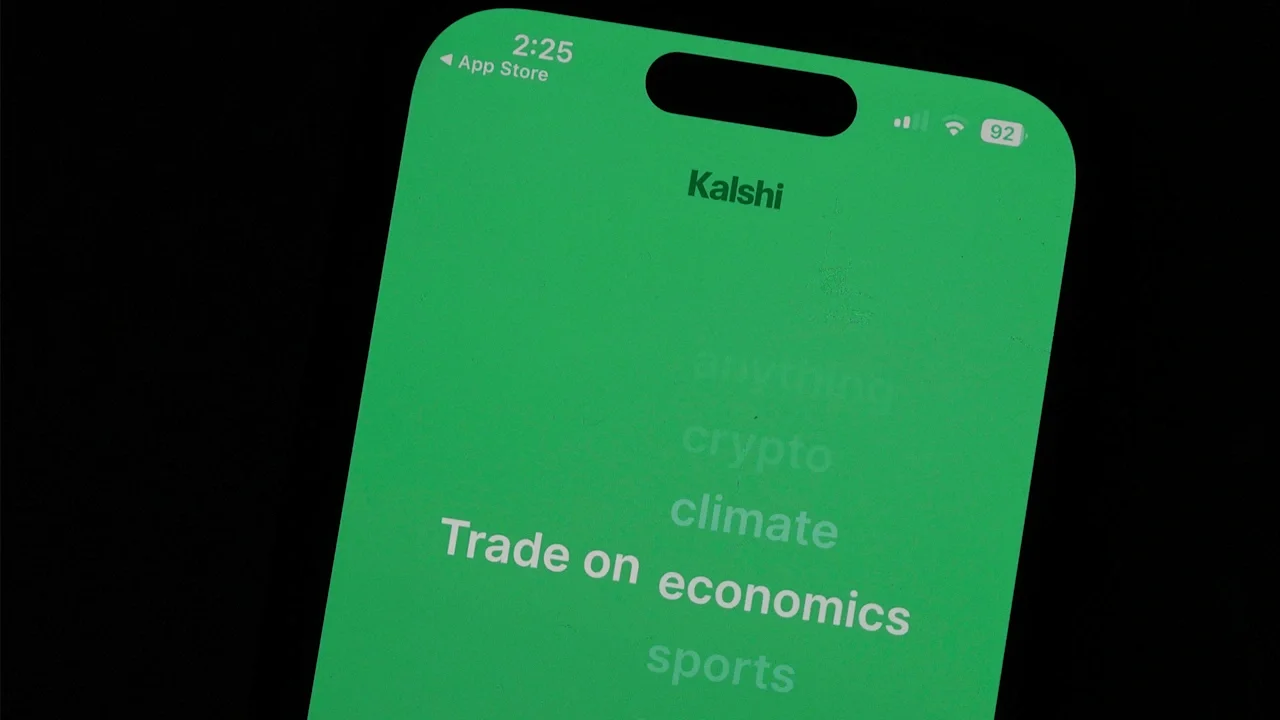
Three congressional candidates wagered on the outcome of their own elections on Kalshi, according to the prediction market, which said Wednesday that it fined and suspended the men from their platform for five years. It is the latest high-profile case of alleged insider trading on prediction markets including Kalshi and Polymarket, which have brought bipartisan scrutiny from Congress and calls for stricter regulations of the websites where people can put money on just about anything. Kalshi’s disciplinary documents named Mark Moran, who is running as an independent in Virginia’s U.S. Senate race; Ezekiel Enriquez, who ran in a Texas Republican primary for a U.S. House seat; and Matt Klein, a Democratic state senator running for a U.S. House seat in Minnesota. Klein and Enriquez both placed bets less than $100 related to their “own candidacy,” Kalshi said. Moran said on social media that he “traded $100 on myself.” These relatively small bets follow mammoth wagers on prediction markets earlier this year that raised eyebrows. In one case, an anonymous Polymarket user made a $400,000 profit in January on a wager that former Venezuelan President Nicolás Maduro would soon be out of office. In March, after two U.S. senators announced legislation that threatened prediction markets, Kalshi and Polymarket highlighted new rules, including against political candidates trading on their own campaigns. Moran refused to reach an agreement with Kalshi and was fined the most at more than $6,200, while Klein and Enriquez did reach agreements and face penalties of over $530 and $780, respectively, the company said. All were suspended from Kalshi for five years. Some politicians said the punishments didn’t go far enough. U.S. Rep. Mike Levin, a California Democrat, slammed the repercussions on social media, saying, “That’s not a punishment. That’s a parking ticket.” The agreements are with the company, and not with the Commodity Futures Trading Commission, which regulates predication markets. The agency is chaired by Michael Selig, who is considered friendly to the burgeoning industry. Far from denying the allegations, Moran told The Associated Press on Wednesday that he placed the bets intending to draw attention to what he said was unjust sway that platforms like Kalshi have on elections. Moran added that he’d met with the company and had asked for his name to appear on its website. Moran said he was fined more than the other candidates because he refused to sign a settlement that would’ve required him to post a statement on X. He said he felt that the stunt was successful. “When I piss people off, when I upset people, and when I captivate their attention, that’s when they have to start listening,” he said. Klein also confirmed Kalshi’s findings in a post on social media on Wednesday. The $50 wager he placed in October was the first time he had used a predictions market, he said in a statement on X, and he was “curious about how it worked.” “This was a mistake and I apologize,” he wrote, saying that the experience made it clear that the markets need more regulation. Klein is a cosponsor of a bill working its way through the Minnesota Legislature to ban most wagering on predictive markets, including the outcome of elections. In an interview, he said he didn’t think there was an inconsistency between his betting $50 on himself to win his primary and his sponsorship of legislation. Klein said he spent the winter learning about predictive markets and signed onto the bill well before he learned that his bet violated Kalshi’s rules. Enriquez, known as Zeke, lost his House race in the beginning of March with less than two percent of the vote. Contact information for Enriquez was not immediately found to request comment. Associated Press reporters Steve Karnowski and Hannah Schoenbaum contributed. —Jesse Bedayn and Safiyah Riddle, Associated Press View the full article
-
Why Google is evolving into a more “engaging” platform, and what declining engagement from younger users means for search and publishers. The post Why Google Has Changed & Who’s Really Paying for It appeared first on Search Engine Journal. View the full article
-
Oil rises as Tehran and Washington battle for control of waterwayView the full article
-
Warner Bros. Discovery shareholders are set to vote Thursday on the company’s proposed $81 billion sale to Skydance-owned Paramount, in a mega merger that could vastly reshape Hollywood and the wider media landscape. Paramount wants to buy all of Warner. That means HBO Max, cult-favorite titles like “Harry Potter” and CNN could soon find themselves under the same roof as Paramount’s CBS, “Top Gun” and the Paramount+ streaming service. And a greenlight from shareholders would bring the acquisition closer to the finish line. Shareholders are expected to meet at 10 a.m. ET to vote on the deal, which is valued at nearly $111 billion, including debt, based on Warner’s current outstanding shares. Even if approved, a Paramount-Warner combo would still face ongoing regulatory reviews, including from the U.S. Department of Justice. Warner has said it expects to close the deal sometime in the third fiscal quarter. Paramount’s quest for Warner has been far from smooth sailing. And while Warner’s board now endorses the Paramount merger, it wasn’t always eager to enter this particular marriage. Late last year, Warner rebuffed Paramount’s overtures to instead strike a $72 billion studio and streaming deal with Netflix. Paramount, meanwhile, went directly to shareholders with a hostile bid to take over the whole company, including the cable business that Netflix did not want. All three companies spent months fighting publicly over who had the better offer on the table. Warner’s board repeatedly backed Netflix’s bid. But eventually, Paramount offered more money and Netflix abruptly bowed out of the race rather than prolonging the fight. That corporate drama may now be over, but the implications remain. Thousands of actors, directors, writers and other industry professionals have voiced “unequivocal opposition” to the deal, in a letter arguing that further consolidation will lead to job losses and fewer choices for filmmakers and movie goers. Some lawmakers are also sounding the alarm. “What is at stake is clearly not just a corporate deal, but who controls news, who controls entertainment, who controls storytelling,” Democratic Sen. Cory Booker said in a “spotlight” hearing on the merger held in Washington last week. “It’s about the concentration and consolidation of cultural power.” The merger would bring together two of Hollywood’s remaining five legacy studios. It would also join two major streaming platforms — Paramount+ and HBO Max — and two big names in America’s TV news landscape — CBS and CNN — as well as a heap of other brands and entertainment networks. Company executives argue this will be good news for consumers, who they say will have access to bigger content libraries, particularly if HBO Max and Paramount+ become one streaming service. And Paramount CEO David Ellison has tried to assure filmmakers with a 45-day theatrical window guarantee and goal to release 30 movies a year between Paramount and Warner, which he’s said will remain stand-alone operations under a combined company. “I love cinema and I love film,” Ellison said at CinemaCon last week. “You can count on our complete commitment.” But the new owner will also be looking to cut costs. Regulatory filings have already indicated that would include layoffs and downsizing some overlapping operations. And critics are skeptical about consumer benefits — warning of higher prices that could arise when it comes to streaming, and potentially less diversity in content down the road. Then there’s the news. Since coming under Skydance ownership less than a year ago, Paramount-owned CBS has already seen significant editorial shifts, notably with the installation of Free Press founder Bari Weiss as CBS News editor-in-chief. If the Warner takeover goes through, many are expecting similar changes at CNN, which has long attracted ire from President Donald The President. Other questions of political influence have piled up. The Justice Department and company leadership have maintained politics will not play a role in the regulatory process — but The President himself has publicly waded into Warner’s future at times, despite backpedaling on what he once suggested his personal role would be. The President also has a close relationship with the Ellison family, particularly billionaire Oracle founder Larry Ellison, who is putting billions of dollars on the table to back the bid for his son’s company. Meanwhile, Paramount has secured money from several sovereign investment funds — including Saudi Arabia’s Public Investment Fund, as well as funds from the United Arab Emirates and Qatar, per regulatory filings. But such investors will not have voting rights in a future Paramount-Warner combo, the filings noted. Paramount has not publicly specified how much they’re contributing. Other countries, including European regulators, are looking the deal — and states could try to challenge it, too. California Attorney General Rob Bonta has been particularly vocal about the transaction, and said his state is investigating it. —Wyatte Grantham-Philips, AP Business Writer View the full article

-
How AI-driven search is redefining success by prioritizing cited, retrievable content over traditional traffic and clicks. The post Why Great Content Is No Longer Enough & What Beats It In AI Search appeared first on Search Engine Journal. View the full article
-
We may earn a commission from links on this page. Deal pricing and availability subject to change after time of publication. Smartphone cameras have come a long way, but the moment you start walking or moving around, even small shakes can show up in your footage. That’s where a phone gimbal like the Insta360 Flow 2 Pro comes in—it steadies your shots without turning filming into a whole production. And right now, its Ultimate Creator Bundle is down to $169.99 (from $199.99), which, according to price trackers, is the lowest it’s been so far. Insta360 Flow 2 Pro Ultimate Creator Bundle (Grey) Gimbal stabilizer for iPhone & Android $169.99 at Amazon $199.99 Save $30.00 Get Deal Get Deal $169.99 at Amazon $199.99 Save $30.00 This bundle includes the Flow 2 Pro itself, an AI tracker for more reliable subject following, a magnetic phone mount for quick attachment, a USB-C charging cable, and a carry case to keep everything together when you’re on the move. It works with most modern smartphones, including larger models like the iPhone 16 Pro Max, and it’s easy to get going. You unfold it, snap your phone onto the magnetic mount, and it powers on by itself. After the initial setup, it reconnects automatically, making it easy to grab a quick clip without fiddling with settings each time—a detail PCMag noted in its “excellent” review. The design leans toward convenience. There’s a built-in tripod at the base and a telescoping rod that extends up to 8.26 inches, so you can set it down for stable shots or pull back for wider framing without carrying extra gear. Most controls sit within thumb reach, including a joystick and zoom wheel, along with gesture controls for starting or stopping recording. Those gestures aren’t something you’ll master immediately, and the button labels can be hard to read in certain lighting, but the layout starts to feel natural after a few uses. Battery life is rated at up to 10 hours, and the gimbal can also charge your phone while you’re shooting. The stabilization itself works well, especially when walking or panning. Subject tracking is another highlight. Once locked, it follows movement smoothly and can pick the subject back up if they step out of frame for a moment. The companion app adds more control, including shooting modes, editing tools, and a built-in teleprompter. There is also a remote control feature that lets you operate the camera from another phone through a browser, which is useful for solo shooting. For creators who want smoother footage without carrying a full camera rig, this setup covers most everyday needs. Our Best Editor-Vetted Tech Deals Right Now Apple AirPods 4 Active Noise Cancelling Wireless Earbuds — $148.99 (List Price $179.00) Blink Video Doorbell Wireless (Newest Model) + Sync Module Core — $35.99 (List Price $69.99) Ring Indoor Cam (2nd Gen, 2-pack, White) — $59.98 (List Price $79.99) Apple Watch Series 11 [GPS 46mm] Smartwatch with Jet Black Aluminum Case with Black Sport Band - M/L. Sleep Score, Fitness Tracker, Health Monitoring, Always-On Display, Water Resistant — $329.00 (List Price $429.00) Apple iPad 11" 128GB A16 WiFi Tablet (Blue, 2025) — $319.99 (List Price $349.00) Deals are selected by our commerce team View the full article
-
American Airlines is leaning further into the idea that airport lounges should feel less like generic waiting rooms and more like extensions of the cities they serve. Its latest project in Nashville makes that strategy pretty clear. At Nashville International Airport (BNA), the airline is planning a new Admirals Club that will significantly expand its footprint and redefine what a lounge can be. A much bigger lounge The new space in Concourse A will span about 17,400 square feet, nearly triple the size of AA’s current lounge at the airport. When it opens, it’s expected to be the largest airline lounge at BNA, giving travelers far more room to spread out, get work done, or just relax before a flight. At a time when overcrowding has become one of the biggest pain points in premium travel, simply having more space is a meaningful upgrade. But American Airlines is also trying to go beyond that. “The new Admirals Club lounge at BNA reflects American’s ongoing commitment to enhancing the travel experience,” Rhonda Crawford, the airline’s senior vice president of customer experience design and strategy, said in a release announcing the lounge. “This lounge is designed to give customers the spirit of Nashville while enjoying the comfort, amenities, and service they expect from American.” Designed to feel like Nashville The design pulls heavily from the city, drawing inspiration from its music culture and the surrounding Tennessee landscape, a move that’s become popular with airport lounges from other brands as well. AA is also introducing features you don’t often see in U.S. lounges, including outdoor terraces overlooking the airfield and an indoor balcony that opens onto the concourse. American says the goal is to create a space that actually feels tied to where you are, not just another interchangeable lounge. That local connection extends beyond design. The airline also highlighted how its Premium Guest Services team brings Nashville’s personality into the space, including small touches like a “celebrity guitar” that collects signatures from artists passing through the airport before being donated to a nonprofit. How it stacks up against Delta and United That approach puts American Airlines in closer alignment with how competitors have been evolving their own lounge networks, though each airline is taking a slightly different path. Delta Air Lines has arguably pushed the hardest into turning lounges into a premium hospitality project. Its Sky Clubs have grown larger and more polished, and the airline has introduced Delta One Lounges at the very top end, with restaurant-style dining and a more curated, high-end feel. Delta’s strategy has focused on consistency and exclusivity, especially as it tightens access to keep crowds under control. United Airlines is taking a more layered approach. Its United Club network is being refreshed with bigger spaces and updated designs, while Polaris Lounges serve as a clearly elevated tier for long-haul premium travelers. United’s lounges tend to lean more modern and functional, though newer locations are starting to incorporate more local character than older ones. American’s Nashville lounge lands somewhere in the middle. Like Delta, it is investing in a space that feels more premium and more visually distinct. Like United, it is still maintaining a broad-access network that serves a wide range of travelers. Access and the “who gets in” question Entry into Admirals Club locations still requires memberships, oneworld status, eligible credit cards, or one-day passes through the AAdvantage program. That keeps the experience more accessible than some of Delta’s tighter rules, even as crowding remains a challenge across the industry. Where American is trying to stand out more is in service. The airline is putting a lot of emphasis on its Premium Guest Services team, positioning the lounge as just one part of a more personalized airport experience. That includes options like Five Star Service, which offers curb-to-gate assistance and adds a more hands-on, concierge-style element to the journey. “At the heart of Premium Guest Services is genuine care,” the company said in the release, noting that staff are trained to treat each itinerary as personal and each interaction as meaningful. What this says about the lounge wars American’s Nashville lounge is reflective of a broader shift across the industry. Lounges have become a key part of the battle for premium travelers for both airlines and credit card issuers, and the response has been bigger spaces, more thoughtful design, and more control over access. AA’s bet is that it can balance all three by expanding capacity, leaning into local identity, and keeping entry relatively flexible. Construction is expected to begin in 2027, and American’s current lounge at BNA will stay open in the meantime. View the full article

-
Faster, Leaner, Closer to the Client, and Two Hours to an Engagement Letter Big 4 Transparency With Dominic Piscopo, CPA Go PRO for members-only access to more Dominic Piscopo. View the full article
-
Faster, Leaner, Closer to the Client, and Two Hours to an Engagement Letter Big 4 Transparency With Dominic Piscopo, CPA Go PRO for members-only access to more Dominic Piscopo. View the full article
-
We're grateful to all our wonderful speakers & guests for making WWC Mountain View 2026 a memorable experience for all. The post Wi-Fi World Congress Mountain View 2026: Photos of all our great speakers – and more appeared first on Wi-Fi NOW Global. View the full article
-
It’s frustrating to follow fitness content online as a woman when so much of it feels like it is written for men. Likewise, it’s frustrating to work hard at a seemingly simple exercise like pushups and feel like you’re not getting anywhere. Some influencers have proposed a solution to both problems: a change in hand placement for pushups that is supposed to better complement women’s anatomy. I’m not buying it. See, I’ve been around fitness spaces (male-dominated and otherwise) long enough to have built a healthy skepticism around advice and products aimed solely at women. There’s a huge variation in strengths, weaknesses, and body proportions from one person to another, and many of the supposed differences between men's and women's fitness have nothing to do with gender. Rather, they can be chalked up to factors like body size, muscle mass, and training age. In short, I have more in common with other people—male or female—who share my body proportions, my strength background, or my training goals, than I do with a generalized "womankind." Given that, I had doubts about this particular pushup hack for women, but I figured I needed to give it a chance before passing judgment. Certainly it's fair to play around with different hand placements and decide which one works for you. But is there really an anatomical difference that means women need a different hand placement in order to do their best pushups? Why women are being told to change their hand placement when doing pushupsI’ve been seeing this hack all over fitness social media. It suggests that, while doing pushups, women should turn their hands slightly outward (some say 45 degrees). This is usually explained in terms of the “carrying angle"—an angle of the elbow that tends to differ between men and women. (More about what that means below.) For an example, check out this video from Kayla Lee, who describes herself as a women’s anatomy and biomechanics instructor. You’ll notice there isn’t a strong connection presented between anatomy and the pushup hack; she even points out that the carrying angle isn’t a factor in the hand position we use for pushups, and the hand position she recommends has more to do with shoulder rotation. There’s no gender-related reason given that has anything to do with shoulder rotation. The video makes strong claims, but doesn’t connect them logically. In the caption, Lee mentions the carrying angle, then says “now look at how pushups are typically coached,” and gives two standard pushup cues that don’t relate to hand placement at all. Then, the caption continues, when we “force women into that same template,” we injure their bodies and reduce training morale. None of those points seem connected to me, and the more examples I found of this hack being explained online, the less any of it made sense. Why would the carrying angle affect your shoulder position or hand placement? Why is the carrying angle the most important thing to consider when choosing a hand placement? Is the carrying angle even that different between men and women? I needed to dig deeper. What "carrying angle" actually meansAll this Internet talk of the “carrying angle” reminded me uncomfortably of the kinds of criteria looksmaxxers use to study each other’s faces. I suspect the focus on the term stems from a similar urge: the idea that there’s something measurable that explains the difference between groups of people, and that it can offer a definitive answer as to why you're having a harder time in life than others seem to be experiencing. But if you read anatomy papers that discuss carrying angle, you'll see it's not exactly revelatory. When you stand with your arms at your sides and your palms facing forward, your forearm and upper arm don’t form a straight line; your forearm is angled slightly away from your body, and this is your carrying angle. And it is slightly greater in women than in men, on average. It’s called the carrying angle because, at one point, it was hypothesized that it helps women’s forearms to avoid touching their hips as they carry things. That idea didn’t pan out—it turns out the reason our arms don’t touch our hips while carrying groceries is that we deliberately hold our arms away from our bodies. In fact, when discussing the carrying angle, Kayla Lee inserts a flash of this paper to support her claims. And it's in this paper where I learned that last fact: “It is abduction [moving the arm away from the body] at the shoulder and not the carrying angle which keeps the swinging upper limbs away from the side of the pelvis during walking.” That paper also disagrees that carrying angle is determined by gender: “the carrying angle is more in shorter persons as compared to taller persons. ... Carrying angle is not a secondary sex character.” Remember when I said that many supposed differences between men and women come down to factors like body size rather than sex or gender itself? The carrying angle seems to be a lot like the famous Q angle of the thighbone: different on average between men and women, but having more to do with height than gender. Here’s the conclusion from one of several papers that have studied the question: “The slight difference in Q angles between men and women can be explained by the fact that men tend to be taller.” Why you don't actually need a “women’s” pushup hackTwo more things make me doubt this hack even more. One is that the carrying angle is only really noticeable when your hands are supinated (palms up), and that’s not the hand position you use when doing pushups. When you flip your hand palm-down—as you would in order to do a pushup—the carrying angle greatly decreases, and often disappears. The other significant problem is that even if women’s carrying angle is generally greater, there’s a lot of overlap between men’s and women’s carrying angles. Here’s a graph from a 2005 paper that measured the right and left arms of 1,275 people: The left two columns are carrying angles of men (right and left hand), and the other two are of women. Credit: Beth Skwarecki As you can see, the average carrying angle for women is slightly higher than for men, but it’s not like all men have low angles and all women have high angles. Rather, the male and female populations both have a range that includes similarly high and low carrying angles. If "standard" pushup advice only applied to the average man, there would be plenty of men and women who wouldn't fit into it. This raises the question of what “standard” pushup advice is, anyway. The way I’ve been taught to do pushups, and the way I advise others to do them, is to find a hand position that feels comfortable and strong. That will be different for everyone, and I think most trainers already know that. What women really need to do for better pushupsTo distill what I’d learned into actual advice, I reached out to Diana Jordan, a physical therapist and weightlifting coach at Pittsburgh Fitness Project. She confirmed that carrying angle is a real thing, and that the average carrying angle differs between men and women. Then she said this: “There are so many other possible anatomical variations that could play a role in choosing a comfortable pushup position such as chest and shoulder width, the ratio of your humerus [upper arm bone] to your forearm, strength of pecs vs triceps, and shoulder mobility vs stability. In my opinion, choosing a specific pushup based on one typical variant that occurs between sexes (and notice, there’s also overlap in the amount of carrying angle between men and women around 10 degrees) seems silly.” So perhaps you’d do better pushups with a slight angle to your hands, but maybe not! Social media is full of women trying the women’s pushup hack and finding it doesn’t help—but occasionally, it does. I've tried the hack, and there's a simple reason I won't be using it for my own pushups: it's not particularly comfortable for me. I'm stronger with my fingers pointed a little more forward. In short, rather than looking for answers in gendered advice, we all need to find body positions that work for us. Jordan recommends choosing your exercise positioning or variations based on factors like what feels most comfortable, what lets you access your full range of motion, what makes you feel more stable, and, most importantly, what you happen to prefer. The problem with women’s exercise hacksI keep seeing this sort of gendered exercise advice all over social media, and often it boils down all the complexity Jordan talked about to an assumption that one particular hack will meet every woman’s needs. As a trainer myself, I’ve talked people through finding, say, the right foot position for squats—I have them try wider, narrower, feet straight, feet angled, and figure out what works for them. Personally, I do best with a narrow stance and a slight angle to my feet, but there are people online who will tell you that women “should” squat with a wide, toes-out stance. That’s just not true. There are so many different exercises in the world, and so many ways to do each of them, that we can all find several variations that work for us. To bring it back to pushups, let’s not forget that there are all kinds of hand placement variations: diamond pushups, wide-grip pushups, tricep pushups, planche pushups. Locking yourself into just one position means ignoring all the variety out there. Variety benefits you! When I see an influencer argue that I need to use a “women’s” technique, I feel as if I’ve walked into a store filled with clothes in every shape and size and style, only to be taken aside by someone who tells me that none of those options are for me, and that I can only wear a specific, one-size-fits-all women’s outfit. I feel that way even though I know that a majority of strength training content is made with men in mind, and that less research has been done on women than on men—that fact doesn’t mean that we need to dismiss everything we know about training, especially if we’re throwing out scientific understanding and replacing it with pseudoscience or just vibes. “This is tough,” Jordan says, “because railing against the lack of research that involves women and railing against institutions made for men is so hot right now (and I get it!) ... [But] there has been copious research showing that females and males respond similarly to resistance and aerobic training.” If we really want to make sure more women can benefit from strength training, the answer doesn’t lie in small tweaks to exercise technique, but in recognizing the much larger social and societal barriers. Jordan says: “Messages like ‘you should only do pushups this way’ or ‘you should rest specific weeks in your menstrual cycle’ perpetuate the idea of female fragility and increase the barriers to even [starting to exercise].” View the full article
-
Danny Sullivan from Google spoke at the Google Search Central event in Toronto a couple of days ago and a few of his slides spoke about it is important to produce "unique, authentic and non-commodity content." And then Sullivan dug into what commodity content is.View the full article
-
Employees at Meta Platforms may soon feel like they’re spilling TMI to their employer’s MCI. The parent company of Facebook, Instagram, and WhatsApp is installing new software—reportedly dubbed Model Capability Initiative (MCI)—on its employees’ computers and workstations that will, among other things, track and capture mouse movements and keystrokes in an effort to train AI models, Reuters first reported on Tuesday. It’s all part of a broader effort to develop autonomous AI agents that can perform specific work tasks. A Meta spokesperson confirmed that the company was, indeed, pushing forward with the measure. “If we’re building agents to help people complete everyday tasks using computers, our models need real examples of how people actually use them—things like mouse movements, clicking buttons, and navigating dropdown menus,” the spokesperson tells Fast Company. “To help, we’re launching an internal tool that will capture these kinds of inputs on certain applications to help us train our models.” Regarding privacy concerns, Meta added, “There are safeguards in place to protect sensitive content, and the data is not used for any other purpose.” Meta has laid off hundreds of employees this year, and there are rumors swirling that more are to come. It could lay off thousands, largely to offset increased AI costs, and to make room for AI agents to take on some of the work originally done by humans. It wouldn’t be unprecedented: A couple of months ago, Jack Dorsey’s fintech company, Block Inc, cited AI efficiencies as it laid off 40% of its workforce. How low can morale go? Understandably, many Meta workers are likely feeling uneasy, both about the prospect of losing their jobs, and the fact that the company will be tracking every granular move they make on their computers. Unfortunately, experts say there isn’t much they can do about it. “In the U.S., Meta’s approach is largely permissible, but it sits in a legally sensitive zone,” says Natalie Bidnick Andreas, an assistant professor of instruction in the Department of Communication Studies at the University of Texas. “Federal law offers very little in the way of employee‑privacy protections, so there’s no nationwide rule that clearly prohibits keystroke or mouse‑movement monitoring on company devices.” Such practices tend to fit within legal boundaries provided they are limited to a company’s own hardware and work accounts, Andreas adds, although some states might have stricter regulations in place. “State‑level rules add some complexity,” Andreas says, “since a few states require employers to notify workers about electronic monitoring, while newer privacy laws expand personal‑data rights but still focus more on consumers than employees.” Laws need to catch up While there are stronger laws concerning keystroke logging and screen capture in places like the European Union, existing law in the United States is “inadequate for the AI era,” says Dario Maestro, legal director of the Surveillance Technology Oversight Project, an advocacy and legal services group that fights against the growing use of surveillance technology. Existing “statutes were designed to stop bosses from eavesdropping on phone calls and reading private emails, not to stop companies from turning every click into training data,” Maestro says. “Workers have almost no federal right to refuse, and ‘consent’ obtained under threat of termination isn’t consent at all.” “Closing that gap will require state legislatures to treat AI training as a distinct use—one that demands separate, revocable consent and bars repurposing employee data beyond what was originally disclosed,” Maestro adds. “Employees cannot meaningfully refuse” On an ethical level, Andreas says “the concerns run much deeper,” and she echoes Maestro in saying that workers aren’t truly able to consent to the activity. “Employees cannot meaningfully refuse when their employer decides to log keystrokes, so any notion of consent is largely symbolic,” she says. “Even if Meta frames the program as contributing to AI development, workers know that opting out could be interpreted as non‑compliance.” Derek Leben, an associate teaching professor of ethics at the Tepper School of Business at Carnegie Mellon University, says that Meta isn’t alone, either. “This is something that a lot of companies are experimenting with, and by experimenting, I mean they are moving forward with it and seeing what kinds of pushback they’re getting from employees, unions, the media, and the public,” Leben says. He adds that there is, and has been, plenty of discussion and debate as to where the ethical line is in terms of employers respecting the privacy of employees when they’re on the job—if that line does exist. What it really boils down to is whether employers are “treating their employees like human beings with dignity,” Leben says. Absent of that, workers may feel like they’re “being treated like children,” and that tracking their computers is “not being respectful.” Meta’s practices are likely to be replicated by other companies as workplaces grapple with new privacy expectations in the age of AI. “This kind of monitoring also normalizes a level of surveillance that has historically been directed at gig workers and warehouse employees, extending it into knowledge worker roles and reshaping expectations about professional work,” says Andreas. “It further blurs the line between doing one’s job and training one’s replacement.” View the full article

-
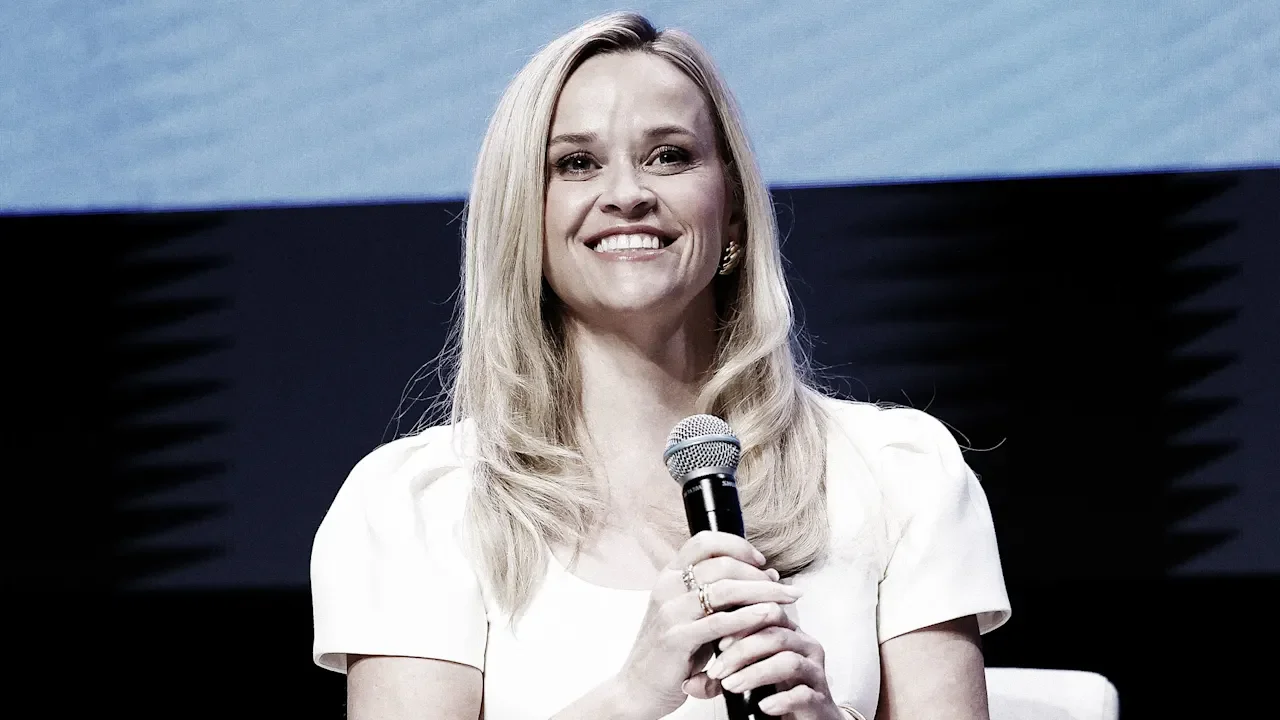
Celebrities are continuing to learn the hard way that publicly pontificating about their views on AI, like politics, might come with far more risk than reward. The latest incident involves beloved Academy Award winner and Walk the Line star Reese Witherspoon, who is facing ongoing backlash for an Instagram video she posted last week—and then again defended this week—encouraging women to learn more about AI. In a recent video posted from what appears to be her kitchen, Witherspoon told her followers that she’s worried not enough women are using AI. Her evidence: An informal poll she took at a recent meeting of her book club, where most of the members told her they weren’t using the tech. In a caption—admittedly, without sharing a source—Witherspoon pointed to statistics suggesting that women are far more likely to have their jobs automated away by artificial intelligence. Witherspoon’s original post is benign enough, though, at times, her verbiage and tone veer into sounding like sponsored content for the AI industry. “The thing I’ve learned about technology is if you don’t get a little bit of understanding from the very beginning, it just speeds past you,” Witherspoon explains in the video. “So you have to have little bits of learning just to keep up.” She concludes the video by asking if people want to learn more about AI with her. This is a big deal, given her audience. Witherspoon has 30 million followers on Instagram and manages one of the most popular and trend-setting book clubs in the country, Reese’s Book Club. The backlash was swift. Her post attracted thousands of comments, with many laying into the actor for ignoring criticisms of the AI industry, including its impact on the environment, the large power consumption required by data centers, and concerns about bias that can be encoded into LLMs. Some people accused Witherspoon of hyping up the tech industry and even posting an undisclosed ad. To defend herself, Witherspoon returned to the topic again on Monday. No, she wasn’t telling anyone to do what they didn’t want to, she conceded, but AI is already everywhere, including on Instagram. She acknowledged concerns about the tech, but stood her ground. “To be clear, no one is paying me to talk about this,” she said. “I’m planning on learning as much as possible so that I’m educated about this technological revolution.” Witherspoon’s biggest error was likely underestimating just how toxic and polarizing the conversation around artificial intelligence can be. Yes, some celebrities have leaned into the LLM era, no doubt with eyes on capitalizing on the technology and growing their fortunes. Ben Affleck even founded his own AI firm, InterPositive, which was recently purchased by Netflix. Still, the rise of AI has mostly agitated Hollywood, where creatives are rightfully anxious that AI-powered animation, avatars, and video editing stand to put many people out of work (and corrupt the creative process). Some even contend that the top AI labs might be ushering in a new era of fascism. The playwright Jeremy O’Harris recently approached Sam Altman at the Vanity Fair Oscars Party and suggested the OpenAI executive was akin to the Nazi propagandist Joseph Goebbels. It’s possible that Witherspoon, who is otherwise wealthy and extremely influential, was not the right messenger for this particular take. On the merits, though, she is absolutely correct. The gender gap in AI is absolutely real: The statistics bear out that men are using AI more than women, and women seem to be more skeptical of the technology. Researchers recently analyzed studies that spanned about 140,000 people and found that women are using AI tools at a noticeably lower rate. (This might be a double-edged sword, as women are more likely to be judged, a so-called “competence penalty”, for using generative AI, compared to their male counterparts). Still, a major risk is that AI will create a massive productivity, and then, economic gap between workers, and exacerbate inequality along the lines of gender. As workplaces look to demand AI competency from prospective applicants, people who don’t use the technology are likely putting themselves at a disadvantage. More broadly, even if you think AI is nefarious, as many of the critics opposed to Witherspoon seem to be, it is probably advantageous to understand how it works, rather than ignoring it entirely. Abstaining from the technology won’t be enough to confront the most urgent threats presented by AI, especially when it’s already being embedded into the platforms that shape our lives. After all, it’s best to know your enemy—right? View the full article
-
Google may now hold your review replies for approval before showing them in Google Maps or Google Search. Previously, those replies were immediately shown but that may have changed.View the full article
-
I know it has been a while since I covered the Google Search ranking volatility and algorithm twitches but I am now seeing signs of the volatility heating up. These signs are mostly coming from the tools; the community seems busier with other things.View the full article
-
Google is experimenting with the new tab view in Chrome. This view brings more Gemini features to the forefront, such as Deep Search and Create Images.View the full article