All Activity
- Past hour
-
 Being a night owl can be bad for your heart. That may sound surprising but a large study found people who are more active late at night — when most of the population is winding down or already asleep — have poorer overall heart health than the average person. “It is not like, that, night owls are doomed,” said research fellow Sina Kianersi of Brigham and Women’s Hospital and Harvard Medical School, who led the study. “The challenge is the mismatch between your internal clock and typical daily schedules” that makes it harder to follow heart-healthy behaviors. And that’s fixable, added Kianersi, who describes himself as “sort of a night owl” who feels a boost in “my analytical thinking” after about 7 or 8 at night. Heart disease is the leading cause of death in the U.S. The American Heart Association has a list of eight key factors that everyone should heed for better heart health: being more physically active; avoiding tobacco; getting enough sleep and a healthy diet; and controlling blood pressure, cholesterol, blood sugar and weight. Where does being a night owl come in? That has to do with the body’s circadian rhythm, our master biological clock. It follows a roughly 24-hour schedule that regulates not just when we become sleepy and when we’re more awake but also keeps organ systems in sync, influencing things like heart rate, blood pressure, stress hormones and metabolism. Everybody’s circadian rhythm is a little different. Prior research had suggested night owls might have more health problems, as well as risk factors like higher rates of smoking and less physical activity, than people with more typical bedtimes, Kianersi said. To learn more, Kianersi’s team tracked more than 300,000 middle-age and older adults in the UK Biobank, a huge health database that includes information about people’s sleep-wake preferences. About 8% of those people classified themselves as night owls, more active physically and mentally in the late afternoon or evening and up past most people’s bedtime. About a quarter were early-birds, most productive in the daylight hours and likewise early to bed. The rest were average, somewhere in the middle. Over 14 years, the night owls had a 16% higher risk of a first heart attack or stroke compared to the average population, the researchers found. The night owls, especially women, also had overall worse cardiovascular health based on meeting the heart association’s eight key factors, the researchers reported Wednesday in the Journal of the American Heart Association. Unhealthy behaviors — smoking, insufficient sleep and poor diet — appear to be the main reasons. “It comes down to the problem of a night owl trying to live in a morning person’s world. They’re getting up early for work because that’s when their job starts but it may not align with their internal rhythm,” said Kristen Knutson of Northwestern University, who led recent heart association guidance on circadian rhythms but wasn’t involved in the new study. That affects more than sleep. For example, metabolism fluctuates throughout the day as the body produces insulin to turn food into energy. That means it might be harder for a night owl to handle a high-calorie breakfast eaten very early in the day, during what normally would still be their biological night, Knutson said. And if they’re out late at night, it can be harder to find healthy food choices. As for sleep, even if you can’t meet the ideal of at least seven hours, sticking to a regular bedtime and wake time also may help, she and Kianersi said. The study couldn’t examine what night owls do when the rest of the world is asleep. But Kianersi said one of the best steps to protect heart health — for night owls and anyone — is to quit smoking. “Focus on the basics, not perfection,” he said, again, advice that’s good for everyone. The Associated Press Health and Science Department receives support from the Howard Hughes Medical Institute’s Department of Science Education and the Robert Wood Johnson Foundation. The AP is solely responsible for all content. —Lauran Neergaard, AP Medical Writer View the full article
-
We may earn a commission from links on this page. Deal pricing and availability subject to change after time of publication. At $249.99 for a three-pack, the TP-Link Deco XE75 Pro Tri-Band Mesh System is sitting $150 below its usual $399.99 price, and price-trackers show this is the lowest it has gone so far. That discount matters because this is not an entry-level mesh kit. It’s built around Wi-Fi 6E, which adds access to the cleaner 6GHz band alongside the familiar 2.4GHz and 5GHz bands. In practice, that means less congestion if you have newer devices that support 6E, and more consistent speeds across a larger home. The three cylindrical nodes are understated and easy to place, each covering a chunk of space so the full kit can handle homes up to roughly 7,200 square feet. Setup happens through the Deco app and is largely painless, even if you are not used to managing network gear. TP-Link Deco XE75 Pro AXE5400 Tri-Band WiFi 6E Mesh System (3-Pack) $249.99 at Amazon $399.99 Save $150.00 Get Deal Get Deal $249.99 at Amazon $399.99 Save $150.00 Each node includes a 2.5GbE WAN port, which is useful if your internet plan is already pushing past standard gigabit speeds. You also get two additional 1GbE LAN ports per node, plus support for wired backhaul if you want to connect the units with Ethernet instead of relying on wireless links. Internally, TP-Link uses a 1.7GHz quad-core processor and multiple internal antennas to keep traffic moving smoothly. What you do not get are USB ports, so there’s no option to plug in a drive or printer directly. That omission may not matter for most people, but it is worth noting at this price. As for its performance, PCMag’s testing showed reliable throughput across bands, and the publication gave the system an “excellent” rating in its review, calling it easy to manage and a solid value for large spaces. Management leans heavily on the mobile app, which is simpler than the web interface and good enough for everyday use. TP-Link includes its HomeShield tools for basic parental controls and security scanning, but some of the more detailed features sit behind a paid subscription. That may be a drawback if you want everything included upfront. Still, for homes with many devices, fast internet, and a need for wide coverage, this deal makes the Deco XE75 Pro a much more reasonable buy than it is at full price. Our Best Editor-Vetted Tech Deals Right Now Apple AirPods Pro 3 Noise Cancelling Heart Rate Wireless Earbuds — $199.00 (List Price $249.00) Apple Watch Series 11 [GPS 46mm] Smartwatch with Jet Black Aluminum Case with Black Sport Band - M/L. Sleep Score, Fitness Tracker, Health Monitoring, Always-On Display, Water Resistant — $407.47 (List Price $429.00) Amazon Fire TV Stick 4K Plus — (List Price $24.99 With Code "FTV4K25") Samsung Galaxy Tab A9+ 64GB Wi-Fi 11" Tablet (Silver) — $159.99 (List Price $219.99) Deals are selected by our commerce team View the full article
-
The search landscape, today’s buyer journey, and the roadmap to digital success aren’t just shifting. They’re being structurally reimagined. To make sense of this shift, I spoke with six of the SEO industry’s most forward-thinking voices and distilled their perspectives into seven core predictions for 2026. What follows is a series of insights into how search is being structurally reimagined. 1. The rise of agentic commerce We are moving past the era of AI as an answer engine and into the era of AI as an executive assistant. “Agentic web” means AI won’t just tell you which running shoes are best. It will actually find your size, apply a coupon, and execute the checkout. For SEOs, this means optimizing for clicks is no longer the ceiling. We must optimize for machine readability and API compatibility. If an agent can’t parse your inventory or price in real-time, you won’t exist in this new transaction layer. Jim Yu, CEO of BrightEdge, stressed the importance of agentic preparation: “We’re already seeing a massive rise in agentic crawlers – AI that searches and acts on behalf of users. Brands need to prepare now with structured data, clear content hierarchy, and machine-readable information. The winners will be the ones who can measure AI agent behavior and understand how they’re being discovered and recommended.” Yu elaborated, noting that we’re entering a new market maturity phase. “AI search will take the next steps to becoming a real marketplace. The LLMs will expand paid advertising and other paid partnership opportunities. With that will come increased transparency and insights into how people are using LLMs within customer journeys. AI search will move from something that is coming to something that is here and having a major impact. 2026 will be the year that brands solidify the measurement frameworks to understand and respond to that impact.” Samanyou Garg, founder and CEO at Writesonic, predicted that the agentic web will move users from the discovery phase directly to the transaction phase within a single AI conversation: “810 million people use ChatGPT daily. Google AI Overviews hit 1.5 billion monthly users. The debate about whether AI search matters is over. What’s changing in 2026: AI stops recommending and starts buying. The user never leaves the conversation. OpenAI open-sourced their Agentic Commerce Protocol. Shopify merchants enable checkout with one line of code. Amazon saw this coming.” Crystal Carter, head of AI search and SEO communications at Wix, warned that focusing solely on being found is no longer enough: “The future of AI search is optimizing for the AI agents. In the last six months, we’ve seen new protocols for agentic payments, agentic shopping, and agent-to-agent frameworks. These each change the paradigm of the marketing funnel significantly by adding an AI decision gatekeeper into the mix.” “I think many search professionals are focusing wholly on being found in classic search or AI surfaces, but ignoring the agentic opportunity is a mistake. SEO and GEO are, of course, valuable, but the agentic layer removes the user from much of the funnel. The so-called messy middle is now managed by AI. If you don’t build for compliance, then you’re not even in the game.” Key takeaway: If your product, pricing, and availability data is not machine-readable in real time, AI agents will skip you and favor competitors. 2. AI ads will expand with deeper integration As AI platforms mature, monetization through ads is following suit. Today, monetization has moved upstream into the generative process itself. Whether it’s a sponsored product recommendation within a ChatGPT shopping thread or a paid citation in a Google AI Overview, the ad unit has become conversational. Yu’s prediction: “AI responses are now behind every door in the Google SERP – People Also Ask, Maps, Shopping, and more. YouTube is a prime example: one of the most cited sources in AI search and already a monetization powerhouse. Expect more intuitive ad integration within these AI experiences in 2026, which reinforces why brands need to optimize once and win everywhere.” Garg noted that while AI ad targeting is limited, establishing organic dominance now matters before auctions open: “Ads are coming, but the window is now. Google runs ads in AI Overviews across 12 countries, and they’re testing in AI Mode. But brands can’t target these placements yet. Google picks who shows up. Perplexity launched sponsored questions, then paused… ChatGPT shopping is ‘organic and unsponsored’ today. Their CFO says ads are coming. Same pattern as early Google. Organic visibility now means dominant position when the auction opens.” Key takeaway: Paid visibility will shift from “buying clicks” to “buying inclusion,” and brands that are not already eligible and trusted will pay more and win less. 3. The best SEOs ship tools, not tasks The barrier between having a marketing idea and building a marketing tool has evaporated. In 2026, the most successful SEO teams will look less like writers and more like product engineers, with efficiency becoming a competitive advantage. Garg argued that this year marks the end of the visual workflow era, replaced by natural language tools that let non-technical marketers ship production-level code: “The old way: visual workflow builders. Drag nodes, connect arrows, take a three-week course to learn the platform. The new way: Claude Code and tools like it. Describe what you want in plain English. It writes the script, runs it, iterates.” “Anthropic’s own growth team uses this daily. Process a CSV with hundreds of ads, identify underperformers, generate new variations. Minutes, not hours. They cut content audit time 75% and reduced costs 70% through intelligent model routing.” “The gap between ‘I have an idea’ and ‘it’s running in production’ collapsed. 2026 is the year non-technical marketers start shipping like engineers.” Key takeaway: Teams that automate repeatable digital marketing tasks will compound output and speed, while manual teams fall behind on both cost and time to impact. Get the newsletter search marketers rely on. See terms. 4. Personalization and specialization will keep changing the optimization game In 2026, the concept of a traditional ranking may finally become obsolete. If every search result is personalized in real time based on a user’s entire digital history, there is no “Position 1” anymore – there is only intent and relevance. While Google and OpenAI dominate the headlines, the next frontier also includes specialization. As users grow weary of hallucinations in general models, they will increasingly turn to AI platforms built for specific, high-stakes niches. As a result, AI strategy can’t be mono-platform. Brands will need to optimize for a fragmented ecosystem of AI models that prioritize different data sources. Mike King, CEO of iPullRank, predicts the death of the generic SERP: “In 2026, personalization stops being a feature and becomes the operating system. Google’s Nested Learning work makes the direction obvious. Search systems are no longer learning just from queries. They are learning from you across multiple time horizons. Fast signals like session behavior and immediate intent sit on top of slower, more stable models of how you think, decide, trust, and revisit information over time.” “The system is not adapting results. It is adapting itself to the user. The practical outcome is that two people asking the same question are no longer in the same information universe. They are getting different answers, different sources, and different levels of explanation based on how the system has learned to serve them without friction or failure. This quietly kills the idea of a single ranking, a single SERP, or a single ‘best page.’ If your content only works for a generic user, it works for no one.” But this shift is not limited to Google. As users seek more reliable, specialized answers, the search ecosystem continues to splinter across platforms and vertical-specific models. Key takeaway: Performance will vary by audience segment rather than a single SERP position, meaning brands can be invisible to high-value buyers even while overall rankings appear stable, creating hidden pipeline risk. 5. SEO splits: Humans vs. agents SEO and AI search will continue to fragment. Historically, SEO had one goal: get the click. Sites were optimized so a human would discover a brand and land on a page. In 2026, the industry is splitting into two distinct strategic problems. Traditional SEO, focused on humans who want to browse, compare, and buy. AI search optimization, focused on supplying information so AI agents can find, trust, and use it without a user ever visiting the site. This is not just a technical update. It represents a fundamental shift in how success is measured. King explained why treating these as the same strategic problem is a mistake: “Most people think AI search is just SEO evolving. There will be real tactical overlap for a while, and that is not the issue. The mistake is treating it as the same strategic problem. SEO is built around earning visibility that converts into clicks. AI search is built around supplying information that can be extracted, trusted, and reused without a click ever happening. They keep optimizing for rankings and traffic while the system is optimizing for reliability, composability, and downstream usefulness.” “The work still matters. But the reason it matters has fundamentally changed, and most people have not caught up to that shift yet. We now live in a world where people form relationships with systems that listen, remember, adapt, and respond with context and continuity. That is not a search problem. That is a worldview shift.” “In 2026, the biggest risk is not that SEO dies. It is that the people who should lead this moment choose to stay small, and the relevance engineers build the future without them.” Britney Muller, AI educator and consultant, cautioned that applying traditional SEO logic to AI citations is a strategic failure: “The biggest risk to our industry in 2026 isn’t AI; it’s that we’re trying to fit a baseball bat through a keyhole by applying SEO ranking logic to probabilistic systems.” “You can’t ‘optimize’ an AI citation like a 2010 keyword. We have to pivot the conversation to what we can actually influence: showing up in the historical training data and winning the real-time RAG layer through fundamental SEO and brand mentions at scale.” Key takeaway: In 2026, SEO becomes two jobs: driving clicks from humans and supplying clean, trusted inputs for AI agents that may never visit your site. Measuring success only by rankings and sessions risks missing where revenue is actually influenced. 6. Proprietary data becomes your moat Unique, proprietary, and human-driven content wins. As the web becomes flooded with AI-generated material, the value of human experience and owned data continues to rise. If an AI can easily synthesize your content without needing to cite you, the underlying value is likely interchangeable. When brands own the data itself, however, attribution becomes unavoidable. Muller highlighted that building unique, branded datasets is one of the strongest ways to secure AI attribution: “My big bet is on brands that start building entity moats … more strategically naming their data. When you own a unique metric, like the ‘[Brand] Index’ or the ‘[Brand] Score,’ you create a source of truth that AI models can’t just synthesize or ignore.” “If they can’t replicate your data, they are forced to cite your name. Brands are also getting ahead by harvesting real-world stories and conversations highlighting things that AI cannot do.” Muller further shares: “Content marketers that will find an edge in 2026 will discover savvy ways of leveraging AI to analyze public datasets and then do something really cool and story-worthy with them.” “Think about the one million hotel reviews that MonkeyLearn did … which used sentiment analysis to discover nuanced insights.” Key takeaway: Commodity content becomes a cost center, while proprietary data and real experience become defensible assets that earn citations, trust, and inbound demand. 7. AI literacy becomes a hiring filter AI adoption and training are critical. The shift in 2026 is as much about people as it is about technology. The era of AI novelty is over. Simply using ChatGPT is no longer a differentiator. The competitive divide now depends on whether teams can move beyond basic content drafting and use AI as a strategic partner tied to real outcomes. The leaders of 2026 will be those who successfully connect AI usage to key performance indicators. Neil Patel, CEO and co-founder of NP Digital (Disclosure: I am the vice president of SEO at NP Digital), pointed to a broader hiring shift, citing comments from AMD CEO Lisa Su, and elaborates: “Companies are racing to get mentioned on AI platforms in 2026, but much of that carries over from traditional SEO. Where marketers and marketing departments are going to see the big lift from 2026 is getting their team to use the right tools and focus on the right tasks when it comes to AI.” “We are seeing adoption rates skyrocket in organizations, but when you look at increased ROI from these AI efforts in marketing, it doesn’t look that great. So in 2026, we will focus more on training and helping teams understand and use AI to improve their KPIs. This way, usage and costs are more closely tied to growth.” Key takeaway: Companies that operationalize AI into repeatable processes tied to KPIs will gain margin and velocity, while everyone else pays for tools without measurable lift. What winning visibility looks like in 2026 In 2026, winning visibility will be less about chasing rankings and more about becoming the most usable and trustworthy input for humans, AI answers, and autonomous agents alike. Brands that invest now in machine-readable data, proprietary moats, and AI-literate teams will be the ones thriving in 2027. View the full article
-
Since Brian Niccol took over as Starbucks Chairman and CEO in 2024, he’s promised a grand turnaround for the coffee giant by going back to its roots in lovingly designed, customer-centric stores. The messaging wasn’t enough to break six straight quarters of global sales decline. Global sales grew 1% at the end of the 2025 fiscal year, but they left the U.S. behind. Now, Starbucks’s Q1 2026 earnings have beat analyst estimates and seem to be cementing a turnaround, marking the first time same store sales have increased in the U.S. in eight quarters. Starbucks same store sales were up 4% in the U.S. and 5% globally during the first quarter, thanks largely to a 3% rise in overall transactions. Despite well-documented store closures, the company says it still added 128 net new stores over the last quarter. “Our Q1 results demonstrate our ‘Back to Starbucks’ strategy is working and we believe we’re ahead of schedule,” said Niccol during earnings. “It’s great to see the sales momentum driven by more customers choosing Starbucks more often, and this is just the beginning.” As I reported last year, Niccol’s thesis has been that better hospitality will drive more people to return to Starbucks—and that adding seats back to stores post-COVID is a way for the company to stand out. Improved store experience is just one piece of his strategy, which has also included fresh ad campaigns, an operationally simplified menu with lots of protein, beloved merch drops, and most recently, collabs with Mr. Beast and Khloe Kardashian. Starbucks revenue grew by 6% last quarter overall. However, Niccol is facing tighter margins than he was a year ago. Costs ranging from uplifting Starbucks stores, to increasing staffing and pay (albeit not appeasing unions), to tariffs on ever-more-expensive coffee beans have decreased margins from 16.7% to 11.9%. When I asked Niccol about the effects of coffee pricing on Starbucks last year, he mostly shrugged off the question, noting it was actually a relatively small line item for the company. But like many of its rising costs, it no doubt adds pressure for Starbucks to continue to grow, and to sell more product from each store in order to bolster profits when margins shrink. View the full article

-
When Mikala Mahoney was laid off from her marketing job last summer, first she was shocked. Then the anxiety flooded in. “I realized that over the past few years in my career I had created a false sense of steadiness,” she tells Fast Company. Friends had regularly told Mahoney she was fortunate to have landed a good, stable job as a marketing coordinator at Paramount+. In a moment, that illusion was in pieces. Mahoney threw herself into the job hunt, quickly landing her next role. A few months later, she was laid off again. After losing her job twice in less than a year, this time she decided to bet on herself. Following the traditional path as a salaried employee with a steady paycheck, healthcare, and benefits had long been viewed as the safe bet. But with many people’s paychecks from their 9-to-5 barely covering the cost of housing and groceries, layoffs at their highest in the U.S. since 2020, and nearly 26% of unemployed people having been jobless for more than six months, the unemployed-to-self-employed pipeline has never been stronger. Mahoney spent two months unemployed before she made the decision to go all in on her content creation business. She has also been documenting the process for her following on TikTok. “I’ve always been making content,” Mahoney tells Fast Company. Still, she never envisioned herself as a solopreneur, or what that might look like in practice. “I think there’s a different sense of hustle that you need to have in your self-employment, that you aren’t necessarily forced to confront when you are working with a consistent paycheck,” she says. Mahoney is not alone. The unemployed-to-self-employed pipeline has become its own content niche on TikTok. This sits within a wider trend of solopreneurship in the U.S.: Nearly 36% of traditional workers now have side gigs, according to MBO Partners’s 15th annual State of Independence in America Report. Whether a backup plan in the face of forever layoffs or a first step toward breaking free from the shackles of a boss, the rising number of people wanting to go it solo and run their own company of one reflects a shift in the balance of power from companies to workers—especially as the social contract has broken down. Increasingly, workers are turning their side gigs into full-time gigs, either taking the leap to solopreneurship on their own initiative, or as a result of factors outside their control. Then, there are those who have yet to experience traditional employment in the first place. Recent college graduates are struggling to find entry-level jobs and, while the overall unemployment rate edged up to 4.4%, for younger workers ages 16 to 24, unemployment in September 2025 was 10.4%. When 24-year-old Sophia Stern graduated from college in 2024 she spent hours scouring LinkedIn each day, an effort she kept up for roughly six months. “I was desperate for anything,” she tells Fast Company, noting that all she received in return were rejection emails from AI bots. At the time, she started a side hustle helping local businesses with their social media marketing. “I realized, like, oh, this doesn’t need to be a middle ground in between different jobs. This can be a job.” If it didn’t work out, she would at least gain valuable experience in an industry she was hoping to break into. “And it honestly might be better than continuing to search for a job, because the job market is just so terrible right now,” she recalls thinking. After launching a website for SoSo Social, offering social media management and community outreach to small businesses around New Jersey, New York, and Philadelphia, Stern landed her first two clients within a month. Less than a year on, her client base has quadrupled. From launching an online business or monetizing a social media account, to selling templates or paid subscriptions, it has never been easier for workers to take their talents back into their own hands and find ways to monetize them. In fact, the MBO Partners report counted 72.9 million independent workers in the U.S., 5.6 million of whom reported earning more than $100,000 annually. Still, being pushed into self-employment before you’re ready, versus taking the leap on your own timeline, makes a big difference. “That was never what I envisioned for myself,” Mahoney admits. “My goal has always been to grow my platform, but I always wanted to do it alongside a steady and stable job.” Stern, too, wouldn’t have considered starting out on her own this early in her career if other options had presented themselves. “I really was forced into it, but in the best way possible,” she says. Whether a side hustle, stopgap, or entire career pivot, solopreneurship often offers a lifeline in a job market increasingly throttled by hiring slowdowns, increased competition, and economic uncertainty. Not dedicating 40 hours a week to one employer protects workers from the powers that be. But solopreneurship, with its unpredictable income and lack of benefits, is not the panacea for all corporate ills—just ask any self-employed person. Mahoney and Stern are not closing the door on full-time employment. Both are still open to the right role if it comes along. “I’ve learned the big lesson that nothing is permanent,” Mahoney says. This time, however, she has a safety net of her own making to fall back on. View the full article

-
Google rolled out a small but practical update to Performance Max that makes reviewing creatives faster and less clunky. What’s new. Advertisers can now click directly on images or videos inside the Asset Groups table to instantly preview how ads will appear across different Performance Max placements — without leaving the page. Why we care. Previously, checking creative previews meant digging into separate views or settings. This change keeps advertisers in the workflow, cutting down friction during creative QA and iteration. Between the lines. Performance Max is often criticized for limited transparency, so even incremental UI improvements that surface creatives more clearly are notable. The bottom line. One-click previews won’t change Performance Max strategy, but they do save time — especially for teams managing large asset libraries or making frequent creative updates. First seen. This update was spotted by Paid Search marketer Bia Camargo. View the full article
-
Need a break from the news? We thought so. After days of dealing with Winter Storm Fern—which has left 600,000 homes without power in the South, and thousands others digging themselves out from under more than snow (especially here in New England)—overwhelmed and exhausted people everywhere have discovered one, rather dark meme that has the internet obsessed: the nihilist penguin. What exactly is the nihilistic penguin meme? This clip, from Werner Herzog’s 2007 documentary “Encounters at the End of the World,” of a lone penguin walking out into what looks like a never-ending tundra after stubbornly choosing to leave his penguin colony, went viral at the beginning of the year. Doomed, he seems to saunter on by himself, into his unknown fate toward the mountains. “One of them caught our eye, the one in the center,” Herzog explains as he narrates the documentary. “He would neither go toward the feeding grounds at the edge of the ice, nor return to the colony. Shortly afterward, we saw him heading straight for the mountains, some 70 kilometers away. Doctor Ainslie explained even if he caught him, and brought him back to the colony, he would immediately head right back for the mountains. But, why?” Well, by the looks of it, many people relate to the clip, with TikTokers sharing, commenting, and making their own version of the video. Why do they relate? According to social media posts, there seem to be two interpretations of the clip: One, bleak as it is, is that we are all that penguin, going toward our certain deaths. (According to the Doomsday clock, we are all one step closer to destruction.) A second is more optimistic: that the penguin’s actions are a symbol of endurance. As one TikTok user explains, “if this penguin doesn’t penetrate your psyche so deeply that you are compelled to finally drop everything & chase your dreams. then you’re doomed forever bro.” Doomed forever bruh, indeed. View the full article

-
Greenback rebounds after Treasury secretary rejects speculation that Washington is intervening to boost yenView the full article
-
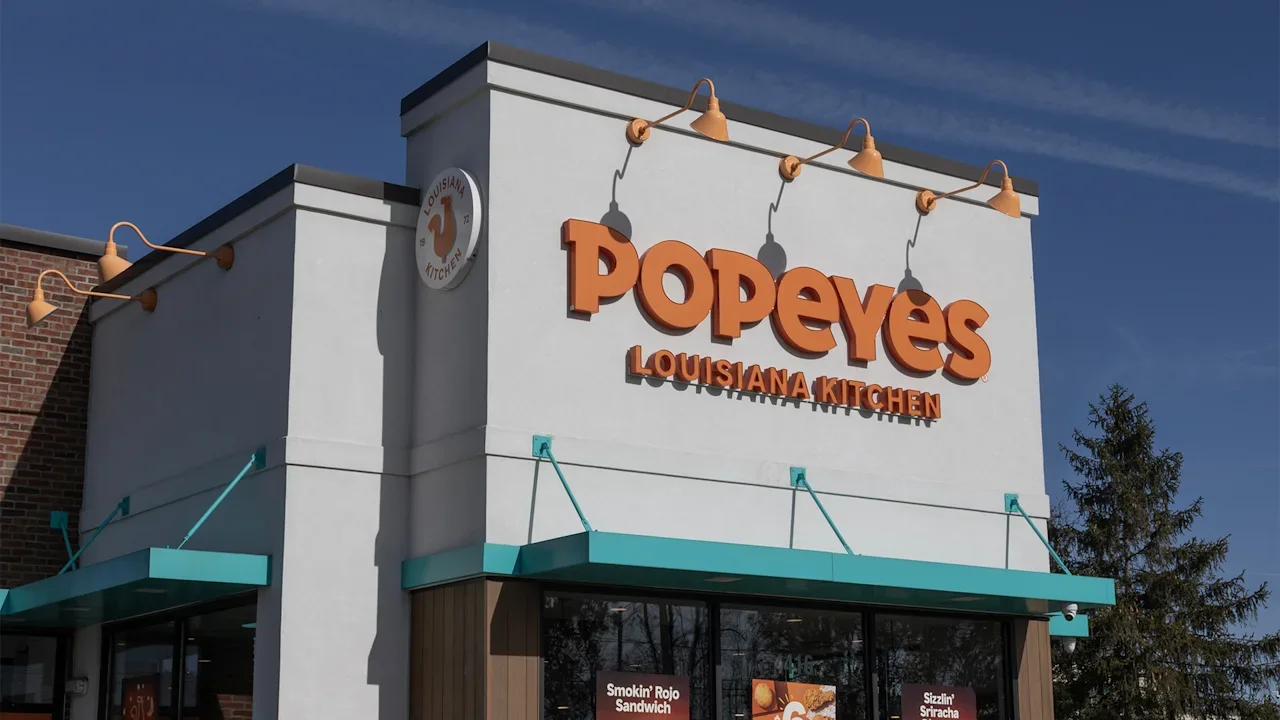
Fans of Popeyes Louisiana Kitchen will be sad to learn that more than a dozen locations have shuttered this month across two Southeastern states. The closures come after Sailormen Inc., a major Popeyes franchisee, filed for Chapter 11 bankruptcy protection in Florida on January 15. Once the bankruptcy proceedings began, Sailormen immediately moved to shutter 17 Popeyes restaurants in Georgia and Florida, according to court records. The company is now seeking to reject the leases at those locations where the beloved fried chicken fast-food restaurants formerly operated. The closures took place as recently as this week, according to a January 26 court docket. It’s unclear if more restaurants will close. Fast Company reached out to Sailormen and Popeyes for comment. Why did Sailormen file for bankruptcy? As Fast Company reported earlier this month, Sailormen cited a number of factors that led up to its bankruptcy petition, including high inflation and borrowing rates, and foot traffic that never fully recovered from the COVID-19 pandemic. Restaurant Brands International (RBI), which owns Popeyes Louisiana Kitchen along with major chains such as Burger King and Tim Hortons, has faced increasing competition in the so-called fast food chicken wars. Notably, younger generations are turning to fast-growing brands like Raising Cane’s and Dave’s Hot Chicken. With more than 5,000 locations worldwide, Popeyes is still the far larger chain, but RBI reported a decline in same-store sales for the brand for three consecutive quarters last year. Which Popeyes have closed? Sailormen said in a court filing that it closed eight locations on January 19, five locations on January 20, and four locations on January 22. It characterized the restaurants as “underperforming.” The full list of locations is below: Florida 2005 Ohio Avenue North Live Oak, FL 32064 1601 South US Highway Ft. Pierce, FL 34950 5156 S. Dale Mabry Highway Tampa, FL 33611 2729 S.E. Highway 70 Arcadia, FL 34266 175 South Highway 17 East Palatka, FL 32131 649 S. McDuff Avenue Jacksonville, FL 32205 1124 N. Young Boulevard Chiefland, FL 32626 27740 US 27 Leesburg, FL 34748 200 Green Way Keystone Heights, FL 32656 812 South 6th Street Macclenny, FL 32063 1833 Kings Road Jacksonville, FL 32209 2015 North Wickham Road Melbourne, FL 32935 Georgia 401 N. 1st Street, Jesup, GA 31545 2106 Memorial Drive Waycross, GA 31501 1610 S. Georgia Parkway West Waycross, GA 31503 68 West Coffee Street Hazlehurst, GA 31539 3319 Altama Avenue Brunswick, GA 31520 View the full article

- Today
-
A Franchise Disclosure Document (FDD) template is an important tool for franchisors, designed to provide potential franchisees with fundamental information about the franchise opportunity. It includes critical sections covering the history of the franchisor, fees involved, and financial performance. Comprehending the structure and requirements of an FDD template is key to ensuring compliance with regulatory standards. Exploring these aspects can help you make informed decisions about franchise opportunities. What else should you know about the components that shape this document? Key Takeaways A Franchise Disclosure Document (FDD) template provides a standardized format for franchisors to disclose crucial information to potential franchisees. It includes 23 key items that cover various aspects of the franchise, such as fees, obligations, and corporate structure. The FDD template ensures legal compliance with FTC regulations, requiring disclosure at least 14 days before any agreement. Regular updates are necessary for the FDD template to reflect material changes and accurate financial information. Utilizing resources like legal firms and industry associations can help in developing a compliant and effective FDD template. Understanding the Franchise Disclosure Document Template When you’re exploring franchise opportunities, grasp of the Franchise Disclosure Document (FDD) template is essential, as it serves as an important tool in the decision-making process. The FDD template provides a standardized format for franchisors to disclose critical information, ensuring compliance with legal requirements. Typically, it includes 23 key items like corporate structure, management experience, fees, obligations, and financial performance. Franchisors must customize the franchise FDD template to accurately represent their specific systems and meet federal and state regulations. By utilizing a clear and well-structured FDD template, you can better comprehend the rights and responsibilities involved, promoting transparency and informed choices. This comprehension is essential for maneuvering the intricacies of franchise investments effectively. Importance of the Franchise Disclosure Document The Franchise Disclosure Document (FDD) is critical for anyone considering a franchise investment, as it provides fundamental information about fees, obligations, and the franchisor’s history. This legal requirement not just guarantees compliance but serves as an important tool for making informed decisions, giving you a clear comprehension of what to expect. Essential Investment Information Comprehending fundamental investment information is critical for anyone considering a franchise opportunity, and the Franchise Disclosure Document (FDD) plays an important role in this process. The FDD is a legal requirement that outlines 23 key disclosure items, including fees, litigation history, and franchise obligations. This information is vital for evaluating your financial and operational risks. You must receive the FDD at least 14 days before signing any agreements or paying fees, giving you time to review it thoroughly. Regular updates, including annual renewals and immediate revisions for significant changes, guarantee you have the most current information. To better understand the content, you can refer to a franchise disclosure document sample pdf, which serves as a helpful reference. Legal Compliance Requirement Comprehension of the legal compliance requirements surrounding the Franchise Disclosure Document (FDD) is crucial for potential franchisees. The FDD is a legal obligation in the U.S., enforced by the Federal Trade Commission (FTC), aimed at promoting transparency in franchise sales. You must receive the FDD at least 14 days before signing any agreement or making payments, allowing time for thoughtful consideration. The FDD contains 23 critical items, including franchisor history and fees, which are fundamental for grasping your investment. Moreover, it requires regular updates, with annual renewals due within 120 days of the fiscal year-end. If you’re in a franchise registration state, keep in mind that the FDD must likewise be registered before you can offer or sell franchises, highlighting compliance’s importance. Informed Decision-Making Tool When you’re considering investing in a franchise, having access to the Franchise Disclosure Document (FDD) is vital, as it equips you with important information that can greatly influence your decision. The FDD is legally required and provides 23 key disclosure items, ensuring you understand the financial commitments, management experience, and obligations involved. This transparency clarifies the relationship between you and the franchisor, allowing you to evaluate the opportunity effectively. Regular updates, including financial statements, keep you informed about any changes. Disclosure Item Importance Initial Fees Understand startup costs Ongoing Fees Assess long-term expenses Litigation History Evaluate potential risks Franchisee Obligations Know your responsibilities Management Experience Gauge franchisor’s capability Key Components of a Franchise Disclosure Document Template When you’re reviewing a Franchise Disclosure Document (FDD) template, it’s vital to focus on several key components. You’ll want to pay attention to important disclosure items, which cover the franchisor’s background, financial obligations, and ongoing fees, in addition to the required legal compliance necessary to protect both parties. Comprehending these elements will help you grasp the overall structure and transparency of the franchise relationship. Essential Disclosure Items Comprehending the fundamental disclosure items in a Franchise Disclosure Document (FDD) is essential for anyone considering a franchise opportunity. These critical components help you evaluate the franchise’s potential effectively. Here are three key items you should focus on: Item 1: This outlines the corporate structure and any affiliated companies, providing insight into the franchisor’s background. Item 5: Here, you’ll find the initial fees required before opening your franchise, important for financial planning. Item 6: This section details ongoing financial obligations, including royalties and fees that you’ll need to pay throughout the franchise agreement. Understanding these items will guarantee you’re well-informed as you navigate your franchise experience. Required Legal Compliance Grasping the required legal compliance for a Franchise Disclosure Document (FDD) template is fundamental for both franchisors and prospective franchisees. Your FDD must include 23 key items, detailing the franchisor’s corporate structure, management experience, and any litigation history. It’s critical to present the FDD to potential franchisees at least 14 days before signing any agreements or making payments, ensuring they’ve enough time to review its contents. All financial statements should be audited for accuracy, and the FDD must be updated annually or when material changes occur. Furthermore, clarity is imperative; the FDD should be written in plain English to promote comprehension in avoiding excessive information that could complicate the registration process. Financial Obligations Overview Comprehending the financial obligations outlined in the Franchise Disclosure Document (FDD) is fundamental for prospective franchisees as they evaluate their investment. This document breaks down various costs you’ll encounter, ensuring transparency in your financial commitment. Key components include: Initial Fees: Item 5 specifies the upfront costs you must pay before opening your franchise. Ongoing Fees: Item 6 details the recurring expenses, such as royalties and advertising contributions, that you’ll pay throughout the agreement. Estimated Investment: Item 7 provides a range for the total financial commitment required to start the franchise. Additionally, Item 10 discusses financing options to help you secure funding for those initial fees, allowing you to plan your investment effectively. Requirements for a Franchise Disclosure Document To guarantee both franchisors and potential franchisees are well-informed, the requirements for a Franchise Disclosure Document (FDD) are quite specific and structured. The FDD must include 23 detailed disclosure items, covering vital information about the franchisor, franchise fees, and the obligations of both parties. You must receive the FDD at least 14 days before signing any agreements or exchanging money, ensuring you can make an informed decision. Moreover, audited financial statements are included as part of Item 21 in the FDD. Franchisors are required to update their FDD annually within 120 days of their fiscal year-end, reflecting any material changes. In states with franchise registration laws, registration with the state examiner is mandatory before offering or selling franchises. Structure of the Franchise Disclosure Document The Franchise Disclosure Document (FDD) is organized into 23 distinct sections, each serving a specific purpose in outlining the franchise relationship and opportunity. Key sections you’ll find include: Franchisor Information: Details on the corporate structure, management team experience, and litigation history. Financial Obligations: Information on initial and ongoing fees, estimated investment ranges, and restrictions on product sourcing. Franchisee Responsibilities: Obligations regarding training, support, territory rights, and trademark use. Each FDD must be updated annually and include audited financial statements. This guarantees compliance and transparency for prospective franchisees, helping you make informed decisions about your investment in the franchise. Comprehending this structure is essential for evaluating the potential of any franchise opportunity. The Role of Lawyers in Drafting an FDD Template During the process of maneuvering through the intricacies of franchise agreements, you’ll find that lawyers play a crucial role in drafting an effective Franchise Disclosure Document (FDD) template. They make certain the FDD complies with legal drafting principles and federal regulations, helping you avoid potential legal issues. By focusing on writing in plain English, lawyers improve comprehension for prospective franchisees, minimizing ambiguity. They skillfully balance information disclosure, as over-disclosure complicates the registration process, whereas under-disclosure can lead to legal repercussions. Additionally, their expertise streamlines the filing and registration process, guaranteeing timely compliance with state and federal laws. With knowledge of specific requirements and necessary disclosures, franchise lawyers assure thorough coverage of all required items in your FDD template. Common Mistakes to Avoid When Creating an FDD Creating a Franchise Disclosure Document (FDD) requires careful attention to detail, and avoiding common pitfalls can save you from future complications. Here are three key mistakes to steer clear of: Timing Issues: Make sure you provide the FDD at least 14 days before the franchise agreement is signed; otherwise, you risk non-compliance with FTC regulations. Over-disclosure: Don’t overload your FDD with unnecessary information. A cluttered document can confuse prospective franchisees and detract from crucial details. Neglecting Updates: Regularly update your FDD, especially after material changes. Outdated or inaccurate financial statements can misrepresent your business, damaging trust and reputation. Resources for Developing a Franchise Disclosure Document Template When developing a Franchise Disclosure Document (FDD) template, it’s important to leverage various resources that can streamline the process and guarantee compliance. Consider using franchise law firms or industry associations to access customizable FDD templates that meet federal and state regulations. These resources can help assure your document includes fundamental information, like corporate structure and financial obligations. Regular updates are likewise critical to reflect any material changes in your franchise system. Resource Type Benefits Franchise Law Firms Expert guidance on compliance Industry Associations Access to standardized templates Online Tools User-friendly customization Peer Networks Sharing best practices and ideas Utilizing these resources can improve clarity and consistency in your FDD. Frequently Asked Questions What Is a Franchise Disclosure Document? A Franchise Disclosure Document (FDD) is an essential legal document that provides you with key information about a franchise opportunity. It includes details on the franchisor’s background, fees, management experience, and your obligations as a franchisee. You’ll receive the FDD at least 14 days before signing any agreements or exchanging fees, ensuring transparency. Franchisors must update the FDD annually or when significant changes occur, keeping the information accurate for potential franchisees like you. What Are Three Items Found in a Franchise Disclosure Document? In a Franchise Disclosure Document (FDD), you’ll find several important items. For instance, Item 1 outlines the corporate structure and affiliated companies, giving you insight into the franchise’s background. Item 5 details the initial fees you’ll need to pay, clarifying your upfront financial commitment. Furthermore, Item 7 provides an estimated range of the total investment required, helping you evaluate the overall costs associated with starting the franchise. What Is an FDD and Why Would You Use One? An FDD, or Franchise Disclosure Document, is an essential legal document that outlines important details about a franchise opportunity. It includes information about the franchisor’s background, financial obligations, and estimated initial investment. You’d use an FDD to assess the franchise’s viability and understand your rights and responsibilities before committing. What Is the Difference Between a Franchise Disclosure Document and a Franchise Agreement? The main difference between a Franchise Disclosure Document (FDD) and a Franchise Agreement lies in their purpose and content. The FDD provides essential information about the franchise, including fees and obligations, ensuring you make an informed decision. Conversely, the Franchise Agreement is a binding contract that outlines your rights and responsibilities within the franchise relationship, detailing payment terms and duration. Comprehending these differences helps you navigate the franchise process effectively. Conclusion In conclusion, a Franchise Disclosure Document (FDD) template is crucial for providing fundamental information to potential franchisees. By comprehending its key components and legal requirements, you can guarantee compliance and promote transparency in your franchise offering. Engaging legal professionals in the drafting process can help avoid common pitfalls and improve clarity. Utilizing a well-structured FDD template not just supports informed decision-making but additionally cultivates trust between franchisors and franchisees, in the end benefiting the franchise system as a whole. Image via Google Gemini This article, "What Is a Franchise Disclosure Document Template?" was first published on Small Business Trends View the full article
-
Something you don't see every day: a sports tech company actually giving away premium features for free. Suunto's route-planning tool lets you create and download GPX files without even creating an account. No paywall, no trial period—just open the page and start planning routes. And the tool itself works great. What you can do with the Suunto RouteplannerThe tool packs in everything you'd expect from a paid service, and then some: Route creation that uses different map types (outdoor, satellite, even specialized ones for winter and avalanche terrain) Routing that optimizes for your activity (running, hiking, cycling, mountaineering, roller skating, and more), using actual heat map data from real athletes Heat map overlays for about a dozen different sports so you can see where people actually go Elevation profiles with ascent and descent numbers (crucial for not dying on climbs you didn't see coming) Export routes as GPX files that work with basically any GPS device Shareable link generation (good for six months) so you can send routes to friends without making them create accounts either Ability to import and modify existing GPX or FIT files from other platforms Optional account sync if you own Suunto or Hammerhead gear You don't even need to be in Suunto's ecosystem to use this. I was able to export a map to my Garmin watch with no problem. If you do have a Suunto or Hammerhead device, you can link your account and routes will sync automatically. How to use the Suunto RouteplannerGo to routeplanner.suunto.com. From there, creating a route is pretty straightforward. If you let your browser share your location, it'll center on where you are. If not, just search for wherever you want to start. The controls on the right side let you switch between map types. The usual suspects are there: outdoor, satellite, light, dark. But then it gets weird in the best ways with a winter map, an avalanche terrain map for backcountry stuff, and, in a show of national pride, a dedicated Finland Terrain map. Respect. To actually connect points on the map, you have the following options: Free drawing (no automatic routing) Any road or path (ideal for activities by foot) All road types—avoiding hills (ideal for bikes) All road types (still ideal for bikes) Paved roads (ideal for road cycling) After you create your route, you simply download the GPX file and throw it on whatever GPS device you own. The six-month shareable links are a nice touch too. You can plan a route for a group ride or run, send everyone the link, and they can grab it without jumping through hoops. It's the kind of friction-free sharing that should be standard but somehow isn't. Why you should try the Suunto RouteplannerStrava and Komoot have trained users to expect paywalls for route planning. Of course, this could be strategic on Suunto's part, to give away the software in the hopes of selling the hardware. Or maybe it's just goodwill after years of user complaints about Suunto closing their tracking system Movescount. Either way, users win. You get a legitimately useful tool without opening your wallet or handing over your email address. If you're already paying for route planning elsewhere, try this first. Worst case, you waste five minutes. Best case, you cancel a subscription and pocket the savings. Even if you'e not looking to save money, having another route planning option in your toolkit doesn't hurt. View the full article
-
President Donald The President announced Tuesday that he has signed an executive order to “cut through bureaucratic red tape” and speed up reconstruction of tens of thousands of homes destroyed by the January 2025 Los Angeles area wildfires. The President’s order, signed Friday, seeks to allow homeowners to rebuild without contending with “unnecessary, duplicative, or obstructive” permitting requirements, the White House said in a statement. The order directs the Federal Emergency Management Agency and the Small Business Administration to find a way to issue regulations that would preempt state and local rules for obtaining permits and allow builders to “self-certify” that they have complied with “substantive health, safety, and building standards.” California Gov. Gavin Newsom scoffed at the idea that the federal government could issue local rebuilding permits and urged The President to approve the state’s $33.9 billion disaster aid request. Newsom has traveled to Washington, D.C., to advocate for the money, but the administration has not yet approved it. The Democratic governor said on social media that more than 1,600 rebuilding permits have been issued in Los Angeles and officials are moving at a fast pace. “An executive order to rebuild Mars would do just as useful,” Newsom wrote on social media. He added, “please actually help us. We are begging you.” Fewer than a dozen homes had been rebuilt in Los Angeles County as of Jan. 7, one year after the fires began, The Associated Press found. About 900 homes were under construction. The Palisades and Eaton fires killed 31 people and destroyed about 13,000 residential properties. The fires burned for more than three weeks and cleanup efforts took about seven months. It wasn’t immediately clear what power the federal government could wield over local and state permitting. The order also directs federal agencies to expedite waivers, permits and approvals to work around any environmental, historic preservation or natural resource laws that might stand in the way of rebuilding. Los Angeles Mayor Karen Bass said in a statement that instead of trying to meddle in the permitting process, the The President administration should speed up FEMA reimbursements. Bass called The President’s move a “political stunt” and said the president should issue an executive order “to demand the insurance industry pay people for their losses so that survivors can afford to rebuild, push the banking industry to extend mortgage forbearance by three years, tacking them on to the end of a 30-year mortgage, and bring the banks together to create a special fund to provide no-interest loans to fire survivors.” The mayor said rebuilding plans in Pacific Palisades are being approved in half the time compared to single-family home projects citywide before the wildfires, “with more than 70% of home permit clearances no longer required.” Permitting assistance is “always welcome,” said Joy Chen, executive director of the Eaton Fire Survivor’s Network, a coalition of more than 10,000 Eaton and Palisades fire survivors, but it’s not the primary concern for those trying to rebuild. “The number one barrier to Eaton and Palisades fire survivors right now is money,” said Chen, as survivors struggle to secure payouts from insurance companies and face staggering gaps between the money they have to rebuild and actual construction costs. Nearly one-third of survivors cited rebuild costs and insurance payouts as primary obstacles to rebuilding in a December survey by the Department of Angels, a nonprofit that advocates for LA fire survivors, while 21% mentioned permitting delays and barriers. In addition, The President’s executive order also directs U.S. Homeland Security Secretary Kristi Noem and FEMA acting administrator Karen Evans to audit California’s use of Hazard Mitigation Grant Program funding, a typical add-on in major disasters that enables states to build back with greater resilience. The audit must be completed within 60 days, after which Noem and Evans are instructed to determine whether future conditions should be put on the funding or even possible “recoupment or recovery actions” should take place. The President has not approved a single request from states for HMGP funding since March, part of a wider effort to reduce federal funding for climate mitigation. This story has been corrected to reflect that The President last approved an HMGP request in March, not February. —Christopher Weber and Gabriela Aoun Angueira, Associated Press View the full article

-
In a shocking turn of events, a former employee of the Small Business Administration (SBA) is accused of masterminding a fraud scheme that siphoned off over $3.5 million from essential COVID-19 relief programs. Attallah Williams, who held positions at both the SBA and the Internal Revenue Service (IRS), allegedly exploited her government roles to approve fraudulent applications in exchange for kickbacks, raising concerns about the integrity of these critical programs. Williams’ scheme reportedly spanned three years, targeting four distinct relief programs designed to help struggling businesses stay afloat during the pandemic. As U.S. Attorney Theodore S. Hertzberg pointed out, “Williams allegedly exploited her federal employment, stole millions of dollars from generous government programs, and brazenly recruited other participants through social media advertisements.” Key Takeaways for Small Business Owners: Heightened Scrutiny: This case underscores the increasing vigilance among federal agencies against fraud within pandemic relief programs. Small business owners should be aware that their applications could come under more intense scrutiny as authorities crack down on fraud. Fraudulent Claims: Williams submitted false applications for Economic Injury Disaster Loans (EIDL) and the Paycheck Protection Program (PPP) for businesses that were non-operational. This highlights the risks of falsifying information on applications and the heavy legal consequences that can follow. Social Media Engagement: The alleged recruitment of co-conspirators via Instagram signals a new trend. Small business owners utilizing social media for outreach must be cautious, as this serves as a reminder of how platforms can be misused for fraudulent activities. Importance of Transparency: In the wake of fraud, maintaining transparency in all financial dealings is vital. Businesses should prioritize clear and honest communication in their application processes to foster trust with funding bodies. Legal Implications: Should any fraudulent activities be suspected within applications, the consequences can affect both individuals and the businesses they represent. Proactive legal compliance becomes essential for avoiding potential repercussions. Williams stands accused of a brazenly orchestrated plan that included the submission of counterfeit applications and the recruitment of accomplices. These accomplices were allegedly lured into the scheme by promises of referral payments, further complicating the landscape of trust for small business owners. “Using a position of public trust as a means to fraudulently grant access to federal programs for personal gain will not be tolerated,” stated Amaleka McCall-Brathwaite, Special Agent in Charge of the SBA Office of the Inspector General. This reinforces the critical message for small business operators: integrity in the application process is non-negotiable. The gravity of the situation is heightened by future ramifications on public trust toward federal assistance programs. Paul Brown, Special Agent in Charge of the FBI Atlanta, said, “The FBI will continue to work with our law enforcement partners to identify, investigate, and hold accountable anyone who abuses public trust and defrauds critical government programs for personal gain.” This ongoing commitment to accountability means that small business owners should remain vigilant, ensuring their practices strictly adhere to all guidelines set forth by governmental programs. As investigations continue, small business owners are encouraged to familiarize themselves with avenues for reporting suspected fraud. The Department of Justice has established the National Center for Disaster Fraud (NCDF), offering a hotline for reporting allegations related to COVID-19 scams. With increased governmental oversight already underway, businesses hoping to apply for relief funds must prioritize compliance and ethical practices in all financial applications. Those who fail to uphold these standards could face serious penalties, including criminal charges similar to those faced by Williams. Interested parties can access further information about this case at the official Department of Justice link or through the SBA’s ongoing support and oversight initiatives. For more details and to remain updated on legal developments, you can check the original press release here. As this case continues to unfold, small business owners should stay informed and adopt best practices to protect themselves from becoming inadvertent participants in fraudulent activities. The impact of this high-profile case serves as a critical reminder of the importance of vigilance and ethical conduct in today’s economic landscape. Image via Google Gemini This article, "Former Federal Employee Charged in $3.5M COVID Relief Fraud Scheme" was first published on Small Business Trends View the full article
-
The launch of the Google TV Streamer marked a significant shift for the company's streaming lineup, moving away from the behind-the-TV Chromecast dongles it popularized and introducing a pill-shaped set-top box that blends in nicely on a shelf of tchotchkes. It's hiding a worthy processor, double the memory you'd get from a streaming stick, and enough storage to download what you need to run all of your apps. It even acts as a smart hub, with Matter and Thread built in. It's taken me a long time to do anything with the Google TV Streamer. I reluctantly brought it into my home after realizing something more robust, but dated, like the Nvidia Shield, would be too much to manage alongside maintaining a home server. But since then, I've tweaked several things on the set-top box and enabled features I hadn't been using, turning it into a helpful hub in my living room. Enable "Find my remote" to never lose your Google TV Streamer remote againThis sounds like an obvious tip, but I've had the Google TV Streamer since it debuted in 2024, and it wasn't until this week, while writing this piece, that I finally enabled the remote finder. I had skipped it during the initial setup. The option is available in Settings > Remotes & Accessories. You'll see the Find my remote option in there. Credit: Florence Ion/Lifehacker The Google TV Streamer has a physical button on the back of the device that lets you locate your remote if it's stuck somewhere on the couch. But what if you can't reach the streamer behind the TV? Try one of your Google-enabled voice devices instead. If you have a Nest speaker or a Pixel phone nearby, say "Hey Google, find my remote." The remote should start chirping if you've set it up. Set up the Google TV Streamer remote shortcutThe remotes that come with the Google TV Streamer feature a tiny, unregistered button with a star icon right next to the power button. By default, this shortcut does nothing! But you can change that in the device's system preferences. Credit: Florence Ion/Lifehacker In Settings > Remotes & Accessories > Set up remote buttons, select one of three options for customizing the shortcut button. I set it up as my Google Home shortcut so I can easily turn the lights on and off from the couch. You can also set it up as a launcher for another app installed on the set-top box. Or create a shortcut to cycle through device inputs—this button is on legacy Chromecast devices with an included remote. It was removed from this generation of streaming devices, so if you miss it, you can spoof it back. For serious power users, map the shortcut to an app like Projectivity Launcher to make it a more powerful launcher button. Remap other buttons on your Google TV Streamer remote to be more useful What Button Mapper looks like running on Google TV. Credit: Florence Ion/Lifehacker Don't care for the default YouTube or Netflix buttons included on the Google TV Streamer remote? You can remap them with a third-party app, then affix a small sticker to indicate what it does. Install an app like Button Mapper or tvQuickActions. Then go to Google TV Settings > System > Accessibility, and turn on the service. After that, you can head back into the app to adjust what those physical buttons do. You can set them as shortcuts to other apps, or even something cheekier for others to discover when they press the button. Remove the clutter from the Google TV Streamer home screen Credit: Florence Ion/Lifehacker Can't stand all the recommendations and sponsored content Google TV suggests in the main carousel? You can effectively shut off some of the clutter so it doesn't visually overwhelm you. Go to Settings > Accounts & Sign-In > Your Account. and toggle on Apps only mode. This clears the clutter and "sponsored" content, leaving you with just app icons. Keep in mind that this turns off the "Watchlist" feature that's tied to your account and some Gemini voice search capabilities for specific content. Enable Google TV Streamer "Developer options" for more customization Credit: Florence Ion/Lifehacker You'll need to enable developer options to enable features like faster animations and side-loading apps. It's easy to set up, and it's just like on an Android smartphone. Head into Settings > System > About, then tap Android TV OS Build 7 times. You'll see a little dialog pop up to let you know you've got developer access. Once enabled, a new menu will appear under Settings > System > Developer options. Limit animations to make navigation fasterThe Google TV interface is organized and functional, but its animations can slow down menu navigation. You can eliminate these animations and tweak other visual elements to speed things up deep within the developer settings. Credit: Florence Ion/Lifehacker In Developer Options, scroll down to Window animation scale, Transition animation scale, and Animator duration scale. Change one of these, or all three, from 1x to Animation off to turn off animations completely. You can also go the other way and effectively "overclock" the animations to speed them up, making them appear smoother. Side-load apps or an alternative launcherWith developer options turned on, you can enable USB and wireless debugging to use apps like Send Files to TV and atvTools to sideload APKs. But first, enable the "Allow installs from unknown sources" option in the Developer Options under Security settings. This allows APKs you've transferred over to the device to run on the streamer. Why would you want to go through the fuss of connecting to the Google TV Streamer this way? Because then you could access alternative streaming apps not available in the Play Store, or even an alternative launcher, like LeanbackLauncher. Pair headphones to your Google TV Streamer for private listening Credit: Florence Ion/Lifehacker This is one of my favorite little hacks that comes especially in handy when living in a house occupied by other people. When I do my workouts in the living room, I use a set of Bluetooth earbuds connected to the Google TV Streamer so I can hear the instructor's directions even when I'm face down in a plank and my kid is screaming in the background. The ability is available in the same submenu where you set up your remote. In Settings > Remote & Accessories > Pair Remote/Accessory, put your audio device into Bluetooth pairing mode, then watch it come up on the screen as an option. If you're successful, you can now pop on the buds when you need to. Be aware that audio latency can occur, and you might need to restart the connection—it is Bluetooth, after all. Force your Google TV Streamer to choose the best resolution, regardless of bandwidthIf you don't care about your bandwidth and want full-resolution streaming at all times, you can set the best resolution to display as the default in your Google TV Streamer preferences. Go to Settings > Display & Sound > Resolution. Switch the Resolution from "Automatic" to 4K 60Hz, or whatever your TV's peak is. Once this is enabled, the Google TV Streamer won't downscale to 1080p. If you're a sucker for HDR, this is the same menu where you can turn it on so that it's always in high definition. Use the USB-C port to add accessories and turn your Google TV Streamer into an all-in-one media centerThe USB-C port can do more than charge up the Google TV Streamer. You can plug in a power delivery hub with extra ports to add components like external storage and effectively run your own all-in-one home media center. Those power delivery hubs usually include extra USB ports for peripherals, so you can hook up things like keyboards and game controllers for extra fun. View the full article
-
U.S. Google searchers are searching far less than a year ago, according to a new Datos/SparkToro report. The data suggests Google isn’t losing users — it’s losing repeat searches. Why we care. Google still dominates search, but it’s changing in significant ways. Fewer searches per user means fewer opportunities for clicks, ads, and traffic — even if total search volume looks steady. By the numbers. Google desktop searches per user fell nearly 20% year over year, based on clickstream data from tens of millions of U.S. users. That drop stands in sharp contrast to Europe, where searches per user declined by just 2% to 3%. Even with fewer searches per person, traditional search still makes up about 10% of all U.S. desktop activity — a share that stayed nearly flat throughout 2025. What’s driving the drop. AI-powered answers and instant results are the most likely cause, according to the report: Users increasingly get what they need without running multiple follow-up searches. Zero-click searches remain high but are no longer accelerating, leveling off in the low-20% range by year-end. Repeat searches and clicks within Google-owned properties show only minor changes, indicating behavior has settled at current levels. AI is reshaping search. AI is being layered into search, not pulling users away from it. Despite constant AI hype, the report found: AI tools still account for less than 1% of total U.S. desktop activity (0.77%), even after strong year-over-year growth. Google AI Mode remains small, at about 0.06% of U.S. desktop events by December, though adoption continues to rise steadily. Queries get longer. One of the clearest behavioral changes is how people search. Per the report: Mid-length queries of six to nine words are growing fastest in the U.S. Very long queries of 15 words or more remain rare but show higher volatility, signaling experimentation. Overall, users seem more comfortable expressing complex needs directly in search. Discovery gets harder. Search-driven discovery is more concentrated — and tougher to break into. Post-search destinations remain largely unchanged, according to the report: YouTube, Reddit, Amazon, Wikipedia, and Facebook still dominate. ChatGPT climbed to No. 7 among U.S. search destinations, making it one of the few meaningful movers. Quora dropped out of the top 15. AI’s dominant few. Traffic from AI tools overwhelmingly flows to established platforms — Google, YouTube, GitHub, and Wikipedia — not to new or independent publishers. Among AI platforms: ChatGPT remains the leading AI tool in the U.S., reaching roughly one-quarter to one-third of desktop AI users. Google’s Gemini emerged as the clear No. 2, growing steadily throughout 2025 and overtaking DeepSeek. Other tools, including Claude, Perplexity, and Copilot, remain niche with no breakout adoption. What they’re saying. Rand Fishkin, co-founder and CEO of SparkToro, said in the report: “The big highlight here is the decline in # of Google searches/searcher from 2024–2025. It’s a nearly 20% decline in the US, though only 2–3% in the EU/UK. Other studies have shown that Google is sending less traffic than in years past, especially to the long-tail of the web, and I suspect that AI answers have dramatically altered the way many users engage with Google, answering their questions before they ever need to click on an organic result or perform a second/third/fourth search.” The report. Q4 State of Search report View the full article
-
Here is a recap of what happened in the search forums today, through the eyes of the Search Engine Roundtable and other search forums on the web. Google is exploring ways to let us block our content from being used in AI search...View the full article
-
Dutch semiconductor chip machine maker ASML recorded a record net profit of 9.6 billion euros ($11.5 billion) in 2025 on sales of 32.7 billion euros fueled by AI-driven demand, the company reported Wednesday as it also announced plans to slash its workforce by about 1,700, about 4% of its workforce. The growth comes despite Dutch government restrictions on exports of machines that can be used to make chips that can be integrated into weapons systems. The measures, initially announced in 2023 and later expanded, are seen as part of a U.S. policy that aims at limiting China’s access to such technology. “In the last months, many of our customers have shared a notably more positive assessment of the medium-term market situation, primarily based on more robust expectations of the sustainability of AI-related demand. This is reflected in a marked step-up in their medium-term capacity plans and in our record order intake,” ASML President and Chief Executive Officer Christophe Fouquet said in a statement. In a message to employees, the company said it was cutting jobs in order to become more streamlined and efficient. It said ASML was “choosing to make these changes at a moment of strength for the company. Improving our processes and systems will allow us to innovate more and innovate better, generating further responsible growth for ASML and our stakeholders.” The job cuts are intended to sharpen ASML’s focus on engineering and innovation by streamlining the company’s technology and IT departments, the message said. The company said it expects 2026 to be “another growth year for ASML’s business” driven by sales of its extreme ultraviolet lithography systems. —Associated Press View the full article

-
Optimism over earnings powers Wall Street rebound from Greenland crisis View the full article
-
Part of the fun of watching sports is that you don't know what's going to happen. TV shows and movies follow story beats, meaning you can usually get a sense for where things are heading, but sports do not work that way. The totally unexpected can, and does, frequently occur—and that's the reason people keep tuning in, whether their team is dominating or an underdog. Sometimes, though, you can't catch the game live, but still want a bit of that feeling. That's why leagues offer extended highlights, featuring all the key moments, complete with the commentary from the broadcast. These can feel almost like watching the full game, and I love catching up with them the next day alongside my morning coffee. The problem: you'll typically find those videos on sites full of spoilers about who won, whether that's via a scoreboard at the top of the site or headlines blaring the results. If you're hoping for even a fraction of the fun of watching sports live, that's a problem. Don't Tell Me The Score is your solution. This simple website offers highlights for NFL, NHL, MLB, and NBA games, with no scores or spoilers of any kind. The site interface shows only a bunch of icons representing all upcoming and recent games. Color logos means there are highlights are already available, and you can click or tap to start watching. Credit: Justin Pot This is my favorite way to catch up on games I missed. The videos, which are sourced from the league's official YouTube channels, tend to be a little over 10 minutes, meaning you'll see the highs and lows, but it won't take up hours of your day, and you won't know who won going in (provided you've also taken care to avoid spoilers via the TV, newspapers, social media, push notifications, or ill-timed texts from friends). This tends to work really well, with one big hiccup: NFL videos can't be watched on the site itself, as the NFL prevents their highlights from being embedded on other sites. This means you'll need to click a link to watch the highlights on YouTube's website. This is a little annoying, but the YouTube pages usually don't include spoilers either, as long as you steer clear of the comments. I wish more leagues were supported—soccer highlights aren't offered at all, for example, and neither are the increasingly popular women's leagues. But if you're a fan of one of the "big four" North American sports, like watching highlights, and don't want to get spoiled first, Don't Tell Me The Score is worth adding to your daily rotation. View the full article
-
Big Four accounting firm has improved profitability in the UK as part of recovery from a series of scandalsView the full article
-
The contract rate on a 30-year mortgage rose 8 basis points to 6.24% in the week ended Jan. 23, according to Mortgage Bankers Association data released Wednesday. View the full article

-
A third round of “No Kings” protests is coming this spring, with organizers saying they are planning their largest demonstrations yet across the United States to oppose what they describe as authoritarianism under President Donald The President. Previous rallies have drawn millions of people, and organizers said they expect even greater numbers on March 28 in the wake of The President’s immigration crackdown in Minneapolis, where violent clashes have led to the death of two people. “We expect this to be the largest protest in American history,” Ezra Levin, co-executive director of the nonprofit Indivisible, told The Associated Press ahead of Wednesday’s announcement. He predicted that as many as 9 million people will turn out. “No Kings” protests, which are organized by a constellation of groups around the country, have been a focal point for outrage over The President’s attempts to consolidate and expand his power. “This is in large part a response to a combination of the heinous attacks on our democracy and communities coming from the regime, and a sense that nobody’s coming to save us,” Levin said. Last year, The President said he felt attendees were “not representative of the people of our country,” and he insisted that “I’m not a king.” ‘No Kings’ shifts focus after Minneapolis deaths The latest round of protests had been in the works before the crackdown in Minneapolis. However, the killing of two people by federal agents in recent weeks has refocused plans. Levin said they want to show “support for Minnesota and immigrant communities all over” and oppose “the secret police force that is murdering Americans and infringing on their basic constitutional rights.” “And what we know is, the only way to defend those rights is to exercise them, and you do that in nonviolent but forceful ways, and that’s what I expect to see in ‘No Kings’ three,” Levin said. The President has broadly defended his aggressive deportation campaign and blamed local officials for refusing to cooperate. However, he’s more recently signaled a shift in response to bipartisan concern over the killing of Alex Pretti in Minneapolis on Saturday. Previous ‘No Kings’ protests have drawn millions across the US In June, the first “No Kings” rallies were organized in nearly 2,000 locations nationwide, including cities, towns and community spaces. Those protests followed unrest over federal immigration raids and The President’s deployment of the National Guard and Marines to Los Angeles, where tensions escalated with protesters blocking a freeway and setting vehicles on fire. They were organized also in large part to protest a military parade in the nation’s capital that marked the Army’s 250th anniversary and coincided with The President’s birthday. “No Kings” organizers at the time called the parade a “coronation” that was symbolic of what they characterized as The President’s growing authoritarian overreach. In response, some conservative politicians condemned the protests as “Hate America” rallies. During a second round of protests in October, organizers said demonstrations were held in about 2,700 cities and towns across the country. At the time, Levin pointed to The President’s sweeping immigration crackdown, his unprecedented promises to use federal power to influence midterm elections, restrictions on press freedom and retribution against political opponents, steps he said cumulatively represented a direct threat to constitutionally protected rights. On social media, both The President and the official White House account mocked the protests, posting computer-generated images of the president wearing a crown. The big protest days are headline-grabbing moments, but Levin said groups like his are determined to keep up steady trainings and intermediate-level organizing in hopes of growing sustainable resistance to the The President administration’s actions. “This isn’t about Democrats versus Republicans. This is about do we have a democracy at all, and what are we going to tell our kids and our grandkids about what we did in this moment?” Levin said. “I think that demands the kind of persistent engagement. “ Meg Kinnard can be reached at http://x.com/MegKinnardAP —Meg Kinnard, Associated Press View the full article

-
Tech founder and provocateur Travis Kalanick made millions betting on key parts of the young adult lifestyle with Uber (transportation) and dining (ghost kitchen startup CloudKitchens). Can he hit a trifecta with a bet on tech-focused, community-driven apartments? Kalanick has partnered with Oliver Ripley, founder of the luxury hospitality company Habitas, to launch Sekra, a bid to tackle the massive multifamily housing market with a firm that will focus on building and managing upscale rental apartments. It’s a market that’s sure to grow: Ripley estimates 80% of people younger than 40 globally rent, and that’s only going to increase as stubborn housing affordability impacts remain a key issue. In the U.S., the number of rental households has grown steadily, hitting more than 46 million last year, according to the Census Bureau, with strong growth in the percentage of Gen Z members renting. The idea is to apply layers of technology and hospitality to create a more profitable brand of rental housing; while Sekra’s tool and tech stack are still under development, other apartment companies have saved money by automating repairs, streamlining operations, cutting energy bills, and making the touring and leasing experience faster, reducing vacancies. “There’s a real opportunity to do something different in the multifamily space, to build a global brand that sits at the cross section of community, culture, and longevity and wellness,” Ripley says. Ripley describes Sekra as taking both a hardware and software approach. The hardware portion includes building a proprietary tech platform for operations and iterating with residents (other tech in the market such as Elise.AI has seen significant growth in recent years). The in-development resident app will incorporate programming, content, and in-unit internet of things functionality—such as the ability to control appliances or lighting—that will “give residents an integrated experience that will command above-market rents.” It also includes building a space that encourages socialization and better sleep, including consulting with sleep experts, installing noise insulation and blackout shades, and using circadian rhythm lighting. The software part means hiring ambassadors for the properties and curating the community and its residents. Ripley says the onboarding for new residents will be done by the Sekra team, the residents themselves, and through the resident app. The application of technology to a branded living experience may be harder than it looks. Evidence exists that tech can save apartment owners money: A survey by the National Apartment Association about AI usage found operators achieved 10% savings in payroll and a 15% increase in retention rates. According to Joel Steinhaus, a former WeWork exec who cofounded a coworking firm called Daybase, there’s a big opportunity: The housing market is huge and there aren’t any dominant brands in the market. But there’s a reason for that. “It’s just hard to contemplate being relevant to someone in their personal space when they want to make it their own,” he says. For context, a 2024 resident survey of 172,000 renters taken by industry group the National Multifamily Housing Council found that the most desired community features are fairly basic, including cell reception, a fitness center, covered parking, and a pool—all sought after by more than 70% of respondents. Features like maker spaces, party rooms, conference rooms, vegetable gardens, dog parks, and others were cited by 50% or fewer renters. Sekra, which has quietly raised $12.5 million from a cadre of tech and real estate VCs and investors, including Fifth Wall, Moinian Group, and Harvey Spevak, the chairman and managing partner of Equinox, seeks to open its locations later this year, zeroing in on sites in coastal U.S. cities as well as in Riyadh, Saudi Arabia, and Dubai. Sekra will both renovate and operate existing buildings and eventually build its own new, ground-up projects. As Ripley says of the gigantic global rental market: “It just felt like an industry ripe for disruption, ripe to be messed with.” Go With The Flow A portmanteau of Sekhmet, the Egyptian goddess of healing and protection, with Ra, the Egyptian sun god, Sekra seeks to combat a few hurdles facing renters and the apartment market: the challenge of buying a home, the lack of socialization and authentic community during a global loneliness epidemic, and the blandness of much of the high-end housing stock. Early renderings show a hotel lobby-esque experience, with a muted color palette, textured materials, and plenty of curved lines. It’s not the first tech-bro-helmed startup seeking to revolutionize the apartment market. WeWork founder Adam Neumann launched Flow, his own rental platform, in 2022, and has quietly built a company valued at $2.5 billion, which includes 1,000 rental units and nearly 500 condo units in South Florida, control of an under-construction 4-million-square-foot riverfront district in Miami, and holdings in Riyadh. Ripley argues that his experience with Habitas in building a hospitality brand suited to young travelers makes him an ideal candidate to change the way apartments operate. Sekra’s seeking to create points of differentiation in areas that have long been puzzles for multifamily operators: creating authentic communities and applying tech to help streamline operations. Both goals have a profit motive. Better community means fewer move-outs and vacancies—key measures of rental housing profitability—and more efficient operations lead to lower operating costs. Ripley claims he’ll be able to double retention rates. Steinhaus says that building community in real estate, as he has in his coworking firm, means being cognizant of the mistake of making too much effort. Creating community means being the host of the party, not the life of the party—too much forced fun and performative programming may make it impossible for organic community development to take root. When asked to define programming for Sekra, Ripley mentions elements empowered by residents, and some familiar concepts: game nights, movie nights, lectures or talks, therapy nights or wellness programming, and book clubs. Brendan Wallace, CEO and cofounder of Fifth Wall, an investor in Sekra, believes Ripley and his team, with their hospitality background, are the ones who can build a single tech ecosystem that addresses all of these challenges and do a better job managing and increasing profits. “Many current owners lack an understanding of the elements of hospitality and community building,” Wallace says. “We see this when we talk to owners. They have big ideas, and even similar notions, but they end up being poorly executed and feel kludgey.” View the full article

-
Learn how information retrieval impacts SEO strategies, making content easier to understand and retain for users. The post Information Retrieval Part 1: Disambiguation appeared first on Search Engine Journal. View the full article
-
Hitting 10,000 steps every day is a bullshit goal. Step counts can feel daunting, especially for people who work desk jobs or have physical limitations. The mere pressure to hit 10,000 steps can become its own source of stress—miss the goal by a few thousand steps, and it's easy to feel like the whole day was a wash. Rather than obsessing over hitting a specific step count, consider shifting your focus to a simpler, more achievable goal: sitting less. This reframing is not only easier to sustain, it could be just as beneficial for your health. Why you should break up sitting time"Spending the bulk of your time seated is a major contributor to increasing the risk of heart attack and stroke," says Pamela Light, a certified personal trainer at Bay Club. And if you think you can't afford to take movement breaks during a busy workday, know that you don't need to transform into a marathon runner or achieve some lofty daily step count to see real health benefits. Simply interrupting your sitting time throughout the day can make a meaningful difference. "Just ten minutes of movement is enough to reduce risk of cardiovascular disease and diabetes, while slowing down muscle loss," Light says. And the science backs this up. In fact, a 2022 study published in JAMA Internal Medicine suggests that ten minutes of moderate exercise daily would prevent more than 111,000 premature deaths a year. Small changes could have a major impact on your life. How to break up your sitting timeThe beauty of this approach is its simplicity and flexibility, especially compared to the stress of 10,000 steps. You don't need to do jumping jacks in the middle of your office or draw attention to yourself. Instead, try incorporating more movement to things you already do throughout the day. This could look like cleaning up around home, checking in with co-workers, helping with an extra chore, or walking around the block. Even bathroom breaks become opportunities for movement. "Go to a restroom further away or on a different floor and take the stairs. Once inside, do 10 squats," Light says. "They don't have to be huge or perfect, but giving the large muscles of your legs a chance to flex and release will feel great on your joints, boost your mood, and help your body to pull nutrients from the blood and into the muscles." Other ideas include pacing during phone calls and setting timers to remind yourself to take breaks. Besides, I know that when I get a chance to move, the time away from my desk will makes me more productive when I get back to it. The bottom lineInstead of chasing an arbitrary step count number that might feel out of reach, simply commit to stand up and move for a few minutes. Take a lap around the office, do some chair squats, or just stand and stretch for a moment. Instead of feeling guilty about what you didn't do, you can feel good about the small moments of movement you incorporated throughout your day. Plus, achievable goals are the ones we're most likely to stick with. If you're someone recovering from an injury, managing a chronic condition, working a demanding job, or simply new to thinking about movement, getting up once an hour is an achievable place to start. View the full article