All Activity
- Past hour
-
 Google Ad Grants accounts can now optimize for real-world foot traffic. Advertisers using the nonprofit program are able to set “shop visits” as an account-level goal — a move that enables campaigns to optimize toward in-person visits. Driving the news. Previously, attempting to mark shop visits as a goal inside Ad Grants would trigger an error. That restriction appears to have been lifted, allowing eligible accounts to include store visit conversions in their primary goal configuration. The update means nonprofits and local organizations can now align bidding and optimization with physical visits — particularly impactful for visibility in Maps placements and location-driven search results. Why we care. For nonprofits, museums, places of worship, community centers, and other location-based organizations, digital engagement doesn’t always translate into mission impact. The ability to optimize for shop visits bridges that gap, tying ad performance directly to footfall. Between the lines. As Google continues emphasizing local intent and Maps-based discovery, bringing store visit optimization to Ad Grants expands how nonprofits compete for nearby audiences. It shifts the focus from just clicks and website traffic to measurable, offline action. What to do. Ad Grant advertisers should review their account-level goals and confirm shop visits are enabled where eligible. Optimizing toward foot traffic could materially improve local impact — especially for organizations reliant on in-person engagement. Spotted by: This update was spotted by Google Ads Expert Jason King who shared the update on LinkedIn. View the full article
 -
Google’s unified video manager inside Merchant Center is no longer empty. After months of appearing in accounts without visible content, the Video Assets section is now automatically populating with sourced videos. Driving the news. The feature — first introduced at Google Marketing Live 2025 — was designed to centralize video content inside Google Merchant Center. It began rolling out in September, but many advertisers were seeing a blank interface with no assets displayed. That’s changed. Videos are now being pulled in automatically, including content from external sources like YouTube. Why we care, This confirms Google is moving ahead with its plan to make Merchant Center a central hub for commerce-ready creative, not just product feeds. With videos now auto-populating, brands may gain additional visibility across Shopping and Performance Max without extra upload work — but they’ll also need to ensure their YouTube and site videos are optimized for commerce. In short, video is becoming embedded in retail ad delivery, and advertisers who manage it proactively will have a competitive edge. Between the lines. By centralizing videos from websites, social platforms, and potentially AI-generated sources, Google is building Merchant Center into a more comprehensive creative hub — not just a product feed manager. That aligns with broader shifts toward video-first shopping experiences across Search, Shopping, and Performance Max campaigns. What to watch. It’s still unclear how performance reporting, optimization controls, and editing tools will evolve inside the Video Assets section. But the shift from empty placeholder to populated library shows the infrastructure is now active. First spotted. This update was first spotted by PPC News Feed founder Hana Kobzová. View the full article
-
Laurence de Cars quits in wake of theft that exposed poor security at Paris museumView the full article
- Today
-
Bowman's Basel III relief may ease MSR capital but won't bring banks back; risk weights and economics still favor nonbanks, according to the Chairman of Whalen Global Advisors View the full article

-
We may earn a commission from links on this page. Deal pricing and availability subject to change after time of publication. OLED TVs are not for everyone. They are dimmer than LEDs, can suffer from burn-in, and they are much more expensive. The upside comes in the contrast and colors, which are exponentially better, resulting in just about the best picture quality you can get with the current generation of TVs. If you're looking for an OLED that offers the best value for your money in 2026, consider the 55-inch Samsung S90F OLED. It's always been a great value option, but right now it's going for $1,097.99 ($500 off the list price of $1,597.99). This is the lowest price this TV has ever reached, according to price tracking tools. 55" Samsung OLED S90F 4K Smart TV (2025 Model) $1,097.99 at Amazon $1,597.99 Save $500.00 Get Deal Get Deal $1,097.99 at Amazon $1,597.99 Save $500.00 The S90F is the lowest-priced OLED TV from Samsung's 2025 lineup, and a step below the more premium S95F. For around half the price, the S90F cuts out some features that might not be essential for you anyway: It has lower brightness (though it's still pretty good—see below), no anti-reflective coating, and no connection box (that is, an external input/output hub with HDMI, power, and USB for reducing cable clutter). If you don't plan on putting this TV in a well-lit space or do most of your watching in the evening, and you don't care for the connection box, this model offers an incredible value for the money. For $1,097.99, you'll be getting an OLED with premium specs for a budget price. This TV has been one of the best-value OLEDs you can buy since its 2025 release. It offers a dynamic picture and excellent gaming brightness that you won't find in other TVs at this price point. According to CNET's review, the brightness in game mode is especially great when compared to its main competitor, the LG OLED C5, which is currently on sale for $1,046.99 (originally $1,156.99). If you want to watch a premium-quality picture on TV while getting the most for your money in 2026, the S90F is a your best option, especially for gamers who need a brightness boost for sessions during the day. Our Best Editor-Vetted Tech Deals Right Now Apple AirPods 4 Active Noise Cancelling Wireless Earbuds — $157.90 (List Price $179.00) Apple iPad 11" 128GB A16 WiFi Tablet (Blue, 2025) — $329.00 (List Price $349.00) Google Pixel 10a 128GB 6.3" Unlocked Smartphone + $100 Gift Card — $499.00 (List Price $599.00) Apple Watch Series 11 [GPS 46mm] Smartwatch with Jet Black Aluminum Case with Black Sport Band - M/L. Sleep Score, Fitness Tracker, Health Monitoring, Always-On Display, Water Resistant — $329.00 (List Price $429.00) Shark AI Ultra Matrix Clean Mapping Voice Control Robot Vacuum with XL Self-Empty Base — $299.99 (List Price $599.00) Samsung Galaxy Tab S10 FE 128GB Wi-Fi Tablet (Gray) — $379.99 (List Price $499.99) Amazon Fire TV Soundbar — $99.99 (List Price $119.99) Deals are selected by our commerce team View the full article
-
Ford is recalling nearly 413,000 Explorer SUVs in the U.S. The recall comes after federal regulators warned that a faulty rear suspension component called a “toe link” could restrict a driver’s steering control. According to a National Highway Traffic Safety Administration recall report, the recall impacts 2017-2019 Explorer vehicles, with the company estimated around 1% of the selected models are affected. The notice also explained that the recall is an expansion of previous NHTSA recall, number 21V537. “The root cause has not been fully determined to date,” a Feb. 20 report explained. “Some reports indicate vehicles experienced a seized CABJ”, which “will result in a bending moment on the toe link potentially resulting in fracture.” The report also said that drivers with impacted vehicles may hear a “clunk noise, unusual handling, and/or a misaligned rear wheel” indicating the issue is present. Ford says, per the recall notice, that it has not been made aware of any injuries associated with the steering issue. However, as of Feb. 20, there have been two accidents potentially related to the issue. The notice said that Vehicle Identification Numbers (VINs) associated with the recall will be searchable on NHTSA.gov beginning Feb. 25. It also noted that dealers will correct the issue “free of charge” and explained that owners should wait until they receive notification letters, which are expected to be mailed on March 9. Concerned vehicle owners can contact Ford Customer Service at 1-866-436-7332 with the recall number 26S08. The recall is far from the first to hit Ford recently. The company also recently opened another recall over a High Voltage Battery issue. “Ford Motor Company (Ford) is recalling certain 2023-2025 Ford Escape and 2023-2026 Lincoln Corsair plug-in hybrid vehicles,” the Feb. 17 recall notice explained. “A manufacturing defect in one or more of the high voltage battery cells may result in an internal short circuit and battery failure.” It also noted that the remedy is “under development.” Likewise, in 2025, the recalls seemed constant for Ford, with the brand breaking records halfway through the year for the most recalls of any automaker in a full calendar year. The brand has also seen more recalls over the past decade than all other auto brands, with 458 recalls from 2015 through 2024. View the full article

-
With the snow storm that hit much of the eastern part of the U.S. this week, you might be wondering whether you get paid when your office is closed, if your employer can require you to work despite the storm, and other questions that arise when weather intersects with work. Can my employer require me to come into work even if the weather is making it hard for me to get there? Yes. Your employer can require you to come to work despite severe weather, although a decent employer will make allowances for employees who can’t reasonably make it in. If your employer is requiring to come in and you don’t believe you can safely travel, or if authorities are telling people in your community to stay inside and off the roads, you should push back and point out the safety hazards. Say something like, “The roads I’d need to travel on are not safe for driving right now, and I don’t think I can safely make it in. Authorities are telling people not to drive.” Can my employer can penalize me for not coming into work if transit is shut down or the government is telling people to stay off the roads? They shouldn’t, but in most states they can. Here’s one example, from North Carolina’s department of labor: “It does not matter if state officials have declared a state of emergency and are advising people to stay off of the roads. The decision to stay open or to close, for its employees to remain at work or leave early, or for its employees to report to work or not during adverse weather conditions, is entirely up to each individual employer to make on its own.” (If you are thinking that’s bananas, I agree.) I wouldn’t be surprised if there’s a state where it’s illegal, though. If my company says we should use our own judgment about whether to come in during snow, does it look bad if I stay home? Reasonable employers don’t expect people to put themselves in harm’s way to get to work during serious storms (assuming that your job isn’t to provide life-saving services). If you judge the situation to be dangerous and/or if authorities are telling people to stay inside and off the roads, you should stay inside and off the roads. Those warnings are issued for a reason. If my employer shuts down the office for a snow day, do they still have to pay me? It depends on whether your job is classified as exempt or nonexempt. If you’re a nonexempt employee (someone who is required to be paid overtime when you work more than 40 hours in a given week) and your office closes because of the storm so you don’t work on those days, your employer is not required to pay you for those days. Some employers will pay you anyway, but the law doesn’t require it; it will depend on your employer’s policy. If you’re an exempt employee (salaried and not required to be paid overtime) and if you work any portion of the week, your employer must pay you your full salary for the week, even if your office closes because of the weather. If my employer shuts down for a snow day, can they make me use a vacation day for the time? Yes. It might seem unfair, especially if you would have gone into work if your office had been open, but your employer can indeed charge you a vacation day if they close for snow. That said, many employers choose to cover the day off for everyone rather than forcing people to use their vacation time. If I’m on scheduled leave when my company shut down for snow, do I still have to use up a vacation day for that time, even though my company was closed? This is up to your employer’s own policies. Some companies won’t require you to use the vacation time, but others will. If you’re unsure, the best thing to do is to simply ask your manager. Say something like, “I’m uncertain how my planned leave works with the snow day. Should I still count the day we closed as a vacation day?” What if I work from home? If you’re working a full day from home, that’s a work day, and you shouldn’t need to use a vacation day for it. If you’re working sporadically from home, between shoveling, drinking hot chocolate and lounging on your couch, it will depend on how much of the day you’re really working, and on your employer’s internal policy for this kind of thing. The post everything you need to know about snow days at work appeared first on Ask a Manager. View the full article
-
The advice you get early in your career can disproportionately shape your future. I can recall two or three conversations from when I was a college kid who liked writing that melted away ambiguity and set my vague ambitions on a path into the fog like a compass. For the latest release by The Steve Jobs Archive, the group is making the advice of some of the most uniquely impactful people in the world available to everyone. Given that Jobs did not own many physical objects, the archive has served as more of a repository of ideas for the next generation to think different. Each year, the Archive takes on SJA Fellows. And each year, it gives these fellows a book of letters. The concept is modeled after one of Jobs’s favorite books, Letters to a Young Poet, a collection of letters that German poet Maria Rilke wrote to his aspiring mentee Franz Xaver Kappus. The Archive, meanwhile, taps its friends to pen similar inspirational notes—authored by a global network of marquee creatives. The Steve Jobs Archive has released its first two volumes of Letters to a Young Creator today on its website. Free to read and download to anyone who is curious, they contain advice from so many names you will know—including Tim Cook, Dieter Rams, Paola Antonelli, and Norman Foster. To mark the launch, we’re featuring the letter from Steve Jobs’s closest collaborator, Jony Ive. Through the beautiful, short note, Ive shares many of his dearest philosophies, and some of the ideological structure behind the duo’s unparalleled success. JONY IVE SAN FRANCISCO, CALIFORNIA, USA SEPTEMBER 11, 2024 Hello! I thought it may be useful to reflect on my time working with Steve Jobs. His belief that our thinking, and ultimately our ideas, are of critical importance has helped inform my priorities and decision making. Since giving his eulogy I have not spoken publicly about our friendship, our adventures or our collaboration. I never read the flurry of cover stories, obituaries or the bizarre mischaracterizations that have slipped into folklore. We worked together for nearly 15 years. We had lunch together most days and spent our afternoons in the sanctuary of the design studio. Those were some of the happiest, most creative and joyful times of my life. I loved how he saw the world. The way he thought was profoundly beautiful. He was without doubt the most inquisitive human I have ever met. His insatiable curiosity was not limited or distracted by his knowledge or expertise, nor was it casual or passive. It was ferocious, energetic and restless. His curiosity was practiced with intention and rigor. Many of us have an innate predisposition to be curious. I believe that after a traditional education, or working in an environment with many people, curiosity is a decision requiring intent and discipline. In larger groups our conversations gravitate towards the tangible, the measurable. It is more comfortable, far easier and more socially acceptable talking about what is known. Being curious and exploring tentative ideas were far more important to Steve than being socially acceptable. Our curiosity begs that we learn. And for Steve, wanting to learn was far more important than wanting to be right. Our curiosity united us. It formed the basis of our joyful and productive collaboration. I think it also tempered our fear of doing something terrifyingly new. Steve was preoccupied with the nature and quality of his own thinking. He expected so much of himself and worked hard to think with a rare vitality, elegance and discipline. His rigor and tenacity set a dizzyingly high bar. When he could not think satisfactorily he would complain in the same way I would complain about my knees. As thoughts grew into ideas, however tentative, however fragile, he recognized that this was hallowed ground. He had such a deep understanding and reverence for the creative process. He understood creating should be afforded rare respect—not only when the ideas were good or the circumstances convenient. Ideas are fragile. If they were resolved, they would not be ideas, they would be products. It takes determined effort not to be consumed by the problems of a new idea. Problems are easy to articulate and understand, and they take the oxygen. Steve focused on the actual ideas, however partial and unlikely. I had thought that by now there would be reassuring comfort in the memory of my best friend and creative partner, and of his extraordinary vision. But of course not. More than ten years on, he manages to evade a simple place in my memory. My understanding of him refuses to remain cozy or still. It grows and evolves. Perhaps it is a comment on the daily roar of opinion and the ugly rush to judge, but now, above all else, I miss his singular and beautiful clarity. Beyond his ideas and vision, I miss his insight that brought order to chaos. It has nothing to do with his legendary ability to communicate but everything to do with his obsession with simplicity, truth and purity. Ultimately, I believe it speaks to the underlying motivation that drove him. He was not distracted by money or power, but driven to tangibly express his love and appreciation of our species. He truly believed that by making something useful, empowering and beautiful, we express our love for humanity. My sincere hope for you and for me is that we demonstrate our appreciation of our species by making something beautiful. Warmly, Jony Jony Ive Designer, LoveFrom Read more from Letters to a Young Creator here. Read more on the professor who shaped Jony Ive here. View the full article

-
As built-in AI pops up in more aspects of everyday life, laymen are counting on the experts to keep technology safe to use. But one Meta employee’s misadventure with AI has social media users fearful for the future of AI alignment. Summer Yue is the director of alignment at Meta Superintelligence Labs, the company’s AI research and development division. Her LinkedIn bio states that she’s “passionate about ensuring powerful AIs are aligned with human values and guided by a deep understanding of their risks.” If anyone would have a handle on keeping AI in check, it’s Yue—and yet, on February 22, she posted about losing control of AI on her own computer. In a post that’s since garnered nearly nine million views on X, Yue shared screenshots from her messages with AI agent OpenClaw. After using it to organize a small mock inbox, she tried getting OpenClaw to sort through her real email, but things went awry when the agent started deleting every message that was more than a week old. Yue wrote that she watched OpenClaw “speedrun deleting [her] inbox,” even as she sent it instructions, including: “Do not do that,” “Stop don’t do anything,” and “STOP OPENCLAW.” “I couldn’t stop it from my phone. I had to RUN to my Mac mini like I was defusing a bomb,” Yue added. After she’d stopped it from fully nuking her inbox, Yue asked OpenClaw if it remembered her instruction to not perform any actions without her approval. “Yes, I remember,” it replied. “And I violated it. You’re right to be upset.” Nothing humbles you like telling your OpenClaw “confirm before acting” and watching it speedrun deleting your inbox. I couldn’t stop it from my phone. I had to RUN to my Mac mini like I was defusing a bomb. pic.twitter.com/XAxyRwPJ5R — Summer Yue (@summeryue0) February 23, 2026 OpenClaw, an open-source AI agent, is controversial for the far-reaching permissions it requires to function as intended, including access to users’ email accounts, messaging platforms, and other private and potentially sensitive information. Combine that with Yue’s example of it explicitly ignoring her instructions, and some online observers are concerned the tool is a bridge too far in terms of AI’s power to override humans. Yue responded to questions in the replies to her post, including whether she was intentionally pushing the limits of OpenClaw, or if she simply made a mistake. “Rookie mistake tbh,” she replied. “Turns out alignment researchers aren’t immune to misalignment. Got overconfident because this workflow had been working on my toy inbox for weeks. Real inboxes hit different.” Yue’s mistake went viral, with X users marveling at the fact that someone as well-versed in AI as Yue could find herself scrambling to stop an AI agent. Some posters said the incident called Meta’s judgment on AI safety into question. Meanwhile, at least one poster considered the incident’s broader implications: “A matter of time till these people are begging the AI not to launch nuclear weapons,” the user quipped, “and then the last thing it says is ‘I’m sorry. You’re right to be upset.” this should terrify you. the Director of Safety and Alignment at meta gave clawdbot full-access to her computer. what is meta doing??? https://t.co/lAZFR9f1PB pic.twitter.com/XnMyMHSn5H — ben (@benhylak) February 23, 2026 Somewhat concerning that a person whose job is AI alignment is surprised when an AI doesn’t precisely follow verbal instructions https://t.co/VNl0oq3Ys4 — Brooks Otterlake (@i_zzzzzz) February 23, 2026 Concerning to see one of the people in charge of building "safe superintelligence" panicking as AI deletes all her emails. A matter of time till these people are begging the AI not to launch nuclear weapons and then the last thing it says is "I'm sorry. You're right to be upset." https://t.co/2235MH3K76 — Nathan J Robinson (@NathanJRobinson) February 23, 2026 Meta did not respond to Fast Company’s request for comment. View the full article

-
Smart glasses aren't just the stuff of Hollywood anymore: You can buy a pair right now. Devices like Ray-Ban Metas come equipped with speakers, a microphone, embedded cameras, and connectivity to your smartphone—all in a package that largely looks like a normal pair of glasses. That's great for enthusiasts who want a hands-free smartphone experience when out and about, but not so great for anyone who dislikes the idea of invisible cameras everywhere. There are two sides to these privacy worries. One is the personal angle. Many of us don't want the people around us shoving their smartphone cameras in our faces when we're out in public, but at least then we'd know we're being recorded. These embedded cameras are tough to spot unless you know what you're looking for, which means there's a feeling of always being watched by anyone walking past wearing glasses. On the other hand, there's the larger privacy concern that comes with the territory of a huge company like Meta. Just last week, we learned the company plans to bring facial recognition tech to its Ray-Ban and Oakley smart glasses with a feature called "Name Tag," which would give the wearer insights into the people they encounter using Meta AI. Taken together, smart glasses pose an unprecedented privacy and security risk for those of us living our lives, when both our neighbors and law enforcement have the accessibility to spy on us without our knowledge. Of course, what can you do? If these glasses are legal, and they're relatively inconspicuous, how can you protect yourself from the average Ray-Ban Meta-wearing Joe? By the time you get close enough to tell whether or not they're wearing smart glasses, you're already in view of the camera. "Nearby Glasses" tells you when someone is wearing smart glasses in your areaEnter "Nearby Glasses," a new app that spills the beans on smart glasses wearers near your location. As reported by 404 Media, the app is made by developer Yves Jeanrenaud, and scans for smart glasses' "distinctive Bluetooth signatures" (also known as "advertising frames") to identify them in your immediate area. Jeanrenaud was able to use a directory of Bluetooth Low Energy (BLE) manufacturers to build a list of smart glasses the app can scan for, including devices from Meta, Luxottica Group S.p.A, and Snap. If the app spots one, it sends you a push notification. The app can't currently distinguish between smart glasses and mixed reality headsets, however. As such, you may get an alert saying there are smart glasses nearby, but because the app picked up the Bluetooth signals from a Meta Quest headset. That said, these are much easier to spot than smart glasses, and are far less likely to be worn inconspicuously in public spaces. Nearby Glasses is available for Android today, on both the Play Store as well as Github. Jeanrenaud says an iOS port "is in the making." View the full article
-
Intuit has launched an innovative AI-powered construction edition of its Intuit Enterprise Suite, specifically designed for mid-market businesses in the $2 trillion construction industry. This new solution aims to tackle the unique complexities of construction management while streamlining workflows and enhancing cash flow. With features that integrate project management, financial oversight, and operational tasks, small business owners in the construction sector could find significant value in adopting this technology. Ashley Still, the Executive Vice President and General Manager of Mid-Market at Intuit, stresses the need for focused technology in this industry. “Construction businesses are naturally complex, with dozens of projects to track and ensure their profitability… That’s why we’re investing heavily in industry solutions, starting with construction,” Still said. The construction edition of the Intuit Enterprise Suite aims to reduce data silos and automates crucial workflows, making it easier for operators to gain insights into their performance. The construction edition is not merely an adaptation of existing resources; it is purpose-built to address the intricacies of the construction industry. While nearly all industry leaders recognize the potential of technology to enhance productivity, the persistent issues of disconnected systems and manual processes have hindered innovation. In fact, a recent report indicates that 93% of construction leaders believe technology could help to significantly improve operations amidst rising costs. Key features of this new platform include a comprehensive Project Management Agent, which centralizes cash flow management and project tracking. This allows businesses to stay on top of budgets and progress seamlessly. The enhanced project budget features provide real-time AI-driven insights, simplifying cost control and protecting project margins. Additionally, companies can create tailored proposals using the integrated proposal document builder, which includes e-signature functionality for faster bid approvals. Real-world implications emerge as small business owners in construction begin to realize cost savings and enhanced operational efficiency through the platform’s automated processes. For instance, Chad Shaules, CEO of Cornerstone Development Company, emphasizes that understanding one’s business is crucial for making informed decisions: “If you don’t understand your business, you are flying blind.” His sentiment aligns with many small business owners who may struggle with the complexities of managing multiple projects simultaneously. While the potential benefits of Intuit’s construction edition are substantial, small business owners should remain aware of several challenges associated with implementing new technology. Transitioning from existing systems might require a learning curve for employees who are accustomed to manual processes or different software. Additionally, while the initial beta program is offered at no additional cost for some users, it may involve future expenses as new features roll out or as integrations with third-party apps become necessary. Intuit also announced several enhancements to the broader Intuit Enterprise Suite, including improved business intelligence tools, updated migration resources, and advanced workflow automation capabilities. These developments promise to unify business data, offering richer insights and supporting more informed decision-making. For small construction business owners, the new Intuit Enterprise Suite construction edition presents an opportunity to harness cutting-edge technology tailored to their specific needs. As Darla Hennessey, controller at Lallier Construction, highlighted, tools like the project profitability report can deliver valuable information about outstanding bills and project performance, ultimately contributing to better financial management. With the new construction edition currently in beta for Intuit Enterprise Suite customers and available as a paid add-on for QuickBooks Online Advanced users, it’s essential for small business owners to assess how these features align with their operational strategies. The ongoing push for technology in construction is a testament to the industry’s evolving landscape, and investing in robust solutions like Intuit’s could be a significant step toward greater efficiency and profitability. For more information on this announcement, visit the original press release here. Image via Google Gemini This article, "Intuit Launches AI-Powered ERP Solution Tailored for Construction Industry" was first published on Small Business Trends View the full article
-
Intuit has launched an innovative AI-powered construction edition of its Intuit Enterprise Suite, specifically designed for mid-market businesses in the $2 trillion construction industry. This new solution aims to tackle the unique complexities of construction management while streamlining workflows and enhancing cash flow. With features that integrate project management, financial oversight, and operational tasks, small business owners in the construction sector could find significant value in adopting this technology. Ashley Still, the Executive Vice President and General Manager of Mid-Market at Intuit, stresses the need for focused technology in this industry. “Construction businesses are naturally complex, with dozens of projects to track and ensure their profitability… That’s why we’re investing heavily in industry solutions, starting with construction,” Still said. The construction edition of the Intuit Enterprise Suite aims to reduce data silos and automates crucial workflows, making it easier for operators to gain insights into their performance. The construction edition is not merely an adaptation of existing resources; it is purpose-built to address the intricacies of the construction industry. While nearly all industry leaders recognize the potential of technology to enhance productivity, the persistent issues of disconnected systems and manual processes have hindered innovation. In fact, a recent report indicates that 93% of construction leaders believe technology could help to significantly improve operations amidst rising costs. Key features of this new platform include a comprehensive Project Management Agent, which centralizes cash flow management and project tracking. This allows businesses to stay on top of budgets and progress seamlessly. The enhanced project budget features provide real-time AI-driven insights, simplifying cost control and protecting project margins. Additionally, companies can create tailored proposals using the integrated proposal document builder, which includes e-signature functionality for faster bid approvals. Real-world implications emerge as small business owners in construction begin to realize cost savings and enhanced operational efficiency through the platform’s automated processes. For instance, Chad Shaules, CEO of Cornerstone Development Company, emphasizes that understanding one’s business is crucial for making informed decisions: “If you don’t understand your business, you are flying blind.” His sentiment aligns with many small business owners who may struggle with the complexities of managing multiple projects simultaneously. While the potential benefits of Intuit’s construction edition are substantial, small business owners should remain aware of several challenges associated with implementing new technology. Transitioning from existing systems might require a learning curve for employees who are accustomed to manual processes or different software. Additionally, while the initial beta program is offered at no additional cost for some users, it may involve future expenses as new features roll out or as integrations with third-party apps become necessary. Intuit also announced several enhancements to the broader Intuit Enterprise Suite, including improved business intelligence tools, updated migration resources, and advanced workflow automation capabilities. These developments promise to unify business data, offering richer insights and supporting more informed decision-making. For small construction business owners, the new Intuit Enterprise Suite construction edition presents an opportunity to harness cutting-edge technology tailored to their specific needs. As Darla Hennessey, controller at Lallier Construction, highlighted, tools like the project profitability report can deliver valuable information about outstanding bills and project performance, ultimately contributing to better financial management. With the new construction edition currently in beta for Intuit Enterprise Suite customers and available as a paid add-on for QuickBooks Online Advanced users, it’s essential for small business owners to assess how these features align with their operational strategies. The ongoing push for technology in construction is a testament to the industry’s evolving landscape, and investing in robust solutions like Intuit’s could be a significant step toward greater efficiency and profitability. For more information on this announcement, visit the original press release here. Image via Google Gemini This article, "Intuit Launches AI-Powered ERP Solution Tailored for Construction Industry" was first published on Small Business Trends View the full article
-
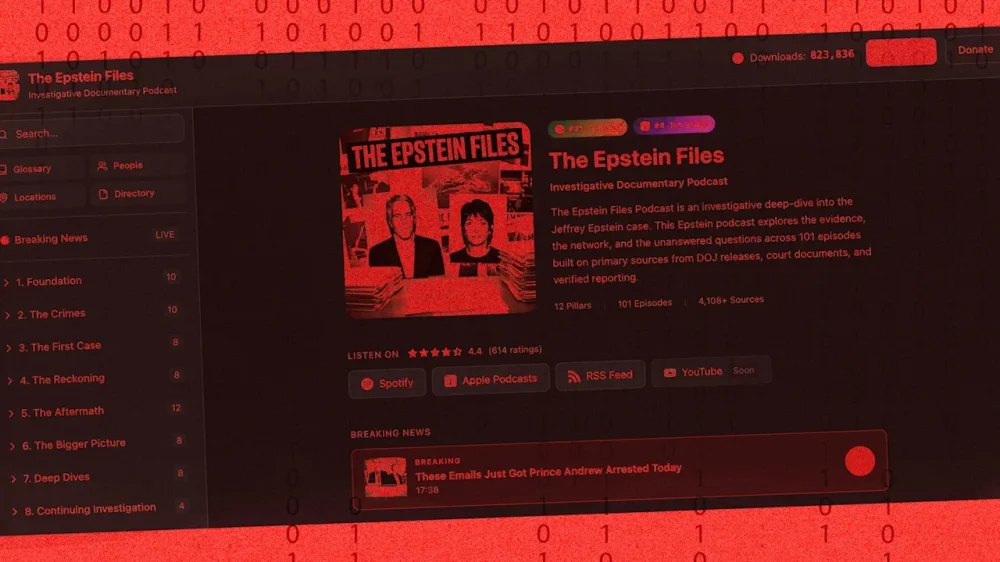
The Epstein Files are dominating nightly news broadcasts and newspaper front pages. But in the media ecosystem there’s another format that’s proving a massive draw to news consumers: a podcast run by a non-journalist and entirely generated by AI. The Epstein Files is an investigative documentary podcast that, at the time of writing, has published 97 episodes—new episodes get uploaded twice daily—and notched up more than 700,000 downloads in a matter of days. That puts it in the top 10 rankings of podcast series on Apple Podcasts, and in the top 30 on Spotify. But it’s created by Adam Levy, an entrepreneur with a background in building data products and content creation, who has no experience in journalism. Levy launched the Epstein Files podcast in early February after the trove of documents relating to the late financier and convicted sex offender Jeffrey Epstein was released to the public. After 48 hours of hacking—working 14- to 16-hour days—Levy built an automated pipeline that ingests the raw files, extracts text from emails and images, cross-references sources, and produces scripted podcast episodes narrated entirely by AI-generated voices. “People just want no bullshit,” says Levy. “Strip the emotion, strip the bullshit, strip everything away—just tell me things for what they are and when you tell it to me, help me understand the facts.” The technical architecture behind the project stitches together multiple large language models—from Anthropic’s Claude to Google and OpenAI’s offerings—to connect names, places, themes, and timelines across the 3.5 million files that were released, with connections requiring a confidence score of veracity to be included in the podcast. Levy supplements the raw dump with material from the Internet Archive and Google Pinpoint, a tool that other investigators have used to index portions of the files, as well as other bottoms-up projects like Jmail, which turns the Epstein Files emails into a navigable inbox like any other. Using and citing those sources was vital, Levy says, to counteract fears of hallucinations. “Everybody’s quite skeptical of AI,” he says. “It was really important to reference all the sources that were used to basically construct the episode.” “Like Clawdbot or a lot of the current AI simulation exercises, it piques curiosity, then rapidly becomes tedious,” says Emily Bell, founding director of the Tow Center for Digital Journalism at Columbia University, explaining why the podcast has had such popularity in its early days. “I thought the first episode was pretty listenable but also very obviously AI to anyone who has fed data or a script to NotebookLM.” Yet Bell found that the more episodes she listened to, the harder it was to sustain interest and engagement. “It provided a helpful forensic audit of data, but it’s not something I am going to sign up to and listen to—unless I am doing other work on the files,” she says. “For that, it’s pretty useful, and an interesting use of the tools.” Those tools are something Levy has thought about. “I’ve been able to out execute any other outlet that tried to document the episode,” he explains. “They just won’t be able to [produce episodes at such speed.” That has additional benefits—including being able to ride podcast app algorithms. “That also helps with discovery, and the people who like getting into rabbit holes, this gave them a really big hole to dive into.” Levy tells Fast Company he is already building a second series on an undisclosed subject, applying the same AI pipeline to a different story. Whether you appreciate the quality of the finished podcast or not, the fact that such an AI-heavy podcast could garner such a large audience is significant, and the consequences for journalists—particularly those covering complex, document-heavy stories—are hard to ignore. “I could easily be in the camp of: these tools are going to replace me, I’m screwed,” says Levy. “Or I can figure out how to embrace them and find a new pocket for myself. Maybe I’m no longer the voice. Maybe I just become the curator.” Not everyone is convinced that speed and sourcing are sufficient substitutes for editorial judgment. “Just because something like the Epstein Files can be produced doesn’t mean that this will work with most audiences,” says Nic Newman, a journalist and digital strategist who contributes to research at the Reuters Institute for the Study of Journalism at the University of Oxford. He has conducted recent research suggesting publishers are likely to produce more audio content as a defense against AI. “The idea being that AI struggles with empathy and human connection compared with human hosts and it is harder to summarize things in audio in a way that feels authentic and intimate,” he says. As Bell’s experience shows, what was first seen as a novelty doesn’t necessarily translate into a regular audience. “If I didn’t already know a significant amount about the files, the investigations, the background—I would have found many of the episodes very hard to follow,” she says. “And boring.” However, people seem to be sticking around and rating it relatively highly: The podcast currently has a 4.4 rating on Apple Podcasts. “The goal was to just build something that I was personally curious about and I would enjoy listening to,” says Levy, “and maybe other people would reciprocate the same value.” View the full article
-
Stop scouring for talent that doesn’t exist. By Jody Padar The Radical CPA Go PRO for members-only access to more Jody Padar. View the full article
-
Stop scouring for talent that doesn’t exist. By Jody Padar The Radical CPA Go PRO for members-only access to more Jody Padar. View the full article
-
Perhaps the best thing to happen to smartphones in the past five years was Apple's decision to start supporting RCS. Ever since, texting between iPhone and Android hasn't been a nightmare caused by SMS: Group chats function as they should, photos and videos can be sent in high quality, and you can even see when the other person is typing—though the messages are still green. While the experience is miles better than it used to be, it isn't perfect. There are still some key functions missing from RCS on iPhone. For instance, you can't unsend messages, reply to a thread, or edit iPhone messages. The latter can only happen on the Android side, while only iPhones can react with emojis right now. The biggest omission, however, is support for end-to-end encryption (E2EE). This is arguably the most important advantage RCS has over SMS. E2EE "scrambles" your messages, and only you and the recipient(s) have the "keys" to unscramble them. If a hacker were to remotely access your messages from an untrusted device, they wouldn't be able to read them: The only way to see these messages in plain text is to have access to the trusted device associated with them. If you have an Android device, and you text with other Android devices using Google Messages, you likely have this advantage. You may see a small lock icon next to your messages as you send them, indicating that texts are sent with E2EE. iPhones have this advantage when texting other iPhones, as iMessage is E2EE as well. But when you text from an iPhone to an Android, whether or not you're using RCS or SMS, those messages are not protected by encryption, which leaves you vulnerable to hacking. End-to-end encryption support for RCS is live in the iOS 26.4 betaThat's now changing. Apple is currently testing E2EE support for RCS on iPhone. Not only that, anyone can try it out right now—assuming you're fine taking on the risks of beta software. The change comes with the second beta for iOS 26.4, which Apple released on Monday. Apple's first beta for 26.4 added an initial layer of support, but only for iPhones texting each other with iMessage disabled. The second beta now supports E2EE for RCS communications with Android devices. As long as your Android friends are running the latest version of Google Messages, and you're running the second iOS 26.4 beta, you can rest easy knowing your messages are protected by end-to-end encryption. However, this doesn't mean that those of us waiting for the official iOS 26.4 release will enjoy the same. While beta features are always subject to change, Apple explicitly says in its release notes that, "This feature is not shipping in this release and will be available to customers in future iOS, iPadOS, macOS, and watchOS 26 releases." It seems the company is getting a jump on testing in anticipation of a future iOS 26.4.1, iOS 26.5, or maybe even an iOS 27 release. Don't install the iOS 26.4 beta without knowing the risksYou'll need to install the latest beta on your iPhone to give this encryption a try—but don't do that without thinking it through. Beta software is in testing, which means there may be bugs and other instabilities you aren't used to dealing with in iOS. If something goes wrong, and you need to uninstall the beta, you'll need to reset your iPhone entirely. Unless you have a full backup of iOS 26.3 on your computer, you could lose data. As such, I never recommend installing betas on your primary device. It's your choice, of course: Just understand the risks. If you do decide to try the beta, you'll also have access to other new features in iOS 26.4—namely, a new Apple Music experience with an AI playlist generator, fresh design, and the ability to add songs to multiple playlists at once. View the full article
-
Want more housing market stories from Lance Lambert’s ResiClub in your inbox? Subscribe to the ResiClub newsletter. Just 10 days ago, on February 10, Japan-based Sumitomo Forestry announced that it had agreed to acquire Tri Pointe Homes—a large U.S. homebuilder ranked No. 715 on the Fortune 1000—for $4.5 billion, signaling that Japanese builders were further accelerating their buying spree of U.S. homebuilders. Fast-forward to today, and Stanley Martin Homes—which has been owned by Japan-based Daiwa House since 2017—announced that it has agreed to buy United Homes Group, which has a strong presence in the Carolinas, for $221 million—further accelerating Japanese builders’ buying spree of U.S. homebuilders. Japanese builders are quickly expanding their U.S. footprint through acquisitions. Daiwa House: Japan-based Daiwa House has quietly built one of the most geographically diversified U.S. homebuilding footprints among Japanese builders. It entered the U.S. market in 2017 with its acquisition of Stanley Martin Homes, followed by the purchase of Trumark Homes (No. 67 largest U.S. homebuilder) in 2020. In September 2021, Daiwa House completed its acquisition of CastleRock Communities (No. 49 largest U.S. homebuilder), giving it a strong presence in Sun Belt markets in Arizona, Texas, and Tennessee. Together, Stanley Martin, Trumark, and CastleRock span Sun Belt and mid-Atlantic regions, and with Stanley Martin’s newly announced $221 million acquisition of United Homes Group, Daiwa House is further accelerating its U.S. expansion. Sumitomo Forestry: For Sumitomo Forestry—a Japan-based forestry, timber, and homebuilding company—its Tri Pointe Homes acquisition this month meaningfully accelerates its U.S. expansion goals, including its stated target of delivering 23,000 homes annually in the U.S. by 2030. In 2016, Sumitomo Forestry became the majority owner of DRB Group (America’s No. 20 largest homebuilder). In April 2025, Brightland Homes (America’s No. 24 largest homebuilder—which Sumitomo Forestry acquired a majority stake of in 2016) consolidated into DRB Group. Sekisui House: Japan-based homebuilder Sekisui House, operating in the U.S. under SH Residential Holdings (America’s No. 6 largest homebuilder), has also been on a multiyear U.S. homebuilder buying spree. Since 2017, Sekisui House has acquired homebuilders Woodside Homes, Chesmar Homes, Holt Homes, and Hubble Homes. In April 2024, Sekisui House really shook up the industry when it acquired M.D.C. Holdings (Richmond American Homes) for a staggering $4.9 billion. Sekisui House has also expanded into the U.S. with its homegrown Japanese builder brand, Shawood. According to ResiClub’s analysis, once the Tri Pointe Homes and United Homes Group acquisitions are completed, Daiwa House, Sekisui House, and Sumitomo Forestry will have a combined market share of at least 5.5% of U.S. single-family home construction. Why are Japanese firms making such a large bet on U.S. housing? At a high level, the answer is demographic and structural. Japan’s domestic population is shrinking and aging (fast!), limiting long-term housing growth and risking a sharp contraction for Japanese homebuilding firms like Daiwa House, Sekisui House, and Sumitomo Forestry. The United States, by contrast, continues to experience population growth and household formation—particularly in the Sun Belt markets where many big U.S. homebuilders operate. For Japanese firms seeking stable, long-duration growth, U.S. homebuilding offers scale and better demographic tailwinds. There’s also a strategic element. The U.S. homebuilding industry remains fragmented beyond the top few public builders, creating opportunities for well-capitalized global players to roll up regional operators while preserving local brands and management teams. Both Sumitomo Forestry and Sekisui House say they prioritize locally led operations, supported by centralized capital and global expertise—a structure designed to preserve builder culture while providing financial and operational backing. View the full article

-
How about an executive committee from both firms? By Marc Rosenberg CPA Firm Mergers: Your Complete Guide Go PRO for members-only access to more Marc Rosenberg. View the full article
-
How about an executive committee from both firms? By Marc Rosenberg CPA Firm Mergers: Your Complete Guide Go PRO for members-only access to more Marc Rosenberg. View the full article
-
Don’t wait for opportunity to come to you. By Martin Bissett Business Development on a Budget Go PRO for members-only access to more Martin Bissett. View the full article
-
Don’t wait for opportunity to come to you. By Martin Bissett Business Development on a Budget Go PRO for members-only access to more Martin Bissett. View the full article
-
Dark Sky was a rarity in the app world. Universally beloved, the weather app had an uncanny ability to tell you when to expect rain, down to the minute. So when Apple announced plans to buy it six years ago, there was a collective sigh of frustration. The Android version, of course, disappeared almost immediately, while the iOS version was folded into Apple’s native Weather app. (The standalone iPhone app was discontinued.) The integration was never quite the same, though, and it seemed as if the magic of Dark Sky was lost. Now, however, the team behind the app is hoping lightning strikes twice. The developers of Dark Sky have announced a new iPhone app called Acme Weather, a tool meant to address the uncertainty inherent in meteorological forecasts. (An Android version is forthcoming.) “It is a simple fact that no weather forecast will ever be 100% reliable: the weather is moody, fickle, and chaotic. Forecasts are often wrong,” the team writes in its announcement blog post. “Rather than pretending we will always be right, Acme Weather embraces the idea that our forecast will sometimes be wrong.” In practical terms, that means Acme Weather, which comes with a two-week free trial and then costs $25 per year, offers its best estimate for a range of weather data points, including temperature throughout the day (as well as the feels-like temperature), dew point, humidity, and more. Those predictions appear as a dark line. Alternate possibilities appear as lighter shaded lines layered on top. The closer those lines are to each other, the more confident the forecast. A wider gap signals more uncertainty, suggesting you may want to monitor conditions more closely and check the app more frequently to see how things are trending. The homegrown forecasts, the team says, will be even more accurate than those in Dark Sky, thanks to a wide range of data sources, including numerical weather prediction models, satellite data, ground station observations, and radar. The app will also incorporate community reports, letting people share conditions in their area. That could be especially helpful during severe weather, as radar is not 100% reliable. It has trouble, for instance, recognizing the difference between freezing rain and snow sometimes. Reporting the weather is simple: Choose the icon that reflects current conditions. And, if you’d like, you can add commentary by selecting an emoji to reflect how the weather feels. (Yes, the poop emoji is an option for particularly rough days.) Just note that by using the community reporting feature, you will disclose your location to other users. While the app doesn’t reveal an exact address or identifying information, it does display your location on the map at the time of reporting with a fairly high degree of accuracy. (Community reporting is completely optional, but cannot be withdrawn once submitted.) The company, in its announcement, pledged not to collect unnecessary data, use third-party trackers, or sell user information to advertisers. The app also features the maps you would expect, including radar and lightning. It will offer rain and snow totals, hurricane tracks, and cloud cover. And, like Dark Sky, it will alert you when weather is approaching. This time, though, you can customize alerts based on what you care about, from rain to nearby lightning to the possibility of a rainbow or especially striking sunset. “We’ve been making weather apps for 15 years, from Dark Sky to Apple, and this is the culmination (the acme?) of everything we’ve learned along the way,” the blog post reads. “It’s the weather app we’ve always wanted, and always wanted to build.” View the full article

-
Quality control plays an essential role across various industries, affecting both productivity and customer satisfaction. For instance, hospitals employing Total Quality Management have seen improvements in patient care, whereas automotive manufacturers utilizing Lean Six Sigma have markedly reduced defects. In hospitality, rigorous audits have improved service consistency. These examples illustrate the impact of effective quality control measures. Discover how different sectors implement these strategies to achieve remarkable results. Key Takeaways A mid-sized automotive parts manufacturer utilized Lean Six Sigma to reduce defect rates by 25% and align with IATF 16949 standards. A healthcare organization implemented TQM strategies, improving patient care and operational efficiency while enhancing overall patient satisfaction. A regional food and beverage chain tracked quality metrics to address a 25% increase in customer complaints, leading to improved product quality ratings. Consistent quality checks in a leisure and hospitality business prevented a 15% reduction in repeat bookings by enhancing service delivery and guest satisfaction. An electronics manufacturer established clear quality control standards, reducing a 25% increase in defect rates and a 15% rise in warranty claims through robust monitoring. Total Quality Management in Healthcare Total Quality Management (TQM) in healthcare is essential for improving operational efficiency and patient care. By adopting TQM principles, healthcare organizations can improve their quality management processes, similar to manufacturing quality standards. The importance of quality control in industry translates to healthcare, where implementing quality control procedures can directly impact patient outcomes. For example, establishing a robust quality check process helps identify inefficiencies, leading to significant improvements. The quality control process steps include measuring quality metrics in manufacturing, which can as well apply to healthcare settings. Comprehending the significance of quality control guarantees that hospitals address internal issues, like outdated technology. In the end, prioritizing quality assurance vs quality control examples can lead to better patient satisfaction and operational effectiveness in healthcare environments. Automotive Quality Management In the automotive industry, effective quality management is vital for guaranteeing that products meet strict standards and customer expectations. A mid-sized parts manufacturer faced a 25% increase in defect rates, highlighting the importance of industrial quality control. To tackle these issues, consider implementing: Lean Six Sigma methodologies for defect reduction Consistent quality checks aligned with IATF 16949 standards Regular monitoring of quality metrics to identify improvement areas Continuous improvement strategies to improve customer satisfaction Understanding how to solve quality issues in manufacturing can greatly reduce operational costs. Emphasizing the importance of QC guarantees products not only meet but surpass customer standards, making quality management in the manufacturing industry a significant factor for success. Quality Control in Leisure and Hospitality Quality control in leisure and hospitality is vital for guaranteeing that guests receive a consistent and satisfying experience. When you implement a thorough product quality control process, you improve service delivery, which is fundamental given the rise in customer complaints. Comprehending quality control definition and quality control meaning helps you grasp what’s quality control—it’s about maintaining standards. Quality control examples, like regular staff training and compliance checks, illustrate effective qa qc meaning. Why is quality control important? It directly influences customer retention, as inconsistency can lead to a 15% reduction in repeat bookings. Quality control techniques, such as periodic audits and feedback loops, guarantee that quality control does what it’s meant to do: improve customer satisfaction and uphold safety standards. Electronics Manufacturing Quality Challenges During addressing quality challenges in electronics manufacturing, companies often face significant obstacles that can impact their overall performance. A mid-sized manufacturer experienced a 25% increase in defect rates and a 15% rise in warranty claims. To improve, they must focus on: Implementing a robust control quality process Establishing clear qc quality control standards Utilizing effective procedures for quality assurance and control Monitoring quality metrics regularly These steps are crucial to guarantee product quality control and meet industry standards. Comprehending what’s quality control and quality assurance definition helps clarify the importance of a consistent qc process. By tackling internal inefficiencies and reinforcing quality control control, manufacturers can regain customer trust and amplify their competitive edge. Examples of quality control can guide these improvements. Food and Beverage Quality Management Effective food and beverage quality management is essential for maintaining customer satisfaction and ensuring compliance with industry standards. When you understand qc meaning, you grasp the importance of quality control or assurance in your operations. What’s qc? It involves defining quality assurance and quality control procedures that address inefficiencies, such as the 25% increase in customer complaints faced by a regional chain. By implementing quality metrics, you can track improvements and reduce operational costs impacted by poor quality. Remember, quality control means establishing QMS metrics that guide your processes. Enhancing your framework not just mitigates customer dissatisfaction but also boosts product quality ratings, ensuring your business thrives amidst increasing competition and regulatory demands. Frequently Asked Questions What Is an Example of Quality Control in Real Life? A clear example of quality control in real life is found in the automotive industry. Manufacturers conduct in-process inspections and tests to guarantee components meet strict IATF 16949 standards. Which Action Is an Example of a Quality Control Activity? An example of a quality control activity is conducting regular inspections of raw materials before production. By checking these materials against predefined quality standards, you guarantee they meet necessary specifications, which helps prevent defects in the final product. Furthermore, implementing in-process checks during manufacturing allows you to identify any quality issues early. This proactive approach minimizes waste and reduces the costs associated with reworking defective products, ultimately improving overall product quality. What Is an Example of a Quality Control Activity? An example of a quality control activity is conducting inspections of raw materials before production. You evaluate the materials against specific criteria to guarantee they meet quality standards, preventing defects later in the process. This systematic approach not just helps maintain product integrity but likewise reduces waste and costs associated with rework. What Is a Real World Example of Quality Management? A real-world example of quality management is when a mid-sized automotive parts manufacturer implemented a strategy aligned with IATF 16949 standards. This initiative led to a 25% reduction in defect rates and greatly improved customer satisfaction scores. By focusing on structured processes and continuous improvement, they improved product quality and operational efficiency. Such quality management practices are vital for maintaining competitiveness and meeting customer expectations in today’s manufacturing environment. Conclusion To conclude, effective quality control practices across various industries demonstrate significant benefits. Healthcare providers can improve patient care through Total Quality Management, whereas automotive manufacturers achieve lower defect rates with Lean Six Sigma techniques. The hospitality sector enhances guest experiences via consistent quality audits, and electronics firms mitigate warranty claims by enforcing strict protocols. Finally, food and beverage companies can boost customer satisfaction by refining their quality management processes. These real-world examples highlight the importance of quality control in achieving operational excellence. Image via Google Gemini and ArtSmart This article, "5 Real-World Examples of Quality Control in Action" was first published on Small Business Trends View the full article
-
Quality control plays an essential role across various industries, affecting both productivity and customer satisfaction. For instance, hospitals employing Total Quality Management have seen improvements in patient care, whereas automotive manufacturers utilizing Lean Six Sigma have markedly reduced defects. In hospitality, rigorous audits have improved service consistency. These examples illustrate the impact of effective quality control measures. Discover how different sectors implement these strategies to achieve remarkable results. Key Takeaways A mid-sized automotive parts manufacturer utilized Lean Six Sigma to reduce defect rates by 25% and align with IATF 16949 standards. A healthcare organization implemented TQM strategies, improving patient care and operational efficiency while enhancing overall patient satisfaction. A regional food and beverage chain tracked quality metrics to address a 25% increase in customer complaints, leading to improved product quality ratings. Consistent quality checks in a leisure and hospitality business prevented a 15% reduction in repeat bookings by enhancing service delivery and guest satisfaction. An electronics manufacturer established clear quality control standards, reducing a 25% increase in defect rates and a 15% rise in warranty claims through robust monitoring. Total Quality Management in Healthcare Total Quality Management (TQM) in healthcare is essential for improving operational efficiency and patient care. By adopting TQM principles, healthcare organizations can improve their quality management processes, similar to manufacturing quality standards. The importance of quality control in industry translates to healthcare, where implementing quality control procedures can directly impact patient outcomes. For example, establishing a robust quality check process helps identify inefficiencies, leading to significant improvements. The quality control process steps include measuring quality metrics in manufacturing, which can as well apply to healthcare settings. Comprehending the significance of quality control guarantees that hospitals address internal issues, like outdated technology. In the end, prioritizing quality assurance vs quality control examples can lead to better patient satisfaction and operational effectiveness in healthcare environments. Automotive Quality Management In the automotive industry, effective quality management is vital for guaranteeing that products meet strict standards and customer expectations. A mid-sized parts manufacturer faced a 25% increase in defect rates, highlighting the importance of industrial quality control. To tackle these issues, consider implementing: Lean Six Sigma methodologies for defect reduction Consistent quality checks aligned with IATF 16949 standards Regular monitoring of quality metrics to identify improvement areas Continuous improvement strategies to improve customer satisfaction Understanding how to solve quality issues in manufacturing can greatly reduce operational costs. Emphasizing the importance of QC guarantees products not only meet but surpass customer standards, making quality management in the manufacturing industry a significant factor for success. Quality Control in Leisure and Hospitality Quality control in leisure and hospitality is vital for guaranteeing that guests receive a consistent and satisfying experience. When you implement a thorough product quality control process, you improve service delivery, which is fundamental given the rise in customer complaints. Comprehending quality control definition and quality control meaning helps you grasp what’s quality control—it’s about maintaining standards. Quality control examples, like regular staff training and compliance checks, illustrate effective qa qc meaning. Why is quality control important? It directly influences customer retention, as inconsistency can lead to a 15% reduction in repeat bookings. Quality control techniques, such as periodic audits and feedback loops, guarantee that quality control does what it’s meant to do: improve customer satisfaction and uphold safety standards. Electronics Manufacturing Quality Challenges During addressing quality challenges in electronics manufacturing, companies often face significant obstacles that can impact their overall performance. A mid-sized manufacturer experienced a 25% increase in defect rates and a 15% rise in warranty claims. To improve, they must focus on: Implementing a robust control quality process Establishing clear qc quality control standards Utilizing effective procedures for quality assurance and control Monitoring quality metrics regularly These steps are crucial to guarantee product quality control and meet industry standards. Comprehending what’s quality control and quality assurance definition helps clarify the importance of a consistent qc process. By tackling internal inefficiencies and reinforcing quality control control, manufacturers can regain customer trust and amplify their competitive edge. Examples of quality control can guide these improvements. Food and Beverage Quality Management Effective food and beverage quality management is essential for maintaining customer satisfaction and ensuring compliance with industry standards. When you understand qc meaning, you grasp the importance of quality control or assurance in your operations. What’s qc? It involves defining quality assurance and quality control procedures that address inefficiencies, such as the 25% increase in customer complaints faced by a regional chain. By implementing quality metrics, you can track improvements and reduce operational costs impacted by poor quality. Remember, quality control means establishing QMS metrics that guide your processes. Enhancing your framework not just mitigates customer dissatisfaction but also boosts product quality ratings, ensuring your business thrives amidst increasing competition and regulatory demands. Frequently Asked Questions What Is an Example of Quality Control in Real Life? A clear example of quality control in real life is found in the automotive industry. Manufacturers conduct in-process inspections and tests to guarantee components meet strict IATF 16949 standards. Which Action Is an Example of a Quality Control Activity? An example of a quality control activity is conducting regular inspections of raw materials before production. By checking these materials against predefined quality standards, you guarantee they meet necessary specifications, which helps prevent defects in the final product. Furthermore, implementing in-process checks during manufacturing allows you to identify any quality issues early. This proactive approach minimizes waste and reduces the costs associated with reworking defective products, ultimately improving overall product quality. What Is an Example of a Quality Control Activity? An example of a quality control activity is conducting inspections of raw materials before production. You evaluate the materials against specific criteria to guarantee they meet quality standards, preventing defects later in the process. This systematic approach not just helps maintain product integrity but likewise reduces waste and costs associated with rework. What Is a Real World Example of Quality Management? A real-world example of quality management is when a mid-sized automotive parts manufacturer implemented a strategy aligned with IATF 16949 standards. This initiative led to a 25% reduction in defect rates and greatly improved customer satisfaction scores. By focusing on structured processes and continuous improvement, they improved product quality and operational efficiency. Such quality management practices are vital for maintaining competitiveness and meeting customer expectations in today’s manufacturing environment. Conclusion To conclude, effective quality control practices across various industries demonstrate significant benefits. Healthcare providers can improve patient care through Total Quality Management, whereas automotive manufacturers achieve lower defect rates with Lean Six Sigma techniques. The hospitality sector enhances guest experiences via consistent quality audits, and electronics firms mitigate warranty claims by enforcing strict protocols. Finally, food and beverage companies can boost customer satisfaction by refining their quality management processes. These real-world examples highlight the importance of quality control in achieving operational excellence. Image via Google Gemini and ArtSmart This article, "5 Real-World Examples of Quality Control in Action" was first published on Small Business Trends View the full article
-
Home prices edged up nationwide, but gains were modest and uneven. Major indexes agree on direction, differ on size, as 2025 posted weak growth. View the full article