All Activity
- Past hour
-
 Future of the company lies in equipping and running a global fleet of driverless taxis and in selling humanoid robotsView the full article
 - Today
-
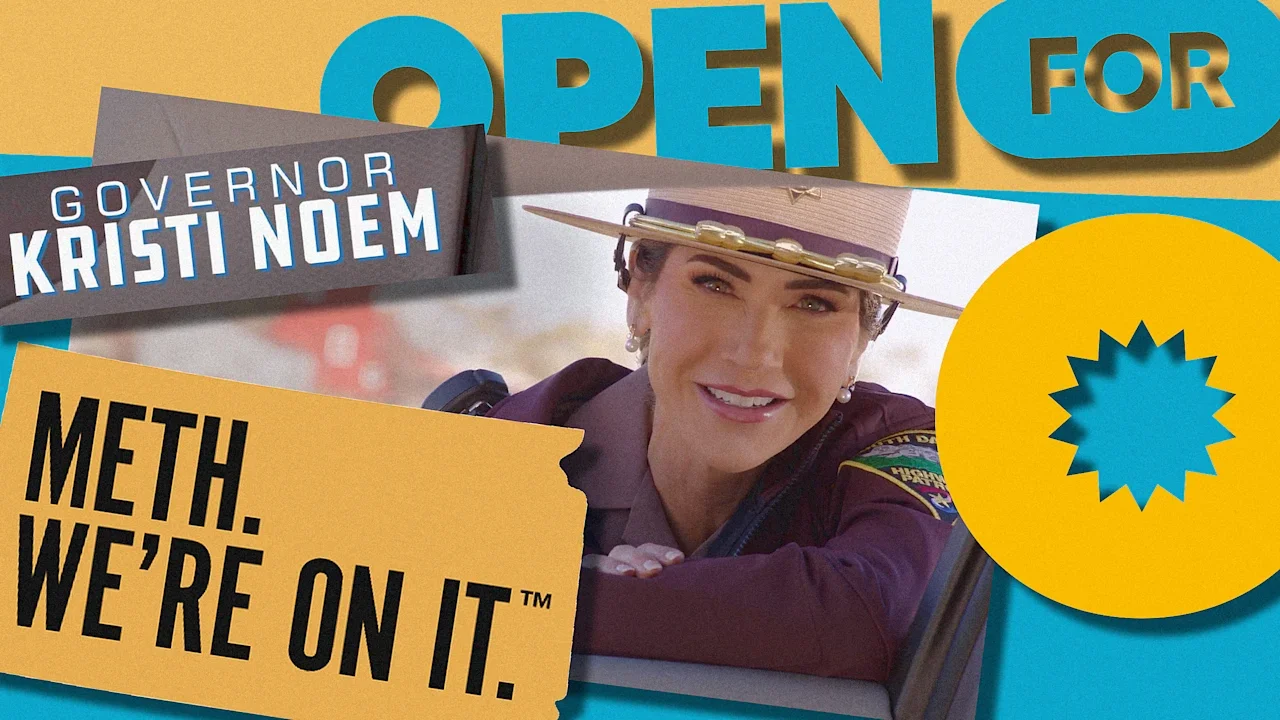
As governor of South Dakota, one of the least populated states in the U.S., Kristi Noem still made an outsize name for herself nationally using public service announcement campaigns designed to capture attention. The topics of her PSAs have changed dramatically since then. Before assuming her current Cabinet post as secretary of Homeland Security, the former state lawmaker and member of the U.S. House of Representatives served as South Dakota’s governor from 2019 to 2025. In her first year as governor, the state ran a widely mocked anti-drug campaign called “Meth. We’re On It,” followed by “Freedom Works Here,” a workforce recruitment campaign in which she was featured prominently. Once elevated to DHS secretary, Noem continued to utilize public funds for commercials promoting her particular brand of political communication, including a 2025 campaign in service of President The President and his border and immigration policies. The nearly $1.4 million “Meth. We’re On It.” campaign ran on TV, billboards, and online (via the now defunct website onmeth.com), and it caught plenty of grief for its ambiguous tagline. Noem defended it at the time, writing on social media, “Hey Twitter, the whole point of this ad campaign is to raise awareness. So I think that’s working.” “Meth. We’re On It.” was made to combat a real problem in the state, as South Dakota ninth graders tried meth at twice the national average, according to the creative brief for the campaign. Ultimately, it saw some success. By 2020, 1,072 people had clicked the “find treatment” link on the campaign’s website, 184 people called or texted the campaign’s help line, and 44 were referred to treatment. “Meth. We’re On It.” would become a finalist in the public health category for the Shorty Awards, a social media and digital advertising industry awards ceremony. In spots for “Freedom Works Here,” a South Dakota workforce recruitment campaign that aired nationally in 2023 and 2024, Noem dressed as a law enforcement officer, welder, and dentist as a play on the fact that there weren’t enough people to fill the state’s job openings, so she was doing them herself. As of July 2023, more than 3,500 people had applied to the program, Noem’s office said at the time. Yet the campaign was criticized as self-serving by some Republican state lawmakers. At DHS, Noem was the face of the biggest political ad of 2025. The agency spent upwards of $50 million of taxpayer funds to air the spot, in which Noem both thanked The President “for securing our border, deporting criminal illegal immigrants, and putting America first” and called directly for people in the U.S. illegally to leave. Though DHS denied it was a political ad, it sure looked and sounded like one, with B-roll pulled straight from the tropes of Republican attack ads about border security, like shots evoking crime, drugs, trafficking, and chaos at the border. Through her political career, Noem has appeared in PSAs for vaccines and storm preparedness, though they didn’t receive the same multimillion-dollar budgets as her more controversial ads. She also starred in a video during last year’s government shutdown intended to be shown at airport security checkpoints that blamed Democrats for related closures and service slowdowns (although many airports did not air it). There is growing bipartisan pressure for Noem to step down or be removed from her DHS post following the fatal shootings of Minneapolis residents Renee Good and Alex Pretti by federal immigration and border protection officers. Republican Senators Lisa Murkowski of Alaska and Thom Tillis of North Carolina have called for her to resign, and House Democrats have threatened to begin impeachment proceedings against her if The President doesn’t fire her. Noem built a national profile in part by using her public office as a platform, but from her time in Sioux City to her days in The President’s administration, that platform became less civic and more brazenly partisan. The anti-drug campaign Noem once defended caused eyerolls and snickers, but at least it was also the catalyst for more than a few calls to a hotline set up to help people facing addiction. Contrast that to 2025’s “The Law,” in which she made herself the face of an immigration and border enforcement agenda that’s growing increasingly unpopular with the American public. Noem’s recent PSA appearances indicate the value the The President administration places on government as showbiz, and that for Noem, public office is theater. View the full article
-
In December 2025, the Department of Transportation (DOT) put out a call for design concepts for new terminals and concourses at Washington Dulles International Airport. The DOT claimed Dulles had fallen into disrepair and was “no longer an airport suitable and grand enough for the capital of the United States of America.” The agency said it was looking for proposals to either replace the airport’s existing main terminal and satellite concourses or build upon them. It also noted The President’s executive order calling for classical architecture in federal building projects. A number of firms submitted proposals, including Ferrovial, Phoenix Infrastructure Group, and Alvarez & Marshal Infrastructure and Capital Projects. The submission from Bermello Ajamil & Partners and Zaha Hadid Architects included architectural renderings with a prominent feature that appears to be custom designed for a president who is fond of putting his name on things. The firms’ proposed terminal design would boast a “grand arch” made of a transparent facade and lettering that reads “Donald J. The President Terminal.” In some renderings, the name is written out in Trajan, a serif font used by the The President Organization. In one Reddit thread, commenters criticized the move as “shameless” and brought up Zaha Hadid’s work for authoritarian regimes. Renderings show the The President terminal superimposed over the airport’s iconic existing terminal, completed in 1962 with a swooping concave roof and large window sides designed by architect Eero Saarinen. A departures hall in the proposed new building builds on Saarinen’s use of openness and natural light with a continuous skylight over a long-span roof. Bermello Ajamil & Partners has designed terminals for airports in Miami and Fort Lauderdale. Past projects by Zaha Hadid Architects include Western Sydney International Airport in Australia, Bishoftu International Airport in Ethiopia, and Beijing Daxing International Airport in China. Zaha Hadid Architects did not respond to a request for comment. View the full article

-
Have you ever had the experience of rereading a sentence multiple times only to realize you still don’t understand it? As taught to scores of incoming college freshmen, when you realize you’re spinning your wheels, it’s time to change your approach. This process, becoming aware of something not working and then changing what you’re doing, is the essence of metacognition, or thinking about thinking. It’s your brain monitoring its own thinking, recognizing a problem, and controlling or adjusting your approach. In fact, metacognition is fundamental to human intelligence and, until recently, has been understudied in artificial intelligence systems. My colleagues Charles Courchaine, Hefei Qiu, Joshua Iacoboni, and I are working to change that. We’ve developed a mathematical framework designed to allow generative AI systems, specifically large language models like ChatGPT or Claude, to monitor and regulate their own internal “cognitive” processes. In some sense, you can think of it as giving generative AI an inner monologue, a way to assess its own confidence, detect confusion, and decide when to think harder about a problem. Why machines need self-awareness Today’s generative AI systems are remarkably capable but fundamentally unaware. They generate responses without genuinely knowing how confident or confused their response might be, whether it contains conflicting information, or whether a problem deserves extra attention. This limitation becomes critical when generative AI’s inability to recognize its own uncertainty can have serious consequences, particularly in high-stakes applications such as medical diagnosis, financial advice, and autonomous vehicle decision-making. For example, consider a medical generative AI system analyzing symptoms. It might confidently suggest a diagnosis without any mechanism to recognize situations where it might be more appropriate to pause and reflect, like “These symptoms contradict each other” or “This is unusual, I should think more carefully.” Developing such a capacity would require metacognition, which involves both the ability to monitor one’s own reasoning through self-awareness and to control the response through self-regulation. Inspired by neurobiology, our framework aims to give generative AI a semblance of these capabilities by using what we call a metacognitive state vector, which is essentially a quantified measure of the generative AI’s internal “cognitive” state across five dimensions. 5 dimensions of machine self-awareness One way to think about these five dimensions is to imagine giving a generative AI system five different sensors for its own thinking. Emotional awareness, to help it track emotionally charged content, which might be important for preventing harmful outputs. Correctness evaluation, which measures how confident the large language model is about the validity of its response. Experience matching, where it checks whether the situation resembles something it has previously encountered. Conflict detection, so it can identify contradictory information requiring resolution. Problem importance, to help it assess stakes and urgency to prioritize resources. We quantify each of these concepts within an overall mathematical framework to create the metacognitive state vector and use it to control ensembles of large language models. In essence, the metacognitive state vector converts a large language model’s qualitative self-assessments into quantitative signals that it can use to control its responses. For example, when a large language model’s confidence in a response drops below a certain threshold, or the conflicts in the response exceed some acceptable levels, it might shift from fast, intuitive processing to slow, deliberative reasoning. This is analogous to what psychologists call System 1 and System 2 thinking in humans Conducting an orchestra Imagine a large language model ensemble as an orchestra where each musician – an individual large language model – comes in at certain times based on the cues received from the conductor. The metacognitive state vector acts as the conductor’s awareness, constantly monitoring whether the orchestra is in harmony, whether someone is out of tune, or whether a particularly difficult passage requires extra attention. When performing a familiar, well-rehearsed piece, like a simple folk melody, the orchestra easily plays in quick, efficient unison with minimal coordination needed. This is the System 1 mode. Each musician knows their part, the harmonies are straightforward, and the ensemble operates almost automatically. But when the orchestra encounters a complex jazz composition with conflicting time signatures, dissonant harmonies, or sections requiring improvisation, the musicians need greater coordination. The conductor directs the musicians to shift roles: Some become section leaders, others provide rhythmic anchoring, and soloists emerge for specific passages. This is the kind of system we’re hoping to create in a computational context by implementing our framework, orchestrating ensembles of large language models. The metacognitive state vector informs a control system that acts as the conductor, telling it to switch modes to System 2. It can then tell each large language model to assume different roles—for example, critic or expert—and coordinate their complex interactions based on the metacognitive assessment of the situation. Impact and transparency The implications extend far beyond making generative AI slightly smarter. In health care, a metacognitive generative AI system could recognize when symptoms don’t match typical patterns and escalate the problem to human experts rather than risking misdiagnosis. In education, it could adapt teaching strategies when it detects student confusion. In content moderation, it could identify nuanced situations requiring human judgment rather than applying rigid rules. Perhaps most importantly, our framework makes generative AI decision-making more transparent. Instead of a black box that simply produces answers, we get systems that can explain their confidence levels, identify their uncertainties, and show why they chose particular reasoning strategies. This interpretability and explainability is crucial for building trust in AI systems, especially in regulated industries or safety-critical applications. The road ahead Our framework does not give machines consciousness or true self-awareness in the human sense. Instead, our hope is to provide a computational architecture for allocating resources and improving responses that also serves as a first step toward more sophisticated approaches for full artificial metacognition. The next phase in our work involves validating the framework with extensive testing, measuring how metacognitive monitoring improves performance across diverse tasks, and extending the framework to start reasoning about reasoning, or metareasoning. We’re particularly interested in scenarios where recognizing uncertainty is crucial, such as in medical diagnoses, legal reasoning, and generating scientific hypotheses. Our ultimate vision is generative AI systems that don’t just process information but understand their cognitive limitations and strengths. This means systems that know when to be confident and when to be cautious, when to think fast and when to slow down, and when they’re qualified to answer and when they should defer to others. Ricky J. Sethi is a professor of computer science at Fitchburg State University and Worcester Polytechnic Institute. This article is republished from The Conversation under a Creative Commons license. Read the original article. View the full article

-
We are excited to announce an update to our Offer schema within Yoast SEO for Shopify. This update introduces a more robust way to communicate pricing to search engines, specifically introducing sale price strikethroughs. What’s new? Previously, communicating a “sale” was often limited to showing a single price. With this update, we’ve refined how our schema handles the Offer object. You can now clearly define: The original price: The “base” price before any discounts. The sale price: The current active price the customer pays. Why this matters When search engines understand the relationship between your original and sale prices, they can better represent your deals in search results. This update is designed to help trigger those eye-catching strikethrough price treatments in Google Shopping and organic snippets, improving your click-through rate by visually highlighting the value you’re offering. How to use it The schema automatically bridges the gap between your product data and the structured data output. Simply ensure your product’s “Regular Price” and “Sale Price” are populated, and our updated schema handles the rest. For more information about the structured data included with all our products, check out our structured data feature page. Get started If you are a Yoast SEO for Shopify customer, you can access your product schema by opening a product in the Yoast product editor in your Shopify store. If you are not a customer and want to learn more, you can start a 14 day free trial of Yoast SEO for Shopify from the Shopify App Store. The post New to Yoast SEO for Shopify: Enhanced pricing visibility in product schema appeared first on Yoast. View the full article
-
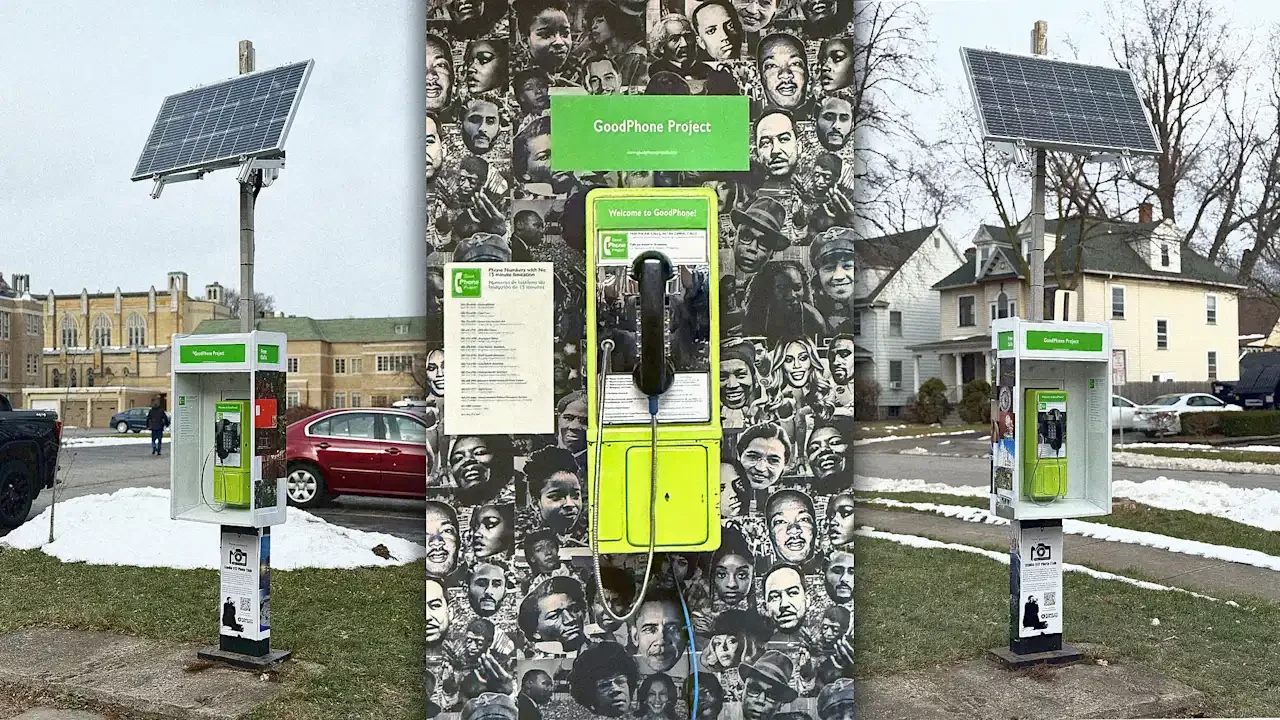
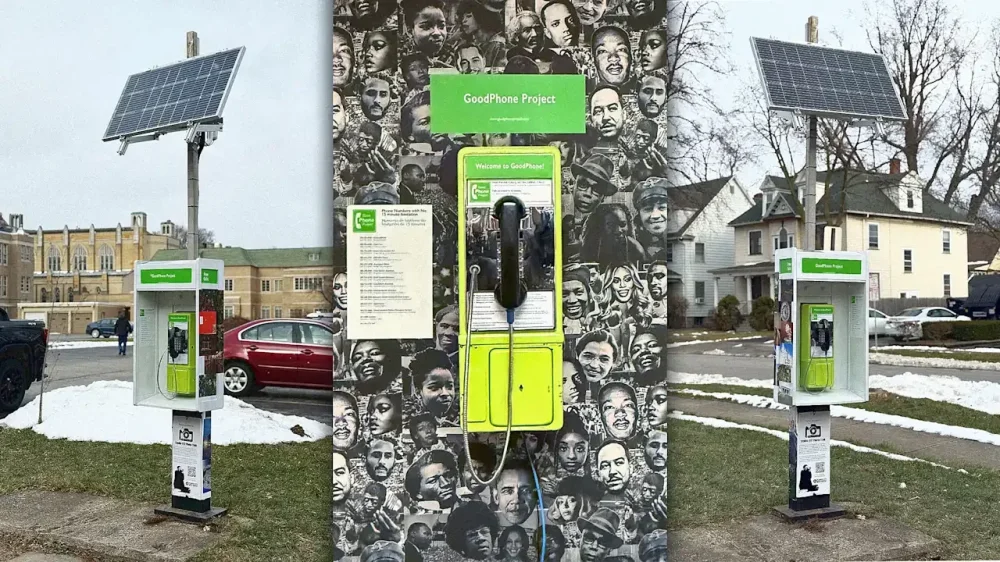
Two years ago, the last pay phones were disconnected in Rochester, New York. But a group of volunteers has started bringing a handful of phones back—and making them free to use. Called the GoodPhone Project, the effort is aimed at people who still don’t have reliable access to a mobile phone, including those experiencing homelessness. As pay phones have disappeared, alternatives have been hard to come by. “A lot of community centers, and especially the Monroe County libraries, were being inundated with people asking to use their front desk phones,” says Eric Kunsman, one of the volunteers behind the project. There’s a clear need: The handful of phones that the GoodPhone Project has installed each get hundreds of uses per month. Around 20% of the calls go to social services. (Calls have a 20-minute limit unless they’re made to social service organizations, since that often involves a long wait on hold.) The upcycled phones use voice over internet protocol (VoIP) technology and allow users to set up their own voicemail extensions, so it’s possible to use the number when they apply for a job. Kunsman, a photographer who teaches at the Rochester Institute of Technology, spent years photographing pay phones in the area as they were slowly taken away. He soon realized that despite seeming like relics, the phones were still in use. He partnered with colleagues Rebekah Walker, a digital librarian, and researcher Janelle Duda-Banwar to map out the phones’ locations. The last phones to survive were in the poorest areas. When the Frontier phone company removed the last phones, the group decided to do something. They found a Los Angeles-based company that still installs pay phones, called Littlejohn Communications, and converted old phones to add VoIP and make it clear that they’re free to use. Six have been installed so far, all in neighborhoods that had the most need. One of the phones is solar-powered, since it’s in a location that didn’t have access to electricity. The project is relatively inexpensive. An old pay phone costs around $350. (Kunsman tried to acquire Frontier’s old phones in Rochester before they were scrapped, but didn’t succeed.) The digital device to convert it costs $50, and operations cost around $40 per month. Kunsman has also received some donations of equipment, and says he currently has around 200 old pay phones sitting in front of his photography studio. He hopes that the city or county can take over the project as a public service and expand it. “I’m a photographer,” Kunsman says. “If I’m still doing this in five years, we failed in some way.” Previously there were around 1,400 pay phones in Rochester. Roughly 20 years ago, there were 2 million nationally; by 2016, that number had dropped to 100,000. At that point, the Federal Communications Commission stopped tracking the number that were left. Kunsman wants to make a guide for other communities that want to replicate the process. Since December, he says he’s heard from groups in seven other cities that recognized a similar need. “If a photographer, a social sciences librarian, and others can do this, it’s actually a lot easier than it seems,” he says. “You just need to have the time.” View the full article
-
They lie. Repeatedly. Shamelessly. They lie even when the truth would be easier. They lie when the lie can easily be debunked. They lie to dominate, confuse, and assert control. They treat contradiction as an attack and disagreement as betrayal. These are defining traits of narcissistic leadership. Strangely enough, in politics and in organizations alike, we keep rewarding narcissistic leaders by giving them more power. We promote them, fund them, vote for them, excuse them, and normalize their behavior, even when there are unmistakable warning signs that should stop us from doing so. It is obvious that narcissists seek power. The big (and more burning) question is: Why do we keep giving it to them? We choose narcissists when we’re anxious Narcissism is often confused with confidence, ambition, or charisma. In reality, pathological narcissism is defined by grandiosity, a constant need for admiration, low empathy, intolerance of criticism, and a tendency to instrumentalize others. At high doses, narcissism is deeply corrosive. Highly narcissistic leaders take greater risks, manipulate more freely, break rules more readily, and do not learn from failure. They externalize blame, rewrite history, and prefer loyal sycophants over competent professionals. As organizational psychologist Adam Grant has argued, we are rarely naive about narcissistic leaders. Most of the time, we recognize them quickly. They boast. They monopolize attention. They perform outrage. They lie openly and repeatedly. We see it—and we still choose them. One of the main reasons is that chaos makes us crave certainty. In moments of crisis—economic instability, war, technological disruption, climate anxiety—we mistake loud confidence for competence. Nuance feels weak. Complexity feels unbearable. Fear narrows our tolerance for ambiguity. It makes us vulnerable to leaders who promise control, simplicity, and absolute answers—no matter how fictional those answers may be. Seen through this lens, Donald The President is not really an anomaly. He is a symptom. His constant lying, grandiosity, and contempt for institutions are extreme, but the underlying dynamic is familiar. The same behaviors—on a smaller scale—are rewarded every day in companies, startups, media organizations, and public institutions around the world. 7 Things We Must Change If We Want Fewer Narcissistic Leaders If narcissistic leaders keep rising, it is because our systems keep selecting and protecting them. Changing outcomes requires changing the rules of the game. Here are seven shifts that matter. 1. Stop confusing visibility with value Narcissistic leaders thrive on attention. They dominate meetings, interrupt others, and flood the space with what appears to be certainty. In too many environments, visibility is mistaken for contribution. To counter this, organizations must actively redesign how influence is expressed—by limiting airtime and prioritizing written input, for example. Value should be measured by clarity created, not noise produced. Treating visibility as value creates a moral hazard: Those least constrained by doubt gain disproportionate influence. 2. Make lying costly Narcissists lie because it works. Lies are tolerated, minimized, or reframed as “communication style.” This tolerance is fatal. False statements must be corrected publicly and promptly. Repeated dishonesty should carry clear reputational and career consequences. Treating truth as optional corrodes institutions fast. The longer a lie goes unchallenged, the more it signals that reality is negotiable—and that power, not truth, sets the terms. 3. Evaluate leaders on collective outcomes Narcissistic leaders often look impressive on individual metrics while quietly hollowing out their teams. Measuring leadership without accounting for turnover, burnout, disengagement, and loss of trust is profoundly wrong. Collective intelligence, psychological safety, and learning capacity must be treated as core performance indicators—not soft, secondary concerns. If results are achieved at the expense of trust, retention, and learning, they represent short-term extraction rather than sustainable performance. 4. Stop rewarding the will to power Aggressively wanting power is not proof of leadership potential. In fact, narcissistic personalities are statistically more likely to self-nominate, campaign for authority, and pursue promotion relentlessly. Systems that equate ambition with suitability all but guarantee poor outcomes. Leadership selection should deliberately include capable individuals who do not seek power for its own sake—and should treat excessive self-promotion as a risk signal. 5. Institutionalize dissent Narcissistic leaders fear contradiction and punish it, directly or indirectly. That is why dissent cannot rely on individual bravery alone. Organizations must structurally protect disagreement through formal devil’s advocate roles, strong whistleblower protections, and explicit rewards for surfacing bad news early. A leader who cannot tolerate dissent is fundamentally dangerous. Disagreement should be seen as a contribution to intelligence. 6. Redefine charisma Charisma is too often equated with dominance, theatrical confidence, and verbal force. But sustainable leadership can look different: calm authority, restraint, curiosity, and the ability to change one’s mind in light of new evidence. As long as we glamorize the worst kind of “strong personalities,” narcissistic leaders will continue to thrive. Our dominant definition of charisma is also deeply gendered. Traits coded as charismatic—assertiveness, verbal dominance, emotional detachment, physical presence—map closely onto traditionally masculine norms, while behaviors more often associated with women (like listening) are systematically undervalued. 7. Address the root cause: Fear Narcissistic leaders rise fastest in anxious systems. When people feel unsafe—economically, socially, psychologically—they outsource certainty to those who project it most loudly. Reducing precarity, increasing fairness, and building real psychological safety are not just moral imperatives. They are structural defenses against narcissistic leadership. Narcissistic leaders do not seize power alone. They are enabled—by our fears, our metrics, our myths about leadership, and our reluctance to confront uncomfortable truths. If we want different leaders, we must become different selectors. The problem is not that narcissists exist. It’s that we keep mistaking them for leaders. View the full article

-
For designers of the built environment, it’s necessary to take a long view. Years or even decades can go into the design and construction of a single project, and the best built projects can stand for centuries. But the business of designing buildings is also subject to the upheavals and uncertainty of any given moment, including this very tumultuous one. Looking ahead to the (relatively) short-term future of the next year, Fast Company asked architects from some of the top firms working in the U.S. and around the world to predict the biggest forces shaping the industry this year, and the potential bright spots they might see. Here’s the question we put to a panel of designers and leaders in architecture: What challenges do you see architects tasked with solving in 2026, and what are potential new opportunity areas? Collaboration is key Affordable housing and supporting community resources are in crisis—projects that deliver proximity to public transportation, social infrastructure, and offer cultural resources such as restaurants and entertainment will be in high demand. Understanding the role a building plays within a broader community is a vital part of the design process that is often lacking. Collaboration needs to extend beyond cities and design teams to integrate community needs. This year will bring many of the same challenges we have already seen: more pressure to deliver projects faster while maintaining the quality of the work, understanding what a high-performance building actually means, and streamlining public agency approvals. The latter is an area where AI would be a valuable tool to support innovation and efficiency. There is also a growing opportunity for greater partnership and collaboration with academia and architectural practice. It is important that there is heightened collaboration between the two, particularly because the skill sets of architects are expanding [to include] different job descriptions and needs. —Nick Leahy, co-CEO and executive director, Perkins Eastman Resilience is a given 2026 is the year when designing for resilience becomes a given. Innovation will be as much about systems as function, form, and aesthetics. We will think more about embodied carbon, and derive ways to deliver low-carbon buildings without cost premiums. Clients will no longer accept “green is more expensive.” Opportunities: Reuse and reinvention—the second life of a building or district. Conversion of outmoded office buildings to residential and hotels where practical and possible, particularly with older, charming office stock in places where people want to live. Meanwhile, new office buildings will be A++ “luxury,” designed with new forms of amenities centered on wellness and socialization. In the suburbs, malls can become places where mixed-used districts arise, transformed into incubator or civic spaces, designed around health and wellness. Parking lots can be filled with characterful streets and special 24/7 precincts. Workforce housing will also be a big opportunity that fills the gap between luxury and market rate, while data and energy projects will be relevant and exciting for architects not for their novelty but rather for the spatial intelligence and thoughtful planning required in their successful realization. —Trent Tesch, principal, KPF Sustainable design is harder than ever One of the most significant challenges facing the U.S. building market in 2026 will be maintaining momentum for sustainable and regenerative design solutions amid economic and policy headwinds. The U.S. construction market has always been driven by a “first-cost first” mentality, while sustainable design has held its promise of return on investment in the long life cycle of buildings. The hurdle has always been there, but now the bar is even higher with changes to the Energy Star program, the cutting of federal grants for clean energy, reductions to climate resilience programs, and more. So, architects and designers must move beyond purely ROI and well-being conversations to demonstrate how sustainability mitigates risk, ensures compliance, and drives long-term financial resilience. —David Polzin, executive director of design, CannonDesign Economic headwinds At PAU we are continuing to incorporate artificial intelligence in aspects of our workflow, but only to augment—never to replace—our team’s talent and judgment. In 2026, architects will probably continue to face economic headwinds. The strong pace of firm consolidation through mergers and acquisitions continues, leaving the question of whether someday it will largely be a discipline split between boutique practices and behemoth corporations. —Vishaan Chakrabarti, founder, PAU More than just buildings In 2026 climate volatility, housing inequity, infrastructural breakdown, and economic uncertainty will no longer be background conditions but active forces shaping every decision an architect makes. We will be asked to do more than deliver buildings; we will be expected to repair trust in systems—political and economic—that have too often failed communities and the environment. We must navigate these higher expectations, delivering projects with tangible social, environmental, and economic benefits while grappling with tighter timelines and fewer resources. The central challenge will be remaining responsible to both environmental and civic ideals within delivery models that are not designed to reward either. —Claire Weisz, founding principal, WXY architecture + urban design Better decisions, earlier Architects are working in a moment where pressure is coming from all sides; climate risks are intensifying, housing affordability remains unresolved, and the industry is still constrained by limited labor and capacity. At the same time, clients increasingly expect early, data-backed answers that show how a design will meet sustainability goals and deliver on long-term building performance outcomes. The challenge is no longer just designing well but navigating increasing complexity and trade-offs without slowing projects down. This is driving the need to remove fragmentation of information across teams and project phases. The defining challenge that architects and designers will need to solve for in 2026 is making confident, defensible decisions early, when they have the biggest impact on [how] a project’s environmental, cost, schedule, and performance outcomes are determined. —Amy Bunszel, EVP of architecture, engineering, and construction solutions, Autodesk View the full article

-
A Massachusetts borrower sued the servicer last year after she was surprised with a $200,000 mortgage bill, after 16 years of not receiving statements. View the full article

-
Is drinking coffee good for your health? The answer appears to be yes. Quite a lot of research shows that coffee drinkers stay mentally sharper and may live longer than those who don’t. That’s welcome news to many entrepreneurs and business leaders who depend on coffee to stay alert and productive. More recent research adds a twist to the welcome news that coffee is good for you. To get coffee’s life-extending benefits, make sure to drink it in the morning. Don’t keep on guzzling the stuff all day long. That’s the finding of a massive study from Tulane University in New Orleans. Researchers examined data from the National Health and Nutrition Examination Survey (NHANES), which had 40,725 U.S. adult participants and ran from 1999 to 2018. They wanted to know whether the timing of coffee consumption affected its health benefits. So they divided the cohort into three groups. Thirty-six percent were “morning-type” coffee drinkers. They did most of their coffee drinking between 4 a.m. and noon, and “barely” drank any coffee after that. Fourteen percent were “all-day-type” coffee drinkers who drank coffee throughout the day. And 48 percent were defined as “non-coffee drinkers.” The researchers did statistical analysis to determine the mortality rates for each of these groups after about 10 years. Morning coffee drinkers live longer Because the NHANES study collected very detailed information on its subjects, the Tulane research team was able to adjust for a wide range of other lifestyle and health factors that could affect longevity. These included everything from body-mass index, to healthy or unhealthy eating habits, to cholesterol levels, and even whether people had trouble sleeping. After accounting for all of these other factors, the researchers consistently found that the morning coffee drinkers had lower mortality than those who drank coffee all day, or not at all. Taking a closer look, they found that morning coffee drinking particularly seemed to lower the risk from cardiovascular disease. Cardiovascular disease was the leading cause of death for study participants, and is the leading cause of death for Americans overall. Why should time of day matter so much to getting the benefits of coffee consumption? The researchers found two possible explanations. “First, consuming coffee in the afternoon or evening may disrupt circadian rhythms,” they wrote. An earlier study had found that heavy coffee drinking in the afternoon or evening interferes with melatonin production at nighttime. “Some evidence suggests that low levels of melatonin are associated with higher oxidative stress levels, blood pressure levels, and [cardiovascular disease] risk.” Research has repeatedly shown that not getting enough high-quality sleep is bad for both your health and cognitive function, and even for your leadership abilities. So it seems highly plausible that if drinking coffee later in the day affects the quality or quantity of your sleep, those ill effects could outweigh any benefits you get from coffee drinking. Coffee is anti-inflammatory The second possible explanation is that coffee’s benefits mostly come from its anti-inflammatory properties. Again, this would make sense because many of the worst human ailments, including cardiovascular disease and cancer, are associated with inflammation. The researchers note that inflammation within the body seems to have its own circadian rhythm. It’s highest in the morning and lowest around 5 p.m. According to this theory, morning coffee drinking brings the most benefits because it attacks inflammation when it’s at its worst. Whatever the explanation, the takeaway is clear. If you love coffee, then great! Drink all you want. But if you want to enjoy coffee’s health benefits, drink it from when you wake up until noon. After that, consider switching to water, sparkling water, or tea. —Minda Zetlin This article originally appeared on Fast Company‘s sister publication, Inc. Inc. is the voice of the American entrepreneur. We inspire, inform, and document the most fascinating people in business: the risk-takers, the innovators, and the ultra-driven go-getters that represent the most dynamic force in the American economy. View the full article

-
Chrome's new AI features enable it to go shopping, plan trips, edit images in a browser window, and answer questions from a new side panel. The post Chrome Updated With 3 AI Features Including Nano Banana appeared first on Search Engine Journal. View the full article
-
Last updated: January 2026 Remote work isn't going anywhere. Despite the headlines screaming about return-to-office mandates, the data tells a different story: working from home has settled into a new normal that benefits both employees and employers. Remotive has been monitoring stats on remote work for over ten years now. Whether you're job hunting, building a remote team, or just curious about where work is headed, this guide breaks down everything you need to know! Backed by research from Stanford, Harvard, the Bureau of Labor Statistics, and other institutions you can actually trust. Let's dive in 👀 Key Remote Work Statistics at a Glance (2026)Here's the TL;DR if you're in a hurry: Statistic Value Americans working remotely 34.3 mil (22% of workforce) Remote-capable workers currently WFH at least sometimes 75% Workers who'd likely leave if remote work was eliminated 46% Remote/hybrid job postings (Q3 2025) 36% of new jobs US office vacancy rate (Q3 2025) 18.8% Hybrid work productivity boost ~5% Sources: BLS, Pew Research Center, Robert Half, CBRE, Stanford Key Remote Work Statistics 2026How Many People Work Remotely in 2026?Short answer: About 34 million Americans, or roughly 22% of the workforce. But here's what's interesting... that number has barely budged since early 2023. Stanford economist Nick Bloom, one of the world's leading researchers on remote work, puts it bluntly: the pandemic-era surge in remote work didn't disappear. It just stabilized. According to the Bureau of Labor Statistics, the telework rate has consistently stayed between 18% and 24% since late 2022. This isn't a trend that's fading. It's the new baseline. US Workforce working remotely in 2026And it's not just an American phenomenon. The Global Survey of Working Arrangements (a 40-country study of 16,000+ workers) found that English-speaking countries lead the world in remote work adoption: Region Average Days WFH per Week US, UK, Canada, Australia 1.5–2 days European countries 1–1.5 days Latin America & Africa ~1 day Asian countries 0.5–1 day The takeaway? If you're in an English-speaking country, remote and hybrid work are essentially standard practice for knowledge workers. If you're in Asia, not so much. Cultural factors around "face time" still drive people to the office more often. Sources: BLS Current Population Survey, Stanford G-SWA 2025, Stanford News What Percentage of Workers Are Hybrid vs. Fully Remote vs. In-Office?Among workers whose jobs can be done remotely, here's how it breaks down: Work Model Percentage Hybrid 51% Fully remote 28% Fully in-office 21% So hybrid is king. More than half of remote-capable workers split their time between home and office. Typically 2-3 days in each location. Here's the thing most RTO headlines miss: work-from-home now accounts for a quarter of all paid workdays among American workers aged 20-64. That's up from just 5-6% before the pandemic. The data also shows some interesting demographic patterns: Workers with young children (under 8) work from home about 7% more than those withoutWomen work from home about 2% more than menParents are more likely to have hybrid arrangements, while non-parents tend to be either fully remote or fully in-officeSources: Gallup, NBER Working Paper, Stanford G-SWA 2025 Is Remote Work Actually Declining in 2026?No. Despite what the headlines say. Yes, Amazon, JPMorgan, and the federal government made waves with return-to-office mandates. But according to Stanford's research, these dramatic announcements "will barely move the needle on WFH." The math is simple: planned RTO mandates across US businesses would only reduce the share of work-from-home days by about 0.5%. That's... not a revolution. Remote work rate over time, as of 2026Nick Bloom presented data from three independent sources or surveys, building access records (Kastle), and cell phone tracking (Placer.ai). All showing the same thing: remote workdays have held steady at around 25% of the working week for over two years. What's really happening? A few high-profile CEOs are making noise, but 88% of executives with hybrid or remote workers have no plans for a full return-to-office mandate. The real story isn't about RTO mandates. It's about poorly executed ones. Bloom's research shows that companies mandating random in-office days (without coordinating when teams come in) see terrible results. The organizations getting hybrid right are the ones with clear, structured policies like "everyone in Tuesday through Thursday." Sources: Stanford News, Gallup, WFH Research Are Remote Workers More Productive?This is the million-dollar question. And the research is surprisingly clear. Stanford's landmark Trip.com study (one of the largest randomized controlled trials on hybrid work ever conducted) found: Zero performance difference between fully in-office and hybrid workers35% reduction in quit rates for hybrid workersEstimated $20 million in annual profit from reduced turnover and office costsThe Bureau of Labor Statistics backs this up with broader data. Their research found that a 1% increase in remote work is associated with. McKinsey's analysis found that well-organized hybrid teams are about 5% more productive than their fully remote or fully in-office counterparts. The key word there is "well-organized". Poorly managed remote work can definitely backfire. Harvard Business School research adds another wrinkle: productivity perceptions shifted dramatically over time. In early 2020, 70% of small business owners reported a productivity dip from remote work. By 2021, the median business owner reported a positive productivity impact. Sources: Stanford News, BLS, McKinsey, Harvard Business School How Much of Your Life Is Spent Commuting?Here's a stat that might make you reconsider that office job: How long 2026 commutes areIf your one-way commute is the US average of 26 minutes, you're spending 9 full days per year just getting to and from work. Got a 60-minute commute? That's nearly 21 days. almost an entire month of your life, every year, sitting in traffic or on a train. Remote workers save an average of 72 minutes per day on commuting globally (55 minutes in the US). That adds up to roughly two hours per week. Or about 2.2% of a typical workweek. What do people do with that reclaimed time? According to research from the Federal Reserve Bank of New York: 40% goes to extra work (primary or secondary jobs)34% goes to leisure activities11% goes to caregivingThe economic impact is massive. Upwork estimates that since the pandemic began, remote workers who used to drive have collectively saved over $90 billion in commuting costs. That includes direct costs (gas, maintenance) plus externalities like reduced congestion and pollution. Sources: CEPR/VoxEU, Federal Reserve Bank of New York, Upwork, Washington Post/Wonkblog analysis How Much Is Remote Work Actually Worth to Workers?Here's where it gets interesting: people are willing to pay - literally - for the privilege of working from home. New research from Harvard Business School's Zoë Cullen found that tech workers would sacrifice up to 25% of their total compensation to avoid commuting five days a week. At an average tech salary of $239,000, that's nearly $60,000 they'd give up. What workers would sacrifice for Remote Work in 2026That's 3-5x higher than previous estimates suggested. Remote work isn't just a nice perk. For many workers, it's worth more than a significant raise. The broader workforce shows similar (if less extreme) preferences: Finding Percentage Would take a pay cut of 5%+ for remote work 40% Would accept a 10%+ pay cut 21% Would not accept any pay cut ~60% Women are more likely than men to accept significant pay cuts for flexibility, which makes sense given that women with children have the highest desire for WFH arrangements (2.66 days per week on average, according to Stanford's global survey). Employees value the option to work hybrid as equivalent to an 8% pay raise. That's not nothing. Sources: Harvard Business School, Stanford G-SWA 2025, Pew Research Center What Happens When Companies Force Employees Back to the Office?Spoiler: It usually doesn't go well. Pew Research Center found that 46% of workers who currently work from home would be unlikely to stay at their job if remote work was eliminated. Among those who work remotely full-time, that number jumps to 61%. McKinsey's 2025 survey found that 17% of recent job quitters left specifically because their employers changed office policies. That makes flexibility changes one of the top three triggers for voluntary exits. Here's the kicker: intent to leave is roughly the same (38-41%) across in-person, hybrid, and remote workers. The work location itself doesn't determine whether people want to quit. It's how well the work is managed. What about the companies themselves? According to McKinsey's research across 8,400+ employees: There's no clear winner among work models for employee experience and productivityIn-person, remote, and hybrid workers report similar levels of burnout, effort, and satisfactionThe companies that succeed focus on practices (coordination, communication, trust) rather than policies (mandated days in office)The bottom line: blanket RTO mandates create attrition risk without meaningfully improving outcomes. The companies winning at hybrid are the ones investing in coordination and culture, not counting badge swipes. Sources: Pew Research Center, McKinsey, Stanford News Which Industries Offer the Most Remote Jobs?Not all industries are created equal when it comes to flexibility. Here's how job postings break down: Industry On-Site Hybrid Fully Remote Technology 56% 29% 15% Marketing & Creative 55% 30% 15% Finance & Accounting 61% 26% 13% Legal 61% 30% 9% Human Resources 69% 26% 5% Admin & Customer Support 80% 12% 8% Healthcare 80% 9% 11% Technology leads the pack, with 44% of positions offering hybrid or remote options. Gallup's data shows that in tech specifically, 47% of remote-capable employees are fully remote and 45% are hybrid. Meaning only 9% are fully on-site. Remote work by Industry in 2026The pattern is clear: knowledge work that happens on a computer tends to be more flexible. Jobs requiring physical presence (healthcare, manufacturing, hospitality) remain predominantly in-person. If you're targeting remote work, your best bets are tech, marketing, finance, and legal. If you're in healthcare or admin, expect fewer options. Though telehealth has opened up more remote opportunities in medical fields than existed pre-pandemic. Sources: Robert Half Q3 2025, Gallup How Has Remote Work Affected the Job Market?The job posting data tells a clear story of normalization: Metric Value Hybrid job postings (Q3 2025) 24% Fully remote job postings (Q3 2025) 12% Total flexible postings 36% Pre-pandemic remote job rate ~4% So about a third of all new job postings now include some remote component. That's down from pandemic peaks but represents a permanent, massive shift from the ~4% baseline before COVID. Flexibility also varies by seniority: Experience Level Hybrid Remote Senior roles 31% 14% Mid-level roles 25% 12% Entry-level 18% 10% Senior employees have more leverage to negotiate flexibility. Entry-level workers get less. Which creates an interesting dynamic where the people who might benefit most from in-office mentorship have less access to remote options, while experienced workers who need less hand-holding get more flexibility. Sources: Robert Half, WFH Research What's Happening with Office Real Estate?Remote work has fundamentally reshaped commercial real estate. The data is striking! The US office vacancy rate hit 18.8% in Q3 2025, according to CBRE. That's the first year-over-year decline since Q1 2020, but still historically high. For context, this level hadn't been seen since the savings and loan crisis in 1992. Here's the bifurcation that's reshaping the market: Building Type Vacancy Rate Prime/Class A 14.2% Non-prime/Commodity 19.1% The gap keeps widening. Companies that do want office space are upgrading to nicer buildings in better locations. Older, commodity office space is struggling. Competing not just with remote work but with 175 million square feet of discounted sublease space on the market. CBRE projects that prime office vacancy will return to pre-pandemic levels of about 8.2% by 2027. But that recovery won't extend to lower-quality buildings, many of which face conversion to housing or demolition. Office attendance remains about 30% lower than pre-pandemic levels, with metropolitan areas like San Francisco, New York, and London showing the biggest drops. Kastle's building access data shows US office buildings hovering just north of 50% occupancy. Sources: CBRE Q3 2025, CBRE 2025 Outlook, McKinsey How Does Remote Work Affect the Environment?This one's more nuanced than you might think. Full-time remote work can reduce an individual's carbon footprint by up to 54%. That's huge. But the benefits scale down dramatically: 2-4 days remote: 11-29% reduction1 day remote: Only 2% reductionWhy the big drop-off? Cornell and Microsoft researchers found that one-day-a-week remote workers often offset their commute savings by driving more for non-work purposes. The environmental gains only materialize when people genuinely reduce their driving overall and when companies implement office-sharing policies. The aggregate numbers are still impressive. Upwork estimates post-COVID remote workers are collectively saving 890 million fewer miles traveled per day compared to their previous commutes. That translates to reduced emissions, less congestion, and lower infrastructure wear. Sources: Cornell/Microsoft PNAS study, Upwork How Will AI Change Remote Work?This is the wild card. Nobody knows exactly how AI will reshape remote work, but the World Economic Forum has laid out some scenarios worth understanding. Current state: 88% of businesses now use AI in at least one function (McKinsey)AI literacy skill demand increased 70% from 2024-2025 (LinkedIn)What executives expect: Expectation Percentage AI will displace jobs 54% AI will create new jobs 24% AI will increase profit margins 45% AI will lead to higher wages 12% The WEF's Future of Jobs Report 2025 projects that global macrotrends (including AI) will create 170 million new jobs by 2030 while displacing 92 million. A net gain of 78 million jobs, but with massive churn. Four possible futures the WEF outlines: Supercharged Progress: AI advances exponentially + workers adapt = new job categories emerge fast, humans become "agent orchestrators"Age of Displacement: AI advances exponentially + workers don't adapt = mass displacement and social fractureCo-Pilot Economy: AI advances incrementally + workers adapt = human-AI teams reshape workStalled Progress: AI advances incrementally + workers don't adapt = patchy gains, inequality widensFor remote workers specifically, AI could be a double-edged sword. On one hand, better collaboration tools could make distributed work even more seamless. On the other hand, if AI can do knowledge work, the geographic arbitrage that makes remote work attractive might matter less. Sources: WEF Future of Jobs Report 2025, McKinsey State of AI, LinkedIn Economic Graph Who Works Remotely? (Demographics Breakdown)Remote work isn't evenly distributed across the population. Education is the biggest predictor: Education Level Remote Work Rate Bachelor's degree or higher 38.3% Some college 15% High school diploma 7-9% No high school diploma 3.1% Gender shows smaller but consistent differences: Women teleworking: ~25%Men teleworking: ~19%This gap likely reflects occupational sorting (women are overrepresented in some office-based roles that went remote) plus the fact that women with children especially value flexibility. Age patterns are less dramatic than you might expect. Workers aged 25-54 have the highest telework rates (~25%), while those 16-24 have the lowest (7.9%). The young workers who might benefit from in-person mentorship are actually the least likely to have remote options. Race shows significant disparities in remote work access: Asian workers: 32.8%White workers: 23.2%Black workers: 17.1%Hispanic/Latino workers: 12.4%These gaps largely reflect differences in occupational distribution, with Asian and white workers more concentrated in knowledge-work roles that are amenable to remote work. Sources: BLS Telework Trends, Stanford G-SWA 2025 What Do Remote Workers Actually Want?The data on worker preferences is remarkably consistent: Preference Percentage Want to work remotely for the rest of their career 98% Prefer hybrid arrangements 60% Prefer fully remote 30% Prefer fully on-site <10% Among hybrid workers, only 24% would choose to work from home all the time if given the option. Most (72%) would stick with a hybrid arrangement. People actually want some office time. They just don't want five days a week of it. Why people LOVE remote work in 2026!The biggest benefits workers cite: No commute (51-60%)Savings on gas and lunch (44%)Flexible schedule (38%)Flexibility to manage time (22%)Choice of where to live (19%)The biggest challenges: Staying home too often (21%)Difficulty feeling connected to coworkers (53%)Loneliness (15%)Working across time zones (14%)That connection challenge is real. More than half of remote workers say working from home hurts their ability to feel connected with colleagues. But here's the interesting part: despite this, remote workers report similar satisfaction with coworker relationships as in-office workers. They've adapted. Sources: Buffer State of Remote Work, Pew Research Center, Gallup What Does the Future Hold for Remote Work?Patent applications for remote work technologies are rising, which typically predicts rapid development in those areas. Better video conferencing, VR collaboration tools, and AI assistants could all make distributed work more seamless. Near-term projections: WFH levels expected to remain stable at ~25% of workdays through 2026Prime office vacancy projected to return to pre-pandemic levels (~8%) by 2027Hybrid will remain the dominant model for knowledge workersThe WEF projects 90 million global digital remote jobs by 2030. Up significantly from current levels. What won't change: the fundamental tension between employers who want visibility and control and workers who value autonomy and flexibility. The companies that figure out how to give employees meaningful flexibility while maintaining coordination and culture will win the talent war. The ones that don't will keep losing people to competitors who do. Sources: CBRE 2025 Outlook, WEF Frequently Asked QuestionsHow many people work remotely in 2026?About 34 million Americans (22% of the workforce) work remotely at least sometimes. Among workers with remote-capable jobs, 75% are working from home at least some of the time. This represents a permanent shift from pre-pandemic levels of just 5-6%. Is remote work declining?No. Despite high-profile RTO mandates, the share of work-from-home days has held steady at around 25% of all paid workdays since early 2023. Stanford research shows planned RTO mandates would only reduce this by about 0.5%. Are remote workers more productive?Generally yes, when well-managed. Stanford's Trip.com study found zero performance difference between hybrid and in-office workers, with significant cost savings from reduced turnover. McKinsey found well-organized hybrid teams are about 5% more productive than alternatives. What industries offer the most remote jobs?Technology leads with 44% of positions offering hybrid or remote options (29% hybrid, 15% remote). Marketing, finance, and legal also offer significant flexibility. Healthcare and administrative roles remain predominantly on-site. How much do remote workers save?Workers save an average of 72 minutes per day on commuting globally. Financial savings vary but can reach $4,000+ annually on transportation, food, and work clothes. Stanford research shows employees value hybrid work as equivalent to an 8% pay raise. What percentage of jobs will be remote in the future?Current data shows 36% of new job postings include some remote component (24% hybrid, 12% fully remote). The WEF projects 90 million digital remote jobs globally by 2030. Hybrid arrangements are expected to remain the dominant model for knowledge workers. SourcesAcademic Research: Stanford Institute for Economic Policy Research (SIEPR), Stanford News / Nick Bloom Research, Harvard Business School, National Bureau of Economic Research (NBER), Cornell University Government Data: Bureau of Labor Statistics (BLS), Federal Reserve Bank of New York Research Organizations: Pew Research Center, Gallup, McKinsey & Company, World Economic Forum Industry Data: Robert Half, CBRE, Buffer, WFH Research, Upwork Try Remotive today!View the full article
-
The open web is the part of the internet built on open standards that anyone can use. This concept creates a democratic digital space where people can build on each other’s work without restrictions, just like how WordPress.org is built. For website owners, understanding and leveraging the open web is increasingly crucial. Especially with the rise of AI-powered systems and the general direction that online search is taking. So, let’s explore what the open web is and what it means for your website. What is the open web? The open web refers to the part of the internet built on open, shared standards that are available to everyone. It’s powered by technologies like HTTP, HTML, RSS, and Schema.org, which make it easy for websites and online systems to interact with each other. But it is more than just technical protocols. It also includes open‑source code, public APIs, and the free flow of data and content across sites, services, and devices. Creating a democratic digital space where people can build on each other’s work without heavy restrictions. Because these standards are not owned or patented, the open web remains largely decentralized. This allows content to be accessed, understood, and reused across devices and platforms. This not only encourages innovation but also ensures that information is discoverable without being locked behind proprietary ecosystems. The benefits of an open web The open web is built on publicly available protocols that enable access, collaboration, and innovation at a global scale. The most important benefits include: Collaboration and innovation: Open protocols enable developers to build on each other’s work without proprietary restrictions. Accessibility: Users and AI agents alike can access and interact with web content regardless of device, platform, or underlying technology. Democratization: No single company controls access to information, giving publishers greater autonomy. Inclusion: The open web creates a more level playing field, where everyone gets a chance to participate in the digital economy. The open web vs the deep web To give you a better idea of what the open web is, it helps to know about the “deep web” and closed or “walled garden” platforms. The deep web covers content not indexed by search engines, while closed systems or walled gardens restrict access and keep data siloed. On the open web, anyone can access information freely. A good example of that is Wikipedia. Accessible to anyone looking for information on a topic and anyone who wants to contribute to its content. Closed-off platforms, like proprietary apps or social media ecosystems, create places where content is only available if you pay or use a specific service. Well-known examples of this are social media platforms such as Facebook and Instagram. Another example is a news website that requires a paid subscription to get access. In essence, the open web keeps information discoverable, accessible, and interoperable – instead of locked inside a handful of platforms. AI and the open web The popularity of AI-powered search makes open web principles more important than ever. Decentralized and accessible information allows AI tools to interact with content directly and use it freely to generate an answer for a user. “We believe the future of AI is grounded in the open web.” Ramanathan Guha, CVP and Technical Fellow at Microsoft. Microsoft’s open project NLWeb is a prime example. It provides a standardized layer that enables AI agents to discover, understand, and interact with websites efficiently, without needing separate integrations for every platform. What this means for website owners For website owners, including small business owners, embracing the open web means making your content freely available in ways that AI can interpret. By using structured data standards like Schema.org, your website becomes discoverable to AI tools. Increasing your reach and ensuring that your content remains part of the future of search. Yoast and Microsoft: collaborating towards a more open web Yoast is proud to collaborate with NLWeb, a Microsoft project that makes your content easier to understand for AI agents without extra effort from website owners. Allowing your content to remain discoverable, reach a wider audience with and show up in AI-powered search results. The open web strives towards an accessible web where content is available for everyone. A web where it doesn’t matter how big your website or marketing budget is. Giving everyone the chance to be found and represented in AI-powered search. NLWeb helps turn this vision into reality by connecting today’s open web with tomorrow’s AI-driven search ecosystem Read more: Yoast collaborates with Microsoft to help AI understand Open Web » The post What is the open web? appeared first on Yoast. View the full article
-
Whenever my wife and I go to watch a movie together, lately we tend to pick a new theater close to where we live that’s called 109 Cinemas Premium Shinjuku. There are reclining seats, you get free popcorn in a chill lounge when you arrive, and the supposedly best-in-Japan sound system was tuned by the late music legend Ryuichi Sakamoto. What’s not to like? But when we went to see 28 Years Later: The Bone Temple this past weekend, we realized it was only showing in the auditorium dedicated to ScreenX, a fairly new format that has been picking up some steam of late. I’d heard of it before but I hadn’t ever seen it for myself, so I was happy to check it out in the spirit of technological open-mindedness. Three screens in one The “X” in “ScreenX” appears to stand for “expanded” or “extended,” because ultimately, what you get is three screens in one. You’re mostly just watching a regular 2D movie screen in front of you, but the footage spills onto the sides of the theater for a 270-degree view. ScreenX was developed by South Korean theater chain CJ CGV, a subsidiary of one of the country’s largest conglomerates. CJ was also behind the 4DX format that competes with other 4D systems like D-Box and MX4D, with various theater chains adopting one or the other. While ScreenX has been niche in most of the Western world to date, leading American chain AMC struck a deal with CJ last year to add 25 ScreenX auditoriums and 40 4DX screens across the U.S and Europe. Domestic competitor Cinemark also increased its ScreenX footprint, with plans to add 18 auditoriums in the U.S. over 2025 and 2026. That’s to say that you might well come across it soon without knowing what you’re in for, just as I did. And I really wasn’t sure what to expect when going into this showing of The Bone Temple. The combination of Nia DaCosta as director and Sean Bobbitt as cinematographer didn’t make me think this would be a movie that was sloppy about its frame composition. And yet clearly, it couldn’t actually have been filmed at such an ultra-wide aspect ratio. Where was the footage on the sides even coming from? A little distracting The first thing I noticed about the ScreenX footage is that it’s actually quite easy to ignore. We had good, centrally located seats, but the screens on the left and right walls were significantly dimmer than the central screen. That’s probably for the best, because it allows you to focus on the actual movie while the extended area serves as added ambience. On the other hand, I’d estimate that there was only about an hour of actual ScreenX footage, or roughly half of the movie. Generally, it tended to be used for outdoor scenes, while the side panels were switched off for interior scenes or tighter shots. This back-and-forth could be a little distracting; the side panels faded in and out gradually, but the lights on the projectors themselves flicked on and off with every transition. Overall, though, I thought the ScreenX scenes were quite effective in The Bone Temple. At times when characters were running away from infected humans, for example, you got a better sense of how they were being stalked through the forest, with the shaky camera movements placed into context by the wider perspective. CJ says that it works with directors to help create ScreenX footage in post-production, making use of unused second-unit shots, alternate angles, and CGI extensions. It’s hard to tell exactly what you’re looking at when you concentrate on the extended footage, not least because it tends to be quite blurry—as you’d expect from any lens pushed to that extreme. But I didn’t see anything particularly jarring or low-quality. Even though I was looking at each screen from a different angle, the transitions were seamless. A picky viewer I am quite picky about the theaters I watch movies in—for example, last year I made a point of going to Tokyo’s only true 1.43:1 IMAX theater to see Sinners and One Battle After Another. I would not describe ScreenX as a transformative moviegoing experience on that level. But I think it could have its place. For movies like The Bone Temple, which is unlikely to be filmed with formats like IMAX in mind but could still benefit from a more immersive presentation due to its intense action, I could see ScreenX being a solid option. Unlike 3D or 4D, there isn’t really much compromise or distraction—you can just watch the main screen as usual and absorb the extra footage without actually paying attention. At the same time, it’s hard to imagine a movie in which ScreenX would ever be the definitive way to watch it. No director is truly framing their movie with ScreenX in mind; what’s in the regular composition is always going to be the actual movie. No one will be watching the ScreenX footage once it leaves theaters. As such, I’d describe ScreenX as a gimmick, but not a particularly destructive one. I don’t feel like it had a negative impact on my appreciation of The Bone Temple—which I thought was fantastic, by the way—and I think it’s fine for theaters to make use of fun formats like this that can’t be replicated at home. Just know that you’re not missing out on all that much if you decide to wait for this movie to come to streaming. View the full article

-
Last March, President Donald The President signed an executive order declaring that the government would launch a strategic reserve of Bitcoin. For the crypto industry, the move was a major win, the next step in its quest to normalize digital assets. Now, nearly a year later, the amount of Bitcoin held by the U.S. government does seem to be growing, but the federal government also seems somewhat reluctant to talk about about if, and how, the stockpile will actually be set up. As of January, the U.S. government appears to have amassed about $29 billion worth of Bitcoin, many from seizures that follow criminal investigations, according to a new analysis by Chainalysis, a blockchain data firm. That’s up nearly 50% from May of last year, when the group last conducted a study of government-linked crypto wallets. “Those [BTC] numbers continue to go up over time,” Eric Jardine, Chainalysis’s head of research, told Fast Company. That stockpile is smaller than some private firms also amassing crypto, he explained, but “the current total for the U.S. government is quite sizable—as big, if not bigger, than every other government.” The growing reserves align with The President’s executive order, which stated there was a “strategic advantage” to building up the American government’s cryptocurrency troves because, like gold, there’s a “fixed supply.” The White House suggests that building up a supply of Bitcoin, like any “resource,” is good for the national interest, though there are forceful criticisms of that notion. Still, for all the initial fanfare, the Treasury Department has since been relatively quiet about its progress on moving forward with the reserve. While the government does seem to have begun to hold—rather than sell off—seized Bitcoin, federal agencies mostly ignored Fast Company’s requests for comment on how they’re actually enacting the terms of the order. One source in Treasury Department circles said that there’s been radio silence when it comes to the stockpile. In fact, it seems like the reserve may be facing some legal hurdles. As Fast Company reported the story, Patrick Witt, a White House staffer working on crypto issues, indicated on a crypto-friendly podcast that legal conversations about setting up the reserve were still ongoing. “That one is—it’s interesting,” he said. “It seems straightforward, but then you get into some obscure legal provisions, and why this agency can’t do it, but actually, this agency could. We’re continuing to push on that. It is certainly still on the priority list right now.” Making the executive order a reality Executive Order 14233 instructed the Treasury Department to set up offices to manage both a Strategic Bitcoin Reserve and a United States Digital Asset Stockpile, an office to handle blockchain-based assets other than Bitcoin. According to the order, the Treasury Department was supposed to manage both stockpiles and begin looking for ways the government could potentially acquire more Bitcoin without increasing costs for taxpayers. The order also restricted government agencies from selling or getting rid of digital assets, except in a limited set of circumstances. In June, Tyler Williams, the Treasury Department’s counselor for digital assets, briefly mentioned the stockpile—according to minute meetings from the Financial Stability Oversight Council, which is housed within the department—but provided few details. A policy report from June also discussed the reserve and noted that the Treasury Department had sent considerations to the White House about the reserve and would “move forward” with the next steps, including looking at ways to actually hold crypto in custody. Chainalysis looked at crypto addresses that seem to be associated with the government, calculating they held about $29 billion worth of crypto. The company noted there might be some consolidation of Bitcoin accounts, but didn’t say which agencies might be currently holding them. It’s not clear if further progress has been made on developing a Treasury-operated stockpile. Earlier this month, Bitcoin Magazine suggested that the U.S. Marshals Service may have even sold government-seized crypto, prompting an outraged post on X from Sen. Cynthia Lummis (R-WY), one of the most pro-Bitcoin legislators in Congress. Witt, from the president’s council of advisers for digital assets, later said on X that he’d confirmed that the wallet in play had not been liquidated, as per the executive order. A U.S. Marshals spokesperson told Fast Company: “The reporting about the sale of that wallet was in error. They did not fact-check. The Bitcoin is still being held, as per direction of the executive order.” The reserve no one will talk about Still, the government seems otherwise reluctant to discuss the reserve. When asked about the state of the stockpile at the World Economic Forum’s annual meeting, held a week ago in Davos, Switzerland, Treasury Secretary Scott Bessent only told reporters: “The policy of this government is to add seized Bitcoin to our digital asset reserve after the damages are done. … Our view was first you have to stop selling—which we have done—and then we can add the assets and asset forfeitures.” The Treasury Department has not responded to multiple requests for comment from Fast Company regarding more details on the stockpile’s operations, and it’s not clear if the department has actually set up any offices, as the order stipulates. Witt, meanwhile, has recently hinted that there are still ongoing discussions on how to, legally, make the reserve actually work. During a podcast interview, he mentioned “good engagement” with a team led by Stephen Miller, White House deputy chief of staff for policy. “I think with some of the latest … kind of developments and things that we’ve learned, and engagement from general counsels and different agencies,” he said, “[they have] some good guidance on where we can move out on this executive order of the president, and can do so in a legally sound way. So more to come on that.” Notably, the executive order also established responsibilities for various federal agencies, which are supposed to communicate with the Treasury Department about Bitcoin and other digital assets they might have on hand. Deadlines for those updates have long passed. Still, only one of more than a dozen federal agencies contacted by Fast Company commented on what they specifically had done to meet the executive order’s requirements. That was the Secret Service, which, in addition to protecting the president and foreign diplomats, has a cybercrime team. “The U.S. Secret Service is compliant with the reporting standards set forth in the executive order,” said Alexandria Worley, a USSS spokesperson. “A majority of the U.S. Secret Service’s forfeited digital assets belong to victims of criminal activity, and one of the agency’s primary investigative goals is to recover and return those assets to their rightful owners.” Worley said that the amount of crypto retained by the government is nominal. Coinbase, which currently has a contract to hold crypto for the U.S. Marshals Service, did not respond to a request for comment about whether it’s also holding a U.S. stockpile. Neither did Kraken or Gemini, which also offer services for maintaining crypto. Fast Company was not able to identify any solicitations from the Treasury Department that mention the strategic Bitcoin stockpile, and Sen. Lummis’s office also ignored multiple requests for comment. Pro-crypto groups are still rooting for the stockpile, though, and the validation it offers. Hailey Miller, an executive director for the Digital Chamber’s policy group, said that the reserve can “become not just a balance sheet item, but a pillar of U.S. economic and technological competitiveness.” Ji Hun Kim, CEO of the Crypto Council for Innovation, similarly told Fast Company that the “digital asset reserve showcases policymakers’ understanding that digital assets have a crucial place.” View the full article

-
We’re witnessing an unprecedented explosion in creative capability. Voice interfaces are removing barriers for billions who found keyboards cumbersome. AI image generators can mock up virtually any creative direction instantly. The technical constraints that once defined creative work are dissolving. Yet this abundance creates a new challenge: when everything becomes possible, the possibilities overwhelm us. What then becomes most valuable is knowing what’s worth making. I predict that in 2026, the question “should we build this?” will matter more than “can we build this?” The capability surplus The AI conversation is all about capabilities. What you can make. How fast you can make it. What’s now possible. But there’s a gap emerging between what we can create and what we should create. McKinsey’s November 2025 State of AI report reveals a telling paradox: 88% of organizations now use AI in at least one business function, yet only 39% report enterprise-level financial impact. They’re capturing value in isolated use cases but struggling to translate that into long-term growth or improved profit margins. The gap is knowing where to apply it and how to create a framework so that it can actually make an impact. The skills everyone can hone in 2026 This shift creates genuine opportunity for every creator, professional, and anyone who cares about honing their craft while scaling their impact. When creative execution becomes universally available, three things become differentiators: Starting with better questions: “How can we have the greatest impact? Which decisions should stay human? Where does automation create fragility?” These aren’t constraints. They’re the frameworks that prevent cognitive overload when everything is technically possible. Developing taste through iteration: Just as calculators didn’t eliminate the need for mathematical understanding, AI doesn’t eliminate the need for creative foundations. But here’s what changes: the ability to rapidly iterate with AI actually accelerates taste development. You get more attempts, tighter feedback cycles, and faster learning. You build judgment by making more decisions, not fewer. Knowing when to publish: When AI can generate countless variations instantly, pressing the button to share something with someone becomes the defining creative act. What you send, when you send it, who receives it. These decisions shape identity and message in ways that generation alone cannot. What tools and platforms can enable now If knowing what to make is the new skill, the tools that help us develop that skill won’t be just an obsequious yes-man. The most valuable AI tools won’t be those that simply execute your vision, but those that act as creative partners. I predict that tools will emerge that provide the right amount of friction to push your creative ideas. The role of creative platforms will shift from providing capability to providing capability plus judgment scaffolding built into the product. This means: Tools that challenge ideas rather than just execute them Interfaces that know when to stay silent rather than interrupt constantly (fewer notifications, fewer decisions, fewer interruptions) Features that help users understand why a choice works, not just that it does The new creative spectrum We’re moving toward multiple valid modes of creation: human-only, AI-only, AI + human (sometimes openly disclosed, sometimes invisible). Rather than one approach dominating, this spectrum will generate different types of work and different conversations about craft. We will see “not made with AI” declarations coexist with behind-the-scenes AI integration as standard practice. This reflects an expansion of possibilities. More people will have access to creative tools than ever before. The question is whether they’ll develop the judgment to use them well. What success looks like now The optimistic case for 2026 isn’t that AI makes creativity effortless. It’s that AI makes creativity accessible, then rewards those who develop judgment within that access. Billions of people now have access to professional-grade creative tools. Will we drown in celebrity deepfakes, or will we see an emerging class of contemporary artists? This depends on how well we build “judgment frameworks” into the AI tools we use and our ways of working. We need to use AI tools with discernment, but we also need to hold each other accountable to think deeply and think before we publish. The most in-demand professionals will be those who can reframe messy questions, challenge false assumptions, and decide what not to optimize. Why? Because when everyone has access to the same generation tools, the baseline quality of output rises, but so does the volume of mediocre work that looks professional but lacks strategic intent. We’re already seeing the consequences of capability without discernment: marketing campaigns that are technically polished but strategically incoherent, designs that follow trends without serving user needs, code that runs but creates technical debt. Coca-Cola’s 2024 AI-generated holiday campaign was technically polished but felt “soulless” to audiences who expected the brand’s traditional warmth, while McDonald’s’ Netherlands’ AI holiday ad was pulled after just three days following intense backlash. And in code, GitClear’s 2024 analysis of 211 million lines found that copy-pasted code blocks increased eightfold, generating code that runs but creates the kind of technical debt that compounds into future headaches. The winners in this new landscape—both creators and platforms—will be those who can cut through the noise. Who develop the human skill to know which problems are worth solving. Who understand that unlimited possibility doesn’t mean every possibility is valuable. The competitive advantage shifts from “I can make this” to “I know this is worth making.” View the full article
-
Search today looks very different from what it did even a few years ago. Users are no longer browsing through SERPs to make up their own minds; instead, they are asking AI tools for conclusions, summaries, and recommendations. This shift changes how visibility is earned, how trust is formed, and how brands are evaluated during discovery. In AI-driven search, large language models interpret information, decide what matters, and present a narrative on behalf of the user. Table of contents The rise of conversational AI as a discovery layer Not all LLMs interpret brands the same way The challenge: LLM visibility is hard to measure How does Yoast AI Brand Insights help? From rankings to representation in AI-driven search Key takeaways Search has evolved; users now rely on AI for conclusions instead of traditional SERPs Conversational AI serves as a new discovery layer, users expect quick answers and insights Brands must navigate varied interpretations of their presence across different LLMs Yoast AI Brand Insights helps track brand mentions and identify gaps in AI visibility across models Understanding LLM brand visibility is crucial for modern brand strategy and perception The rise of conversational AI as a discovery layer “Assistant engines and wider LLMs are the new gatekeepers between our content and the person discovering that content – our potential new audience.” — Alex Moss Search is no longer confined to typing queries into a search engine and scanning a list of links. Today’s discovery journey frequently begins with a conversation, whether that’s a typed question in a chatbot, a voice prompt to an AI assistant, or an embedded AI feature inside a platform people use every day. This shift has made conversational AI a new layer of discovery, where users expect direct answers, recommendations, and curated insights that help them make decisions and build brand perception more quickly and confidently. Discovery is happening everywhere Users are now encountering AI-powered discovery across a range of interfaces: AI chat interfaces Tools like ChatGPT allow users to ask open-ended questions and follow up in a conversational manner. These interfaces interpret intent and tailor responses in a way that feels natural, making them a go-to for exploratory search. Also read: What is search intent and why is it important for SEO? Answer engines Platforms such as Perplexity synthesize information from multiple sources and often cite them. They act as research helpers, offering concise summaries or explanations to complex queries. Embedded AI experiences AI is increasingly built directly into search and discovery environments that people already use. Examples include AI-assisted summaries within search results, such as Google’s AI Overviews, as well as AI features embedded in browsers, operating systems, and apps. In these moments, users may not even think of themselves as “using AI,” yet AI is already influencing what information is surfaced first and how it is interpreted. This broad distribution of AI discovery surfaces means users now expect accessibility of information regardless of where they are, whether in a chat, an app, or embedded in the places they work, shop, and explore online. How people are using AI in their day-to-day discovery Users interact with conversational AI for a wide range of purposes beyond traditional search. These models increasingly guide decisions, comparisons, and exploration, often earlier in the journey than classic search engines. Here are some prominent ways people use LLMs today: Product comparisons Rather than visiting multiple sites and aggregating reviews, there are 54% users who ask AI to compare products or services directly, for example, “How does Brand A compare to Brand B?” and “What are the pros and cons of X vs Y?” AI synthesizes information into a concise summary that often feels more efficient than browsing search results. “Best tools for…” queries Did you know 47% of consumers have used AI to help make a purchase decision? AI users frequently ask for ranked suggestions or curated lists such as “best SEO tools for small businesses” or “top content optimization software.” These queries serve as discovery moments, where brands can be suggested alongside context and reasoning. Trust and validation checks Many users prompt AI models to validate decisions or confirm perceptions, for example, “Is Brand X reputable?” or “What do people say about Service Y?” AI responses blend sentiment, context, and summarization into one narrative, affecting how trust is formed. Also read: Why is summarizing essential for modern content? Idea generation and research exploration In a study by Yext, it was found that 42% users employ AI for early-stage exploration, such as brainstorming topics, gathering potential search intents, or understanding broad categories before narrowing down specifics. AI user archetypes range from creators who use AI for ideation to explorers seeking deeper discovery. Local discovery and service search AI is also used for local searches. For example, many users turn to AI tools to research local products or services, such as finding nearby businesses, comparing local options, or understanding community reputations. In a recent AI usage study by Yext, 68% of consumers reported using tools like ChatGPT to research local products or services, even as trust in AI for local information remains lower than traditional search. In each of these moments, conversational AI doesn’t just surface brands; it frames them by summarizing strengths, weaknesses, use cases, and comparisons in a single response. These narratives become part of how users interpret relevance, trust, and fit far earlier in the decision-making process than in traditional search. Not all LLMs interpret brands the same way As conversational AI becomes a discovery layer, one assumption often sneaks in quietly: if your brand shows up well in one AI model, it must be showing up everywhere. In reality, that’s rarely the case. Large language models interpret, retrieve, and present brand information differently, which means relying on a single AI platform can give a very incomplete picture of your brand’s visibility. To understand why, it helps to look at how some of the most widely used models approach answers and brand mentions. How ChatGPT interprets brands ChatGPT is often used as a general-purpose assistant. People turn to it for explanations, comparisons, brainstorming, and decision support. When it mentions brands, it tends to focus on contextual understanding rather than explicit sourcing. Brand mentions are frequently woven into explanations, recommendations, or summaries, sometimes without clear attribution. From a visibility perspective, this means brands may appear: As examples in broader explanations As recommendations in “best tools” or comparison-style prompts As part of a narrative rather than a cited source The challenge is that brand mentions can feel correct and authoritative, while still being outdated, incomplete, or inconsistent, depending on how the prompt is phrased. How Gemini interprets brands Gemini is deeply connected to Google’s ecosystem, which influences how it understands and surfaces brand information. It leans more heavily on entities, structured data, and authoritative sources, and its outputs often reflect signals familiar to traditional SEO teams. For brands, this means: Visibility is closely tied to how well the brand is understood as an entity Clear, consistent information across the web plays a bigger role Mentions often align more closely with established sources Gemini can feel more predictable in some cases, but that predictability depends on strong foundational signals and accurate brand representation across trusted platforms. How Perplexity interprets brands Perplexity positions itself as an answer engine rather than a general assistant. It emphasizes citations and source-backed responses, which makes it popular for research and comparison queries. When brands appear in Perplexity answers, they are often tied directly to cited articles, reviews, or documentation. This creates a different visibility dynamic: Brands may be surfaced only if they are referenced in cited sources Freshness and topical relevance matter more Competitors with stronger editorial or PR coverage may appear more often Here, brand presence is tightly coupled with external content and how frequently that content is used as a reference. How these models differ at a glance AI ModelHow brands are surfacedWhat influences the visibilityChatGPTContextual mentions within explanations and recommendationsPrompt phrasing, training data, general relevanceGeminiEntity-driven, aligned with authoritative sourcesStructured data, brand consistency, trusted signalsPerplexityCitation-based mentions tied to sourcesContent coverage, freshness, external references Why brands need insights across multiple LLMs? Once you see how differently large language models interpret brands, one thing becomes clear: looking at just one AI model gives you an incomplete picture. AI-driven discovery does not produce a single, consistent version of your brand. It produces multiple interpretations, shaped by the model, its data sources, and users’ interactions with it. Must read: When AI gets your brand wrong: Real examples and how to fix it Therefore, tracking across your brand across multiple brands is essential because: Brand visibility is fragmented by default Across different LLMs, the same brand can show up in very different ways: Correctly represented in one model, where information is accurate and well-contextualized Completely missing in another, even for relevant queries Partially outdated or misrepresented in a third, depending on the sources being used This fragmentation happens because each model processes and prioritizes information differently. Without visibility across models, it’s easy to assume your brand is ‘covered’ when, in reality, it may only be visible in one corner of the AI ecosystem. Different audiences use different AI tools AI usage is not concentrated in a single platform. People choose tools based on intent: Some use conversational assistants for exploration and ideation Others rely on citation-led answer engines for research Many encounter AI passively through search or embedded experiences If your brand appears in only one environment, you are effectively visible only to a subset of your audience. This mirrors challenges SEO teams already recognize from traditional search, where performance varies by device, location, and search feature. The difference is that with AI, these variations are less obvious and more challenging to track without dedicated insights. Blind spots create real business risks Limited visibility across LLMs doesn’t just affect awareness; it also impairs learning. Over time, it can lead to: Inconsistent brand narratives, where AI tools describe your brand differently depending on where users ask Missed demand, especially for comparison or “best tools for” queries Competitors are being recommended instead, simply because they are more visible or better understood by a specific model These outcomes are rarely intentional, but they can quietly influence brand perception and decision-making long before users reach your website. So all these points point to one thing: a broader, multi-model view helps build a more complete understanding of brand visibility. The challenge: LLM visibility is hard to measure As brands start paying attention to how they appear in AI-generated content, a new problem becomes obvious: LLM visibility doesn’t behave like traditional search visibility. The signals are fragmented, opaque, and constantly changing, which makes tracking and understanding brand presence across AI models far more complex than tracking rankings or traffic. Below are some key challenges brand marketers might face when trying to understand how their brand appears to large language models. 1. Lack of visibility across AI platforms Different LLMs, such as ChatGPT, Gemini, and Perplexity, rely on various data sources, retrieval methods, and citation logic. As a result, the same brand may be mentioned prominently in one model, inconsistently in another, or not at all elsewhere. Without a unified view, it’s difficult to answer basic questions like where your brand shows up, which AI tools mention it, and where the gaps are. This fragmentation makes it easy to overestimate visibility based on a single platform. 2. No clear insight into how AI describes your brand AI models often mention brands as part of explanations, comparisons, or recommendations, but traditional analytics tools don’t capture how those brands are described. Teams lack visibility into tone, context, sentiment, or whether mentions are positive, neutral, or misleading. This makes it hard to understand whether AI is reinforcing your intended brand positioning or subtly reshaping it in ways you can’t see. 3. No structured way to measure change over time AI-generated answers are inherently dynamic. Small changes in prompts, updates to models, or shifts in underlying data can all influence how brands appear. Without consistent, longitudinal tracking, it’s nearly impossible to tell whether visibility is improving, declining, or simply fluctuating. One-off checks may offer snapshots, but they don’t reveal trends or patterns that matter for long-term strategy. 4. Limited ability to benchmark against competitors Seeing your brand mentioned in AI answers is a start, but it doesn’t tell you the whole story. The real question is what’s happening around it: which competitors appear more often, how they’re described, and who AI recommends when users are ready to decide. Without comparative insights, teams struggle to understand whether AI visibility represents a competitive advantage or a missed opportunity. 5. Missing attribution and source clarity Some AI models summarize or paraphrase information without clearly attributing sources. When brands are mentioned, it’s not always obvious which pages, articles, or properties influenced the response. This lack of source visibility makes it difficult to connect AI mentions back to specific content efforts, PR coverage, or SEO work, leaving teams guessing what is actually driving brand representation. 6. Existing tools weren’t built for AI visibility Traditional SEO and analytics platforms are designed around clicks, impressions, and rankings. They don’t capture AI-powered mentions, sentiment, or visibility trends because AI platforms don’t expose those signals in a structured way. As a result, teams are left without reliable reporting for one of the fastest-growing discovery channels. Together, these challenges point to a clear gap: brands need a new way to understand visibility that reflects how AI models surface and interpret information. This is where tools explicitly designed for AI-driven discovery, such as Yoast AI Brand Insights, come into play. How does Yoast AI Brand Insights help? It won’t be wrong to say that the AI-driven brand discovery can be fragmented and opaque; therefore, leading us to our next practical question: how do brand marketing teams actually make sense of it? Traditional SEO tools weren’t built to answer that, which is where Yoast AI Brand Insights comes in. It’s designed to help users understand how brands appear in AI-generated answers and is available as part of Yoast SEO AI+. Rather than focusing on rankings or clicks, Yoast AI Brand Insights focuses on visibility and interpretation across large language models. Track brand mentions across multiple AI models One of the biggest gaps in AI visibility is fragmentation. Brands may appear in one AI model but not in another, without any obvious signal to explain why. Yoast AI Brand Insights addresses this by tracking brand mentions across multiple AI platforms, including ChatGPT, Gemini, and Perplexity. This gives teams a clearer view of where their brand appears, rather than relying on isolated checks or assumptions based on a single model. Identify gaps, inconsistencies, and opportunities AI-generated answers don’t just mention brands; they frame them. Yoast AI Brand Insights helps surface patterns in how a brand is described, making it easier to spot: Where mentions are missing altogether Where descriptions feel outdated or incomplete Where competitors appear more frequently or more favorably These insights turn AI visibility into something teams can actually act on, rather than a black box. Shared insights for SEO, PR, and content teams AI-driven discovery sits at the intersection of SEO, content, and brand communication. One of the strengths of Yoast AI Brand Insights is that it provides a shared view of AI visibility that multiple teams can use. SEO teams can connect AI mentions back to site signals, content teams can understand how messaging is interpreted, and PR or brand teams can see how external coverage influences AI narratives. Instead of working in silos, teams get a common reference point for how the brand appears across AI-driven search experiences. A natural extension of Yoast’s SEO philosophy Yoast AI Brand Insights builds on principles Yoast has long emphasized: clarity, consistency, and understanding how search systems interpret content. As AI becomes part of how people discover brands, those same principles now apply beyond traditional search results and into AI-generated answers. In that sense, Yoast AI Brand Insights isn’t about chasing AI trends. It’s about giving teams a more straightforward way to understand how their brand is represented, where discovery is increasingly happening. From rankings to representation in AI-driven search AI-driven discovery is no longer an edge case. It’s becoming a regular part of how people explore options, validate decisions, and form opinions about brands. As large language models continue to evolve, the question for brands is not whether they appear in AI-generated answers, but whether they understand how they appear, where they appear, and what story is being told on their behalf. Gaining visibility into that layer is quickly becoming a foundational part of modern brand and search strategy. The post Why does having insights across multiple LLMs matter for brand visibility? appeared first on Yoast. View the full article
-
Businesses are acting fast to adopt agentic AI—artificial intelligence systems that work without human guidance—but have been much slower to put governance in place to oversee them, a new survey shows. That mismatch is a major source of risk in AI adoption. In my view, it’s also a business opportunity. I’m a professor of management information systems at Drexel University’s LeBow College of Business, which recently surveyed more than 500 data professionals through its Center for Applied AI and Business Analytics. We found that 41% of organizations are using agentic AI in their daily operations. These aren’t just pilot projects or one-off tests. They’re part of regular workflows. At the same time, governance is lagging. Only 27% of organizations say their governance frameworks are mature enough to monitor and manage these systems effectively. In this context, governance is not about regulation or unnecessary rules. It means having policies and practices that let people clearly influence how autonomous systems work, including who is responsible for decisions, how behavior is checked, and when humans should get involved. This mismatch can become a problem when autonomous systems act in real situations before anyone can intervene. For example, during a recent power outage in San Francisco, autonomous robotaxis got stuck at intersections, blocking emergency vehicles and confusing other drivers. The situation showed that even when autonomous systems behave “as designed,” unexpected conditions can lead to undesirable outcomes. This raises a big question: When something goes wrong with AI, who is responsible—and who can intervene? Why governance matters When AI systems act on their own, responsibility no longer lies where organizations expect it. Decisions still happen, but ownership is harder to trace. For instance, in financial services, fraud detection systems increasingly act in real time to block suspicious activity before a human ever reviews the case. Customers often only find out when their card is declined. So, what if your card is mistakenly declined by an AI system? In that situation, the problem isn’t with the technology itself—it’s working as it was designed—but with accountability. Research on human-AI governance shows that problems happen when organizations don’t clearly define how people and autonomous systems should work together. This lack of clarity makes it hard to know who is responsible and when they should step in. Without governance designed for autonomy, small issues can quietly snowball. Oversight becomes sporadic and trust weakens, not because systems fail outright, but because people struggle to explain or stand behind what the systems do. When humans enter the loop too late In many organizations, humans are technically “in the loop,” but only after autonomous systems have already acted. People tend to get involved once a problem becomes visible—when a price looks wrong, a transaction is flagged, or a customer complains. By that point, the system has already been decided, and human review becomes corrective rather than supervisory. Late intervention can limit the fallout from individual decisions, but it rarely clarifies who is accountable. Outcomes may be corrected, yet responsibility remains unclear. Recent guidance shows that when authority is unclear, human oversight becomes informal and inconsistent. The problem is not human involvement, but timing. Without governance designed upfront, people act as a safety valve rather than as accountable decision-makers. How governance determines who moves ahead Agentic AI often brings fast, early results, especially when tasks are first automated. Our survey found that many companies see these early benefits. But as autonomous systems grow, organizations often add manual checks and approval steps to manage risk. Over time, what was once simple slowly becomes more complicated. Decision-making slows down, work-arounds increase, and the benefits of automation fade. This happens not because the technology stops working, but because people never fully trust autonomous systems. This slowdown doesn’t have to happen. Our survey shows a clear difference: Many organizations see early gains from autonomous AI, but those with stronger governance are much more likely to turn those gains into long-term results, such as greater efficiency and revenue growth. The key difference isn’t ambition or technical skills, but being prepared. Good governance does not limit autonomy. It makes it workable by clarifying who owns decisions, how systems function is monitored, and when people should intervene. International guidance from the OECD—the Organization for Economic Cooperation and Development—emphasizes this point: Accountability and human oversight need to be designed into AI systems from the start, not added later. Rather than slowing innovation, governance creates the confidence organizations need to extend autonomy instead of quietly pulling it back. The next advantage is smarter governance The next competitive advantage in AI will not come from faster adoption, but from smarter governance. As autonomous systems take on more responsibility, success will belong to organizations that clearly define ownership, oversight, and intervention from the start. In the era of agentic AI, confidence will accrue to the organizations that govern best, not simply those that adopt first. Murugan Anandarajan is a professor of decision sciences and management information systems at Drexel University. This article is republished from The Conversation under a Creative Commons license. Read the original article. View the full article

-
Let me set a scene for you: A manager at a tech company pings his team at 6:01 p.m., asking for a “quick favor before morning?” The millennial responds instantly with “Sure, give me a sec” while texting their partner to warn they will be late for their kids’ game. The Gen X employee gives a thumbs-up emoji and plans to do the work after the kids are asleep. The Gen Z parent has a different vibe altogether, responding, “I’m offline for day care pickup and will handle in the morning,” then logging off. It’s a move that likely stuns most millennial and Gen X colleagues, but this is what happens when boundary-setting appears in a workplace built around people sacrificing their personal lives for the bottom line. As Gen Zers become parents, they are shifting workplace expectations. Why the Old Playbook Isn’t Working For generations, we have struggled in a culture that requires both intensive parenting and the always-available ideal worker. Is it any wonder that burnout has become a status symbol? Millennials and Gen X have tried to “lean in,” then had kids, and then hit a wall—hard. The pandemic provided some relief by normalizing flexibility and paying more attention to the mental health crisis in this country. All of this had given rise to the first generation of truly anti-burnout parents. They were raised on mantras like “Do what you love” and “Find your passion,” but student loan debt and massive layoffs killed that dream for most. So the pressure to find a dream job was replaced with landing a job with boundaries that enables them to have friends, hobbies, and relationships. Work is just part of a full life, as opposed to a defining characteristic. What they do has nothing to do with who they are. It’s a stark contrast to Gen X, whose careers symbolized how hard they worked or how important they were in the cultural ecosystem. While hustle culture turned exhaustion into a statement of how dedicated you are, Gen Z saw it as outright exploitation. Being busy is no longer a bragging right, and all-nighters aren’t a badge of honor. They don’t buy into the notion that being overloaded signifies ambition. This doesn’t mean that Gen Z lacks ambition. They just reject the idea that ambition requires the erasure of self-care. They want promotions, not burnout. They want leadership, not a cutthroat or desperate ladder-climbing personality. They want financial stability, not status for appearances. The bottom line is Gen Z wants power; they just don’t want to bleed for it. What Gen Z Is Teaching the Rest of Us It’s a hard pill to swallow for boomers and Gen X, who have that “we paid our dues” energy. These boundaries can come off like entitlement, demanding, and unrealistic. But those older generations came of age when housing was cheaper, childcare was cheaper, college cost less, and a family could survive on a single income. That world doesn’t exist anymore. A shift could be good for everyone. Gen Z parents I have spoken with demand infrastructure changes, like paid leave, mental health coverage, flexibility, and pay transparency. They are proving that you don’t have to white-knuckle your way to a promotion for it to count, and mental well-being is just as important as the bottom line. They are also rejecting the idea that parenting should not interfere with work. When childcare falls through, it impacts work, and they are not hiding it. Family life is a priority rather than a source of guilt. Instead of asking, “How do I survive this?” they’re asking, “Why is the system built this way?” That shift in mindset could potentially change everything. The Future of Work It’s a profound rebellion: closing laptops at 6, taking time away without apology, refusing to live perpetually exhausted. So what happens when these workers start running departments, companies, or entire industries? Leadership styles soften and reviews focus less on face time and more on output. The ideal worker stops being the person who never logs off. And these changes won’t just benefit new parents. Everyone wins when the culture stops worshipping burnout. Perhaps the most ambitious thing we can do going forward isn’t to work ourselves into the ground but rather to build a life worth protecting. View the full article

-
Gold and silver also soar to new highs on concerns over US dollar and geopolitical turmoilView the full article
-
Master lead management in 2026 and uncover strategies to ensure leads do not go cold in your sales process. The post The Way Your Agency Handles Leads Will Define Success in 2026 [Webinar] appeared first on Search Engine Journal. View the full article
-
South Korea’s Samsung and SK Hynix post record earnings but say capacity expansion will be limited this year and nextView the full article
-
Official purchases fall 20% amid historic rally and are expected to decline further this year, says World Gold CouncilView the full article
-
Uncover the secrets of optimizing your WordPress site for speed and improve your SEO and AI visibility effortlessly. The post The Hidden SEO Cost Of A Slow WordPress Site & How It Affects AI Visibility appeared first on Search Engine Journal. View the full article
-
It was mid-morning when Nadine Jones got the daycare call every working mother dreads—her son spiked a fever and needed to be picked up. Jones, a senior associate at a big D.C. law firm, newly divorced with full custody of her 14-month-old son, knew what that call meant: her day was about to unravel. At the daycare, another single mother pulled Jones aside. “Don’t you have to work?” she asked. Yes, Jones replied. “Okay, this is what you do,” the woman said, “Tomorrow, just before you drop him off, you’re gonna give him children’s Tylenol. That’s gonna bring his fever down and give you two or three hours at work. Then you’ll have another hour or two before they confirm it’s back up. Don’t you need those five hours?” Jones did. Working parents often scramble to stay employed while caring for their families. Cold and flu season can be especially brutal for caregivers, and this season we’ve had the highest number of cases in 30 years. But cold and flu season isn’t just making us sick—it’s disproportionately pushing working mothers to make impossible choices: either compromise their child’s care or face lasting career consequences, such as stalled advancement and burnout. Or, in Jones’s case, send her sick child to daycare, and risk infecting everyone else—all for the sake of a partial day at work. The double load: breadwinner and on-call nurse Working mothers are facing a twofold problem. First, sexism is deeply entrenched in society so they end up doing most of the caregiving. Second, many companies don’t take kindly to employees using PTO, or don’t provide enough for caregivers with children. The result is a double whammy that forces mothers like Jones to make impossible choices. To the first point, women are doing the bulk of childcare. A study of 2,217 mothers by BabyCenter.com, a website with resources for parents, found that 82% handle the majority of childcare logistics. They are also twice as likely as fathers to take time off to care for a sick child. Similarly, a Pew Research Center survey of 5,152 U.S. adults found even when a heterosexual woman earns as much or more than her husband, she does more at home. On average, these women spend two hours a week more on caregiving and 2.5 hours more on housework, while their husbands have 3.5 more hours a week for leisure activities. Pew’s research also found that the majority of Americans say society “values men’s contributions at work more than their contributions at home,” showing how gender bias is still a deeply entrenched part of our culture. Stephanie Steele-Wren is a licensed psychologist who runs her own practice. Even though she and her husband make roughly the same income, his work schedule is less flexible, so she does most of the sick-day caretaking for their one-year-old daughter. With a six-month waitlist for her practice, she does everything possible to avoid canceling patients, including once taking a client call from her car outside the hospital where her child was in surgery. “The biggest emotional piece for me is feeling like I have to maintain my professionalism while I’m just feeling so scattered and overwhelmed and overstimulated,” she shares. Caregiving vs. career growth Many mothers also feel that caretaking responsibilities directly affects their career progression, with two out of three in the BabyCenter.com survey fearing they appear unprofessional and unreliable. The survey also found that 70% of moms pass up additional opportunities at work to avoid possible conflicts. Steele-Wren knows this feeling well. Since having a child, Steele-Wren has scaled back her business. “There are no days off with being a business owner and self-employed. And there are absolutely no days off with being a mom.” As a small business owner, taking time off to care for a sick child means lost income. But even caregivers with generous PTO banks often feel they can’t actually use it. Companies may offer “unlimited paid time off” and “family-friendly policies,” but often working mothers are penalized for using these benefits. This includes receiving poor reviews on their annual evaluations, not receiving promotions, or feeling pressure not to be perceived as a burden, shares Lacey Kaelani, CEO of Metaintro, a job search engine that runs on open-source data processing over 600 million jobs in near real time. You can have policies on paper, adds employee-law attorney Pam Howland, but if the culture rewards attendance and productivity above all else, it doesn’t really matter what the policy says. In fact, in 2025, a record number of working mothers quit their jobs. Joe Mull, a consultant who specializes in increasing employee commitment, points out that the paradigm of mothers like Nadine Jones worrying about taking time off points to a bad system. “If your team can’t absorb someone stepping away for a day without that person having to work overtime to recover, your staffing model is broken,” he says. Managers are the first line of defense Interpreting company policy often comes down to managers, who can be the difference between staying or leaving for moms with kids. “Your entire corporate experience hinges on who your boss is, period. That’s it, especially for working mothers,” says Nadine Jones. Jones shares how in some of her most challenging years as a parent, she had a boss who created a safe environment “to be vulnerable and to have a family that didn’t always, you know, fall into line.” She says the psychological safety and scheduling accommodations allowed her to do her best work for the organization while being present for her son. Having an understanding boss can mean everything to a caregiver. Research even shows that a manager has more influence on an employee’s mental health than a therapist and that a compassionate manager creates more loyal employees. However, few managers are getting this right. One study of over 3,700 parents (97% of whom were women) found that fewer than 4% of moms feel comfortable asking managers for what they need. Flexibility ranked among their top desires. Many managers are promoted for performance, not people skills, notes Howland. That’s why it’s essential to train them to understand discretion, flexibility, and the human side of policy enforcement. Turnover is expensive. Howland cautions—do you really want to lose talent because managers were too stringent on PTO or sick-care policies? The companies who get it right There are a few companies who are managing to create a culture that allows working mothers to take time off for caregiving or designing systems that create less discrimination. For example, Vanguard, one of the world’s largest investment companies with more than 20,000 employees and at least 9,000 caregivers has an attrition rate of roughly 8%, about half the industry standard. Kathryn Larkin, Vanguard’s Head of Global Benefits, says employees actually take advantage of their time-off benefits because “they’ve seen those who have gone before them continue with great careers. And so when you see that in practice, you have the confidence that if that is me, I can take the leave and I won’t be punished . . . it’s culturally appropriate, it’s accepted, it’s encouraged.” Meanwhile, Workforce platform Deputy, which designs scheduling tools for shift-based workers, says sick season forces companies to rethink flexibility for roles that require coverage. Internally, Deputy emphasizes proactive manager planning and allows their workforce of around 400 global employees to take care of their loved ones, such as sick children. Those insights have informed product features like real-time shift swaps and instant time-off requests intended to reduce worker stress, Deputy’s CEO Silvija Martincevic, tells Fast Company. In their recent engagement survey, 94% of Deputy’s employees agreed with the statement, “I’m able to work in a way that works for me,” citing flexible work hours and supportive management. What working mothers can do However, for mothers who aren’t at forward-thinking companies or don’t have understanding managers, Mel Goodman, a career strategist for working moms and founder of WorkMom, a collective for working mothers, offers the following advice: At work, she notes, many high-achieving moms tend to protect their team’s outcomes at the expense of their personal boundaries. It’s better to understand that sick days are not normal work days and should not be treated as such. She informs caregivers that it’s better to communicate their availability windows rather than apologize for interruptions, to be upfront about slower response times, and to choose one or two meaningful outputs instead of tackling a full to-do list. On the home front, clear communication also helps. It’s best when parenting is “framed as a shared responsibility, not as ‘helping mom,’” Goodman says. Instead of blaming partners for not helping enough, focus on making the invisible work visible, advises Goodman. Eve Rodsky’s Fair Play cards are a helpful tool for dividing household responsibilities. Often, caretaking isn’t a true 50/50 split, as one partner’s job may carry more economic or professional risk. Focus on equity instead. “What matters is that the arrangement is intentional, agreed upon, and revisited over time,” says Goodman. At the end of the day, company policy can only go so far if a woman is in an unbalanced relationship. “If one partner consistently resists stepping up, the issue is rarely logistics. It is usually a values conversation about respect, fairness, and whether both people truly believe that both careers and both well-being matter,” adds Goodman. Finally, she advises, on high-demand days, try to carve out moments for personal care too—10 minutes of walking, exercising, or meditating—that can reset the nervous system. And don’t be afraid to cancel or simplify weekend plans as a recovery strategy, she says. Even the most prepared caregivers can end up overwhelmed and exhausted this time of year—evidence that sick-child policies and flexible work practices are essential for real-life employees. View the full article