All Activity
- Past hour
-
“Content is king” remains one of the most widely accepted ideas in SEO. Not everyone has agreed. Different schools of thought have always existed, with some practitioners prioritizing backlinks and others focusing on technical SEO. Content is often treated as the primary driver of search visibility. I’m not arguing that. My point is simpler: if you’ve relied on content to drive results — and earn a living — you should start doubling down on distribution. With AI search changing the game, creating great content (and, yes, building some backlinks) is no longer enough to get it seen. The more important question may no longer be “What should I write next?” but “Where should I push this next?” AI tools are further fragmenting search Content distribution has become far more important in recent years, especially as audiences spread across more online spaces. In many teams, this job was usually outsourced to someone other than SEOs: Social media managers. Community managers. PR specialists. Various assistants and interns. Sure, distribution held some value to SEO, but it was generally considered more beneficial to other functions. Thanks to AI search, it’s finally landed squarely on our plate. Since AI models have fragmented search to an unprecedented level, distribution is now key to meaningful SEO outcomes. There are three key drivers behind this change: Different tools have different sourcing logic. AI tools source differently from traditional search. Their logic is changeable. If this all sounds a bit abstract, let’s briefly dig into the evidence and explain what’s really going on. Different tools have different sourcing logic Search is fragmenting as people use a wider range of tools. Ideally, one strategy would work everywhere, but research shows that’s not the case. AI search tools cite different sources, a 2025 Search Atlas study found. Some show significantly more overlap with the SERPs than others. This indicates that different tools follow different sourcing logic. And as long as that’s true, optimizing for one won’t necessarily boost visibility on another. The whole thing is even trickier because users seem more open to switching tools than before. Gemini may soon surpass formerly unrivaled ChatGPT in traffic share, according to Similarweb. That could change again quickly. Thinking there’s a single clear winner, like Google used to be, would be wrong. Focusing on the most popular tool at the moment isn’t a guaranteed strategy. To maximize visibility, we need to consider how multiple AI tools source their information, which implies our distribution strategy needs to be broad. Dig deeper: Tracking AI search citations: Who’s winning across 11 industries Your customers search everywhere. Make sure your brand shows up. The SEO toolkit you know, plus the AI visibility data you need. Start Free Trial Get started with AI search uses different logic from traditional search The Search Atlas study showed that some AI search tools overlap with Google more than others — but in all cases, the overlap is pretty low. Perplexity ranked the highest at 43%, while ChatGPT barely hit 21%. Characterizing Web Search in The Age of Generative AI (PDF) explicitly finds that AI search tools draw from a much wider pool of sources and are more likely to cite sites with fewer visits than traditional search engines. This shows us that fragmentation is compounding. The pool of potential sources is wider, with little overlap among AI tools or between AI and traditional search. The sourcing logic is changeable The most problematic factor out of all, though, is that the sourcing logic of one tool can and often does change, too. This leads to different domains getting cited for the same prompts at different points in time — a phenomenon called citation drift. Citation drift is more frequent than we might assume. Over the course of just a month, for instance, AI tools change approximately 40-60% of the domains they cite for the same prompt, according to Profound. In other words, one domain could appear several times in a single response, then disappear completely the following month. This flip-flopping gets even worse over longer periods. For example, Profound’s study also showed that, from January to July, as many as 70% to 90% of the domains cited for the same prompt had changed. Get the newsletter search marketers rely on. See terms. Focus on broad, multi-channel distribution Search is fragmented across tools and time. As cited domains change more frequently, users see more sources, making it even harder for you to push your brand to the front. So, what can we do about it? How should we approach this increasing fragmentation of search? While this might change as new tools and strategies emerge, the best answer we have so far is this: focus on broad, multi-channel distribution. When you can’t reliably predict which sources will be used, the best strategy is to widen your footprint. This creates more potential entry points into AI systems’ training and retrieval layers. Distribution also matters for another reason. AI tools often prefer third-party sources over branded domains, according to an AirOps study. This will require some serious shifts in how many SEOs approach their work. Here are a few you can implement right away. 1. Get good at collaborating You’re unlikely to win fragmented AI search on your own. Optimizing for it now takes a much broader approach than before, pulling in digital PR, social media, community management, and other functions. Those areas require skills many SEOs don’t have. Those who do still have only 24 hours in a day, so spreading that work across multiple disciplines isn’t realistic. This only works with a team. You might hate that idea, especially because it means giving up full control of your projects and results. I get it, but that’s the reality right now. You’ll have to let some things go, trust others to handle them, and divide responsibilities. In other words, you’ll need to collaborate efficiently. Dig deeper: Why 2026 is the year the SEO silo breaks and cross-channel execution starts 2. Broaden your skillset Even if you let experts handle certain tasks, you’ll still need at least a surface-level understanding of other disciplines becoming central to search. SEOs will still own at least parts of distribution, whether that means handling the high-level strategy or downright executing it on specific channels. In either case, doing this well requires skills you may not have used much before. So now’s the time to develop them. That could mean learning more about digital PR, partnerships, thought leadership, syndication, community presence, or something else. With so many possibilities, it helps to start with the area you feel most comfortable with or most drawn to at the moment. 3. Shift your mindset from ranking to presence You also need to change how you think about SEO, and then translate that shift into actual workflows. Google is still a major traffic driver, and rankings still matter. But for a fragmented, AI-driven search, obsessing over rank won’t cut it. Instead of asking, “How do I get this content to rank?” You now need to ask, “How do I get this content into as many places as possible?” Again, the goal is to create multiple entry points across AI systems, platforms, and audiences, increasing the chances of your content getting discovered, cited, and surfaced. That’s why it’s important to start thinking more about overall presence across ecosystems rather than just positions in specific search engines. 4. Redesign your workflow If you’ve successfully shifted your mindset from ranking to presence, it’s time to build a workflow that reflects that change. I know firsthand how easy it is to forget about distribution, especially if it wasn’t part of your process before. To make it stick, you need to redesign your workflow to position distribution at the core. A good place to start is by adding a launch phase, where content is distributed immediately upon publishing. After that, you could include a recurring phase every few months to ensure you regularly refresh and redistribute content. Define reusable details upfront, like which channels you’ll consistently target and who owns each one. That way, you’ll minimize planning from scratch and make sure nothing falls through the cracks. Dig deeper: Content marketing in an AI era: From SEO volume to brand fame 5. Start with these easy-to-implement best practices Finally, if you want some easy tactics to immediately add to your to-do list, consider these: Pilot content partnerships, starting where it’s easiest. Usually, that implies reaching out to existing business partners first. Proactively distribute your content on third-party sites, whether that means syndicating it or repurposing it for Quora and LinkedIn. Pay attention to where AI tools already pull from. While sourcing logic changes constantly, you may still notice recurring patterns worth leveraging. Give a special push to your existing, older content to counteract the pitfalls of citation drift. Reintroduce it on new channels, or work to get it referenced in new places. See the complete picture of your search visibility. Track, optimize, and win in Google and AI search from one platform. Start Free Trial Get started with Rethinking SEO processes for fragmented AI search The shifts are large enough that you’ll need to rethink how you do SEO. As search fragments, the work itself will have to evolve. The approaches and workflows you relied on in the past won’t translate cleanly into a landscape shaped by multiple AI tools, changing sourcing logic, and constantly shifting citations. These processes will also become more complex because they require closer collaboration with other teams. Distribution now intersects with digital PR, social media, partnerships, and community management, making cross-team coordination more important than before. There’s a long road ahead. The best way to keep your sanity is to start small: focus on manageable steps, take them one at a time, and build from there. View the full article
-
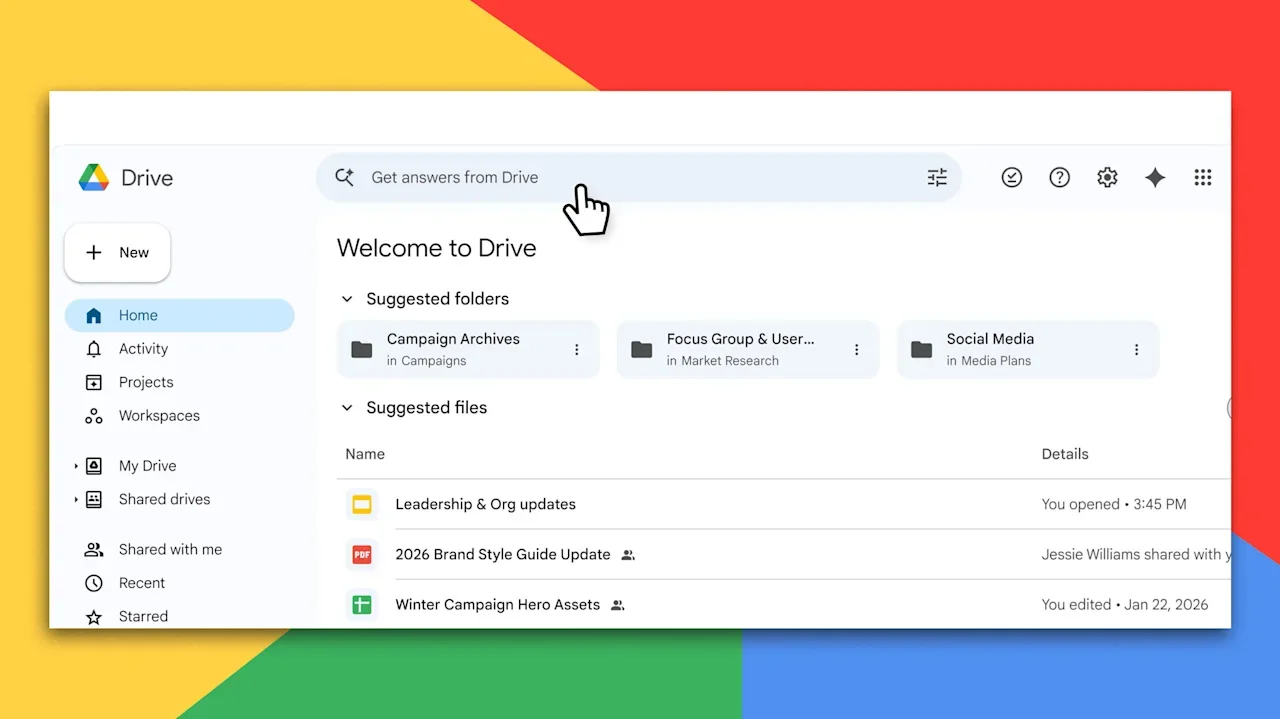
Google is rolling out new AI features designed to quickly flesh out Google Docs, Sheets, and Slides using data from the web and your existing Google files. The overall aim is to eliminate much of the busywork involved in filling out templated documents, transferring data from saved files or internet sources into spreadsheets, and tweaking slide presentations to add new facts and figures—all while reflecting the personal and professional preferences expressed in people’s previous work. “It’s not enough to simply generate a generic email or brief,” says Yulie Kwon Kim, VP of product for Google Workspace. “People want AI to understand your specific context, delivering results that are deeply personalized to them and their organization.” In Google Docs, that means being able to instruct Google’s Gemini AI to generate a document mimicking the layout or writing style of another document, fleshed out with content from additional sources stored on Google Drive. Already, says Google Docs product lead Frank Tisellano, more than a third of Docs are created as copies of another document, and the AI features are intended to let users create at least a first draft of their new files close to instantaneously. When it comes to Google Sheets, the AI is able to translate plain language requests into detailed execution plans to filter, transform, and analyze data. In a streamed demonstration, Eric Birnbaum, who leads the product team for Google Sheets, showed how the new AI could quickly filter through a complex spreadsheet of property data, finding real estate matching certain parameters in a certain neighborhood and generating relevant bar and pie charts. “The Gemini agent, just like a human would, goes back and checks its work and fixes anything it might have gotten wrong,” Birnbaum says. Birnbaum also used a new AI drag-and-drop feature to automatically fill out a spreadsheet of data about a set of major corporations, populating fields for headquarters city, revenue, and market capitalization based on information from the web. “Just by looking at the column headers, Gemini can figure out how to go find what you need,” he says. And by generating a plan users can examine and ask the AI to tweak, Google may be able to assuage concerns about AI inaccuracy. Gemini can similarly populate Google Sheets presentations based on existing data, even tweaking existing slides to add new information without users needing to tediously resize existing text and graphics. And Gemini can also help search through and pull information from Google Drive files, like compiling a table of purchased items from a folder of PDF receipts, without actually crafting a new document. The new AI features will be available first to subscribers of Google’s AI Pro and Ultra plans, along with businesses in the Gemini Alpha program. In general, makers of business software from Microsoft and Google to Adobe and Canva have added increasingly far-reaching artificial intelligence features to their product suites in recent years, hoping to reach AI-curious customers where they’re already working. At the same time, AI labs like Anthropic and OpenAI have rolled out a growing assortment of ways to do work from within their AI platforms. Google, which says it serves more than 3 billion users and 11 million paying customers through its Workspace tools, hopes many of those people will prefer to use AI features in the software they’re already familiar with rather than turning to external AI tools. “You don’t need to go and learn a new app,” says Kim. “You can go and get the assistance from Gemini right where you are in your familiar place where you’re doing your everyday work.” View the full article
-
Few brands can point to a specific date for their downfall. For Sonos—once the darling of home audio—that date is May 7, 2024, when it rolled out a disastrous app update that left many of its 15 million customers confused by hardware and software features that were suddenly unusable. When all was said and done, more than a decade of brand trust was flipped like an off switch. Now Sonos is taking its first major steps to earn back trust and audiophile stature with a new brand strategy and the launch of two new speakers: the Sonos Play and Era 100 SL. The Sonos Play is framed as a “callback” to the original Play:1 speaker that invented the smart wireless speaker category 13 years ago. The portable speaker, which retails for $299, features 24 hours of battery life in a durable, waterproof design, and a built-in power bank to charge your phone. The second speaker—the Era 100 SL—is a new, cost-efficient entry point into the Sonos system. At $189 retail, it features wide stereo separation and balanced, natural bass while removing built-in microphones to focus on essential listening. Tom Conrad, who took over as CEO in 2025 after the app debacle, says the company is no longer in the audio hardware arms race with companies like Bose, JBL, and Apple. Instead, he’s steering Sonos back to founder John McFarland’s original vision: creating a system for sound at home. “I think we really just make one product and that product is called Sonos,” Conrad says. “Sonos is a sound system for the home, and any individual device that we make is just a way into the system or a way to deepen your engagement with the system. But the system is the product.” Eras Tour The Sonos comeback path hasn’t been smooth. After its app disaster, revenue dropped 16% in fiscal Q4 2024. Former CEO Patrick Spence stepped down in January 2025, and Conrad was named interim CEO (becoming permanent in July). In August 2024, the company laid off about 100 employees, then another 200 in February 2025, totaling about 18% of its workforce. Revenue began to stabilize by early 2026, but the company still showed a consecutive three-year decline in performance. Conrad says the company was in “triage mode,” having cut R&D spending by 26%, and sales and marketing by 25%. Part of the turnaround plan hinges on resetting the brand’s narrative, so in November 2025 Sonos named Colleen DeCourcy—former Snapchat chief creative officer and Wieden+Kennedy exec—CMO. Conrad sees the story of Sonos as having three distinct eras. The first being its decade under founder McFarland, and what he describes as being “relentlessly focused on this idea of filling every home with music, with a system for sound.” He says the second era under Spence was defined by “developing the muscle of building great new hardware” every year. He believes this era had an “unintended consequence” in that the company began to view itself as a seller of stand-alone devices like soundbars and headphones that competed directly with rivals like Sony and Bose. Now, in the third era of Sonos, Conrad’s goal is to merge the best parts of the first two. “I’m bringing the focus of the company back to this idea that everything we do is grounded in enhancing the Sonos system, and that our new product introductions are kind of like grace notes on that symphony,” he says. Brand over time The brand challenges for Sonos are crystal clear, but newly minted CMO DeCourcy sees a silver lining. One of the lessons she learned while working with ad agency legend Dan Wieden was knowing how to answer the question, “If your product disappeared overnight, what would people be missing?” The app breakdown in 2024 provided the answer. It quickly became apparent that millions of people were pissed off at the brand—but the upside is that they cared at all. “It was clear that there was a super deep connection to, fundamentally, not that speaker, but that system,” DeCourcy says. A primary pillar of DeCourcy’s strategy involves activating the roughly 17 million existing households with Sonos through word-of-mouth and grassroots engagement rather than traditional ad campaigns. She plans to leverage the “Sonos Soundboard”—a group of influential music and film creators—to remind users of the brand’s creative roots through social and other content. Details on executing the brand strategy are pretty thin, because this is all still very much in its infancy. Before any major brand work launches to the public, the priority is to sell the vision to the company’s 1,300 employees at its Santa Barbara, California, headquarters. “The first thing that’s on my bucket list to get done is to internally rearticulate . . . and pull people along on this vision of why we are getting up and doing this every day,” DeCourcy says. “And then letting that spill out into the community.” Now they just have to hope people are ready to turn up the volume and listen. View the full article

-
A streamlined application makes it easier than ever to apply to Fast Company’s Best Workplaces for Innovators. Here are six reasons why you should apply to our eighth annual BWFI program. 1. Brand exposure. Every ranked company and all those earning honoree status in a category will appear in the fall (September) issue of the magazine and on fastcompany.com. 2. Talent retention. Public recognition as a Best Workplace for Innovators honoree provides powerful third-party validation that enhances your ability to recruit and retain top talent. 3. Editorial access. Fast Company editors will review all applications; the application represents an opportunity to highlight individuals and projects that showcase your company’s innovation prowess. The insight Fast Company editors glean from judging applications informs our ongoing coverage, often leading to stories. 4. Credibility. Fast Company‘s reputation for writing about innovation is unparalleled in business media. Inclusion on the list is a powerful stamp of approval of your company’s efforts. 5. Employee recognition. The program honors an Innovative Team of the Year as well as an Innovative Leader of the Year, along with finalists in each category. 6. A level playing field. Every company is unique, so the Best Workplaces for Innovators application is structured to allow your company to focus on whatever particular initiatives and programs you’ve established to cultivate innovative work across your organization. There are different categories for different size companies, as well as companies from different regions and sectors. For more than 15 years, Fast Company has been recognizing outstanding achievement in business innovation with its annual awards programs. In addition to Best Workplaces for Innovators, Fast Company’s Most Innovative Companies, Innovation by Design, World Changing Ideas, Brands That Matter, and the Next Big Thing in Tech lists have celebrated thousands of organizations transforming industries and shaping society through paradigm-shifting products, insights, or services. What differentiates Best Workplaces for Innovators from existing best-places-to-work lists is that it goes beyond benefits, competitive compensation, and collegiality (mere table stakes in today’s competitive talent marketplace) to identify which companies are actively creating and sustaining the kinds of innovative cultures that many top employees value even more than money. These are the places where people can do the best work of their careers and improve the lives of hundreds, thousands, even millions of people around the world. Best Workplaces for Innovators is the most authoritative list of companies cultivating an organization-wide commitment to innovation. We hope you’ll submit your company today. For more information on applying, see the FAQs. But don’t delay too long—the final deadline is March 27. View the full article
-
In 2012, NASA launched two probes into space: Van Allen Probe A and Van Allen Probe B. Their goal was to collect data on charged particles passing through Earth’s magnetic field. Those particles can wreak havoc on communications and other technologies on our planet, so understanding them is important. In 2019, the Van Allen Probes’ mission ended. With its fuel spent, the “A” probe is set to reenter Earth’s atmosphere today, and the parts of it that are not burned up upon reentry may crash onto our planet in the next 24 hours. Here’s what you need to know. Which probe is crashing? Thankfully, we only need to worry about one probe crashing into Earth today. That one is the Van Allen Probe A. The Van Allen Probe B isn’t scheduled to reenter Earth’s atmosphere until at least 2030. Still, that means there is one 1,323-pound space object expected to hit Earth within the next 24 hours. The good news is that NASA says much of the probe is expected to burn up upon reentry. However, the space agency does caution that “some components are expected to survive re-entry” as well. When will the probe hit Earth? NASA says the Van Allen Probe A is expected to reenter the Earth’s atmosphere at around 7:45 p.m. EDT on March 10—“with an uncertainty of +/- 24 hours.” That means that you can likely expect the probe to hit anytime between today and tomorrow. Where will the probe crash? That’s the million-dollar question. As of right now, NASA can’t determine exactly where the remains of the 1,323-pound space tech will land. You can check out a real-time map of where Van Allen Probe A is currently orbiting on N2YO.com, a satellite tracking service. As you can see from the map, the probe’s current route shows it passing over the northern tip of South America, Central Africa, and Indonesia. The good news is that 70% of the Earth is covered in water, so, as the Times of India points out, there’s a roughly 70% chance that any debris will land in one of Earth’s oceans. NASA says it will continue to monitor the probe and update its predictions as it becomes more certain. But what are the chances the probe will land on me? Pretty minuscule. NASA says the risk of any harm coming to any person on Earth as a result of the falling probe is about 1 in 4,200. But that’s the risk of the probe hitting any earthling. That chances of it hitting you, specifically, then, are so much lower as to be minuscule. Then again, nothing can ever be certain, so if you’re overly cautious, it doesn’t hurt to keep an eye on the sky today. View the full article

-
The parents of a girl critically wounded in a school shooting in Canada alleged in a civil lawsuit Monday that ChatGPT-maker OpenAI knew the shooter was planning a mass attack. OpenAI has said it considered but didn’t alert police about the activities of the person who months later committed one of Canada’s worst school shootings in Tumbler Ridge, British Columbia, on Feb. 10. OpenAI came forward to police after Jesse Van Roostselaar killed eight people and then herself last month, saying the attacker’s ChatGPT account had been closed but that she evaded the ban by having a second account. The legal claim filed in the British Columbia Supreme Court alleged that OpenAI had “specific knowledge of the shooter utilizing ChatGPT to plan a mass casualty event like the Tumbler Ridge mass shooting.” The lawsuit said OpenAI’s chatbot ChatGPT was used by the shooter as a trusted confidante, collaborator and ally, and it behaves willingly to assist users such as the shooter to plan a mass casualty event. A spokeswoman from OpenAI didn’t immediately respond to a message seeking comment on the lawsuit. The lawsuit said that as a result of the company’s conduct Maya Gebala was shot three times at close range, with one bullet hitting her head, another her neck and the third grazing her cheek. It said she has a catastrophic brain injury that will leave her with permanent cognitive and physical disabilities. —Associated Press View the full article

-
I have three kids under five — and getting them out of the house regularly is essential. I'm always scouring Google Reviews for new and interesting kid-friendly things to do in our neighbourhood. I look for great reviews, of course, but you know what stands out even more? Reviews with responses from the business. There's a "kids' cafe" not far from us that responds to every review. That tells us they care about their customers — and we go there often. I know I'm not alone in this, either. BrightLocal's research found that 88 percent of consumers would use a business that responds to all of its reviews, both positive and negative. Here's the data on why you should be replying to Google reviews, how to streamline the process with Buffer, plus a real-life example from boutique agency Sapphire Social, which makes replying to reviews a priority for their 30+ clients. Jump to a section: 5 reasons why replying to Google reviews matters 1. Your customers are reading reviews 2. Replying to reviews directly impacts whether people choose you 3. Responding to reviews correlates with more revenue 4. It boosts your local search rankings 5. Negative reviews are actually an opportunity How one agency made Google reviews manageable Introducing Google review replies in Buffer How to build a review response habit that actually works Don't leave reviews on read More resources for businesses 5 reasons why replying to Google reviews mattersReplying to reviews is inarguably good practice — and common sense — but it can have a powerful effect on the bottom line, too. The numbers are fascinating: 1. Your customers are reading reviewsAccording to BrightLocal's 2026 Local Consumer Review Survey, 97 percent of consumers read online reviews, with 41 percent saying they "always" read reviews when evaluating a business. That's a big jump from 29 percent the year before. Most of those reviews are on Google — roughly 81% of consumers use Google reviews specifically to evaluate local businesses (Sixth City Marketing). And they're not just skimming star ratings, they're reading what businesses say back, just like I do, as I mentioned up top. 2. Replying to reviews directly impacts whether people choose youAround 88% are influenced by whether a business responds to its reviews, good and bad. Engaging with your reviews makes consumers nearly twice as likely to choose you. And you don't have to be perfect at it, you just have to do it. And it's not just about responding to the negative ones. Only 47% of consumers said they'd use a business that exclusively responds to negative reviews. Responding to only positive reviews fared similarly poorly. Interesting, right? Consumers apparently don't love it when you cherry-pick which reviews to acknowledge. The latest 2026 survey goes even further: 89% of consumers now expect business owners to respond to reviews, and 50 percent say generic, templated responses would make them less likely to choose a business (BrightLocal, 2026). 3. Responding to reviews correlates with more revenueAll of the above might sound like common sense, but there is revenue data behind it, too. A study by Womply analyzed transaction data from more than 200,000 U.S. small businesses and found that businesses replying to at least 25 percent of their reviews earned 35 percent more revenue than average. Businesses that didn't respond to any reviews earned 9 percent less (Womply via Illuminate8). Consumers also spend more when they see a business engaging with feedback. The same study found that people spend up to 49 percent more at businesses that reply to reviews. And the Harvard Business Review found that when hotels began responding to reviews on TripAdvisor, they received 12 percent more reviews and their ratings increased by an average of 0.12 stars, without ever asking for more reviews (Harvard Business Review). A separate Harvard study found that a one-star improvement in rating can translate to a 5-9 percent increase in revenue. 4. It boosts your local search rankingsGoogle itself recommends responding to reviews. Their official Google Business Profile help documentation states that responding shows customers you value their feedback and signals responsiveness (Google Business Profile Help). Review signals, which include volume, quality, recency, and whether a business responds, account for a meaningful portion of local search ranking factors. Research from SOCi found that businesses ranking in Google's top three local results (the "3-Pack") earn 126 percent more traffic and 93 percent more conversion-oriented actions than businesses ranked lower (SOCi). Responding to reviews also feeds into Google's E-E-A-T framework (Experience, Expertise, Authoritativeness, Trustworthiness), which helps determine how prominently your business appears in local results. Each response is fresh, keyword-rich content on your profile, which is a signal Google rewards. 5. Negative reviews are actually an opportunityThis is the part that surprises most business owners: negative reviews, handled well, can actually help you. Research from Reputation.com found that consumers are 33 percent more likely to upgrade their review if a business responds with a personalized message within a day. And businesses experience a 16 percent boost in customer advocacy when they address complaints publicly, versus a 37 percent decline when complaints go unanswered (Reputation). Reputation CEO Joe Burton described the dynamic well in an interview with CX Dive: a negative review where the company visibly makes things right becomes something like a "superpowered review." It demonstrates accountability in a way that even five-star reviews can't (CX Dive). There's also the practical consideration that 85% of consumers say seeing whether a company responds to negative reviews is important in their purchasing decision. Silence in the face of criticism tells potential customers you either don't care or aren't paying attention. The data makes a pretty compelling case. But keeping on top of Google reviews is easier said than done — especially when you're managing more than one." How one agency made Google reviews manageableEverything above applies to a single business with one Google Business Profile. Now multiply it. This is something I hear constantly from agencies and multi-location businesses. Each location receives its own reviews, has its own customer base, and may require a tailored response due to local context. A copy-paste reply that works for one client might sound completely wrong for another. BrightLocal's guide on multi-location review management highlights the core tension: maintaining brand consistency while keeping responses local and authentic (BrightLocal). And the stakes are high. BrightLocal found that 91 percent of consumers say local branch reviews impact their overall perception of a multi-location brand. When Ally Browman, founder of Sapphire Social, described her workflow before Buffer, she talked about logging into individual client accounts, switching between platforms, and trying to make sure nothing fell through the cracks. Sapphire Social manages around 30 channels across multiple clients, and when I asked her what Buffer feature has made the biggest difference to her workflow, she didn't hesitate: community management. Specifically, the ability to respond to Google reviews without logging into each client's account separately. "I can't tell you how amazing community management through Buffer has been," she told me. "We don't have to select from inbox or comments, it's just all in one place. It's so simple." Before, her team had two options: log in with the client's credentials (a security headache) or navigate through native platforms (a patience-testing headache). Now they handle everything in one dashboard. For an agency juggling multiple Google Business Profiles, that's the difference between staying on top of reviews and letting them quietly pile up unanswered. Introducing Google review replies in BufferThis is exactly why we've added support for replying to Google reviews directly in Buffer. If you're already managing your Google Business Profiles in Buffer, you can now see incoming reviews and respond to them from the same place you manage the rest of your social presence. For agencies like Sapphire Social, this means no more logging into individual client accounts to check for new reviews. For franchises and chains, it means finally having a centralized view of reviews across every location. And for any business with a Google Business Profile, it means one less reason to let reviews go unanswered. As Ally told me: "If you want a tool that handles scheduling, quality control, community management, and team management without the usual headaches, Buffer is it." How to build a review response habit that actually worksYou don't need to turn review management into a full-time job. A few principles go a long way. Respond to everything. The data is clear. Consumers prefer businesses that respond to all reviews, not just negative ones, not just positive ones. Selective responding looks calculated. Be timely. BrightLocal found that 19 percent of consumers expect a same-day response, and 81 percent expect a response within a week. The faster you respond, the more it signals that you're actively engaged. Personalize your replies. Half of consumers say generic, templated responses put them off. Mention specifics from the review. Use the reviewer's name. Keep it conversational, not corporate. Don't get defensive with negative reviews. Acknowledge the experience, apologize where appropriate, and offer to take the conversation offline. This isn't just for the reviewer. It's for every future customer reading the thread. Use tools that centralize the work. This is especially critical for multi-location businesses and agencies. Having one place where reviews across all your Google Business Profiles surface, where you can read, respond, and track, turns an overwhelming task into a manageable daily habit. As Ally put it when describing what changed for her team: "We also don't have to select from inbox or comments, it's just all in one place." Don't leave reviews on readGoogle reviews are one of the most visible pieces of content associated with your business. Every one of them is a conversation waiting to happen and if you have those conversations, you're earning more trust, more clicks, and more revenue. (And helping parents like me find a good way to entertain the kiddos!) More resources for businessesSocial media engagement: 9 ways to boost yours + why it mattersHow to start a social media marketing agencyTop 11 social media engagement toolsCommunity management: everything you need to knowView the full article
- Today
-
The US president has already done lasting damage to international trust in AmericaView the full article
-
See why optimizing category pages and building authority beats spinning unique descriptions for large, similar product catalogs. The post How Do You Fix Thin Content Across Similar Ecommerce Product Pages? – Ask An SEO appeared first on Search Engine Journal. View the full article
-
If you’ve been in marketing long enough, you’ve probably lived through a few identity crises. First, we were channel experts. Then, we became integrated marketers, growth marketers, and performance marketers. Somewhere along the way, someone added “AI” to everyone’s job description and called it a day. Now, we’re entering the era of the full-stack marketer. From where I sit — particularly as a media leader — the role is starting to look a lot like product management. This doesn’t mean you need to start writing Jira tickets for fun (though some of you already do). It means that tomorrow’s most effective media leaders won’t just optimize campaigns. They’ll own outcomes, connect dots across teams, and think holistically about the entire user experience, from first impression to final conversion (and beyond). I’ve seen this shift most clearly in industries with long consideration cycles, multiple stakeholders, and rising acquisition costs — where marketing performance is inseparable from the experience itself. Let’s break down what’s driving the rise of the full-stack marketer, what it really means to “think like a product manager,” and why this mindset is becoming non-negotiable for media leaders. What is a full-stack marketer, anyway? A full-stack marketer isn’t someone who does everything (burnout isn’t a job requirement). Instead, it’s someone who understands how everything works together. Over the course of my career, I’ve learned that the most impactful media decisions rarely come from being the deepest expert in one area. They come from having working fluency across many: Media and channels: Paid search, paid social, programmatic, CTV, SEO, email, SMS, and whatever new acronym launches next quarter. Creative and messaging: Knowing what resonates, where, and why. Data and analytics: Not just reading dashboards, but asking better questions of the data. UX and CRO: Understanding friction, intent, and user behavior. Technology and platforms: CRMs, CMSs, marketing automation, and attribution tools. The full-stack marketer doesn’t need to be the deepest expert in every area, but they do need to know enough to connect insights, spot gaps, and make informed trade-offs. In practice, this means constantly zooming out to see the system and zooming back in when something breaks. Your customers search everywhere. Make sure your brand shows up. The SEO toolkit you know, plus the AI visibility data you need. Start Free Trial Get started with Why media leaders are evolving into product thinkers Earlier in my career, media leadership was often defined by questions like: Are we hitting CPA targets? Which channels are driving the most conversions? How do we allocate budget more efficiently? Those questions still matter. I ask them all the time. But over the years, I’ve learned they’re no longer sufficient on their own. Today’s environment forces media leaders to grapple with bigger, messier questions: Why are conversion rates declining even when traffic is strong? Where are prospects dropping out of the funnel, and why? How does media performance change when the application experience changes? What happens after the lead submits? These are product questions. Product managers obsess over the end-to-end experience: the user journey, friction points, trade-offs, and outcomes. Media leaders who adopt this mindset stop seeing campaigns as isolated efforts and start seeing them as inputs into a broader system. In many of the industries I’ve worked in, that system is anything but simple. Dig deeper: Why PPC teams are becoming data teams Media doesn’t live in a vacuum Marketing performance rarely exists in isolation. In many industries (especially those with longer decision cycles), a click is just the beginning, not the win. Whether you’re selling financial services, healthcare, or education, prospects move through nonlinear journeys influenced by multiple touchpoints, stakeholders, and moments of friction. This is where full-stack thinking becomes critical. Example 1: When media isn’t the problem, the experience is I’ve lost count of how many times I’ve heard this reaction when performance starts slipping: “The platform is getting more expensive.” Sometimes that’s true. But a product-minded media leader asks deeper questions: Has the conversion experience changed recently? Did we add steps, fields, or requirements? Are we driving mobile traffic to a hostile desktop experience? Across industries, I’ve repeatedly seen strong intent at the keyword or audience level, healthy CTRs, and solid landing-page engagement followed by a steep drop-off at the point of conversion. It’s a product experience problem. In higher ed, this often shows up when high-intent program traffic is routed to lengthy or confusing application flows, generic inquiry forms, or experiences that don’t match the promise of the ad, especially on mobile. Prospective students signal strong intent, only to hit friction that has nothing to do with media and everything to do with the experience they’re asked to navigate. A full-stack marketer doesn’t just flag this: they bring data, partner cross-functionally, and help prioritize fixes based on impact. Get the newsletter search marketers rely on. See terms. Example 2: Different audiences, different ‘products’ One of the most important product principles is that not all users are the same, and they shouldn’t be treated that way. Many organizations market to multiple audiences at once, each with different motivations, risk tolerance, and timelines. Treating them as if they’re buying the same “thing” is a fast track to average results. A product-minded media leader understands that: The value proposition changes by audience. The conversion event may be different. The decision timeline is almost certainly different. I’ve seen this clearly in healthcare, where patients, caregivers, and referring providers evaluate the same organization through entirely different lenses. Financial services presents a similar challenge, with banking, investment, and insurance decisions varying dramatically by life stage and goals. Full-stack marketers adapt media strategy accordingly, from channel mix to messaging to measurement. This is because they understand product-market fit, not just audience targeting. Example 3: What happens after the conversion One of the biggest blind spots in media strategy is what happens after someone converts. Product thinkers ask: How quickly does someone follow up? Is the first touch personalized or generic? Does the message align with the promise of the ad? I’ve seen performance improve without changing media at all, simply by improving speed-to-lead or aligning follow-up messaging with campaign intent. Healthcare offers especially clear examples of this dynamic due to intake workflows, appointment scheduling, and care coordination, but the principle is universal: media doesn’t end at the form fill. The full-stack marketer is accountable for conversions and outcomes. Dig deeper: What AI means for paid media, user behavior, and brand visibility Thinking in roadmaps Another hallmark of product management is roadmap thinking: prioritizing initiatives based on impact, effort, and sequencing. Full-stack media leaders bring this same approach to marketing: Short-term wins versus. long-term bets. Testing frameworks instead of one-off experiments. Incremental improvements to conversion paths. In practice, this might look like: Phase 1: Improve mobile application UX. Phase 2: Introduce program-specific landing pages. Phase 3: Layer in audience-based creative and messaging. Instead of chasing the “next shiny channel,” full-stack marketers focus on compounding gains. Data fluency: Asking better questions Product managers don’t just look at metrics. They interrogate them. The same should be true for media leaders. Instead of asking, “What’s the CPA?” I’ve learned to ask: “Which segments are converting efficiently, and which aren’t?” “How does performance differ by device, geography, or life stage?” “What signals indicate readiness vs. research?” In higher ed, this might mean: Separating brand vs. non-brand intent. Looking at assisted conversions. Evaluating performance by program. Data becomes a tool for decision-making. Collaboration is the new superpower Full-stack marketers are inherently collaborative because they have to be. In higher ed, success often requires alignment across: Admissions. Enrollment marketing. IT and web teams. Academic leadership. External partners. Media leaders who think like product managers don’t just execute requests. They help stakeholders understand trade-offs, prioritize initiatives, and rally around shared goals. They also translate data into stories people can act on. Dig deeper: Break down data silos: How integrated analytics reveals marketing impact See the complete picture of your search visibility. Track, optimize, and win in Google and AI search from one platform. Start Free Trial Get started with So, what does this mean for tomorrow’s media leaders? The rise of the full-stack marketer doesn’t mean specialization is dead. It means seeing the entire system matters more than optimizing any single piece of it. From my perspective, tomorrow’s strongest media leaders will: Understand the business behind the campaign. Think beyond their channel. Advocate for the user experience. Use data to inform and influence. Embrace ambiguity (and occasionally chaos). In categories where trust, timing, and transformation are at the core of the “product,” this mindset is no longer optional. At its heart, marketing here is more than campaigns. It’s guiding life-changing choices. If you’re a media leader feeling like your role is expanding faster than your job description — congratulations! You’re not losing focus. You’re evolving. View the full article
-
High-energy laser weapons are often touted as offering decisive advantages over conventional kinetic systems, from speed-of-light engagement to a comparatively low cost per shot. But no claimed strength is more misleading than the promise of an “infinite magazine.”1 A fixture of military talking points and defense contractor briefings on directed energy for years, the appeal is simple: unlike conventional air defense assets like guns, missiles, and other kinetic interceptors, lasers do not run out of ammunition or require physical reloads in the middle of a firefight. As long as a laser weapon can draw power from a reliable source, the logic goes, it can keep shooting. While this framing is technically accurate in a narrow sense, it is also operationally misleading. Laser weapons do not defeat targets by expending discrete rounds, but by occupying time—and time, in combat, is always finite. Dwell Time as the Limiting Factor The vast majority of military laser weapons currently in development or operationally deployed are continuous wave systems, which disable or destroy incoming threats by focusing energy on a single point long enough to inflict catastrophic damage.2 This requires consistent and sustained contact between a laser beam and its intended target, typically measured in seconds. Because each laser engagement requires prolonged and uninterrupted dwell time, the system cannot counter another target—and until that engagement ends, the system’s effective fire rate is zero. In a defensive context, that constraint matters as much as whether the system has physical ammunition to reload. Unlike, say, a Terminal High Altitude Area Defense (THAAD) missile battery, which can launch multiple interceptors in rapid succession, a single-beam laser weapon must queue its engagements and commit several seconds to defeat each incoming target, leaving it unavailable to address other threats. Adding more power can certainly shorten dwell time under ideal conditions, but it does not allow simultaneous engagements unless the system is specifically designed with multiple independent beams and tracking channels. In saturation attacks like those that have defined the rise of drone warfare, these delays compound quickly. When multiple threats arrive at once, the laser must sequence engagements as incoming targets continue to close, straining air defense capacity. Each additional second spent on one target reduces the available margin for the next one. Missiles can be launched in parallel, but lasers cannot unless duplicated at significant cost and complexity. The result: laser defenses scale poorly against drone swarms. Combat Environment as a Hidden Tax Environmental conditions also erode the theoretical advantages of laser weapons. Atmospheric turbulence, humidity, fog, smoke, aerosols, and other obscurants all reduce the amount of focused energy that actually reaches a target. As conditions degrade, lasers require longer dwell times to achieve the same effect, or fail to achieve it at all. As I have noted before, these effects are especially pronounced for naval lasers, which operate in some of the most challenging environments for optical systems. This phenomenon effectively shrinks a laser weapon’s magazine before the system actually fires a shot. A laser that can defeat a drone in three seconds in clear air may require significantly longer in maritime haze or coastal humidity; in some conditions, it may not be able to maintain sufficient beam quality to engage at useful ranges. These charts from a 2014 analysis for the U.S. Naval Postgraduate School illustrate this nicely: (US Naval Postgraduate School/Chris Fussman) A Finite Magazine by Another Name Despite the ubiquity of the infinite magazine talking point, some high-energy laser weapon manufacturers are explicit about the real-world limits of their systems. Australian defense contractor Electro Optic Systems, for example, states that its 150 kilowatt ‘Apollo’ high-energy laser weapon can achieve “unlimited shots with external power,” but just “more than 200 stored engagements when isolated” on its own power source. But even with an unlimited power source, laser weapons face limits imposed by heat. Continuous wave systems generate and absorb significant thermal loads, particularly in their optics and beam-control components; after a series of engagements, they must reduce output or pause entirely to protect hardware and maintain beam quality. (On surface warships in particular, this thermal management competes with other demands on power and cooling systems from propulsion, sensors, and electronic warfare systems.) These inevitable pauses function as a form of reload even if they are not labeled as such, further complicating claims of unlimited fire. And even with advances in engineering, thermal management constraints appear unavoidable at the power levels required for meaningful defensive effects. Consider the draft requirements for the U.S. Army’s proposed Enduring High Energy Laser (E-HEL) effort, which stipulate that any proposed system must have a recharge cycle of no more than four minutes to “recover the magazine to original conditions.” EOS and the Army’s willingness to articulate limits on real-world engagement capacity highlight what the “infinite magazine” shorthand obscures: real laser weapons always operate within measurable physical bounds. In that way, a laser weapon is just like an M4 carbine: fire one long enough and you’ll likely be able to cook bacon on it. Power Generation Does Not Eliminate Engagement Limits It is tempting to assume that sufficiently large power generation solves these problems—that more megawatts translate directly into more defensive capacity. If a warship like the U.S. Navy’s Zumwalt-class destroyers can produce enormous amounts of electricity to power laser weapons, why not simply overwhelm dwell-time constraints with brute force? In practice, power availability does not translate directly into engagement capacity. Engagement capacity is governed by how quickly a system can process targets, not by how much raw power it can generate. Beam quality, pointing stability, atmospheric effects, and fire-control limits cap how much energy can be applied to any single threat at a given moment. A megawatt of available electricity does not become a megawatt applied to multiple targets simultaneously. Consider a laser that requires five seconds to defeat a small drone under ideal conditions. Ten drones arriving within thirty seconds demand fifty seconds of uninterrupted engagement time. Unless multiple independent beams are available, some threats will penetrate regardless of how much electricity sits unused in reserve. As a result, claims that lasers provide infinite defensive depth conflate endurance with throughput. Lasers can remain available longer than missile batteries in some scenarios, but they cannot process unlimited numbers of threats in a given time window. Why the Myth Persists The infinite magazine claim endures because it offers a compelling contrast to the missile shortages and high interceptor costs that advanced militaries are grappling with amid the rise of low-cost weaponized drones. Not only does it fit neatly into defense budget calculations and public narratives about technological advantage, but it’s also far easier to explain than the realities of beam physics, thermal management, and environmental constraints. Yes, laser weapons extend defensive endurance and provide new options against certain threats—a valuable addition to the vision of a layered defense that has defined U.S. air defense doctrine in recent years. But they do not remove the fundamental limits imposed by time, environment, and system architecture. In combat, magazines are not just what’s strapped to a service member’s MOLLE system, or packed away in an ammo can. They are what a weapon can process before the fight moves on. By that measure, laser weapons have magazines after all—measured not in rounds, but in seconds. This article is republished with permission from Laser Wars, a newsletter about military laser weapons and other futuristic defense technology. View the full article

-
The 30-year fixed-rate mortgage fell below 6% at the end of last month for the first time since 2022, bringing purchase borrowers back to the market. View the full article
-
Starbucks customers who love collecting the company’s loyalty rewards stars for each dollar they spend are in for a change this morning. America’s No. 1 coffee chain is launching its revamped rewards program today, March 10. With it comes a tiered loyalty membership program and a new structure for earning stars and new rewards. Here’s what you need to know. The former Starbucks loyalty rewards system is no more Before today’s launch of the new rewards program, Starbucks’s previous loyalty system was more straightforward. Under the old system, which was in place from around 2019 until yesterday, there were no membership tiers. In that program, all Starbucks customers were equal because they earned the same number of stars for dollars spent. Under the old system, rewards members earned 1 star for every $1 spent or 2 stars for every $1 spent when paying with a pre-loaded Starbucks Card. Stars could be redeemed for rewards, such as a free extra shot of syrup (25 stars), free drinks (100 to 200 stars), and even free merch (400 stars). However, no matter how many stars a person earned, they needed to redeem those stars within six months, or they expired. But in January, Starbucks announced it was doing away with its reward program, which had treated every member equally. In its place, the company said it would launch a new rewards program that had three tiers of membership. Under the new program, the more loyal you are to the company (i.e., the more you spend), the greater your rewards will be. At the time of the announcement, Tressie Lieberman, Starbucks global chief brand officer, explained that the company’s Starbucks Rewards program has “always been about creating connection, and we’re evolving the program based on what our members told us matters most, offering faster, more meaningful benefits that make them feel appreciated.” That new program launches today. How is Starbucks new rewards program different? The main difference between the new Starbucks loyalty program launching today and the previous one is that the new program works on a tiered membership. Starbucks Rewards members are now grouped into three tiers based on the amount of stars they have earned (in other words, the amount of money they have spent). When a Starbucks Rewards member earns enough stars, they move into a higher tier, unlocking more rewards. The new tiers and stars structures are as follows: Green Member: This is the entry-level tier that every Starbcuks Rewards member starts at. Green members will receive 1 star for every $1 spent (so 10 stars for $10 spent). Gold Member: Once a Green Member collects 500 stars, they are promoted to a Gold Member. Gold Members earn 1.2 stars for every $1 spent (so 12 stars for $10 spent). Reserve Member: This is the highest level you can achieve under the new Starbucks Rewards program. Once you earn 2,500 stars, you are promoted from a Gold to a Reserve Member. Reserve members earn 1.7 stars for every $1 spent (so 17 stars for every $10 spent). No matter which membership tier you fall into, these stars can be redeemed for the same freebies. For example: a free shot of syrup (25 stars) up to $2 off any item (60 stars) free drinks (100-200 stars) free food (300 stars) free merch (400 stars) However, there are additional rewards unique to the new membership tiers. For example, while Green Members can keep their stars from expiring at the six-month mark by making eligible purchases, Gold and Reserve Members never see their stars expire as long as they maintain those membership tiers. Additionally, the higher your membership level, the more double-star days you get per year, and the longer you have to redeem your free birthday treat (1 day for Green, 7 days for Gold, and 30 days for Reserve). How do I know what membership tier I’m in? The good news for existing Starbucks Rewards members is that they do not start from scratch today. Starbucks is grandfathering existing rewards members into the new program based on the number of stars they accumulated between January 2025 and December 2025. This means that if you accumulated under 500 stars, you’ll be a Green Member today. If you accumulated between 500 and 2,499 stars during the period, you’ll be a Gold Member. And if you accumulated more 2,500 or more stars during the period, you’ll be a Reserve Member today. To see your new membership level under the revamped Starbucks Rewards program, simply open up your Starbucks app. Starbucks has also said it will alert Rewards members to their new status via email. In January, Starbucks said it had 35.5 million active Starbucks Rewards members in the United States. Why is Starbucks doing this? Clearly the company hopes the new system will boost loyalty and therefore sales. Brian Niccol, who took over as CEO of Starbucks in 2024, has been executing an aggressive turnaround plan, in part aimed at improving the in-store experience. Starbucks Corporation stock (Nasdaq: SBUX) is up over 18% year to date. In January, the company posted its first U.S. sales growth in two years. View the full article
-
This is a programming note that I will be not be posting here for the next several days. I am not exactly sure how long it will take and when I will be back at 100% but I am expecting it to take at least several days.View the full article
-
Yep, more of the same - the Google Search ranking volatility remains heated. Many are asking when we will see an officially announced Google core update. But it has not been announced yet.View the full article
-
Manufacturing and trade figures dating from before Iran war disappointView the full article
-
Robby Stein, VP, Product at Google Search, was interviewed by Zain Kah on Google AI Search features. While most of the conversation are items we already know, he did say a few interesting things that I want to pull out.View the full article
-
German group says it must ‘rigorously’ cut costs as conflict and tariffs cloud outlookView the full article
-
Google is testing a larger header image for the Google Discover publisher header images. It looks a lot more magazine-type and style. View the full article
-
How to Decide Between Traditional SEO and AI Search AI search is dominating the conversation right now. Every marketing leader is hearing the same thing: “What’s our AI strategy?” Your instinct might be to move fast, reallocate budget, start optimizing for generative search, and get ahead of the curve. But before you rewrite your entire roadmap, there’s a critical question worth asking: should you? Generative search is changing discovery, but traditional SEO is still driving measurable revenue for many businesses. And, shifting resources away from proven strategies without a clear framework can dilute performance rather than drive growth. Instead of […] The post Before You Shift SEO Budget to AI, Ask These Questions [Webinar] appeared first on Search Engine Journal. View the full article
-
In any workplace, fun group games can considerably improve morale and cultivate a more cohesive team environment. These activities, ranging from trivia quizzes to scavenger hunts, not merely promote friendly competition but additionally encourage communication and collaboration among employees. As you explore various game options, consider how each can strengthen relationships and reduce stress. Comprehending the impact of these games is essential, especially as you aim to improve overall job satisfaction and productivity. What types of games might work best for your team? Key Takeaways Group trivia and problem-solving games foster teamwork, enhancing communication and innovative thinking among employees. Office competitions like scavenger hunts promote mental focus, reduce stress, and strengthen relationships in a fun environment. Quick games, such as Office Bingo, encourage team bonding and engagement during breaks, boosting overall morale. Icebreaker activities, like Two Truths and a Lie, facilitate personal connections, promoting open dialogue among colleagues. Collaborative games, such as Human Knot, improve communication skills and enhance teamwork, leading to a more effective workplace. Strengthen Morale Through Team Building Activities To strengthen morale in the workplace, incorporating team building activities can be highly effective. Engaging in office party games not only boosts trust and support among employees but additionally increases job satisfaction and commitment to the organization. When you participate in fun group games, you encourage creativity and problem-solving skills, helping your team tackle challenges in innovative ways. Collaboration during these activities improves communication skills, which can greatly improve team dynamics and productivity. Studies indicate that organizations with strong team-building initiatives experience a 36% higher employee retention rate, eventually reducing turnover costs. Moreover, team-building activities can yield a 14% to 30% increase in productivity, showcasing their considerable impact on business outcomes. Fun Office Activities to Boost Morale Engaging in team competitions and creative collaborative challenges can greatly improve workplace morale. By participating in activities like group trivia or problem-solving games, you not just encourage teamwork but additionally promote innovative thinking among colleagues. These fun office activities lead to stronger relationships and a more connected work environment, in the end boosting productivity and job satisfaction. Engaging Team Competitions Though many workplaces prioritize productivity, integrating team competitions can greatly improve both morale and collaboration among employees. Engaging team competitions, such as trivia quizzes and office scavenger hunts, encourage communication, creating a more cohesive work environment. Activities like sports days and fitness contests boost morale and improve mental focus, thanks to the spirit of friendly competition. Fun group games for the office, including the “Do Not Smile Challenge” and “Human Snake Game,” promote laughter and interaction, reducing stress and strengthening workplace relationships. Moreover, creative contests, such as “Pitch a Desk Item” or “Childhood Photo Guessing Game,” allow employees to showcase their talents, boosting team spirit. In the end, these engaging competitions can lead to a significant increase in productivity. Creative Collaborative Challenges Creative collaborative challenges serve as effective tools for enhancing workplace morale and communication. These activities nurture teamwork and camaraderie, making them ideal office games for large groups. Here are some engaging options to evaluate: Team Trivia – Boosts knowledge and encourages friendly competition. Scavenger Hunts – Promotes problem-solving and collaboration among colleagues. Desk Safari Photo Challenge – Sparks creativity and strengthens connections. Compliment Circle – Cultivates kindness and a supportive culture. Implementing these challenges can lead to a 36% higher employee retention rate by nurturing meaningful connections and a sense of belonging. Encouraging your team to participate in these creative activities will improve communication skills and overall workplace morale, making your office a more enjoyable environment. Games to Play at Work During Your Break During your breaks, playing games at work can greatly improve team dynamics and boost overall morale. Quick games like Office Bingo encourage team bonding and engagement, promoting interaction among employees. Activities such as Two Truths and a Lie advance knowledge sharing, allowing colleagues to connect on a personal level in a relaxed environment. The Childhood Photo Guessing Game serves as an enjoyable way for team members to learn about each other through storytelling. Engaging in games like Pictionary or Charades stimulates creativity and teamwork, helping everyone unwind before returning to work tasks. Furthermore, quick contests like Office Typing Races improve typing skills while nurturing a spirit of friendly competition. These fun office party games not only make break times more enjoyable but also strengthen relationships among coworkers, leading to a more cohesive work atmosphere. Incorporating such activities can greatly improve workplace satisfaction and productivity. Games for Breaking the Ice and Bonding Icebreaker games play an important role in nurturing connections among team members, especially in environments where collaboration is crucial. By participating in these activities, you’re not just having fun; you’re building a foundation for stronger workplace relationships. Here are some effective icebreaker games to reflect on: Two Truths and a Lie: Share two truths and one lie about yourself, and let others guess which is which. Getting to Know You Bingo: Create bingo cards with personal traits or experiences and mingle to find colleagues who match. Common Ground: Form small groups and find three things all members have in common. Desert Island: Discuss which three items you’d take to a deserted island and why. Incorporating icebreaker games into meetings encourages open dialogue, enhancing creativity and productivity as well as making employees feel more connected and valued. Regular engagement can lead to improved job satisfaction and employee retention. Games That Encourage Teamwork When you engage in team-building games, you improve communication skills among your colleagues, which can lead to increased productivity levels. Activities that promote collaboration, like problem-solving games, help teams work better together and tackle challenges more effectively. Enhanced Communication Skills Office games intended to improve communication skills play a crucial role in promoting teamwork among employees. Engaging in corporate party games encourages collaboration and idea-sharing, which improves workplace interactions. Here are some effective activities to contemplate: Human Knot: Participants untangle themselves as they communicate clearly. Blind Drawing: One person describes an image while the other draws it, refining active listening. Escape Room Challenges: Teams delegate tasks to solve puzzles, utilizing individual strengths. Structured Problem-Solving: Engaging in these activities has been shown to markedly boost communication effectiveness. Regular participation in these games can lead to a 27% increase in employees’ likelihood of performing their best, all driven by improved communication and collaboration skills. Increased Productivity Levels Boosting productivity in the workplace often starts with nurturing teamwork, and engaging in team-building games is an effective strategy for achieving this goal. Research shows that team games can raise productivity levels by 14% to 30%, creating a more efficient work environment. When you incorporate office party game ideas that promote cooperation, you encourage a climate where employees communicate better and work collaboratively toward shared objectives. Connected employees are 27% more likely to perform at their best, greatly impacting overall productivity. Collaborative Problem-Solving Activities Collaborative problem-solving activities are vital tools for nurturing teamwork and improving communication within your organization. Engaging in these company party games helps cultivate a cooperative climate and can lead to significant benefits, including: Improved communication skills among team members. Increased productivity and creativity through shared perspectives. Identification of potential leaders during task delegation. Clearer work objectives that align efforts and boost performance. These activities not only elevate employee morale but contribute to a stronger commitment to the organization, resulting in lower turnover rates. By incorporating collaborative problem-solving games into your team-building exercises, you create an environment that promotes growth and unity, eventually leading to a more effective workplace. Embrace these strategies for a more engaged and productive team. Zoom & Online Fun Office Games to Boost Morale While remote work has become the norm for many teams, finding ways to maintain engagement and connection can be challenging. Incorporating online games into your routine can greatly improve morale. Popular games like Pictionary and 20 Questions encourage interactive engagement, nurturing camaraderie among remote colleagues. You might as well consider Remote Work Bingo, which highlights common virtual behaviors, promoting friendly competition and shared experiences. These games can easily adapt to platforms like Zoom, Slack, or Microsoft Teams, making them versatile tools for team bonding. Regularly integrating these games into meetings can create light-hearted interactions that contribute to a positive work culture. Engaging in virtual team-building activities improves communication skills and strengthens team dynamics, finally leading to improved productivity and collaboration. When looking for games to play at office parties, keep in mind that these online options can keep your team connected, even when working from a distance. Measure the Effectiveness of Your Efforts To effectively measure the impact of your morale-boosting efforts, it’s essential to utilize various assessment methods that provide clear insights into employee engagement and satisfaction. Start by implementing the following strategies: Employee Surveys: Gauge satisfaction and engagement levels before and after fun party games for work to measure effectiveness. Track Participation: Monitor attendance and engagement rates during group games to evaluate employee interest. Productivity Metrics: Assess changes in output or project completion rates to quantify the impact of morale-boosting activities. Retention Rates: Analyze employee turnover post-activities to see if improved morale correlates with increased loyalty. Incorporating qualitative feedback through interviews or focus groups can further improve your comprehension of the fun group games’ effectiveness. Frequently Asked Questions What Are Fun Games for Work Team? You can improve team dynamics with various engaging games. Consider trivia quizzes to test knowledge, or scavenger hunts that encourage collaboration. Icebreaker activities like “Two Truths and a Lie” promote personal sharing. For problem-solving, try team-building exercises such as the “Human Knot” or “Escape Rooms.” Incorporating outdoor physical activities in addition elevates energy and teamwork. Each game nurtures communication, strengthens relationships, and finally contributes to a more cohesive work environment. What Are Morale Booster Activities? Morale booster activities are crucial for enhancing workplace satisfaction and engagement. You can implement team-building exercises, social events, and employee recognition programs to encourage a positive environment. These activities promote camaraderie, strengthening relationships among colleagues. Research shows that engaged employees are more productive and likely to stay with the organization. What’s the Most Fun Game to Play With a Group? The most fun game to play with a group often depends on the participants’ preferences, but Trivia Games consistently engage everyone. You can tailor questions to interests or themes, encouraging teamwork and friendly competition. Pictionary is another engaging option, where creativity shines as you illustrate concepts for teammates to guess. Furthermore, Scavenger Hunts can add excitement, prompting collaboration and problem-solving. Each game nurtures interaction, making them ideal choices for any group setting. How to Get 100% Team Morale? To achieve 100% team morale, focus on nurturing open communication and collaboration. Regularly recognize individual and team achievements, which boosts motivation and retention. Encourage participation in team-building activities that promote creativity and problem-solving, as these can improve teamwork and connection. Furthermore, create an environment where employees feel valued and included, addressing any barriers that hinder engagement. Conclusion Incorporating fun group games into the workplace can greatly improve morale and promote a positive work environment. By engaging in activities that promote teamwork, creativity, and communication, you’ll not just improve employee relationships but likewise boost overall productivity. Whether through in-person activities or virtual games, these initiatives can effectively reduce stress and create a sense of belonging among team members. Regularly measuring the impact of these games will help maintain their effectiveness and guarantee continued employee satisfaction. Image via Google Gemini and ArtSmart This article, "Fun Group Games to Boost Office Morale" was first published on Small Business Trends View the full article
-
Google Ads is rolling out Google AI voice models as a new asset optimization feature for your video ads. This is for your existing Performance Max video ads.View the full article
-
Google seems to have a bug with the Crawl Stats report in Google Search Console. The date selector appears to be acting a bit weird, where it doesn't let you select the before or after date.View the full article
-
Buying AI capabilities to drive marketing is easy. Enabling marketing teams to actually use it independently, decisively, and at scale is far harder. The main culprit? Humans. Marketing teams have always had the same elusive goal: to move at the pace of the consumer. Responding to each customer’s needs in real time, delivering the relevant message at the right moment, and optimizing customer lifetime value to drive loyalty and ROI. The goal is not new. What is perpetually new are the AI technologies available to analyze consumer data and generate instant, personalized messaging at scale. But while technology evolves rapidly, the ability of marketing teams to harness it independently and decisively has not kept pace. The main obstacle is organizational: most marketing teams have not structured themselves to extract full value from the technology they already have. This is not to say that there is no progress. There is. Marketing teams that have crossed that chasm are seeing extraordinary results. One case in point is Caesars Entertainment that reduced campaign execution time from five days to five minutes. Asadul Shah, vice president of player revenue Strategy, called it “a massive game changer.” Before that transformation, Caesars marketers manually built targeting lists across disconnected systems, coordinated across multiple tools and waited on engineers, analysts and creative teams before anything could go out. The result was an operation too slow to target players with the precision and timing the market demanded. Caesars worked with Optimove to consolidate data, orchestration and execution in one platform. Shah noted the transformation made marketing “not just more efficient; it is more responsive to what our players actually need in the moment.” What made it work was not technology alone. Caesars implemented Positionless Marketing, a framework that frees marketing teams from fixed roles, giving every marketer the power to execute any task instantly and independently. Optimove provided the platform. Caesars built the team structure to make it real. Technology and human ingenuity working together making Positionless Marketing possible. Any organization achieving this kind of transformation is doing what McKinsey calls “organizing to value,” a fundamental rethink of structure, decision-making and accountability that turns a marketing team into an operation built to drive value continuously. For marketing, that means becoming a Positionless team that optimizes customer lifetime value, drives loyalty and delivers measurable ROI.Below, we use McKinsey’s Organize to Value framework to outline the pitfalls that block Positionless Marketing and the blueprint to build teams that can execute any marketing task, instantly and independently. The six pitfalls inhibiting the transition to Positionless Marketing McKinsey has identified six core problems preventing marketing teams from successfully evolving into the Positionless model. Of these, only one is about technology. All the others are about how leaders and teams are getting in their own way. Unclear objectives push teams toward activity metrics instead of outcomes. When marketing goals are vague, execution defaults to roles and handoffs rather than impact. Misaligned governance creates approval layers that add days to decisions that should be faster. In marketing, excessive controls directly conflict with the speed required to deliver customer value. Uncommitted leaders manage through silos rather than enabling autonomy, preventing marketing teams from evolving past role-based dependency. Stagnant marketing culture resists experimentation even when the right tools are in place, slowing execution regardless of technology investment. Muddled marketing execution, with unclear process ownership, leaves no single person accountable for results, and performance erodes accordingly. Disconnected technology reinforces data compartmentalization and separation of tasks among sub-teams, making strategic alignment and agile responses virtually impossible. These are the realities of assembly-line marketing operations — not Positionless ones. Insights live with analysts. Creativity lives with designers. Activation lives with engineers. Value disappears in the spaces between them.The assembly line was built for control. It was never built to deliver value. Assembly-line marketing is counter to what Peter Drucker, the father of modern management, said: “The purpose of business is to create and keep a customer.” How McKinsey’s Blueprint helps build positionless marketing teams (and why the effort pays off) McKinsey’s “Organize to Value” blueprint proposes a fundamental shift: design organizations around value creation, clear outcomes, impact over job titles and minimal friction execution. It provides the foundation to become Positionless and build the conditions for marketing teams to keep customers for life. To make Positionless Marketing a reality, marketing leaders should focus on pragmatic application and the aspects that most influence marketing execution. Start with purpose and behavior. Make explicit why actions are taken, alongside what is delivered. A shared sense of purpose allows teams to make fast decisions without waiting for approval on each one. Restructure work around outcomes and accountability. Map current processes and identify where approvals slow execution without adding value. Build cross-functional flexibility over time rather than reorganizing overnight. Leadership and processes. Establish a clear decision-to-execution flow and set explicit expectations for how fast each part of the marketing process should move. Processes should enable flow, not control. Governance, technology and talent. Effective governance ensures consistency without slowing execution. Technology and AI should unlock new value, not just automate existing processes. And talent should be deployed based on what the work requires, not what a title suggests. Empower marketers to act beyond their role. Once purpose, accountability, process and technology are aligned, marketers should be free to step across traditional job functions and execute independently as Positionless Marketers. The measure of success is not role compliance; it is value delivery. These changes require sustained commitment. But the alternative (an assembly-line structure that was never built to deliver customer value) is far costlier than the transformation itself. The results speak for themselves. In addition to Caesars: FDJ United implemented Positionless Marketing to eliminate overlapping platforms, remove reliance on other teams wherever possible and enable continuous improvement through real-time measurement. Campaign time was slashed from six weeks to hours, with end-to-end campaigns now executed by one marketer from ideation to analysis. A major retailer achieved a 16.1x increase in purchase rates while saving 300 working hours per year with the same team size. The shift to Positionless Marketing allowed the team to scale personalization and impact without adding headcount… demonstrating that the framework’s value is not just speed of execution, but the ability to do fundamentally more with what you already have. The window to act is narrowing The technology and AI tools are here and ever evolving. Today, AI generates infinite creative variants. Data platforms surface real-time behavioral signals. Decisioning engines coordinate across channels instantly. But technology layered on top of an assembly-line structure creates the illusion of progress. The same handoffs happen. The same approvals add the same delays. Speed arrives at the edge; the bottleneck stays in the middle. External pressures are accelerating. Customers expect personalization and the best experience across all channels. Competition is rising and growing more complex. Marketing leaders who wait for transformation will find their competitors have already made it. The ones moving first are pulling ahead. McKinsey confirms what the best marketing teams already know: the right structure and technology unleash human potential — and vice versa. Smart people trapped in the wrong system will still underperform. The best AI tools in the world won’t deliver results when constrained by the wrong organization. McKinsey’s blueprint is pointing out the way. Positionless Marketing is the destination. View the full article
-
Loyal customers of Buc-ee’s have made the store a fan favorite, but the nonprofit Better Business Bureau tells another story, recently slapping the popular Texas-based mega gas station chain with an “F” rating. Buc-ee’s is known for the sheer size of its convenience stores (a Luling, Texas, outpost spans 75,593 square feet) and numerous gas pumps (more than 100 at some locations), along with clean, private bathrooms and barbecue brisket sandwiches. In fact, Buc-ee’s, which has stores from Texas to South Carolina, is so popular it recently announced it’s expanding to Arizona, Arkansas, Kansas, Louisiana, Nebraska, North Carolina, Ohio, and Wisconsin. So why is a chain with the fifth-highest customer satisfaction rating for convenience stores in the U.S. failing with the BBB? The BBB said that in the past three years it has fielded nearly 90 complaints about Buc-ee’s, which it says exhibit a pattern. Those complaints include overcharging; poor or rude customer service; refusal to allow returns; problems with refunds; and that customers don’t have any way to contact Buc-ee’s except via its website, where the chain does not respond. Bottom line: The reason for the BBB’s “F” rating is that out of the nearly 90 complaints filed against Buc-ee’s through the nonprofit, it failed to respond to, well, all of them. How does the Better Business Bureau’s rating system work? According to its website, the nonprofit issues ratings of A+ to F “based on information BBB is able to obtain about the business, including complaints received from the public. BBB seeks and uses information directly from businesses and from public data sources.” While customer reviews don’t affect the ratings, how the business interacts with those customers does, as well as how much information the company gives the BBB upon request. Fast Company has reached out to Buc-ee’s for comment on the BBB rating. In the past, the chain has responded to media requests with a short message: “No comment.” View the full article