All Activity
- Past hour
-
 For more than a decade, international SEO has followed a familiar playbook: Create dedicated country- and language-specific URLs. Localize the content. Deploy hreflang. Let search engines rank and serve the correct version. In the AI-mediated search environment, that playbook is no longer enough. In 2026, consistent global visibility is determined less by traditional ranking mechanics and more by how effectively content is retrieved, interpreted, and validated. What still works in 2026 The following fundamentals continue to shape international SEO outcomes in 2026. Market-scoped URLs with real differences still win One of the clearest dividing lines in 2026 is between true market-scoped content and translated replicas. Country-specific URLs continue to perform when they reflect real market differences, such as: Legal disclosures. Pricing or currency. Availability and eligibility. Shipping, returns, or compliance requirements. Content that reflects local intent, rather than language alone, is more likely to be retrieved and retained. By contrast, identical page structures across markets, shared offers, CTAs, and entity relationships, or simple language swaps without intent differentiation, are increasingly treated as redundant. When two pages answer the same intent, AI systems detect semantic equivalence and select a single representative version, regardless of language. Dig deeper: How to craft an international SEO approach that balances tech, translation and trust Hreflang works, but AI redefines its limits Hreflang remains one of the most reliable tools in international SEO, particularly in traditional SERPs, which are still dominant worldwide. When implemented correctly, it prevents duplication issues, supports proper canonical resolution, and ensures users land on the correct country or language version of a page. However, its influence is not universal across all modern search experiences. In AI-mediated retrieval and synthesis workflows, content selection can occur before hreflang signals are evaluated or without consulting them at all. AI systems may select a single upstream representation for synthesis. In these cases, hreflang has no mechanism to influence which version is chosen, and may not be applied anywhere in the AI response pipeline. In AI-driven environments, market differentiation, entity clarity, local authority, and content freshness must already be established before retrieval occurs. Once content collapses at the semantic level, hreflang cannot resolve equivalence after the fact. Entity clarity determines whether pages are considered at all In 2026, your focus should be more about entity clarity. AI-driven systems must rapidly resolve: Who is this organization? Which brand or product is involved? Which market context applies? Which version should be trusted? When those relationships are unclear, systems default to the most confident global interpretation even when that interpretation is wrong for the local user. To reduce this risk, organizations must explicitly define and reinforce their entity lineage across markets. This means clearly modeling how the organization relates to its brands, products, offers, and market-specific variations. Each local page should reinforce, not contradict, the parent entity while expressing legitimate local distinctions such as regulatory status, availability, pricing logic, or customer eligibility. Practically, this requires consistency across content, structure, and data, including: Stable naming conventions. Predictable URL patterns. Consistent internal linking. This helps AI systems infer hierarchy and scope. Structured data should reinforce business reality and market relationships, not just satisfy schema validators. And critically, local pages must be supported by corroborating signals, such as in-market experts, certifications, and references, that anchor the entity within its regional context. Dig deeper: Multilingual and international SEO: 5 mistakes to watch out for Local authority signals are market-relative Don’t assume that authority is transferred cleanly across borders. AI systems increasingly evaluate trust within a market context, asking whether a source is locally relevant, locally validated, and locally credible. This is especially true in regulated, high-consideration, or culturally nuanced industries. Local credibility is reinforced through in-country subject matter experts and authorship. Alignment with local regulators, standards bodies, and associations also matters, as do market-specific citations, references, and partnerships. By contrast, relying on global brand authority alone is far less effective. Translating a single global expert bio across dozens of markets often fails to establish local trust. AI systems cross-reference first-party content with third-party databases, professional profiles, and reputable local publishers. When claimed expertise cannot be corroborated locally, confidence drops, and the system often defaults to a safer, more globally recognized source. What no longer works The approaches below remain common, but they don’t scale reliably today. Translation-only localization Because AI models collapse multilingual content into shared semantic representations, translated pages that add no new intent, authority, or context are rarely retrieved. The most confident version of a concept – often English – wins globally. Avoiding semantic collapse now requires intent expansion, entity reinforcement, and market-specific validation, not just language swaps. Dig deeper: 15 SEO localization dos and don’ts: Navigating cultural sensitivity Indexing as a visibility signal A market-specific page can be indexed, valid, and hreflang-correct and still never appear in AI Overviews or AI Mode. Visibility is now a selection problem, not a ranking problem. AI systems retrieve fewer sources, favor clearer entities, and prioritize confidence over completeness. Get the newsletter search marketers rely on. See terms. Page-centric international SEO Strategies that focus on optimizing individual pages, titles, translations, hreflang tags, and metadata don’t scale reliably in 2026. AI-driven retrieval and synthesis operate at the concept and entity level, not the page level. When international SEO is executed page by page, entity relationships fragment across markets, concept coverage becomes inconsistent, and one market’s version can become dominant by accident. Even well-optimized pages may never be considered if they aren’t part of a clearly defined, coherent entity representation. Decentralized market publishing without governance Allowing regional teams to publish and update content independently without shared governance has become increasingly risky. Uncoordinated publishing creates semantic drift across markets, competing representations of the same concepts, and inconsistent freshness signals. Under AI-driven retrieval, these inconsistencies don’t remain confined to individual markets. Instead, they’re evaluated globally, allowing the fastest-moving or most current market to unintentionally override others during synthesis. Without governance, decentralized publishing becomes silent competition among markets, often producing globally incorrect results. Dig deeper: The global E-E-A-T gap: When authority doesn’t travel New constraints shaping visibility International SEO is increasingly shaped by constraints that sit upstream of ranking conditions that determine which content is even eligible for consideration across markets. Cross-language information retrieval changes the rules Cross-language information retrieval isn’t new, but its impact has intensified. As AI-driven systems increasingly retrieve and normalize content across languages before ranking or serving decisions occur, long-standing international practices now operate under different constraints. In LLM architectures, content is represented as numerical vectors encoding semantic meaning rather than as language-specific text. When two pages contain substantively identical information, even if written in different languages, they’re often normalized into the same or near-identical semantic representation. From the model’s perspective, these pages become interchangeable expressions of the same underlying concept or entity. Signals global teams rely on, such as language, currency, sizes, checkout rules, or legal availability, aren’t semantic properties of the text itself. They’re metadata properties of the URL or the business logic behind it. As a result, AI systems may retrieve the strongest global representation of a concept and reuse it across markets, even when that version is commercially or legally incorrect for the user. This doesn’t mean the fundamentals stopped working. It means they now operate within a system in which semantic equivalence collapses market distinctions unless those distinctions are made explicit upstream. This constraint explains why correct implementations can still produce counterintuitive outcomes, and why differentiation, entity clarity, and governance matter more than ever. Freshness-driven semantic dominance Freshness isn’t just a simple recency signal. It’s become a competitive constraint in how AI systems choose representative content across markets. When multiple pages express the same underlying concept, AI-driven retrieval systems often favor the version that reflects the most current terminology, technical understanding, or conceptual framing. This creates an unintuitive outcome for global organizations: semantic dominance can emerge from any market. A smaller region, a secondary-language team, or a less strategically important site can become the system’s preferred reference point if its content evolves faster or more accurately than that of other markets. Once established, that version may be reused across markets during synthesis, regardless of commercial intent or geographic relevance. Freshness, in this context, is evaluated relative to competing versions of the same concept, not solely relative to time. Market size, revenue contribution, or organizational priority don’t factor into the model’s decision. Without intentional governance, freshness drift allows one market’s understanding to override others, silently turning update velocity into a form of semantic control. Dig deeper: Global PPC and SEO co-optimization: How to audit for multinational success Reframing international SEO for AI-driven search This shift is changing how international SEO is approached. Global organizations are re-architecting their models to align with how modern search systems retrieve, evaluate, and synthesize information across markets. International SEO is increasingly treated as a system for managing trust, relevance, and market alignment, rather than as a localization workflow. As a result, organizations are publishing fewer, stronger market pages and governing freshness and updates as shared infrastructure, not as content hygiene. At its core, international SEO is now about proving, at scale, which version of a business should be trusted, retrieved, and synthesized for each market. View the full article
 - Today
-
An explainer of how recommender systems like Google Discover may work according to a classic research paper. The post How Recommender Systems Like Google Discover May Work appeared first on Search Engine Journal. View the full article
-
AI search platforms like ChatGPT, Perplexity, Gemini, and Google’s AI Overviews are reshaping how people discover information. Digital marketing agencies feel the impact firsthand and must adapt quickly. They need to keep their services relevant, their processes outcome-driven, and their results easy to prove. This article explores how 10 agencies have updated their strategies, services, and client relationships to win in the AI search era. What AI search changes for digital marketing agencies Semrush predicted that AI search will surpass organic traffic in 2028. It’s easy to see why. A growing number of people now start their searches with AI instead of Google or Bing. For informational queries, the journey often ends there. The AI assistant — ChatGPT, Perplexity, or Claude — delivers a complete answer inside the interface, not a blue link to click. AI Overviews do the same, which explains the sharp drop in click-through rates. AI also compresses the customer journey. Instead of moving through multiple touchpoints, customers research products directly with AI. That’s why AI traffic converts 440% better than organic visits. Surpass doesn’t mean replace. Even as AI grows, people still use Googe — more than ever. For example, to verify the AI recommendations. What does this shift mean for agencies? A few priorities stand out right away: Expand offerings to meet demand for AI search optimization while keeping organic search strong. Educate clients on how search is changing and why AI search matters. Introduce new metrics that reflect performance in an AI-driven landscape. Shift toward value-based selling and prove ROI as attribution gets harder. How agencies adapt to the new reality We spoke with 10 industry leaders to learn how they’ve updated their processes and strategies to meet these new challenges. Listicle placements replacing traditional link building Editorial.Link, a digital PR and link building agency, shifted its focus to listicle placements. Why? “Recent studies show that listicles are among the most frequently cited sources in AI search results,” said Dmytro Sokhach, founder of Editorial.Link. As a result, clients increasingly want listicle placements to boost the chances of their brands being mentioned. To support this shift, Editorial.Link built Listicle.com, an AI-powered tool that helps companies find relevant “best of” lists for brand placement. Shifting from keyword optimization to brand entity building Ignite SEO, a London-based agency, moved beyond keyword-first optimization to focus on search intent and building recognizable brand entities. “We’re connecting the dots between content, expertise, and reputation,” said Adam Collins, founder of Ignite SEO. “The goal is to ensure that when AI engines search for trusted voices in a space, they need to know exactly who our clients are and why they matter.” Behind the scenes, Ignite SEO tightened up its technical SEO processes, putting more emphasis on structured data and clean site architecture. “It’s less about black hat versus white hat now and more about building trust and clarity, making it easy for both humans and machines to understand us,” Adam added. Ignite SEO isn’t alone. More agencies now prioritize entity, authority, and intent optimization over keyword-first tactics. Ben Foster, CEO of SEO works, said that an SEO agency’s job is to make its clients easy for machines and people to understand. “The fundamentals of SEO (quality content, technical excellence, and citations) are still key, but success now also depends on helping AI systems interpret those signals correctly, “ Foster said. Rocky Pedden, CEO of RevenueZen, agreed. “Agencies redesign content for LLM consumption, meaning clearer structure, stronger expert signals, and schema that helps models interpret credibility,” Pedden said. Testing what content structures LLMs favor High Voltage SEO experiments with content structures and on-page formats to influence how Google and AI tools extract information. “Content must do more than rank,” said Julia Munder, general manager and senior SEO strategist at High Voltage. “It must be organized so AI can summarize it accurately and confidently.” Testing sits at the core of the agency’s approach. The team identifies which formats large language models extract most reliably, then applies those patterns across client sites. Reverse-engineering AI ranking signals SEO Inc. has developed proprietary AI prompt frameworks to analyze SERPs, extract ranking signals, and run competitive intelligence at scale. “We’ve engineered systems that parse search results and reverse-engineer ranking factors with 96% baseline accuracy for paid search,” said Garry Grant, CEO at SEO Inc. “Our organic SEO AI models are more complex due to the multifaceted nature of ranking signals, but the directional insights are transformative.” Grant believes the real differentiator will be how agencies use AI to decode search algorithms, anticipate SERP volatility, and uncover ranking opportunities — not just to generate content. Agencies that lack AI infrastructure for competitive analysis risk losing their edge. “The question isn’t whether to adopt AI — it’s how quickly you can operationalize it before your market position erodes,” Grant added. Shifting toward search everywhere optimization SEO Sherpa shifted from pure organic search to search everywhere optimization. “The role of agencies now is to optimize not just for Google, but for the entire ecosystem of AI-driven discovery,” said Jenny Abouobaia, owned media manager at SEO Sherpa. In practice, this means making sure their clients are visible, trusted, and recognizable across traditional search, generative engines, and platforms like Pinterest, TikTok, and Instagram — wherever their audience spends time. Pedden sees the same trend. “Agencies move beyond ranking pages and focus on becoming the best answer, wherever that answer is generated,” Pedden said. In his opinion, to stay relevant, one will have to “treat AI search as a distribution channel, not a threat.” Optimizing reviews for local citations For local businesses, AI search raises the importance of review platforms, especially Google. “By reaching top ranks on Google reviews in Google Maps or the local pack, businesses enjoy a high likelihood of being recommended by LLMs,” said Robert Newman, founder and CEO of InboundREM. SEO agencies can boost client results by running targeted review campaigns. The key is encouraging reviews that mention local place names, such as neighborhoods. InboundREM data revealed that reviews containing local place names outperform competitors in LLM recommendations. Adding AI visibility as a core KPI SeoProfy is one of the agencies that has built AI visibility tracking into its workflow. Alongside traditional SEO metrics, the team monitors LLM mentions. “This includes analyzing competitors, identifying which brands are cited by different chatbots, and for which queries,” said Victor Karpenko, CEO of SeoProfy. SeoProfy uses these insights to shape strategies that increase client visibility across multiple AI platforms. Blending GEO into existing SEO packages First Rank initially treated AI search as a separate service. After testing, the team found that clients — especially local businesses — benefit more from integrated offerings. “We’re sprinkling GEO-related tasks into SEO campaigns,” said Terry Williams, head of SEO at First Rank. To prove impact, the agency built custom Looker Studio reports that highlight referral traffic from LLMs. They use those insights to demonstrate value and upsell expanded services. How your agency needs to adapt to AI search The patterns across these 10 agencies point to clear shifts: From rankings to visibility. Success now means showing up in AI-generated answers, not chasing the #1 Google spot. From keywords to entities. Optimization centers on building recognizable, trusted brand entities, not individual search terms. From traffic to authority. Link building has evolved into brand building, with backlinks serving as authority signals. From measurement to influence. Traditional analytics miss AI search impact. Leading agencies track LLM citations, build custom measurement systems, and prove value through multi-touch attribution. From SEO to search everywhere optimization. Agencies can’t focus only on Google when discovery happens across ChatGPT, Perplexity, and AI Overviews. The fastest-moving agencies share one trait: they test aggressively, measure what they can, and educate clients on a shifting landscape — while others still debate whether AI search even matters. View the full article
-
Back on December 15th, Dallas Mavericks rookie Cooper Flagg became the youngest player in NBA history to score more than 40 points in a game. It was also just the third time a teenager had 40 points, five rebounds, and five assists in the league’s 79-year history. The only other two players to achieve that last stat line were LeBron James and Kevin Durant. Given that elevated company, and the fact that James, Durant, and about 65% of the NBA wear Nike shoes, it is still a bit of a shock to see Flagg donning New Balance. The privately-owned, Massachusetts-based shoemaker has gradually built a comparatively small, but elite roster of athlete ambassadors over the past decade. Despite its size—New Balance’s 2024 sales were about $7.8 billion, compared to Nike’s $51.4B—Flagg shares the shoe brand with reigning NFL MVP Josh Allen, and Major League Baseball MVP Shohei Ohtani. Not to mention WNBA standout Cameron Brink, as well as fellow NBA stars Tyrese Maxey, Kawhi Leonard, Jamal Murray, Darius Garland, and Zack Levine. Many star in the brand’s newest ad that dropped on January 5th. CMO Chris Davis says the goal is not to be the biggest, but to be the best, most boutique sports marketing brand in the world. “We had to find that core component of our identity that enabled us to succeed for the first 110 years of our existence,” says Davis. “And it was rooted in the idea of being the ultimate challenger brand. We always say internally that we’re a brand with heritage, not a heritage brand. A heritage brand purely relies on its past. A brand with heritage honors its past, but is obsessed with innovating into the future.” That mentality has fueled New Balance as it’s disrupted streetwear, fashion, and sports. But as its business has grown by 20% or more in each of the past five years, the challenge now is maintaining that boutique challenger status amid the significant growth. Pushing forward with new design As Flagg, Ohtani, and Allen are scoring in sports, New Balance is also able to maintain and build on its streetwear and fashion bonafides with innovative looks like the new Gator Run (a flat style trainer), and of course the snoafer (aka 1906L). Meanwhile, the Abzorb 2000 and SC Elite V5 have been named among the best sneakers of 2025. Davis says that the original seeds for its current star-studded athlete roster were its heritage in running combined with its ties to streetwear and sneaker culture. “In those early stages, it was certainly about resonating with our ascension, particularly in the streetwear space,” he says. “And then of course, it was about the trusted innovations that we’ve been putting forth in running for decades.” Now, the driving force is the brand’s commitment to its independence and what that affords them in how they work with athletes and other collaborators. “The fact that we are privately owned certainly facilitates a unique mindset,” says Davis. “And the fact that we don’t have to make decisions based on Wall Street or quarterly earnings reports, it enables us to take a long-term vision, build a strong foundation, and primarily to do things because we believe that they are the right thing to do, the right thing for the brand, the right thing for our people internally and the right thing for all our partners.” The evolving brand of New Balance He credits the brand’s independent identity with attracting the first in its wave of new athletes over the past decade. But another pillar to Davis’ athlete strategy is partnership over sponsorship. Athletes aren’t silo’d in a single sports category of basketball or tennis, but part of the brand as a whole. This is embodied in launches like the recent collab between fashion label Miu Miu and Gauff. “We work collaboratively on everything that our major athletes touch,” he says. “So we co-author our storytelling, we co-author our product, and we co-author our business strategies together. They have a massive input on how we’re coming to market collectively. That not only enhances their sphere of influence, but it makes them more connected to our brand.” As 2026 kicks off, the challenge facing Davies is the same as it was 12 months ago: Continued growth without sacrificing the culture that got it here. But New Balance recognizes that perception of its brand has changed, and that’s helpd their momentum. Years ago, it was New Balance pitching athletes and other partners to team up, now the company turns down about 99% of inbound requests. “The best indication of future behavior is past behavior, and success breeds success,” says Davis. “At the end of the day, being the best version of ourselves is one of our major goals. But, I don’t think it’s gotten easier because our expectations have gotten higher.” View the full article

-
Sharp decline in most expensive boroughs underscores impact of Budget uncertaintyView the full article
-
The week's news from across the world of Wi-Fi. The post Roundup: Spectrum’s Wi-Fi 7 extenders, RUCKUS’ new reality, news from Zyxel, NXP & Origin, & Espressif appeared first on Wi-Fi NOW Global. View the full article
-
A group of former government workers are developing a plan that a future administration can use to rebuild government services damaged by DOGE. Tech Viaduct, an initiative launched by the left-leaning think tank Searchlight Institute, is made up of former senior government officials with experience in agencies including U.S. Digital Service (USDS), the Department of Veterans Affairs (VA) and General Services Administration (GSA). Its goal is to create a plan for how the federal government might repair and improve its digital presence, services, and processes. And fast. The group’s thinking is that actual implementation of government reform requires a long lead time, but political party mandates only last until the next election—so the next administration can’t afford to spend two years studying the problem. Instead, the next president needs to hit the ground running. “It’s the combination of rigid short deadlines, such as legislation or election calendars, and every action happening extremely slowly,” Mikey Dickerson, a former administrator of USDS from 2014 to 2017 who’s now working in leadership for Tech Viaduct, says of the slow pace of government work. “It’s good to slow down and be careful when figuring out how a change is going to impact people,” he tells Fast Company. “It’s not good when minor technical decision requires approval from 35 committee members, representing 40 different agendas. That second type of slowness needs to be pruned way back.” A tactical plan for the future Tech Viaduct’s objectives are to draw up a tactical plan for a future administration with options that vary based on political circumstances, including day-one executive actions and wider ambitions that could pass with support from Congress. With three more years left in President Donald The President’s final term, the scope of their work is a moving target. Part of their work is administrative, technical, and boring to the average civilian, like reforming government procurement, personnel, and oversight systems. But another part is public-facing: building visibility in order to drive adoption and support for the initiative. Americans often compare government services to that of the private sector, and the government is often found wanting. A brand rehab has long been in order. Before it folded last year, the so-called Department of Government Efficiency (DOGE), was created out of USDS, the executive branch’s digital office. In place of those entities is the National Design Studio, a new office that launched last August and is headed by Airbnb cofounder Joe Gebbia. The office has given The President initiatives the sheen of Silicon Valley web design, masking an agenda of government cuts in a shiny wrapper. This initiative is less interested in such window dressing, according to the plan it’s outline so far. Tech Viaduct’s idea for day-one digital repair Dickerson says he imagines a future president’s day-one executive orders could include a direction that agencies cooperate with a “triage team” to determine digital risks and needs, or stabilize and restore government programs so that they an perform their intended purposes. Other executive orders could instruct agencies to stop illegal or unsafe abuse of private data. He says he’d like to see a transparent accounting of what happened to public data under DOGE. His bigger goal is the long-term, systemic improvement to government procurement and the civil service. “It won’t be an overnight miracle,” Dickerson says. “It’s not possible to build, fix, or repair as quickly or dramatically as you can do demolition.” Project Searchlight says it will take years to correct DOGE’s damage, but the group also learned something from DOGE’s efforts: Changing government fast is possible if there’s sufficient political will. “What could be done if the mandate and power of and urgency of DOGE was used to build more effective government services instead of tear them down?” Dickerson asks. Tech Viaduct seeks to find out. View the full article

-
In terms of collecting effective data, the right survey questions can make all the difference. You’ll want to include a mix of question types, such as multiple-choice and open-ended, to capture clear insights and detailed feedback. Consider demographic questions to better understand your audience. Each question serves a purpose, helping you gather thorough information. Curious about which specific questions can improve your surveys? Let’s explore the crucial samples that can boost your data collection efforts. Key Takeaways Include a multiple-choice question to identify customer preferences, which simplifies data analysis and enhances engagement. Use Likert scale questions to measure satisfaction levels, providing nuanced insights into respondents’ feelings. Incorporate a dichotomous question for straightforward yes/no responses, facilitating quick decision-making and analysis. Design open-ended questions to gather qualitative feedback, allowing respondents to express their thoughts in detail. Position demographic questions at the end of the survey to minimize intrusiveness and maintain focus on primary questions. Importance of Basic Survey Questions Basic survey questions are essential for collecting reliable data, as they guide respondents in providing clear and relevant answers that align with your research objectives. Crafting basic survey questions sample that are well-structured helps eliminate bias and misunderstandings, ensuring respondents can easily comprehend and accurately answer them. A balanced mix of close-ended and open-ended questions allows you to gather both quantitative and qualitative insights, giving you a thorough view of respondent perspectives. To boost response rates, keep your basic survey questions concise and relevant; shorter surveys tend to engage respondents more effectively. Furthermore, the strategic placement of these questions within your survey can greatly influence response quality—starting with general inquiries before exploring specifics often leads to better engagement. Multiple-Choice Questions for Quick Insights How can you quickly gather meaningful insights from your survey respondents? One effective method is using multiple-choice questions. These questions let respondents select just one answer from a list, making your data analysis straightforward and efficient. By presenting predefined options, you not only streamline the survey process but additionally reduce the chances of survey fatigue, particularly for users on mobile devices. Multiple-choice questions are especially useful for capturing structured data sets, helping you identify primary interests or preferences within your target audience. For instance, you might ask about job roles, reasons for website visits, or product usage frequency. This approach enables you to segment your audience effectively, allowing for targeted strategies. By limiting responses, you gain clear insights into customer behavior and needs, which can drive informed decision-making for your organization. Likert Scale Questions to Measure Satisfaction Likert scale questions are essential for gauging customer satisfaction, as they allow you to capture a range of feelings toward a product or service. By crafting effective Likert questions, you can guarantee that respondents clearly understand the scale, which helps avoid bias and promotes consistent interpretations. This approach not merely reveals trends in customer sentiment but furthermore supports informed decision-making based on the insights gathered. Importance of Likert Scale When you’re looking to measure customer satisfaction effectively, the significance of using a Likert scale can’t be overstated. Likert scale questions typically employ a 5 or 7-point scale to gauge the intensity of respondents’ feelings about a statement. This method provides nuanced insights, allowing you to track agreement or disagreement over time and compare responses across different demographics. The structured format simplifies data analysis, making it easier to calculate averages and identify trends. By capturing subtle variations in opinion, Likert scale questions can reveal strengths and areas for improvement that binary questions might miss. To guarantee clarity and avoid bias, it’s vital to phrase your Likert scale questions clearly and neutrally. Crafting Effective Likert Questions Crafting effective Likert scale questions requires careful consideration to assure they accurately capture respondents’ sentiments. These questions typically range from 5 to 7 points, allowing respondents to express varying degrees of agreement or satisfaction. To assure clarity and minimize bias, focus on neutral language and straightforward phrasing. Here’s a simple framework for crafting effective Likert questions: Statement Strongly Disagree Strongly Agree I’m satisfied with my purchase. [ ] [ ] Customer service was helpful. [ ] [ ] I’d recommend this brand. [ ] [ ] Open-Ended Questions for Qualitative Feedback How can open-ended questions improve the depth of qualitative feedback? Open-ended questions allow you to gather detailed responses in respondents’ own words, giving richer insights into their motivations and sentiments. Unlike closed-ended questions, these questions can uncover unexpected issues or suggestions, making them particularly valuable for exploratory research. Although they do require more effort from respondents, a well-crafted open-ended question can encourage thoughtful and thorough replies that deepen your comprehension of user experiences. Nevertheless, analyzing these responses can be time-consuming, yet it often reveals valuable themes and ideas for improvement that can guide product development and strategy. To maximize the quality of responses, keep your open-ended questions concise and relevant, ensuring participants feel encouraged and not overwhelmed. Dichotomous Questions for Clear-Cut Responses Dichotomous questions streamline your decision-making process by providing clear options, usually “yes” or “no.” This simplicity not only improves data analysis but likewise leads to higher response rates, as respondents can quickly select their answer. Nevertheless, although they’re effective for straightforward issues, keep in mind that they may not capture the full complexity of opinions, so consider pairing them with other question types for a more rounded view. Simplified Decision-Making Process What makes decision-making simpler and more efficient? Using dichotomous questions can greatly streamline the process. These questions offer a clear yes/no format, enabling you to gather straightforward responses quickly. This simplicity not only saves time but furthermore reduces respondent fatigue, as they require less cognitive effort compared to complex question types. By leveraging dichotomous questions, you can easily screen participants, confirm eligibility, and categorize data into binary outcomes. This approach facilitates the collection of crucial metrics like customer satisfaction or product usage, allowing for immediate insights into user sentiment. In the end, dichotomous questions improve your ability to gather actionable insights, making the decision-making process more effective and efficient for your data collection needs. Effective Data Analysis Incorporating dichotomous questions into your survey design can greatly improve the clarity and effectiveness of your data analysis. These questions, requiring a simple yes or no response, streamline data collection by quickly screening participants and confirming eligibility. By categorizing responses into binary options, you can easily identify trends and patterns, leading to effective data analysis. Limiting answers to two choices reduces ambiguity, which improves response rates and minimizes survey fatigue. Although dichotomous questions provide clear-cut answers crucial for decision-making, they may lack the depth to capture the nuances of respondents’ opinions. Balancing these questions with open-ended ones can improve your comprehension while still benefiting from the efficiency of dichotomous formats. Rating Scale Questions for Nuanced Understanding Rating scale questions serve as a potent tool for gathering nuanced insights into respondents’ feelings and satisfaction levels. They typically employ a numeric scale, allowing you to measure the intensity of opinions effectively. By using rating scale questions, you can: Convert qualitative sentiments into quantifiable metrics that can be averaged and analyzed. Identify trends in customer satisfaction, pinpointing areas that need improvement. Reduce bias by offering a balanced scale, including midpoint options for neutrality. Incorporating these questions improves response quality by providing a straightforward format, which increases engagement and completion rates. This method is especially beneficial for businesses aiming to comprehend their customers better. Demographic Questions for Targeted Analysis Demographic questions play an essential role in surveys by collecting key information about respondents, such as age, gender, income, education, and geographic location. These questions help you segment and analyze survey results effectively, enabling you to identify trends and patterns within different audience segments. Typically, demographic questions are placed at the end of surveys to minimize intrusiveness and maintain engagement, ensuring that respondents remain focused. By collecting demographic data, you can tailor your products and marketing strategies to meet the specific needs of your target market, ultimately leading to better decision-making. It’s important to design these demographic questions clearly and neutrally to avoid introducing bias into your survey results. When done correctly, demographic questions improve the overall effectiveness of data collection and provide valuable insights for your organization, allowing for informed strategies that resonate with your intended audience. Frequently Asked Questions What Are 5 Good Survey Questions? To create effective survey questions, consider asking about satisfaction levels, preferences, or experiences. For example, “How satisfied are you with our product?” can gauge overall sentiment. A question like “What features do you value the most?” invites detailed feedback. Moreover, you might ask, “On a scale of 1 to 5, how likely are you to recommend us?” to quantify opinions. Finally, an open-ended question like “What improvements would you suggest?” encourages deeper insights. What Are the 7 Basic Questions in Market Research? In market research, the seven basic questions are essential for grasping consumer behavior. You start with “Who,” identifying your target demographic. Then, “What” clarifies your product or service offerings. Next, “Where” examines geographical market locations. “When” considers timing for launches or promotions. “Why” explores consumer motivations. “How” investigates usage or engagement methods, and finally, “How much” focuses on pricing strategies. These questions help you gather thorough insights to inform your marketing decisions effectively. What Is a Good Data Collection Question? A good data collection question is clear, concise, and directly aligned with your survey’s objectives. It should avoid ambiguity to guarantee respondents understand what you’re asking. Using a mix of question types, like multiple-choice and open-ended questions, allows you to gather extensive data. Neutral wording helps minimize bias, encouraging honest responses. Finally, pretesting your questions with a small group can refine them, enhancing the effectiveness of your data collection efforts. What Are the 6 Main Types of Survey Questions? The six main types of survey questions include multiple-choice, checkbox, Likert scale, rating scale, open-ended, and demographic questions. Multiple-choice questions let you select one answer, whereas checkbox questions allow for multiple selections. Likert scale questions help gauge agreement levels, and rating scale questions quantify experiences with numeric values. Open-ended questions give you the freedom to express your thoughts, and demographic questions gather crucial background information on respondents, enriching the analysis. Conclusion Incorporating these seven crucial survey questions can greatly improve your data collection efforts. By utilizing a mix of question types—multiple-choice, Likert scale, open-ended, dichotomous, and demographic—you’ll gather a thorough grasp of customer satisfaction and preferences. This structured approach not only streamlines data analysis but likewise provides valuable insights for targeted improvements. In the end, effective surveys empower you to make informed decisions that can cultivate stronger customer relationships and drive business growth. Image via Google Gemini This article, "7 Essential Basic Survey Questions Samples for Effective Data Collection" was first published on Small Business Trends View the full article
-
In terms of collecting effective data, the right survey questions can make all the difference. You’ll want to include a mix of question types, such as multiple-choice and open-ended, to capture clear insights and detailed feedback. Consider demographic questions to better understand your audience. Each question serves a purpose, helping you gather thorough information. Curious about which specific questions can improve your surveys? Let’s explore the crucial samples that can boost your data collection efforts. Key Takeaways Include a multiple-choice question to identify customer preferences, which simplifies data analysis and enhances engagement. Use Likert scale questions to measure satisfaction levels, providing nuanced insights into respondents’ feelings. Incorporate a dichotomous question for straightforward yes/no responses, facilitating quick decision-making and analysis. Design open-ended questions to gather qualitative feedback, allowing respondents to express their thoughts in detail. Position demographic questions at the end of the survey to minimize intrusiveness and maintain focus on primary questions. Importance of Basic Survey Questions Basic survey questions are essential for collecting reliable data, as they guide respondents in providing clear and relevant answers that align with your research objectives. Crafting basic survey questions sample that are well-structured helps eliminate bias and misunderstandings, ensuring respondents can easily comprehend and accurately answer them. A balanced mix of close-ended and open-ended questions allows you to gather both quantitative and qualitative insights, giving you a thorough view of respondent perspectives. To boost response rates, keep your basic survey questions concise and relevant; shorter surveys tend to engage respondents more effectively. Furthermore, the strategic placement of these questions within your survey can greatly influence response quality—starting with general inquiries before exploring specifics often leads to better engagement. Multiple-Choice Questions for Quick Insights How can you quickly gather meaningful insights from your survey respondents? One effective method is using multiple-choice questions. These questions let respondents select just one answer from a list, making your data analysis straightforward and efficient. By presenting predefined options, you not only streamline the survey process but additionally reduce the chances of survey fatigue, particularly for users on mobile devices. Multiple-choice questions are especially useful for capturing structured data sets, helping you identify primary interests or preferences within your target audience. For instance, you might ask about job roles, reasons for website visits, or product usage frequency. This approach enables you to segment your audience effectively, allowing for targeted strategies. By limiting responses, you gain clear insights into customer behavior and needs, which can drive informed decision-making for your organization. Likert Scale Questions to Measure Satisfaction Likert scale questions are essential for gauging customer satisfaction, as they allow you to capture a range of feelings toward a product or service. By crafting effective Likert questions, you can guarantee that respondents clearly understand the scale, which helps avoid bias and promotes consistent interpretations. This approach not merely reveals trends in customer sentiment but furthermore supports informed decision-making based on the insights gathered. Importance of Likert Scale When you’re looking to measure customer satisfaction effectively, the significance of using a Likert scale can’t be overstated. Likert scale questions typically employ a 5 or 7-point scale to gauge the intensity of respondents’ feelings about a statement. This method provides nuanced insights, allowing you to track agreement or disagreement over time and compare responses across different demographics. The structured format simplifies data analysis, making it easier to calculate averages and identify trends. By capturing subtle variations in opinion, Likert scale questions can reveal strengths and areas for improvement that binary questions might miss. To guarantee clarity and avoid bias, it’s vital to phrase your Likert scale questions clearly and neutrally. Crafting Effective Likert Questions Crafting effective Likert scale questions requires careful consideration to assure they accurately capture respondents’ sentiments. These questions typically range from 5 to 7 points, allowing respondents to express varying degrees of agreement or satisfaction. To assure clarity and minimize bias, focus on neutral language and straightforward phrasing. Here’s a simple framework for crafting effective Likert questions: Statement Strongly Disagree Strongly Agree I’m satisfied with my purchase. [ ] [ ] Customer service was helpful. [ ] [ ] I’d recommend this brand. [ ] [ ] Open-Ended Questions for Qualitative Feedback How can open-ended questions improve the depth of qualitative feedback? Open-ended questions allow you to gather detailed responses in respondents’ own words, giving richer insights into their motivations and sentiments. Unlike closed-ended questions, these questions can uncover unexpected issues or suggestions, making them particularly valuable for exploratory research. Although they do require more effort from respondents, a well-crafted open-ended question can encourage thoughtful and thorough replies that deepen your comprehension of user experiences. Nevertheless, analyzing these responses can be time-consuming, yet it often reveals valuable themes and ideas for improvement that can guide product development and strategy. To maximize the quality of responses, keep your open-ended questions concise and relevant, ensuring participants feel encouraged and not overwhelmed. Dichotomous Questions for Clear-Cut Responses Dichotomous questions streamline your decision-making process by providing clear options, usually “yes” or “no.” This simplicity not only improves data analysis but likewise leads to higher response rates, as respondents can quickly select their answer. Nevertheless, although they’re effective for straightforward issues, keep in mind that they may not capture the full complexity of opinions, so consider pairing them with other question types for a more rounded view. Simplified Decision-Making Process What makes decision-making simpler and more efficient? Using dichotomous questions can greatly streamline the process. These questions offer a clear yes/no format, enabling you to gather straightforward responses quickly. This simplicity not only saves time but furthermore reduces respondent fatigue, as they require less cognitive effort compared to complex question types. By leveraging dichotomous questions, you can easily screen participants, confirm eligibility, and categorize data into binary outcomes. This approach facilitates the collection of crucial metrics like customer satisfaction or product usage, allowing for immediate insights into user sentiment. In the end, dichotomous questions improve your ability to gather actionable insights, making the decision-making process more effective and efficient for your data collection needs. Effective Data Analysis Incorporating dichotomous questions into your survey design can greatly improve the clarity and effectiveness of your data analysis. These questions, requiring a simple yes or no response, streamline data collection by quickly screening participants and confirming eligibility. By categorizing responses into binary options, you can easily identify trends and patterns, leading to effective data analysis. Limiting answers to two choices reduces ambiguity, which improves response rates and minimizes survey fatigue. Although dichotomous questions provide clear-cut answers crucial for decision-making, they may lack the depth to capture the nuances of respondents’ opinions. Balancing these questions with open-ended ones can improve your comprehension while still benefiting from the efficiency of dichotomous formats. Rating Scale Questions for Nuanced Understanding Rating scale questions serve as a potent tool for gathering nuanced insights into respondents’ feelings and satisfaction levels. They typically employ a numeric scale, allowing you to measure the intensity of opinions effectively. By using rating scale questions, you can: Convert qualitative sentiments into quantifiable metrics that can be averaged and analyzed. Identify trends in customer satisfaction, pinpointing areas that need improvement. Reduce bias by offering a balanced scale, including midpoint options for neutrality. Incorporating these questions improves response quality by providing a straightforward format, which increases engagement and completion rates. This method is especially beneficial for businesses aiming to comprehend their customers better. Demographic Questions for Targeted Analysis Demographic questions play an essential role in surveys by collecting key information about respondents, such as age, gender, income, education, and geographic location. These questions help you segment and analyze survey results effectively, enabling you to identify trends and patterns within different audience segments. Typically, demographic questions are placed at the end of surveys to minimize intrusiveness and maintain engagement, ensuring that respondents remain focused. By collecting demographic data, you can tailor your products and marketing strategies to meet the specific needs of your target market, ultimately leading to better decision-making. It’s important to design these demographic questions clearly and neutrally to avoid introducing bias into your survey results. When done correctly, demographic questions improve the overall effectiveness of data collection and provide valuable insights for your organization, allowing for informed strategies that resonate with your intended audience. Frequently Asked Questions What Are 5 Good Survey Questions? To create effective survey questions, consider asking about satisfaction levels, preferences, or experiences. For example, “How satisfied are you with our product?” can gauge overall sentiment. A question like “What features do you value the most?” invites detailed feedback. Moreover, you might ask, “On a scale of 1 to 5, how likely are you to recommend us?” to quantify opinions. Finally, an open-ended question like “What improvements would you suggest?” encourages deeper insights. What Are the 7 Basic Questions in Market Research? In market research, the seven basic questions are essential for grasping consumer behavior. You start with “Who,” identifying your target demographic. Then, “What” clarifies your product or service offerings. Next, “Where” examines geographical market locations. “When” considers timing for launches or promotions. “Why” explores consumer motivations. “How” investigates usage or engagement methods, and finally, “How much” focuses on pricing strategies. These questions help you gather thorough insights to inform your marketing decisions effectively. What Is a Good Data Collection Question? A good data collection question is clear, concise, and directly aligned with your survey’s objectives. It should avoid ambiguity to guarantee respondents understand what you’re asking. Using a mix of question types, like multiple-choice and open-ended questions, allows you to gather extensive data. Neutral wording helps minimize bias, encouraging honest responses. Finally, pretesting your questions with a small group can refine them, enhancing the effectiveness of your data collection efforts. What Are the 6 Main Types of Survey Questions? The six main types of survey questions include multiple-choice, checkbox, Likert scale, rating scale, open-ended, and demographic questions. Multiple-choice questions let you select one answer, whereas checkbox questions allow for multiple selections. Likert scale questions help gauge agreement levels, and rating scale questions quantify experiences with numeric values. Open-ended questions give you the freedom to express your thoughts, and demographic questions gather crucial background information on respondents, enriching the analysis. Conclusion Incorporating these seven crucial survey questions can greatly improve your data collection efforts. By utilizing a mix of question types—multiple-choice, Likert scale, open-ended, dichotomous, and demographic—you’ll gather a thorough grasp of customer satisfaction and preferences. This structured approach not only streamlines data analysis but likewise provides valuable insights for targeted improvements. In the end, effective surveys empower you to make informed decisions that can cultivate stronger customer relationships and drive business growth. Image via Google Gemini This article, "7 Essential Basic Survey Questions Samples for Effective Data Collection" was first published on Small Business Trends View the full article
-
Bank strategist published note suggesting European investors could sell US assets in response to trade threatsView the full article
-
A WordPress and WooCommerce plugin vulnerability enables unauthenticated attackers to inject malicious scripts. The post NotificationX WordPress WooCommerce Plugin Vulnerabilities Impact 40k Sites appeared first on Search Engine Journal. View the full article
-
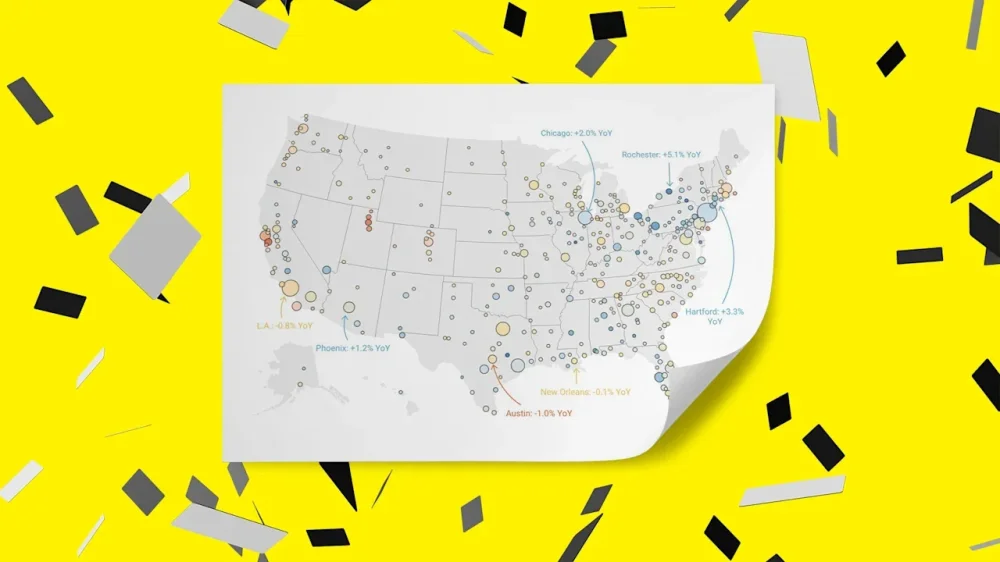
Want more housing market stories from Lance Lambert’s ResiClub in your inbox? Subscribe to the ResiClub newsletter. Among the 24 price forecasts tracked by ResiClub in our final 2026 home price forecast roundup, the average prediction is a +1.43% increase in U.S. home prices in 2026. Keep in mind that roundup mentioned above looks at forecasts for nationally aggregated home prices. On a regional and neighborhood basis, home price swings can vary greatly from the national figure. For example, on a year-over-year basis, U.S. home prices as measured by the Zillow Home Value Index are up +0.1%, while home prices in the Hartford-East Hartford-Middletown, Connecticut metro area are up +4.6% and home prices in the Austin-Round Rock-Georgetown, Texas metro area are down -6.0% during that same timeframe. To better understand how regional home prices may vary in 2026, ResiClub reached out to economists at Zillow—whose forecast of U.S. home prices rising by +2.1% in calendar 2026 is slightly above the average model—and economists at Moody’s Analytics—whose forecast of U.S. home prices rising by +0.8% in 2026 is slightly more bearish than the average model—to gather their metro-level home price forecasts. Let’s take a look at the metro-level forecasts. When we published our final roundup of national home price forecasts for 2026, Zillow was forecasting +1.2% for 2026; however, over the weekend they slightly upgraded that to +2.1%. Zillow economists write the following: “With supply no longer as tight as it was during the pandemic, price gains are likely to stay modest. Buyers should see a bit more time and leverage when they shop, while sellers can still build equity, just at a slower pace than in past boom year(s) . . . Looking ahead, Zillow projects sales will strengthen in 2026 as mortgage rates trend lower and affordability improves. Existing home sales are forecast to reach 4.3 million next year, a 5.2% year‑over‑year gain. After two slow years, the recovery is expected to be led by the Southeast and West, where demand is more rate‑sensitive and is starting to rebound as borrowing costs ease.” The forecast by Moody’s chief economist Mark Zandi has U.S. home prices, as measured by the Moody’s repeat sales index, rising just +0.8% in calendar year 2026, followed by +1.5% uptick in 2027. When I recently reached out to Moody’s Analytics chief economist Mark Zandi for his updated home price forecast, he said his long-term outlook for the U.S. housing market remains largely unchanged: He expects a prolonged period of stagnation as affordability gradually improves. Following the historic run-up in prices during the pandemic housing boom and the subsequent mortgage rate shock, Zandi believes resale activity/existing home sales will likely stay frozen for several more years. “Affordability has to be restored for housing to regain its mojo,” Zandi told ResiClub a few months ago. “Flat home prices [adjusted for inflation] is the healthiest path forward—it’s the only way for incomes to catch up.” Zandi expects nominal national home prices to move sideways over the next 12 to 18 months, with local variation: markets in the South and West, where building has been stronger, seeing some modest declines, while tight-inventory markets in the Northeast and Midwest remain more stable. “The worst of the pain in the housing market might be now and in the next six to nine months. After that, things will begin to feel a little better—but not good,” Zandi told ResiClub in October. “The housing market will heal . . . but it’s going to take time—and a lot of patience.” Over the next decade, Zandi projects U.S. home prices will rise roughly in line with inflation, meaning no “real” [adjusted for inflation] house price gains for around 10 years. “We expect homes for sale to steadily increase as more existing homeowners need to sell for demographic reasons—death, divorce, children, job change—and lower mortgage rates help ease their interest rate lock. The [potentially] lower rates will also support housing demand, but the increase in housing supply will be even more significant, weighing on house price gains,” Zandi tells ResiClub. What is ResiClub’s take? The housing market is still working through a cyclical cooling phase, with many of the nation’s fastest-growing Sun Belt boomtowns undergoing a deeper recalibration after experiencing greater overheating during the pandemic housing boom. This adjustment period won’t last forever, and the long-term growth fundamentals—such as rising population—in many of these Southern markets remain attractive. However, in 2026, ResiClub believes the market is still within that normalization window (but we’re getting closer to exiting it). Broadly speaking, housing markets where inventory (i.e., active listings) has climbed well above pre-pandemic 2019 levels have experienced softer/weaker home price growth (or event outright declines) over the past 42 months since the pandemic housing boom fizzled out. Conversely, housing markets where inventory remains far below 2019 pre-pandemic levels have, generally speaking, experienced more resilient home price growth over the past 42 months. Using active inventory/months of supply as a short-term guide, we expect the greatest pricing resilience in 2026 to be in Midwest and Northeast markets, while the greatest pricing softness is still likely in Gulf markets such as Austin and Punta Gorda, Florida. (I think both Zillow and Moody’s are a little too optimistic about Southwest Florida in particular, which I believe is still in correction mode—although it is starting to create some interesting buying opportunities.) Regardless of how regional inventory (see our latest monthly inventory update here) or regional home prices (see our latest monthly home price update here) perform in 2026, we’ll be closely tracking the trends to keep you informed of any shifts. View the full article
-
Ozempic-maker Novo Nordisk turned to the actors from Apple’s 2000s “Get a Mac” ads to differentiate its GLP-1 medication amid a rising sea of competitors. On January 20, the Danish pharmaceutical company announced its “There’s Only One Ozempic” campaign starring Justin Long and John Hodgman. The actors are reprising their roles from Apple’s Mac vs. PC ads playing the personifications of a name brand and the alternative—but now for weight-loss drugs. Long personified Mac in the original Apple campaign by dressing in a more youthful, casual way than Hodgman, who personified a stuffy, dorky PC by wearing glasses and a suit and tie with a closely cropped haircut. (Think Steve Jobs versus Bill Gates.) In the Apple ads, Mac was always portrayed by Long as more cool and capable. In the new Ozempic ad, Long personifies Ozempic, facing off in a mock game show against Hodgman, who plays all of Ozempic’s competitors wrapped up in one dull brown T-shirt. (His hardworking name is “Other GLP-1s for Type 2 Diabetes.”) Hodgman’s character gets the game show’s single question right after the host asks which GLP-1 is approved by the Food and Drug Administration to lower the risk of worsening chronic kidney disease. The answer is, of course, “Ozempic,” which ultimately makes his win bittersweet. The “Get a Mac” campaign was created by Apple’s ad agency TBWA\Media Arts Lab; 66 total spots aired from 2006 to 2009. In 2010, Adweek named it the best ad campaign of the 2000s for connecting technology to humanity. Now Novo Nordisk is hoping some of that magic can rub off. The new campaign aims to reassert Ozempic’s brand equity in the public sphere as it faces business headwinds. It follows both layoffs and lower sales growth at the company, even as its U.S. competitor Eli Lilly is ascendent. The ad also drops shortly after Novo Nordisk’s other GLP-1, Wegovy, hit the market in pill form. In such a competitive landscape, Novo Nordisk is working to make its brand name the standard. “There’s Only One Ozempic” plays up Ozempic’s unique selling proposition in a practical sense, as a solution to chronic kidney disease. But with a jingle based on the song “Magic” and a pair of actors remembered for selling computers, it’s also positioning its drug as the most desirable GLP-1. View the full article

-
Event hosted by Larry Fink descended into uproar after combative remarks from US commerce secretaryView the full article
-
Key Takeaways Crucial Platforms: Understand the unique characteristics of major social media channels like Facebook, Instagram, LinkedIn, Twitter, and TikTok to effectively engage your target audience. Tailored Strategies: Develop customized campaigns for each platform, focusing on visual storytelling, community engagement, and relevant hashtags to maximize your brand’s visibility. Content Consistency: Maintain a regular posting schedule using a content calendar, prioritizing quality content and user-generated posts to boost engagement and foster customer loyalty. Measuring Success: Regularly analyze performance metrics such as engagement rates and reach to assess the effectiveness of your social media strategies and make informed adjustments. Embrace Trends: Stay updated on emerging trends in social media marketing, such as AI integration, influencer partnerships, and video content, to enhance your business’s online presence. Community Focus: Engage with your audience consistently through comments, messages, and tailored content to build strong relationships and encourage loyalty towards your brand. In today’s digital landscape, social media channels are more than just platforms for connecting with friends. They’ve become essential tools for businesses looking to engage audiences and drive sales. With billions of users worldwide, leveraging these channels can significantly boost your marketing strategy and brand visibility. Understanding the nuances of each platform is crucial. Whether you’re targeting potential customers on Instagram, engaging with professionals on LinkedIn, or building community on Facebook, each channel offers unique opportunities. By mastering social media marketing, you can create tailored campaigns that resonate with your audience and turn followers into loyal customers. Get ready to explore the dynamic world of social media marketing and unlock its potential for your business. Overview of Social Media Channels Marketing Social media marketing serves as a cornerstone for your small business, offering diverse platforms like Facebook, Instagram, Twitter, LinkedIn, and TikTok to reach your audience effectively. Each platform features unique characteristics that influence how you engage with customers and promote your brand. You can leverage Facebook to build community through groups, while Instagram excels in visually engaging your audience with stories and video content. Twitter allows for real-time interaction, fostering customer feedback and rapid responses. LinkedIn is essential for B2B connections, enhancing brand awareness and professional networking. TikTok captures younger audiences with creative short-form videos, perfect for storytelling and connecting authentically. To maximize your social media engagement, develop a robust social media strategy that includes content creation tailored to each platform. Prioritize organic reach through engaging posts and user-generated content. Schedule regular social media posts using a content calendar to maintain brand consistency. Utilize hashtags effectively to increase visibility and explore social media trends to stay relevant. Consider incorporating social media ads to boost visibility among targeted audiences. Paid social provides immediate results, while organic growth builds a loyal customer base over time. Monitor your social media analytics to track engagement rates and understand the effectiveness of your campaigns. Influencer partnerships can amplify your reach, tapping into established communities and enhancing brand trust. Engage your audience consistently to ensure strong customer interaction and build lasting relationships. By focusing on social media ROI, you can assess the impact of your strategies and make informed adjustments for continued growth in your online presence. Importance of Social Media Channels Marketing Social media channels serve as essential tools for small businesses, providing an effective platform for marketing efforts. Utilizing these channels enhances your brand’s visibility and fosters meaningful connections with customers. Brand Awareness Brand awareness hinges on your ability to create a recognizable identity. Social media platforms like Facebook and Instagram allow you to showcase your brand’s voice and values. Engaging in consistent content creation helps you establish this identity while building trust with your audience. For example, using Instagram stories or Facebook groups can enhance visibility and strengthen community ties. With over 4.95 billion active users globally, your small business can reach a wide audience, leading to heightened brand awareness. Customer Engagement Customer engagement involves actively interacting with your audience. By incorporating social media engagement strategies, such as responding to comments and sharing user-generated content, you create a sense of community. Utilizing features on platforms like Twitter and TikTok helps facilitate real-time customer interaction. Moreover, social media posts tailored for engagement, such as polls or questions, can drive conversation. Prioritizing organic reach through quality content and consistent posting significantly enhances your engagement rate, ultimately leading to increased customer loyalty and a stronger online presence. Popular Social Media Platforms for Marketing Social media platforms serve as powerful tools for small businesses aiming to connect with audiences and enhance brand visibility. Utilizing these platforms effectively can lead to significant social media growth. Facebook Marketing Strategies Set clear goals for your Facebook marketing, including enhancing brand awareness and increasing customer interaction. Create engaging social media posts that resonate with your audience. Leverage Facebook groups to build community and foster loyalty among your customers. Engage actively by responding to comments and facilitating discussions. Use Facebook ads to target specific demographics, utilizing audience targeting options to reach potential customers effectively. Monitor your social media analytics to refine campaigns for higher engagement rates. Instagram Marketing Strategies Develop a visually appealing Instagram presence through high-quality images and video content. Use Instagram Stories to showcase behind-the-scenes moments and maintain brand voice. Incorporate storytelling in your posts. Share customer feedback or user-generated content to build authenticity and trust. Utilize hashtags to improve your reach and discoverability. Consider Instagram ads to boost posts and enhance your visibility among target audiences. Twitter Marketing Strategies Use Twitter for real-time interaction with your audience. Respond to customer queries promptly to enhance community management. Share relevant content and engage with trending topics to keep your brand voice visible. Utilize Twitter analytics to gauge engagement and optimize your strategy. Collaborate with influencers to expand your reach and credibility. Influencer partnerships can enhance brand awareness and elevate your social media campaigns. Best Practices for Effective Marketing Effective marketing on social media platforms enhances brand awareness and drives customer engagement. These best practices ensure you maximize your efforts for optimal results. Content Creation Tips Creating compelling content is crucial for successful social media marketing. Focus on the following strategies: Utilize Storytelling: Share stories that resonate with your audience. Use visual storytelling on platforms like Instagram and TikTok to engage users effectively. Incorporate User-Generated Content: Encourage your followers to share their experiences with your brand. This builds trust and fosters community engagement. Leverage Hashtags: Use relevant hashtags to broaden your reach on Instagram and Twitter. Ensure they align with your brand voice and social media strategy. Post Consistently: Establish a content calendar to schedule regular posts. Consistent posting maintains audience interest and enhances social media growth. Experiment with Video Content: Use engaging video content to capture attention. Instagram Stories and TikTok videos offer dynamic ways to connect with your followers. Analyzing Performance Metrics Analyzing performance metrics informs your social media strategy. Monitor key metrics to gauge success: Engagement Rate: Track likes, comments, and shares to measure audience interaction. High engagement rates indicate effective content. Reach and Impressions: Measure how many users see your posts. Understanding reach helps in audience targeting and optimizing future content. Social Media Ads Performance: Evaluate the effectiveness of paid ads. Analyzing click-through rates and conversion metrics aids in optimizing your social media campaigns. Customer Feedback and Reviews: Pay attention to comments and reviews. Responding to customer feedback enhances community management and builds brand loyalty. Social Media Analytics Tools: Utilize tools to track performance across platforms like Facebook, Instagram, and LinkedIn. Regular social media monitoring allows for data-driven decisions that improve your online presence. Challenges in Social Media Channels Marketing Marketers face several challenges when utilizing social media channels for marketing. Understanding these challenges can enhance your social media strategy. Keeping Up with Changing Social Trends Social media trends evolve rapidly, creating difficulties for small businesses to identify and respond quickly. Adapting to these trends becomes crucial for maintaining relevance. Consider the following solutions: Make trendspotting a collaborative effort: Involve your team in identifying emerging trends. Use social listening tools: Implement tools that monitor online conversations surrounding your brand and industry. Engage with viral content: Share trending topics in your posts to connect with your audience. Finding and Retaining Social Talent Attracting and retaining skilled social media professionals presents a significant challenge. Enhance your team by: Training existing team members: Invest in developing the skills of your current employees. Ensuring a positive work environment: Foster a culture that values creativity, collaboration, and employee wellness. Proving the ROI of Social Media Demonstrating the return on investment (ROI) from social media efforts can often feel daunting. Focus on relevant metrics, including: Engagement rates: Track likes, comments, and shares on your posts to measure audience interaction. Conversions: Monitor the number of leads generated through social media channels. Customer acquisition costs: Calculate the expenses involved in gaining new customers via your social media campaigns. Small businesses must address these challenges effectively to optimize their online presence and maximize social media engagement. By understanding and tackling these issues, you increase the likelihood of achieving long-term success on platforms like Facebook, Instagram, Twitter, LinkedIn, and TikTok. Future Trends in Social Media Marketing Social media marketing for small businesses continues to evolve rapidly. As you look ahead, several key trends are shaping how brands engage with their audiences. Content Experimentation In 2025, social media teams will prioritize creative experimentation. This trend pushes brands to explore distinct voices and personas across platforms. Expect that what works on Facebook won’t necessarily resonate on Instagram. This “Creative Disruption Trend” empowers you to test diverse approaches, potentially driving better engagement and positive business outcomes. Social Listening Social listening becomes increasingly vital for small businesses. You’ve got the opportunity to utilize this strategy to enhance performance marketing. By monitoring conversations, you can identify emerging trends and refine your social media campaigns. The combination of the “Social Performance Trend” and “Micro-Virality Trend” enables more effective trendjacking, which can boost your brand’s visibility and connections with potential customers. AI Integration Generative AI is set to play a significant role in your social media strategy. It can streamline content creation, allowing for more personalized interactions and efficient management of social media posts. Leveraging AI tools can enhance your content marketing efforts, improving your organic reach and engagement rate. Influencer Partnerships Influencer marketing remains a strong trend. Partnering with influencers in your niche can significantly expand your reach. Influencers can enhance brand awareness and credibility, attracting social media followers who resonate with their content. Make choosing the right influencer a key part of your social media strategy for optimal results. Video Content Video content will dominate in 2025. Utilizing formats like Instagram Stories or TikTok videos can significantly boost engagement rates. Emphasizing storytelling through video is particularly effective for small businesses aiming to connect emotionally with their audience. Content that captures attention in a short timeframe encourages sharing and drives community interaction. Community Management Effective community management is essential. Engaging with customers through comments, direct messages, and user-generated content fosters loyalty. Create a content calendar that outlines your engagement strategies and posting frequency to maintain consistent communication with your audience. Social Media Analytics Monitoring social media analytics is crucial for optimizing your efforts. Tracking performance metrics, like engagement rates and audience feedback, allows you to refine campaigns. Use insights to tailor content and improve social media ads, ensuring they resonate with your target audience. By staying informed on these trends, you position your small business for greater success in social media marketing. Adapting your strategies to include experimentation, listening, AI tools, influencer partnerships, video content, effective community management, and analytics will enhance your online presence and overall brand growth. Conclusion Embracing social media channels is vital for your business’s growth and engagement. By understanding each platform’s unique features and audience, you can tailor your marketing strategies effectively. Focus on creating quality content that resonates with your followers and fosters community interaction. Don’t underestimate the power of analytics in refining your campaigns. Monitoring performance metrics will help you make informed decisions that drive results. As trends evolve, staying adaptable and open to experimentation will keep your brand relevant and engaging. With a solid social media strategy in place, you’ll not only increase brand visibility but also build lasting relationships with your customers. Prioritize your social media efforts and watch your business thrive in the digital landscape. Frequently Asked Questions What is the importance of social media for businesses? Social media is crucial for businesses as it helps engage audiences, drive sales, and enhance brand visibility. With billions of users across various platforms, companies can reach their target markets effectively. Which social media platforms are best for marketing? The best platforms for marketing include Facebook, Instagram, LinkedIn, Twitter, and TikTok. Each platform has unique features ideal for different engagement strategies, such as visual storytelling on Instagram or B2B networking on LinkedIn. How can small businesses benefit from social media marketing? Small businesses can boost brand visibility and build strong customer relationships through social media. Consistent content creation helps establish a recognizable identity and foster community loyalty, ultimately driving sales. What strategies should I use for effective social media marketing? Develop a robust strategy focusing on tailored content creation, organic reach, and brand consistency. Utilize platform-specific tactics, such as targeted ads, community building, and engaging with user-generated content. How do I measure the success of my social media campaigns? To measure success, track key performance metrics like engagement rates, reach, and conversions. Use analytics tools to assess ad performance and customer feedback to refine your strategies and improve ROI. What challenges do marketers face in social media marketing? Marketers often struggle with rapidly changing trends, finding skilled professionals, and demonstrating ROI. Solutions include utilizing social listening tools, training staff, and focusing on relevant performance metrics. What future trends should businesses watch in social media marketing? Businesses should focus on content experimentation, social listening, and AI integration for future success. Video content is expected to dominate, while effective community management and analytics monitoring remain essential. How can I enhance brand trust through social media? Enhance brand trust by engaging authentically with your audience, responding to comments, and leveraging influencer partnerships. Sharing user-generated content also fosters community connection and builds credibility. Image Via Envato This article, "Maximize Your Reach with Effective Social Media Channels Marketing Strategies" was first published on Small Business Trends View the full article
-
Key Takeaways Crucial Platforms: Understand the unique characteristics of major social media channels like Facebook, Instagram, LinkedIn, Twitter, and TikTok to effectively engage your target audience. Tailored Strategies: Develop customized campaigns for each platform, focusing on visual storytelling, community engagement, and relevant hashtags to maximize your brand’s visibility. Content Consistency: Maintain a regular posting schedule using a content calendar, prioritizing quality content and user-generated posts to boost engagement and foster customer loyalty. Measuring Success: Regularly analyze performance metrics such as engagement rates and reach to assess the effectiveness of your social media strategies and make informed adjustments. Embrace Trends: Stay updated on emerging trends in social media marketing, such as AI integration, influencer partnerships, and video content, to enhance your business’s online presence. Community Focus: Engage with your audience consistently through comments, messages, and tailored content to build strong relationships and encourage loyalty towards your brand. In today’s digital landscape, social media channels are more than just platforms for connecting with friends. They’ve become essential tools for businesses looking to engage audiences and drive sales. With billions of users worldwide, leveraging these channels can significantly boost your marketing strategy and brand visibility. Understanding the nuances of each platform is crucial. Whether you’re targeting potential customers on Instagram, engaging with professionals on LinkedIn, or building community on Facebook, each channel offers unique opportunities. By mastering social media marketing, you can create tailored campaigns that resonate with your audience and turn followers into loyal customers. Get ready to explore the dynamic world of social media marketing and unlock its potential for your business. Overview of Social Media Channels Marketing Social media marketing serves as a cornerstone for your small business, offering diverse platforms like Facebook, Instagram, Twitter, LinkedIn, and TikTok to reach your audience effectively. Each platform features unique characteristics that influence how you engage with customers and promote your brand. You can leverage Facebook to build community through groups, while Instagram excels in visually engaging your audience with stories and video content. Twitter allows for real-time interaction, fostering customer feedback and rapid responses. LinkedIn is essential for B2B connections, enhancing brand awareness and professional networking. TikTok captures younger audiences with creative short-form videos, perfect for storytelling and connecting authentically. To maximize your social media engagement, develop a robust social media strategy that includes content creation tailored to each platform. Prioritize organic reach through engaging posts and user-generated content. Schedule regular social media posts using a content calendar to maintain brand consistency. Utilize hashtags effectively to increase visibility and explore social media trends to stay relevant. Consider incorporating social media ads to boost visibility among targeted audiences. Paid social provides immediate results, while organic growth builds a loyal customer base over time. Monitor your social media analytics to track engagement rates and understand the effectiveness of your campaigns. Influencer partnerships can amplify your reach, tapping into established communities and enhancing brand trust. Engage your audience consistently to ensure strong customer interaction and build lasting relationships. By focusing on social media ROI, you can assess the impact of your strategies and make informed adjustments for continued growth in your online presence. Importance of Social Media Channels Marketing Social media channels serve as essential tools for small businesses, providing an effective platform for marketing efforts. Utilizing these channels enhances your brand’s visibility and fosters meaningful connections with customers. Brand Awareness Brand awareness hinges on your ability to create a recognizable identity. Social media platforms like Facebook and Instagram allow you to showcase your brand’s voice and values. Engaging in consistent content creation helps you establish this identity while building trust with your audience. For example, using Instagram stories or Facebook groups can enhance visibility and strengthen community ties. With over 4.95 billion active users globally, your small business can reach a wide audience, leading to heightened brand awareness. Customer Engagement Customer engagement involves actively interacting with your audience. By incorporating social media engagement strategies, such as responding to comments and sharing user-generated content, you create a sense of community. Utilizing features on platforms like Twitter and TikTok helps facilitate real-time customer interaction. Moreover, social media posts tailored for engagement, such as polls or questions, can drive conversation. Prioritizing organic reach through quality content and consistent posting significantly enhances your engagement rate, ultimately leading to increased customer loyalty and a stronger online presence. Popular Social Media Platforms for Marketing Social media platforms serve as powerful tools for small businesses aiming to connect with audiences and enhance brand visibility. Utilizing these platforms effectively can lead to significant social media growth. Facebook Marketing Strategies Set clear goals for your Facebook marketing, including enhancing brand awareness and increasing customer interaction. Create engaging social media posts that resonate with your audience. Leverage Facebook groups to build community and foster loyalty among your customers. Engage actively by responding to comments and facilitating discussions. Use Facebook ads to target specific demographics, utilizing audience targeting options to reach potential customers effectively. Monitor your social media analytics to refine campaigns for higher engagement rates. Instagram Marketing Strategies Develop a visually appealing Instagram presence through high-quality images and video content. Use Instagram Stories to showcase behind-the-scenes moments and maintain brand voice. Incorporate storytelling in your posts. Share customer feedback or user-generated content to build authenticity and trust. Utilize hashtags to improve your reach and discoverability. Consider Instagram ads to boost posts and enhance your visibility among target audiences. Twitter Marketing Strategies Use Twitter for real-time interaction with your audience. Respond to customer queries promptly to enhance community management. Share relevant content and engage with trending topics to keep your brand voice visible. Utilize Twitter analytics to gauge engagement and optimize your strategy. Collaborate with influencers to expand your reach and credibility. Influencer partnerships can enhance brand awareness and elevate your social media campaigns. Best Practices for Effective Marketing Effective marketing on social media platforms enhances brand awareness and drives customer engagement. These best practices ensure you maximize your efforts for optimal results. Content Creation Tips Creating compelling content is crucial for successful social media marketing. Focus on the following strategies: Utilize Storytelling: Share stories that resonate with your audience. Use visual storytelling on platforms like Instagram and TikTok to engage users effectively. Incorporate User-Generated Content: Encourage your followers to share their experiences with your brand. This builds trust and fosters community engagement. Leverage Hashtags: Use relevant hashtags to broaden your reach on Instagram and Twitter. Ensure they align with your brand voice and social media strategy. Post Consistently: Establish a content calendar to schedule regular posts. Consistent posting maintains audience interest and enhances social media growth. Experiment with Video Content: Use engaging video content to capture attention. Instagram Stories and TikTok videos offer dynamic ways to connect with your followers. Analyzing Performance Metrics Analyzing performance metrics informs your social media strategy. Monitor key metrics to gauge success: Engagement Rate: Track likes, comments, and shares to measure audience interaction. High engagement rates indicate effective content. Reach and Impressions: Measure how many users see your posts. Understanding reach helps in audience targeting and optimizing future content. Social Media Ads Performance: Evaluate the effectiveness of paid ads. Analyzing click-through rates and conversion metrics aids in optimizing your social media campaigns. Customer Feedback and Reviews: Pay attention to comments and reviews. Responding to customer feedback enhances community management and builds brand loyalty. Social Media Analytics Tools: Utilize tools to track performance across platforms like Facebook, Instagram, and LinkedIn. Regular social media monitoring allows for data-driven decisions that improve your online presence. Challenges in Social Media Channels Marketing Marketers face several challenges when utilizing social media channels for marketing. Understanding these challenges can enhance your social media strategy. Keeping Up with Changing Social Trends Social media trends evolve rapidly, creating difficulties for small businesses to identify and respond quickly. Adapting to these trends becomes crucial for maintaining relevance. Consider the following solutions: Make trendspotting a collaborative effort: Involve your team in identifying emerging trends. Use social listening tools: Implement tools that monitor online conversations surrounding your brand and industry. Engage with viral content: Share trending topics in your posts to connect with your audience. Finding and Retaining Social Talent Attracting and retaining skilled social media professionals presents a significant challenge. Enhance your team by: Training existing team members: Invest in developing the skills of your current employees. Ensuring a positive work environment: Foster a culture that values creativity, collaboration, and employee wellness. Proving the ROI of Social Media Demonstrating the return on investment (ROI) from social media efforts can often feel daunting. Focus on relevant metrics, including: Engagement rates: Track likes, comments, and shares on your posts to measure audience interaction. Conversions: Monitor the number of leads generated through social media channels. Customer acquisition costs: Calculate the expenses involved in gaining new customers via your social media campaigns. Small businesses must address these challenges effectively to optimize their online presence and maximize social media engagement. By understanding and tackling these issues, you increase the likelihood of achieving long-term success on platforms like Facebook, Instagram, Twitter, LinkedIn, and TikTok. Future Trends in Social Media Marketing Social media marketing for small businesses continues to evolve rapidly. As you look ahead, several key trends are shaping how brands engage with their audiences. Content Experimentation In 2025, social media teams will prioritize creative experimentation. This trend pushes brands to explore distinct voices and personas across platforms. Expect that what works on Facebook won’t necessarily resonate on Instagram. This “Creative Disruption Trend” empowers you to test diverse approaches, potentially driving better engagement and positive business outcomes. Social Listening Social listening becomes increasingly vital for small businesses. You’ve got the opportunity to utilize this strategy to enhance performance marketing. By monitoring conversations, you can identify emerging trends and refine your social media campaigns. The combination of the “Social Performance Trend” and “Micro-Virality Trend” enables more effective trendjacking, which can boost your brand’s visibility and connections with potential customers. AI Integration Generative AI is set to play a significant role in your social media strategy. It can streamline content creation, allowing for more personalized interactions and efficient management of social media posts. Leveraging AI tools can enhance your content marketing efforts, improving your organic reach and engagement rate. Influencer Partnerships Influencer marketing remains a strong trend. Partnering with influencers in your niche can significantly expand your reach. Influencers can enhance brand awareness and credibility, attracting social media followers who resonate with their content. Make choosing the right influencer a key part of your social media strategy for optimal results. Video Content Video content will dominate in 2025. Utilizing formats like Instagram Stories or TikTok videos can significantly boost engagement rates. Emphasizing storytelling through video is particularly effective for small businesses aiming to connect emotionally with their audience. Content that captures attention in a short timeframe encourages sharing and drives community interaction. Community Management Effective community management is essential. Engaging with customers through comments, direct messages, and user-generated content fosters loyalty. Create a content calendar that outlines your engagement strategies and posting frequency to maintain consistent communication with your audience. Social Media Analytics Monitoring social media analytics is crucial for optimizing your efforts. Tracking performance metrics, like engagement rates and audience feedback, allows you to refine campaigns. Use insights to tailor content and improve social media ads, ensuring they resonate with your target audience. By staying informed on these trends, you position your small business for greater success in social media marketing. Adapting your strategies to include experimentation, listening, AI tools, influencer partnerships, video content, effective community management, and analytics will enhance your online presence and overall brand growth. Conclusion Embracing social media channels is vital for your business’s growth and engagement. By understanding each platform’s unique features and audience, you can tailor your marketing strategies effectively. Focus on creating quality content that resonates with your followers and fosters community interaction. Don’t underestimate the power of analytics in refining your campaigns. Monitoring performance metrics will help you make informed decisions that drive results. As trends evolve, staying adaptable and open to experimentation will keep your brand relevant and engaging. With a solid social media strategy in place, you’ll not only increase brand visibility but also build lasting relationships with your customers. Prioritize your social media efforts and watch your business thrive in the digital landscape. Frequently Asked Questions What is the importance of social media for businesses? Social media is crucial for businesses as it helps engage audiences, drive sales, and enhance brand visibility. With billions of users across various platforms, companies can reach their target markets effectively. Which social media platforms are best for marketing? The best platforms for marketing include Facebook, Instagram, LinkedIn, Twitter, and TikTok. Each platform has unique features ideal for different engagement strategies, such as visual storytelling on Instagram or B2B networking on LinkedIn. How can small businesses benefit from social media marketing? Small businesses can boost brand visibility and build strong customer relationships through social media. Consistent content creation helps establish a recognizable identity and foster community loyalty, ultimately driving sales. What strategies should I use for effective social media marketing? Develop a robust strategy focusing on tailored content creation, organic reach, and brand consistency. Utilize platform-specific tactics, such as targeted ads, community building, and engaging with user-generated content. How do I measure the success of my social media campaigns? To measure success, track key performance metrics like engagement rates, reach, and conversions. Use analytics tools to assess ad performance and customer feedback to refine your strategies and improve ROI. What challenges do marketers face in social media marketing? Marketers often struggle with rapidly changing trends, finding skilled professionals, and demonstrating ROI. Solutions include utilizing social listening tools, training staff, and focusing on relevant performance metrics. What future trends should businesses watch in social media marketing? Businesses should focus on content experimentation, social listening, and AI integration for future success. Video content is expected to dominate, while effective community management and analytics monitoring remain essential. How can I enhance brand trust through social media? Enhance brand trust by engaging authentically with your audience, responding to comments, and leveraging influencer partnerships. Sharing user-generated content also fosters community connection and builds credibility. Image Via Envato This article, "Maximize Your Reach with Effective Social Media Channels Marketing Strategies" was first published on Small Business Trends View the full article
-
In the world of business, we tend to believe that success is a direct result of talent, resources, and a “great idea.” We expect that if a company has a track record of dominance, like Google, Amazon, or Apple, they are a sure bet for the next big thing. Yet, the history of innovation is littered with the wreckage of unexpected flops launched by industry giants. From the futuristic promise of the Segway to the early dominance of MySpace, these failures prove that even a massive war chest and a visionary concept cannot guarantee market survival. Here are some of the traps that companies fall into. The ‘Solution in Search of a Problem’ Trap One of the most common reasons for failure is based on “technology push” versus “market pull.” This happens when a company develops a sophisticated piece of technology and then hunts for a problem to solve, rather than starting with a genuine consumer need. Google Glass is a fine example. Technically, it was a marvel, an engineering feat that brought augmented reality to a wearable form. However, Google failed to articulate why the average person needed it. It lacked a defined purpose. The device made people uncomfortable regarding privacy (the “Glasshole” effect), leading to it being banned in bars and theaters before it even hit mass-market shelves. Similarly, the Segway was heralded by Steve Jobs and Jeff Bezos as a revolution in urban transport that would “reshape cities.” But for the consumer, it was an expensive, bulky solution to a problem that didn’t exist. It was too fast for sidewalks and too slow for roads. It was a great idea in theory, but a failure in the real world. The Arrogance of Success Trap When a company is dominant in one field, it can become blind to its limitations. They try to force the approach of their successful core business into a completely different field. Amazon’s Fire Phone failed because Amazon treated hardware like its retail platform. They packed the phone with “Dynamic Perspective” (a 3D effect) and “Firefly”—a button to scan products to buy on Amazon. These were clever technical features, but they served Amazon’s needs more than the user’s. Users wanted a robust ecosystem of apps and a reliable interface; they didn’t want a shopping cart in their pocket. Amazon’s immense success in e-commerce blinded them to the specific needs of the smartphone market. The ‘First Mover’ Trap It is a common precept that being first to market is an advantage. However, Friendster and MySpace prove that being first is a double-edged sword. Friendster had the great idea of social networking long before Facebook. It failed because it couldn’t handle its own success. The servers crashed constantly, and the site became unusable. This technical failure allowed MySpace to take the lead. But MySpace eventually fell into the same trap: It became cluttered with ads and customizable profiles, failing to evolve its user experience as the audience matured. These companies didn’t fail because their ideas were bad. They failed because they couldn’t scale as demand grew. The Timing Trap Bill Gross has studied what makes some start-ups succeed and so many fail. He analyzed the histories of 200 startup companies and compared five factors: the idea, the team, the business model, the funding, and the timing. You can see him relate his findings in his Ted talk, “The single biggest reason why start-ups succeed.” His findings were striking. The most important factor was timing, then the team, and then the idea. Many startup companies with great teams and innovative business ideas fail because the timing of their launch is unfortunate. And this can be down to luck. The timing trap applies to big companies too. If you launch a product too early, you have to educate the market which is expensive. If you launch too late, you’re fighting for scraps. An idea might be great, but the world isn’t ready yet. For example, the online grocery business Webvan failed during the dot-com bubble (Webvan) because high-speed internet and mobile logistics weren’t mature. Twenty years later, the same idea is a multi-billion-dollar industry. Similarly, Google Glass might have succeeded today in an era of TikTok creators and remote assistance, but in 2013, the culture was far more sensitive to “always-on” cameras. Is it Just Luck? In his book The Black Swan, Nassim Taleb argues that we often underestimate the role of randomness in success. A sudden shift in the economy, a competitor’s unexpected move, or even a global pandemic can make a “great idea” look like a disaster, or a “mediocre idea” look like a stroke of genius. Luck plays a role, but “luck” depends on preparation and timing. Successful companies that fail usually have the preparation but miss the timing. They are so focused on their internal roadmap that they lose sight of the external environment. Lessons for Today’s Leaders These failed ventures can teach us some powerful lessons: Solve a Real Problem: You should be able to explain the problem your product solves in one concise sentence. Leave out buzzwords like revolutionary, ground-breaking, or next-generation. Social Context Matters: Technology does not exist in a vacuum. How will people feel when they use it? How will others feel around them? Minimun Viable Product: Build a small cheap prototype or model and show it to discerning customers. Ask, “Does it solve your problem?” “Would you pay money for it?” “What needs to change?” Kill The Losers: Successful companies often suffer from “sunk cost fallacy.” They keep pouring money into a failing venture because they are too proud to admit the “great idea” isn’t working. Agility Over Ego: The ability to pivot is critical. When Slack found that their video games was a flop they switched to producing a communication tool. A great idea is just a hypothesis. The failures of Google Glass, the Fire Phone, and the Segway teach us that the market is a harsh laboratory. Success requires more than just a breakthrough in engineering. It requires an alignment of cultural timing, user-centric design, and the humility to adapt when reality contradicts your vision. Even the giants can fall. It is vital to look at the world through the eyes of the user and stop admiring your own designs—no matter how brilliant they appear. View the full article

-
From Venezuela to Iran and now Greenland, the volatile US president is tearing up global normsView the full article
-
Six years ago, Atari announced ambitious plans to build a gamer-themed hotel in Las Vegas, featuring an e-sports studio and a movie theater. The legacy video game company’s management at the time saw hotels as a way to revitalize the brand’s name, which was largely a nostalgia play. “I love the idea. It’s something I’ve always wanted to do,” said then-CEO Fred Chesnais. “I always wanted to make an amusement park, and hotels could be the first step.” But now the company tells the Las Vegas Sun that the project has been shelved after “the deal didn’t come to fruition.” It’s the latest in a series of disappointments for Atari’s lodging ambitions. Only one of what the company had hoped would be at least eight hotels across the U.S. is still in any stage of development. And construction has yet to begin on that project. Chesnais bought Atari in 2013 for just 400 euros following the company’s Chapter 11 bankruptcy filing (inheriting with it a debt load of 34 million euros). But he was replaced as CEO in 2021 and formalized his exit from the company in 2022. Despite his departure, the hotel plans pushed forward. Atari continued to look for potential land partners through 2024—planning to make announcements in the first half of that year—but was unable to secure a deal. Other planned hotels in Austin, Chicago, Denver, San Francisco, San Jose, and Seattle also are no longer being discussed publicly and have shown no progress since the company first revealed those locations. That leaves Phoenix, where Atari Hotels (now being run by Intersection Development) is still hoping to salvage at least part of the project. Originally expected to open in 2022, that location is now slated for a late-2028 grand opening, although even that date is hardly set in stone. The developer is appealing to Atari fans to help pay for the project. A fundraising page for the Phoenix hotel says the facility has raised $14 million and secured land (for a project with a total development budget of $124 million). Participants can make a minimum investment of $500, for which they will be part of the hotel’s loyalty program. Those who cough up $50,000 will receive a physical brick in the gaming-area walkway of the hotel, the builders say. (A “digital brick” runs $25,000.) Intersection aims to raise between $35 million and $40 million from investors as part of its next phase. Atari never positioned the hotels, even the Las Vegas one, as casinos, though the investment deck does mention a “state-of-the-art sports betting arena with immersive screens and premium gaming experiences.” Instead, it hoped to blend video games, music, and entertainment in an immersive, tech-heavy facility, with a rooftop pool and “sci-fi inspired rooms” being promised for the Phoenix location. In recent years, hotels were just one of the ways Atari considered in its effort to revitalize the brand. In 2018, the company announced plans to launch its own cryptocurrencies: the Atari Token and the Pong Token. The company acquired a minority stake in Infinity Networks, which was developing a decentralized blockchain for digital entertainment platforms, and recruited Anthony Di Iorio, who cofounded Ethereum and Jaxx, to assist with the launch. The Atari Token peaked in 2021 at around 78 cents. Today, it trades for $0.0001935. Founded by Nolan Bushnell and Ted Dabney in 1972, Atari has been bought and sold numerous times through the years, often balancing on the precipice of becoming nothing more than nostalgia. In its fiscal 2025 earnings report released in July, the company reported a 14 million euro loss. Half-year results for fiscal 2026, released in December of last year, showed a net loss of 6.4 million euros. View the full article

-
The Tesla Cybertruck is the new Ford Edsel, taking the crown from one of the biggest flops in American car history. Last year, the Cybertruck spiraled into market irrelevance while the rest of the EV market found its footing, as the pickup experienced the single biggest sales collapse of any electric vehicle in the United States. Elon Musk’s flailing company managed to move only an estimated 20,237 Cybertrucks in 2025. And that’s counting the units that Musk reportedly bought for himself through SpaceX and xAI to avoid further ridicule. “He had his private companies buy hundreds if not thousands of Cybertrucks,” wrote Fred Lambert at EV blog Electrek. That’s an eye-popping 48.1% crash from the 39,000 units sold in 2024. Elon, seriously, stop this embarrassment and kill this polygonal joke already. I laughed at first but now it’s painful to watch. To understand the magnitude of this failure, the all-electric Ford F-150 Lightning—an EV pickup so unsuccessful that Ford officially ended its production in December 2025 to pivot to a new hybrid model—still managed to humiliate Tesla from the grave. Ford sold 27,307 Lightnings in 2025, making it the best-selling EV pickup truck in America. Both companies tried to buy their way out of trouble with heavy discounts and 0% financing offers. But while aggressive incentives helped Ford clear inventory and post growth, the same tactics failed to save the “apocalypse-proof” pickup from becoming a sales armageddon. Think about that for a minute: A discontinued EV truck outsold the Tesla truck by nearly 7,000 units and got canceled. Come the truck on. I already called the Cybertruck a flop, but the final sales tally is even worse than I imagined. It’s officially the “biggest flop in decades,” according to Forbes. This is especially humiliating when Musk overpromised sales of 250,000 Cybertrucks annually by 2025. Tesla reached barely 8% of that target. Plenty of reasons for failure The reason for the Cybertruck’s collapse isn’t a mystery. It’s not the EV slump. It’s the inevitable result of shipping a beta product to customers as a finished vehicle, a design failure since its inception. The truck isn’t just ugly, it’s fundamentally broken. In 2025 alone, Tesla issued recalls covering a combined 115,912 Cybertrucks—more than double the number of recalls in 2024. That averages out to 318 recalls per day. We are not talking about inconsequential software updates. These were dangerous, amateur-hour defects. The largest recall campaign involved 46,096 trucks that risked shedding their stainless-steel exterior trim while driving, turning the vehicle into a shrapnel grenade on the highway. Another 6,000 trucks were recalled because their optional light bars were attached with the wrong primer and could simply fall off. This follows a chronicle of disasters documented since Musk shattered the unshatterable pickup’s glass. We’ve seen the “stuck pedal” trap that locked accelerators at full throttle, critical system failures where owners drove a mere mile off the lot before the truck died with a “red screen of death,” losing steering and braking redundancy, and misaligned doors and uneven surfaces that Musk himself admitted in leaked emails stuck out “like a sore thumb.” That’s just a selection of this disaster on wheels. As Adrian Clarke—a professional car designer who now writes design critiques for the automobile publication The Autopian—told me when it was about to come out the factory line: “The Cybertruck is a low-polygon joke that only exists in the fever dreams of Tesla fans that stands high on the smell of Elon Musk’s flatulences.” Back then, Clarke also called out the terrible design choices that were going to lead to the bevy of manufacturing and quality problems, all part of the design and brand crisis that Tesla has been experiencing since 2023. But there’s a third component that completes the Cybertruck’s failure trifecta: Musk’s former bromance with Donald The President and his DOGE antics. Turns out not all press is good press, as these moves killed the Tesla brand perhaps more than the model stagnation, deadly car accidents, and mechanical failures. Musk’s political radicalization led many of Tesla’s existing customers to regret their purchases and potential clients to avoid them, both in the U.S. and abroad. As dealerships got torched and cars vandalized, the Cybertruck arguably became “America’s most hated car.” The 2025 sales figures just confirm what we have known for more than two years now. The Cybertruck is not the disruptor Musk sold to the world and Tesla shareholders. It is a finger-chopping brick that depreciates faster than used bridal dresses. An ugly failure that is doing nothing but draining resources and further damaging the brand’s reputation (if it still has one). It’s time to bury what’s already dead, Elon. The experiment is over. Sink this polygonal mess deep underground, along with all your failed promises, and call it a day. View the full article

-
Reform UK leader blames ‘complicated and complex’ outside interests for breachesView the full article
-
Join our webinar to discover effective strategies for automating Google Ads and mastering Performance Max Smart Bidding. The post What Profitable Google Ads Look Like in 2026 [Webinar] appeared first on Search Engine Journal. View the full article
-
A vulnerability in an ACF addon plugin installed in 100k websites enables unauthenticated attackers to gain administrator privileges. The post WordPress Advanced Custom Fields Extended Plugin Vulnerability appeared first on Search Engine Journal. View the full article
-
Figure comes as investors await Bank of England’s next decision on interest rates View the full article
-
GIFs are awesome. And they’re everywhere. We use them at Buffer in our posts, threads, emails, and our Slack channels. Anywhere there’s a message, there’s the chance for a GIF. What is a GIF, you ask? For the uninitiated, GIFs are really just animated image files. GIF stands for Graphics Interchange Format. While plenty of people have very strong feelings about how to pronounce the word — ”giff” vs. “jiff” — the original creator of GIFs, Steve Wilhite, once said: “The Oxford English Dictionary accepts both pronunciations. They are wrong. It is a soft ‘G,’ pronounced ‘jif.’ End of story.” Want to know how to create a GIF and when and where to share them? We’ve collected all the best tools, tips, and tricks for an A+ GIF game. Getting started with GIF creationIn this article, we’ll give you all you need on how to start making the most impact with GIFs, including: How to make a GIFWhere to find brilliant pre-made GIFsExamples of how you can use GIFs in your marketingKey takeawaysTop tools: GIPHY, Canva, and Adobe Photoshop are the leading tools for creating GIFs from videos or images.Creation methods: You can create GIFs via web apps, mobile apps (GIPHY), or professional software like Photoshop for more control.Sourcing: Use GIPHY, Tenor, or Google image search (filtered by "GIF") to find high-quality pre-made animations.Marketing use cases: GIFs boost engagement in emails, explain complex "how-to" processes visually, and humanize brand personality on social media.Legal note: Most GIFs are protected by copyright; creating original content is the safest way to avoid legal issues.If you've ever wondered whether you should be using GIFs in your social content (or felt intimidated by the idea of creating them), you're not alone. The good news is that GIFs are easier to make than you might think, and they can be a fun way to add personality to your posts without requiring advanced design skills. Let’s start with a quick guide on some of the best tools available to create your own GIFs. Jump to a section: 8 apps and tools to create your own GIFs in minutes How to make a GIF in Photoshop from images How to turn a video into a GIF in Photoshop How to make GIFs on a phone or tablet 6 websites to find the perfect pre-made GIF 10 ways to use GIFs for your brand Show and tell Frequently asked questions about making GIFs More social media marketing resources 8 apps and tools to create your own GIFs in minutesCreating your own GIFs is fun and gives you more control over your visual content. These GIF creator tools are straightforward to use and will help you create GIFs more easily. 1. GIPHYGIPHY is home to one of the internet’s largest GIF collections (more on that a little later), and it also has some brilliant GIF-making tools. GIPHY’s GIF Maker enables you to make a GIF directly from a video file or YouTube link. With GIF Maker, you simply paste a video URL or upload a video file, and GIPHY’s simple-to-use interface lets you choose the point in the video from which you’d like the GIF to start, choose the duration, and add a caption. Once you’re happy with your GIF, click Create GIF, and it’ll be added to GIPHY, ready to share across any social network. You can also combine your pictures and files in GIPHY to create animated GIF slideshows. Simply choose the still images or GIFs you’d like to use, then choose the order and the length of time for images in your slideshow. 2. ImgflipSpeaking of flipping, Imgflip enables you to create a GIF from multiple images and also turn a short video clip into a GIF. Imgflip allows you to edit your GIF by adding text, changing the speed, and resizing the image. But if you want to export your final GIF without a watermark, you’ll need to become a member of Imgflip Pro ($12.95 per month). 3. Ezgif If you’re a GIF hoarder, you’ll love Ezgif.com. The site lets you upload up to 2,000 image files (max size 100MB) to the GIF maker. That's plenty of room to work with for most projects. Like most other GIF creators, you can customize your GIFs (resize, crop, reverse, add captions, etc.). Ezgif is proactive about making regular updates to the website based on user suggestions. 4. CanvaWe're big fans of Canva, which is why our Buffer Dashboard includes a Canva integration that lets you connect your Canva and Buffer accounts. In just a few clicks, you can quickly create or import your favorite Canva designs and publish them to your social media channel. When creating GIFs on Canva, you can explore the platform’s extensive library for premade GIF templates, animate designs, and export them as GIFs, or design a GIF from scratch in the GIF maker. You also have options to make a GIF from a video, add text to it, play with different fonts, and apply different effects. 5. ZightZight (formerly known as CloudApp) is incredibly useful and amazingly simple for making GIFs directly from your computer screen. It allows you to take screen recordings, annotate images, record webcam videos, and much more. This app is super-useful for creating GIFs for tutorials or walk-throughs because once you have Zight installed on your computer, you can record screencasts, download them as GIFs, and even share them with a unique URL generated for each recording you make. 6. RecorditLike Zight, Recordit is downloadable software (available for Windows and Mac) that allows you to select a section of your screen to record and create a GIF in seconds. You can see from the GIF above how quick and easy it is to use. 7. Make A GIFMake A GIF is a web-based tool that helps you create GIFs from videos or image uploads, with simple trimming and basic edits. 8. Adobe ExpressAdobe Express is a browser-based option for creating and converting GIFs, with templates and quick exports for social. How to make a GIF in Photoshop from imagesCreating GIFs in Adobe Photoshop takes a little more time than the other tools we’ve covered. The trade-off? You get complete creative freedom to craft exactly what you’re looking for. Here’s an example of a GIF we made in Photoshop using the technique we’ll explain below: Step 1. Load images into Photoshop If you already have a sequence of images ready GIFs are made up of a series of images (called frames), and if you already have a bunch of images you’d like to turn into a GIF, open Photoshop, then select File > Scripts > Load Files Into Stack. Then select Browse and choose the files you’d like to include in your GIF. If you don’t have an image set ready If you don’t have an existing group of images you’d like to use, you can create a set of new layers within Photoshop to act as the frames in your GIF. To add new layers to your Photoshop project, choose Layer > New > Layer until all your frames are included. When all your layers are ready, go to Step 2 and create your animation. Step 2. Create your animationTo create a GIF animation, you need to organize your images into a timeline. This will set up the flow of the animation and make your image ready to export as a GIF. To create your Timeline, click Window > Timeline. You’ll then see a Timeline appear at the bottom right of your screen. Next, click Create Frame Animation within your Timeline, and then click the menu in the right-hand corner of your Timeline and choose Make Frames From Layers. Now that your frames are in place, it’s a good idea to preview your animation. Hit the Play button in the bottom left of your Timeline, and check for any frames that are out of place. If they are, simply drag and drop them to a new position in the Timeline. Step 3. Export your GIFOnce you’re happy with the way your GIF looks, export it for use on your website, social media profiles, or anywhere you’d like to share it. To export your GIF, click File > Export > Save for Web (Legacy). To avoid color banding issues, change the Colors setting to 256 (the maximum number for a GIF). To see how it turned out, hit Preview in the bottom left corner. It’ll open your default web browser and play a looping preview of your GIF. Finally, click Save as, name your GIF file, and download your masterpiece to your computer. How to turn a video into a GIF in PhotoshopQuick answer: Import your video as layers. Photoshop can also help you convert a video into a GIF by transforming each frame of the video into a frame within a GIF. To import a video, click File > Import > Video Frames to Layers. You’ll then have the option to choose how much of the video you import and whether you’d like to pull in every frame (for longer GIFs, importing every other frame should be sufficient quality). Once you’ve imported your video, you can add text and captions and make edits within Photoshop, and then follow Step 3 from the previous section to export your GIF. How to make GIFs on a phone or tabletThe easiest and quickest option that works across almost all mobile devices is ... (drum roll) GIPHY. Download the free GIPHY app (iOS, Android ) on your phone or tablet and open the app. Here’s how to make a GIF in the GIPHY app using a video on your device: Step 1: Click Create + in the top-right corner of the screen. Step 2: Use the camera button to record a video clip or click the library icon next to it to select one from your phone’s camera roll. Step 3: Select Share GIF to save your GIF to your device or share it to social media. 6 websites to find the perfect pre-made GIFThere are tons of GIF resources out there; here are just a few of our favorites. 1. CanvaTap into Canva’s vast library of templates to find the perfect GIF for your brand based on the themes, colors, and styles. You can also narrow your quest further by searching based on what you need it for. Do you need a GIF for a presentation or for social media? 2. GIPHYWith tons of GIFs, a great search function, and pre-selected categories, GIPHY is the gold standard of GIF finding. 3. TumblrTumblr is still around and remains a great resource for GIF culture and discovering trending content early. Explore all GIFs here, or search for a specific GIF type using the Tumblr search bar. 4. ImgurYou never quite know what you’re going to find on Imgur — it could be a viral photo, video, or GIF. Browse the site's collection of new and viral GIFs, or search by topic or activity. 5. TenorWith more than 300 million monthly users, Tenor is GIPHY’s biggest competitor, thanks to its simpler interface. So GIFers who want to quickly find what they’re looking for without any extra bells and whistles will appreciate Tenor’s minimalist dashboard. 6. Google image searchPerhaps the best-known place to search for anything — including GIFs — is Google. To include only GIF images in your search, start with image search, then: Click ToolsUnder Type, choose GIFOne thing to keep in mind: most GIFs are protected by copyright law, so creating your own is often the safest bet for your social content. 10 ways to use GIFs for your brandFrom product promotions to email marketing, GIFs help tell your brand story in creative ways. Here are 10 ways to use GIFs in your marketing. 1. To show your brand’s personalityBrands that appear human and share authentically can create a connection with their audience, and funny/weird/endearing GIFs can be a part of that. Who does it best? Google shares incredibly slick GIFs on social that demonstrate the brand's dedication to aesthetics. The example below shows Google’s Dino T-Rex going for the gold ahead of the 2021 Tokyo Olympics. 2. As part of your marketing campaignsGIFs can be a great way to promote your products or services in fun and unconventional ways. Who does it best? Rent the Runway is a subscription service that allows people to rent designer fashion for work and events. As part of its The World is Your Runway campaign, the brand created its own GIF stickers that its followers can upload to their own stories. 3. To explain a process or a how-toSometimes, it’s a lot easier to explain something visually than with words. GIFs can help show actual steps for guides, manuals, tutorials, and how-tos. Who does it best? Netflix uses a GIF to show its members how to remove a title from their Continue Watching category on all devices. 4. For customer serviceIf a picture says a thousand words, then a GIF can tell a billion. And with more than 10 billion GIFs shared daily on GIPHY alone, you’re sure to find something that can help you express a particular sentiment to your customers without using words. Who does it best? Starbucks loves using GIFs on X. They use Starbucks-branded GIFs in their daily interactions with customers. pic.twitter.com/9dUo0SRNjb — Starbucks Coffee (@Starbucks) October 3, 2023 5. To make a big announcementIf you want to stir up excitement for an upcoming sale, tease customers with a sneak peek of a new product, or surprise and delight your fans, GIFs can help you do that. Who does it best? We use GIFs in our own launch announcements because they're a great way to quickly showcase new features. Check out how we shared more about our Beta program in the tweet below. The Open Beta program lets you get your hands on new features before they're made available to all Buffer users. 🤩 That means influencing the future of Buffer is just a switch toggle away on your dashboard. 🪄 pic.twitter.com/CHI91HHWvd — Buffer (@buffer) July 26, 2023 6. As part of your email marketingEmail is one of the most effective marketing channels. And because GIFs come in small files, they’re easy to engage your audience without clogging their emails. Who does it best? Copyhackers provides writing courses and resources for copywriters, startups, and marketers. Even though they’re all about copy, they throw GIFs into their emails to help get their point across. 7. Celebrate special occasionsJust in case you needed an extra excuse to share a GIF, a holiday or special occasion would be it. And if you don’t want to create your own, you’re sure to find a GIF for every occasion online. Who does it best? Yosushi shows you don’t need to overthink or go overboard with your GIF designs. To ring in the New Year, they shared a GIF with plain white “Happy New Year” text over one of their meals. 8. To make data funGIFs can help turn what could otherwise be boring numbers into something visually stimulating and engaging. Pro tip: Check out the templates on Google's Data GIF Maker. 9. To promote contentWhether it’s a blog post, article, or newsletter, you can use GIFs as a way to entice people to read, download, or subscribe. Who does it best? The television show RuPaul’s Drag Race goes all-in with emojis and a GIF to get their followers to “snatch up” and “subscribe” to their newsletter. .@DeJaSkye is dishing on videos games, her confessional lewk, and @Jorgeous_1's ✨spicy✨ ways in this week's #DragRace newsletter! 💓 Snatch up the latest edition & subscribe so you don't miss a thing ➡️ https://t.co/iiDoBMqPfE pic.twitter.com/izxIXhAUtu — RuPaul's Drag Race (@RuPaulsDragRace) February 8, 2022 10. To generate engagementGIFs can be surprisingly versatile for engagement. And you don’t even need to share a GIF to get a GIF ... Who does it best? We found that just asking our followers to share a GIF is a great way to generate a stream of engagement. If the month of September were a GIF, what would it be? — Buffer (@buffer) September 11, 2021 Show and tellIn this article, we’ve shown you several ways to make a GIF and places where you can find pre-made ones. We’ve even shared 10 examples of ways that GIFs are used by brands. Your turn! If you found this guide useful, we’d love to see a GIF of your own or for you to share one of your favorite GIFs with us. Frequently asked questions about making GIFsWhat file size should my GIF be for social media?As a general rule, try to keep GIFs around 5–8 MB (or smaller) so they load quickly on mobile and don’t get heavily compressed when you upload them. How long can a GIF be?Shorter is usually better. If you can, aim for about 6–8 seconds, and trim any extra frames that don’t add to the message. Does Instagram support GIF uploads?Instagram doesn’t always handle GIF uploads consistently, so a common workaround is converting your GIF to an MP4 before posting. You can also use GIF stickers (via GIPHY) in Instagram stories. How do I make a GIF loop smoothly?For a seamless loop, try matching the first and last frames closely, or use a “boomerang” style (forward then reverse) so the ending naturally connects back to the beginning. Can I use any GIF I find online in my marketing?Not always. Many GIFs are copyrighted, so if you’re using GIFs for marketing, creating your own (or using properly licensed content) is often the safest approach. More social media marketing resources 7 Ways to Use Twitter Analytics to Help You Tweet BetterBluesky Isn’t Like Other Social Networks: Here’s How to Get Set UpHow Often to Post on Social Media: A Data-Backed Guide28 Digital Marketing Tools for Small Businesses (+ Budget-Friendly and Free Options)Social Media Automation: 10 Tasks You Can Automate (+ Tools to Help)View the full article