All Activity
- Past hour
-
Google's March core update is rolling out. Illyes explains Googlebot's crawling architecture, and Gemini referral traffic doubles. The post Google Core Update, Crawl Limits & Gemini Traffic Data – SEO Pulse appeared first on Search Engine Journal. View the full article
-
Across the U.S., the realities of healthcare affordability are reaching a breaking point, with premiums and out-of-pocket costs straining household budgets and forcing some families to consider going without coverage or delaying care, simply because they cannot pay. This isn’t just about numbers on a spreadsheet. It’s about everyday decisions: skipping preventive visits, postponing prescriptions, or weighing health needs against rent and groceries. As healthcare costs grow while federal funds and subsidies shift, our systems are under duress, and people are being forced to make impossible choices. In this context, the question for business leaders, in healthcare and beyond, is clear: How do we design operating models that are resilient to these pressures, and genuinely responsive for the people they serve? THE BUSINESS CASE IS STRAIGHTFORWARD Dignity is efficient. We see this every day in community health, where centering dignity over efficiency alone transforms bottom lines. When patients feel seen and respected, they show up, they trust, and they return. Chronic illness gets managed through preventative care rather than acute intervention. Emergency room visits drop. Families stay working and contributing. Health becomes a stabilizing force that strengthens neighborhoods and local economies. The return on investment isn’t abstract. Research has shown us that, because community healthcare keeps people connected to preventive care and early treatment, that contributes to lower hospital and emergency department use, and lower total system costs—a powerful proof point that dignity-centered care can be both humane and efficient. The formula works. Yet, most businesses still optimize for the wrong things, chasing scale and speed while treating community rootedness as a constraint that limits growth. Our own organization’s experience has shown that the opposite is true. THREE PRACTICAL SHIFTS TO IMPLEMENT Implementing dignity-centered care and optimizing for the right things isn’t difficult. Here are three ways to do that. 1. Design with, not for. Don’t treat communities as problems to solve or markets to penetrate. Restructure the organization so its operating model is intentionally shaped around the specific needs, lived realities, and priorities of the communities it serves. This can look like language access, hiring from local talent pools, awarding contracts to small and minority-owned businesses, and partnerships with education systems that create new career pipelines. The same principle applies whether you’re designing financial services, educational programs, or retail experiences. 2. Measure what matters to people, not just what’s easy to count. Standard metrics of success like customer growth, processing time, and cost per transaction can be counter to dignity-rooted experiences. How can we measure trust, belonging, and sustained engagement? Are people coming back? Are they bringing family or friends? Are they accessing services earlier in a problem cycle rather than waiting until crisis? These indicators can predict long-term sustainability better than sales and quarterly gains. 3. Root accountability locally. Community-grounded institutions are more resilient because they answer to something beyond distant shareholders. Create structures where the people your business serves directly impact how it operates. This can mean representation on boards, local hiring requirements, or transparent feedback mechanisms. When institutions can be held accountable by the communities they serve, trust builds—and in an era of institutional mistrust, this kind of credibility is capital. WHY THIS WORKS WHEN TRADITIONAL APPROACHES FAIL When you genuinely understand and honor the cultural context and lived experience of the people you serve, you unlock engagement that top-down, one-size-fits-all approaches miss entirely. This extends beyond healthcare into education, housing, financial services, civic infrastructure, and other industries. Any system serious about resilience must move closer to the people it serves. The institutions that will weather the next decade aren’t those with the most aggressive growth targets or the most streamlined processes. They’re the ones that people trust. The ones that show up consistently, speak their language, understand their context, and honor their complexity. THE STRATEGIC ADVANTAGE Too many companies still treat dignity as a compliance exercise or a values statement in a deck. What if it became the literal structure of how you operate? What if every major business decision was filtered through the question: Does this center the dignity of the communities we serve? When institutions build trust through dignity, they: Generate not only customer loyalty, but competitive advantages Attract and retain talent who want their work to mean something Build resilience that weathers economic shocks and policy change Dignity, it turns out, has an excellent business model when it’s recognized as a structural advantage and not just a soft value. It just requires measuring success differently—not by speed of scale alone, but by depth of engagement and trust. Not by how efficiently you process people, but by how effectively you serve them. Not by how uniform your offering is, but by how well it meets people where they are. The organizations that design for dignity today will outperform on retention, resilience, and relevance tomorrow. Cástulo de la Rocha is president and CEO of AltaMed Health Services. View the full article

-
We last saw Copenhagen planks in our rundown of the best bodyweight exercises that actually build strength. But it’s an under-appreciated exercise, and deserves a spotlight of its own. The Copenhagen plank looks a bit like a side plank: You’re leaning on your hand or elbow, other arm away from the ground, trying to hold your body in a rigid position. But what makes the Copenhagen special is that you do not rest your feet or knees on the ground. No, you place one leg (your top leg) on a bench. This means you need to use the inner thigh muscle on that top leg to hold yourself up. It is a killer leg exercise, and it has benefits beyond just adding variety to your routine. What are the benefits of the Copenhagen plank?This exercise got its name (and its mild popularity) from research out of Denmark that showed it helps to prevent groin pull injuries in athletes. Our inner thigh muscles, called the hip adductors, are responsible for pulling our legs in toward each other. These muscles also act as stabilizers in running and other actions we take during sports. Since adductors are thin muscles and can be prone to tears or strains (“pulls”), the researchers used Copenhagen planks to strengthen the adductors. It worked: Programs including this “Copenhagen adductor exercise” made male soccer players’ adductors stronger, and while it’s not a silver bullet for preventing groin strains, it seems to help. In addition to strengthening the adductors, the Copenhagen plank also contains the elements of a normal side plank, meaning it has a side effect of strengthening a variety of core muscles, including your obliques. Even your abductors, the muscles on the outsides of your hips, seem to get a little bit of a boost from training this exercise. (And yes, those two words are very similar. Abductors bring your leg away from your body, just like an alien abduction takes a person away from Earth. Adductors bring your legs in toward your midline; the two letter D’s in the middle may help you remember that they bring the legs together.) How exactly do I do a Copenhagen plank? The basic idea is to support your upper body on your forearm or hand, while your leg is supported on a bench or another object. In team practices, a partner can stand up and hold your leg while you’re doing the exercise. Start with as much of your leg on the support as possible. In order of easiest to hardest, the progression goes: Knee or thigh on the bench Shin or foot on the bench Dipping the hips toward the ground and back up, repeatedly. (This can be done in either position.) While planks are often done for increasingly long periods of time, you don’t have to take that approach to get the benefits of the Copenhagen plank. Try a 10-second hold, repeated three times with rest in between as needed. When that gets easy, try a harder variation. What if I can’t do a Copenhagen plank?If you can’t do any of the versions above, even the one with your knee on the bench, one way to modify is to keep your free leg on the ground. Lift your hips mostly with the top leg, but use some support from the bottom leg to help. If you’re still not comfortable with that, you may need to do side planks (from the knees is fine) to build up your core strength, and look elsewhere for adductor exercises. This banded adductor exercise is a good place to start, and you can also do single-leg movements like step-ups to work the adductors alongside other leg muscles. View the full article
-
The U.S. Navy spent at least six months resurrecting a high-energy laser weapon that previously graced the bow of a warship for a new military exercise last year, the service recently revealed. The Navy’s Directed Energy Systems Integration Laboratory (DESIL)—the dedicated facility for evaluating laser weapons in a maritime environment located at Naval Base Ventura County in Point Mugu, California—“ramped up efforts to restore critical functions” to the service’s “one-of-a-kind” 150 kilowatt Solid State Laser Technology Maturation (SSL-TM) demonstrator starting in early March 2025, according to recently published ‘year in review’ bulletin from Naval Sea Systems Command (NAVSEA). Initiated in 2012 and officially known as the Laser Weapon System Demonstrator Mk 2 Mod 0, the SSL-TM demonstrator was originally installed aboard the San Antonio-class amphibious transport dock USS Portland in 2019. The system, described as the successor to the 30 kw AN/SEQ-3 Laser Weapon System (also known as the XN-1 LaWS) that was mounted on the Austin-class amphibious transport dock USS Ponce in 2014, was designed to “provide a new capability to the Fleet to address known capability gaps against asymmetric threats” like now-ubiquitous aerial drones and small boats laden with explosives, as well as “inform future acquisition strategies, system designs integration architectures, and fielding plans for laser weapon systems,” according to Navy budget documents. The SSL-TM demonstrator appears to have performed as advertised. The system successfully destroyed a drone target during at-sea testing in the Gulf of Aden in May 2020—an engagement that yielded one of the most vivid representations of a real-world laser weapon in action to date—as well as neutralized a small surface target during additional testing in December 2021. But while prime contractor Northrop Grumman had specifically designed the SSL-TM demonstrator for installation “with minimal modification or additional costs” aboard the Navy’s Arleigh Burke-class guided missile destroyers, the service initiated the system’s deinstallation from the Portland in fiscal year 2023 after spending nearly $50 million on the effort, the budget documents say. The U.S. Defense Department’s final report on the initiative has not yet been made public. Following the deinstallation, the SSL-TM demonstrator was presumably mothballed until the Office of the Under Secretary of Defense for Research and Engineering (OUSD(R&E)) requested the laser weapon “play a role” in the Pentagon’s new Crimson Dragon military exercise the following September, the NAVSEA bulletin says. Described as a weeklong, multi-unit DESIL test event, Crimson Dragon convened 20 defense contractors “in a simulated combat environment” to test the effectiveness of their drones, counter-drone systems, and sensors “in scenarios that simulated military base defense, long-range fires and integrated [ballistic missile defense],” according to the bulletin. The SSL-TM demonstrator successfully shot down four drone targets during the exercise, the bulletin says. While it’s unclear which scenarios the SSL-TM demonstrator participated in during Crimson Dragon, an annual assessment of U.S. military weapon systems from the Pentagon’s Director, Operational Test & Evaluation released on March 16 states that part of the exercise “focused on the sea point of departure defense venues against all-domain maritime air-and-sea threats,” which suggests the system may have provided air defense for a simulated port or staging area where troops and equipment embark onto ships. But beyond these brief mentions in recent U.S. military publications, no additional information is available regarding the current status of the SSL-TM demonstrator, its performance during Crimson Dragon, and the Navy’s future plans for the system. NAVSEA, OUSD(R&E), and the Office of Naval Research did not respond to requests for more details. Without more context, it’s difficult to infer where the return of the SSL-TM demonstrator fits into the U.S. military’s expanding directed energy ambitions. The Pentagon has not indicated whether OUSD(R&E)’s request was driven by the urgency of real-world threats—the demonstrator was first tested in the very waters where Iran-backed Houthi rebels in Yemen had spent more than a year targeting U.S. warships and commercial shipping—or simply an opportunistic use of a capable system sitting in storage. But the system’s restoration for Crimson Dragon potentially points to a broader challenge: despite years of testing and high-profile demonstrations, relatively few high-energy laser weapons are actually available for the kind of realistic, large-scale exercises needed to refine tactics and validate how these weapons are used in combat. Indeed, it’s not like the Pentagon has bunch of spare laser weapons floating around to play with. The U.S. Army’s four 50 kw Directed Energy Maneuver-Short Range Air Defense (DE M-SHORAD) systems have been completely demilitarized, while the service’s Army Multi-Purpose High Energy Laser (AMP-HEL) systems are preoccupied downing drones on the US-Mexico border. The Marine Corps returned its five Compact Laser Weapon System (CLaWS) to Boeing. The Navy’s AN/SEQ-4 Optical Dazzling Interdictor, Navy (ODIN) laser weapons are all installed aboard active warships at sea; meanwhile, the service’s 60 kw High Energy Laser with Integrated Optical Dazzler and Surveillance (HELIOS) system has had a challenging year on its own. As a result, it appears that previously retired prototypes that might otherwise remain museum pieces are being called back into service to keep the U.S. military’s counter-drone experimentation moving forward. The Pentagon may be racing to field laser weapons at scale, but for now it’s still relying on yesterday’s prototypes to figure out how they’ll actually fight tomorrow’s wars. This article is republished with permission from Laser Wars, a newsletter about military laser weapons and other futuristic defense technology. View the full article

-
At SXSW 2026, the creator economy moved firmly into the spotlight as a defining force in modern marketing. Creators are no longer viewed as content producers alone. They are business owners, cultural drivers, and trusted voices with direct relationships to engaged communities. SXSW’s creator-first approach reflects a broader evolution across marketing. Creators aren’t just a marketing channel; they’re becoming the primary way brands build relevance and connection. As the SXSW Creator Economy track made clear, creators now sit at the intersection of culture and commerce, shaping what people buy and how they discover and engage. For brands, this means moving beyond one-off campaigns toward sustained, long-term partnerships with creators who genuinely understand and represent their values. 5 LESSONS FROM SXSW Coming out of SXSW, the future of the creator economy feels less speculative and more defined, with a new wave of trends beginning to take hold. Here are five things I learned: 1. AI will flood the internet with content. The response will be a premium on humanity. AI is going to dramatically increase the supply of content. That’s obvious. But the interesting counter-trend everyone was talking about is that as AI content becomes infinite, human-made content becomes more valuable. The scarcity won’t be production anymore. The scarcity will be trust. Creators with real audiences, real opinions, and real communities will become the new “verified sources” of culture. 2. The next filter in social feeds might literally be “human made.” A slightly provocative idea that came up in several conversations: Platforms may eventually need a “human-made content” signal in feeds. Not because AI content is bad—it’s actually getting very good—but because the volume of generated content will make discovery harder and trust weaker. Platforms make money from trusted discovery. So maintaining that trust will become a commercial priority. 3. The biggest shift in marketing: audiences → communities. People are tired of being treated like an audience. An audience is something you broadcast to. A community is something you belong to. Creators build communities. Brands historically built audiences. The future of marketing is brands learning how to participate inside communities instead of interrupting them. 4. The future of discovery is creator video, especially in search. One fascinating shift discussed by both brand and platform teams: Creator videos are increasingly showing up in search results. For travel, food, beauty, and lifestyle categories in particular, creator content is becoming the front door to discovery. In many cases, a creator video is now the first thing you see when searching a destination, a product, or an experience. 5. The counter-trend to digital overload: real life experiences. Interestingly, the more digital the world becomes, the more people crave real-world experiences. Travel. Events. Pop-ups. IRL communities. Creators are becoming the bridge between the online world and those real-world moments. The future of the creator economy is already taking shape. It will reward those who prioritize trust, community, and real connection. The brands that adapt now will not just keep up, they’ll help define what comes next. Ben Jeffries is cofounder and CEO of Influencer. View the full article

-
On a recent call with a major sports organization to discuss experiential communications, a marketing leader pushed back with a familiar argument, “Why wouldn’t I just take a few million dollars and do an ad buy instead? I can reach the same number of people.” But reach isn’t the problem for today’s brand leader. With marketing teams facing a 54% increase in content production demands, generative AI tools like ChatGPT, Sora, HeyGen, and OpusPro have made it easier or cheaper to produce content at scale to saturate feeds and timelines with ad-ready messaging. Yet, the biggest mistake in doing so is believing that speed and volume equal impact. When reach and efficiency aren’t prioritized, nuance and complexity take precedence. When this occurs, audiences tune out. Far too many brands have chosen to ignore the erosion of trust and AI fatigue currently taking shape. From cultural forces to an overreliance on influencer marketing, audiences have become increasingly skeptical of what they consume. The rise of deepfakes and AI-generated influencers like Lil Miquela or viral personas like Granny Spills, each with millions of followers, has only accelerated that distrust. So when audiences no longer trust what they see, sensory marketing, a deeper and more integrated approach to experiential marketing, must step up to capture and retain their attention. OUR 5 SENSES ARE INTEGRAL TO BRAND STRATEGY There’s a shift happening within the realm of communications, marketing, and authentic storytelling. Brands leading the way are designing experiences that encourage audiences to immerse themselves within their world. From the sounds or scents that evoke nostalgia to the tastes of a once forgotten meal, each creates connections that become part of their brand strategy. This is experiential communications—the intersection where strategic storytelling, edutainment (education and entertainment), and community convene through the use of our senses. WHAT WE SMELL, WE REMEMBER While working with the Monell Chemical Senses Center 15 years ago, research revealed how the brain enables smell to trigger powerful memories. When paired with taste, retention increases even further and anchors meaning. That recall is important for reinforcing the emotional connection between a brand and its audience. Research from the Sense of Smell Institute shows people remember smells with about 65% accuracy after a year, while visual recall falls to about 50% after just three months. CEO of Scent Marketing, Caroline Fabrigas, calls scent an “invisible influencer,” much like the feeling of entering a hotel lobby, like 1 Hotel, and immediately wanting to bottle up the smell to take it home. That response is not only by design, it’s clearly working. SENSORY MOMENTS TURN FEELING INTO ACTION Experiential marketing has become shorthand for brand activation, and that’s where we’ve gotten it wrong. Some of the most effective brands operating in this space don’t label themselves “experiential.” Instead, they rely on sensorial visuals and immersive experiences to translate emotional resonance into buying behaviors. Companies like We Are Ona describe their work as curated culinary experiences. Through food, they tell stories, create memories, and build connections, using taste as a channel to communicate with their audience. Hailey Bieber used strategic creative direction to develop product design visuals for her beauty brand, Rhode, reframing skincare as craveable treats; the move saw the brand generate over $200 million in net sales from just 10 products. The multisensory experience of food activations and edible-inspired marketing creates a sense of relatability, nostalgia, community, and luxury, thus improving brand value while stimulating subsequent purchase decisions. WHY SENSORY EXPERIENCES WORK Experience is the most credible distribution channel. In a time where content is abundant but recall is scarce, in-person connection and sensory principles are powerful. When I hosted a manifestation party for a group of journalists, I knew the safest choice would’ve been a polished dinner, but chose, instead, to double down on experience. We passed out magic wands, concocted a fictitious drink called “magic bubbles,” and played board games all night long. Seven years later, I’m still told by media executives that it was one of the best brand events they’ve ever attended. Bringing a multi-sensory event of this nature to life requires human design. Its effectiveness, beyond the fun, interactive experience, was because it was deeply rooted in research, science, and sensory marketing. This same level of intentional, audience-led design is infused into my collaboration with Ohai.ai for the curated experiential series called, “Care To Gather.” There, a multidisciplinary team, from linguists to copywriters, pressure-tested every detail, including scripts and the run-of-show. The results proved that events that convert must be engineered around audience psychology and behavioral response. SENSORY EXPERIENCES DRIVE PURCHASING DECISIONS Marketing leaders can continue feeding the content machine or invest in experiences that audiences will remember, talk about, and return to. In a trust-fragmented world, experiential communications converts skeptical audiences into buyers ready to click, buy, and repeat. Rakia Reynolds is a partner at Actum. View the full article

-
Over the last decade, we have been perfecting the algorithms of convenience, and in doing so we have inadvertently moved away from the frequent human interactions that sustain our communities and our workplaces. Throughout my 25-year career in philanthropy, I have worked on challenges like climate change, gun violence prevention, chronic disease prevention, and closing the opportunity gap for workers. While these issues are undeniably critical, I truly believe we cannot solve them in a vacuum of social isolation. We have created a world of unprecedented digital convenience—we use grocery delivery apps, self-checkout lines, streaming services, and text messages, versus phone calls. We are now hyperconnected online, and yet experiencing the highest reported rates of both loneliness and anxiety in recorded history. The World Health Organization Commission on Social Connection has determined that loneliness affects nearly one in six people globally. The rise of generative AI and AI companions is the next significant shift in this journey. With more than 800 million people using just ChatGPT every week, there is truly a fundamental shift in how we seek information and communicate with others. We are at a time where advances in AI technology could actually serve as a bridge to deepen our understanding of one another and our relationships. However, if we allow digital interactions to replace real-world ones, do we risk losing the human art of caring for one another? This issue goes unnamed in boardrooms, but the erosion of human connection could pose a material business risk if it goes unnoticed and unattended to. As we move deeper into the era of artificial intelligence, we need to pay very close attention to investing in human connection, to prevent our relationships at work from atrophying. WORK ACROSS DIFFERENCES We know that trust in institutions and the ability to solve global and local issues depends on our ability to work together and across differences. That’s why the Workday Foundation is doubling down on human connection as a primary pillar in our grantmaking strategy. Today, only 34% of Americans believe that most people can be trusted. Building trust back requires intentional interactions with one another—talking to our neighbors, sharing meals, and attending civic events. The urgent challenge now is to begin creating opportunities for increased human connection. Let’s begin to treat social connection as a measurable social good, one that requires the same level of planning and investment as any other critical infrastructure. This means moving beyond the trap of simply using AI to do more work. A portion of the time we gain from using AI should be a dividend that we invest back into our real-life relationships with our colleagues, neighbors, friends, and family. COLLECTIVE SOCIAL COHESION Rebuilding our collective social cohesion will require a cross-sector movement. Ideally, tech innovators should prioritize pro-social design that accelerates human flourishing. Simultaneously, nonprofits and community leaders need resources to scale local initiatives that help repair our social fabric, like intergenerational programs that build understanding, or neighborhood projects that transform proximity into genuine belonging. For example, at the Workday Foundation, we have launched a pilot program with our partners at the U.S. Chamber of Connection called “Connection as a Cause,” to help our employees become social connectors in their own local communities. It expands our definition of volunteer service—inviting us not just to do things for our neighbors, but to actively build real relationships with them. When we design for connection, we aren’t just making people feel better. We are building the trust and cohesion necessary for a functioning community and thriving economy. As leaders, I hope we can recognize that human connection is no longer a “soft” benefit, it’s a business imperative. A bright future depends on our ability to prioritize the human algorithm—the messy, friction-filled, and rewarding process of connecting with one another. I invite you to join us in this movement. Carrie Varoquiers is chief impact officer at Workday. View the full article

-
It used to be that Google searches opened up a world of questions. You searched, sifted through links, and came to your own conclusion. Today, AI Overviews, ChatGPT, Perplexity, and other AI platforms compress multiple sources into a single, synthesized response. In the process, nuance is flattened, and certain viewpoints can be overrepresented. This marks a fundamental shift in online reputation management. Search engines now shape the information they surface. The result is a rise in zero-click behavior, where users accept AI-generated answers without visiting underlying sources. For brands, that changes the stakes. Visibility no longer guarantees influence. Even a No. 1 ranking can be bypassed if the narrative tells a different story. AI narrative formation: How AI systems deliver users their answers AI search engines now follow a new pattern for delivering answers. For the sake of this article, we’ll call it AI narrative formation. Here’s how it works. Source pooling AI systems pull from a wide range of sources. While you might expect trusted, peer-reviewed content, they often draw from Reddit, YouTube, review platforms, complaint forums, and social media sites like Instagram and TikTok. Signal weighting Not all sources carry equal weight. A single trusted source can be outweighed by a large volume of lower-quality content. For example, a highly active Reddit thread filled with negative reviews may outperform a fact-checked source like Wikipedia. Narrative compression AI condenses dozens of inputs into a short, digestible summary. In the process, nuance is lost, and fringe cases can become dominant themes. A complex reputation may be reduced to: “Users say this company is not trustworthy.” Continued reinforcement These summaries don’t stay contained. They’re screenshotted, shared, and repeated across platforms. Those repetitions become new inputs, reinforcing the same narrative in future AI outputs. Dig deeper: The authority era: How AI is reshaping what ranks in search See the complete picture of your search visibility. Track, optimize, and win in Google and AI search from one platform. Start Free Trial Get started with How a finance company’s solid reputation unraveled in AI search To see how AI narrative formation works in action, let’s look at a use case. My company recently worked with a finance organization to repair its online reputation. For this example, we’ll call it Company X. Problems emerged for Company X with the rise of Google AI Overview. Previously, under traditional SERPs, Company X had a solid reputation. Users searching Google for reviews would find a 4.2 rating on Trustpilot, a strong company website with employee bios, and numerous positive blog reviews from trusted sources. Google AI Overview changed that. How? By resurfacing an old Reddit forum centered on negative complaints about Company X. When users asked Google, “What are opinions like about Company X?” AI Overview delivered a clear answer: “Company X has mixed reviews, with specific complaints regarding customer service.” But those customer service issues were resolved nearly a decade ago. AI Overview pulled multiple reviews from that Reddit thread, combined them with strong negative phrasing, and factored in the lack of structured positive content to form a semi-negative impression. A new perception of Company X was created. Get the newsletter search marketers rely on. See terms. Why AI search amplifies reputational risk We can dig deeper into how AI impacts reputational risk. Consider the following: How negative AI narratives spread: In traditional search, users had to dig for negative results. With LLMs, those results can surface instantly, even when they’re defamatory or incorrect. Hallucinations and misinformation: Most users are now aware of AI hallucinations, but they aren’t always easy to spot. Making matters worse, LLMs can present incorrect claims or factual inconsistencies with confidence. The snowball effect: As discussed in narrative reinforcement, AI-generated answers get screenshotted, shared, and repeated across platforms. That repetition builds momentum, creating challenges ORM firms now have to manage. A hard truth has emerged in ORM: The most accurate claim doesn’t rise to the top. The most repeated claim does. Dig deeper: Generative AI and defamation: What the new reputation threats look like A step-by-step guide to auditing AI-generated narrative formation Let’s walk through another case to see how an AI-generated narrative can be audited. CEO X is the founder of a SaaS company. He has an ongoing thought leadership presence and a strong reputation in his industry. On a recent podcast appearance, one quote was taken out of context and aggregated across several platforms. The quote was framed as an opinion rather than a fact. Blog posts were written, and Instagram Live reactions spread online. In no time, ChatGPT and Google AI Overview turned CEO X into a controversial figure. Here’s a step-by-step guide to approaching that reputation management crisis. Step 1: Mapping queries We begin by identifying what search engines are saying about CEO X. We ask ChatGPT and Google AI Overview questions such as “What did CEO X say?” and “What is CEO X’s current reputation?” This helps us analyze the issues. Step 2: Capturing outputs We identify the claims associated with CEO X. Google AI Overview and ChatGPT describe CEO X as a controversial figure who recently made comments in poor taste. The narrative formed across both platforms is trending negative. Step 3: Delving through sources Next, we analyze the sources AI Overviews and ChatGPT rely on. We look for whether they’re outdated, repetitive, or low quality. (In the case of Company X, the latter two apply.) Step 4: Analyzing the narrative gap We identify the gap between AI’s narrative and reality. What are CEO X’s actual views? What was the context of the quote? And what has their reputation been up to this point? Step 5: Correcting and replacing sources The final step is to replace or respond to those negative sources. Claims can be addressed directly on Reddit, Instagram, or other platforms spreading the narrative. Structured explanations should also be published through FAQs and policies, while strengthening third-party validation. Dig deeper: How AI changes how we respond to negative reviews and comments A new mindset: Reputation is now an output Focusing solely on SEO rankings is no longer enough. We need to think in terms of narrative shifts and framing. That also means thinking in terms of inputs and outputs. Users aren’t evaluating individual pages. They’re engaging with AI-generated answers. Rather than managing what users find, we need to manage the answers AI systems deliver. That means strengthening what those systems rely on: Publishing high-quality first-party content. Earning credible third-party mentions. Reinforcing positive customer reviews. Addressing misinformation directly. Improving structured data. Maintaining accurate Wikipedia or Wikidata entries where applicable. View the full article
- Today
-
Most travel is extractive and passive. You show up somewhere, take photos of the same landmarks everyone else takes photos of, eat at a restaurant the guidebook recommended, and hit up some bars. You take some tours to learn about the place and, if you’re lucky, get to meet some locals on your trip. You don’t really go deep. Even long-term travelers who talk about how they “aren’t tourists” do the same – just at a slower pace and while trying to spend less money. And there’s nothing wrong with that. That’s just the nature of travel. While we all imagine dropping into a place, befriending locals, and having this crazy time like we’re in some movies. But that doesn’t happen. Because we’re just passing through and, for the most part, locals don’t want to become friends with tourists. In fact, most locals don’t interact with tourists. (I mean it does happen but it’s not the norm.) If you really want a deep travel experience, you need to stay. If you want to understand a place, you need to stay. The most transformative travel experiences I’ve ever had involved contributing something and staying somewhere long enough to build real relationships. It was being embedded in a place rather than just passing through. I think that more travelers should give back when they travel. In the old days, it was hard to find out what organizations and opportunities were legit, vetted, and actually made the lives of locals better. Now, there’s a ton of companies that can help you not only find meaningful volunteer jobs when you travel but also paid jobs when you travel and one of the best ones is Global Work & Travel. Use code NOMADICMATT to unlock a discount on your next trip. What Global Work & Travel Does Global Work & Travel is the world’s largest gap year company and has been placing people on working holidays, volunteer programs, teaching positions, internships, and more for nearly 2 decades. They’ve helped over 116,000 people and they cover destinations across, the UK and Europe, the Americas, Asia, Africa, and the Pacific. Even for experienced travelers, moving abroad can be difficult. Finding employment as a traveler, securing permanent accommodation or getting stuck in shared rooms for months on end, transport costs in a new city, interview after interview competing against locals… This is just the beginning of what long term travelers need to consider. Fortunately, companies like Global Work & Travel provide the scaffolding or safety net that makes working abroad possible for people who don’t want to figure everything out themselves. They handle job matching, pre-departure support, visa guidance, placement, and ongoing assistance through their gWorld portal, a personal trip management app that keeps everything organized in one place. For first-timers especially, having that support structure can be the difference between actually going and endlessly deliberating. The programs they offer span a wide range: Working Holidays – Get paid job matches in countries like Australia, Canada, UK, New Zealand, South Korea and Japan before you even leave home. Global Work & Travel also helps you set up necessary bank accounts, tax numbers, accommodation assistance, visa support and more. Duration: 4+ months. Ages 18–35 depending on nationality. Volunteer Abroad – Work with exotic wildlife, immerse into incredible cultures, teaching, community work, construction and more across many countries. Open to ages 18–85, from as little as 1 week. Teach Abroad – Gain an internationally recognized TEFL certification and paid job match. Included is accommodation, cultural activities, visa application support, bank and tax set up assistance to ensure everything goes smoothly. Teach English in Thailand, Vietnam, Japan, Mexico and more. Ages 18–80. Au Pair – Become a local by living with a host family in Europe, UK, Australia, New Zealand, or North America. Accommodation, and most living expenses are usually covered. Summer Camp – Ever seen the movie Parent Trap? Well, this is pretty much it. Work as a guide, camp counsellor or otherwise at camps in the USA, France, Canada or the UK for 3–6 months. Accommodation and meals included. Internships – Real-world placements in international firms. Give your career a head start with specialized international work experience. Why I Think Working Holiday Makers Are the New “Digital Nomads” For the past decade, “digital nomad” has been the aspirational version of long term travel. Work remotely, earn in a strong currency, live somewhere cheaper, repeat. But that model only really works for a small subset of people. You need a remote job, a certain income level, and often a level of career stability that most younger travelers simply don’t have yet. Working holidays flip that. Instead of bringing a job with you, you get one when you arrive. You integrate into the local economy instead of floating above it. You meet people through work, not just coworking spaces or short-term hostels. And you build a life somewhere, not just a temporary routine. In a lot of ways, working holiday makers are having a more grounded and accessible version of what people think digital nomad life is. You’re not just passing through, you’re actually living there. You have coworkers, a schedule, a reason to stay longer than a week, and a chance to build real lifetime connections. It’s also far more realistic for most people. You don’t need a remote business or years of experience. You just need the willingness to go and the right setup to make it happen. That’s why I think we’re seeing a shift. Less “how do I work remotely?” and more “how do I actually live and work abroad for a year?” And that’s exactly where structured programs like Global Work & Travel come in. They remove the biggest barriers, finding a job, navigating visas, getting set up, so people can actually make that shift from idea to reality. For a lot of travelers, this isn’t just an alternative to digital nomad life. It’s a more sustainable, accessible, and realistic way to actually live and work abroad. Why I think Volunteering Matters Volunteering abroad has a complicated reputation, and it’s worth being honest about that. There are lots of bad volunteer programs out there in the world. Programs that don’t really give back and are designed to make travelers “feel” like they did something but really are just profit driven campaigns. Global Work & Travel’s vets programs in the areas such as wildlife conservation, community development, education, and healthcare in the locations and countries it operates so you know the program you sign up for is legit. The case for ethical, well-structured volunteering is genuinely strong. When you work alongside local Zanzibar communities on problems they’ve defined as priorities, or with wildlife and conservation in South Africa or Elephant rehabilitation in Thailand — something shifts in how you understand the world. Not only are you helping to give back to a place but you also understand the true needs of a the people and ecosystems living there, but also helping overcome the struggles they go through. It opens your mind and shifts your perspective. Their Global Animal Welfare Fund also channels resources directly into conservation projects at their partner sites, so the impact extends beyond individual placements. What I Love About Working Holidays Working holidays let you truly experience a country instead of just visiting it. You immerse yourself in the culture by living like a local every day. You meet more people both locals and fellow travellers while building real friendships. Best of all, you get paid to travel, so you can stay much longer instead of rushing through in a few weeks. This lets you experience local life deeply, discover hidden spots, and understand how people really live in different places. You also build valuable skills, boost your resume with international experience, and make long-term travel more affordable since your income covers the costs. Plus, you gain a real cultural understanding that no short holiday can match. All that while stil getting paid? Not bad right?! Working holidays turn travel into a true lifestyle, not just another 2 week vacation. What I Like About How Global Work & Travel Operates Global Work & Travel are the world leaders in long term travel and offer a ton of options for travelers looking to volunteer, work, or spend extended time in a destination. Some things I like about them. Their lifetime deposit policy is genuinely unusual: if your plans change, your deposit doesn’t disappear. It stays on your account indefinitely and can be transferred to a different program or destination The gWorld portal is genuinely useful. This pre-departure tool that helps you with your visa application, access exclusive deals, connect with others on your program, and even begin language learning before you arrive. They have transparent 24/5 worldwide human support. When something goes wrong abroad, being able to reach a human in local time is worth more than any amount of pre-trip planning. With over 619k followers on Instagram, it’s easy to connect with and make friends with people before you go. A structured start to your trip is the best way to save money, time and stress. The Global network and support are there to help and guide you from start to finish. Use code NOMADICMATT for a discount on your trip. Frequently Asked Questions Do I need prior experience to work abroad with Global Work & Travel? For most trips, generally nothing more than basic work experience is required. Teaching programs include TEFL training, and volunteering can be started from no experience. What’s the minimum age? Most programs are open from age 18. Working holiday visas typically cap at 35 depending on the destination country but volunteer and teach programs are open to ages 18–80. How long does the whole process take? It varies by programs and destination. Most people book their trips 6-12 months in advance for proper planning, job matching and visa quotas. You can get started for as little as $1 here. Is my money safe if things change? Global Work & Travel and their lifetime deposit policy means your initial payment doesn’t expire. They are also members of many consumer protection services to further support travelers. Can I go as a solo traveler? Yes, and this is actually one of the most common scenarios. The gWorld Community and programs group connections mean you’ll be meeting others in the same position quickly. *** Travel has always been best when it’s been more than tourism. The moments that stay with you — that you actually tell people about five years later — are never the ones where you queued to see a famous landmark. They’re the ones where you connect with people. They are the moments where you did something. Global Work & Travel makes doing something deep accessible in a way that genuinely wasn’t available a decade ago. If you’ve been thinking about doing something like this but the logistics have felt too complicated, check them out and use code NOMADICMATT to unlock a $100 discount on your trip. How to Travel the World on $75 a DayMy New York Times best-selling book to travel will teach you how to master the art of travel so that you’ll get off save money, always find deals, and have a deeper travel experience. It’s your A to Z planning guide that the BBC called the “bible for budget travelers.” Click here to learn more and start reading it today! Book Your Trip: Logistical Tips and Tricks Book Your Flight Find a cheap flight by using Skyscanner. It’s my favorite search engine because it searches websites and airlines around the globe so you always know no stone is being left unturned. Book Your Accommodation You can book your hostel with Hostelworld. If you want to stay somewhere other than a hostel, use Booking.com as it consistently returns the cheapest rates for guesthouses and hotels. Don’t Forget Travel Insurance Travel insurance will protect you against illness, injury, theft, and cancellations. It’s comprehensive protection in case anything goes wrong. I never go on a trip without it as I’ve had to use it many times in the past. My favorite companies that offer the best service and value are: SafetyWing (best for budget travelers) World Nomads (best for mid-range travelers) InsureMyTrip (for those 70 and over) Medjet (for additional evacuation coverage) Want to Travel for Free? Travel credit cards allow you to earn points that can be redeemed for free flights and accommodation — all without any extra spending. Check out my guide to picking the right card and my current favorites to get started and see the latest best deals. Need a Rental Car? Discover Cars is a budget-friendly international car rental website. No matter where you’re headed, they’ll be able to find the best — and cheapest — rental for your trip! Need Help Finding Activities for Your Trip? Get Your Guide is a huge online marketplace where you can find cool walking tours, fun excursions, skip-the-line tickets, private guides, and more. Ready to Book Your Trip? Check out my resource page for the best companies to use when you travel. I list all the ones I use when I travel. They are the best in class and you can’t go wrong using them on your trip. The post Why This Company is One of the Best for Finding Work appeared first on Nomadic Matt's Travel Site. View the full article
-
OpenAI is expanding ChatGPT Ads and launching self-serve access. Here’s what PPC managers should know before deciding whether it deserves real budget. The post ChatGPT Ads: New Acquisition Channel Or Just Another Brand Tax? appeared first on Search Engine Journal. View the full article
-
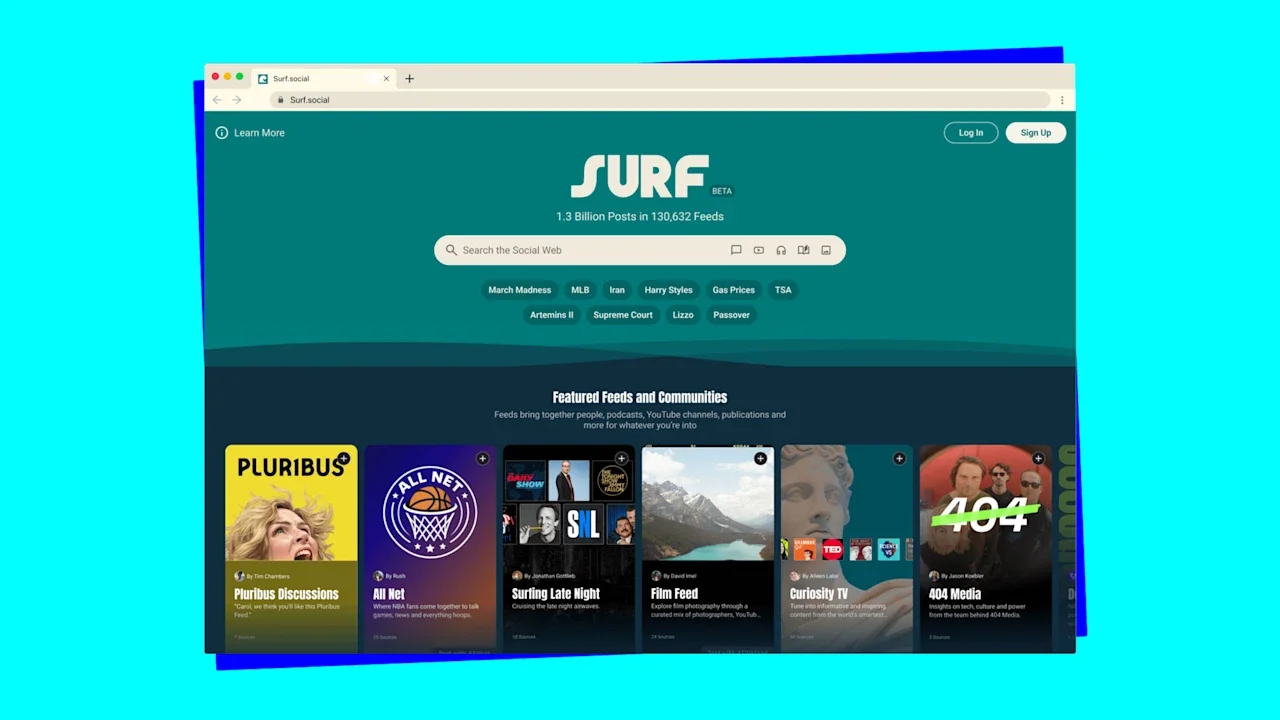
Hello again, and welcome back to Fast Company’s Plugged In. More than 15 months ago, I wrote about Surf, a discovery engine for the social web from Flipboard—itself an earlier twist on the same concept dating to the early days of the iPad. At the time, it was still a rough draft, and in private beta. Rather than rushing it out to a broader audience, Flipboard took its time. The app went through a series of revisions that were both numerous and substantial, ending up significantly different than the intriguing prototype I tried in December 2024. This week, the company finally deemed Surf ready for prime time. It’s now live in web form at Surf.social; a beta Android version is in the Google Play store. (The iPhone and iPad versions still have a waitlist.) If you’ve grown jaded about social networking or the web in general, I recommend taking a look. Surf’s sheer ambition makes it a challenge to describe coherently. It weaves together material from Bluesky, Mastodon, and Threads—along with YouTube videos, podcasts, blog posts, and articles—and yet it isn’t really a substitute for those services’ own apps. It’s a way to create and share custom feeds about your interests that run on autopilot once you’ve set them up, but that’s optional—you can also just lurk and peruse other people’s feeds. And even though it runs inside a web browser, it feels a little like what browsers themselves might have become if they hadn’t largely stopped evolving almost 20 years ago. All I know for sure is that using Surf leaves me feeling better about the state of the internet. I am aware that the net is rapidly filling up with AI-generated slop, and that, furthermore, the technology’s impact on search and advertising threatens to disincentivize humans from bothering with the medium at all. But for now, there’s still lots of great stuff out there—and Surf is a refreshingly inventive way to find it. It would be inaccurate to describe Surf as an algorithm-free zone. Like Flipboard before it, it uses computer science to help identify what individual pieces of content are about so they can be woven together thematically. Unlike Facebook or TikTok, however, it isn’t a giant machine designed, above all, to keep you scrolling. Flipboard worked with individuals and outlets such as The Verge, 404 Media, and Rolling Stone to ensure that the app launched with a bevy of feeds worth following. The result feels curated, not stuffed to capacity. Even though Surf is decidedly human, it’s organized around interests and passions, not friendships or followers. It’s possible to skim individual Bluesky and Mastodon accounts, but that’s secondary to subscribing to topic-based feeds. Not surprisingly, politics and current events are available in great supply. But so are quieter pursuits that can get drowned out in the din of social networking in its more conventional form: books, cooking, hobbies, and fandoms of all kinds. The other thing about Surf that it has in common with Flipboard—and darn few other ways to consume digital content—is that it tries to present everything to its best advantage. Much of the rest of the field has a stunted feel, as if the highest possible aspiration was to rekindle the aesthetic of early Twitter. Surf, by contrast, complements its Posts tab with ones called Watch, Read, Listen, and Look, each optimized for a different sort of media. In Look, for example, photos are so downright expansive that they make the ones in other social apps look like postage stamps. Surf lets you sign in with your Bluesky and/or Mastodon accounts, allowing you to comment, like, and share on those networks. Some of its feeds are set up as communities unto themselves, letting you post items with a hashtag to pipe them into the flow. Overall, though, it has a magazine-y vibe that’s conducive to leaning back and enjoying what other people are sharing. If all those Twitter-style apps have the spirit of talk radio, this one feels more like a Sunday newspaper. Even after well over a year of incubation, Surf is clearly a first pass at a bigger idea. I occasionally found the way it intermingles multiple social networks befuddling, especially when I was thinking about liking or sharing something and couldn’t quite tell if that involved Bluesky or Mastodon. The long-term goal, Flipboard CEO Mike McCue told me recently, is not only to make that cross-pollination smoother, but to render it irrelevant for many users. “Some people have a Bluesky account, some people have a Mastodon account, some people don’t have either of those,” he explained. “In fact, most people don’t even know what those things are. So what we want to do is make it all about the community, not about joining the social web.” Participating in Surf, McCue said, should be as easy as joining Substack and easier than joining Discord, regardless of where items of interest originated. Given the temptation to give in to dark thoughts about where the internet is headed, I am excited to see where this bright spot could take us. You’ve been reading Plugged In, Fast Company’s weekly tech newsletter from me, global technology editor Harry McCracken. If a friend or colleague forwarded this edition to you—or if you’re reading it on fastcompany.com—you can check out previous issues and sign up to get it yourself every Friday morning. I love hearing from you: Ping me at hmccracken@fastcompany.com with your feedback and ideas for future newsletters. I’m also on Bluesky, Mastodon, and Threads, and you can follow Plugged In on Flipboard. More top tech stories from Fast Company How Disney Imagineers are using AI and robotics to reshape the company’s theme parks From robotic Olaf to reinforcement learning, the company is rethinking how its attractions come to life. Read More → Y Combinator’s CEO says he ships 37,000 lines of AI code per day. A developer looked under the hood After Garry Tan touted his agentic coding output, a developer found inefficiencies, code bloat, and rookie mistakes lurking in production. Read More → I ate lab-grown salmon. It was nothing like I expected A San Francisco startup is trying to make ‘cultivated’ fish a thing. Read More → OpenAI’s gigantic new funding round renews fears about the company’s profitability and cash burn The stakes of Big AI’s bet that it will transform business and personal life seem to be growing by leaps and bounds. Read More → The AI industry loves token inflation. Your company shouldn’t The brute-force model is starting to look less like technological inevitability and more like lazy architecture. Read More → Apple at 50: The tech giant’s best, worst, and weirdest ideas Over five decades, Apple has built some of the most influential tech ever made—and some genuinely strange flops. These are the highs, lows, and oddities. Read More → View the full article

-
When you’re looking to conduct a business background check, it’s vital to follow a structured approach. Start by verifying the business’s registration and physical address, which establishes its legitimacy. Next, assess financial records to comprehend its economic health. Investigating funding sources can reveal potential risks, whereas evaluating compliance with regulatory standards guarantees adherence to legal requirements. Finally, a thorough risk assessment will help you identify various types of risks associated with the business. Grasping these steps is fundamental for making well-informed decisions. Key Takeaways Verify the business’s registration status and physical address through official state or country registries. Assess financial records, including profit and loss statements and tax returns, for compliance and health. Investigate funding sources to confirm legal backing and identify any high-risk associations. Evaluate compliance with regulatory standards, including Anti-Money Laundering (AML) and global regulations. Perform a comprehensive risk assessment focusing on financial, operational, reputational, legal, and ownership risks. Verify Business Registration and Addresses When you’re conducting a business background check, one of the first steps is to verify business registration and addresses. This involves checking the official state or country registry to confirm that the business is legally recognized and compliant with local laws. You can often find online databases where you can search for businesses by name or registration number, making this process more accessible. Address verification is equally important, as it guarantees the business operates from a legitimate physical location, minimizing the risk of fraud associated with virtual or unregistered addresses. Accurate address information helps you assess the legitimacy of the company background and can reveal any discrepancies in claims made during your due diligence. Regularly updating and verifying business registration and addresses is vital for maintaining compliance and guaranteeing ongoing transparency in corporate relationships, helping you make informed decisions in the background check on a business. Assess Financial Records After confirming a business’s registration and address, the next step is to evaluate its financial records. This evaluation is vital for comprehending the company’s financial health. Review profit and loss statements, balance sheets, and cash flow statements to get a clear picture of its performance. Look for any irregularities or discrepancies that could signal potential fraud or mismanagement. Examine tax returns for the past three to five years to guarantee compliance with regulations and gauge financial stability. Grasping the company’s credit history, including credit scores and outstanding debts, is likewise fundamental for appraising its ability to meet financial obligations. These records can reveal financial red flags, such as patterns that might indicate money laundering or tax evasion. By thoroughly evaluating these documents, you’ll gain valuable insights into the business’s financial practices and overall reliability. Investigate Funding Sources How can you confirm that a business’s funding sources are legitimate and transparent? Investigating funding sources is crucial for protecting yourself from hidden liabilities or financial instability. Start by verifying the origins of capital investments, such as bank statements and investment agreements, to guarantee funds come from reputable avenues. This process can reveal associations with high-risk entities, potentially flagging illegal activities like money laundering. Utilizing thorough Know Your Business (KYB) solutions provides access to billions of data points, facilitating an in-depth evaluation of the company’s financial history and stakeholders involved. Step Action Purpose Verify Capital Sources Examine Example Bank statements Confirm legitimacy of funding Review Investment Docs Analyze agreements Guarantee proper legal backing Assess Risk Associations Identify high-risk entities Prevent association with illegal activities Utilize KYB Solutions Access extensive data points Conduct a thorough background check Monitor Fraud Trends Stay updated on industry fraud rates Make informed partnership decisions Evaluate Compliance With Regulatory Standards Evaluating compliance with regulatory standards involves a careful review of a business’s adherence to legal requirements that govern its operations. This step is crucial to mitigate risks and protect your organization. Here are key areas to focus on: Anti-Money Laundering (AML) Regulations: Confirm the business performs due diligence to prevent financial crimes, considering that nearly 70% of companies report an increase in fraud incidents. Know Your Business (KYB) Process: Verify the legitimacy of corporate entities, including checks on registration, ownership structure, and funding sources. Mergers and Acquisitions: Conduct thorough background checks to uncover potential risks and confirm transparency, safeguarding against legal liabilities. Global Regulations: Adhere to guidelines from the Financial Action Task Force (FATF) to enforce due diligence in partnerships, combating money laundering and terrorist financing. Perform a Comprehensive Risk Assessment When you’re considering a new business partner or vendor, performing a thorough risk assessment is essential to safeguard your organization from potential pitfalls. This assessment should evaluate financial, operational, and reputational risks linked to the entity. Start with a detailed analysis of their financial history, including profitability and debt levels. Investigate the ownership structure to uncover any potential conflicts of interest. Utilizing various tools can help you gather vital data. Here’s a table to outline key components of your risk assessment: Risk Category Evaluation Focus Financial Risks Profitability, debt levels, bankruptcies Operational Risks Business processes, supply chain issues Reputational Risks Public perception, past scandals Legal Risks Regulatory violations, lawsuits Ownership Risks Conflicts of interest, key individuals Conducting a thorough risk assessment can greatly reduce unexpected challenges and protect your organization. Frequently Asked Questions What Information Does a Company Need to Do a Background Check? To conduct a background check, a company needs several key pieces of information. You’ll typically provide your full legal name, Social Security number, and date of birth for accurate identification. Previous addresses are essential for verifying your criminal and employment history. The organization likewise requires your consent through a signed authorization, ensuring compliance with legal standards. Depending on the role, additional details like employment history or educational background may be necessary for verification. How to Open a Background Check for a Business? To open a background check for a business, start by collecting key details like the business name, registration number, and address. Next, use a reputable Know Your Business (KYB) solution to access extensive databases for verification. Conduct thorough due diligence by verifying the business structure, evaluating funding sources, and ensuring compliance with regulations. Finally, perform risk evaluations and compile your findings into a clear report for stakeholders, highlighting any risks or discrepancies identified. What Are the Steps You Should Take to Properly Prepare for a Background Check? To prepare for a background check, start by obtaining written consent from the candidate, which guarantees compliance with the Fair Credit Reporting Act. Clearly communicate the specific checks being conducted, such as criminal history or employment verification. Collect detailed candidate information, including their full name and previous addresses, to facilitate accurate checks. Finally, select a reliable background check service that adheres to FCRA regulations, assuring thorough and accurate reporting throughout the process. What Kind of Background Check Do Most Companies Run? Most companies typically run several types of background checks to guarantee candidates are suitable for the role. These often include criminal background checks, which identify any violent crimes or fraud, and employment history verification, confirming previous job roles and dates. Educational checks validate degrees claimed, whereas credit checks assess financial reliability for positions with monetary responsibilities. Furthermore, reference checks provide insights into a candidate’s work ethic and performance from past employers. Conclusion To sum up, conducting a business background check is essential for making informed decisions. By verifying registration and addresses, evaluating financial records, investigating funding sources, reviewing compliance with regulations, and performing a thorough risk assessment, you can identify potential risks and validate a business’s legitimacy. These steps not only safeguard your interests but likewise improve your grasp of the company’s overall health and stability, allowing for more strategic and informed business dealings. Image via Google Gemini and ArtSmart This article, "5 Essential Steps for a Business Background Check" was first published on Small Business Trends View the full article
-
In February I shared how Grokipedia started dropping heavily in Google after initially surging. It became yet another example of what I call "Mt. AI". That's when sites scaling heavily with AI-generated content initially surge in Google, but then drop heavily as Google's systems...View the full article
-
Baltimore, known for being a leader in medicine and technology as well as for its fiercely community-driven residents, is one of many cities trying to determine how to grapple with some of AI’s most pressing issues. And recently, the city has been sounding the alarm. Artificial intelligence is changing the way we live and work. In many ways, the tools are wildly helpful—solving business problems, advancing medicine, and even helping solopreneurs thrive without a team. However, the technology comes with some worrisome drawbacks and, given the lack of federal oversight, the risks are beginning to reshape local politics. That seems especially true in Baltimore, where just last week the city sued Elon Musk’s company xAI over its chatbot Grok. SpaceX, the parent company of xAI, along with the X social network, are also named as defendants. Filed in the Baltimore City Circuit Court, the lawsuit argues that both the xAI platform and Grok have already been used to generate 3 million sexualized images between December 29, 2025, and January 8, 2026; 23,000 of those images appeared to have depicted children, according to researchers at the Center for Countering Digital Hate. “Baltimore residents have a reasonable expectation that they will not be exposed to this illegal content on X, and that X will not harass its own customers with Grok-generated deepfakes,” the complaint read. Prior to the lawsuit, other smaller suits have been filed. In March, three Tennessee teenagers sued xAI, alleging that the tools were used to turn their likenesses into explicitly sexual images. The plaintiffs alleged that their mental health has suffered as a result of the images, which also have their name and school attached to the files. In a post on X, the platform contended: “We remain committed to making X a safe platform for everyone and continue to have zero tolerance for any forms of child sexual exploitation, non-consensual nudity, and unwanted sexual content.” Fast Company reached out to X but did not hear back by the time of publication. In a statement, per NBC News, Baltimore Mayor Brandon M. Scott said that this kind of technology has the ability to destroy lives. “Our city will not stand by and allow this to continue,” Scott said. “[It’s] a threat to privacy, dignity, and public safety, and those responsible must be held accountable.” Charm city offensive The suit makes Baltimore the first city to sue Musk’s companies over their AI capabilities. But it’s not the only fight over AI woes happening within city lines. Baltimore is already the 44th-largest data center hub in the nation, with 17 current data centers. Now concerns over energy consumption, water shortages, and environmental issues have residents pushing back on new data center construction. At Johns Hopkins University, construction of its new Data Science and AI (DSAI) institute, which is not exactly a data center but a hub of AI research, education, and advancement, is already underway. Given that Baltimore has long been a hub for pioneering medical and technology research—with JHU at the heart of those efforts—it makes sense that the university would be focused on technology advancements. Founded in 1876 as the first research institution in the U.S., it’s credited with a number of majorly influential developments, from introducing rubber surgical gloves in 1889 to developing the first rechargeable pacemaker in the 1970s, as well as the widely used COVID-19 tracking map in 2020. With JHU and Johns Hopkins Hospital attracting top talent, it also has long led the nation in terms of the federal funding it receives—by a long shot. In 2024, the university acquired a record-breaking $3.4 billion, about $1.6 billion more than the second-place university. However, the following year, due to President Donald The President’s federal funding cuts, it experienced a sharp decline in financial research support. Still, JHU’s long and inspirational history of innovation hasn’t insulated it from criticism over its AI ventures. The new project, which is expected to be complete in 2029, has unsettled locals, to say the least. Prior to its start, petitions circulated around the city, protestors took to the streets, and a cease-and-desist letter was sent to the university. On the day construction began, which included cutting down the neighborhood’s beloved northern red oak trees that lined the street, residents came out to make their feelings known. Presently, signs that read “Shame on JHU” appear on the street across from the construction site. Fast Company reached out to JHU for comment and was directed to a public statement, which explained that the project is not a data center but a space for “classrooms, laboratories, faculty offices, and collaborative workspaces.” The statement also noted that an estimated 4,490 jobs will be created during the preconstruction and construction phases and that the project is set to generate “$505 million in net new economic impact within Baltimore City alone and more than $800 million across Maryland.” “Residents across our city have had enough” While JHU’s project is proceeding as planned, others are facing greater obstacles. Earlier this month, City Council President Zeke Cohen introduced a bill that could place a one-year moratorium on Baltimore data centers. The legislation cites major environmental concerns, which some say disproportionately impact minority communities who live in underserved neighborhoods—given that’s where the centers are typically placed. “Baltimore is one of the most environmentally degraded cities in our country,” Cohen said, per The Baltimore Sun. “The legacy of redlining, racial housing covenants, and disinvestment means that majority Black neighborhoods have substantially worse air quality than white neighborhoods.” Cohen also cited the halting of the Baltimore Peninsula transmission project by the Baltimore Gas and Electric Company (BGE) in March amid criticism from Maryland Senate President Bill Ferguson over skyrocketing energy costs. Those energy costs are something that Baltimoreans have, sadly, grown extraordinarily accustomed to. Since 2010, BGE’s gas delivery rates have increased by 246%. Its electric delivery rates increased by 92%. And just this year, rates have already risen twice. Cohen said the cost of energy is driving an affordability crisis in the city, noting, “BGE bills have skyrocketed and residents across our city have had enough. People are choosing between paying for gas and electricity or their rent or mortgage.” As residents struggle to pay their bills amid already staggering energy costs, new data center construction has become an even bigger concern. Those worries have prompted growing support for a Baltimore Public Power campaign, led by Councilmember Mark Conway, who represents the city’s 4th District. Shelby Averys, an organizer who updates Baltimore Public Power’s social media accounts, said data centers will undoubtedly drive up costs even further for Baltimore residents. “Big Tech is forcing regular people like us to fund their polluting and unwanted data centers through our skyrocketing utility bills so that a handful of executives can get even richer,” she told Fast Company, adding, “By moving to a public utility, Baltimore can take control over how its energy is used and ensure that we prioritize affordable, clean, and reliable energy for Baltimoreans, not diverting our energy to data centers that nobody wants.” From energy to deepfakes, the AI battles facing Baltimore and other cities across the country aren’t likely to be solved overnight, or anytime soon for that matter. AI’s big gains also mean big downsides—and more complicated battles. But Baltimore, known for its scrappiness, vibrant city life, and extraordinarily dedicated community members, isn’t likely to fold to Big Tech without a fight. View the full article

-
The experience of past tech revolutions suggests savvy incumbents might muddle through and even thrive View the full article
-
Matt Mullenweg invokes Will Smith's Oscars slap in response to Cloudflare's boat that EmDash is a successor to WordPress. The post Mullenweg To Cloudflare: Keep WordPress Out Of Your Mouth appeared first on Search Engine Journal. View the full article
-
OBR analysis estimates one-fifth of affected property owners will appeal revaluations View the full article
-
Billionaire’s trading business is one of the most profitable UK private companiesView the full article
-
CMA CGM Kribi is first ship owned by major western line known to have transited since start of warView the full article
-
This week, the labor movement in architecture scored a win. Sage & Coombe Architects, a women-led firm based in New York City, unanimously approved a collective bargaining agreement. It’s the second American practice to ratify a contract, after Bernheimer Architecture in 2024. “This contract, the second in the industry, sets a standard for workers at Sage and Coombe and beyond,” Architectural Workers United (AWU), a group that has been helping firms organize, announced on April 1 via Instagram. The agreement’s details have yet to be made public. The milestone marks a significant move in the design industry’s unionizing efforts, especially after high-profile setbacks. In 2022, the New York-based firm SHoP abandoned its unionizing efforts following what AWU called a “powerful anti-union campaign.” Then in 2023, the American arm of the multidisciplinary design firm Snøhetta voted against unionizing. In January, the National Labor Relations Board filed a formal complaint against Snøhetta, alleging the firm illegally dismissed eight employees in relation to organizing. Architecture—a field known for long hours and low pay—has historically been difficult to unionize in the United States. “It’s oddly different than other industry,” Andrew Daley, a staff organizer at the International Association of Machinists and Aerospace Workers, told Fast Company back in 2023. “There’s literally no proliferation of unions in any way, shape, or form. Like, zero density when we started.” Sage & Coombe’s contract comes after three years of unionizing efforts. In 2023, employees at the firm formed a union, which the office’s managerial team voluntarily recognized. “We are pleased to announce that we have signed a collective bargaining agreement with the International Association of Machinists and Aerospace Workers,” Sage & Coombe said in an Instagram post. “We respect the efforts of our colleagues who initiated this process, and we believe the agreement will affirm the workplace conditions we established over the last 30 years and contribute to our continuing success in delivering great projects for our clients.” View the full article

-
Most organizations think they have a productivity problem. They don’t. They have a work design problem. I’ve spent decades studying how people solve problems and take action, and the same pattern keeps showing up. Productivity dips, so leadership responds the way they always do: new tools, redesigned workflows, and an engagement initiative with a catchy name. And it works, but only for a while. Teams rally around the new process. Leaders feel good about the momentum. Then, a few months later, the same questions come back. Why does the work still feel harder than it should? Why are capable, committed people running on fumes? And typically, motivation isn’t the issue. But the actual work itself is in conflict with how people naturally approach problem-solving. What leaders miss when they evaluate employees Leaders typically evaluate performance in two ways. Does the person have the skills? And are they motivated enough to use them? Both matter. But there’s a third factor that quietly determines whether individuals and teams sustain high performance over time. It’s the one most leaders skip right past (even though the concept has existed since Plato). It’s how people instinctively approach getting work done. Some people gather a great deal of information before moving forward. Others cut straight to the bottom line. Some naturally build systems and structures. Others adapt on the fly. You’ve seen this in meetings. The moment you brainstorm an idea, one person starts testing it out loud and adjusting as the conversation unfolds. Another might be outlining the steps, organizing details, and making sure there’s a clear sequence. Neither approach is wrong. But they’re fundamentally different, and those differences shape how companies make decisions and how projects move. It can also determine whether or not people are aligned with their roles. Why productivity systems create more friction than they solve There’s a flawed assumption that underpins most productivity systems, which is that everyone approaches work roughly the same way. That a single planning method can work for all, and that people process information and problem-solve in the same ways. In practice, teams almost never operate like that. I worked with a leadership team that spent months building out a detailed project planning process. It was thorough, well-documented, genuinely thoughtful work. But within weeks, half the team had quietly abandoned it. It wasn’t resistance. The structure just clashed with how several of them naturally approached their work. Someone who instinctively moves to the bottom line is going to slow down in an environment that demands constant deep analysis and 20-page reports. The same way that someone who naturally creates structure will struggle when processes and priorities shift every day. Pushing against your natural way of taking action takes far more energy than most people realize. Over time, that friction compounds. A recent workplace survey found that 42 percent of employees lose roughly a full workday each week working against their natural strengths. Think about that. One day a week, gone. Not to poor skills or lack of effort. To friction. No engagement initiative is going to fix that. Why productivity is an energy problem Most productivity conversations obsess over time. But energy is almost always the real constraint. People have a finite amount of mental energy each day for decisions, problem-solving, and moving work forward. Where that energy goes makes a huge difference. I worked with a team leader who had two employees with similar experience and a strong work ethic. One was the person she called when a project was still messy, when the team needed to test ideas, make quick calls, and figure things out in real time. The other was most effective once the direction was clear. He’d organize the steps, build the process, and keep the work moving in a steady sequence. When each person worked in those conditions, they were great. But when the leader reversed their roles, the difference was immediate. The fast mover slowed to a crawl when asked to document detailed processes. The systems builder struggled when the project demanded constant improvisation. They had the same skill level and the same motivation—but a completely different experience of the work, because one version aligned with how they naturally take action and the other didn’t. When work fits someone’s instincts, they can make decisions faster. Their efforts also go further. But when it doesn’t, even routine tasks start consuming far more energy than they should. What leaders can do instead Fixing productivity and creating productive teams rarely starts with another tool or training program. It starts with understanding how people actually work. Leaders who get this right tend to focus on three things: 1. Clarity Get a real picture of how people on your team naturally approach problems. When employees understand their own strengths and the strengths of their colleagues, dividing roles and responsibilities becomes a lot easier. 2. Commitment Teams perform best when people can invest most of their energy in work that fits how they naturally take action. Sometimes that means adjusting responsibilities, redesigning workflows, or shifting task ownership so people spend more time where they’re actually effective. 3. Collaboration The strongest teams aren’t made up of people who all approach work the same way. Progress comes from combining different strengths. One person digs into the details. Another simplifies the path forward. Someone else builds the structure that carries the idea through execution. When teams work this way, you no longer need to force productivity improvements. They happen because individuals can naturally leverage their strengths to get things done. Rethinking productivity Organizations love to solve productivity problems by turning up the pressure. More tools, more processes, and creating additional expectations piled on top of existing expectations. But productivity doesn’t improve when everyone’s pushed to work the same way. It improves when leaders recognize that people approach problems differently and design work around those differences instead of against them. After all, when work fits how people naturally take action, high performance stops being something you have to force. It becomes something you can sustain. View the full article

-
A few days ago, the electric grid in California hit a new milestone: At 7pm on March 29, batteries provided 12.3 gigawatts of power—roughly as much as six Hoover Dams, or around 43% of the total demand on the grid. Nearly all of that battery storage was built in the last five years. “Until 2020 or 2021, battery storage was still quite expensive, but we’ve seen huge price drops over the last few years,” says Nicolas Fulghum, senior energy and climate data analyst at Ember, a global energy think tank. When it’s paired with solar power, it can “bring some of that excess generation in the middle of the day to where it’s really needed, which is during the peak demand in the evening and morning,” he says. The cost of batteries has dropped 99% over the last three decades. Over the last few years alone, the cost fell by about a third. The cost of solar panels has also fallen by more than 90%. By 2024, new solar projects were an average of 41% cheaper than fossil fuel alternatives. By using batteries to make use of extra solar power in the middle of the day in the evening, California’s grid, called CAISO, can rely less both on energy imported from other states as well as “peaker” gas plants that are used to meet peak demand. Those gas plants “are usually quite expensive,” says Fulghum. “And batteries can reduce the impact of those high power prices during that time, especially when you have a heat wave like we had a few weeks ago. That’s where they’re most effective at keeping prices down.” Gas electricity generation in the state is responsible for around 30 to 40 million metric tons of CO2 emissions a year. Around half of the peaker plants are in low-income communities of color, where the air pollution contributes to health problems like asthma. California has always been a leader in solar power, and had actually installed so much solar that it began to strain the grid. But that’s changed now. “Because California can move so much of that midday solar generation, it means that there’s a lot less wasted solar in the middle of the day,” says Fulghum. “But it also means that now it’s opened up the opportunity to actually increase solar generation again—build more solar, and move it to ‘shoulder’ hours. That’s what’s going to reduce gas generation in the short and long term.” Virtual power plants— using home batteries, EV batteries, or managing demand with tech like smart thermostats—are also helping shrink the need to use fossil fuels to generate electricity. Other technology, like advanced geothermal power, can also help provide clean power for the grid around the clock. But that will take time to build, and batteries can help immediately. At the moment that the California grid broke a battery record on March 29, around 20% of the grid’s output was coming from gas. But the share of power coming from fossil fuels will continue to drop. (Already, the use of gas has declined by 20% over the last few years.) California’s grid now has 17 gigawatts of battery storage; the state is aiming for more than 50 gigawatts. “There’s a huge, huge additional amount that’s still going to come online over the next few years,” says Fulghum, “especially as costs are going to continue to drop.” View the full article
-
While companies cram artificial intelligence features you never asked for into their apps, Domino’s seems to have found a valid use case for the technology: more accurate tracking of when your pizza will be ready. When Domino’s launched its pizza tracker in 2008, it was a marvel of UX. The tracker gave customers a lens into when their pizza would be ready through a simple interface that lit up as the pizza progressed from ordered to baked to delivered. The tool turned Domino’s into a tech company, and inspired industries (and governments) to adopt the same UX for their own needs. Now, Domino’s made the biggest update to its pizza tracker in years. The new tracker features a simplified progress bar that shows just four stages of pizza creation. The new design was rolled out to all platforms, and there’s also new Lock Screen widgets for iOS that bring the pizza chain’s most famous tech feature to the Liquid Glass age. Behind it all is an AI model that the company says will give users the most accurate time estimates. Domino’s improved tracker uses a proprietary operating system it calls “DomOS” to better estimate orders through machine learning models that track real-time inputs, like what’s being ordered, how busy a store is at the time, how orders tend to cluster (like during a big sports game or commercial break), and what’s happening on the delivery side. “AI helps by looking at these signals together instead of isolation,” Domino’s vice president of global digital marketing Mark Messing tells Fast Company. “It learns from patterns we’ve seen before and continuously adjusts in real time as conditions change.” The company is promising more precise times for when pizzas will be ready for pickup or arrive for delivery. A rideshare-style interface shows a delivery driver as a car icon on a map like Uber that users can track in real time. For iOS users, the app’s Lock Screen widgets appear as Domino’s Tracker progress bar with an estimated delivery time. When an order is out for delivery, the progress bar becomes a car to show your pizza is mobile and delivery is imminent. The redesign was done by Dominio’s digital experience team in partsnership with their agency WorkInProgress. Domino domination Domino’s is the leading pizza chain nationally in the U.S. at a time when pizza sales are struggling. Pizza Hut’s parent company is considering a sale and announced the closure of 250 stores in February. Meanwhile Domino’s chief financial officer Sandeep Reddy said on the company’s last earnings call that Domino’s retail sales had grown 5.5% thanks to same-store sales, a promotion, and new specialty pizza flavors. Domino’s refreshed its brand last year with a new font, brightened color palette, and redesigned pizza boxes that play off the domino theme with dots. It also introduced what it calls a “cravemark,” or its tagline “mmm” expressed audibly through a jingle recorded by Shaboozey. Like its overhauled visual brand, the revamped pizza tracker shows that Domino’s is doubling down on what it’s best known for. Since the company introduced its tracker in 2008, it has tracked more than 2.5 billion orders. Domino’s original tracker was the first web-based pizza tracker in the industry, and it had a futuristic, skeuomorphic style with segments for each stage that lit up red or blue as a consumer’s order went from prep to delivery. The company gave users the options to customize their trackers in 2010 with six themes that they could use to reskin the progress bar. The company added GPS delivery tracking to the feature in 2019. The new tracker reduces the number of stages to just four—named “Placed,” “Make,” Deliver,” and “MMM”—while old names for stages like “Bake” and “Quality Check” are now gone. While the main progress bar is simplified, inside the app, there’s more specific information, like what time their order was placed in the oven and what time a delivery driver left the store. “The goal was flexibility without complexity,” Messing says. It’s an update that helps Dominos make the most of AI to be more dependable for customers. And at a time when delivery pizza sales are under pressure, that gives the company an edge with one of its best-ever marketing tools. View the full article
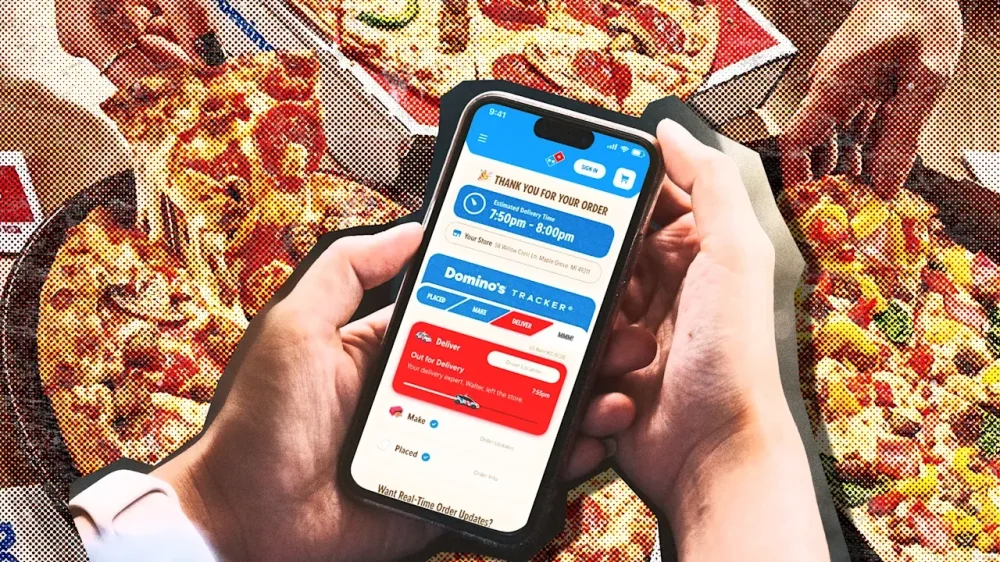
-
United Wholesale Mortgage lost ground to RKT in one category but held onto a healthy lead in another, an analysis of Home Mortgage Disclosure Act data shows. View the full article
-
Finance of America has not disclosed any incident, but a consumer filed an immediate lawsuit over a lone report of a ransomware gang's recent hack. View the full article