All Activity
- Past hour
-
U.K. Prime Minister Keir Starmer told members of his Cabinet on Tuesday that he has no intention of resigning as calls within his Labour Party for him to step down grew louder. Starmer is trying to shore up support within his Cabinet following a febrile few days in the wake of hefty losses for the Labour Party in local elections last week, which if repeated in a national election would see it overwhelmingly ejected from power. The meeting, which lasted about an hour, took place as around 80 Labour backbenchers, or nearly a fifth of the party’s representation in the House of Commons, said Starmer should stand down, or at least set out a timetable for his departure. Under Labour party rules, 81 lawmakers are needed to formally trigger a leadership contest. However, no one has yet announced they will stand as a candidate for the leadership, directly challenging Starmer. First resignation On Tuesday, junior minister Miatta Fahnbulleh became the first member of his government to step down, urging Starmer “to do the right thing for the country” and set a timetable for his departure. Fahnbulleh, who is considered to be on the left of the party, said she was proud of her service, but that the government hadn’t acted with the vision, pace and mandate for change it had been given by voters. “Nor have we governed as a Labour Party clear about our values and strong in our convictions,” she said. Despite winning a landslide election victory in July 2024, Labour’s popularity has sunk and Starmer is getting much of the blame. The reasons are varied, including a series of policy missteps, a perceived lack of vision, a struggling British economy and questions over his judgment — especially over his appointment of Peter Mandelson as U.K. ambassador to Washington despite the envoy’s ties to the convicted sex offender Jeffrey Epstein. Starmer defiant At the start of the Cabinet meeting on Tuesday, Starmer said he took responsibility for the losses in last week’s local elections across the U.K. but that he would fight on. Labour was squeezed from right and left, losing votes to both the anti-immigrant Reform UK and the “eco-populist” Green Party, as well as nationalist parties in Scotland and Wales. The result reflects the increasing fragmentation of U.K. politics, long dominated by Labour and the Conservatives. Starmer said that there’s a process to oust a leader and that it hadn’t been triggered. Under Labour’s rules, candidates must have the support of a fifth of the party’s House of Commons lawmakers — a number that currently stands at 81. “The country expects us to get on with governing,” Starmer said. “The past 48 hours have been destabilizing for government and that has a real economic cost for our country and for families.” That cost was evident in financial markets on Tuesday, with the interest rate charged on British government bonds up by more than those of comparable nations — that shows that investors are putting a higher price on taking on government debt. Some voices of support As Cabinet ministers left 10 Downing Street, some voiced their support for the embattled prime minister. Works and Pensions Secretary Pat McFadden said nobody publicly challenged Starmer at the meeting, while Business Secretary Peter Kyle said the prime minister was showing “really steadfast leadership.” Health Secretary Wes Streeting, long believed to be preparing for a leadership challenge against Starmer, did not comment as he left the meeting. “Wes Streeting, do you want the job, or not?” one person yelled from across the street. “Are you measuring the curtains?” He was among senior ministers who dodged a barrage of shouted questions from a gaggle of reporters outside. Though no one in his Cabinet has challenged Starmer, he will be aware that someone else within the parliamentary party could trigger the leadership process. The next U.K. national election doesn’t have to be held until 2029, but British politics allows parties to change leader midterm without the need for a general election. Starmer had hoped to regain momentum with a speech on Monday intended to kickstart his fightback, and an ambitious set of legislative plans to be set out by King Charles III at the State Opening of Parliament on Wednesday. Danica Kirka in London contributed to this report. —Brian Melley and Pan Pylas, Associated Press View the full article

-
OpenAI is making a clearer push into e-commerce advertising by letting retailers generate ads directly from their product catalogues inside ChatGPT. What’s happening. Retailers can now connect product feeds to ChatGPT, allowing the platform to automatically create ads using product names, images and attributes, instead of building campaigns manually. The ads themselves don’t change for users. They still appear beneath responses and are clearly labelled as sponsored. Why we care. Running ads at scale has been a major barrier for e-commerce brands in ChatGPT. This update removes that friction, especially for retailers with large inventories, by turning product catalogues into ready-to-run ad campaigns. Zoom in. Brands set rules for which products to include, then let the system generate ads automatically. It mirrors how shopping campaigns work on platforms like Google, where structured feeds power both organic and paid visibility. What’s new. Previously, product data could inform ChatGPT’s answers, but it couldn’t be used for advertising. Now, that same data powers both, effectively linking organic presence with paid campaigns. Between the lines. This signals a shift in how OpenAI plans to monetise shopping. Rather than taking a cut of transactions, it’s moving toward capturing ad budgets already spent on platforms like Amazon and Meta. What they’re saying. Industry analyst Debra Aho Williamson called feed-based automation “table stakes,” noting that ChatGPT’s edge lies in serving ads based on conversational intent rather than traditional signals. Ad tech partners like StackAdapt say the setup integrates easily with existing feeds, lowering adoption barriers. Context. The move follows a series of performance-focused updates, including cost-per-click bidding and new conversion tracking tools. Cost-per-action models are also reportedly in development, pointing to a deeper push into performance advertising. What to watch. Expect more retailers to test ChatGPT as a performance channel as setup becomes easier. The bigger question is whether conversational intent can drive conversions as effectively as traditional search or marketplace signals. Bottom line. OpenAI is turning product feeds into ads — making ChatGPT a more viable, scalable channel for e-commerce advertising. View the full article
-
When a website migration goes wrong, the consequences can be a devastating loss of organic traffic and revenue. But what happens when the damage isn’t immediately visible? What if Google is silently deprioritizing your content, page by page, until your traffic has evaporated? This is the case study of how a multinational media organization lost 90% of its traffic following a domain migration, and how addressing a seemingly harmless technical issue — soft 404 errors — helped unlock suppressed traffic potential across 13 country-specific domains. While this case study examines events from 2021–2023, the lessons learned remain timeless and directly applicable to any site facing indexing challenges today. The catastrophic drop In January, 2022, the Brazilian localization of a cryptocurrency news website completed a domain migration. After the transition, traffic didn’t just drop — it plummeted. Comparing December 2021 to December 2022, both sessions and pageviews had fallen approximately 90% year-over-year. According to Google Search Console data, the old domain (xx.com.br) was receiving between 15,000 to 25,000 clicks per day before migration. After migrating to the new subdomain structure (br.xx.com) in January, traffic collapsed and never recovered. It stabilized at around 2,000 to 4,000 clicks per day — a sustained loss that persisted for over a year. The migration coincided with three major Google algorithm updates in June 2021: the core update, spam update, and page experience update. While these updates caused the expected temporary volatility, the Brazilian site showed no signs of recovery. Your customers search everywhere. Make sure your brand shows up. The SEO toolkit you know, plus the AI visibility data you need. Start Free Trial Get started with The migration problem: More than just redirects Domain migrations typically show an initial traffic drop as Google recrawls and reassesses the site. That’s expected. Normally, this traffic recovers within weeks or months. In this case, there were no signs of recovery. The root cause? The old domain continued to be crawled by Google long after the migration. According to the team’s analysis, proper redirect implementation and technical migration protocols weren’t fully implemented, causing Google to split its crawl budget between two domains rather than consolidating authority on the new one. In mid-August 2022, after addressing the migration issues with the SEO and IT teams, there was a subtle uptick — a peak of 12 clicks and 37 impressions on Aug. 29, 2022. While modest, this represented the first signs of recovery and indicated that Google was beginning to properly recognize the new domain. Using Facebook Prophet forecasting on pre-migration data, the team estimated that without the migration issues, the Brazilian site would have exceeded 2 million monthly clicks by early 2022. Instead, it was generating a fraction of that traffic. Understanding the indexing bottleneck While fixing the migration was critical, it revealed a deeper problem affecting not just Brazil, but all 13 of the site’s country domains: a massive indexing backlog. Google’s page processing follows four stages: Crawl: Google discovers and reads pages. Render: The page code is rendered. Index: Pages wait in a queue to be stored in Google’s index. Rank: Pages appear in search results with rankings. The Brazilian site was taking an average of 2 minutes for Google to crawl new articles (an acceptable amount of time for a news site). However, indexing these articles was taking 24 hours. For time-sensitive cryptocurrency news, this delay was catastrophic. By the time the site’s articles were indexed, the news cycle had already moved on. The scale of the site migration problem: 513,000 crawled, but not indexed, pages In January 2023, Google Search Console revealed alarming indexing issues across all domains: Crawled – currently not indexed: 513,369 pages (Brazil alone) Soft 404: 1,193 pages and growing rapidly Alternate page with proper canonical tag: 2,532 pages Discovered – currently not indexed: 524 pages The “Crawled – currently not indexed” issue was particularly concerning. These were pages that Google had successfully crawled but chose not to index. This typically happens when Google considers a page low-quality, duplicate, or not worth the crawl budget. Upon investigation, the team discovered that converter pages (e.g., “/usd-to-thor?amount=250” or “/eur-to-signaturechain?amount=1000”) were being automatically generated at scale. These thin content pages were consuming Google’s crawl budget, causing it to deprioritize the entire domain. The soft 404 time bomb While fixing the migration and removing low-quality pages was important, the most insidious issue was the proliferation of soft 404 errors. A soft 404 occurs when a page returns a 200 (success) status code but actually contains no meaningful content — essentially a “page not found” that doesn’t properly signal its emptiness to search engines. Unlike hard 404s, which clearly communicate that the page doesn’t exist, soft 404s confuse search engines and waste crawl budgets. The data revealed this wasn’t isolated to Brazil. Soft 404 errors were growing exponentially across multiple domains: xx.com (main site): 90,400 affected pages es.xx.com (Spain): 17,700 pages kr.xx.com (Korea): 15,400 pages fr.xx.com (France): 15,100 pages de.xx.com (Germany): 8,010 pages Specifically for France, Google Search Console data showed a direct correlation: As soft 404 errors began accumulating in October 2022, total crawl requests dropped from 60,000–70,000 per day to just 20,000–30,000 per day. Google was literally giving up on crawling the site efficiently. The crawl budget crisis The concept of crawl budget is critical to understanding why soft 404s matter so much. Search engines allocate a finite amount of resources to crawl each website. If Google wastes time crawling broken, empty, or duplicate pages, it has less capacity to discover and index your valuable content. For news sites publishing dozens of articles daily, this creates a vicious cycle: New content doesn’t get indexed quickly, engagement drops, Google further reduces crawl budget, and the problem compounds. In January 2023, Google was wasting significant resources crawling pages that provided no value. This meant: Slower indexing of new, timely content. Reduced visibility in search results. Lost traffic opportunities. Degraded domain authority in Google’s eyes. The systematic fix: Addressing root causes of site migration problems Starting Jan. 31, 2023, the team implemented a comprehensive technical SEO remediation plan focused on three priorities: Urgent: Soft 404 resolution The team identified the source of soft 404 errors and implemented proper HTTP status codes. Pages that truly didn’t exist began returning proper 404 or 410 status codes. Pages with content were fixed to render properly. High priority: Crawl budget optimization Removed or noindexed automatically generated currency converter pages. Implemented stricter URL parameter handling. Used robots.txt to block low-value URL patterns. Set up proper canonicalization for variant pages. Medium priority: Core Web Vitals While user experience metrics were important, the team recognized that fixing indexing issues would have a more immediate impact than optimizing page speed. Core Web Vitals improvements were addressed, but not at the expense of resolving indexing bottlenecks. Get the newsletter search marketers rely on. See terms. The results: Dramatic recovery across all domains Weeks after implementing the fixes, the impact was measurable: Brazil (br.xx.com) Crawled – currently not indexed: Dropped from 513,000 to 220,000 pages (57% reduction). Soft 404 errors: Reduced from 1,193 to 370 pages (69% reduction). Traffic recovery: Visible upward trajectory starting early 2023. Germany (de.xx.com) Indexed pages: Increased from ~150,000 to 370,748. Total clicks: Rose from ~8,000/day average to sustained 12,000-15,000/day. Google Discover traffic share: Jumped from 42% to 58%. Poland (pl.xx.com) Indexed pages: Grew from ~100,000 to 135,556. Total clicks: Increased significantly with multiple traffic spikes above 30,000/day. Google Discover traffic share: Rose from 15% to 86%. Spain (es.xx.com) Google Discover clicks: Increased from ~450,000 to 912,721 total. Traffic distribution: Discover now represents 65% of total traffic. All domains combined By late April 2023, soft 404 errors across all domains had dropped from a peak of approximately 120,000 pages to under 20,000 — an 83% reduction. Most remarkably, the biggest traffic gains came from Google Discover — Google’s personalized content recommendation feed. As indexing health improved, Google began trusting the domains enough to recommend their content more aggressively to users. The Core Web Vitals paradox Interestingly, improvements to Core Web Vitals (page speed, interactivity, and visual stability) showed mixed results: Desktop improvements: Germany: 25.1% → 97.1% good URLs Poland: 20.5% → 68.9% good URLs Korea: 15% → 84.6% good URLs Mobile challenges: Brazil: 0% → 0% (no improvement) Argentina: 0% → 0% Thailand: 0% → 0% Korea: 93.4% → 0.5% (severe regression) Turkey: 94% → 0% (severe regression) The team’s hypothesis: Core Web Vitals performance is heavily influenced by regional factors like CDN proximity, server location, network quality, and device capabilities. Countries with poor mobile infrastructure or greater server distance showed minimal improvement despite technical optimizations. This reinforced an important lesson: Not all technical SEO issues affect all markets equally. A one-size-fits-all approach would have wasted resources by optimizing for metrics that couldn’t improve without infrastructure investment, while the real wins came from addressing indexing fundamentals. Key technical SEO lessons 1. Indexing issues The President almost everything else No amount of content quality, backlinks, or page speed optimization matters if Google isn’t indexing your pages. Before optimizing what’s visible, ensure your content is actually being indexed. 2. Soft 404s are silent killers Unlike hard 404s that immediately alert you to problems, soft 404s quietly accumulate, degrading your crawl budget until you notice traffic declining. Regular monitoring of Google Search Console‘s “Pages” report is essential. 3. Domain migrations require exhaustive validation The Brazilian site’s migration issues persisted for over a year. A proper migration protocol should include: Complete redirect mapping verification. Confirmation of old domain deindexing. Search Console property setup and validation. Multi-week monitoring of both old and new domains. Crawl rate and indexing speed tracking. 4. Crawl budget is real for high-volume sites For sites publishing 10+ articles daily across multiple domains, crawl budget optimization is not optional. Automatically generated pages, URL parameters, and infinite scroll implementations can quickly consume available crawl resources. 5. Regional differences demand regional solutions Core Web Vitals data showed that Brazil, Argentina, and Thailand couldn’t achieve the same performance as European markets. Instead of forcing uniform standards, prioritize fixes tailored to each market that can actually succeed. 6. Google Discover is increasingly critical For news and timely content publishers, Google Discover accounts for a substantial share of traffic in some markets. But Discover only promotes content from sites Google trusts — and technical issues like soft 404s directly erode that trust. Practical site migration implementation guide For teams facing similar challenges, here’s a systematic approach: Weeks 1-2: Audit and prioritize Access Google Search Console for all properties. Export “Page indexing” reports for all domains. Identify the scale of each issue category. Calculate the trend (growing, stable, or declining). Prioritize based on issue volume and growth rate. Weeks 3-4: Fix soft 404s Sample 20–30 URLs from the soft 404 report. Identify common patterns (empty pages, broken functionality, etc.). Implement proper HTTP status codes (404, 410, or fix the content). Validate fixes in Google Search Console. Monitor for reduction in affected pages. Weeks 5-8: Address crawled but not indexed Analyze URLs to identify auto-generated content. Implement robots.txt rules or noindex tags for low-value pages. Review and strengthen internal linking to important pages. Ensure proper canonicalization across variants. Request reindexing via Search Console for key pages. Weeks 9-12: Monitor and optimize Track indexing coverage weekly. Monitor crawl rate changes in Search Console. Measure organic traffic recovery. Identify remaining outlier issues. Document learnings for future migrations. Calculating the traffic loss from migration issues How significant was this suppressed traffic opportunity? According to Facebook Prophet forecasting based on pre-migration data, the Brazilian site was trending toward 20,000+ daily clicks. At the time of fix implementation in early 2023, it was receiving approximately 5,000–7,000 daily clicks. This represented roughly 6575% of potential traffic being suppressed — or conversely, the site was only achieving 25–35% of its forecasted potential. More broadly, across all 13 domains, the soft 404 and indexing issues prevented approximately 500,000 pages from being indexed. Given average click-through rates for indexed pages, this represented millions of potential monthly impressions and hundreds of thousands of potential clicks being left on the table. See the complete picture of your search visibility. Track, optimize, and win in Google and AI search from one platform. Start Free Trial Get started with Technical debt compounds The most important lesson from this case study is that technical SEO issues don’t stay static — they compound. What starts as a few hundred soft 404s becomes thousands, then tens of thousands. Google’s response isn’t immediate punishment, but gradual deprioritization. Traffic doesn’t crash overnight; it bleeds slowly. For the Brazilian site, it took over a year to recognize the full scope of the problem. During that year, competitors filled the gap, topical authority eroded, and recovery became exponentially harder. The good news? Once identified and systematically addressed, these issues are fixable. Within 12 weeks of implementing the remediation plan, every domain showed measurable improvement. Some saw traffic double or triple. Technical SEO is often seen as unglamorous maintenance work. But as this case demonstrates, it’s the foundation upon which all other optimization rests. Before worrying about AI-generated content, E-E-A-T signals, or the latest algorithm update, ensure Google can actually find, crawl, and index your content. Because the best content in the world is worthless if it’s trapped outside search engine indexes. View the full article
-
Finally, some good news. Amid widespread reports of retail closure after closure, a new report on retail market dynamics from the real estate services company JLL outlines the sectors that are leading openings so far in 2026. Restaurants and discount dollar stores lead the way, with Dollar Tree opening 400 new stores and Starbucks opening 175. The growth across these industries is promising, even as other areas are still facing closures in the first quarter of 2026. But the same thing happened last year, with early 2025 closures evening out by the end of the year. Even as store closures continue to create vacancies, other tenants are quick to move into those spaces. When stores like Party City and Bed Bath & Beyond close, their vacant spaces in valuable complexes are being taken over by grocery, fitness, and entertainment stores. National rent growth has slowed overall, but the year-over-year change rate indicates a clear regional split. Markets in Sun Belt cities like Atlanta, Phoenix, and Orlando are experiencing rent growth after years of population growth and expanding retail customer base. Minneapolis is the one exception, with the highest national rent growth percentage at 6.7%. Several coastal markets are pulling down the average, with cities like Los Angeles and San Francisco seeing rent declines. All of these shifts are slowly altering the look of shopping centers across the country. The demand for brick-and-mortar storefronts for apparel, accessories, and electronics is declining as online shopping becomes more prolific. But complexes centered around restaurants, grocery and discount stores, or fitness are staying afloat and expanding into the gaps left by closures. View the full article

-
As Amtrak continues to roll out new high-speed trains, it’s also improving on another pain point of train travel: unwieldy suitcases. A new partnership with Away is promoting a set of sleek luggage designed to tackle some of the issues of maneuvering a suitcase through the tight spaces on a moving train car. The first feature is small, but undeniably useful—a brake to stop your suitcase from rolling away when you’re standing in a train corridor before disembarking (or in similar situations, like balancing in a crowded subway car). “Luggage has a tendency to shift or roll away at the exact moment you need it to stay put,” says Hannah Clayton, vice president of design at Away. Away’s team designed a new type of wheel brake that locks both the wheels and fork of the suitcase “to eliminate the drifting and shifting that’s common with many other brake systems,” Clayton says. The switch to turn the brake on and off is also easy to reach, sitting on the top of the suitcase where the brand previously had a battery pack. “From a user experience perspective, it was important to us that the system felt intuitive and easy to access while moving through transit environments,” she says. Grabbing something from a suitcase is also less awkward in small spaces. Instead of laying the bag flat to unzip it, there’s a second way to get inside—a vertical opening on the front, so you can reach into the main compartment while the suitcase is still upright. (The collection is named Topside after this feature.) The lid has an interior laptop sleeve and other storage. The bags are as compact as possible to make it easier to roll down aisles or squeeze into luggage racks. “We focused on maximizing capacity while minimizing footprint,” says Clayton. “The design offers significantly more depth within a more compact footprint, making it easier to navigate dense urban spaces and forms of public transportation.” The suitcase has more vertical packing space because its design allows a deeper main compartment than a traditional 50/50 split case, with the top lid for easier access. Along with three sizes of bags (ranging from $375 to $475), the company also designed a separate “closet” system of inserts with hooks and compartments that can be packed vertically, then removed from the suitcase and hung up in a tight space like a sleeper car, so travelers don’t have to live out of an open suitcase. Amtrak’s push to rebrand train travel For Amtrak, a partnership with Away “just felt logical,” says Whitney Cripe, Amtrak’s senior director of brand marketing. When the partnership began, Away had already designed the collection, so the train operator didn’t have input on the features. (That may happen for future products, Cripe says.) But it recognized that the luggage was ideally suited for trains. Away’s design-conscious branding also matches Amtrak’s aspirations. “This partnership really helps us elevate perceptions around rail travel as a more premium modern experience,” Cripe says. “We’re showing up differently and giving people new reasons to talk about train travel and reconsider taking the train.” As Amtrak’s new official luggage partner, Away offered early access to Amtrak’s first-class Acela customers before the luggage launched to everyone else. It’s also offering discounts to some Amtrak customers for a limited time. For Amtrak, it’s a way to gain new—and potentially younger—customers as it tries to reposition itself. More partnerships are coming, Cripe says. Earlier this year, it also launched a limited edition “Trak Suit” designed through a collaboration with students at the New York School of Design. It remains to be seen how much the marketing efforts can convince more people to ride. In theory, trains have some advantages over flying. You don’t have to show up hours early. Train stations are often more centrally located than airports; in some cities, it’s faster to get there. You don’t have to wait in a long security line and go through screening (though as Amtrak considers letting riders put guns in on-board lockboxes, maybe the lack of screening isn’t necessarily a good thing). Once onboard, you aren’t stuck in your seat for long periods; you can walk around, and depending on the train, visit a dining car or go to a lounge car with panoramic views. The carbon footprint is lower than flying or driving, especially on Amtrak’s electric trains, with 72% less emissions than planes. Still, the fundamentals need to be in place for most people to see the train as a better option for a short trip. Despite the rollout of some new trains, Amtrak’s average equipment is still decades old, with many cars dating back to the 1980s or 1970s. The new Acela trains have had mixed reviews, with some riders complaining about uncomfortable seats or “interrogation-style” lighting at night. Though faster than other American trains, it also lags far behind high-speed rail in other countries, like China, where the high-speed rail network now covers more than 30,000 miles. The new Acela trains lack the vintage-inspired, high-tech charm of France’s newest trains. And many smaller cities still don’t have access to Amtrak service. Amtrak says that it hit a record high ridership of 34.5 million passengers last year, and record-high revenue of $3.9 billion. But with faster, more comprehensive service, it’s easy to imagine much bigger numbers. That would take investment: Amtrak’s previous CEO has said that federal funding—even the $66 billion for rail in 2021’s Infrastructure Investment and Jobs Act—is a “rounding error” compared to what would be needed to have a rail system comparable with Europe or Asia. But meanwhile, it’s possible that better luggage might be enough to convince more travelers to try the train. View the full article

-
Although posting lower volume than in the fourth quarter, all six active underwriters remained profitable, even with borrowers facing economic turbulence. View the full article
- Today
-
Core CPI came in above forecasts and Treasury yields surged, while copper's record-high prices add to inflation concerns, the head of correspondent business development at AD Mortgage writes. View the full article
-
Enterprise content leaders are scaling AI output and struggling to do it well. The highest-maturity organizations already know why. The post Scaling AI Content Is The #1 Enterprise Priority: How Do You Scale Without Penalty? appeared first on Search Engine Journal. View the full article
-
Twelve years ago BuzzFeed Inc reportedly valued itself at almost $1 billion, scaring off rumored interest from the Walt Disney Company. Fast-forward to this week and BuzzFeed is selling a controlling stake to Allen Family Digital for $120 million—$100 million of which isn’t due for five years. Allen Family Digital, associated with Byron Allen, will control about 52% of BuzzFeed’s outstanding shares at $3 each. BuzzFeed’s shares were up more than 101% to over $1.49 on Tuesday morning. The stock has been trading at under a dollar a share for most of this year. What the deal means for BuzzFeed As part of the deal, BuzzFeed CEO and founder Jonah Peretti will transition into a new role, president of BuzzFeed AI. Notably, BuzzFeed hasn’t exactly had success with its AI strategy, which included AI-generated quizzes and articles, as Futurism reported. Meanwhile, the title of CEO will transfer to Allen—a comedian and the CEO, founder, and chairman of Allen Media Group. “Byron’s vision, operational experience, and long-term commitment to premium content makes him exceptionally well-positioned to lead BuzzFeed and HuffPost into our next phase of growth,” Peretti said in the announcement. “To prepare for his arrival, we are planning to make significant changes, including cost reductions and setting up BuzzFeed Studios . . . and Tasty as a new independent entity,” Peretti continued. Peretti also noted how Allen’s long-running show, Comics Unleashed, is taking over Stephen Colbert’s The Late Show slot on CBS. Allen originally found success as a comedian and pays CBS for the airtime, according to the Los Angeles Times. Peretti is “highly confident that his relationships with talent will bring some incredible stars to the BuzzFeed platform.” How is BuzzFeed doing as a company? BuzzFeed has taken quite a tumble from its mid-2010s heyday when it claimed a nearly $1 billion value, according toThe New York Times. The landscape for social media, where BuzzFeed generated much of its traffic, has changed dramatically in the decade since. Platforms such as Facebook and Twitter (now X) stopped prioritizing links and instead now focus on keeping users on their own platforms. The announced sale came alongside BuzzFeed’s sluggish quarter-one earnings report. The first quarter for 2026 saw BuzzFeed earn $31.6 million in revenue—a 12.4% decline year-over-year (YOY). The company’s advertising revenue decreased 19.8% YOY, and its net loss worsened by 22% YOY, rising from $12.5 million to $15.1 million. In a post-earnings call, BuzzFeed CFO Matt Omer said the company would withhold full-year guidance for the time being due to the sale. View the full article

-
April figure marks highest level in three years as effects of conflict reverberate through US economyView the full article
-
We may earn a commission from links on this page. Deal pricing and availability subject to change after time of publication. Google’s second-generation wired Nest Doorbell is down to $97.99 on Woot, a steep drop from its usual $179.99 price. That undercuts Amazon’s current price for a new unit by more than $80, and even beats Amazon’s refurbished listing by a couple of dollars, making this its lowest price ever, according to price trackers. Woot says the deal will last for two days or until stock runs out, and Prime members get free shipping while everyone else pays an extra $6. For anyone already using Google Home devices, this is one of the more approachable smart home upgrades in this price range, because the installation process and app setup are both fairly straightforward. Google Nest doorbell (wired, 2nd gen) $97.99 at Woot $179.99 Save $82.00 Get Deal Get Deal $97.99 at Woot $179.99 Save $82.00 This model needs to connect to your existing doorbell wiring, so you can’t mount it wherever you want, like the battery-powered version—but that also means you won’t have to worry about recharging it every few months like you would with the battery-powered version. Video quality is sharp at 1280x960 with HDR, and the night vision performs better than many cheaper doorbells, which turn dark footage into a blurry mess. During the day, it captures clear detail across a porch, sidewalk, and driveway area, while nighttime footage still makes people and packages easy to identify. Audio quality is also surprisingly solid. Conversations through the two-way speaker sound clear on both ends, and background noise from traffic or wind doesn’t completely overpower voices. Google also includes some genuinely useful smart detection features without immediately forcing a subscription. The doorbell can recognize people, packages, vehicles, animals, or general motion, and the alerts are more selective than you might expect. It can usually tell the difference between someone approaching your door and someone simply walking down the sidewalk across the street. That said, the biggest downside is Google’s free cloud storage window—event recordings stay available for three hours unless you pay for a Google Home subscription, which starts at $10 per month. Also, its field of view is narrower than some competing doorbells, especially if your existing wiring places the camera too close to the wall or door frame, notes this CNET review. Our Best Editor-Vetted Tech Deals Right Now Apple AirPods Pro 3 Noise Cancelling Heart Rate Wireless Earbuds — $229.00 (List Price $249.00) Apple Watch Series 11 [GPS 46mm] Smartwatch with Jet Black Aluminum Case with Black Sport Band - M/L. Sleep Score, Fitness Tracker, Health Monitoring, Always-On Display, Water Resistant — $329.00 (List Price $429.00) Apple iPad 11" A16 128GB Wi-Fi Tablet (Silver, 2025) — $319.99 (List Price $349.00) Shark AV2501AE AI XL Hepa- Safe Self-Emptying Base Robot Vacuum — $299.99 (List Price $649.99) Dell 15 DC15250 (Intel Core i7 13th Gen, 512GB SSD, 8GB RAM, Touch Display) — $599.99 (List Price $839.99) Deals are selected by our commerce team View the full article
-
Today, Spotify is releasing some never-before-seen data to users—and it’s coming in a format that looks strikingly familiar. To celebrate its 20-year anniversary, Spotify is launching Your Party of the Year(s), an in-app experience designed to hit users with a blast of nostalgia by walking them through highlights of their own user journey with the app, including their first song ever streamed. The format is a click-through, interactive infographic, and it looks a whole lot like Spotify Wrapped. Since it debuted in 2014, Wrapped has become a core pillar of Spotify’s business. In 2025, more than 300 million users engaged with the launch, up 20% from 2024. And that’s not even counting the free promo that Spotify raked in as a result: The campaign inspired 630 million shares across social media, up 42% year-over-year. In a February earnings call, Spotify co-CEO Alex Norström revealed that day one of last year’s Wrapped marked the highest single day of premium subscriber intake in Spotify history. Today, Wrapped is such a golden goose in the marketing world that countless other companies have tried to dupe the format, with varying degrees of success (looking at you, LinkedIn). Its success comes in large part due to the anticipation that builds around the campaign, which rolls out only once a year—in December—to celebrate users’ year in music. Your Party of the Year(s) feels like the closest Spotify has ever come to a Wrapped-inspired experience outside of end-of-year—and, for Spotify’s executive team, it’s part of a delicate balance between bringing learnings from Wrapped into the rest of the year and ensuring that Wrapped remains its own distinct brand moment. What to know about Your Party of the Year(s) Last year, Wrapped 2025 embraced a retro, scrapbook-inspired aesthetic as a response to fans’ negative response to its more techy, AI-centric experience in 2024. Your Party of the Year(s) seems to be taking a similarly analog-looking approach: The whole experience is designed to look like a homemade (if very artistically crafted) birthday letter. Jeremy Wirth, Spotify’s global executive creative director, says his team took inspiration from the early days of Spotify. “A lot of us behind the campaign lived the party night subculture of the early aughts. It was important to pay homage to 2006, the year Spotify was founded, so we referenced the iconography and typography of DIY party flyers,” he says. “We then combined that handmade design language with the photography style that defined the indie sleaze era—high flash dance floor candids.” The experience opens with an animation of a wax seal—featuring the Spotify logo, of course—parting to reveal a home page with big, blocky text and a smattering of gold stars, like the kind you’d be awarded in elementary school. From there, the platform takes you on a glitzy romp down memory lane, starting with your first day on the app and moving on to a quiz about your first-ever song; your most-streamed artist of all time; and a playlist of 120 of your top-listened-to songs. Each slide is decorated with tinsel cut-outs, disco tiles, and colorful confetti. And, of course, several of the key slides are designed to be shared directly to socials. In all, Your Party of the Year(s) is clearly a lower lift than Wrapped in terms of design and scope, but it’s drawing users in by sharing personal data that the company has never revealed before. Can Your Party of the Year(s) shine without dimming Wrapped’s sparkle? Your Party of the Year(s) is guaranteed to drive new engagement, user-generated content (UGC), and subscriptions for Spotify. It might seem like a no-brainer for Spotify to start rolling out more Wrapped-style experiences like these—except, at a macro level, the brand runs the risk of diluting Wrapped’s impact by over-saturating its audience with data storytelling. According to Mark Hazan, Spotify’s SVP of marketing and partnerships, the brand doesn’t take a launch like Your Party of the Year(s) lightly. Any personalization experience at Spotify is measured against one key goalpost: It has to feel like a “genuine gift” to fans, not just a data showcase. “Our 20th anniversary felt like a once-in-a-generation occasion. The kind of milestone that genuinely warranted doing something we’d never done before outside of Wrapped,” Hazan says. “We were very deliberate in how we designed this experience so it would feel truly distinct: less about what defined a year, and more about the broader, personal story of a listener’s entire time on Spotify.” On the design side, Wirth’s team intentionally made Your Party of the Year(s) visually distinct from Wrapped, opting for several unique choices like full-bleed photography and stop-motion animation to give the experience its own look and feel. The result is more intentionally imperfect than Wrapped’s dialed-in aesthetic to lean into the nostalgia of 2006. Wirth says his team also chose to highlight only stats that would work in the context of an all-time retrospective—offering them a peek behind Spotify’s data curtain that even Wrapped has never pulled back. More broadly, Spotify has been working in recent months to incorporate more and more permanent in-app features that directly capitalize on users’ clear desire for personalization. These include AI-prompted playlists, a concept called Taste Profile that would let users control how Spotify understands their listener profile; and listening stats, which give users a bite-sized look at their week in music. The features bring learnings from Wrapped into the app without stealing the annual experience’s spotlight. “While we will always protect the magic of Wrapped, we also know that users want to learn more about their listening data—so, we’ve found fun new ways to package it up for them,” Hazan says. View the full article

-
After a rough start to the year, America’s four major publicly traded quantum computing companies are surging once again. The latest rally kicked off about a month ago, right around World Quantum Day, and since then, all four quantum computing companies—D-Wave Quantum Inc. (NYSE: QBTS), IonQ, Inc. (NYSE: IONQ), Quantum Computing Inc. (Nasdaq: QUBT), and Rigetti Computing, Inc. (Nasdaq: RGTI)—have recovered much of their 2026 losses. And today, their stocks are up even more. Here’s why. Quantum stocks are finally reversing their bad start to 2026 America’s so-called Quantum Four publicly traded companies saw an incredible year of stock gains in 2025. But in the first part of 2026, investor sentiment soured. Some of this was likely due to simple profit-taking after a stellar run and a little post-high clarity that while quantum computing may be the future of computing, that future is still years away. And of course, external factors, including geopolitical uncertainty, AI bubble fears, and generalized anxiety about the economy, also helped pull down quantum stocks (as with most other tech stocks). But in the last month, the fortunes of quantum stocks began to turn. As Fast Company previously reported, this all started around World Quantum Day in mid-April. And that April rally is now continuing into May. As of this writing, all four quantum computing companies are seeing their stock prices jump yet again in premarket trading, including: D-Wave Quantum Inc. (NYSE: QBTS): up almost 7% IonQ, Inc. (NYSE: IONQ): up 4.5% Quantum Computing Inc. (Nasdaq: QUBT): up 24% Rigetti Computing, Inc. (Nasdaq: RGTI): up 5% Keep in mind, those premarket gains are in addition to gains seen over the the previous five trading sessions. Since that time, Rigetti is up nearly 16%, Quantum Computing Inc is up over 7%, IonQ is up over 24%, and D-Wave is up nearly 15%. Why have the Quantum Four surged so much over the past week? It’s quantum earnings season The most significant reason why quantum stocks are surging recently is that we are in quantum earnings season, when all four major quantum computing companies report their latest results—and those results have been good. IonQ kicked off the quantum earnings season last week, reporting its Q1 2026 results on May 6. The company reported a staggering 755% year-over-year revenue growth. Rigetti and Quantum Computing Inc. were up next, with both companies reporting their Q1 2026 results yesterday, May 11. Rigetti reported revenue growth of 193% year over year, while Quantum Computing Inc. posted an astronomical revenue growth of over 9,300% year over year for its Q1. Finally, this morning, D-Wave reported its Q1 results. While the company’s revenue actually declined 81% year over year, it reported Q1 bookings of $33.4 million—a growth of 1,994% versus Q1 2025 bookings. “Bookings” are signed contracts for future business, and surging bookings signify that the company’s business dealings are picking up pace. A long road ahead Despite the recent stock price surge in all four quantum companies, the firms and the technology have a long road ahead before quantum computing represents as big a shift in the technology landscape as AI does today. Many experts believe that the widespread use of quantum computers will not arrive until the mid-2030s at the earliest. However, when it does, the shift in computing has the possibility to upend everything from communications to national security, and the companies operating at the center of that shift stand to gain the most. For now, before today’s premarket gains, three of the four Quantum Four had stock prices in the red year-to-date, including Rigetti (down 7.4%), Quantum Computing Inc. (down 0.78%), and D-Wave (down 8.1%). Only IonQ was positive for the year, up a respectable 26.7%. View the full article

-
We may earn a commission from links on this page. If you find a tick on yourself, it’s totally normal to want to climb out of your skin and burn it and live your life with your bones and muscles on display. Since I wasn't able to do that the last time I tried, I’m glad to report there is a safe, effective, hands-off way to remove the tick from your skin. More than one, in fact. Put down the matches, though. And the soap, and the alcohol. Those can make a tick release itself, but they also make the tick vomit its stomach contents into your bloodstream. That’s gross and it increases your risk of catching tick-borne diseases like Lyme. Instead, you need specialized equipment. Get your hands on it now, before you need it. You have several options, and they’re all under $10 each. Original Tick Key for Tick Removal 3 Pack (Multi Color) $20.49 at Amazon Get Deal Get Deal $20.49 at Amazon I prefer the Tick Key. I have actually used this one in real life, while freaking out just a little (I respect arachnids and insects as important parts of the ecosystem but I really do not enjoy touching them) and it’s pretty easy. You put the large end of the keyhole over the tick, then just slide it over so the tick gets wedged into the small end. That’s it. Doing this removes the tick. If you do it right, pressing down into the skin, you can remove the whole creature. If you’re a bit skittish, like me, you might end up leaving the mouthparts buried in the skin. But at that point they’re not attached to a living breathing monster, so it’s really no biggie. The mouthparts are very very tiny, and they’ll work their way out as the bite heals. Once the tick is off your skin, your job is done. Tick Twister Tick Remover for Dogs and Humans $7.99 at Amazon Get Deal Get Deal $7.99 at Amazon My vet prefers the Tick Twister, which is easier to use without fur getting in the way. You slide the forked part around the tick, then twist until it pops off. There are other brands, like the Ticked Off, that work in similar ways. You can also, if you’re not too squeamish, grab the lil guy close to the skin with fine-tipped tweezers. (Either special tick tweezers or just a regular pair that’s pointy enough). When you’ve got the tick, you can drop it into a jar of alcohol to make sure it’s good and dead. I usually put it in a baggie, so it can’t crawl away, and drop it in the trash; sandwiching it in masking tape is another reasonable approach. Finally, try to stop this from happening ever again by checking yourself for ticks every day. A shower is pretty good at washing the little guys off before they get a chance to attach. If you’ve just finished a hike and worry that you’re crawling with the things, give yourself a few swipes with a lint roller to tide you over until shower time. View the full article
-
Wikipedia was once widely considered an unreliable source. Today, however, it’s often treated as a credible reference point because of its extensive citations and collaborative editing process. It’s also one of the primary sources AI search systems rely on. Alongside Reddit, Wikipedia heavily influences the information surfaced by ChatGPT and Google. The downside to this is that Wikipedia isn’t always foolproof. Negative or outdated information often persists on certain pages for months or even years. That information is then funneled back into AI search systems and relayed to users. This creates a feedback loop where outdated or negative narratives can gain long-term visibility and credibility across AI search platforms. So, how does one navigate the scenario when negative information ends up on Wikipedia? How content ends up on Wikipedia One of the main criteria of getting information on Wikipedia is verifiability. Media outlets and Wikipedia users verified by the platform itself are often the main providers of content. For instance, respected third-party outlets such as news organizations and scientific journals are often the main sources. This leads to these outlets serving as gatekeepers of sorts. It also means that verifiability is sometimes prioritized on Wikipedia over pure accuracy of content. Unfortunately, media outlets don’t always achieve 100% accuracy in their reporting. Another issue is that Wikipedia’s editors are often decentralized volunteers. This means that content uploaded to the platform is often based on general consensus. The result is that there’s no central authority on Wikipedia that can quickly “fix” disputed content. Your customers search everywhere. Make sure your brand shows up. The SEO toolkit you know, plus the AI visibility data you need. Start Free Trial Get started with Why does negative and outdated information stick? Wikipedia openly acknowledges that controversies surround the platform. It even maintains a page documenting those disputes over the years. Negative or outdated information can persist for several reasons. In many cases, it also originates from a single high-profile news story or legal issue that continues to be cited long after the situation changes. Citations Wikipedia citations have extreme permanence. Once information is essentially backed by a “reputable” and verified source, removal from the platform becomes extremely difficult. Even information that has long since been disproven can remain on Wikipedia if it comes from a proper source. The echo chamber effect The web is a highly influential sphere. Wikipedia serves as both the influencer and the influenced in terms of absorbing and spewing information. Negative claims often circulate and reinforce themselves through Wikipedia — and this is only becoming more prominent with AI search platforms. Risk aversion Simply put, Wikipedia’s editors don’t want to be viewed as biased. This means they often avoid removing content from verified sources. Differing news coverage Negative stories often receive more coverage than positive ones. Corrections also tend to attract far less attention than the original reports, creating an imbalance in the sources Wikipedia relies on. Wikipedia’s role in AI search Wikipedia has become a major source for generative AI platforms, giving its content an added layer of credibility in AI-generated answers. ChatGPT and Google AI Overviews frequently condense information from Wikipedia and other sources, such as Reddit and news outlets, into simplified narratives. As a result, outdated controversies or disputed claims can quickly spread to large audiences. The issue is compounded by changing user behavior. Many users now rely on AI-generated summaries instead of clicking through to verify information themselves. Some estimates suggest roughly 40% don’t fact-check AI search results. That means when AI systems surface negative Wikipedia content, it can shape perception almost instantly. Get the newsletter search marketers rely on. See terms. How Wikipedia and AI disrupted a social media company My online reputation management company recently helped repair the image of a prominent marketing company. (For the sake of privacy, we’ll refer to them as Organization Z.) Organization Z faced plagiarism claims nearly a decade ago. These claims were eventually cleared and dismissed, with any hint of wrongdoing squashed. However, the claims appeared on Organization Z’s Wikipedia page, where they were labeled a “controversy.” Making matters worse was that far more attention was paid on Wikipedia to the apparent “controversy” than to the fact that Organization Z’s name was eventually cleared. AI search engines then began to pull this information directly from Wikipedia. When users searched for the brand online, they encountered terms such as “controversy” and “plagiarism” despite all claims having been dismissed. The controversy continued resurfacing online years after the claims had been dismissed. How to navigate negative content on Wikipedia Before diving into solutions, it’s important to understand what doesn’t work. Editing your own Wikipedia page creates a conflict of interest, and Wikipedia edits are closely monitored. You also can’t remove content without a strong policy-based justification, as the platform has strict standards around sourcing and removals. With that in mind, here is a practical, step-by-step framework many ORM specialists recommend for addressing negative or outdated Wikipedia content. 1. Perform an audit Identify the claims circulating on Wikipedia, along with the sources used. Outline any outdated references or integrity gaps. Determine whether the information on the page is still relevant and whether the coverage is fair and balanced. 2. Compare Wikipedia to current coverage Compare the Wikipedia page with how the brand, person, or issue is currently represented online. In this context, it’s the same step you would take while performing an AI narrative audit. Identify whether important context is missing, outdated, or overemphasized. The goal is to spot gaps between reality and the narrative Wikipedia presents. 3. Address the citations Now that you’ve identified mismatches and analyzed the sources Wikipedia is using, you can begin to address those citations. You’re not altering Wikipedia itself. You’re altering what Wikipedia cites. Aim to publish factual, positive content that reflects the current reality. Prioritize third-party mentions on reputable media outlets or in academic journals. 4. Strengthen positive, balanced coverage Build your brand image online with a specific focus on highlighting achievements and industry recognition. Make it clear that you’re a reputable voice in your industry, and Wikipedia will soon reflect that. See the complete picture of your search visibility. Track, optimize, and win in Google and AI search from one platform. Start Free Trial Get started with AI search raises the stakes Wikipedia remains a powerful source of information, but its reliance on citations and consensus can allow outdated or negative narratives to persist. That becomes more consequential when AI search engines amplify those narratives in generated answers. While brands can’t directly control what appears on Wikipedia, they can influence the sources that shape it. The key is to strengthen accurate, balanced coverage across reputable outlets and regularly audit how your brand appears online. View the full article
-
For a long time, we thought we were doing our part. Our firm gave generously, supported causes we believed in, and showed up when asked. But over time, it became clear that something was missing. Our giving wasn’t balanced. It was concentrated. It didn’t always reach far enough into the communities where we live and work. And it didn’t always invite everyone to take part. That realization led us to rethink how we engage—and why our Day of Giving program matters so deeply. MG2’s Day of Giving is not about a single project or a single group of people. It’s about participation. Once a year, every MG2 employee is invited to step away from their work and spend a day serving alongside colleagues in the community. Not as experts. Not as donors alone. But as neighbors, volunteers, and learners. This matters because community engagement shouldn’t belong to just one cohort of people, one office, or one level of leadership. It should include everyone. SHARED EXPERIENCES, SHARED VALUES Here’s how our program works: Each office or studio chooses a nonprofit organization to support, and employees spend a day—paid—onsite, helping out. Our activities this past year ranged from clearing brush, to preparing meals, to constructing homes, to painting murals—not the typical day for an architect, but a day that reflects the ethos of our firm to be community-based and, above all, helpful. When all employees are encouraged to participate—across roles, locations, and backgrounds—we begin to build something far more meaningful than a volunteer program. We build shared experiences. And those experiences extend to the people who live, work, and play in the spaces we design. Shared experiences reveal shared values. Working together at a food bank, restoring a trail, supporting families in a housing program, or cleaning up a neighborhood creates connection in a way meetings and emails never can. It reminds us why community work isn’t a side effort—it’s central to who we are and how we want to show up in the world. We also learned that writing checks alone isn’t enough. Time matters. Presence matters. Listening matters. Our Day of Giving is a commitment to all three. It’s a recognition that resilience grows when people are willing to engage directly and consistently—not just when it’s convenient, but because it’s necessary. That’s where stewardship comes in. We don’t just want volunteers for a day. We want stewards—people who care deeply, take responsibility, and inspire others to do the same. People like our former CEO Jerry Lee, whose example at MG2 shows us that leadership in community engagement isn’t about recognition; it’s about accountability and follow-through. Stewardship is contagious. When one person models it, others step forward. This approach mirrors how we think about our work as designers. Communities don’t thrive because of one building or one idea. They thrive when many people contribute, when spaces invite connection, and when responsibility is shared. The same is true of giving back. When everyone is invited in, everyone has a stake. And that’s how communities and companies grow stronger. Mitch Smith AIA, LEED AP, is the CEO and chairman of MG2, an affiliate of Colliers Engineering & Design. View the full article

-
Google is testing updating the Google Discover publisher pages by adding custom links, featured posts, larger header images and sharper logos. I assume this would be managed by claiming your page?View the full article
-
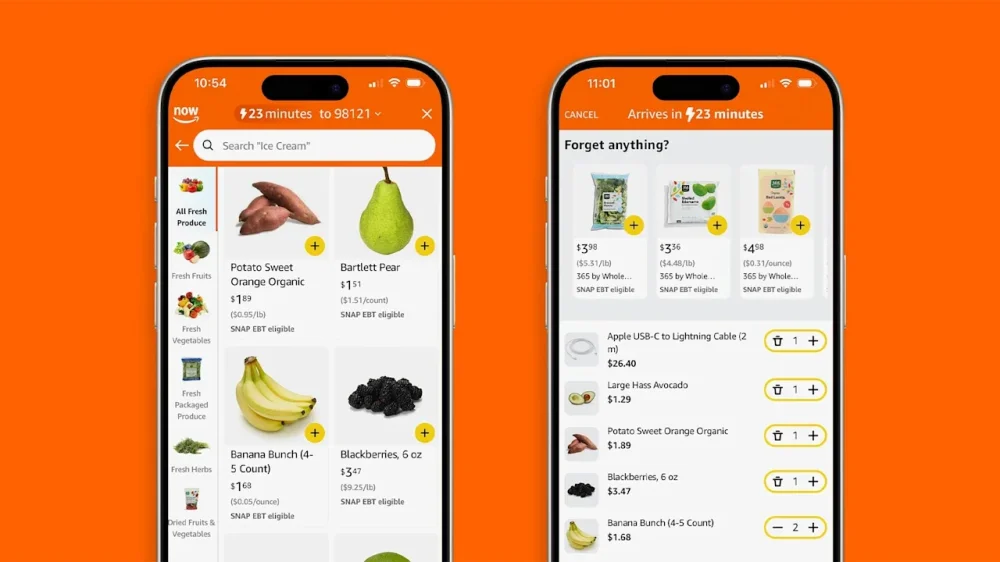
Back in March, Amazon announced new 1-hour and 3-hour delivery options for tens of thousands of items in over 2,000 cities across America. But now the e-commerce juggernaut is making those short wait times look relatively long. Starting today, the company is launching a 30-minute delivery service, dubbed Amazon Now, in several cities across the U.S. Here’s what you need to know. What is Amazon Now? Amazon Now will make thousands of Amazon’s products available for delivery within 30 minutes or less. It joins Amazon’s other existing fast delivery options in the United States. These include under 60-minute delivery with the company’s Prime Air drone service in eight cities, the 1-hour and 3-hour delivery options in more than 2,000 locations, and same-day delivery in more than 10,000 towns and cities. It is also Amazon’s latest salvo in making sure that when you need even the simplest item quickly, it may now be more convenient to order from Amazon instead of hopping in the car and driving to your local Walgreens 15 minutes away. Amazon says Now 30-minute deliveries are possible because they don’t rely on the larger Amazon fulfillment centers, which are often located outside of residential and business areas. Instead, the service utilizes “a network of smaller locations designed for efficient order fulfillment, strategically placed close to where customers live and work,” according to the company. Amazon says that in most areas where Now delivery is available, it operates 24 hours a day. What products are eligible for Amazon Now 30-minute deliveries? While 30-minute deliveries sound convenient, Amazon customers should understand that the Now delivery option is not available for every product Amazon sells. Instead, Now deliveries are limited to select products from certain categories. Those categories include: alcohol (where permitted) baby bakery dairy and eggs electronics fresh produce health personal care pet Where is Amazon Now available? Starting today, Amazon Now is available in only four cities/metro areas in America. They are: Atlanta Dallas-Fort Worth Philadelphia Seattle However, Amazon says the Now delivery option will be “rapidly expanding in dozens more cities.” These include: Austin Denver Houston Minneapolis Oklahoma City Orlando, Florida Phoenix Amazon says it expects to expand the Now service to other cities by the end of 2026. How much do Amazon Now deliveries cost? This is Amazon, so the extra convenience will cost you. Amazon has two pricing structures for its Now delivery option, depending on whether you are a Prime member. If you are a Prime member, an Amazon Now delivery will cost you $3.99 for orders over $15. If your order is under $15, an additional small-order fee of $1.99 will apply. If you are not a Prime member, an Amazon Now delivery will cost you $13.99 for orders over $15. If your order is under $15, an additional small-order fee of $3.99 will apply. View the full article
-
Two months ago, Google rolled out Google Merchant Center For Agencies in the US and Canada after beta testing it in October 2025. Now, Google has released Google Merchant Center for Agencies globally, everywhere.View the full article
-
Google is testing displaying the URL of the search result snippet where the https portion is a dark gray and the domain name portion is a light gray. It is a weird test, but hey, Google is always testing...View the full article
-
If you’re managing accounts payable, you know how vital it is to streamline processes and maintain accuracy. You might find that investing in accounts payable software can greatly improve efficiency and simplify your financial operations. With various options available, each customized to unique business needs, it’s important to explore which solution aligns best with your goals. Let’s examine the top ten accounts payable software solutions that can transform your approach to managing payments and invoices. Key Takeaways Tipalti: Offers extensive AP automation with support for global payments and tax compliance, ideal for businesses with international operations. AvidXchange: Tailored for mid-sized to large companies, featuring advanced invoice capture and streamlined payment processes. Coupa: Provides enterprise-grade spend management and procurement solutions, enhancing financial control and visibility for large organizations. Airbase: Combines accounts payable with corporate card management in a unified spend management platform for improved financial oversight. BILL: Designed for SMBs, it delivers a user-friendly, paperless accounts payable solution that integrates seamlessly with existing accounting software. Signs You Need an Accounts Payable Software If you find that manual processes are overwhelming your accounts payable (AP) team and leading to increased errors, it might be time to contemplate investing in accounts payable software. Frequent payment errors, such as duplicate or incorrect payments, can signal that your current system lacks the required checks and balances, making automation crucial. Furthermore, if you struggle with visibility into approval statuses and cash flow, this can hinder your decision-making and indicate the need for real-time insights that accounts payable software can provide. Legacy systems may complicate reconciliation and introduce audit risks, underscoring the significance of adopting modern solutions that easily integrate with existing systems. Finally, managing multiple entities or global vendors can overwhelm your team, highlighting the requirement for software designed to streamline diverse financial operations. Recognizing these signs can help you make informed decisions about upgrading your accounts payable processes. What Is Accounts Payable Software? Accounts payable software is a digital solution designed to automate the entire payment process for businesses, streamlining tasks that were once labor-intensive and prone to errors. This software improves efficiency by filtering, categorizing, matching, and validating critical accounting information. It integrates seamlessly with existing SAP systems, reducing manual tasks by up to 80% and greatly accelerating invoice processing times. Key functions include invoice processing, approval workflows, and cash disbursement reporting, which collectively enhance cash flow management. Additionally, these solutions improve visibility into approval statuses and cash flow, facilitating better financial decision-making and compliance management. By automating accounts payable processes, you can reduce errors and minimize the risk of duplicate or incorrect payments, eventually improving operational efficiency. When considering options, an accounts payable software comparison can help you identify which solution best meets your business needs, ensuring you make an informed choice for your financial operations. Must-Have Features in Modern AP Automation Software When choosing modern AP automation software, you’ll want to prioritize features that boost efficiency and accuracy in your accounts payable processes. Look for real-time automation capabilities that can streamline end-to-end workflows, cutting manual tasks by up to 80%. Crucial features include invoice scanning and approval routing, which improve data capture and speed up payment processing. Advanced modules should additionally offer self-service onboarding for vendors and strong fraud prevention tools to secure your transactions. Furthermore, reconciliation tools are vital, as they provide automatic payment reconciliation and greater visibility into your spending, helping maintain financial control. Finally, ascertain the software can scale with your business, allowing for the management of multiple entities and currencies as well as adhering to local regulations. When you perform an accounts payable automation software comparison, these must-have features could greatly impact your efficiency and accuracy. Overview of Leading Accounts Payable Software Solutions In today’s fast-paced business environment, selecting the right accounts payable (AP) software solution can greatly impact your financial operations. When considering accounts payable software for large business, a few leading options stand out: Tipalti: Offers extensive AP automation, supporting global payments and tax compliance, ideal for high-growth businesses. AvidXchange: Customized for mid-sized to large businesses, featuring advanced invoice capture and a robust supplier network for high invoice volumes. Coupa: Focuses on spend management and procurement, providing enterprise-grade controls and analytics for complex AP needs. Airbase: A unified spend management platform that integrates accounts payable with corporate cards, enhancing real-time visibility. BILL: Targets SMBs with user-friendly AP automation and seamless integration with accounting software like QuickBooks and Xero. Choosing the right solution can streamline your processes and improve overall efficiency. Tipalti Tipalti offers a thorough accounts payable automation solution designed to streamline your financial processes. With features like AI-driven invoice processing and advanced fraud prevention tools, it greatly reduces AP workloads and improves visibility into cash flow. Moreover, its seamless integration with existing ERP systems makes it an attractive choice for high-growth businesses looking to enhance operational efficiency. Key Features Overview Accounts payable processes can be greatly streamlined with Tipalti, which offers an all-encompassing automation solution that reduces workloads by up to 80%. This automated invoice management system improves efficiency through several key features, including: AI-based invoice automation for quicker processing Purchase order matching to guarantee accuracy Self-service supplier onboarding for faster integration Global payment support across 196 countries and 120 currencies Mass payments software for simplified employee reimbursements With these features, Tipalti not only enhances financial close times by 25% but additionally guarantees compliance with local regulations and tax requirements. As a result, you gain flexibility and control over your financial processes, making it a crucial tool for modern businesses. Integration Capabilities When businesses seek to improve their financial operations, the integration capabilities of Tipalti stand out as a crucial element. This cloud based accounts payable solution offers seamless live, two-way integrations with over 30 major ERP and accounting systems, automating the flow of invoice and expense data in real-time. By considerably reducing manual entry errors, Tipalti boosts data accuracy. Furthermore, its customizable integration options allow you to tailor workflows to meet specific operational needs, particularly for managing multi-entity and global supplier relationships. The platform likewise automates tax compliance processes, ensuring necessary tax forms and validations are collected in accordance with local regulations. With a centralized dashboard, you can monitor real-time financial data, raising visibility into cash flow and spending. Target User Base Many businesses, especially those experiencing rapid growth, find themselves in need of efficient accounts payable solutions that can handle complex financial demands. Tipalti primarily targets a diverse user base, including: High-growth small businesses Mid-market companies Large enterprises Accounts payable companies managing global payments Organizations with multi-entity operations This software is ideal for companies dealing with intricate tax compliance needs and multi-currency transactions. With the ability to facilitate payments in over 200 countries and across 120 currencies, Tipalti offers advanced features like self-service supplier onboarding and invoice matching. Airbase Airbase serves as a unified spend management platform that combines accounts payable, expense management, and corporate card functionalities, which is particularly beneficial for mid-market organizations. With real-time visibility into all non-payroll spending, you can easily upload or email invoices for streamlined approvals, enhancing your workflow efficiency. This automation not only decreases manual entry errors but likewise syncs transaction data directly to your general ledger, simplifying your accounting processes. Unified Spend Management Platform In today’s fast-paced business environment, having a unified spend management platform can greatly boost financial oversight and efficiency. Airbase integrates digital accounts payable, expense management, and corporate cards, offering real-time visibility into all non-payroll spending. Key features include: Easy invoice uploads or emails for streamlined processing Integrated approval workflows to improve payment efficiency Automated accounting that syncs transaction data to the general ledger Support for thousands of customers across over 100 countries A user-friendly interface with a G2 rating of 4.7 stars These features make Airbase an ideal solution for mid-market businesses seeking consolidated financial management, reducing manual entry errors as well as enhancing accuracy and overall operational efficiency. Real-Time Spend Visibility Real-time spend visibility is essential for effective financial management, and it allows businesses to monitor their expenses with precision. Airbase provides this by consolidating all non-payroll spending in a single system, making it easy for you to track expenses seamlessly. You can upload or email invoices directly, integrating approval workflows that give instant visibility into pending and completed transactions. With invoice processing automation, transaction data is continuously updated in the general ledger, enhancing financial accuracy and oversight. The platform likewise allows you to generate real-time insights on spending patterns and budget adherence, empowering you to make informed financial decisions. Its intuitive interface guarantees quick navigation, so you can access critical spend data without needing extensive training. Streamlined Invoice Approvals When managing invoices, the approval process can often become a bottleneck, delaying payments and complicating financial workflows. Airbase addresses these challenges with its streamlined invoice processing systems, enabling you to improve efficiency. Integrated approval workflows let you upload or email invoices easily. Gain real-time visibility into all non-payroll spending for better tracking. Automated accounting syncing reduces manual data entry and updates your general ledger. Accelerate invoice processing times through improved communication among team members. A user-friendly interface guarantees quick onboarding and minimal training needs. With Airbase, your invoice approval process becomes smoother, guaranteeing timely payments and less administrative burden, ultimately improving your overall financial management. AvidXchange AvidXchange offers an efficient accounts payable automation platform customized for mid-sized to large businesses that face the challenge of managing a high volume of invoices and payments. This accounts payable cloud solution features advanced invoice capture and approval workflows, streamlining your invoice processing. With a robust supplier network, you can make seamless electronic payments to suppliers while enjoying multiple payment options for increased flexibility. AvidXchange integrates smoothly with popular accounting systems, which improves efficiency and guarantees compliance with various industry regulations. It’s particularly beneficial for industries like construction, real estate, and utilities, where managing supplier relationships and compliance is vital. By focusing on improving operational efficiency, AvidXchange greatly reduces manual processing time and the costs associated with paper checks and manual invoice handling. This platform helps you optimize your accounts payable process, allowing you to focus on more strategic business activities. BILL BILL stands out as a versatile accounts payable and receivable automation platform customized for small to medium-sized businesses (SMBs), freelancers, and accounting firms. This paperless accounts payable software simplifies your financial workflows through automation and efficiency. Automated invoice approvals reduce manual tasks. Multiple payment methods streamline transactions. Seamless integration with popular accounting software like QuickBooks and Xero improves data synchronization. User-friendly interface allows easy management of AP processes, requiring minimal training. Optimized workflows improve accuracy and speed in financial operations. Coupa Coupa offers a robust solution for spend management and procurement, making it an excellent choice for large enterprises looking to optimize their accounts payable processes. This software leverages AI-driven insights to improve visibility and control over spending, ensuring compliance as well as reducing unnecessary costs. With its ability to integrate seamlessly with various ERP systems, Coupa enhances data accuracy and operational efficiency. Designed for scalability, it accommodates the complex accounts payable and procurement workflows of growing enterprises, allowing them to adapt to changing needs. Trusted by over 1,000 customers globally, including many Fortune 500 companies, Coupa has established a solid reputation in the enterprise software market. NetSuite AP NetSuite AP offers you real-time financial visibility and seamless integration with your existing ERP systems, which is essential for effective accounts payable management. By automating invoice processing and enabling features like two-way matching and automated approval workflows, you can streamline operations and reduce manual errors. This solution not only improves your cash management through insightful analytics but furthermore supports multi-entity management for global vendor payments, ensuring compliance with local regulations. Real-Time Financial Visibility In today’s fast-paced business environment, having real-time financial visibility is vital for effective decision-making. NetSuite AP, a paperless accounts payable system, empowers you with immediate access to important financial data. This enables you to make informed decisions swiftly. Here are some key features that improve your financial oversight: Monitor cash flow and financial performance in real time Track invoice processing times and outstanding payments Access customizable reports for budget tracking Automate manual processes to reduce errors Speed up month-end closing by viewing all transactions instantly With these tools, you can improve operational efficiency, accountability, and strategic planning, ensuring your organization remains competitive in a swiftly changing market. Seamless ERP Integration When organizations utilize seamless ERP integration, they release the full potential of their accounts payable processes. NetSuite AP, part of Oracle’s ERP suite, offers real-time visibility into cash flow and financial controls. This integration improves accuracy by automating invoice processing and linking accounts payable data with other financial systems. You can manage multiple entities and currencies efficiently from a single platform, boosting operational efficiency. The centralized dashboard allows for effective monitoring of spend and supports better budgeting decisions. Feature Benefit Impact Automated Invoice Processing Reduces manual errors Accelerates month-end closes Multi-Entity Management Handles subsidiaries seamlessly Simplifies financial oversight Centralized Dashboard Improves budgeting decisions Enhances spend monitoring With NetSuite AP, you’re optimizing your vendor payment management software for success. Frequently Asked Questions What Software Is Used for Accounts Payable? You can use various software for accounts payable, such as Tipalti, AvidXchange, and Airbase. These solutions automate invoice processing, payment approvals, and reconciliations, streamlining your business’s payment processes. Many integrate with existing ERP systems, ensuring data accuracy and real-time insights. Advanced features like Optical Character Recognition (OCR) and AI-driven fraud detection help minimize errors and risks, allowing you to manage your cash flow and vendor payments more effectively. Which Accounts Payable Automation Solution Is the Most Reliable? When evaluating which accounts payable automation solution is most reliable, consider factors like user ratings, functionality, and integration capabilities. Solutions like Nanonets, with its AI-driven accuracy, and Airbase, known for unified spend management, rank highly. Tipalti shines in global supplier management, whereas AvidXchange focuses on electronic payments for mid-sized businesses. Each option has strengths, so assess your specific needs to determine which solution aligns best with your operational requirements. What Is the Most Widely Used Accounting Software? The most widely used accounting software is QuickBooks, popular among small to medium-sized businesses because of its user-friendly interface and thorough features. Many users appreciate its ability to simplify financial management tasks, such as invoicing and expense tracking. An additional notable option is Xero, favored by startups for its cloud-based capabilities. Depending on your business size and needs, other solutions like Sage Intacct and FreshBooks may likewise be worthwhile to evaluate. Which Is the Best Software for Billing? When you’re looking for the best billing software, consider your specific needs. For thorough accounts payable automation and global payment capabilities, Tipalti might be your best choice. If you want unified spend management, Airbase shines in combining AP with expense tracking. For high-volume invoice processing, AvidXchange is worth exploring. BILL offers streamlined AP and AR processes, whereas Coupa provides AI-driven insights for large organizations seeking robust procurement solutions. Evaluate these options based on your requirements. Conclusion In summary, choosing the right accounts payable software is essential for enhancing your financial processes. Each solution, from Tipalti’s global payment capabilities to AvidXchange’s advanced invoice capture, offers unique features customized to different business needs. By comprehending the must-have functions and evaluating your options, you can streamline your accounts payable operations, reduce manual tasks, and improve financial visibility. Investing in the right software not just boosts efficiency but likewise supports your broader strategic financial goals. Image via Google Gemini and ArtSmart This article, "Top 10 Accounts Payable Software Solutions" was first published on Small Business Trends View the full article
-
If you’re managing accounts payable, you know how vital it is to streamline processes and maintain accuracy. You might find that investing in accounts payable software can greatly improve efficiency and simplify your financial operations. With various options available, each customized to unique business needs, it’s important to explore which solution aligns best with your goals. Let’s examine the top ten accounts payable software solutions that can transform your approach to managing payments and invoices. Key Takeaways Tipalti: Offers extensive AP automation with support for global payments and tax compliance, ideal for businesses with international operations. AvidXchange: Tailored for mid-sized to large companies, featuring advanced invoice capture and streamlined payment processes. Coupa: Provides enterprise-grade spend management and procurement solutions, enhancing financial control and visibility for large organizations. Airbase: Combines accounts payable with corporate card management in a unified spend management platform for improved financial oversight. BILL: Designed for SMBs, it delivers a user-friendly, paperless accounts payable solution that integrates seamlessly with existing accounting software. Signs You Need an Accounts Payable Software If you find that manual processes are overwhelming your accounts payable (AP) team and leading to increased errors, it might be time to contemplate investing in accounts payable software. Frequent payment errors, such as duplicate or incorrect payments, can signal that your current system lacks the required checks and balances, making automation crucial. Furthermore, if you struggle with visibility into approval statuses and cash flow, this can hinder your decision-making and indicate the need for real-time insights that accounts payable software can provide. Legacy systems may complicate reconciliation and introduce audit risks, underscoring the significance of adopting modern solutions that easily integrate with existing systems. Finally, managing multiple entities or global vendors can overwhelm your team, highlighting the requirement for software designed to streamline diverse financial operations. Recognizing these signs can help you make informed decisions about upgrading your accounts payable processes. What Is Accounts Payable Software? Accounts payable software is a digital solution designed to automate the entire payment process for businesses, streamlining tasks that were once labor-intensive and prone to errors. This software improves efficiency by filtering, categorizing, matching, and validating critical accounting information. It integrates seamlessly with existing SAP systems, reducing manual tasks by up to 80% and greatly accelerating invoice processing times. Key functions include invoice processing, approval workflows, and cash disbursement reporting, which collectively enhance cash flow management. Additionally, these solutions improve visibility into approval statuses and cash flow, facilitating better financial decision-making and compliance management. By automating accounts payable processes, you can reduce errors and minimize the risk of duplicate or incorrect payments, eventually improving operational efficiency. When considering options, an accounts payable software comparison can help you identify which solution best meets your business needs, ensuring you make an informed choice for your financial operations. Must-Have Features in Modern AP Automation Software When choosing modern AP automation software, you’ll want to prioritize features that boost efficiency and accuracy in your accounts payable processes. Look for real-time automation capabilities that can streamline end-to-end workflows, cutting manual tasks by up to 80%. Crucial features include invoice scanning and approval routing, which improve data capture and speed up payment processing. Advanced modules should additionally offer self-service onboarding for vendors and strong fraud prevention tools to secure your transactions. Furthermore, reconciliation tools are vital, as they provide automatic payment reconciliation and greater visibility into your spending, helping maintain financial control. Finally, ascertain the software can scale with your business, allowing for the management of multiple entities and currencies as well as adhering to local regulations. When you perform an accounts payable automation software comparison, these must-have features could greatly impact your efficiency and accuracy. Overview of Leading Accounts Payable Software Solutions In today’s fast-paced business environment, selecting the right accounts payable (AP) software solution can greatly impact your financial operations. When considering accounts payable software for large business, a few leading options stand out: Tipalti: Offers extensive AP automation, supporting global payments and tax compliance, ideal for high-growth businesses. AvidXchange: Customized for mid-sized to large businesses, featuring advanced invoice capture and a robust supplier network for high invoice volumes. Coupa: Focuses on spend management and procurement, providing enterprise-grade controls and analytics for complex AP needs. Airbase: A unified spend management platform that integrates accounts payable with corporate cards, enhancing real-time visibility. BILL: Targets SMBs with user-friendly AP automation and seamless integration with accounting software like QuickBooks and Xero. Choosing the right solution can streamline your processes and improve overall efficiency. Tipalti Tipalti offers a thorough accounts payable automation solution designed to streamline your financial processes. With features like AI-driven invoice processing and advanced fraud prevention tools, it greatly reduces AP workloads and improves visibility into cash flow. Moreover, its seamless integration with existing ERP systems makes it an attractive choice for high-growth businesses looking to enhance operational efficiency. Key Features Overview Accounts payable processes can be greatly streamlined with Tipalti, which offers an all-encompassing automation solution that reduces workloads by up to 80%. This automated invoice management system improves efficiency through several key features, including: AI-based invoice automation for quicker processing Purchase order matching to guarantee accuracy Self-service supplier onboarding for faster integration Global payment support across 196 countries and 120 currencies Mass payments software for simplified employee reimbursements With these features, Tipalti not only enhances financial close times by 25% but additionally guarantees compliance with local regulations and tax requirements. As a result, you gain flexibility and control over your financial processes, making it a crucial tool for modern businesses. Integration Capabilities When businesses seek to improve their financial operations, the integration capabilities of Tipalti stand out as a crucial element. This cloud based accounts payable solution offers seamless live, two-way integrations with over 30 major ERP and accounting systems, automating the flow of invoice and expense data in real-time. By considerably reducing manual entry errors, Tipalti boosts data accuracy. Furthermore, its customizable integration options allow you to tailor workflows to meet specific operational needs, particularly for managing multi-entity and global supplier relationships. The platform likewise automates tax compliance processes, ensuring necessary tax forms and validations are collected in accordance with local regulations. With a centralized dashboard, you can monitor real-time financial data, raising visibility into cash flow and spending. Target User Base Many businesses, especially those experiencing rapid growth, find themselves in need of efficient accounts payable solutions that can handle complex financial demands. Tipalti primarily targets a diverse user base, including: High-growth small businesses Mid-market companies Large enterprises Accounts payable companies managing global payments Organizations with multi-entity operations This software is ideal for companies dealing with intricate tax compliance needs and multi-currency transactions. With the ability to facilitate payments in over 200 countries and across 120 currencies, Tipalti offers advanced features like self-service supplier onboarding and invoice matching. Airbase Airbase serves as a unified spend management platform that combines accounts payable, expense management, and corporate card functionalities, which is particularly beneficial for mid-market organizations. With real-time visibility into all non-payroll spending, you can easily upload or email invoices for streamlined approvals, enhancing your workflow efficiency. This automation not only decreases manual entry errors but likewise syncs transaction data directly to your general ledger, simplifying your accounting processes. Unified Spend Management Platform In today’s fast-paced business environment, having a unified spend management platform can greatly boost financial oversight and efficiency. Airbase integrates digital accounts payable, expense management, and corporate cards, offering real-time visibility into all non-payroll spending. Key features include: Easy invoice uploads or emails for streamlined processing Integrated approval workflows to improve payment efficiency Automated accounting that syncs transaction data to the general ledger Support for thousands of customers across over 100 countries A user-friendly interface with a G2 rating of 4.7 stars These features make Airbase an ideal solution for mid-market businesses seeking consolidated financial management, reducing manual entry errors as well as enhancing accuracy and overall operational efficiency. Real-Time Spend Visibility Real-time spend visibility is essential for effective financial management, and it allows businesses to monitor their expenses with precision. Airbase provides this by consolidating all non-payroll spending in a single system, making it easy for you to track expenses seamlessly. You can upload or email invoices directly, integrating approval workflows that give instant visibility into pending and completed transactions. With invoice processing automation, transaction data is continuously updated in the general ledger, enhancing financial accuracy and oversight. The platform likewise allows you to generate real-time insights on spending patterns and budget adherence, empowering you to make informed financial decisions. Its intuitive interface guarantees quick navigation, so you can access critical spend data without needing extensive training. Streamlined Invoice Approvals When managing invoices, the approval process can often become a bottleneck, delaying payments and complicating financial workflows. Airbase addresses these challenges with its streamlined invoice processing systems, enabling you to improve efficiency. Integrated approval workflows let you upload or email invoices easily. Gain real-time visibility into all non-payroll spending for better tracking. Automated accounting syncing reduces manual data entry and updates your general ledger. Accelerate invoice processing times through improved communication among team members. A user-friendly interface guarantees quick onboarding and minimal training needs. With Airbase, your invoice approval process becomes smoother, guaranteeing timely payments and less administrative burden, ultimately improving your overall financial management. AvidXchange AvidXchange offers an efficient accounts payable automation platform customized for mid-sized to large businesses that face the challenge of managing a high volume of invoices and payments. This accounts payable cloud solution features advanced invoice capture and approval workflows, streamlining your invoice processing. With a robust supplier network, you can make seamless electronic payments to suppliers while enjoying multiple payment options for increased flexibility. AvidXchange integrates smoothly with popular accounting systems, which improves efficiency and guarantees compliance with various industry regulations. It’s particularly beneficial for industries like construction, real estate, and utilities, where managing supplier relationships and compliance is vital. By focusing on improving operational efficiency, AvidXchange greatly reduces manual processing time and the costs associated with paper checks and manual invoice handling. This platform helps you optimize your accounts payable process, allowing you to focus on more strategic business activities. BILL BILL stands out as a versatile accounts payable and receivable automation platform customized for small to medium-sized businesses (SMBs), freelancers, and accounting firms. This paperless accounts payable software simplifies your financial workflows through automation and efficiency. Automated invoice approvals reduce manual tasks. Multiple payment methods streamline transactions. Seamless integration with popular accounting software like QuickBooks and Xero improves data synchronization. User-friendly interface allows easy management of AP processes, requiring minimal training. Optimized workflows improve accuracy and speed in financial operations. Coupa Coupa offers a robust solution for spend management and procurement, making it an excellent choice for large enterprises looking to optimize their accounts payable processes. This software leverages AI-driven insights to improve visibility and control over spending, ensuring compliance as well as reducing unnecessary costs. With its ability to integrate seamlessly with various ERP systems, Coupa enhances data accuracy and operational efficiency. Designed for scalability, it accommodates the complex accounts payable and procurement workflows of growing enterprises, allowing them to adapt to changing needs. Trusted by over 1,000 customers globally, including many Fortune 500 companies, Coupa has established a solid reputation in the enterprise software market. NetSuite AP NetSuite AP offers you real-time financial visibility and seamless integration with your existing ERP systems, which is essential for effective accounts payable management. By automating invoice processing and enabling features like two-way matching and automated approval workflows, you can streamline operations and reduce manual errors. This solution not only improves your cash management through insightful analytics but furthermore supports multi-entity management for global vendor payments, ensuring compliance with local regulations. Real-Time Financial Visibility In today’s fast-paced business environment, having real-time financial visibility is vital for effective decision-making. NetSuite AP, a paperless accounts payable system, empowers you with immediate access to important financial data. This enables you to make informed decisions swiftly. Here are some key features that improve your financial oversight: Monitor cash flow and financial performance in real time Track invoice processing times and outstanding payments Access customizable reports for budget tracking Automate manual processes to reduce errors Speed up month-end closing by viewing all transactions instantly With these tools, you can improve operational efficiency, accountability, and strategic planning, ensuring your organization remains competitive in a swiftly changing market. Seamless ERP Integration When organizations utilize seamless ERP integration, they release the full potential of their accounts payable processes. NetSuite AP, part of Oracle’s ERP suite, offers real-time visibility into cash flow and financial controls. This integration improves accuracy by automating invoice processing and linking accounts payable data with other financial systems. You can manage multiple entities and currencies efficiently from a single platform, boosting operational efficiency. The centralized dashboard allows for effective monitoring of spend and supports better budgeting decisions. Feature Benefit Impact Automated Invoice Processing Reduces manual errors Accelerates month-end closes Multi-Entity Management Handles subsidiaries seamlessly Simplifies financial oversight Centralized Dashboard Improves budgeting decisions Enhances spend monitoring With NetSuite AP, you’re optimizing your vendor payment management software for success. Frequently Asked Questions What Software Is Used for Accounts Payable? You can use various software for accounts payable, such as Tipalti, AvidXchange, and Airbase. These solutions automate invoice processing, payment approvals, and reconciliations, streamlining your business’s payment processes. Many integrate with existing ERP systems, ensuring data accuracy and real-time insights. Advanced features like Optical Character Recognition (OCR) and AI-driven fraud detection help minimize errors and risks, allowing you to manage your cash flow and vendor payments more effectively. Which Accounts Payable Automation Solution Is the Most Reliable? When evaluating which accounts payable automation solution is most reliable, consider factors like user ratings, functionality, and integration capabilities. Solutions like Nanonets, with its AI-driven accuracy, and Airbase, known for unified spend management, rank highly. Tipalti shines in global supplier management, whereas AvidXchange focuses on electronic payments for mid-sized businesses. Each option has strengths, so assess your specific needs to determine which solution aligns best with your operational requirements. What Is the Most Widely Used Accounting Software? The most widely used accounting software is QuickBooks, popular among small to medium-sized businesses because of its user-friendly interface and thorough features. Many users appreciate its ability to simplify financial management tasks, such as invoicing and expense tracking. An additional notable option is Xero, favored by startups for its cloud-based capabilities. Depending on your business size and needs, other solutions like Sage Intacct and FreshBooks may likewise be worthwhile to evaluate. Which Is the Best Software for Billing? When you’re looking for the best billing software, consider your specific needs. For thorough accounts payable automation and global payment capabilities, Tipalti might be your best choice. If you want unified spend management, Airbase shines in combining AP with expense tracking. For high-volume invoice processing, AvidXchange is worth exploring. BILL offers streamlined AP and AR processes, whereas Coupa provides AI-driven insights for large organizations seeking robust procurement solutions. Evaluate these options based on your requirements. Conclusion In summary, choosing the right accounts payable software is essential for enhancing your financial processes. Each solution, from Tipalti’s global payment capabilities to AvidXchange’s advanced invoice capture, offers unique features customized to different business needs. By comprehending the must-have functions and evaluating your options, you can streamline your accounts payable operations, reduce manual tasks, and improve financial visibility. Investing in the right software not just boosts efficiency but likewise supports your broader strategic financial goals. Image via Google Gemini and ArtSmart This article, "Top 10 Accounts Payable Software Solutions" was first published on Small Business Trends View the full article
-
A wave of new research suggests Donald The President is taking significant risks with his assaults on the US Federal ReserveView the full article
-
A practical look at how SEOs and affiliate marketers can adapt payment models, brand positioning, and partnerships for AI-powered discovery. The post 3 Actionable Ways Affiliate Managers & SEOs Can Keep Relevant – Ask An SEO appeared first on Search Engine Journal. View the full article
-
Did you know that Bing Webmaster Tools treats http and https as the same property, it does not distinguish between http and https? This is different from Google Search Console, which lets you set up a property for each and every variation. View the full article