All Activity
- Past hour
-
Grasping the meaning of a franchisee is crucial for anyone considering entering the realm of franchising. A franchisee buys the rights to run a business under an established brand, which comes with a proven business model and support. Before jumping in, you need to evaluate your skills, finances, and interests. By exploring various franchise types, you can identify which aligns with your goals. Curious about what steps to take next? Key Takeaways A franchisee is a business owner who purchases rights to operate under an established brand and benefits from franchisor support. Franchise ownership provides access to a proven business model, enhancing success rates and customer trust. Assess your transferable skills, financial resources, and personal readiness before pursuing franchise ownership. Explore different franchise types, such as product distribution, investment, and job franchises, to align with your goals. Success as a franchisee involves operational excellence, team development, and leveraging continuous support from the franchisor. What Is a Franchisee? A franchisee is fundamentally a business owner who buys the rights to operate under a well-known brand, such as McDonald’s or The UPS Store. The franchisee meaning involves purchasing a business model from a franchisor, which is a company that grants these rights. By doing so, you gain access to established trademarks, proven marketing strategies, and operational support, enhancing consumer trust. Nevertheless, you must pay an initial franchise fee and ongoing royalties, which can vary by brand. As a franchisee, you operate independently but must follow the franchisor’s guidelines to maintain brand consistency. Your franchise agreement will outline territorial rights, contract duration, and training obligations, ensuring compliance with the established business model. The Benefits of Becoming a Franchisee Becoming a franchisee offers numerous advantages that can greatly improve your business expedition. Here are some key benefits you can expect: Established Brand: You’ll operate under a recognized name, enhancing customer trust and visibility. Proven Business Model: Accessing a successful framework increases your chances of success compared to independent ventures. Marketing Support: You can leverage franchisor advertising efforts, reducing your need for personal marketing investments while benefiting from national recognition. Flexible Lifestyle: Many franchises provide adaptable hours and low ongoing costs, allowing you to balance work and life as you aim for substantial earnings, often exceeding £100k annually. These benefits combine to create a compelling case for considering franchise ownership as a viable business option. Assessing Your Readiness for Franchise Ownership How can you determine if you’re truly ready for franchise ownership? Start by evaluating your transferable skills, like leadership and customer service, which are vital for successfully managing a franchise. Next, review your financial resources, including savings, credit, and financing options, to guarantee you can cover initial investments and ongoing fees. Reflect on the time and effort required, as many franchises demand substantial commitment in the early stages. It’s additionally fundamental to align the franchise with your personal strengths and interests, enhancing motivation and success potential. Finally, conduct a self-evaluation to see if your past experiences match the operational challenges of running a franchise, paving the way for informed decision-making in your path ahead. Types of Franchises and Their Characteristics When considering franchise ownership, it’s essential to understand the different types available, as each type has unique characteristics and operational guidelines. For instance, business format franchises offer a thorough system for operation and marketing, whereas investment franchises require a more substantial financial commitment and focus on managing multiple teams. Major Franchise Types Franchising offers various models customized to different business needs, making it essential to understand the major types of franchises. Here are four key types: Product Distribution Franchises: You distribute goods from the franchisor, acting as an intermediary, like Coca-Cola or John Deere. Investment Franchises: These require significant financial investment and often involve managing multiple locations, where you take a more passive role. Job Franchises: Ideal for individual entrepreneurs, these focus on small businesses with lower initial investments and emphasize service delivery. Conversion Franchises: You convert an existing independent business into a franchise, benefiting from established brand recognition. Understanding these types will help you select a franchise that aligns with your goals and capabilities. Business Format Franchises Business format franchises stand out due to their structured approach, which offers franchisees an extensive system for running their operations. In this model, the franchisor maintains significant control over key aspects, ensuring brand consistency and a unified customer experience across all locations. As a franchisee, you’ll need to follow strict operational guidelines, including product offerings, pricing strategies, and service protocols, set by the franchisor. This structure not only helps maintain quality but also simplifies your management process. Furthermore, business format franchises often allow for multiple units, enabling you to scale your operations and potentially increase your income by overseeing several locations. Successful examples include renowned brands like McDonald’s and The UPS Store, illustrating the model’s effectiveness in various industries. Investment Franchise Characteristics Investment franchises present a unique opportunity for individuals looking to invest significant capital while benefiting from established brands. These franchises typically focus on sectors like hotels, restaurants, and retail, allowing you to leverage the franchisor’s reputation. Here are some key characteristics: High Initial Investment: Expect to invest between $100,000 and over $1 million. Passive Role: You’ll often manage multiple locations or teams, avoiding daily operations. Established Systems: Franchisors provide operational frameworks to guarantee consistency and efficiency. Potential Risks and Rewards: Although high returns are possible, thorough financial assessments are crucial before committing. Successful candidates usually have strong management skills, significant financial resources, and a commitment to follow established guidelines from the franchisor. Key Steps to Becoming a Successful Franchisee Before you jump into franchise ownership, it’s essential to assess your personal readiness, including your skills and financial situation. Once you have a clear comprehension of your capabilities, start researching franchise options that align with your interests and values. This thorough evaluation will set the foundation for a successful franchise expedition. Assess Personal Readiness Evaluating your personal readiness to become a franchisee is a vital step in the process toward successful business ownership. To guarantee you’re prepared, consider these key factors: Transferable Skills: Identify your strengths in areas like leadership, customer service, and financial management, as these are critical for franchise success. Financial Readiness: Review your savings and credit history to confirm you can cover the initial investment and ongoing fees. Time Commitment: Reflect on the significant dedication needed to manage a franchise effectively, meeting operational and customer service expectations. Alignment: Confirm the franchise aligns with your interests and strengths, as this increases your chances of success and satisfaction in your new venture. Research Franchise Options Researching franchise options is crucial for anyone looking to become a successful franchisee, as it helps you identify opportunities that not merely match your interests but also meet the demands of your local market. Start by conducting thorough market research to find franchises that align with community needs, guaranteeing profitability. Carefully evaluate the Franchise Disclosure Document (FDD) for vital financial data and investment requirements. Networking with existing franchisees can provide valuable insights into their experiences and the support from the franchisor. Assess the franchisor’s training programs and ongoing support to make sure you’ll have the resources needed for success. Finally, consider attending franchise expos and workshops to explore various brands and gather information to make an informed decision. Understanding Franchise Costs and Financing Options Comprehending the costs associated with franchising is fundamental for anyone considering this business model, as these expenses can vary widely based on the brand and industry. To help you navigate this terrain, here are key financial considerations: Initial Franchise Fees: These can range from $20,000 to over $100,000, depending on the brand. Ongoing Royalties: Typically a percentage of your sales, these fees support franchisor services. Marketing Contributions: Franchisors may require additional fees to support brand promotion. Working Capital: Budgeting for operational costs and unexpected expenses is vital during the startup phase. Exploring financing options, such as bank loans or SBA loans, can help you meet these costs and assess your financial readiness. Operational Excellence in Franchise Management Operational excellence in franchise management is fundamental for achieving long-term success and profitability. Implementing best practices in inventory management and cost control helps maintain efficiency and profitability. Consistency in service delivery meets customer expectations and reinforces your brand reputation across all locations. You should focus on creating a memorable customer experience through high-quality service and engagement, as this can substantially boost customer loyalty and repeat business. Collaborating closely with your franchisor during the location selection process can improve visibility and foot traffic, contributing to overall success. Finally, investing in team training and development is imperative; skilled employees are critical for effectively representing your brand and delivering exceptional experiences to customers, eventually driving sales and growth. Continuous Support and Development for Franchisees Continuous support and development are crucial for franchisees, as they navigate the challenges of running a successful business. By leveraging the resources provided by franchisors, you can improve your operations and growth potential. Key components of this support include: Ongoing Training Programs: Stay updated on industry best practices and operational improvements. Network of Fellow Franchisees: Collaborate and share experiences, creating a supportive community. Marketing Resources: Access strategic guidance to effectively attract and retain customers. Regular Assessments: Identify areas for improvement and capitalize on growth opportunities. These initiatives, including workshops and seminars, are designed to help you boost your skills and adapt to ever-changing market conditions, eventually contributing to your business’s success. Frequently Asked Questions What Is the Meaning of Franchisee in Business? A franchisee is someone who purchases the rights to operate a business under an established brand. You’ll typically pay an initial fee and ongoing royalties to the franchisor, who provides support and training. As a franchisee, you manage your own business while following the franchisor’s guidelines. This arrangement allows you to tap into a proven business model, which can improve your chances of success compared to starting an independent business from scratch. What Are the 4 P’s of Franchising? The 4 P’s of franchising are Product, Price, Place, and Promotion. You need to offer high-quality products that align with your franchisor’s brand. When setting prices, make sure they’re competitive but follow the franchisor’s guidelines. Choosing the right Place is vital; consider demographics and foot traffic for accessibility. Finally, leverage the franchisor’s Promotion strategies to improve your marketing efforts and attract customers effectively to grow your franchise successfully. Why Does It Only Cost $10k to Own a Chick-Fil-A Franchise? It costs only $10,000 to own a Chick-fil-A franchise since the company covers most startup costs, including construction and equipment. This low initial fee contrasts sharply with other franchises that can exceed $100,000. Nevertheless, you must be heavily involved in daily operations, which helps reduce overhead. Moreover, Chick-fil-A employs a profit-sharing model, allowing the company to retain a significant portion of revenue as franchisees earn a percentage of sales. What Is Your Understanding of the Role of a Franchisee? A franchisee’s role involves operating a business under a franchisor’s established brand. You manage daily operations, ensuring compliance with brand standards and maintaining quality. This includes paying an initial franchise fee and ongoing royalties, which support access to proven marketing strategies. You likewise benefit from training and operational guidance provided by the franchisor. Conducting thorough research, including reviewing the Franchise Disclosure Document, is crucial to understand your financial obligations and growth potential. Conclusion In summary, comprehending the role of a franchisee is crucial for anyone contemplating this path in business. By recognizing the benefits, evaluating your readiness, and exploring different franchise types, you can make informed decisions. The key steps to success involve not merely financial planning but additionally operational management and continuous support from the franchisor. With careful preparation and dedication, you can effectively navigate the franchise environment and work in the direction of achieving your entrepreneurial goals. Image via Google Gemini This article, "Understanding Franchisee Meaning – A How-To Guide for Aspiring Business Owners" was first published on Small Business Trends View the full article
-
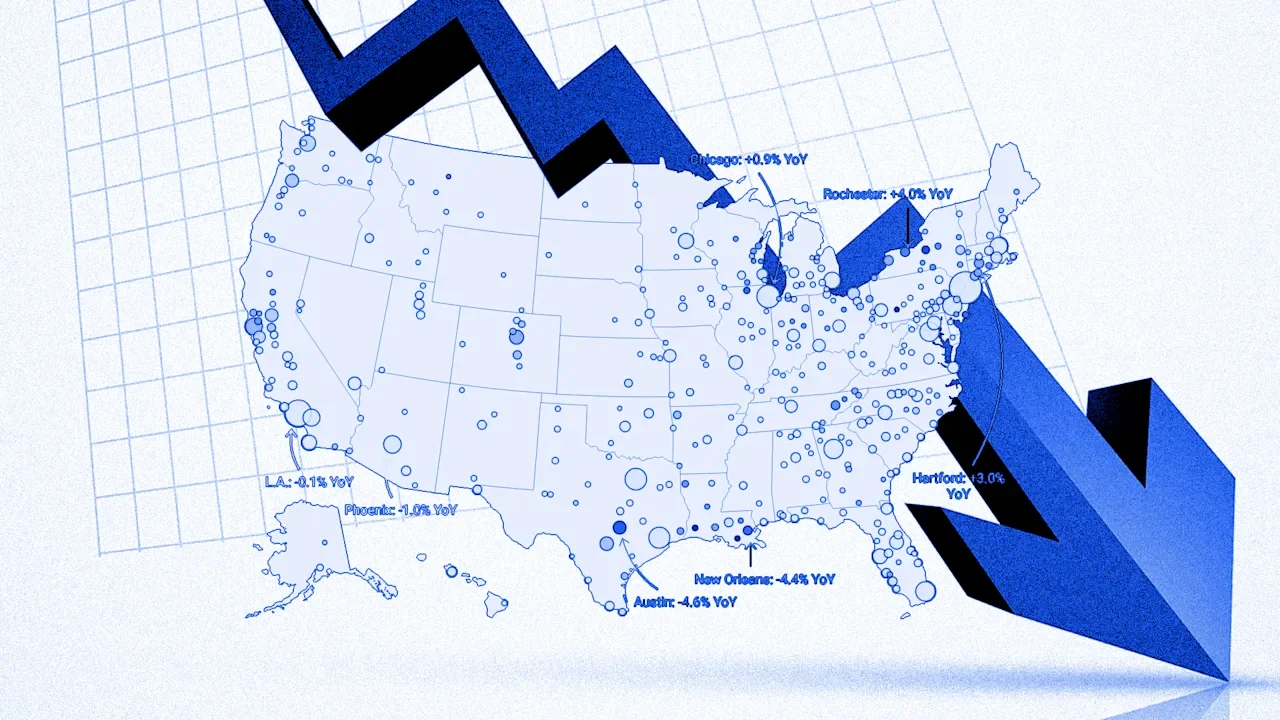
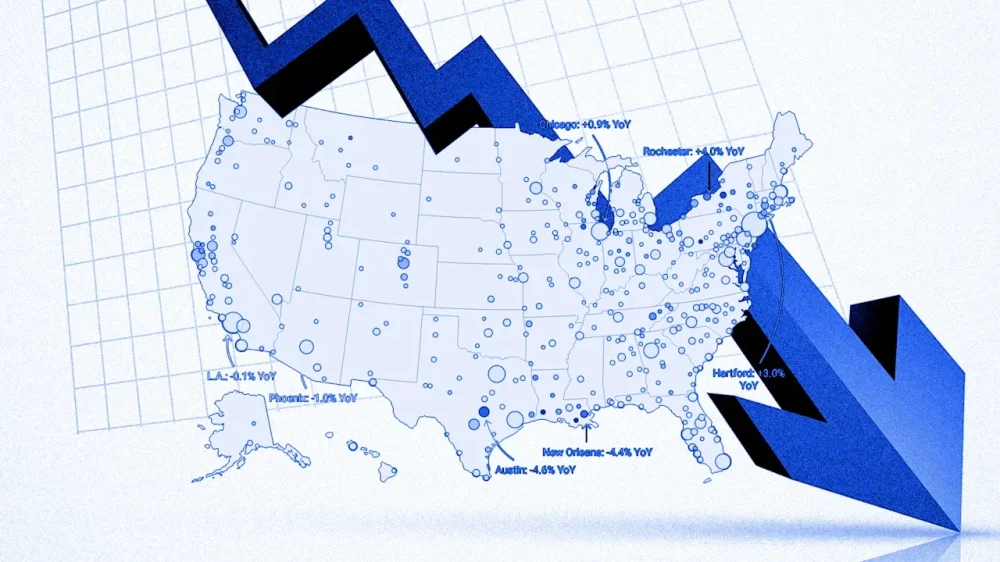
Want more housing market stories from Lance Lambert’s ResiClub in your inbox? Subscribe to the ResiClub newsletter. Zillow economists just published their updated 12-month forecast, projecting that U.S. home prices—as measured by the Zillow Home Value Index—will shift +0.0% between March 2026 and March 2027. That’s a mild downward revision from its 12-month forecast published last month (+0.5%). U.S. home prices, as measured by the Zillow Home Value Index, are currently up +0.8% year-over-year. Zillow’s latest 12-month outlook (+0.0%) expects national home prices to remain near that subdued pace. As long as national home price growth remains below U.S. income growth (currently up +3.9%), underlying fundamentals should continue to improve as the Pandemic Housing Boom’s housing demand pull ahead and overheating gets smoothed out. If that trend continues—and mortgage rates don’t spike—national housing affordability should also continue to gradually improve. While Zillow’s national home price forecast isn’t negative—it isn’t exactly bullish either. They’re calling for a soft national housing market in 2026, one where national housing affordability may improve slightly as U.S. income growth outpaces U.S. home price growth. What type of regional variation does Zillow anticipate over the next 12 months? Click here for an interactive version of Zillow’s forecast for over 400 markets Among the 300 largest U.S. metro area housing markets, Zillow forecast the biggest home price increase between March 2026 and March 2027 to occur in these 15 metros: Syracuse, NY —> +5.0% Rockford, IL —> +4.5% Atlantic City, NJ —> +4.5% Rochester, NY —> +4.0% Utica, NY —> +3.5% Knoxville, TN —> +3.4% Norwich, CT —> +3.3% Binghamton, NY —> +3.3% Morristown, TN —> +3.3% Green Bay, WI —> +3.2% Appleton, WI —> +3.1% Wausau, WI —> +3.1% Pottsville, PA —> +3.1% Hartford, CT —> +3.0% Janesville, WI —> +3.0% Among the 300 largest U.S. metro area housing markets, Zillow forecast the biggest home price decline between March 2026 and March 2027 to occur in these 15 metros: Houma, LA —> -7.0% Lake Charles, LA —> -5.6% Austin, TX —> -4.6% New Orleans, LA —> -4.4% Shreveport, LA —> -3.6% Beaumont, TX —> -3.4% Alexandria, LA —> -3.4% Lafayette, LA —> -3.2% Vallejo, CA —> -3.2% Chico, CA —> -3.2% Punta Gorda, FL —> -3.1% Denver, CO —> -3.0% Santa Rosa, CA —> -3.0% Corpus Christi, TX —> -2.7% San Antonio, TX —> -2.6% My quick take: Based on my own analysis, I believe Zillow is too bearish on the New Orleans metro area housing market—which is showing signs of mild tightening (see map below) after passing through a correction—and also too bearish on pockets of the Bay Area—especially San Jose—which has benefited from the AI boom. Below is what the current year-over-year rate of home price change looks like for single-family and condo home prices. The Sun Belt, in particular Southwest Florida, is currently the epicenter of housing market softness over the past year. View the full article
-
Self-employment tax is a vital aspect of your financial obligations if you earn $400 or more through self-employment, such as freelancing or running a sole proprietorship. This tax, set at a rate of 15.3%, combines contributions for Social Security and Medicare. Anyone operating as a sole proprietor, independent contractor, or in a partnership must understand this tax, as it covers both the employer and employee portions of FICA taxes. But how do you calculate it, and what deductions can you claim? Key Takeaways Self-employment tax is a 15.3% tax that funds Social Security and Medicare for self-employed individuals. Individuals earning $400 or more from self-employment activities are subject to this tax. Sole proprietors, freelancers, independent contractors, and partners in partnerships must pay self-employment tax. The tax includes both the employer and employee portions of FICA taxes, impacting net earnings. Estimated quarterly tax payments are required if self-employed individuals expect to owe $1,000 or more in taxes. Understanding Self-Employment Tax When you earn $400 or more from self-employment activities, comprehension of self-employment tax becomes crucial for your financial planning. This federal tax funds Social Security and Medicare benefits, impacting your long-term financial stability. The self-employment tax rate is 15.3%, which breaks down into 12.4% for Social Security on earnings up to $176,100, and 2.9% for Medicare, with no upper limit. As a self-employed individual, you’re responsible for paying both the employer and employee portions of FICA taxes, meaning you bear the full self-employment tax burden. If you anticipate owing $1,000 or more in taxes, you’ll need to make estimated quarterly tax payments, due on April 15, June 15, September 15, and January 15. Fortunately, you can deduct 50% of your self-employment tax when calculating your income tax, which can help lower your overall taxable income and ease your financial obligation. Who Is Subject to Self-Employment Tax? If you earn $400 or more in self-employment income during the tax year, you’re likely subject to self-employment tax. This tax affects various types of individuals, including sole proprietors, independent contractors, freelancers, and partners in partnerships, in addition to single-member LLCs treated as sole proprietors. Comprehending these requirements is fundamental for managing your tax obligations effectively. Types of Self-Employed Individuals Self-employment tax is a crucial consideration for various types of self-employed individuals, all of whom must navigate their tax obligations carefully. Comprehending what’s considered self-employment can help you identify if you fall under this category. Here are some key types of self-employed individuals who owe this tax: Freelancers and independent contractors earning $400 or more from their work. Sole proprietors and single-member LLCs, treated as sole proprietors for tax purposes. Partners in partnerships on their share of partnership income. If you earn from side-hustles, like gig economy jobs, you may likewise need to pay self-employment tax if your net earnings meet the threshold. Being aware of these classifications is crucial for managing your tax responsibilities effectively. Income Threshold Requirements Comprehending the income threshold requirements is essential for anyone maneuvering self-employment tax obligations. If you earn $400 or more in net self-employment income annually, you’re liable for self-employment tax. This applies to sole proprietors, independent contractors, freelancers, and partners in partnerships. Even single-member LLCs fall under this category for tax purposes if they meet the income threshold. It’s significant to highlight that church income exceeding $108.28 also incurs this tax, whereas amounts below that are exempt. Unlike traditional employees, who’ve taxes withheld by their employers, you must calculate your tax based on your net earnings. If you receive payments via self-employed direct deposit, keep accurate records to guarantee compliance with these requirements. Self-Employment Tax Rates Explained Comprehending self-employment tax rates is essential for managing your finances effectively. The combined rate of 15.3% includes a 12.4% Social Security tax and a 2.9% Medicare tax on your net earnings, but there are income caps to take into account. Knowing how these rates apply to your earnings and any additional taxes that may kick in can help you prepare for your tax obligations. Tax Rate Breakdown When you’re self-employed, it’s essential to grasp the breakdown of the self-employment tax rate, which stands at 15.3%. This rate consists of 12.4% for Social Security and 2.9% for Medicare. Comprehending this self-employed tax rate breakdown helps you plan your finances effectively. The Social Security portion applies to the first $176,100 of net earnings. The Medicare portion has no income cap, affecting all net earnings. High-income earners may face an additional 0.9% Medicare tax on income exceeding $200,000. You calculate your self-employment tax on 92.35% of your net earnings. As a self-employed individual, it’s important to estimate and pay quarterly taxes if your liability exceeds $1,000, ensuring compliance with tax regulations. Income Caps Explained Income caps play a crucial role in determining how much self-employment tax you owe. For 2025, the Social Security portion of your self-employment tax applies only to the first $176,100 of your earnings. The self-employment tax rate is 15.3%, made up of 12.4% for Social Security and 2.9% for Medicare, but you’ll calculate it based on 92.35% of your net earnings. For example, if your net earnings are $75,000, you’ll first adjust this figure to about $69,262 for tax purposes. Moreover, any earnings over $200,000 will incur an extra 0.9% Medicare tax. Comprehending these caps is crucial for accurately estimating your tax obligations and avoiding underpayment penalties. How to Calculate Self-Employment Tax Calculating your self-employment tax involves a few straightforward steps that can help you accurately report your earnings. First, determine your net earnings by subtracting your business expenses from your gross income, using Schedule C for reporting. Next, multiply your net earnings by 92.35% to find the taxable amount. The self-employment tax rate is 15.3%, which consists of 12.4% for Social Security (taxed social security earnings) and 2.9% for Medicare (taxed Medicare earnings). Complete Schedule SE to finalize your self-employment tax calculation. Remember, Social Security tax applies only to the first $176,100 of your earnings. Medicare tax applies to all self-employment income without a cap. Once you’ve calculated the tax, transfer the amount to the Other Taxes section of Form 1040 to guarantee proper reporting. Reporting Self-Employment Tax Reporting self-employment tax accurately is essential for maintaining compliance with IRS regulations. To report your self-employment tax, you’ll need to use Schedule C, which details your business income and expenses if you’re not incorporated. Once you’ve calculated your net earnings, you’ll fill out Schedule SE, which determines your self-employment tax amount based on those earnings. When you file your taxes using Form 1040, the total self-employment tax will be included in the Other Taxes section. It’s important to note that you can deduct 50% of your self-employment tax as an income tax deduction on Form 1040, regardless of whether you itemize your deductions. Deductions Available for Self-Employed Individuals When you’re self-employed, comprehension of the deductions available to you is vital for managing your tax liability effectively. By taking advantage of these deductions, you can considerably reduce your taxable income and the amount of self-employment tax you owe. Here are some key deductions to evaluate: Business expenses: You can deduct costs related to advertising, office supplies, travel, and home office expenses on Schedule C, which lowers your net self-employment income. Health insurance premiums: If you pay for your health insurance, you can deduct these premiums, further decreasing your taxable income and self-employment tax. Qualified Business Income (QBI) deduction: This allows you to deduct up to 20% of your qualified business income, offering substantial tax savings. Accurate record-keeping of all business-related expenses is vital to guarantee you claim all eligible deductions effectively. Estimated Tax Payments for Self-Employed Individuals Self-employed individuals need to stay on top of their tax obligations, especially regarding estimated tax payments. If you expect to owe $1,000 or more in federal taxes for the year, you’ll need to make these payments. You can calculate estimated tax payments for self-employed individuals using IRS Form 1040-ES. These payments are due quarterly on April 15, June 15, September 15, and January 15, so you can avoid penalties for underpayment. To determine your estimated taxes, consider your net self-employment income, allowable deductions, and any applicable tax credits. It’s essential to keep accurate records of your income and expenses throughout the year to guarantee your calculations are precise. You can make payments online via the Electronic Federal Tax Payment System (EFTPS) or by mail, but remember to complete Form 1040-ES with your payment to maintain compliance. Benefits of Paying Self-Employment Tax Grasping the benefits of paying self-employment tax is fundamental for anyone working independently, as it directly impacts your financial security in the long run. When you pay self-employment tax, you’re not just meeting a requirement; you’re investing in critical services that can support you later in life. By contributing to Social Security, you secure future retirement and disability benefits. You can deduct 50% of your self-employment tax from your taxable income, leading to potential savings. Paying this tax gives you access to Medicare, ensuring health coverage when you need it. The self-employment tax rate of 15.3% combines both employer and employee contributions, making it a pathway to important social safety net programs. Comprehending these benefits can help you appreciate the role of self-employment tax in safeguarding your financial future, just like traditional employees benefit from their employer contributions. Retirement Options for Self-Employed Taxpayers As you navigate the sphere of self-employment, it is essential to explore various retirement options available to you, which can greatly impact your financial future. Comprehending these options not only assists in securing your retirement but additionally provides potential tax benefits, which can offset your contract labor taxes. Here’s a quick overview of some retirement plans: Retirement Plan Contribution Limits Solo 401(k) Up to $66,000 (catch-up for 50+) SEP IRA Lesser of $66,000 or 25% of net earnings Simple IRA Up to $15,500 (catch-up for 50+ additional $3,500) Defined Benefit Plan Maximum benefits up to $245,000 Tax-Deductible Contributions typically reduce taxable income Each of these options has unique benefits and contribution limits, allowing you to tailor your retirement savings strategy according to your financial situation and goals. Frequently Asked Questions Who Must Pay Self-Employment Tax? If you earn $400 or more in net self-employment income, you’re required to pay self-employment tax. This applies to freelancers, independent contractors, and sole proprietors. If you operate as a single-member LLC or are a partner in a partnership, you’ll likewise owe this tax if your earnings meet the threshold. Who Is Liable for Self-Employment Tax? You’re liable for self-employment tax if you earn $400 or more in self-employment income. This includes freelancers, independent contractors, and sole proprietors. Fundamentally, you pay both the employer and employee portions of the tax, totaling 15.3%. This rate consists of 12.4% for Social Security and 2.9% for Medicare. If you’re a partner in a partnership or a single-member LLC owner, you’re likewise responsible for this tax if your net earnings meet the threshold. How to Avoid Self-Employment Tax? To avoid self-employment tax, consider forming a legal business structure like an S corporation, which allows you to pay yourself a salary. Maximize deductions on Schedule C by tracking business expenses, home office costs, and health insurance premiums. Contributing to retirement accounts such as a Solo 401(k) or SEP IRA can likewise lower your taxable income. Finally, employing family members may help shift income and reduce your tax obligations. How Much Do I Pay in Taxes if I Am Self-Employed? If you’re self-employed, you’ll typically pay a self-employment tax of 15.3% on your net earnings. This includes 12.4% for Social Security, applicable only up to an income cap, and 2.9% for Medicare, which has no cap. You’ll calculate this tax based on 92.35% of your net earnings. If your net income is $50,000, your self-employment tax would be approximately $7,065, requiring estimated quarterly payments to avoid penalties. Conclusion In conclusion, comprehending self-employment tax is crucial for anyone earning $400 or more from self-employment activities. This tax, set at 15.3%, funds Social Security and Medicare, impacting sole proprietors, freelancers, and independent contractors. By calculating and reporting this tax accurately, and utilizing available deductions, you can manage your financial responsibilities effectively. Furthermore, making estimated tax payments helps guarantee compliance and avoid penalties. Eventually, paying this tax contributes to your future benefits and financial security. Image via Google Gemini and ArtSmart This article, "What Is Self Employment Tax and Who Pays It?" was first published on Small Business Trends View the full article
-
For decades, brands functioned primarily as symbols. A logo, a name, a set of visual and verbal signals designed to convey trust, recognition, and meaning. Brand architecture emerged to organize those symbols. Companies needed systems to structure product portfolios and manage sub-brands. These systems ensured that names, identities, and messages worked together coherently across markets and channels. Frameworks were built for a world in which brands communicated. AI is changing that world fundamentally. When a brand is embodied in an AI agent or a conversational interface, it no longer simply represents a company. It interacts with people directly. It answers questions. It makes recommendations. It refuses requests. And sometimes, it corrects itself in real time. In other words, the brand behaves. AI turns brands from symbols into actors. That shift has profound implications for how companies think about brand architecture. Traditional systems were designed to coordinate messages and identities. But when brands begin to act, when they assist, guide, and sometimes make decisions on behalf of users, the challenge becomes something different: governing behavior. 3 EMERGING MODELS FOR AI BRAND ARCHITECTURE As companies experiment with AI, a new set of architectural choices is emerging. The question moves from how many brands a company should have to how many actors should exist in the brand system. Three early models are taking shape. 1. The unified actor (Microsoft Copilot) Microsoft has chosen to extend a single behavioral brand—Copilot—across its ecosystem. Today the same name appears in Word, Excel, Windows, Teams, Bing, and Azure. This approach treats AI as a consistent actor that travels with the user across contexts. The advantage is coherence. Users learn what Copilot is and what it can do, regardless of the application they are using. The challenge is behavioral complexity. The same brand must perform very different roles—from helping a student draft a paper to assisting a developer with debugging code or summarizing enterprise documents. For a unified actor to succeed, the behavioral principles behind the brand must be carefully designed. Users should feel they are interacting with the same entity everywhere, even when the capabilities change. 2. The invisible actor (Apple Intelligence) Apple appears to be taking the opposite approach. With Apple Intelligence, the company has largely avoided creating a separate AI personality. Instead, intelligence is embedded throughout the ecosystem while the Apple brand remains the primary actor. The technology is present, but it does not introduce a new branded entity into the relationship. This strategy minimizes fragmentation. Users continue interacting with Apple rather than a new agent layered on top of the experience. For companies with exceptionally strong master brands, invisibility may be the most powerful architectural choice. The risk is that AI capabilities may be less visible or less differentiated. But the reward is simplicity and coherence. 3. The specialized actor (Salesforce’s evolution from Einstein to Agentforce) A third model is emerging in which AI capabilities evolve into distinct actors within the brand ecosystem. Salesforce’s shift from Einstein to Agentforce illustrates this pattern. The earlier Einstein metaphor framed AI as a singular intelligence layer across the platform. As the technology evolved, Salesforce reframed its architecture around agents designed to perform specific roles. In this model, brand architecture must manage a growing cast of actors, each with a defined behavioral scope but still tied to the parent brand. The advantage is flexibility. The disadvantage is complexity. FROM BRAND DESIGN TO BEHAVIORAL GOVERNANCE These emerging models point to a deeper shift. Traditional brand architecture governed symbols—logos, product names, and visual systems designed to communicate meaning consistently across markets. Companies implemented architectures using either a branded house or a house of brands. But when brands begin to act or interact with users continuously, the challenge becomes governing behavior. How should the brand respond when it cannot answer a question? When should it escalate to a human? How should it acknowledge uncertainty or error? These decisions must be embedded directly in the systems that power the brand. In the AI era, brand architecture becomes more about governing behavior. LANGUAGE AS BEHAVIORAL INFRASTRUCTURE The implications extend beyond architecture into language itself. For decades, brand language largely meant tone of voice and guidelines describing whether a brand should be suggestive or descriptive, sound friendly, authoritative, or playful. But when a brand is embodied in software that interacts with users, tone is no longer enough. A behavioral brand must know how to respond when a user is confused, when a request cannot be fulfilled, when sensitive information is involved, or when the system itself makes a mistake. This means language becomes behavioral infrastructure that powers the brand and needs a framework governing how the brand acts, not just how it looks or sounds. This also raises the bar for naming. Historically, a name functioned primarily as a product or advertising label, helping customers recognize and remember a brand. In the AI era, a name sits at the center of an interaction. When people work with Copilot, Alexa, or Siri, they are engaging with a named entity that assists. It answers questions and occasionally declines requests. The name becomes the actor’s identity. That places new demands on the naming strategy. A name must still be distinctive and memorable, but it must also support trust and credibility across thousands of interactions. A name no longer simply represents a brand. It represents a behavior. THE NEXT ERA OF BRAND ARCHITECTURE AI introduces new brand challenges. Because when brands become actors, architecture must govern behavior. The companies that build the strongest brands will not only be those with the most distinctive identities, they will design systems in which language, behavior, and brand architecture work together. For decades, brands were designed to be seen. In the AI era, they must also be designed to act. David Placek is founder of Lexicon Branding. View the full article

-
Vitol, Trafigura and rivals expand credit lines in anticipation of prolonged disruption to global oil and gas flowsView the full article
-
The Consumer Financial Protection Bureau has finalized changes to Regulation B, which implements the Equal Credit Opportunity Act, to eliminate any liability for indirect discrimination by lenders. The change represents a major shift in how the agency polices lending discrimination. View the full article
-
In an era where customer expectations evolve rapidly, Oracle has launched its Fusion Agentic Applications for customer experience (CX), introducing a groundbreaking approach tailored for small businesses. These applications leverage advanced AI technology, aimed at streamlining sales, service, and marketing processes while turning complexities into opportunities for growth. At the heart of these applications is a coordinated team of specialized AI agents designed to proactively engage with tasks rather than just assist. By operating within established enterprise workflows and securely accessing unified data, these applications promise to empower small business leaders to make informed decisions swiftly. Chris Leone, Oracle’s Executive Vice President of Applications Development, emphasized the necessity of such innovation: “Customer expectations and operational complexity have outpaced traditional systems, creating an urgent need for applications that don’t just support work, but actively drive positive customer outcomes.” The new offerings include five specific applications: Contract Compliance Workspace, Cross-Sell Program Workspace, Marketing Command Center, Sales Command Center, and Service Manager Workspace. Each tool is crafted to target specific challenges faced by sales and marketing teams. Contract Compliance Workspace allows businesses to manage contracts proactively. By semantically analyzing contracts, it enhances oversight, identifies risks, and suggests next steps, shifting the focus from reactive contract management to proactive risk mitigation. Cross-Sell Program Workspace equips sales teams with insights to improve win rates and reduce acquisition costs, changing traditional campaigns into continuous revenue expansion strategies. Marketing Command Center consolidates data from multiple sources, helping marketing professionals prioritize segments and launch targeted growth initiatives, enhancing their response to market changes. Sales Command Center replaces manual oversight processes with continuous monitoring and risk assessment, helping teams convert leads more effectively and drive revenue growth. Service Manager Workspace enhances service quality by proactively monitoring operations and surfacing escalations, thus streamlining the customer service experience. For small businesses, the practical implications of these applications are significant. The streamlined workflows can lead to reduced operational costs, improved efficiency, and enhanced customer satisfaction. However, the integration of such advanced technology does come with considerations. Small business owners may need to invest time and resources into training staff for a smoother transition. Additionally, understanding the intricacies of the applications will be crucial to harnessing their full potential. Another critical aspect is the new Agentic Applications Builder, which allows organizations to develop customized AI automation without the complexity of traditional application development. This builder supports businesses in scaling their operations efficiently while ensuring safety and measurable ROI. As automation takes a more prominent role in various functions, small businesses could find themselves at a competitive advantage by adopting these intelligent solutions. In the intersection of technology and business, Oracle’s entry into the realm of agentic applications holds promise for small businesses looking to boost their operations. By reducing manual workloads and enhancing decision-making capabilities, businesses can refocus on their core competencies. As Leone noted, the urgency for businesses to adapt to growing customer expectations is clear. Implementing tools that actively drive outcomes rather than merely support existing processes will be vital for small businesses aiming to thrive in a competitive market. For more information and to explore the benefits of Oracle’s Fusion Agentic Applications, visit Oracle’s official site. The integration of these new tools could well dictate how small businesses navigate customer experiences in the digital age. Stay ahead of the curve—embracing this innovation might just be the key to unlocking new avenues for growth and elevating your customer interactions. Image via Google Gemini This article, "Oracle Launches AI-Driven Applications to Revolutionize Customer Experience" was first published on Small Business Trends View the full article
-
Google is updating how Google Ads paces budgets for campaigns using ad schedules, shifting toward full monthly spend targets regardless of how many days ads actually run. What’s changing. Starting June 1, campaigns will pace toward the full monthly budget limit (30.4x the daily budget), even if ads are only eligible to run on certain days. Previously, pacing was typically based on the number of active days in the schedule. What’s not changing. Daily and monthly caps remain the same. Campaigns still won’t exceed 2x the daily budget in a single day or 30.4x over a month, and ads won’t serve on disabled days. Why we care. Advertisers using limited schedules — like weekdays only or specific hours — may see spend accelerate, as Google now aims to hit the full monthly cap instead of scaling down on active days. Zoom in. This means campaigns with fewer serving days can spend more aggressively on those days. For example, if ads run only half the month, Google can hit the daily max each day without needing to pull back elsewhere — and still stay under the monthly cap. Between the lines. Google is prioritizing full budget utilization over evenly distributed spend, giving its systems more flexibility to capture demand when campaigns are eligible to run. What to watch. Advertisers with tight schedules may need to revisit budgets and performance expectations, as spend could concentrate more heavily on active days. Bottom line. Budget pacing is becoming less about when ads run — and more about ensuring the full budget gets spent. First seen. Several advertisers mentioned receiving the comms from Google but from Google Ads Coach Jyll Saskin Gales, we got a clarification of what the update means and what isn’t changing on LinkedIn. View the full article
-
Attention is fragmenting further every day as the platforms providing information continue to multiply. There are new players on the scene, like AI search, while companies build proprietary spaces through social networks and communities. Smaller spaces pop up daily through vibe-coded apps. Many of these platforms are noisier than ever, with everyone demanding our attention at once. We’re drowning in information, and trust is eroding in sources like search engines and social media. We still use these platforms for research, but go elsewhere to validate what we find and make decisions. We’re shifting back to a source we’ve trusted since the beginning: other people. That means showing up across multiplying platforms and in as many people-led sources as possible. Search is a trust experience Rachel Botsman is a leading expert and author on trust in the modern world. Botsman defines trust as: “A confident relationship with the unknown.” I’ve read tons of different definitions of trust, but this is by far my favorite. It’s the simplest and touches on the core component of dealing with the unknown or uncertainty. We don’t need trust when outcomes feel certain. We need trust when we’re dealing with the unknown. Searching for information is what humans do when they’re uncertain. There are three trust layers that occur every time we search for information: Self-trust (I’m uncertain.): I don’t trust that I have the information I need to make a decision at this moment in time. Platform trust (Where I trust to search for answers.): Which platform, community, or real-world space do I trust to find answers to my questions? Source trust (Whose or what information I act on.): Do I trust this enough to believe it, click on it, buy it, let it guide me, or change my mind? People can absolutely skip platform trust and jump directly here. Searching for information is a trust experience from start to finish. It’s a human behavior, and, as we’ll discover, the best way to support human behavior is through other humans. Your customers search everywhere. Make sure your brand shows up. The SEO toolkit you know, plus the AI visibility data you need. Start Free Trial Get started with An example of my own search journey to find a trusted answer Here’s what a recent search journey of mine looked like when I was interested in buying a new pair of shoes. I started with AI tools and did some low-trust research, getting a list of options that met my requirements from ChatGPT and cross-referencing that list with Claude’s output. Then I wanted a sense of pricing and delivery timelines (high trust), so I quickly read through reviews while I was still working with the AI outputs (low trust). I searched Amazon for the options surfaced by ChatGPT and Claude, read reviews, got pricing, and noted who ships the quickest. From there, I moved on to Google and found my medium-trust people sources. I checked Reddit for brand and model commentary, read third-party articles on running sites and from running influencers, and watched YouTube video breakdowns. Then I got bombarded with low-trust advertising on social media, seeing retargeting ads everywhere. Finally, I turned to my high-trust people sources. I asked a trusted running community, a neighbor I often see running, and my dad, a former marathon runner. I also went to a running shop and spoke with the sales team. Search journeys now span dozens of platforms and sources Yext’s 2025 research of 2,237 global consumers found more platforms getting used in a single search journey: Approximately 75% of consumers use new search tools more today than they did one year ago. Just 10% trust the first result, while 48% of consumers cross-check answers across platforms. These results very much mirrored my personal search experience. I hit roughly 65 sources in my search journey: Two AI tools, hitting ~10 links in each. Amazon, hitting ~15 products with reviews. Google, scanning ~10 Reddit threads, approximately five third-party sites, and five YouTube videos. Social media, seeing ~10 retargeting ads. Community, receiving seven direct replies. Conversations, three directly with other people. In a similar vein, Expedia’s The Path to Purchase research found that huge amounts of source content are now consumed by travelers planning a trip. In the 45 days prior to booking travel, users spend an average of 303 minutes viewing ~141 pages of travel content. Of my 65 sources, 45 were people-led. This trend can also be seen in professional decisions via the Censuswide – Global Professionals sentiment study (commissioned by LinkedIn) data, which shows 43% of people rate their professional network as their most trusted source, ahead of search engines and AI tools. And the 2026 Edelman Trust Barometer shows a general trend of uncertainty rising and people placing their trust in the people closest to them: Source: 2026 Edelman Trust Barometer Time and time again, we see that when people feel uncertain and need trusted advice, they often turn to others. So how do you turn trust into visibility? During someone’s search journey, you ideally want to show up in: All the platforms they use to find information. As many people-led sources as possible. That sounds pretty overwhelming. To make this workable, you need a playbook that reverses the order: Get mentioned in people-led sources often (by building genuine trust with these people). As a result of these mentions, show up in the major search platforms as they continue rewarding people-led sources. If we optimize at the people layer, the platform layer follows. Build trust, earn mentions, and get visibility. Back to my shoe-purchasing journey. Many folks have taken to social media and review sites to talk about Adidas Terrex (the shoes I finally purchased after my trust-seeking journey), so they were highly visible in all my touchpoints. This means that Adidas is actively engaging in trust-building activities. Adidas has its own running club, events, and communities. They’re engaging with people. Here’s an example of a recent event where they collaborated with the Underground Fan Club to support more women getting into trail running. People are mentioning their brand and products. This single event had hundreds of posts on Instagram from the participants and attendees. Multiply that by their other events and community initiatives, and you can see how their visibility quickly adds up. Plus, they’re appearing via hashtags, account tags, and mentions on social media platforms like TikTok more generally: Adidas Terrex is also getting mentioned in forums — there are full Reddit threads devoted to advice on these shoes. Their people-led source mentions are reflected in AI search platform results: You’ve seen the research: Profound analyzed more than 4 billion AI citations and 300 million answer engine responses and found the data showed that AI search platforms like ChatGPT, Google’s AI Overviews, and Perplexity systematically prioritize human conversation to build trust. AirOps analyzed over 5.5 million LLM responses across ChatGPT, Perplexity, Gemini, and Google AI Mode, and their data showed the top three cited domains drove brand mentions from community and user-generated content platforms. When you genuinely earn the trust of people willing to mention you positively of their own accord, you also capture visibility within search platforms. Because visibility is a byproduct of trust. Get the newsletter search marketers rely on. See terms. Where to go to earn people’s trust Relationships are the bedrock of trust, and there are plenty of places you can go to start building them. These are a few people-led places you can start with: Communities: Online and in person. Events: Conferences and meetups. Social media: LinkedIn, Instagram, TikTok, and similar platforms. Forums: Reddit and Quora. Look for people-led places with the components listed below. The stronger they are in these characteristics, the higher the trust: Where smooth, two-way conversations happen in real time. Where you have the ability to show up consistently. Where your audience gathers for specific, niche reasons and support. Where people are not anonymous and can show up as themselves (not personas). Here’s a general guide for how these environments, when highly engaged, are typically trusted: Trust-building componentsCommunitiesEventsSocialForumsTwo-way conversationsHighHighLowMediumThe ability to show up consistentlyHighMediumHighMediumPeople gather for specific, niche reasonsHighHighLowMediumWhere you can be yourself (not anonymous)HighHighMediumMedium Communities and events require lengthier time commitments and higher financial investment, but the trust-building components are very strong. Entering these spaces gives you more of the tools you need to build both relationships and trust. Social media and forums have lower barriers to entry, but the trust-building components are weaker. You can find the places you want to start with by: Directly surveying your customers and audience on where they spend time. See who’s frequently mentioned in your industry’s newsletters, podcasts, and other publications. Perform a search in your search platform of choice. How to engage in trust-building spaces People are seeking information to help them gain confidence in what they’re unsure about. They’re seeking help, and help builds trust. This means helping is your primary objective – not building brand awareness, pushing folks through your consideration funnel, or selling. Helping people. Start by listening, not talking Once you’ve identified your places, don’t rush in and start talking about yourself, your brand, or your challenges. Listen first. This is a two-part process: What does ‘helpful’ look like in this space? This is about understanding why people gather in this space — what they get out of it. What high-level needs or wants are getting met that people continue coming back? These typically don’t change much over time. Maybe they’re looking for connection, education, amplification, or inspiration. Figure that out, and then cross-reference it with what you have to offer. Find the intersections that make sense for you and identify the ways in which you can offer support. What topics are people focused on? This is about understanding what’s “trending” right now for folks in the space. What immediate needs or wants are getting met at the moment? These typically fluctuate. Listen. Find your intersections. Figure out what you can help with. Engage to build trust This will start with 1:1 conversations in community Slack groups, at events, or in the comments of social media and forums. Trust takes time to build. There are no shortcuts. Show up as yourself. You’re not your brand; you’re a person behind your brand. People want advice from real people, and if you begin by labeling yourself as a brand representative advocating for your product, it’s game over. Show up consistently, have these conversations, provide help on a 1:1 basis, and keep track of what’s actually helping. While trust takes time to build, your learnings can help you scale how you help based on real audience insights. Once you have a good sense of that, you can take the most frequently helpful themes and build out systems or assets that scale your ability to help. Turn conversations into scalable trust These assets may not build as strong a level of trust as your 1:1 conversations. Those 1:1 conversations with the right audience will have the most trust and the most depth. But if you focus your scaled assets on helping people become who they want to be, it will greatly strengthen trust in your 1:many initiatives more than your typical “how to do x” content. So take a deeper look at the pain points mentioned in your conversations and ask, “Who is this person trying to become?” Then build an asset from the ways you’ve helped those folks in 1:1 conversations. Create a mention power-up that helps people showcase their desired identity and who you helped them become. Something that proves their credibility and that they’re excited to share! Here are a few examples of what this playbook could look like for different audiences: AudienceHigh-level needTimely needScaled help assetMention power-upProfessionalsAmplificationDesire to grow personal brandGuest-posting programThe content is the power-up! They’ll share and tag you.ProfessionalsOpportunitiesNew job roleSkill training and job boardShareable certification for skill-training completionMusiciansEducationWanting to learn to play drumsVideo library of drum lessonsPersonalized “I’m a drummer” social imageCraftersAdviceCan’t find sustainable materialsCurated resource of eco-friendly materials Citable asset built with “[your brand’s] eco-friendly resources”ReadersInspirationDesire to break into a new genreQuiz that helps them decide Sharable quiz output boldly defining their new genreBudgetersEducationWhat to cut back spend onBudget template and trackerSharable “I saved $x with [your brand] asset” What does this actually look like in action? Over the past few years, I have transitioned my career from marketing to community building. I’ve learned the power of shifting my mindset from selling to helping. And I’ve seen brands use the above playbook to earn visibility and real business impact. In our community, we partner with an SEO SaaS platform that uses this playbook powerfully. We’ve seen them listen to what it means to be helpful in their community — people want opportunities to be amplified. We’ve seen them show up consistently — their marketing manager has 400+ messages in our Slack community. We’ve seen Jojo have tons of 1:1 conversations offering help. We’ve seen Jojo continuously show up as herself in these helpful answers and in general as a valued member of the community. And we’ve seen those 1:1 connections pay off in terms of visibility on the content itself as their sharable mention power-up. They then did the work to build their scaled asset of help. First, by listening through surveying members: Identifying the core challenges that people had within this topic: And further boosted their trust by collaborating with the community and featuring community members within their scaled asset. Again, they reaped the rewards of visibility with their shareable mention power-up. While earlier I told you to go in without a sales mindset, the beauty is that the trust you build can grow into just that: real business impact. Our SEO SaaS partner has earned £50,000+ in new annual revenue through the partnership so far. This stuff works when you find the right space, listen, learn, and consistently show up to help. See the complete picture of your search visibility. Track, optimize, and win in Google and AI search from one platform. Start Free Trial Get started with Building trust is a long-term visibility bet Trust will always be a throughline in how people search for information. When you make building trust an ongoing part of your strategy, you prepare your business beyond any single platform or system. You’ll show up in AI search today and whatever comes next tomorrow. Make trust the priority, and visibility follows. That’s how you move from chasing algorithms to building something that lasts. View the full article
- Today
-
A reader writes: I work in a museum for … let’s say antique Scandinavian teapots (made up to keep me anonymous). The museum was founded about 20 years ago by a married couple who are major collectors. In the past few years, the couple has decided to make our museum their lasting legacy. They have set up a generous endowment and stepped aside so a fiduciary board can take the reins. Our staff has doubled and now includes seasoned professionals with nonprofit and museum experience. Amazing, right? Less amazing is Fergus, the founders’ right-hand man of 30 years. Fergus is a world-class expert on Scandinavian teapots. The founders trust him implicitly with their prized (and very valuable) collections. So, when the museum began, it made sense for Fergus to become a collections manager. As time progressed and executive directors came and went, Fergus became the de facto museum director and is still in the C-suite. He is a very nice man who has what I can only describe as a pathological fear of making decisions. This man could not organize a group lunch order. He would be so afraid of making someone unhappy with the choice of restaurant or not knowing, say, the full menu of every restaurant we might want to pick, he would waffle and wring his hands until five minutes before lunch. Then he would say, “Well, I guess going to the nearby gas station for boiled peanuts is the only option … since there’s no time!” He would rather create an emergency to force his hand than make a definite decision. This character flaw was manageable when we were essentially a small, part-time museum run by the founders’ family office: a small cadre of long-time employees would simply make decisions behind his back. But now? We’ve got departments. We need procedures. All the lovely proposals and policies we’ve been asked to write up get sucked into the black hole known as Fergus’s desk, never to be seen again. When I first joined, I gave Fergus the benefit of the doubt: he’s overwhelmed temporarily because we’re undergoing huge change! Maybe the founders are secretly unreasonably jerks behind closed doors! Now I have been this man’s direct report for five years, and I have worked closely with the founders for just as long. Fergus is a monster of his own creation. He is a Godzilla of ineptitude who, alas, also has total budget control of my Tokyo. I know Fergus will never get better. I suspect he’ll be around until the death of the last surviving founder. I just don’t know if I can wait that long. The new executive director brought in an executive coach to help Fergus: no change. They restructured and hired a new VP so Fergus could have his direct reports reduced from 12 to 3: no change. I was ready to walk away last year. But Scandinavian teapots is a small world, so instead of saying, “Fergus can suck a bag of dicks,” I simply said I was looking at going back to school full-time. They were so desperate to keep me, they offered to pay for my entire degree if I’d stay in my role and go to school online instead. I thought it would be foolish to pass on that deal! But my daily experience managing Fergus from below is making me feel like a fool for staying. Here’s the thing: the educational benefit is structured so I’m not legally on the hook for repaying the museum if I leave, I’d just piss some people off. Plus, I can afford to pay out of pocket to finish my last couple of semesters. I could probably find a job at another museum … but not necessarily a teapot museum, and I love teapots. I am one of few very women working in Scandinavian teapots and the first woman ever at this organization to have a title higher than administrator. Fergus isn’t abusive, and he still has value for the organization. I continue to learn from him about teapots! He’s just unfit for management. I used to dream about running this museum one day. Now I don’t wonder if I should leave, but when. How do I know the right time to do it? Is working for a wet dishrag costing me more in opportunities than I am saving on tuition? Oh man. I can’t tell you if you can stick it out another couple of semesters without losing your mind, but I have worked with a Fergus and I watched management above him go through very similar contortions to try to keep him (outside coach, fewer direct reports, etc.) without doing the only thing that would actually have solved the problem — removing his management responsibilities entirely — and I can tell you that if you are someone who likes to get things done and has a low tolerance for ineptitude and inefficiency, you do risk being driven out of your skin by working for someone like this after a point. I get why you’re uneasy about leaving when they offered to pay for your degree if you’d stay, but … how long is that agreement supposed to last for? Just until the end of the degree? Or would they be just as upset if you finished the degree and left soon after? (My bet is they might be more upset if you did that, because it would look like you just waited until they’d made the last payment before leaving.) So it might not be a matter of sticking it out for your last couple of semesters; if the goal is to avoid upsetting them, you’d probably need to stay for a while after you have the degree too. If you do think the only agreement was that you’d stay for the duration of your degree and you only have a year left to go … well, ideally I’d say you should just get through that year before you leave, as long as you can do that without destroying your mental health. But if they’ll expect you to hang around afterwards for a while too, or if you can’t handle the thought of another year, you might as well just pull off the band-aid now. Tell them you really appreciate the offer they made and you tried to make it work because they pressed you to, but at this point you do need to part ways. If you’re not willing to explain it’s because of Fergus, say you’ve realized you need to focus on school full-time for your last two semesters (and will of course take over the tuition payments from this point forward). But I’d encourage you to think about whether there’s any way you can tell them it’s become too difficult work with Fergus. They clearly already know there are problems with him; maybe this would be an additional push to finally deal with the situation. Or not — but there’s merit in telling them if you think the cost to yourself wouldn’t be high. The post is it worth continuing to work for a terrible boss if I’m getting my tuition paid for? appeared first on Ask a Manager. View the full article
-
When Liza Moiseeva first heard that Allbirds was pivoting to AI, she thought it was satire. “It belongs in an Onion article,” says Moiseeva, chief marketing officer at Commons, an app that helps people shop more sustainably, in part by rating brands. Moiseeva has worked in sustainability for about 15 years, and she’s been an Allbirds customer for more than a decade. Her family owns 10 pairs of the sneaker that once ruled Silicon Valley streets—and that had been a leader in sustainable fashion. Now, Allbirds is stepping away from its footwear business, pivoting instead to AI compute infrastructure and rebranding as “NewBird AI.” (The Allbirds brand and footwear assets are being sold to American Exchange Group.) As part of that pivot, the original Allbirds company is also abandoning its previous focus on environmentalism, which doesn’t seem compatible with a focus on AI. In a Securities and Exchange Commission (SEC) filing, the company wrote that its stockholders are being asked to approve a charter amendment “to remove references to the Company being operated for the environmental conservation public benefit.” The company intends to continue trading on the Nasdaq. Fast Company reached out to Allbirds for comment. Sustainable fashion goes out of style To customers like Moiseeva, that feels like a sharp turn away from the company’s beginnings. “It was a poster child for sustainable brands,” she says of the company. Its environmental mission is what drew her to become a customer (“They’re also super practical and comfortable,” she adds.) Though she doesn’t agree with the pivot, Moiseeva does see it as part of a broader move away from environmentalism—particularly under the The President administration, which has dismantled federal climate policies and seemingly made the larger conversation about climate action (especially from businesses) a bit of a taboo. “In the socio-political environment right now, the word ‘sustainability’ is kind of becoming a bad word,” Moiseeva says. To her, it’s a misstep for companies to move away from such efforts. “At the end of it, we still need a planet to live on,” she says. “If we all make these short-sighted decisions, we’re just gonna burn the world a little quicker.” Allbirds isn’t the first sustainability-focused company to peter out. (After being valued at $4 billion just a few years ago, the company sold its assets for just $39 million last month.) Parade, the underwear brand focused on recycled, eco-friendly materials, shut down in October 2025. Nisolo, a shoe brand that touted sustainability efforts, went into foreclosure in January 2025. Paravel, which used recycled materials (including water bottles) to make luggage, filed for bankruptcy in May 2025. All were also certified B Corps. And that’s just retail; a variety of clean tech startups have also struggled lately. With each one of these, it means one less sustainably minded choice for consumers. In the Commons app, Allbirds was once a top-rated sustainable brand. Now, the app notes that “this brand is undergoing significant transformation, and we are temporarily suspending its rating while we learn more.” VC funding once praised Allbirds’ environmentalism Allbirds’ original sustainably focused mission is also what attracted early investors, like Maveron, the VC firm that led the company’s $7.25 million Series A in 2016. On the day Allbirds went public in 2021, a Maveron blog post reflected on the company’s journey, and lauded its sustainability efforts and “strong brand ethos.” “Allbirds has always been committed to making better things in a better way,” the post read. “As a B Corp focused on sustainability, they’re trying to combat climate change and bring sustainability to the forefront. We’ve been so moved by their commitment to B Corp values that we became one ourselves.” It’s not clear how Maveron feels about the pivot; the firm could not be reached for comment. Maveron is among the largest shareholders in Allbirds. The meeting during which stockholders will vote on Allbirds’ amendment to remove environmental references is scheduled for May 18. The day Allbirds announced the move, though, its stock saw a 592% gain. To some, that’s more a sign of the hype around AI—and the manic urge that people and companies feel to not miss out on that tech—than any actual marker of the business’s potential future success. Business ownership and a changing market Though the Allbirds brand will live on through American Exchange Group, its environmental efforts won’t. American Exchange Group, as Jennifer Wilkins, a writer specializing in post growth economics, noted on LinkedIn, is not a public benefit corporation. Allbirds’ sustainability mission, then, “is no longer a governing constraint embedded in corporate structure.” To Wilkins, the pivot highlights the limits of the public benefit corporation model, which “does not lock in a specific business model or prevent asset sales,” she writes. “It does not guarantee continuity of mission.” Also at play is the fact that Allbirds relied on venture capital, and then became a publicly traded company, exposed to the whims of the market. Contrast that with Patagonia—which has never received VC funding and is not public, and has been able to hold onto, and even further cement, its environmental mission. “The Allbirds case demonstrates that business sustainability isn’t only about low-carbon production,” Wilkins writes. “It’s also about how business ownership behaves under changing capital conditions.” Allbirds likely won’t be the last sustainability company to fold or move away from its environmental ethos. But no matter how many companies do so, Moiseeva says she still believes in the model. “I still will believe that businesses should exist for the purpose of not just making money, but actually doing good in the world,” she says. “Real good, not ‘greenwashing’ good.” View the full article

-
The The President business behind Truth Social is replacing a former congressman and big supporter of the U.S. president as the leader of the social media platform after a stock collapse that wiped out billions in investor wealth. Devin Nunes, a former California congressmen in Donald The President’s first term, is being replaced temporarily by digital media executive Kevin McGurn as chief executive officer. The company, The President Media & Technology, didn’t give a reason for Nunes leaving or provide a timeline for his permanent replacement. After soaring shortly before The President’s re-election in November 2024, stock in the company plunged 67%, wiping out more than $6 billion in investor wealth. The President Media was formed by the The President family as an alternative to social media giants that had barred him from posting on their platforms after the January 6, 2021 Capitol riots. It said it would not only take on Facebook and Twitter as a “free speech” alternative, but eventually could become a media giant competing with streaming services such as Netflix. The stock soared, but it never gained traction with a wide audience despite the president’s frequent use of it for major political announcements, slammed by government ethics experts as a conflict of interest with the presidency. Since it went public two years ago, The President Media has lost more than $1.1 billion. Nunes got total compensation of $47 million in 2024, the last year for which figures are available. The new CEO McGurn said in statement that the company was “poised to take off.” “In carrying President The President’s unique, singular vision and message, Truth Social stands for the most powerful brand and voice in history of social media and beyond,” he said. The The President Organization didn’t immediately responded to a request for comment. The company has recently branched into cryptocurrency and another hot business, prediction markets. The latter are online betting venues where people can wager on sports, entertainment and political events. Both cryptocurrencies and prediction markets have gotten boosts from the The President administration, in terms of lighter regulation and outright promotion. Last year, for instance, the The President established a national bitcoin reserve, pushing up the value of that currency. McGurn, has worked at NBC Universal, Hulu and DoubleClick, among other companies, according to his LinkedIn profile. He is also the CEO of a new shell company that The President’s two oldest sons, Donald Jr. and Eric, joined last year to buy U.S. manufacturers. That company originally stated in regulatory filings that it would be targeting businesses hoping to tap federal contracts, which would be awarded by the same government run by their father. The The President Organization and the White House have repeatedly denied that there are conflicts of interest between The President’s role as president and the family business. —Bernard Condon, AP Business Writer View the full article
-
Populist party promises panel discussions with ‘leading voices from across the economy’ to tempt wary chief executivesView the full article
-
We may earn a commission from links on this page. Pocket wifi is nothing new, and I considered it a luxury more than a necessity—a way to guarantee wifi in a time when wifi access is already practically guaranteed. Not only was I wrong, but I overlooked it for far too long. And if you don't own a portable wifi device other than your phone, you're probably making the same mistake I was. When I bought my first home, I gave my cell reception only a passing thought. Spectrum wireless was available in our area and was confirmed to work well by the previous homeowner, so home connectivity wouldn't be a problem. My phone carrier, T-Mobile, also covers 99% of the country. I imagined the network coverage maps in full magenta, suggesting I would need to be on Artemis II to lose reception. But you know what happened next: I often found myself with my phone in SOS mode, with no reception, searching for a signal. And for the first time, I actually zoomed in on those T-Mobile coverage maps, expanded the map legend, and felt like an idiot. Ninety-nine percent coverage sounds like a lot, but not in every context. If 99% of planes landed safely, we'd have hundreds of crashes per day. My house is in the mountains, where I learned that "good" coverage feels a lot like "spotty" coverage compared to the city. But being in the mountains gave me an opportunity to test the Solis Edge 5G wifi hotspot. Solis Edge 5G Hotspot $209.99 at Amazon Shop Now Shop Now $209.99 at Amazon Credit: Jordan Calhoun / Lifehacker Stuck at a remote EV charging station in the Catskills mountains, I set up my Solis Edge. It scanned the area for local connections and found an AT&T network to which I was able to connect. Speeds were slower than I'd hoped—I ran a speed test that resulted in 17.79 Mbps download speeds and 3.83 uploads—but in an area with no reception from my primary carrier, a beggar can't be a chooser. Later, I wanted to see if my pocket wifi could reach speeds on par with my iPhone, so I found a coverage area where my phone worked fine and ran another speed test. A tried it in a few different places, and the results were unexpected, but clear: Both my iPhone 13 and Solis Edge are capable of 5G speeds, but when I connected them to the same network, my iPhone was consistently faster, reaching download speeds of around 76 Mbps versus my pocket wifi stalling out around 26 Mbps. iPhone speed test results Credit: Jordan Calhoun / Lifehacker Solid Edge speed test results Credit: Jordan Calhoun / Lifehacker There are various explanations for the speed disparity, ranging from antennae technologies, phone carrier prioritization, and high-speed data limits. Regardless, I wouldn't expect pocket wifi to perform as well as my standard smartphone or laptop connections. But pocket wifi serves its purpose to keep me covered during an emergency or when I can find a good connection with my primary carrier, and it earned its place in my travel bag as a necessity right next to my portable power bank. Other benefits of a portable wifi hotspotThe real reason I wanted a pocket wifi device was for international travel. After traveling over 50 countries, I've found myself in countless situations where I expected wifi to be available, only to find myself searching and paying for it. Pocket wifi devices work globally—my Solis Edge claims coverage across over 140 countries—so I have a way to connect to the internet in cars, stores, trains, hotels, and airports without searching for public networks. I haven't tried it abroad yet, but it won't be long before I do. Most pocket wifi also comes with a base amount of free data each month. The Solis Edge I use comes with 1GB free per month for life, which means I can only plan to use it for emergencies, loading maps, or sending a time-sensitive message. Ways to improve your portable wifi hotspot speedThe primary way to make your pocket wifi faster is check your connection settings to make sure your 5G-enabled device is actually connected to a 5G. Many run on a 2.4 GHz frequency by default, and you need to change your frequency to 5G in your pocket wifi settings. And while portable wifi devices allow for multiple devices to connect to your device at once, keep in mind that more connected devices will reduce your speed. If your device has a high-speed data cap, you might see throttled speeds once you pass your limit. Are portable wifi hotspots worth it?For those who travel often enough, a pocket wifi device is definitely worth keeping in your bag. When you're in need of wifi and can't find a reliable source, pocket wifi is worth its weight in gold. Keeping one in my travel bag alongside my portable power bank is one of my favorite life upgrades this year. If you're a little obsessive about being connected and prepared for emergencies, its worth the investment for the peace of mind of knowing you'll practically always have wifi when you need it. View the full article
-
New report finds outdated systems are limiting growth. From CPA Trendlines Sponsored by Ace Cloud Hosting Go PRO for members-only access to more CPA Trendlines Research. View the full article
-
New report finds outdated systems are limiting insight, slowing workflows, and putting firms at a competitive disadvantage. From CPA Trendlines Sponsored by Ace Cloud Hosting Go PRO for members-only access to more CPA Trendlines Research. View the full article
-
Investor concerns that technology could hit companies’ business models will derail exits, says Swedish groupView the full article
-
Federal Council sets out plans for banking reform after months of lobbying by country’s biggest lenderView the full article
-
President Donald The President said Tuesday the United States was indefinitely extending its ceasefire with Iran — a day before it was to expire — as a new round of peace talks was on hold. The announcement appeared to ease fears that the fighting, which had shaken energy markets and the global economy, would promptly resume. Pakistan had planned to host a second round of talks, but the White House put on hold Vice President JD Vance’s planned trip to Islamabad as Iran rebuffed efforts to restart negotiations. Iran has not yet responded to The President’s announcement of the ceasefire extension. Both countries have warned that, without a deal, they were prepared to resume fighting. Pakistan scrambles to get US and Iran to negotiate Pakistani leaders, including Prime Minister Shehbaz Sharif, worked intensively to get both sides to agree to a second round of ceasefire talks, according to two officials who spoke on condition of anonymity because they were not authorized to speak to the media. Sharif later thanked The President for his “gracious acceptance” of Pakistan’s request, saying the ceasefire extension would allow ongoing diplomatic efforts to proceed. Iranian Foreign Ministry spokesman Esmail Baghaei told Iran’s state TV there has been “no final decision” on whether to agree to more talks because of “unacceptable actions” by the U.S., apparently referring to the U.S. blockade of Iranian ports. In a Truth Social post announcing the ceasefire extension, The President said the U.S. would continue the blockade. As Vance put on hold a return trip to Islamabad, Pakistan’s capital, The President’s special envoy Steve Witkoff and son-in-law Jared Kushner were expected in Washington on Tuesday afternoon for consultations about how to proceed, said a U.S. official who spoke on condition of anonymity to discuss internal administration deliberations. The official cautioned that The President could change his mind on negotiating with Iran at any time, and declined to predict what would happen. The official said The President has options short of restarting airstrikes. Both sides remain dug in rhetorically Before announcing the ceasefire extension, The President had warned that “lots of bombs” will “start going off” if there’s no agreement before the Wednesday deadline, while Iran’s chief negotiator said that Tehran has “new cards on the battlefield” that haven’t yet been revealed. A senior commander in Iran’s Islamic Revolutionary Guard Corps threatened to destroy the region’s oil industry if war with the U.S. resumes. “If southern neighbors allow the enemy to use their facilities to attack Iran, they should say goodbye to oil production in the Middle East region,” Gen. Majid Mousavi told an Iranian news site. Strait of Hormuz control key to negotiations Iran’s envoy to the United Nations said Tuesday that Tehran has “received some sign” that the U.S. is ready to stop its blockade of Iranian ports. Ambassador Amir Saeid Iravani said ending the blockade remains a condition for Iran to rejoin peace talks. When that happens, he said, “I think the next round of the negotiations will take place.” The U.S. imposed the blockade to pressure Tehran into ending its stranglehold on the Strait of Hormuz, a key shipping lane through which 20% of the world’s natural gas and crude oil transits in peacetime. Iran’s grip on the strait has sent oil prices soaring. Brent crude, the international standard, was trading at close to $95 per barrel on Tuesday, up more than 30% from Feb. 28, the day that Israel and the U.S. attacked Iran to start the war. Before the war began, the Strait of Hormuz had been fully open to international shipping. The President has demanded that vessels again be allowed to transit unimpeded. Over the weekend, Iran said that it had received new proposals from Washington, but also suggested that a wide gap remains between the sides. Issues that derailed the previous round of negotiations included Iran’s nuclear enrichment program, its regional proxies and the strait. The US says its forces board sanctioned oil tanker On Tuesday, the U.S. said its forces boarded an oil tanker previously sanctioned for smuggling Iranian crude oil in Asia. The Pentagon said in a social media post that U.S. forces boarded the M/T Tifani “without incident.” The U.S. military did not say where the vessel had been boarded, though ship-tracking data showed the Tifani in the Indian Ocean between Sri Lanka and Indonesia on Tuesday. The Pentagon statement added that “international waters are not a refuge for sanctioned vessels.” The U.S. military on Sunday seized an Iranian container ship, the first interception under the blockade. Iran’s joint military command called the armed boarding an act of piracy and a violation of the ceasefire. Pakistan hopeful talks will proceed Pakistani officials have expressed confidence that Iran will also send a delegation to resume the talks — the highest-level negotiations between the U.S. and Iran since the 1979 Islamic Revolution. The first round April 11 and 12 ended without an agreement. Pakistan said Foreign Minister Ishaq Dar met Tuesday separately with the U.S. and China’s top diplomats in Islamabad. China is a key trading partner of Iran. Security has been tightened across Islamabad, where authorities have deployed thousands of personnel and increased patrols along routes leading to the airport. U.N. Secretary-General António Guterres said the ceasefire extension was “an important step toward de-escalation” that will create “critical space for diplomacy and confidence-building between Iran and the United States,” according to his spokesman, Stephane Dujarric. Talks between Israel and Lebanon are to resume In Lebanon, the Iran-backed militant group Hezbollah said in a statement it had fired rockets and drones at Israeli forces for the first time since 10-day truce took effect last Friday “in response to the blatant and documented violations” by Israel. Those violations, it said, included “attacks on civilians and the destruction of their homes and villages in southern Lebanon.” The Israeli army said it responded by striking the group’s rocket launcher. Israeli officials have said they intend to maintain a buffer zone in southern Lebanon — an area that includes dozens of villages whose residents have not been allowed to return. Historic diplomatic talks between Israel and Lebanon are to resume on Thursday in Washington, an Israeli, a Lebanese and a U.S. official said. All three spoke on condition of anonymity to discuss the behind-the-scenes negotiations. The Israeli and Lebanese ambassadors met last week for the first direct diplomatic talks in decades. Israel says the talks are aimed at disarming Hezbollah and reaching a peace agreement with Lebanon. Fighting between Israel and the Iran-backed Hezbollah broke out two days after the U.S. and Israel launched joint strikes on Iran to start the war. In Lebanon, the fighting has killed more than 2,290 people. Since the war started, at least 3,375 people have been killed in Iran, according to authorities. Additionally, 23 people have died in Israel and more than a dozen in Gulf Arab states. Fifteen Israeli soldiers in Lebanon and 13 U.S. service members throughout the region have been killed. Associated Press writers Michelle L. Price, Aamer Madhani and Darlene Superville in Washington; Samy Magdy in Cairo; David Rising and Huizhong Wu in Bangkok; Julia Frankel in New York; Bill Barrow in Atlanta, Edith M. Lederer and Farnoush Amiri at the United Nations; Russ Bynum in Savannah, Georgia, and Hannah Schoenbaum in Salt Lake City contributed to this report. —Munir Ahmed, Jon Gambrell and Matthew Lee, Associated Press View the full article

-
From Experiences to Transformations: The Future of Value Creation. with Rory Henry The Holistic Guide to Wealth Management Go PRO for members-only access to more Rory Henry. View the full article
-
From Experiences to Transformations: The Future of Value Creation. with Rory Henry The Holistic Guide to Wealth Management Go PRO for members-only access to more Rory Henry. View the full article
-
"We’re growing in a way that is strategic, and that we’re preparing our people to meet the demands of that growth.” MOVE Like This With Bonnie Buol Ruszczyk For CPA Trendlines Research Go PRO for members-only access to more Bonnie Buol Ruszczyk. View the full article
-
"We’re growing in a way that is strategic, and that we’re preparing our people to meet the demands of that growth.” MOVE Like This With Bonnie Buol Ruszczyk For CPA Trendlines Research Go PRO for members-only access to more Bonnie Buol Ruszczyk. View the full article
-
We may earn a commission from links on this page. Deal pricing and availability subject to change after time of publication. Sony’s WF-C710N earbuds are on sale for just $64.99 on StackSocial right now. They're open-box models—they may arrive in repackaged materials with minor handling marks, but they’re verified to be in new condition and include a one-year third-party warranty—marked down at 50% off their full price. These are part of Sony’s newer lineup, and they focus on everyday usability rather than competing with flagship earbuds. The Sony WF-C710N earbuds have active noise canceling with dual noise sensors, Bluetooth 5.3, and support for AAC and SBC codecs. Pairing is quick, especially with Android and Windows devices, and the multipoint connection lets you stay connected to two devices at once. In practice, that means you can switch between your phone and laptop without re-pairing every time. The listening experience is tuned for general use. The 5mm drivers lean toward a slightly bass-forward sound, but vocals stay clear enough for podcasts and calls. Sony also includes its DSEE processing, which helps improve compressed audio, so streaming tracks sound a bit fuller than they otherwise would. Noise canceling works well for steady background sounds like traffic or fans, but it won’t completely block everything around you. When you do want to stay aware, there’s an ambient mode you can adjust, including one that focuses on voices so you can hear people without taking your earbuds out. These are built for daily wear, so comfort and convenience are a big part of the experience. The earbuds are light, and the case is small enough to carry without a second thought. They’re also rated IPX4 for water resistance, so sweat and light splashes are not a concern. You also get around 8.5 hours of battery life with noise canceling on, and the case brings the total to roughly 30 hours (your mileage may vary depending on use). All things considered, the Sony WF-C710N earbuds are a great buy at 50% off right now. Our Best Editor-Vetted Tech Deals Right Now Apple AirPods Pro 3 Noise Cancelling Heart Rate Wireless Earbuds — $199.99 (List Price $249.00) Blink Video Doorbell Wireless (Newest Model) + Sync Module Core — $35.99 (List Price $69.99) Ring Indoor Cam (2nd Gen, 2-pack, White) — $59.98 (List Price $79.99) Apple Watch Series 11 [GPS 46mm] Smartwatch with Jet Black Aluminum Case with Black Sport Band - M/L. Sleep Score, Fitness Tracker, Health Monitoring, Always-On Display, Water Resistant — $329.00 (List Price $429.00) Apple iPad 11" A16 128GB Wi-Fi Tablet (Silver, 2025) — $319.99 (List Price $349.00) Deals are selected by our commerce team View the full article
-
Here is a recap of what happened in the search forums today...View the full article