All Activity
- Past hour
-
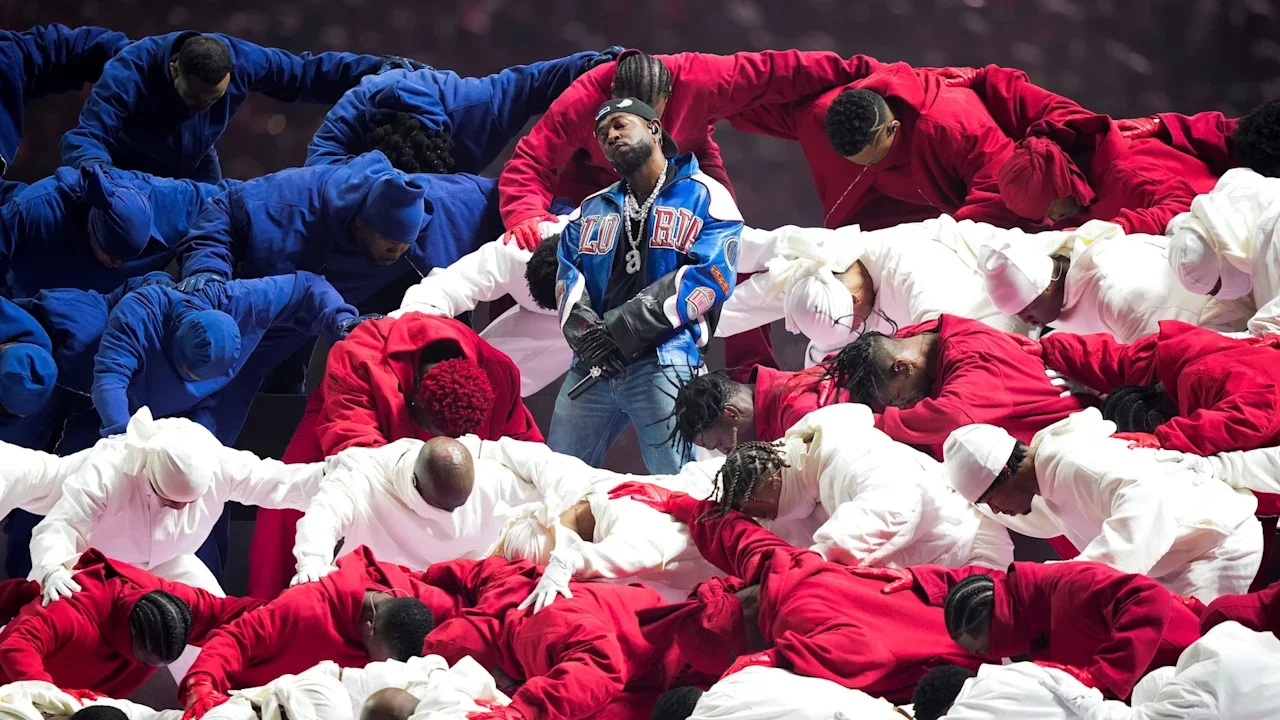
 For a show that lasts roughly 13 minutes, the Super Bowl halftime performance has fueled decades of conversation. Sometimes the spark comes from a single moment — as it did when Janet Jackson and Justin Timberlake’s infamous “wardrobe malfunction” triggered a broadcast reckoning. Other times, it arrives through imagery and intent, from Jennifer Lopez’s 2020 caged children staging that critiqued U.S. immigration policies to children at the U.S.-Mexico border to Kendrick Lamar’s carefully layered Black storytelling, delivered as Donald The President watched from his seat inside the Caesars Superdome in New Orleans. The halftime show magnifies everything — fashion choices, choreography, symbolism — and invites interpretation on a scale few artists ever experience. That history forms the backdrop as Bad Bunny prepares to take the halftime stage, a moment that places Latin identity at the center of America’s most-watched television event. The conversation building around his performance extends beyond music, touching on language, culture and how much room one of the world’s biggest stars will have for symbolism and social commentary — including past critiques of The President — within a show long shaped by tight NFL oversight. With that context, here is a look at some of the most talked about halftime moments: Timberlake and Jackson’s “wardrobe malfunction” The most enduring halftime controversy unfolded during the 2004 Super Bowl in Houston, when Jackson performed alongside Timberlake. In the closing seconds of “Rock Your Body,” Timberlake tugged at Jackson’s costume, briefly revealing her right breast, adorned with a decorative shield. Timberlake later described the moment as an unintended “wardrobe malfunction,” a phrase that quickly entered pop-culture shorthand. The reaction was immediate and far-reaching. The incident prompted FCC scrutiny, congressional attention and a reevaluation of live television standards. CBS, which aired the game, was fined $550,000 by the Federal Communications Commission, a penalty later overturned, and broadcasters expanded the use of delays for live events. The professional fallout, however, was uneven. Jackson was disinvited from the Grammy Awards telecast the following week and largely retreated from the public spotlight, while Timberlake’s career continued uninterrupted. Years later, Timberlake said the two had reconciled, but the disparity in their treatment wasn’t forgotten. When the NFL announced Timberlake’s return to the halftime stage in 2018, the decision reignited debate. Critics pointed to what they viewed as a racial and gender double standard, arguing that Jackson, a Black woman, bore the brunt of the consequences while Timberlake, a white man, emerged largely unscathed. Online, hashtags such as #JusticeForJanet resurfaced, reframing the moment through a broader cultural lens. “Formation”: Beyoncé and political symbolism When Beyoncé performed “Formation” in 2016, the halftime show became a moment of cultural declaration. Set in the Bay Area, the performance leaned heavily into Black history and identity. Dancers appeared in Black Panther–inspired attire, raised clenched fists and formed symbolic shapes on the field as Beyoncé delivered lyrics celebrating Black features and pride. The imagery echoed decades of Black activism, from civil rights-era protest to modern calls for social justice. The performance drew widespread acclaim for its clarity and artistry while also sparking criticism from conservative commentators and some law enforcement groups who accused it of promoting anti-police sentiment. With an audience of more than 110 million viewers, the debate quickly moved beyond the stadium. Several moments stood out. Dancers briefly formed an “X,” interpreted by some as a reference to Malcolm X, while raised fists recalled the 1968 Olympic protest by Tommie Smith and John Carlos. The visuals aligned directly with the message of “Formation,” which centers Black identity and self-definition. “Believe in Love”: Coldplay and evolving visibility Coldplay was the halftime show headliner in 2016, bringing out Beyoncé and Bruno Mars for a performance built around themes of unity, inclusion and joy. The set featured a rainbow-colored stage, vibrant dancers and a crowd mosaic that spelled out “Believe in Love.” A pride flag was visible near frontman Chris Martin, and the show’s closing imagery emphasized togetherness. While many viewers praised the message as affirming and timely, some conservative groups criticized the presentation for embracing LGBTQ+ symbolism. The reaction reflected broader cultural conversations around representation and visibility in mainstream entertainment. When Kendrick Lamar’s symbolism becomes the story Last year, Kendrick Lamar treated the halftime stage as a controlled narrative space, using choreography, costuming and staging to explore themes of identity, power and perception. His performance unfolded with cinematic precision, opening as dancers spilled out of a Buick GNX in choreographed fashion before Lamar took command of the field. Dancers dressed in red, white and blue framed the performance, while Samuel L. Jackson appeared as an “Uncle Sam” figure who interrupted the action with pointed commentary, labeling the spectacle “too loud” and urging Lamar to “play the game.” The exchange underscored the tension between expression and expectation that has come to define modern halftime shows. While the performance stayed within league parameters, it still sparked debate among commentators who scrutinized the imagery and tone. The response reinforced how the halftime show, even without overt rule-breaking, can function as visual storytelling that invites interpretation at a scale unmatched in other live events. Other defiant moments on a global stage The NFL has long maintained guardrails around the halftime show, particularly when performances edge toward political commentary. Still, some artists have chosen to test — and at times ignore — those limits. Ahead of Jennifer Lopez’s performance with Shakira in 2020, the NFL raised concerns about a segment widely interpreted as referencing children held in immigration detention facilities. The league asked Lopez to cut a segment featuring children in cages, a critique of U.S. immigration policies. But she refused and moved forward with the imagery, using visual symbolism rather than explicit messaging. The 2022 show featured a hip-hop celebration with a robust lineup of Dr. Dre, Snoop Dogg, Mary J. Blige, 50 Cent, Eminem and Kendrick Lamar. But as Eminem’s performance of “Lose Yourself” concluded, the rapper dramatically took a knee, lowering his head in a gesture widely interpreted as a tribute to Colin Kaepernick, whose decision to kneel during the national anthem in 2016 to protest police brutality sparked a nationwide cultural reckoning. Kaepernick’s protest was later echoed by other players, and he would soon find himself out of the league. Reports ahead of the game suggested the NFL had discouraged the gesture, though the league disputed that account. “We watched all elements of the show during multiple rehearsals this week and were aware that Eminem was going to do that,” NFL spokesman Brian McCarthy said at the time. During Madonna’s halftime set in 2012, M.I.A. flashed a middle finger toward the camera, a split-second gesture that immediately drew regulatory attention and replay-heavy coverage. The action prompted an immediate fine and a legal dispute with the NFL. The sides later reached a settlement, ending a multimillion-dollar case over the incident. —Jonathan Landrum Jr., AP entertainment writer View the full article
-
A reader writes: My brother (Gen Z/millennial cusp) has been out of work (and stuck living back home with my parents) for a while now, and everyone is understandably frustrated with the situation. A couple times my mom (boomer) and I (millennial) have been one-on-one and she’s brought up the situation, and she’s said that she has told my brother to just “go show up in person to places you’d like to get a job at and try to hand in your resume!” Every single one of my millennial instincts is screaming NO NO NO, this is CLASSIC out-of-touch boomer advice from when we were trying to get jobs during the Great Recession. I told my mom that yeah, that doesn’t really work now since it’s not the 1980s, and since it’s literally the classic example of out-of-touch boomers with the job hunt, my brother is probably going to then ignore every other piece of advice you give him. However, my mom’s response was yes, she knows all of that, but she heard recently (like this year) on the news that going in person to hand in your resume out of the blue is actually a good thing now, since it’ll get your resume directly in front of a human and help you avoid the AI filter bots. And she claimed she has a friend whose daughter got her most recent job this way! Every millennial instinct of mine screams NOPE DISREGARD when I hear this touted as job hunt advice, but I know that the AI filters are so impossible to get past now. Is there actually some merit to it? Has everything I thought I knew about job searching changed in the nine years since I last interviewed? It is still not a thing. First, they’re highly likely to just tell you that you need to apply online … because you do in fact need to apply online. As has been the case for a long time now, most organizations use electronic applicant tracking systems. If your application isn’t in there, it’s not getting considered. Second, with the rise in remote work, a ton of people don’t even work at companies’ main addresses anymore. There may not be anyone involved in hiring for the position even physically there. And even if they’re there, they’re generally going to be very busy and aren’t going to come out and talk to you just because you randomly showed up holding a resume — so anyone you do talk to is incredibly unlikely to have anything to do with hiring for that particular job. Third, it will still annoy the crap out of most people involved in hiring and make you look naive/out of touch at best … and at worst, like you don’t think instructions apply to you. Their instructions are there for a reason. You will always hear stories about how one weird job search gimmick worked for someone, but more often than not they’re a bad idea (and the amount of time your brother would put into going door to door with his resume would be far more effective put into networking, or writing a better cover letter, or other things with a bigger pay-off). The post is showing up in person with a resume actually a thing now? appeared first on Ask a Manager. View the full article
-
The The President administration is reducing the number of immigration officers in Minnesota but will continue its enforcement operation that has sparked weeks of tensions and deadly confrontations, border czar Tom Homan said Wednesday. About 700 federal officers—roughly a quarter of the total deployed to Minnesota—will be withdrawn immediately after state and local officials agreed over the past week to cooperate by turning over arrested immigrants, Homan said. But he did not provide a timeline for when the administration might end the operation that has become a flashpoint in the debate over President Donald The President’s mass deportation efforts since the fatal shootings of U.S. citizens Renee Good and Alex Pretti in Minneapolis. Immigration and Customs Enforcement officials have said the surge in Minnesota that ramped up dramatically in early January is its “largest immigration operation ever.” Masked, heavily armed officers have been met by resistance from residents who are upset with their aggressive tactics. A widespread pullout, Homan said, will only occur after protesters stop interfering with federal agents carrying out arrests and setting up roadblocks to impede the operations. About 2,000 officers will remain in the state after this week’s drawdown, he said. “Given this increase in unprecedented collaboration, and as a result of the need for less public safety officers to do this work and a safer environment, I am announcing, effective immediately, we’ll draw down 700 people effective today — 700 law enforcement personnel,” Homan said during a news conference. He didn’t say which jurisdictions have been cooperating with the Department of Homeland Security. The President administration pushed for cooperation in Minnesota The President’s border czar took over the Minnesota operation in late January after the second fatal shooting by federal officers and amid growing political backlash and questions about how the operation was being run. Homan said right away that federal officials could reduce the number of agents in Minnesota, but only if more state and local officials cooperate. He pushed for jails to alert ICE to inmates who could be deported, saying transferring such inmates to ICE is safer because it means fewer officers have to be out looking for people in the country illegally. The The President administration has long complained that places known as sanctuary jurisdictions—a term generally applied to local governments that limit law enforcement cooperation with DHS—hinder the arrest of criminal immigrants. Minnesota officials say its state prisons and nearly all of the county sheriffs already cooperate with immigration authorities. But the county jails that serve Minneapolis and St. Paul and take in the most inmates had not previously met ICE’s idea of full cooperation, although they both hand over inmates to federal authorities if an arrest warrant has been signed by a judge. It wasn’t immediately clear after Homan’s remarks whether those jails have since changed their policies. Border czar calls Minnesota operation a success Homan said he thinks the ICE operation in Minnesota has been a success, checking off a list of people wanted for violent crimes who were taken off the streets. “I think it’s very effective as far as public safety goes,” he said Wednesday. “Was it a perfect operation? No.” He also made clear that pulling a chunk of federal officers out of Minnesota isn’t a sign that the administration is backing down. “We are not surrendering the president’s mission on a mass deportation operation,” Homan said. “You’re not going to stop ICE. You’re not going to stop Border Patrol,” Homan said about the ongoing protests. “The only thing you’re doing is irritating your community” —Steve Karnowski, Associated Press Associated Press reporters Corey Williams and John Seewer contributed to this report. View the full article
- Today
-
Government consulting on softening the impact of new laws on employersView the full article
-
Rio wants to hold both CEO and chair roles in combined company while Glencore holds out for premiumView the full article
-
Shaw, which was part of last year's standstill agreement with Third Point, said it will support shareholder-driven change on Costar's board. View the full article
-
Built-in lyrics are one of my favorite features of modern music streaming services. Back in ancient times, I had to google the lyrics to the songs I was listening to—which was fine if I was near a computer, but impossible when I was on the go with my iPod. This is probably why there are so many songs I think I know the words to, only to discover, once I read the actual lyrics, that I am sorely mistaken. Built-in lyrics are thus a feature that is equal parts useful and humbling. As it happens, Spotify's existing lyrics features are getting some upgrades to kick off February. The company announced three key updates on Wednesday—two that impact free users, and one exclusive to Premium subscribers. Spotify might not offer Apple Music's dynamic lyrics, but these updates should still be welcomed by anyone who likes reading along to their music. Spotify now supports offline lyricsThe biggest announcement of the day—in my opinion, anyway—is offline support for lyrics. This is always something that frustrates me whenever I'm using my phone without cellular service. Say I download some albums to listen to on a flight: When I try to listen to them in airplane mode, lyrics are unavailable. Being able to download the lyrics when you grab a song or album is a small but actually meaningful upgrade. Unfortunately, offline lyrics are not available free of charge: At this time, the feature is only available to Premium subscribers, which makes sense, given that free users can't download music for offline listening anyway—only podcasts. Lyrics are moving to a new location in the Spotify appTraditionally, lyrics have appeared at the bottom of the player window in the Spotify app. To view them, you need to scroll down, then tap on the lyrics window to fully expand it. It seems Spotify wasn't content with this UI. The company says that in its testing, it finds that placing the lyrics directly below the album art, rather than below the player, makes them easier to interact with. And so that's where the lyrics are moving. The company calls these "lyrics previews," as you see just a snippet of the lyrics at one time. This change is rolling out to both free and Premium users on iOS and Android. If you'd rather not see the lyrics at all, you can tap the three-dot menu and choose "Lyrics Off." Spotify is adamant that this new placement won't change lyric sharing. You'll still be able to send specific lyrics to friends and social media platforms. You'll just need to do so from the new lyrics window. Spotify now support lyrics translations worldwideSpotify's lyrics translation feature makes it easy to figure out what artists are singing about when you don't speak their particular language. When you listen to a song that doesn't match your device's system language, you'll find a translate button in the lyrics window. Tap that, and Spotify will include translations beneath each line of the song, so you can follow along. According to Spotify, this feature was available in more than 25 markets as of the end of last year, but now, the company is rolling out the feature worldwide. View the full article
-
If you tried talking to ChatGPT this morning, you might have found it unresponsive—something unusual for the bot that always has something say. It's not your internet connection, and it isn't your OpenAI account: ChatGPT is down. According to Downdetector, owned by Lifehacker parent company Ziff Davis, users started reporting issues with ChatGPT at 11:56 a.m. ET. Those reports ballooned by 12:11 p.m., as the total number of incidents as of this article currently sits above 7,000. If you're an avid ChatGPT user, you might have also had issues with the bot yesterday: Downdetector shows over 25,000 reports of down time starting at 2:56 p.m. Tuesday and resolving around 4:11 p.m. the same day. As with all outages, OpenAI will likely figure out a patch for the issue soon enough. But these outages are becoming more common. There was the Verizon outage, of course, but other services like TikTok have also experienced intermittent periods of downtime. View the full article
-
Banking committee chair Tim Scott pushes back against probe into US central bank chiefView the full article
-
We may earn a commission from links on this page. Deal pricing and availability subject to change after time of publication. The Amazon Echo Dot line has long been a good choice if you're seeking compact, budget-friendly way to enter the Alexa smart home ecosystem, combining decent sound quality with versatile smart home capabilities. And right now, the newest Amazon Echo Dot Max, released late last year, and offering improved audio and connectivity features, is on sale for $79.99 (originally $99.99) in every color. Amazon Echo Dot Max $79.99 at Amazon $99.99 Save $20.00 Get Deal Get Deal $79.99 at Amazon $99.99 Save $20.00 This speaker earned an Editors’ Choice Award from PCMag, which noted it delivers “fairly strong low-end frequencies considering its puny size.” At 6.1 x 5.6 x 5.8 inches, it’s more compact than the previous Echo, with a new look that might remind you of the Death Star—it's a sphere with a large, flattened volume plate that makes the buttons more visible and a light ring that shines towards where you’re speaking and displays the volume level as a white arc. (One downside: The smaller size means a smaller woofer than its predecessor, though PCMag said the bass is still “reasonably deep.”) One of the Dot Max’s main draws its usefulness as a voice assistant. It has Amazon Alexa built-in, and Amazon Prime members can get a free upgrade to the Alexa+ AI assistant (normally $20/month). The Amazon Echo Dot Max supports Bluetooth 5.3 and Wi-Fi 6E, serves as a hub for smart home devices like Zigbee, Thread, and Matter, and includes Wi-Fi radar, ultrasonic, temperature, and ambient light sensors that detect your presence in the room. While the Echo Dot Max is a good choice at this discount, if you mostly plan to use it for listening to music, the latest Echo Dot (currently $50) may suffice. Our Best Editor-Vetted Tech Deals Right Now Apple AirPods 4 Active Noise Cancelling Wireless Earbuds — $139.99 (List Price $179.00) Apple Watch Series 11 [GPS 46mm] Smartwatch with Jet Black Aluminum Case with Black Sport Band - M/L. Sleep Score, Fitness Tracker, Health Monitoring, Always-On Display, Water Resistant — $329.00 (List Price $429.00) Samsung Galaxy Tab A9+ 10.9" 64GB Wi-Fi Tablet (Graphite) — $149.99 (List Price $219.99) Apple iPad 11" 128GB A16 WiFi Tablet (Blue, 2025) — $299.99 (List Price $349.00) Blink Mini 2 1080p Security Camera (White) — $23.99 (List Price $39.99) Ring Outdoor Cam Pro Plug-In With Outdoor Cam Plus Battery (White) — $189.99 (List Price $259.99) Amazon Fire TV Stick 4K Plus — (List Price $24.99 With Code "FTV4K25") Deals are selected by our commerce team View the full article
-
A reader writes: Our company works in a building that houses multiple businesses. We share reception and security. Recently, there was a terrible incident where the ex-boyfriend of one of my employees, Sarah, got into the building by booking a job interview with a different company. He then made a beeline for our office instead, and made a huge scene shouting at Sarah, and even tried to hit her in front of all of us. Thankfully, security tackled him before he could hurt anyone, and he’s been arrested. We had a security meeting with reception and the other business managers in the building and have agreed to a shared appointment calendar and other precautions to prevent this from happening in the future. I’ve done my best to support Sarah with what she needs to feel safe here, and she seems to be doing well. The problem is Fred, the other manager in my office. About a week after this incident, I was giving him an update on the steps we were taking in case this man is released and causes further problems. Fred was clearly annoyed and asked me why I didn’t just “solve” the problem by firing Sarah. He went on to claim that Sarah was being unprofessional by “allowing her personal life in the office” and that we were going to a lot of trouble for “just one employee.” This is not the first time he’s said something insensitive about our employees, but this was by far the most egregious comment. I told him that Sarah had done nothing wrong, and that it was our job to provide a safe work environment. He rolled his eyes and visibly tuned out for the rest of the meeting. He hasn’t said anything else since that meeting. But I find it increasingly hard to work with him. I’ve been defaulting to email to communicate with him, even though his office is right next to mine, because I feel gross being in the same room with him. I especially feel icky when I see him chatting in a friendly way to Sarah, knowing what he thinks about the situation. It’s bad enough that I briefly considered looking for a new job, but that would mean Fred would temporarily be in charge of my reports. I’m worried he would actually fire Sarah if he could. How do I address this? I don’t feel like it would be appropriate for me to pull him aside and tell him what I think of his reaction, but I also feel like I’m dropping the ball by not the challenging what he said more directly. Is simply avoiding him as much as possible the most I can do here? I answer this question over at Inc. today, where I’m revisiting letters that have been buried in the archives here from years ago (and sometimes updating/expanding my answers to them). You can read it here. The post my coworker wants to fire a domestic violence survivor appeared first on Ask a Manager. View the full article
-
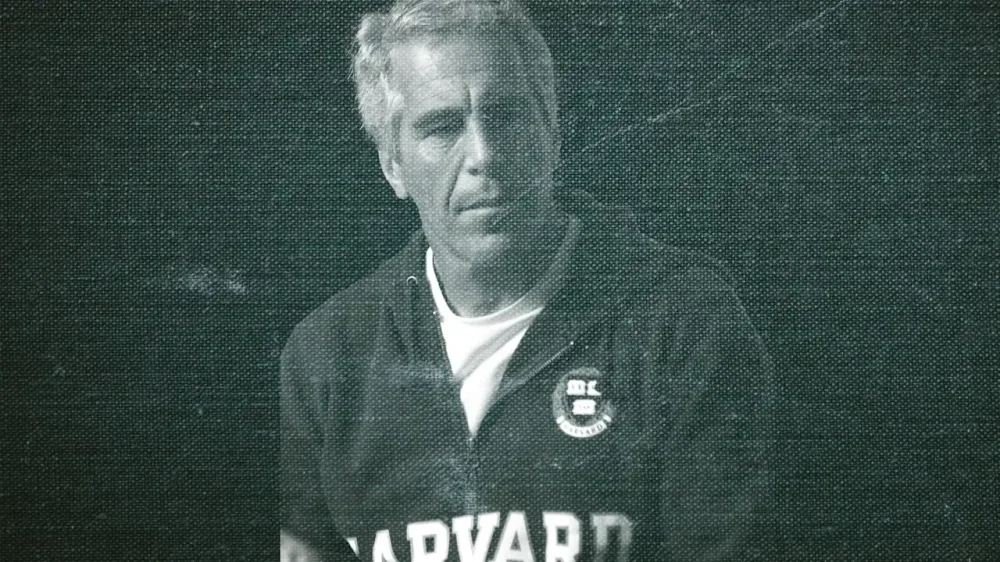
Jeffrey Epstein’s network of money and influence often intersected with scientific and academic communities. The disgraced financier spent years cultivating relationships with researchers at elite universities, frequently dangling the promise of funding. Some of the work he supported has had, and may still have, direct and indirect impacts on Silicon Valley’s most powerful technologies. Epstein was first convicted in 2008 on charges of soliciting a minor for prostitution, yet he continued to maintain a web of relationships across the worlds of technology and academia until he was indicted on federal sex-trafficking charges in 2019. The Department of Justice’s latest release of the “Epstein files” includes emails that reveal new names and details about those connections that had not previously been made public. Joscha Bach One striking example is Epstein’s patronage of German AI scientist and executive Joscha Bach. Known in academic and AI circles for his work on cognitive architectures, computational models that aim to replicate aspects of human cognition, Bach received extensive financial support from Epstein while completing postdoctoral work at MIT. According to emails reviewed by SFGate, Epstein covered Bach’s rent, flights, medical bills, and even private school tuition for his children in Menlo Park between 2013 and 2019. Bach is now the executive director of the California Institute for Machine Consciousness, a small, independent research organization focused on whether machines could ever become conscious. According to SFGate, Epstein met Bach through other AI and psychology researchers and began financing his work at the MIT Media Lab and the Harvard Program for Evolutionary Dynamics in 2013. The files show no indication of sexual impropriety on Bach’s part, and he has never been accused of such conduct. Bach told SFGate that MIT approved the funding and said many prominent scientists maintained relationships with Epstein. He added, “The prevailing view was that Epstein, having served his sentence, was complying with the law.” Antonio Damasio Epstein also corresponded with Antonio Damasio, the director of USC’s Brain and Creativity Institute. In 2013, Damasio asked Epstein to fund a new line of robotics and neuroscience research. Damasio, the Dornsife Chair in Neuroscience, and another USC researcher hoped to study the origins of emotion in the brain, and sought a nontraditional funding source so they could retain greater control over the direction of the work. Damasio presented the proposal to Epstein in February 2013 at Epstein’s New York City home, but Epstein ultimately declined to fund the research. Damasio told Annenberg Media that he did not know Epstein was a convicted sex offender at the time, and said he would never have contacted him had he known. “I was looking for a prestigious philanthropist, not a criminal,” Damasio said. Damasio’s primary field is neurobiology, though he also teaches psychology and philosophy, with a focus on the neural systems that underlie emotion, decision-making, memory, language, and consciousness. He is best known for an influential theory arguing that emotions and their biological foundations, not just reason, play a central role in decision-making, even when the decision-maker is not consciously aware of it. He also theorized that emotions provide the scaffolding for social cognition, shaping how people process, store, and apply information about others and social situations. Damasio argues that current AI models that power robots lack a sense of biological “vulnerability” that drives survival instincts and intelligence in living organisms. He theorises that training a robot to be “concerned” about its own preservation might help the robot solve problems more creatively. David Gelernter The DOJ document release also revealed that Epstein corresponded between 2009 and 2015 with Yale computer science professor David Gelernter, an early pioneer of concepts now associated with digital twins and metaverse-style overlays, which he calls “computed worlds.” Gelernter is the author of the book Mirror Worlds, which outlines much of that research. In 2001, Gelernter helped found a company called Mirror Worlds Software based on those ideas, but the venture failed to gain traction and shut down in 2004. In his correspondence with Epstein, Gelernter sought business advice rather than research funding, according to the New Haven Register. The files also revealed no evidence of wrongdoing by Gelernter. He has said he did not know Epstein was a convicted sex offender and was never aware of Epstein’s sex-trafficking operation. In 1993, Gelernter was severely injured by a mail bomb sent by the “Unabomber,” Ted Kaczynski, which destroyed four of his fingers and permanently damaged one of his eyes. He is also known for controversial views, including claims that liberal academia has a destructive influence on American society, that women, especially mothers, should not work outside the home, and for rejecting the scientific consensus that humans are driving climate change. Marvin Minsky The most direct link between Epstein and the AI world ran through MIT professor and pioneer Marvin Minsky, who died in 2016. Minsky helped establish artificial intelligence as a formal research discipline in the 1950s and later co-founded the field at MIT with John McCarthy, training generations of AI scientists. Epstein donated $100,000 to MIT to support Minsky’s research in 2002, before Epstein’s first criminal conviction. That gift was the first in a series of donations to MIT’s Media Lab that ultimately totaled $850,000 between 2002 and 2017. Minsky died in 2016. In 2019, court documents from a deposition by victim Virginia Giuffre were unsealed, revealing her allegation that Ghislaine Maxwell directed her to have sex with Minsky during a visit to Epstein’s compound. Minsky’s wife said the allegation was impossible because she was with him the entire time they were on the island. Minsky never faced charges, but the revelations placed his name at the center of a reckoning at MIT’s Media Lab over the influence of Epstein’s money on the lab’s work. A gray zone In many ways, Jeffrey Epstein operated in a gray zone created by shifting funding models for AI research. Long before the current AI boom, private industry had already overtaken the federal government as the primary backer of foundational AI work. In recent years, government funding has become increasingly tied to defense and intelligence priorities, leaving researchers in less immediately applicable fields with few viable grant options. At the same time, AI research has grown extraordinarily expensive, requiring elite talent and vast computing resources. As a result, universities and academic labs have become far more dependent on private philanthropy to sustain their work. Funding from wealthy donors often comes with fewer restrictions. It can arrive faster, offer greater flexibility, and require less public disclosure than government grants. This likely explains part of Epstein’s appeal to researchers. But the arrangement cuts both ways. Such donations also require little transparency from the donor, meaning beneficiaries may know very little about the source of their funding. Epstein’s case is extreme, but it highlights a broader risk: when public research funding is scarce and the costs of advanced AI are high, private money becomes more attractive, along with the ethical and reputational dangers it can carry. And the problem is not easing. Microsoft chief scientist Eric Horvitz warned that U.S. cuts to National Science Foundation research grants during the The President administration could undermine the country’s AI leadership, the Financial Times reported, noting that more than 1,600 NSF grants worth nearly $1 billion have been scrapped since 2025. View the full article
-
The Washington Post informed its team on Wednesday morning that it was starting a round of mass layoffs, according to multiple media reports and a memo seen by Fast Company. Multiple sections are being shut down completely, while others are being shrunk significantly. The paper’s executive editor, Matt Murray, announced the cuts to the newsroom employees, saying that all sections would be impacted by the layoffs. He said the Post would be making a “strategic reset,” and is also cutting staff on the business side. The New York Times reported that approximately 30% of the Post’s employees are being laid off, including more than 300 of the around 800 journalists. News of the layoffs attracted a harsh rebuke from people in the media, including the Post‘s own former editor, who criticized the paper’s owner, Amazon founder Jeff Bezos. “This ranks among the darkest days in the history of one of the world’s greatest news organizations,” Marty Baron, executive editor of the Post from 2013 to 2021, said in a statement. “The Washington Post’s ambitions will be sharply diminished, its talented and brave staff will be further depleted, and the public will be denied the ground-level, fact-based reporting in our communities and around the world that is needed more than ever.” Reached for comment, a Washington Post spokesperson sent the following statement: “The Washington Post is taking a number of difficult but decisive actions today for our future, in what amounts to a significant restructuring across the company. These steps are designed to strengthen our footing and sharpen our focus on delivering the distinctive journalism that sets The Post apart and, most importantly, engages our customers.” Sports and other sections said to be gutted The sports section will reportedly be eliminated entirely, meaning that Washington’s paper of record will not provide day-to-day coverage for any of the city’s professional or college sports teams. Murray noted that some of the sports reporters will be moved to the features department to cover “the culture of sports.” This comes in the wake of controversy surrounding the Post’s plans for the Winter Olympics, which start this week. The Times reported on January 24 that the paper axed its plans to send a delegation to the Italy games just two weeks before the opening ceremony, but quickly reversed that decision, sending a team of four after the report came out. The Olympics aren’t the only major event looming on the sports calendar, as Super Bowl LX will be played in San Francisco this weekend, NCAA March Madness is just about a month away, and the FIFA World Cup, hosted in North America this year, kicks off in June. Meanwhile, the Post is reportedly cutting down its Metro desk, which covers Washington, D.C., and its surroundings, from over 40 journalists to well below half of that. The Post is drastically reducing its international coverage as well, although some international bureaus will stay operational Additionally, the paper is reportedly closing the books section and ending its daily Post Reports podcast. Weeks of speculation regarding the paper’s future The announcement comes after weeks of speculation within the newsroom. The Washington Post Guild made a statement last week, directly attacking Bezos, whose holding company, Nash Holdings, bought the paper for $250 million in 2013 and has owned it ever since. During Donald The President’s first term as president, the Post adopted the slogan “Democracy Dies in Darkness” and experienced a period of growth thanks to its aggressive coverage of the administration. In 2023, Bezos hired Will Lewis as publisher of the Post, and these layoffs are just the latest in a line of changes made since then. Notably, the paper did not endorse a candidate in the 2024 presidential election for the first time in 36 years. In response to the layoffs, the Washington Post Guild released another statement: “These layoffs are not inevitable,” its first paragraph reads. “A newsroom cannot be hollowed out without consequences for its credibility, its reach and its future.” This story has been updated with the Post‘s response to our inquiry. View the full article

-
In a significant move poised to reshape the future of the accounting profession, Intuit has launched its innovative Career Pipeline Program, aiming to empower one million aspiring accountants over the next five years. This initiative responds not only to the growing demand for skilled professionals but also to the urgent challenges posed by automation and artificial intelligence (AI) in the industry. As businesses increasingly rely on digital solutions, accountants remain indispensable to organizational success. Intuit, the developer behind popular financial tools such as QuickBooks and TurboTax, understands the vital role that accounting professionals play in steering businesses towards prosperity. The company’s commitment to training the next generation comes amidst a stark talent shortage and misconceptions surrounding the profession, particularly among Gen Z, where 65% lack guidance on career paths in accounting. Simon Williams, Vice President of the Accountant Segment at Intuit, emphasized the need for this initiative. “The accounting community is an integral part of driving business success,” he noted. “Our commitment to upskill one million students is rooted in listening to our accounting partners, understanding the important role they play as advisors, and building a pipeline that helps their firms and their clients thrive.” The Career Pipeline Program aims to bridge the gap between current skills and what employers are seeking in the future. The curriculum will provide students with immersive learning experiences, mentorship opportunities, and industry-recognized certifications that modern firms value. According to analysts, equipping young professionals with digital and advisory skills that align with AI’s capabilities is not just beneficial—it’s essential for their career trajectories. To launch the program, Intuit will host the Career Lab: Skills for the New Era of Accounting, a virtual event scheduled for February 3 and 4, 2026. This event will gather industry experts to discuss trends, including AI’s impact on fintech and Client Advisory Services (CAS). It also aims to enlighten participants about the essential skills accounting firms need today. Participants will gain access to resources enabling them to obtain the ProAdvisor QuickBooks Certification, which is rapidly becoming a gold standard for recruitment in the accounting field. “At Intuit, we believe financial futures are strengthened when AI and human intelligence work together to expand opportunity and transform lives,” said Dave Zasada, Vice President of Education and Corporate Responsibility at Intuit. “By providing free, employer-recognized certifications and access to curriculum and resources that enhance the skills of young professionals, we’re building a robust CAS expert pipeline.” While the initiative provides a considerable opportunity for those entering the accounting profession, small business owners should be aware of potential challenges. With an influx of newly trained accountants entering the workforce, firms will need to differentiate themselves to attract these emerging talents. Moreover, as young professionals adapt to the evolving landscape, small business owners must ensure they provide meaningful roles that leverage these new skills, especially in navigating AI technology and its implications on service delivery. Furthermore, embracing AI tools may require established firms to adjust their traditional workflows. As automation continues to revolutionize jobs, ensuring a balance between human insight and technology will prove crucial. As businesses look to capitalize on these developments, they may need to invest in additional training to enable existing staff to work alongside new AI capabilities efficiently. The Career Pipeline Program aligns well with the growing emphasis on continuous learning within professional services. Small business owners stand to benefit significantly from this influx of well-prepared young accountants who not only possess updated skills but also bring fresh perspectives to traditional practices. As this initiative unfolds, small businesses are encouraged to engage with new talent by providing internships, mentorships, and opportunities for recent graduates. This proactive approach can help integrate the next generation of accountants into the workforce while fostering a more collaborative environment where innovation thrives. For more information about the Career Lab and the free certification resources available, visit Intuit’s dedicated webpage. To explore how Intuit aids accountants with its AI-native solutions, check out their Accountant Suite. The Career Pipeline Program represents a strategic effort by Intuit to ensure the accounting profession remains robust, relevant, and ready for the challenges of a digital future. With the right resources and guidance, small business owners can harness these changes to build stronger, more effective financial practices. The original press release can be found here. Image via Google Gemini This article, "Intuit Aims to Upskill One Million Future Accountants in Five Years" was first published on Small Business Trends View the full article
-
In a significant move poised to reshape the future of the accounting profession, Intuit has launched its innovative Career Pipeline Program, aiming to empower one million aspiring accountants over the next five years. This initiative responds not only to the growing demand for skilled professionals but also to the urgent challenges posed by automation and artificial intelligence (AI) in the industry. As businesses increasingly rely on digital solutions, accountants remain indispensable to organizational success. Intuit, the developer behind popular financial tools such as QuickBooks and TurboTax, understands the vital role that accounting professionals play in steering businesses towards prosperity. The company’s commitment to training the next generation comes amidst a stark talent shortage and misconceptions surrounding the profession, particularly among Gen Z, where 65% lack guidance on career paths in accounting. Simon Williams, Vice President of the Accountant Segment at Intuit, emphasized the need for this initiative. “The accounting community is an integral part of driving business success,” he noted. “Our commitment to upskill one million students is rooted in listening to our accounting partners, understanding the important role they play as advisors, and building a pipeline that helps their firms and their clients thrive.” The Career Pipeline Program aims to bridge the gap between current skills and what employers are seeking in the future. The curriculum will provide students with immersive learning experiences, mentorship opportunities, and industry-recognized certifications that modern firms value. According to analysts, equipping young professionals with digital and advisory skills that align with AI’s capabilities is not just beneficial—it’s essential for their career trajectories. To launch the program, Intuit will host the Career Lab: Skills for the New Era of Accounting, a virtual event scheduled for February 3 and 4, 2026. This event will gather industry experts to discuss trends, including AI’s impact on fintech and Client Advisory Services (CAS). It also aims to enlighten participants about the essential skills accounting firms need today. Participants will gain access to resources enabling them to obtain the ProAdvisor QuickBooks Certification, which is rapidly becoming a gold standard for recruitment in the accounting field. “At Intuit, we believe financial futures are strengthened when AI and human intelligence work together to expand opportunity and transform lives,” said Dave Zasada, Vice President of Education and Corporate Responsibility at Intuit. “By providing free, employer-recognized certifications and access to curriculum and resources that enhance the skills of young professionals, we’re building a robust CAS expert pipeline.” While the initiative provides a considerable opportunity for those entering the accounting profession, small business owners should be aware of potential challenges. With an influx of newly trained accountants entering the workforce, firms will need to differentiate themselves to attract these emerging talents. Moreover, as young professionals adapt to the evolving landscape, small business owners must ensure they provide meaningful roles that leverage these new skills, especially in navigating AI technology and its implications on service delivery. Furthermore, embracing AI tools may require established firms to adjust their traditional workflows. As automation continues to revolutionize jobs, ensuring a balance between human insight and technology will prove crucial. As businesses look to capitalize on these developments, they may need to invest in additional training to enable existing staff to work alongside new AI capabilities efficiently. The Career Pipeline Program aligns well with the growing emphasis on continuous learning within professional services. Small business owners stand to benefit significantly from this influx of well-prepared young accountants who not only possess updated skills but also bring fresh perspectives to traditional practices. As this initiative unfolds, small businesses are encouraged to engage with new talent by providing internships, mentorships, and opportunities for recent graduates. This proactive approach can help integrate the next generation of accountants into the workforce while fostering a more collaborative environment where innovation thrives. For more information about the Career Lab and the free certification resources available, visit Intuit’s dedicated webpage. To explore how Intuit aids accountants with its AI-native solutions, check out their Accountant Suite. The Career Pipeline Program represents a strategic effort by Intuit to ensure the accounting profession remains robust, relevant, and ready for the challenges of a digital future. With the right resources and guidance, small business owners can harness these changes to build stronger, more effective financial practices. The original press release can be found here. Image via Google Gemini This article, "Intuit Aims to Upskill One Million Future Accountants in Five Years" was first published on Small Business Trends View the full article
-
Florida’s Republican governor criticises attempts by administration to ‘kneecap states and let Big Tech write the rules’View the full article
-
Low Earth orbit is already getting crowded. Around 14,500 active satellites are circling Earth, and roughly two-thirds of them are run by SpaceX. Now, in filings connected to Elon Musk’s plan to fold SpaceX and his AI firm xAI together ahead of an IPO, the company has asked the Federal Communications Commission (FCC) for permission to launch up to one million more. The figure is so large it would dwarf the number of satellites currently in orbit. In fact, it is more than every object ever sent into space by every nation combined. So why is Musk planning it, and what would it mean for the rest of us? In a public update posted on the SpaceX website as part of the merger process between SpaceX and xAI, Musk wrote that “Launching a constellation of a million satellites that operate as orbital data centers is a first step towards becoming a Kardashev II-level civilization.” The Kardashev scale is a measure of technological development first outlined in the 1960s by Soviet astronomer Nikolai Kardashev, who died in 2019. While the scale of the proposal may have impressed Kardashev, many experts are far more skeptical. A million new satellites would represent roughly a 67-fold increase over today’s orbital population. “Proposals on the scale being discussed—up to one million satellites—represent a step change that deserves the same level of scrutiny we would apply to any other major global infrastructure project,” says Ruskin Hartley, CEO of DarkSky International, a nonprofit focused on preserving night skies and mitigating the impacts of light pollution. Satellite deployment at such a scale would have huge knock-on effects. “The consequences extend well beyond astronomy,” Hartley says. “They include cumulative impacts on the night sky, increased atmospheric pollution from satellite launches and re-entries, and a sharply elevated risk of orbital congestion and collision cascades that could impair access to low Earth orbit for all nations.” When satellites burn up, they release metals such as aluminum into the upper atmosphere, a process scientists and the U.K. Space Agency warn is still poorly understood but likely accelerating as megaconstellations grow. There is also the question of safety. Space is already crowded with satellites that power communications, enable GPS navigation, and support countless services we rely on every day. Adding vastly more objects increases the chances of close approaches, which, if not monitored and avoided, can result in collisions and cascading debris. “SpaceX will say they can do that stationkeeping successfully, but it doesn’t take many failures to have you end up in a bad situation,” says Jonathan McDowell, an astronomer and space sustainability analyst based in London and Boston and formerly at the Center for Astrophysics. “The SpaceX satellites will be in the higher part of low Earth orbit where it will take a long time for failed satellites to re-enter.” Hartley, for his part, argues that these risks demand far more scrutiny. “Decisions made now will shape the near-Earth environment for generations,” he says. Not everyone believes the million-satellite figure is even realistic. “As to the question of if it’s practical, I would think not,” says Caleb Henry, director of research at Quilty Space. “Filing for 1 million satellites is probably a way for SpaceX to push the envelope before accepting whatever fraction regulators deem acceptable.” That tactic may already be working. The FCC initially rejected a 2022 SpaceX proposal to launch 30,000 satellites, before later approving it in 25% tranches. “The commission authorized another 7,500 satellites this January, for a total approval of 15,000 satellites from that filing,” says Henry. SpaceX is also asking the FCC to waive standard deployment milestones, and says the economics of the plan depend on Starship becoming fully reusable, a goal it has not yet reached. In that sense, the million-satellite request is not a signal of imminent growth, but a bid to stake out spectrum and orbital real estate for a future that Musk is already trying to define. View the full article

-
From security services to those able to reinvent themselves, many may survive the AI armageddonView the full article
-
You can get AI to help, too. By Jackie Meyer The Balanced Millionaire: Advisor Edition Go PRO for members-only access to more Jackie Meyer. View the full article
-
You can get AI to help, too. By Jackie Meyer The Balanced Millionaire: Advisor Edition Go PRO for members-only access to more Jackie Meyer. View the full article
-
In the old days, we'd post our photos and videos on social media for the world to see. Right now, it's far more common to send these pictures and clips to friends and family through private chat groups—but what you might not have realized is that they get pretty heavily compressed along the way. There are many reasons for this: It means the files get sent faster, for example, and that the companies behind these messenger apps don't have to spend quite so much on cloud storage (imagine millions of images being sent by millions of users, all the time). However, the recipients of these photos and videos are missing out, and getting copies that are of a much lower quality. A lot of the time, you can't really tell the difference on a small phone screen, which is why apps can get away with it. But if you're looking at something on a computer screen or trying to print something out to get a permanent physical copy, the compression quickly becomes apparent. It's something most messenger apps do—but there is a workaround if you want your photos and videos shared at full resolution. How much do messenger apps compress your files? Look out for the HD button when sharing on Instagram. Credit: Lifehacker Messenger apps are rather coy when it comes to revealing just how much compression they apply: Search the web and you'll hit Reddit threads and support forums rather than actual official documents. Apple admits iMessage applies compression "when necessary", and Google acknowledges files "may have a lower resolution" when sent through Google Chat, but it's all rather vague. To try and get a bit more clarity, I ran a quick test myself, with a 12MP, 4,000 x 3,000 pixel, 3.4MB image taken on a Pixel. Bearing in mind that compression levels will vary depending on what you're sending, and this was just a test with a single image, here's how the file was changed after it got sent through various DMs: Facebook Messenger: 2,048 x 1,536 pixels, 392KB Google Chat: 1,600 x 1,200 pixels, 324KB Google Messenger: 4,000 x 3,000 pixels, 3.4MB. iMessage: 4,000 x 3,000 pixels, 3.2MB Instagram: 1,000 x 750 pixels, 138KB WhatsApp: 2,000 x 1,500 pixels, 390KB You can see there's a lot of compression going on here, but Google Messages and iMessage are the clear winners when it comes to retaining original quality (at least with images)—a good advert for both Apple's proprietary messaging system and for RCS. It's also worth delving into the settings for each app. In Instagram, for example, there's a HD button next to the photo and video picker: When I selected this, Instagram shrank my original photo down to 2,000 x 1,500 pixels, with a file size of 421KB. In its help section, Instagram says it automatically adjusts image compression based on current network conditions, which is something else to think about—you might want to do all your photo and video sharing over wifi (which is what I did here). How to send files in their original quality through messenger apps It only takes a couple of taps to get iCloud links in Apple Photos. Credit: Lifehacker You can make sure your photos and videos get to your friends and family in their glorious, original quality, but you lose a bit of convenience along the way. Essentially, you need to pick a cloud storage service where your images and videos will be stored in full resolution, and then share links to these files—rather than sharing the files themselves. It's not quite the same immediate experience if you're sending around baby pictures or party pictures: Your recipients will just see a rather dull-looking link instead of thumbnails right inside their apps (though in some cases, there might be a small preview attached). If quality is what matters most to you, this is the way to go when it comes to sharing photos and videos. You're free to use your cloud storage provider of choice, but if there is one made by the same company behind your favorite messaging app, it makes sense to combine them together. In Google Photos on Android, for example, you can tap on a photo to view it, then choose Share and Share again to find the Create link feature: You can then share this link with any contact in any app. For Apple Photos on the iPhone, you can get a link to a photo once you've opened it up by tapping the share button (lower left), then Copy iCloud Link. Again, you can paste this anywhere you like, and it's not much more difficult to share entire folders of pictures rather than individual images. There is an extra advantage to sharing photos and videos this way, in that you can revoke sharing permissions any time you like: New people can be added and other people can be removed from albums showing your toddler growing up for example. It's not as fast and easy as direct file sharing, but you do get a bit more control (and higher resolutions). View the full article
-
And five steps to follow. By August Aquila MAX: Maximize Productivity, Profitability and Client Retention Go PRO for members-only access to more August J. Aquila. View the full article
-
And five steps to follow. By August Aquila MAX: Maximize Productivity, Profitability and Client Retention Go PRO for members-only access to more August J. Aquila. View the full article
-
New AI-powered tools reduce time and cost of software development, threatening industries from law to advertisingView the full article
-
President Donald The President’s administration is expected to unveil its grandest plan yet to rebuild supply chains of critical minerals needed for everything from jet engines to smartphones, likely through purchase agreements with partners on top of creating a $12 billion U.S. strategic reserve to help counter China’s dominance. Vice President JD Vance is set to deliver a keynote address Wednesday at a meeting that Secretary of State Marco Rubio is hosting with officials from several dozen European, Asian and African nations. The U.S. is expected to sign deals on supply chain logistics, though details have not been revealed. Rubio met Tuesday with foreign ministers from South Korea and India to discuss critical minerals mining and processing. The meeting and expected agreements will come just two days after The President announced Project Vault, or a stockpile of critical minerals to be funded with a $10 billion loan from the U.S. Export-Import Bank and nearly $1.67 billion in private capital. The President’s Republican administration is making such bold moves after China, which controls 70% of the world’s rare earths mining and 90% of the processing, choked off the flow of the elements in response to The President’s tariff war. The two superpowers are in a one-year truce after The President and Chinese President Xi Jinping met in October and agreed to pull back on high tariffs and stepped-up rare earth restrictions. But China’s limits remain tighter than they were before The President took office. “We don’t want to ever go through what we went through a year ago,” The President said on Monday when announcing Project Vault. Countering China’s dominance on critical minerals Other countries might join with the The President administration in buying up critical minerals and taking other steps to spur industry development because the trade war revealed how vulnerable Western countries are to China, said Pini Althaus, who founded Oklahoma rare earth miner USA Rare Earth in 2019. “They’re looking at setting up sort of a buyers’ club, if you will,” said Althaus, who now is working to develop new mines in Kazakhstan and Uzbekistan as CEO of Cove Capital. “The key producers and key consumers of critical minerals will sort of get together and work on pricing structures, floor pricing and other things.” The government last week also made its fourth direct investment in an American critical minerals producer when it extended $1.6 billion to USA Rare Earth in exchange for stock and a repayment agreement. Seeking government funding these days is like meeting with private equity investors because officials are scrutinizing companies to ensure anyone they invest in can deliver, Althaus said. And the government is demanding terms designed to generate a return for taxpayers as loans are repaid and stock prices increase, he said. The stockpile strategy Meanwhile, the U.S. Export-Import Bank’s board this week approved the $10 billion loan — the largest in its history — to help finance the setup of the U.S. Strategic Critical Minerals Reserve. It is tasked with ensuring access to critical minerals and related products for manufacturers, including battery maker Clarios, energy equipment manufacturer GE Vernova, digital storage company Western Digital and aerospace giant Boeing, according to the policy bank. Bank President and Chairman John Jovanovic told CNBC that the project creates a public-private partnership formula that “is uniquely suited and puts America’s best foot forward.” “What it does is it creates a scenario where there are no free riders. Everybody pitches in to solve this huge problem,” he said. Manufacturers, which benefit the most from the reserve, are making a long-term financial commitment, Jovanovic said, while the government loan spurs private investments. The stockpile strategy may help spark a “more organic” pricing model that excludes China, which has used its dominance to flood the market with lower-priced products to squeeze out competitors, said Wade Senti, president of the U.S. permanent magnet company AML. The The President administration also has injected public money directly into the sector. The Pentagon has shelled out nearly $5 billion over the past year to help ensure its access to the materials after the trade war laid bare just how beholden the U.S. is to China. Efforts get some bipartisan support A bipartisan group of lawmakers last month proposed creating a new agency with $2.5 billion to spur production of rare earths and the other critical minerals. The lawmakers applauded the steps by the The President administration. “It’s a clear sign that there is bipartisan support for securing a robust domestic supply of critical minerals that both reduces our reliance on China and stabilizes the market,” Sens. Jeanne Shaheen, D-N.H., and Todd Young, R-Ind., said in a joint statement Tuesday. Building up a stockpile will help American companies weather future rare earth supply disruptions, but that will likely be a long-term effort because the materials are still scarce right now with China’s restrictions, said David Abraham, a rare earths expert who has followed the industry for decades and wrote the book “The Elements of Power.” The The President administration has focused on reinvigorating critical minerals production, but Abraham said it’s also important to encourage development of manufacturing that will use them. He noted that The President’s decisions to cut incentives for electric vehicles and wind turbines have undercut demand for these elements in America. —Didi Tang, Josh Funk and Matthew Lee, Associated Press View the full article