All Activity
- Past hour
-
The companies anticipate they will submit a joint stipulation of dismissal with prejudice within 45 days, according to a document filed Friday. View the full article
-
Cesar Chavez Day is getting a new name. Following a New York Times investigation detailing the late civil rights leader’s alleged abuse against women and girls, California has decided to rename Cesar Chavez Day, traditionally celebrated on March 31, Farmworkers Day. Now the new name is gaining traction elsewhere. In 2000, California was the first state to commemorate Cesar Chavez Day as a paid holiday, which honored the legacy of Chavez, who fought for the rights of farmworkers. Since then, a day of commemoration for Chavez was established in other places, and in 2014, then-President Barack Obama proclaimed Chavez’s birthday, March 31, as Cesar Chavez Day federally. Chavez founded the union United Farm Workers (UFW) with labor leader Dolores Huerta in 1962, which led nationwide boycotts and pushed for pay raises for workers. Huerta was among the women in the New York Times report who accused Chavez of abuse, stating that Chavez raped and impregnated her twice. Following the story in The Times, California lawmakers responded swiftly by renaming March 31 with a focus on farmworkers to commemorate the movement over a single person. Other states and cities are following suit. Minnesota decided to rename the holiday Farmworkers Day. In Los Angeles, the day will be known as Farm Workers Day, styled with a space between farm and workers. To acknowledge the women and the alleged abuse they endured from Chavez, Tempe, Arizona, temporarily renamed the day Women Farmworkers’ Day and will decide on a permanent name at a later date. Elected officials in San Luis, Arizona, where Chavez died in 1993, had a proposal to rename the day Día de los Campesinos, Spanish for “Farmworkers Day,” but not enough council members were present to vote on it when they met, so it will remain Cesar Chavez day for now. It will likely be the last holiday under Chavez’s name, according to the mayor. Meanwhile, El Mirage, Arizona, renamed the day El Mirage Day of Service. The speed to rename everything named after Chavez is a sign that people listen to and believe women, says Dartmouth professor Matthew Garcia, who authored a 2014 book on the UFW under Chavez, and it’s spurred by outrage over sexual abuse against girls detailed in government files about Jeffrey Epstein. “I think it’s all very appropriate,” he tells Fast Company. “What you replace these monuments and street names and building names with is another question.” While the timeline to rename Cesar Chavez Day this year was set by the calendar, organizers, historians, and public officials looking to commemorate farmworkers and their labor movement by a different name down the line have another year to consider what to call it. Garcia says he’s fine with the name Farmworkers Day in California, but he believes that specific communities should have the patience to consider other local leaders in the farmworkers movement to commemorate. “It could be a very democratic process,” he says. “One of the things the farmworkers movement was known for was engaging with people in the community.” View the full article

-
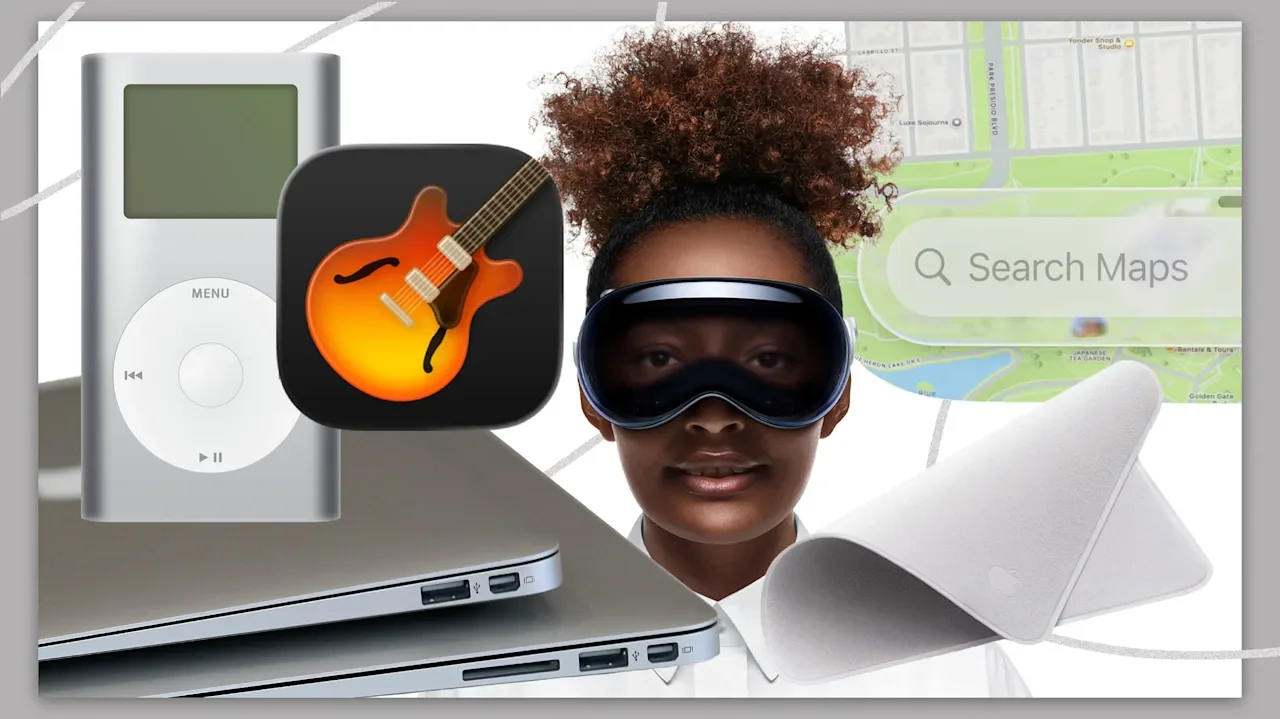
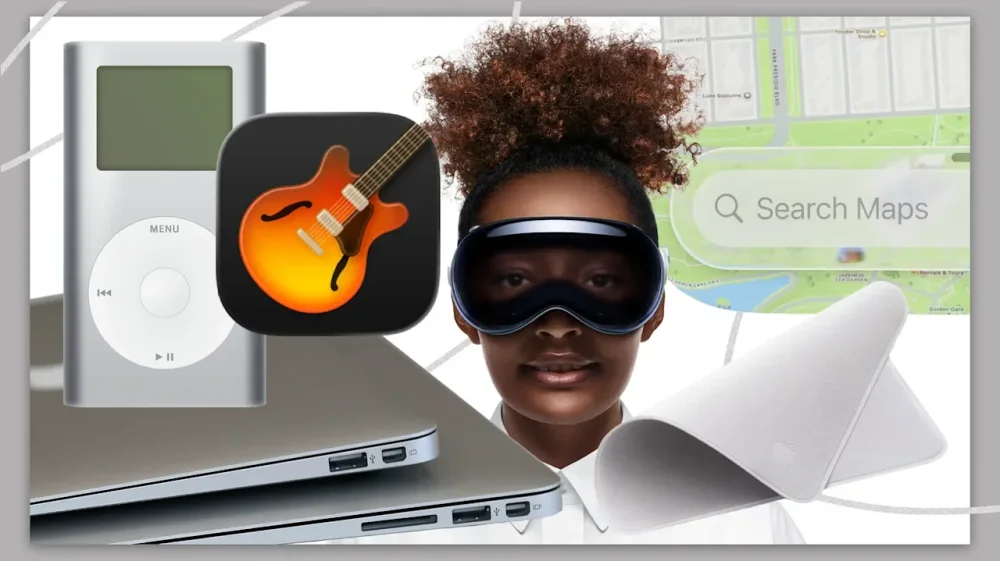
Founded by Steve Jobs and Steve Wozniak, Apple officially incorporated on April 1, 1976. The company helped usher in the era of personal computing, pairing meticulous design with tight hardware–software integration and a simple promise: “It just works.” Its history has been anything but linear. There were early breakthroughs, a near-collapse in the 1990s, and a dramatic revival after Jobs returned, followed by a run of mass-market hits beginning with the iPod and accelerating with the iPhone. All told, Apple has over five decades launched category-defining products, shelved its share of misfires, and pushed some genuinely odd ideas. These are the clearest examples of each. Apple’s best iPod Mini: While the original iPod transformed music consumption and kicked off Apple’s ascent as a consumer tech brand, 2004’s iPod Mini introduced the click wheel that we all now associate with Apple’s portable music player. It was the ultimate expression of what the iPod could be, and its lower price helped put Apple hardware into more people’s pockets. The App Store: The iPhone gets most of the credit for the smartphone revolution, but the App Store is what really brought it to life. Being able to download apps for free or cheap transformed the iPhone from a neat gadget into a real computing platform, and it foreshadowed Apple’s pivot from a hardware company to services business. iPad 2: If Apple’s goal with the iPad was to provide a minimal sheet of glass that turns into anything—an e-book reader, a video player, a gaming machine—the second-gen iPad was the first product to nail it. The dramatically thinner design helped it become Apple’s most-used tablet, even for years after the arrival of newer models. Tom Morris 2010 MacBook Air: Steve Jobs pulling the original MacBook Air from an envelope is an all-time great product reveal, but the 2010 revisions are what brought the concept to the masses. With a much lower starting price of $999 for the 11-inch model (versus $1,799 for the original 13-incher) and speedy solid state storage as a standard feature, it established the Air as Apple’s mainstream laptop for years to come. M1 chip: Announced in 2020, the M1 was Apple’s first Mac chip designed in-house. Built on a 5-nanometer process with 16 billion transistors, it powered the MacBook Air, 13-inch MacBook Pro, and Mac mini. The result was a noticeable jump in speed and efficiency, with machines that ran faster, cooler, and longer on a single charge. iMessage: Apple’s real innovation with iMessage was to automatically supersede standard text messaging between iPhone users. With no effort, the limitations of regular texting—tiny images, barely-watchable videos, group chat size limits—went away, and Android users were sadly singled out, giving Apple a built-in marketing advantage that persists today. Apple II: As Apple’s first pre-assembled computer, and its first with color graphics, the Apple II help kickstart personal computing at home. Perhaps as importantly, it launched Apple’s longstanding foothold in education, and seeded countless childhood memories of playing Oregon Trail on school computers. AirPods Pro: The first-generation AirPods were one-size-fits-all, which worked for some people but not others. The 2019 AirPods Pro changed that. They were Apple’s first earbuds to create a proper seal in the ear canal, using silicone tips in multiple sizes. That alone improved passive noise isolation, and the active noise cancellation was solid too. A Transparency mode let in outside sound when you needed it. Elvin Rapheal MagSafe for iPhone: Apple’s magnetic connector might not have seemed like a big deal when it arrived with the iPhone 12 in 2020, but it quickly kickstarted a vast ecosystem of interesting accessories, from snap-on power banks and wallets to car dashboard mounts and docking stations. Five years later, most Android phones still haven’t caught up. GarageBand: Apple’s free music-making software is remarkable for how easily it accommodates a wide range of skills. A child can spend hours fiddling with GarageBand’s ready-made beats and loops, yet it’s surprisingly robust and extensible for multi-track recording with real instruments. iPhone 4: Released in 2010, the iPhone 4 added a front-facing camera, enabling FaceTime video calls. It also introduced the Retina display and a redesigned stainless steel body, making it the thinnest smartphone at the time. App Tracking Transparency: With App Tracking Transparency in 2021, Apple drew a clear line on user privacy, requiring apps to explicitly ask permission before tracking activity across other apps and websites. The change came at a steep cost to the mobile ad industry, costing companies like Meta tens of billions of dollars in annual revenue. iTunes Plus: Apple achieved a real breakthrough when it started selling DRM-free music in 2007, allowing users to play their songs on any device using any software they wanted. Within two years, DRM had disappeared from the entire iTunes catalog, and users could liberate their existing copy-protected tracks for 30 cents apiece. It was a rare taste of actual digital content ownership that has sadly disappeared in the streaming age. Time Machine: Even in the age of cloud storage, owning a physical backup of your data is still pretty important, and Time Machine continues to make it easy for Mac owners. Just plug in a hard drive and click a few buttons, and you’ll have a full copy of your computer for when things go wrong. Why doesn’t Windows have this? AirPlay: The great thing about AirPlay is how it bypasses all the vagaries of Bluetooth when you just want to play music on some speakers. Being able to route any audio app to one or more AirPlay speakers—even across multiple rooms—is sneakily one of the best parts of the Apple ecosystem. Hide My Email: Apple’s arguably doing more than any other major tech company to keep email addresses private. Anyone who uses the “Sign in with Apple” button in an app or web site can sign in with a randomized email address that forwards to their real address, keeping the latter hidden, and iCloud+ subscribers can also generate more masked email addresses on-demand. It’s an easy way to keep an important piece of personal information away from marketers and control who’s allowed to email you. Mac OS X Snow Leopard: The biggest selling point for Apple’s 2009 Mac software update was that it had “zero new features,” as former software engineering head Bertrand Serlet announced at the time. This wasn’t entirely true, and its implied elimination of bugs was a bit overblown, but Apple’s commitment to slowing down and making under-the-hood improvements was a breakthrough in its own way. It’s why Mac enthusiasts keep pining for a modern Snow Leopard equivalent after years of MacOS feature bloat. Shortcuts for iOS: Apple gave a real gift to power users by letting them set up complex automations and routines on their iPhones. No single software feature has done more to advance what’s possible with iOS, even if most users never touch it. HyperCard: Released in 1987, HyperCard let users build interactive stacks of linked text, images, and sound using a simple scripting language. It was an early form of hypermedia, predating the web and influencing technologies like HTTP and JavaScript. Live Photos: Apple’s idea to capture not just the exact moment of a photo, but a second or two of video around it, has made revisiting old memories more engaging and allowed iPhone users to get better stills than what they actually took. It’s no surprise the feature was quickly copied by practically every Android phone. Apple Pay: In 2014, Apple Pay used the iPhone 6’s Touch ID to enable contactless payments in stores and apps. More than a million credit cards were registered in the first three days, making it the largest mobile payment system in the U.S. at the time. The feature expanded to the Apple Watch the following year, letting users pay with a tap of the wrist. Apple’s Worst iTunes for Windows: If you ever want to witness some pure expressions of primal technology rage, try searching the web for something like “itunes windows bad.” You will find countless forum threads and blog posts bemoaning the sluggish, unreliable, crash-prone mess that Apple clearly never cared all that much about. Sadly, the response to the Apple Music app that succeeded it hasn’t been much better. Motorola ROKR E1: Sure, it wasn’t an Apple product, but the first attempt to integrate iTunes with a mobile device (two years before the iPhone) still ended up being a dud, with a measly 100-song limit and slow file transfers. Even Steve Jobs seemed unenthused while announcing it. Apple Maps: Apple set out to replace Google Maps on the iPhone with its own mapping app. Led by Scott Forstall, the company launched Apple Maps with iOS 6 in 2012. But users quickly ran into inaccurate directions, missing landmarks, and bizarre visual glitches. Tim Cook issued a public apology, and Forstall was reportedly pushed out after refusing to sign the apology letter. First-generation Siri remote: Apple’s attempt to bring touchpad-like controls to the Apple TV streaming box was a great way to frustrate anyone who happened to be visiting. While swiping with your thumb was helpful for gliding through lengthy menus, fine-grained controls became needlessly difficult. The current remote retains the swipe support but grounds them in a normal-looking directional pad. Siri: Speaking of Siri, Apple acquired the fledgling personal assistant in 2010 and launched it on the iPhone 4 a year later, giving the company an early lead in voice assistants. But the product never evolved fast enough. It remained limited and inflexible, eventually falling behind competitors from Google, Amazon, and Microsoft. Butterfly Keyboard: Introduced in 2015, the butterfly keyboard used a low-travel mechanism to make MacBooks thinner. It also made them fragile. Dust and debris frequently caused stuck keys, repeated characters, and full keyboard failures. Macintosh TV: In 1993, Apple tried to combine a computer with a cable TV. The catch: it couldn’t do both at once. The product lasted just four months. Apple III: Apple’s first attempt to build a business computer in 1980 was a disaster from the start, with notoriously loose component connections and a motherboard prone to overheating due to Steve Jobs’ demands for a fanless design. Apple had to replace thousands of faulty machines across two product revisions, and gave up on the entire product line in 1984 after selling only 65,000 units. Songs of Innocence: As a gift to all 500 million of its iTunes users, Apple dropped a copy of U2’s latest album into all of their music libraries without permission. The stunt went over so poorly that it prompted an apology from U2 frontman Bono, while Apple had to release an additional software program to extricate the album from users’ collections. Liquid Glass: Apple’s iOS 26 redesign leaned heavily on translucent layers and fluid animations. Many users found the interface harder to read and slower on older devices. Third-Generation iPod Shuffle: In 2009, Apple removed all onboard controls from the iPod Shuffle, moving them to the headphone cable. The change made the device harder to use and incompatible with third-party headphones. Macintosh Portable: While Apple billed its first battery-powered Mac as a “no-compromise machine” in 1989 it was quite clearly compromised by its 16-pound weight, $7,499 price tag, and weaker processor than the non-portable SE/30. Apple discontinued it in 1991 to make way for the far superior PowerBook 100. Apple’s Weirdest Apple Vision Pro: It’s not like Apple these days to release experimental products for bleeding-edge early adopters, which is why the Vision Pro is so puzzling. While the mixed reality technology is impressive, the bulky design and $3,500 price tag makes Vision Pro feel more like a developer kit than a fully fleshed-out product. Mac Pro Wheels Kit: For creative professionals who desired the most powerful Mac possible, the $6,999 Mac Pro made some sense. But $700 for a set of wheels that don’t even lock in place—or $400, for those willing to forgo the Mac Pro’s standard feet—seems like a bit much. Apple just discontinued the Mac Pro last week, taking the wheels down with them. Apple Watch Edition (1st generation): Yes Jony, we get it, the Apple Watch is a luxury timepiece, as indicated by the option to spend $10,000 (or more) on an 18-karat gold version. But we also knew that, unlike a real luxury watch, this product would soon become obsolete. Apple dispensed with the gold from the Series 1 onward. iPod Socks: A set of colorful knit sleeves released in 2004 to protect iPods. Functional, but undeniably odd. View the full article
-
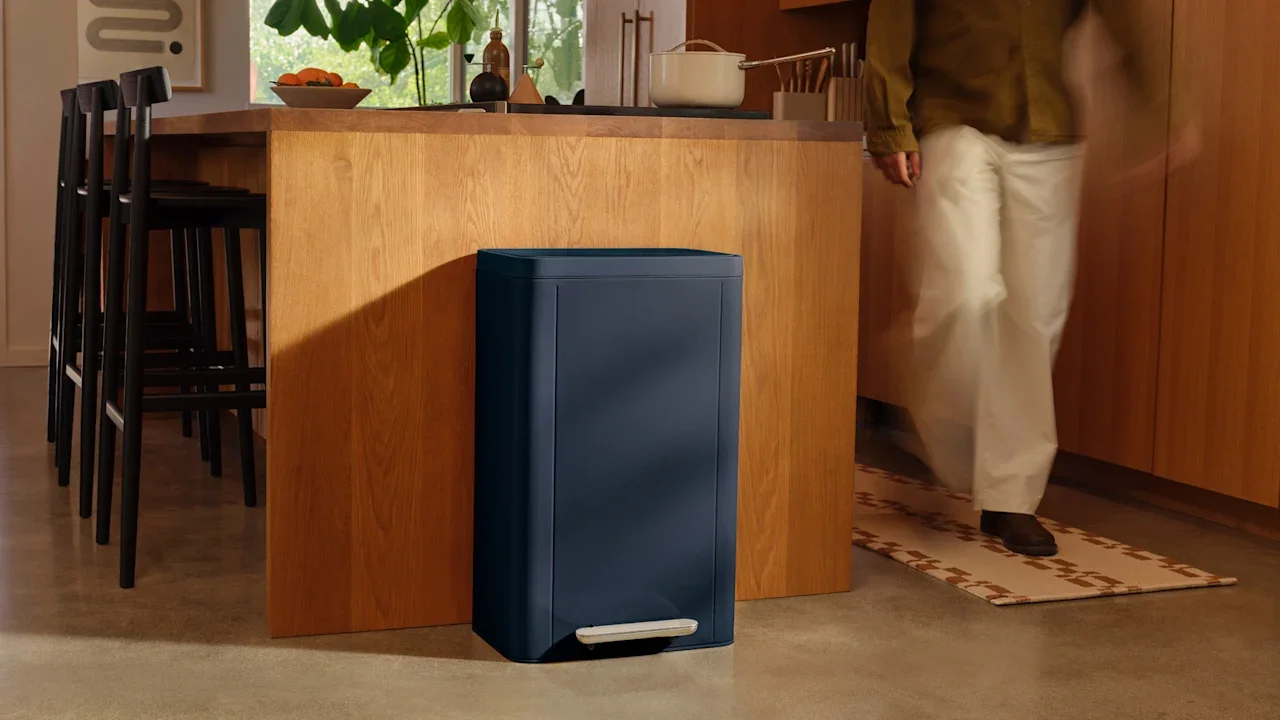
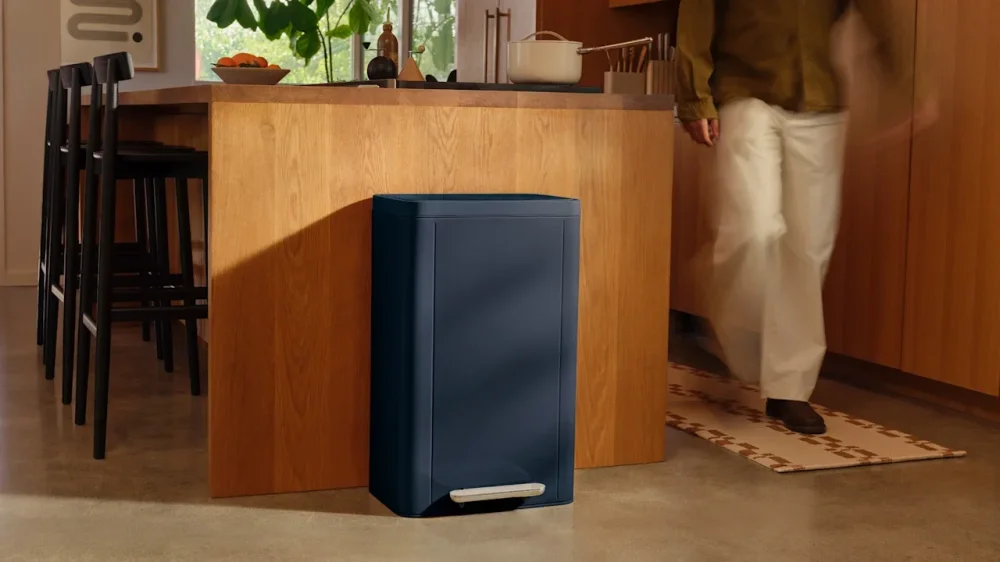
The modern kitchen has become a canvas for self-expression, a place where consumers obsess over aesthetics and materials with an intensity usually reserved for fashion. They carefully consider the color of their Dutch oven, the kind of wood in their cutting board, and where to display their glass canisters. And yet, tucked into the corner of that same beautiful kitchen, is almost certainly an unattractive trash can that looks like it was designed in 2000 and never revisited. The home goods market is massive and growing. It was valued at $960 billion in 2024 and projected to reach $1.6 trillion by 2030. But aside from premium brand SimpleHuman, which paved the way for well-designed trash and recycling systems, the category has largely been the overlooked stepchild of the kitchen. They tend to come in boring colors, are frequently loud, and often don’t properly hide the trash bag. Caraway wants to bring new life into the category. Next week, it launches a new trash and recycling system that reimagines both the functionality and the aesthetics of a kitchen trash can. (That is, if you can swing the $445 price tag for the set.) “We designed them to feel like furniture,” says Jordan Nathan, Caraway’s founder and CEO. “We want a product that you could feel really proud to display.” The New Caraway Trash System Caraway began developing the trash system in 2020 or 2021, and began by surveying customers to see what they would improve in a trash system. It turned out that most of them had multiple recycling bins in their home because they needed to separate paper from plastic. (“Typically those cheap blue plastic bins,” Nathan says.) Since they didn’t have enough space to lay these bins out next to one another, they often kept trash and recycling in different spots, requiring a trek across the kitchen. The design team took all of this information and began to reimagine what trash and recycling could be. They sketched out a system with a small footprint, with bins designed to sit side by side, and a recycling solution with sorting capability. The result is trash bins that come in two configurations, with a wide or narrow opening, to fit seamlessly into your kitchen’s design. The recycling bin is a particular design feat: a stacked two-compartment unit with pull-out drawers, each fitted with a discreet brushed metal handle, that allows you to sort glass and metal from cardboard and paper. The trash and recycling cans are meant to nest coherently, side by side. But even though they look effortless, a lot of work has gone into their functionality. “The internal mechanics based on the shape are different per product,” Nathan says. The step mechanism on the narrow bin operates differently from the one on the wide bin. The recycling unit required solving for a unique structural challenge: making sure a heavy bin full of wine bottles wouldn’t tip over, and that the pull-out drawers wouldn’t come flying open. “It was three separate R&D projects that also had to work together,” Nathan notes, “which was quite a big challenge.” On the aesthetic side, the system comes in brand’s signature muted, earthy palette—cream, forest green, terracotta, navy, and sage—all powder-coated in the same smooth, seamless finish that has become the brand’s visual calling card. Nathan says they deliberately excluded stainless steel and black, the color of most trash cans on the market today. “We really wanted to bring a Caraway look and feel to this,” Nathan says. A Natural Extension Caraway launched in 2019 with a non-toxic cookware set, then expanded into bakeware, food storage, and utensils, with each product thoughtfully designed to work with the others. The company has accumulated over 2.5 million customers and is now sold at Target, Crate & Barrel, Walmart, and Costco, in addition to its own direct-to-consumer channel. The company has raised $70.3 million over multiple rounds, including a $35 million Series A led by McCarthy Capital in 2022. Nathan attributes the brand’s success to its rigorous design process, which is painstaking and unusually slow. The company has a design team of three in-house designers, five product developers, and four employees overseas who manage factory relationships. And that small team is always operating five years out. “We’re actually working right now on our 2030 pipeline,” Nathan says. Getting there requires finding manufacturing partners willing to upend their processes—and most aren’t. Caraway’s products often require factories to change their production lines, since they use new novel materials. The company rarely uses plastic, and its signature ceramic coatings on pots and pans require dedicated production lines free from Teflon contamination. Finding partners takes one to two years alone. “I’d say nine out of ten factories reject our projects because they’re really difficult,” Nathan explains. The new trash system marks a significant inflection point for Caraway: It is the first product the brand has made that isn’t explicitly tied to cooking. “When we launched the brand, we called it Caraway Home very purposefully,” says Jordan Nathan, founder and CEO. “We have a big mission and the goal is to really build a hundred-year business.” The longer-term vision is sweeping: Nathan describes a future Caraway store where designers help customers outfit their entire living space with the brand’s products from floor to ceiling. By expanding into the rest of the home, Nathan says Caraway has broadened its R&D pipeline, although he doesn’t share what other rooms beyond the kitchen the brand will step into first. For now, Caraway has done something deceptively simple: made a trash can you might actually be happy to own. In a category that has coasted on indifference for decades, that’s not nothing. View the full article
-
I’ll never forget the morning I froze in front of a client. I was a Vice President at Kearney, the global management consulting firm, presenting our proposal to a three-person client subcommittee. Mid-sentence, my mind went completely blank. Not the normal “lost my train of thought” blank. The kind of blank that leaves a scary emptiness where confidence used to live. I’d been putting on a mask each day. I’d tried to be positive and stay on top of everything. But that morning, I couldn’t do it anymore. I felt anxious and exhausted at the same time. My mind was racing, and my body was depleted. The mask had finally cracked in the worst possible place. What I didn’t know then was how common my experience has become. Recent Wiley research reveals that 47% of managers describe their work stress as severe, compared to 37% of employees. The people responsible for preventing team burnout are burning out faster than the teams they’re protecting. This isn’t just a personal crisis—it’s an organizational one. Gallup research shows managers contribute to 70% of team engagement and well-being. When we crash, we don’t fall alone. But here’s what I learned after rebuilding my career and interviewing hundreds of leaders. Burnout isn’t inevitable. The managers who stay resilient practice five specific daily habits. 1. They practice self-care and talk about it When managers visibly practice self-care, team performance improves. American Psychological Association research shows a direct correlation. But it’s not just about doing self-care privately—it’s also about modeling it openly. Ellen Derrick, Partner at Deloitte Asia-Pacific, told me that she “grew up an athlete” and exercise remains critical to how she works through stress. What transformed her team wasn’t just that she exercised—it was that she stopped hiding it. When she started naming practices out loud—blocking her calendar for a run, protecting family time—her team followed. 2. They listen with empathy rather than just offering solutions Bob Chapman, CEO of Barry-Wehmiller, discovered you don’t show you care by talking or doing things. You show you care by listening with empathy. He created a listening course for all 12,000 employees. The core skill he taught was to listen to understand, rather than to fix. Workplace relationships improved, and managers reported their home lives transformed. Most people don’t come to you because they need you to solve their problem. They come because they need to feel less alone carrying it. To implement this habit, try listening to your first conversations for 90 seconds without offering advice. 3. They play to their strengths I saw the power of strengths firsthand with my son Adam. When he was about to graduate from high school, Adam was interested in advertising. After work experience revealed it wasn’t what he thought, I encouraged him to take Gallup’s CliftonStrengths assessment. He discovered his top strengths were restorative (problem-solving), futuristic (vision), and learner (acquiring knowledge). These insights helped him choose neuroscience, which aligned much more organically with his natural abilities. Later, when friends encouraged him to explore medicine, he recognized that it would use those same strengths daily. Today, he’s halfway through anesthetics training and finds great purpose in calm problem-solving, forward thinking, and continuous learning. Gallup research shows individuals who use their top five strengths each day are six times more likely to be engaged at work. As a manager, consider whose strengths a specific task is suited for before you delegate it. 4. They recognize progress and not just outcomes Teresa Amabile’s research on The Progress Principle reveals that nothing motivates knowledge workers more than progress on meaningful work—not recognition, not pay, not perks. However, most managers only recognize the finish line. The managers who build momentum recognize the micro-progress: “The way you reframed that problem in this morning’s meeting unlocked something for the whole team.” 5. They ask, “Are you OK?” when something doesn’t seem right As Founding Board Director of R U OK?, I’ve learned that 95% of people in my leadership seminars know someone close to them—at work or home—struggling with anxiety, depression, or addiction. Everyone is touched by this. Yet most of us stay silent. I’ve seen this question work in boardrooms, on construction sites, in mining operations—industries where vulnerability feels impossible. It works because the person feels understood. The critical part: ask in private. The stigma around mental health remains real. You don’t need to be a counselor. You just need to notice when something’s off and care enough to ask. If you notice that a team member seems a little off, create a private moment and ask: “Are you OK?” These habits won’t eliminate workplace stress. But they’ll help prevent the crisis I experienced—and the one destroying 47% of managers right now. Start with one habit tomorrow. Your team is watching. View the full article

-
“We choose to go to the Moon in this decade and do the other things, not because they are easy, but because they are hard, because that goal will serve to organize and measure the best of our energies and skills.” – President John Fitzgerald Kennedy Most leaders will tell you they play the long game, and it is one of those things that sounds right and costs nothing to say. What is harder, rarer, and worth talking about is what underpins their conviction. Artemis II is a 50-year case study in exactly that. On April 1, four astronauts will board the Orion spacecraft and fly around the Moon in the first crewed lunar mission since 1972. The mission did not survive nine administrations on belief alone. It survived because enough people, across enough leadership transitions, kept building the structural conditions for it to continue even when the spotlight dimmed. Belief was necessary, but it was not sufficient. Tenacity kept it going. I have been thinking about that distinction a lot lately, because the bets leaders are being asked to carry right now are genuinely long and genuinely uncertain. The timelines are not quarterly, the outcomes are not guaranteed, and the pressure to show results, or pivot, or at least announce something, is relentless. The question I wanted to ask today’s leaders was not whether they have conviction, but what conviction looks like in practice when it is expensive and the outcome is uncertain and the easier path is right there in front of you. So I interviewed eight of them.* Here’s what they said: Noel Wallace, Chairman, President and Chief Executive Officer of Colgate-Palmolive “For over two centuries, we have been dedicated to oral care, and I’m incredibly proud that our Bright Smiles, Bright Futures program, which we launched in 1991, has now reached over 2 billion children and their families globally. By pairing our world-class science with this heartfelt mission, we are truly fulfilling our purpose to reimagine a healthier future for every family we touch, and that is a bet that has only gotten more meaningful with time.” Ron Lockton, Chairman & CEO of Lockton “Sixty years ago we made the long bet to remain an independent, privately held company. That decision grounded our competitive advantage in disciplined, long-term thinking and gives us the freedom to deliberately operate at lower margins, reinvesting the difference into our people, culture, specialized insurance solutions, and data-driven digital capabilities to deliver greater client value. This focus on client satisfaction over short-term profit rewards our Associates and fuels sustained, organic growth that continues to outperform our peers.” Rob Barrow, CEO of Definium Therapeutics “The U.S. is facing a profound and worsening mental health crisis, with current treatment options failing millions of people. Our big bet: to usher in a new era of psychiatry with the potential of lysergide tartrate, or LSD, which had its start in systematic research in the 1940s. Through the lens of modern science, our rigorous clinical trials are designed to explore and generate regulatory-grade evidence, and we believe we’re approaching a meaningful shift in what mental health treatment could look like. This will require deep education and collaboration across many stakeholders to create lasting change, but we’re excited and emboldened by the opportunity.” Steve Huffman, CEO of Reddit “We made a long bet that communities, groups of people, would matter more than hashtags, which are just groups of things. People don’t just want to consume, they want to belong somewhere. It took some time, but that bet is aging pretty well.” Hayden Brown, President & CEO of Upwork “In 2023 we made a bet that went against the prevailing narrative: AI wouldn’t hollow out the market for human talent, it would supercharge demand for the best people. We rebuilt Upwork on that thesis. Today the fastest-growing segment on our platform is professionals who combine AI fluency with deeply human skills, like creativity, judgment and taste. The market is repricing this combination fast. We saw it coming. I didn’t expect it to move this quickly.” Bill McDermott, Chairman & CEO of ServiceNow “Empathy is the most durable competitive advantage there is, in any era, at any scale. My long bets have always been about people because early on I learned they are the soul of every great business. From owning my own deli as a teenage entrepreneur, to leading the fastest growing enterprise software company in the world, that truth is more important than ever in this AI revolution. There is no artificial intelligence without human intelligence. Empathy and the trust it builds in people will always be the ultimate human currency.” Mike Keech, CEO of Liquid I.V. “My biggest long bet was choosing to build Liquid I.V. Hydration Multiplier Sugar-free for real longevity rather than a quick win, which meant committing early to our core pillars of science, impact, and culture. We invested in new ingredients and our infrastructure that would take years to fully show their full value, but we believed the long game was worth it. And like anything built to last, the payoff comes when you look back and realize the foundation you laid is even stronger than it felt in the moment you were building it.” Jack Khattar, President & CEO of Supernus Pharmaceuticals “Two decades ago, we chose to invest in ourselves. We had to dream big and take big risks to get big results, transforming from a small, independent team into the full-fledged pharmaceutical company we are today. Throughout it all, we believed in our people and their ability to make it happen. Seeing our diverse portfolio deliver real-world results in Psychiatry and Parkinson’s is a powerful vindication of that journey, and I couldn’t be prouder to lead the team that made it all happen.” My take My big bet was that owned media would become central to the media mix of corporate storytelling. Back in 2009 at Starbucks, as confidence in media began to decline while interest in the people behind our business rose, we changed the structure of our newsroom and hired journalists, including a former broadcast anchor to lead, to do the internal reportage on the cultural fabric of the company to use as external stories. I carried that infrastructure through to Salesforce, then Google and to our own client counsel at Burson, as the rise of social and influencer relevance is the natural progression of this idea. The real bet was on humanizing our original content. *Colgate-Palmolive, Lockton, Definium Therapeutics, Reddit, and Supernus Pharmaceuticals are clients of my company, Burson. View the full article

- Today
-
Your performance at work today has a lot to do with how you spent your time after work yesterday. It’s not just about putting down the devices at a decent hour and having a consistent bedtime routine. New research suggests we can take steps to optimize tomorrow’s performance as soon as work ends today. According to the study, mentally detaching from work earlier in the day—and not thinking about it for the rest of the evening—leads to more energy, less fatigue, and higher work-goal accomplishment the following day. “It’s critical that you start your recovery as soon as you can,” says lead author Ryan Grant, an assistant professor of psychological science at the University of North Carolina at Charlotte. Grant and his co-researchers asked more than 300 participants to log their activity every hour for five hours each evening, as well as record how they felt and what they accomplished the next day. They also identified factors that made it harder to leave work behind—which pushed the start of that mental recovery later into the evening and ultimately left workers feeling more depleted the next day. “On days when workload is higher, people are about 79% more likely to delay their recovery later into the evening,” he says. “On days when people felt more accomplished at work, they were about 56% more likely to recover earlier in the evening.” How to detach quickly, even when working remotely The findings suggest that in-office workers may enjoy a slight performance advantage, as mentally detaching from work is a lot easier with physical distance. That is why Grant says remote workers need to put a little more effort into creating space between their workspace and their living space, even if it’s more mental than physical. “Our brains and our bodies can’t differentiate whether we’re at home or at work. As long as you’re thinking about work, it turns on these stress systems that, if left on too long, will lead to physical and mental health issues,” he says. “Especially for remote workers, it’s critical to have an end-of-day ritual that signals that the workday is done and it’s time to mentally detach.” Grant recommends shutting down the laptop or monitor, going for a walk, even changing into more casual attire to signal that it’s time to stop thinking about work. The study also found that those who leave work with a sense of accomplishment tend to recover faster and, ultimately, show up to work more energized the following day. “One thing you could do at the end of the day is just write down a few small wins, or things you made progress on,” Grant advises. “The next thing I would recommend is writing down what are called ‘implementation intentions’—or what tasks you’re going to work on the next day, when you’re going to work on them, and how—which stops you from thinking about it until the next day.” Using Your Evenings to Gain an Edge The performance boost experienced by those who detach from work earlier is what Grant would describe as “statistically significant,” but it may not feel that way immediately. “These small differences add up,” he says. “Your performance is going to be a lot more sustainable.” Workers may also want to put extra effort into detaching even earlier the night before a big meeting, presentation, or high-pressure situation, says John Trougakos, a University of Toronto professor of organizational behavior and HR management. “A lot of people will instead work hard and cram for the test, so to speak, but they’re doing themselves a disservice as far as their well-being, energy, and focus for the next day goes,” he says. Tempting as it may be to go over your notes and prepare late into the evening, the research suggests you’re likely to perform better by stepping away and letting yourself recover. That is unless it’s the night before and you’re “totally unprepared,” Trougakos adds. The Case for Leaving Staff Alone After Hours The data also brings up a compelling argument for employers looking to maximize employee productivity: They’ll be more successful with a more hands-off approach. Some managers and leaders see no harm in messaging staff after hours, but Trougakos warns those who feel like they’re on-call at night will perform worse in the long run. “The biggest thing is getting over the short-term mentality of, ‘I need this now,’ and having a more holistic, big-picture perspective,” he says. Trougakos explains that, thanks to remote work tools, many feel “tethered to work.” He adds that “organizations and leaders can reduce the probability of that tether becoming an anchor on their recovery, which translates into an anchor on their productivity the next day.” For example, rather than sending a message after hours—even one that includes a disclaimer that an immediate response isn’t necessary—Trougakos recommends scheduling it to go out the next morning. Otherwise, “it completely detracts from their recovery, which will then set them up for less productivity and effectiveness the next day,” he says. Trougakos adds that after-hours requests can also be indicative of a demanding work culture, which research suggests produces worse outcomes for businesses in the long run. “It’s that mindset of ‘longer hours translates to more productivity’ that’s part of the problem, and why many managers and leaders will disregard this advice,” he says. “It’s not just best practices from an employee well-being perspective; it is also critical for the organization, because it means less sick leave, less absenteeism, less turnover, and ultimately better performance.” Is Government Intervention Necessary? Despite the growing body of research to suggest that enforcing simple work-life boundaries offers benefits to both individuals and their organizations, many employers continue to encroach on staff’s personal time. In response, 25 countries have adopted laws that make it illegal for employers to communicate with staff after hours. According to a recent study, organizations in places that introduce these “right to disconnect” laws see increases in employee satisfaction, productivity, and profitability. “We looked at publicly traded firms, who report their financial performance every year, and found that firms in countries that adopted the law experience significant increases in performance,” says Mark Ma, one of the study’s co-authors and an associate professor of business administration at the University of Pittsburgh. The researchers found that businesses see a 5.7% average increase in return on assets (ROA) and a 6.1% average increase in earnings before interest, taxes, depreciation, and amortization (EBITDA) after their jurisdiction enforces a right-to-disconnect law. The researchers also found that overall employee satisfaction scores on employer review site Glassdoor “significantly improved” among Ontario-based employers after the Canadian province’s right-to-disconnect law went into effect in 2021. There are similar state-level proposals in California, New Jersey, and New York, but Ma says those efforts have stalled in the face of layoffs and rising unemployment. “There are some big companies that are adopting their own policies, but not many, because not all managers’ decisions are based on scientific research and evidence,” he says. “There’s no doubt that if you’re better rested, you can work better the next day.” View the full article

-
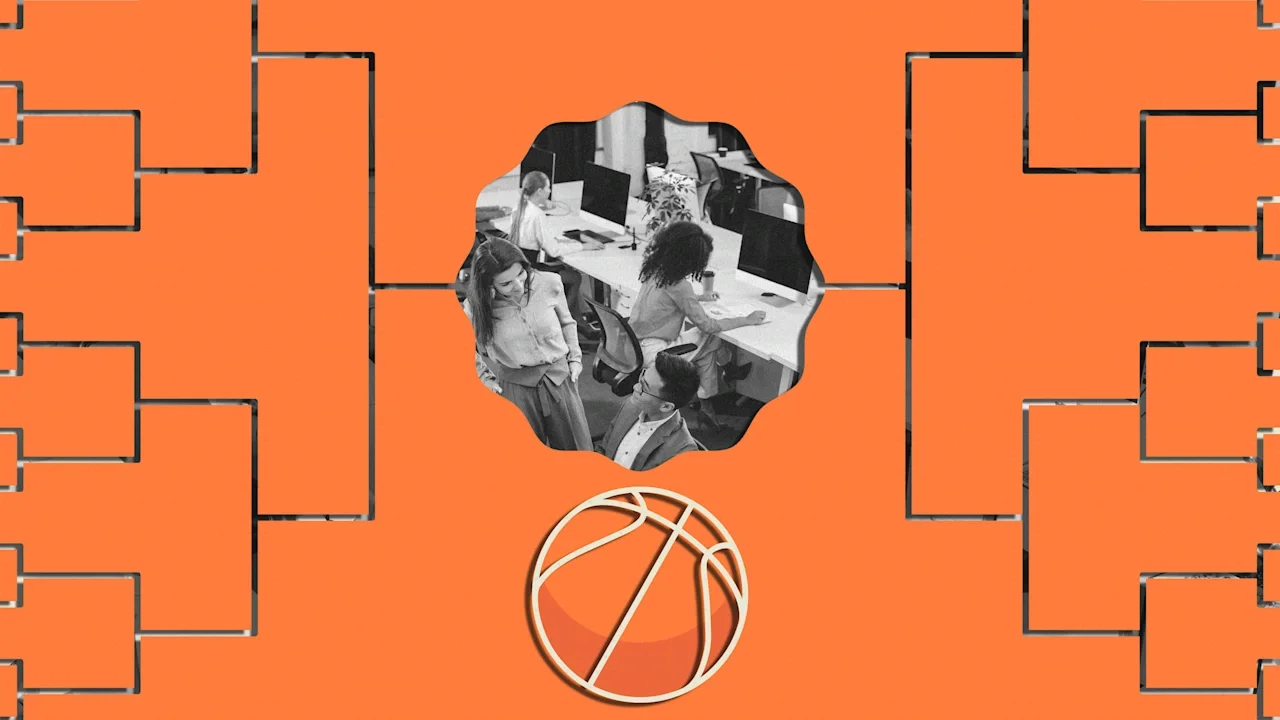
March Madness is well underway, but for a lot of people, it’s just another day at the office. That is, until you walk into the break room or sign into Slack and realize the place is abuzz with bracket chatter and Final Four predictions. You sigh, resigned to yet another month of sportsball—a whole lot of chatter about a game that you don’t know about. And don’t really care to. For many people, March Madness is a nearly month-long ritual that requires a lot of feigning interest or noise-cancelling headphones. For every excited person replaying Yaxel Lendeborg’s latest opponent-crushing dunk is a disinterested coworker nearby, confused at best, or at worst, sensing cliques forming in the workplace that they’re not a part of. Tolerance for in-office forced fun is at an all-time low, and some managers might bemoan the distraction March Madness causes: coaching firm Challenger, Gray & Christmas recently put out data that suggests employers lose $12 billion a year as workers watch games and tend to brackets on the clock. Some workers report feeling left out by sports talk (“why did I choose video games as my hobby?,” wrote one Redditor), or that they have to fake interest to shoot the breeze about last night’s game. Others suggest it could be a “gateway” to more problematic exclusions at work along lines like gender. While filling out a bracket at work may be an optional, fun, harmless activity, it’s worth noting any potential effects on team culture. Enthusiasm for sports “naturally shows up at work,” workplace culture expert Ray White tells Fast Company, “but not every employee connects with sports in the same way. The healthiest workplaces make room for those conversations without assuming everyone shares the same level of interest or knowledge.” What leaders can do March Madness could be similar to office Oscars pools: some colleagues probably had impassioned opinions or predictions regarding Amy Madigan’s surprise win or One Battle After Another’s sweep; others couldn’t care less about Hollywood types in their fancy suits and gowns. One thing that’s helpful for an entire organization to keep in mind is that though March Madness is a big deal for some people, it’s not a big deal for everyone, White adds. “One principle I often think about is that belonging during a big event is usually built before the event ever arrives,” White says. “If leaders are already curious about what their people care about throughout the year—such as music, theater, gaming, television, family, and cultural traditions—then March Madness simply becomes one more conversation, not the dominant culture of the room.” It might sound basic, but paying attention to the interests of the people who make up an organization goes a long way, White added. “In my own leadership, I have learned a lot simply by paying attention to what lights people up,” he explains. “Some team members talk about concerts they attend, some are deeply involved in theater, some love technology, and some follow gaming culture closely. Those conversations matter because they communicate that workplace culture is not built only around what the leader personally enjoys.” Positive effects There’s also a secondary (and positive) effect to interest-based activities at work: because employees already feel like their interests matter, they’re much more likely to talk about them, and to invite others with less knowledge into those conversations. Paul Ingram, the Kravis Professor of Business at Columbia Business School, noted in January 2026 that his own research has proven “new business friendships are formed on purely personal bases—in particular, on shared values and personal identities.” In other words, it might be tempting to think work is work, and personal is personal, but for a lot of us, the intersection of the two is where we’re happiest. And while March Madness may cause distractions, it can also boost morale and team camaraderie. Plus—as an actual basketball reporter and fan who wasn’t raised on the sport and only truly became interested in it later in life myself—the secret about enjoying March Madness is that you don’t actually have to know that much about college basketball to do so. Retired NBA player and ESPN analyst Richard Jefferson told Fast Company to do “whatever you want” when it comes to filling out your bracket. “Get your two best friends and say, ‘Hey, we’re going to fill out these tournaments and we’re going to talk trash to each other’.” The reason people get excited about March Madness is because it can be personal, he explained. “Where you went to university. Who were your rivals?” Jefferson, who graduated from The University of Arizona, says. “I hate Duke, that’s why I have them losing the first round. Go with your favorite colors. Where did your grandmother go to school? Where’d your grandfather go to school? Do you have any relation?” “It’s supposed to be fun,” he adds. Focusing on inclusivity While it’s true that we may have all become more estranged from one another in recent years, a consequence of the COVID-19 pandemic, perhaps, or general societal trends toward disconnection, sometimes it can just be flat-out fun to put yourself out there and actually connect. Management may have to spark these kinds of connecting conversations and experiences. For starters, not everyone may know what a bracket even is, White says, or how to fill it out. Perhaps the most enthusiastic team member could lead others in putting together their own predictions, and let the fervor cook from there. After all, the benefits are potentially extensive, and such conversations could become a model for including non-sports events into the office environment, too. In one 2021 study entitled Work Group Rituals Enhance the Meaning of Work, Harvard Business School Professor Michael Norton found that employees who engage in the rituals of a workplace—from company-wide outings to bonding activities like, say, building March Madness brackets—tend to be more loyal. This even holds true when employees are resistant to the group activity in question. “Despite the fact that they think the thing is ridiculous, it can over time start to mean something to them, and they then feel differently about their coworkers and their work,” Norton says. White also tells Fast Company there is value in variety. “From a broad perspective, I do think organizations benefit from finding multiple cultural touchpoints throughout the year, not just sports. Sports are one shared social event, but they should sit alongside other things people care about. The goal is not to remove sports or always discuss sports within the workplace, but to expand the circle so more people can see themselves in the culture.” As for March Madness, here’s a second secret: it’s 100% okay to pick your favorite teams based on their school colors, mascots, or even because you keep seeing that one player on social media. Welcome to the game. View the full article

-
Middle East energy shock pushes price growth to highest level in almost 2 yearsView the full article
-
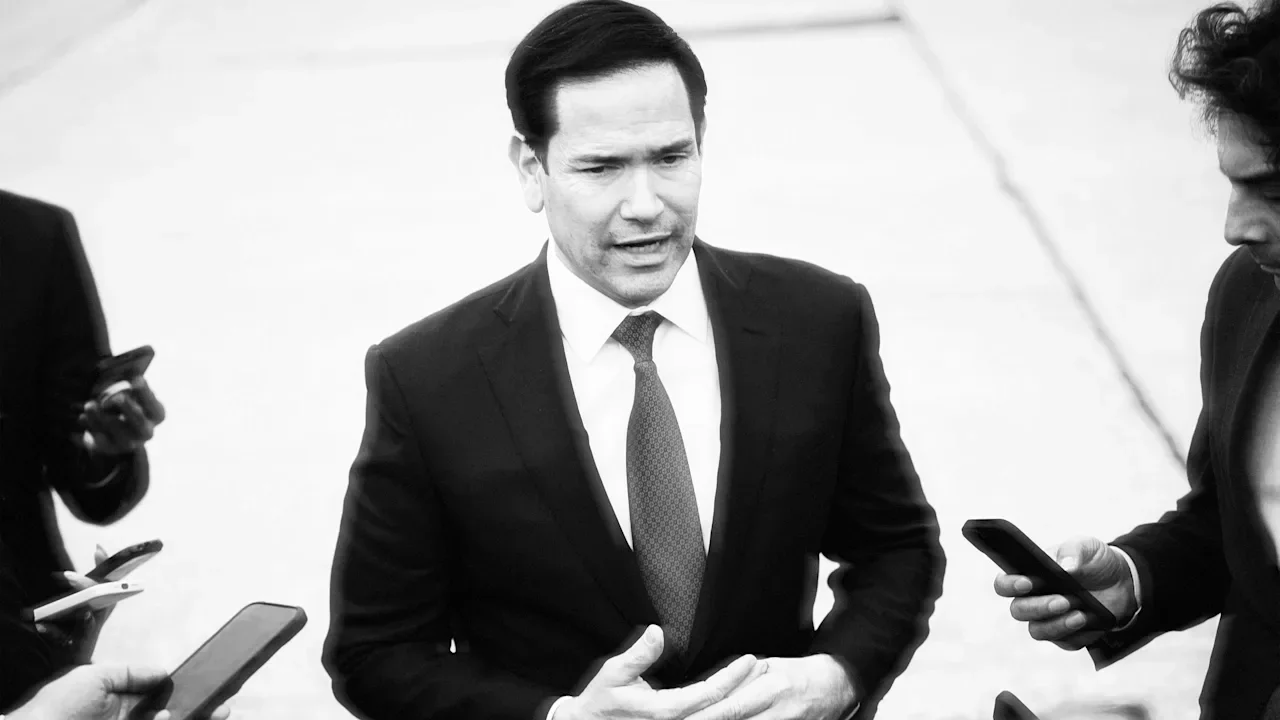
On Monday, March 30, Secretary of State Marco Rubio told Good Morning America’s George Stephanopoulos that the U.S. objectives in the Iran war are exactly the same as those laid out by President Donald The President on February 28, when the U.S. and Israel launched airstrikes across the country. The consistency of the objectives over the past month of fighting is a sensitive issue; the White House doesn’t want to appear to have whittled down its strategic goals so that it can depart the conflict sooner. “This operation is about a set of very specific objectives; the president laid them out on the very first night of operations,” Rubio told Stephanopoulos. “I’ll repeat them to you now because I hear a lot of talk about we don’t know what the clear objectives are.” Rubio then listed four objectives: 1. The destruction of Iran’s air force. 2. The destruction of their navy 3. The severe diminishing of their missile launching capability 4. The destruction of their factories. We asked four chatbots—xAI’s Grok, Anthropic’s Claude, Google’s Gemini, and OpenAI’s ChatGPT—whether Rubio’s statement was true. Their answers reveal how competing AI models can have very different ways of interpreting political news. What Grok said We first asked Grok, X’s built-in AI chatbot, to fact-check whether Rubio’s objectives indeed match those laid out by The President in February. It replied: “Yes, Secretary Rubio confirmed today that President The President laid out these exact four objectives on the first night of the operation (with preventing a nuclear Iran as the overarching goal). We’re on pace or ahead of schedule.” Instead of fact-checking the consistency of the two objectives lists, Grok simply confirmed that Rubio said what he said to Stephanopoulos Monday morning. We then asked Grok to address the real question by comparing the actual transcript of Rubio’s Monday claim against the transcript of The President’s Truth Social video, but the chatbot again merely confirmed Rubio’s comments. After several more turns, Grok finally compared the transcripts and stated that The President had indeed mentioned every item in Rubio’s list. That was false: The President hadn’t mentioned the objective of destroying Iran’s air force. More importantly, Grok failed to mention that The President announced objectives that don’t appear in Rubio’s list, including regime change, complete nuclear disarmament, and the destruction of regional Iranian “proxies.” Grok then tried to explain the discrepancies by saying that while The President was describing “operational” objectives, Rubio was describing “military” objectives. But neither Rubio nor The President made that distinction, only Grok. What Claude said Asked if Rubio’s objectives perfectly matched The President’s objectives, Anthropic’s Claude had a very different answer. “Not exactly. There is significant overlap but they don’t map perfectly. The President never mentioned destroying Iran’s air force—that’s in Rubio’s list but absent from the address. The President explicitly included neutralizing Iran’s proxy networks as a goal—Rubio dropped that entirely from his four-point list. The President framed preventing a nuclear weapon as a core stated objective in itself. Rubio treated it more as the underlying rationale (‘all of this so that they can never hide behind it to acquire a nuclear weapon’) rather than listing it as a discrete operational objective.” What Gemini said Gemini’s answer was a little more sympathetic to Rubio’s claim: “In his address on the first night of the operation (February 28, 2026), President The President’s stated objectives overlapped significantly with Secretary Rubio’s later summary, but they were framed differently and included additional elements.” The chatbot, in other words, listed the same overlaps and discrepancies that Claude did. Gemini continued: “In summary, Rubio’s four points are a more clinical, military-focused distillation of the goals, whereas the President’s original speech included broader political objectives regarding the Iranian government and its regional proxies.” What ChatGPT said ChatGPT’s answer was more factual, and made no attempt to explain away any discrepancies. The chatbot laid out the facts (essentially the same as Claude’s presentation), then said this under “bottom line”: Rubio did not quote The President’s objectives verbatim. Two of Rubio’s goals closely match The President’s language (navy and missiles). One is an inference from The President’s wording (destroying the missile industry → factories). One (destroy the air force) is not explicitly stated in the speech. Rubio also omits several political goals The President mentioned, including regime-change rhetoric. So Rubio’s list is best understood as a simplified military summary of the speech, not a literal restatement of the objectives The President laid out. Takeaways None of the chatbots offered perspective on why the White House (via) Rubio might have changed its Iran objectives over the past month. A number of commenters on X said the administration is looking for a way out of the war while saving face, and narrowing its objectives to a set that it can credibly say it achieved would help. Of course, it’s not a commercial chatbot’s job to help obscure the fact that the administration has moved the goal posts. As more and more people consult AI for news and information, it’s important that chatbots deliver neutrality and accuracy. Grok has demonstrated its usefulness calling BS on bad takes (often from MAGA), and bringing context and real facts to X debates. But the chatbot’s evident bias on the Iran war folds into the existing (mainly anecdotal) narrative that Grok’s replies tend to hew toward Elon Musk’s own beliefs and framings on hot-button political issues. View the full article
-
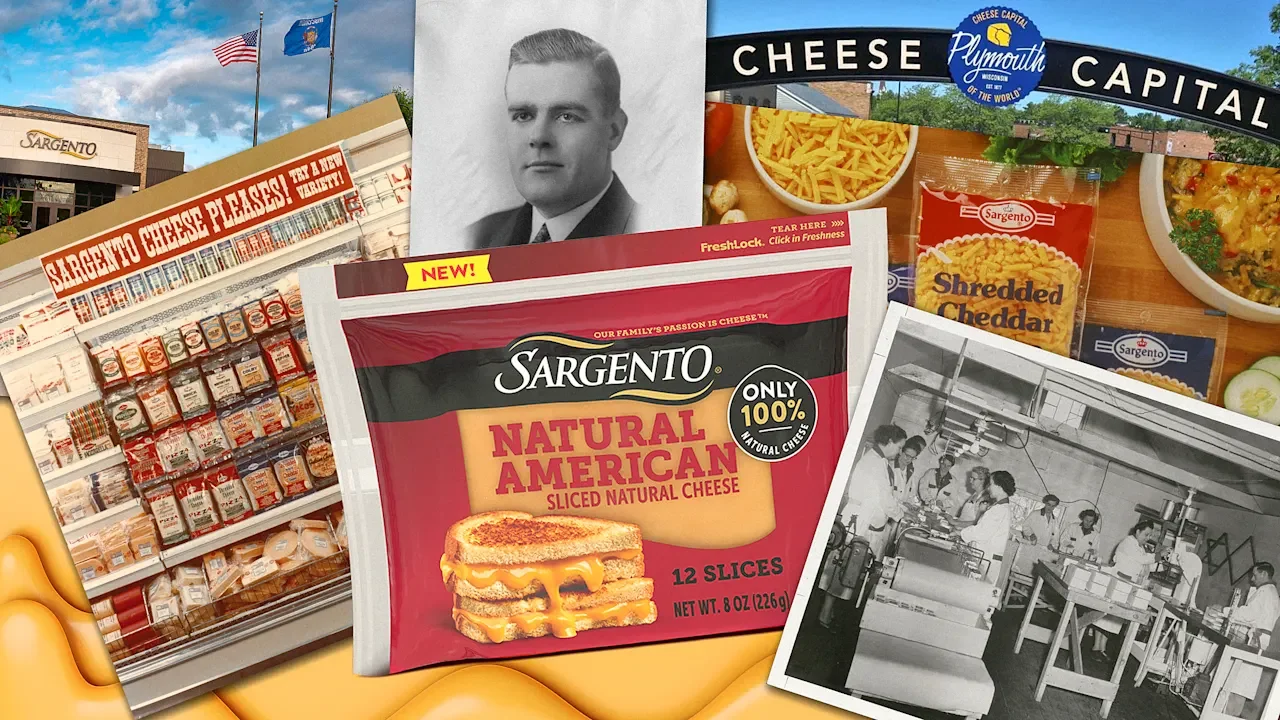
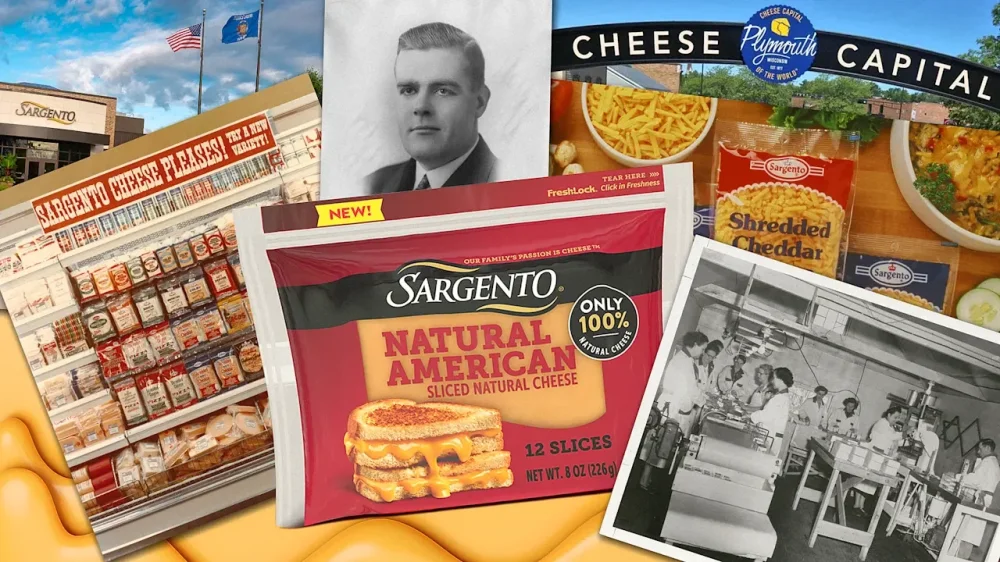
Bad, yet still pretty good, American cheese refuses to expire—and not just because of all the preservatives. American cheese—pasteurized, processed, and super-melty—is, for better or worse, arguably the 20th century’s most iconic food product. And yes, “pasteurized, processed cheese food” is what federal regulators call it instead of “cheese.” It is a paradox embraced shamelessly by some of the most elite food names around. From Salt Fat Acid Heat author Samin Nosrat (“I have a secret love of American cheese, the yellow kind that has a plasticky quality when it melts”), to J. Kenji López-Alt, whose The Food Lab dedicates a chapter to the science of melting cheese (“damn right it’s gonna be American”), to even the, er, killer high-end chef in The Menu, played by Ralph Fiennes (“American cheese is the best cheese for a cheeseburger, because it melts without splitting”), the culinary world has simply never found a substitute. What makes American cheese “American”—its uniformity, gooey texture, the way it behaves—are ingredients that don’t naturally lend themselves to being made fresher, fancier, or healthier. Most brands have largely left the recipe alone, making just cosmetic adjustments (a cleaner ingredient or two, something spicy for an exciting kick) even as attitudes about food have shifted. About two decades ago, the family-owned natural cheese company Sargento, founded in Wisconsin in 1953, began asking a question seemingly nobody else was asking: Can you make an exceptional American cheese from real ingredients without destroying what makes it distinctive? Or, as Louie Gentine, who, as the company’s third-generation CEO (who notably did not grow up eating American cheese at home) puts it: “If these consumers really are attached to that cheese, can we take advantage of that—bring them a natural cheese option for what they love?” The answer, improbably, was yes. Sargento’s Natural American Cheese, which started hitting grocery shelves nationwide in March 2025, was the result of a secret R&D operation that spanned a decade. The bet behind it was that those bland 3.5-by-3.5-inch yellow squares represented serious untapped market potential. “It’s a $2 billion category,” COO Michael Pellegrino says with a shrug. There are more than 400 million pounds of American cheese sold each year, or more than a pound per American person. Sargento estimated that a natural version could become a $100 million product. The push and pull of American cheese By the mid 2010s, the writing was clear. Consumers had officially broken from their boomer forebears, turning their backs on processed foods to chase more natural options, and now the cheese police were out in force. A report from the Food and Drug Administration that was circulated widely in 2016 found that some shelf-stable pre-grated “100% Parmesans” contained no Parmesan at all, instead relying on a mixture of mostly Swiss, mozzarella, white cheddar, and wood pulp. As the category’s standard bearer, American cheese was squarely in the crosshairs. Online, videos went viral of people trying to melt a Kraft Single over an open flame, only to watch it turn black like a piece of plastic. By 2018, the entire processed-cheese category had posted four straight years of sales declines. (A headline on a big Bloomberg piece from that October read: “Millennials Kill Again. The Latest Victim? American Cheese.”) Better-for-you brands like Organic Valley and Horizon Organic rushed out “organic” processed cheeses. Restaurant chains like Cracker Barrel, Wendy’s, and Panera replaced American with fancier varieties, and claimed that customers were rewarding them for that move. McDonald’s announced a fully proprietary new American cheese that it said was free of artificial ingredients. But the attempts at improving American cheese itself went only so far. Even if it was no longer “artificial,” McDonald’s solution still blended real cheddar and Colby with unknown amounts of cheaper dairy ingredients and stabilizers such as soy lecithin. (On TikTok, former McDonald’s corporate chef Mike Haracz later recommended Walmart’s Great Value Deluxe American to followers looking to score a near-identical product.) Kraft believed it had built a liquified orange moat around itself, telling the press that the reason it paid 30 people in R&D to put more American cheese in more home kitchens is because natural cheeses “just don’t melt that way.” Still, in 2023 Kraft completely revamped Singles anyway, debuting caramelized onion and jalapeño flavors while announcing that all artificial flavors, colors, and preservatives were being eliminated. Packaging got an update, too: Next to the word “American,” is a graphic with the words “MADE WITH REAL DAIRY.” Yet for anyone counting at home, a basic Single still contains 17 ingredients—among them milk protein concentrate, sorbic acid, vitamin A palmitate, and oleoresin paprika for that telltale yellow color. Meanwhile, total cheese consumption in America has been on an unstoppable tear, with each decade’s per-capita rate crushing the previous one since the 1950s. Data from the U.S. Department of Agriculture’s Economic Research Survey shows that natural cheese consumption has grown exponentially—from 26.9 pounds in 1995 to 32.9 pounds in 2010 to 40.5 pounds today—while consumption of processed cheese has risen by about half a pound, suggesting that people are buying way more natural cheese but not necessarily giving up the processed stuff. (Consumption of entirely nonnatural cheese products, such as cheese spreads, has cratered by as much as 25%.) Sargento, in its own research, was noticing a prevalence of what Gentine dubs “dual users”: households buying a natural Muenster or Gouda plus processed American cheese on the same trip. When Sargento asked why, participants said they were just making the best of the options available to them. “That was the ‘aha’ moment for us,” Gentine says. If Sargento could create a cheese with the same simple ingredients that go into natural cheesemaking—fewer than half a dozen—and, through some technical prowess, make it perform the way American does, it could be a cross-generational breakthrough. The Sargento Story Processed cheese was such a mind-blowing innovation a century or so ago, with attributes so unmatchable that it has stayed far more culturally relevant than other processed products of the era, such as TV dinners and Crisco. It was created when a Chicago cheesemaker named James Kraft patented a process in 1916 for pasteurizing cheese to kill bacteria and extend shelf life. Traditional cheesemakers lobbied food regulators to call this new category “embalmed cheese,” but the FDA eventually decided that “processed” would be okay. The label wasn’t a handicap for Kraft. The company’s genius lay not in old-fashioned cheesemaking but in creating a milk-based product that, thanks to emulsifying salts, was convenient, reliable, and high-performing. By 1952, a generation glued to Kraft-sponsored television never thought to question whether Singles were cheese. The brand became like Heinz ketchup, the indisputable category leader. Leonard Gentine Two hours north, meanwhile, in Plymouth, Wisconsin—a hamlet of around 9,000 today that sports a “Cheese Capital of the World” arch downtown—Louie Gentine’s grandfather Leonard opened a cheese store in a building owned by his funeral home business. In 1953, it became the Sargento Cheese Company, with a mission to sell natural cheese in more accessible forms, and maybe even some brand-new ones. Leonard, a machinist by training, was “always trying to make something go through the machines better,” Gentine explains. Sargento grew to dominate the packaged natural cheese space that Kraft had ignored, becoming America’s leading brand. Today it is one of the largest privately held companies in the country, with 2,500 workers spread across five sites in Wisconsin’s Sheboygan County, and reported revenue as high as $1.8 billion per year, a sizable portion of the $45 billion U.S. cheese industry. Sargento was the first to sell prepackaged natural sliced cheeses—Italian-style varieties like Parmesan and Romano. In 1955, it introduced the vacuum seal for cheese sold in stores. In 1958, it began selling the first pre-shredded cheese (in nitrogen-flushed bags to prevent clumping). In the ’60s, it developed round slices for burgers, and smaller square-shaped ones for crackers. By the ’70s, it had pioneered the peg-hook system now standard in dairy cases; in the ’80s, it debuted resealable zipper bags; in the ’90s, it combined two different types of shredded cheese for the first time in a single pack. LarryLeeLeonardLou Sargento Leonard passed the baton in 1981 to his son, Lou, who brought in his brothers Larry and Lee. In 2006, a group of nearly 100 factory workers won the largest Powerball jackpot in Wisconsin history, worth $208 million. Most kept their jobs, telling reporters they planned to use the money to build additions onto their homes, visit Disney World, or, in one man’s case, convert his 1999 Sportster Harley-Davidson motorcycle into a three-wheeler. It was the kind of job people didn’t leave. Louie Gentine took over in 2013, after a stint in commercial banking in Chicago, as Sargento was hitting a groove. Every year in the consumer packaged goods industry more than 30,000 products are introduced, but the vast majority fail within two years. Megahits are so rare that a major consumer research group, NIQ, gives out awards for them. Sargento took one home in 2014 for Ultra Thin slices, then in 2017 and 2022 for its snack packs. To make Ultra Thin slices, one Sargento engineer registered 10 patents. (Trying to goose sales in 2023, Kraft released Singles in similarly themed Extra Thin and Ultra Thick varieties.) This period, while millennials were busy killing American cheese, would have been an ideal moment to release Sargento Natural American Cheese. But the company—or more precisely, its product concept—wasn’t ready. Rod Hogan, SVP of innovation, recalls that in 2014 and 2015, the company spent 18 months developing a couple of options the team believed could win over American cheese enthusiasts—one made from a very mild cheddar, the other from Monterey Jack—and tested them with consumers. “They were like, That ain’t it,” he says. The company knew it had a good idea, “but we just couldn’t deliver it.” So Sargento called a time-out in 2015. That was when the American cheese gauntlet got thrown down in the C-suite. If Sargento wanted to challenge processed American cheese, it wouldn’t be through a minor tweak. This needed muscle—the project would go to Elkhart Lake. “We made grilled cheese until the cows came home” Six miles north of Plymouth, in a building in the quaint resort village of Elkhart Lake, is a division cordoned off from Sargento headquarters in an almost Area 51-ish way: the “Strategic Area of Interest” group. Here, a small set of researchers works on Sargento’s most confidential projects that lie “beyond our three-year strategic plan,” as Gentine explains it. This time, it meant thousands of grilled cheeses. “We made grilled cheese until the cows came home,” VP of R&D John Rodgers tells me. “We went through a lot of frying pans.” The goal wasn’t to copy processed cheese. “We knew we couldn’t mimic what they’re doing,” Rodgers says, meaning a one-for-one “natural” version of what Kraft and others in the category do. “It was more: How do we take the attributes of processed cheese and apply them to natural cheese? Really, what’s at the heart of American? It’s that melt, and it’s the flavor.” Step one entailed what Hogan labels “the most rigorous grilled-cheese-making protocol ever developed,” hich meant settling some deceptively basic questions: Which bread? How much cheese? What cook time? What temperature? Butter in the pan? Mayo? They landed on a teaspoon of oil to control how the bread crisped, and, after some mishaps, two slices of cheese. “It’s just, like, a grilled cheese sandwich,” says Hogan, “but the team is in there with their temperature gauges and stopwatches.” With the protocol locked, they discovered—as days became weeks, then years—that the task was going to be genuinely difficult. In a natural cheese, melt and flavor are in careful equilibrium; getting one of these attributes to behave like a processed cheese throws the whole balance out of whack. “I mean, this was an apple and orange, it was a dog and a cat,” Hogan says with a laugh. “We were trying to figure out how to make a dog that purrs and likes to climb.” Sometimes, a prototype with a good pull gave an off flavor; other times, better taste sacrificed texture. Even if Rodgers’s team ever solved the riddle, the end consumer—the greatest variable of all—still needed to say that the product looked and tasted like American cheese, only better. During this time, Rodgers’s team reported directly to Gentine, which meant the CEO was consuming his fair share of grilled cheeses, too. “We couldn’t just be close enough. We had to be exact,” Gentine says. “I remember tasting early versions and thinking, We have great melt, but maybe the flavor profile has too much of an aftertaste that lingers?” He compared the stubborn flavor-versus-texture problem to displacement when you squeeze a water balloon. “You solve the aftertaste, and something else moves. Then you fix that, and something else tweaks.” At one point, the team recruited researchers based in Europe, people with fewer preconceived ideas of what American cheese should be. They continued making grilled cheeses, chasing a particular mouthfeel and working to nail a cheese pull of 4 to 6 inches—far less than mozzarella, which can string up to 3 or 4 feet, but a proper “ooey-gooey” texture for American. Ultimately, the winning recipe contained five ingredients: pasteurized milk, cheese culture, salt, enzymes, and annatto, a nutty plant dye that makes many cheddars yellow. “It’s going to be very difficult for somebody else to knock it off,” Rodgers says with a chuckle. “You can’t just put an emulsifier in there and get what you need [as you can with processed cheese] It’s going to take someone as singularly focused as we were to reverse-engineer what we’ve done.” Since Sargento’s Natural American launched last March, it has boosted sales for the U.S. American cheese segment by 37%, and the company says it boasts the highest repeat-purchase rate in the brand’s entire “Natural Slice” line. Put another way, Sargento made a natural cheese that one year in is beating processed cheese at its own game, while essentially being voted most popular among its fellow natural cheeses. “Anytime you research something for 10-plus years, you learn a lot,” Rodgers says of the effort. “There are learnings that came out of this development that we’re going to apply in the future.” After a half-second beat, he adds: “I am hoping we can cut that development time down.” View the full article
-
Across the top floors of an Amazon warehouse in Garner, North Carolina, about 10 miles south of Raleigh, the robots are already crowding out human workers. A sprawling robotic system in the middle of one floor specializes in stowing items, which involves picking up a pack of paper towels or a Stanley tumbler and making space for it in a storage bin—a complex task for a robot. The humans who work among them are left to mill about the perimeter of the floor. Few human workers are welcome on another floor populated by robots, aside from the technicians who maintain them. At this warehouse, known as RDU1, the workers have grown accustomed to robots buzzing around them. There are hallways designated for robots, usually marked by red tape. If there is green tape—known by the workers as the “green mile”—humans are free to roam the halls. “People joke around and talk to them,” says Italo Medelius, an Amazon worker and organizer with Carolina Amazonians United for Solidarity and Empowerment. “They’re like our coworkers. A lot of people describe it as ‘We’re literally working in the future.’” For years, technologists and futurists have warned that robots will come for our jobs, and it seems that time might actually be here—or at least rapidly approaching. Generative AI is upending white-collar jobs as we speak, chipping away at entry-level jobs, and changing the way we work. A similar transformation has been underway in Amazon warehouses across the country. In 2025, Amazon disclosed that there were a million robots operating at its warehouses—which meant the company was employing nearly as many robots as human workers. (Amazon’s human head count has crossed 1.5 million, with the vast majority of people working in warehouses.) A Wall Street Journal analysis last year found that the average number of human workers per facility—about 670—was the lowest it had been in 16 years, even as the number of packages shipped per employee had increased exponentially. Recent reports have indicated that robots will take over Amazon warehouses in the years to come: Last fall, The New York Times reported that the company had plans to effectively replace more than half a million jobs with robots. According to the report, which drew on interviews and internal documents, robots and automation would enable Amazon to avoid hiring 160,000-plus people by 2027; over the next several years, the company would be able to cut back on a total of about 600,000 hires. (In a statement to Fast Company, Amazon spokesperson Brad Glasser described the Times story as “misleading” and said it “didn’t accurately reflect our hiring plans. Instead, it reflected one team’s perspective, which misrepresents where we see our business heading.”) This shift comes after the company has spent years hiring at an astonishing pace, growing its ranks significantly amid the pandemic and nearly doubling its head count since 2019—much of which was in warehouse jobs. In 2022, Amazon claimed that its warehouses were actually overstaffed. All the while, however, Amazon has laid the groundwork for robots to eventually take the place of many of its human workers—and its competitors are scrambling to do the same. Walmart has been adopting automation across its warehouses, according to its latest earnings report: About 60% of Walmart stores now receive their supply from automated distribution centers, and more than half of its volume across fulfillment centers moves through automated systems, from autonomous forklifts to sensors that enable real-time inventory management. UPS is investing $9 billion in its automation plan, with $120 million earmarked for robots that will help unload trucks; the company has also made significant cuts to its human workforce over the past year, slashing tens of thousands of jobs. But as the second-largest employer in the country and a pioneer in its industry, Amazon is leading the charge—and its big bet on robots will radically reshape warehouse jobs. “This is a major cratering or hollowing out of a large chunk of jobs, by any stretch of the imagination,” says Mark Muro, a senior fellow at think tank Brookings Metro who studies the effects of AI and automation on the workforce. “This will likely spread. [Amazon] has been extremely aggressive and sophisticated over a long period of time on logistics—so I think they are likely going to be setting a bar for many other organizations.” Can robots actually replace workers? In 2012, Amazon made a rather prescient acquisition: spending $775 million to purchase the robotics company Kiva, whose robots resembled Roombas that helped transport inventory across long distances in Amazon warehouses. The robots cut back on the amount of time workers spent traversing warehouses and moving products. In the years since, Amazon has invested in robotic arms that can sort and pick items, alongside more advanced robots that can shuttle towering shelves of products and packed orders (which are fittingly named after figures in Greek mythology: Hercules and Pegasus). In a statement to Fast Company, Glasser disputed the characterization that Amazon’s investment in robotics would significantly impact warehouse jobs. “The premise of this story is wrong and ignores important facts. The reality is that we’ve been rolling out robotics in our facilities since we acquired Kiva in 2012 and, at the same time, we’ve created more direct and indirect jobs than any company in America—well over 2 million. We also offer more opportunities than ever for career advancement into higher-paying technical jobs, and more and more employees are participating in those programs and finding new roles across our network, joining the more than 700,000 employees we’ve already upskilled.” At some of the company’s most automated warehouses—which include RDU1 and a facility in Shreveport, Louisiana—robots already handle much of the fulfillment process, especially once an order is packed. But experts and industry observers are skeptical that Amazon can make as drastic a change to its workforce as forecasted within the next few years. “I think it’s wrong to minimize what is happening, but at the same time there are going to be speed limits for transition,” Muro says. “Adoption of this stuff is not easy.” Robots still struggle with some skills that are second nature to humans, like picking up a glass or folding laundry, which leaves Amazon’s vision of a fully automated warehouse just out of reach, even now. Ken Goldberg—a robotics professor at the University of California, Berkeley, and the cofounder of Ambi Robotics—says Amazon’s reported plans seem “exaggerated.” “The picture of robots coming in and just sort of removing all the workers is a science fiction fantasy that’s been around for a long time, but has not been borne out by statistics,” he says. One reason for that is that robots still lack dexterity and struggle to carry out tasks that might seem simple to humans, like rummaging through a shelf or drawer to find a specific item. “If you reach into your purse and pull out your keys, you know how to do that; you just feel around and you grab them,” Goldberg says. “No robot can do that. We’re not even close. We don’t have the tactile sensors. We don’t have the dexterity to be able to do that, to sense or manipulate.” Even the way humans replace a garbage bag—shaking it out and wrapping it over the rim—is something robots cannot easily replicate. Those hurdles explain why certain aspects of warehouse jobs have remained very human-centric, even at facilities that are heavily automated. It’s also why robots can alter how humans do their jobs, but not outright replace them—at least not yet. “A robot doesn’t come in and take over a job; it takes over a task,” Goldberg says. “A job is usually lots of different tasks. So what it does is relieves a worker of that task but opens them up to do other tasks.” Still, Goldberg says it’s just a matter of time before robots progress to the degree that they can more wholly replace human workers in certain jobs. “I’m not saying this will never happen,” he adds. “It will happen, but I don’t know when. I think that’s the big question.” Warehouse jobs are already transforming Even if Amazon is unlikely to replace workers en masse just yet, a seismic change is already playing out across its warehouses. Bianca Agustin, co-executive director of the worker advocacy nonprofit United for Respect, has observed how robots are changing jobs on the ground in Georgia, where a heavily automated Amazon facility—dubbed ATL2—is just miles from three other warehouses that have yet to undergo the same transformation. The nature of jobs in the more automated warehouses is “pretty distinct” when compared against what workers are doing in older facilities, Agustin says. “There’s a lot of automation in Amazon facilities, but the difference is the degree to which robots are actually taking on functions that were previously performed by humans.” Even so, the robots are very much working alongside humans and being trained by them. “The robots are there,” Agustin says. “But humans are working alongside them to help work out kinks.” (As it does with its human workforce, Amazon also reportedly collects productivity metrics for robots.) There can be all sorts of pain points as people learn to work with robots. Some have told Agustin that increased automation has made their job feel even more menial and downright boring. “You’re literally sitting there watching a robot do a job, and your only role is to unstick that thing if it stops working,” she recounts. Medelius, the Amazon employee and organizer in North Carolina, has found that the presence of robots “changes the work culture a little bit” and requires workers to be more aware of their surroundings. “You kind of have to watch where you’re going,” he says. “They might run you over. That’s why the color-coded hallways are necessary to keep people safe.” The robots may beep or play music to alert workers when they’re on the move. “It’s definitely weird,” Medelius says. “You definitely see how we as humans interact with things that are, in a way, almost anthropomorphic.” A warehouse worker at an Amazon sortation center in Southern California who asked to remain anonymous told Fast Company that dealing with robots can “be a pain,” and that there is minimal training for the average worker. (The employee describes the training materials as slideshows with AI-generated voice-overs.) The robots may need maintenance or come in too fast; sometimes they’re responsible for tracking productivity metrics like “time off task,” which Amazon famously uses to monitor workers on the job. When you’re working with a robot, it is “effectively your partner,” he says, but you are responsible for whether the robot executes its job. “When that robot takes [too] long, then it’s usually on you,” he says. As someone who used to manage dock doors at Amazon facilities, this worker has also seen firsthand how tasks like that have been automated during his four years at the company, leading to less human oversight. “Now a lot of the process is automated, so you have one person cover multiple dock doors,” he says. “I haven’t done that position in a while because they just cut down on that need.” More broadly, he worries that this shift will put many warehouse workers at a disadvantage, displacing the average employee and favoring those who have more specialized robotics training. “A lot of new warehouses have minimal human input. I feel very concerned because not only is that replacing jobs, but it also threatens people who want to fight for better working conditions,” he says. Amazon already has a reputation for offering limited opportunities for career growth to people in warehouse roles, and many warehouse workers are hired on a seasonal or temporary basis without benefits. As the company relies more heavily on robots, there may be even fewer opportunities for full-time positions, particularly for employees who don’t upskill and gain robotics proficiency. Many of the workers Medelius hears from are primarily concerned with displacement. Amazon does provide pathways for those who want to maintain and repair robots (which requires AI and robotics courses). Whether those career choice offerings actually lead to clear promotion opportunities and career growth for employees, however, is an open question. “If you start off as a warehouse associate, it’s very unlikely that you’re going to move up,” Medelius says. “That’s one of the main complaints about Amazon, that they kind of want you out the door. So that doesn’t bode well, with the robots coming in and [Amazon] saying, ‘Oh, you can take all these classes, and we’ll pay for them, and you can then become a robotics technician.’” What the future holds for warehouse workers For a company like Amazon, automation could be a potential solution for some of the intractable labor challenges that persist across its warehouses. Many of these jobs are physically taxing and present numerous safety concerns. “It’s very hard to get workers for these jobs,” Goldberg says. “They often don’t like the job for all kinds of reasons. It’s high pressure, but also very unrewarding and prone to injuries, so there’s a lot of turnover.” As employees have sought to improve some of their working conditions through high-profile union efforts across the country, Amazon has pushed back aggressively. In a sense, for organizers like Medelius, the company seems to just be biding its time until many warehouse workers can be supplanted with robots. Automation has become a leading concern for organizers over the past couple of years. “We really want to be able to come to the table and hear Amazon’s side on automation,” Medelius says. “Automation is never going to be stopped. It’s coming. The robots are coming. But the whole idea of being able to negotiate with Amazon is that we want to have a seat at the table.” Amazon has argued that adopting robots more widely will free up workers for better jobs with higher pay. (The company specifically pointed to its Mechatronic and Robotics Apprenticeship and Amazon Future Ready upskilling programs that enable workers to move into roles like robotics maintenance and software development.) While advocates like Agustin say that’s true to some extent, there are also simply going to be fewer jobs—and without a more concerted effort to upskill workers, many of them may not be eligible for the new jobs that emerge as robots absorb more tasks. The training program for employees who want to become robotics technicians does actually provide a “high level of technical knowledge to take on new positions where they are sort of overseeing the robots,” Agustin says, noting that such roles also promise more money and stability. “I just think the challenge with that is you’re never going to absorb millions of workers into those positions—because they simply aren’t needed.” In many parts of the country, Amazon warehouses have fueled job creation and economic growth, often with the blessing of state officials who dangled tax breaks to bring the company in. But as more and more warehouses become automated—at Amazon and beyond—there may be few alternatives for the workers who are left behind. Lateral moves will prove more difficult as other companies take a cue from Amazon and rush to adopt automation in their own facilities. The Southern California employee Fast Company spoke to fears people may be driven out of the region as Amazon leans more heavily on its robot workforce. “Young folks are already incentivized to leave because there’s not a lot of job opportunities,” he says. “There’s not a lot of good, stable career growth.” It’s a concern that United for Respect is raising in conversations with local and state governments. “What we’re saying to county and state officials is, ‘This train has left the station,’” Agustin says. “‘This is the future of warehousing.’ But [Amazon] came in making commitments to get tax breaks. You should either start to claw some of that back, or ask them to do something to mitigate against the worst of the layoffs.” In Georgia, Amazon is quietly downsizing to make room for robots, according to Agustin. One site is slated to shut down altogether because it can’t be upgraded into a robotics facility in its current form, and workers in the region are already being asked to leave or forced to accept fewer hours. (Amazon denied these claims and said the company had not announced future plans for the site, noting that any decisions would not be influenced by robotics adoption. The spokesperson also said Amazon regularly adjusts schedules following the holiday peak season, and that any staffing changes at ATL6 were not related to robotics.) While Augustin is witnessing job losses in real time, she believes they are not yet happening on a large scale—and that companies like Amazon and Walmart could still find a way to soften the blow as they scale automation, if they care to do so. “The question is: Can the two largest employers in the country help shape the labor market in a positive way? I think the answer is yes,” she says. “I do think they could create a much bigger number of very good jobs.” View the full article
-
The AI industry has a quiet addiction problem: It is addicted to tokens. Every new generation of agentic AI seems to assume that the answer to complexity is to throw more context at the model, keep longer histories, spawn more calls, loop over more tools, and let the token meter run wild. The rise of agentic systems, and now projects like OpenClaw, makes that temptation even stronger. Once you give models more autonomy, they do not just consume tokens to answer questions. They consume them to plan, reflect, retry, summarize, call tools, inspect outputs, and keep themselves on track. OpenClaw itself describes the product as an “agent-native” gateway with sessions, memory, tool use, and multi-agent routing across messaging platforms—which tells you exactly where this is going: more autonomy, more orchestration and, unless someone intervenes, a lot more token burn. That trajectory delights almost everyone selling the infrastructure. If billing is based on tokens, more token consumption looks like growth. If you sell the compute behind those tokens, it looks even better. Google said in its October 2025 earnings call that it was processing more than 1.3 quadrillion monthly tokens across its surfaces, or more than 20 times the volume of a year earlier. Nvidia, for its part, has been leaning hard into the economics of inference and agentic AI, highlighting both the demand surge and the opportunity to sell ever more infrastructure into it. But companies buying AI should look at this very differently. From the customer’s perspective, explosive token growth is not necessarily a sign of intelligence. In many cases, it is a sign of inefficiency. More tokens are not the same thing as more intelligence The current industry narrative often treats token consumption as if it were a proxy for progress. Bigger context windows, more reasoning traces, more agent loops, more memory, more retrieval, more interactions. It all sounds impressive. But a system that needs to ingest and regenerate enormous amounts of context at every turn is not necessarily smarter. It may simply be badly designed. Anthropic’s own engineering guidance makes this point with unusual clarity. Its team argues that context should be treated as a finite resource, and that good context engineering means finding “the smallest possible set of high-signal tokens” for the task at hand. That is not a marginal optimization. It is a fundamentally different philosophy. It says the future does not belong to systems that can swallow the most context, but to systems that know what context actually matters. That distinction is becoming more important as agentic workflows spread. Once an AI system is allowed to act repeatedly, use tools, revisit plans, and maintain session state, token consumption can compound quickly. What looks like one task from the outside may involve many hidden prompts, subqueries, summaries, and retries underneath. Deloitte now describes tokens as the new currency of AI economics, precisely because the structure of agentic systems changes the cost dynamics so dramatically. And yet many companies are still behaving as if scale alone will solve the problem. It won’t. Long context is not a free lunch One of the most persistent myths in enterprise AI is that if some context is good, more context must be better. That assumption was always too simplistic, and the evidence against it is getting stronger. The paper “Lost in the Middle” showed that language models often struggle to use relevant information when it is buried inside long contexts, performing best when key information appears near the beginning or the end. More recently, Chroma’s long-context evaluation across 18 models found that model performance becomes increasingly unreliable as input length grows. In other words, there is a point at which more tokens stop being additional intelligence and start becoming additional noise. This is where the brute-force model begins to look less like technological inevitability and more like lazy architecture. If your answer to every new requirement is to stuff more material into the prompt, preserve every turn forever, and keep every intermediate artifact in the active context window, you are not building a better AI system. You are building a more expensive one, and quite possibly a worse one. The real frontier is context engineering The more interesting future is not bigger and hungrier. It is more selective, more structured, and more deliberate. That is why the most important emerging concept in applied AI may not be prompt engineering, but context engineering. Anthropic explicitly frames context engineering as the next step beyond prompt engineering. OpenAI offers retrieval and prompt caching to avoid repeatedly sending the same large bodies of information. Google offers context caching for repeated use of substantial initial context. Microsoft’s guidance on retrieval-augmented generation (RAG) and chunking is similarly direct: Sending entire documents or oversized chunks is expensive, can overwhelm token limits, and often produces worse results than well-prepared retrieval pipelines. These are not fringe techniques. They are signals from the industry itself that the brute-force era has limits. The pattern is clear. The future enterprise stack will not rely on blindly resending everything a company knows into a model at every interaction. It will rely on better architecture: retrieval layers, access controls, selective memory, hierarchical summaries, context compaction, caching, routing, and strong query planning. In other words, it will rely on engineering. Why the current economics are misleading This is where the incentives become distorted. Model vendors can live quite happily in a world where customers believe token growth is natural, unavoidable, and even desirable. The more calls, the more context, the more loops, the more revenue. Graphics processing unit (GPU) makers are similarly well positioned when inference demand keeps climbing. And of course some of that demand is legitimate. There are real use cases that need more context, more modalities, and more sophisticated inference. But it would be a mistake to confuse “demand exists” with “waste does not.” OpenAI says prompt caching can reduce latency by up to 80% and input token costs by up to 90% for repeated content. Google says context caching is especially useful when a substantial initial context is referenced repeatedly. Microsoft says good chunking removes irrelevant information and improves both cost and quality. None of those capabilities would matter if the brute-force approach were already efficient. Their very existence is proof that smarter architecture beats indiscriminate token flooding. That is why companies should be very careful about adopting the vocabulary of the vendors selling them the computing. “More capable” and “more expensive to run” are not synonyms. The AI industry is monetizing token inflation. Smart companies will engineer their way out of it. The enterprise advantage will come from knowing your own context This is where this article becomes more than a complaint about cost. Because the real opportunity is not merely to reduce token bills. It is to build better systems. A company that understands its own knowledge structure, internal permissions, workflows, terminology, and decision logic should not need to approach every interaction with an AI system as if it were talking to a stranger from scratch. It should be able to architect context intelligently: retrieve the right information at the right moment, preserve what matters, discard what does not, and ground outputs in its own internal logic. That is not a small improvement. It radically changes the economics of enterprise AI. If the company platform is built properly, the model should not need to carry the whole world in active memory all the time. It should be working with a curated, dynamic, high-signal subset of relevant information. Microsoft’s agentic retrieval architecture points in exactly this direction: focused subqueries, structured responses, citations, security trimming, and knowledge-source-aware grounding instead of indiscriminate context stuffing. This is also why I argued in an article earlier that “AI won’t replace strategy: It will expose it.” The same is true here. AI will not merely expose whether you have adopted the latest model. It will expose whether your company actually understands its own information architecture, or whether it has been living in a fog of disconnected documents, permissions, and processes. What the next phase of AI will actually reward The companies that win in the next phase of artificial intelligence will not be the ones that can afford the biggest token bills. They will be the ones that build systems that do not need them. They will treat tokens the way good engineers treat bandwidth, battery life, or latency: not as infinite resources to be consumed theatrically, but as constraints that reward intelligent design. They will store most of the context in world models. They will use large models when large models are justified. They will use retrieval when retrieval is enough. They will cache repeated context. They will route simpler work to cheaper models. They will manage memory instead of romanticizing it. They will distinguish between context that is available and context that is actually useful. And, crucially, they will stop confusing brute force with sophistication. That is the part of the current AI narrative that deserves a serious correction. The industry keeps encouraging us to imagine a future in which ever-growing token consumption is simply the price of progress. It probably isn’t. It is, at least in part, the price of immature architecture. And mature architecture has a way of destroying bad business models. The future of AI will not belong to the companies that consume the most tokens. It will belong to the ones that know how to need fewer of them. View the full article
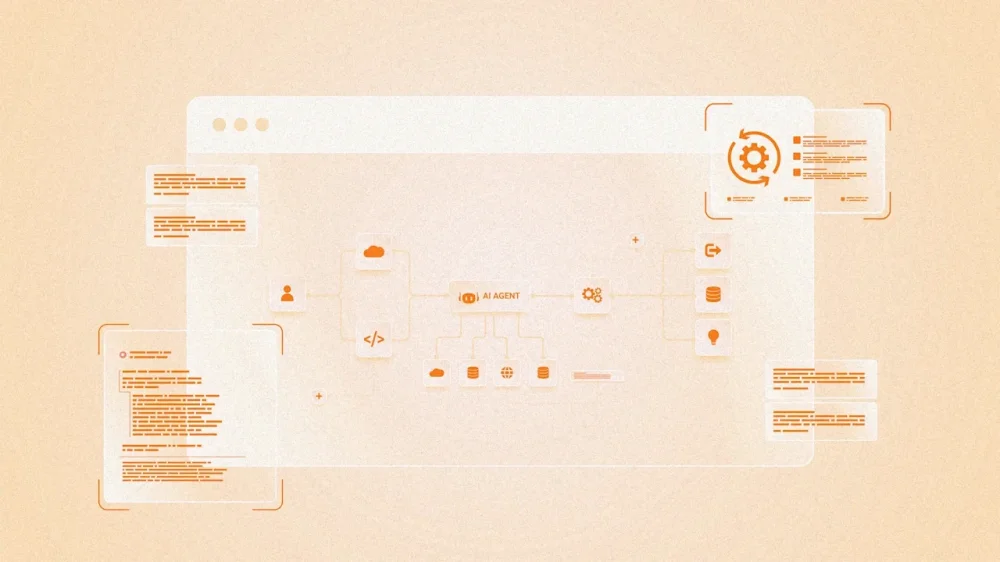
-
You’ve worked hard to build your product catalog. The last thing you want is AI tools like ChatGPT or Google Gemini describing your products inaccurately to potential customers. AI tools don’t browse your whole store the way a search engine does. They grab what they can find, quickly, and fill in the gaps. For a store with a large catalog, that means incomplete answers, outdated information, or worse, sending shoppers to a competitor. The new llms.txt feature, available in Yoast SEO for Shopify bridges that gap. What does it actually do? It creates a file that tells AI tools which parts of your store matter most: your top products, your collections, your policies, and your key pages. Think of it as handing AI a well-organized store guide instead of letting it wander around on its own. You switch it on once. We handle the rest. Two ways to use it Let Yoast handle it automatically Turn it on and we’ll build and update the file each week based on your Shopify data. No decisions needed. The file automatically highlights: Your 10 most-sold products over time Up to 5 of your largest collections, plus a link to your full product range Your store policies, including shipping, returns, and privacy Your homepage, latest blog posts, and most recently updated pages Any pages you’ve already marked as cornerstone content Or choose exactly what’s included If you’d rather have full control, switch to manual selection. You can hand-pick the products and pages you want to feature, and there’s a dedicated spot to add your “About us” page so AI knows the story behind your brand. Either way, the file updates weekly and removes deleted products automatically. No technical knowledge needed Setting this up from scratch would normally mean editing code. We’ve built it directly into your Yoast SEO for Shopify settings so any member of your team can turn it on in seconds. If you already have a redirect set up for /llms.txt, we’ll respect it and let you know, so nothing breaks. You decide when it’s right for your business We believe every merchant should have a say in how their content is seen and used as AI plays a bigger role in how people discover products online. That’s why this feature is opt-in. Turn on the llms.txt toggle in Yoast SEO for Shopify next time you log in to your store. The post Introducing llms.txt to Shopify: Give AI a map to your best products appeared first on Yoast. View the full article
-
Mark Twain once quipped, “It ain’t what you don’t know that gets you into trouble. It’s what you know for sure that just ain’t so.” The problem is that we rarely question our own beliefs. Once a false assumption takes hold, it becomes a default lens we use to interpret the world—and dislodging it becomes incredibly difficult. One very basic assumption that lies at the heart of many change efforts is that information is power—the notion that if you arm people with the right knowledge, they will act on it. That’s why so many change programs are rooted in education and training, because they assume that the right information will change people’s behavior. There’s even a name for this assumption: the information deficit model. Decades of research show that it doesn’t hold up. The truth is that we rarely change our behavior after being exposed to new facts. When confronted with evidence that contradicts our beliefs, we’re more likely to question the evidence than to update our views. Our brains prefer stability to change. The Information Deficit Model The core assumption of the information deficit model is that when people lack basic knowledge, exposing them to new evidence will change their opinions. But that assumes that their minds are blank slates, which is rarely true for most subjects and contexts. We all have preconceived notions of how the world works and will tend to cling to our views. For example, people who believe in a flat earth don’t simply lack knowledge of a round earth, but have a model of the universe in which the earth is flat. In order to change those beliefs, they would not only need to accept new evidence, but also to discard old beliefs that they have relied on to navigate the world. To do that they face a number of barriers they will need to overcome, including the synaptic pathways built up in their brains that are devoted to their existing model, the social pressure of people in their community who hold similar views, and the switching costs involved in changing their behavior based on their new knowledge. That’s why people not only tend to resist new knowledge, but also why they can be actively hostile to it. It doesn’t feel like gaining insight—it feels like losing part of their identity, their community, and the mental models that help them make sense of the world. How We Dig In Our Heels The tendency to reject new evidence that contradicts our existing beliefs is so prevalent and consistent that there’s even a name for it: the Semmelweis effect. It’s named after a young Hungarian doctor, Ignaz Semmelweis, who pioneered the use of handwashing in hospitals in the 1840s and then was ostracized by the medical establishment. We like to think of ourselves as rational actors, objectively weighing evidence to arrive at our conclusions, but the evidence shows that’s not really true. For example, one study found that when offered opposing research about the death penalty, subjects embraced the evidence that confirmed their views while discounting facts to the contrary. Another study that researched attitudes for affirmative action and gun control had similar results. We shouldn’t assume that intelligence and education will make us immune, either. In fact, smart people are often the most easily fooled. Hucksters like Elizabeth Holmes of Theranos and Anna Sorokin of New York’s art scene fooled some of the world’s most sophisticated and successful figures with shams that should have been obvious even to laypeople. The problem is that smart people expect to see what others miss, so they often look for alternative narratives even when the evidence to support them is thin. This is related to what Stanford professors Jeffrey Pfeffer and Robert Sutton call the “smart-talk trap,” when executives prioritize eloquent discussion and jargon over action. How We Really Change Our Minds Much more than we realize, our reasoning is often socially motivated. Decades of research show that we conform to the opinions of our peers and that the effect extends to three degrees of social distance. So it is not only those we know well, but even the friends of our friend’s friends—people we don’t even know—that affect our opinions. A vivid example is the spread of air conditioners in the 1950s. Back then, units were installed in windows. The sociologist William Whyte observed that adoption of the cooling appliances wasn’t uniform, but in clusters from building to building. People weren’t buying air conditioners after just hearing about them. They bought one after visiting a neighbor who owned one. In a similar vein, David McRaney, in his book How Minds Change, found that people involved in cults or conspiracy theory groups didn’t change their opinions when confronted with new facts, but when they changed their social environment. Research also shows that our social networks influence things like happiness, obesity, and behaviors related to cooperation and trust. The truth is that the best indicator of what people do and think is what the people around them do and think. Instead of trying to shape opinions, we need to shape networks. That’s why we need to focus our efforts on working to craft cultures rather than wordsmithing slogans. To do that, we need to understand the subtle ways we influence each other. For leaders, the lesson is clear: Lasting change comes less from the facts we share and more from the networks and cultures we create. Starting With A Majority We like to think we can shape the ideas of others. That’s why most transformation efforts start out with some snappy slogans, a communication program, and a big launch. Most generate a burst of excitement and activity, only to fizzle out within months. This fuels change fatigue, making success for the next initiative even less likely. We need to be far more humble about our persuasive powers. Anyone who has ever been married or raised kids knows how difficult it is to convince even a single person of something. If you expect to shift the opinions of dozens or hundreds—much less thousands or millions—with pure sophistry, you’re bound to be disappointed. A simple alternative is to start with a majority, focusing on people who already buy into the idea. Go out and find people who are as enthusiastic as you are, who are willing to support your idea, to strengthen it and help you work through the inevitable problems along the way. Even if that majority is only three people in a room of five, you can always expand a majority out. That’s how you can begin to gain traction and build a sense of shared mission. As you begin to work out the kinks, you can embark on a keystone project, show some progress, build a track record, and accumulate social proof. That’s how you get out of the business of selling an idea and into the business of selling success. As you gain momentum, you can build support through peer networks. Real change doesn’t come from persuading the unconvinced with more information. It is small groups, loosely connected but united by a shared purpose, that drive truly transformational change. View the full article

-
It’s 8:45am on a rainy weekday morning in Paris, and I’m standing in what used to be a traffic lane in a busy neighborhood near the city’s largest train stations. Less than a block away, cars are streaming by in the rush hour commute. But here, workers have torn up the pavement and replaced it with a newly-planted park with trees, a protected bike lane, and a wide gravel path for pedestrians. Where cars once drove, someone is walking his dog. It’s one of hundreds of streets in Paris that have been redesigned over the past decade as the city radically transformed to reduce pollution and make neighborhoods more livable. In front of elementary schools, around 300 streets have been closed to cars. Last year, voters approved a plan to close another 500 streets to traffic. Thousands of parking spots have been swapped for trees. More than 900 miles of bike lanes now thread through the city. On the Rue de Rivoli, a major road that at one point had seven lanes dedicated to traffic and parking, the city flipped the street: most of it now belongs to bikes, with only a single lane left for cars. As I walked around the new park, a crowd of city officials gathered for an opening ceremony. I asked someone nearby what the area had looked like before, and he pulled blueprints out of his briefcase to show me. A traffic island had been surrounded by a sprawling roundabout. On the western side of the intersection, there were multiple lanes of traffic and rows of parked cars on each side. The new park replaced that entire part of the street. It was the last official event for Paris mayor Anne Hidalgo, a few days before the next mayoral election. Over two terms in office, from 2014 to 2026, Hidalgo led one of the fastest and most comprehensive street redesign campaigns ever attempted in a major global city. “This project is symbolic of what we’ve done over the last 12 years, reshaping the streets and the city,” Christophe Najovski, the city’s deputy mayor in charge of green spaces and biodiversity, told me. “This used to be a roundabout where cars were turning around. Now it’s a real square. Pedestrians can enjoy the space that was formerly given to cars. We’ve planted a little urban forest with more than 100 trees. This is what we’re trying to make: a city for the people, and also a city that will be adapted to climate change.” In other cities known for their commitment to cycling, like Copenhagen and Amsterdam, bike and pedestrian infrastructure evolved incrementally over decades. Hidalgo pushed major changes forward despite opposition from drivers and some residents. At the event, she listed some of the city’s related projects, like the Place du Catalogne, where another sprawling concrete roundabout is now filled with hundreds of trees. “There are many people who would tell you that this was not possible,” Hidalgo said in her remarks. “But we persevered.” This is the story of how urban innovation can happen quickly at a large scale, and how a leader used political risk-taking and moments of crisis to force change in a legacy system dominated by cars. For other car-centric cities, it’s an example of how streets can begin to be reclaimed for people. Making the case for fewer cars When Hidalgo first ran for mayor, air quality was at the heart of her campaign. She recognized that pollution from diesel cars was a public health crisis—Parisians were dying prematurely because of the city’s smog, which was among the worst in Europe. She argued that pollution wasn’t something that citizens should have to live with, and that leaders had a moral obligation to change it. The answer, she said, was to have fewer cars on the road. Anne Hidalgo “Unparalleled challenges like air pollution require unprecedented action,” she told me in 2017. “These policies are based on the urgency of both the health crisis and the climate crisis we are facing.” From the beginning, Hidalgo faced pushback as she began remaking Paris’s streets in her fight for cleaner air. One of her first moves was immediately controversial: she closed a highway along the Seine that was used by around 40,000 cars each day and opened the road to pedestrians instead. Critics warned it would make it harder for commuters to reach the city and worsen congestion elsewhere. (Overall, studies have found that the project didn’t end up making traffic worse.) “She was totally unpopular,” says Carlos Moreno, the Sorbonne professor who has worked with Hidalgo on the idea of the 15-minute city—the idea that cities should be designed in a way that everyone is a short walk or bike ride from work, stores, and whatever else they might need in daily life. Opponents challenged the road’s closure in court, though ultimately lost. Business owners have also pushed back against bike lanes, pedestrianization projects, and the loss of parking spaces, saying that they’d lose customers. (Evidence shows that bike lanes and pedestrianization can actually help local businesses.) Others have called Hidalgo authoritarian, arguing that she forces projects forward without enough input from residents and businesses. Drivers have complained about every project, including the newest park. The media continually criticized her, saying that her plans were unrealistic and impractical. In surveys, citizens often opposed her work to reduce cars. She pushed ahead anyway. “It takes a certain personality type to put yourself through that, but those are the transformational leaders,” says Chris Bruntlett from the Dutch Cycling Embassy, a nonprofit that studies bike-friendly cities. “When you get to the other side of the controversy, inevitably, it’s a better place for everybody.” Hidalgo has always been a fighter. Her working-class family immigrated to France from Spain when Hidalgo was two years old. When a teacher told her that little Spanish girls couldn’t make it to the top of the class, that motivated her to prove the teacher wrong. Later, after studying labor law, she worked as a labor inspector, building a successful career in a field dominated by men. By 2001, she became deputy mayor in Paris under Bertrand Delanoë, focused on urban planning, including climate and mobility policies that later became part of her own campaign. When she was elected in 2014, she became the city’s first female mayor, with a platform that included affordable housing and equality along with sustainable development and air quality. As part of the transformation on streets, Hidalgo has been adept at choosing her messages carefully. “She’s not talking about bicycle lanes,” says Stein van Oosteren, a local bike advocate. “She’s talking about making sure that 10-year-old children can go to school safely without bothering their parents. She’s talking about a different city. She has the intelligence not to talk about technical things. She’s talking about livability.” She’s also motivated by climate change, but has talked more about the health benefits of reducing air pollution, a more obvious issue for residents. The lesson: “Pick your message and stick to it as a leader,” says Mike Lydon, principal at the New York-based urban design agency Street Plans. “I think that’s what this administration did so well. If you want to make transformative changes, stick to the why and hammer that message over and over.” When Hidalgo ran for reelection in 2020, she doubled down on her work to reduce driving, running on a platform focused on Moreno’s 15-minute city. That involves not just improving bike lanes, but making sure that amenities are spread throughout the city, including green space. (Her work eventually also included boosting neighborhood businesses, so people could more easily access stores and services without traveling long distances.) In a field with multiple candidates, she won around 50% of the vote, with an 18% margin over the closest rival. “When I was re-elected, many people said, ‘Oh, what a surprise,’ but it wasn’t a surprise for me,” she said in Women Changing Cities, a book by Bruntlett and his wife Melissa Bruntlett. “Why? Because I know we have two parallel levels at work. The lobbies of men who were very angry at me because of the removal of cars from Paris, and the people. It was this latter level, the women and young people, who voted for me. So, I can say, ‘Okay, the future is with us.’” Last year, when the city held a referendum asking whether another 500 streets to be pedestrianized, it passed with a 60% vote. In the latest election on March 22, her former deputy Emmanuel Grégoire won, suggesting Parisians still support Hidalgo’s policies. The work she started is likely to continue growing. “This bodes incredibly well for a range of the city’s programs under Hidalgo, including bike lanes and school streets,” says Marcel Moran, an urban planning professor at San Jose State University who has studied the transformation in Paris. Even the most conservative candidate, who argued for drivers’ rights in the past, said during the campaign that she no longer wanted to take bike lanes away. “That’s more proof of the change that’s been happening,” says Corentin Roudaut, a volunteer with Paris en Selle (“Paris in the Saddle”), a large local bike advocacy group. When we met at the park, it was clear that Hidalgo thought the years of fighting were worth it. ”It’s very hard when you want to change lives and change people’s habits—you have to convince people, and respect their opinions. We need time if we want to change very deeply,” Hidalgo said, then turned to look at the park. “But in the end, you can see how beautiful it is.” (Her schedule as she prepared to leave office allowed only a brief interview, so this article relies on conversations with city officials and those who have tracked the city’s transformation, along with visits to neighborhoods where the changes are most apparent.) The city’s air is also measurably cleaner. One 2025 study found that the city’s pollution levels have dropped by 50%. On my visit, my weather app said that the air was clear, with an AQI of 3 out of 500. Instead of the smell of diesel exhaust, I smelled crepes. A “100% cyclable” city In 2010, only around 3% of residents biked. That’s about half the current cycling rate in Portland, Oregon. For decades, the rates in Paris were even lower, with less than 1% of residents regularly biking in the 1990s. But by 2023, bikes outnumbered cars on city streets. Now, four out of 10 Parisians bike at least once a week. If you visited Paris in the past, some parts of it might be unrecognizable now. It’s a classic case of people showing up after a city builds the infrastructure. On the Rue de Rivoli, there are now more than 20,000 cyclists each day, from parents picking up children from preschool to businesspeople in suits and heels. As I stood around the corner on the Rue de Sebastopol one afternoon next to an adjacent bike lane, I counted 30 cyclists pass by in 30 seconds. “Even some people who used to say, ‘I will never ride a bike in Paris,’ are doing it now,” says Roudaut. “It’s a huge change. I think we all know at least one person who used to drive a car or a motorbike and has switched to a bicycle.” Some of the shift began before Hidalgo. The previous mayor, Bertrand Delanoë, launched the city’s pioneering bikeshare program in 2007—one of the first large-scale systems of its kind in the world—and added some bike lanes. But Hidalgo went farther and faster. Part of the motivation came directly from voters. Before she was elected in 2015, Hidalgo used a participatory budgeting process to let citizens rank urban projects, and bike lanes ended up as the top priority. The city rolled out a bike plan, though the new administration moved more slowly at first. A couple of years in to Hidalgo’s first term, only a small fraction of planned lanes had been built. Bike advocates at Paris en Selle started publicly mapping where new lanes were added to put pressure on the city, and the city ramped up its work. When the pandemic hit, the city used the crisis to roll out a network of “coronapistes” or COVID bike lanes. Other cities did similar things, but Paris did more. “Paris was the boldest and bravest,” says Bruntlett. “The pandemic was an opportunity to take plans off the shelf and implement them very quickly. It was a way to challenge car-dominated thinking.” In a single year, the city built nearly as many bike lanes as it had in the previous five years, Moran says. The Rue de Rivoli was the most audacious design. In a typical city, planners squeeze a new bike lane into the space at the side of the road. Instead, Hidalgo gave the majority of the wide street to a massive, bidirectional bike lane. Each direction covers the width of a typical car lane, not a standard narrow bike path. The usual incremental city response “is understandable, because that’s what human nature is like,” says Parisian bike advocate Stein van Oosteren. “But you have some people who look a little bit further and know that if they do not take big steps, they will go back to zero.” When COVID hit, traffic disappeared from the street. “I spoke to her staff and they told me that when she’d seen that this huge highway was suddenly empty, she knew that she would never be able to make it empty again,” van Oosteren says. “So she said, ‘We’re going to keep it empty.’ And that is a brave decision.” The city used temporary barriers at first. But when the pandemic ended, new bike lanes on Rivoli and throughout the city stayed in place. Paris invested more than 250 million euros to make dozens of kilometers of lanes permanent, expand the network, and add more bike parking. The changes became a successful proof of concept. “It’s easier to make the argument when you have 25,000 to 35,000 cyclists a day on a street, and the numbers pop up almost overnight,” says Bruntlett. The shift in street design changed habits. A year after the first “corona” paths were built, 60% of users were new to cycling. Paris’s bike plan called for the city to become “100% cyclable” by this year. Whether it’s gotten there is debatable—it’s not yet like Dutch cities that have comprehensive networks of protected bike lanes everywhere. Though the number of cars on city streets has dropped, traffic is still heavy in places, and intersections often feel unsafe. Three cyclists were recently killed. There’s less infrastructure in wealthier neighborhoods on the city’s western side, where making changes was more politically difficult. Still, it’s now possible to get almost anywhere on a bike. Even the suburbs, outside of Hidalgo’s control, have made major changes, like the two-way separated bike lane below in the town of Montreuil. Car-free streets, under the radar To begin to quickly pedestrianize the city, Hidalgo turned to schools—both because children are especially vulnerable to air pollution and because limiting cars near schools is something that people are less likely to oppose. When the city creates a “school street,” it typically closes off traffic just for the block in front of each elementary school. Because Paris is dense—with around twice the population density of New York City—there are public schools everywhere. It’s a somewhat stealthy way to pedestrianize an area that, taken together, is large. “If you compare it to cities that have done similar schemes, like the low-traffic neighborhoods in London, it seems like Paris received less opposition,” says Valentin Carraud, a local cyclist and a doctoral student in urban planning. “It’s easier to justify. Okay, you’re closing some streets to cars, but if you can frame it as something for kids’ health and wellbeing, that’s easier.” The projects are popular enough that some parents started asking for them. On a small street called the Rue de Providence, I met a mother who’d started pushing the city to close the street to traffic during the pandemic. Until then, there was a narrow sidewalk in front of the school, separated from the street with a metal barrier, and parents and kids crowded into the tiny space before and after school. The city didn’t have the resources to immediately shut down the street, but parents volunteered to set up temporary barriers during the morning pickup and drop-off hours. “A friend said, ‘When we do this, we can show them the street isn’t that useful,’” said the parent, Zusanna Prekowska. “This was a proof of concept that demonstrated feasibility.” The temporary closures worked, with only minor complaints from parents who wanted to drop off their kids by car, and the city later installed metal gates to permanently shut down the block. One former traffic lane is now completely filled with plants. The other lane is painted with games like hopscotch. I was there when school let out, and kids ran into the former street, playing and talking with friends. Fire trucks and delivery vehicles can still access the painted part of the road if needed, using a key to open the gates at the end of the street. (While passing another school street, I watched a garbage truck drive inside and the driver quickly get out to lock up behind himself.) It’s a place for kids to play, but also accessible to anyone in the neighborhood. I arrived before school ended, and two friends were sitting on a bench talking. An elderly woman rode through on a bike. “When you have children go to these schools, of course, as parents, you are happier, you feel much less stressed for your children,” says Hiba Debouk, head of urban planning at AREP, a firm that has designed multiple school streets for the city. “But people who live on these streets also talk about a net improvement of the quality of life because it’s much calmer, it’s much less polluted.” When she visits projects under construction, she says, neighbors call out from their balconies to tell her that they’re happy to see the street changing. Beyond school streets, the city also blocked cars in a few other areas. I walked down Rue Mouffetard, a narrow, winding cobblestone lane lined with stores that had originally been a Roman road. Parts of it had already been closed to traffic, but I spoke with a woman working in a bookstore who told me that the section near her store had been fully pedestrianized in 2023, with a planter added nearby in the middle of the street. It hadn’t affected business, she said, but customers were safer. Deliveries were a little more challenging, but vehicles were still allowed during certain hours in the morning. It reminded me of something else I’d seen throughout the city: cargo bikes making deliveries instead of trucks, for everything from FedEx to local grocery stores. Greening the city Hidalgo’s changes to the city are not just about bikes. In every corner possible, Paris is replacing pavement with green space. That includes not just bigger projects, like redesigned squares, but smaller interventions. Until recently, a nondescript block on a street called Rue de la Croix Nivert, near a plumber and a hairdresser, was lined with parked cars. Then the city tore out the pavement, and last month, a crane carefully lowered trees into the former parking spaces. The same thing has happened throughout the city. So far, Paris has replaced around 25,000 parking spaces. (The original goal was more ambitious—converting 60,000 spaces. It remains to be seen how far the next mayor will go.) In one sense, the projects are mundane—walking down a block with street trees doesn’t seem unusual. But making the judgment that trees have more value to a city than storage for cars is a radical decision. Paved squares have also been converted. In front of City Hall, an area about half the size of a football field is now what the city calls an “urban forest,” sitting on top of an underground parking lot. Instead of a conventional park, around 150 trees were planted in dense, somewhat messy-looking groves. Some of the trees were 30 feet tall when they were planted last year, giving the planting an immediate visual impact. Another urban forest at the Place de Catalogne added even more trees—270 larger trees, and 200 saplings. The projects have a practical goal. As climate change progresses, Paris is experiencing more extreme heat. In a dense, heavily paved city, any green space can help reduce the urban heat island effect. Trees can provide critical shade. And in extreme rain, something that’s also becoming more common because of climate change, green spaces can help soak up flooding. They can also help bring some biodiversity back to the city. But it’s equally a way to improve livability. The changes are more noticeable than the rollout of new bike lanes, says Carraud, one of the cyclists I spoke to. “Sometimes you walk around neighborhoods where you haven’t been for six months and you go, ‘Wow’—school streets just pop up,” he says. “And they’re usually really pleasant places.” “I was determined to bring nature into the city and use all available spaces,” Hidalgo said at the recent opening of the new park. “We have beautified the city and improved the quality of life for residents. That’s what local elected officials are for.” How other cities can copy Paris Some mayors might question how feasible it is to replicate what Paris has done. The city was already walkable, with low rates of car ownership. Streets were laid out long before cars existed, unlike many streets in American cities. Still, the wide boulevards that Hausmann designed for Paris in the mid-1800s—partly to enable the easy flow of horse-drawn carriage traffic—quickly adapted to cars. By the 1970s, when then-Prime Minister Georges Pompidou opened the road next to the Seine to automobiles, he said, “France loves its cars.” In the Netherlands, cities like Amsterdam also went through a 20th-century embrace of cars. But the anti-car shift there started long enough ago that it’s hard to remember a time when those cities weren’t biking havens. “I think that American mayors have been told forever that they should be more like Copenhagen and Amsterdam,” says Moran. “But those are on a different planet in terms of bikability. What I like about the Paris case is these mayors have probably been to Paris at some point in their lives, and probably remember a time when it was more like their city in terms of being car-centric and noisy and all of these other things. In a short period of time, it’s changed. I think it’s more relatable.” In part, it’s more relatable because there’s still a quite a bit of car traffic left; the transition is still underway, and it’s easier to imagine the same traffic patterns superimposed on other cities. Hidalgo had the advantage that the mayor of Paris is relatively powerful. One person told me that if Hidalgo decided she wanted to add a bike lane on a street, she could just do it. (It’s more complicated than that—the police can push back on changes on some streets, for example.) She also maintained support from a majority of the city council throughout her time in office. She was willing to make significant investments—bike infrastructure alone cost an estimated 400 million euros in the city budget. Still, other cities could choose to make similar changes. “French cities do assign substantial power to the mayors and councils in power,” says Yonah Freemark, a researcher at the Urban Institute. “That said, her particular efforts, such as the implementation of bike lanes and the creation of pedestrian plazas, are well within the reach of most U.S. mayors with ‘strong mayor’ powers, meaning mayors in places like New York or Chicago.” There are still challenges, including the fact that some streets are owned and controlled by states, not cities. But it’s possible for American mayors to redesign streets more aggressively. Cities could copy specific ideas like Paris’s take on school streets. In New York, for example, “you could take that temporary, interim approach with barricades and then make more permanent investments a block at a time,” says Lydon. “At the scale of all the public schools in New York, you’d make really big, lasting neighborhood change.” Mayors could also learn from Hidalgo’s belief that meaningful change is possible, and her willingness to take risks and keep going under pressure. “I always say when I ride on a bike lane that I ride on political courage,” says van Oosteren. “Nowadays, people come to Paris not only to see the Eiffel Tower and the Louvre but they come also to ride a bicycle on the Rue de Rivoli,” he says. “They know that when they’re riding on a bicycle there that they’re riding on a road that was a highway just a couple of years before, because it still has the profile of a highway. That is the thrill of change. People want to feel that change. They want to feel that it is possible. Once you feel that emotion, something happens to you. And then they go back to the country and then they say, well, we can actually repeat the experience that happened in Paris.” View the full article

-
Learn how different LLMs impact conversions in your industry. Do not miss our expert panel webinar for practical advice. The post How To Identify Which LLM Is Actually Working For You [Webinar] appeared first on Search Engine Journal. View the full article
-
A longer war makes long bonds interestingView the full article
-
There is a particular kind of leadership failure that occurs when a leader transitions into a new high stakes role. It’s tricky at first, because it doesn’t look like failure. No one is being fired. The leader feels productive, even indispensable. But below the surface, something has quietly broken. Talented people are no longer making decisions on their own. The team, once confident and self-directed, has learned to wait. An escalation culture is forming, and it is more common, and more costly, than most organizations acknowledge. The damage accumulates in layers. Disengaged employees cost the global economy an estimated $8.8 trillion in lost productivity annually, and voluntary turnover costs U.S. companies as much as $1 trillion per year. Replacing an employee typically costs half to twice their annual salary at the low end. When the root cause is a leader who will not let people lead, this is not a management problem. It is an organizational expense. The stakes are rising. First-time managers, often around 60–80%, say they received little or no leadership training before being promoted, and nearly half of all leadership transitions fail, a figure in part determined by the ability to lead and manage employees effectively. What’s shifting is that AI tools are actively shifting task ownership downward. Leaders who still engage in micromanagement and encourage escalation will find themselves in direct conflict with a workforce that is increasingly capable. To illustrate, Donna was promoted into a high-visibility role and inherited something rare: an operational center of excellence that worked like a well-oiled machine. The team had been built by a leader who treated experienced professionals as exactly that. Deliverables went out when they were ready. Decisions were made by the people closest to the work. Within sixty days, Donna had quietly dismantled it. She introduced pre-meeting check-ins, installed herself as the final reviewer on all deliverables, and pulled decisions upward with a frequency that left the team baffled. When a senior director sent a client report without her sign-off, she addressed it in front of others. The signal was clear: nothing leaves this team without going through me. Reluctantly, the team adapted. They stopped making decisions and taking initiative. Two high performers resigned within four months. A third moved internally. Client satisfaction scores slipped. Donna was replaced fourteen months after she arrived, at significant cost in replacement hires, institutional knowledge, and the time required to rebuild a culture of ownership. None of it was inevitable. It was the product of a single habit: the inability to let people do the jobs they were hired to do. How do you ensure you are not responsible for escalation culture? If your best people seem hesitant, if your team asks permission when they could act, or if you are the bottleneck in every decision chain, it’s time you ask yourself three key questions. 1. Do My Decisions Actually Require Me, or Have I Just Made Them Require Me? There is a meaningful difference between decisions that genuinely require your authority and decisions you have conditioned your team to bring you. They grow from small interventions: a public correction, a deliverable returned without explanation, a pre-meeting scheduled as routine until it becomes policy. Each one seems like leadership. Collectively, they teach people that their judgment is provisional. Recent research found that micromanagement, defined as excessive control, frequent intervention, and an unwillingness to delegate, consistently reduces employee creativity, dampens psychological safety, and erodes the trust required for high performance. Close surveillance signals distrust and undermines the leader-subordinate relationship over time. The team does not just slow down. It stops growing. Ask yourself: what percentage of decisions routed to you could be made well by the people you hired? If the answer is more than a third, you are likely the bottleneck, not the safeguard. Audit the last ten: was the outcome different because of your involvement, or did it simply require your presence? 2. Are You Building a Team, or Building a Dependency? The most expensive organizations to run are not those with too many people. They are those with people who never advance on the learning curve. When escalation becomes the norm, junior and mid-level employees do not accumulate the judgment, confidence, or accountability that come from actually making decisions. They become more expensive over time not because their salaries rise, but because their output never compounds. Ask yourself: when was the last time someone on your team made a significant decision without you, and you were glad they did? If that question is hard to answer, your team is developing around you rather than because of you. 3. Would Your Team Describe Your Environment as Psychologically Safe? Escalation cultures and psychological safety cannot coexist. When people learn that taking ownership carries the risk of public correction or silent disapproval, they stop taking ownership. They comply, escalate, and protect themselves by deferring. Harvard Business School professor Amy Edmondson, who coined the term team psychological safety, defines it as the shared belief that the team is safe for interpersonal risk-taking, noting that without it, teams lose the candor and initiative required to perform at their highest level. Escalation cultures are, at their core, psychological safety failures. Research shows that when leaders act with transparency and consistency, they reduce the ambiguity and risk employees associate with their own decision-making. When they signal that judgment is unreliable, employees internalize that and stop exercising it. Do not ask your team if they feel safe speaking up. Watch what they do. Do they push back in meetings, or wait for your cue? Do they contribute ideas freely, or wait to be invited? The pattern reveals the culture you have built, regardless of the culture you think you have. Don’t Be The Leader Left Behind Donna’s story did not end with a dramatic confrontation. It ended quietly, the way most escalation culture stories do. Performance slipped. Top people left. An outbound transition was managed. The group rebuilt, at considerable cost. The leaders who will thrive are not those who hold tightest to the decision chain. They are those who have built teams capable of operating without them in the room, distributed judgment rather than delegating tasks, and understood that their highest leverage is developing the people who produce results. If your team brings everything to you, that is not a sign of your indispensability. It is a sign something went wrong. The most important question is not whether you can fix it. It is whether you are willing to notice it. View the full article

-
It’s five answers to five questions. Here we go… 1. Can I subscribe to my coworker’s OnlyFans? One of my coworkers has an OnlyFans. I found out because she was talking about it to a small group of us at lunch, so she’s not going out of her way to hide it at work, although I doubt she would want everyone to know, especially our managers. I looked it up out of curiosity and its nudes and the type of photos and videos you’d expect from an OF. My brother said I shouldn’t subscribe because she’s a coworker, but she told us about it. It’s not like I went searching on my own and found it, so I think it’s no big deal if I do. What say you? You should not subscribe to your coworker’s OnlyFans. Maybe she wouldn’t care, or maybe she’d feel creeped out. Maybe she was kicking herself for mentioning it after that lunch and is hoping it didn’t stick in anyone’s mind. Maybe she wouldn’t care right now but down the road she would. Maybe she’d see it as similar to mentioning that she works in a men’s club but still not appreciating if a coworker intentionally showed up there. Really, though, you don’t need to figure out with certainty how she might feel. Ultimately, it’s more important that she can come to work without her coworkers sexualizing her, and you should err on the side of treating your coworkers like colleagues, not sex objects, regardless of what she’s putting on the internet. Verdict: do not subscribe, and wipe it from your mind. 2. Our office brings retirees back to work even when they can’t do the job anymore I am a technical specialist who works for a local government agency. This office has a habit of bringing folks back part-time after they retire. In many cases, this is a good thing! We retain valuable institutional knowledge and the retirees enjoy staying connected and earning a little extra money. However, in other cases it is detrimental. For example, one employee in a physically demanding role retired 25 years ago (!) but still comes in regularly. He spends most of his time chatting with coworkers. In another case, a 90-year-old employee wants to return after breaking her hip in the office. Even before the accident, she had been struggling with the core duty of her role, which is answering customer phone calls. It has grown as a problem in recent years to the point where it is inhibiting operations. These positions tie up salary funds while other staff spend time correcting mistakes or helping these workers navigate systems that have changed significantly over the years. Although I don’t presume to know everyone’s financial situation, we are lucky enough to have a generous pension and these folks aren’t suffering for money. It seems more likely that they miss the social connection and sense of purpose that work provides. Management seems to be keeping them on due to a mixture of pity and fear of being accused of ageism. I know that they have tried strong suggestions and rolling back job duties with limited success. This isn’t something I personally manage, but I’m curious from a management perspective: what is the kindest and least legally risky way for an organization to tell retired employees, “Thank you, but it’s time to go”? The easiest way is to simply not bring people back after they retire unless there’s a real work need for it. But once they’re there, management needs to commit to managing them like any other worker — meaning that they need to be held to meeting their job requirements like anyone else would be. It means having conversations like, “What we need from you to stay in this role is ___. Will that work for you or is the job not matching up with what you’re looking for anymore?” If your management feels awkward about doing that because they’re older or won’t be willing to let them go if it’s not working out, they’d be better off not bringing them back at all. The ageism here sounds like it’s the fear of treating them the same way they’d treat someone younger — and that is ageist, and it’s unfair to everyone. Related: I feel terrible performance-managing an octogenarian 3. An employee of the organization I volunteer for keeps messing up I am a volunteer for two organizations. The first is municipally run, and the second is a nonprofit that fundraises to fill funding gaps for the first. Last month, I was asked by an employee of the municipal org (Jordan) to teach a skill to other volunteers at an upcoming event they were planning. I readily agreed, as only a handful of us with the org have this skill, and it is necessary to serve our most vulnerable population. Jordan said they would email me to set up a time for us to meet and go over event details. Jordan has a reputation in both organizations as a procrastinator, and part of the reason events they organize are often not well attended is because they do not promote them until the day before or day of the event. After a week with no communication, I emailed Jordan to set up a meeting. They responded the following day asking for my availability. I replied that evening. Jordan responded a week later, and we set a meeting for that Friday. The meeting went well, and Jordan said they would have time Monday to work on promotional materials for us to share and they should be ready by Tuesday. They sent a text with a mock-up of one promo on Monday, then nothing. I followed up on Friday and asked them to send the materials as soon as they could. Jordan said they’d try to get them done over the weekend. (Occasional work outside of normal hours is accepted within their org.) The weekend came and went with nothing. On Tuesday, I spoke with leadership at the nonprofit, and asked if it would be within our mission to host the event. They said it was, and we could offer to do that. I emailed Jordan that day to follow up (again), offering for the nonprofit to host it. I also offered assistance with organizing the skill lab, and included a task I could take on. Jordan’s response only addressed the specific task I’d offered to take on for the event, saying it was unnecessary. They also give a third soft commitment of having the materials ready this morning. In speaking with another employee there today about something unrelated, I learned Jordan is off today. I don’t expect to receive the materials. I’ve made multiple offers to take things off Jordan’s plate, and I’ve been trying to consistently follow up with them due to their reputation as a procrastinator, while also giving some grace, since I know that the pace of things in their org is unpredictable. If I were an employee, I would have pushed for a hard commitment after the first missed delivery rather than “I’ll try” and would have escalated to management after the second miss. As a volunteer, I am unsure of how to handle the situation. I really want these events to be successful for the sake of the population we serve; otherwise I’d be inclined to allow Jordan to fail on their own at this point. You should escalate it. Both organizations are relying on your work, and the person charged with helping you is repeatedly dropping balls and creating an obstacle to that work. Who to escalate it to depends on details I don’t have, but it could be a volunteer coordinator (at either organization), your own manager (at either organization), or Jordan’s manager. But you very much have standing to contact someone with some authority and say that Jordan has been continually not following through on commitments and it’s impacting your work in XYZ ways, and ask if there’s someone else you can get the things you need from. (It doesn’t matter if you know there isn’t anyone else who could step in; you’re asking the question as a way of putting the issue on their radar.) An even slightly decent manager would want to be aware of what’s going on — and even if they have a general sense that Jordan is unreliable, that’s not the same thing as them hearing about the specific problems you’re encountering and being told you need a different solution from them. 4. Am I being too rigid about my calendar? Lately I’ve been overwhelmed with meetings and am making a conscious effort to protect my time so I can actually get things done. Ideally, my first and last hour of the workday is blocked off, in addition to a dedicated two-hour block mid-day for deep work and focus. My ideal day almost never happens — if someone reaches out and needs to meet, I try to make time if it can’t wait until I have an open spot. However, if you were to try to schedule something with me next week, you would not find a single open time slot on my calendar because of this. I know every company and industry is different, but how far outside the professional norm is it to try to limit your time spent in meetings to no more than 50% of the day? I’ve never had any complaints about my availability or responsiveness, but I do wonder if I’m taking this too far. It varies wildly by job. There are jobs where practically your whole day is going to be spent in meetings and trying to limit it to half the time would be unworkable, and jobs where this would be utterly unremarkable and no one would even notice, and lots of variations in between. In lots of jobs, though, this would be fine. In your particular case, if people can get you when they need to and no one seems concerned about your accessibility or responsiveness, I’d say you’re fine. If you’re concerned, though, you could always run it past your boss — “here’s what I’m doing and why, and here’s why I think it’s been working okay, but I want to make sure you agree and I’m not overlooking anything.” 5. Can I request a demotion? I have been a cook with a catering company for the past two years and I was recently promoted to a site supervisor role. While I am not performing poorly in my new role, I have decided that the additional stress of this new position outweighs the modest pay raise I received and I would like to be demoted back to my previous role. What is the best way to request a demotion? “I appreciate the opportunity to work as a site supervisor, but I’m realizing it’s not for me and I much preferred working as a cook. It it possible to switch back to that? I understand my pay would change back, of course.” It’s not always possible to ask for a demotion — sometimes there are a limited number of the spots you moved out of and they’ve filled yours with someone else — but you can certainly ask. The post can I subscribe to my coworker’s OnlyFans, office brings retirees back to work even when they can’t do the job, and more appeared first on Ask a Manager. View the full article
-
Asset manager is seeking at least 600,000 sq ft as demand for high-end offices risesView the full article
-
International official holdings at New York Federal Reserve fall to lowest level since 2012View the full article
-
Differences over war in Iran are hitting working relationships between diplomats, officials and military personnelView the full article
-
Bullish rhetoric about ‘unleashing’ the technology is badly out of touch with the sensibilities of many votersView the full article
-
Asset manager teams up with Greater Manchester Pension Fund for £1bn joint venture as government seeks more private financeView the full article