All Activity
- Past hour
-
When discussing financial management, you need to understand the key differences between Accounts Payable (AP) and Accounts Receivable (AR). AP refers to the money your business owes to suppliers for goods and services purchased on credit, whereas AR represents the funds customers owe you for credit sales. Each plays a critical role in your company’s cash flow and overall financial health. To grasp their implications fully, let’s explore how they are recorded and managed. Key Takeaways Accounts Payable (AP) represents short-term liabilities owed to suppliers, while Accounts Receivable (AR) reflects assets owed by customers. AP is recorded as a current liability on the balance sheet, whereas AR is classified as a current asset. Managing AP focuses on timely payments to vendors, while managing AR emphasizes efficient collections from customers. AP is recognized as an expense upon receiving an invoice; AR is recorded as income once goods or services are delivered. Mismanagement of AP can strain vendor relationships, while poor AR management can lead to cash flow issues with customers. What Is Accounts Payable (AP)? Accounts Payable (AP) represents the short-term obligations a company has to its suppliers and creditors for goods and services acquired on credit. In the context of accounts payable vs accounts receivable, AP refers particularly to what you owe, whereas accounts receivable reflects what customers owe you. The difference between payables and receivables lies primarily in cash flow direction; payables are cash outflows, whereas receivables are inflows. When you receive an invoice, it’s recorded as a current liability on your balance sheet and entered into the general ledger. Managing AP effectively is vital for maintaining solid vendor relationships and ensuring timely payments, which helps you avoid late fees and supply chain disruptions. In addition, tracking Days Payable Outstanding (DPO) allows you to measure how long it takes to pay suppliers, directly impacting your cash flow management and overall financial health. Comprehending what’s the difference between accounts payable and receivable is significant for effective financial strategy. Accounts Payable Example When a company purchases goods or services on credit, it creates an obligation to pay the supplier, which is recorded as accounts payable (AP) on the balance sheet. For instance, envision your company buys $150,000 worth of inventory from a vendor on credit. This transaction produces a liability that you need to pay according to the agreed terms. When you receive the invoice, you’ll record it by debiting inventory and crediting accounts payable, indicating your obligation to the vendor. Managing AP is essential, as it involves tracking payment due dates to guarantee effective cash flow management and maintain good relationships with suppliers. Timely processing of invoices not merely helps you avoid late fees but likewise allows you to take advantage of early payment discounts, enhancing your overall financial efficiency. Keeping a close eye on AP can greatly impact your company’s financial health. How to Record Accounts Payable Recording accounts payable is an essential step in managing your company’s finances effectively. When you receive an invoice, begin by verifying the details against purchase orders and receiving reports to guarantee accuracy. Once confirmed, you’ll debit the relevant expense account and credit the accounts payable account, reflecting the liability incurred for the goods or services purchased. Depending on your accounting method, you may follow either accrual or cash-basis accounting. With accrual accounting, you recognize the liability as soon as it’s incurred, regardless of when the payment is made. It’s important to monitor metrics like Days Payable Outstanding (DPO), which measures how long it takes to pay suppliers, aiding in cash flow management. Finally, make certain to regularly reconcile all recorded accounts payable transactions. This guarantees accuracy in your financial reporting and helps maintain strong relationships with your vendors. What Is Accounts Receivable (AR)? Money owed to a business by its customers for goods or services provided on credit is known as Accounts Receivable (AR). It’s classified as a current asset on the balance sheet and recorded when a sale is made, with an invoice issued for payment. Typically, you expect to collect this amount within a year, making it crucial for managing cash flow effectively. To understand AR better, consider the following table that highlights key aspects: Aspect Description Importance Definition Money owed by customers Reflects credit sales Collection Period Usually within a year Maintains liquidity Turnover Ratio Measures efficiency in collections Indicates financial health Customer Behavior Impact Affects payment timelines and bad debts Necessitates credit policies Accounts Receivable Example An example of accounts receivable (AR) can help clarify how this essential financial concept operates in a business setting. Picture your company sells $250,000 worth of products to a customer on credit, with a 90-day payment term. You’d record this transaction by debiting the accounts receivable account, reflecting the money owed to you, and crediting the sales revenue account, which increases your income. Throughout the 90 days, you monitor this AR, ensuring timely payments to maintain cash flow. When the customer pays, you’d credit the accounts receivable account to decrease the amount owed, simultaneously debiting your cash or bank account to reflect the cash inflow. This process emphasizes the importance of managing accounts receivable effectively, as timely collections can greatly impact your company’s financial stability and operational efficiency. How to Record Accounts Receivable When you make a sale on credit, it’s crucial to record accounts receivable accurately to keep your financial records in order. Start by creating a journal entry that debits the accounts receivable account and credits the sales revenue account. This entry reflects the sale and acknowledges that you expect payment from the customer. When you invoice the customer, verify the invoice includes item descriptions, quantities, prices, total amount due, and payment terms, as these details aid in record-keeping. Once you receive payment, make another journal entry that credits the accounts receivable account and debits the cash account to show the cash inflow. Remember, accounts receivable appears as a current asset on your balance sheet, representing funds you expect to collect within a year. Regularly review your accounts receivable aging report to monitor outstanding invoices and follow up on overdue payments to maintain cash flow stability. Key Differences Between Accounts Payable and Accounts Receivable Comprehending the financial dynamics of a business involves recognizing the differences between accounts payable (AP) and accounts receivable (AR). AP signifies liabilities owed to suppliers for products or services received, whereas AR indicates assets owed to your company by customers for credit sales. On the balance sheet, AP appears as a current liability, showing money you must pay, while AR is a current asset, reflecting expected cash inflow. When managing AP, you focus on maintaining vendor relationships and ensuring timely payments, whereas AR management emphasizes collecting payments from customers efficiently. AP is recorded as an expense upon receiving an invoice, while AR is recognized as income when you deliver goods or services, regardless of when you get paid. A healthy balance between AP and AR is essential for effective cash flow management, as mismanagement of either can lead to financial instability and strain on business relationships. Frequently Asked Questions What Is an Example of Accounts Payable and Receivable? An example of accounts payable is when you buy inventory on credit, resulting in a liability until you pay the supplier. For instance, if you purchase $150,000 worth of goods, this amount gets recorded under accounts payable. Conversely, accounts receivable occurs when you sell products on credit, creating an asset. If you sell $250,000 worth of items, that amount represents money owed to you, recorded under accounts receivable. Do You Send Invoices to AP or AR? You send invoices to Accounts Receivable (AR), not Accounts Payable (AP). AR manages invoices for goods or services you’ve provided to customers on credit. Conversely, AP processes invoices from vendors for items or services your business has purchased. When you deliver products or services, you generate an invoice that AR records. Properly managing these processes is essential for maintaining your company’s cash flow and ensuring timely payments. How Does AR Differ From Accounts Payable? Accounts Receivable (AR) represents the money customers owe you for goods or services you’ve provided, whereas Accounts Payable (AP) reflects what you owe suppliers for purchases made on credit. AR is a current asset, indicating expected cash inflows, whereas AP is a current liability, representing future cash outflows. Effectively managing AR involves ensuring timely customer payments, whereas managing AP focuses on paying vendors quickly to maintain good relationships and avoid late fees. Which Is Better, Accounts Payable or Receivable? When considering which is better, accounts payable or receivable, it’s crucial to understand their roles in cash flow management. Accounts receivable represents money owed to you, indicating future cash inflows and reflecting sales performance. Conversely, accounts payable represents your obligations to suppliers, affecting outgoing cash. Although a healthy balance is necessary, strong accounts receivable typically improves liquidity and growth potential, making it more favorable for driving overall financial success in your business. Conclusion In conclusion, comprehending the differences between accounts payable and accounts receivable is crucial for effective financial management. Accounts payable represents your obligations to suppliers, whereas accounts receivable reflects the revenue owed to you by customers. Both play critical roles in cash flow management, impacting your organization’s overall financial health. By maintaining a clear distinction and managing these accounts efficiently, you can guarantee timely payments and collections, finally supporting your business’s stability and growth. Image via Google Gemini This article, "What Is the Difference Between Accounts Payable and Receivable?" was first published on Small Business Trends View the full article
- Today
-
WordPress delays rollout of real-time collaboration. Co-founder Mullenweg cites WPE lawsuit as a distraction hampering progress. The post WordPress 7.0 Will Ship Without Real-Time Collaboration appeared first on Search Engine Journal. View the full article
-
Artificial intelligence—surely the most hyped technological development to seize the spotlight in a generation—does not appear to be very popular with the American public. A clear majority recognize AI is a big deal, but recent Pew Research Center polling found more concern than excitement, particularly in its impact on creativity and relationships. Quinnipiac surveys find opinions souring even as usage rises. It’s associated with job losses, cheating, dubious advice, excessive energy consumption, and a variety of doomsday scenarios up to and including the eradication of humanity. In March, 57% of respondents to an NBC poll said the risks associated with the technology simply aren’t worth the potential benefits. There are plenty of reasons for this, but one is surely the messaging coming from some of the biggest AI brands themselves, particularly from their leaders. Last month, for example, AI giant Anthropic announced it would limit access to its new Mythos cybersecurity tool because it was just too powerful for wider release, which might put it in the hands of criminals or other bad actors. Sam Altman, CEO of rival OpenAI snarked that this was “fear-based marketing.” But not long after, OpenAI released its own new security tool—and restricted access to it. That’s just a recent example of an odd element of the entire category: AI firms seem intent on reminding customers at every product drop how the technology might ruin our lives. Sure, it’s part of the hype cycle. And to some extent the big AI brands are performing a responsibility flex. But maybe the public’s increasingly sour response to AI suggests these CEOs’ insistence on telling us how dangerous their product might be is not a winning brand strategy. (Altman’s home being literally attacked with a Molotov cocktail is probably not a great sign.) This noisy pessimism isn’t isolated, or new. When it rolled out GPT-4 back in March 2023, OpenAI published a technical report that, alongside descriptions of a historic leap in capability, included a section dedicated to its potential for misuse to make bombs or mix dangerous chemicals. Soon after, hundreds of AI researchers and executives, including figures from Anthropic, Google DeepMind, and OpenAI itself, signed an open letter warning that AI posed extinction-level risks comparable to nuclear war. Many AI executives have claimed to want government oversight. As Elon Musk’s current legal battle with OpenAI is reminding us, the company was actually founded as a nonprofit precisely because the technology was perceived as too risky to be shaped solely by the move-fast-and-break-things profit motive. Obviously, these companies should not suppress the potential dangers and risks of their products, but at some point you have to wonder whether the companies’ marketing pros are letting fear and doom define their brands. While there was a slew of AI-related advertising in this year’s Super Bowl, much of it was so big-picture about AI’s potential (“You can just build things”) that it didn’t really stick. Meanwhile, on a more day-to-day level, the specific consumer benefits we hear about don’t seem transformative—summarized meeting transcripts, improved chatbots, tools that make it easier to generate an image of yourself as a superhero, and so on. Around the time OpenAI and Anthropic were warning us of the dangers of their cybersecurity tools, I got a promotional email from ChatGPT suggesting uses that included having the chat tool “draft a kind text asking to reschedule” a meeting. A little short of insanely great. Surely there is a bigger, better, yet still relatable story to tell. Usually Silicon Valley is good at balancing a hyped-up version of its own existential importance against offering an authentically appealing vision of the future. But with AI that balance seems off. Imagine if, at the launch of the iPhone, Steve Jobs had dwelled on the possibility that it might one day help destroy attention spans or undermine democracy. The brands that have historically transformed public behavior—Apple, Google, even Netflix—led with wonder, not worry. They sold a vision with a positive emotional outcome, not better chatbots in exchange for never-ending ambient dread AI companies presumably have the raw material for exactly that story. AI tools are assisting in early-stage cancer detection. Researchers at Google DeepMind won a 2024 Nobel Prize in Chemistry for work using AI to predict protein structures. Startups are using AI to accelerate drug discovery timelines. These are good stories. Again, none of this means AI’s risks and downsides should be minimized or go unmentioned. A complicated and transformative industry can hold more than one truth. But right now the ratio feels out of whack, and the companies best positioned to fix it seem to be trying to out-warn each other. Pew’s polling found that 56% of “AI experts” believe the technology will have an overall positive impact in the long run, compared with 35% among the public in general. The big AI brands would be wise to focus less on fear, and more on helping the rest of us see what the “experts” do. View the full article

-
These originators had the highest combined volume of Federal Housing Administration, Veterans Affairs and U.S. Department of Agriculture mortgages last year. View the full article
-
Twenty years ago, if you asked the average person what Google was, they’d tell you it was a search engine. The company became synonymous with searching for information online, reaching a level of dominance no search engine had seen before, or has seen since. Ask the average person today and they’d probably tell you the same thing. Except Google isn’t just that anymore. It’s a far more complicated company, one trying to be all things to all people, and arguably succeeding at none of them. Google is now a five-layer company, says David Bader, director of the Institute for Data Science at the New Jersey Institute of Technology. One of the key layers is AI, which could account for $185 billion in capital expenditure this year, “larger than the GDP of most countries,” according to Bader. That level of spending signals how dramatically the company has changed direction. “No serious search-only company spends like this,” he says. That focus on AI is increasingly visible to end users, with AI layered into more and more Google products. “They’re shoving Gemini into every nook and cranny, whether it’s GSuite, whether it’s email, whether it’s Maps, whatever,” says Alex Hanna, a former Google employee and director of research at the Distributed AI Research Institute. Still, there remains a gap between what Google is, depending on who you ask and where they sit. “There’s how Google sees itself internally, which I think is they see themselves a bit more as an AI company,” says Hanna. That contrasts with how much of the world still sees the company: primarily as a search engine. And, in Hanna’s view, that experience has deteriorated. “When you use Google Search, it’s trash. It sucks,” she says. Hanna argues that the decline in search quality is partly tied to the way Google is reshaping its business model for the post-ChatGPT era, one in which AI can bypass traditional search entirely and reduce the need for users to visit either a search engine or the websites it indexes. Advertising remains Google’s “cash cow,” says Bader, accounting for 74% of its revenue. But others believe that dominance could erode as AI reshapes search behavior. “They know that what they have to move to is a model that isn’t based on ad revenue,” says Hanna. “It’s based on whether they can find a pathway to monetize the AI infrastructure that they’ve been building out.” Still, “Google Search isn’t going away,” says Gartner analyst Ed Anderson. “And I think Google Search will continue to be one of the primary touchpoints for years to come.” Beyond monetizing its AI infrastructure, Google is also reshaping other parts of its business to maintain its cash flow. That includes generating billions through cloud infrastructure, which Bader says has grown 63% year over year and has become “a real number three to AWS and Azure,” accounting for roughly a fifth of the company’s overall business. Google is also increasingly deploying its capital as an investor. The company owns about 6% of SpaceX and roughly 14% of Anthropic, alongside stakes in or ownership of companies including Waymo and Wiz, the latter of which it acquired for $32 billion, plus dozens of other holdings. The result, some critics argue, is that Google increasingly resembles “a glorified venture capital fund.” Whether having so many fingers in so many pies means Google has lost its way, or simply found a new one, remains an open question. “We live in an economy where you have to show growth,” says Hanna. “They’re in this very weird position where they are in third place or fourth place again, even though they were a first mover on the tech.” That, in turn, makes the company feel even more muddled. Not everyone is so pessimistic. “The interesting part is not that any single label [of what Google is] is wrong,” says Bader. “The interesting part is that all five are simultaneously true, and that’s never been true of any single company before.” View the full article

-
When Anna Jarvis set out to establish a national Mother’s Day in the early 20th century, her goal was to honor her own mother’s legacy of activism, sacrifice, and maternal devotion. She envisioned a national day of gratitude where all Americans expressed their thanks and admiration for their own mothers. But just a few short years after successfully getting official recognition for the holiday, Jarvis was horrified to see Mother’s Day commercialized to benefit florists and greeting card companies. Jarvis petitioned to recall the holiday she had championed. One imagines Jarvis banging her head against the wall if she could see us now, since Mother’s Day spending continues to metastasize. The National Retail Federation anticipates $38 billion in spending for Mother’s Day in 2026, which translates to $284 in per person spending. That’s quite a lot of roses, mimosas, and Hallmark cards. But for all the money spent in preparation for the second Sunday in May, what the majority of mothers, wives, and girlfriends really want might not cost a cent. Women are asking for a break from the mental load—aka, the cognitive labor required to keep a household running smoothly. Unfortunately, many partners and children would prefer to simply buy something (or let Mom buy her own gift) because easing her mental load is a lot more work. This Mother’s Day, if you truly want to show your appreciation for the mothers in your life, take a page from Anna Jarvis. Here’s how: Understand Mom’s mental load The term mental load got mainstream attention in 2017 when the comic “You Should Have Asked” by French artist Emma went viral. The term refers to the ongoing mental to-do list for family, household, and personal upkeep that (primarily) women carry at all times. This mental load might include things like recognizing that the household is nearly out of toilet paper, thinking about which camps to sign the kids up for, remembering that the soccer uniform needs to be laundered before the next game, and figuring out what to make for dinner if nothing’s thawed. While there is nothing inherently gendered about this kind of mental organizing, the burden of this labor falls disproportionately on mothers. When sociologist Allison Daminger, a professor at the University of Wisconsin-Madison, asked couples to complete decision log surveys, she was not surprised to find that women are doing more of this kind of cognitive labor. But in each case, the couples chalked the difference in mental labor up to personality. If an organized wife and a go-with-the-flow husband are dividing chores, it makes sense that she’s in charge of the calendar. But as Daminger told Wisconsin Public Radio, “Where I come in as a sociologist is to say: ‘Huh, it’s super interesting that all of these women happen to be type A, all of these men happen to be laid-back. What else might be happening here?’” Part of what’s happening is the difference in how men and women are held accountable. Moms are more likely to face social consequences for a messy house or a kid wearing mismatched clothing, while dads are judged based on their family’s finances. Neither judgment is fair—but there is a larger mental load associated with running the household and childrearing, since there’s no end to that work day. Observe the work Mom does A common gripe about the mental load is that partners and children would be happy to help if only the women carrying this burden would ask them. (Hence the title of the viral cartoon “You Should Have Asked.”) However, putting the mom in your life in the position where she has to ask for your help is just adding to her mental load. It may help her with a specific physical task in the moment. But it does not reduce her cognitive load because it perpetuates the idea that she’s the manager of the house while you are her helper. So instead of asking her to make you a list or telling her to ask you for help, start observing the mom in your life. See what work she does and how she does it. For example: Does she wipe down the sink when she does the dishes? Does she write the kids’ weekly schedule on the whiteboard every Sunday? Does she call your side of the family on holidays? Does she set timers for the kids’ screen time? Does she keep a Pinterest board of dinner recipes? Does she cut up fruits and vegetables in individual servings as soon as she gets home from the grocery store? Does she make sure all gifts are beautifully wrapped? These are just some examples of the kinds of labor a mom may do that could fly under the radar. But keeping an eye out for this kind of work, and noticing how your partner or mom completes it, is a good first step in helping ease the cognitive load. That’s because you can start taking on some of these tasks, in the same way that she does, without having to be asked. Give Mom a break On Mother’s Day itself, plan on letting the moms in your life have a real break by taking over one task. Depending on which task you choose, it could be 100% free, and many moms would prefer to receive this kind of relief than an overpriced gift you bought at the last minute. Consider these kinds of presents for the moms in your life: Take the kids out of the house for several hours: This may seem paradoxical on Mother’s Day, but mothers of small children need some time alone at home, especially if they are stay-at-home parents. Give your partner the gift of uninterrupted alone time. Make an entire meal: From planning to grocery shopping to cooking to cleanup, take care of the entire process of making a meal for her. And make sure you return the kitchen to her preferred state of cleanliness when you’re done, since this isn’t a gift if it creates more work for her. Clean the bathroom: This unpleasant task was the subject of another viral essay on mental load: Gemma Hartley’s 2017 article “Women Aren’t Nags—We’re Just Fed Up.” Hartley wanted her husband to hire a cleaning service to deep clean their bathrooms for Mother’s Day, which he neglected to do. Taking the initiative to make your bathrooms spotless, without leaving your wife or girlfriend to take care of the kids while you do it, would go a long way to show your deep appreciation. Clean her car: Unlike her home, many moms live with a less-than-pristine car. If the mom in your life has a rolling schmutz-mobile, enlist the kids’ help in cleaning it inside and out this Sunday. Drop off the Goodwill donations and overdue library books that have been languishing in the trunk, find all the lost mittens and scarves that have accumulated under the seats and return them to the coat closet, and vacuum out all the Cheerio dust from the floor before running that bad boy through the car wash. While the mom in your life will love any of these gifts, the real present would be adopting the task as a weekly habit from now on. Because isn’t she worth it? You don’t have to spend money on Mother’s Day The original vision for Mother’s Day was a national holiday to honor mothers. But within years of its inception, Mother’s Day became a retail holiday that benefited florists and greeting card companies, and the commercialization hasn’t let up since. Americans spend billions of dollars on this holiday—but gifts aren’t what moms truly want. They want a break from the mental load, which mothers disproportionately carry. It may be easier to buy something for Mom, but it doesn’t really show her how much you appreciate all that she does for you. Instead of spending money on a gift that will collect dust, why not give the mom in your life a break? Observe the work she does and how she does it so you can start taking on some of those tasks without having to be asked. On Mother’s Day itself, give her time away from the kids, a day off from cooking and cleaning, a clean bathroom, or a clean car—and then make it a weekly habit. Now that’s the kind of Mom appreciation that Anna Jarvis would approve of. View the full article

-
Pinterest’s newest ad starts with two young women doomscrolling in the dark. It’s a familiar nightly ritual for millions. As one of them slumps on the bed in a Reels-induced semicoma, the other gets an idea and opens . . . you guessed it, Pinterest. Suddenly, an energetic dance track fills the room, and the two are inspired to get their best ’fits together for a night out. It ends with the tagline, “The best thing you can find online is a reason to go offline.” When the business model for every other social platform revolves around your attention and time spent as their primary product for brand advertising dollars, this may feel like a counterintuitive strategy. “If you listen to Gen Z about why they come, they say . . . ‘Pinterest is where I can figure out who I want to be, not who the internet tells me I’m supposed to be,’” says Pinterest CMO Claudine Cheever. “That sentiment resonates with a much broader audience. The opportunity with the brand campaign was to take a much more pointed, clear stance on that the internet should be there to help you, and it should be about time well spent, not a lot of time spent.” Of course the real motivation is to pitch time on Pinterest as quality over quantity, not just to users but also brand partners. Cheever says 96% of user searches on Pinterest are unbranded, which means people are looking for inspiration, and brands have an opportunity to supply it. “This is a platform where people look for brands, they don’t scroll past them,” Cheever says. “It’s actually an incredibly ripe place for advertisers. So it’s about sharpening both of those narratives on the user and the commercial side.” And it’s working. On May 4, Pinterest reported that Q1 2026 was its first billion-dollar quarter, with revenue up 18% year on year, and global monthly active users up 11% to 631 million. Consistency is key At Coachella in April, as many complained the festival had devolved into the influencer Olympics, Pinterest’s presence encouraged people to be phone-free for the event. Model and creator Quenlin Blackwell was the face of this work, somehow making not scrolling on your phone at a marquee music event sound like a cheery episode of Naked and Afraid. As corny as the Coachella campaign may be to anyone over 30, Pinterest’s commitment to differentiating itself from other social platforms when it comes to monetizing attention is consistent. In 2019, then-CMO Andrea Mallard told Adweek that the brand positioned itself as a refuge from the toxicity of social media. “We believe that Pinterest is one of the few truly positive corners of the internet,” Mallard said. “We actively work to cultivate a space that’s firmly about inspiration. . . . It’s more important than ever to continue to protect this vision, because we’ve seen that technology has a powerful role to play in shaping culture, opinion, and politics.” Pinterest CEO Bill Ready has publicly supported teenage social media bans, while in March, Meta and Youtube were found negligent for design features that made their platforms addictive. Cheever says the long-term consistent message and brand positioning around quality time over quantity of time, which the new campaign is building on, is reflected in how Pinterest is reaping the rewards of the 80 billion monthly searches users make on its platform. “Even though we’re there to help you get offline,” she says, “you’re going to plan things, you’re going to buy things, and you’re going to be making a lot of decisions before you go live that life offline.” View the full article

-
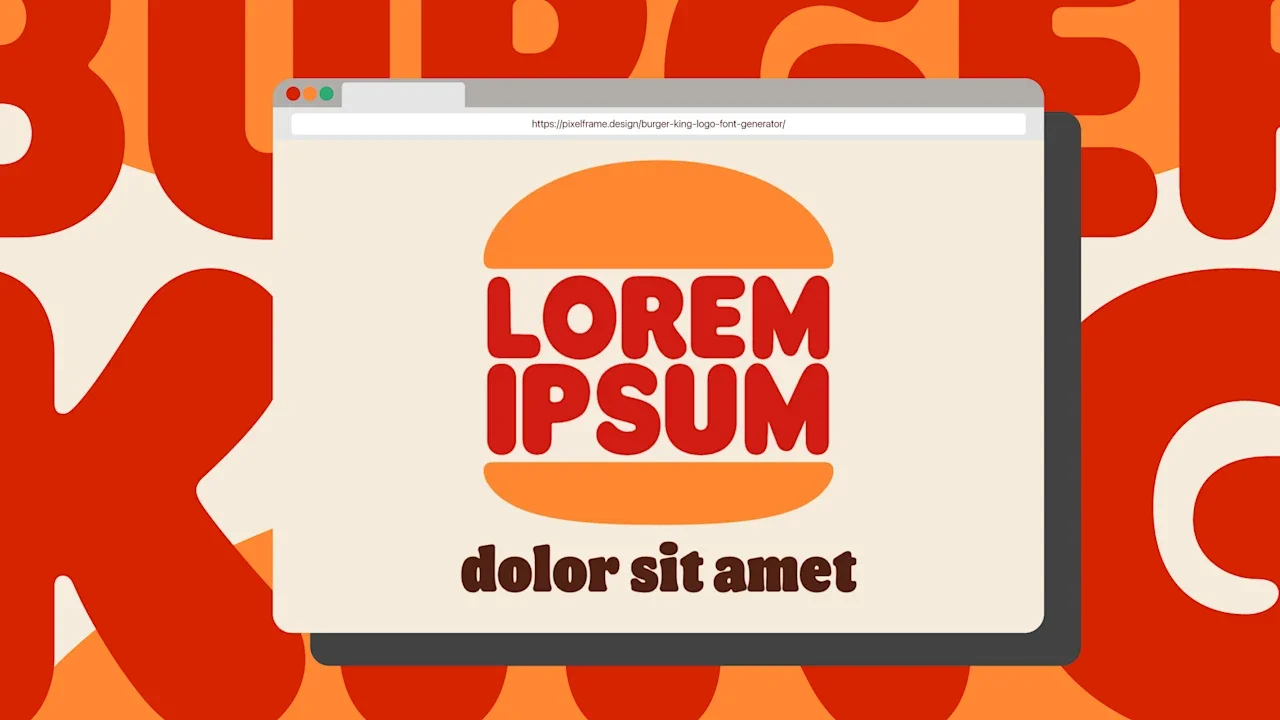
Burger King’s slogans have long emphasized personalization, like “Have It Your Way” and “Your Rule.” Now there’s a text generator that lets you personalize its logo, too. A new Burger King logo font generator lets users customize the red, rounded letters that sit between the logo’s burnt-orange-colored buns. It’s by Pixel Frame, a website that makes album cover and logo text generators for everything from Drake’s discography to Dragon Ball Z and Donkey Kong. Just a few words will render big and bold in the logo generator, but the text will become increasingly squished and stacked as you add more text, with one line stacked on top of the other like hot-off-the-grill patties between the buns. Pixel Frame There are customization options as well. You can add a custom tagline below the logo, generate your text as a wordmark on a plain tan background, or set it in a pair of promotional-style graphics for the Whopper, the burger chain’s signature sandwich. In a Reddit thread, users shared mock-ups of their own creations, like “Are you the child of divorce?,” “Are we the monsters?,” and “Our patties are circles.” Burger King introduced its current logo in 2021 as part of a rebrand by Jones Knowles Ritchie that modernized the brand’s original 1969 logo, and the burger chain has since followed it up with marketing efforts aimed at bringing customers back. It’s paying off at a time when other fast-food chains are under pressure due to rising inflation and labor costs pushing up prices and depressing sales. Burger King’s rebrand has helped it reposition itself in the fast-food landscape. Where industry leader McDonald’s is known for its iconic Golden Arches—the Nike Swoosh of fast-food logos—and Wendy’s, the No. 2 burger chain in the U.S. by sales, is best known for its character-led, modernized heritage brand, Burger King takes a more literal approach. Burger King’s refreshed visual identity made the burger central to the logo again. It uses colors inspired by the Whopper and a squishy font that evokes the food itself. It also reins in the typography of the original logo and gives its top bun a little more volume. The rebrand fits into the company’s broader strategy of evoking Burger King’s ingredients, as its marketing is focused in large part on elevating its core menu. The quick-service-restaurant (QSR) category is undergoing its fair share of shake-ups, as Wendy’s shutters stores, McDonald’s chases Starbucks with an expansion into dirty sodas and drinks, and Whataburger upgrades its packaging with a happier version of a Happy Meal. Burger King, meanwhile, is doubling down on burgers to great effect—first with the launch of this logo five years ago, and now with its menu items. The chain launched an Elevated Whopper this quarter with premium ingredients like a glazed bun and creamy mayo, while its $3.99 King Junior meals also drove growth. Burger King’s parent company, Restaurant Brands International (RBI), said in its earnings call on Wednesday that Burger King saw its U.S. same-store sales grow 5.8% over the quarter, outperforming the rest of the burger QSR industry. RBI CEO Josh Kobza said it was the result of disciplined execution to welcome back guests and reengage latent fans. View the full article

-
Washington and Tehran blamed each other for sparking reciprocal attacksView the full article
-
A registered business entity is a formal organization that exists independently from its owners, such as an LLC or corporation. This registration is essential since it provides legal protections, like shielding personal assets from business liabilities. It additionally improves your credibility with customers and investors. Comprehending the different types of business entities can help you make informed decisions for your venture. So, what factors should you consider when choosing the right structure for your business? Key Takeaways A registered business entity is a formal organization like an LLC or corporation recognized by the state, providing legal protection and distinct existence. Registering a business separates personal assets from business liabilities, safeguarding personal finances in case of business debts. Credibility is enhanced with customers and investors when operating under a registered business entity, fostering trust and professionalism. Different business structures offer varying tax implications; LLCs and S corporations often enjoy pass-through taxation, reducing overall tax liability. Registration simplifies ownership transfer and succession planning, making it easier to pass on or sell the business as needed. Understanding Business Entities Grasping business entities is fundamental for anyone looking to start or manage a business. A registered business entity is a formal organization, like an LLC, corporation, or partnership, recognized by the state. This registration involves filing specific documents, such as Articles of Incorporation, which grants legal recognition and rights to operate. Comprehending different structures is significant since they impact liability, tax obligations, and management. For instance, an LLC offers limited liability protection, meaning you won’t be personally responsible for the business’s debts beyond your investment. Furthermore, various entities have different tax implications; LLCs typically allow for pass-through taxation, whereas C corporations face double taxation on profits and dividends. As a business owner, knowing your options and the implications of each structure is critical for making informed decisions and protecting your interests. Always seek reliable business owner info to guide you through this important process. Importance of Registering a Business Entity When you register a business entity, you’re not just fulfilling a legal requirement; you’re furthermore creating a protective barrier between your personal assets and the liabilities of your business. This separation is vital for limiting your liability for debts and obligations. Moreover, a registered business improves your credibility with customers and investors, making it easier to secure financing. Here’s a quick overview of the importance of registering your business: Benefit Description Legal Protection Shields personal assets from business liabilities. Improved Credibility Builds trust with customers and investors. Tax Advantages Offers potential savings through pass-through taxation. Easier Ownership Transfer Simplifies succession planning and exit strategies. In California, you can use the California business registry to check on LLC status and confirm your business remains compliant with state requirements. Legal Protections Offered by Business Entities A registered business entity offers crucial legal protections that can greatly impact your financial security. By forming an LLC or corporation, you gain limited liability protection, meaning your personal assets are typically shielded from business debts. This separation simplifies your accounting process and minimizes personal financial risks. Registered entities possess a distinct legal existence, allowing them to enter contracts, sue, and be sued independently of their owners. This autonomy can be particularly beneficial if disputes arise. Furthermore, entities like LLCs and S Corporations often enjoy tax advantages, such as pass-through taxation, potentially lowering your overall tax liabilities. Finally, registering your business can improve credibility with customers, suppliers, and investors, showcasing your commitment to legal compliance. To verify the legality of registered entities in your area, you can conduct a business entity search Delaware or a NJ business lookup, ensuring that you’re informed about your options. Types of Business Entities Comprehending the types of business entities available is crucial for making informed decisions about your business structure. You can choose from various entities, including sole proprietorships, general partnerships, limited liability companies (LLCs), S corporations, and C corporations. A sole proprietorship is the simplest form, requiring no formal registration but exposing your personal assets to business debts. In a general partnership, two or more individuals share ownership and responsibilities, resulting in unlimited personal liability. An LLC combines partnership and corporate features, offering liability protection as it allows pass-through taxation, necessitating a business entity search and filing articles of organization. S corporations provide limited liability and pass-through taxation for up to 100 shareholders, but they require formal incorporation and adherence to IRS regulations. Finally, C corporations are distinct legal entities that protect shareholders from liability, can have unlimited shareholders, but may face double taxation on profits and dividends. Sole Proprietorship: Key Features and Considerations Sole proprietorships represent the most straightforward business structure available, allowing individuals to operate a business without the intricacies of formal registration. As a sole proprietor, you’re personally responsible for all business debts and liabilities, which means your personal assets are at risk. Although you don’t need formal registration, if you operate under a name that’s not your legal name, you must file an assumed name certificate, additionally known as a DBA. Profits and losses from your business are reported directly on your personal income tax return, subjecting you to self-employment taxes. This simplicity attracts freelancers and small business owners, but keep in mind that it offers no liability protection. If you’re considering this structure, you can check resources like the Delaware Secretary of State business search or the New Jersey business entity search for any additional requirements in your state. Corporations: Structure and Benefits When you consider forming a corporation, you’re looking at a structure that offers significant legal protection for your personal assets, as shareholders are only liable for the company’s debts up to their investment. Moreover, corporations come with various tax advantages, such as the option for S Corporations to avoid double taxation, which can be beneficial for small businesses. Comprehending these aspects can help you determine if this business structure aligns with your goals and needs. Legal Protection Benefits One significant advantage of forming a registered business entity, like a corporation, is the legal protection it offers to its shareholders. This limited liability protection means that you’re personally liable for the company’s debts beyond your investment in shares. Corporations are recognized as separate legal entities, allowing them to own property, enter contracts, and sue or be sued independently of their owners. This structure not only provides improved credibility with customers and investors but also facilitates business growth and access to financing. To maintain these legal protection benefits, corporations must adhere to formalities such as holding annual meetings and keeping corporate minutes, which demonstrate good governance and protect your limited liability status. Consider a de business entity search to explore your options. Tax Advantages Overview Comprehending the tax advantages of forming a corporation can greatly impact your business’s financial health. A corporate structure provides several key benefits, including limited liability protection and tax flexibility. For instance, S Corporations offer pass-through taxation, avoiding double taxation on earnings. Conversely, C Corporations can retain earnings without immediate tax, though dividends face double taxation. Furthermore, corporations can deduct various business expenses, effectively lowering taxable income. Tax Feature S Corporation C Corporation Taxation Type Pass-through Double taxation on dividends Earnings Retention Limited Unlimited Expense Deductions Business expenses allowed Business expenses allowed Understanding these nuances can help you make informed decisions for your business. Limited Liability Companies (LLCs): Flexibility and Protection Limited Liability Companies (LLCs) offer a unique blend of flexibility and protection that appeals to many business owners. As a distinct legal entity, an LLC shields its members from personal liability, meaning your personal assets are typically safe from business debts. You can choose between member-managed or manager-managed structures, which allows you to tailor management to your needs. Profits and losses commonly pass through to your personal tax returns, avoiding the double taxation seen in C corporations. To establish an LLC, you need to file Articles of Organization with your state and may create an Operating Agreement outlining your operations. If you’re interested in starting an LLC, conducting a Delaware Secretary of State LLC search or an NJ LLC search can help you find the necessary information and guarantee compliance. This versatility makes LLCs an attractive option for various business arrangements and investments. Partnerships: Collaboration and Shared Responsibility As you explore business structures, partnerships present an alternative to the flexibility of LLCs, offering a collaborative approach to entrepreneurship. In a partnership, two or more individuals join forces to share management responsibilities and financial obligations, often without the need for formal state registration. A general partnership exposes all partners to equal liability for debts, putting personal assets at risk if the business fails. Conversely, limited partnerships include at least one general partner with unlimited liability and limited partners whose risk is confined to their investment. Meanwhile, a partnership agreement isn’t legally required, it’s highly advisable. This document clarifies roles, responsibilities, and profit-sharing arrangements, helping to minimize potential disputes. Furthermore, partnerships can take advantage of pass-through taxation, allowing profits and losses to appear on each partner’s personal tax return, which may lead to tax benefits compared to corporations. Choosing the Right Business Entity for Your Venture How do you determine the best business entity for your venture? It’s crucial to evaluate how each structure affects liability, taxation, and funding. Here are key factors to keep in mind: Liability Protection: Sole proprietorships expose you to unlimited personal liability, whereas LLCs and S corporations provide limited protection. Tax Implications: LLCs and S corporations allow for pass-through taxation, reducing double taxation risks faced by C corporations. Formation Requirements: Different entities require distinct paperwork; for example, LLCs need Articles of Organization, and corporations require Articles of Incorporation. Conducting a de business search or nj corporation search can help you explore options in your state. In the end, the right choice will depend on your business goals and personal circumstances, ensuring you protect your assets and optimize your operations effectively. Frequently Asked Questions Are Entity and LLC the Same Thing? No, an entity and an LLC aren’t the same thing. An entity is a broad term for any legal structure a business can take, including sole proprietorships and corporations. An LLC, or Limited Liability Company, is a specific type of entity that combines liability protection with tax benefits. Whereas all LLCs are entities, not all entities are LLCs, as each has distinct regulations and implications for personal liability and taxation. Why Is It Important for a Business Entity? It’s important for a business entity since it creates a legal separation between your personal assets and business liabilities, protecting your wealth. Registering your business can furthermore improve credibility, making it easier to attract customers and secure financing options like loans. In addition, compliance with legal requirements becomes simpler, reducing the risk of penalties. Different entity types offer unique tax benefits, allowing you to choose a structure that optimizes your financial situation. What Does “Registered Entity” Mean? A “registered entity” refers to a business structure formally recognized by the state, like an LLC or corporation. When you register your business, you file specific documents, ensuring compliance with local laws. This gives you legal protection, limiting personal liability for debts. Moreover, being a registered entity allows you to open bank accounts, enter contracts, and access financing more easily, which can greatly improve your business operations and potential for growth. What Are the 4 Main Business Entities? The four main business entities you can choose from are sole proprietorships, partnerships, corporations, and limited liability companies (LLCs). A sole proprietorship is owned by one person, who faces unlimited liability. Partnerships involve two or more people sharing responsibilities, with varying liability levels. Corporations, distinct legal entities, offer limited liability but may face double taxation. Ultimately, LLCs combine the benefits of corporations and partnerships, providing liability protection and flexible tax options. Conclusion In conclusion, comprehending registered business entities is vital for anyone looking to establish a business. These entities provide fundamental legal protections, improve credibility, and can offer tax benefits. By selecting the appropriate structure—whether it’s a sole proprietorship, corporation, LLC, or partnership—you can guarantee your venture is positioned for long-term success. Taking the time to register your business not solely safeguards your personal assets but additionally facilitates smoother operations and potential growth opportunities in the future. Image via Google Gemini and ArtSmart This article, "What Is a Registered Business Entity and Why Does It Matter?" was first published on Small Business Trends View the full article
-
Home Wi-Fi networks are under pressure as the number of devices per household is headed for 60. The post Synaptics @WWC: “The hyper-connected household will require a shift in wireless architecture,” said Shishir Gupta appeared first on Wi-Fi NOW Global. View the full article
-
BlackBerry revivalist phones have been appearing in various forms over the last few years, but the Unihertz Titan 2 Elite is the most credible option yet. The small-scale Chinese boutique-of-sorts Unihertz has spent years refining its formula to balance modern Android capabilities with legacy tactile hardware. In 2026, it’s finally landed on a device that makes the most of its own identity. The naming convention here is admittedly a little confusing. Last year’s Titan 2 was a rugged, wide-format device clearly inspired by the BlackBerry Passport—it was, in every sense, “titanic.” But this new Elite successor isn’t a turbo-charged version of that phone; it’s a completely different animal. It ditches the ultra-wide, ruggedized footprint for a much smaller design that feels like a spiritual successor to the BlackBerry Q10. A departure The Elite 2’s industrial design is a departure from Unihertz’s recent “brick” aesthetic. This isn’t a rugged phone, and it feels better for it. That said, I would personally avoid the iPhone 17 Pro-inspired orange model, which seems unlikely to age too well; the black model is much more in keeping with the BlackBerry heritage. At 10.6 millimeters thick, the Elite 2 is substantial by modern standards, but that’s still only about as thick as a classic BlackBerry; the compact footprint (just 117.8 millimeters tall) also keeps it from feeling overbearing in a pocket. Unlike the Titan 2, there’s virtually no bezel above the display. The superfluous secondary screen found on the back of the original Titan 2 has also been removed, helping to achieve a cleaner, more focused look. And the front of the phone is split between the screen and the keyboard, with virtually no wasted space anywhere else. The display is a 4.03-inch 120-hertz OLED panel, which gives a significant step up in saturation and contrast from the LCDs that Unihertz has used in the past, though the squarish aspect ratio means video content and social media scrolling aren’t quite its strong suit. The panel also exhibits significant color shifting when viewed at an off-angle, betraying its budget nature. The keyboard, however, is excellent. It’s smaller than the one on the Titan 2, but the tactile response feels far more consistent and satisfying. It uses a four-row layout with more even backlighting and capacitive touch support, allowing you to scroll through content simply by swiping your thumb up and down the physical keys. The software integration is quite deep; you can program a long-press on “T” to open TikTok or “X” for X, for example, and there’s a dedicated “Action Button” on the side of the phone that allows for further customization. One of the smartest changes is the layout. Unihertz moved the standard Android navigation keys to the bottom row alongside the space bar. This setup is more like the 2013 BlackBerry Q10 than the classic earlier devices, and it feels much more intuitive for a modern Android phone that doesn’t need the dedicated physical call/hang-up buttons of the 2010s. I’ve been using the Standard model of the Titan Elite 2, which features a MediaTek Dimensity 7400 chip; there will also be a Pro version later in the year with a Dimensity 8400 chip. Personally, I’ve found the 7400 to be more than adequate for the kind of tasks I’d want to use a phone like this for. Both models also come with 12 gigabytes of RAM, which is plenty for the typical use cases. The 4,050-milliampere-hour (mAh) battery has reasonable endurance, but I did notice fairly aggressive standby drain when the phone wasn’t in use. There’s also no wireless charging, though you can power the phone over a cable at up to 33 watts. The software On the software side, the Titan Elite 2 runs a very clean version of Android 16. Unihertz claims it will provide five years of updates, which is a strong commitment for a niche brand but perhaps not something you should treat as a surefire promise. This is still a $400 phone from a smaller manufacturer, and it has the quirks to prove it. There is a generic “NFC” logo emblazoned on the camera bump that feels entirely unnecessary, and the camera system itself won’t be winning any awards for tasteful processing or low-light performance. The software is also extremely bare-bones, which will appeal to some Android purists, but falls some way short of the sleek, native software found on most true BlackBerry handsets. But I do think Unihertz has finally nailed the form factor with the Titan Elite 2. It’s a fun, intentional device that doesn’t try to be everything to everyone, and I think it will be more appealing to most people who are interested in this sort of thing in the first place. It’s accessible where its predecessor was aggressive. At this point, Unihertz has more experience building physical keyboard phones than almost anyone else left in the industry, and it shows; the Titan Elite 2 is by far its best phone to date. It comes at a time when the market is getting a little more crowded with upstart competition like the Clicks Communicator. For now, though, if you’re looking for a modern BlackBerry-style phone, this is the one to beat. View the full article

-
Learn how to identify, trace, and fix incorrect information about your brand in AI answers. View the full article
-
American companies fear an update to Brussels’ ‘Product Liability Directive’ will make it easier for consumers to sue View the full article
-
Germany's Pinpoint is enabling for the indoors precisely what GPS did for navigation outdoors. Watch our interview here. The post TECH WATCH: How ultra-wideband brings the GPS revolution indoors – with Pinpoint appeared first on Wi-Fi NOW Global. View the full article
-
Below, Piera Gelardi shares five key insights from her new book, The Playful Way: Creativity, Connection, and Joy Through Everyday Moments of Play. Gelardi is a creative entrepreneur. She cofounded the media brand Refinery29 and, more recently, the creative wellness company NoomaLooma. What’s the big idea? Playfulness means being curiously, creatively, and courageously engaged with life. Being playful isn’t the easy choice. It requires showing up authentically, risking looking silly, and trying something that might not work. In a world that rewards performance and polish, choosing play is a quiet act of courage that will help you feel alive. Listen to the audio version of this Book Bite—read by Gelardi herself—in the Next Big Idea app, or buy the book. 1. Pressure narrows. Play opens. When life throws a curveball, you must choose between taking the Pressured Way or the Playful Way. The Pressured Way is often our default: Tense up, try to get control, force the solution. The Playful Way approaches the same situation with curiosity, levity, and openness. It’s the difference between white-knuckling through life and seeing it as an adventure. Think about the last time you were really stuck, be that attacking a problem from the same angle, a hard conversation you kept dreading, or a decision that felt impossible. The more pressure you applied, the smaller everything felt. That’s not a personal failure. That’s just what pressure does. It narrows your thinking, tightens your options, and puts you in survival mode. Play does the opposite. Think about the last time someone cracked a joke in a tense meeting, and suddenly the whole room shifted. Or when someone asked a genuinely unexpected question and new possibilities opened that weren’t visible a moment before. The Playful Way reorients situations to a position of curiosity instead of control, openness instead of force, and fluidity instead of rigidity. 2. Playfulness makes seriousness bearable. We’ve all absorbed some version of these messages as we grew up: be serious, get focused, act your age. We’ve been taught to think play is for kids, for weekends, or for after you’ve earned it. When my company, Refinery29, was growing and we began hiring more corporate people, I started hiding my natural playfulness. I thought that to be taken seriously as a leader, I needed to sand down the parts of me that were curious, irreverent, and imaginative, that those qualities had no place in a serious business. In this mindset, I slowly suffocated. From the outside, it looked like I had reached a splendid career high, but I was spending nights lying on my apartment floor crying and making lists of all the ways I was failing. I was overworked and underplayed—spectacularly, chronically underplayed. Cutting myself off from playfulness hadn’t made me more professional. It had cut me off from my resilience, my perspective, my joy for the work, and my ability to roll with challenges creatively. When I reconnected with play—brought it back into the office, back into how I led, back into how I thought—I became more resourceful, more connected to my team, and I wanted to show up for work again. That has been true not just in work but across my whole life. I live with depression, anxiety, and ADHD, and play has been one of my most powerful tools for working with them rather than against them. Instead of bracing and fighting, play gives me a way to stay fluid, curious, and connected to myself, even on hard days. 3. Discover your powers of play. One of the most common things people tell me is, “I’m just not a playful person.” When I ask what they mean, they almost always say that they’re not silly. They’re not performing funny impressions at the dinner table or turning meetings into a comedy set. But silliness is only one tiny corner of play. Playful people come in many forms: The Mundane Alchemist is someone who makes every mundane errand feel like an adventure. They transform daily life with reframes and games. The Curious Quester is the person who asks the question in a meeting that suddenly opens everything up. Their form of play is intellectual exploration. The Mover and Shaker is someone who can’t sit still when they’re excited and who thinks with their whole body. The Joyful Jester is the person who cracks a joke in a tense moment and shifts the entire room. These are four of the eight Powers of Play. Each one is a distinct mode of creative aliveness. When you’re living in yours, people feel it. You become magnetic. Your authenticity shines. Some powers will come more naturally to you than others, but they’re each like muscles that you develop with practice. You’ll likely find that you draw on different powers in different situations. 4. Playfulness is a practice, not a vacation. We tend to think of play as something we do when life slows down—on vacation, on weekends, or after we’ve finished the hard stuff. But it’s in the texture of ordinary days that playfulness has the most power to transform your life. I’m not talking about big time-outs. I’m talking about small, deliberate moments woven into the fabric of your day. When I’m feeling anxious and wound up, I do a two-minute shake break in which I shake my whole body wildly like a wet dog, and it interrupts the spiral every time. When I’m feeling stuck or low, I go on a Wonder Wander—a slow, sensory walk where I’m not trying to get anywhere, just noticing and delighting in what’s around me. When something goes wrong, I try to find the funny—not to dismiss the difficulty, but to find the pinhole of light in it. These aren’t frivolous. They’re how I stay connected to myself, find solutions, and tap into joy along the way. The more you layer play into the ordinary moments, the more resilient, creative, and alive you feel. 5. The P.L.A.Y. process. Knowing you want to be more playful is very different from knowing how to shift states in the middle of a hard moment. So, I developed a four-step process called the P.L.A.Y. Process for moving from a pressured state to a more playful one: P — Pause and Accept. Stop. Acknowledge what’s true right now, without judgment. L — Lighten. Find one small way to reduce the weight of the moment, be that a laugh, a breath, or a moment of physical movement. A — Activate Your Play Powers. Deliberately engage a specific power of play, whatever feels natural to you. Y — Yes, and. Work with what’s in front of you instead of fighting it. Say “Yes this is happening AND I can handle it the Playful Way!” I used this recently while standing in an airport security line. The line was chaos. People were huffing, puffing, and emanating frustration. My flight was in an hour, and the checkpoint felt miles away. I could feel myself getting pulled into collective misery. I chose to Pause and Accept: I stopped and acknowledged that I’m in a slow line and feeling stressed. Then I Lightened: I took a big, loud breath and caught my partner’s eye. Next, I Activated my Play Power: I deliberately chose to lean into levity and raised my hand for a high five. “YES! One turn closer!” I cried. My partner looked confused, then grinned and slapped my palm. And then I said “Yes, and”: I chose to work with what was happening, the playful way. With each turn, I celebrated our micro progress. By the third zigzag, a family with a toddler was holding up their hands before we could even offer ours. A pocket of genuine laughter had formed in our section of the line. Nothing changed. We were still late. The line was still long. But the entire experience transformed from stress to humor and from isolation to community. That’s the P.L.A.Y. Process. It’s not about waiting until conditions are perfect. It’s a tool for finding the playful way in the middle of the mess. Enjoy our full library of Book Bites—read by the authors!—in the Next Big Idea app. This article originally appeared in Next Big Idea Club magazine and is reprinted with permission. View the full article

-
Nigel Farage’s Reform UK makes early gains in English local electionsView the full article
-
World’s biggest carmaker sells record 10.5mn vehicles last year on strong demand for hybridsView the full article
-
When communications worker Suzanne Selkow decided to open her own consulting practice, she realized that going solo meant fewer opportunities to “turn to a colleague for a gut check,” she says. Knowing herself to get bogged down in “decision paralysis,” she figured she needed some kind of outside perspective as she launched her business. So she turned to a different kind of mentor—she created an AI career coach using Anthropic’s Claude. “I figured that was actually a practical use case for an LLM—to be able to take some of those bigger-picture ideas that I had workshopped with a human coach, and turn it into a week-by-week [business] plan,” she says. Now months into her solo career, Selkow, 36, says she still turns to her AI career coach for certain mentorship-style tasks, like direction for what tone to use with clients. More and more people seem to be relying on artificial intelligence as an effective career coach. Per 2025 research from business-focused think tank The Conference Board, 96% of workers felt AI was able to give them “customized” coaching, while 91% who had used AI for career coaching said they would use it again. Senior employees, too, are noticing its prevalence across younger workers. “Junior folks are using AI for career questions very often; I’d say every day,” says Jasmine Singh, general counsel at the legal tech company Ironclad. “Whether they would have turned to more senior folks for those questions or not . . . is the debatable part.” With so many job-focused worries around AI replacing humans, it’s a bit startling to see the technology being used for mentorship—a uniquely human activity that relies on interpersonal connection for professional growth. But even as more workers look to AI for professional advice, they insist the technology’s role is supplemental to their interactions with human mentors. The AI, according to those who use it, simply helps to fill in gaps that humans wouldn’t want to be bothered with, anyway. “You are my business coach” Selkow’s AI coach began with a straightforward but involved prompt. “You are my business coach. I’m launching a strategic communications advisory business. Here’s my website, which has details on the services that I offer . . . the type of industries that I work in,” she describes. “I need a thought partner to ask questions to help me figure out how to build and scale this business. I need both practical and strategic advice. I’m starting at square one . . . I need you to be firm but supportive, and don’t shy away from telling the hard truths.” That last instruction was key for avoiding the signature sycophantic language expressed by large language models, as Selkow worries that empty congratulations could give her the wrong ideas by propping up unsound decisions. She also uses her self-tailored Claude career coach to ask about when and how it’s appropriate to follow up with business leads, and has fed it some client call recordings to elicit feedback on how to improve those interactions. “I found that the feedback echoed things I’ve heard before from coaches, mentors, and managers,” she says, reiterating her own weak points. Others use AI coaches to teach them how to do their jobs. When Abby Hegland, 29, started her new role in December as an account executive at Yoodli, a company that offers AI-powered communication role-plays and has a chatbot of the same name, her colleagues were bogged down with end-of-year tasks and had little time to train her. “I knew that I had to be independent and proactive when it came to . . . getting up to speed,” she says. Hegland closed herself in a phone room at the company’s office and decided to use its own AI product to practice her job. She asked Yoodli things like, “How would you sell to this customer? How would you explain this product feature?” Less than a week in, she says, she was taking customer calls, and even closed a deal. Another example of junior associates using AI for mentorship that Singh has seen is for career development. “I am currently in this role, doing this thing. I want to be in that role, doing that thing. What are the steps I follow to get from point A to point B?” she’ll see them ask AI. They’ll ask about specific courses they should take to arrive at B, and what experiences they’ll need under their belts. “It’s actually using it as a little bit of a mentor, plus an educational path,” she says. No awkward moments with AI Another Yoodli user, Curency Reed, a tenant representation broker at real estate firm Flinn Ferguson Cresa in Seattle, uses the AI to “practice before a big meeting” or to “work through a tough scenario.” While these are activities she could do with the help of a human mentor, she likes that the AI coach meets her where she’s at, she says. “No scheduling, no awkwardness, no waiting for the right mentor to have an open calendar.” The not needing to wait for or bother superiors and colleagues is big for those seeking AI-generated mentorship. “It felt really good to not have to feel like a burden to some of my other sales colleagues who were trying to close out the year strong,” Hegland says of when she started her job at Yoodli. It also meant that when she did go to those colleagues with questions, they were more strategic, because she’d already done the background research. “I had the opportunity to get some of my basic, entry-level questions out of the way,” she says. It also helped her practice customer calls exhaustively—an activity a living mentor will eventually tire of. Not AI. “When I’ve done mock calls with managers, typically you just do one,” Hegland says. “It’ll last for 15 to 30 minutes, you get feedback, and then have to wait for the next day to implement it on another mock call.” With AI, Hegland says she was able to “instantaneously hit practice again and redo that demo,” enacting the feedback she’d received right away. Reed, 25, notes that an AI career coach can make up for where representation in mentorship is lacking in her field. “For someone building a career in commercial real estate, an industry with a very real generational and representation gap,” she says, the “accessible, honest coaching [provided by AI] matters.” In some fields, like law, there’s a culture in which higher-ups expect junior employees to do their own research before coming to them with queries. In Singh’s experience, junior associates using AI mentors are often “pre-asking questions, so that when they go to their human mentors . . . they’re asking more tailored, specific questions”—kind of like doing a preemptive Google search on a topic, but more efficient. “The people above you are incredibly senior, and their time is precious,” Selkow says, “especially as you get more senior in your career” and “given how busy everyone is.” Making the most of their time means answering lower-level questions on your own, perhaps with an AI career coach, so you can maximize your moments with flesh-and-blood mentors. AI doesn’t care about your success While AI mentorship can ease awkwardness, save juniors workers time, and even help facilitate human mentorship, its glaring lack of humanity raises understandable red flags. In Psychology Today, for example, psychologist Priya Nalkur writes: “With AI . . . I am never made to feel uncomfortable.” But discomfort is a huge part of work and human relations in general. “And it’s a skill,” Nalkur continues, “we are dangerously close to losing.” She insists that assets like “emotional maturity” are “hard-won” through interpersonal experience, not by reading AI-generated feedback on a screen. “The emotional support and personal validation that mentors offer cannot be replicated by algorithms,” echoes Andy Lopata, a professional relationships strategist, in a different post. Singh agrees. By relying too much on an AI mentor, “you potentially undercut your ability long-term, not only to succeed in your profession because you have not had that skilled experience of asking for help and getting mentorship, but it makes it harder for you yourself to be a mentor,” she says. “All my best mentors came from people who I reached out to proactively, sometimes nervously.” Plus, AI makes mistakes. Besides hallucinatory responses to fact-finding questions, the technology can “oversimplify situations,” Selkow says, as well as ignore critical points in your back-and-forth. That’s why many opt for AI career coaches as a supplement to human mentors, not a full-on replacement—like Selkow, who has a breathing business coach and regularly talks out work scenarios with former colleagues. “Human advice is sticky in a way I haven’t experienced with an LLM,” she says. “I can hear the person saying the thing to me, and it surfaces exactly when I need it.” You can also trust that a person’s advice is grounded in real experience, not an aggregation of suggestions online. Ultimately, the human element just feels different. “My manager actually cares about my career,” Hegland says. “Yoodli [the AI-powered chatbot] doesn’t.” View the full article

-
When considering if a sole proprietorship is the right business type for you, it’s important to weigh the benefits and drawbacks. This structure offers complete control and straightforward tax reporting, which can be attractive for freelancers and small business owners. Nevertheless, the associated unlimited personal liability and potential difficulties in obtaining funding can present significant challenges. Comprehending these factors is essential in determining whether this approach aligns with your business goals and financial situation. What will you choose? Key Takeaways Sole proprietorships offer complete control over your business, making it ideal for independent contractors and freelancers seeking autonomy. This structure simplifies tax reporting since income is reported on your personal tax return using Schedule C. With lower initial costs and minimal regulatory requirements, it’s easier to test business ideas without significant financial commitment. However, be aware of unlimited personal liability, which puts your personal assets at risk in case of business debts. If you plan to attract investors or need formal financing, consider more structured options like LLCs or corporations. Understanding Sole Proprietorships A sole proprietorship is a straightforward and accessible business structure that allows you to operate independently without the need for formal incorporation. This type of business is often chosen by freelancers and independent contractors because of its simplicity and minimal regulatory compliance. Nevertheless, what’s the main drawback of a sole proprietorship? The primary concern is personal liability; since the business doesn’t create a separate legal entity, your personal and business assets are combined. This means you’re personally responsible for any business debts or legal actions, putting your personal savings at risk. Starting a sole proprietorship involves minimal costs, often requiring only local permits or licenses. Furthermore, income generated is reported on your personal tax return, simplifying tax preparation. Although the full control over business decisions is appealing, it’s critical to weigh the risks associated with personal liability when considering this business structure. Key Advantages of Sole Proprietorships One of the standout benefits of operating a sole proprietorship is its simplicity and low cost of establishment, making it an attractive choice for new entrepreneurs. With minimal paperwork and no formal state filing, you can get started quickly. Here are some key advantages: You retain complete control over business decisions and profits. Income is reported directly on your personal tax return, simplifying tax preparation. There are fewer regulatory requirements, allowing you to focus on growth. You can test business ideas with low risk and minimal investment. Direct management enables quick adaptations to market changes. These factors combine to create an accessible pathway for entrepreneurs enthusiastic to launch their ventures. Potential Disadvantages of Sole Proprietorships Although sole proprietorships offer many benefits, they likewise come with significant disadvantages that you should consider. You face unlimited personal liability, meaning your personal assets could be at risk if the business encounters financial difficulties. Moreover, raising funds can be tough since lenders often prefer businesses with more legal protections, and the lack of continuity can lead to complications if you retire or pass away. Personal Liability Exposure Operating a sole proprietorship carries significant personal liability exposure, as you’re personally accountable for all the debts and obligations your business incurs. Without the legal separation found in LLCs or corporations, your personal assets are at risk. In case of lawsuits or bankruptcy, creditors can pursue your properties, leaving you vulnerable. Consider these potential risks: Creditors can claim personal assets, including savings and property. Your home and vehicles may be at risk if business debts arise. You bear the full financial burden from lawsuits and claims. Securing funding can be tougher because of perceived higher risk. Personal financial strain can escalate from business losses. Assessing these factors is essential when deciding if a sole proprietorship is right for you. Limited Funding Opportunities Securing funding as a sole proprietor can prove to be a challenging endeavor, considering that lenders typically prefer to finance incorporated businesses owing to their perceived lower risk profiles. Without the ability to sell stock or bring in investors, you may find your capital-raising options severely limited, potentially hindering growth and expansion. Furthermore, obtaining loans can be difficult, as banks often require personal guarantees, which puts your personal assets at risk. A 2022 survey revealed that nearly 60% of sole proprietors struggle to access sufficient funding for their operations. In addition, the lack of a formal structure and limited financial reporting can lead to skepticism from investors and financial institutions, further complicating your funding prospects. Business Continuity Challenges Steering through the terrain of a sole proprietorship comes with its own set of hurdles, particularly regarding business continuity. Since the business is tied directly to you, it may cease to exist upon your retirement, death, or decision to close. This can lead to considerable disruptions. Consider these challenges: Personal liability exposure: Creditors can pursue your personal assets for business debts. Difficulties in raising capital: Securing loans or attracting investors is often harder. Lack of formal structure: This can hinder your ability to scale and grow. Absence of continuity planning: Smooth changes in management are often lacking. Long-term viability issues: Without proper planning, the future of the business can be uncertain. These factors can considerably impact your business’s resilience and ongoing success. Financial Considerations for Sole Proprietorships When you consider starting a sole proprietorship, you’ll notice that the initial costs are typically lower than other business structures since you won’t face incorporation fees or complicated legal requirements. Furthermore, tax reporting is straightforward as you report your income on your personal tax return, simplifying the process. Nevertheless, securing funding can be a challenge, as lenders often favor incorporated businesses, and you must likewise be aware of the personal liability that comes with financial risks. Start-up Costs Analysis Starting a sole proprietorship can be an appealing option for many entrepreneurs, primarily as a result of its relatively low start-up costs. You’ll find that establishing this business type usually requires less financial investment compared to incorporated businesses. Consider the following key factors: No formal fees for formation Minimal regulatory requirements Necessary licenses or permits often total under $500 No complex legal documentation or annual filing fees Greater financial risk owing to personal liability for business debts While the initial costs are lower, it’s crucial to be aware of the potential financial risks involved. Comprehending these aspects can help you make an informed decision about whether a sole proprietorship aligns with your business goals. Tax Reporting Simplicity Tax reporting for sole proprietorships is particularly straightforward, making it an attractive option for many business owners. You report your business income directly on your personal tax return using Schedule C, which simplifies the filing process compared to other business structures. There are no separate business taxes; profits and losses flow through to your personal income, streamlining tax obligations. Moreover, since you don’t need formal financial statements or balance sheets, the administrative burden and costs for tax preparation are typically lower. You can deduct business expenses from your gross income, helping to reduce your taxable income. Finally, tax reporting deadlines align with individual tax deadlines, making it easier to manage your overall tax responsibilities efficiently. Funding Challenges Faced Funding challenges are a significant hurdle for sole proprietorships, primarily because Bank of America and investors often favor lending to incorporated businesses, which appear more stable and professional. As a sole proprietor, you might encounter several specific difficulties: Personal liability puts your assets at risk, making lenders hesitant. Limited funding options restrict your ability to attract investors or issue stock. Start-up costs may be lower, but lack of formal structure can hinder access to loans or grants. Unpredictable income patterns lead to cash flow management issues. Your reliance on personal credit can limit available funding. These factors can complicate your ability to secure the financing necessary for growth and sustainability in your business. When a Sole Proprietorship Might Be Right for You If you’re considering starting a business without the hassle of formal organization, a sole proprietorship might be a fitting choice for you. This structure is ideal if you want to launch a low-risk business or test a new idea without complex requirements. With minimal setup and no need for formal state filing, you can get started quickly. If you prefer full control over your decisions and profits, a sole proprietorship suits freelancers, consultants, and independent contractors well. Additionally, you’ll enjoy a simpler tax reporting process since business income is reported on your personal tax return. The absence of establishment costs, like incorporation fees, makes this option financially appealing, especially if you’re working with limited capital. Nonetheless, keep in mind that sole proprietorships expose your personal assets to liability, making them best for low-risk ventures. Comparing Sole Proprietorships to Other Business Structures As a sole proprietorship offers a straightforward path for new entrepreneurs, it’s important to understand how it stacks up against other business structures like LLCs and corporations. Here are key differences to take into account: Simplicity: Sole proprietorships require no formal registration, whereas LLCs and corporations need specific formation documents. Liability: In a sole proprietorship, you have unlimited personal liability for business debts, unlike LLCs, which protect your personal assets. Taxation: Sole proprietorships enjoy simpler tax reporting, with income reported on your personal return, in contrast to corporations that face double taxation on profits and dividends. Capital Raising: It can be harder to attract investors with a sole proprietorship because of its perceived risk compared to LLCs and corporations. Continuity: Sole proprietorships cease to exist upon the owner’s death, whereas LLCs and corporations can continue operating independently. Understanding these differences can help you choose the right structure for your business. Resources for Sole Proprietorships When starting a sole proprietorship, it’s crucial to know where to find reliable resources that can guide you through the process. Small Business Development Centers (SBDCs) offer free counseling customized for sole proprietors, helping you navigate both the startup phase and ongoing operations. The U.S. Small Business Administration (SBA) provides a Sole Proprietor Guide, detailing critical steps, including registration and licensing requirements. You can likewise access the IRS’s Business Tax Account to find necessary forms and information regarding your business tax obligations. Local government websites typically offer guidance on obtaining the required licenses and permits, which can vary based on your location and industry. Furthermore, online resources like USA.gov and the SBA’s website provide a wealth of information on federal regulations, financial assistance, and best practices specific to sole proprietorships. Utilizing these resources can notably ease your path to successful business ownership. Frequently Asked Questions Do You Pay More Taxes as a Sole Proprietor or LLC? As a sole proprietor, you pay taxes on all business income through your personal tax return, which can increase your personal tax rates. Conversely, an LLC offers flexible tax options, allowing for potential savings by electing to be taxed as an S corporation. Furthermore, sole proprietors face self-employment taxes on net earnings, whereas LLC members may only pay those taxes on their share of profits, possibly leading to lower overall tax liability. Who Is a Sole Proprietorship Best Suited For? A sole proprietorship is best suited for individuals who want to operate a low-risk business independently. If you’re a freelancer, consultant, or independent contractor seeking complete control over your decisions and profits, this structure fits well. It allows you to test ideas with minimal startup costs, as you won’t face formal registration fees. Additionally, you’ll report income on your personal tax return, making tax preparation simpler. Flexibility in scheduling is another key advantage. Is It Better to Start as a Sole Proprietor or LLC? When deciding whether to start as a sole proprietor or an LLC, consider your business’s risk and growth potential. A sole proprietorship is simpler and cheaper, with fewer ongoing costs. Nevertheless, it exposes your personal assets to business liabilities. On the other hand, an LLC offers personal liability protection and more tax flexibility, but comes with higher initial and ongoing costs. If you expect substantial growth or need funding, an LLC might be the better choice. What Are the Disadvantages of Owning a Sole Proprietorship? Owning a sole proprietorship presents several disadvantages. You face unlimited personal liability, meaning your personal assets could be at risk if your business incurs debts. Raising capital can be tough, as lenders often prefer incorporated businesses. The business ceases upon your retirement or death, complicating succession planning. Furthermore, you bear all decision-making responsibilities, which can lead to stress, and you might struggle with professional credibility compared to larger, incorporated entities. Conclusion In summary, choosing a sole proprietorship can be a smart move for those seeking simplicity and full control over their business. Nonetheless, it’s crucial to evaluate the risks, such as personal liability and funding challenges. Assess your business goals, growth potential, and financial needs carefully. If the benefits align with your situation, a sole proprietorship may be the right fit. Weigh your options against other business structures to make an informed decision that suits your unique circumstances. Image via Google Gemini and ArtSmart This article, "Is a Sole Proprietorship the Right Business Type for You?" was first published on Small Business Trends View the full article
-
When considering if a sole proprietorship is the right business type for you, it’s important to weigh the benefits and drawbacks. This structure offers complete control and straightforward tax reporting, which can be attractive for freelancers and small business owners. Nevertheless, the associated unlimited personal liability and potential difficulties in obtaining funding can present significant challenges. Comprehending these factors is essential in determining whether this approach aligns with your business goals and financial situation. What will you choose? Key Takeaways Sole proprietorships offer complete control over your business, making it ideal for independent contractors and freelancers seeking autonomy. This structure simplifies tax reporting since income is reported on your personal tax return using Schedule C. With lower initial costs and minimal regulatory requirements, it’s easier to test business ideas without significant financial commitment. However, be aware of unlimited personal liability, which puts your personal assets at risk in case of business debts. If you plan to attract investors or need formal financing, consider more structured options like LLCs or corporations. Understanding Sole Proprietorships A sole proprietorship is a straightforward and accessible business structure that allows you to operate independently without the need for formal incorporation. This type of business is often chosen by freelancers and independent contractors because of its simplicity and minimal regulatory compliance. Nevertheless, what’s the main drawback of a sole proprietorship? The primary concern is personal liability; since the business doesn’t create a separate legal entity, your personal and business assets are combined. This means you’re personally responsible for any business debts or legal actions, putting your personal savings at risk. Starting a sole proprietorship involves minimal costs, often requiring only local permits or licenses. Furthermore, income generated is reported on your personal tax return, simplifying tax preparation. Although the full control over business decisions is appealing, it’s critical to weigh the risks associated with personal liability when considering this business structure. Key Advantages of Sole Proprietorships One of the standout benefits of operating a sole proprietorship is its simplicity and low cost of establishment, making it an attractive choice for new entrepreneurs. With minimal paperwork and no formal state filing, you can get started quickly. Here are some key advantages: You retain complete control over business decisions and profits. Income is reported directly on your personal tax return, simplifying tax preparation. There are fewer regulatory requirements, allowing you to focus on growth. You can test business ideas with low risk and minimal investment. Direct management enables quick adaptations to market changes. These factors combine to create an accessible pathway for entrepreneurs enthusiastic to launch their ventures. Potential Disadvantages of Sole Proprietorships Although sole proprietorships offer many benefits, they likewise come with significant disadvantages that you should consider. You face unlimited personal liability, meaning your personal assets could be at risk if the business encounters financial difficulties. Moreover, raising funds can be tough since lenders often prefer businesses with more legal protections, and the lack of continuity can lead to complications if you retire or pass away. Personal Liability Exposure Operating a sole proprietorship carries significant personal liability exposure, as you’re personally accountable for all the debts and obligations your business incurs. Without the legal separation found in LLCs or corporations, your personal assets are at risk. In case of lawsuits or bankruptcy, creditors can pursue your properties, leaving you vulnerable. Consider these potential risks: Creditors can claim personal assets, including savings and property. Your home and vehicles may be at risk if business debts arise. You bear the full financial burden from lawsuits and claims. Securing funding can be tougher because of perceived higher risk. Personal financial strain can escalate from business losses. Assessing these factors is essential when deciding if a sole proprietorship is right for you. Limited Funding Opportunities Securing funding as a sole proprietor can prove to be a challenging endeavor, considering that lenders typically prefer to finance incorporated businesses owing to their perceived lower risk profiles. Without the ability to sell stock or bring in investors, you may find your capital-raising options severely limited, potentially hindering growth and expansion. Furthermore, obtaining loans can be difficult, as banks often require personal guarantees, which puts your personal assets at risk. A 2022 survey revealed that nearly 60% of sole proprietors struggle to access sufficient funding for their operations. In addition, the lack of a formal structure and limited financial reporting can lead to skepticism from investors and financial institutions, further complicating your funding prospects. Business Continuity Challenges Steering through the terrain of a sole proprietorship comes with its own set of hurdles, particularly regarding business continuity. Since the business is tied directly to you, it may cease to exist upon your retirement, death, or decision to close. This can lead to considerable disruptions. Consider these challenges: Personal liability exposure: Creditors can pursue your personal assets for business debts. Difficulties in raising capital: Securing loans or attracting investors is often harder. Lack of formal structure: This can hinder your ability to scale and grow. Absence of continuity planning: Smooth changes in management are often lacking. Long-term viability issues: Without proper planning, the future of the business can be uncertain. These factors can considerably impact your business’s resilience and ongoing success. Financial Considerations for Sole Proprietorships When you consider starting a sole proprietorship, you’ll notice that the initial costs are typically lower than other business structures since you won’t face incorporation fees or complicated legal requirements. Furthermore, tax reporting is straightforward as you report your income on your personal tax return, simplifying the process. Nevertheless, securing funding can be a challenge, as lenders often favor incorporated businesses, and you must likewise be aware of the personal liability that comes with financial risks. Start-up Costs Analysis Starting a sole proprietorship can be an appealing option for many entrepreneurs, primarily as a result of its relatively low start-up costs. You’ll find that establishing this business type usually requires less financial investment compared to incorporated businesses. Consider the following key factors: No formal fees for formation Minimal regulatory requirements Necessary licenses or permits often total under $500 No complex legal documentation or annual filing fees Greater financial risk owing to personal liability for business debts While the initial costs are lower, it’s crucial to be aware of the potential financial risks involved. Comprehending these aspects can help you make an informed decision about whether a sole proprietorship aligns with your business goals. Tax Reporting Simplicity Tax reporting for sole proprietorships is particularly straightforward, making it an attractive option for many business owners. You report your business income directly on your personal tax return using Schedule C, which simplifies the filing process compared to other business structures. There are no separate business taxes; profits and losses flow through to your personal income, streamlining tax obligations. Moreover, since you don’t need formal financial statements or balance sheets, the administrative burden and costs for tax preparation are typically lower. You can deduct business expenses from your gross income, helping to reduce your taxable income. Finally, tax reporting deadlines align with individual tax deadlines, making it easier to manage your overall tax responsibilities efficiently. Funding Challenges Faced Funding challenges are a significant hurdle for sole proprietorships, primarily because Bank of America and investors often favor lending to incorporated businesses, which appear more stable and professional. As a sole proprietor, you might encounter several specific difficulties: Personal liability puts your assets at risk, making lenders hesitant. Limited funding options restrict your ability to attract investors or issue stock. Start-up costs may be lower, but lack of formal structure can hinder access to loans or grants. Unpredictable income patterns lead to cash flow management issues. Your reliance on personal credit can limit available funding. These factors can complicate your ability to secure the financing necessary for growth and sustainability in your business. When a Sole Proprietorship Might Be Right for You If you’re considering starting a business without the hassle of formal organization, a sole proprietorship might be a fitting choice for you. This structure is ideal if you want to launch a low-risk business or test a new idea without complex requirements. With minimal setup and no need for formal state filing, you can get started quickly. If you prefer full control over your decisions and profits, a sole proprietorship suits freelancers, consultants, and independent contractors well. Additionally, you’ll enjoy a simpler tax reporting process since business income is reported on your personal tax return. The absence of establishment costs, like incorporation fees, makes this option financially appealing, especially if you’re working with limited capital. Nonetheless, keep in mind that sole proprietorships expose your personal assets to liability, making them best for low-risk ventures. Comparing Sole Proprietorships to Other Business Structures As a sole proprietorship offers a straightforward path for new entrepreneurs, it’s important to understand how it stacks up against other business structures like LLCs and corporations. Here are key differences to take into account: Simplicity: Sole proprietorships require no formal registration, whereas LLCs and corporations need specific formation documents. Liability: In a sole proprietorship, you have unlimited personal liability for business debts, unlike LLCs, which protect your personal assets. Taxation: Sole proprietorships enjoy simpler tax reporting, with income reported on your personal return, in contrast to corporations that face double taxation on profits and dividends. Capital Raising: It can be harder to attract investors with a sole proprietorship because of its perceived risk compared to LLCs and corporations. Continuity: Sole proprietorships cease to exist upon the owner’s death, whereas LLCs and corporations can continue operating independently. Understanding these differences can help you choose the right structure for your business. Resources for Sole Proprietorships When starting a sole proprietorship, it’s crucial to know where to find reliable resources that can guide you through the process. Small Business Development Centers (SBDCs) offer free counseling customized for sole proprietors, helping you navigate both the startup phase and ongoing operations. The U.S. Small Business Administration (SBA) provides a Sole Proprietor Guide, detailing critical steps, including registration and licensing requirements. You can likewise access the IRS’s Business Tax Account to find necessary forms and information regarding your business tax obligations. Local government websites typically offer guidance on obtaining the required licenses and permits, which can vary based on your location and industry. Furthermore, online resources like USA.gov and the SBA’s website provide a wealth of information on federal regulations, financial assistance, and best practices specific to sole proprietorships. Utilizing these resources can notably ease your path to successful business ownership. Frequently Asked Questions Do You Pay More Taxes as a Sole Proprietor or LLC? As a sole proprietor, you pay taxes on all business income through your personal tax return, which can increase your personal tax rates. Conversely, an LLC offers flexible tax options, allowing for potential savings by electing to be taxed as an S corporation. Furthermore, sole proprietors face self-employment taxes on net earnings, whereas LLC members may only pay those taxes on their share of profits, possibly leading to lower overall tax liability. Who Is a Sole Proprietorship Best Suited For? A sole proprietorship is best suited for individuals who want to operate a low-risk business independently. If you’re a freelancer, consultant, or independent contractor seeking complete control over your decisions and profits, this structure fits well. It allows you to test ideas with minimal startup costs, as you won’t face formal registration fees. Additionally, you’ll report income on your personal tax return, making tax preparation simpler. Flexibility in scheduling is another key advantage. Is It Better to Start as a Sole Proprietor or LLC? When deciding whether to start as a sole proprietor or an LLC, consider your business’s risk and growth potential. A sole proprietorship is simpler and cheaper, with fewer ongoing costs. Nevertheless, it exposes your personal assets to business liabilities. On the other hand, an LLC offers personal liability protection and more tax flexibility, but comes with higher initial and ongoing costs. If you expect substantial growth or need funding, an LLC might be the better choice. What Are the Disadvantages of Owning a Sole Proprietorship? Owning a sole proprietorship presents several disadvantages. You face unlimited personal liability, meaning your personal assets could be at risk if your business incurs debts. Raising capital can be tough, as lenders often prefer incorporated businesses. The business ceases upon your retirement or death, complicating succession planning. Furthermore, you bear all decision-making responsibilities, which can lead to stress, and you might struggle with professional credibility compared to larger, incorporated entities. Conclusion In summary, choosing a sole proprietorship can be a smart move for those seeking simplicity and full control over their business. Nonetheless, it’s crucial to evaluate the risks, such as personal liability and funding challenges. Assess your business goals, growth potential, and financial needs carefully. If the benefits align with your situation, a sole proprietorship may be the right fit. Weigh your options against other business structures to make an informed decision that suits your unique circumstances. Image via Google Gemini and ArtSmart This article, "Is a Sole Proprietorship the Right Business Type for You?" was first published on Small Business Trends View the full article
-
Mother’s Day is Sunday, and it’s not too late to get that perfect gift for Mom–time for herself. We conducted a survey through the Rutgers Center for Women in Business and asked 288 mothers to choose their ideal Mother’s Day gift from the following popular options: time for yourself, a family activity, or a physical gift, and then compared their responses to the 292 fathers we asked about Father’s Day. Overall, most parents want to celebrate their day by spending time with their families, with 69% of mothers and fathers choosing a shared family activity as their ideal gift. While the concept sounds heartwarming, it is less heartwarming that nearly 40% of mothers report making their own Mother’s Day reservations, adding to her already long “to do” list. However, a discrepancy emerged between what mothers and fathers wanted. Our survey found that for parents of children under 18, this desire for “me” time is greater for mothers than fathers. We found the biggest difference is among parents with school-aged children (ages 5–12): mothers are 2.4 times more likely than fathers to prefer time for themselves (41.7% mothers vs 17.6% fathers). By contrast, fathers are 1.5 times more likely to choose shared family activities (73.9% fathers vs 48.8% mothers). Physical gifts are the least popular option for both groups. We found that mothers reported significantly less free time (less time to rest and fewer chances to recharge) than fathers, and unsurprisingly mothers who reported less free time were significantly more likely to want time for themselves. In fact, parents, especially mothers, with young children (ages 0-4) reported having 1.5 times less free time than parents with adult children, highlighting just how demanding the early years of caregiving can be, especially for mothers. Mothers’ work status also shaped how much free time they felt they had. Full-time working mothers reported having the least amount of free time and were the most likely to say the best Mother’s Day gift would be time for themselves, especially working mothers with children under 13. Interestingly, stay-at-home mothers reported having significantly less free time than part-time working mothers. In other words, stepping away from paid work did not necessarily create more personal time. What mattered even more was how fairly labor was distributed at home. Mothers who perceived household and caregiving responsibilities as unfairly distributed reported substantially less free time regardless of employment status. This is often a sign that one parent, often the mother, has become the default parent: the person who remembers appointments, tracks schedules, anticipates problems and keeps the day moving. Unlike a to-do list, this unpaid work is invisible, boundaryless, and continuous. It spills into paid work, into leisure, even into sleep. Even when mothers do have time off, it typically isn’t fully their own and is quite often interrupted, shared with children, or spent multitasking. In other words, “free time” doesn’t always feel free, and research shows it produces a leisure gap where mothers have less leisure time than fathers. As one mother put it, she wants “to have time where I don’t have to make decisions; [that] would be priceless.” Unfortunately, most mothers do not expect to get the gift of time this Mother’s Day, especially those with younger children. Only about 1 in 10 mothers with children under the age of four expect the gift of “free time,” even though almost three times as many report wanting it. Mothers with school children (ages 5-12) have it slightly better: 17% expect to receive time for themselves, but more than twice report wanting it. In other words, it’s not just that mothers want a break, many don’t see it as a realistic possibility. The Perfect Gift These findings point to a clear conclusion: mothers want, and need, more time for themselves. Gender scripts tell mothers it’s their job to hold everything together at home and these expectations persist even when women are the primary breadwinners. Therefore, it should be no surprise that mothers look forward to Mother’s Day to take a break from being a mom, a job she likely loves but also burns her out. That’s why more moms are calling for something different this Mother’s Day: a “momcation.” Not just time away, but relief from the clock and from the constant mental tracking that controls her day. When the demands never stop, time itself becomes the perfect Mother’s Day gift. Unfortunately, it seems it is the hardest one to give her and the one she will least likely receive. View the full article

-
My hiring philosophy is quite simple: find people who raise the bar. In practice, many of those people turn out to be parents. That’s not a coincidence, but it does require a deliberate choice about what you’re actually optimizing for, because the default settings of most high-growth companies screen parents out before they ever get a chance to prove what they can do. AI changed what great performance looks like Being great at your job is no longer about who can put in the most hours. It’s about who can identify the highest-priority problems, use AI to accelerate execution, and drive work to completion with exceptional judgment and taste. The people who excel in that environment operate independently, move quickly, and deliver outcomes without heavy overhead or team coordination. They are comfortable owning processes end-to-end and willing to start from scratch. Parents are often very good at this because they’re forced into prioritization in a way most people aren’t. They focus on what matters, cut what doesn’t, and bring genuine ownership to whatever they take on. Parents also tend to bring a different level of focus and urgency because they have clearer priorities. Many are thinking explicitly about long-term outcomes: long-term financial security, future-proofing careers, and staying close to where the world is going. That often translates into higher ownership and stronger follow-through. Working parents are an advantage, but you have to design your company to actually support them. Over a quarter of my team are parents, and that’s taught me three key lessons about what works. 1. Offer benefits that support a full life Benefits matter because they are a tangible reflection of your commitment to supporting your employees. They are giving so much to building a business, and this is one way to show that appreciation back. Beyond the baseline benefits like healthcare and paid family leave, the most valuable benefits are the ones that remove real friction from people’s lives: fertility coverage, estate planning, and support with navigating complex financial decisions. Some sort of child care stipend (ex. daycare, emergency child care) is on my wish list as the business matures. These are high-stakes and often inaccessible without support, and can cost $10,000 to $30,000 out of pocket. Offering them shows you understand your employees’ needs beyond the day-to-day workday. 2. Make flexibility explicit “Flexibility” doesn’t work unless it’s clearly defined and normalized. At our company, it’s understood that people may step away in the early evening for family time and come back online later. We expect people to use the flexibility they need, but just be transparent about it through practices like leaving calendar blocks. The important part is that this isn’t hidden or apologized for—it’s just communicated and normalized. The practice also forces you to focus on outcomes, rather than hours worked. For example, I’m typically offline from around 5:30 p.m. to 8:30 p.m. for dinner and bedtime, then return to work after. I also work Sundays. I keep my workouts visible on my calendar, and my team knows I’m not in the office before 9 a.m. most days. My team knows I keep a more dynamic routine where some days I might start early, and others I might start later because I’m taking my daughter to a pediatrician appointment. However, this approach does require heavy trust in your team and a more “hands off” approach to management. In practice, it means that employees drive work to completion independently, and only pull others in when it meaningfully improves the outcome. 3. Normalize what being a working parent actually looks like at your company When employees join our company, we are honest with them that the model isn’t about perfect balance, but rather learning how to integrate work and life in a way that leaves time for both. That transparency starts at the interview process. We are very open about the fact that we are an early-stage company, and with that comes long work hours; however, we have significant flexibility in when those hours happen. I find that it’s helpful to share examples of what a common work schedule looks like so candidates can decide if it’s a match for their family’s needs. It’s also on leadership to establish these norms and set a precedent. Our CEO/cofounder (who happens to be my husband) has two different blocks on his calendar: “Workout + child pickup” and “Parenting.” Our other cofounder has regular “leave” blocks at the end of the day to cue he’s leaving for family time. Everybody knows they’re both dads to toddlers, and in communicating their own schedule expectations, they’re also opening the door for others to do the same. The last piece for leaders is to set an operational cadence that works for your team. I’ve moved away from recurring one-on-ones. Instead, I set quarterly priorities with each direct report and stay in touch async. It takes trust, but it gives them room to lead. For tougher projects, I’ll get more involved and meet regularly. But the norm is that all meetings are modifiable by attendees, so anyone can adjust if something comes up. At the end of the day, what matters is that these tradeoffs are chosen and understood, and that we are upfront about the reality. Some parents opt out of high-intensity environments, while others actively choose them. Both choices are valid. In my experience, being upfront with candidates has shown me that many people are willing to lean in and figure out the work-life integration that is best for them. As work changes in the AI era, the best operators in the market are looking for meaningful work and the upside that comes with it. Many of them are parents. Design for how they work, and you’ll find them. View the full article

-
If you’re like me, your bank statement looks like a graveyard of monthly $9.99 charges for apps and web services that somehow add up to the price of a used Honda Civic every year. Somewhere over the last decade or two, software companies turned us from owners into renters. And quite frankly, the landlords are getting greedy. But here’s the good news: Whether you’re on a Mac or a PC, there are world-class alternatives that don’t require a monthly tribute to a corporate overlord. We’re talking professional-grade tools that are either free forever or have free tiers so robust you’ll forget the paid version even exists. Stop renting your digital life. Here are five free, fully-functional apps to check out. Affinity for design and publishing For years, the advice was: “If you want to do real design, pay the Adobe tax for Photoshop, Illustrator, and InDesign.” Not anymore. Since Canva took the reins at venerable graphics app maker Affinity, it’s done the unthinkable and made the core Affinity suite of Photo, Designer, and Publisher completely free. This isn’t some “lite” version that watermarks your exports. It’s the full, professional experience. You’re getting layers, masks, vector tools, and desktop publishing without the $600-a-year Creative Cloud bill. If you need the fancy cloud-based AI tools, sure, there’s a paid option. But for 95% of us, the free version is a total no-brainer. LibreOffice for word processing, spreadsheets, and presentations Microsoft 365 wants your money every single year just so you can write a memo or balance a spreadsheet. LibreOffice is the open-source hero that keeps that money right in your pocket where it belongs. It handles Word docs, Excel sheets, and PowerPoint decks with ease, and it doesn’t need an internet connection or a Microsoft account to function. LibreOffice might not be as shiny as the latest web-based office suites, but it’s fast, stable, and respects your privacy. It runs on Windows, macOS, and Linux, so you’re covered regardless of your platform. DaVinci Resolve for video production If you’re still paying for expensive video production suites, you’re doing it wrong. DaVinci Resolve is the same software used to color-grade actual Hollywood blockbusters, and the free version is mind-bogglingly capable. You get professional editing, advanced color correction, and Fairlight audio tools for the low, low price of zero dollars. Unless you’re exporting in 8K resolution or need specific high-end grain filters, the free tier will do everything you need and more. It’s arguably the best free deal in the entire tech industry, period. Raycast for productivity tools Mac users used to swear by Alfred, but the best features were locked behind a paywall. Raycast changed that, and now the Windows crowd finally gets to join the party with the new Windows release. It’s a productivity monster that replaces your calculator, your window manager, your clipboard history tool, and about a dozen other single-purpose apps. Raycast is faster than macOS’s Spotlight or the standard Windows Start search, and infinitely more customizable. You can uninstall half of your utility apps once you get the hang of the command bar. It’s the single best thing you can do for your workflow without reaching for your wallet. Obsidian for notes and organization Stop paying for Evernote only to have your notes held hostage behind a login screen or a “storage limit.” Obsidian is a markdown-based note-taking app that stores everything locally on your computer. The free version is essentially the full version: there’s no limit on how many notes you can have or how many plugins you can install. It’s fast, it’s private, and it allows you to build a massive second brain of interconnected ideas. It’s the ultimate tool for writers and researchers who want to own their data. View the full article

-
It’s four answers to four questions. Here we go… 1. Our exit interviews are emailed to all managers I work for a small company with a one-person HR team. When a team member leaves the company by choice, the HR person conducts an exit interview. The transcription of the interview is then emailed to the entire management layer of the company — about a third of the company headcount — without any edits or redactions. Details of personal circumstances, raw feedback about supervisors or coworkers, all of it just out there in the open with names attached. Many of us middle managers are horrified by this practice and object both on privacy grounds and because there is no clear indication that anything is being done to catalogue, analyze, or respond to the feedback provided in the exit interviews. What are the best practices around exit interviews, and how would you recommend middle management at my company press for something better? Yeah, this is weird and a bad practice. You don’t blast out raw exit interviews to a third of the company. I doubt the people who gave that feedback in their exit interviews would appreciate it being used that way — and if word gets out that that’s how they’re handled, exiting employees are going to start being way less candid. Someone needs to be charged with assessing and synthesizing the info from exit interviews and identifying trends and areas for further evaluation or change; without that, there’s very little point to doing them at al.. Then, that should be shared with whoever has an actual need to know — generally HR and people in the management chain for whatever issues came up, not just “everyone gets to see all of it, all the time, regardless of relevance to them.” Often HR will share trends with the organization’s leadership quarterly, while addressing individual issues as they come up (such a manager needs more management training or a potential legal concern). But the best practice is to keep things as confidential as possible so that feedback can’t be connected with an individual person unless that’s unavoidable to get a problem addressed. The way it’s being handled now is almost gossip-adjacent, rather than something being used constructively. You and the other managers who are concerned should ask how the feedback is assessed and used beyond the email blasts you see, and then share the concerns above and propose more targeted use of the information. If you have some examples of sensitive issues that were shared far more widely than they needed to be, mention those and ask for the reasoning in doing that. Here’s a decent article you could share on how employers can assess the data from exit interviews. Related: should I tell the truth in my exit interview? 2. How can I ask about AI use in a job interview? I’ve started looking for another job for many reasons, but chief among them is my company’s increasing push for everyone to use AI (it’s gone from “this is a helpful tool to use as needed” to “we expect you to use this as much as possible” alarmingly fast). No judgment to those who use AI when needed but I personally try to limit my use as much as possible due to the environmental implications (and a small fear that I may one day be replaced with a robot). What is the best way to ask a new company about how they’re using AI while you’re interviewing, both for the specific role and company- wide? In case it’s helpful context, I work in an admin/support role. You can ask pretty directly: “I know AI is changing the way a lot of offices operate. Is it having an impact on the work of this role, and in the company more broadly?” But the problem is exactly what you saw at the company you’re trying to leave: it can go from “this is a helpful tool to use as needed” to “we expect you to use this as much as possible” alarmingly fast. So the answer you get in an interview might not still be the case a couple of months from now. You can still ask! You’d just want to be aware that that’s the case. 3. Do employers really distinguish between part-time and full-time work for years of experience? Have you ever known employers to distinguish between part-time and full-time when checking experience requirements? I’ve never been asked this, but one of my part-time contracting gigs was disproportionately valuable in accruing apparent experience when life didn’t allow me to go full-time. So four years at 10 hours a month counts as four years of experience. Rather than dropping out entirely to raise kids / go back to school / do a medical thing, why do more workers not just scale way back? (Or do they?) Yes, some employers do distinguish between part-time and full-time work when they’re calculating how much experience you have, but it depends very much on the role, the type of experience, and how part-time you were — as well as whether they even know it was part-time because they might not. I wouldn’t count 10 hours a month for four years as being the equivalent of four years of experience, but I’m also not deeply invested in calculating years of experience for most jobs; I’m more interested in your overall expertise. Years of experience can be a decent stand-in for that to some degree, but not the extent that I’d prioritize it over things like how deep your subject knowledge expertise is, the range of challenges you fielded / got exposed to during that time, and what you actually achieved in that time period. Someone could work 40 hours a week for 10 years and still not be better at the work than someone really talented who worked half-time for three years. To the extent that employers are deeply focused on years of experience as an early-stage screening tool, you mainly see it with more junior-level jobs. A job that says they want two years of experience is communicating something about the general profile of candidate they’re seeking and that it’s not a new grad who interned for four hours a week for their last two years of college. As to why more people don’t scale way back rather than dropping out of the workforce entirely when they have other things going on: one large reason is because there aren’t nearly as many part-time professional jobs available as people who would likely want them (particularly when you narrow it to their specific field). Related: how to calculate how much work experience you have 4. Does the Equal Pay Act apply if you’re both women? My coworker recently referred her friend to a job opening on our team, and she was hired. As friends do, they compared their compensation numbers and found that the new hire was going to be paid more. They will have the same title and the same responsibilities. My coworker then went to her manager to address this discrepancy and was told that her compensation would not be brought up to match the new hire’s. I know this would be a legal issue if a man was being paid more for the same job, but since the issue is between two women, does the Equal Pay Act still apply? Does my coworker have any recourse to this obvious unfairness? The Equal Pay Act only prohibits paying men and women differently for the same work; it does not apply if the differently paid employees are the same sex. That’s because the law’s goal isn’t salary parity in general; it’s specifically about sex discrimination. So your coworker doesn’t have legal recourse, but she can still make the case for a raise based on her own performance and the new info she has now about the value of the work to the company. That said, she should also look at whether there might be legitimate reasons for her friend to be bought in at a higher salary, like a different or more advanced skill set, more experience, different education, stronger track record of achievement previously, etc. The post our exit interviews are emailed to all managers, how to ask about AI use in a job interview, and more appeared first on Ask a Manager. View the full article